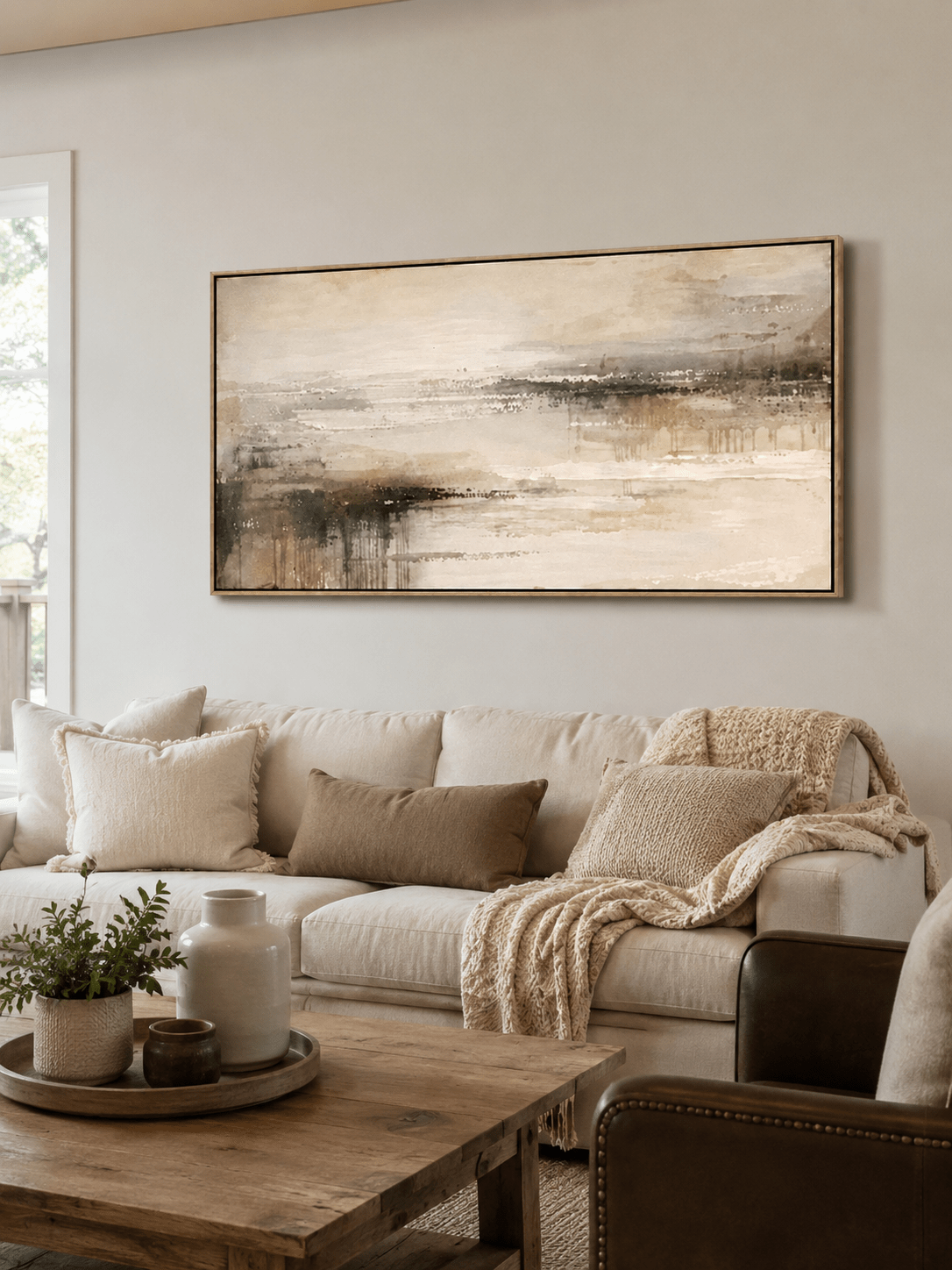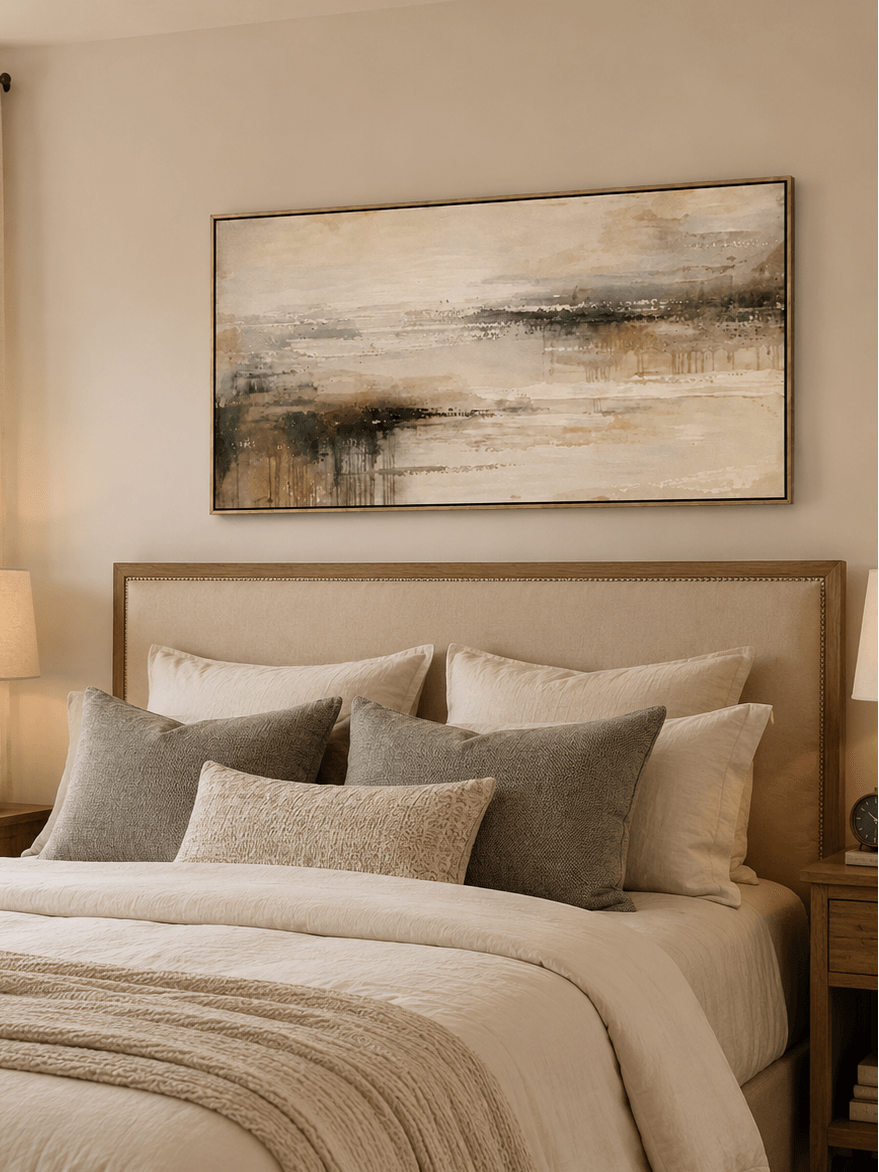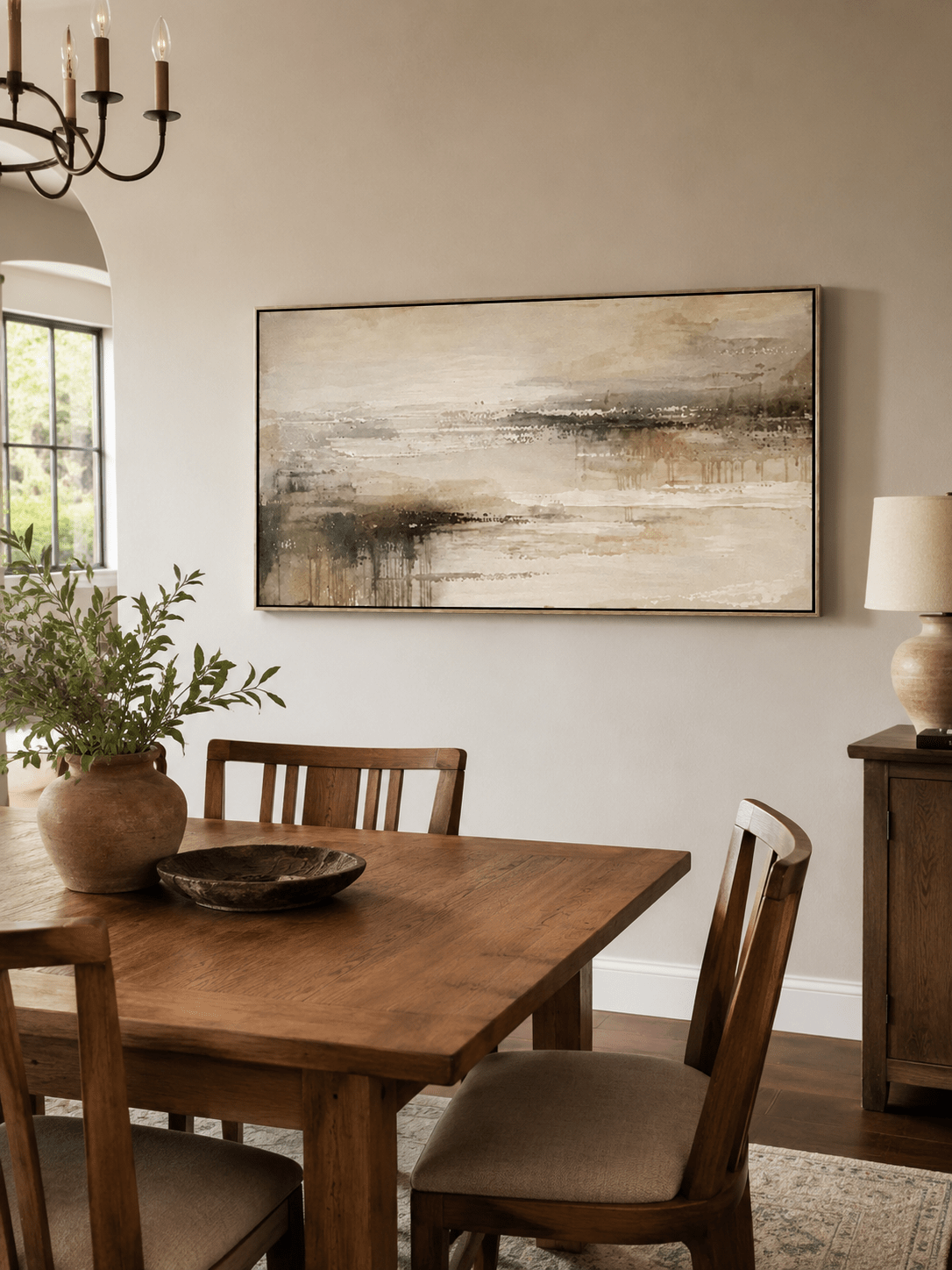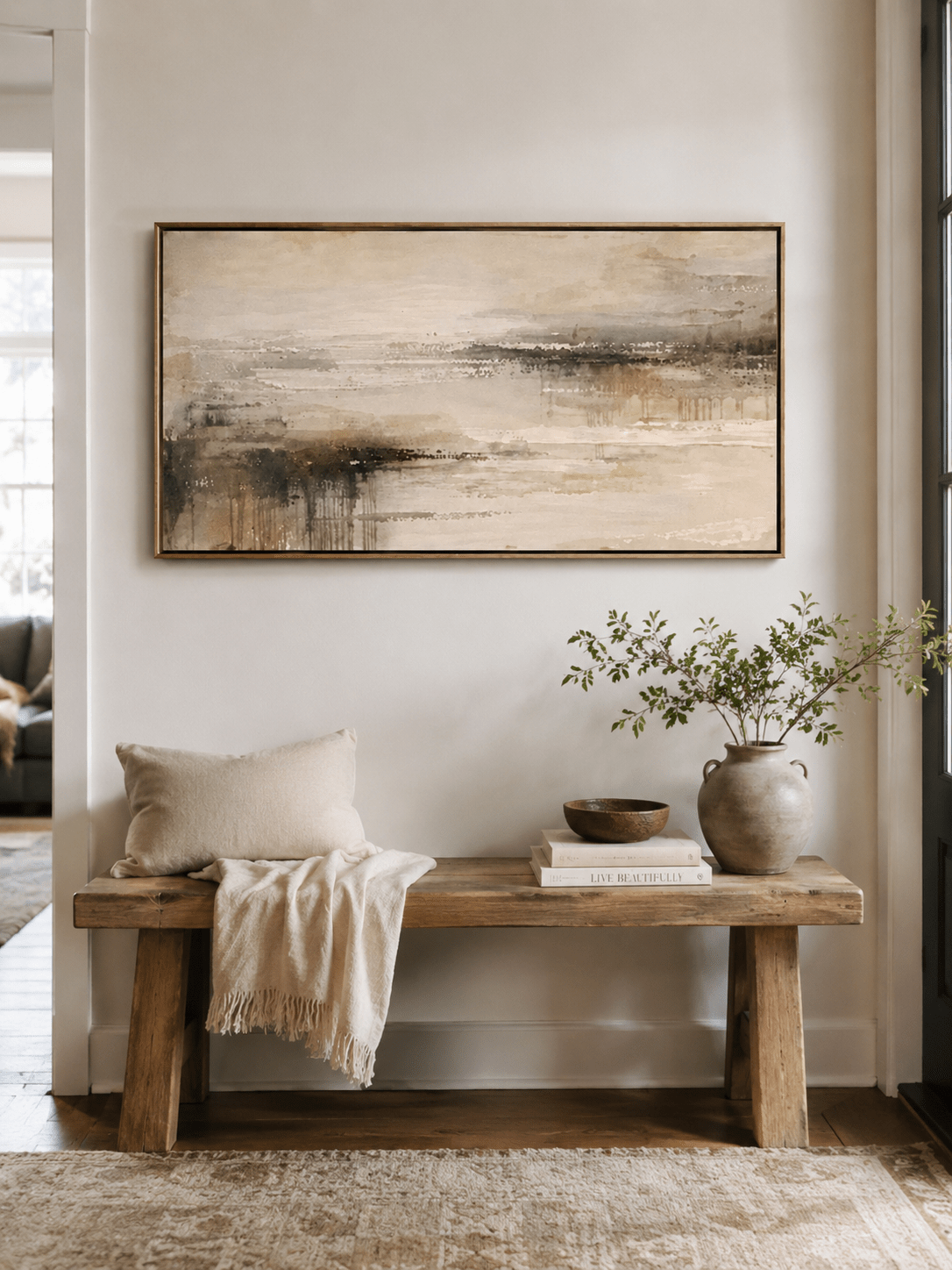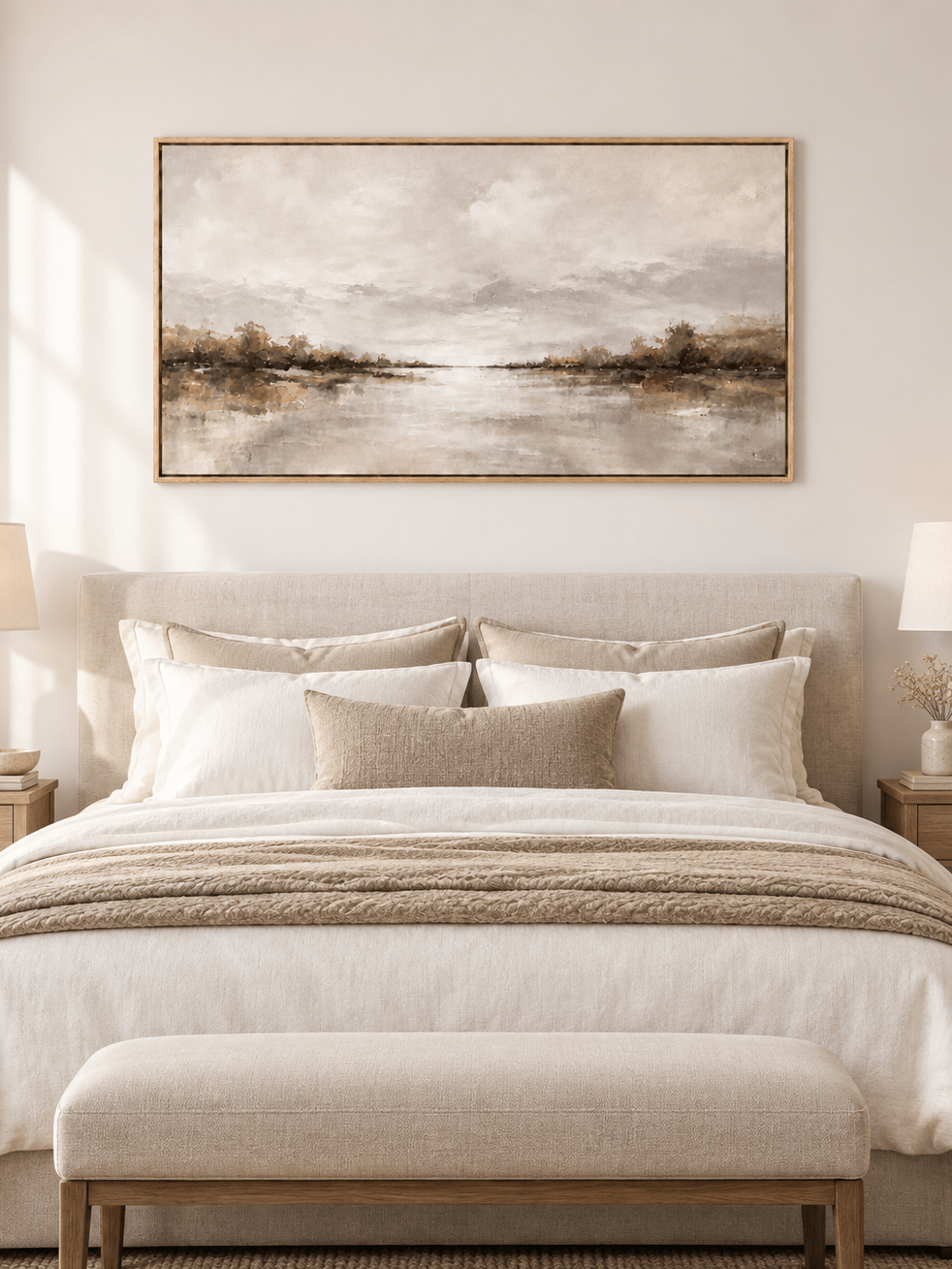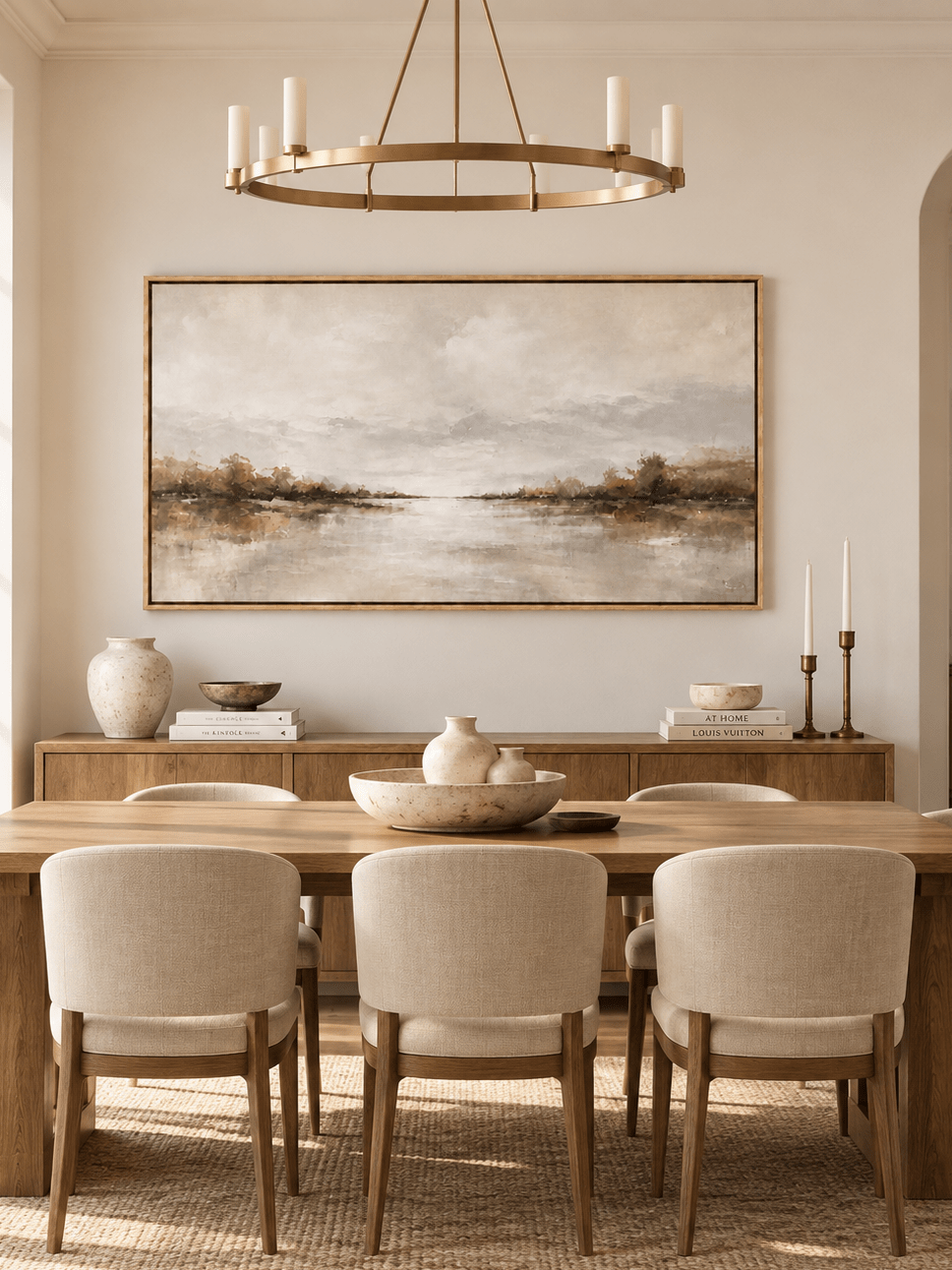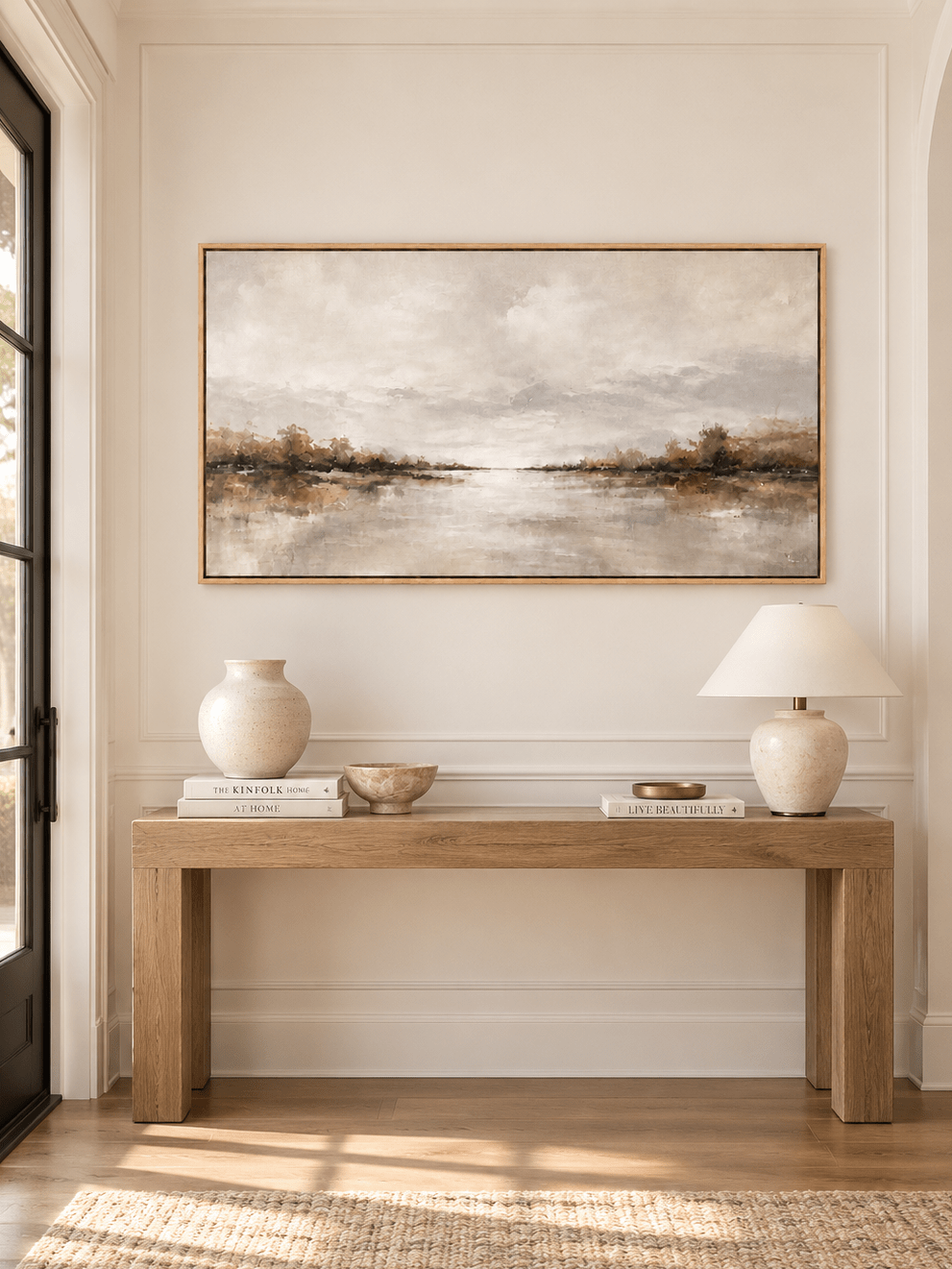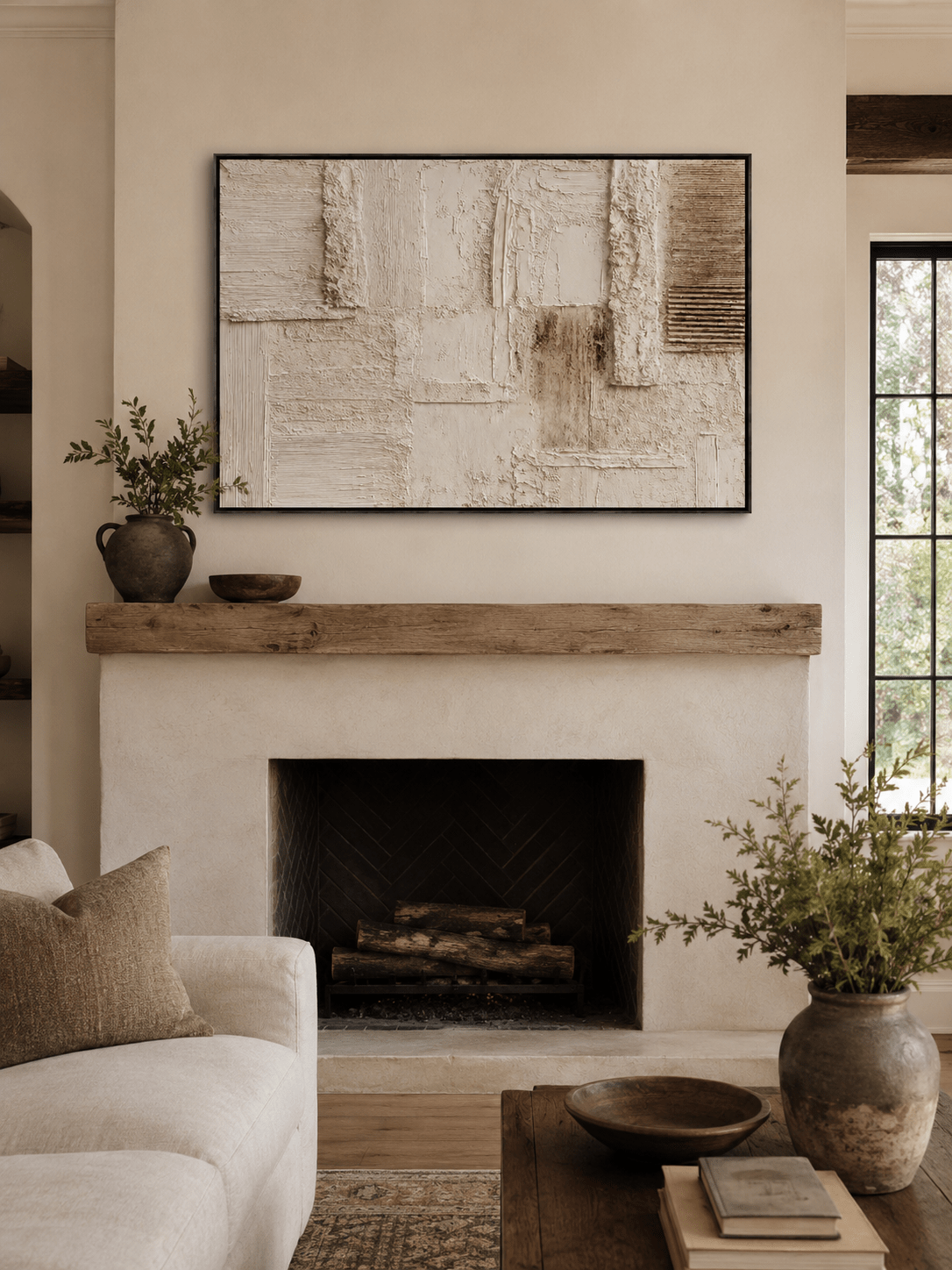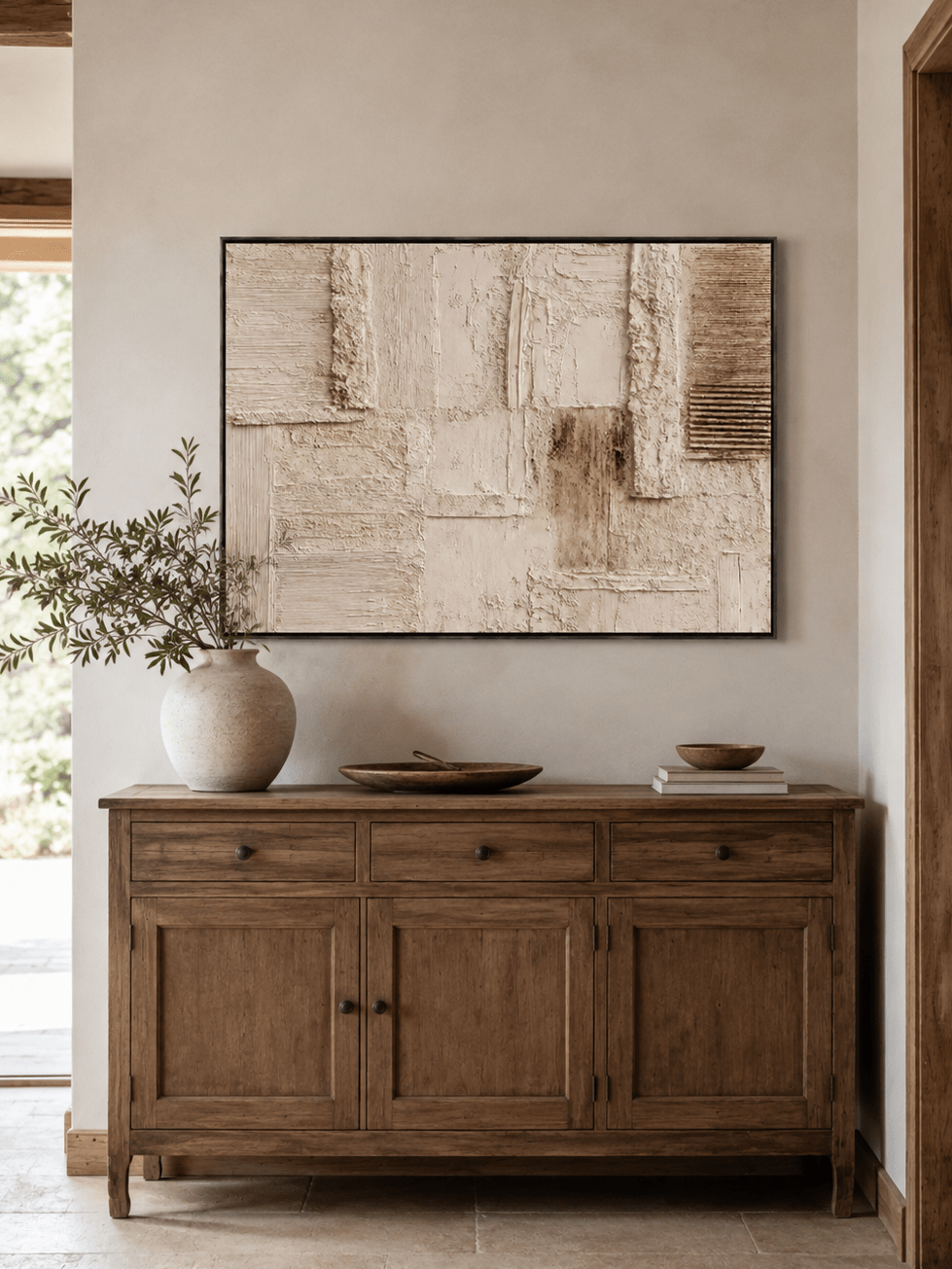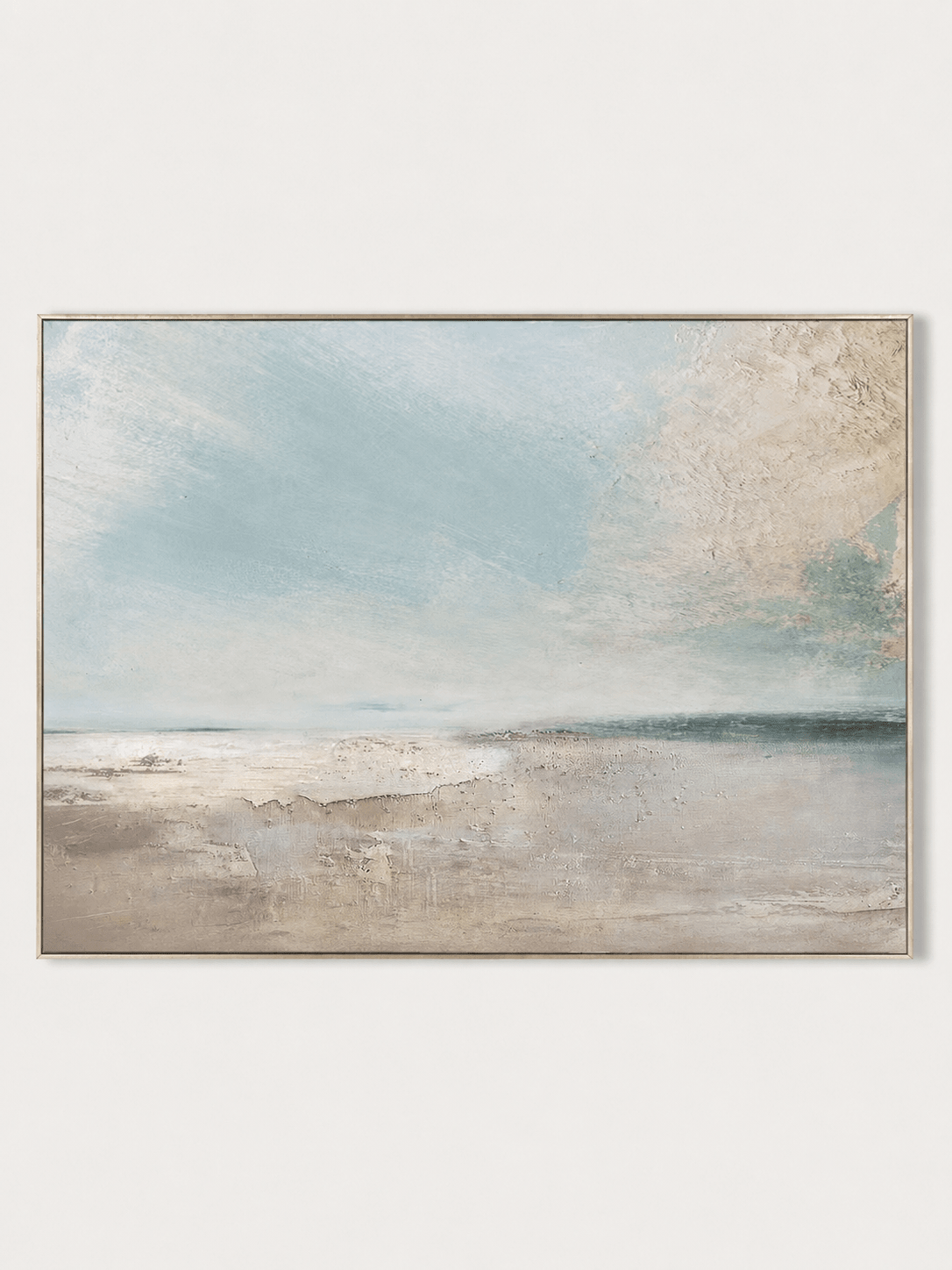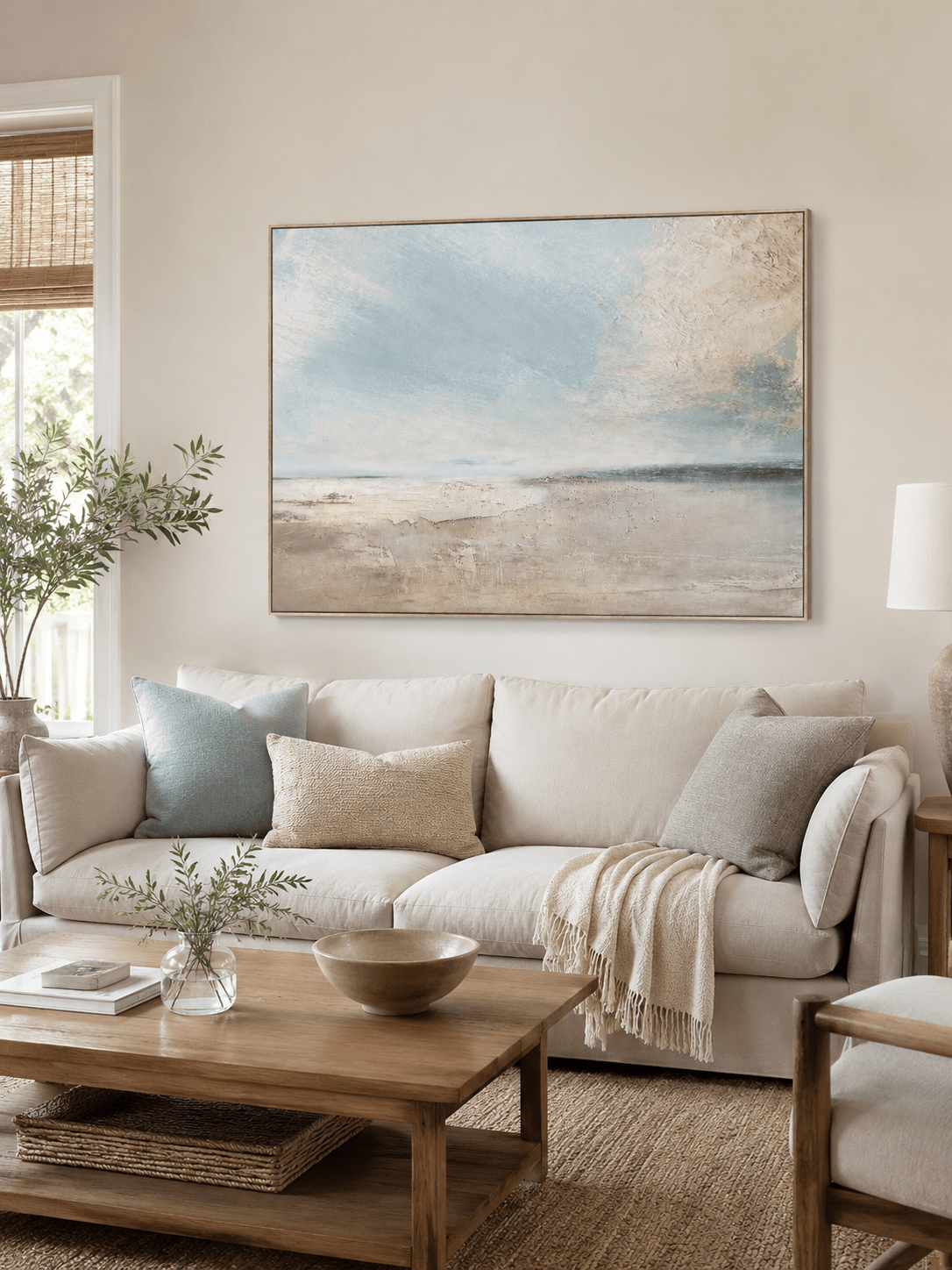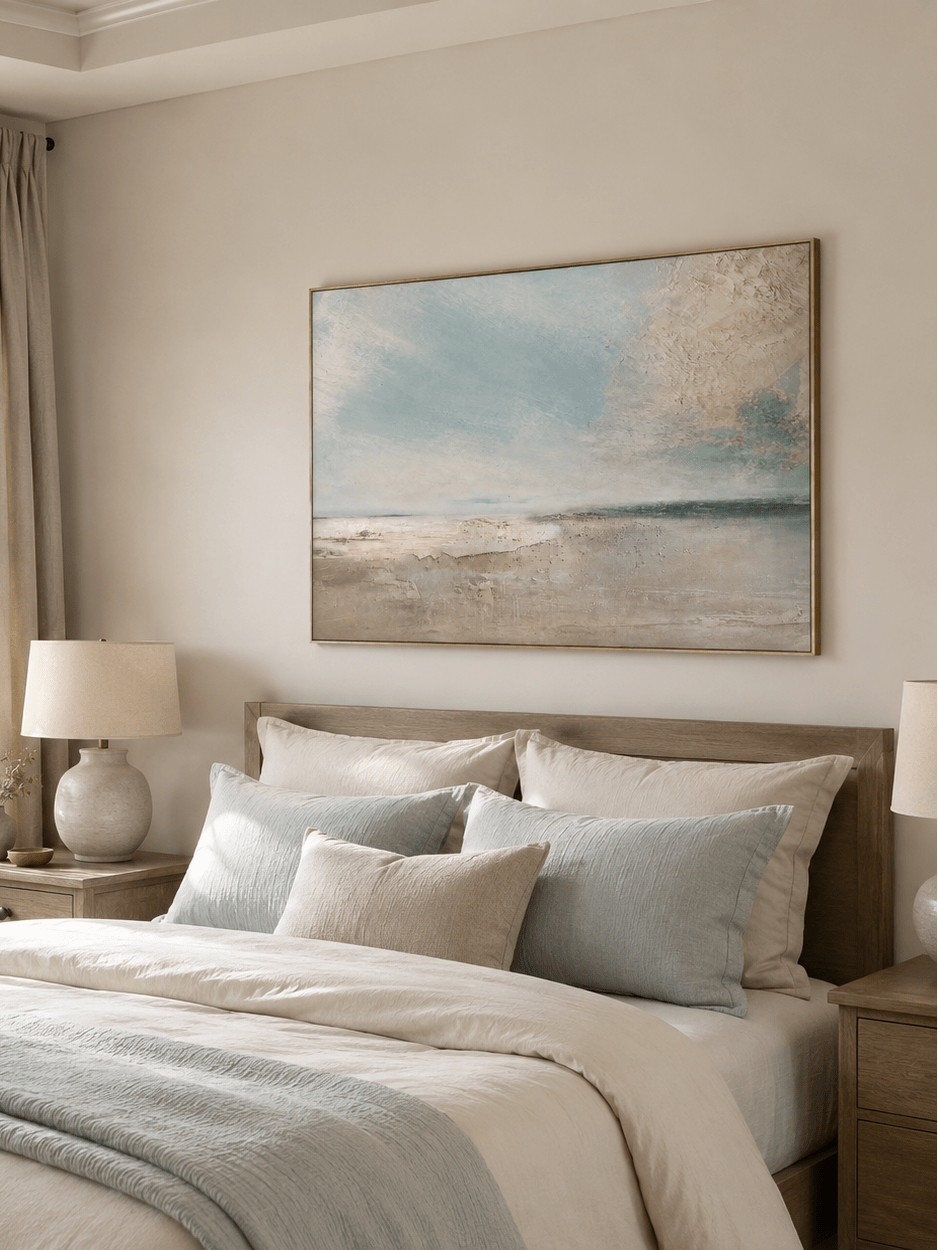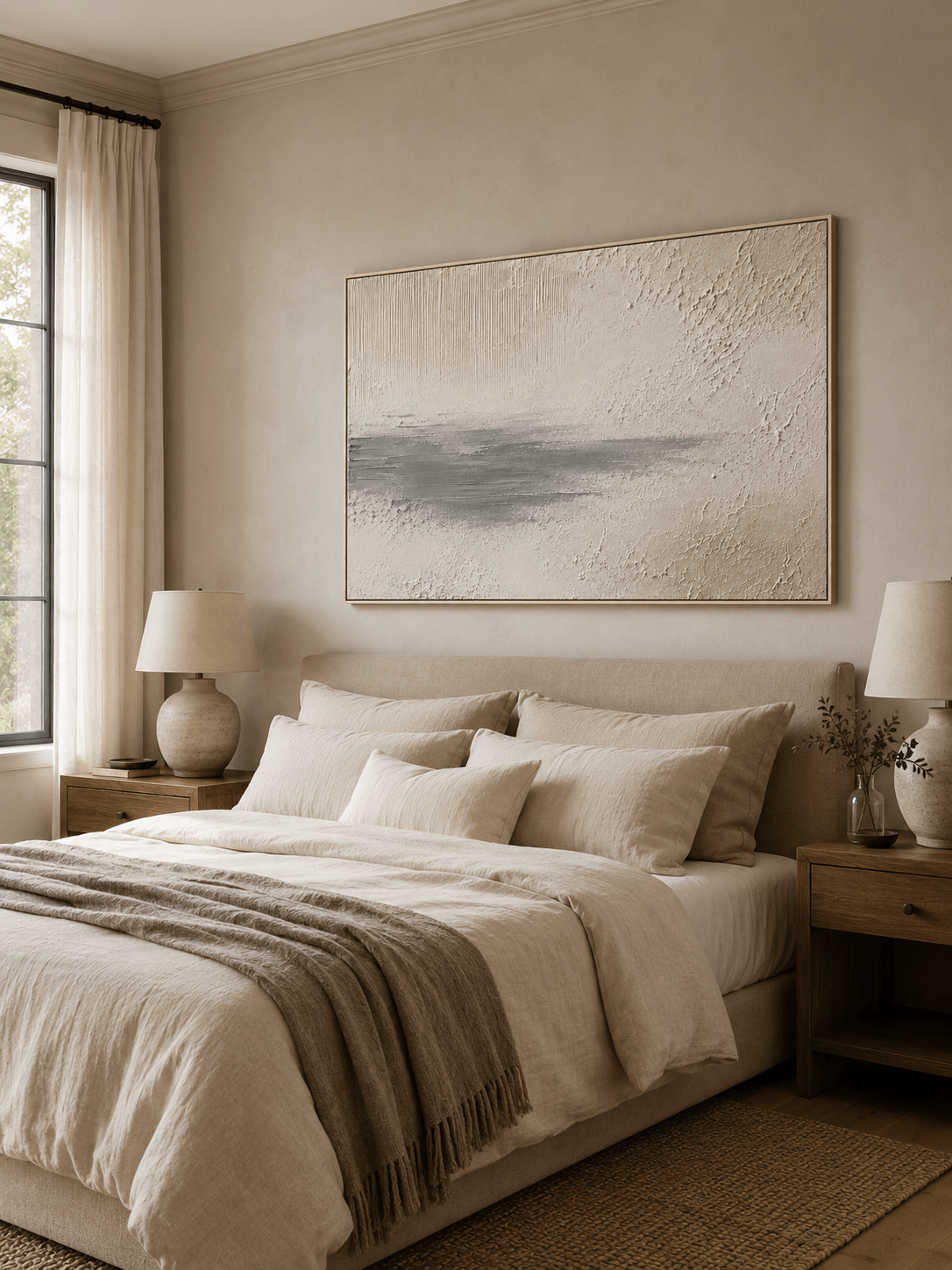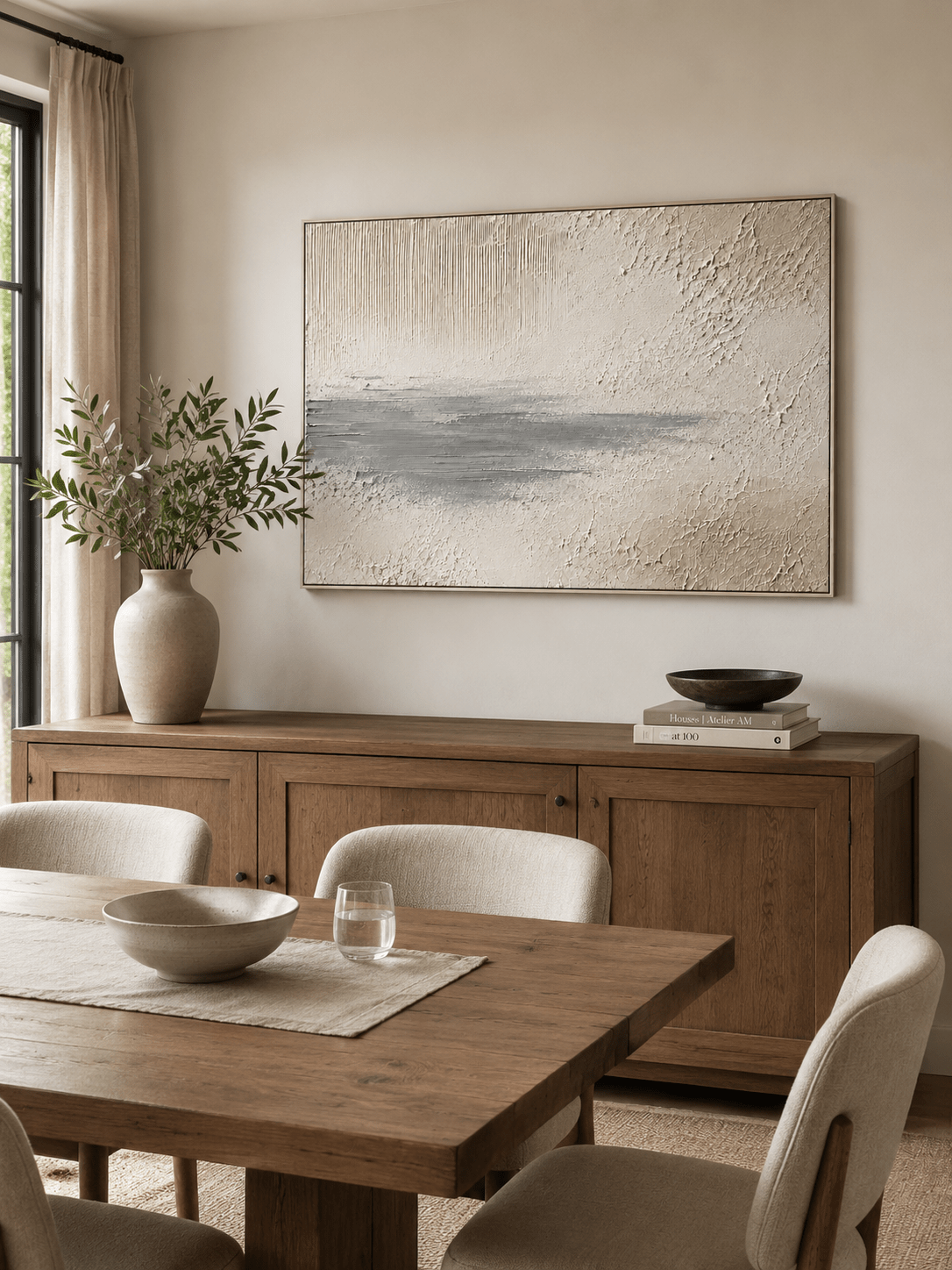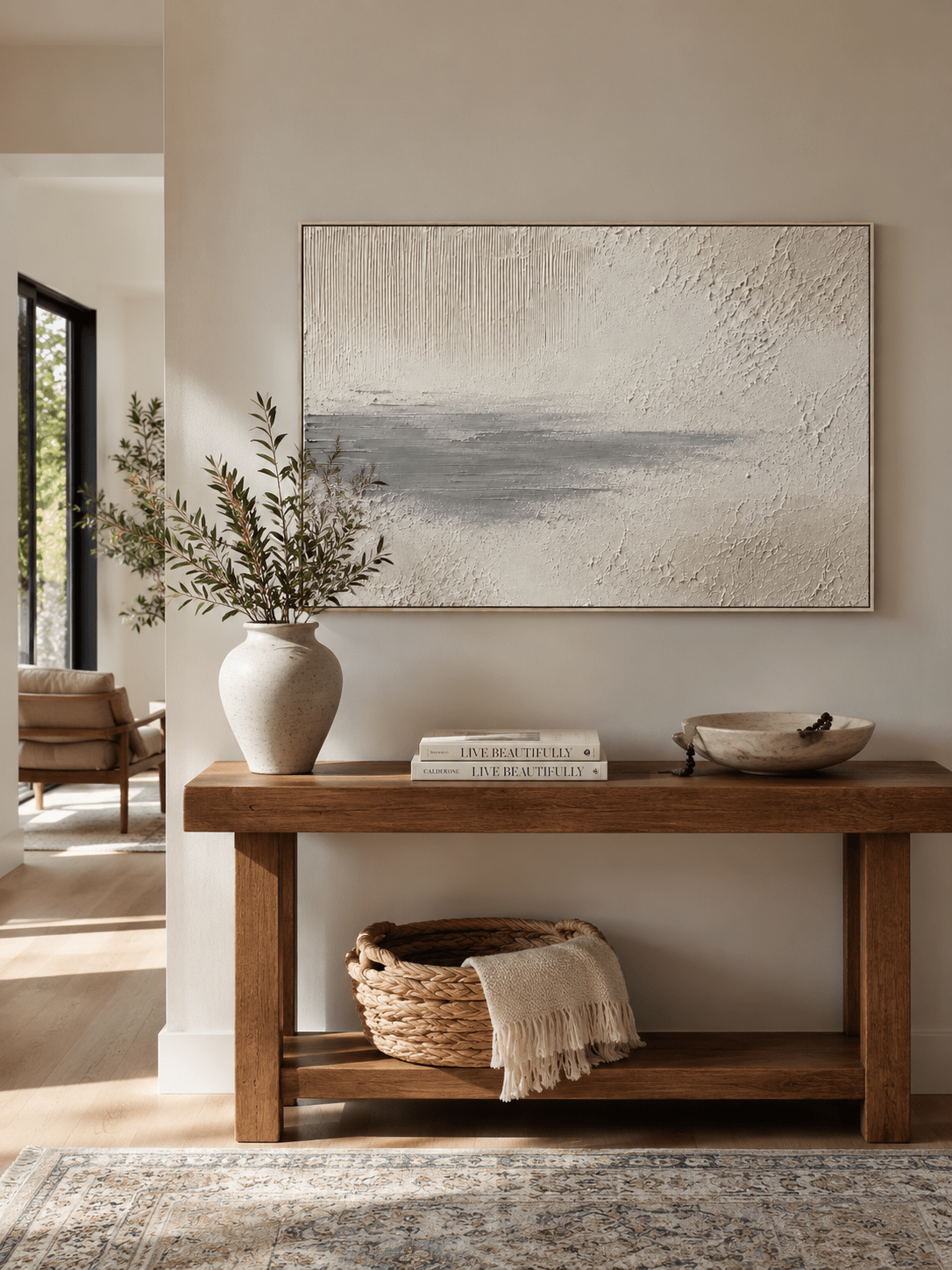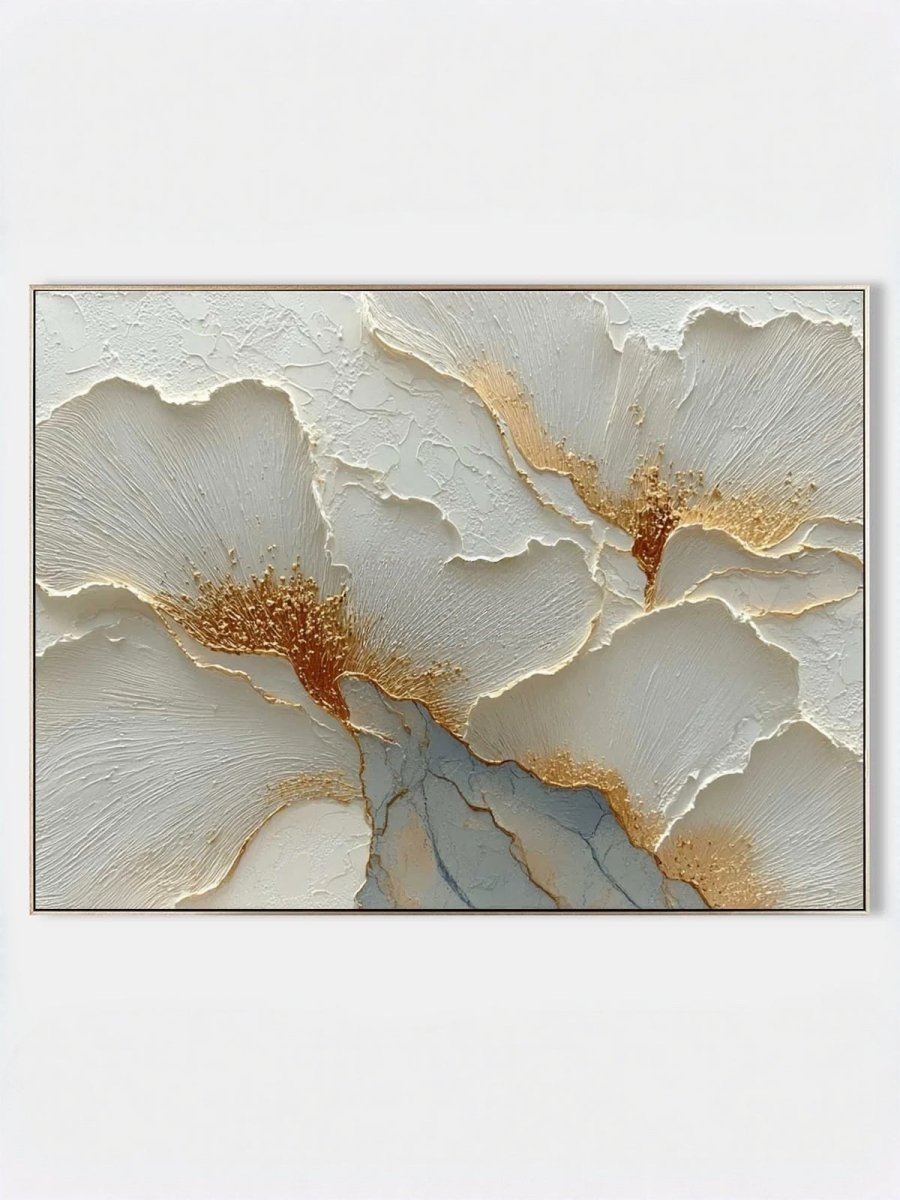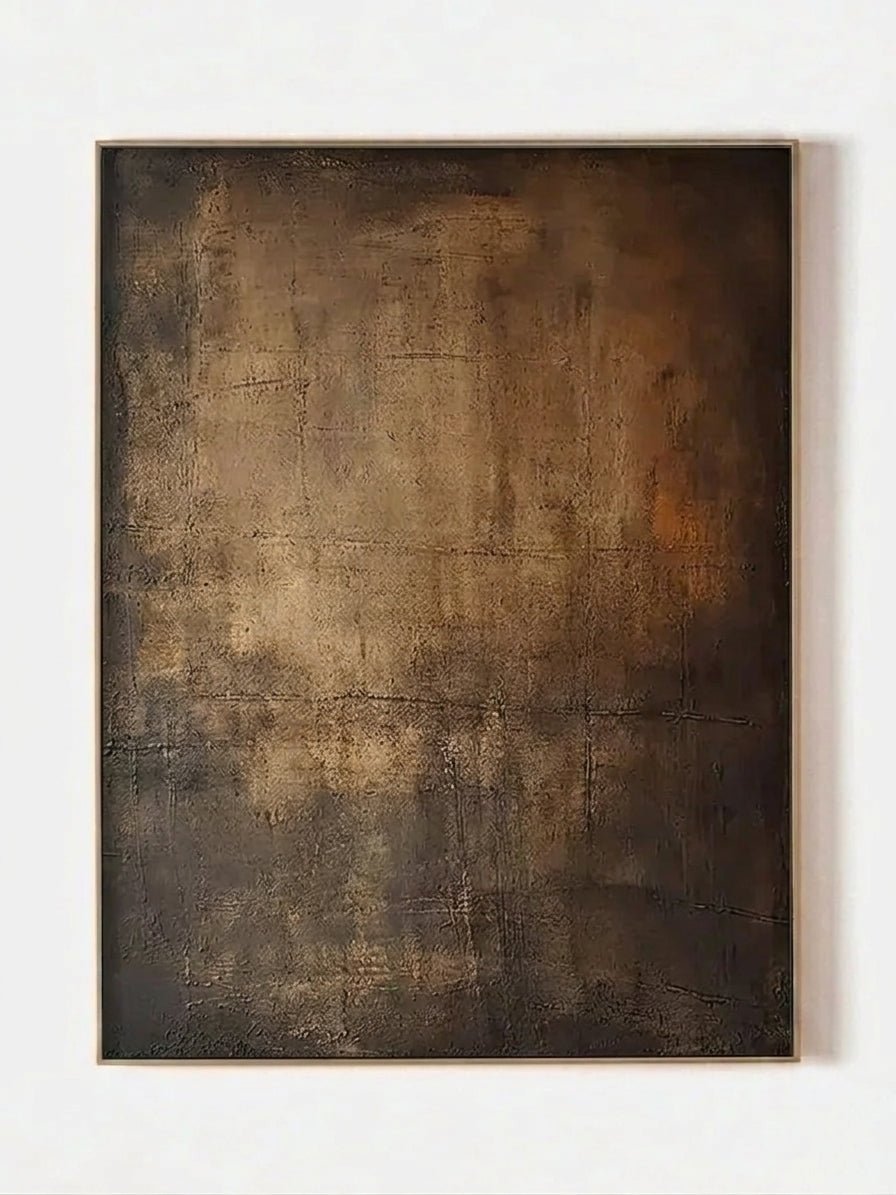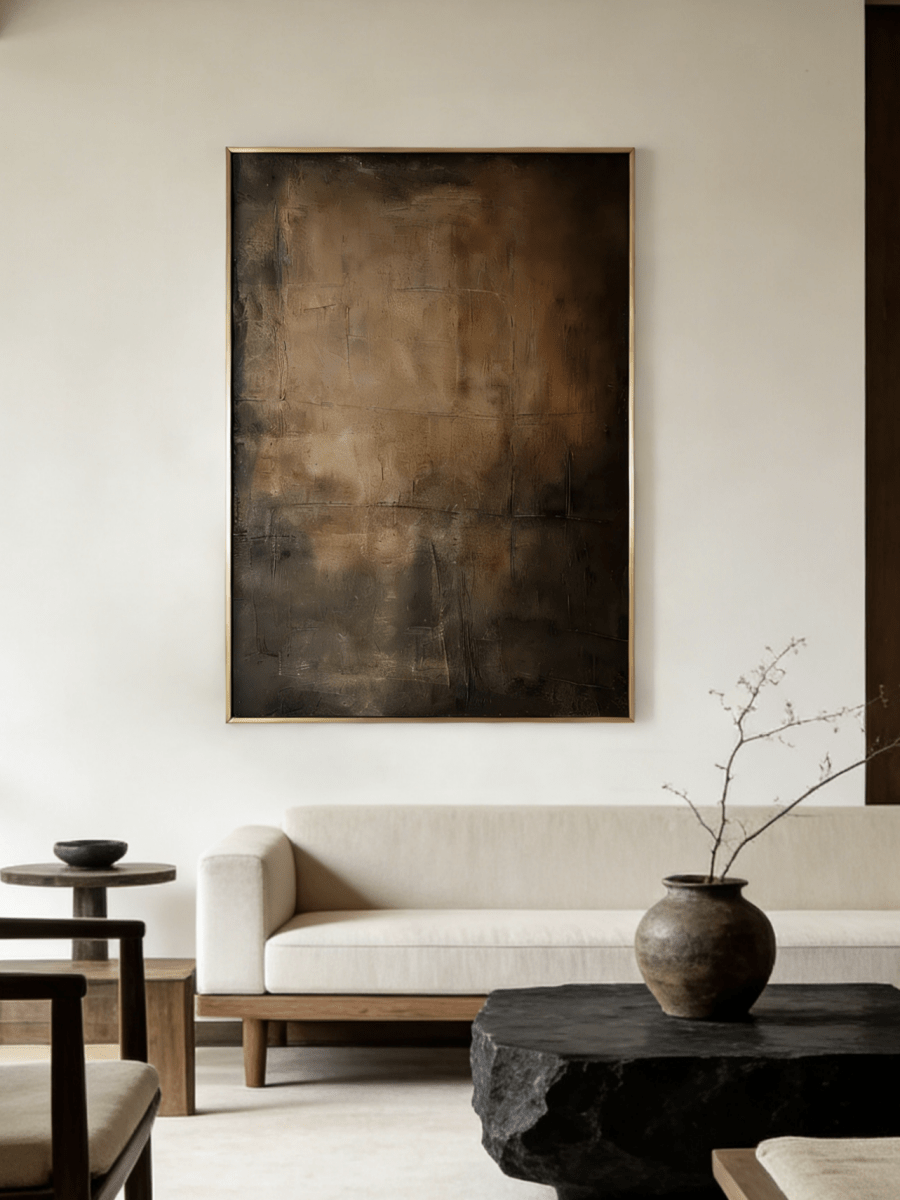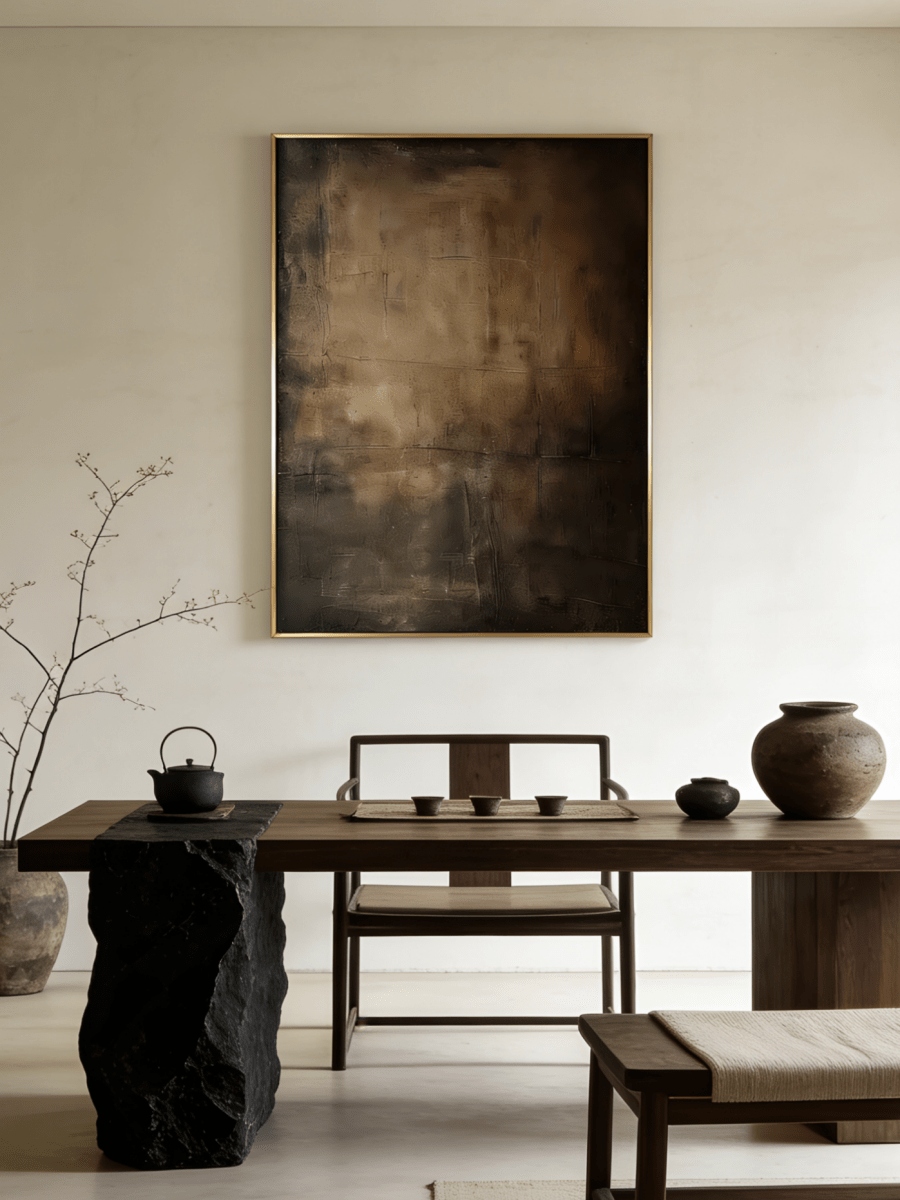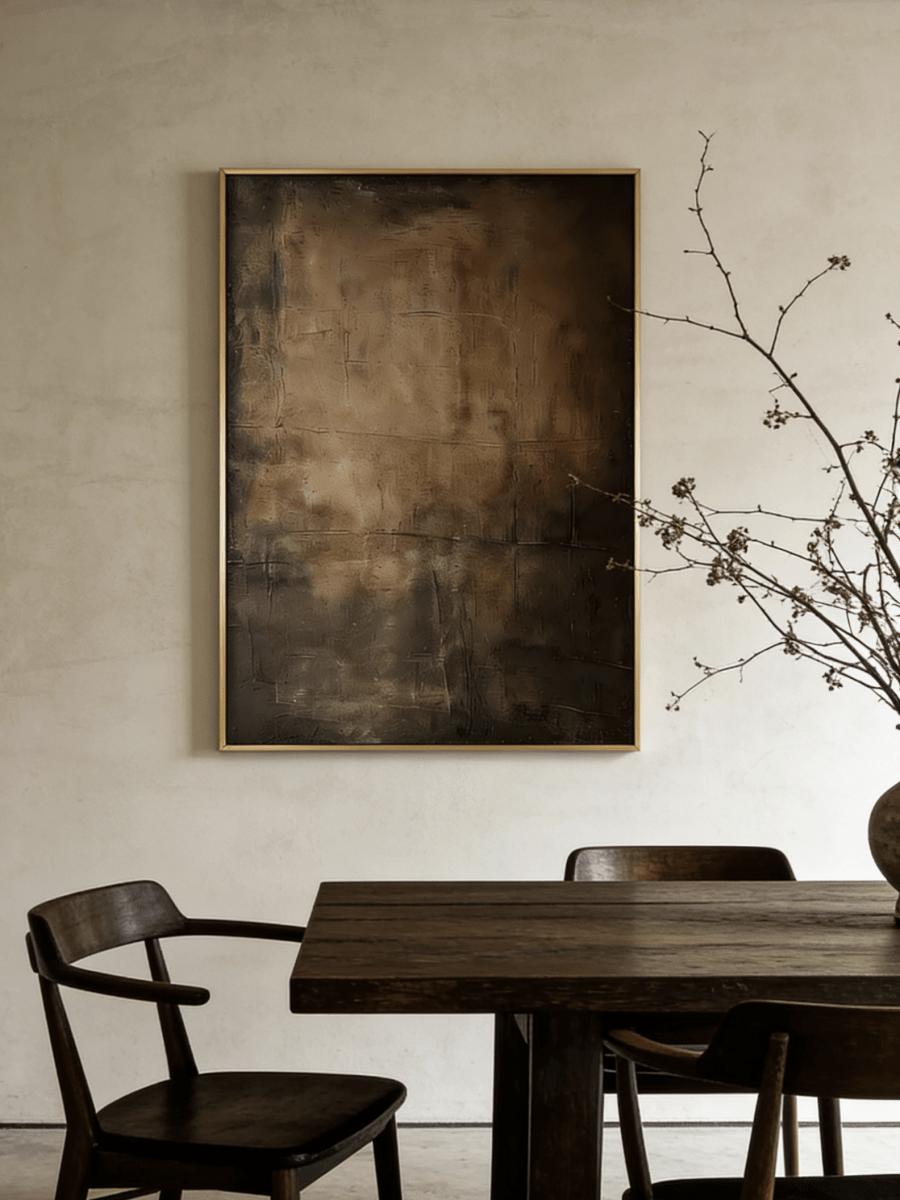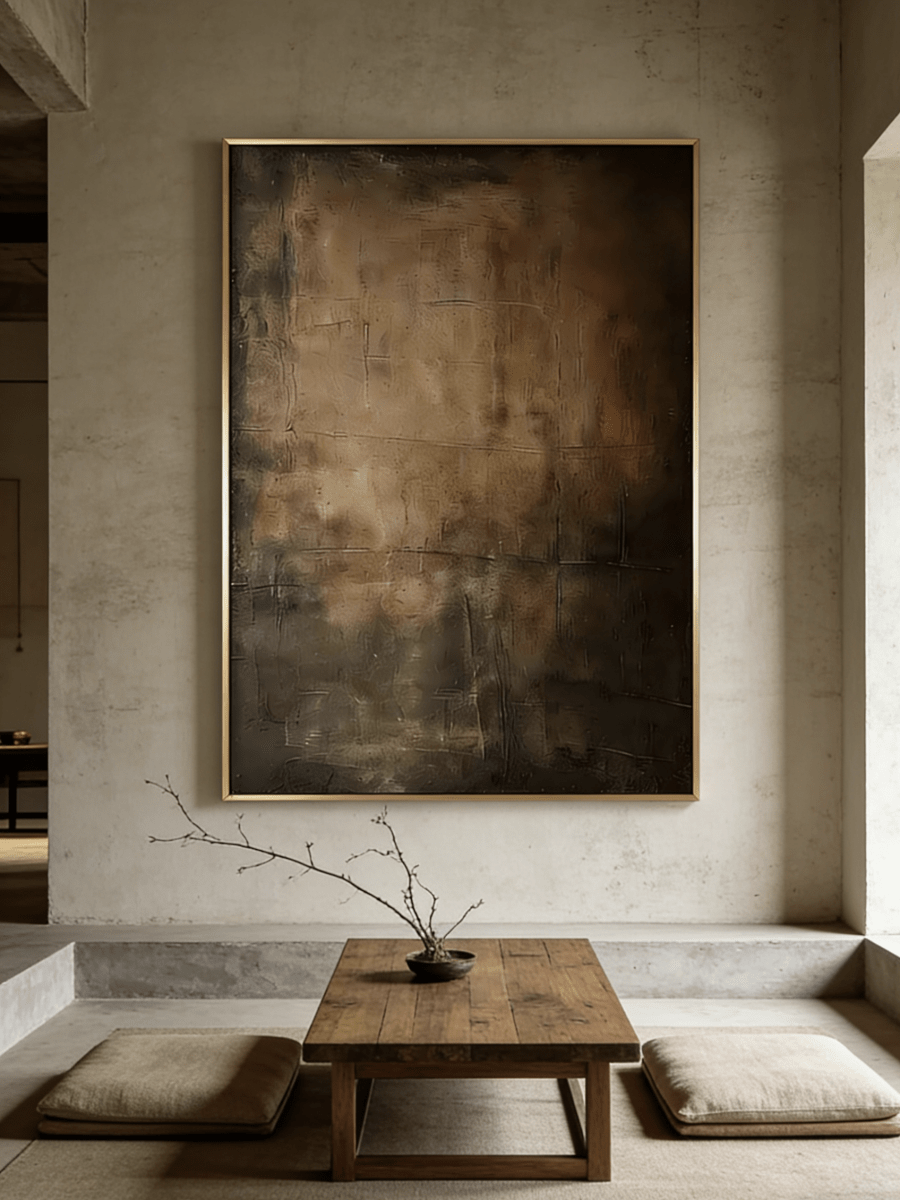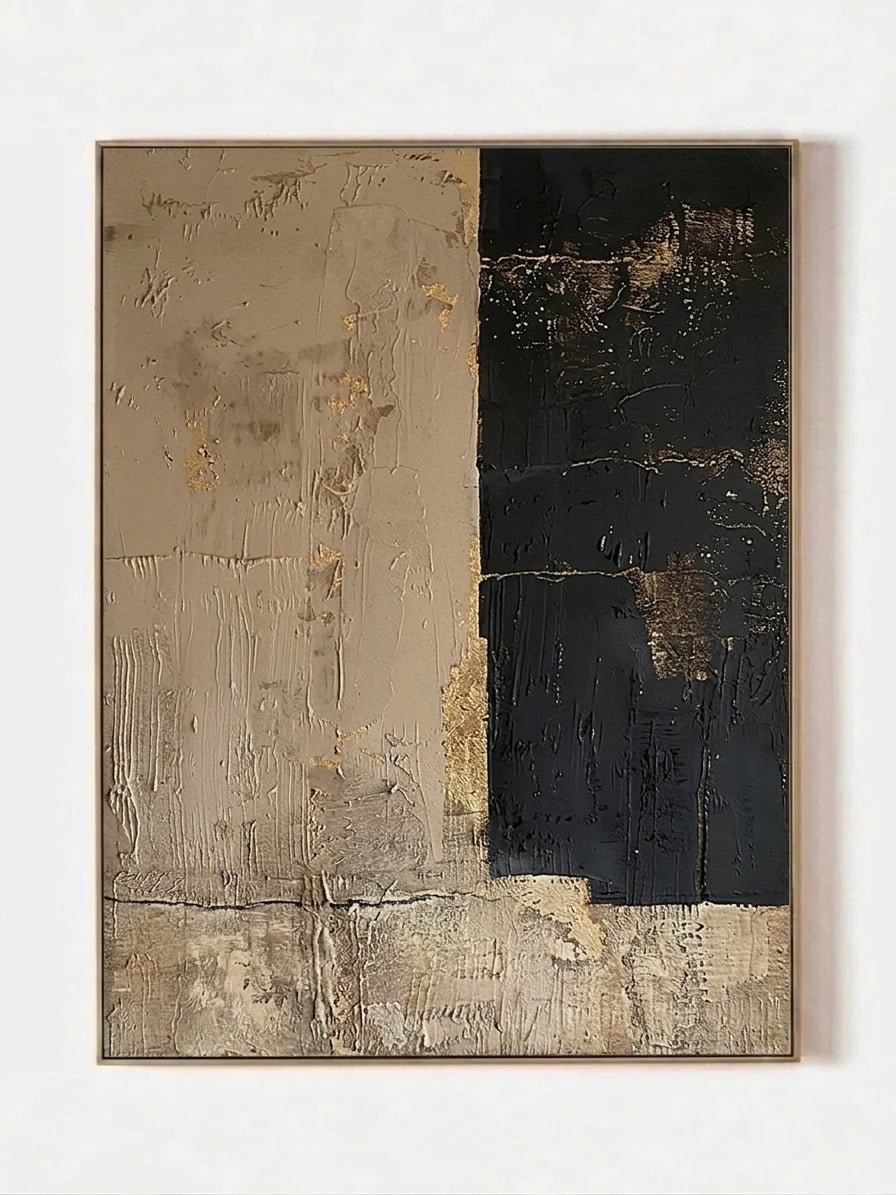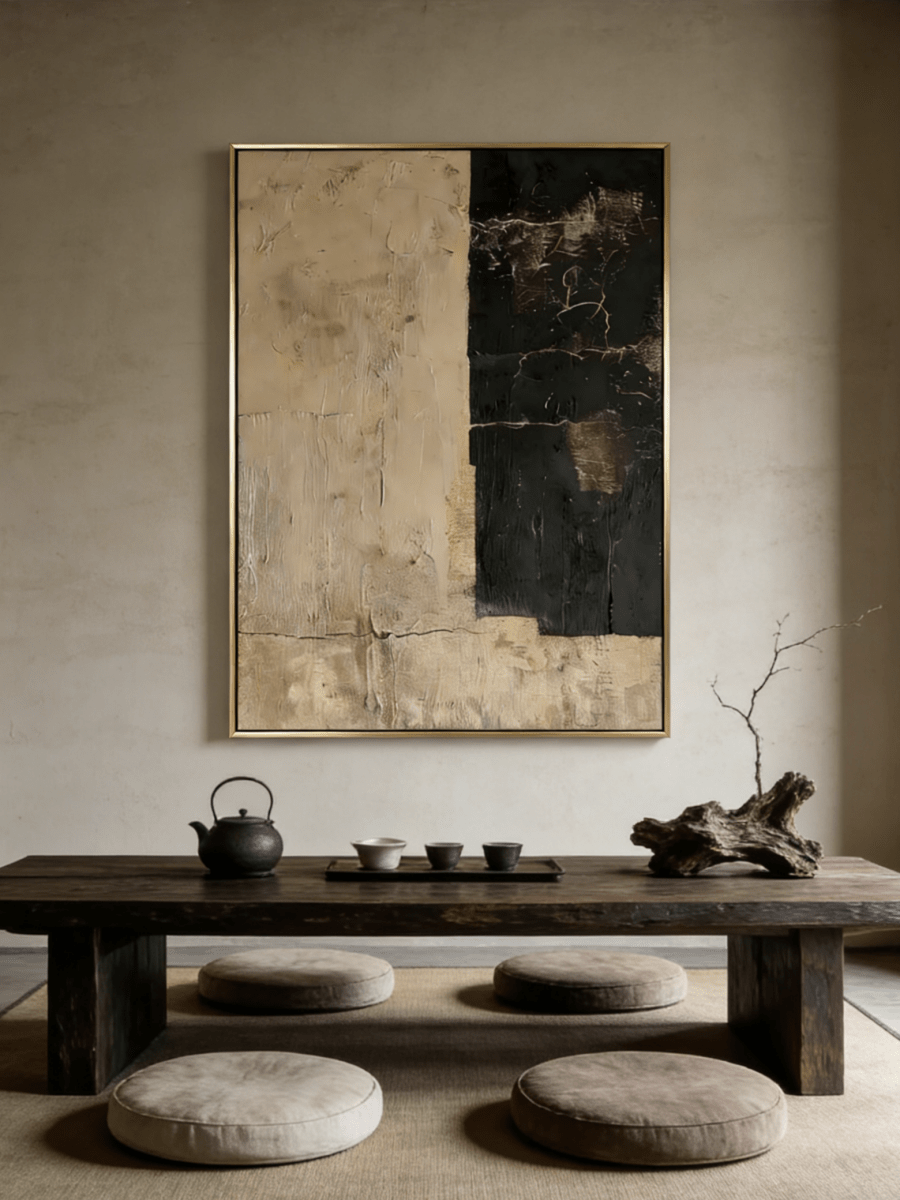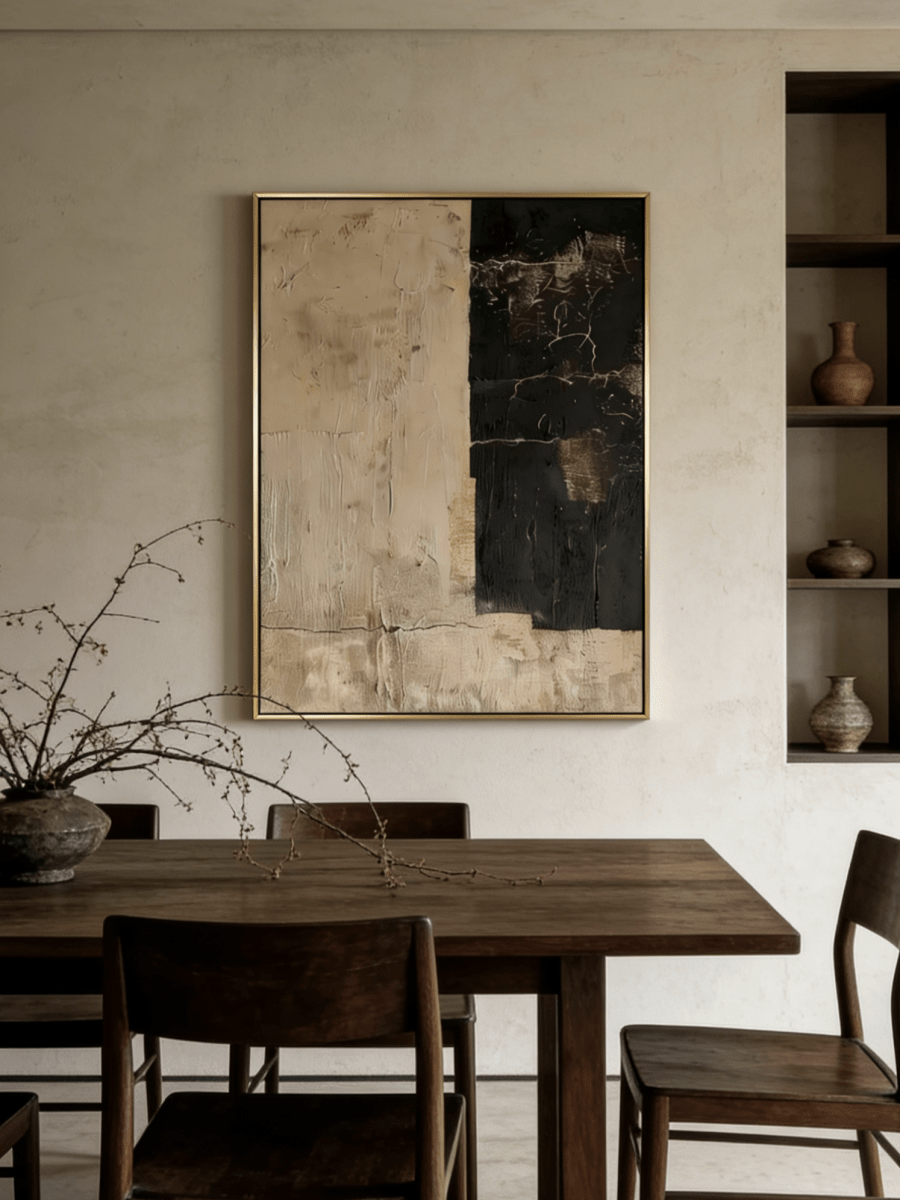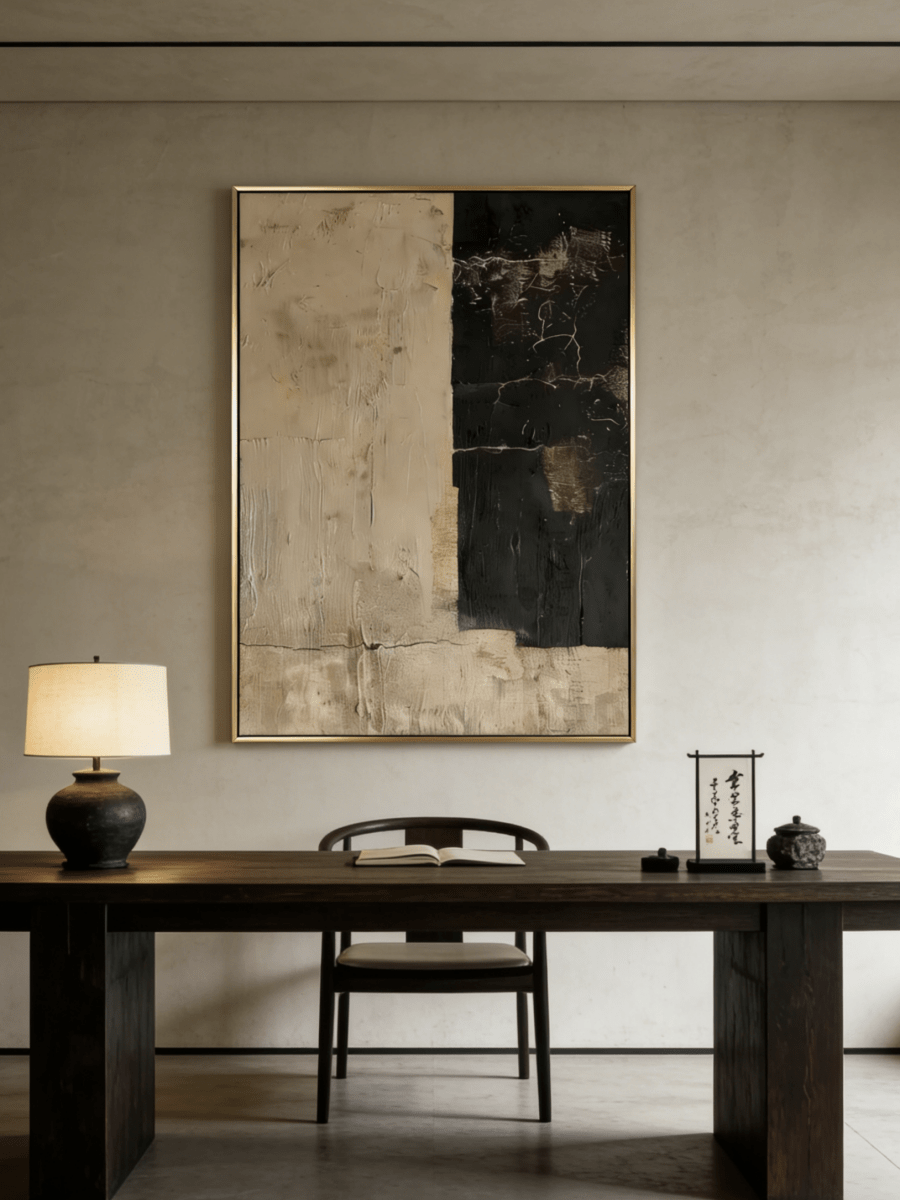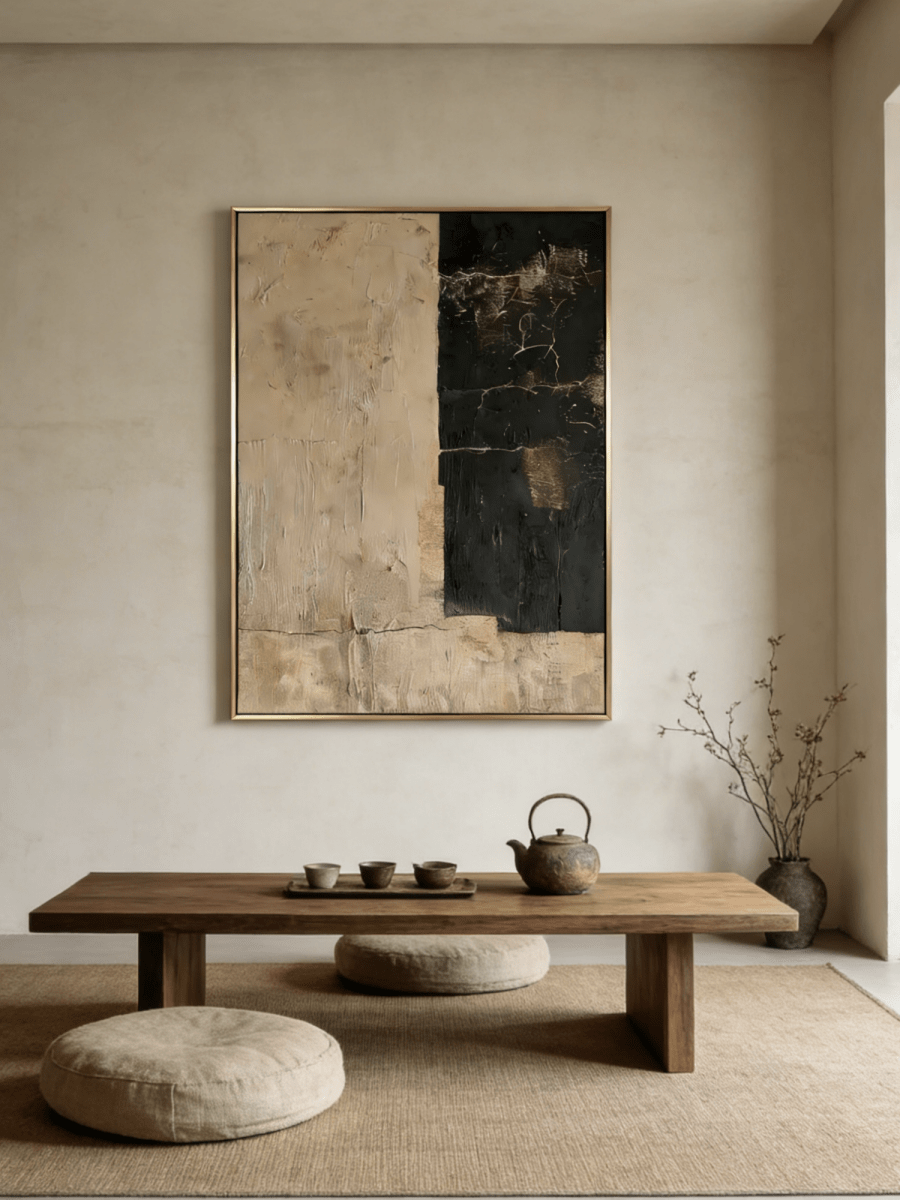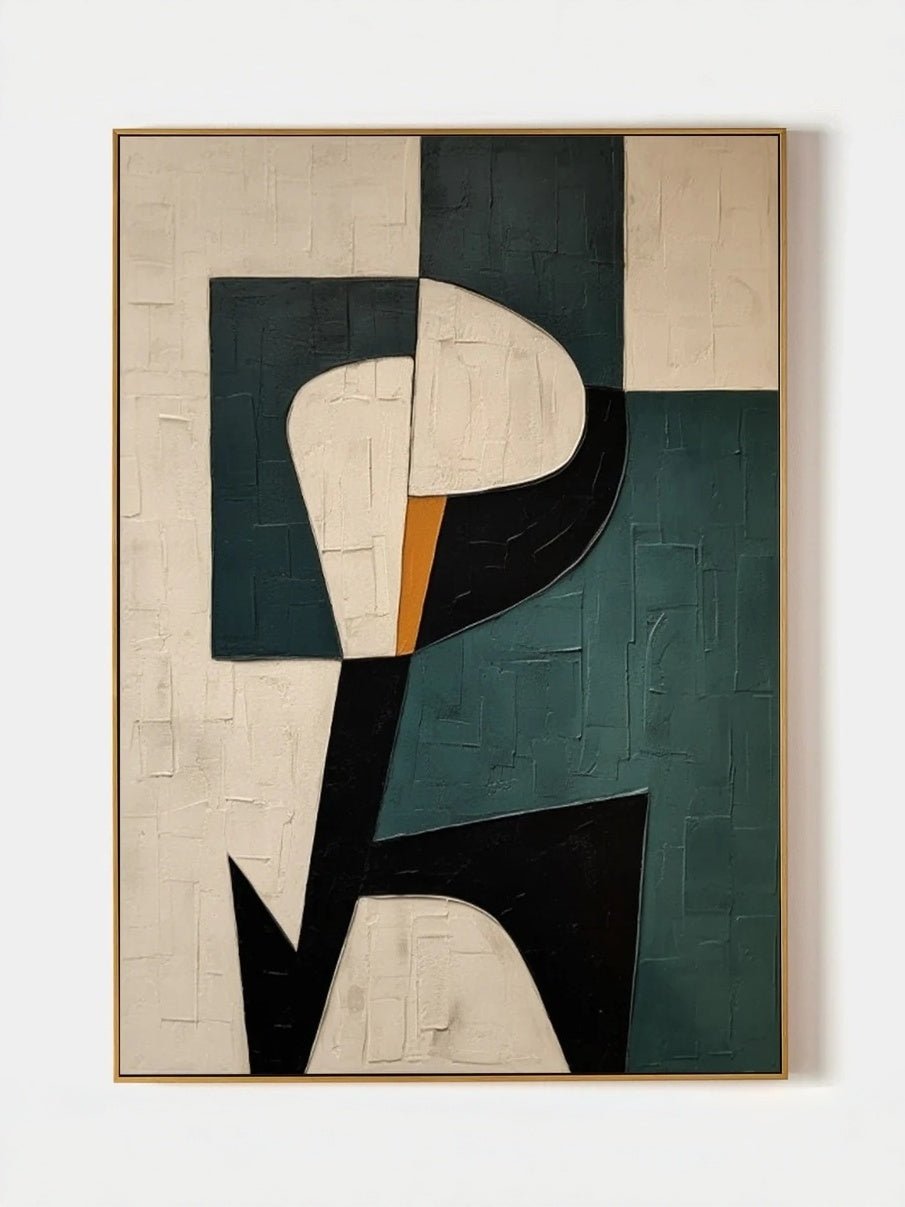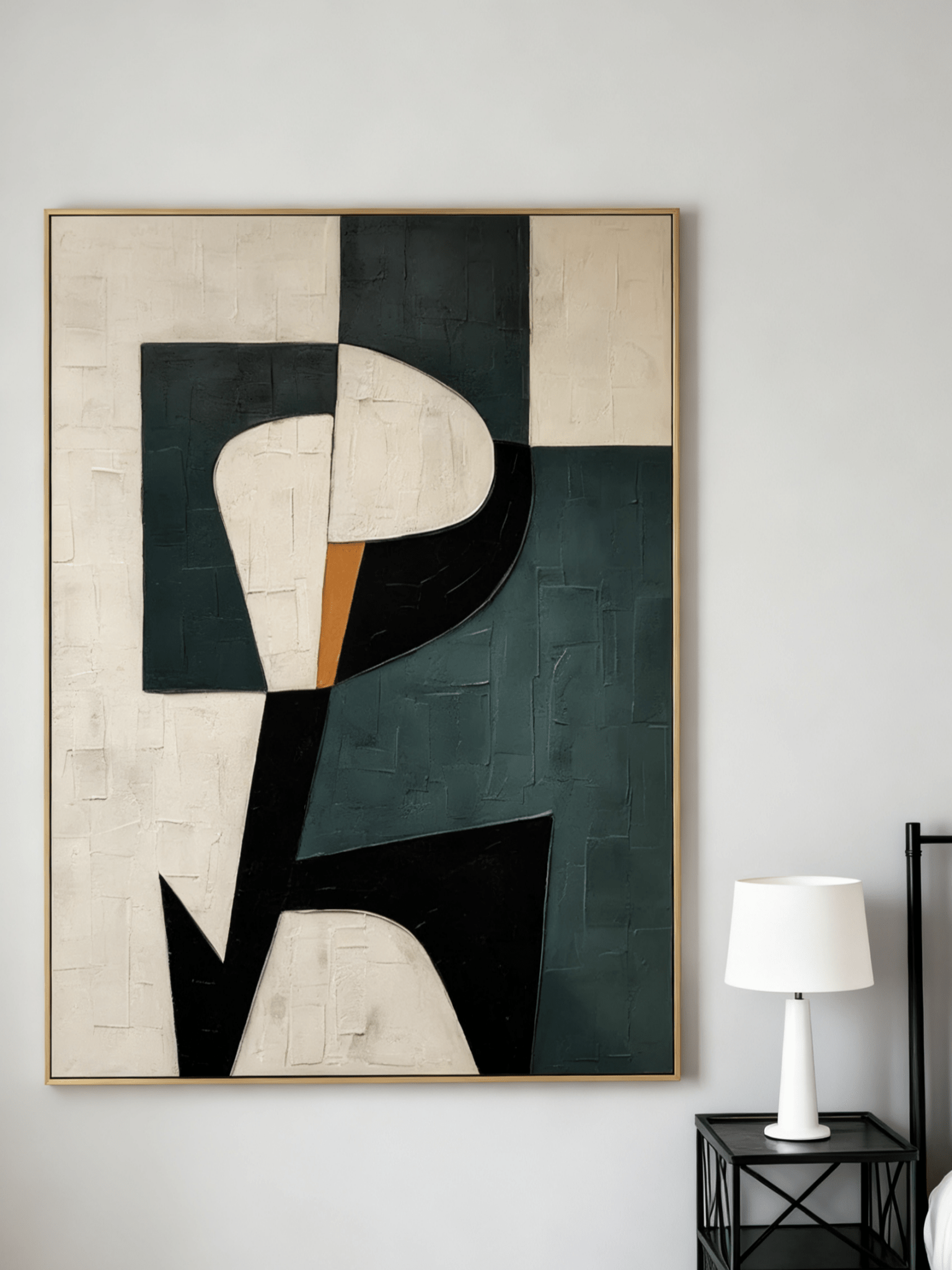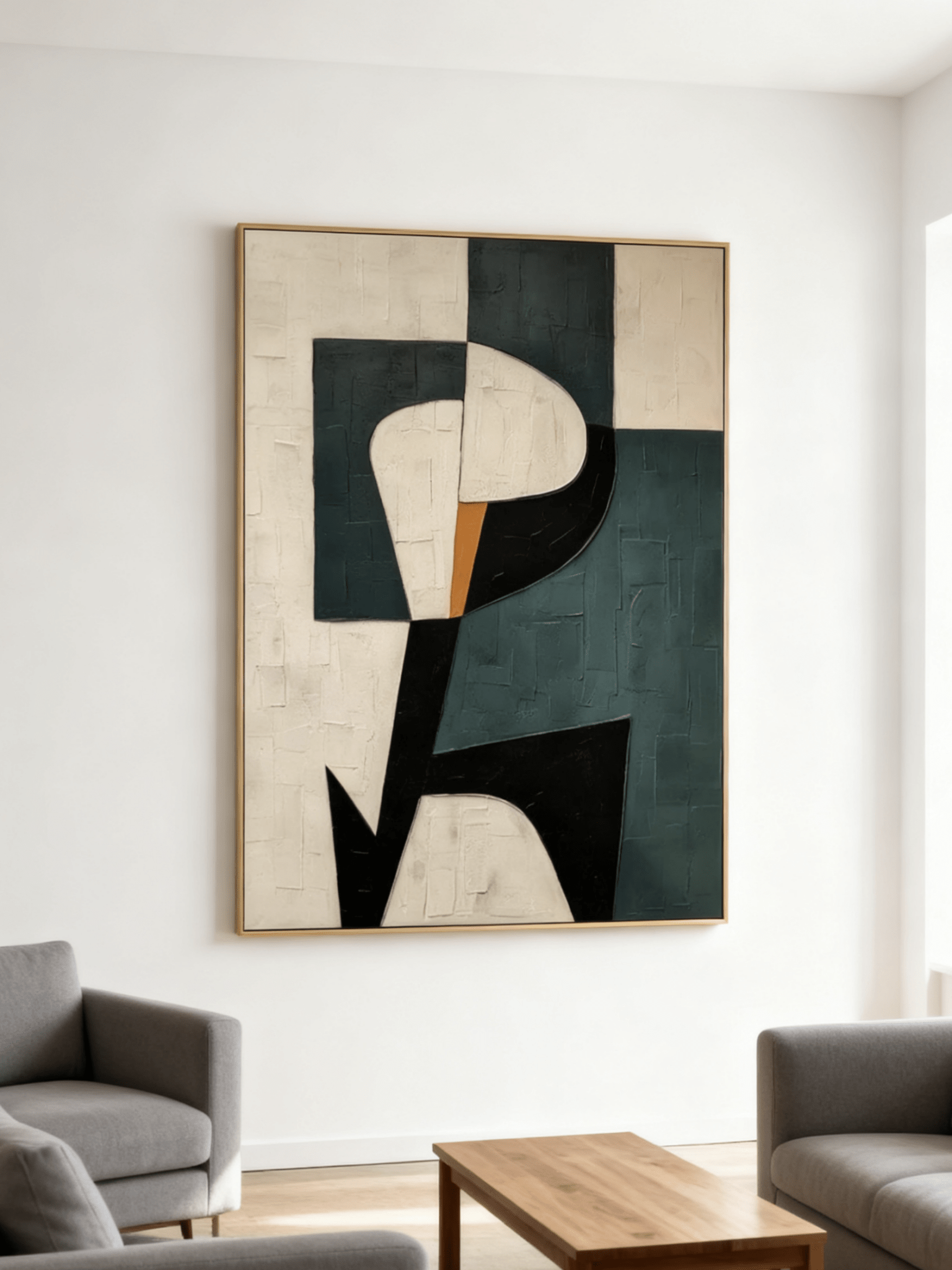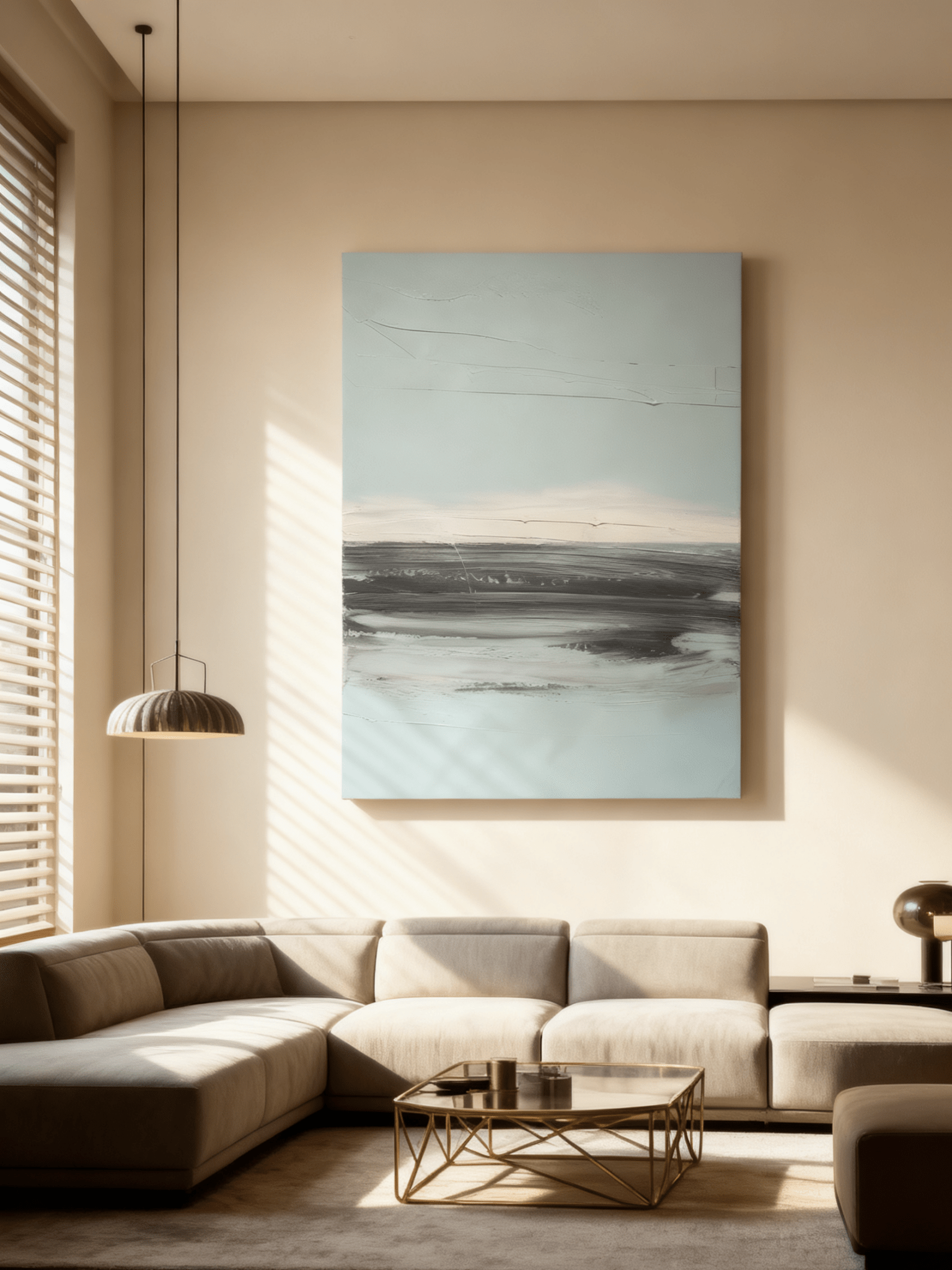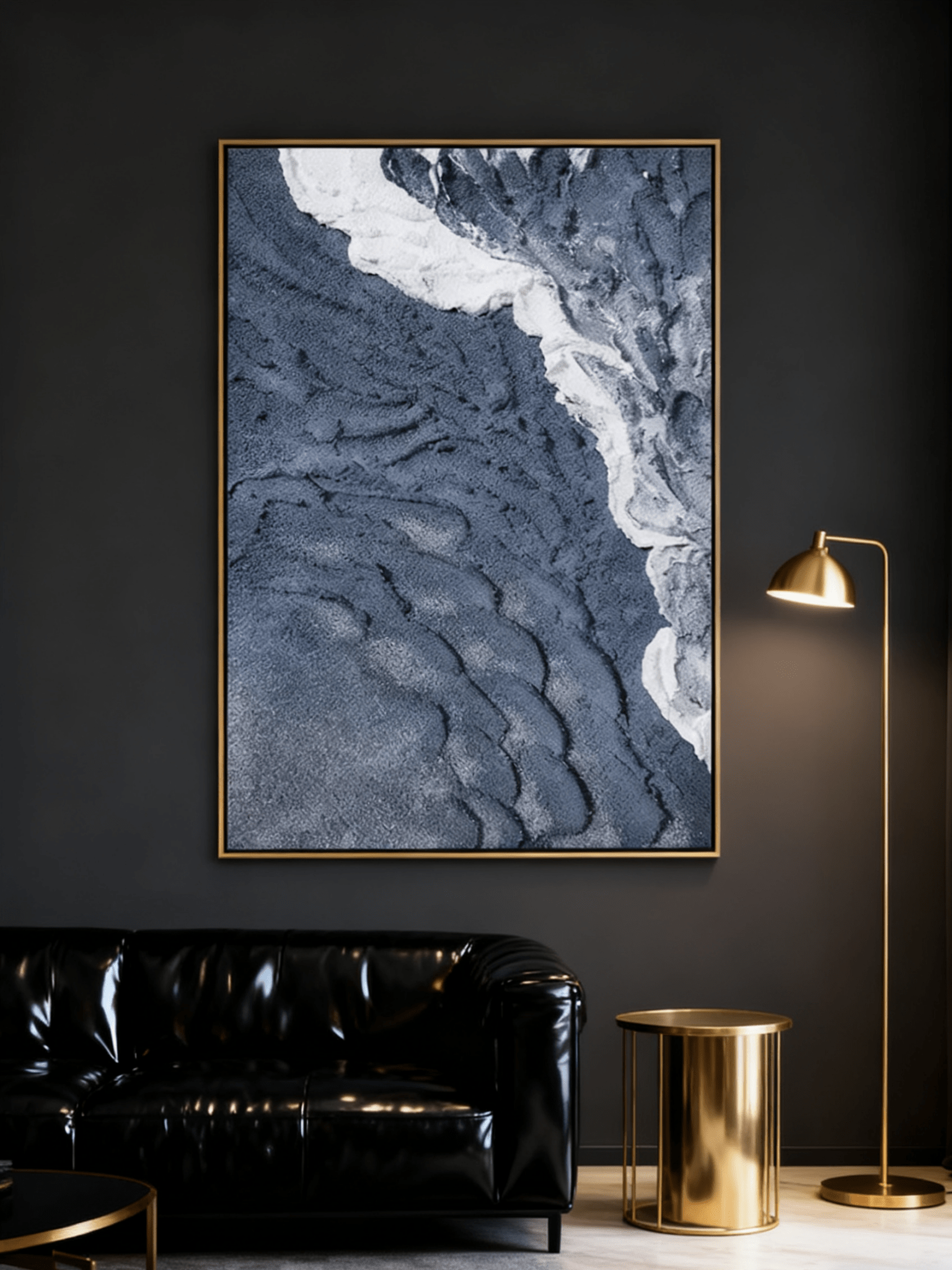

Moody landscape art is not too dark for a small room when the composition still contains readable midtones, the wall creates separation and the lighting reveals the scene. Judge the darkest third of the painting rather than its label. A charcoal forest with misty water may feel more open than a medium-brown painting with no light passage. In a compact room, the most useful test is whether you can still see the main shapes from the doorway after sunset.
Choose one dark focal area, not several competing ones. Keep adjacent walls, window treatments or large upholstery lighter unless you intend a deliberately enveloping scheme. Tape the artwork at full size, photograph the room in grayscale and test the proposed light source before ordering.
Dark color does not automatically make a room feel smaller
A small room feels closed in when its boundaries are hard to read or when every large surface carries similar visual weight. A dark painting can actually clarify the layout by giving the eye one stable destination. Problems begin when the canvas, wall, furniture and curtains all merge into one low-contrast mass.
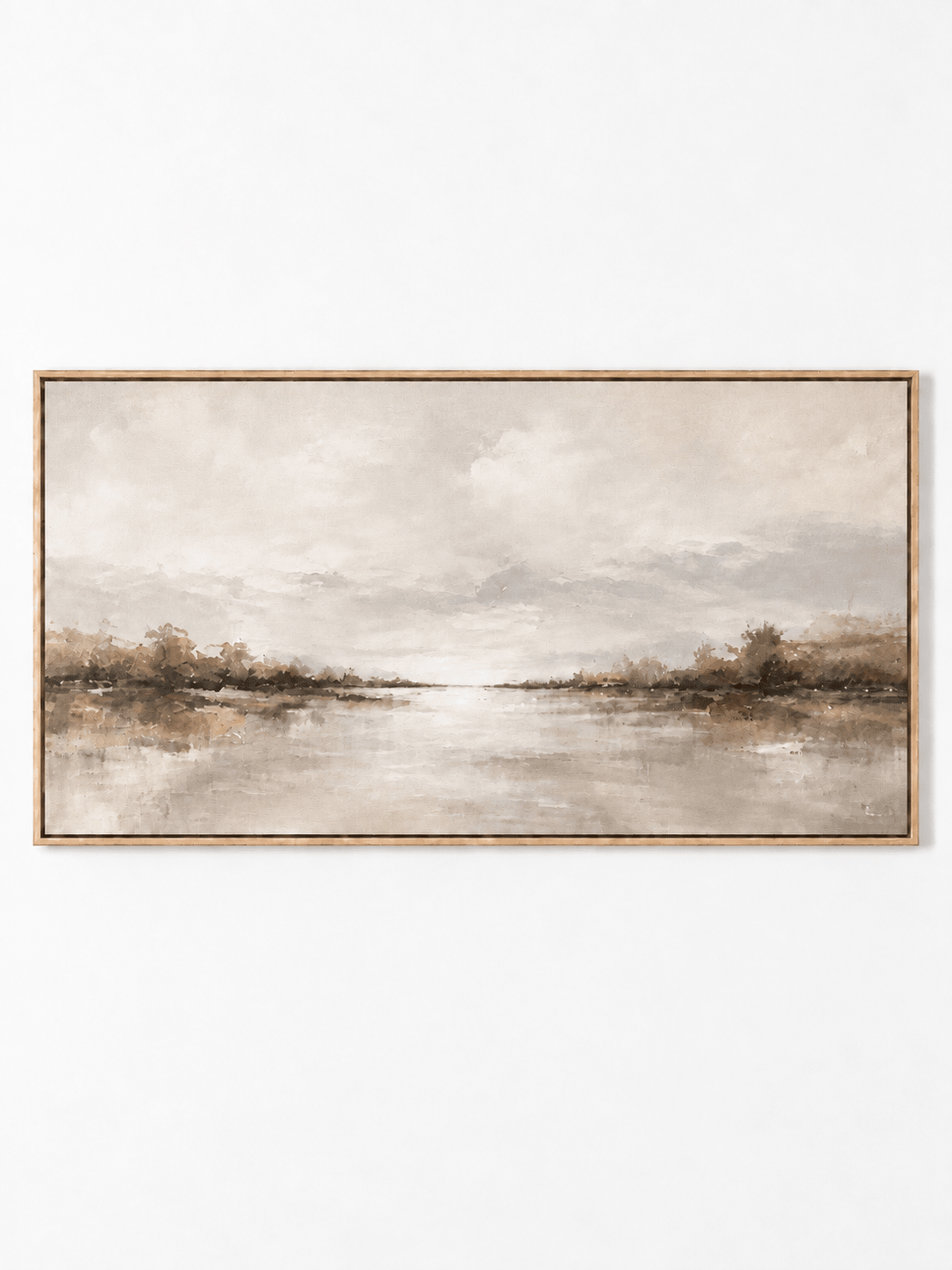
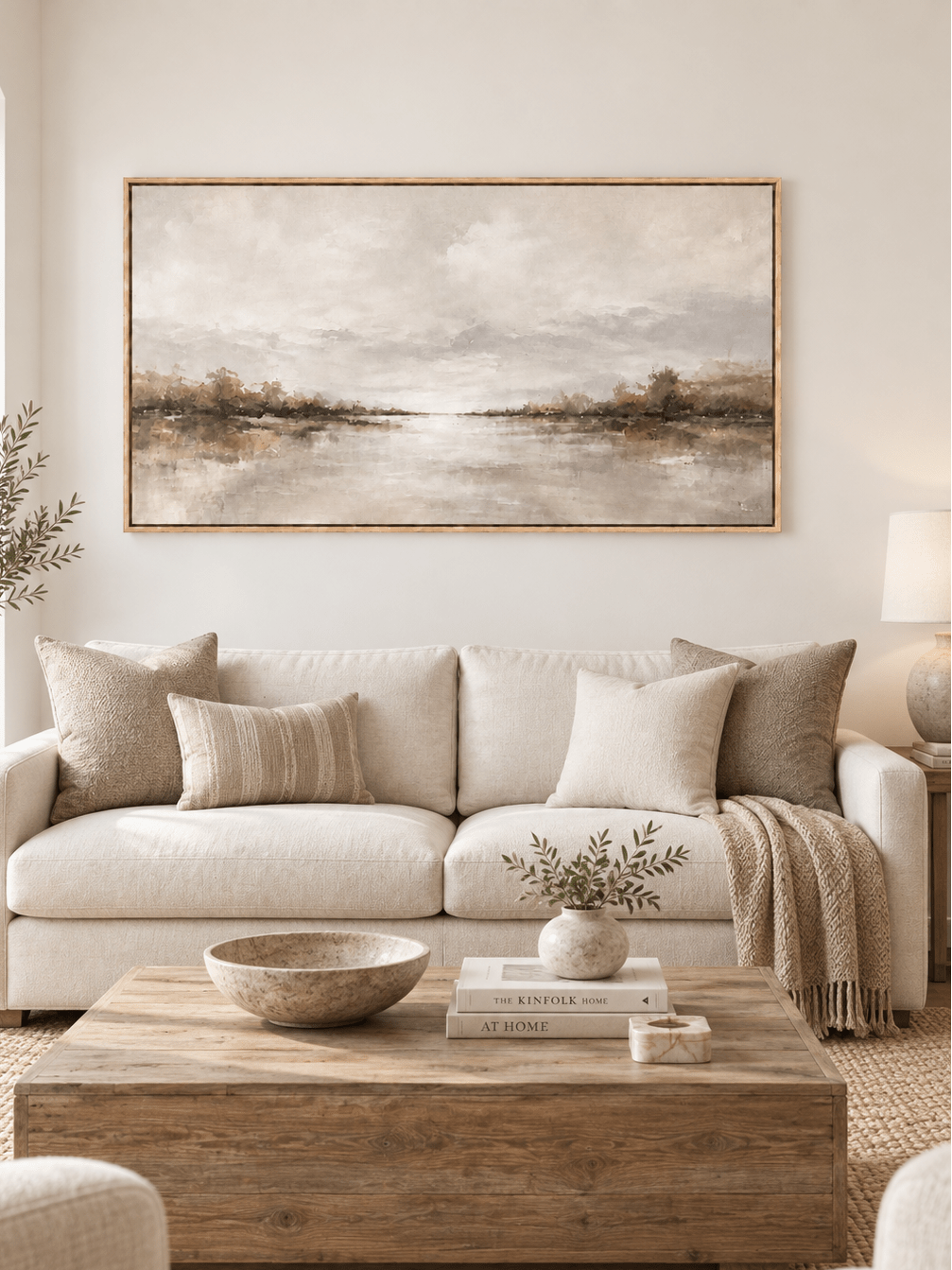
Look for a value pathway through the image. Mist, water, sky, a path or a pale horizon can move the eye beyond the darkest foreground. Moody Lake Reflection – EL#0395 combines a charcoal forest with misty gray-blue water. The water and reflection provide a lighter interval, so the scene is not simply a dark rectangle.
Convert a product image and a photo of your room to grayscale. If the painting still has three readable bands—dark, mid and light—it is likely to retain depth. If everything compresses into nearly black, plan stronger illumination or select a work with more mist, water or sky.

Use the 30% test for dark visual weight
As a practical design check, identify the largest dark masses in the room: the painting, sofa, cabinet, rug, curtains and wall. If dark elements occupy much more than roughly one-third of what you see from the entrance, the room may need a lighter counterweight. This is not a scientific threshold or a universal rule; it is a quick way to notice when several heavy surfaces have accumulated.
You can reduce the combined weight without changing the art. Open the curtain, use a lighter rug, leave more wall around the canvas or move a black floor lamp away from the same corner. Reflective glass, a pale lampshade and a small amount of warm metal can distribute light, but avoid filling the room with glossy objects solely to compensate.
If the room is intentionally dark and cocooning, use tonal variation instead: charcoal wall, deep green textile and a painting with gold, mist or ivory. The edges can remain low contrast while the internal highlights keep the scene legible.
Choose the wall color by separation
Warm white and pale greige
These walls give the easiest boundary around dark art. The contrast can make a small canvas look visually heavier, so do not oversize it merely because the wall is blank. Repeat one charcoal or brown note in a small object elsewhere to integrate the painting.
Mid-tone taupe, olive or blue-gray
Mid-tone walls can create a sophisticated transition, but the frame or a pale passage within the art becomes more important. Compare the darkest wall variation with the canvas edge. If they merge, choose a lighter frame, leave a wider margin or add directional light.
Charcoal or deep green
Dark-on-dark can make boundaries recede, which sometimes makes a compact room feel calmer rather than smaller. It works only when the image contains enough internal range. A golden path, misty sky or reflective water helps. Keep safety and installation considerations separate from the color decision, especially in a narrow passage.
Pick the right kind of moody landscape
Different subjects distribute darkness differently. A forest often concentrates dark verticals; a lake creates horizontal reflection and visual breadth; a mountain scene can open through atmospheric distance. Match that structure to the room's shape.
- Narrow room: a horizontal lake or distant landscape can widen the visual field.
- Low ceiling: avoid a very tall, dark block unless pale sky occupies the upper area.
- Small square wall: use a centered composition with a clear light passage rather than an edge-to-edge dark forest.
- Windowless room: prioritize visible midtones and plan a dedicated artwork light.
Golden Pine Forest – EL#0388 uses dark pine forms with warm light and a woodland path. It suits a room that already contains warm wood or camel tones, provided those materials do not create another large dark block immediately below the canvas.

Scale the painting to the furniture group
A compact room does not always need small art. Several tiny pieces can create more visual noise than one measured canvas. Relate the painting to the furniture below it: a desk, console, loveseat or bed. Use painter's tape to test the complete outer dimensions and keep a visible margin around the work.
Dark art carries more visual weight than pale art of the same size. If two sizes fit physically, the smaller dark version may feel as substantial as the larger light version. Review from the doorway, because that is where the room's total balance is easiest to judge.
Do not let the painting fill every remaining inch between furniture and ceiling. Negative space separates the dark field from the room's boundaries. This article focuses on light and value; the existing guide to statement art in small spaces covers the broader question of using larger pieces in compact homes.
Light the artwork without flattening the room
A wide, soft beam is usually more forgiving than a narrow hotspot. The light should reveal midtones and surface variation, not turn the center of the canvas bright while the edges disappear. If the painting has physical texture, aim the source from a slight angle so the relief remains visible without casting dramatic shadows.
Test the room under the lamps you use every day. Ceiling lights may create glare; a table lamp may illuminate only the lower wall; daylight may vanish early in winter. A plug-in picture light or adjustable ceiling spot can help, but check heat, distance and installation instructions for the fixture and artwork.
For a more detailed discussion of angle and beam spread, see the separate guide to lighting textured wall art. Here, the priority is simply to preserve the painting's internal value range after dark.
Use reflective surfaces selectively
A mirror across from a window, a pale ceramic lamp or a lightly finished table can return light to the room. Place reflective elements where they brighten the overall scene rather than creating glare on the canvas. Direct reflection of a window in a glossy surface near the painting can be distracting.
Warm metal can connect with golden passages in a forest scene. Cool metal can sharpen blue-gray water. Keep these repeats small. The painting should remain the dominant dark element, while nearby surfaces support its legibility.
Compare misty and high-contrast options
Misty Mountain Forest – EL#0387 contains fog and warm golden neutrals, which can soften the transition into a small room with beige or wood. Misty Forest Lake – EL#0384 uses foggy evergreen forms and neutral reflections, giving a cooler and more horizontal impression.
Choose the mistier work when the room already has sharp contrast or many edges. Choose the stronger dark-light pattern when pale walls and simple furniture need an anchor. The subject name does not tell you enough; compare the actual distribution of light and dark in the full image.

A seven-minute evening test
- Turn on only the lights you normally use in the room.
- Stand at the doorway and identify the largest dark surfaces.
- Place a printed image or screen at the proposed position without treating screen color as exact.
- Check whether the main subject remains legible from the normal viewing distance.
- Mark the full artwork dimensions and leave deliberate wall space around them.
- Move one competing dark object away and compare the balance.
- Confirm the chosen size, orientation and presentation on the product page.
Frequently asked questions
Will dark wall art make a small room look smaller?
Not by itself. A dark focal point can clarify the room. The space feels heavier when several large dark surfaces merge and the artwork has no readable midtones.
What wall color works with moody landscape art?
Warm white and pale greige create clear separation. Mid-tone or dark walls can also work when the painting contains lighter passages or a frame defines the edge.
Should moody art be smaller in a compact room?
Sometimes, because dark art carries visual weight. Test more than one taped size against the furniture rather than assuming every small room needs a small canvas.
How do I light a dark painting?
Use a soft, broad source that reveals midtones without a central hotspot. Check glare and view the painting under normal evening conditions.
Are forest or lake scenes better for a narrow room?
A horizontal lake or distant landscape often creates more lateral movement. Forest scenes can work if mist, a path or light breaks up the vertical dark forms.
Choose depth, not darkness alone
The most successful moody painting in a small room is not necessarily the palest one. It is the one whose dark, mid and light areas remain intelligible in the room's real conditions. Compare the latest New Wall Art with the Landscape & Nature Wall Art collection, then test scale and evening visibility before settling on a product configuration.