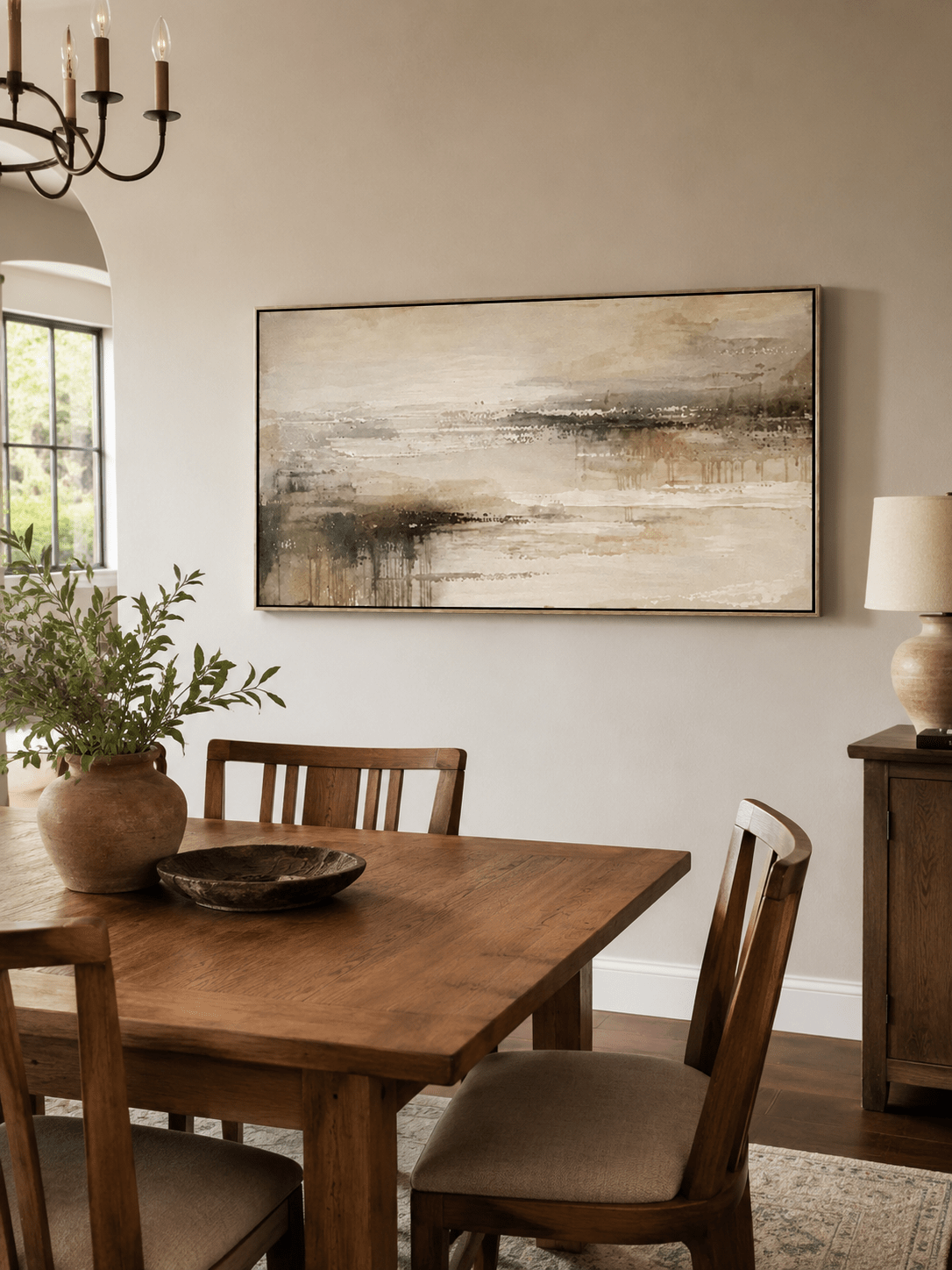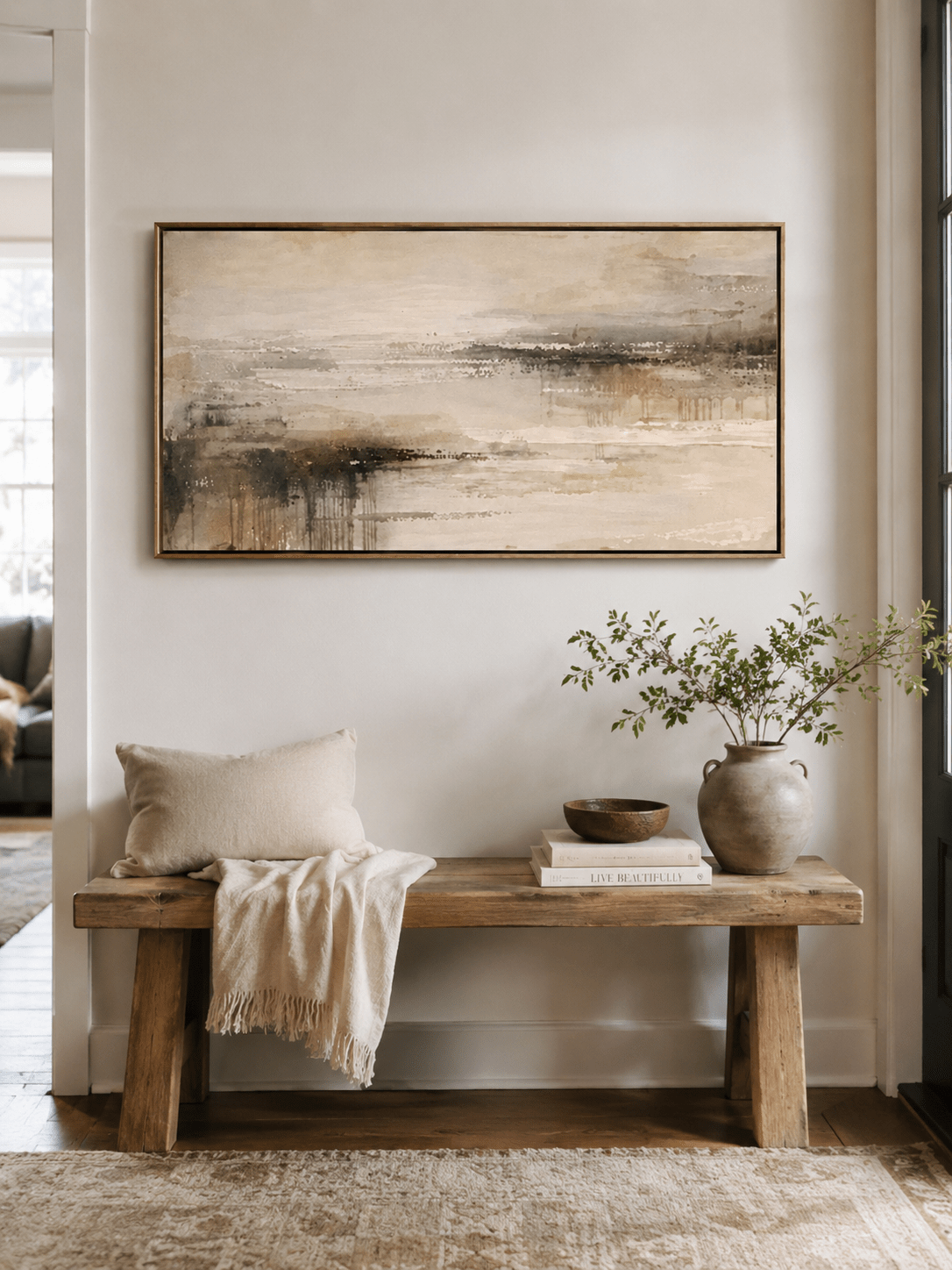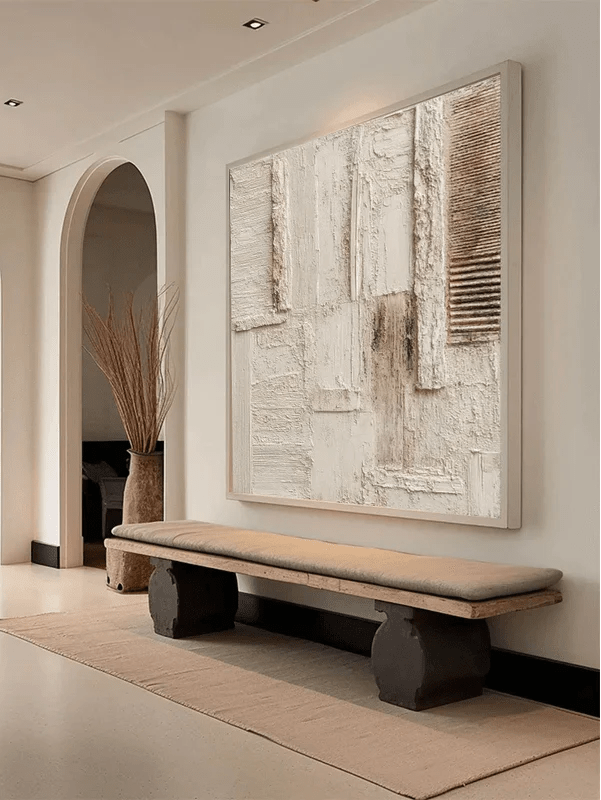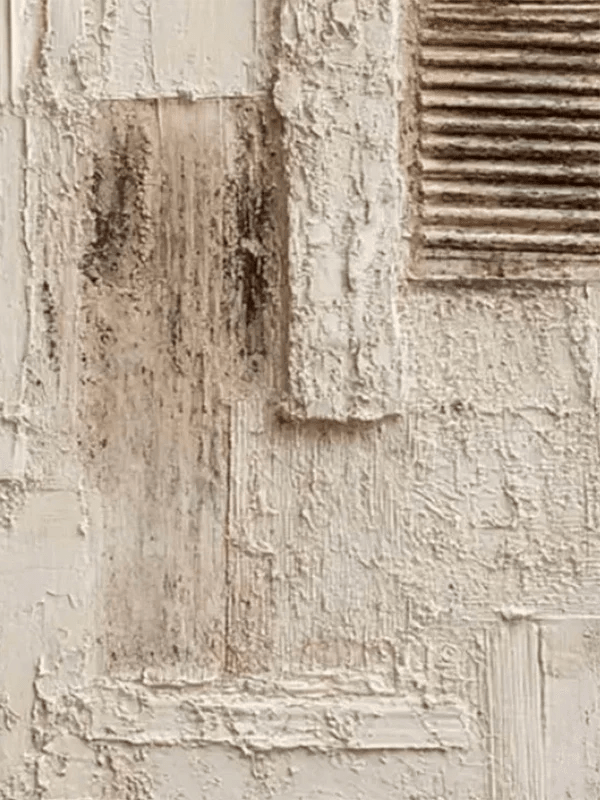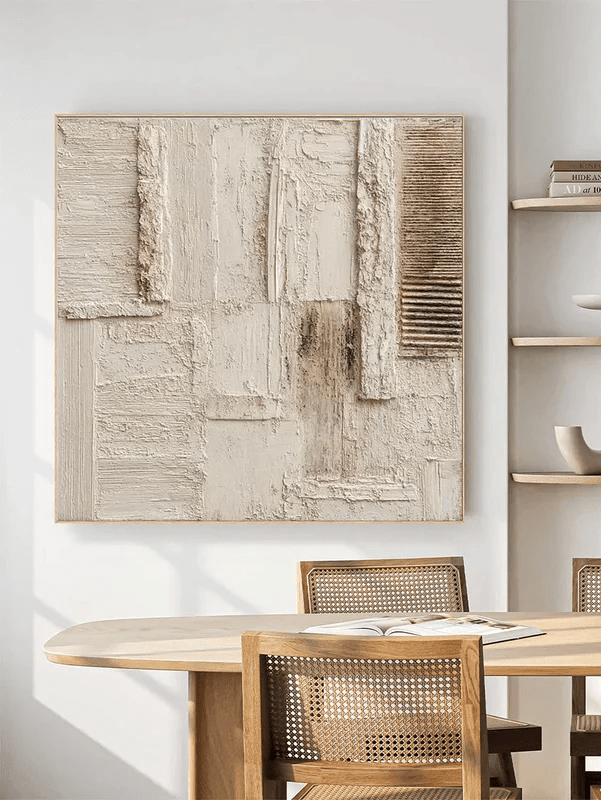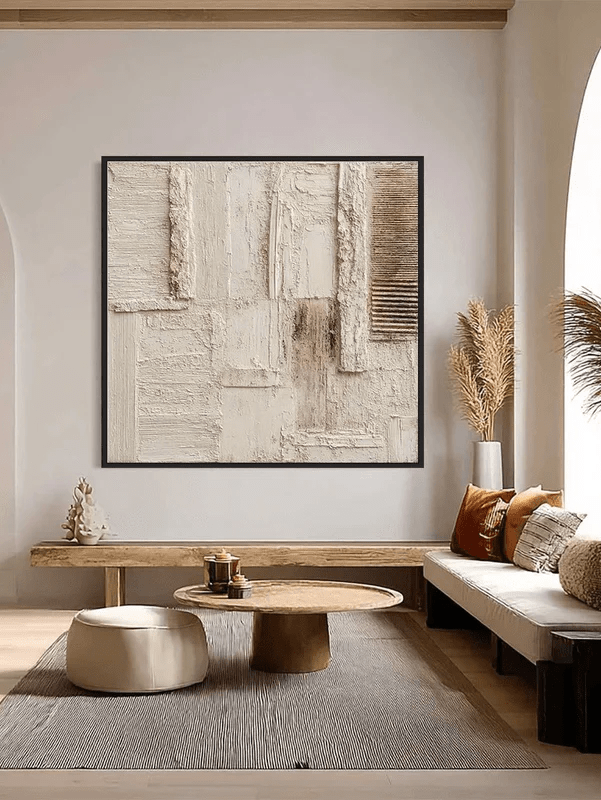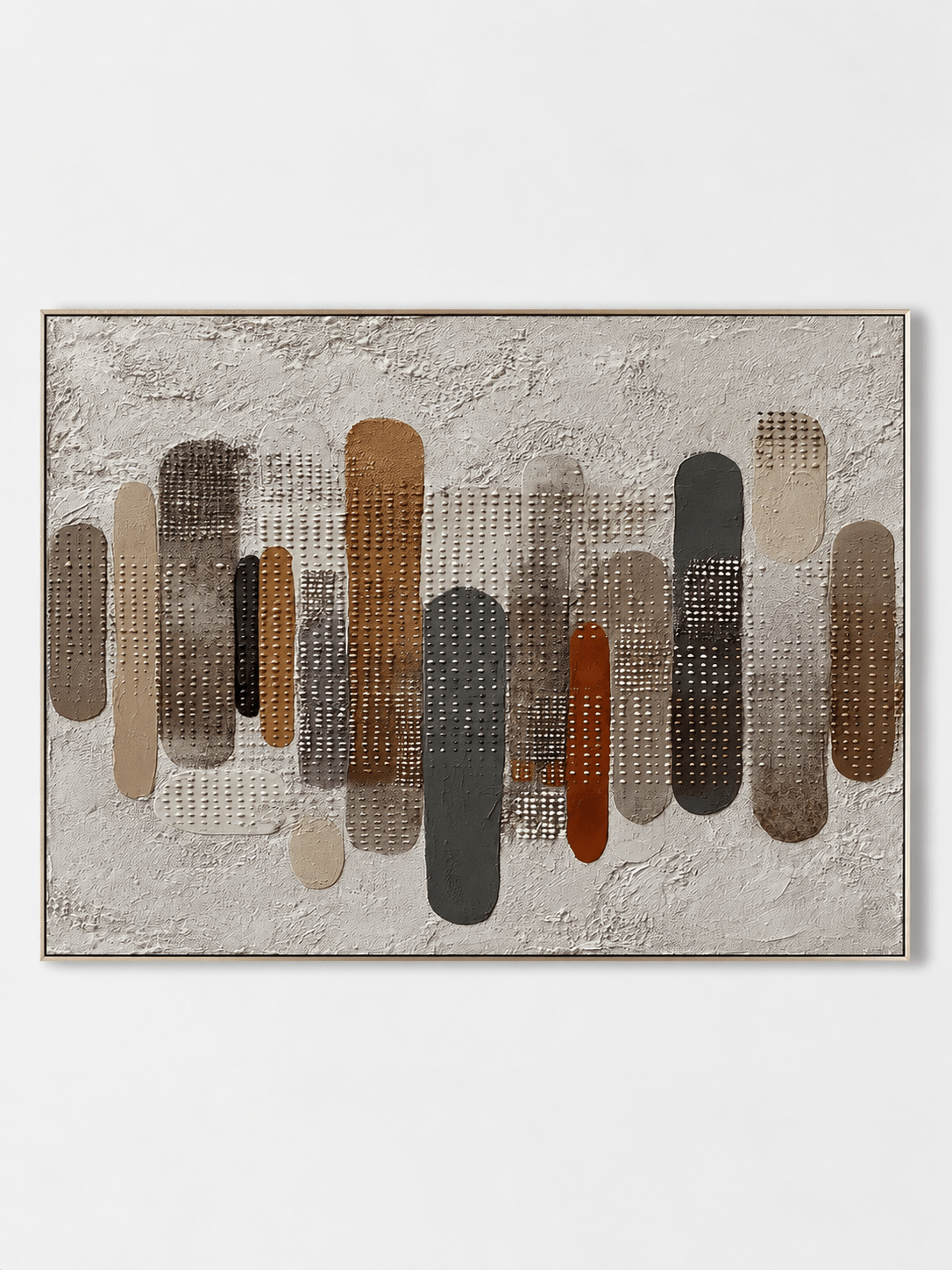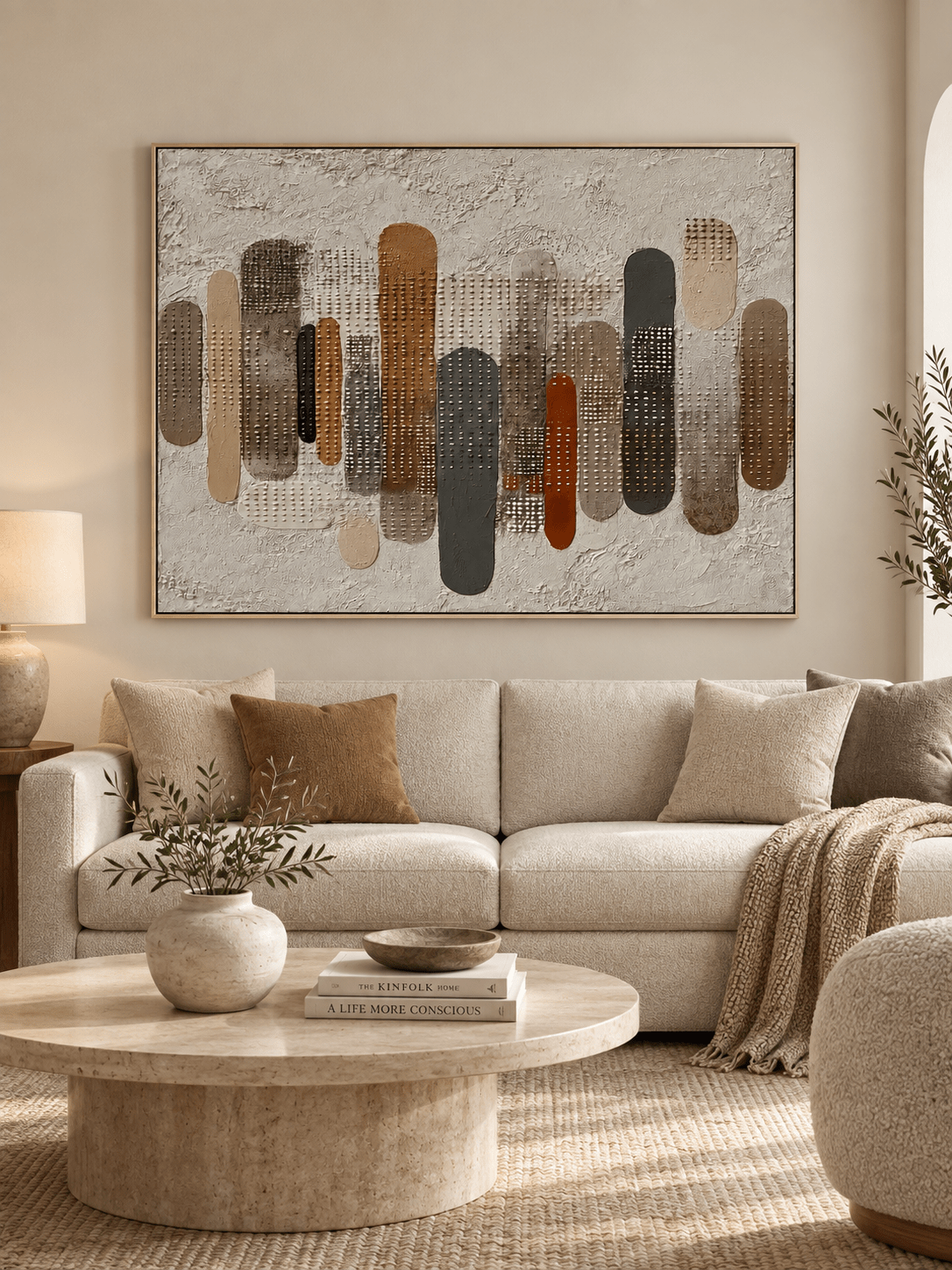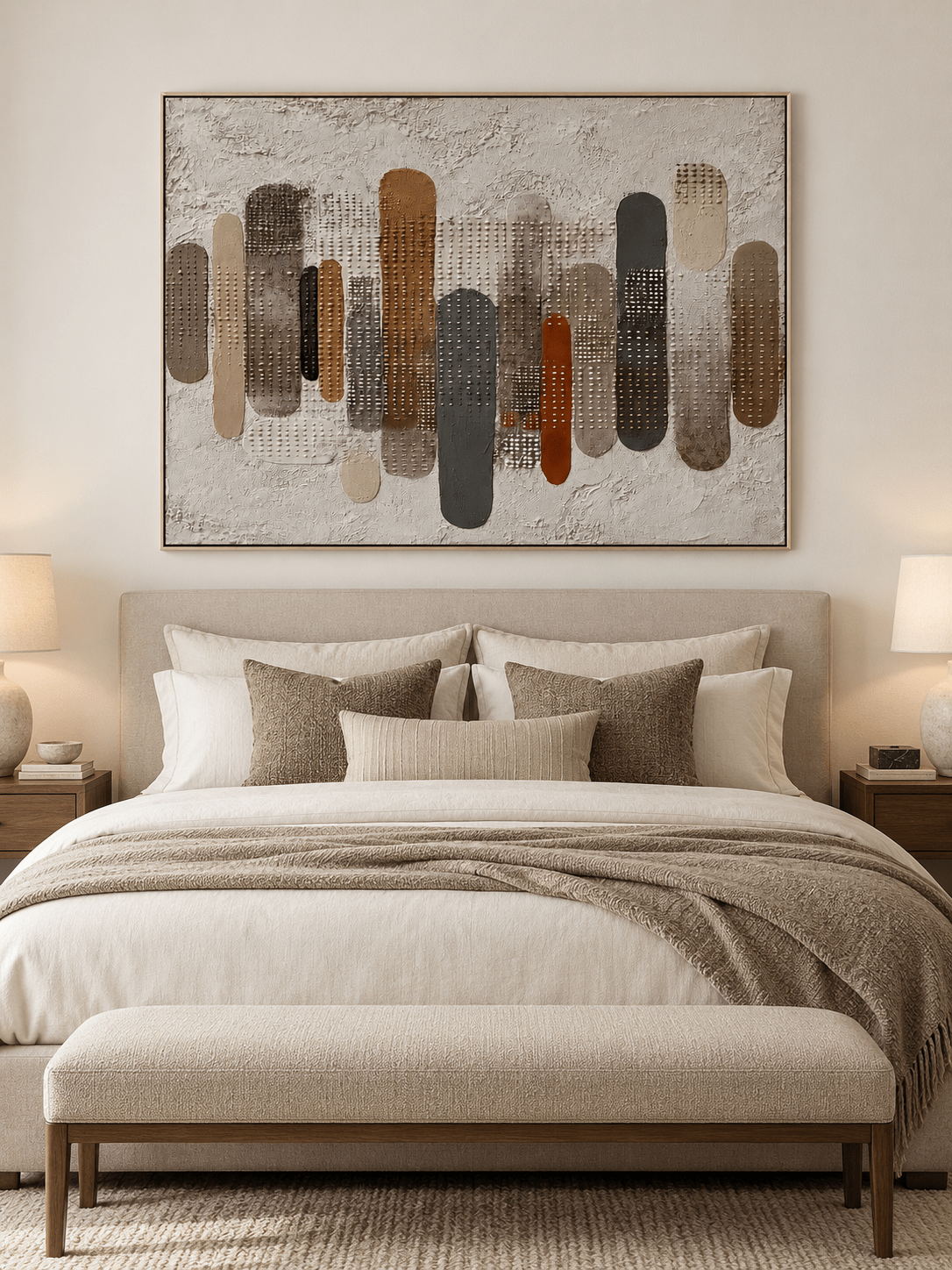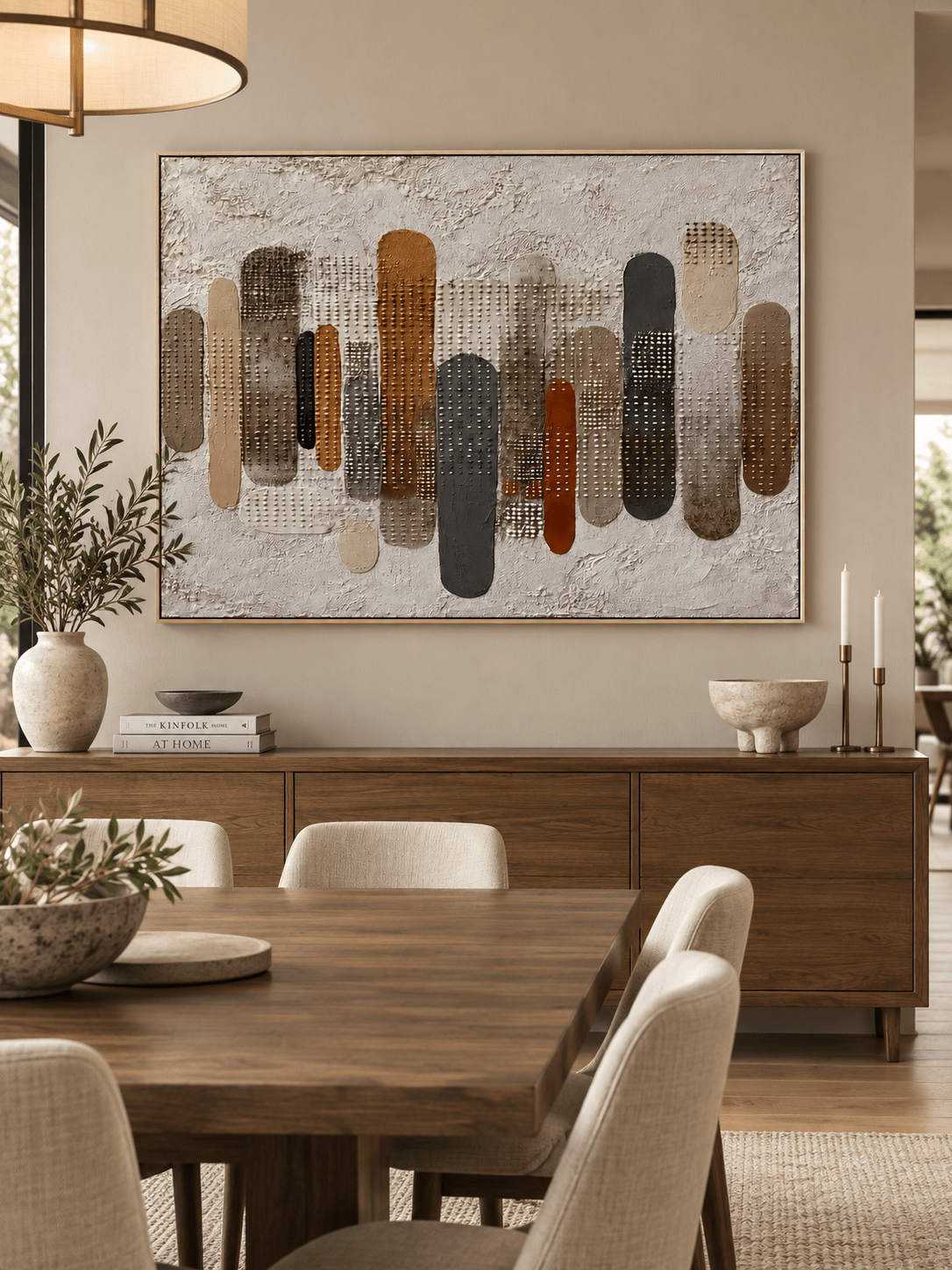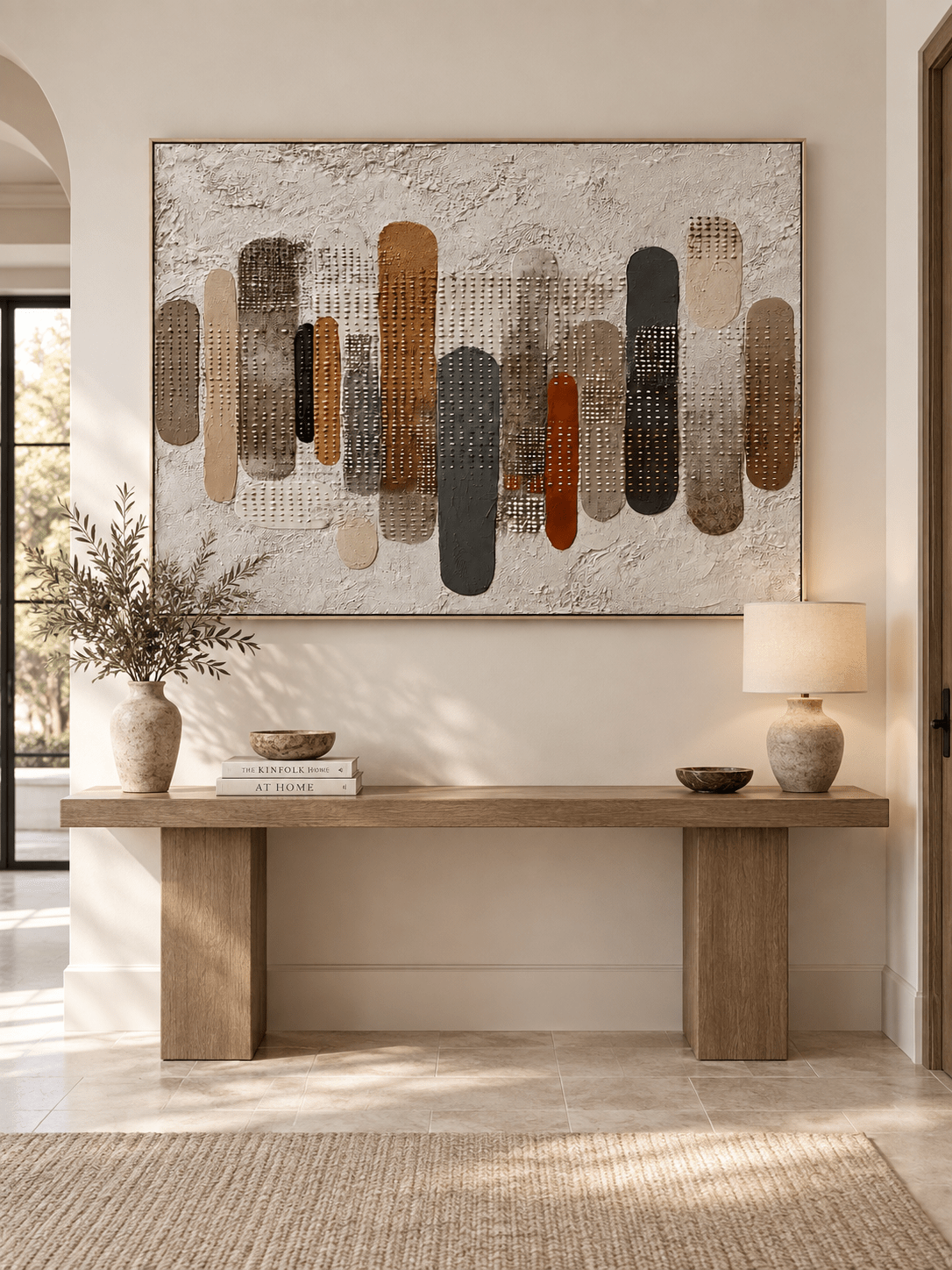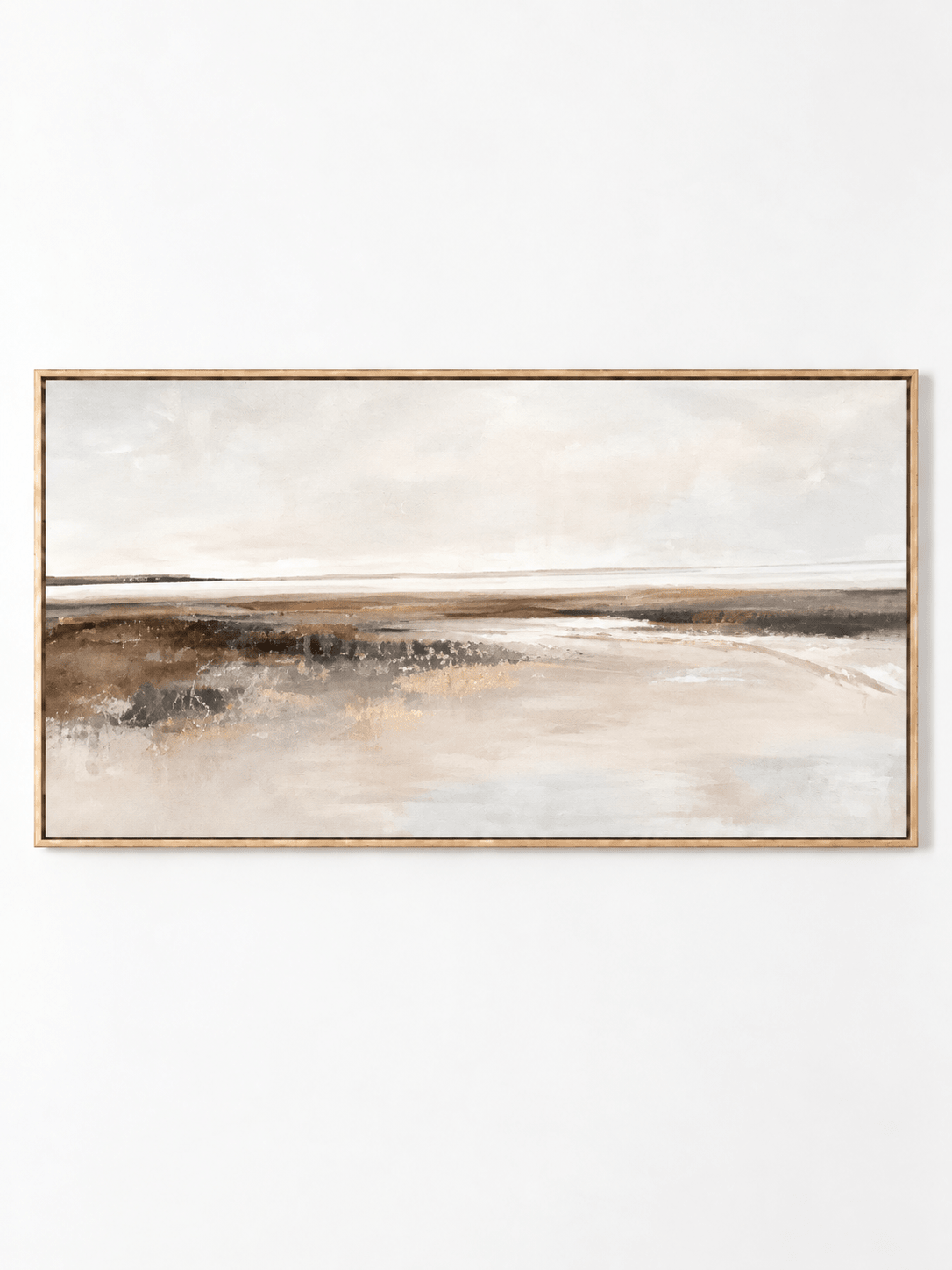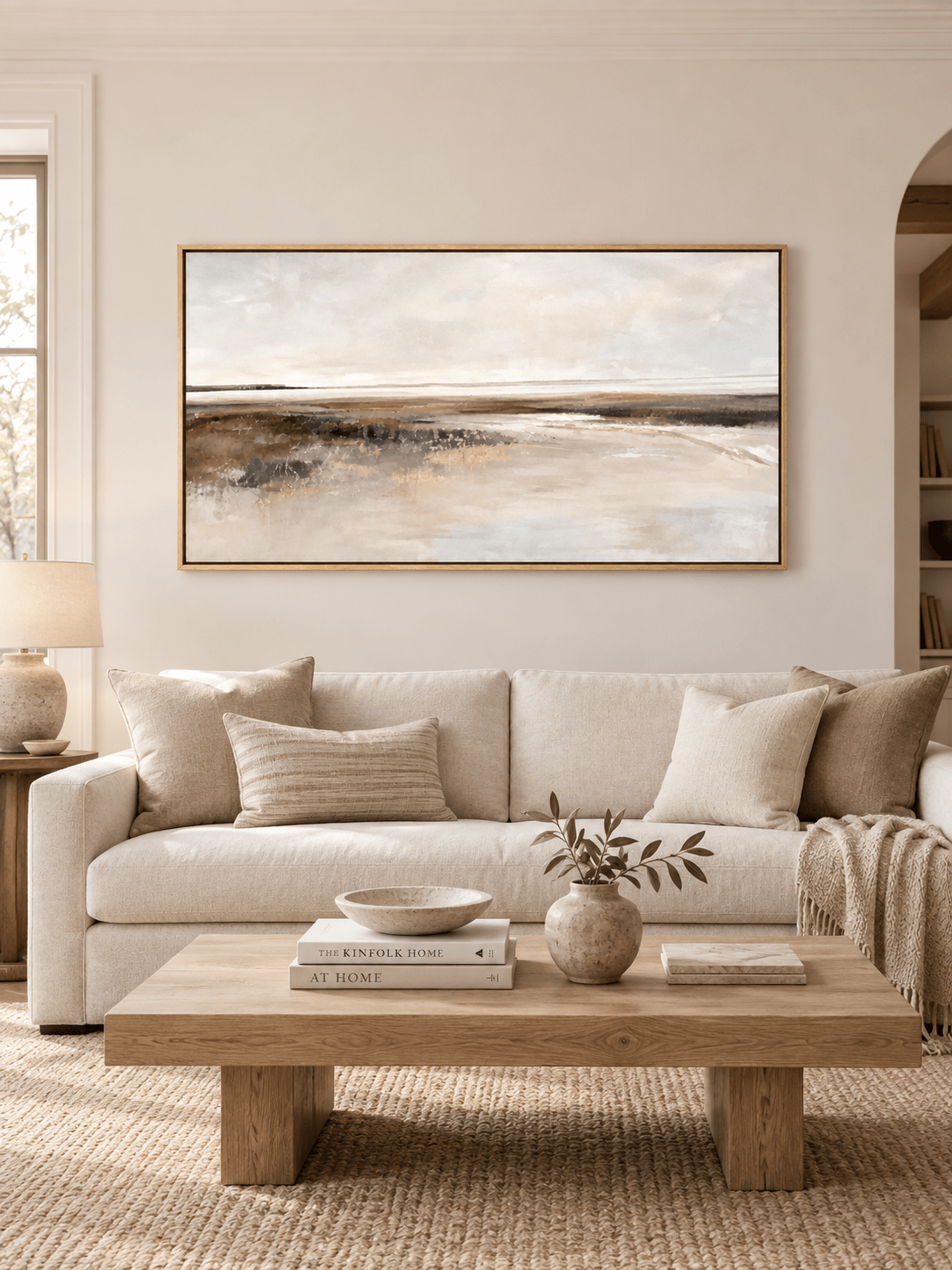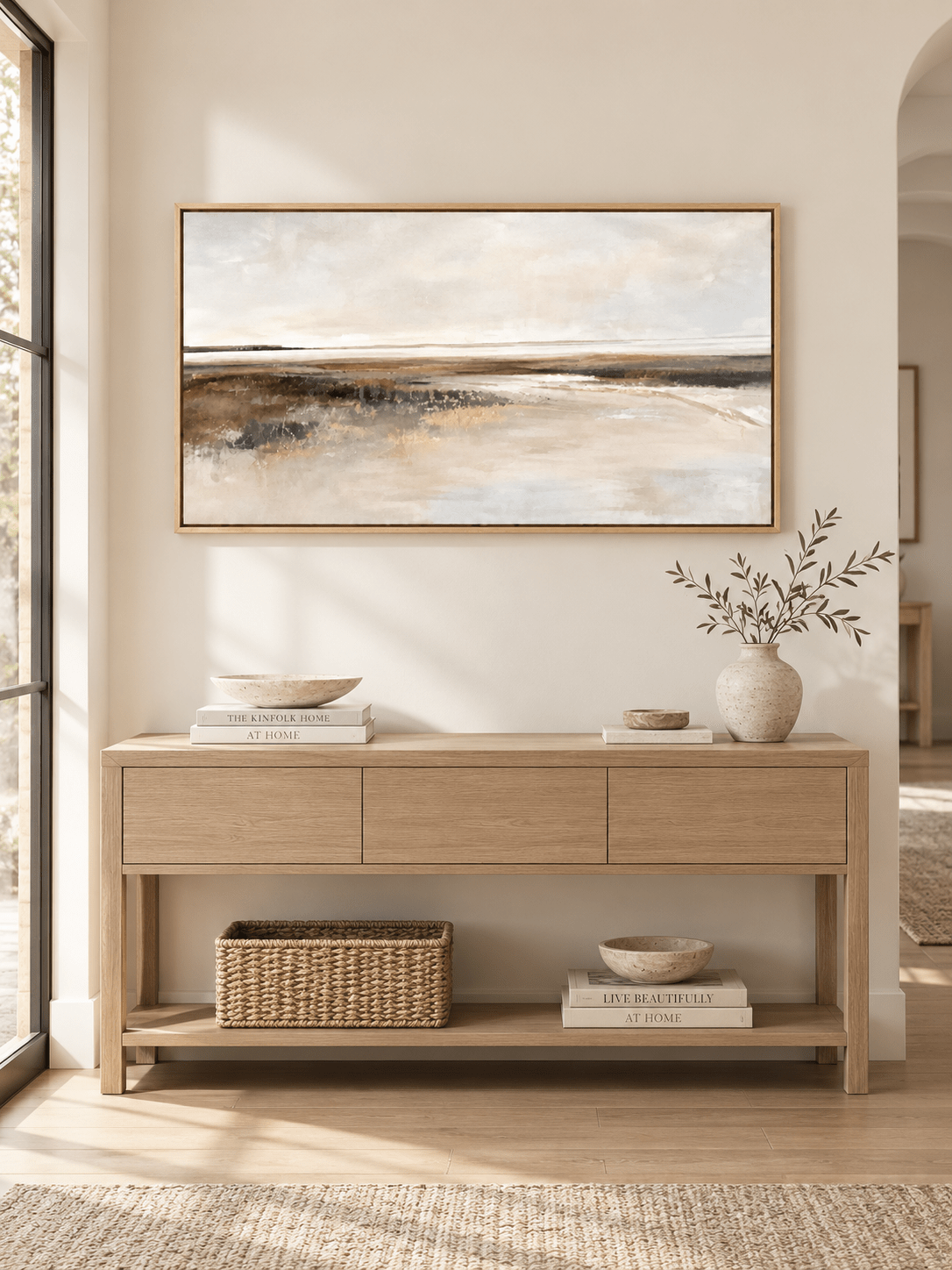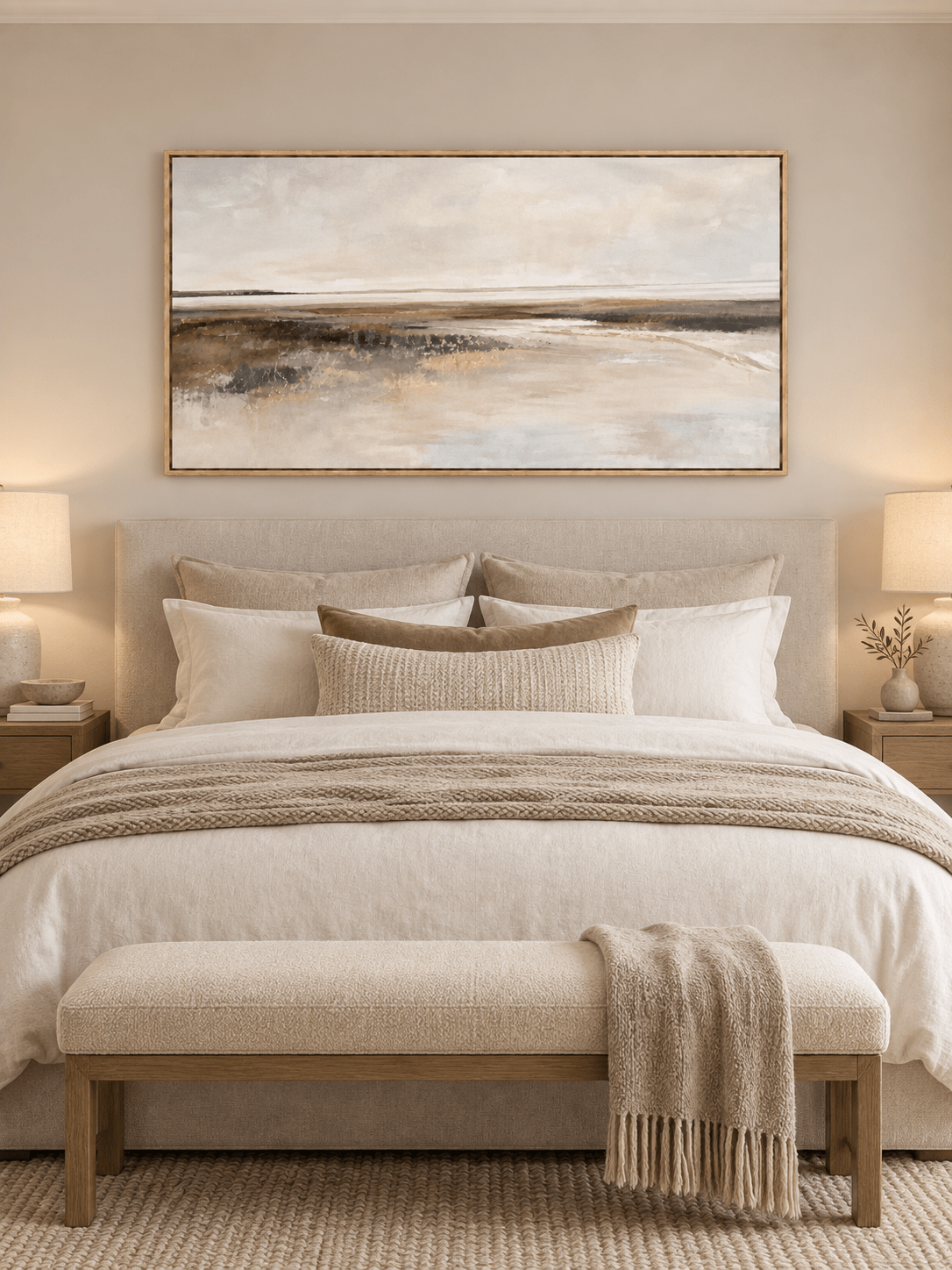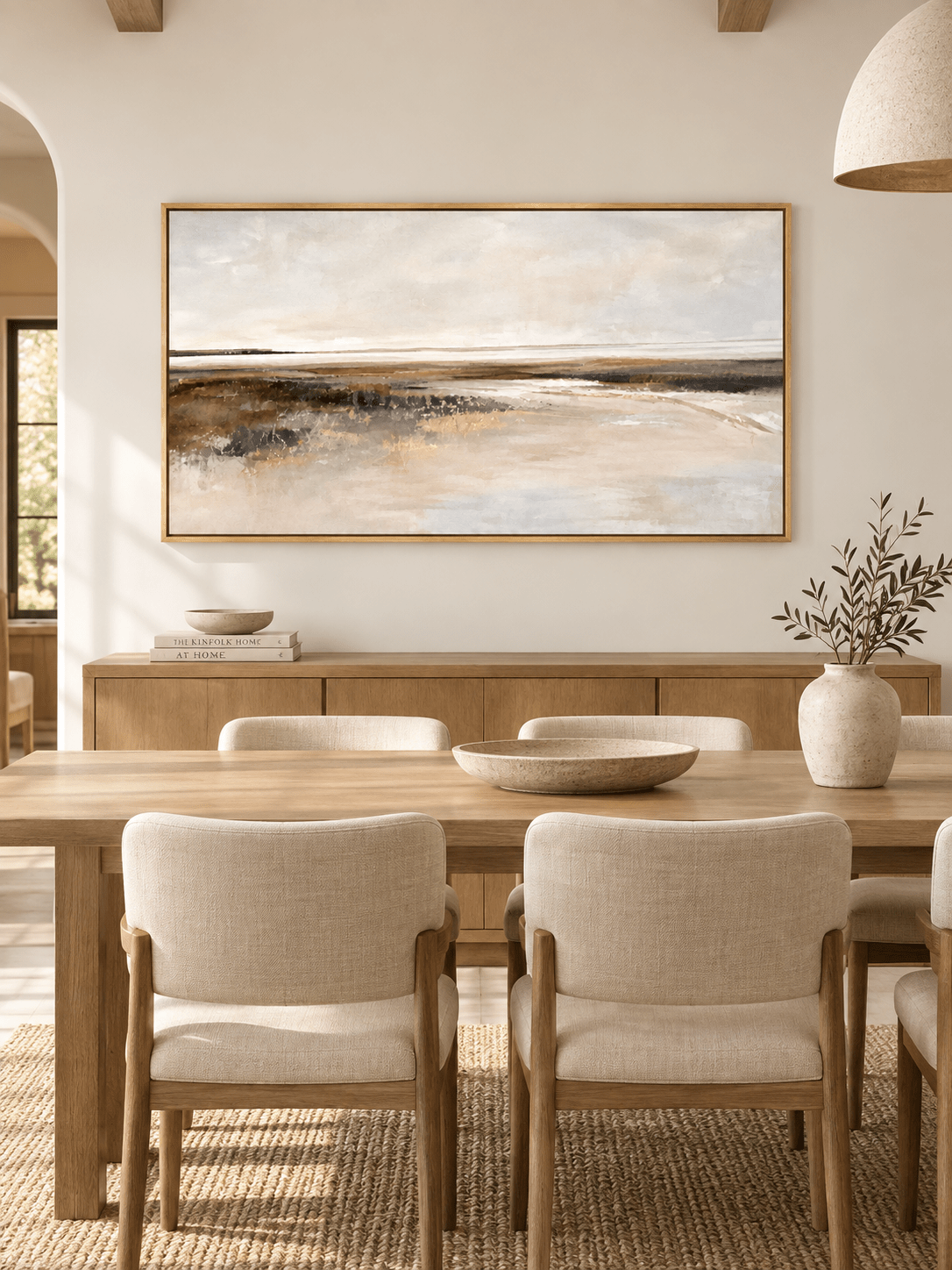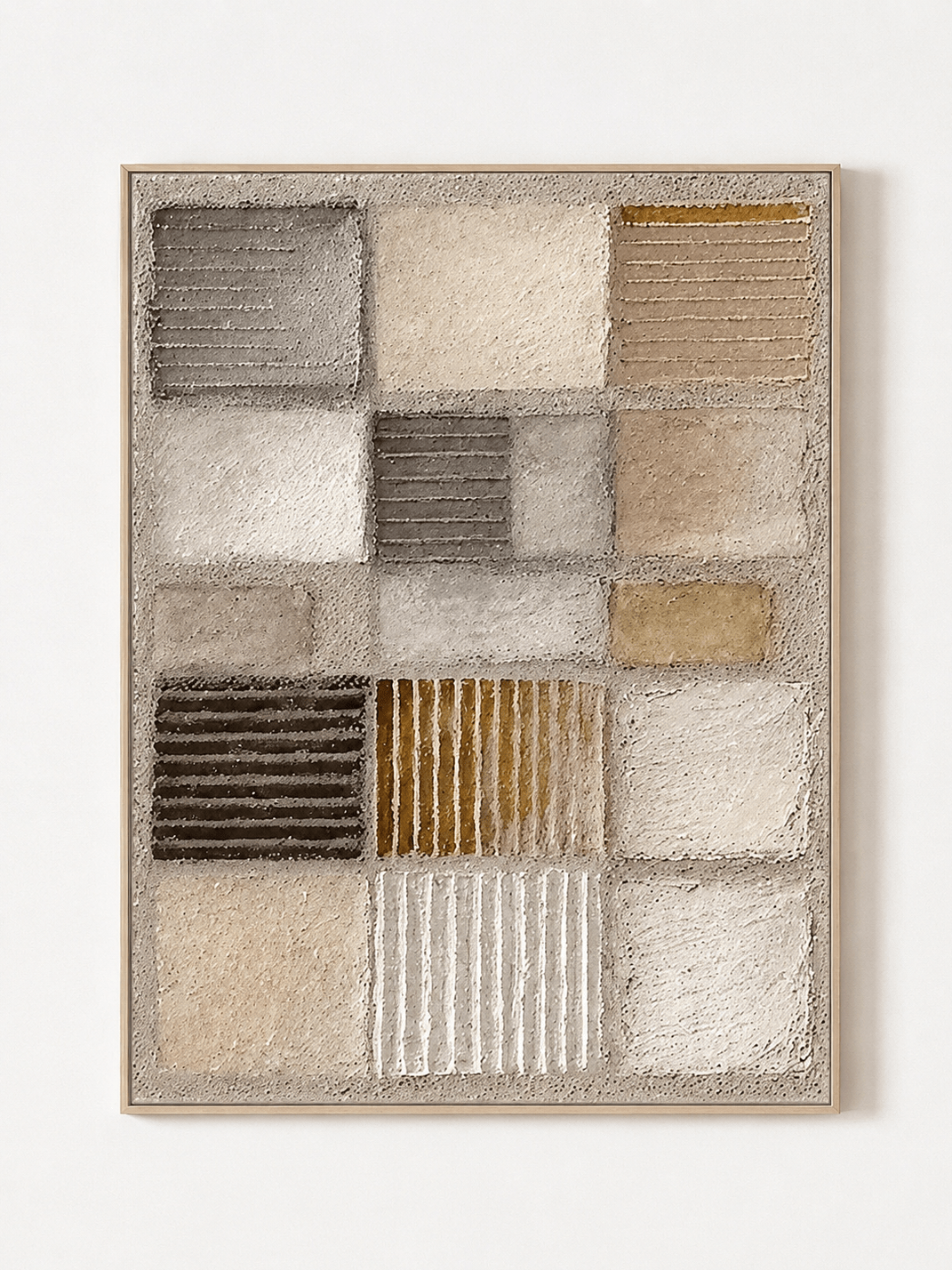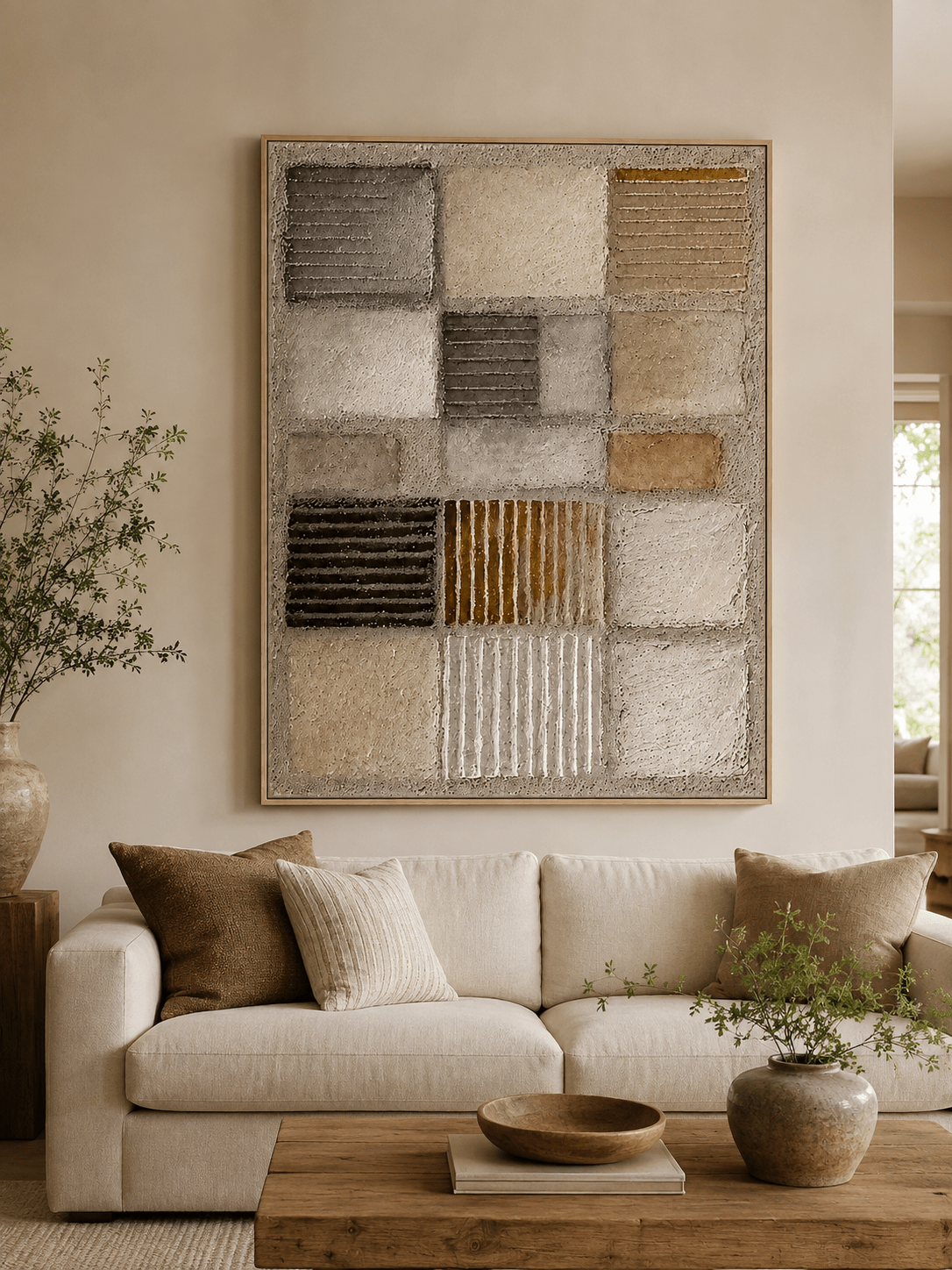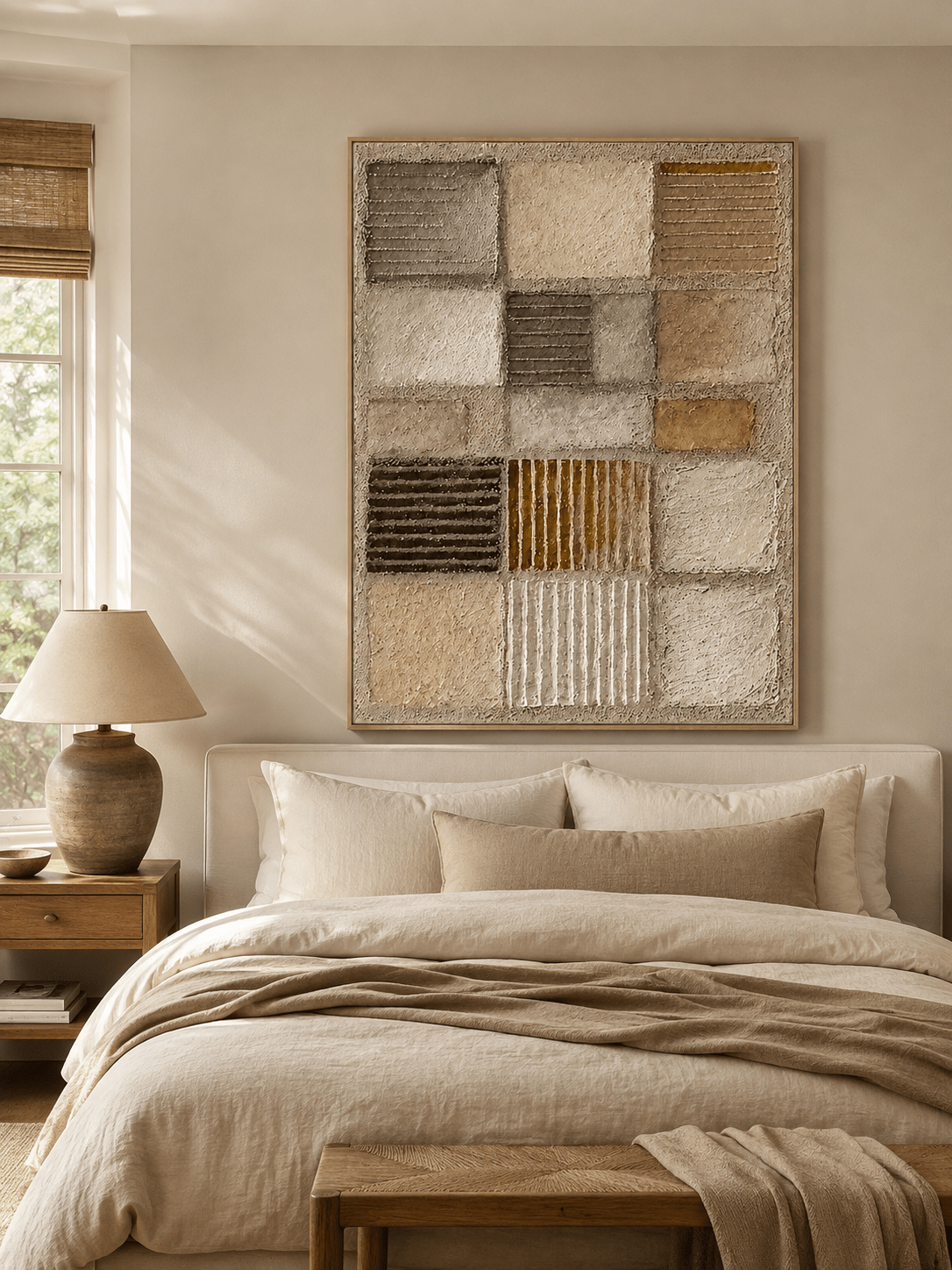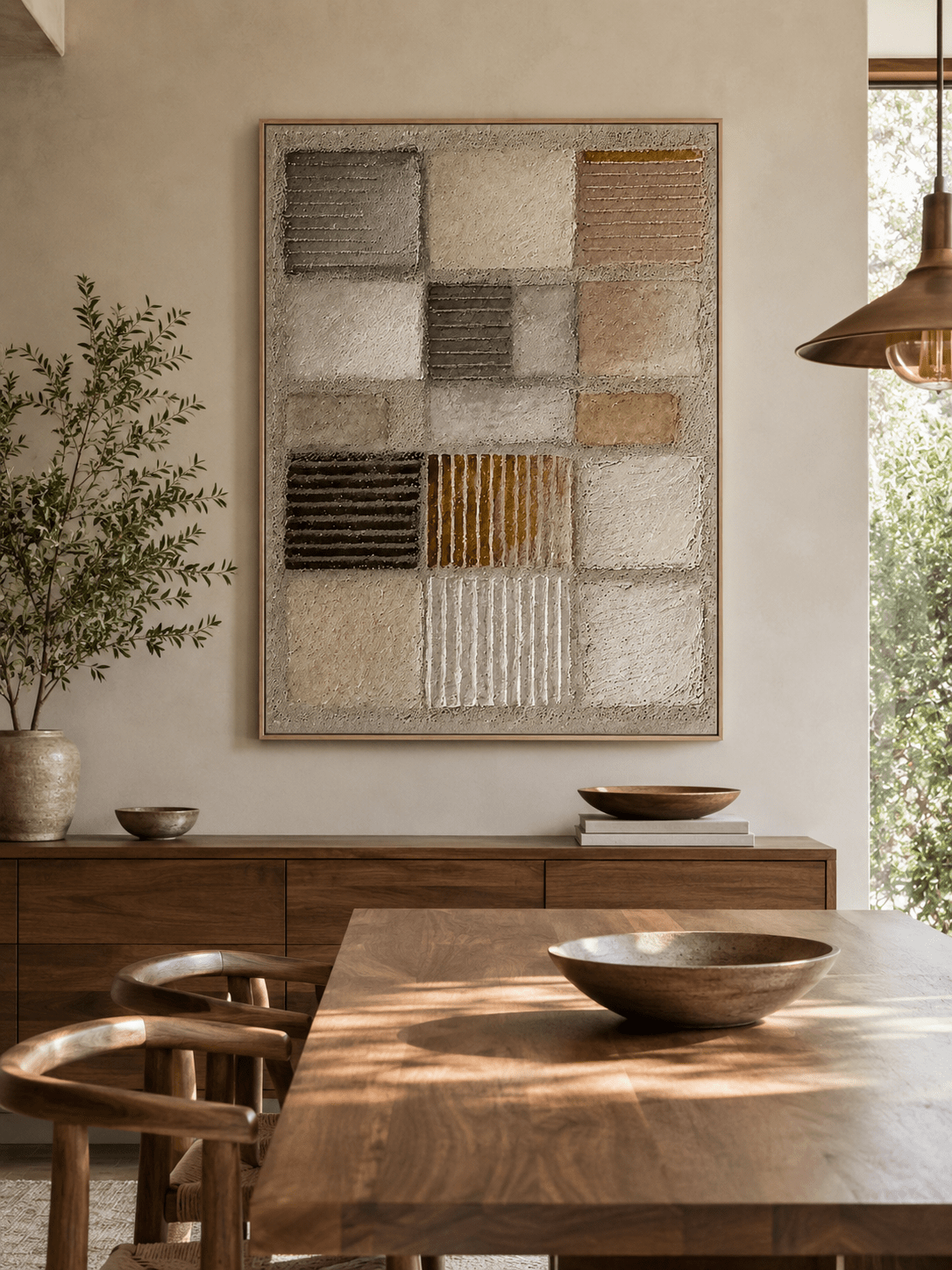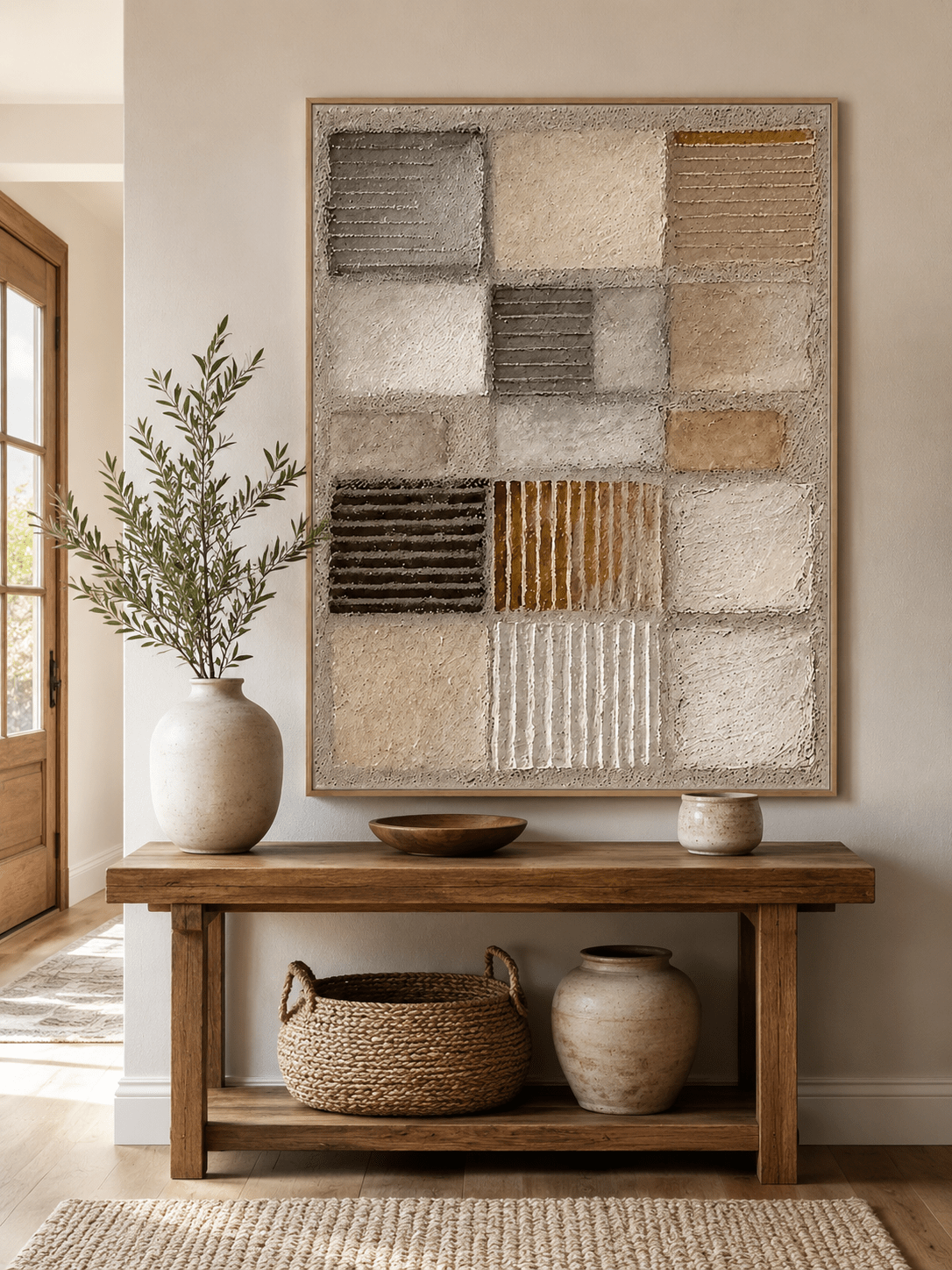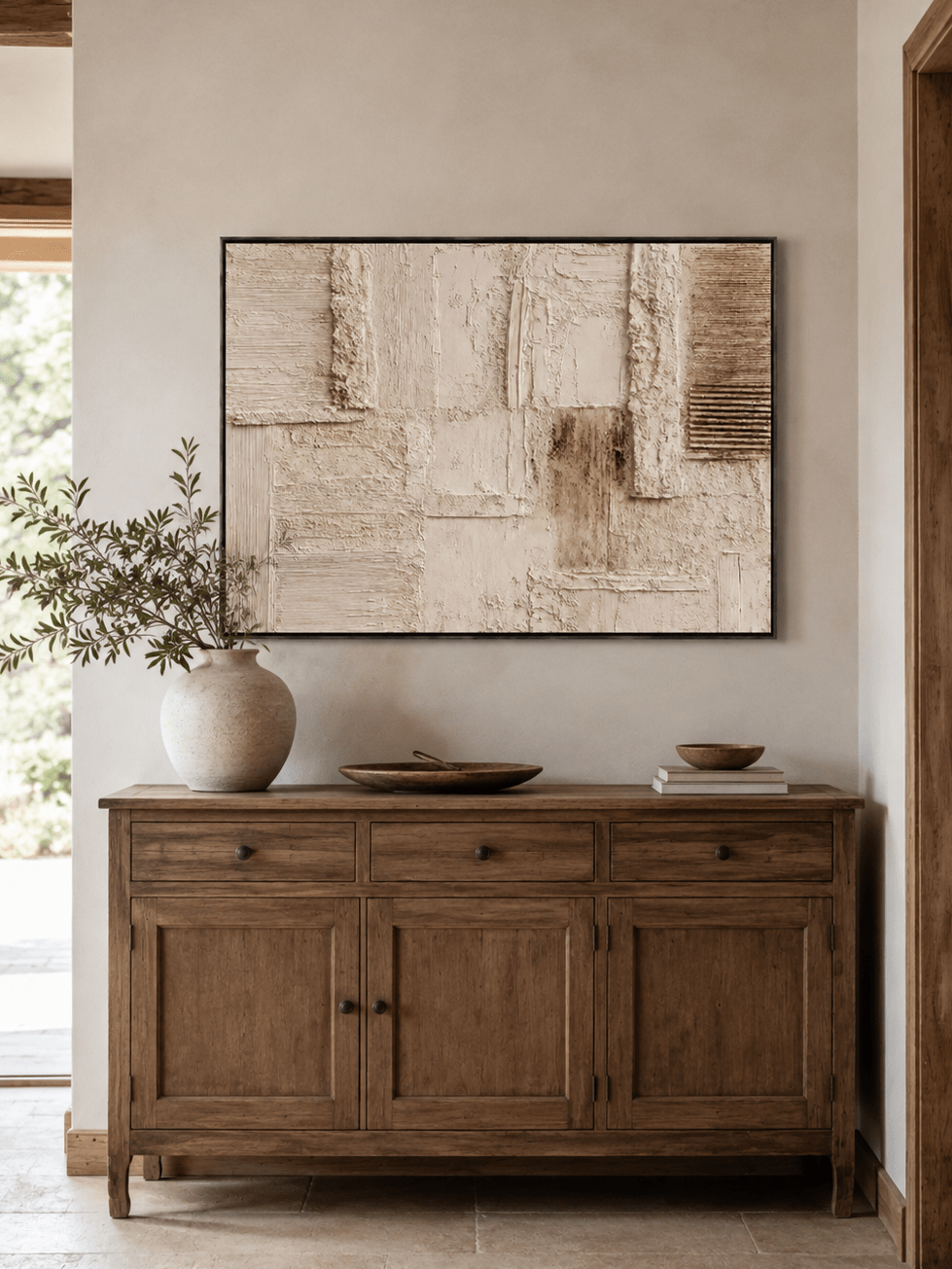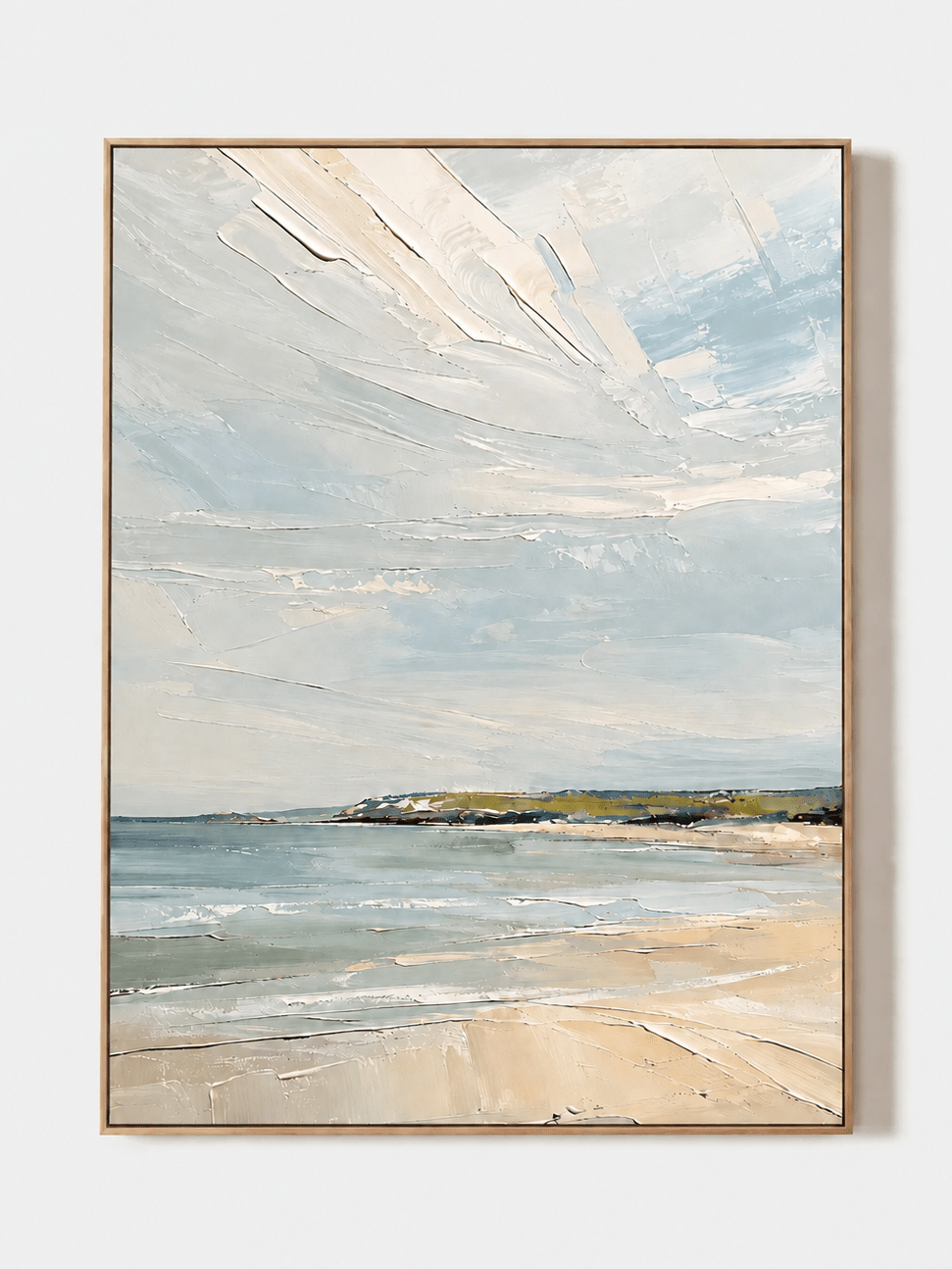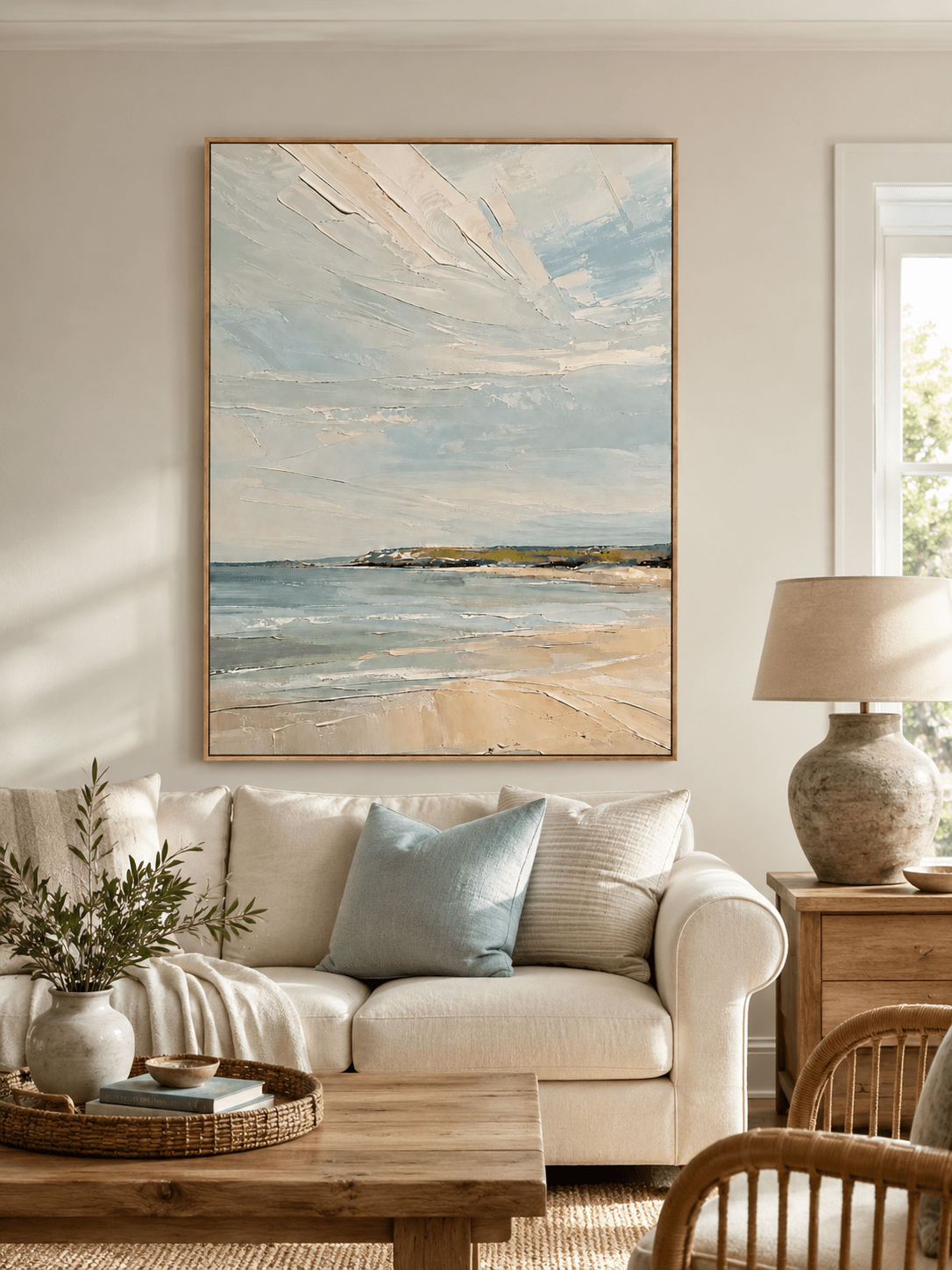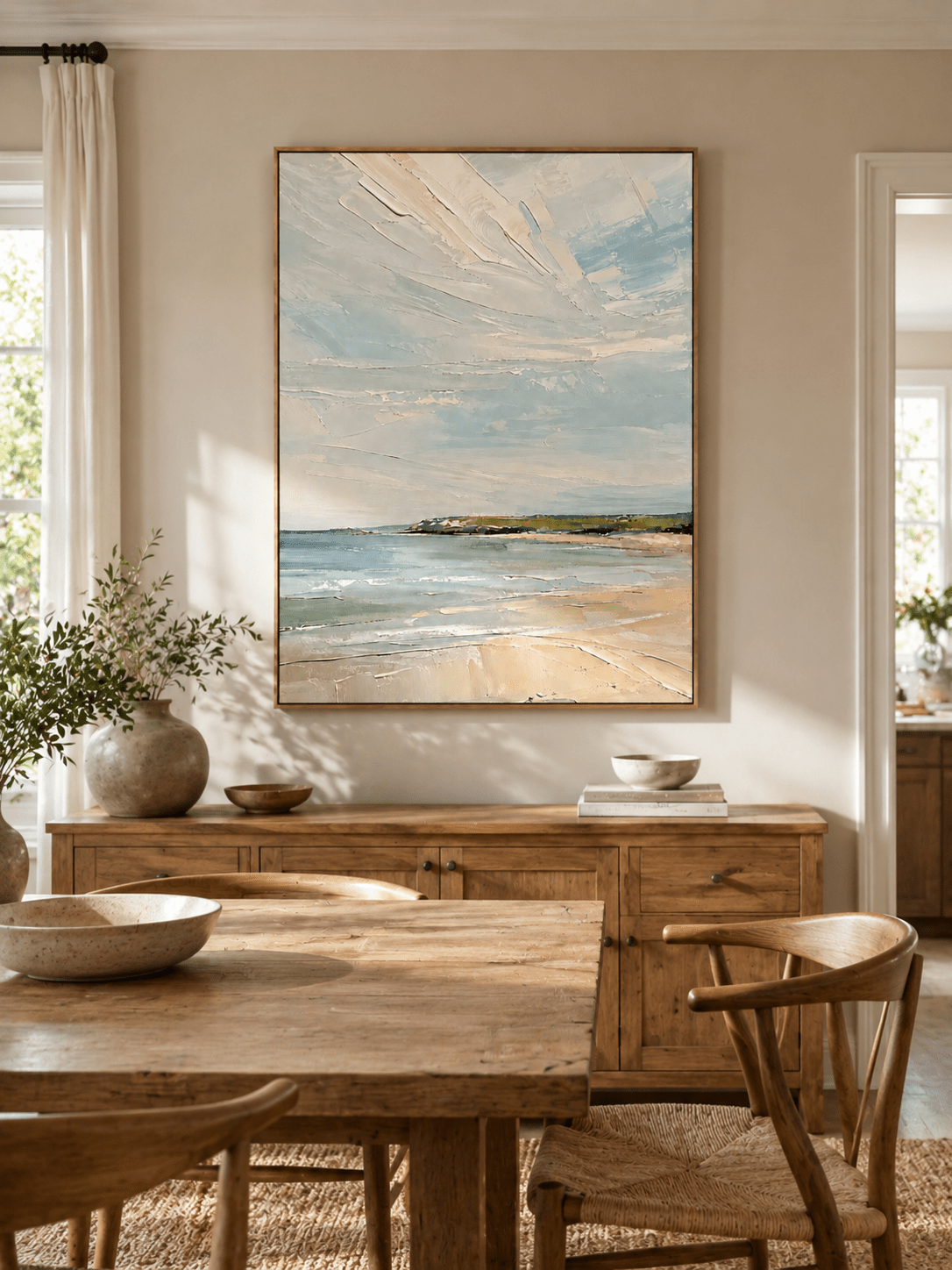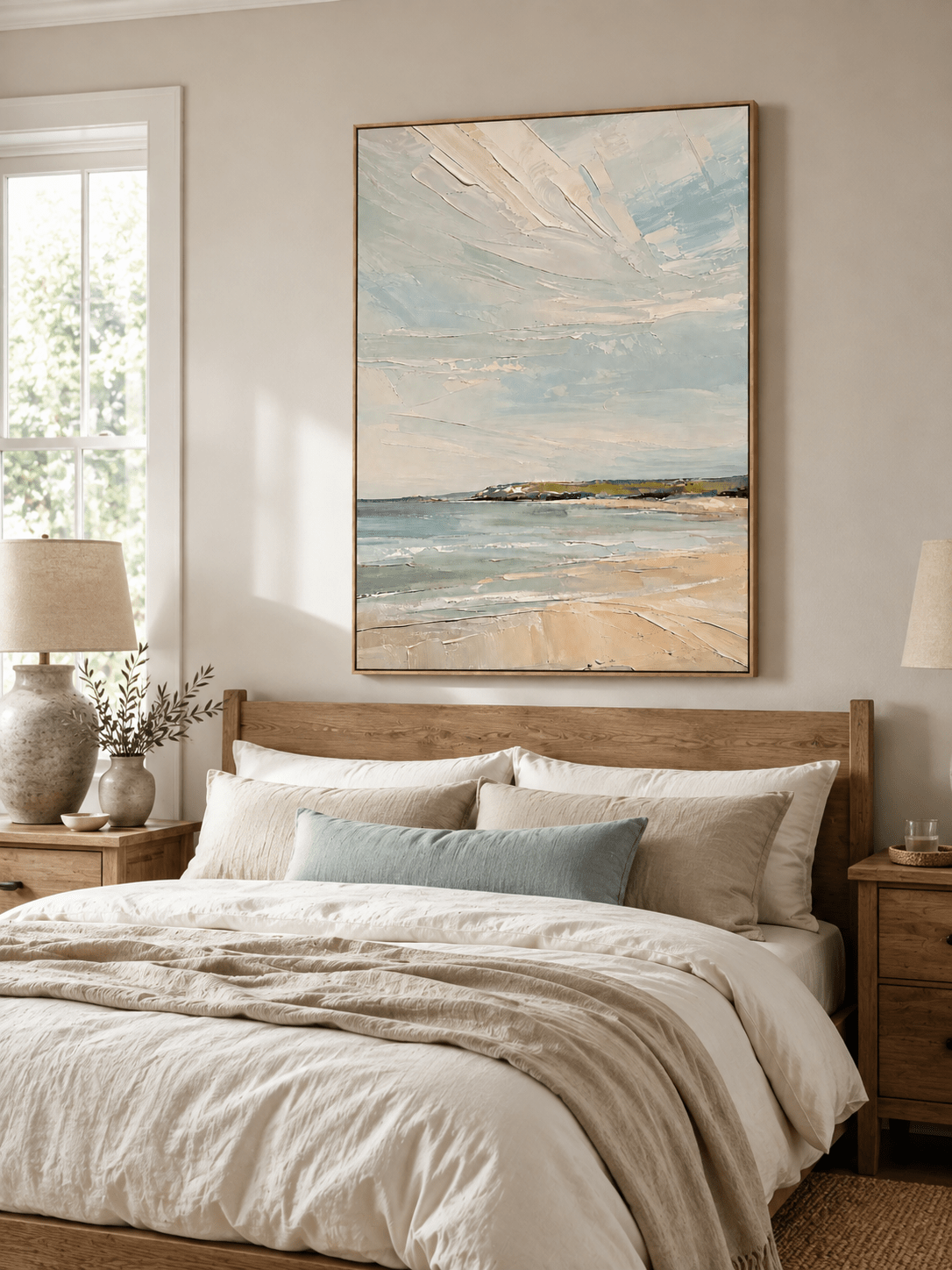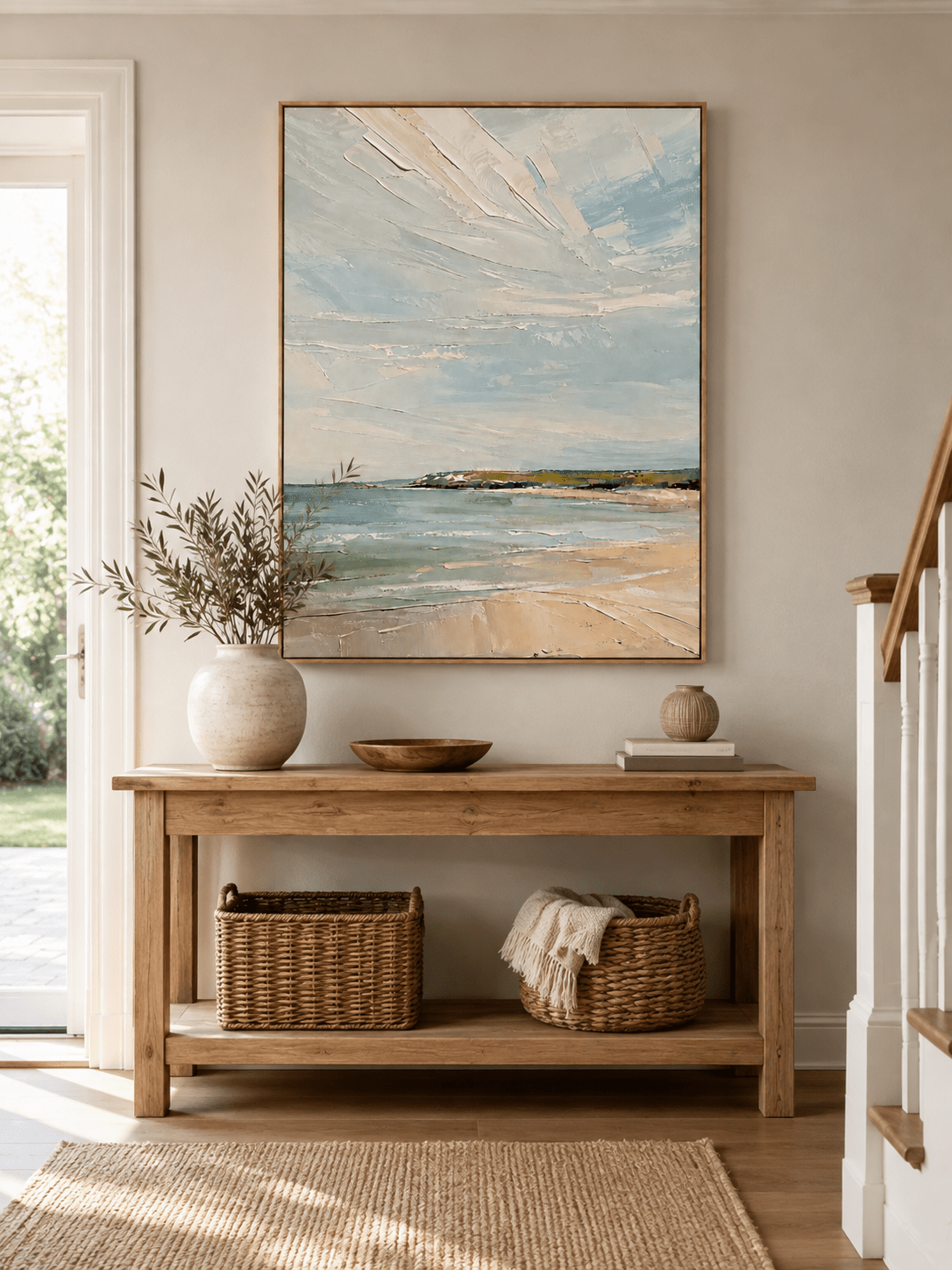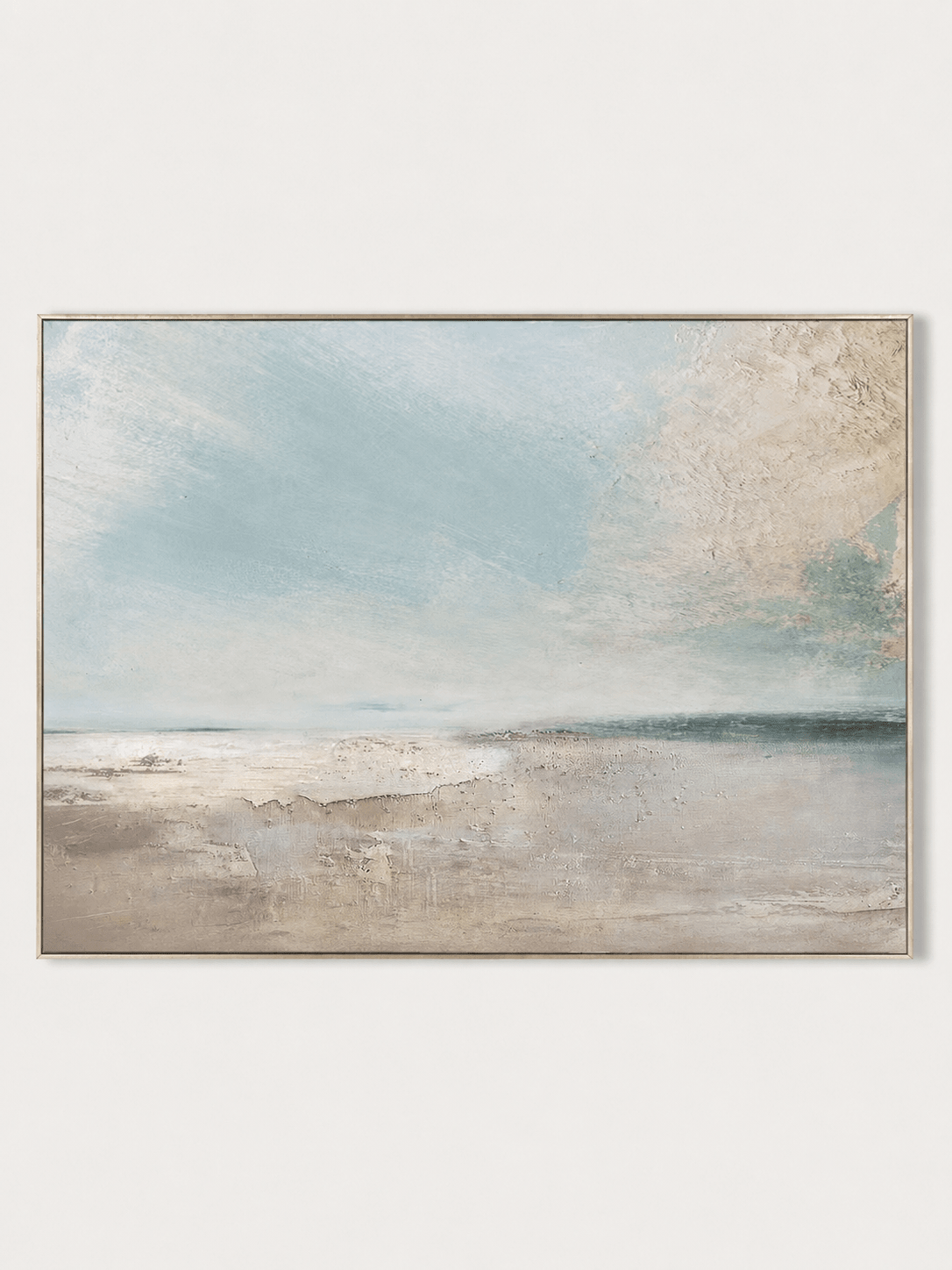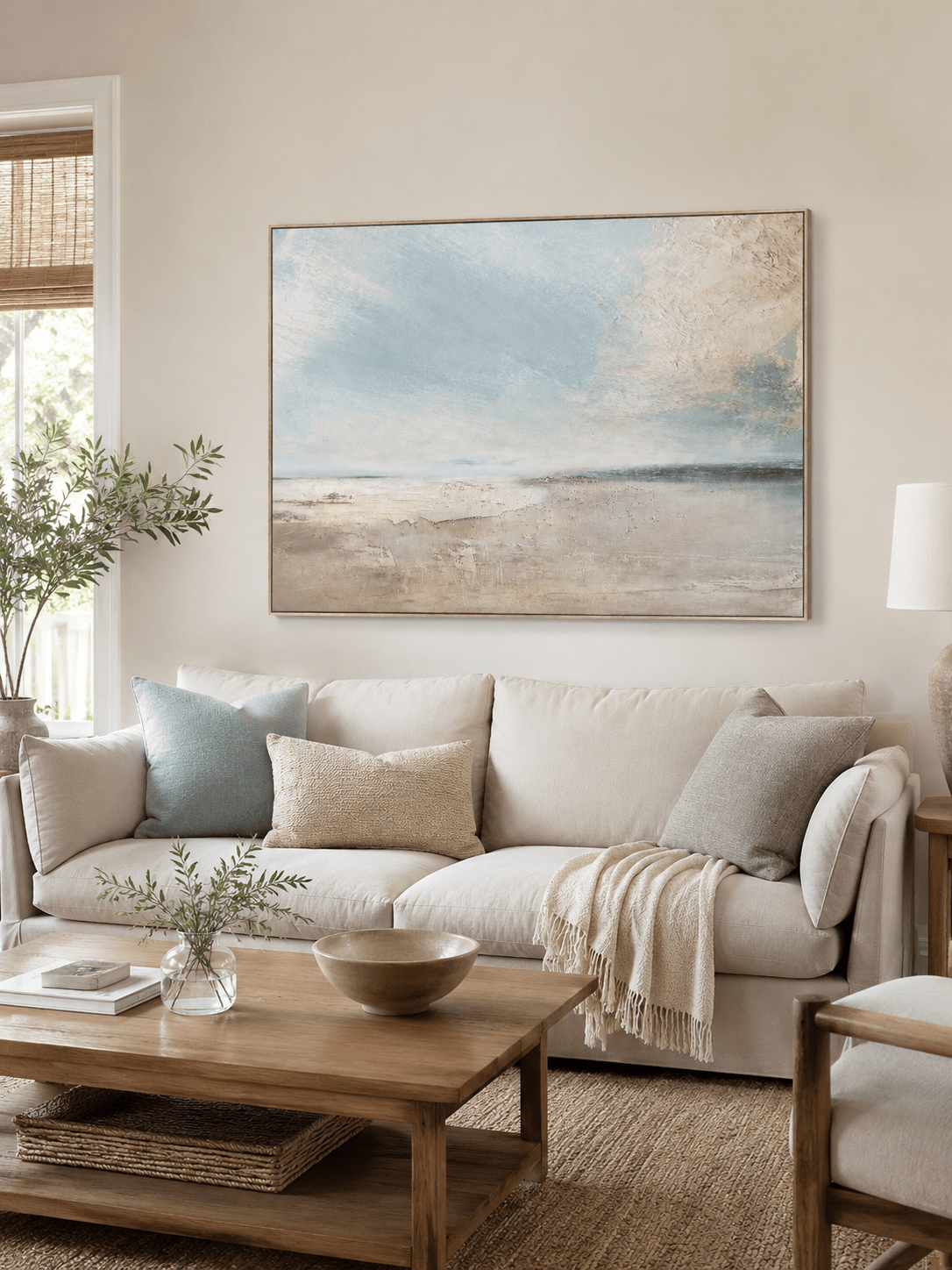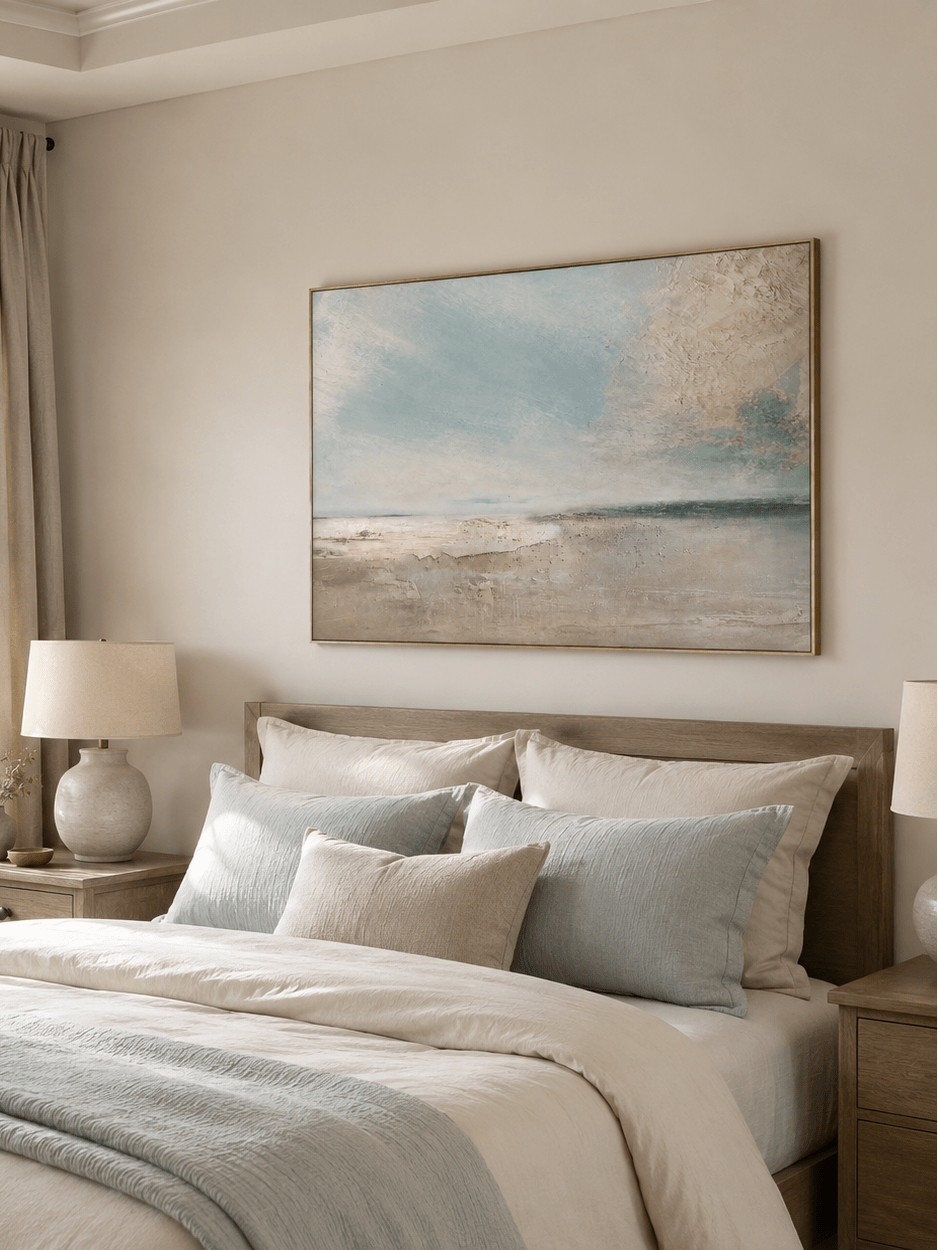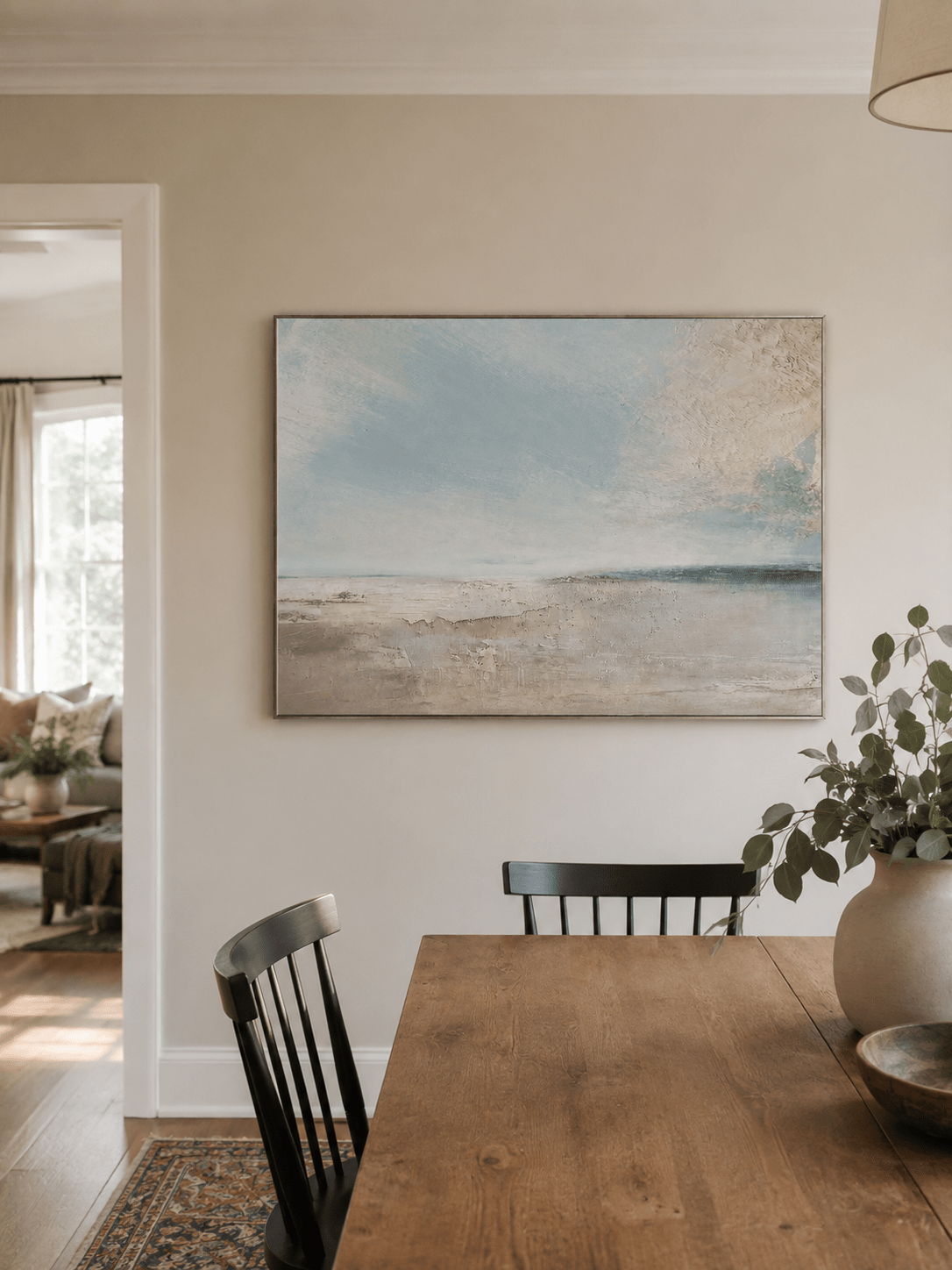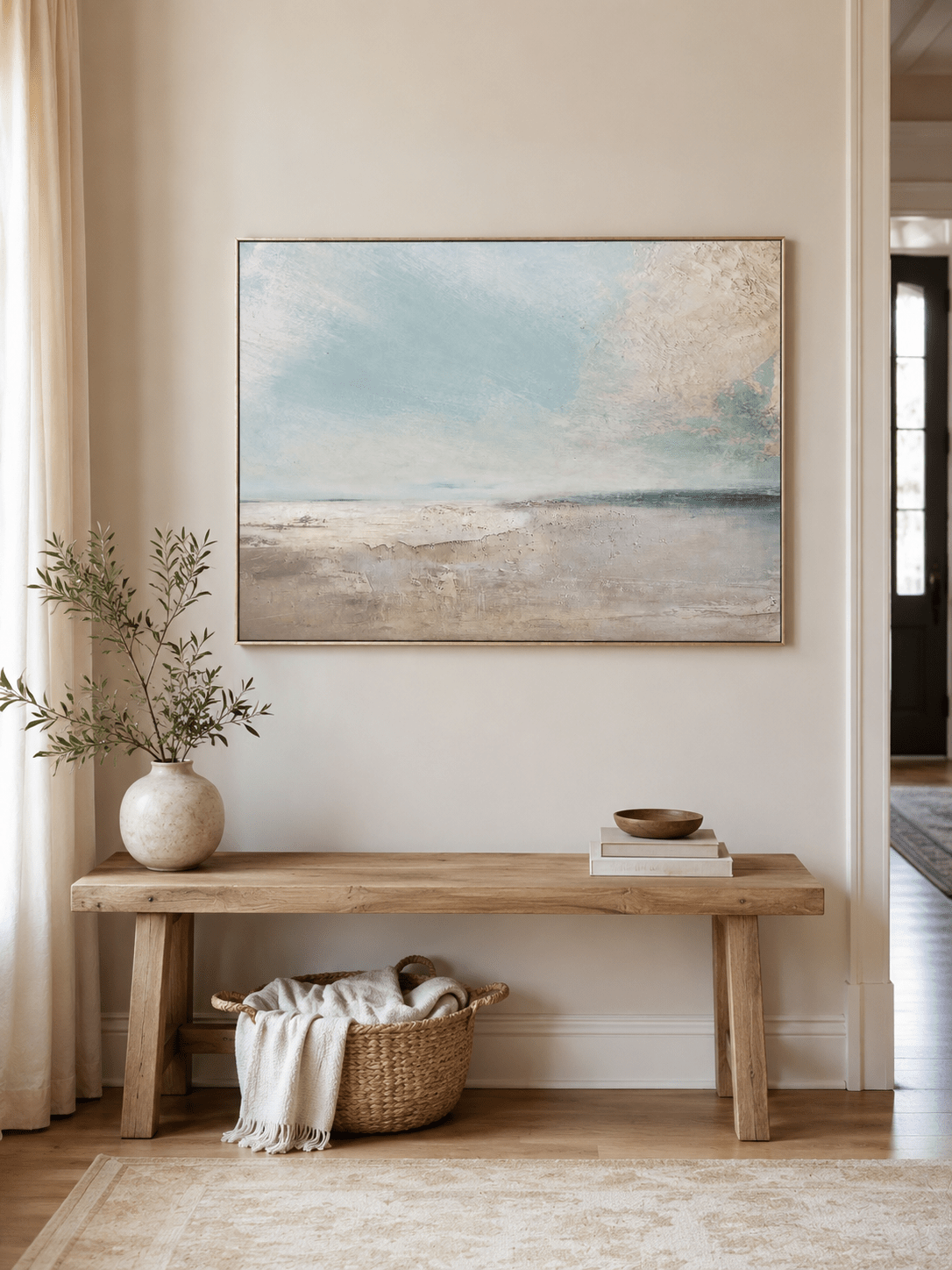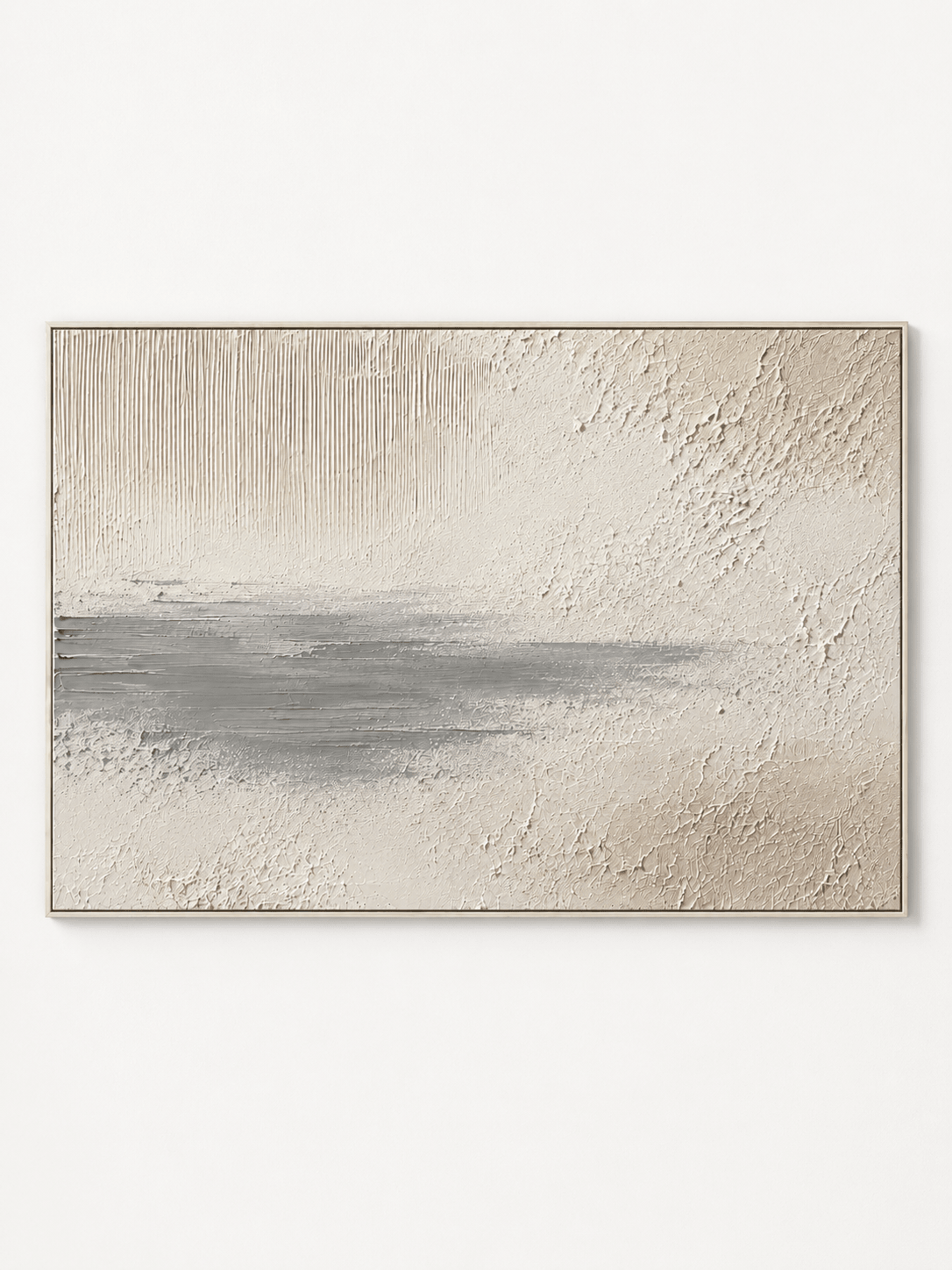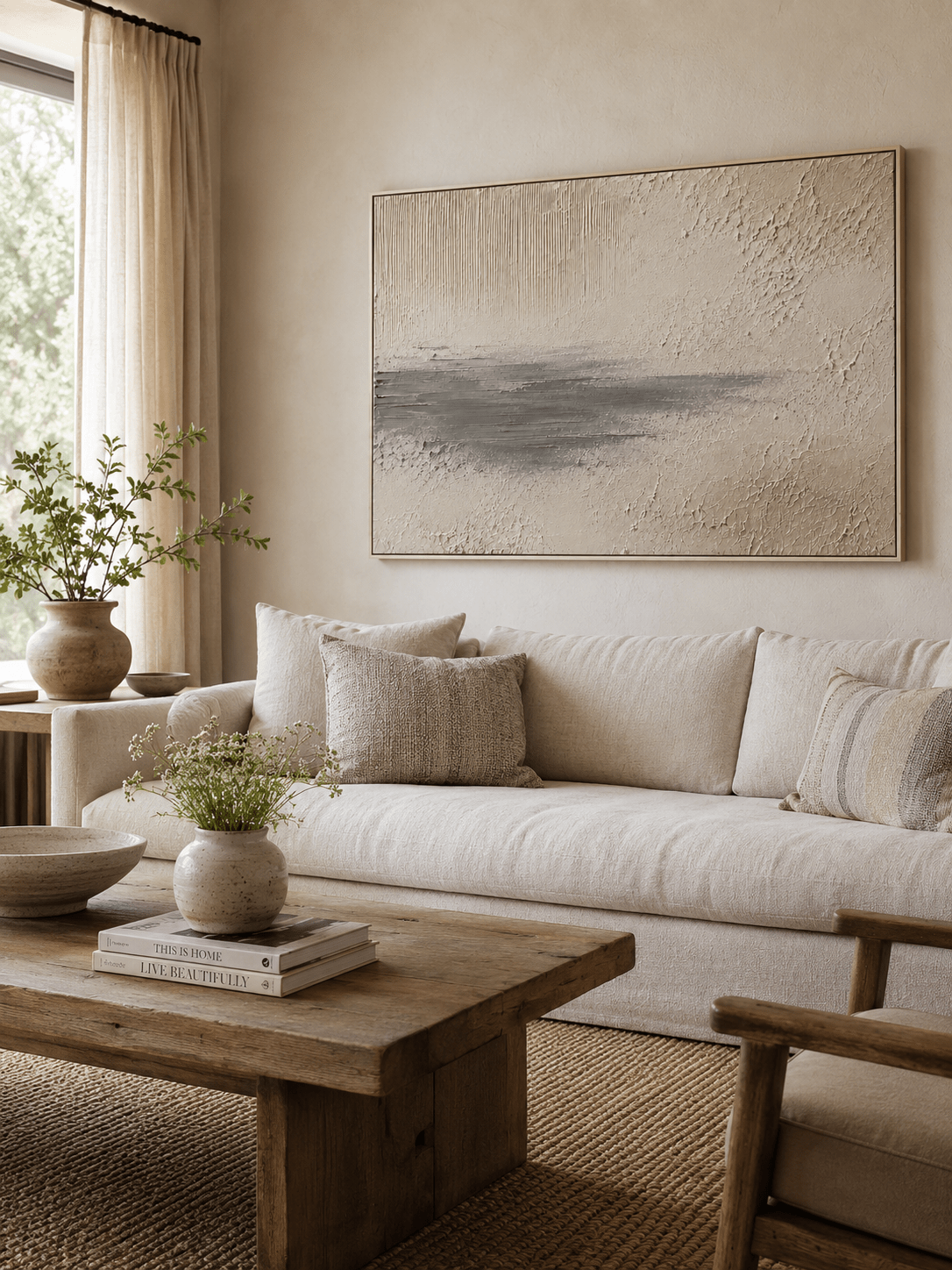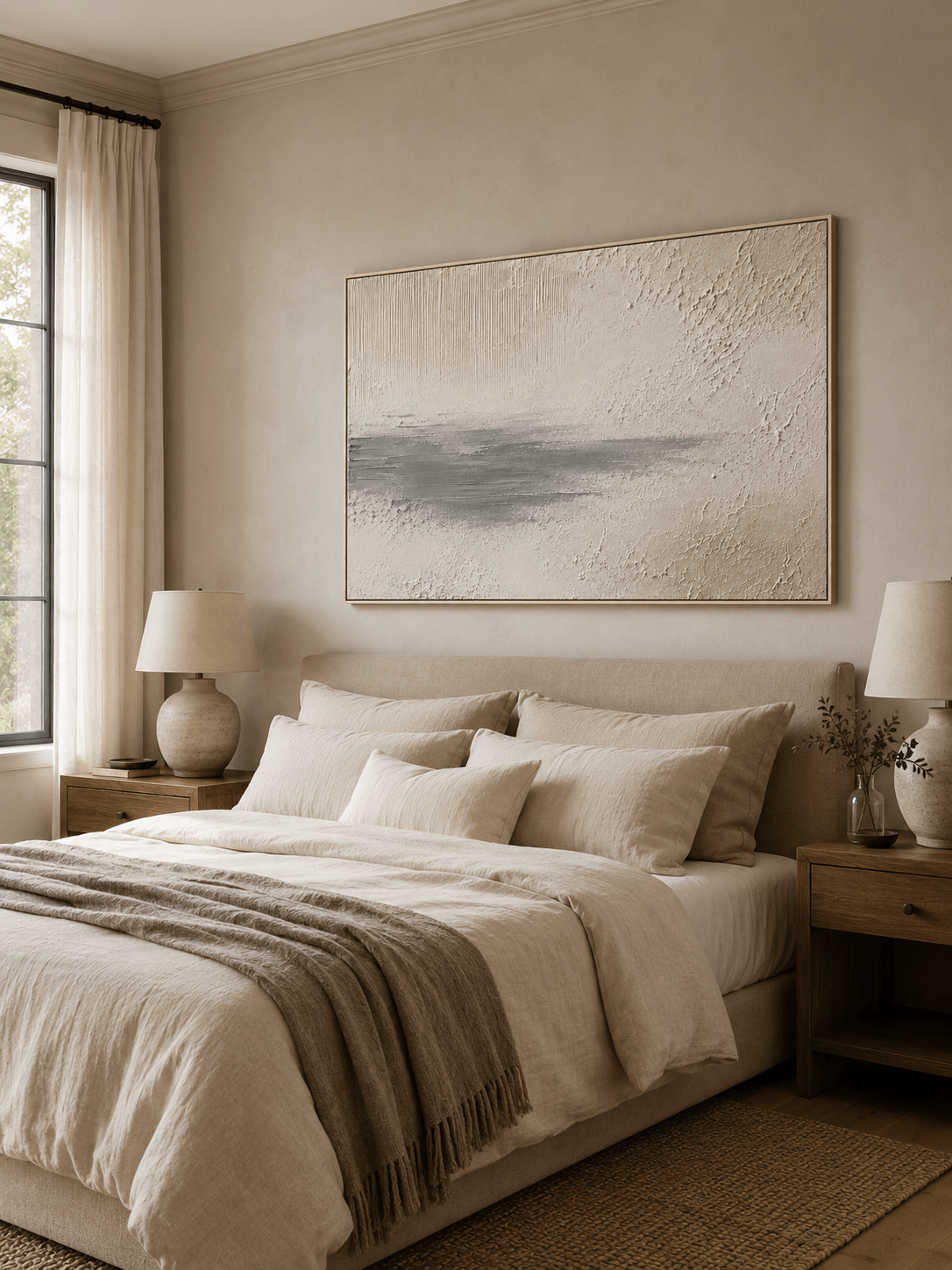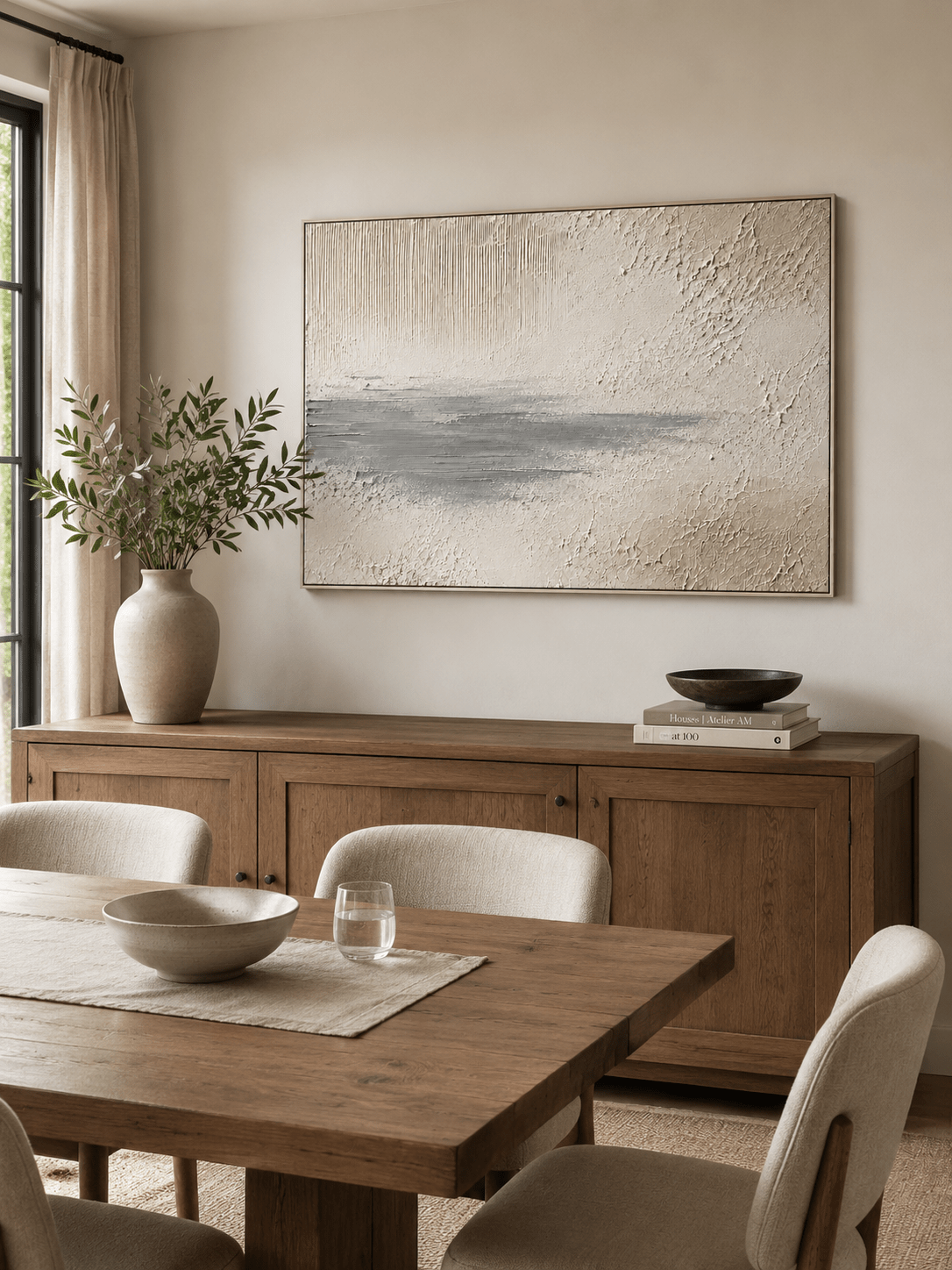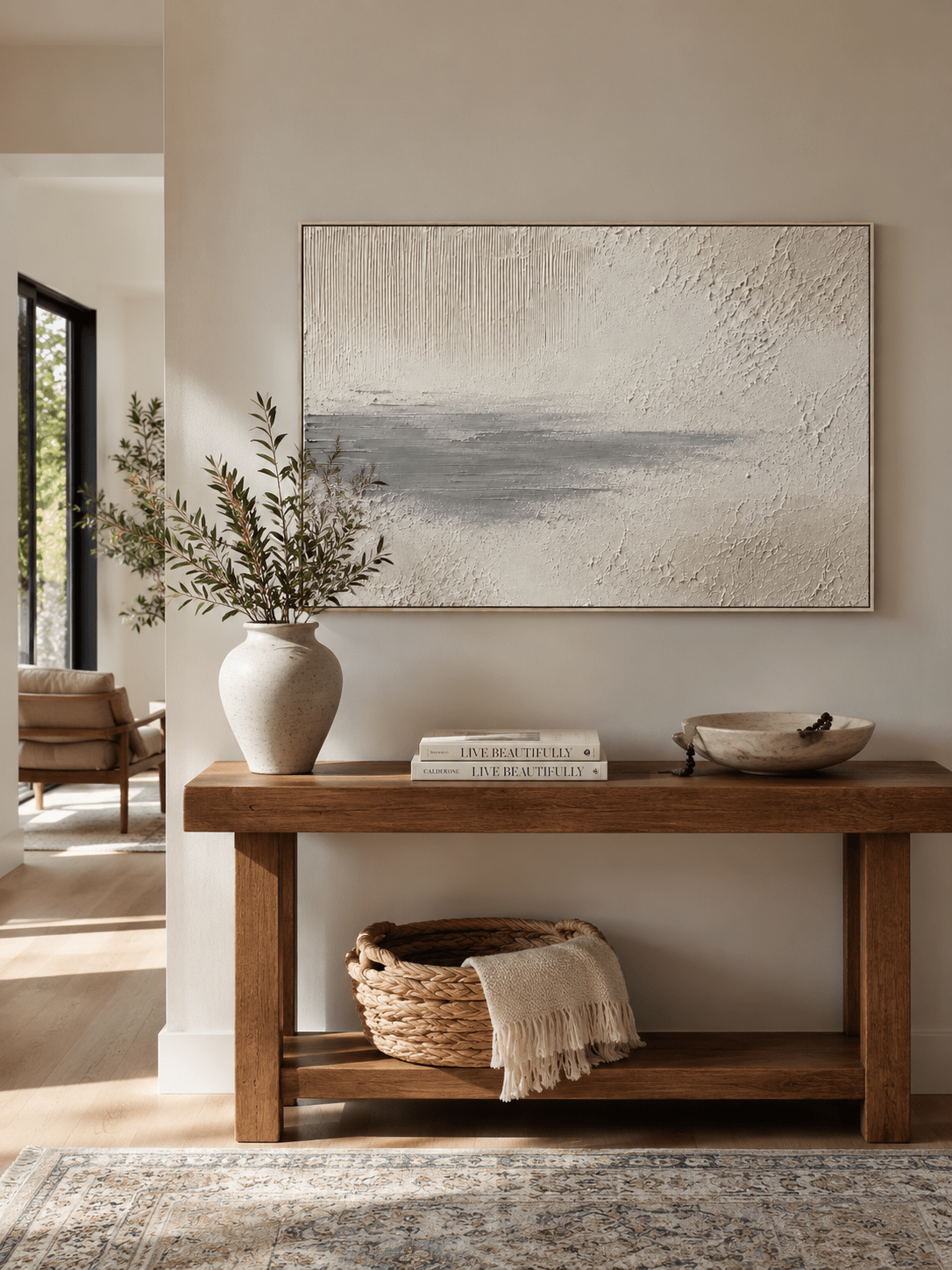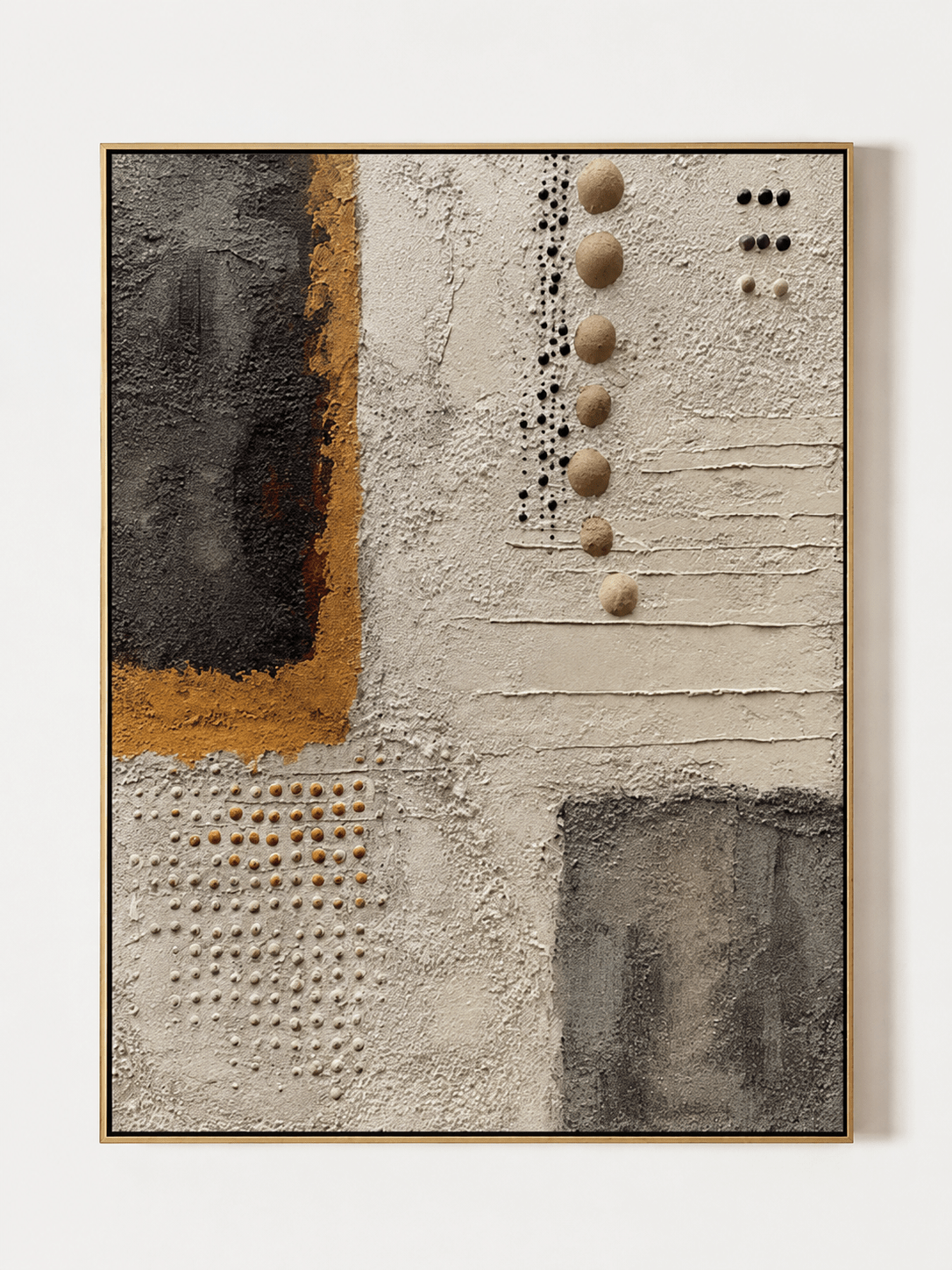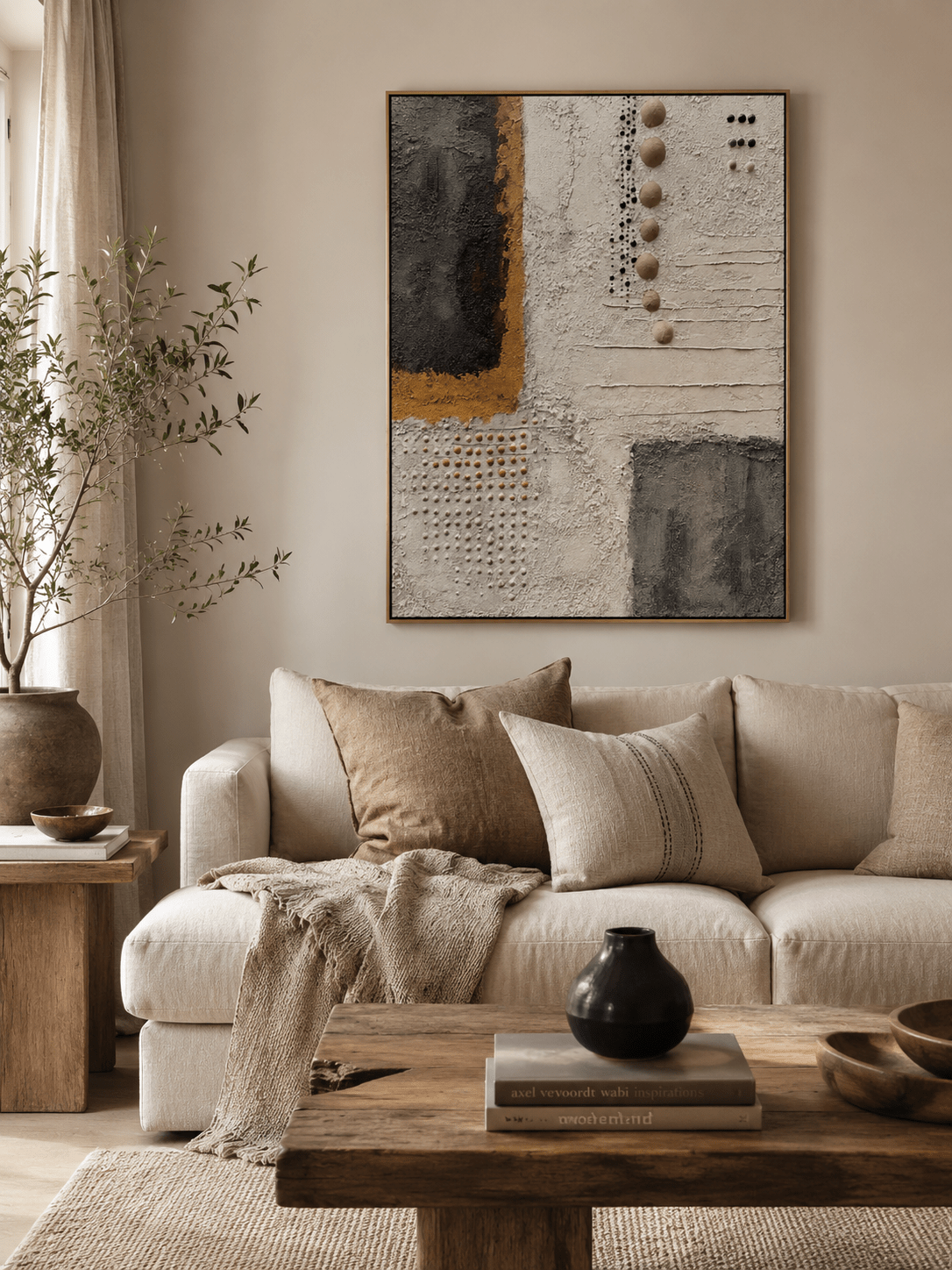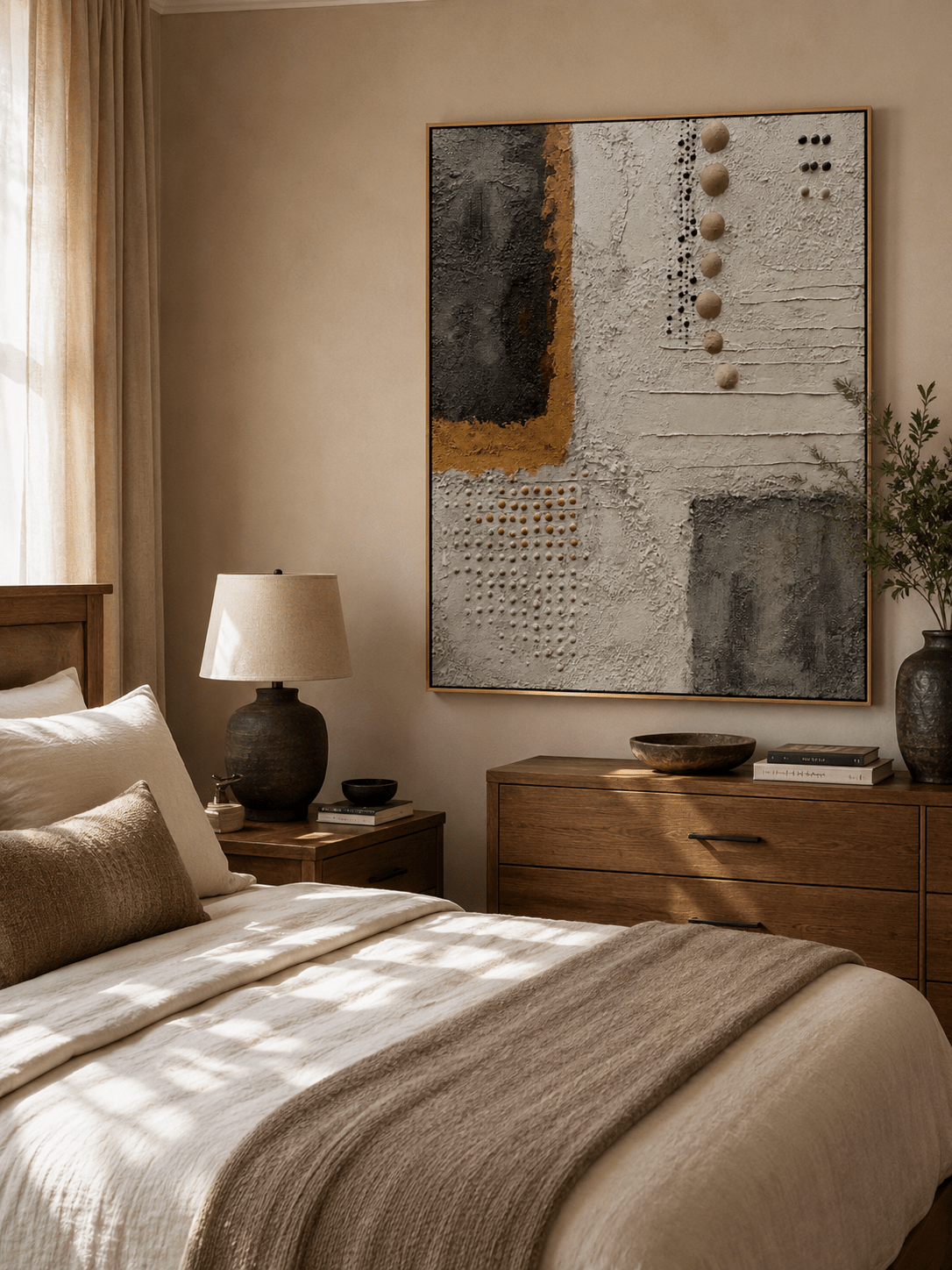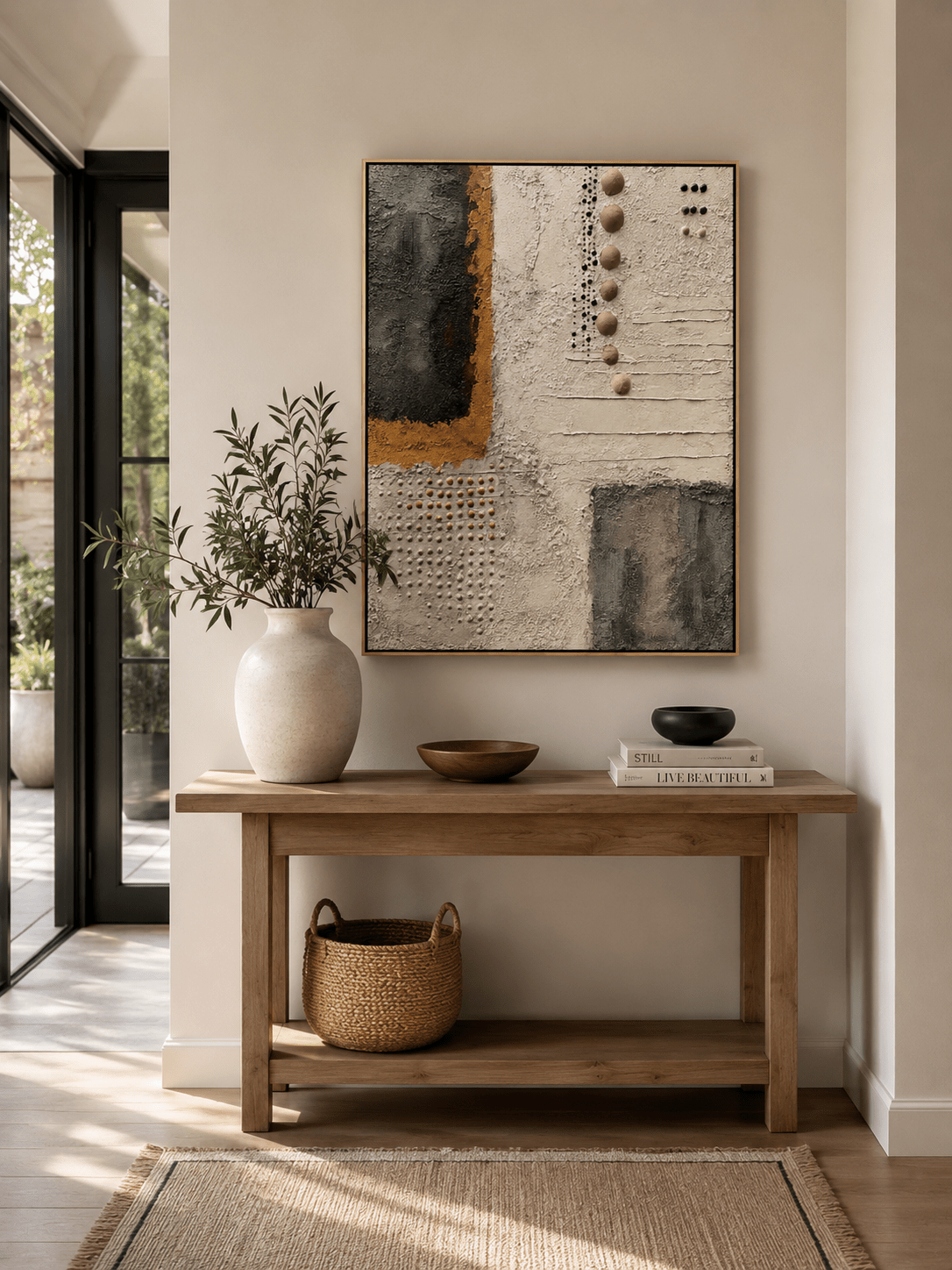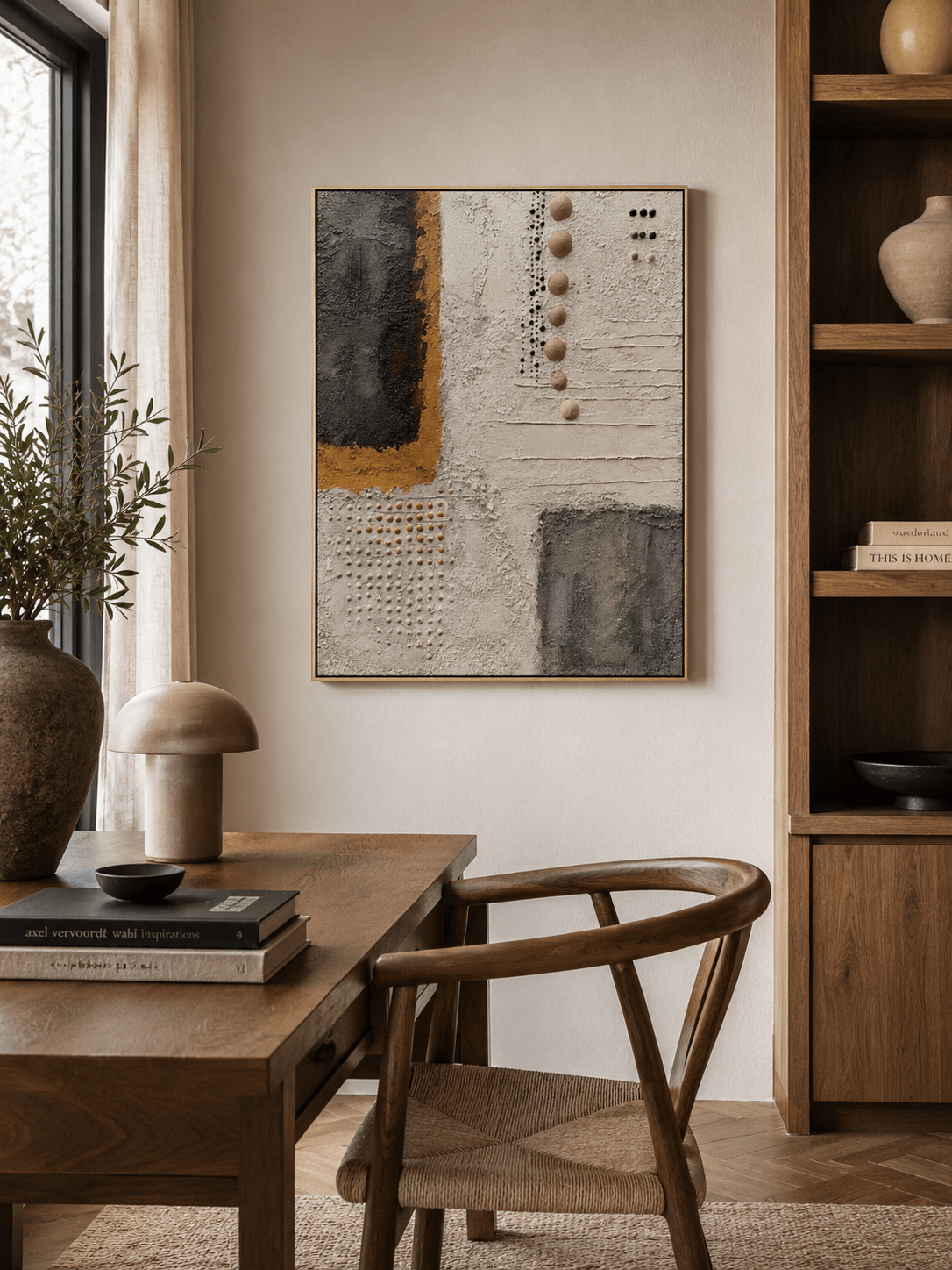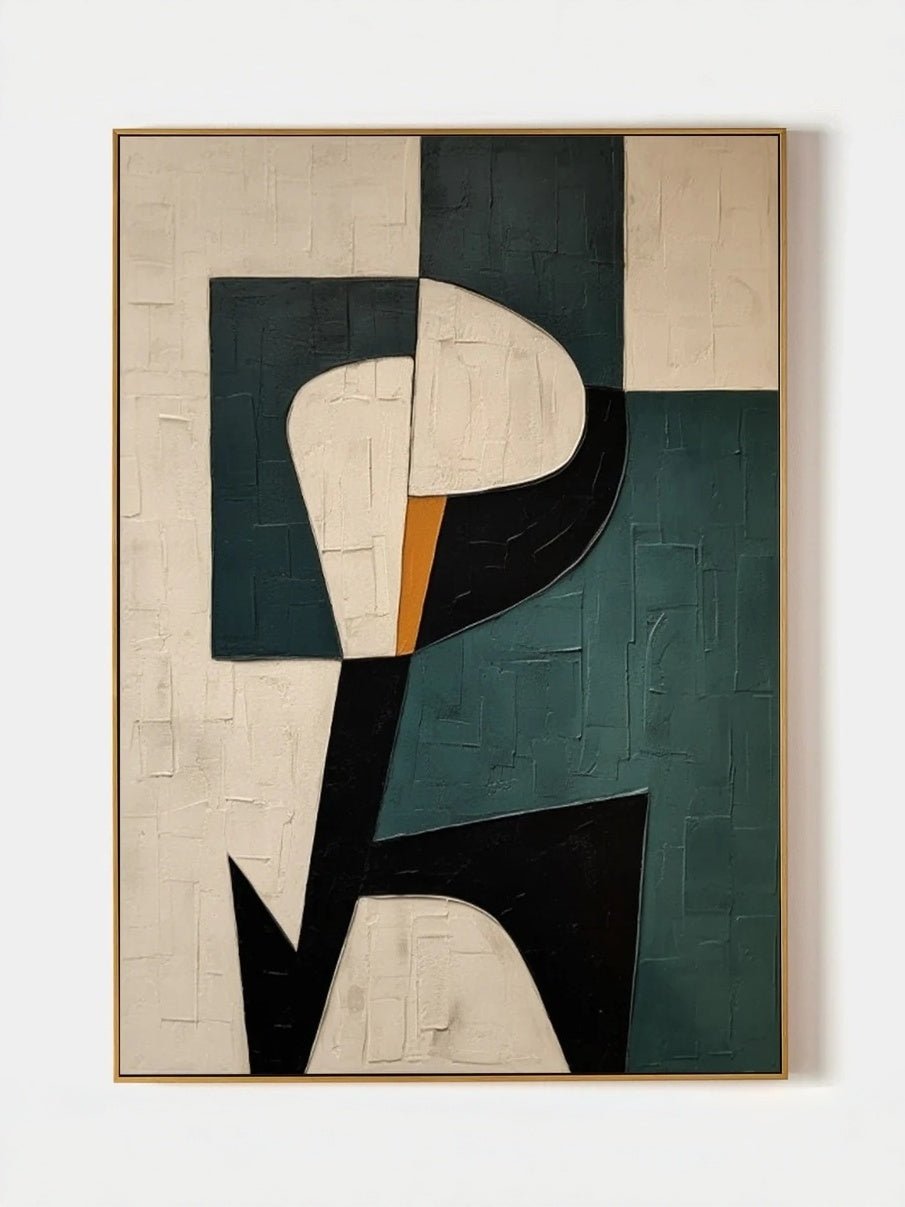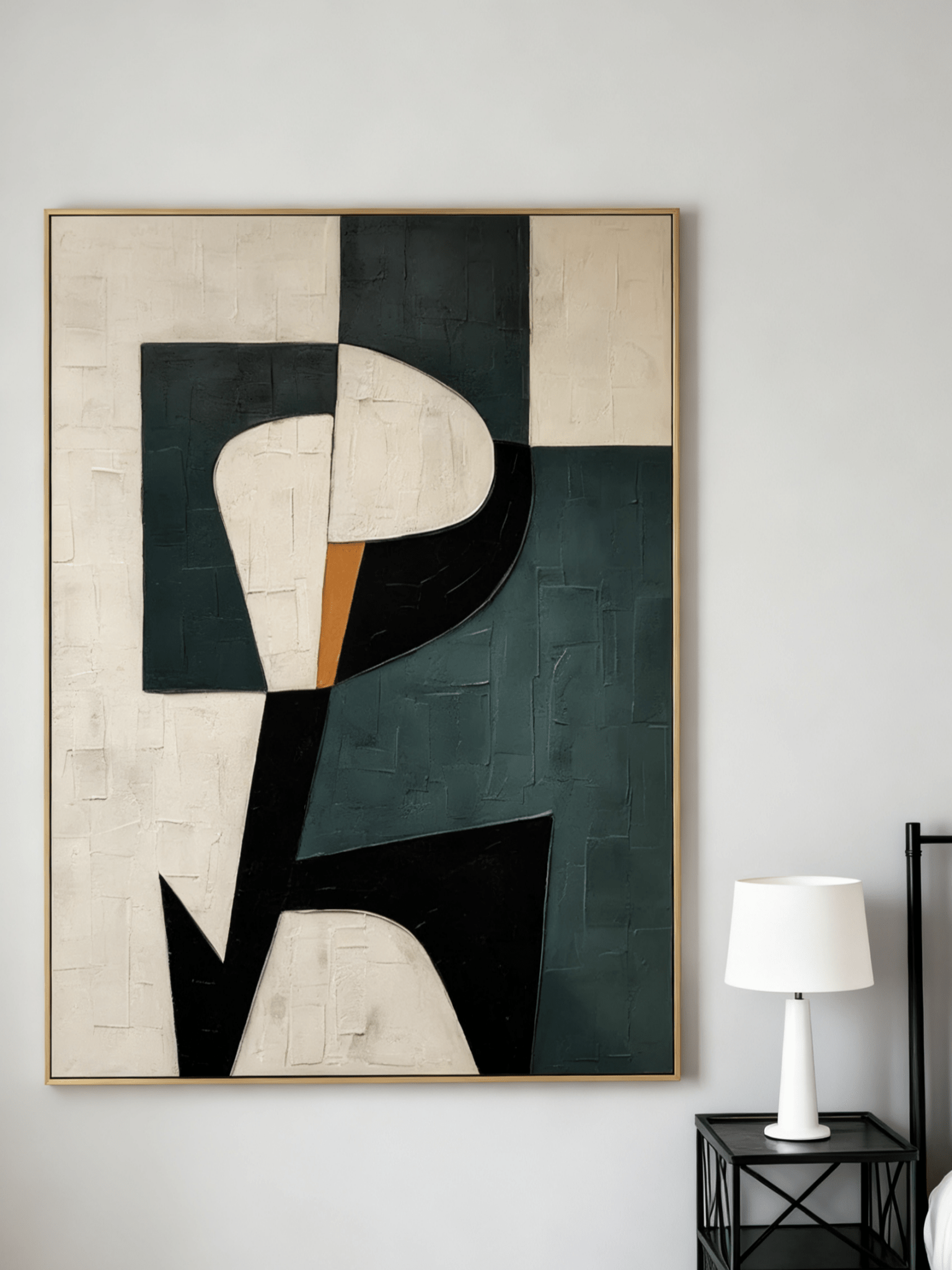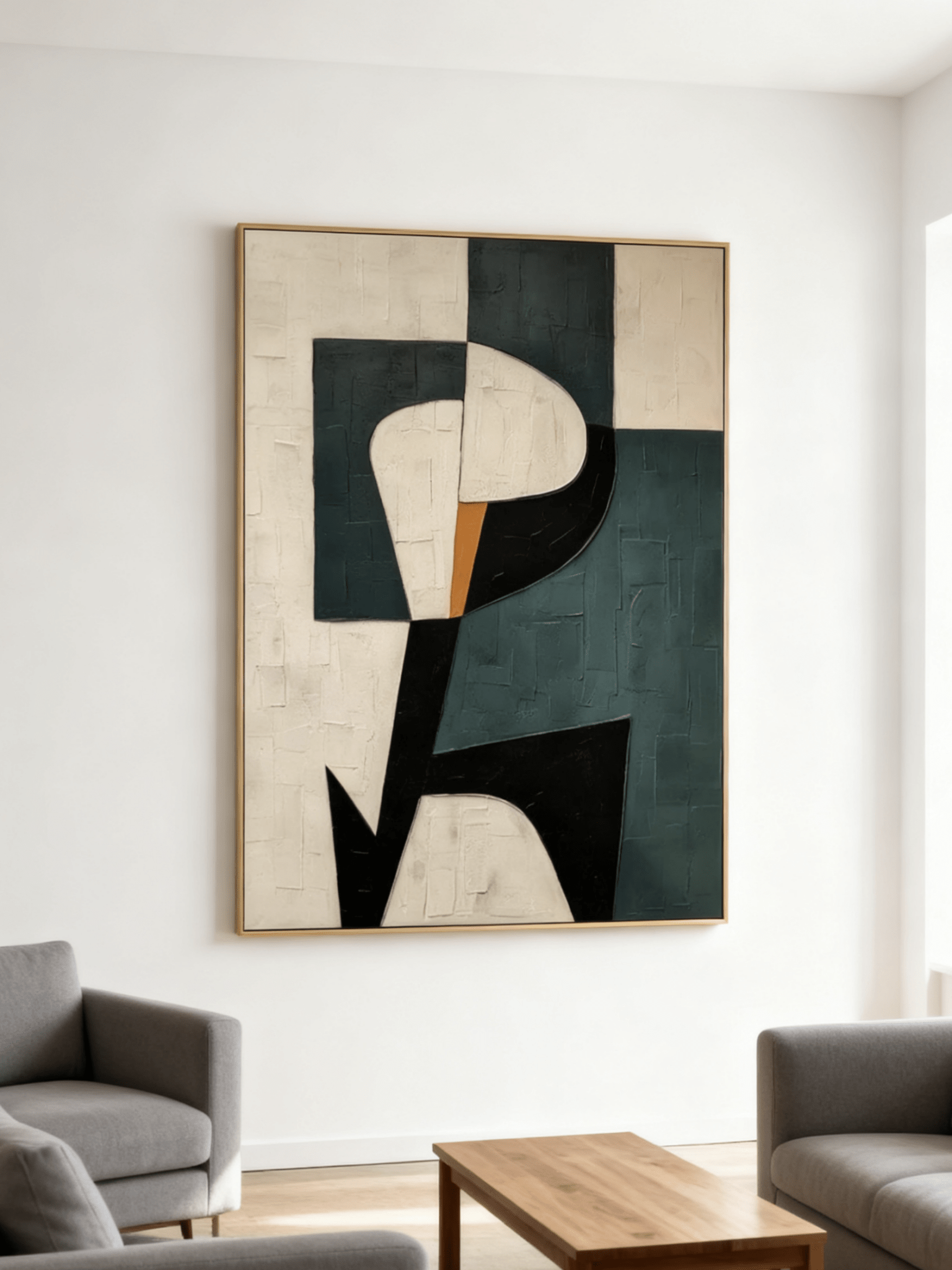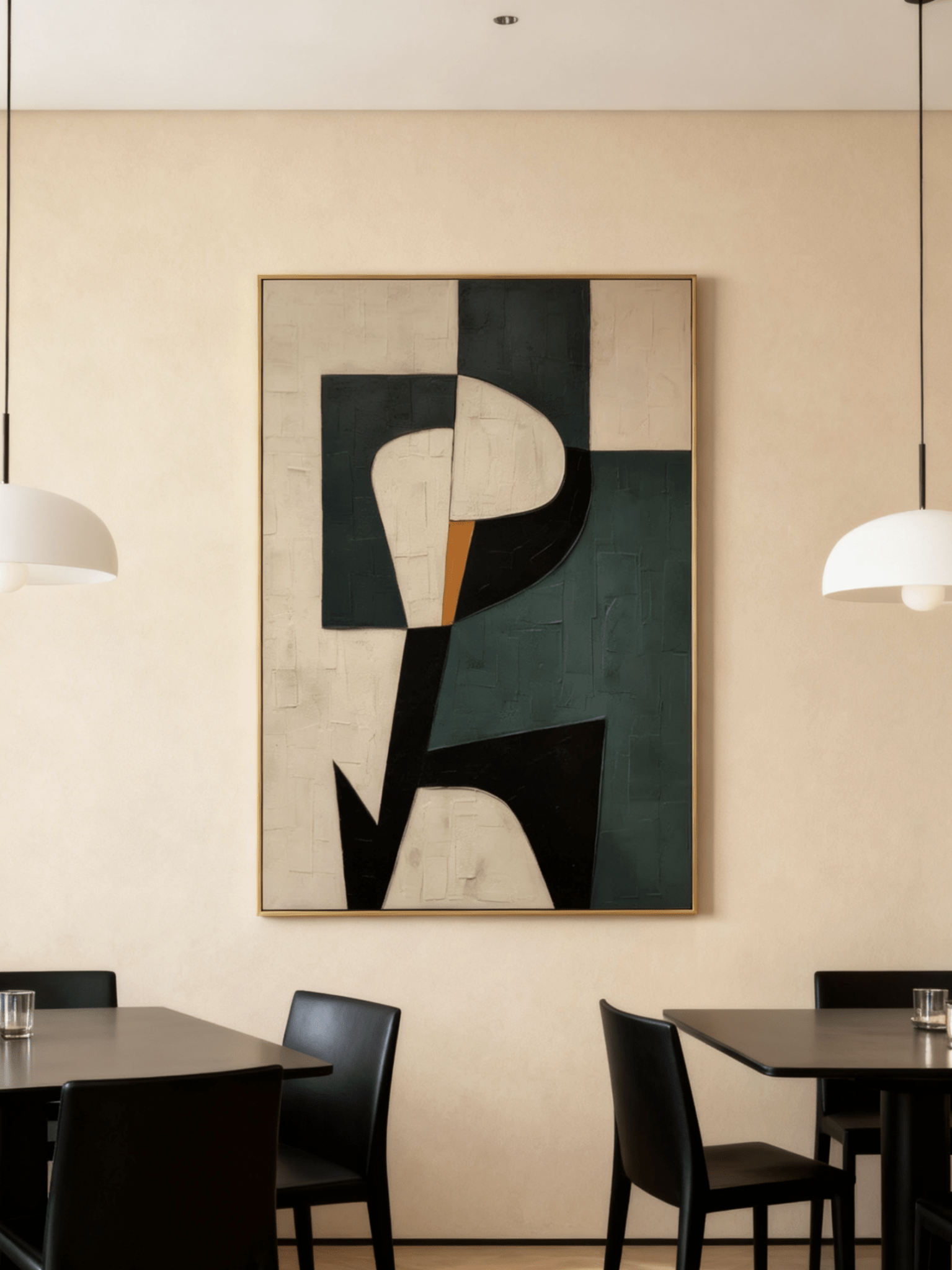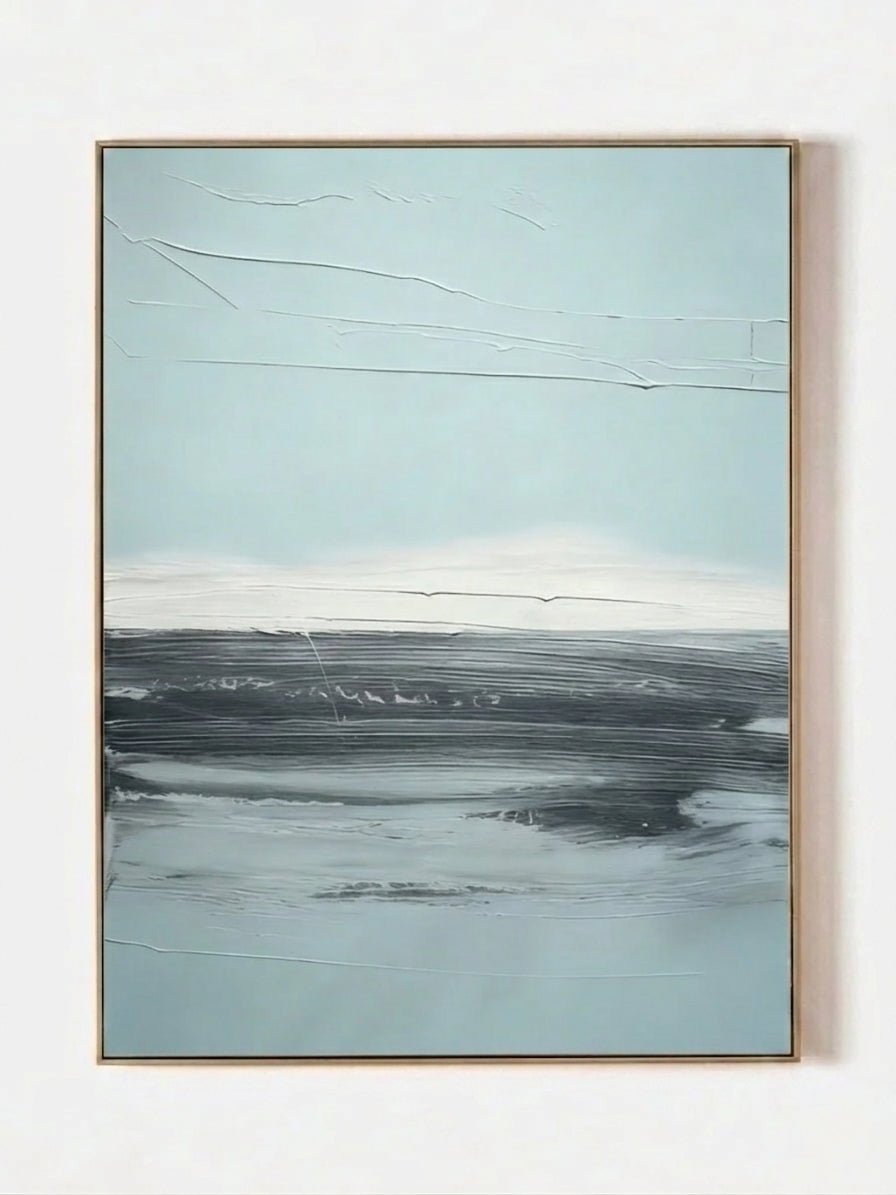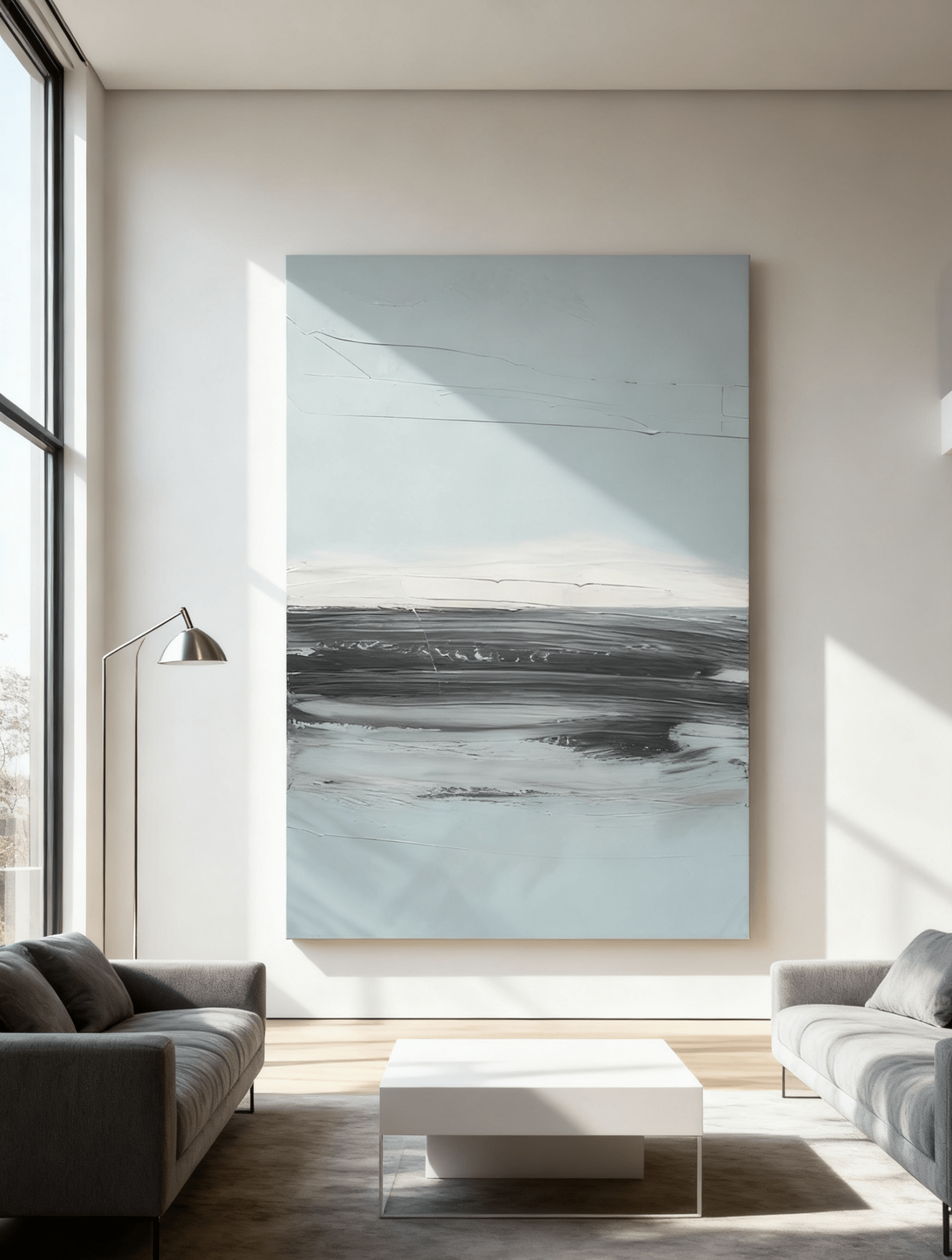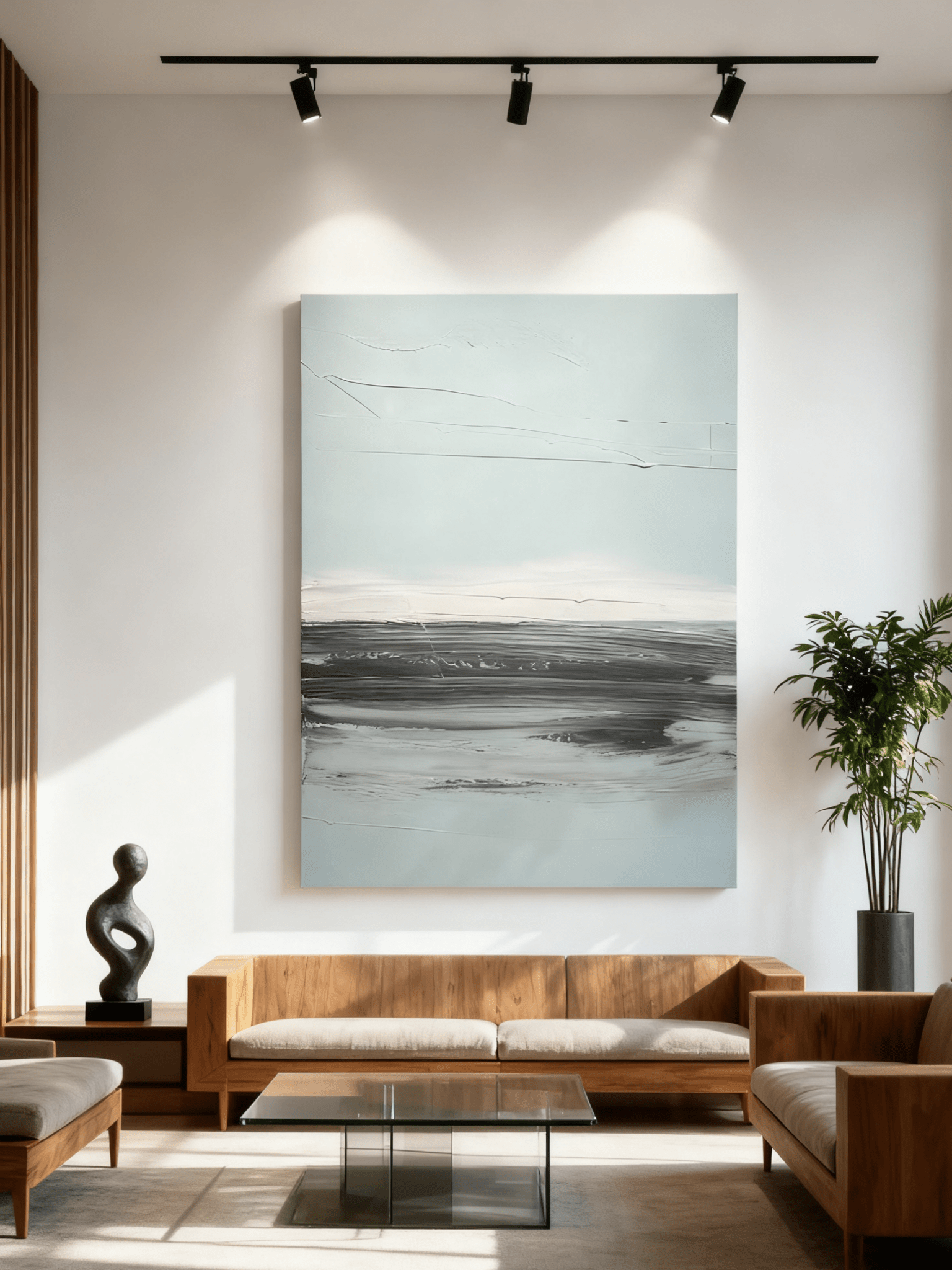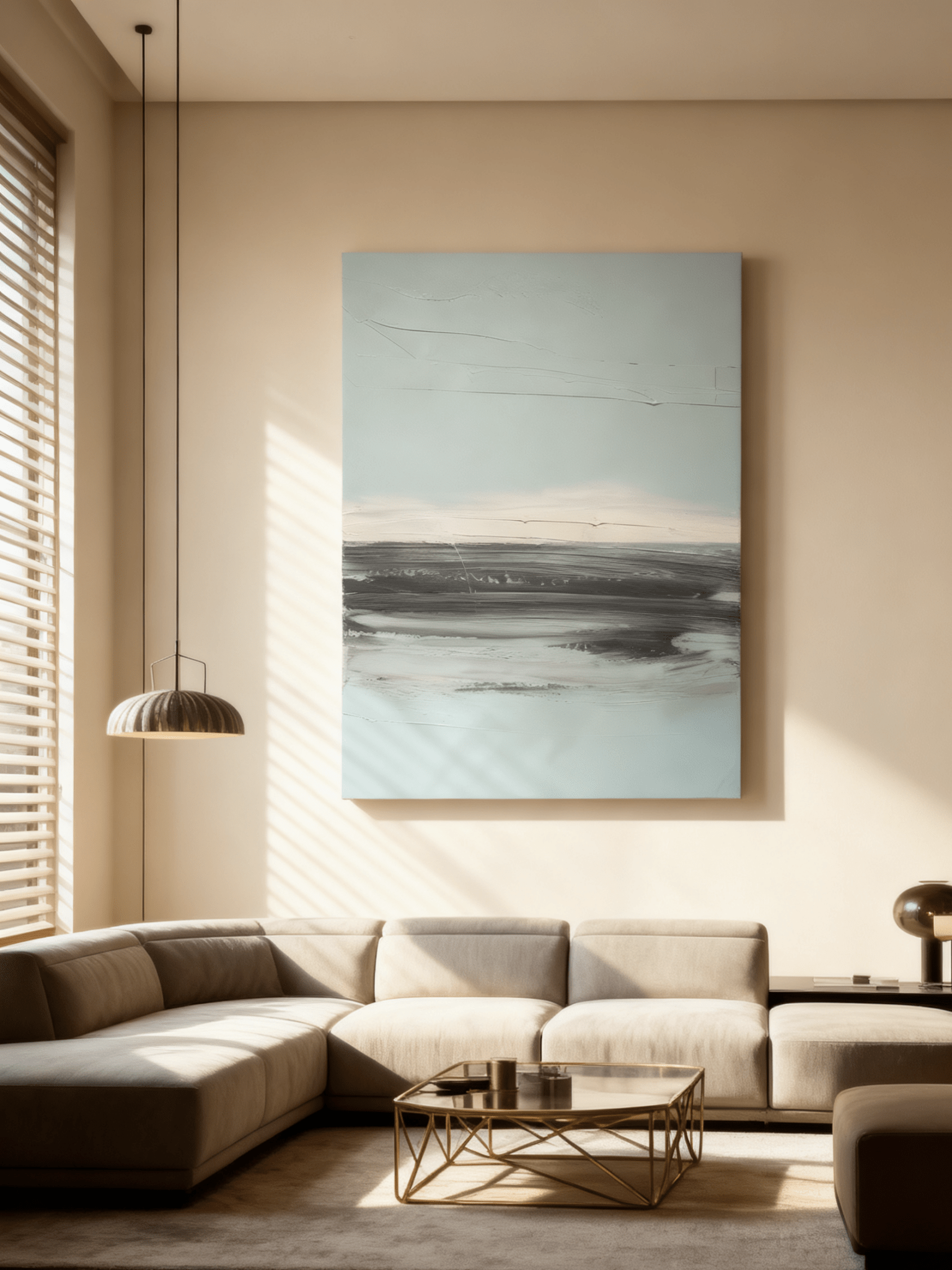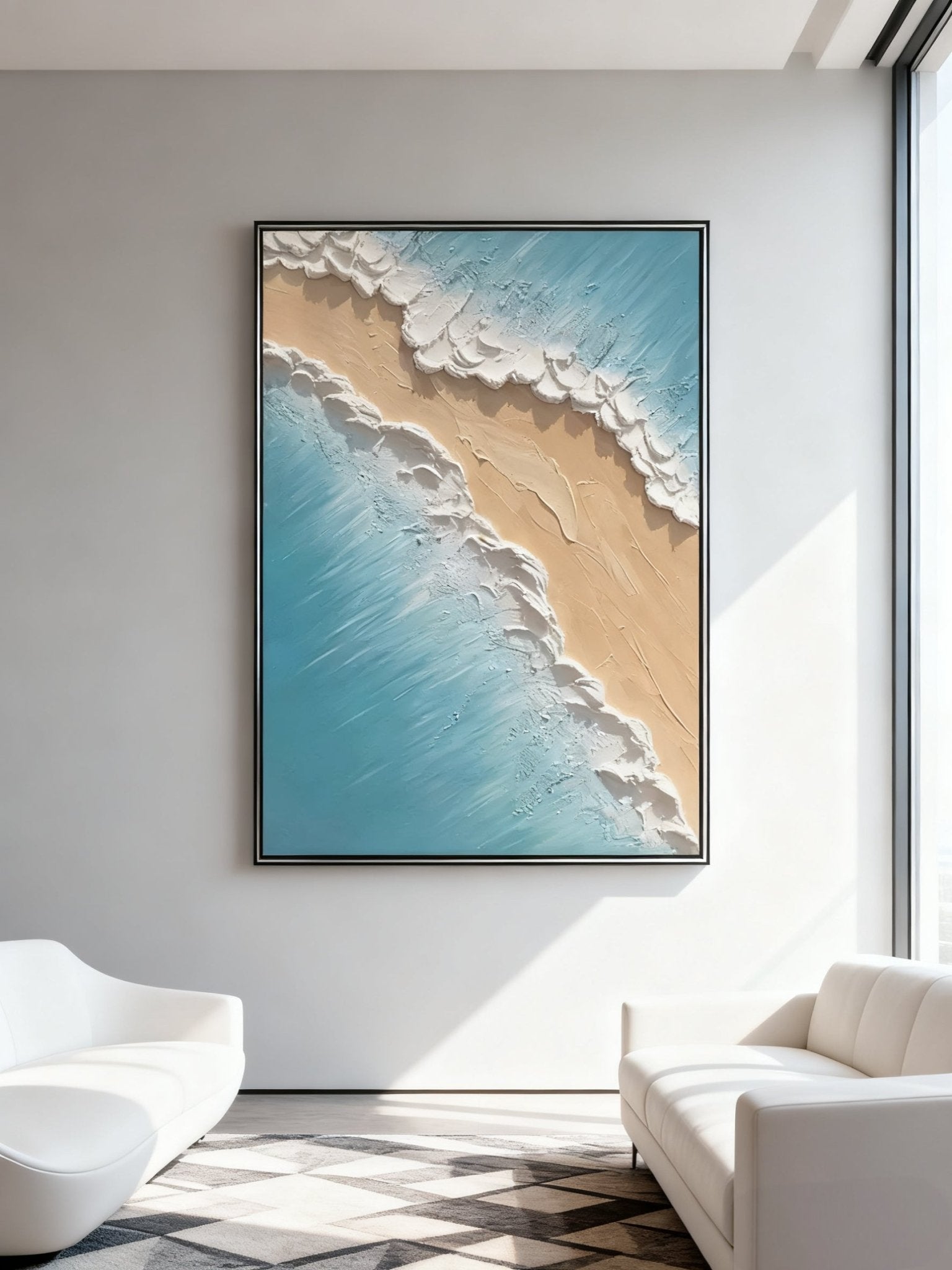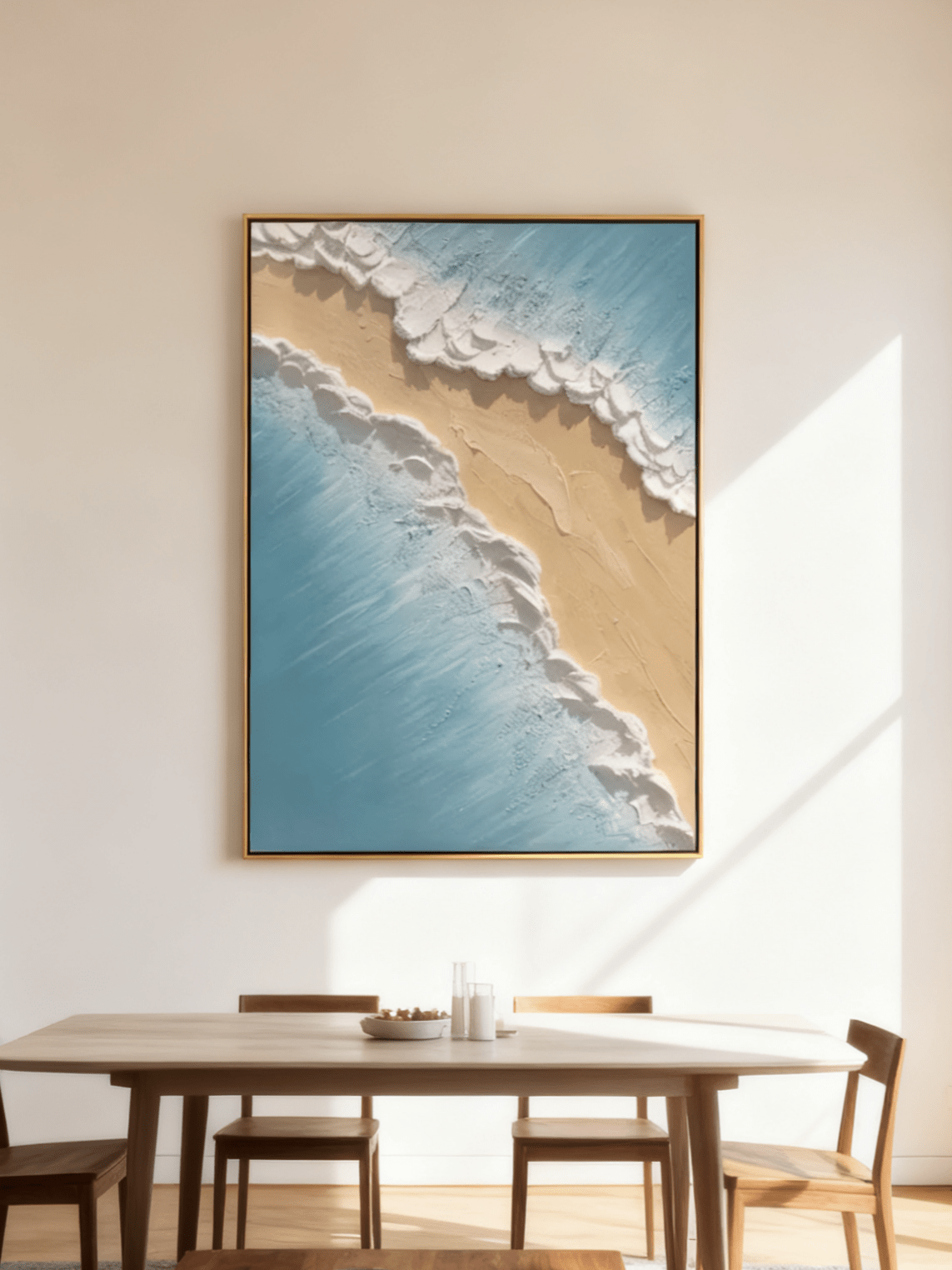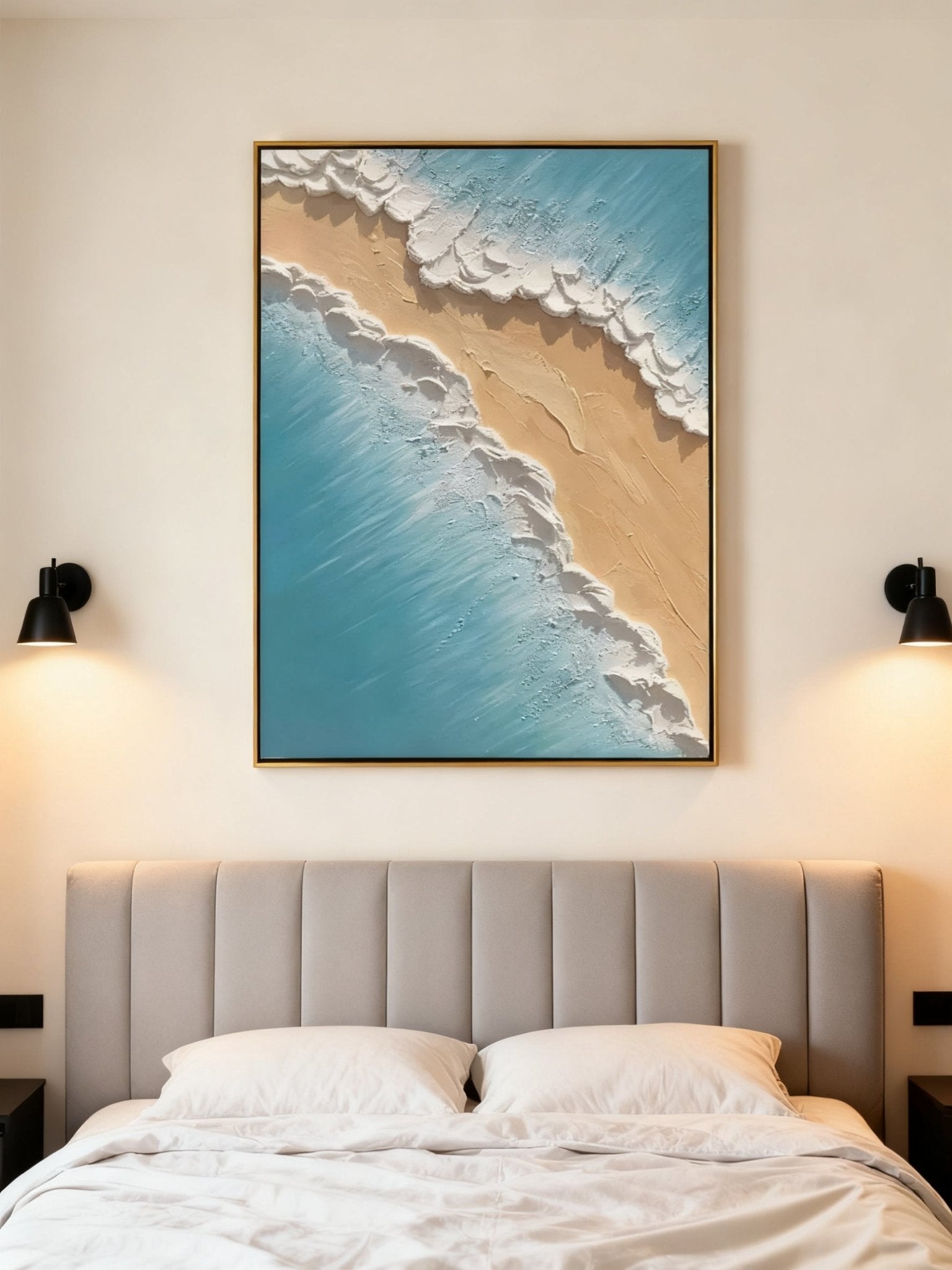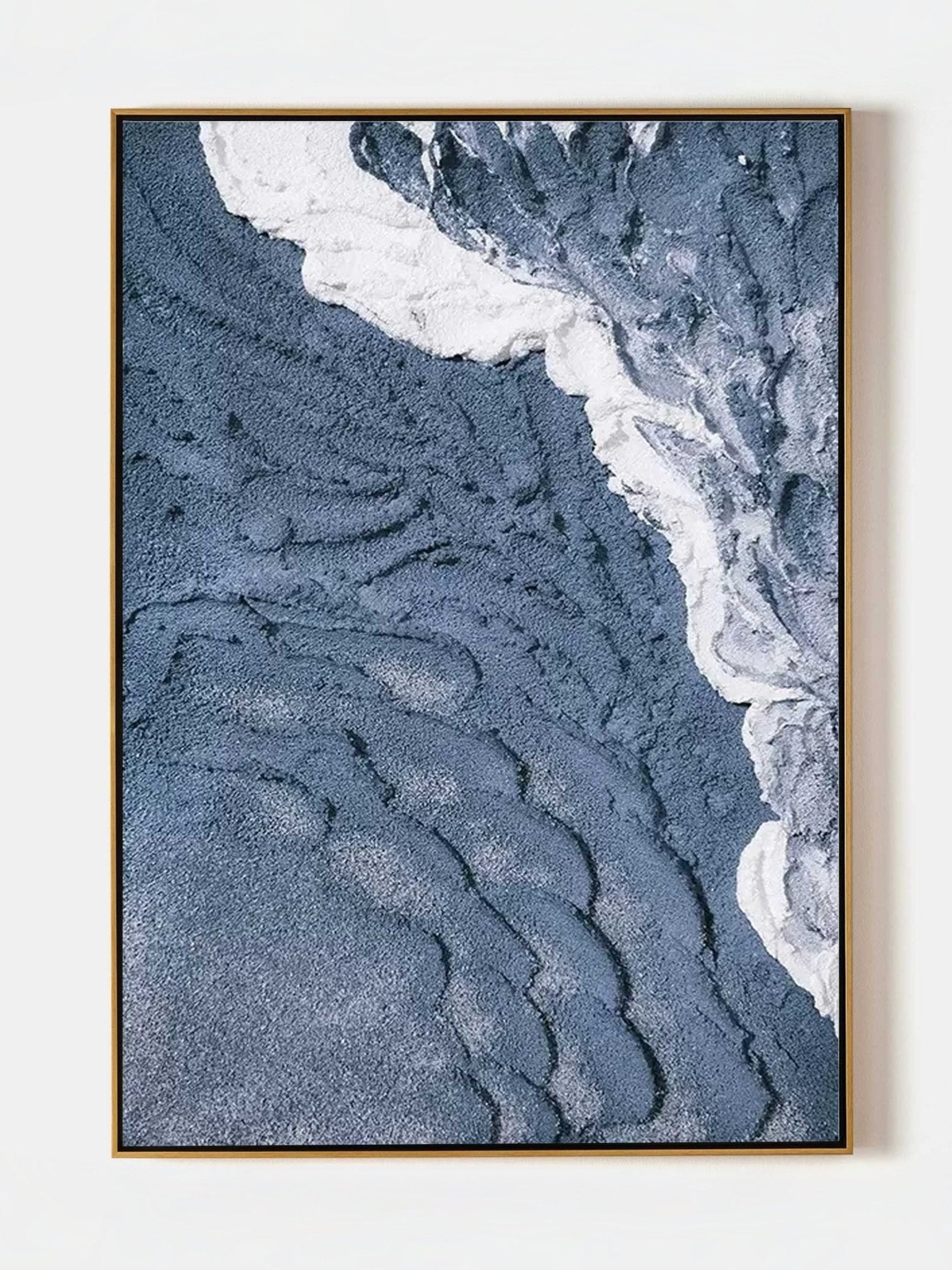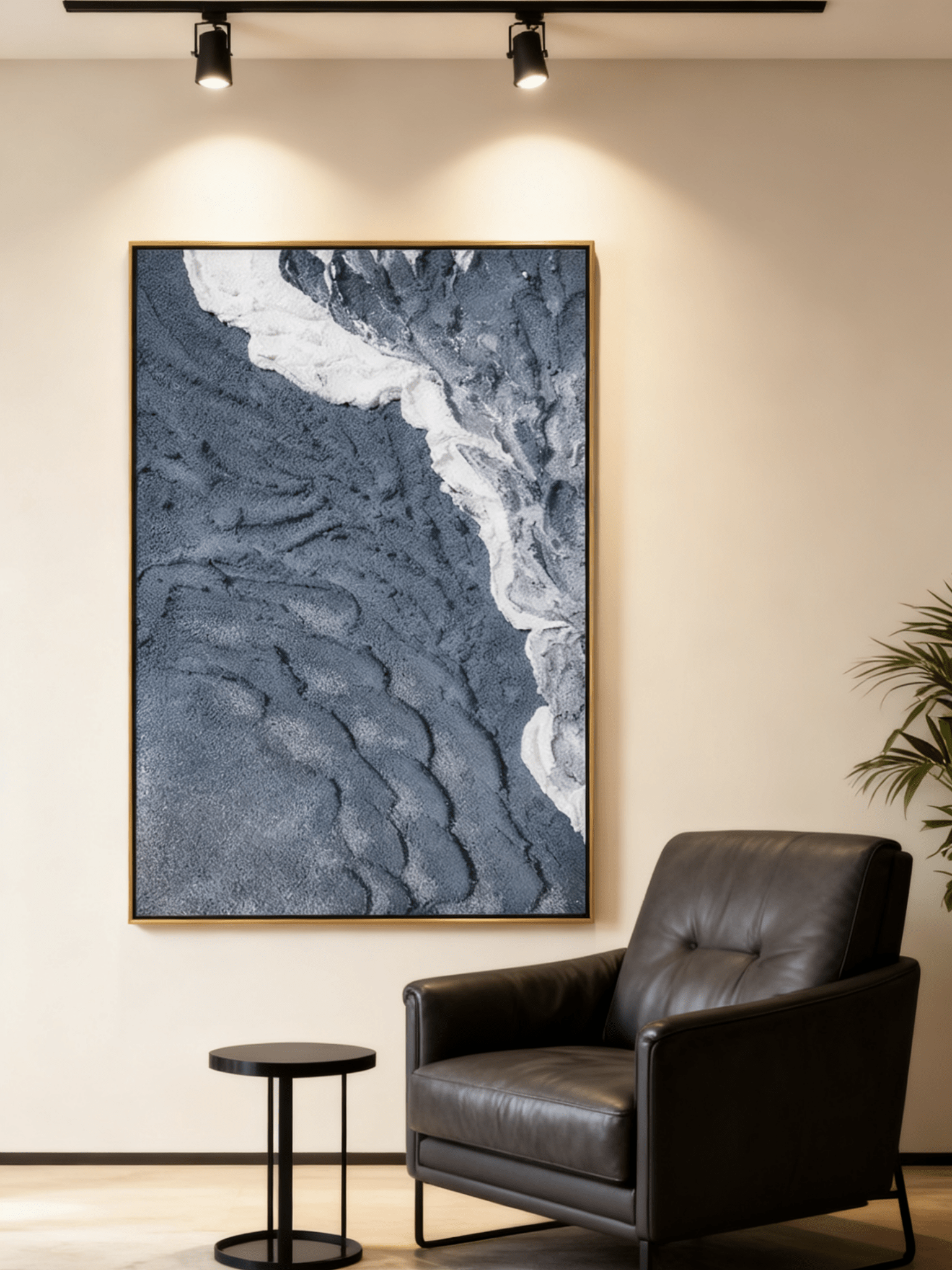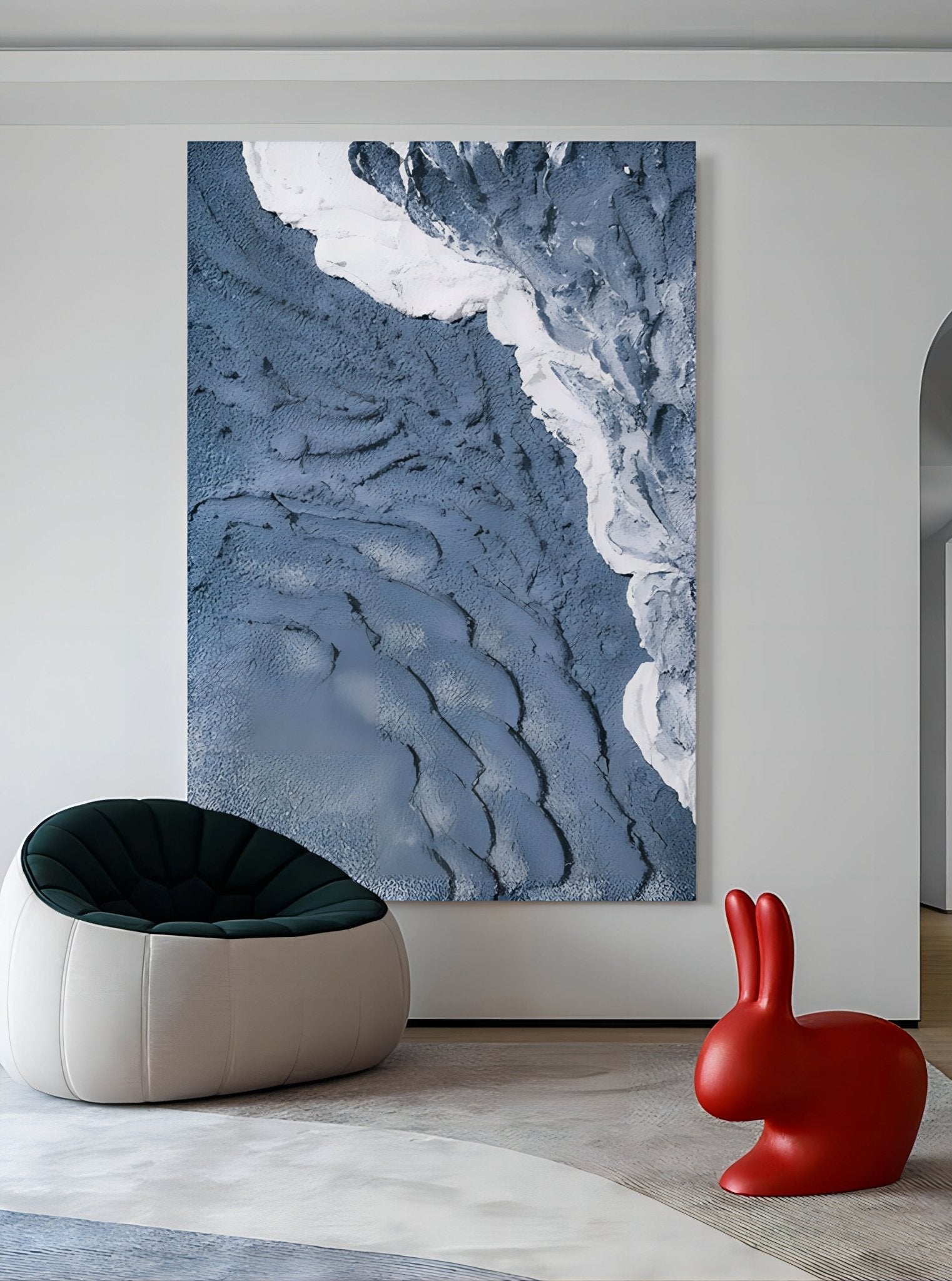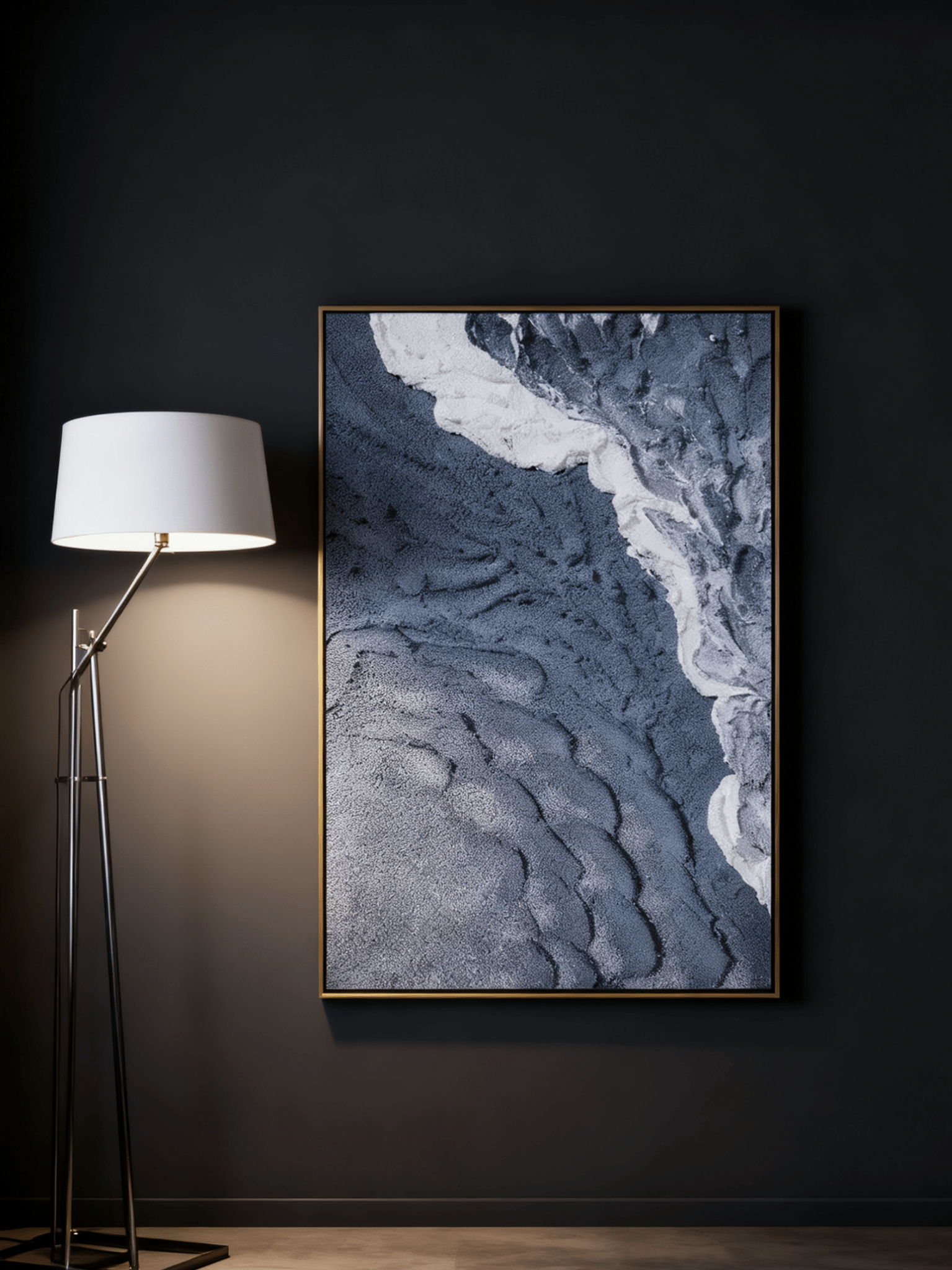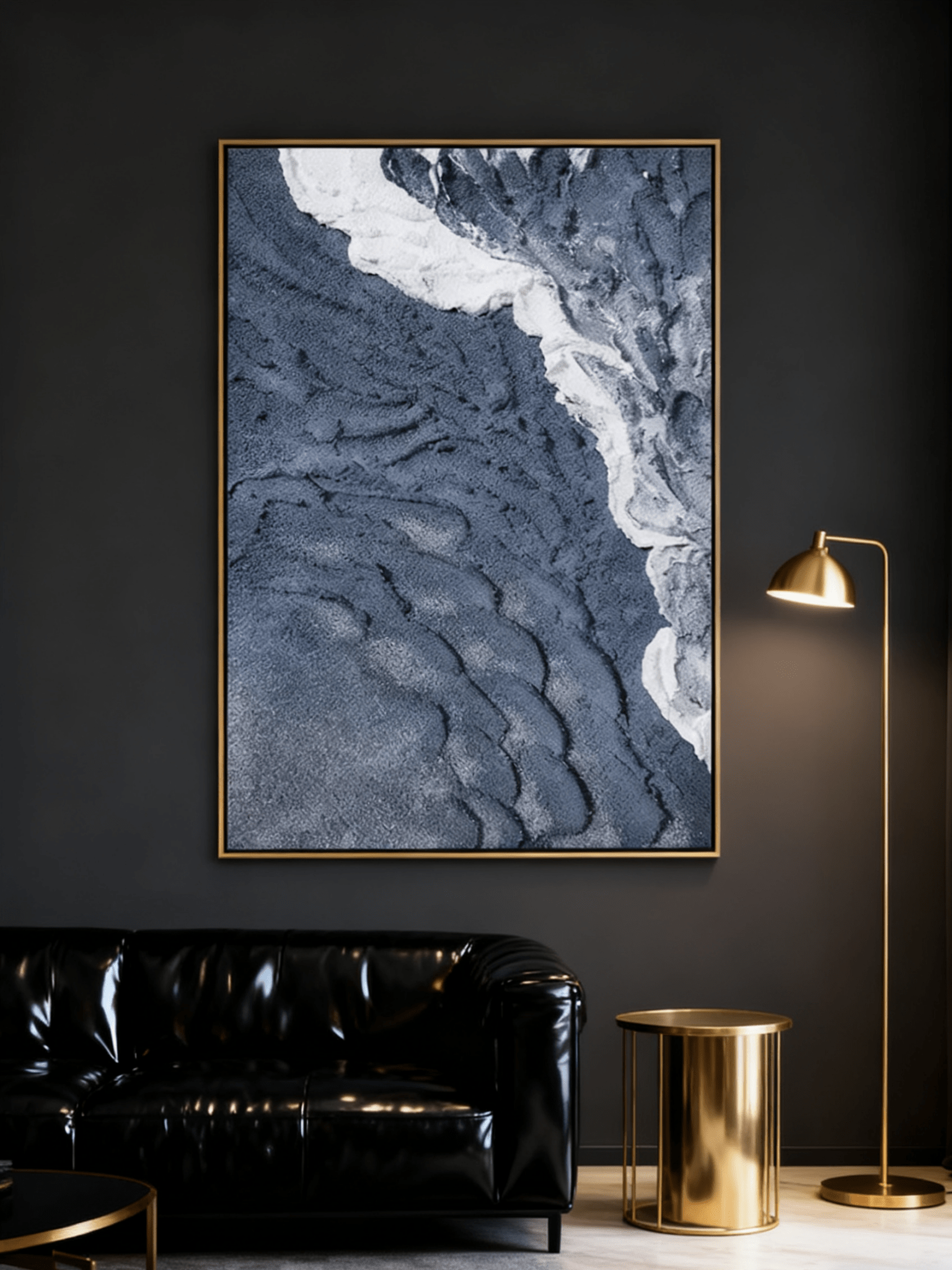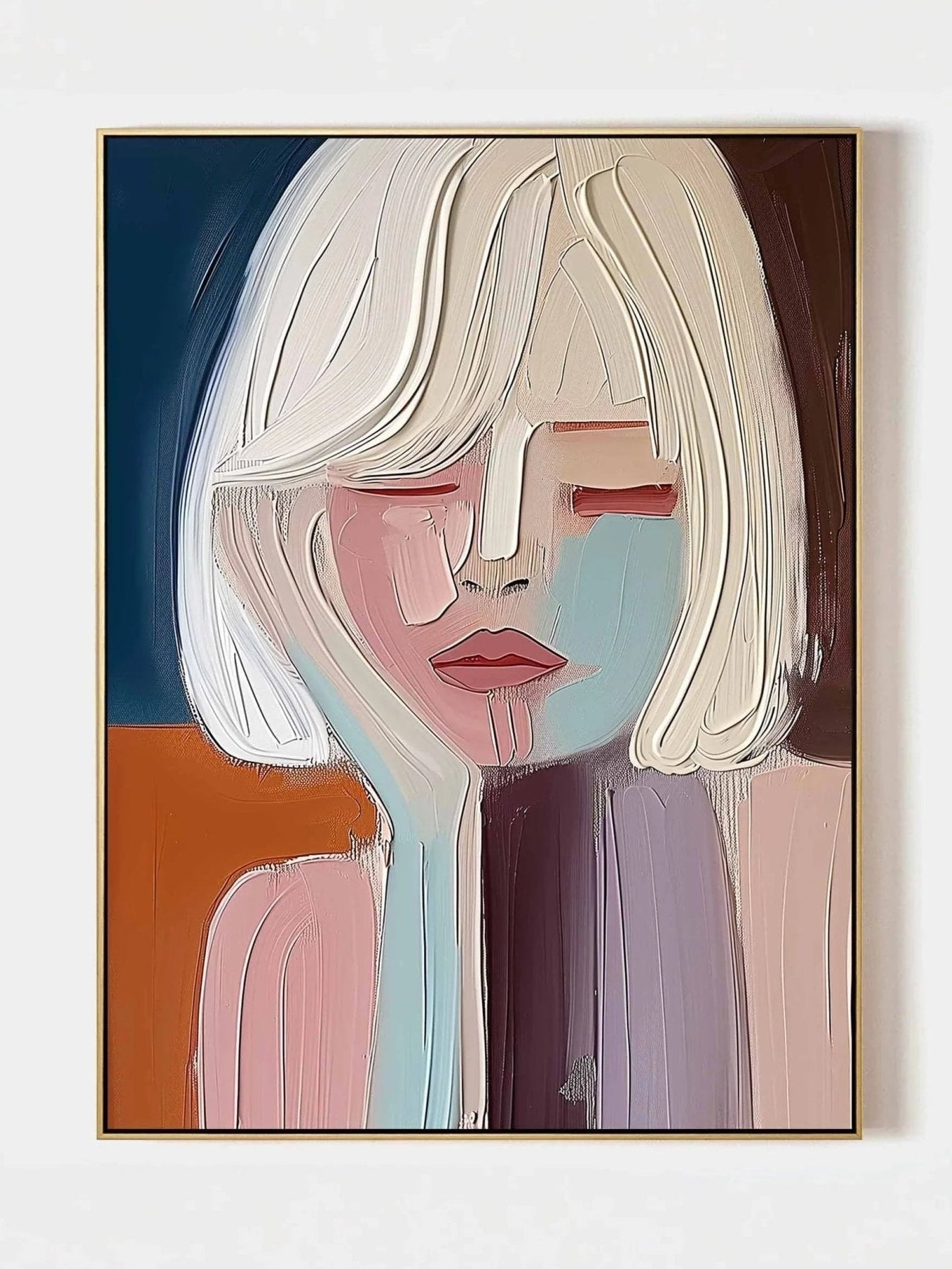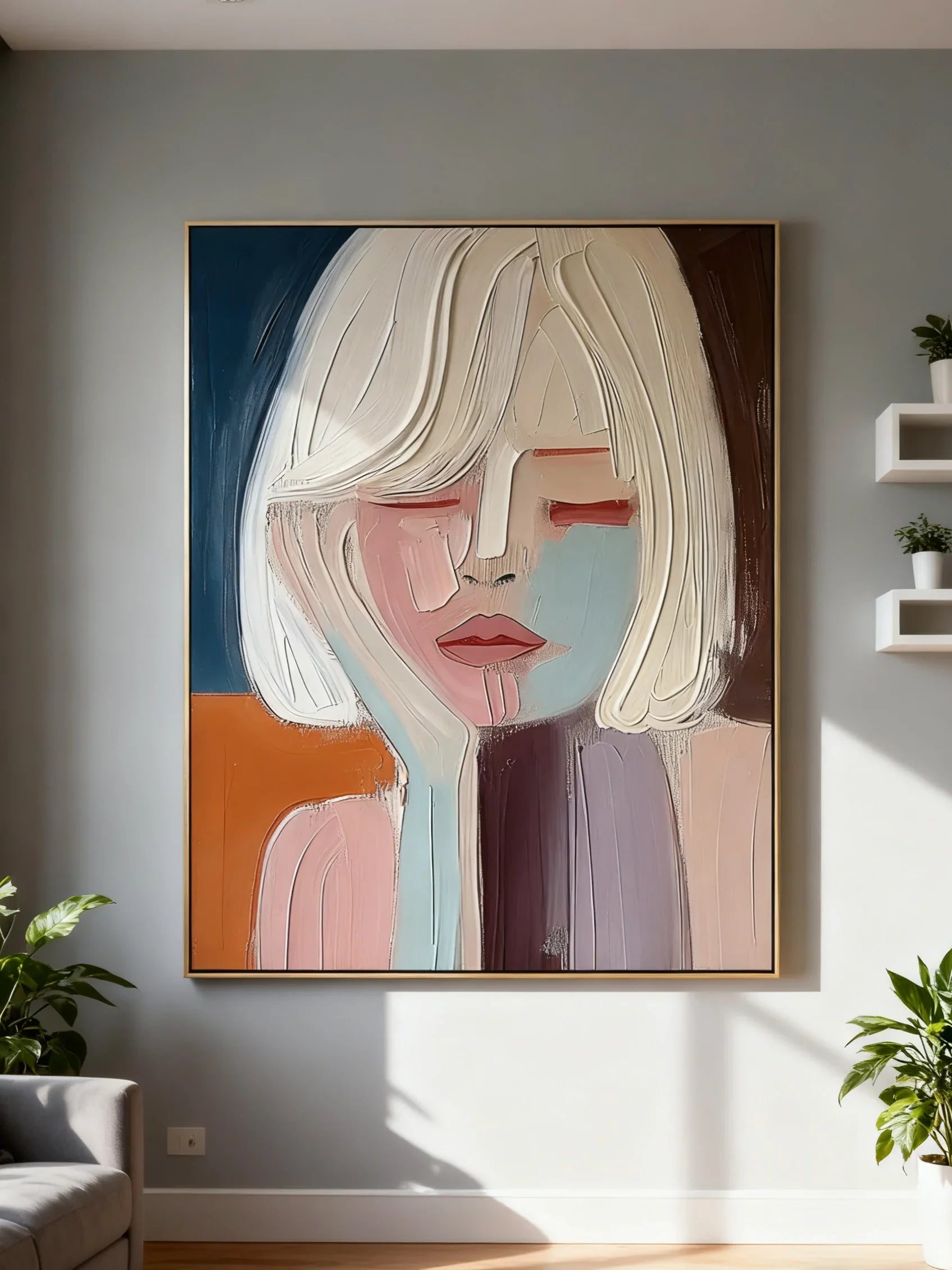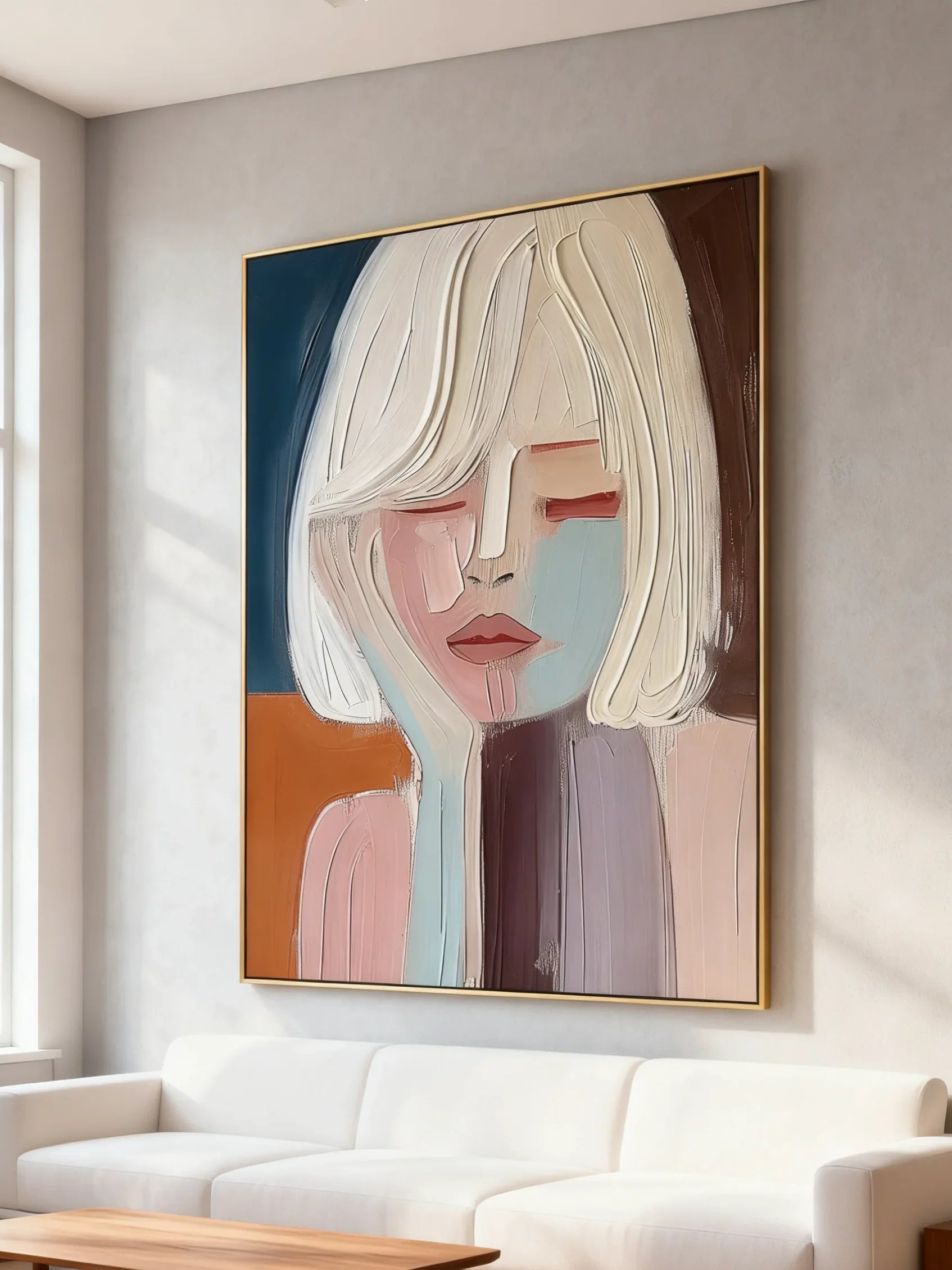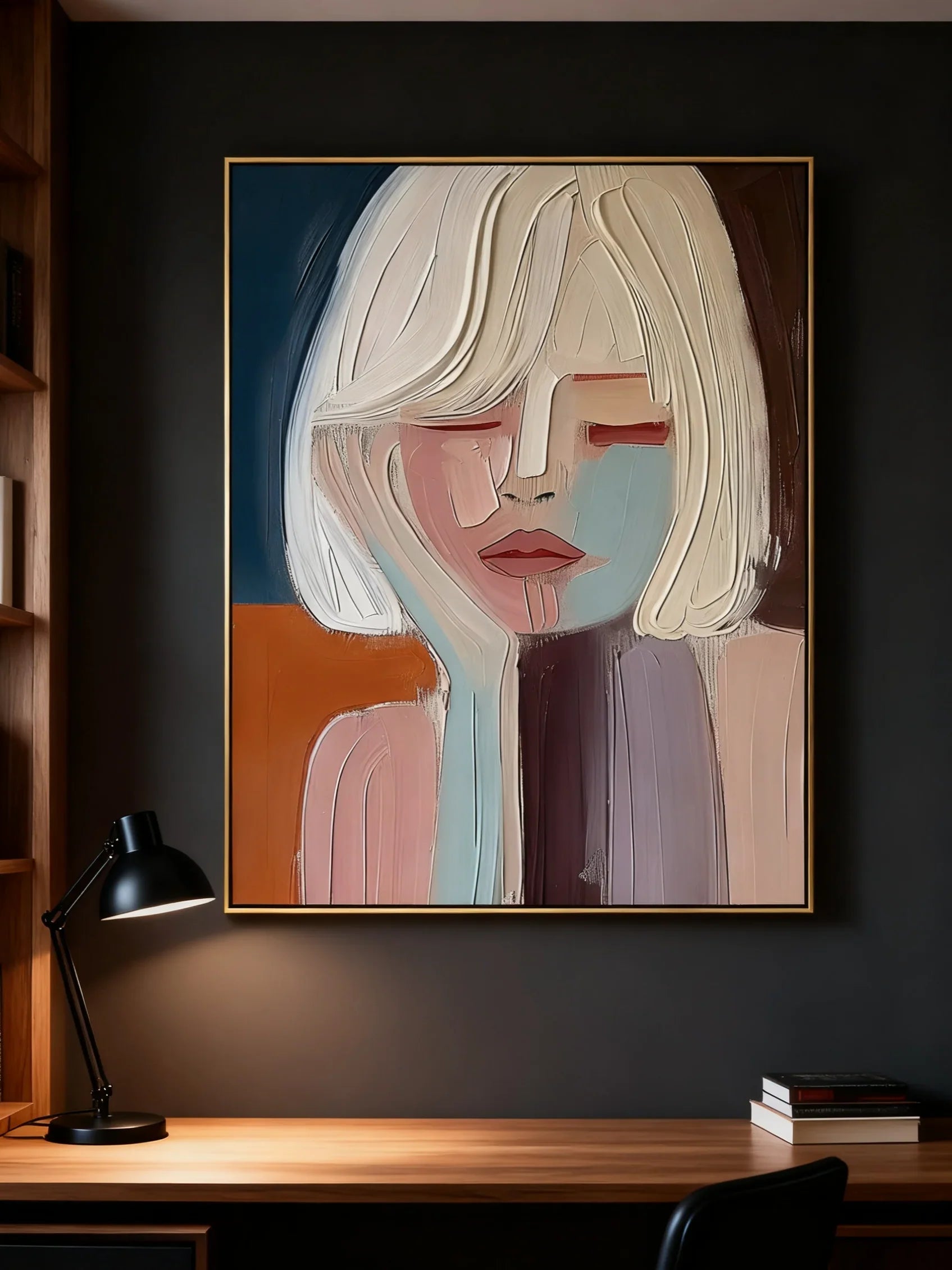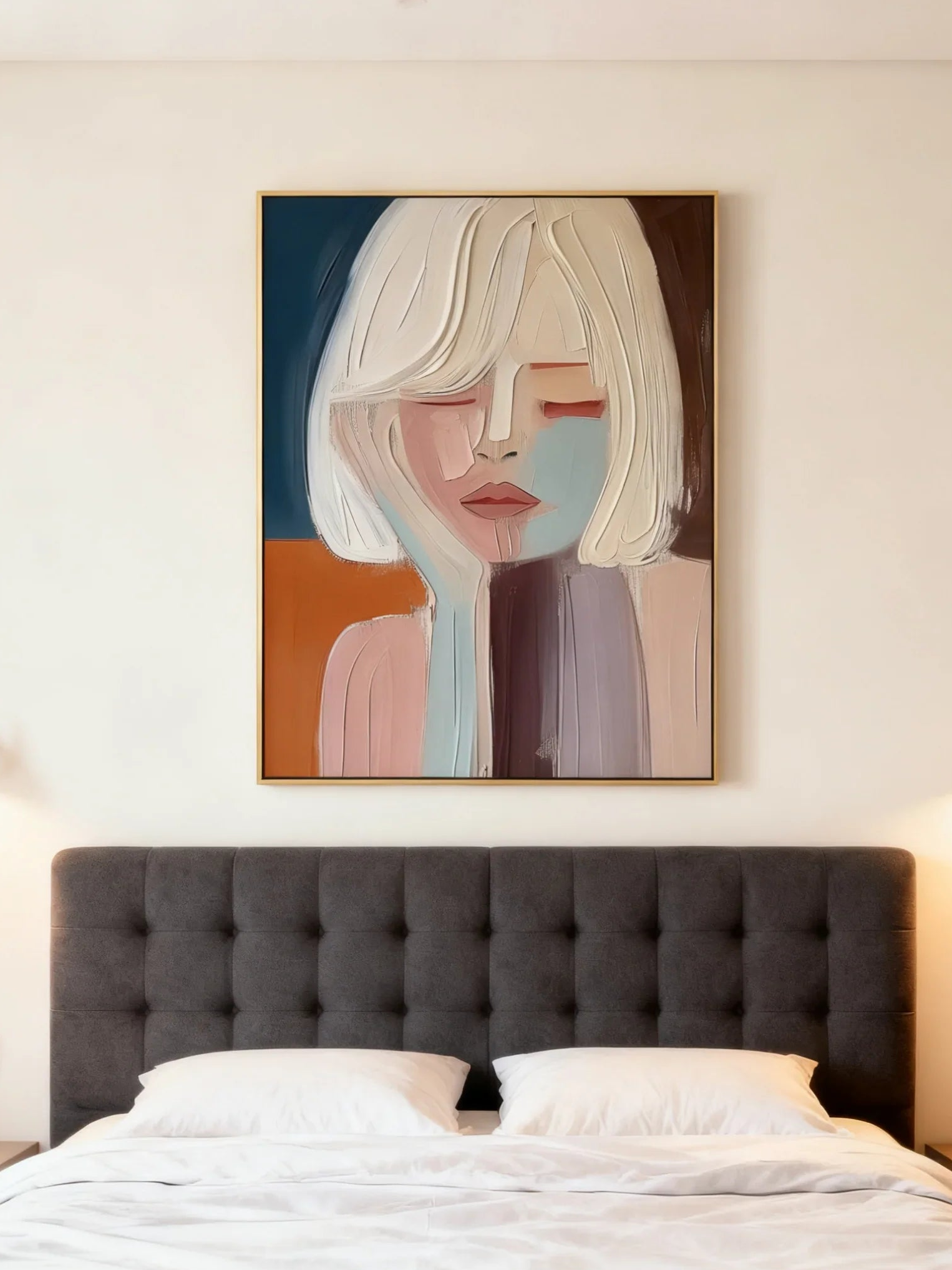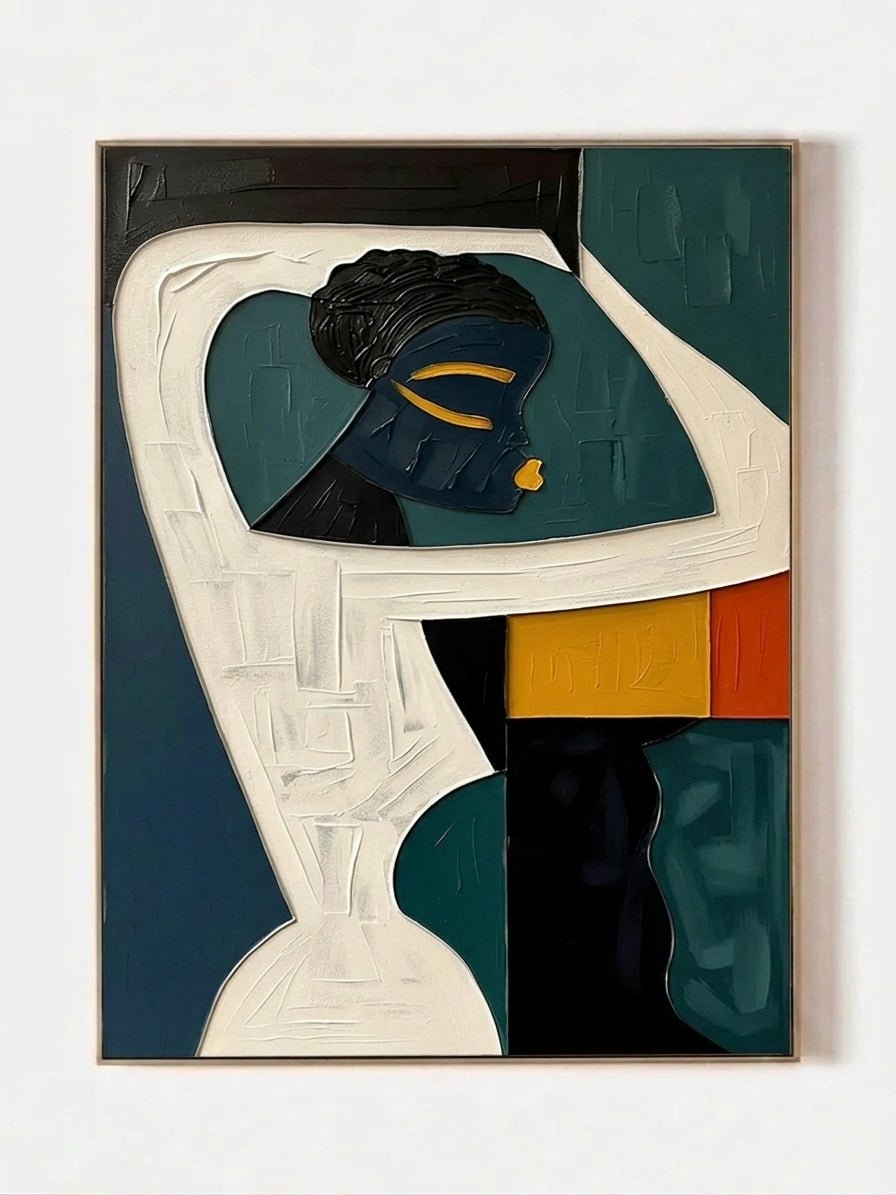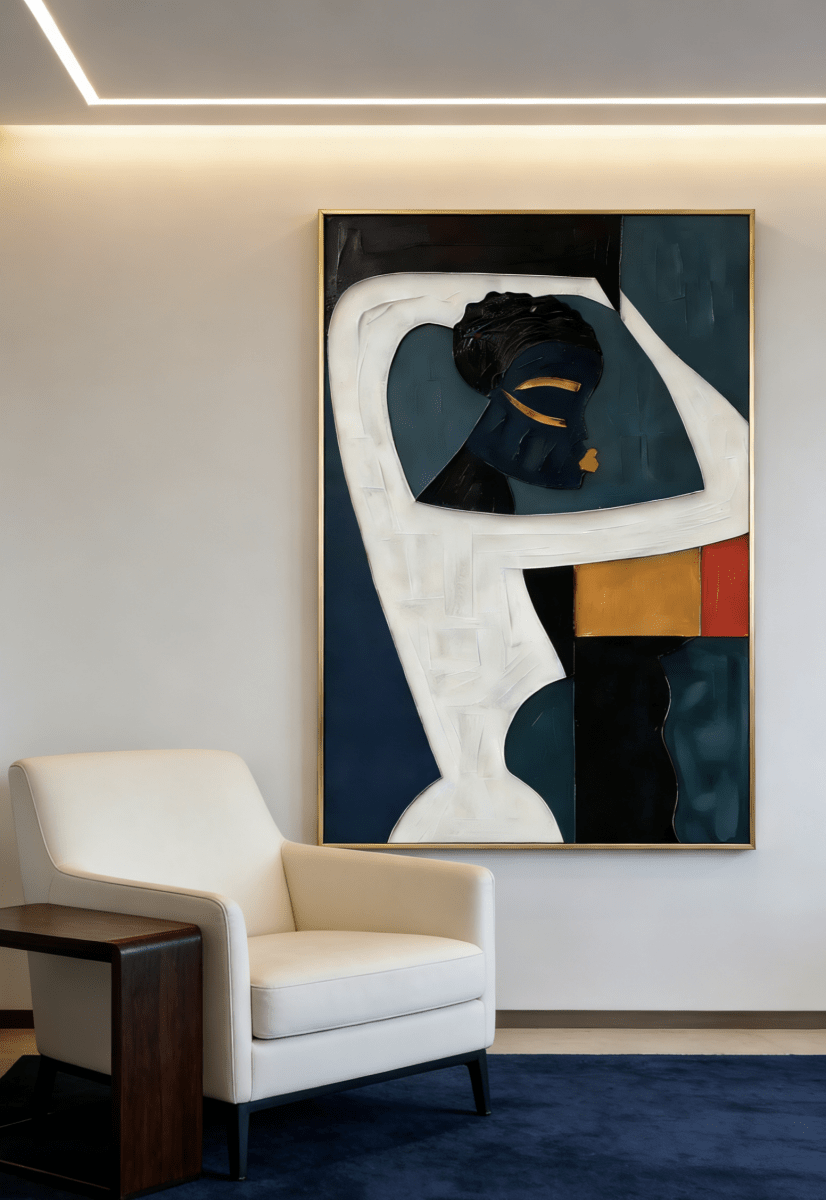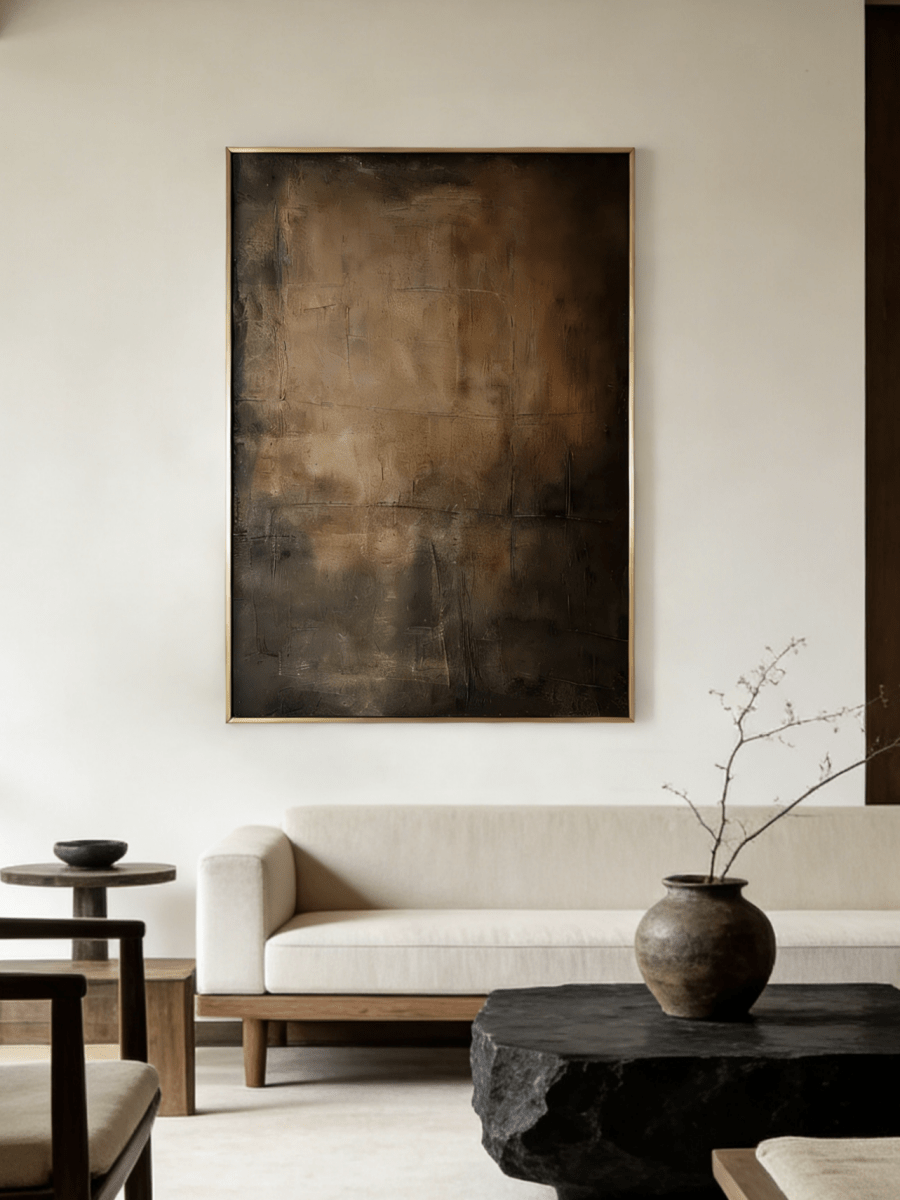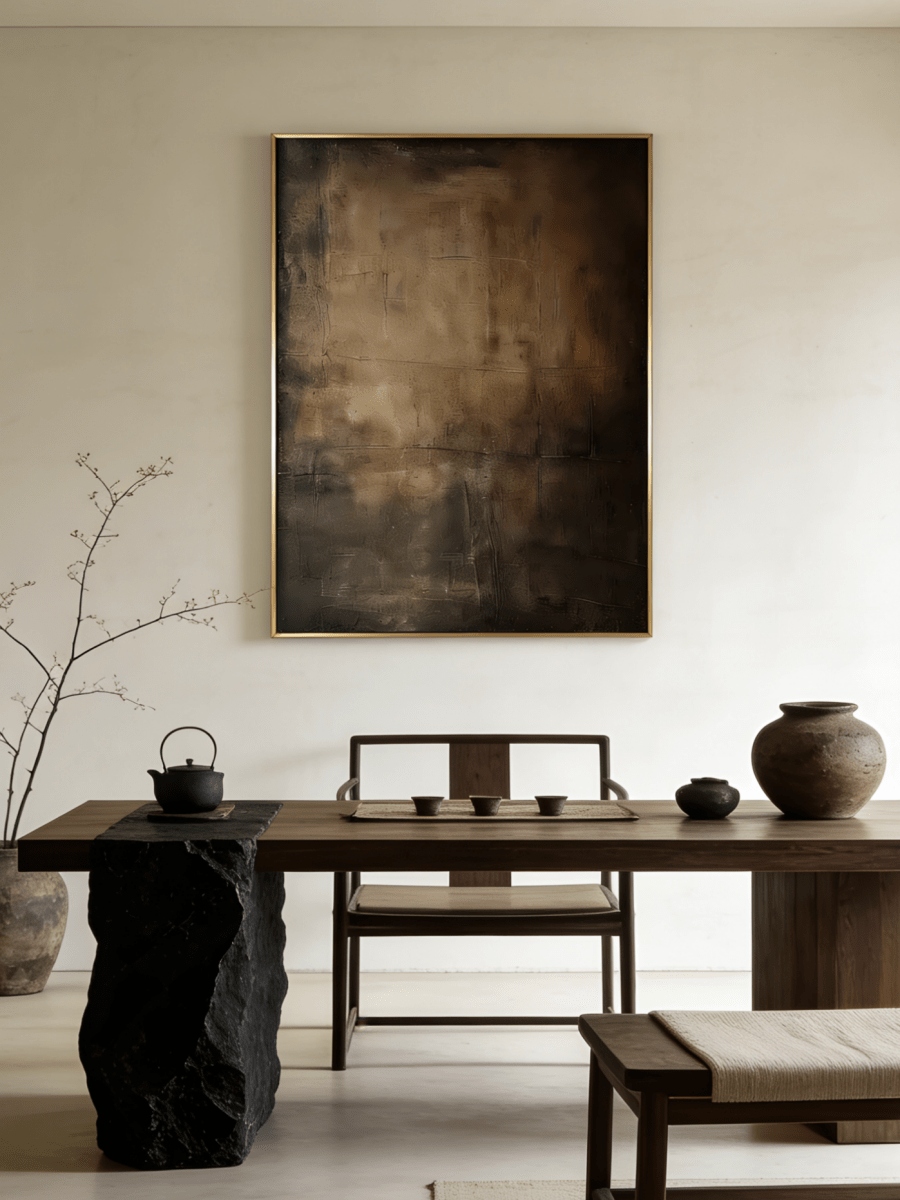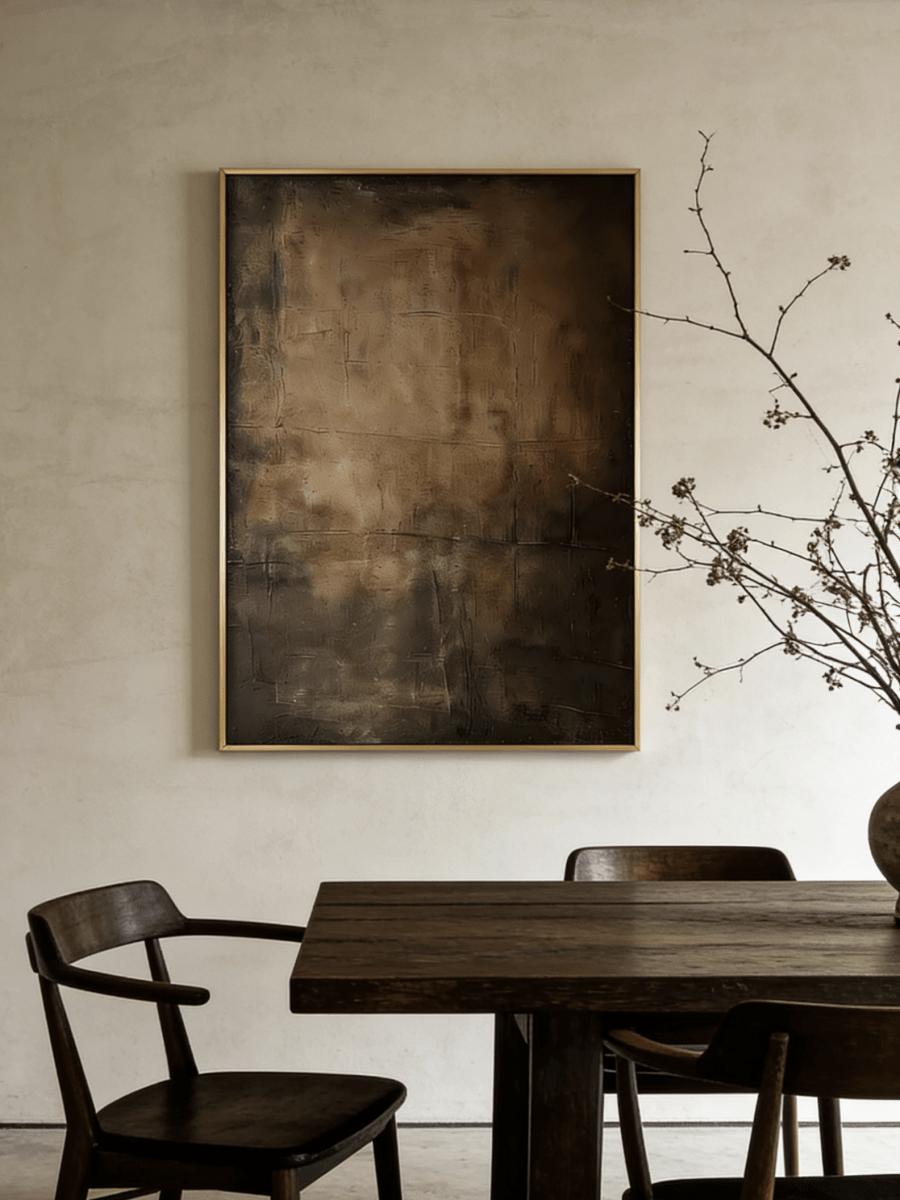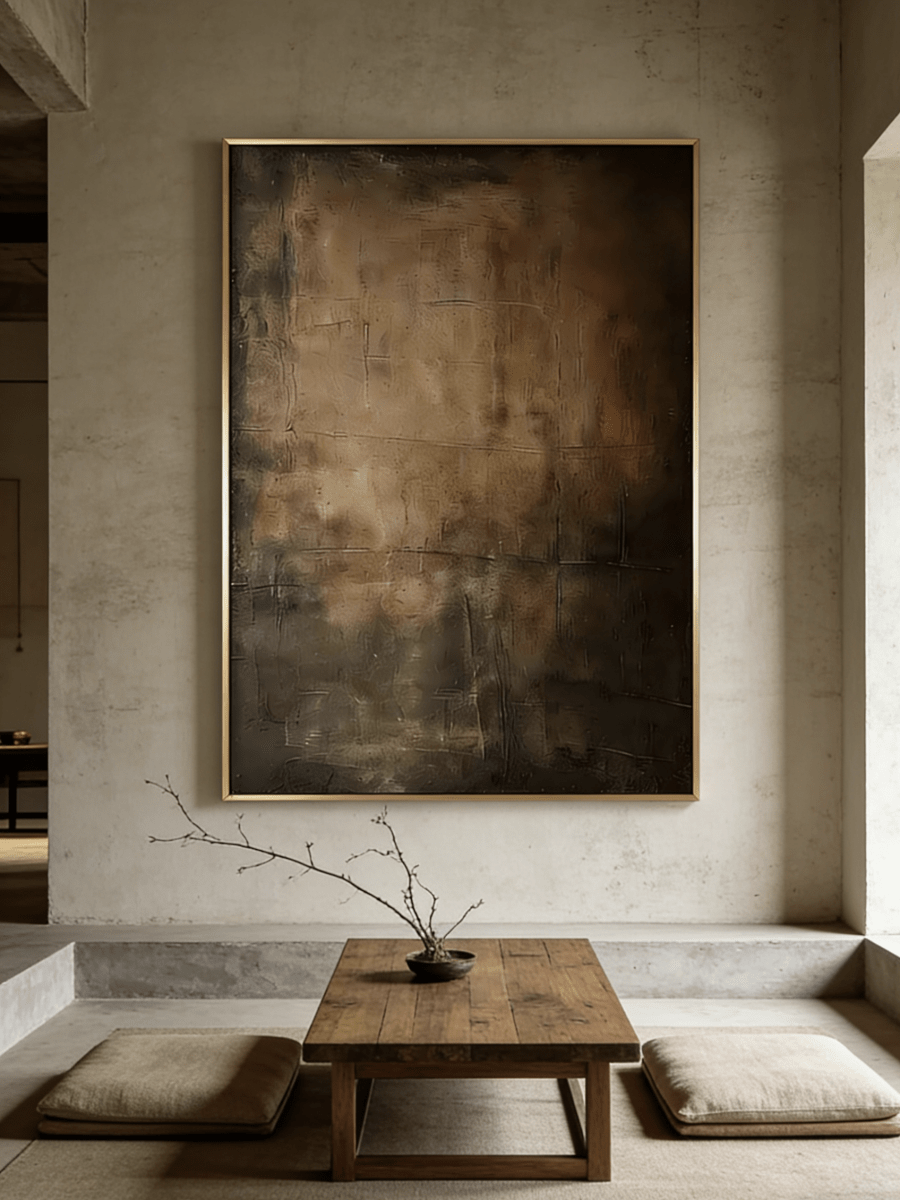

The best light for textured wall art comes from an angle. Side daylight, an adjustable picture light, or a carefully aimed ceiling fixture can create small highlights and shadows across raised paint and sculptural relief. Flat frontal light often makes the same surface look quieter, while one narrow, intense beam can create distracting glare or a dark shadow below every ridge. The goal is not maximum brightness. It is enough direction to reveal depth, balanced with enough ambient light to keep the whole composition readable.
This guide uses three real works from WABI Wall Art’s Textured Wall Art collection. Their surfaces range from shallow architectural texture to deep folded relief and thick floral impasto, so each one needs a slightly different lighting approach.

Begin with the surface, not the fixture
Before shopping for a picture light or moving a floor lamp, look closely at the artwork from the side. Identify where the surface projects, where it recedes, and which details carry the composition. Fine plaster marks need a gentler shadow than a deep sculptural fold. Pale impasto needs protection from blown highlights, while a dark, heavily worked background may need more overall illumination to keep its color from closing in.
A simple flashlight test is useful. Stand several feet from the wall and move a diffused flashlight or small lamp slowly from the left, right, and above. Do not press the light close to the canvas. Watch how the relief changes from the normal viewing position. The most flattering direction is usually the one that shows depth without hiding important painted details in shadow.
Also observe the room during the day. A window beside the artwork may already provide the directional light you need. If the surface looks dimensional in the morning but flat after sunset, the problem is not the painting. The room needs a controllable evening accent.
Three lighting goals for three kinds of texture
| Surface type | What the light should reveal | Useful starting source | Common mistake |
|---|---|---|---|
| Shallow plaster or architectural relief | Fine edges, granular marks, and gradual tonal changes | Soft side daylight or a wide angled beam | Frontal light that erases the small shadows |
| Deep sculptural relief | The complete shape of ridges, folds, and recessed areas | Broad picture light or adjustable ceiling accent | A tight spotlight that makes one hot patch and heavy black shadows |
| High-contrast impasto | Raised strokes without losing the painted color beneath them | Soft oblique light plus room-level ambient light | Overlighting pale paint while the darker field remains unreadable |
These are starting points rather than fixed formulas. Wall color, ceiling height, fixture position, frame finish, and the viewer’s usual distance all change the result.
Use soft side light for shallow architectural texture
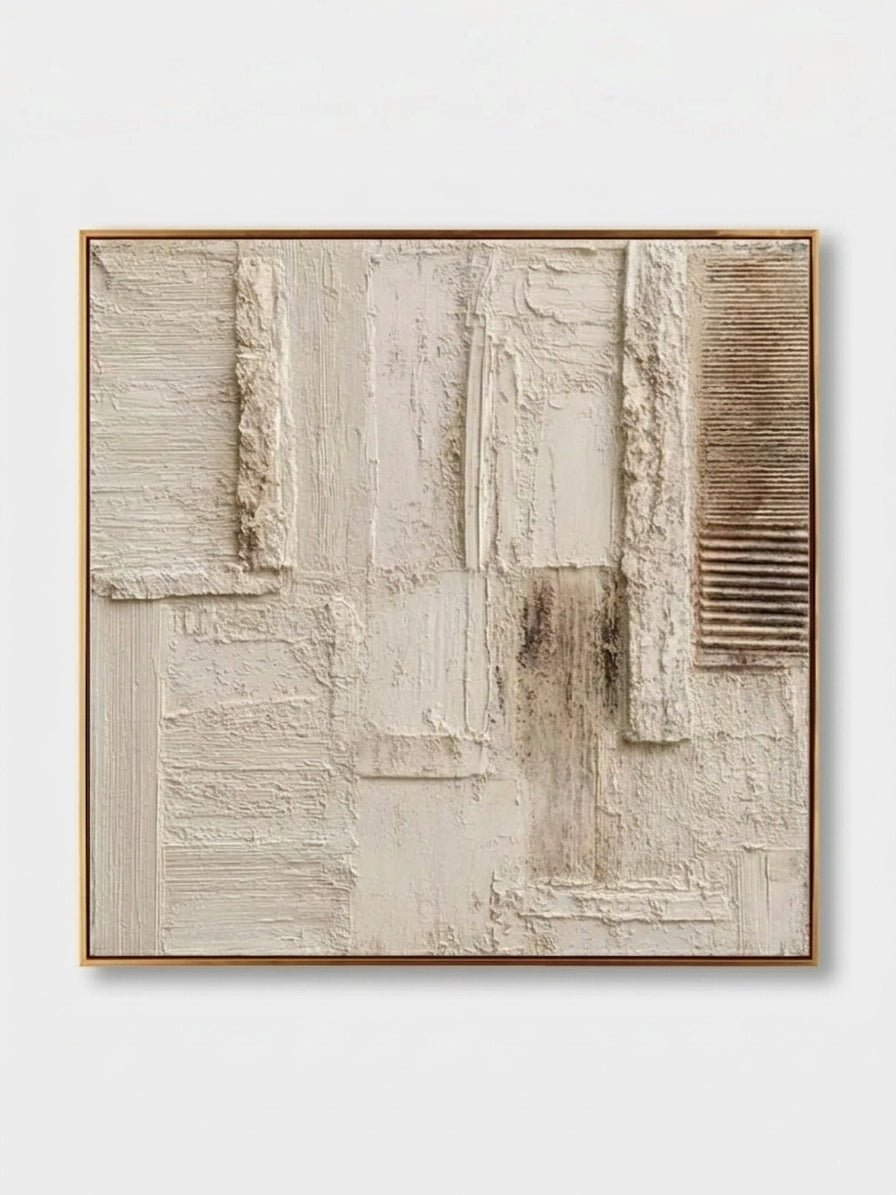
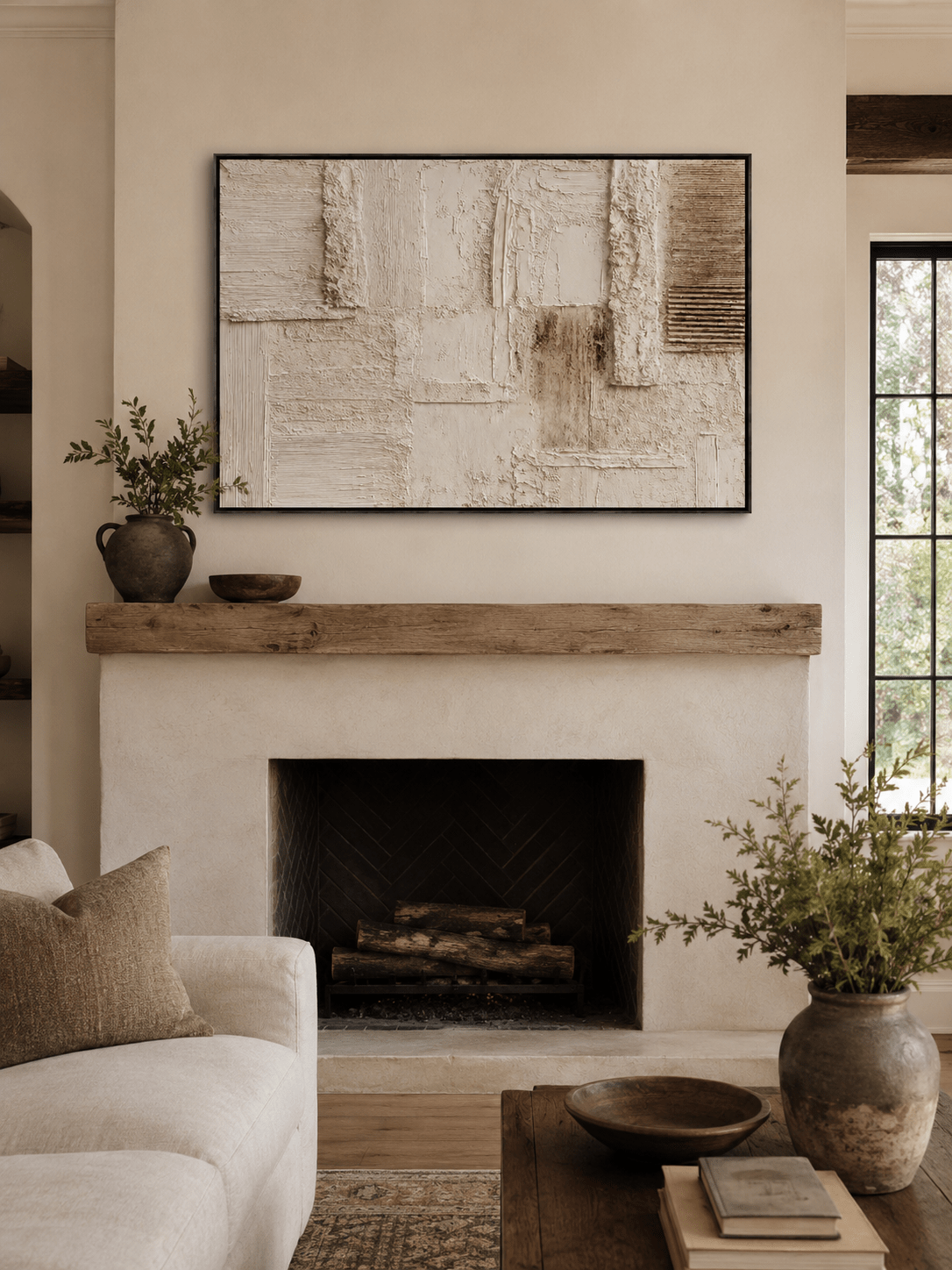
Modern Textured Abstract Wall Art – Quiet Passage - EV#0306 by Eliot Vermeer is built around nested arch shapes. Warm ivory and greige outer bands lead toward a charcoal center, while granular plaster-like passages contrast with smoother vertical areas. The relief is present across the canvas, but it is not equally deep everywhere.
This kind of surface responds well to side light because many of its important details are small: the raised rim of an arch, the rough field around the opening, and the overlapping blocks on the right. A nearby window can reveal those edges gradually. Soft daylight is especially effective when the light moves across the canvas rather than striking it head-on.
In a living room, place the painting on a wall adjacent to the main window rather than directly opposite it. That orientation lets the light travel across the relief. If the room is bright but the surface still looks flat, the window may be facing the painting too directly. A shaded floor lamp or adjustable wall light placed off to one side can restore directional contrast after dark.
The work is horizontal and offered in sizes from 24 by 20 inches through 80 by 60 inches. Its wide architectural form suits a sofa, bed, sideboard, fireplace, or long hallway wall. Larger sizes need a broader pool of light; one narrow beam will illuminate the center while leaving the outer plaster sections dim.
View Quiet Passage and its available sizes.
Give deep sculptural relief a broad, controlled wash
Deep relief needs more control because every projecting edge can cast a long shadow. Modern Sculptural Relief Wall Art – Earthen Fold - LL#0301 by Leo Liang places one flowing, fabric-inspired form against a warm taupe ground. The work is nearly monochromatic, so light and shadow carry more of the visual information than color contrast.

A picture light can work well here if its beam covers most of the artwork and can be aimed away from the viewer’s eyes. The light should skim the raised fold enough to define its ridges, but it should not create one brilliant strip at the top and a dark lower half. View the work from the entry path, the nearby seating area, and the stairs before deciding that the angle is correct.
If a ceiling fixture is the only option, use an adjustable head with a beam wide enough to reach the full composition. Move the aim slightly off center so the form gains dimension, then check that the deepest recesses still contain visible detail. Adding a low level of ambient light from a table lamp can soften shadows without flattening the sculpture.
Earthen Fold’s vertical movement makes it useful on an entry wall, stair landing, narrow living-room section, or above a compact console. Its warm taupe, camel, sand, clay, and greige tones work naturally with walnut, oak, travertine, linen, and matte ceramics. Because the palette is restrained, the light source has a noticeable effect on whether the piece reads warm, neutral, or slightly gray.
View the Earthen Fold sculptural relief.
Balance pale impasto against a dark painted field
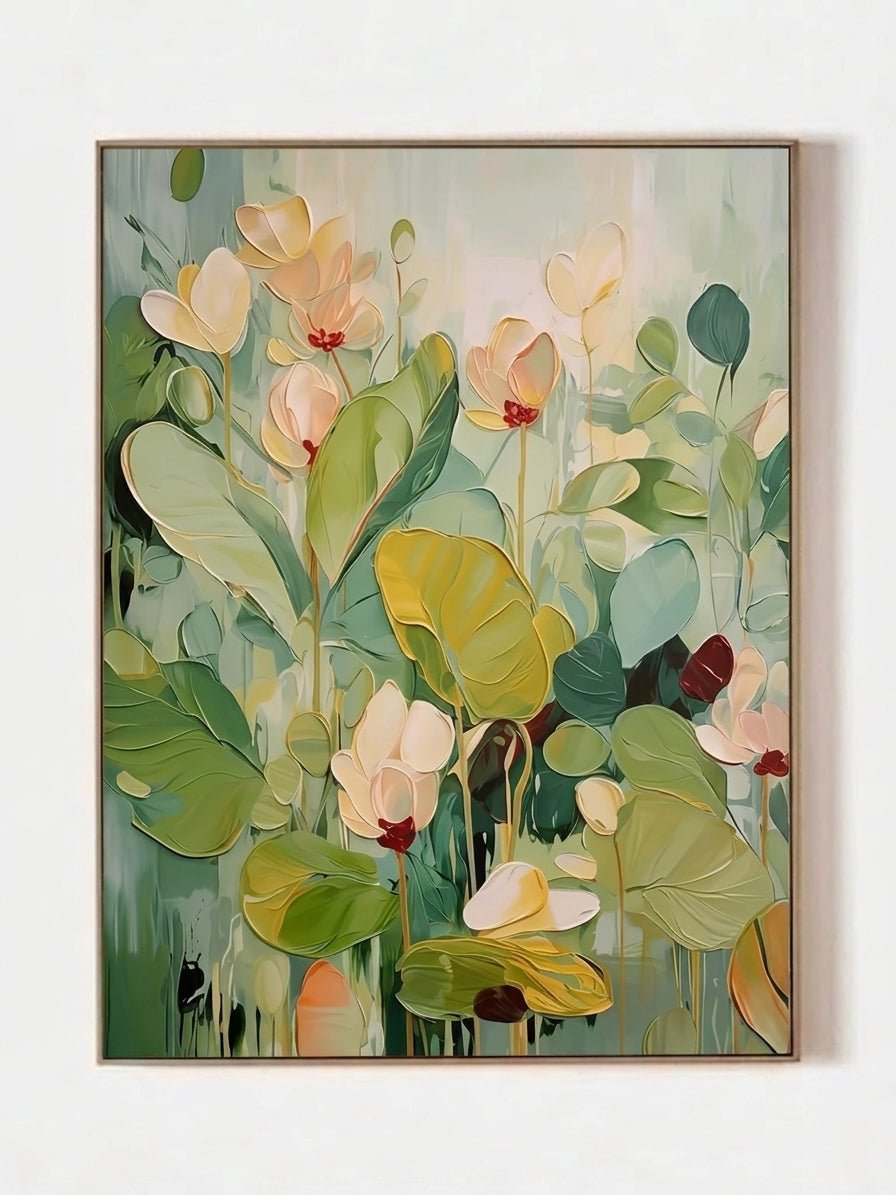
Modern 3D Textured Floral Wall Art – White Blossoms in Green - LX#0293 by Luna Xiao has a different lighting problem. Its white flowers are built with thick impasto, while the background uses dense emerald, forest, olive, and moss-green palette-knife marks. The pale petals can become too bright before the darker background has enough light.

Use a softer angled source and keep some ambient room light around the canvas. The aim is to create small shadows between the petals, not to turn the flower surfaces into bright white patches. If a fixture has a dimmer, begin low and increase the light while viewing the painting from the dining table or main doorway.
This piece can also benefit from daylight beside a dining-room or living-room wall. A sheer shade helps diffuse strong sun while preserving direction. At night, a pendant may provide the room’s background illumination while one subtle accent source defines the flowers. Avoid placing a bare bulb where it reflects from raised or glossy paint into the viewer’s sight line.
The vertical format and diagonal branches make the painting a strong choice above a sideboard, narrow console, dresser, or reading chair. The vivid green carries more visual weight than the neutral examples, so it does not need the most dramatic lighting in the room.
Choose the source according to the room
Living room
Start with the main window and the sofa sight line. Side daylight can do most of the work during the day. At night, an adjustable ceiling light or shaded lamp can add direction, while the room’s other lamps keep the wall from becoming an isolated bright rectangle.
Entryway and hallway
These spaces often have limited daylight, making a picture light practical. Check the beam from the doorway and from close range. A fixture that looks subtle across the room may feel glaring when a guest passes directly beneath it.
Dining room
Dining pendants usually light the table more than the wall. Treat them as ambient light, then add a quiet directional source for the art if needed. Keep the artwork’s light subordinate to comfortable light at the table.
Bedroom
A bedroom does not need gallery-level drama. Soft side light from a window or a dimmable picture light can reveal texture without competing with bedside lamps. Make sure the fixture itself is not visible or uncomfortably bright from the bed.
Avoid prolonged direct sun and extreme conditions
Directional light is useful; prolonged direct sunlight is not the goal. The selected product care guidance recommends keeping the works away from extended direct sun, excessive humidity, and water contact. Use window placement, shades, or curtains to prevent a hard beam from sitting on the canvas for hours.
Texture also gathers dust differently from a flat surface. Do not place the work where kitchen grease, bathroom steam, or a strong HVAC vent repeatedly crosses the relief. Follow the product care guidance and use a clean, soft, dry brush without pressing into raised areas.
Test the arrangement before permanent installation
- Mark the proposed artwork size on the wall with painter’s tape.
- Observe natural light on that outline in the morning, afternoon, and evening.
- Temporarily hold a lamp or flashlight to the left, right, and above the wall.
- Choose the direction that reveals the relief without hiding painted information.
- Test the full arrangement from the normal seated and standing viewpoints.
- Confirm that the beam covers the whole canvas rather than only its center.
- Install a dimmer or adjustable fixture when practical, then begin at a low setting.
Lighting cannot correct an artwork that is too small for the wall or hung outside the furniture’s visual center. Confirm the canvas dimensions first with WABI’s wall art sizing guide, then plan the fixture around the final outer size.
Frequently asked questions
What is the best lighting for textured wall art?
Soft directional light from the side or above is a dependable starting point. It should create enough shadow to reveal the relief while still illuminating the entire composition.
Can I use a picture light on 3D wall art?
Yes, especially for a deep relief in an entryway or hallway. Choose a broad, adjustable light and test it from normal viewing positions so the top is not overlit and the lower relief is not lost in shadow.
Why does my textured painting look flat?
The room may have bright but frontal or evenly diffused light. Move a portable lamp to one side as a test. If the relief becomes visible, add a controllable angled source rather than simply increasing brightness.
Should the light come from the left or right?
Either can work. The better side depends on the artwork’s ridges, the room’s window position, and where people view it. Test both directions and choose the one that reveals important details without producing a distracting shadow pattern.
Is warm or neutral light better for beige textured art?
Warm light emphasizes camel, sand, and taupe; a more neutral source keeps ivory and greige clearer. Compare bulbs in the actual room because wall color and nearby wood also affect the result.
How do I prevent glare on raised paint?
Avoid aiming a concentrated source directly along the viewer’s sight line. Soften or widen the beam, reduce brightness, and move the fixture angle until highlights no longer obscure the paint surface.
Does textured wall art need a dedicated fixture?
Not always. A nearby window, floor lamp, or adjustable ceiling light may already create enough direction. Add a dedicated fixture only when the art becomes flat or unreadable under the room’s normal evening lighting.
Let the relief decide how much light it needs
Quiet Passage benefits from gentle side light that traces many small architectural edges. Earthen Fold needs a broader controlled wash that keeps its deep folds readable from top to bottom. White Blossoms in Green needs soft oblique light plus ambient illumination so the pale impasto and dark painted field remain balanced.
The shared principle is simple: light across the surface, not merely at it. Begin with the room’s existing daylight, test the artwork from real viewing positions, and add only as much accent light as the relief requires. Explore more shallow, layered, and sculptural surfaces in the Textured Wall Art collection, or read how textured art adds dimension to a room before choosing a piece.