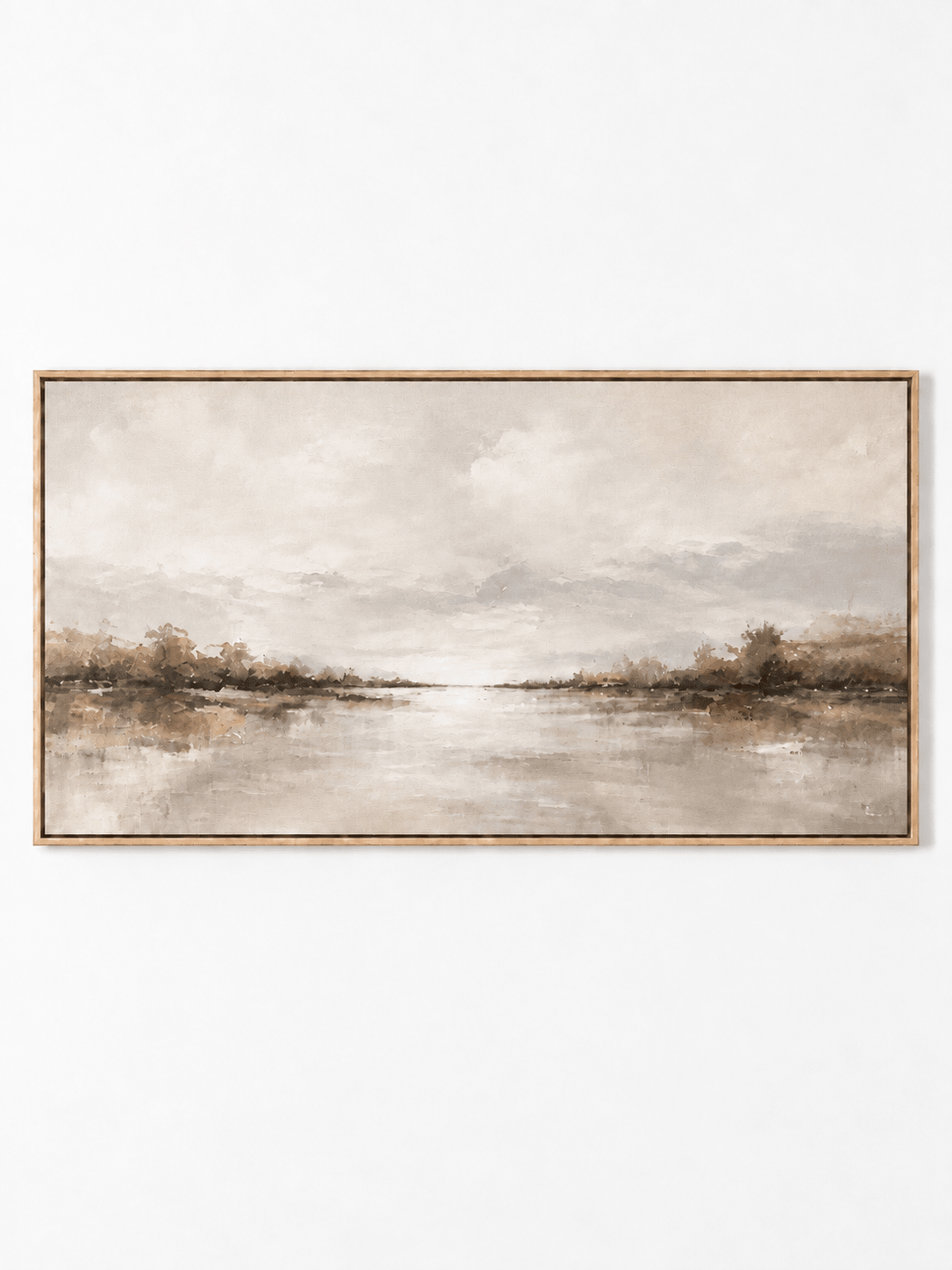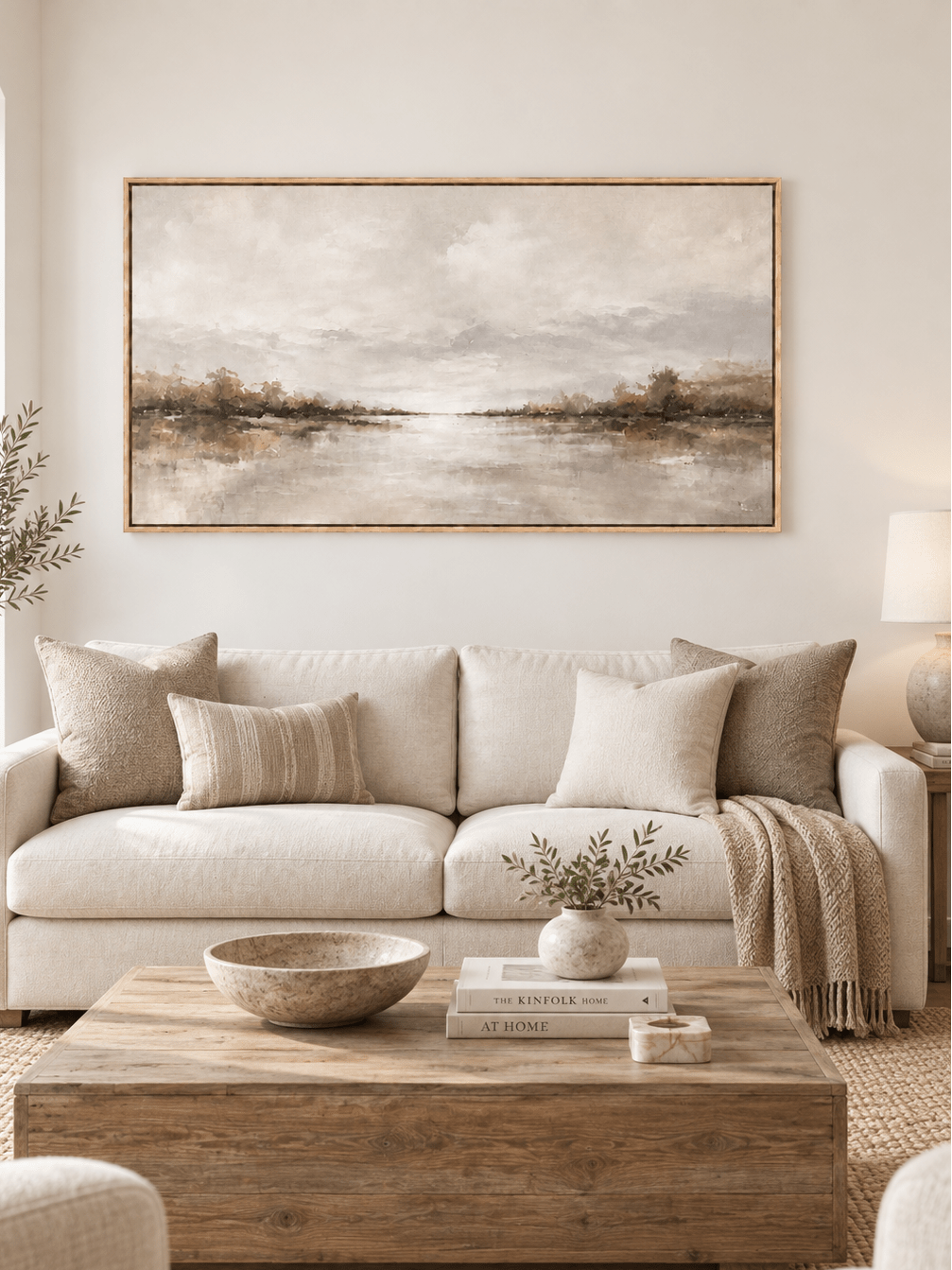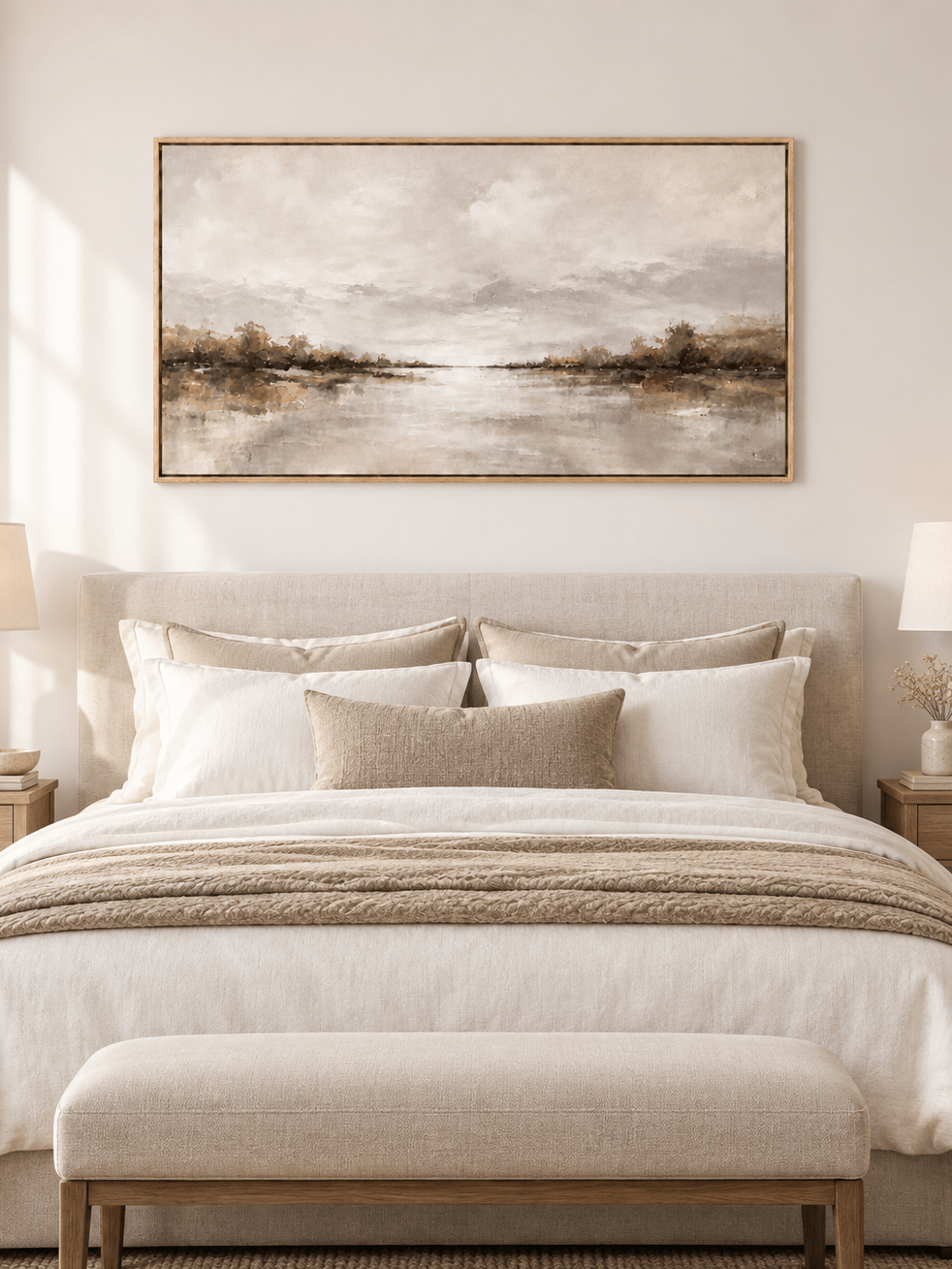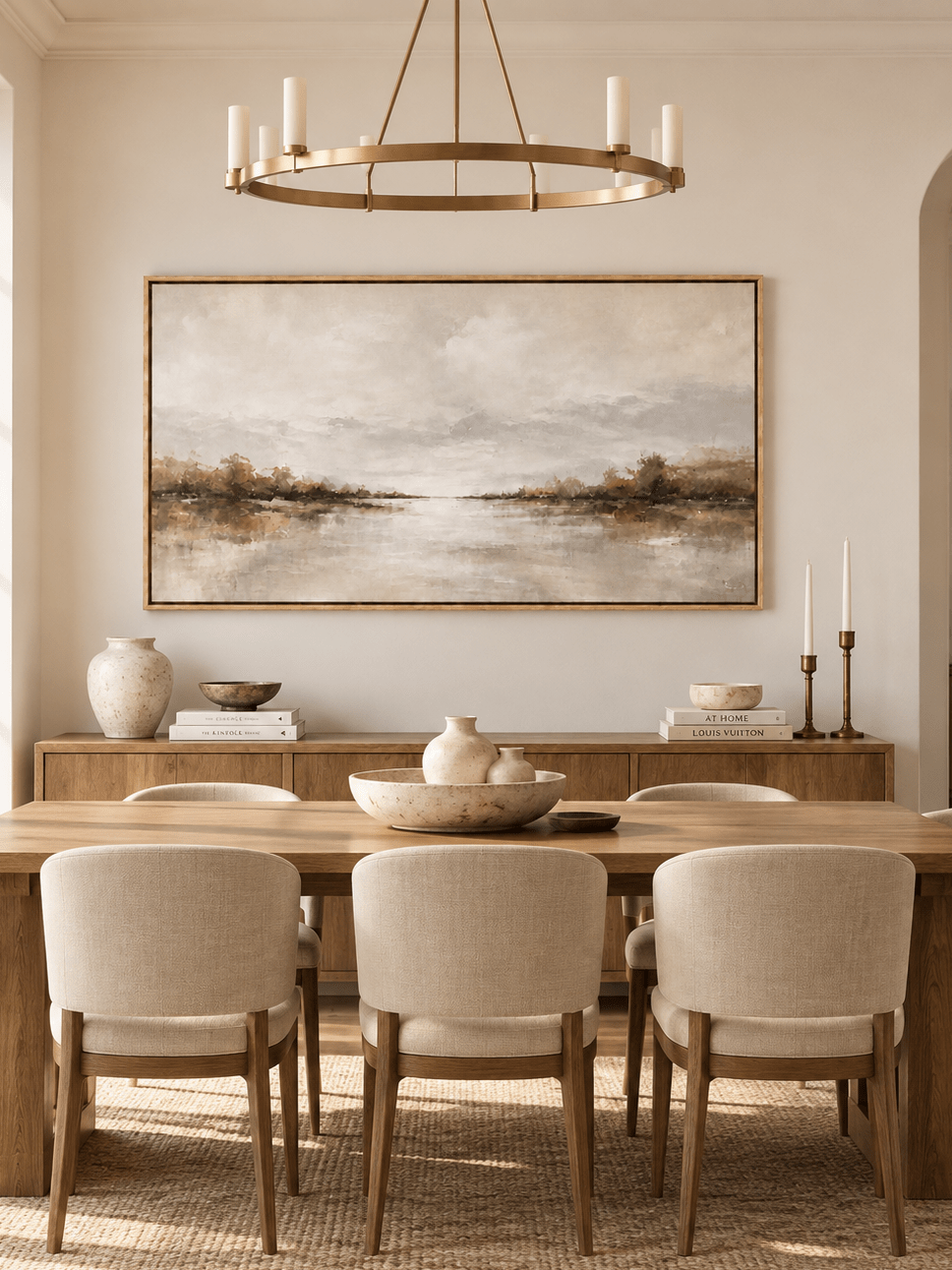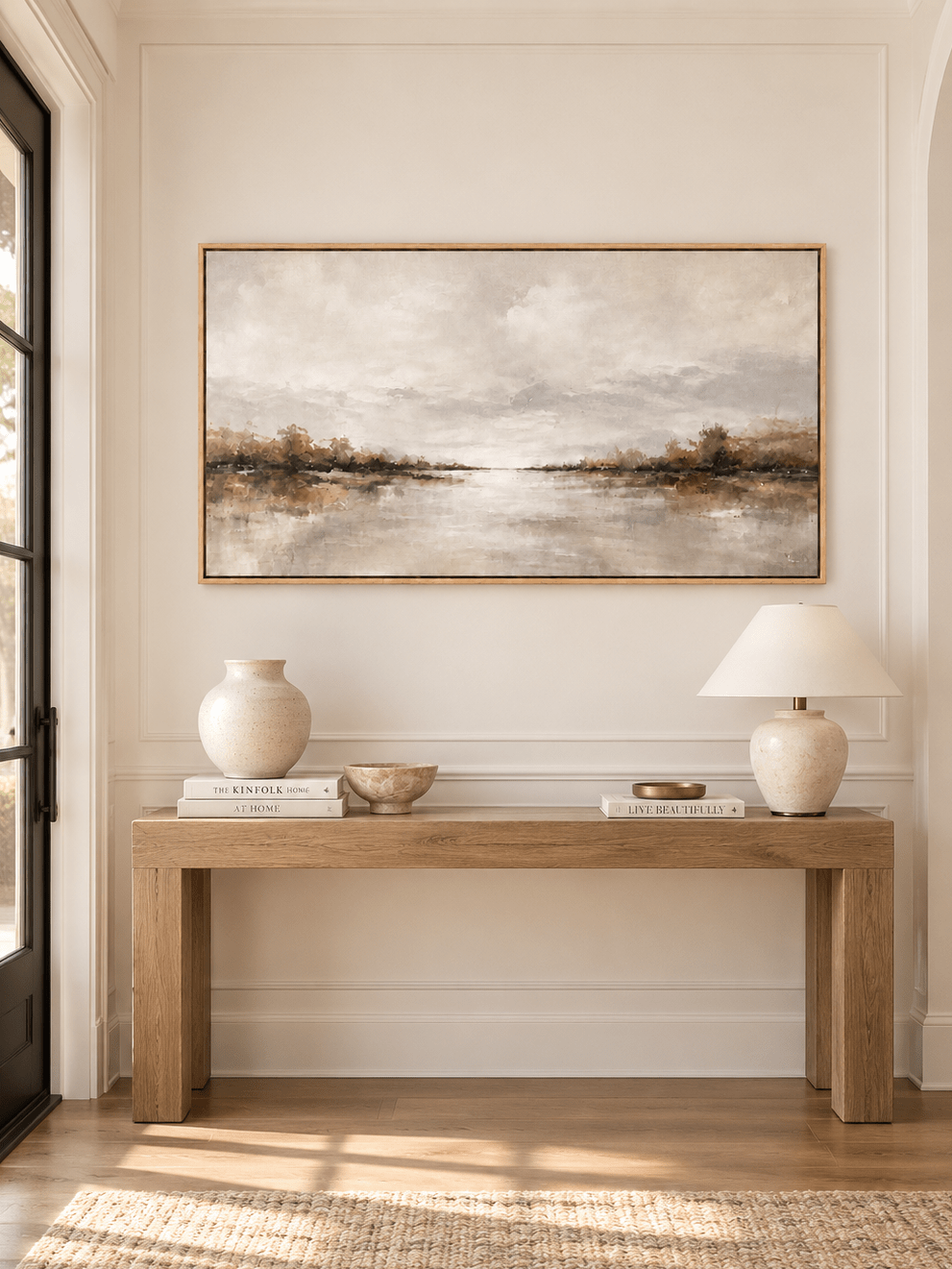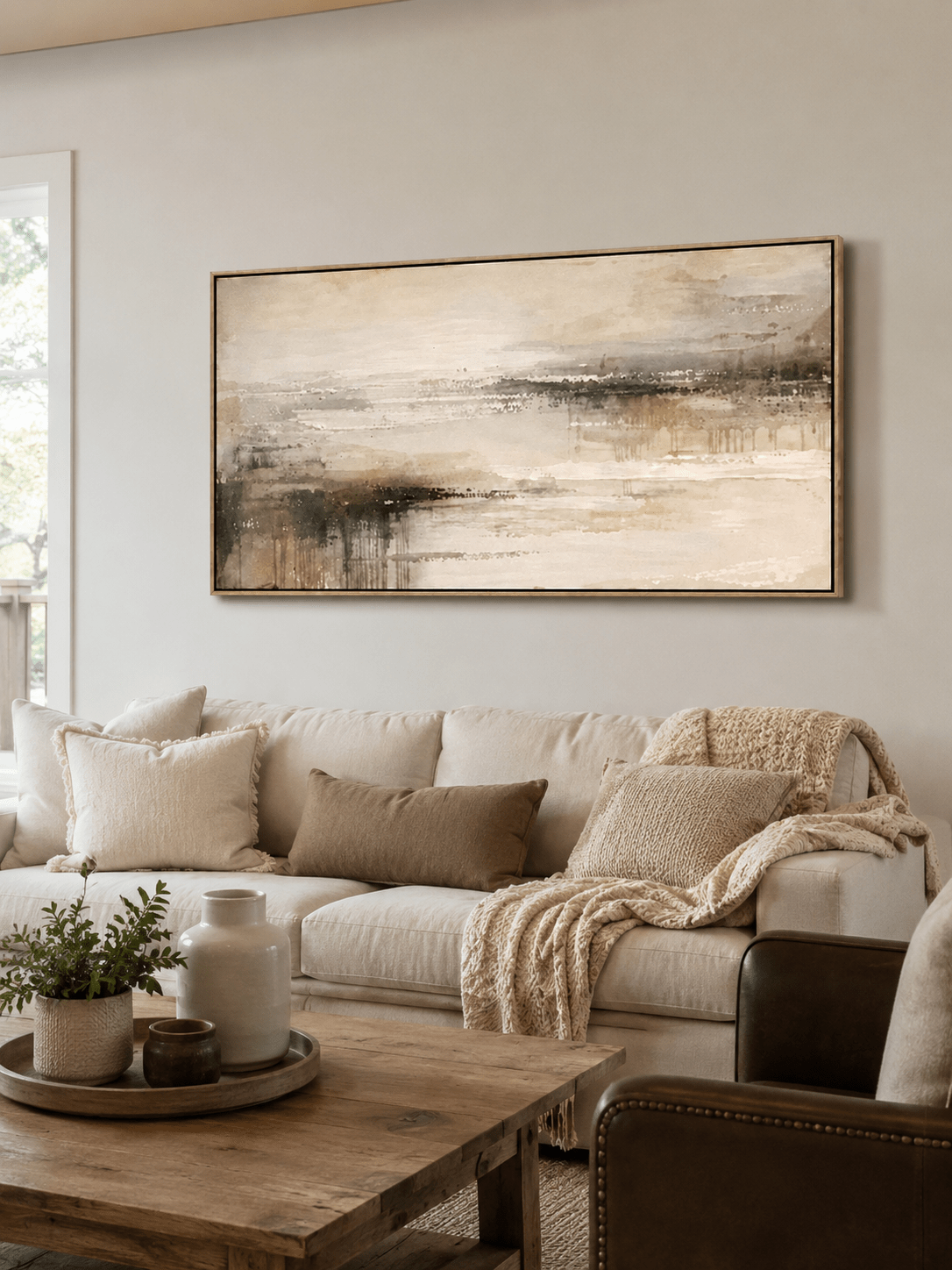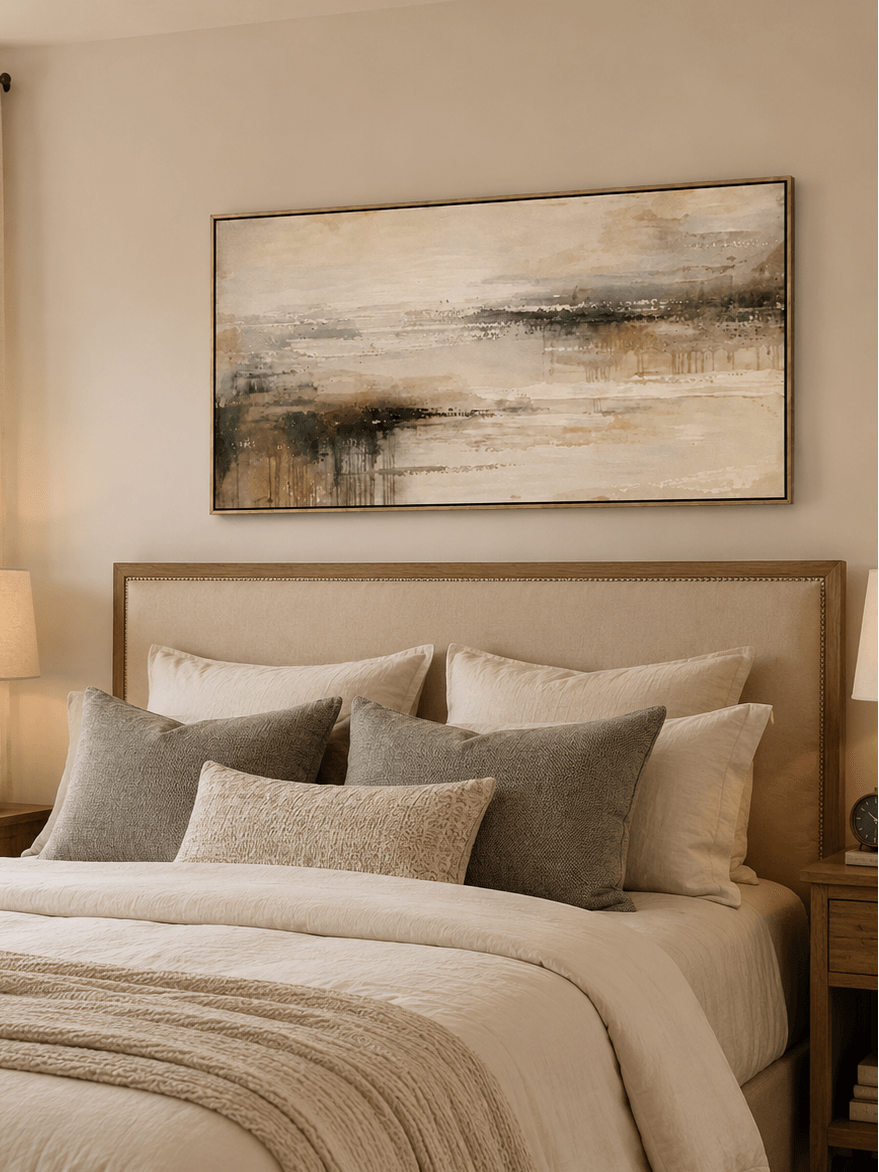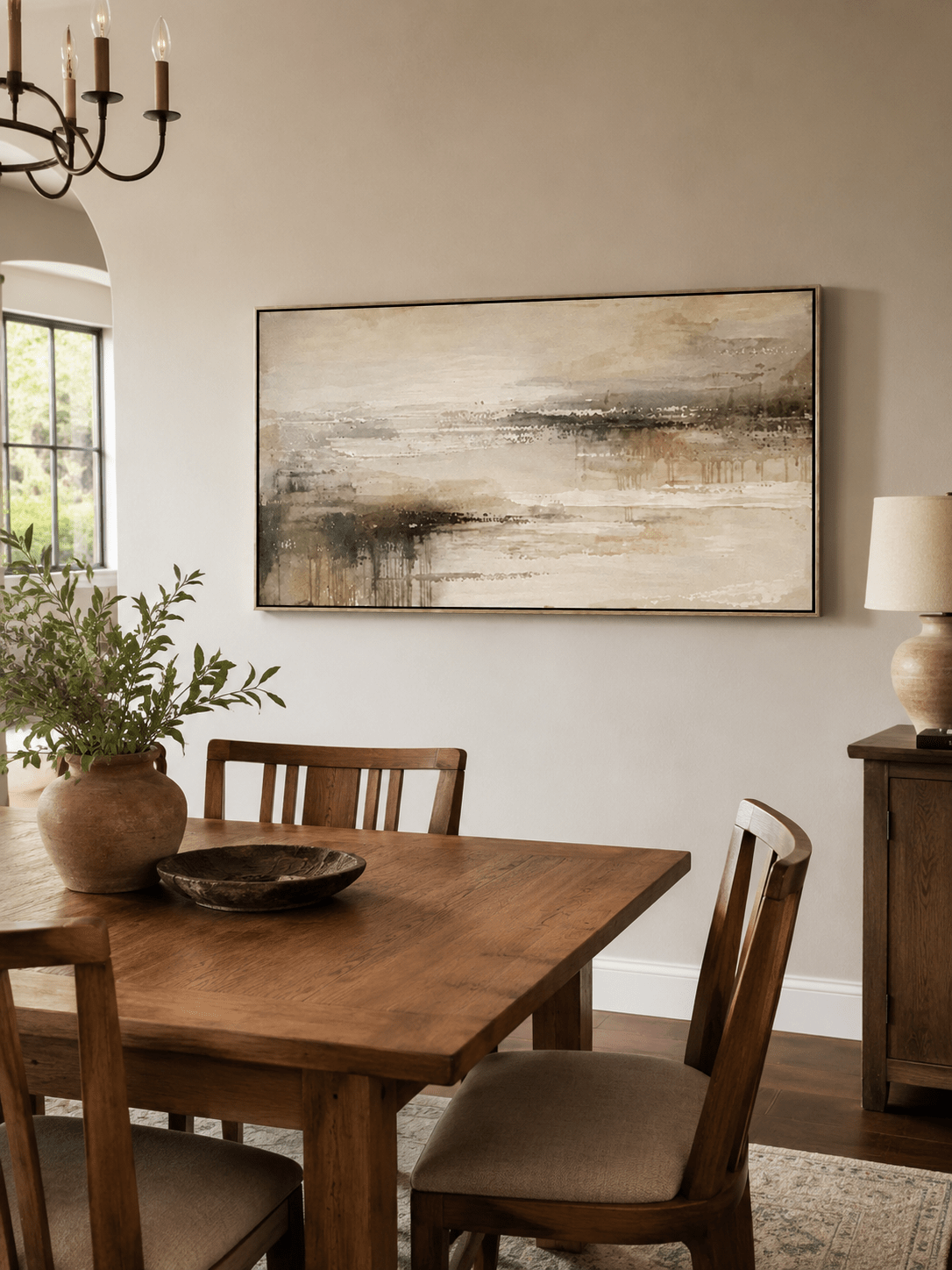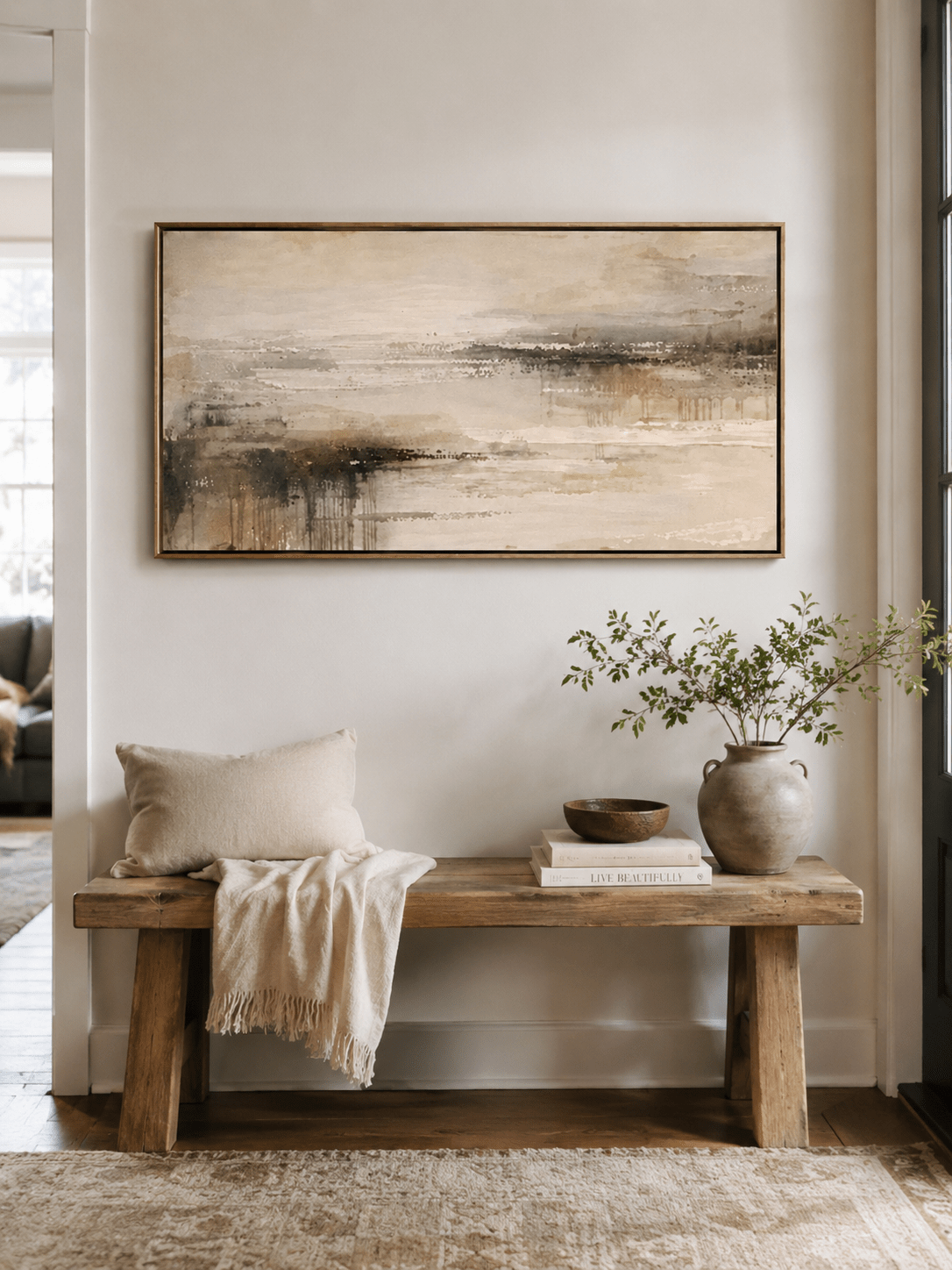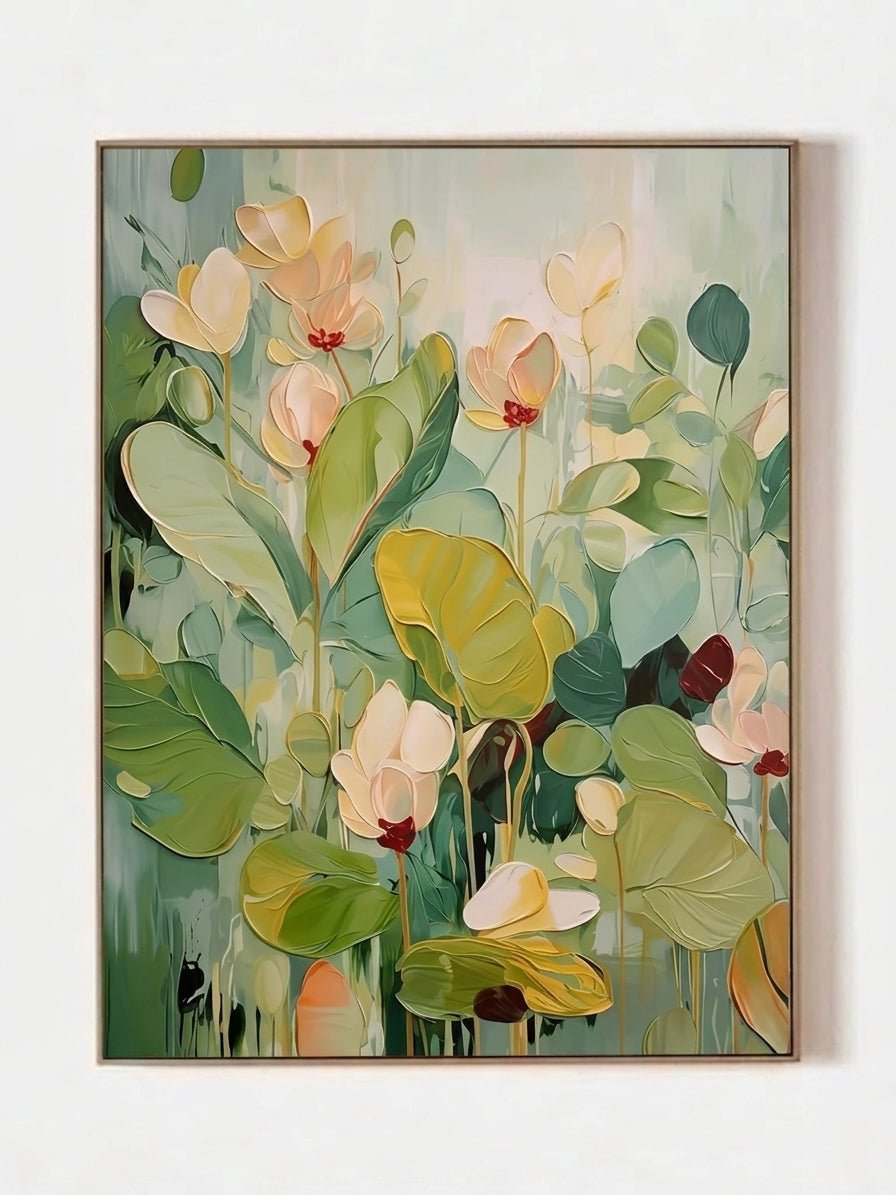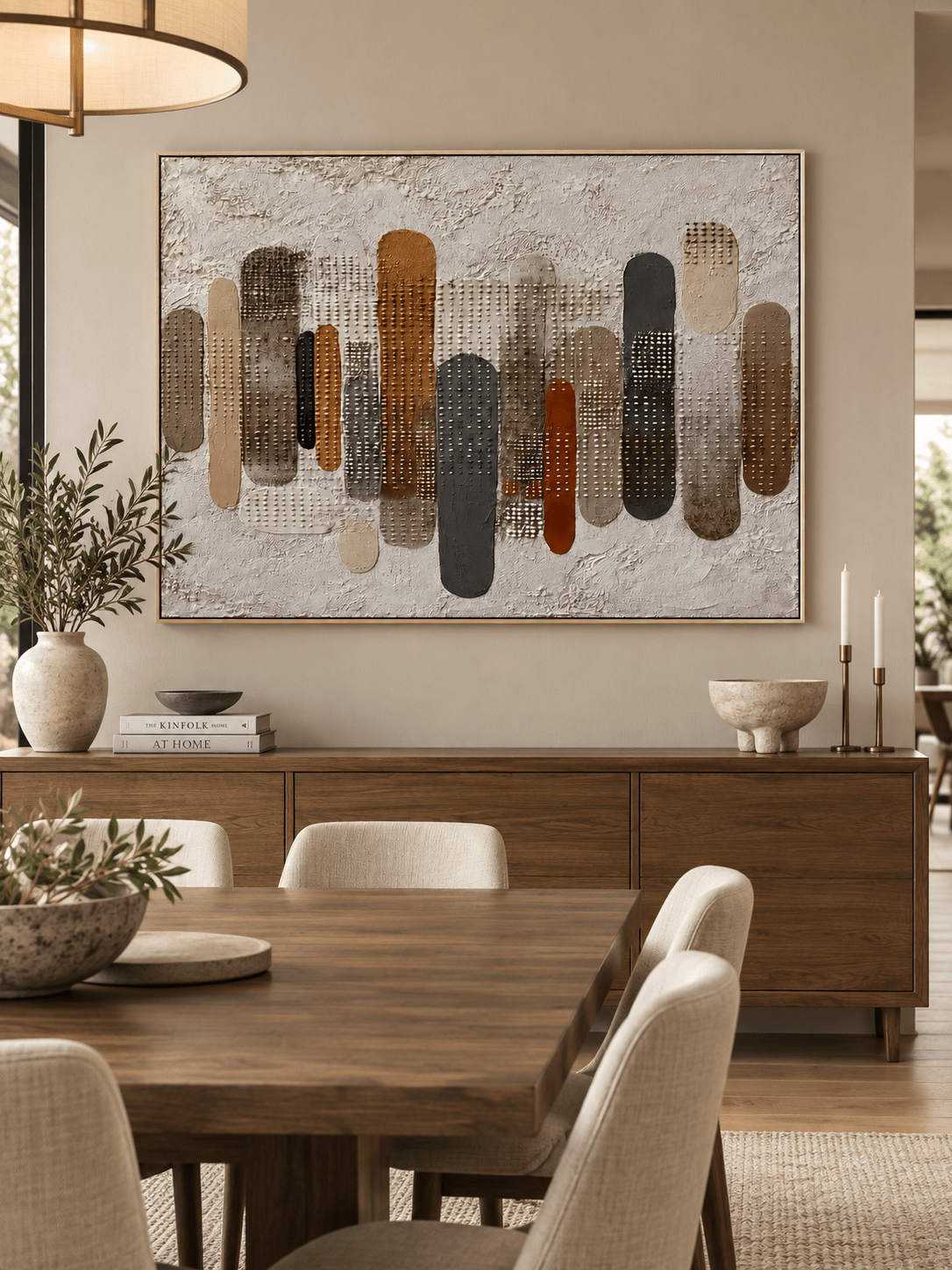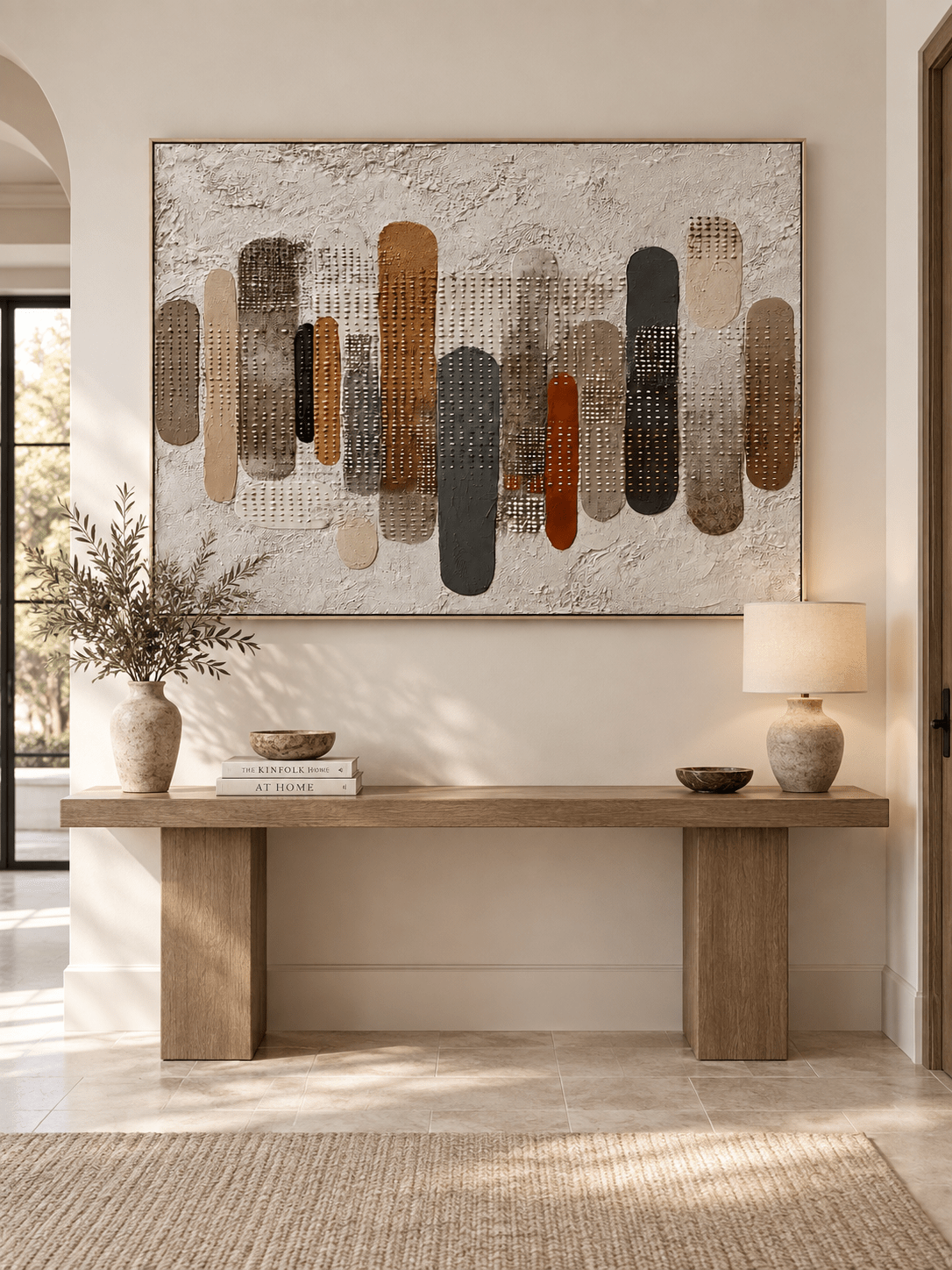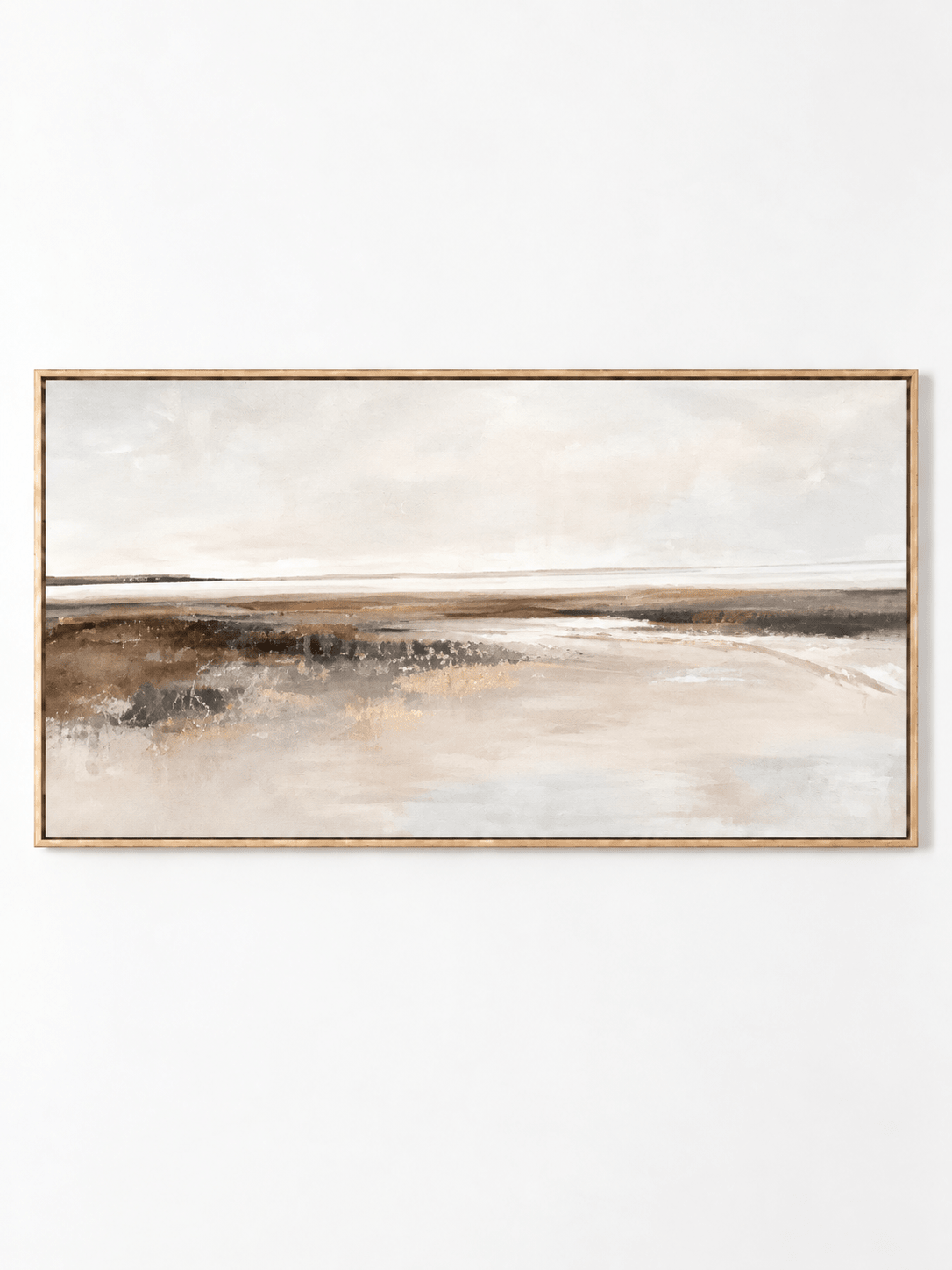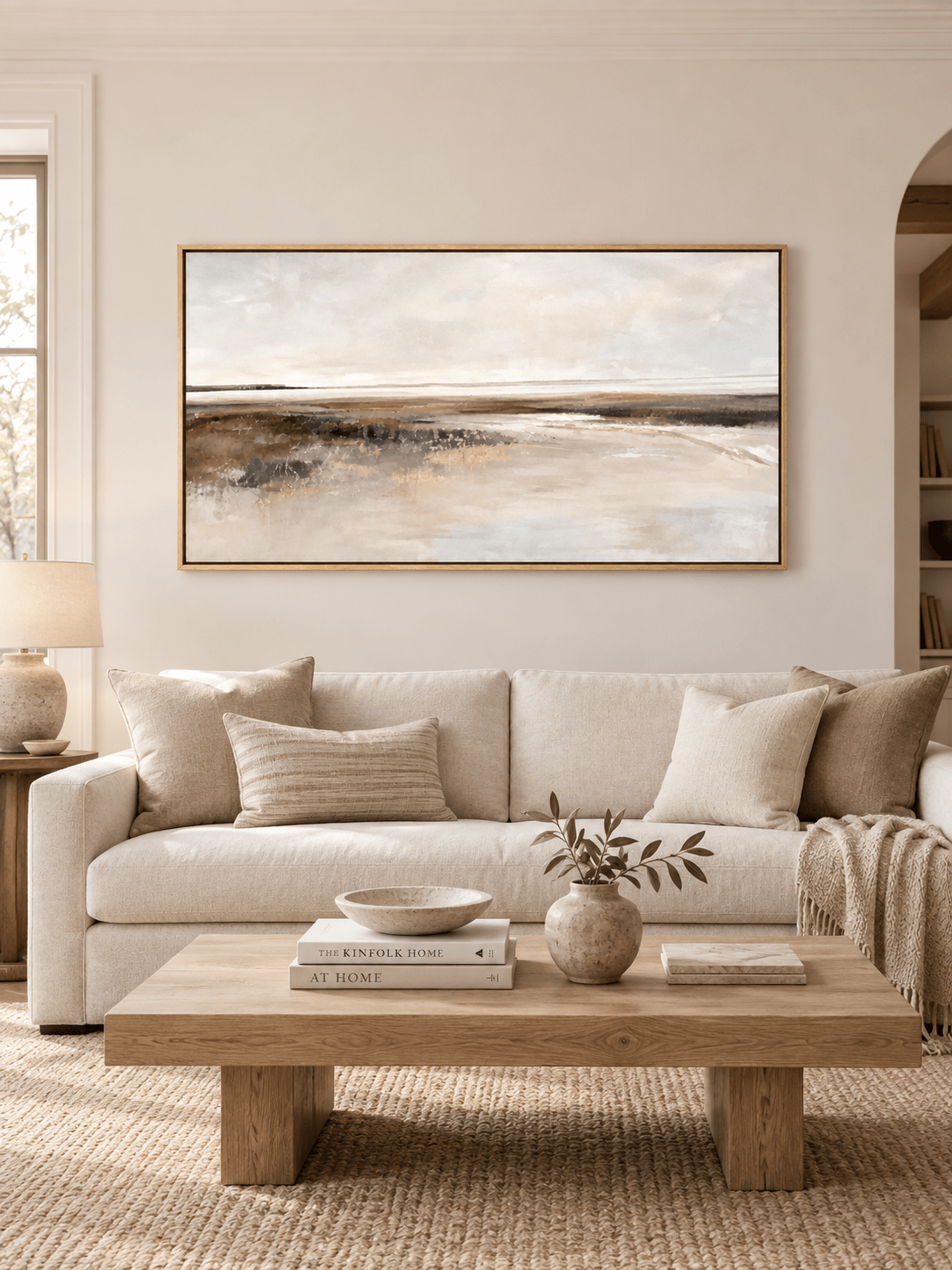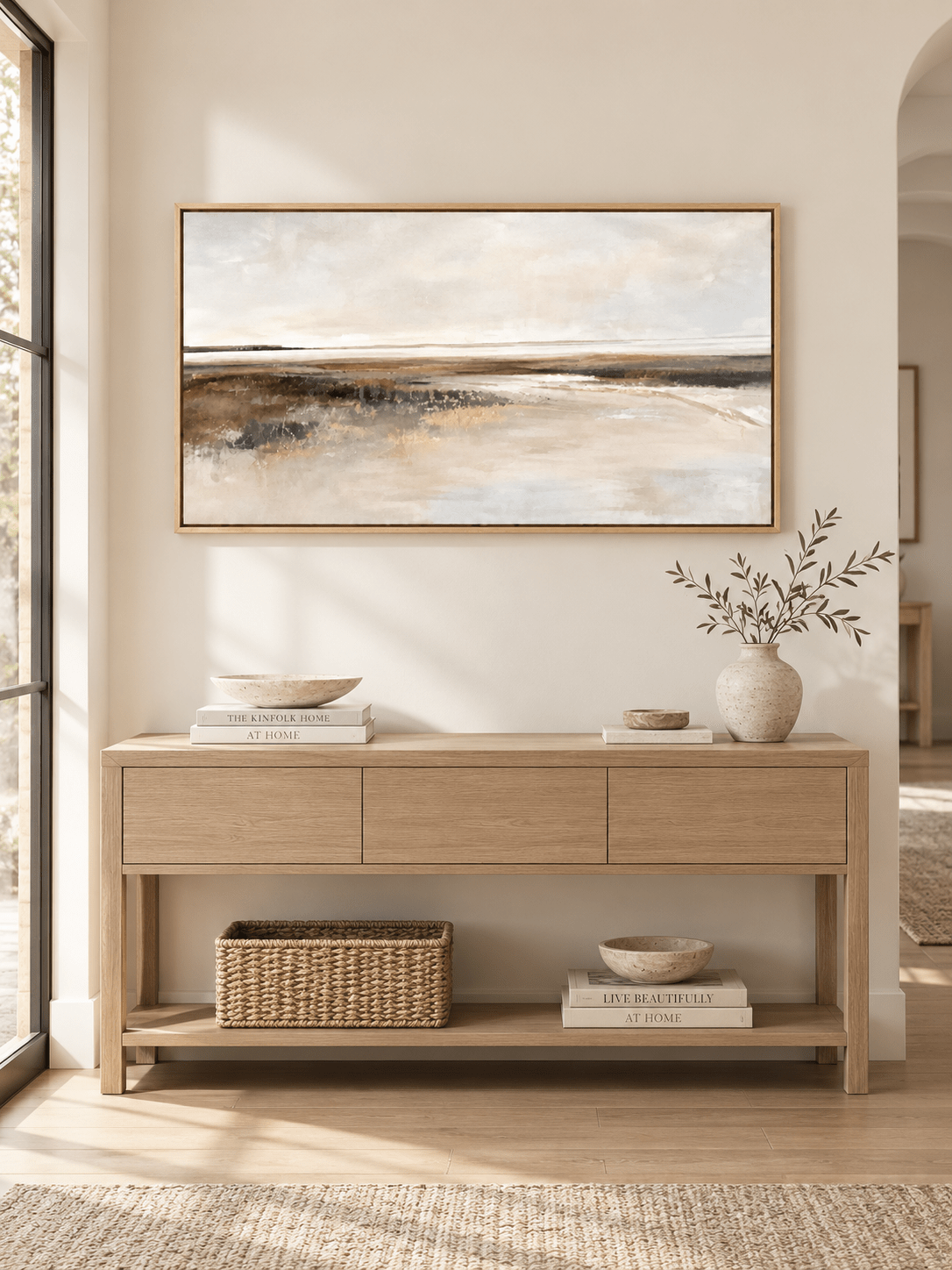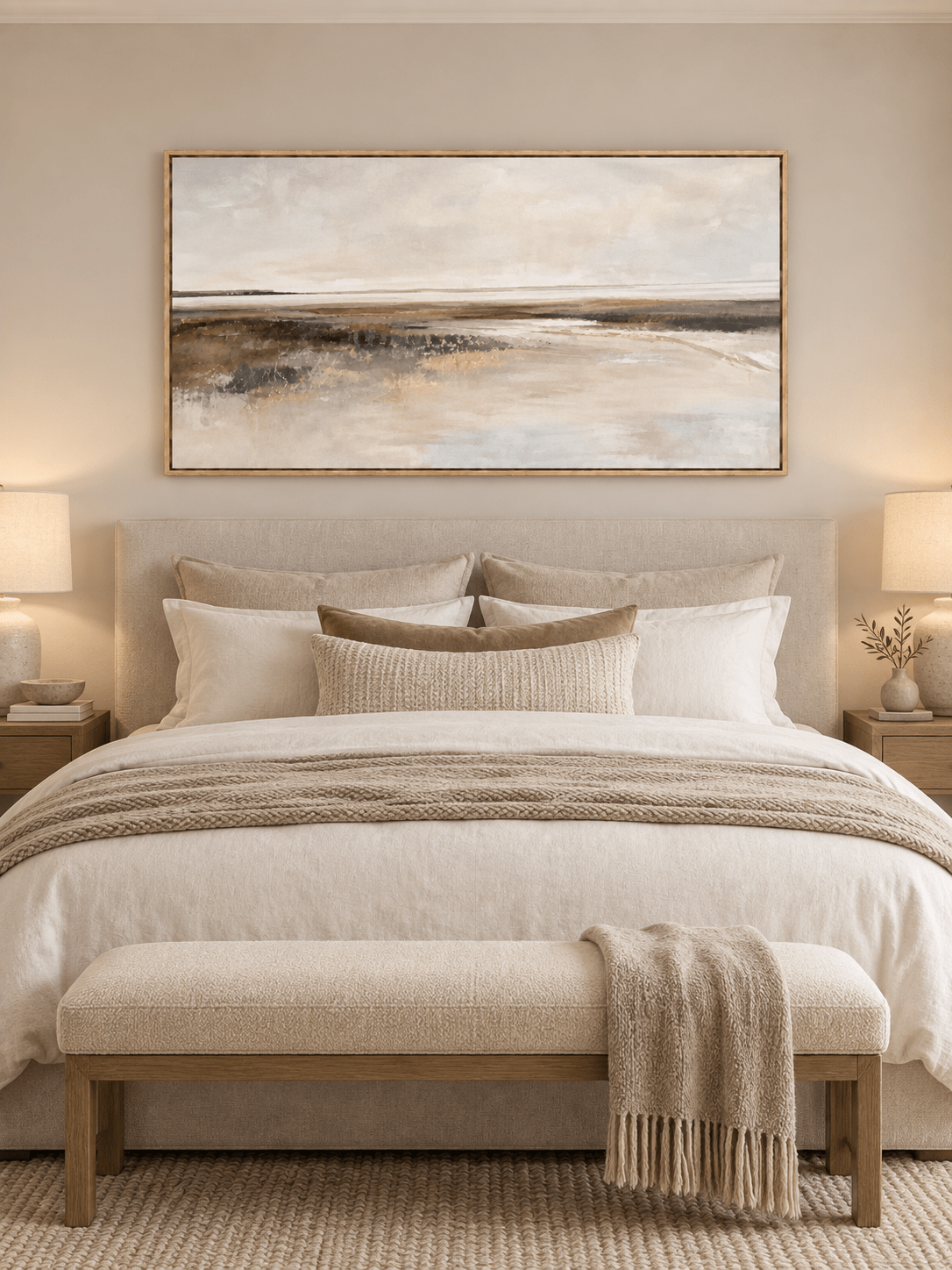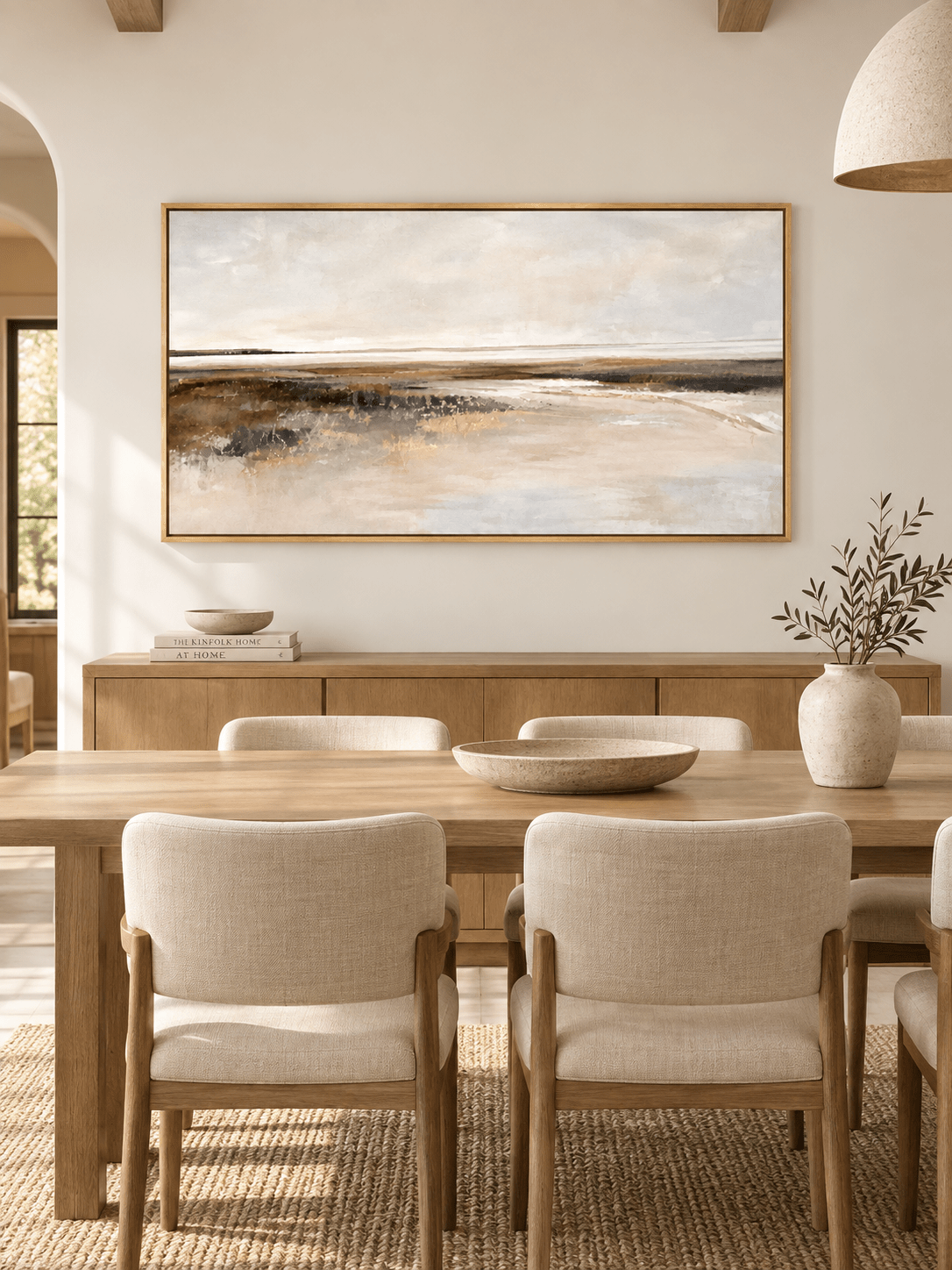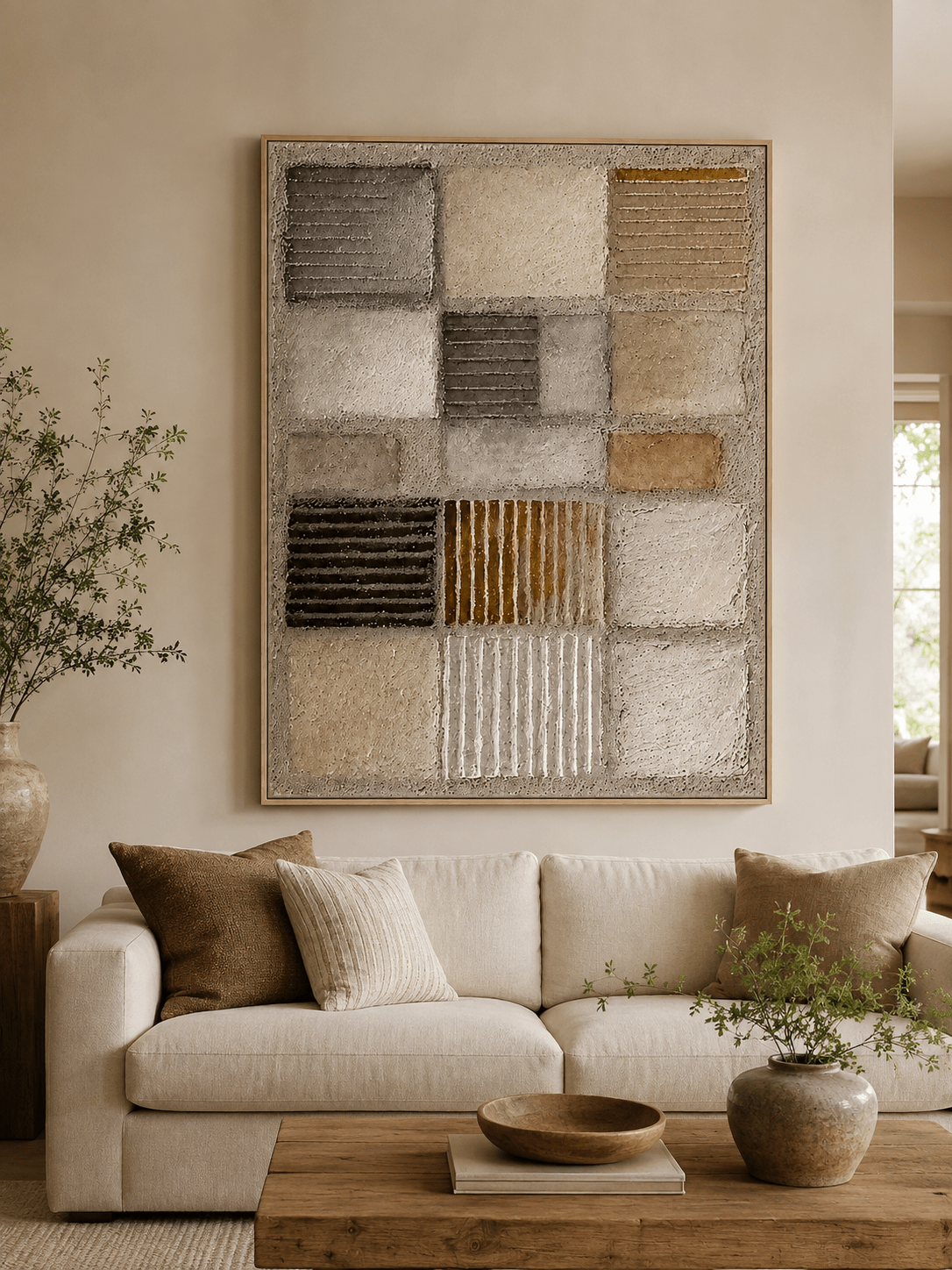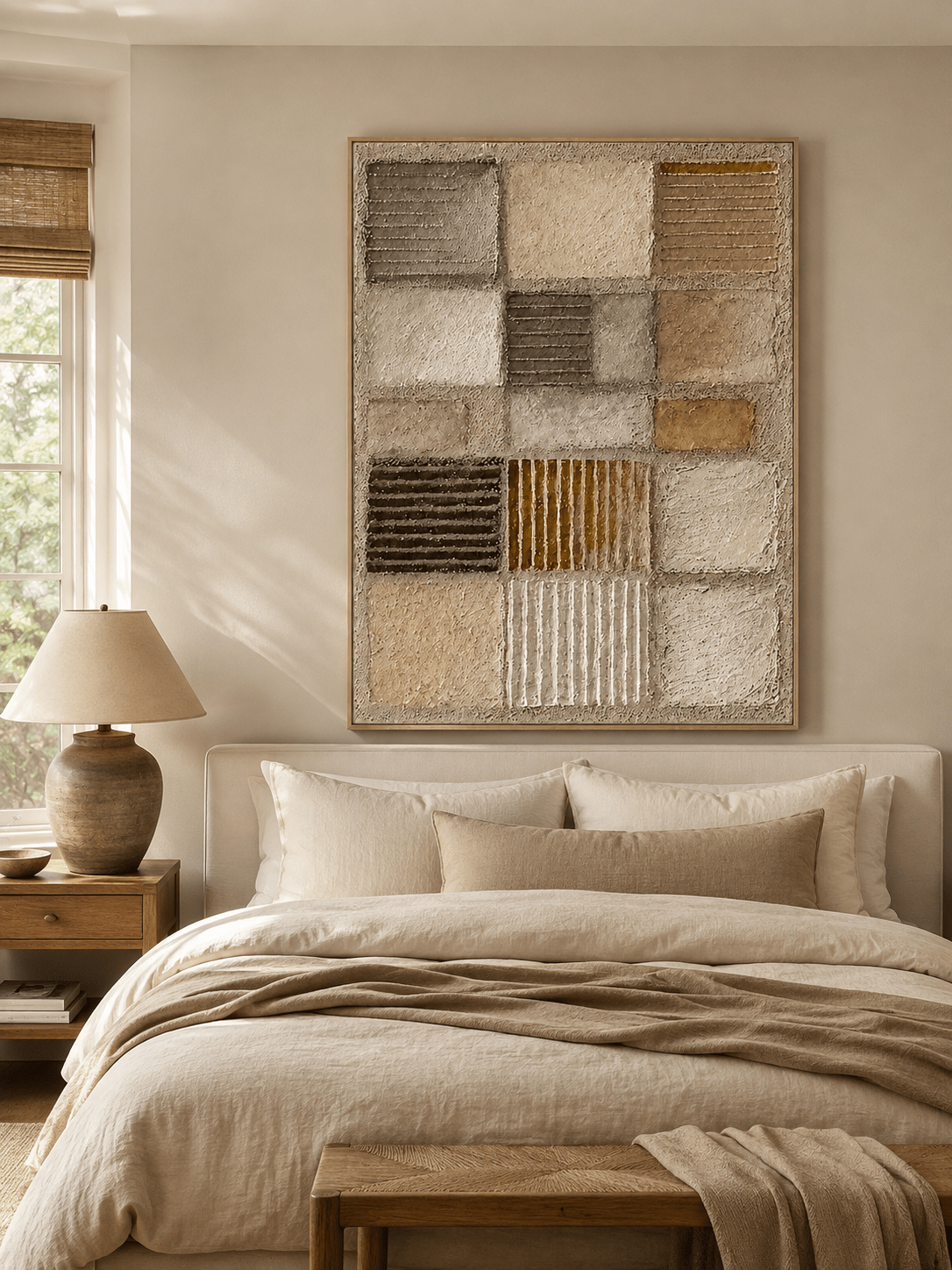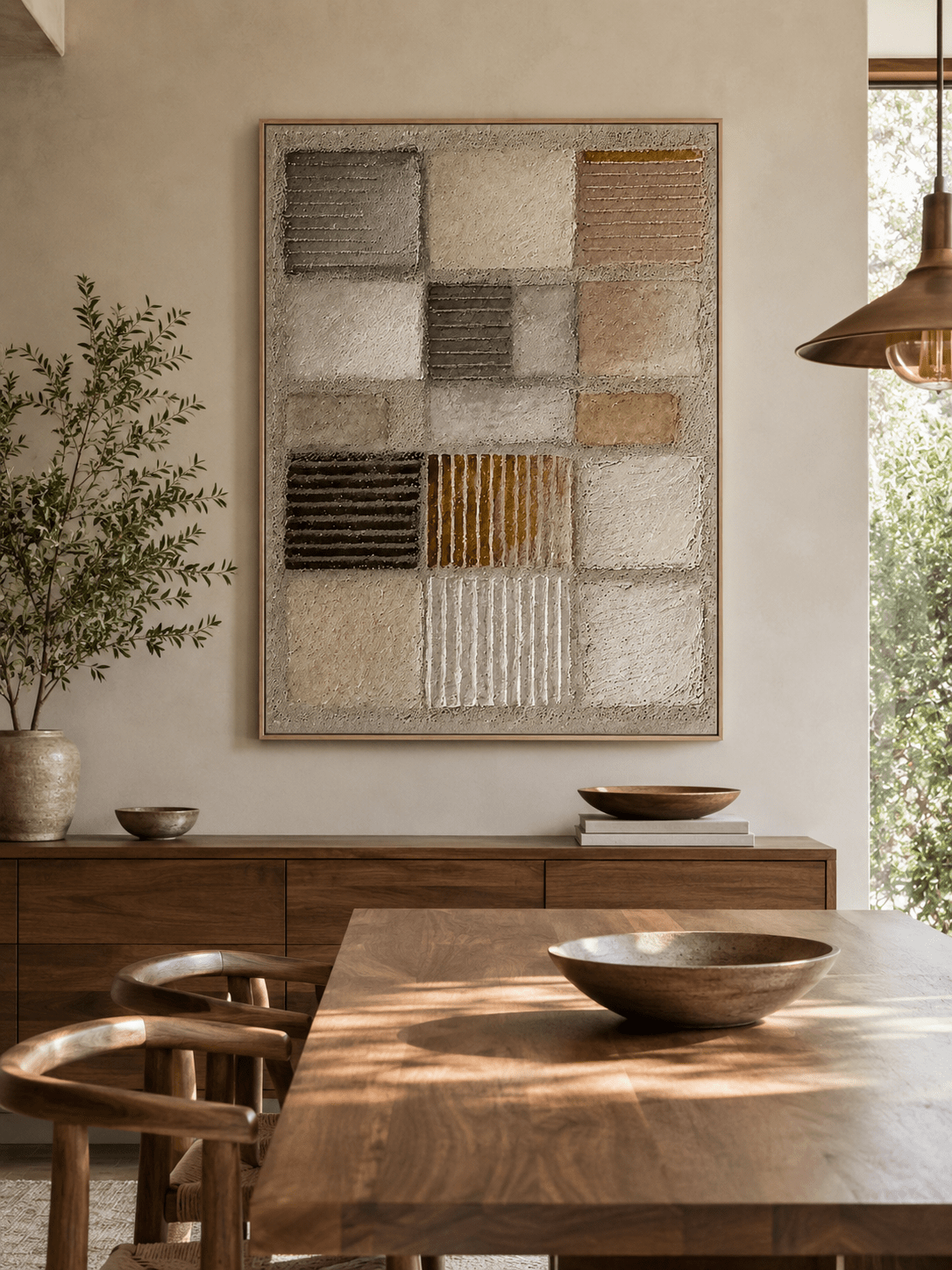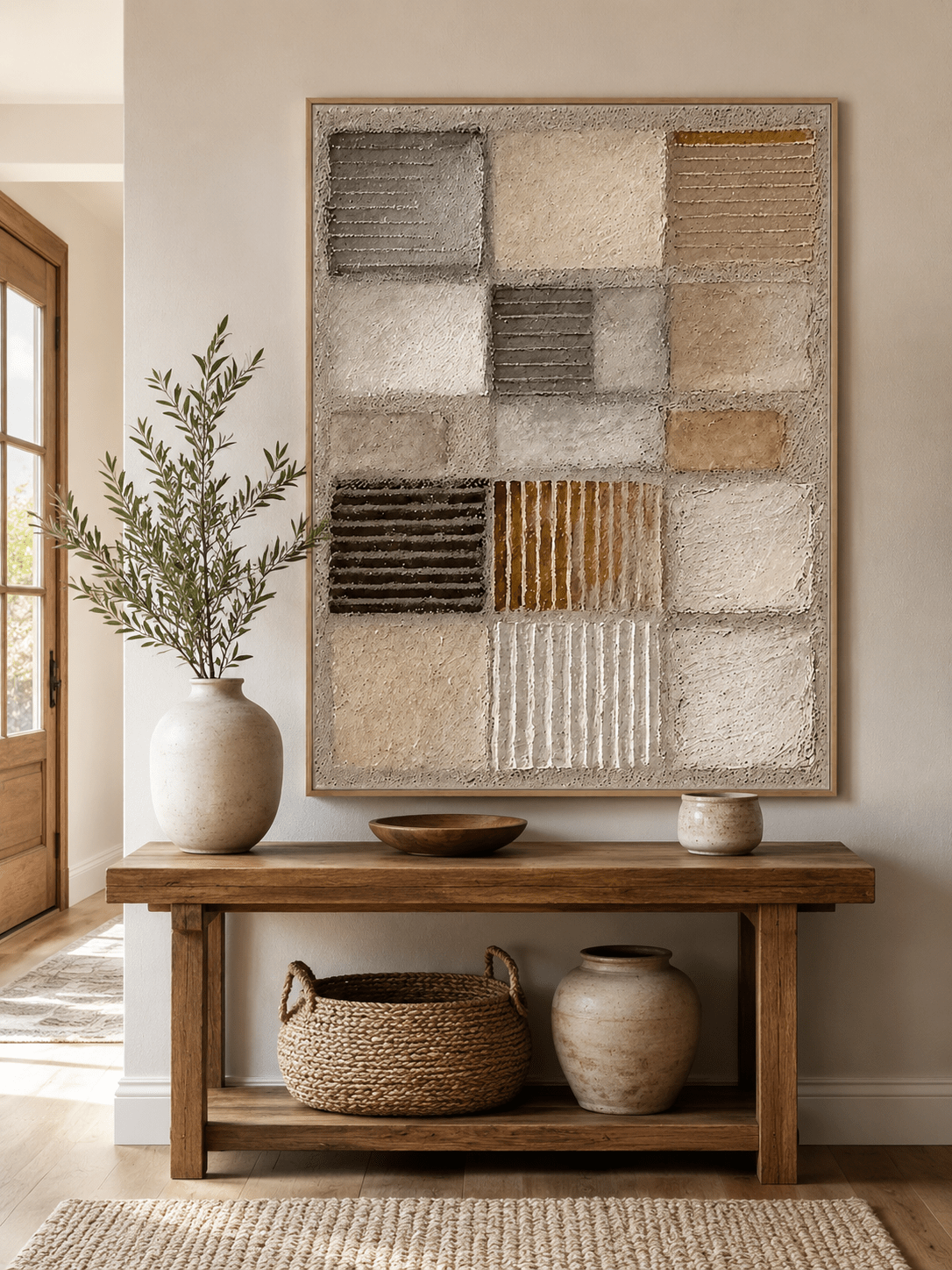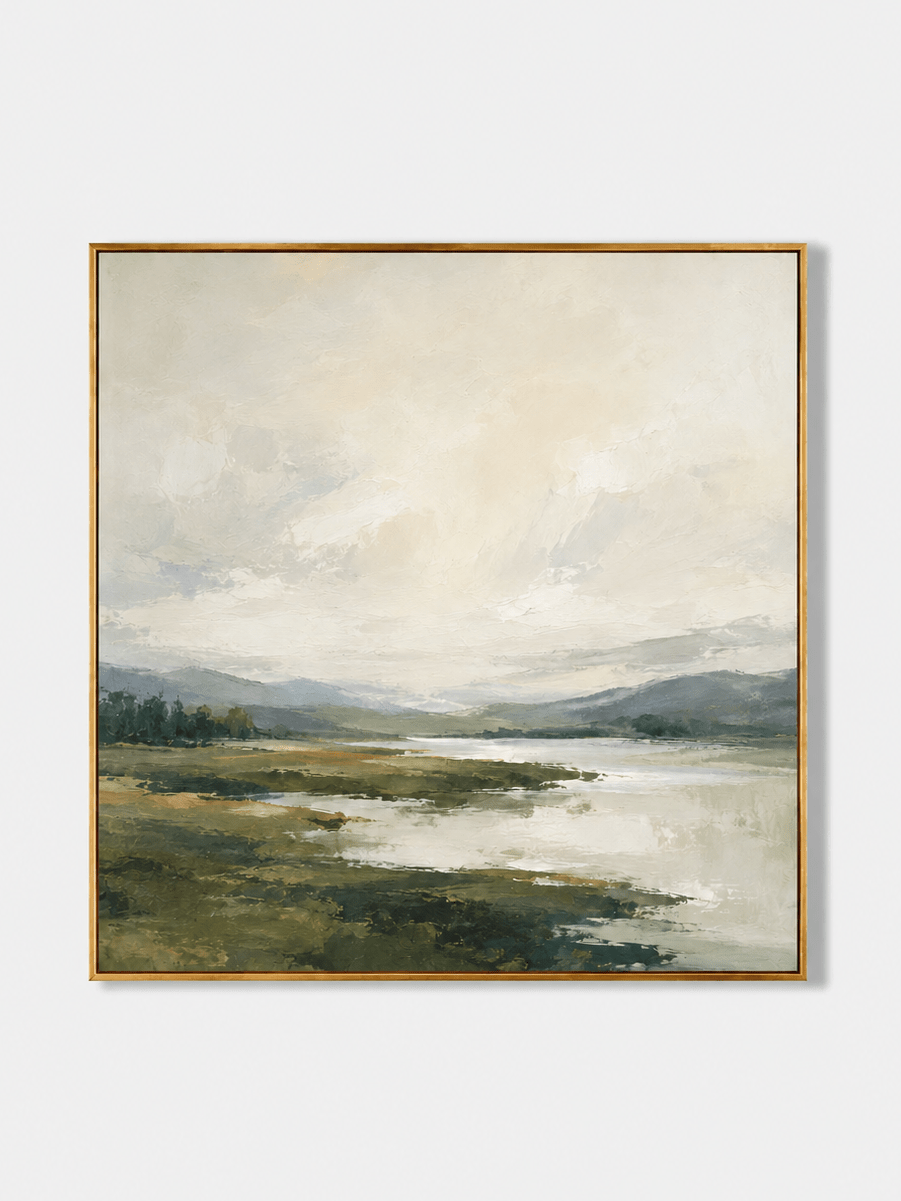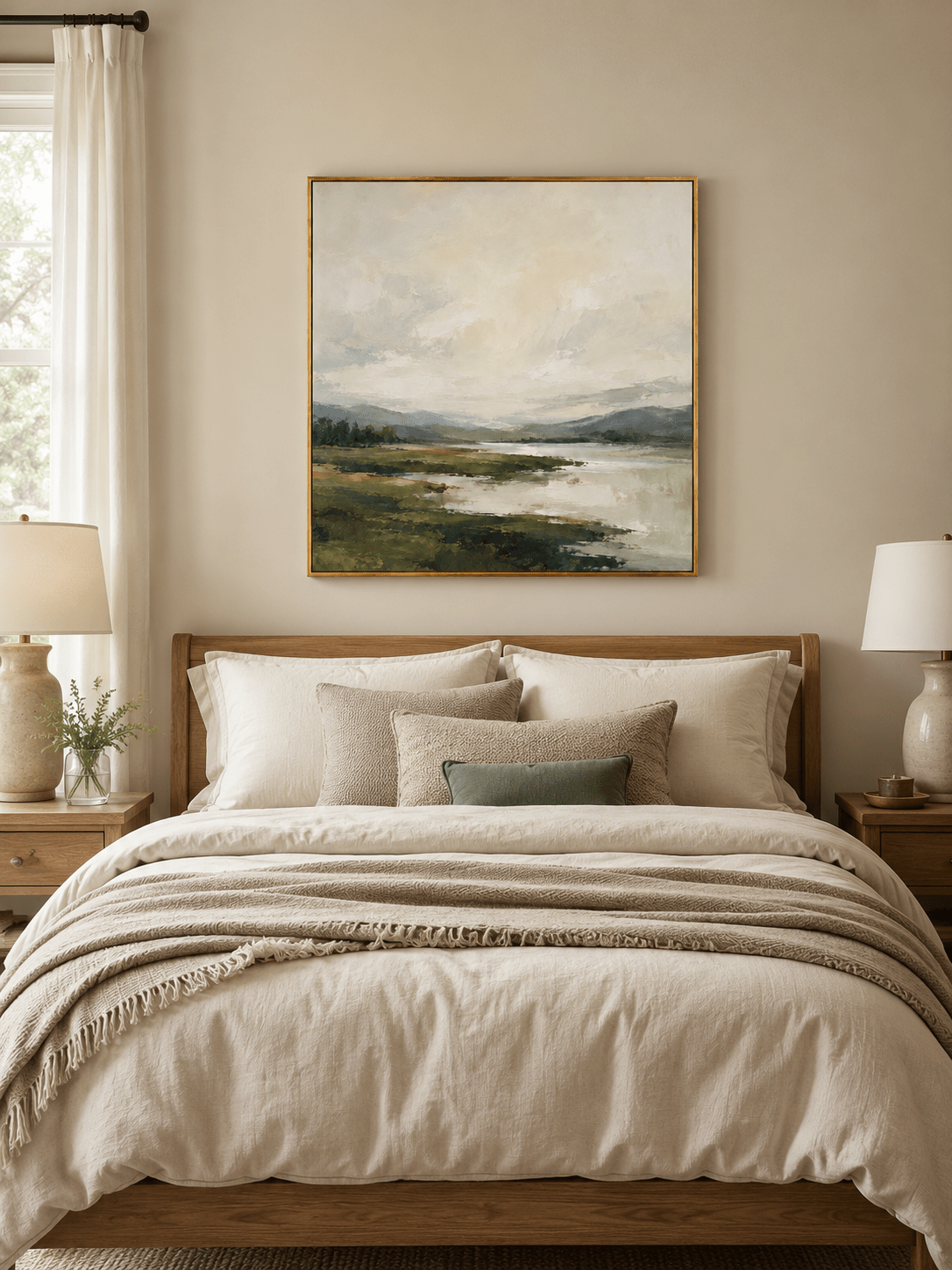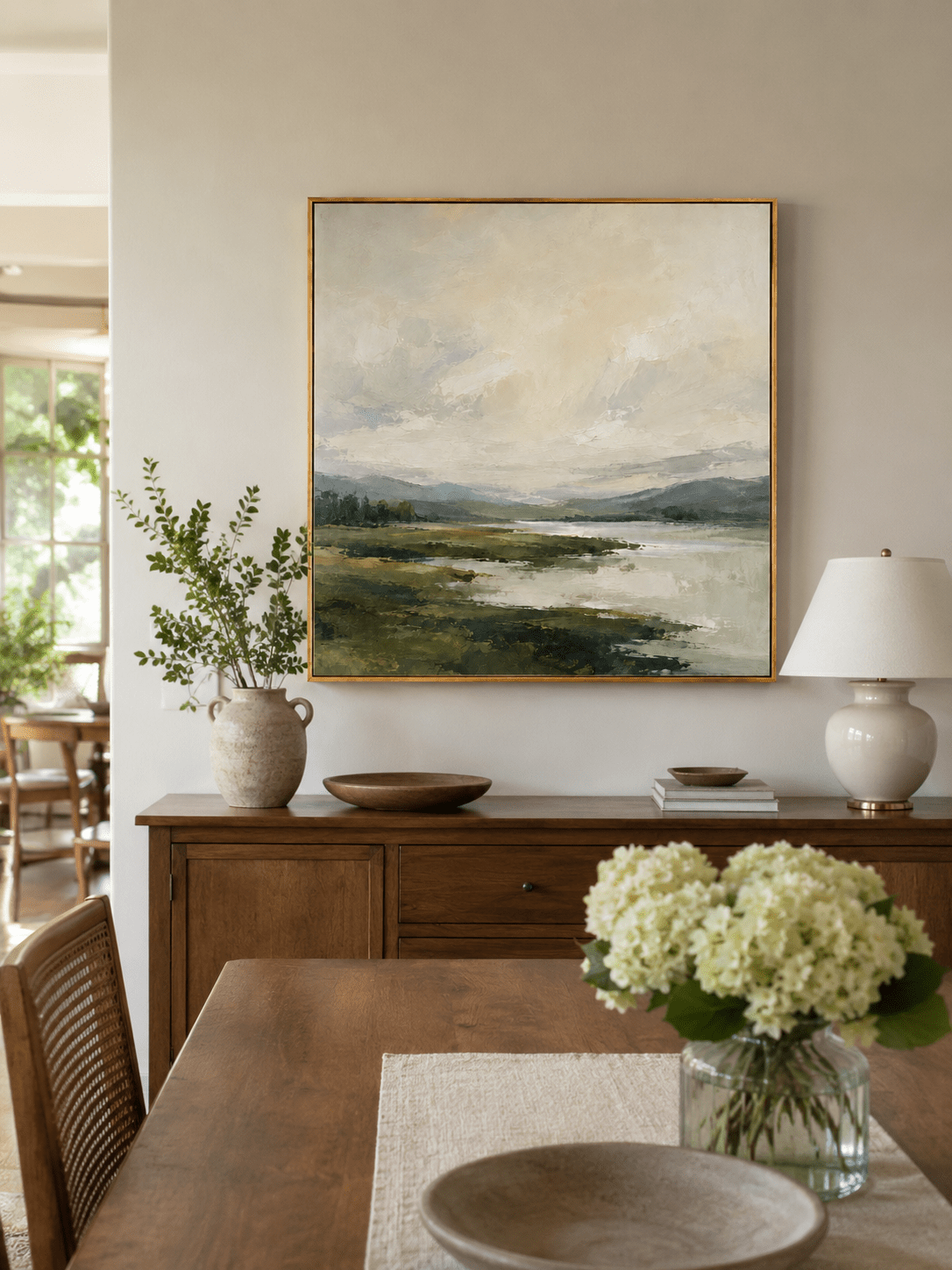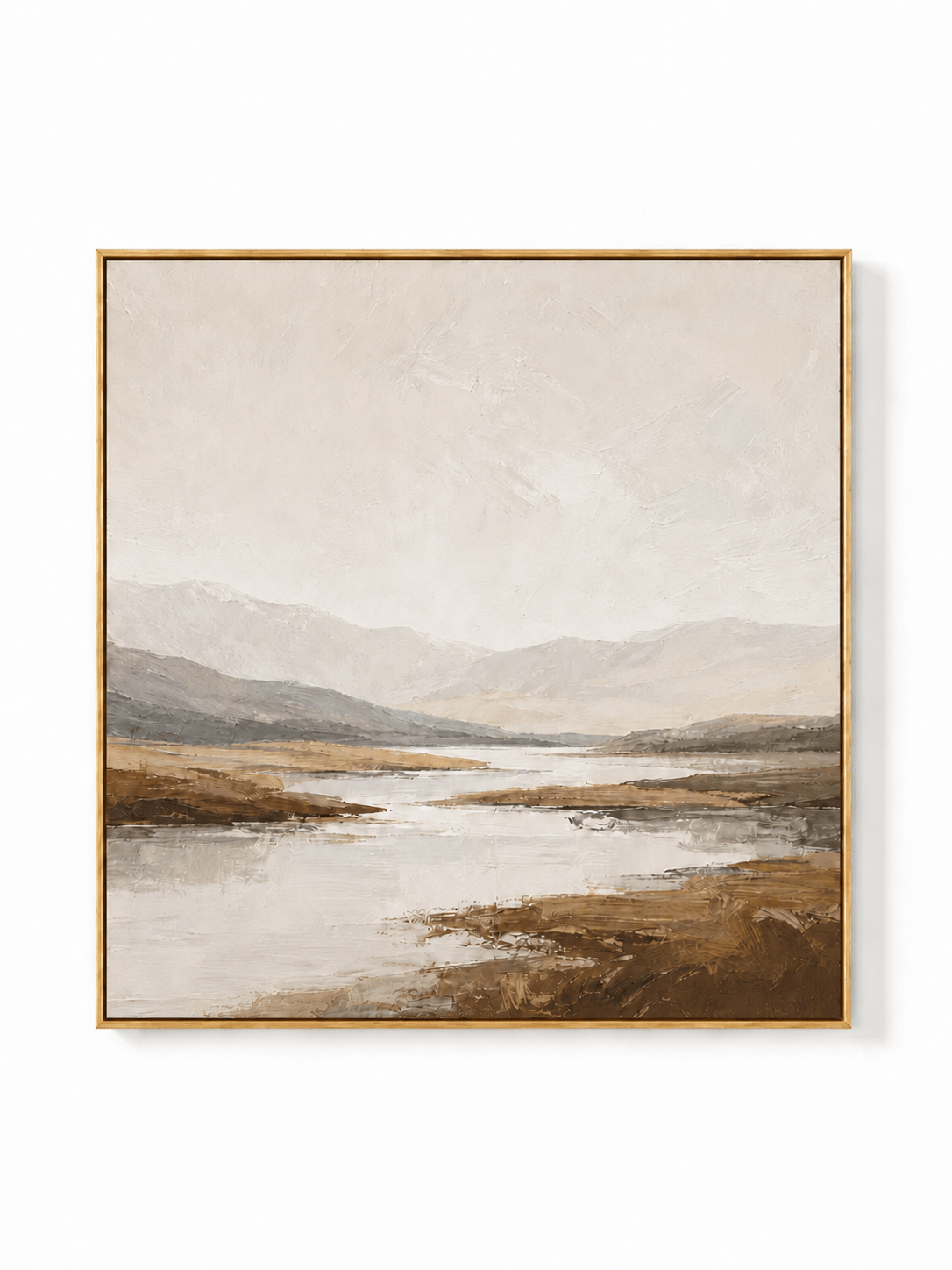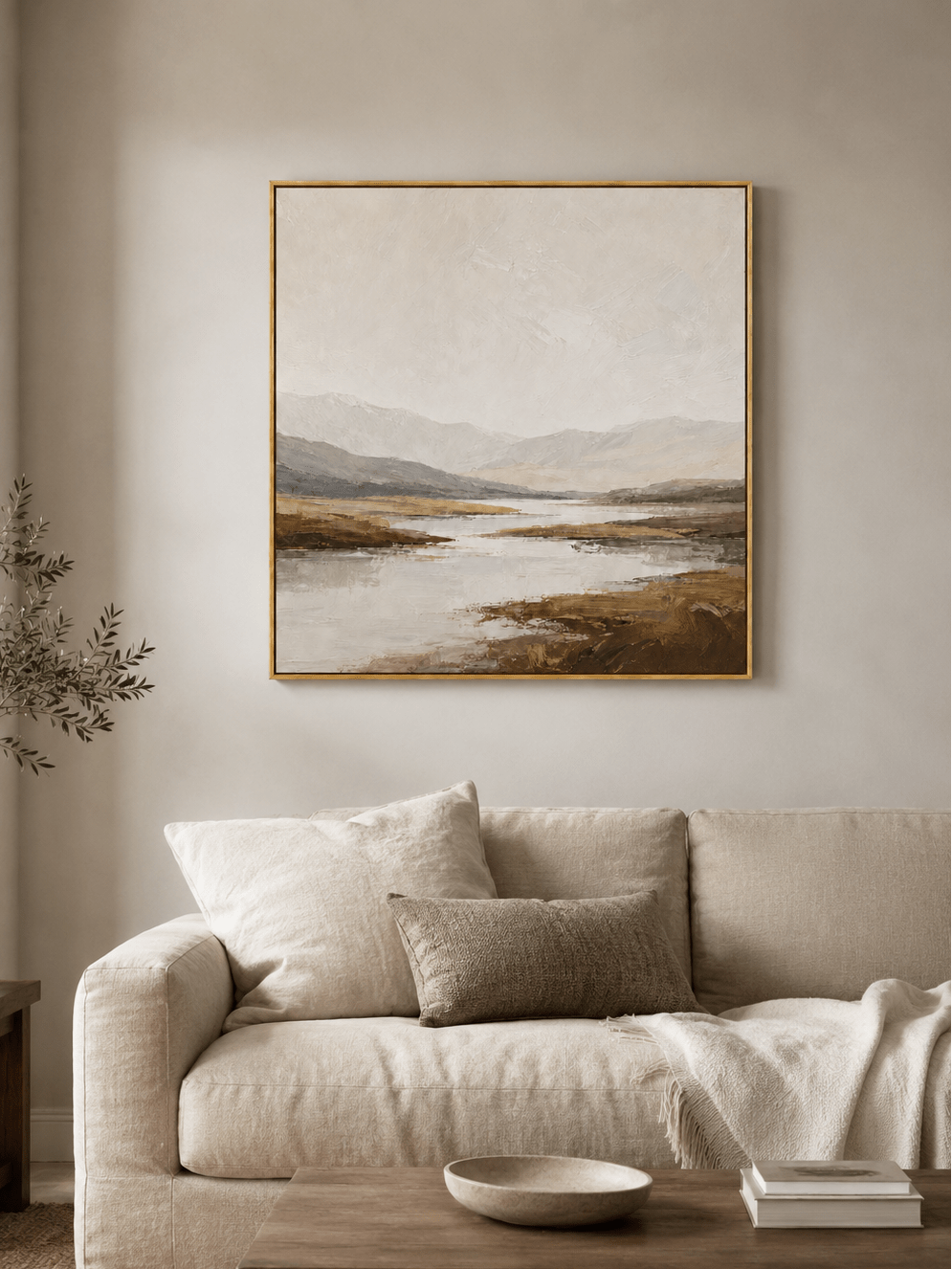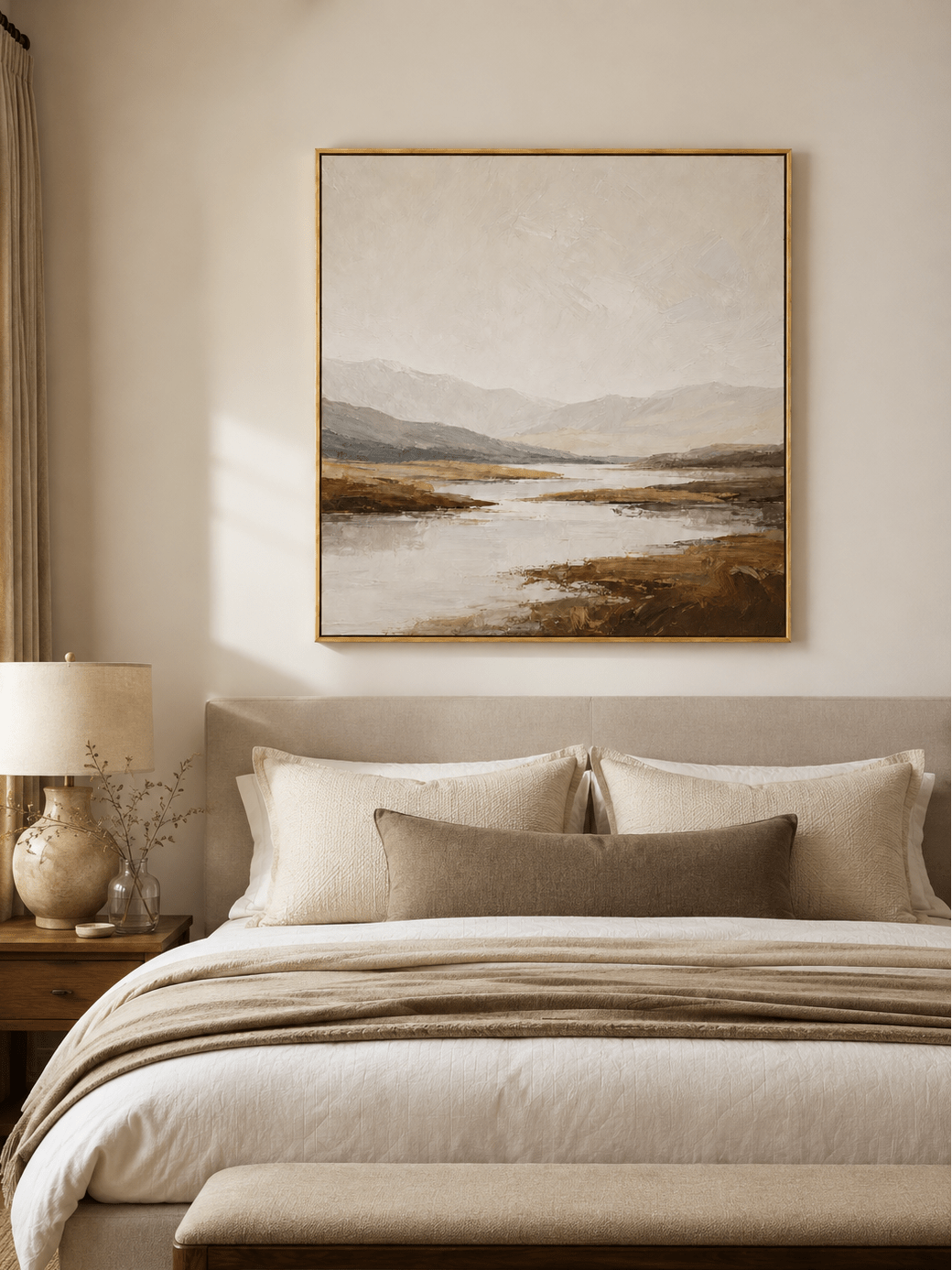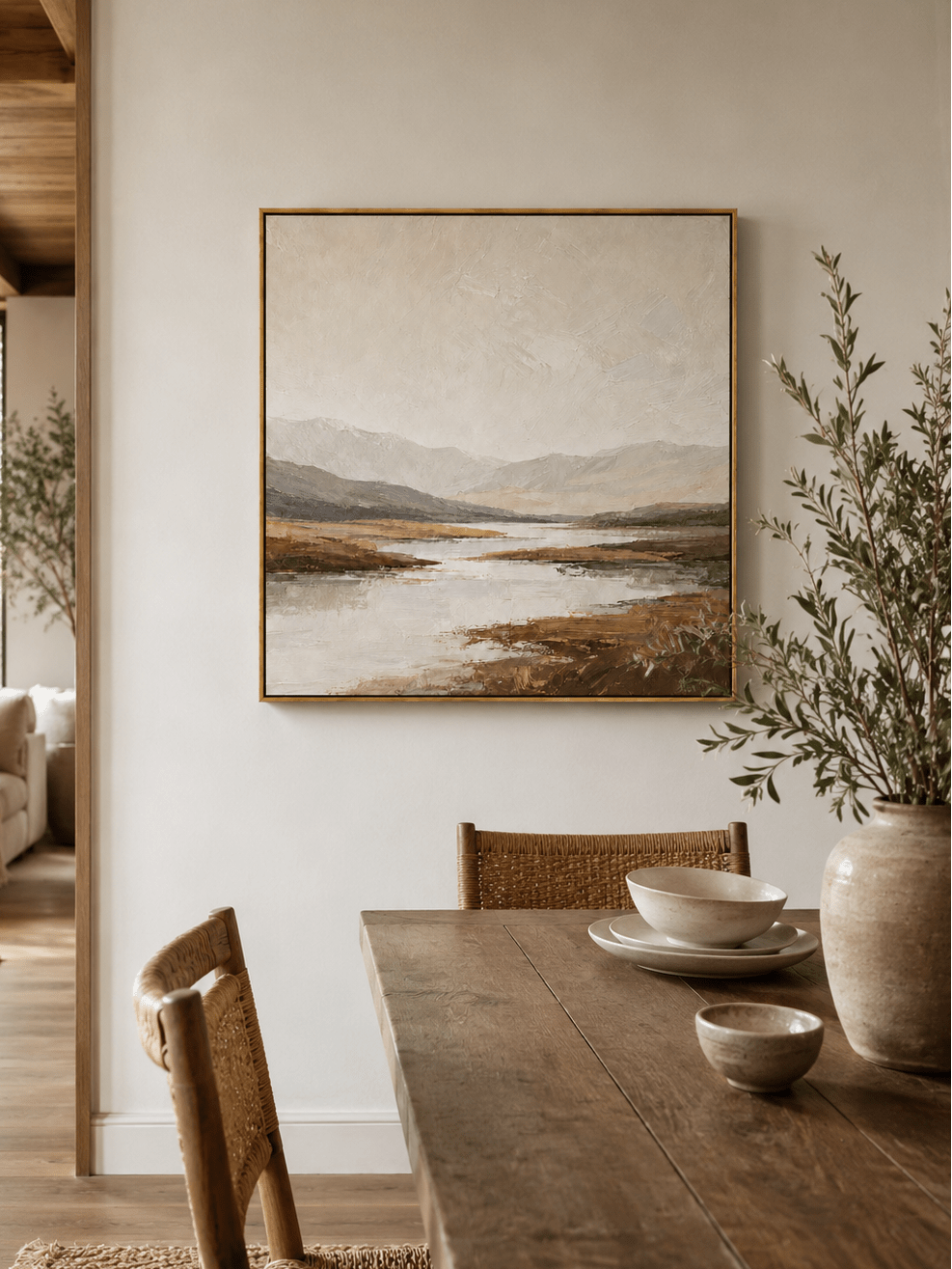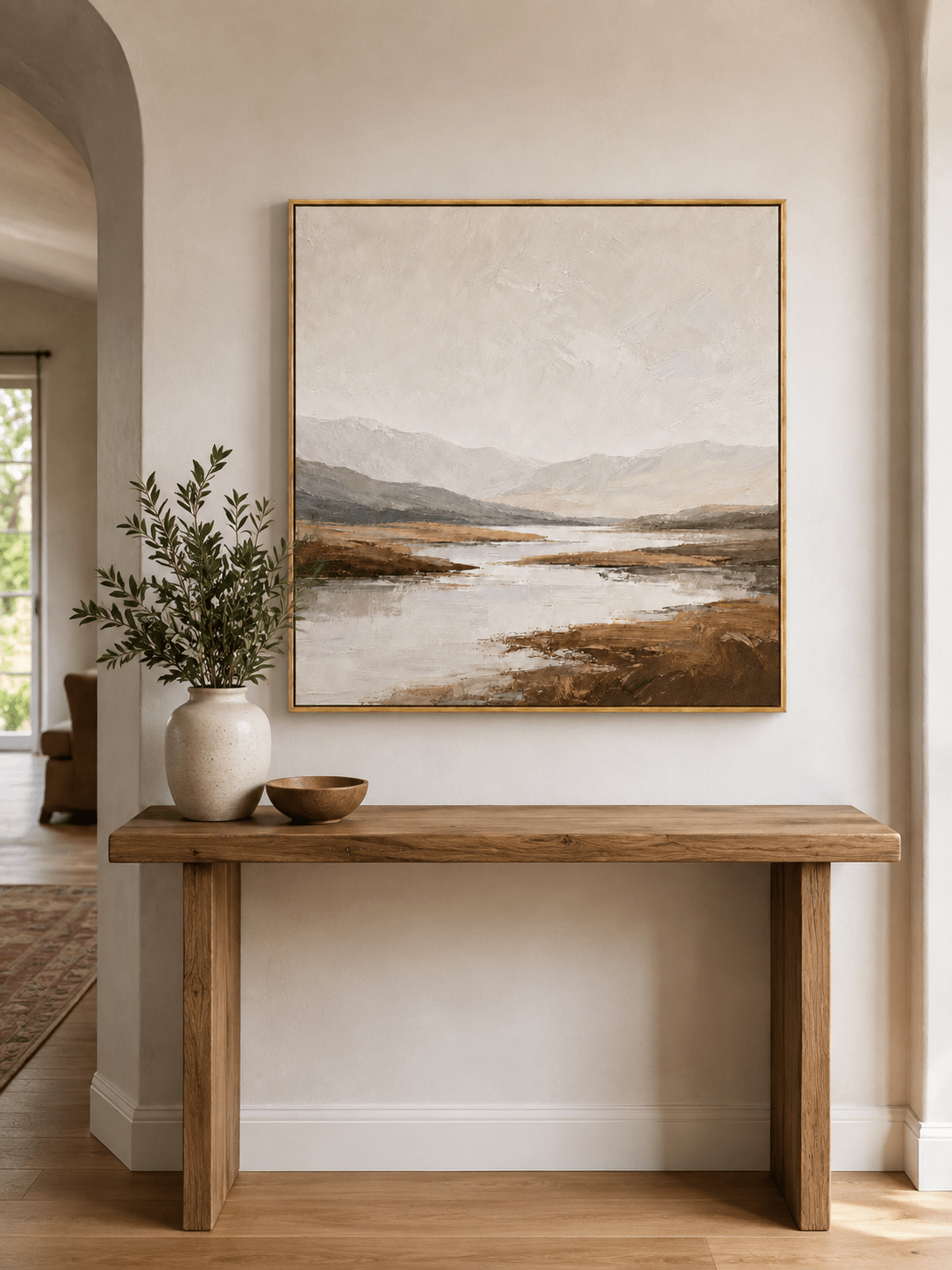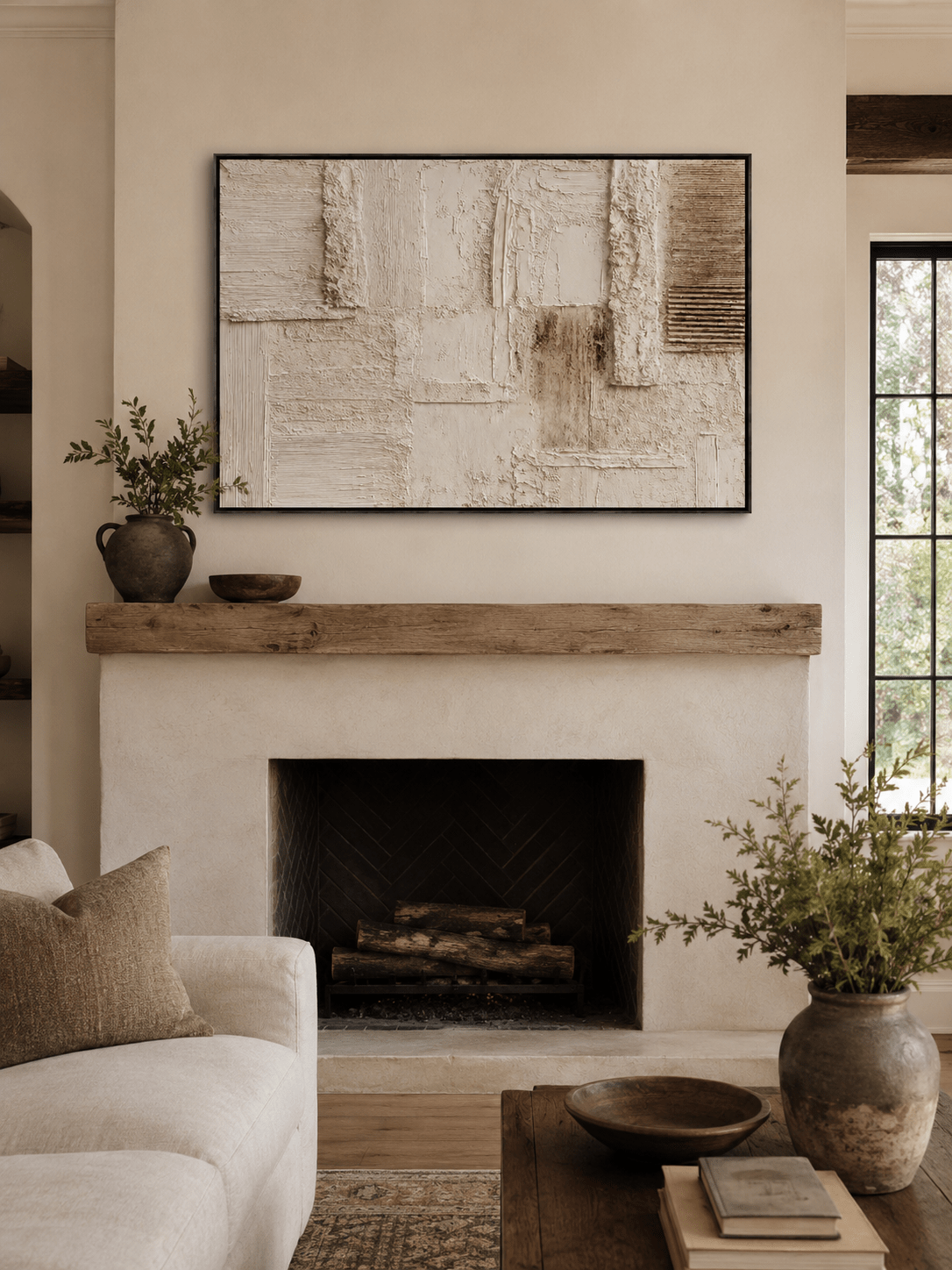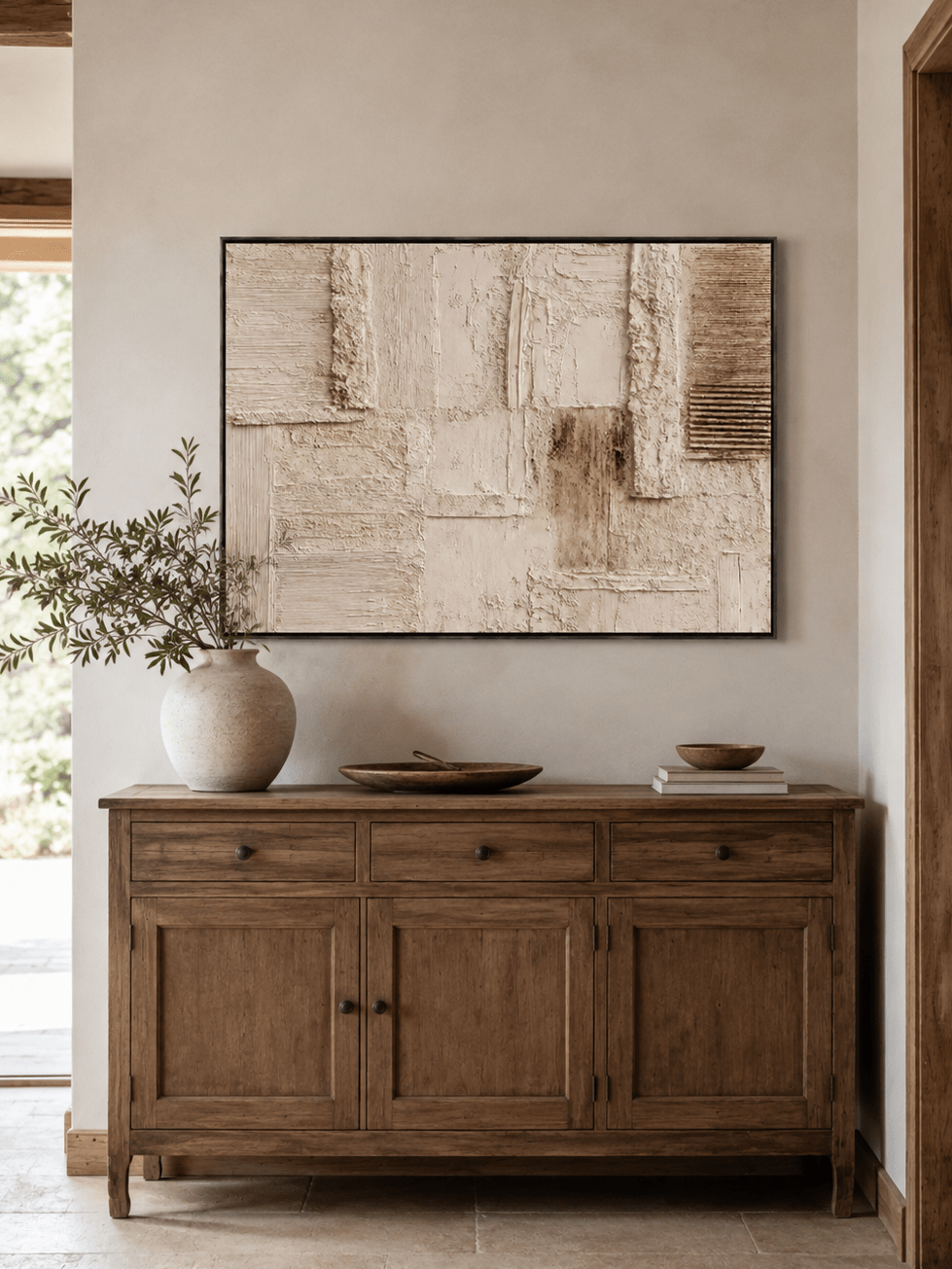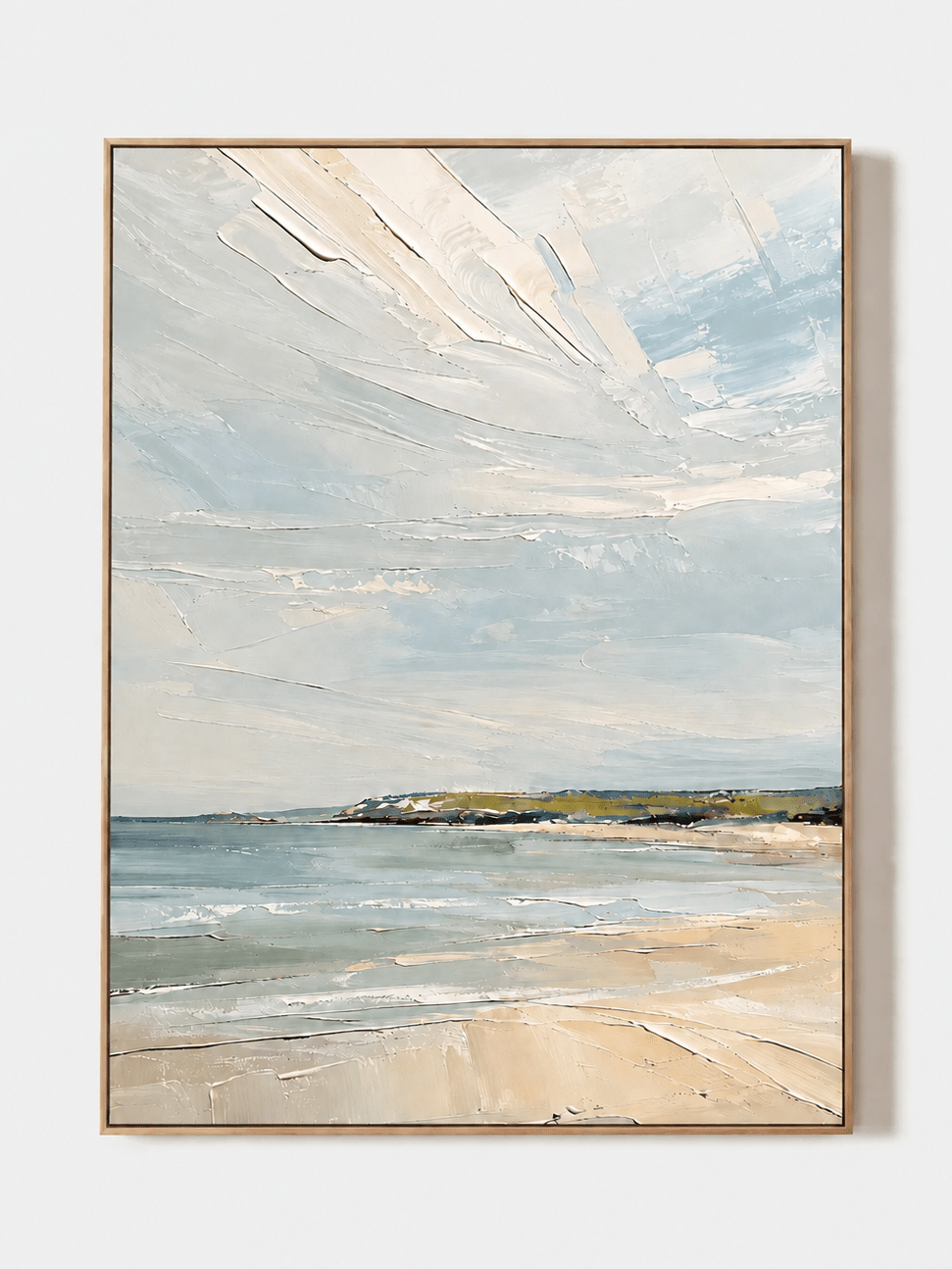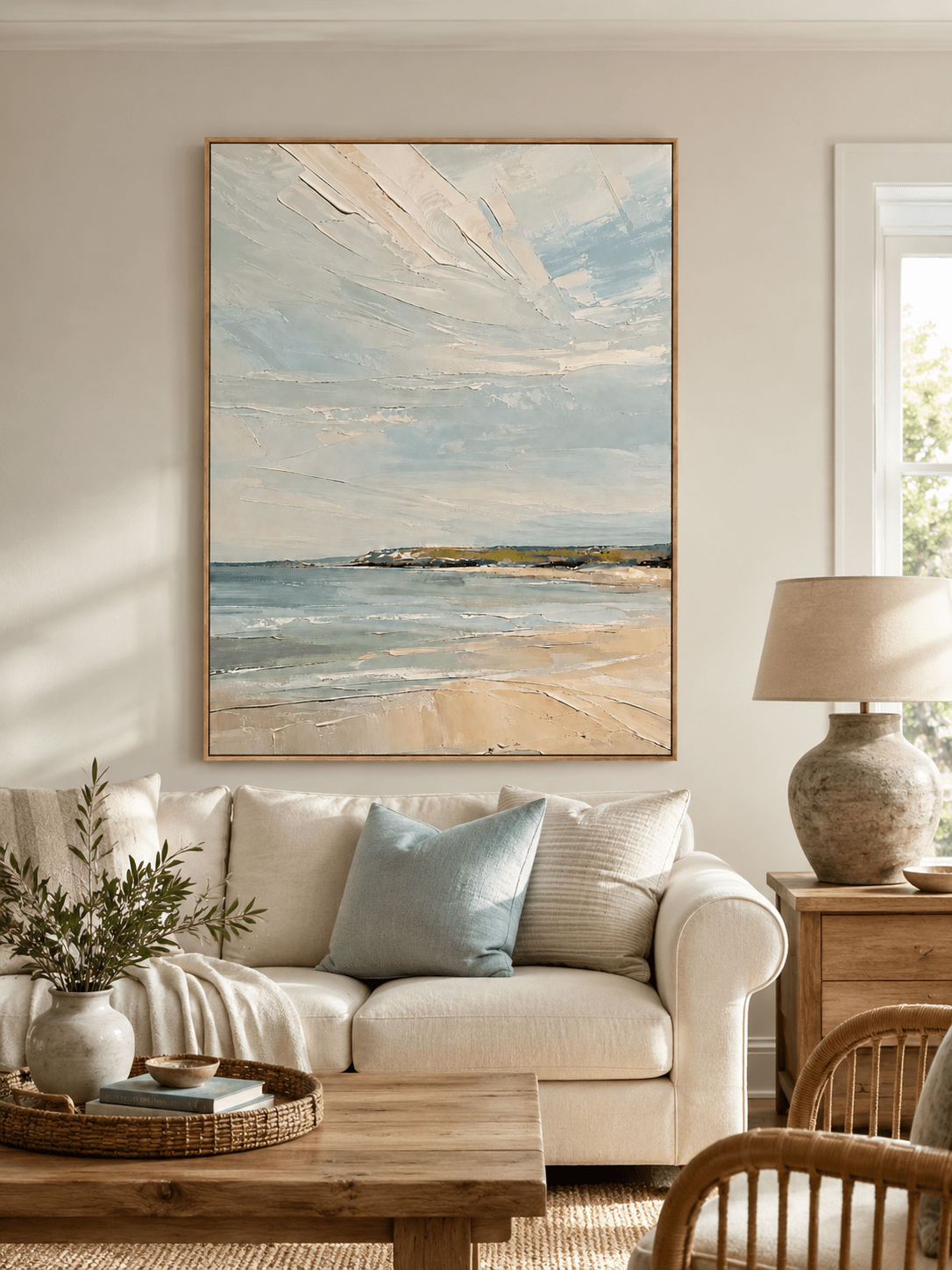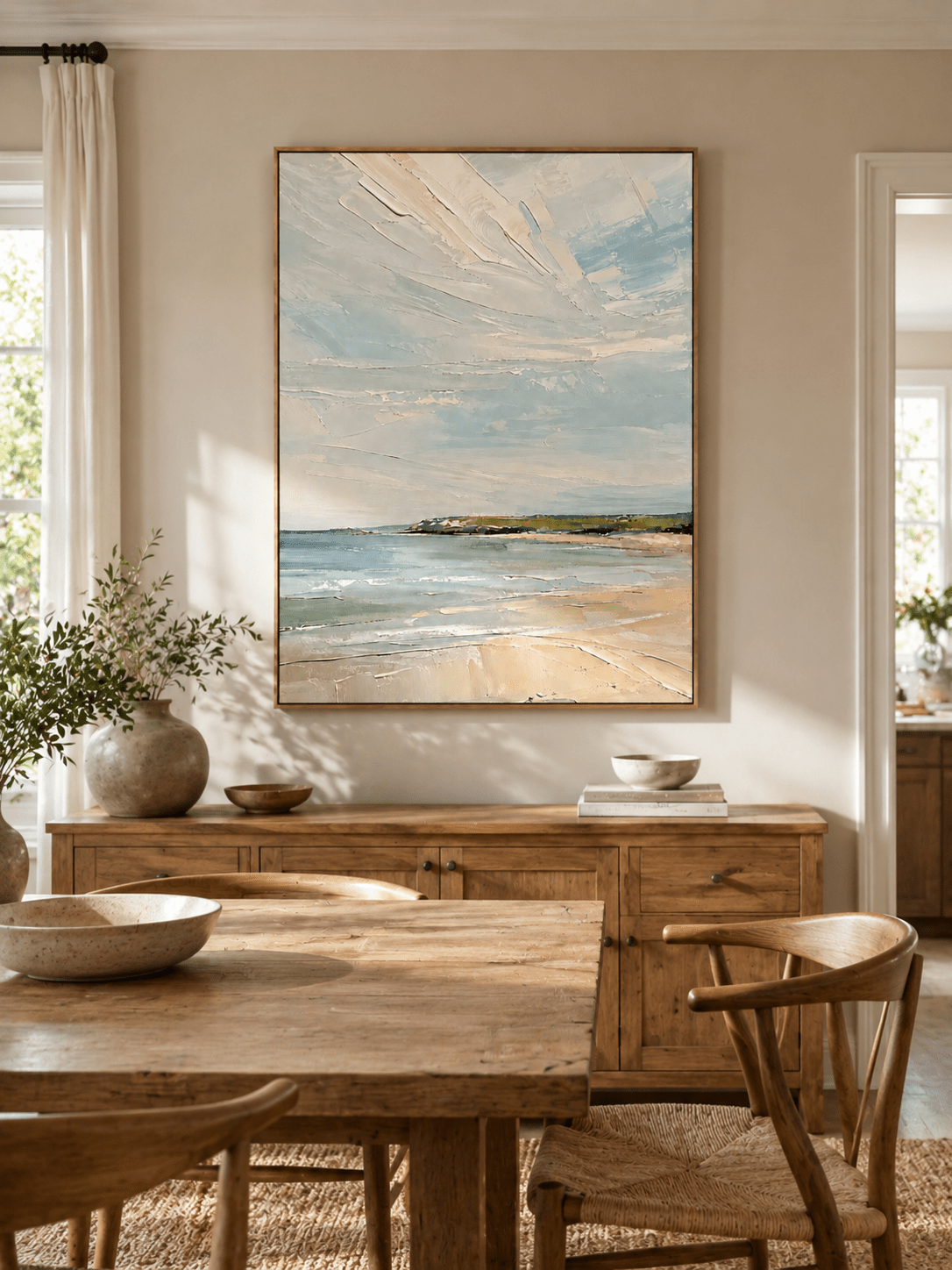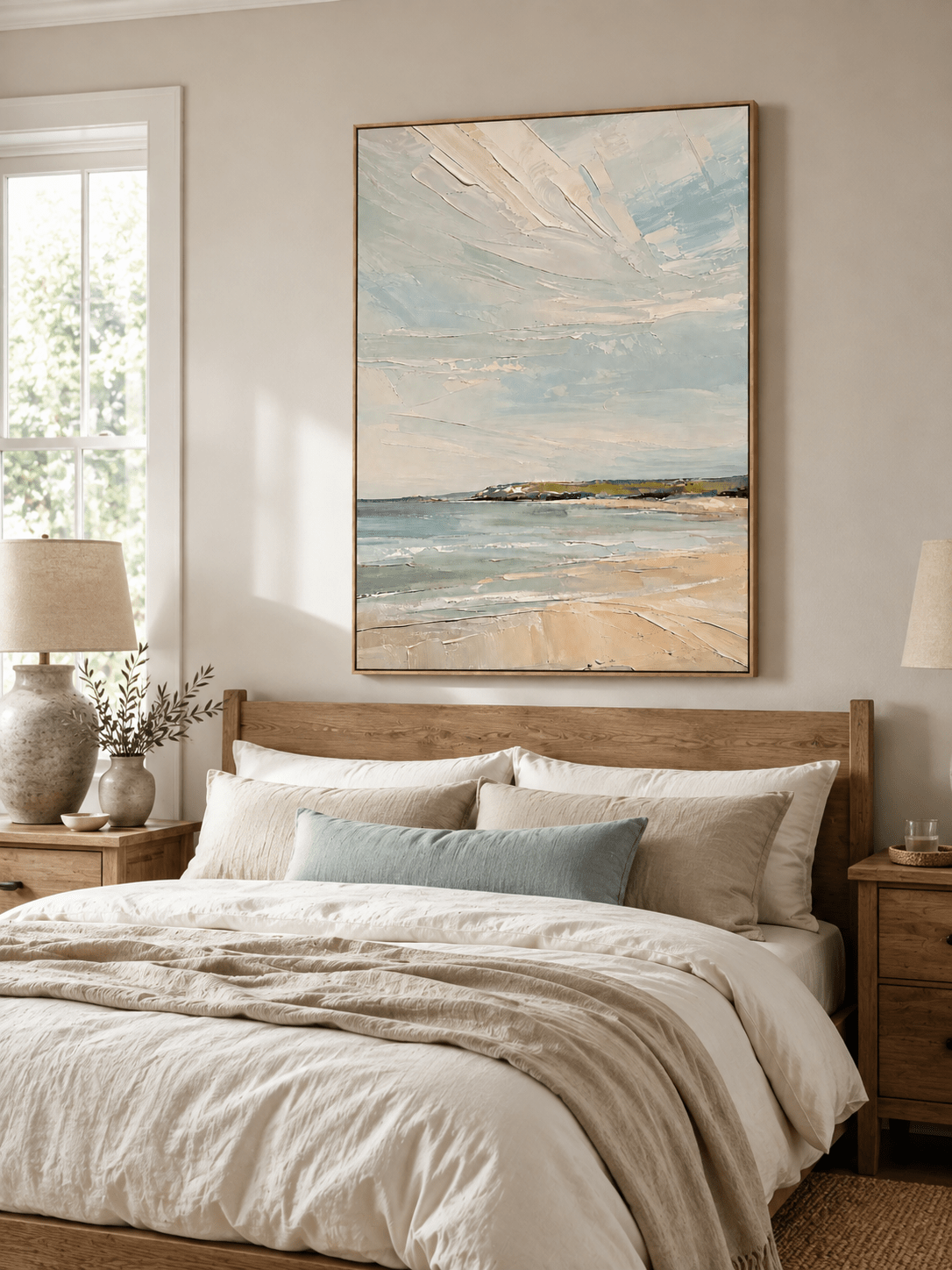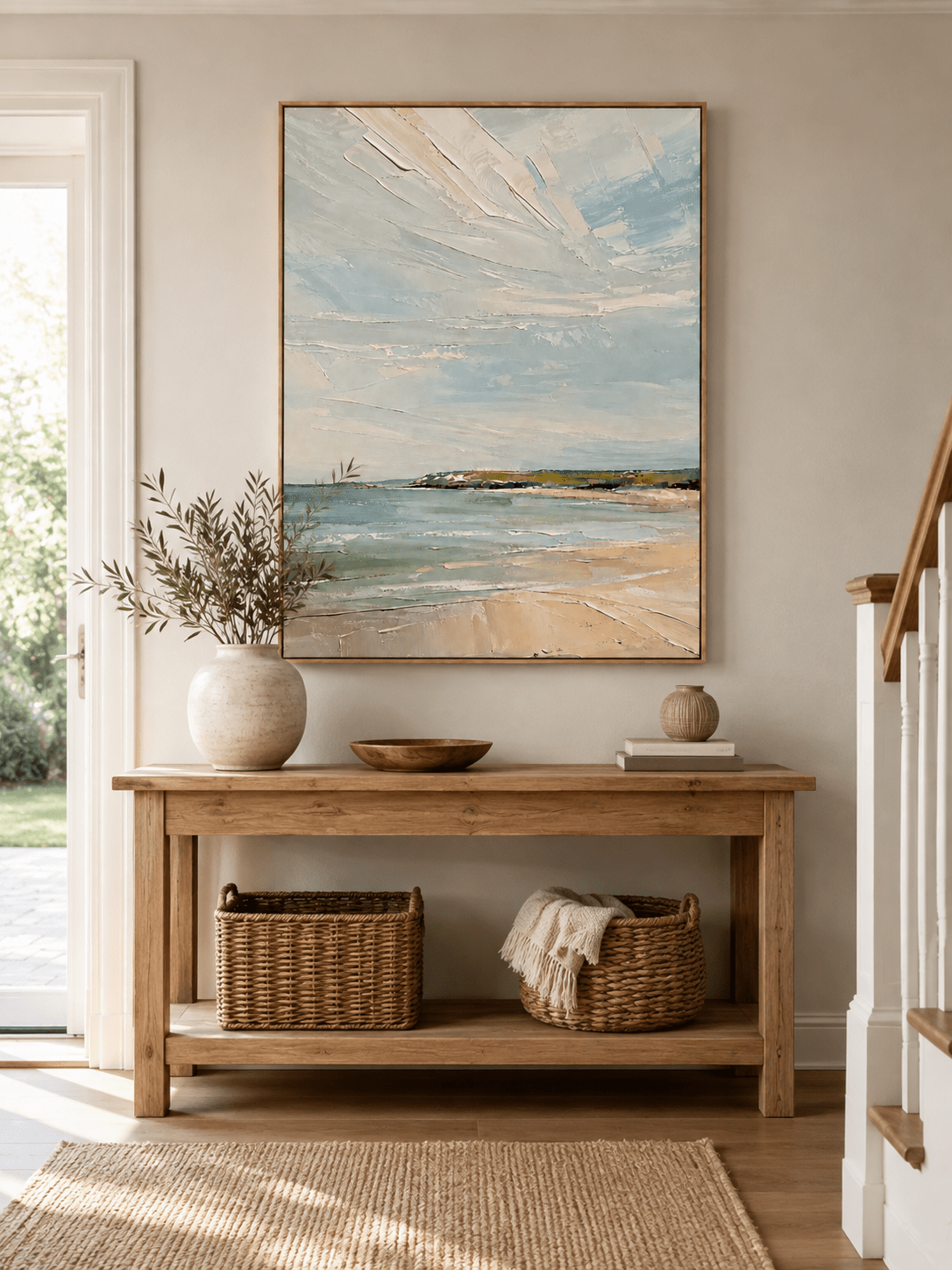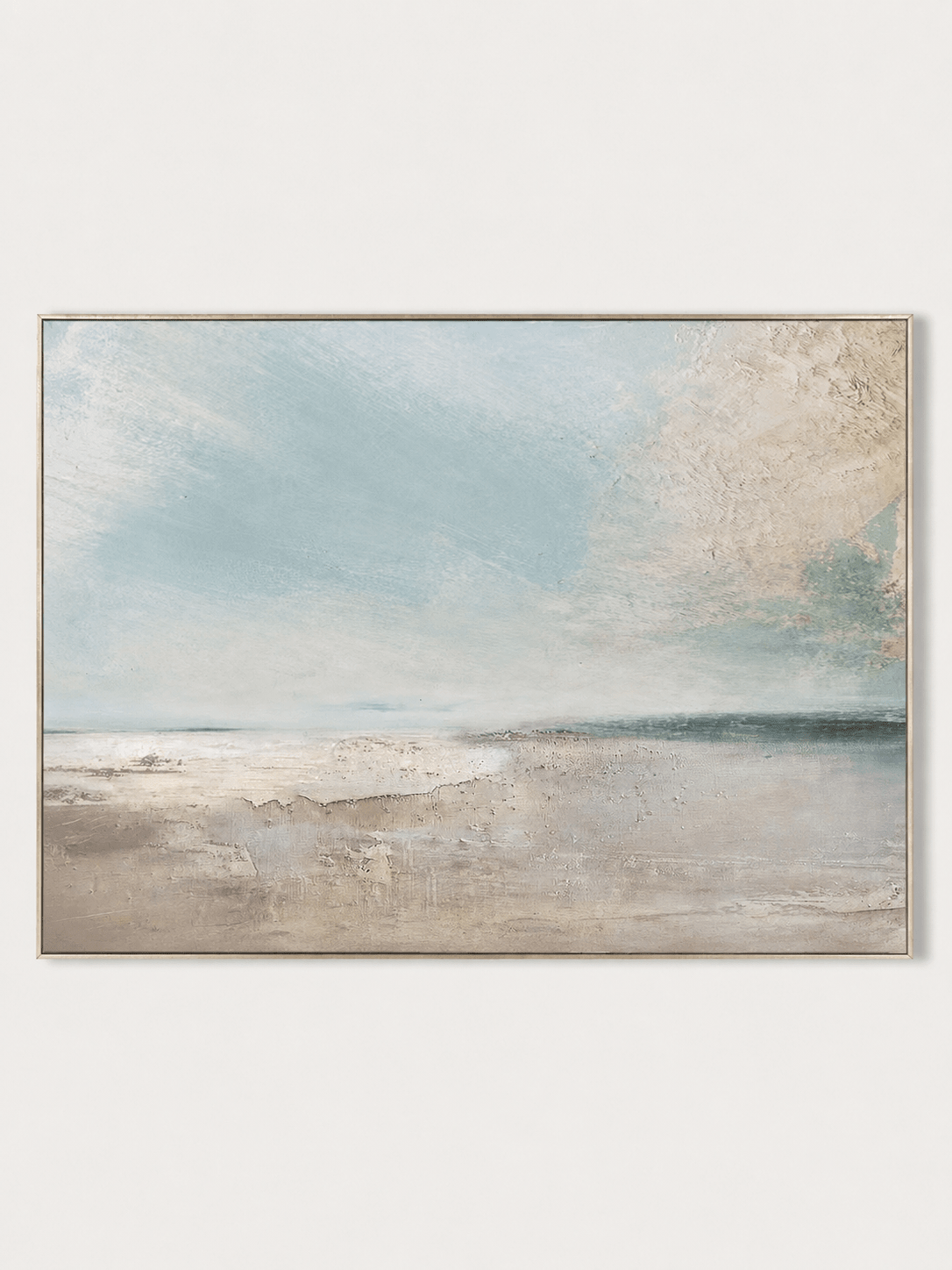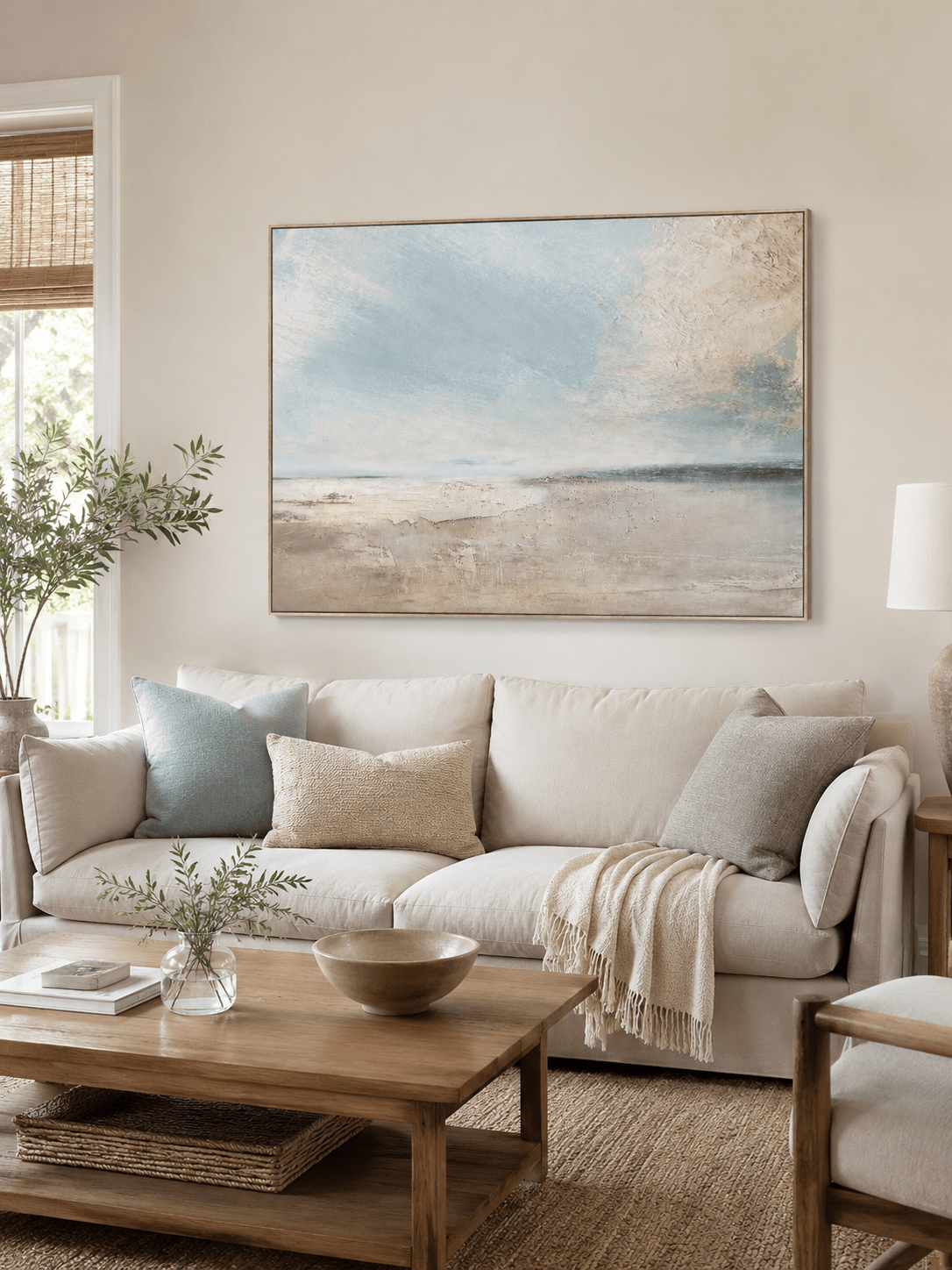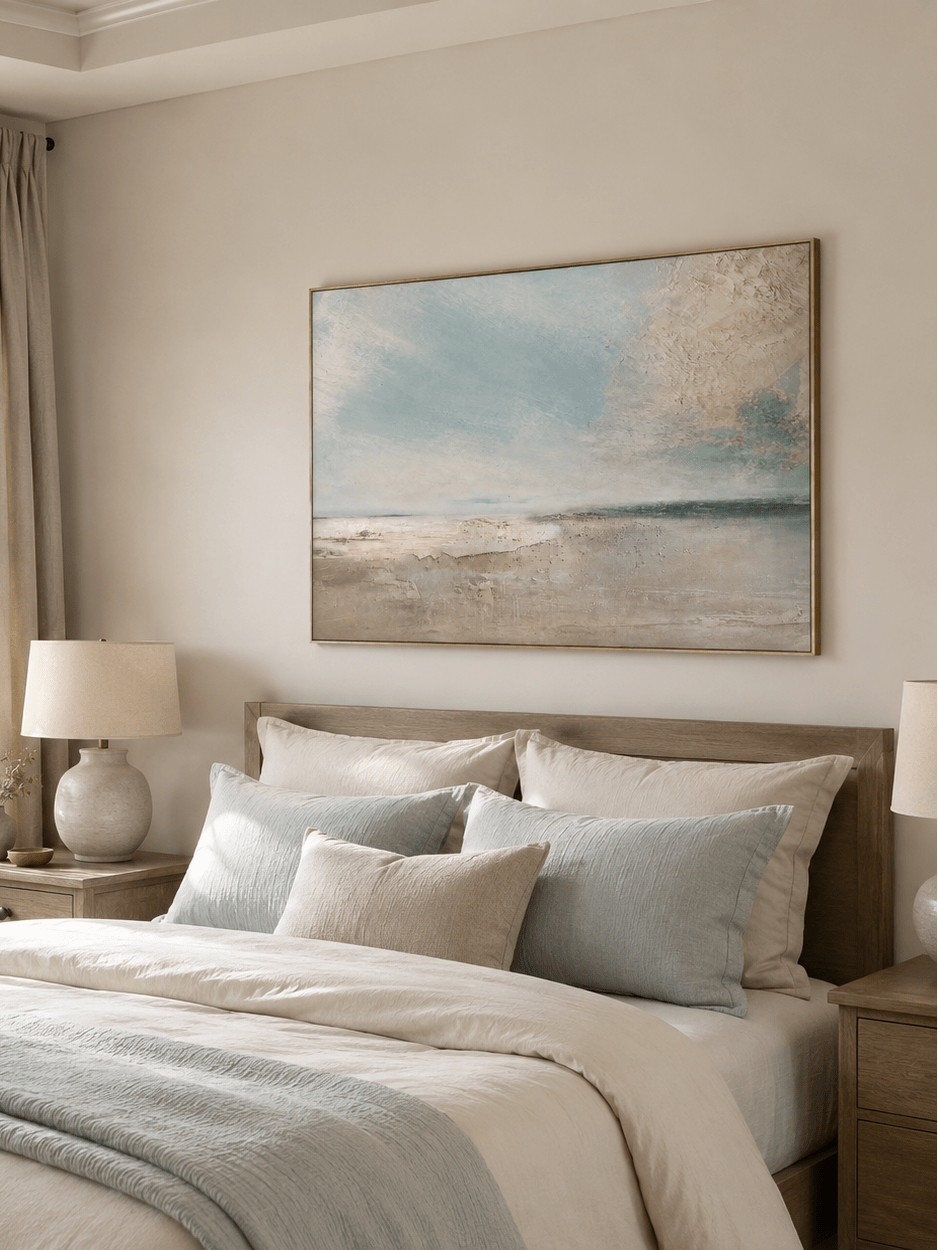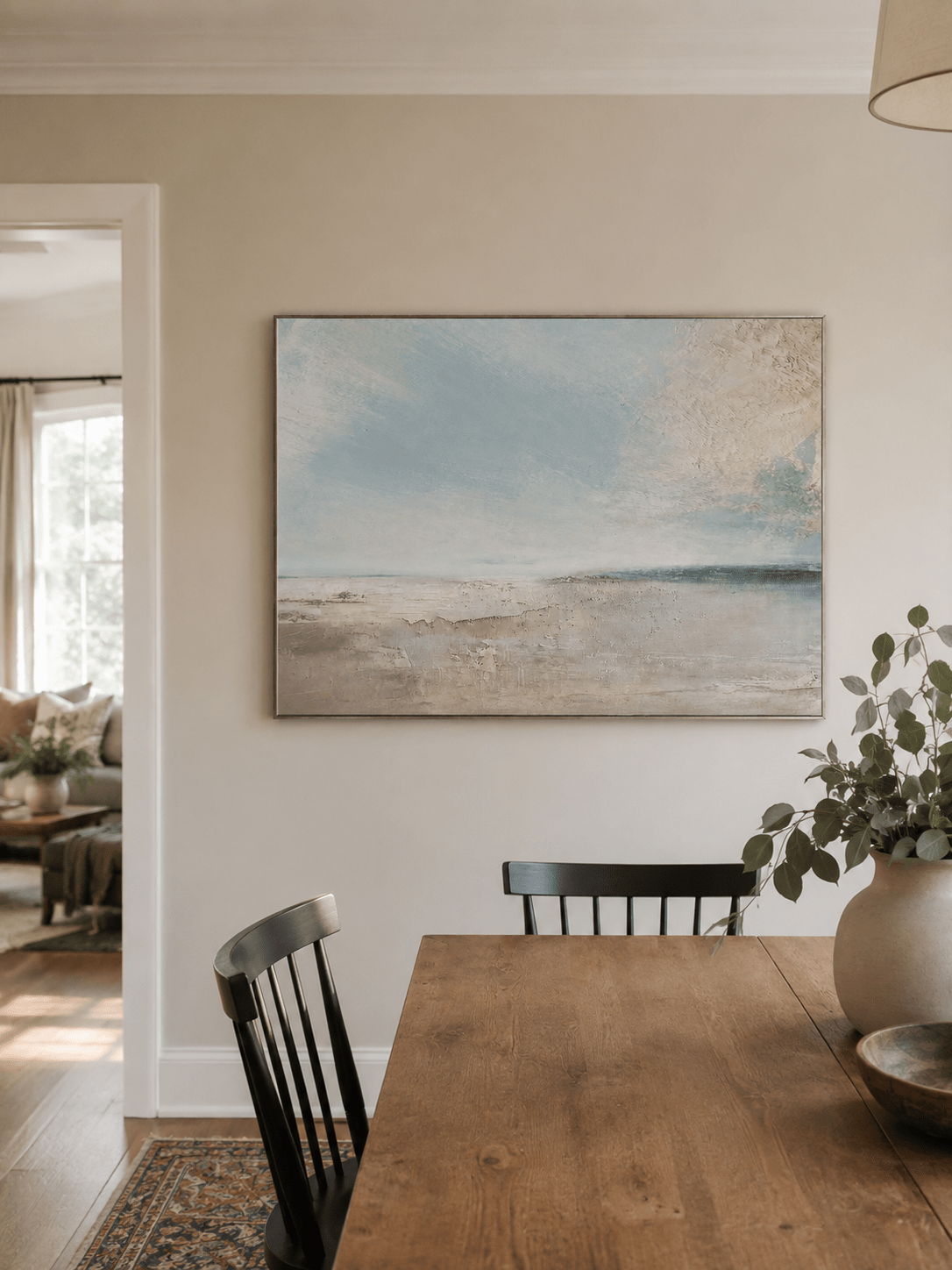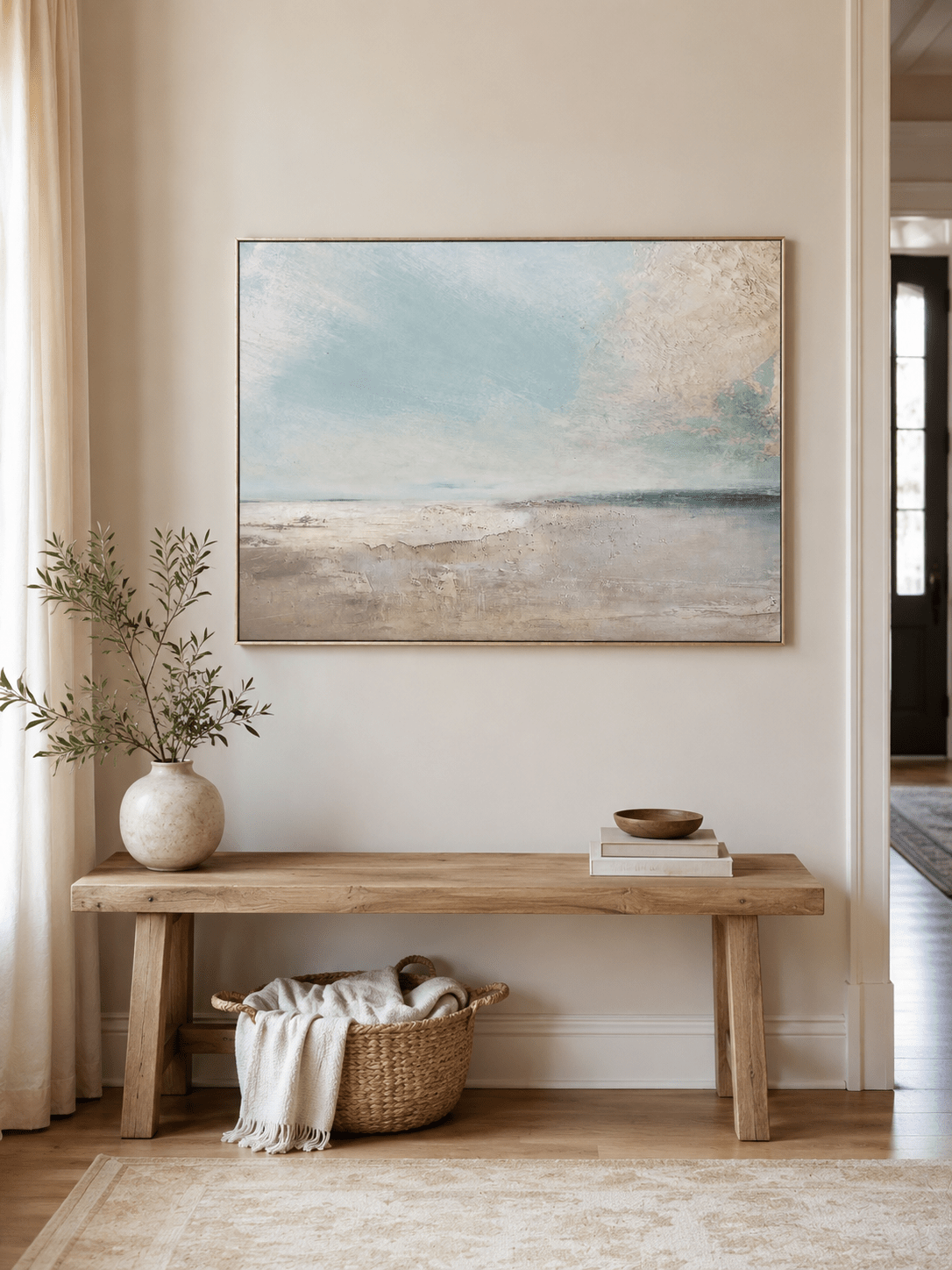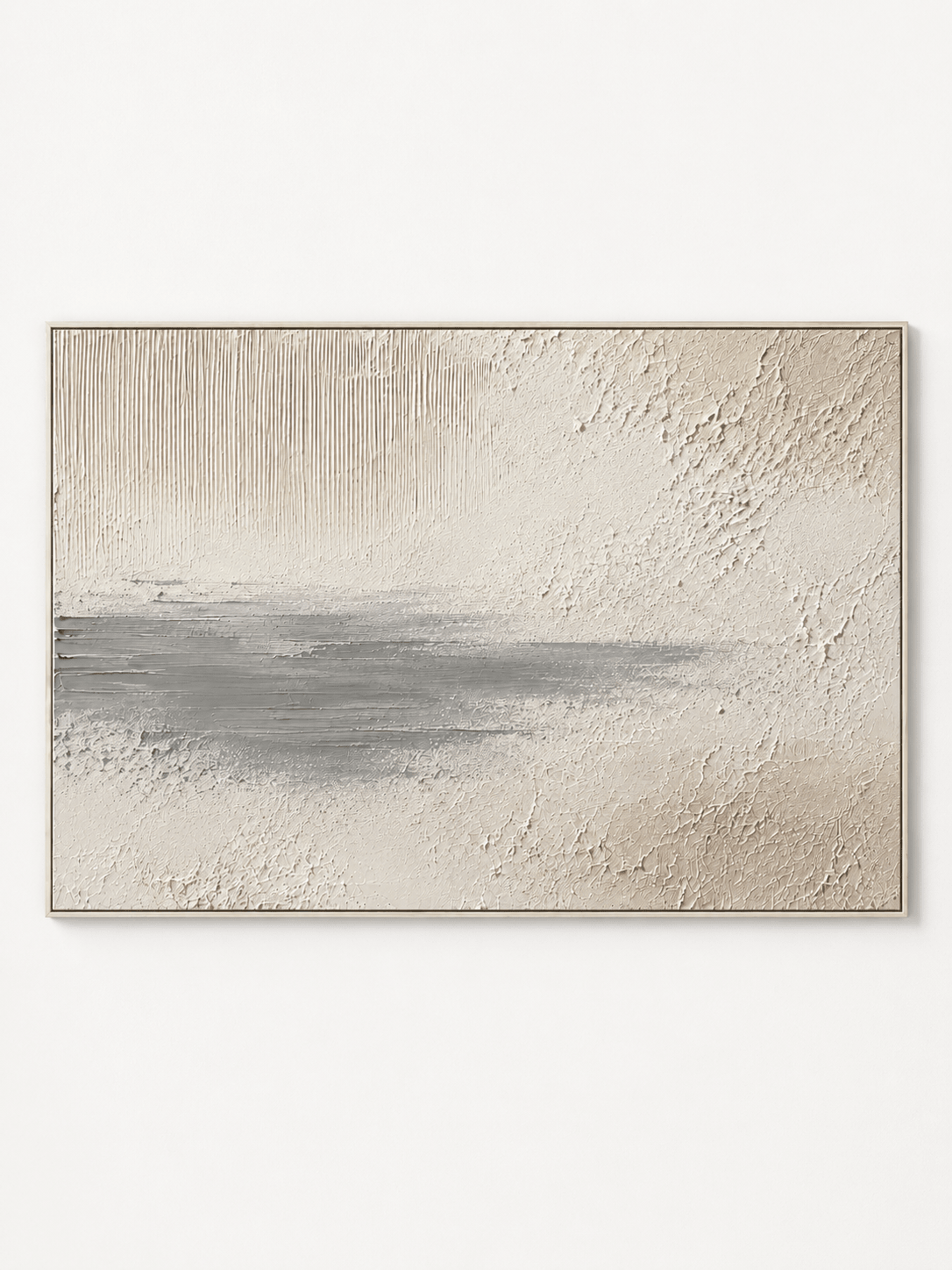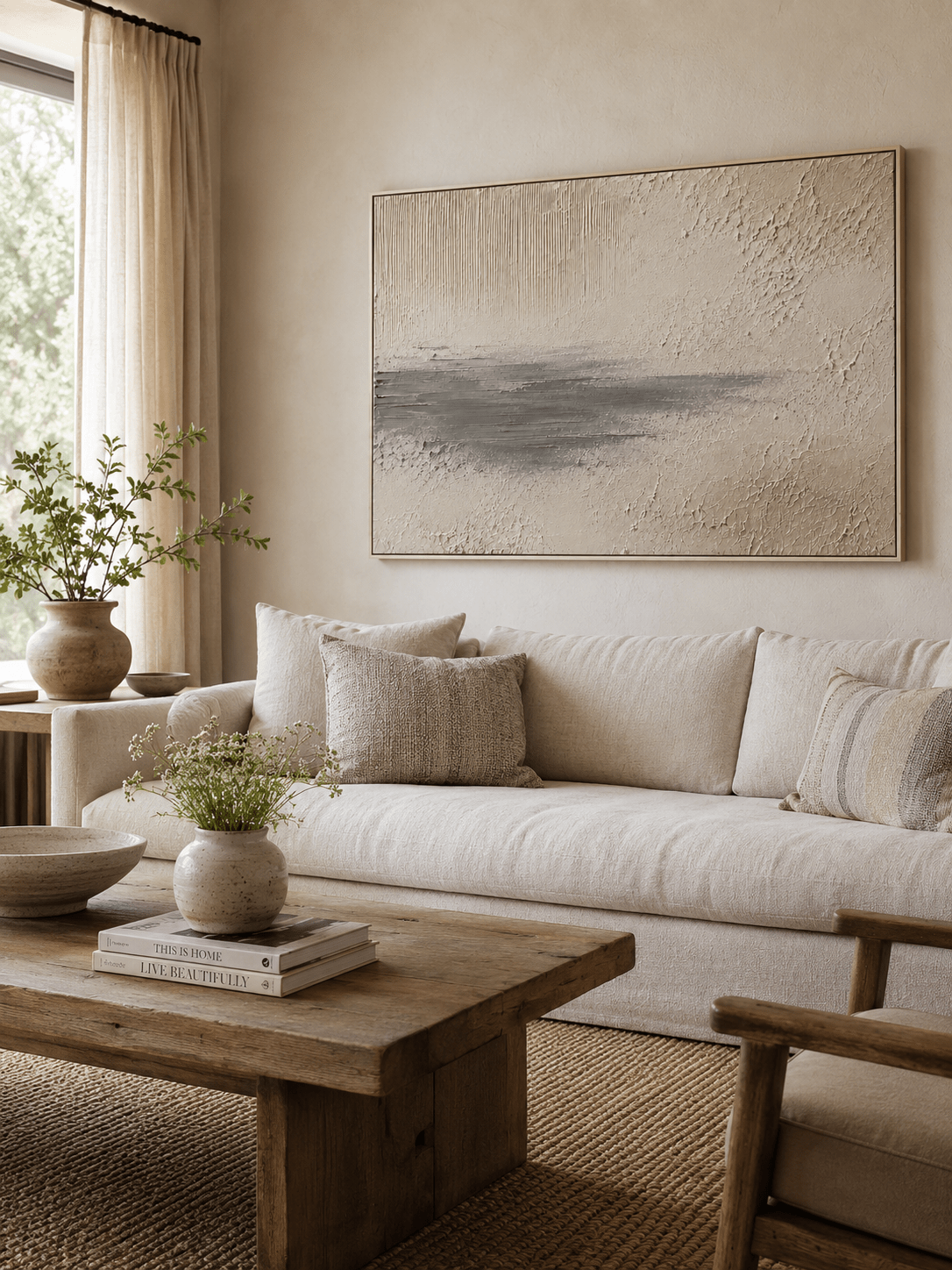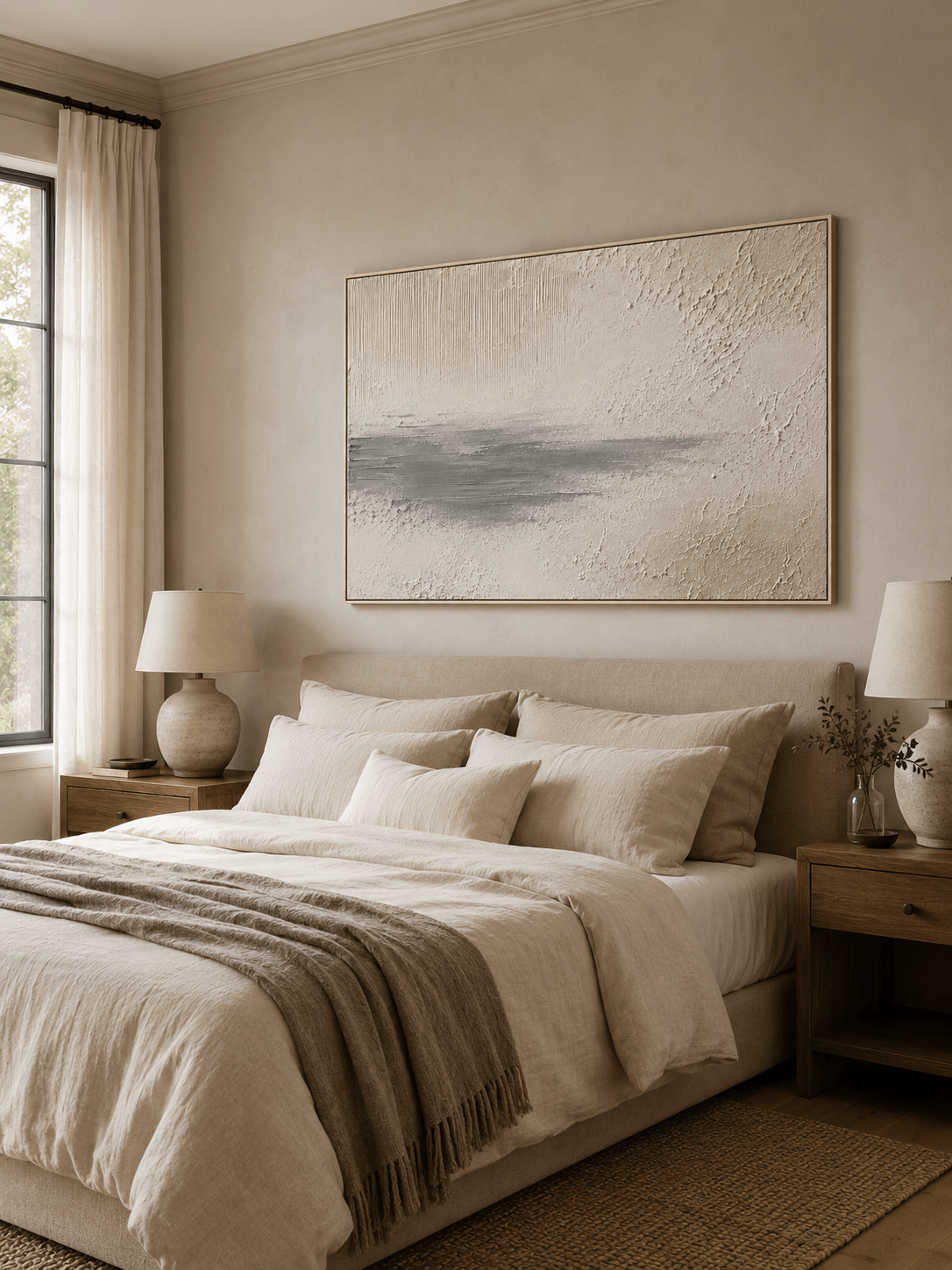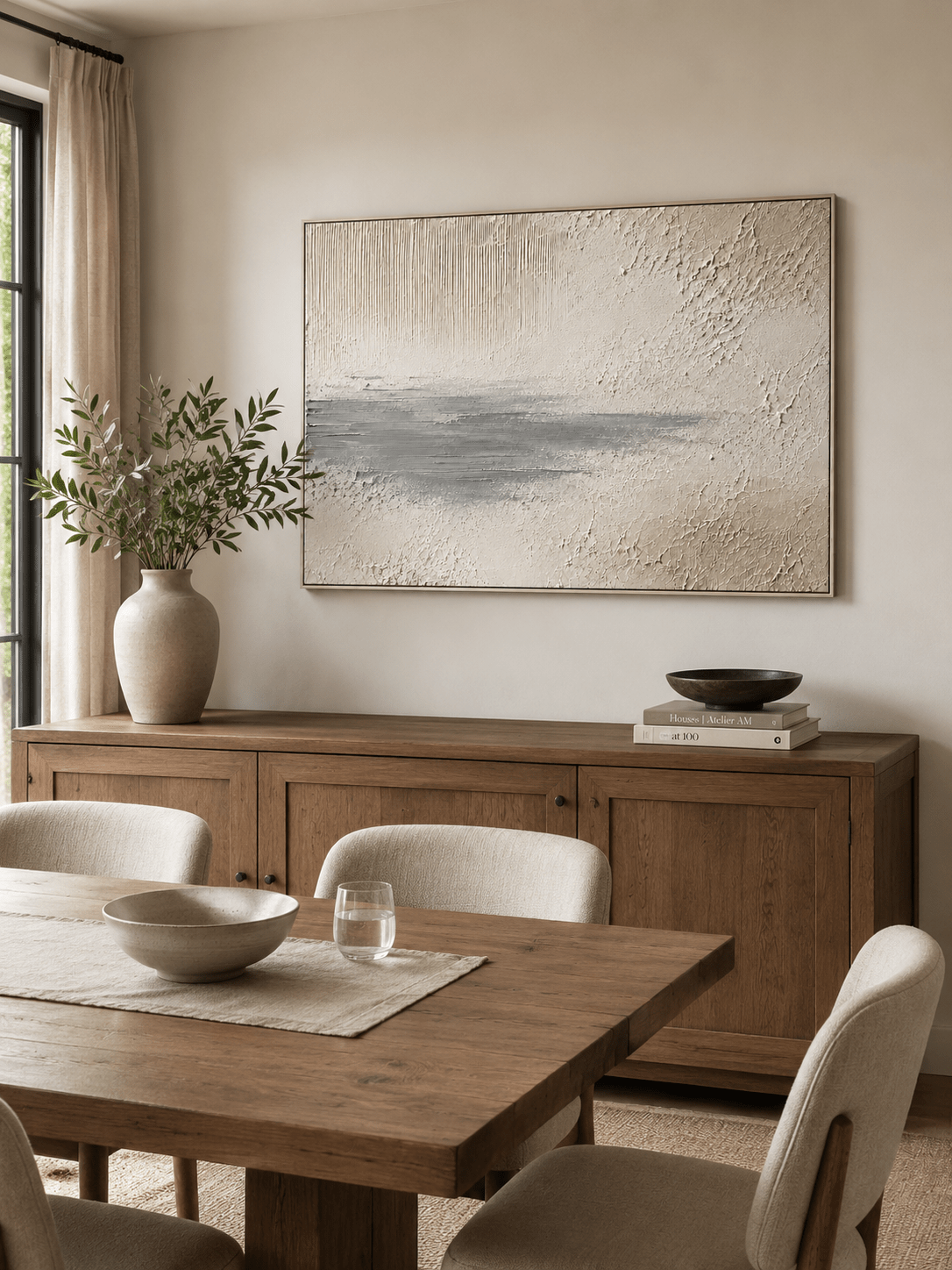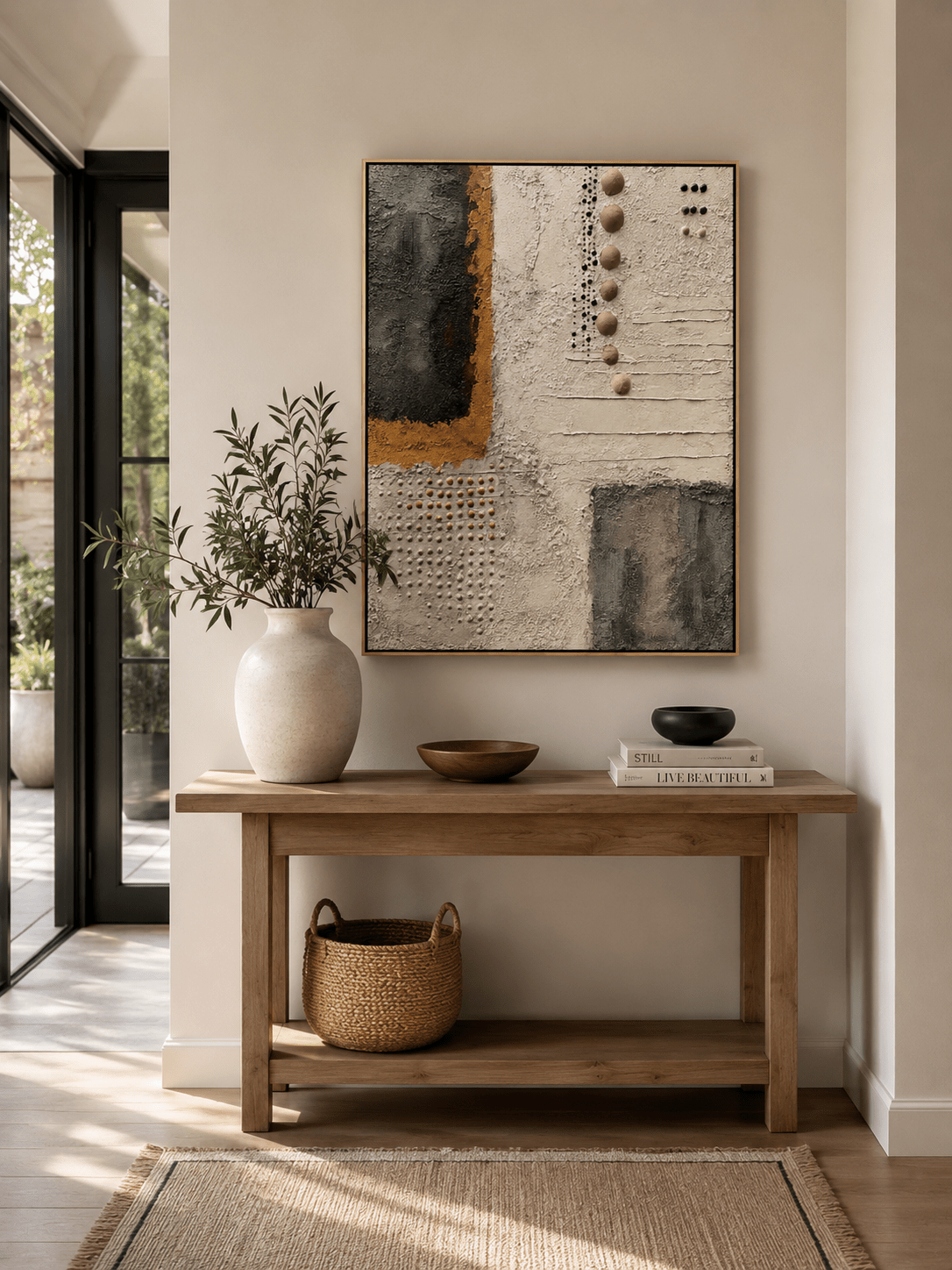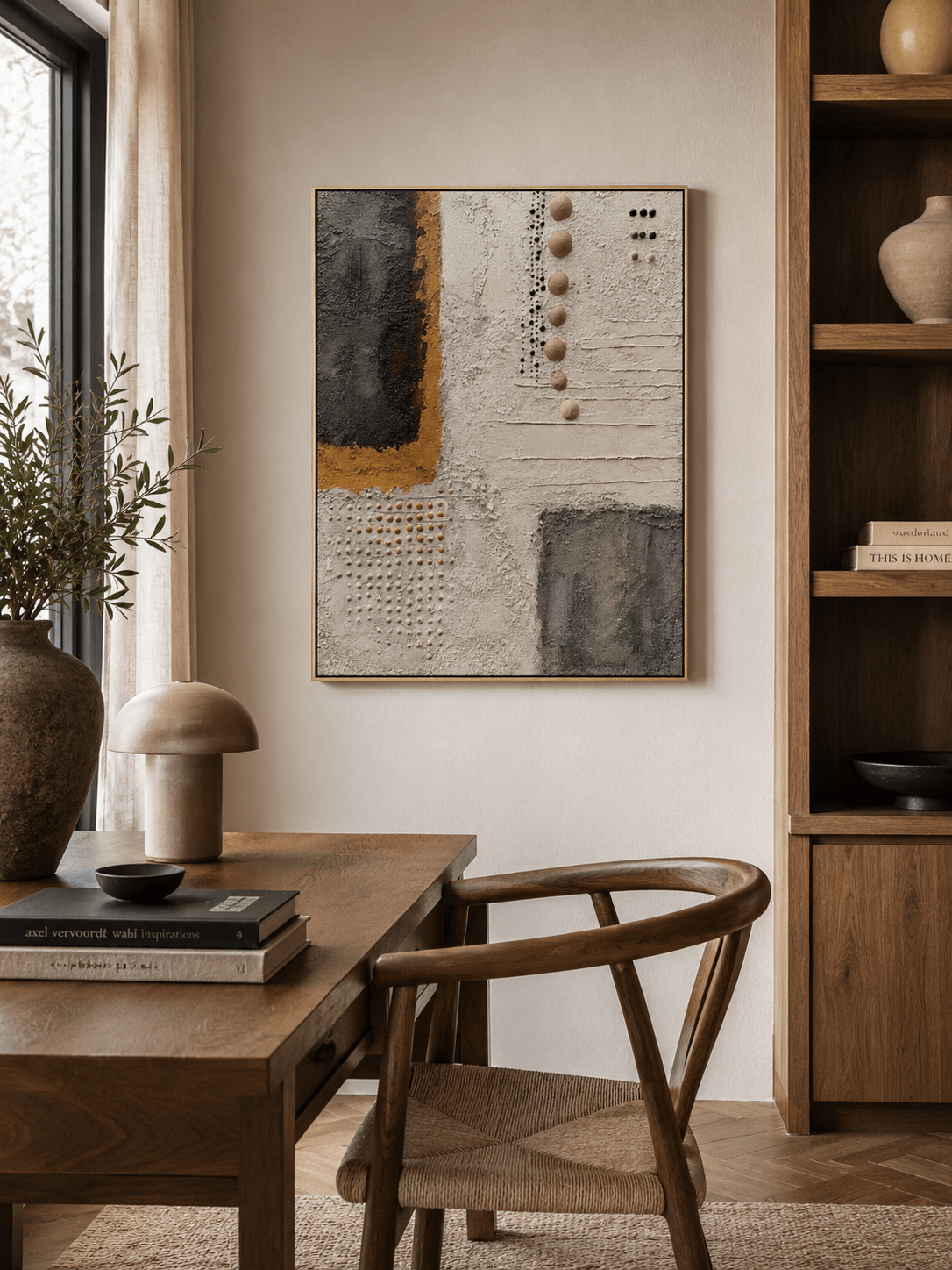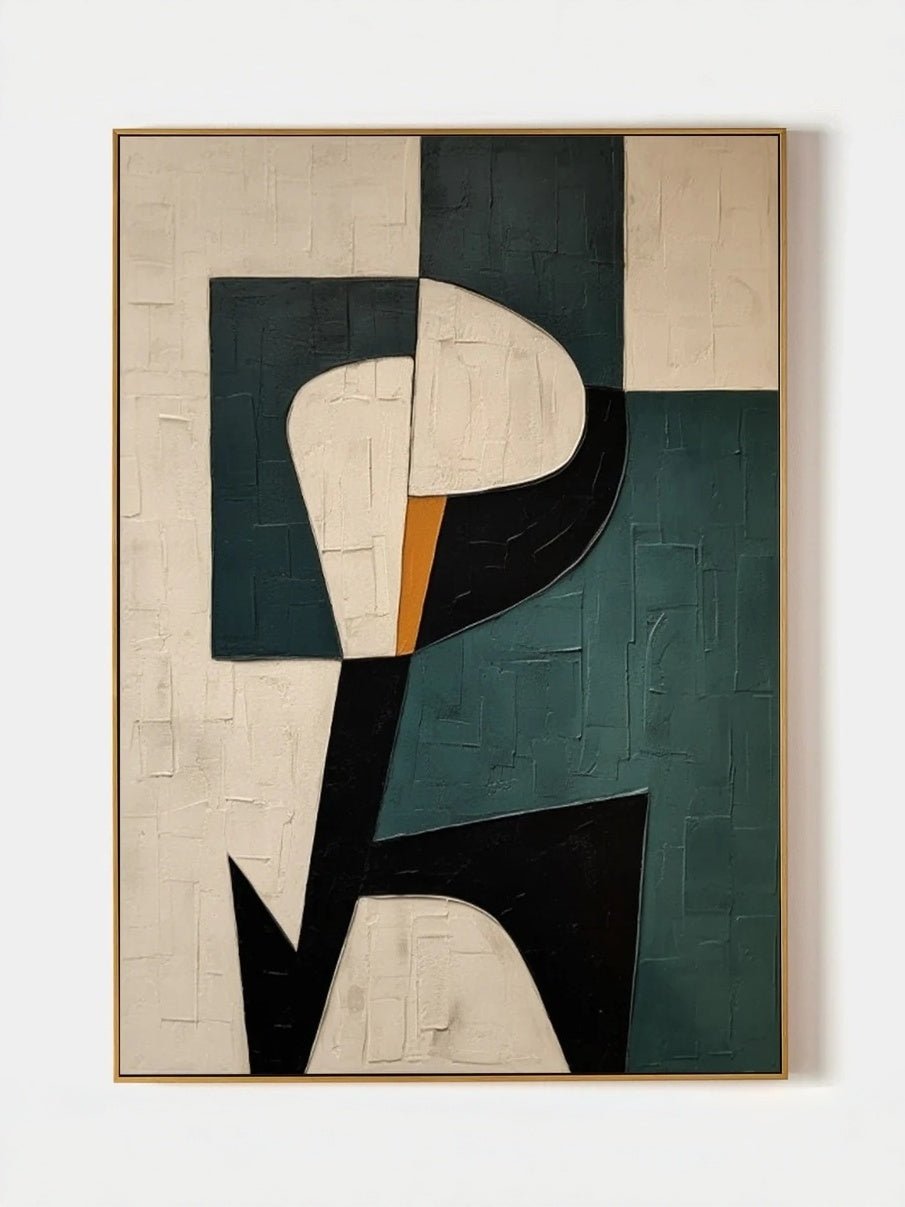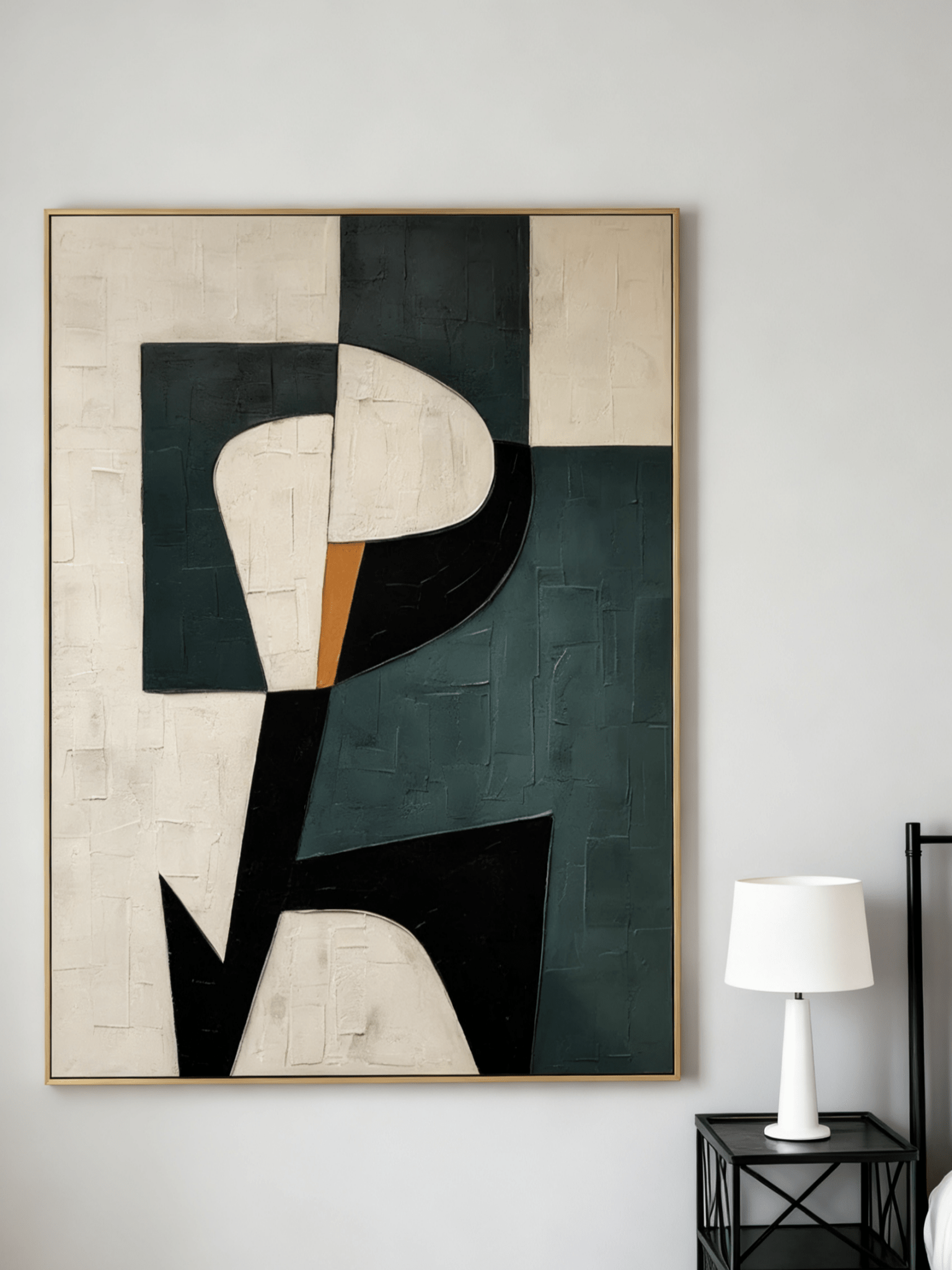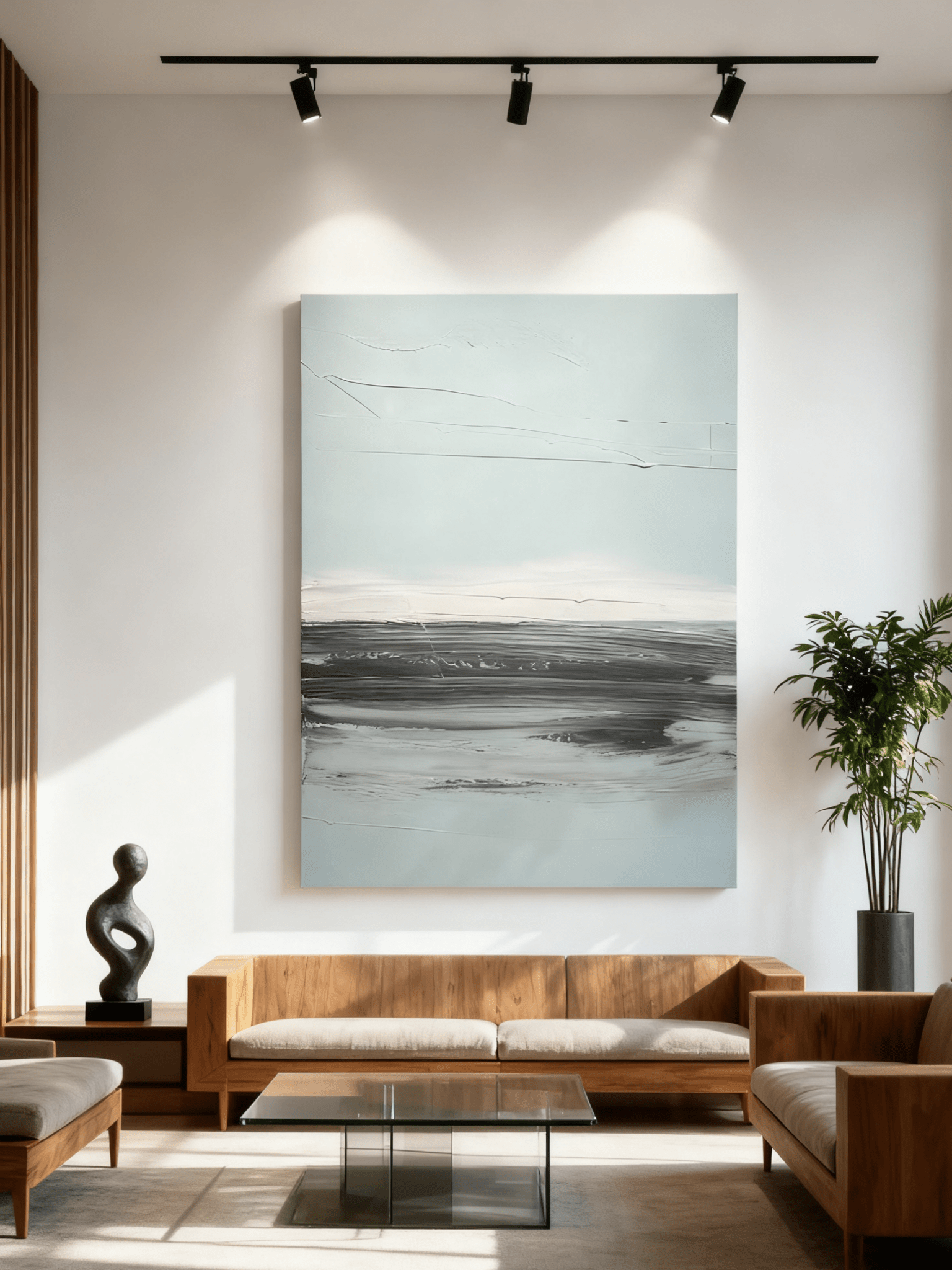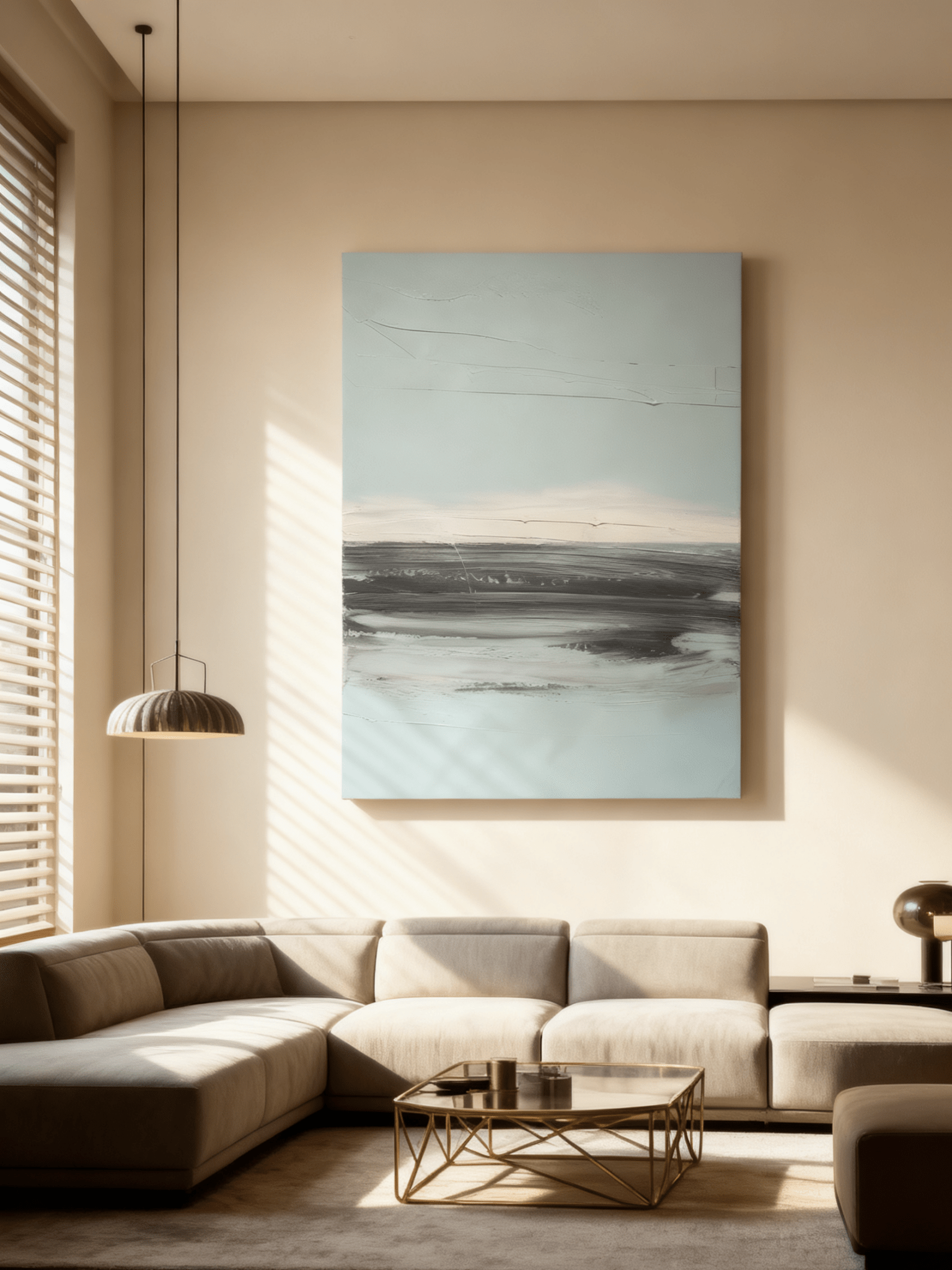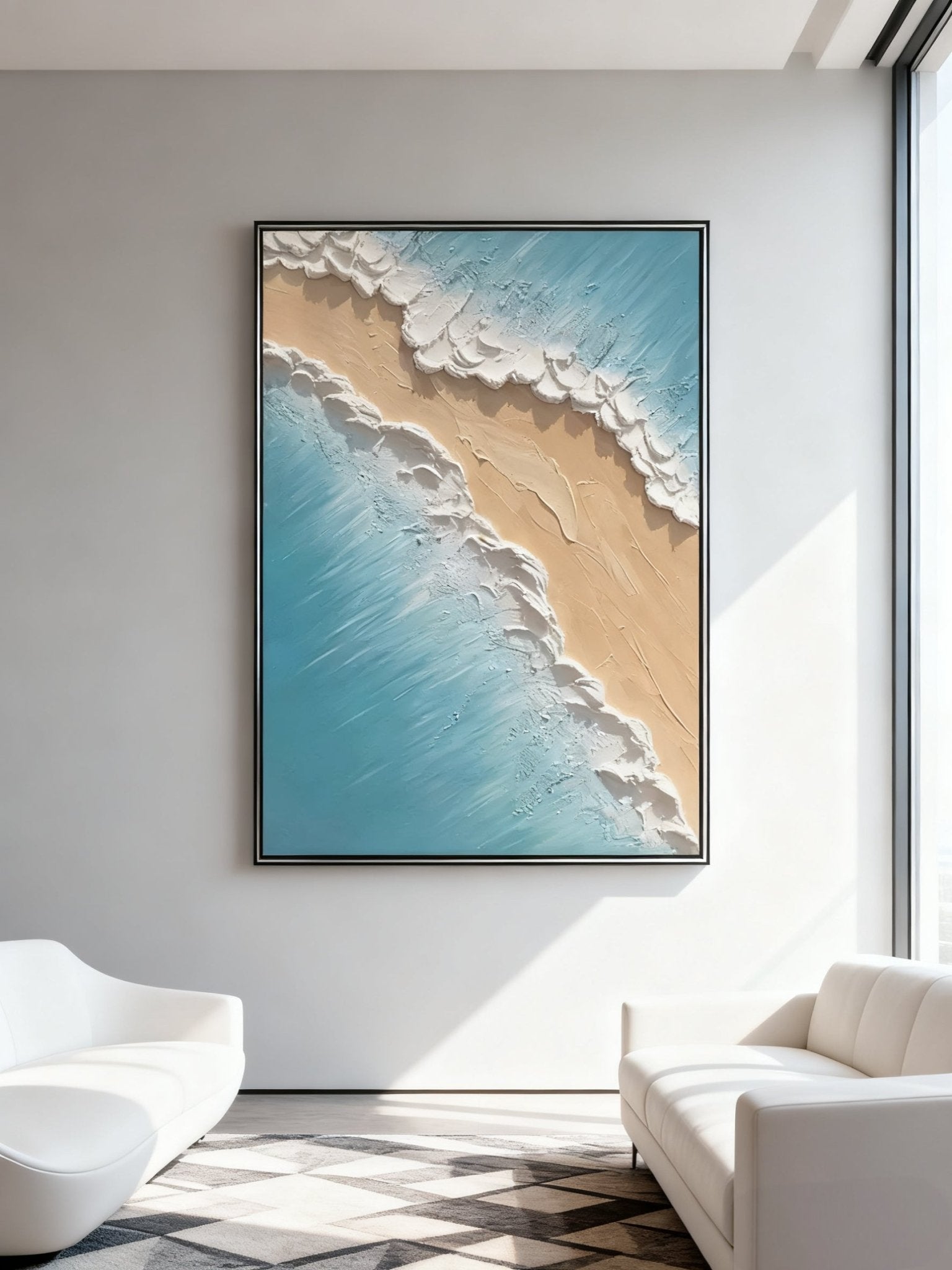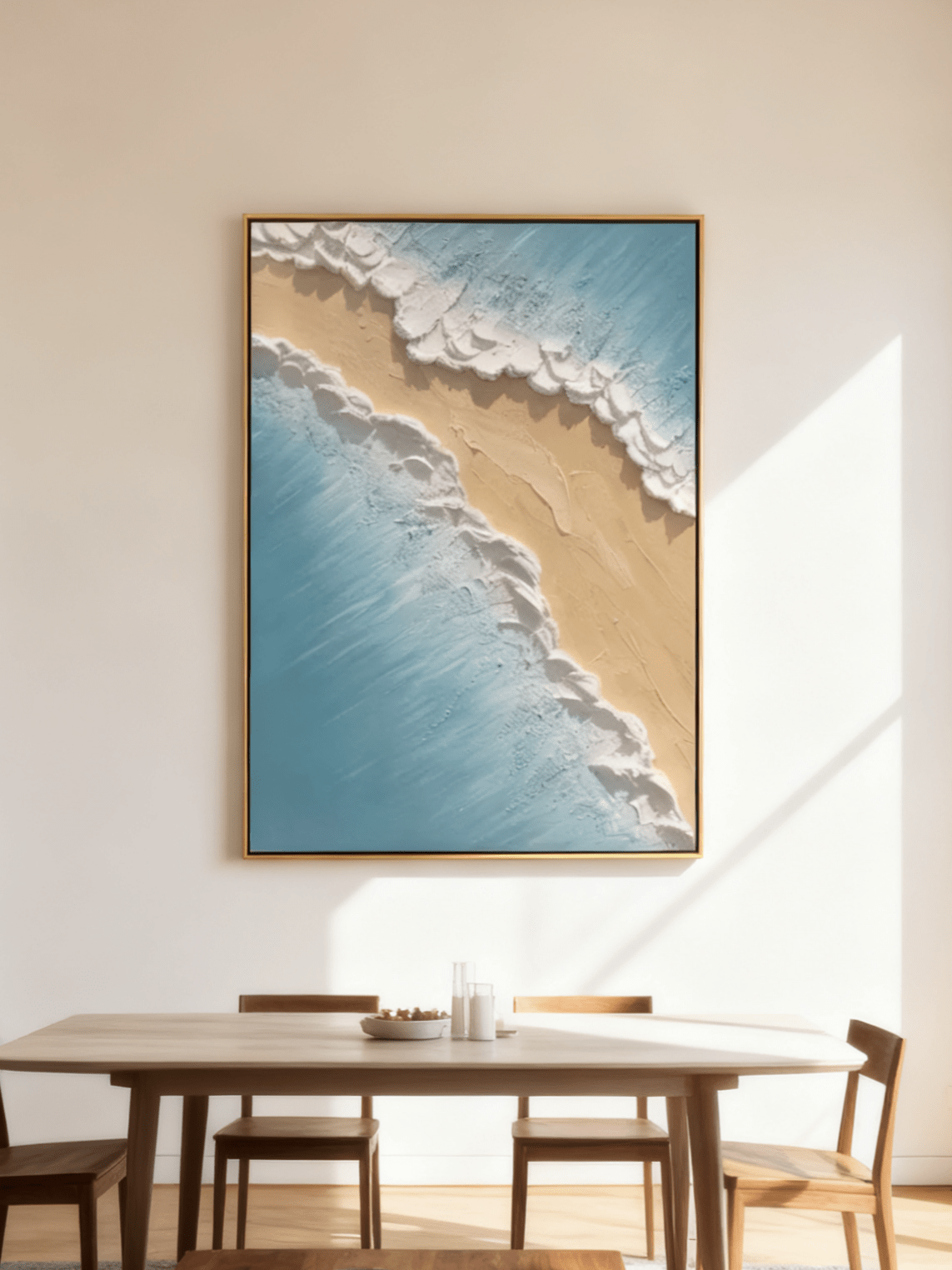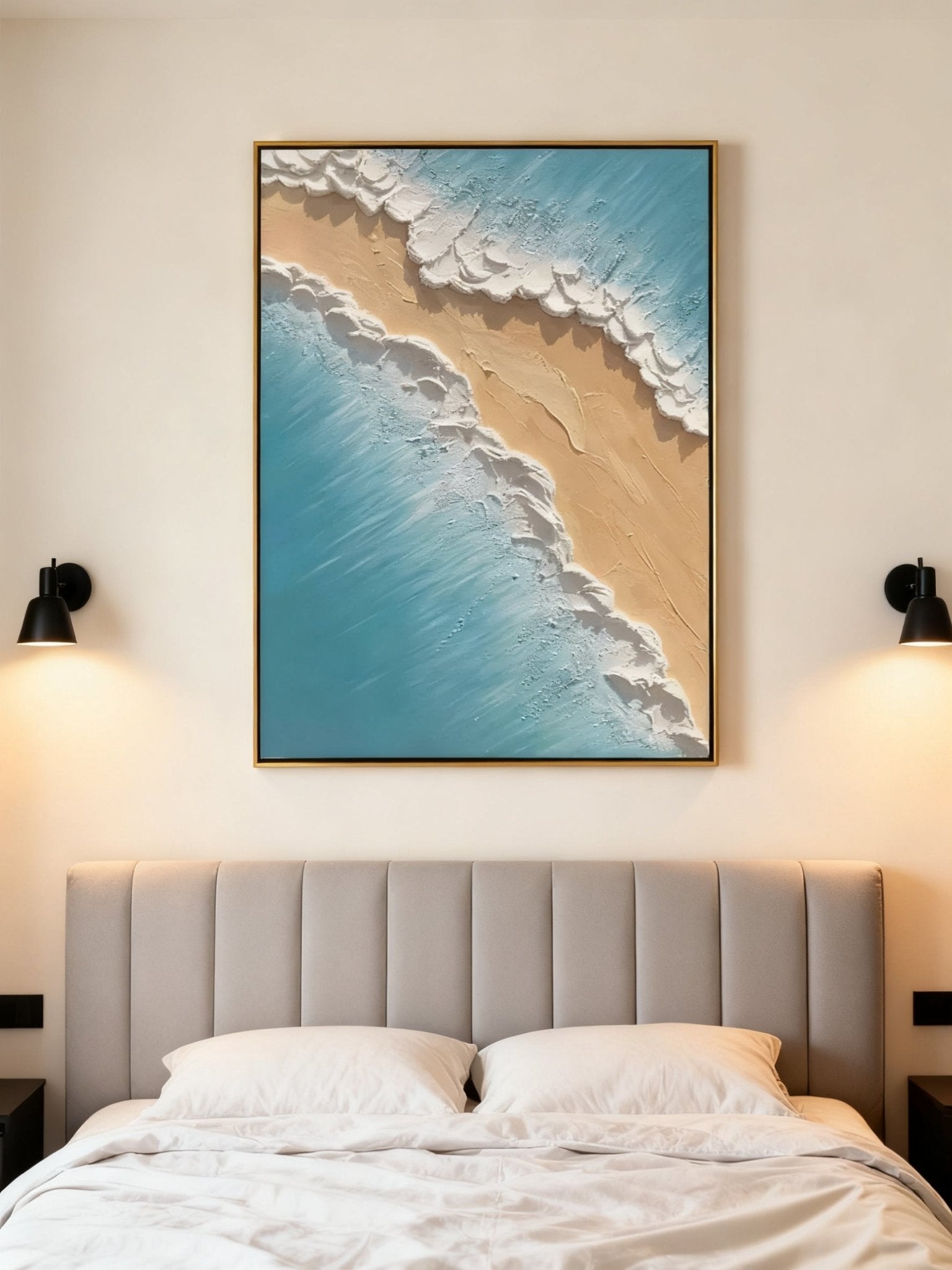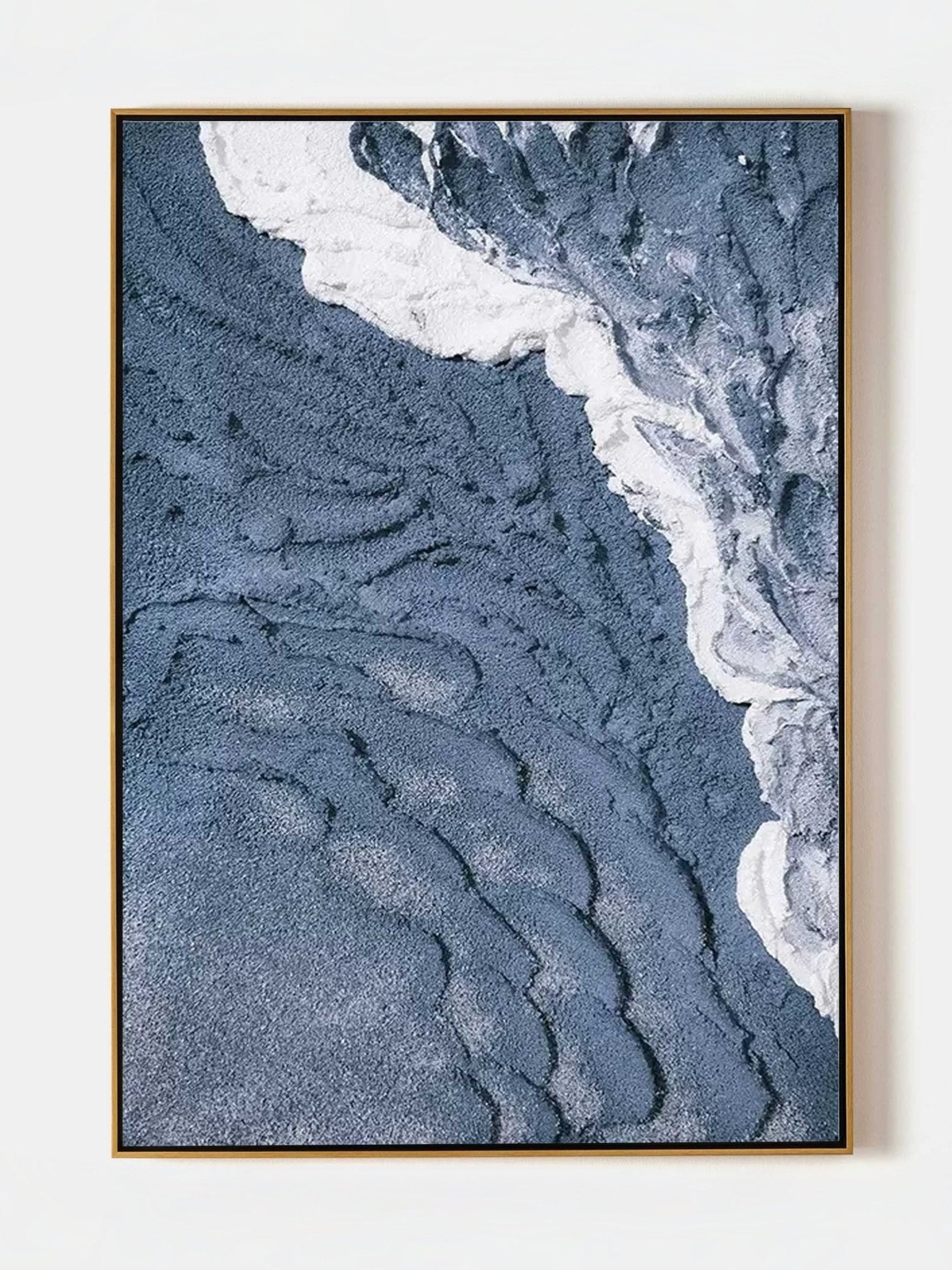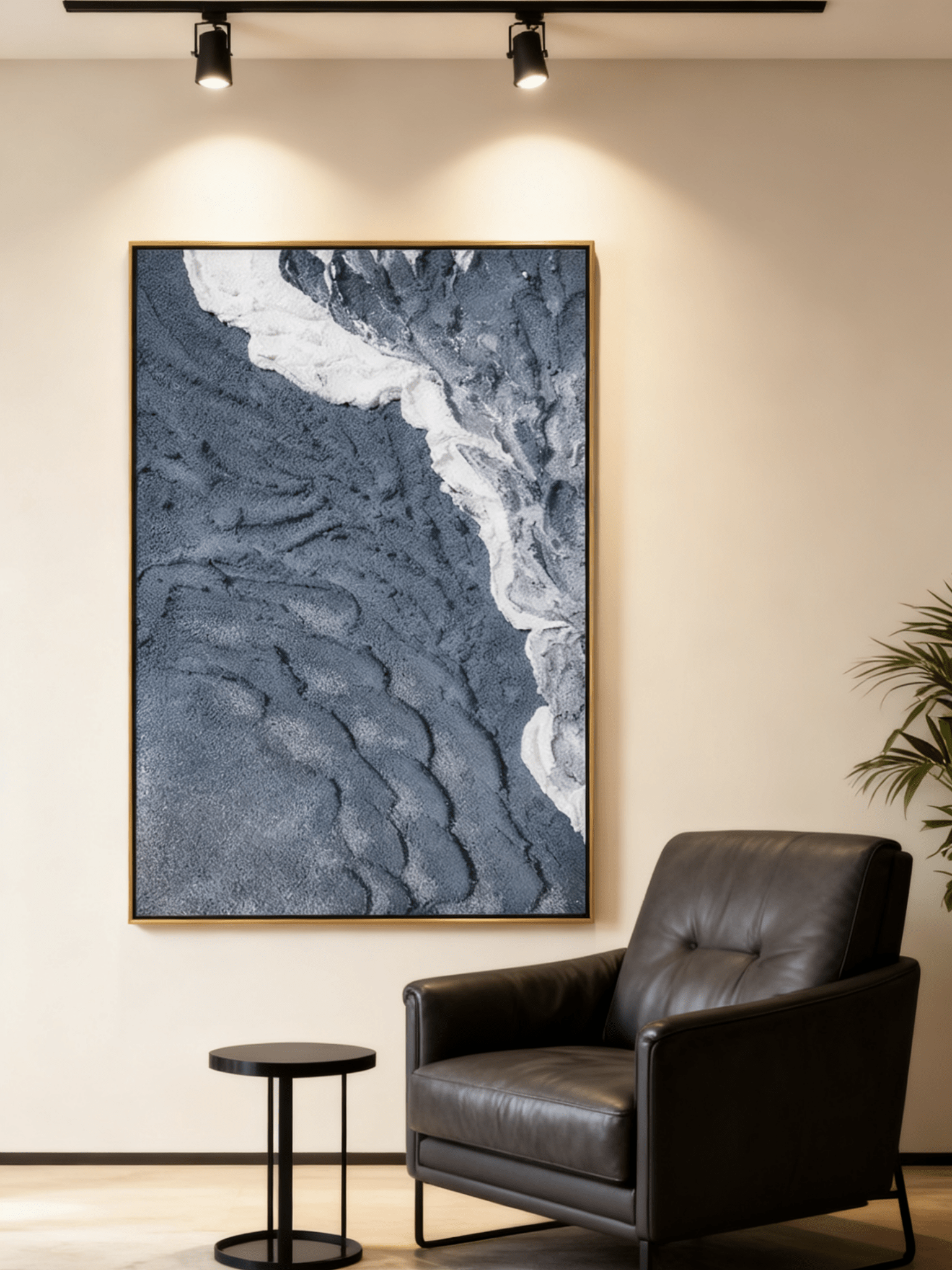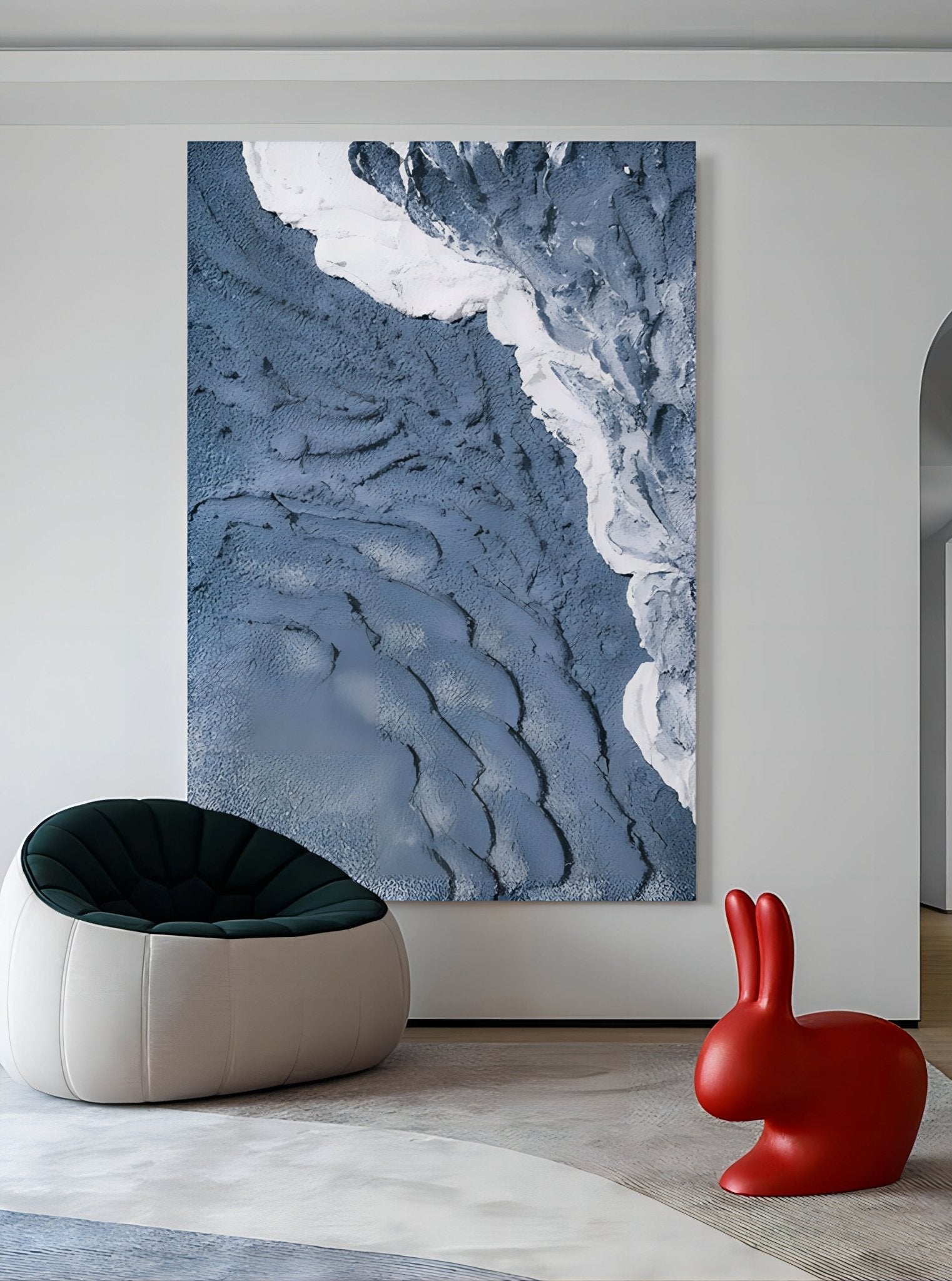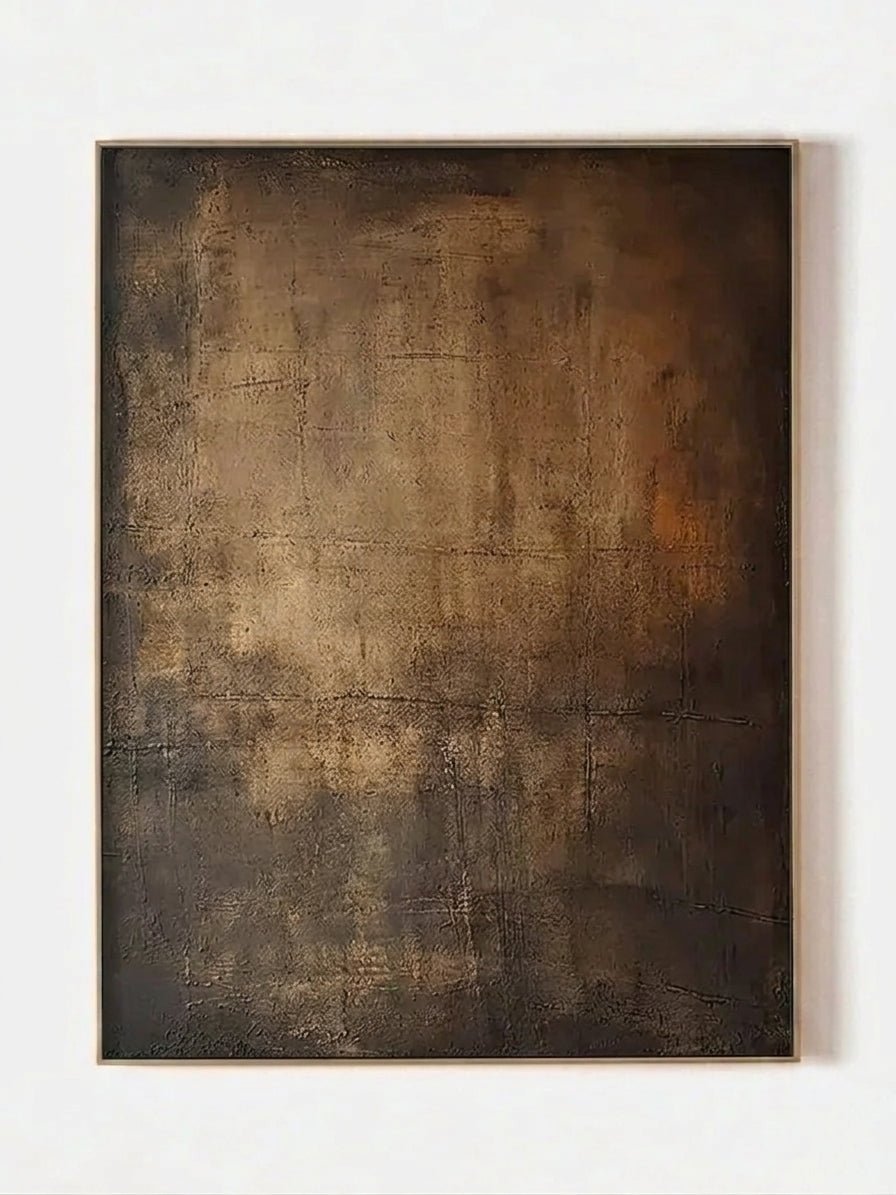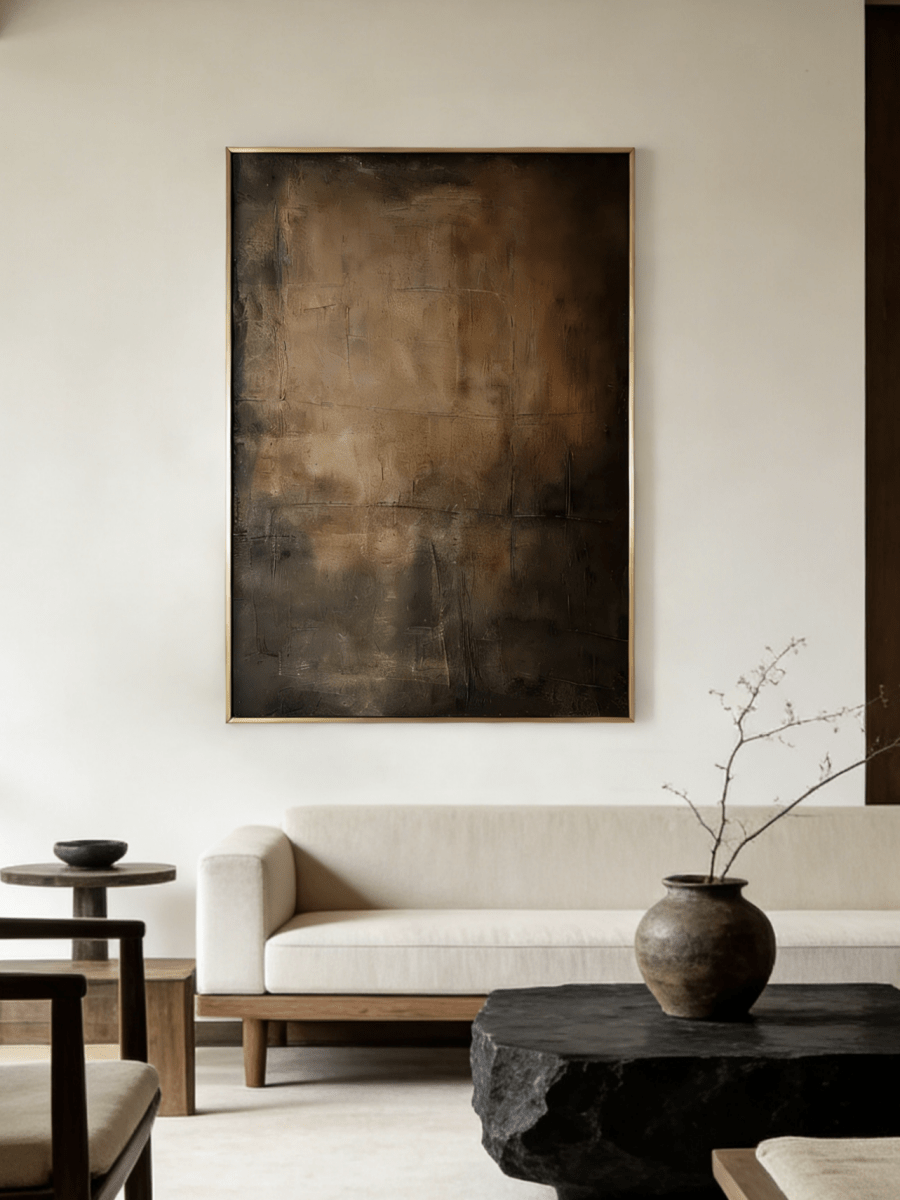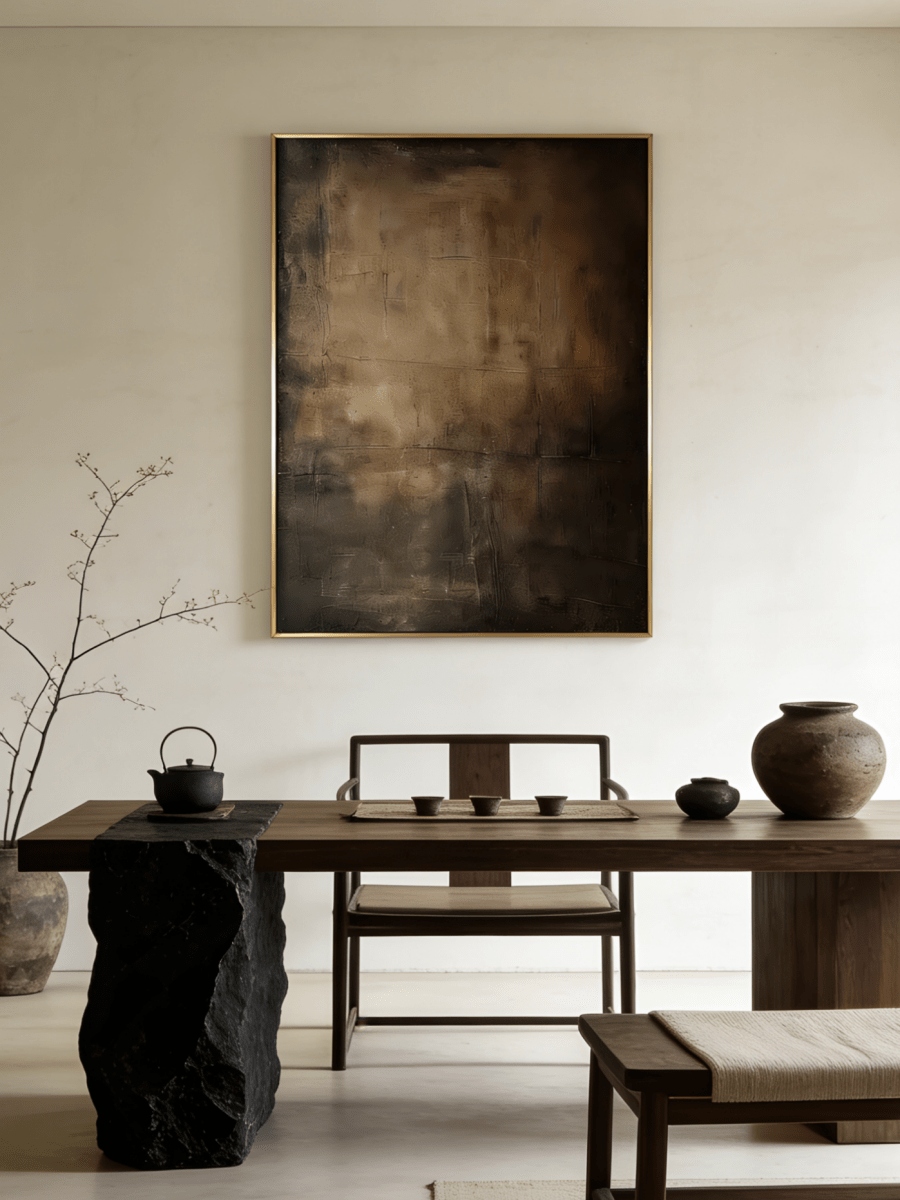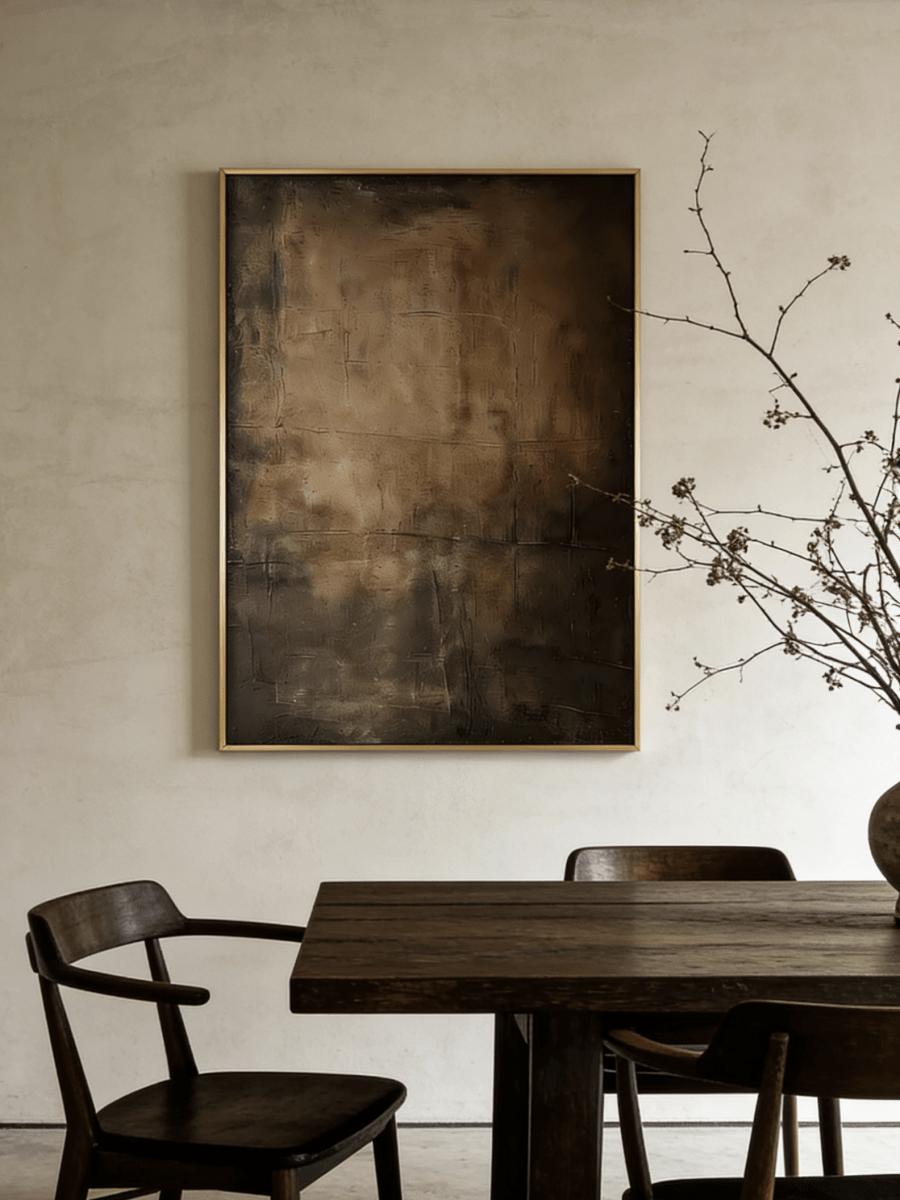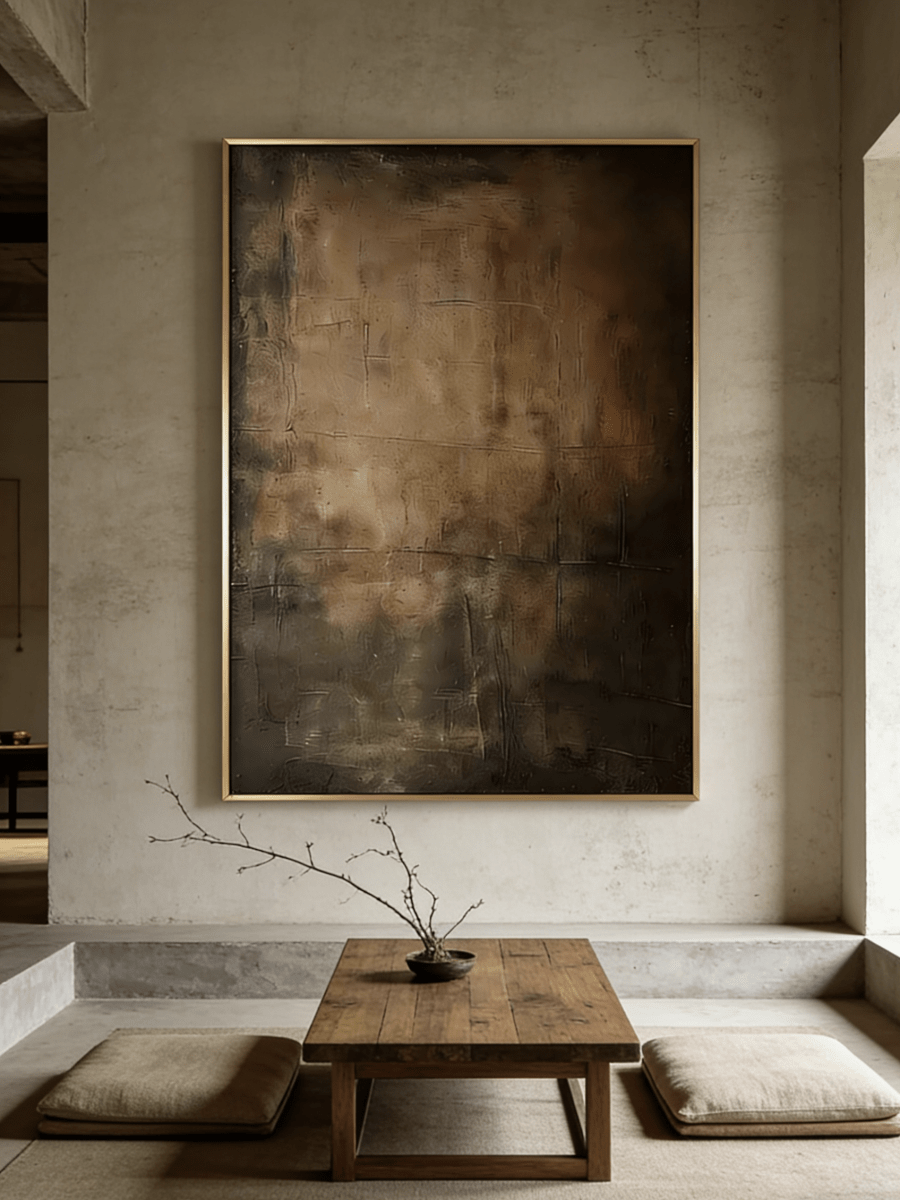

Choosing Wabi-Sabi wall art becomes much easier when you begin with the shape of the available wall rather than the color of the painting. A square canvas creates a contained focal point, a vertical canvas emphasizes height, and a panoramic canvas follows the width of a sofa, bed, or console. The best orientation is the one that fits the wall’s open proportions while leaving enough negative space for the hand-painted texture to remain visible.
This guide compares three real works from WABI Wall Art’s Wabi-Sabi Wall Art collection. All three are by Eliot Vermeer and use restrained neutral palettes, but their proportions and relief patterns behave very differently in a room. That makes them useful examples for deciding what belongs above a sofa, on a narrow entry wall, or over a compact console.

Start with the shape of the empty wall
Do not measure the entire wall from corner to corner. Measure the usable area after accounting for doors, windows, sconces, tall furniture, and the visual boundaries created by nearby architecture. The open area above a sofa is usually horizontal. The space between a doorway and a closet may be distinctly vertical. A wall above a short console can be nearly square.
Photograph the wall straight on, then draw a simple rectangle around the usable area. Its proportions will usually suggest the right family of artwork:
- Choose square art when the open area feels balanced in height and width, or when you need one centered anchor.
- Choose vertical art when the wall is narrow, the ceiling is tall, or the placement needs to draw the eye upward.
- Choose horizontal or panoramic art when the furniture below creates a long visual baseline.
Orientation solves the first problem; size solves the second. A correctly shaped canvas can still look undersized, so test the proposed outer dimensions with painter’s tape before ordering. WABI’s existing wall art sizing guide provides a useful measurement starting point.
A quick comparison of the three shapes
| Shape | Visual effect | Best wall condition | Strong placements | Main risk |
|---|---|---|---|---|
| Square | Contained, centered, architectural | Similar usable height and width | Console, fireplace, reading nook, compact sofa | Looking isolated above very wide furniture |
| Vertical | Adds height and upward movement | Narrow wall or tall opening | Entryway, between windows, beside a door, stair landing | Crowding the ceiling or nearby trim |
| Panoramic | Extends the room laterally | Wide, low wall tied to furniture | Sofa, bed, sideboard, long office credenza | Choosing a width that overwhelms the furniture |
These effects are not rigid decorating laws. They are ways of reading proportion. Architectural details, sight lines, and the strength of the painting’s internal composition should always influence the final choice.
When square Wabi-Sabi wall art works best
Square art is especially effective when a room needs one calm center of gravity. Because its width and height carry similar weight, it does not strongly push the eye in either direction. That makes it useful above a compact console, centered fireplace, substantial lounge chair, or on the shorter wall of an open-plan room.
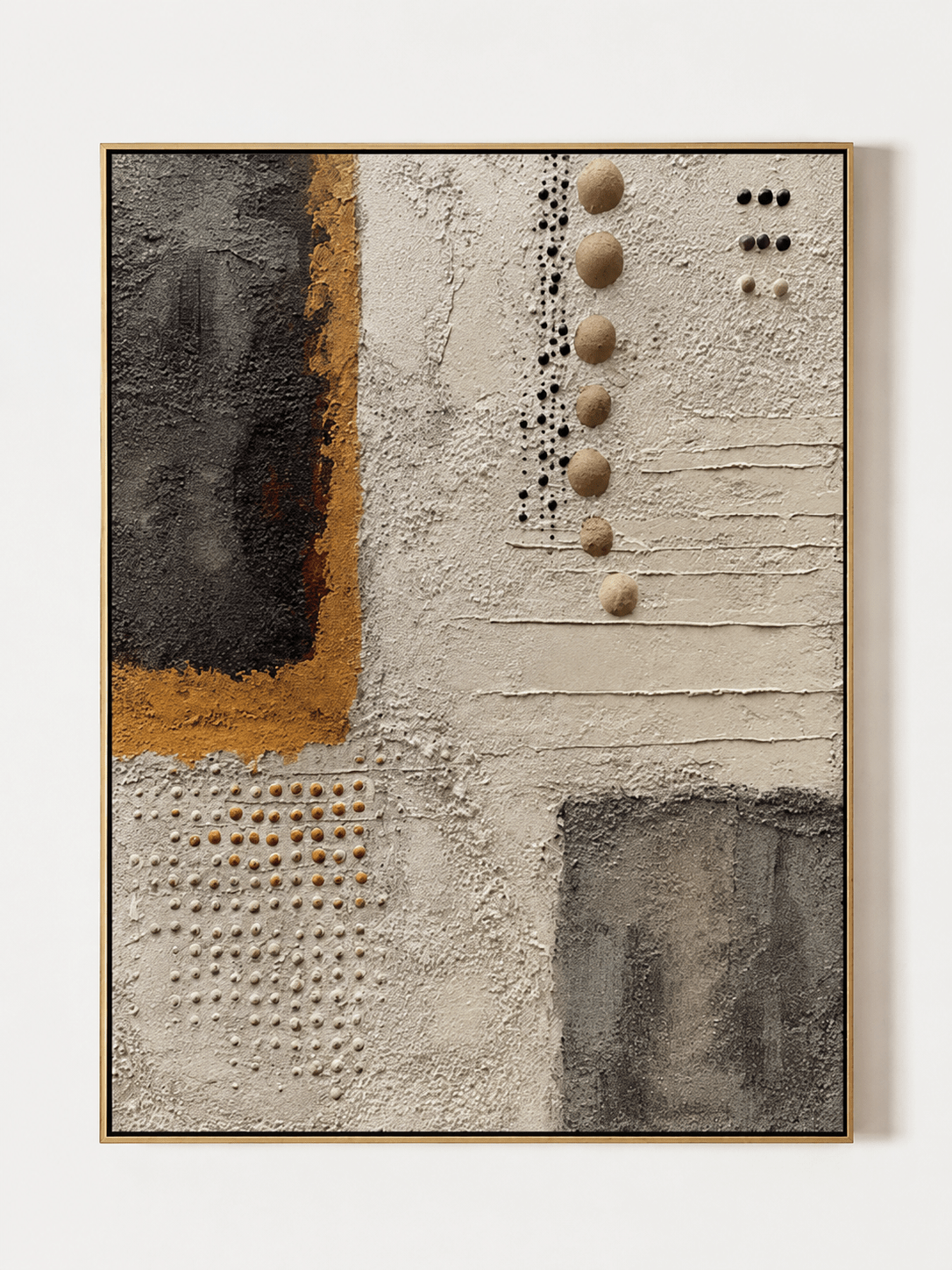
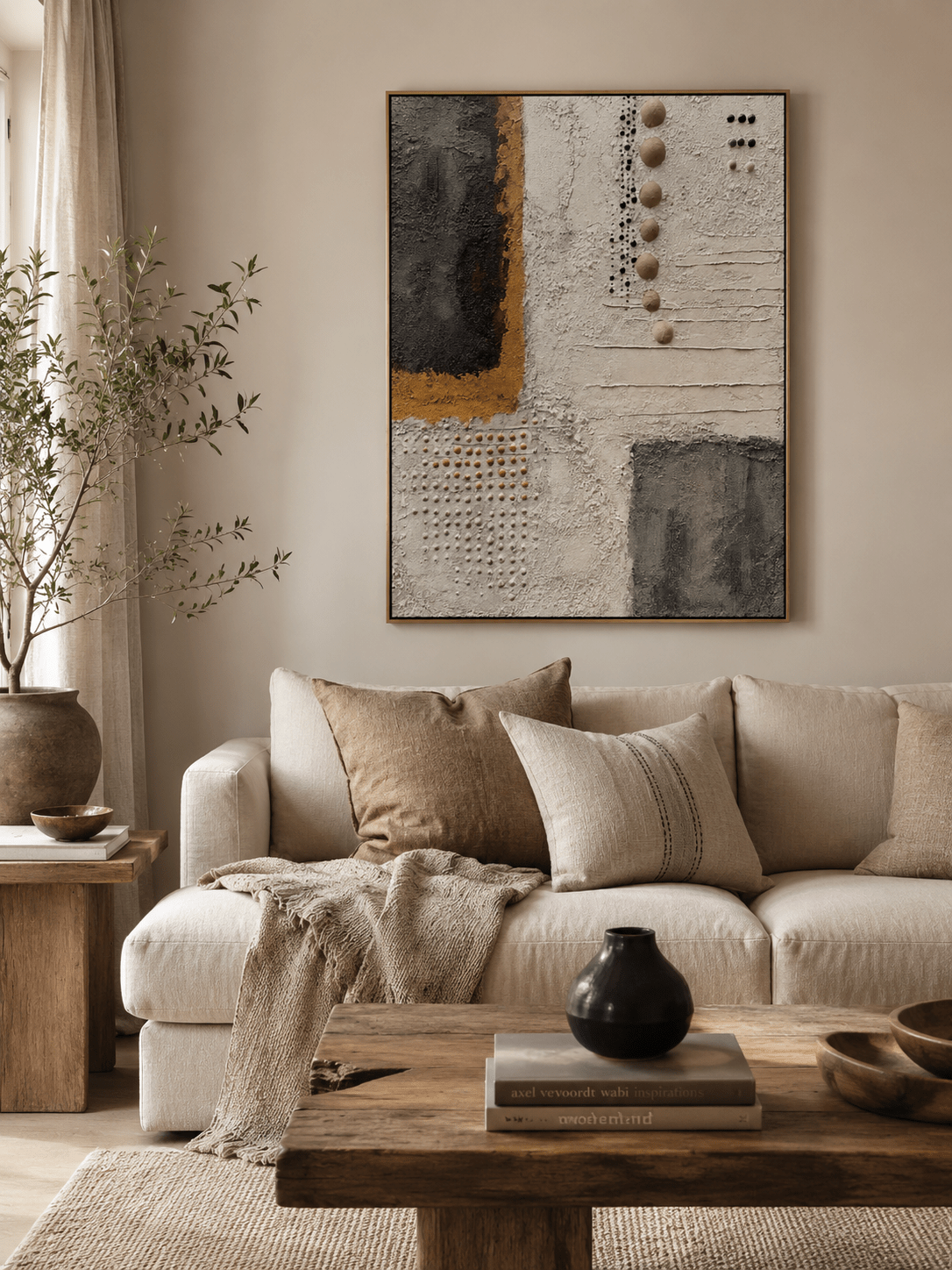
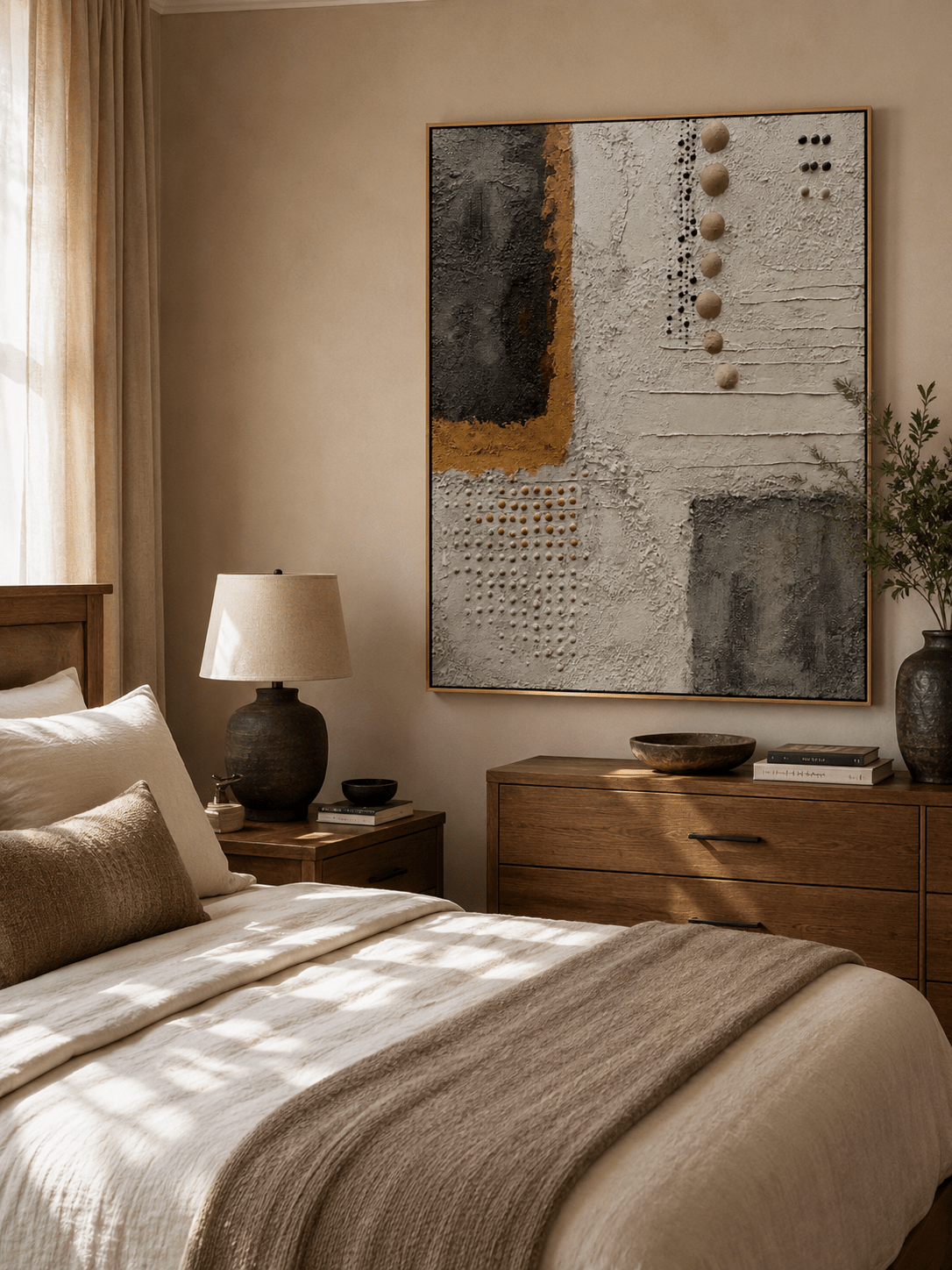
Beige & Bronze Wabi-Sabi Wall Art Square – EV#0070 is a clear example. The composition places rows of raised circular dots in the upper portion of a weathered taupe field, divided by a fine horizontal seam. The lower area remains comparatively open. This uneven distribution gives the square canvas a gentle upward pull without changing its stable overall shape.
Its taupe, beige, greige, and warm-stone palette works with oak, walnut, linen, and matte ceramics. The circular relief produces small, repeated shadows when daylight arrives from the side. In flat frontal light, the surface will appear quieter; near a window, the dots become more dimensional through the day.
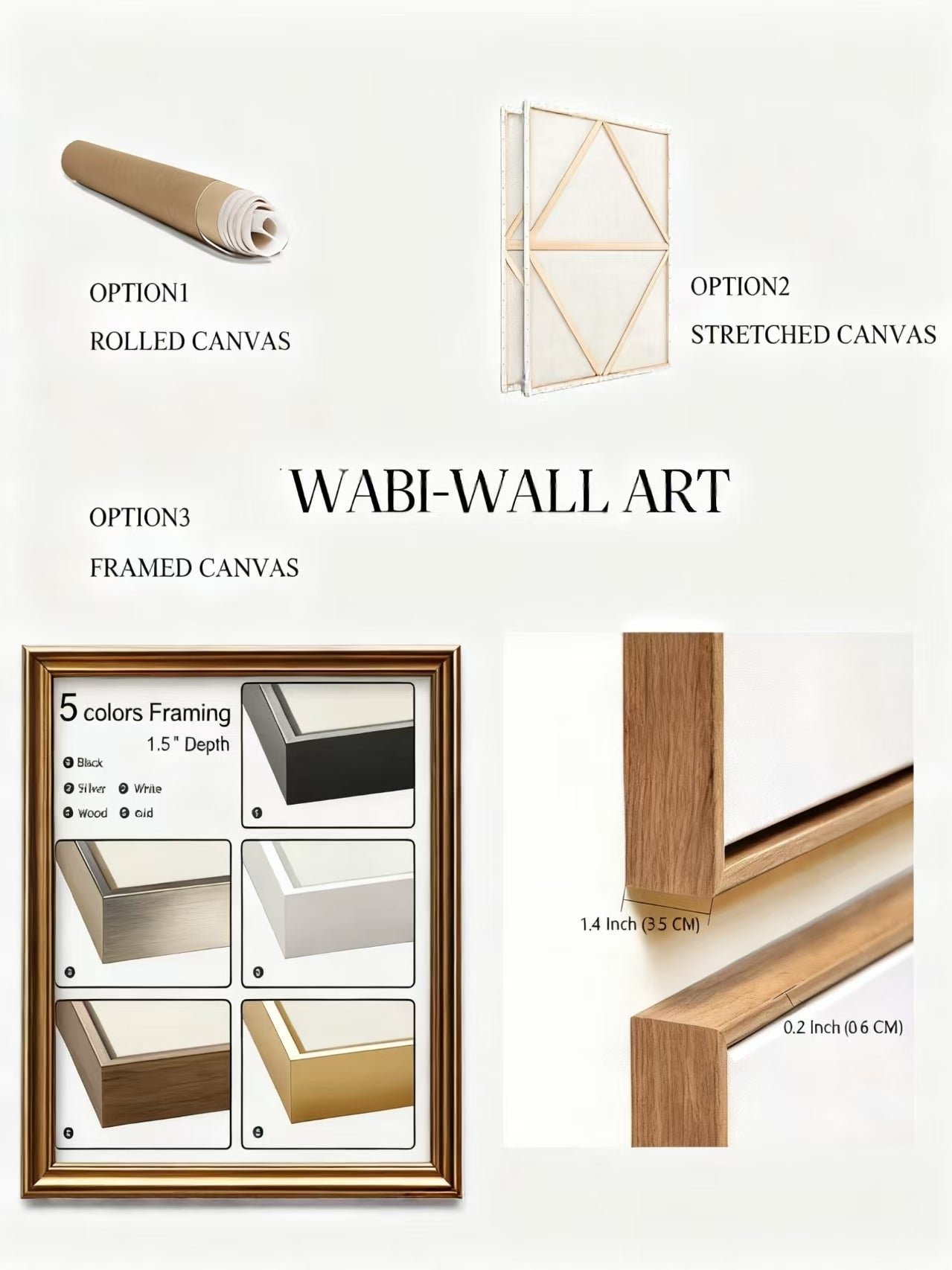
The work is offered in square formats from 24 × 24 to 72 × 72 inches, with rolled canvas and several stretched or framed options. Use a smaller size above a narrow console or in a reading area. For a larger sofa wall, a square can still work, but it needs enough scale to feel intentional and should be centered on the furniture rather than the wall at large.
View the square taupe dot-relief artwork.
When vertical Wabi-Sabi wall art is the better answer
Vertical art belongs where the architecture already points upward. It can give a narrow wall purpose without forcing a small square into an awkward strip of space. Good placements include the wall between two doors, the end of a hallway, a stair landing, beside a bedroom chair, or above a bench where horizontal clearance is limited.

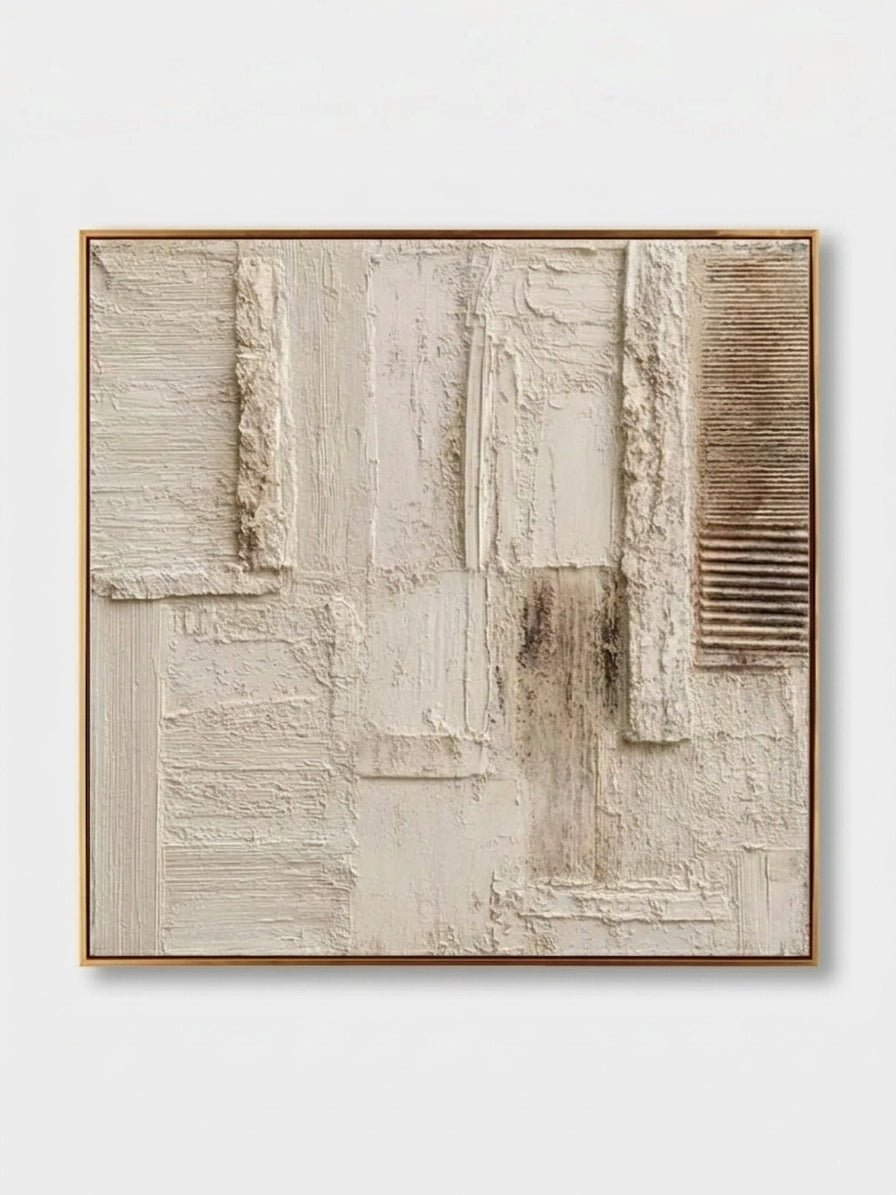
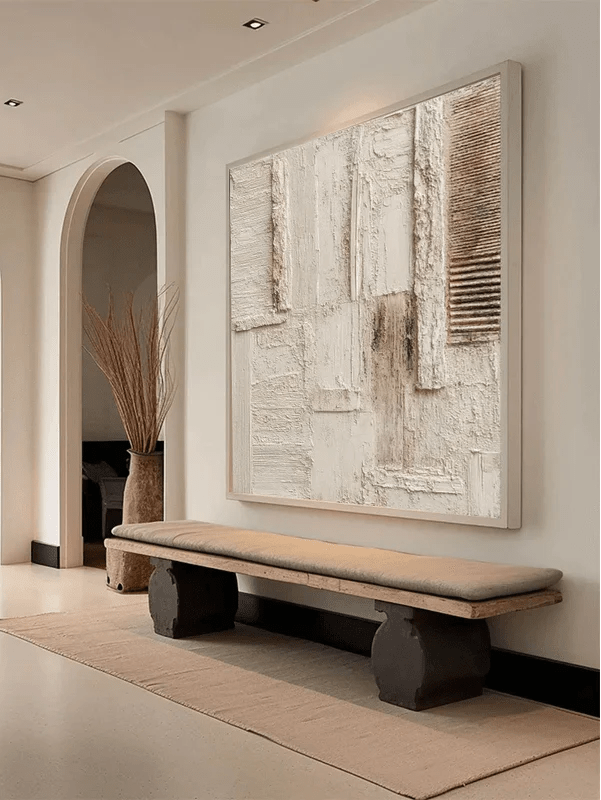
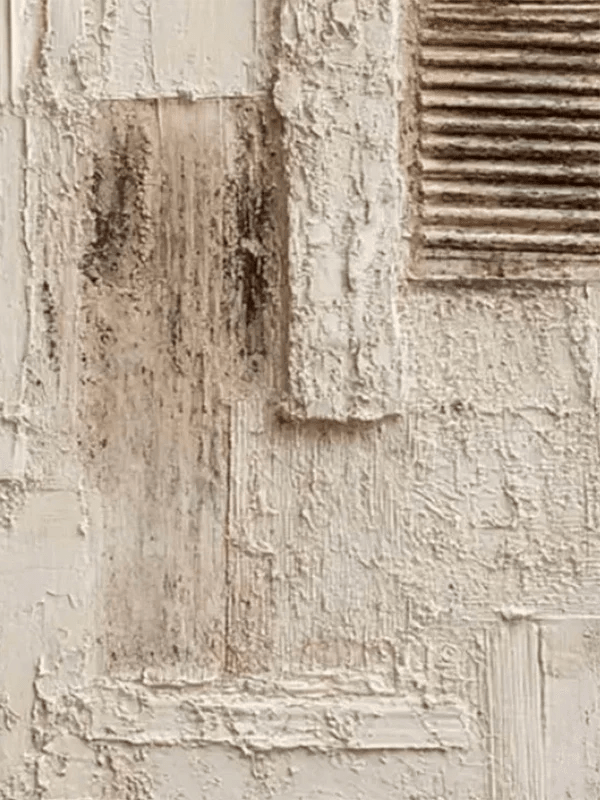
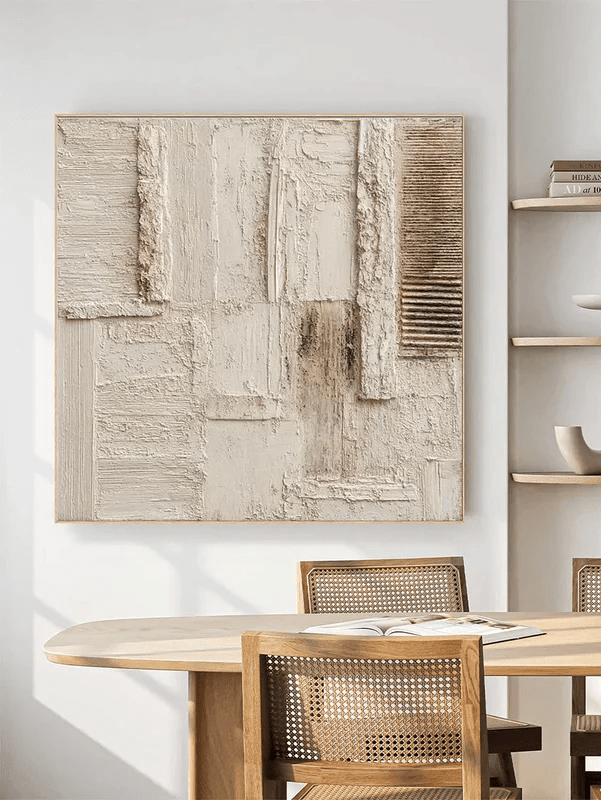
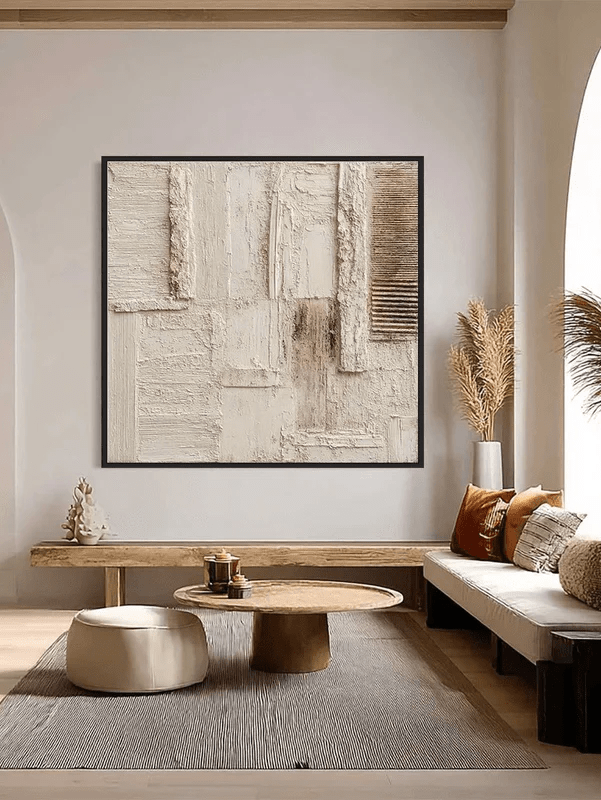
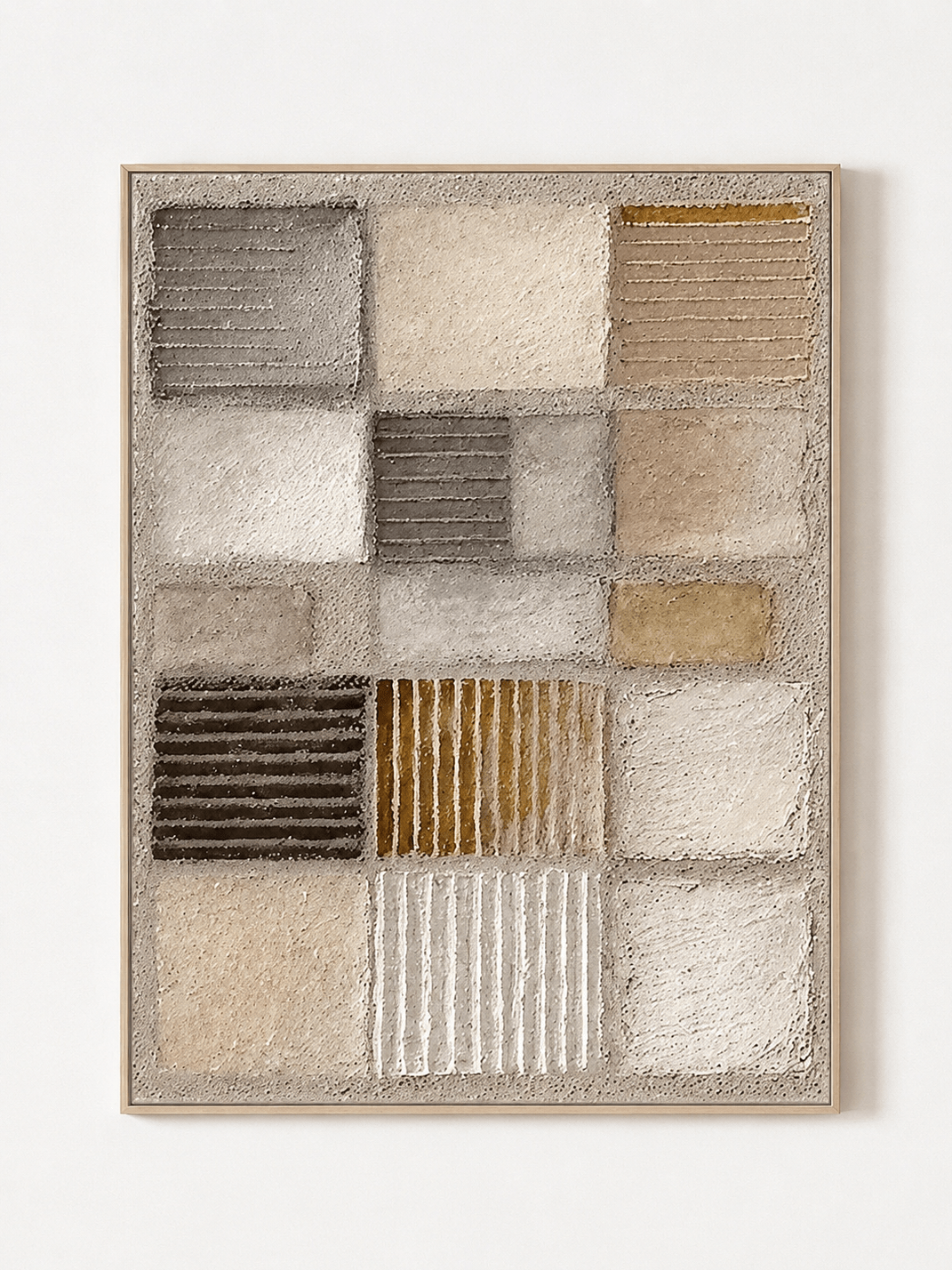
Wabi-Sabi Abstract Wall Art – EV#0017 uses a vertical field of layered rectangular relief. Warm beige, sand, taupe, greige, and ivory blocks overlap like fragments of an aged architectural plan. Darker marks gather along the lower edge, giving the composition a visual base so it does not feel as if it is drifting upward.
That base is important in an entryway. It visually connects the art to a bench or console below, while the portrait shape makes the wall feel taller. The design is quieter than a literal architectural subject, so it can sit near doors and passageways without adding another busy focal point.
Available vertical formats range from 24 × 20 to 80 × 60 inches. Before choosing, check both the artwork width and the remaining wall margin. A narrow placement needs visible space on each side; if the frame nearly touches the trim, the canvas will feel wedged in. Also check the top edge against the ceiling line. Vertical does not mean “as tall as possible.”
View the vertical architectural-grid artwork.
Why panoramic art is usually strongest above a sofa or bed
A sofa, bed, and sideboard create long horizontal lines. Panoramic art reinforces that width, helping the furniture and artwork read as a single arrangement. It is often the most direct choice for a wide wall, but the canvas should still leave clear space beyond both ends of the furniture.

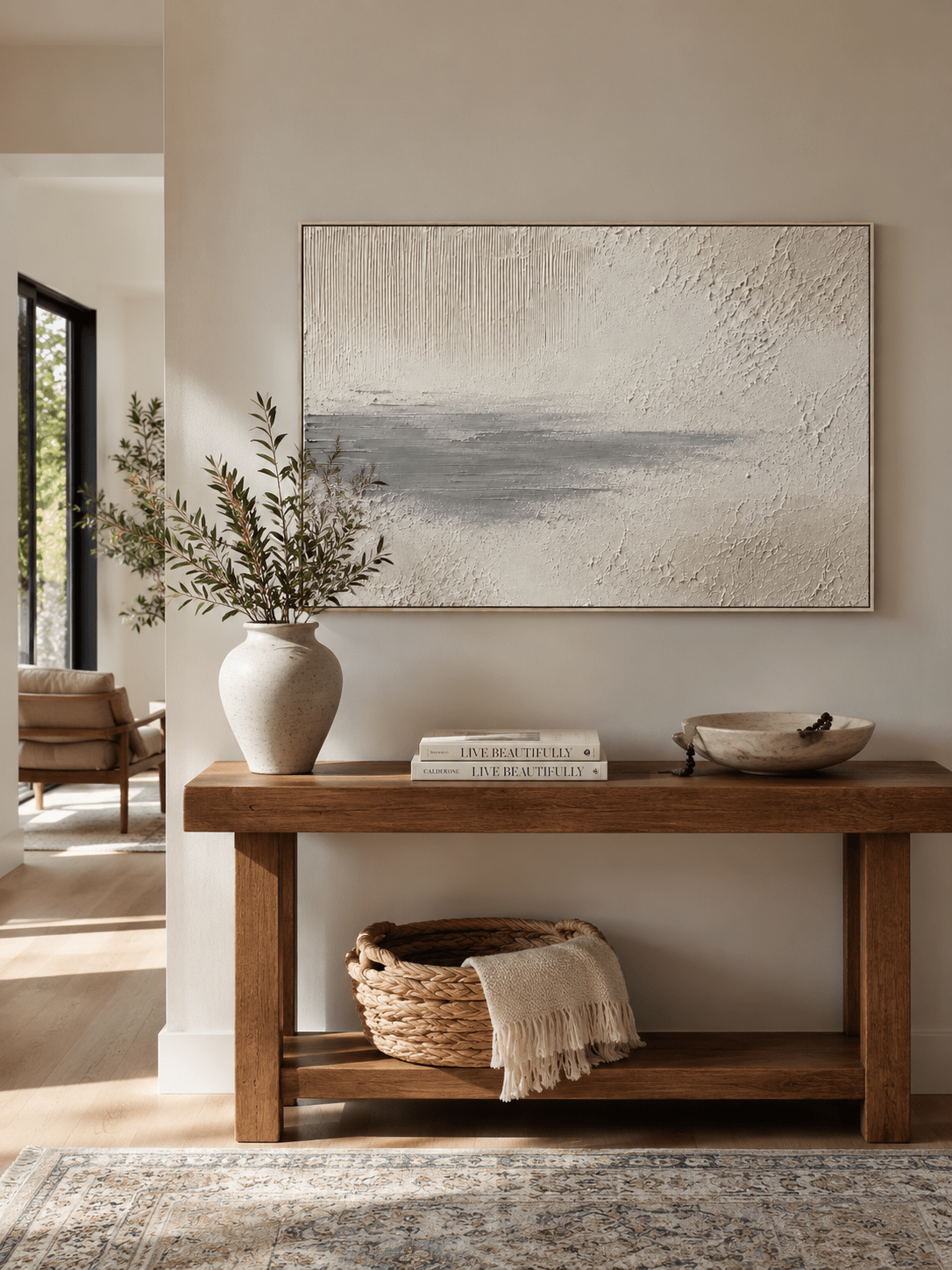
Minimalist Linear Texture Wabi-Sabi Wall Art – EV#0067 is built around five columns of hand-shaped horizontal lines. The overall canvas is wide, while the repeated narrow ridges introduce a slower internal rhythm. Its white, ivory, pearl-gray, and soft-silver palette keeps the surface low contrast, so scale and texture do most of the visual work.
The available panoramic formats run from 36 × 18 to 100 × 50 inches. Above a sofa, begin by testing an artwork width around two-thirds of the furniture width, then adjust for the sofa arms, nearby windows, and room scale. A low-backed sofa can tolerate a taller panoramic canvas, while a high back or low ceiling may require a shallower proportion.
This piece benefits from side light because the raised lines cast fine shadows. If the wall receives no daylight, a broad, gentle picture light or adjustable ceiling light can reveal the relief more evenly than a narrow spotlight. For more on this effect, see WABI’s guide to how textured art adds dimension.
View the panoramic white-and-silver artwork.
Match visual weight, not just outer dimensions
Two canvases with the same measurements can feel very different on a wall. Dark color, dense marks, heavy relief, and a strong frame increase visual weight. Pale negative space, low contrast, and fine linear texture reduce it.
EV#0070 has a dense cluster of dots above an open lower field, so its weight is concentrated rather than uniform. EV#0017 distributes architectural blocks across most of the surface but grounds them with a darker base. EV#0067 is physically broad, yet its pale palette and repeated fine lines keep it lighter than a dark panoramic painting of the same size.
Use this distinction when choosing between two sizes. A pale, low-contrast work may need to be larger to hold a wide wall. A dark or heavily modeled piece can feel substantial at a smaller size. Step back to the normal viewing position rather than judging only from close range.
Use furniture as a baseline, not a cage
Furniture provides a useful reference, but the canvas does not need to mimic every edge. Center art on the sofa, bed, bench, or console when that furniture is the intended anchor. If the furniture sits off-center because of a door or window, center the artwork over the furniture rather than the entire wall.
Leave enough space between the bottom of the frame and the furniture for the two elements to breathe while still feeling connected. Six to ten inches is a practical starting range above many sofas and consoles, but high backs, deep moldings, and unusually low ceilings may require adjustment. View the arrangement while seated as well as standing.
For an open wall with no furniture below, use the artwork’s center and the room’s main eye level as a starting point. Then consider how the work is approached. An entryway piece often looks best slightly lower than a painting viewed across a large living room because the viewer passes close to it.
Let light reveal the hand-painted surface
Wabi-Sabi texture is not static. Raised dots, layered rectangles, and linear ridges change as the direction and intensity of light change. Before deciding on placement, observe the wall in morning, afternoon, and evening light.
Side light is usually the most revealing because it forms small shadows along the relief. Strong direct sun can create glare and should not fall on the canvas for prolonged periods. At night, use a broad, soft beam rather than an intense spotlight that brightens one patch and leaves the rest flat.
Frame finish also affects the reading. Wood supports a warm, organic room; black adds definition to pale walls; white keeps the boundary quiet; metallic finishes introduce a sharper edge. Choose the frame after considering nearby door hardware, lighting, and furniture, not as an isolated color decision.
A practical decision sequence before ordering
- Photograph the wall straight on and mark the true usable area.
- Decide whether that area reads square, vertical, or horizontal.
- Measure the furniture that will anchor the artwork.
- Tape the proposed outer dimensions on the wall.
- Check the outline from the main seated and standing viewpoints.
- Review the wall at different times of day to understand the light direction.
- Choose the frame or stretched-canvas finish only after the scale feels right.
If two orientations still seem possible, choose according to the room’s missing quality. A squat space may benefit from the lift of a vertical work. A wide sofa wall may need the lateral continuity of a panoramic canvas. A visually busy room may need the centered pause of one square piece.
Frequently asked questions
Can square Wabi-Sabi wall art go above a sofa?
Yes. It works best when the canvas is large enough to relate to the sofa and the wall has usable height. A small square above a very wide sectional often looks detached; an oversized square can create a strong, calm center.
Is vertical or horizontal wall art better for an entryway?
Use vertical art for a narrow wall, beside a door, or above a compact bench. Use horizontal art when the entry has a long console and enough uninterrupted width. Let the available wall shape decide.
How wide should panoramic art be above a sofa?
About two-thirds of the sofa width is a useful starting point, not an absolute rule. Test the exact dimensions with tape and account for arms, nearby windows, ceiling height, and how far away the sofa is viewed.
Should the artwork be centered on the wall or the furniture?
Center it on the furniture when the sofa, bed, or console is the visual anchor. Centering on the full wall can make the arrangement feel off balance if the furniture is not itself centered.
Does textured wall art need special lighting?
It does not require special lighting, but side light makes raised details easier to see. Natural window light or a broad, adjustable picture light is generally more useful than a tight spotlight.
Can a vertical canvas make a ceiling look higher?
A portrait format can emphasize height and guide the eye upward, especially on a narrow wall. Keep space above and below the frame so the effect feels deliberate rather than crowded.
Should neutral Wabi-Sabi art match the sofa exactly?
No. Match the overall temperature and repeat one or two related tones. Slight differences among oatmeal, beige, taupe, greige, and stone create more depth than exact color matching.
Choose the proportion before the palette
The most dependable choice begins with architecture: square for a centered pause, vertical for a narrow or tall wall, and panoramic for a long furniture line. After the proportion works, refine the decision through visual weight, relief, light, and frame finish.
For a balanced console or compact focal wall, EV#0070 offers a quiet square composition. For a narrow entry wall, EV#0017 uses height without visual clutter. For a sofa, bed, or long sideboard, EV#0067 provides lateral rhythm in a pale panoramic format. Explore these pieces and other proportions in the Wabi-Sabi Wall Art collection, then test the exact dimensions on your wall before committing.