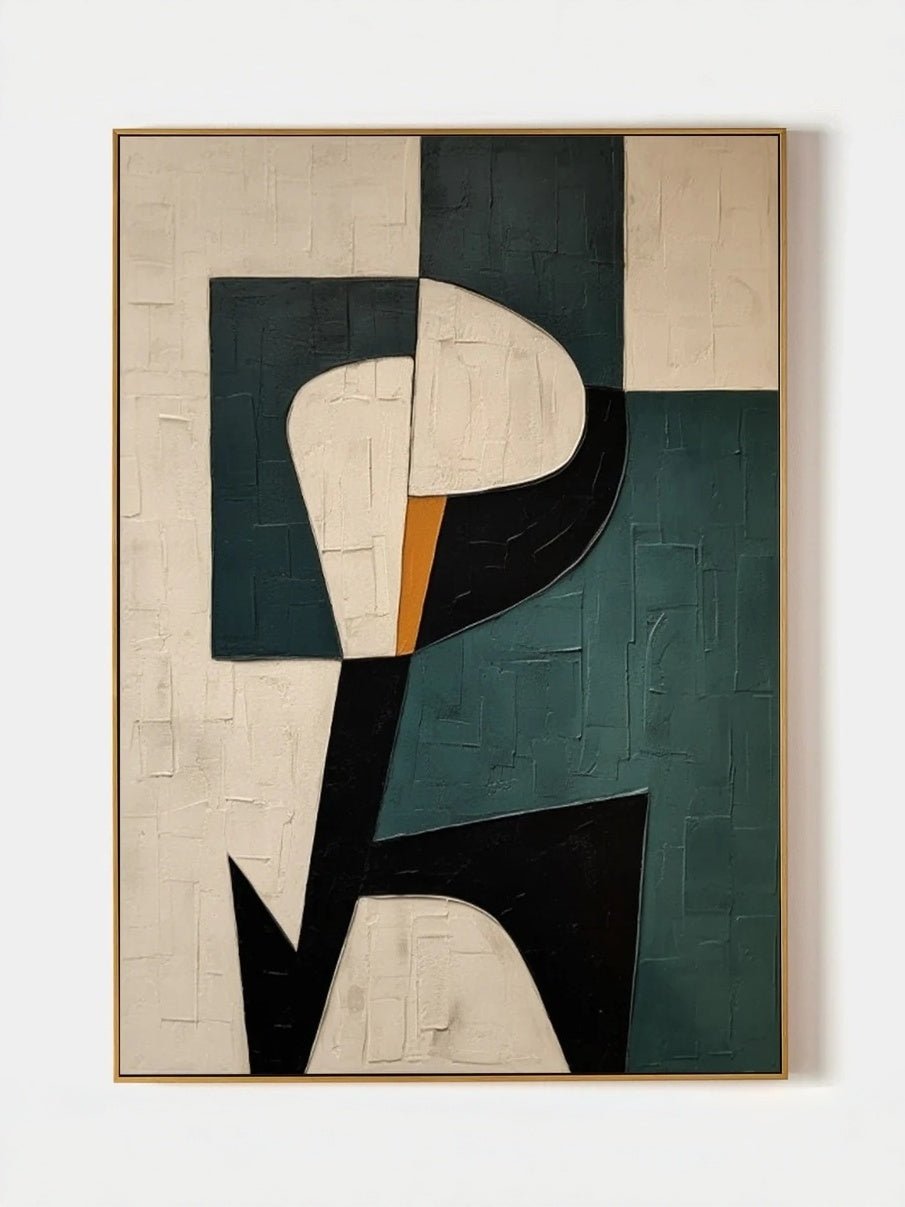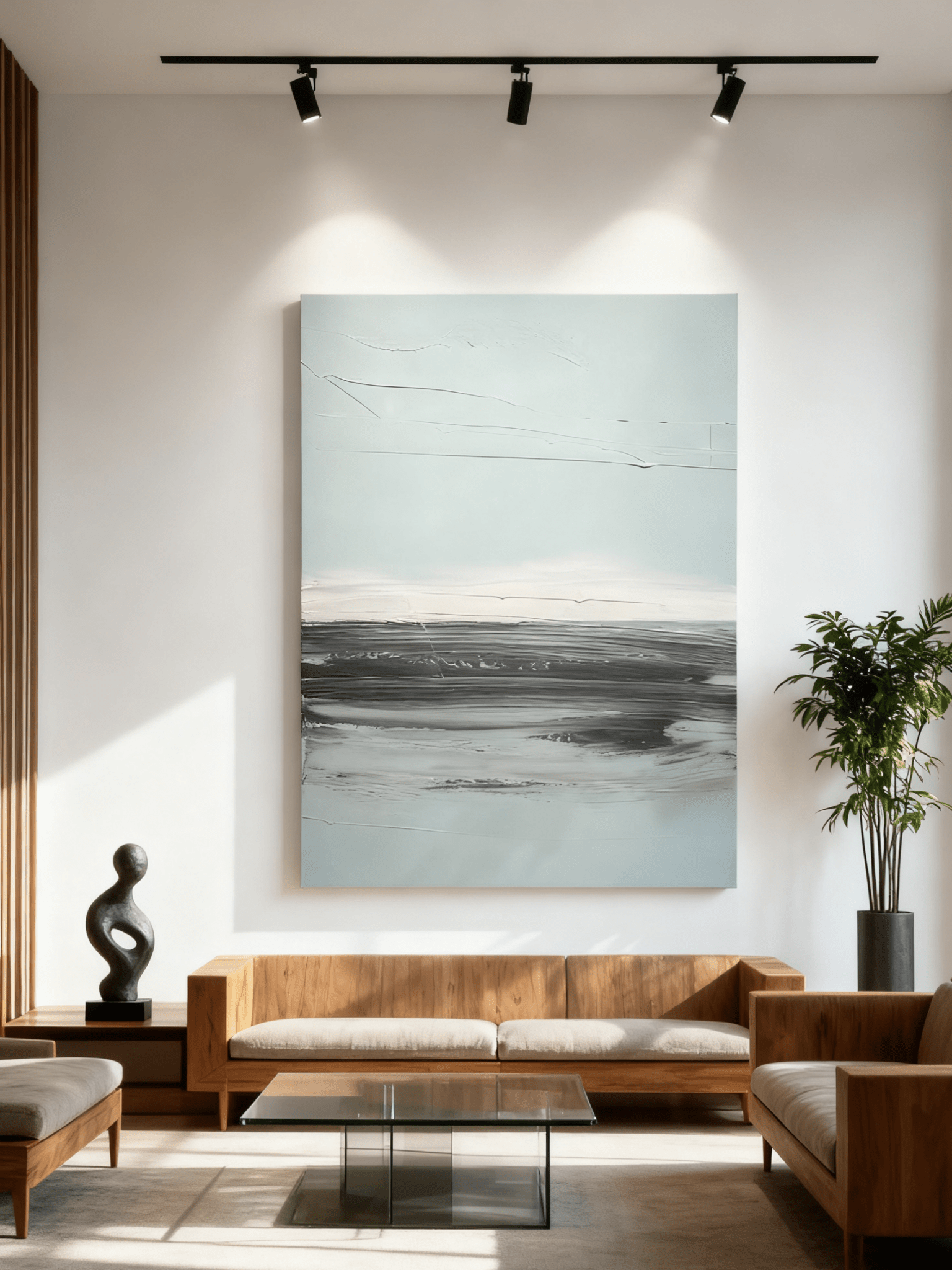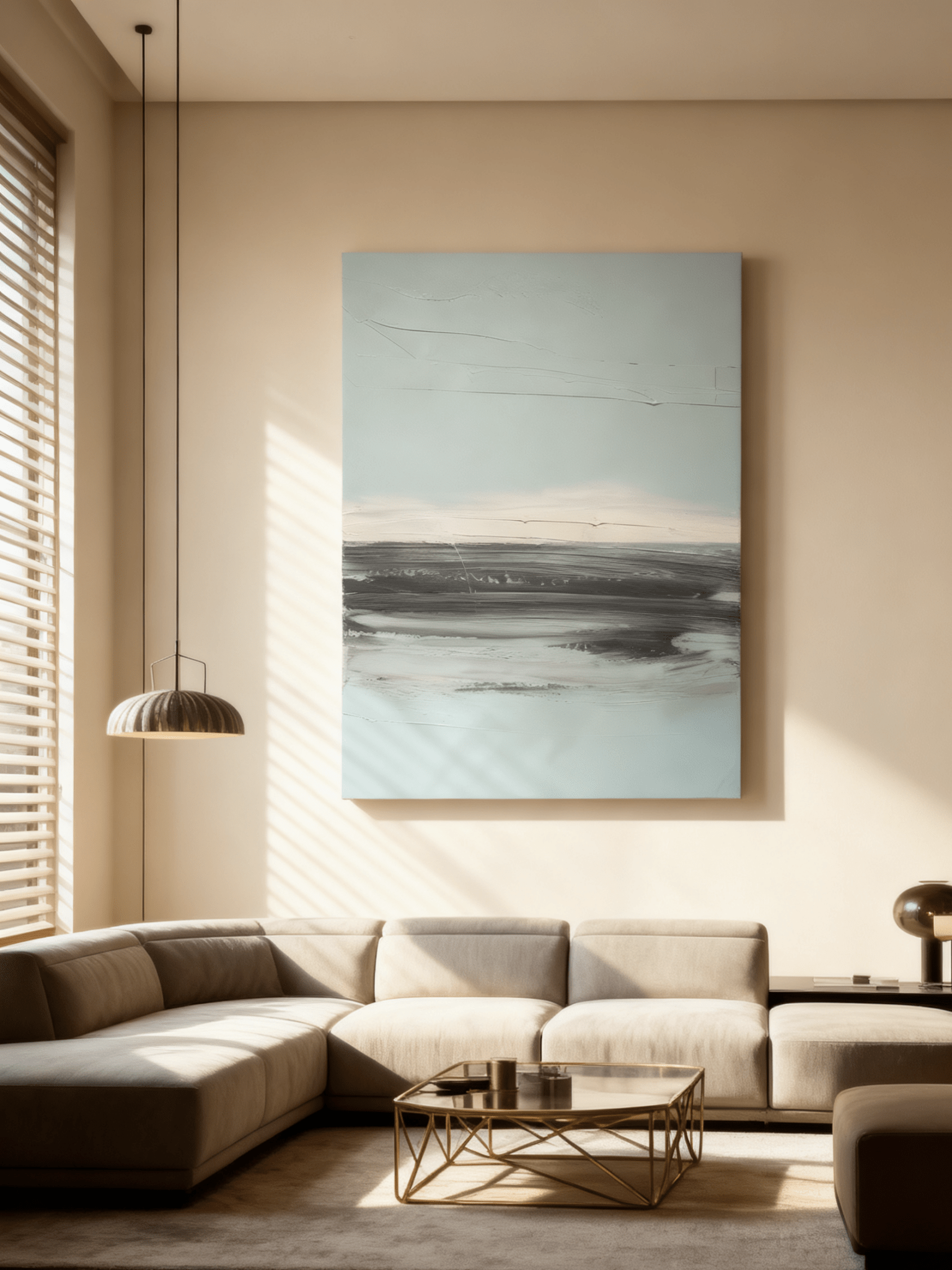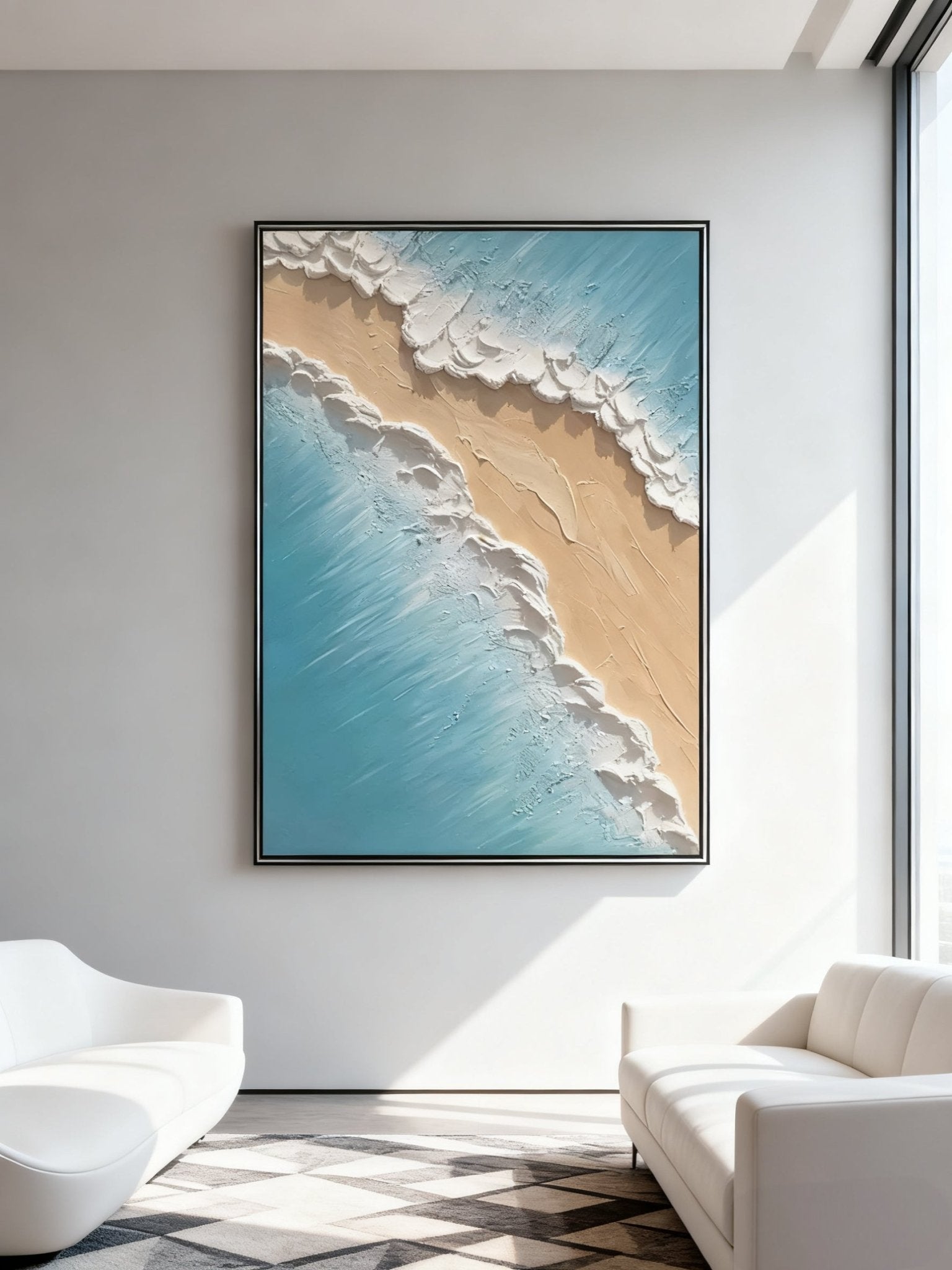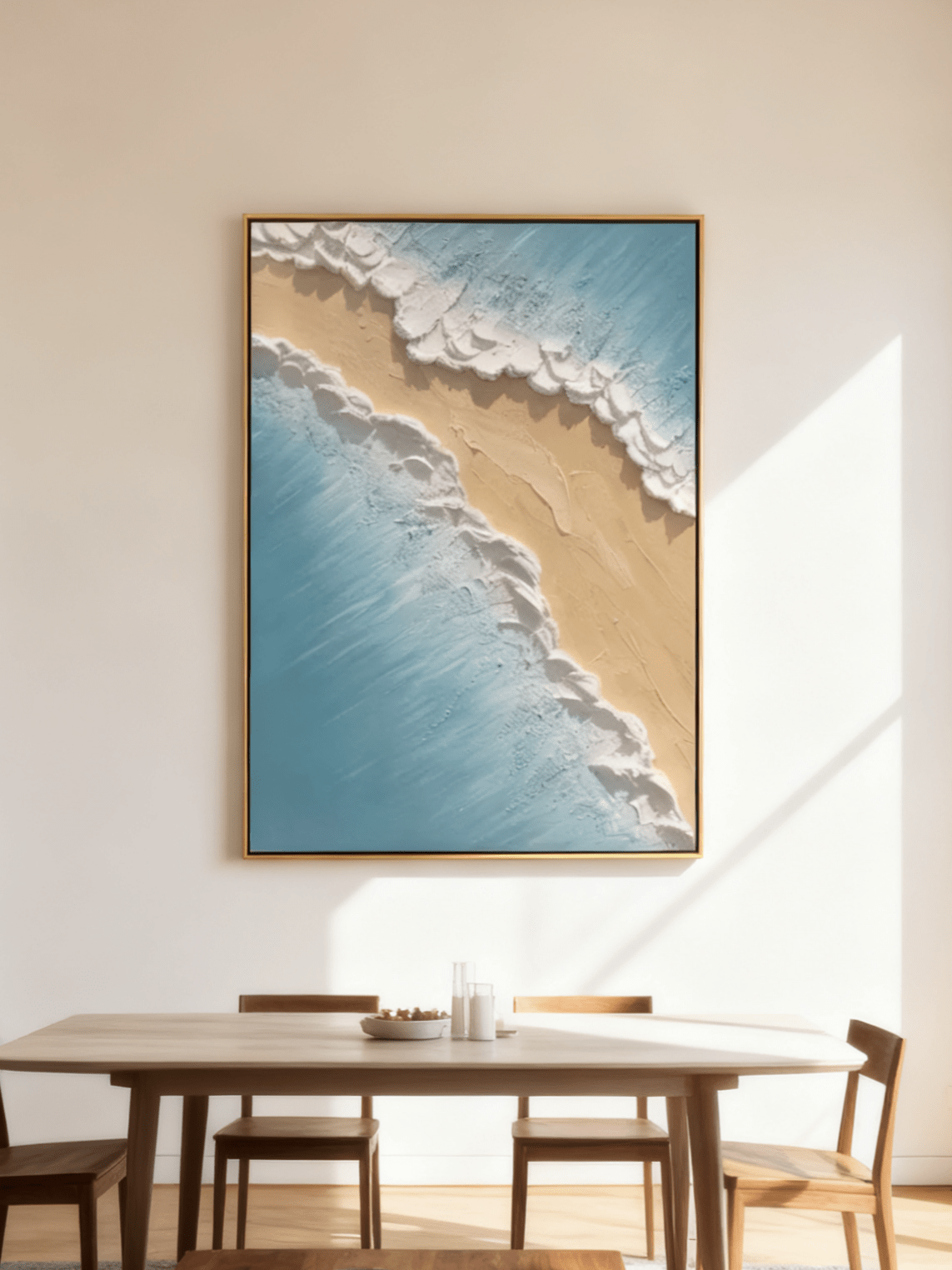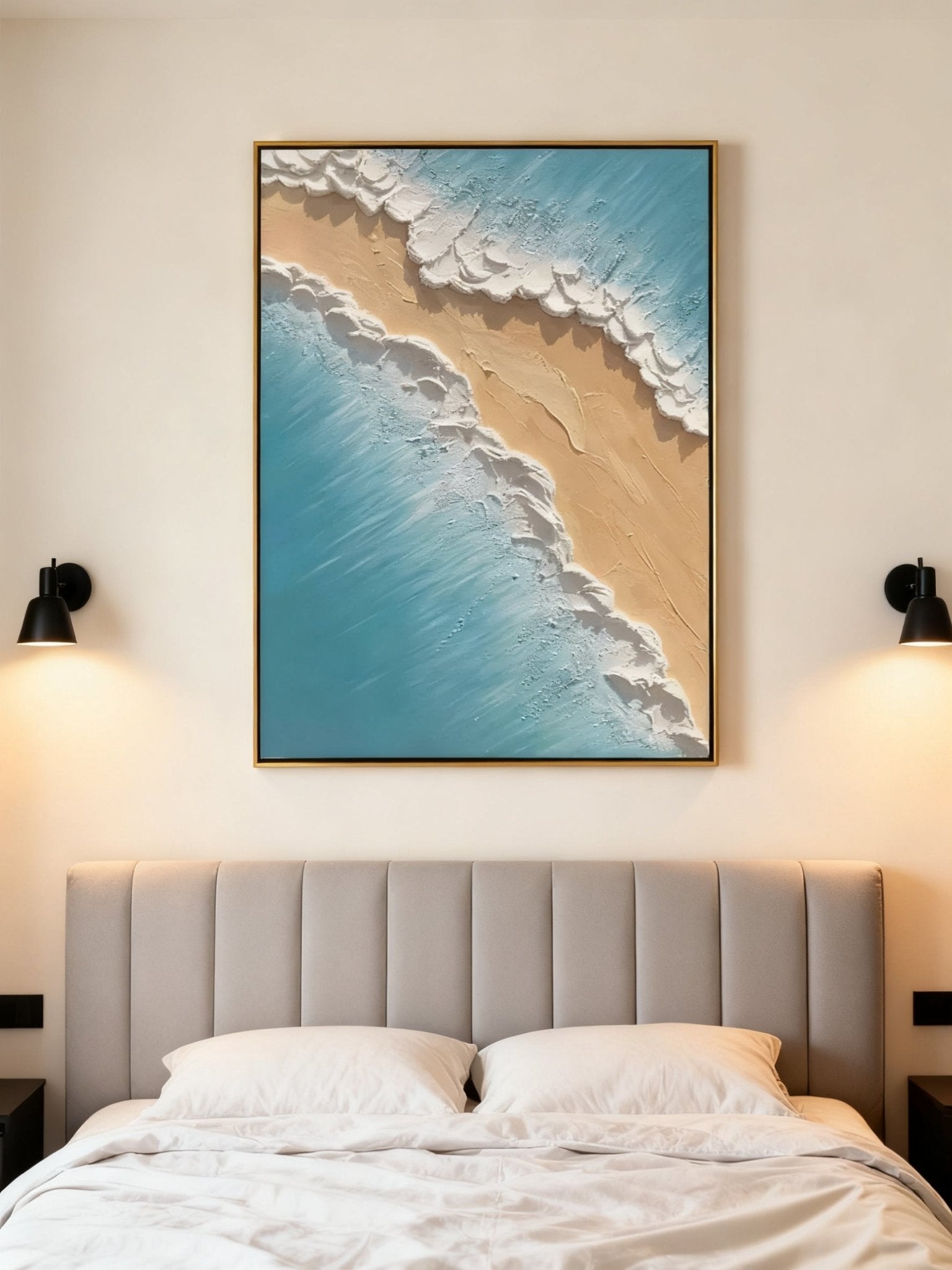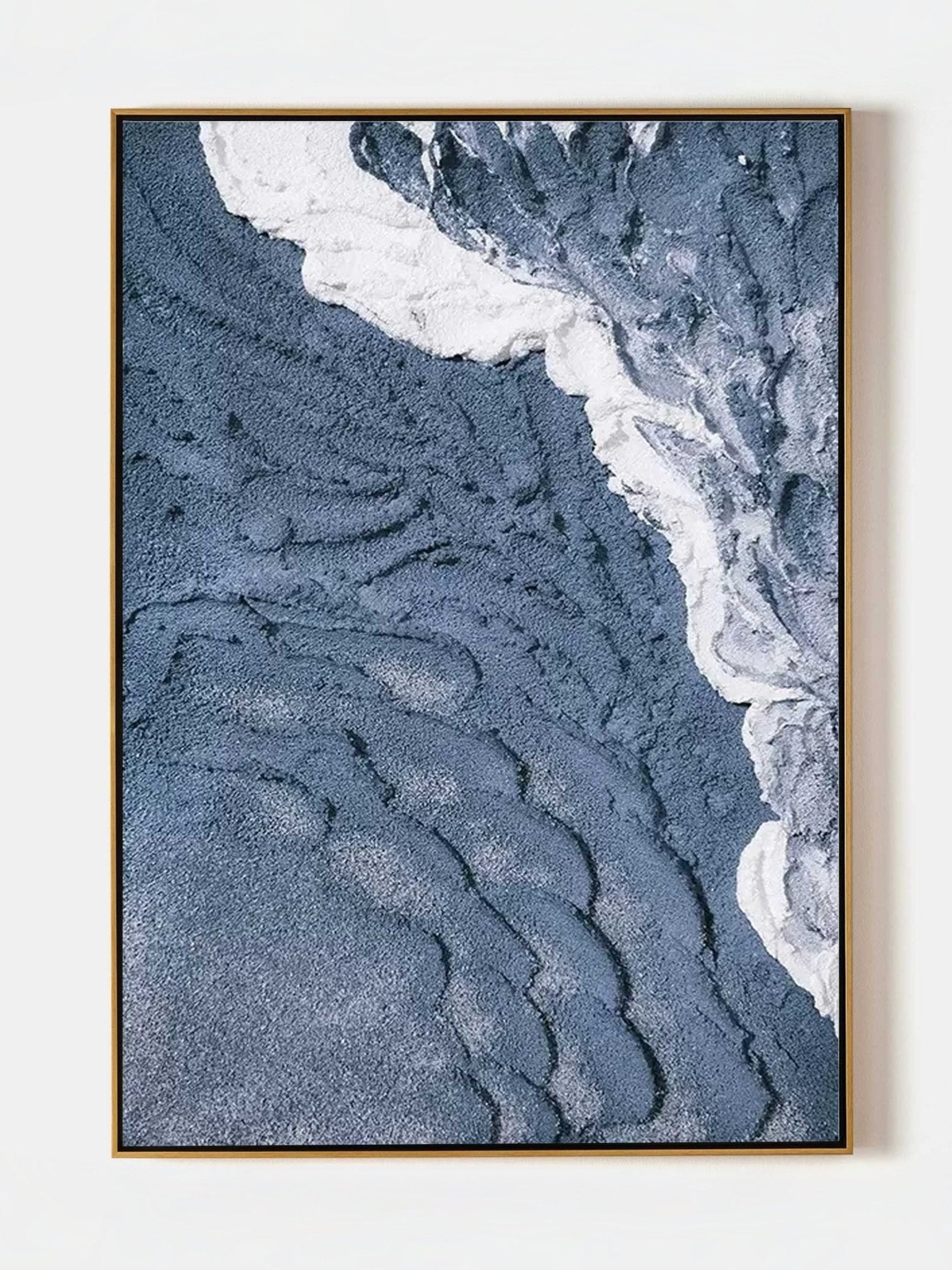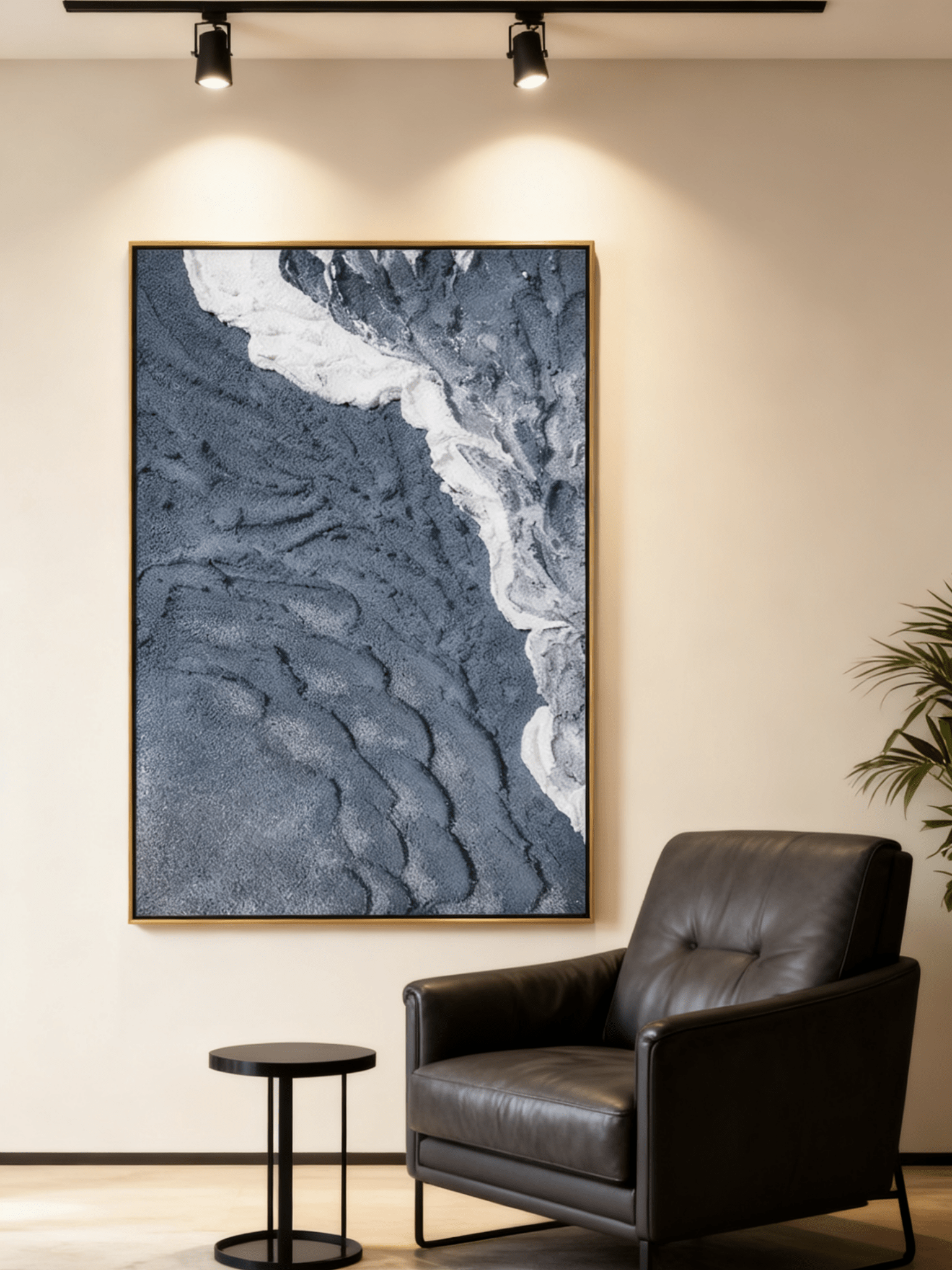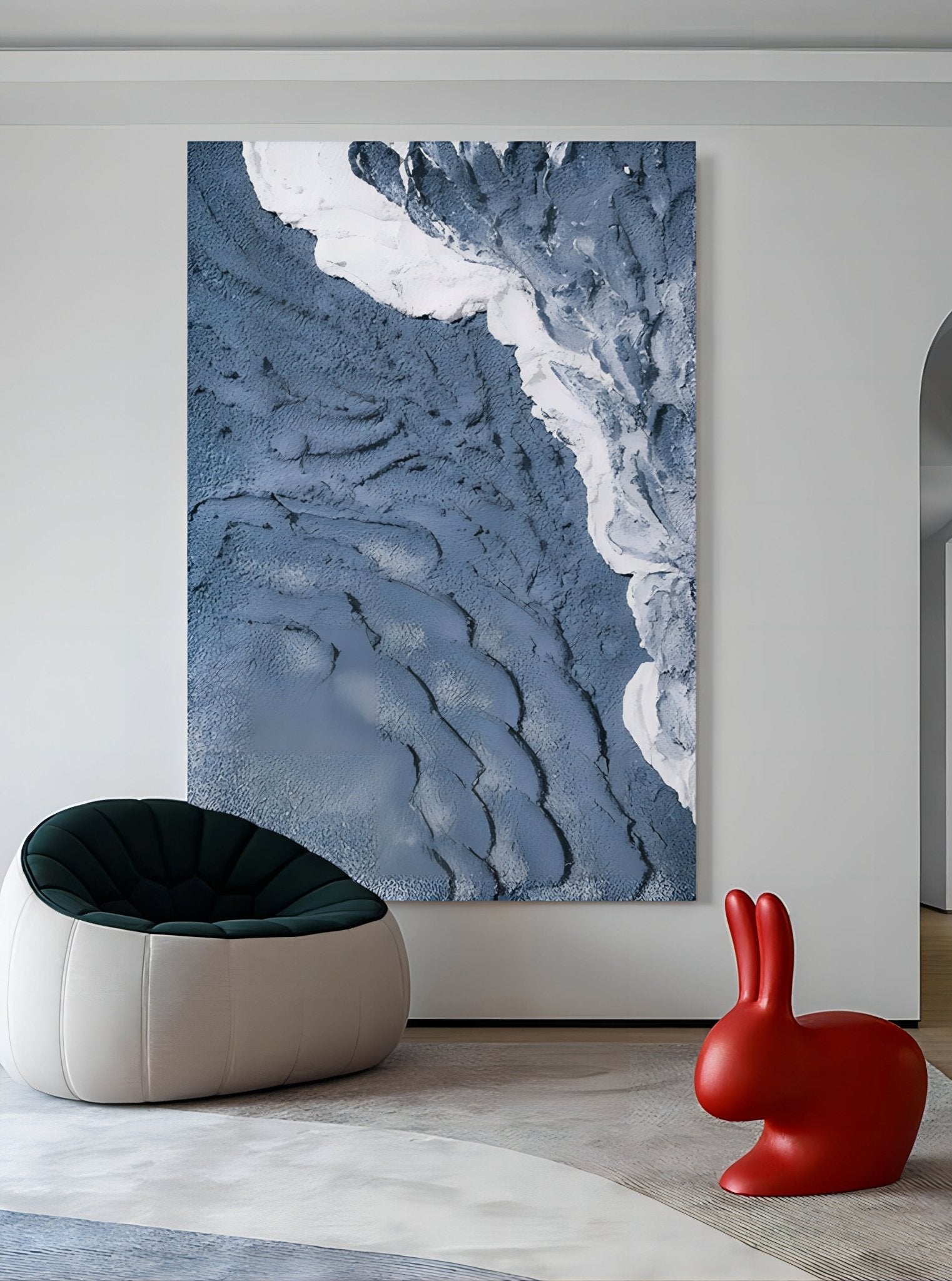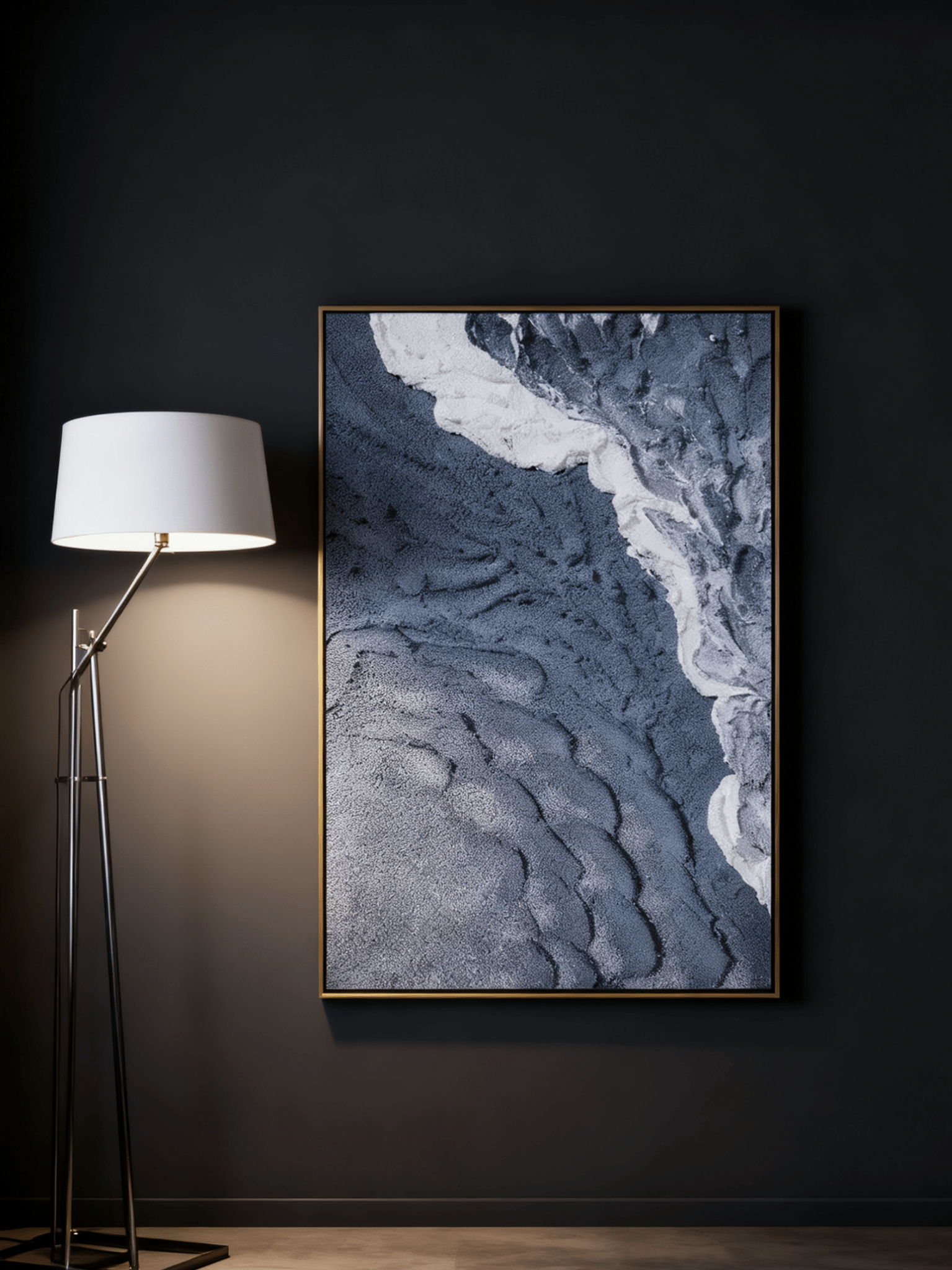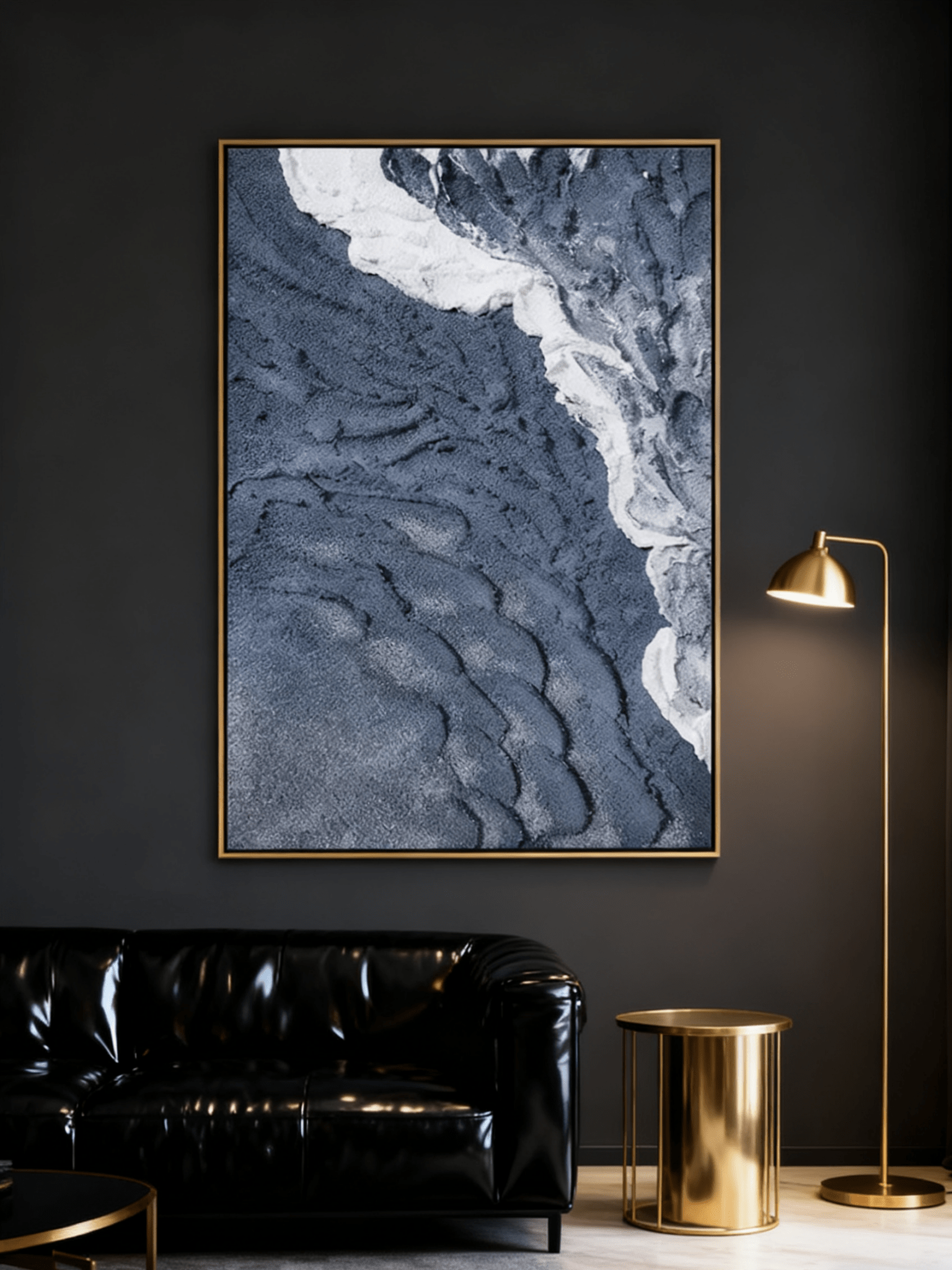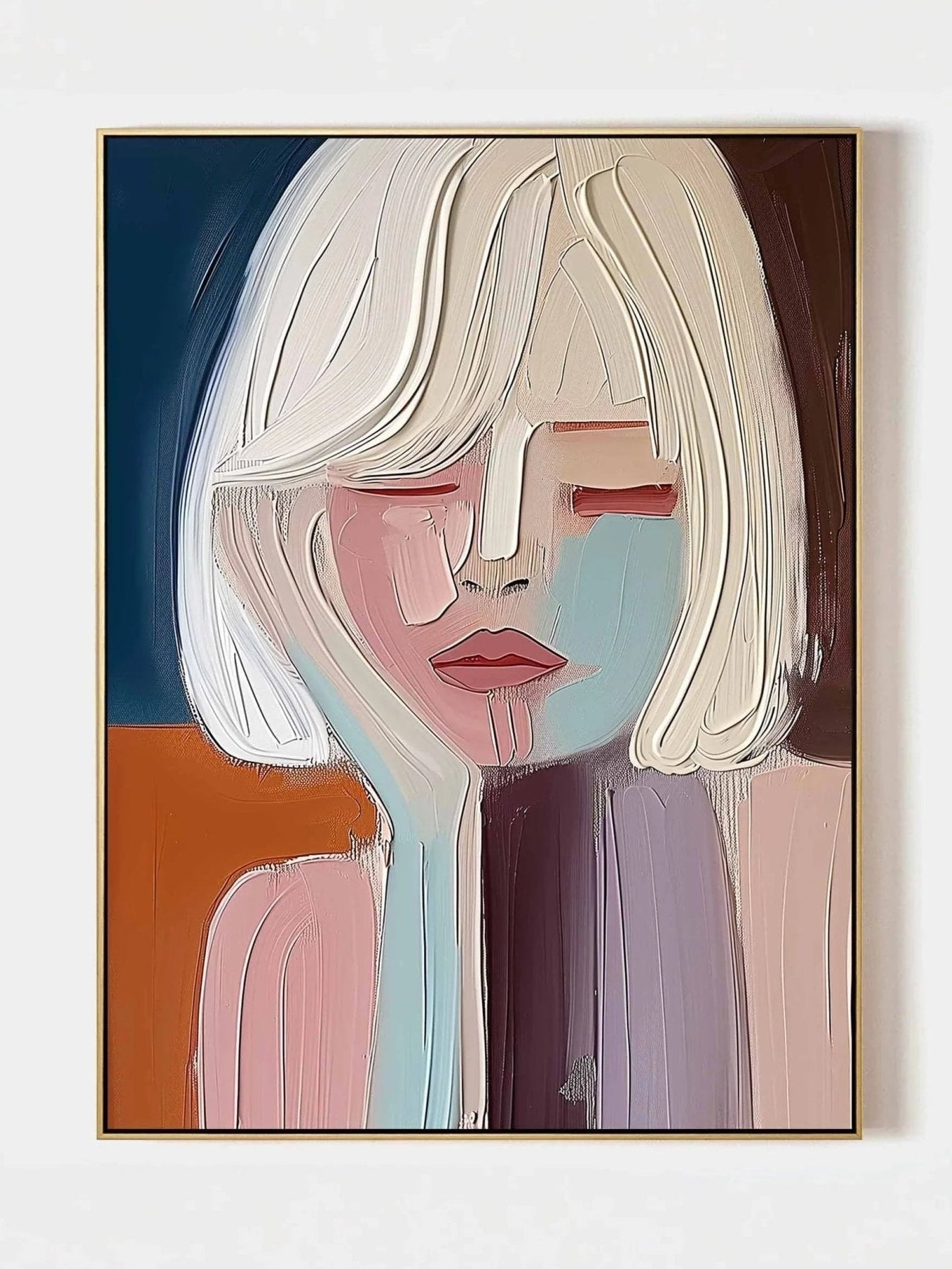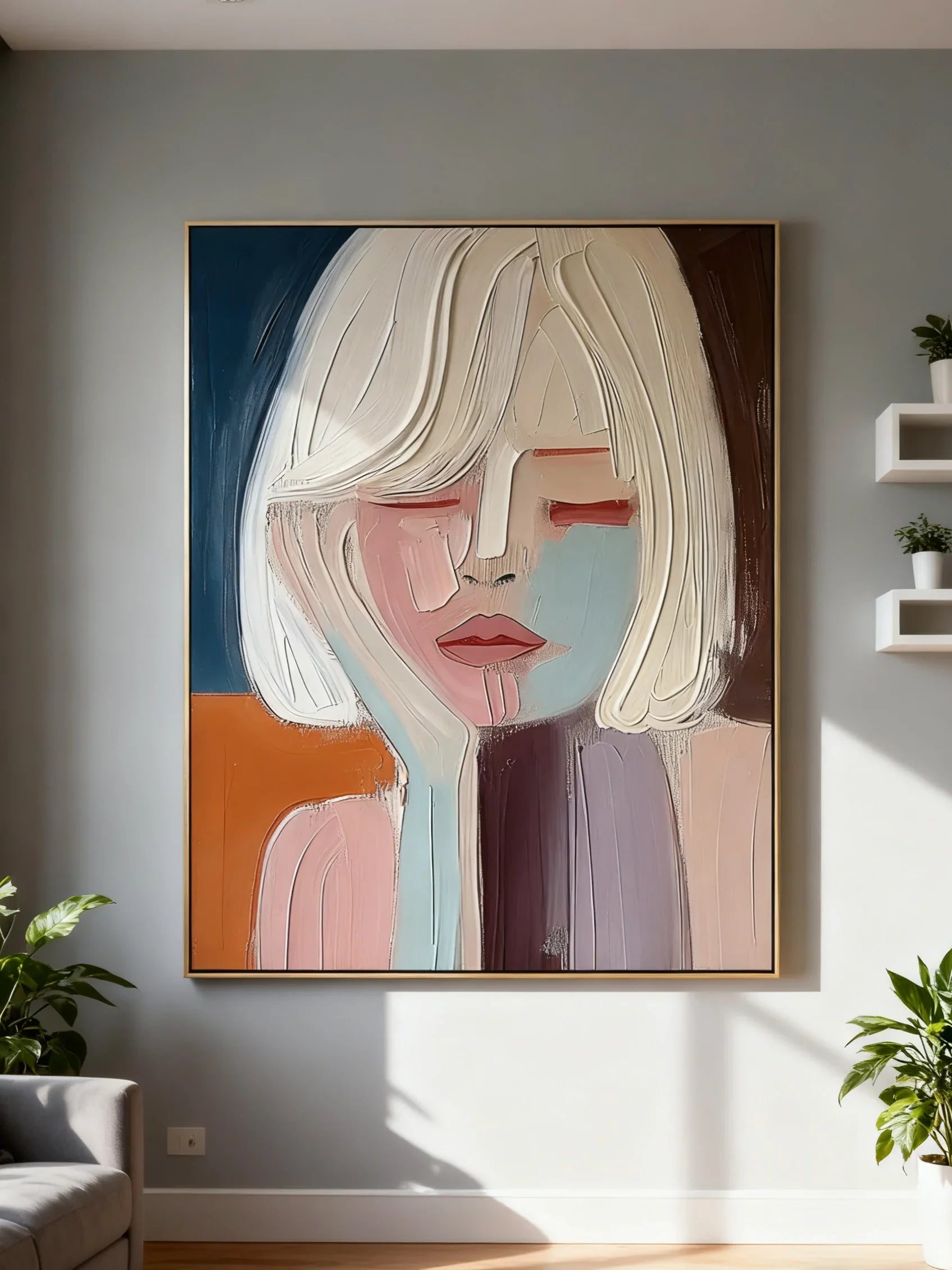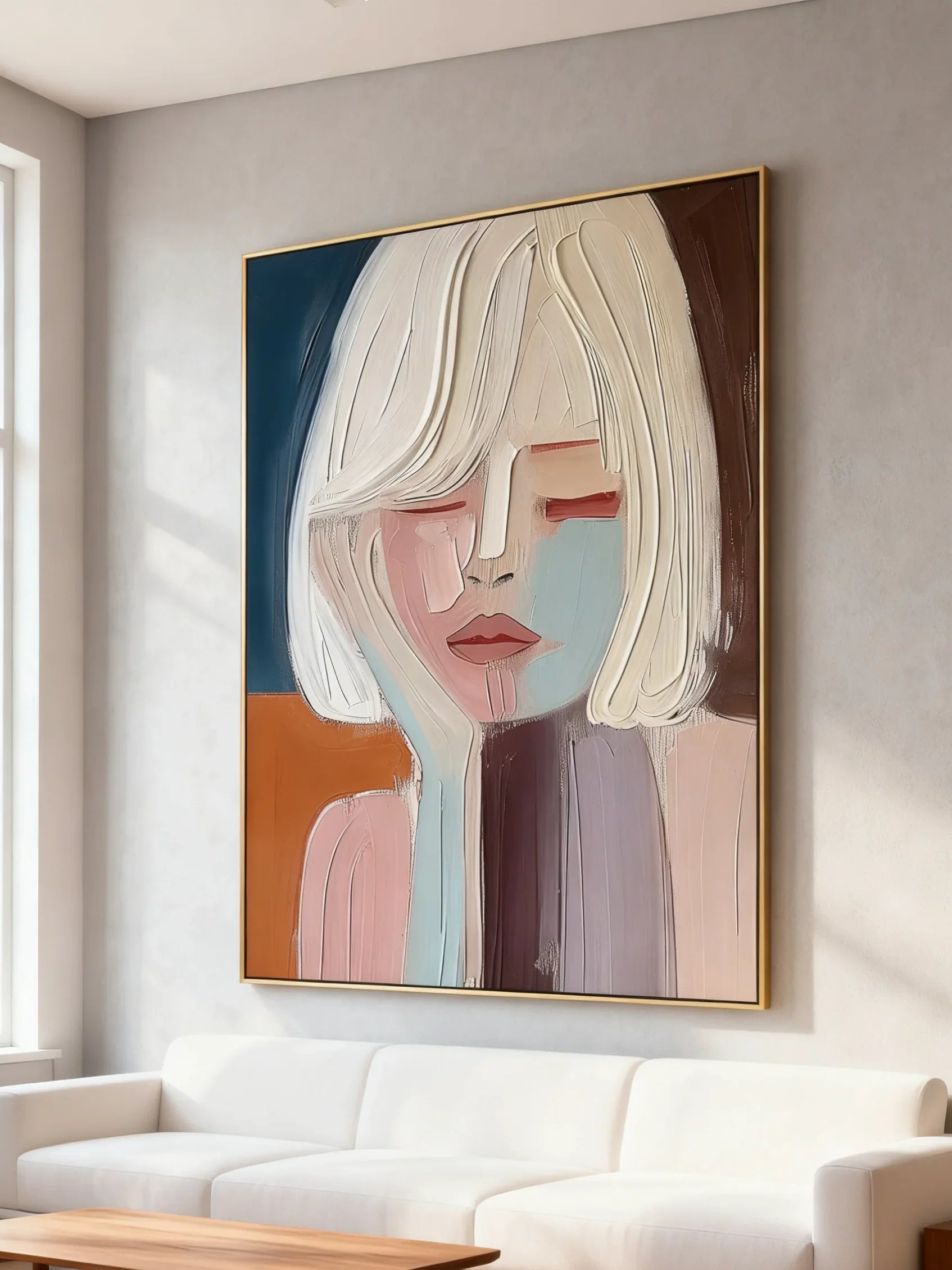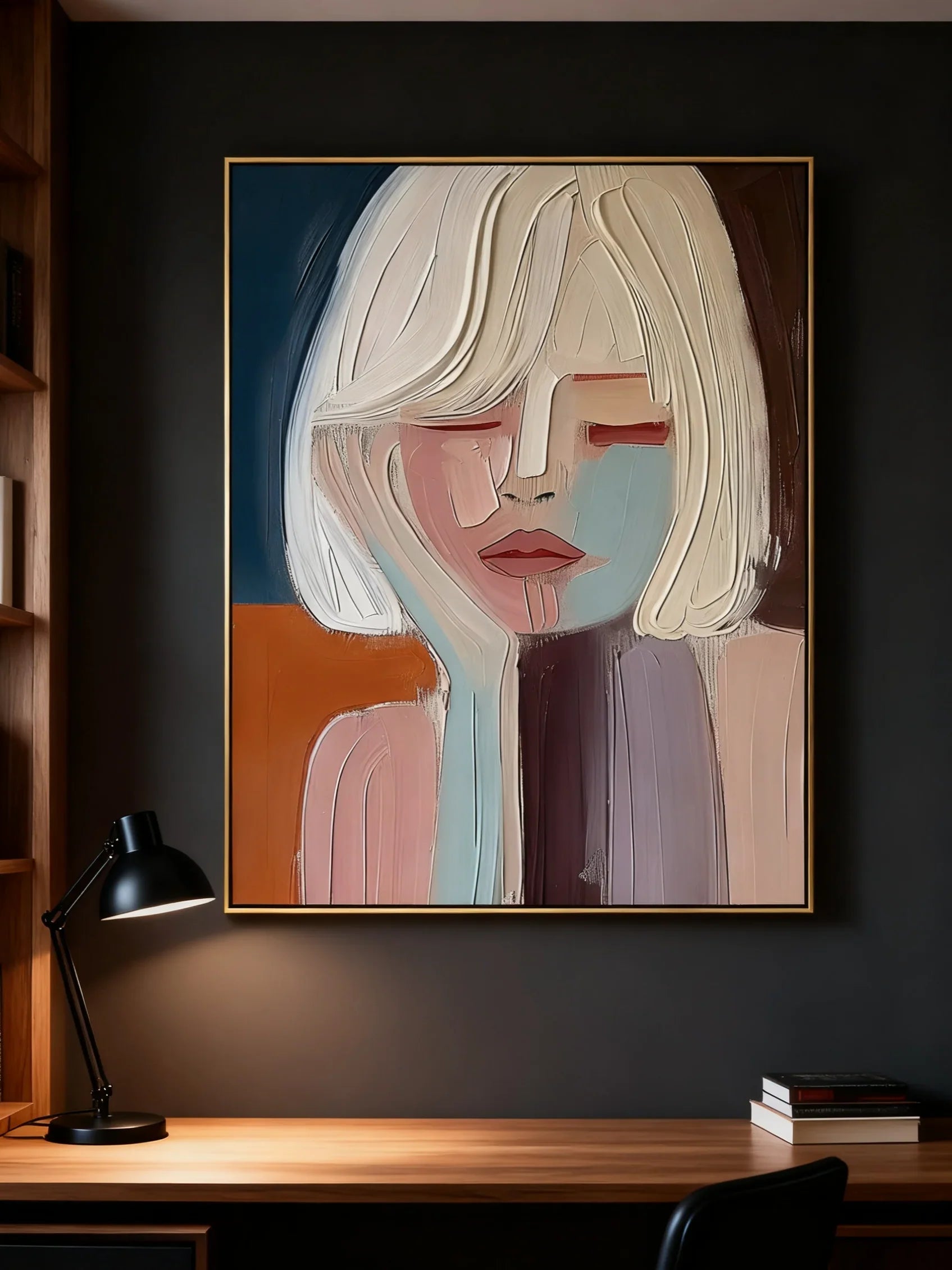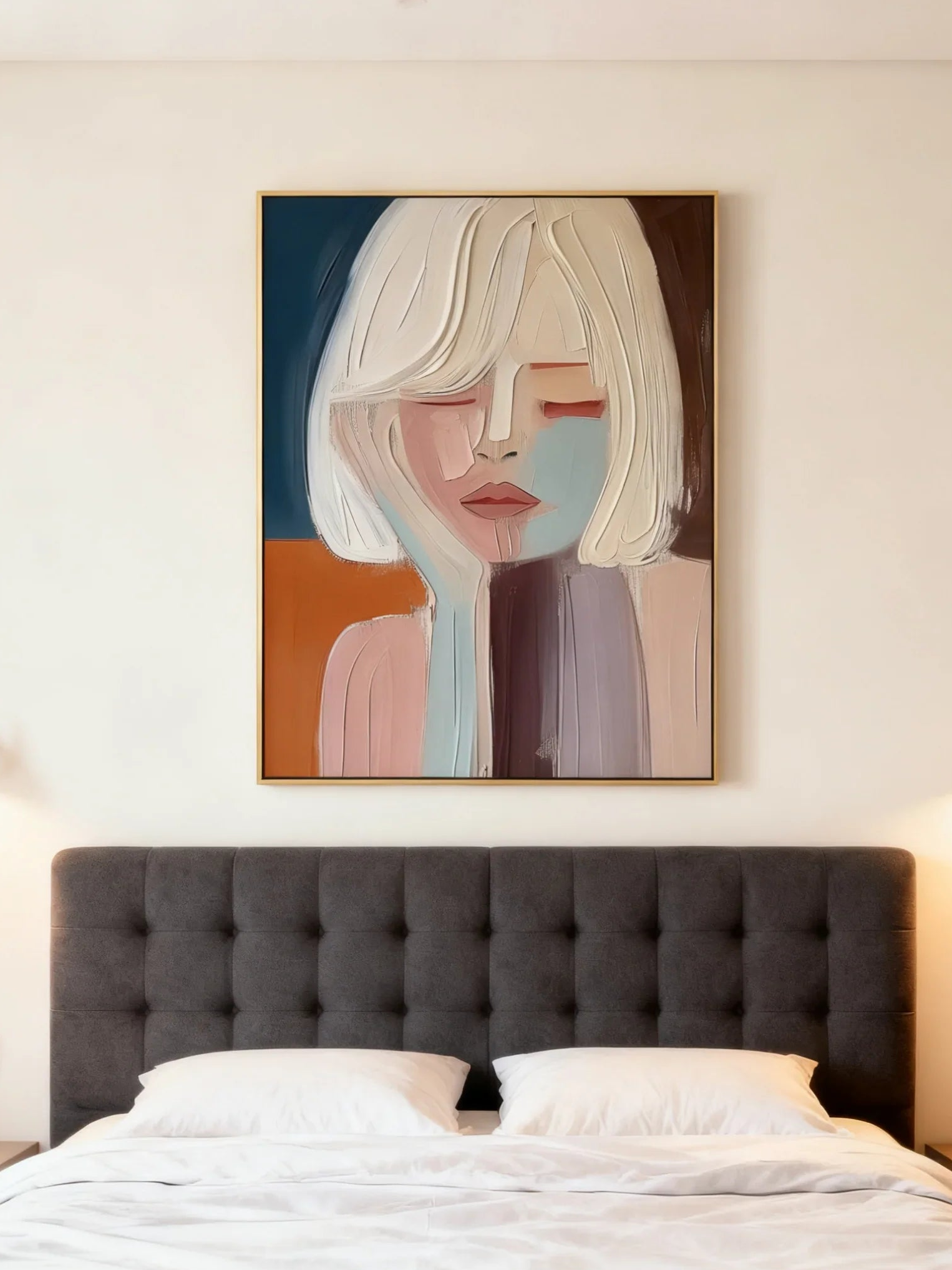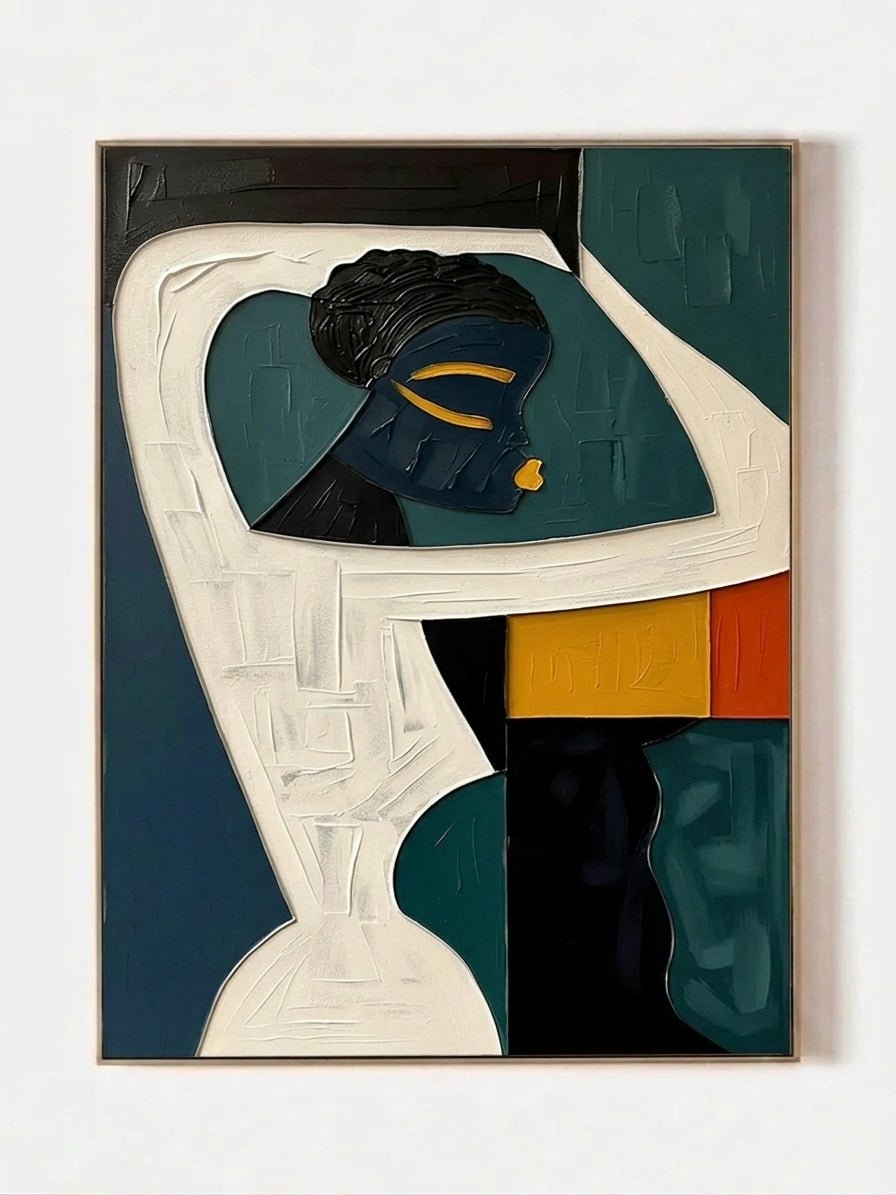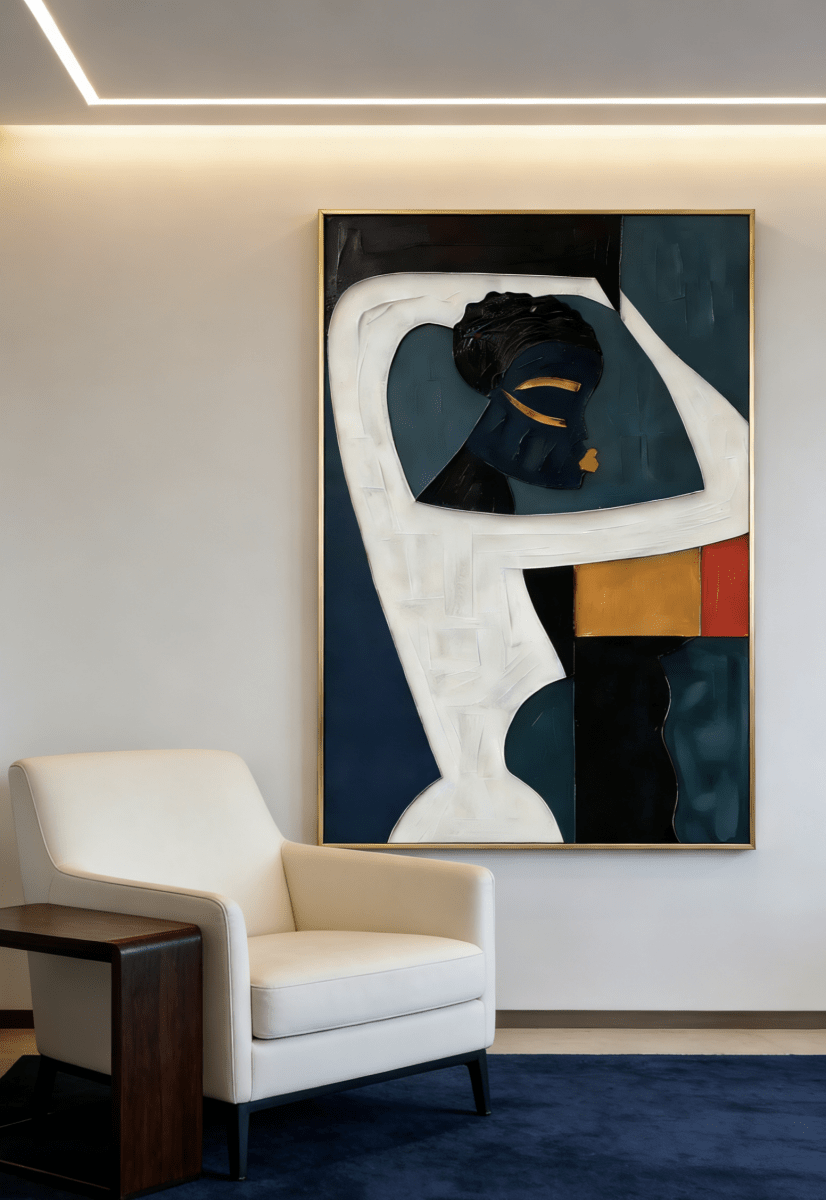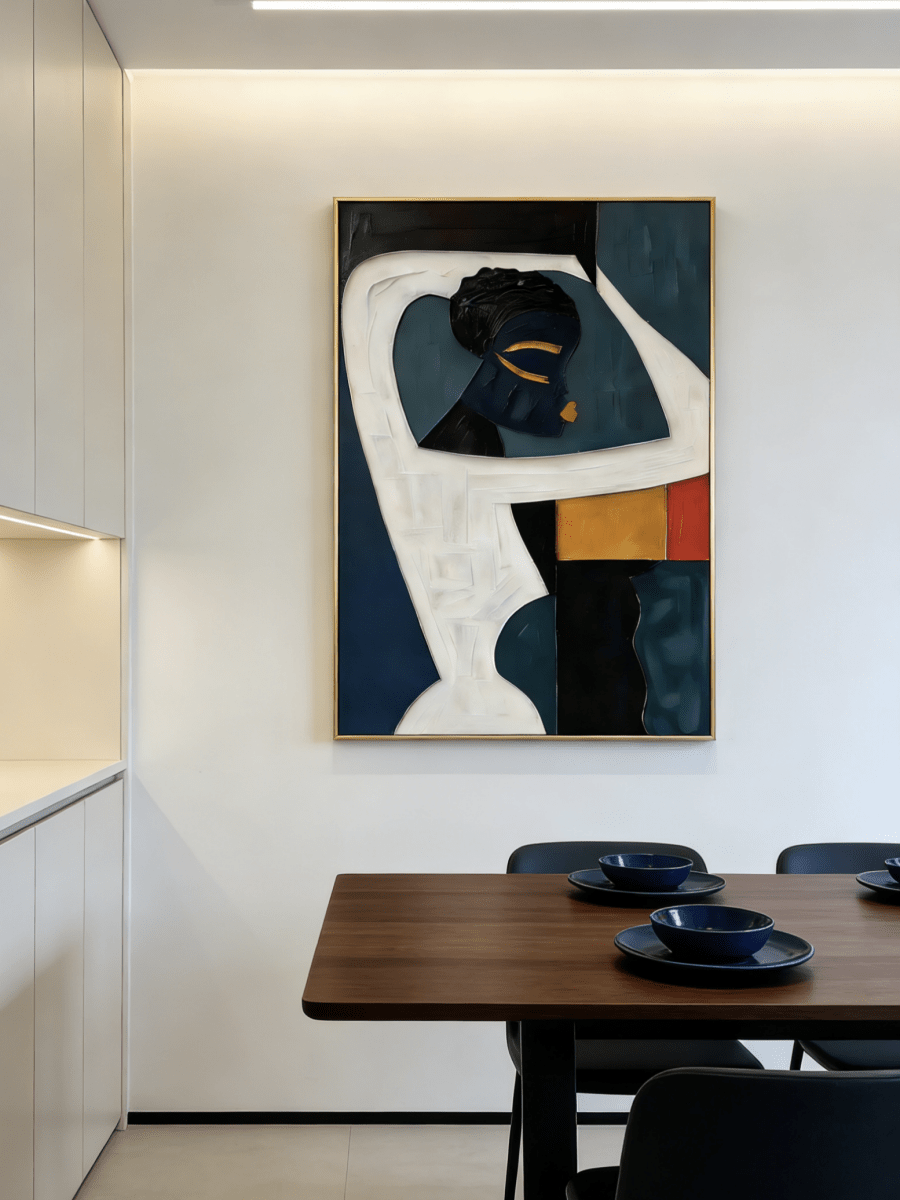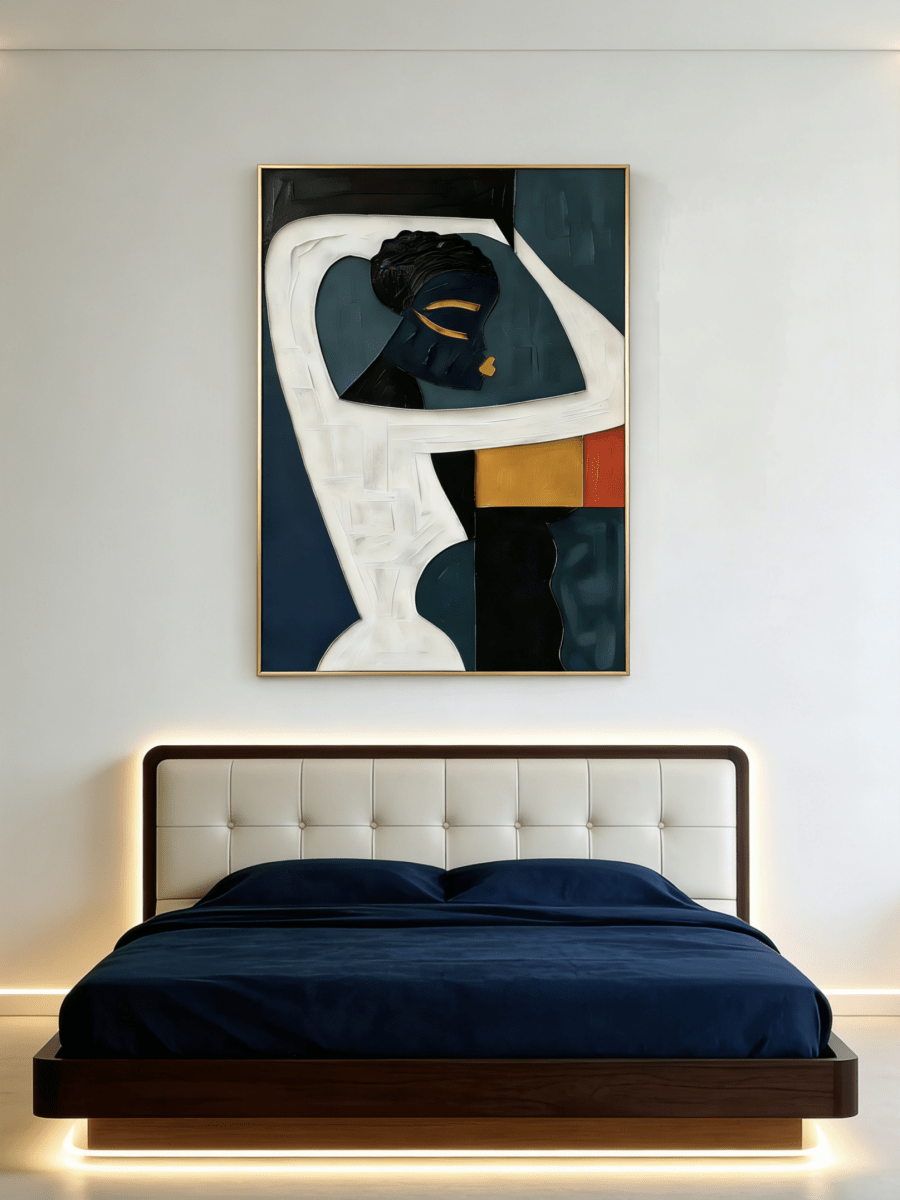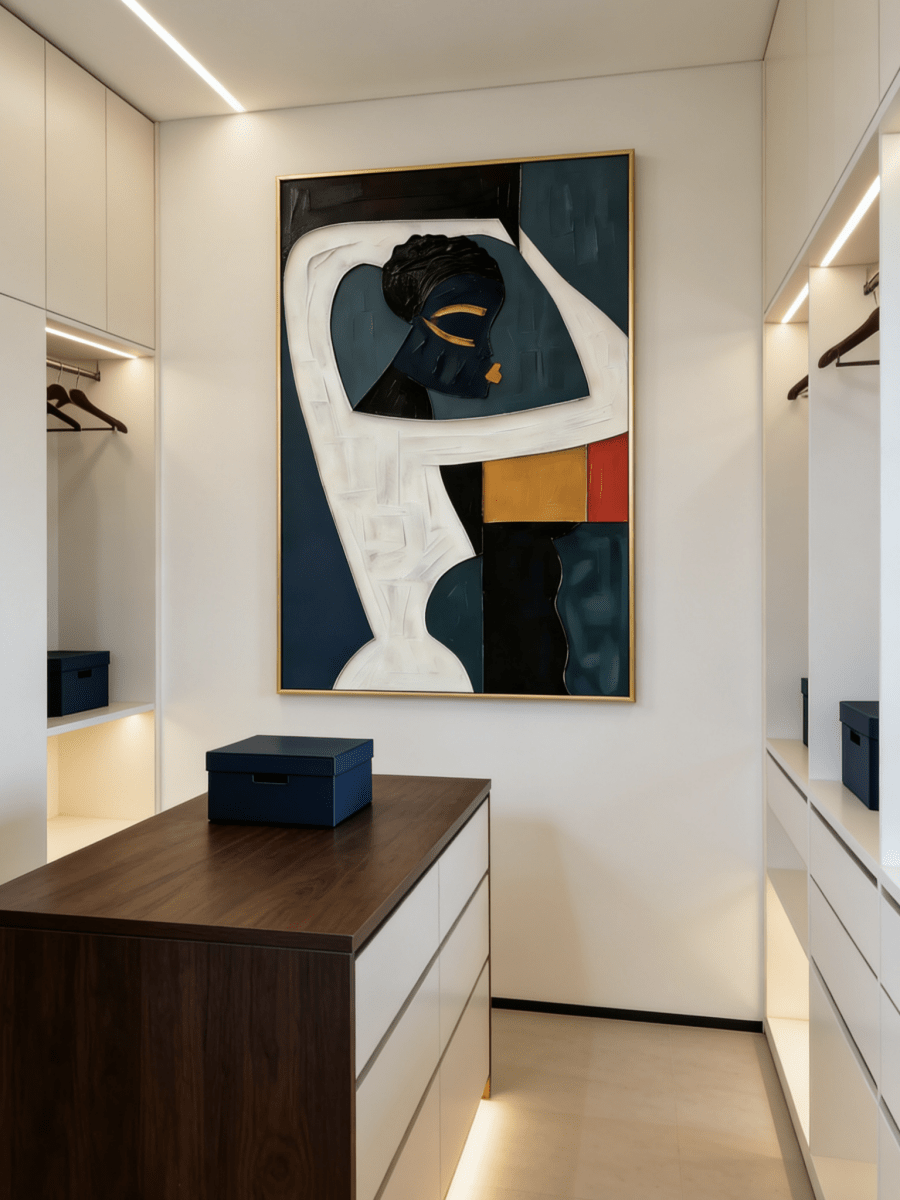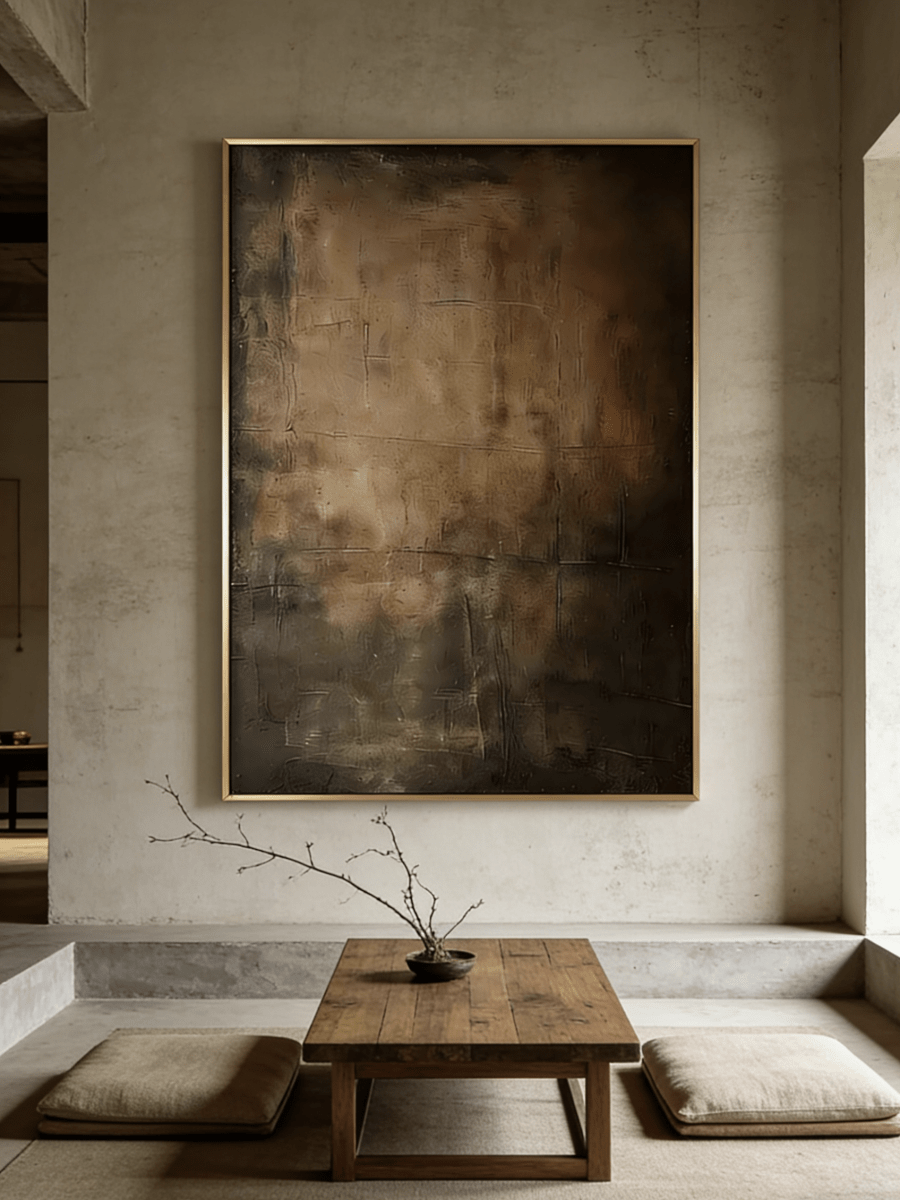


Wabi-Sabi Textured Architectural Wall Art – Quiet Ivory City – EV#0418

Descripción
Wabi-Sabi Textured Architectural Wall Art – Quiet Ivory City
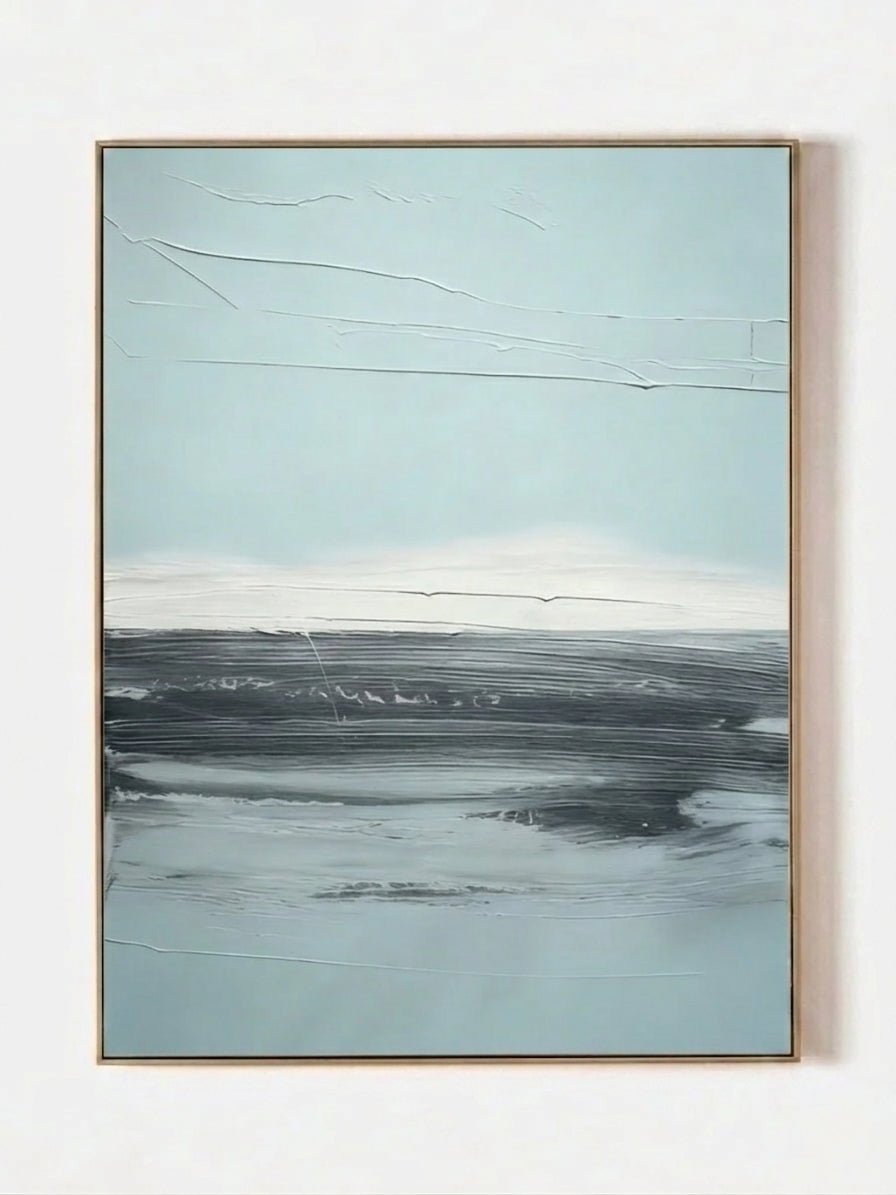
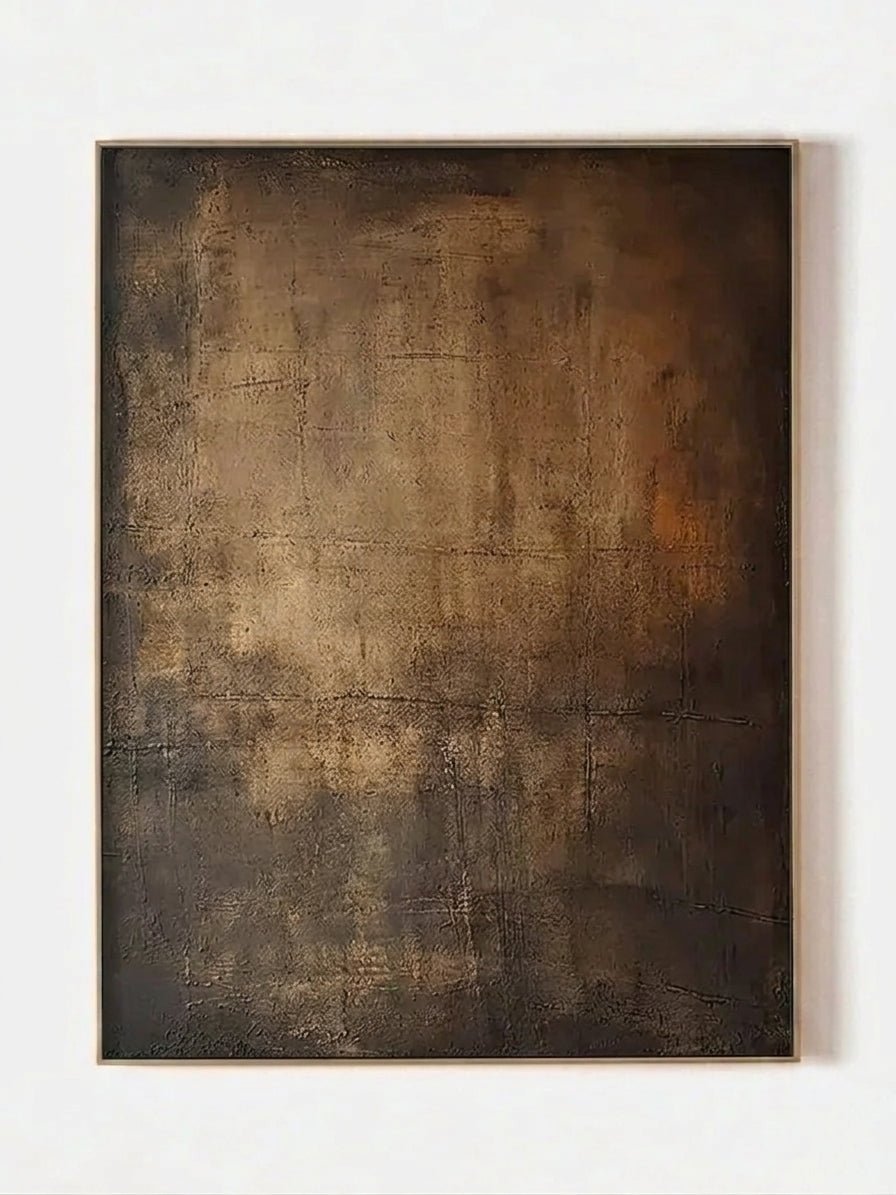
A quiet architectural landscape emerges from layers of chalk white, stone gray and warm ivory in Quiet Ivory City, a hand-painted textured artwork by Eliot Vermeer.
Inspired by weathered walls, sun-washed buildings and the imperfect geometry of old architecture, Eliot transforms a cityscape into a composition of simplified forms, tactile surfaces and restrained neutral color.
Blocks of ivory, cream and soft gray rise across the lower half of the painting like an abstract collection of buildings. Small irregular openings suggest windows and doorways, while a single muted ochre form introduces warmth within the predominantly pale composition.
Rather than describing a specific city, Eliot reduces architecture to its most essential elements:
surface, proportion, shadow and light.
From across the room, the artwork feels calm and minimal. Viewed closely, rough plaster-like texture, raised edges and visible palette-knife marks reveal the handmade character of the piece.
The result is a neutral textured architectural painting that brings quiet depth and sculptural interest to contemporary interiors.
The Story Behind the Artwork
For Quiet Ivory City, Eliot Vermeer takes inspiration from buildings whose surfaces reveal the passage of time.
Whitewashed walls softened by sunlight.
Stone facades marked by weather.
Small windows carved into thick architectural forms.
Layers of plaster repaired and repainted over generations.
Instead of recreating a real city, Eliot strips architecture down to a collection of simplified blocks.
Some buildings appear bright and almost weightless.
Others retreat through gray and greige tones.
Small openings break through the surfaces, suggesting windows without defining what lies behind them.
At the center, a warm ochre element interrupts the pale palette—a small moment of warmth within an otherwise quiet city.
The painting reflects a wabi-sabi idea of architecture: beauty found not in perfect surfaces, but in texture, age, irregularity and restraint.
Where to Hang This Painting
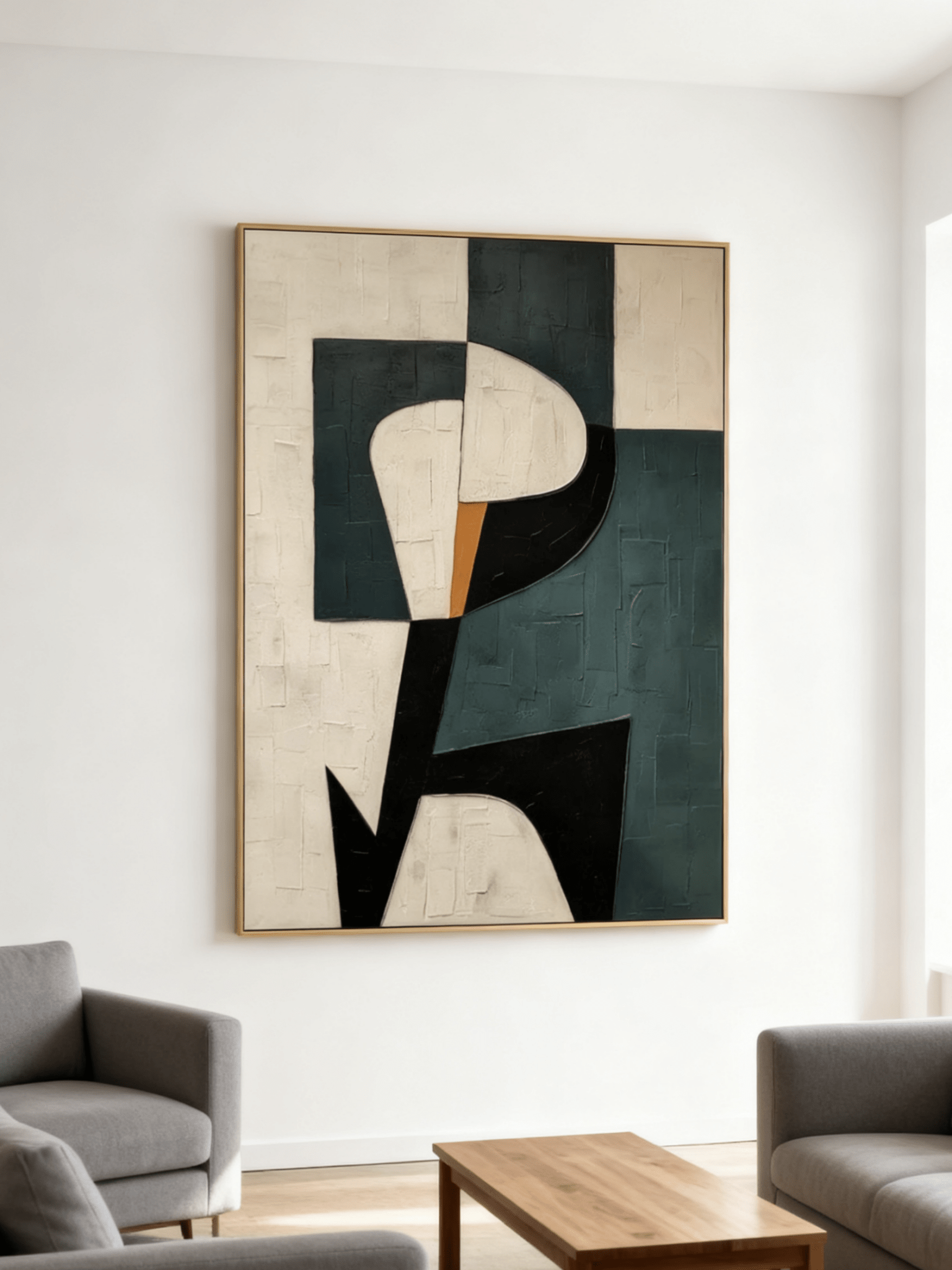
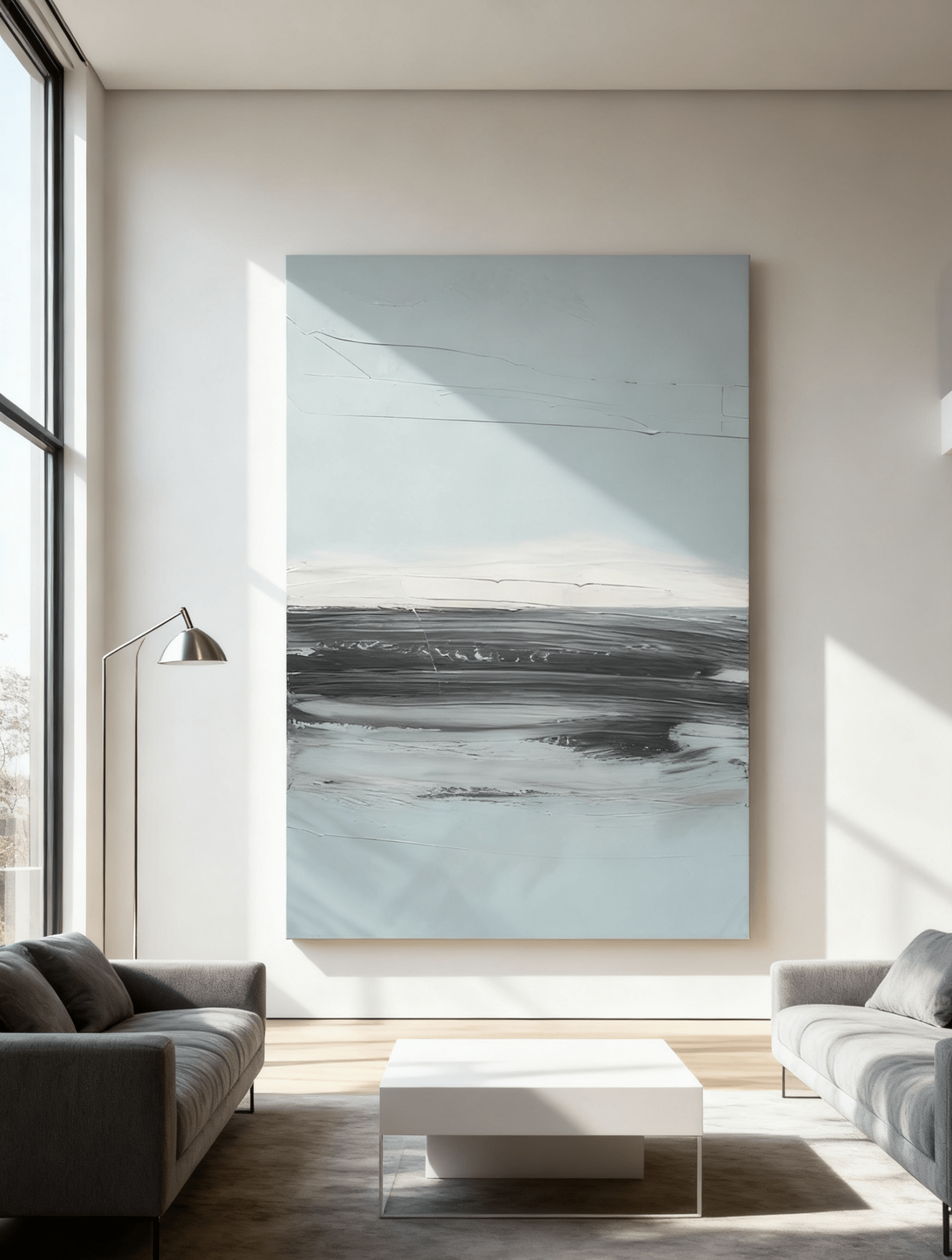
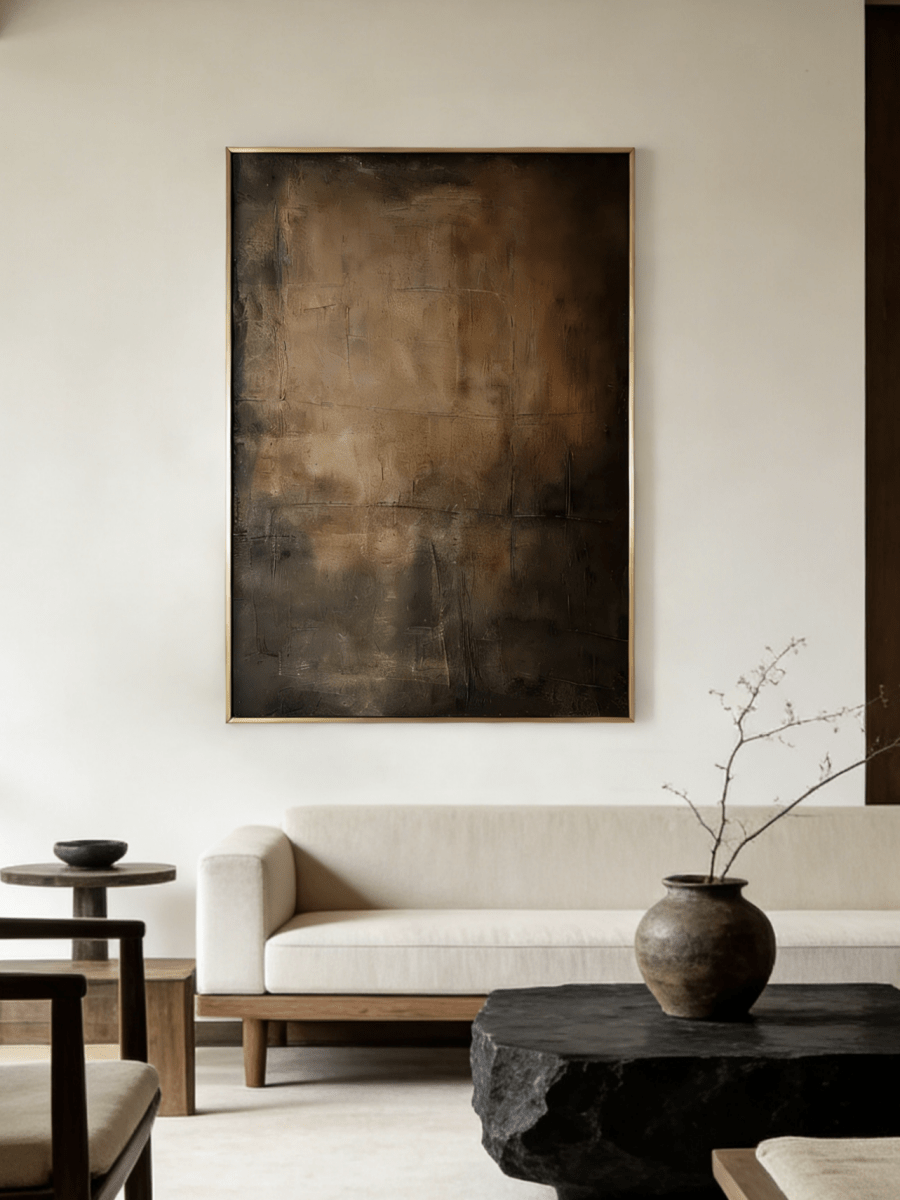
Living Room
This artwork works particularly well in living rooms built around:
cream, beige, camel, taupe, olive or warm gray furniture.
Pair it with:
walnut, dark oak, travertine, leather, linen, bouclé or antique-brass accents.
The combination of olive green and warm gold gives a neutral living room more depth without requiring bright color.
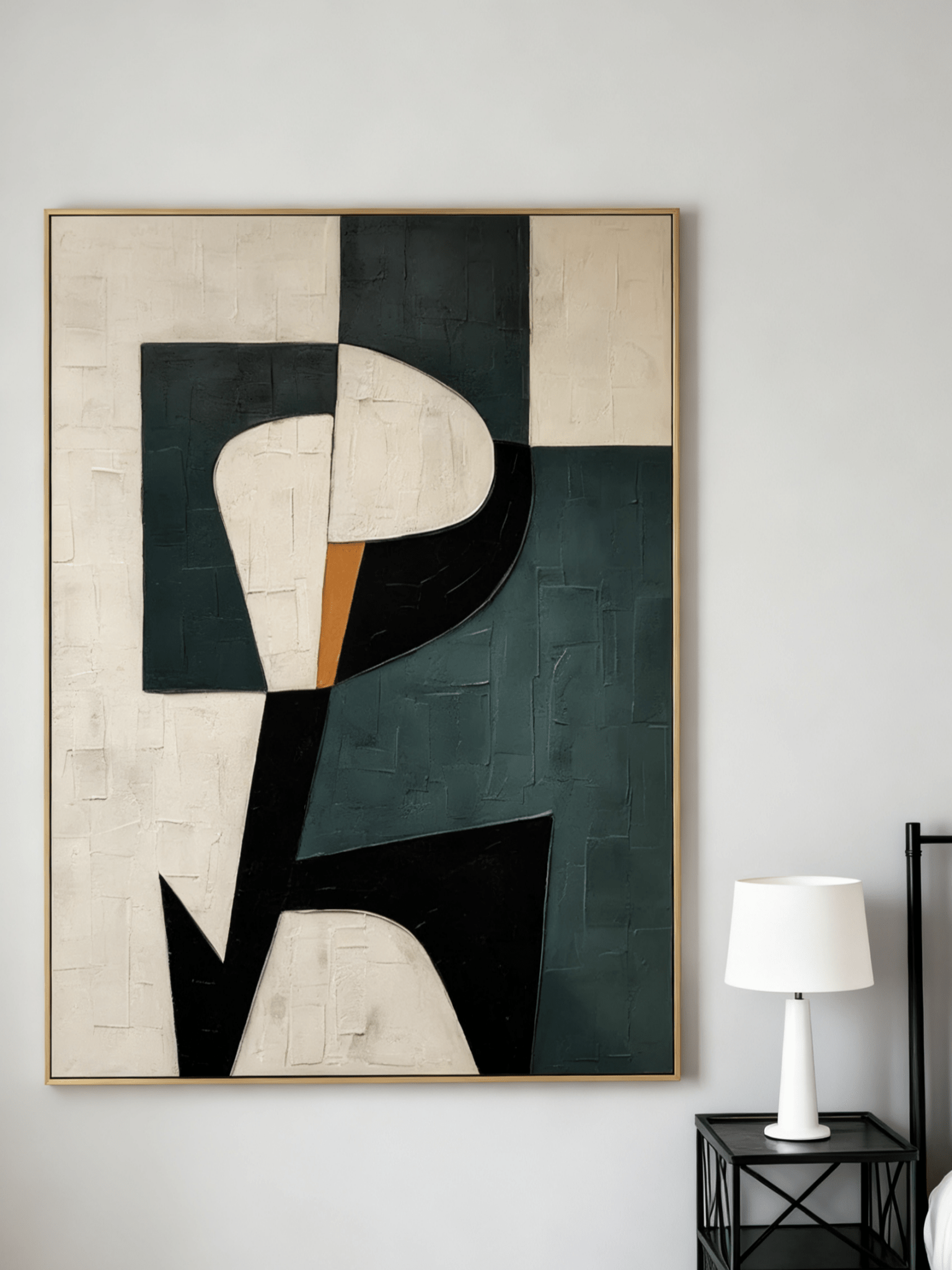
Bedroom
The darker olive palette can create a sophisticated focal point in a bedroom.
It pairs particularly well with:
cream bedding, walnut furniture, warm lighting and natural linen.
Because the geometry is structured rather than visually chaotic, the artwork can introduce texture without making the room feel overly busy.
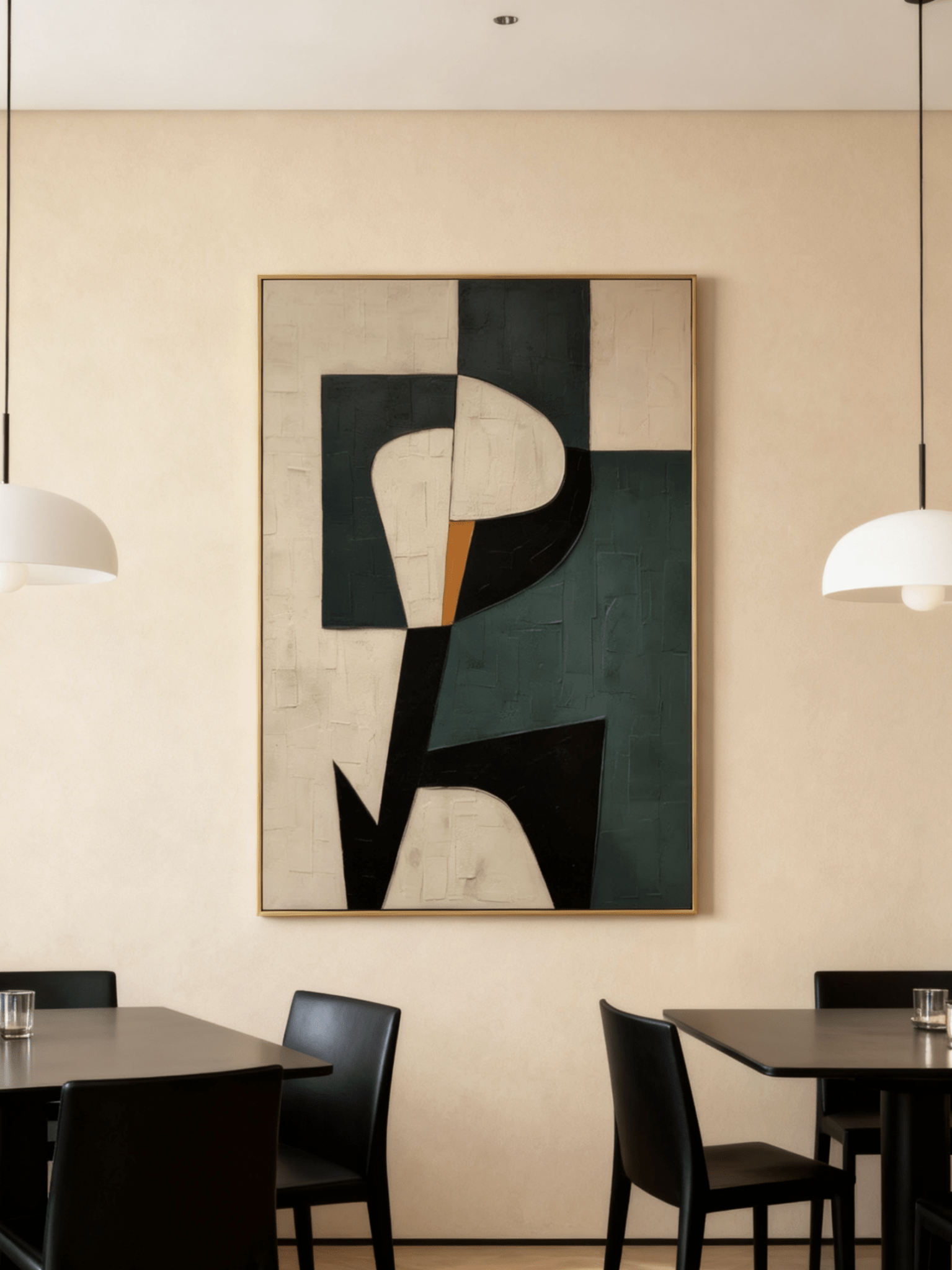
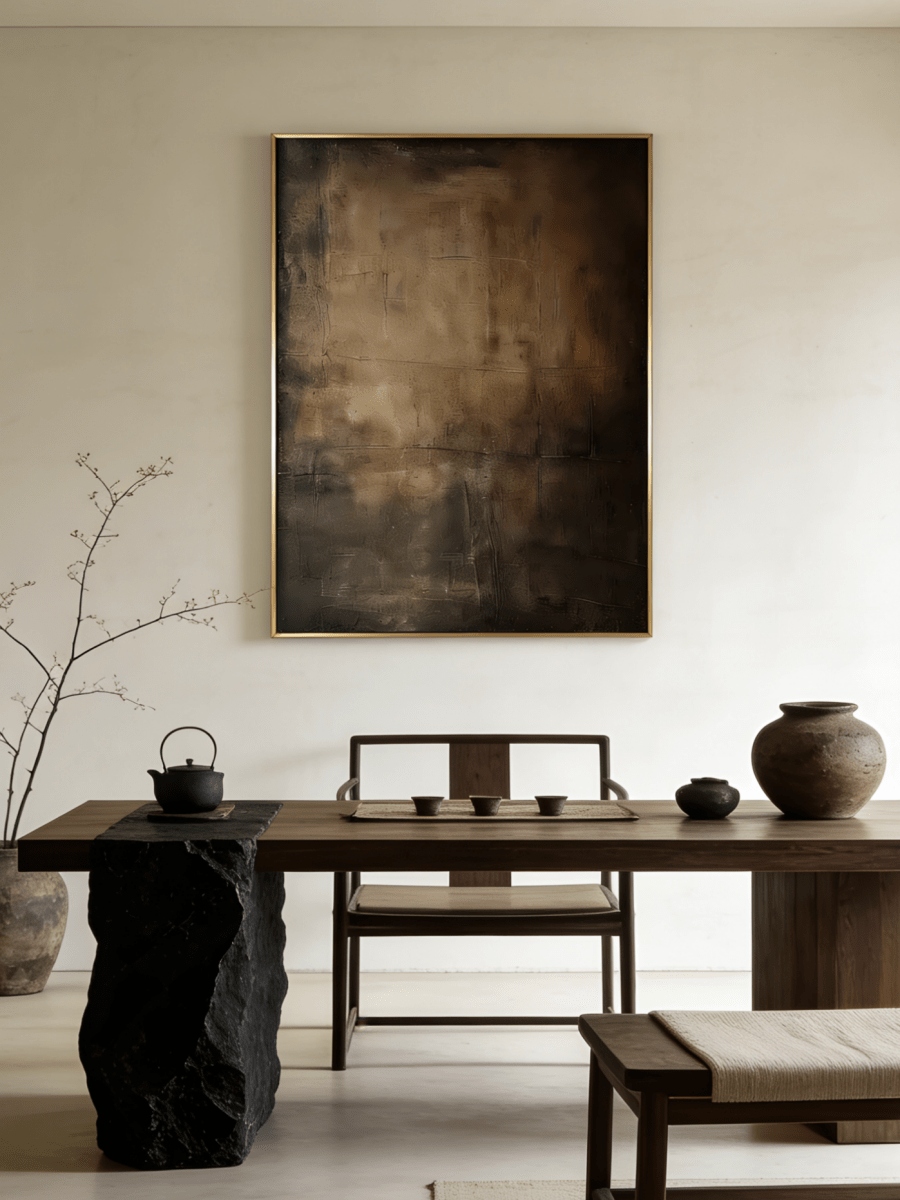
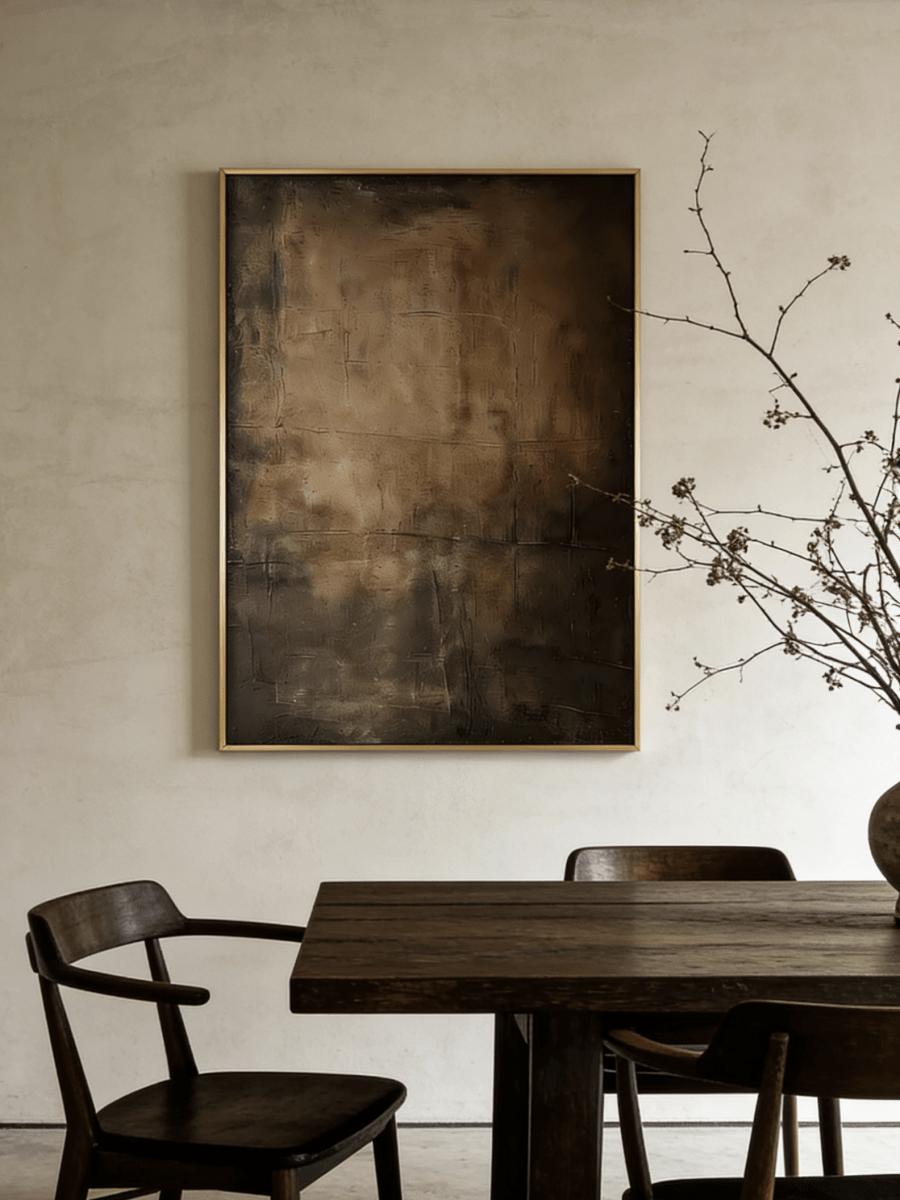
Open Dining Room
This is one of the strongest placements for the painting.
The repeated grid relates naturally to architectural lines and works beautifully alongside:
wood dining tables, sculptural seating, stone surfaces and warm pendant lighting.
Its gold-toned detailing also responds particularly well to evening ambient light.
Entryway
The vertical format makes this artwork ideal above:
an entryway console, narrow sideboard or bench.
It creates a strong first impression while maintaining a sophisticated, understated palette.
Home Office
The ordered geometric composition is particularly suitable for a home office or study.
It adds visual structure without using a distracting figurative subject.
Frequently Asked Questions
1. Is this artwork hand-painted or a print?
This is a hand-painted textured artwork, not a mass-produced flat canvas print.
The raised blocks, palette-knife marks and surface variations are physically created during the painting process.
2. What colors are used in this painting?
The main colors are ivory, cream, beige, greige, taupe, mocha and charcoal brown.
The palette is intentionally warm, soft and neutral.
3. What interior styles work best with this artwork?
It works particularly well with:
Wabi-Sabi, Organic Modern, Japandi, Contemporary, Warm Minimalist and Modern Rustic interiors.
Natural wood, stone, linen and bouclé complement the artwork especially well.
4. Does neutral wall art work with a beige or cream sofa?
Yes.
Instead of using strong color contrast, this artwork creates visual separation through texture, depth and tonal variation.
The darker taupe and charcoal blocks also help prevent a beige room from feeling flat.
5. Is geometric wall art suitable for a minimalist living room?
Yes.
Geometric artwork introduces structure without adding a busy figurative subject.
The warm neutral palette and irregular handmade texture make this piece softer than highly precise black-and-white geometric art.
6. Where should I hang vertical wall art?
Vertical artwork works particularly well:
above a console or dresser, beside a sofa, between windows or doors, and on narrow feature walls.
7. Can this artwork be displayed in a bedroom?
Yes.
The ivory and warm neutral palette makes it particularly suitable for calm bedroom interiors.
It works beautifully with cream bedding and natural wood furniture.
8. Does textured wall art look different in different lighting?
Yes.
Raised paint catches light differently throughout the day, creating shifting highlights and shadows.
Side lighting is especially effective at revealing the depth of the texture.
9. Will my painting look exactly like the product image?
The overall composition, palette and artistic character will remain consistent with the reference artwork.
Because every painting is individually created by hand, subtle variations in palette-knife marks, texture and individual blocks are natural.
These differences are part of owning a handmade artwork.
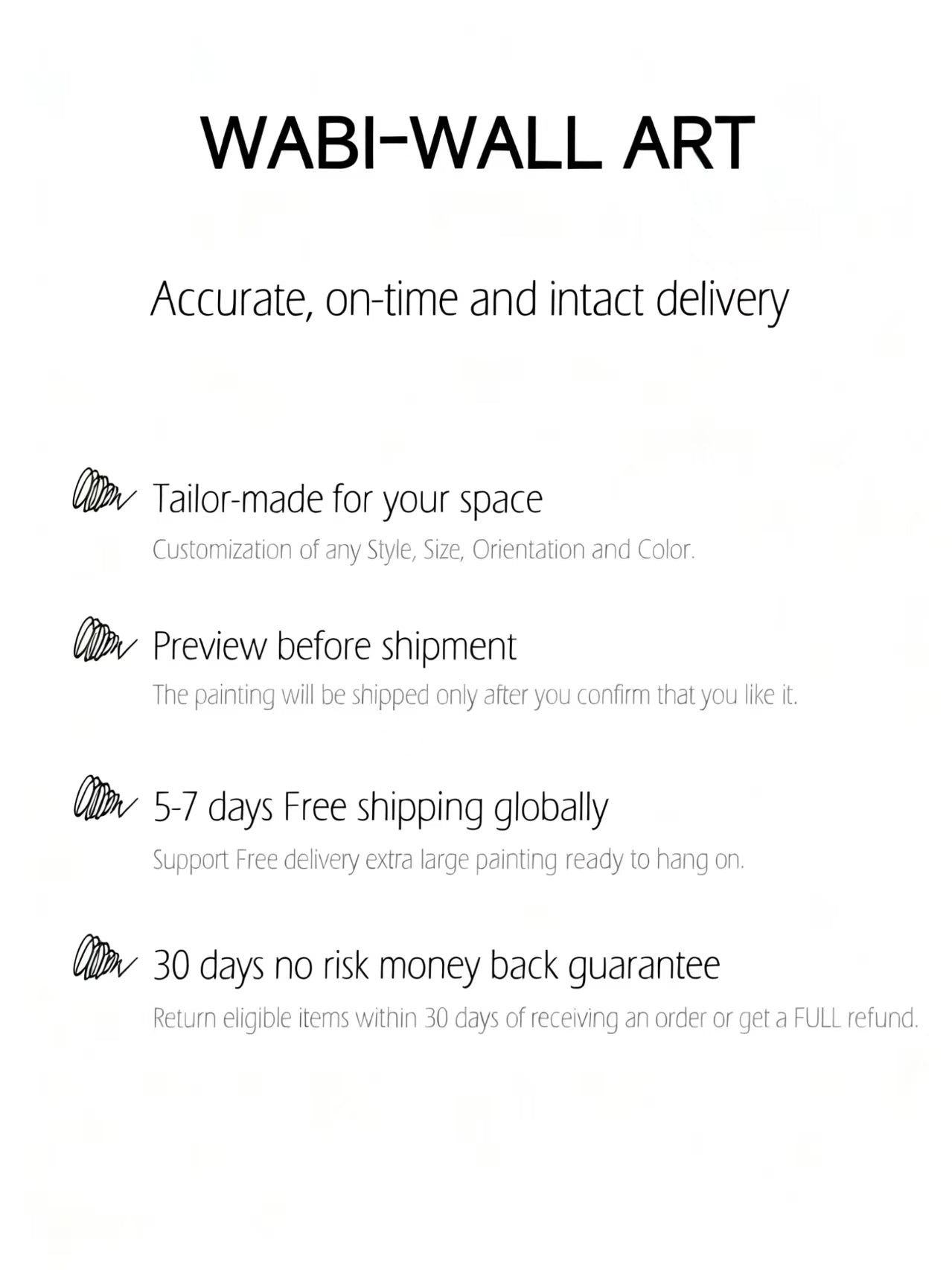
10. How long will it take to receive my painting?
Please allow approximately:
1–2 weeks for creation
followed by:
5–7 days for FedEx/DHL delivery after dispatch.
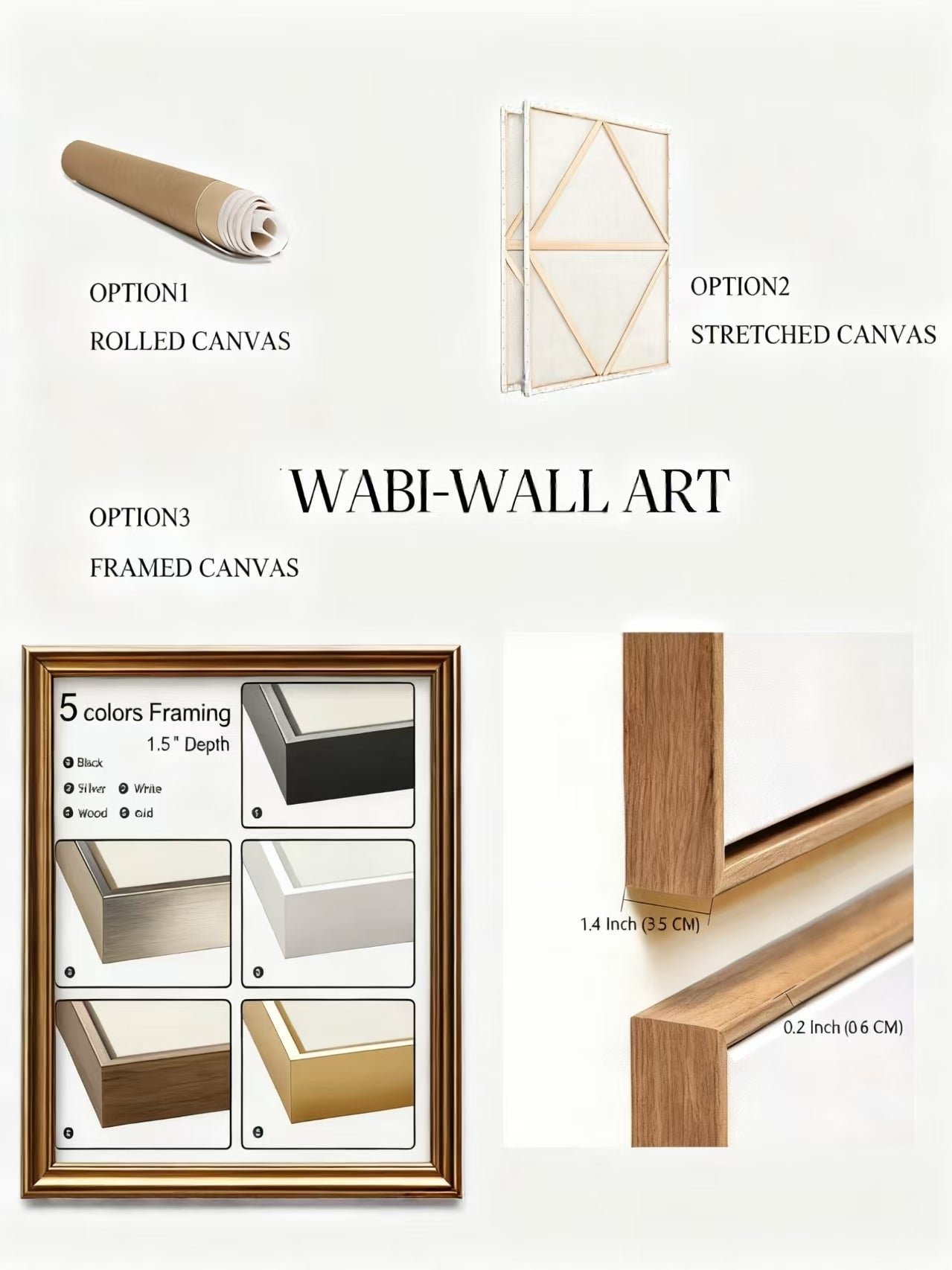
Worldwide shipping is free, and eligible artwork can be returned or exchanged within 30 days.
Style: Wabi-Sabi Art •Artist: Eliot Vermeer
•Orientation: Vertical
Cada obra se realiza por encargo. La creación suele requerir 1–2 semanas antes del envío.
Una vez terminada la obra, la entrega suele tardar unos 5–7 días laborables con DHL o FedEx.
Podemos ofrecer medidas o ajustes de color en algunos diseños. Contacta con info@wabiwallart.com antes de comprar para confirmar la solicitud.


Sobre el artista
Eliot Vermeer, nacido en Xi’an en 1987 y residente en Shanghái, crea abstracciones wabi sabi que conectan la estética oriental con el expresionismo occidental. Su obra estudia la materia, las huellas y el espacio.