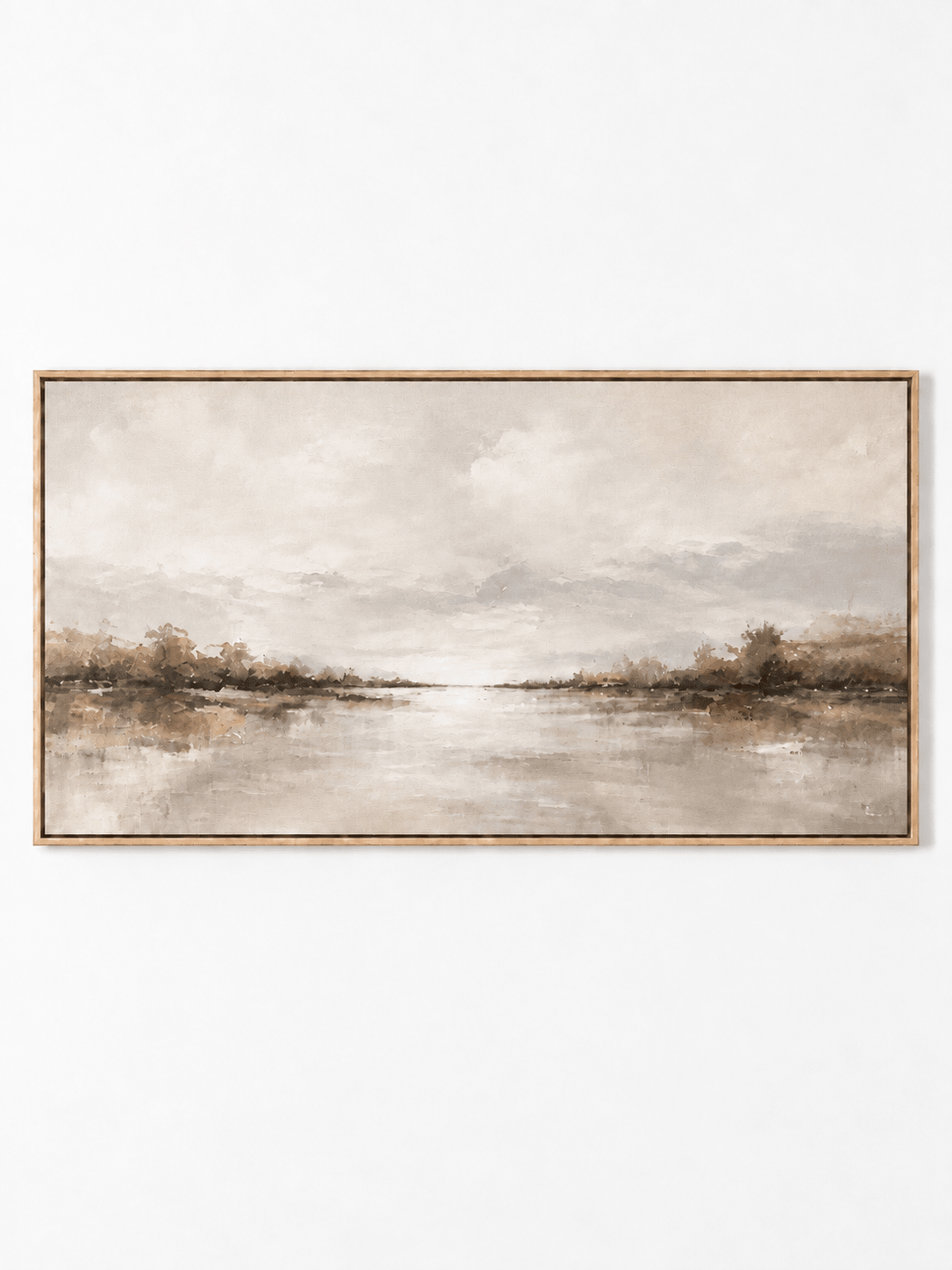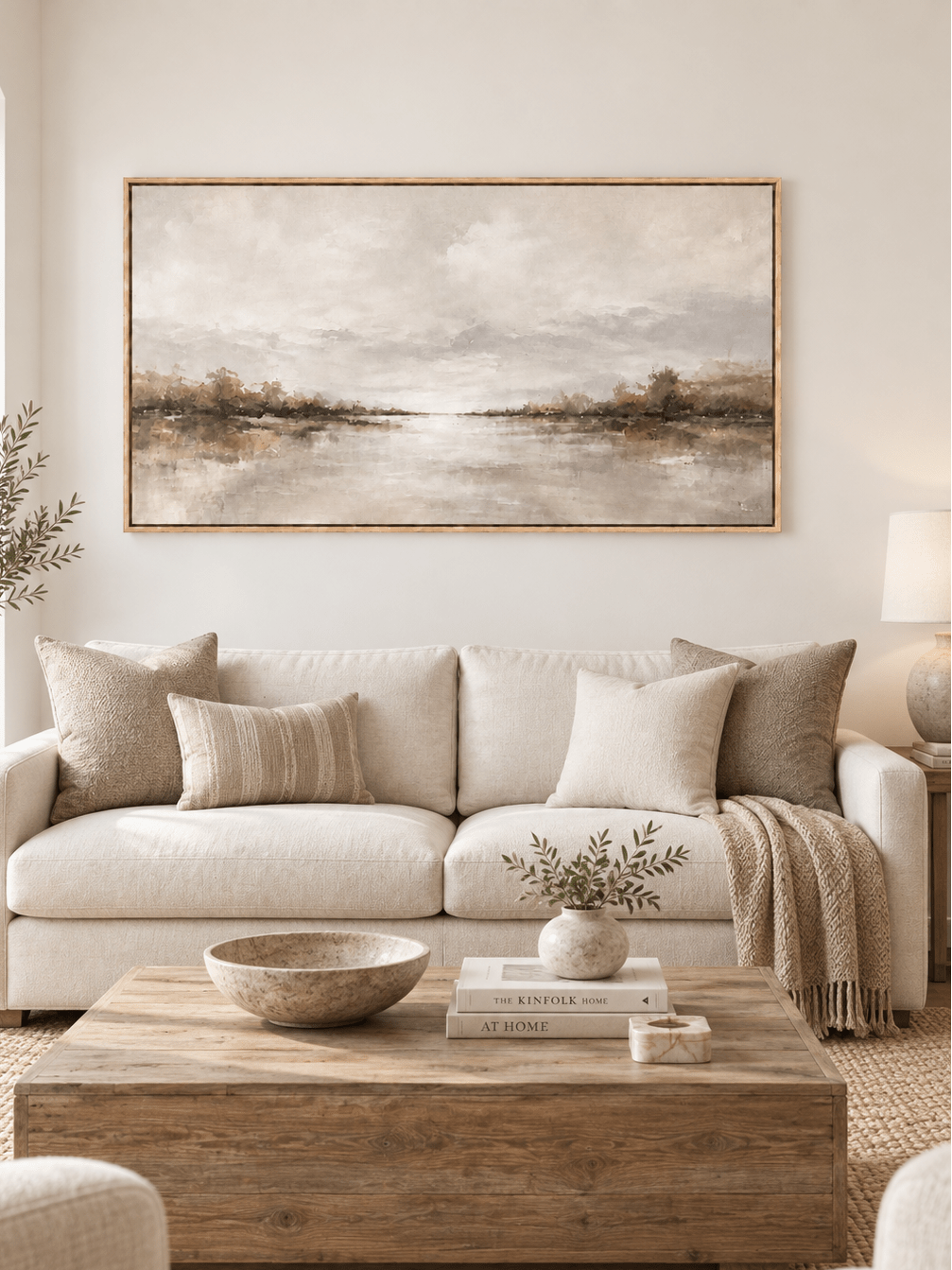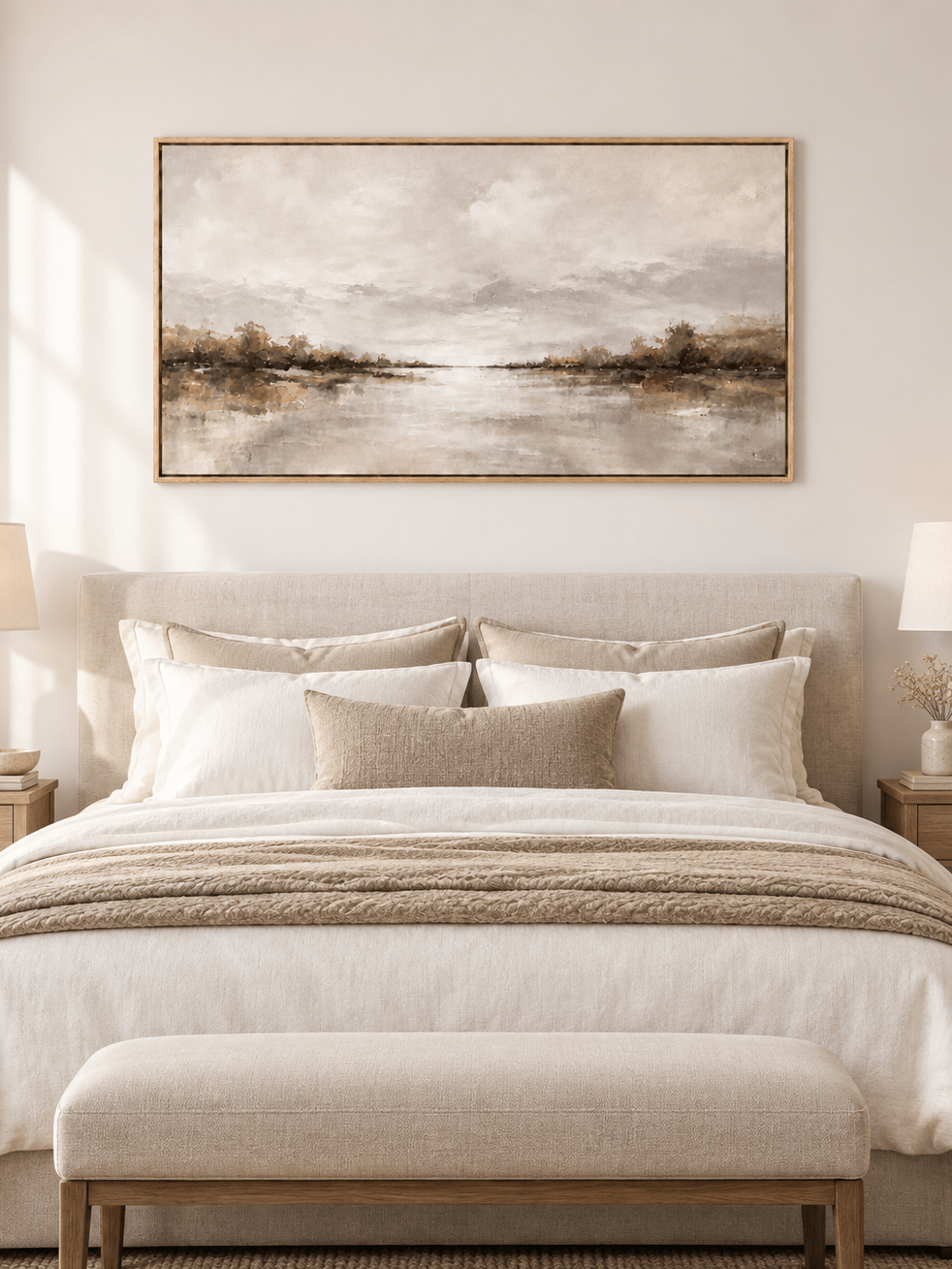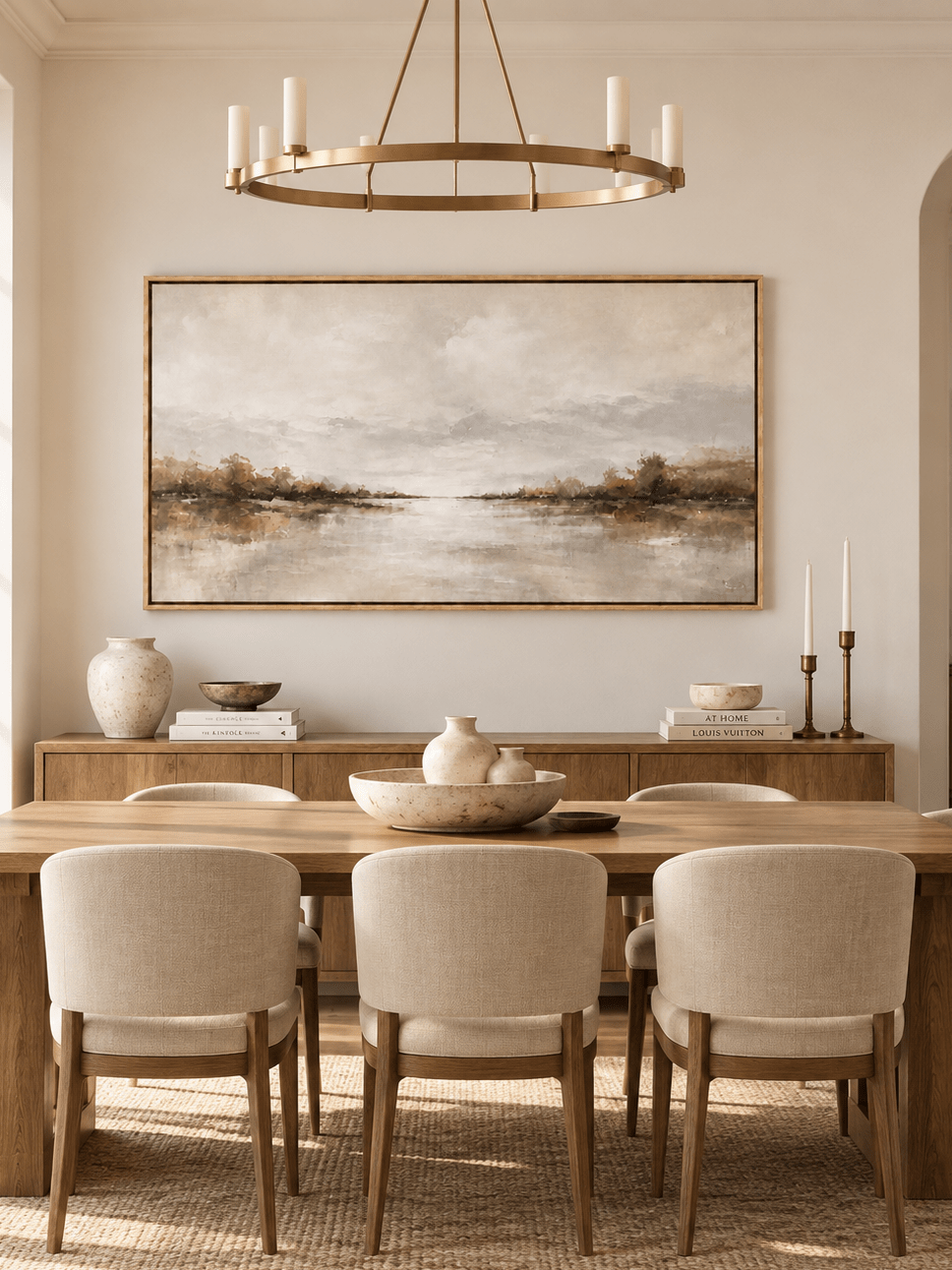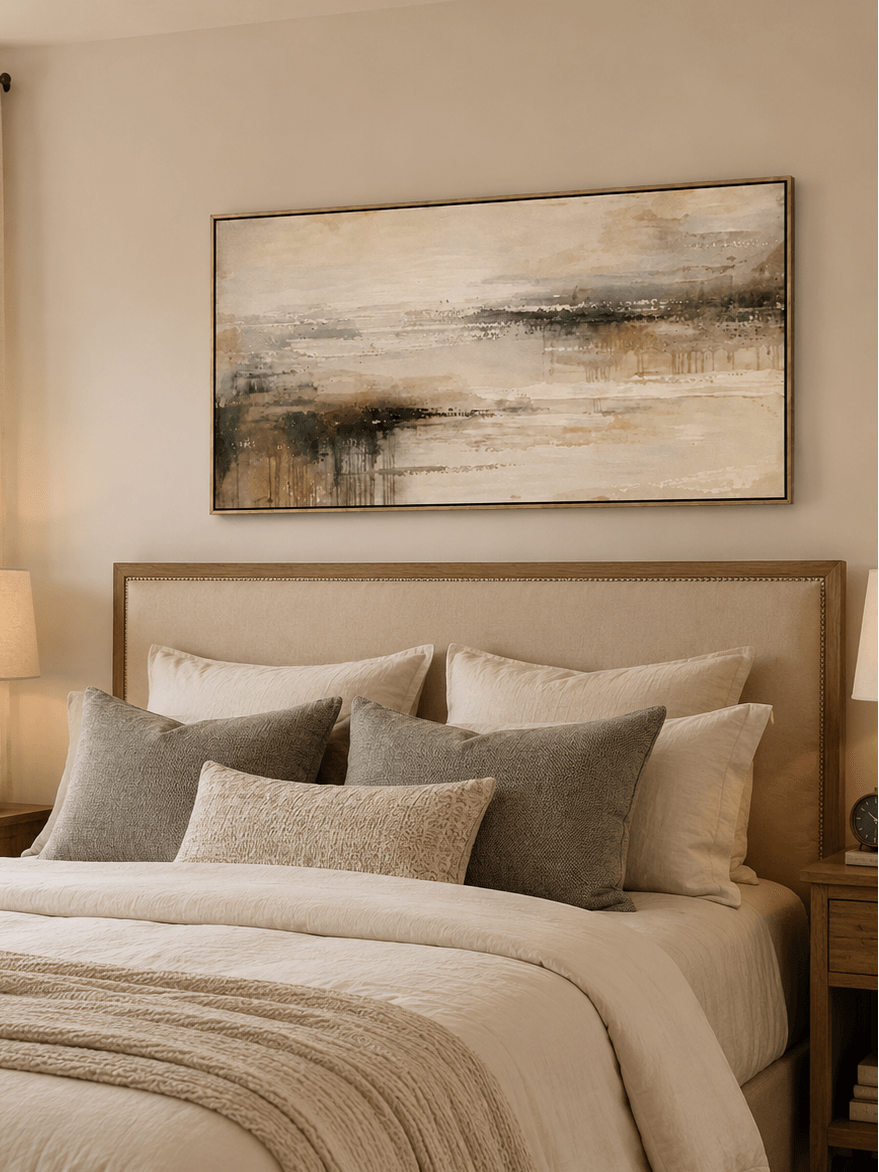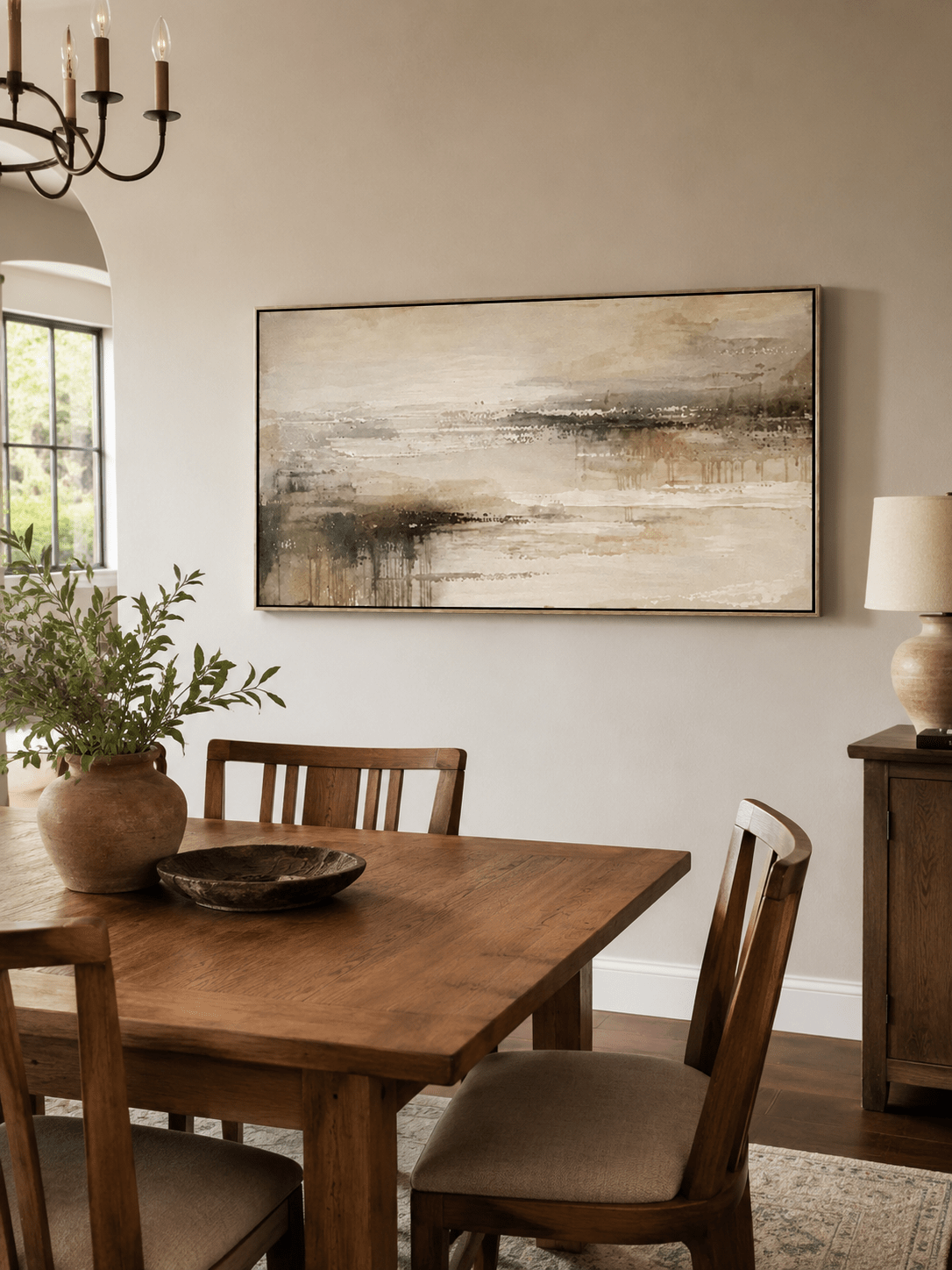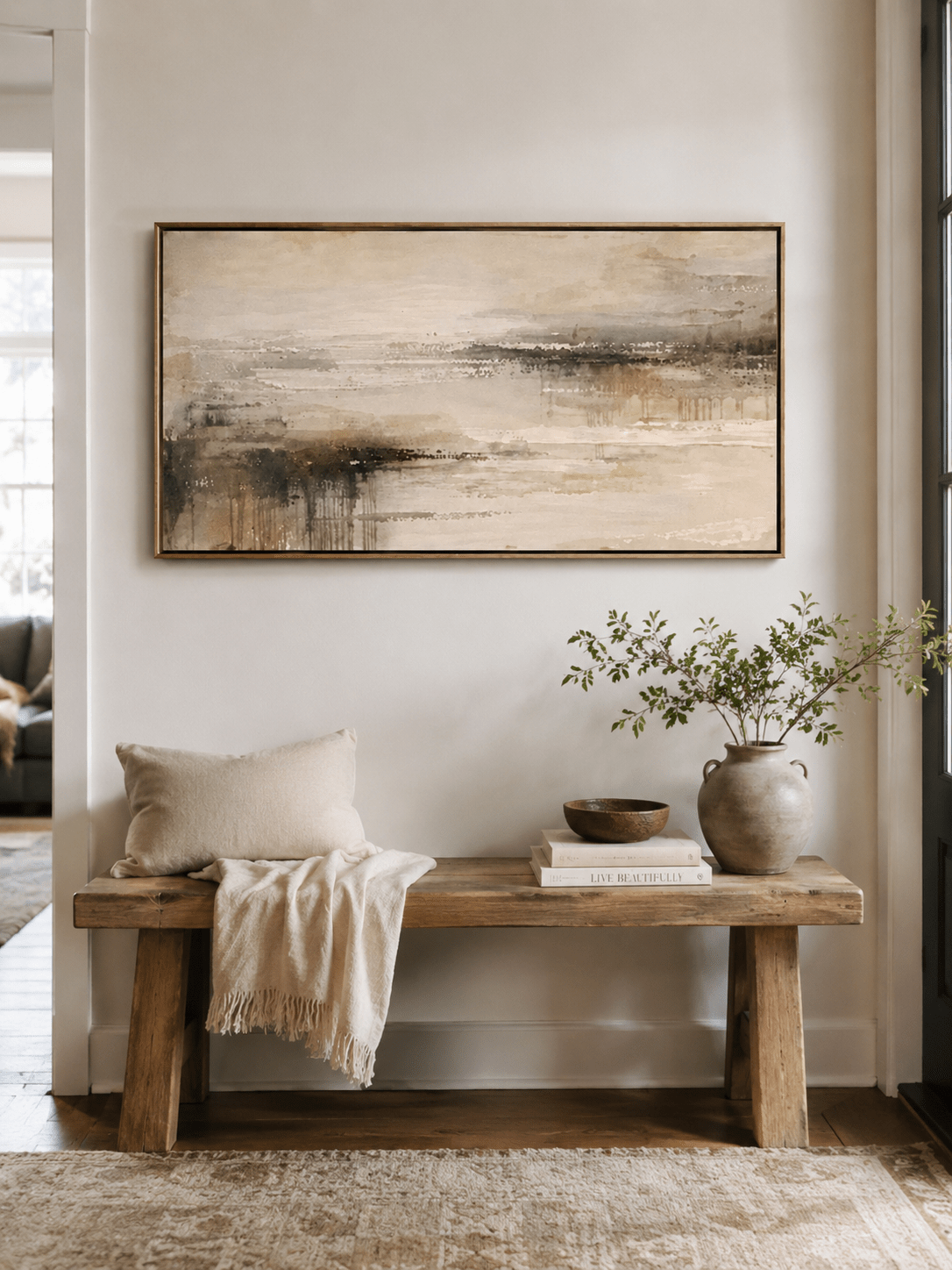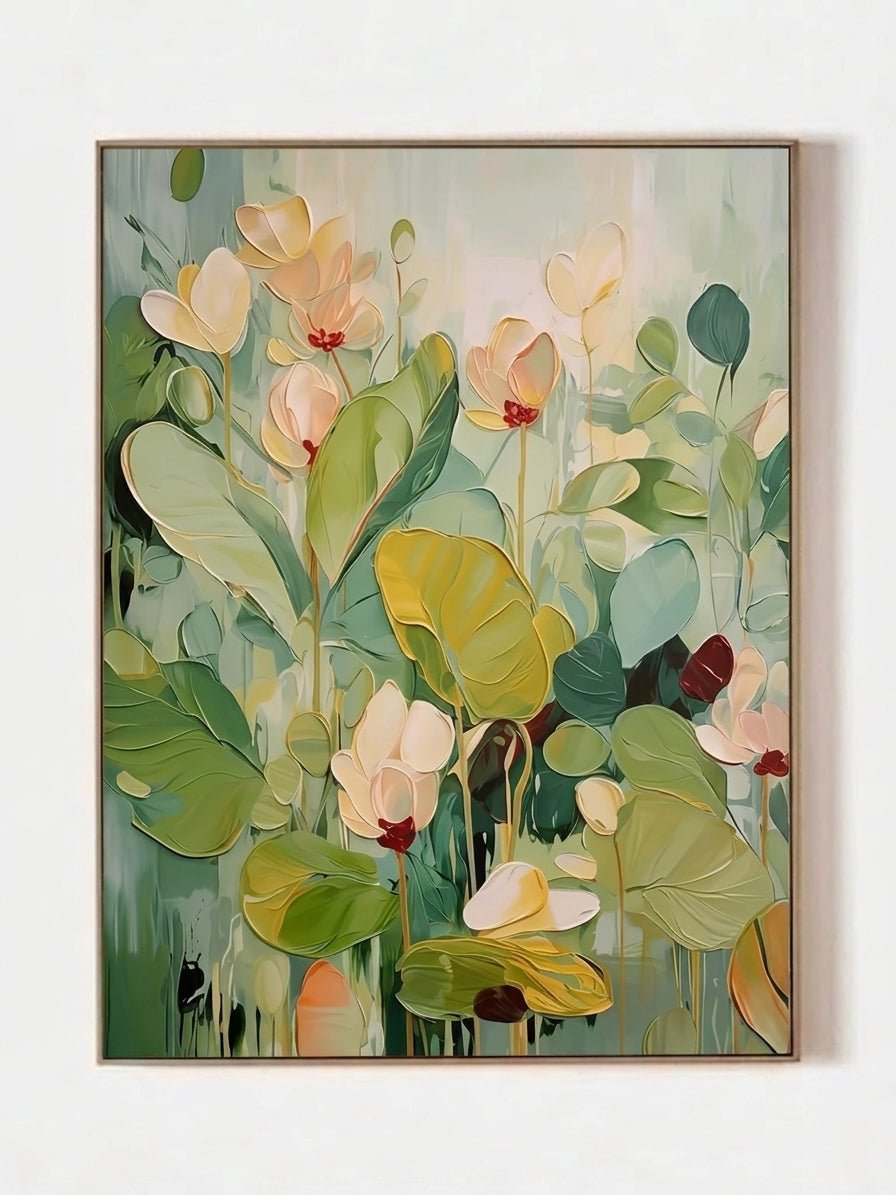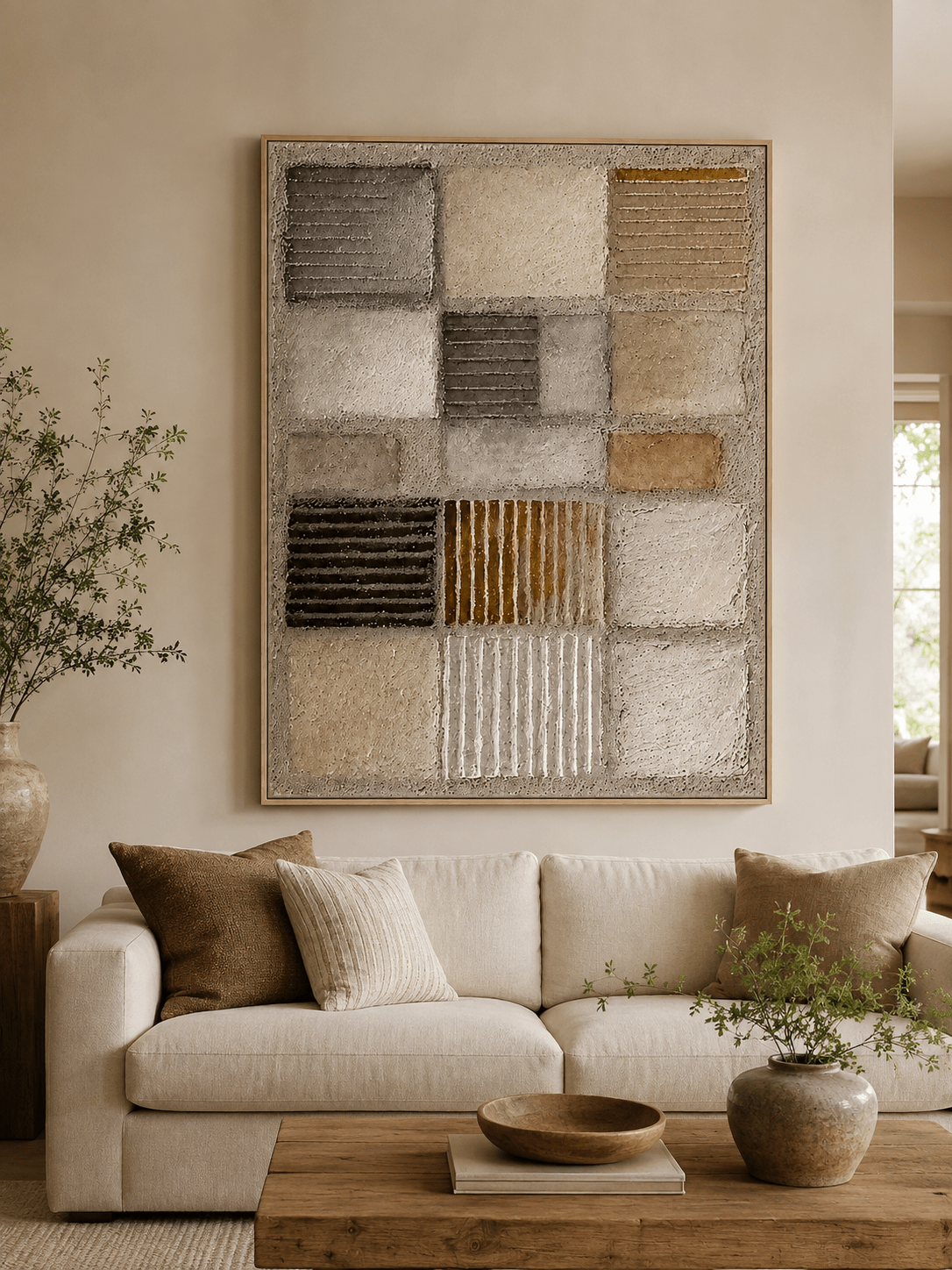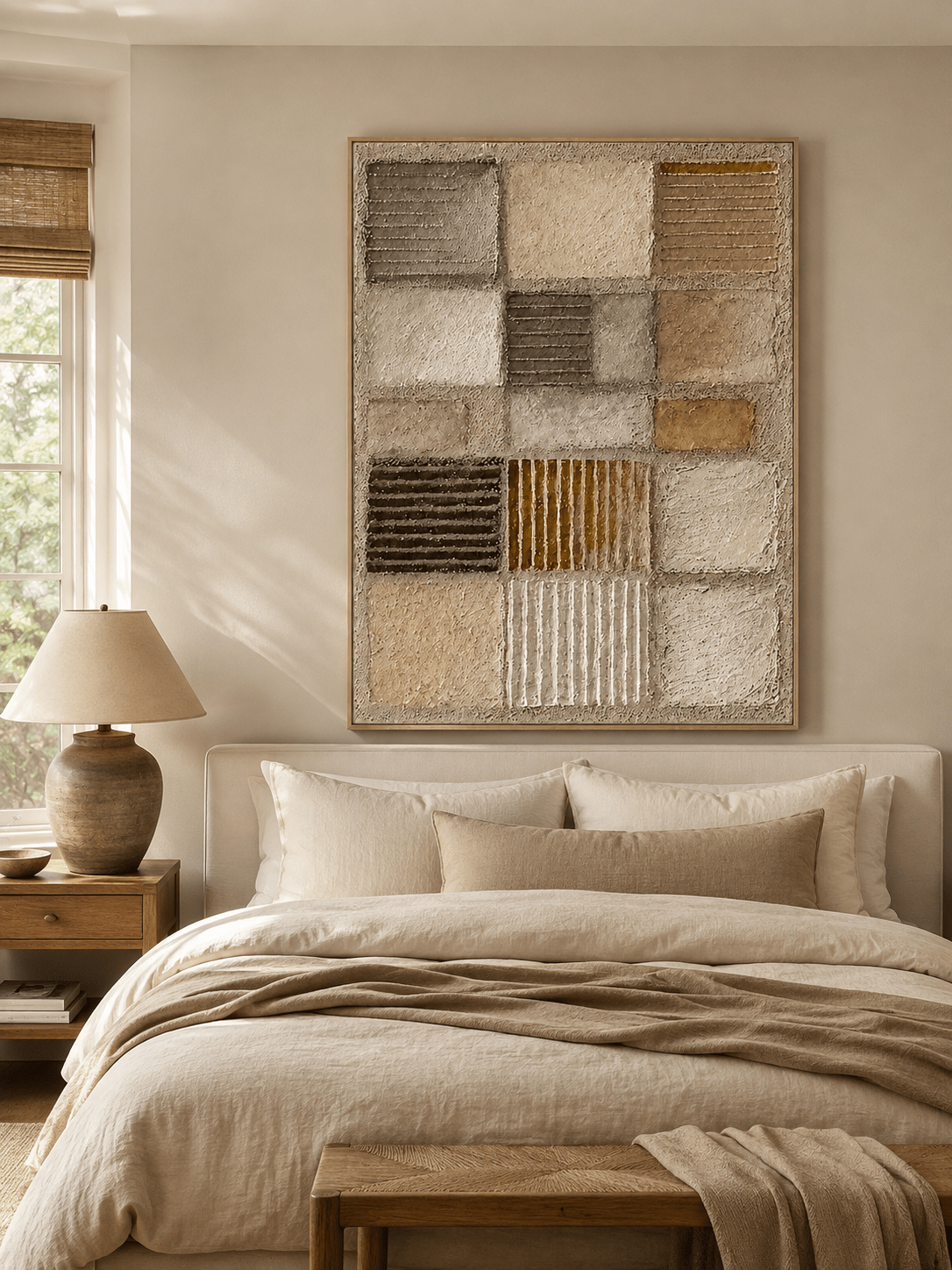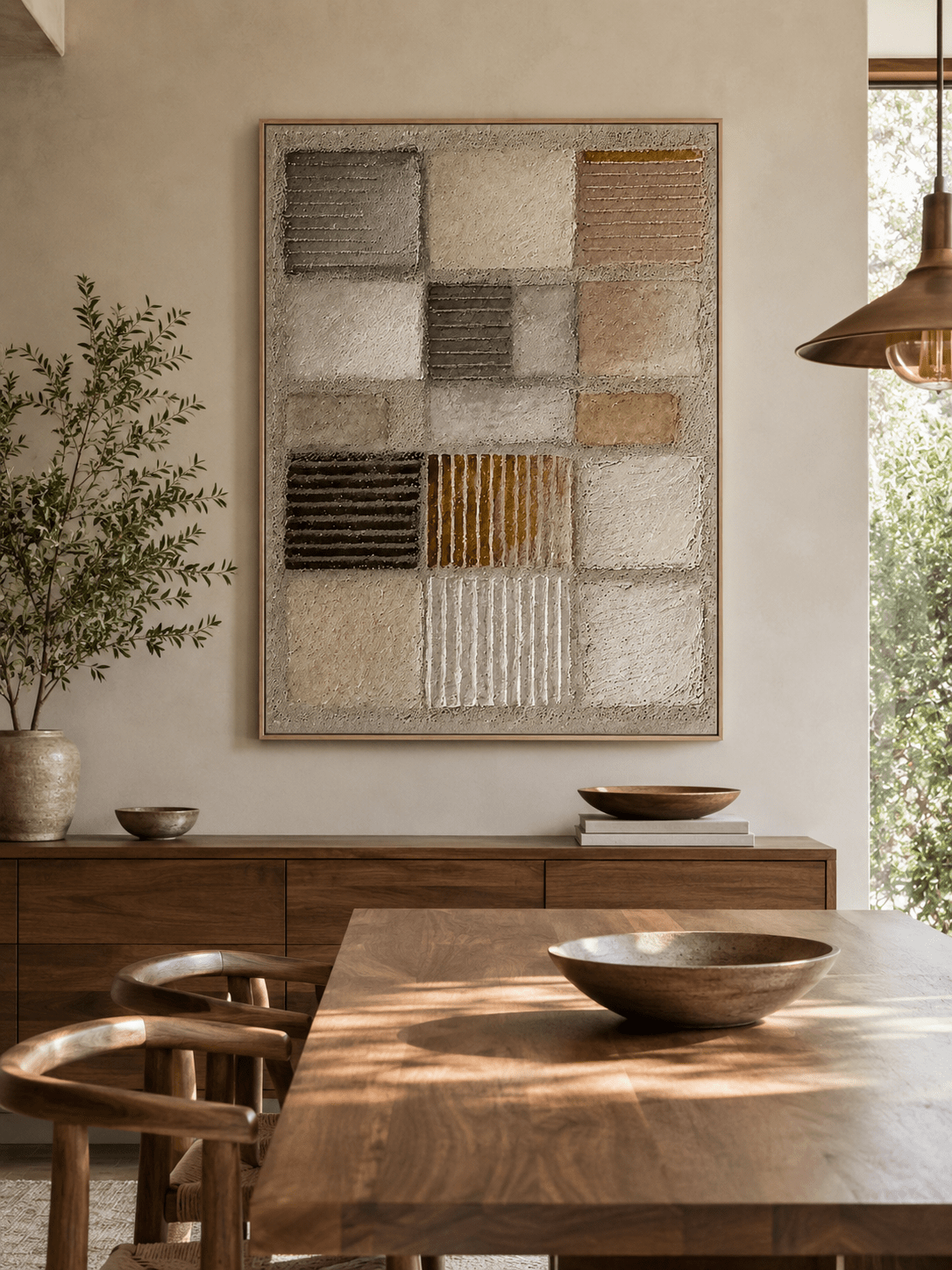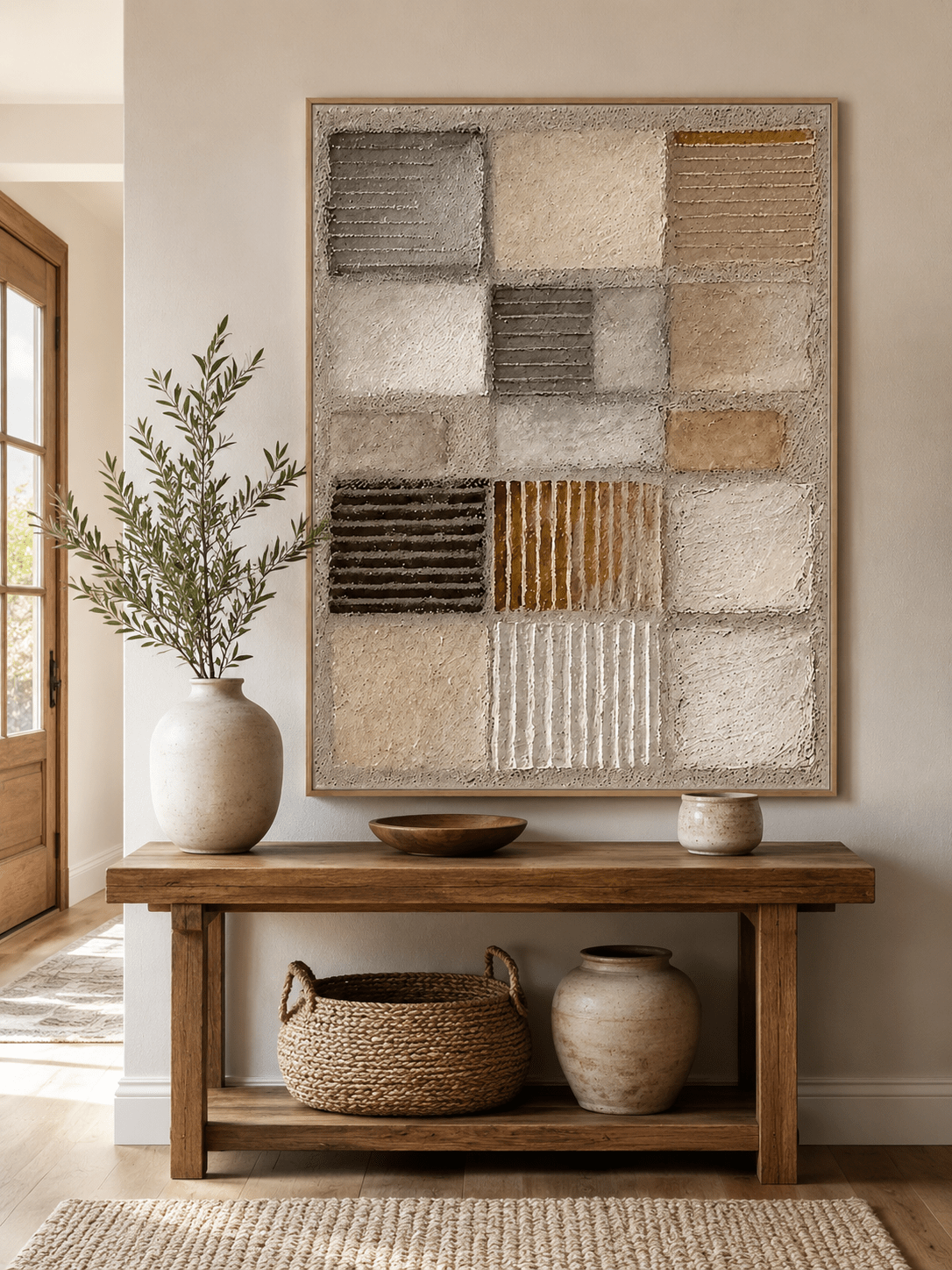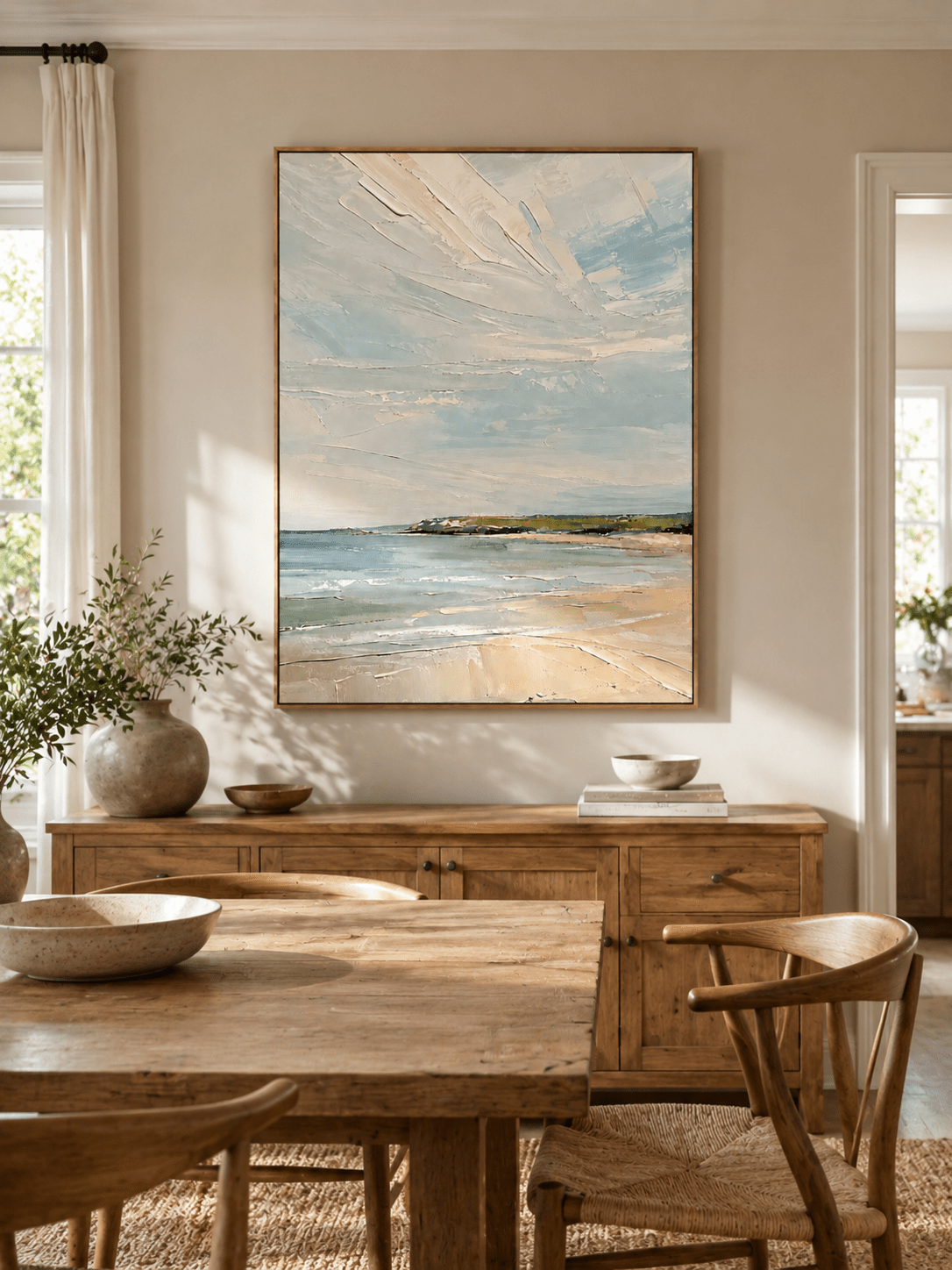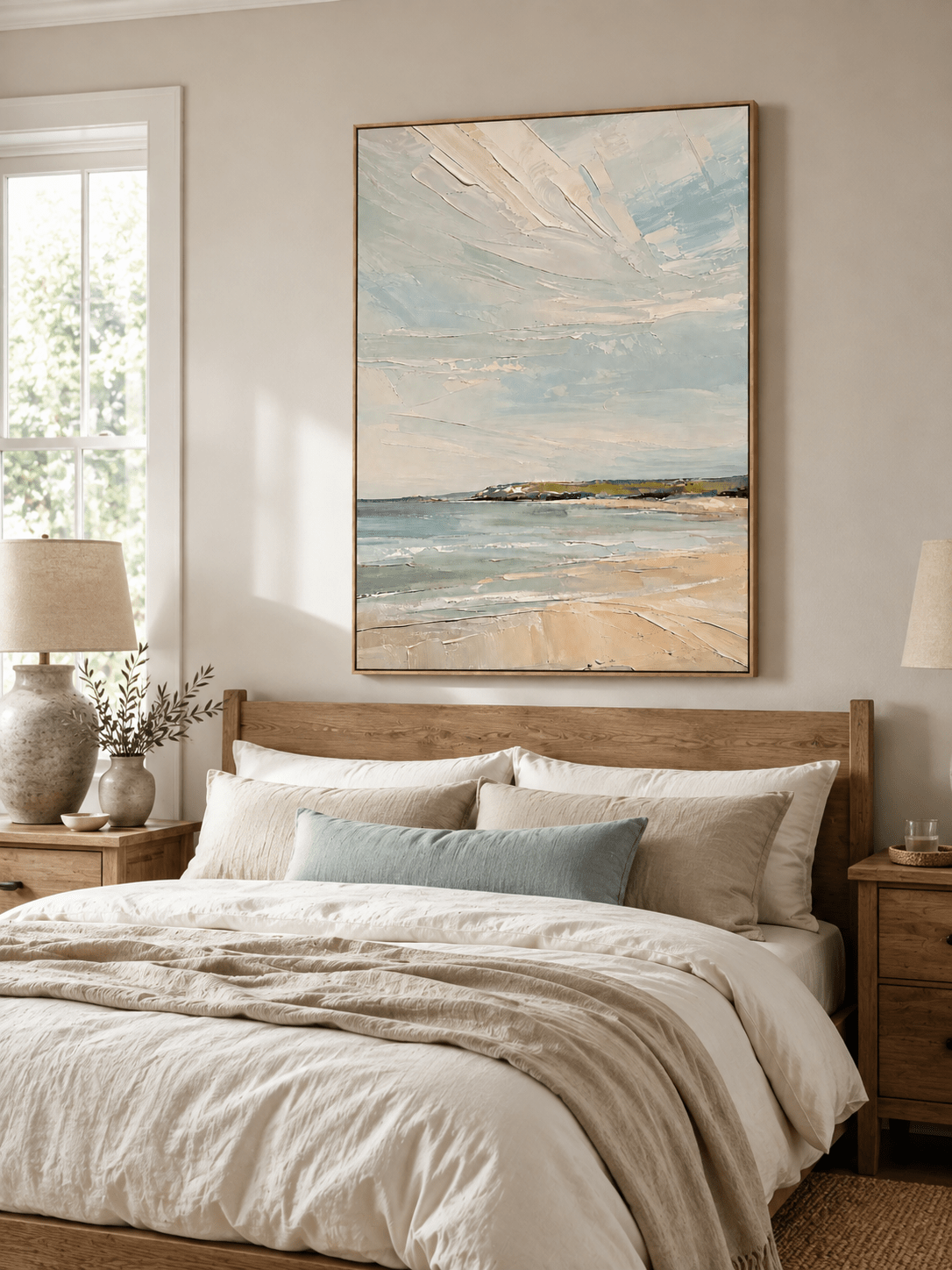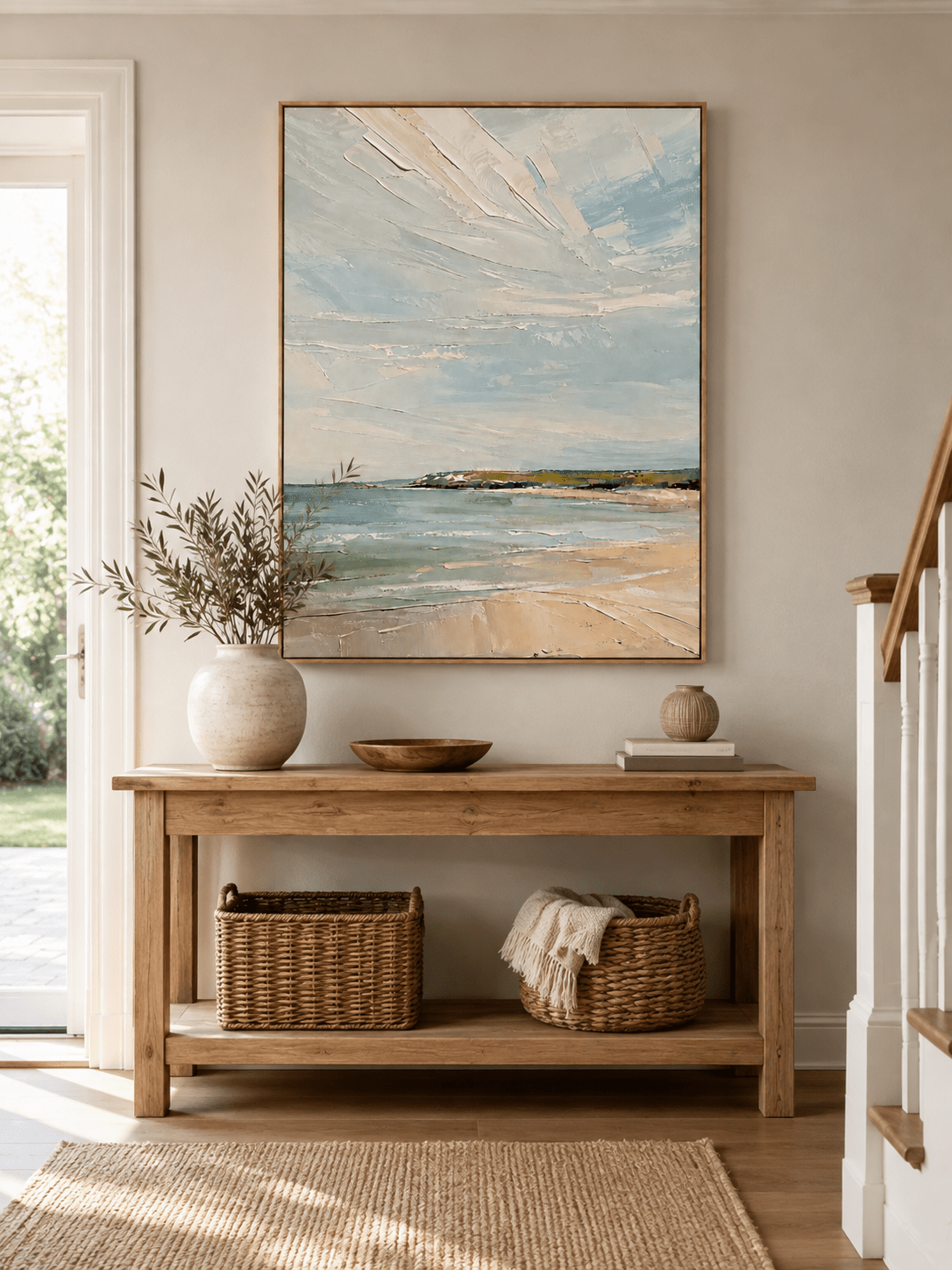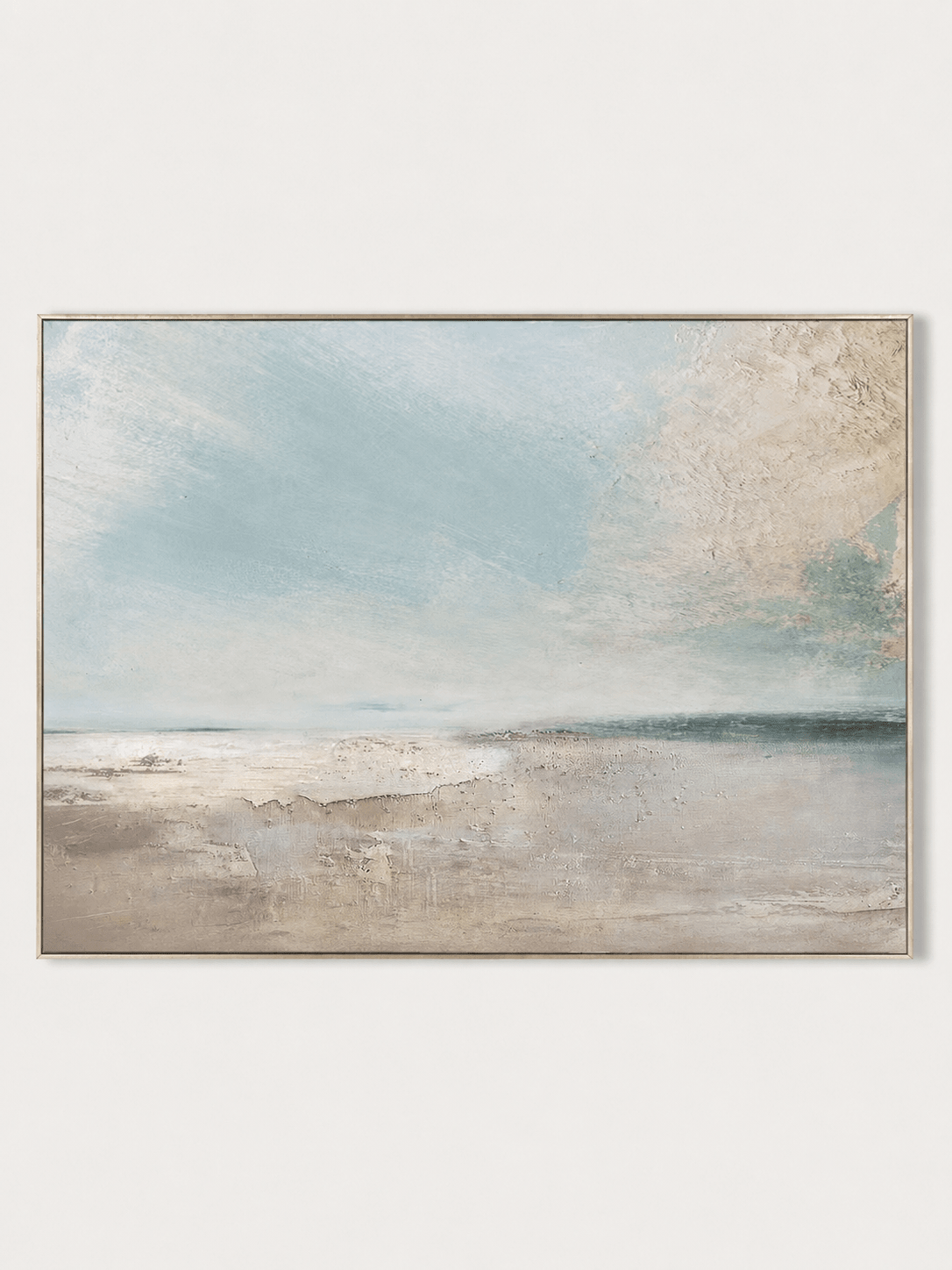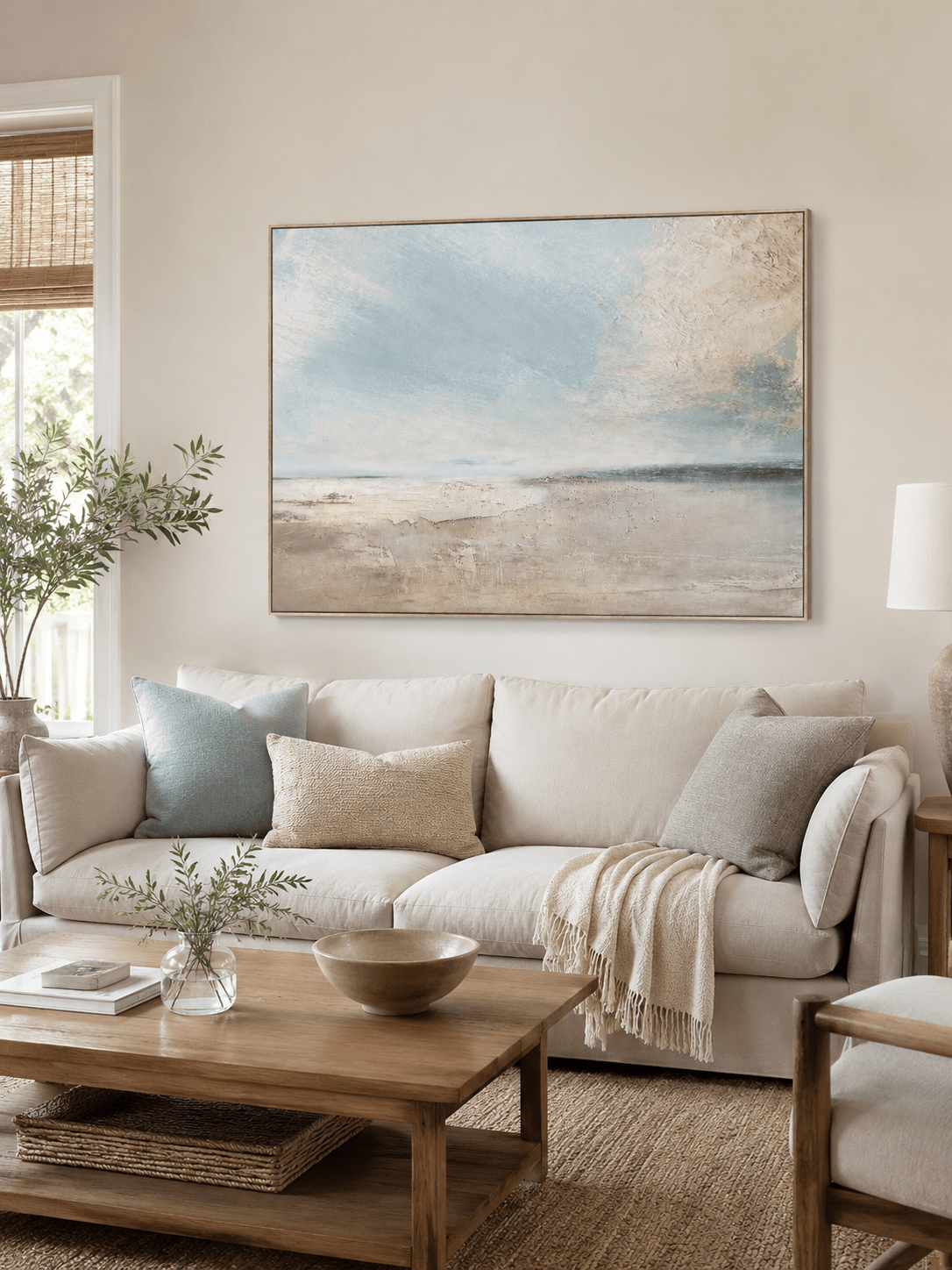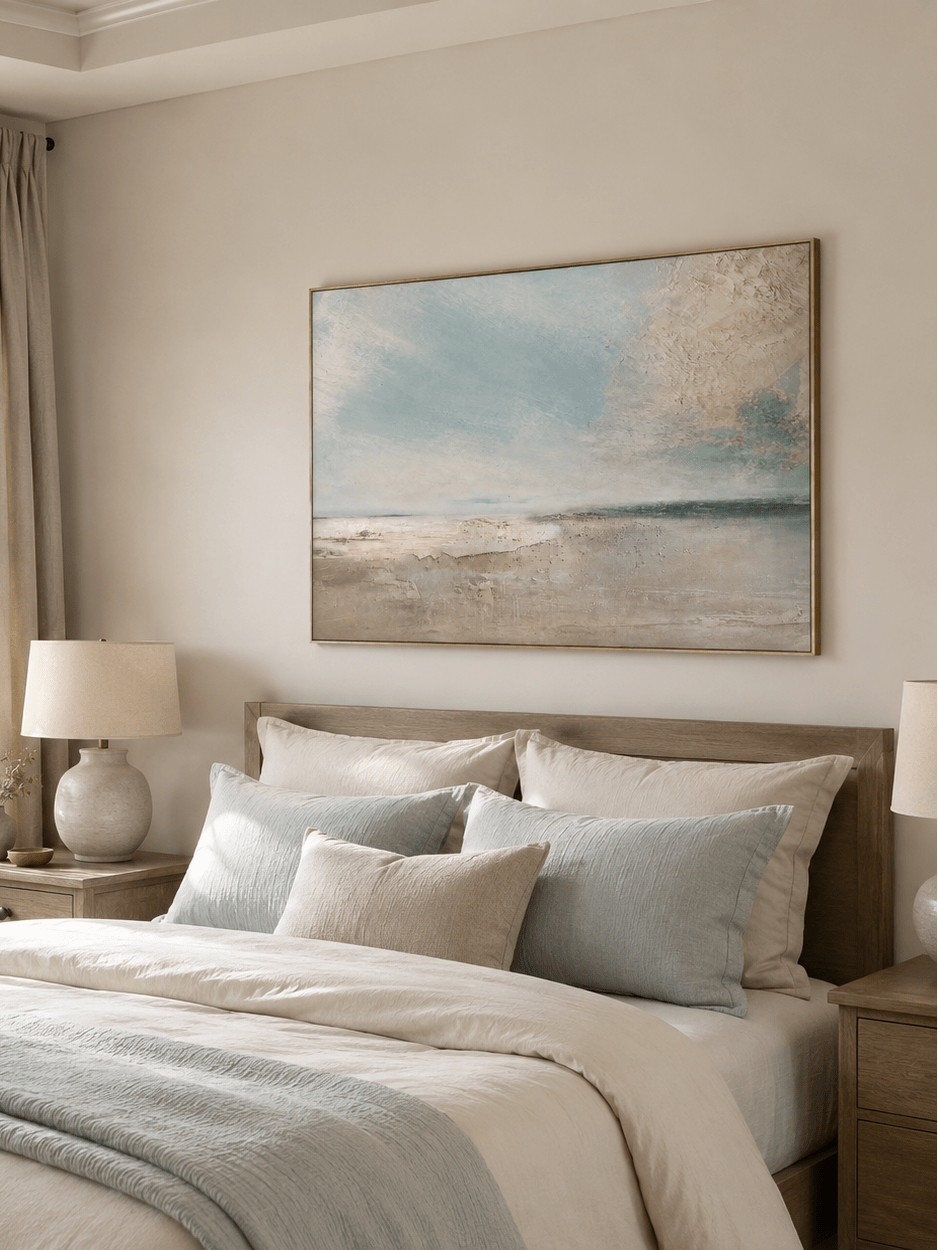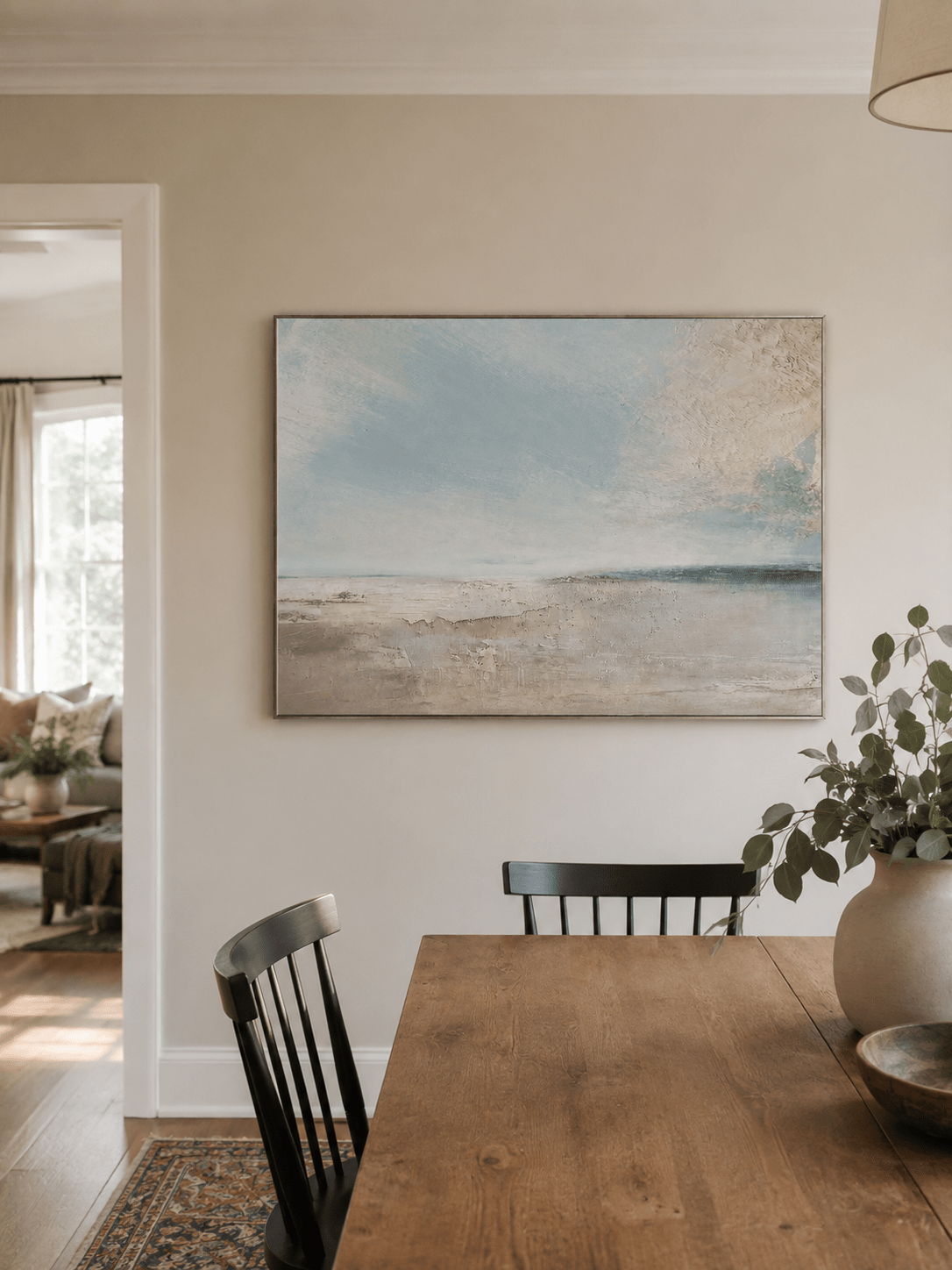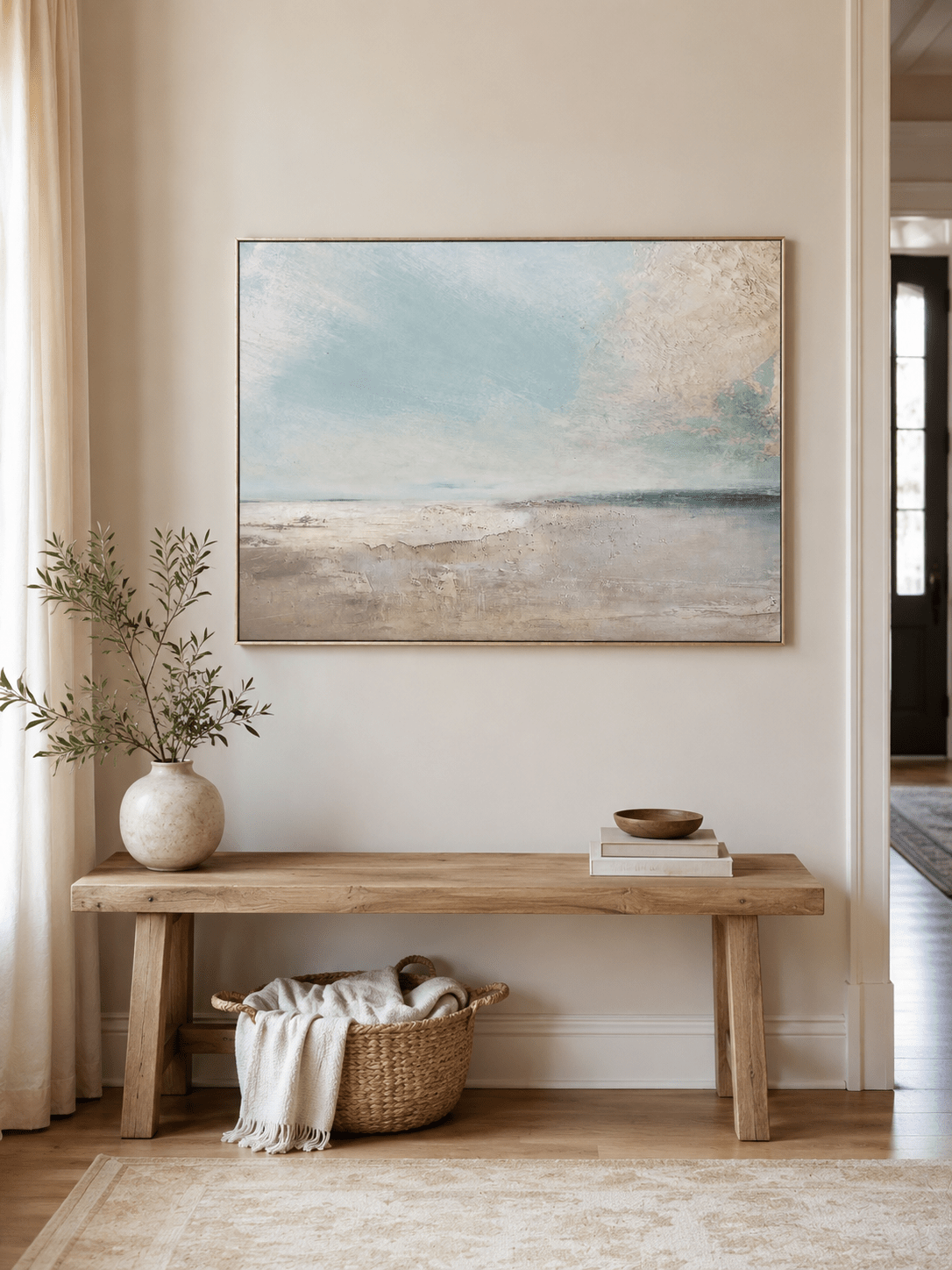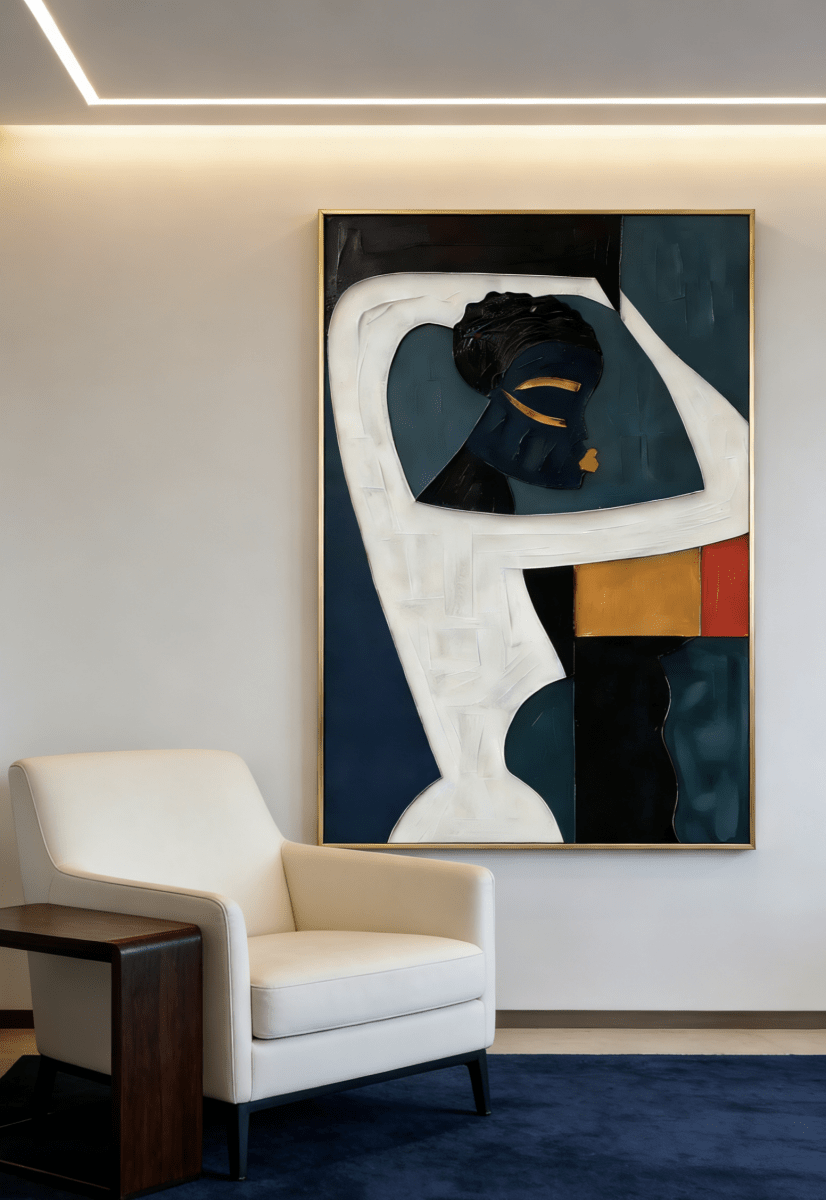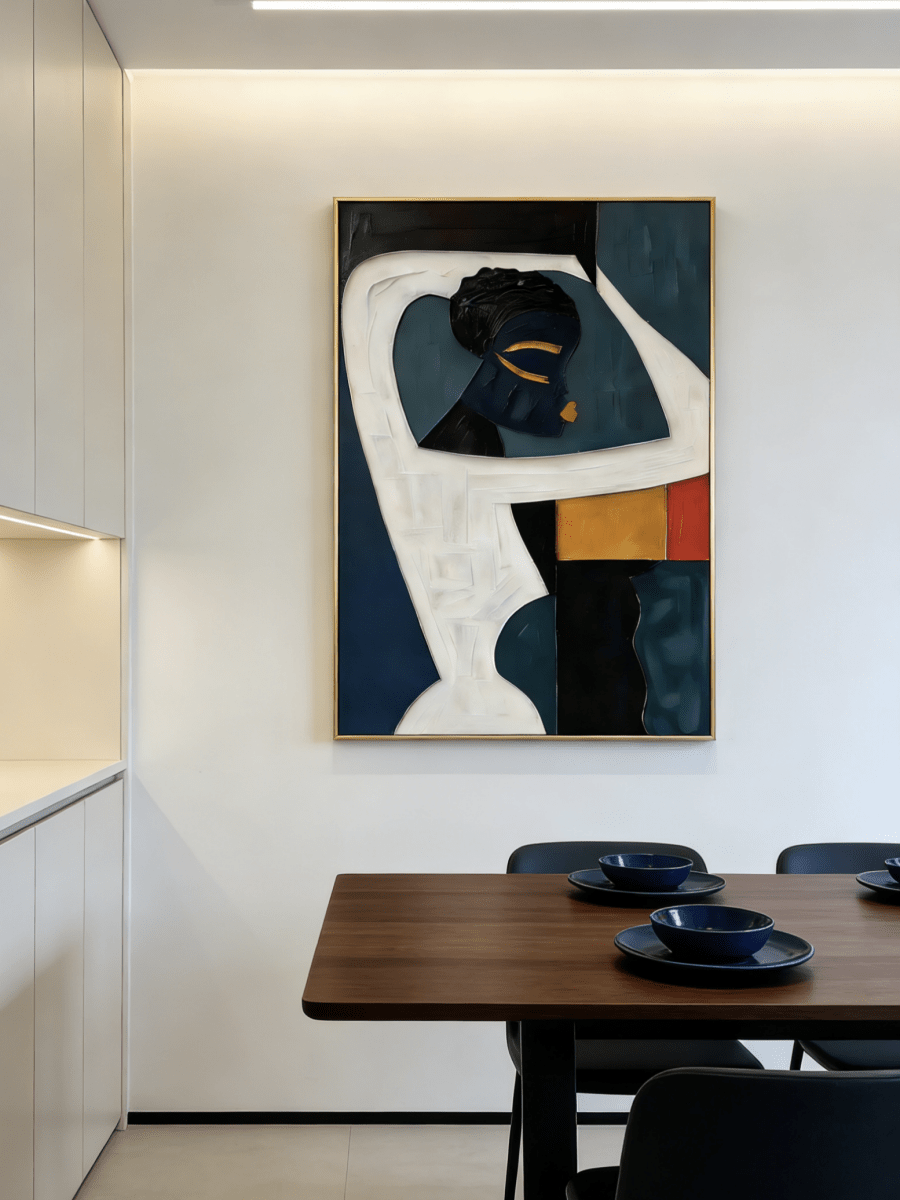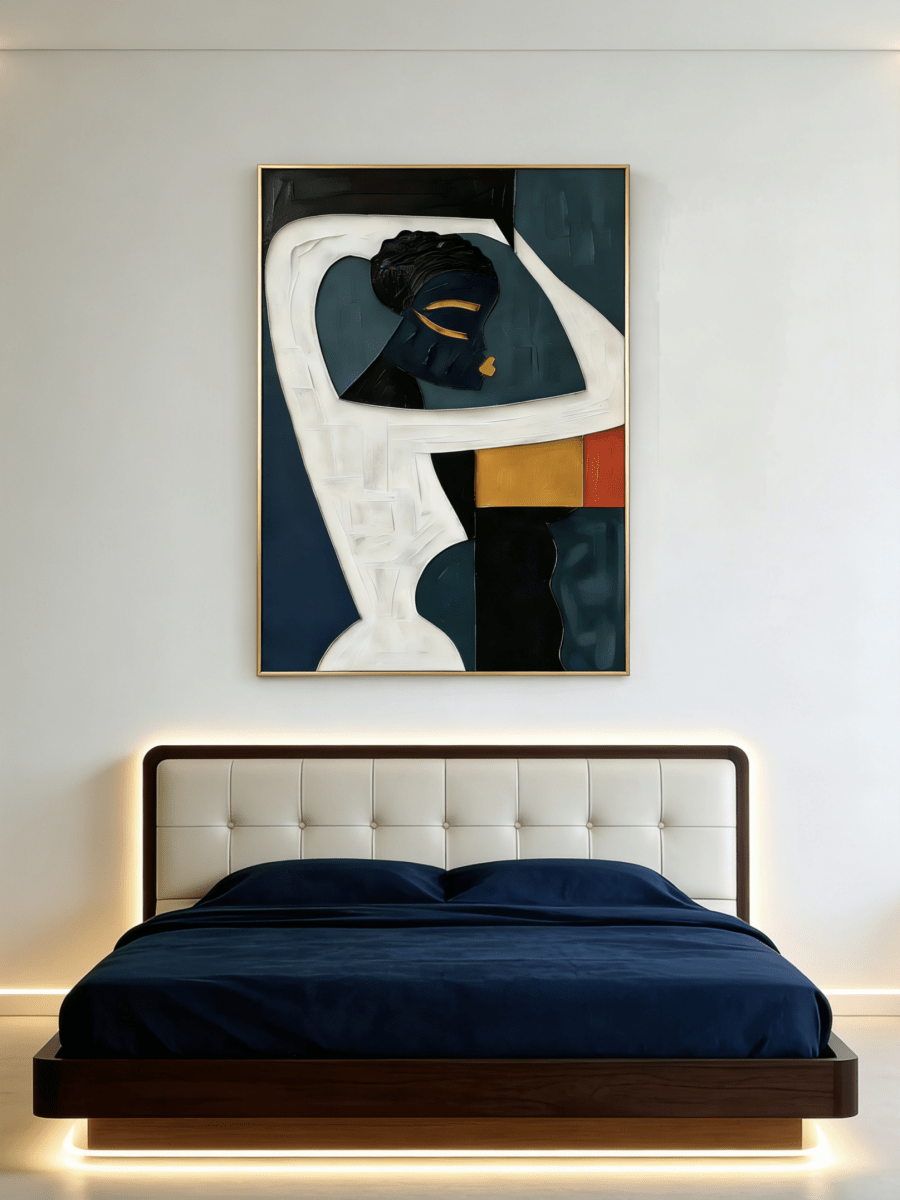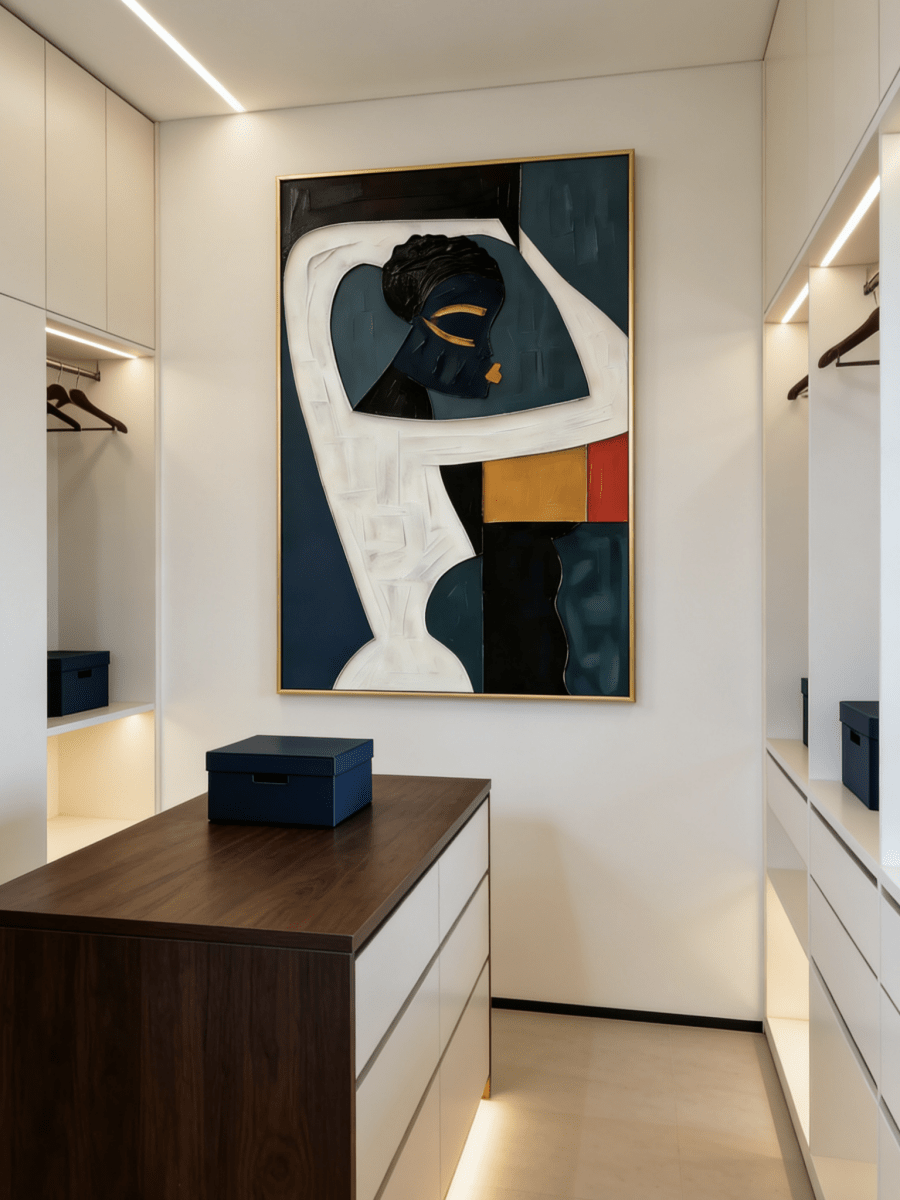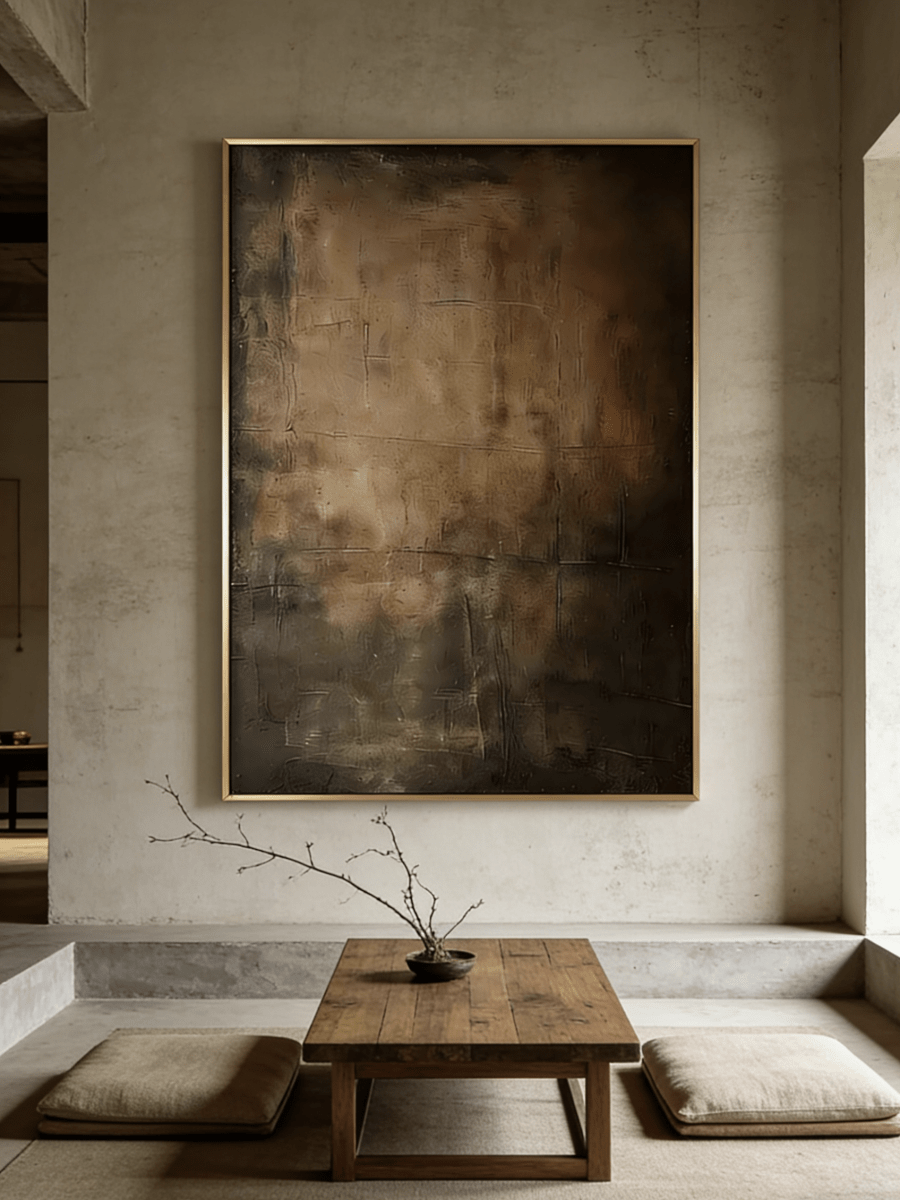

If you’ve been shopping for hand-painted wall art online, you’ve likely noticed a massive price gap. One abstract canvas might cost $150, while a seemingly similar piece sells for $1,500 or more.
It leaves many buyers wondering: What am I actually paying for? And what is a fair price?
At WABI Wall Art, we believe in total transparency. The short answer is that a genuine hand-painted canvas typically ranges from $150 for a small, simple piece to $2,500+ for large, custom, or heavily textured artwork.
But size alone doesn't dictate the price tag. The true cost comes down to the artist's labor, the thickness of the texture, customization, and how the canvas is framed. Here is your definitive guide to understanding wall art pricing and how to ensure you're getting true value for your home.
The Quick Price Benchmark for Hand-Painted Canvas
Are you in a rush? Use this quick benchmark for high-quality, made-to-order hand-painted wall art. (Note: These are typical shopping budgets, not gallery original appraisals).
| Artwork Size | Typical Budget |
|---|---|
| Small Canvas (approx. 16"x20" to 24"x24") | $100 – $300 |
| Medium Canvas (approx. 24"x36" to 30"x40") | $250 – $600 |
| Large Statement Canvas (approx. 36"x48" to 40"x60") | $450 – $1,200 |
| Oversized Canvas (48"x72" and larger) | $800 – $2,500+ |
| Highly Textured / Custom Art | Typically adds 20% to 50% to the base size price. |

What Actually Determines the Price of Hand-Painted Wall Art?
When evaluating a painting, look beyond the dimensions. Several crucial factors influence the final price tag:
1. The Artist's Time and Labor (The Human Element)
Hand-painted art is fundamentally labor-intensive. Unlike a printed canvas that rolls out of a machine in seconds, a real painting requires hours—sometimes weeks—of human effort. The artist must prepare the canvas, build the base layers, mix colors, apply brushwork, wait for sections to dry, and refine the composition. The more complex the piece, the more labor you are paying for.

2. 3D Texture and Material Costs
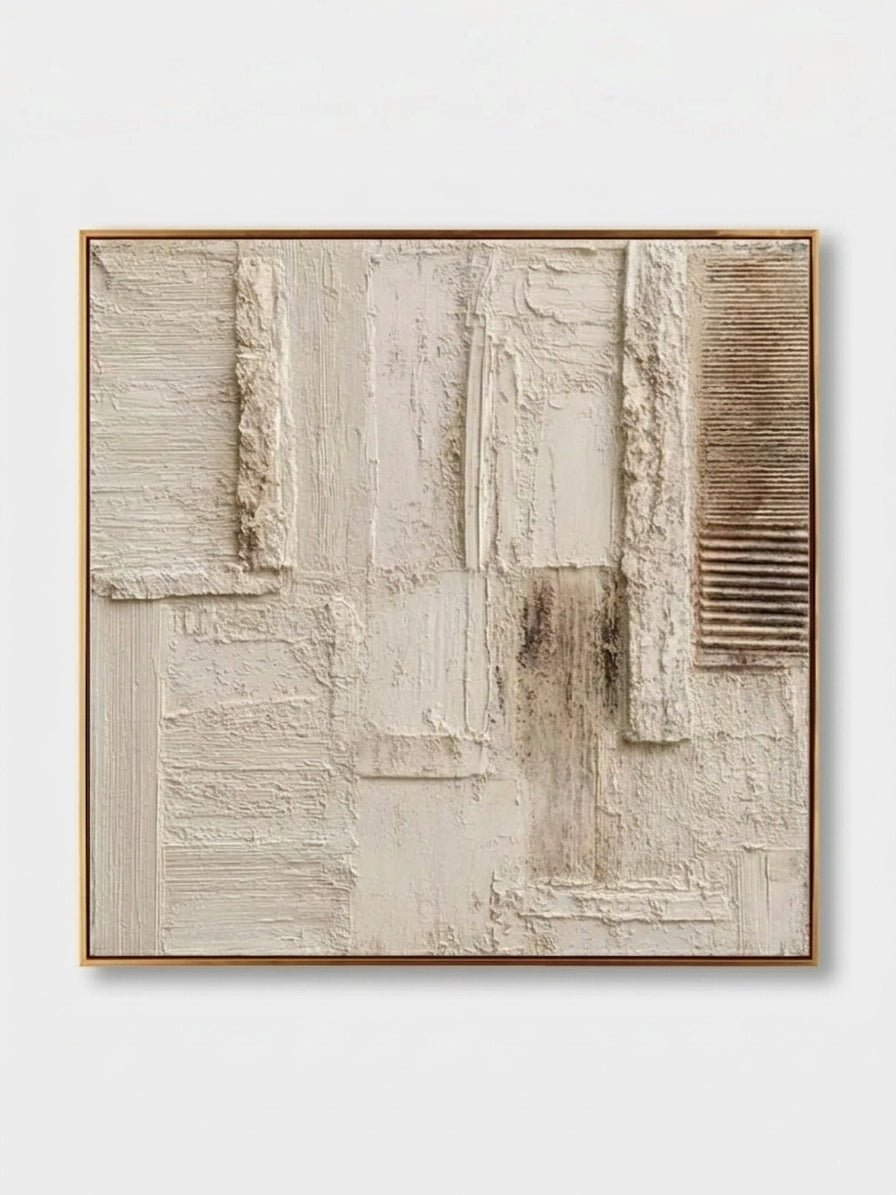
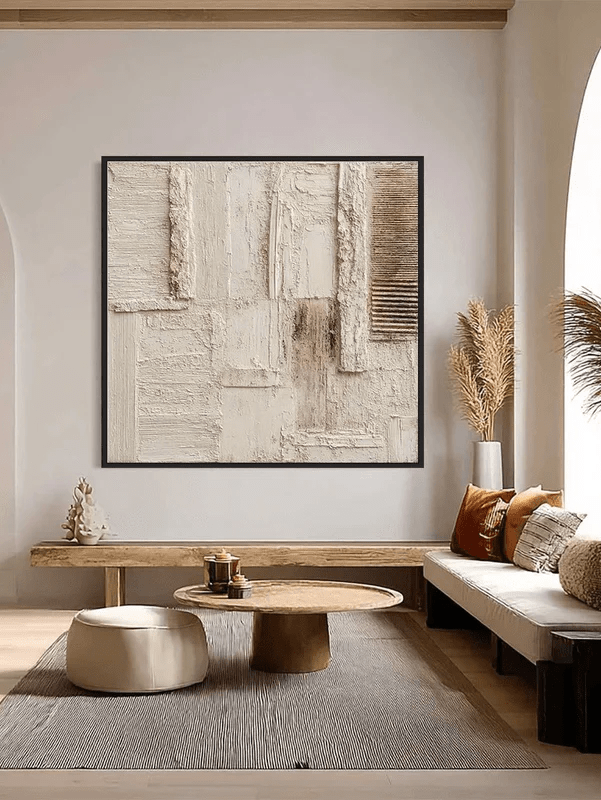
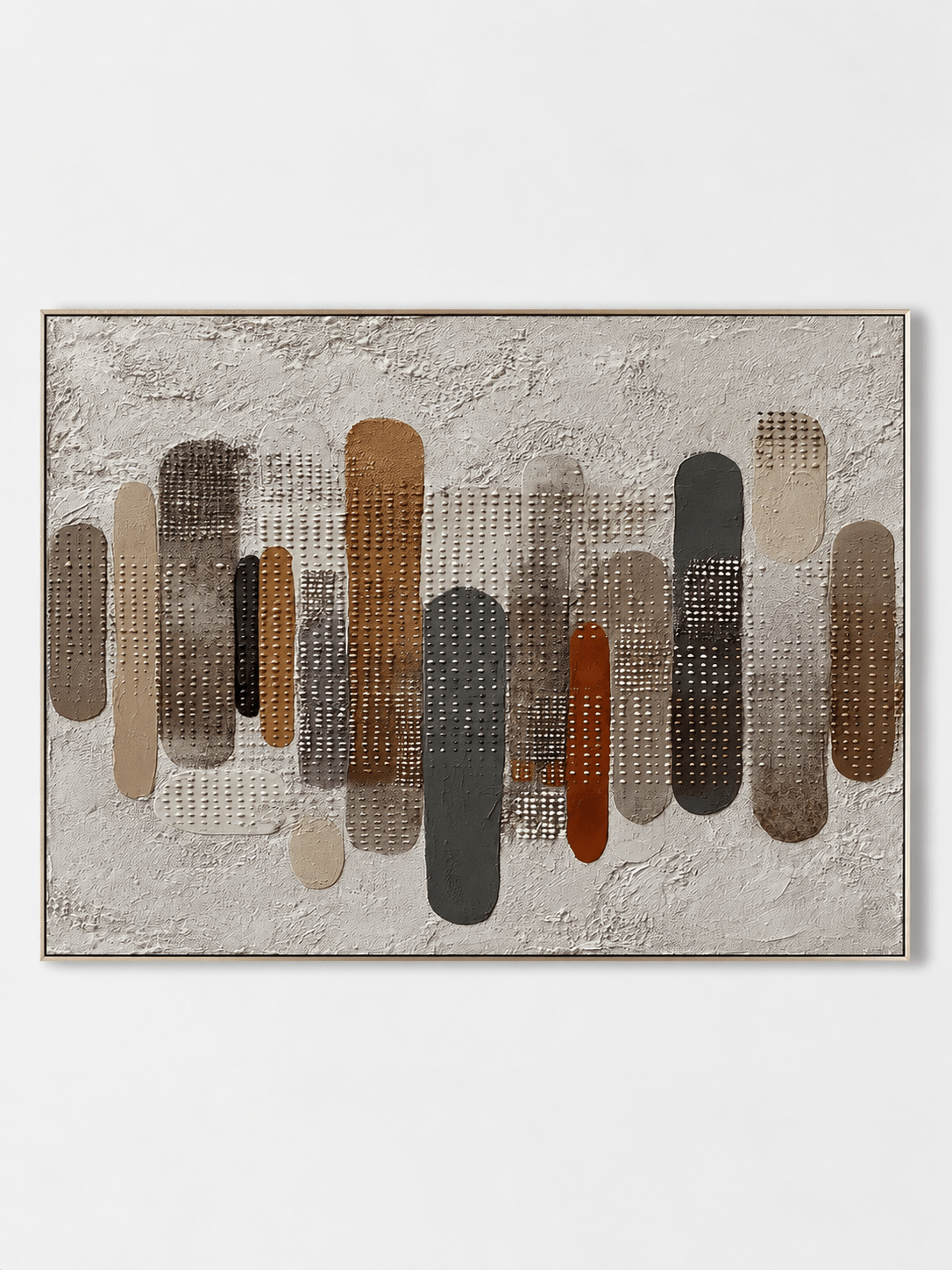
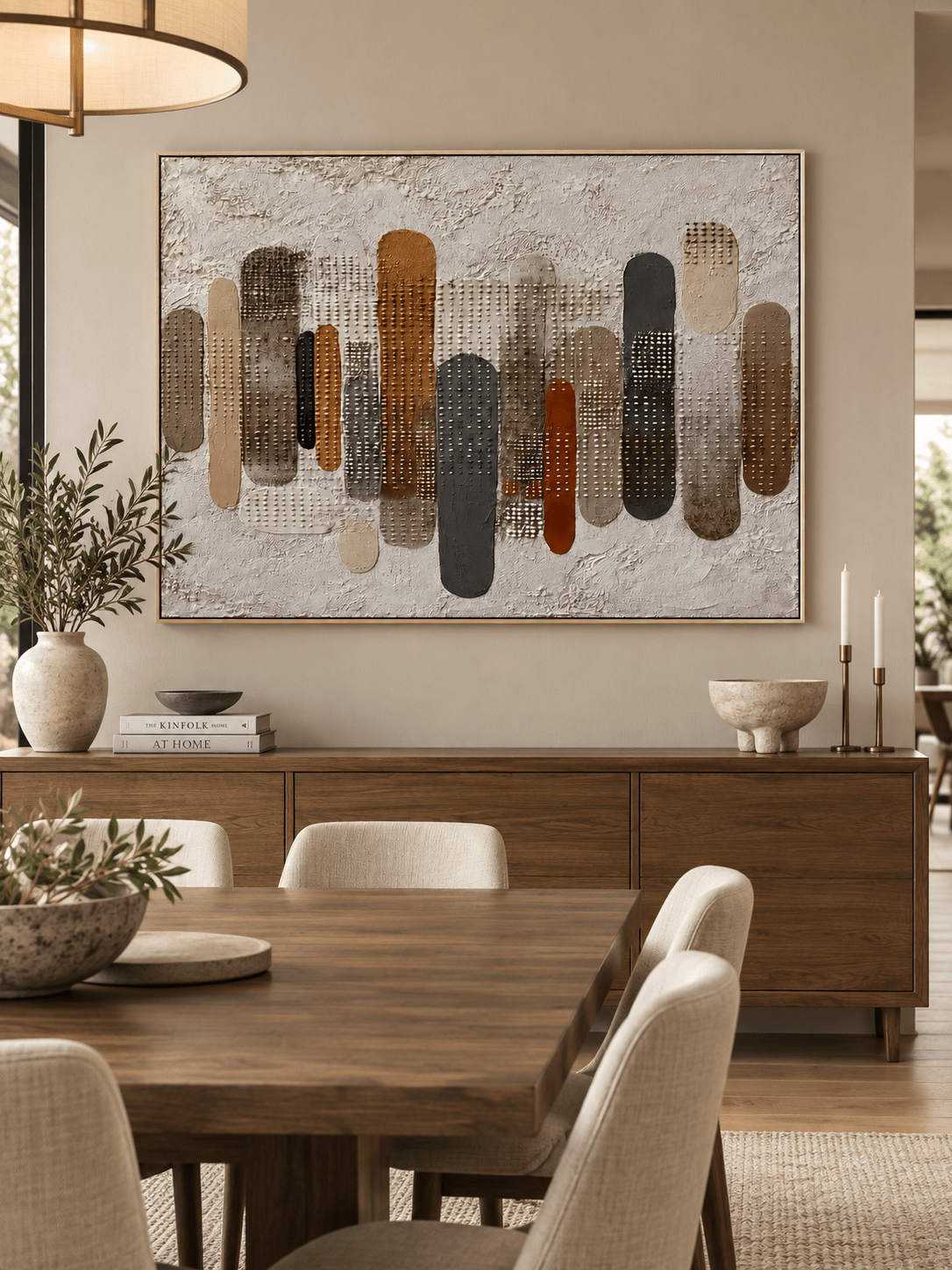
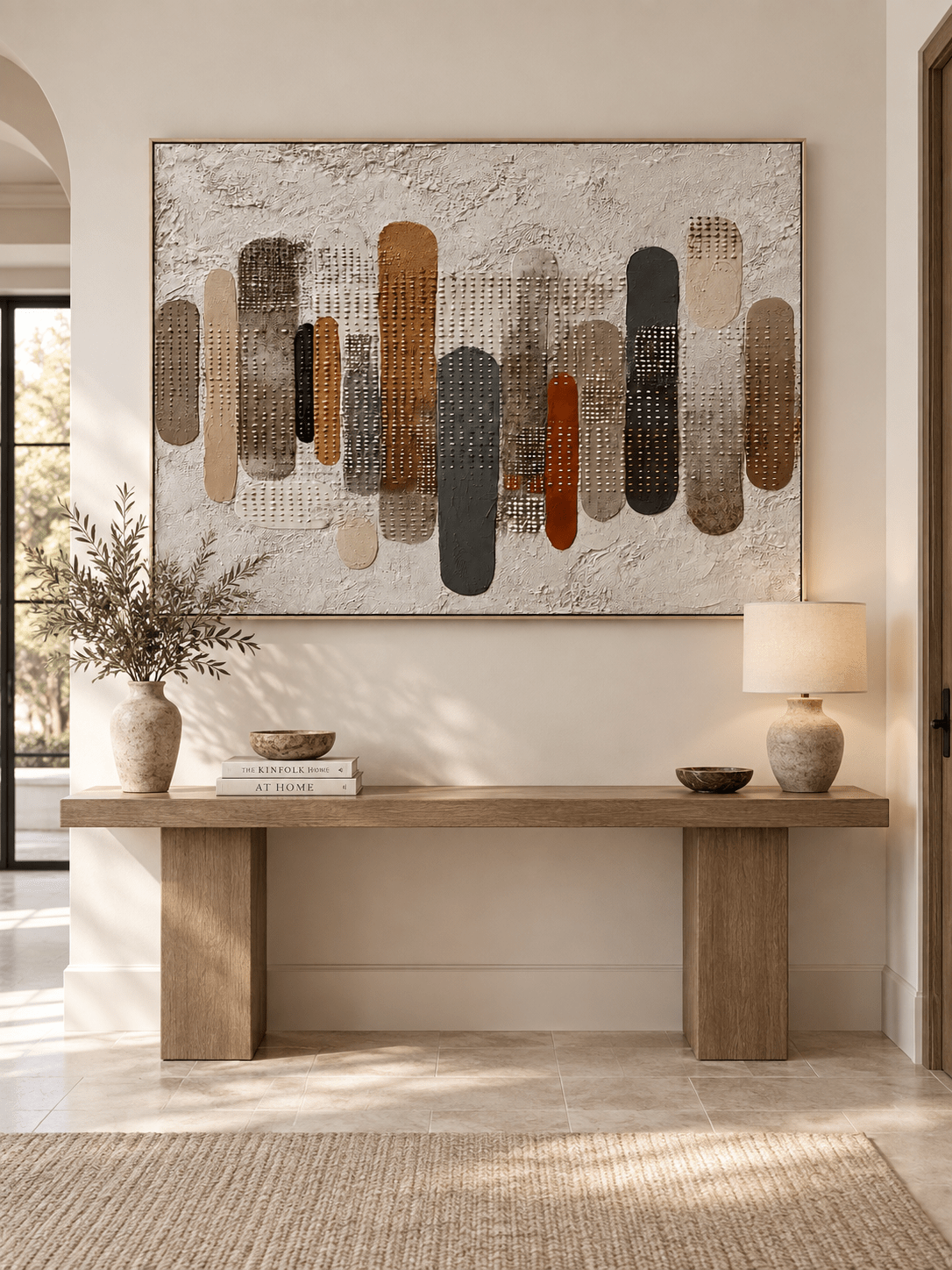
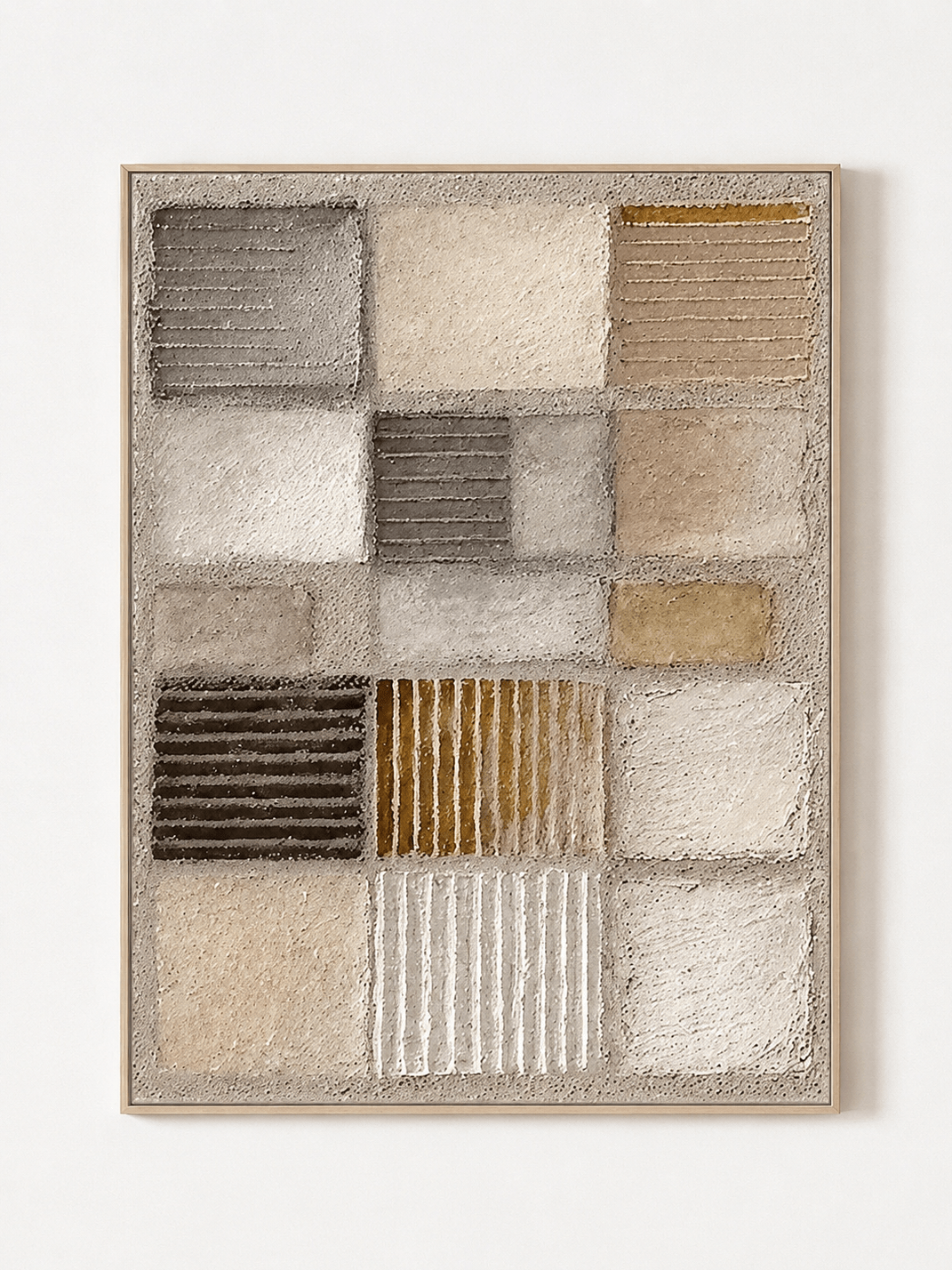
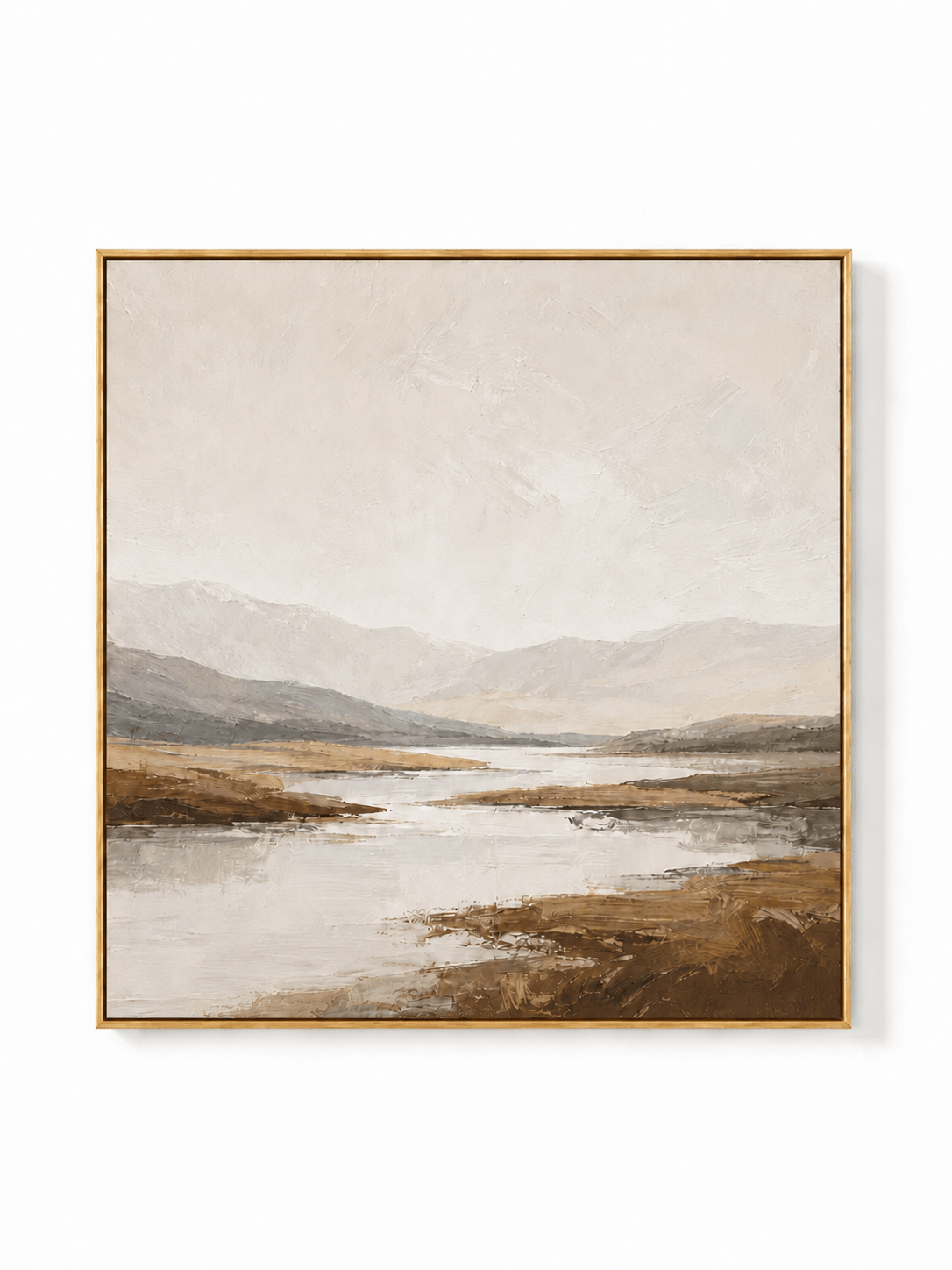
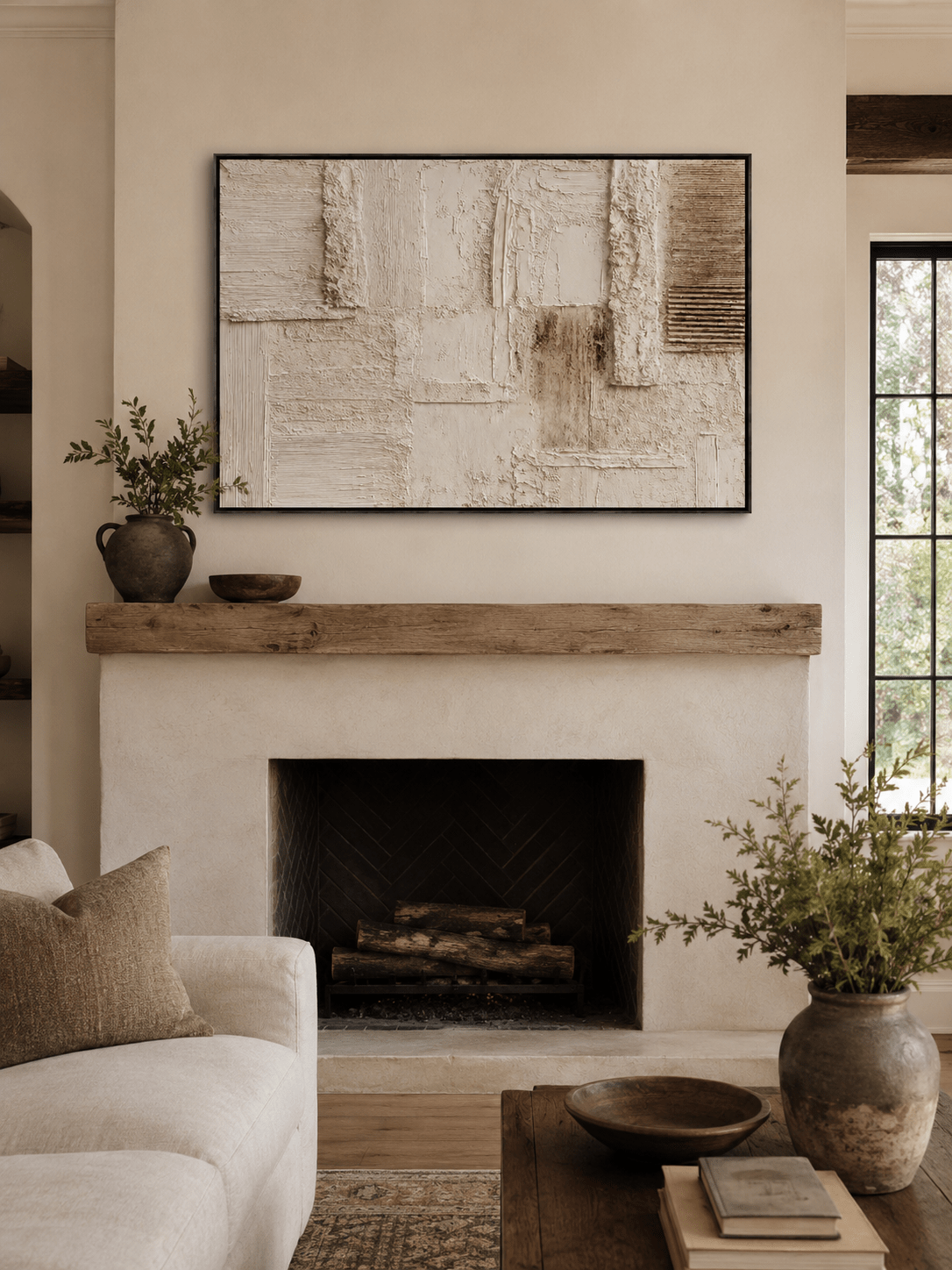
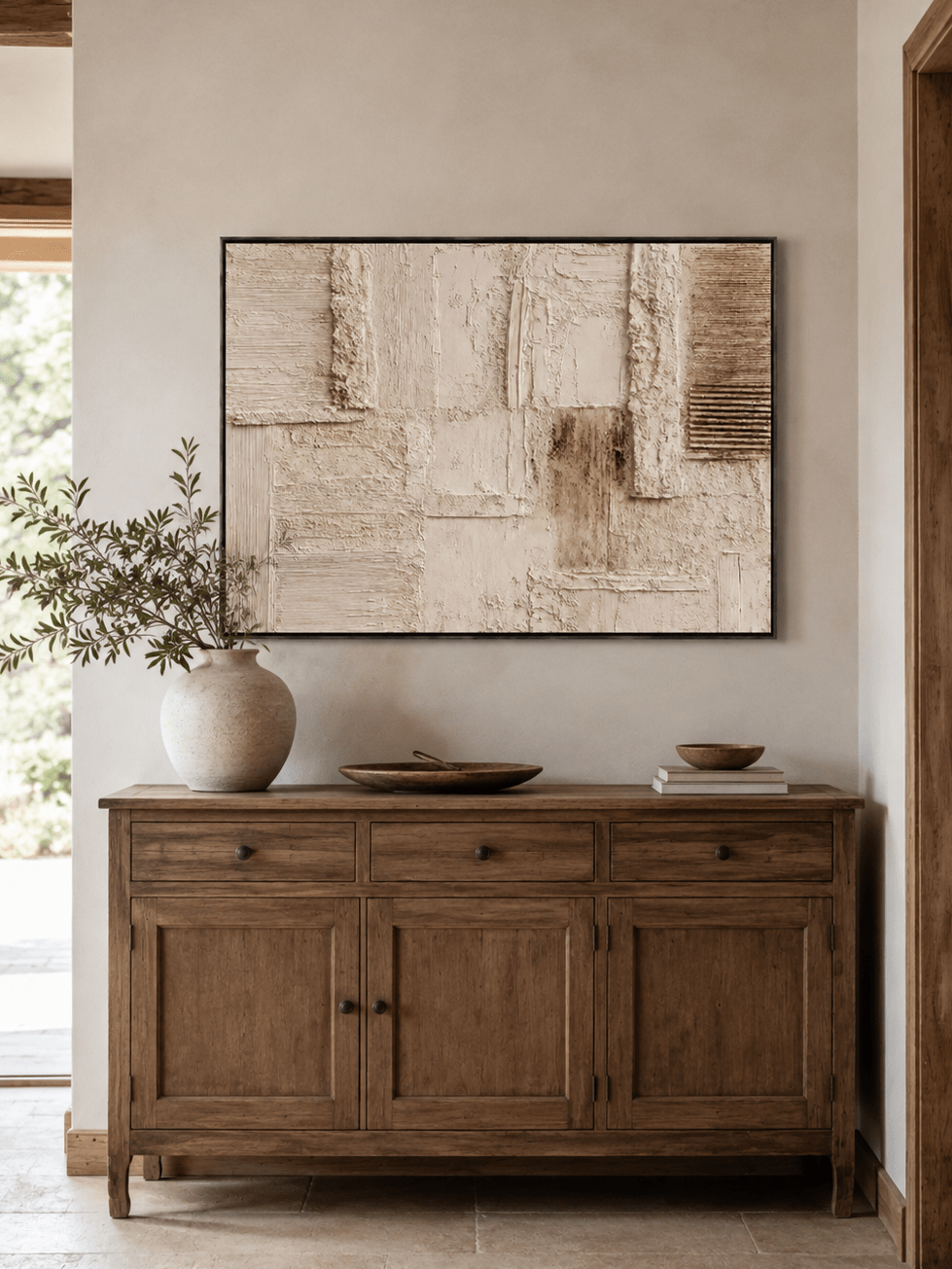
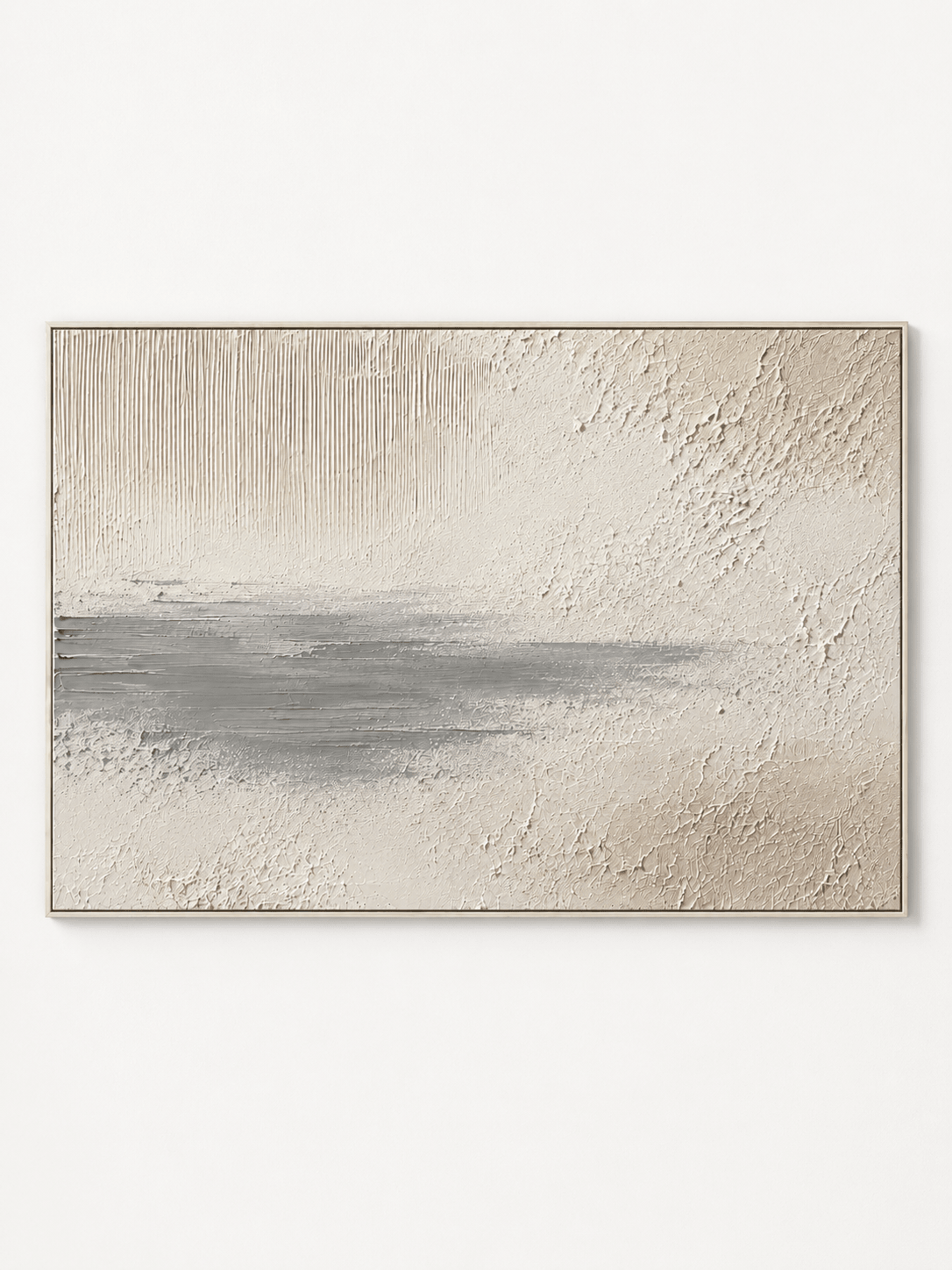
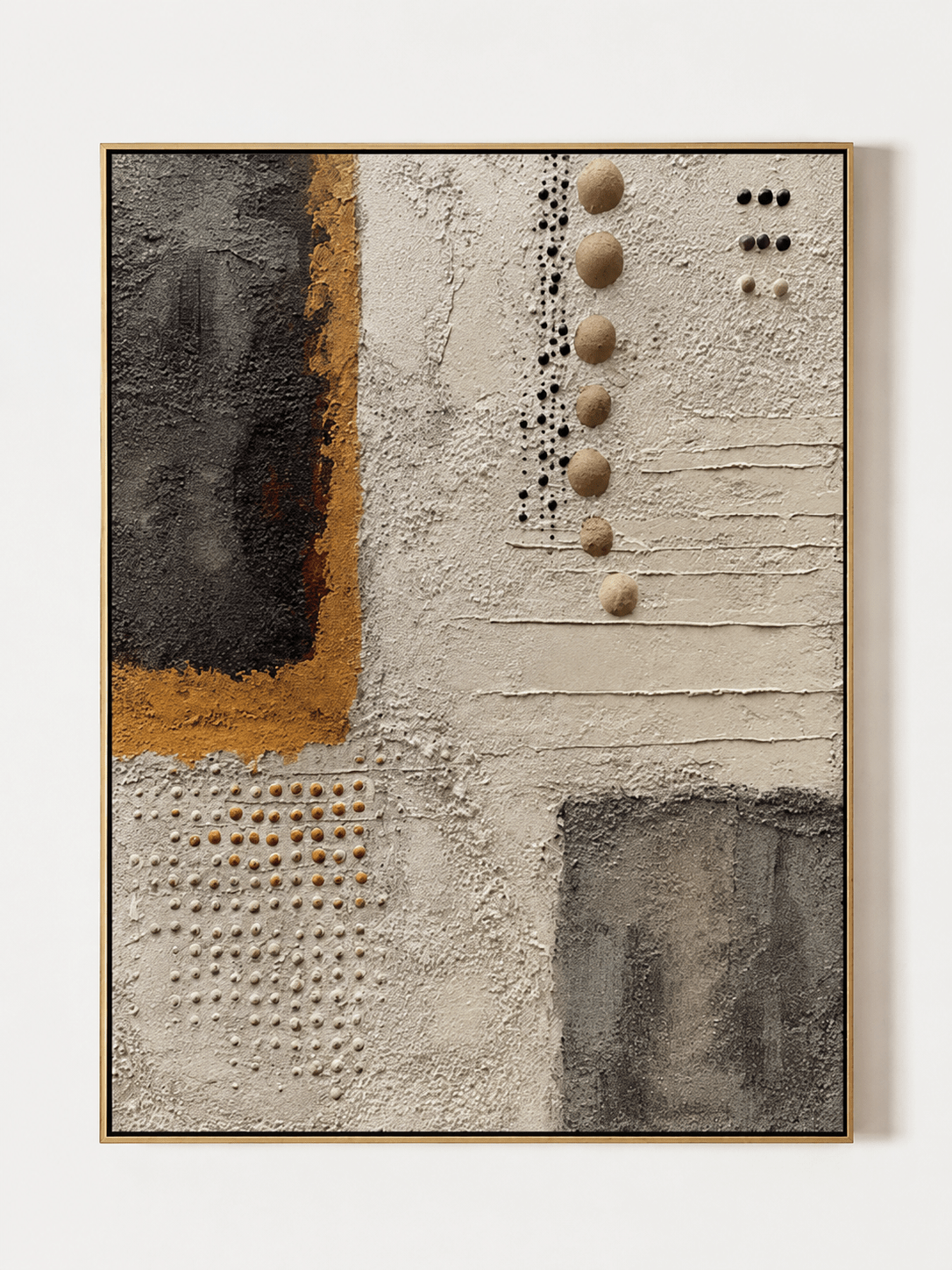
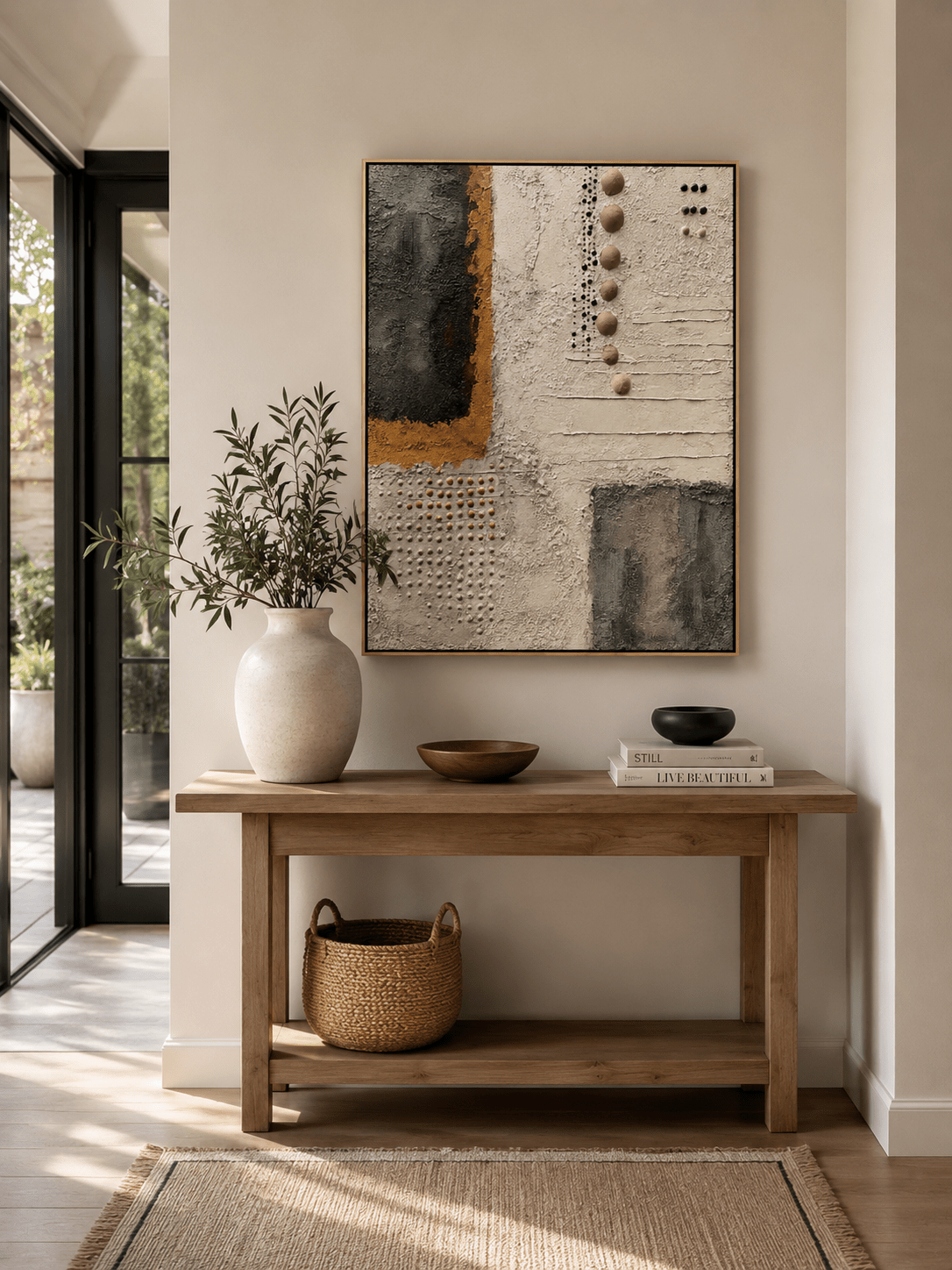
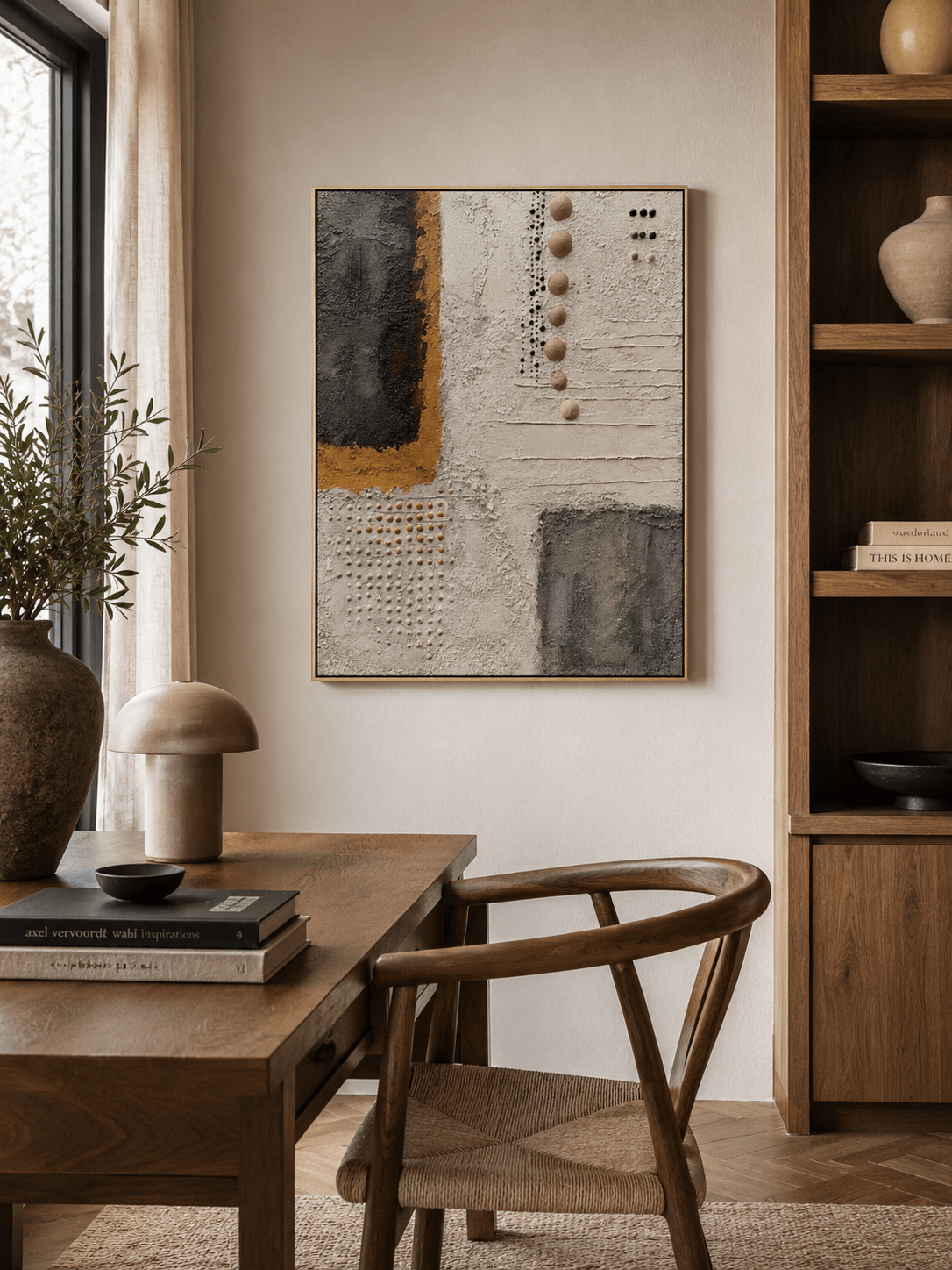
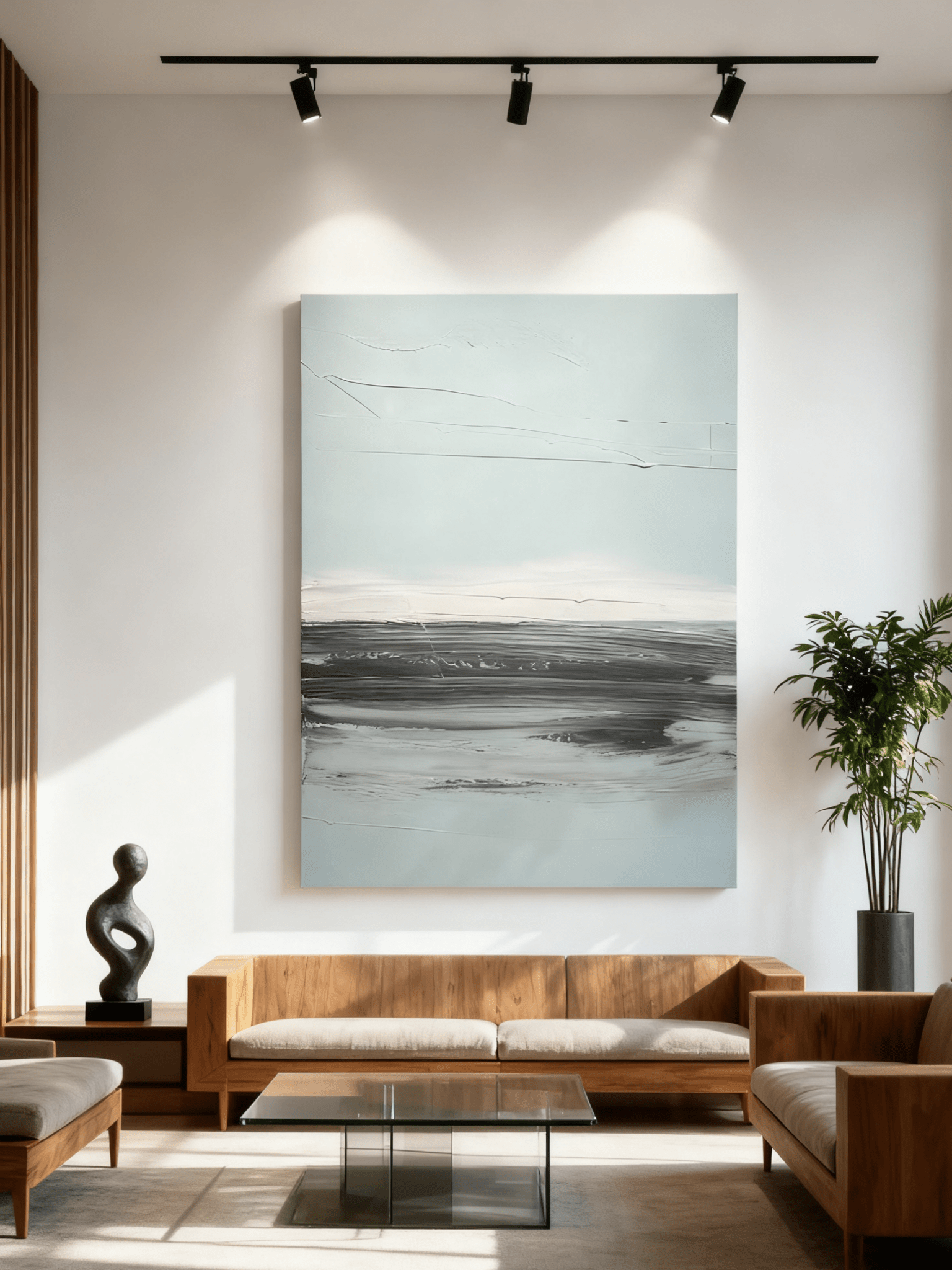
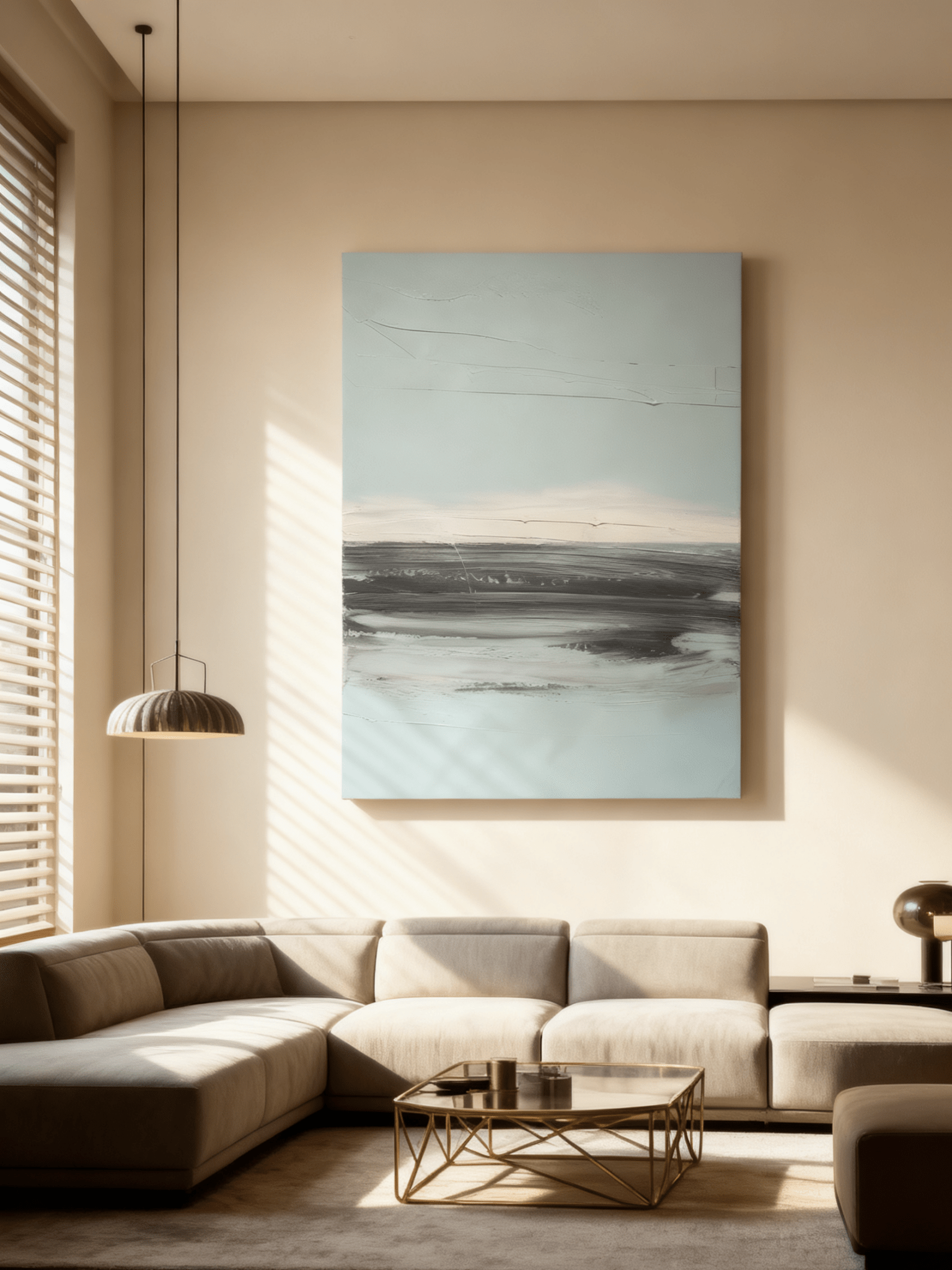
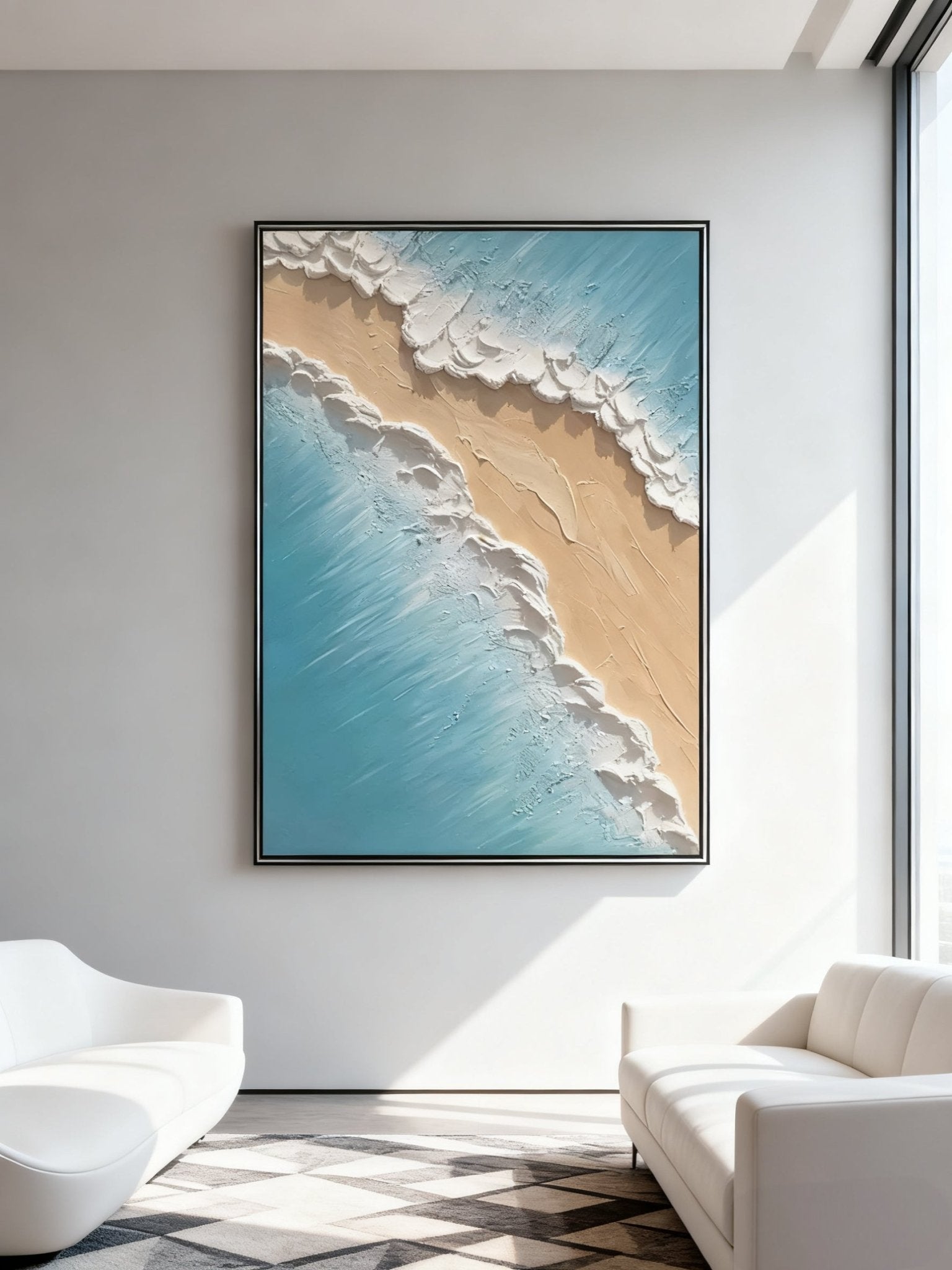
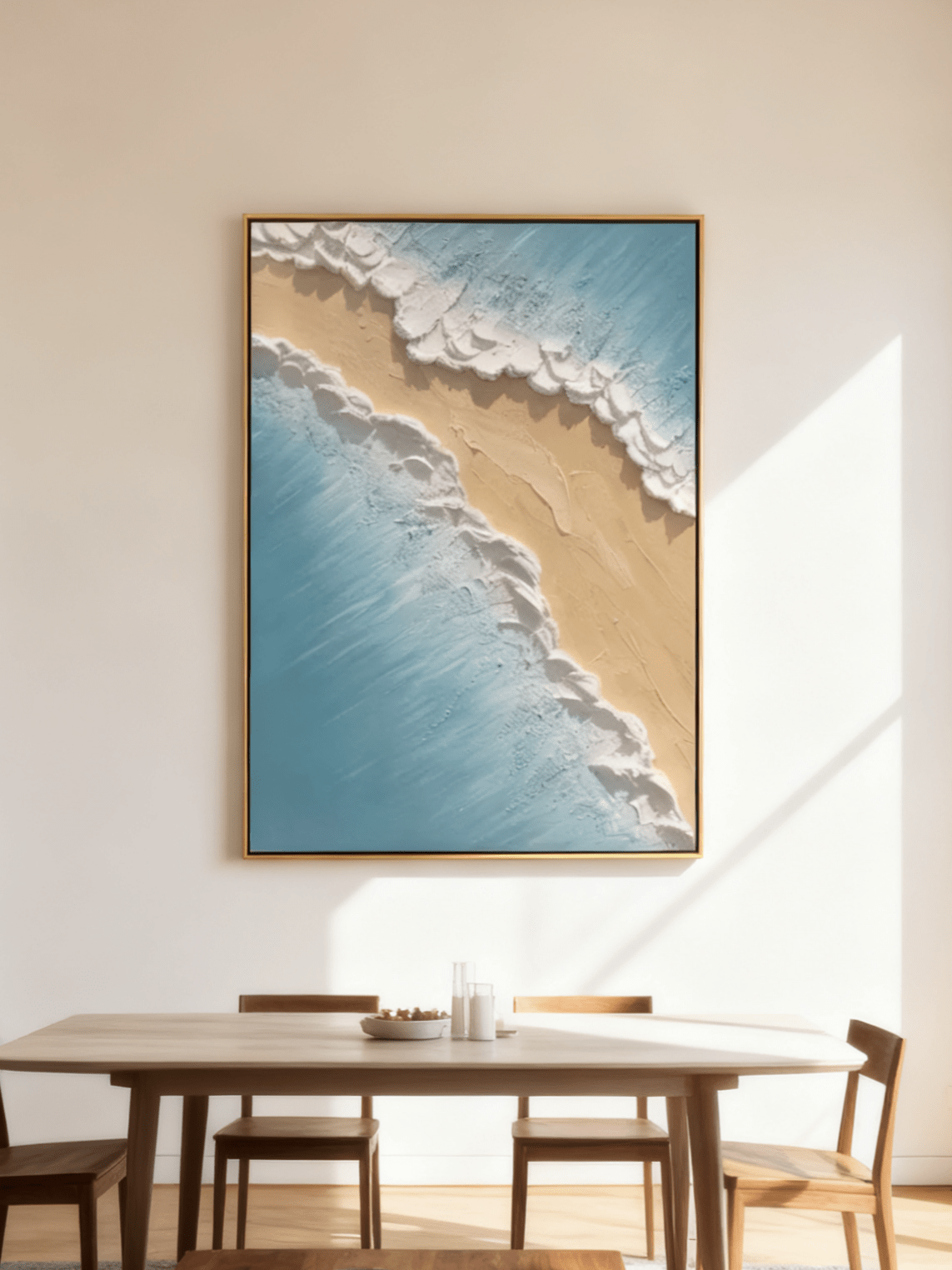
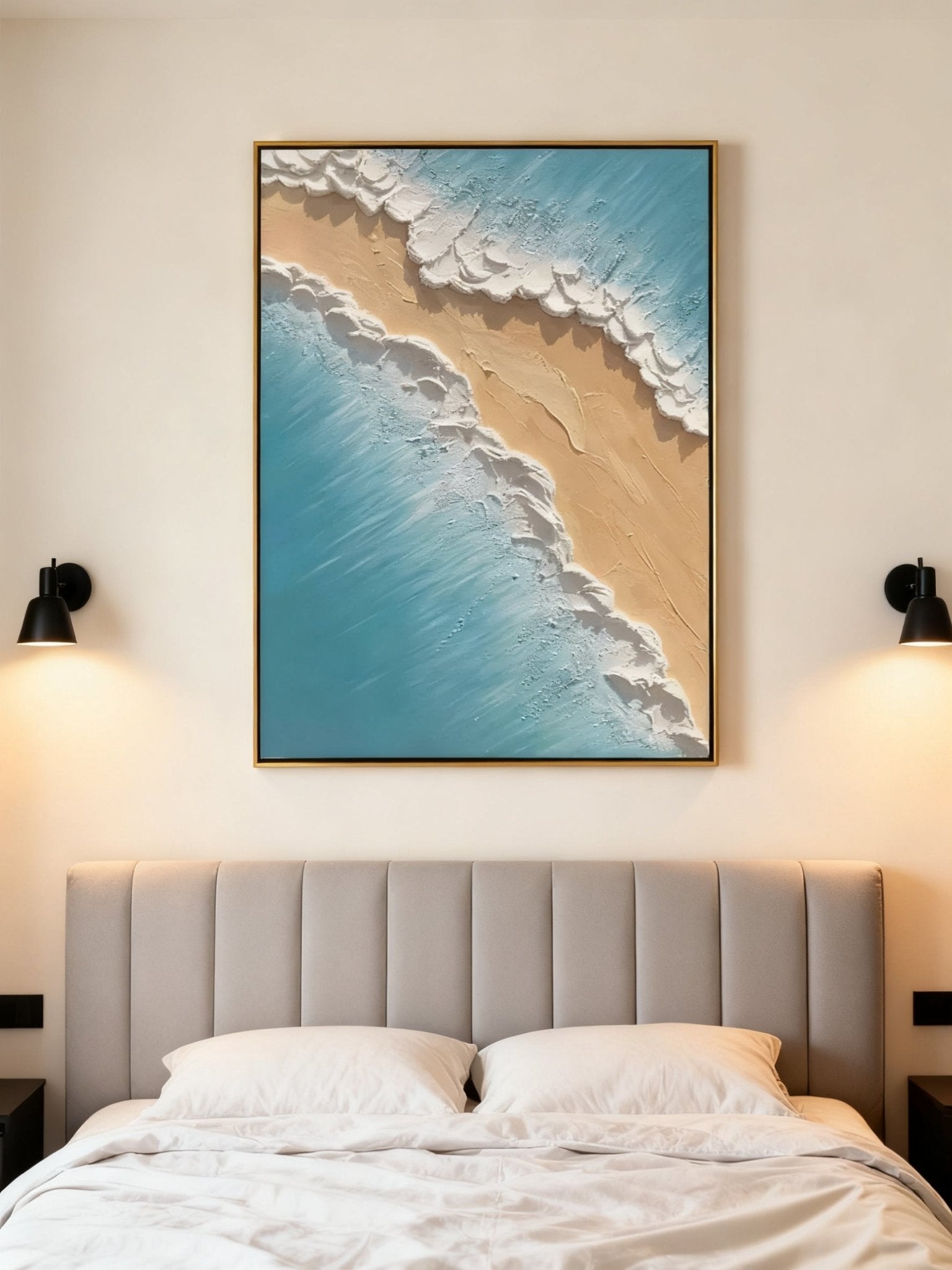
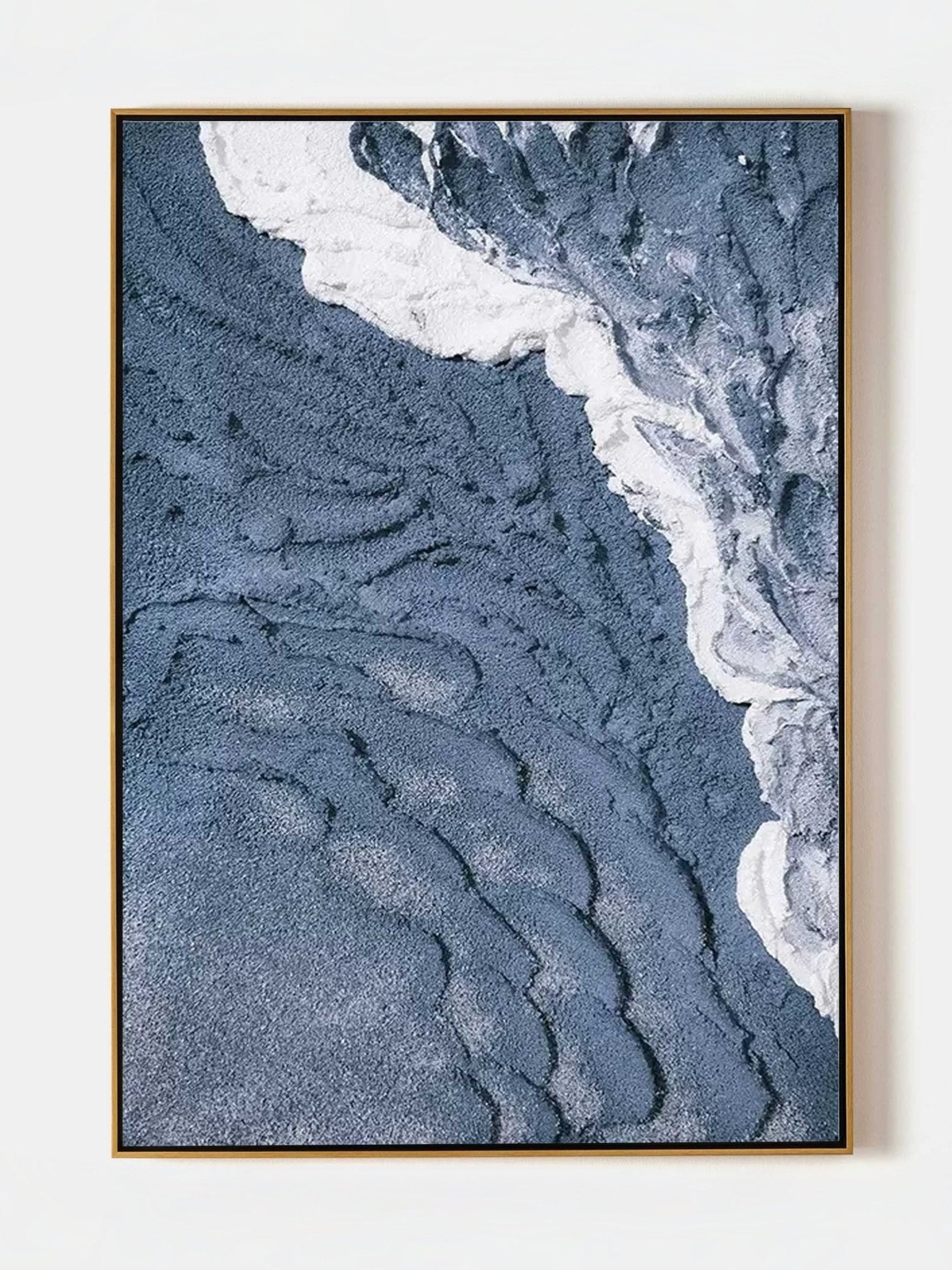
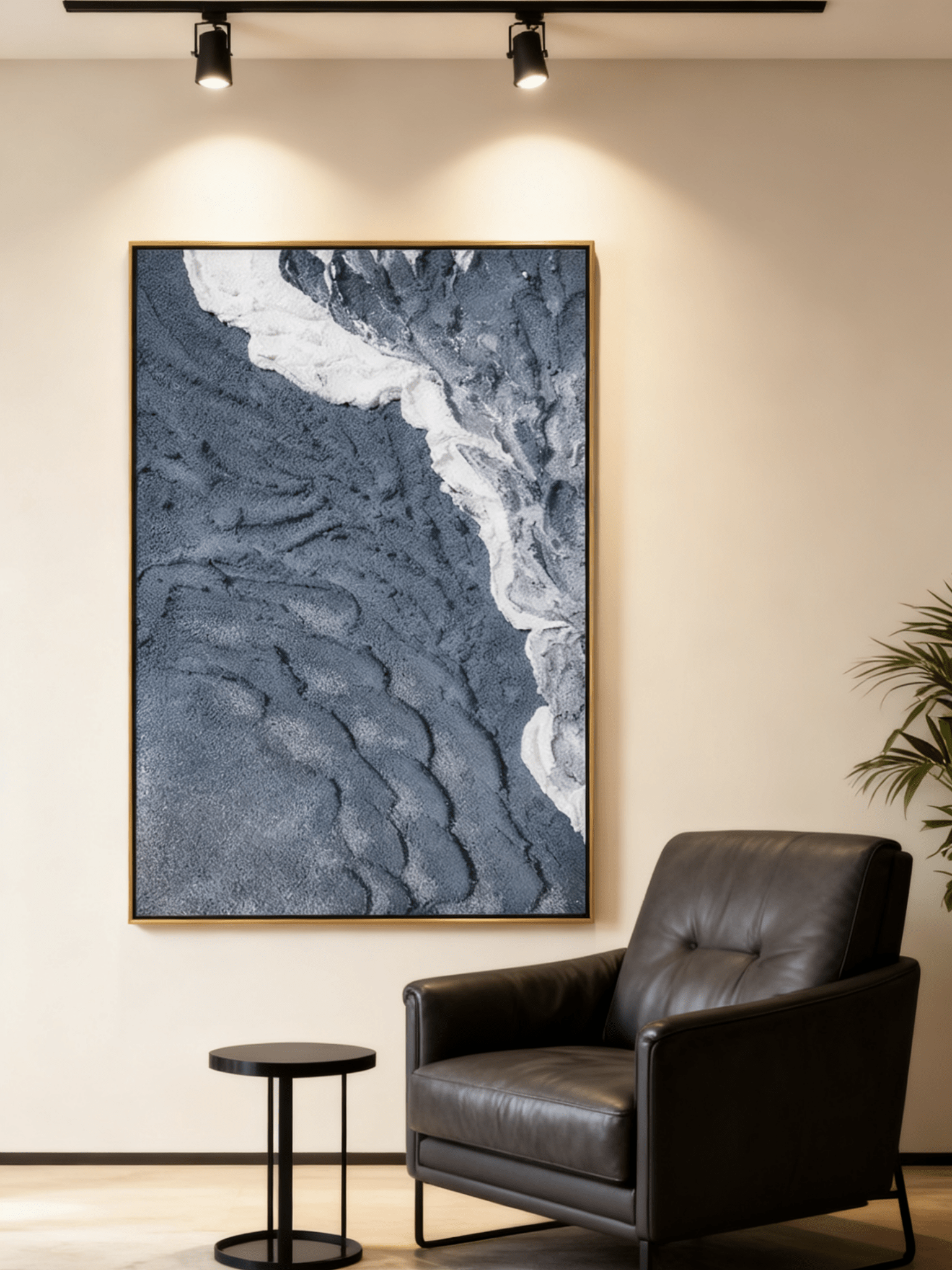
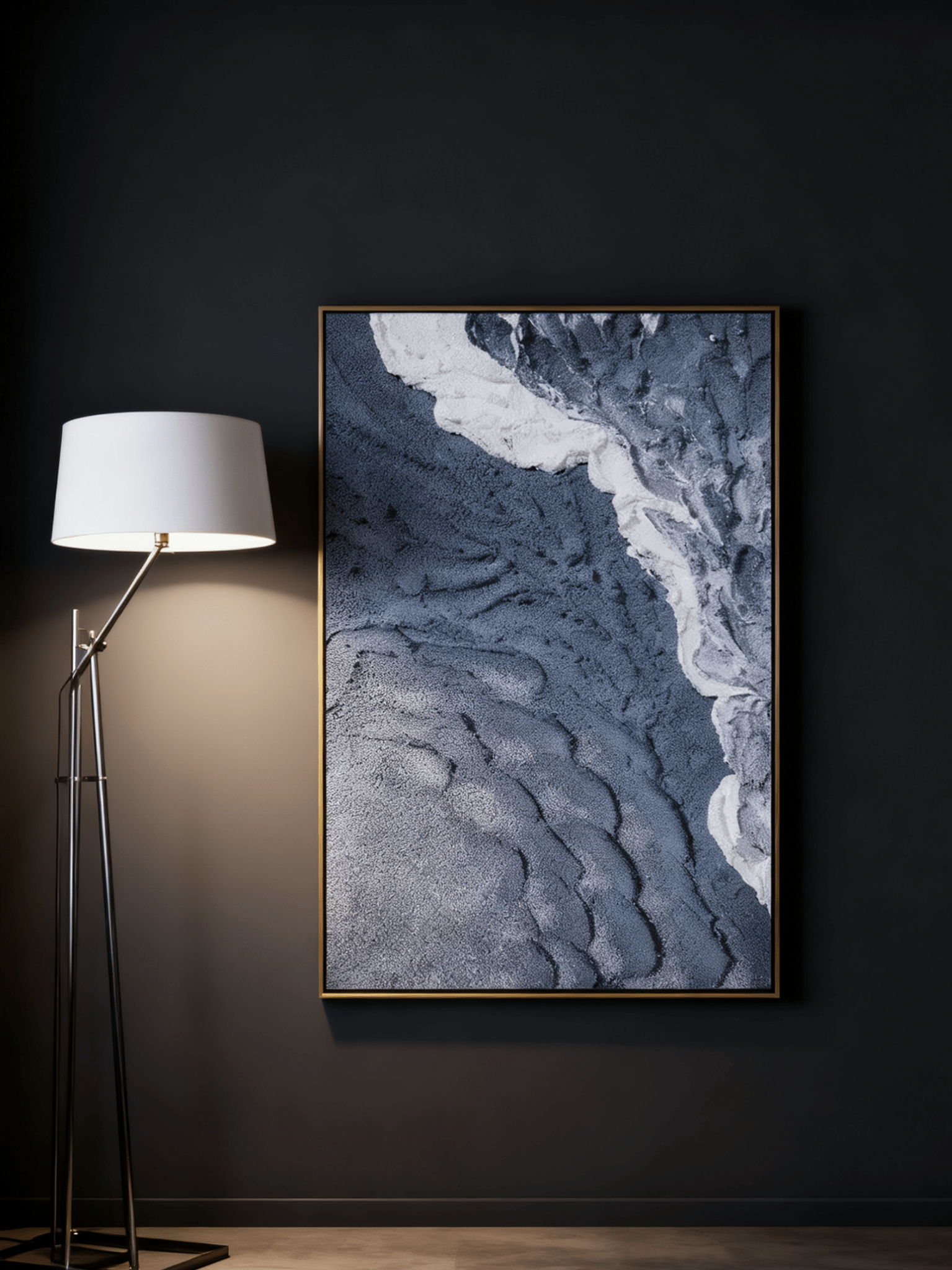
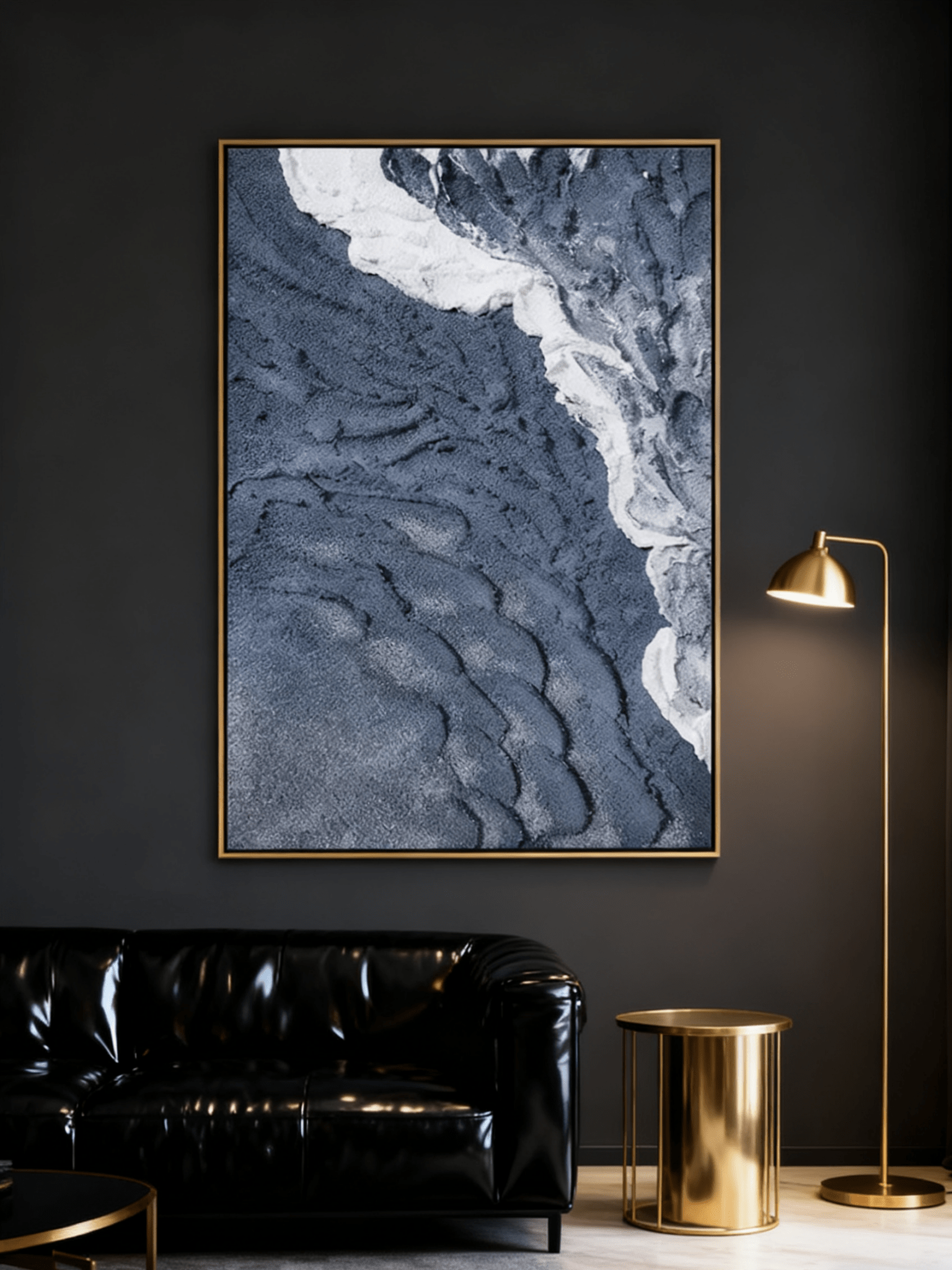
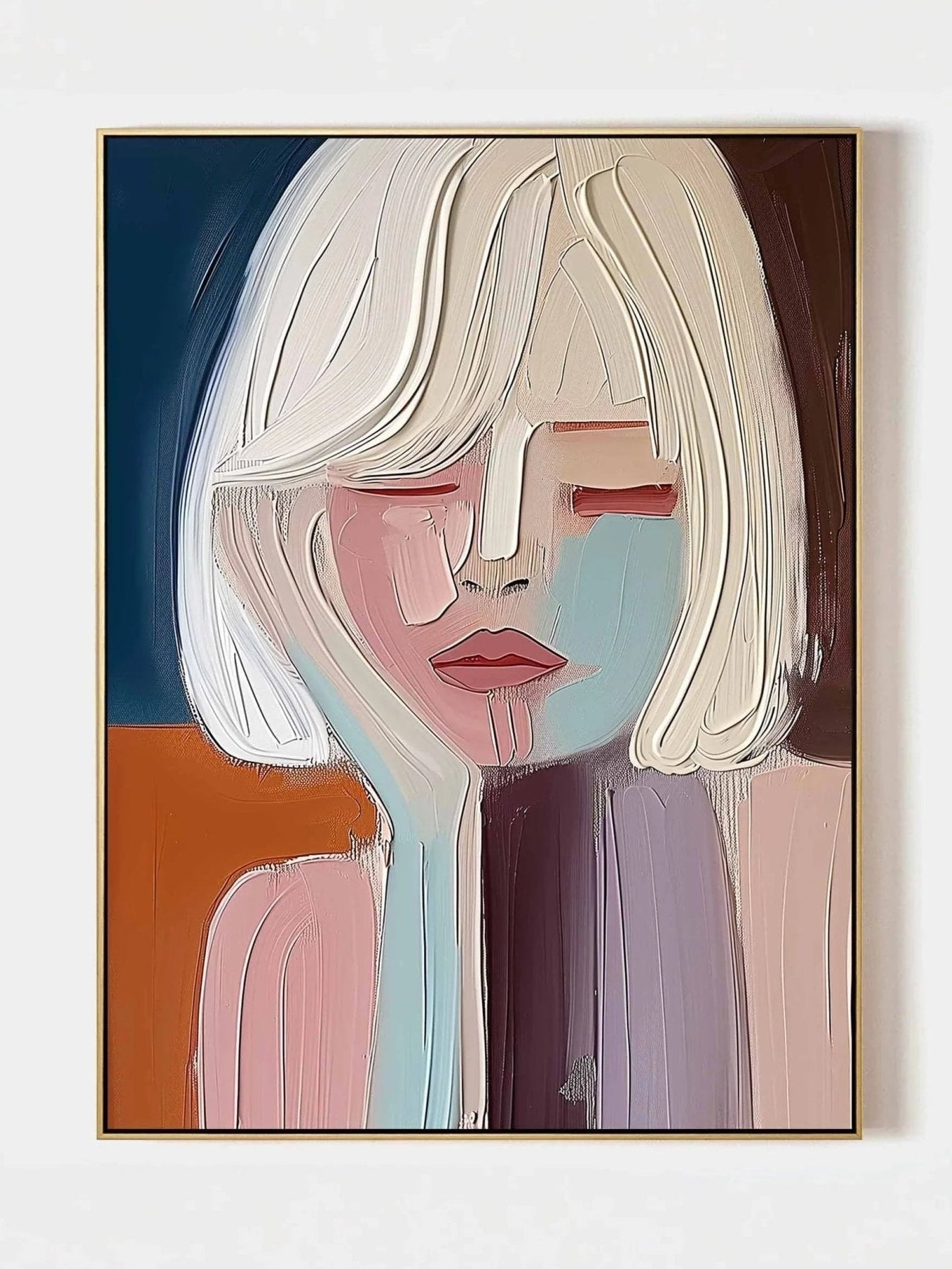
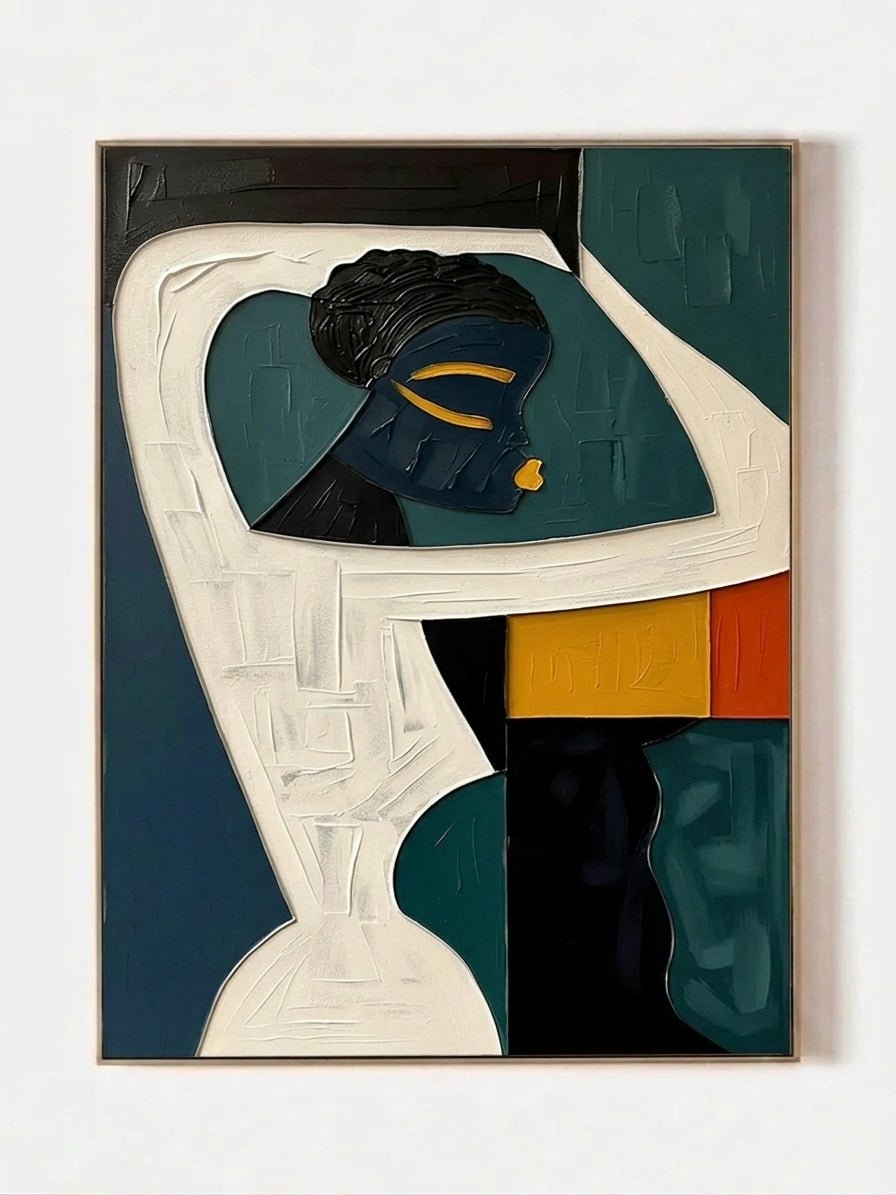
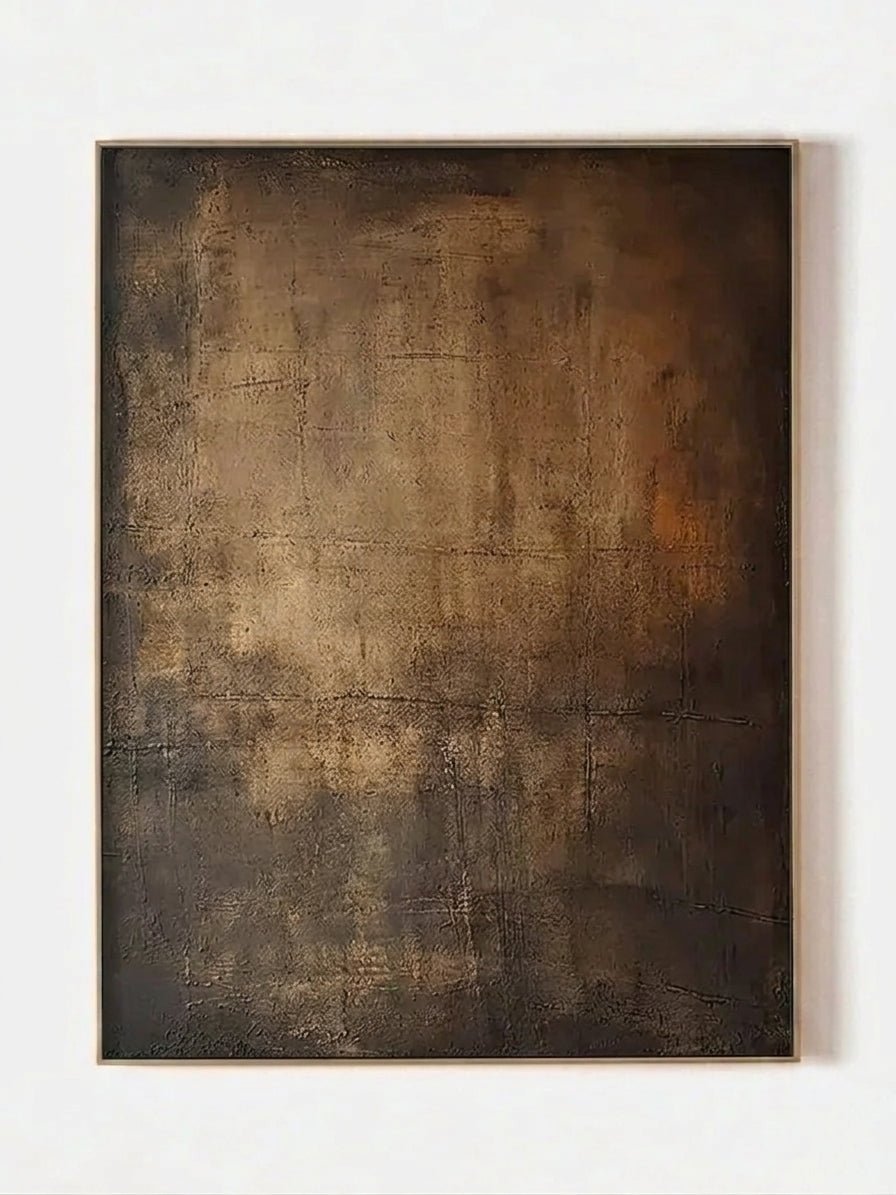
Texture drastically changes both the look and the cost of a painting. A flat acrylic piece requires standard paint. However, the Wabi-sabi style or 3D heavy texture art we specialize in requires modeling paste, heavy-body acrylics, palette knife applications, and multiple drying cycles. You aren't just paying for more materials; you're investing in the sculptural depth and physical shadows that make textured art so captivating in a room.

3. Production Model: Originals vs. Made-to-Order
Understanding how the art is sold helps you gauge its value:
- One-of-a-Kind Originals: You pay a premium for rarity, gallery markups, and the artist's exhibition history. Prices can easily soar into the tens of thousands.
- Made-to-Order: This is the sweet spot for interior design. The artwork is hand-painted by professional artists after you place an order, based on an established design. You get a 100% genuine painted surface, gallery-level aesthetics, and flexible sizing—all without the gallery markup.
4. Customization
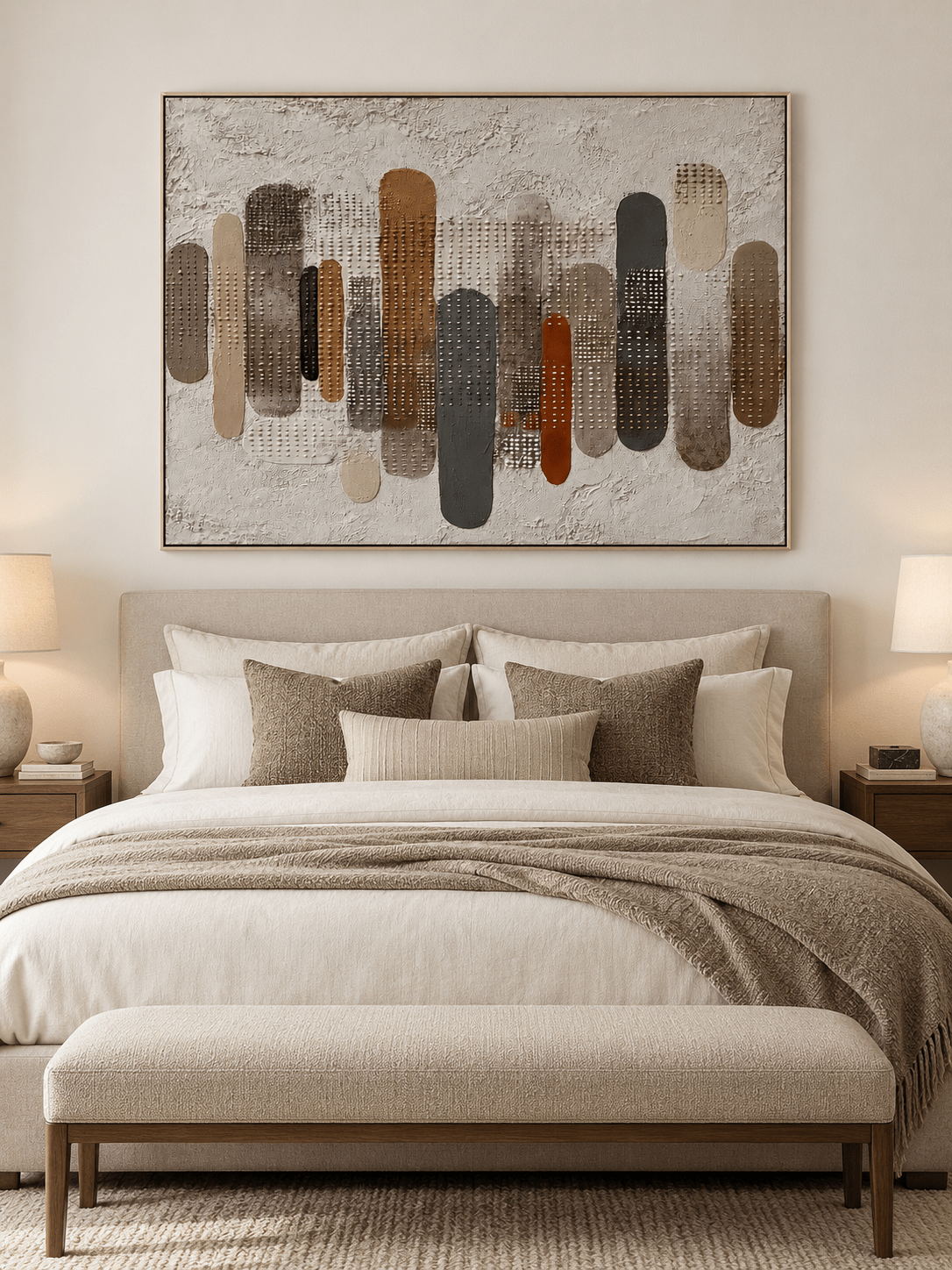
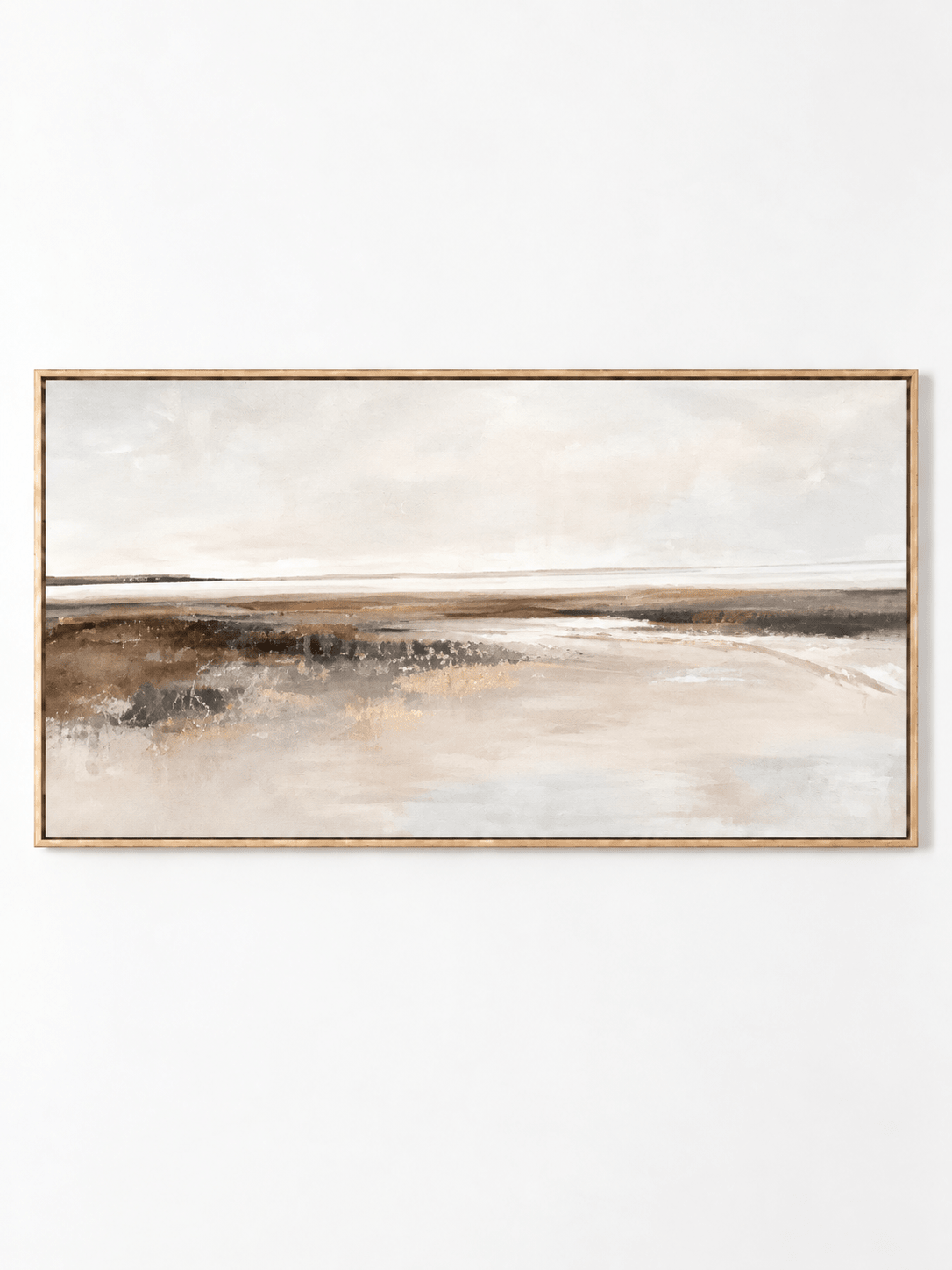
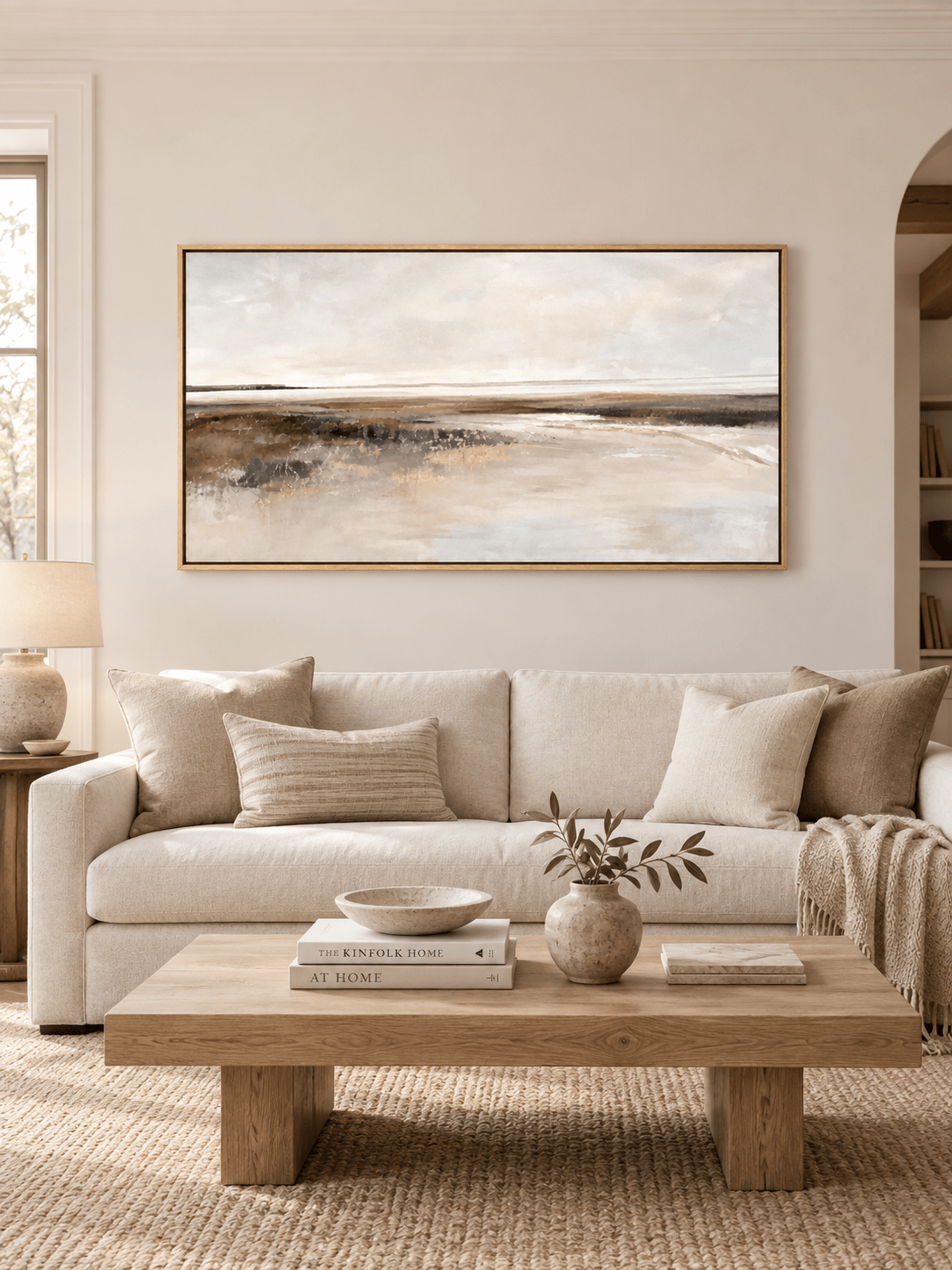
Customization adds incredible value to your space. Requesting a wider horizontal format to fit your specific sofa, adjusting a color palette to match your rug, or adding more beige tones requires the artist to re-balance the entire composition. This bespoke service naturally commands a slightly higher price but guarantees a perfect fit for your home.
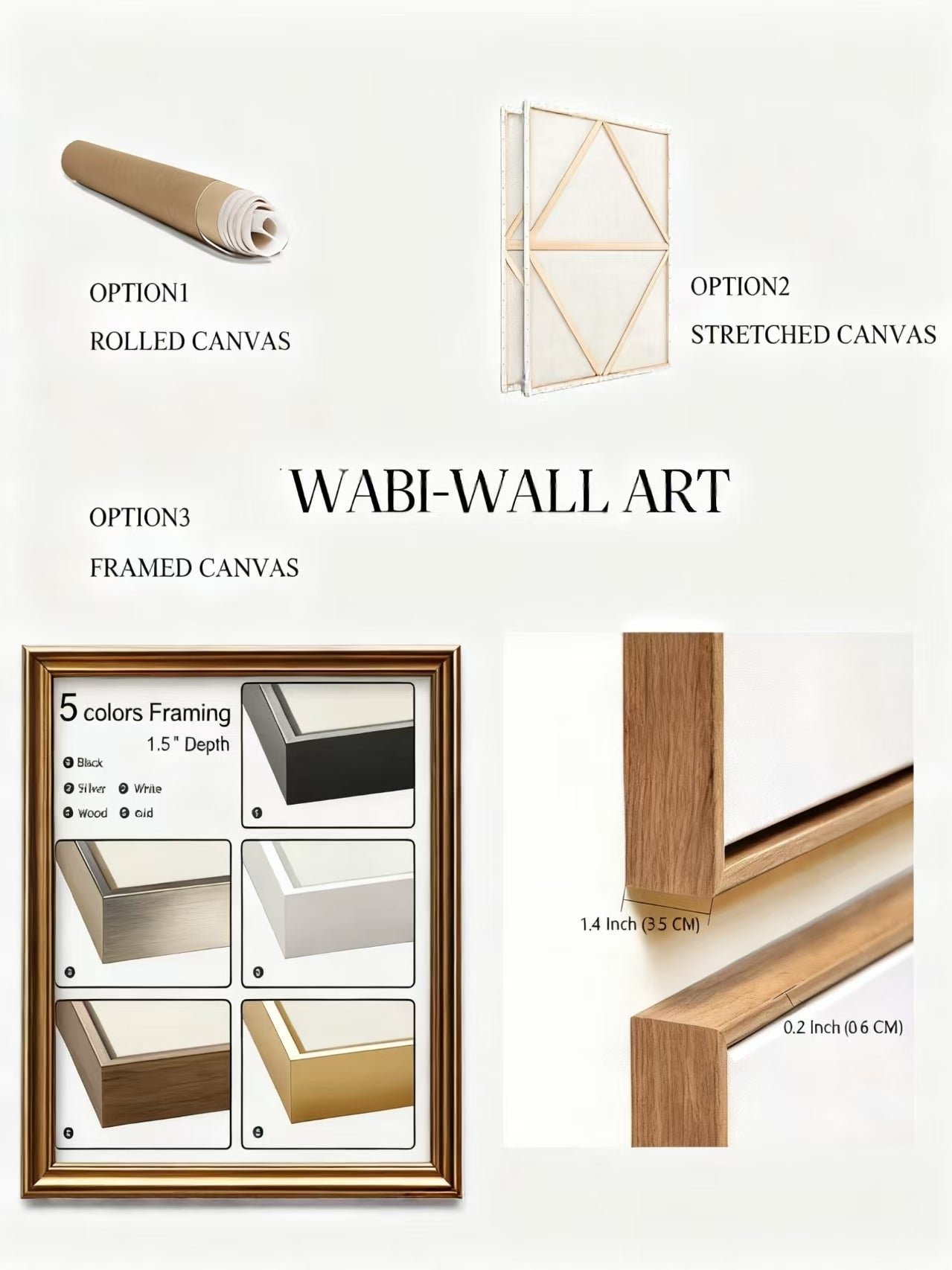
5. Presentation: Rolled vs. Stretched vs. Framed
Always check what the price actually includes to avoid surprise costs:
- Rolled Canvas: The cheapest option. The painted canvas is rolled in a tube. You will need to take it to a local framer to have it stretched.
- Stretched Canvas: Mounted on an internal wooden frame, ready to hang.
- Framed Canvas: The premium option. The stretched canvas includes a decorative outer frame (like a floating frame), offering the most polished, ready-to-install look.

How to Spot True Value (and Avoid Red Flags Online)
A high price doesn't guarantee quality, and a low price isn't always a steal. Keep these tips in mind:
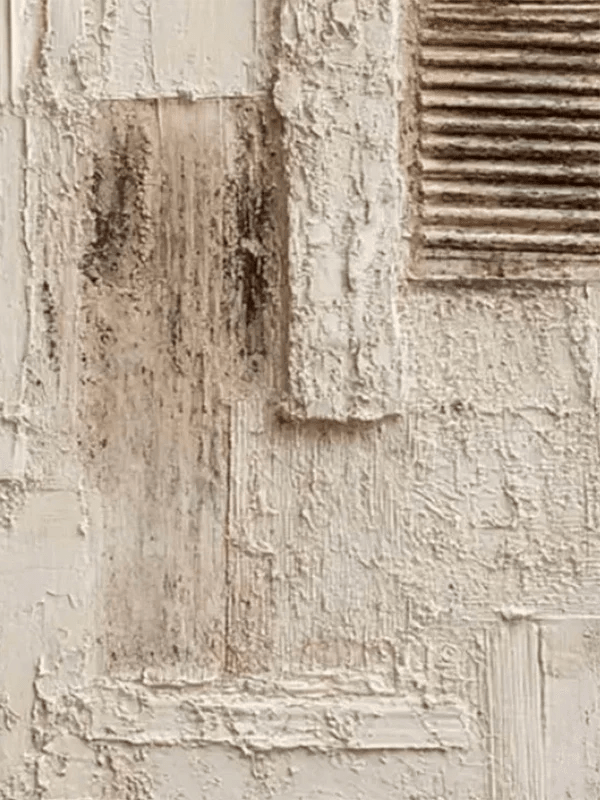
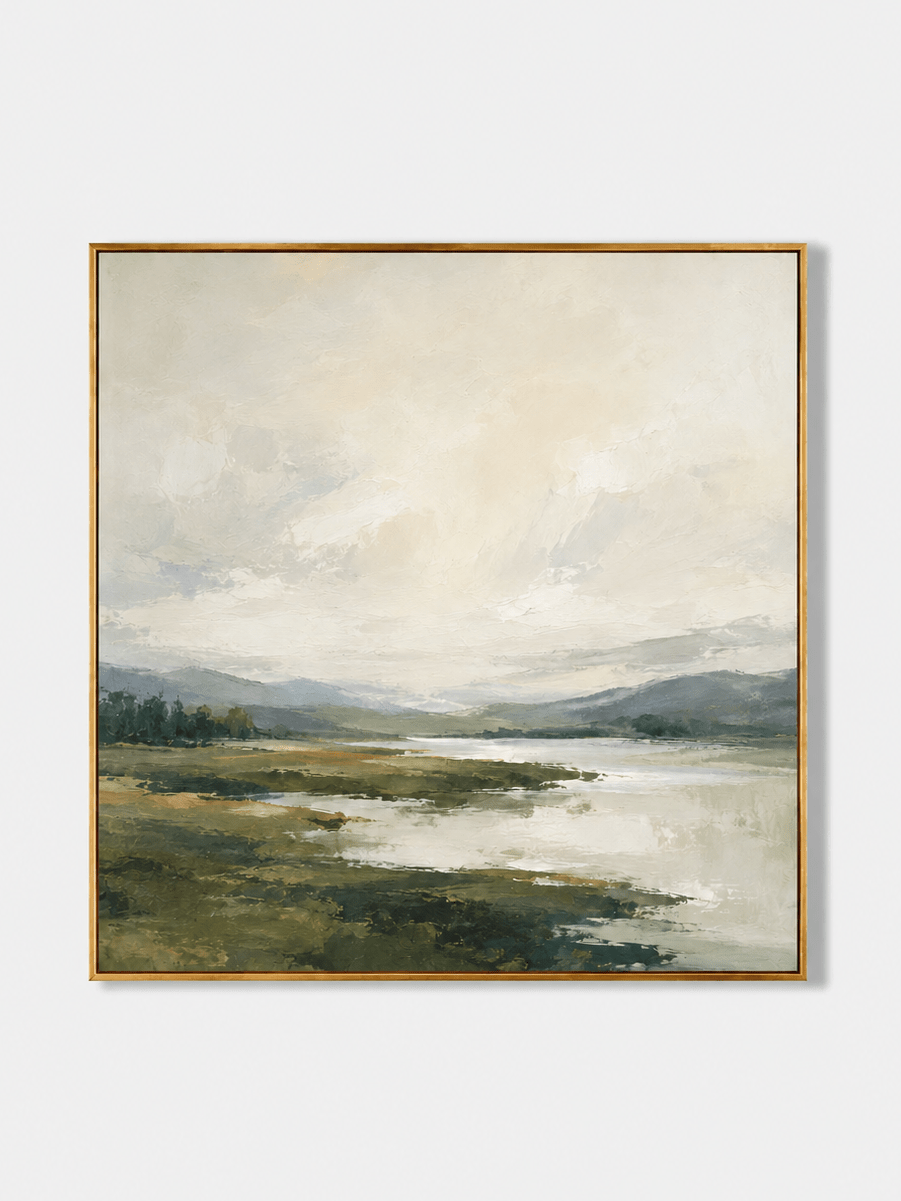
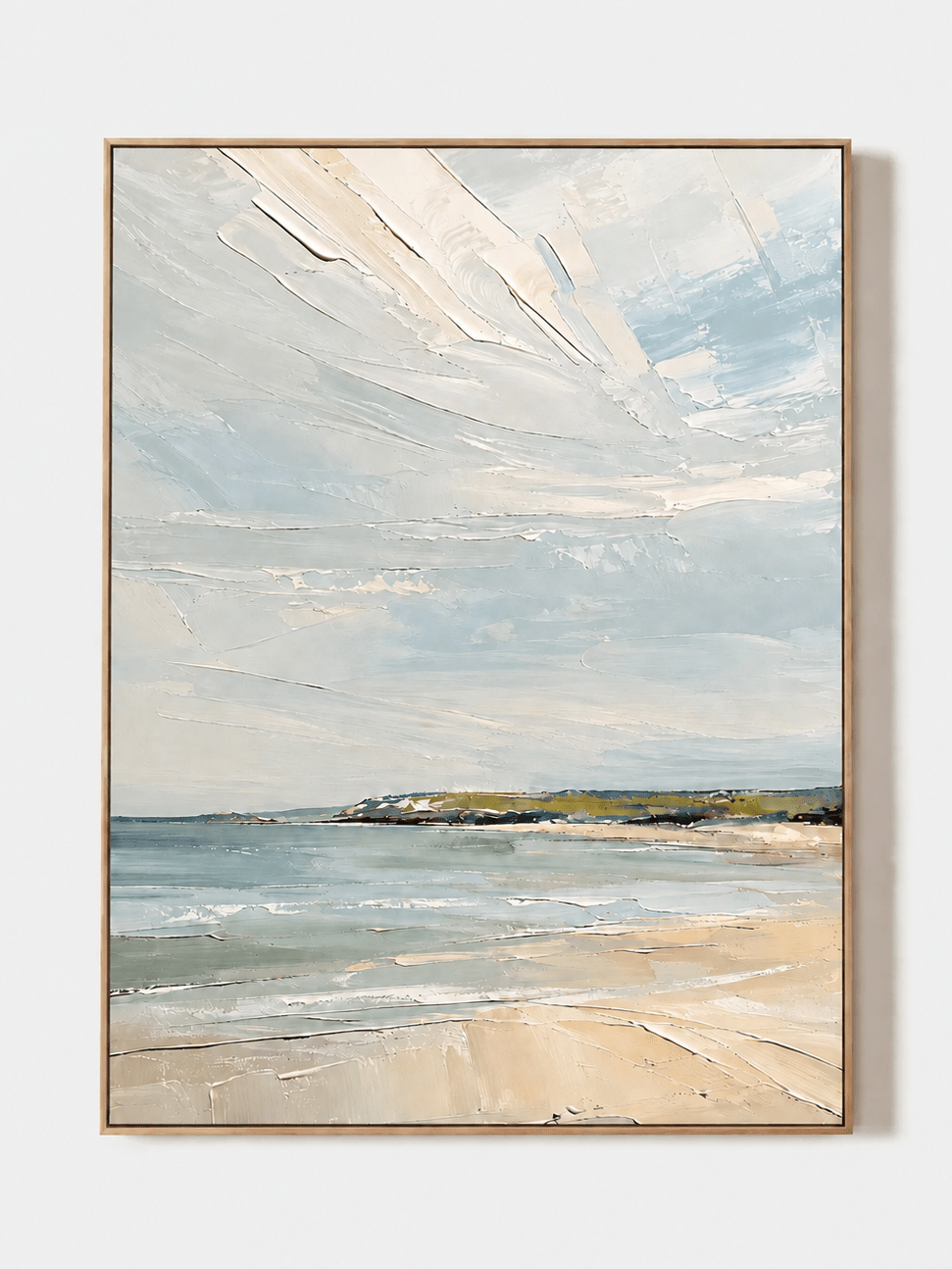
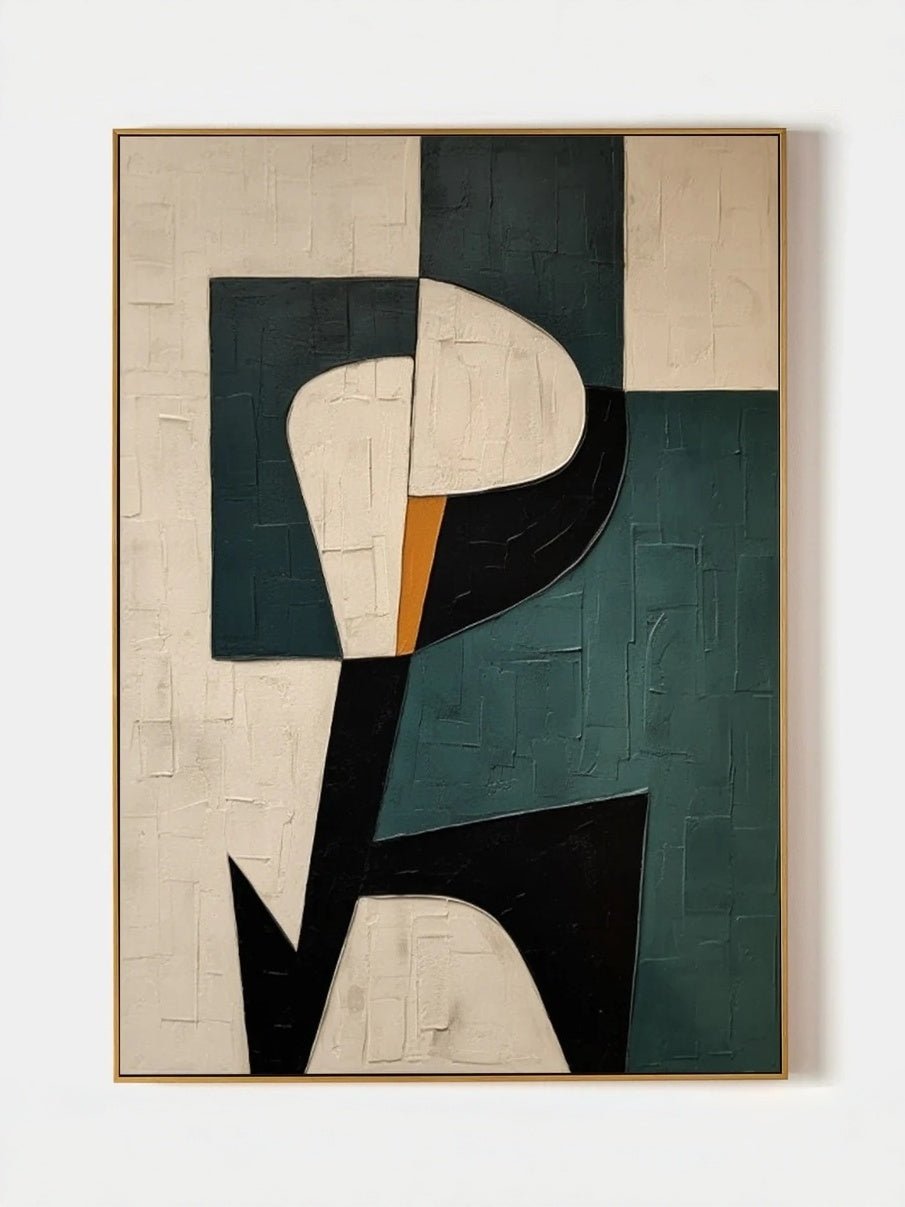
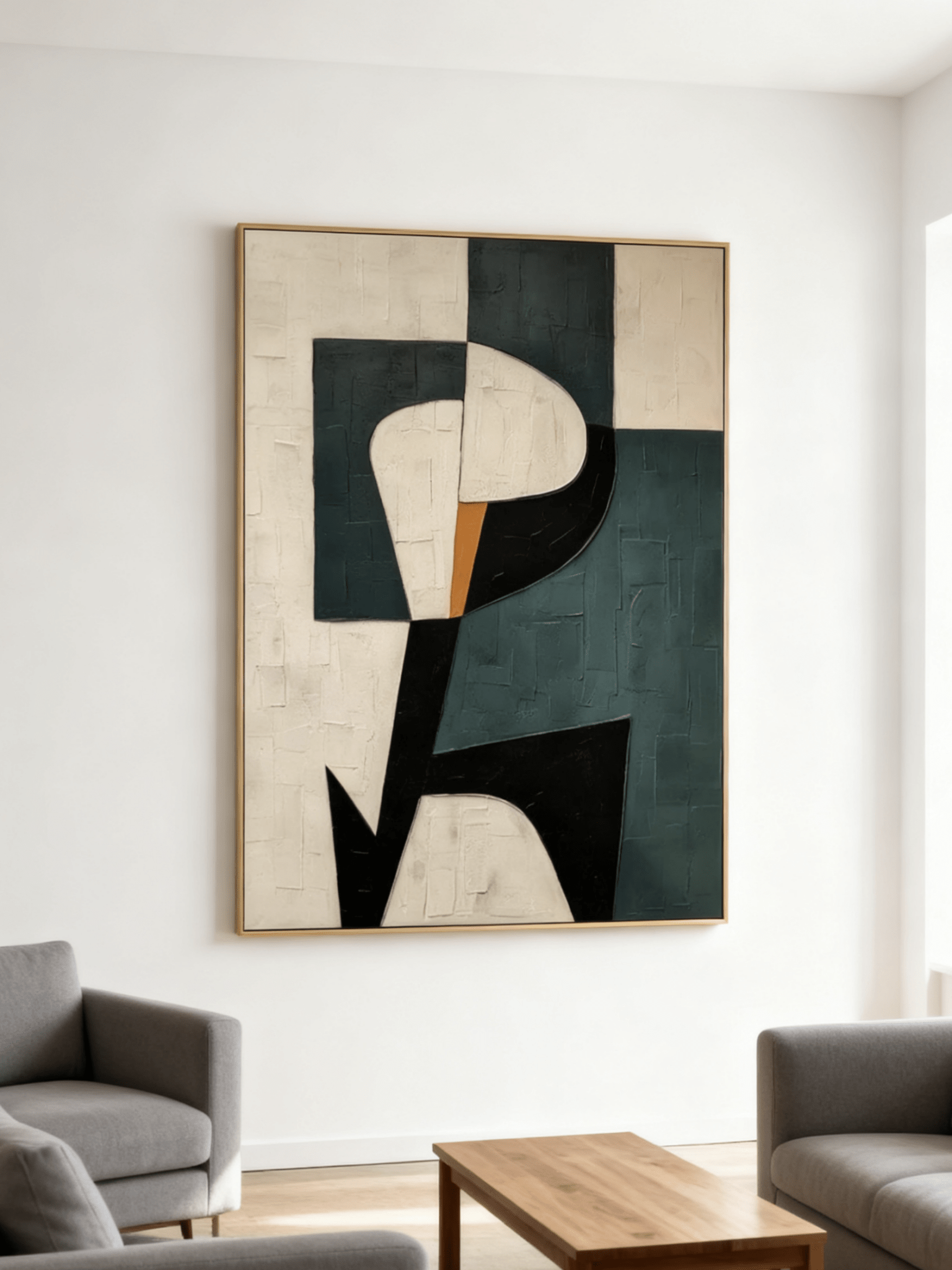
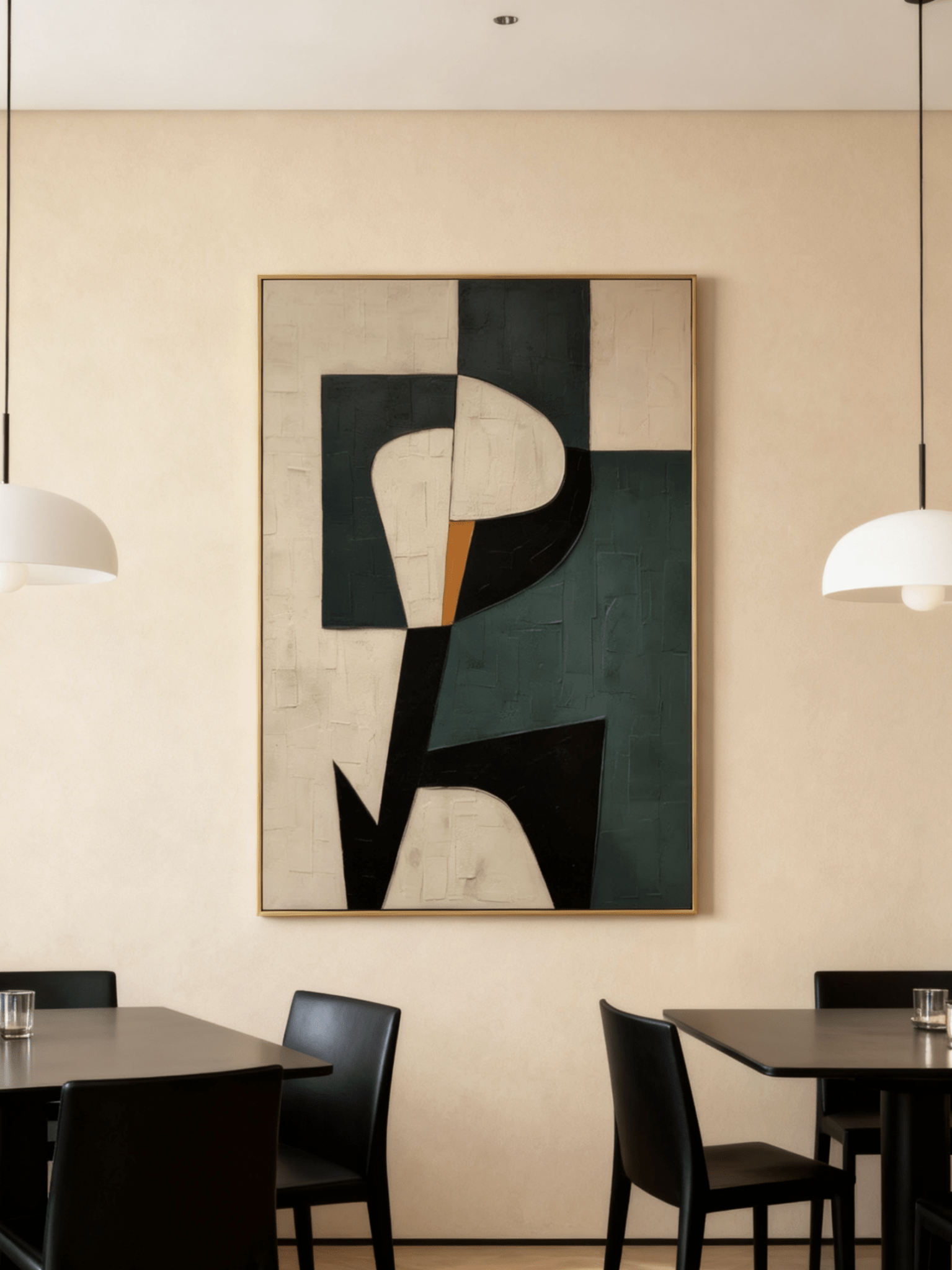
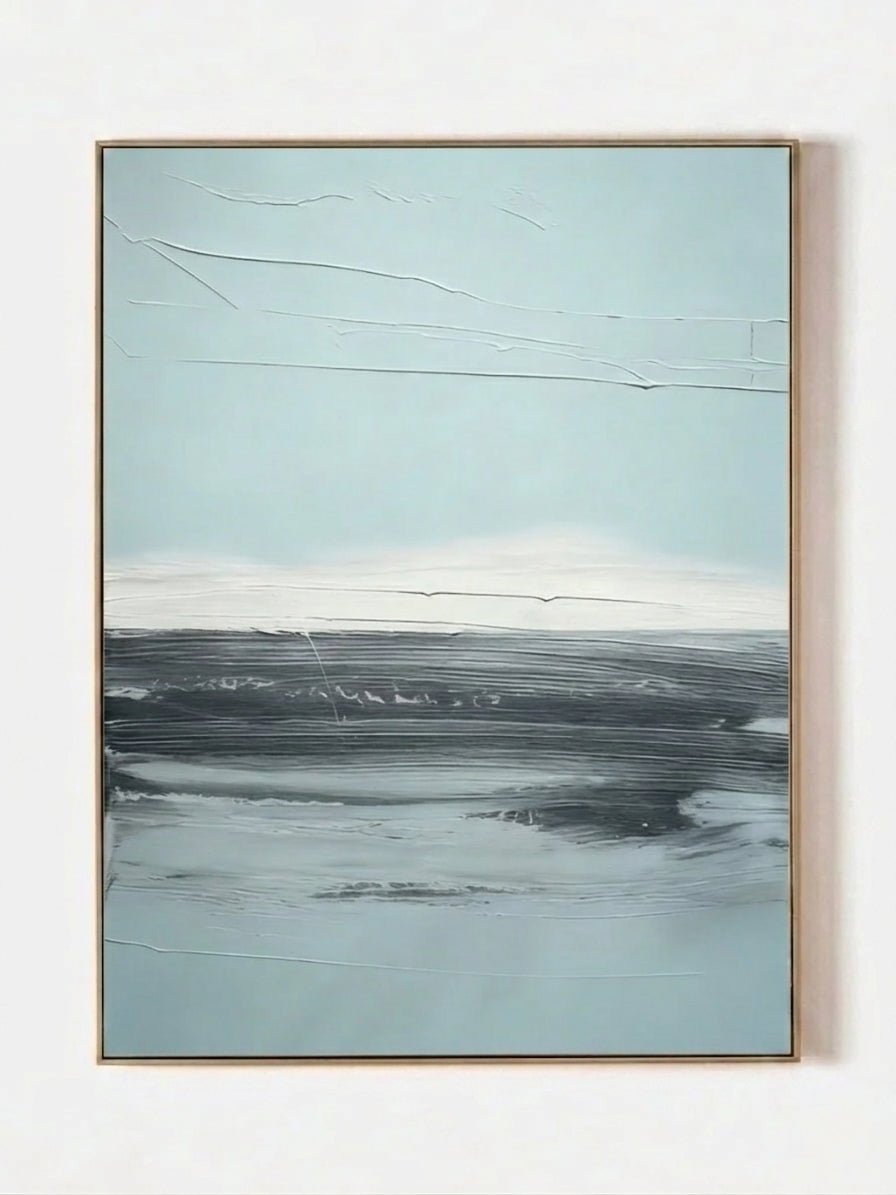
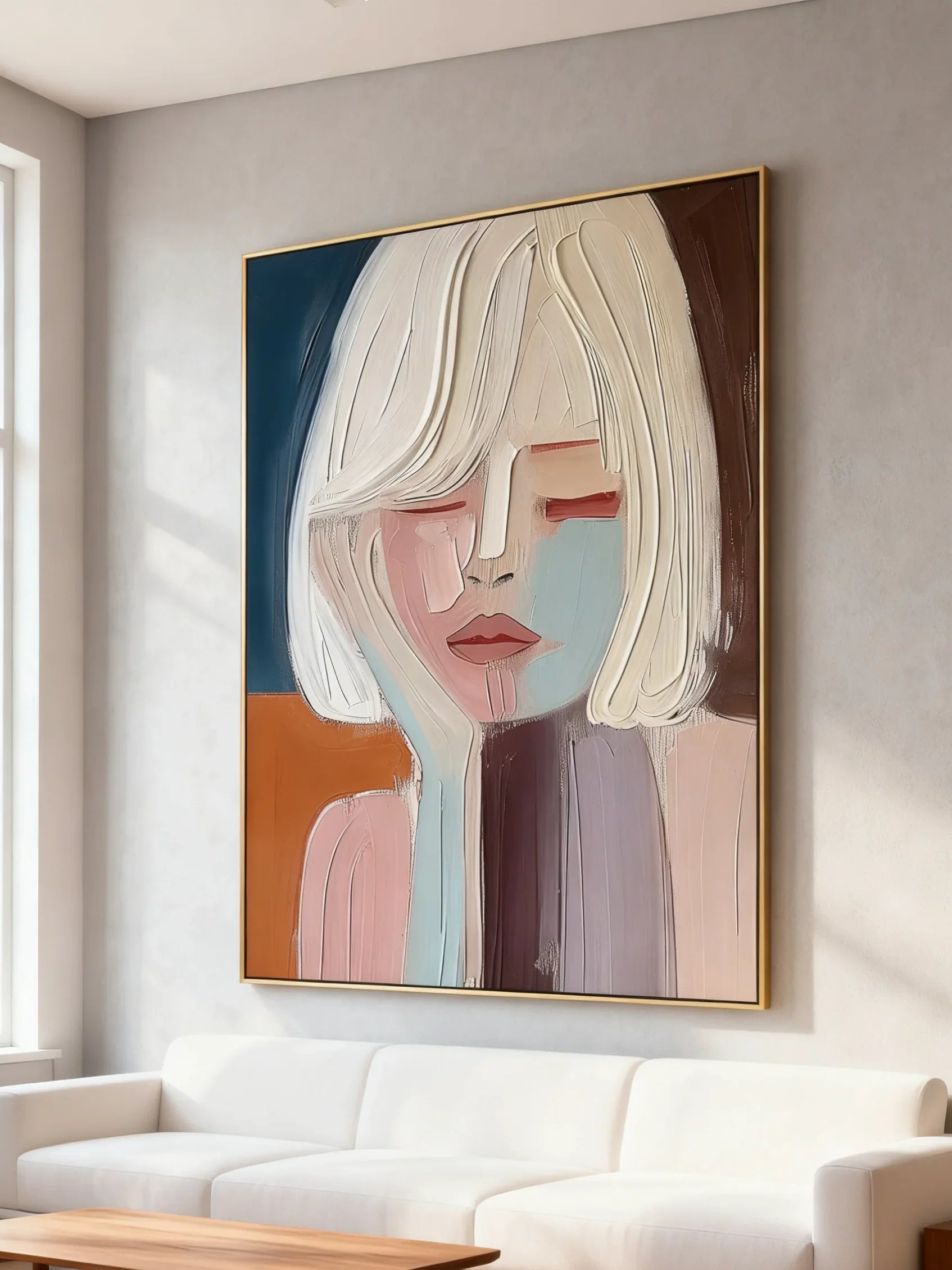
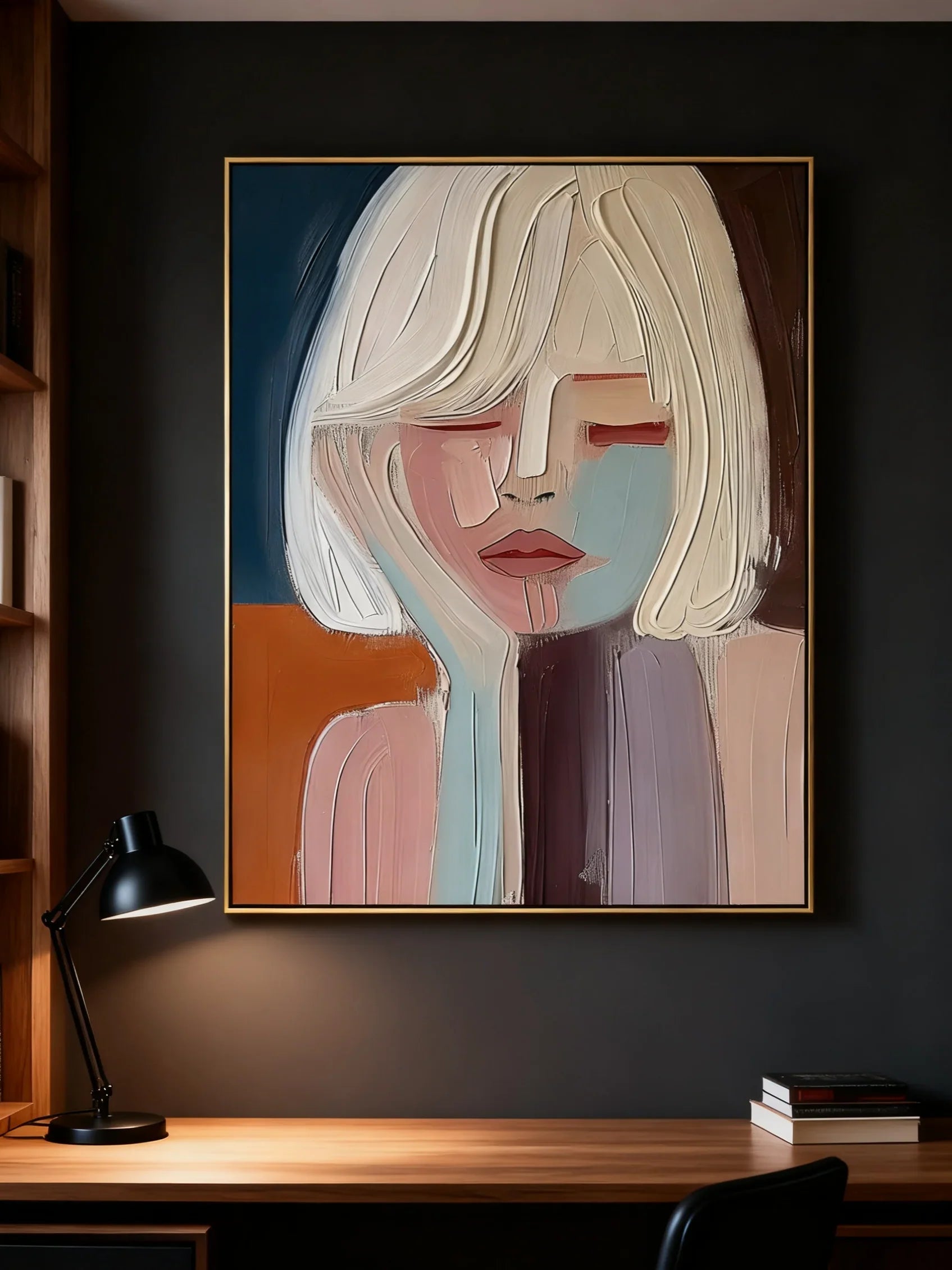
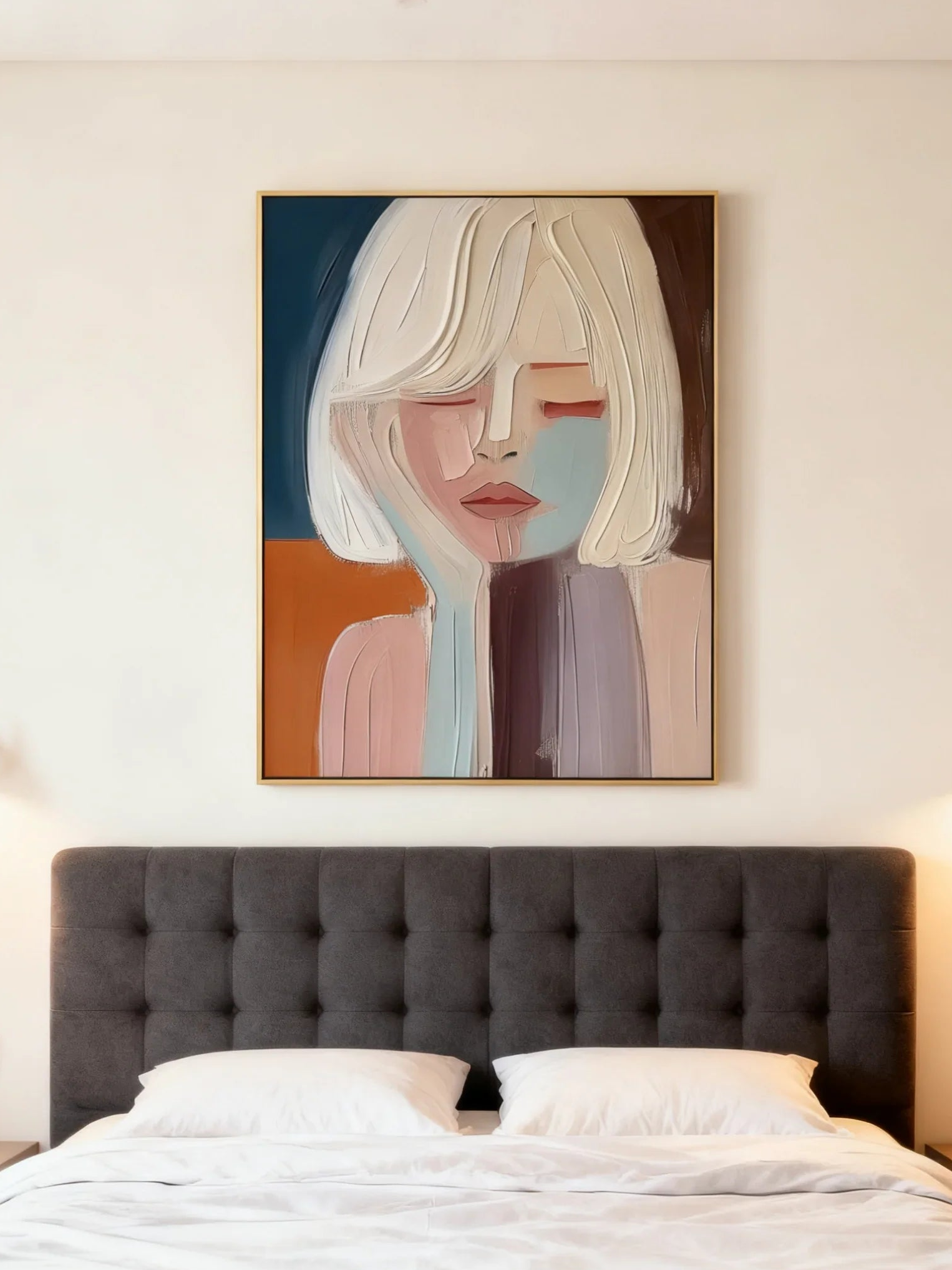
- Examine the Surface: Zoom in on the product photos. Can you see real brush strokes, palette knife marks, and irregular edges? If a site only shows distant room mockups and no close-up texture shots, it might be a flat print.
- Check the Edges and Angles: Side-angle lighting reveals raised impasto and plaster-like surfaces.
- Look for Transparency: A trustworthy seller will clearly state how the artwork is made, the materials used, and whether it is a print or a painting. Vague terms like "premium wall decor" often hide mechanical prints.
Is Hand-Painted Wall Art Worth the Extra Cost?
For the right space, absolutely. The magic of a hand-painted canvas is how it interacts with your room.
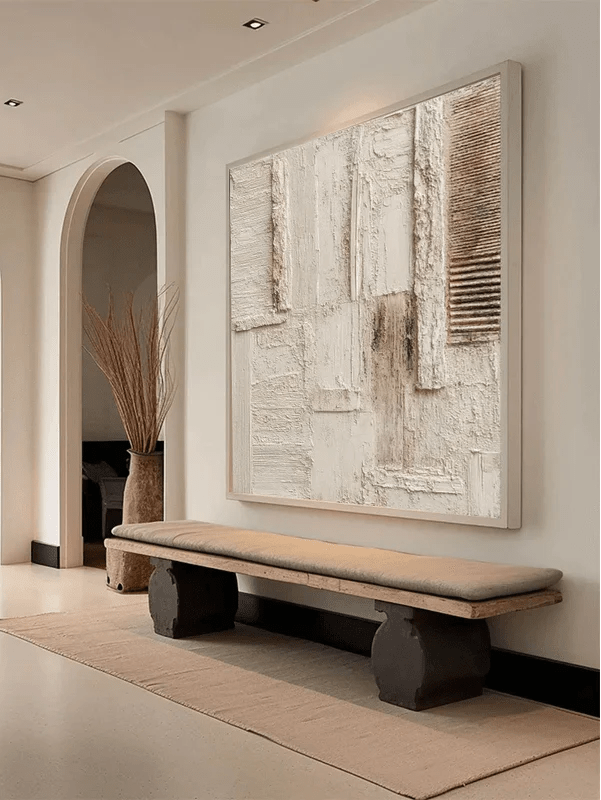
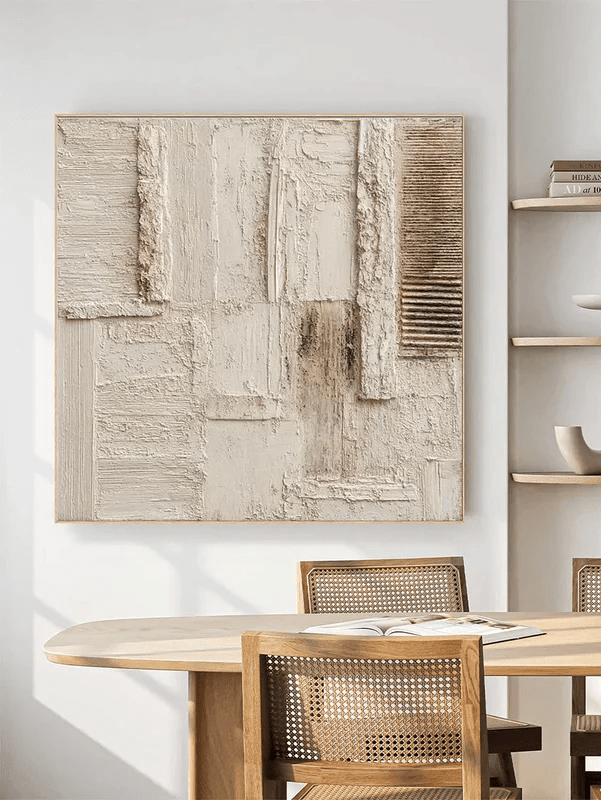
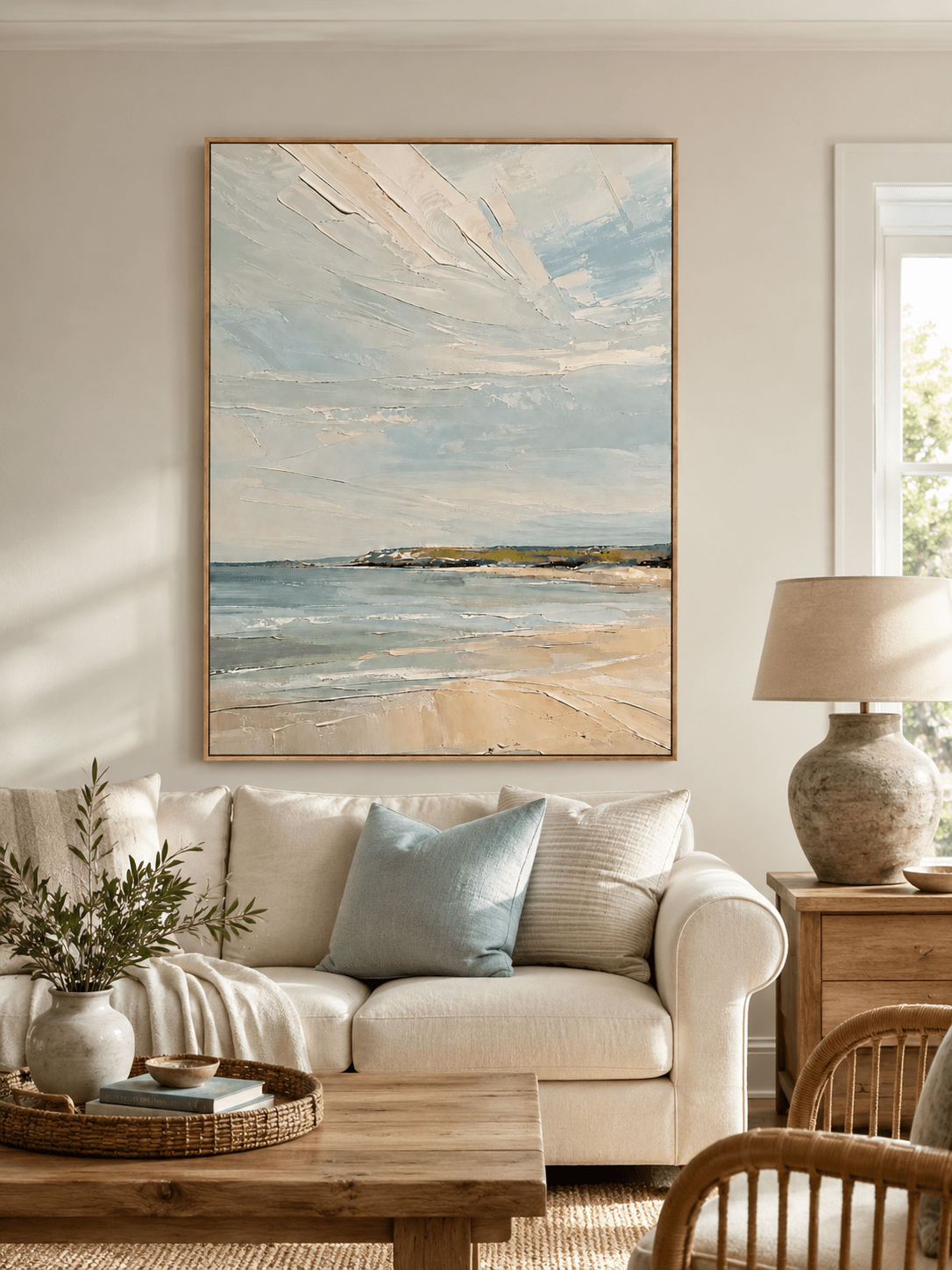
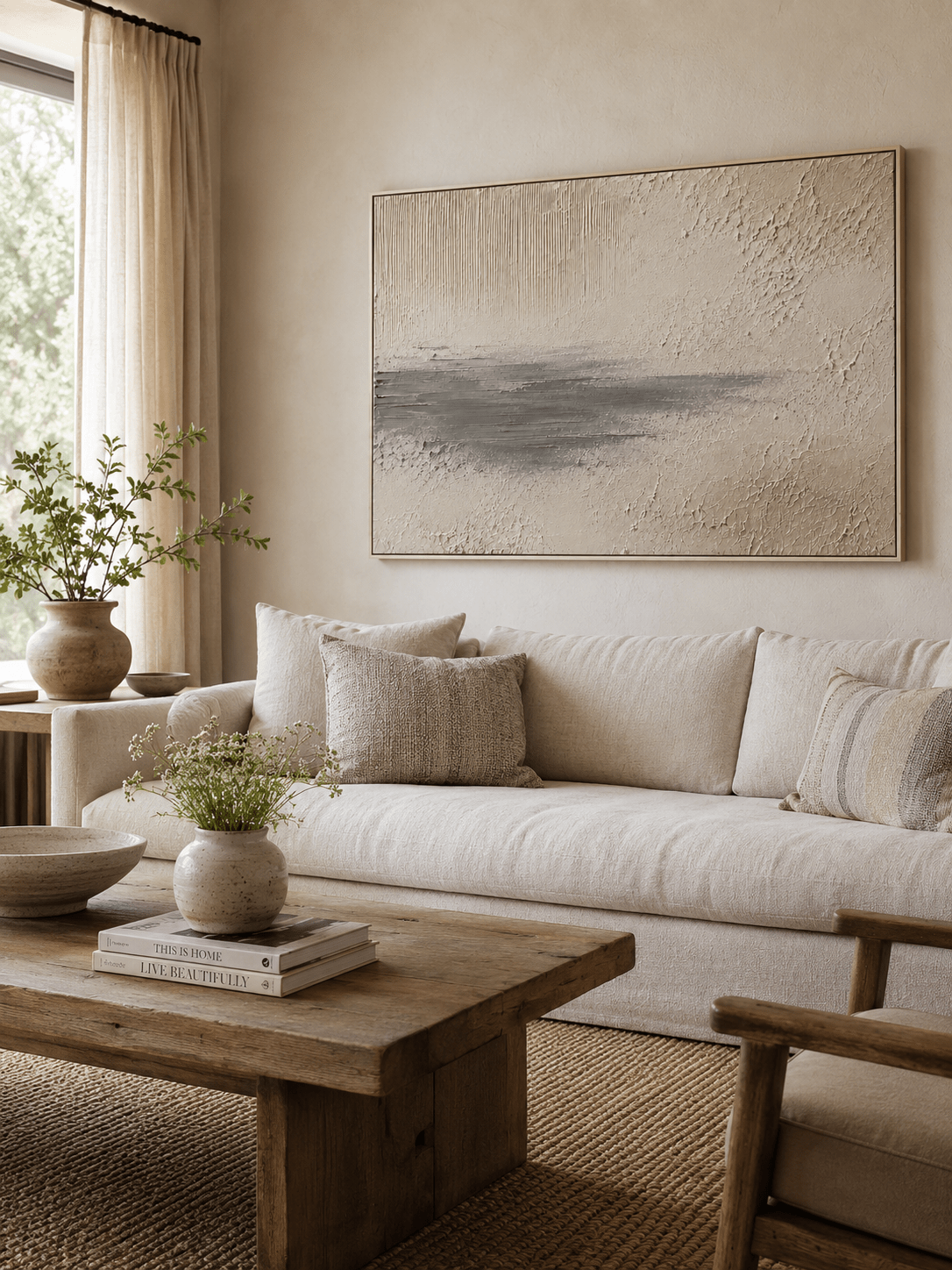
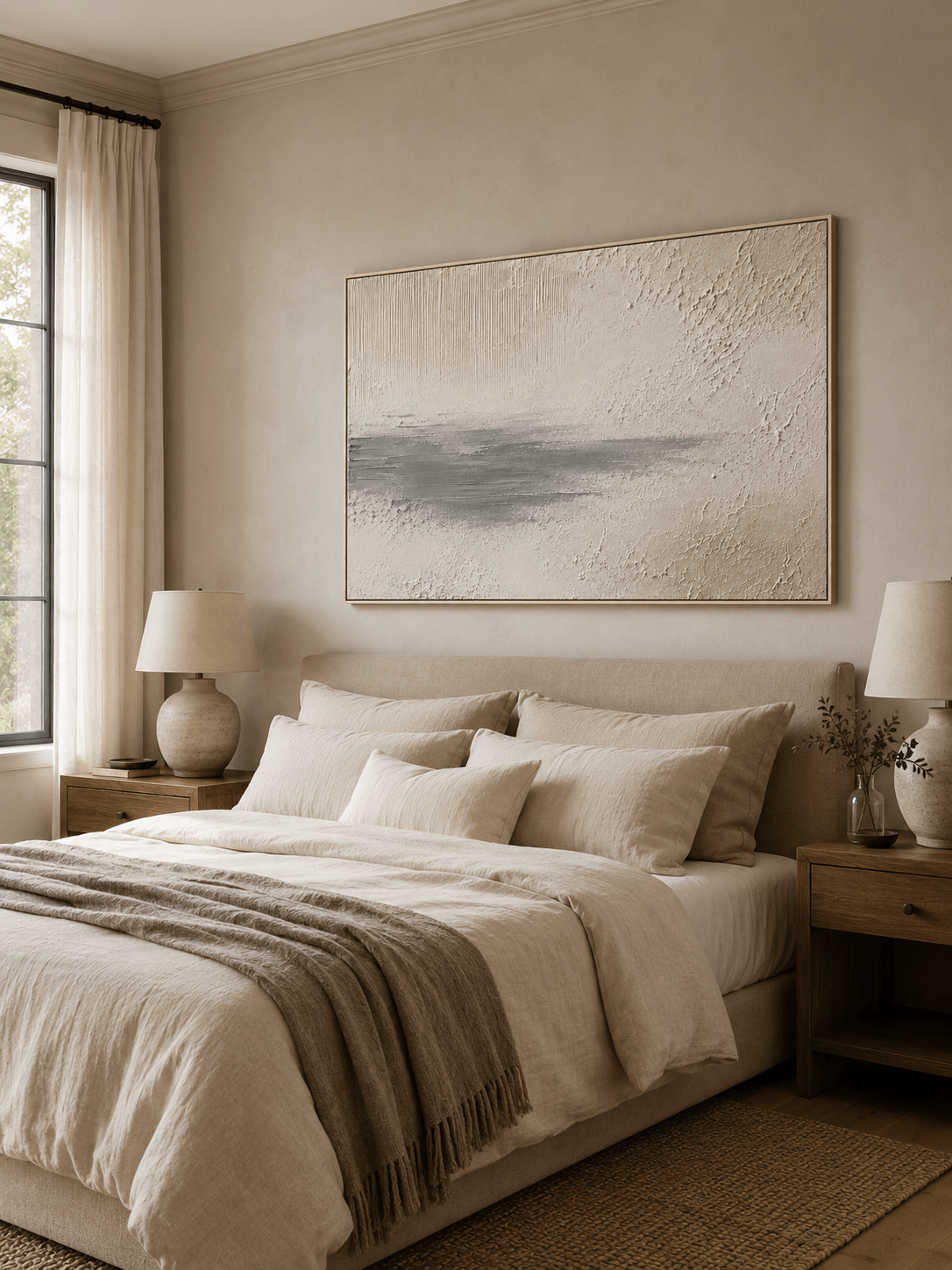
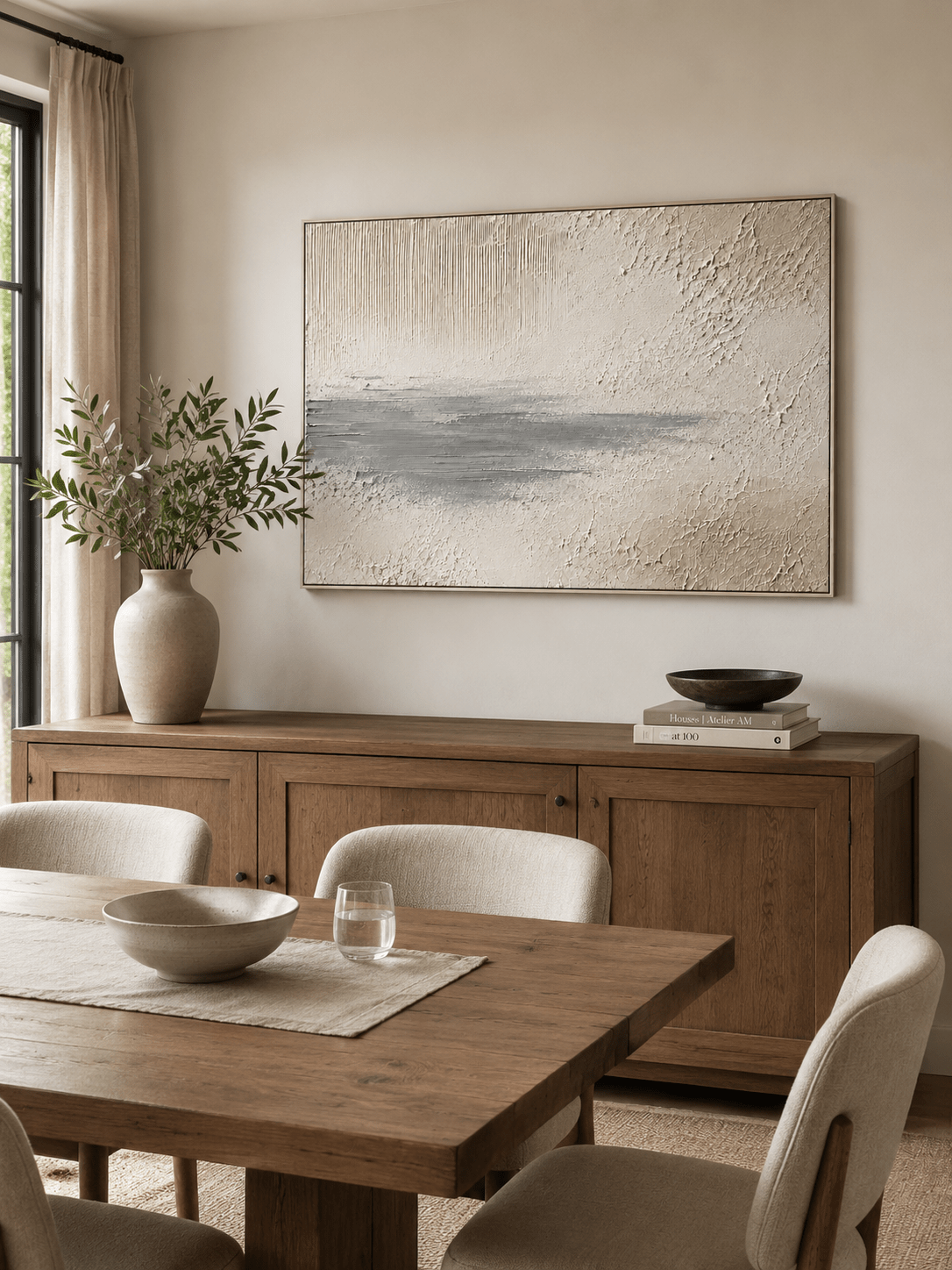
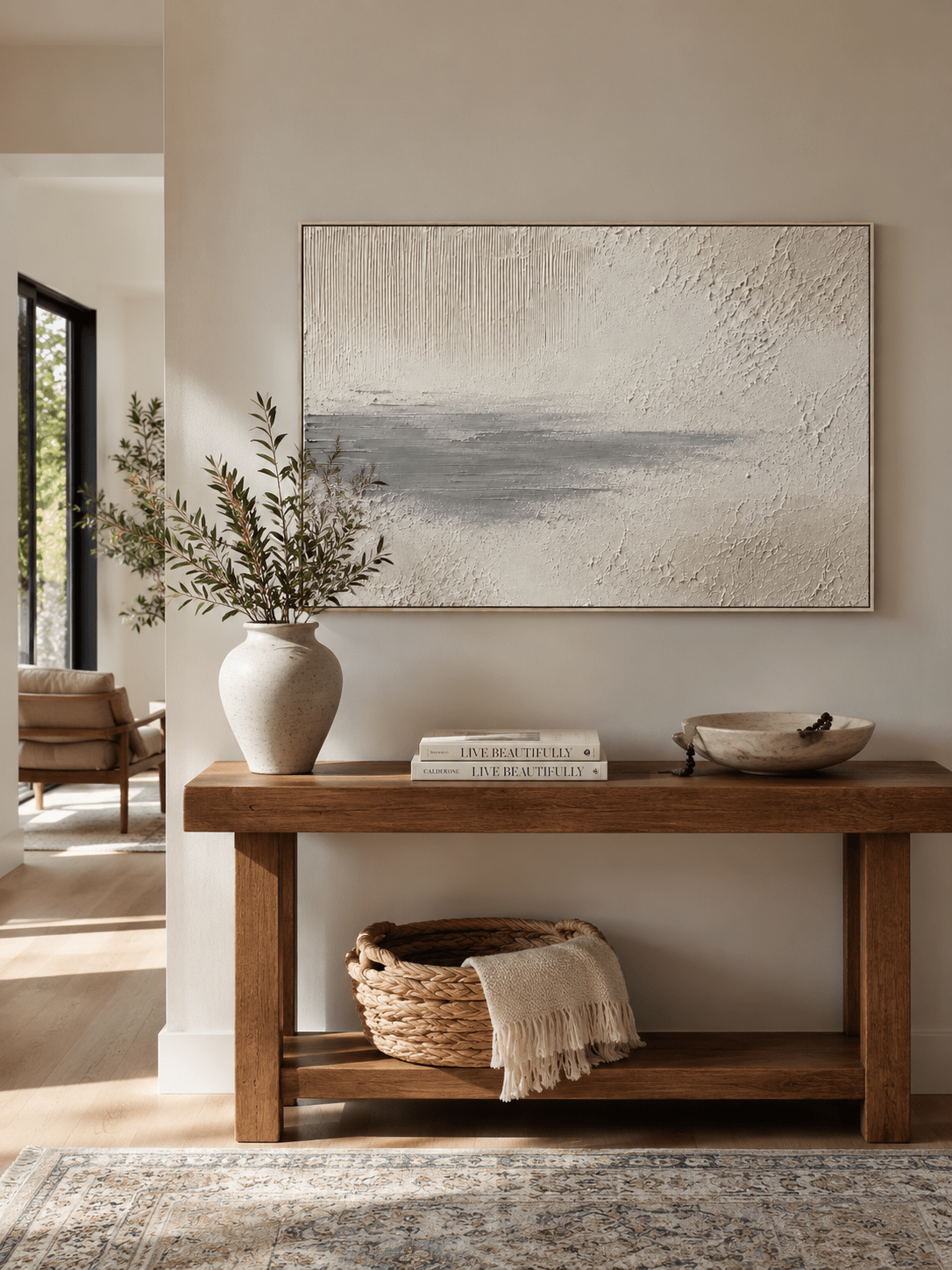
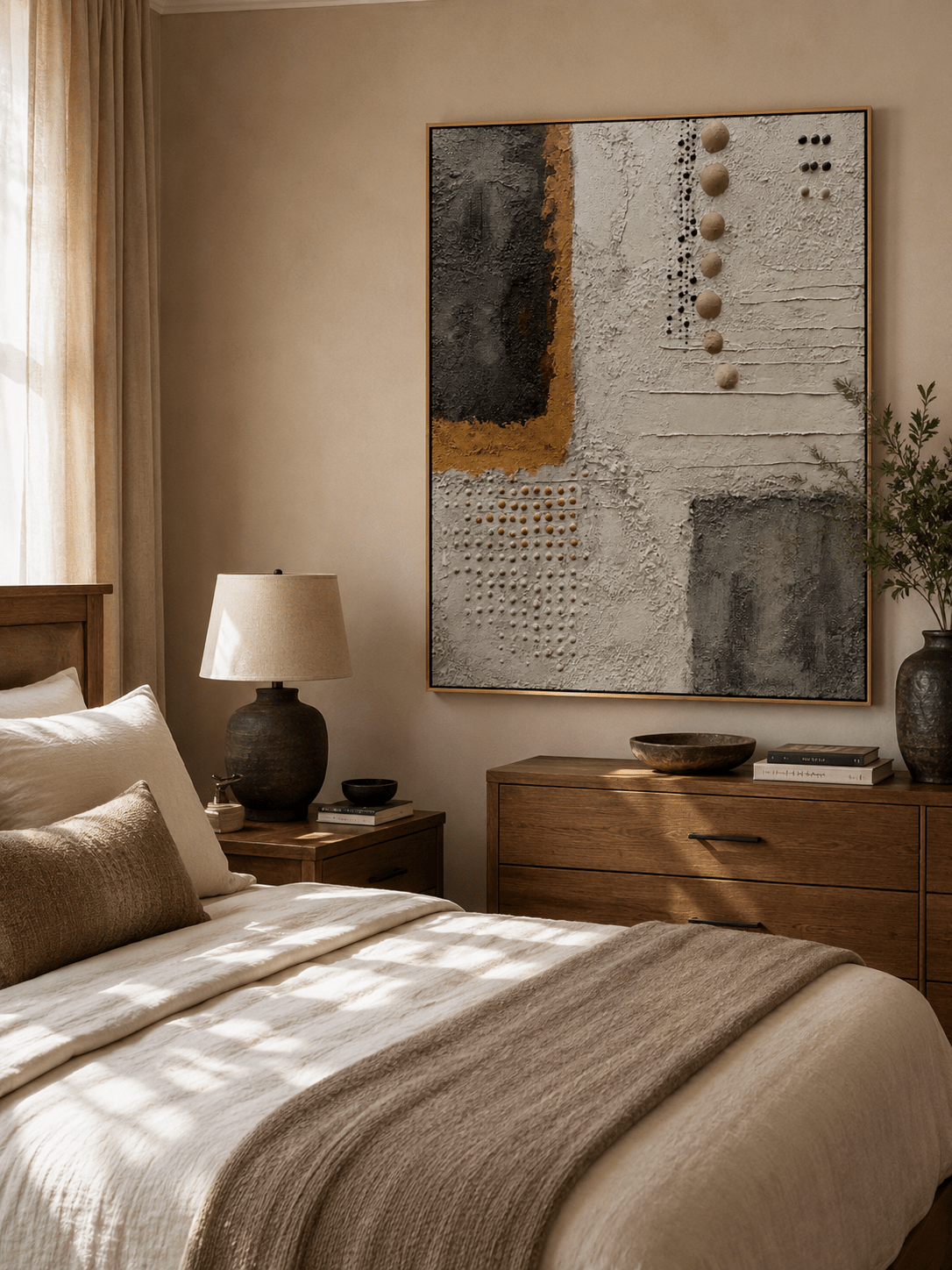
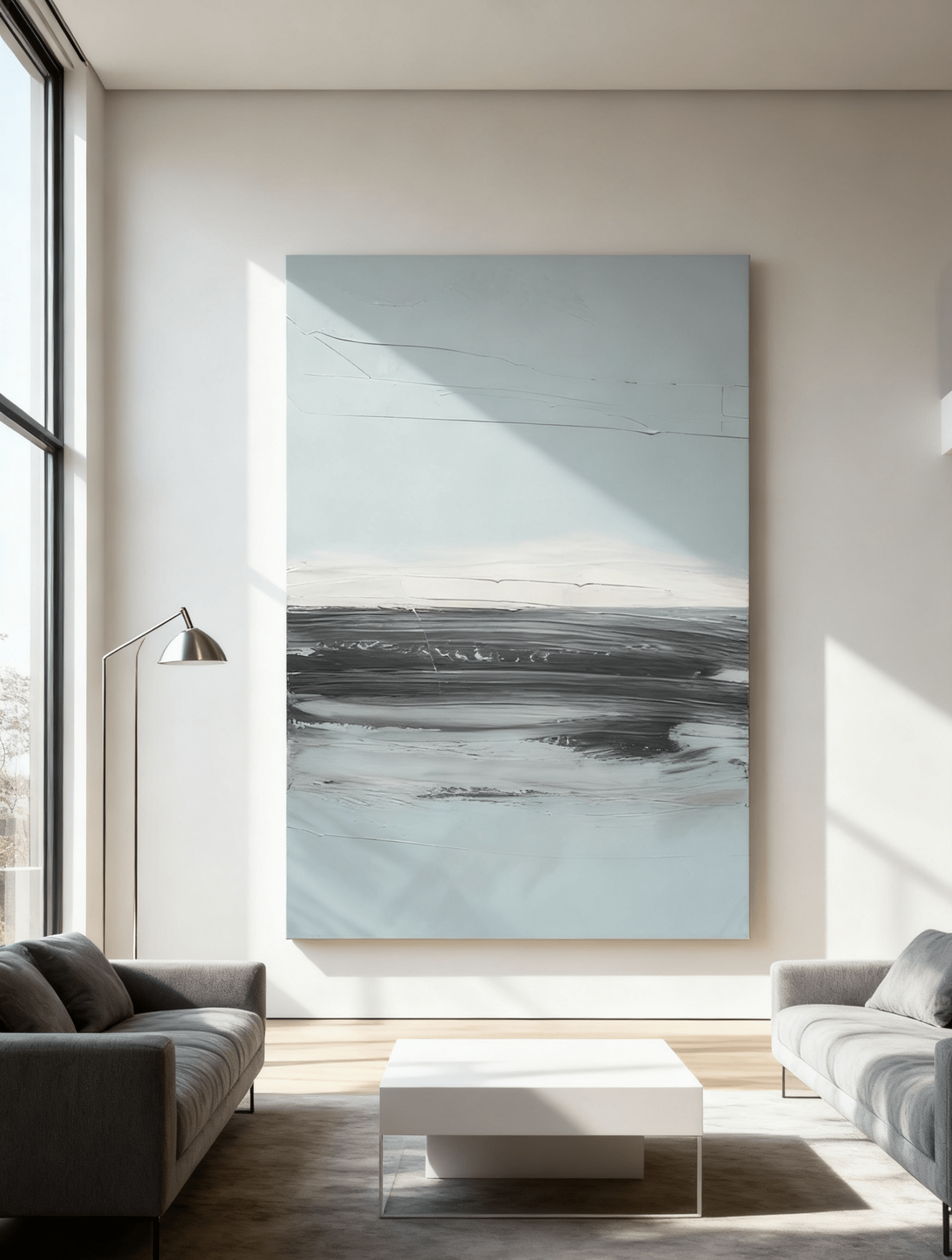
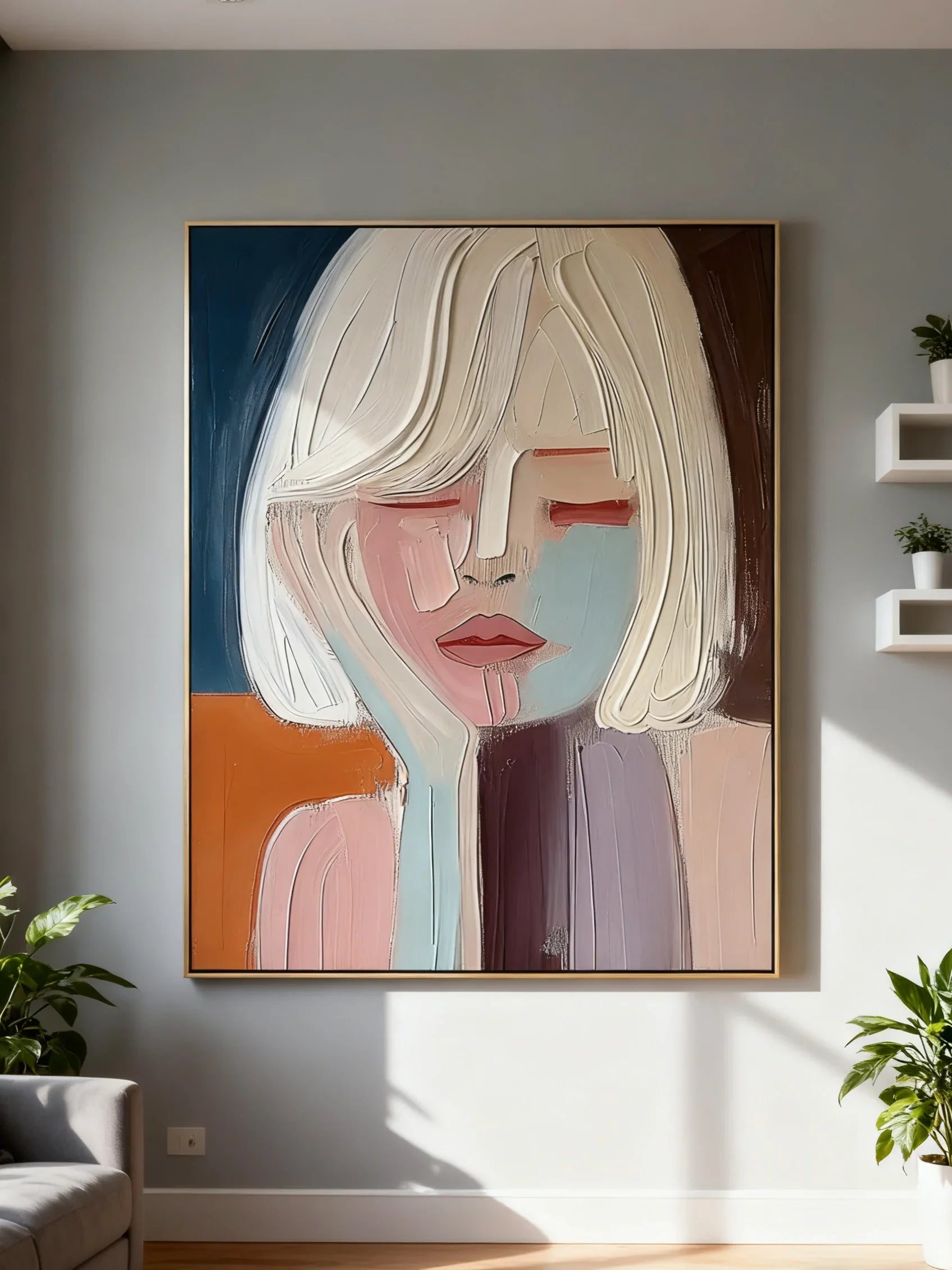
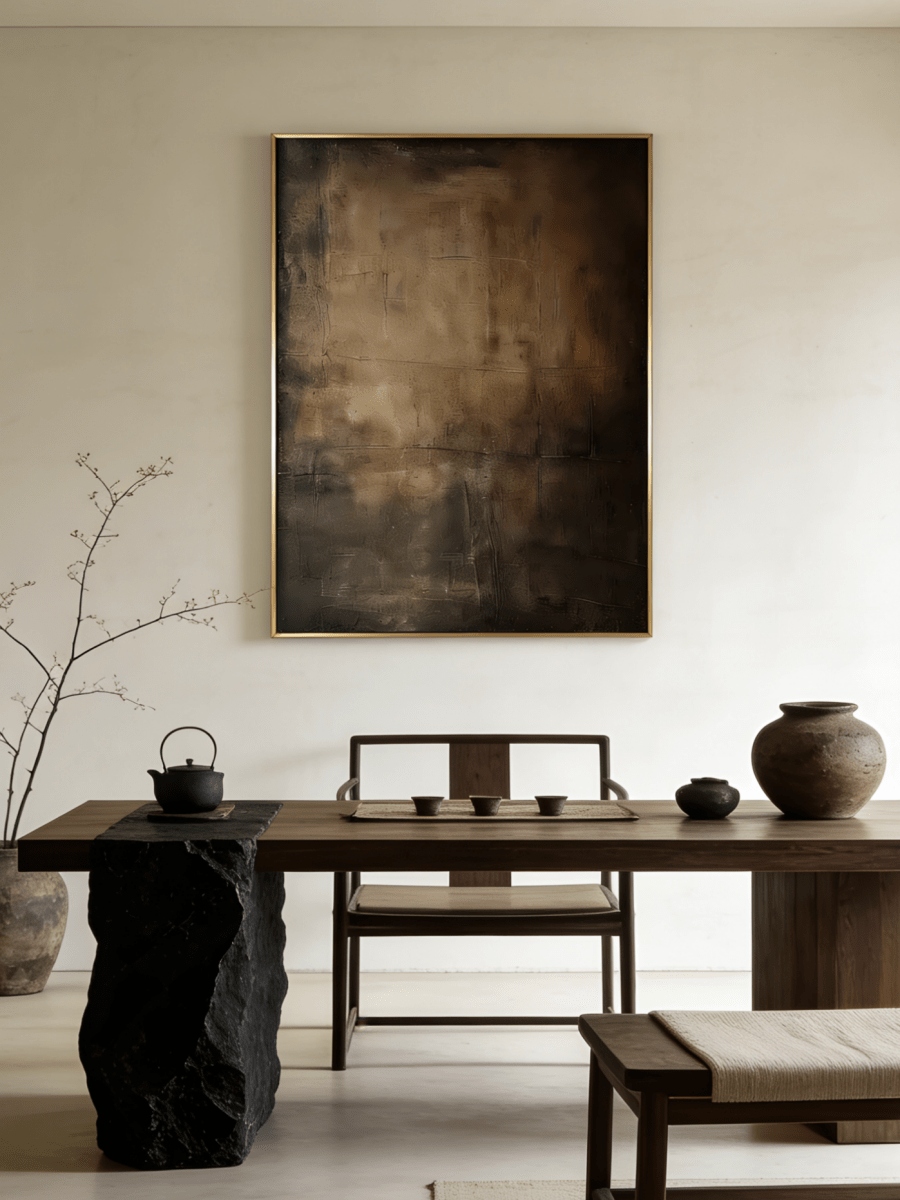
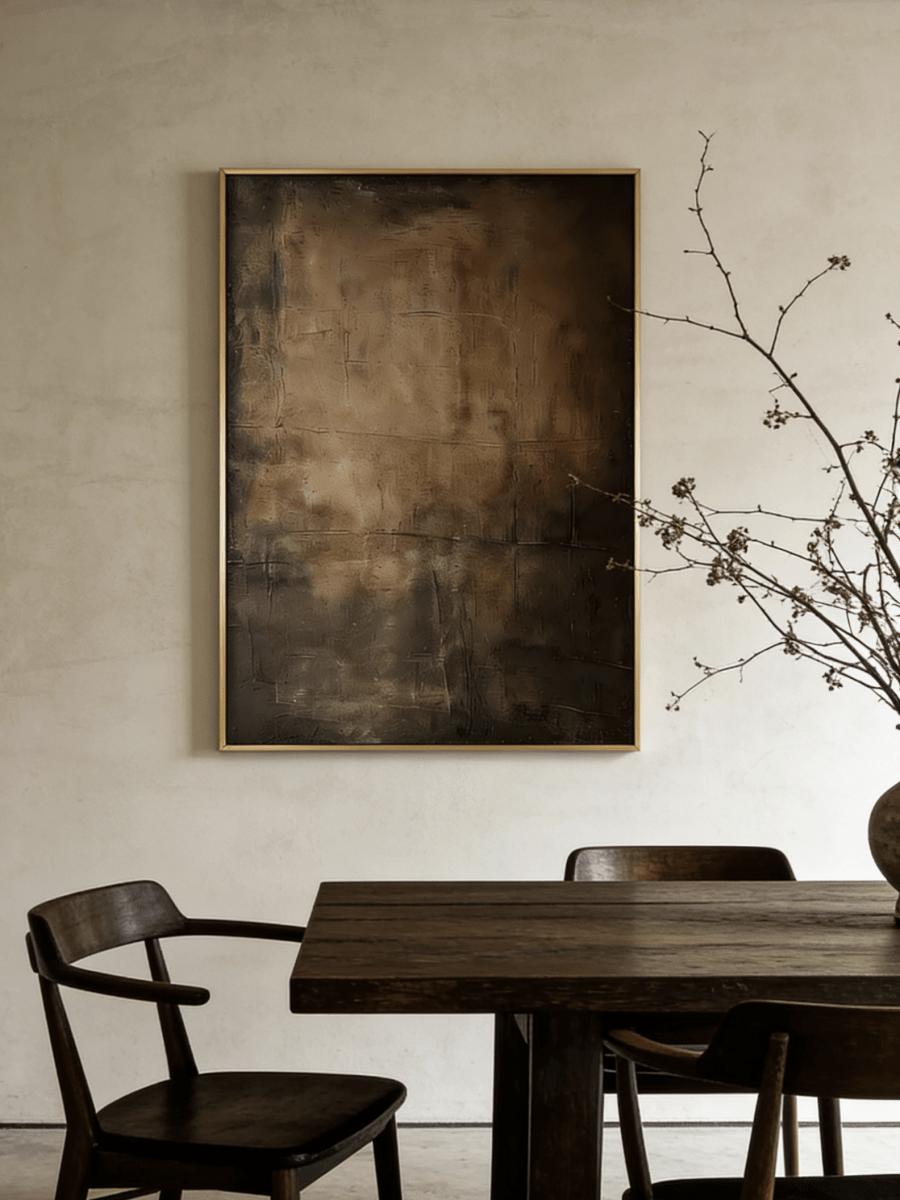
As the natural light shifts throughout the day, the raised textures catch the light, casting subtle shadows and giving the artwork life. In modern minimalist, Wabi-sabi, or organic contemporary interiors, a textured neutral painting often provides the crucial tactile element that prevents the room from feeling flat or sterile.

Frequently Asked Questions (FAQs)
Why is hand-painted wall art more expensive than printed canvas?
A canvas print is mechanically reproduced in seconds. Hand-painted art requires raw materials, hours of human labor, drying times, and artistic skill. You are paying for a physical, tactile object, not just an image.
How much should I spend on artwork above my sofa?
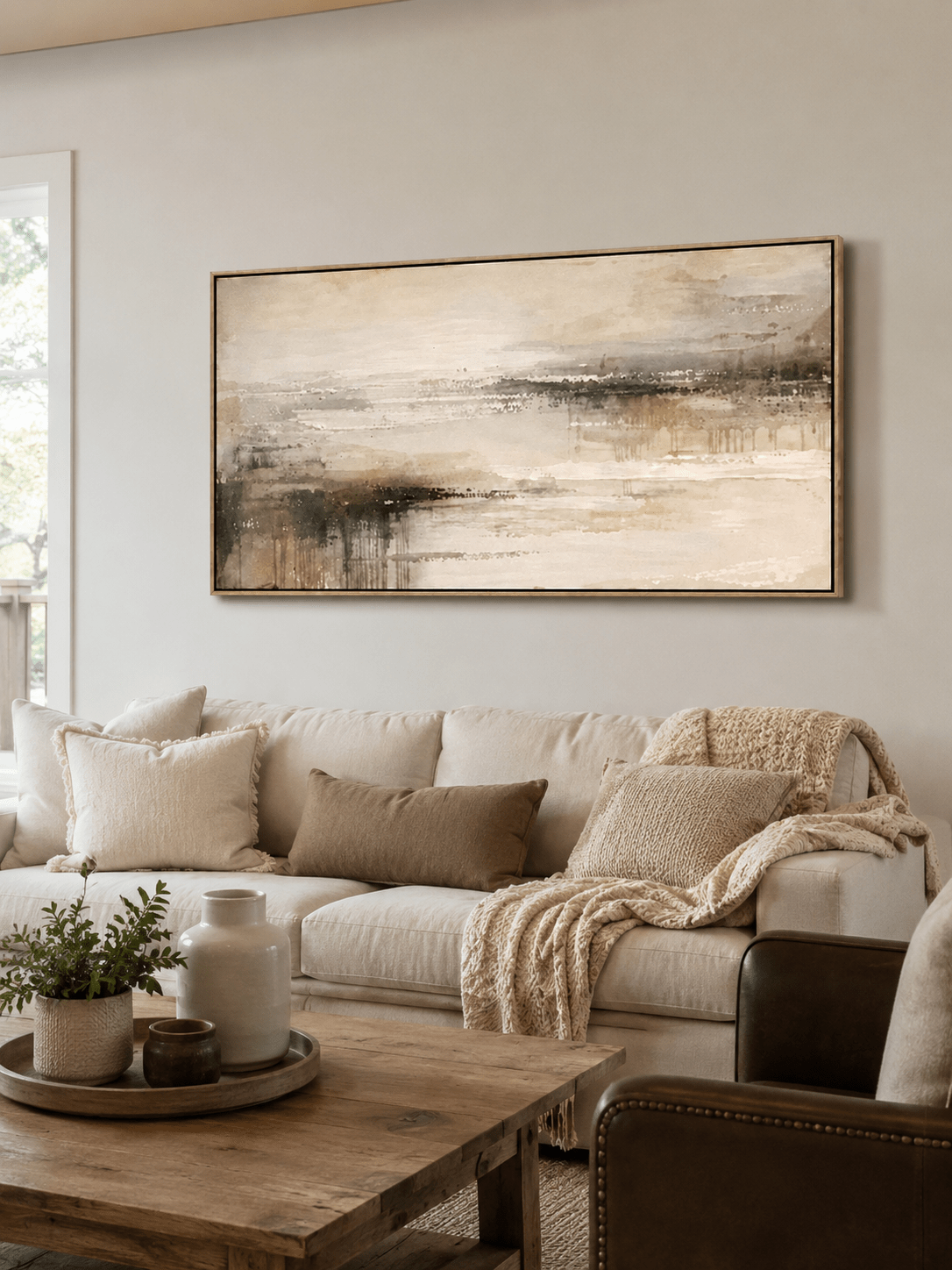
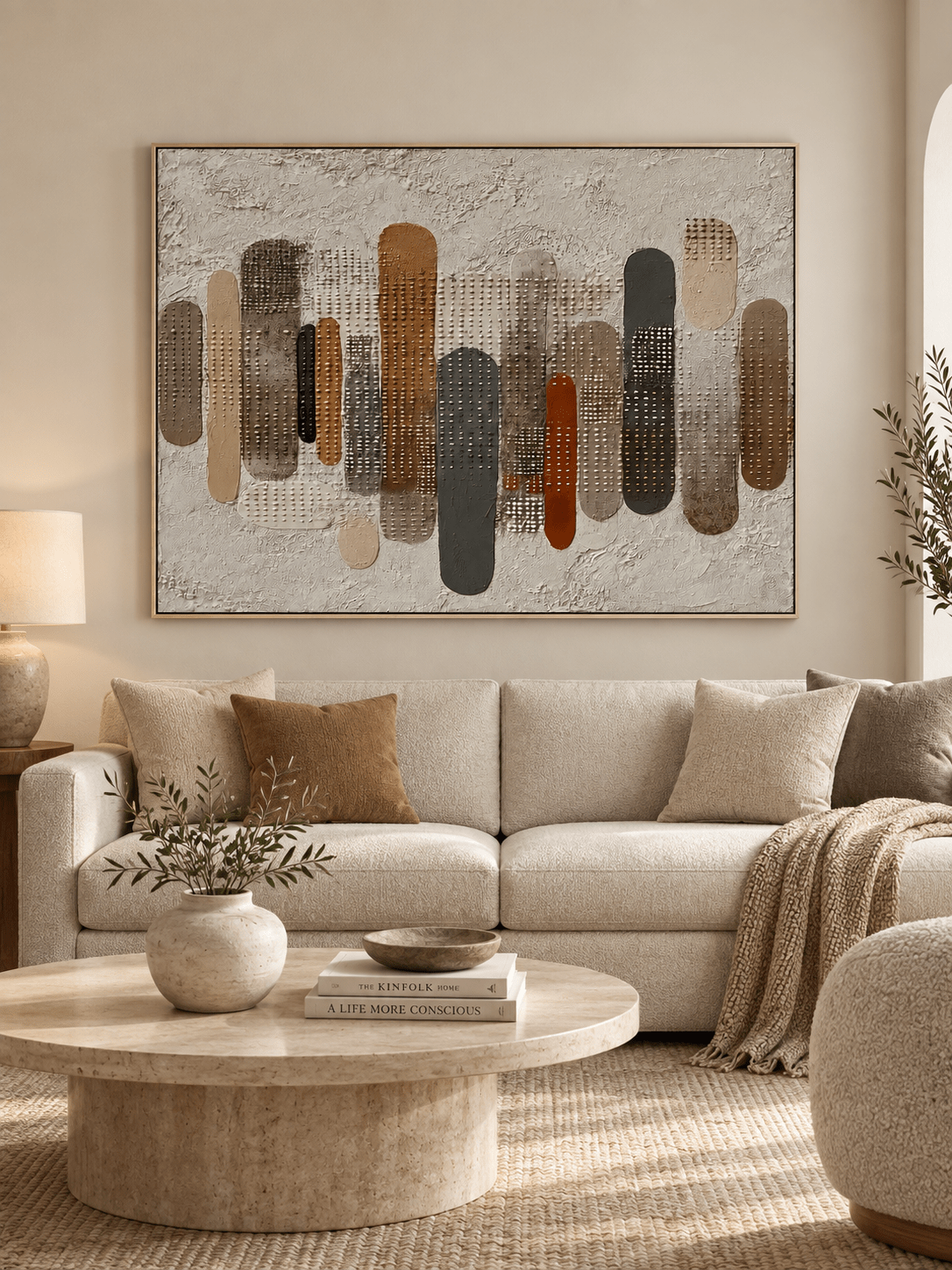
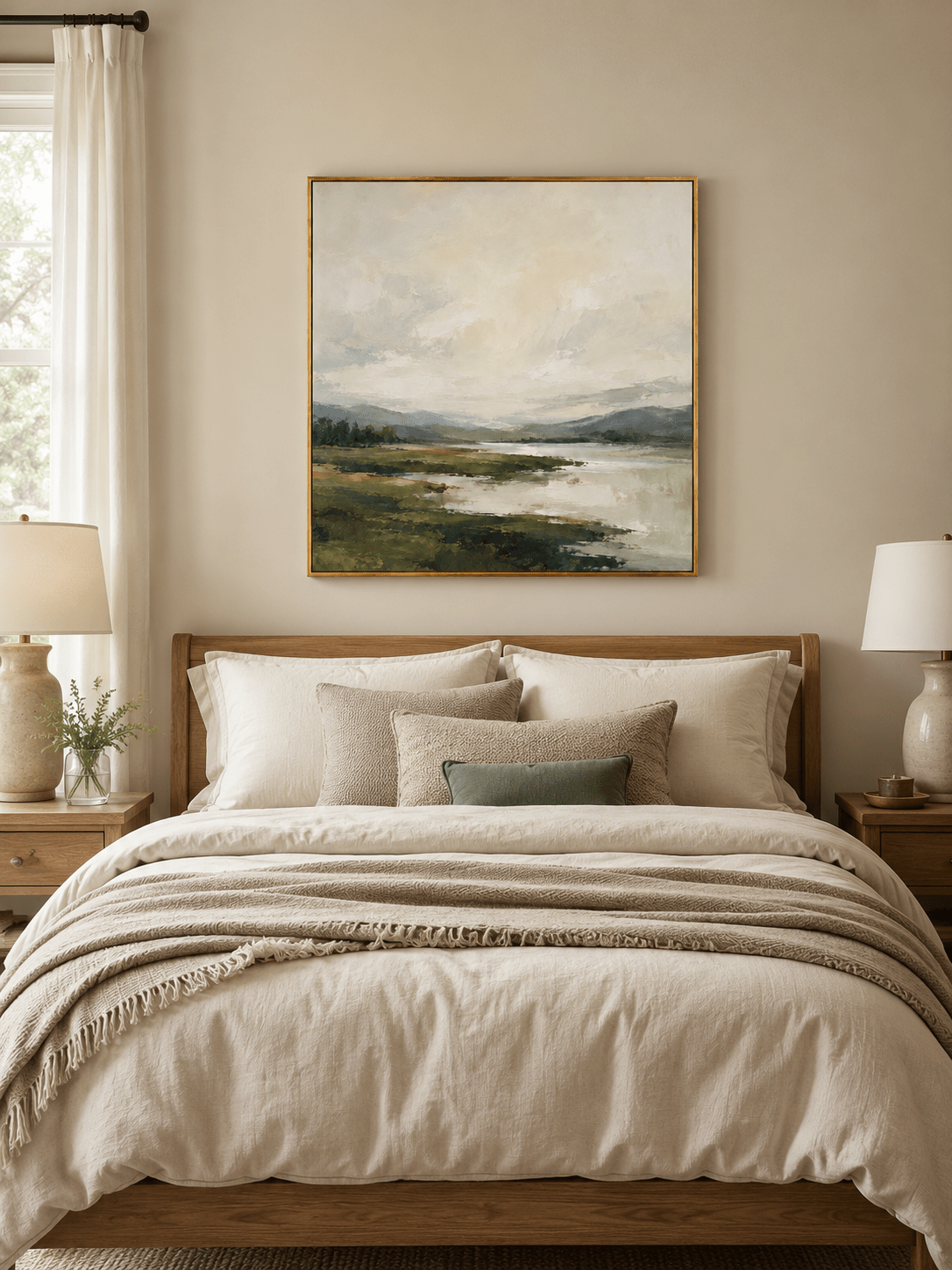
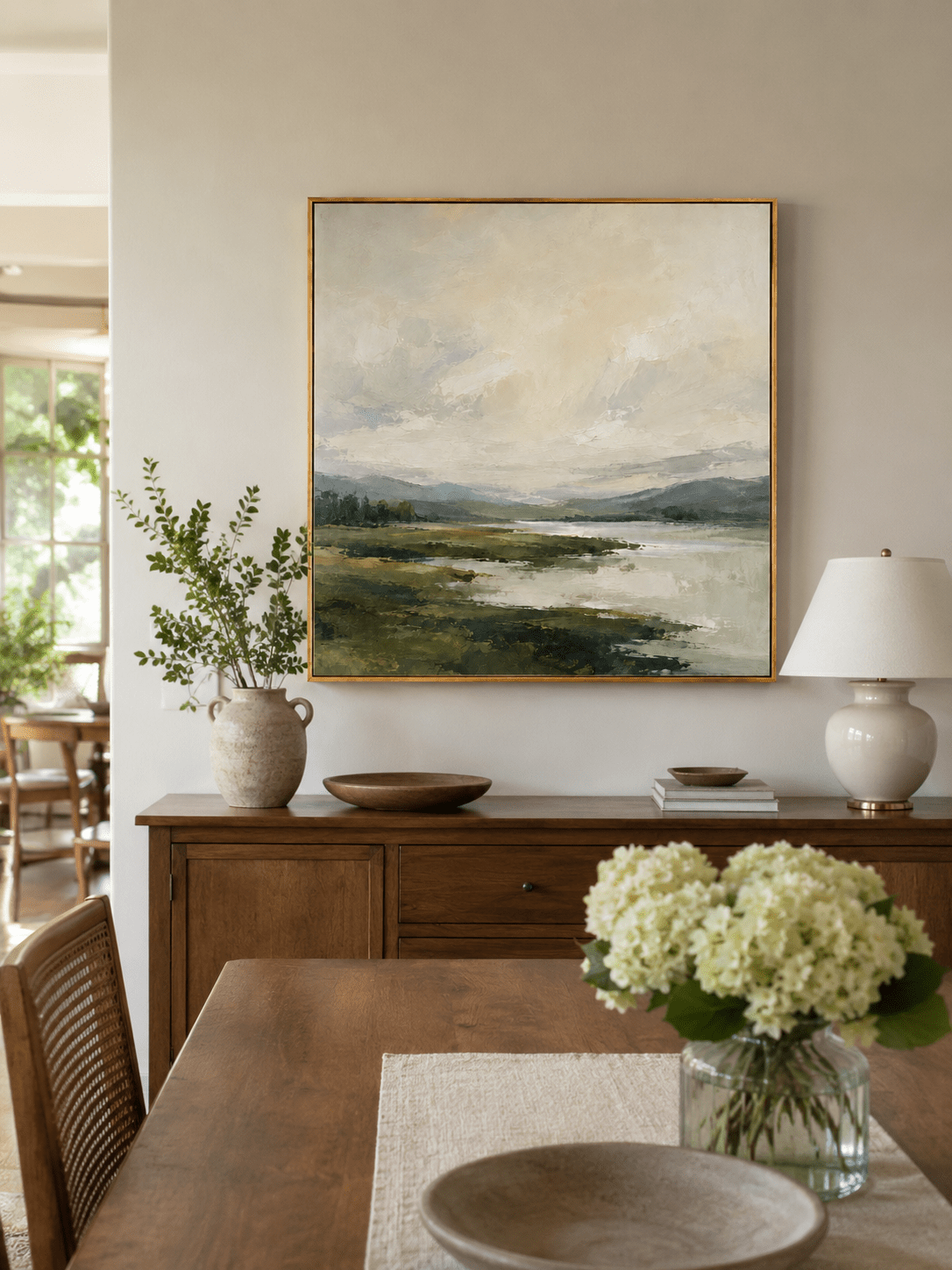
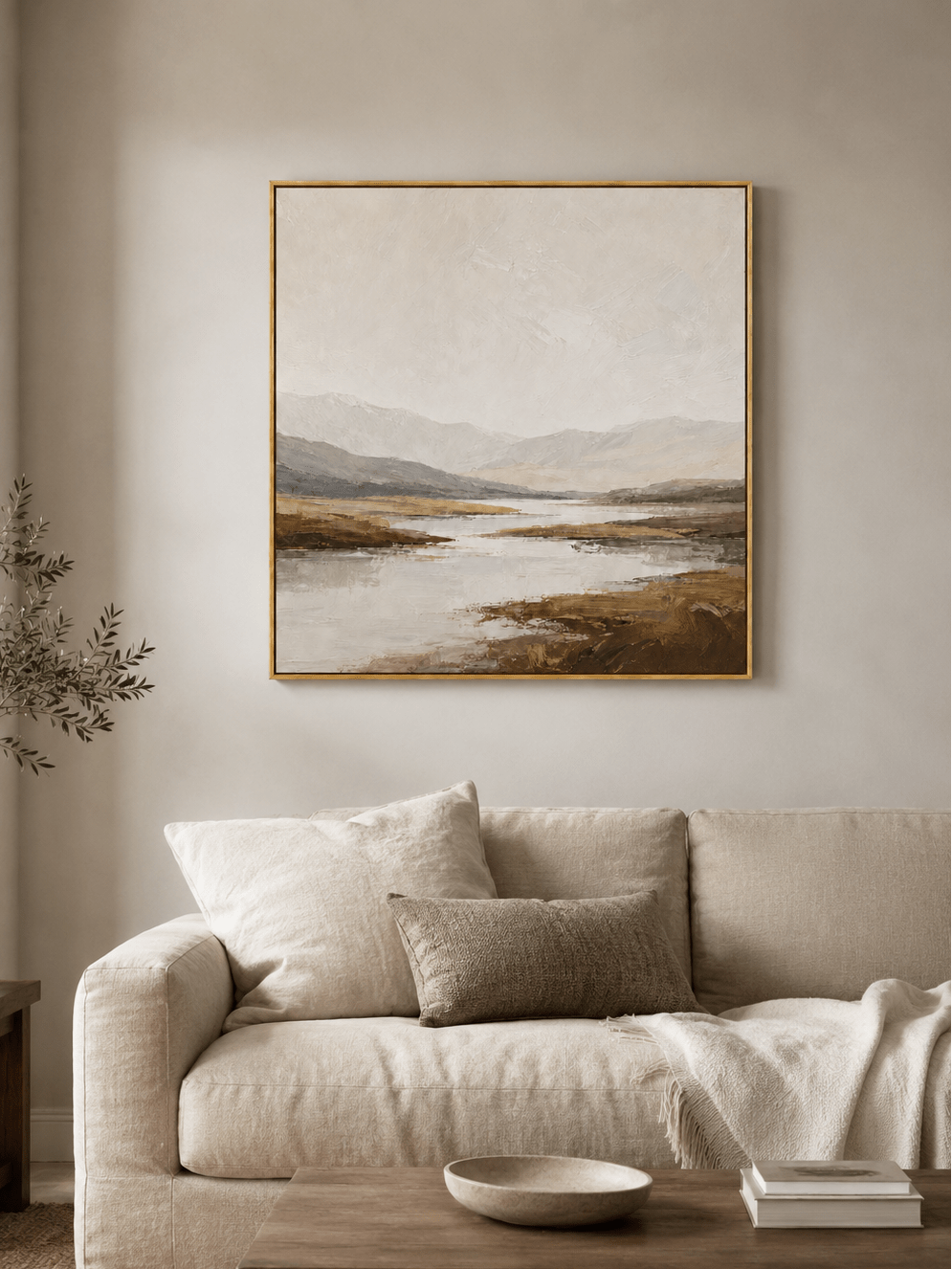
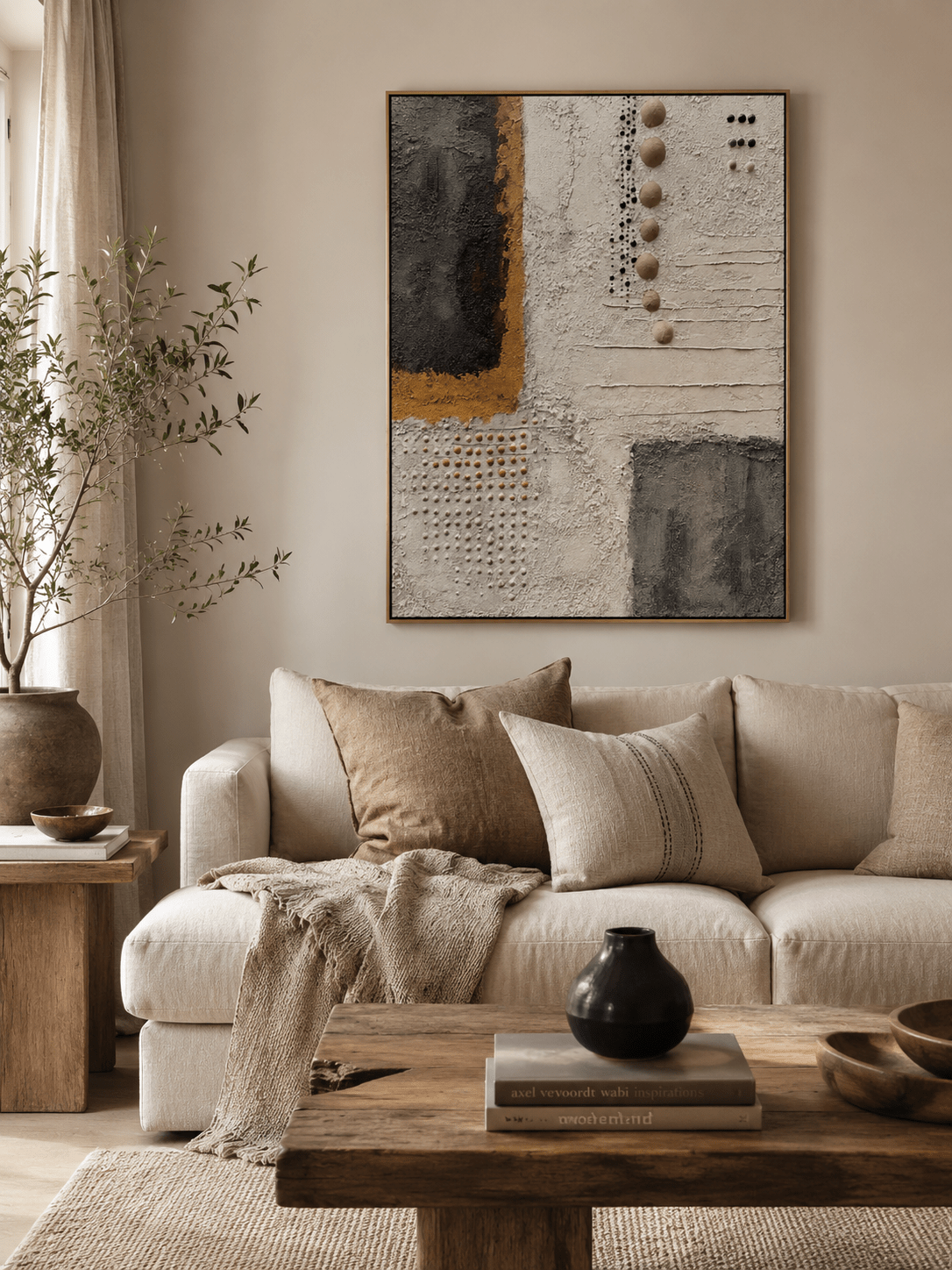
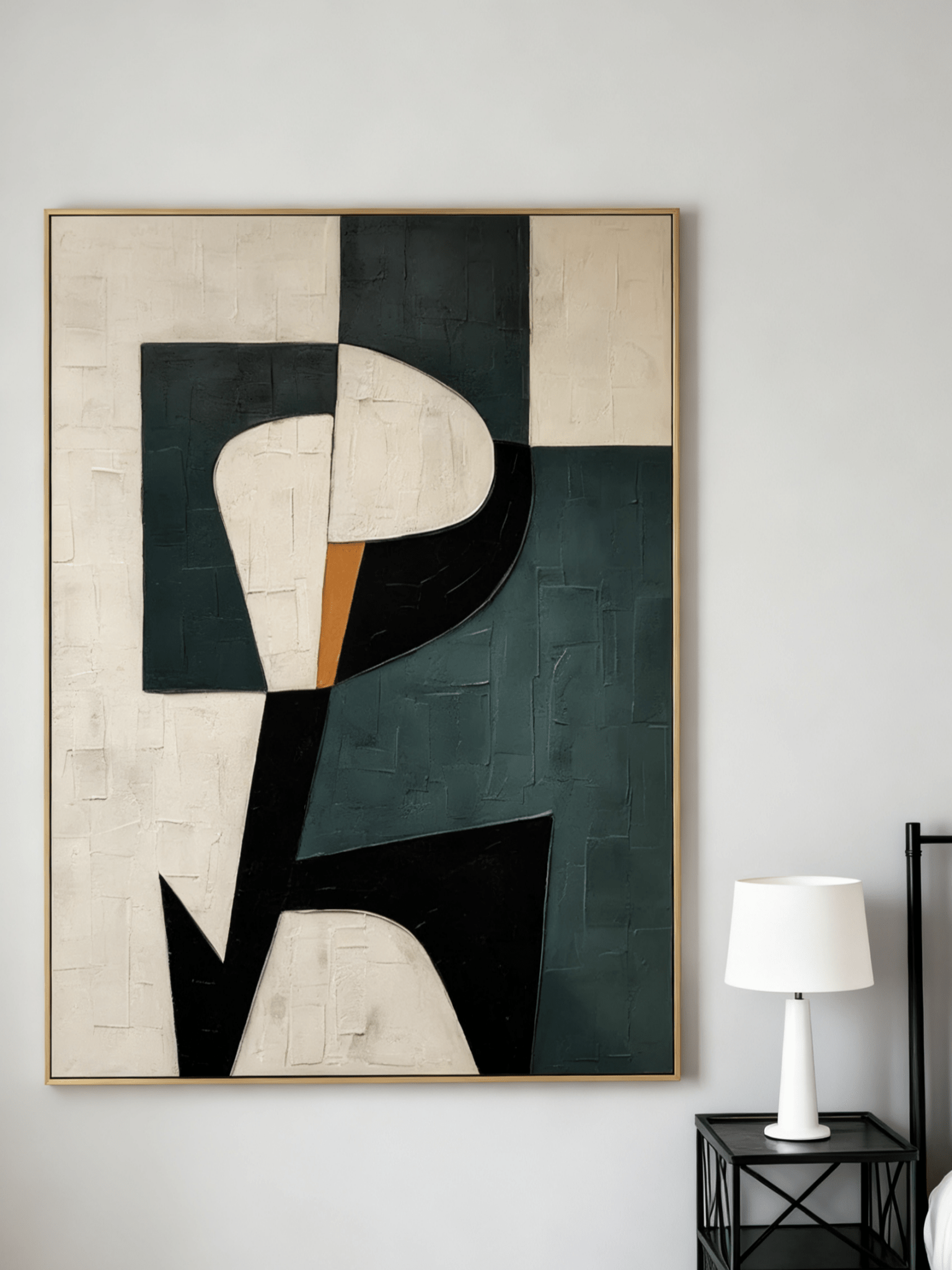
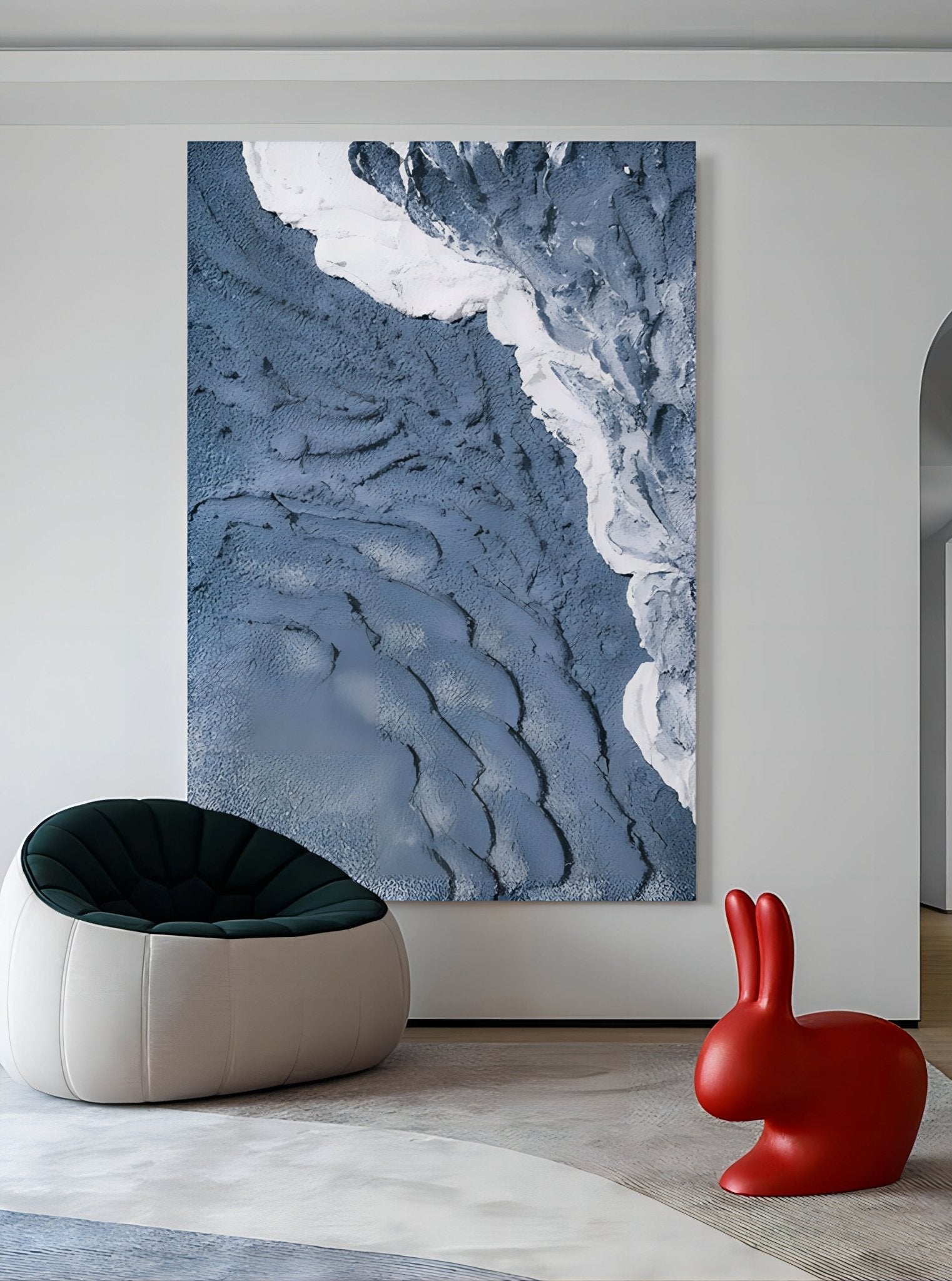
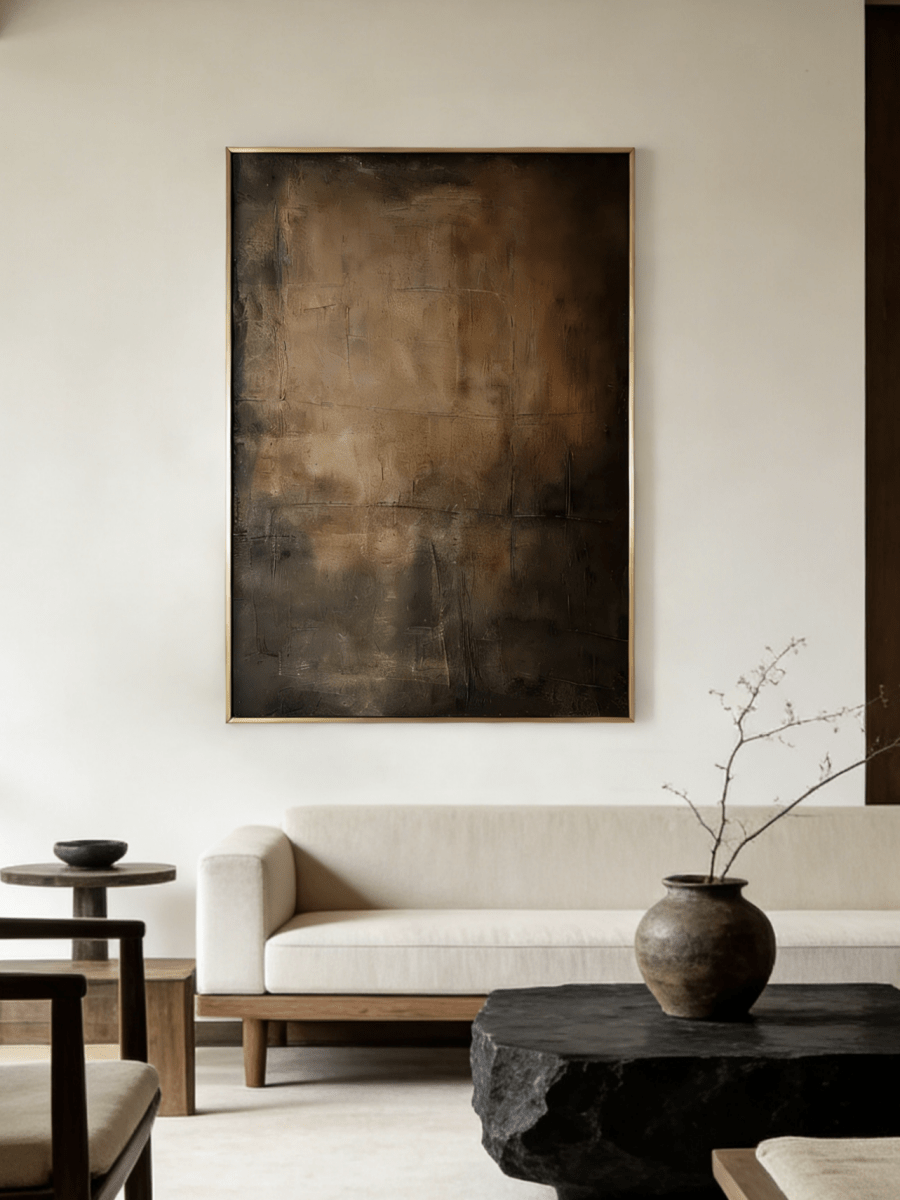
Start with the scale, not the budget. When choosing the right wall art size above a sofa, artwork should generally span 2/3 to 3/4 of the sofa's width. For a standard 84-inch sofa, you will need a large canvas (e.g., 36"x48" or larger), which typically ranges from $450 to $1,200 for quality hand-painted work.
Does textured wall art cost more than flat paintings?
Yes. Heavy 3D texture requires specialized mediums (like plaster or modeling paste), multiple layering stages, and longer drying times, increasing the overall labor and material costs.
Are custom canvas sizes more expensive?
Usually, yes. Adapting an artwork to custom dimensions means the artist cannot just "stretch" the image; they must carefully redraw and rebalance the composition to ensure it looks visually perfect in its new proportions.
Is affordable hand-painted wall art still good quality?
Yes, if you buy smart. By purchasing direct-to-consumer made-to-order art, you bypass gallery markups and exhibition fees, allowing you to secure high-quality craftsmanship at a much more accessible price point.
Ready to find the perfect piece for your space? Explore the WABI Wall Art Collection to discover 100% hand-painted, heavily textured artwork available in custom sizes and premium framing options. Every piece is painted to order, ensuring your home gets a truly unique focal point.