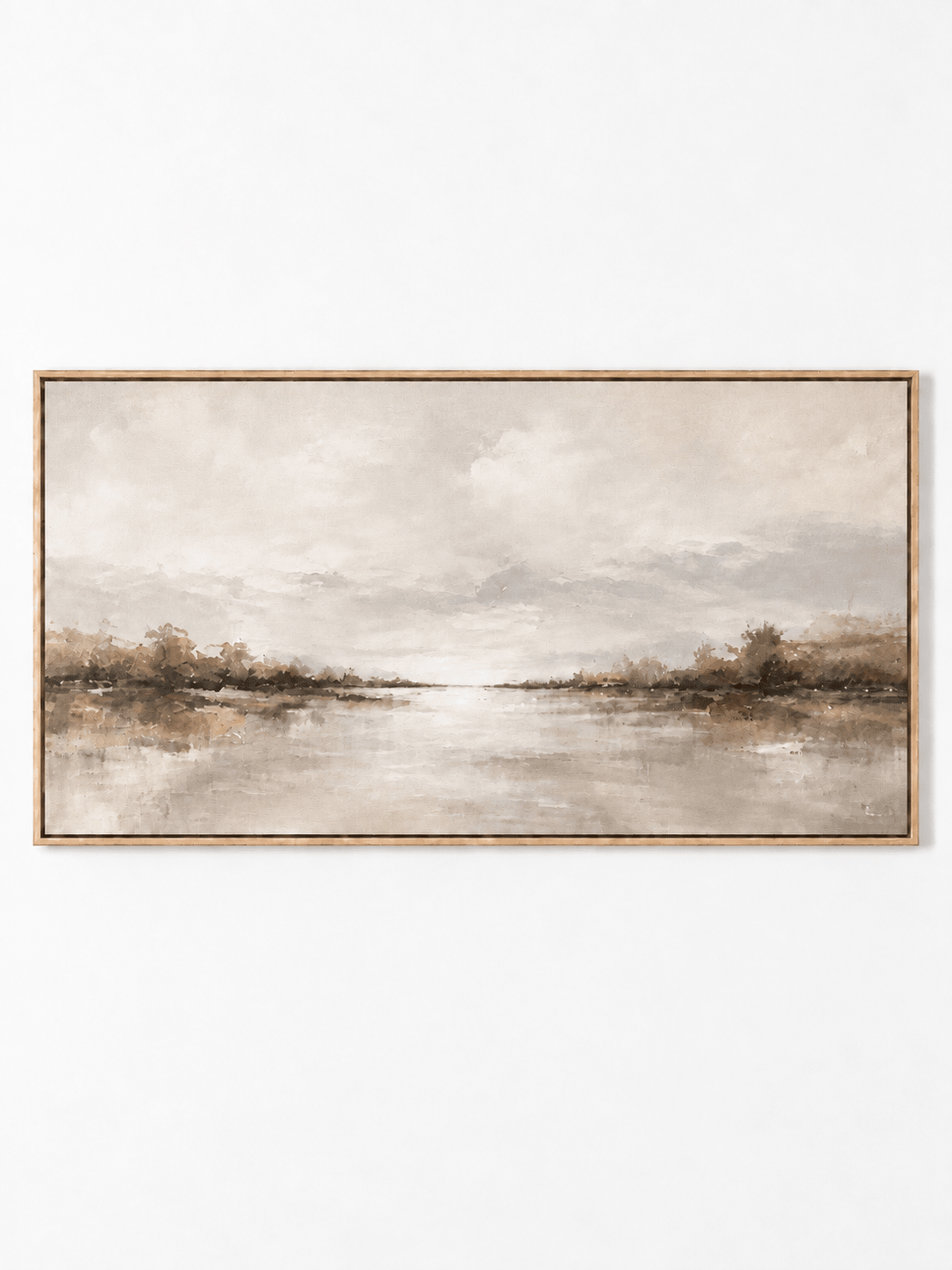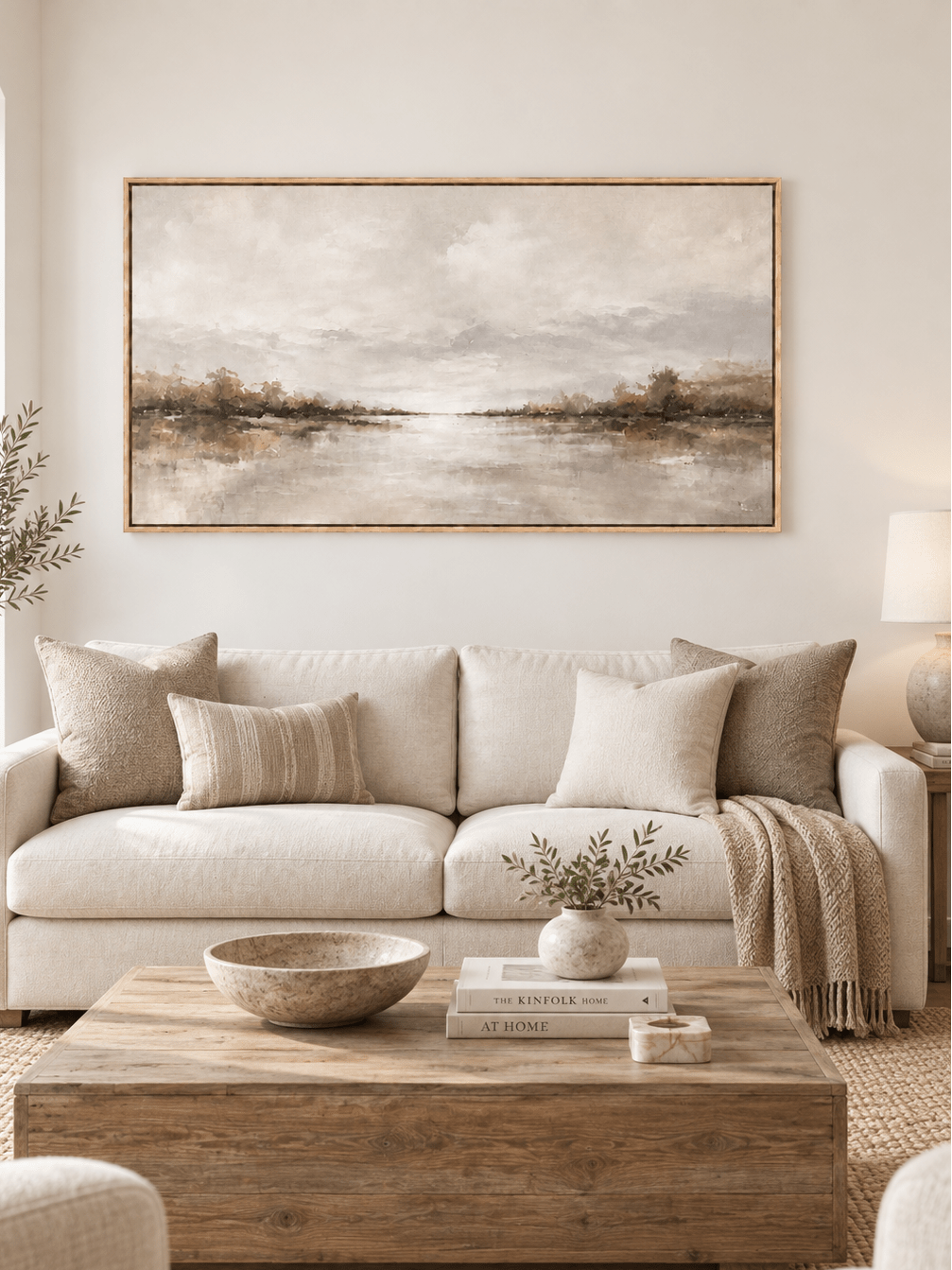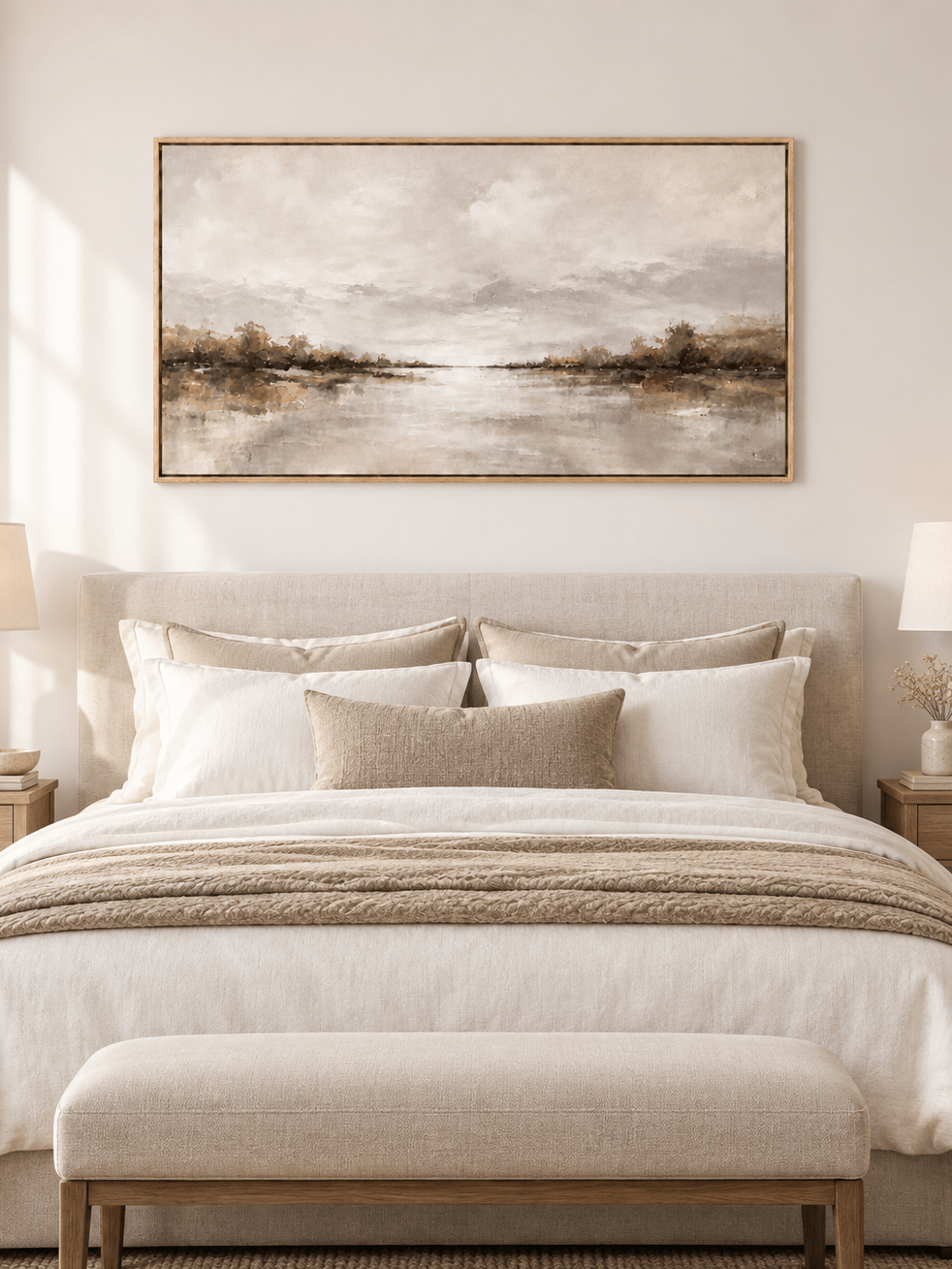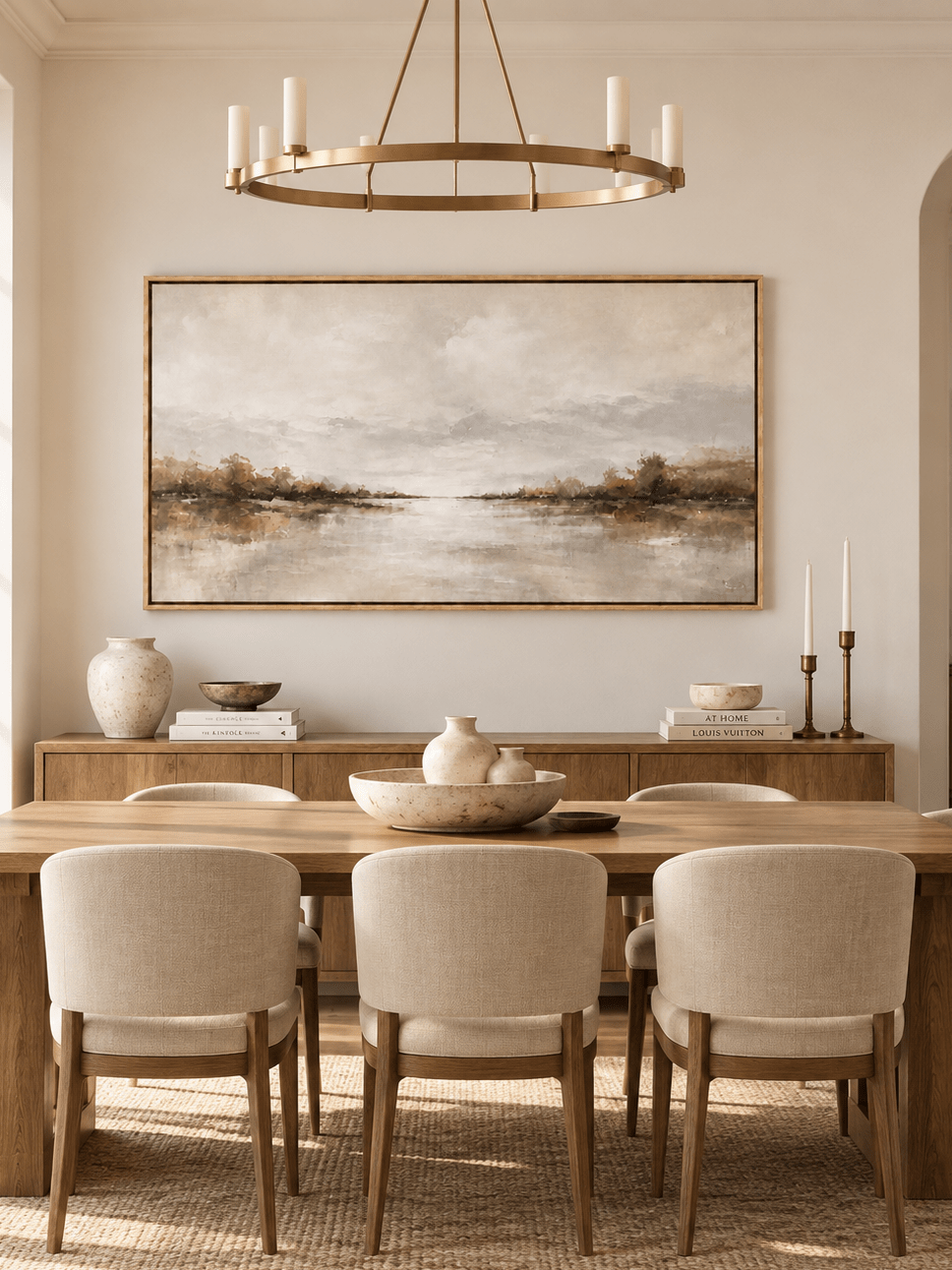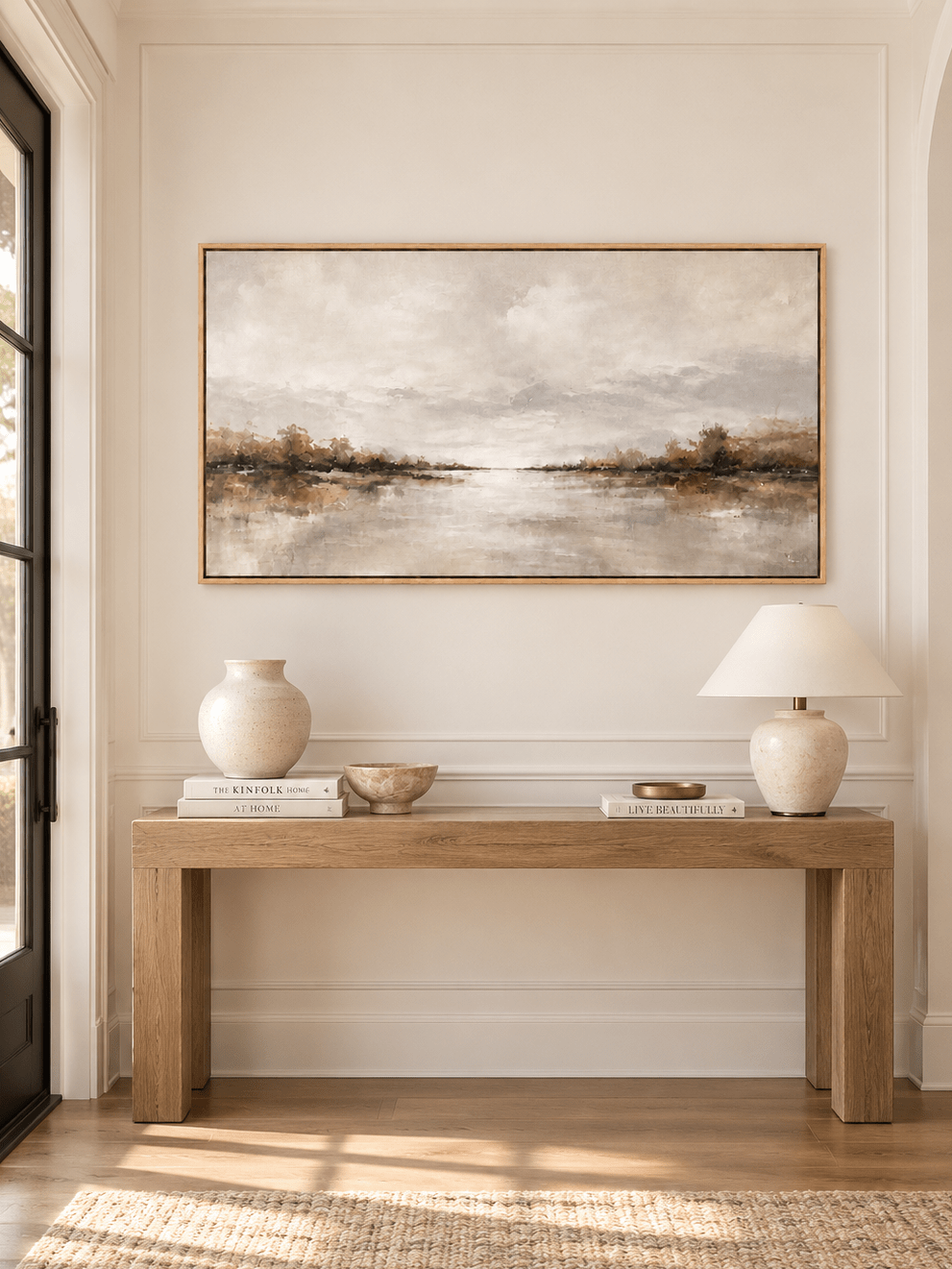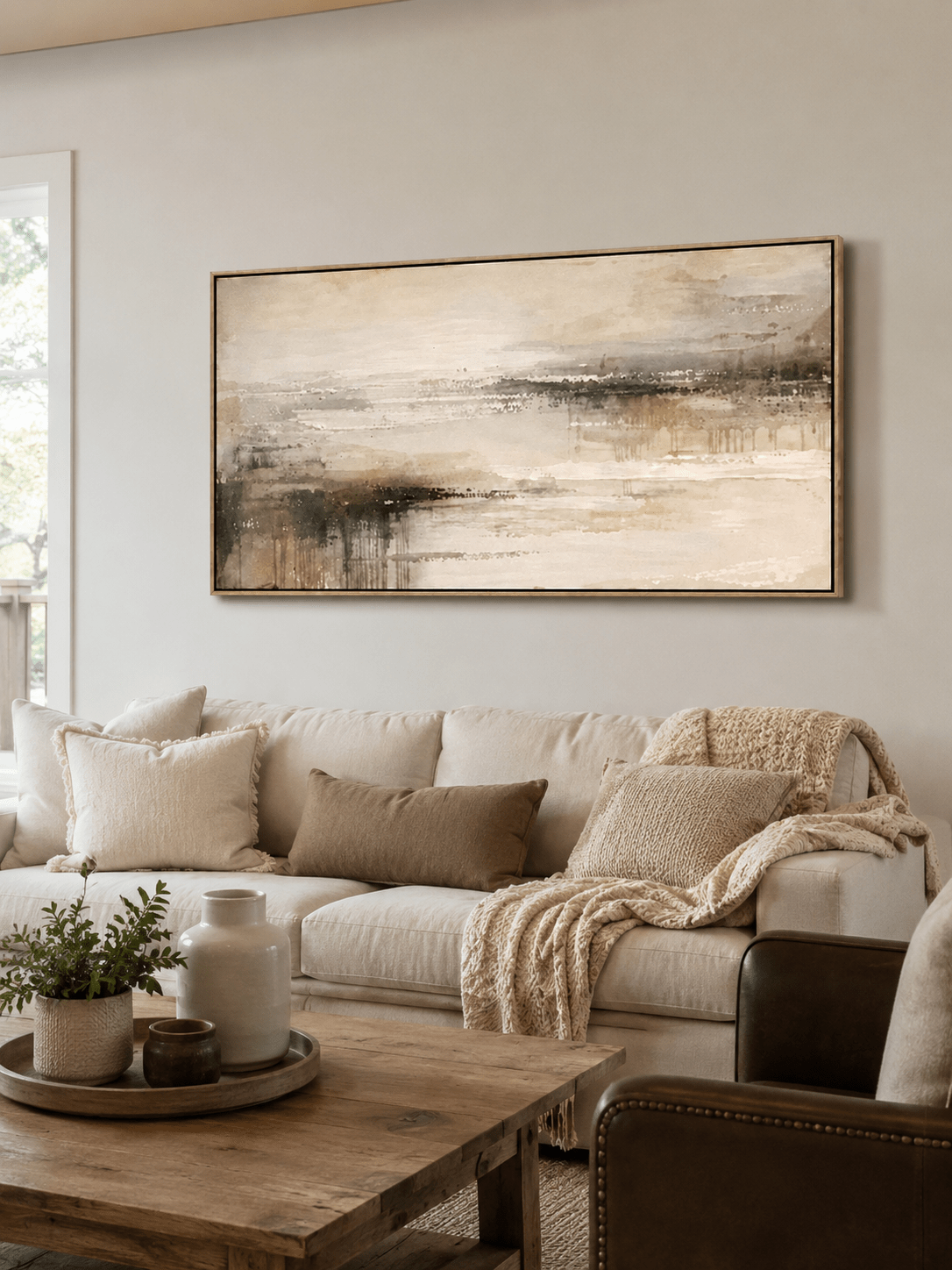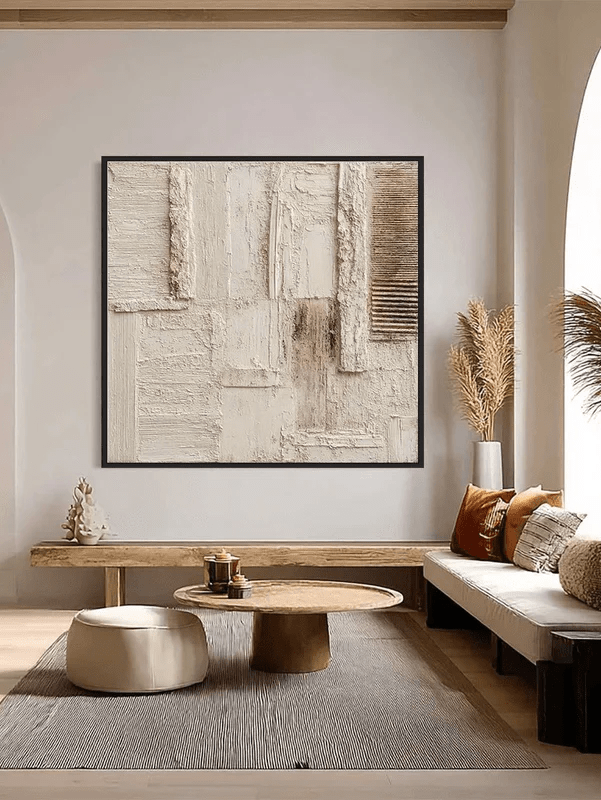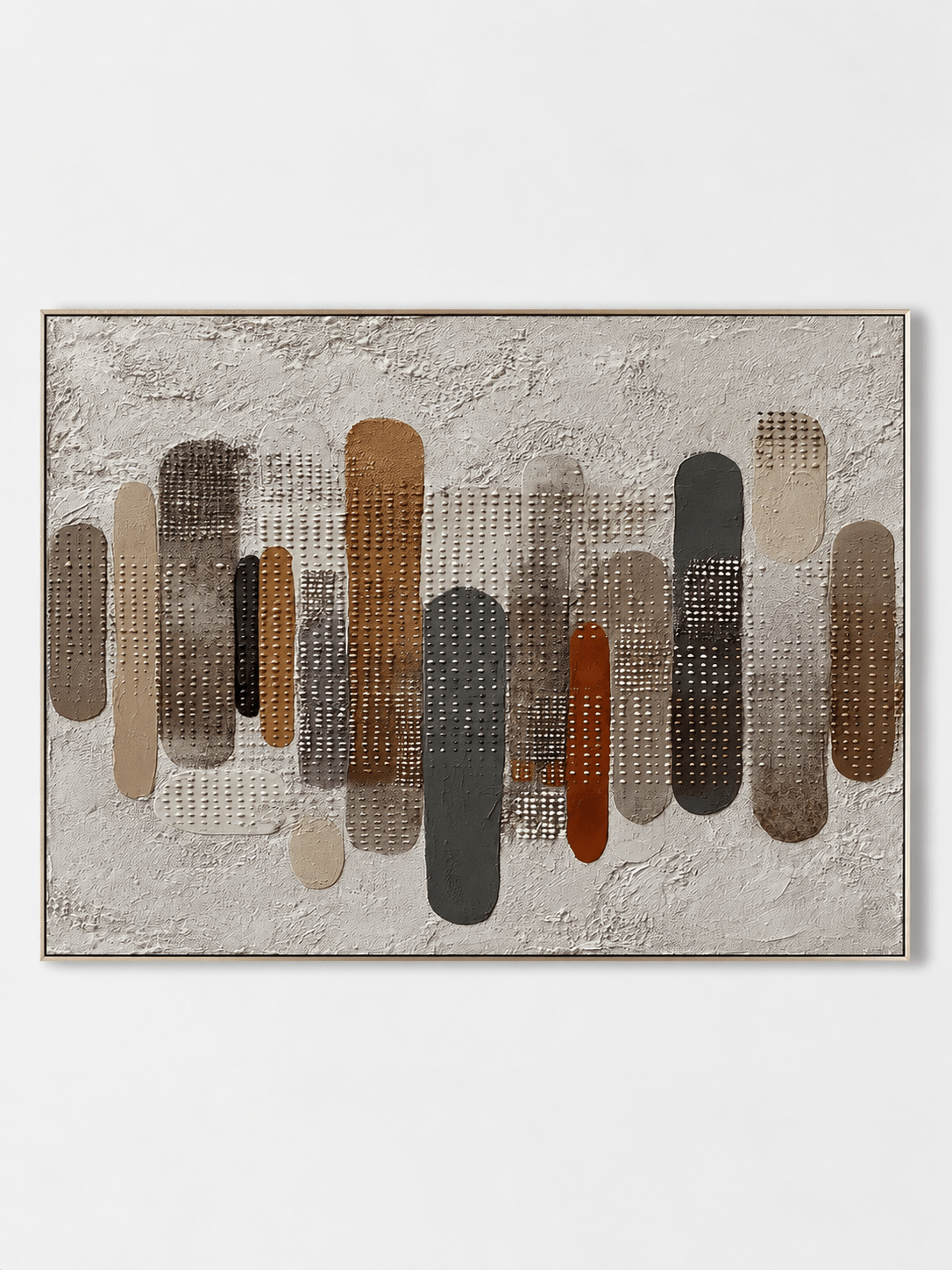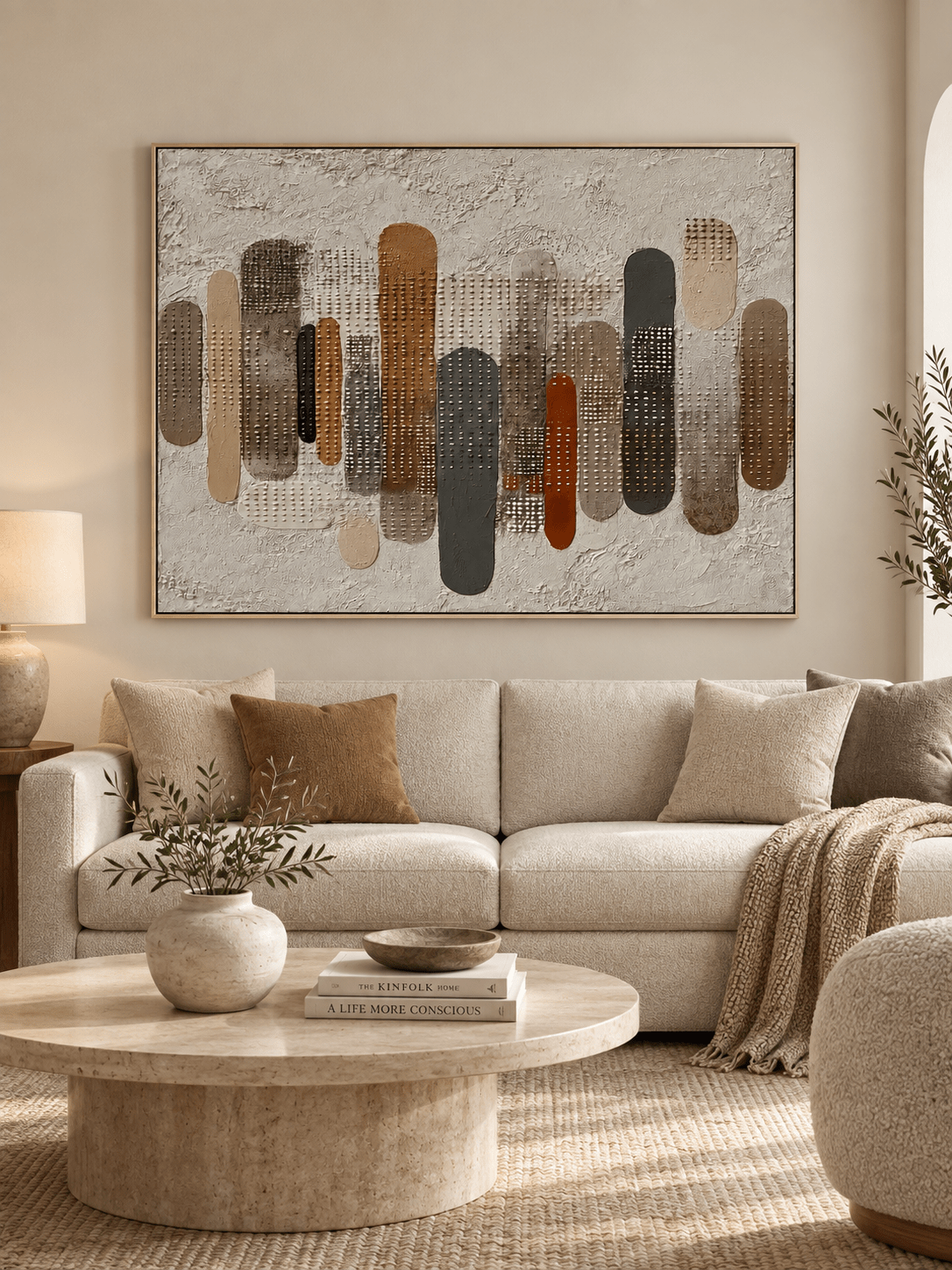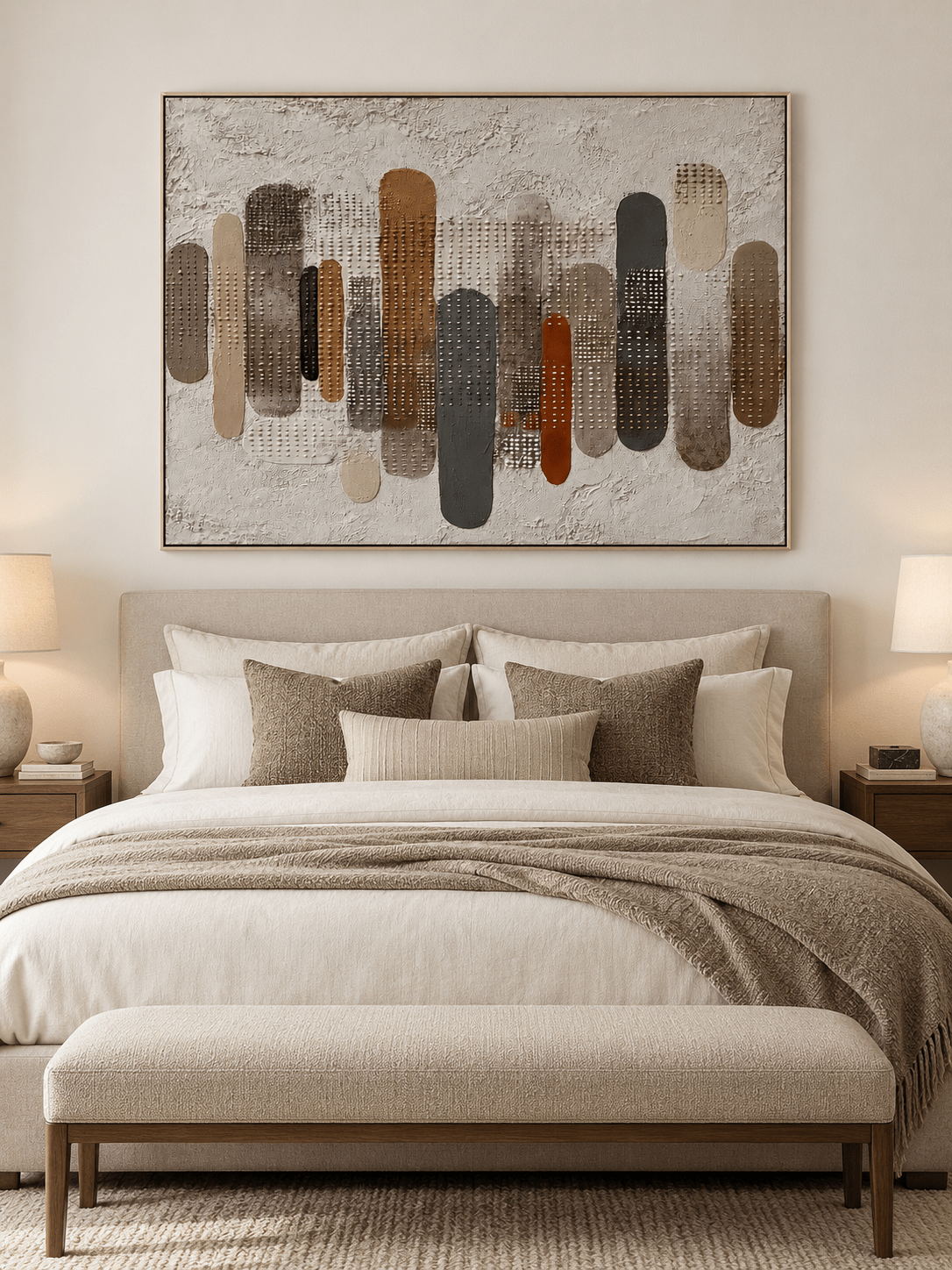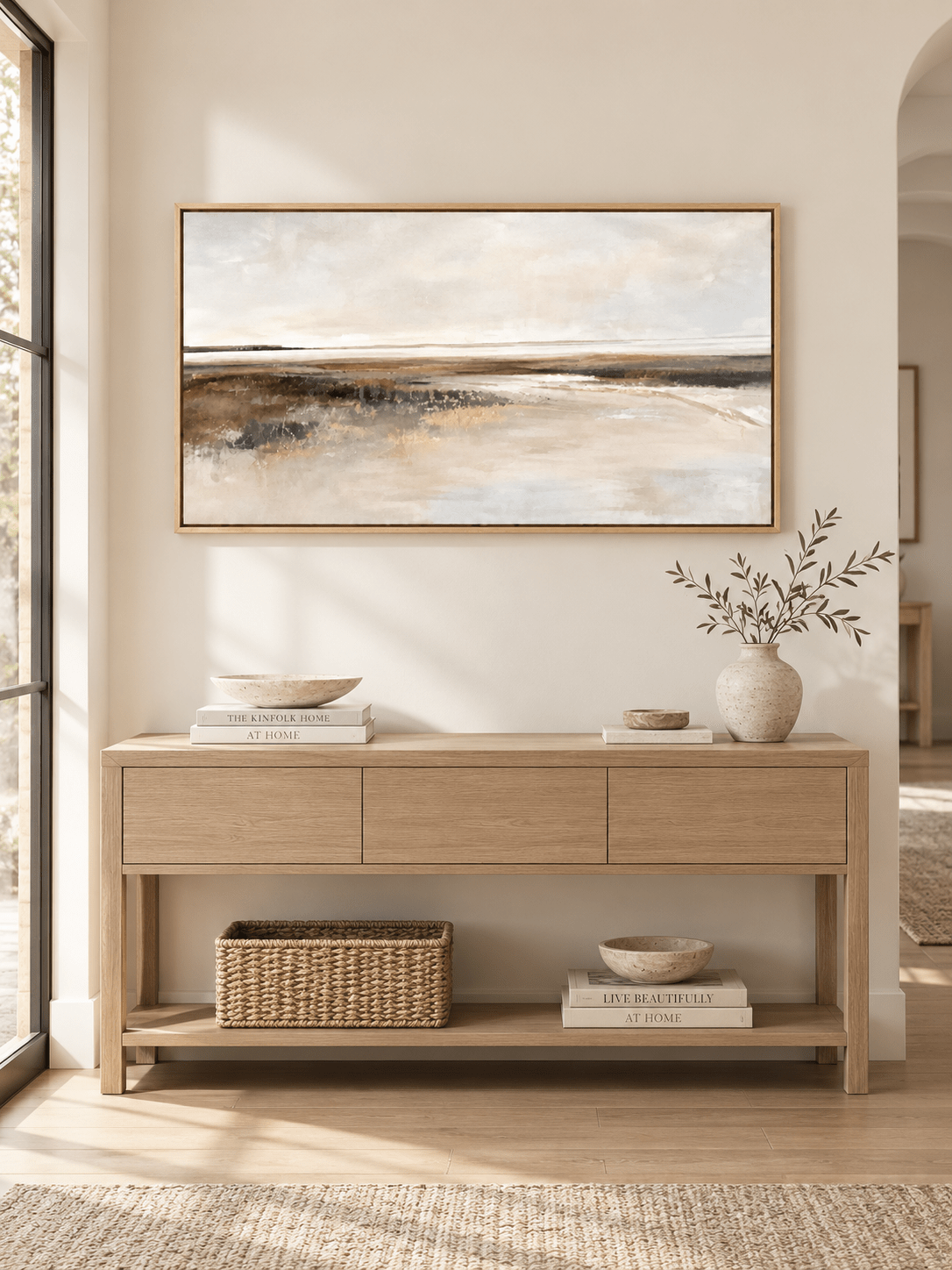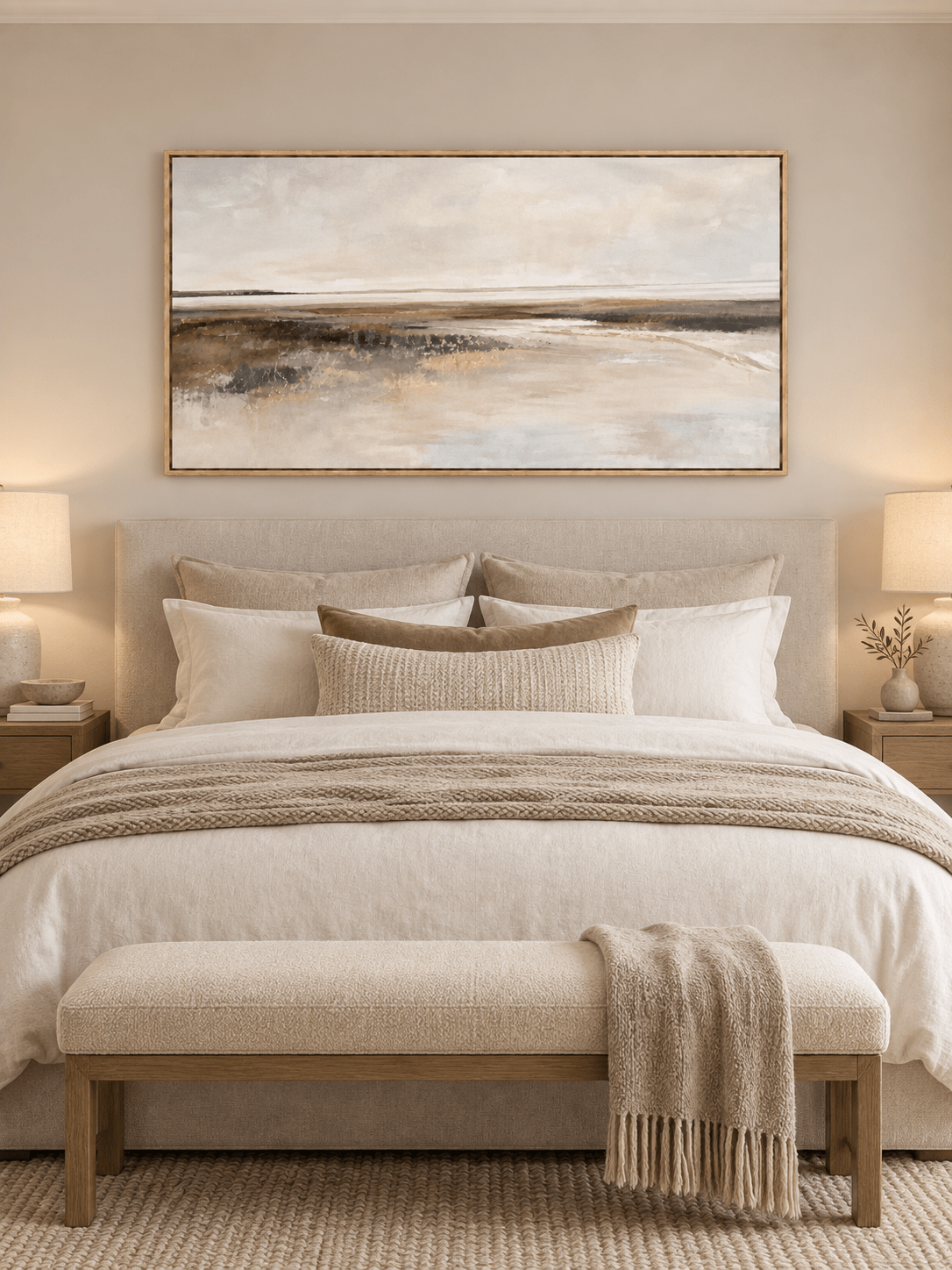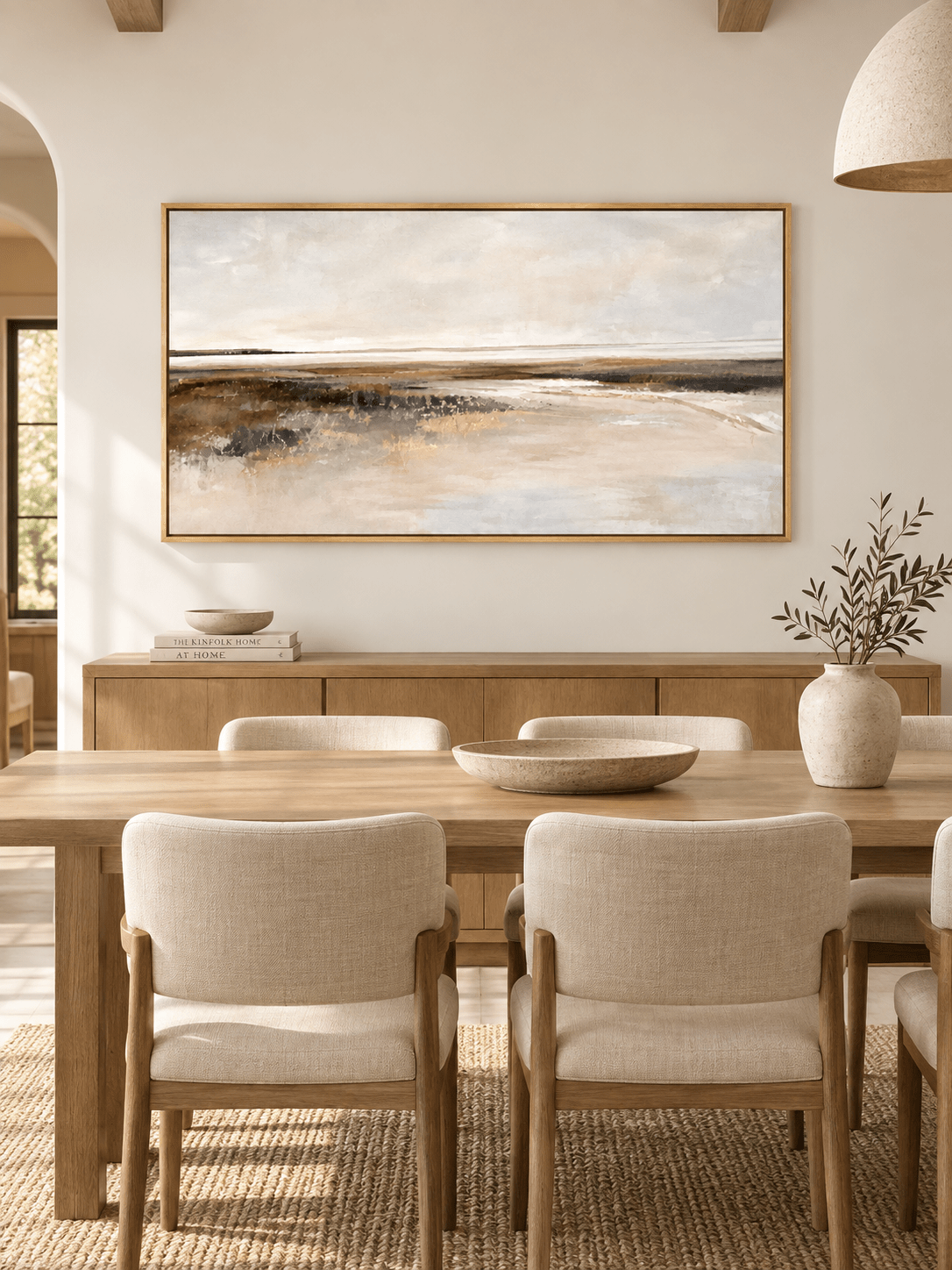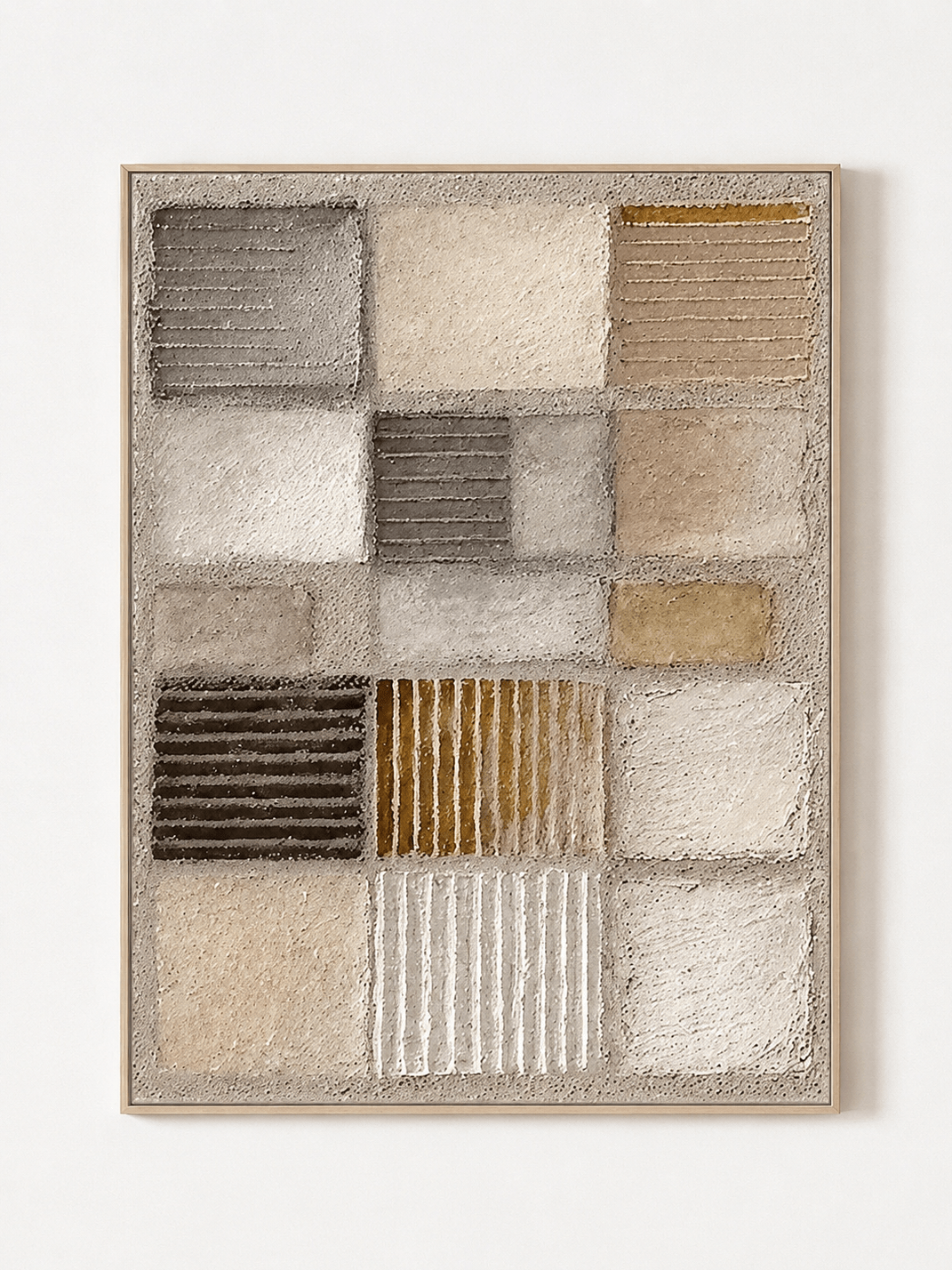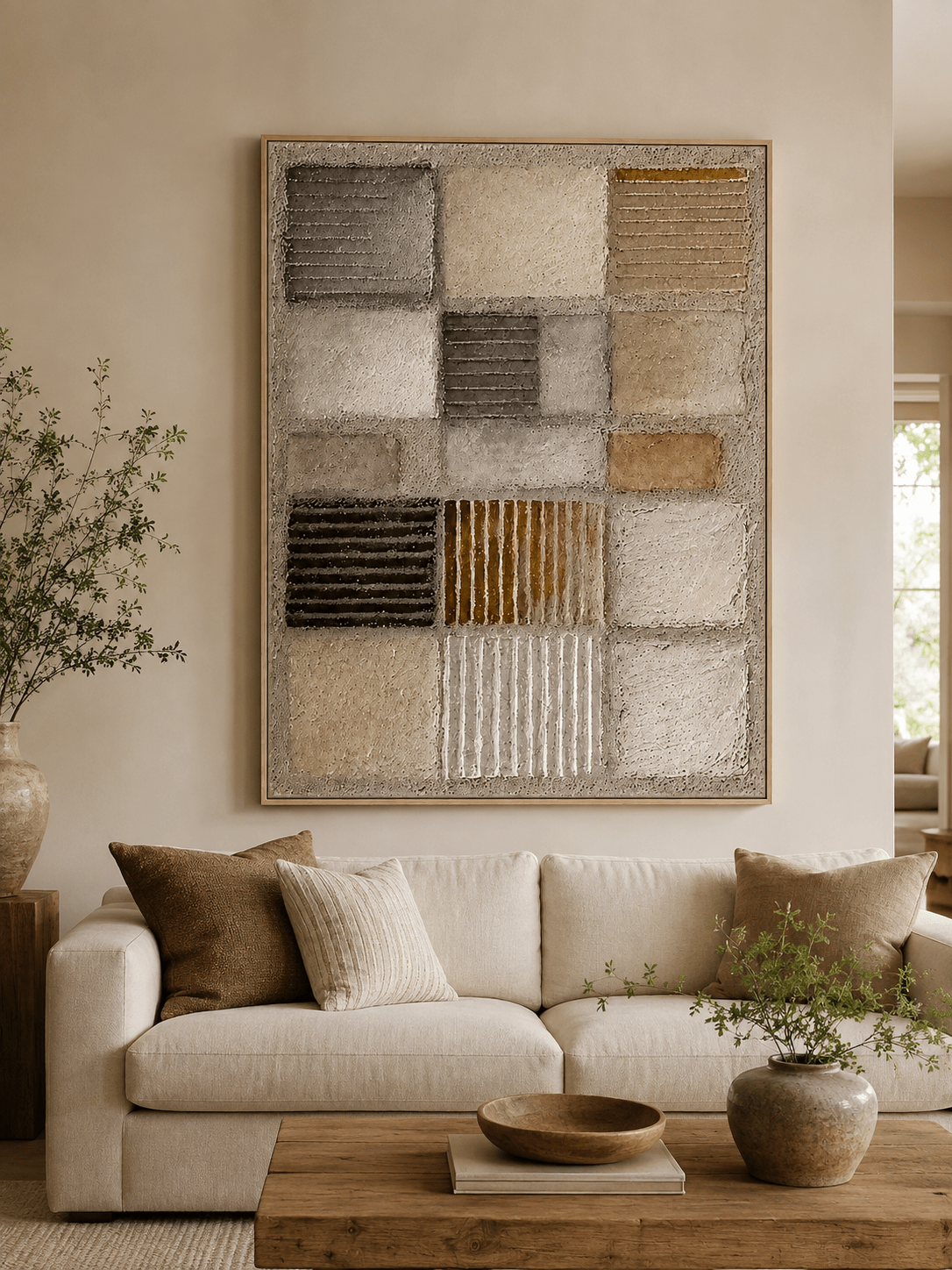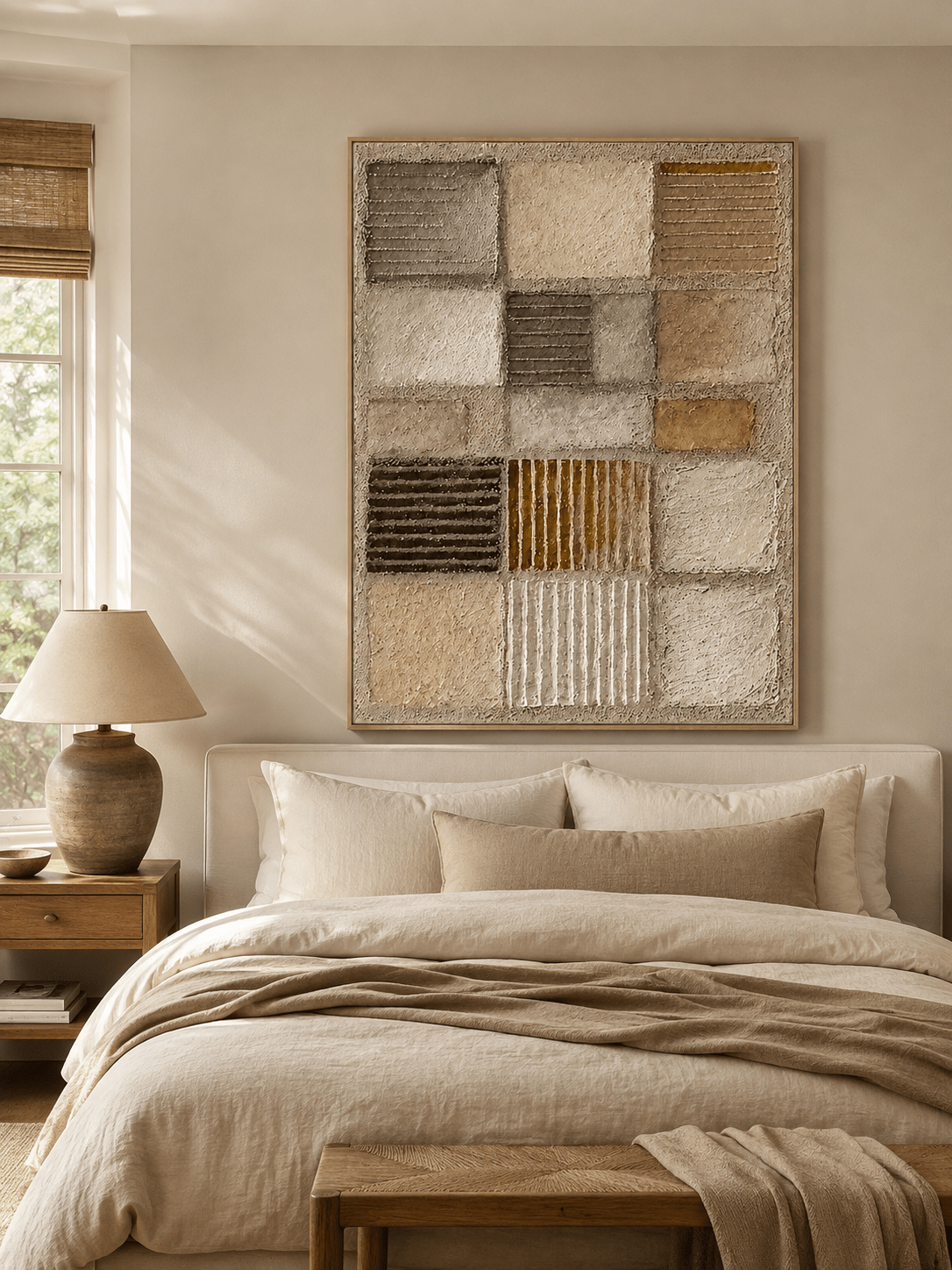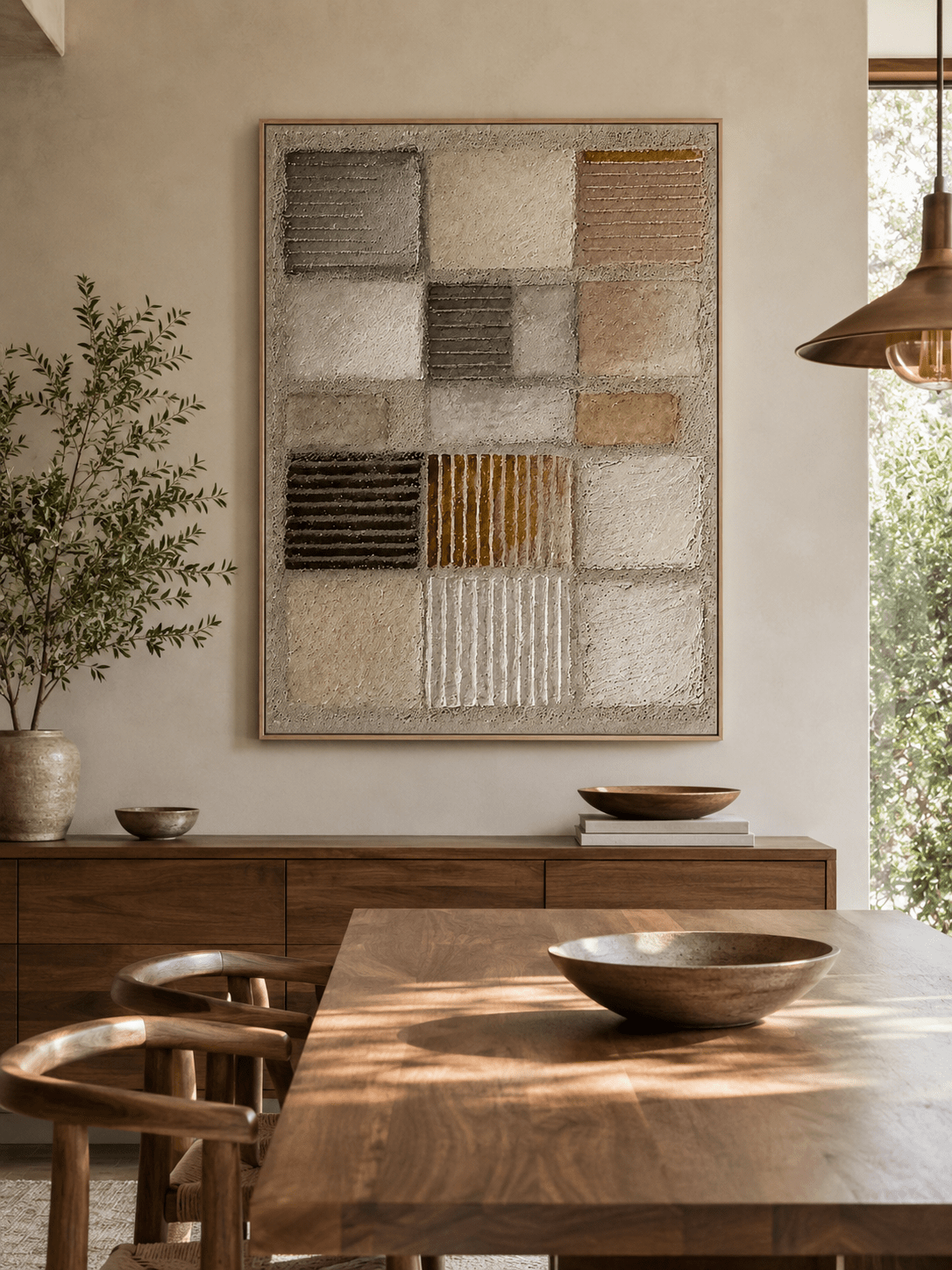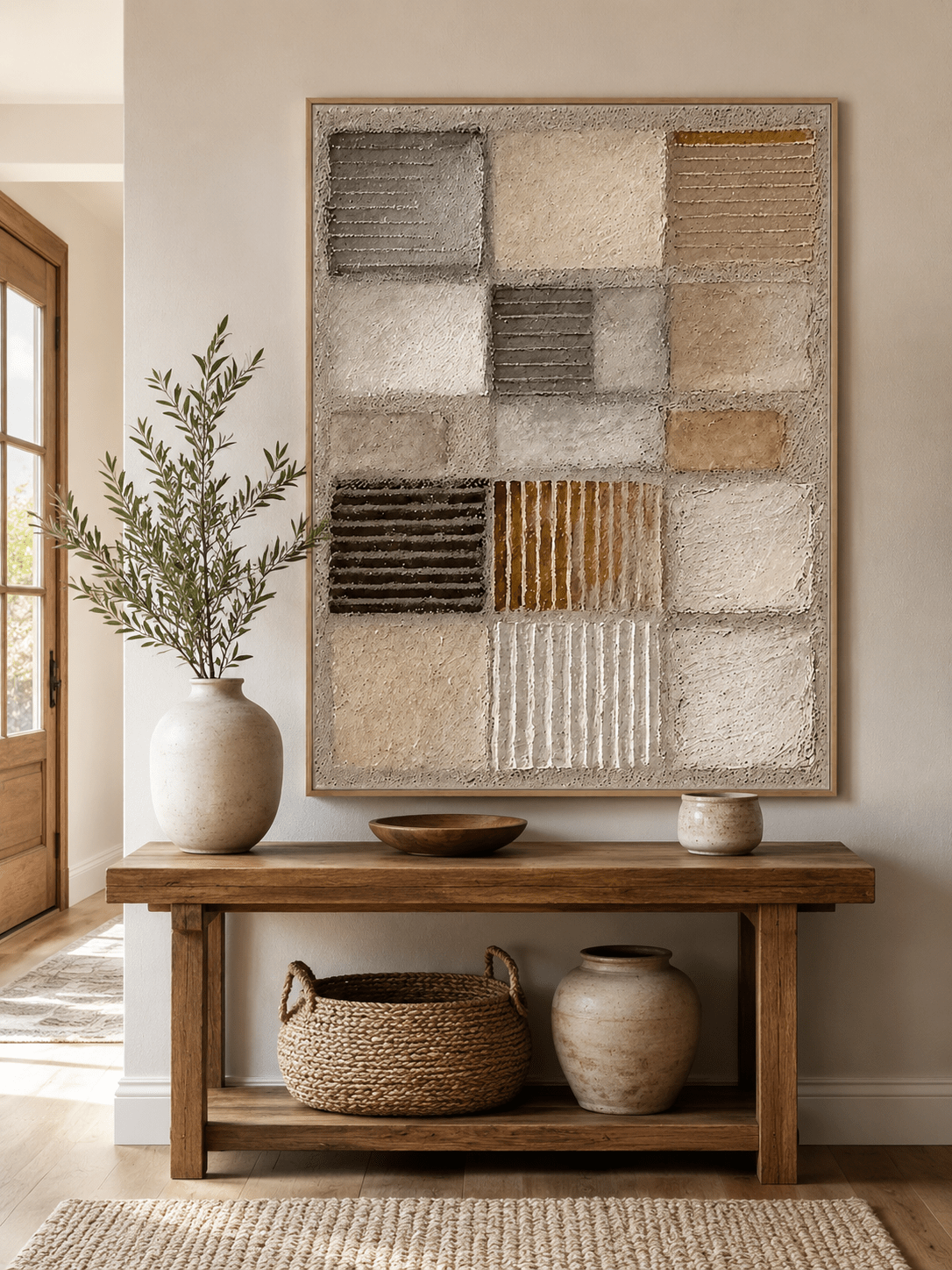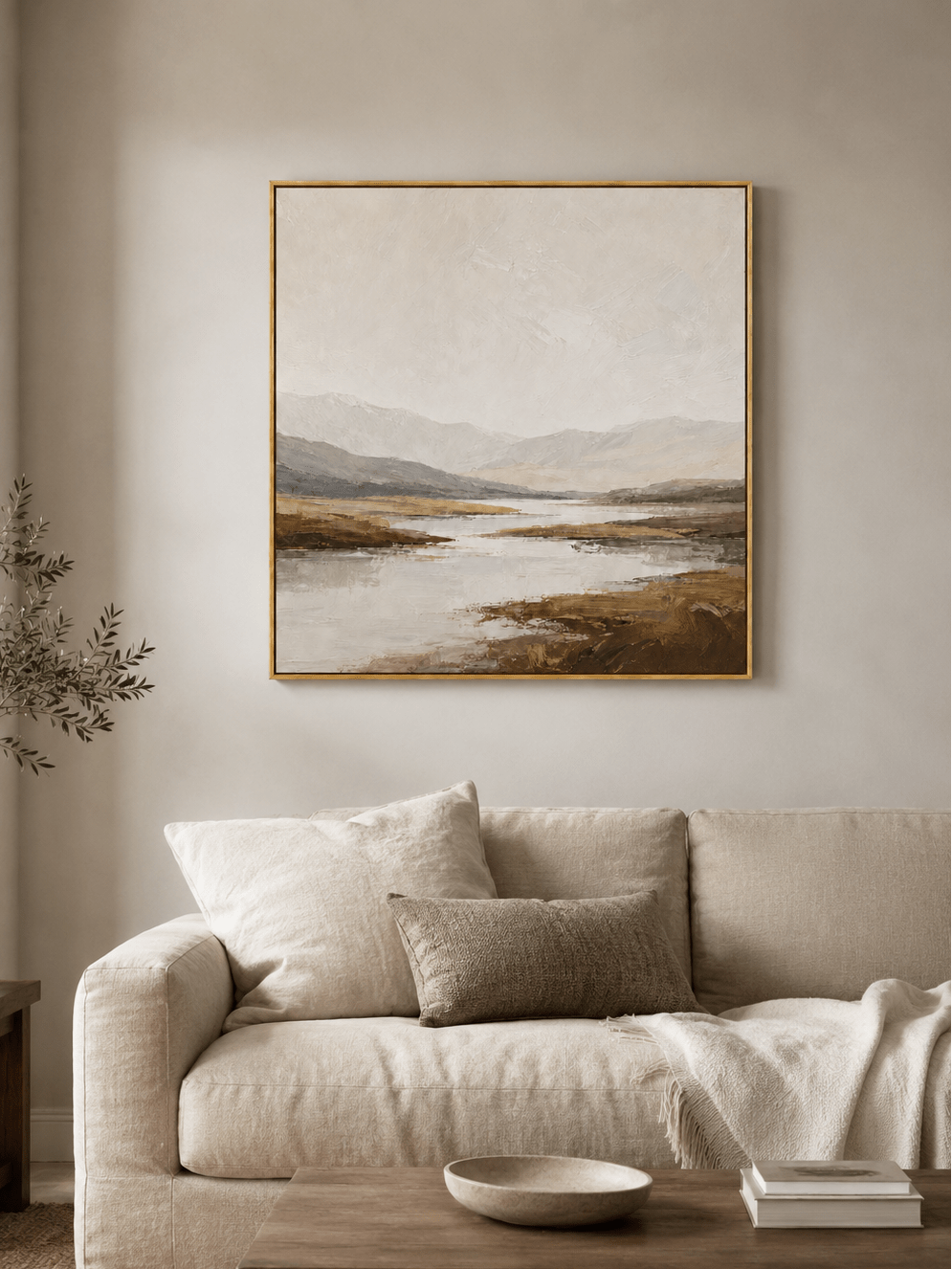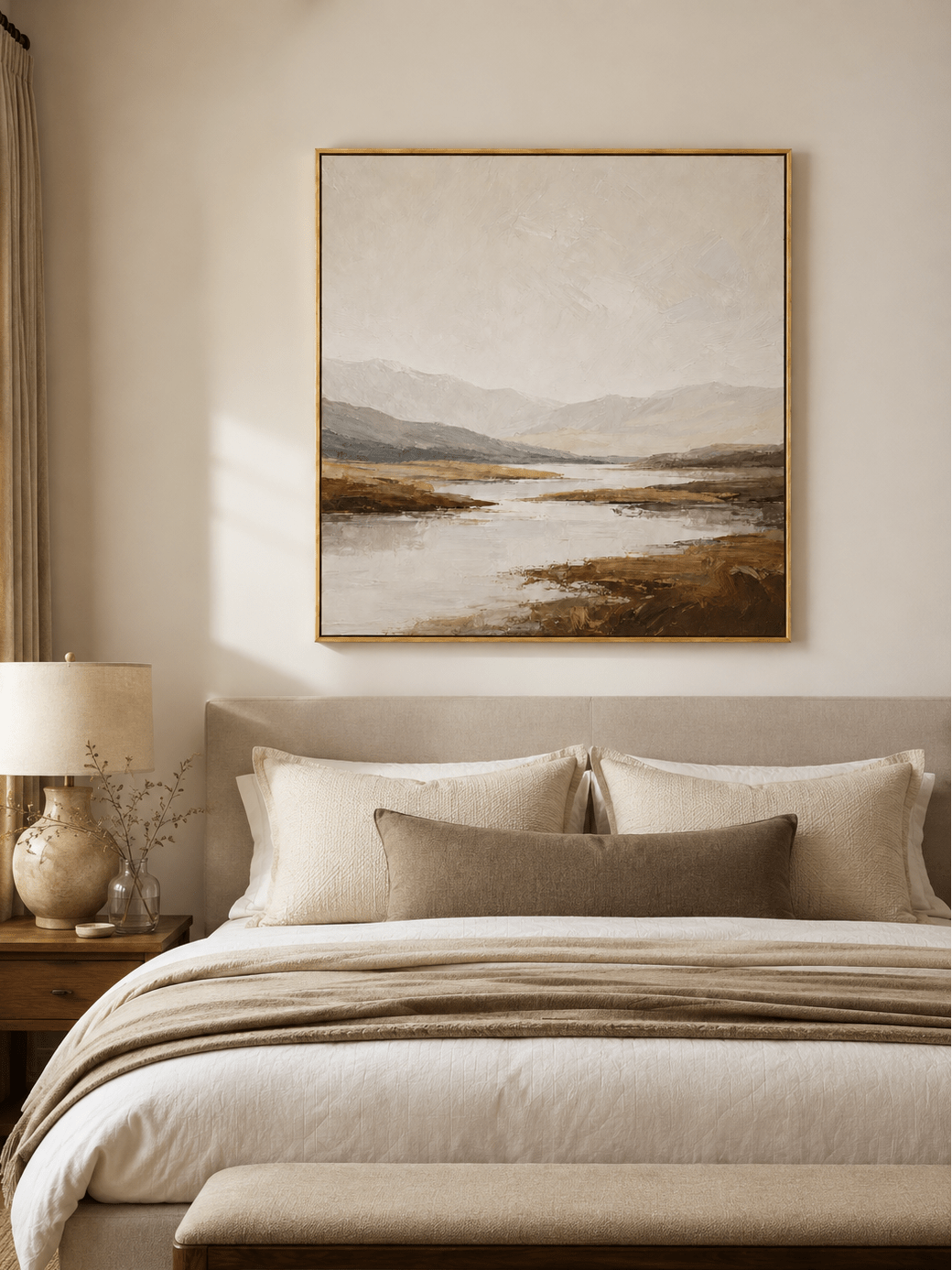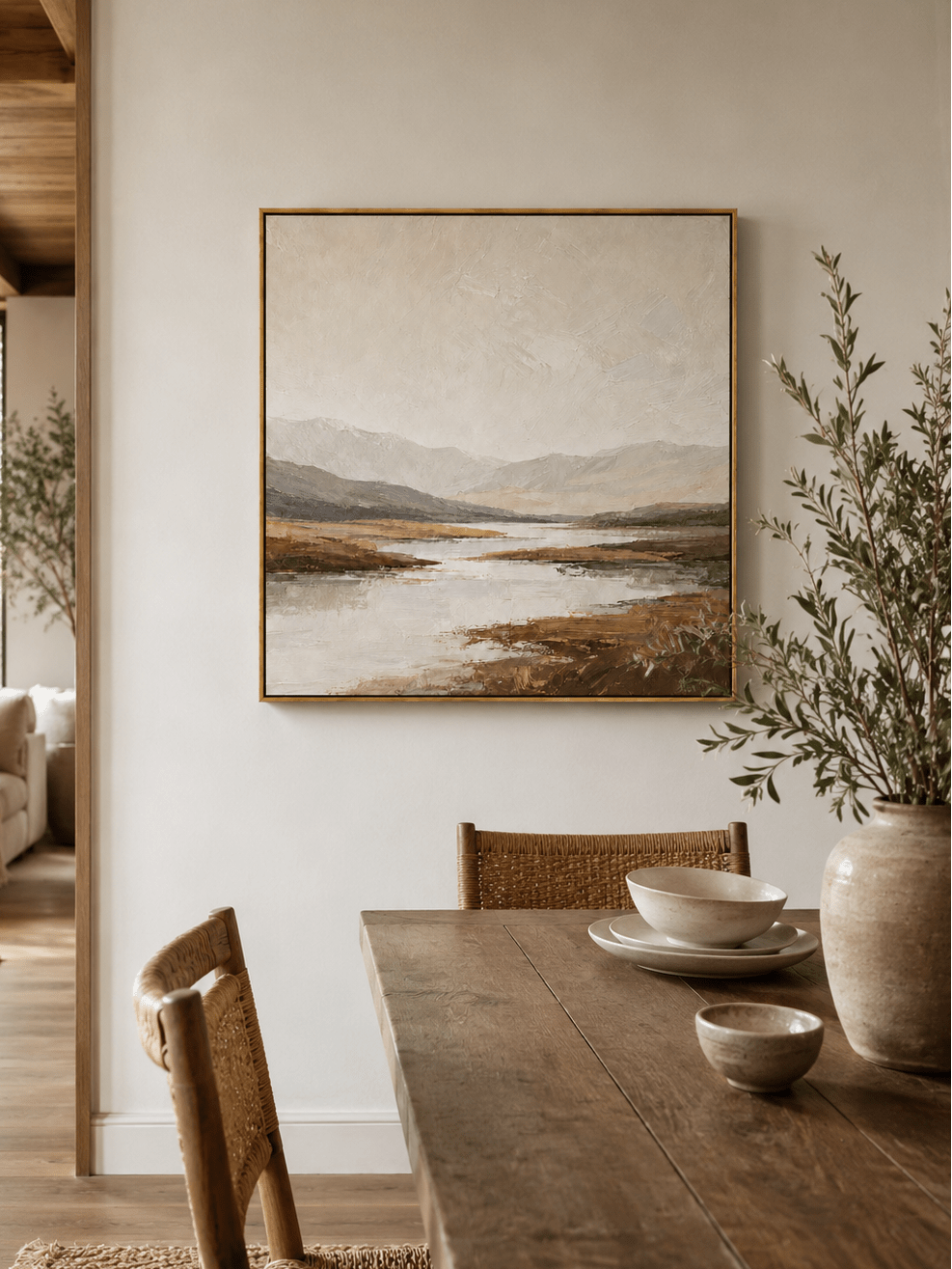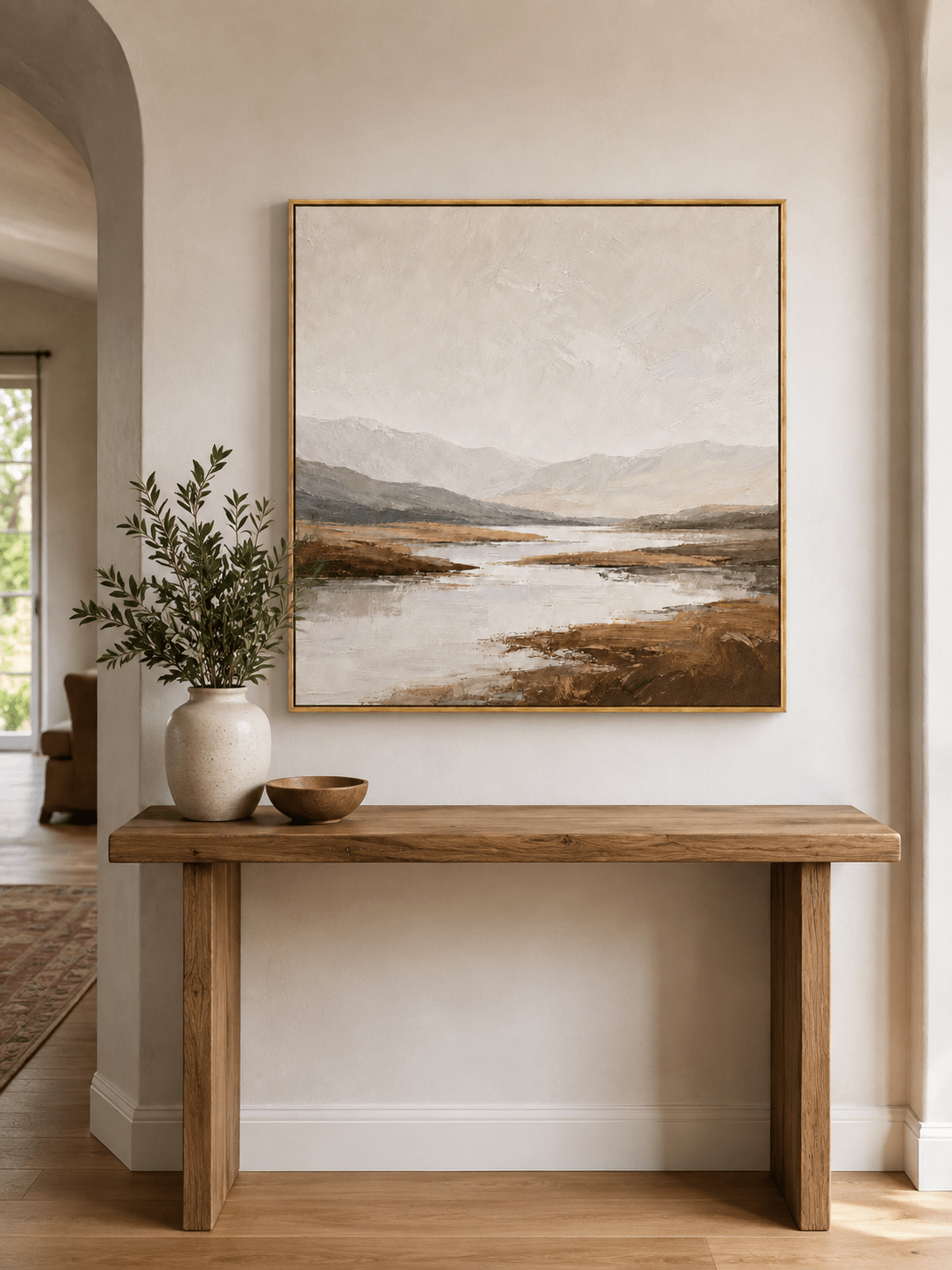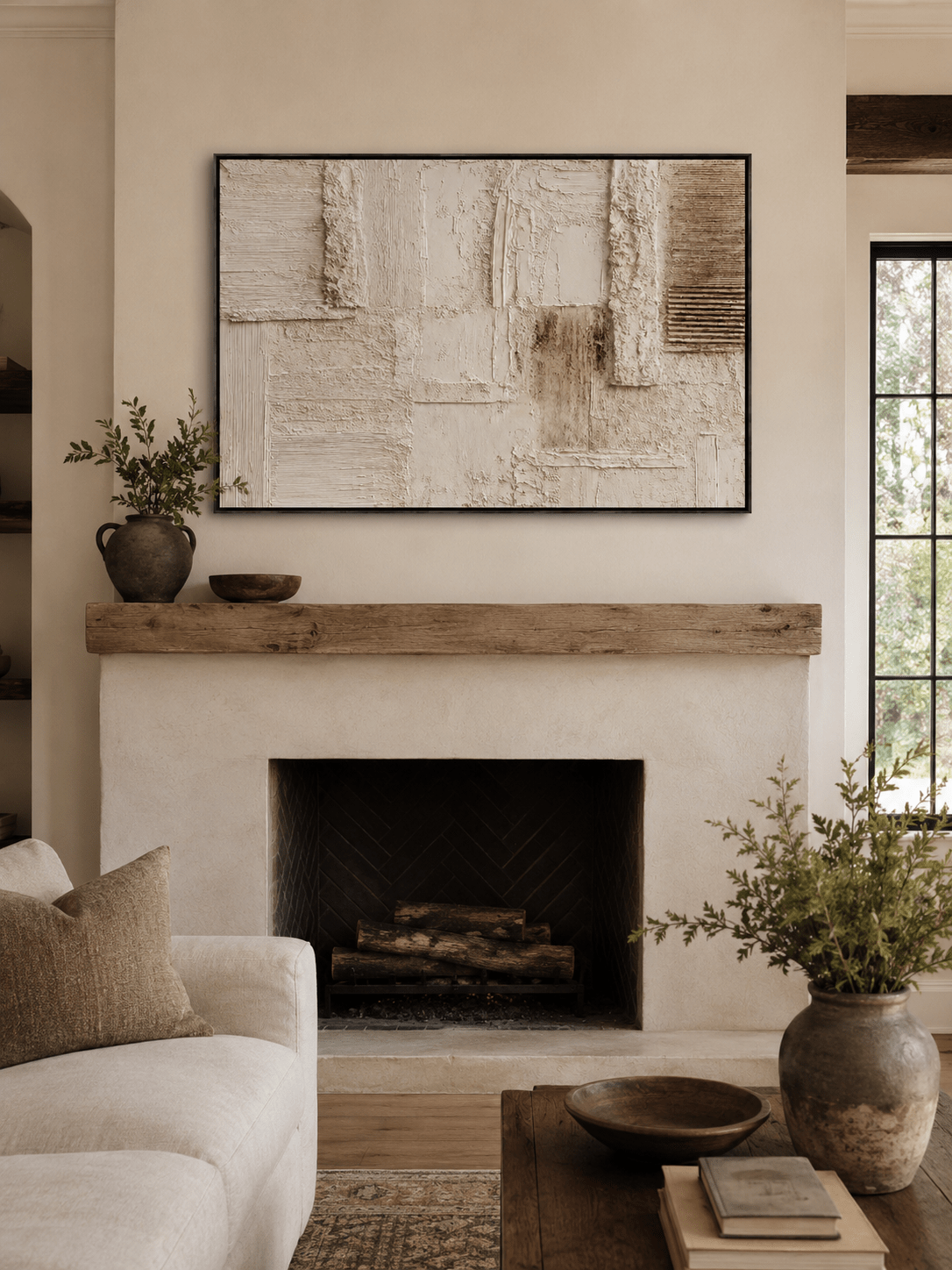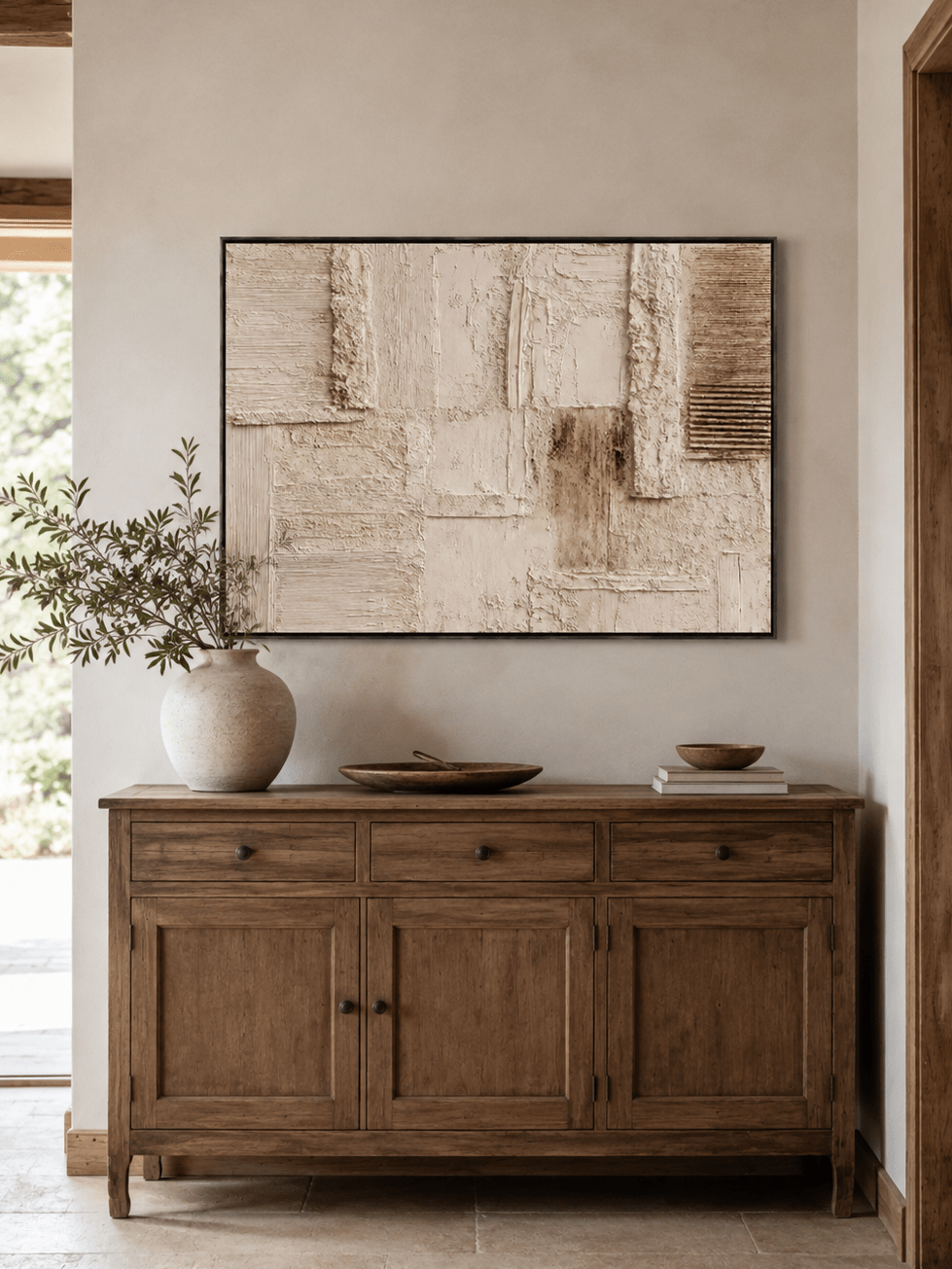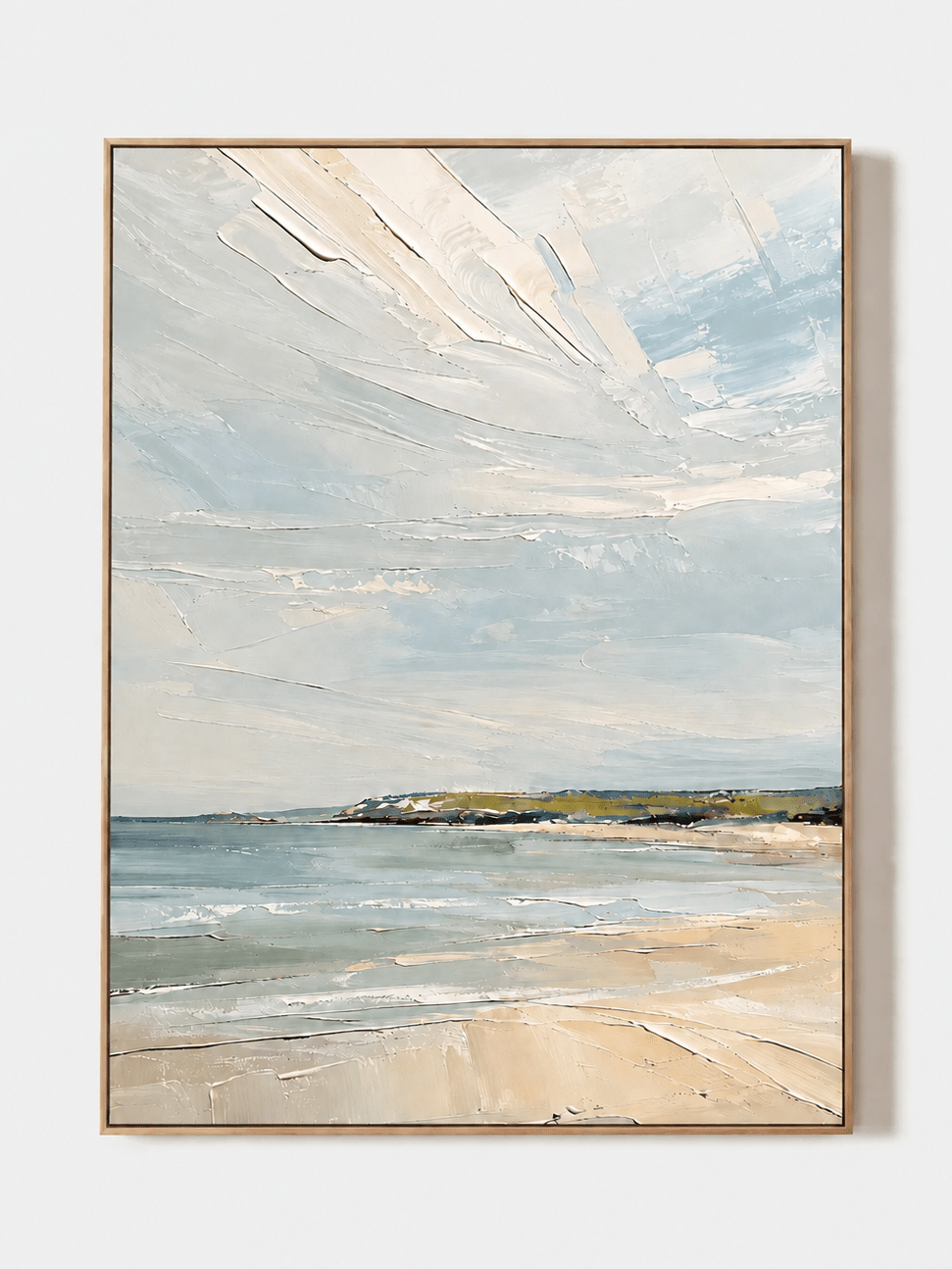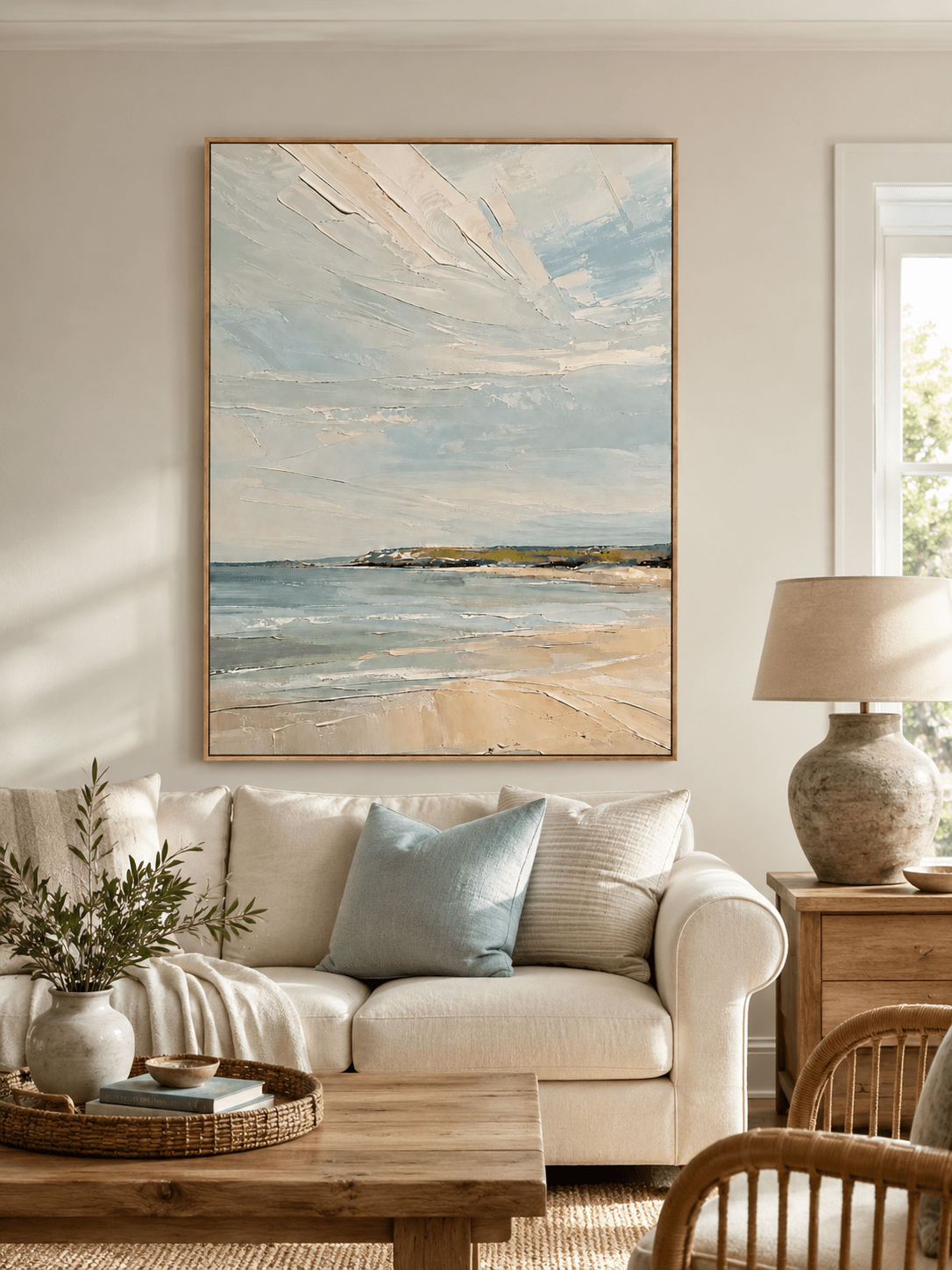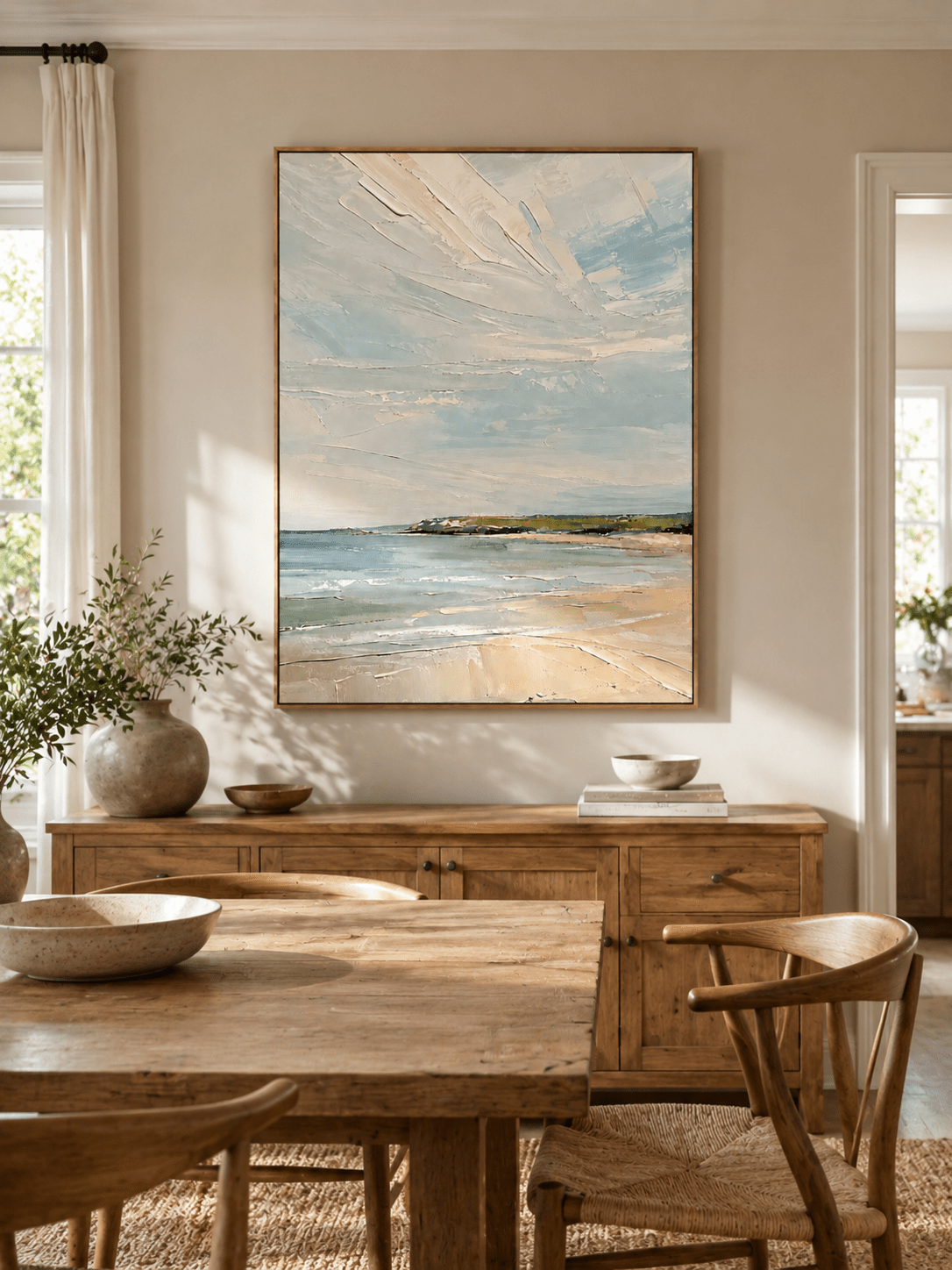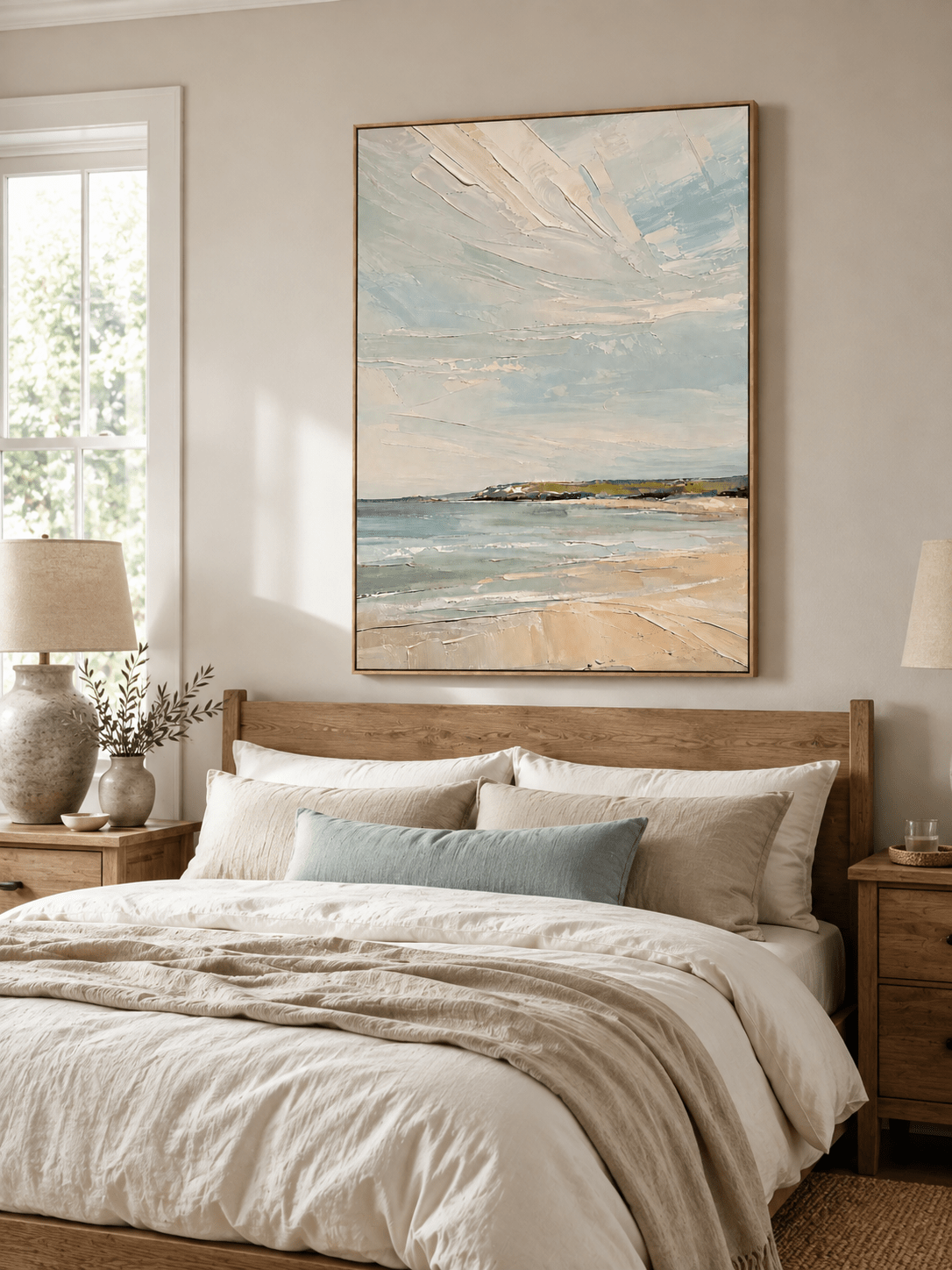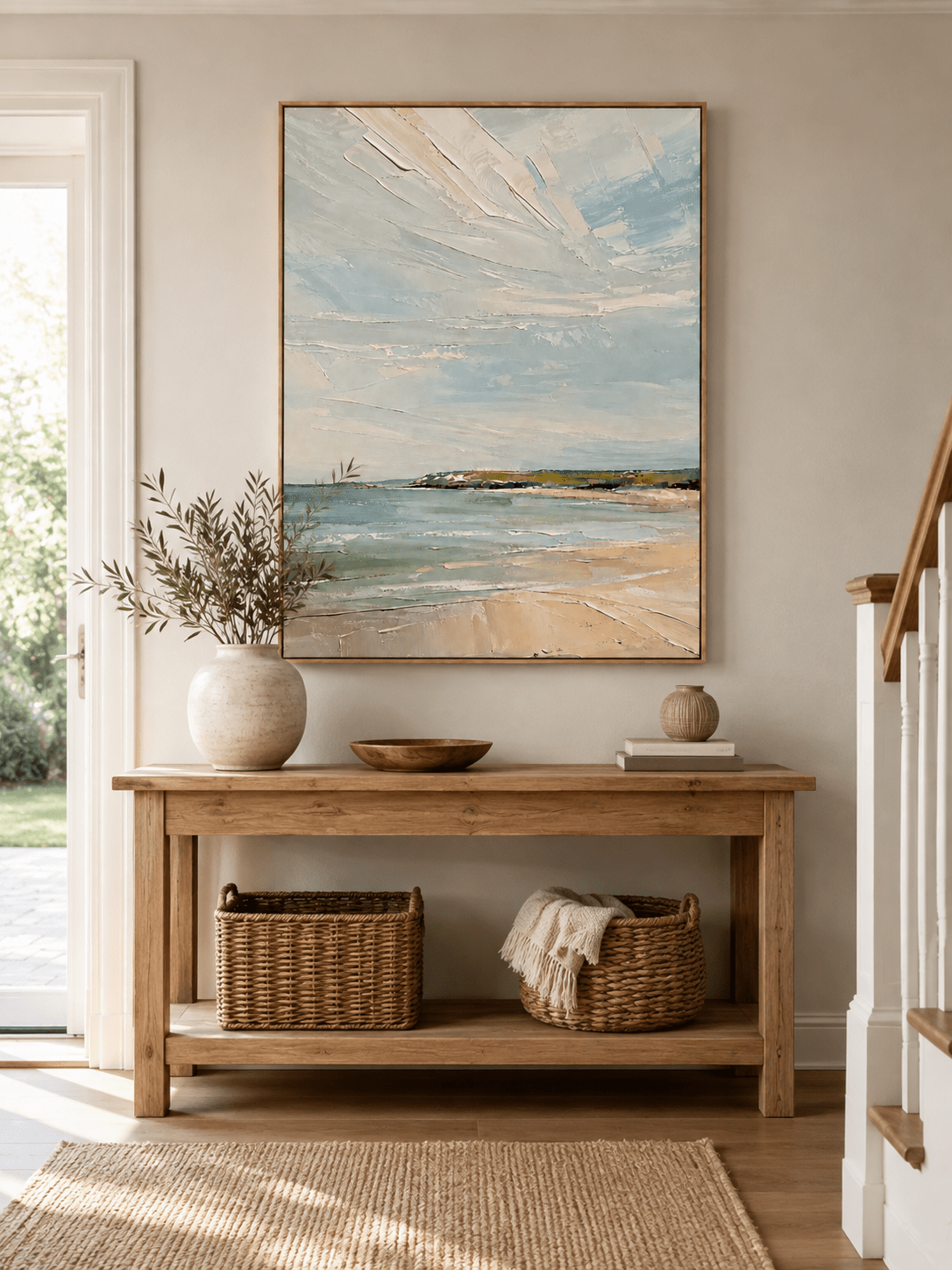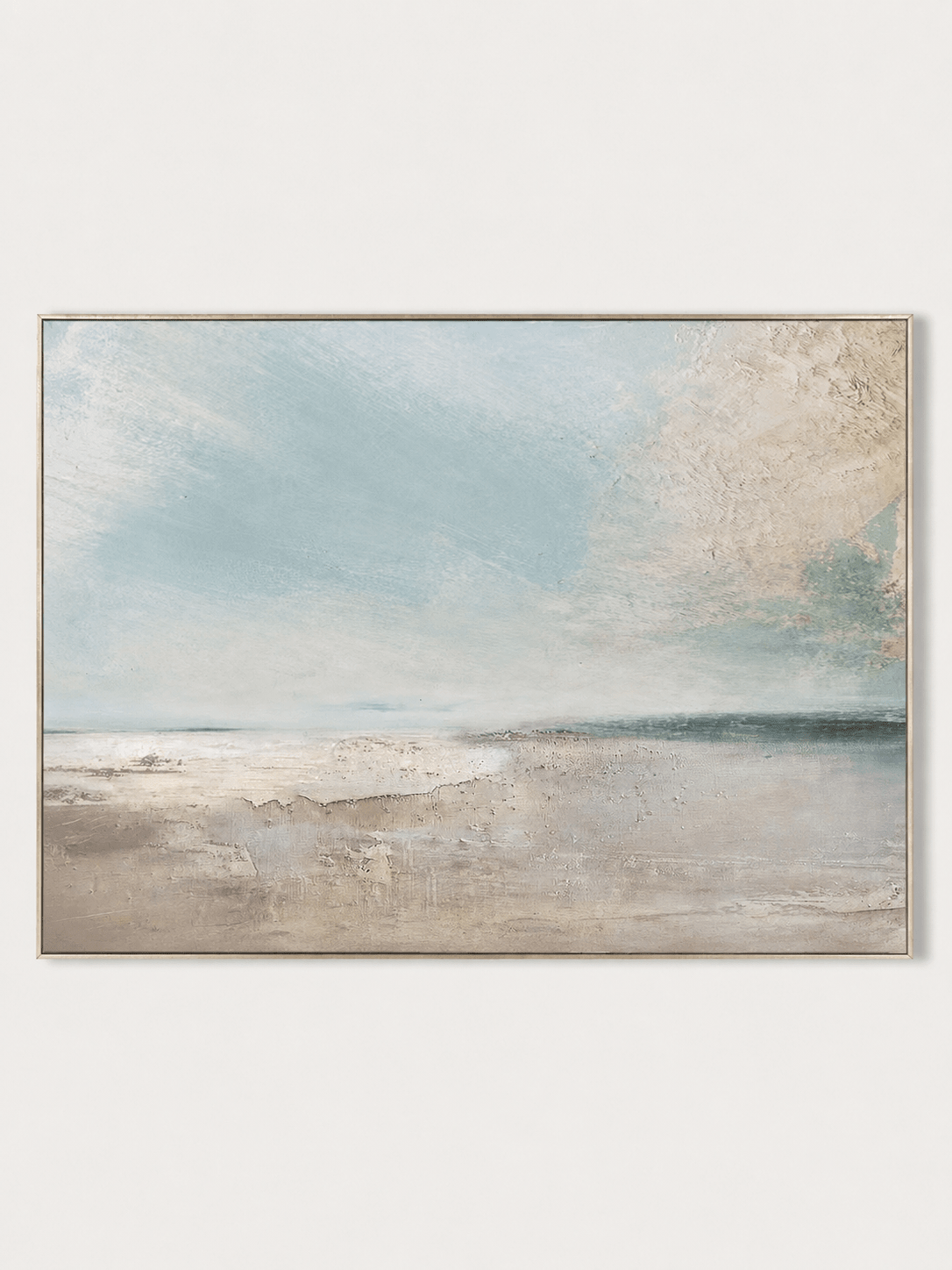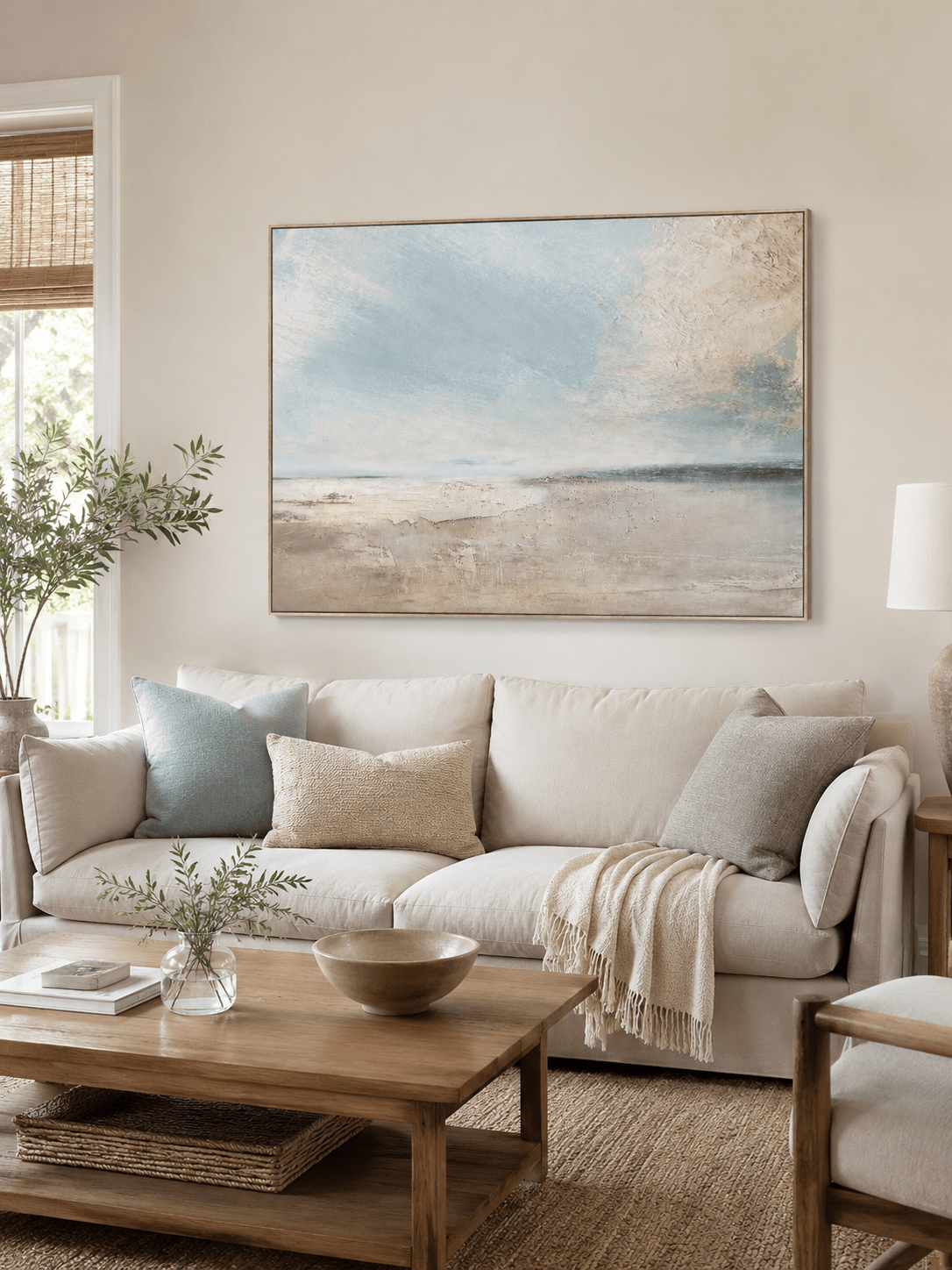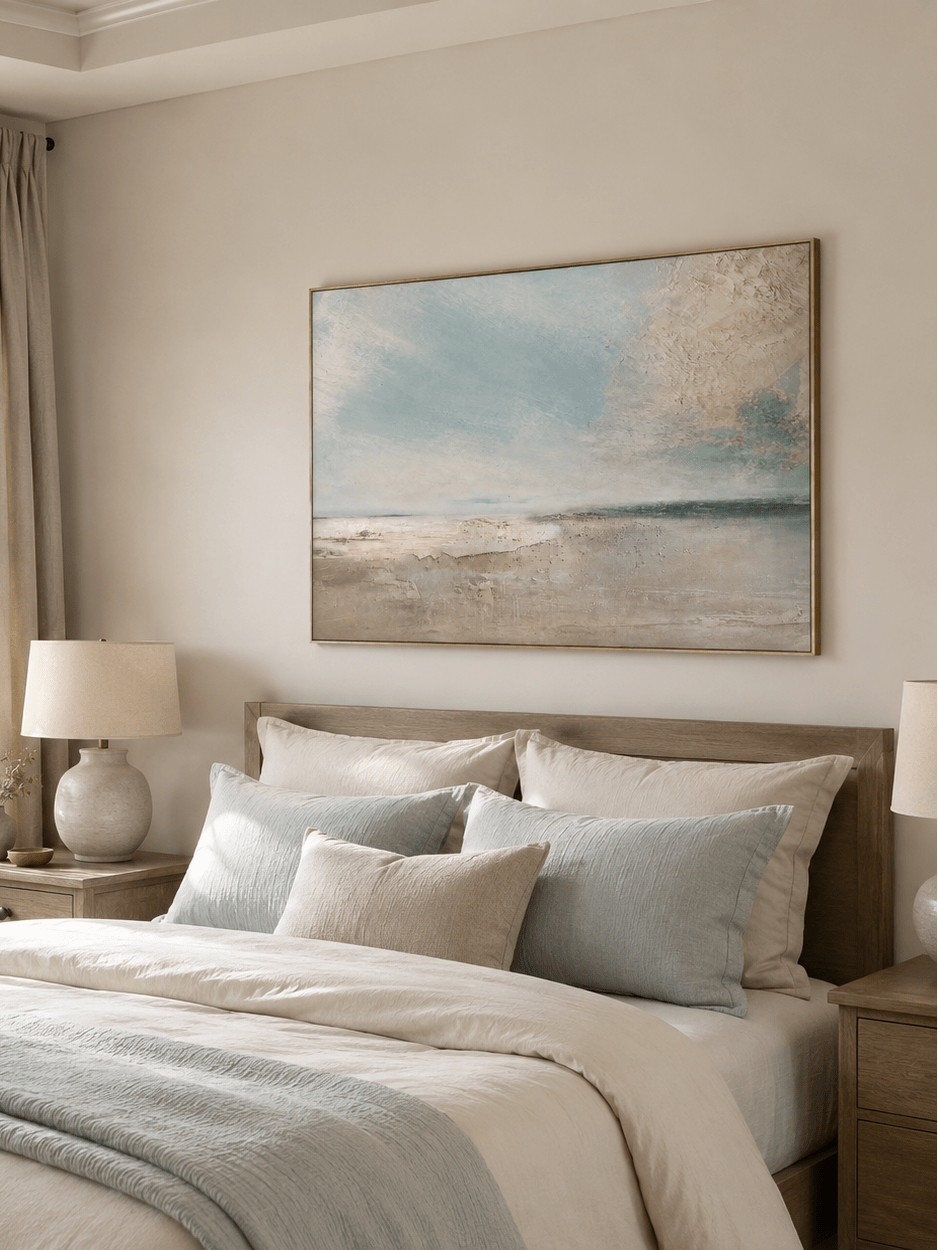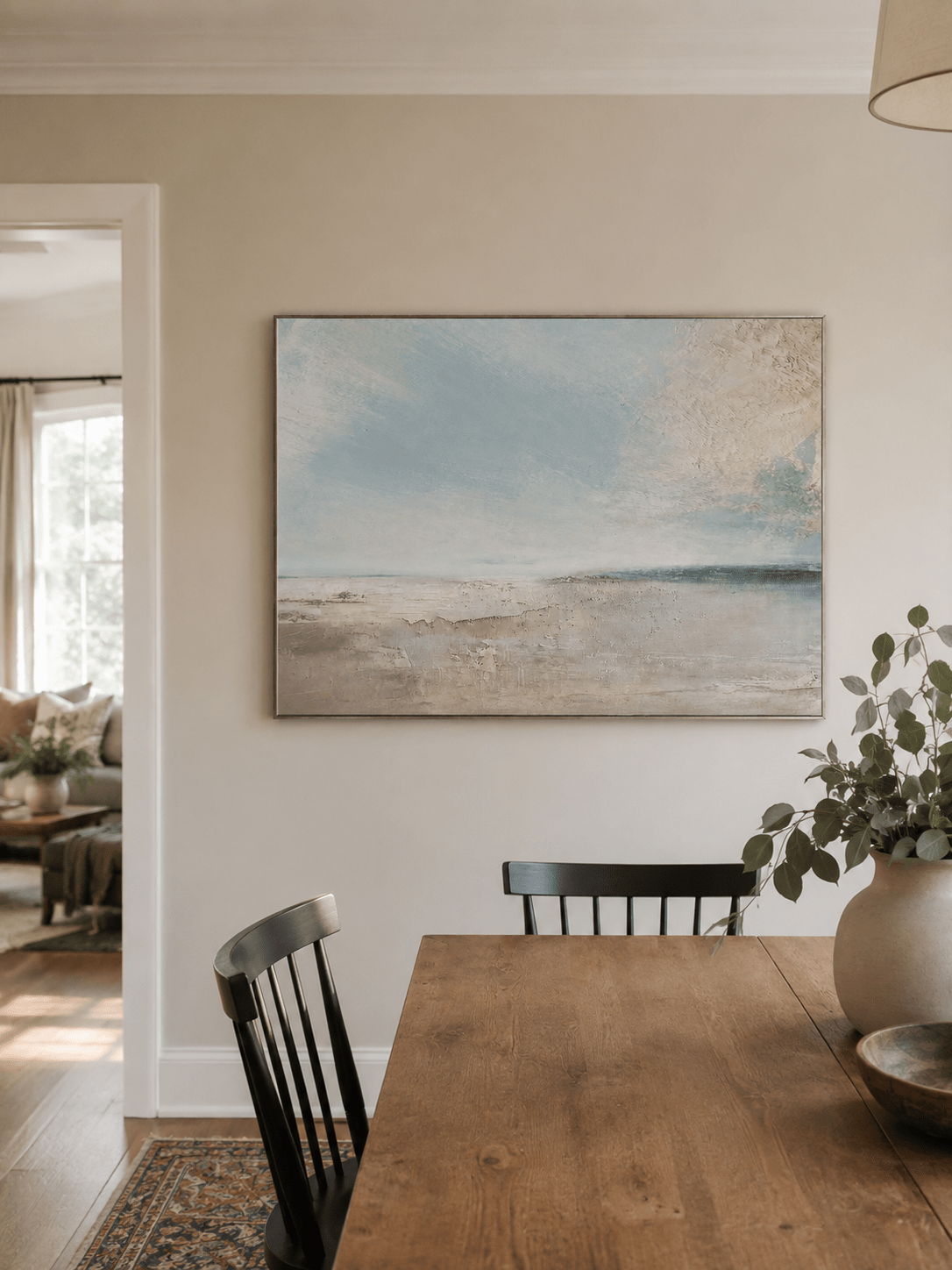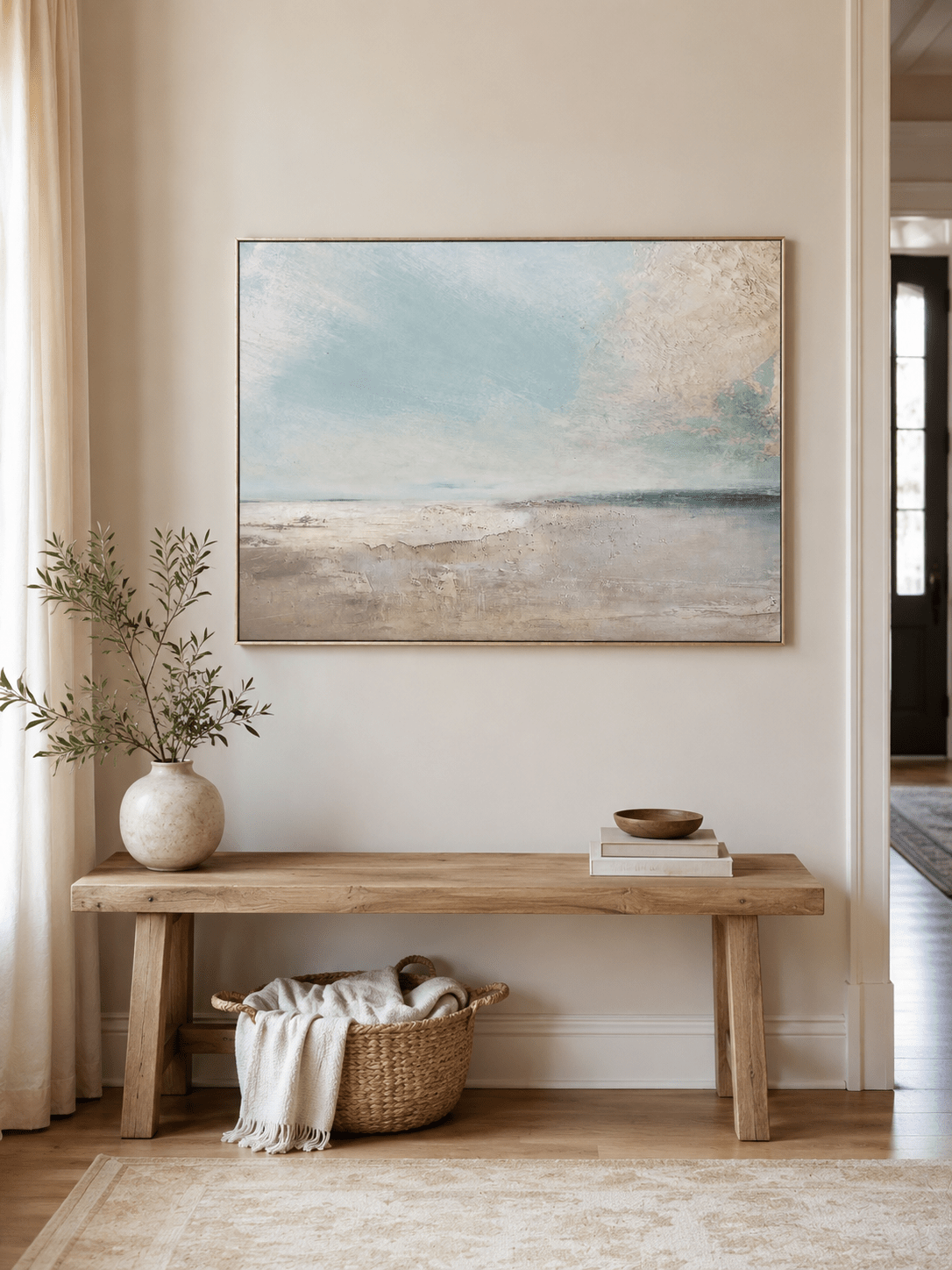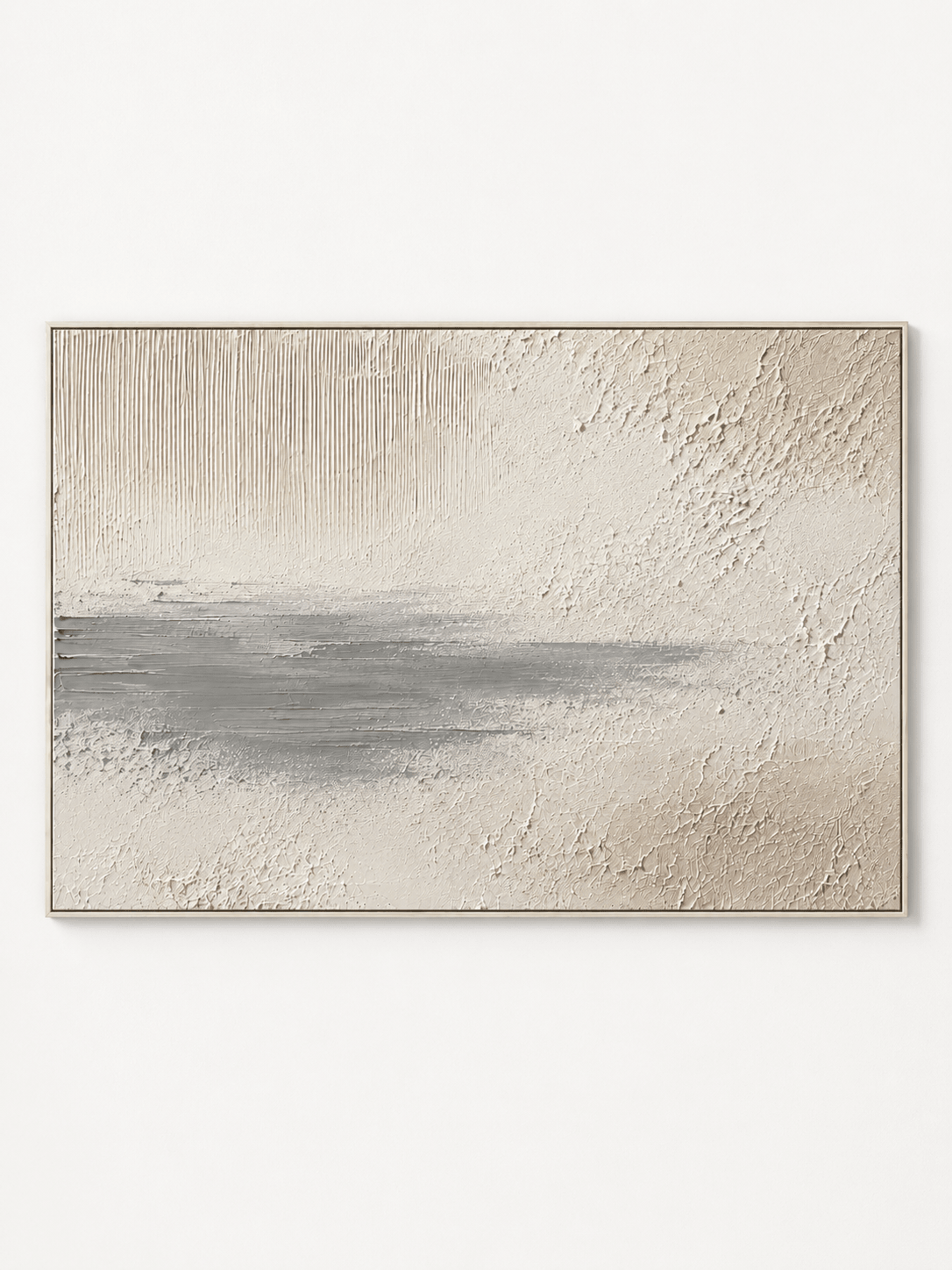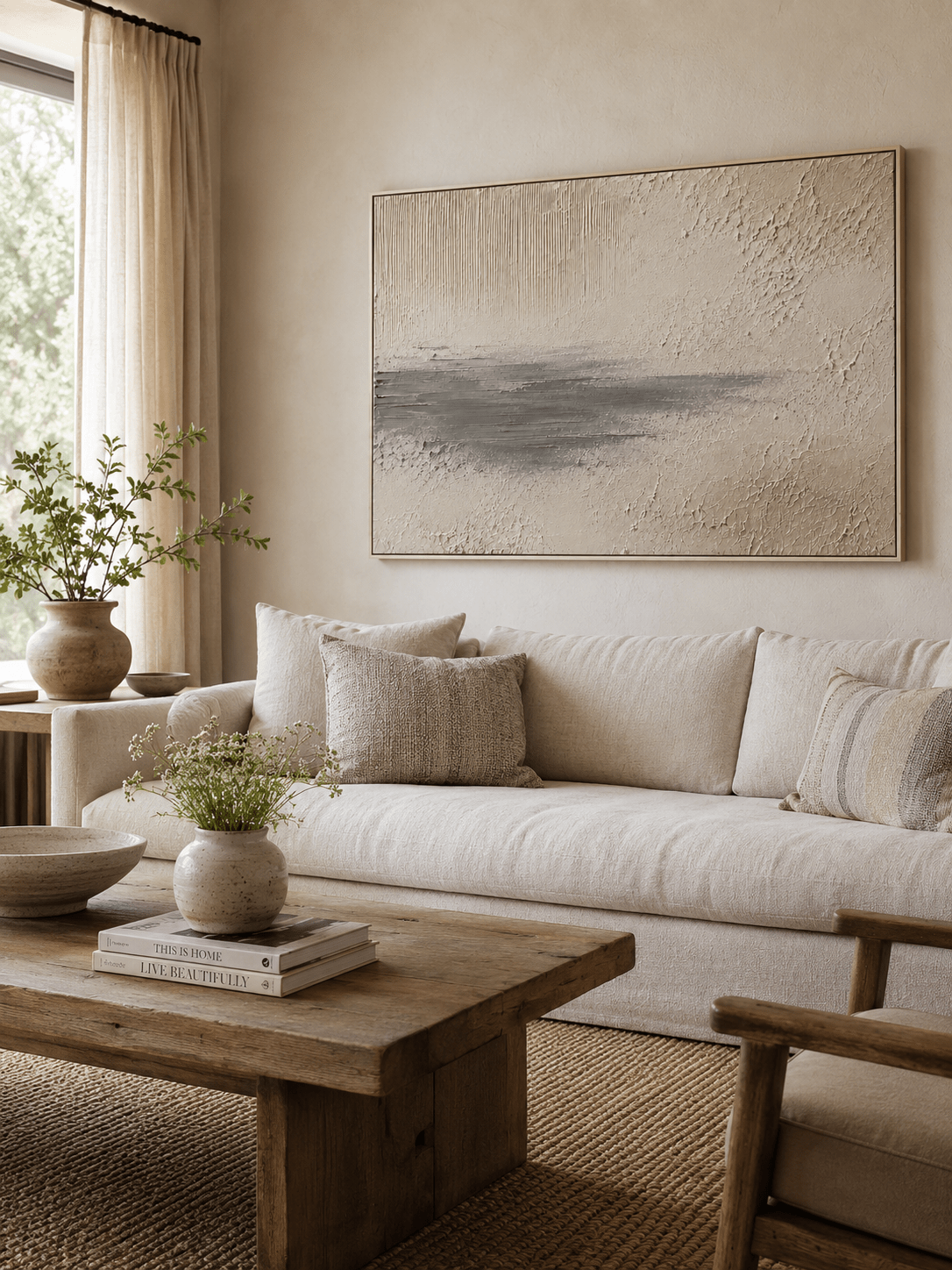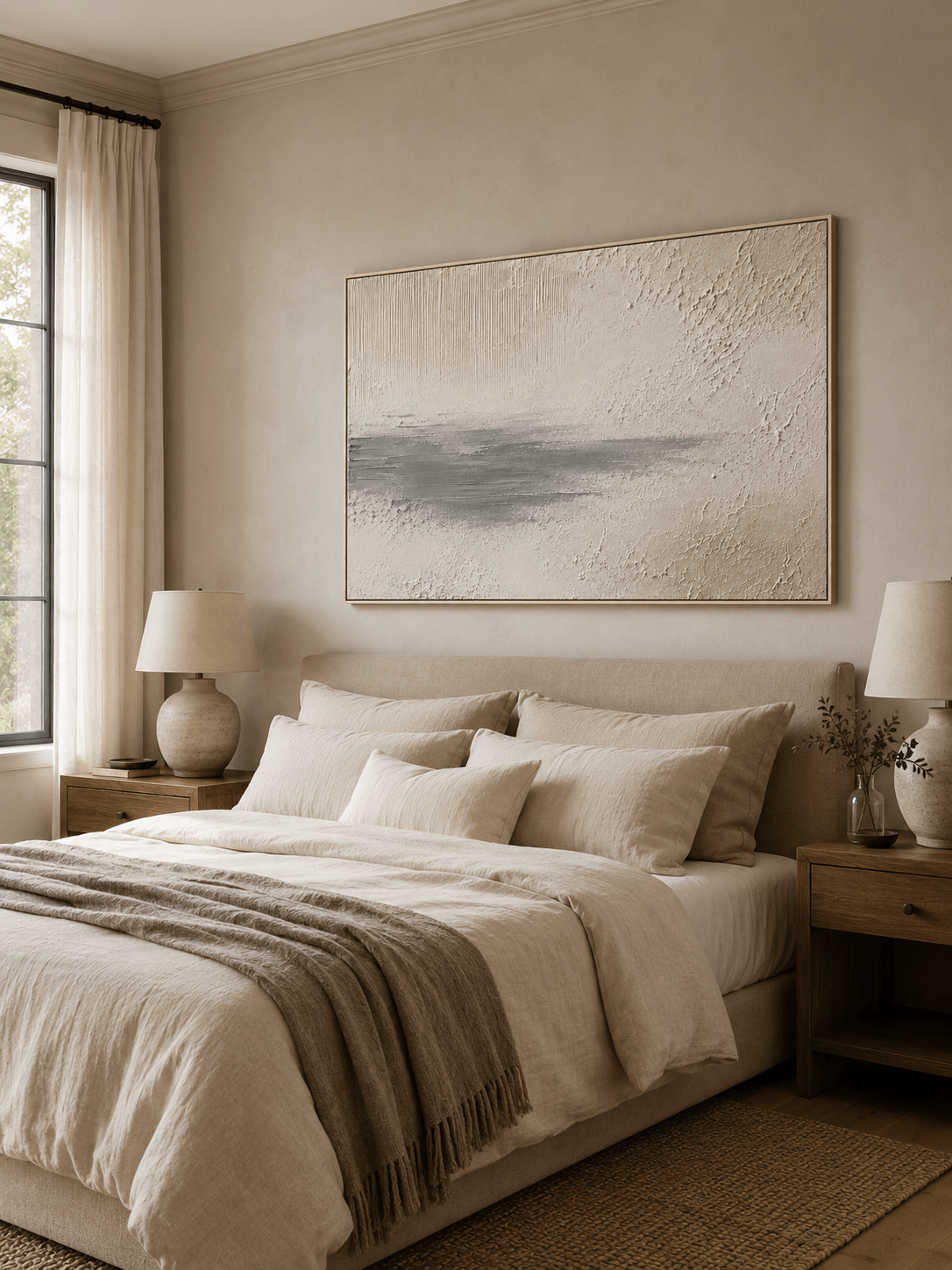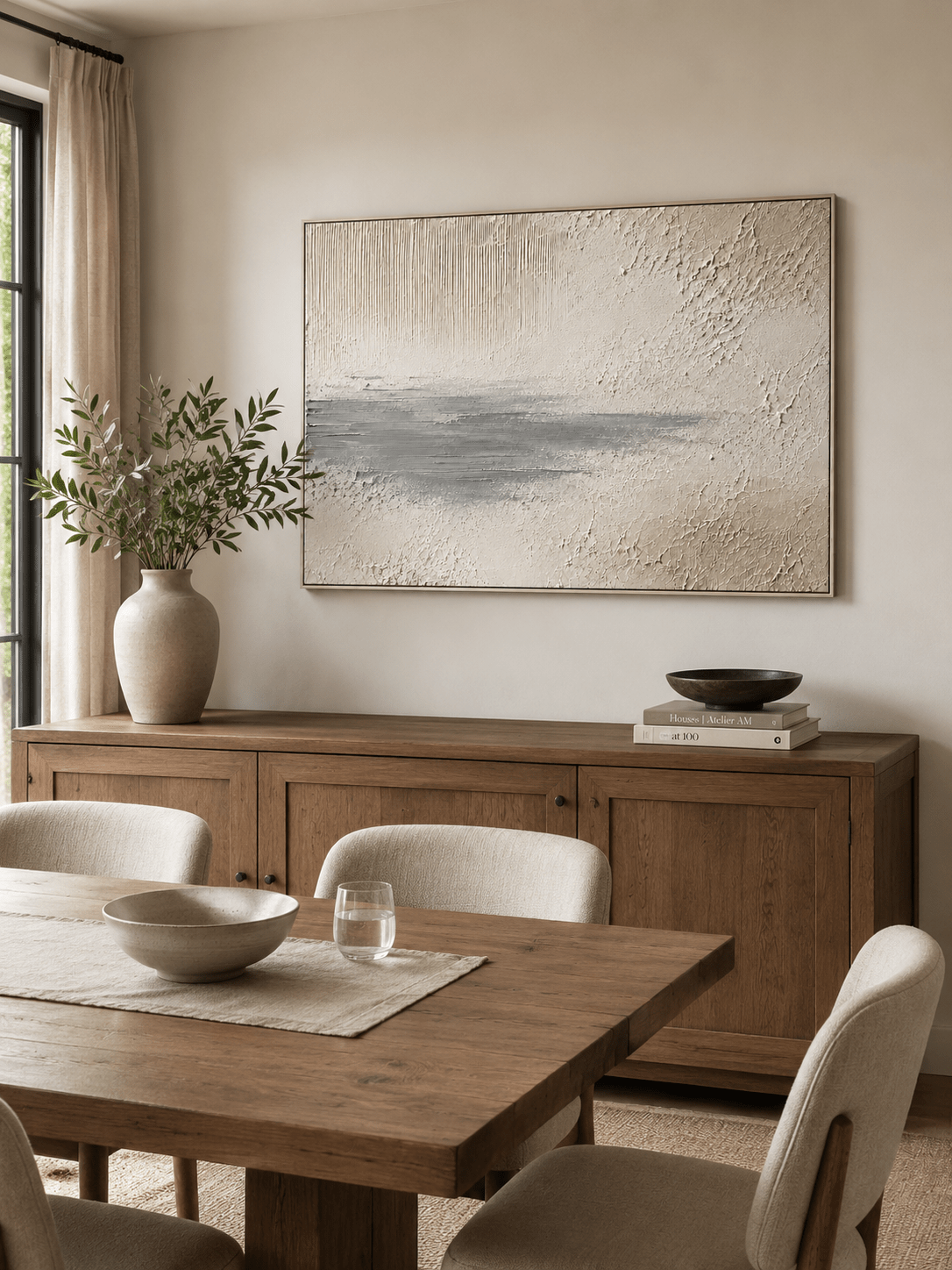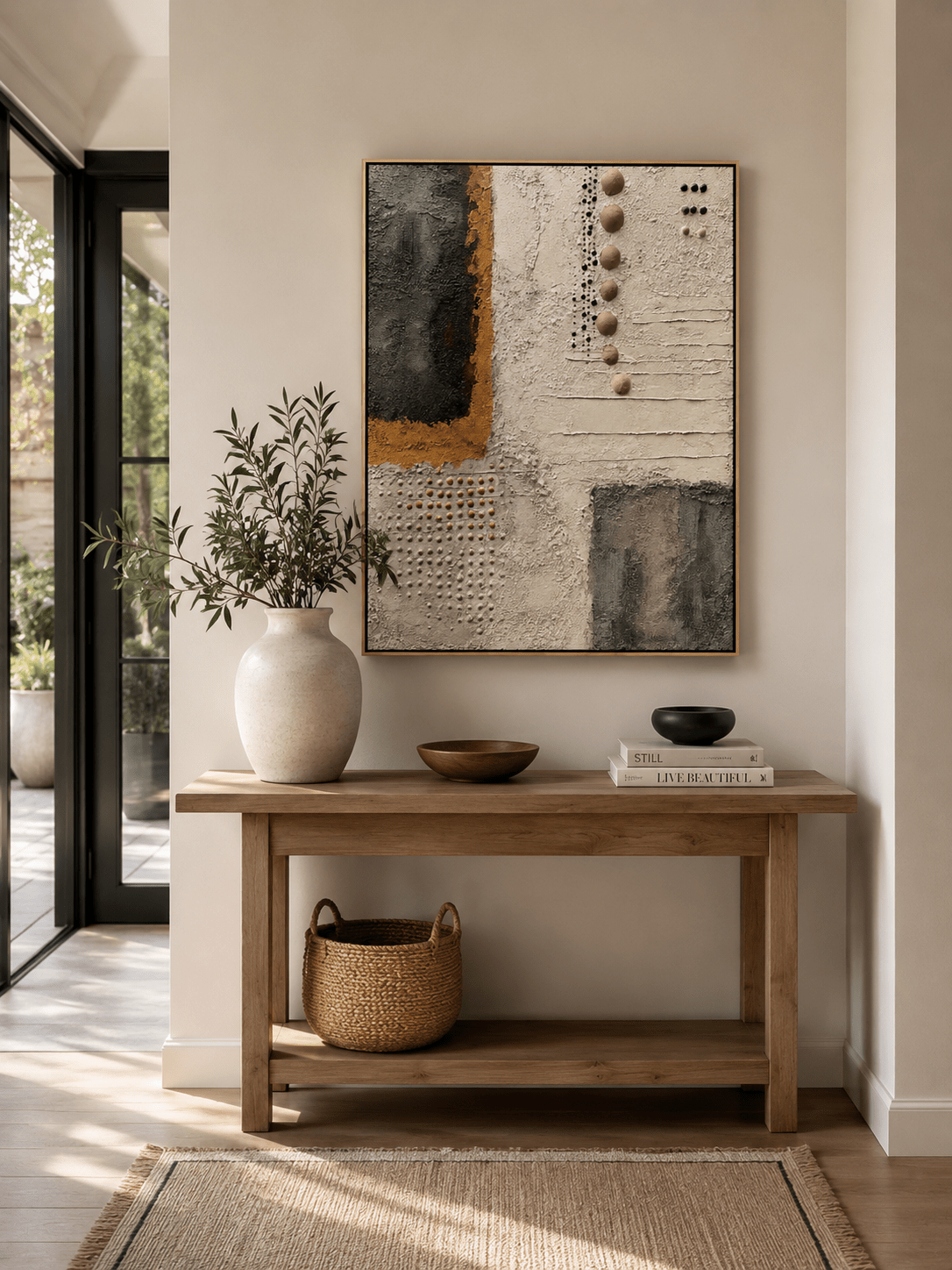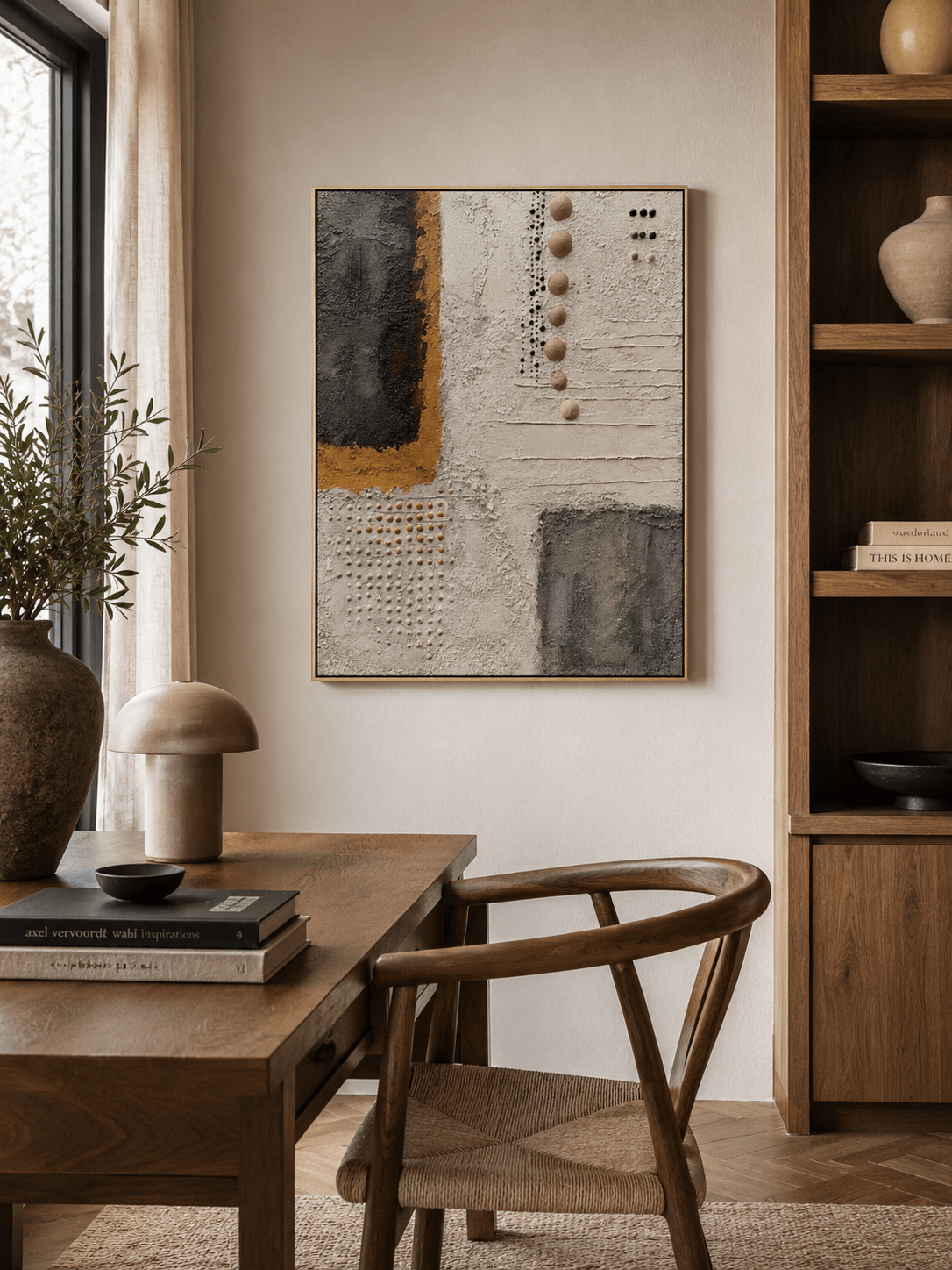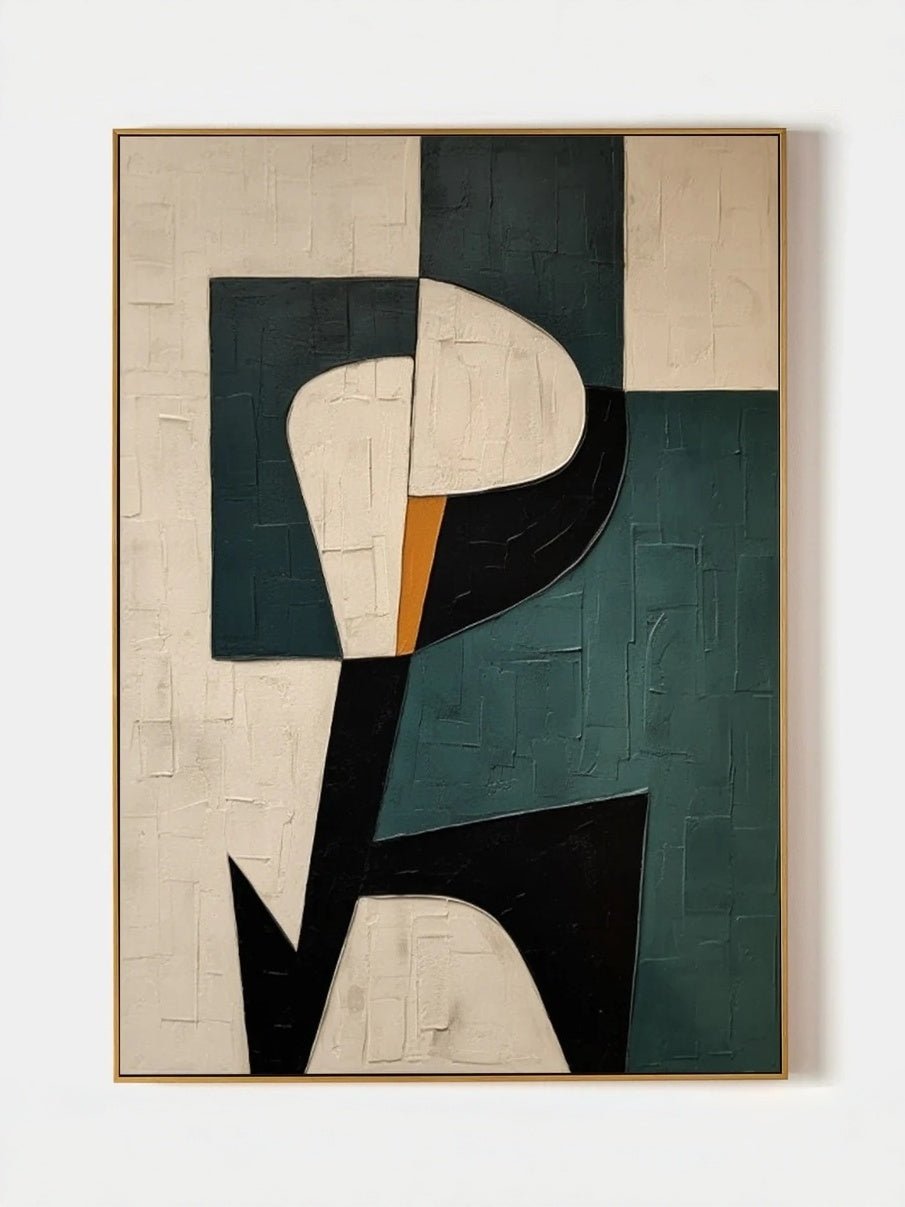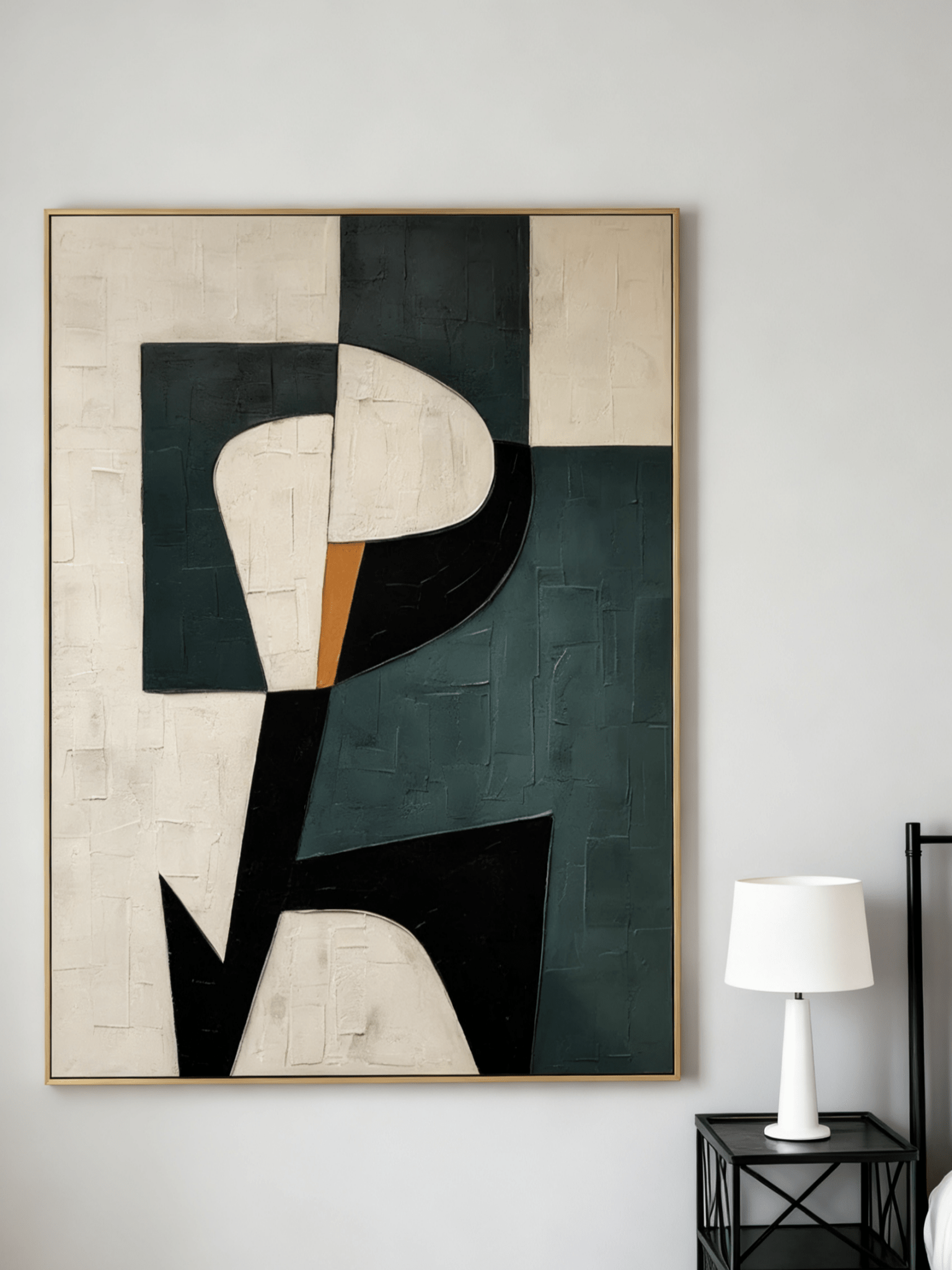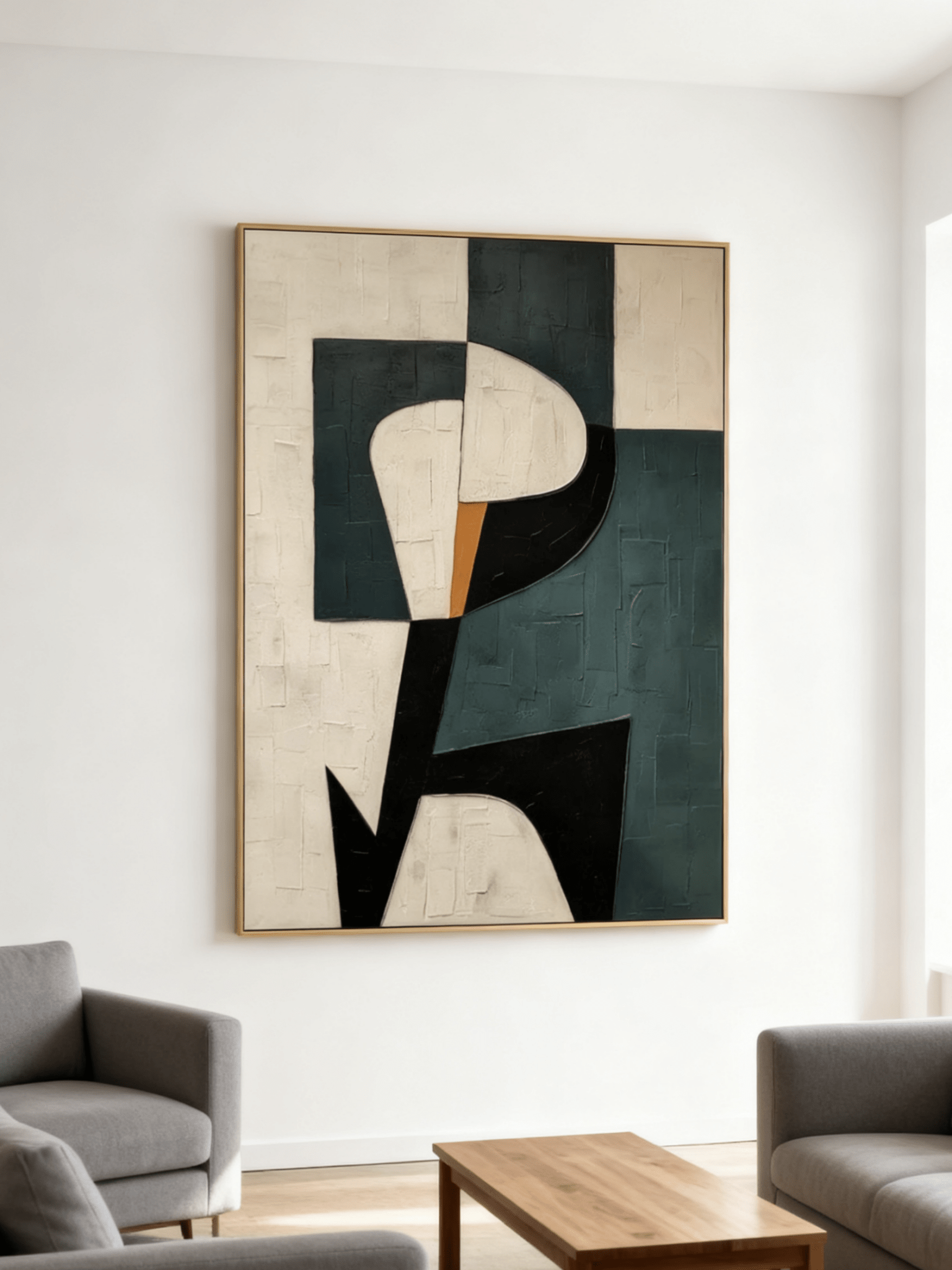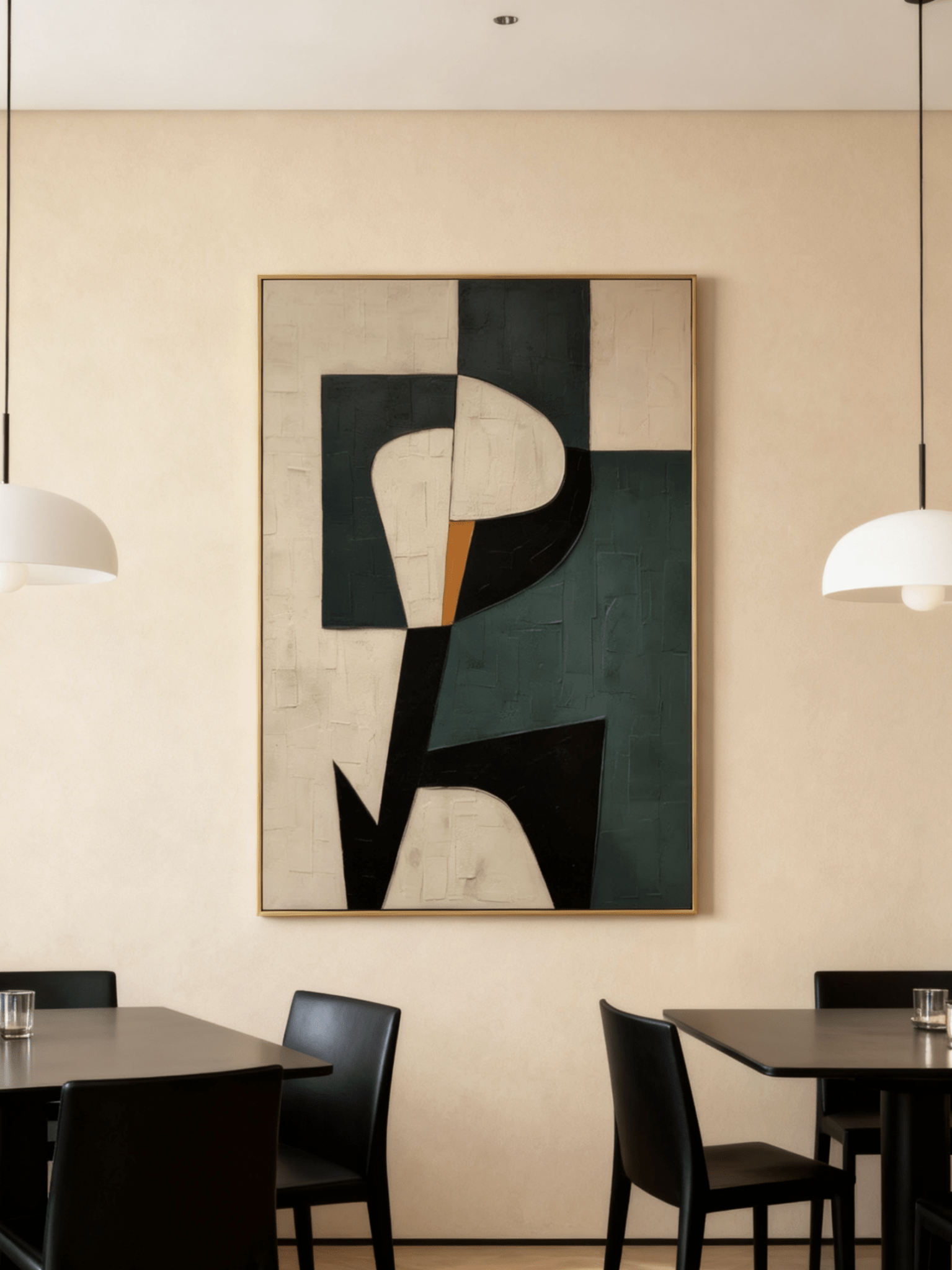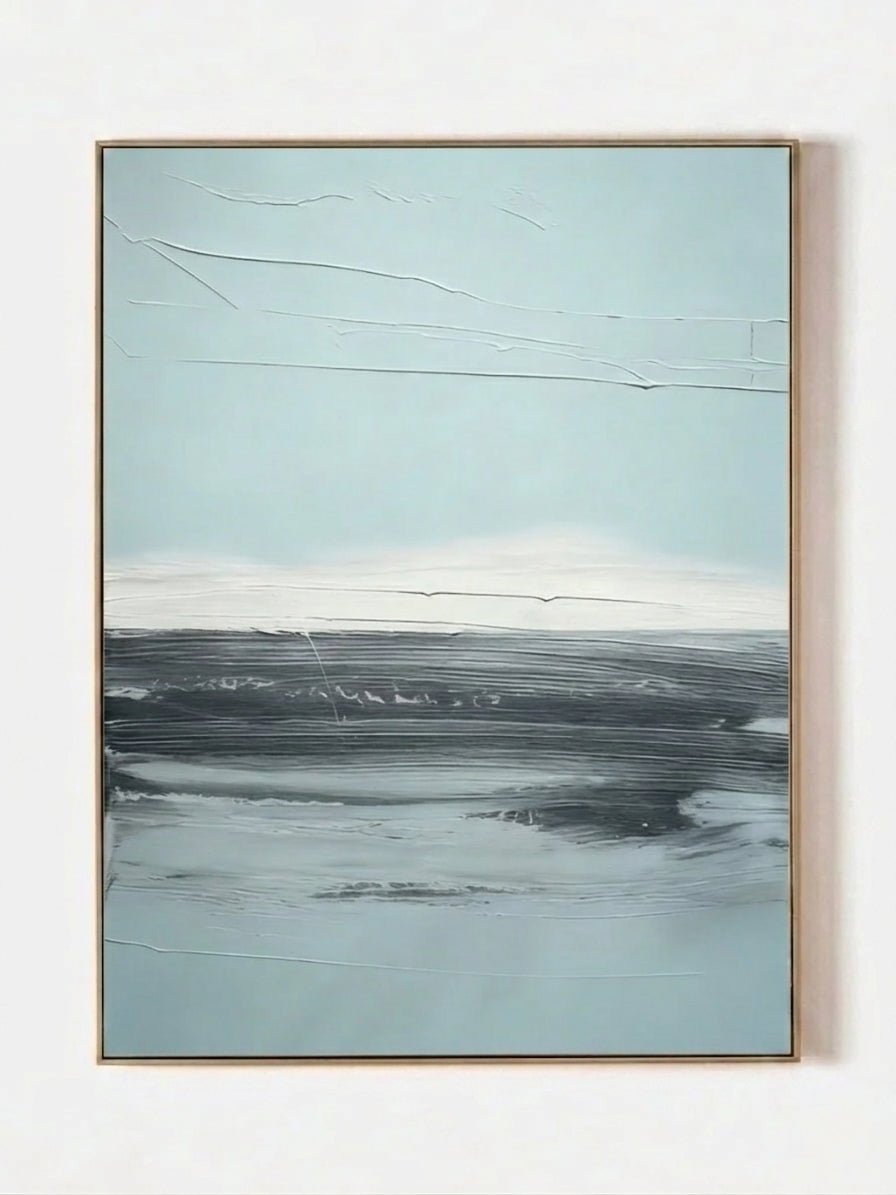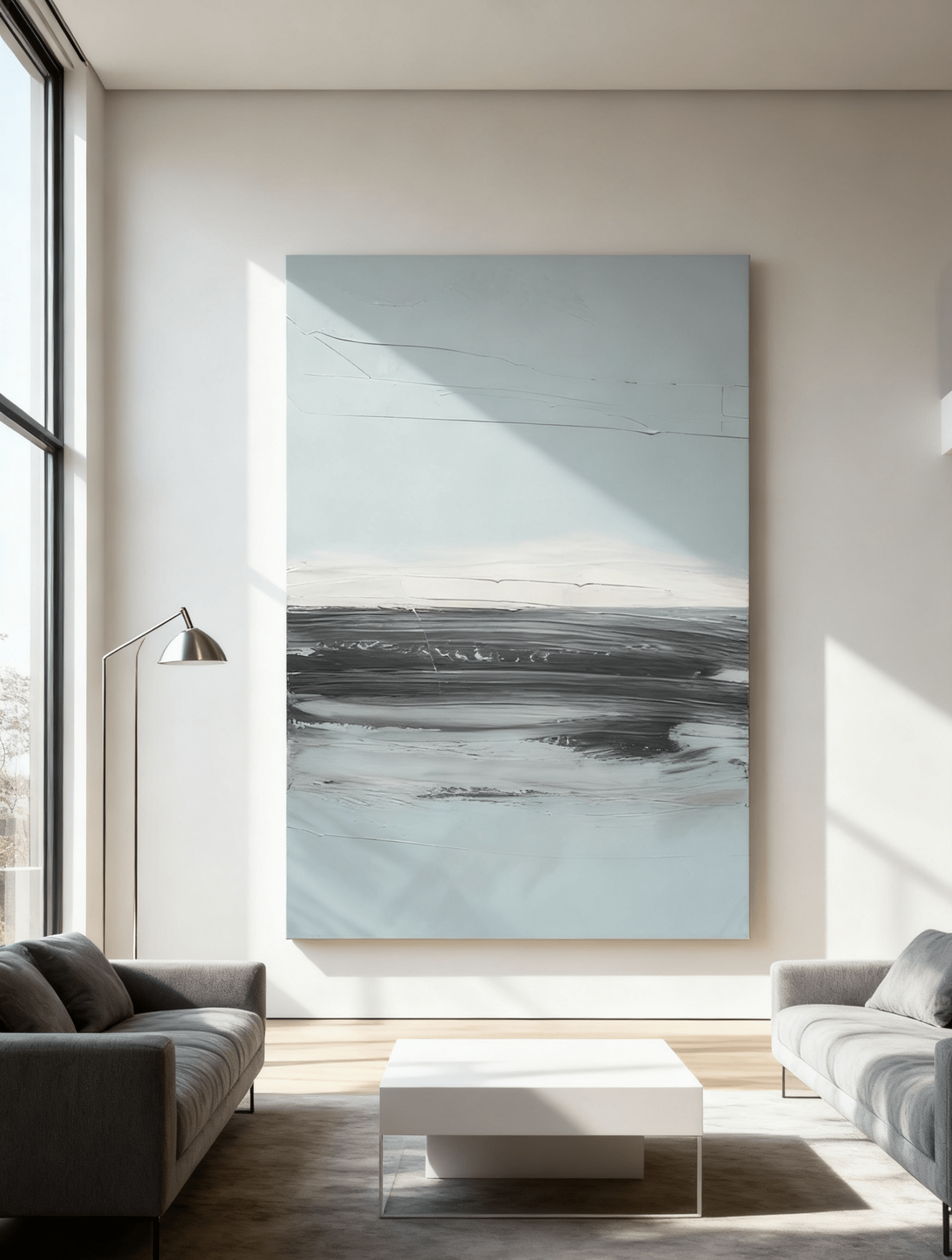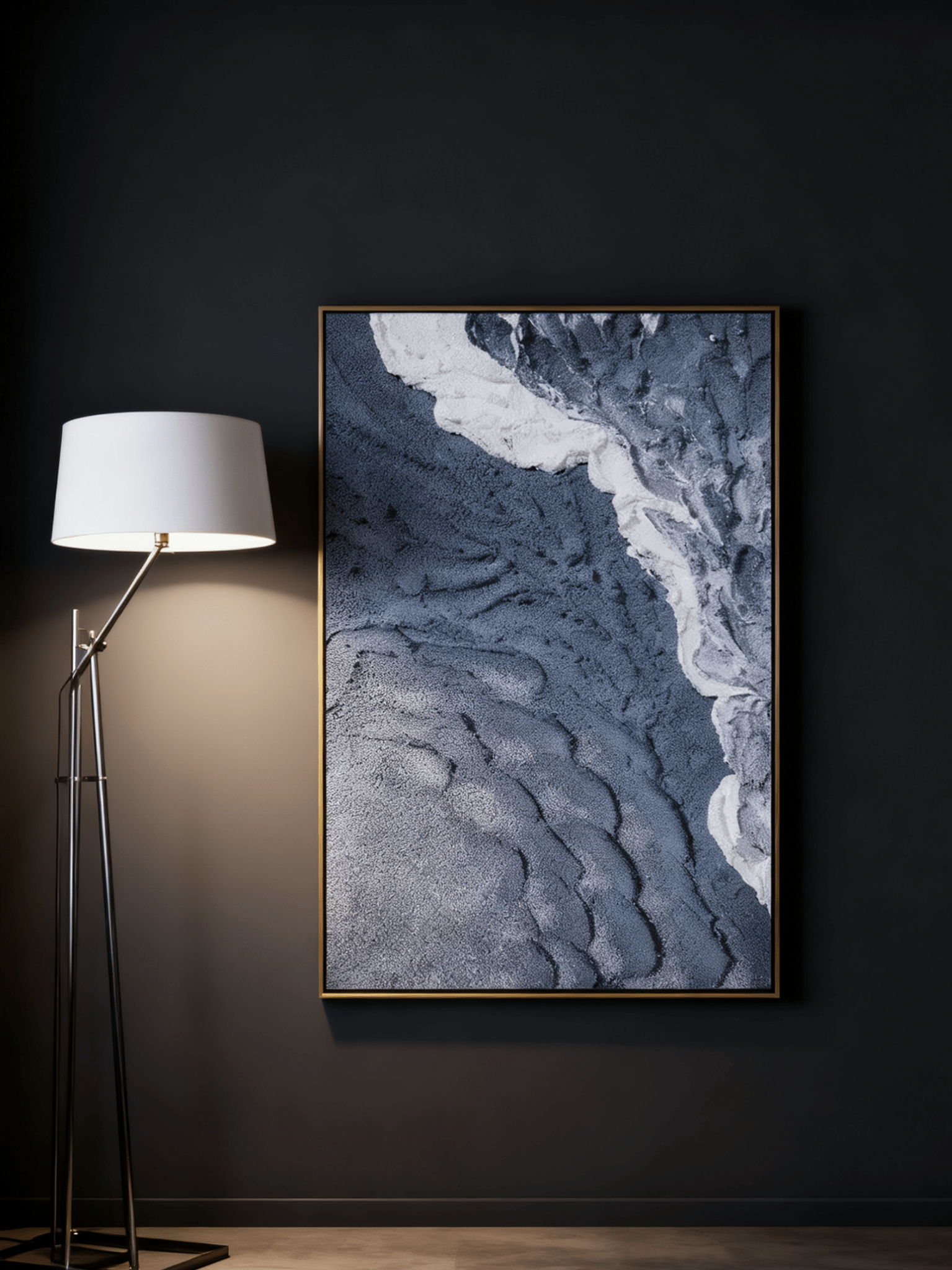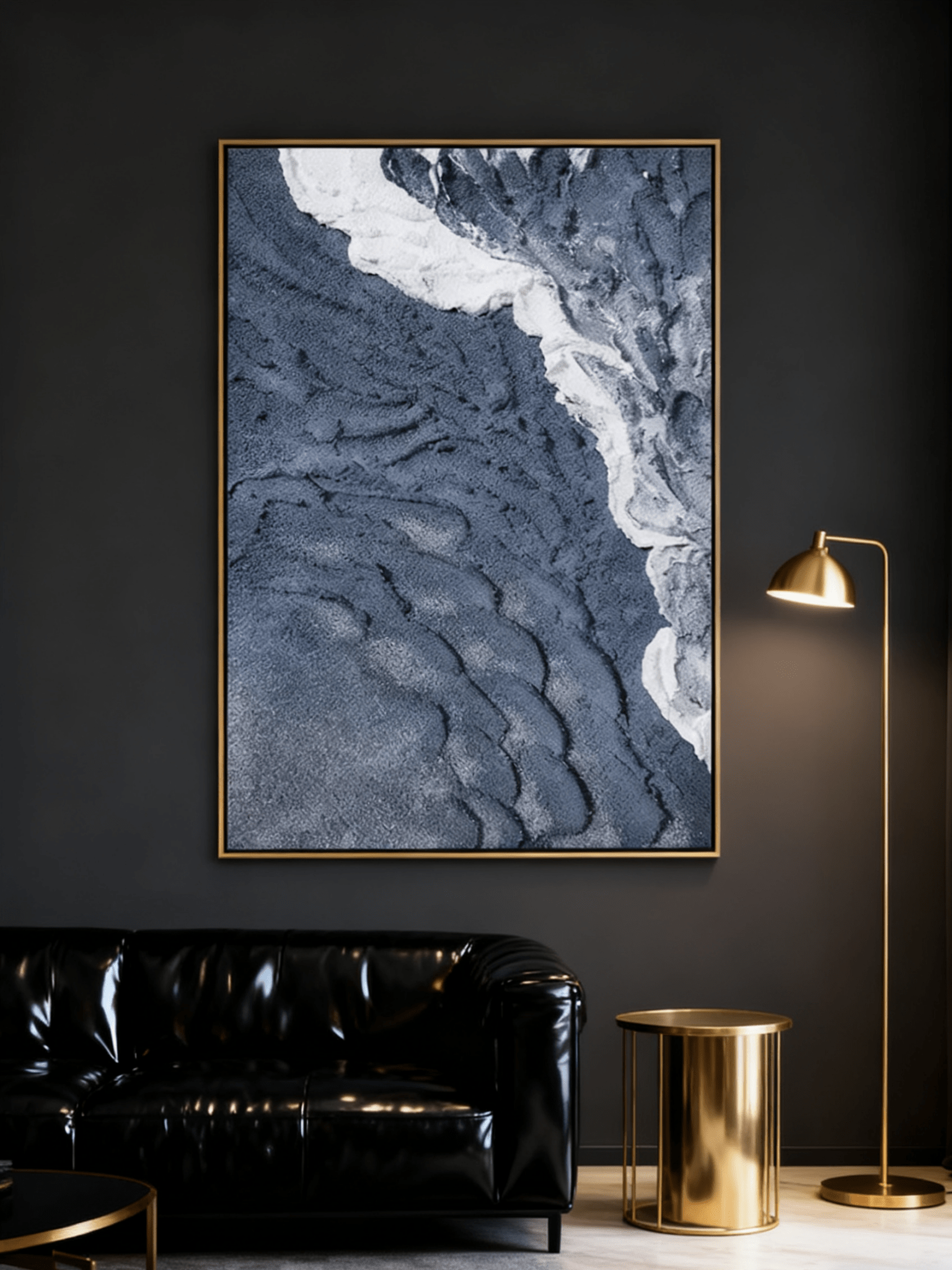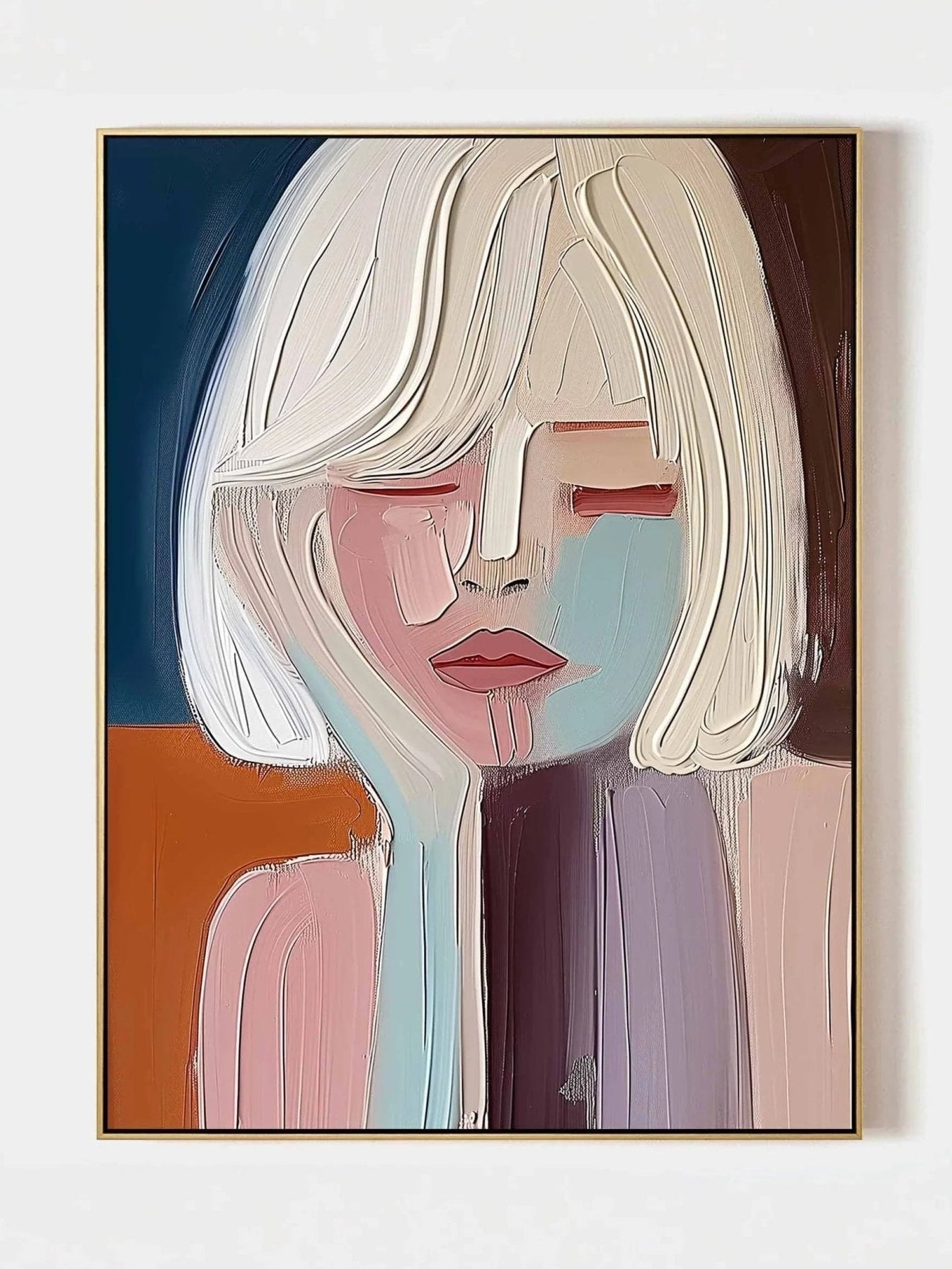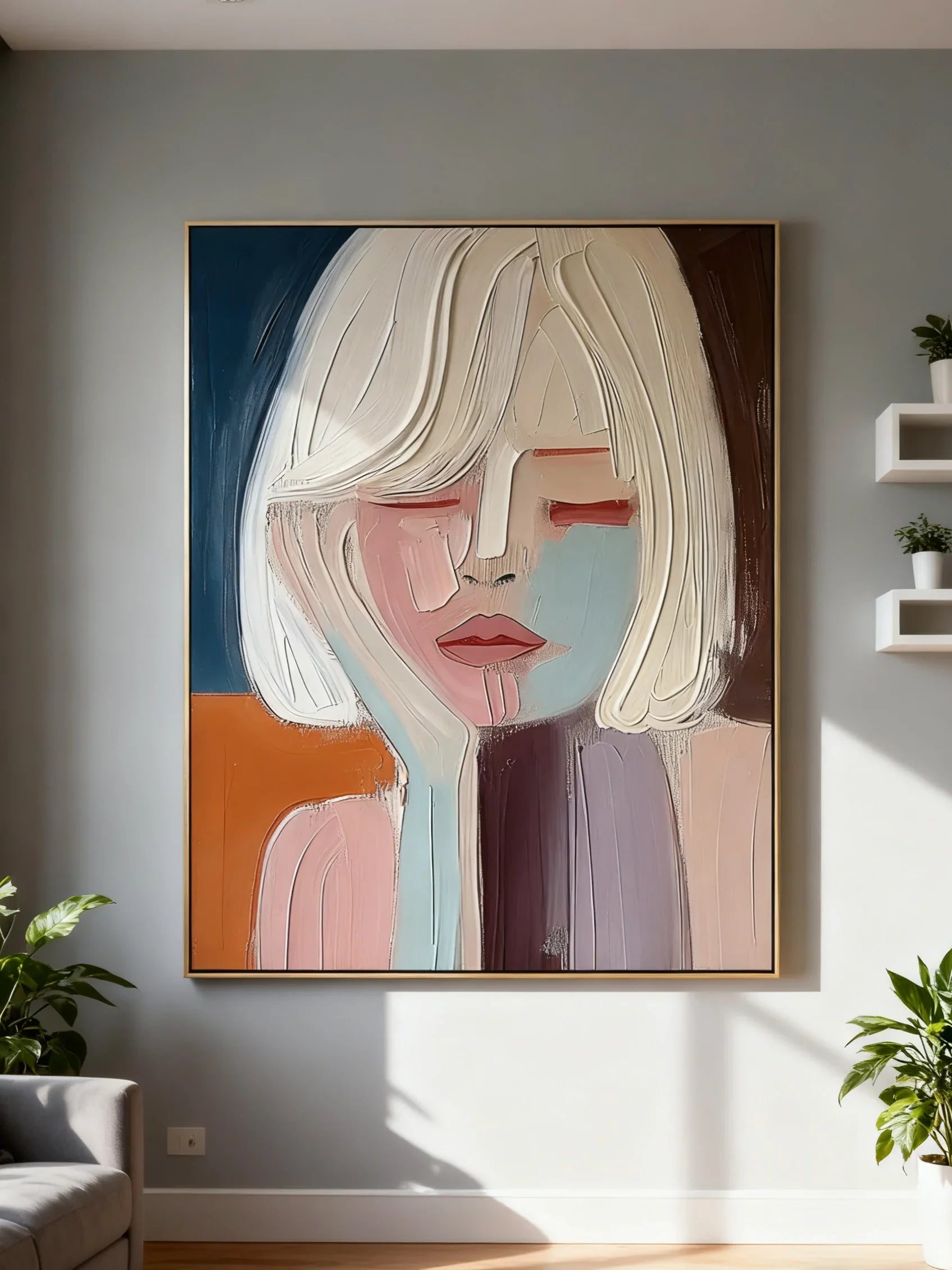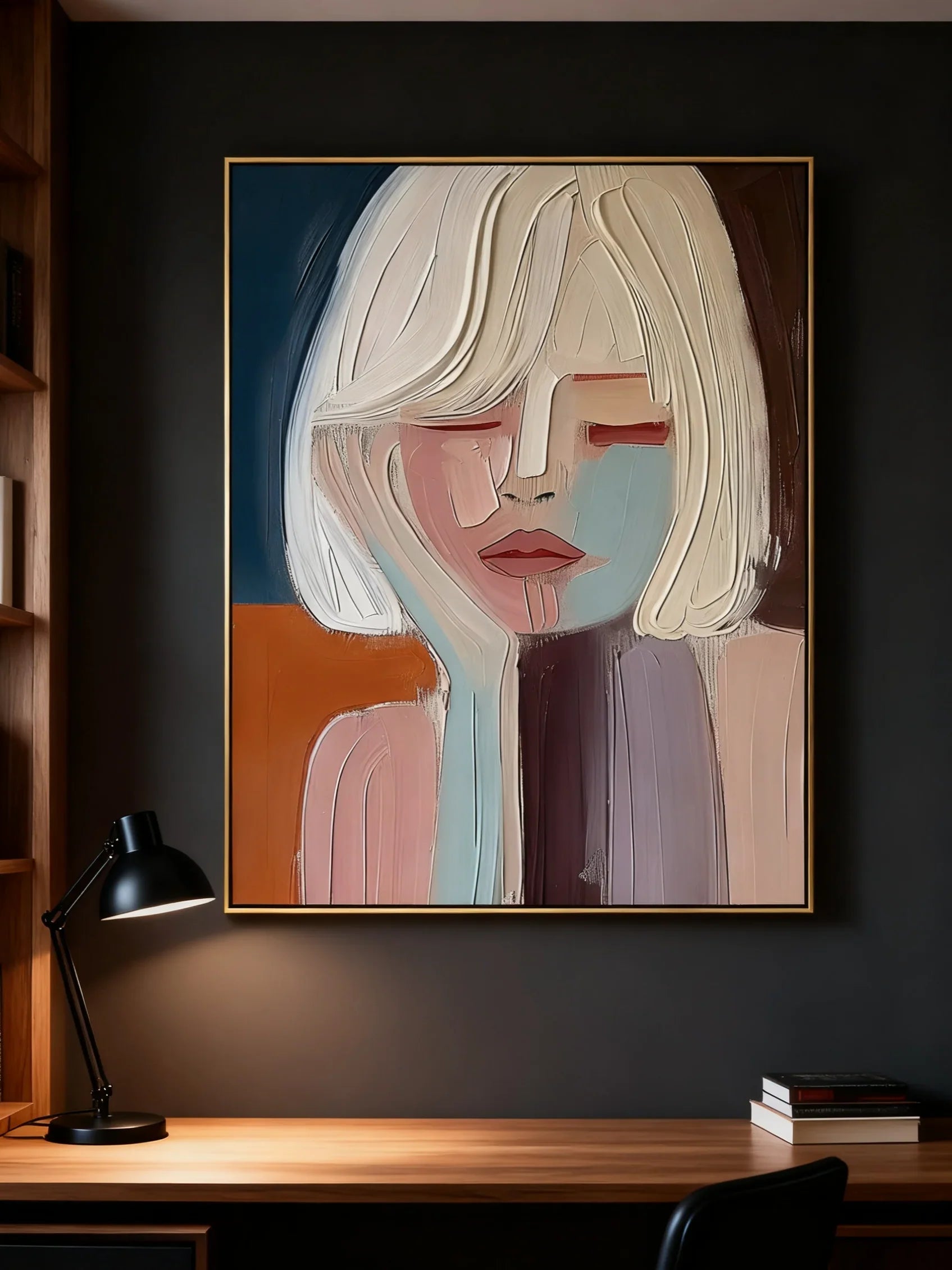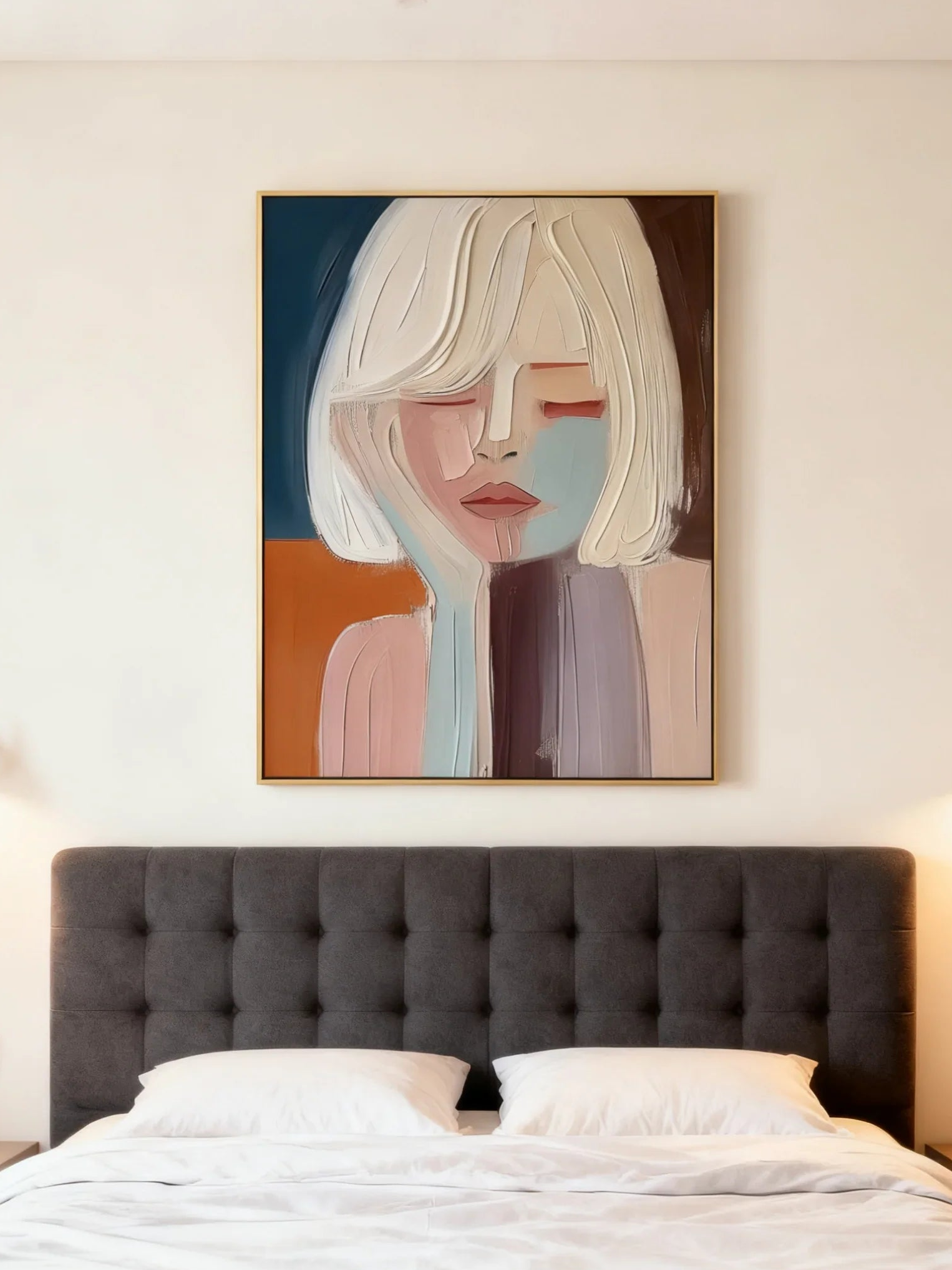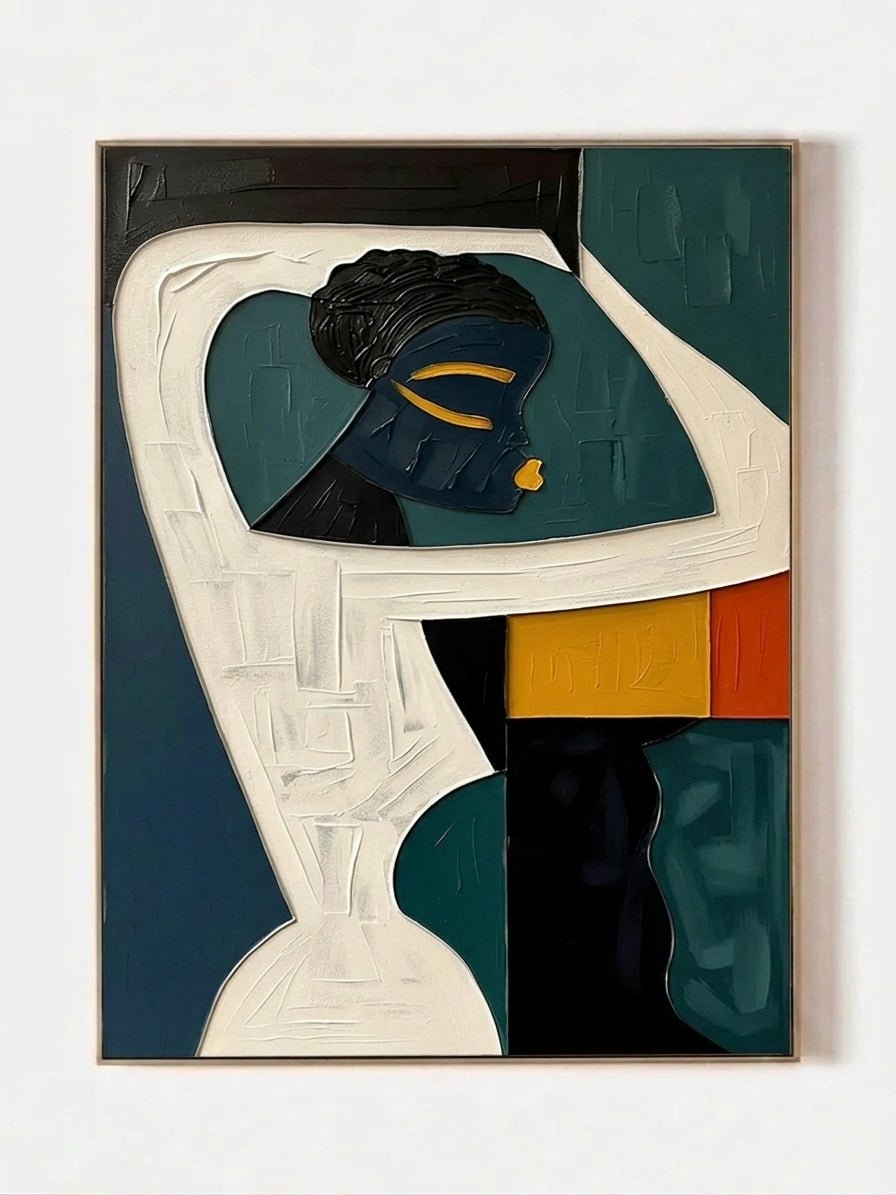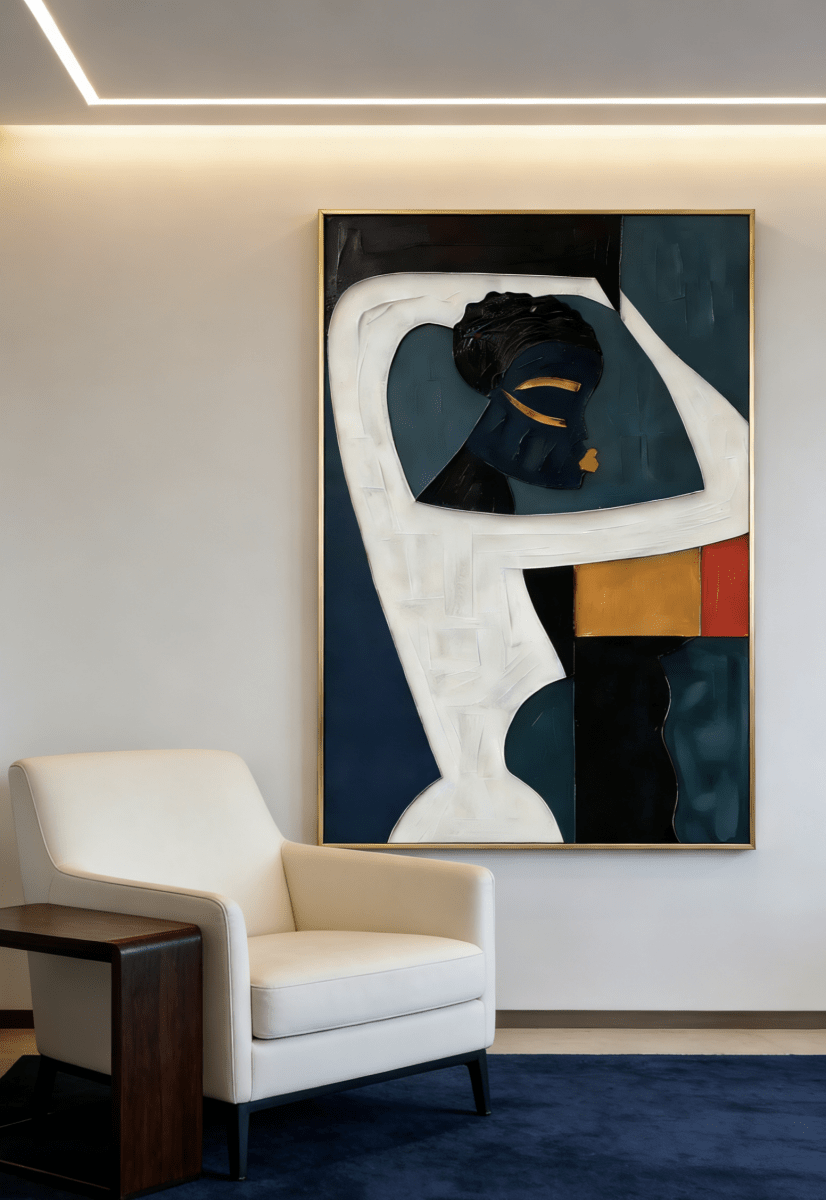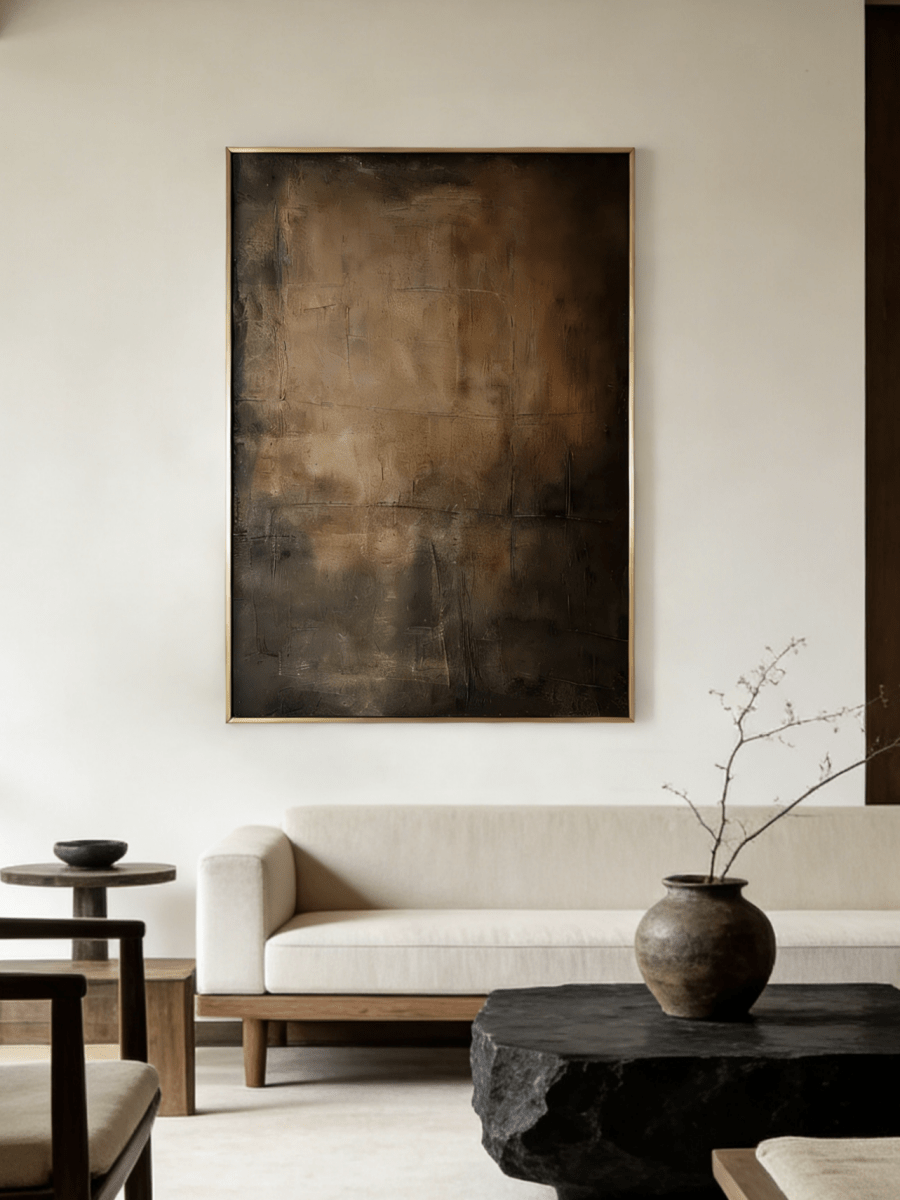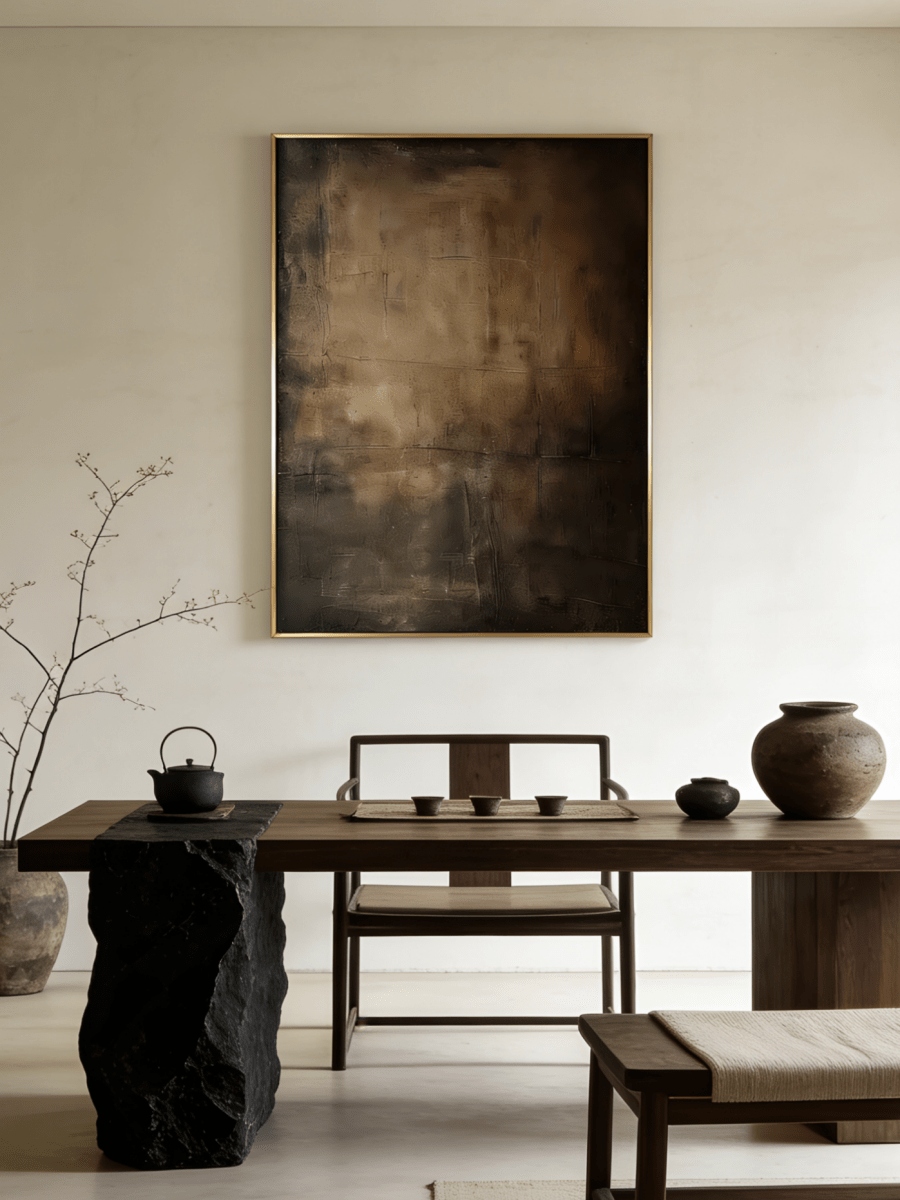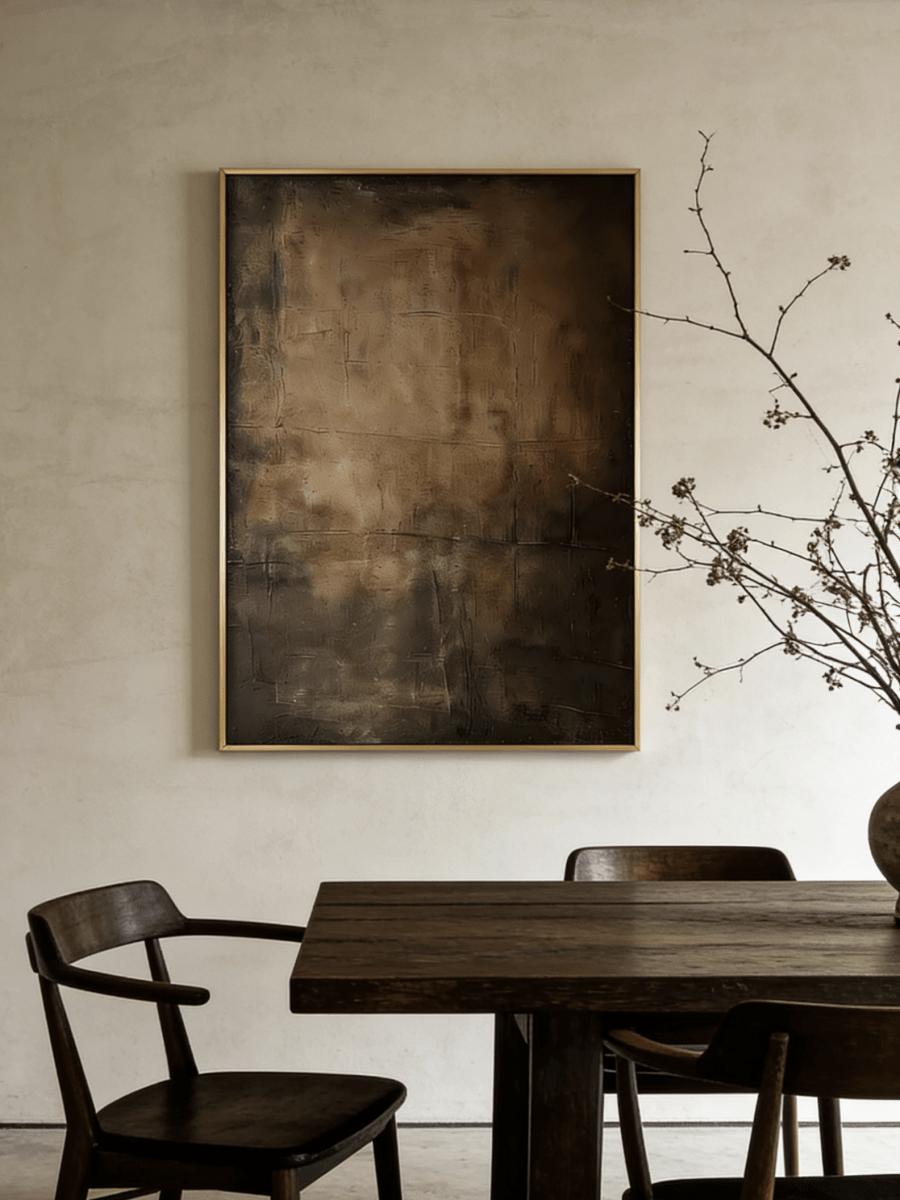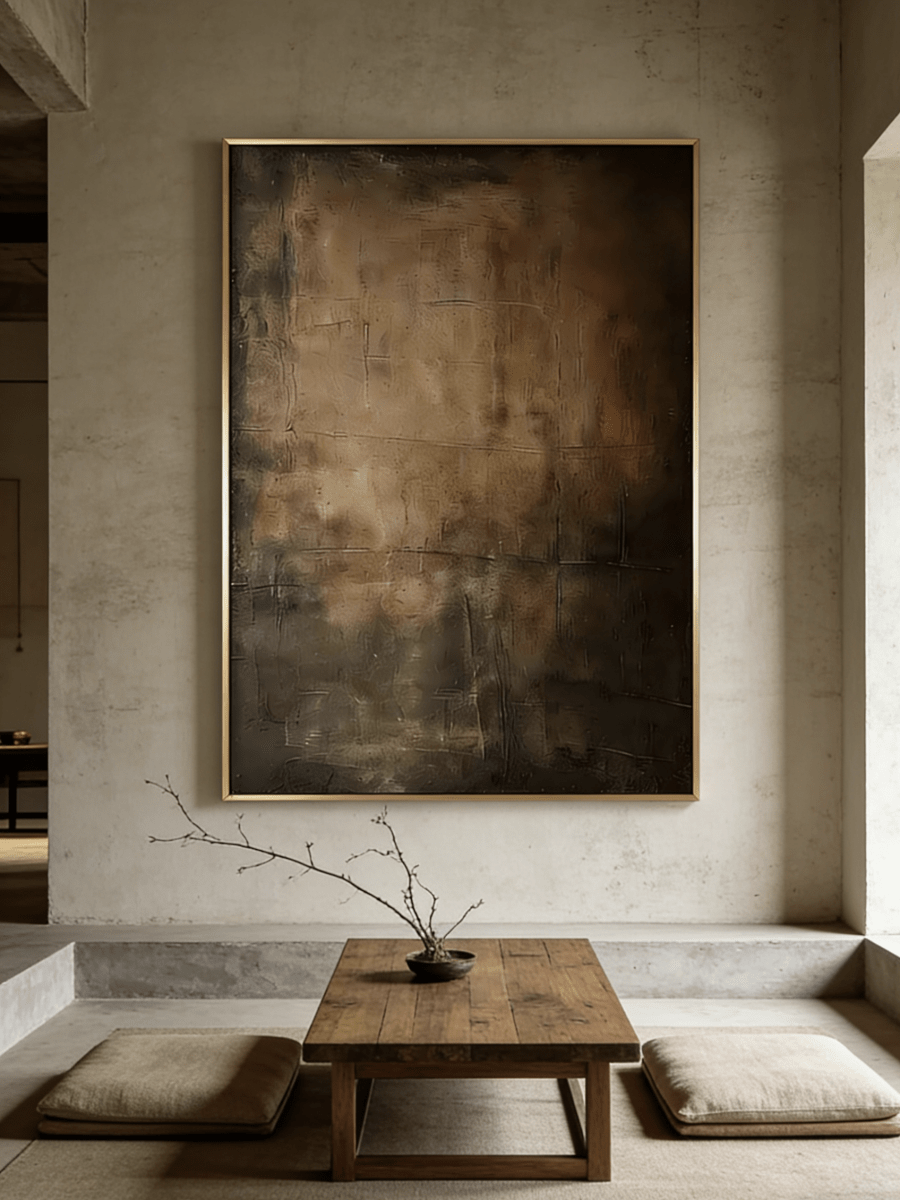

Choosing the right wall art above a fireplace comes down to one fundamental design rule: your artwork or framing ensemble should measure roughly two-thirds (66%) to three-quarters (75%) of the finished mantel width.
- For a 54-inch Mantel: Aim for artwork between 36 and 41 inches wide.
- For a 60-inch Mantel: Aim for artwork between 40 and 45 inches wide.
- For a 72-inch Mantel: Aim for artwork between 48 and 54 inches wide.
For hanging height, a decorative gap of 4 to 8 inches (10–20 cm) between the top of the mantel shelf and the bottom of the frame maintains visual anchor and proportion. However, because working fireplaces generate heat and have specific clearance codes, visual guidelines must always yield to your appliance’s safety requirements.
This guide breaks down exact proportions, height rules, orientation choices, and safety considerations to help you select the ideal hand-painted artwork over your fireplace with confidence.

Quick Reference: Fireplace Wall Art Size Chart
The chart below calculates the 66%–75% rule based on standard U.S. mantel dimensions, rounded to practical shopping sizes:
| Mantel Width | Suggested Artwork Width (66%–75%) | Approx. Metric | Visual Effect & Recommendations |
|---|---|---|---|
| 48 in / 122 cm | 32–36 in | 81–91 cm | Compact, balanced focal point. Ideal for smaller rooms. |
| 54 in / 137 cm | 36–41 in | 91–104 cm | Moderate scale with clear side space for sconces or decor. |
| 60 in / 152 cm | 40–45 in | 102–114 cm | Strong standard-mantel anchor for living and hearth rooms. |
| 66 in / 168 cm | 44–50 in | 112–127 cm | Substantial focal presence without crowding mantel edges. |
| 72 in / 183 cm | 48–54 in | 122–137 cm | Large statement piece suited for broad architectural mantels. |
| 84 in / 213 cm | 56–63 in | 142–160 cm | Oversized or panoramic treatment for grand hearth walls. |
Pro Tip: Choose toward the lower end of the width range if your frame is thick, your surround is ornate, or you have wall sconces. Move toward the upper end if your wall is wide, ceiling is high, or canvas is pale and atmospheric.
Start With the Mantel Width, Not the Whole Wall
A fireplace is naturally the visual centerpiece of a room. Because the mantel shelf provides a distinct horizontal boundary, it serves as a far more accurate measuring baseline than the total wall width.
- Measure the Outer Frame Footprint: Always measure the total width of the artwork as it will hang—from outer frame edge to outer frame edge—rather than just the painted canvas core.
- Account for Multi-Panel Sets: For diptychs or triptychs, add the width of all panels plus the 2-to-3-inch spacing gaps between them.
- When to Consider the Chimney Breast: If you have a floor-to-ceiling tile, deep stone veneer, or a full-height plaster chimney breast, compare three numbers: mantel width, surround width, and usable chimney breast width. Tape out candidate dimensions to ensure balanced side margins.
For broader sizing principles that apply throughout the home, see our simple guide to sizing hand-painted wall art.
How High Should You Hang Art Above a Fireplace?
For most residential setups, aim for a 4 to 8 inch decorative gap between the top of the mantel shelf and the bottom edge of the artwork frame.
4"–8" Gap
↓
- 4 to 5 Inches: Creates a tight, integrated relationship when the mantel shelf is kept mostly clear.
- 7 to 8 Inches: Provides breathing room if you display low decorative objects, such as small vases or decorative bowls.
- Avoid Floating: Do not force the artwork’s vertical center to 57 or 60 inches from the floor if it disconnects the frame from the mantel. The fireplace assembly sets the visual baseline.
Orientation Guide: Horizontal vs. Square vs. Vertical vs. Panoramic
The right orientation depends on the relationship between your mantel, chimney breast, ceiling height, and surrounding architecture.
- Horizontal (Landscape): The most classic match for standard and wide mantels. It echoes the horizontal line of the shelf without crowding ceiling clearance.
- Square: Excellent for symmetrical fireplaces with generous vertical wall clearance. Creates a centered, architectural anchor.
- Vertical (Portrait): Best suited for narrow chimney breasts, compact mantels, or rooms with high ceilings where vertical extension is needed.
- Panoramic: Designed for extra-wide linear fireplaces or broad stone surrounds where standard landscape art feels undersized.
Compare the tradeoffs in our horizontal vs. vertical wall art guide, or learn when to choose panoramic wall art for extra-wide surrounds.

How Textured Artwork Complements Fireplace Materials
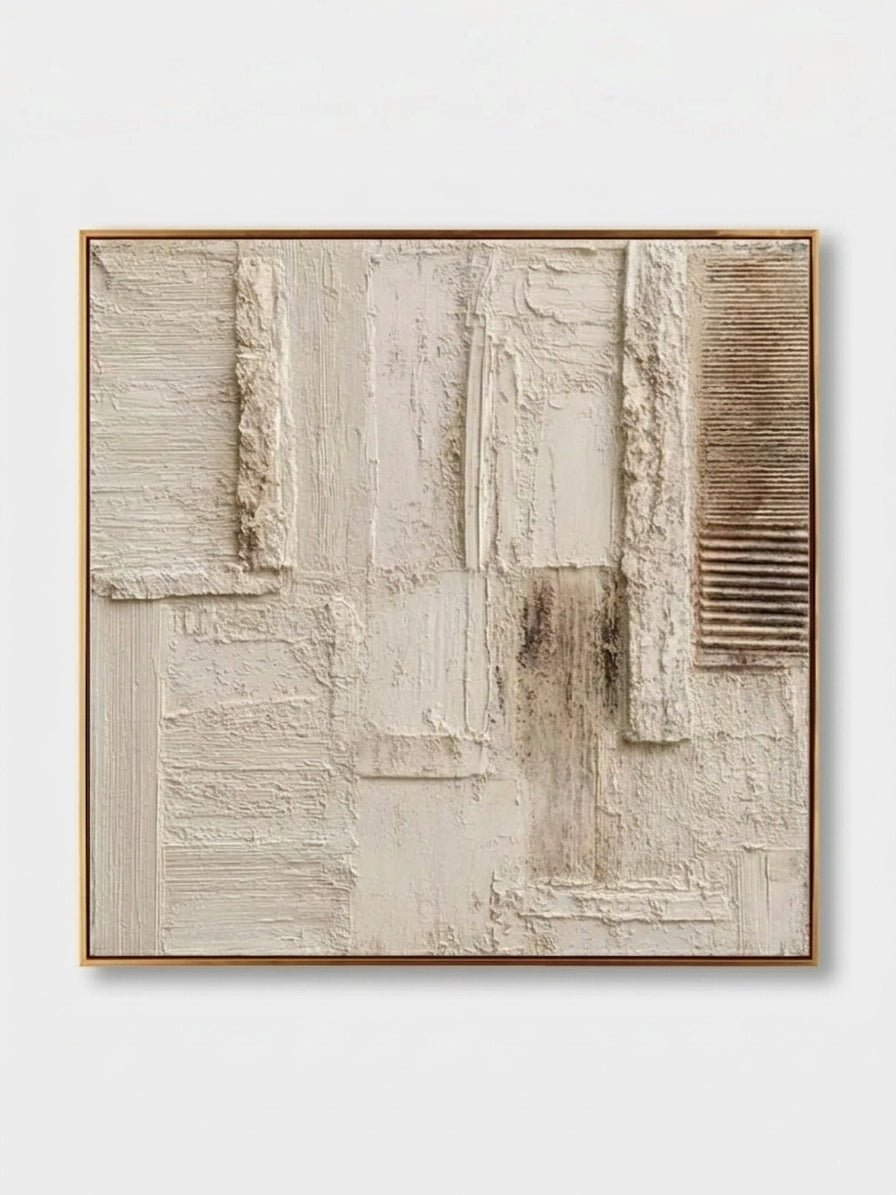
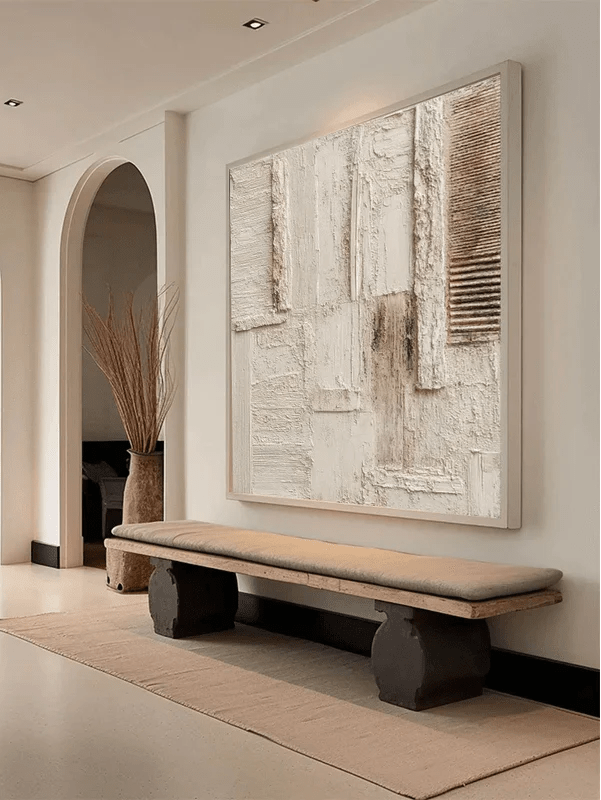
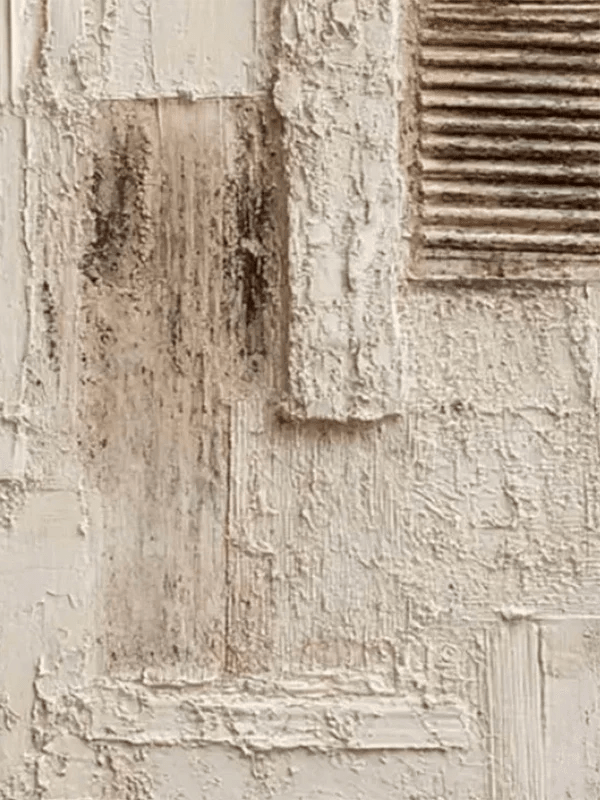
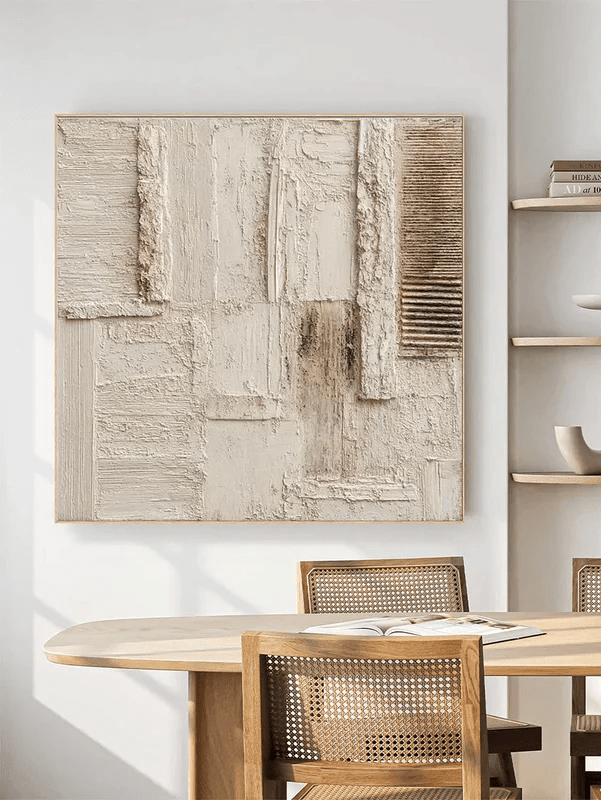
Fireplace walls are rich in material character—brick, limestone, marble, concrete, plaster, or wood. Textured artwork can echo those surfaces without competing with them. Raised brushwork and three-dimensional impasto create depth that feels especially natural beside stone, plaster, or aged brick.
Because texture catches side light, it can shift subtly from morning to evening. This makes hand-painted relief art particularly effective above a mantel, where the artwork becomes part of the room’s architecture rather than a flat decorative layer.

Common Sizing and Hanging Mistakes to Avoid
- Hanging Art Too High: A large gap can make the artwork feel disconnected from the fireplace and visually stranded on the wall.
- Matching Mantel Width Exactly: Artwork that reaches the mantel edges often feels crowded. Maintain visible side margins unless the architecture clearly supports an oversized treatment.
- Measuring Only Canvas: Frames can add several inches to the finished width, changing the final proportion.
- Ignoring Appliance Clearances: Decorative guidelines never override heat, venting, or installation requirements.
Step-by-Step: The Painter’s Tape Test Before You Order
- Measure Your Baseline: Record the finished mantel width from outer edge to outer edge.
- Calculate Target Range: Multiply the mantel width by 0.66 and 0.75.
- Tape the Outline: Use low-tack painter’s tape to mark the complete outer frame dimensions on the wall.
- Test Sightlines: Step back to your primary seating area and check balance from adjacent room entrances.
- Verify Safe Installation Zone: Confirm the chosen location satisfies your fireplace manual and professional installation advice.
Recommended Hand-Painted Artwork for Fireplace Walls
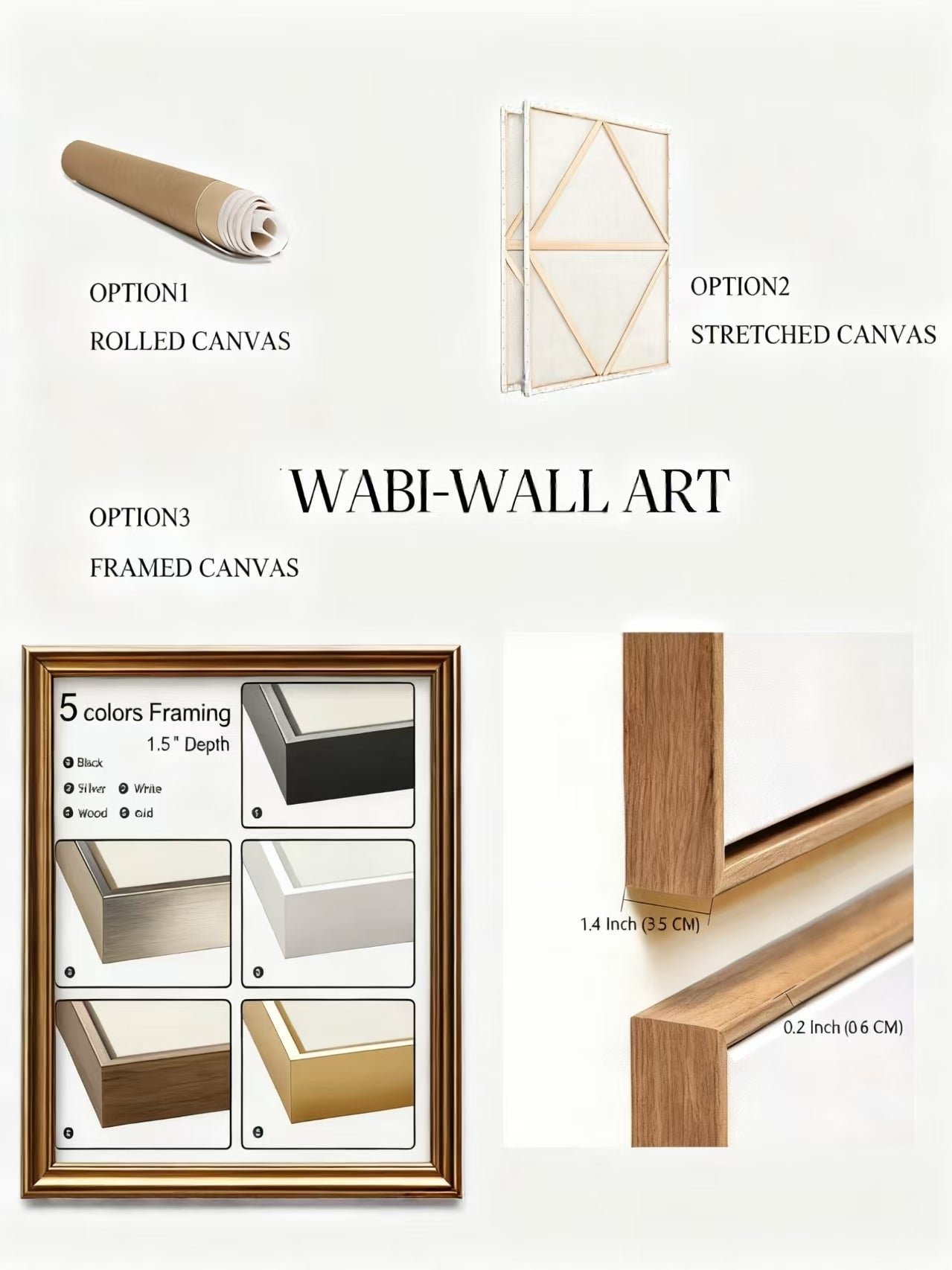
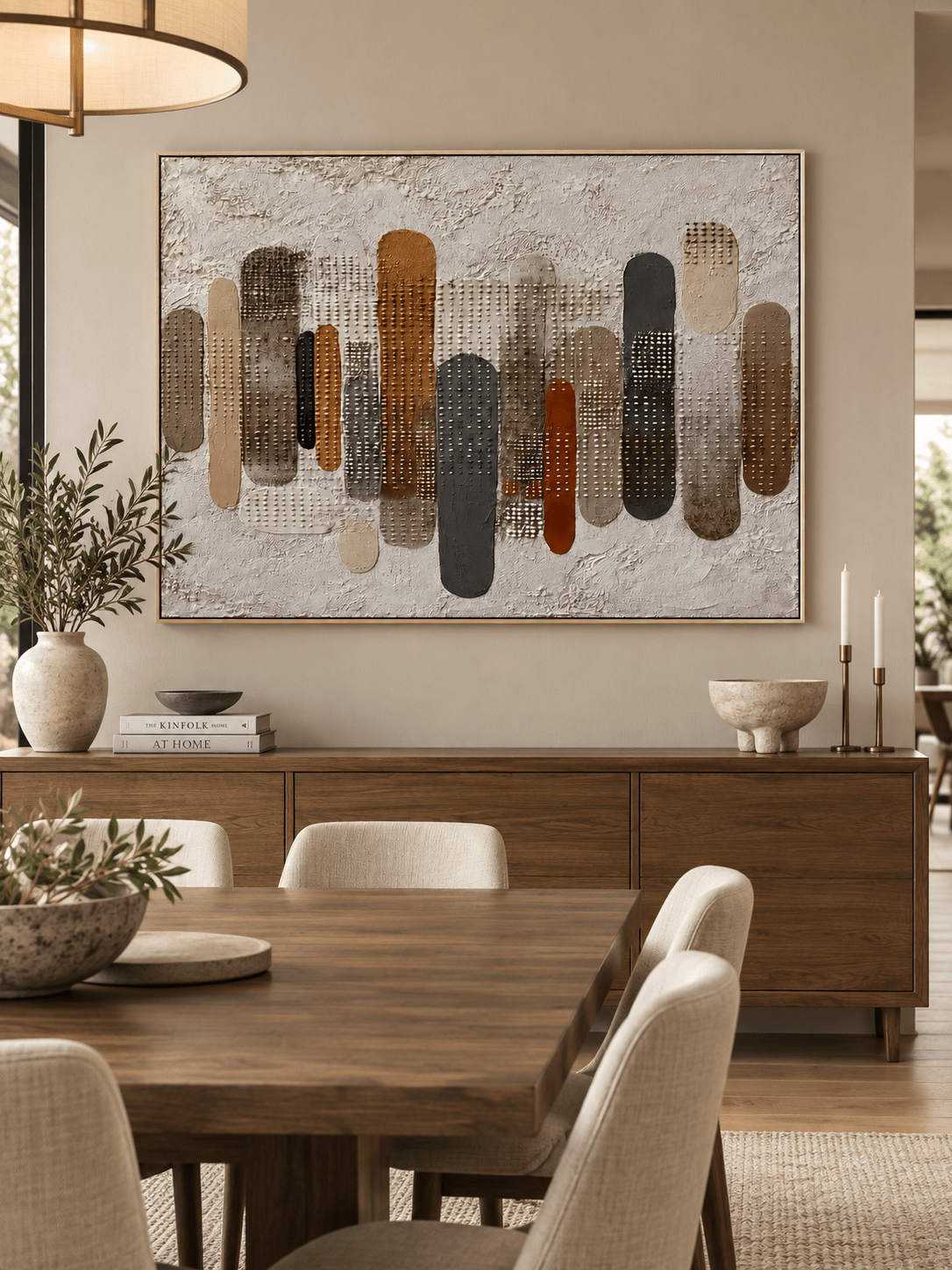
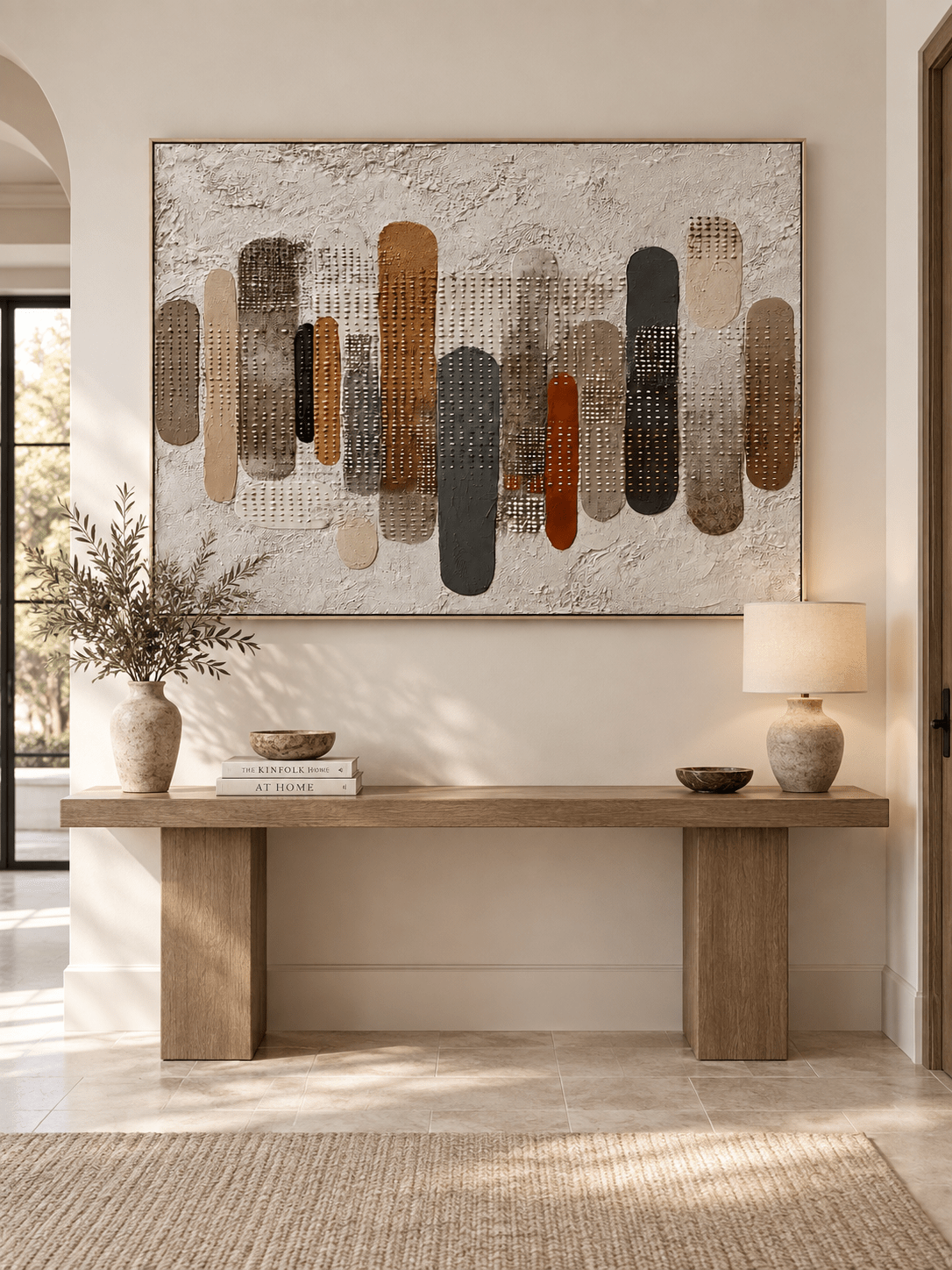
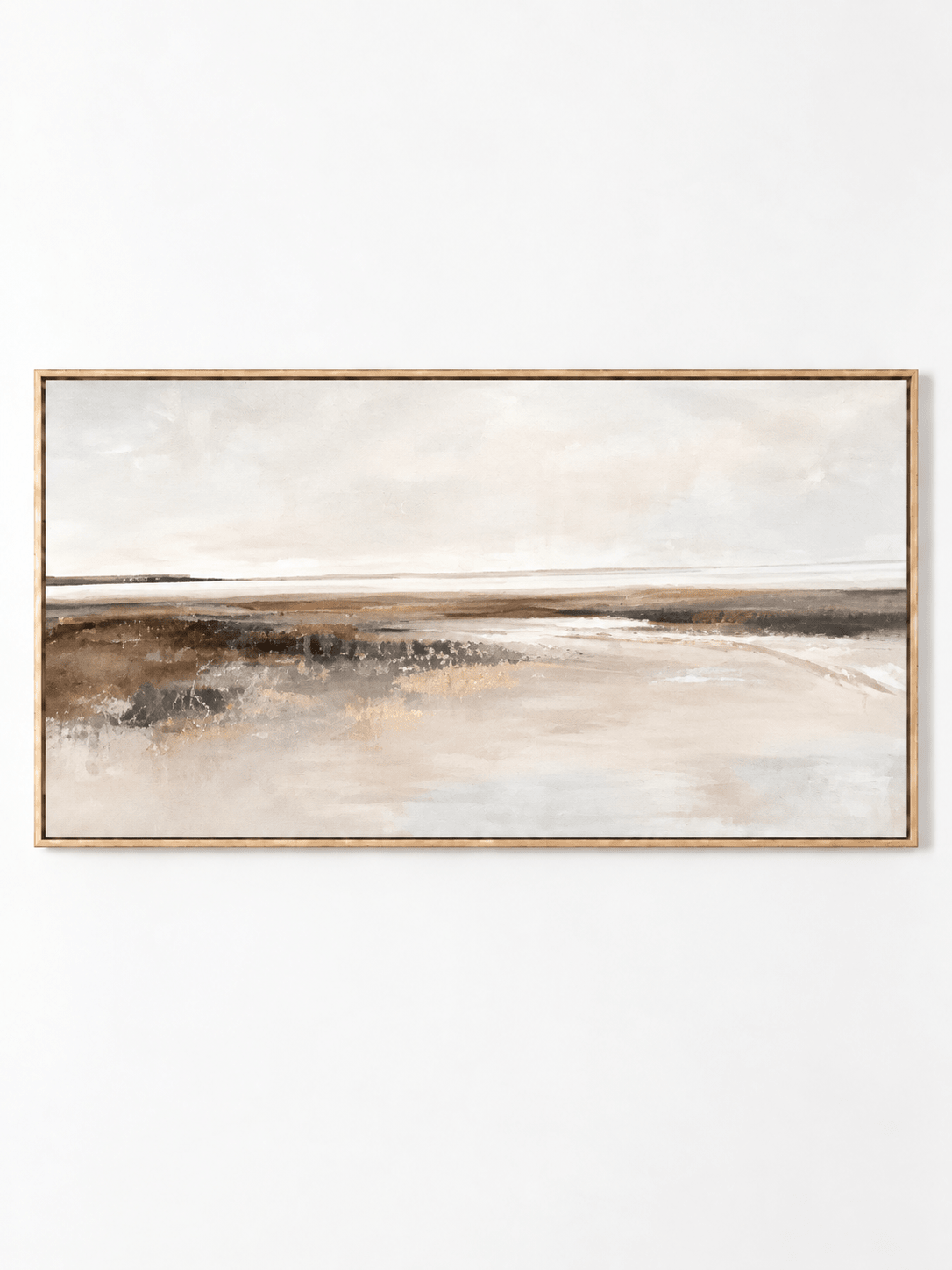
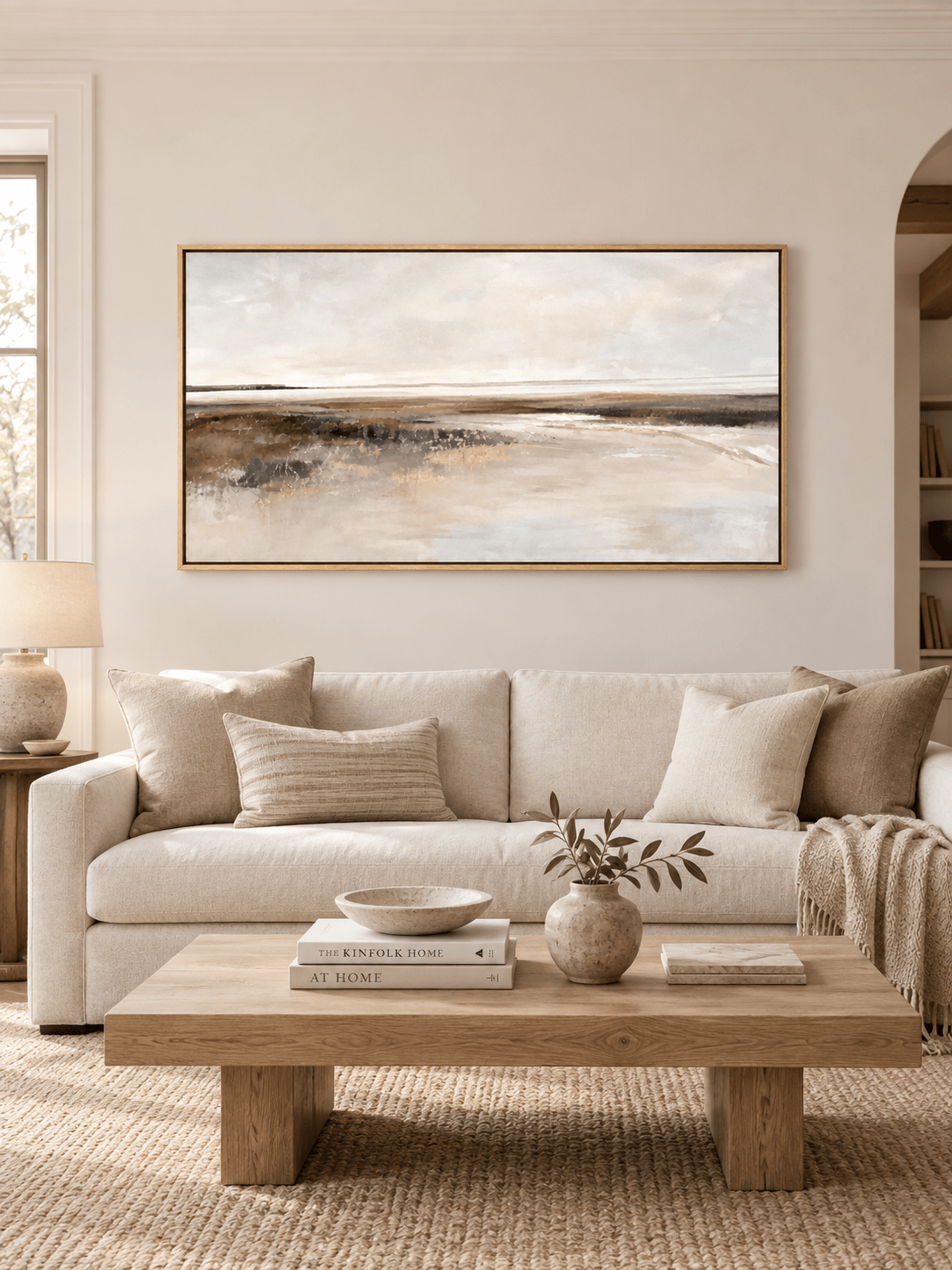
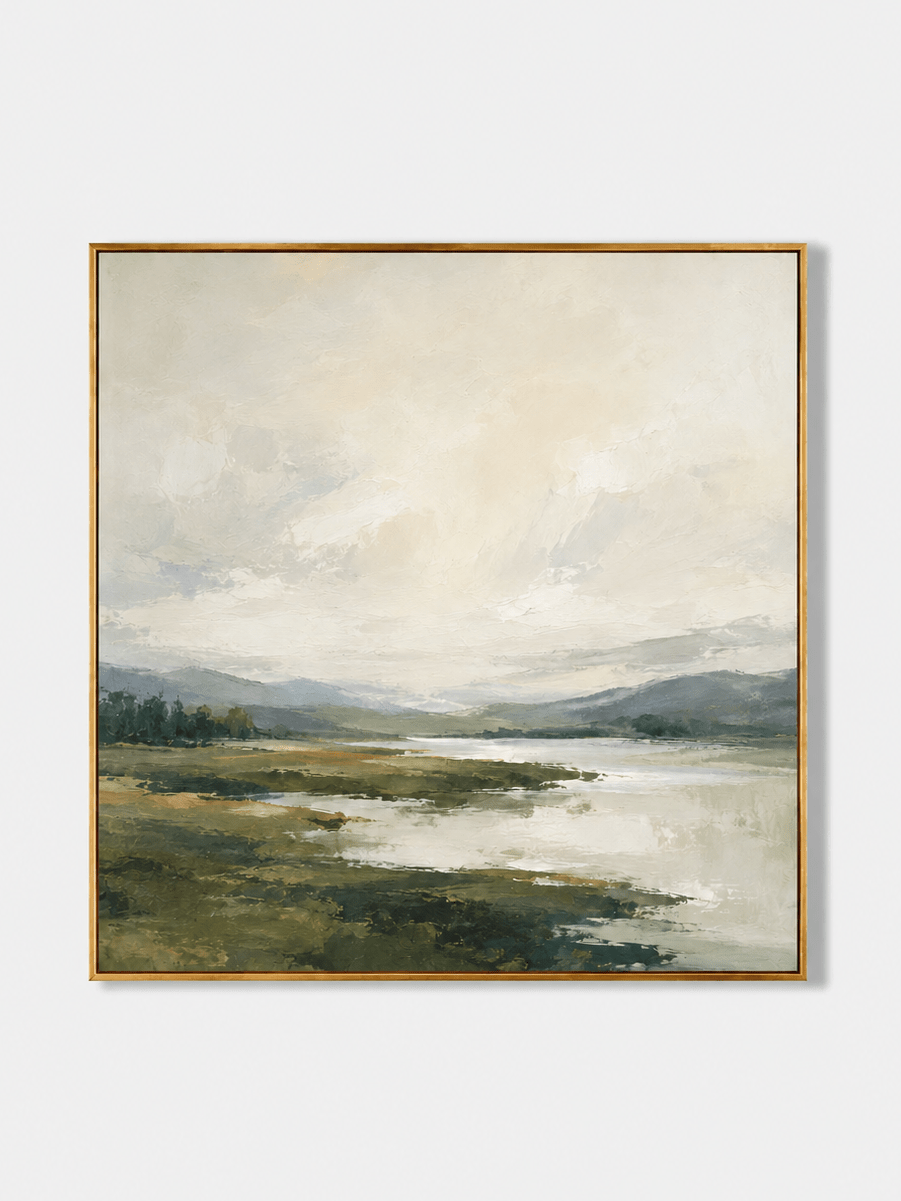
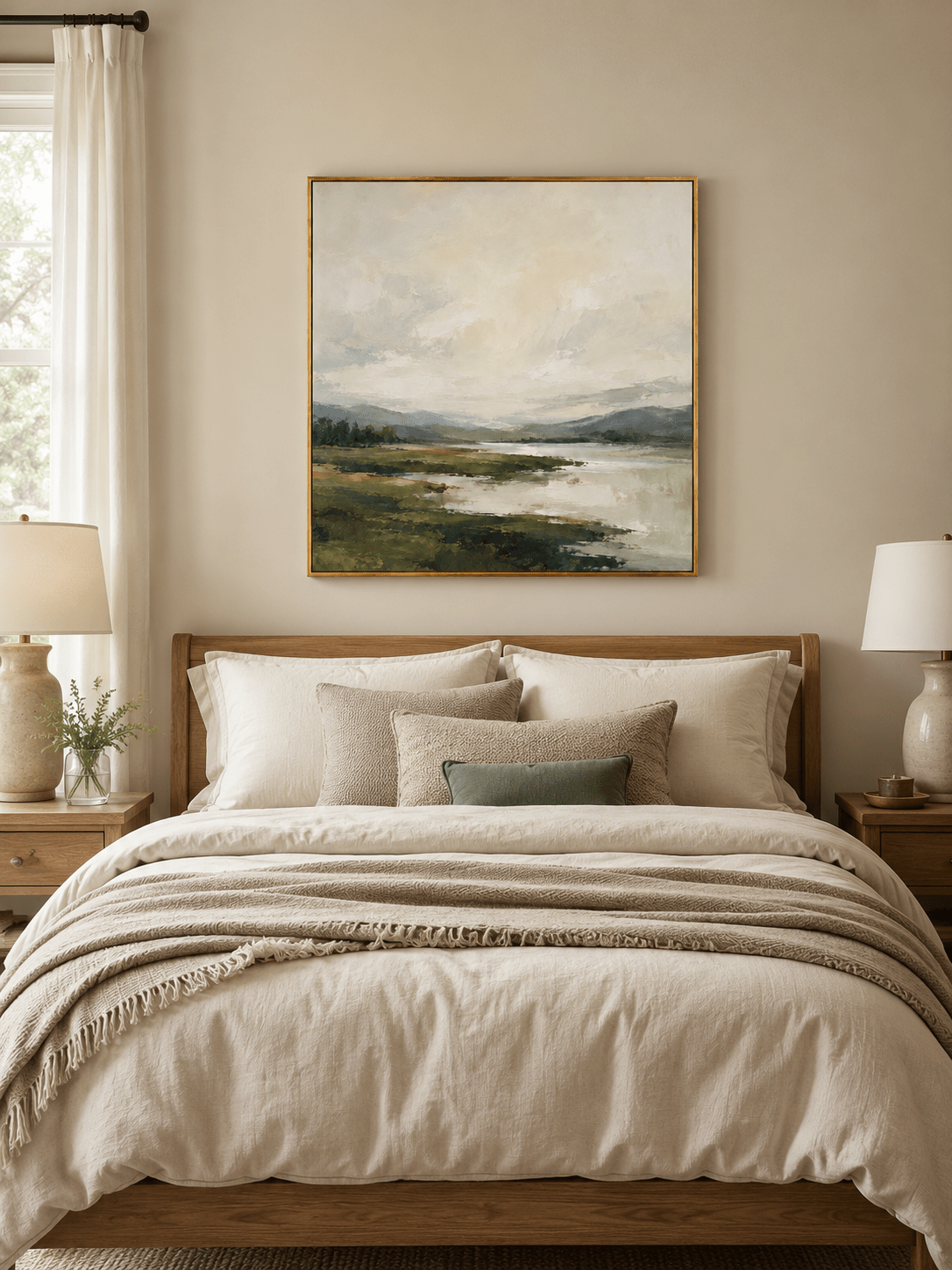
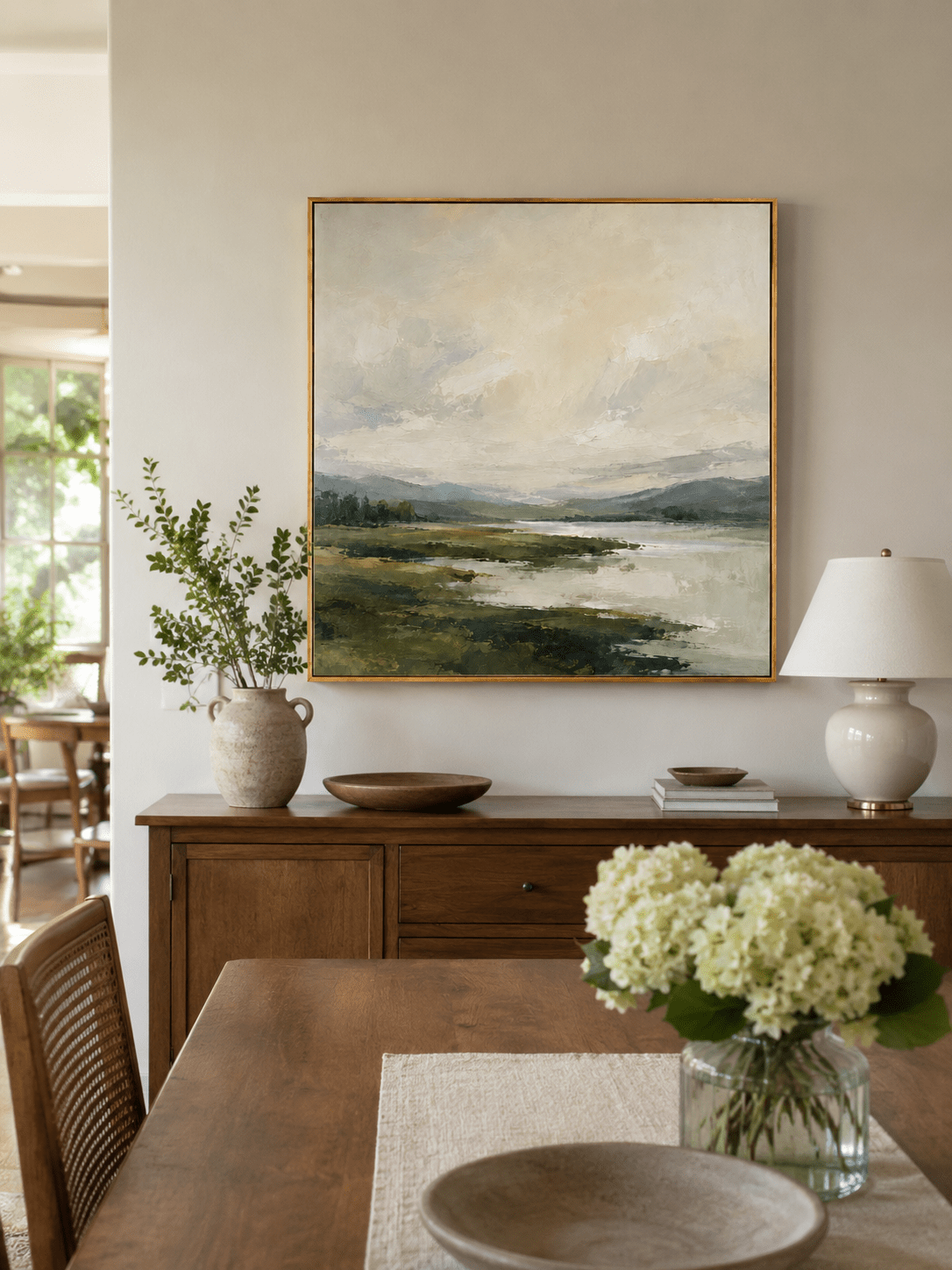
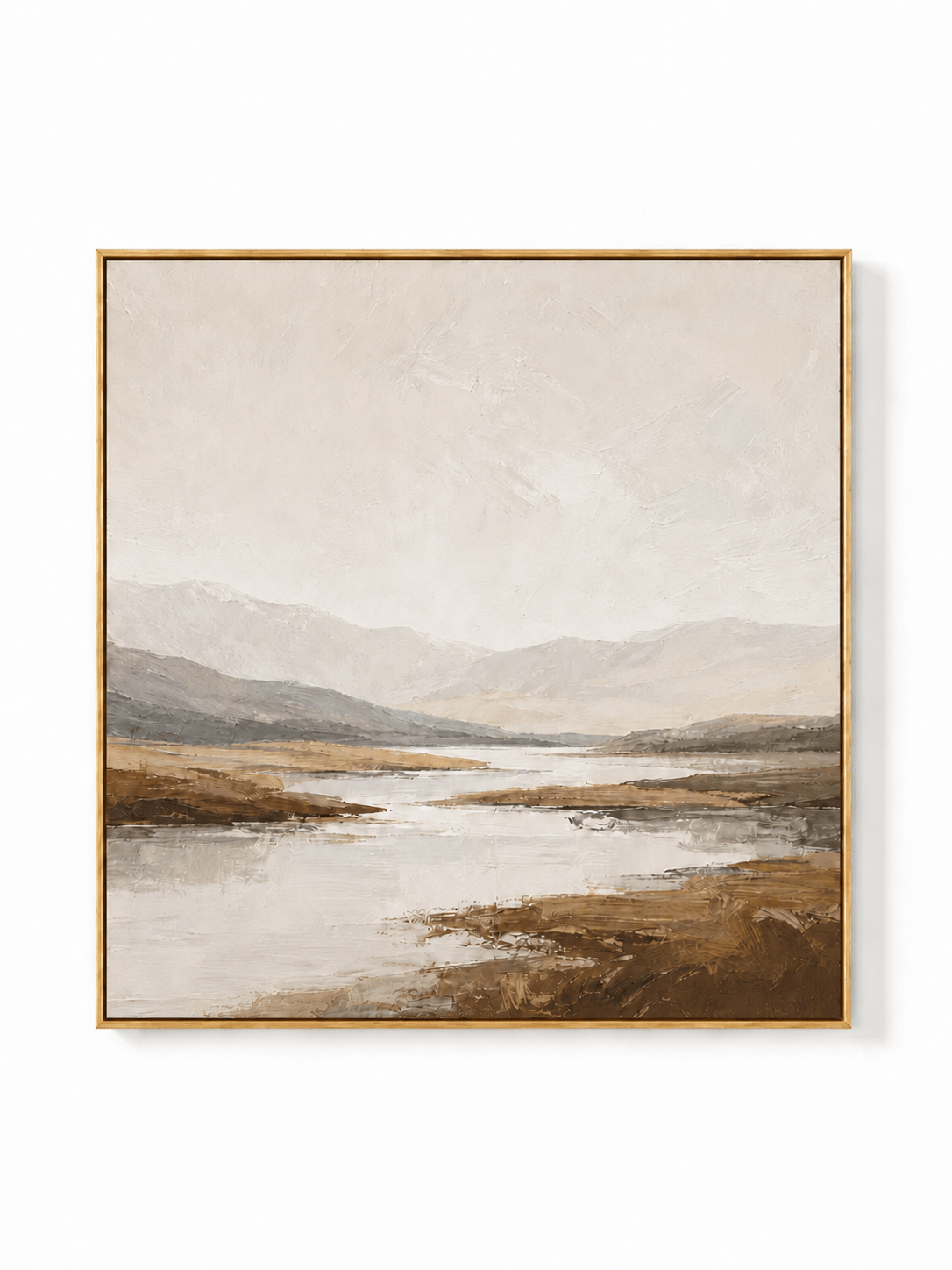
Fireplace walls benefit from artwork with clear proportions, tactile depth, and a composition strong enough to hold the room’s focal point. These WABI Wall Art pieces work especially well across common mantel types:
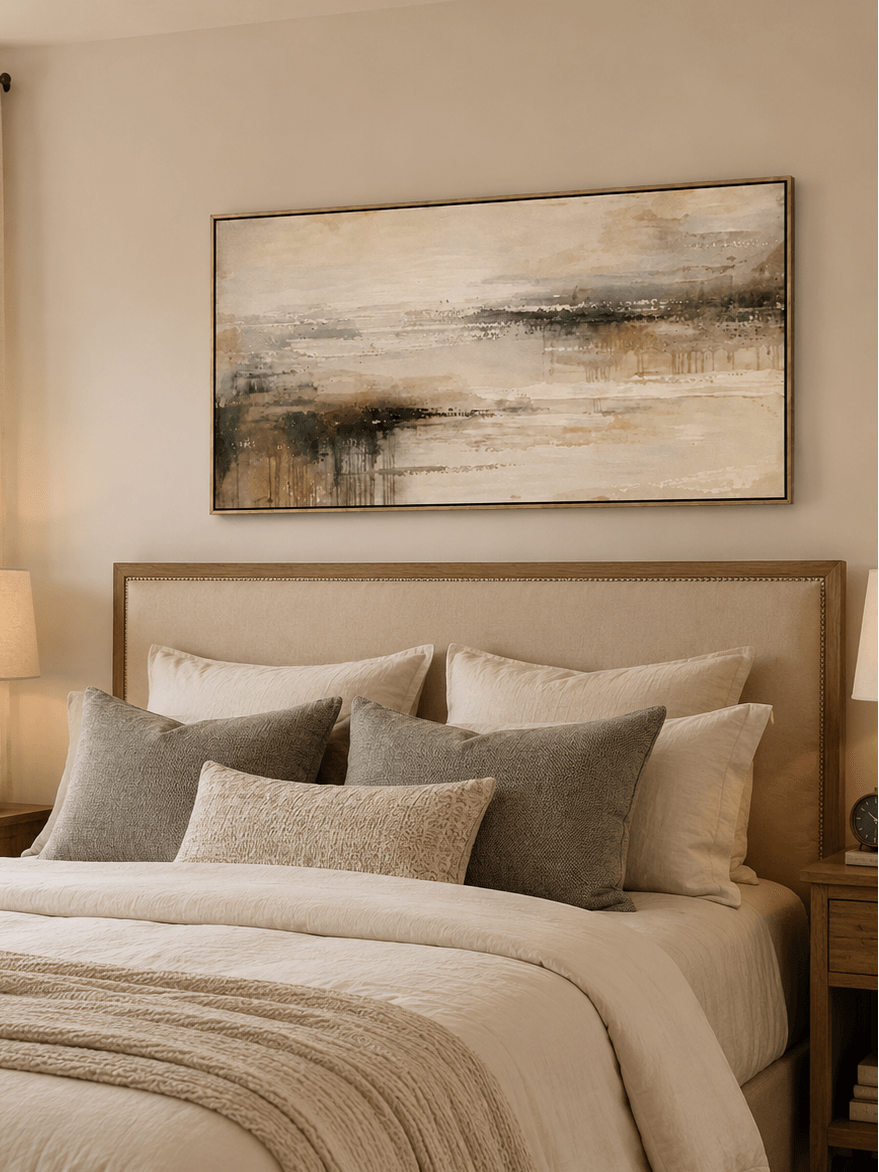
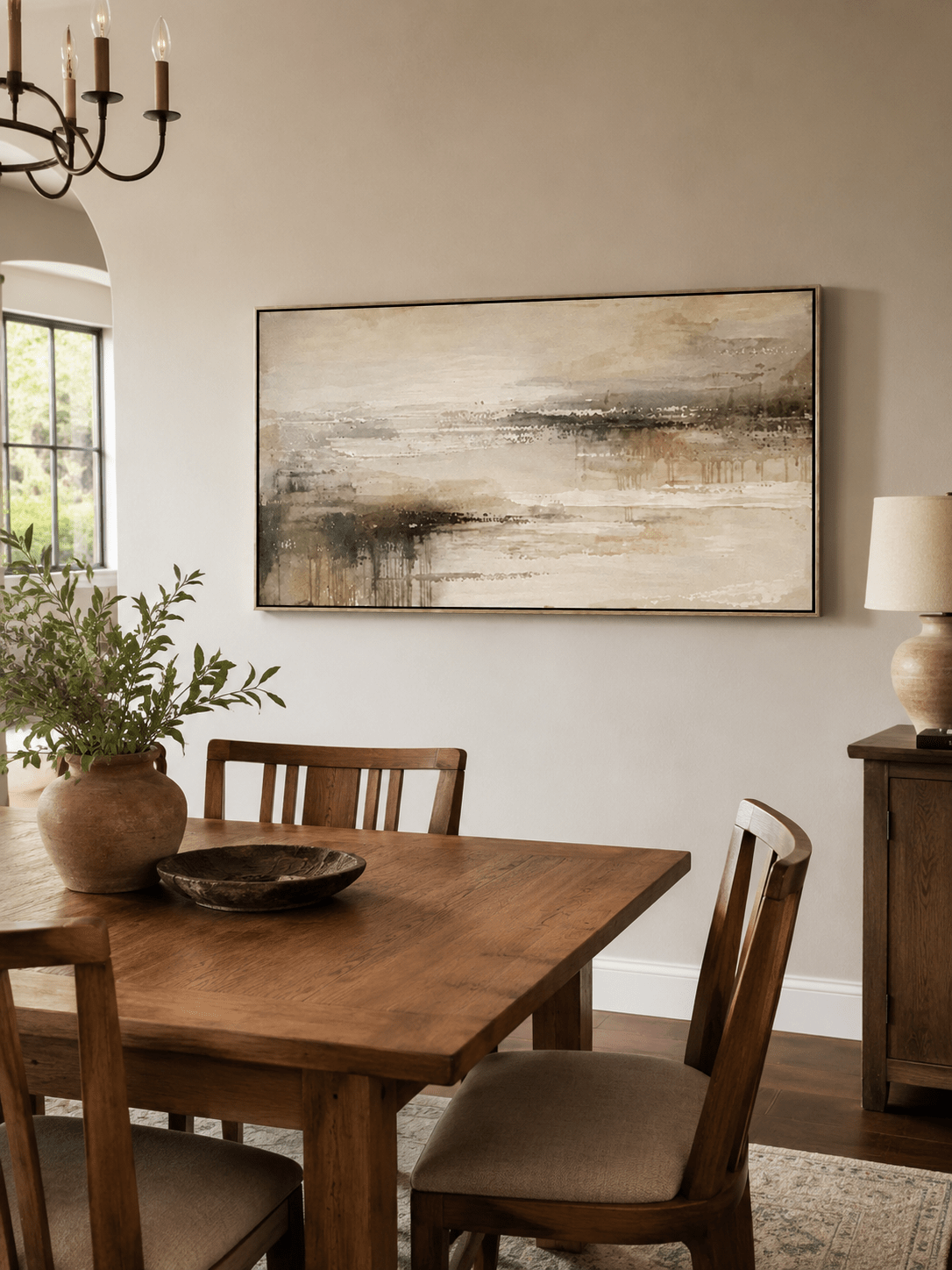
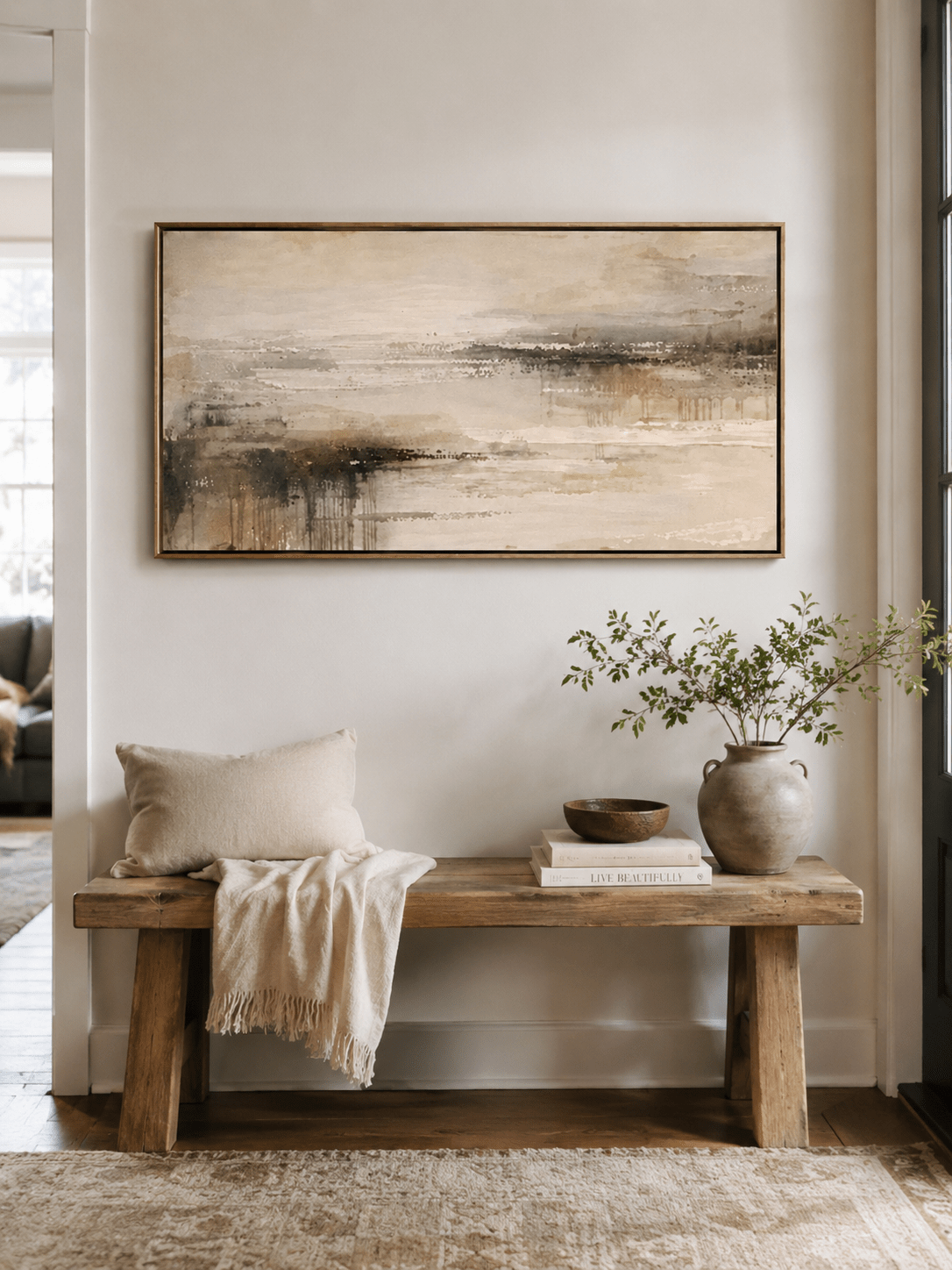
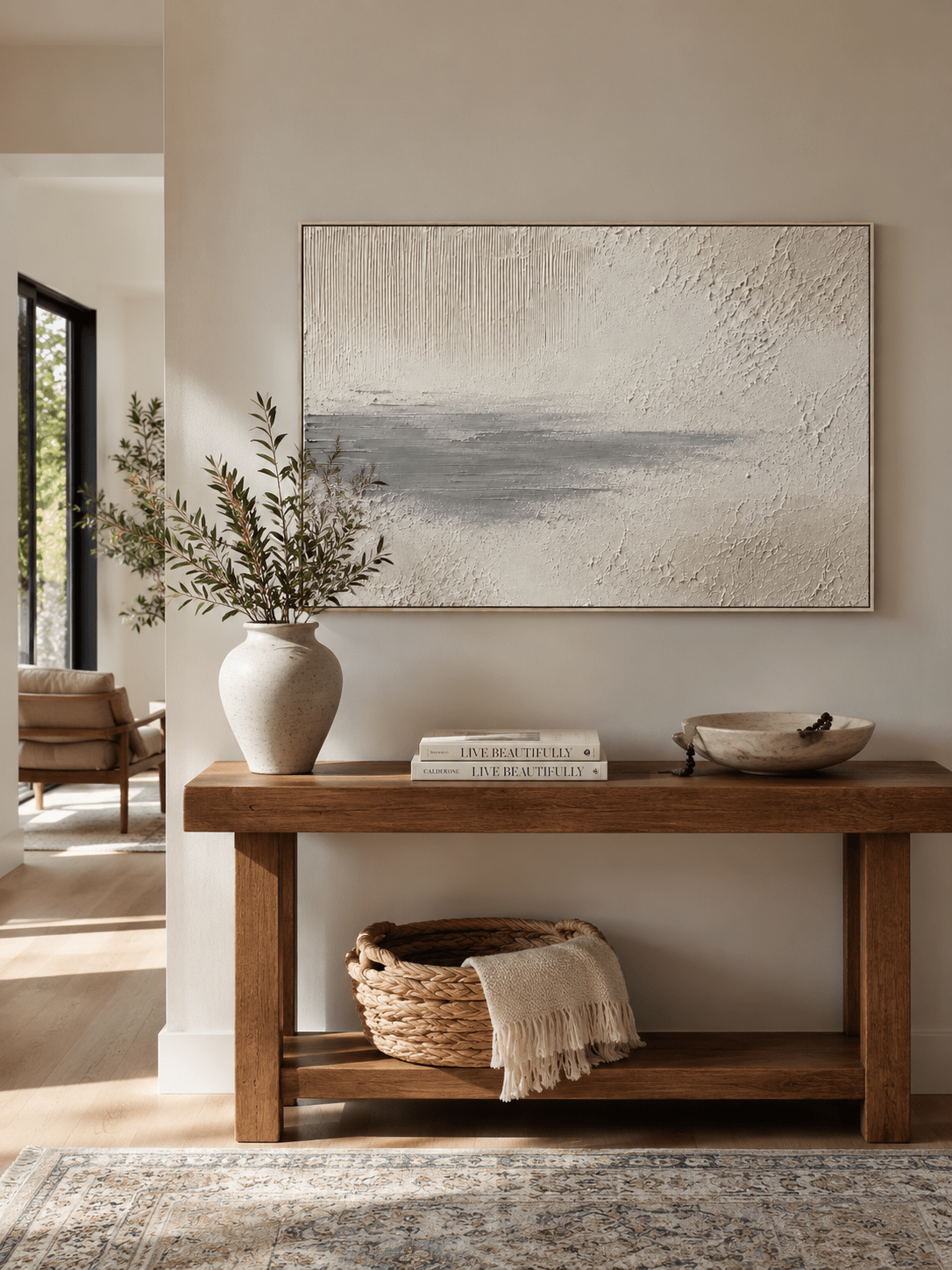
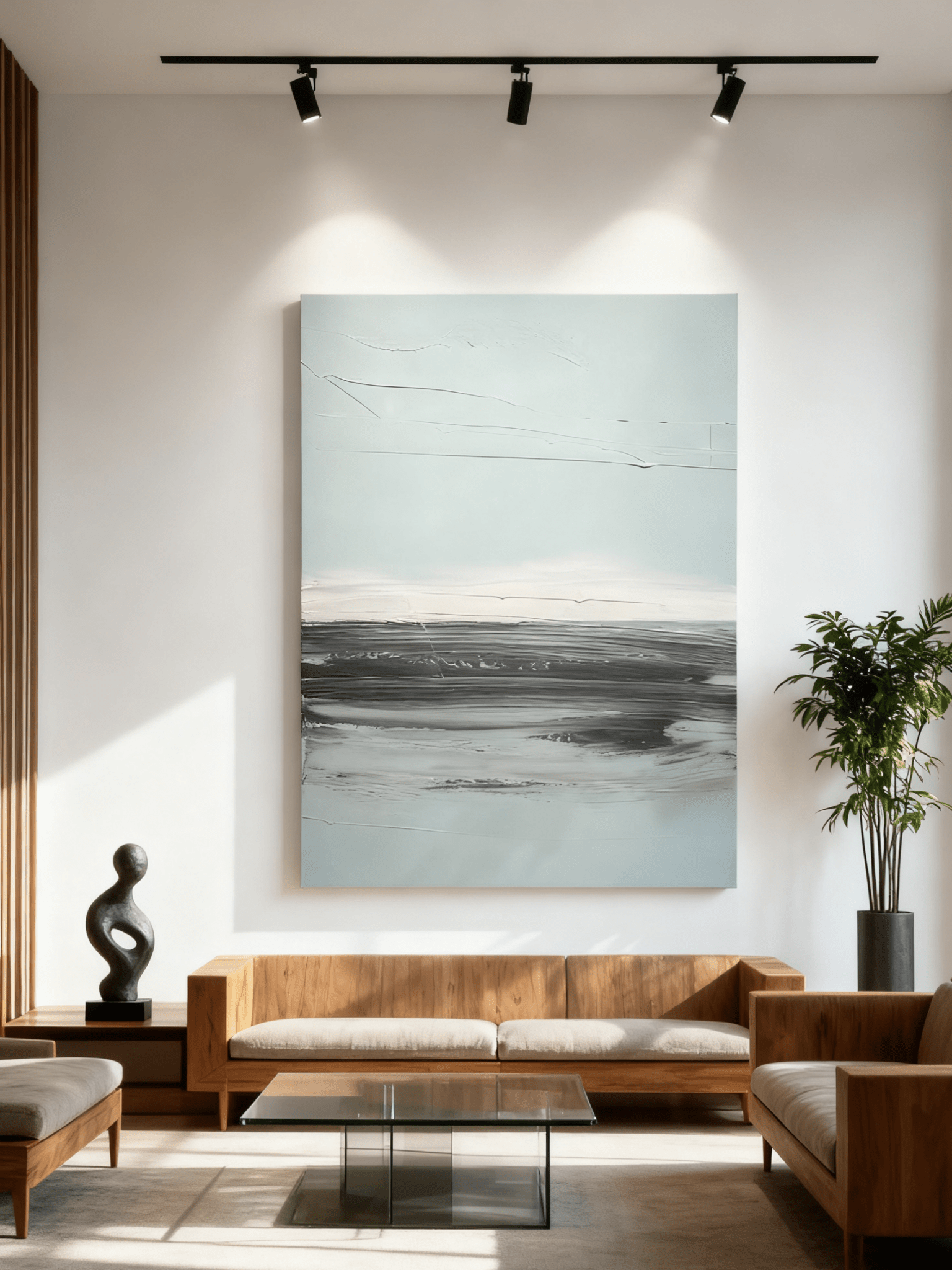
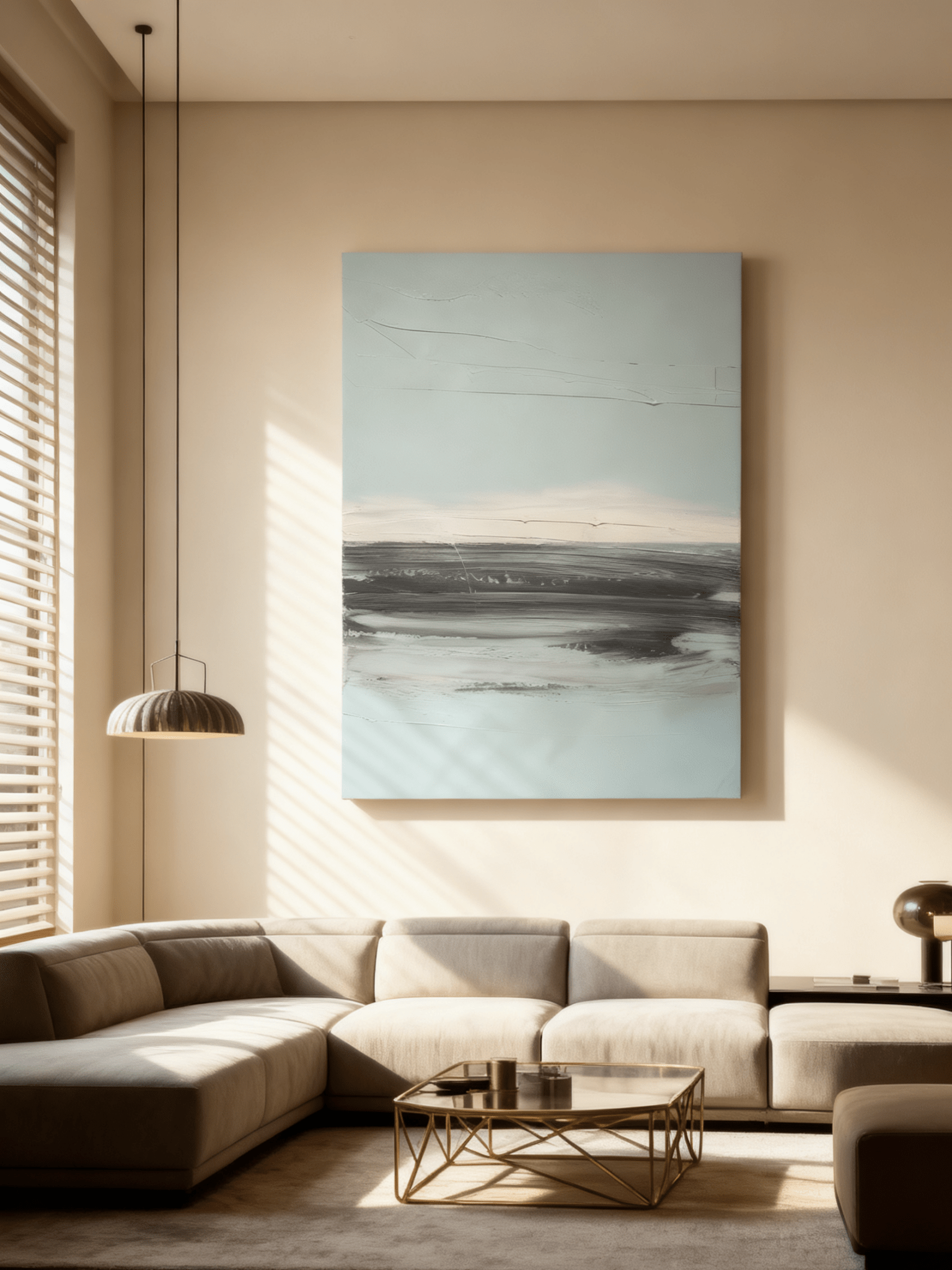
- Best for Standard & Wide Mantels: Wabi-Sabi Textured Wall Art – Soft Grey Horizon (EL#0277) — A calm horizontal composition with subtle impasto depth.
- Best for Broad Hearth Walls: Neutral Abstract Landscape Wall Art – Misty Tidelands (EL#0313) — An expansive panoramic horizon designed for linear surrounds.
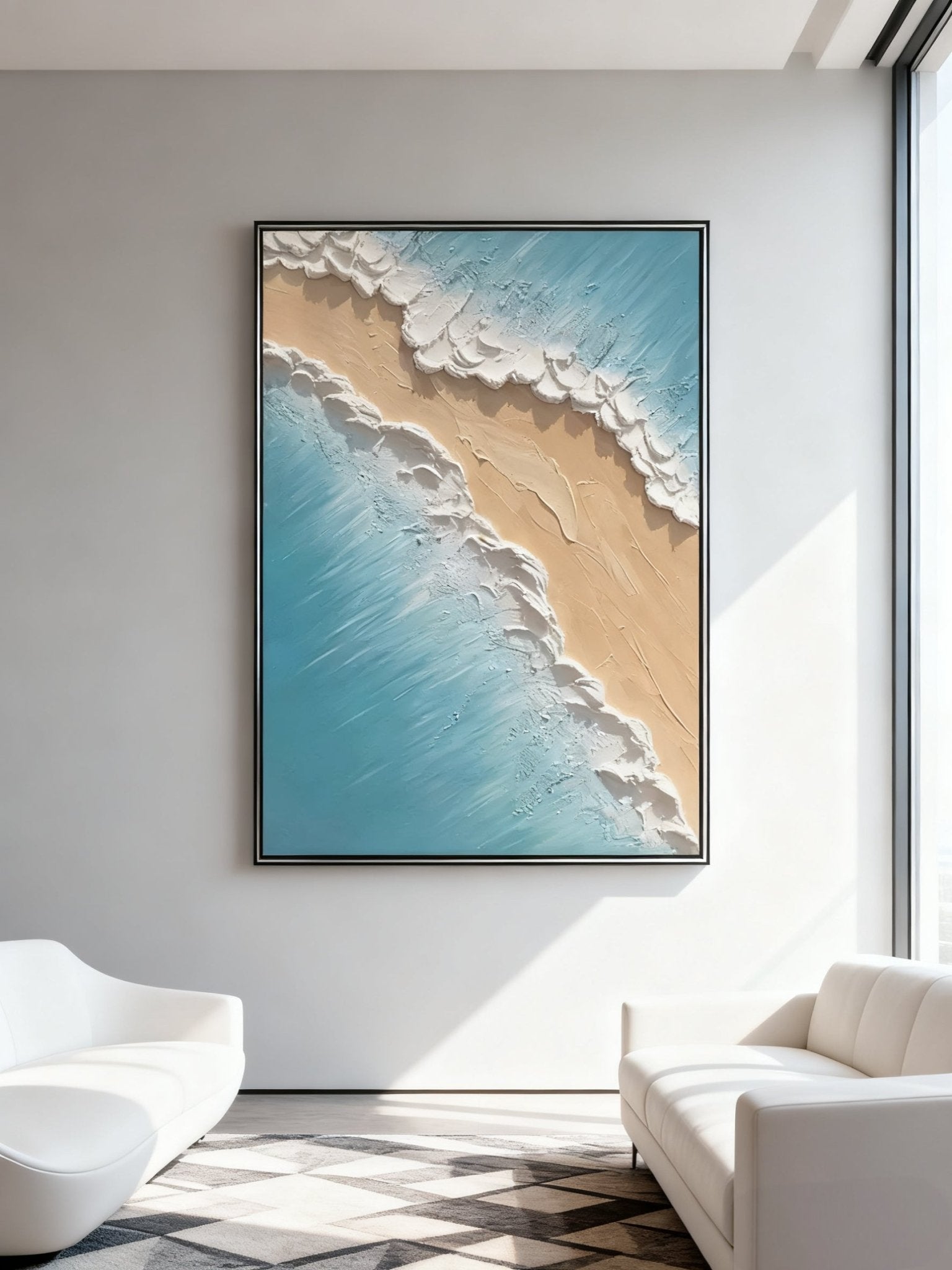
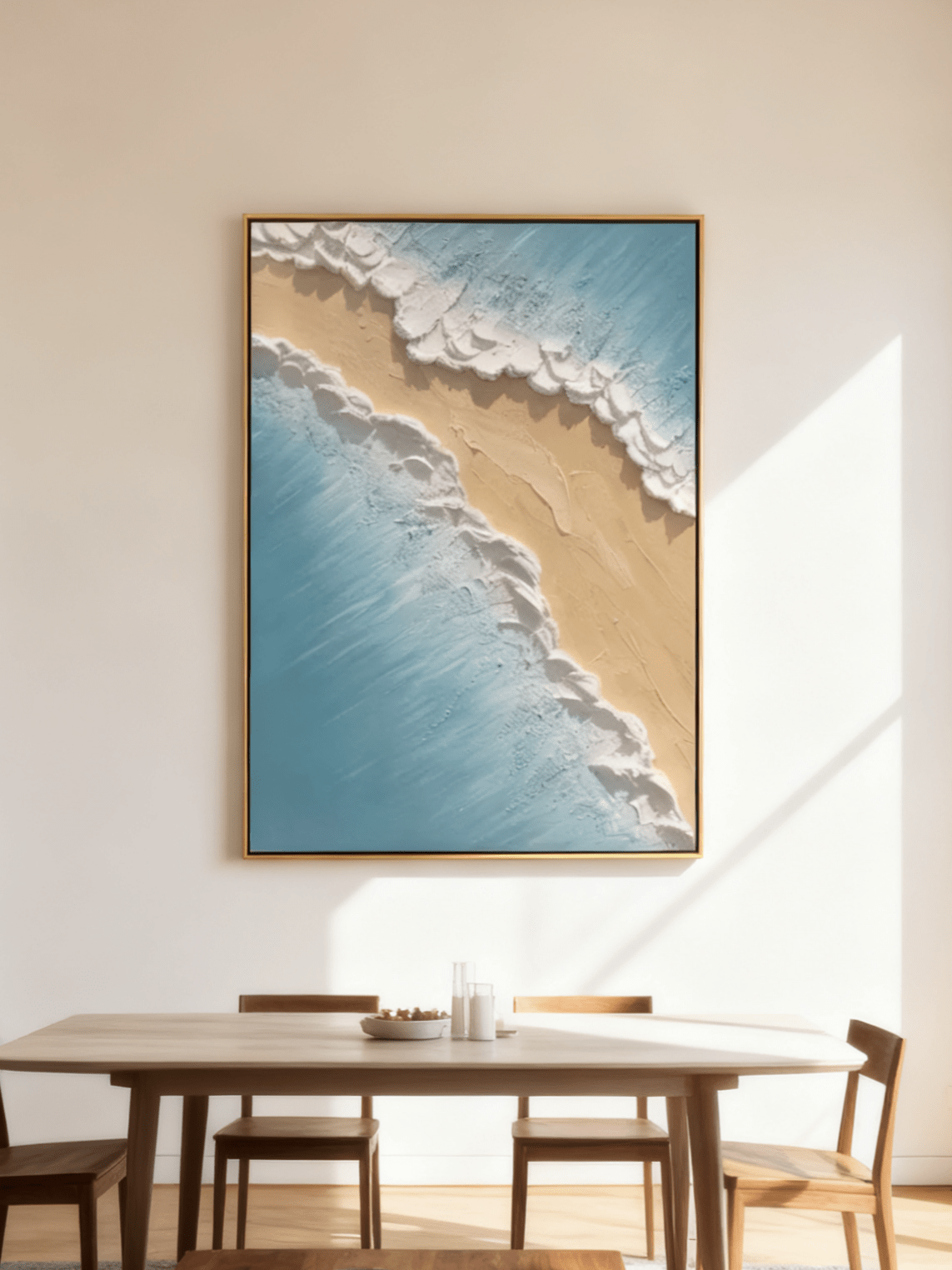
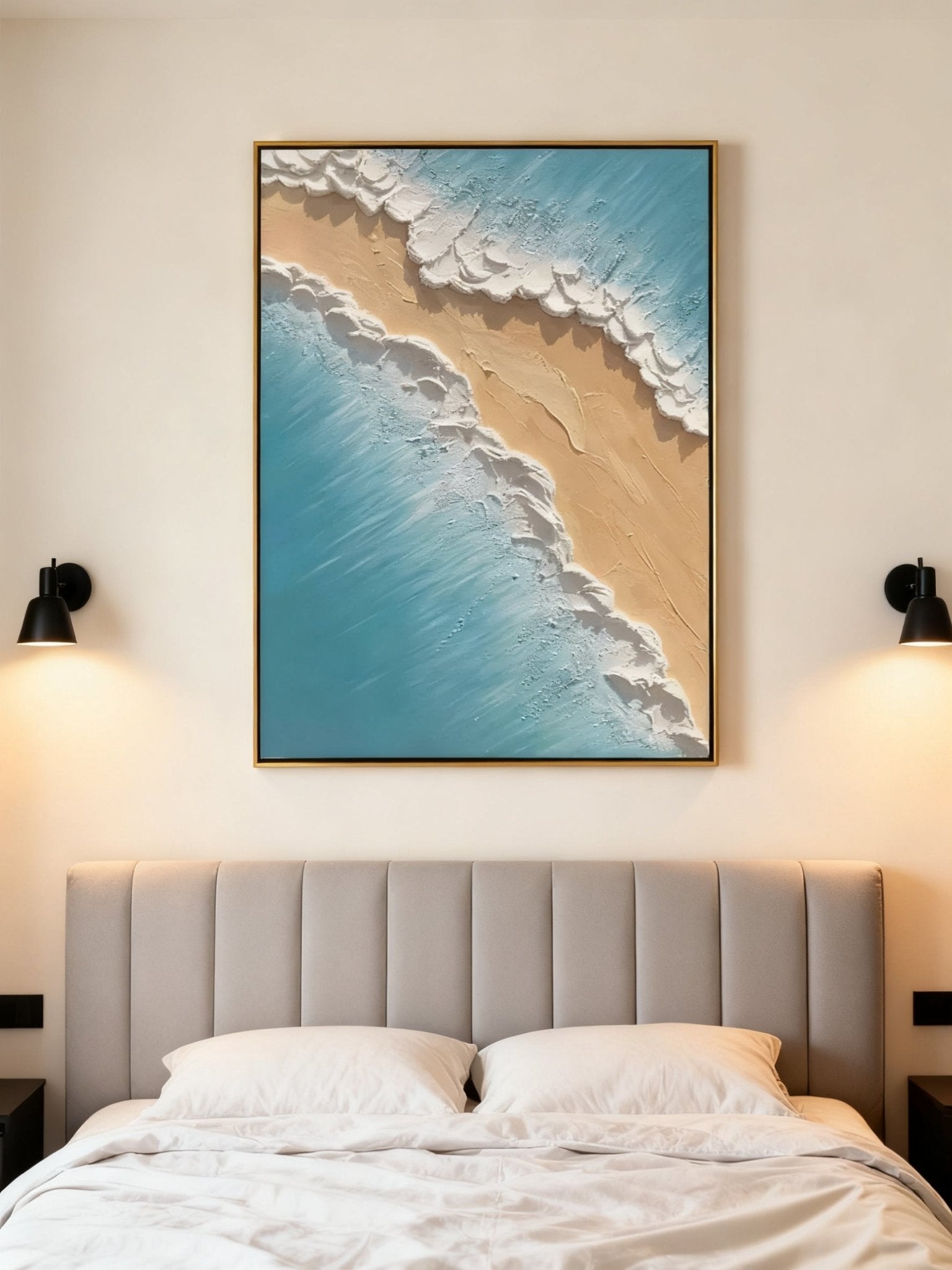
- Best for Tactile Texture over Stone/Plaster: Neutral Coastal Shoreline Abstract Heavy Texture Painting (LL#0156) — Rich 3D impasto that complements natural fireplace materials.
- Best for High-Contrast Dramatic Rooms: Wabi-Sabi Abstract Wall Art – Ember Horizon (AK#0315) — A striking horizontal focal point for minimalist or modern surrounds.

Explore more Wabi-Sabi wall art or browse all hand-painted artworks to compare formats and dimensions.
Frequently Asked Questions
How big should art be above a fireplace?
As a general rule, the finished artwork or grouped arrangement should measure about 66% to 75% of the mantel width. This keeps the focal point substantial while preserving balanced side margins.
Should artwork be wider than the mantel?
Usually, no. Artwork that is wider than the mantel can overwhelm the fireplace structure unless the wall and surround are intentionally designed for an oversized installation. In most rooms, slightly narrower artwork appears more balanced.
How much space should be between a mantel and a painting?
A 4 to 8 inch gap is a useful decorative guideline. Always treat that number as visual guidance only and follow the fireplace manufacturer’s clearance and heat-safety requirements.
What if my fireplace does not have a mantel?
Use the firebox or surround width as your visual baseline, then compare it with the usable chimney-breast width. Tape the proposed artwork outline on the wall and confirm a safe mounting zone with the appliance documentation or a qualified installer.
Final takeaway: Start with the mantel, keep the artwork at roughly two-thirds to three-quarters of its width, preserve a visually connected gap, and let verified fireplace safety requirements make the final decision.