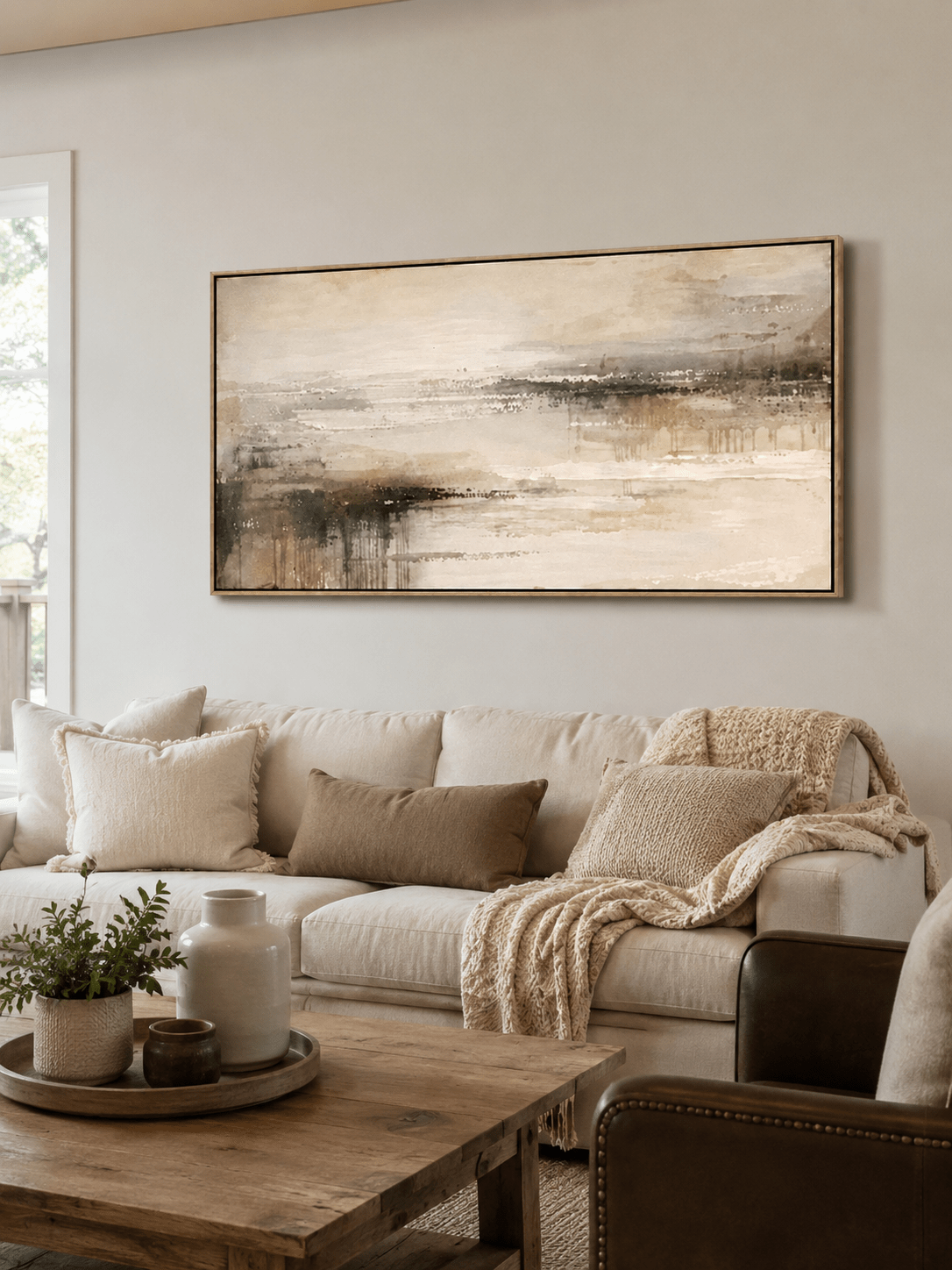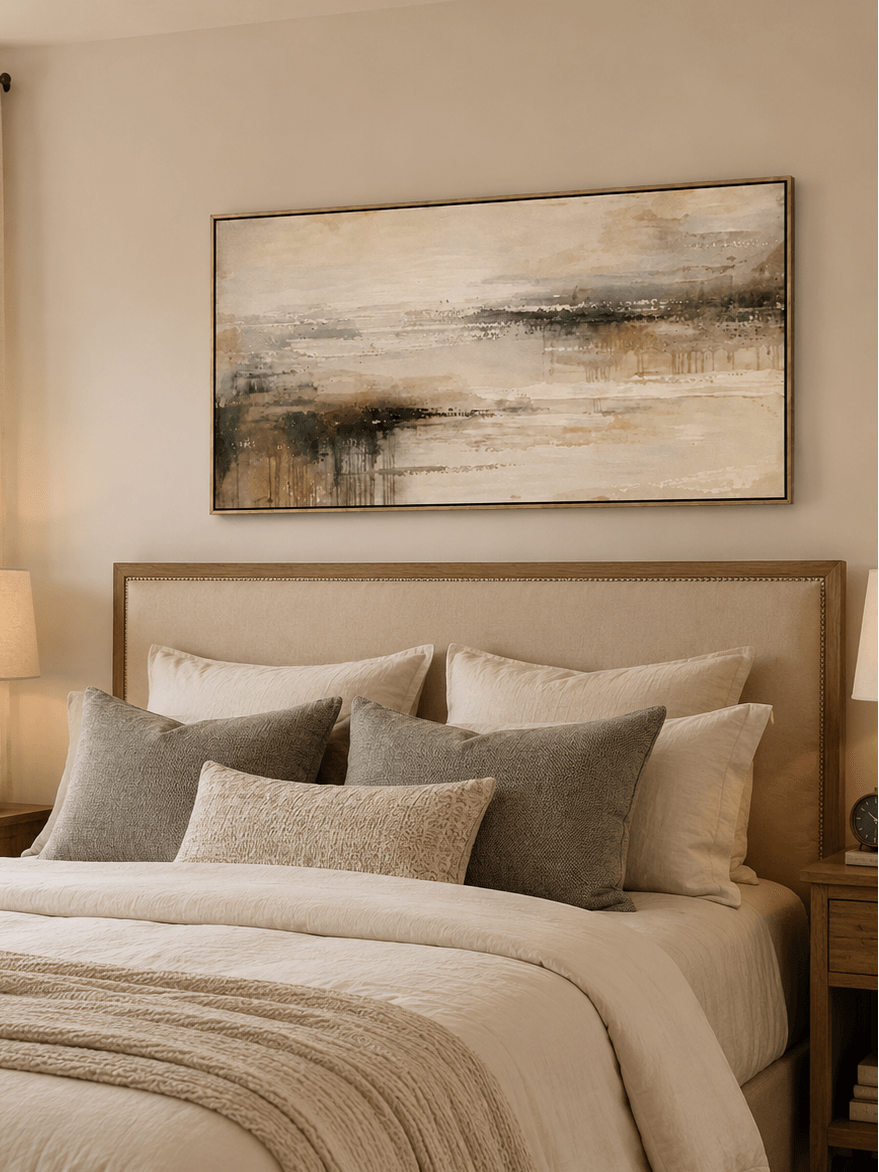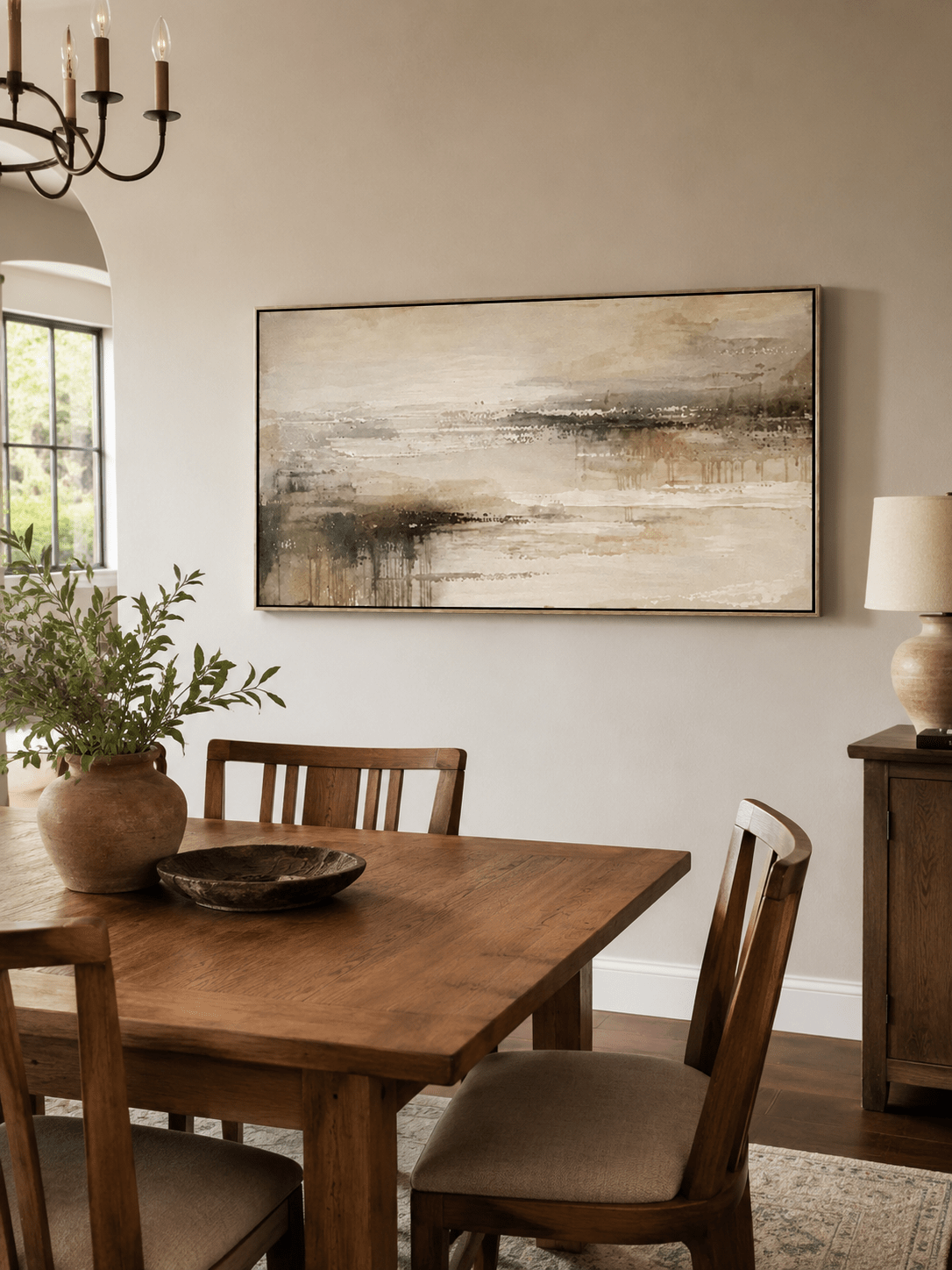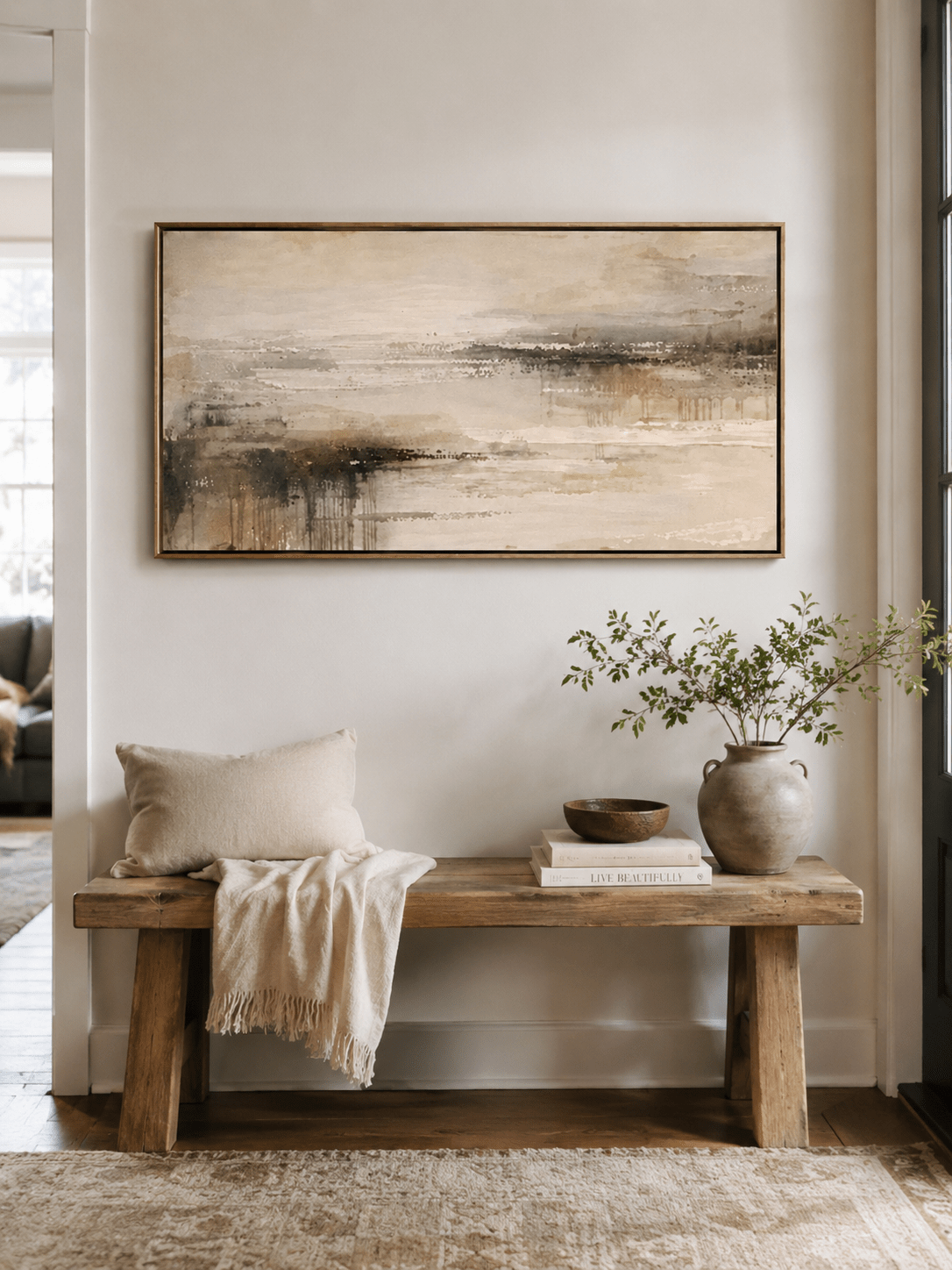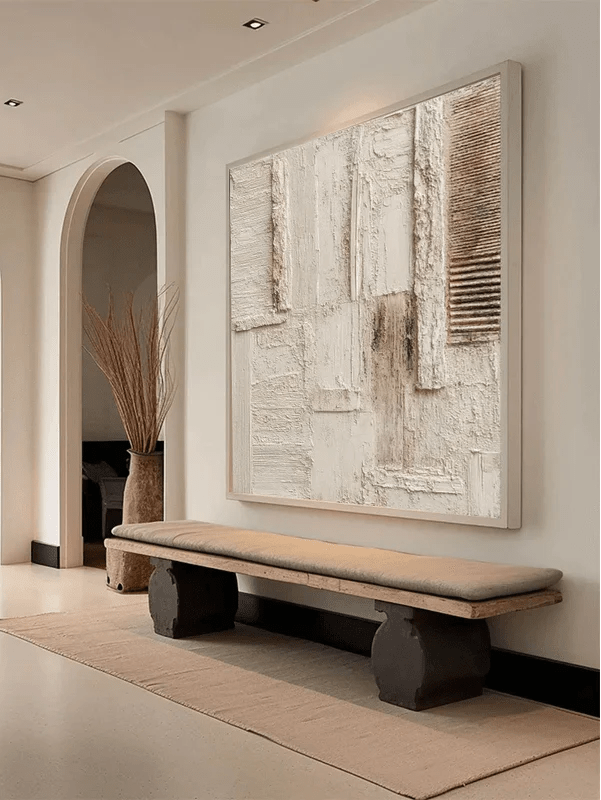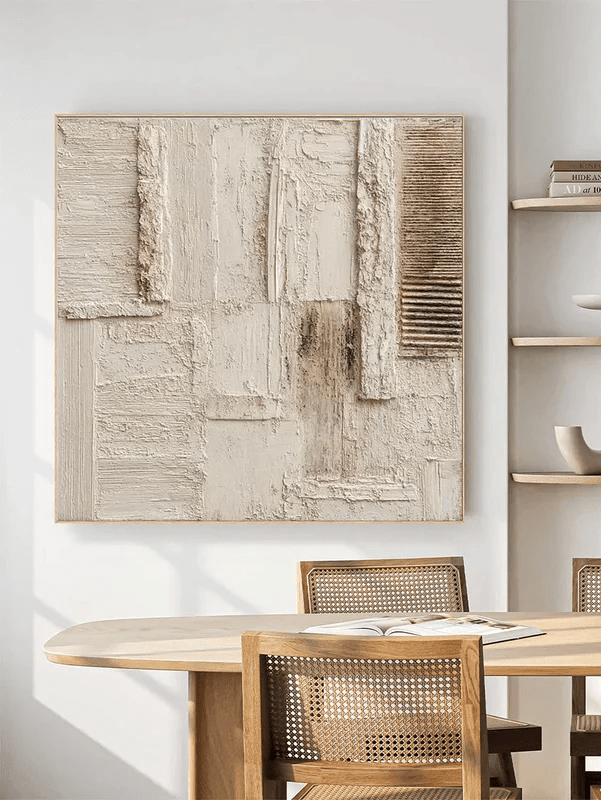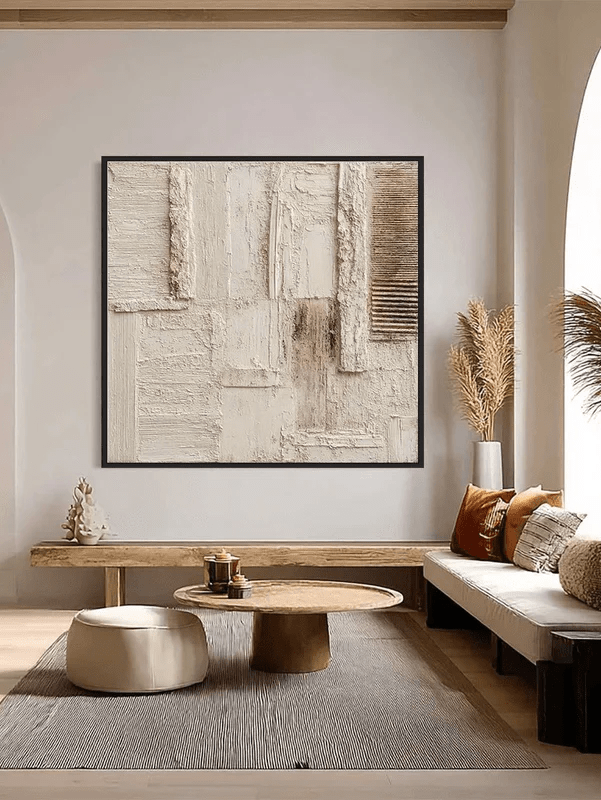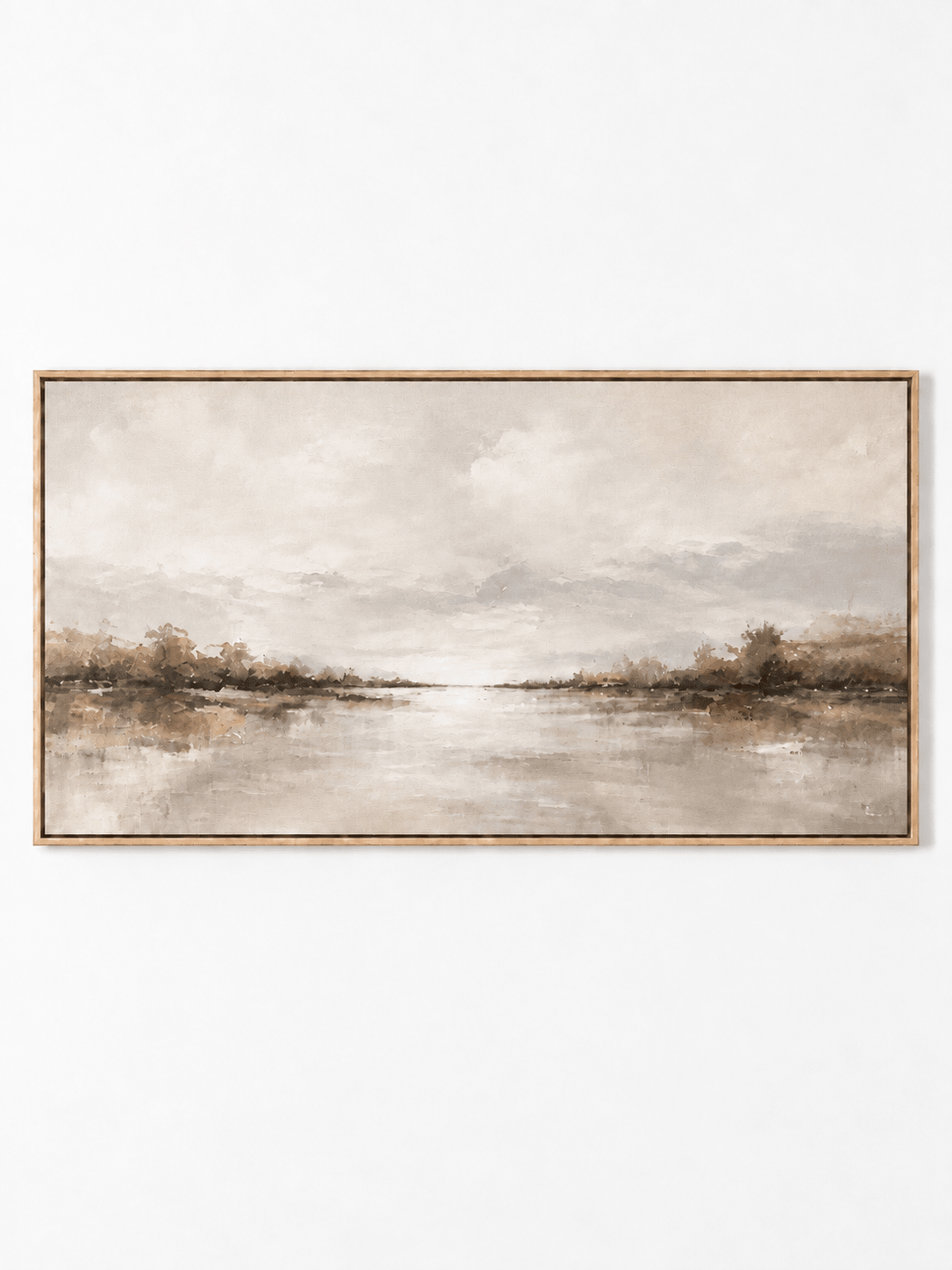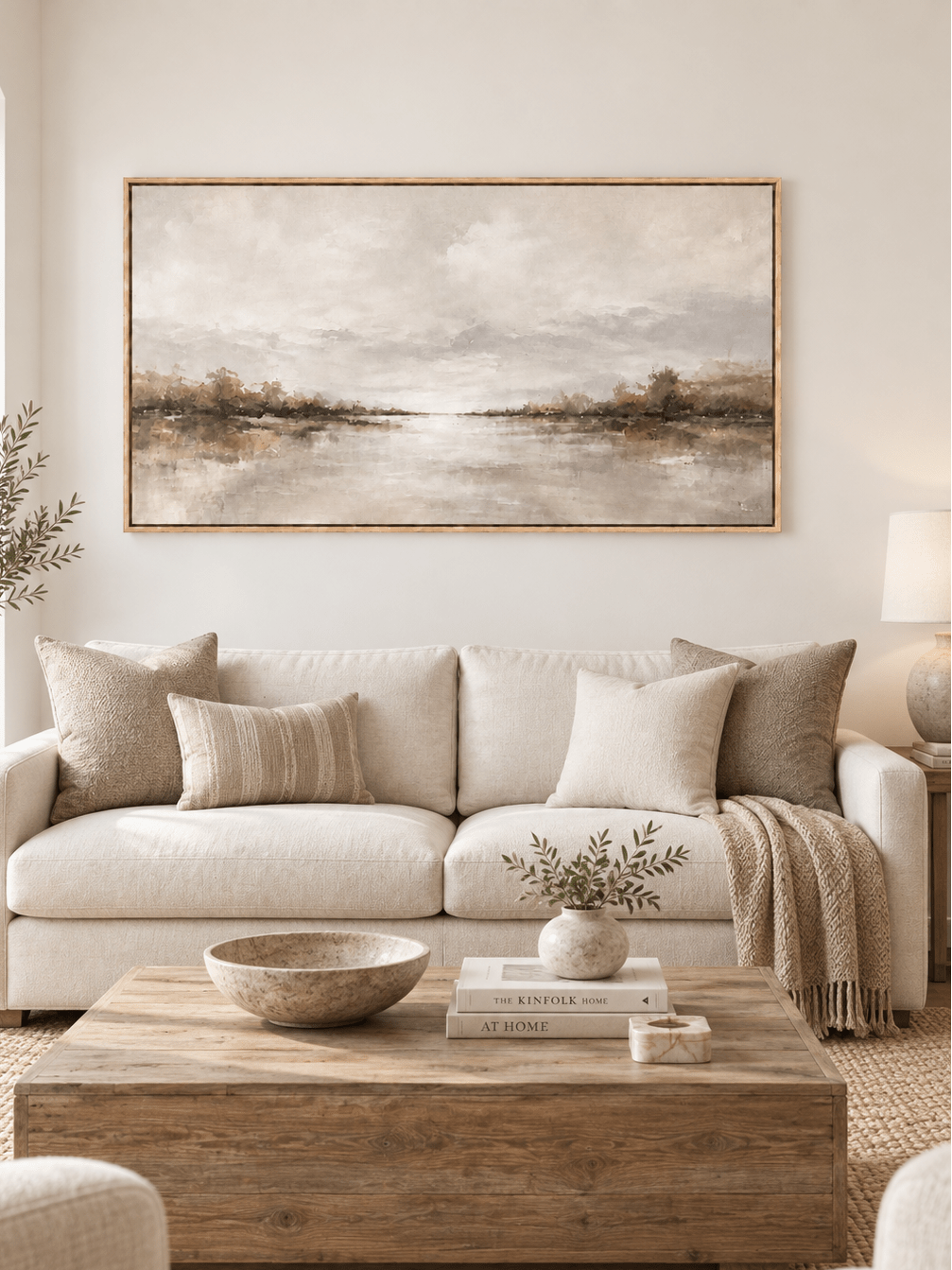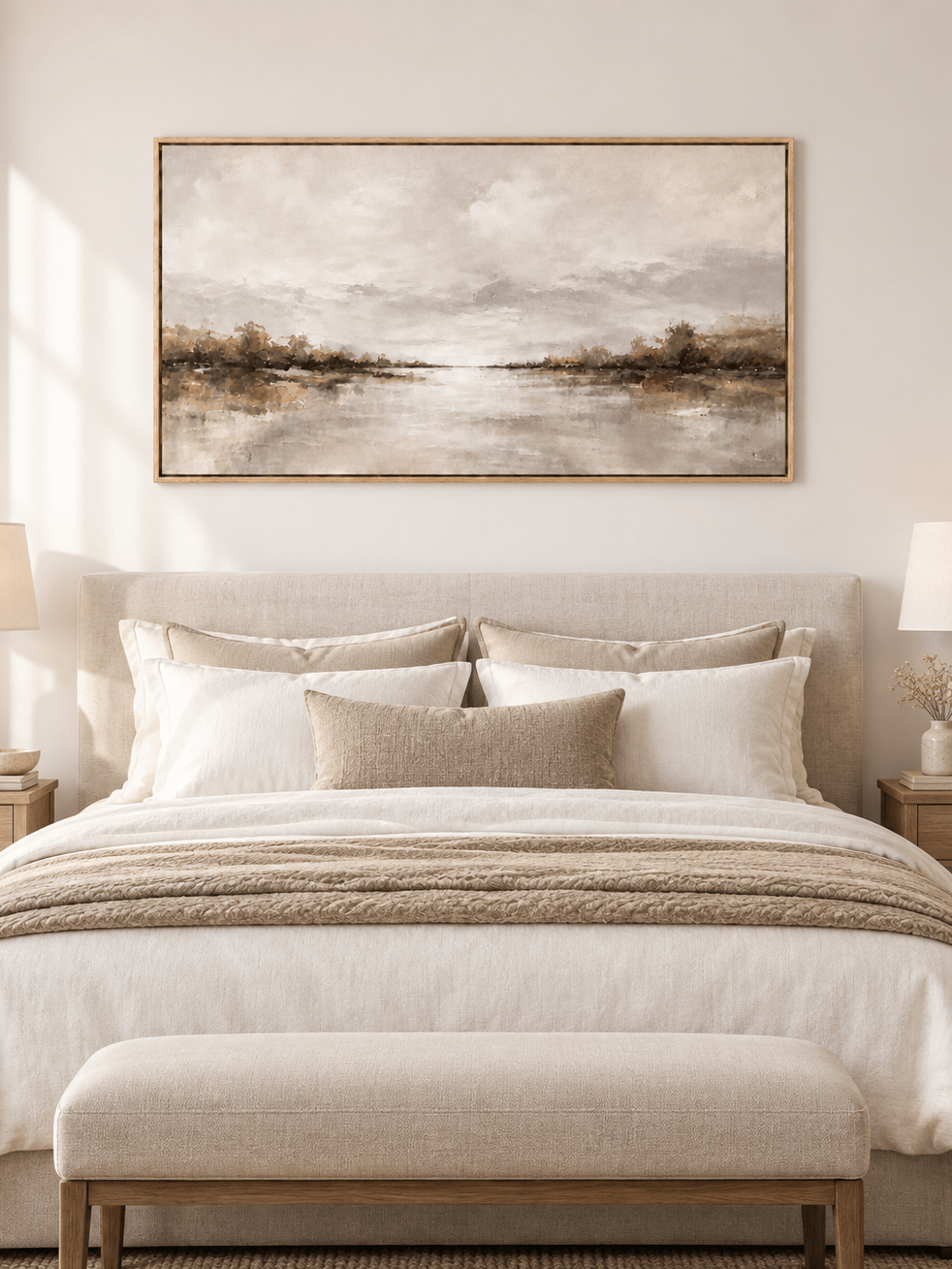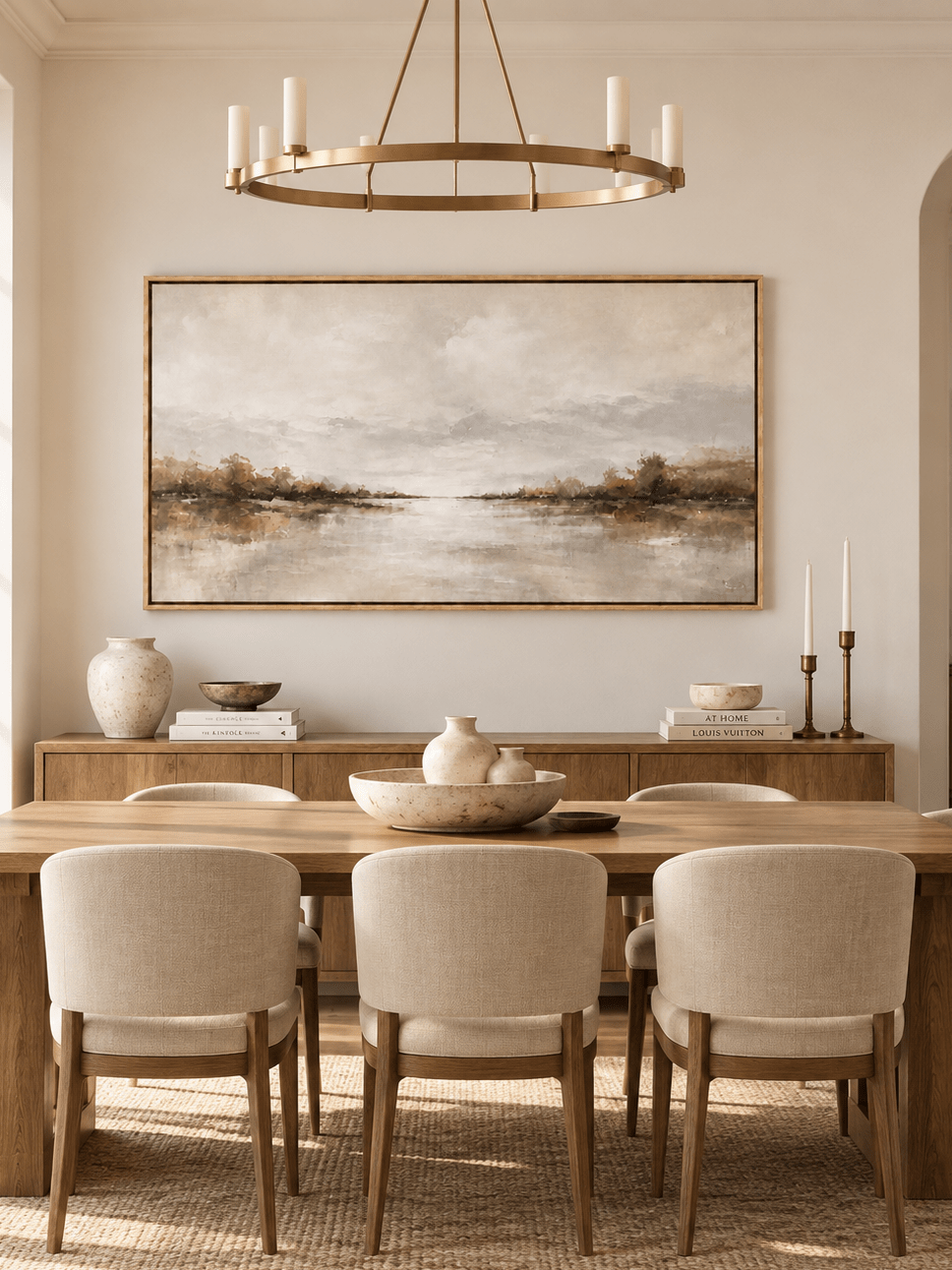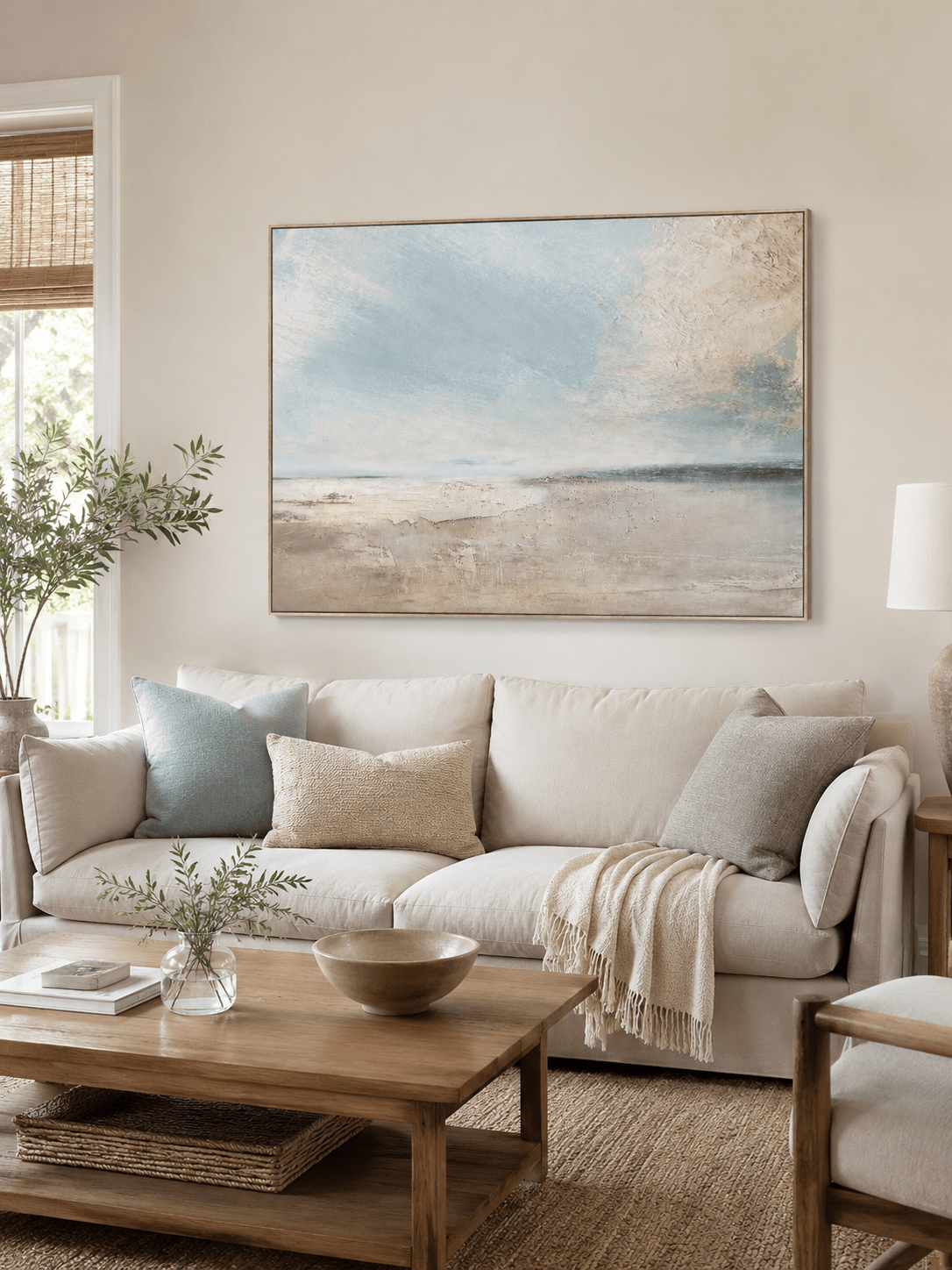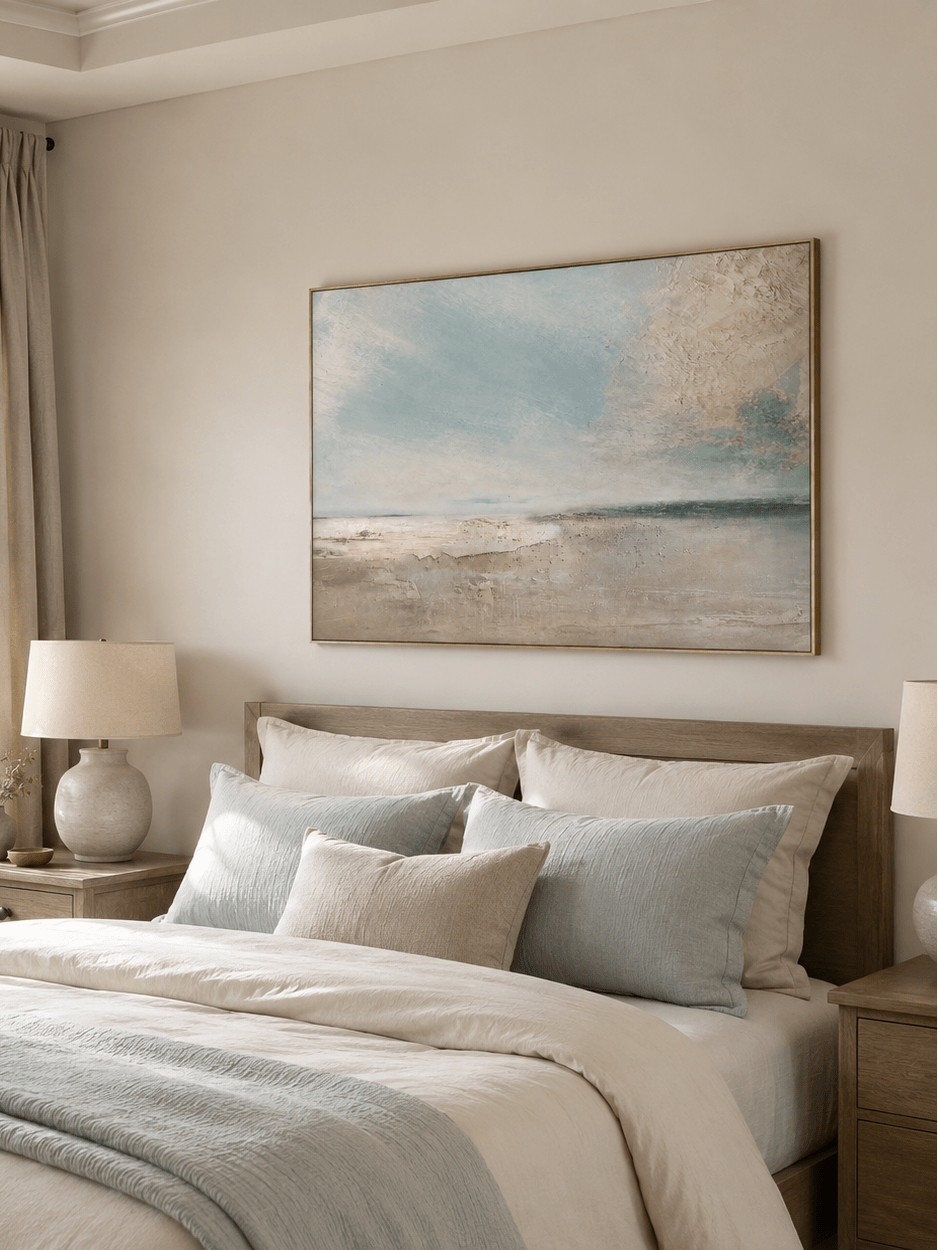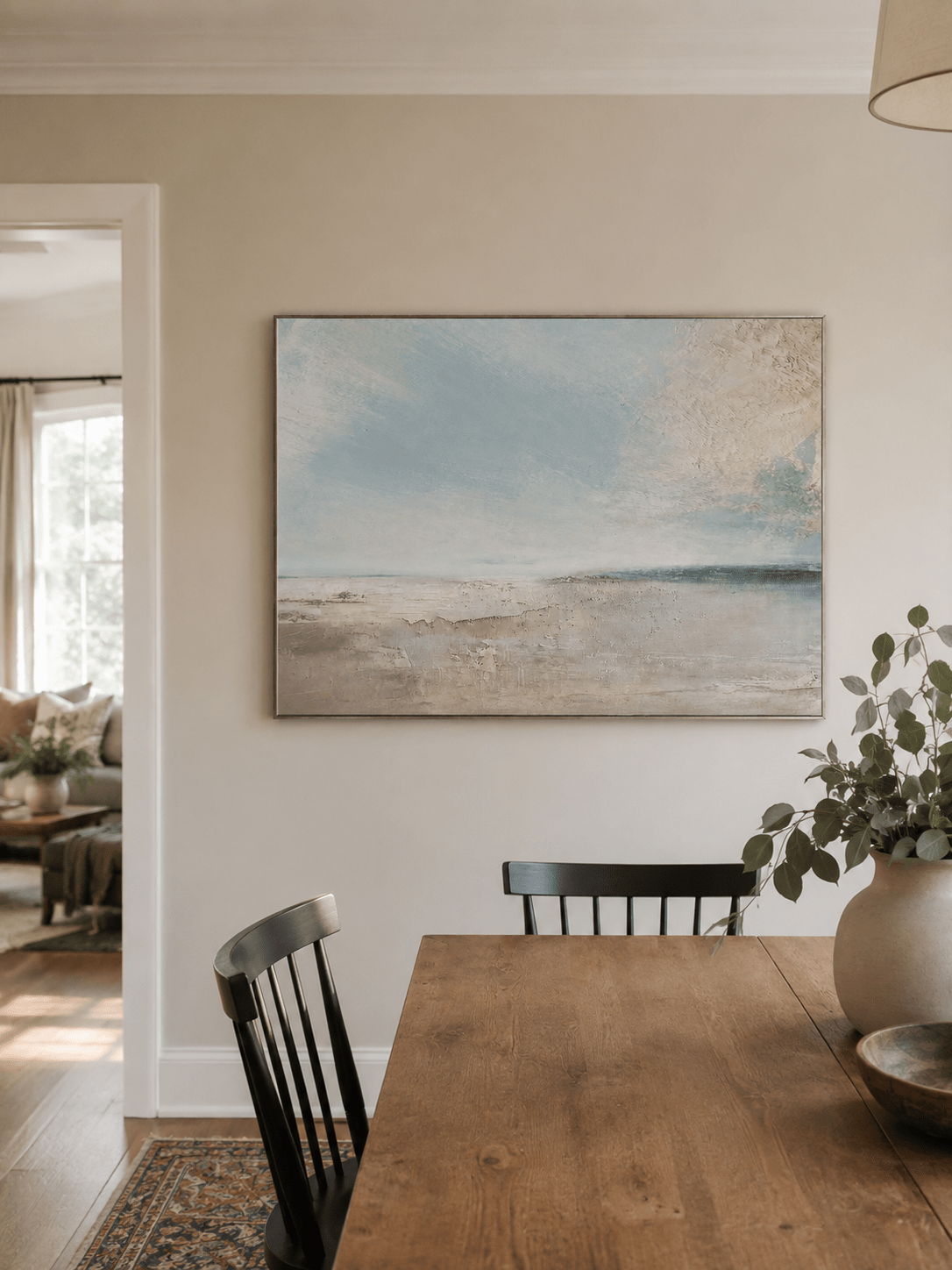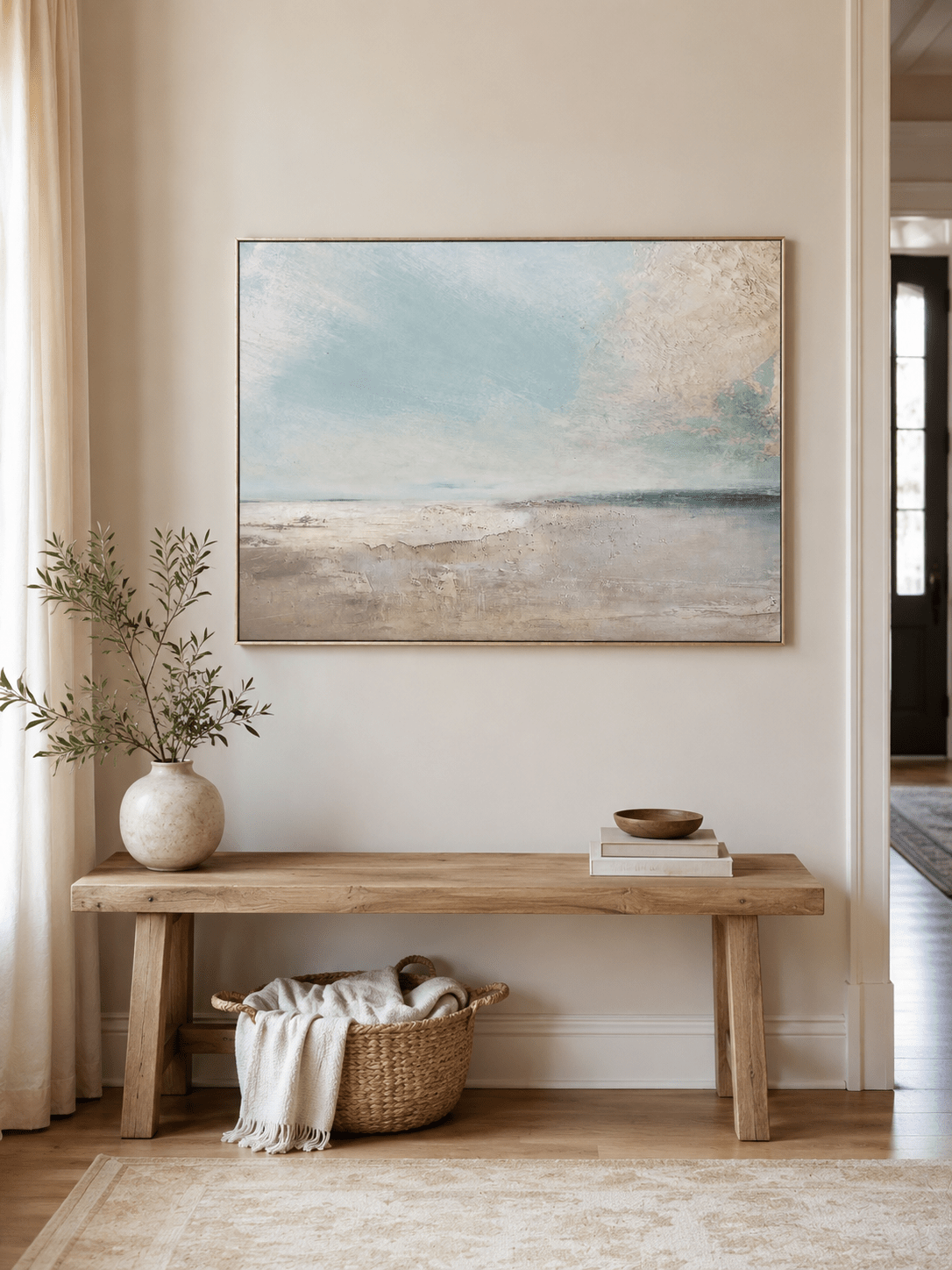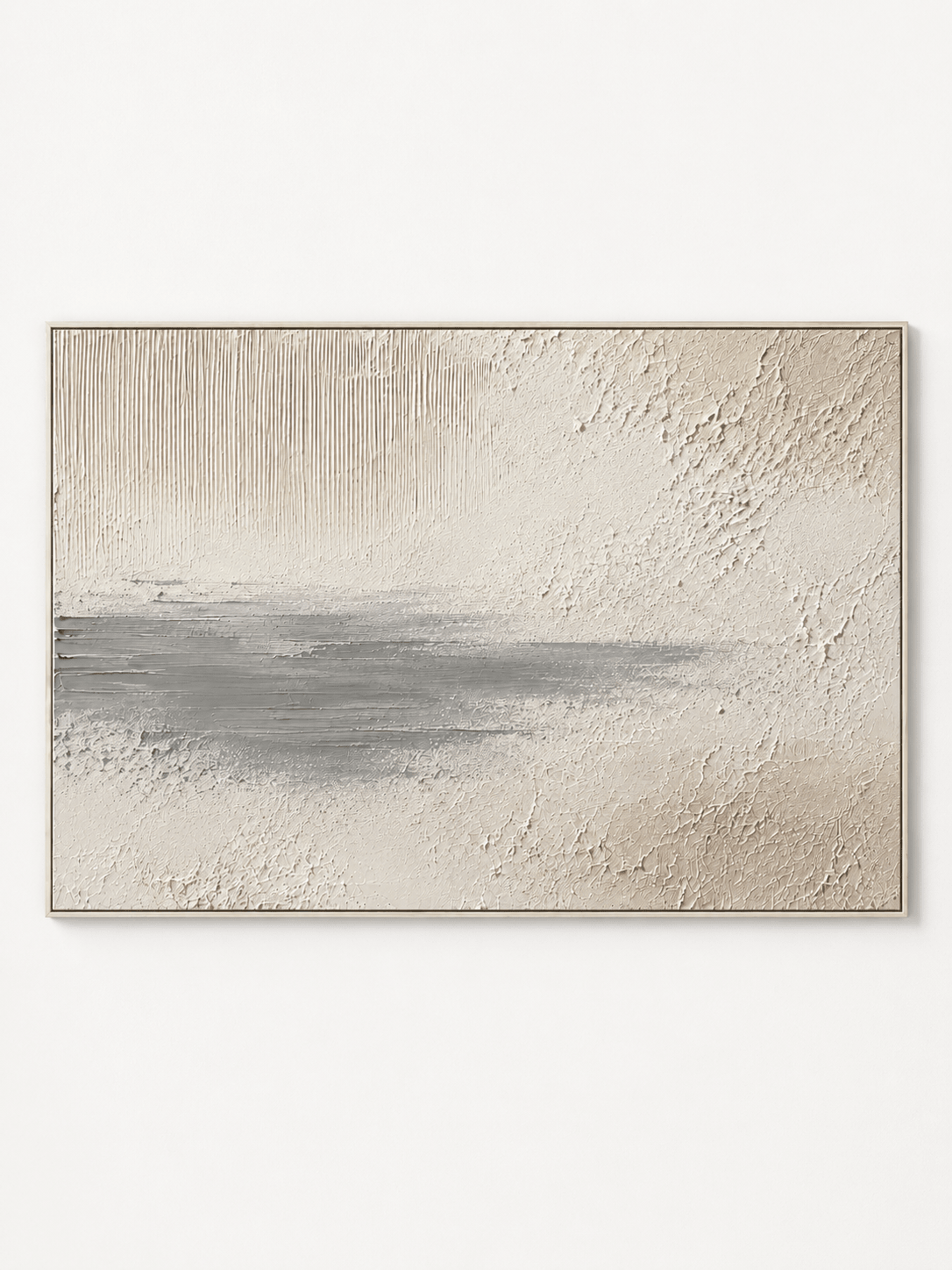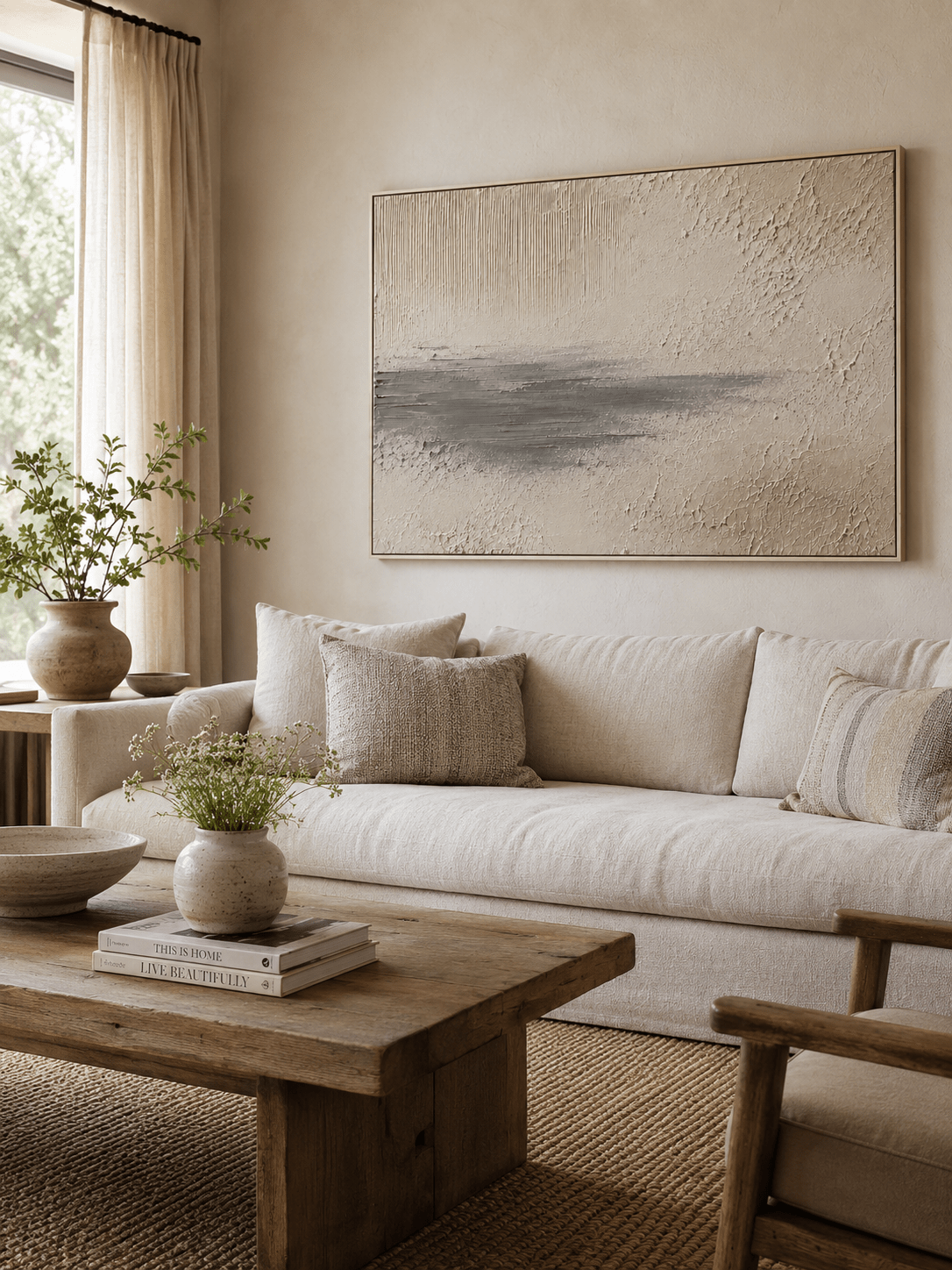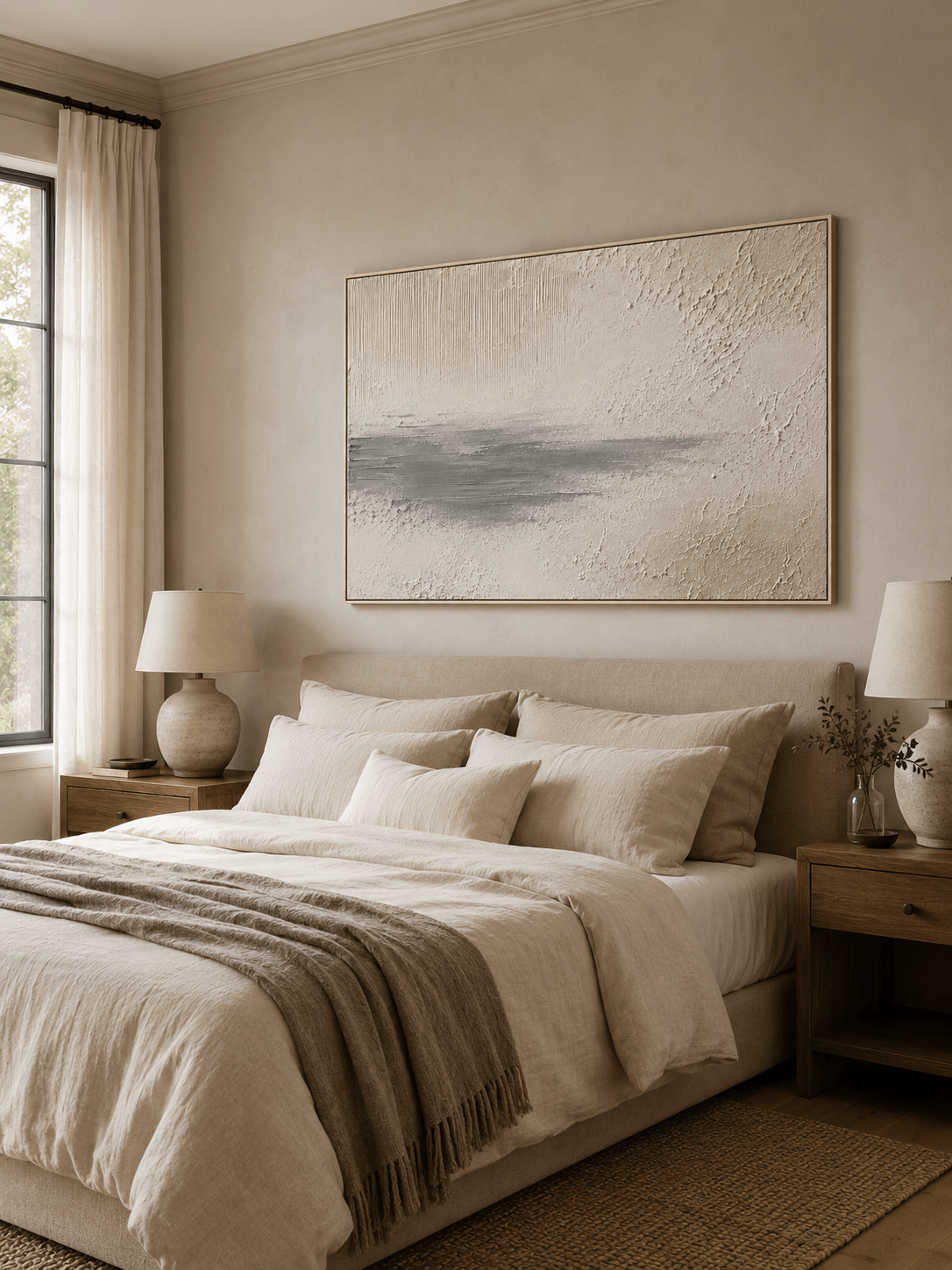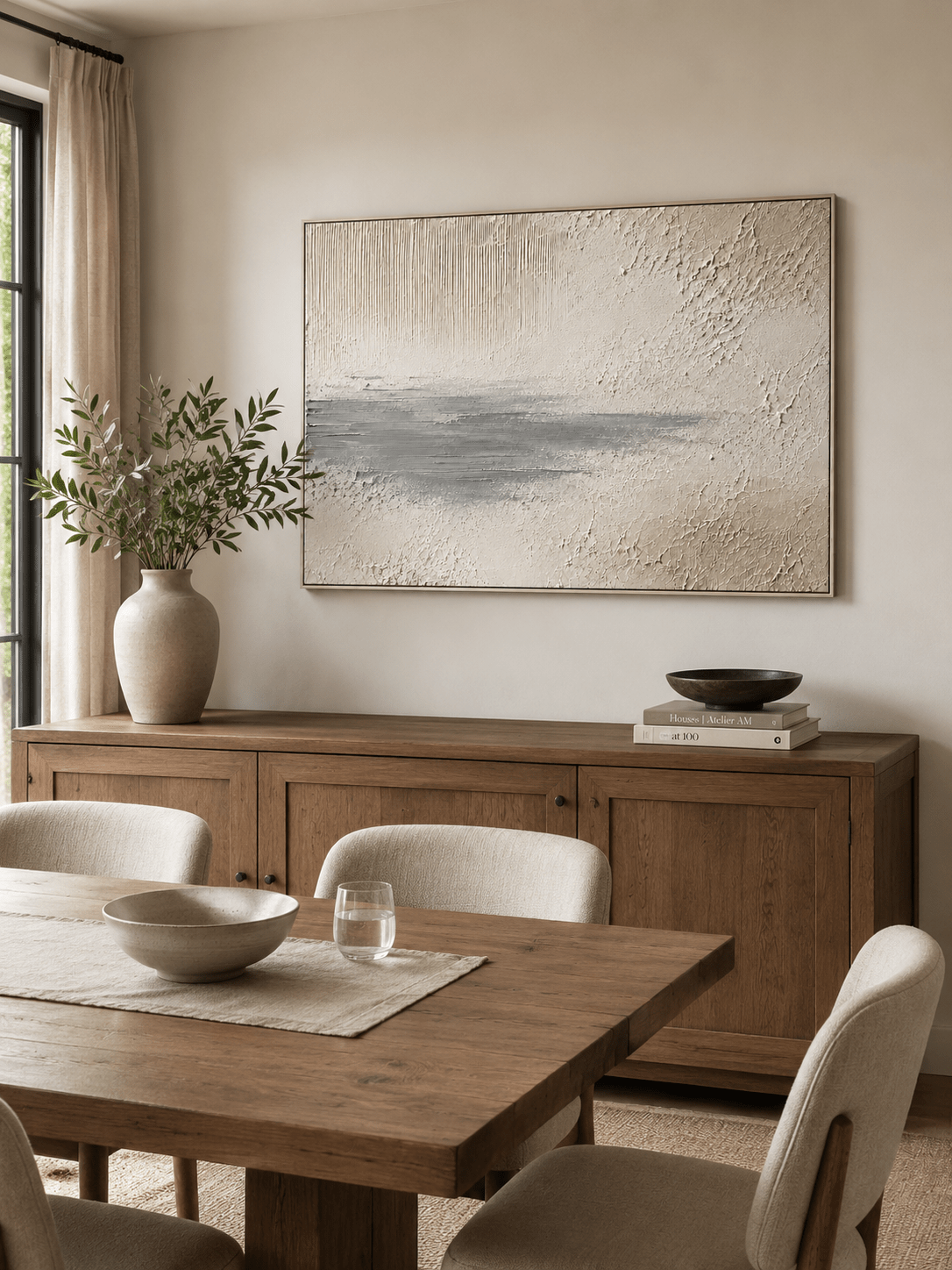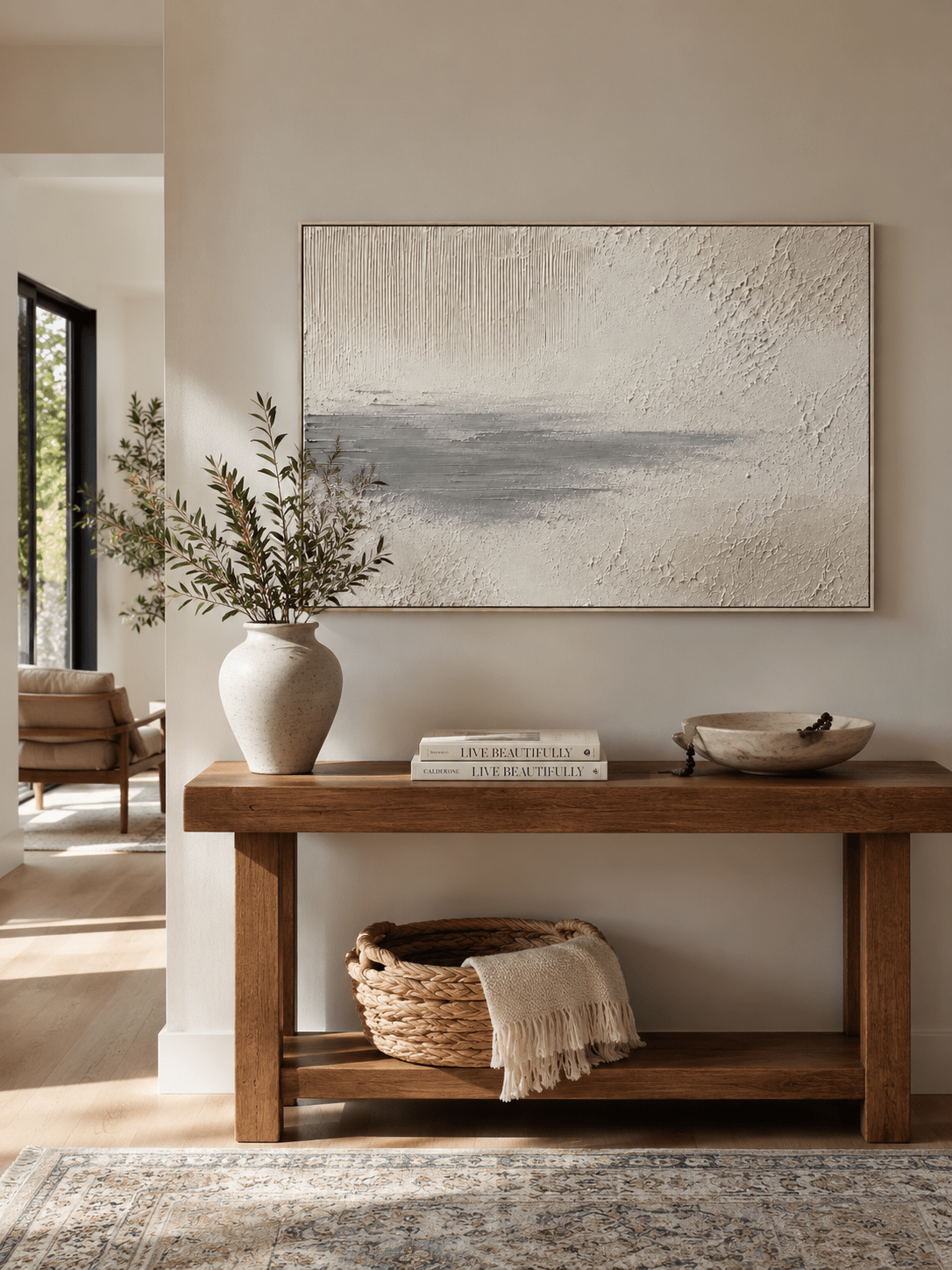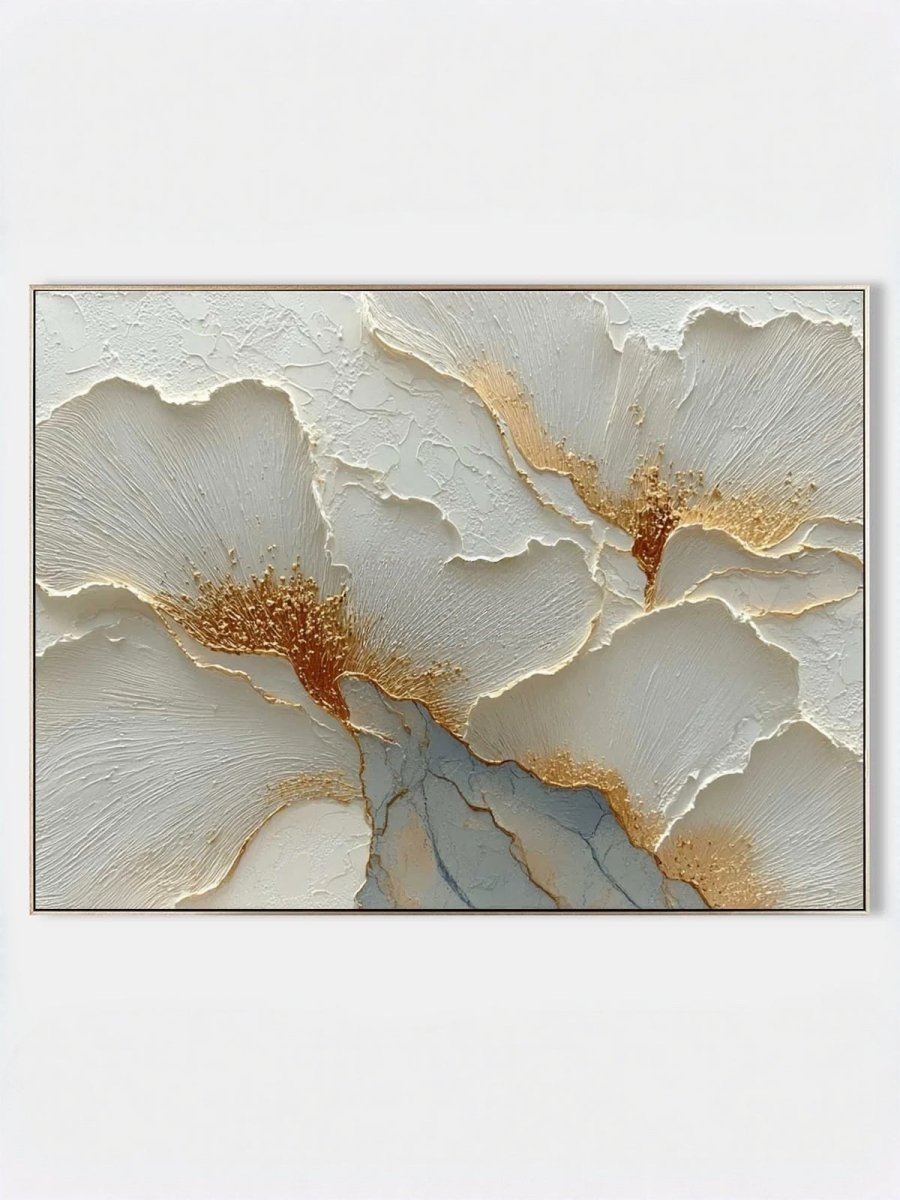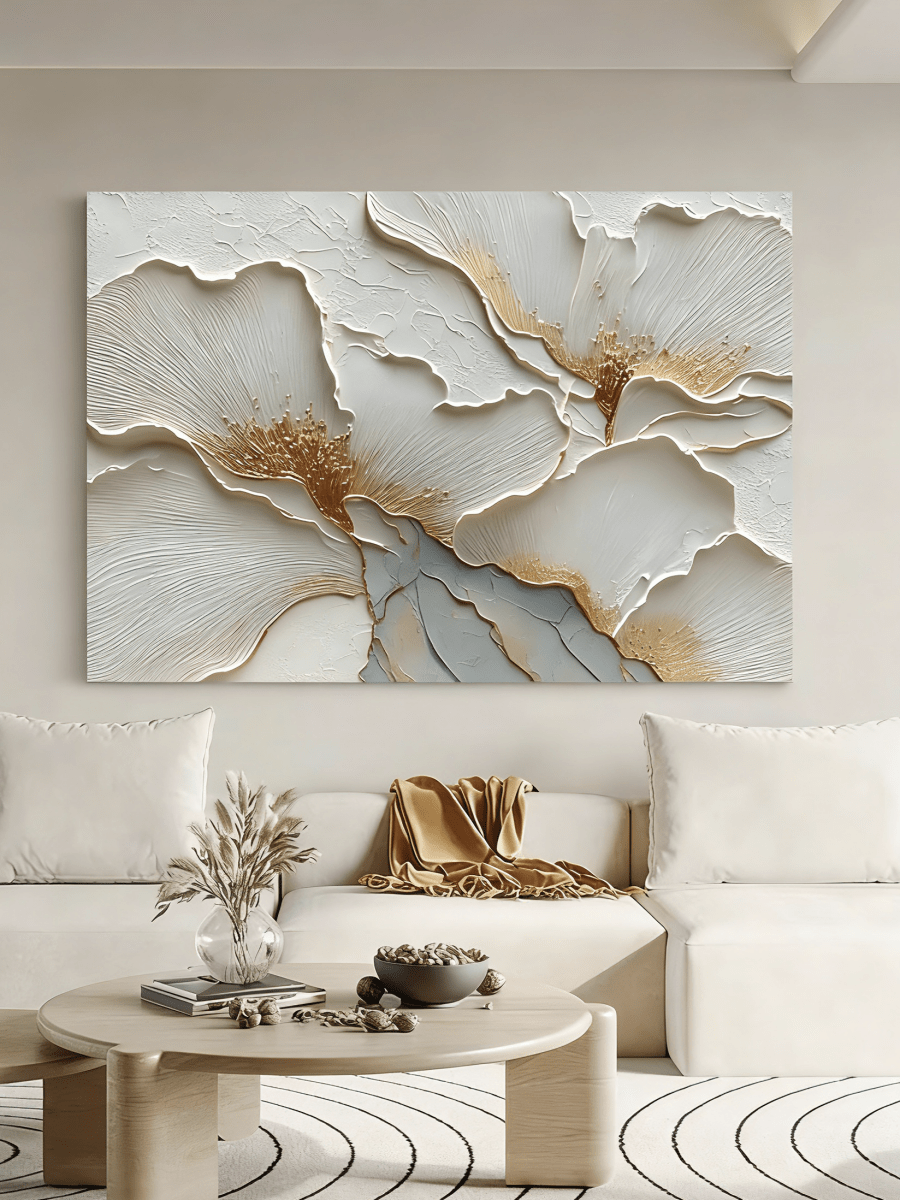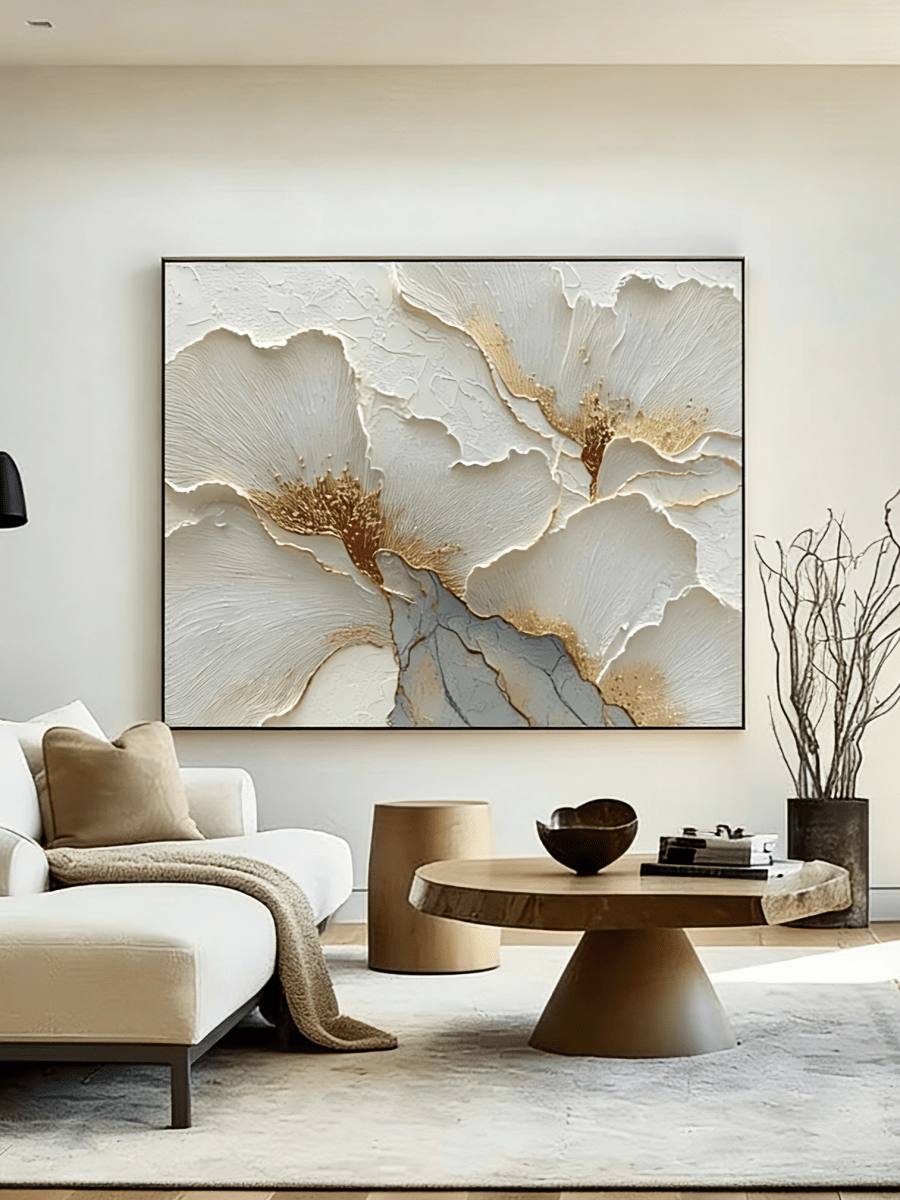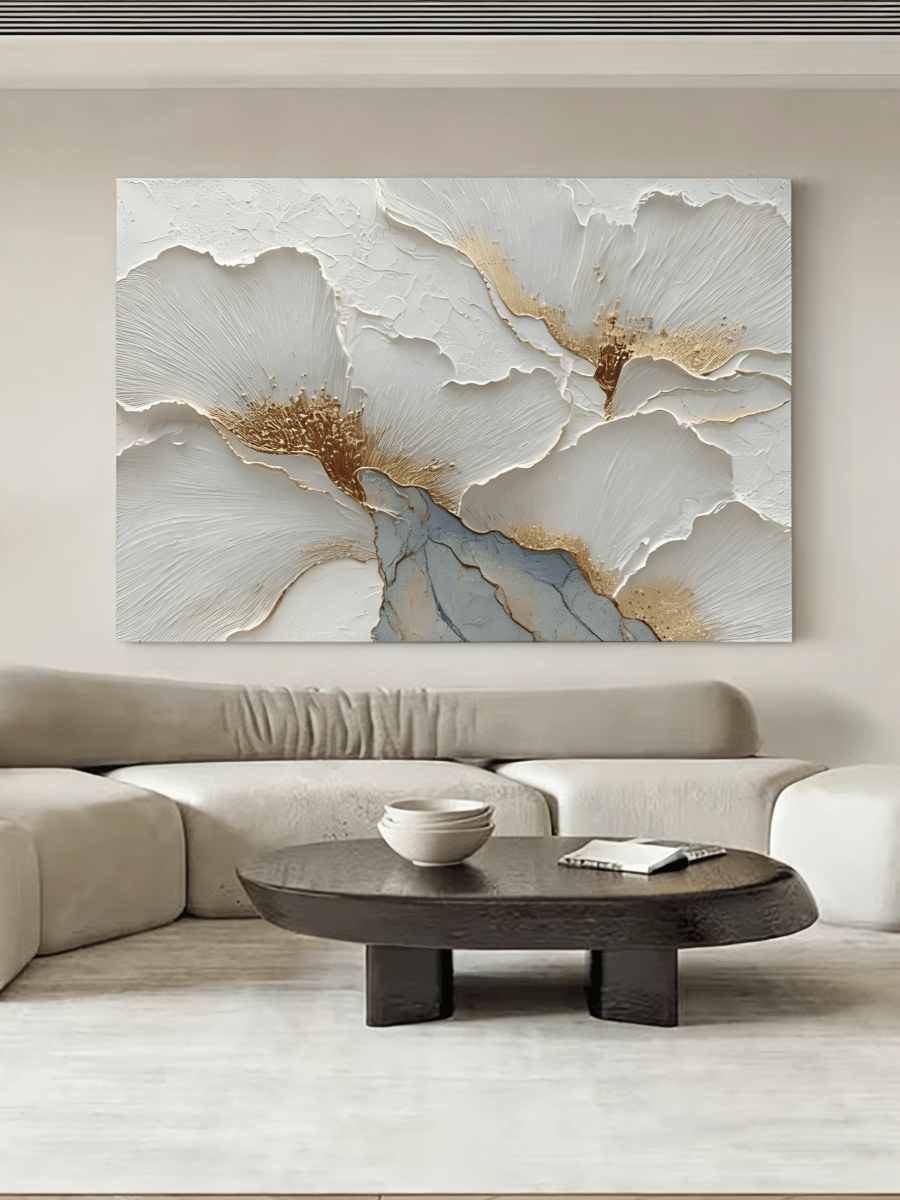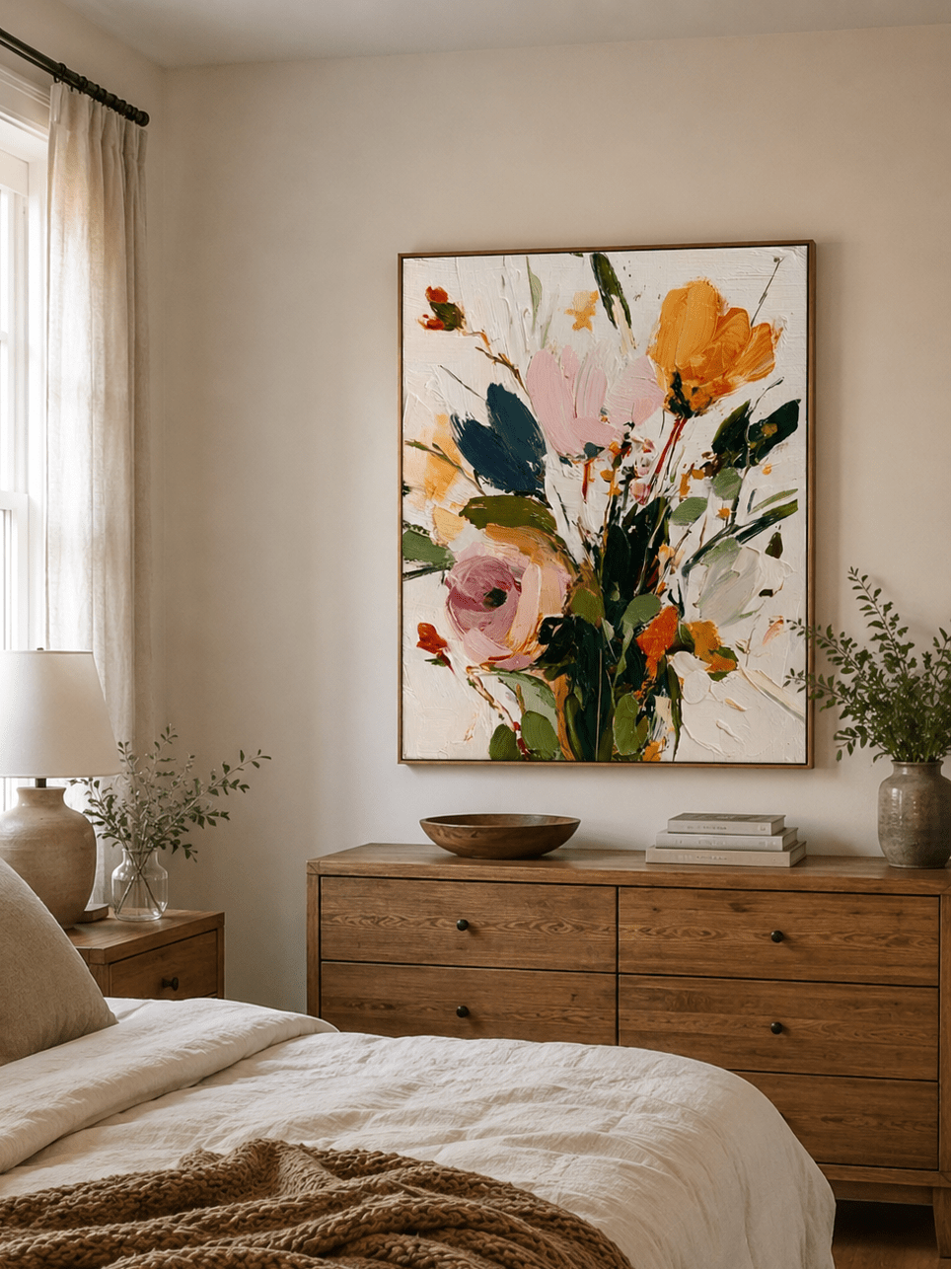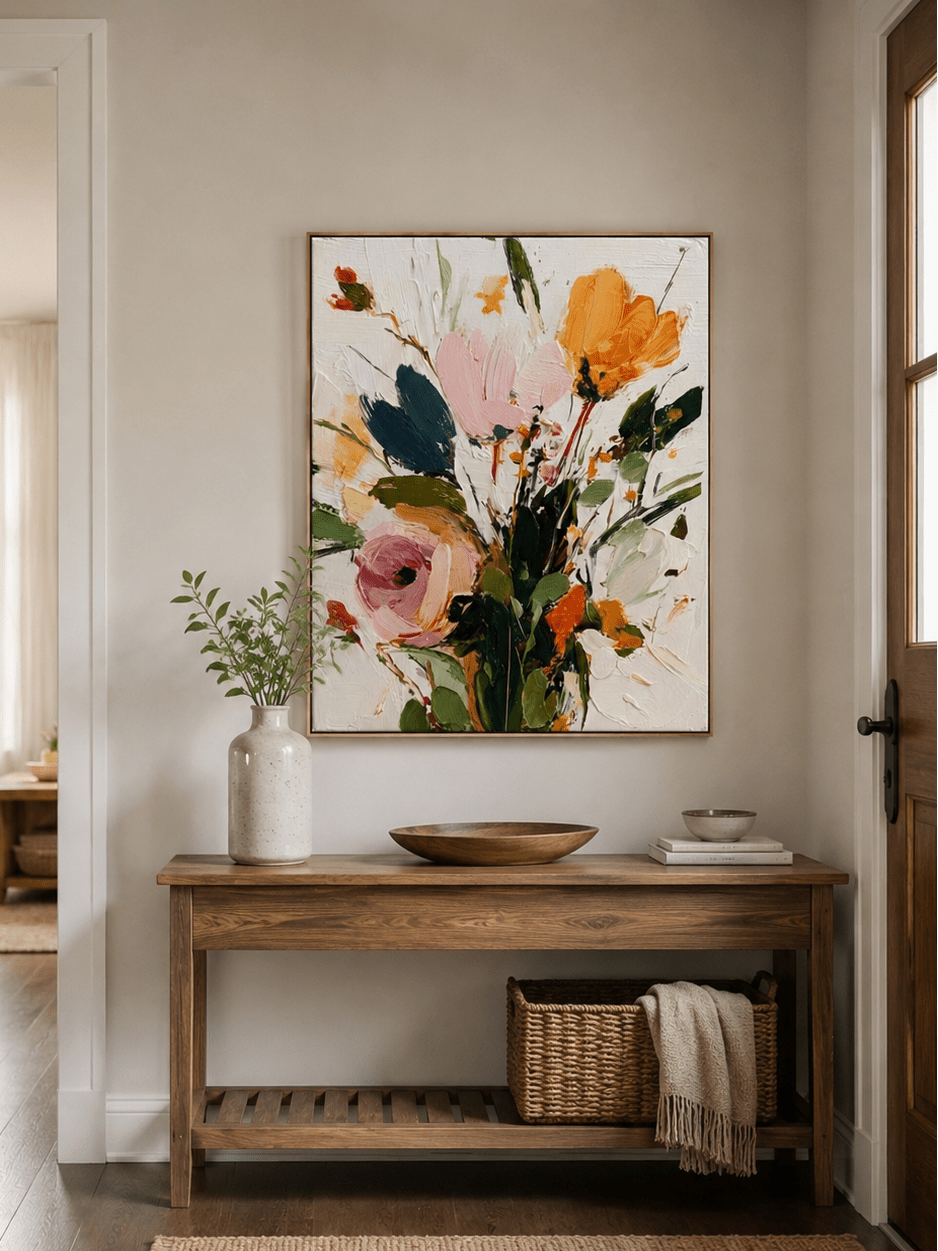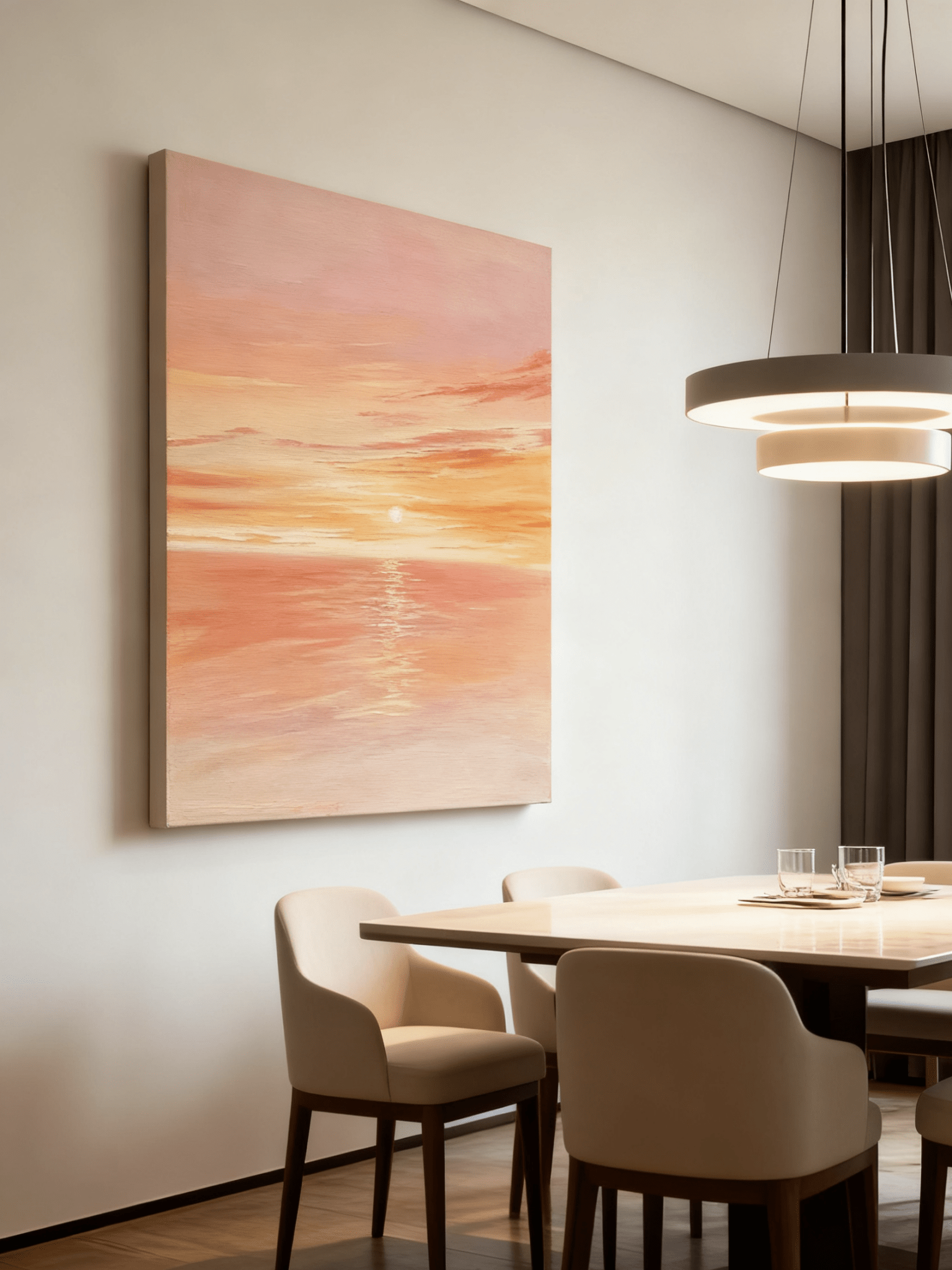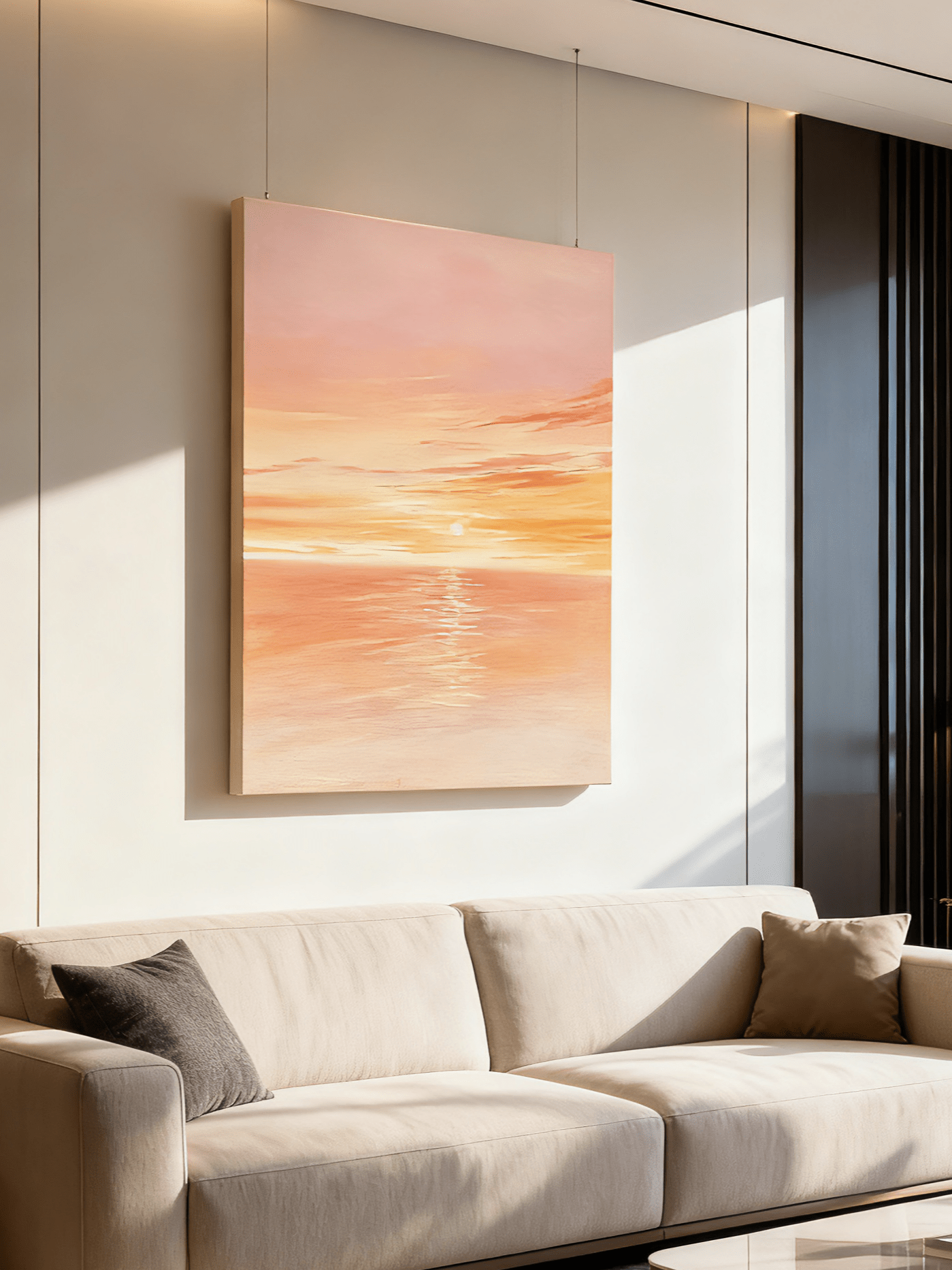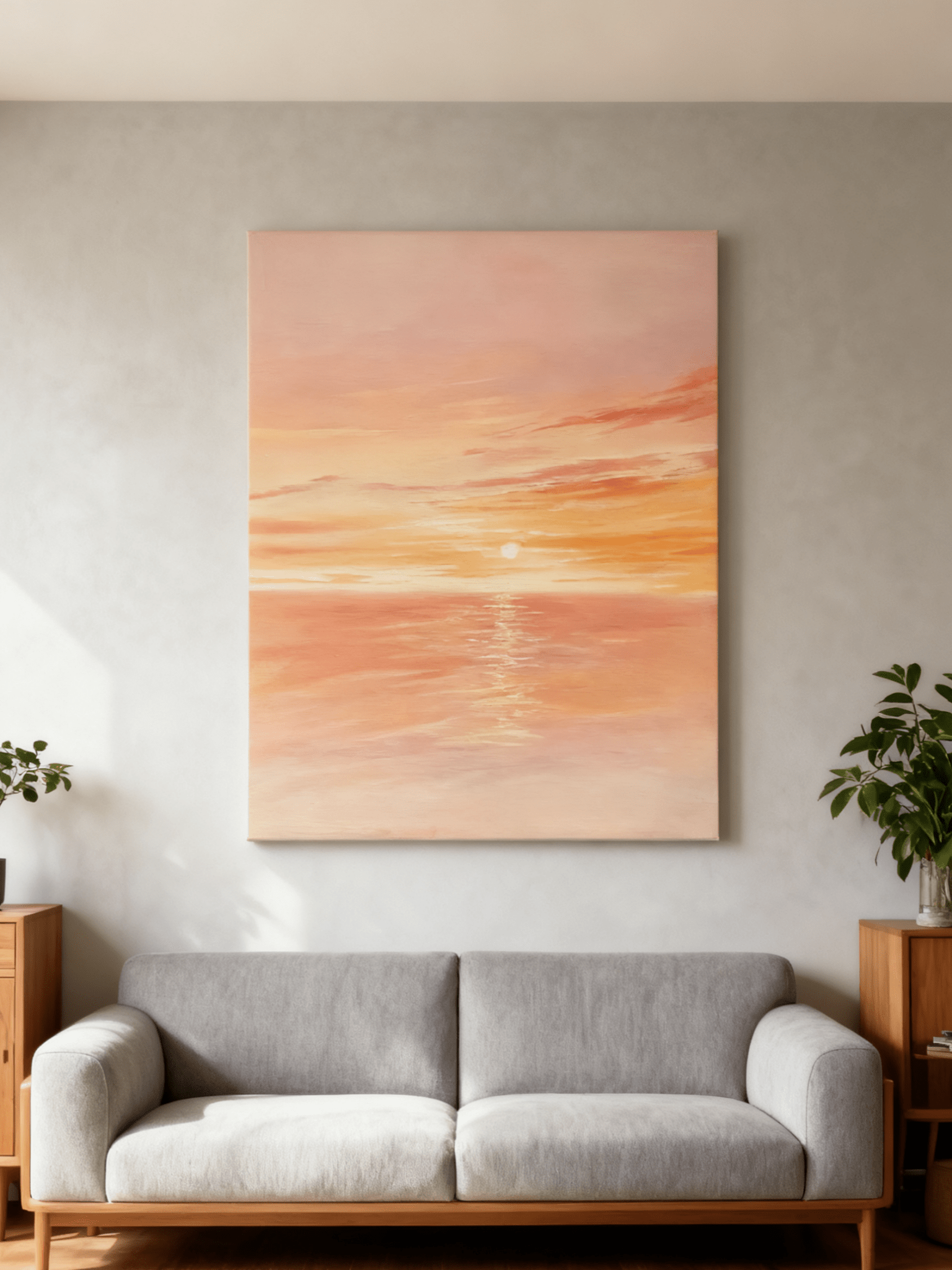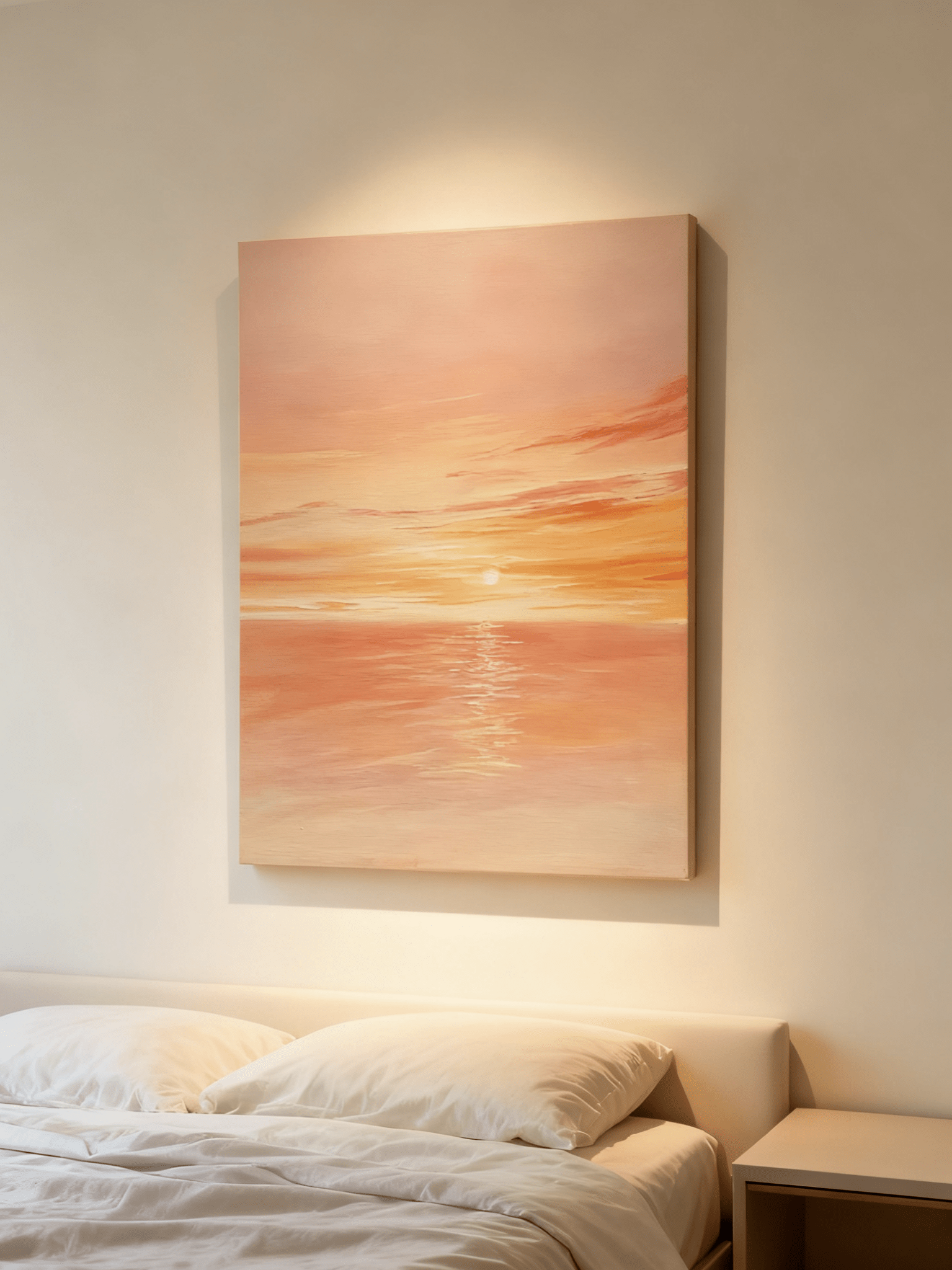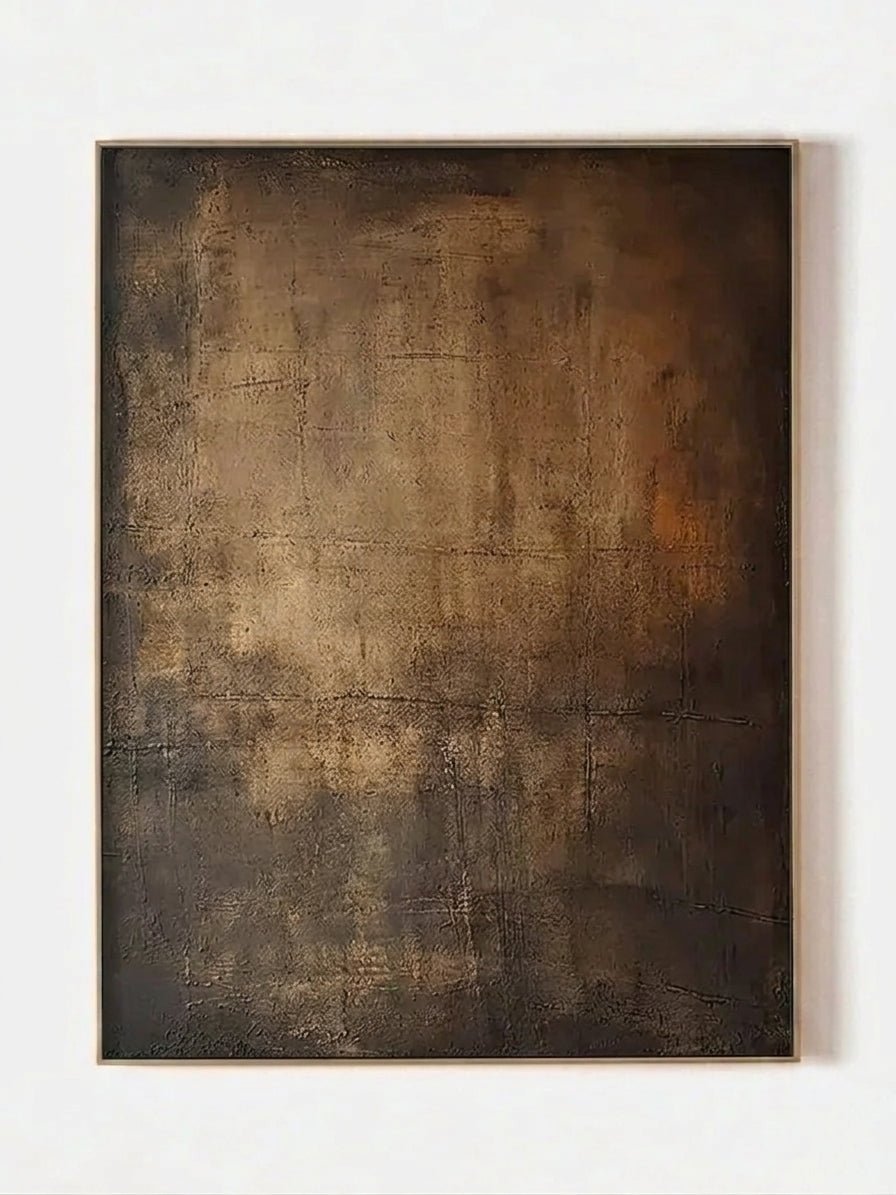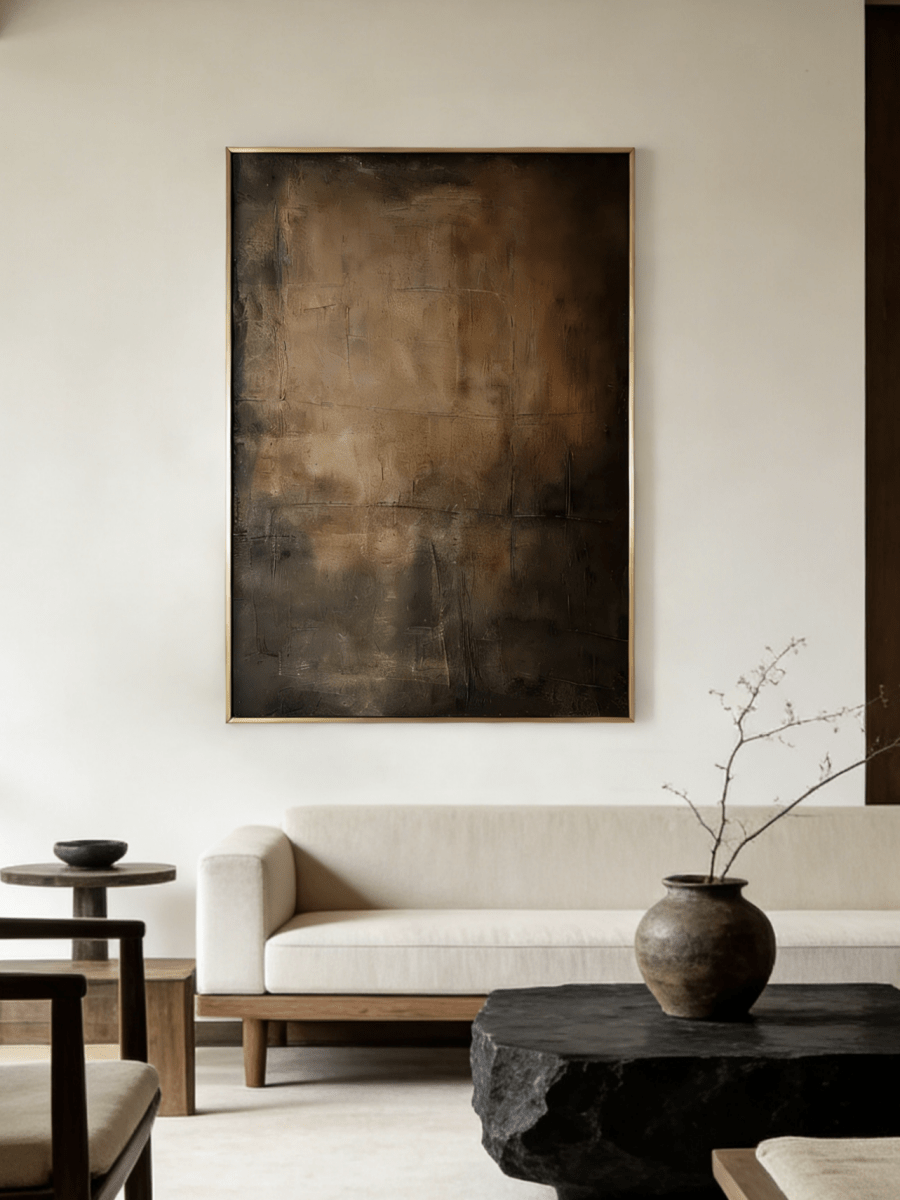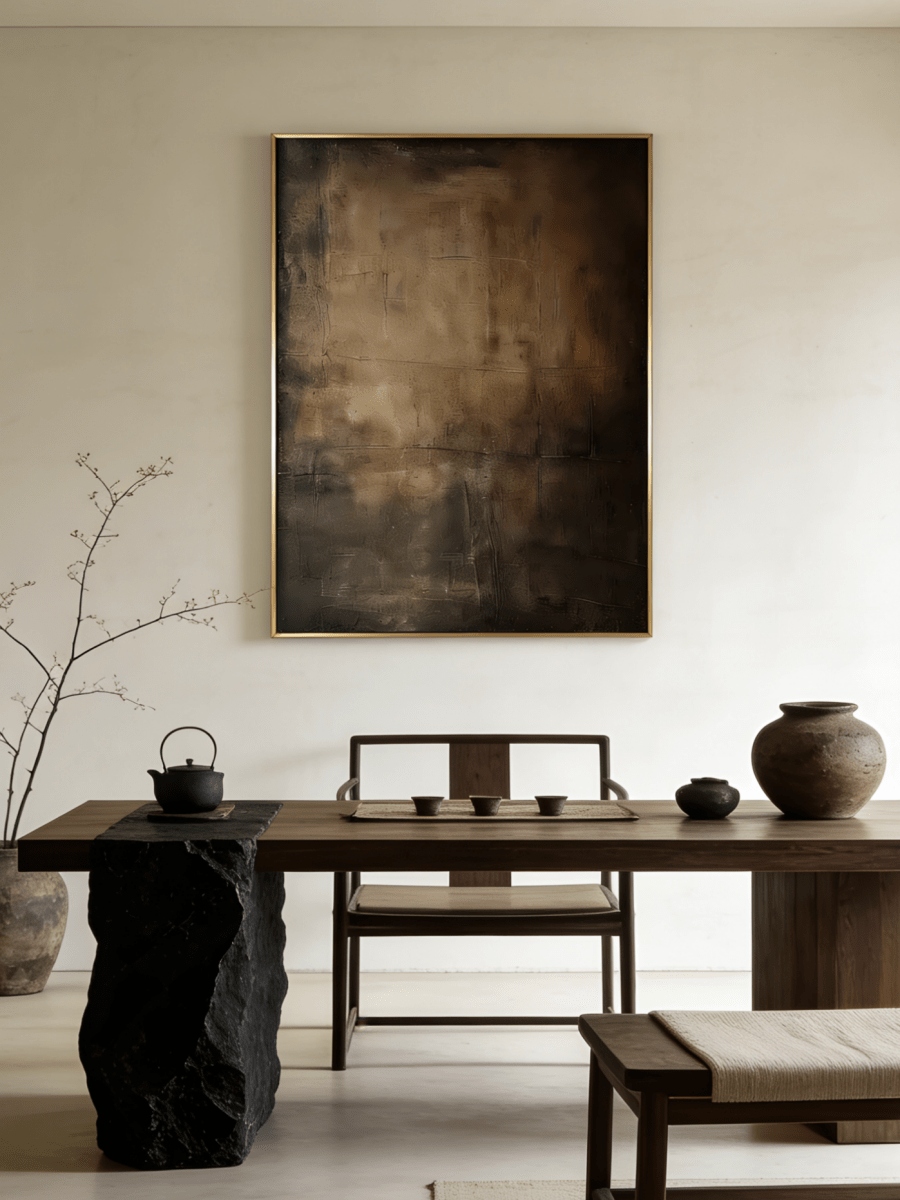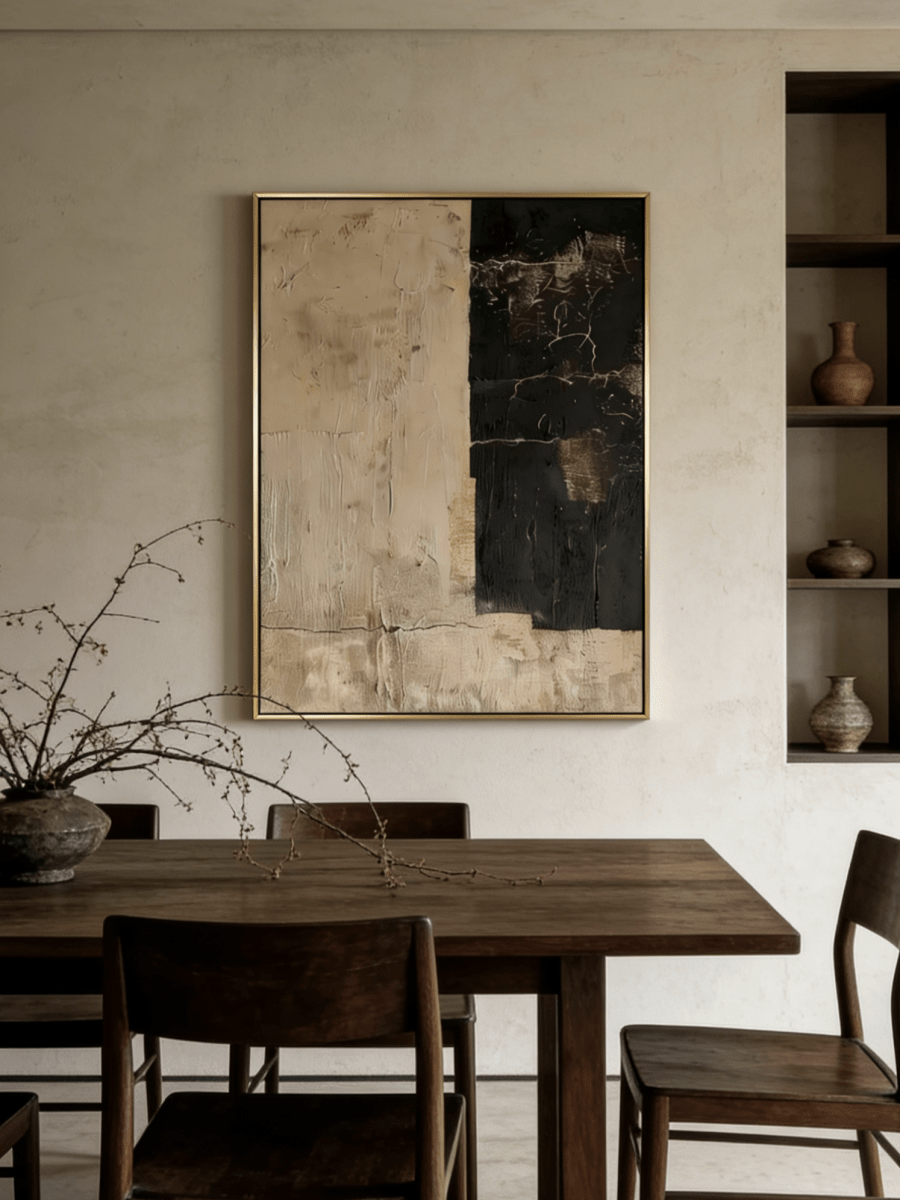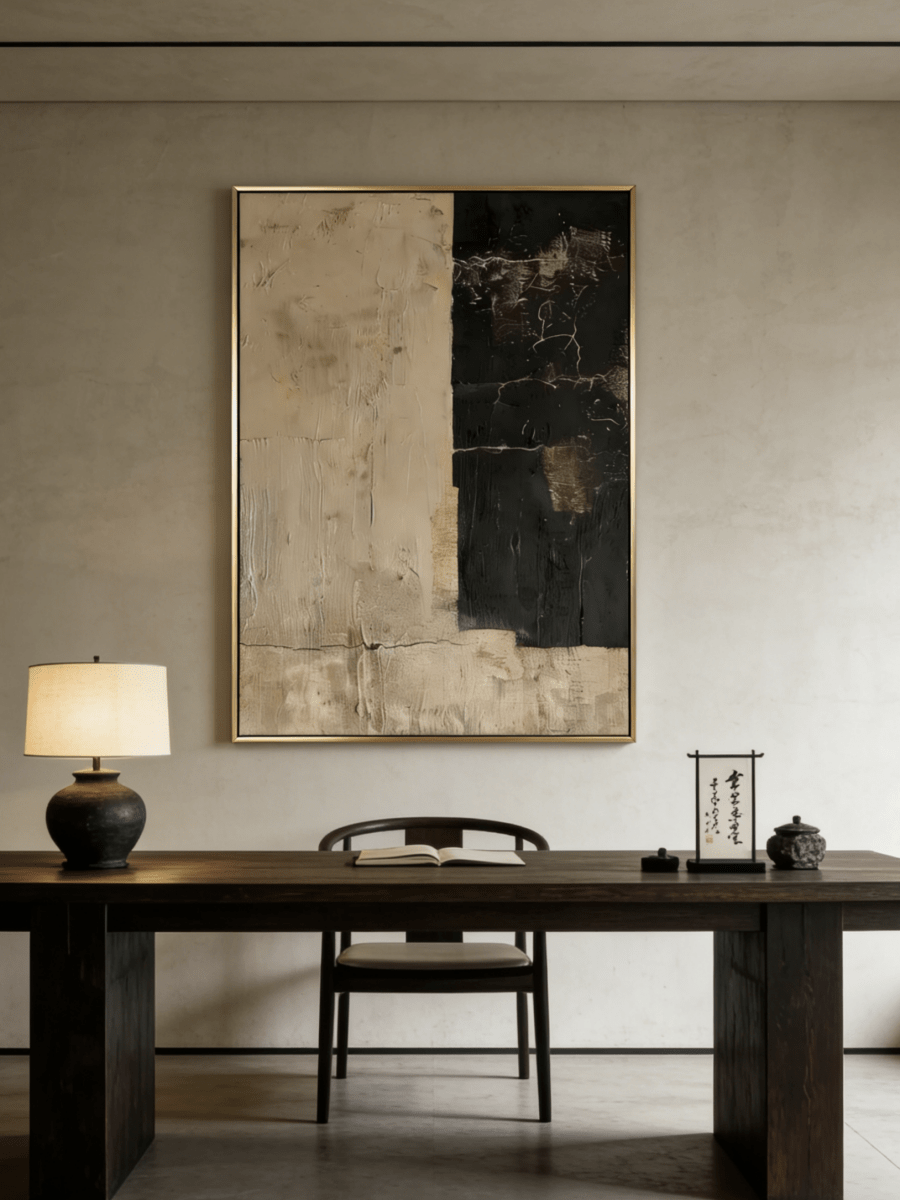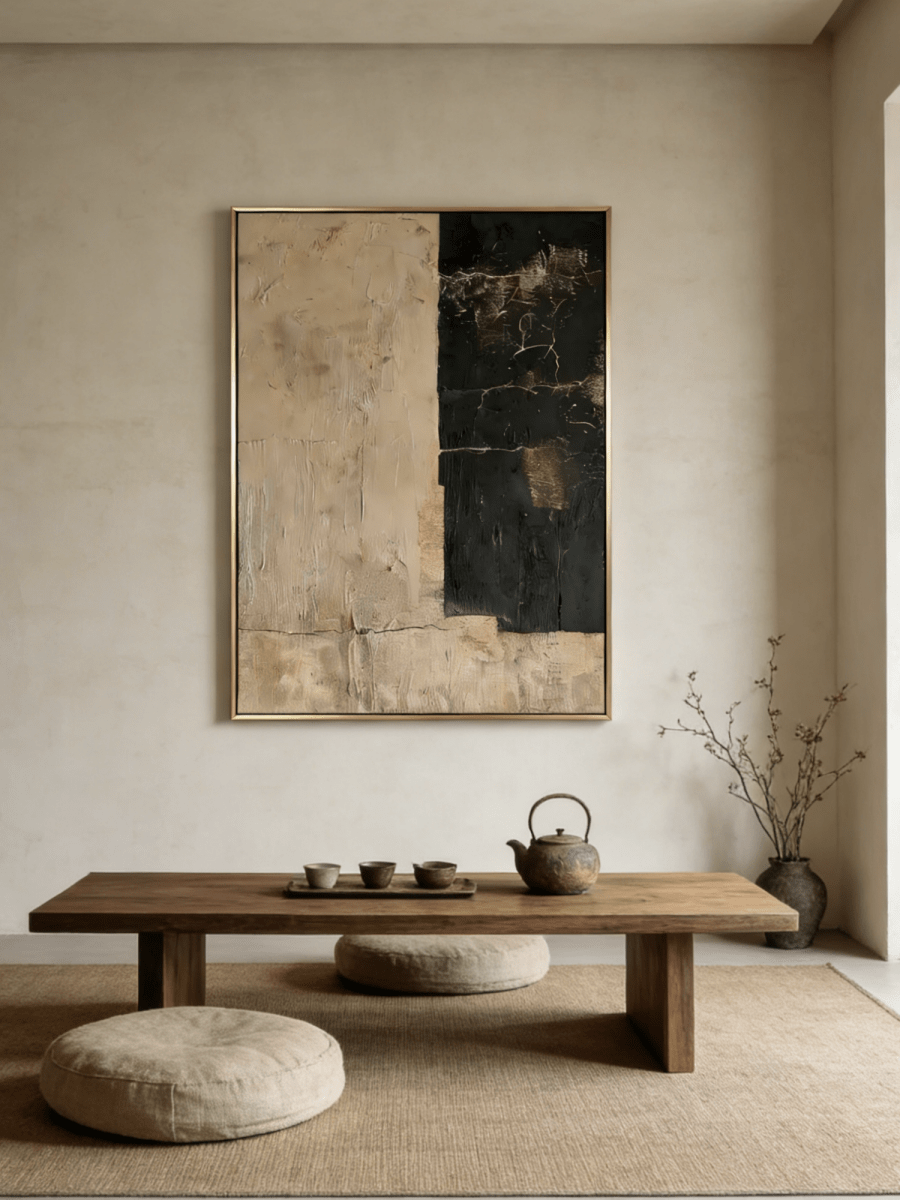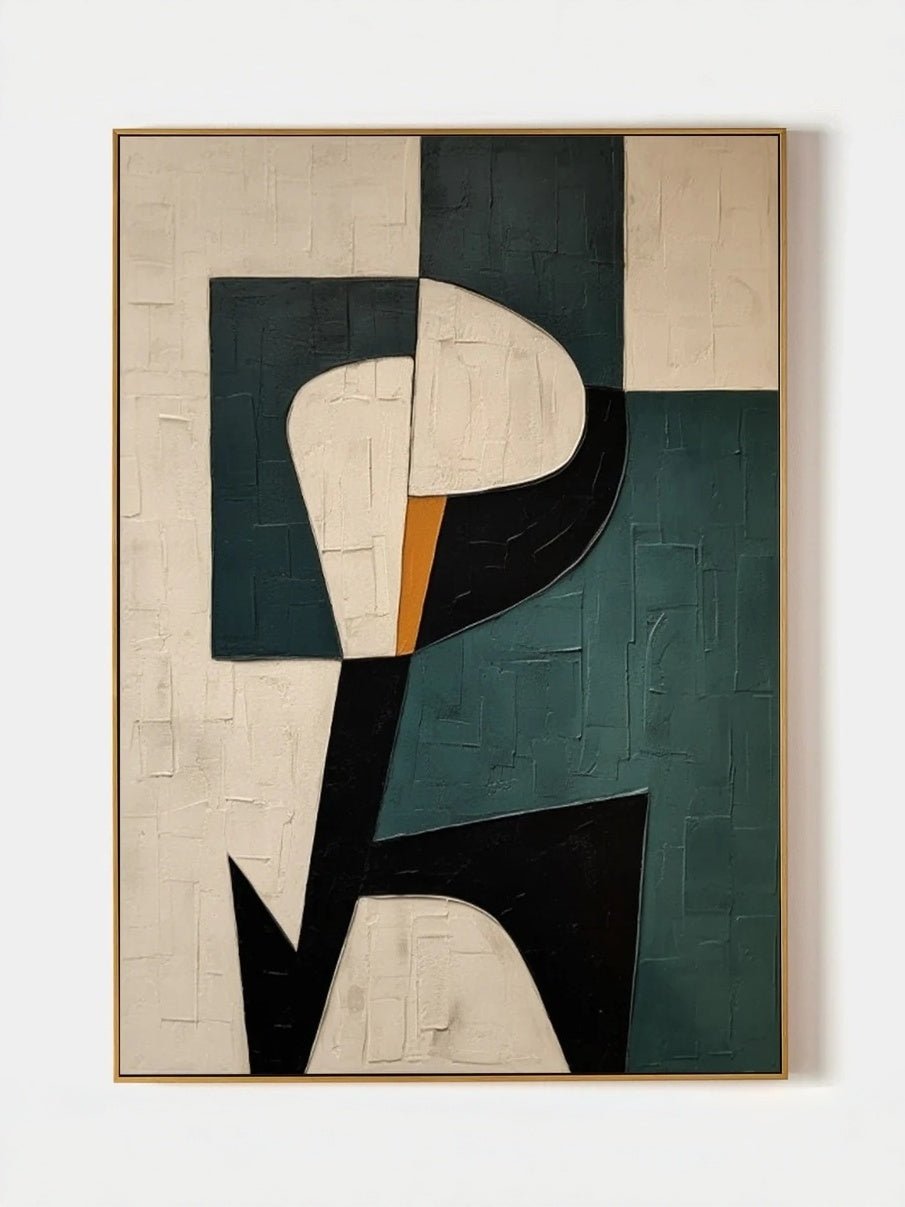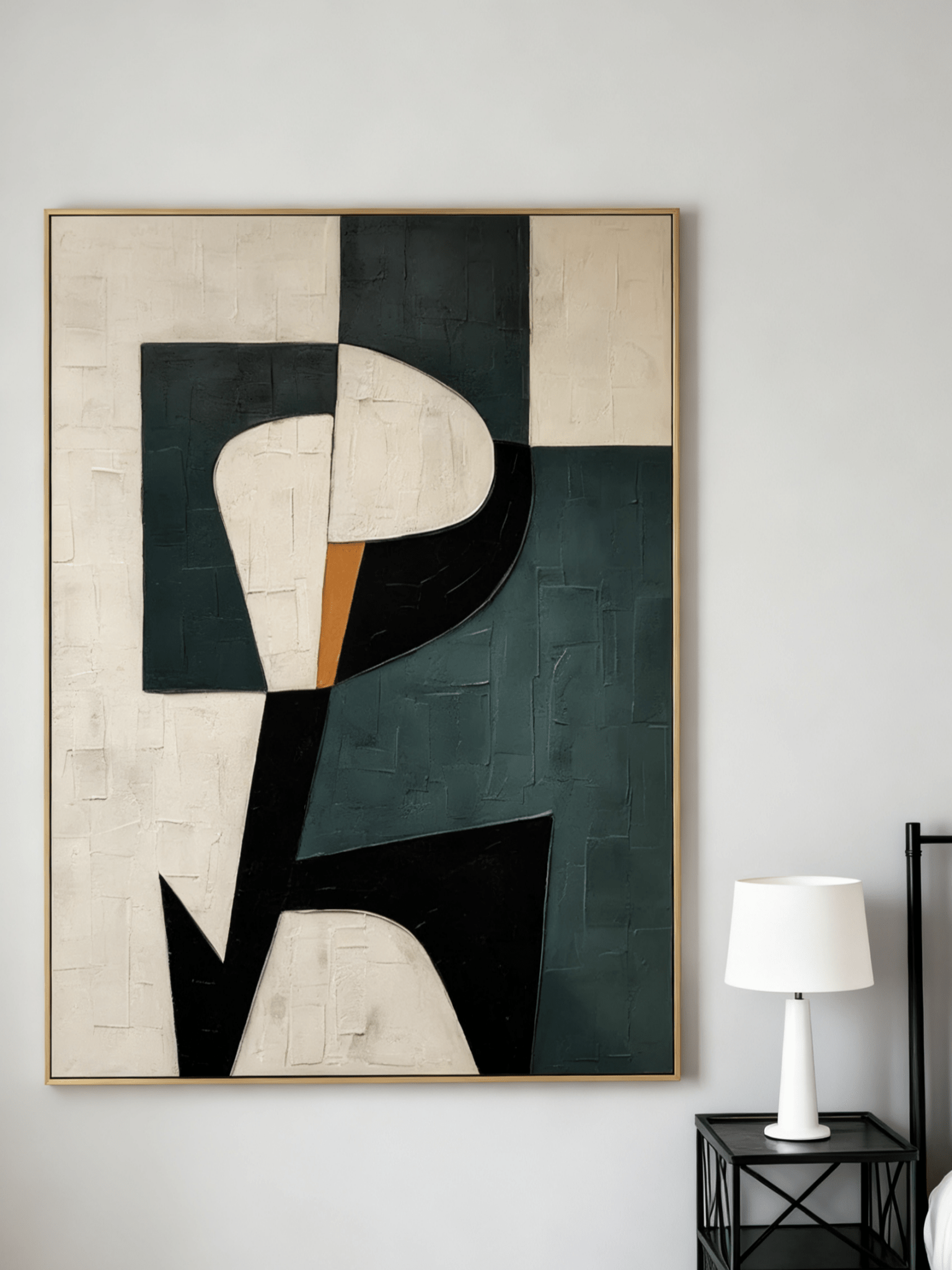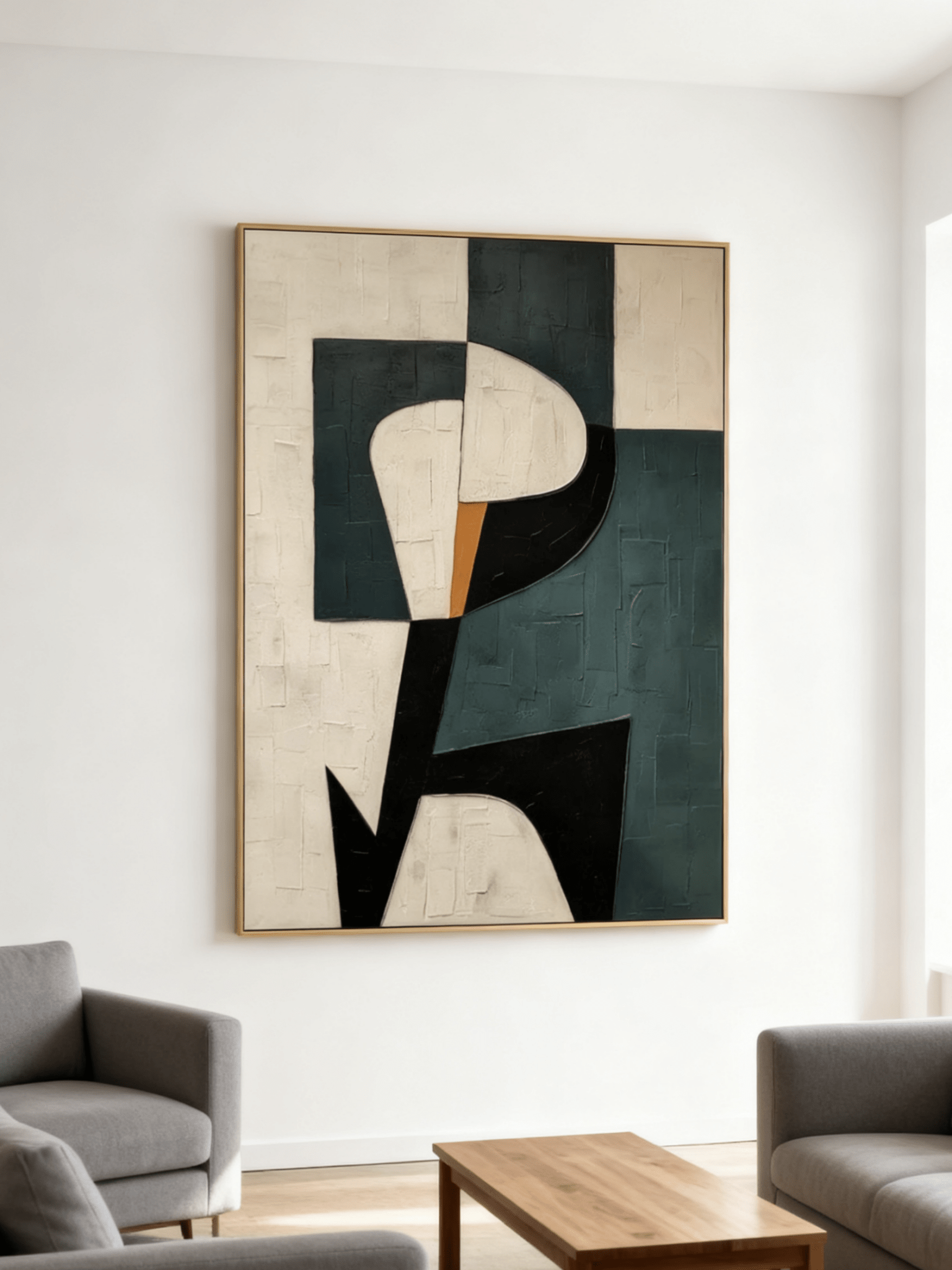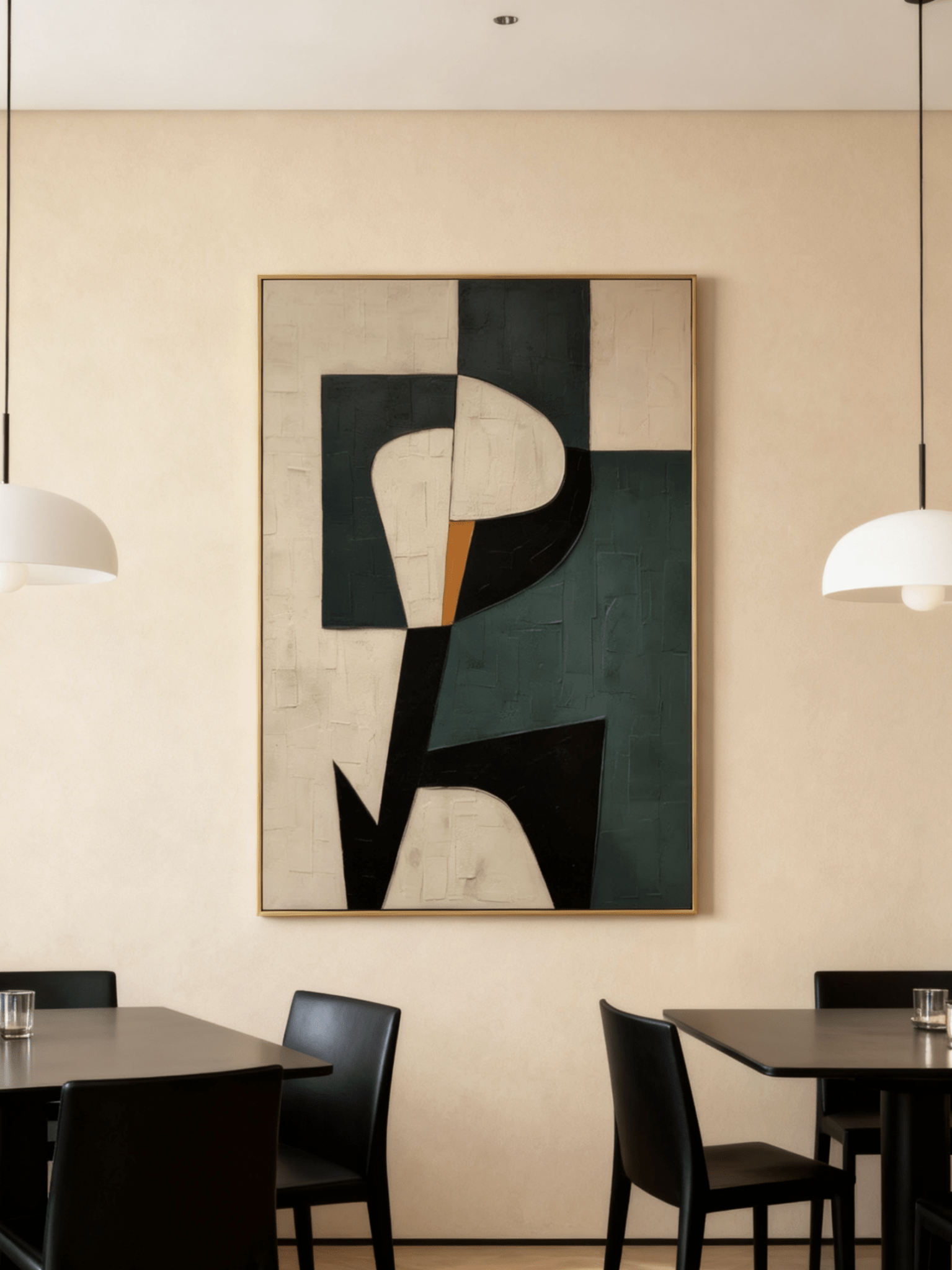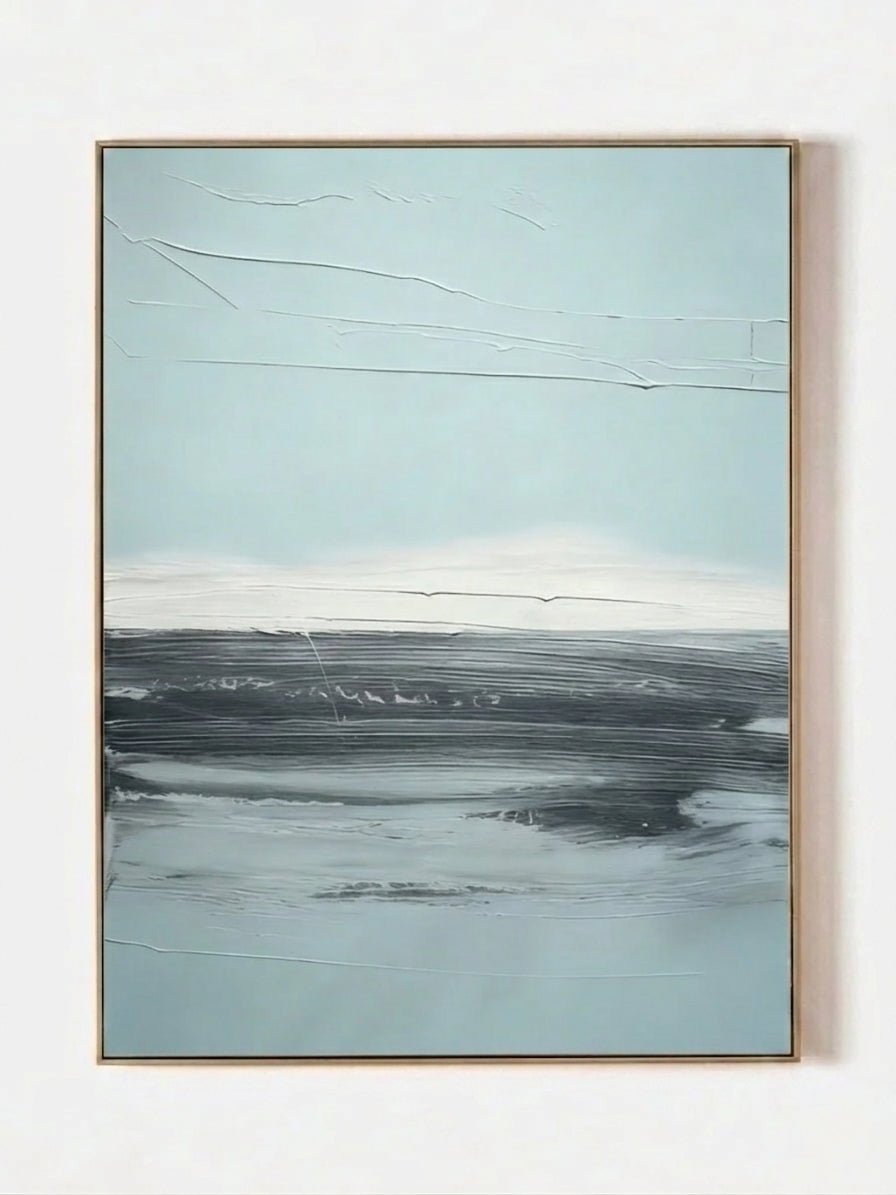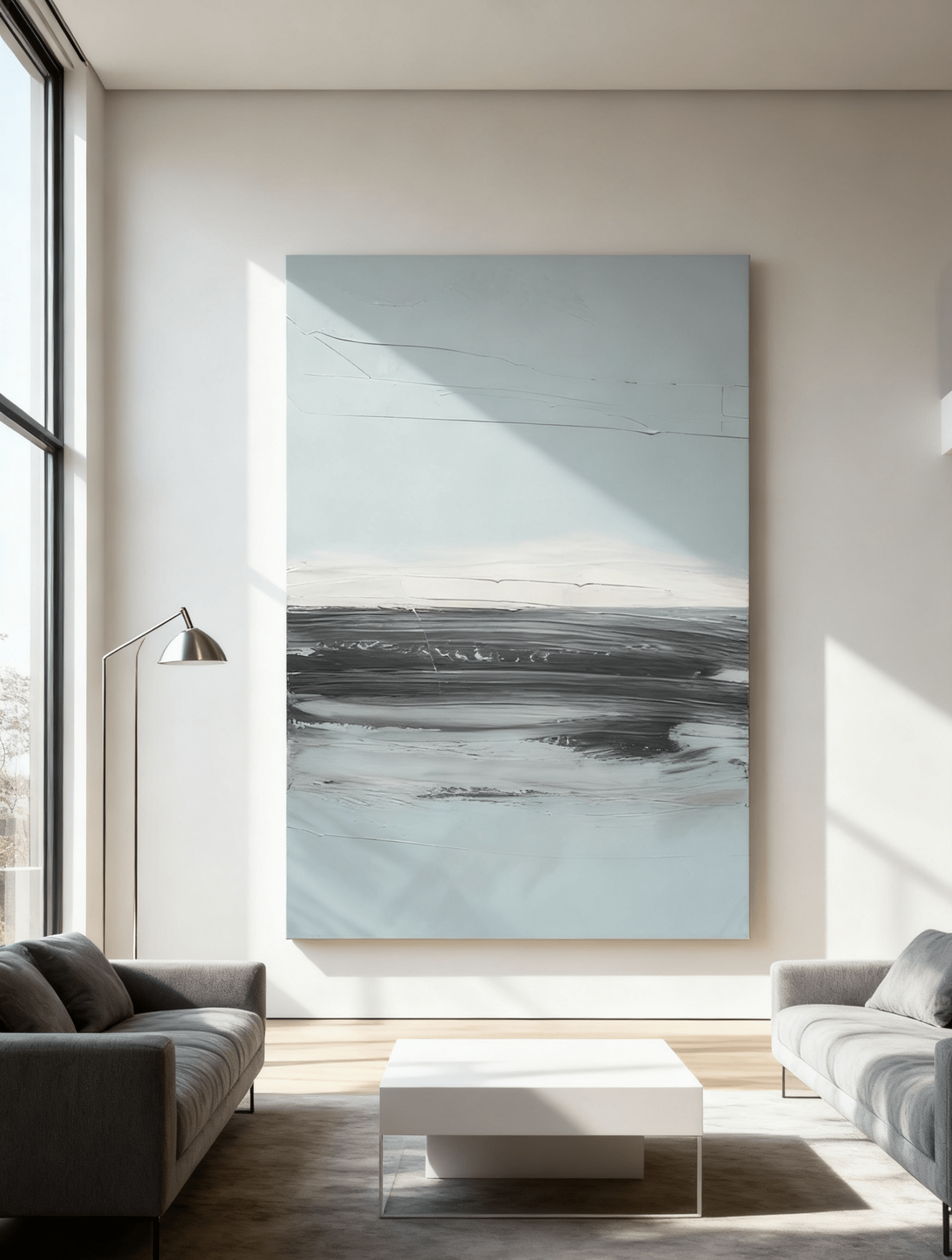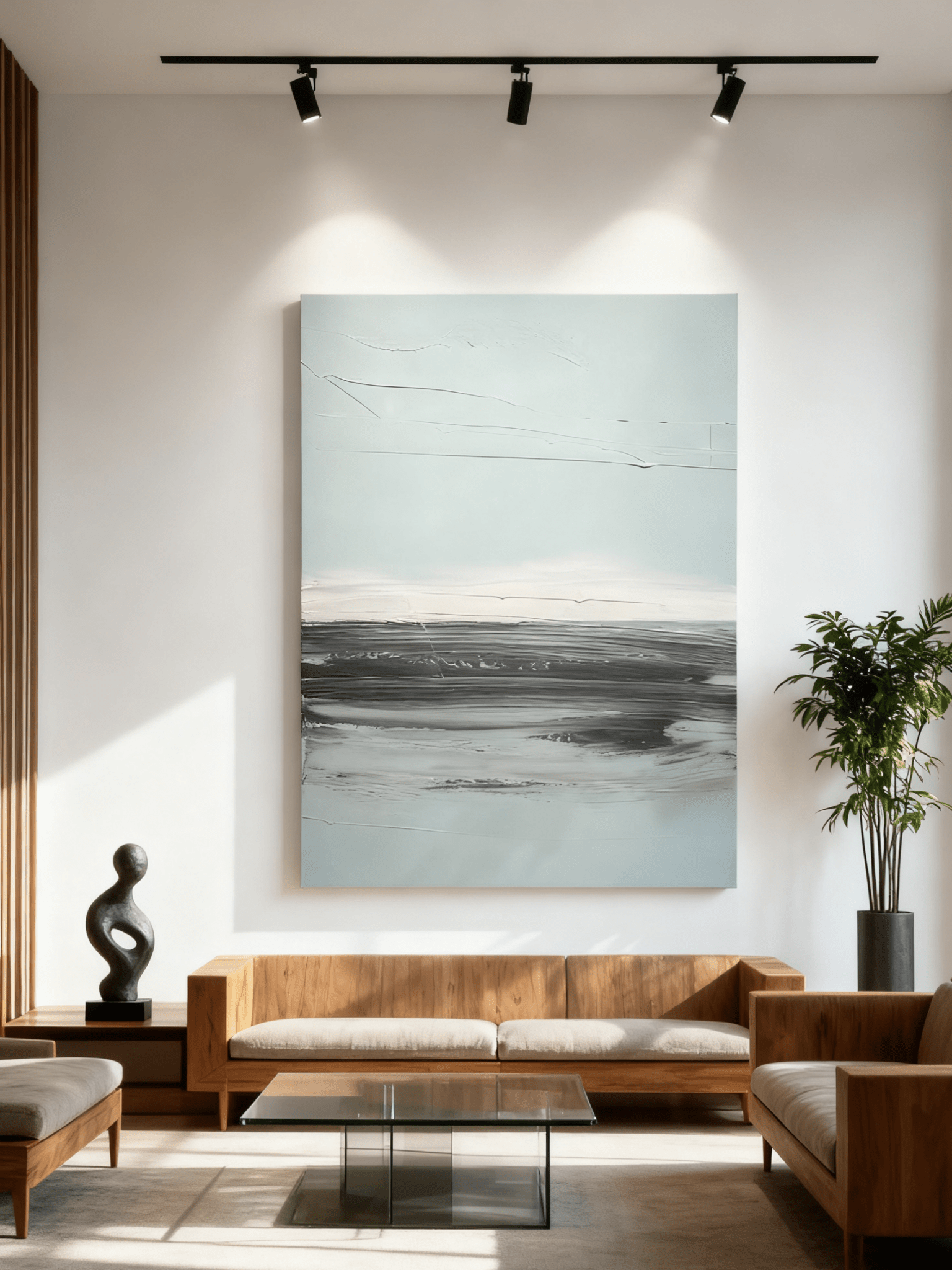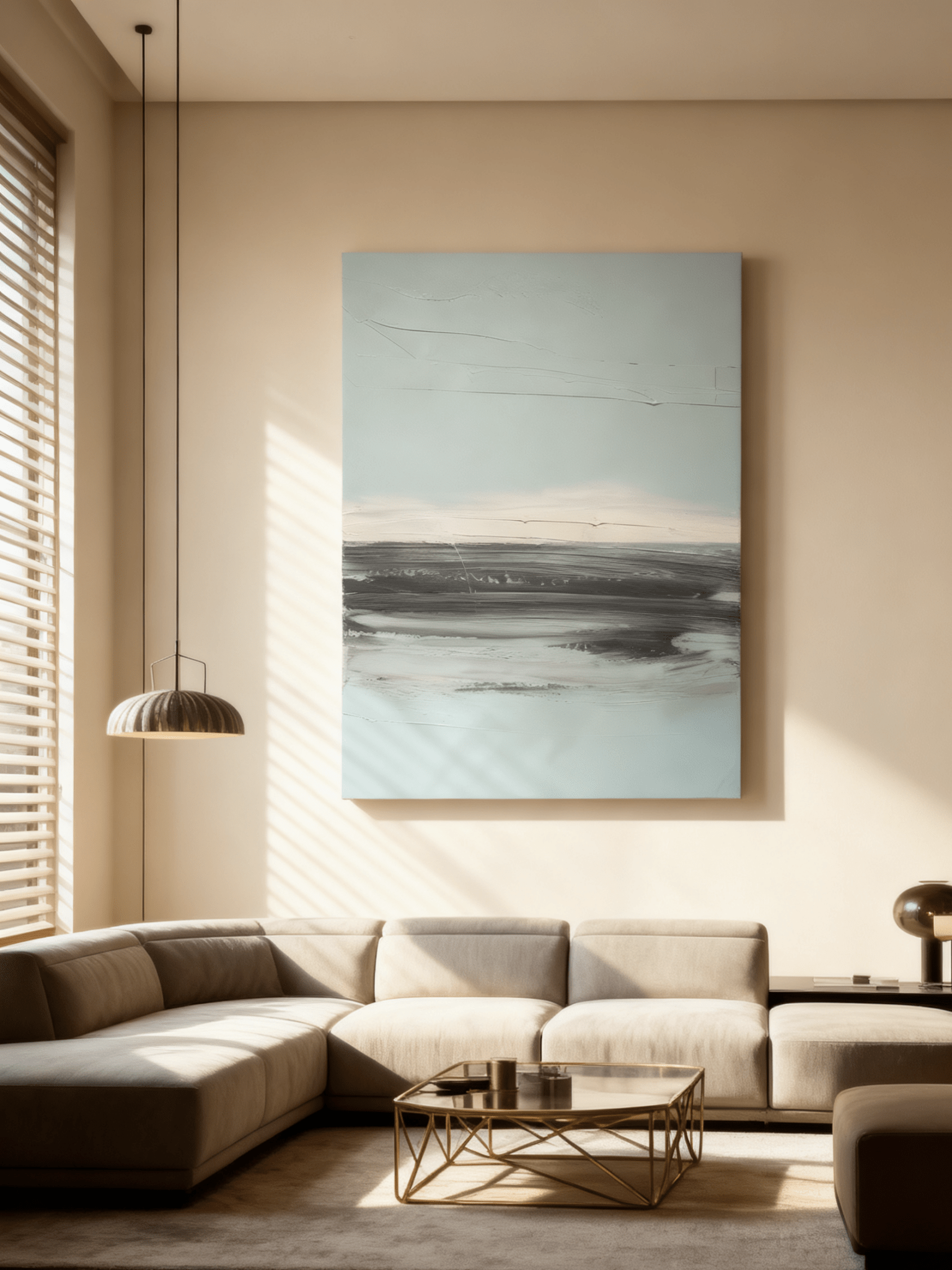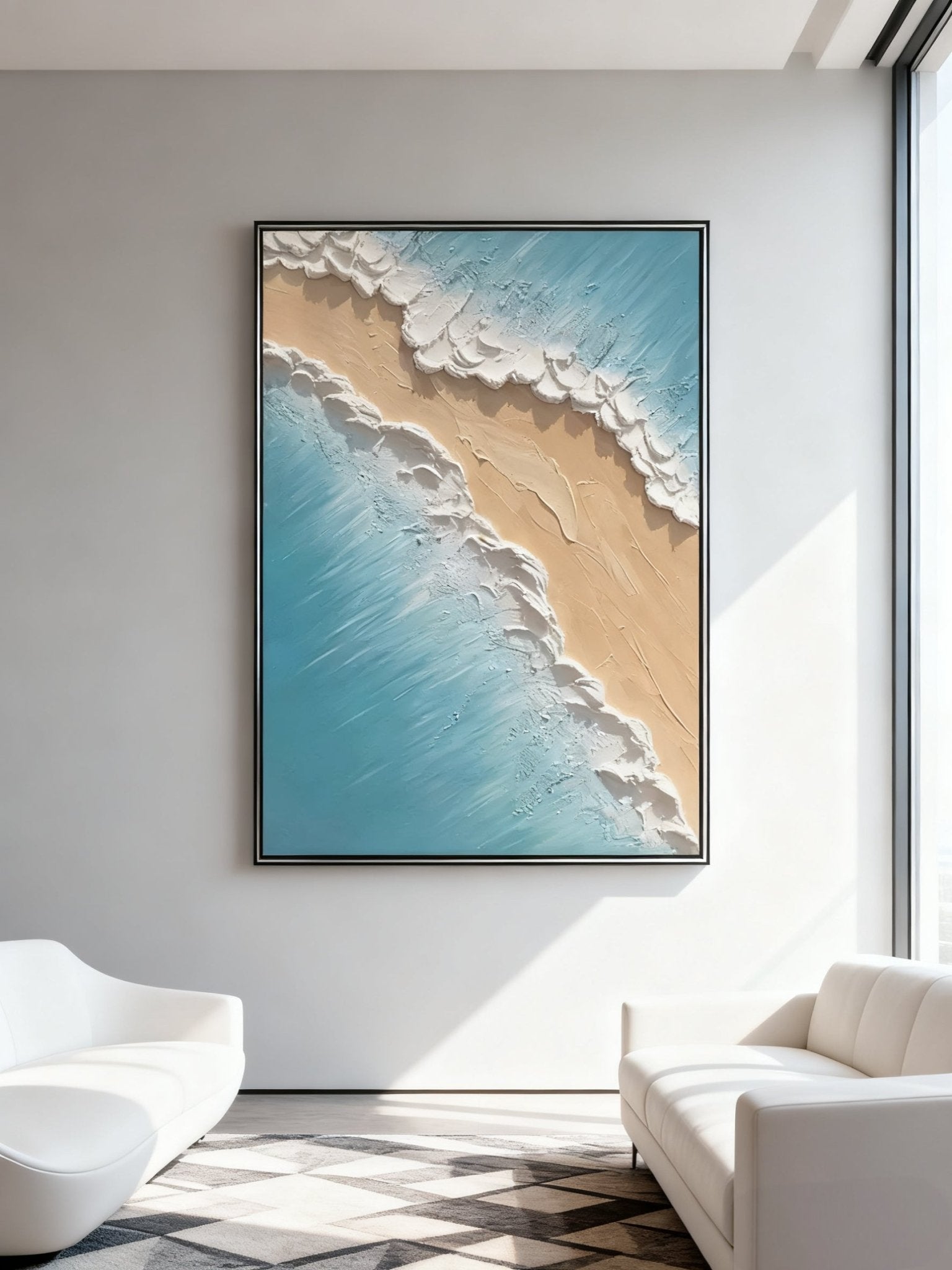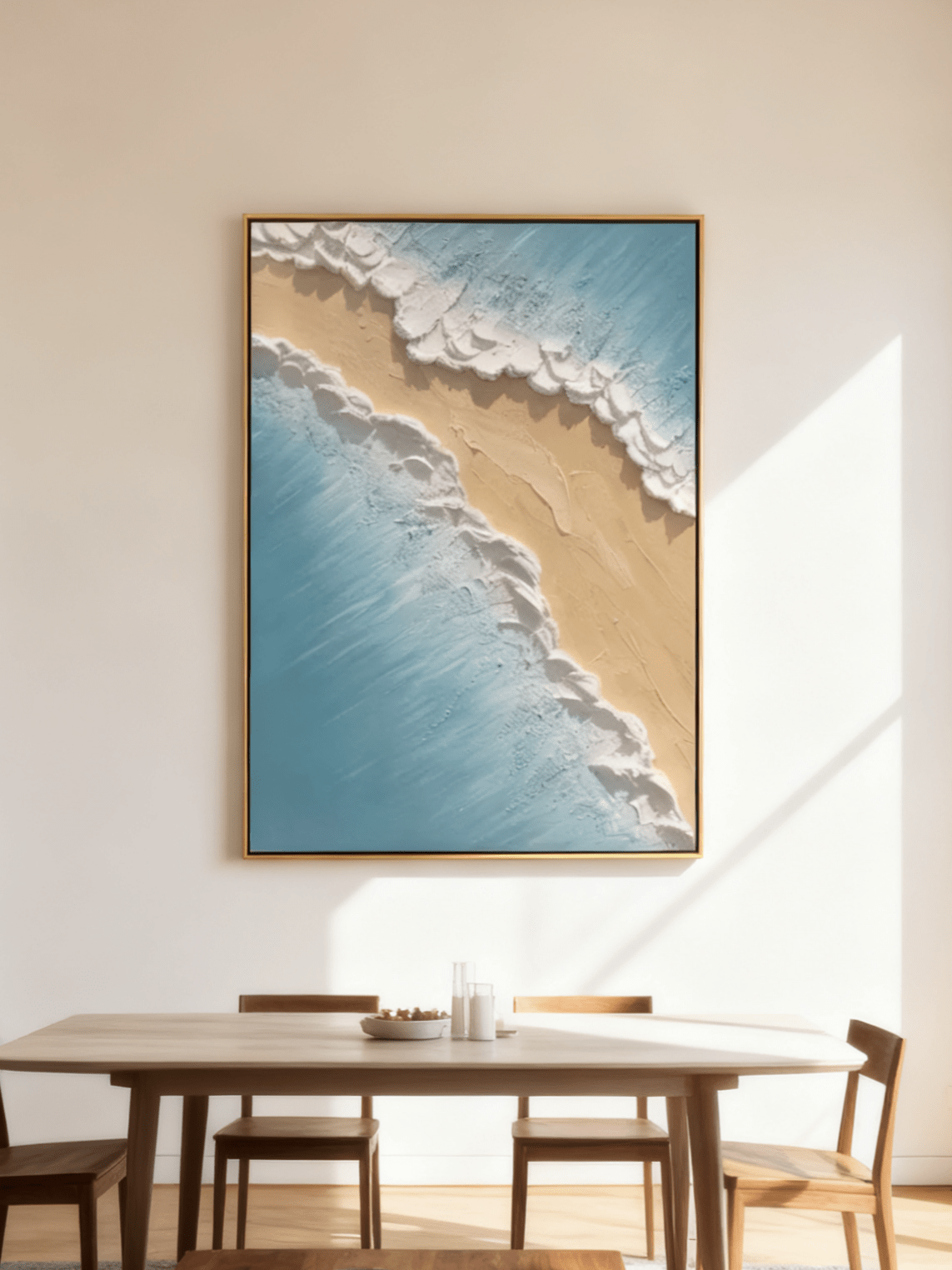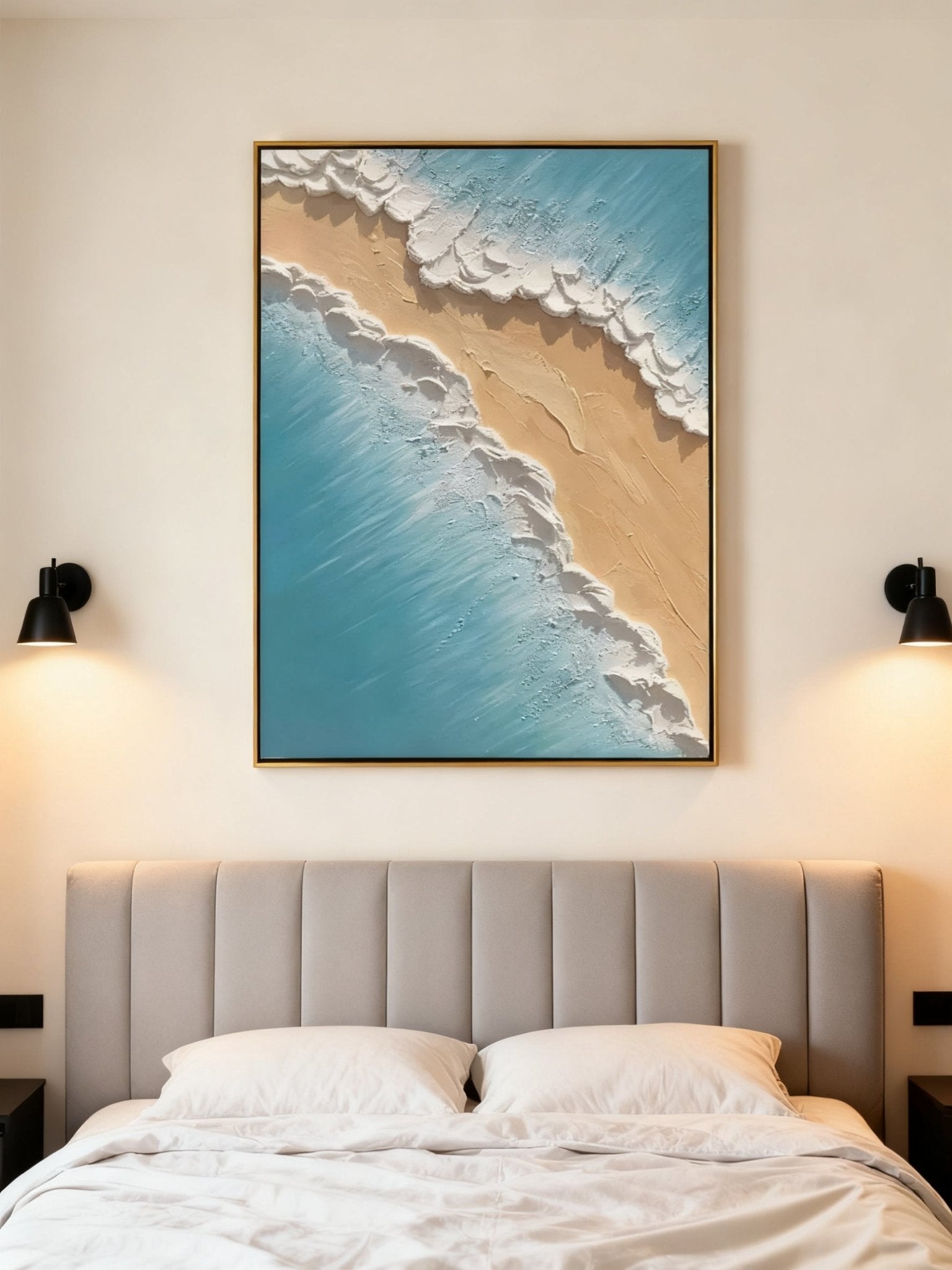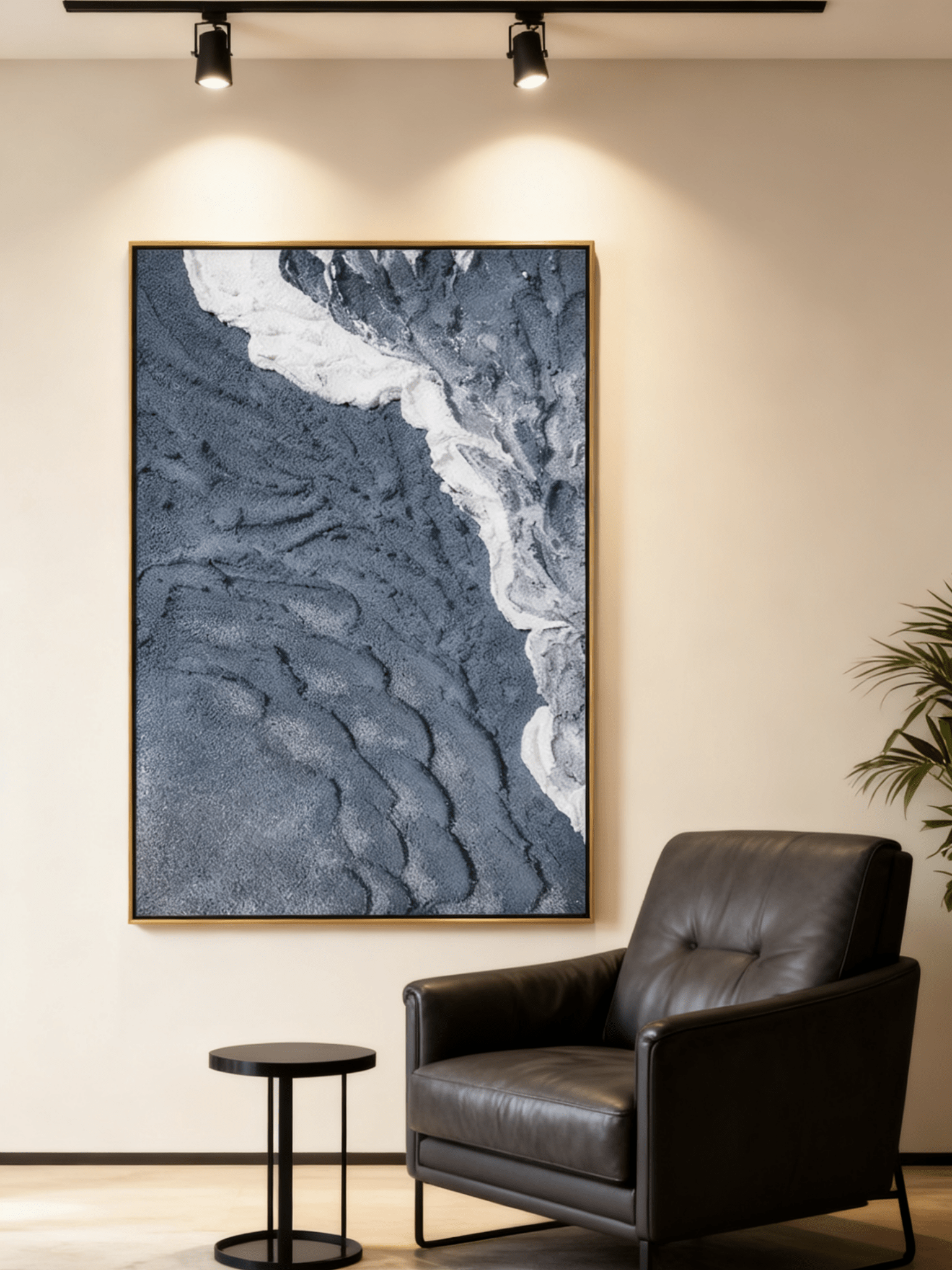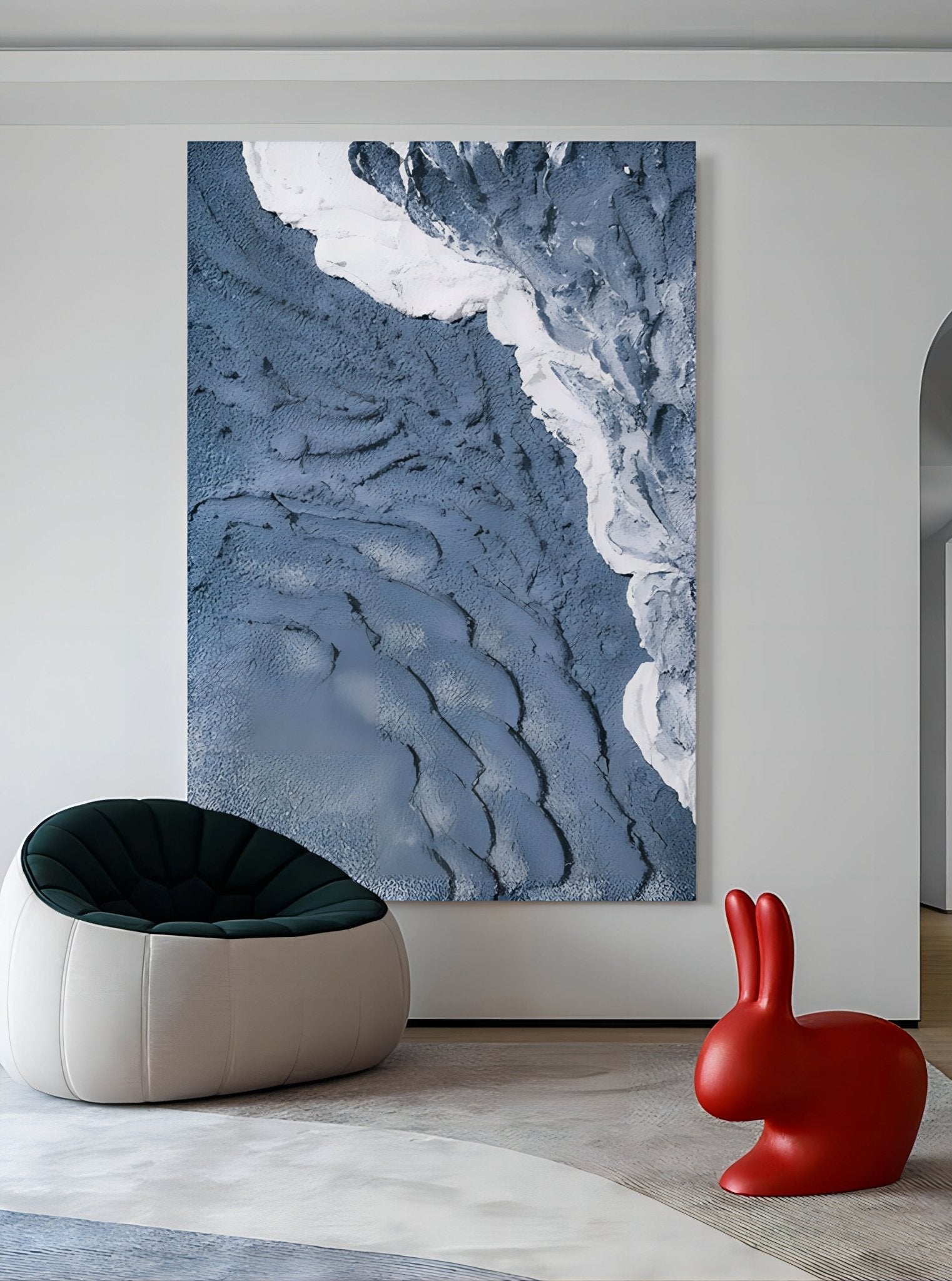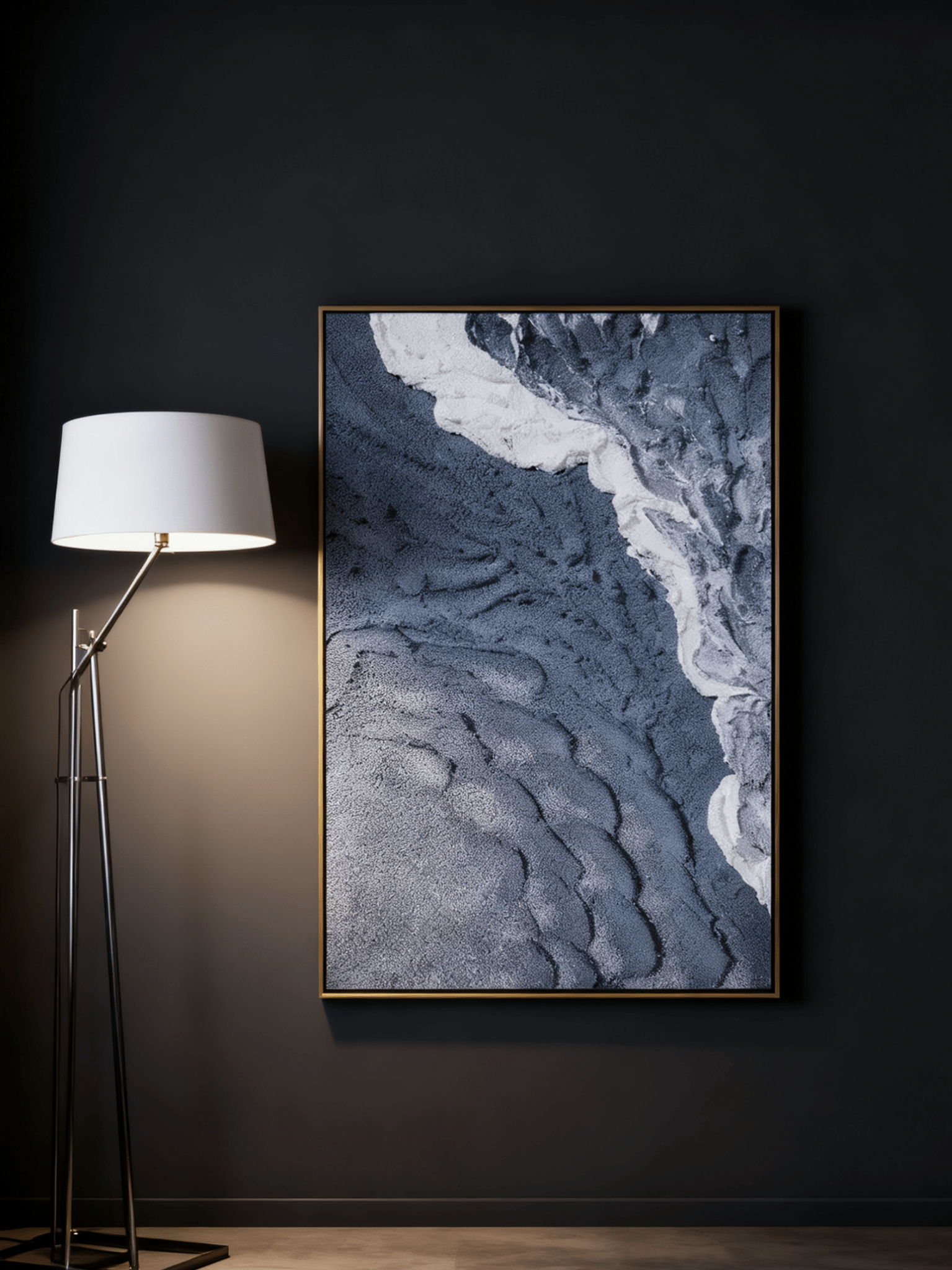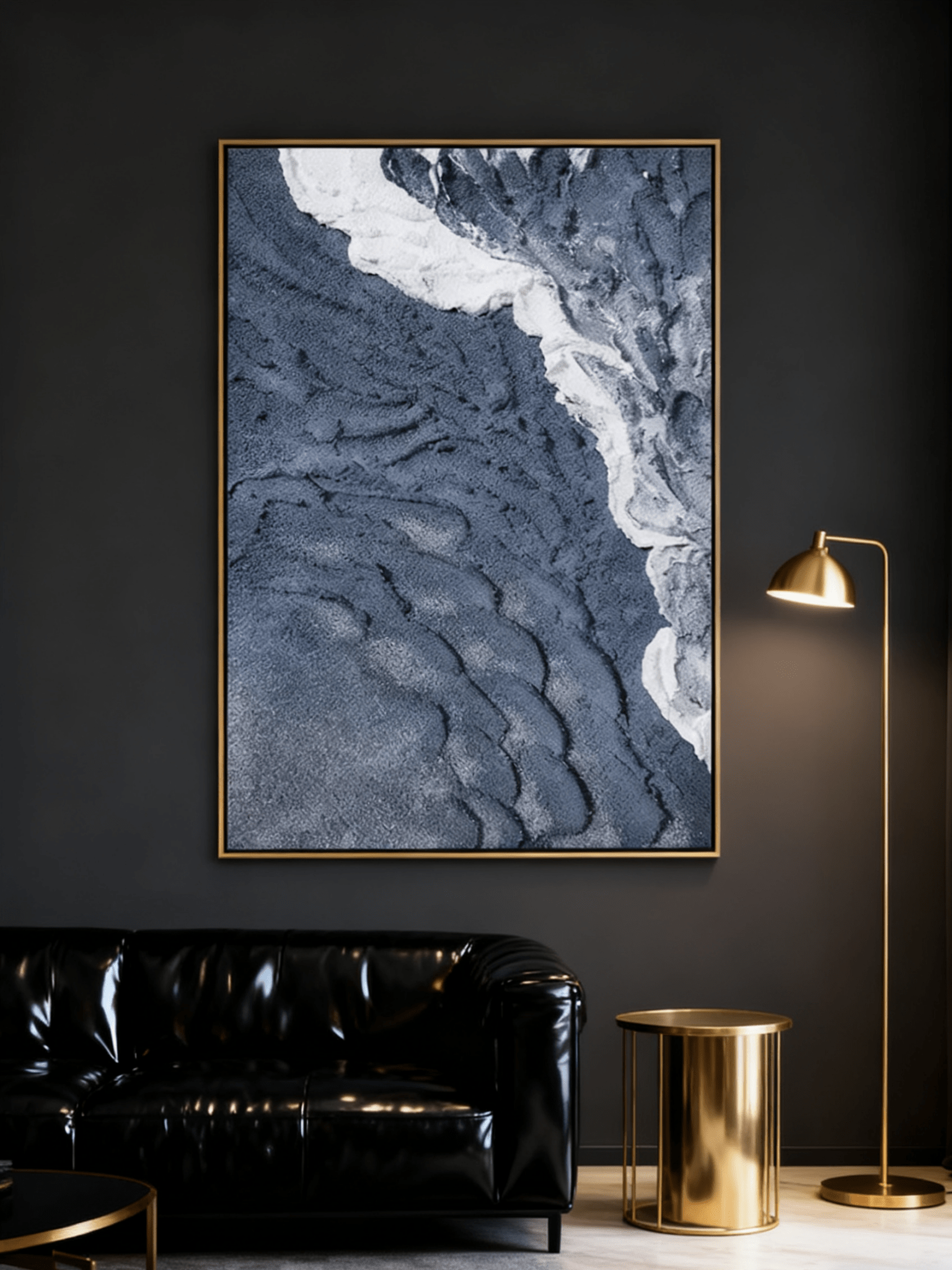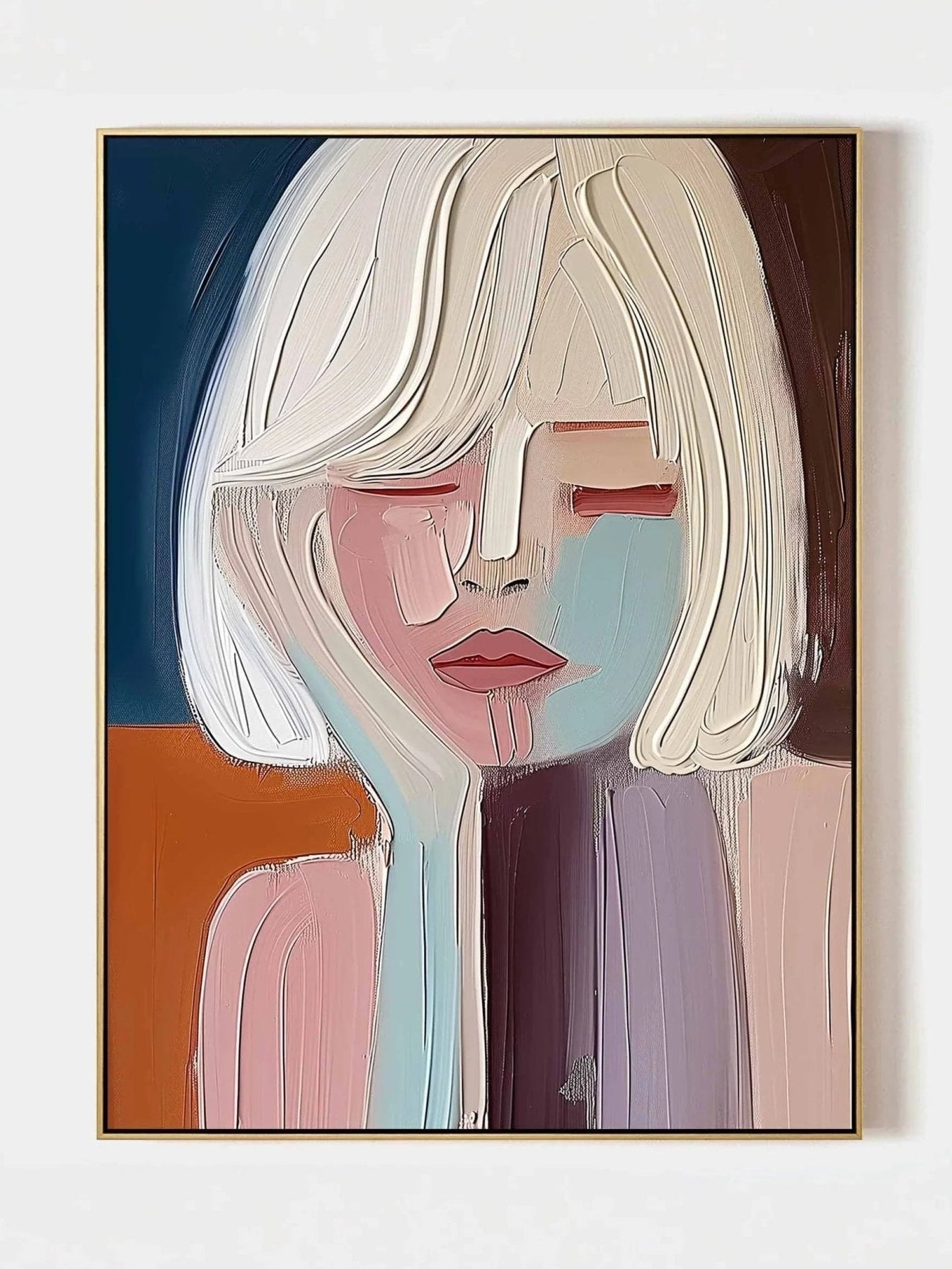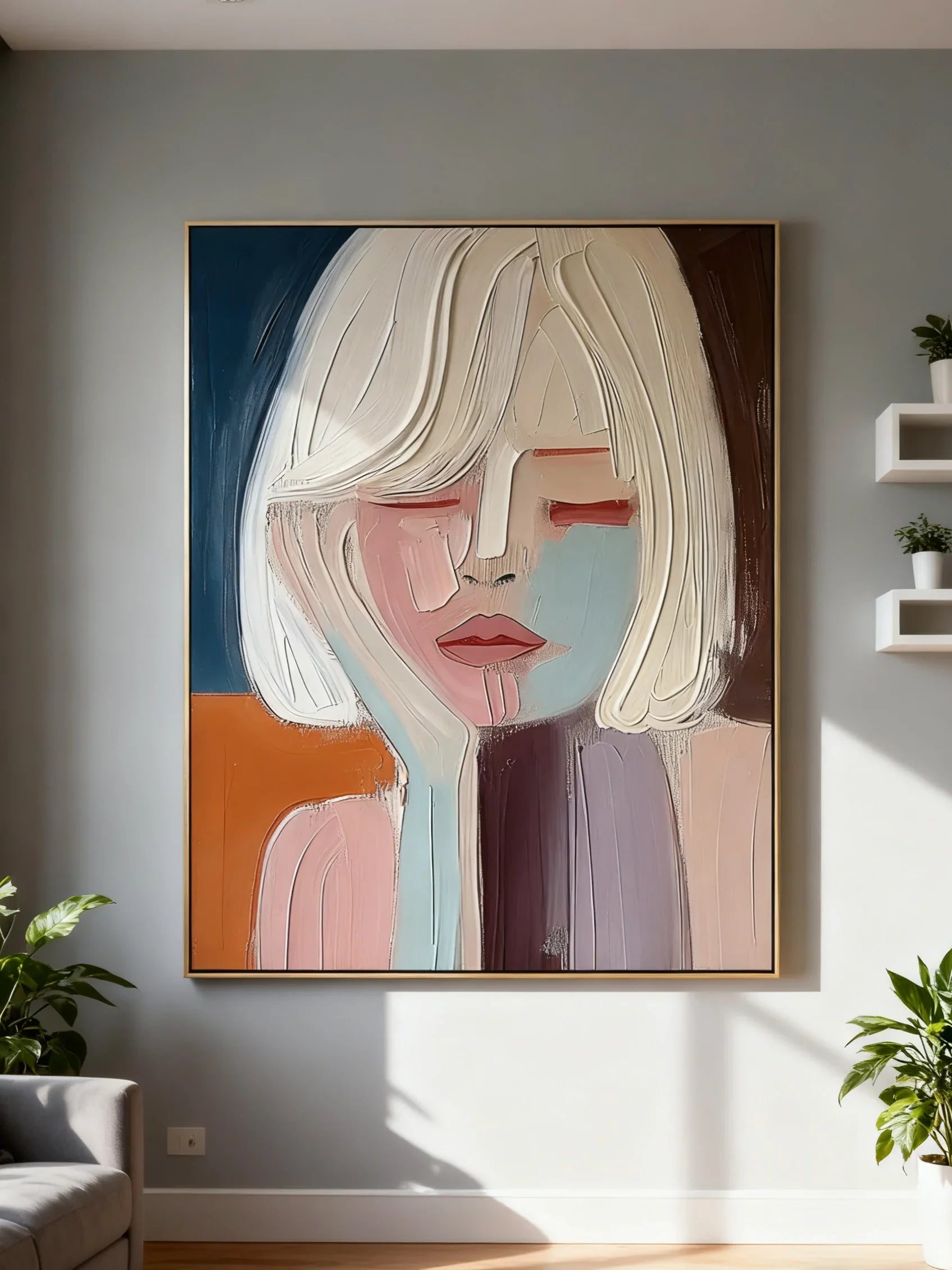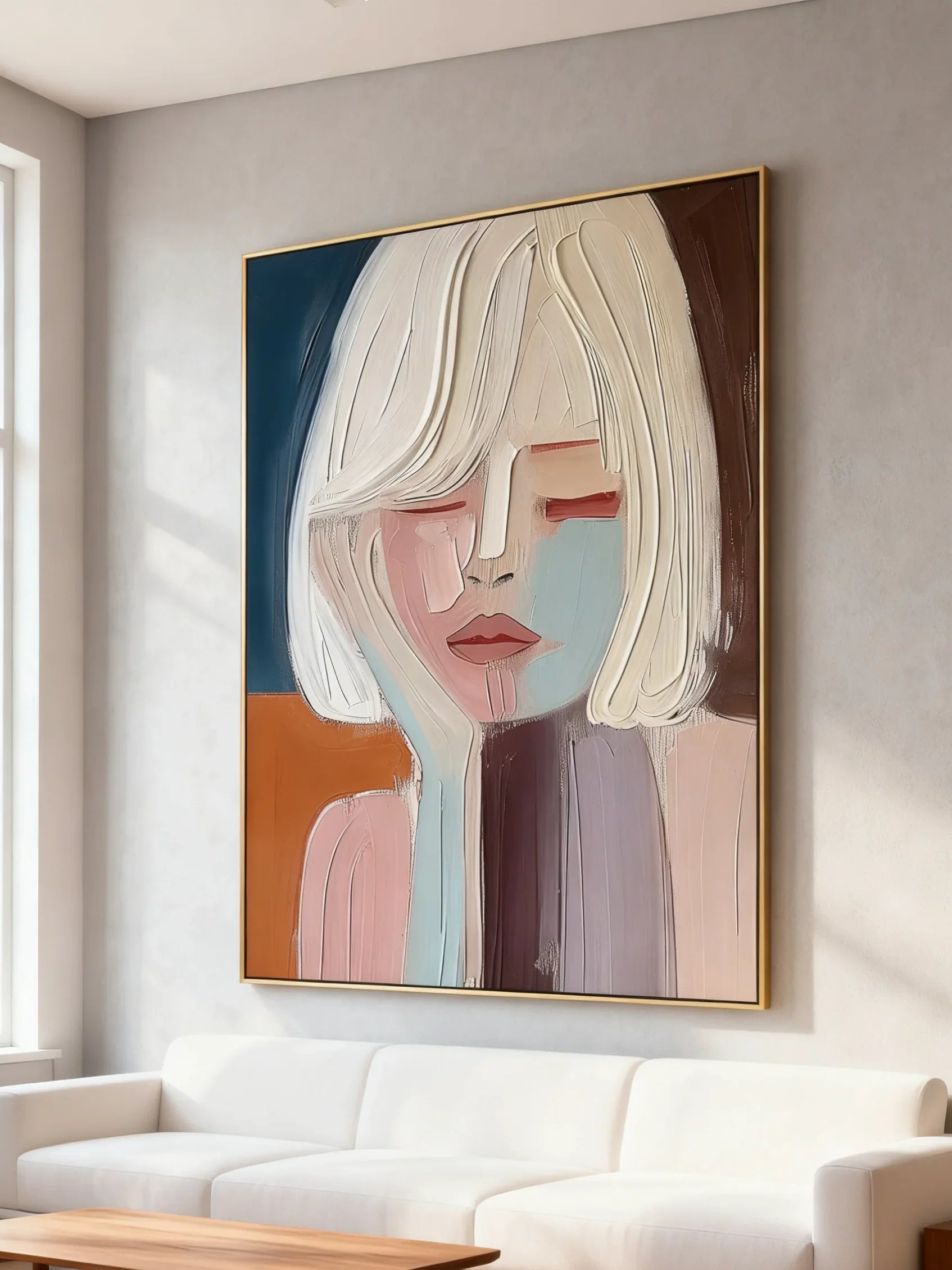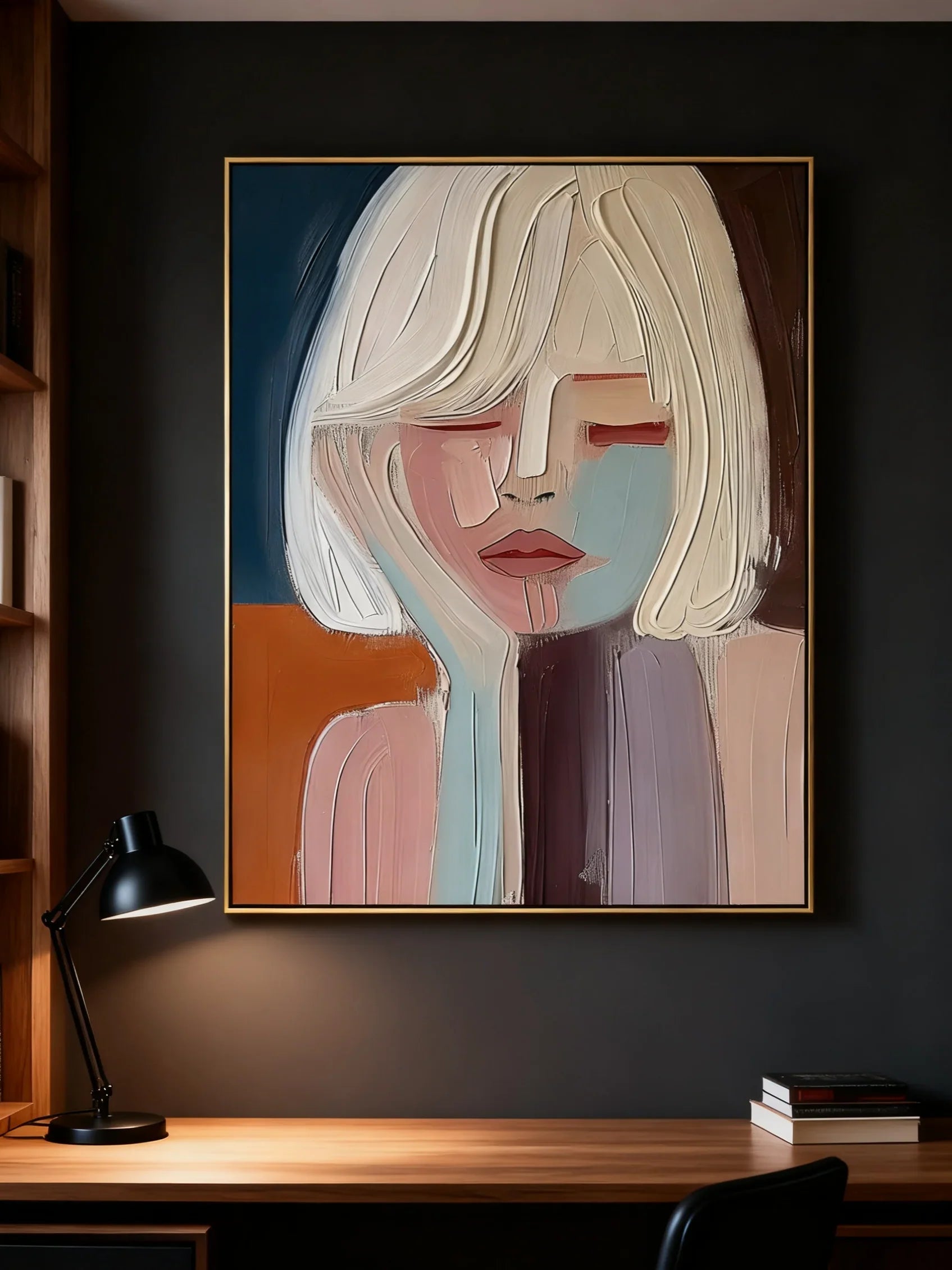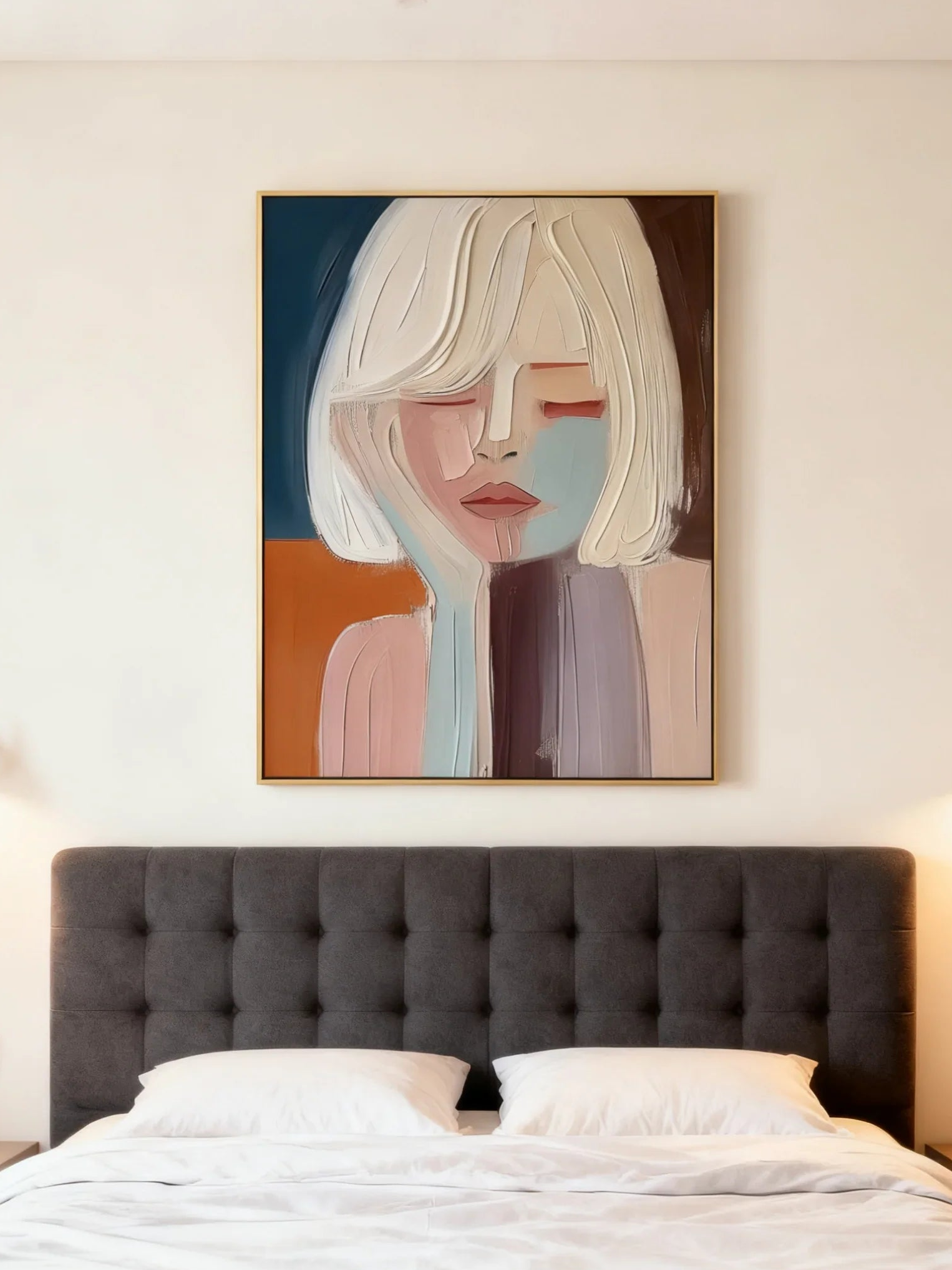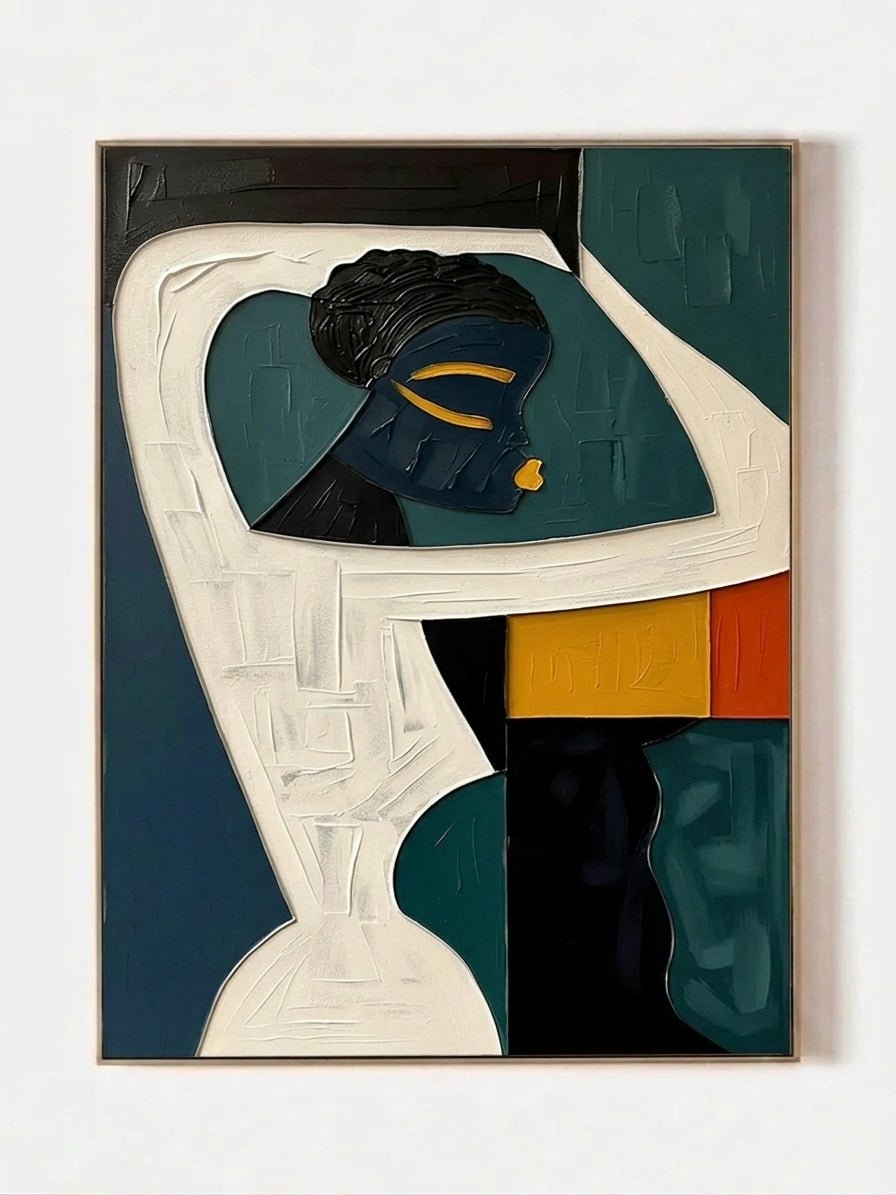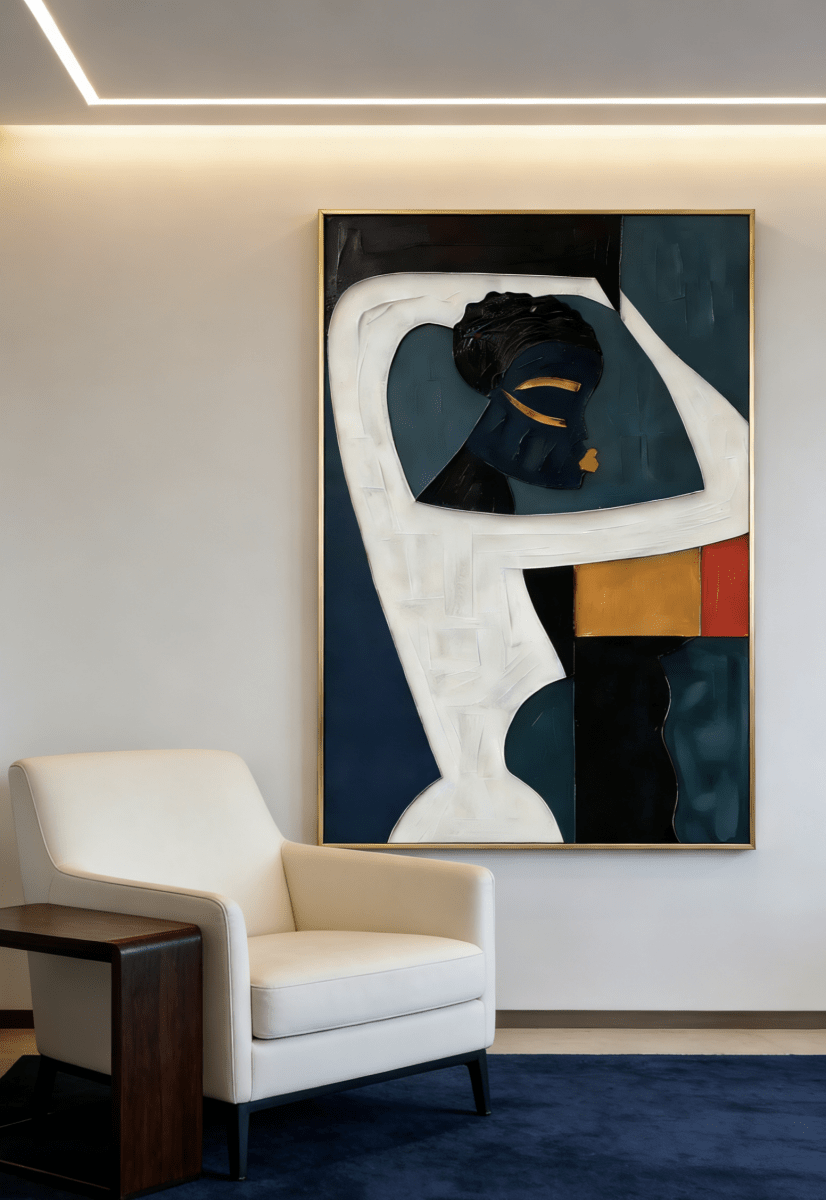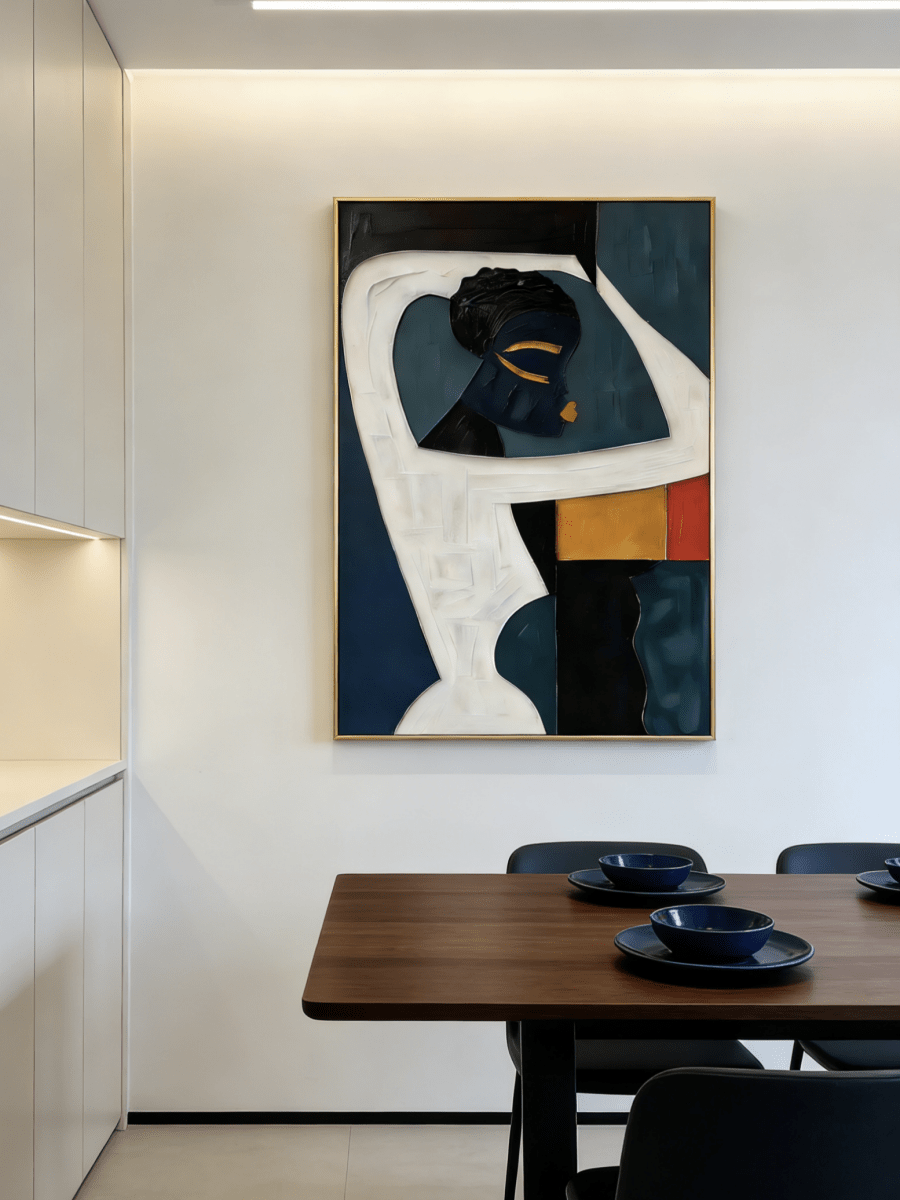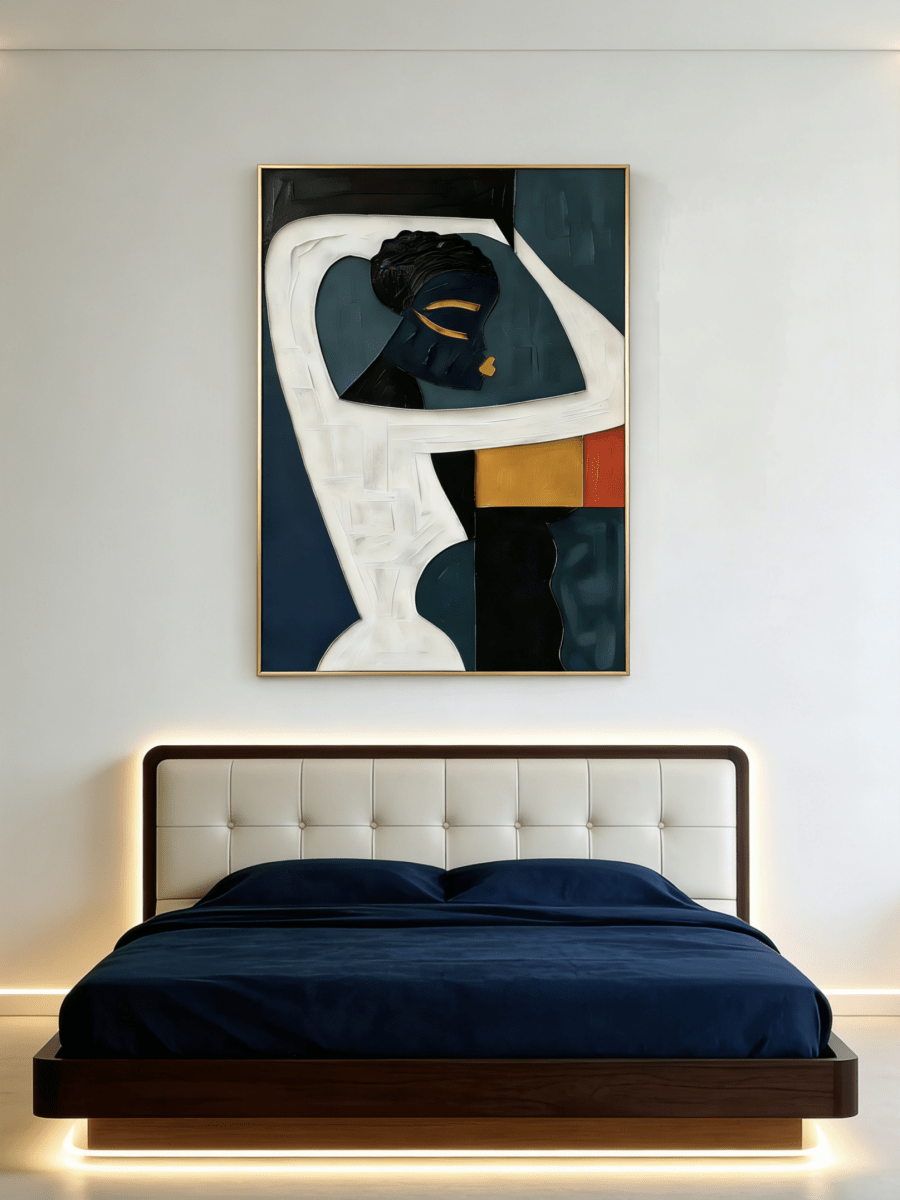

What size wall art above sofa works best? Start with artwork—or the full width of a grouping—that measures about 60%–75% of the sofa’s outside width. Two-thirds is an easy default. Test a 6–10 inch gap between the sofa top and the frame. For a 72-inch sofa, about 43–54 inches of total artwork width is a practical starting range. Then adjust for frames, panel gaps, wall height, cushions, and the artwork’s visual weight.

The Quick Formula
Measure the sofa from the outside edge of one arm to the outside edge of the other. Then calculate:
Sofa width × 0.60 to 0.75 = recommended artwork width
Sofa width × 0.67 = an easy starting target
For example, 72 inches × 0.67 is about 48 inches. “Artwork width” means the complete outside width after installation. For one framed painting, measure from the frame’s far-left edge to its far-right edge—not just the painted image. For a diptych or triptych, add every panel and every gap:
Total grouping width = combined panel widths + combined gaps
Two 22-inch panels with one 3-inch gap measure 47 inches overall. Three 14-inch panels with two 3-inch gaps measure 48 inches overall. Both groupings can work above many 72-inch sofas. The 60%–75% range is a visual starting point, not a design law: wide arms, nearby furniture, ceiling height, and strong contrast can all change how large a piece feels.
Wall Art Size Chart for Common Sofa Widths
The chart below uses the sofa’s full outside width. Values are rounded to make shopping and wall marking easier.
| Sofa Width | Art Width, 60%–75% | Easy Two-Thirds Target |
|---|---|---|
| 60 in / 152 cm | 36–45 in / 91–114 cm | About 40 in / 102 cm |
| 66 in / 168 cm | 40–50 in / 101–126 cm | About 44 in / 112 cm |
| 72 in / 183 cm | 43–54 in / 110–137 cm | About 48 in / 122 cm |
| 78 in / 198 cm | 47–59 in / 119–149 cm | About 52 in / 132 cm |
| 84 in / 213 cm | 50–63 in / 128–160 cm | About 56 in / 142 cm |
| 90 in / 229 cm | 54–68 in / 137–172 cm | About 60 in / 152 cm |
| 96 in / 244 cm | 58–72 in / 146–183 cm | About 64 in / 163 cm |
| 108 in / 274 cm | 65–81 in / 164–206 cm | About 72 in / 183 cm |
| 120 in / 305 cm | 72–90 in / 183–229 cm | About 80 in / 203 cm |
For a grouping, use its complete width including gaps. For framed art, use the finished frame width. If a product falls between two targets, outline both sizes with painter’s tape. The formula should narrow your choices, not push you toward a size or shape that conflicts with the room.
What Size Art Works Above a 72-Inch Sofa?
The practical art size for a 72 inch sofa is about 43–54 inches in total width, with roughly 48 inches as a useful default. Here are three ways to reach that range:
One large painting
Try one horizontal piece about 48–54 inches wide. A square work can also succeed at about 44–48 inches wide when the wall has enough height. Do not treat 48 inches as mandatory; a bold, dark, or heavily textured 44-inch piece may carry more visual weight than a pale 48-inch canvas.
A diptych
Two panels that are 22–24 inches wide, separated by a 2–4 inch gap, create a grouping about 46–52 inches wide. Confirm whether a product’s listed dimension applies to each panel or to the set as a whole.
A triptych
Three 14–16 inch panels with two gaps of 2–3 inches create an overall span of about 46–54 inches. These numbers are layout examples, not a claim that every store offers those exact panel sizes. WABI Wall Art’s current hand-painted diptych and multi-panel collection should be checked for current panel counts and dimensions before ordering.
How High Should Art Hang Above a Sofa?
Start by placing the bottom of the finished frame about 6–10 inches above the sofa’s highest fixed part. That usually keeps the art visually connected to the furniture. Soft back cushions can rise or shift, so measure from the stable sofa back and then confirm that the moving cushions will not touch the frame.
A high-back sofa may need a smaller gap. A low-back sofa under a tall ceiling may tolerate more breathing room. When art sits above furniture, its relationship to that furniture is usually more important than forcing the artwork’s center to a universal 57-inch height. Check the view while seated, from the entrance, and from the opposite side of the room.
Keep the installation safe: make sure heads and moving cushions cannot strike the artwork, and use wall fixings selected for the wall type and the finished artwork’s weight. Homes with children, pets, reclining backs, or heavy textured canvases need especially stable installation.
One Large Painting vs. a Set of Two or Three
No format wins automatically. Choose the arrangement that gives the sofa the right total width while respecting the artwork’s composition and your tolerance for alignment.
| Factor | One Large Painting | Diptych | Triptych |
|---|---|---|---|
| Visual effect | Unified focal point | Balanced rhythm | Architectural span |
| Installation | Simplest alignment | One equal gap | Two equal gaps |
| Width calculation | Finished frame width | Two panels + one gap | Three panels + two gaps |
| Best sofa type | Most standard sofas | Wide or symmetrical sofas | Long sofas or main sectional span |
| Style impression | Calm and continuous | Conversational and ordered | Graphic and expansive |
A single painting is often best when the image needs uninterrupted viewing. A diptych adds rhythm while staying manageable; begin by testing a 2–4 inch gap and account for frame thickness. A triptych can extend across a long sofa, but it requires careful leveling and equal spacing. Three small pieces are not automatically better than one appropriately wide painting.

Horizontal, Panoramic, or Square Art?
Horizontal wall art
Horizontal wall art for sofa walls naturally echoes a two- or three-seat sofa. It is especially useful where the wall has comfortable width but average height. This is usually the easiest way to create a substantial focal point without pushing the frame toward the ceiling.
Panoramic wall art
Panoramic wall art suits low-back seating, long uninterrupted walls, and the main straight section of a large sectional. It can preserve clearance in a low-ceiling room while extending the eye horizontally. “Panoramic” does not mean unlimited width; the finished piece should still relate to the sofa and leave wall clearance.

Square wall art
A substantial piece from the square wall art collection can create a stable, concentrated anchor above a compact sofa or on a tall wall. The key is physical width: a small square centered over a broad couch may still look stranded. Square art also uses more height than a horizontal piece of the same width, so check the ceiling and molding clearance.

How to Measure Before Ordering
- Measure the sofa. Record the outside arm-to-arm width, not only the seat cushions.
- Calculate the range. Multiply by 0.60 and 0.75, then calculate 0.67 for a memorable midpoint.
- Read the product dimensions carefully. Confirm width × height, canvas or framed size, and whether a set’s measurement applies to each panel or the complete grouping. Never infer orientation from a styled photo.
- Add frames and gaps. Use the finished outer frame width. Add every planned gap to a multi-panel total.
- Mark the wall. Use wall-safe painter’s tape, kraft paper, or removable paper templates.
- View the outline from the room. Check from the entrance, opposite wall, normal seated position, and an oblique angle in daylight and evening light.
- Test height. Begin around 6–10 inches above the sofa’s fixed back, then adjust for cushions, wall height, and safe head clearance.

Special Sofa and Wall Situations
Sectional sofa
Do not add both legs of an L-shaped sectional. Measure the main straight sofa section directly beneath the artwork and center the piece over that span or the primary seating zone. If the sectional crosses two walls, treat the walls separately rather than asking one artwork to bridge the corner.
Sofa with a chaise
Decide whether the visual center belongs to the full furniture outline or the main backed seating area. Artwork usually relates more naturally to the main sofa back and wall than to the projecting chaise footprint.
Sofa between windows or sconces
Use the smaller of the recommended sofa-based width and the wall opening that remains. Preserve visible breathing room next to window trim. With sconces, treat lights and art as one composition, allow adequate clearance, and choose a slightly narrower artwork if necessary.
Off-center sofa, low ceiling, or high ceiling
If the art clearly belongs to the sofa zone, center it on the sofa—not on a much wider wall. A low ceiling usually favors a shallow horizontal or panoramic format. A high ceiling can accept taller square art or a higher composition, but height does not erase the need for a sensible sofa-to-art width relationship.
Common Sizing Mistakes
- Measuring the wall instead of the sofa: start with the furniture the art is meant to anchor.
- Ignoring the frame: use the outside framed measurement.
- Forgetting multi-panel gaps: add every gap to the grouping width.
- Hanging too high: test a closer 6–10 inch relationship and view it seated.
- Trusting a close-up product image: verify listed dimensions; styled images vary in furniture scale and camera distance.
- Centering on the wall: center on the sofa unless a larger furniture-and-lighting composition clearly takes priority.
- Checking width but not height: confirm clearance above the frame, especially for square art and low ceilings.
- Measuring only cushions: include the sofa arms.
- Assuming “large” is standardized: compare actual numbers.
- Misreading set dimensions: confirm whether the measurement is per panel or for the full set.
WABI Wall Art Examples for Different Sofa Layouts
Wabi Sabi Textured Wall Art – Soft Grey Horizon -EL#0277
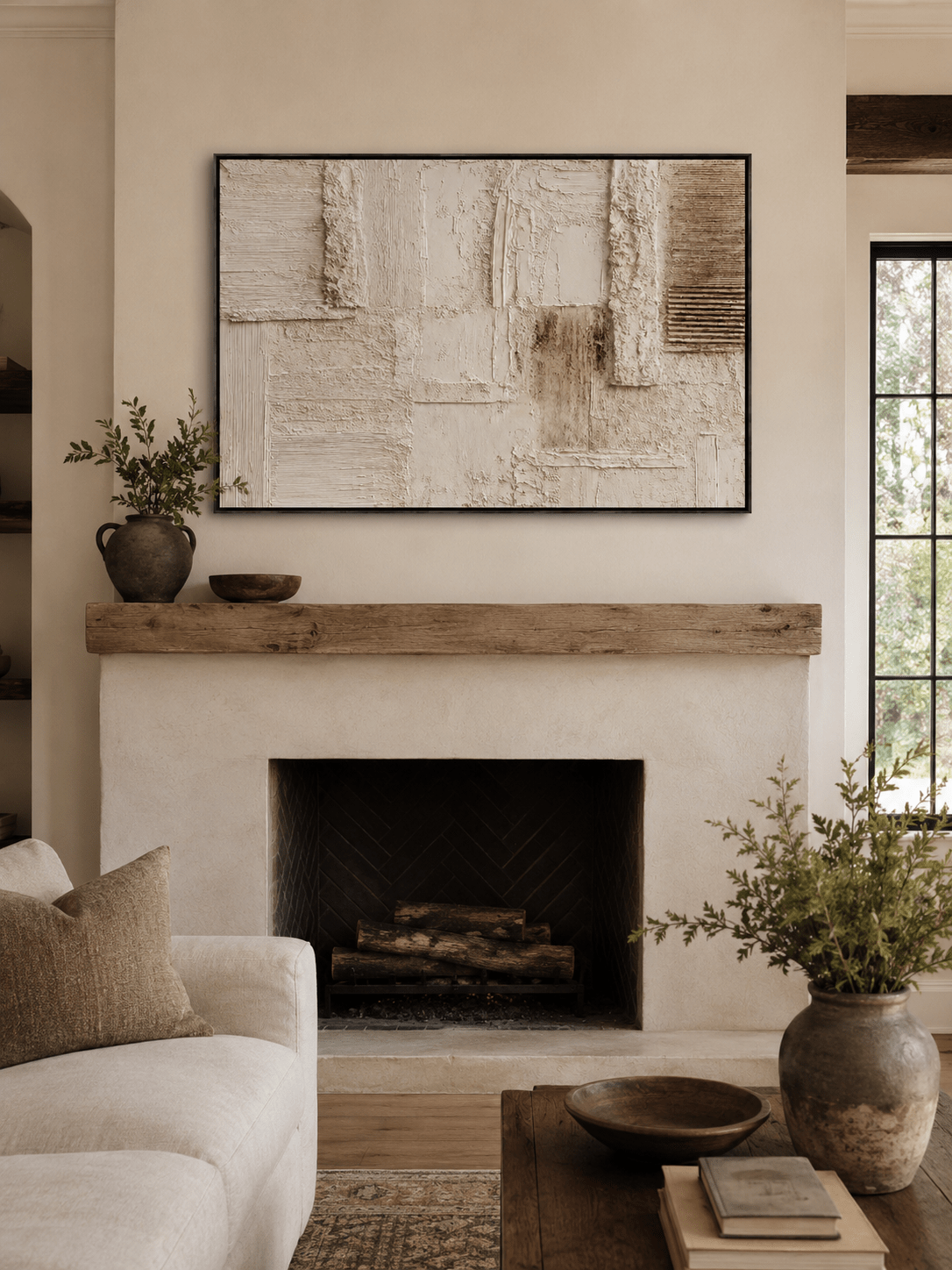
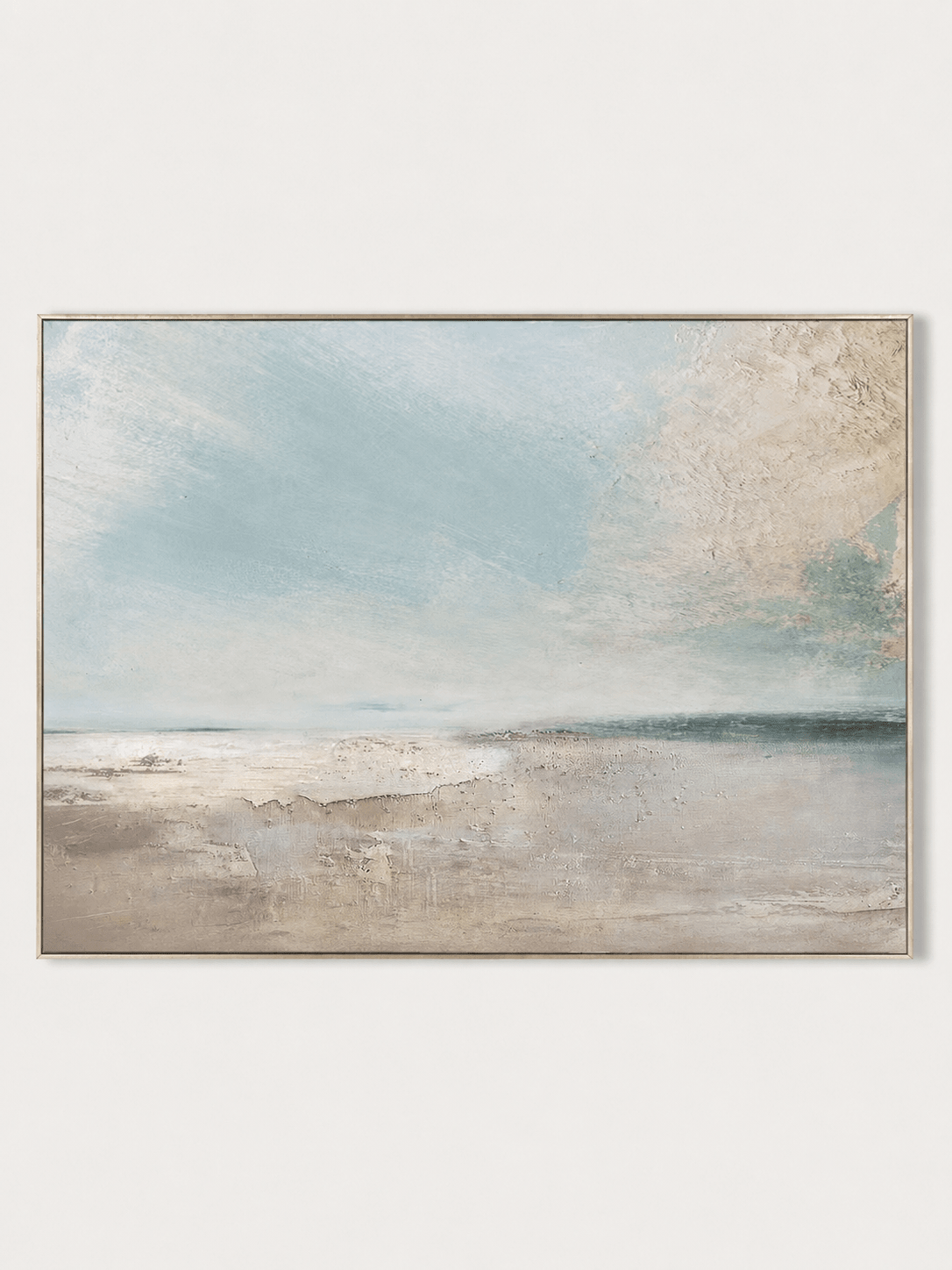
This horizontal hand-painted work by Evelyn Li is available in confirmed widths including 24, 32, 36, 40, 48, and 54 inches, with rolled, stretched, and framed options at those sizes. The 48- and 54-inch widths sit inside the recommended 43–54 inch range for a 72-inch sofa. Use the finished frame width when calculating. Its pale field feels visually lighter, while the raised plaster texture and long grey band give it enough presence to unify a standard sofa wall.
Neutral Abstract Landscape Wall Art – Misty Tidelands -EL#0313
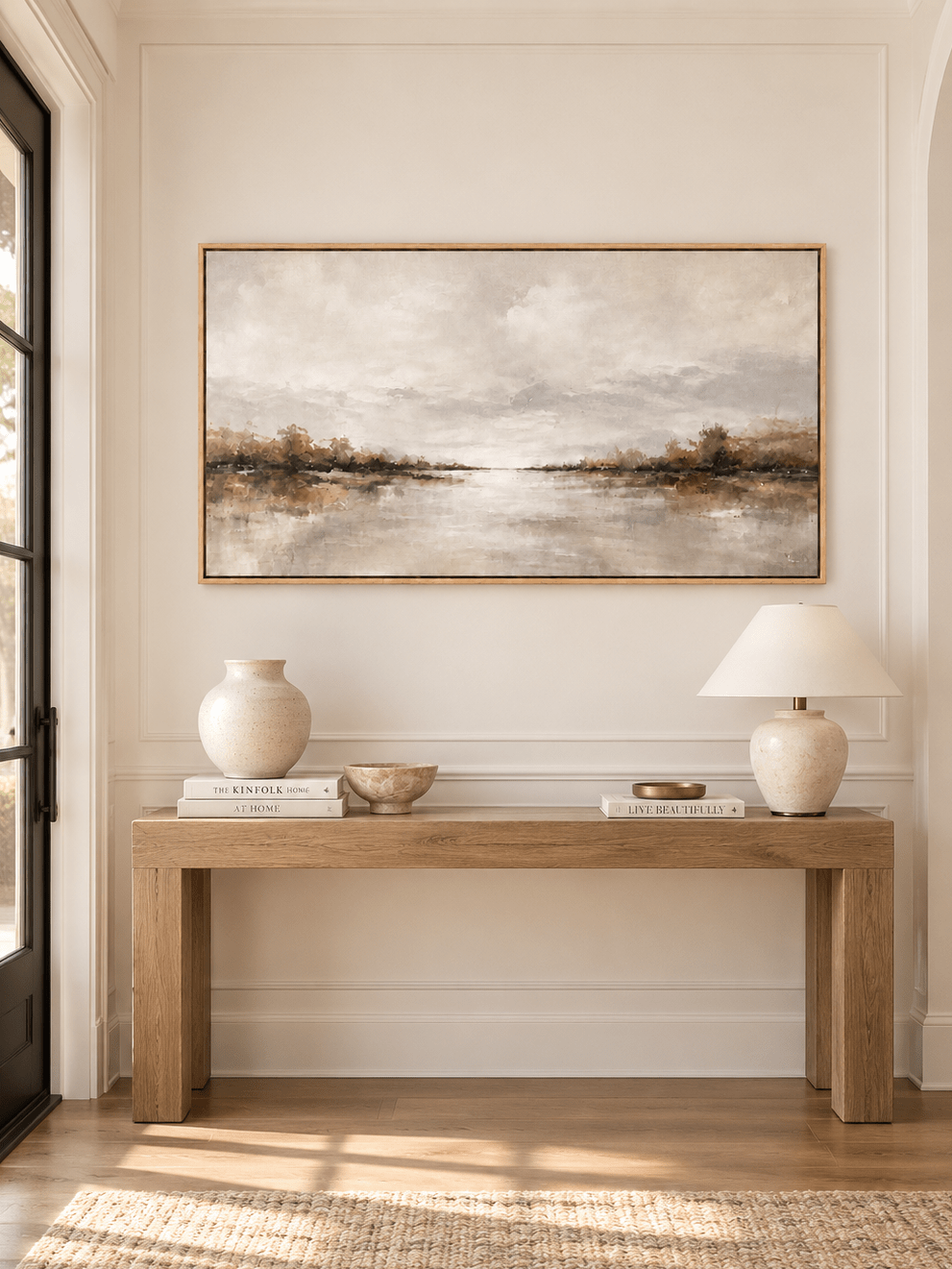
Misty Tidelands by Evelyn Li is a true panoramic composition with confirmed 36-, 48-, 60-, 72-, 80-, and 90-inch widths among its current options. A 48-inch version is a straightforward fit above a 72-inch sofa; a 60-inch width better suits many 84–96 inch sofas or a main sectional span. The charcoal marks and layered texture make the work read slightly heavier than a plain pale canvas, so test the intended outline before choosing the upper end of a range.
Modern Structural Abstract Diptych -SR#0235
This genuine two-panel set by Seraphina Rose uses muted sage, olive, and warm stone. The current 2P 24 × 20 inch option means each panel is 24 inches wide; with a 3-inch gap, the installed grouping is about 51 inches wide—a practical example for a 72-inch sofa. Larger confirmed per-panel options include 30 × 20, 32 × 24, 36 × 24, 40 × 30, and 48-inch widths. Add the chosen gap and any frame width to the final plan.
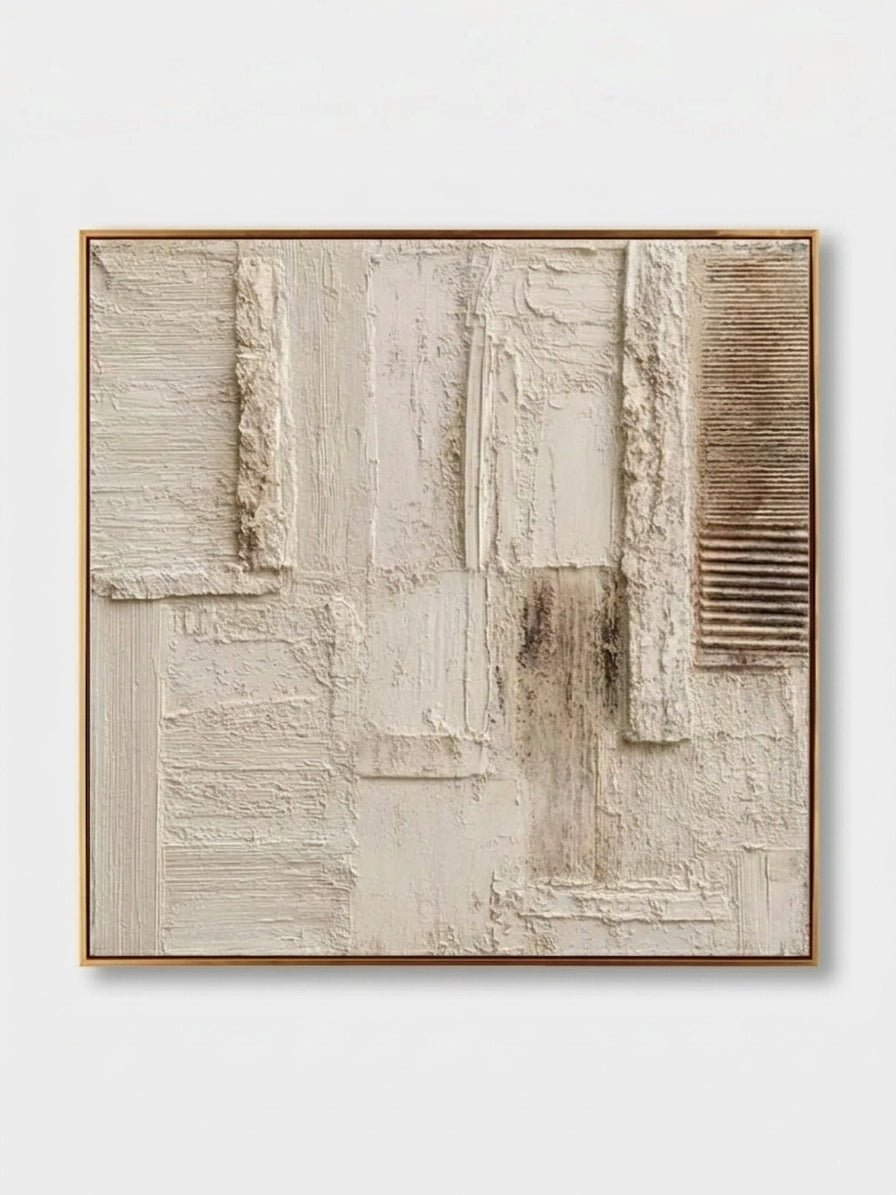
Handmade Beige & Bronze Wabi Sabi Textured Wall Art - EV#0071
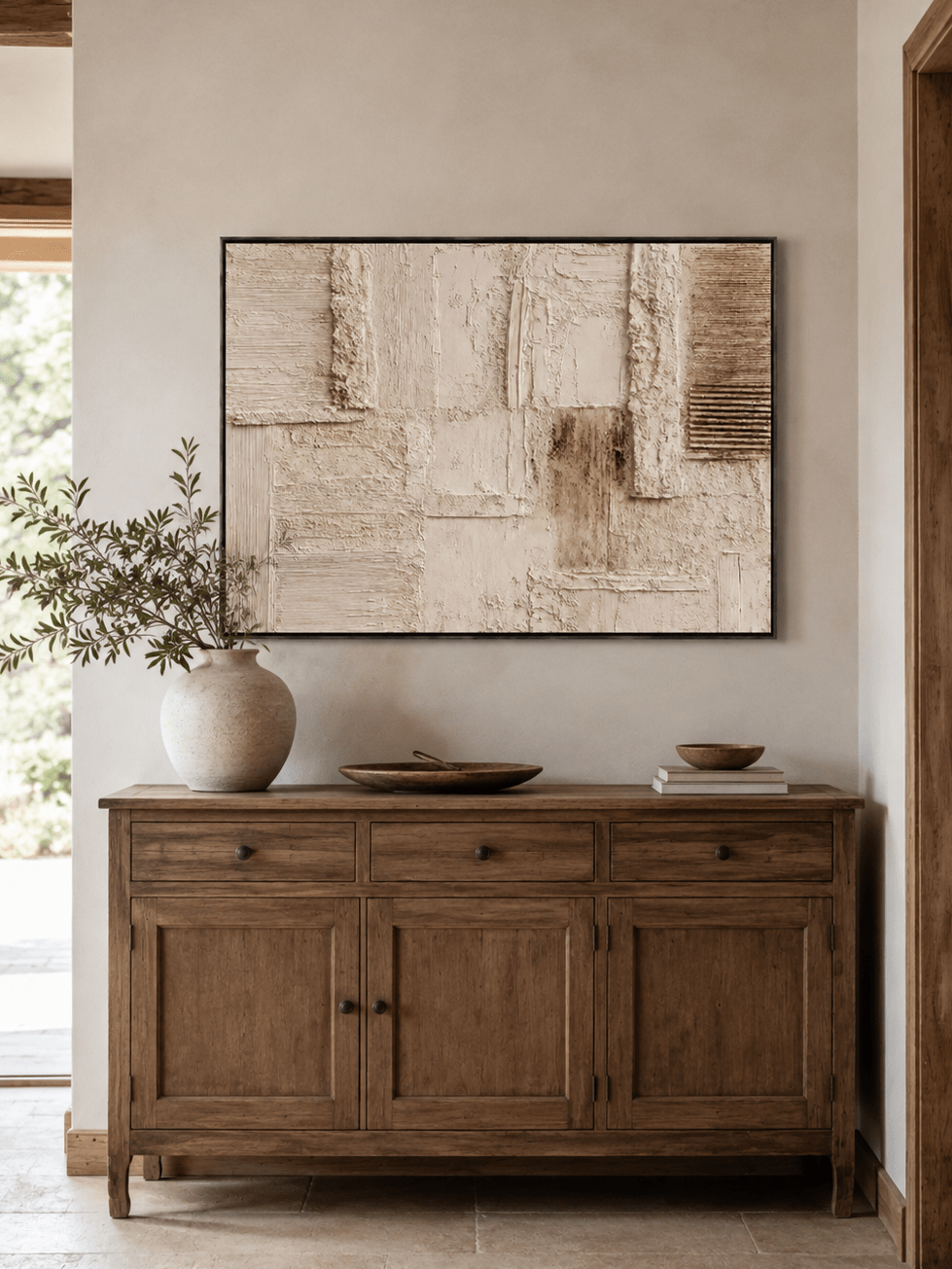
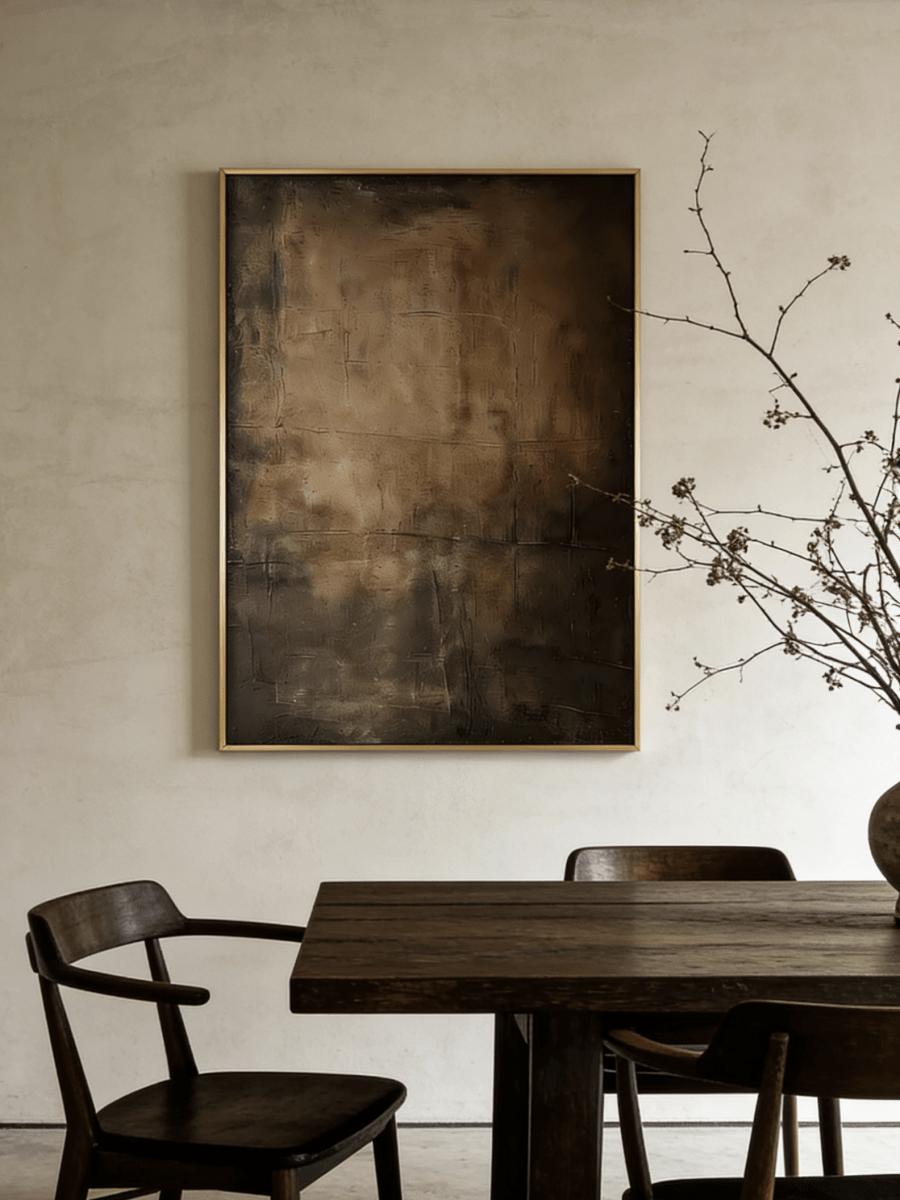
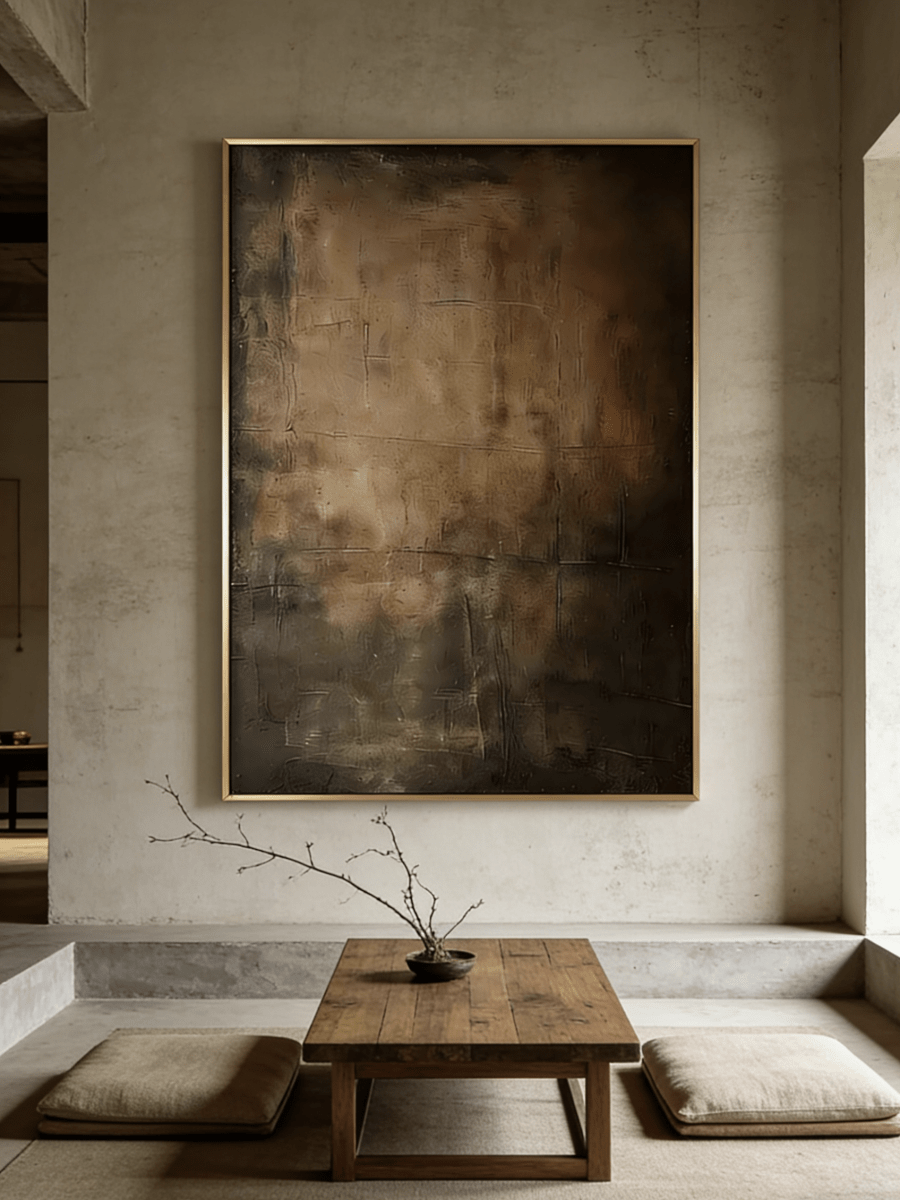
This square textured canvas by Eliot Vermeer is currently offered in confirmed 24-, 30-, 32-, 36-, 40-, 44-, 48-, 55-, and 60-inch square sizes with rolled or framed finishes. The 44- or 48-inch size can work above a 72-inch sofa when the wall is tall enough. Its bronze color, gold-frame option, and pronounced raised grid create stronger visual weight than a low-contrast square, helping one centered panel feel deliberate rather than undersized.
For broader room-by-room advice beyond a sofa wall, continue with WABI Wall Art’s complete wall art sizing guide.
Frequently Asked Questions
What size wall art should go above a sofa?
Wall art should usually begin at about 60%–75% of the sofa’s full outside width. Two-thirds is an easy default. Include the finished frame or every panel and gap, then tape the outline on the wall before ordering.
How wide should art be compared with a couch?
A practical wall art size above couch seating is roughly three-fifths to three-quarters of the couch width. Keep the artwork from visibly exceeding the sofa unless the larger furniture-and-lighting composition intentionally supports an oversized installation.
How high should wall art hang above a sofa?
Begin with the bottom of the frame about 6–10 inches above the sofa’s highest fixed back. Adjust for loose cushions, a reclining back, head clearance, ceiling height, and how the grouping looks from a seated position.
What size art works above a 72-inch sofa?
About 43–54 inches of total installed width is a useful range above a 72-inch sofa. Roughly 48 inches is an easy target, whether it comes from one painting or a correctly calculated grouping.
Is one large painting better than a set of three?
One large painting is better when you want a calm, continuous focal point and simpler installation. A triptych is useful when its three-panel composition genuinely benefits from rhythm and width; three unrelated small pieces do not automatically suit a large sofa.
How much space should be left between diptych or triptych panels?
About 2–4 inches is a useful test range for many sofa-wall groupings. Narrow frames and a continuous image may favor tighter gaps. Whatever you choose, keep gaps equal and include all of them in the overall width.
Should artwork be centered on the sofa or the wall?
Center artwork on the sofa when it clearly belongs to the sofa zone. Centering on a much wider wall can make the art appear displaced. Consider the full wall only when sofa, tables, lamps, and sconces form one deliberate composition.
What size art should go above a sectional sofa?
Calculate from the main straight sectional span beneath the artwork, not from both legs of the L shape. Apply the 60%–75% range to that relevant span, then center on the primary seating area and wall.
Final Check Before You Order
Measure the sofa, calculate the 60%–75% range, confirm finished product dimensions, and mark the complete outside outline—including frames and gaps. Then step back. A formula can identify plausible sizes, but the taped wall test reveals whether color, contrast, texture, ceiling height, and nearby architecture make the artwork feel balanced in your actual room.
Explore hand-painted horizontal artwork, compare it with extra-wide panoramic pieces, or use a true diptych when separate panels strengthen the composition.