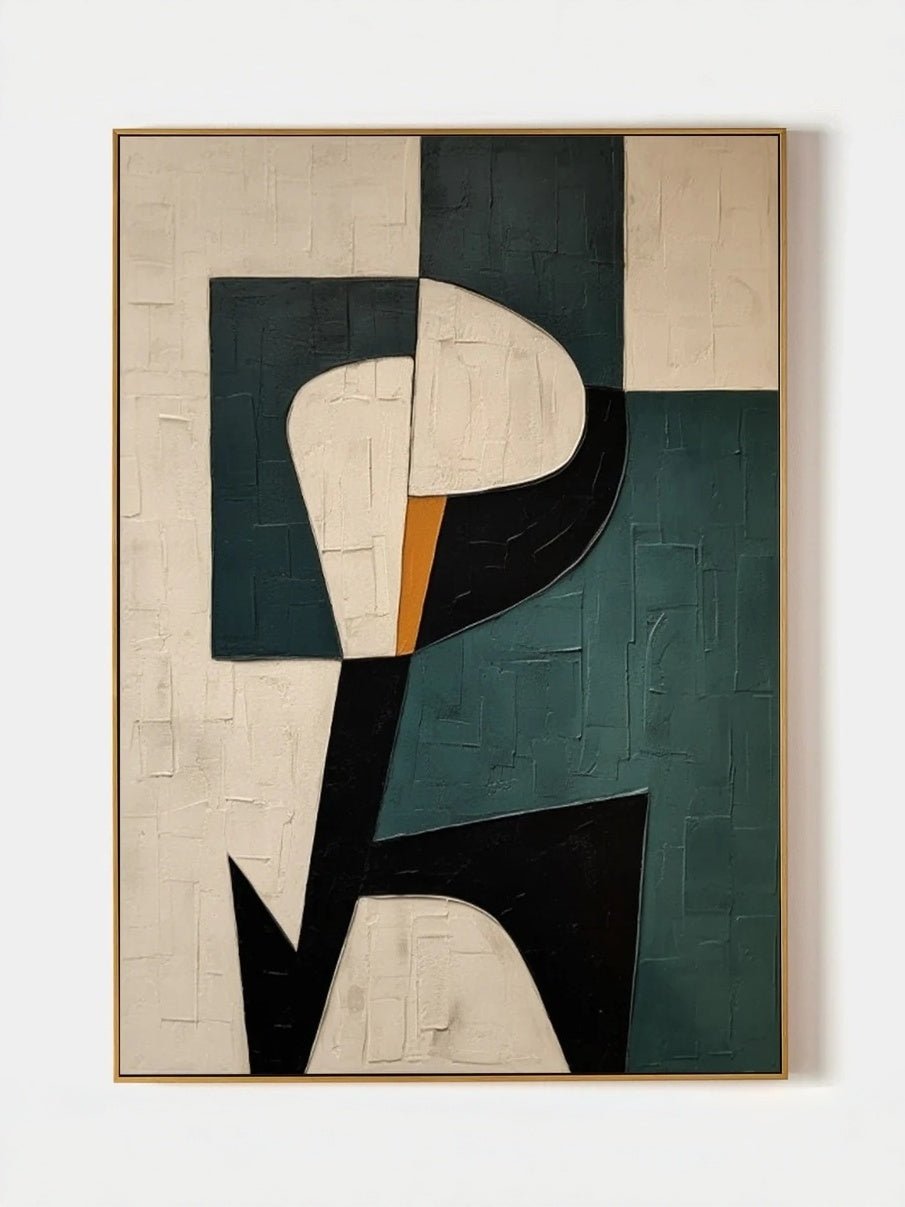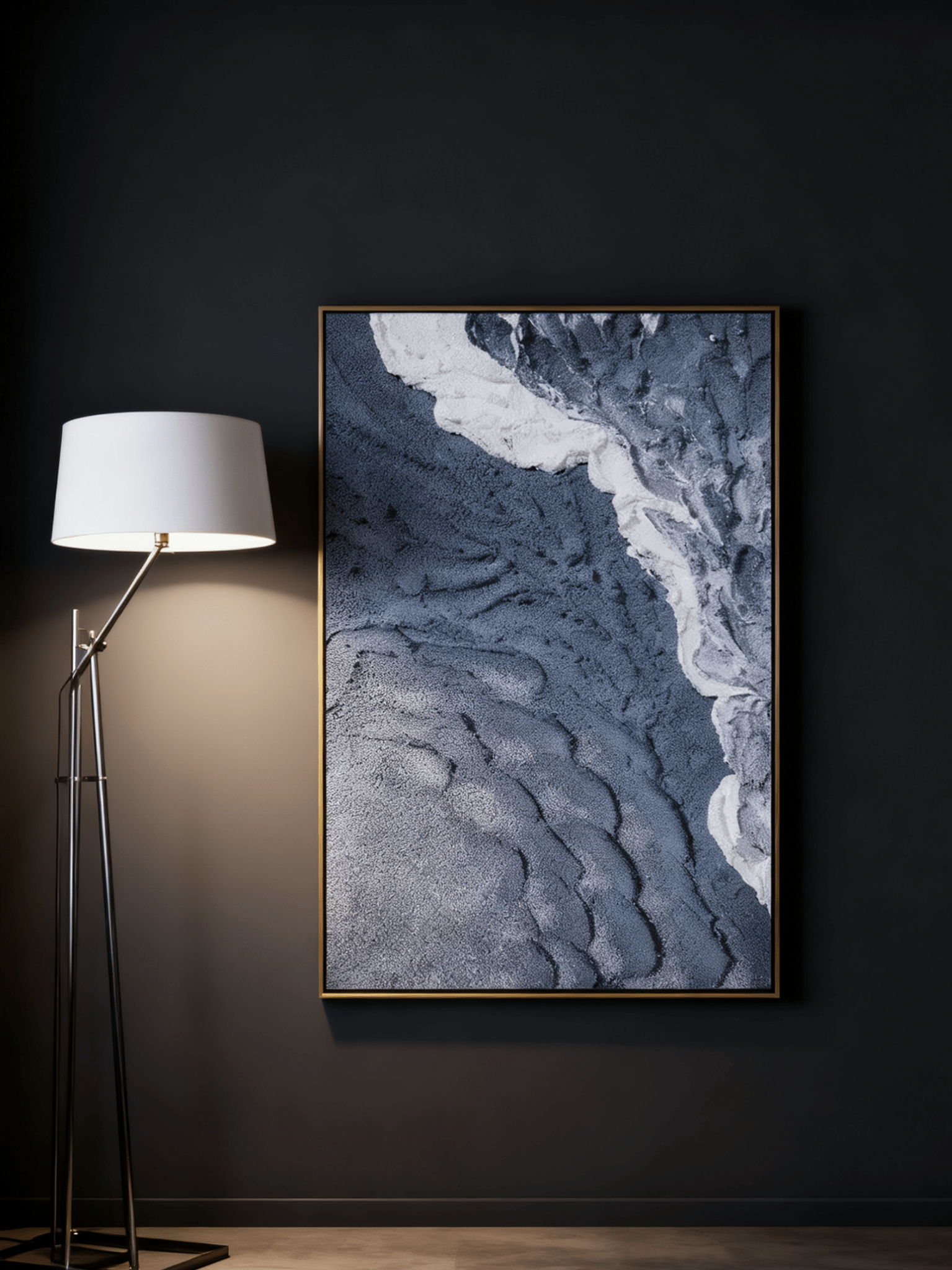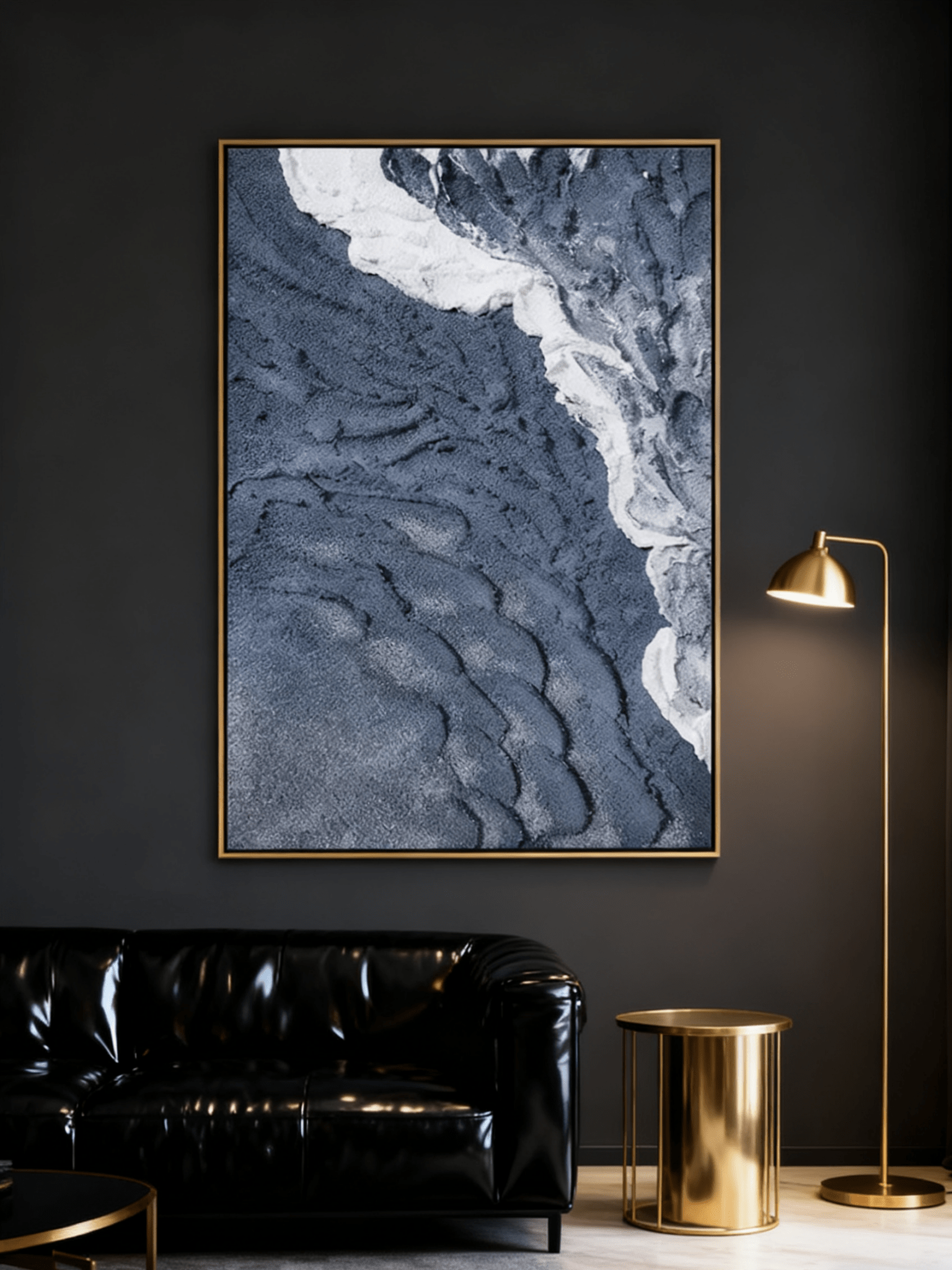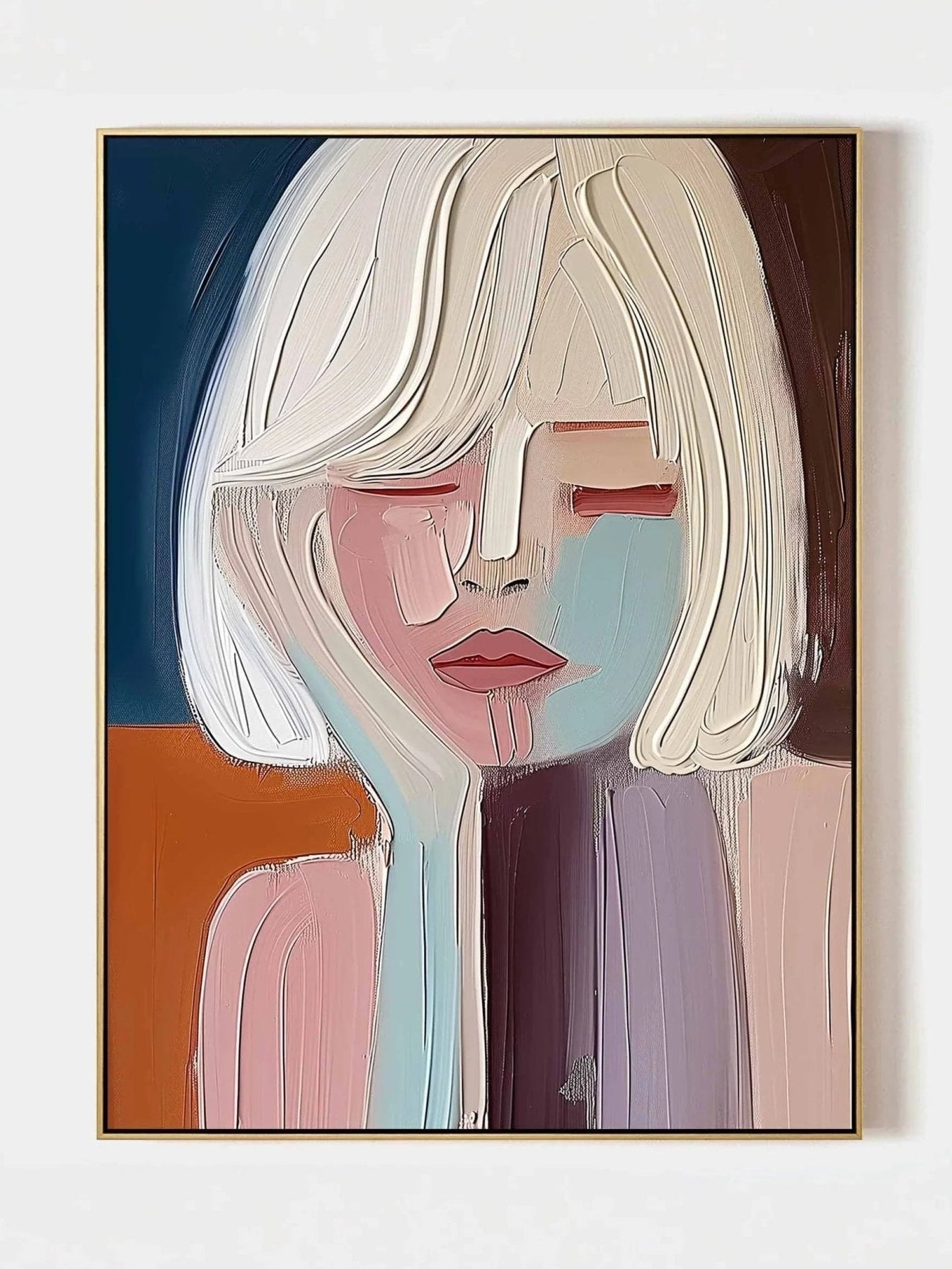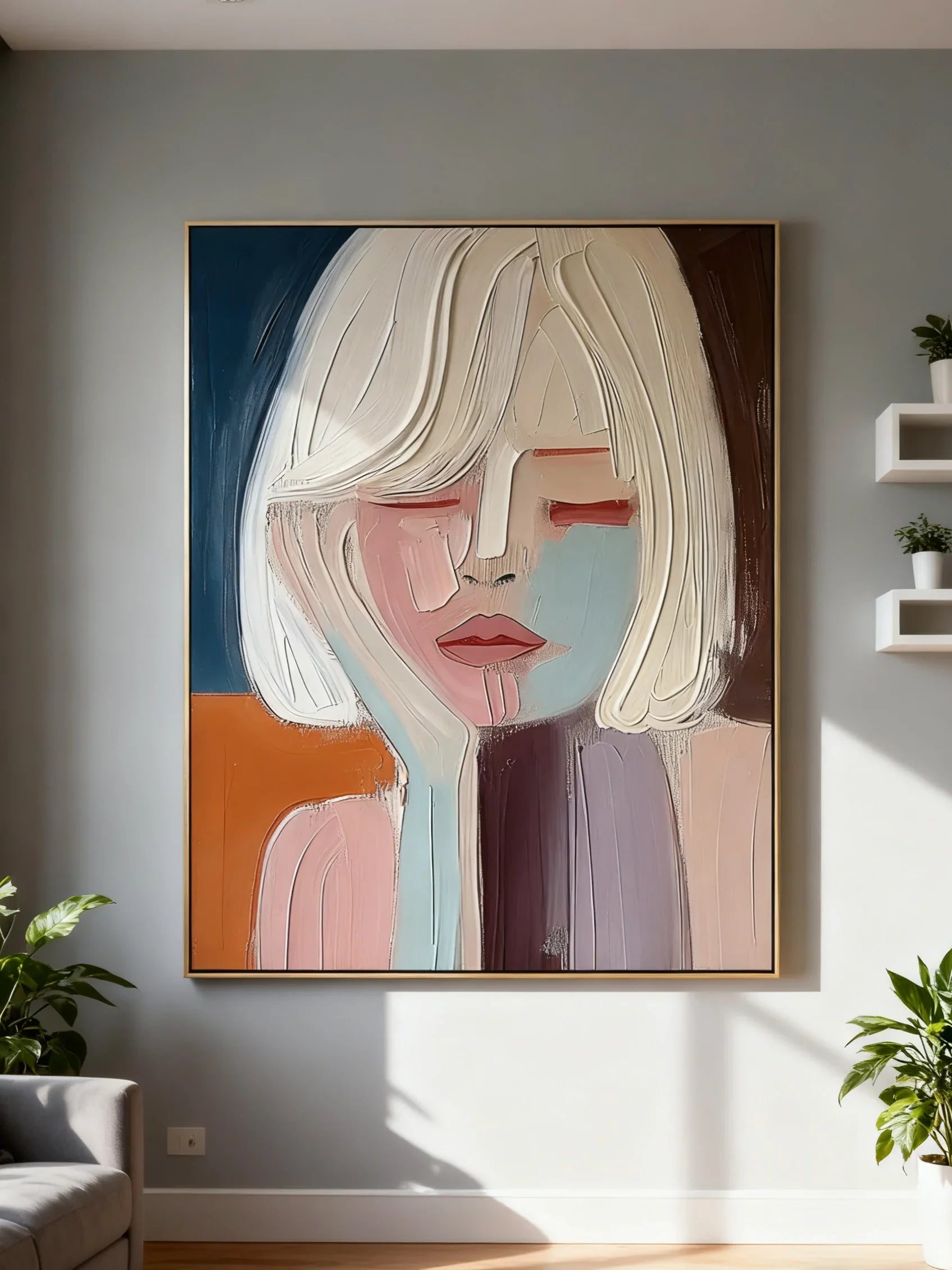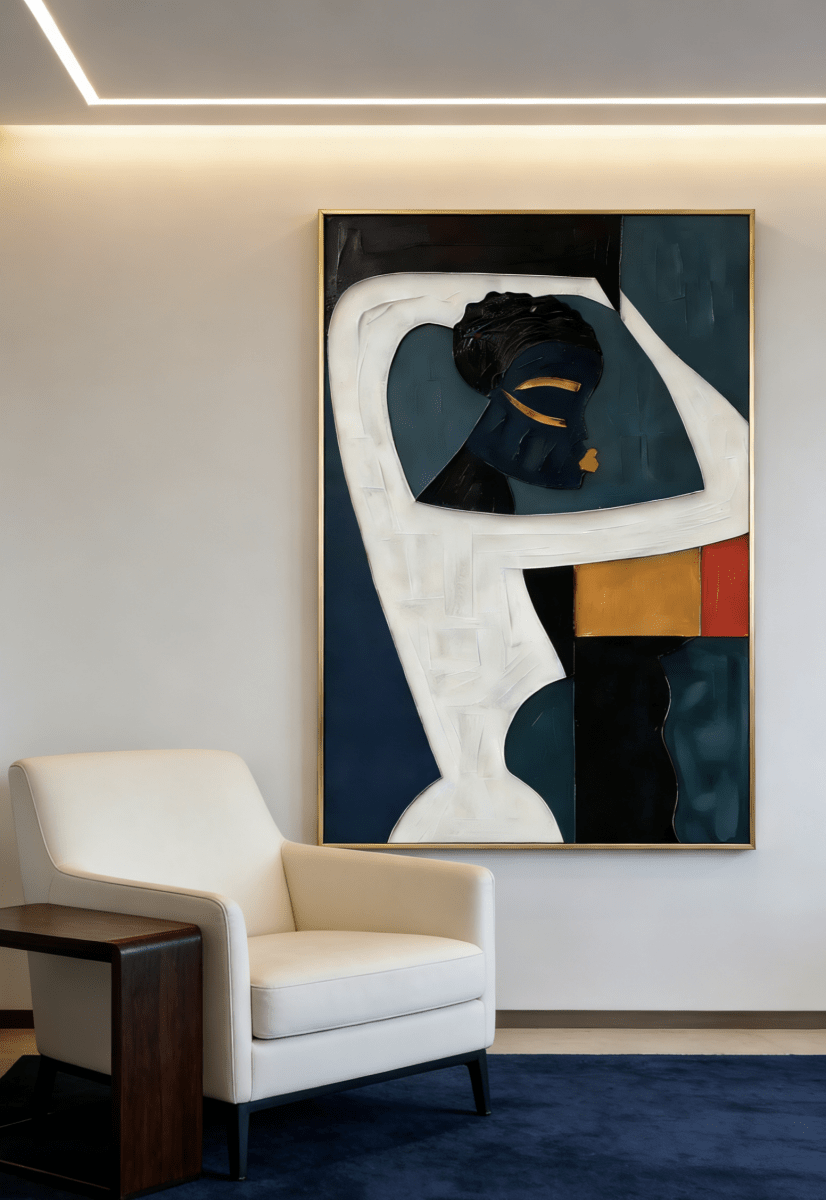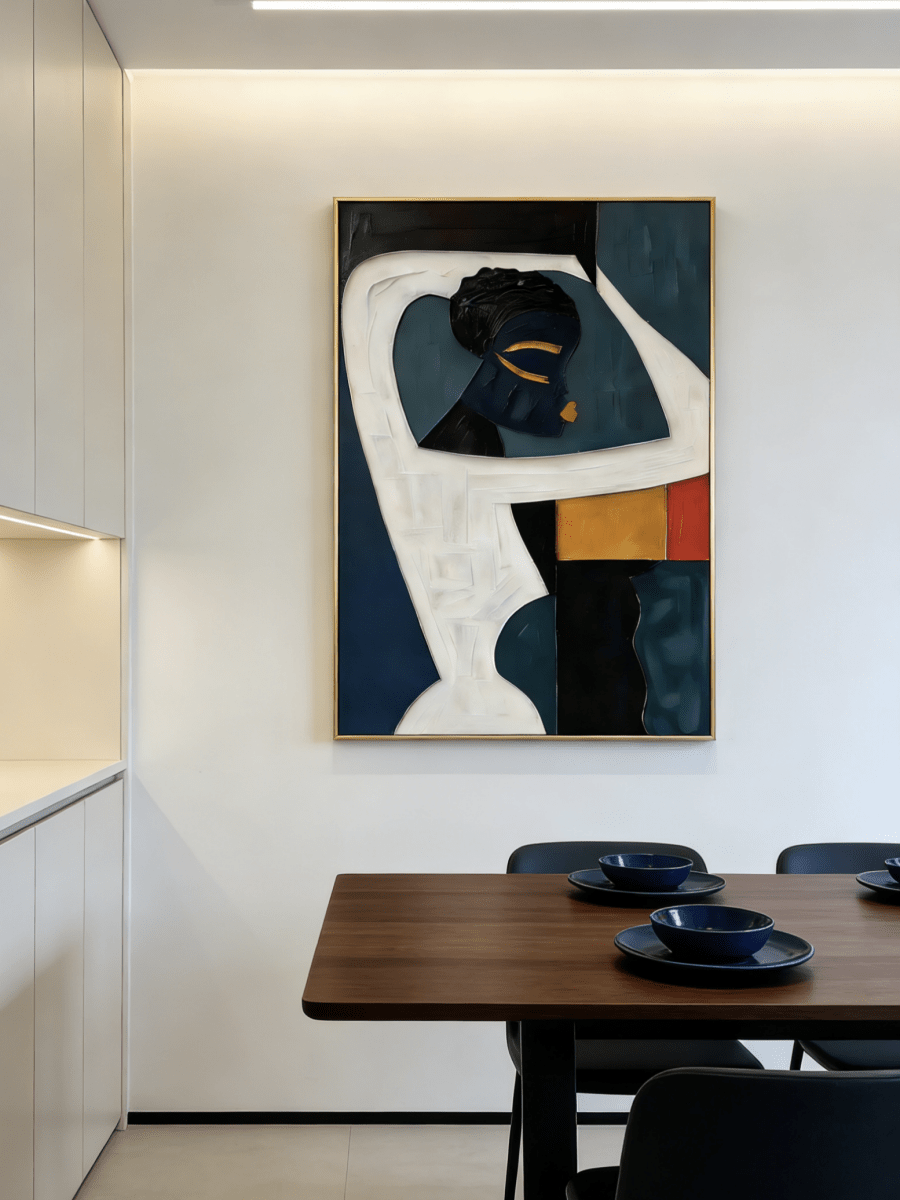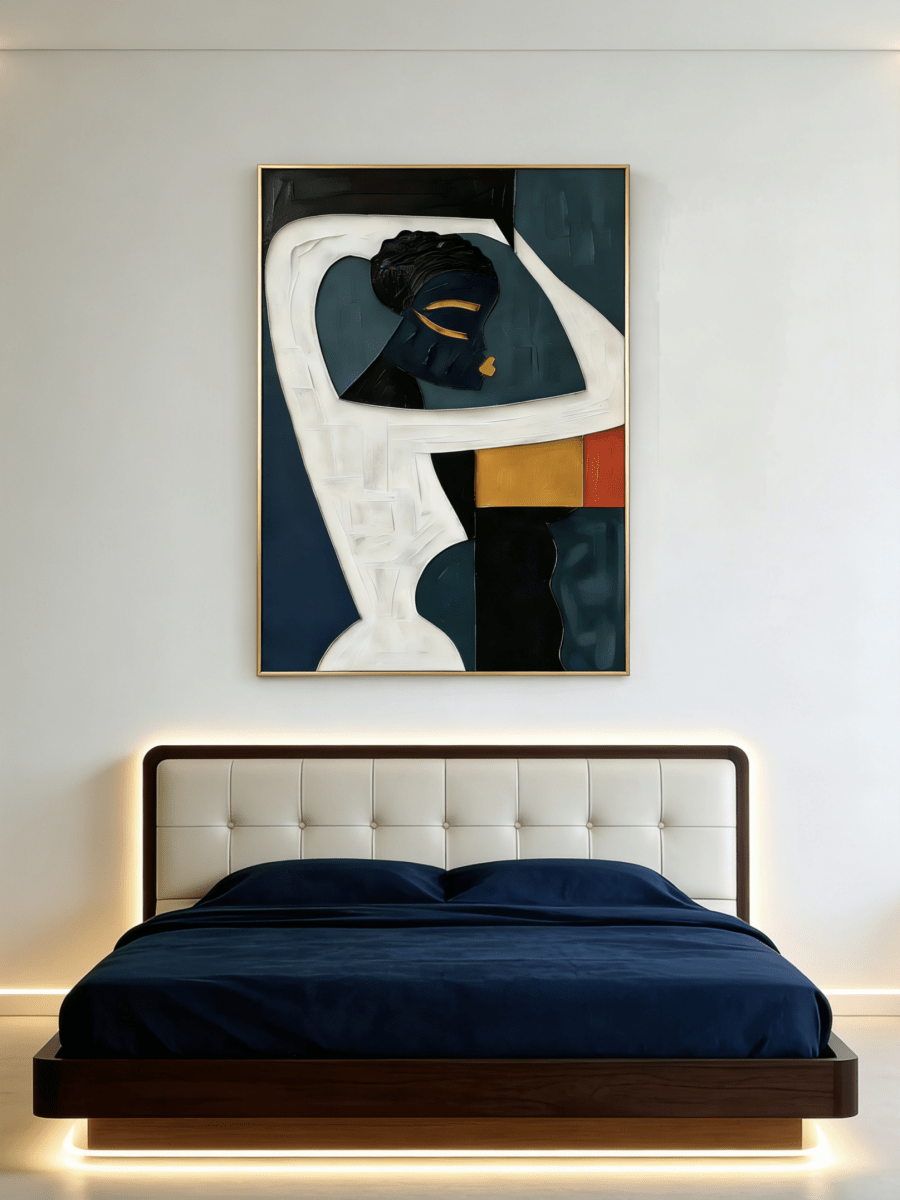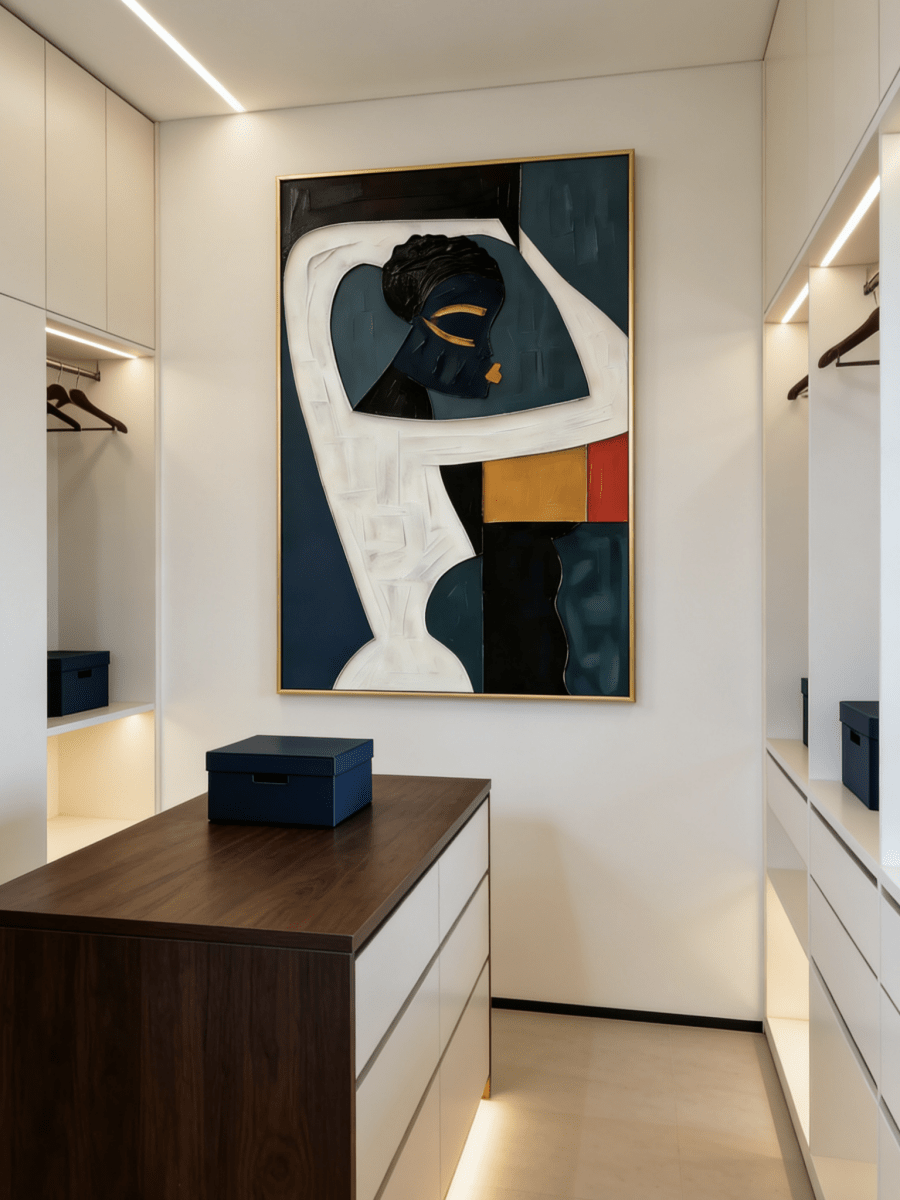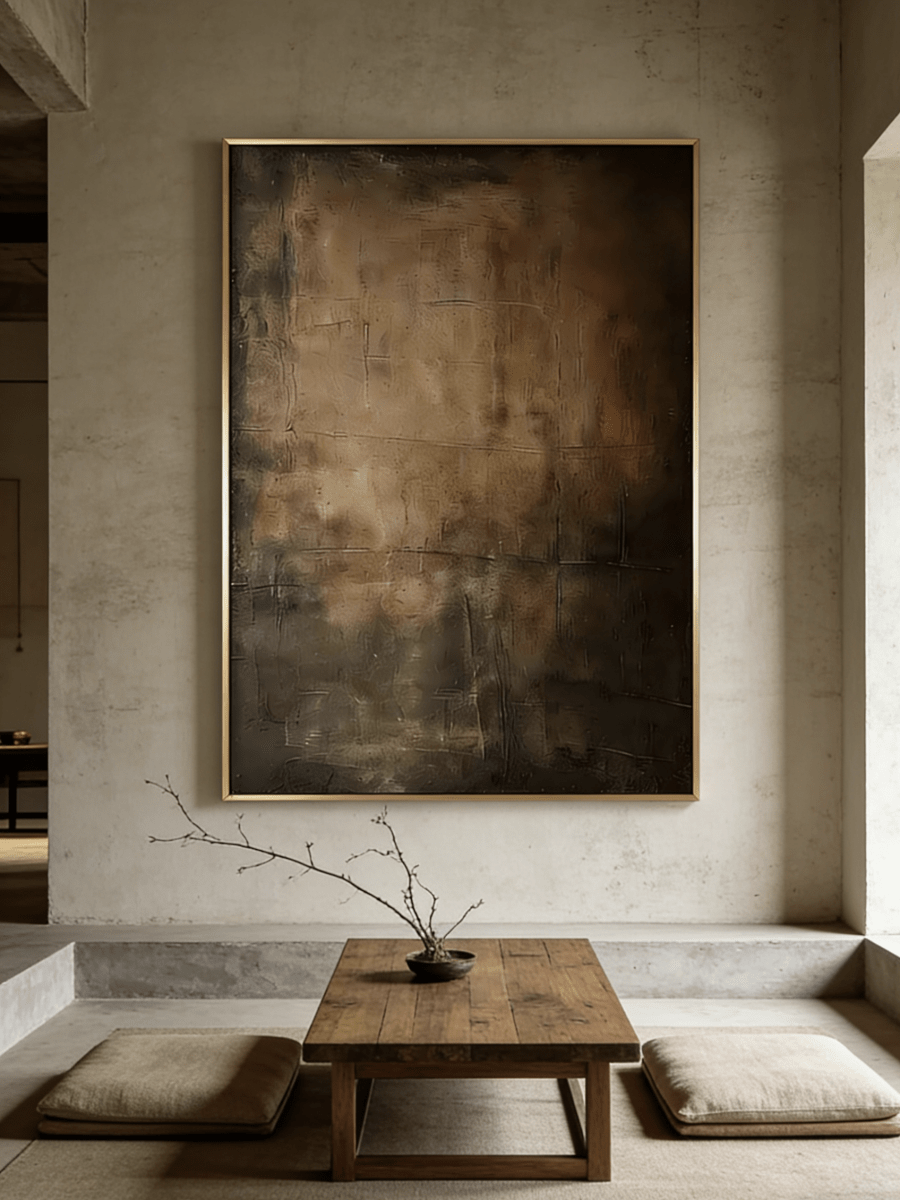


Wabi-Sabi Architectural Textured Grid Abstract Painting – EV#0458

Description
Architectural Textured Grid Abstract Painting
Structure Made Imperfect
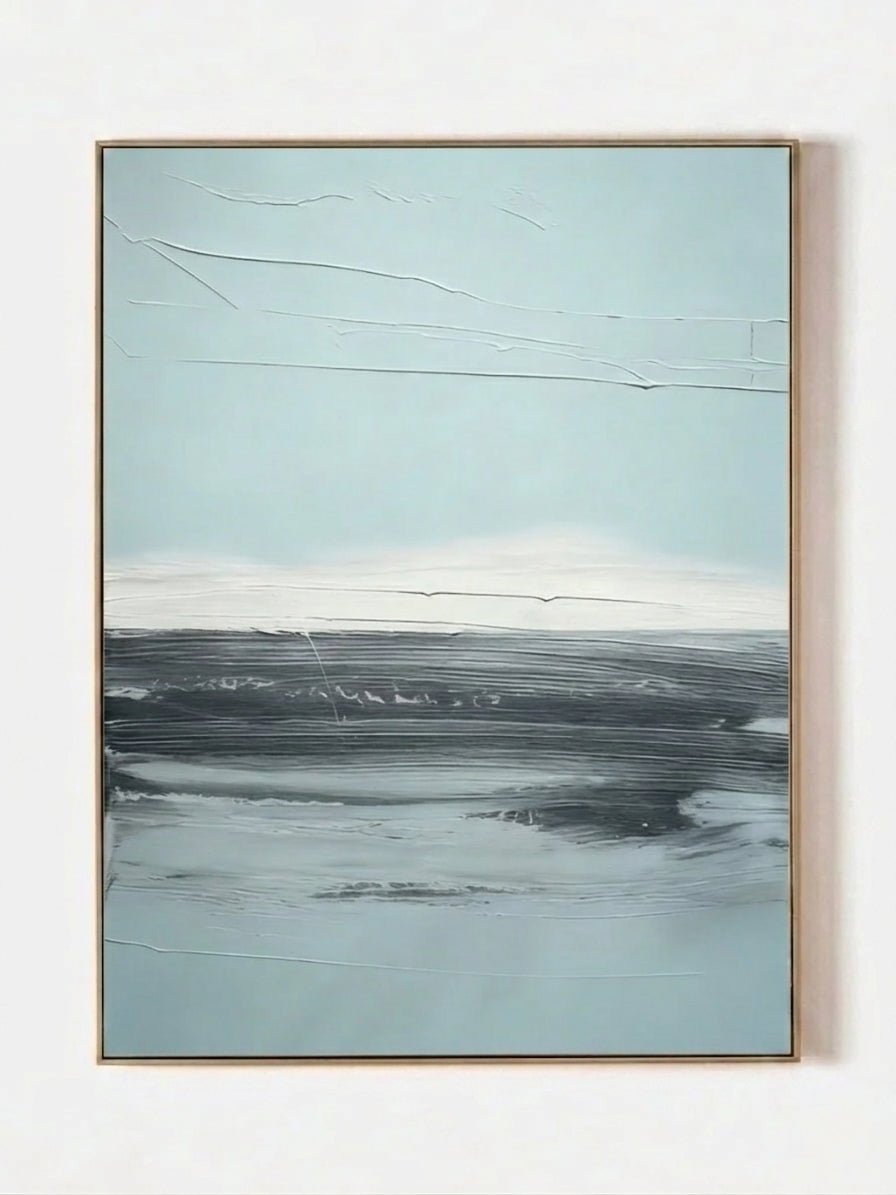
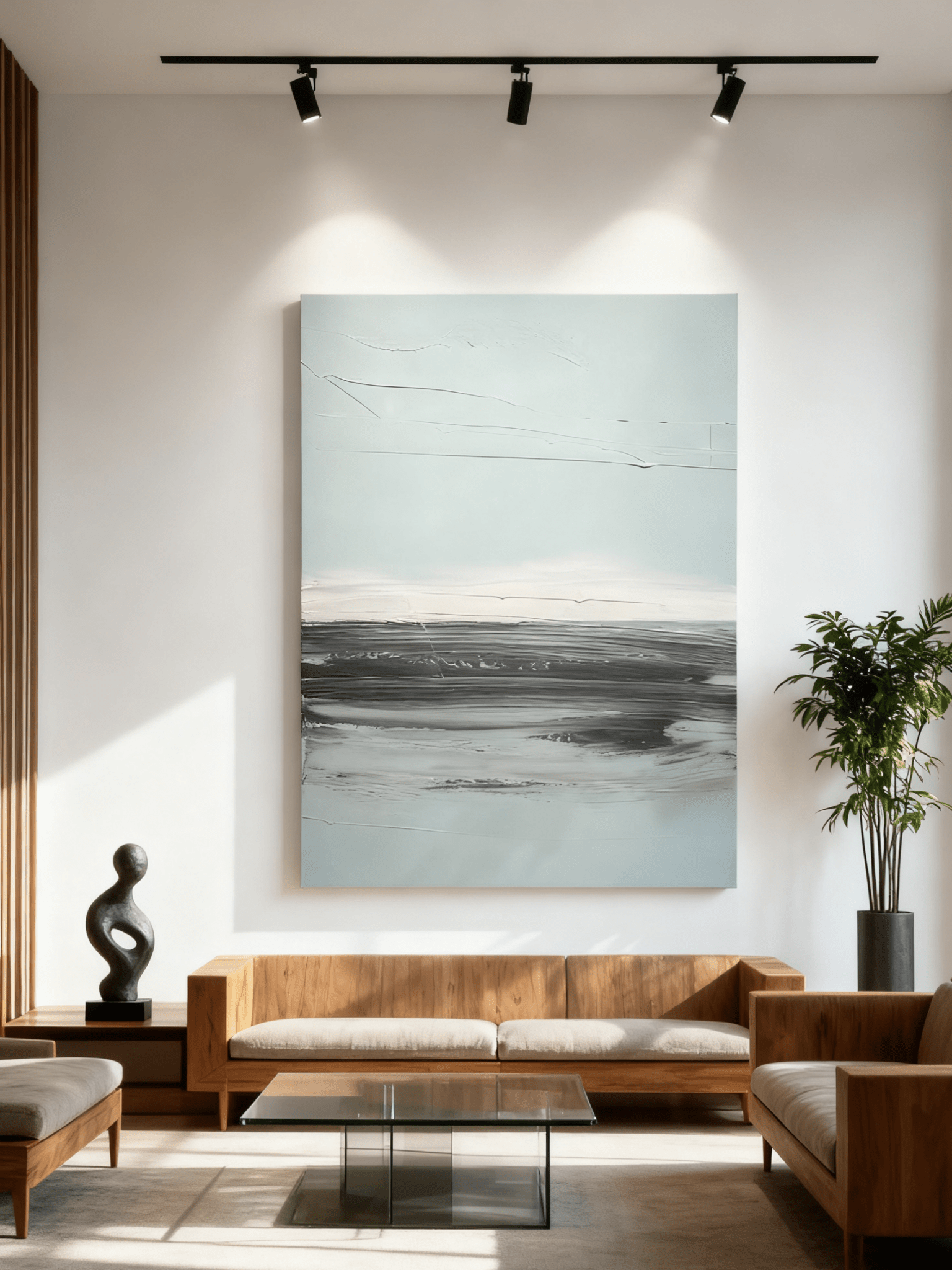
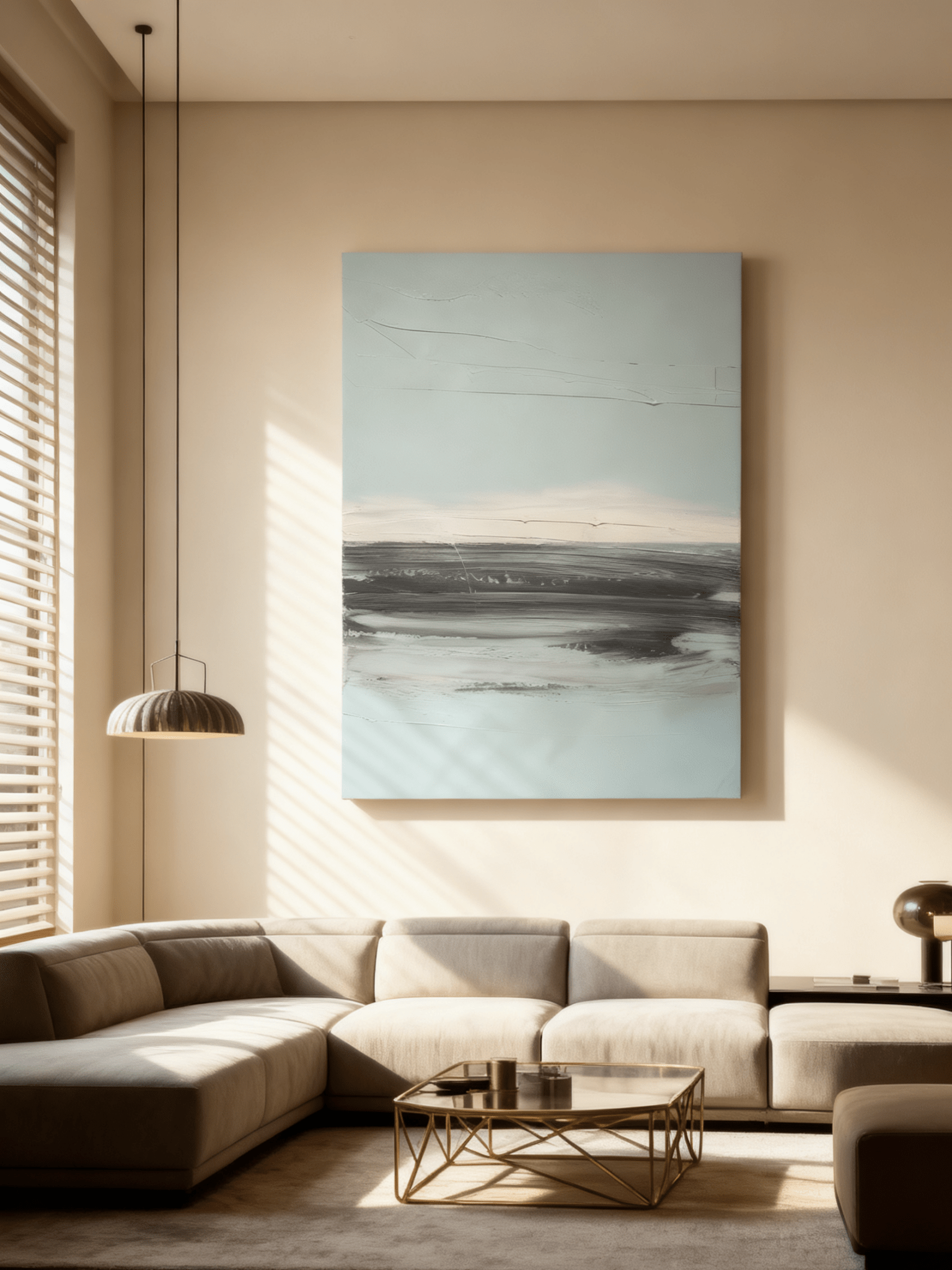
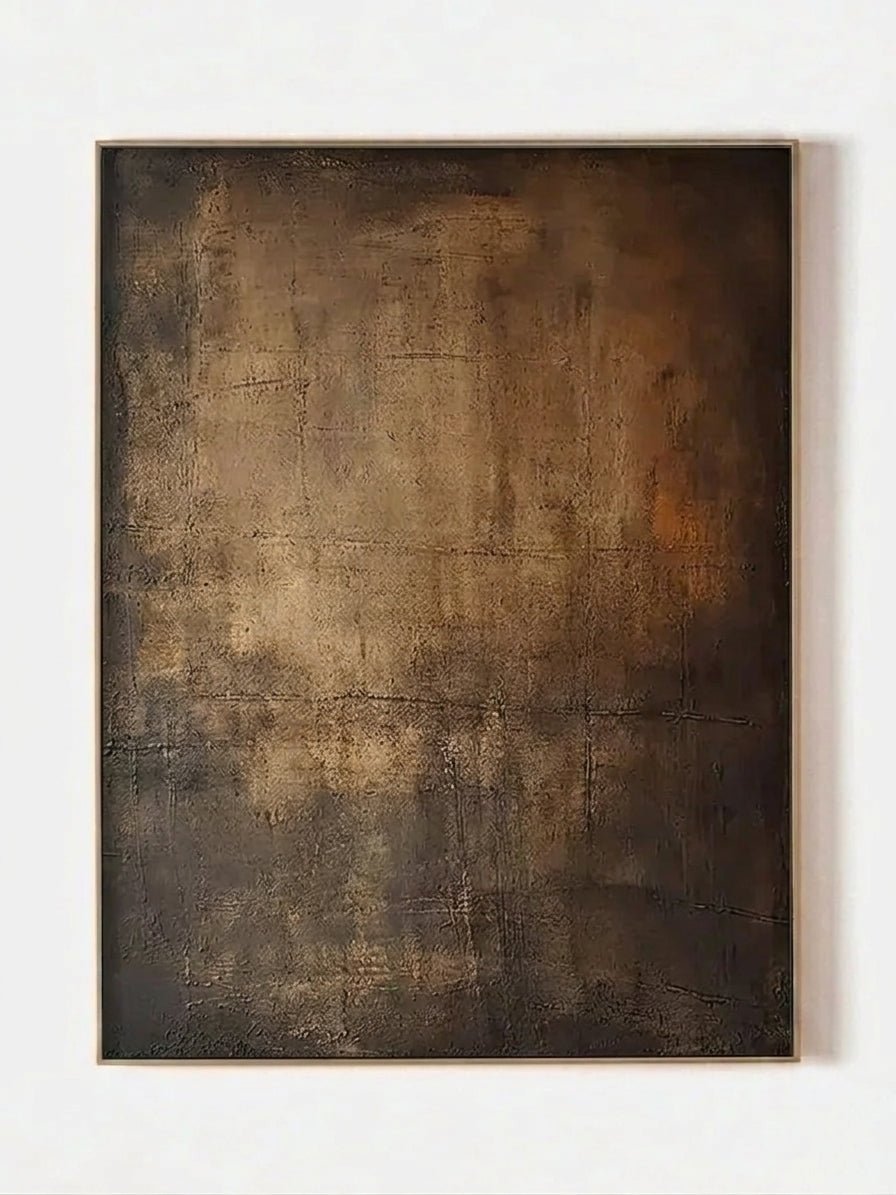
Created by Eliot Vermeer, this hand-painted abstract artwork explores the relationship between architectural structure, tactile texture and the beauty of irregular lines.
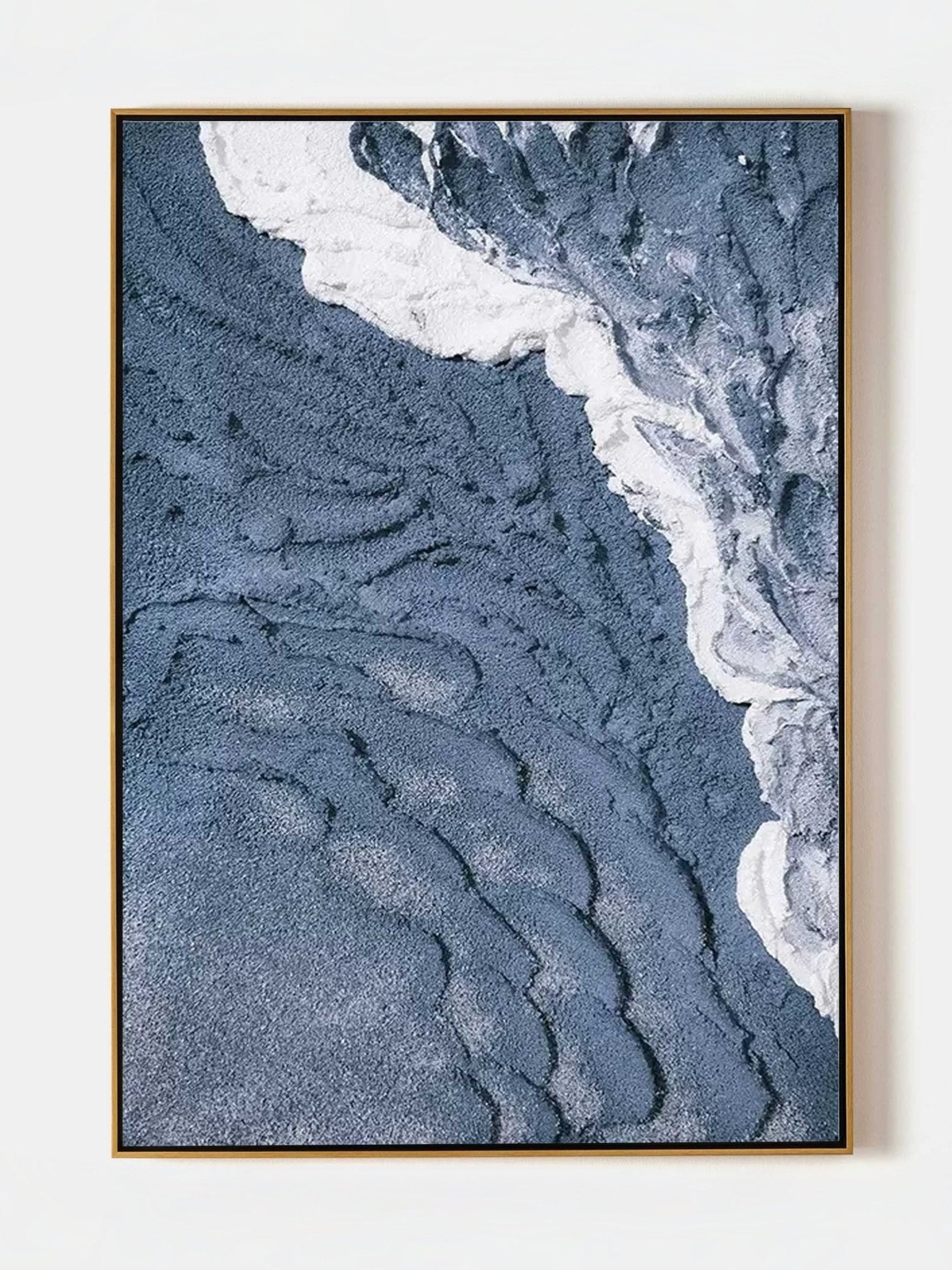
Across a softly layered field of stone gray, greige and warm taupe, raised ivory lines intersect horizontally and vertically to form an evolving grid.
Some sections feel ordered and architectural. Others break apart, overlap or end unexpectedly.
Rather than creating a perfectly measured pattern, Eliot allows each line to retain the movement of the hand, giving the composition a quieter and more organic character.
Subtle charcoal shadows and deeper earth tones emerge beneath the pale surface, while the darker lower section grounds the composition and creates a sense of spatial depth.
The result is an architectural textured grid abstract painting that feels structured from a distance and richly tactile when viewed up close.
Neutral Gray & Greige Color Palette
The artwork features a sophisticated range of muted neutrals:
- Ivory
- Warm white
- Greige
- Stone gray
- Warm gray
- Taupe
- Mushroom brown
- Charcoal brown
The raised ivory lines create contrast without introducing strong color.
Soft gray and greige tones keep the artwork calm and versatile, while the darker lower section adds visual weight.
This restrained palette works beautifully with:
oak, walnut, travertine, limestone, boucle, linen, concrete and natural stone.
Style & Texture
This artwork brings together elements of:
Architectural Abstraction · Textured Geometric Art · Contemporary Minimalism · Modern Organic · Wabi-Sabi
The surface is defined by intersecting raised lines that create real visual depth across the composition.
Unlike a digitally perfect grid, the lines are deliberately irregular. Their thickness, spacing and intersections subtly change throughout the painting.
That handmade variation prevents the composition from feeling rigid.
The softly layered background further introduces tonal depth through muted areas of gray, cream and taupe.
Recent neutral abstract-grid artwork is similarly marketed around tactile surfaces, beige/gray palettes and minimalist or Japandi interiors, making this visual direction highly compatible with current neutral-home styling.
The Story Behind the Painting
Between Architecture and Memory
Eliot Vermeer drew inspiration from structures that become more interesting as they age.
A window grid.
A weathered wall.
The lines of an architectural plan.
A concrete surface carrying marks from years of use.
Rather than reproducing these objects literally, Eliot reduces them to a visual language of intersecting lines and muted surfaces.
The composition begins with structure, but gradually allows imperfection to enter.
Lines shift.
Intersections become uneven.
Some shapes disappear beneath later layers.
Darkened passages suggest depth behind the surface, while the lower earth-toned section acts almost like a foundation beneath the lighter grid.
The painting ultimately explores the relationship between:
order and imperfection, architecture and touch, structure and time.
Perfect Spaces For This Artwork
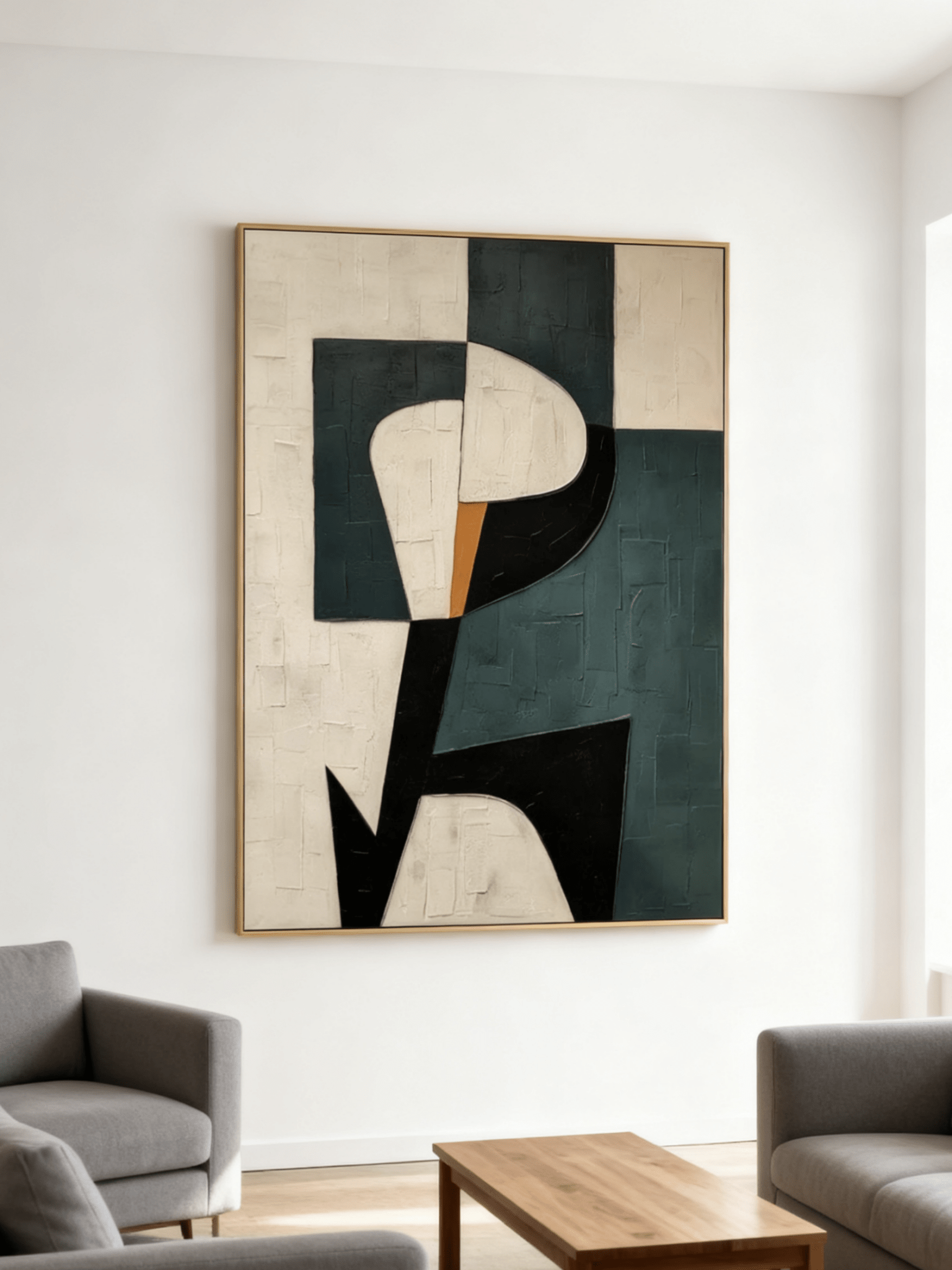
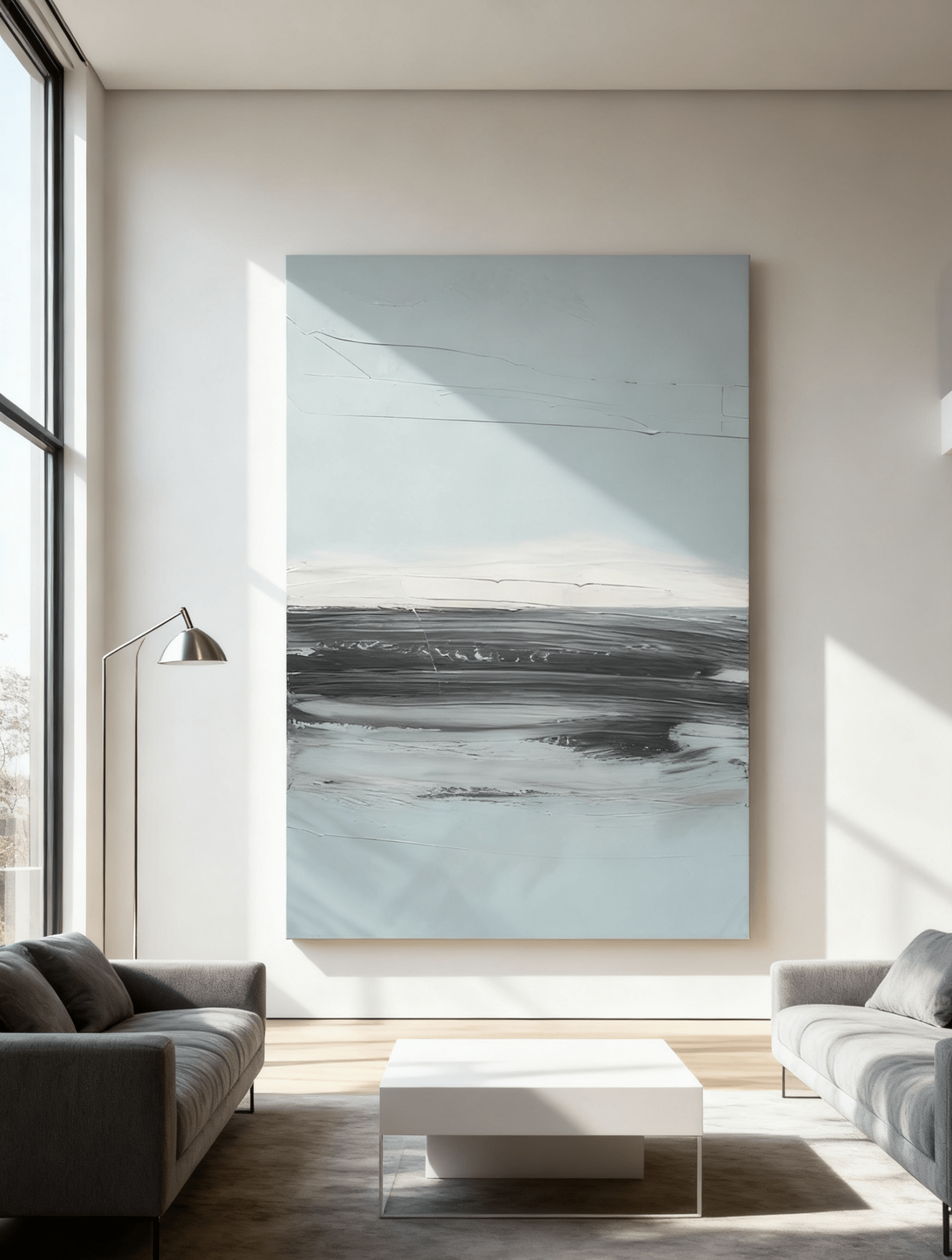
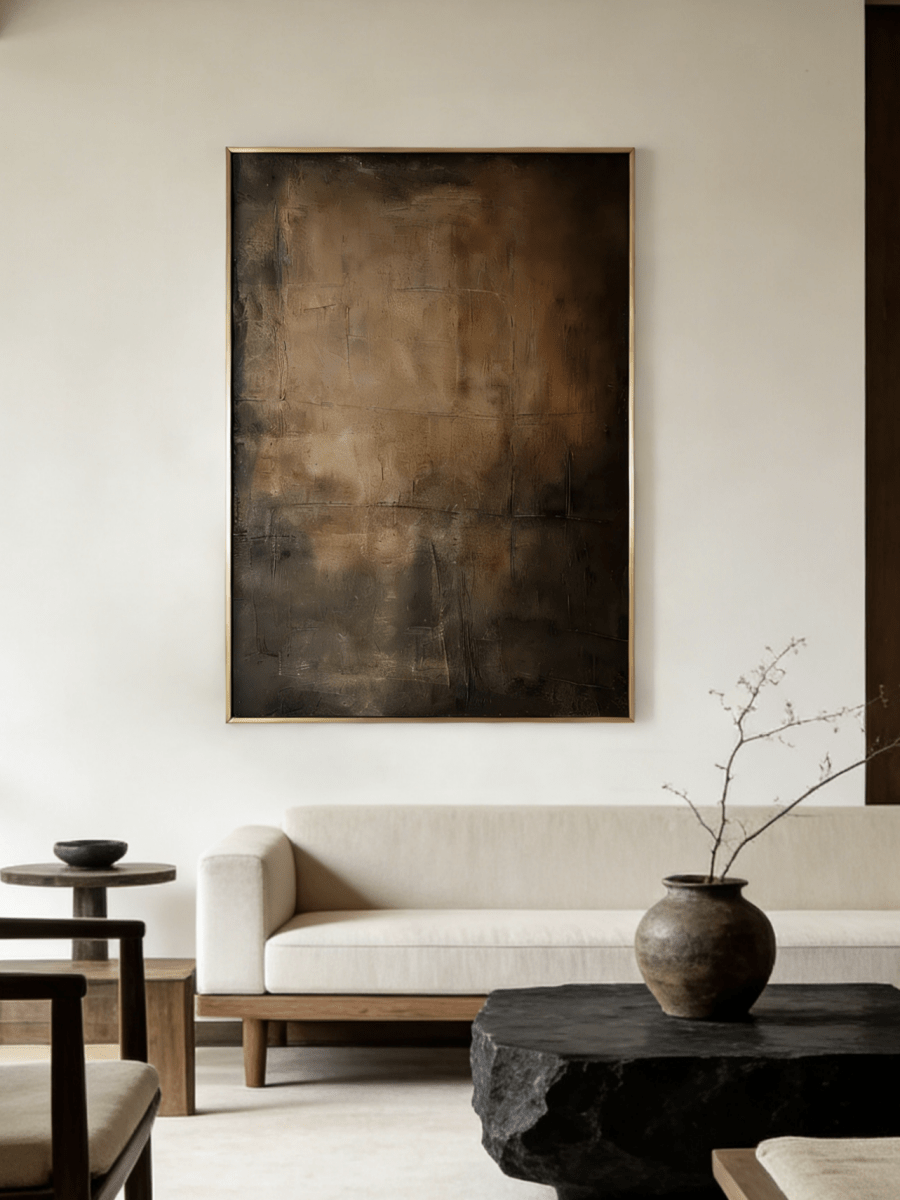
- Living Room: Hang it above a sofa, console, or fireplace to create a refined visual anchor.
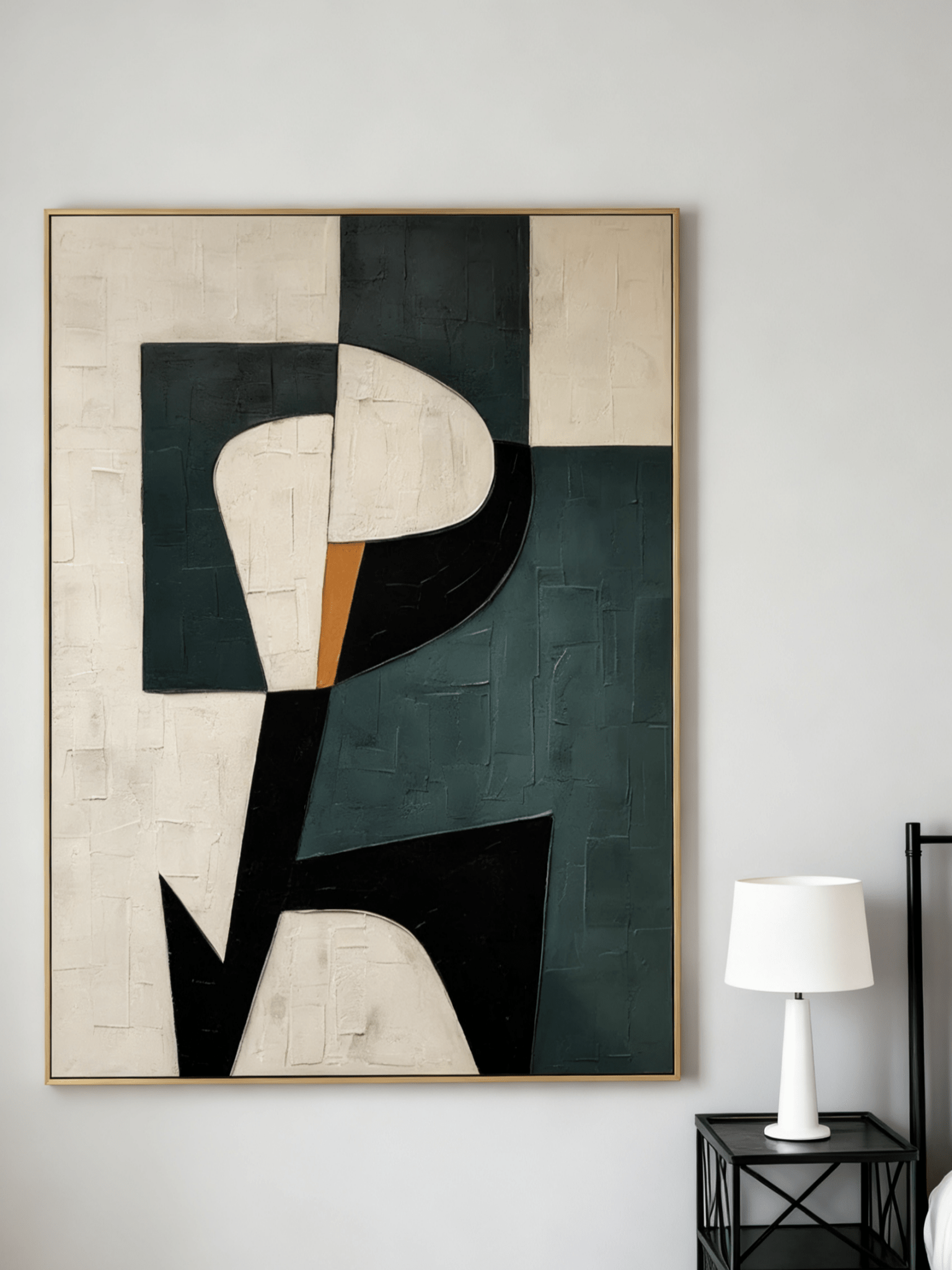
- Bedroom: Its considered palette supports a composed, restful atmosphere.
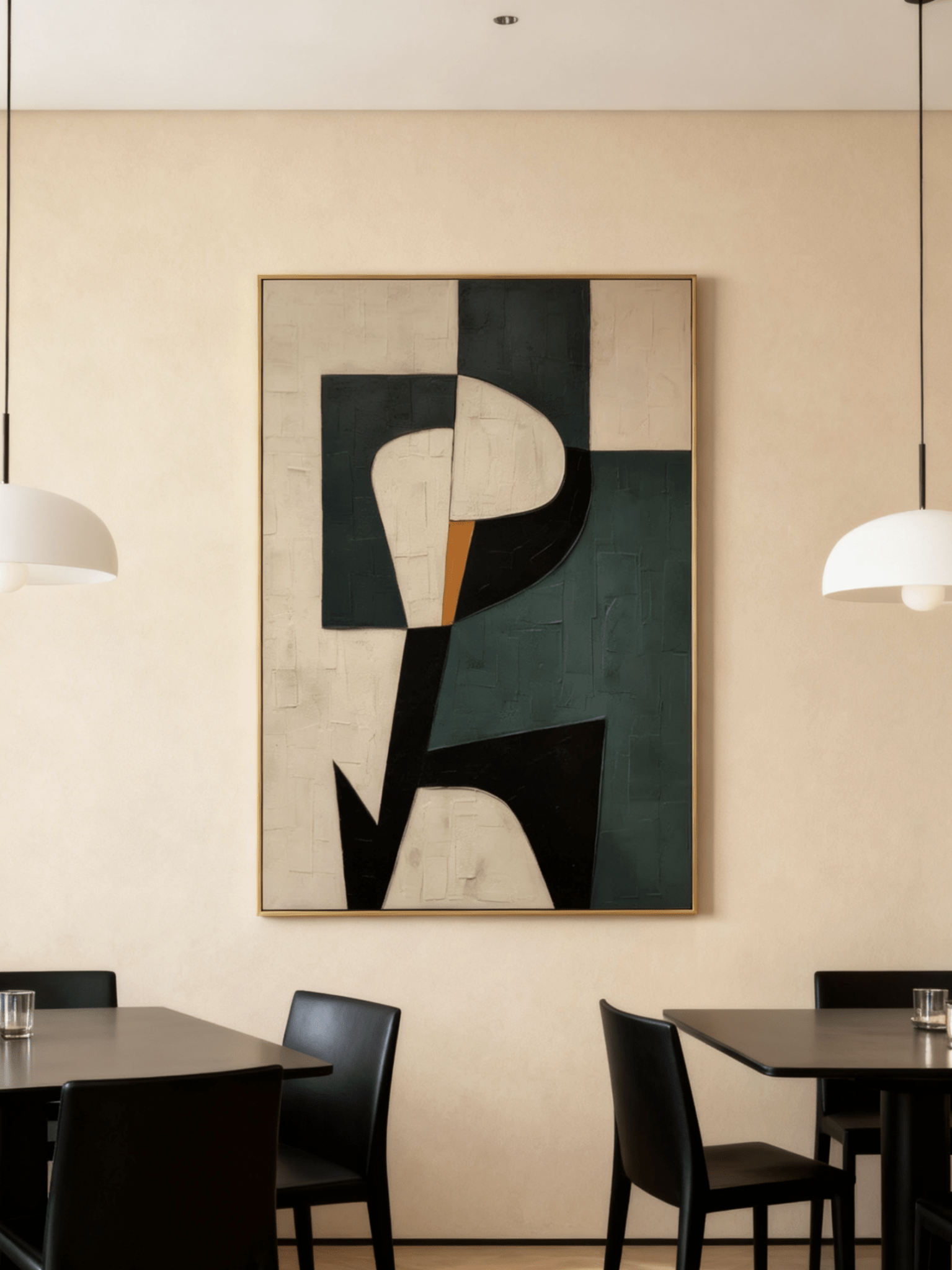
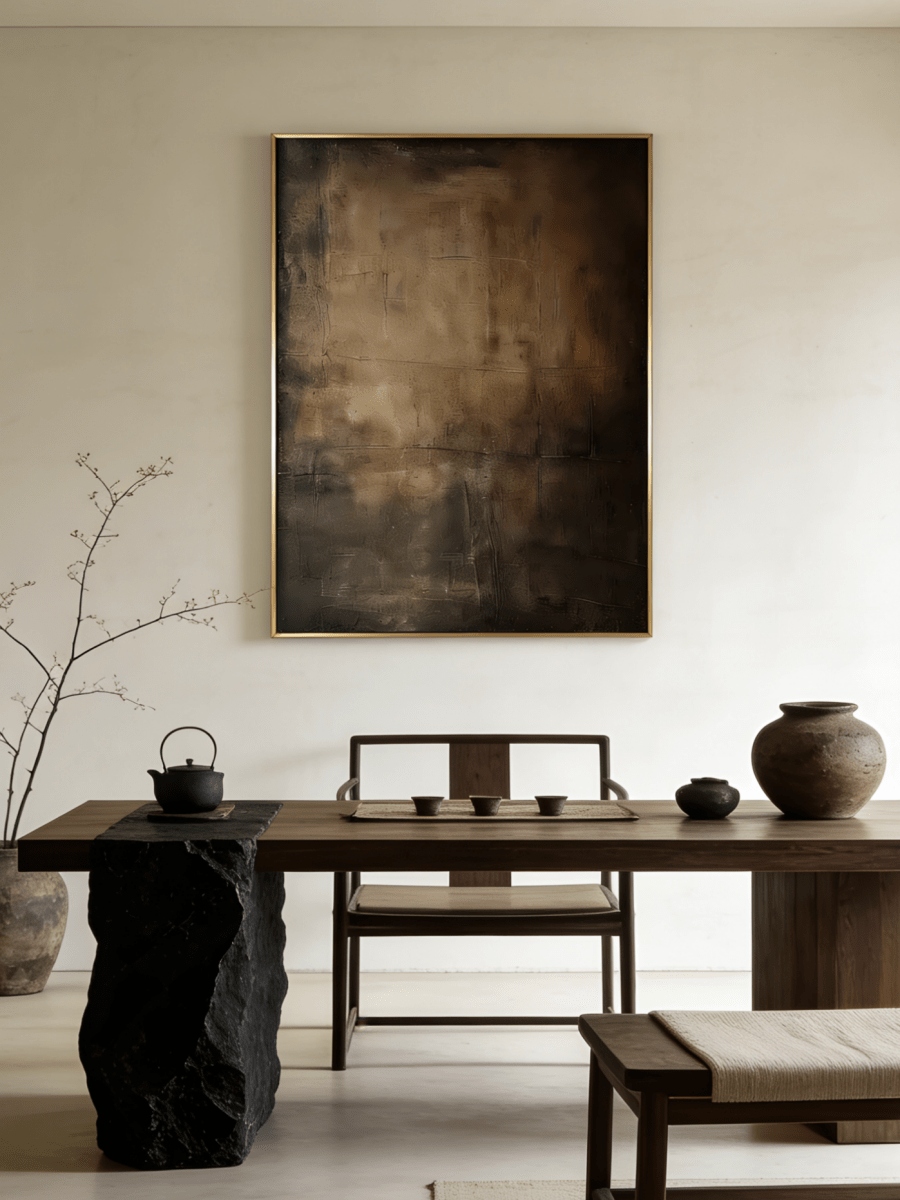
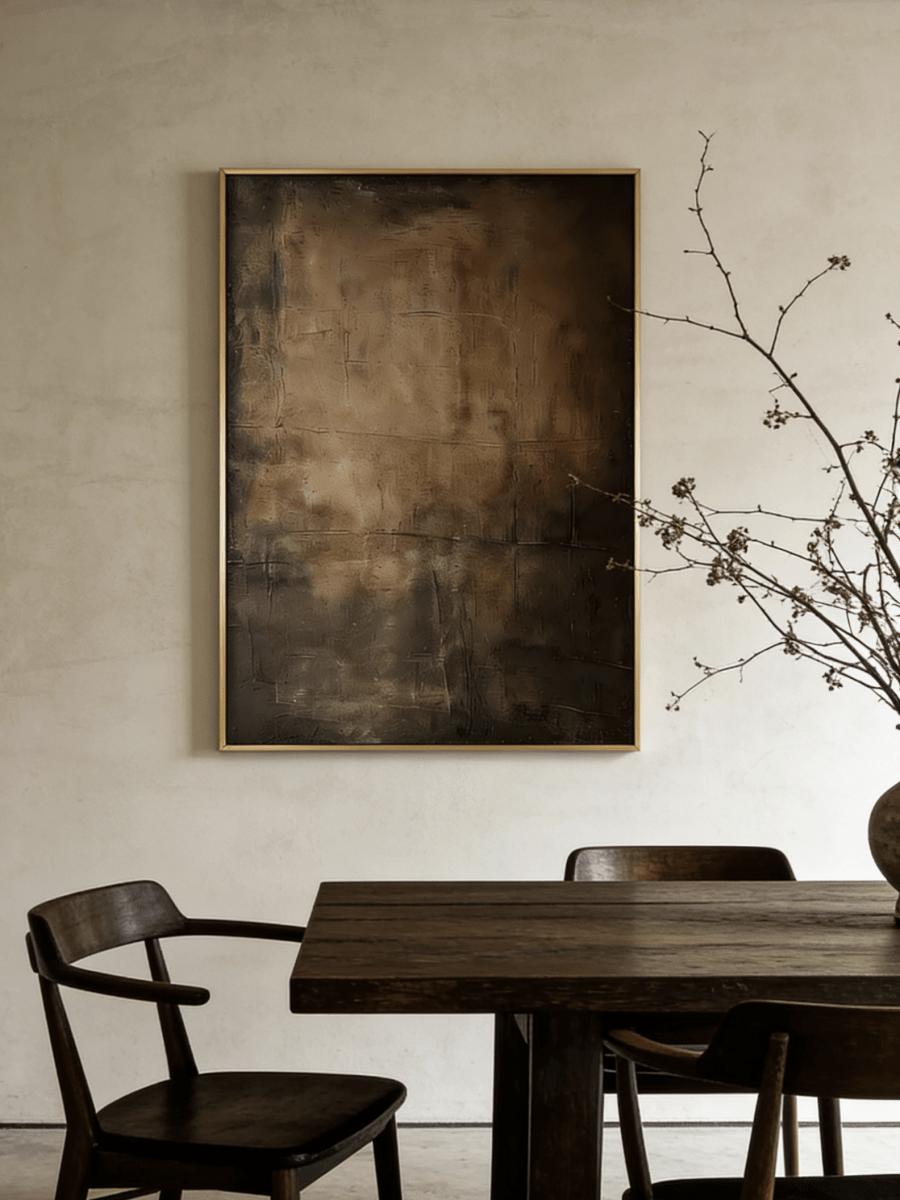
- Dining Room: The hand-painted surface adds depth and interest under changing ambient light.
- Entryway: The composition creates an immediate, polished first impression.
- Home Office: Its clear composition brings focus and visual balance to a workspace.
- Luxury Apartment: Its handcrafted finish gives compact contemporary spaces the presence of original art.
Frequently Asked Questions
Is this painting handmade?
Yes. This is hand painted wall art rather than a printed reproduction. Each canvas is individually created by artists using layered paint and hand-worked details.
What style of interior does this artwork match?
This wabi-sabi art piece suits wabi-sabi, Japandi, organic-modern, and warm-minimalist rooms. Its palette and handmade surface also pair naturally with wood, linen, stone, and simple modern furniture.
Where should I hang this wall art?
It works well in a living room, bedroom, dining room, entryway, home office, or luxury apartment. Position it where natural or side lighting can reveal the brushwork and texture.
How do I choose the right size artwork?
For placement above furniture, choose large canvas wall art measuring roughly two-thirds to three-quarters of the furniture width. Use painter's tape to preview the selected dimensions before ordering.
Does this artwork come ready to hang?
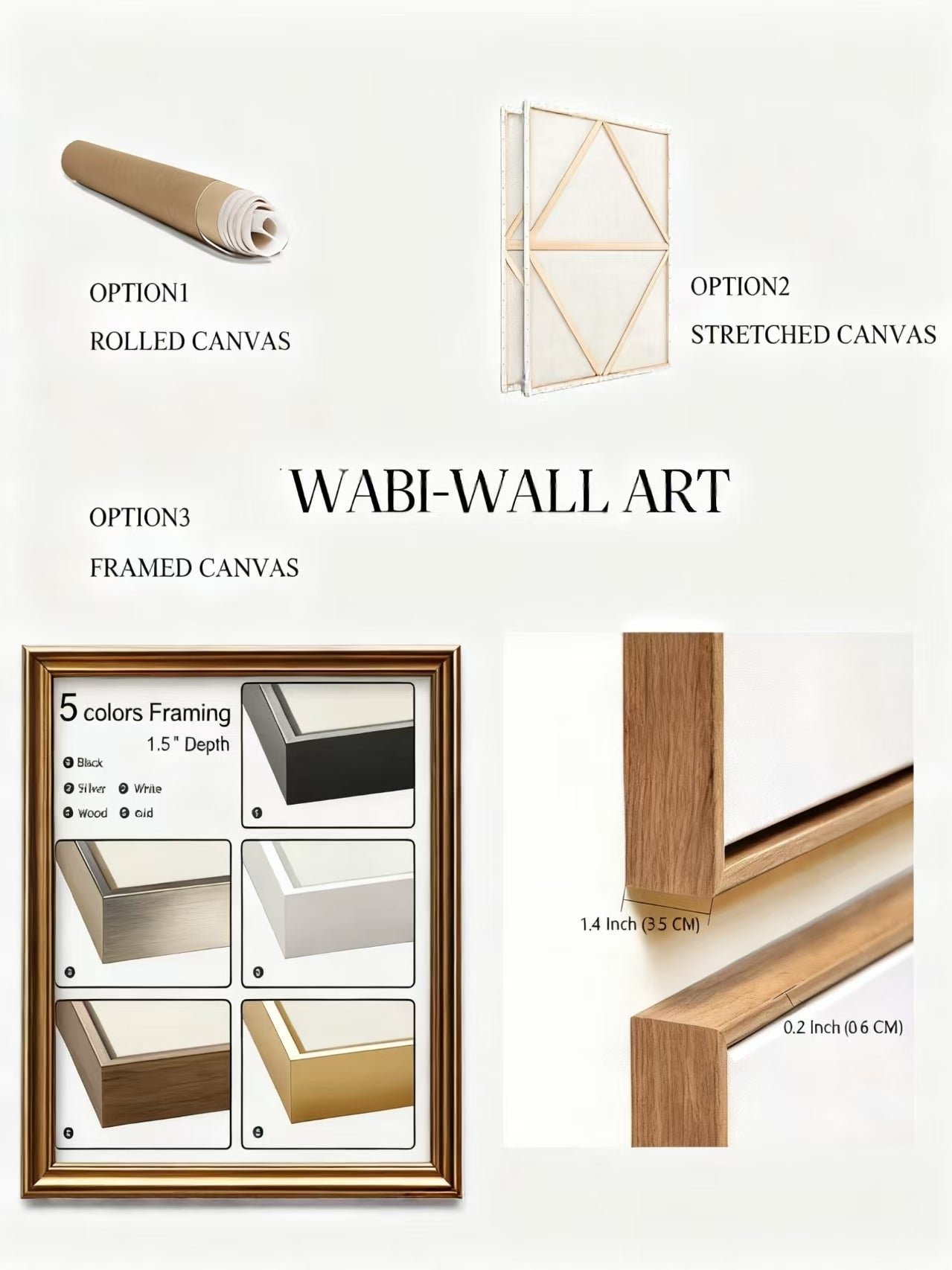
Rolled canvas is supplied unstretched. Stretched-canvas and framed options are finished display formats; review the configuration selected on the product page before checkout.
How long does it take to create this painting?
Each original canvas painting is made to order, so production time varies with size, framing, and customization. Refer to the current ordering estimate or contact WABI Wall Art for timing.
How is the artwork shipped?
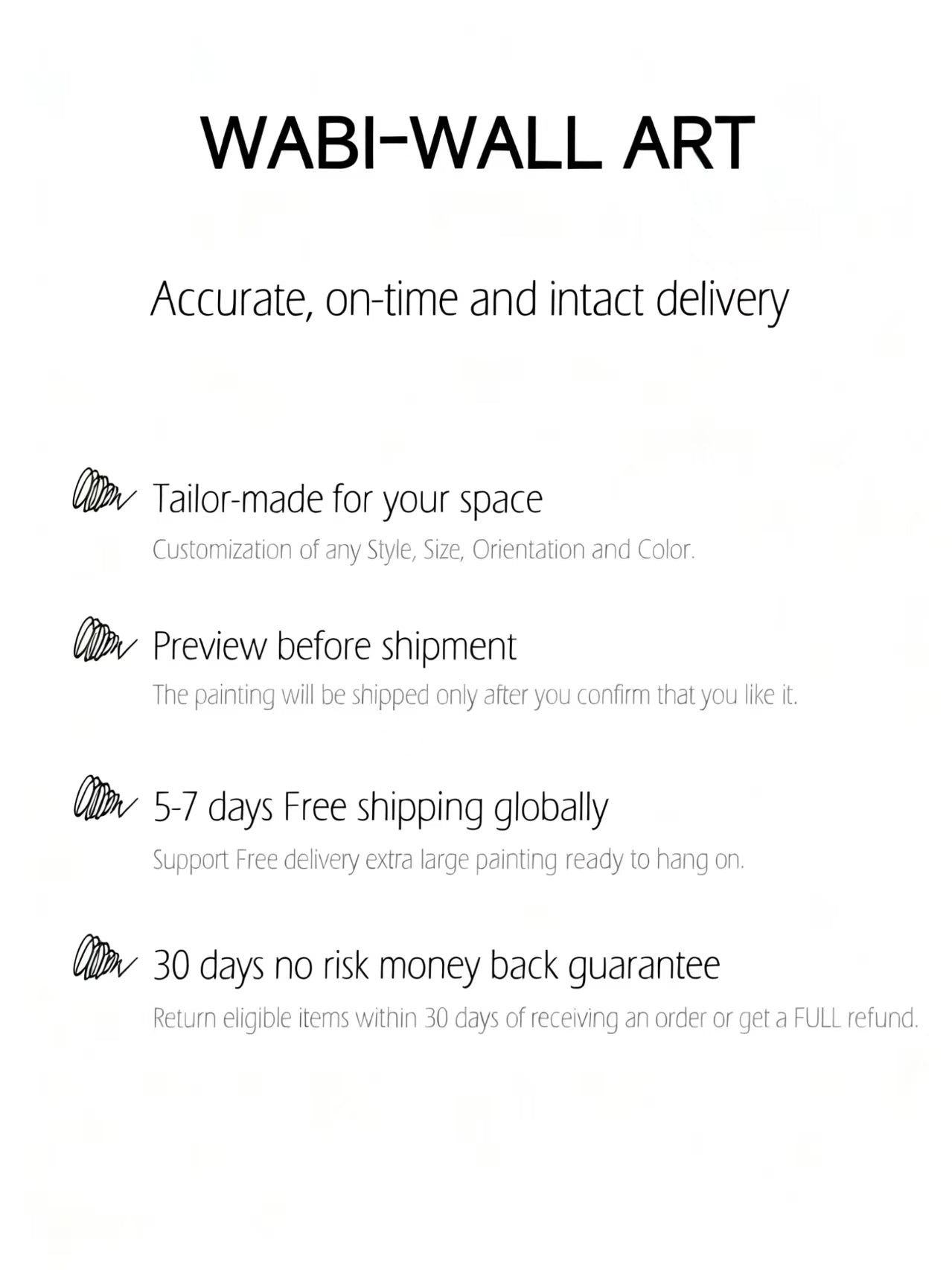
The artwork is carefully protected and packed for transit. Shipping time depends on the destination, size, and selected format; the latest delivery information is shown during ordering.
Can I request a custom size?
Custom dimensions may be available. Contact the WABI Wall Art team before ordering to confirm the size, orientation, color direction, and framing options possible for this design.
How do I care for my canvas artwork?
Dust gently with a clean, soft, dry cloth or soft brush. Avoid water, chemical cleaners, prolonged direct sunlight, and high humidity, and handle the artwork by its edges or frame.
Is every artwork unique?
Yes. Small variations in brush movement, color blending, and surface texture are natural features of a handmade painting and make every finished piece unique.
Artwork Details
Artwork Style: Wabi-Sabi Art
Artwork Theme: Abstract
Artist: Eliot Vermeer
Each artwork is made to order. Creation normally takes 1–2 weeks before dispatch.
After the artwork is completed, delivery normally takes approximately 5–7 business days by DHL or FedEx.
Custom dimensions and palette adjustments may be available. Contact info@wabiwallart.com before ordering to confirm the request.
Find Your Perfect Artwork Size
See how each artwork size fits your space.
Available range: 24–240 inches


About Artist
Eliot Vermeer is a contemporary artist born in Xi'an, China in 1987, and currently living and working in Shanghai. With his unique abstract wabi-sabi style, he has established a profound personal connection between Eastern aesthetics and Western expressionism.
His work abandons complex narratives, instead exploring the spirituality of materials, traces, and space themselves. Eliot Vermeer's artistic practice is like a silent retreat, inviting viewers to feel the traces of time's passage and the silent power of all things within his minimalist yet rich canvases.