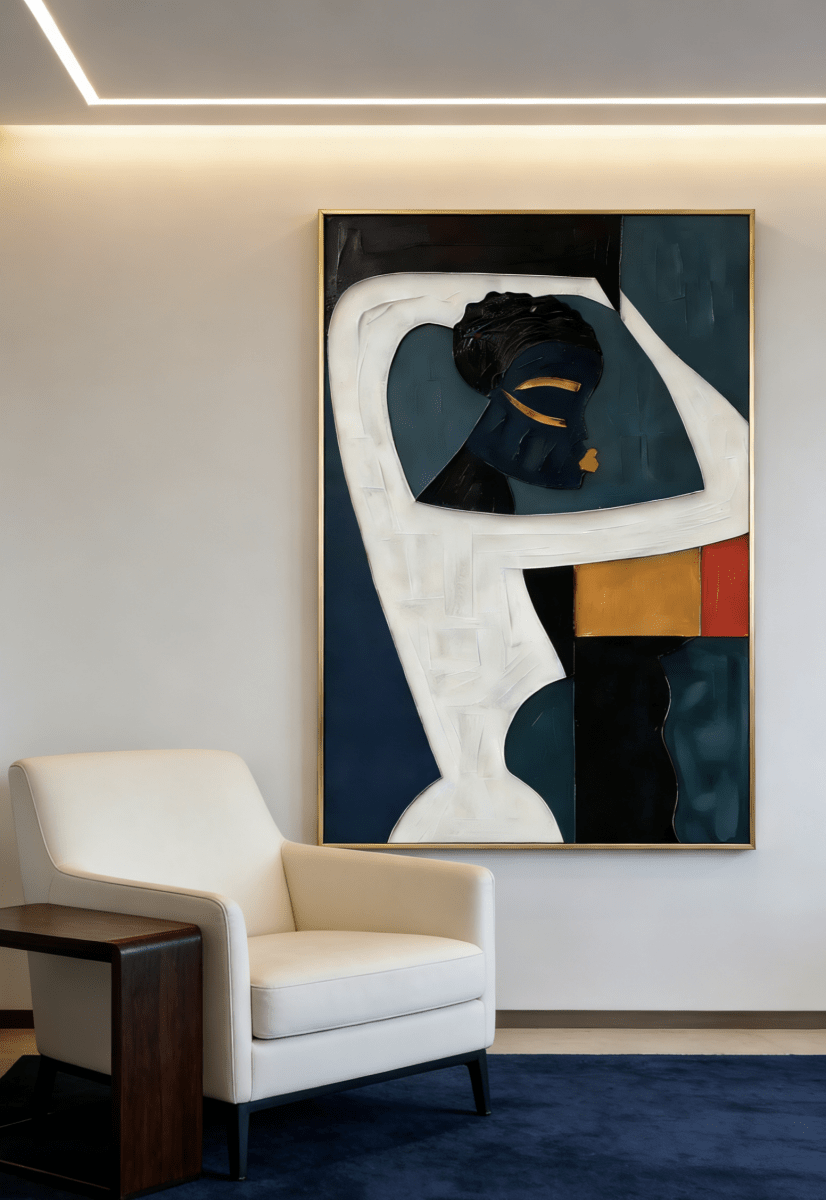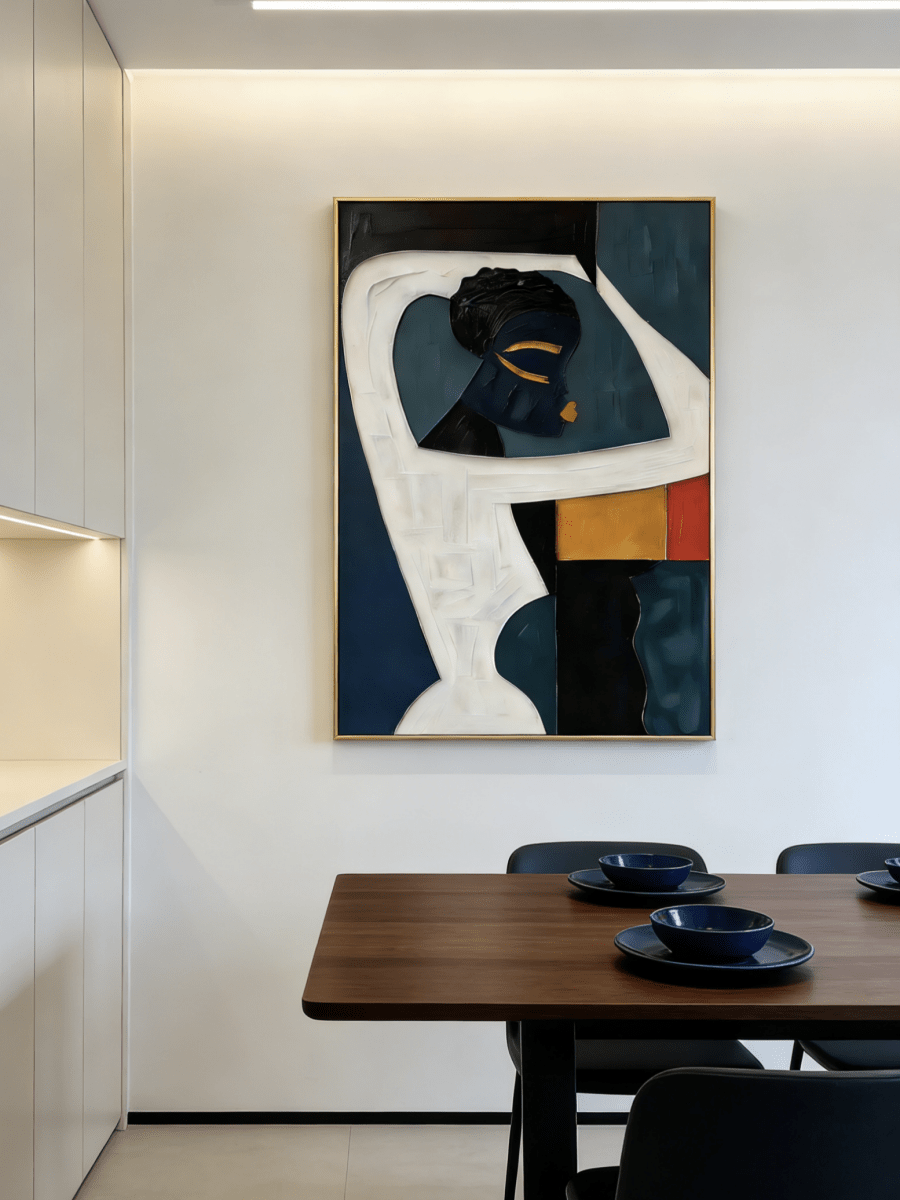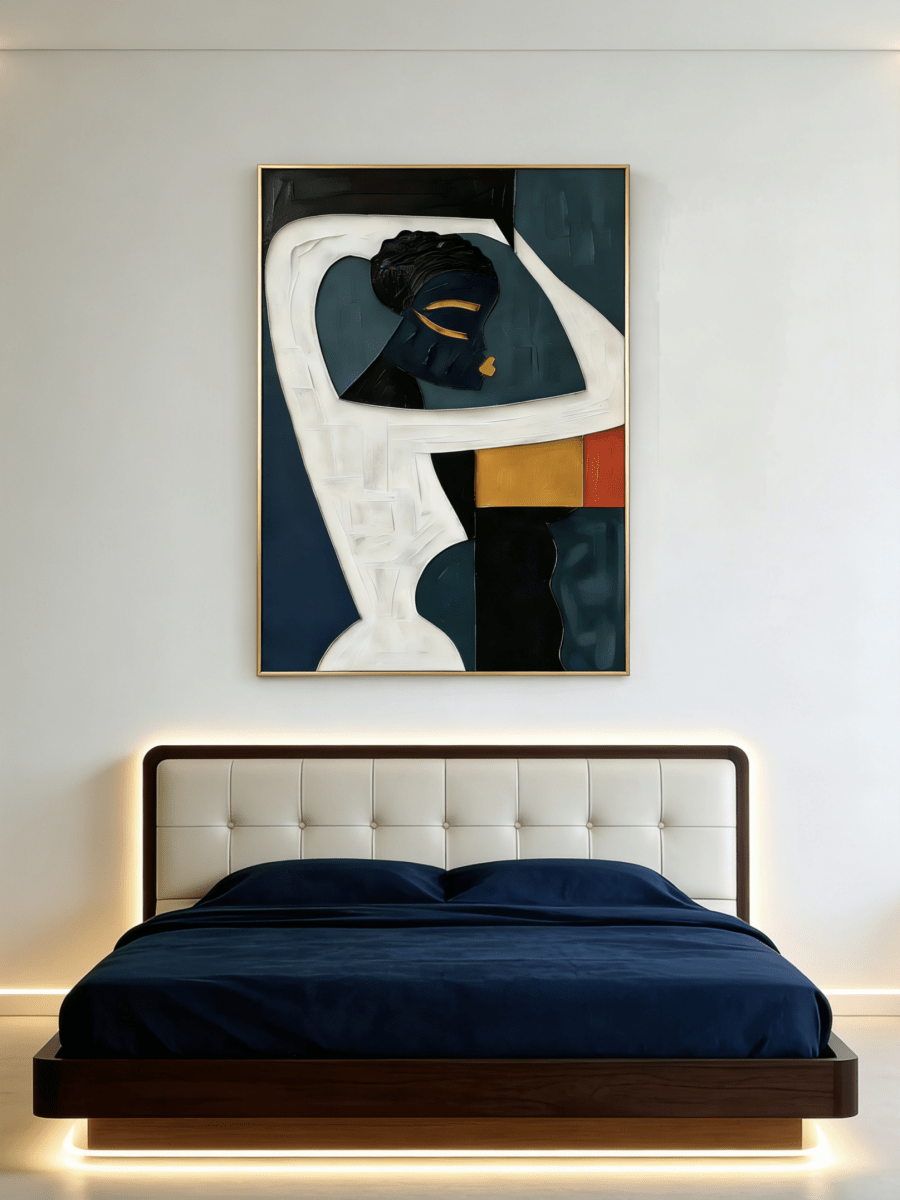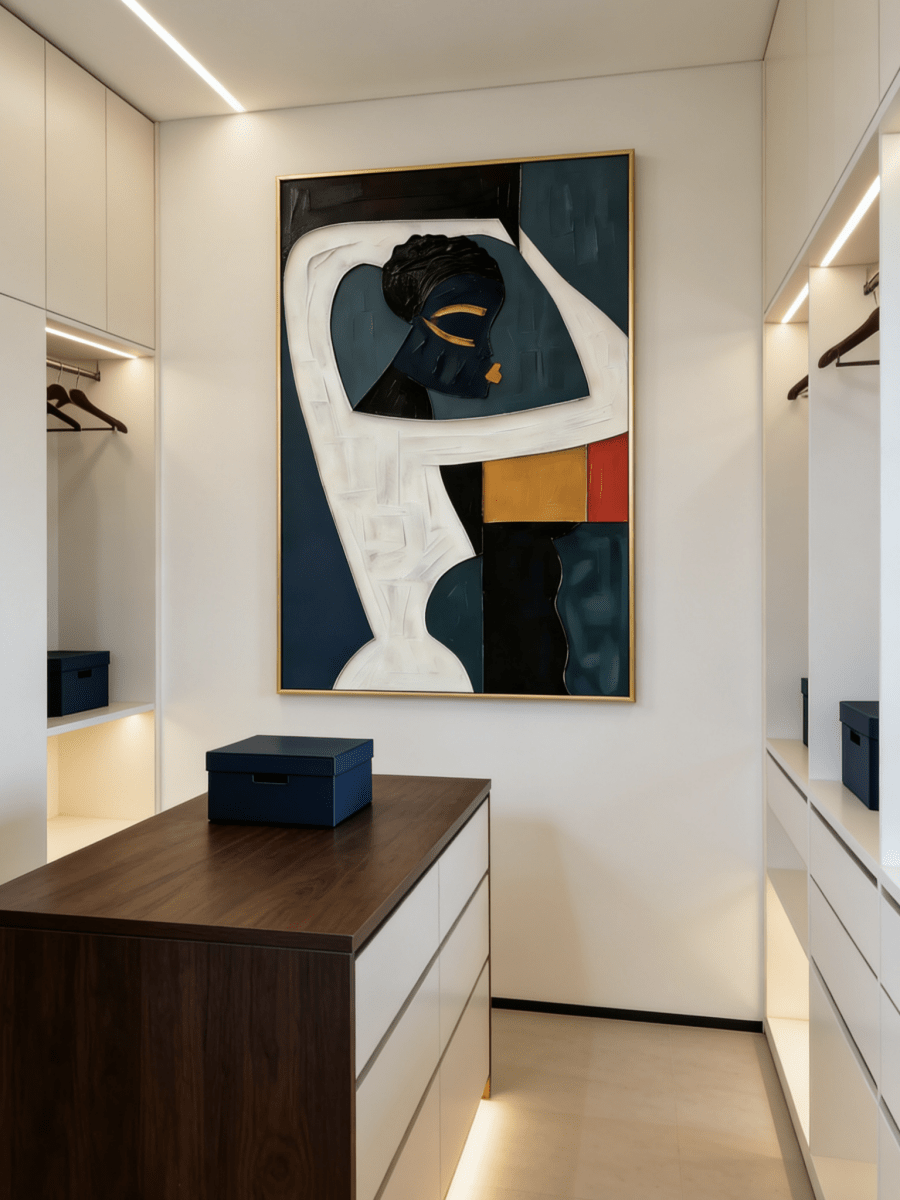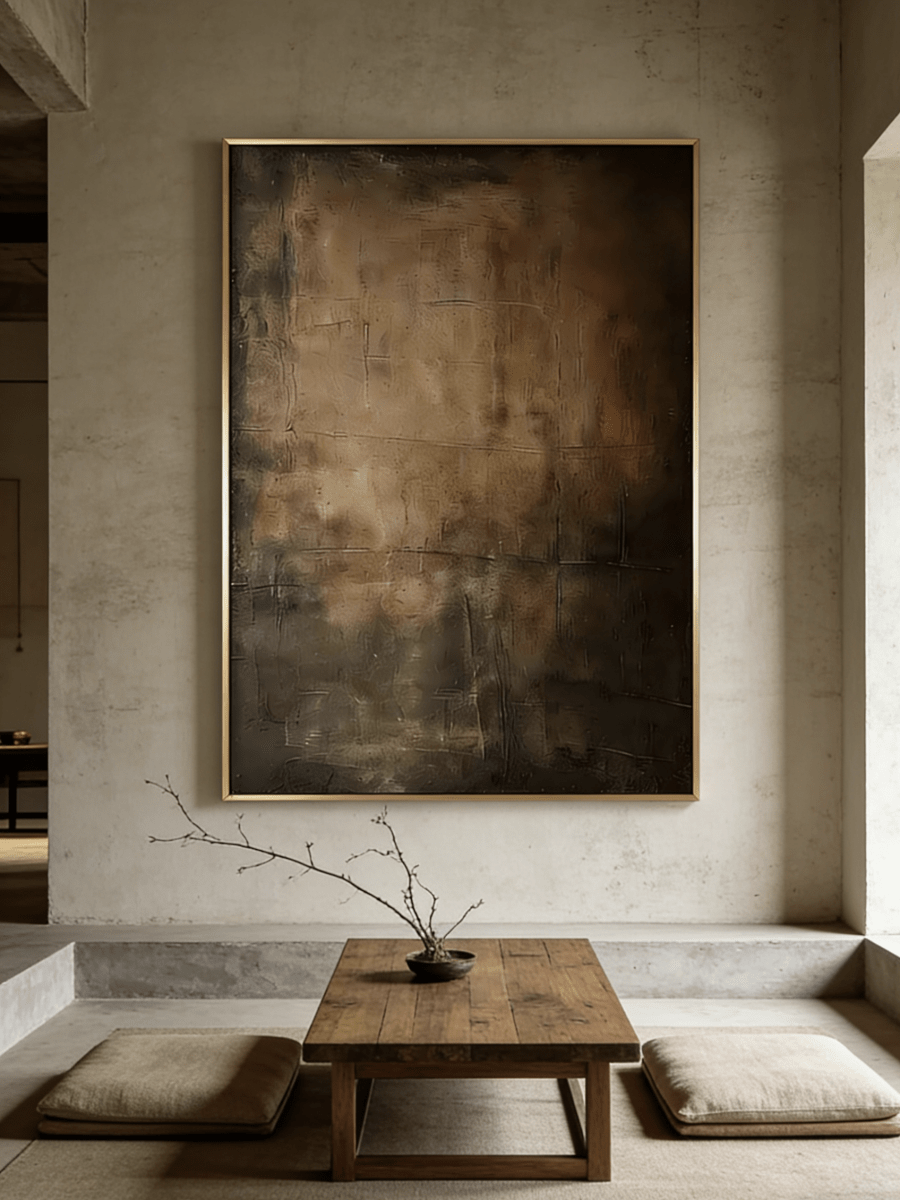


Wabi-Sabi Textured Minimalist Wall Art – Quiet Stone Panels – EV#0414

Descrizione
Wabi-Sabi Textured Minimalist Wall Art – Quiet Stone Panels
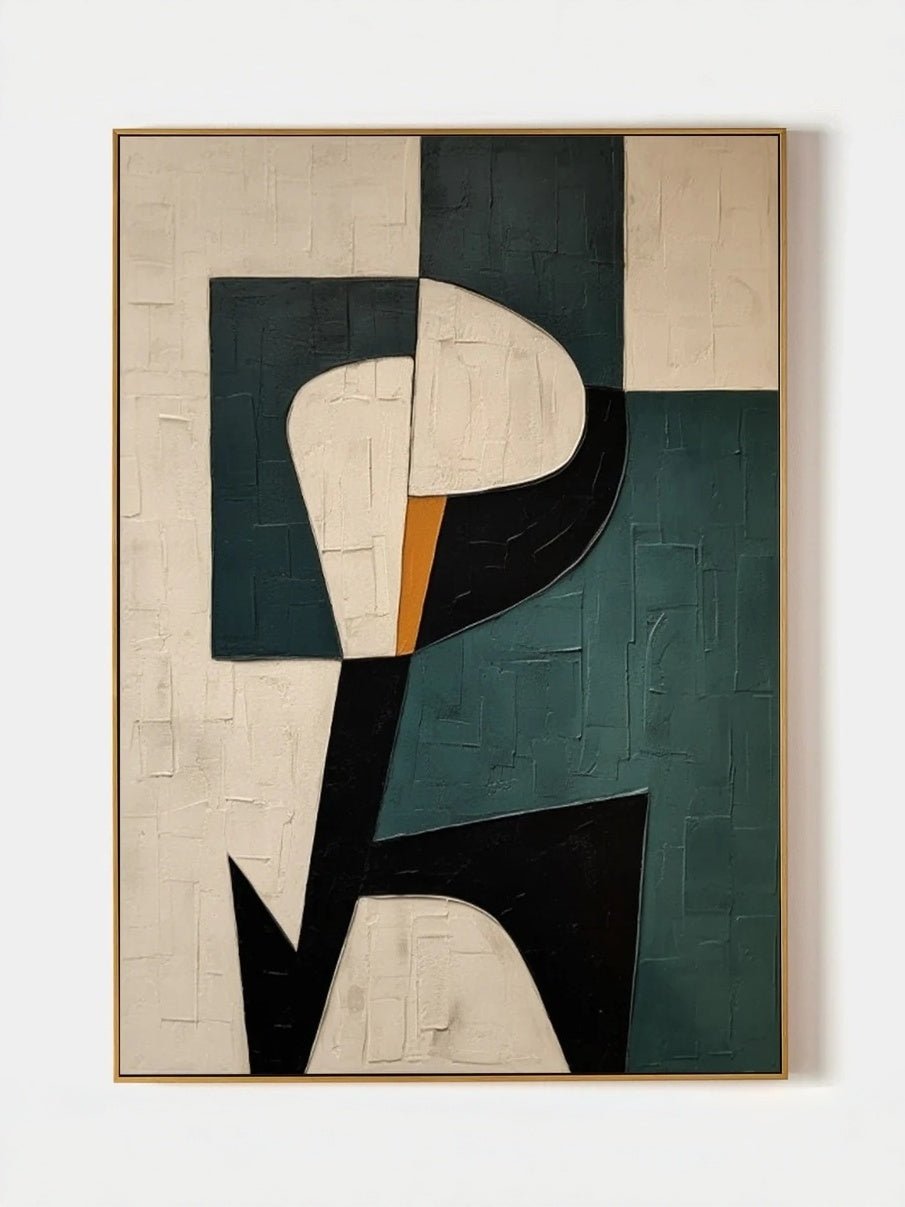
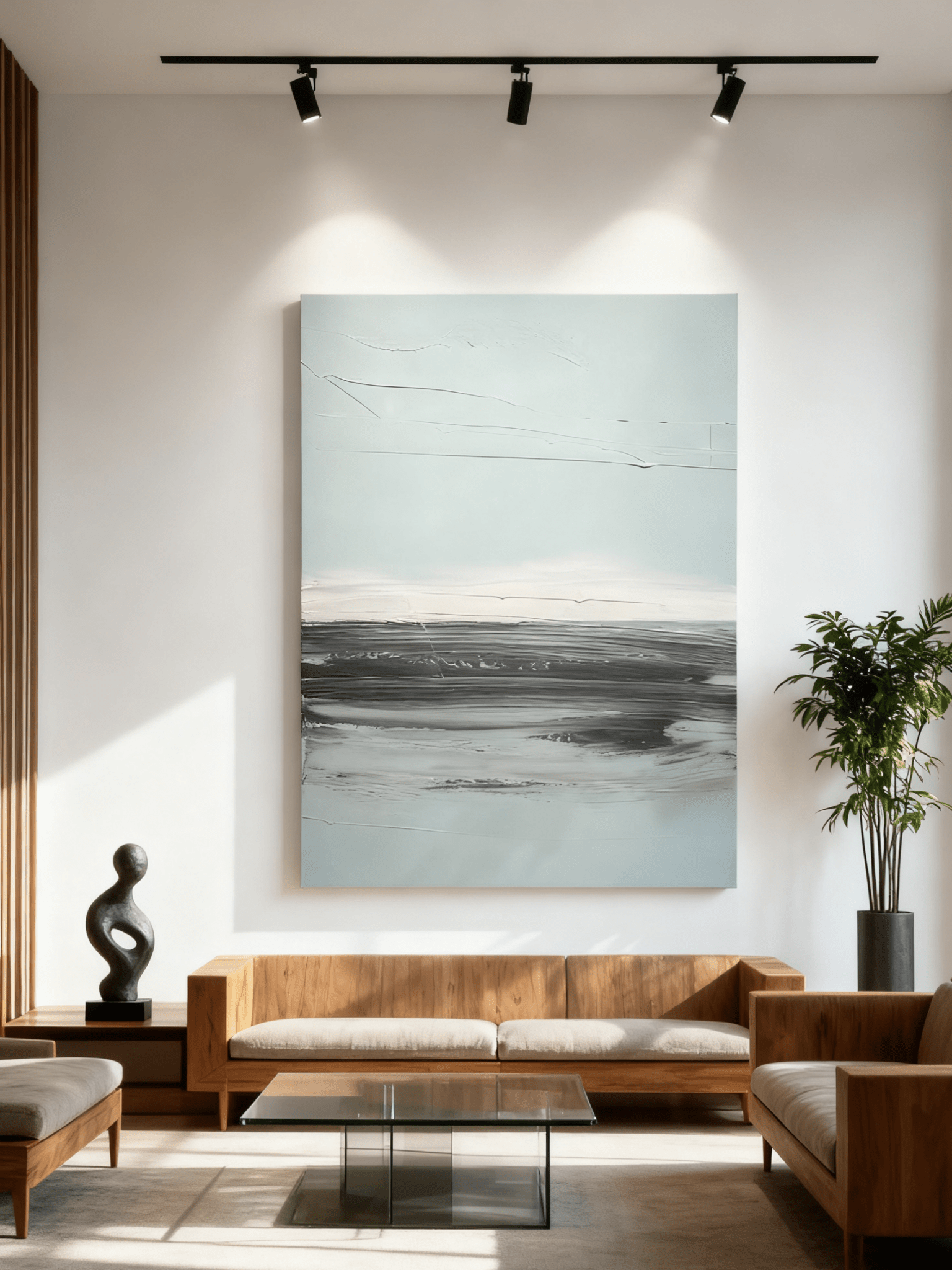
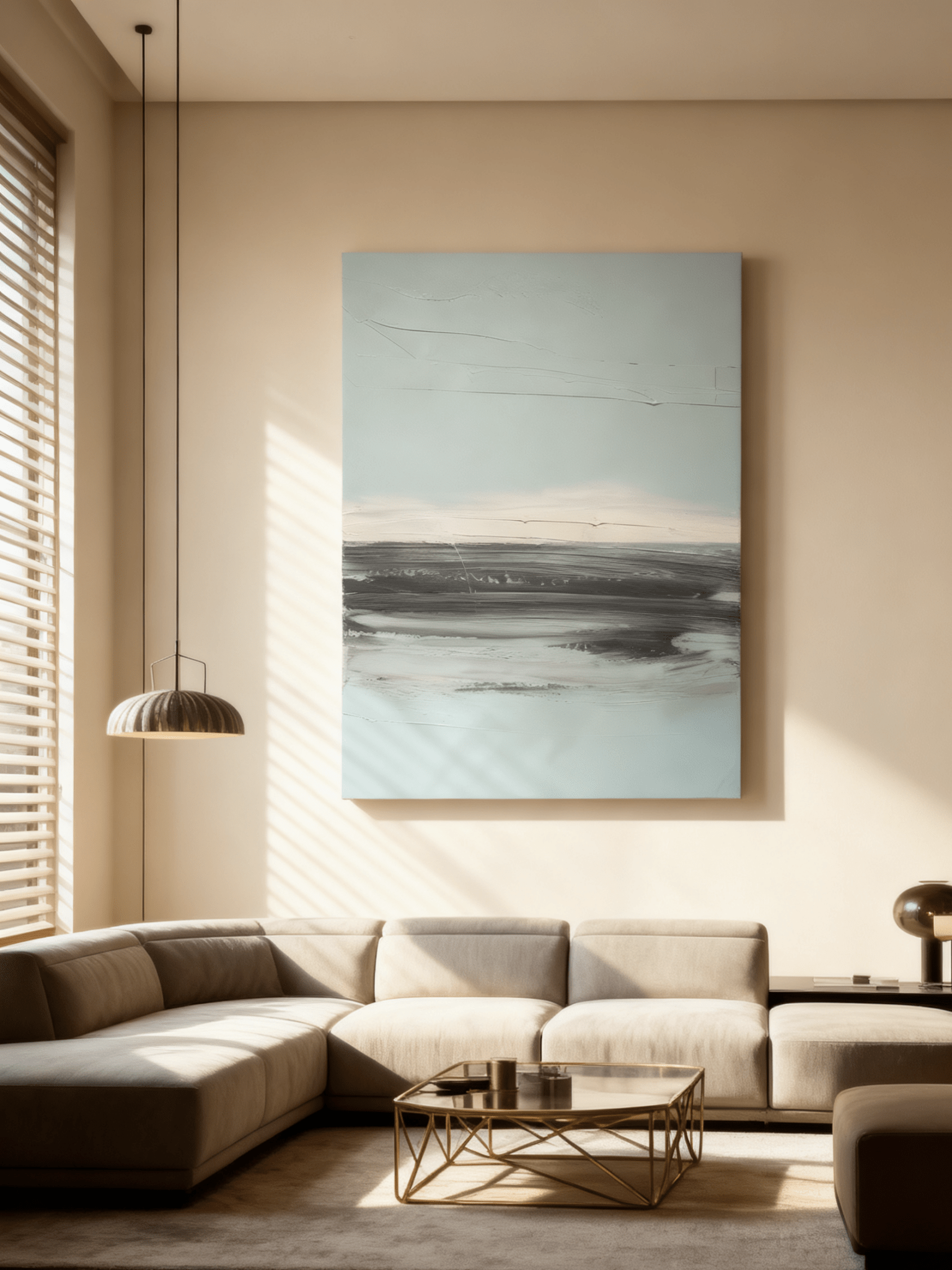
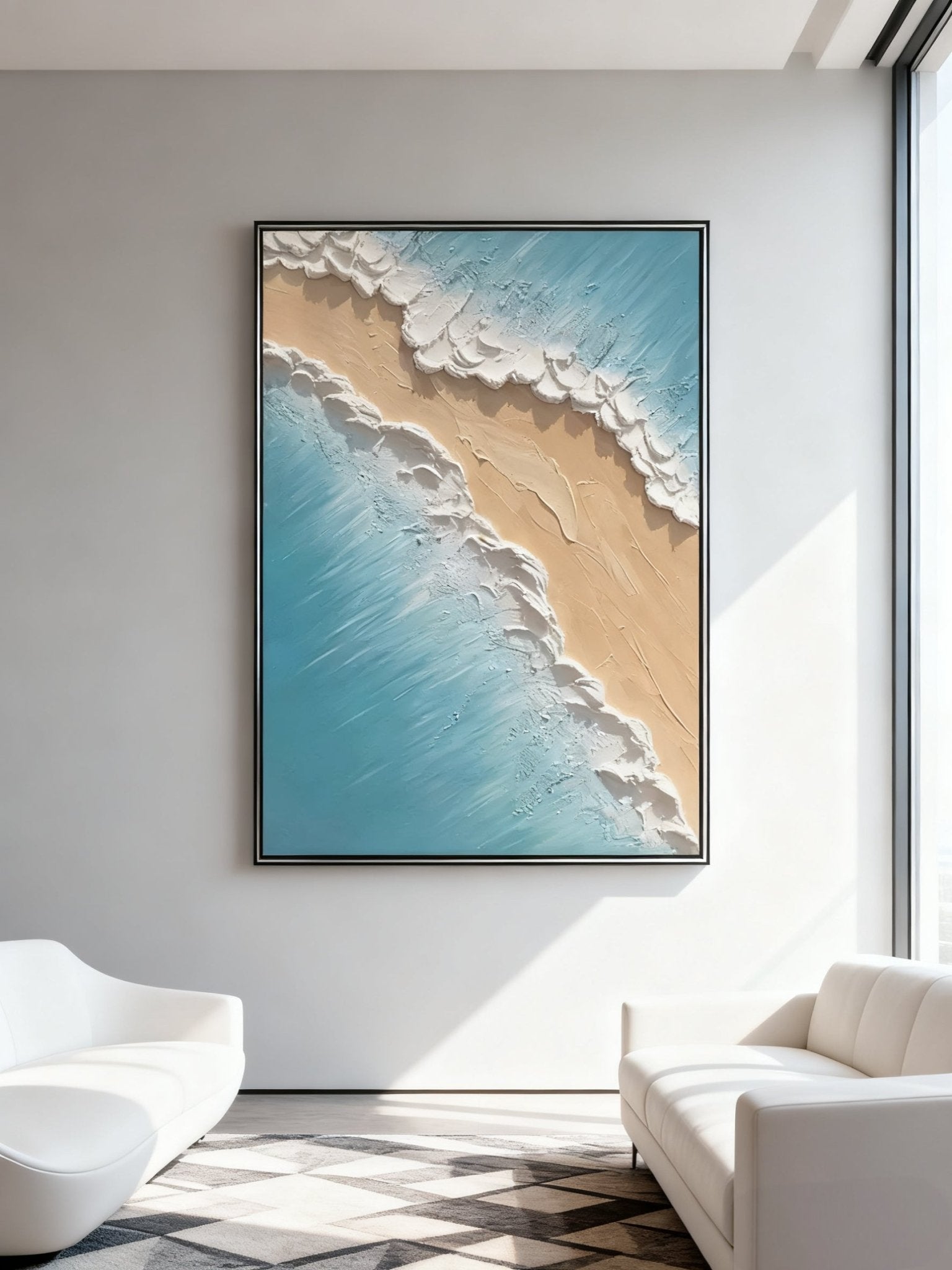
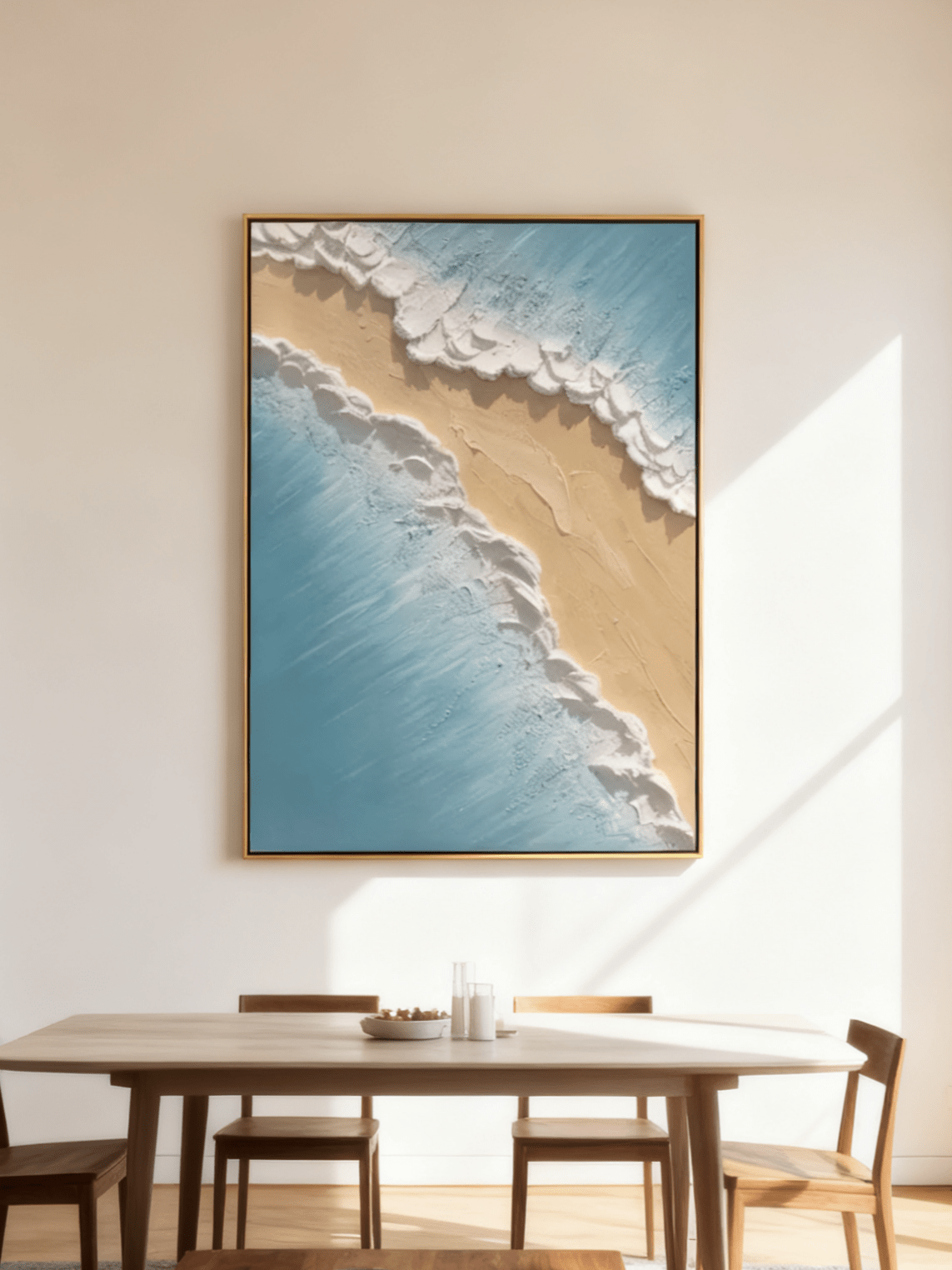
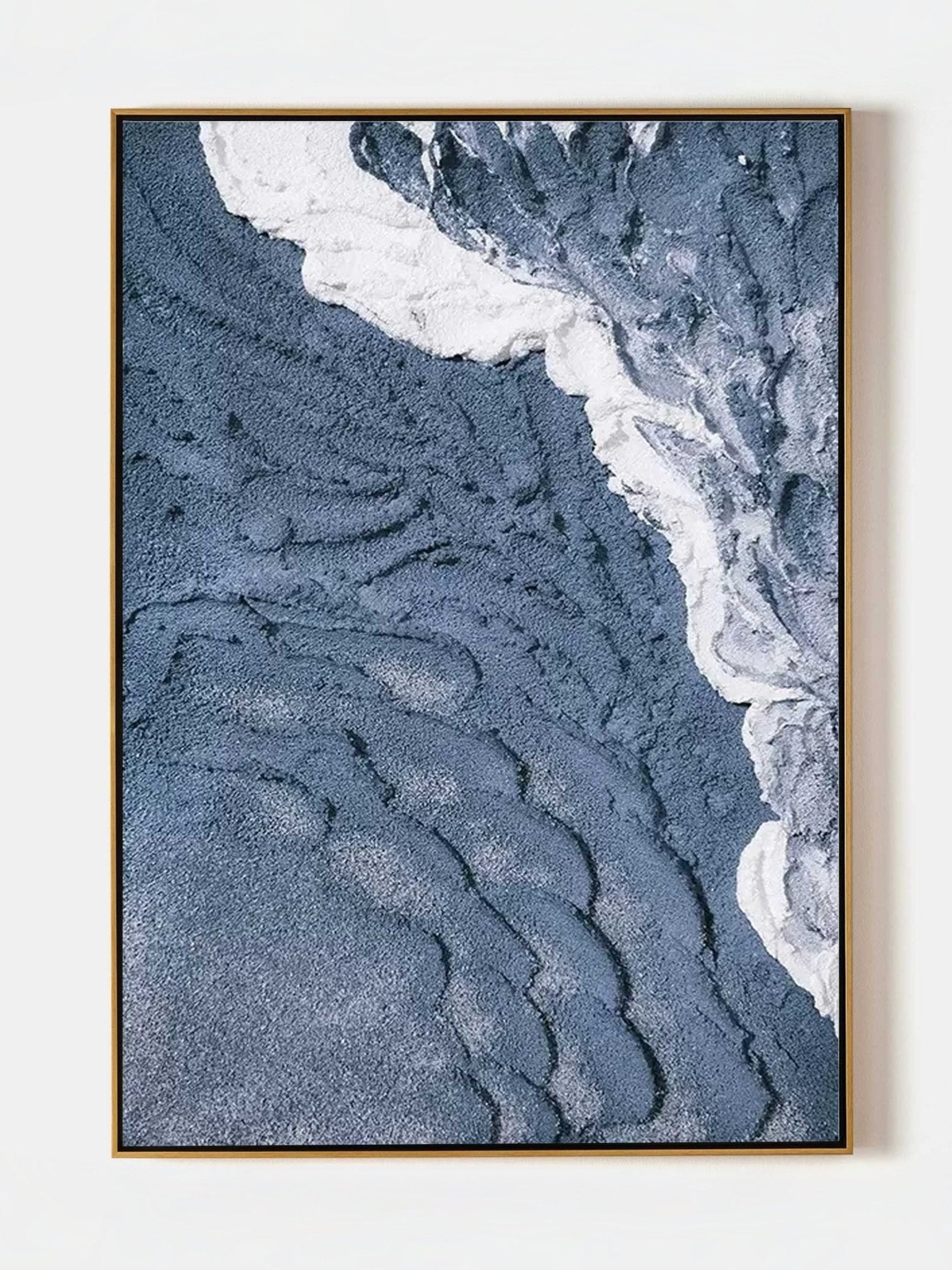
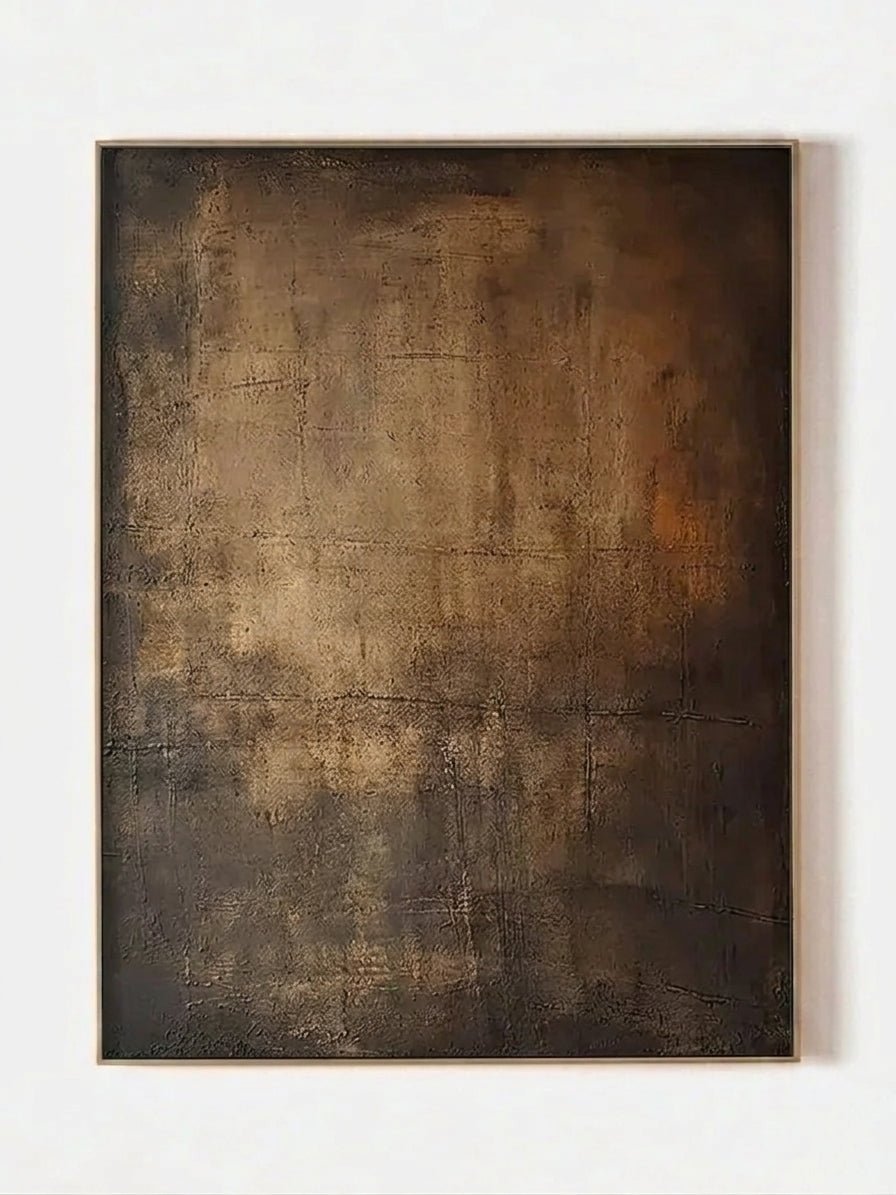
Two simple forms create a quiet study of texture in Quiet Stone Panels, a hand-painted dimensional artwork by Eliot Vermeer.
Set against a warm neutral ground, the composition is divided into two elongated vertical panels.
The left panel is restrained and softly finished in sand beige, with only subtle hand-worked marks interrupting its surface. Beside it, the second panel introduces a more expressive tactile language—rough ivory texture, irregular stone-like markings and a field of vertical grooves that catch light and shadow throughout the day.
Rather than relying on strong color or complex imagery, Eliot builds the artwork through material contrast, proportion and surface.
From across the room, the composition feels calm and architectural. Viewed closely, its ridges, uneven edges and layered texture reveal the distinctly handmade nature of the piece.
The result is a neutral textured wall artwork that brings quiet depth to minimalist, Japandi and organic modern interiors.
The Story Behind the Artwork
For Quiet Stone Panels, Eliot Vermeer takes inspiration from architectural surfaces shaped slowly by time.
A smooth plaster wall beside carved stone.
A quiet interior beside a weathered exterior.
A surface that has been protected beside one that has carried the marks of age.
These contrasts became the foundation of the composition.
Rather than filling the canvas with multiple shapes, Eliot reduces the work to two vertical forms.
The first is almost silent.
The second contains rhythm, irregularity and physical texture.
The contrast between them reflects a central principle of wabi-sabi—the idea that beauty can emerge through restraint, imperfection and the natural character of materials.
Where to Hang This Painting
Living Room
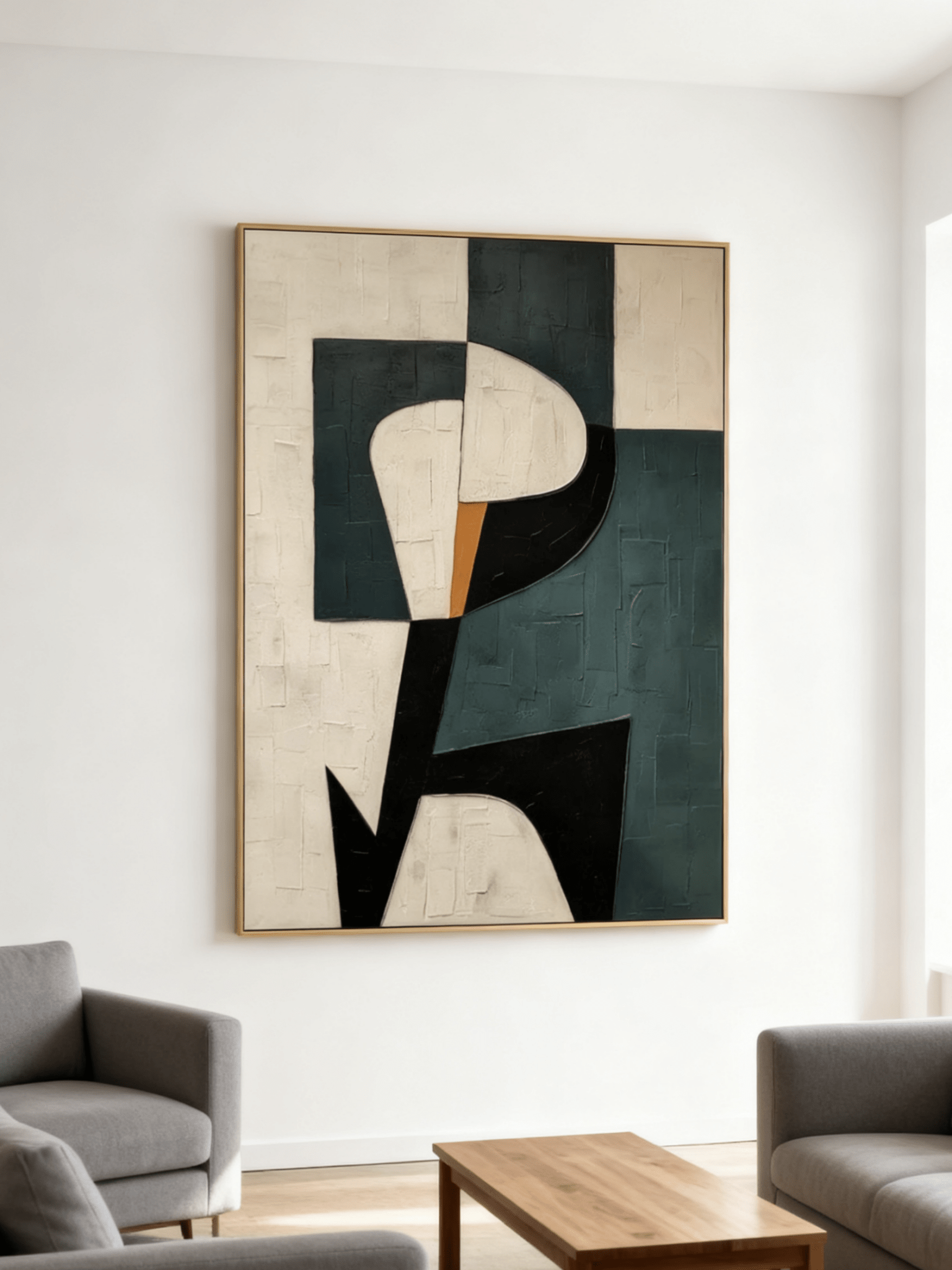
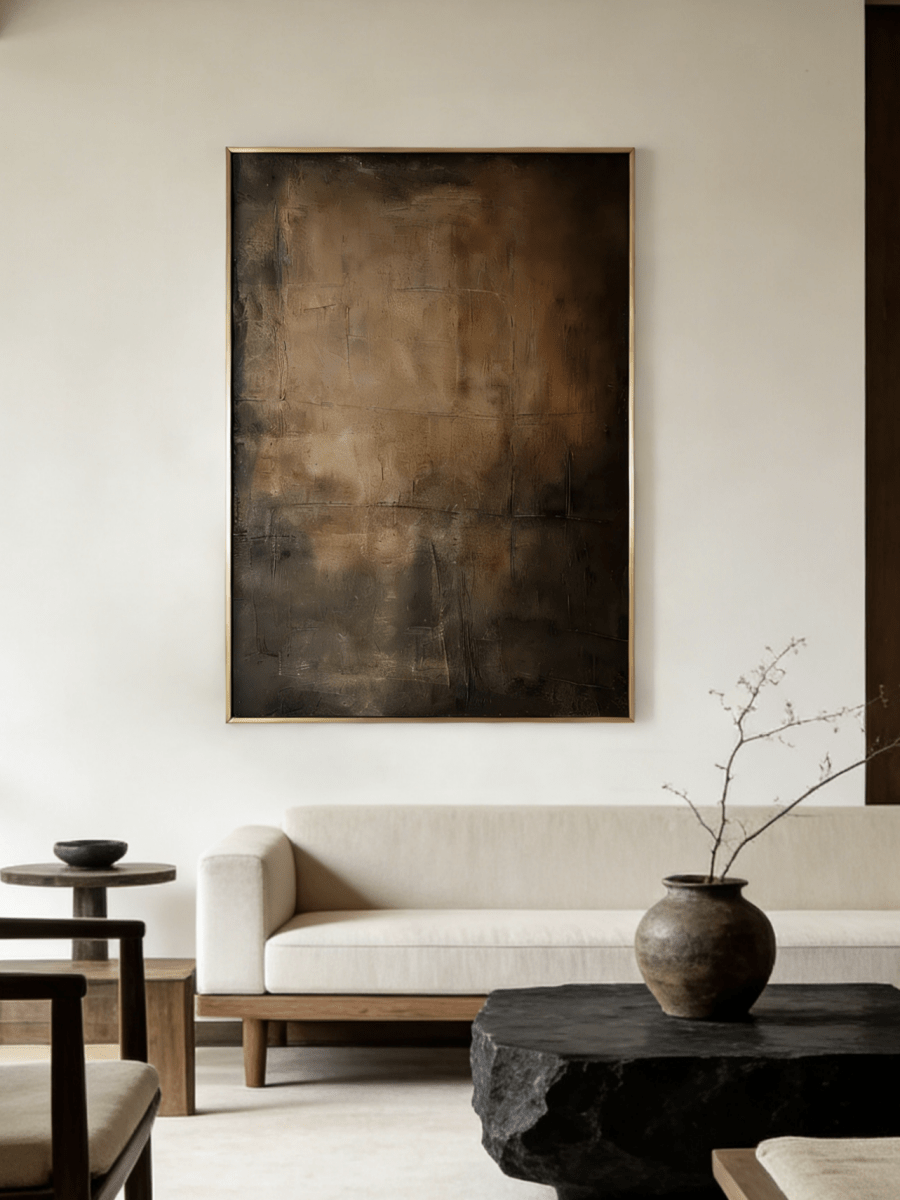
This artwork works particularly well in living rooms built around:
cream, beige, camel, taupe, olive or warm gray furniture.
Pair it with:
walnut, dark oak, travertine, leather, linen, bouclé or antique-brass accents.
The combination of olive green and warm gold gives a neutral living room more depth without requiring bright color.
Bedroom
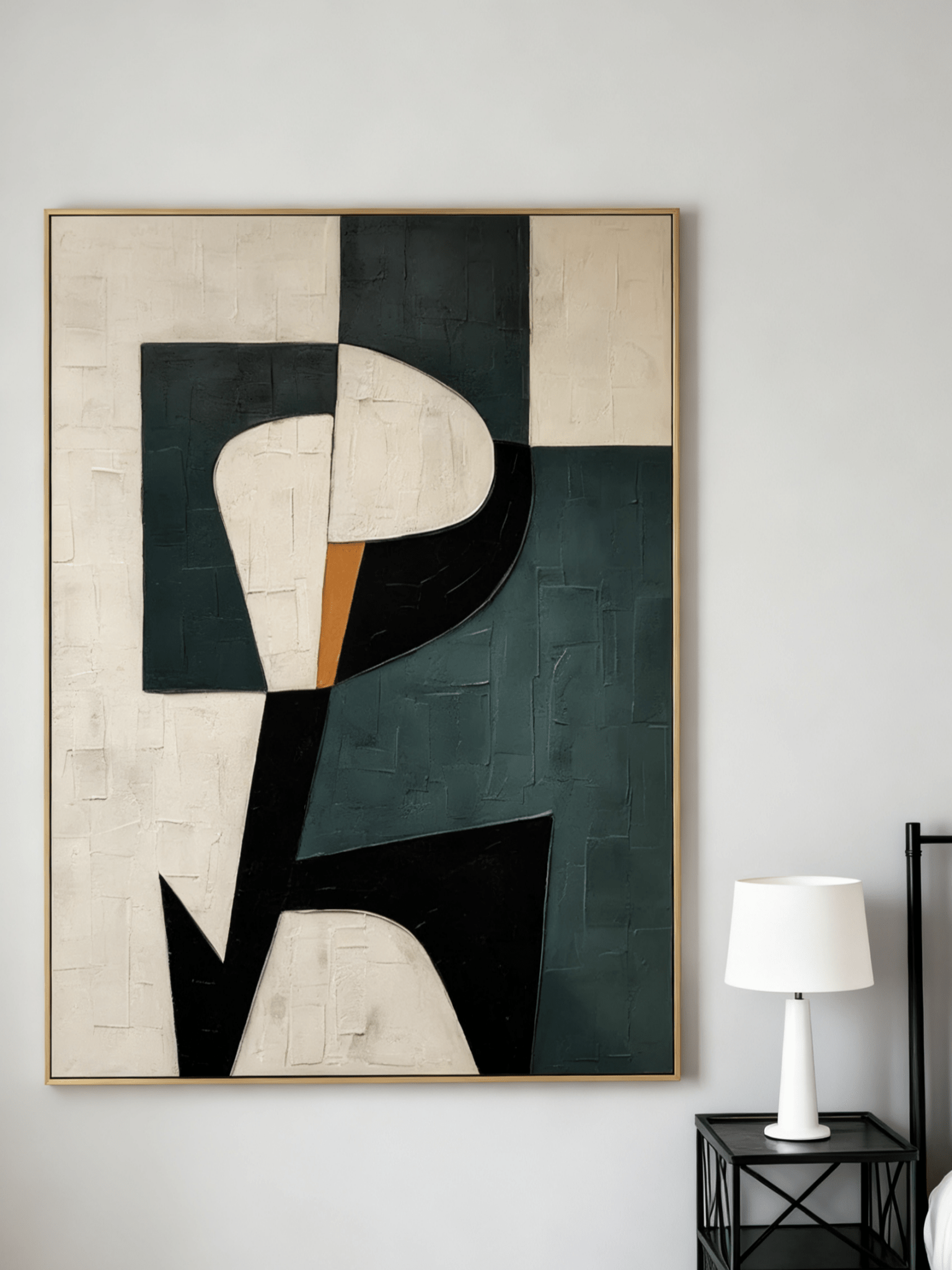
The darker olive palette can create a sophisticated focal point in a bedroom.
It pairs particularly well with:
cream bedding, walnut furniture, warm lighting and natural linen.
Because the geometry is structured rather than visually chaotic, the artwork can introduce texture without making the room feel overly busy.
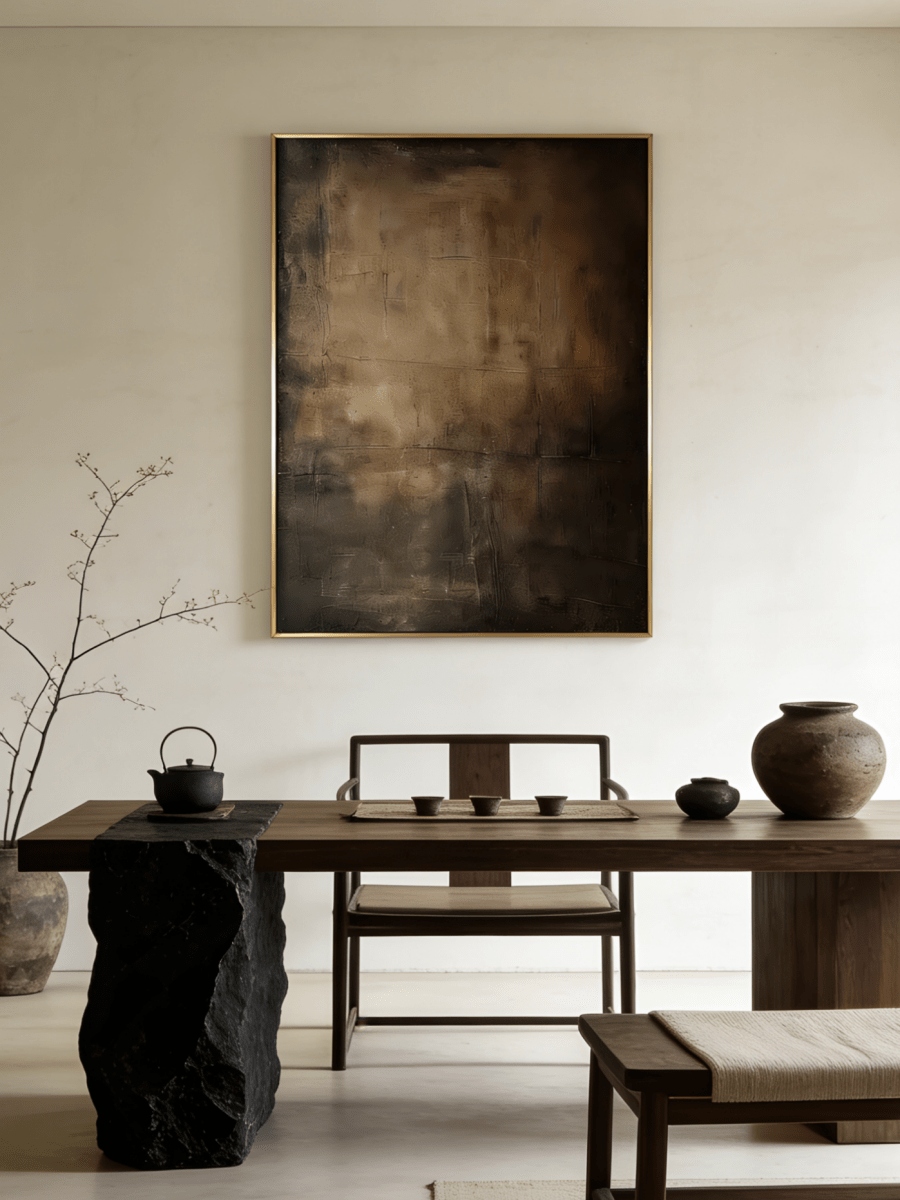
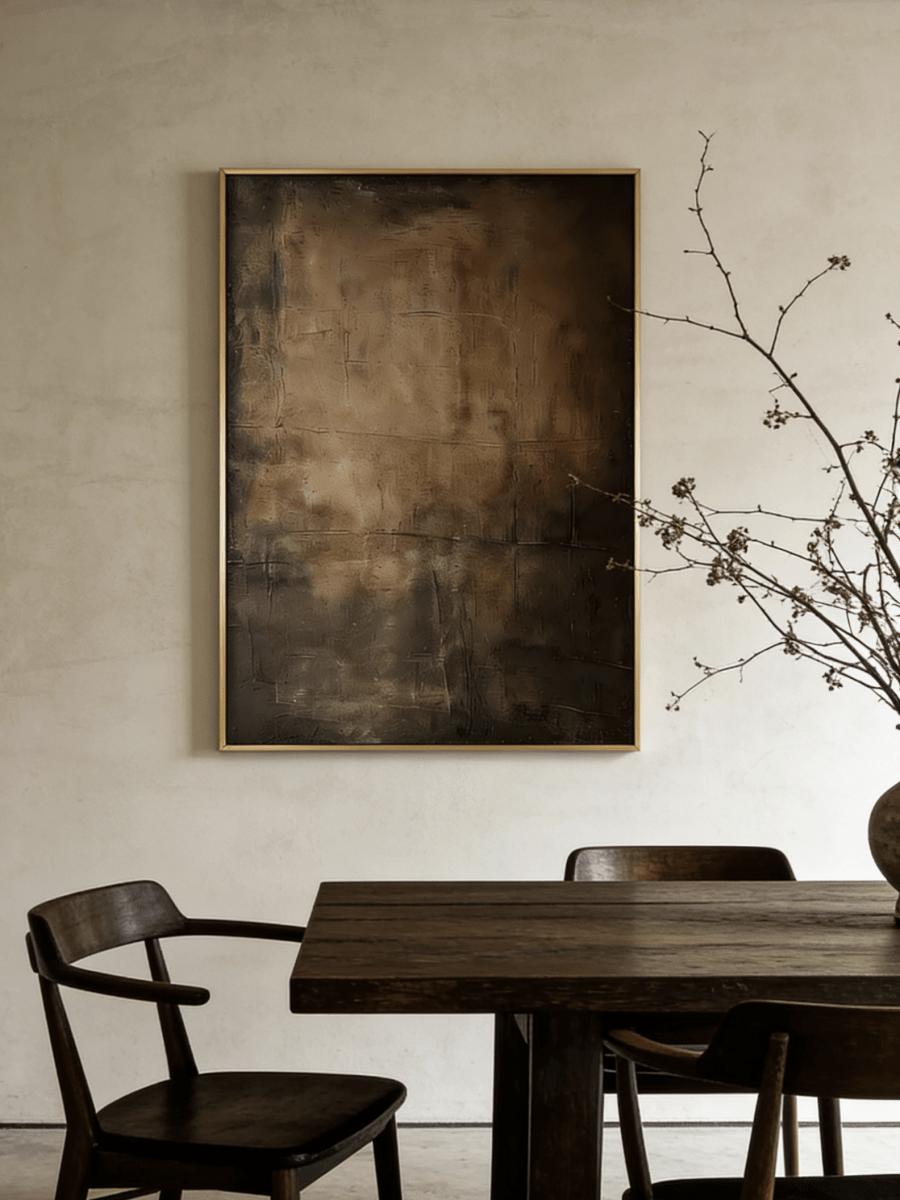
Open Dining Room
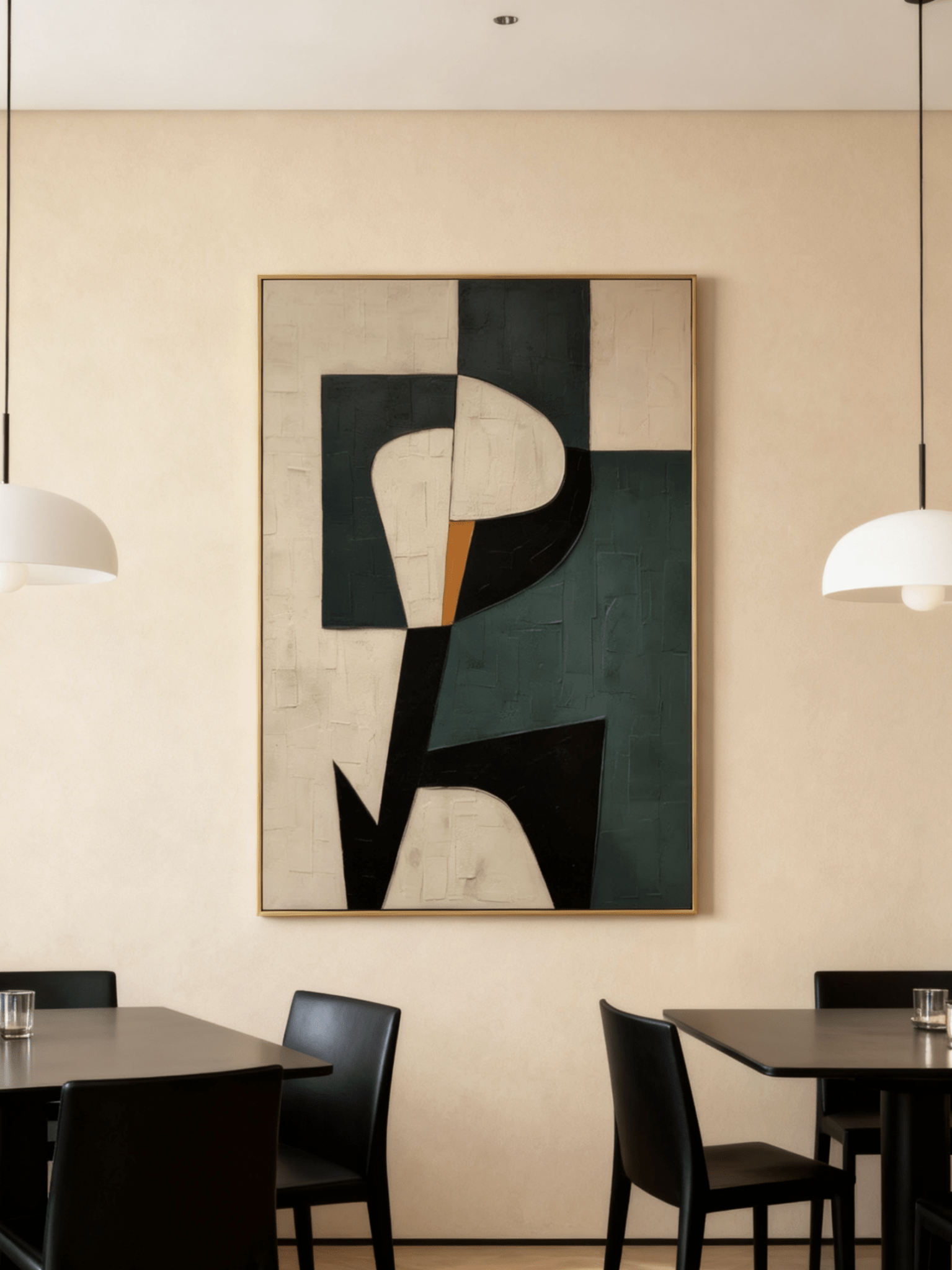
This is one of the strongest placements for the painting.
The repeated grid relates naturally to architectural lines and works beautifully alongside:
wood dining tables, sculptural seating, stone surfaces and warm pendant lighting.
Its gold-toned detailing also responds particularly well to evening ambient light.
Entryway
The vertical format makes this artwork ideal above:
an entryway console, narrow sideboard or bench.
It creates a strong first impression while maintaining a sophisticated, understated palette.
Home Office
The ordered geometric composition is particularly suitable for a home office or study.
It adds visual structure without using a distracting figurative subject.
Frequently Asked Questions
1. Is this artwork hand-painted or a print?
This is a hand-painted textured artwork, not a mass-produced flat canvas print.
The raised blocks, palette-knife marks and surface variations are physically created during the painting process.
2. What colors are used in this painting?
The main colors are ivory, cream, beige, greige, taupe, mocha and charcoal brown.
The palette is intentionally warm, soft and neutral.
3. What interior styles work best with this artwork?
It works particularly well with:
Wabi-Sabi, Organic Modern, Japandi, Contemporary, Warm Minimalist and Modern Rustic interiors.
Natural wood, stone, linen and bouclé complement the artwork especially well.
4. Does neutral wall art work with a beige or cream sofa?
Yes.
Instead of using strong color contrast, this artwork creates visual separation through texture, depth and tonal variation.
The darker taupe and charcoal blocks also help prevent a beige room from feeling flat.
5. Is geometric wall art suitable for a minimalist living room?
Yes.
Geometric artwork introduces structure without adding a busy figurative subject.
The warm neutral palette and irregular handmade texture make this piece softer than highly precise black-and-white geometric art.
6. Where should I hang vertical wall art?
Vertical artwork works particularly well:
above a console or dresser, beside a sofa, between windows or doors, and on narrow feature walls.
7. Can this artwork be displayed in a bedroom?
Yes.
The ivory and warm neutral palette makes it particularly suitable for calm bedroom interiors.
It works beautifully with cream bedding and natural wood furniture.
8. Does textured wall art look different in different lighting?
Yes.
Raised paint catches light differently throughout the day, creating shifting highlights and shadows.
Side lighting is especially effective at revealing the depth of the texture.
9. Will my painting look exactly like the product image?
The overall composition, palette and artistic character will remain consistent with the reference artwork.
Because every painting is individually created by hand, subtle variations in palette-knife marks, texture and individual blocks are natural.
These differences are part of owning a handmade artwork.
10. How long will it take to receive my painting?
Please allow approximately:
1–2 weeks for creation
followed by:
5–7 days for FedEx/DHL delivery after dispatch.
Worldwide shipping is free, and eligible artwork can be returned or exchanged within 30 days.
Style: Wabi-Sabi Art •Artist: Eliot Vermeer
•Orientation: Vertical
Ogni opera è realizzata su ordinazione. La lavorazione richiede in genere 1–2 settimane prima della spedizione.
Dopo il completamento dell’opera, la consegna richiede in genere circa 5–7 giorni lavorativi con DHL o FedEx.
Per alcuni soggetti possono essere disponibili misure o variazioni cromatiche. Contatta info@wabiwallart.com prima dell’ordine per confermare.


L’artista
Eliot Vermeer, nato a Xi’an nel 1987 e attivo a Shanghai, crea astrazioni wabi sabi che collegano l’estetica orientale all’espressionismo occidentale. La sua opera indaga materia, tracce e spazio.