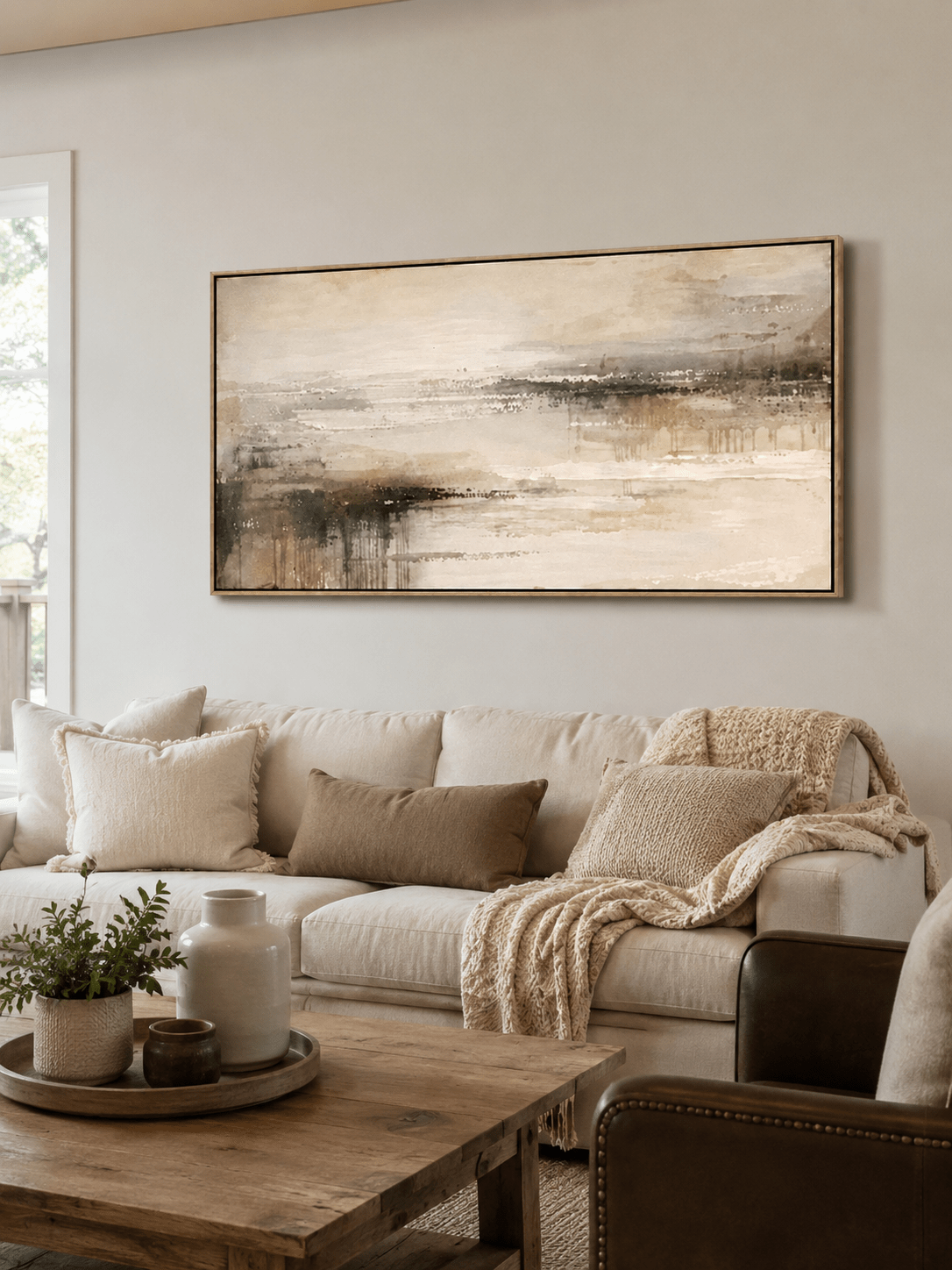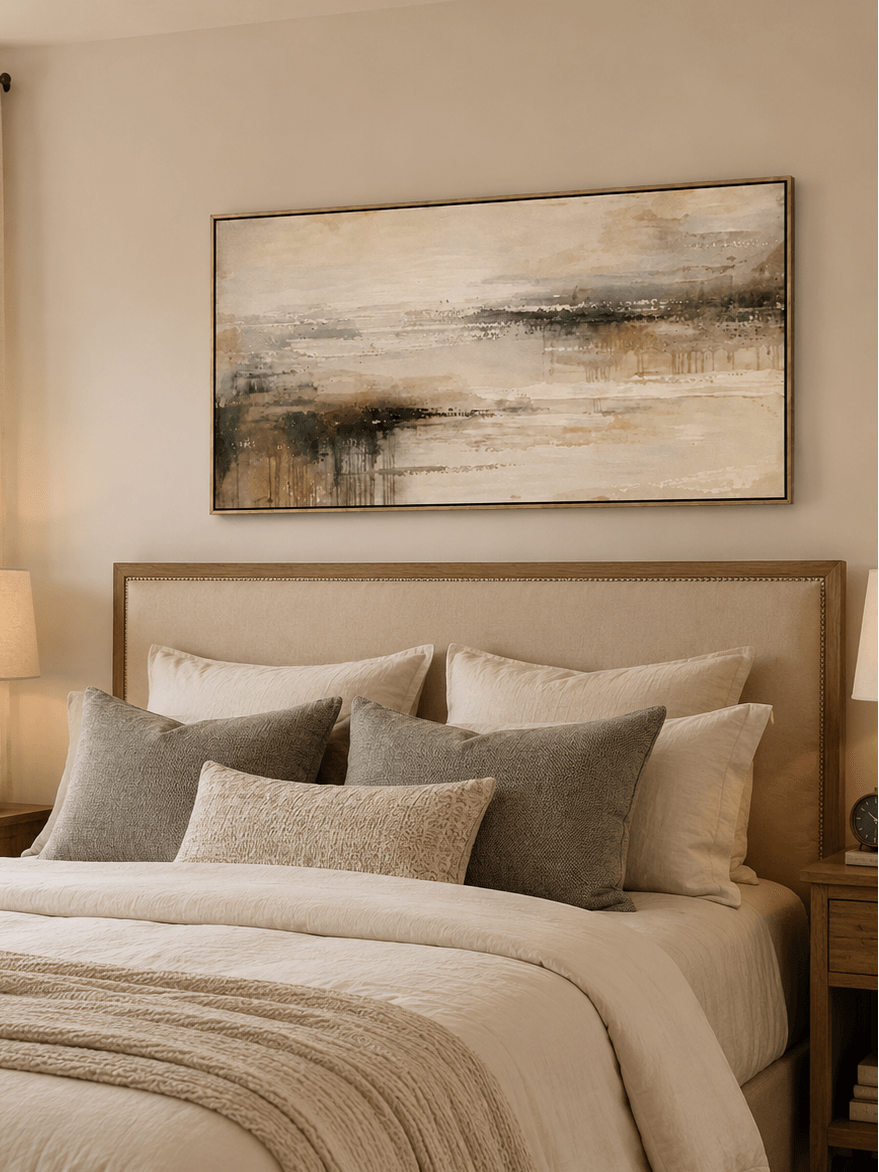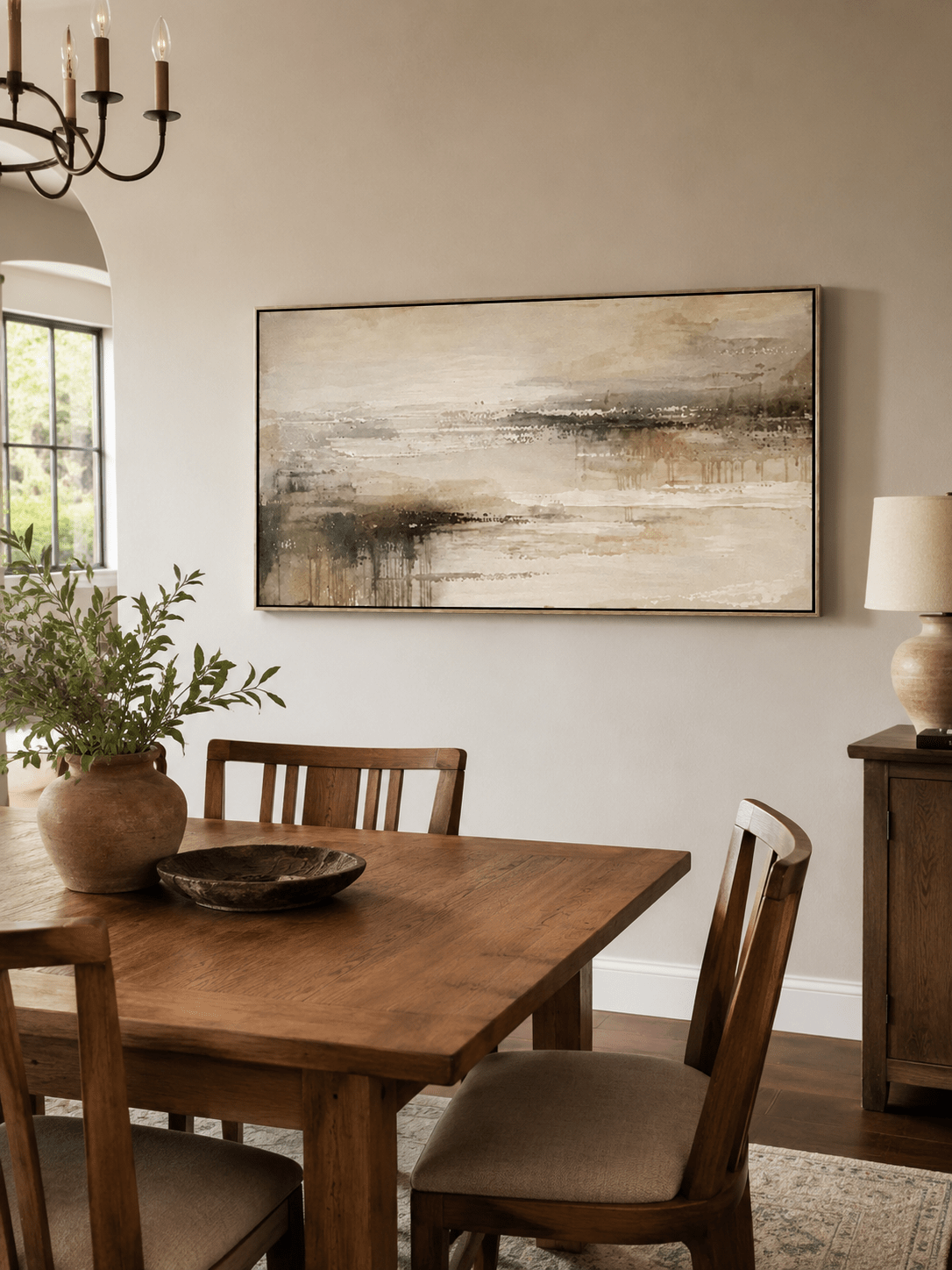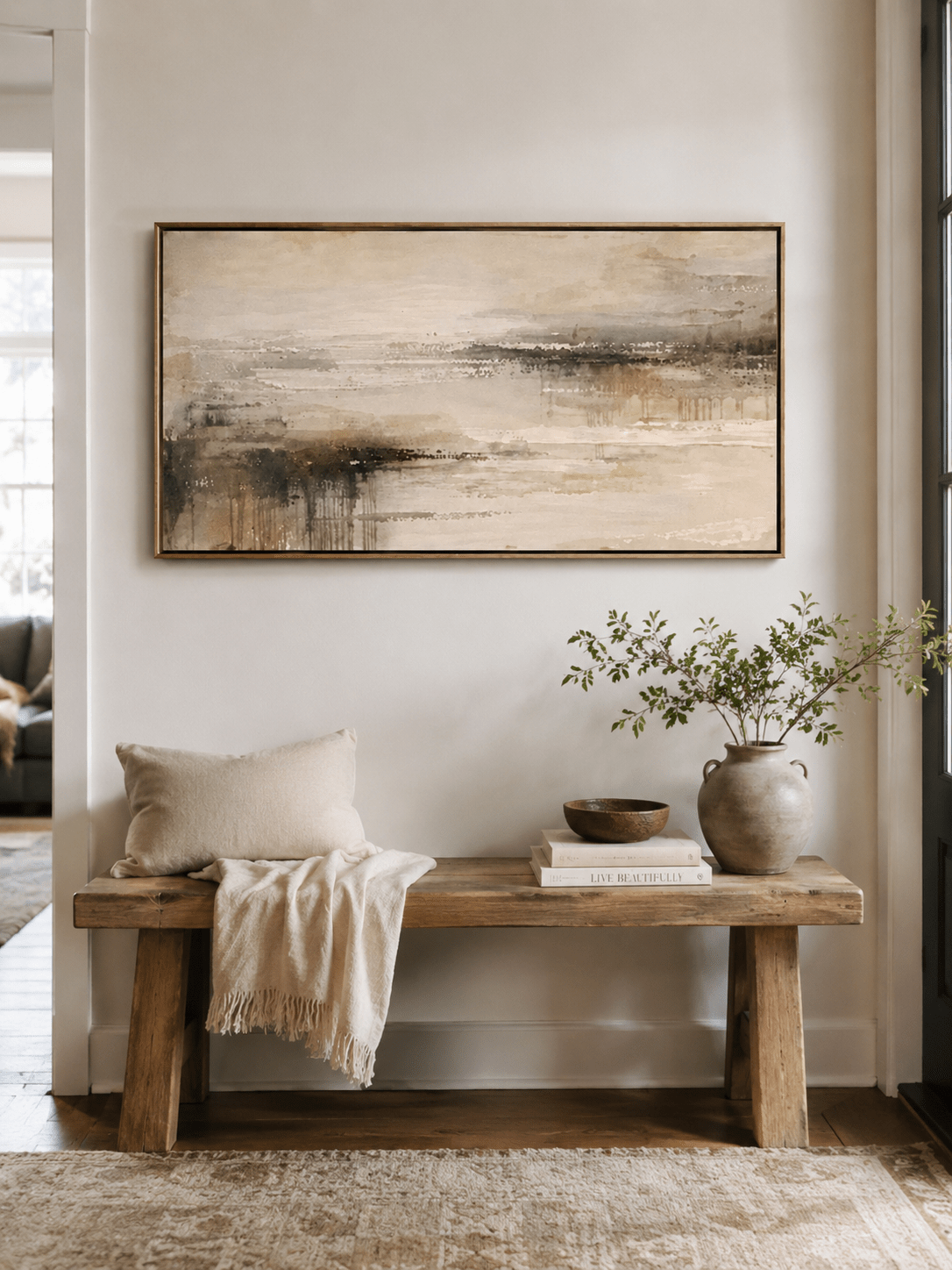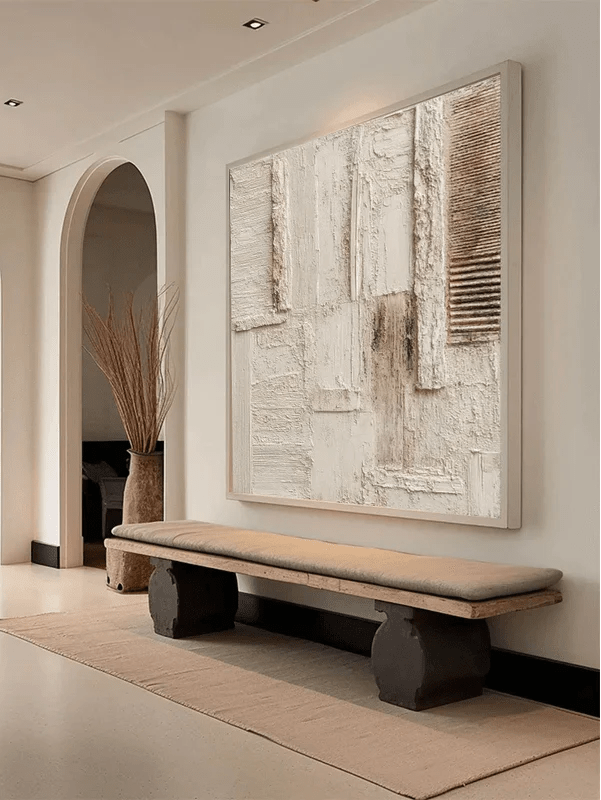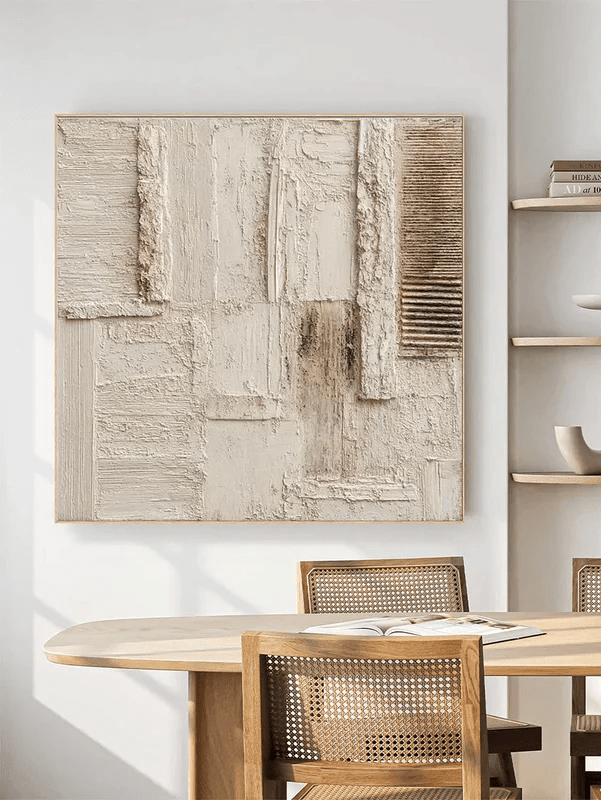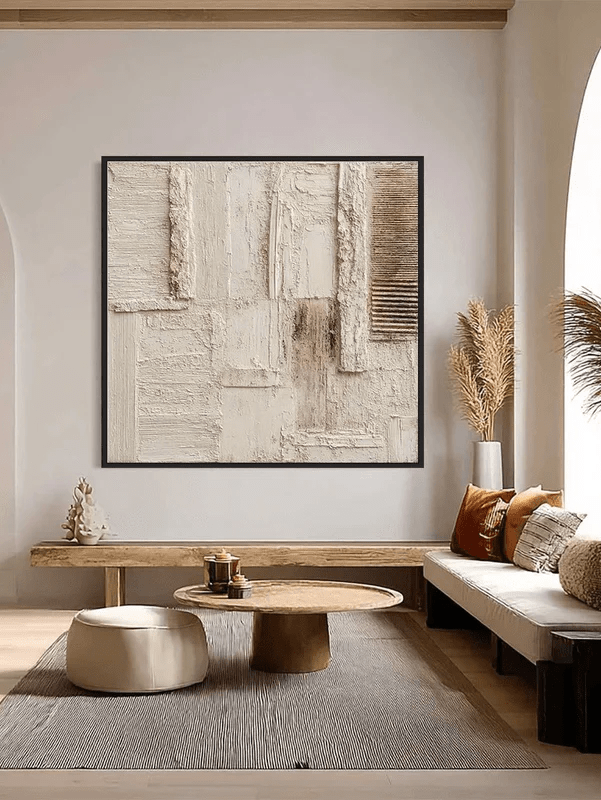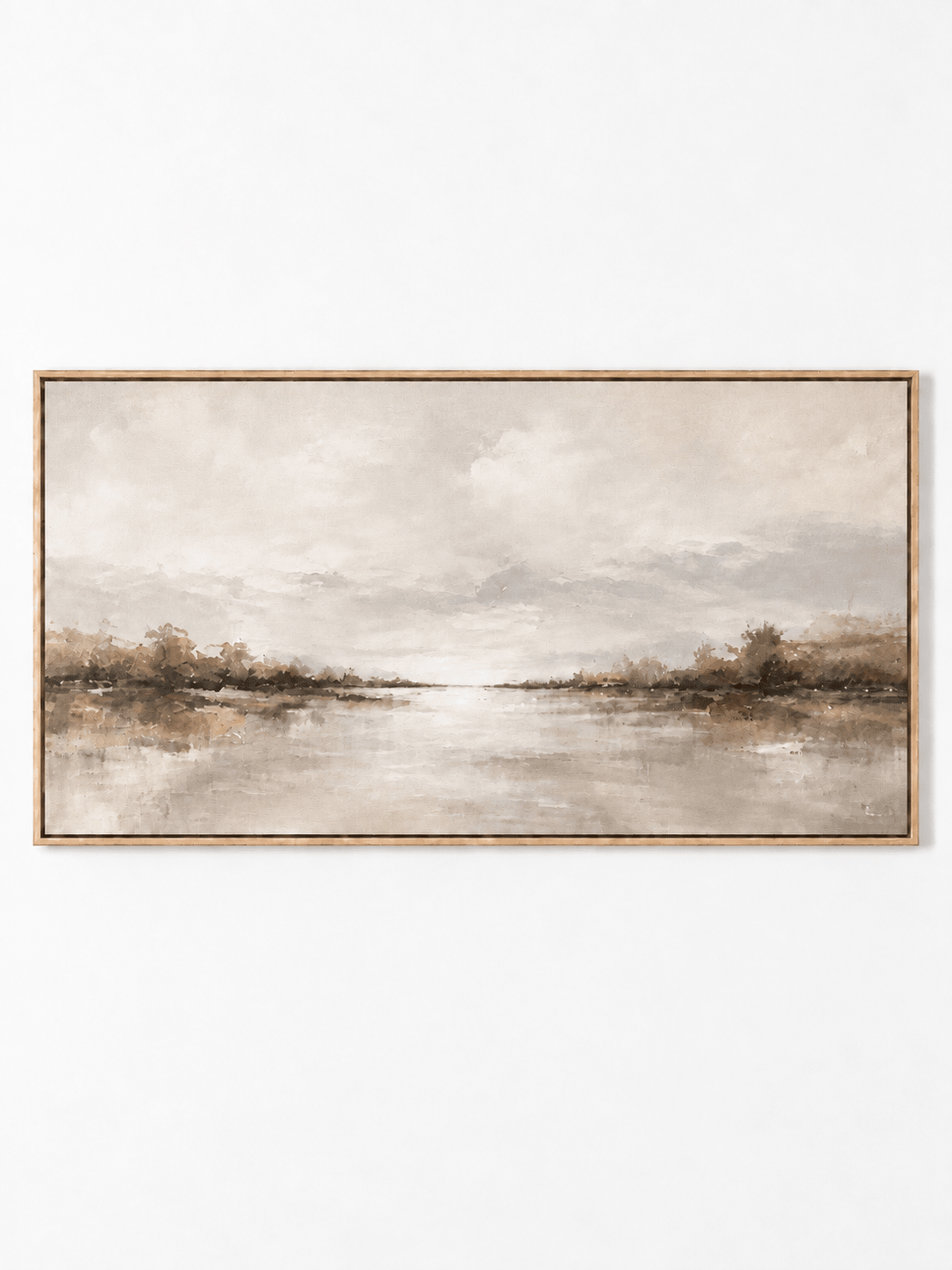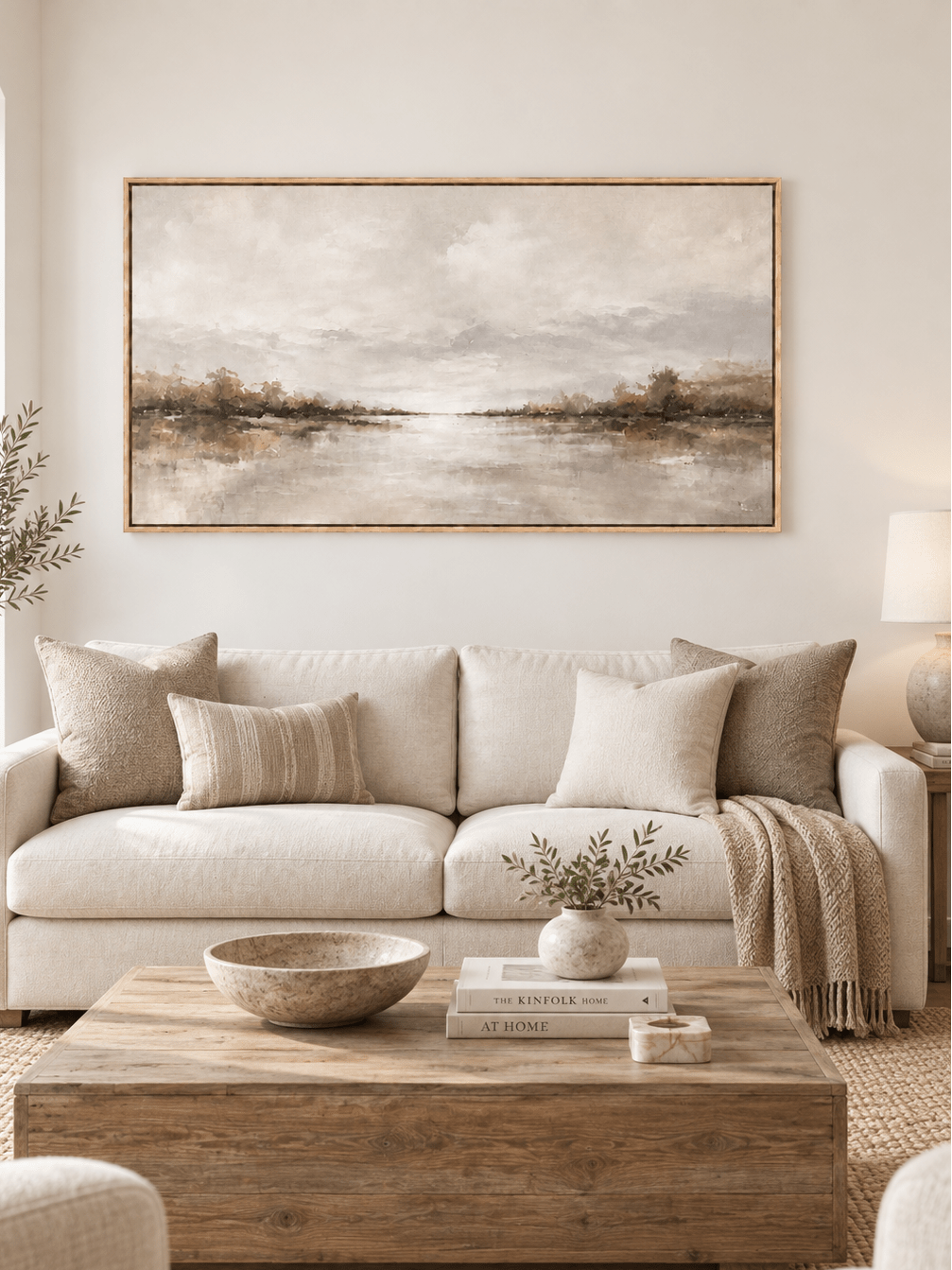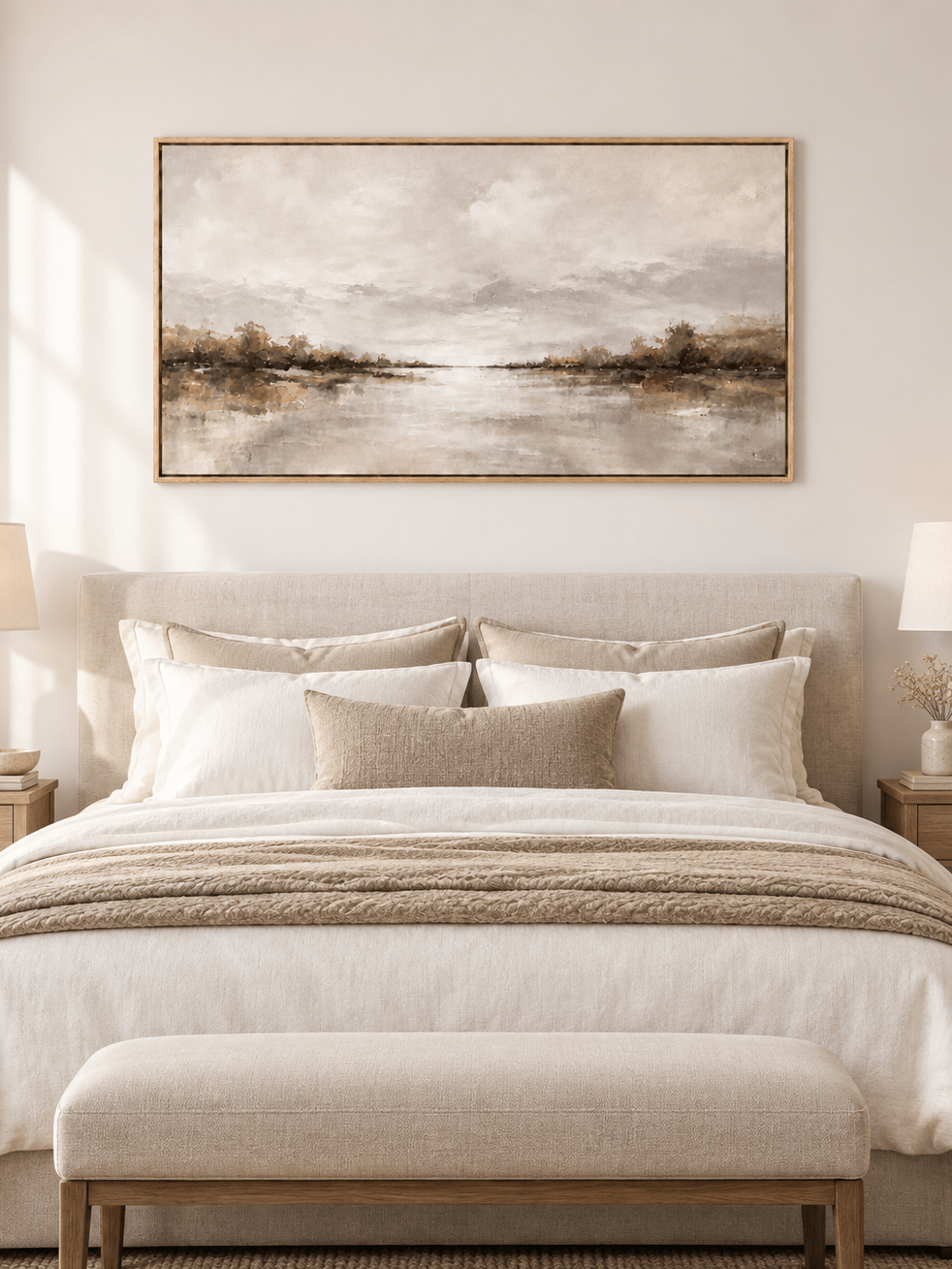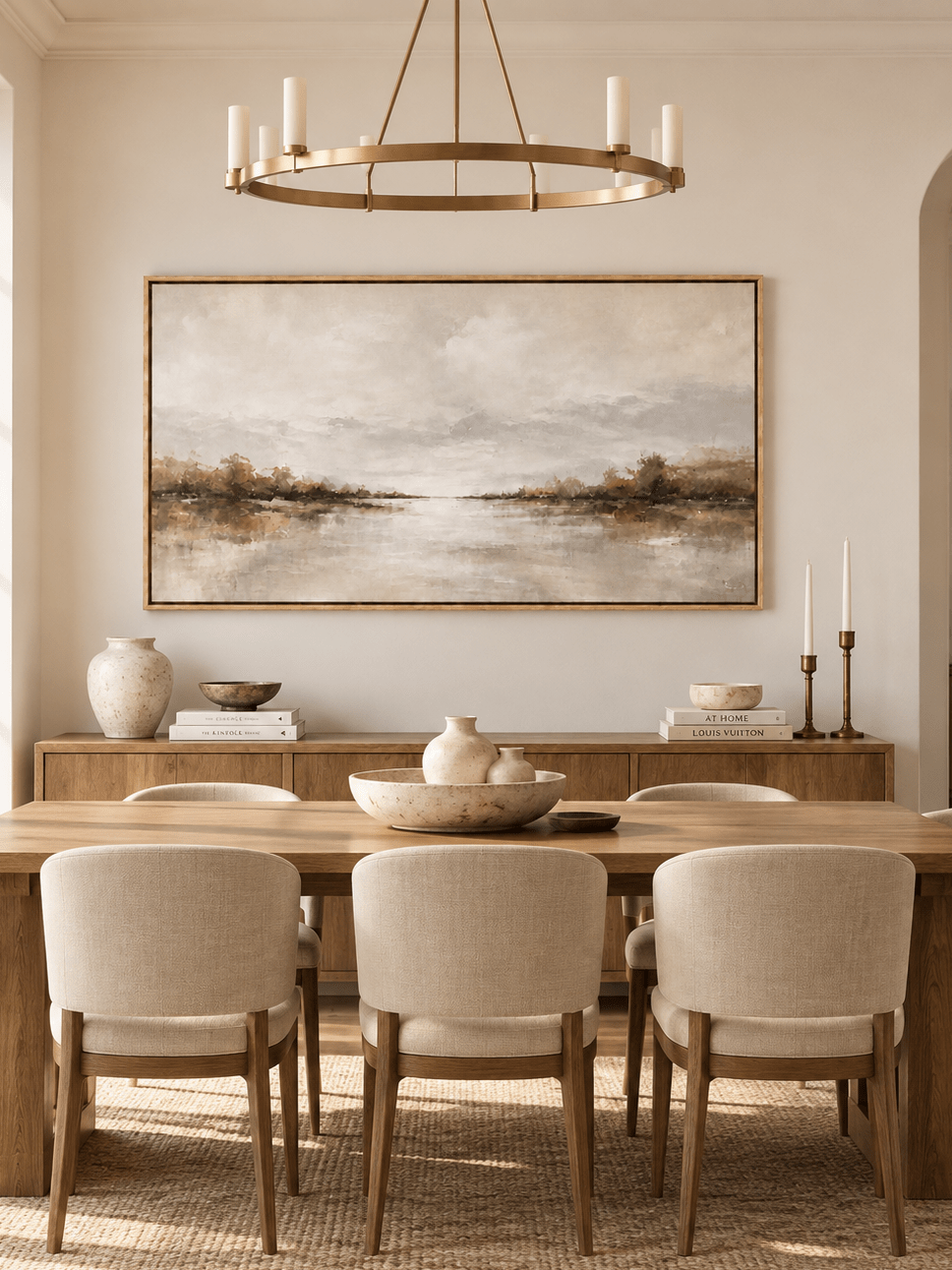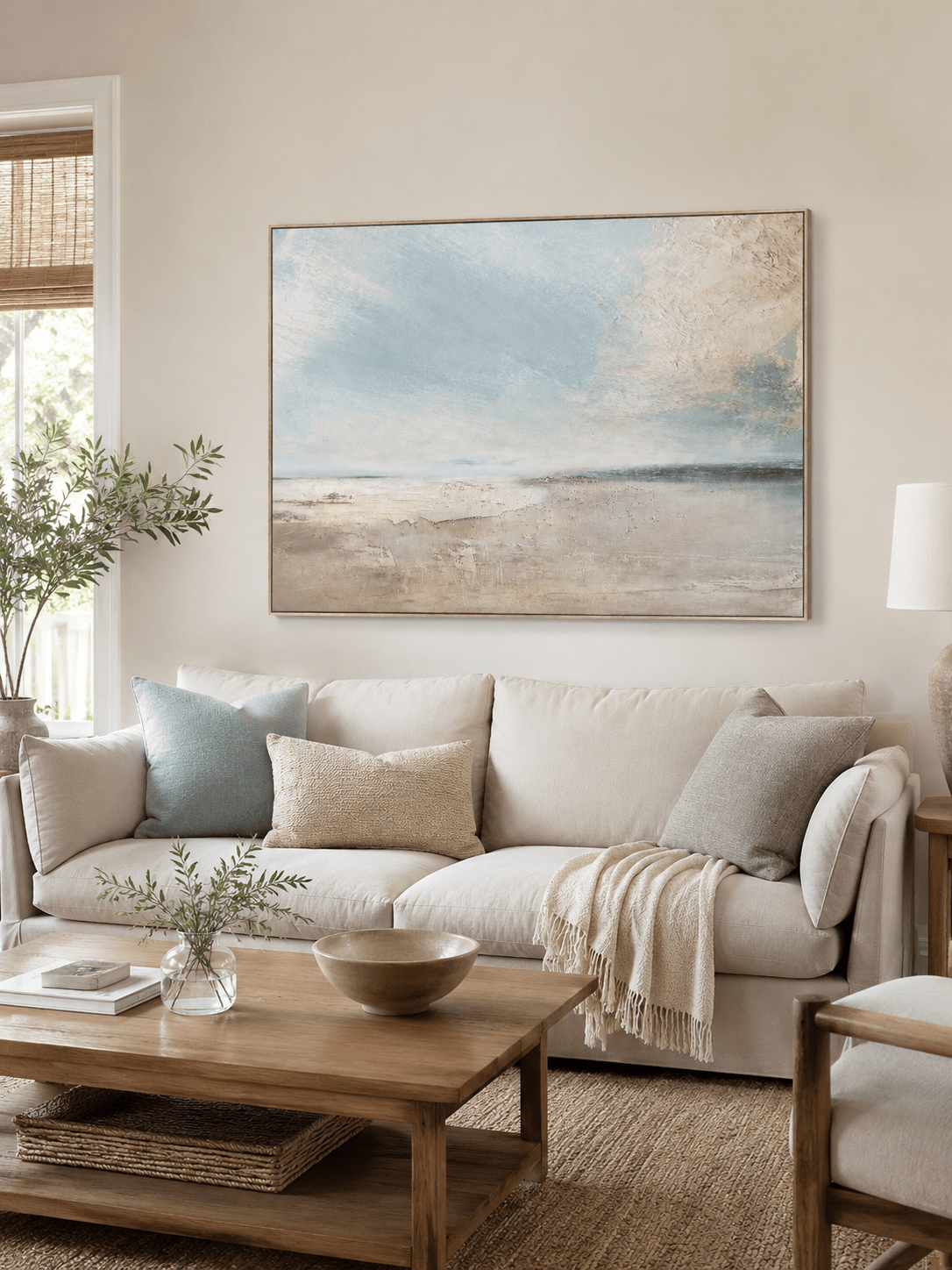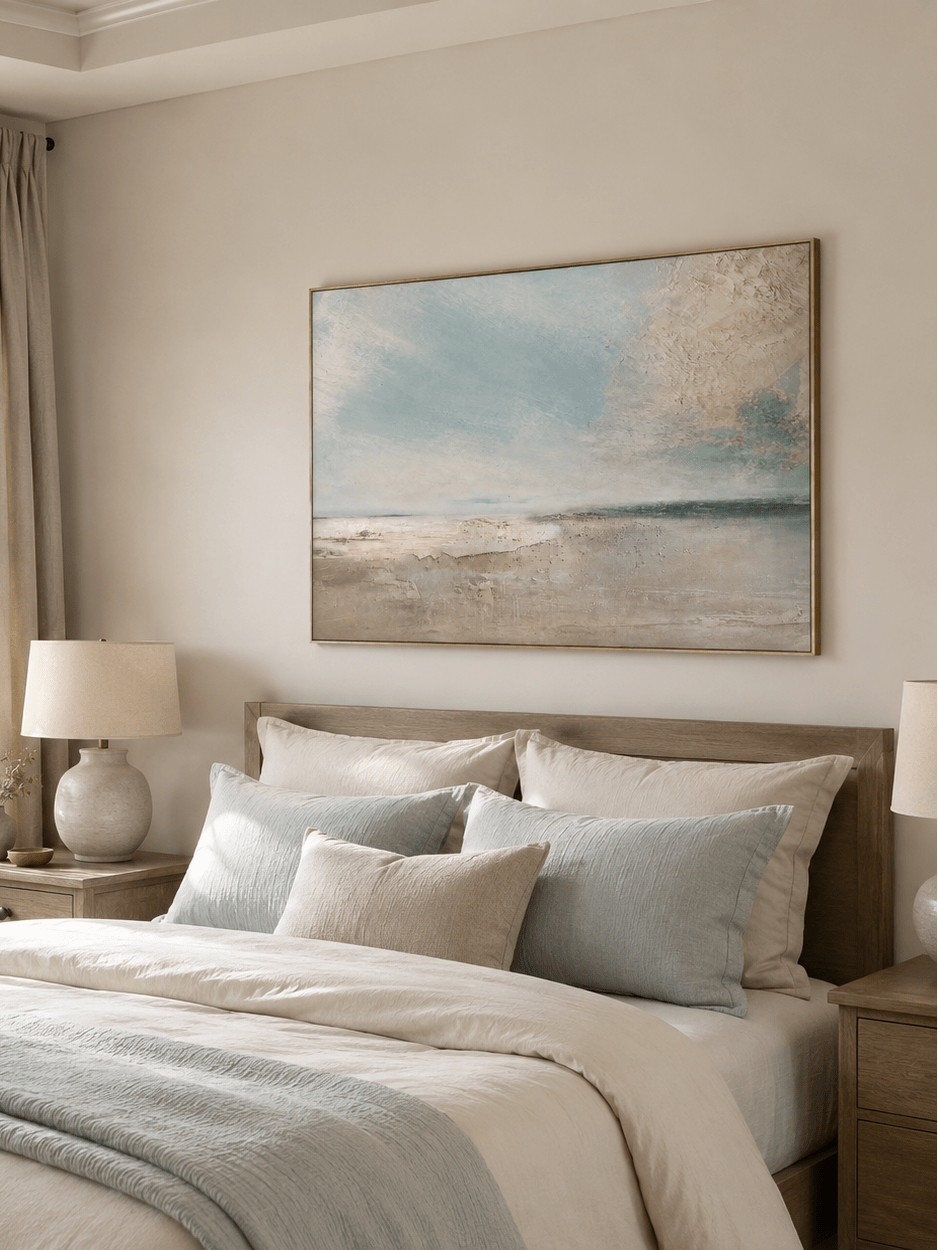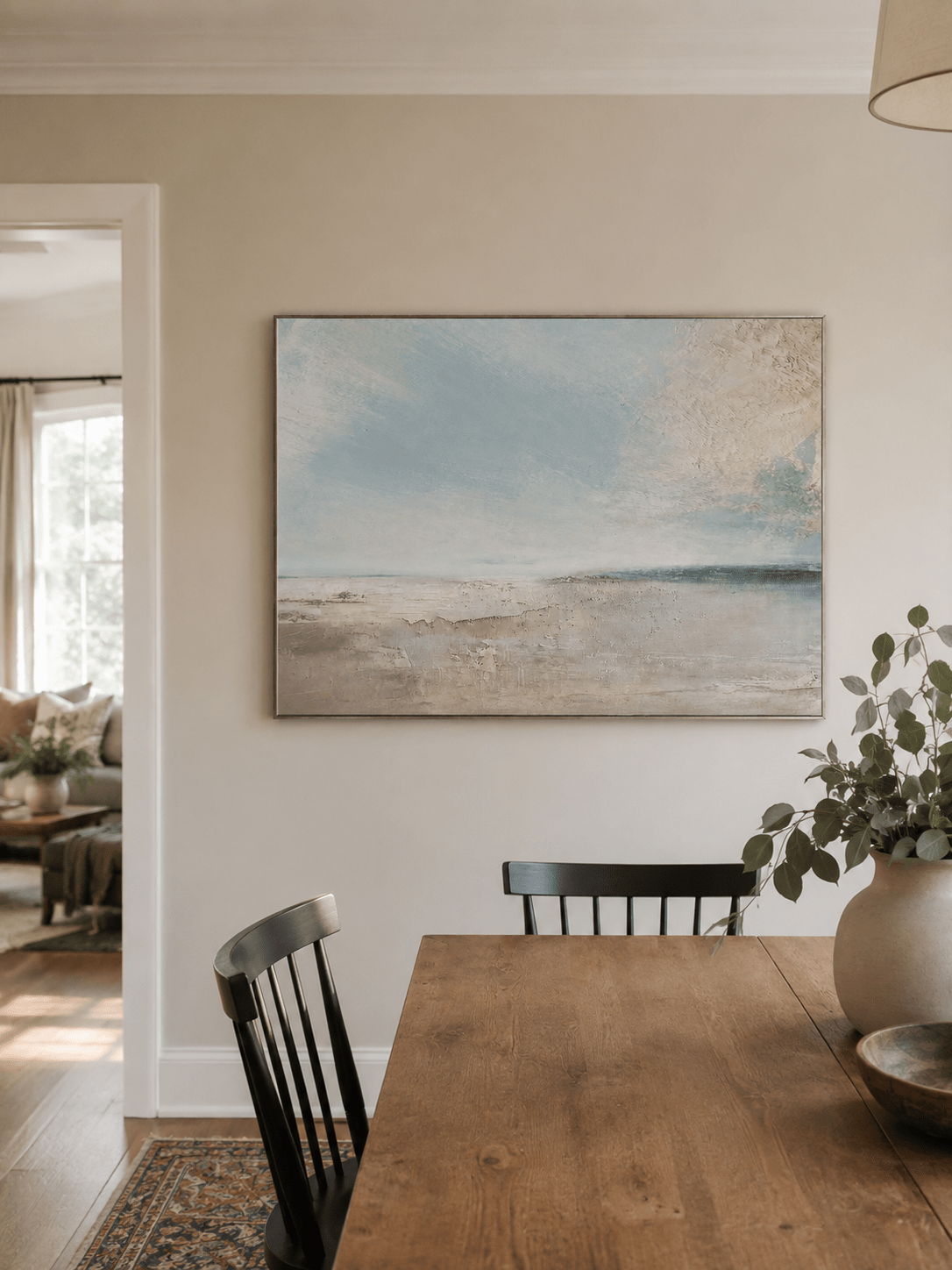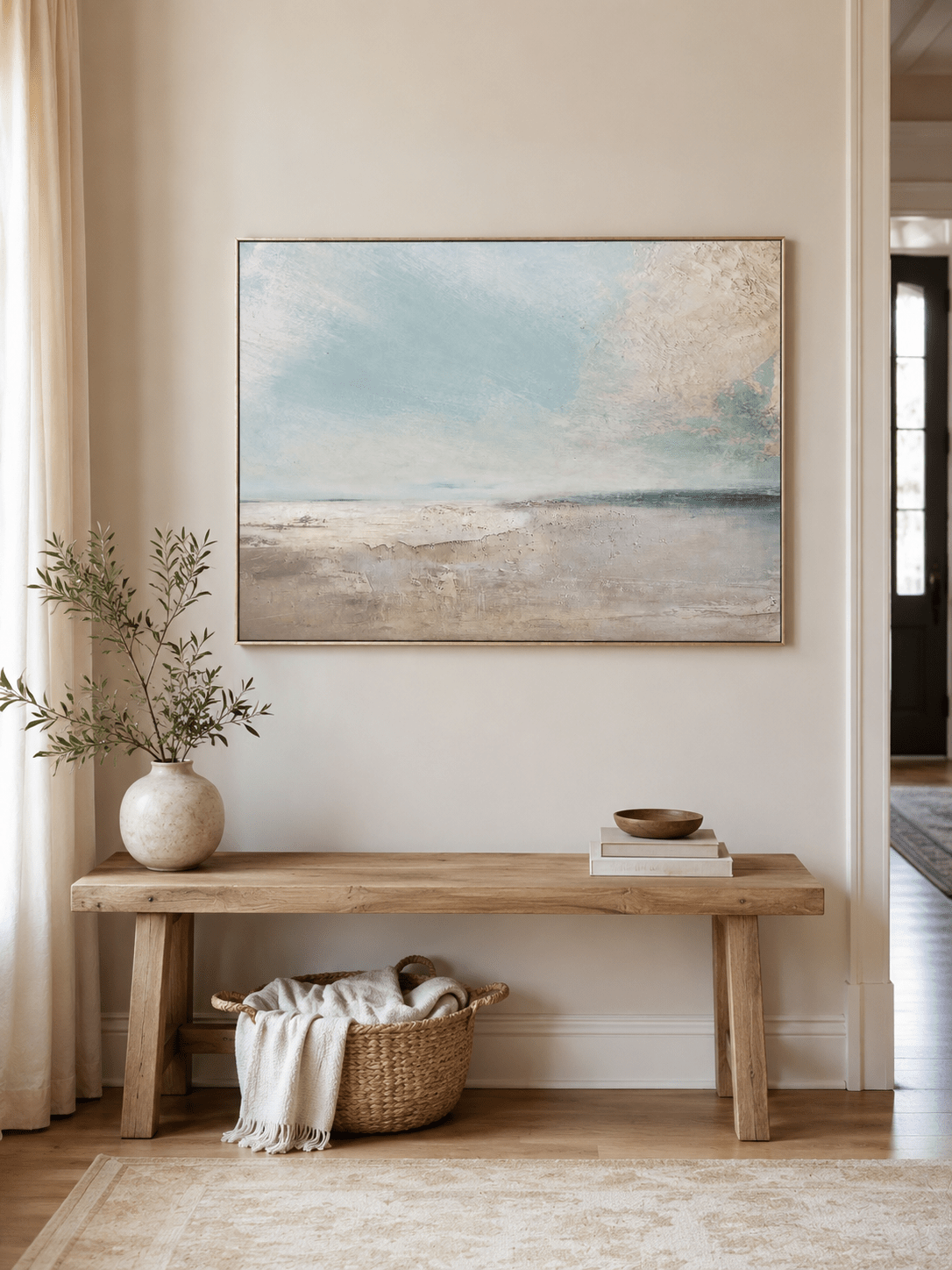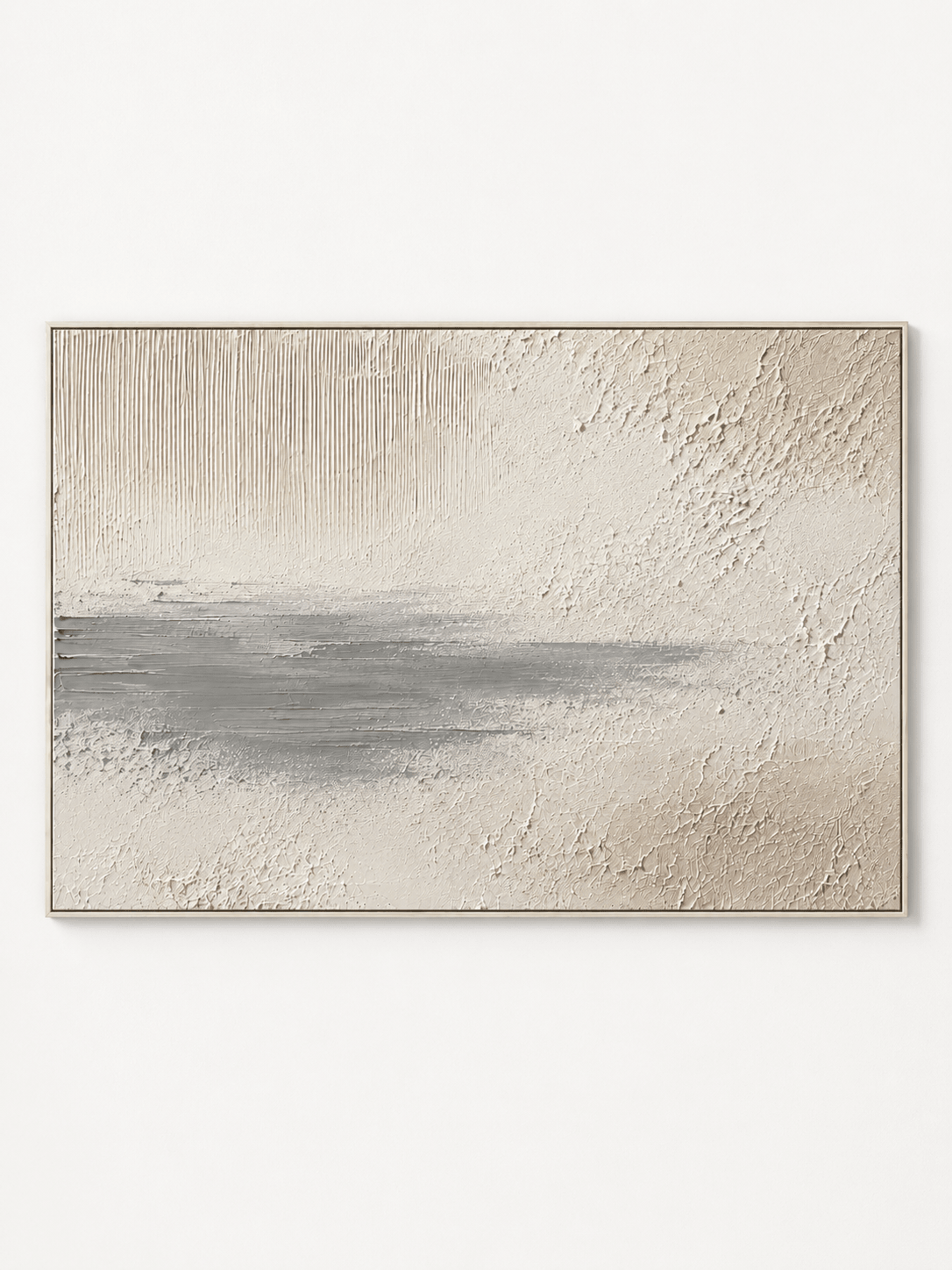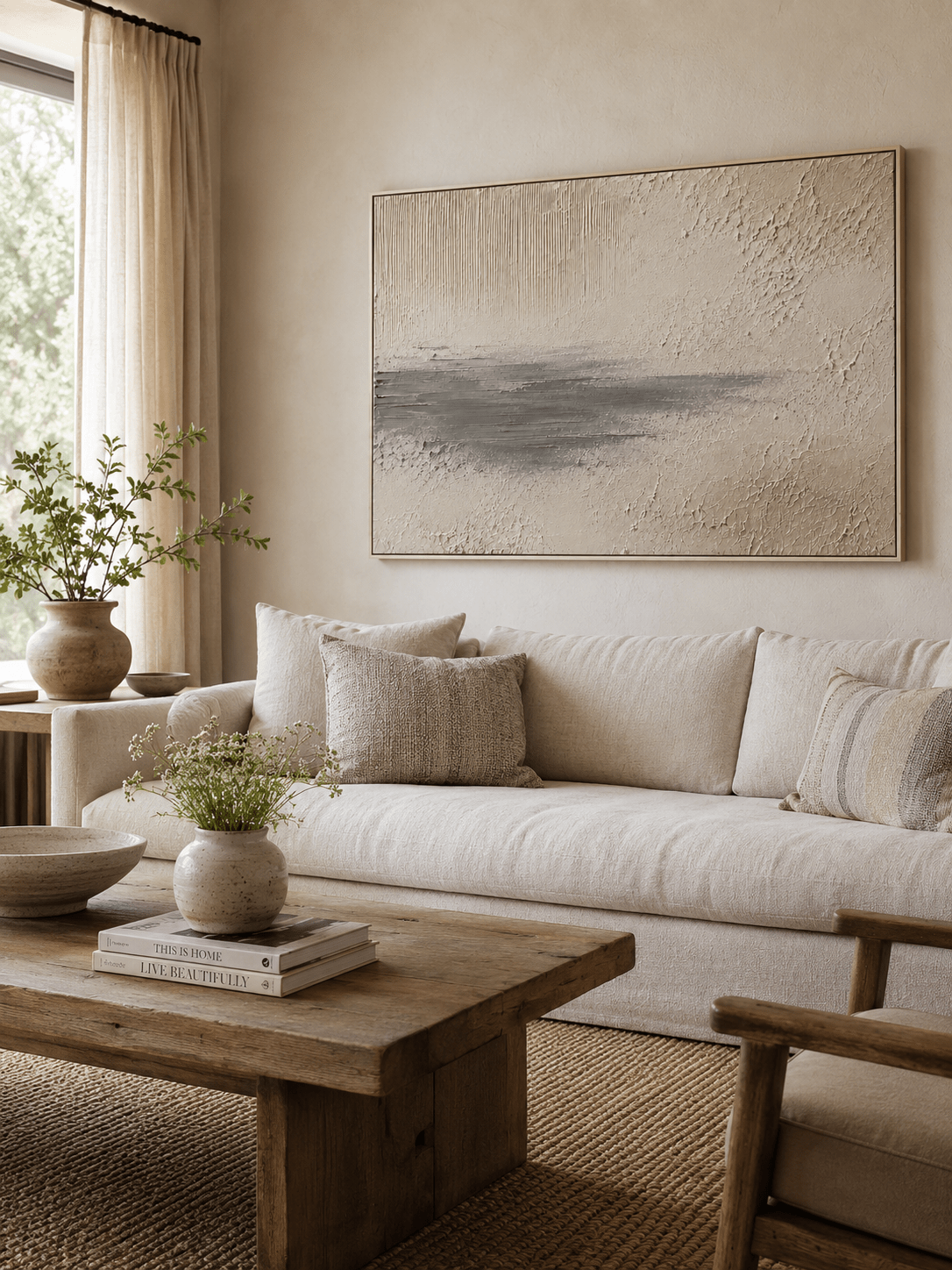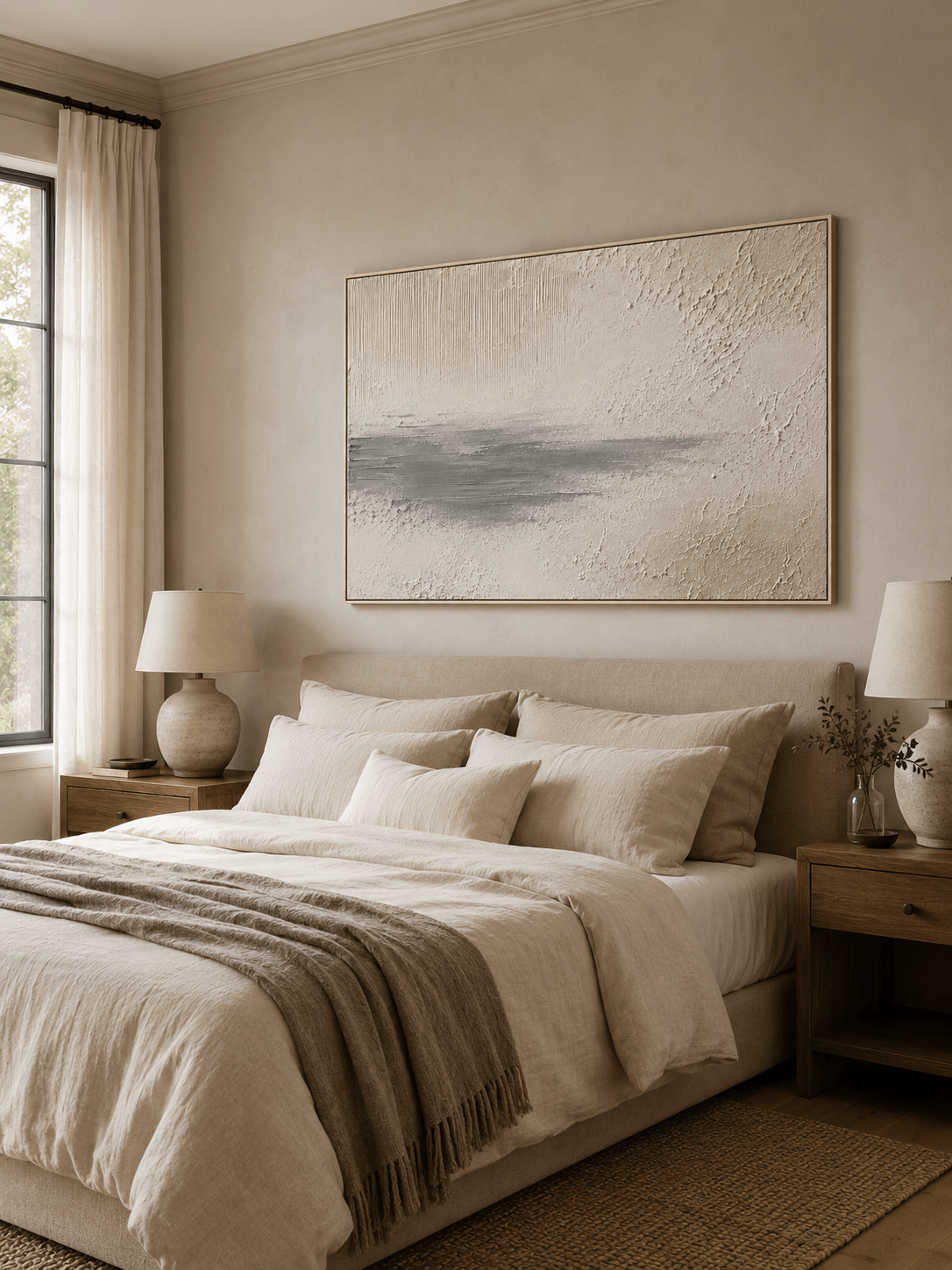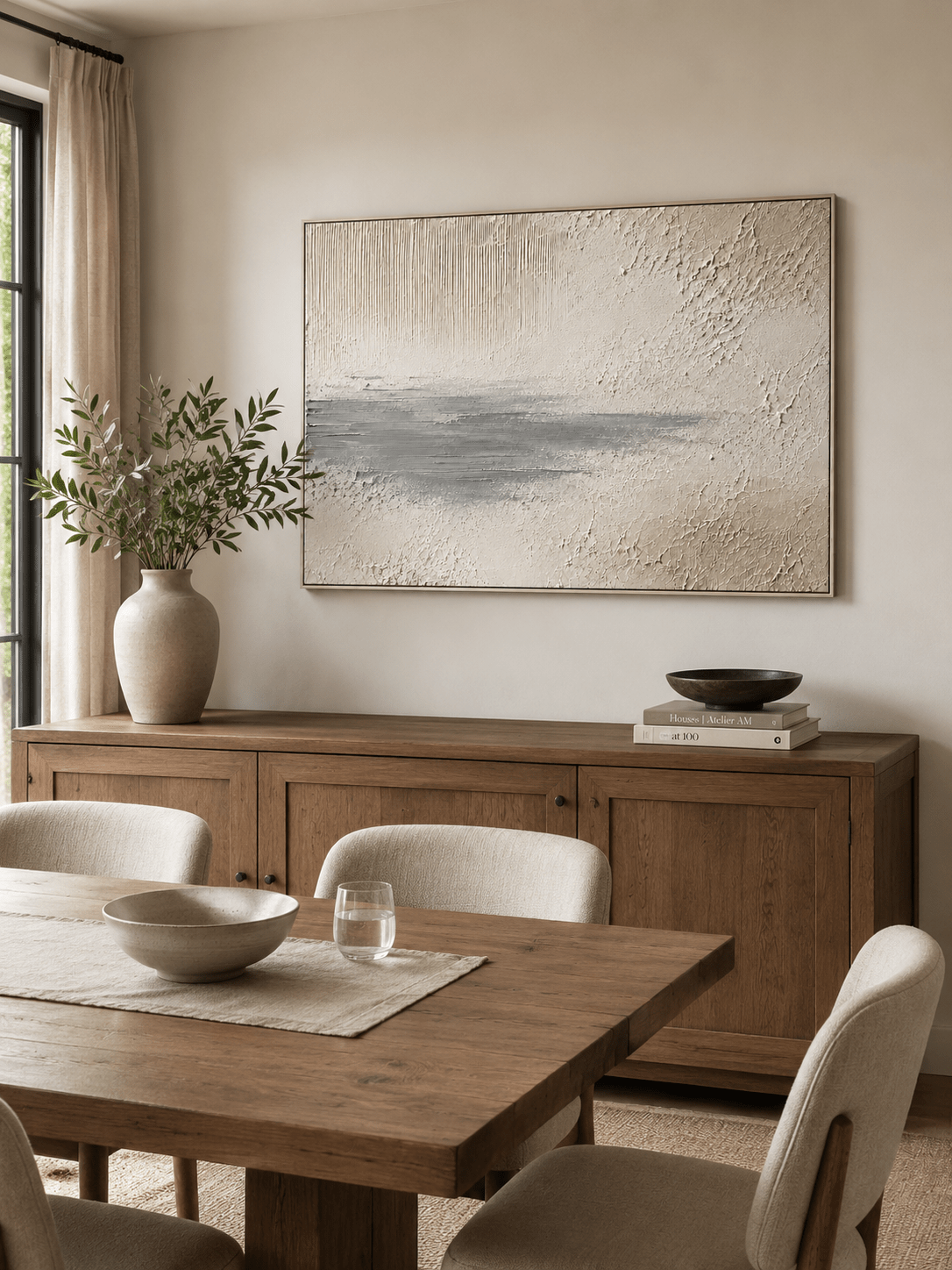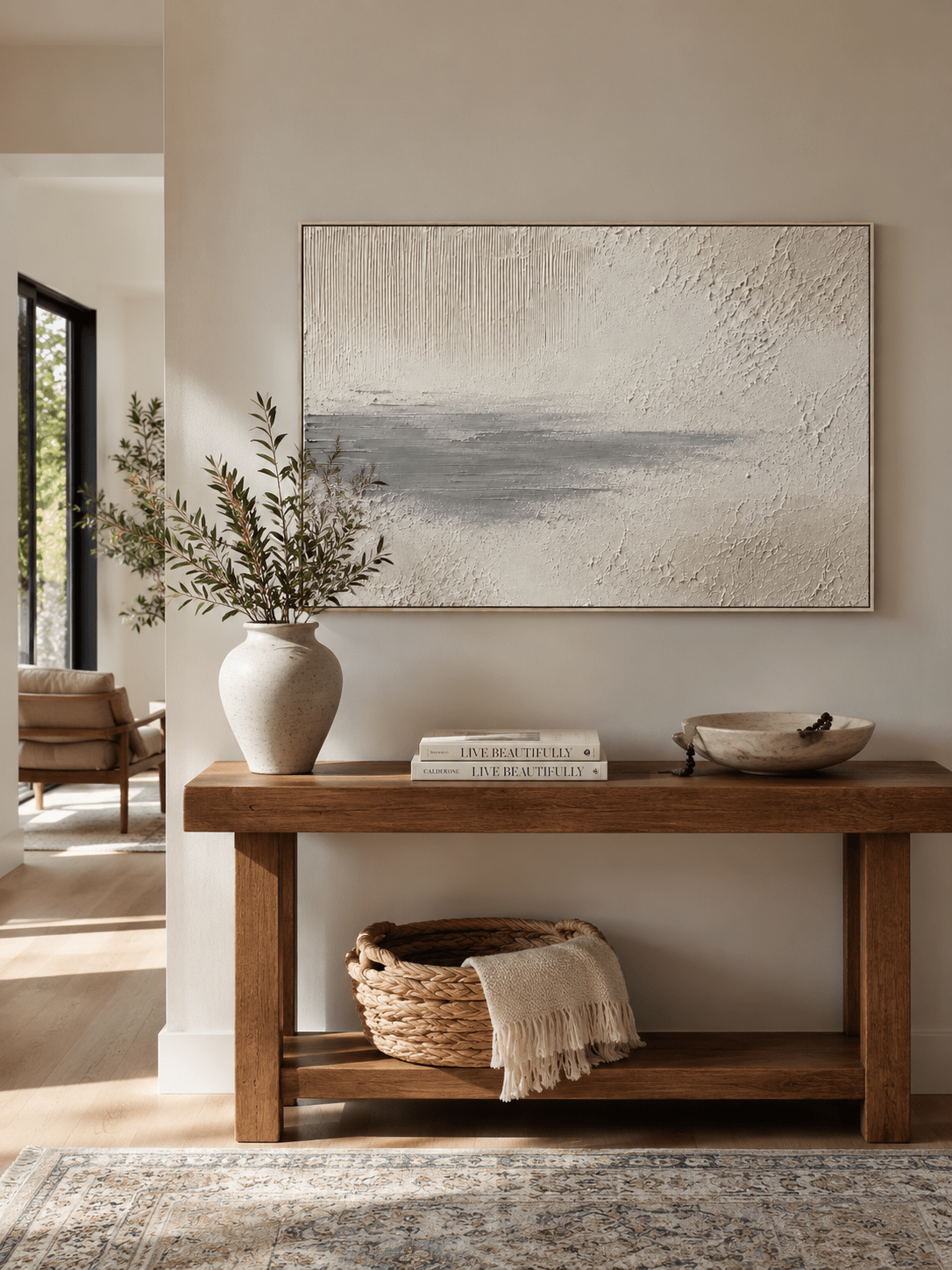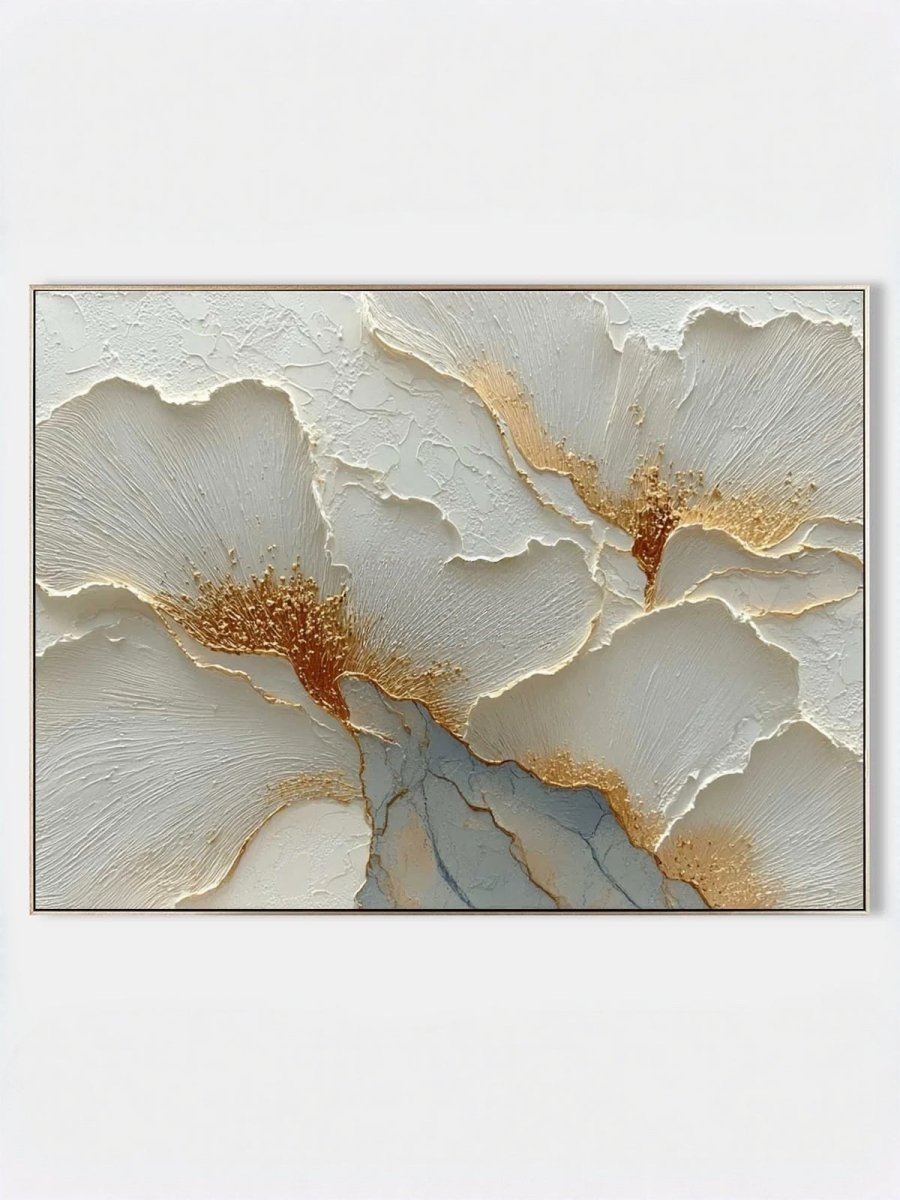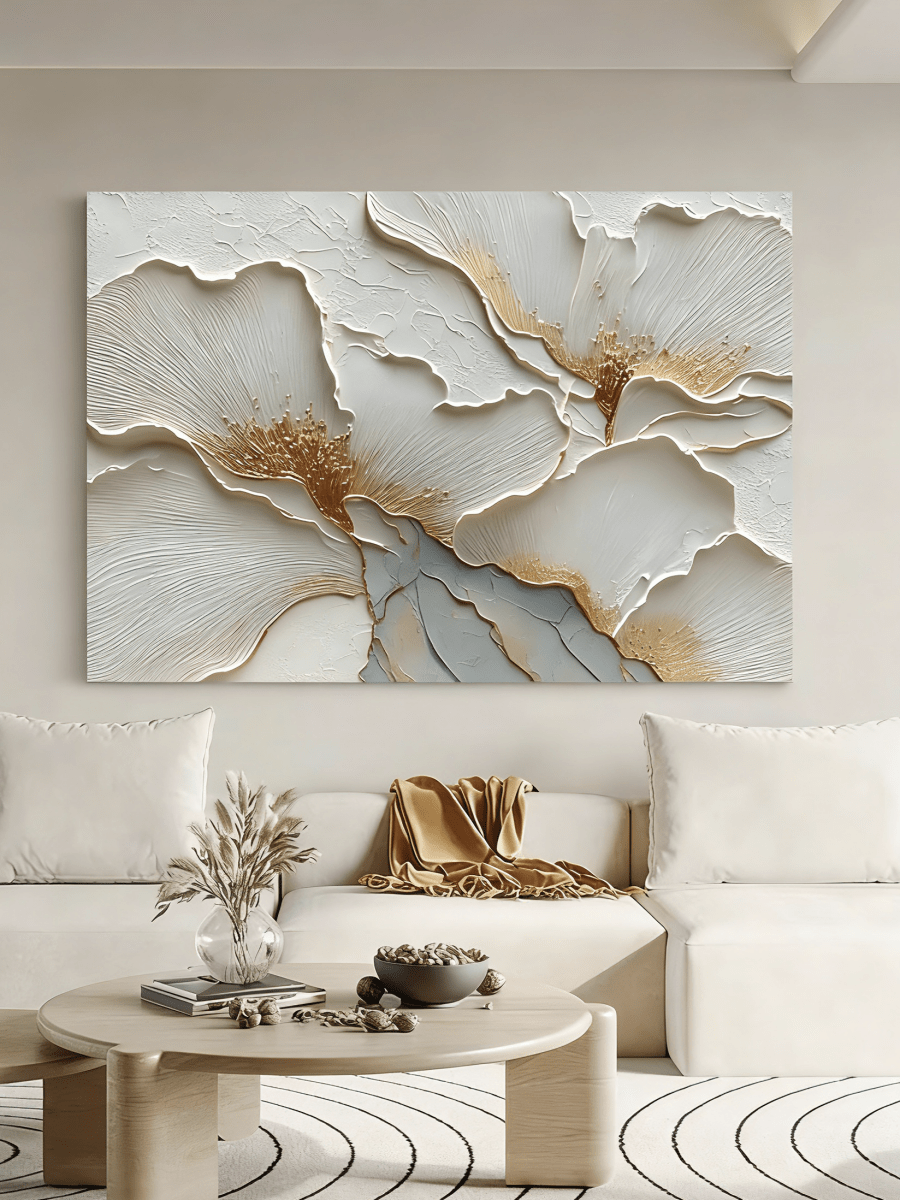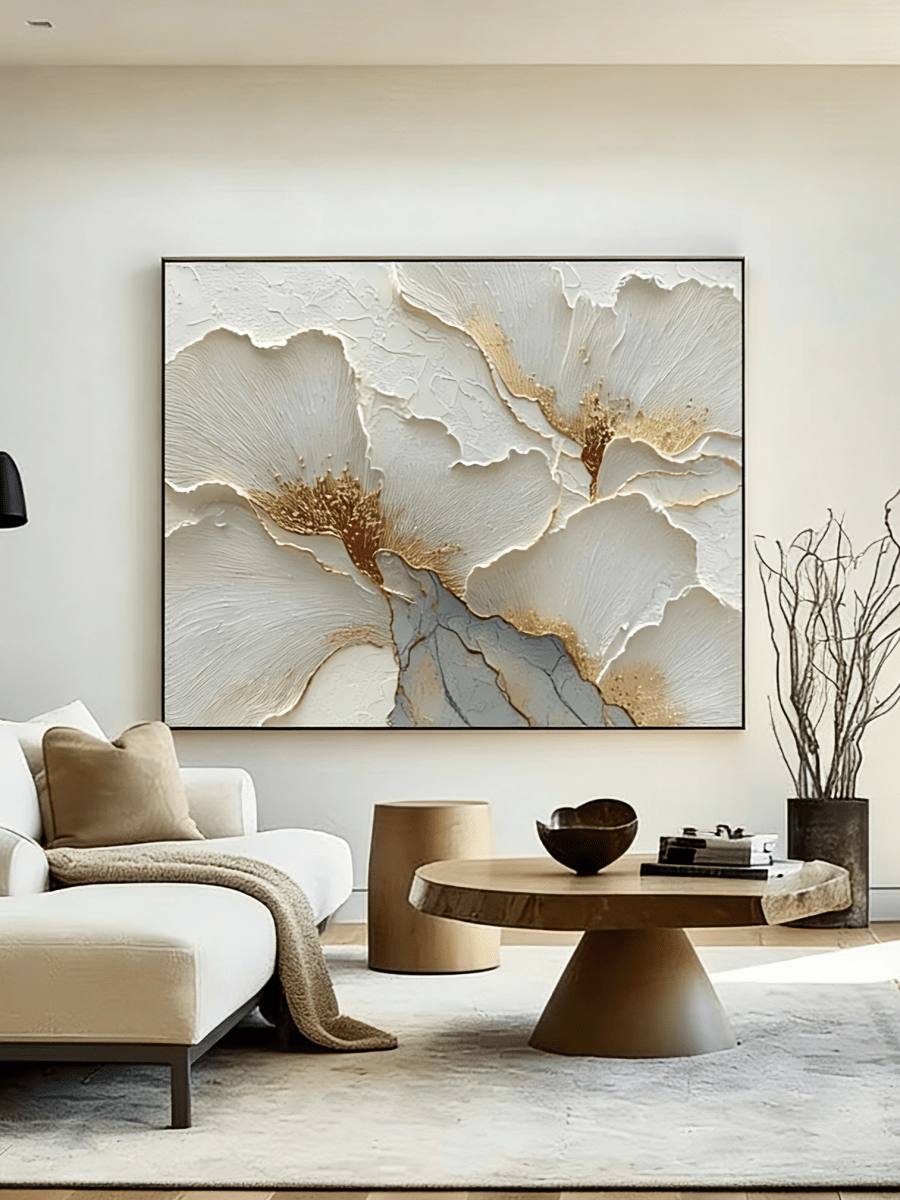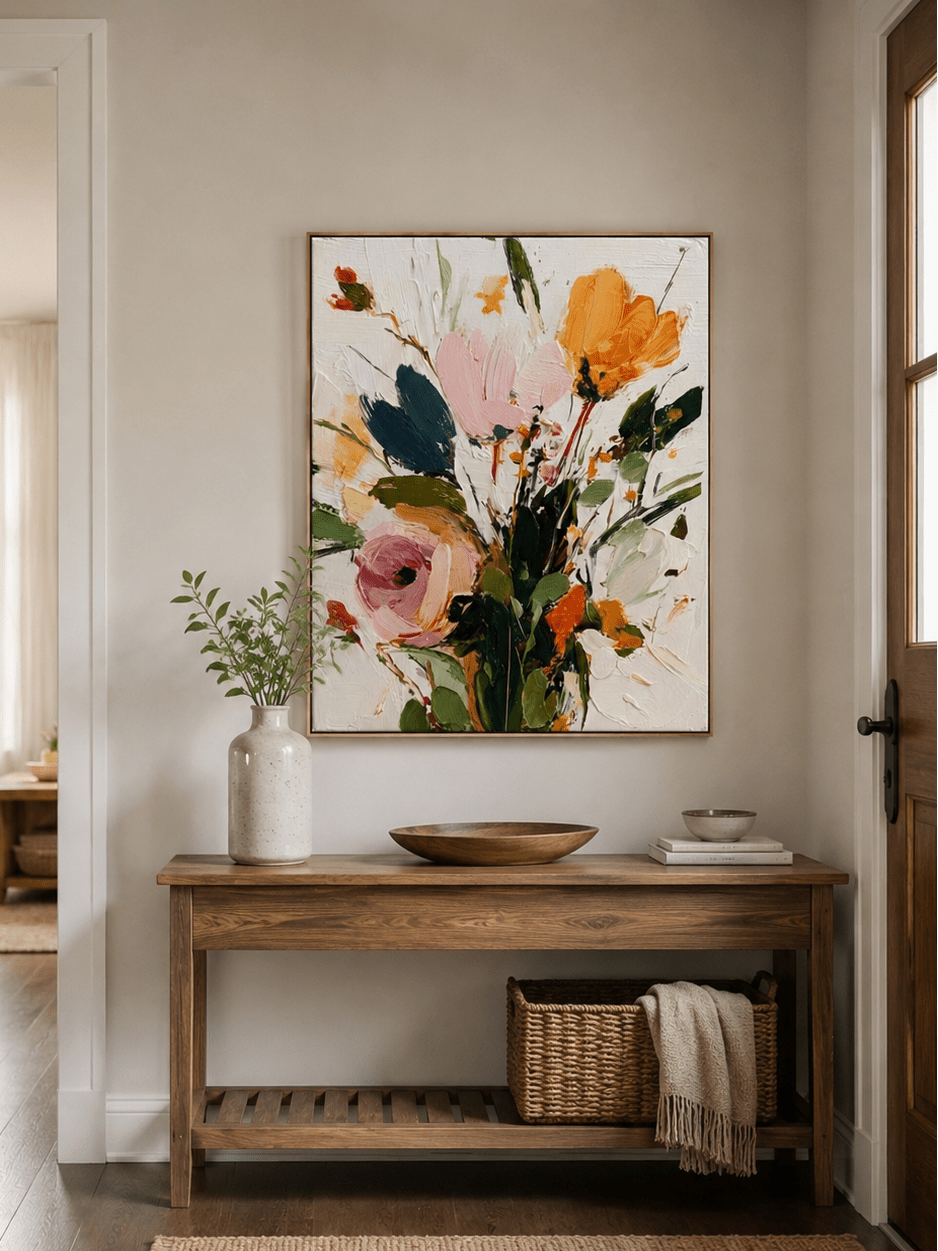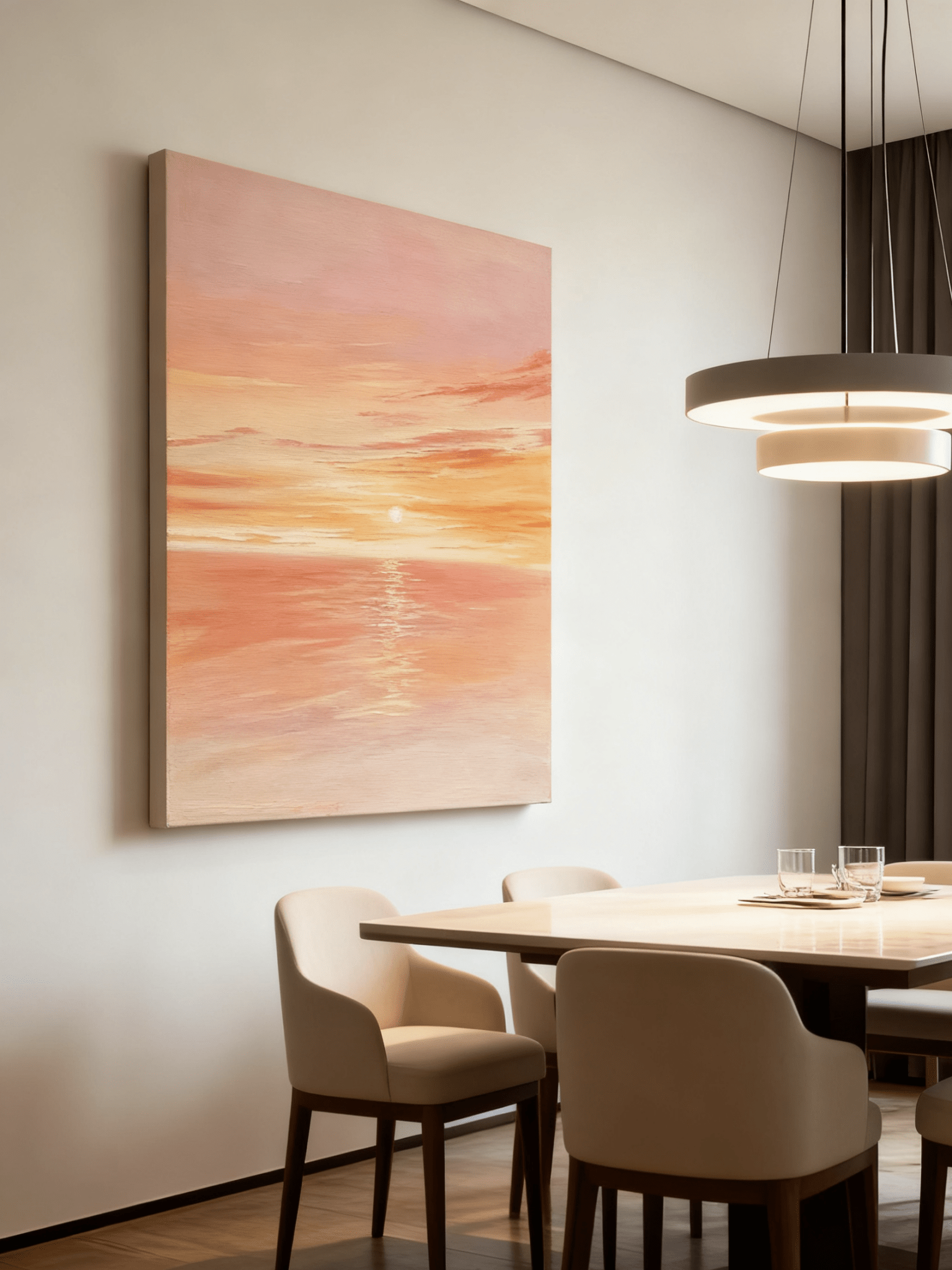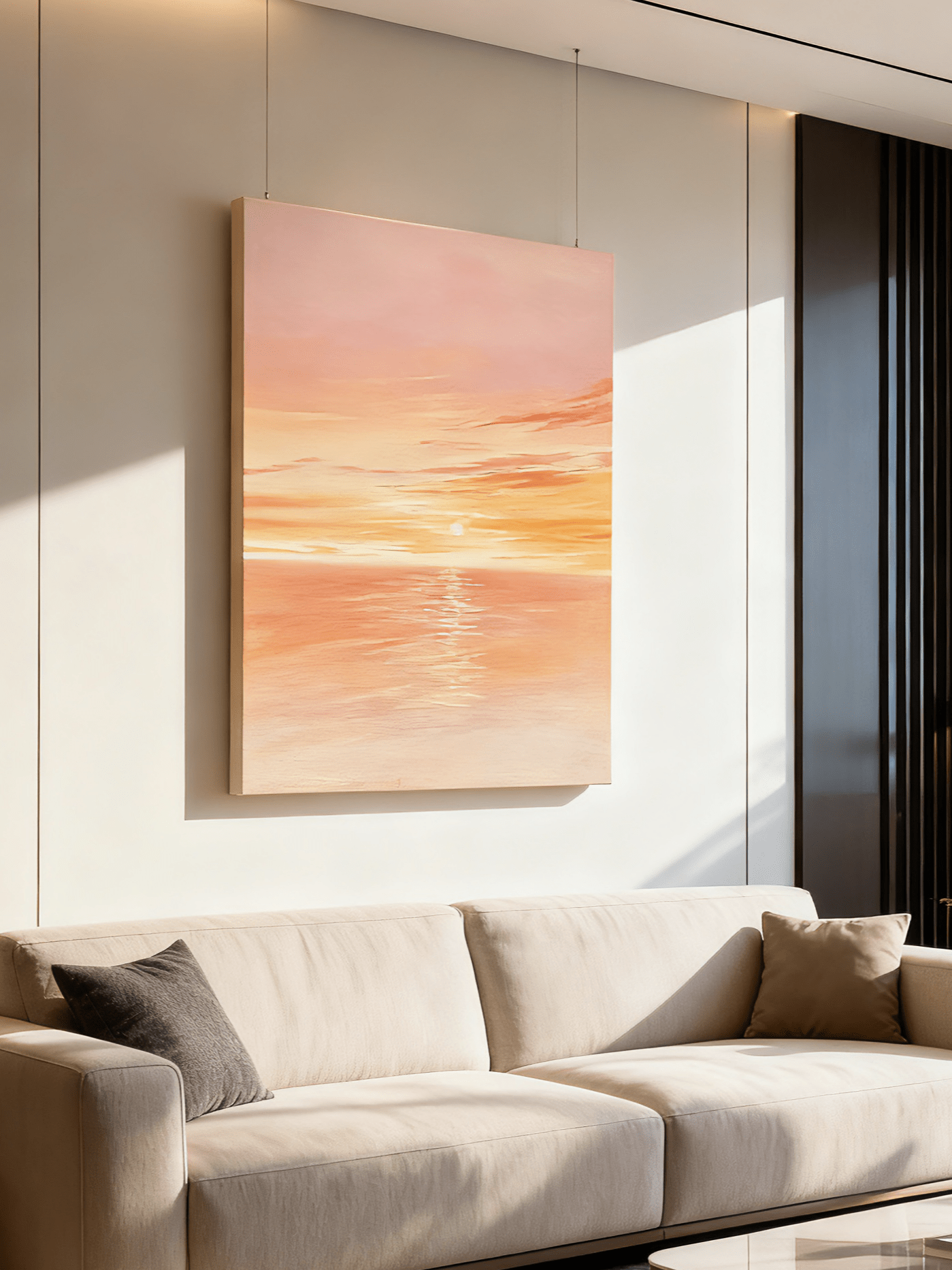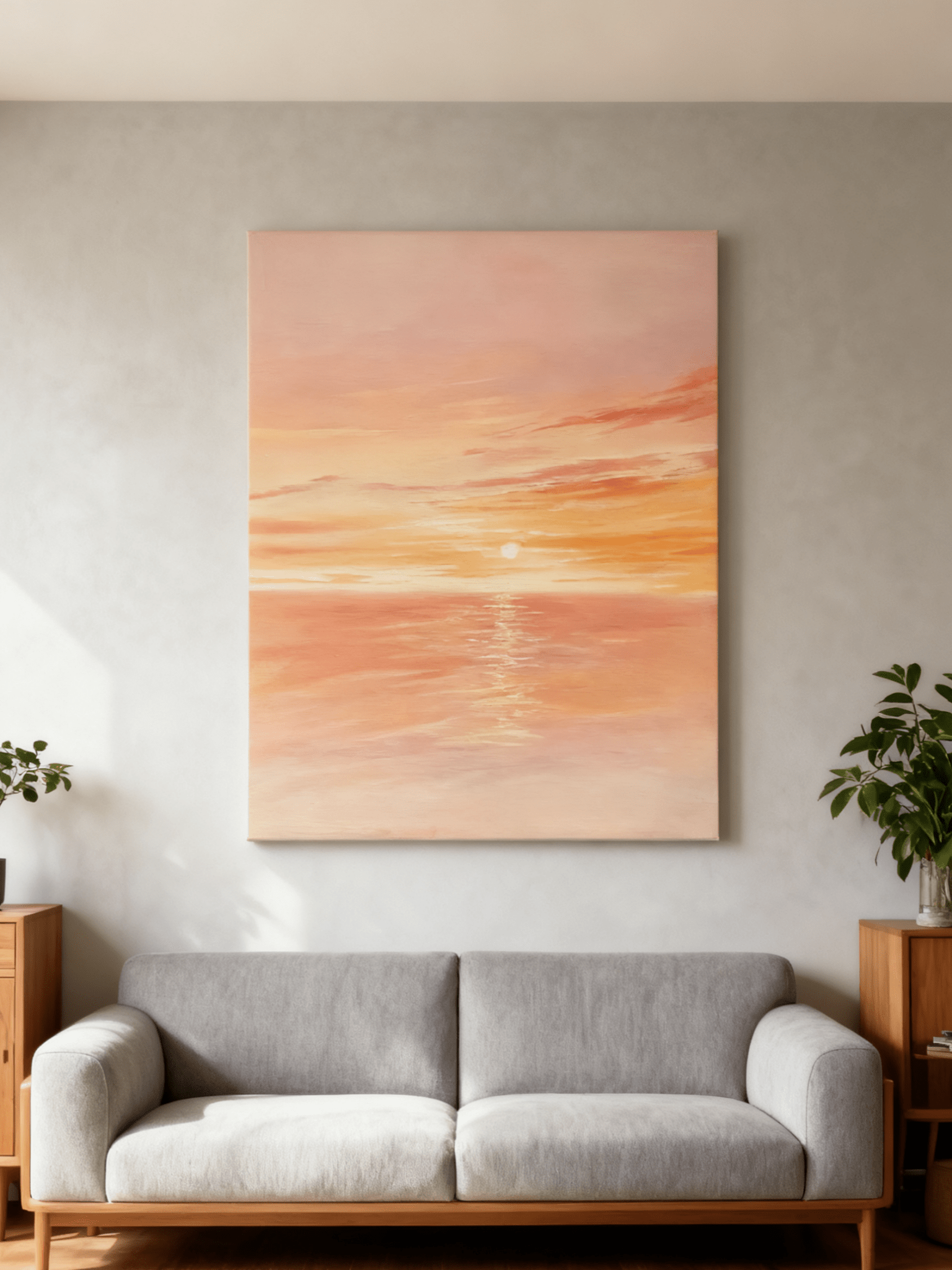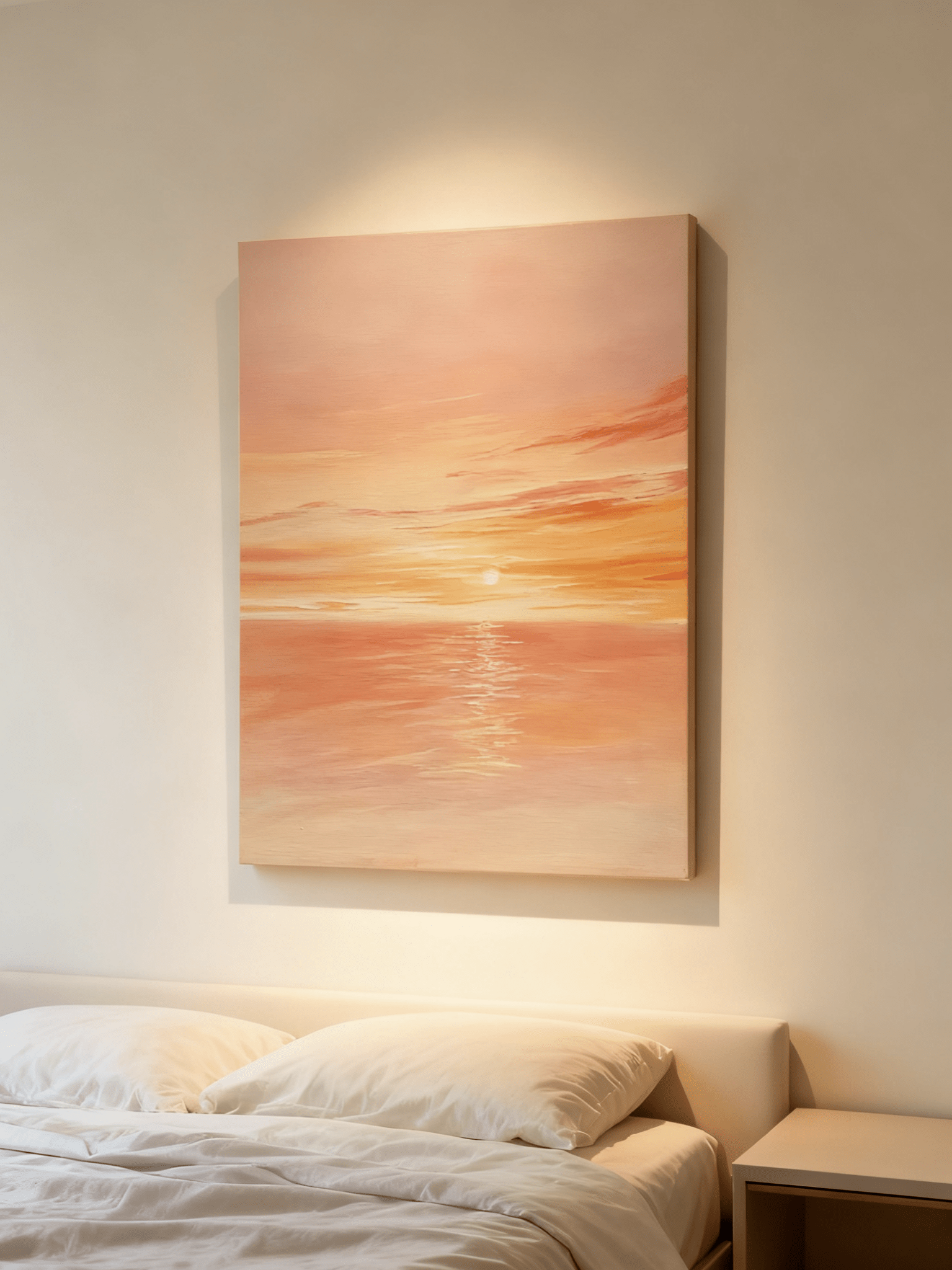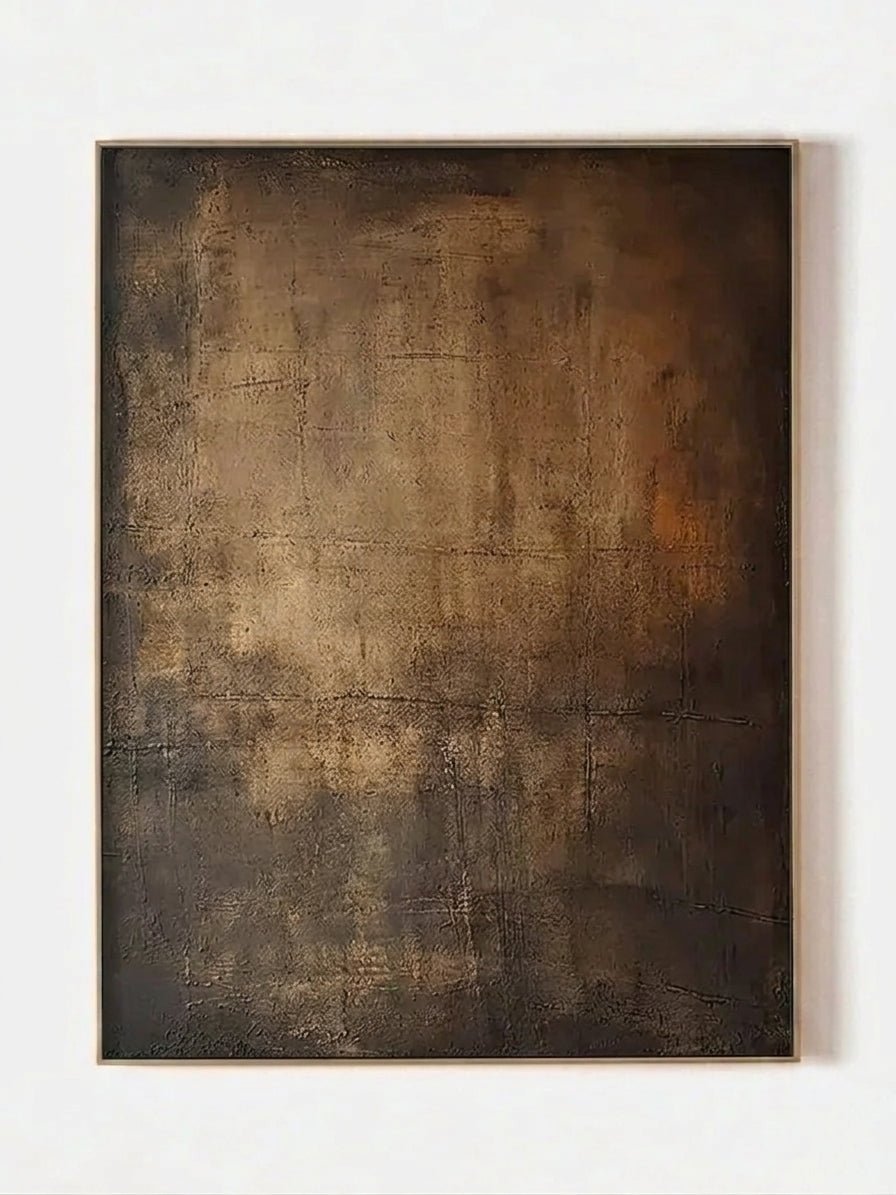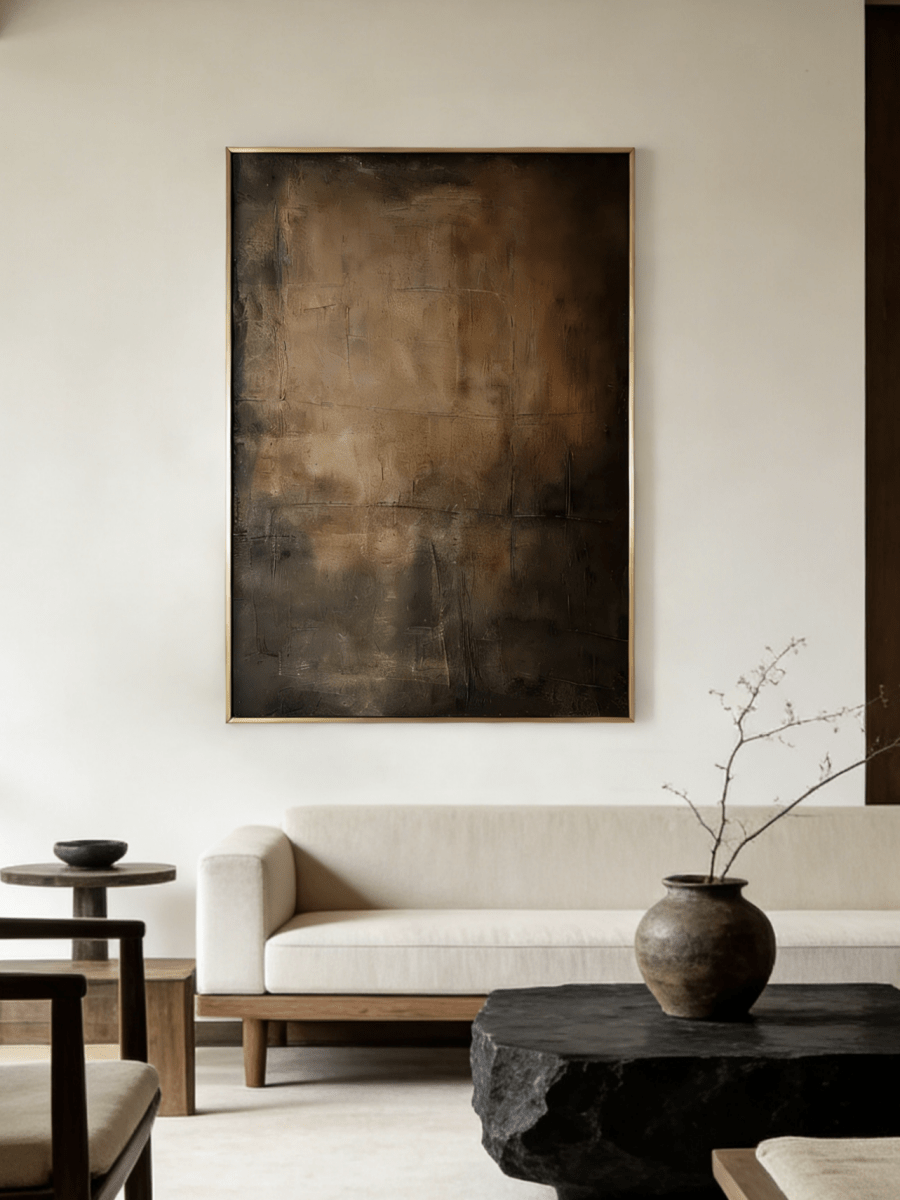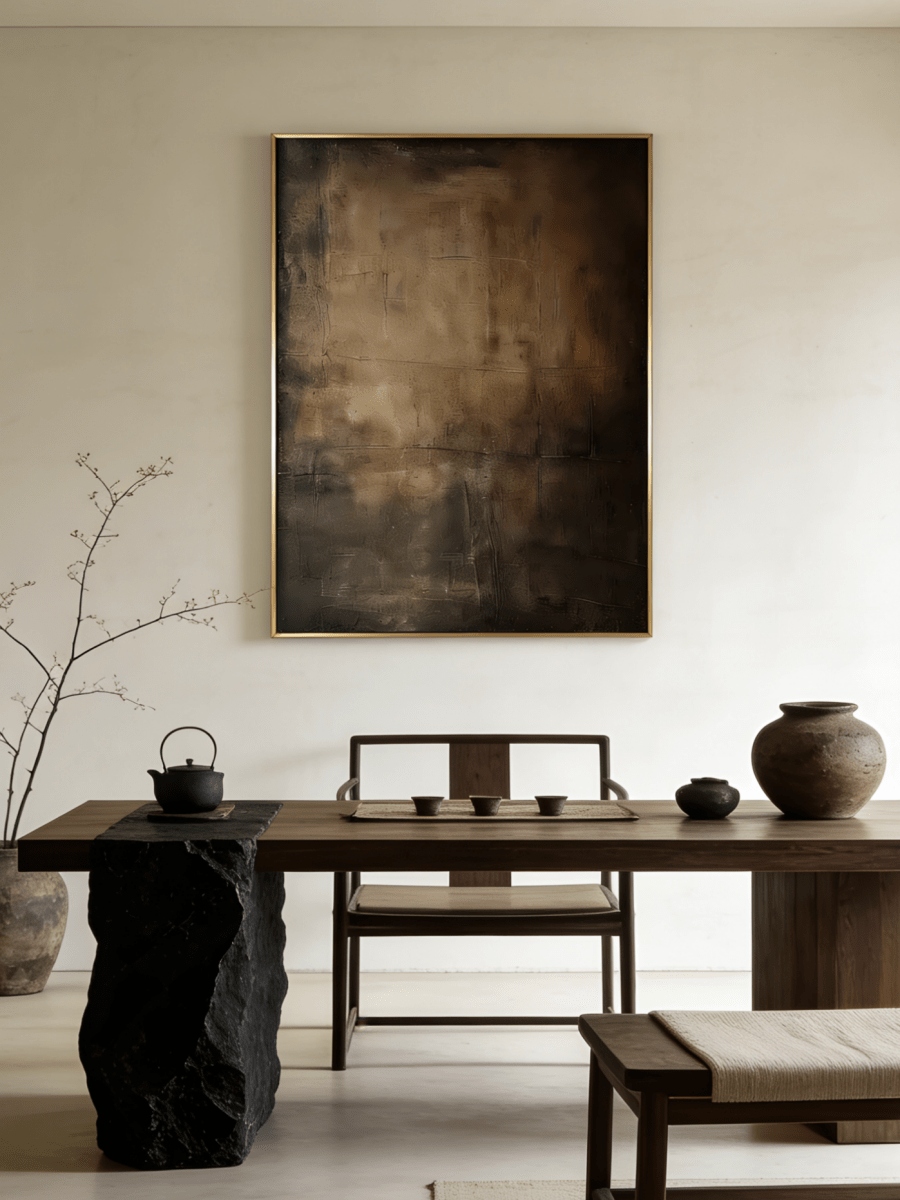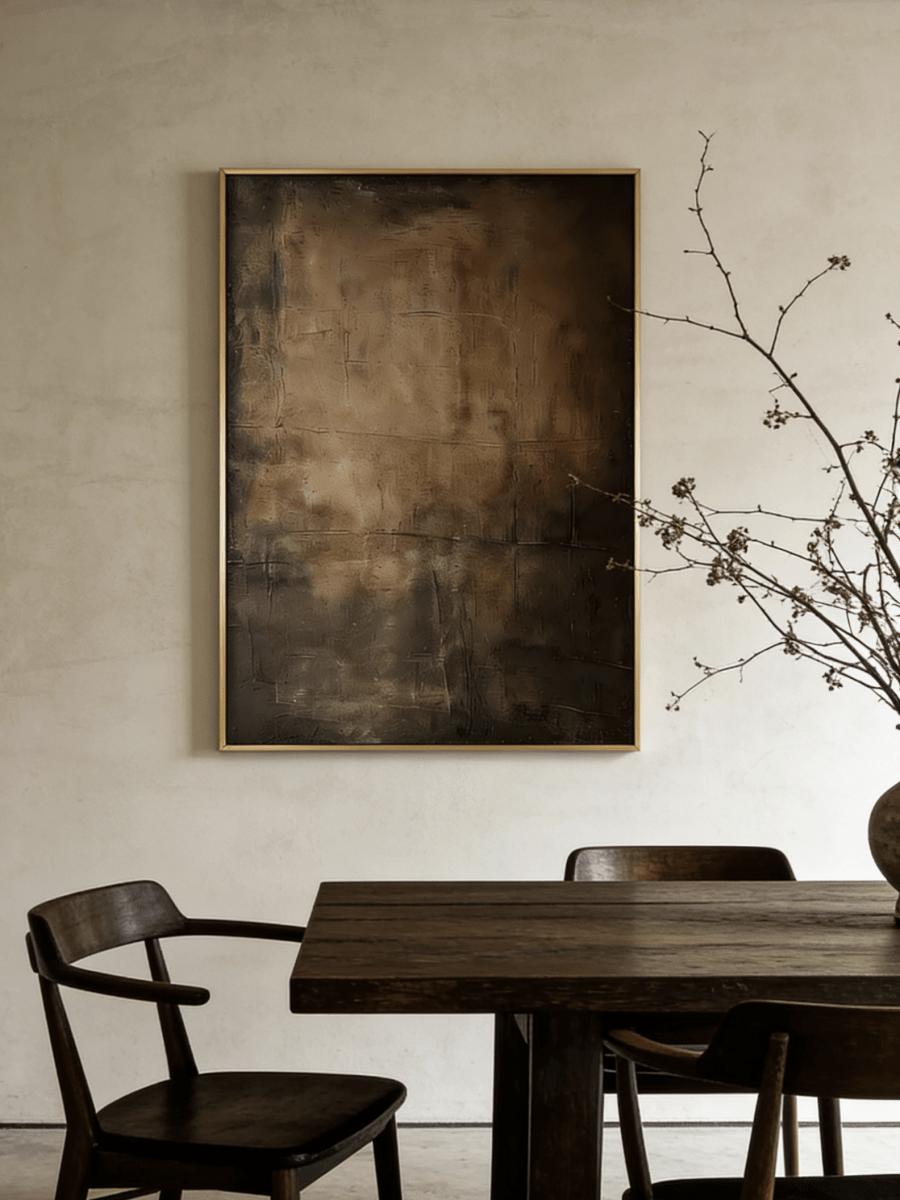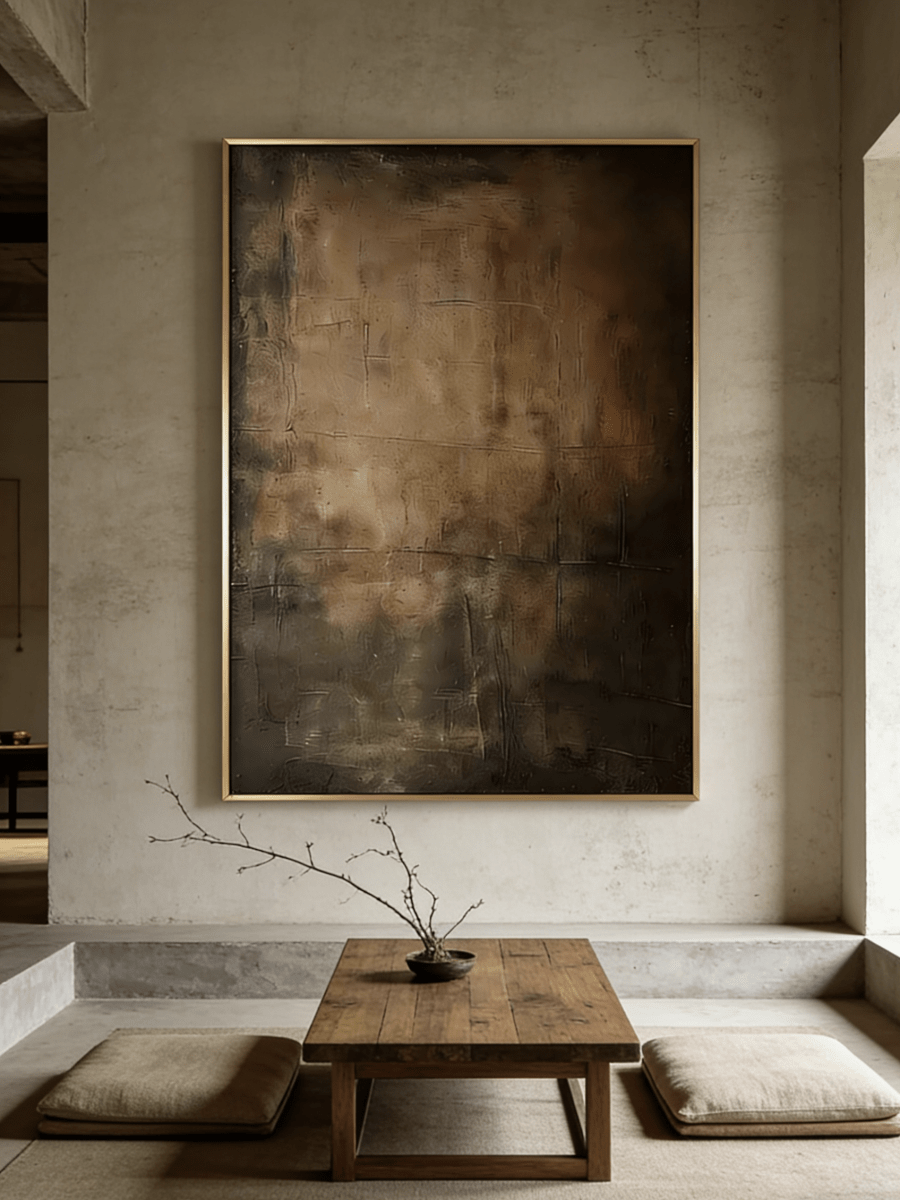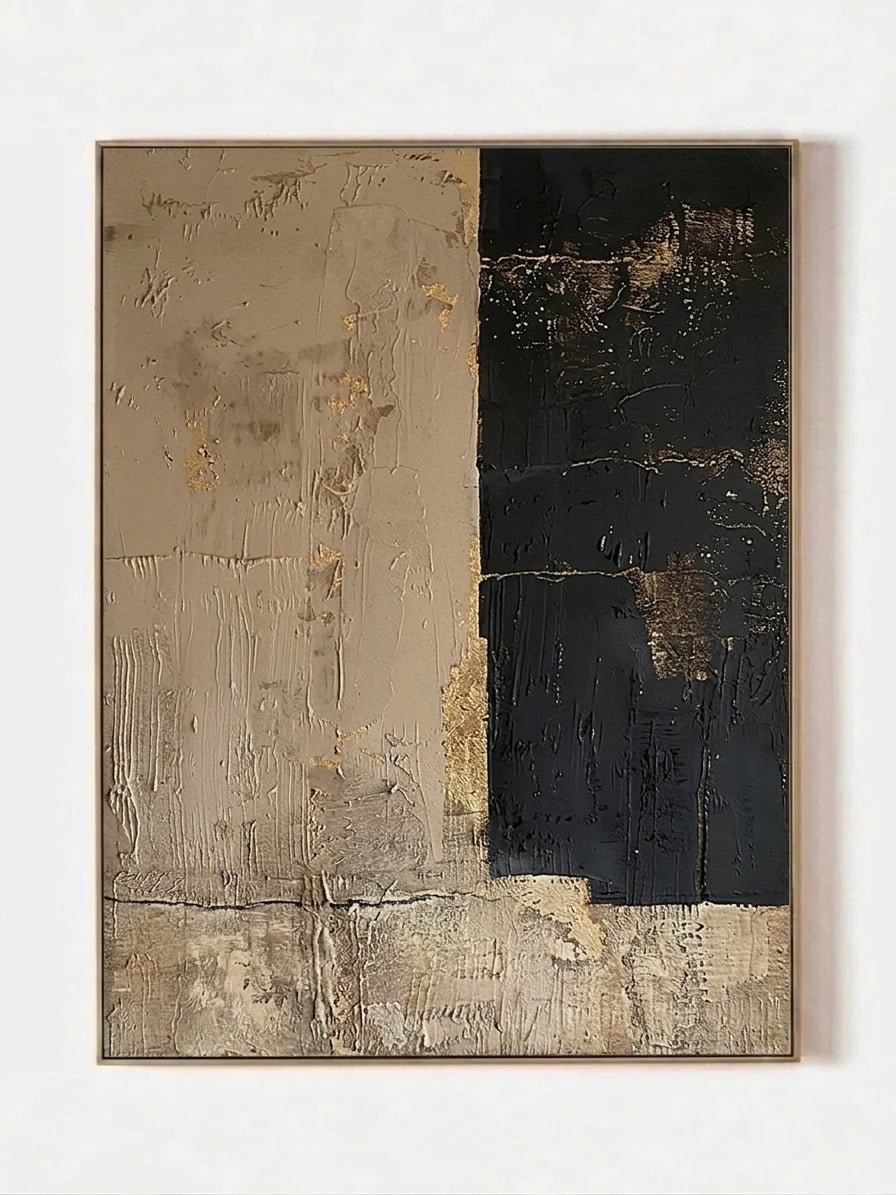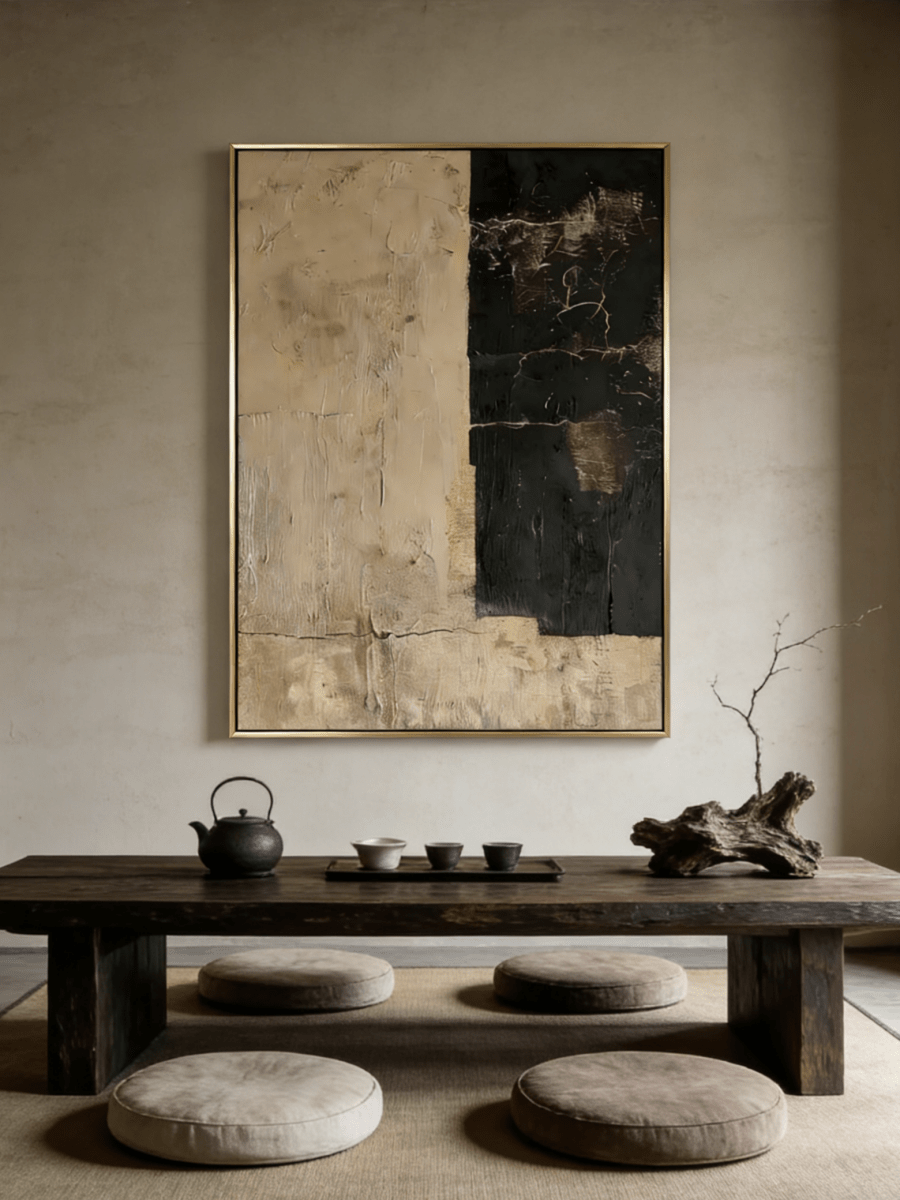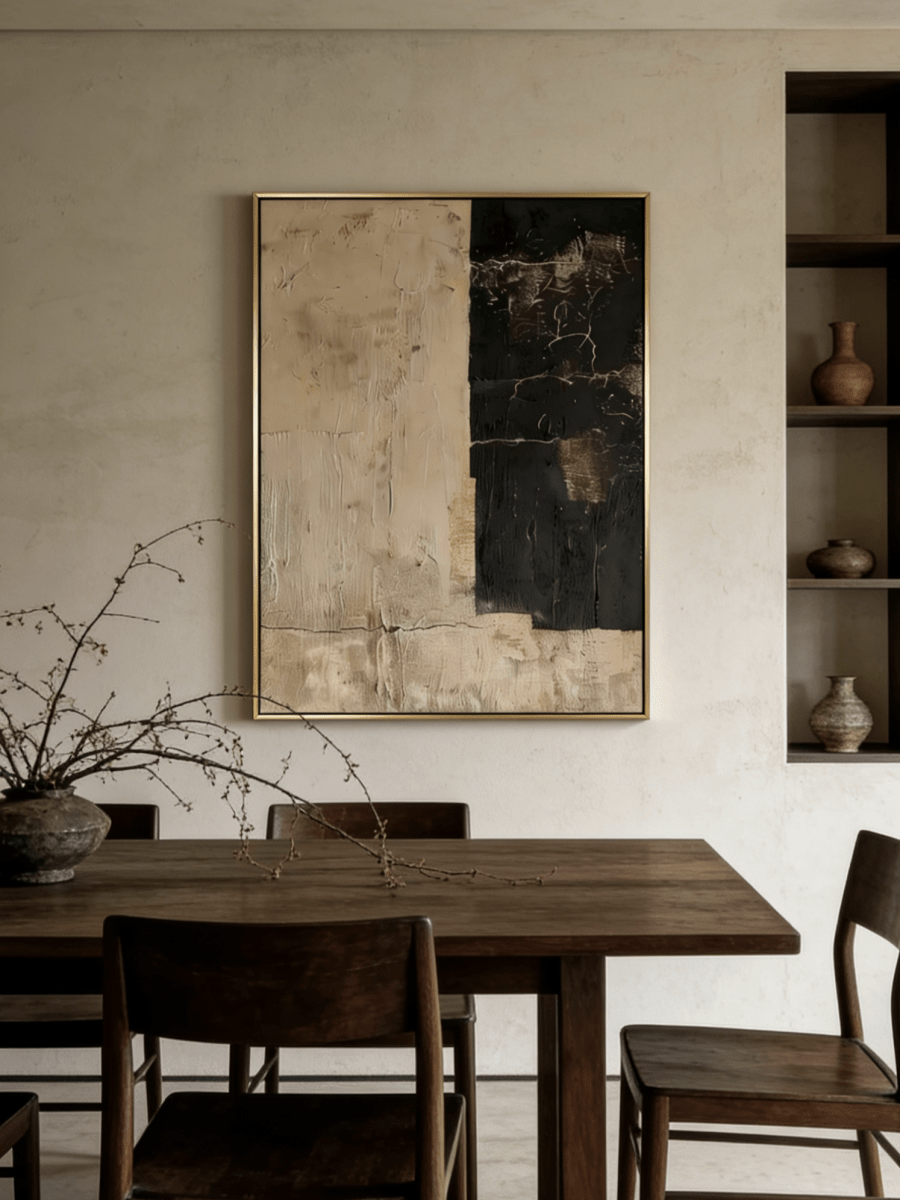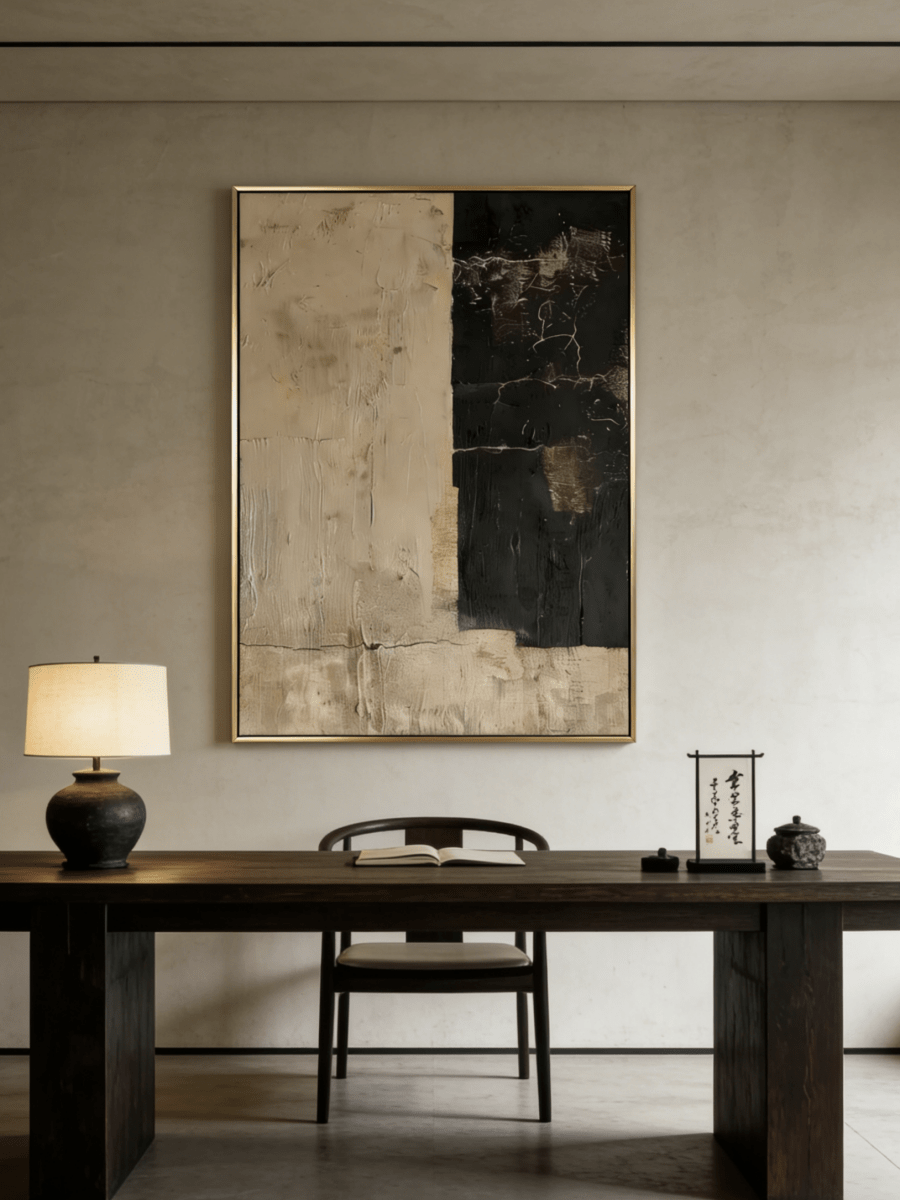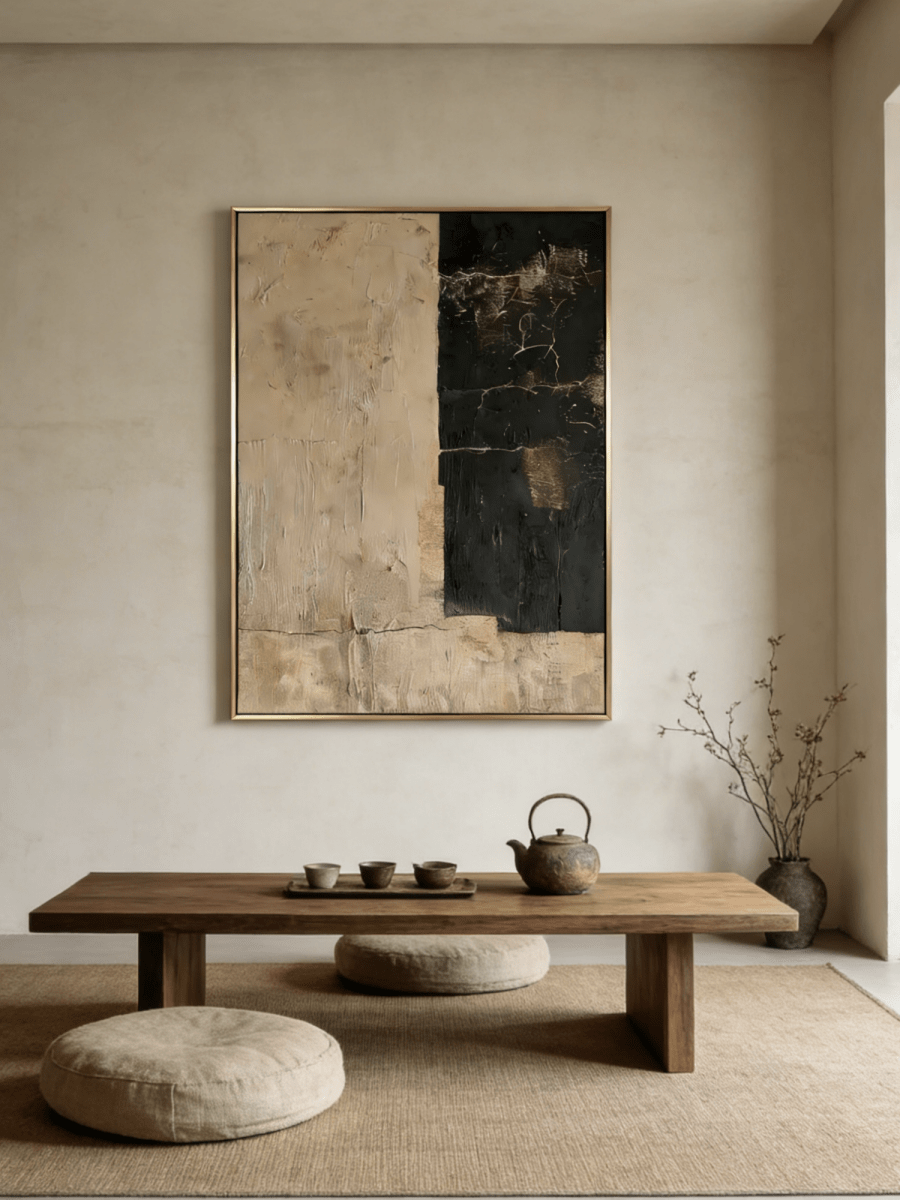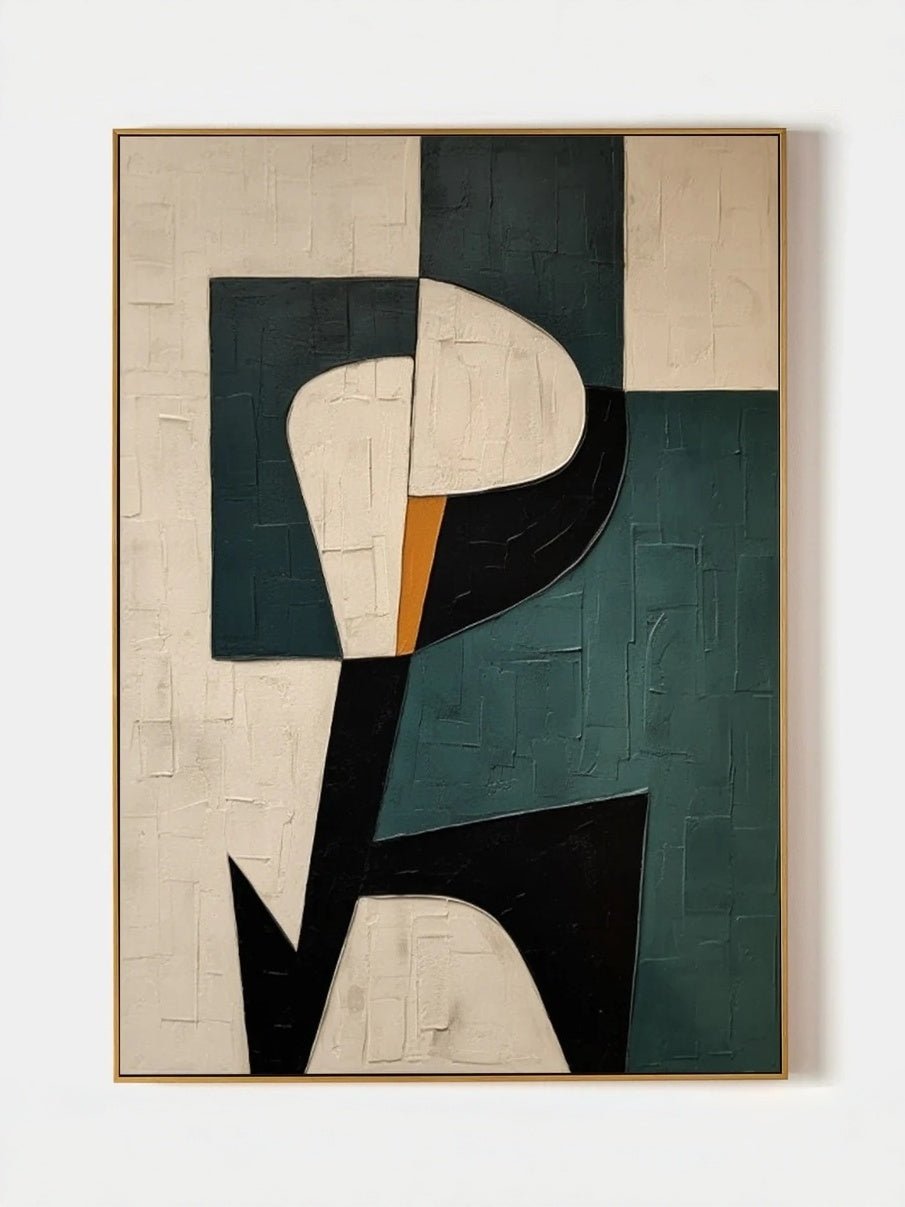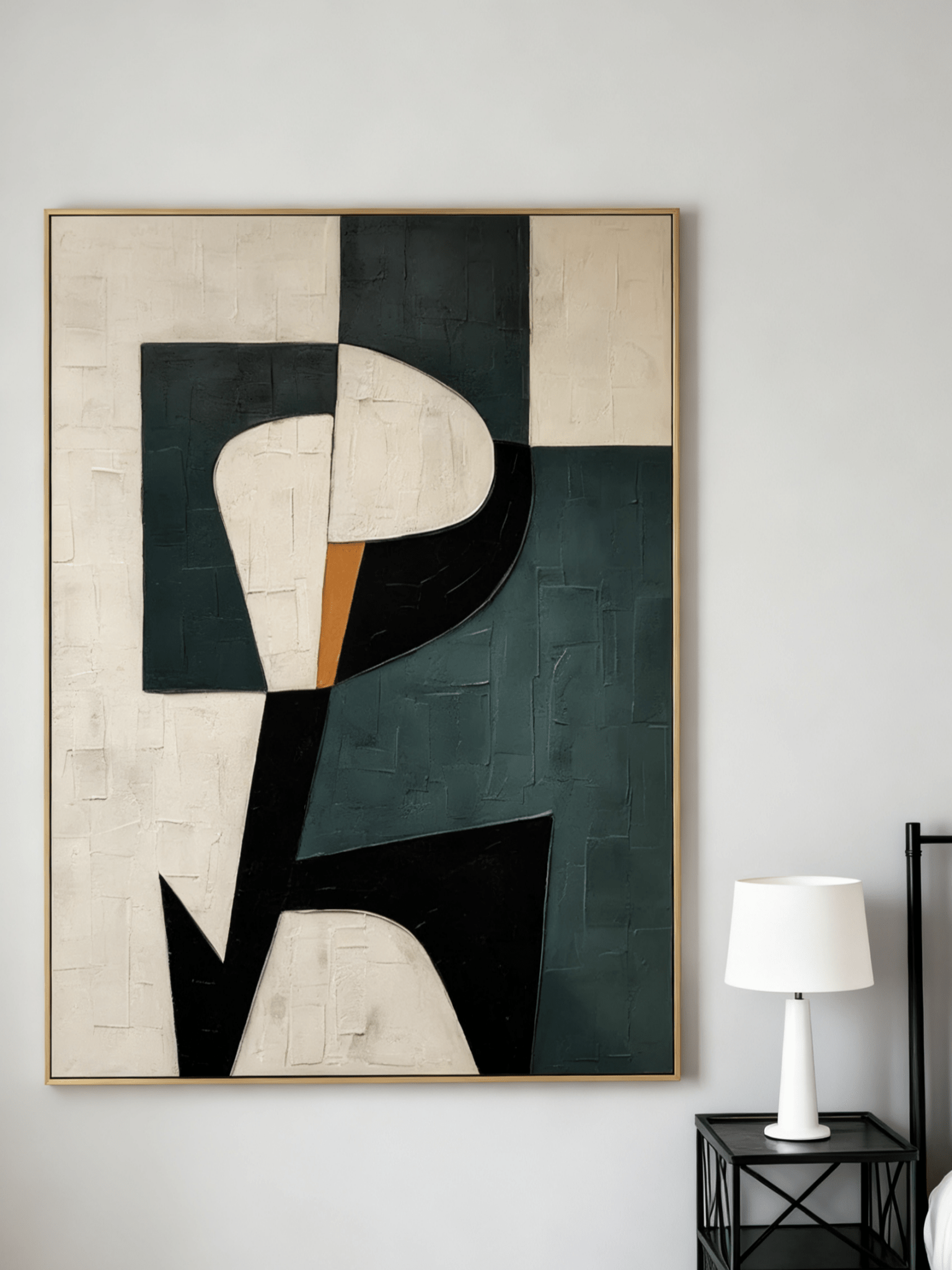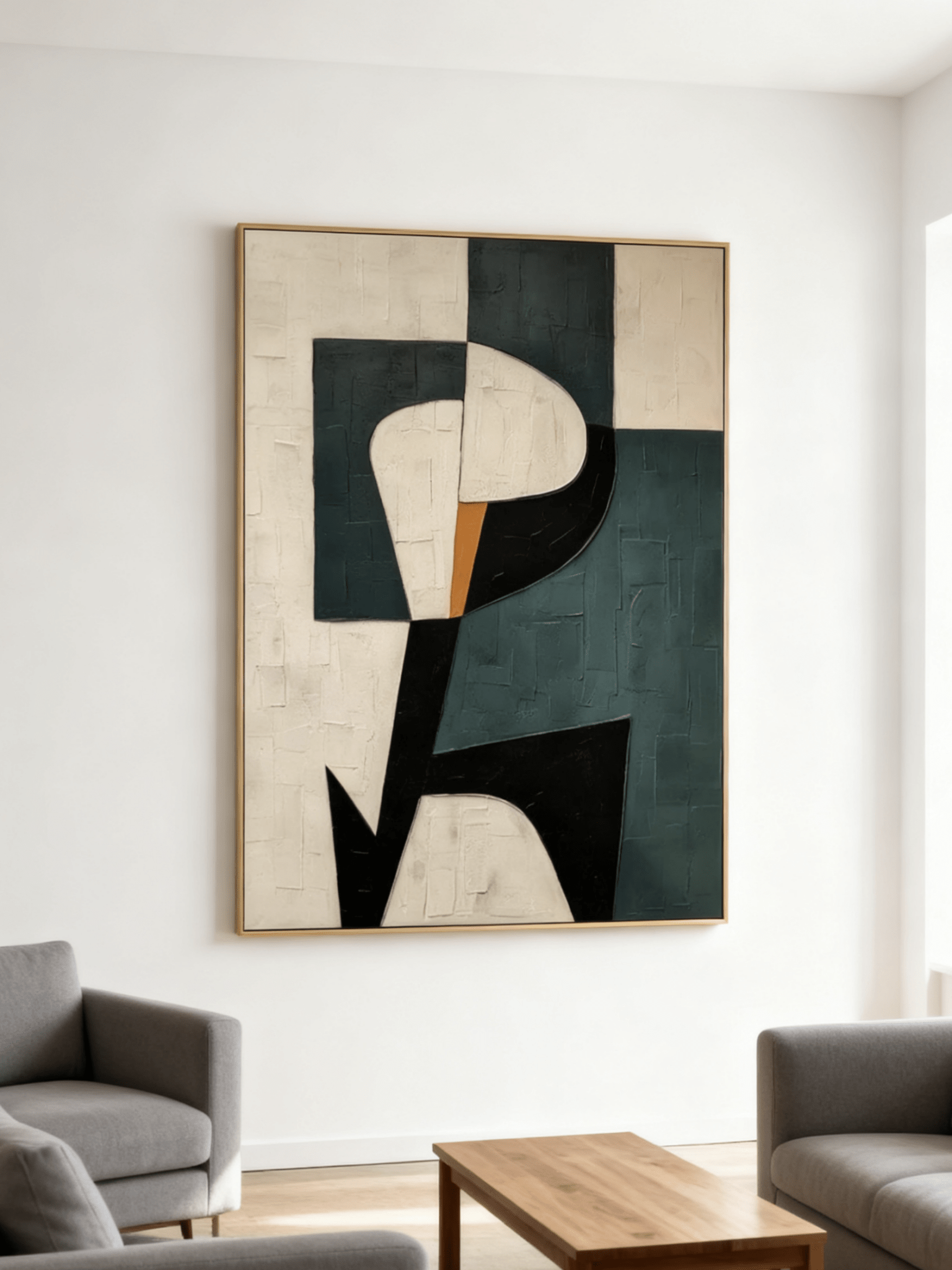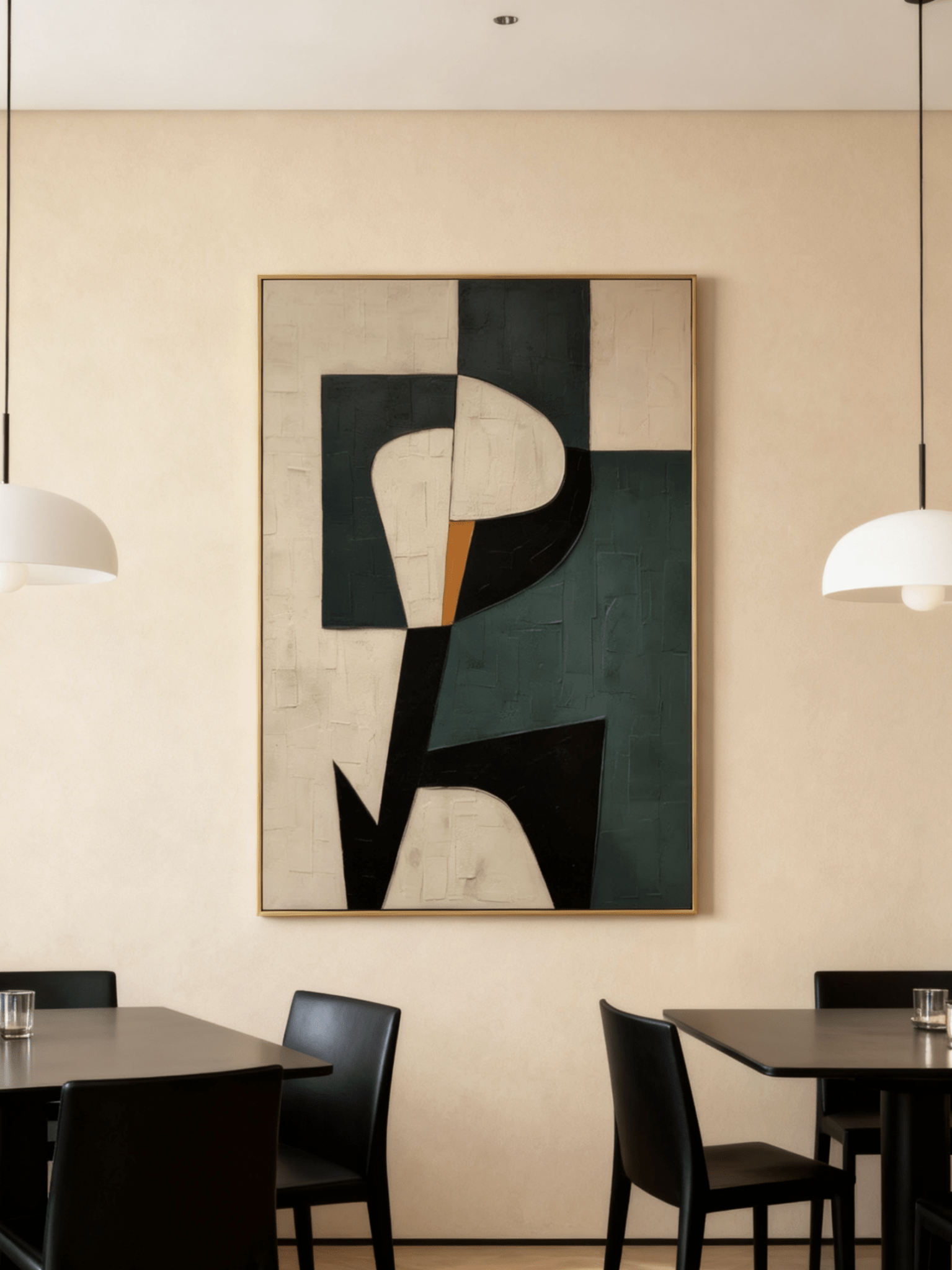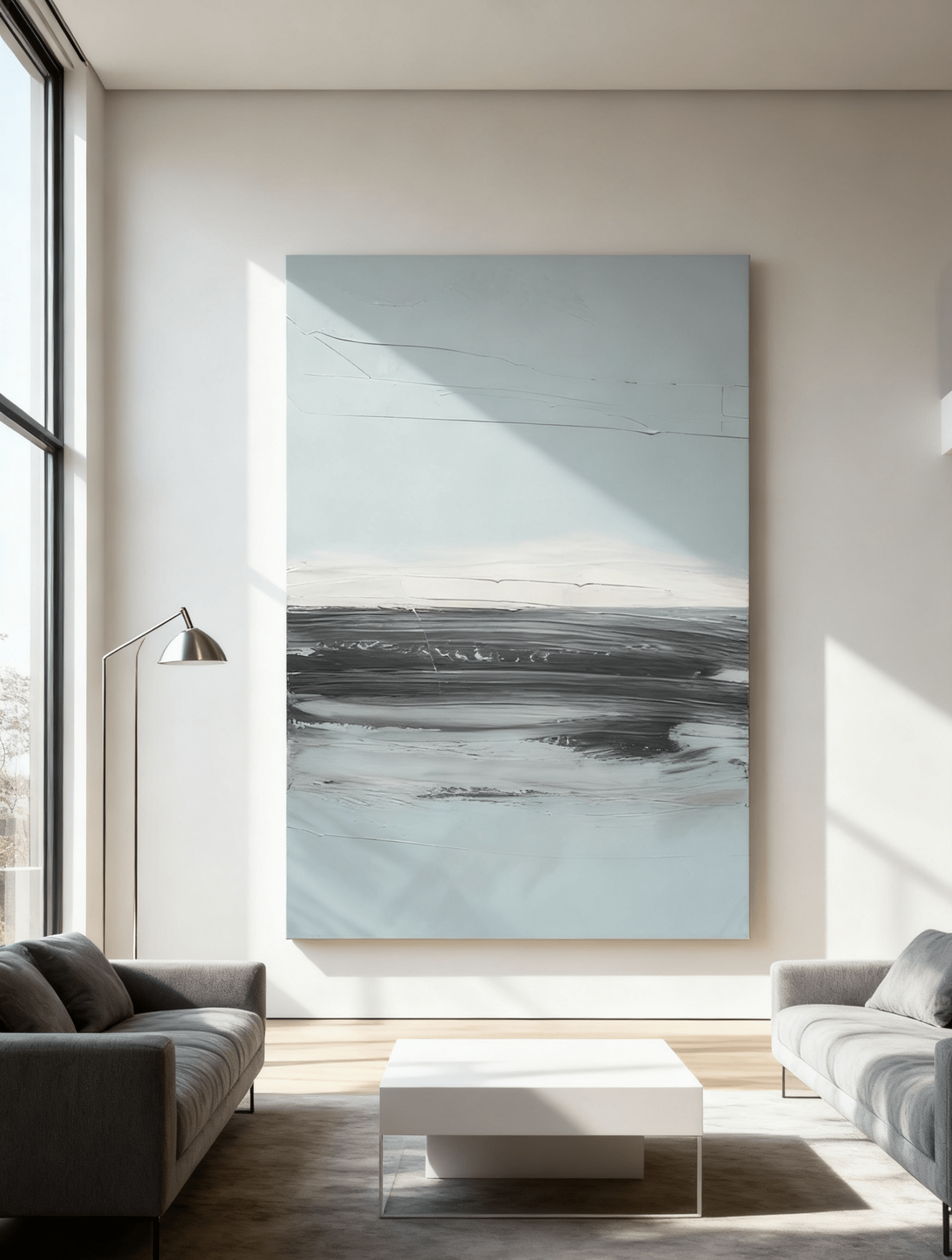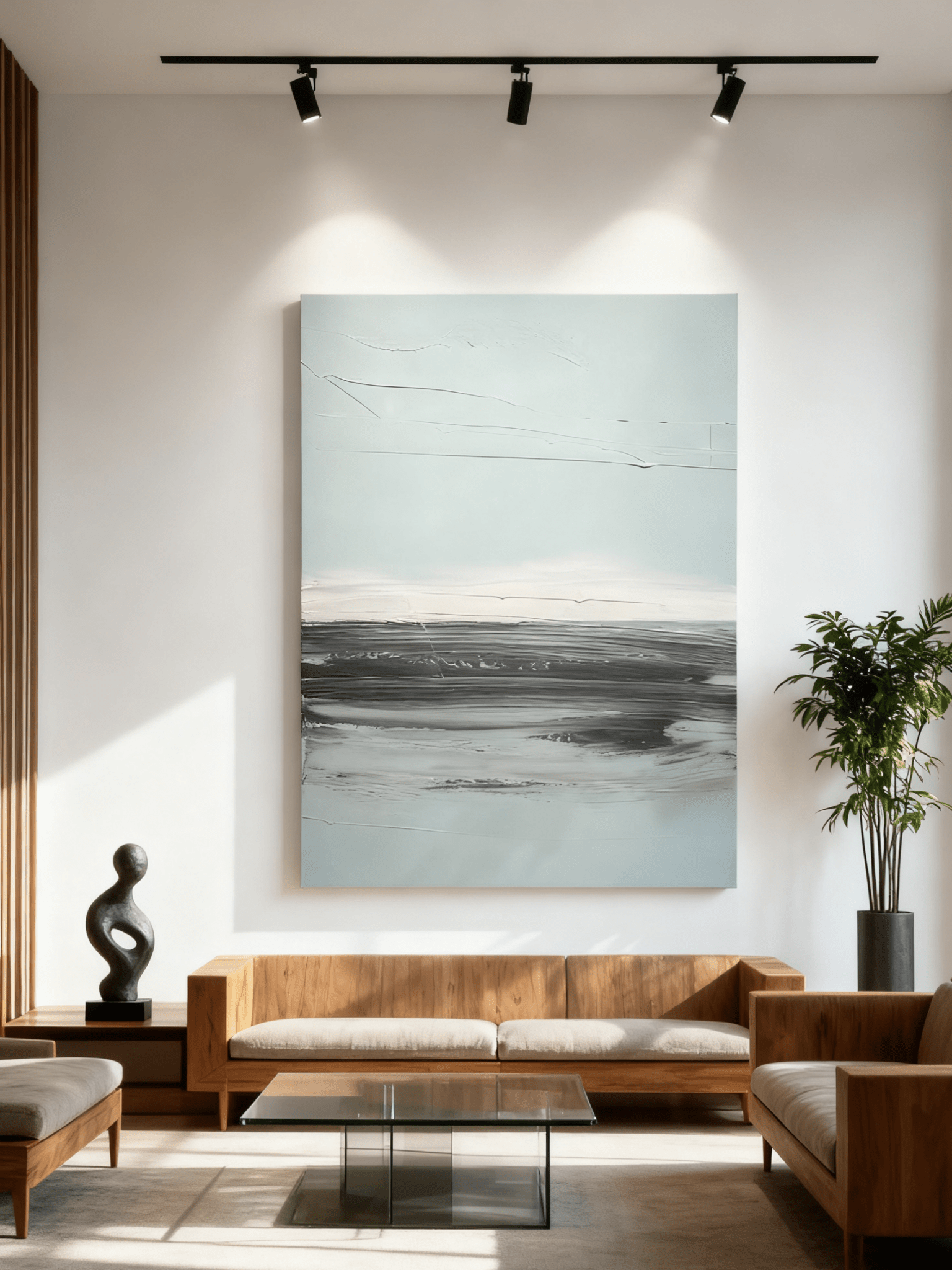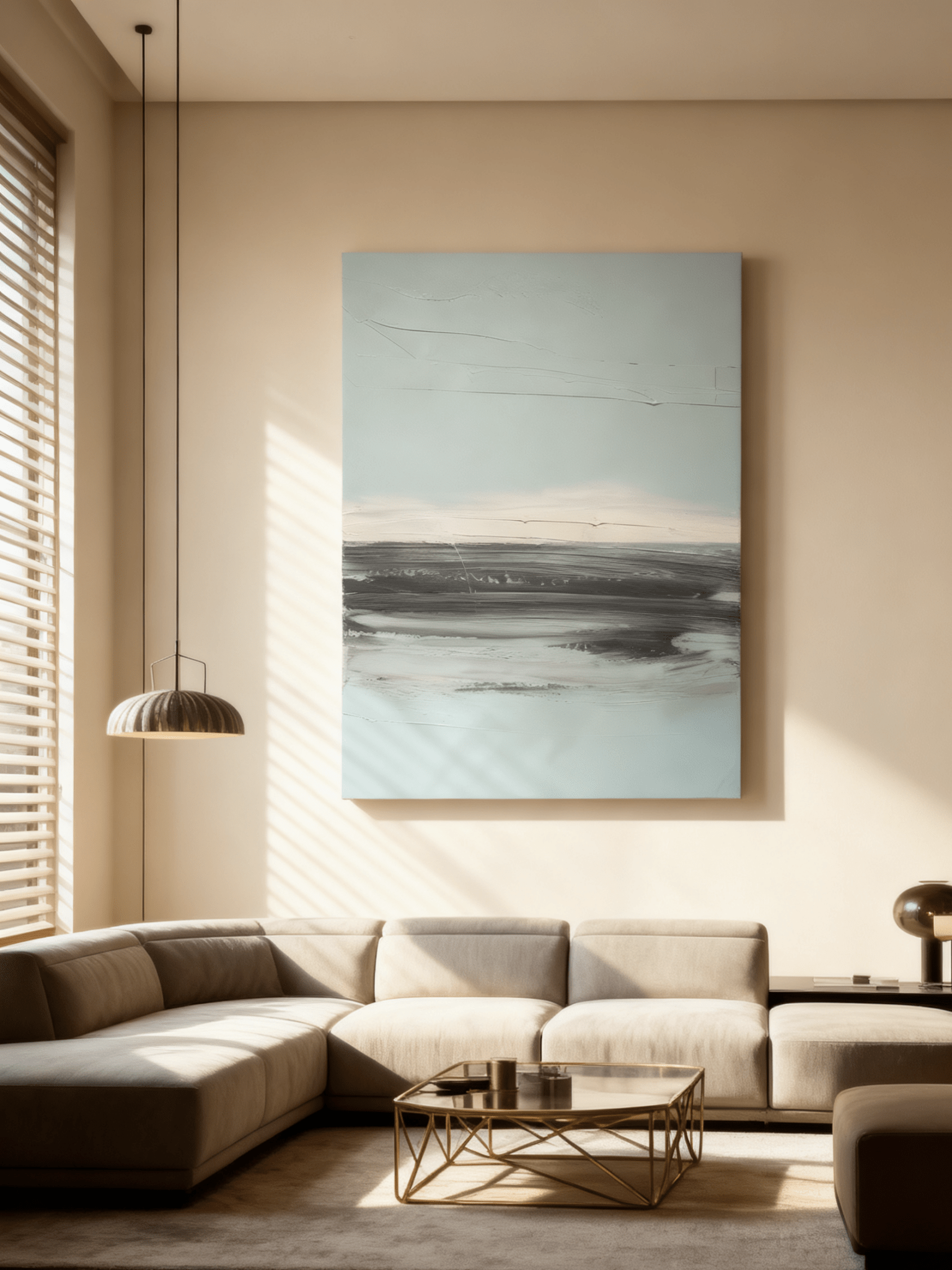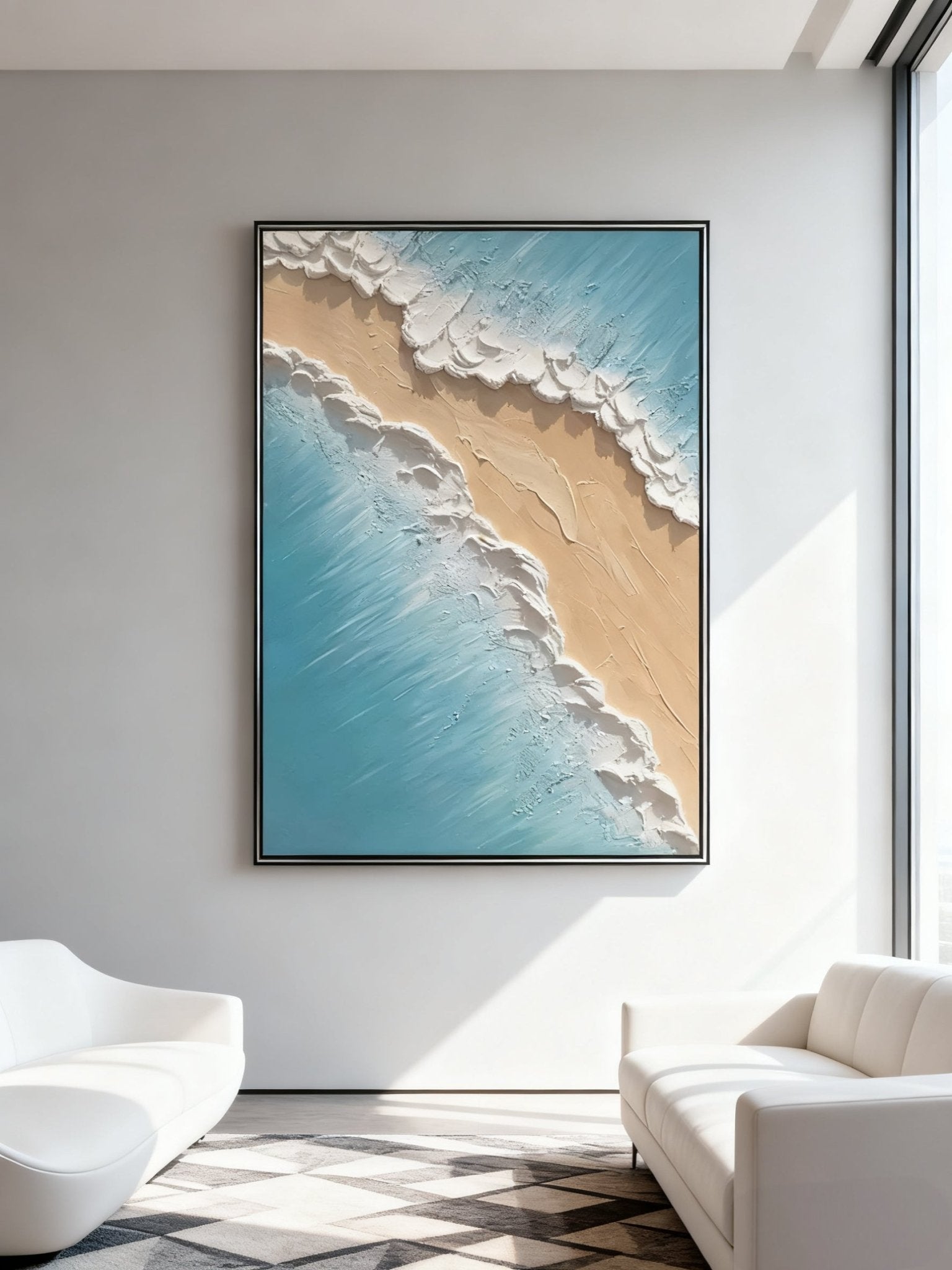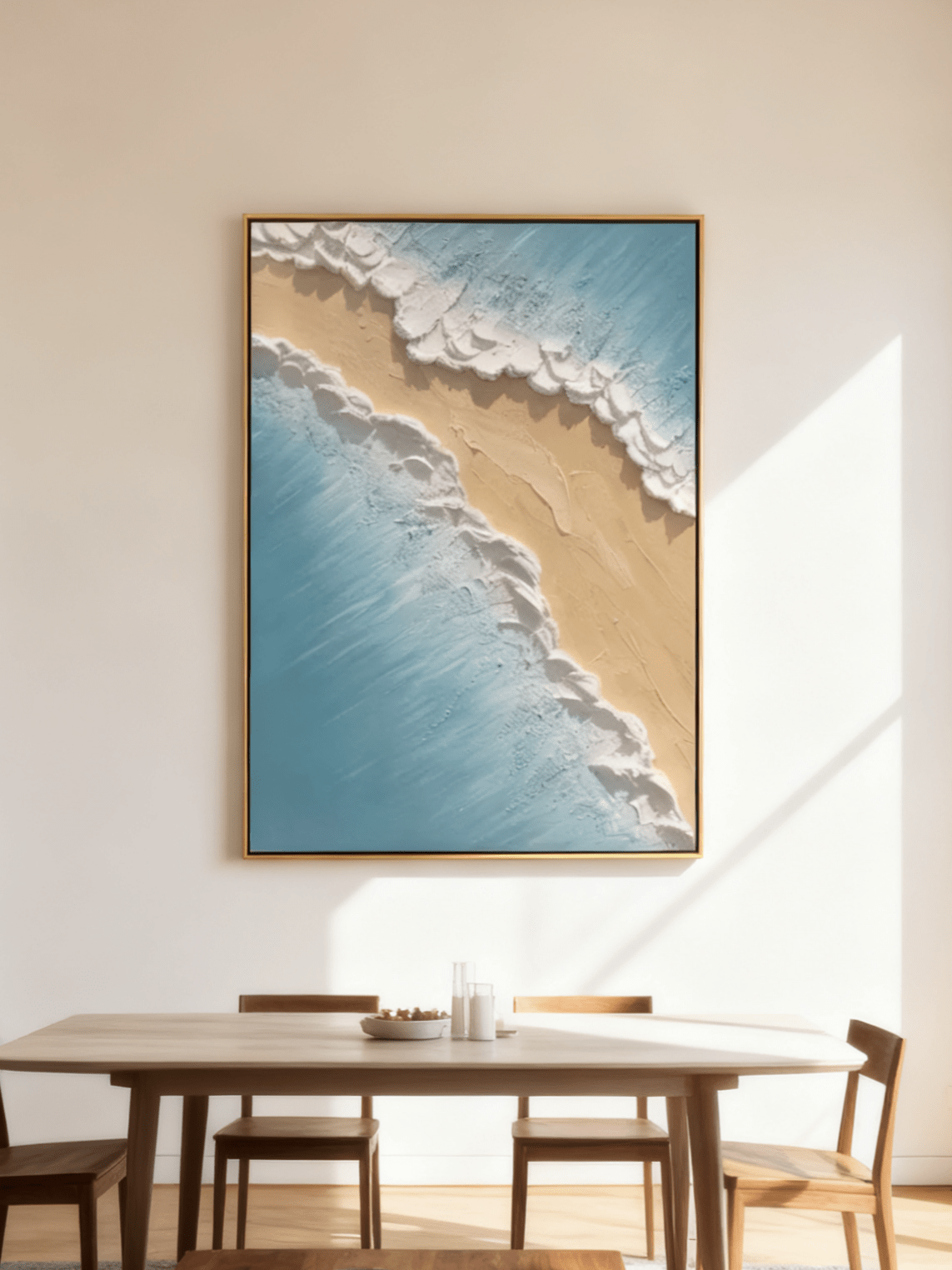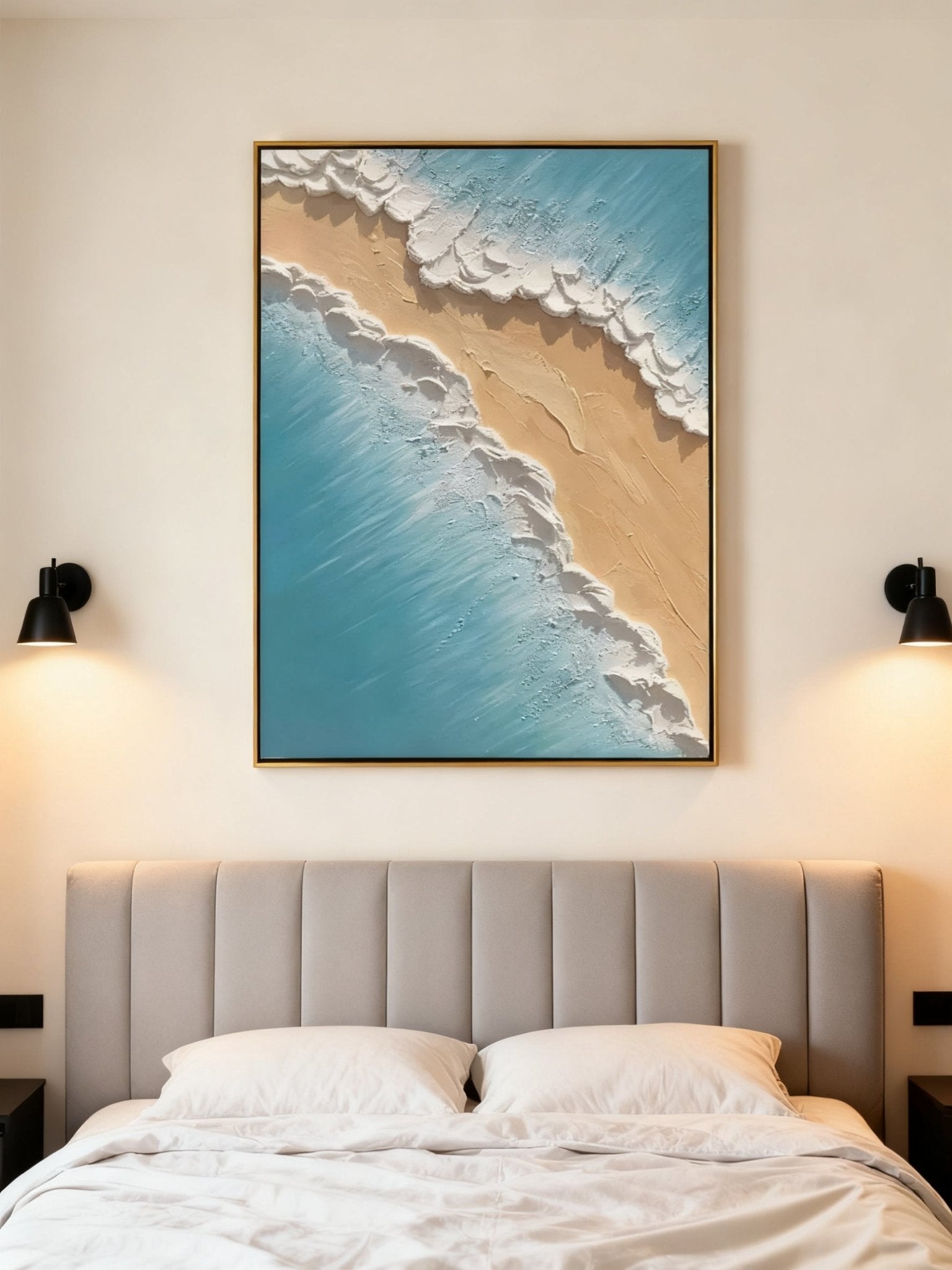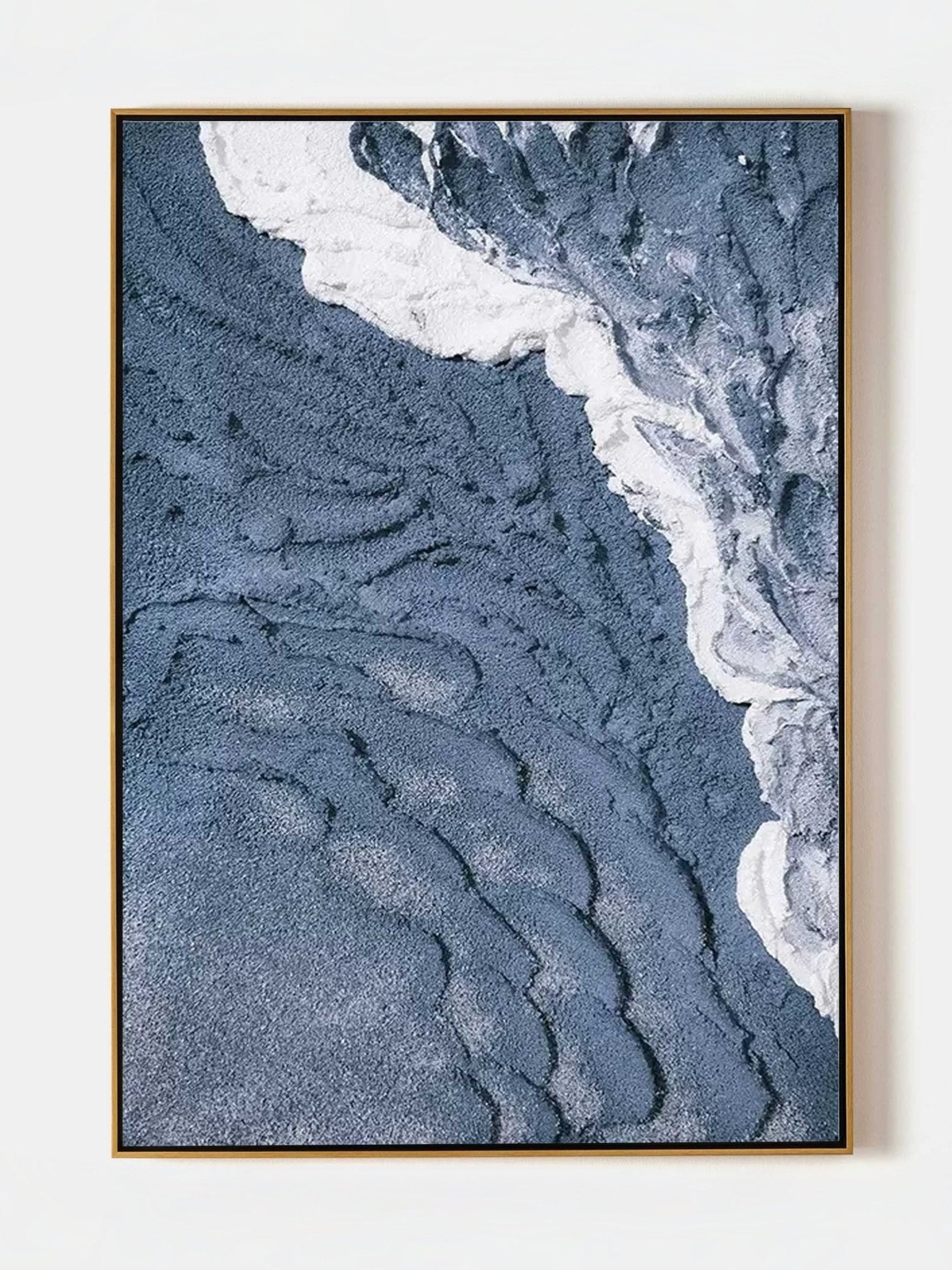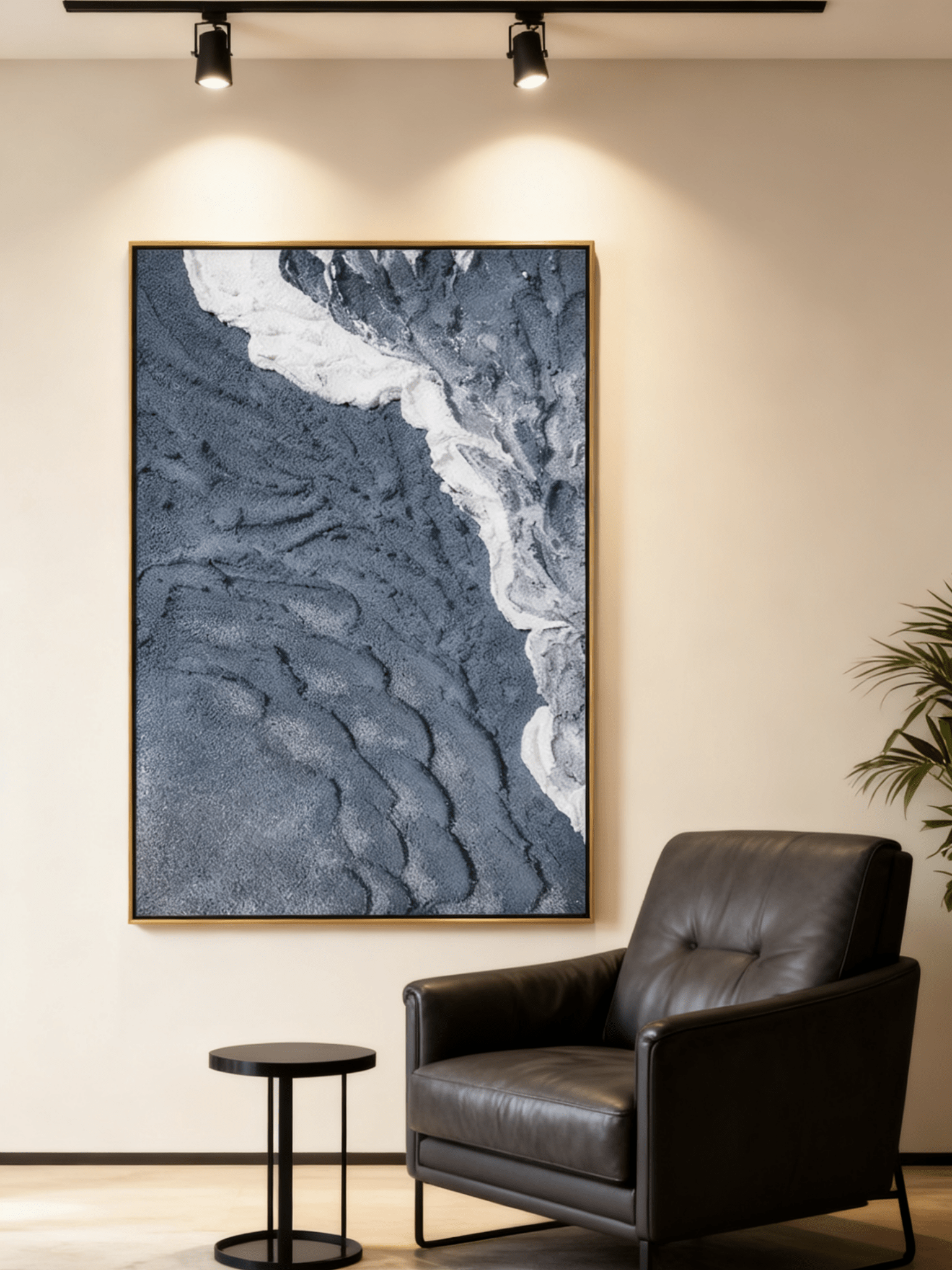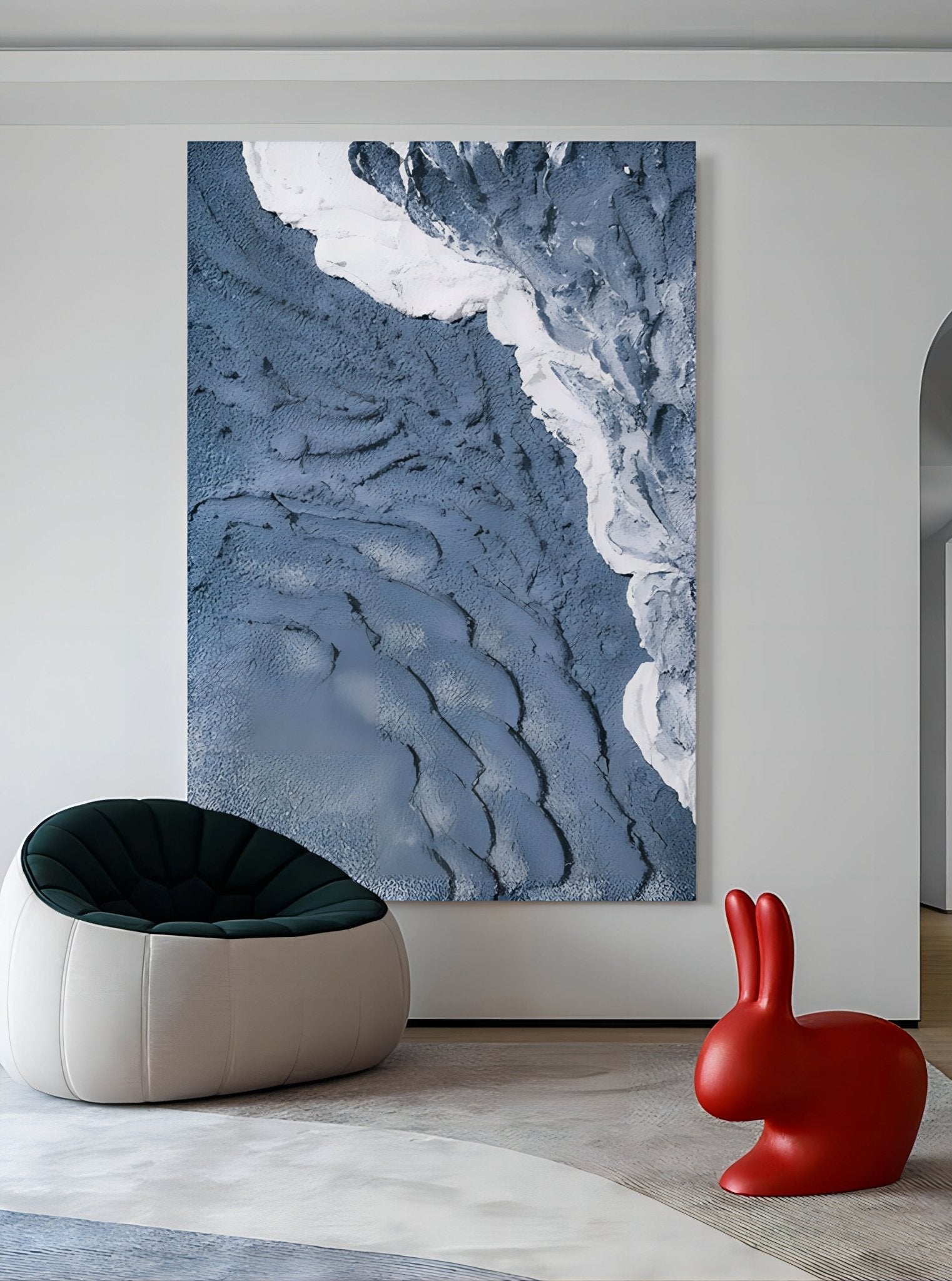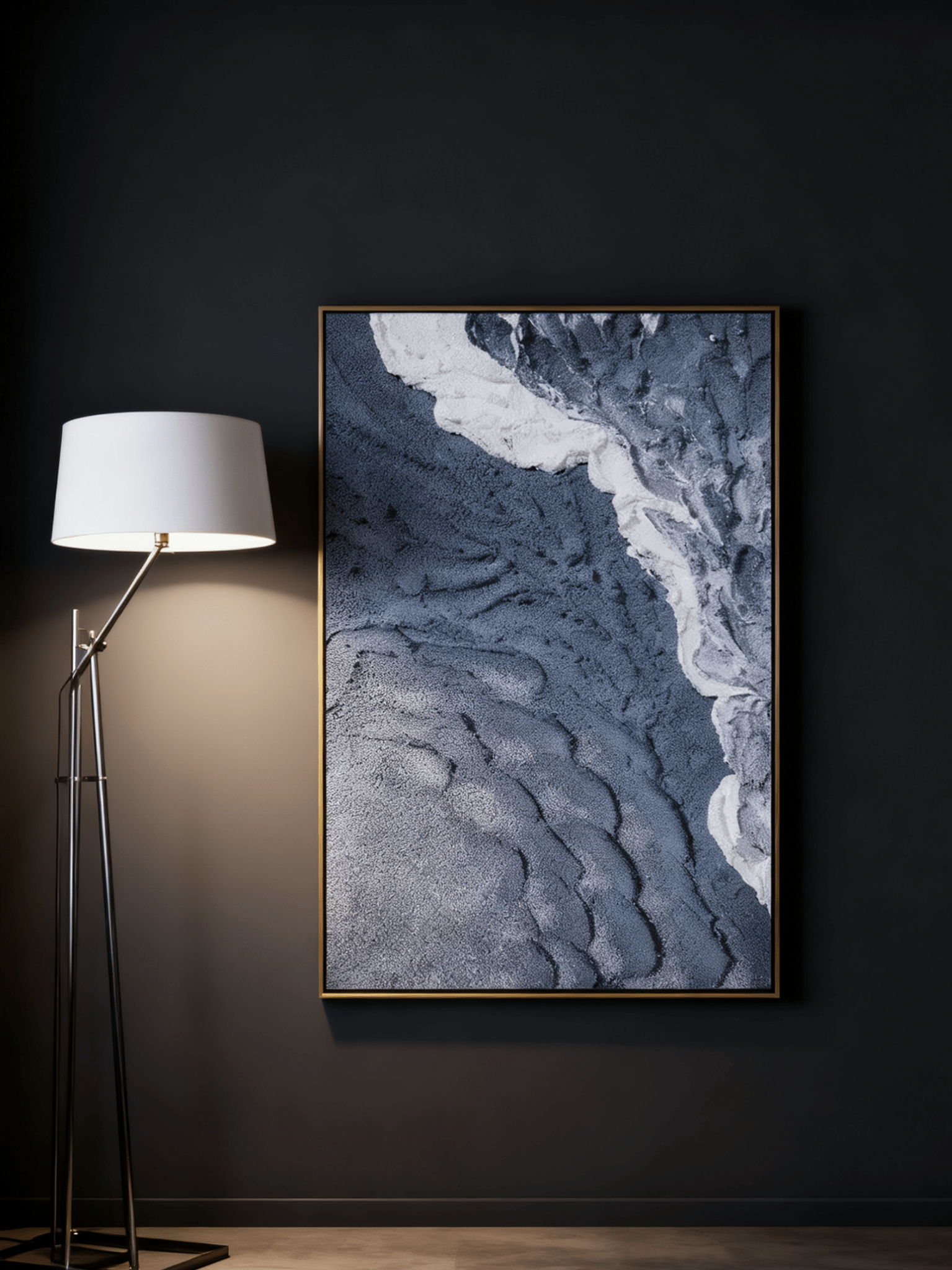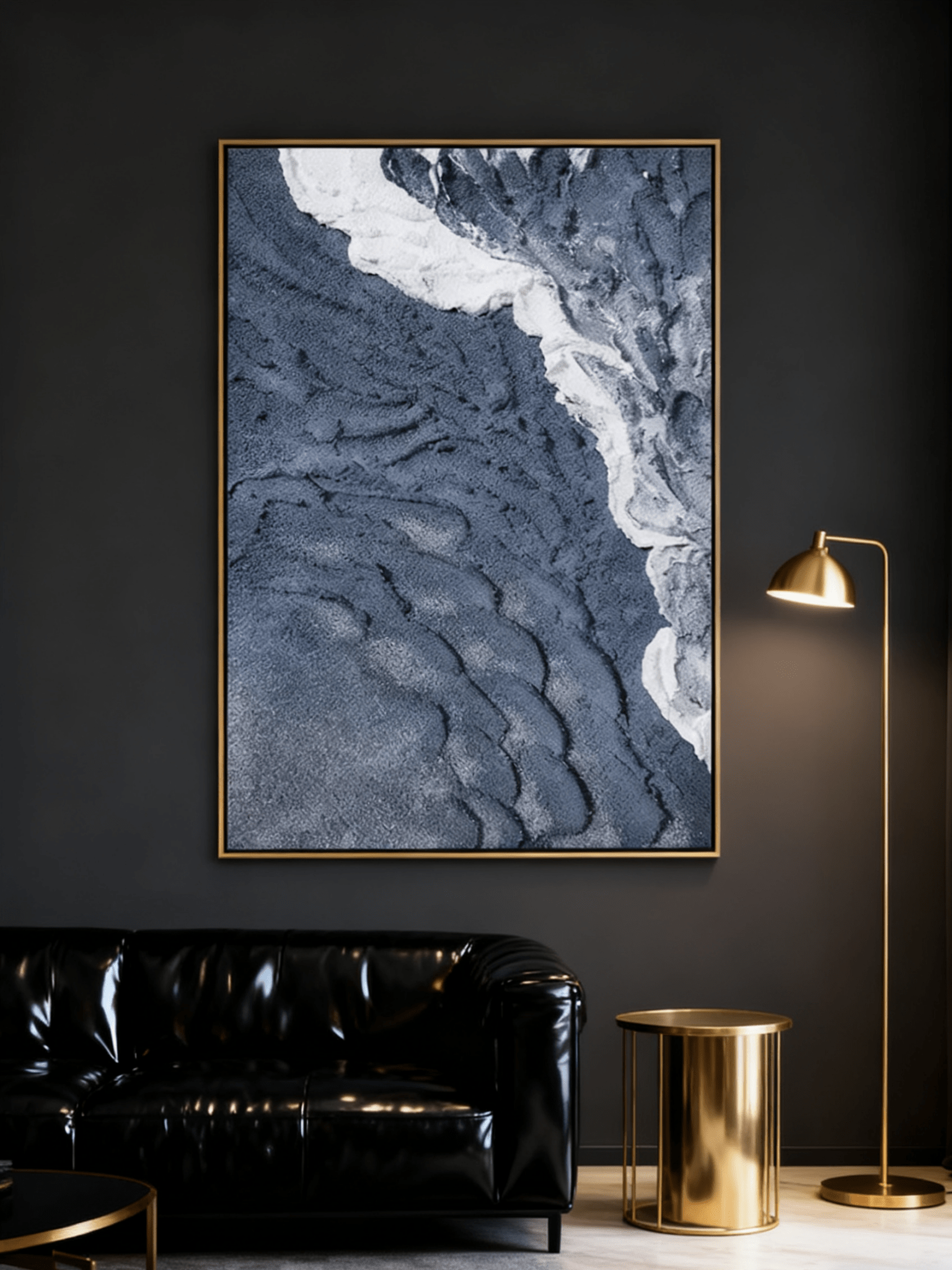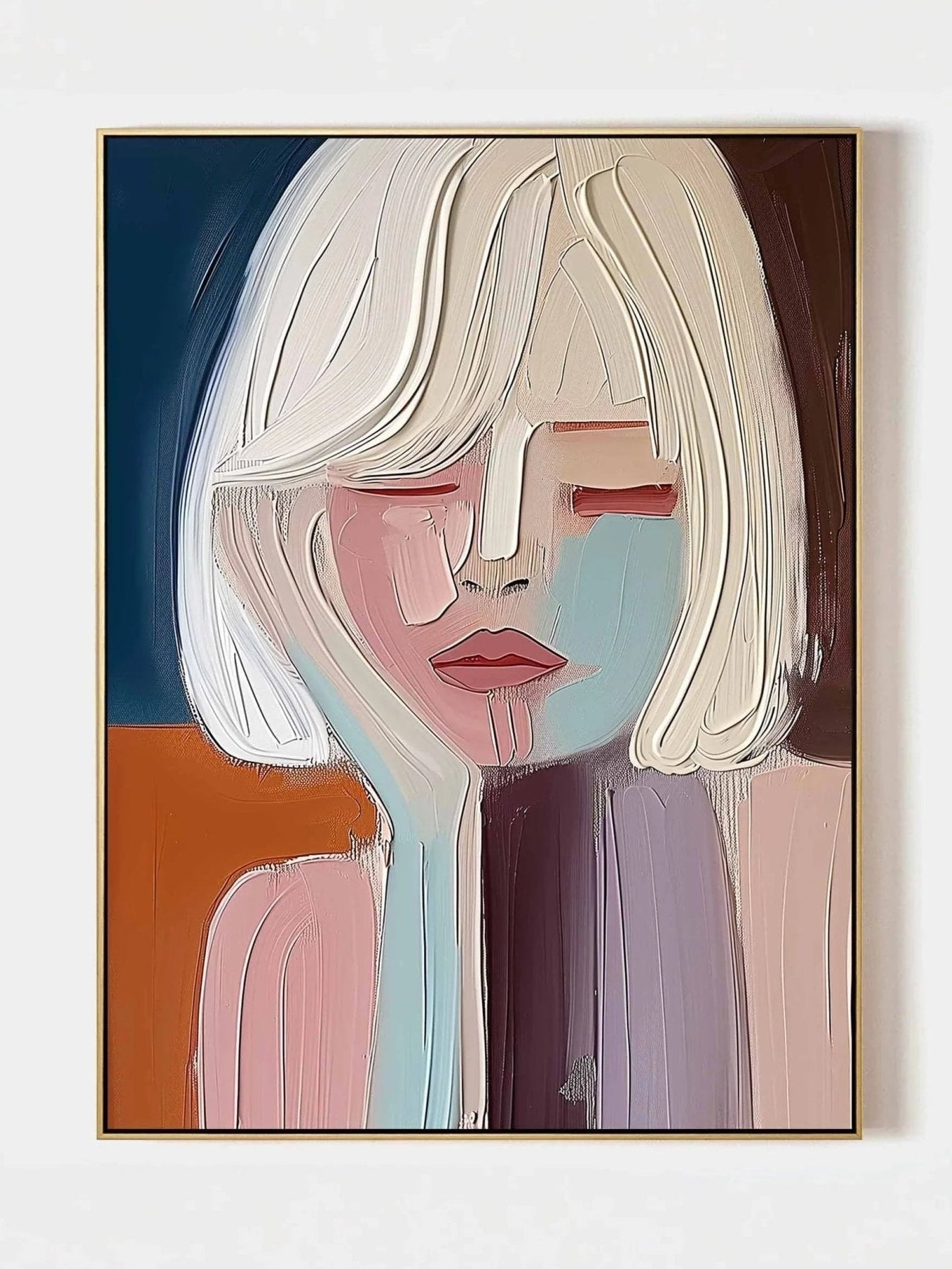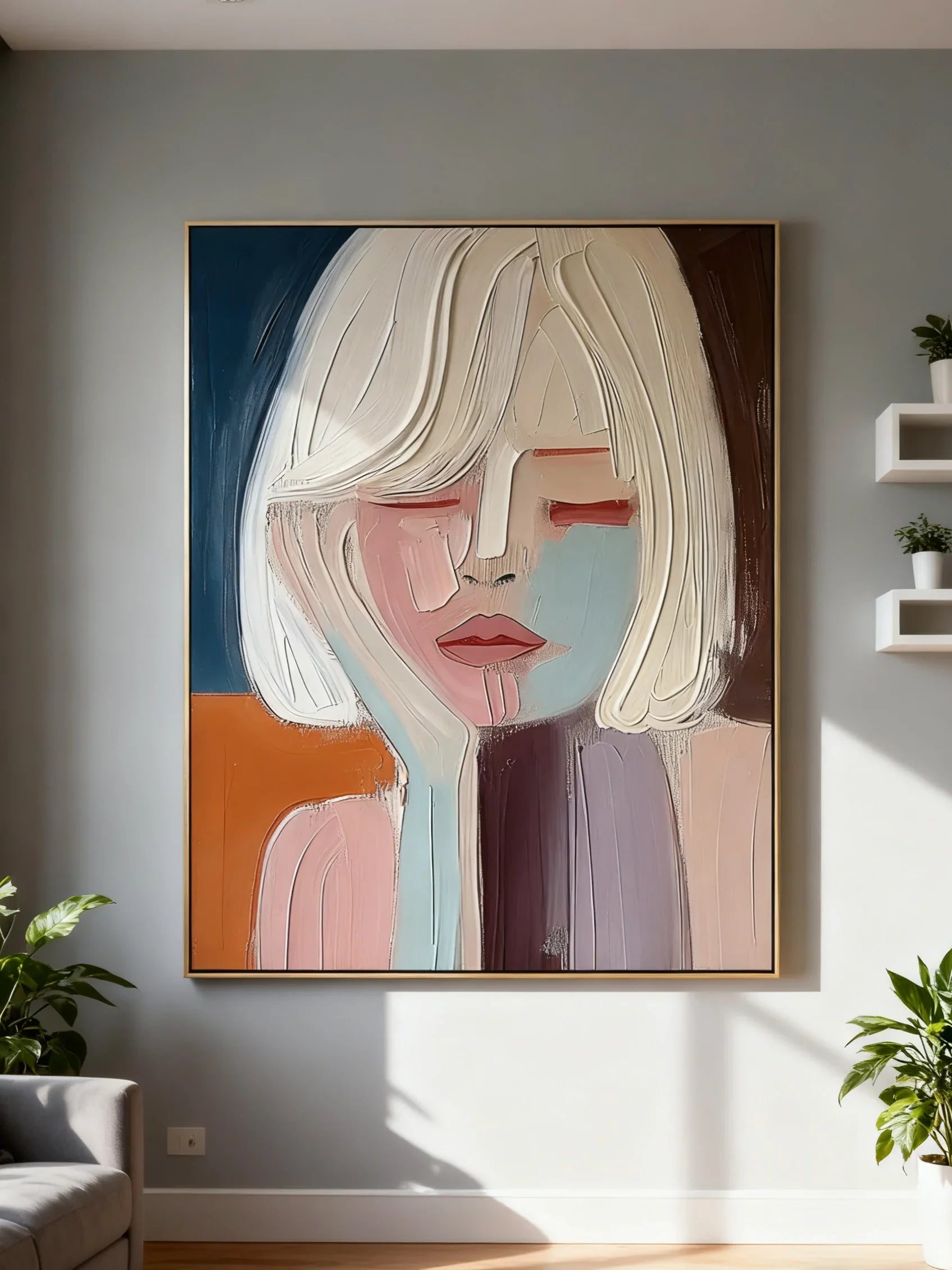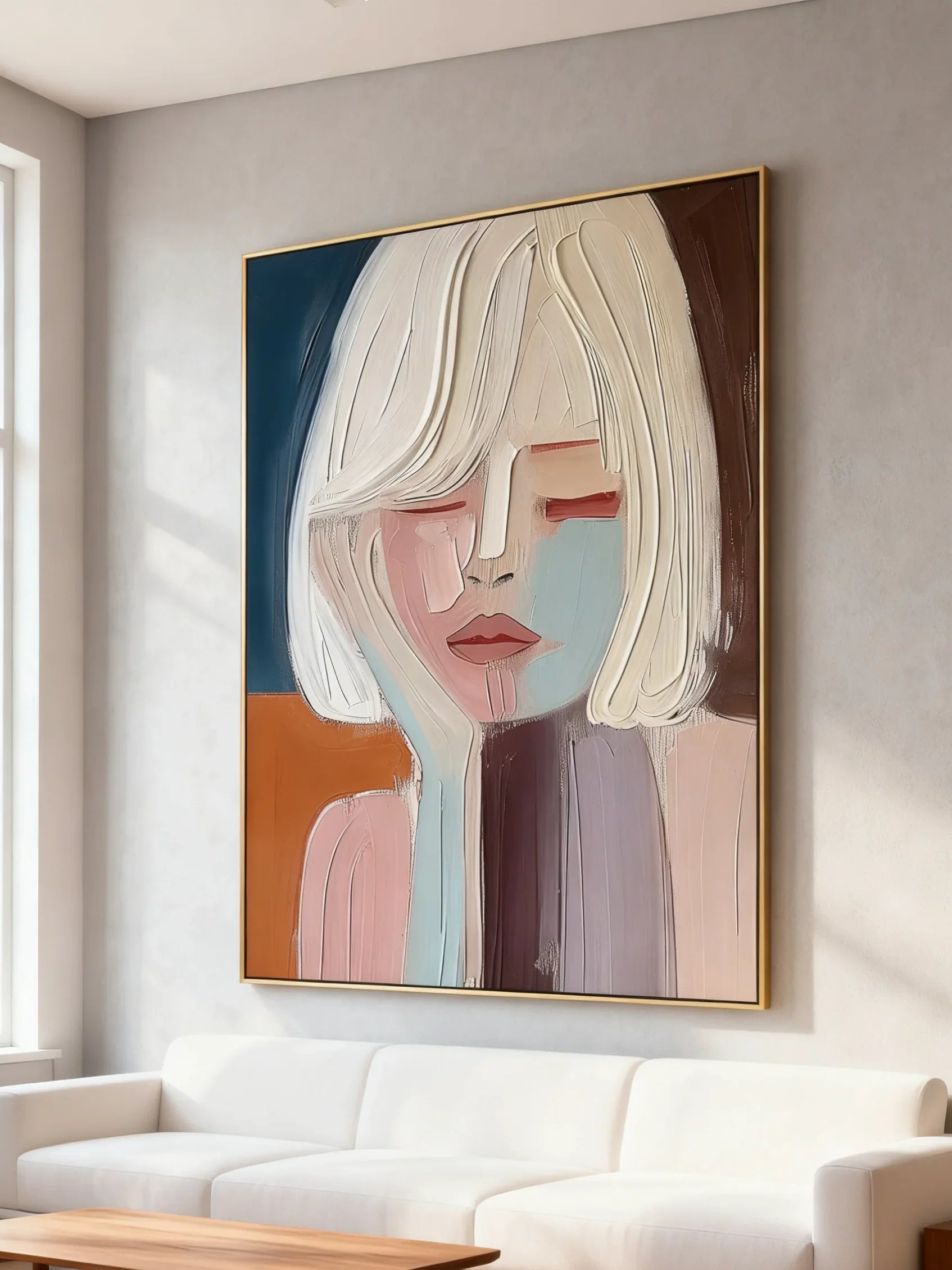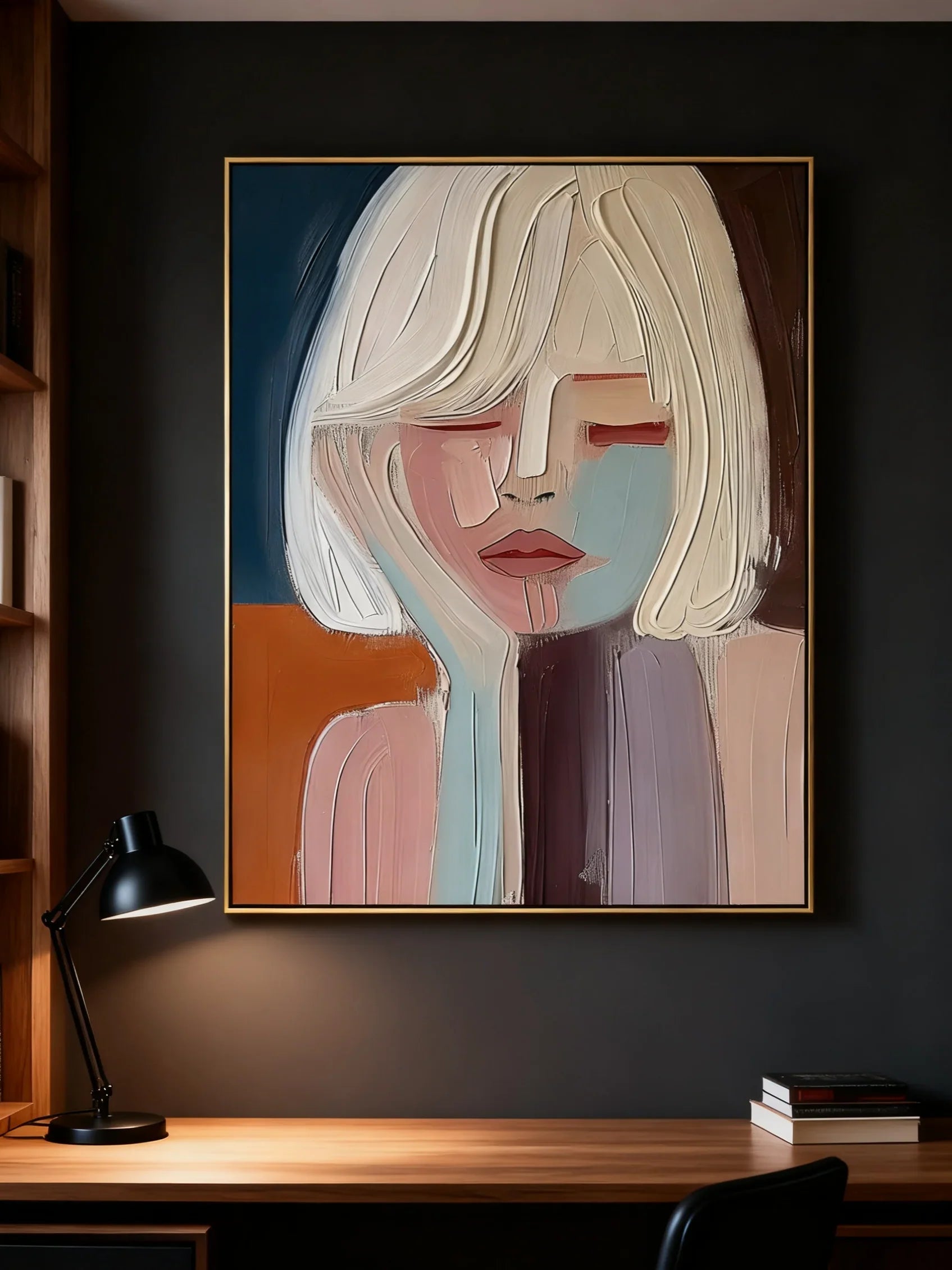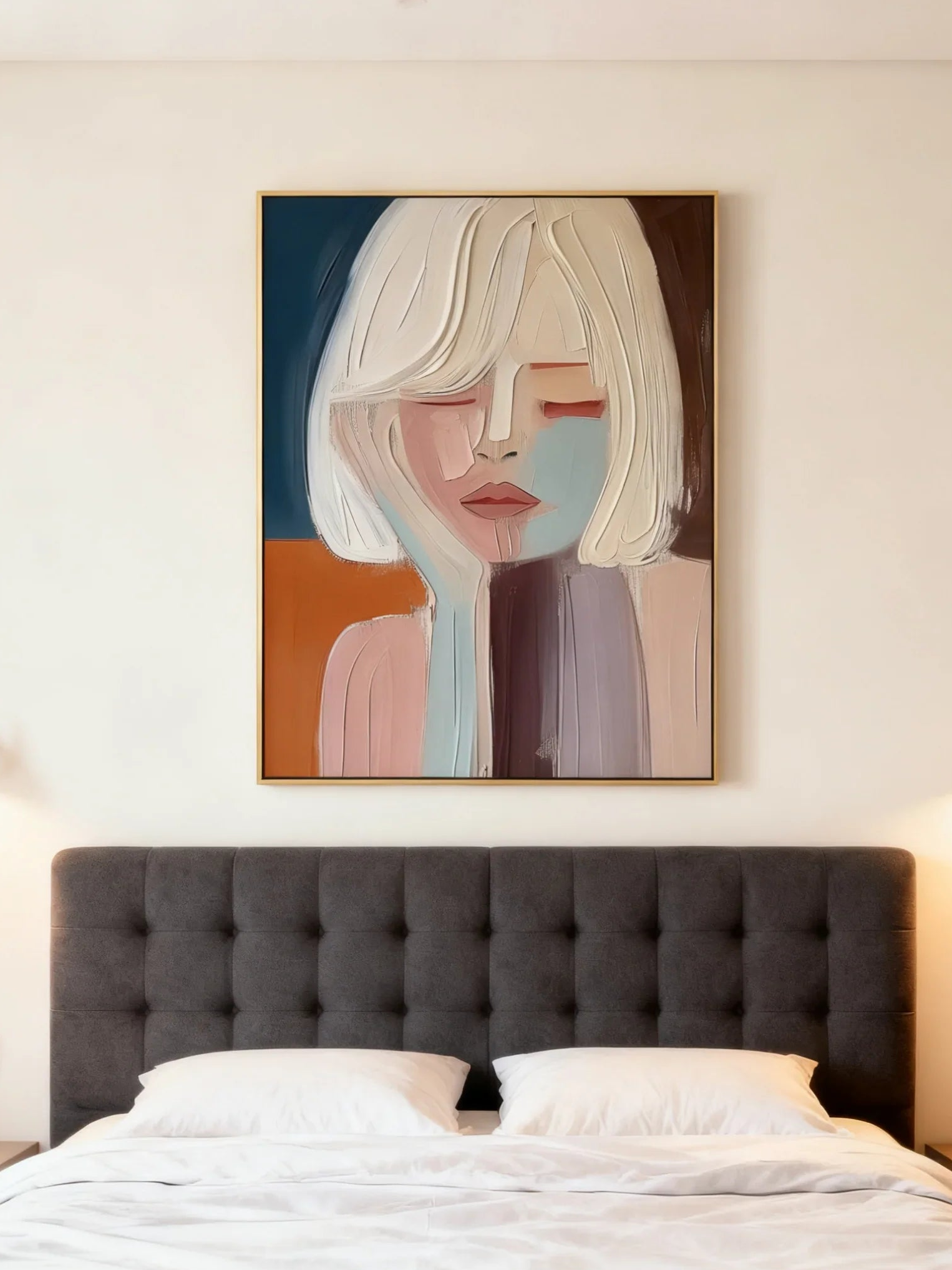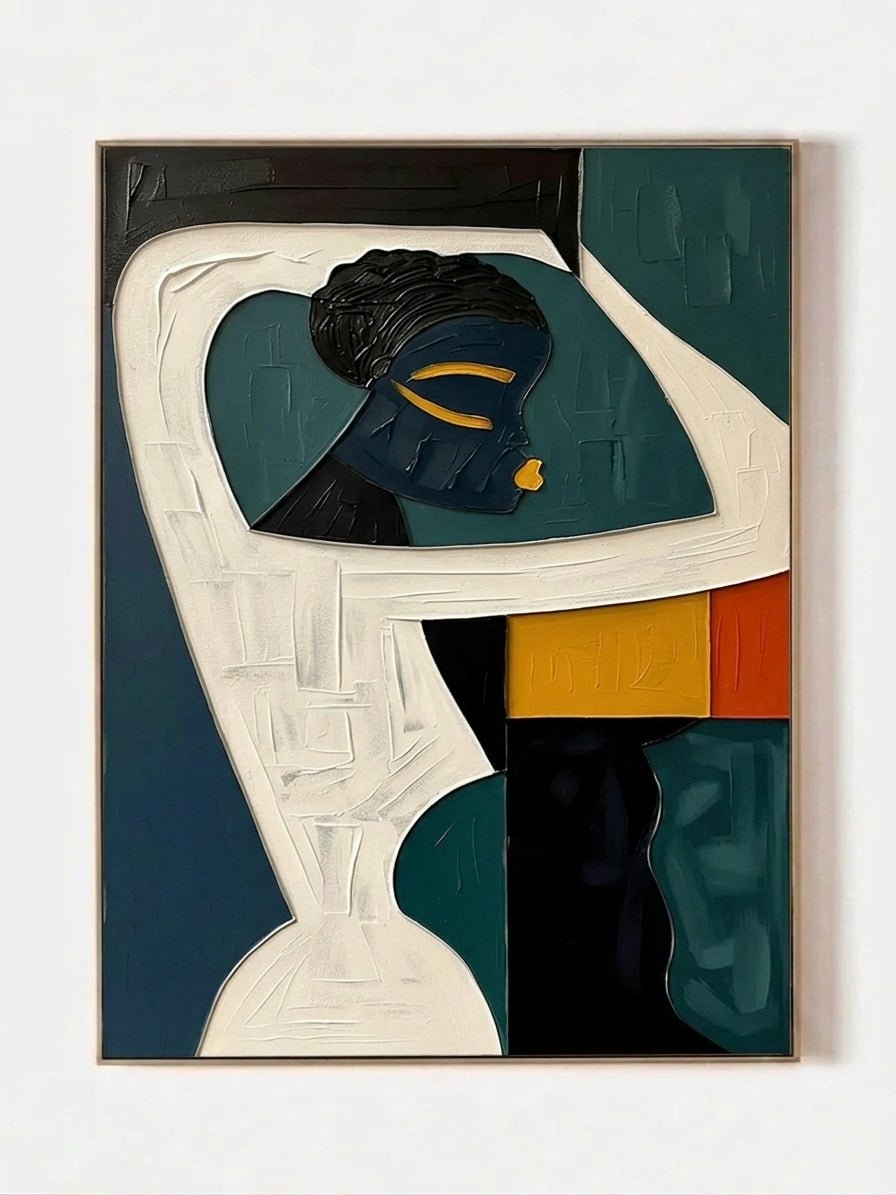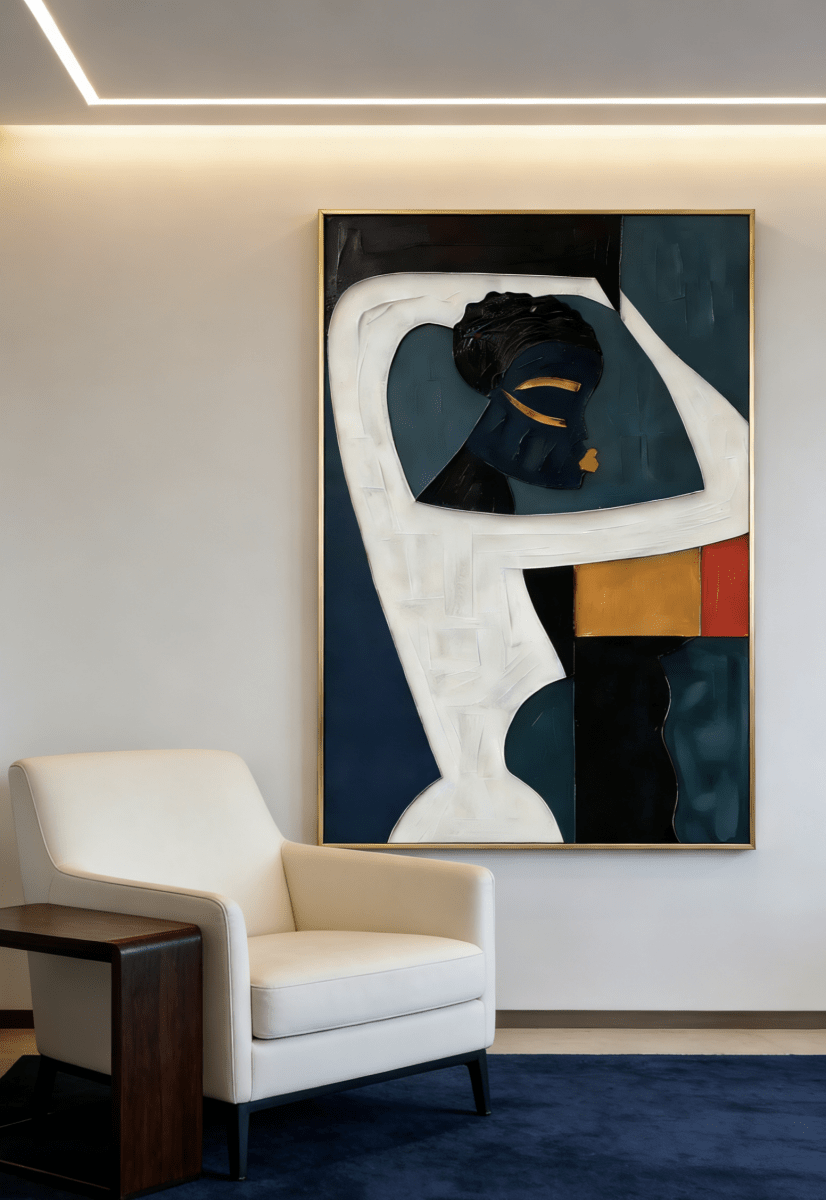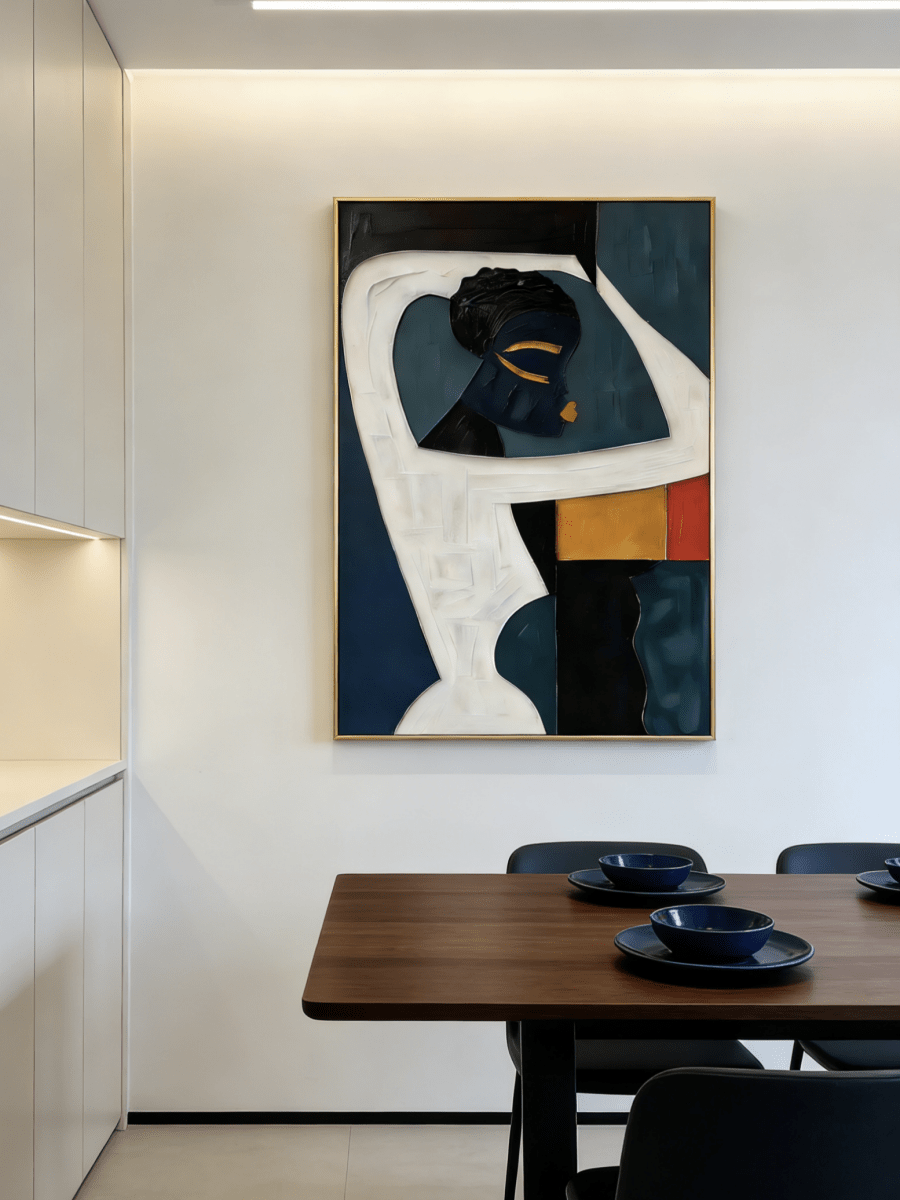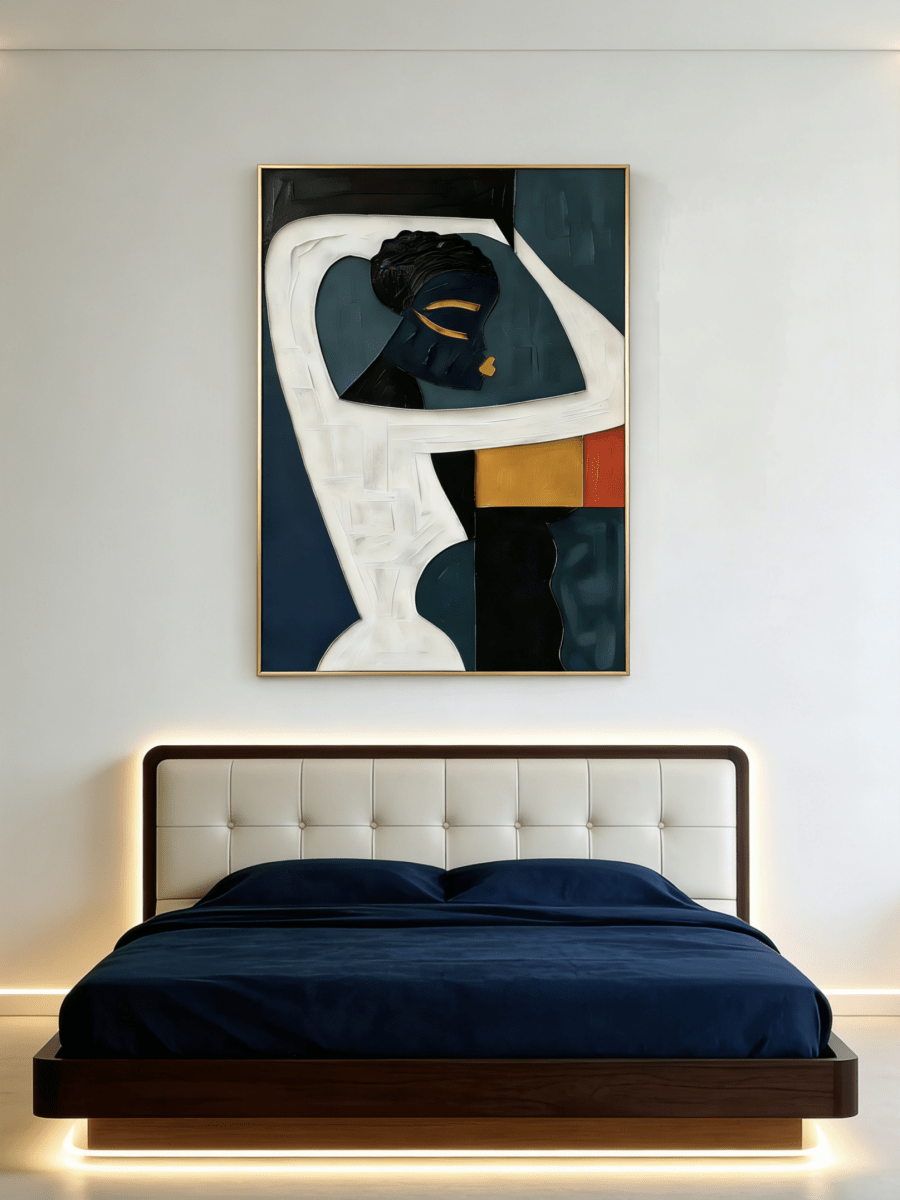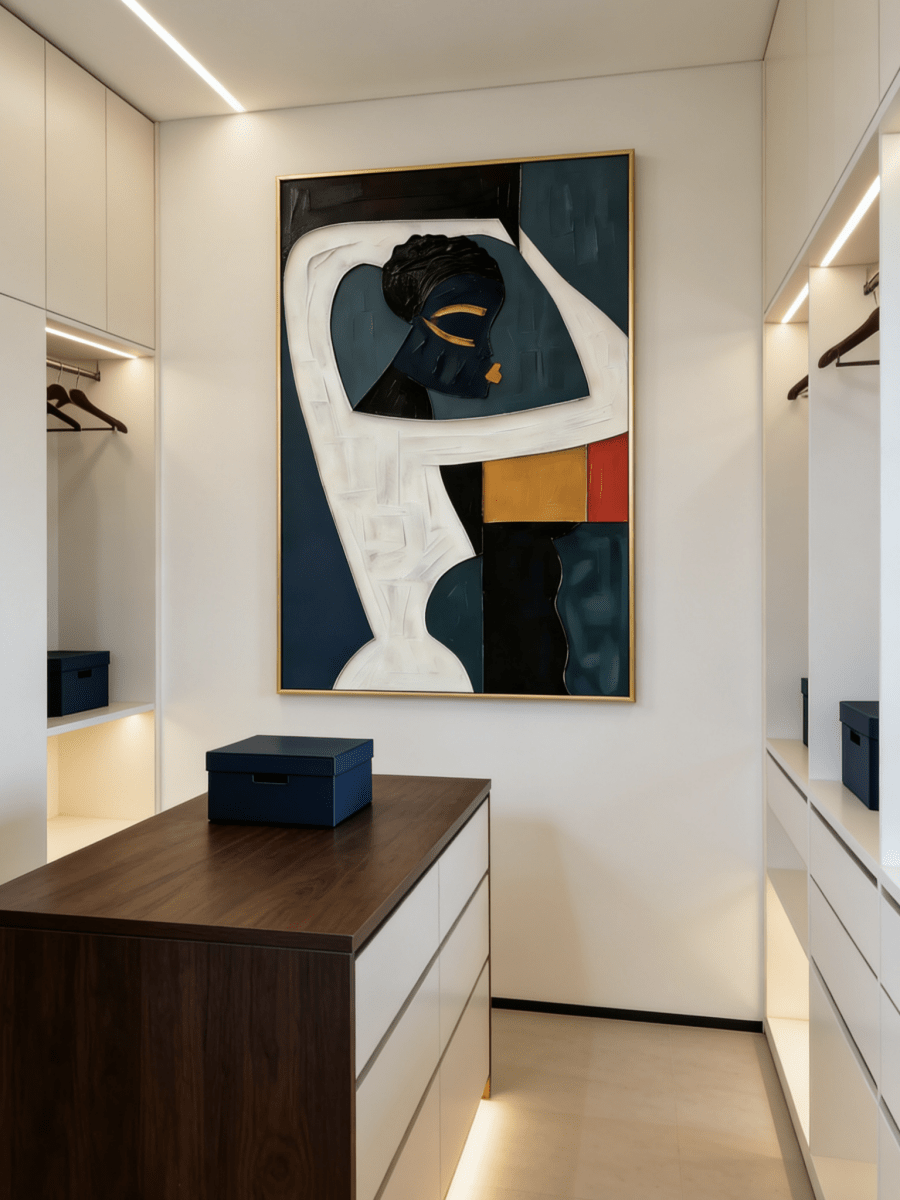

A painting can look large on a product page and still feel undersized above a long sofa. Minimalist work is especially sensitive to that shift. With fewer forms, quieter color, and more negative space, the relationship between the canvas, furniture, and wall becomes part of the composition.
Choosing large minimalist wall art is therefore not a matter of finding the biggest size available. The useful question is whether the artwork has enough width, height, and visual weight for the wall while still leaving deliberate breathing room. This guide shows how to judge those factors before ordering, with practical starting points for sofa proportions, viewing distance, orientation, ceiling height, framing, and urban homes.
For coordinating several connected zones rather than sizing one living-room wall, use the minimalist wall art for open-plan rooms guide.

What Is Considered Large Minimalist Wall Art?
"Large" is relational. A 48-inch canvas may dominate a narrow apartment wall, sit comfortably above a loveseat, or disappear above a 108-inch sectional. The same artwork also reads differently beneath an eight-foot ceiling than it does in a double-height room.
In practical terms, large wall art is a piece that occupies a meaningful share of the usable wall and relates clearly to the furniture below it. Oversized wall art goes further: it becomes the primary architectural gesture on that surface. Minimalist large-scale art describes the visual language rather than a fixed measurement - restrained forms, controlled color, open areas, and a scale large enough for those decisions to register across the room.
Judge size through six conditions: usable wall width, furniture width, ceiling height, viewing distance, room scale, and orientation. Measure the clear area between doors, windows, sconces, shelving, and corners rather than the wall from end to end.
Why Scale Matters More in Minimalist Art
A detailed painting contains many small cues that can hold attention even when the piece is modest in size. Minimalist work often relies on fewer shapes, broader tonal fields, and purposeful empty areas. If that composition is too small for the wall, its quietness can read as hesitation instead of clarity.
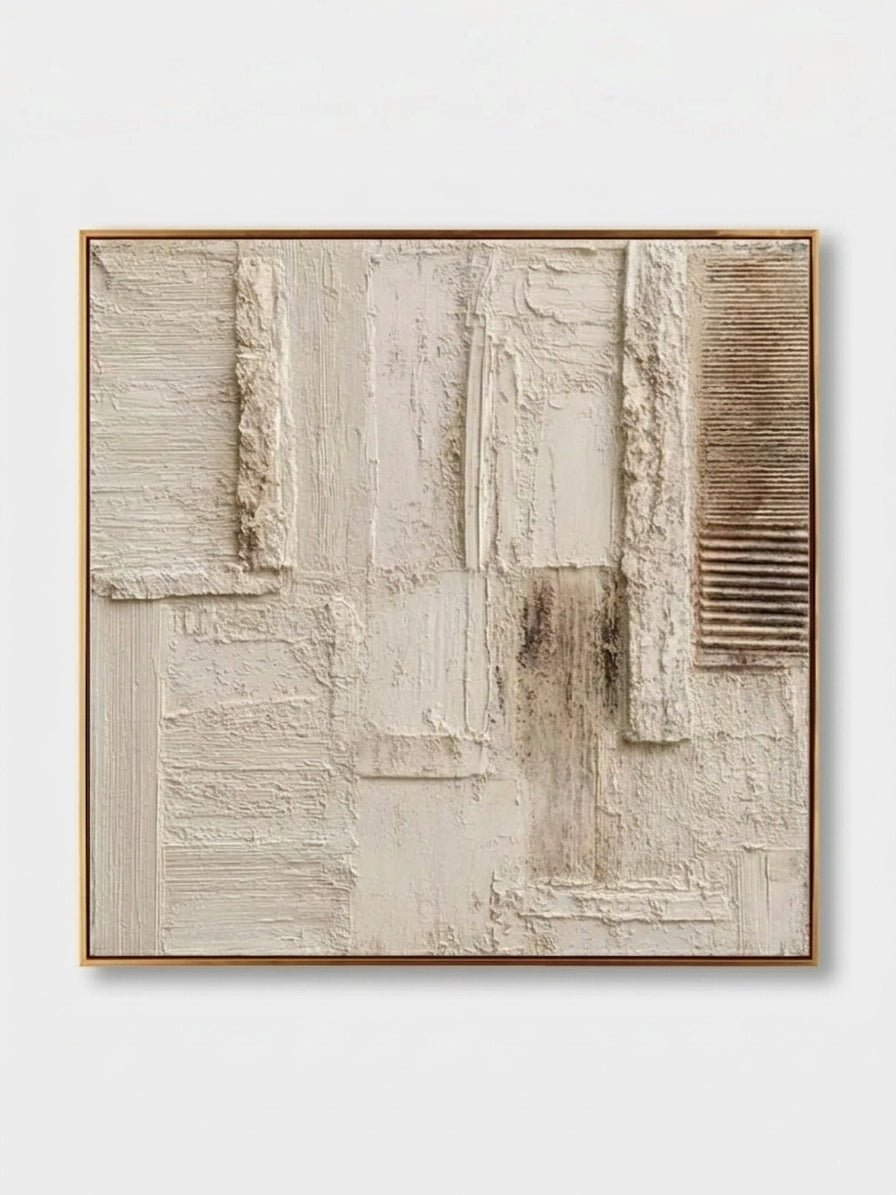
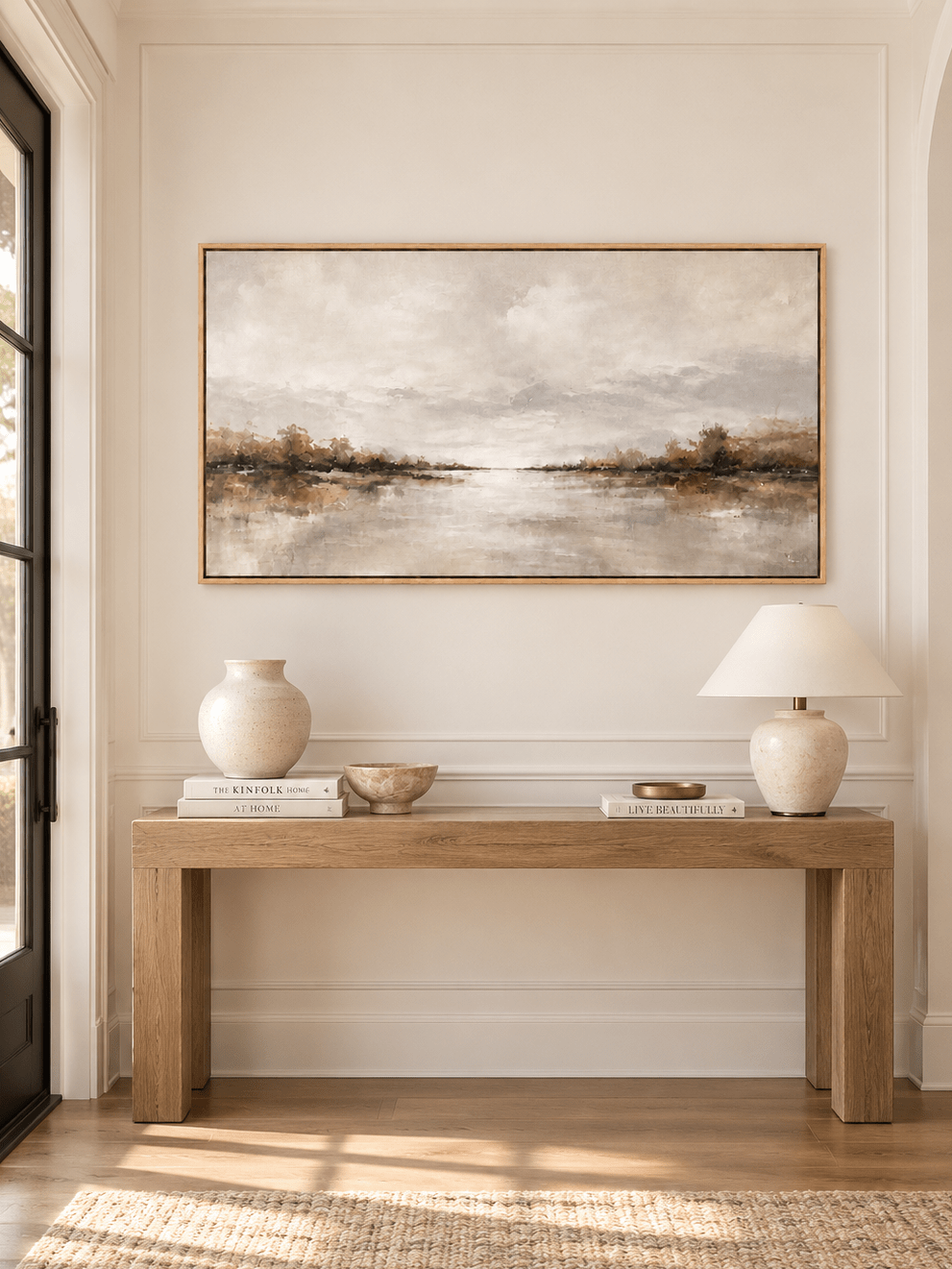
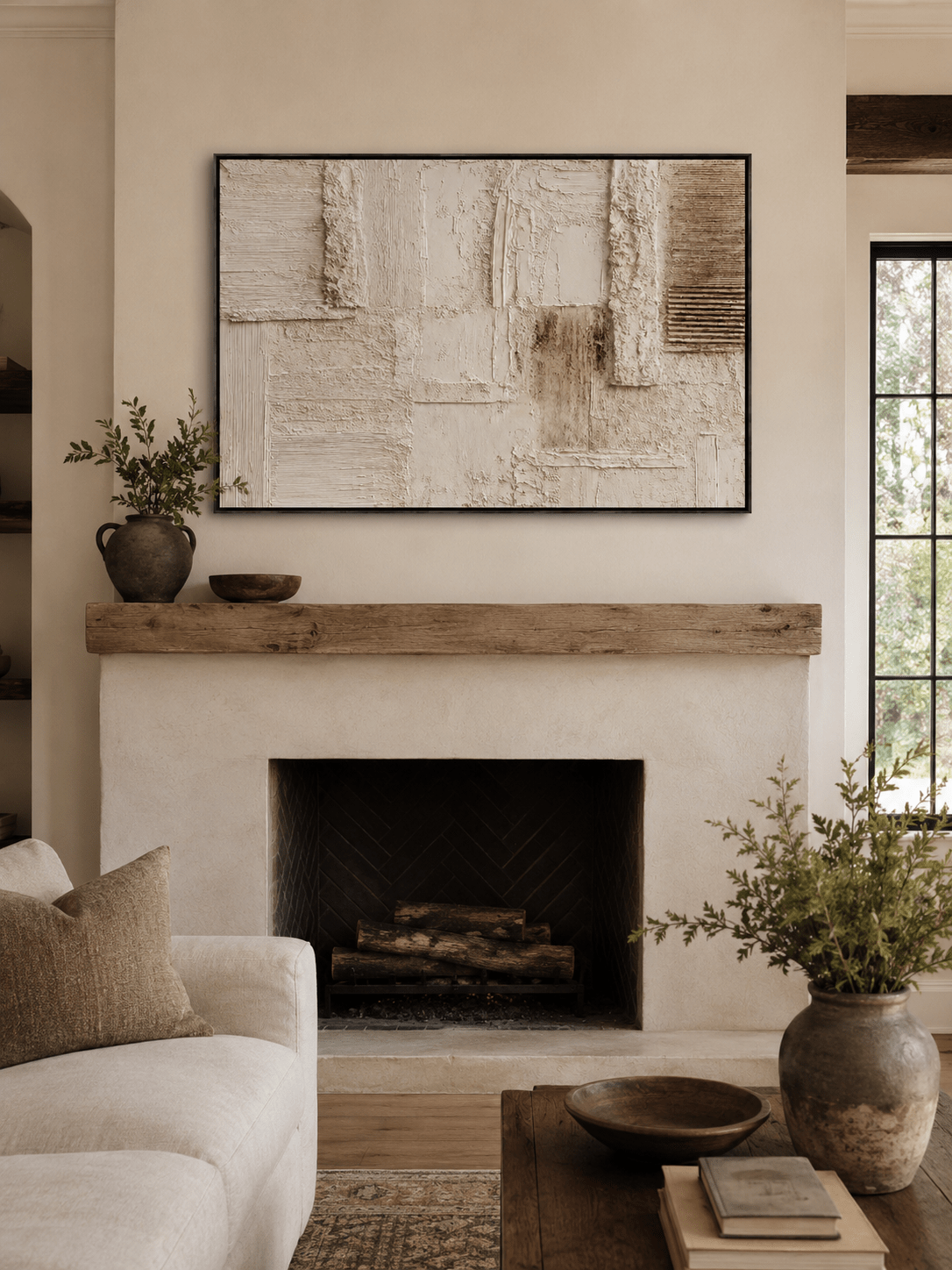
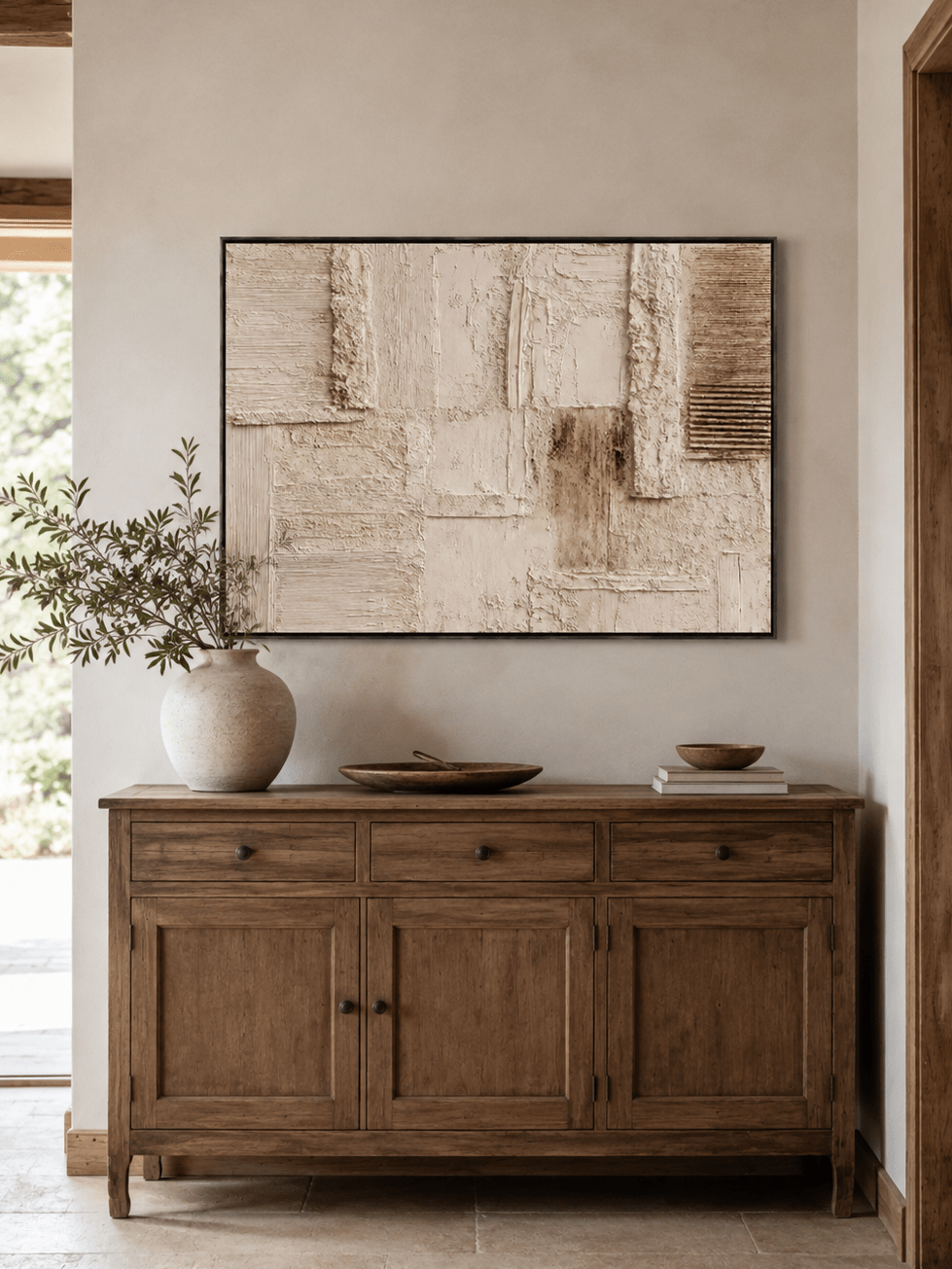
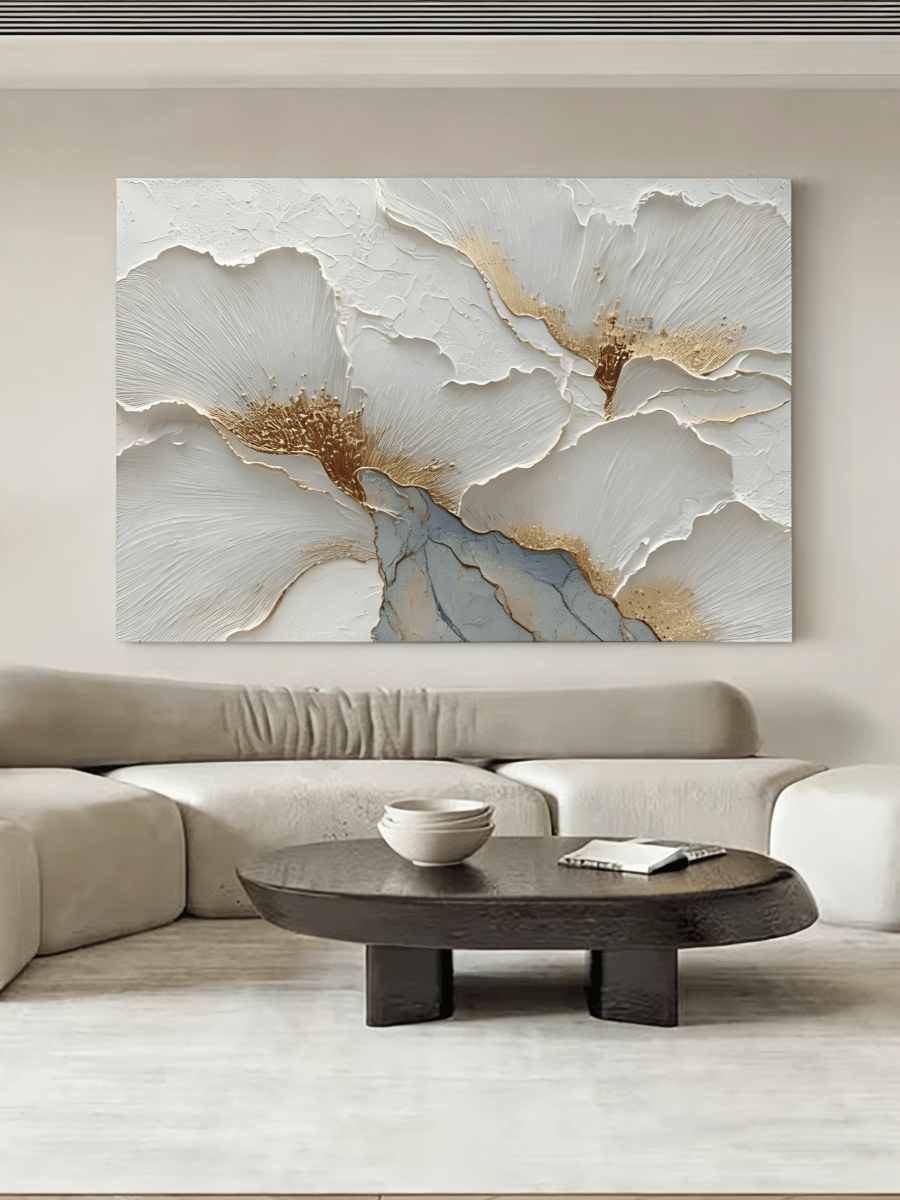
Large scale gives brushwork and texture room to operate. It lets an arc, horizon, line, or block of color become legible from the sofa while rewarding a closer view with surface variation. This is why a restrained piece such as Quiet Passage by Eliot Vermeer can carry a room without bright color: the broad arch and raised neutral surface create weight through material and proportion.
Large abstract minimalist art is not simply blank space enlarged; material detail and focal structure must stay balanced.
How Large Should Wall Art Be Above a Sofa?
As a practical starting point, artwork width is often about two-thirds to three-quarters of the sofa width. That range usually creates a clear connection without making the artwork look cramped against the sofa ends. It is a starting point, not a rule: wide arms, side tables, a chaise, nearby windows, and the artwork's own visual density may shift the best result.
| Sofa width | 2/3 to 3/4 artwork width | Formats worth testing |
|---|---|---|
| 72 inches | 48 to 54 inches | Square, horizontal, or compact oversized work |
| 84 inches | 56 to 63 inches | Large horizontal or wide rectangular work |
| 96 inches | 64 to 72 inches | Oversized horizontal, square, or controlled diptych |
| 108 inches | 72 to 81 inches | Extra-large single work or carefully spaced set |
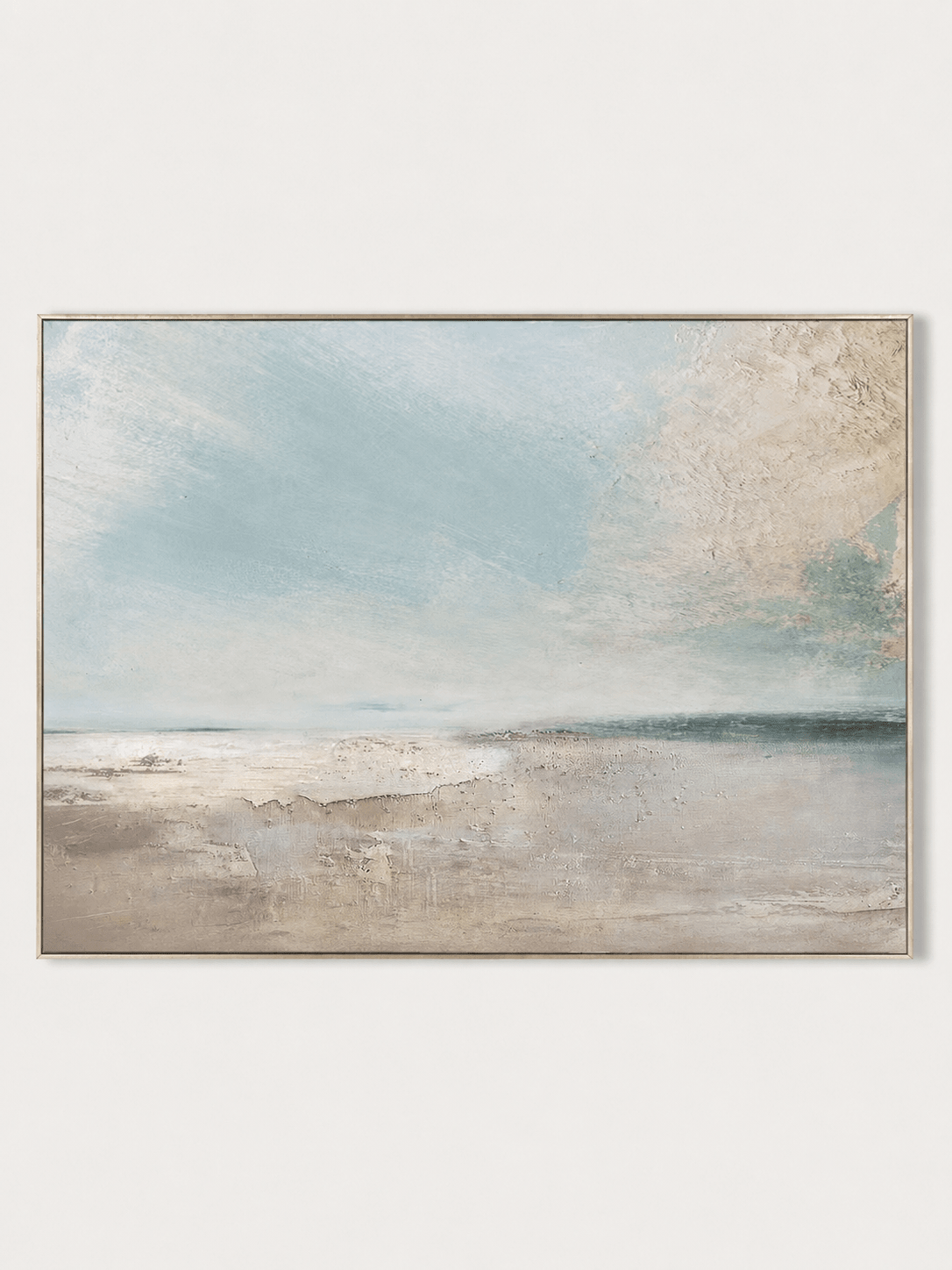
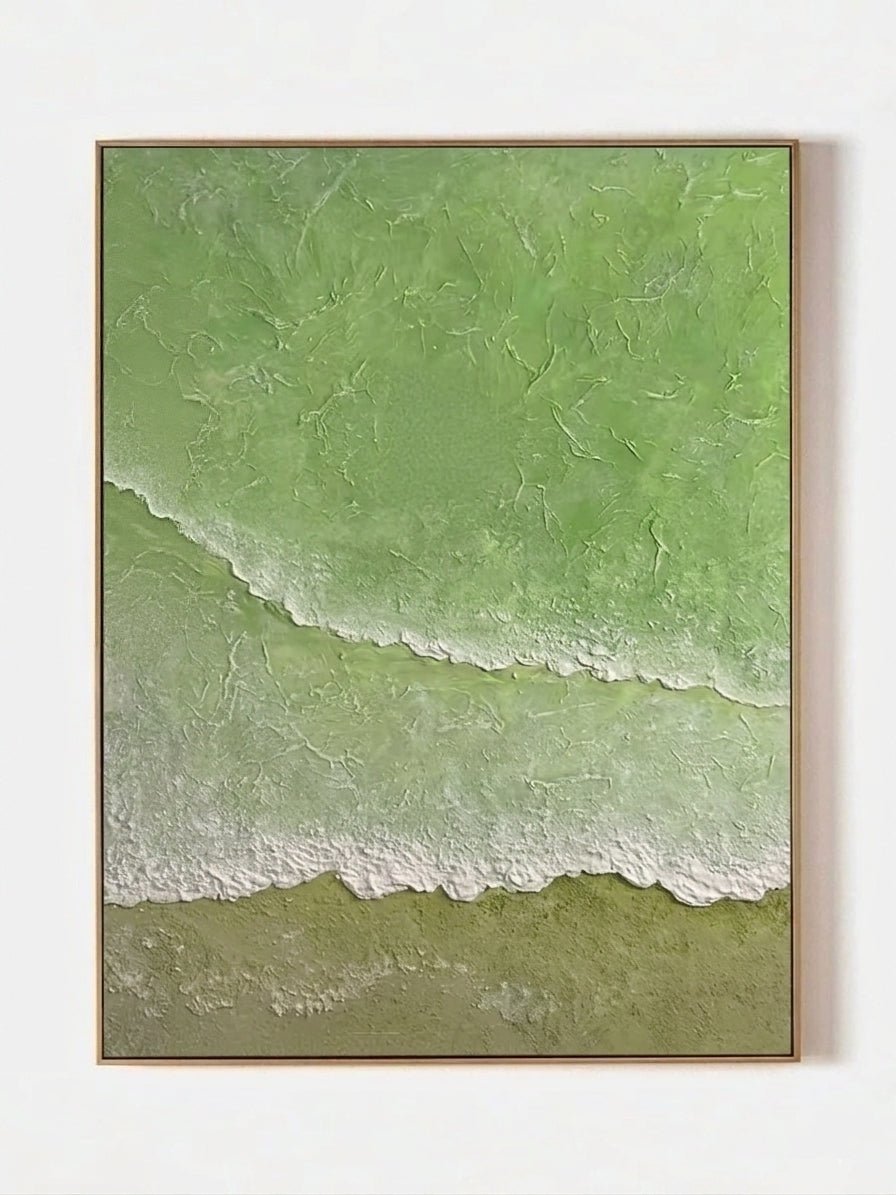
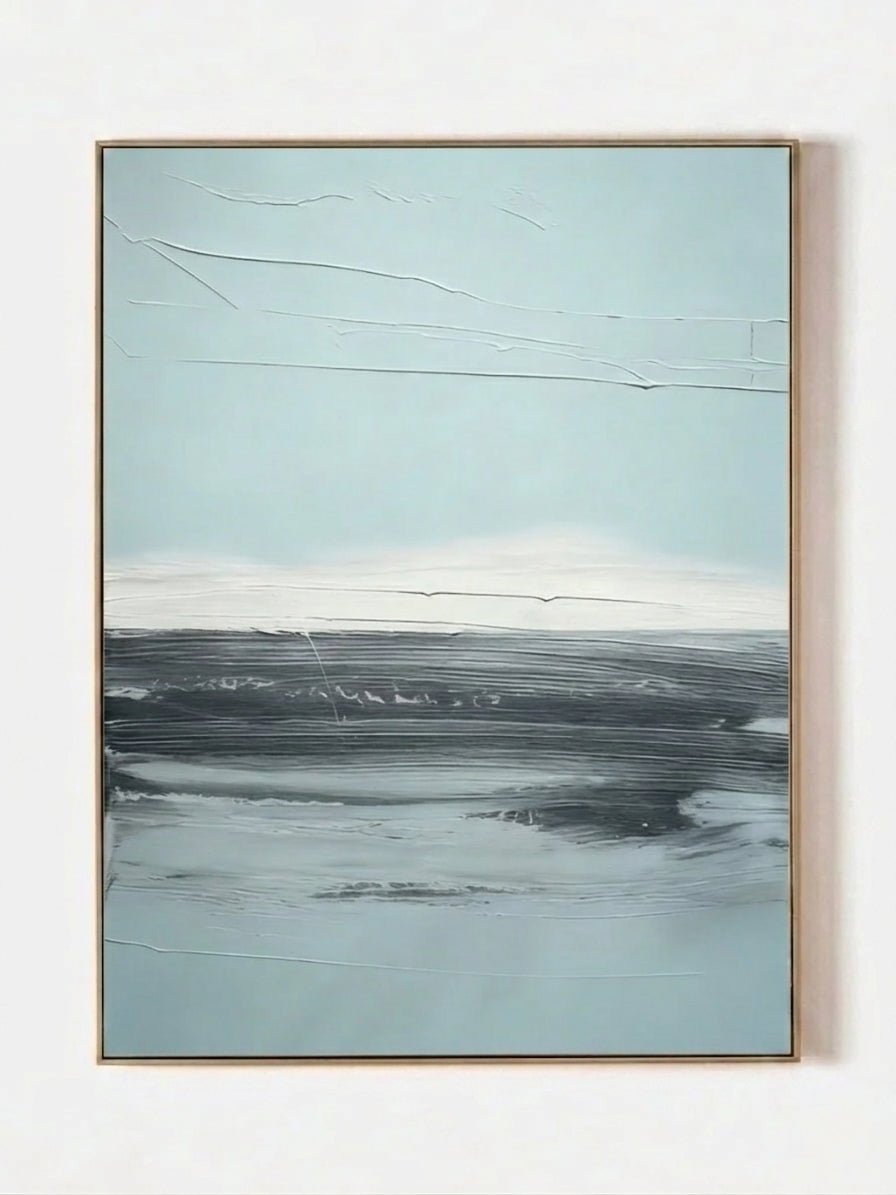
For example, a 96-inch sofa suggests an artwork width of roughly 64 to 72 inches. A 60-inch canvas can still work if it has a dark, dense composition or substantial frame, but a pale, open design may need the upper end of the range. Neutral Coastal Shoreline by Leo Liang is horizontal and available in sizes up to 80 inches wide, making it useful when a long sofa needs breadth without a visually busy subject.

Measure the finished outer dimensions
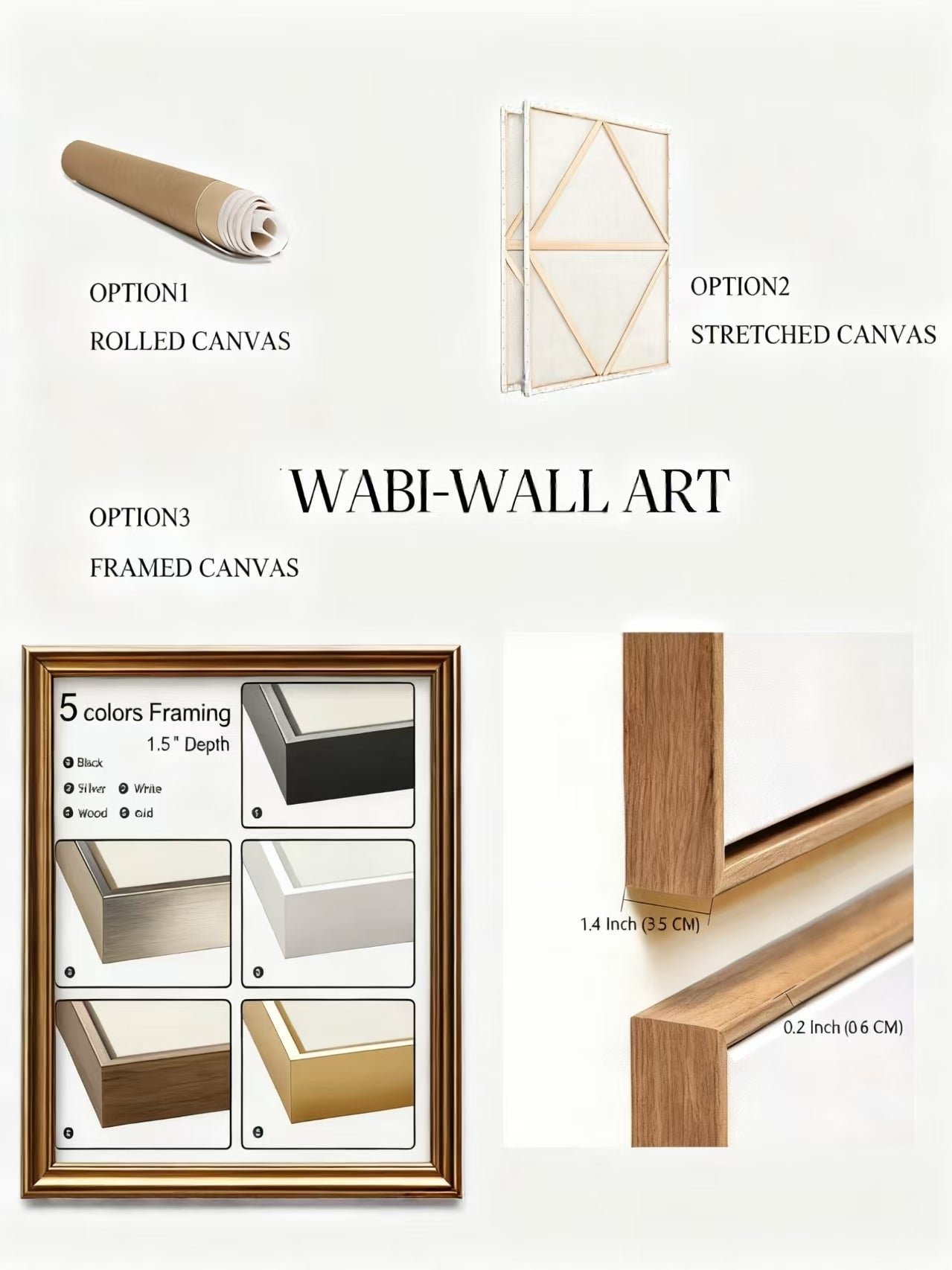
Product size may refer to the painted canvas, while a floating frame can add to the final width and height. The difference is small on a compact piece but more noticeable at 60 or 80 inches. Confirm whether the listed measurement is the canvas size or the finished framed size, and include any spacing between panels when calculating a set.
If sofa sizing is the only decision you need to solve, the dedicated wall art above a sofa size guide provides more layout calculations. Use this article for the broader question of how minimalist composition, open wall space, and viewing distance change the result.
How Much Empty Wall Space Should Remain?
Minimalist rooms need breathing room, but blank wall is not automatically successful negative space. Too little clearance makes oversized art feel pressed against corners, ceiling lines, or furniture. Too much clearance can make the work appear timid and undersized.
Look for an intentional margin on both sides of the artwork and a clear gap above the sofa. The left and right margins do not have to match the top and bottom. They only need to feel large enough that the artwork is not colliding with a door casing, window, sconce, or ceiling, yet small enough that the piece still owns the wall zone.
A useful visual test is to photograph the wall straight on, then block out the proposed size with painter's tape. If your eye reads the tape as a small object floating in a large field, test the next size up. If the outline appears wedged between architectural edges, test a smaller size or a different orientation. Also consider the negative space inside the artwork. An open composition may need a stronger outer scale than a high-contrast canvas of the same dimensions.

A square work such as Minimalist Line Art by Lena Petrova can be a strong choice when a wall is broad but the furniture grouping is compact. Its square outline creates a stable center while the line drawing keeps the room visually light.
How Viewing Distance Changes the Right Artwork Size
Artwork should be assessed from the places where it will actually be seen. At close range, raised texture, pencil-like lines, and subtle tonal changes remain visible. Across a room, those details merge into the overall silhouette, value pattern, and color structure.
| Typical viewing distance | What to prioritize | Practical implication |
|---|---|---|
| Close | Texture, subtle detail, controlled scale | A smaller piece can feel substantial if its surface is rich and the wall is simple. |
| Medium | Overall composition and furniture balance | Test the artwork from the main sofa or chair, not only while standing at the wall. |
| Long | Clear silhouette, larger scale, stronger value structure | Pale or delicate work may need more width or height to remain legible. |
Long sightlines do not require a complicated formula. They require a stronger read. Step back to the farthest normal viewing position and check whether you can still identify the main structure of the composition. If the work dissolves into the wall, increase scale, choose a more defined frame, or select a piece with clearer tonal contrast.
Choosing the Right Orientation
Horizontal large minimalist art
Horizontal art follows the line of a sofa, bed, sideboard, or dining bench. It is usually the most direct choice above long furniture because it creates breadth without demanding excessive wall height. For an especially wide wall, the panoramic wall art guide explains when a standard horizontal proportion should give way to a more extended format.
Vertical large minimalist art
Vertical art uses height and works well between windows, beside a doorway, on a narrow return wall, or beneath a taller ceiling. It can balance a room whose furniture is visually low, but its width must still be sufficient for the wall. A narrow vertical canvas centered above a very long sofa may look disconnected.
Square large minimalist art
A square has a calm, centered presence. It suits compact seating groups, fireplace walls, consoles, and symmetrical furniture arrangements. Because it contributes as much height as width, it can feel more substantial than a low horizontal artwork with the same width.
Panoramic minimalist art
Panoramic work is useful when width is the dominant architectural condition: a long sectional, a continuous low console, or an uninterrupted wall viewed from across the room. It should not be forced into a narrow wall simply because the furniture is horizontal. For a faster format decision, compare the examples in the horizontal, vertical, square, and panoramic wall art guide.
One Oversized Artwork or Several Smaller Pieces?
| Consideration | One oversized artwork | Multiple smaller pieces |
|---|---|---|
| Visual effect | Calm, unified focal point | Rhythm and repetition |
| Installation | One centerline and fewer alignment decisions | Spacing and alignment become part of the design |
| Minimalist suitability | Strong and uncluttered | Successful when the grouping is treated as one composition |
| Best wall type | Large uninterrupted wall | Modular wall or a layout that benefits from vertical rhythm |
| Furniture relationship | Easy to center over the seating zone | Total width must include every frame and gap |
One oversized minimalist wall art piece is often the cleaner answer when the wall has no interruptions and the room already contains several furniture lines. A diptych is useful when you want a wider combined footprint, prefer a subtle rhythm, or need panels that are easier to move through a doorway.

Minimalist Abstract Diptych by Lena Petrova keeps the palette quiet while using two vertical panels to create a broad combined footprint. Measure its listed pair width, add the intended gap, and compare that total with the sofa. The diptych vs triptych size and spacing guide covers panel-gap calculations in more detail.
How Color Affects Visual Weight
Color changes how large an artwork feels before its dimensions change. Cream, plaster white, beige, and pale gray can feel light and expansive, but they need enough texture or tonal variation to remain distinct from a similar wall. Black, charcoal, and deep brown create stronger visual gravity and can make a somewhat smaller work feel more assertive.
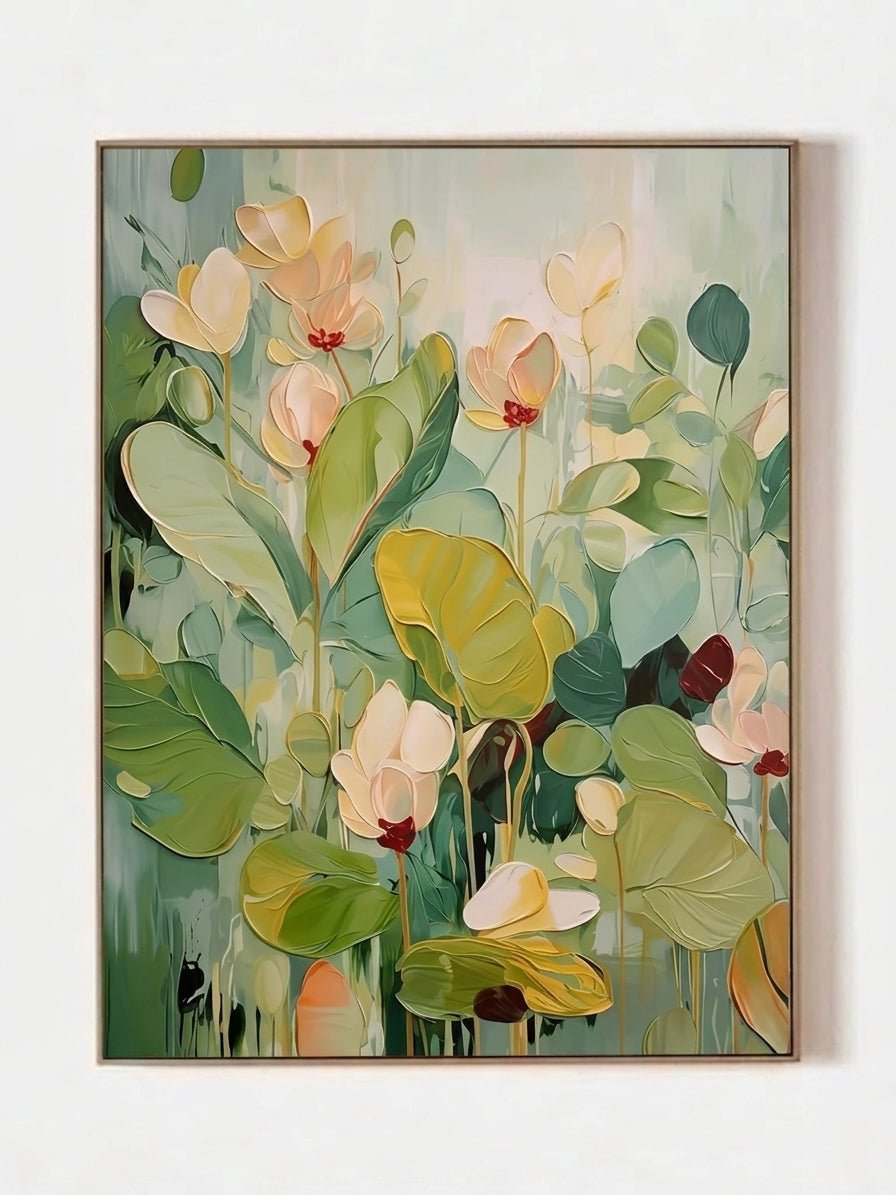
Earth tones such as clay, sand, taupe, and terracotta sit comfortably with organic modern and warm minimalist interiors. Green or blue accents can create contrast without introducing visual noise when the composition remains restrained. The goal is not to match the wall exactly; it is to create enough separation that the edges and internal structure remain readable in both daylight and evening light.
For a more detailed palette comparison, use the earth tone wall art color guide. Then return to scale: a quiet beige painting may need a larger footprint or more pronounced surface than a dark geometric piece on the same wall.
Large Minimalist Wall Art for Urban Spaces
Small rooms do not automatically require small art. In an apartment, loft, condominium, or high-rise home, one clear oversized composition can look calmer than several unrelated objects. The key is to keep the surrounding wall simple and choose an orientation that follows the available architecture.

Minimalist Geometric Abstract Wall Art by Seraphina Rose demonstrates this approach. Its vertical sage field and stacked forms suit a tall, narrow wall where a wide canvas would interfere with a window or doorway. Current size options extend to 80 inches high, so the piece can use vertical scale without demanding an expansive floor plan.
Practical access matters for minimalist art for urban spaces. Check elevator dimensions, stair turns, hallway width, door openings, and the route from the building entrance to the final wall. A rolled canvas is easier to move through tight access but requires local stretching or framing. Stretched and framed pieces arrive closer to display-ready form but have a larger shipping footprint. Compare those tradeoffs in the rolled canvas, stretched canvas, and framed art guide.
How Ceiling Height Affects Artwork Scale
Higher ceilings do not mean the artwork should simply be hung higher. Raising a normal-size painting can disconnect it from the sofa and leave an awkward band of empty wall below. Instead, a taller ceiling often calls for more vertical canvas dimension, a squarer format, a larger frame, or a composition with greater visual weight.
How High Should Large Minimalist Wall Art Hang?
When art hangs on an empty wall, placing its center near standing eye level is a common starting point. Above furniture, the relationship to the furniture matters more. The lower edge should sit close enough to the sofa that both read as one composition, while leaving enough clearance for cushions and normal movement.
A gap of several inches above the sofa is often a useful mock-up range, but do not treat one number as universal. A deep sofa, tall back, large frame, low ceiling, or unusually tall artwork changes the balance. Tape the full framed outline, sit down, and check that the piece does not appear to float. Use the painted area and the outer frame dimensions in that test.
Common Mistakes When Choosing Oversized Minimalist Wall Art
- Choosing from a styled product photo alone. Room mockups can suggest mood, but your wall and furniture measurements determine scale. Tape the dimensions at home.
- Measuring the wall but not the sofa. The artwork usually belongs to the seating group, not the full architectural width.
- Ignoring final framed size. Confirm whether product dimensions describe canvas or the complete framed work.
- Selecting a pale artwork that disappears. Increase size, texture, tonal contrast, or edge definition rather than matching beige to beige exactly.
- Hanging the piece too high. Oversized work should remain visually connected to the furniture below.
- Filling every blank area. Preserve enough wall around the focal piece for the minimalist composition to breathe.
- Choosing orientation before assessing architecture. Windows, doors, sconces, and ceiling height may make a different shape more convincing.
- Forgetting the normal viewing distance. Fine texture may vanish across a long room, making overall shape and contrast more important.
- Ignoring delivery access. Measure elevators, doors, hallways, and stair turns before ordering extra-large stretched or framed work.
- Assuming oversized art needs a huge room. A compact room can support one large, clear composition when the wall remains uncluttered.
A Practical Measuring Checklist Before You Buy
- Measure the full usable wall between architectural interruptions.
- Measure the sofa or furniture width, including arms.
- Note the ceiling height and the clear vertical area above the furniture.
- Check nearby doors, windows, sconces, vents, and switches.
- Confirm whether the listed size is canvas size or final framed size.
- For a set, add every panel width and every planned gap.
- Mark the finished outer dimensions with removable painter's tape.
- View the outline while standing and from the normal seating position.
- Photograph the mock-up to see whether it looks balanced on a small screen.
- Check elevator, doorway, hallway, and stair access.
- Review close-up product photos for brushwork, texture, and edge treatment.
- Confirm the selected orientation, canvas format, and frame option before checkout.
Why Handmade Minimalist Art Works at a Large Scale
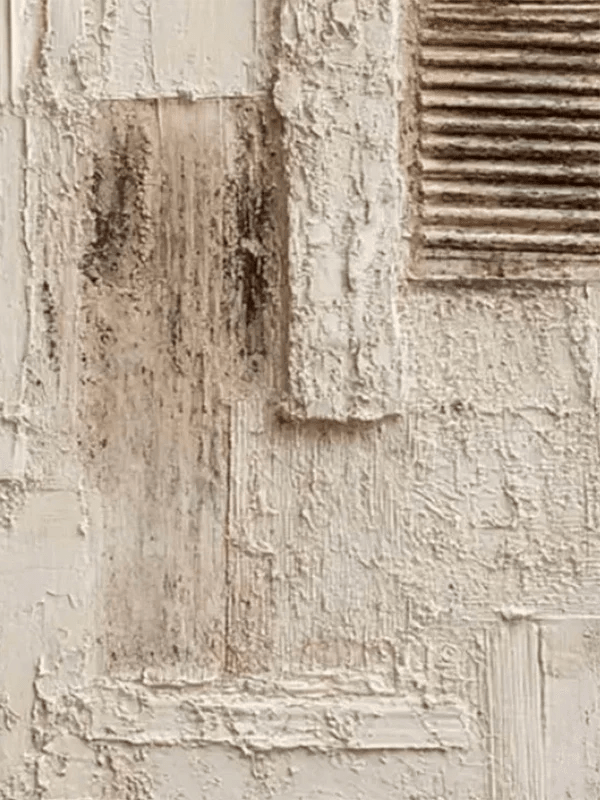
Large handmade work reveals decisions that are easy to miss in a small image: changes in pressure, raised edges, tonal variation, irregular marks, and the way surface relief responds to daylight. Those details keep a restrained composition from feeling flat when it occupies a large portion of the wall.

The selected WABI Wall Art pieces in this guide are presented as hand-painted, made-to-order artworks, and their product pages show multiple size and frame options. Because handmade texture and tonal transitions can vary slightly, review the current product description and approval process for the exact work you are considering. You can browse handmade minimalist paintings by orientation, palette, surface, and available dimensions rather than choosing by color alone.
Final Thoughts
Choose large minimalist wall art when the wall needs one clear focal gesture, the furniture is broad enough to support it, and the composition remains legible from the room's normal viewing distance. Start with usable wall width, sofa width, and final framed dimensions. Then test negative space, orientation, ceiling height, and visual weight together.
A successful choice should look intentional from across the room and remain interesting up close. For size-ready options in horizontal, vertical, square, and multi-panel formats, explore contemporary minimalist wall art and compare each product's current dimensions against your taped wall mock-up.
Frequently Asked Questions
What size is considered large minimalist wall art?
There is no universal cutoff. Artwork becomes large when it occupies a meaningful share of the usable wall and relates clearly to the furniture below it. A 48-inch piece may be large above a loveseat but modest above a 108-inch sectional. Judge wall width, furniture width, ceiling height, orientation, and viewing distance together.
How large should minimalist wall art be above a sofa?
A practical starting point is artwork that measures about two-thirds to three-quarters of the sofa width. That means roughly 56 to 63 inches over an 84-inch sofa, or 64 to 72 inches over a 96-inch sofa. Adjust for sofa arms, side tables, frames, wall boundaries, and the artwork's visual density.
Is oversized minimalist wall art suitable for a small living room?
Yes. One oversized, clearly composed artwork can make a compact room feel calmer than several scattered small pieces. Keep the surrounding wall simple, choose an orientation that fits the architecture, and confirm there is comfortable clearance around the frame. Also check doorway, elevator, hallway, and stair access before ordering a stretched or framed piece.
How much wall space should remain around large artwork?
Leave enough wall that the artwork does not appear pressed against corners, windows, door frames, sconces, furniture, or the ceiling. The margin is a visual judgment rather than a fixed number. Tape the finished outer dimensions on the wall; if the outline floats, increase scale, and if it feels wedged in, reduce size or change orientation.
Should large minimalist art be horizontal or vertical?
Choose orientation from the usable wall and the furniture relationship. Horizontal art generally suits sofas, beds, consoles, and long benches. Vertical art fits narrow walls, areas between openings, and taller ceilings. Square art creates a centered anchor, while panoramic art is best reserved for especially wide, uninterrupted walls and long furniture lines.
Is one oversized artwork better than a gallery wall?
One oversized artwork usually creates a calmer, more unified focal point and requires fewer alignment decisions. A gallery wall or multi-panel set can work in a minimalist room when the frames, spacing, palette, and combined outer dimensions are controlled. Treat every panel and gap as one composition rather than as separate decorations.
How high should large wall art hang above a sofa?
Hang it close enough that the artwork and sofa read as one group, while leaving practical clearance above the sofa back. A small several-inch gap is often a useful starting point, but sofa height, frame size, ceiling height, and artwork proportions change the result. Mock up the full framed outline and assess it while seated.
What colors work best for large minimalist wall art?
Choose colors that separate gently from the wall and relate to the room's materials. Cream, beige, plaster white, and soft gray feel light but benefit from texture or tonal variation. Charcoal and deep brown add visual weight. Clay, taupe, sage, and muted blue introduce warmth or contrast while preserving a restrained atmosphere.
How does viewing distance affect artwork size?
Longer viewing distance reduces the impact of fine brushwork and subtle texture, so overall scale, silhouette, and value structure become more important. Close viewing can support quieter detail and a more controlled size. Always test the taped outline from the sofa and the farthest normal viewpoint, not only while standing beside the wall.
Where can I buy handmade large minimalist wall art?
WABI Wall Art offers a Contemporary Minimalist Art Collection with hand-painted horizontal, vertical, square, and multi-panel works in multiple sizes. Review each product page for current dimensions, canvas or frame options, close-up texture images, and ordering details before choosing the format that fits your measured wall.
Does a floating frame change the final artwork size?
It can. Some product measurements describe the canvas, while the floating frame adds to the finished outer width and height. The exact addition depends on the frame profile and gap. Confirm the final framed dimensions with the product information, then use that outer measurement for wall clearance, sofa proportion, and panel-spacing calculations.
How can I preview artwork size before ordering?
Mark the finished outer dimensions with removable painter's tape or paper. Photograph the outline straight on, view it from the sofa and room entrance, and leave it in place through daylight and evening conditions. For a diptych or triptych, mark every panel and gap. This simple test exposes undersizing and awkward placement before purchase.