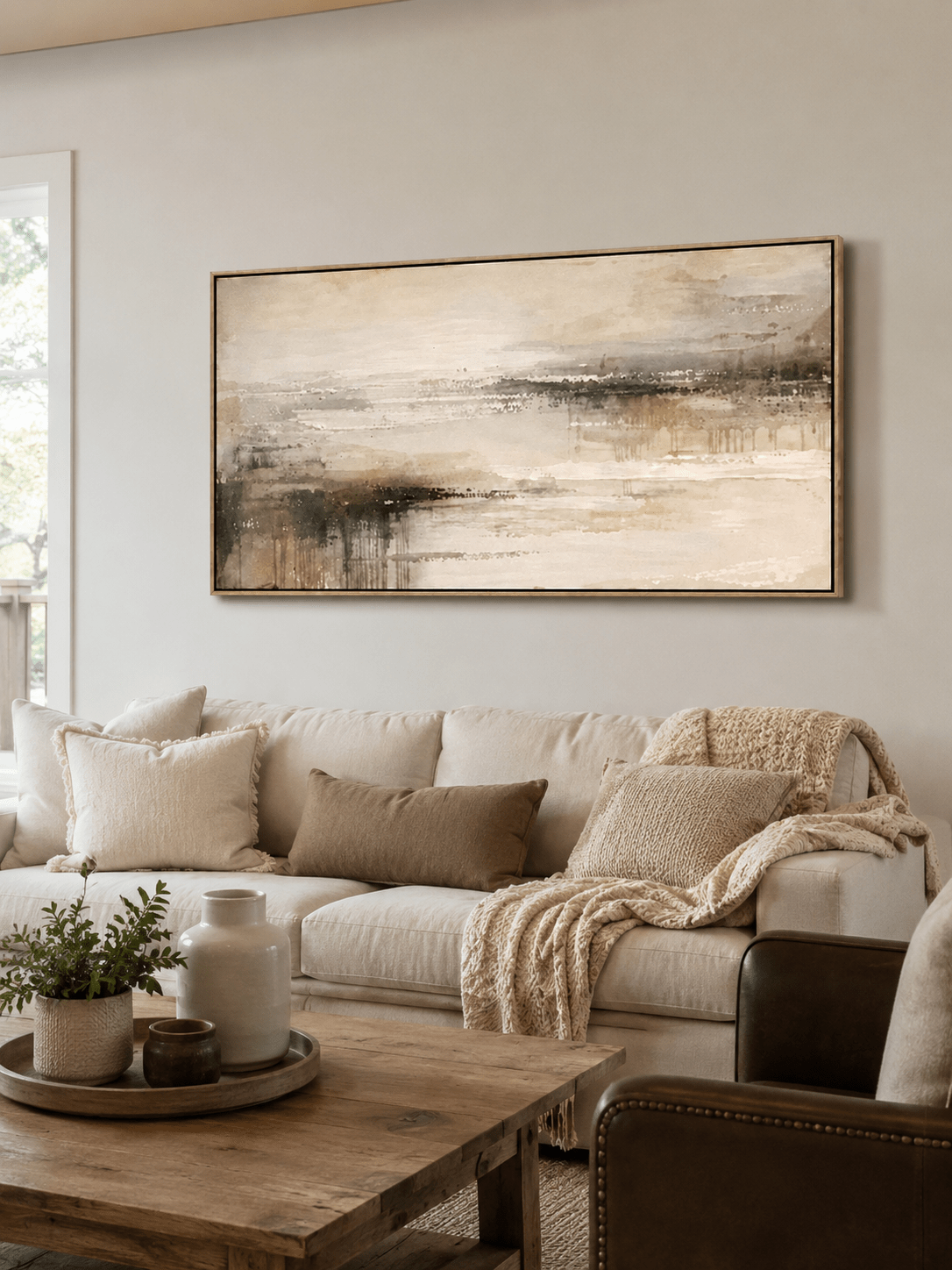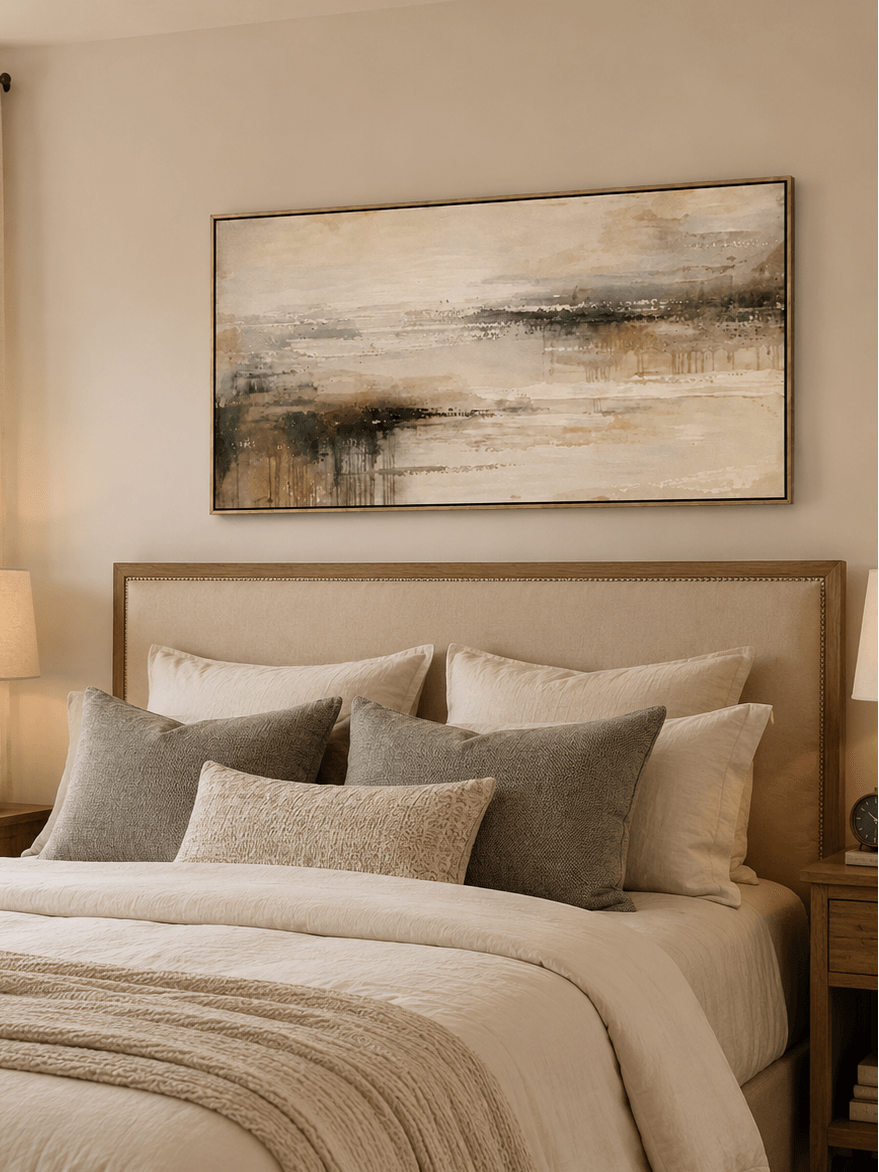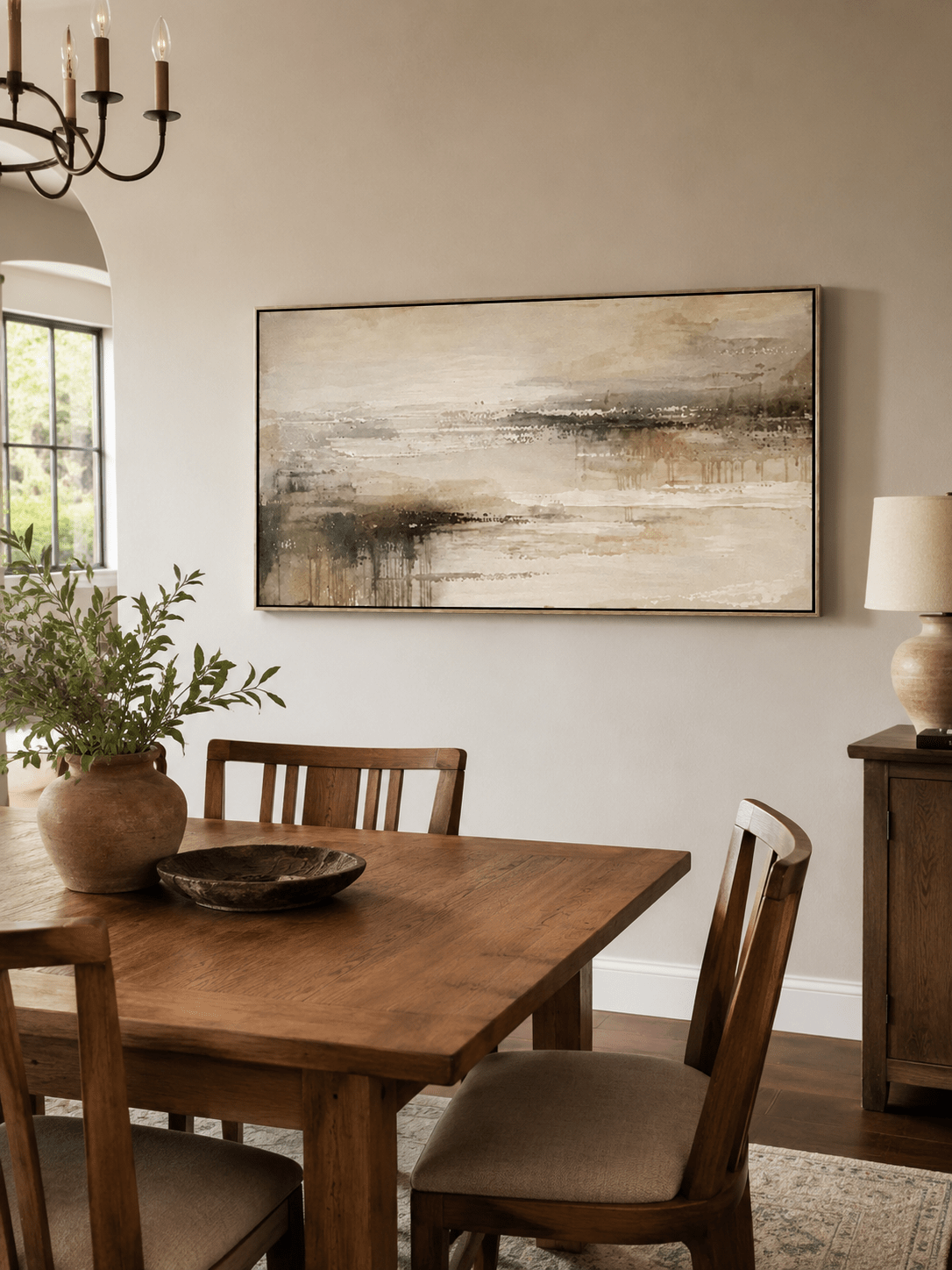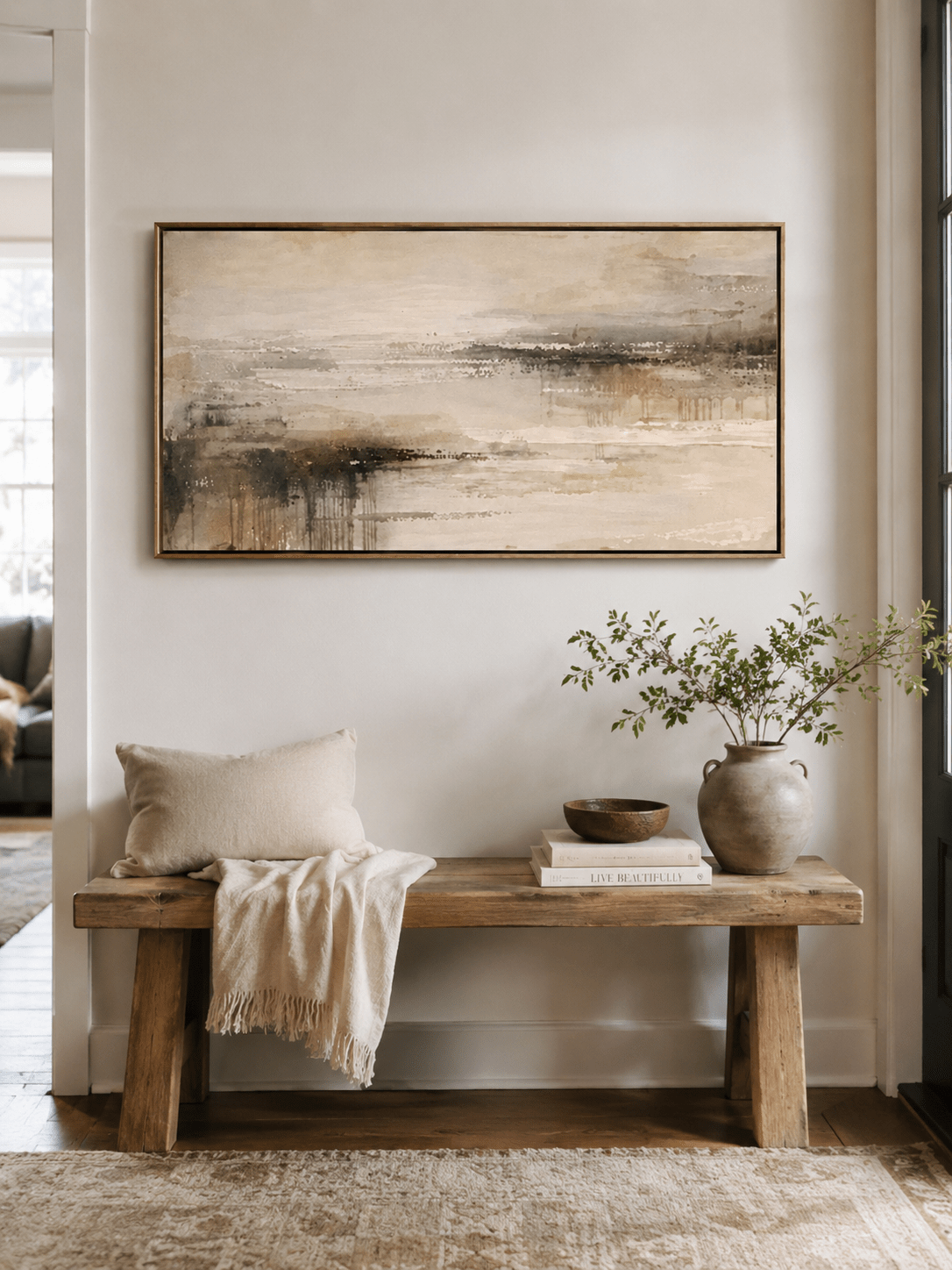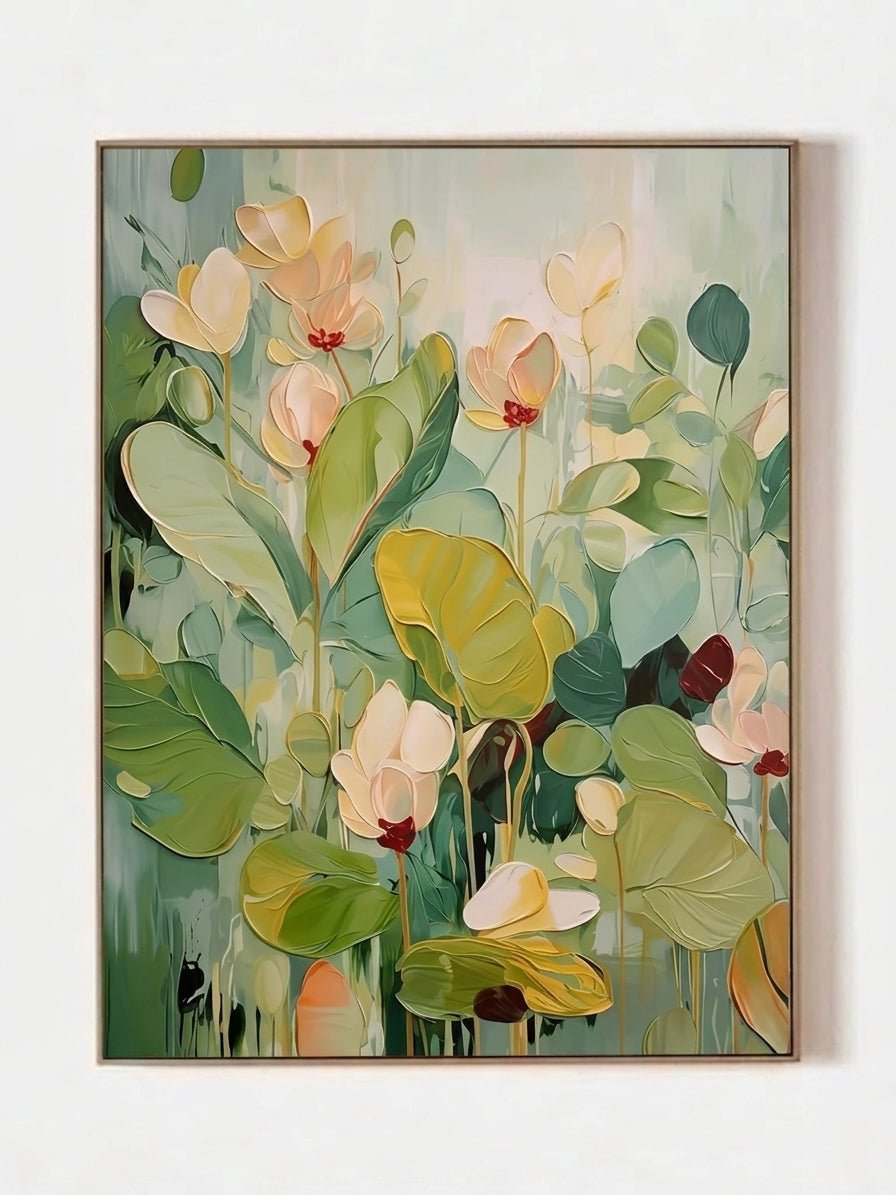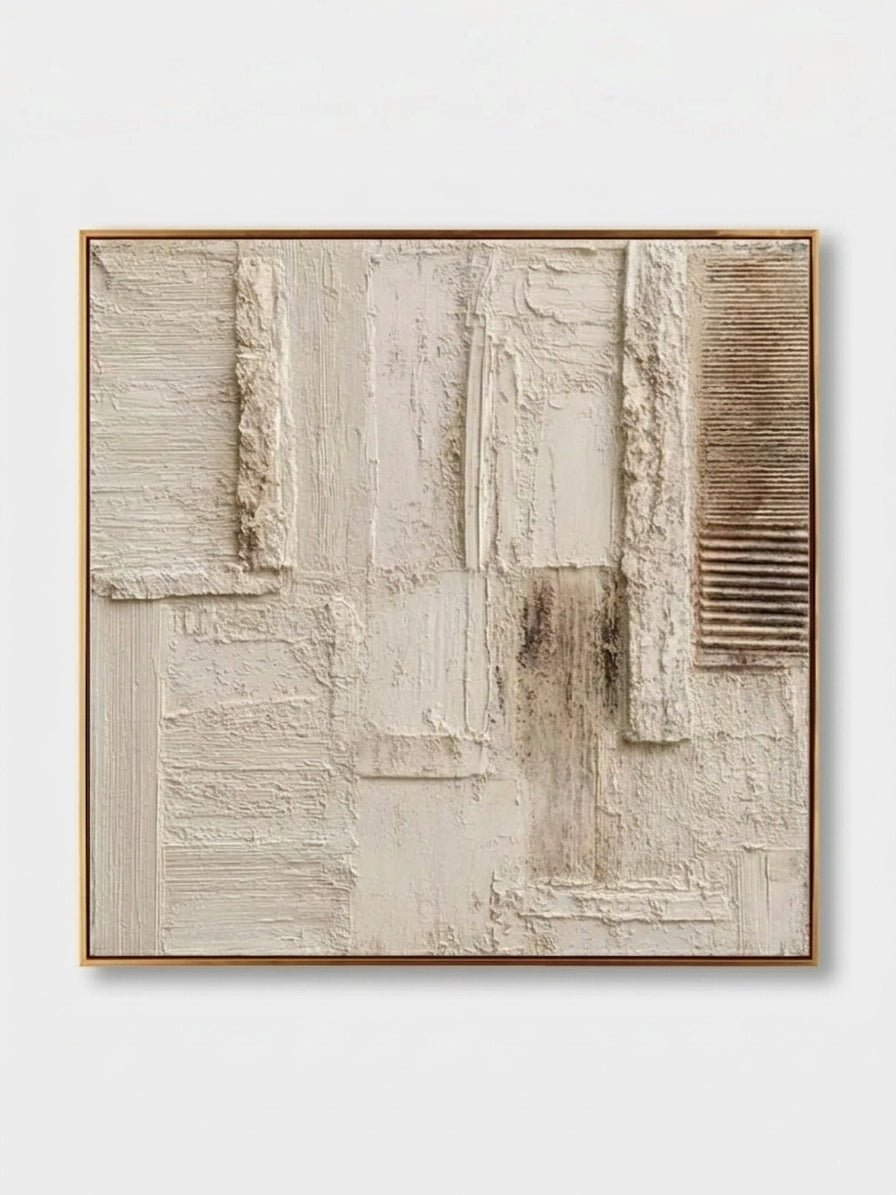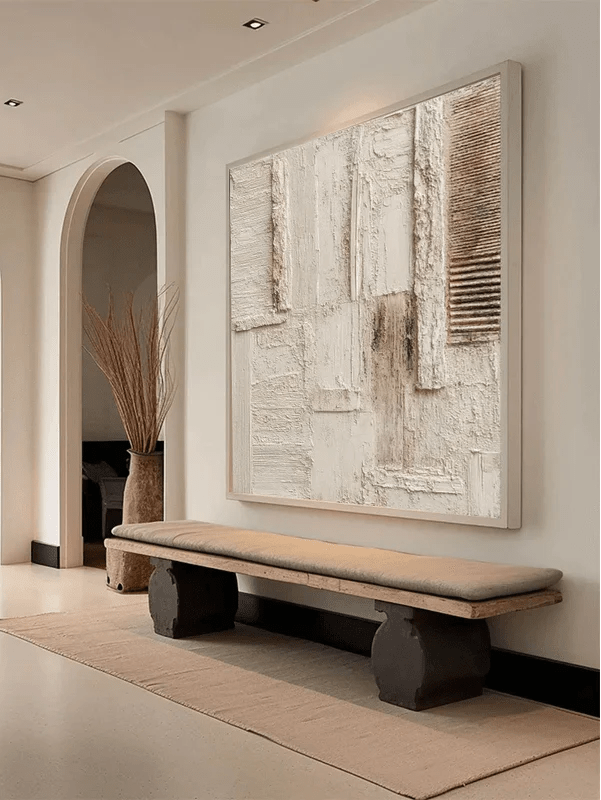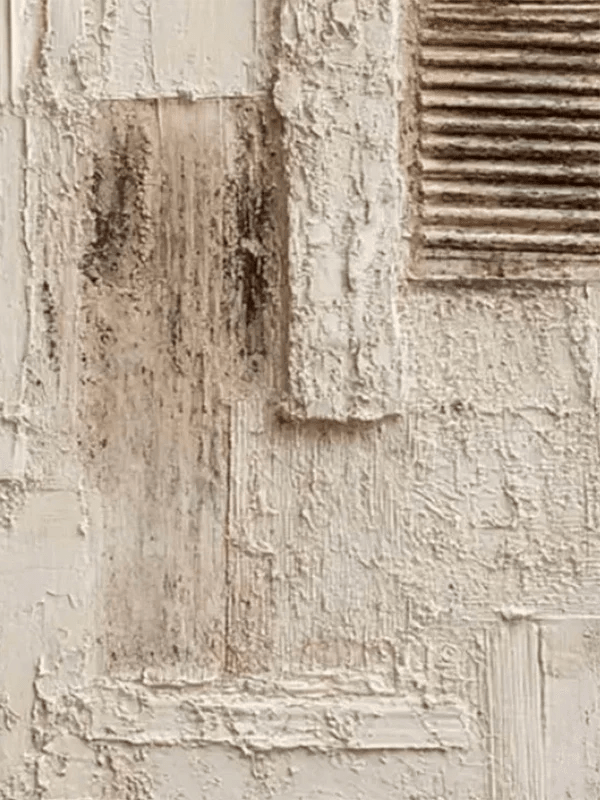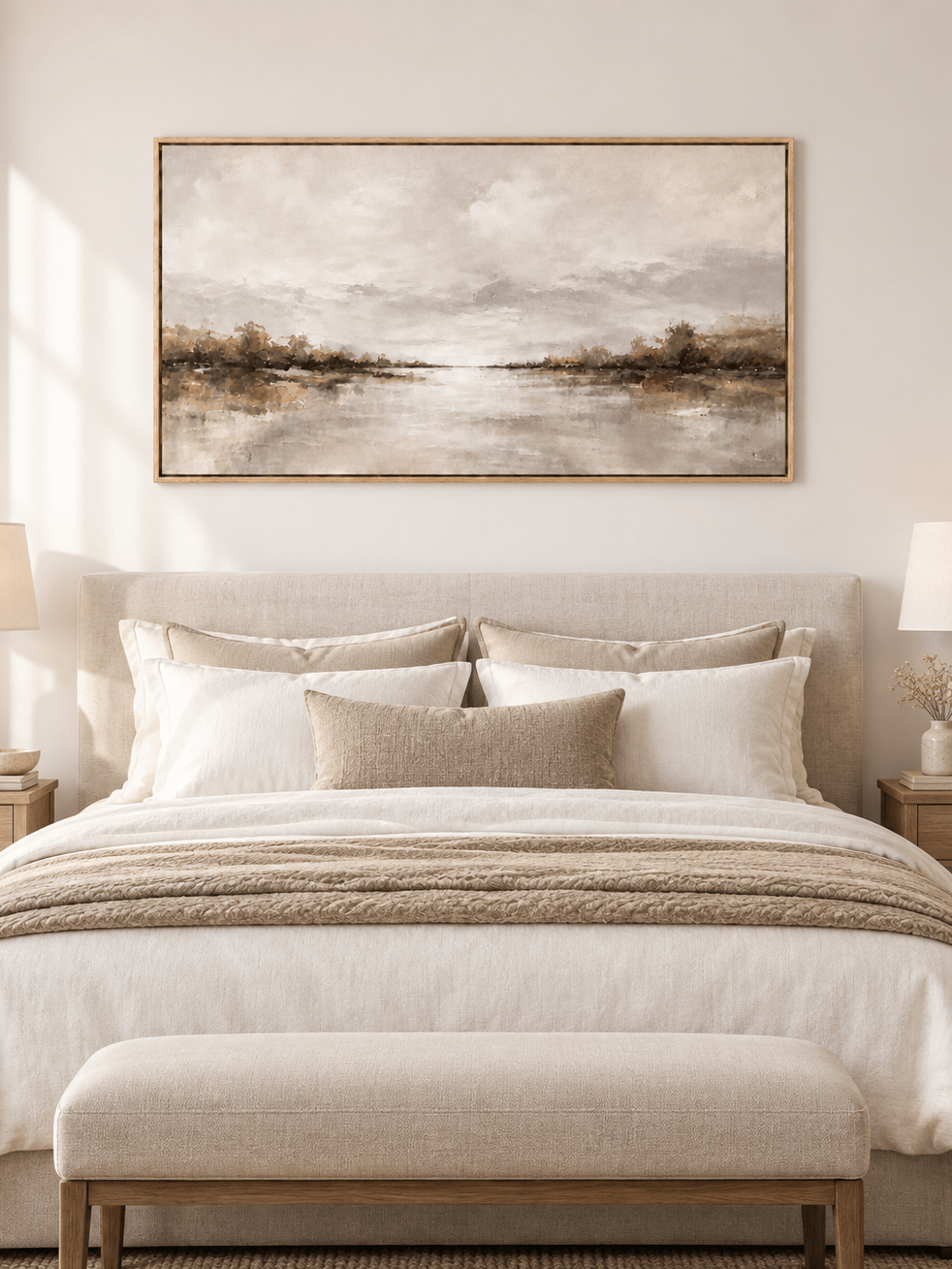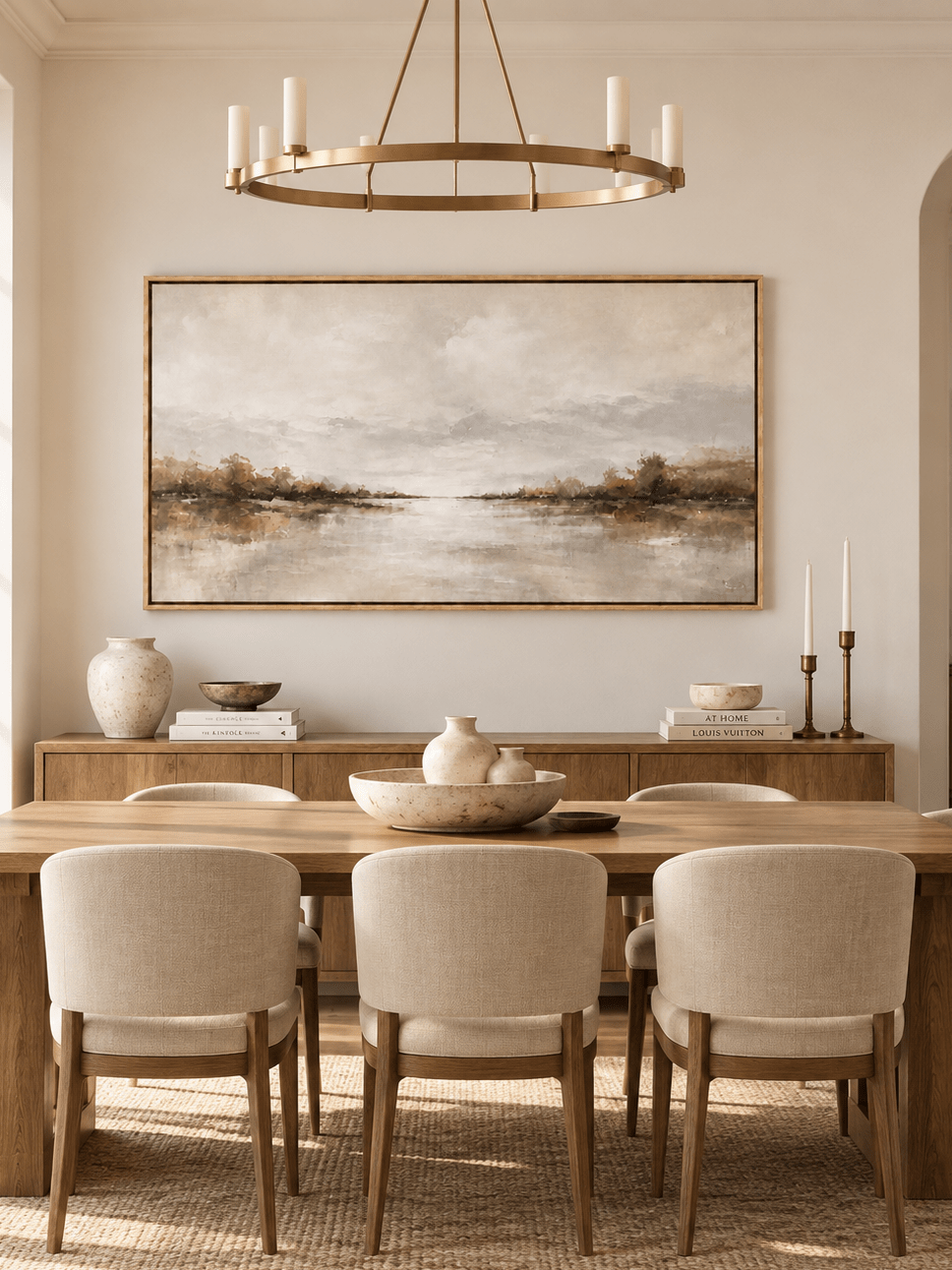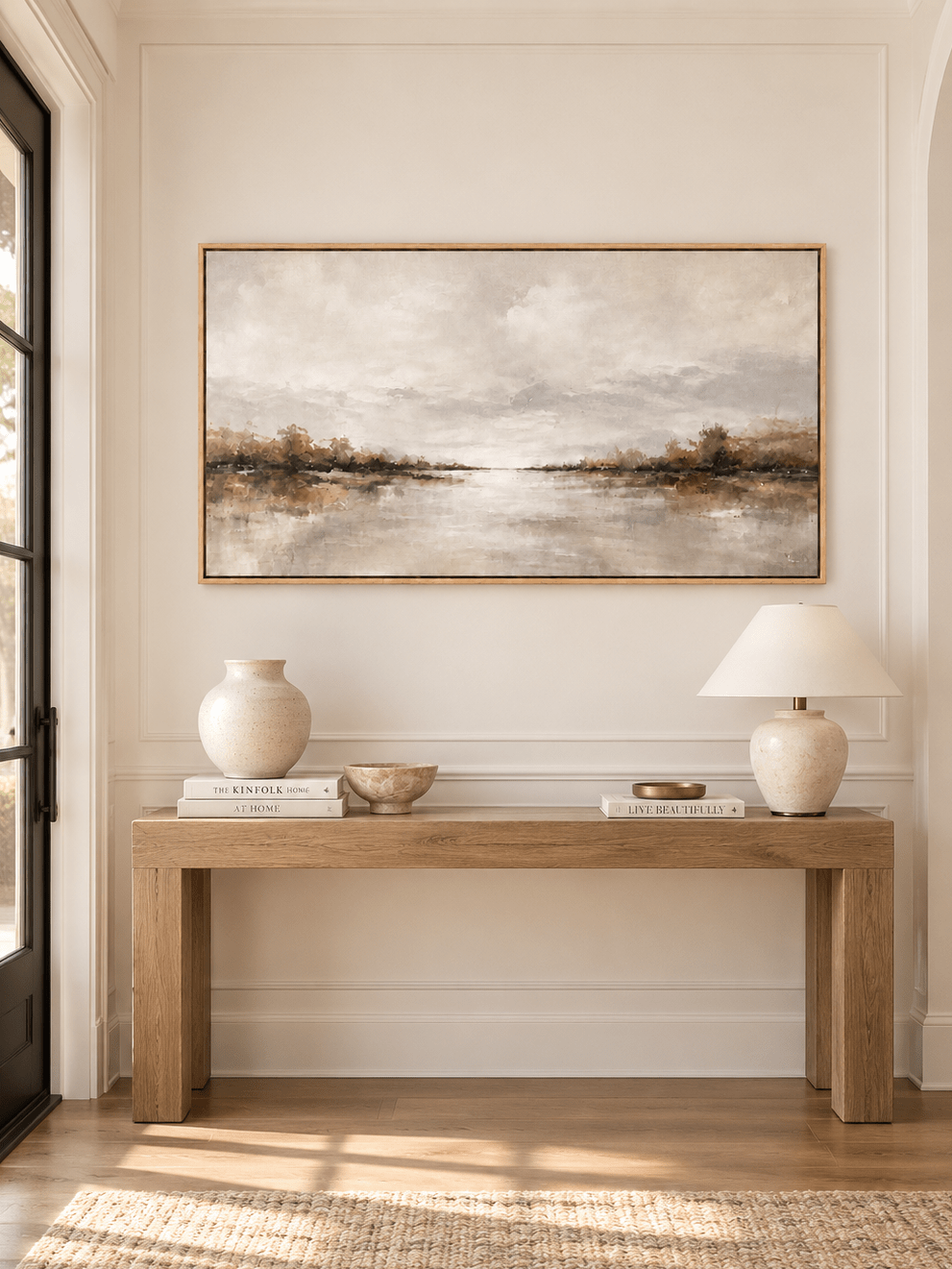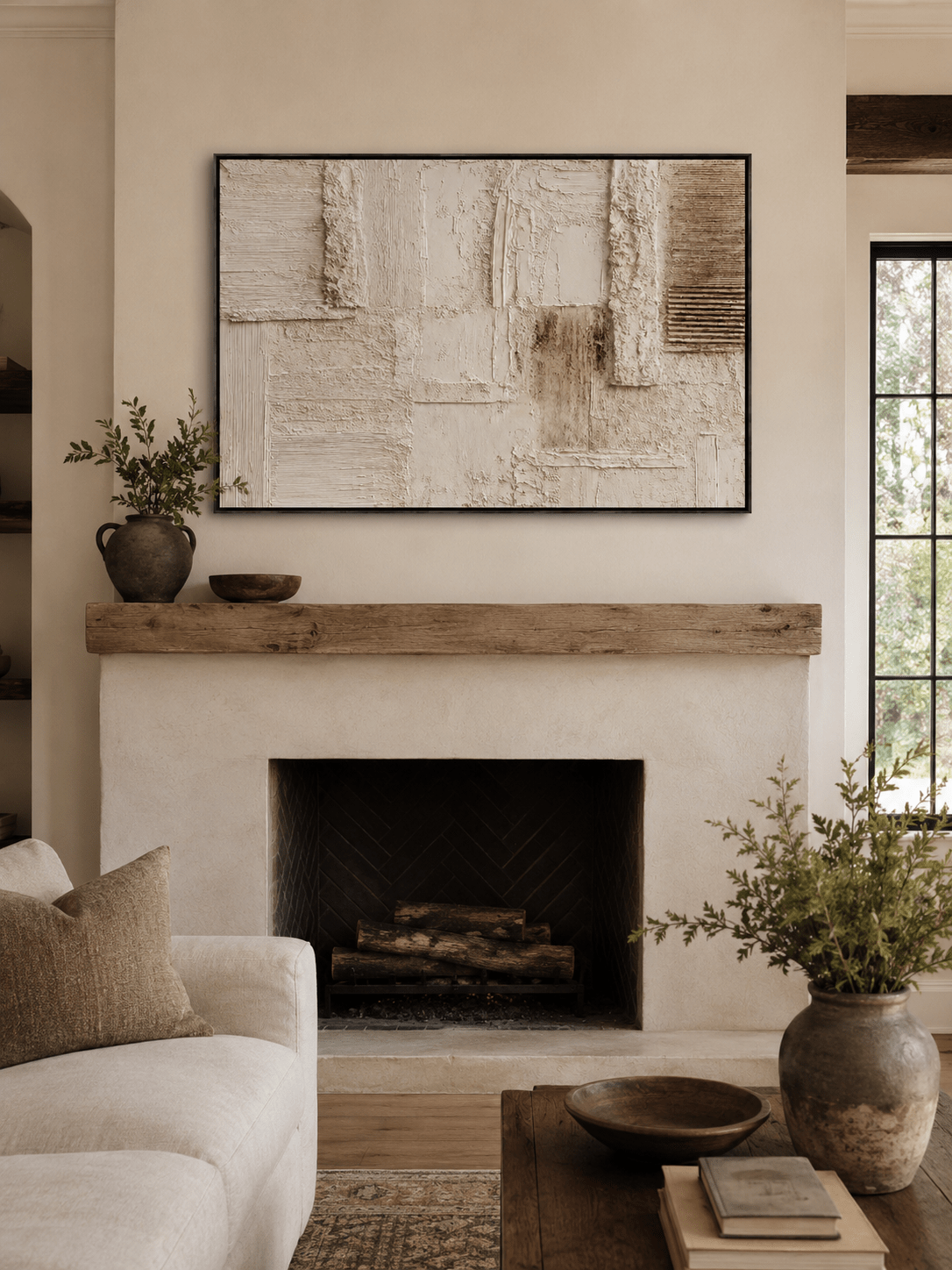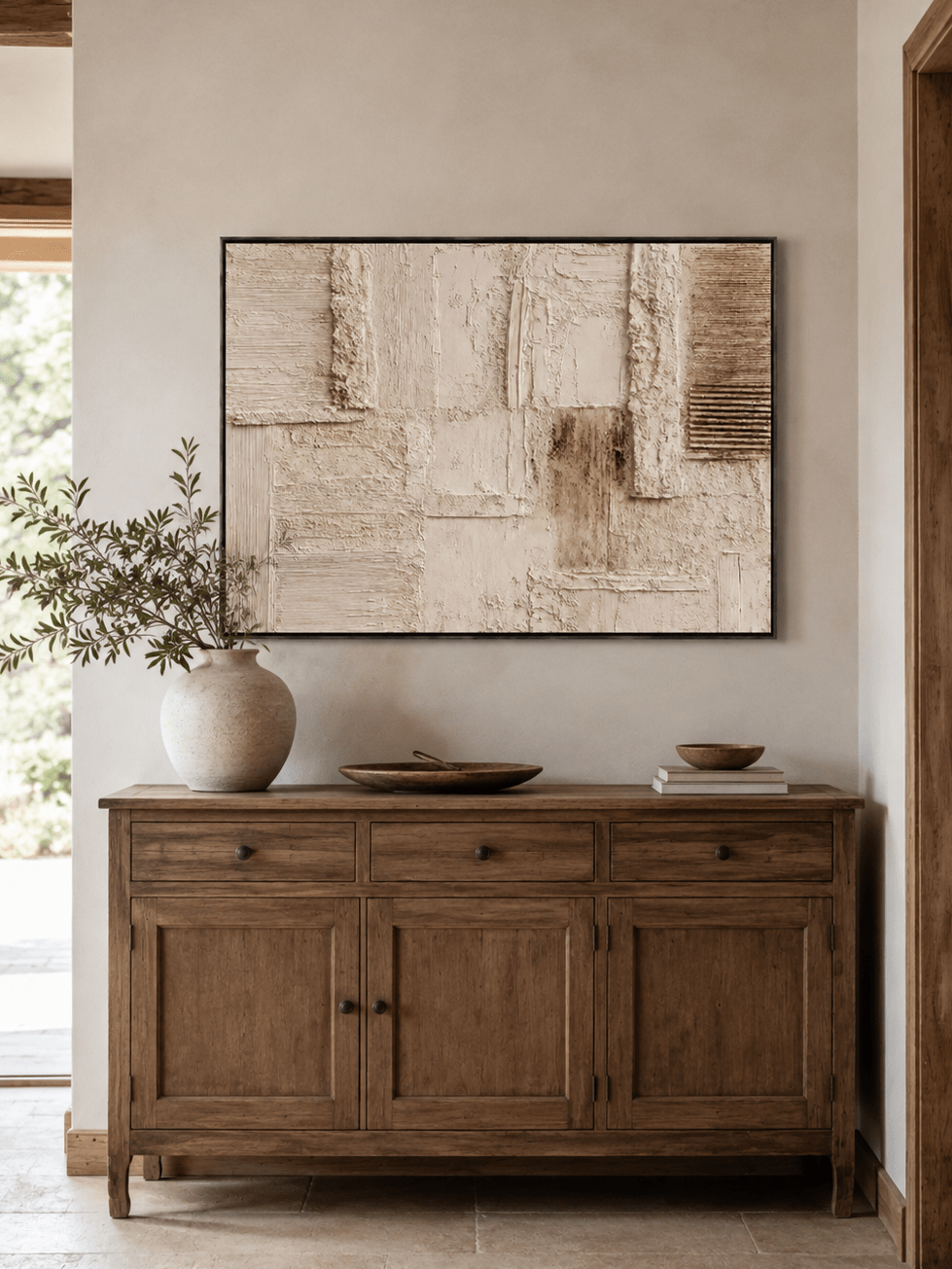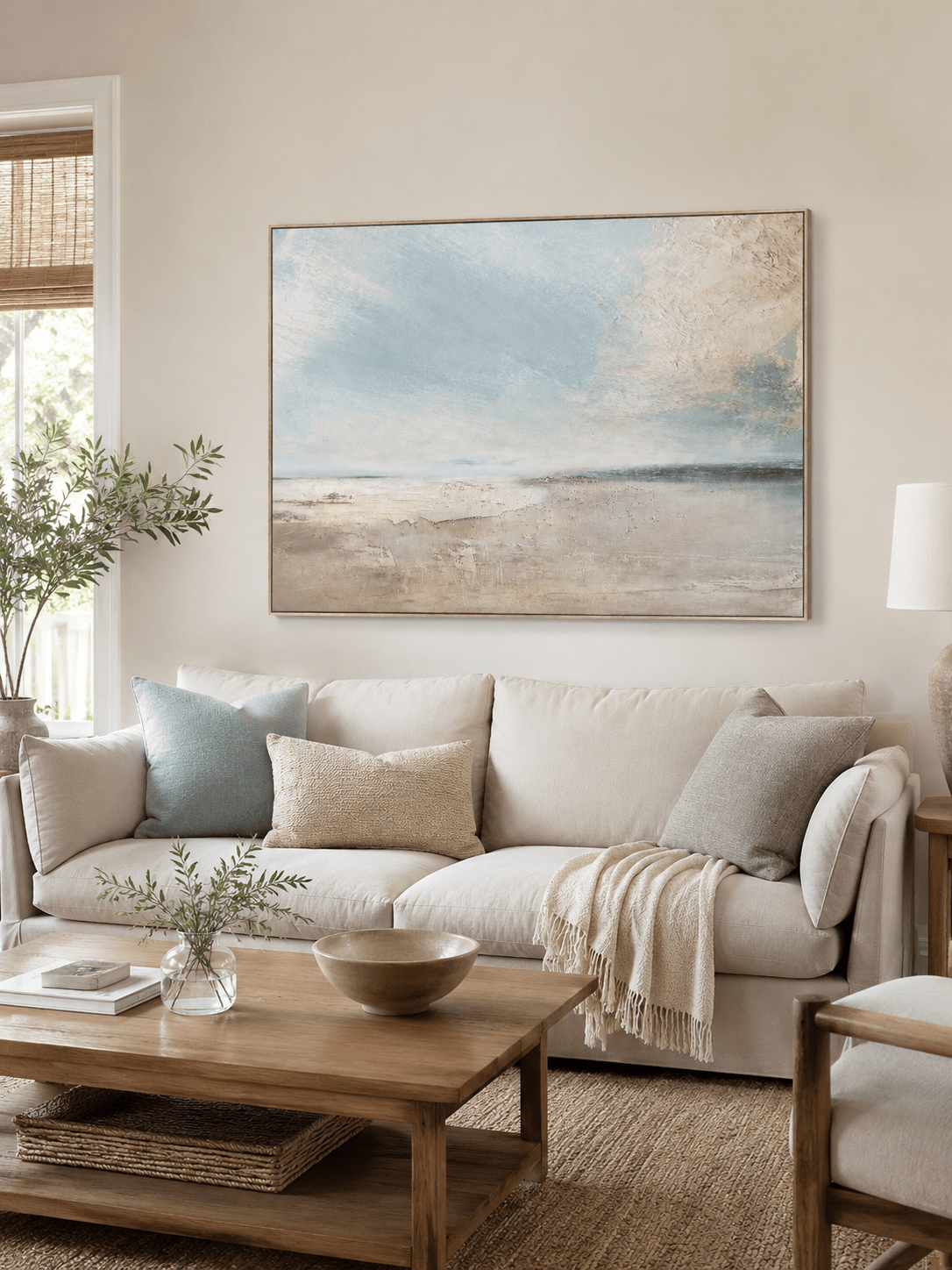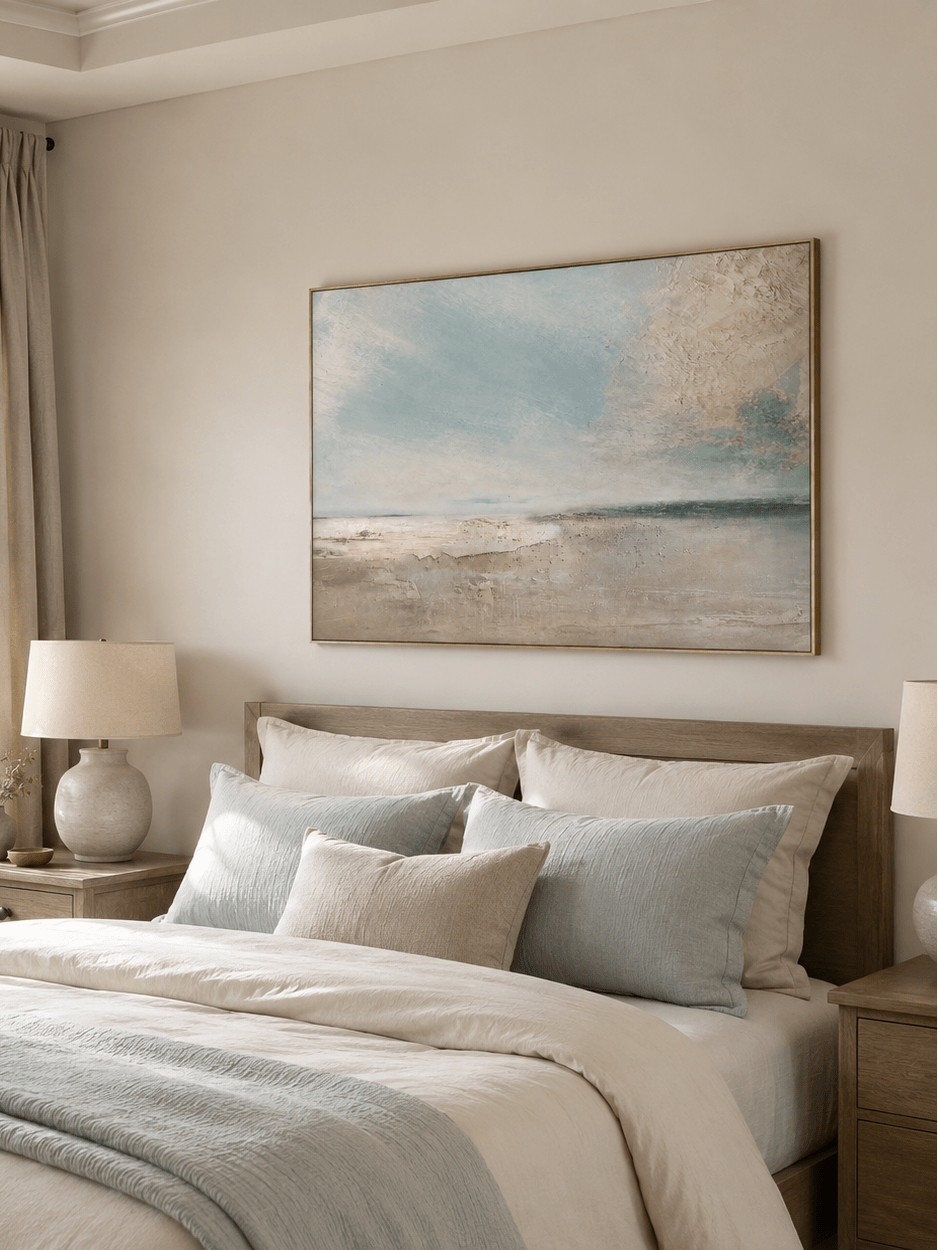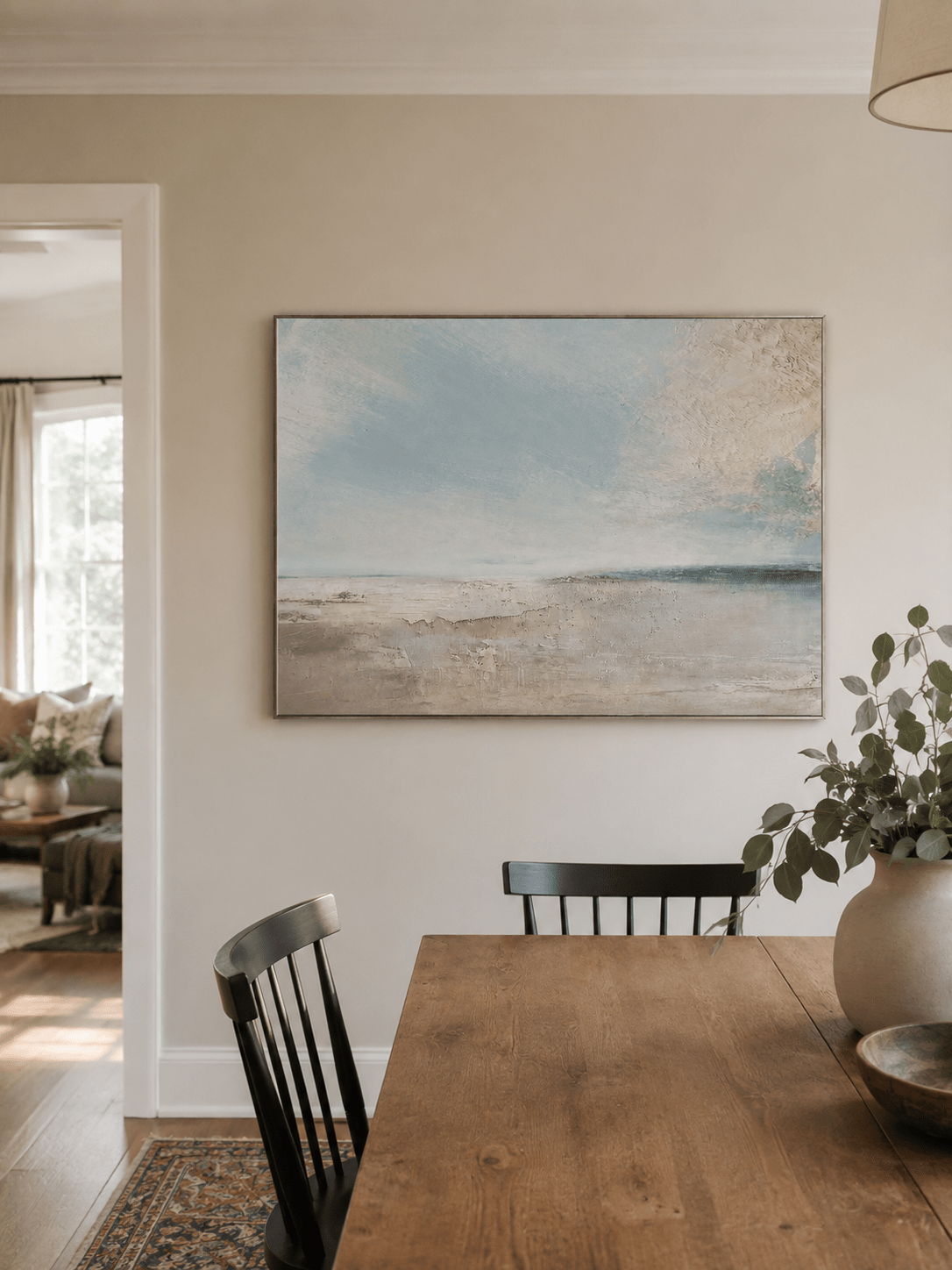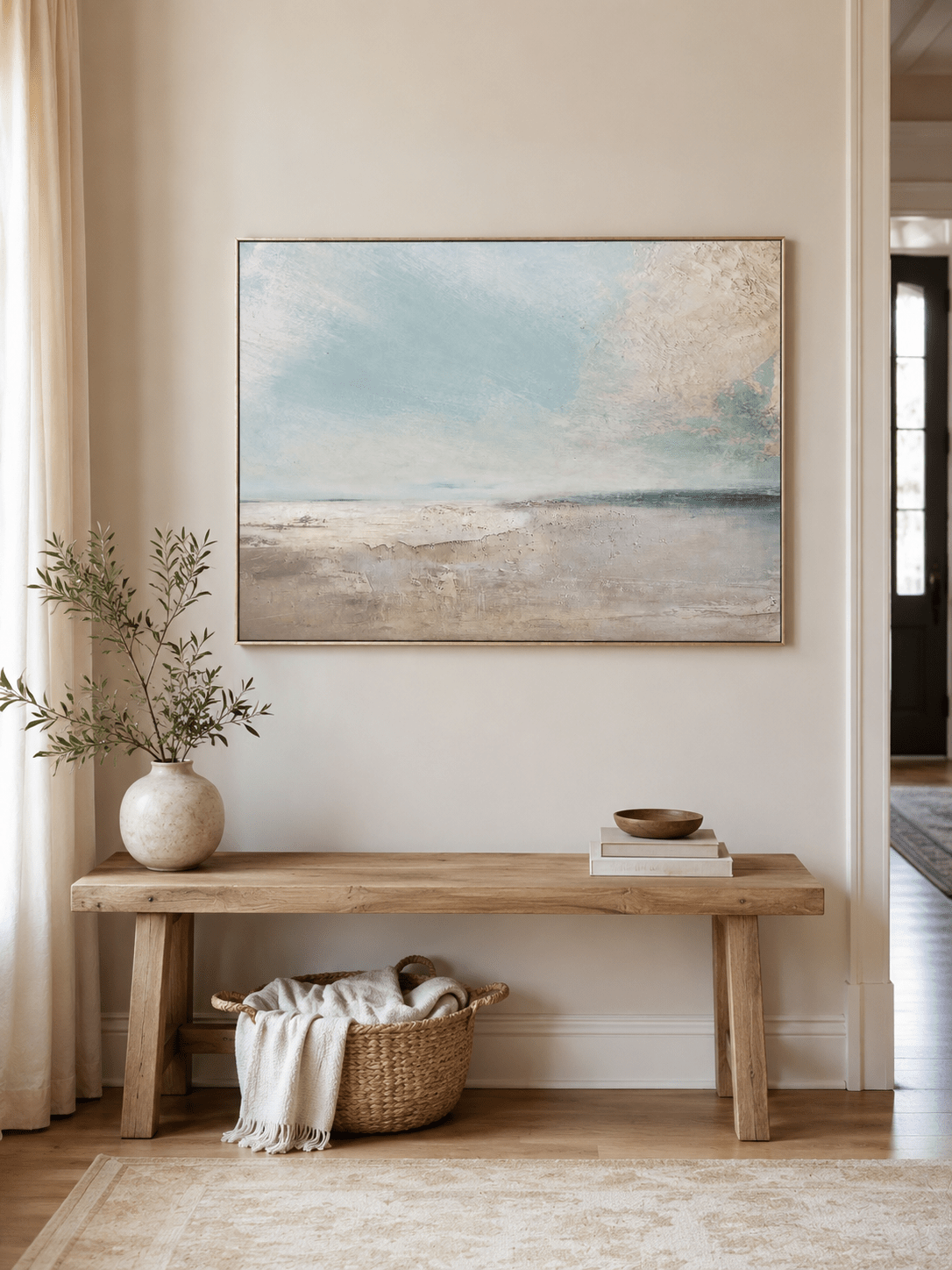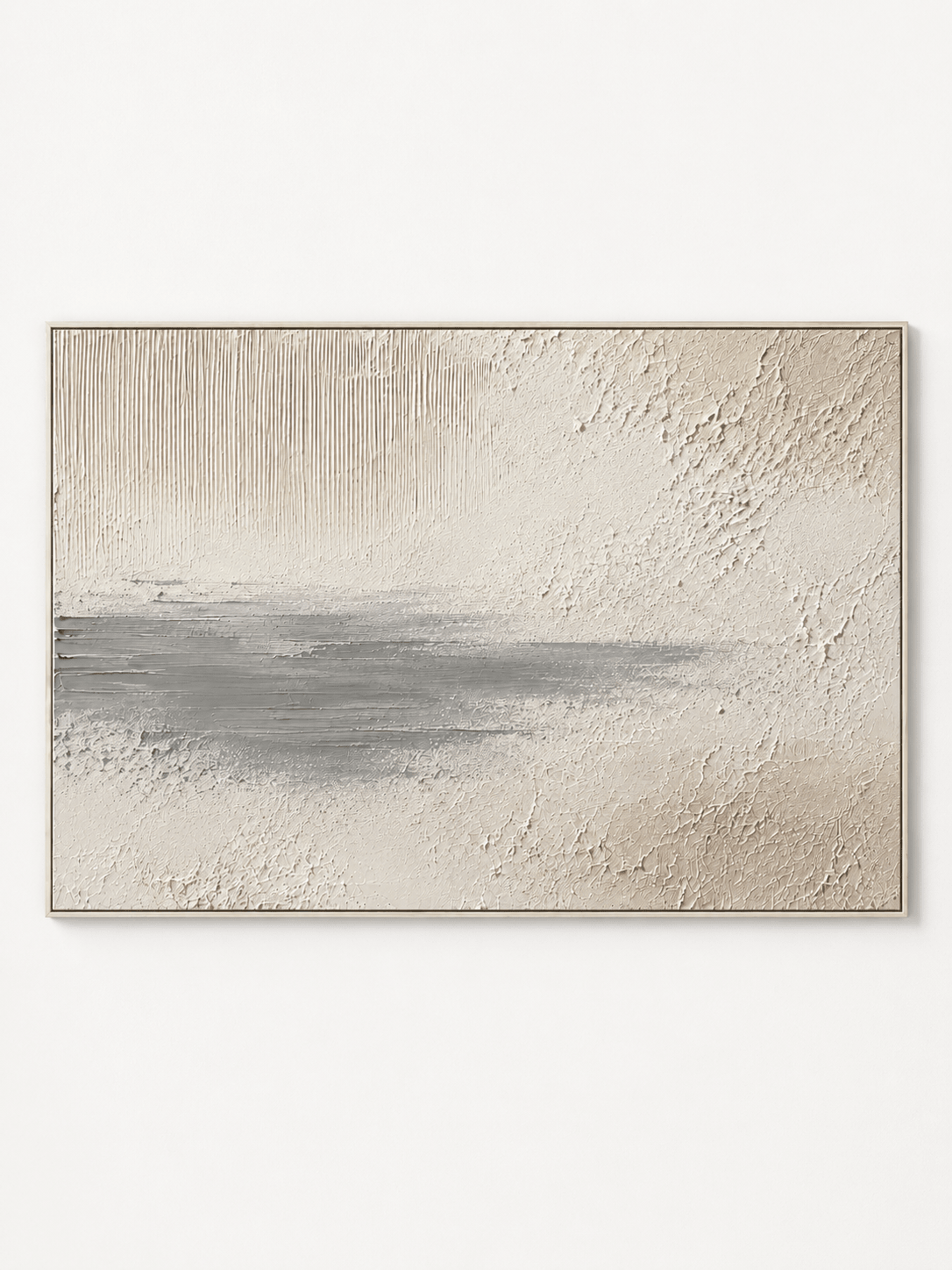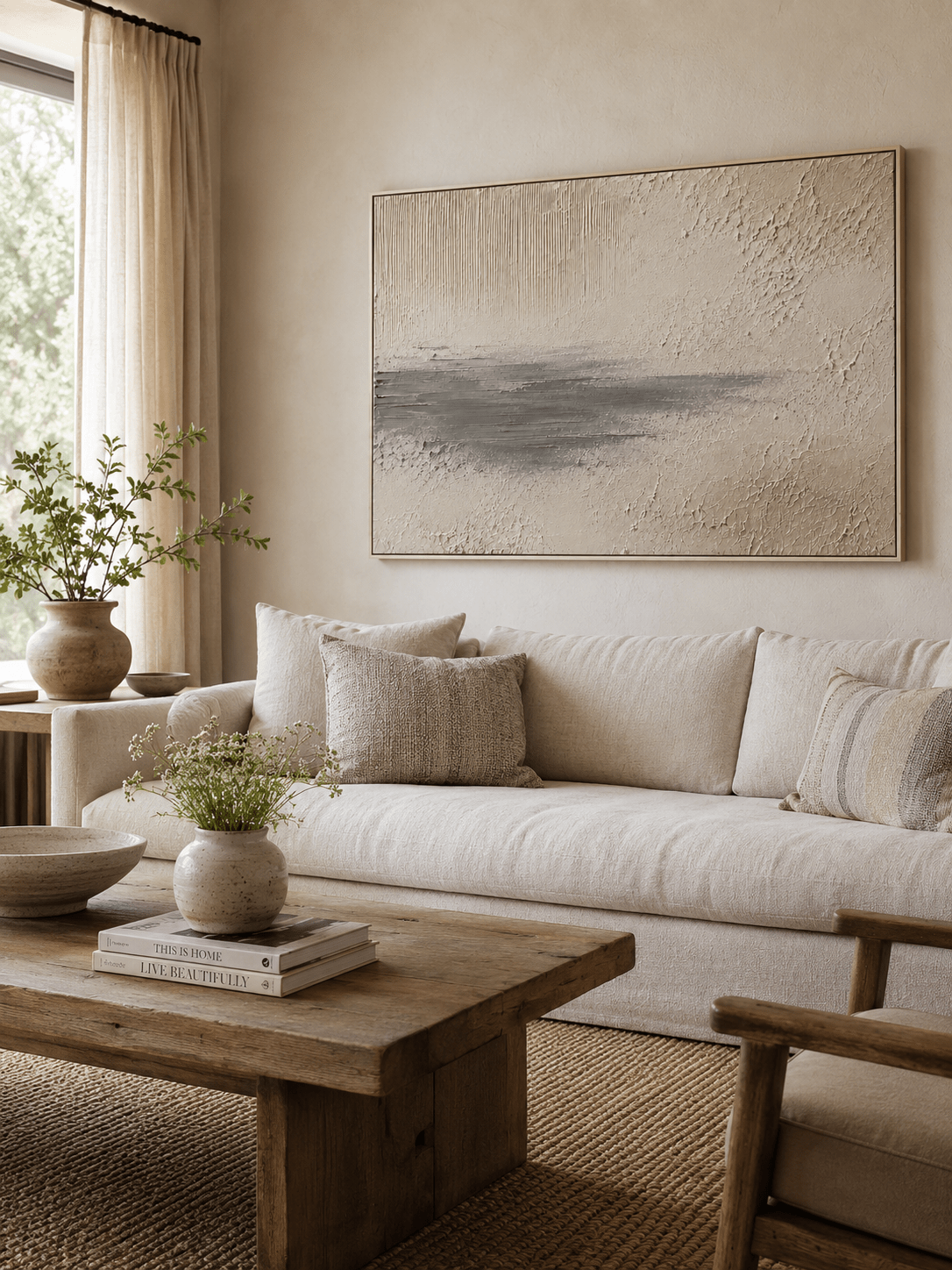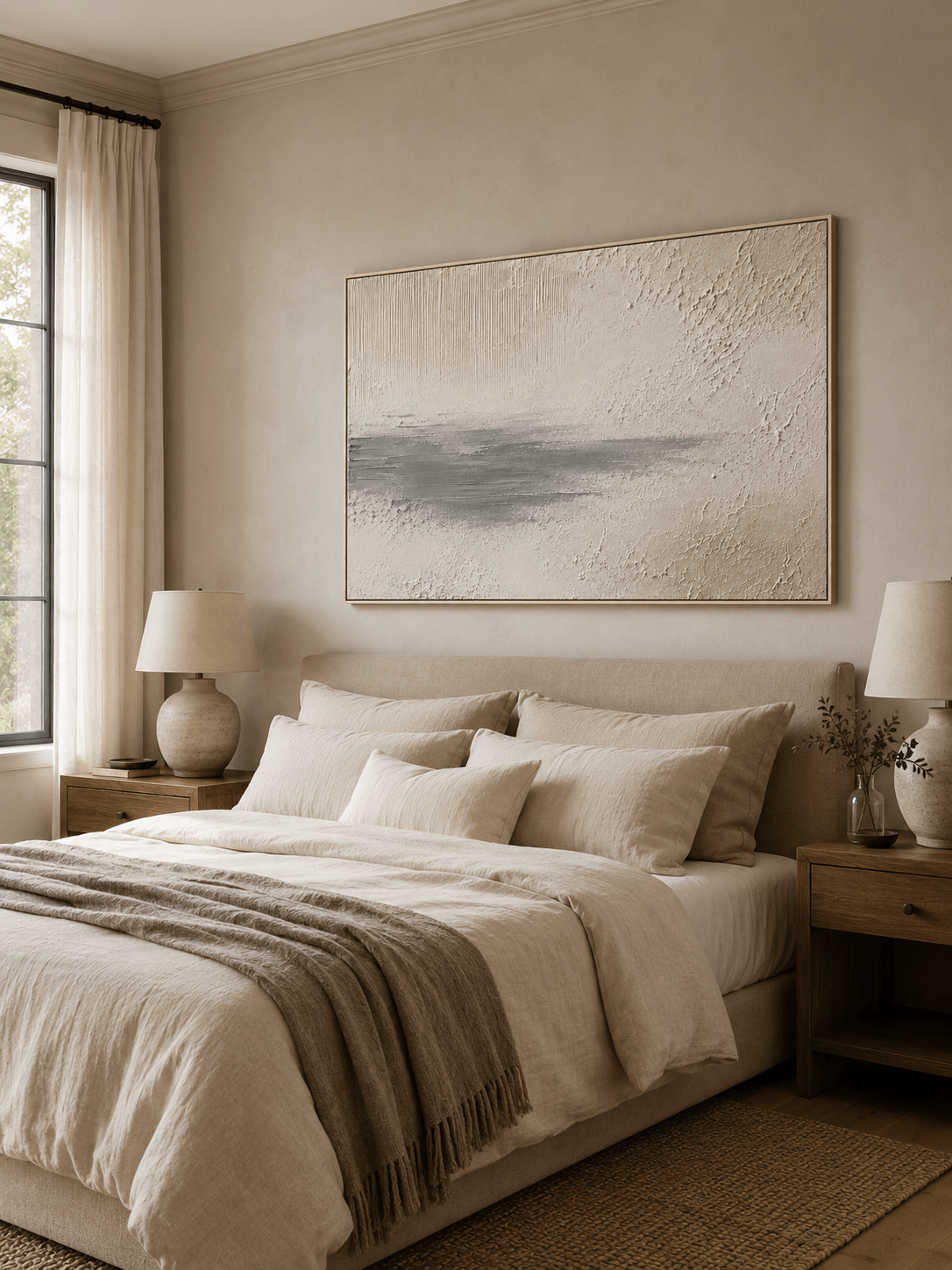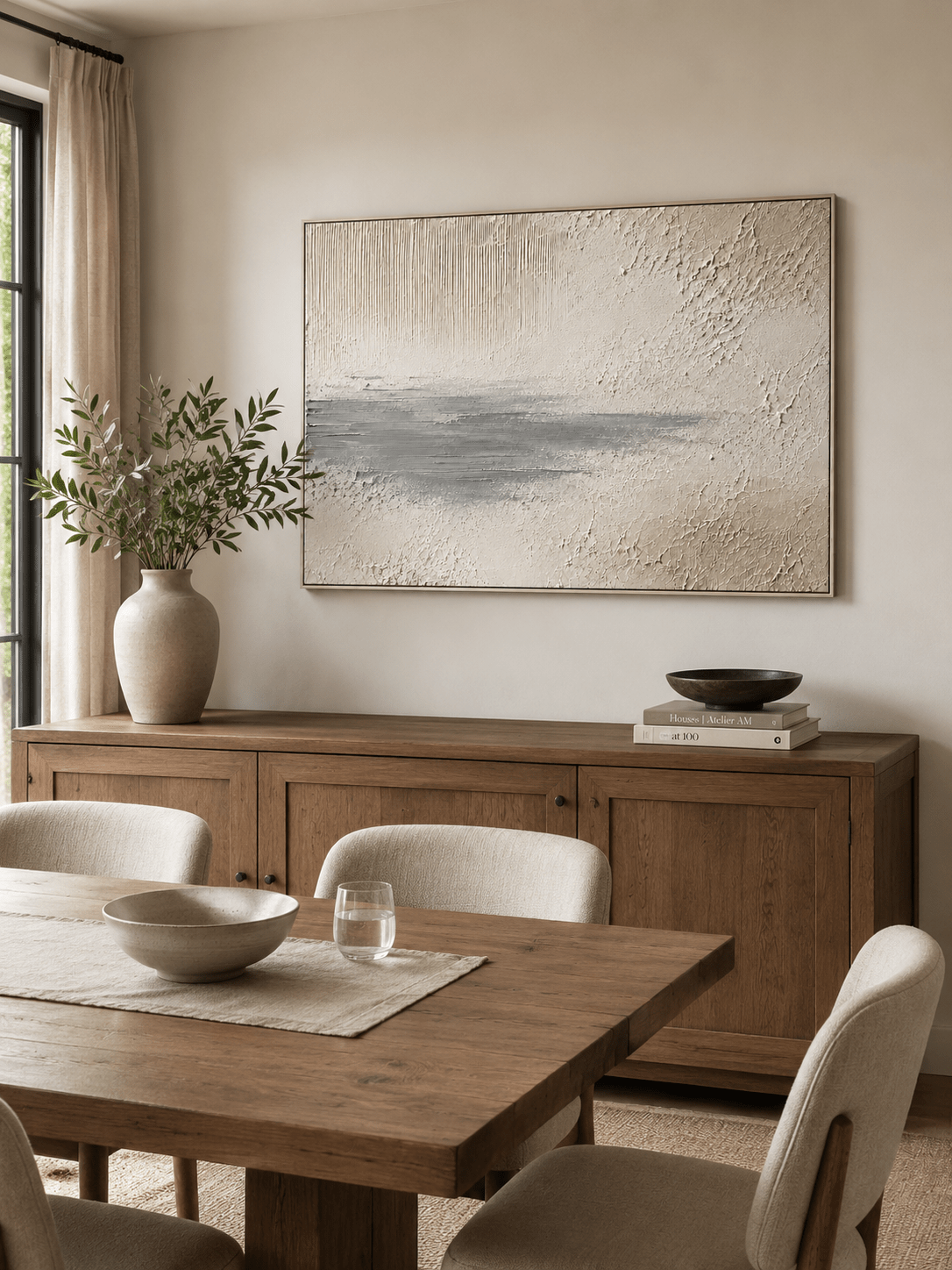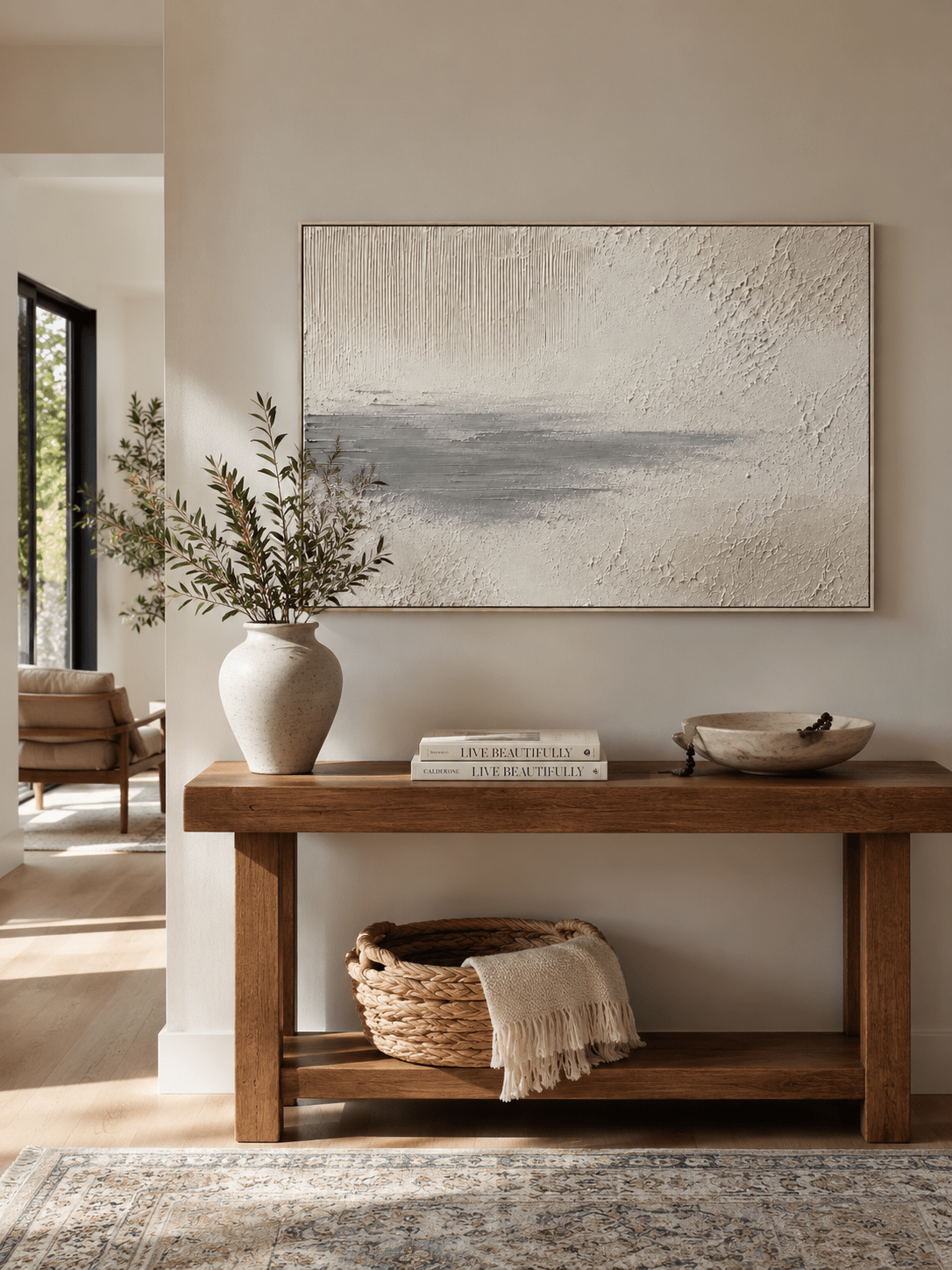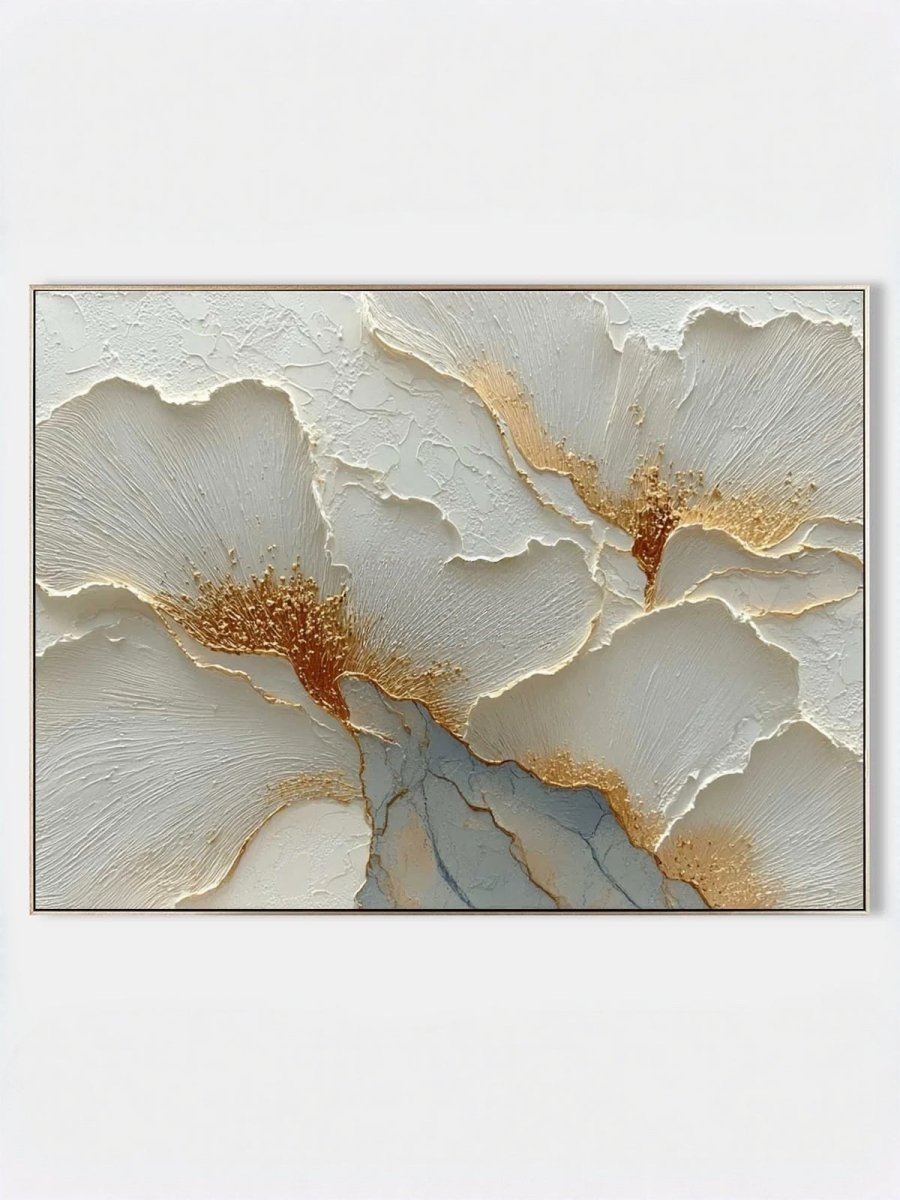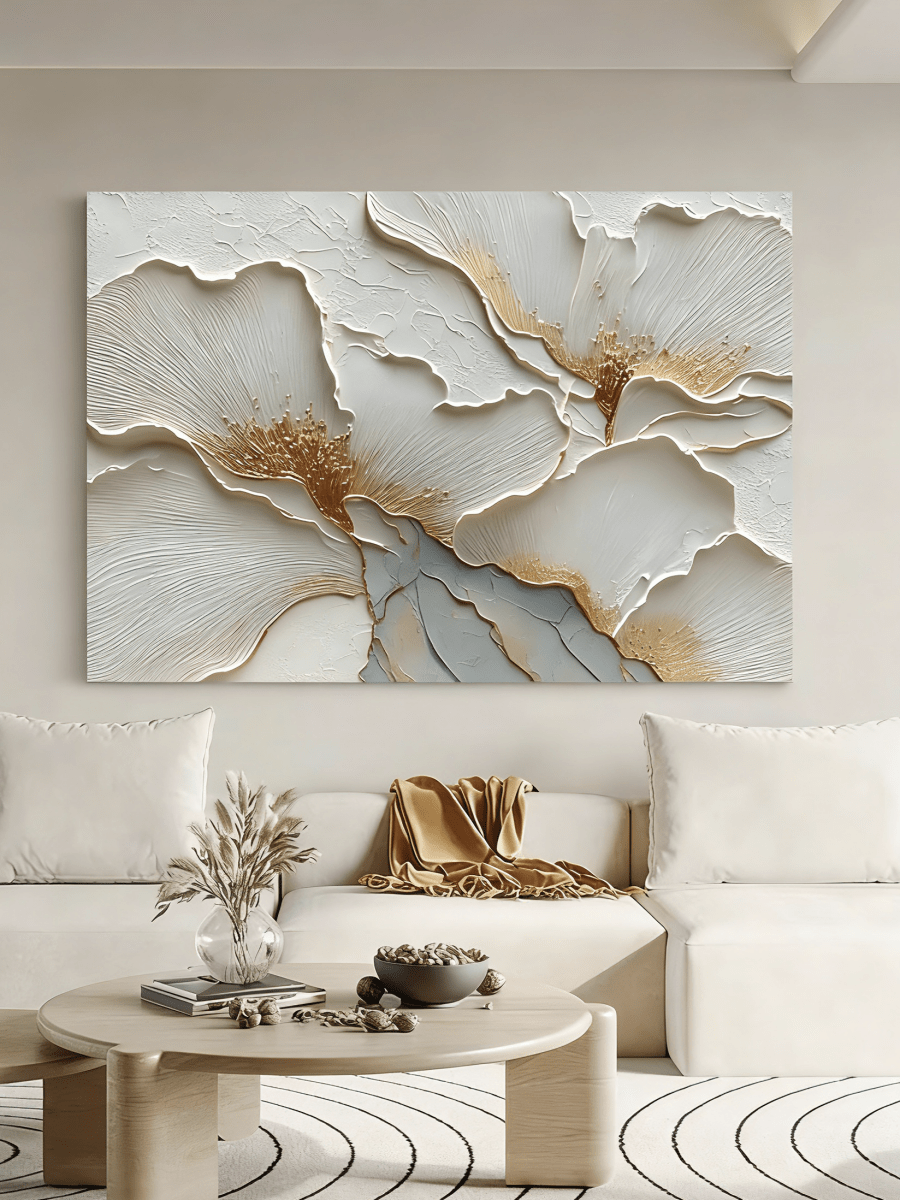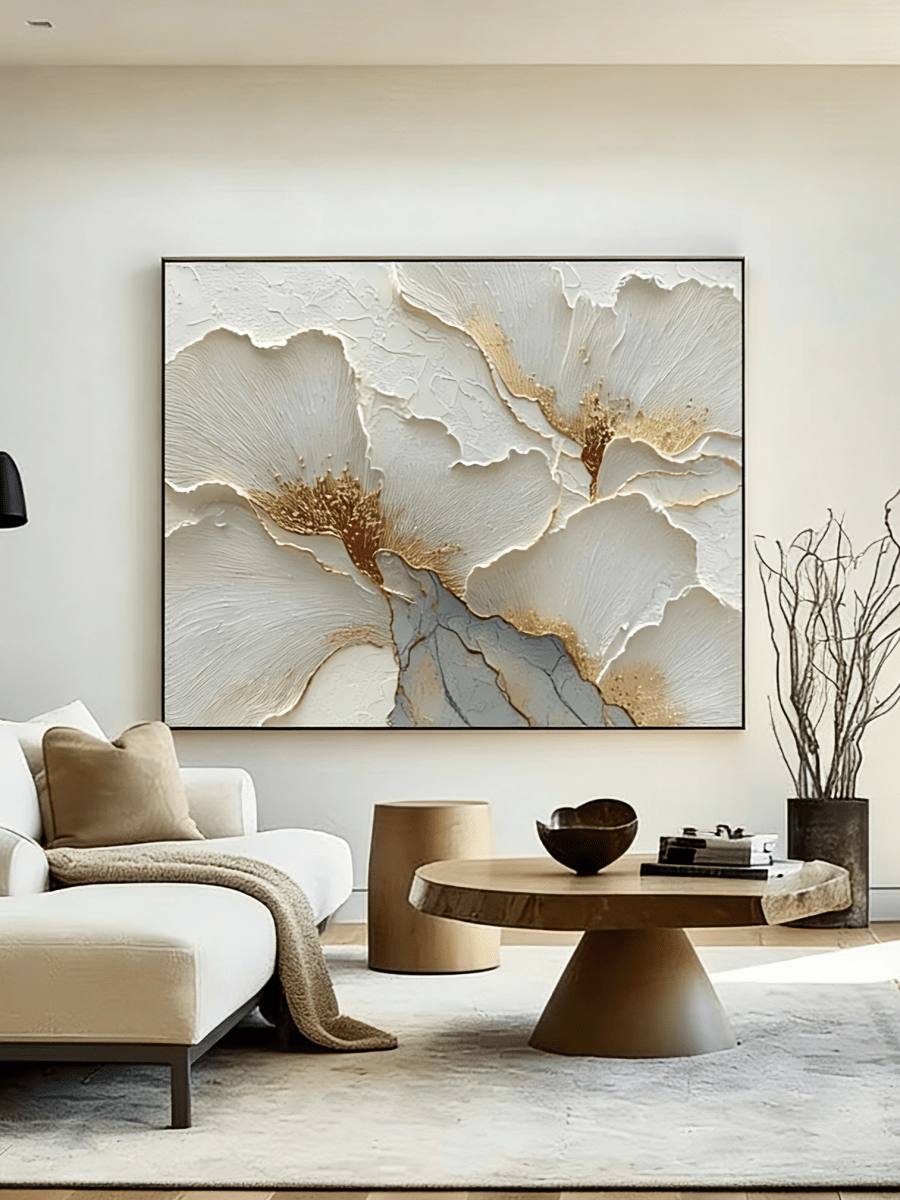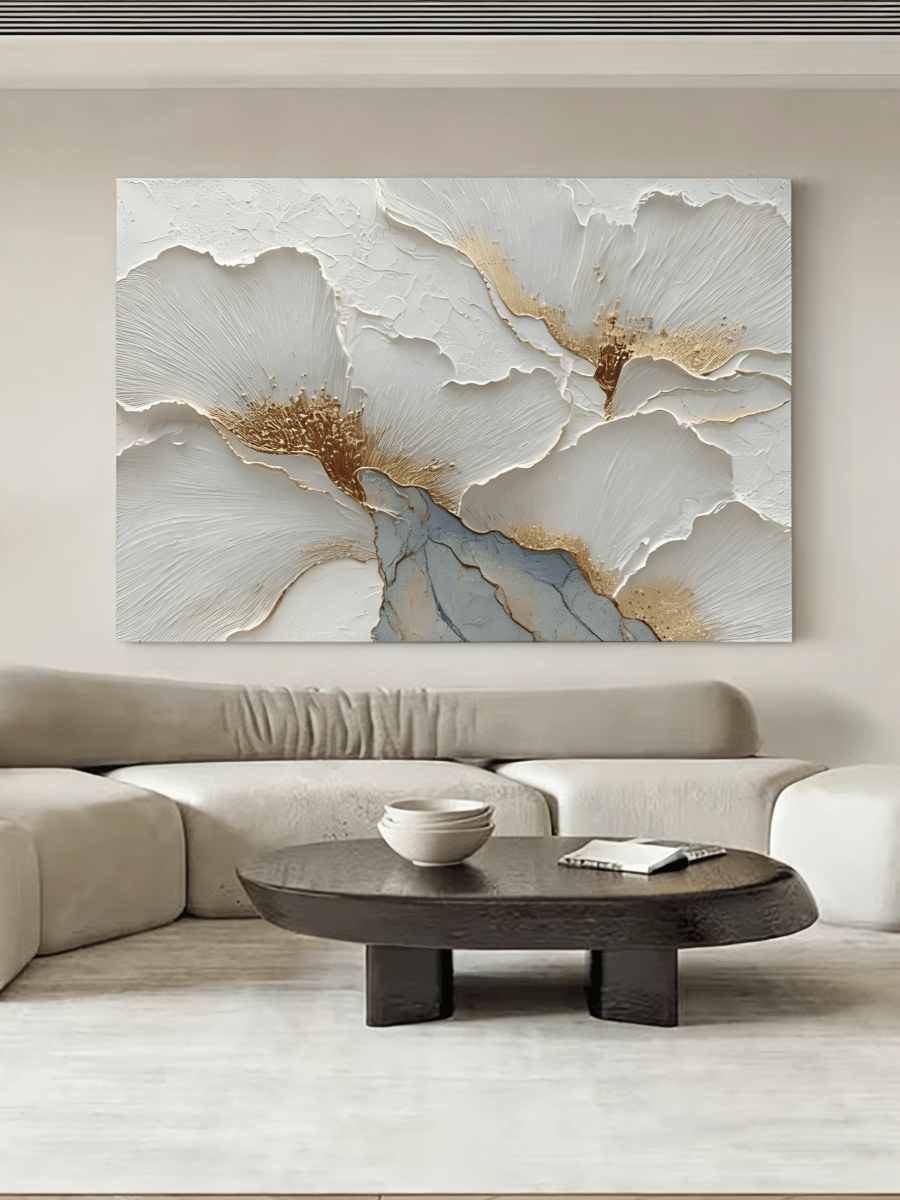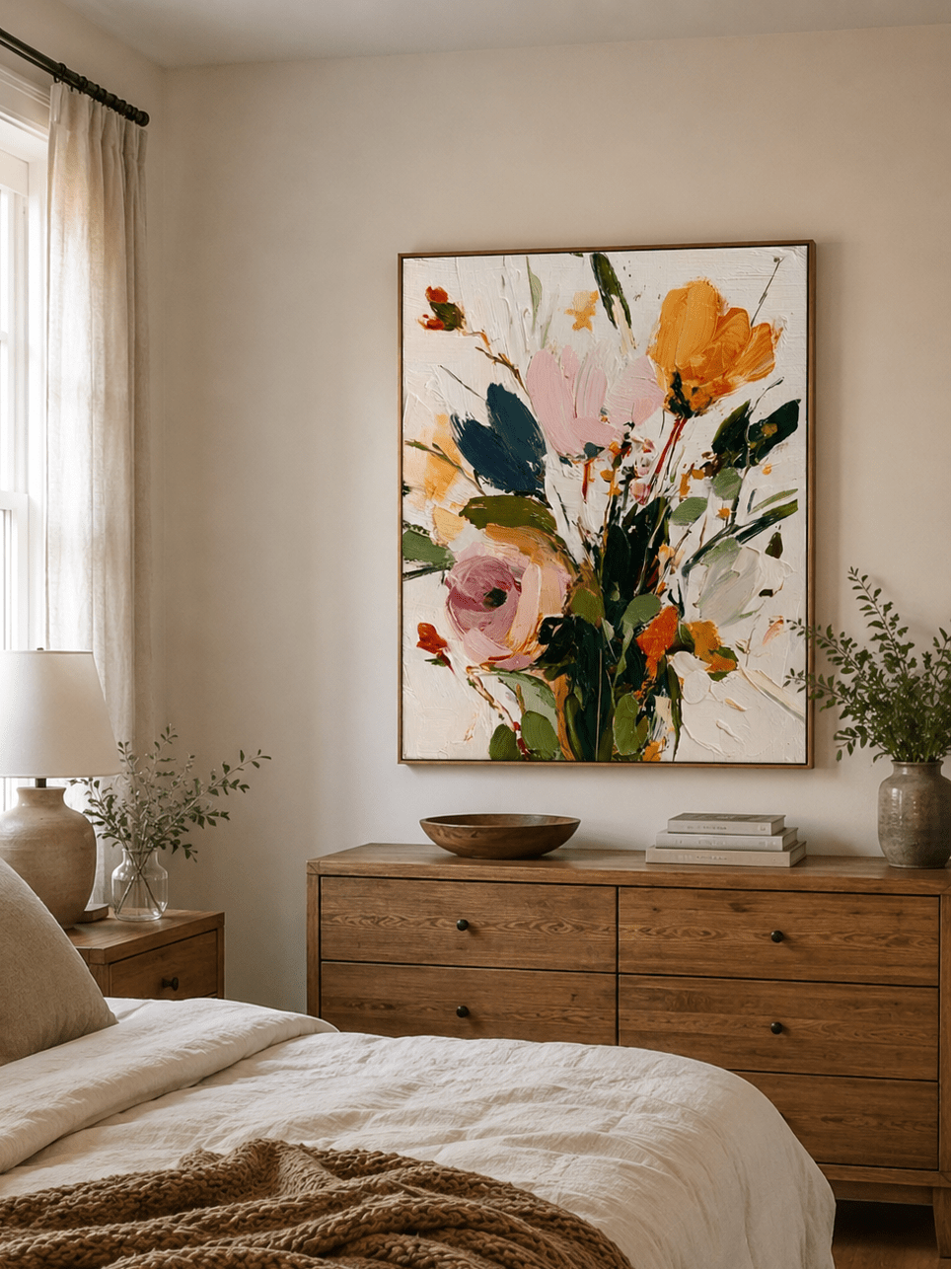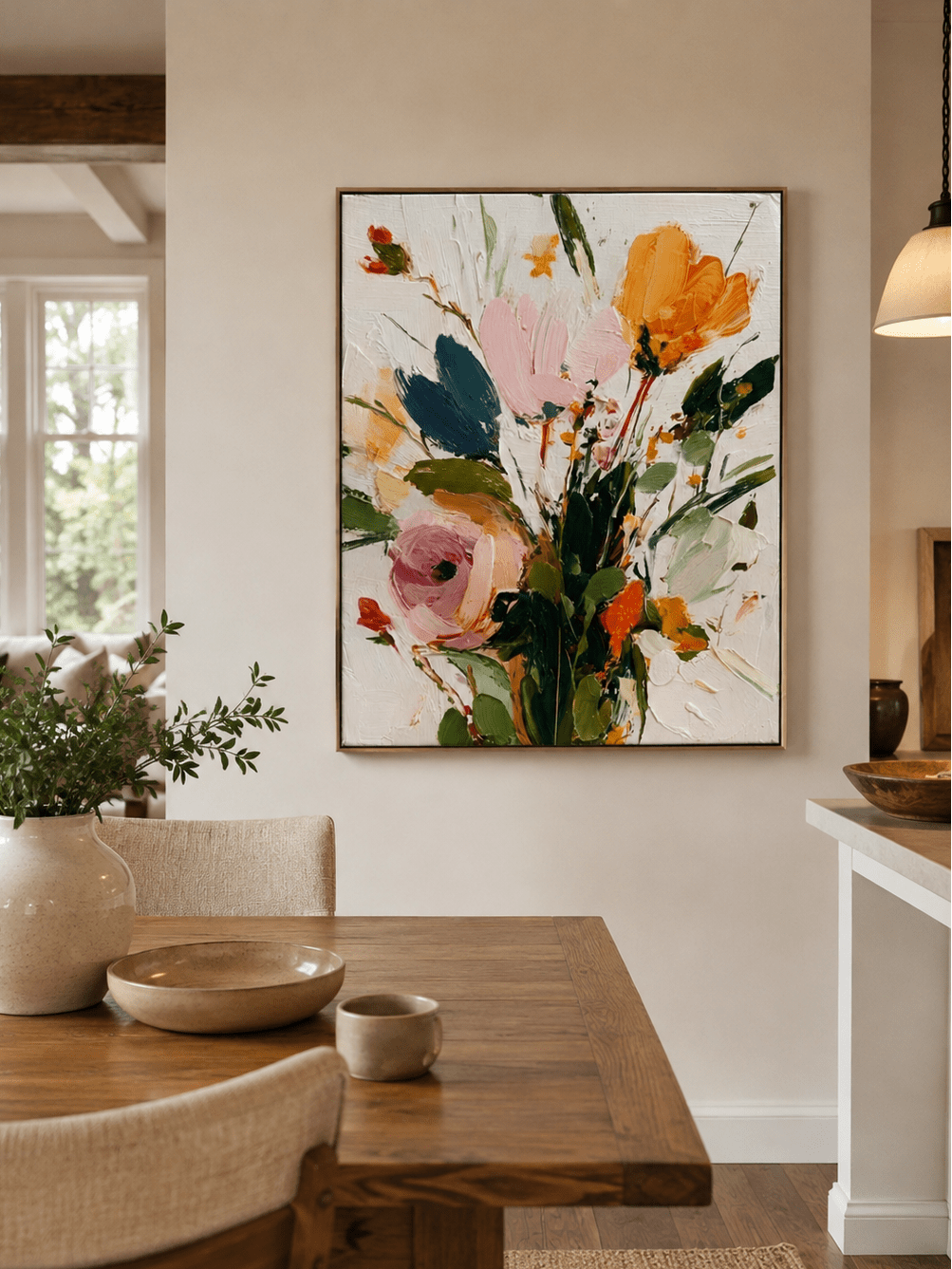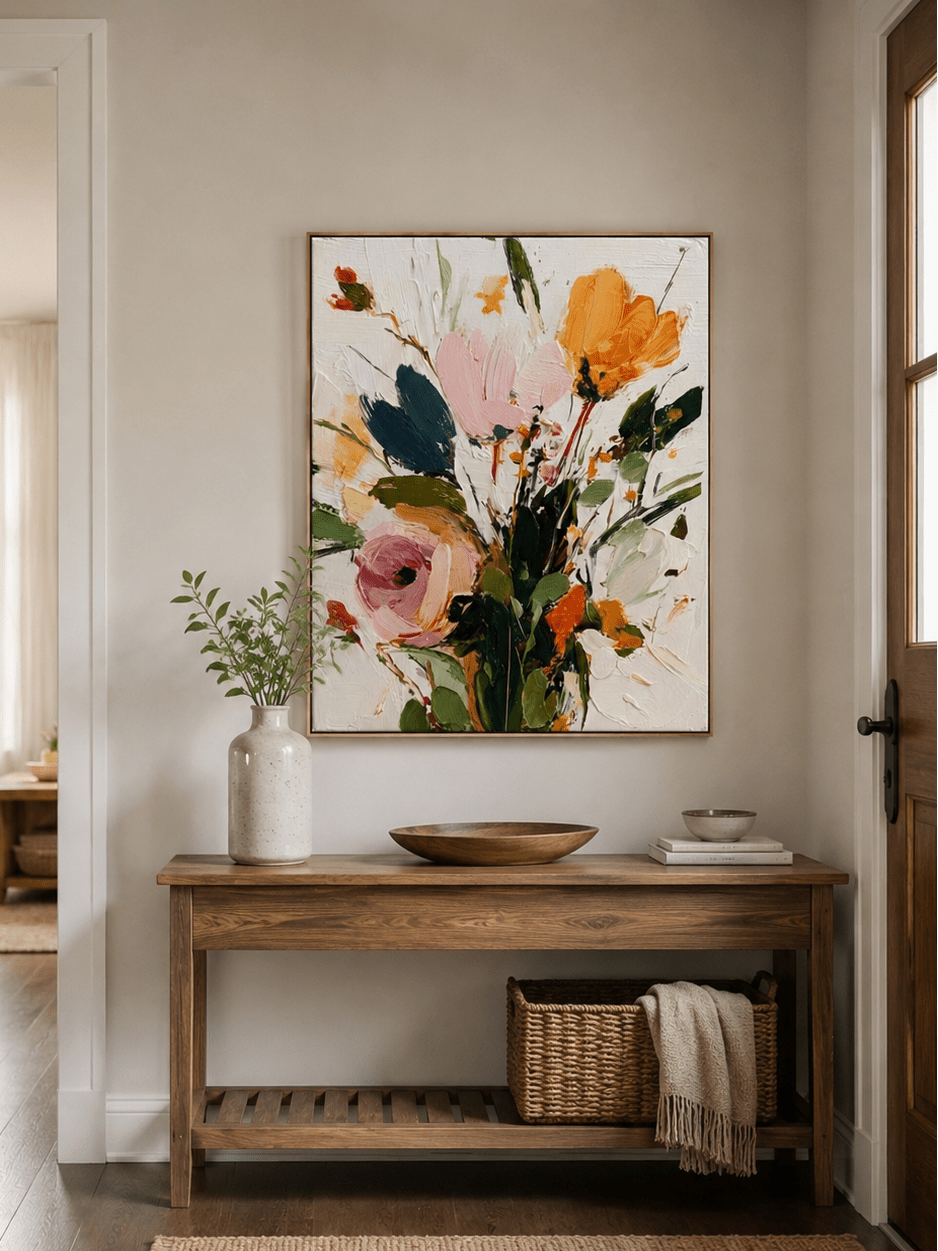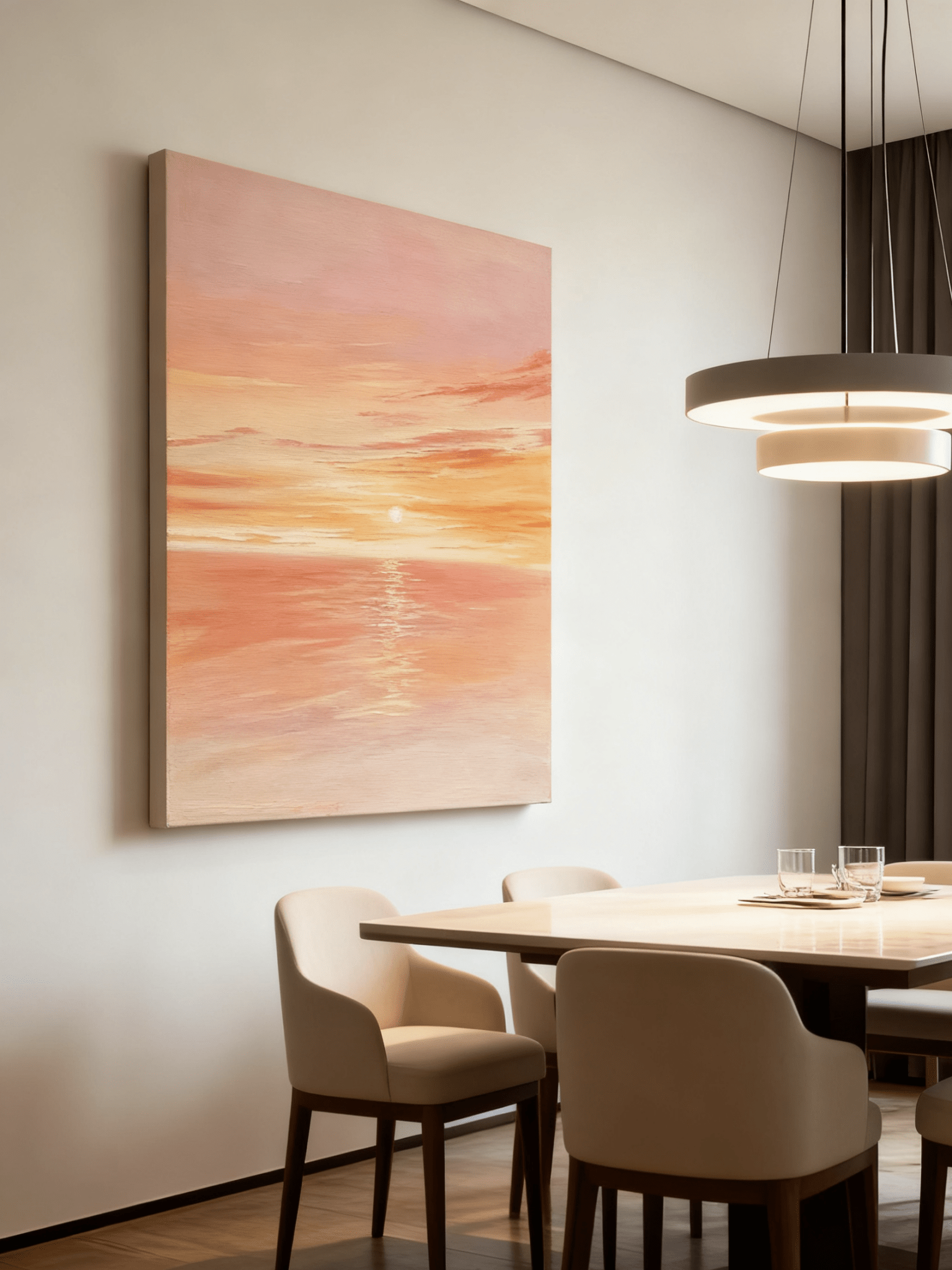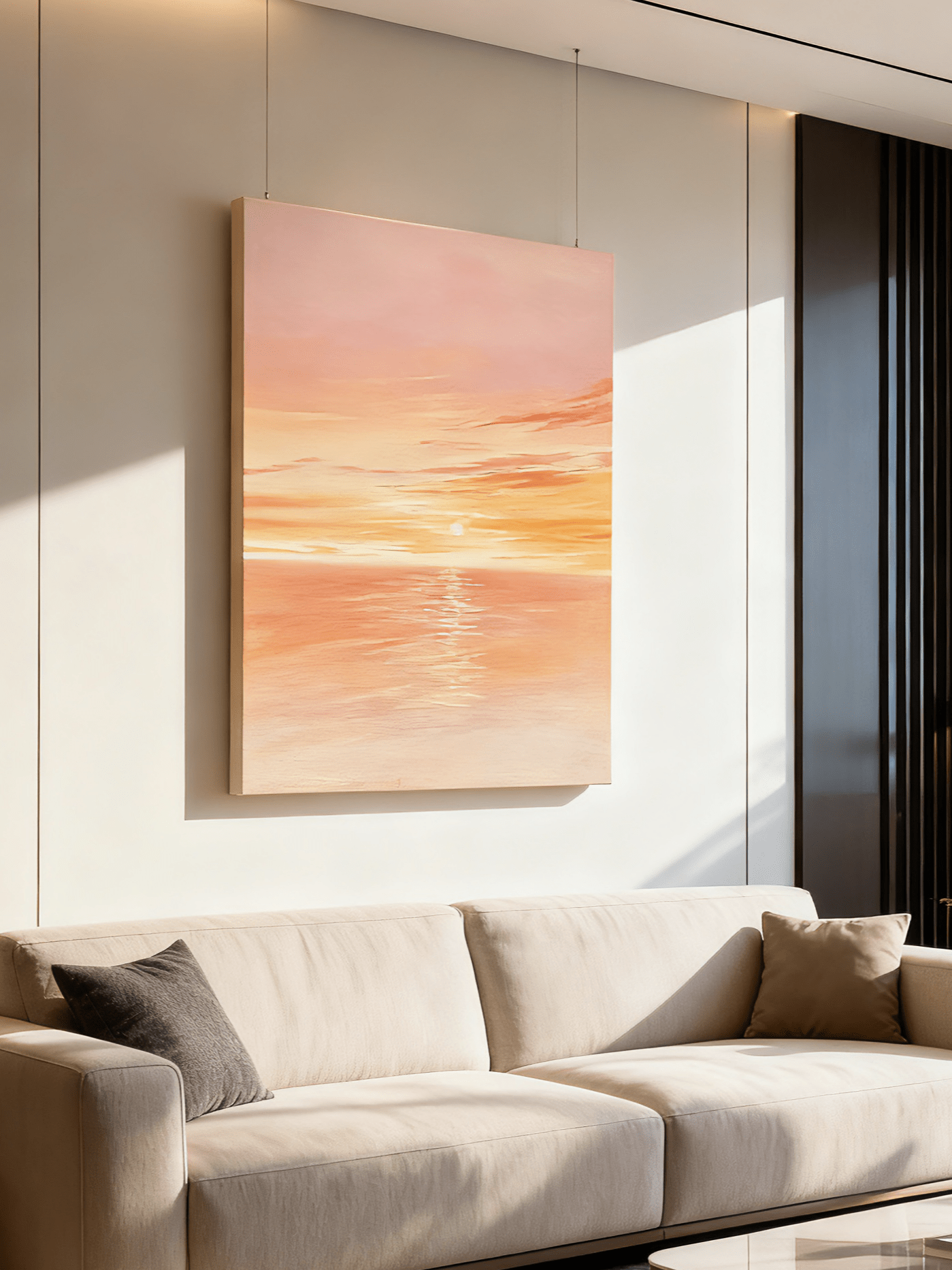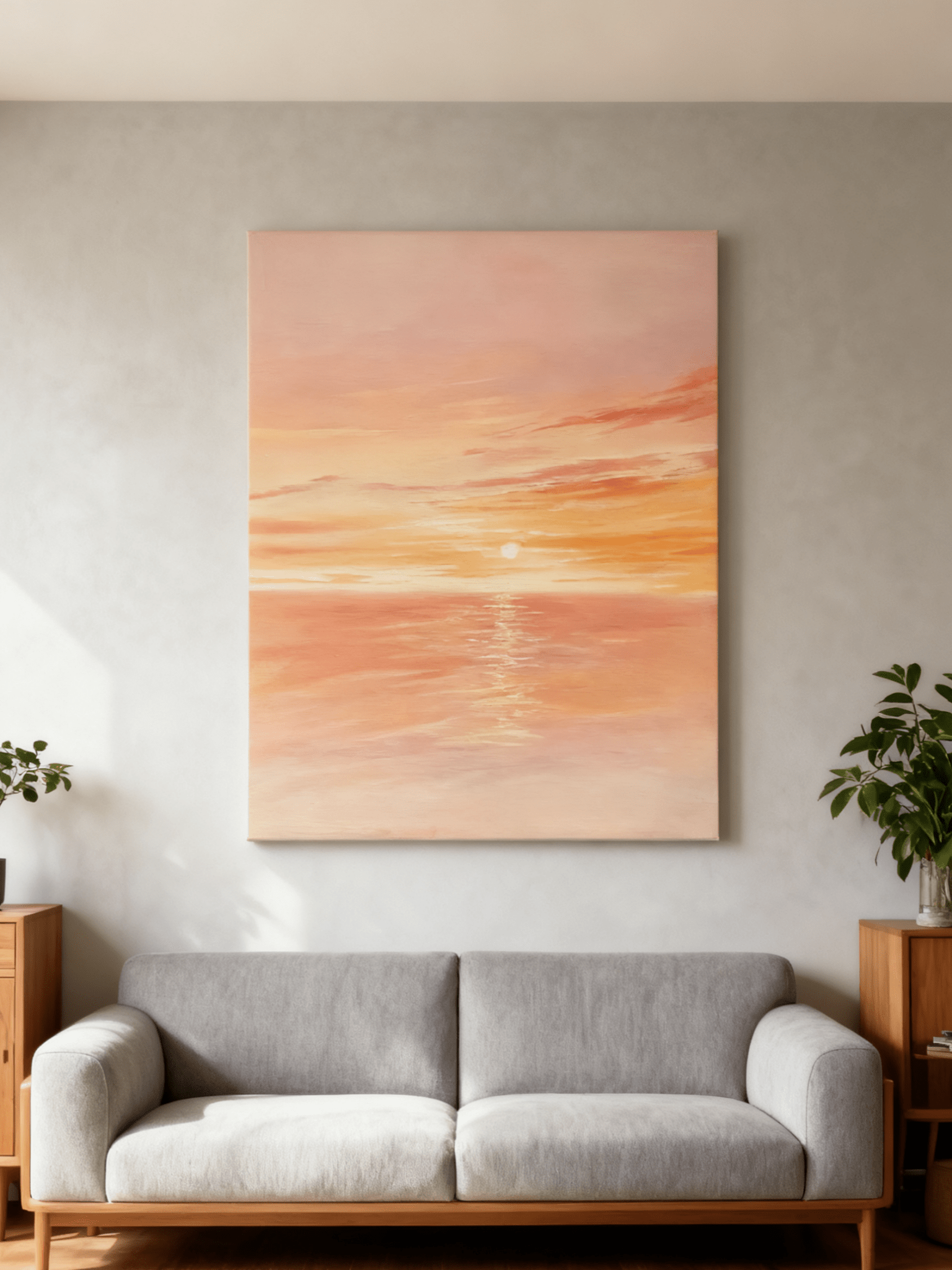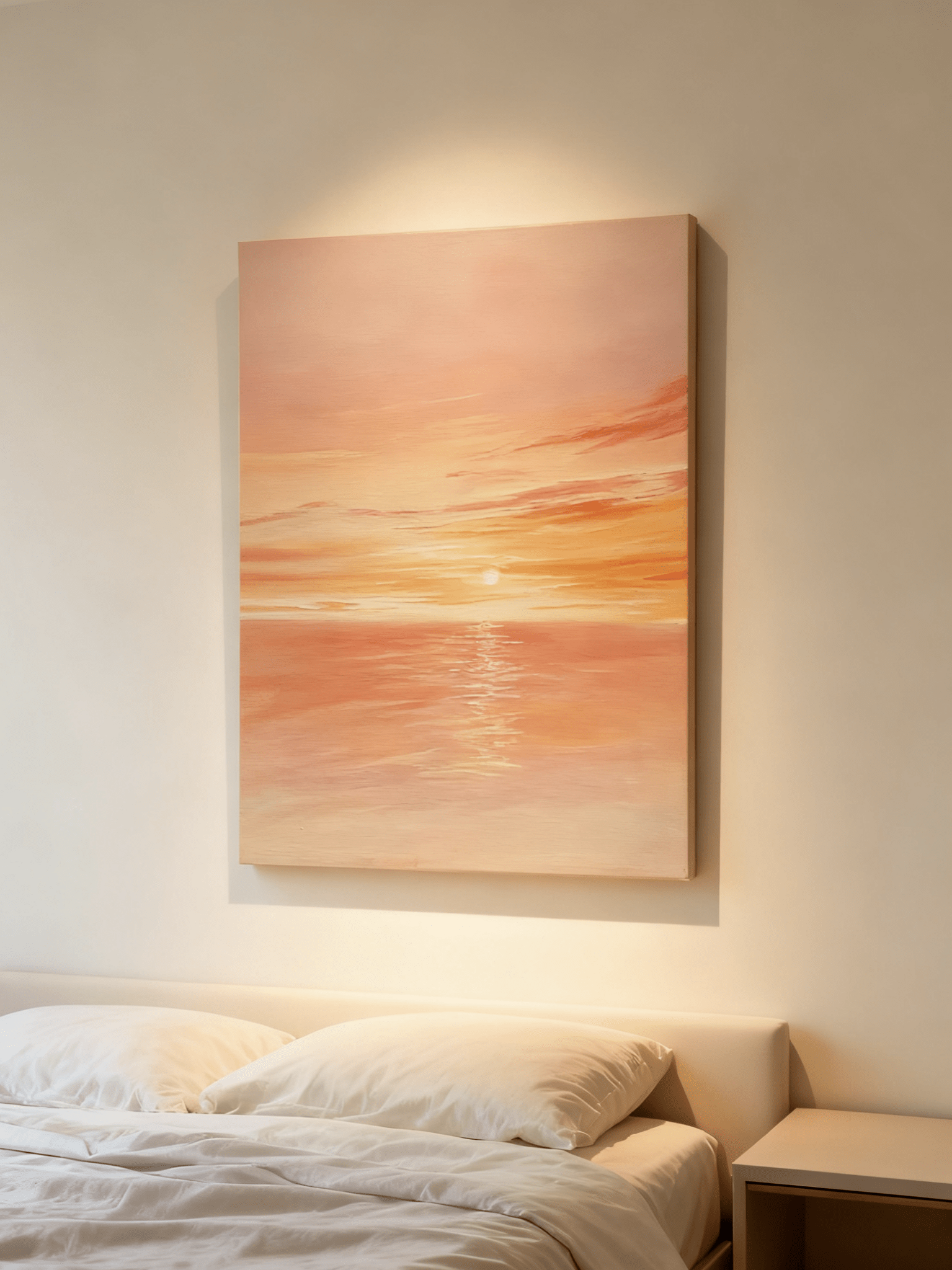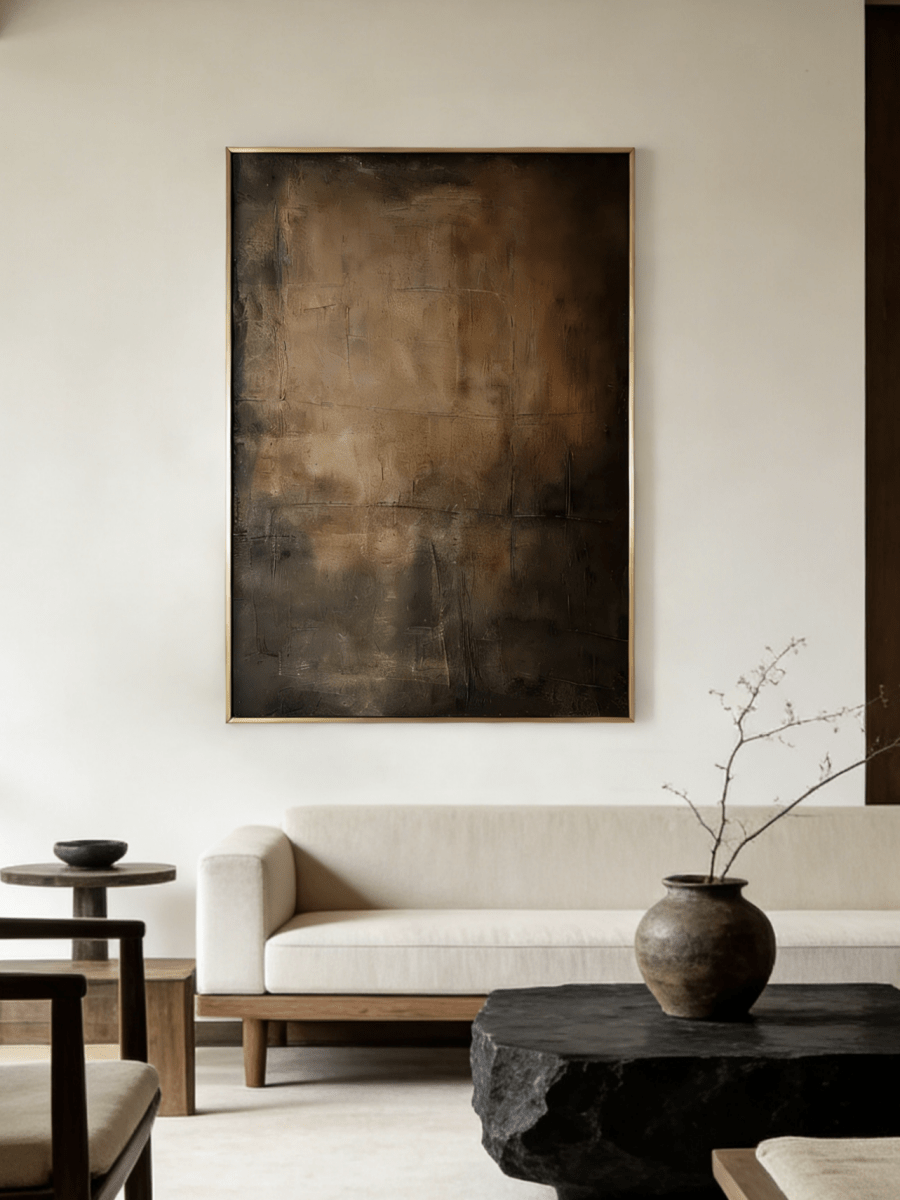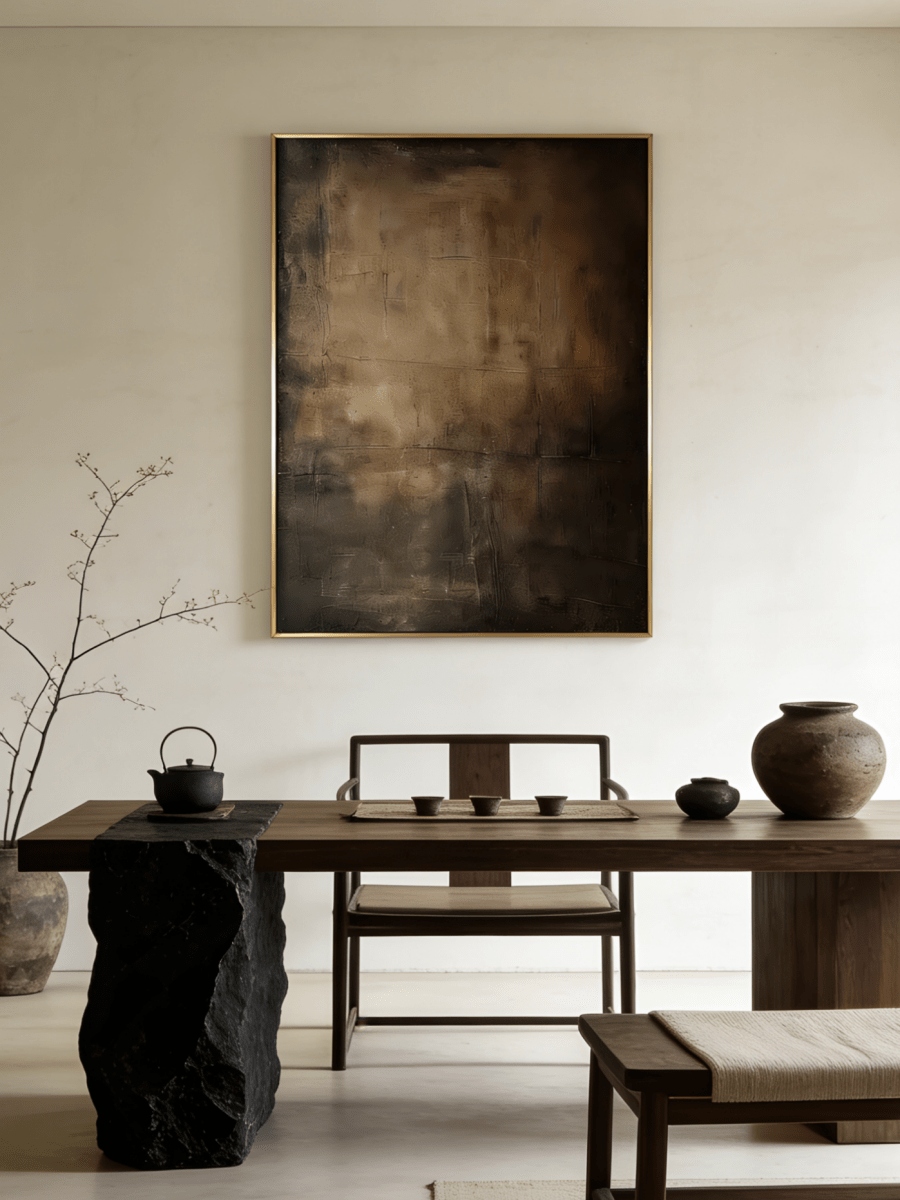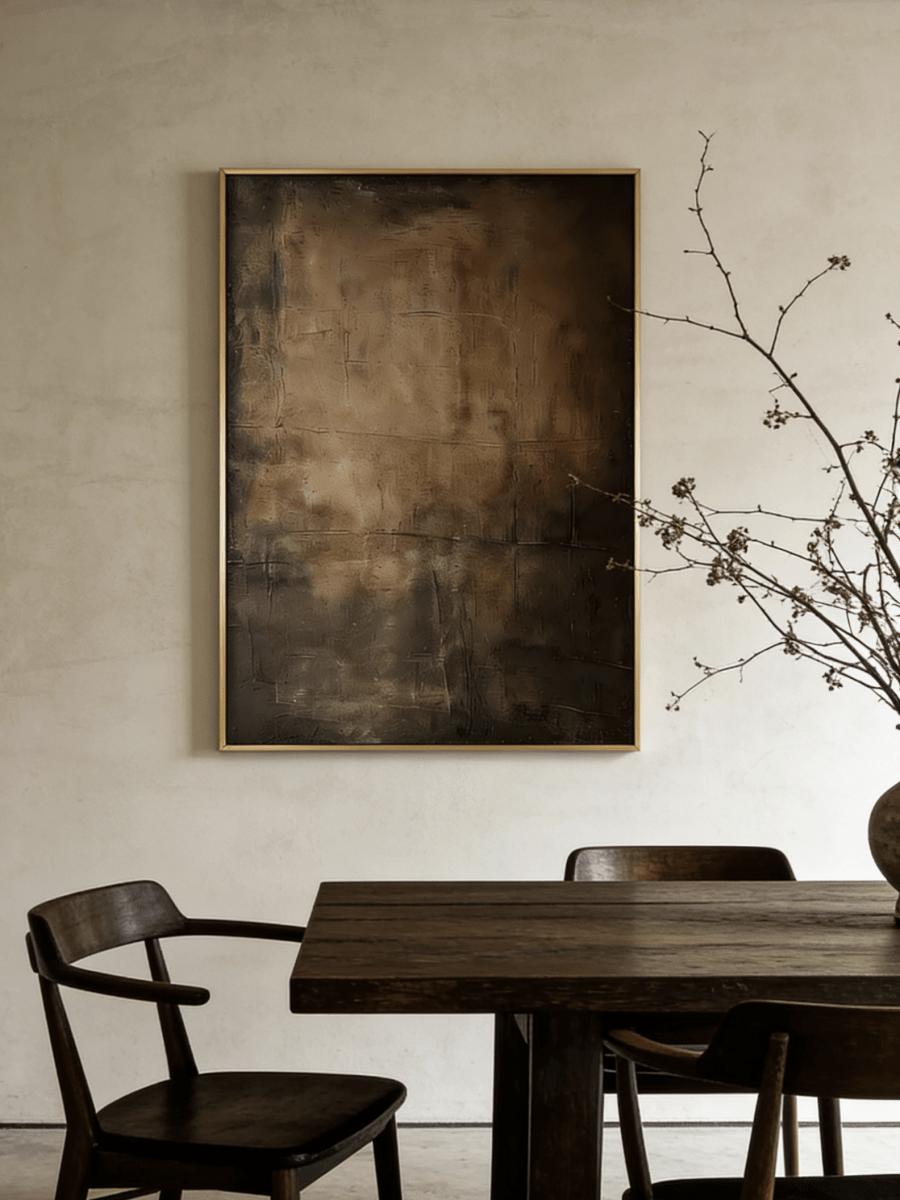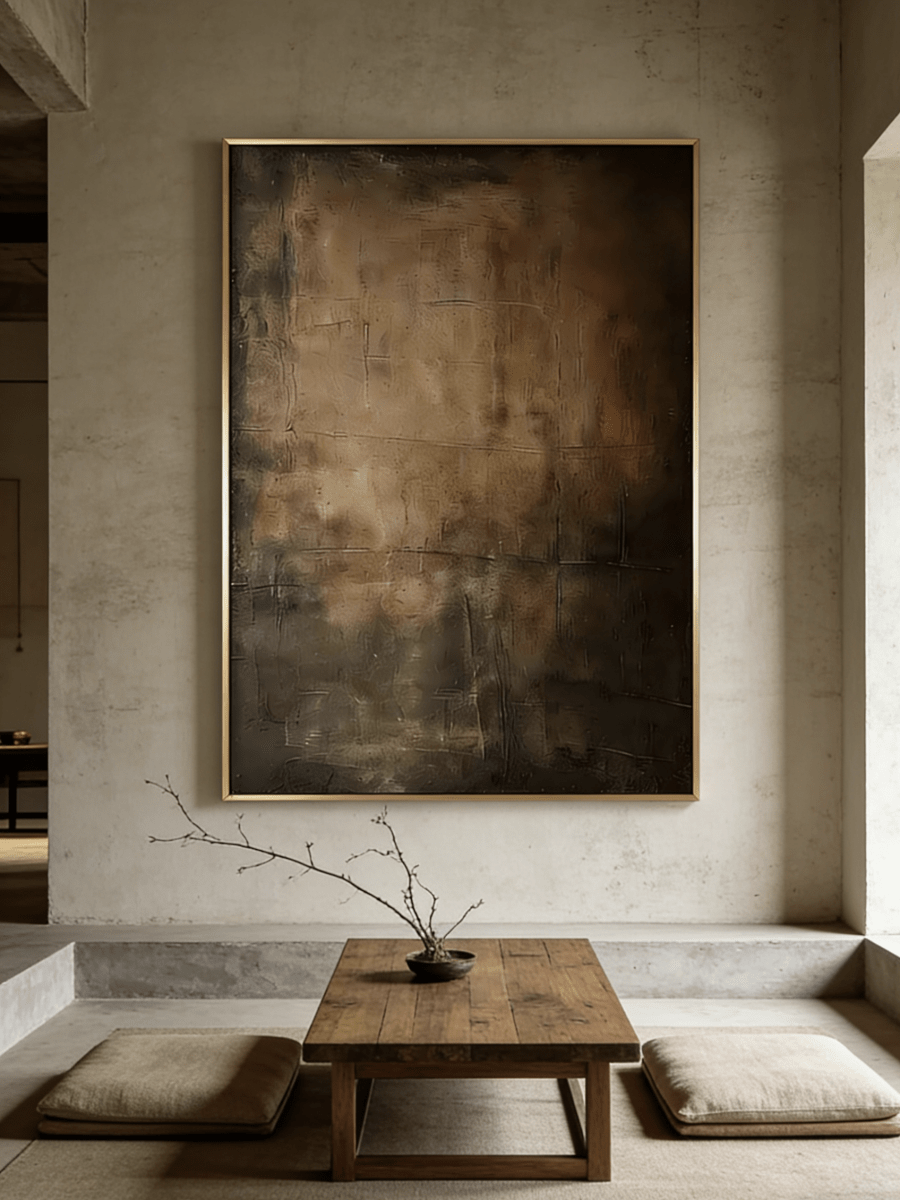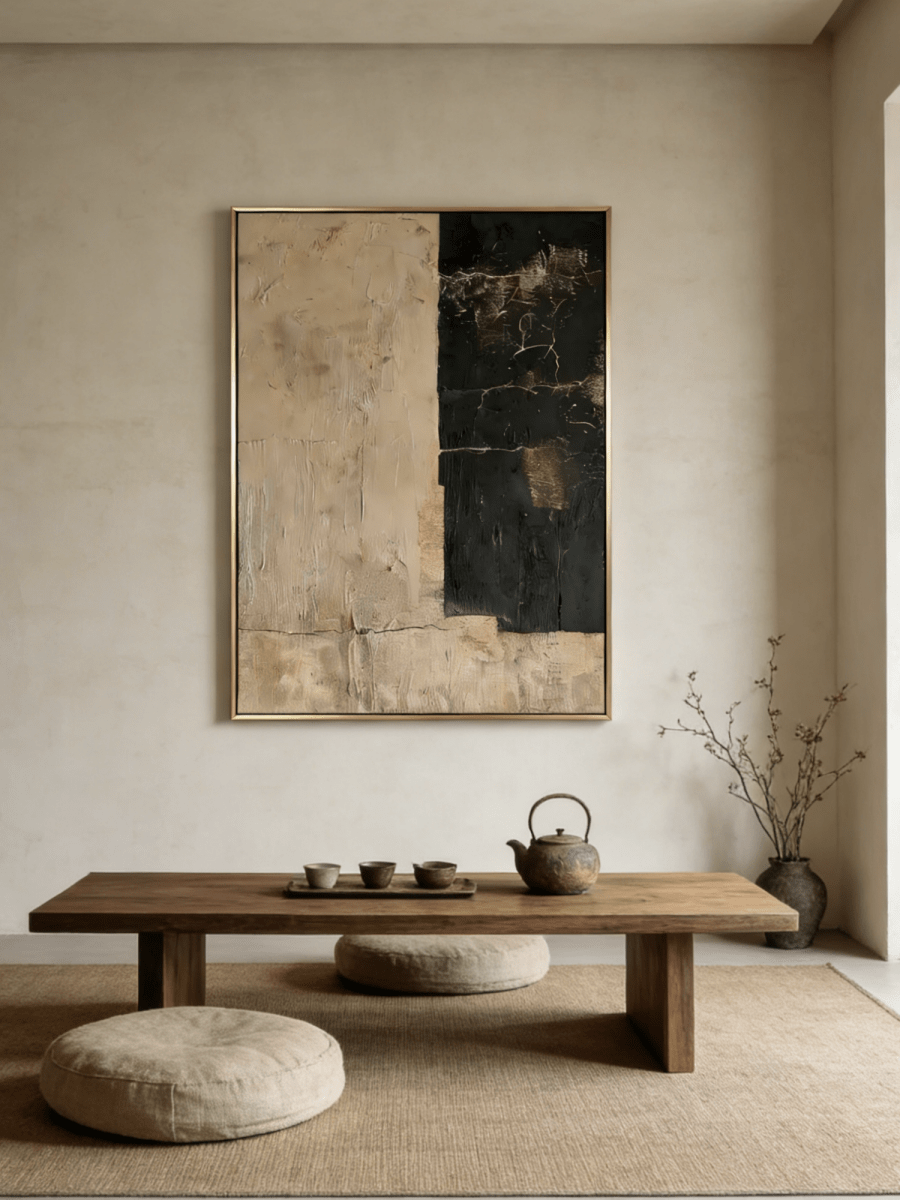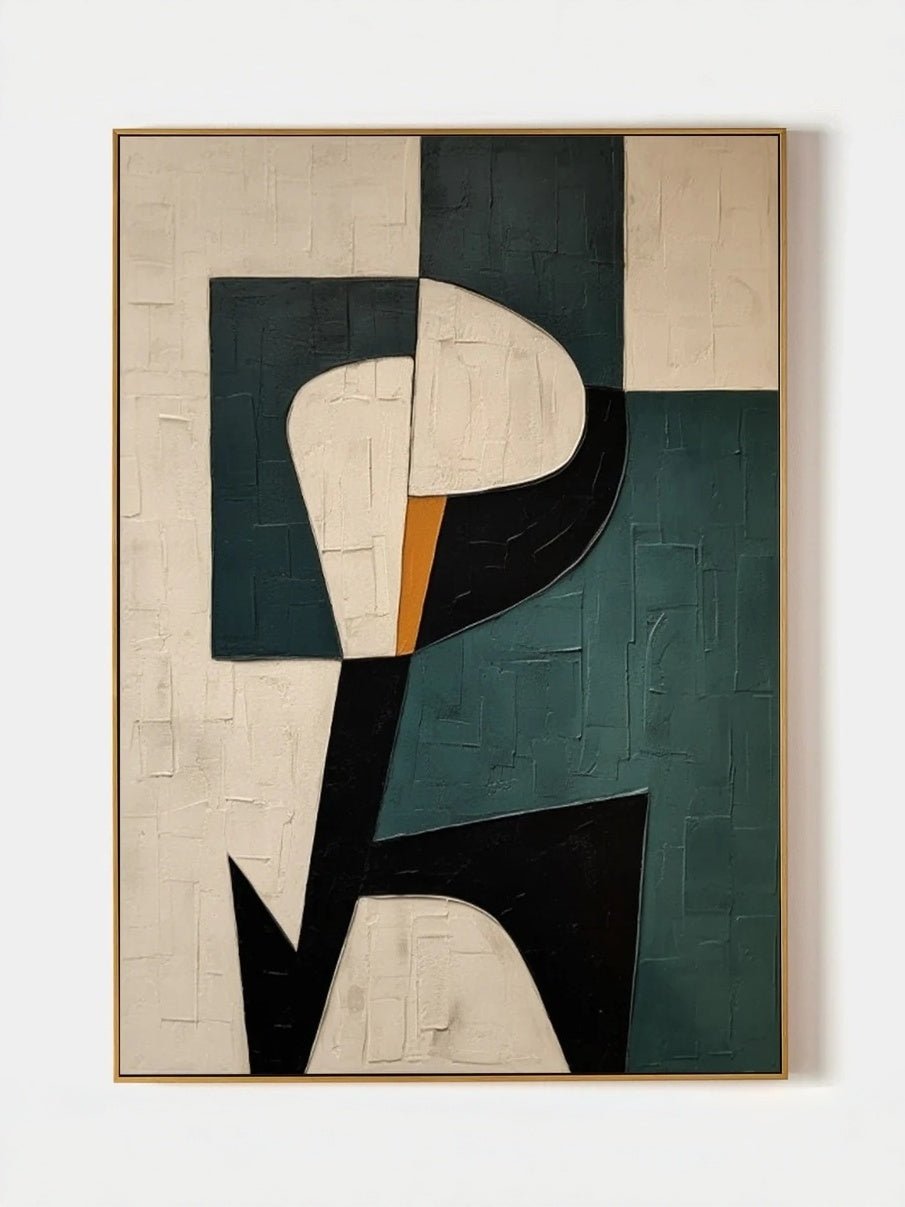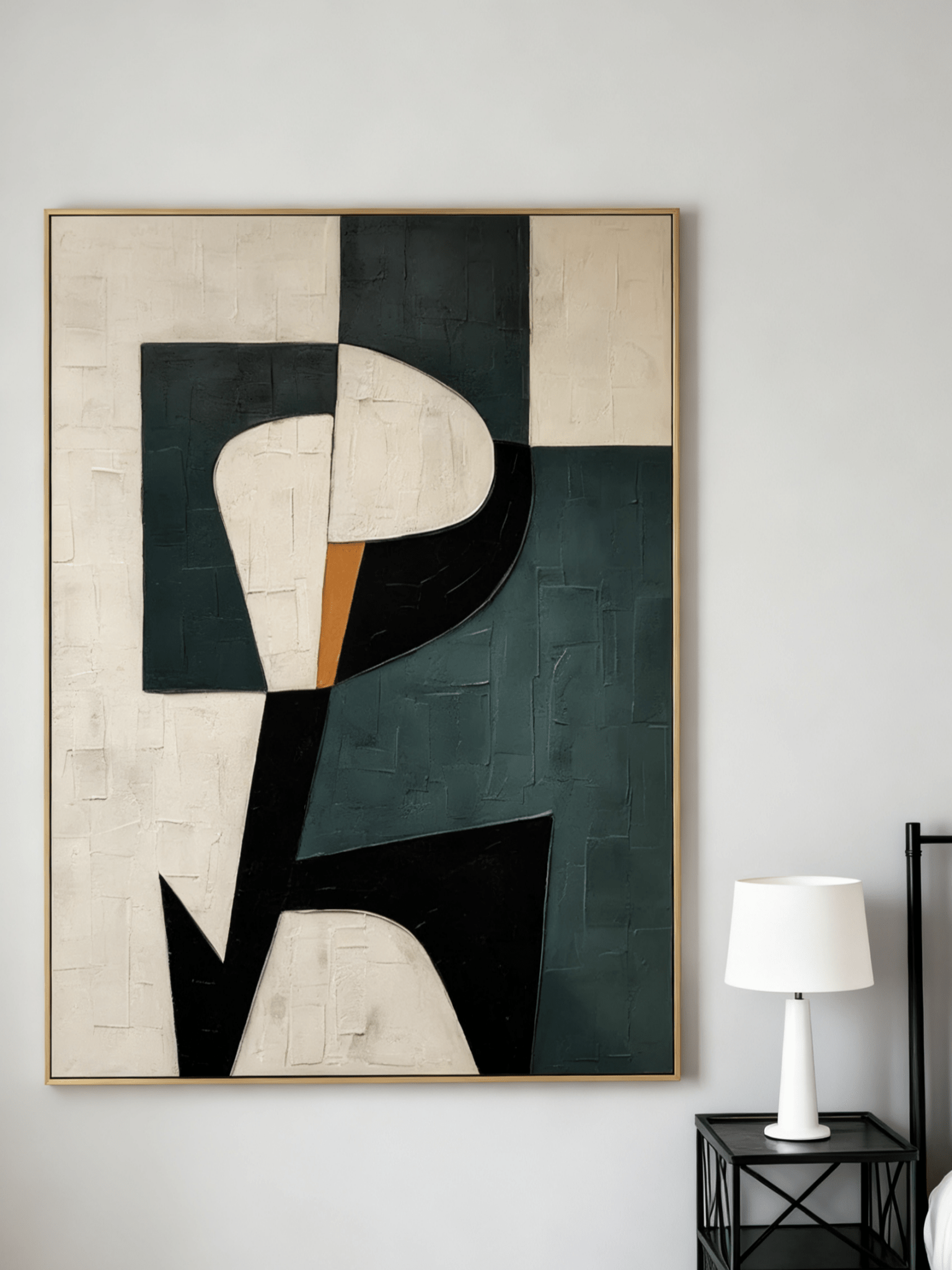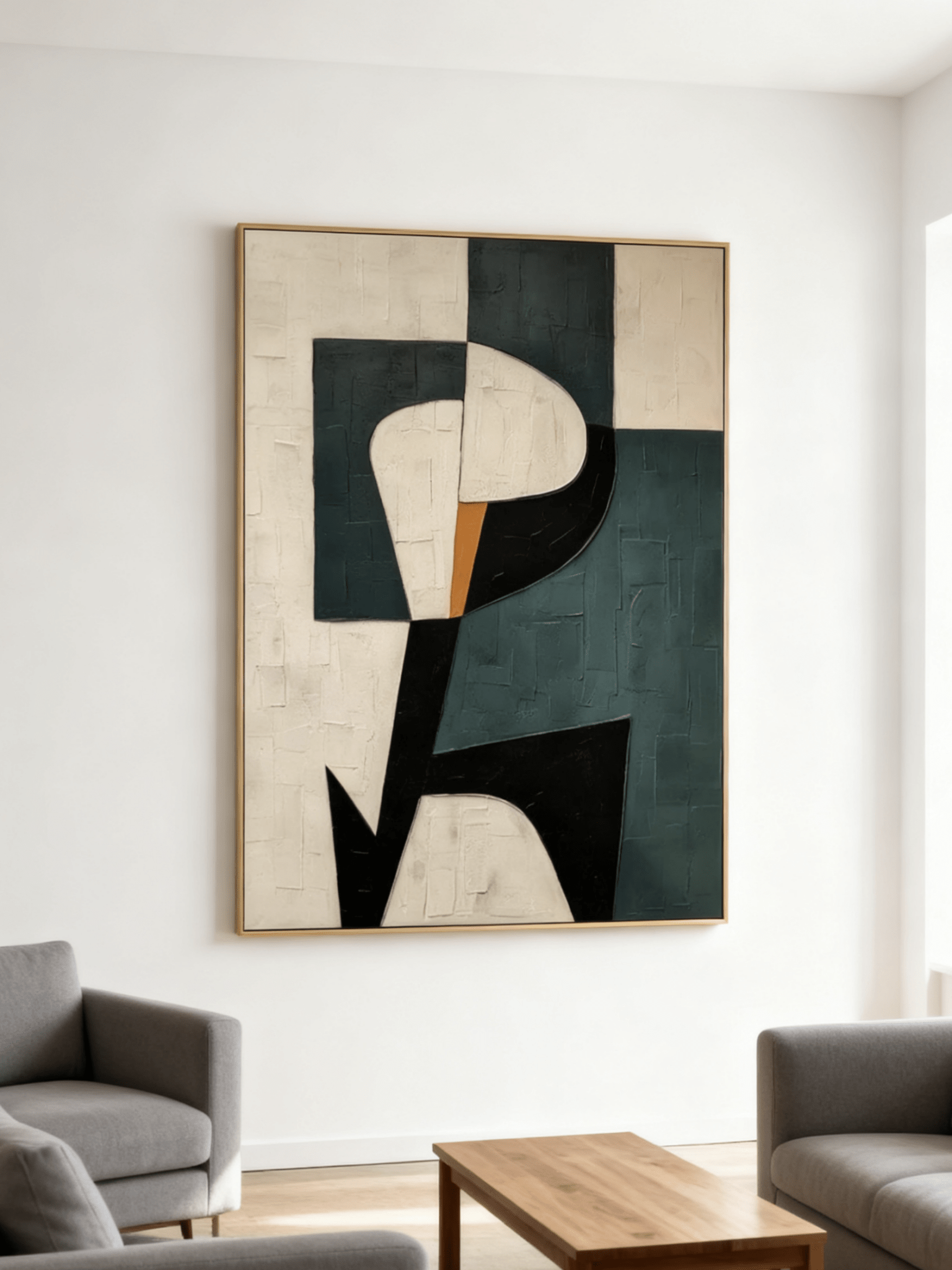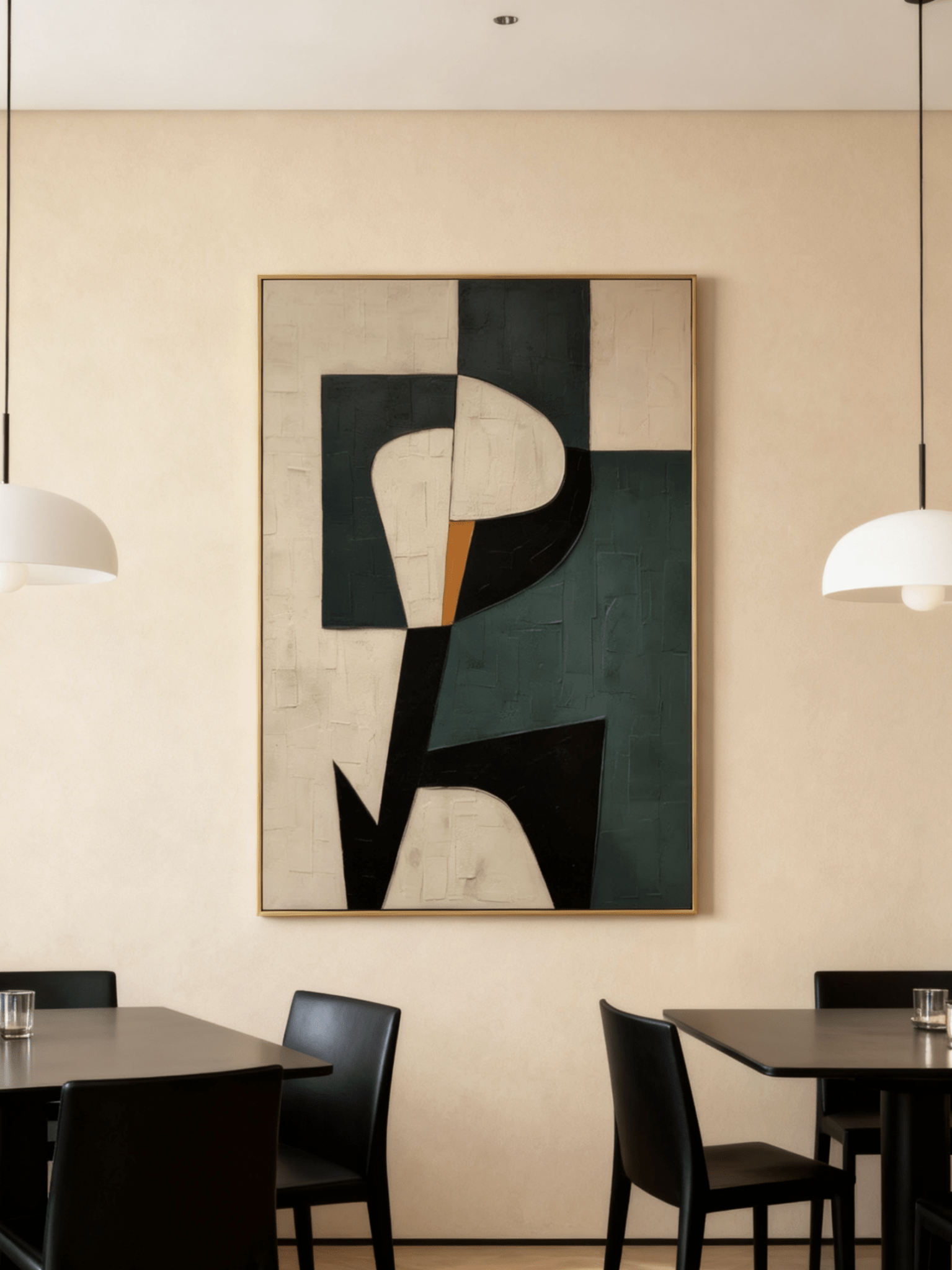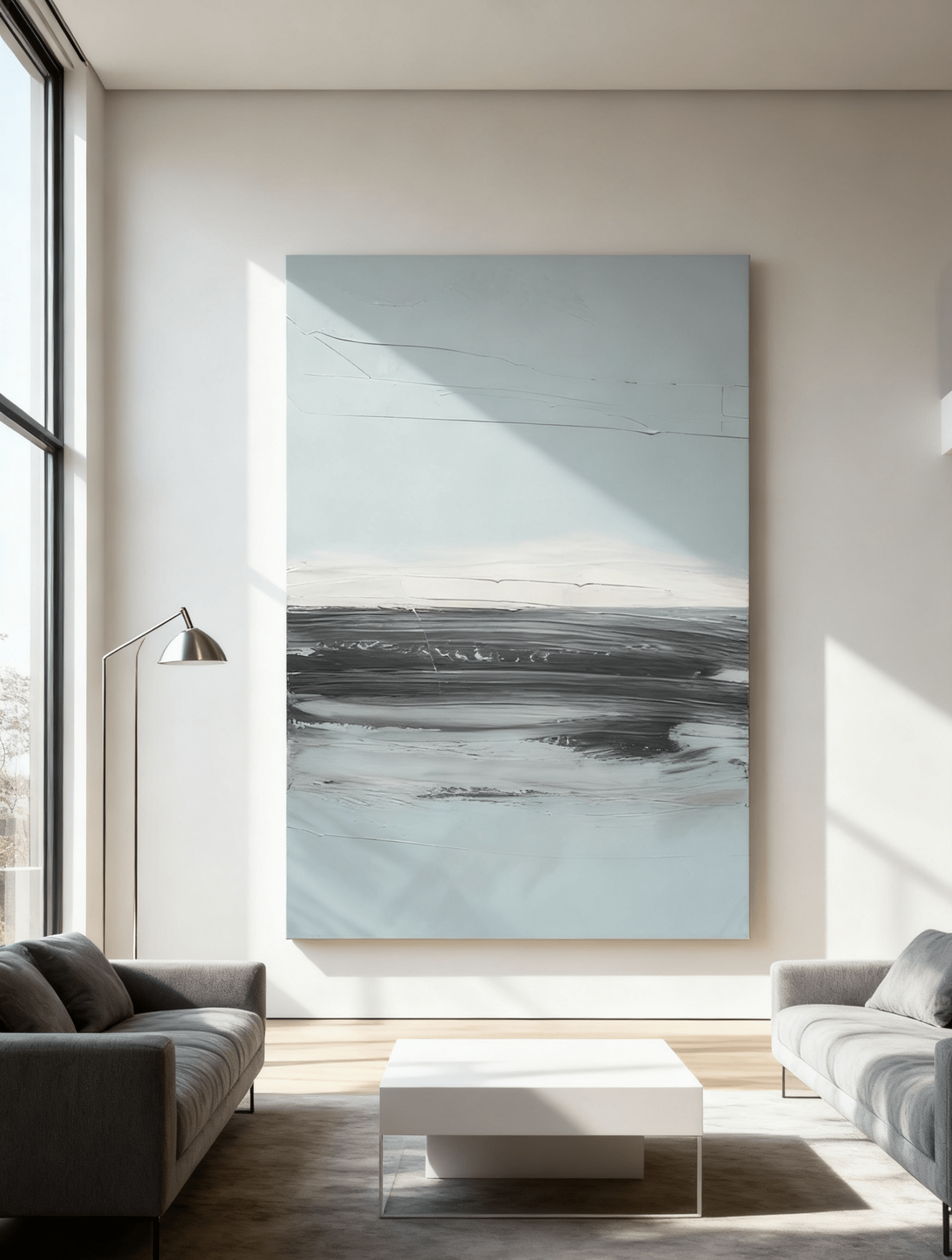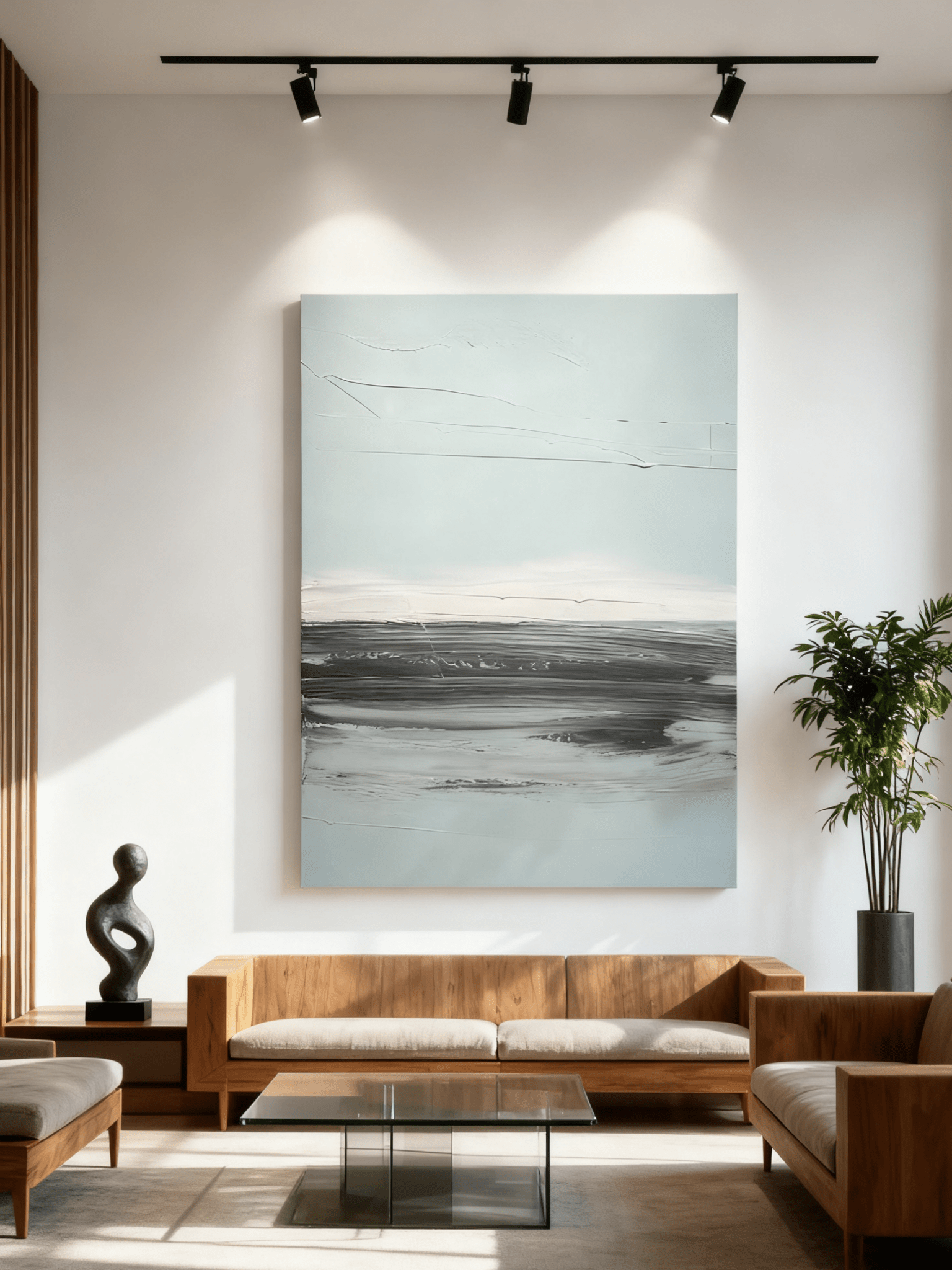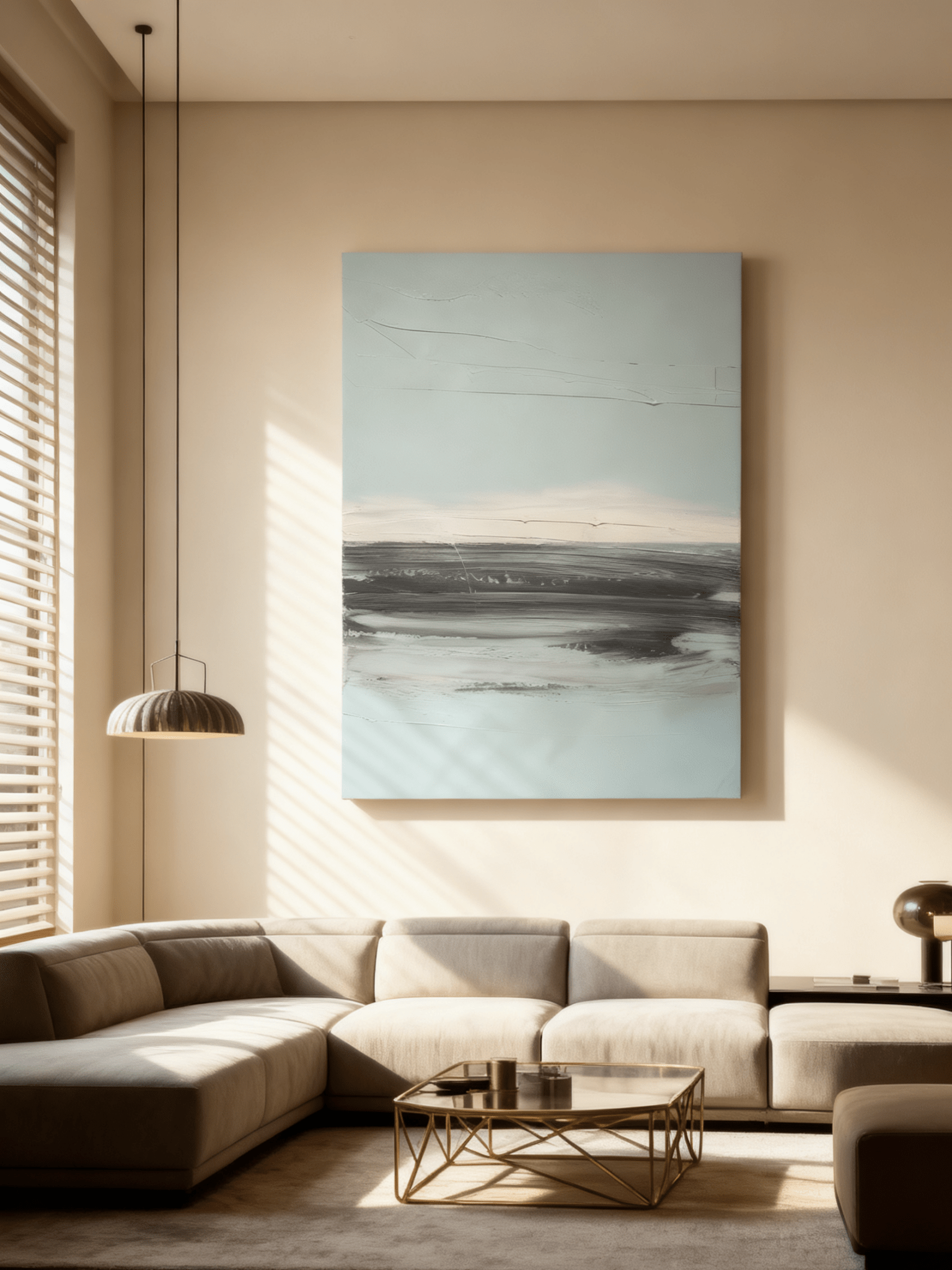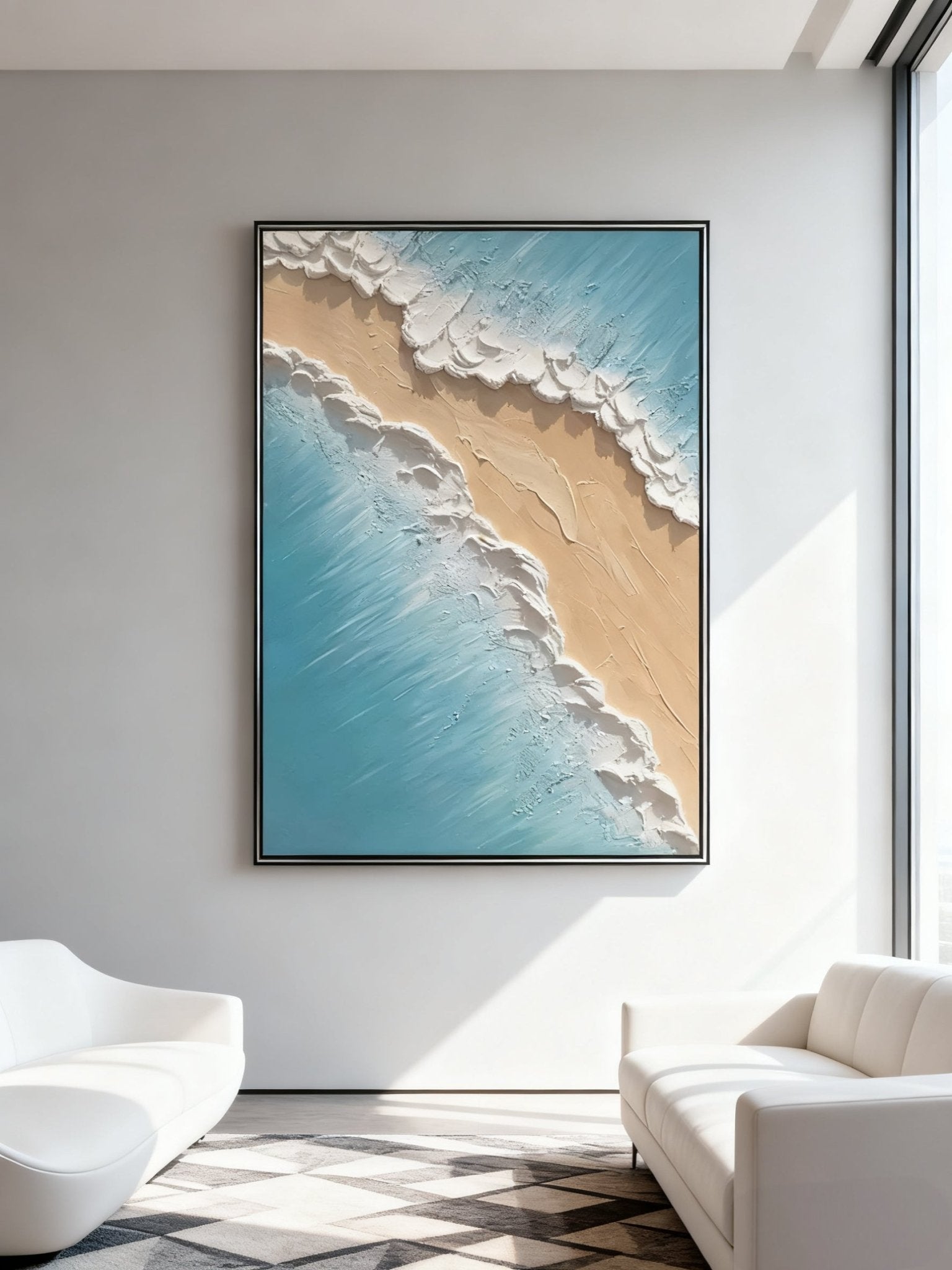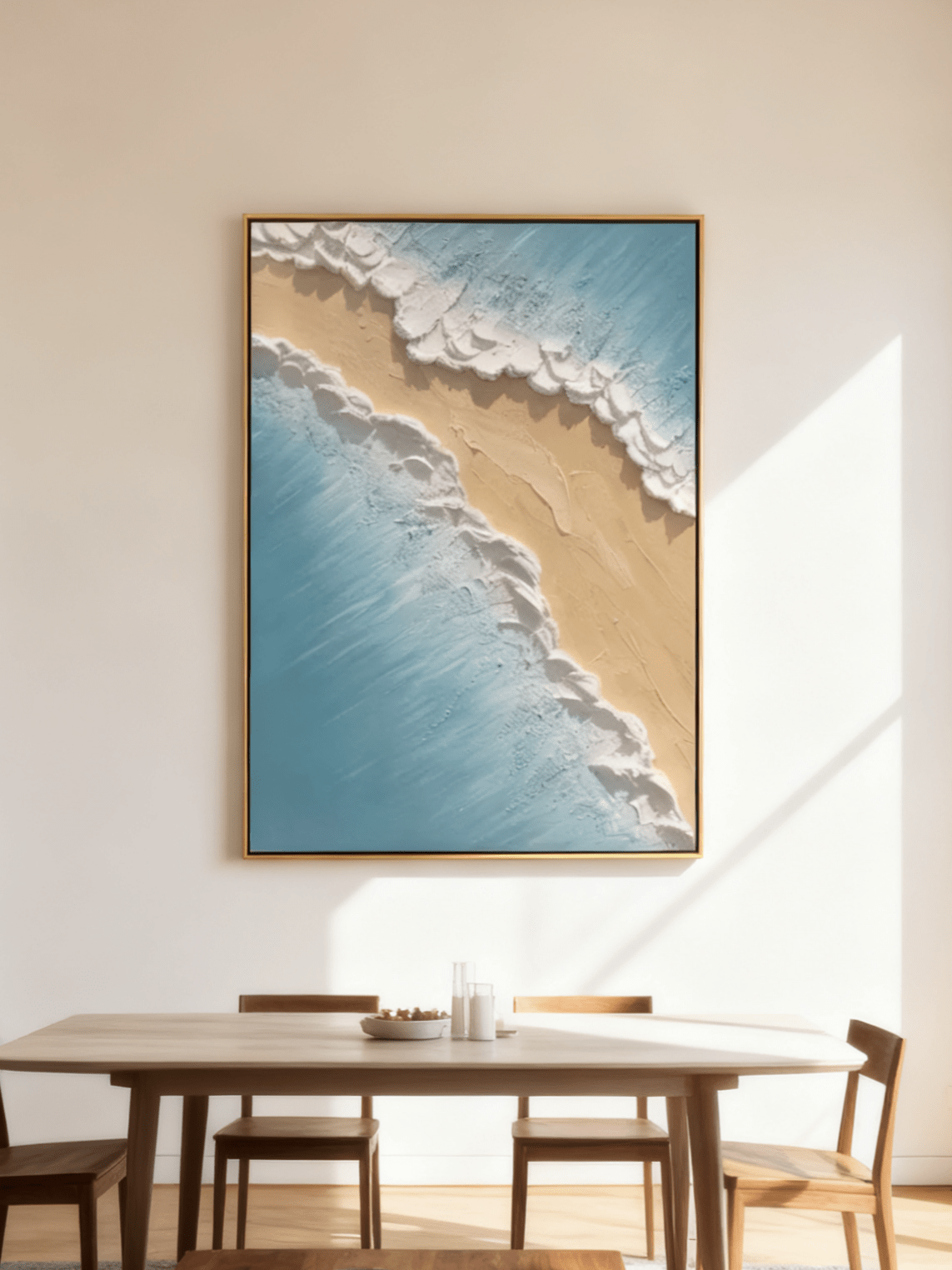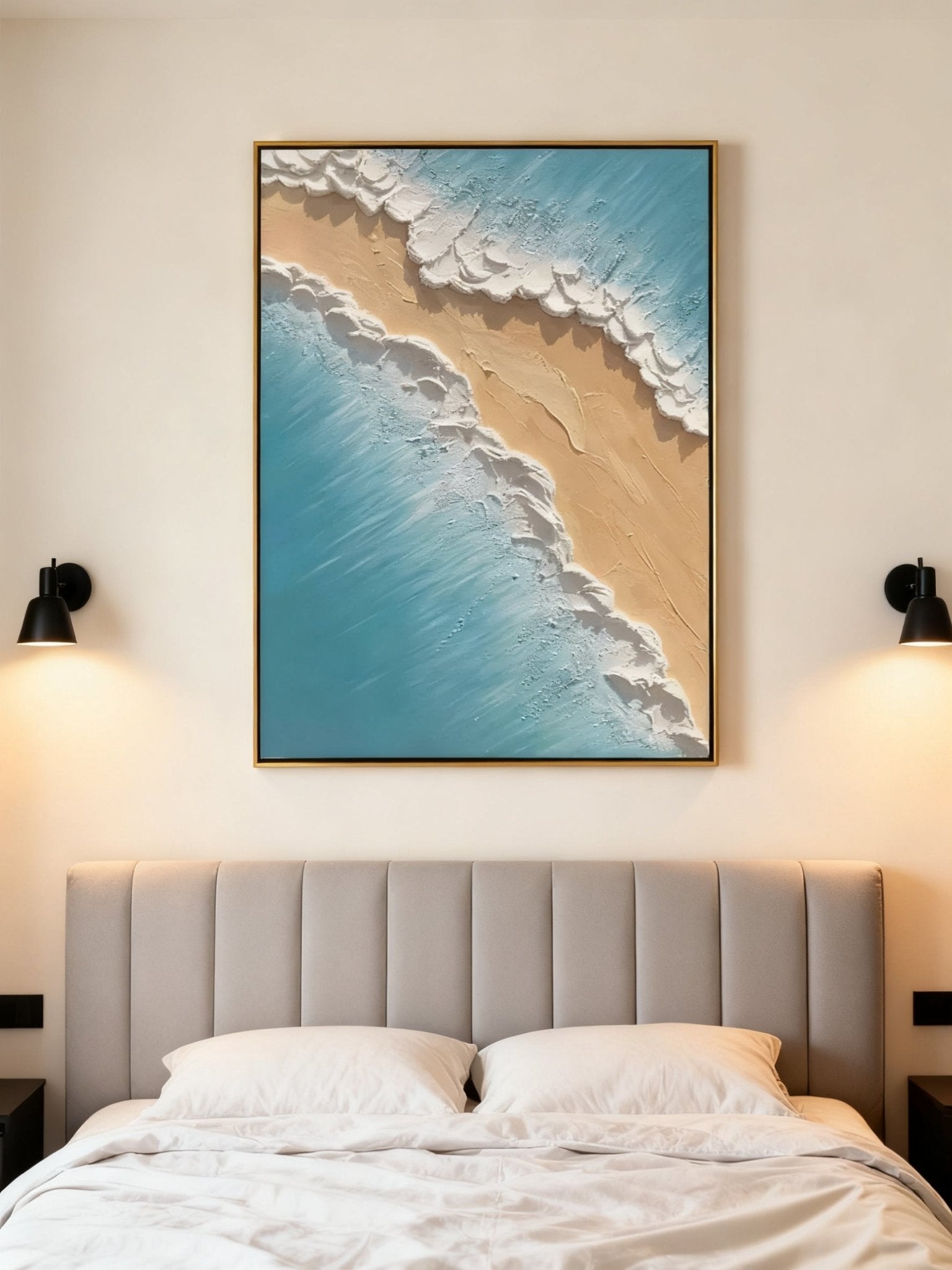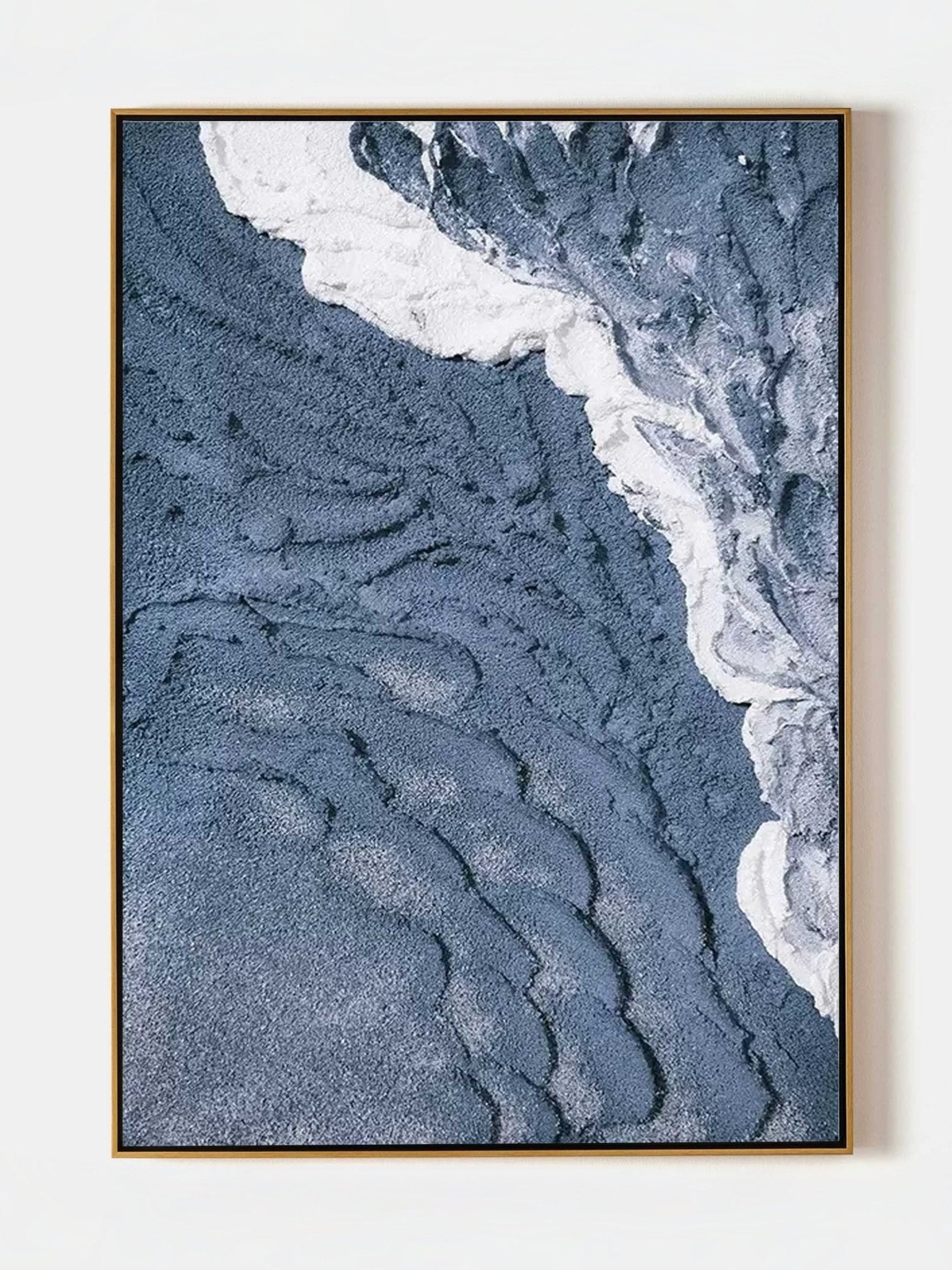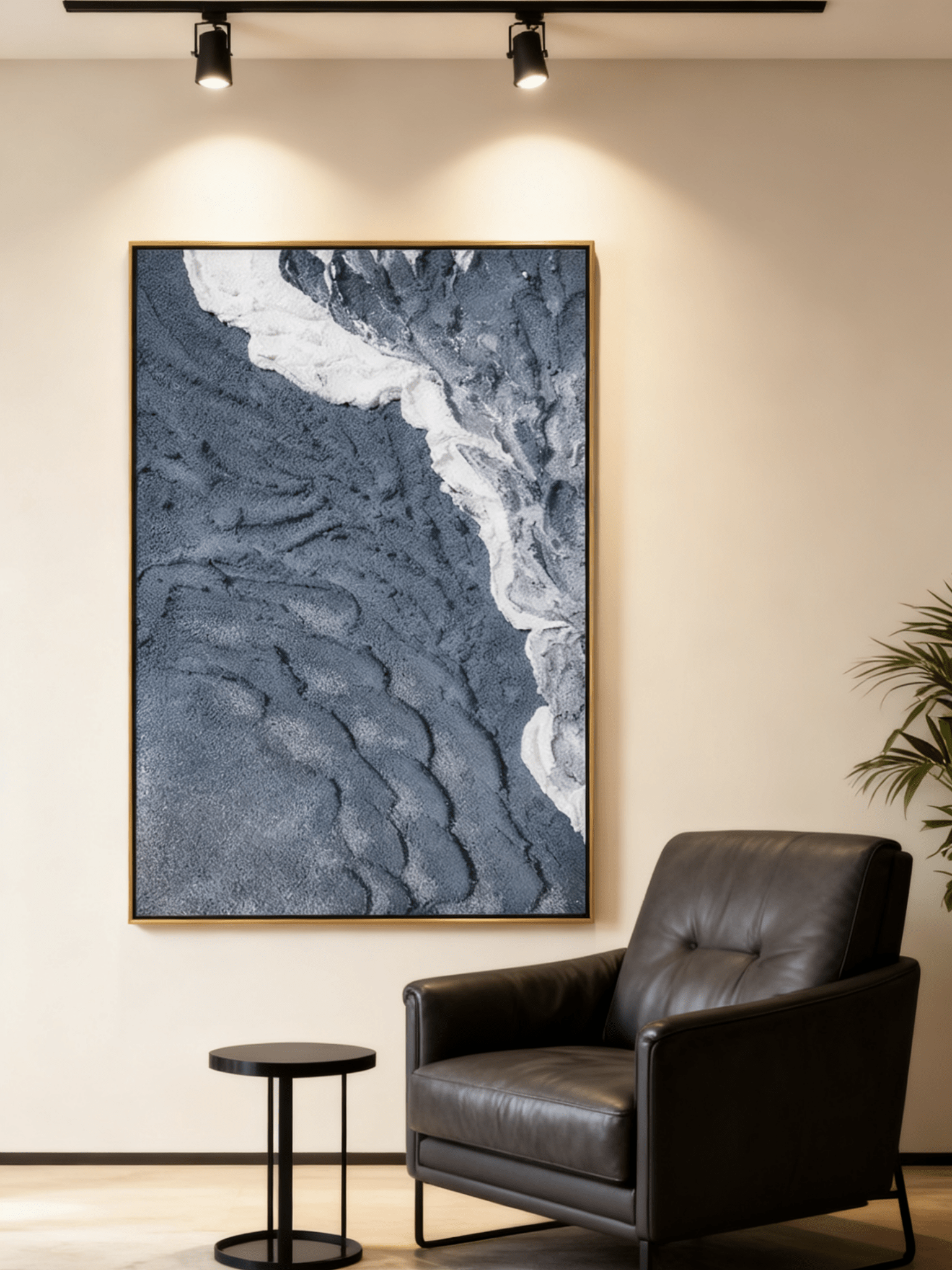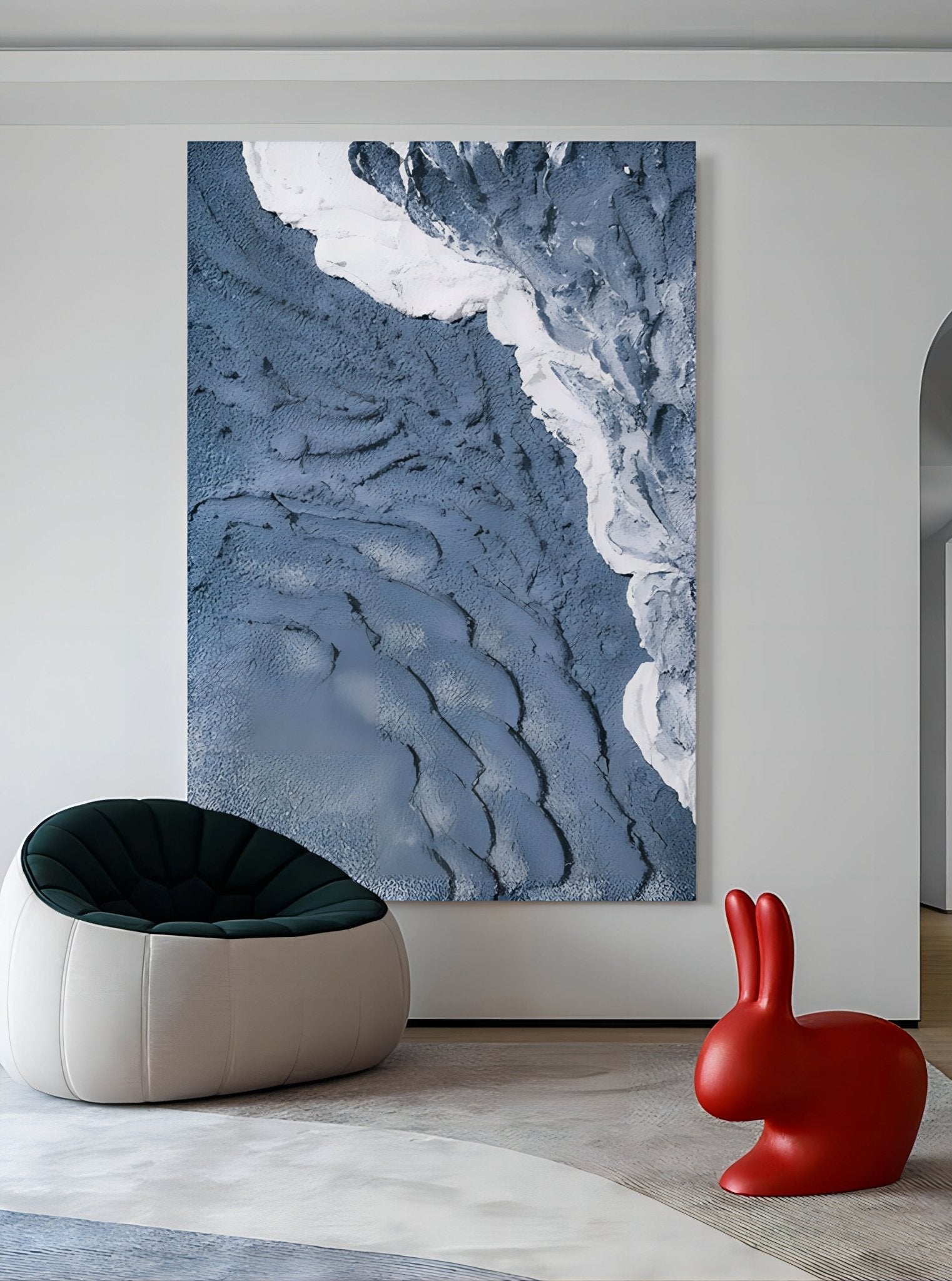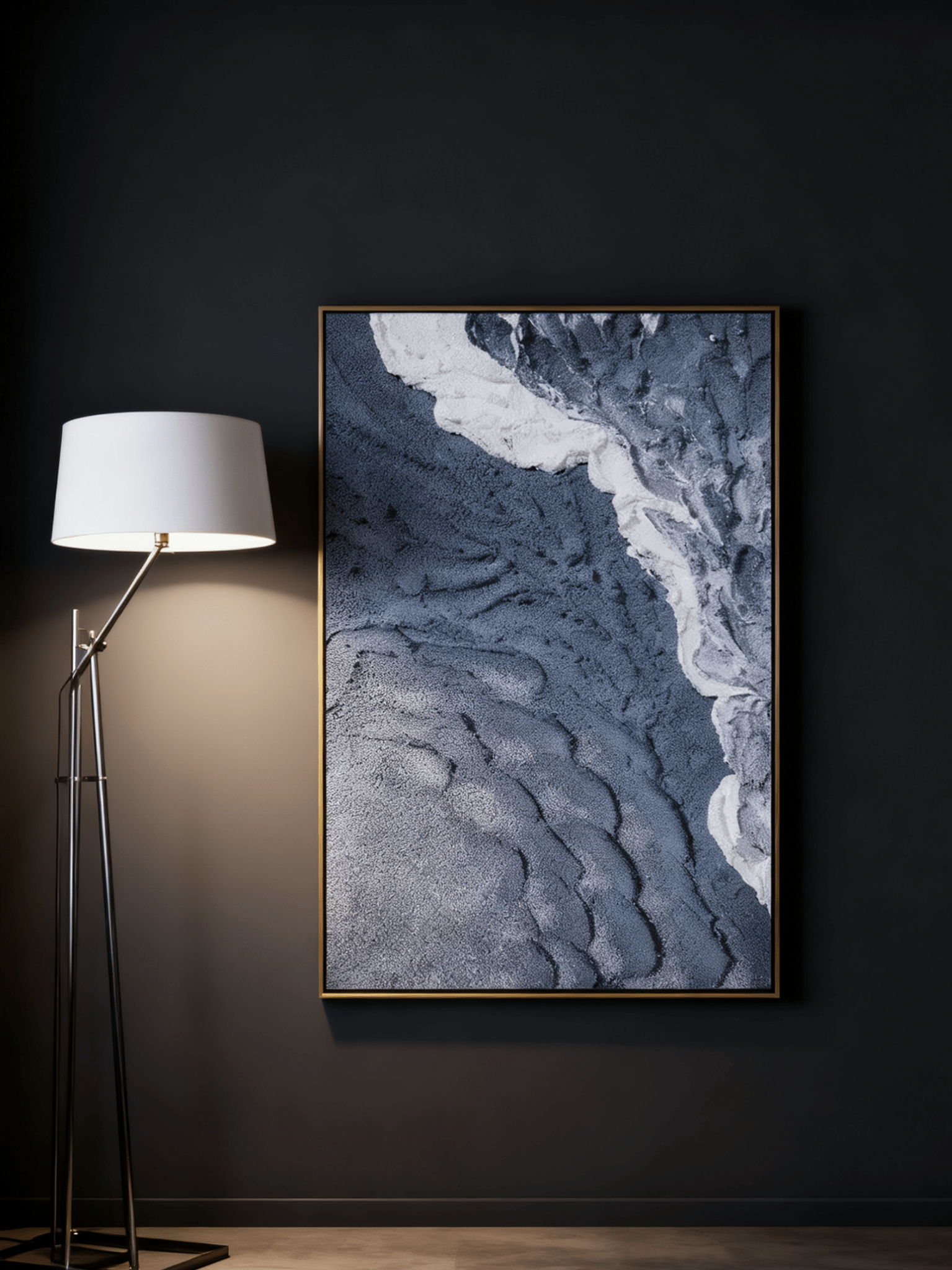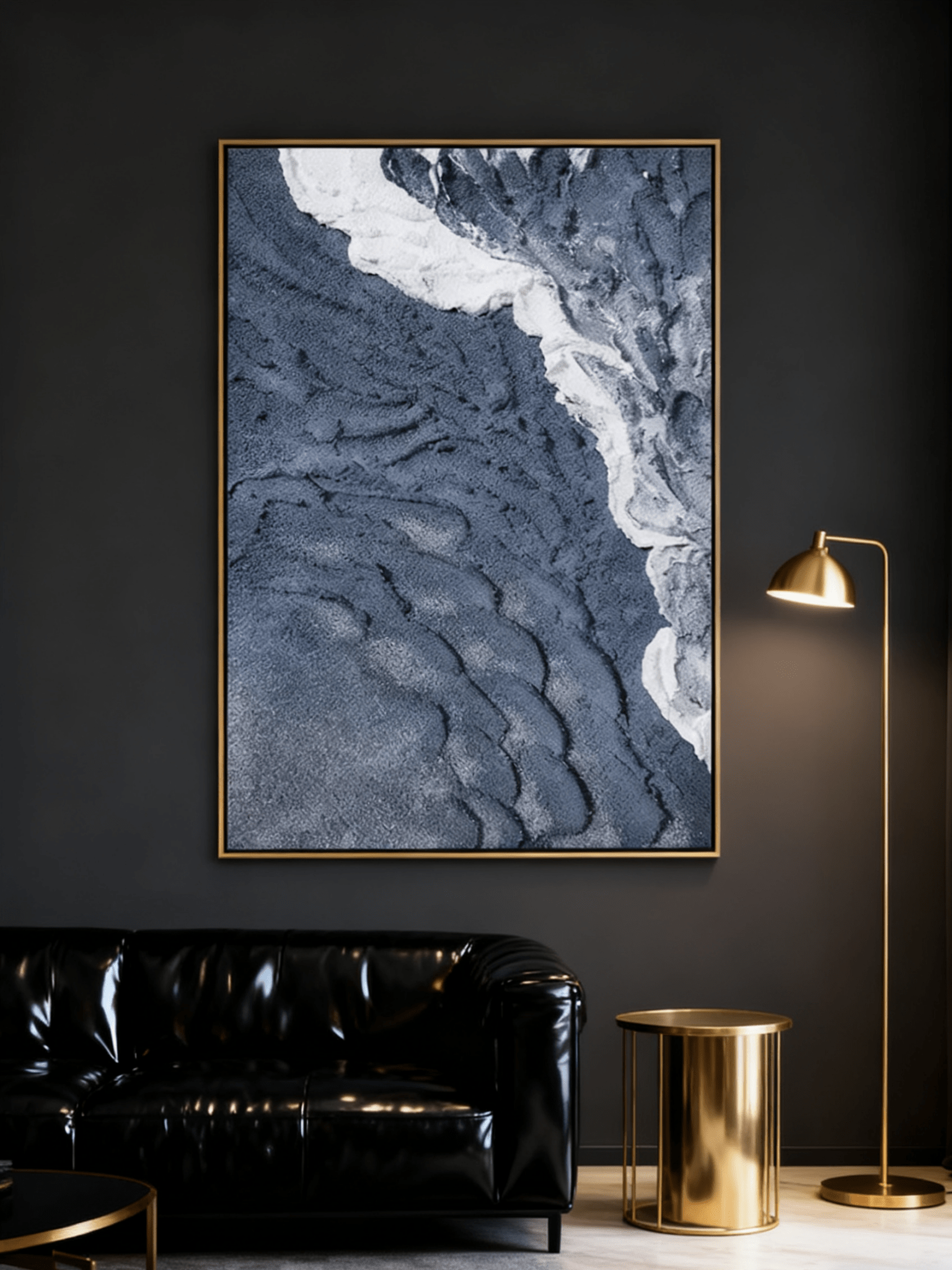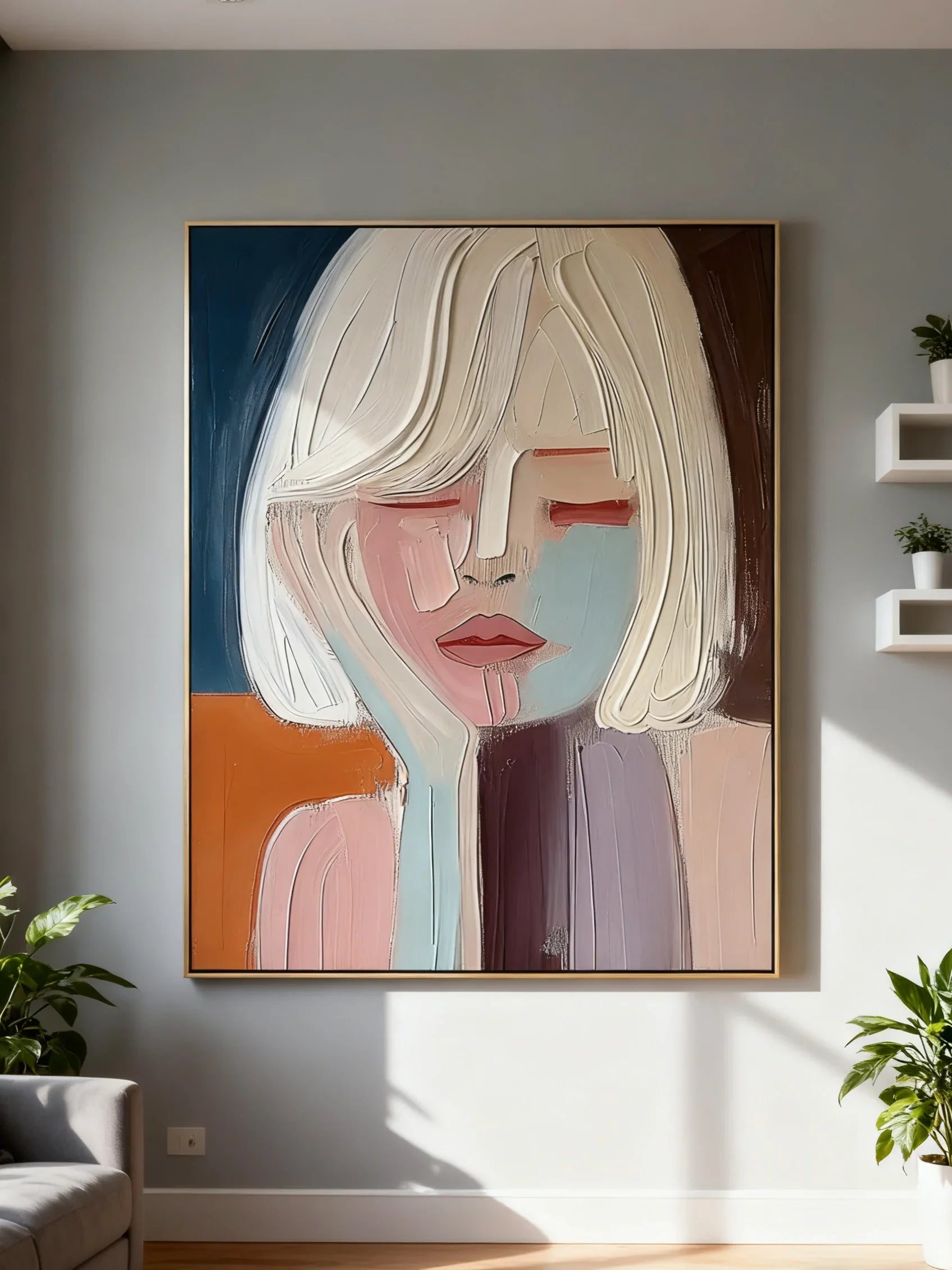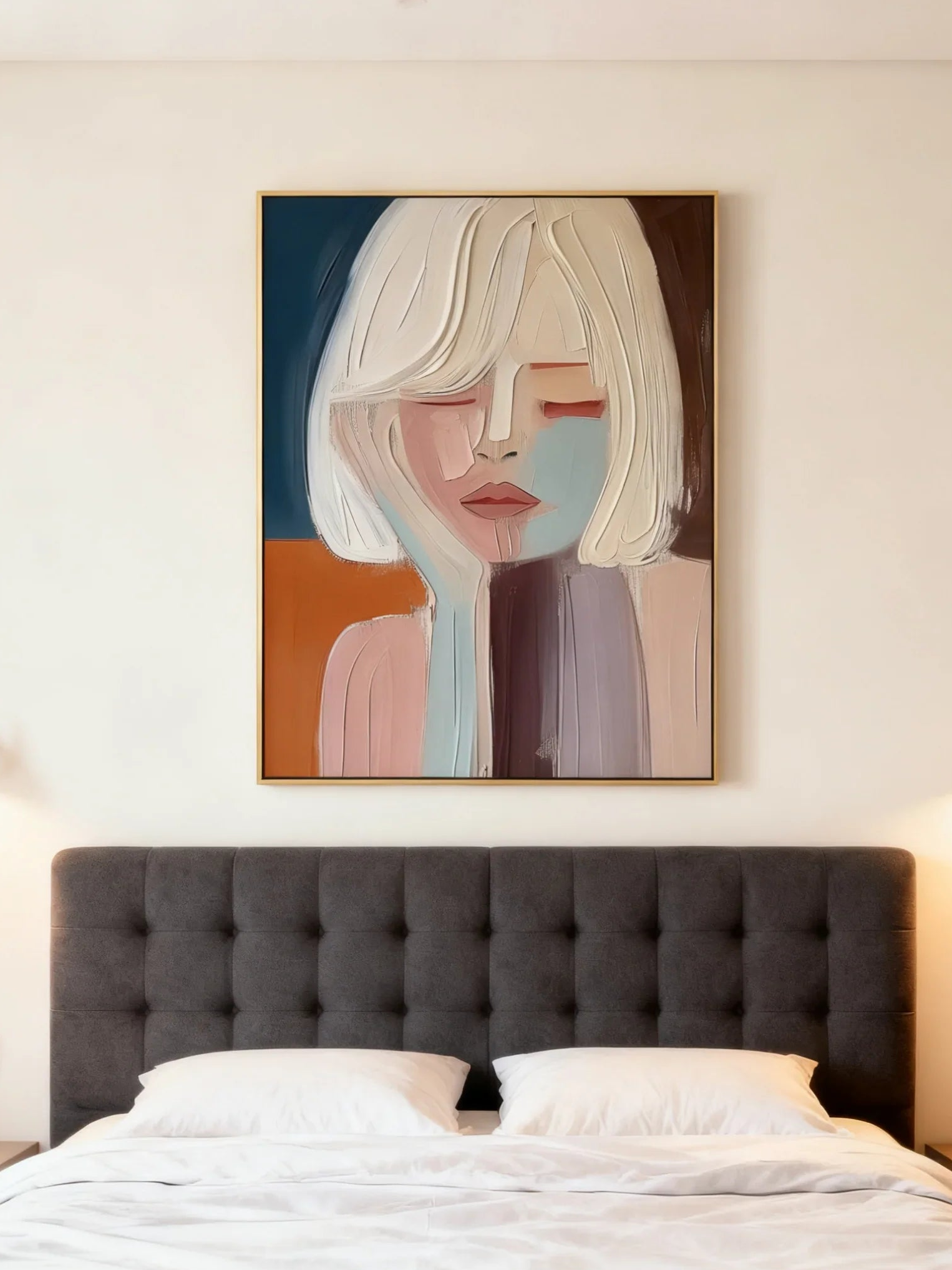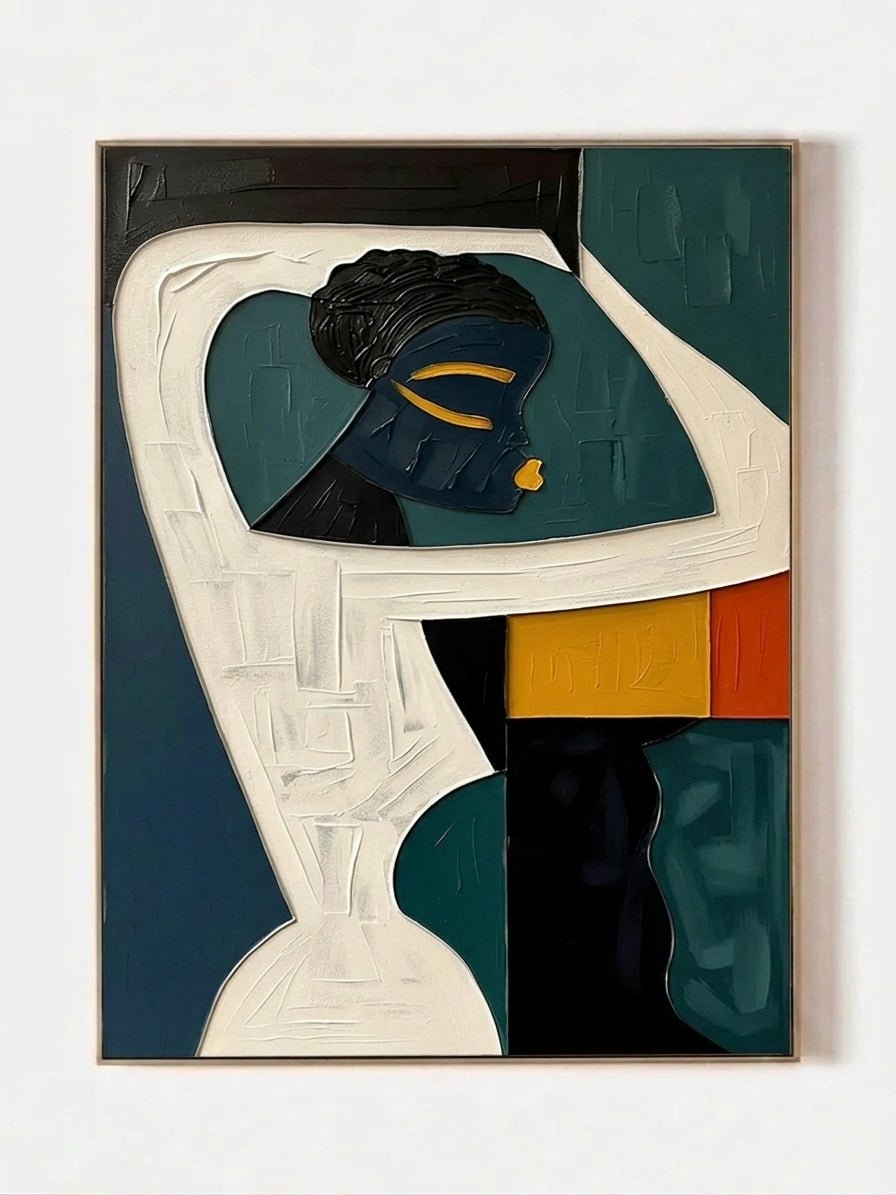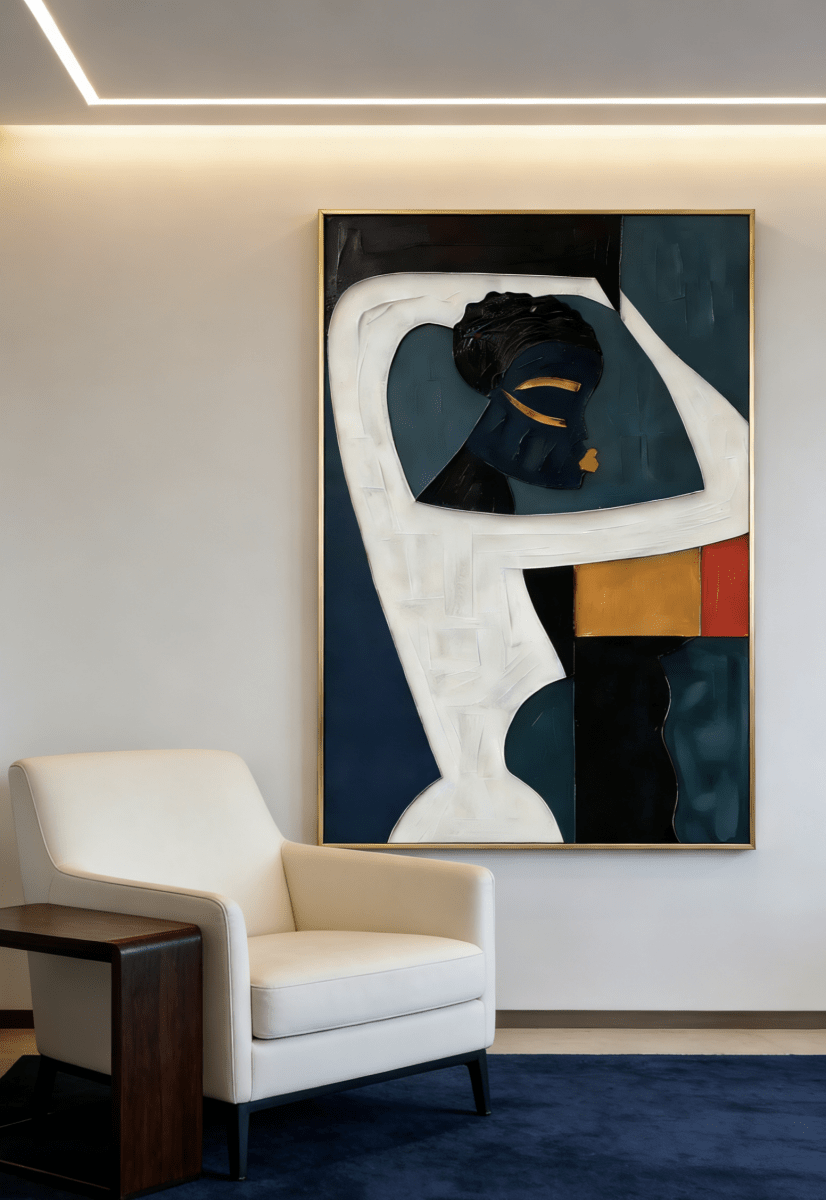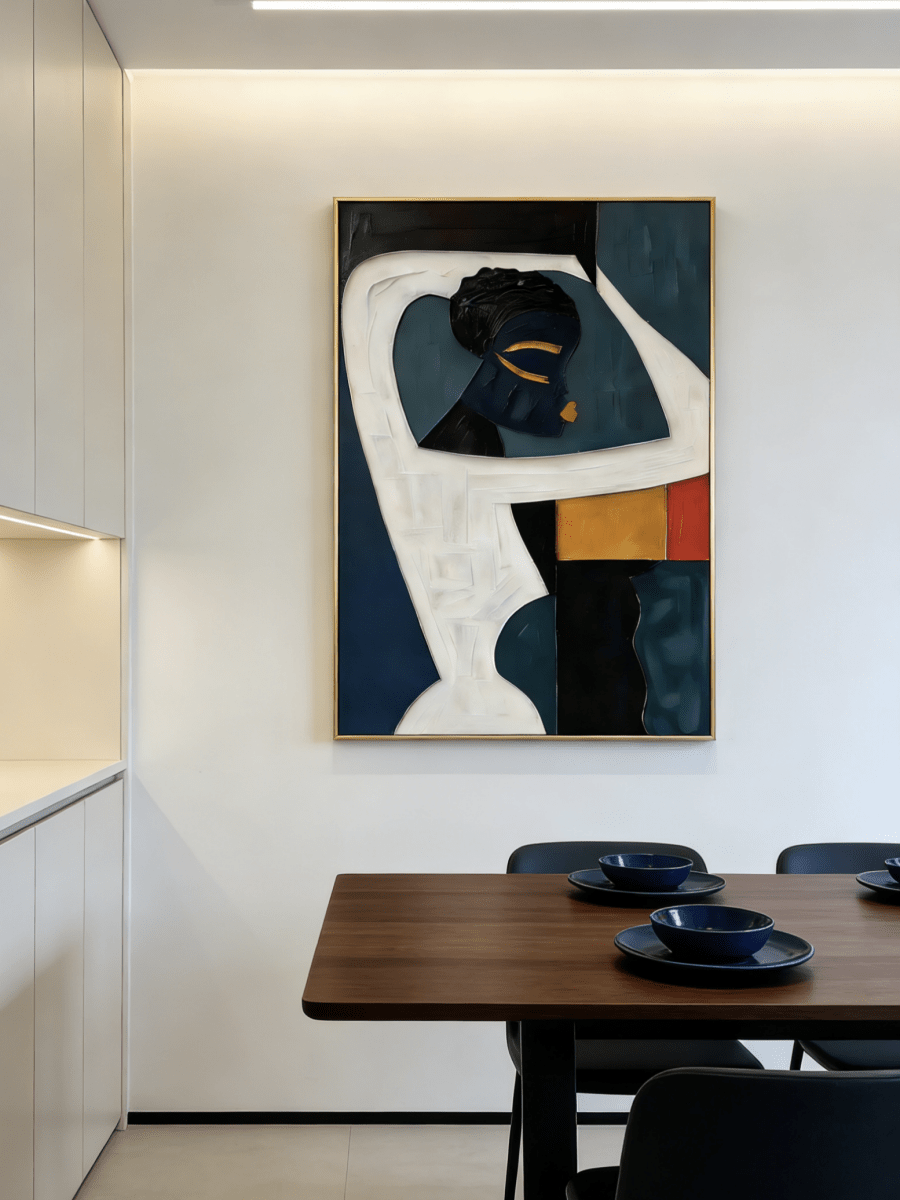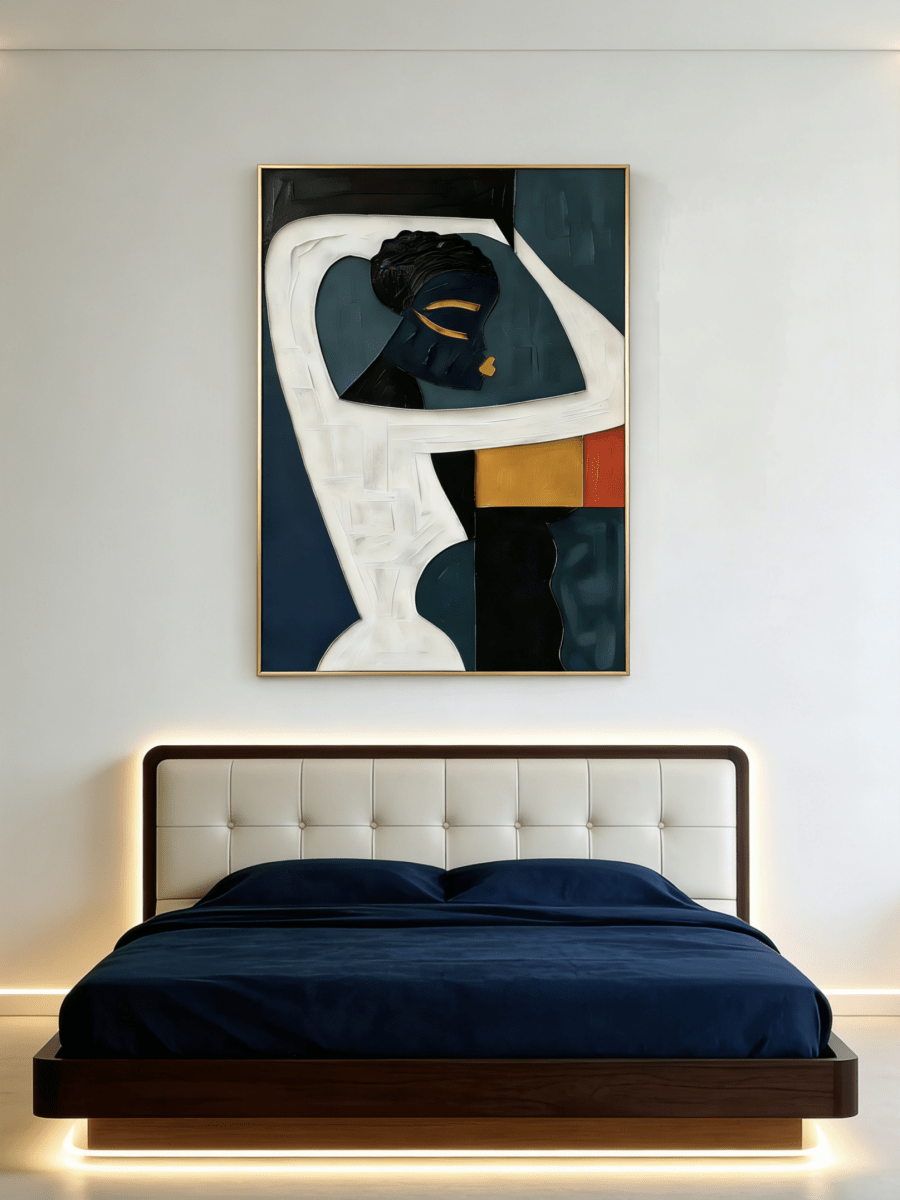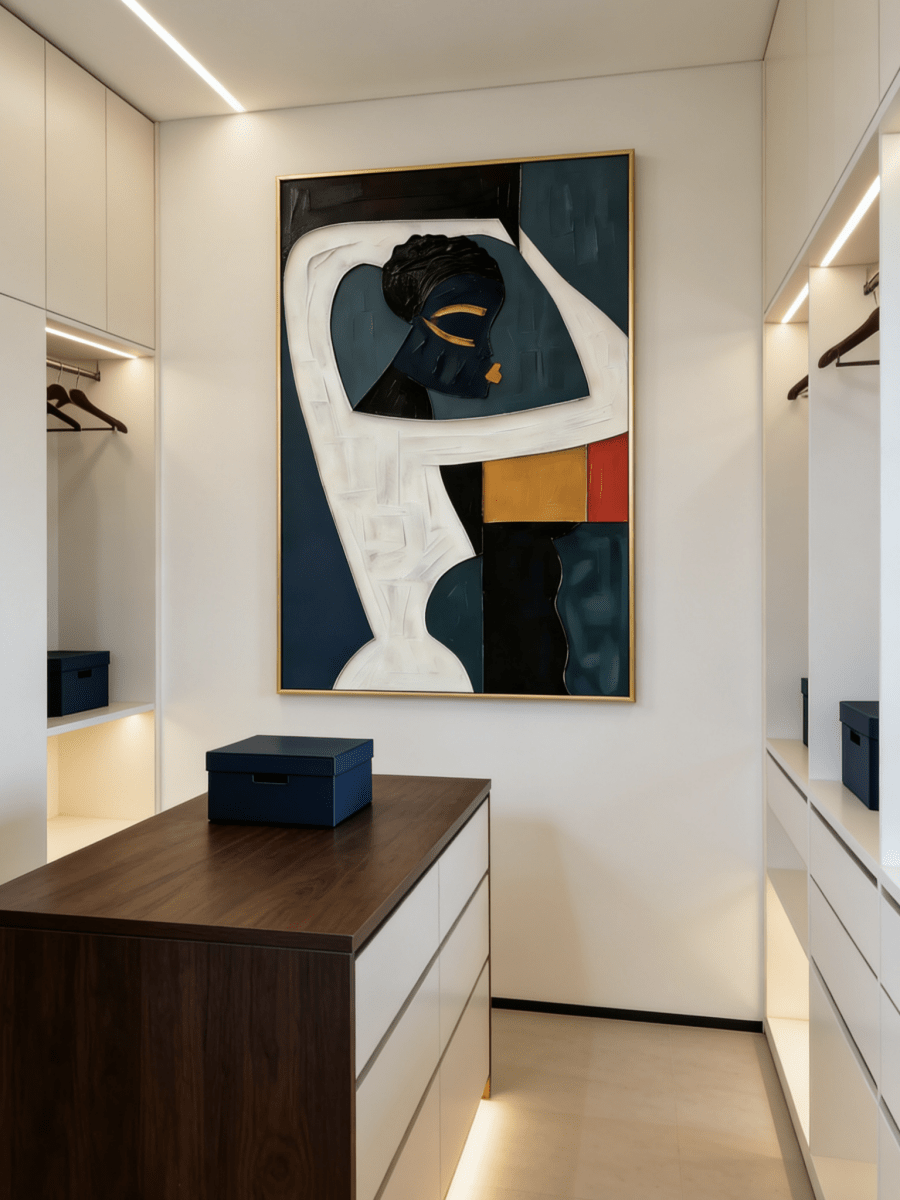

Two or three panels? It sounds like a small choice until you are standing in front of a blank wall with a 96-inch sofa, a tape measure, and several size menus open on your phone. A diptych can feel calm and architectural; a triptych can carry a long wall with rhythm. Yet three panels are not automatically more luxurious, and two panels are not merely the smaller option. The right answer depends on the complete footprint of the set, the furniture below it, the room's proportions, and how strongly you want the wall to command attention.
This guide answers the questions that most often slow down a multi-panel purchase: how wide the whole composition should be, whether the listed size refers to each panel or the set, how much space belongs between panels, and where the center should land. It also gives practical calculations for sofas, beds, dining rooms, entryways, and open-plan homes. If you are comparing current formats, begin with WABI Wall Art's handmade wall art sets of two or three, then use the measurements below to narrow the choices before ordering.

What Is Diptych Wall Art?
A diptych is an artwork made of two related parts. Historically, the term described paired panels, often hinged, but in contemporary interiors it usually means two canvases designed to be viewed together. A wall art set of 2 may continue one image across a narrow break, repeat a material or color language, or use two distinct compositions that balance each other. The pause between them is part of the design.
Diptychs are especially useful when a wall needs width without excessive visual activity. Two panels create a clear left-right relationship, so the eye can understand the composition quickly. That makes the format well suited to quiet modern, Japandi, organic modern, minimalist, and wabi-sabi rooms. It also gives you a little installation flexibility: a narrow vertical pair can sit over a queen bed, while two large square panels can stretch across a substantial dining-room credenza.
In a living room, a diptych can align with a compact sofa or occupy the space between two architectural interruptions such as a window and a fireplace. In a bedroom, it naturally echoes the bilateral structure of a bed and nightstands. In an entryway, two vertical works can add height without turning a short passage into a gallery wall. In a dining room, the format creates a composed focal point above a buffet while leaving room for sconces, lamps, or a doorway.

What Is Triptych Wall Art?
A triptych consists of three sections or panels intended to form one work. The three-part structure has a long history in art; in modern homes, it offers a strong center with two balancing sides. A wall art set of 3 can read as a continuous panorama or as three related canvases with their own internal details. Either way, the eye registers a beginning, middle, and end, which gives the wall a steady visual cadence.
Triptychs are not inherently “better” than diptychs. Their advantage is coverage and rhythm. On a large sofa wall, three narrower panels can fill a long horizontal zone without the handling challenges of one extremely wide canvas. In an open-concept home, the repeated divisions help define the living zone from across the room. Under high ceilings, tall panels can connect the furniture grouping to the architecture and prevent the artwork from appearing stranded too close to the sofa.
The format does require more exact installation. Two gaps must match, three top edges must remain level, and the total footprint—including both spaces—must be centered. That added precision pays off when the room benefits from a more panoramic, ceremonial focal point.
Diptych vs Triptych Wall Art: Key Differences
The most useful way to compare diptych vs triptych wall art is not to ask which format is more impressive. Ask what each format does to the wall. The table below assumes the panels belong to one coordinated composition and are hung at equal height.
| Dimension | Diptych | Triptych |
|---|---|---|
| Number of panels | 2 panels, creating a simple left-right relationship | 3 panels, creating a center and two balancing sides |
| Visual impact | Calm, graphic, architectural, and easy to read | Panoramic, rhythmic, and more visually expansive |
| Best room size | Small to large rooms; especially useful where wall width is limited | Medium to large rooms with sufficient wall width and viewing distance |
| Recommended wall width | Works well on narrow-to-medium uninterrupted walls; allow clear side margins | Best on medium-to-wide uninterrupted walls where all three panels can breathe |
| Furniture matching | Queen beds, compact sofas, consoles, buffets, paired chairs | Long sofas, king beds, sectional seating zones, long credenzas |
| Installation difficulty | Moderate: one gap and two hanging points to coordinate | Higher: two equal gaps and three panels to level as one group |
One detail matters more than the label: the product's size convention. Some sellers state the dimensions of each panel, while others state the full assembled set. Never assume. If a triptych is listed as 24 × 24 inches “each,” its artwork width is 72 inches before spacing. With two 3-inch gaps, the installed footprint becomes 78 inches.
How to Choose Between Diptych and Triptych Wall Art
1. Measure the usable wall width
Measure the uninterrupted wall area, not the entire room wall. Door trim, tall plants, floor lamps, sconces, and thermostat controls all reduce the field the artwork can comfortably occupy. Leave intentional blank wall on both sides. If three panels would force narrow side margins or interfere with nearby architecture, a diptych will look more considered.
2. Start with the furniture, not the wall
When art hangs above furniture, that furniture becomes its visual base. Measure the actual sofa, headboard, console, or buffet. A diptych often fits compact furniture because it reaches an appropriate total width with fewer panels. A triptych becomes persuasive above a long sofa or sideboard because its three-part rhythm follows the furniture's horizontal line.
3. Respect the room's proportions
A small room can support a diptych with generous panels because there is only one internal gap. Three small panels on the same wall may feel busy or fragmented. In a tall or open room, however, a modest diptych can look visually light. A larger triptych gives the architecture a focal point that remains legible from a distance.
4. Decide how strong the focal point should be
Choose two panels when you want the art to support a serene room without dominating it. Choose three when the wall should organize the entire seating or dining zone. Color contrast, texture, and frame finish also affect impact, so panel count is only one lever. A high-contrast diptych can command more attention than a tonal triptych.
5. Match the visual language of the interior
Diptychs suit interiors built around symmetry, restraint, and larger visual shapes. Triptychs complement longer sight lines, repeated architectural bays, or furniture arrangements with a clear center. For a collected interior, either format can work; just avoid adding unrelated art too close to a coordinated set. The blank wall around it is what allows the set to read as one artwork.
How to Size Wall Art Sets for Your Space
Good wall art set sizing begins with the installed footprint, not the canvas width alone. Use these formulas:
- Diptych total width = (2 × panel width) + 1 gap
- Triptych total width = (3 × panel width) + 2 gaps
If panels have different widths, add the width of every panel and every internal gap. Frames also count. Work in one unit from start to finish, and confirm whether product dimensions include the frame.
Above a sofa
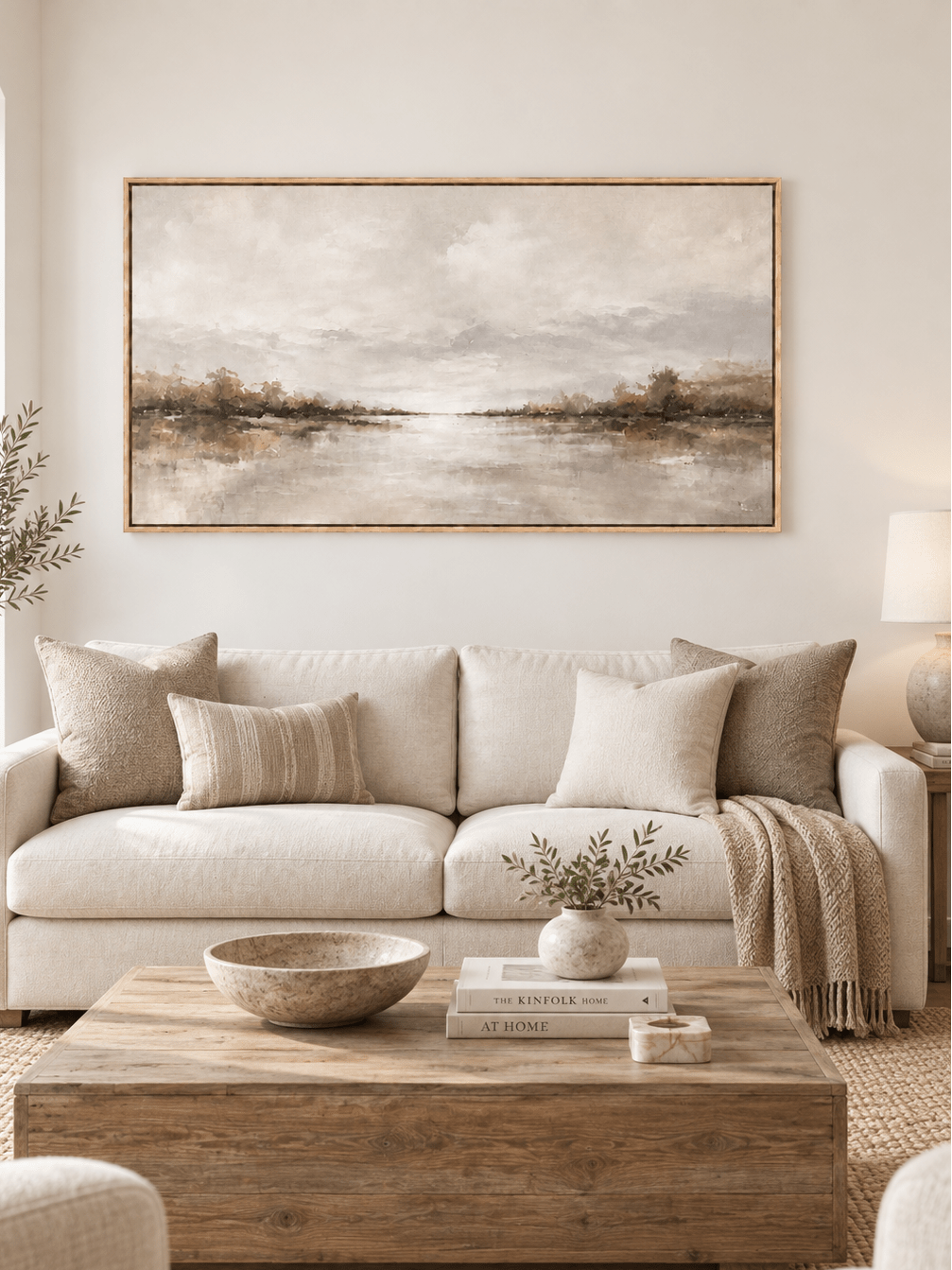
A dependable starting point is to make the complete artwork group about two-thirds to three-quarters of the sofa width. This is a proportional guide, not a building code; slim arms, a sectional chaise, adjacent floor lamps, and the available wall can all alter the final choice.
For a 96-inch sofa, two-thirds is 64 inches and three-quarters is 72 inches. Aim for a complete installed artwork width of about 64–72 inches. A diptych made from two 32-inch-wide panels with a 3-inch gap measures 67 inches overall. A triptych made from three 22-inch-wide panels with two 3-inch gaps measures 72 inches overall. Both are proportionally sound, but the diptych feels calmer and the triptych more panoramic.
Above a queen or king bed
Measure the headboard whenever possible because it is often wider than the mattress. If there is no headboard, a standard 60-inch queen mattress suggests an artwork group around 40–45 inches wide; in practice, a 40–48-inch group is a useful starting range. A standard 76-inch king mattress suggests roughly 51–57 inches; a 50–60-inch group usually relates well to the bed. Wider headboards can support wider art, but the set should normally remain inside the outer headboard edges.
Also check vertical clearance. Leave enough air above pillows and the headboard so the art does not appear to rest on the bed. In most rooms, 6–10 inches above the headboard is a practical starting point, adjusted for panel height and ceiling height.
In a dining room
If the art hangs over a buffet or sideboard, use that piece as the anchor and apply the same two-thirds-to-three-quarters idea. If the wall is open, tape the proposed full footprint to the wall and view it from the dining-room entrance as well as from a seated position. A triptych can suit a long dining wall, while a diptych often leaves welcome space for sconces or serving lamps.

Before ordering, compare the formula with the size options in the WABI Wall Art multi-panel collection. Many WABI listings describe the size of each panel, so calculate the final width with spacing rather than reading one panel dimension as the entire group.
How to Space Diptych Wall Art
For most homes, effective two piece wall art spacing is 2–4 inches. A 2-inch gap keeps smaller panels tightly connected. Three inches is an adaptable middle ground. Four inches can suit very large canvases viewed from farther away, but should still feel like a pause inside one composition rather than a strip of unrelated wall.
Let panel size and viewing distance guide the choice. Two 20-inch panels in a bedroom will usually want a narrower gap than two 48-inch panels across a large living room. Do not widen the gap merely to fill more wall; choose a larger set instead. Excessive spacing makes the panels look like separate purchases and weakens any visual line that travels from one canvas to the other.
Lay the panels faceup on a protected floor, set the intended gap, and measure the complete outside width. Mark that footprint on the wall with painter's tape. Find the group's horizontal center, align it with the center of the furniture, then calculate the hanging points from that centerline. Recheck the top and bottom edges with a level.

How to Space Triptych Wall Art
If you are wondering how to space triptych wall art, begin with 2–5 inches between panels. Two to three inches is appropriate for many medium sets and keeps a continuous image visually connected. Four to five inches can work for large square or vertical panels in a generous room, provided the artwork is intended to tolerate that separation.
The two gaps must be equal. Unequal spacing makes the middle panel appear off-center even when the hardware is mathematically centered. Measure the frames, not just the painted surface, and use the same edge-to-edge gap on both sides. Keep the top edges horizontally aligned unless the artwork was specifically designed as a staggered set.
Calculate the center of the complete group. For equal-width panels with equal gaps, this coincides with the center of the middle panel. For unequal panels, it may not. On an open wall, a common gallery starting point places the center of the whole composition around 57–60 inches from the floor. Above a sofa, bed, or buffet, the relationship to the furniture matters more: center the group over the furniture and usually leave about 6–10 inches between the furniture and the bottom of the art, then check seated sight lines.
Should Diptych and Triptych Wall Art Be Treated as One Artwork?
Yes. Multiple canvases create physical breaks, but the installation should be planned as one visual object. That means the composition gets one centerline, one overall width, and one relationship to the furniture below it.
- Center alignment: center the outside edges of the entire set over the sofa, bed, or sideboard—not each panel against nearby objects.
- Equal spacing: keep every internal gap consistent. Measure edge to edge after the panels are on the wall.
- Consistent height: align the top edges and confirm with a level. If the panels differ in height, follow the artist's intended layout and align the visual center.
This “one artwork” rule also protects the composition from surrounding clutter. Give the group enough blank wall, keep table lamps from overlapping its edges when viewed straight on, and avoid placing unrelated frames inside its immediate field.
Best Placement Ideas for Diptych and Triptych Wall Art
Triptych above a sofa
A triptych above a sofa works best when the seating wall is long, uninterrupted, and visible from across the room. Center the total footprint over the sofa rather than over the entire wall. Keep the gaps subordinate to the panels, and check that the outside edges do not extend beyond the sofa arms unless the furniture arrangement includes side tables or a sectional that visually widens the base.
Bedroom wall
Use a diptych for a quiet, balanced bedroom or where the headboard is moderately wide. A triptych can suit a king bed, a long upholstered headboard, or a bedroom with a high ceiling. Keep detailed or high-contrast work far enough above the pillows that it does not feel visually crowded. Secure every panel with hardware appropriate for its weight and the wall construction.
Entryway
A pair of vertical panels can give a narrow entry more height without consuming excessive width. Align the set with a console rather than centering it on a long hallway wall. If there is no furniture below, use the overall eye-level center as the main reference and verify the view from the front door.
Open-concept living space
In an open plan, the artwork must work from several distances. A triptych can mark the living zone and remain readable from the kitchen or dining area. Choose sufficient panel scale before increasing the gaps; large blank spaces between small canvases make the group dissolve at a distance. Tonal texture is especially effective because it adds presence without introducing competing color into multiple zones.

Four Handmade WABI Diptychs to Consider
Product availability changes, so verify the current format, per-panel size, frame, and lead time on each listing. These four active WABI Wall Art diptychs illustrate how the same two-panel structure can solve very different rooms:
- Modern Structural Abstract Diptych Wall Art – SR#0235: sage, olive, stone, and charcoal geometry gives a living room or office a calm architectural anchor. The vertical panels are useful where you want height as well as width.
- Modern Coastal Abstract Diptych Wall Art – SR#0233: blue, cream, and terracotta organic forms suit a bright living room, dining space, or relaxed contemporary home that needs color without a literal coastal scene.
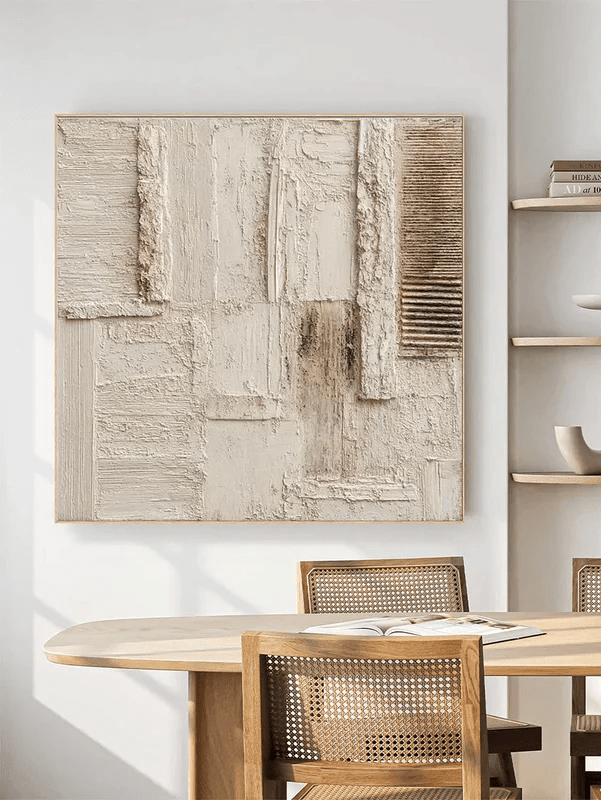
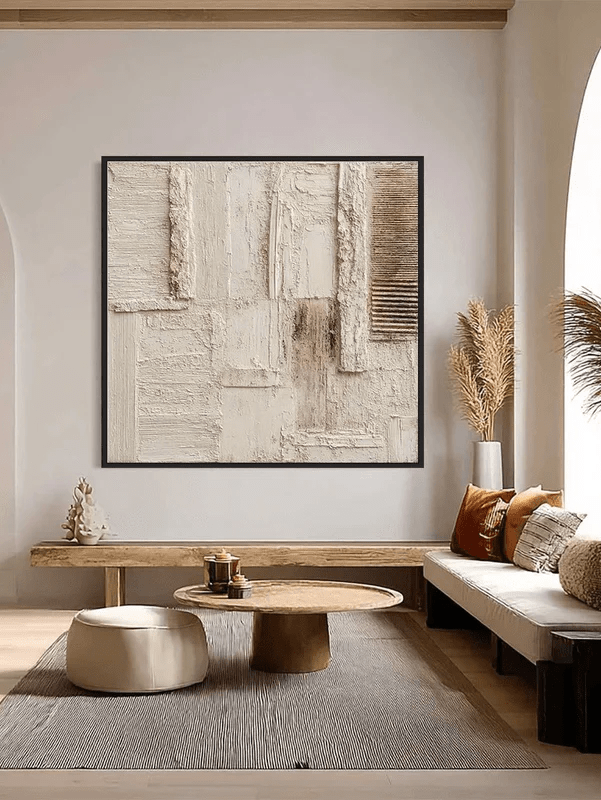
- White Textured Plaster Wall Art Set of 2 – LH#0086: raised ivory relief and restrained color make this pair particularly effective above a bed or in a serene entryway. Side light reveals the hand-worked surface.
- Brown & Beige Abstract Painting Set of 2 – EV#0007: square panels in taupe, brown, and beige bring tactile interest to a dining room, long console, or organic-modern seating area.
To compare current dimensions and framing choices in one place, explore WABI's coordinated diptych and triptych wall art collection. If the exact panel count or total footprint you need is not currently listed, contact the WABI team before purchasing rather than assuming that a product can be divided or extended.
Frequently Asked Questions
Is diptych or triptych wall art better?
Neither is universally better. A diptych is often calmer and easier to fit on a compact wall; a triptych offers more rhythm and coverage for a wide wall. Use the furniture width, room scale, and desired visual impact to decide.
How much space should be between triptych panels?
Use 2–5 inches as a practical range. Two to three inches keeps medium panels closely connected, while four to five inches may suit large panels in a spacious room. Both gaps should be exactly equal.
How wide should wall art be above a sofa?
The complete installed group usually looks balanced at about two-thirds to three-quarters of the sofa width. For a 96-inch sofa, that is approximately 64–72 inches, including every panel, frame, and gap.
Can diptych wall art work in a small room?
Yes. Two panels can add width without the visual fragmentation of a larger gallery arrangement. Choose an appropriate overall footprint, keep the gap near the lower end of the 2–4-inch range, and preserve blank wall around the group.
Should wall art panels be evenly spaced?
Yes, unless the artist specifies an irregular layout. Equal edge-to-edge spacing helps the panels read as one work and keeps the center visually stable.
Is triptych wall art outdated?
No. The three-panel format is historic, but its clear rhythm works naturally with modern sofas, open plans, and high ceilings. What dates a room is usually the wrong scale or generic styling—not the panel count itself.
How high should multi panel wall art hang?
On an open wall, start with the center of the full composition around 57–60 inches from the floor. Above furniture, center the group on the furniture and begin about 6–10 inches above it, adjusting for panel height, ceiling height, and viewing position.
Do diptych and triptych artworks need frames?
No. Gallery-wrapped or finished-edge canvases can look complete without frames, while float frames add definition and coordinate with furniture or hardware. Apply one consistent frame treatment to the whole set.
Can I customize wall art set sizes?
Options vary by artwork and maker. WABI Wall Art lists available per-panel sizes and frame choices on individual product pages. Confirm whether the measurement is per panel and ask the team about special requirements before placing an order.
Where can I buy handmade diptych and triptych wall art?
WABI Wall Art offers hand-painted, textured multi-panel artwork for contemporary interiors. Browse the current wall art sets of two or three, check the live availability on each listing, and contact the studio if you need a particular format or installed width.
Final Measurement Checklist
- Measure the furniture and the uninterrupted wall area.
- Choose a target total width—often two-thirds to three-quarters of the furniture width.
- Confirm whether the listing gives each panel's size or the full set size.
- Add every panel width, frame edge, and gap to calculate the installed footprint.
- Mock up the outside boundary and internal gaps with painter's tape.
- Center the complete group, keep spacing equal, and level the panels.
The successful choice is the one that looks intentional from the room's normal viewing points. Measure the group as one artwork, select panel count for the architecture rather than status, and let consistent spacing hold the composition together.