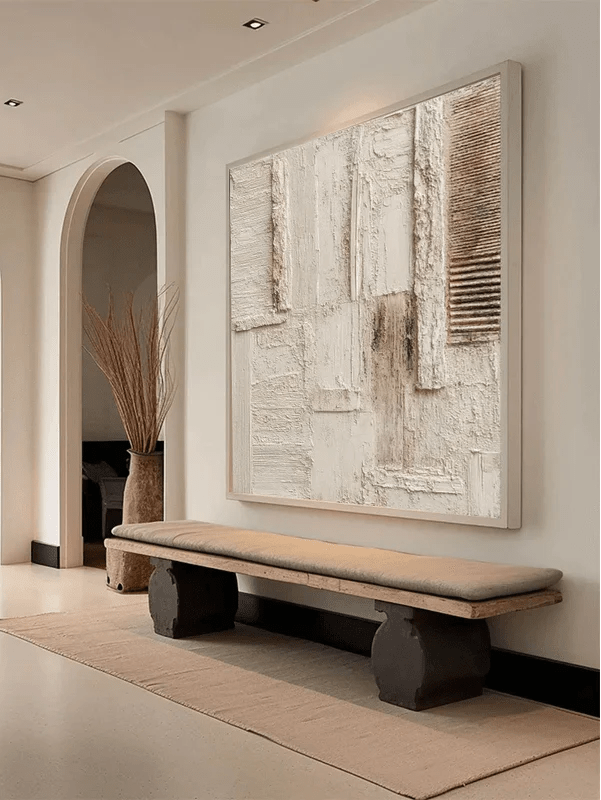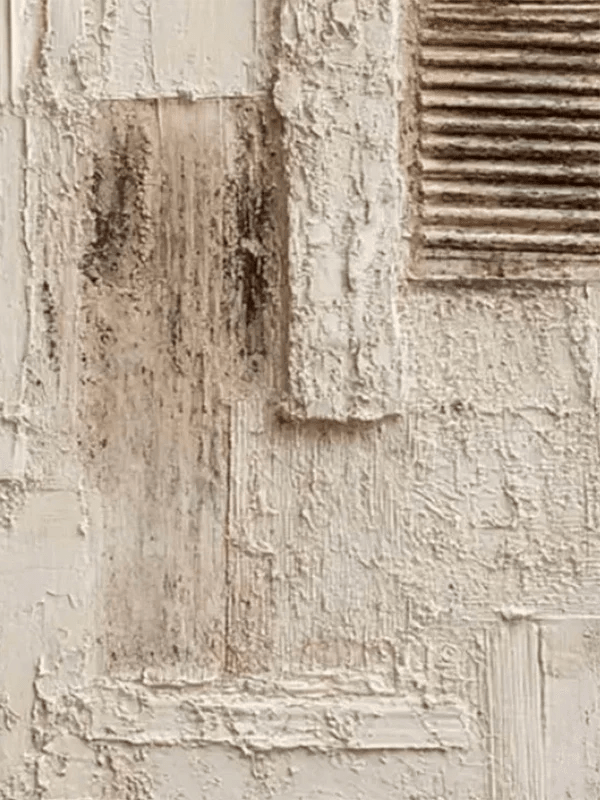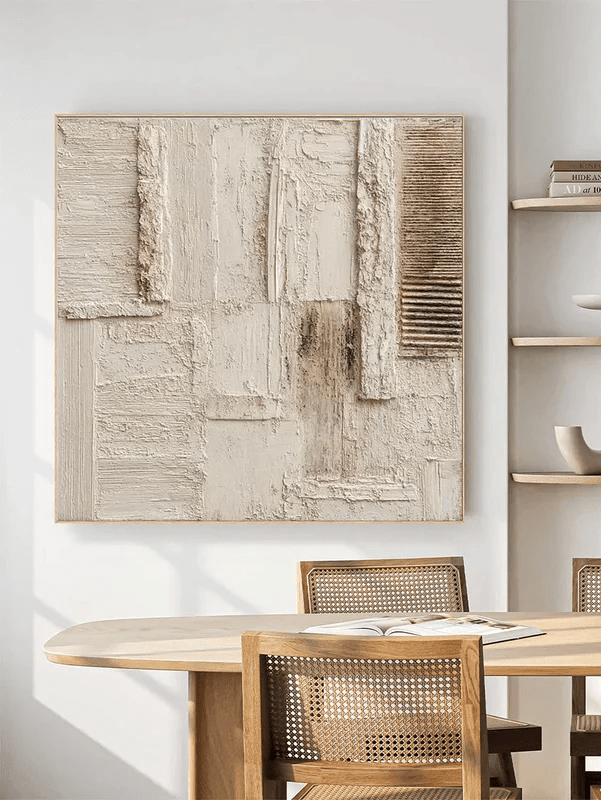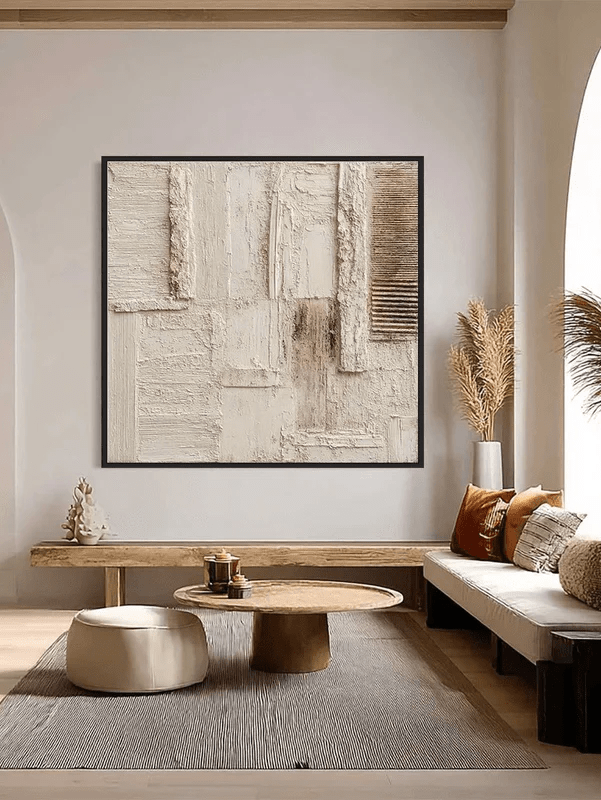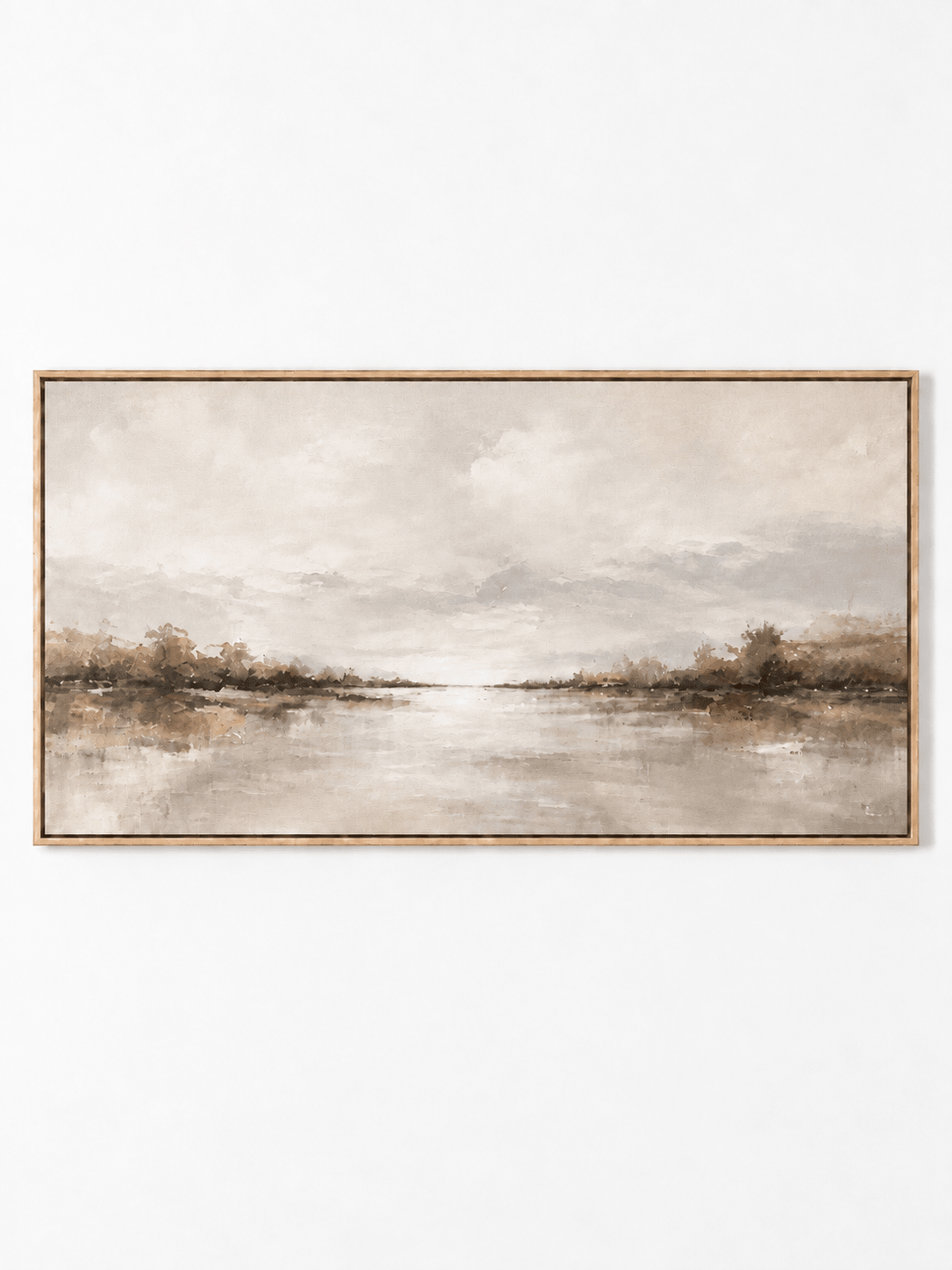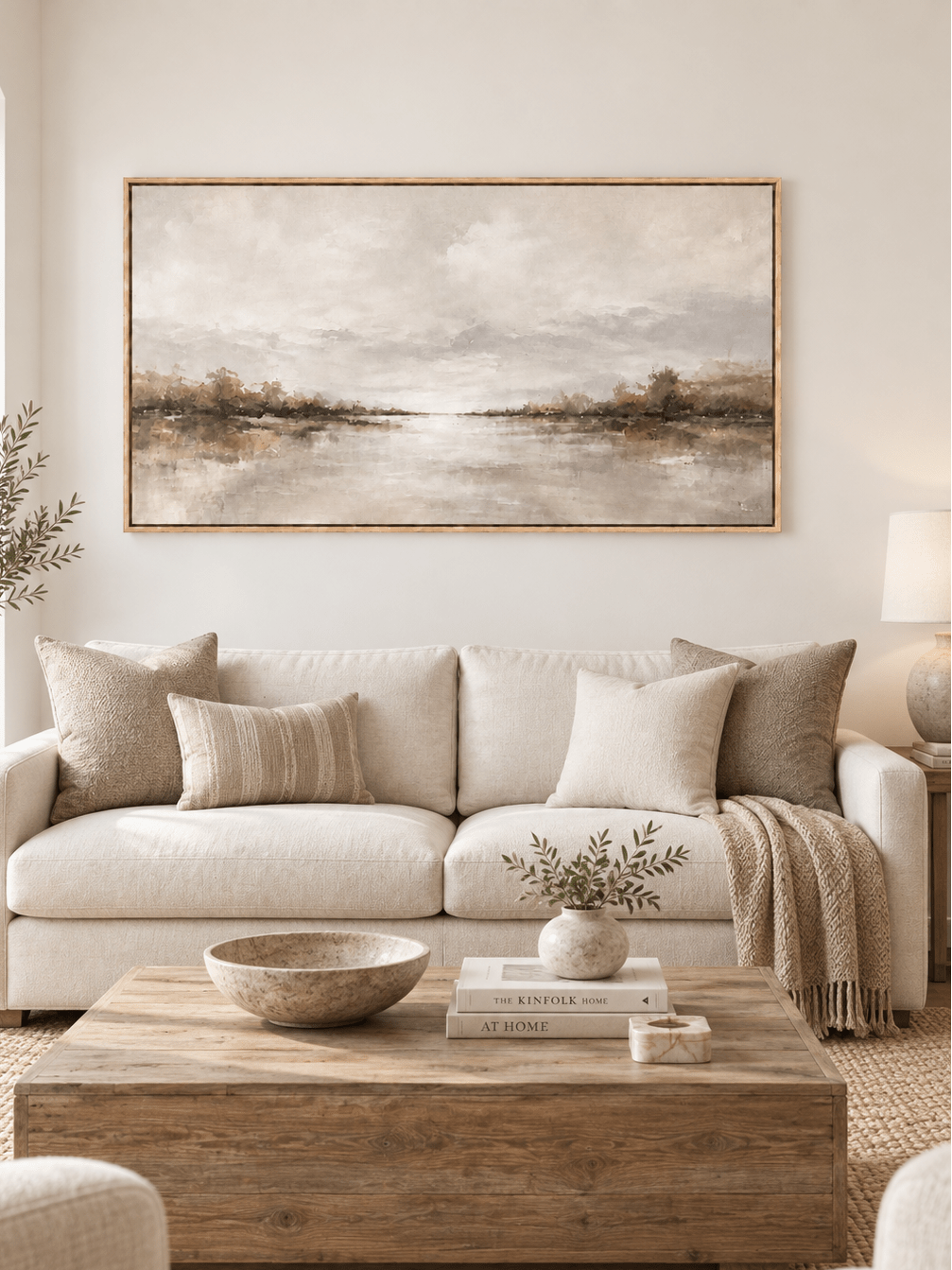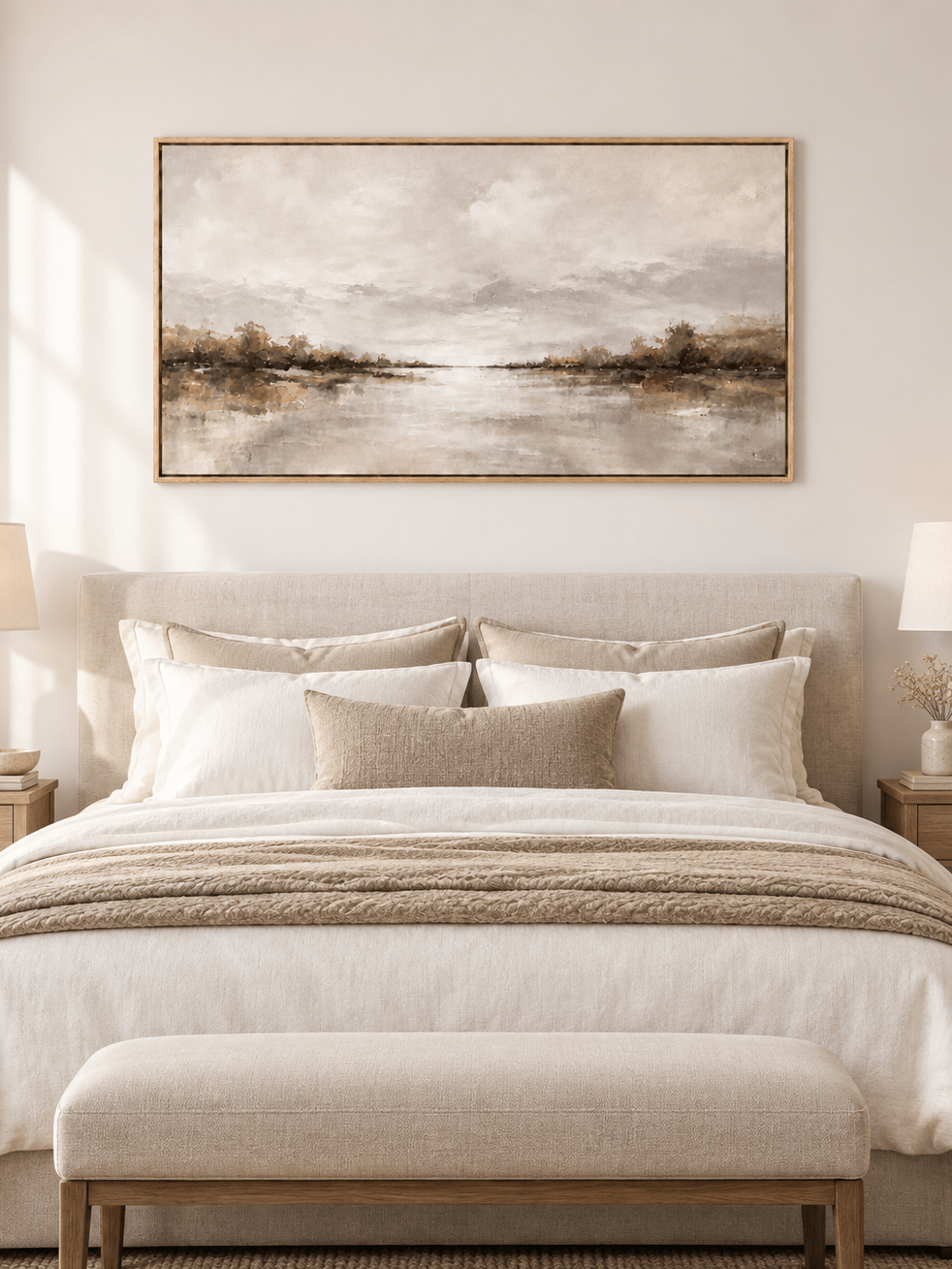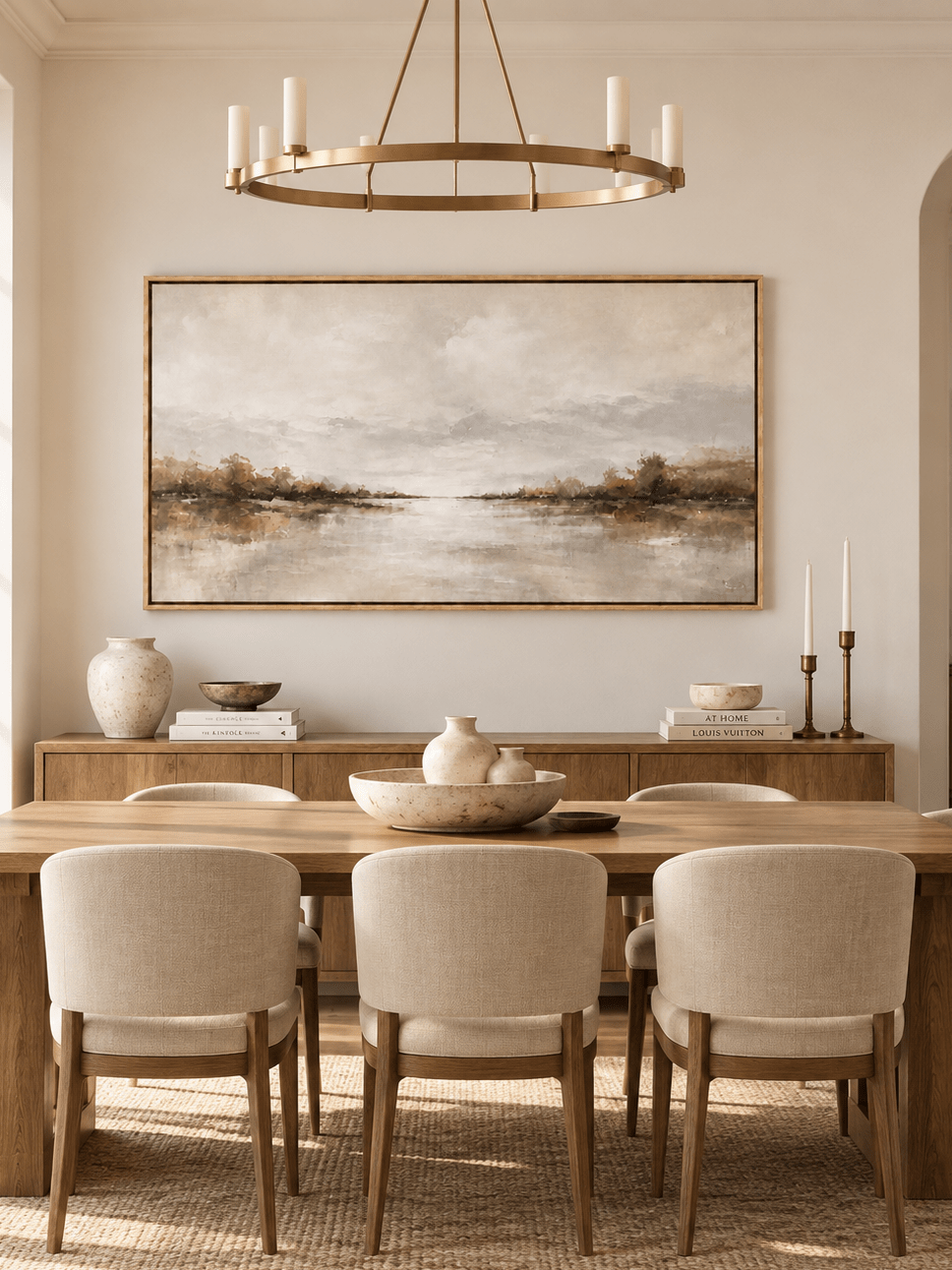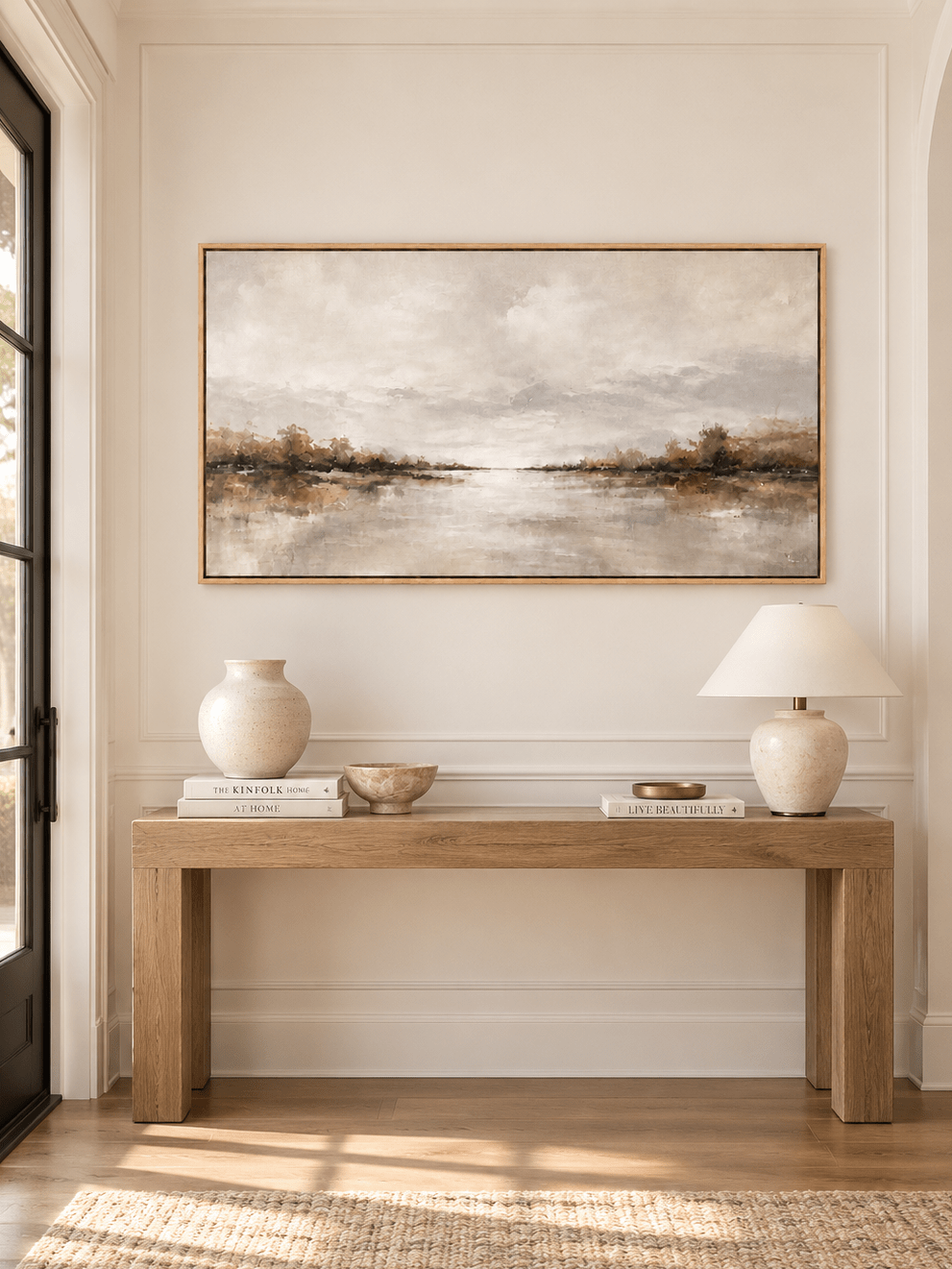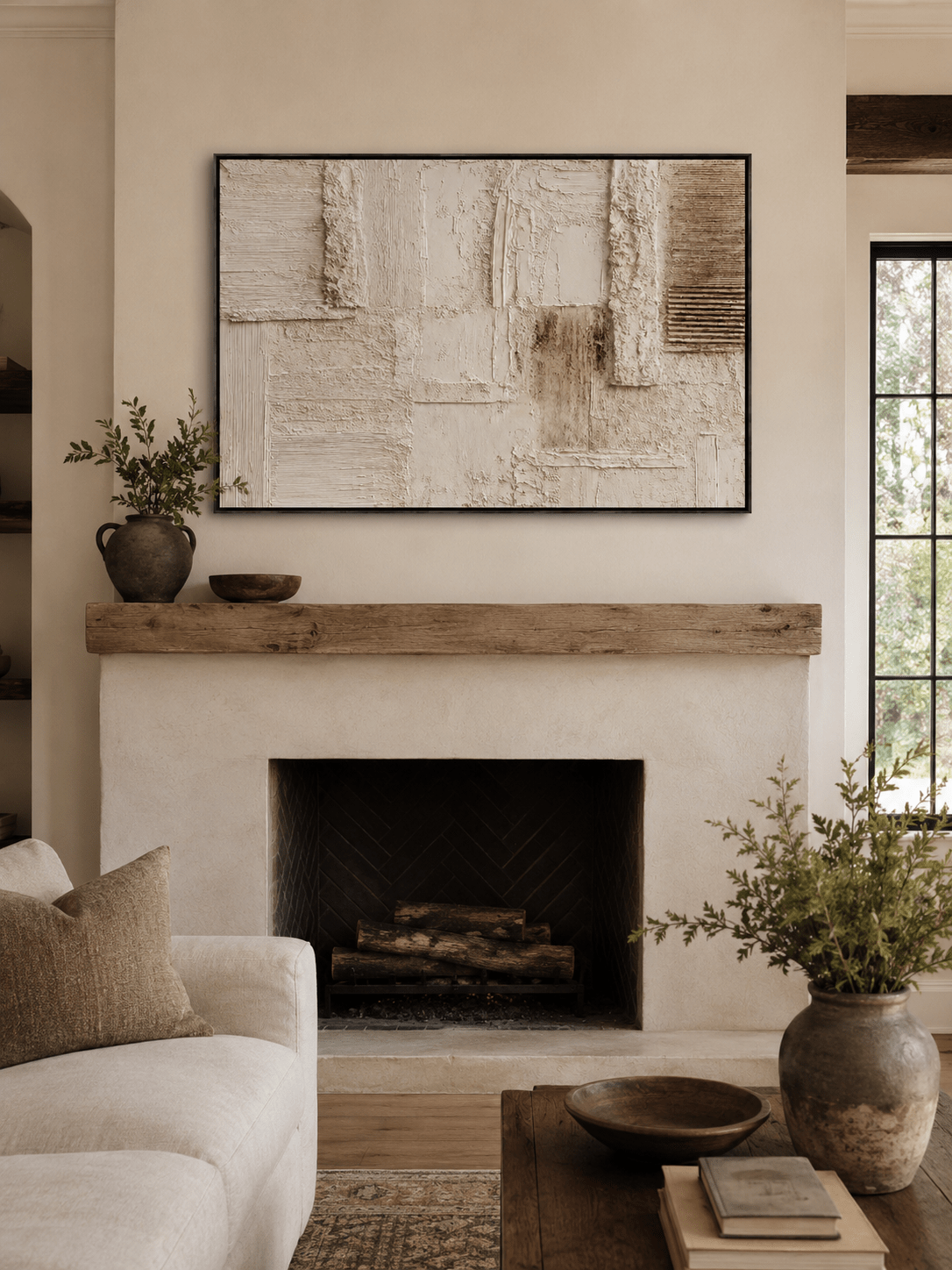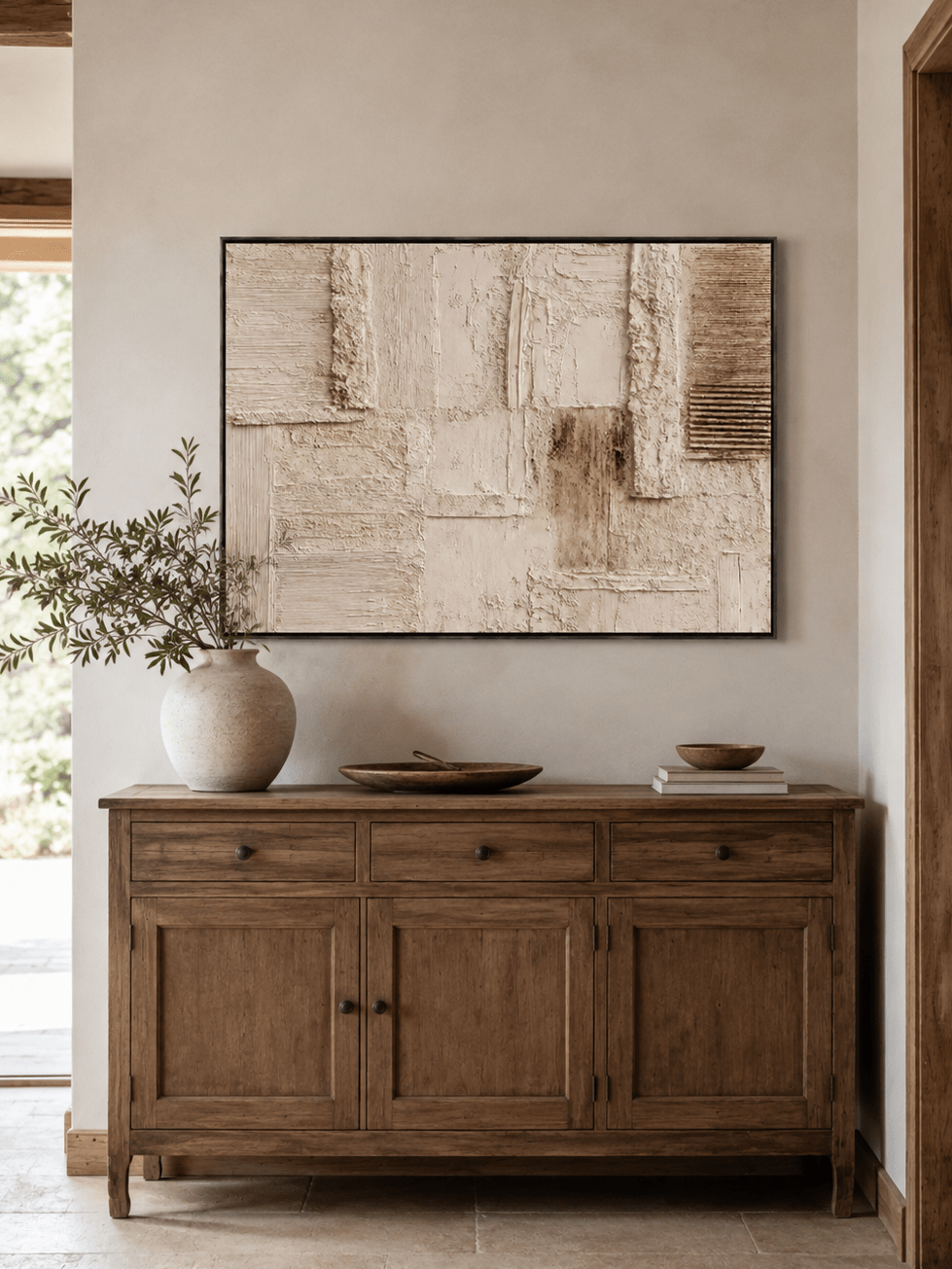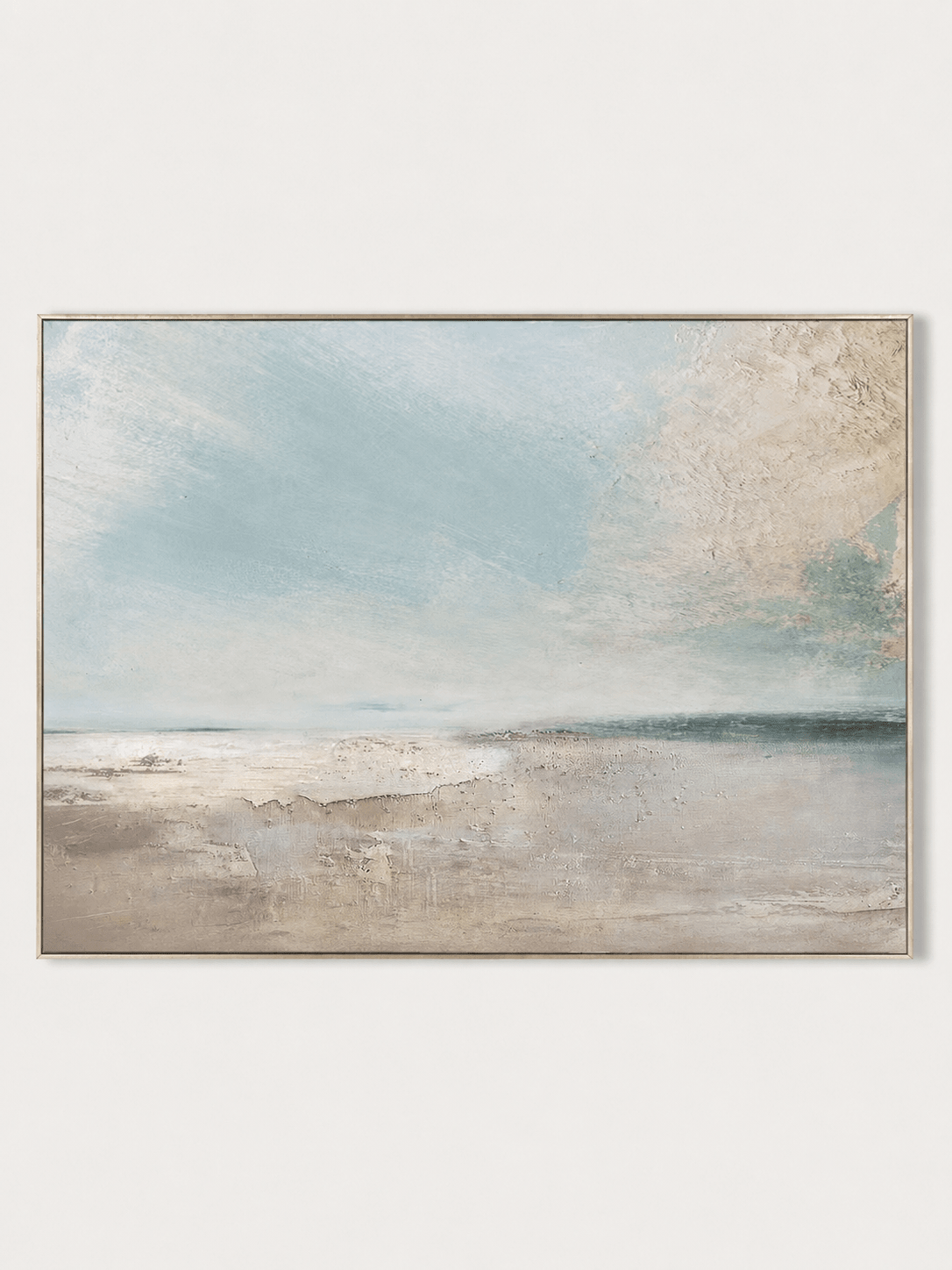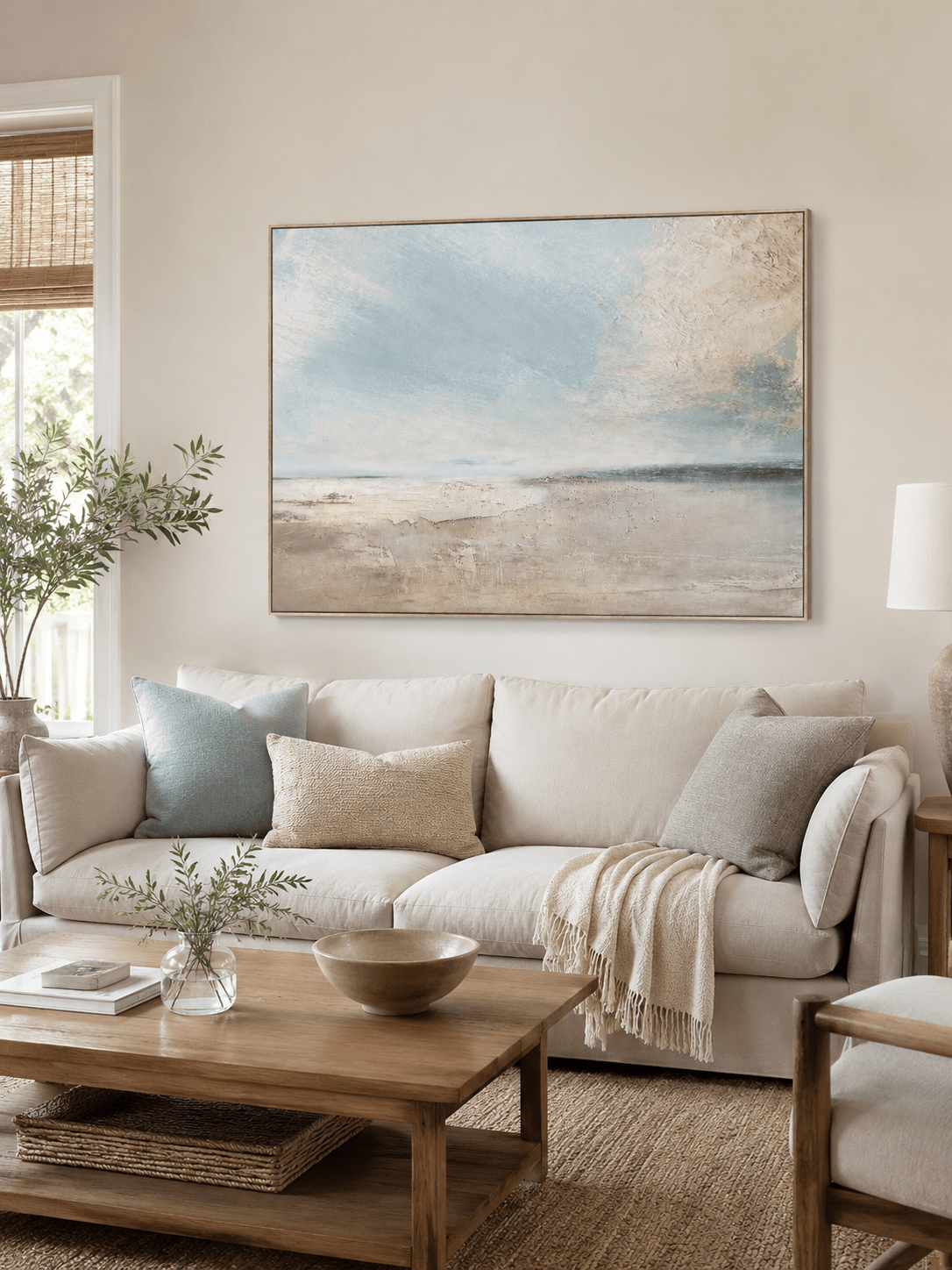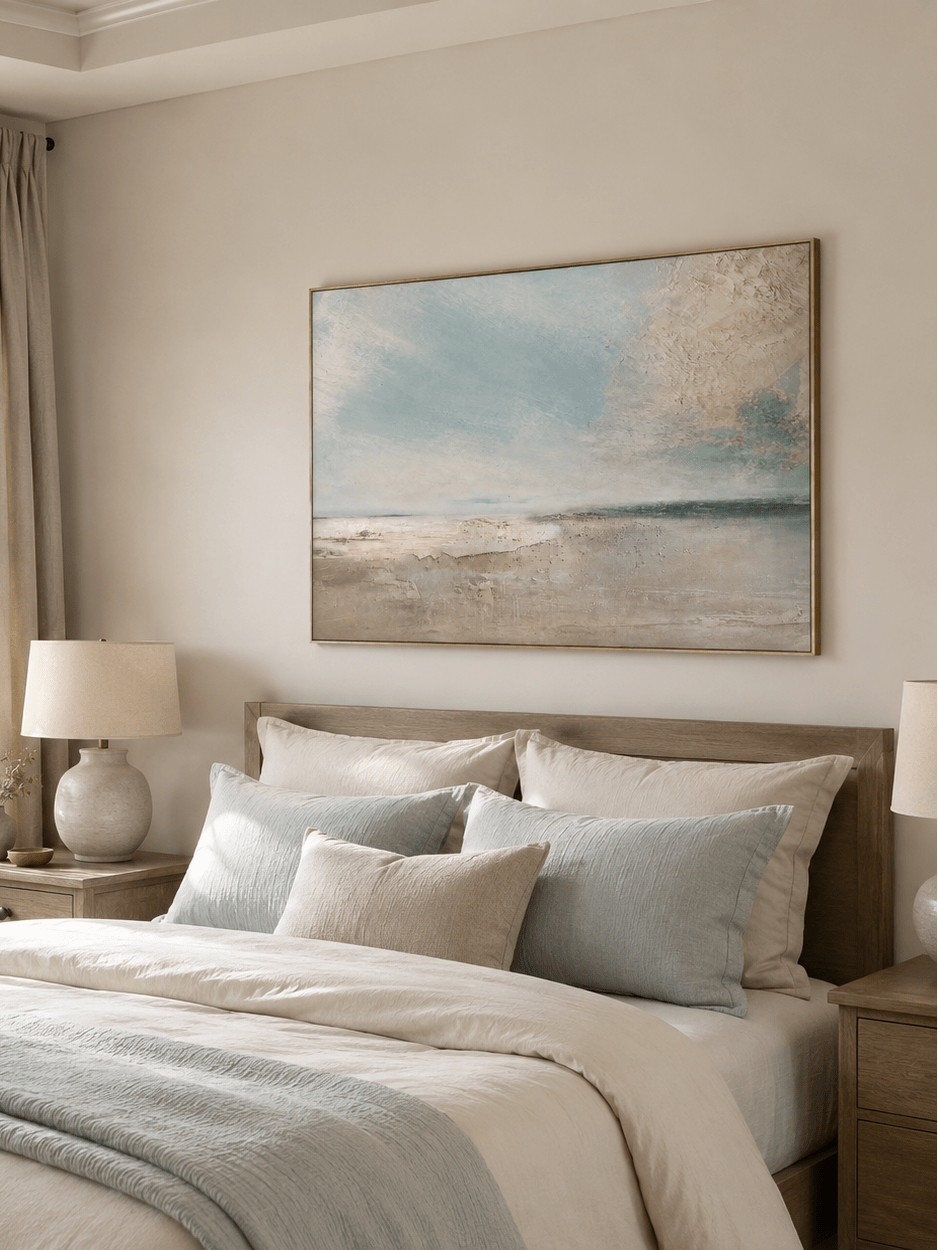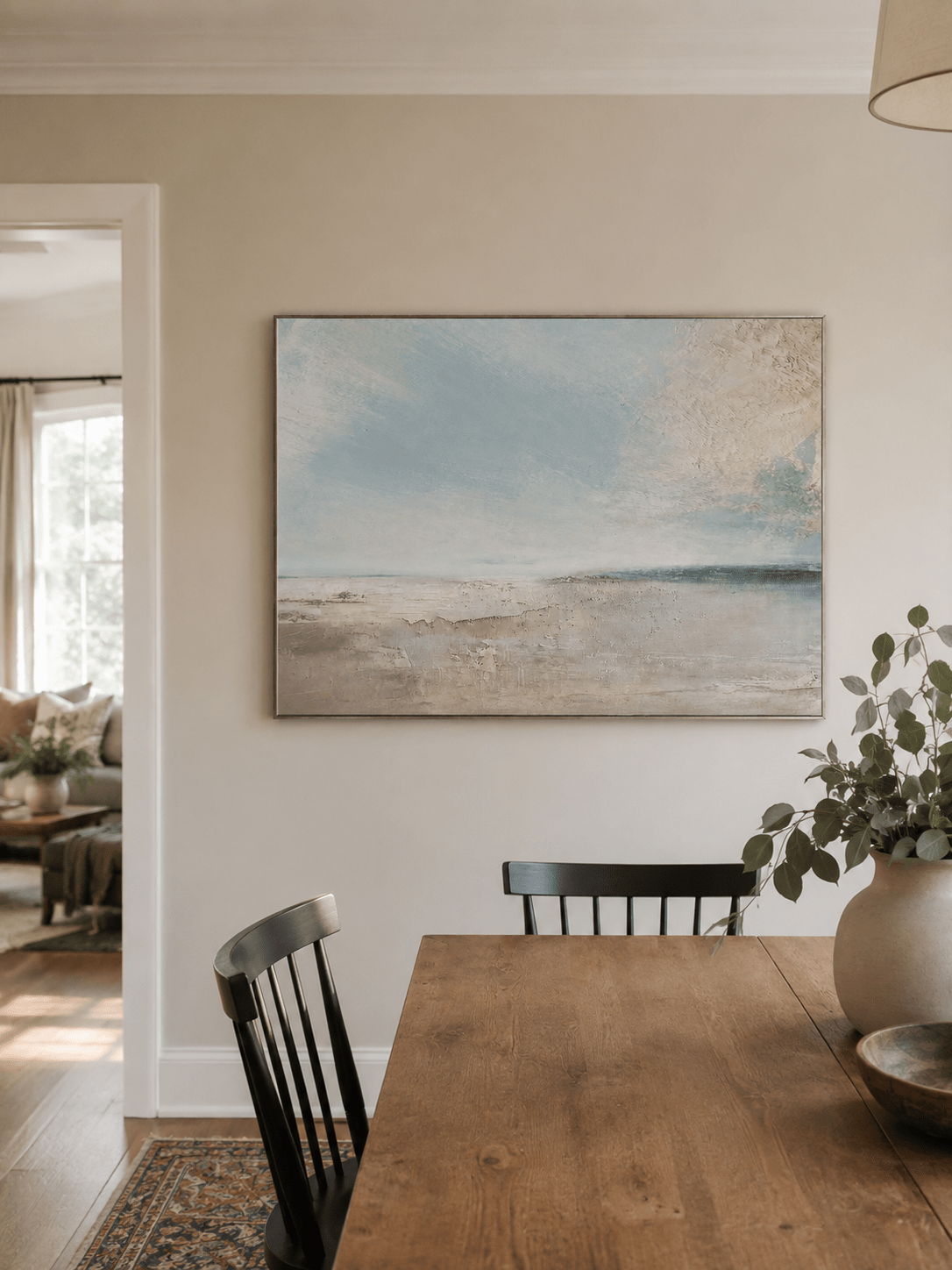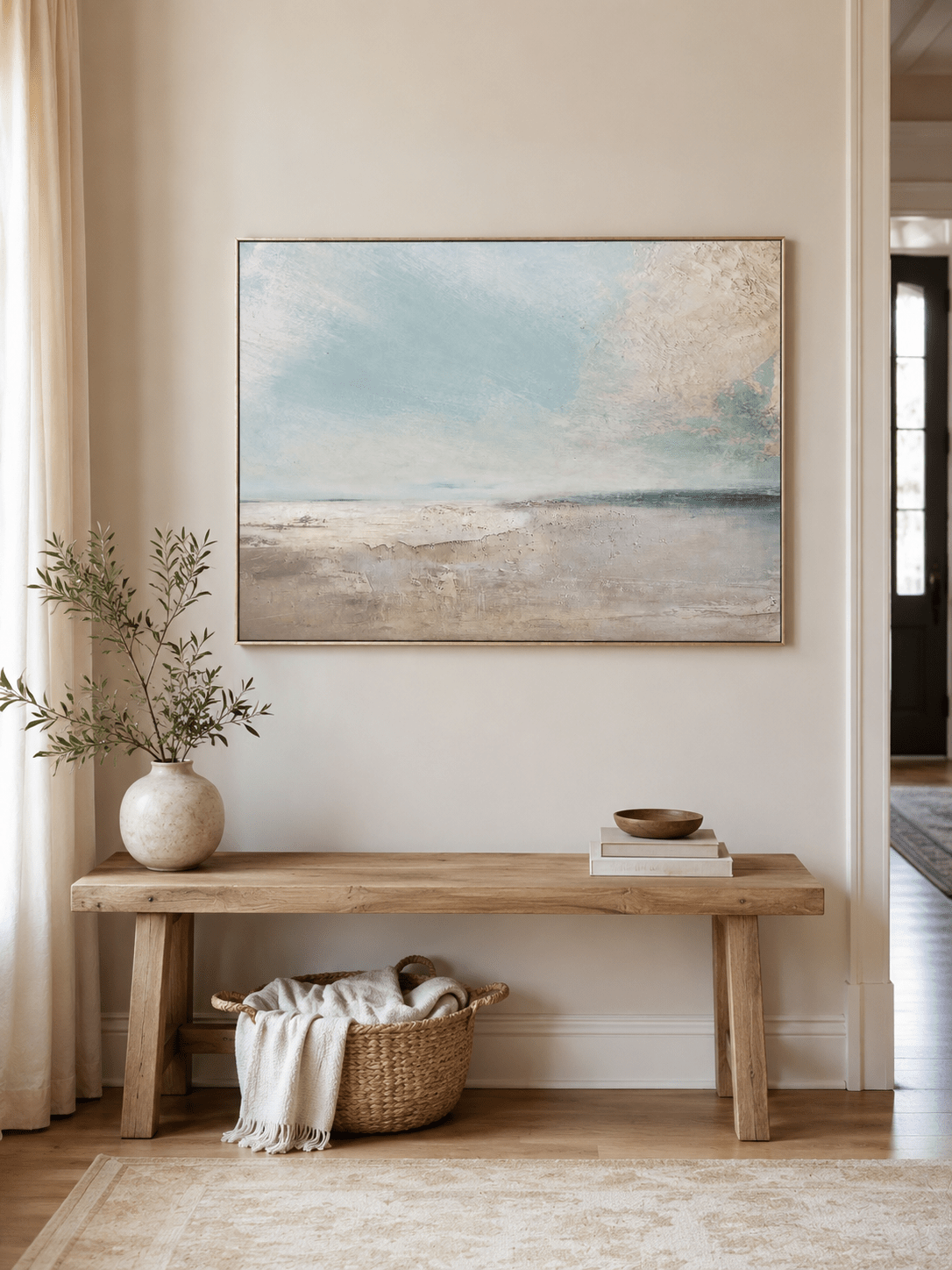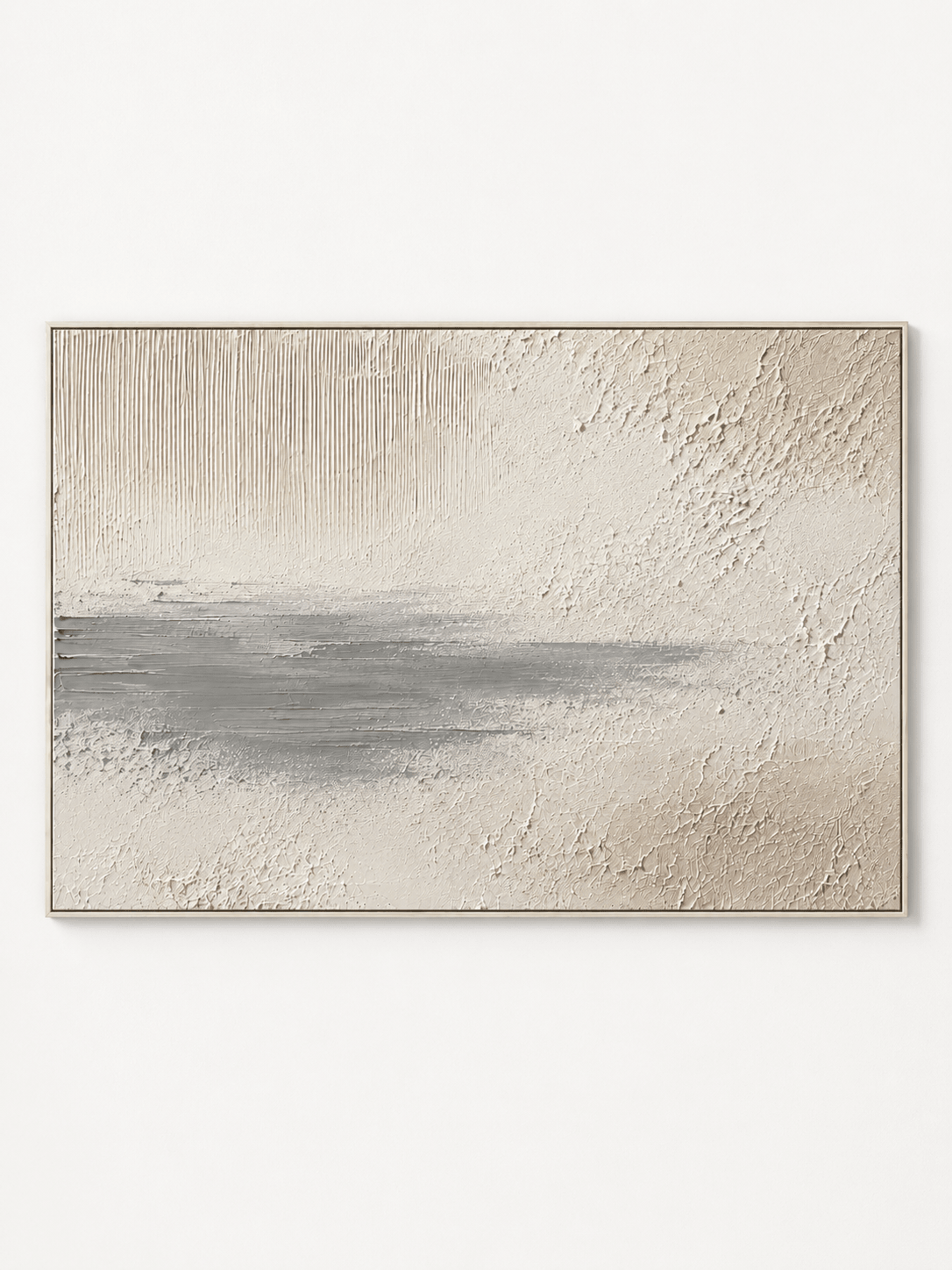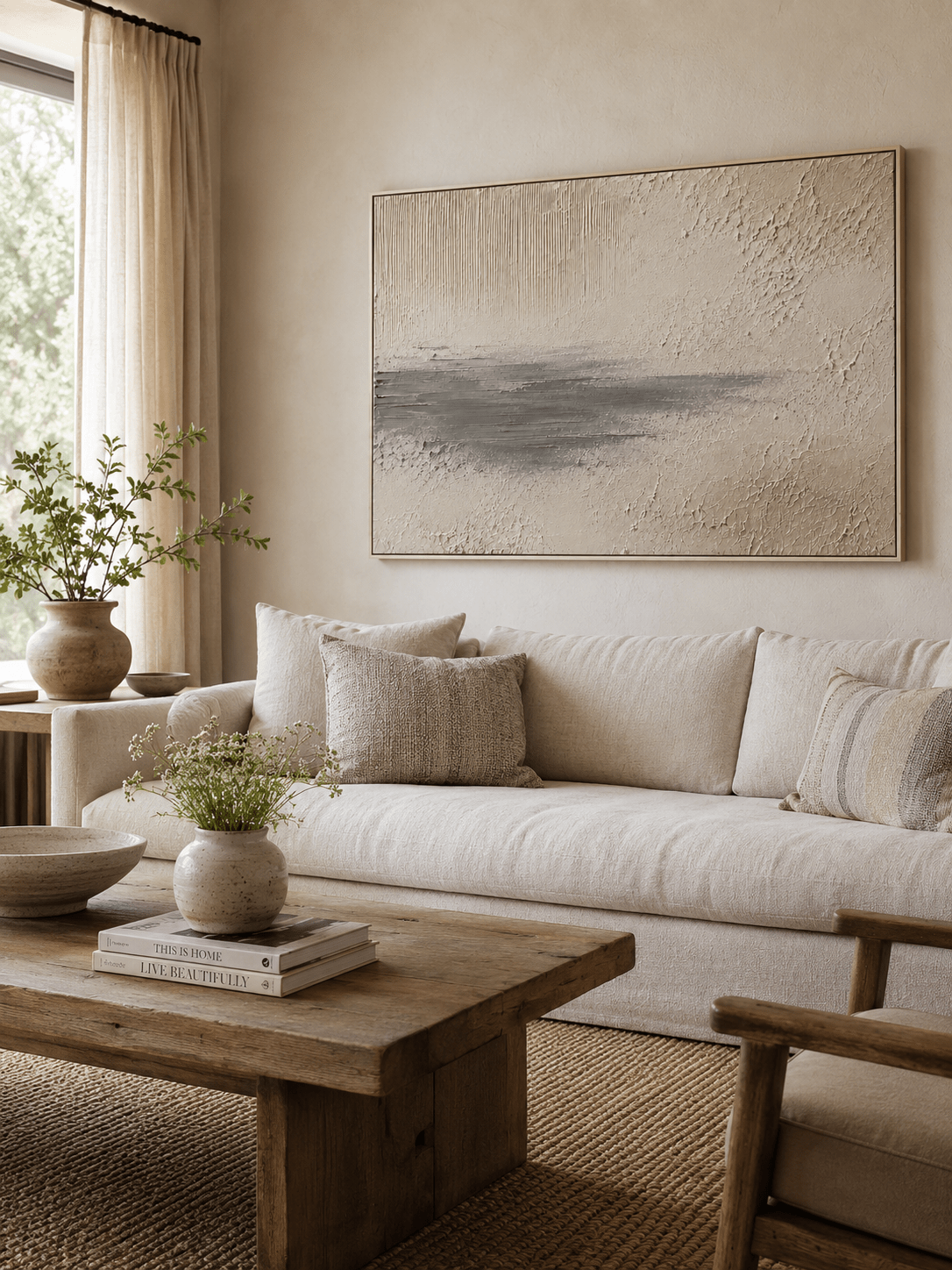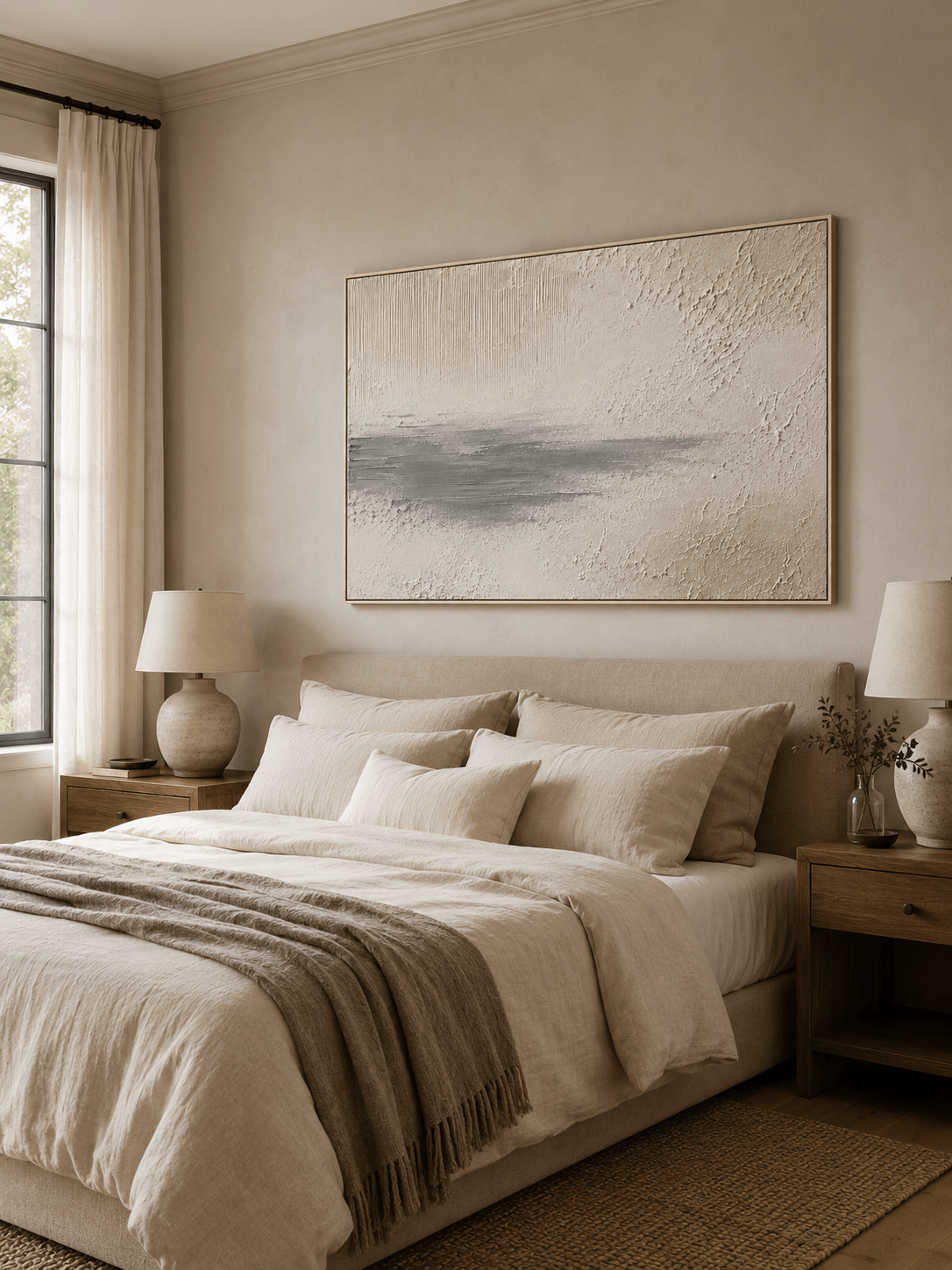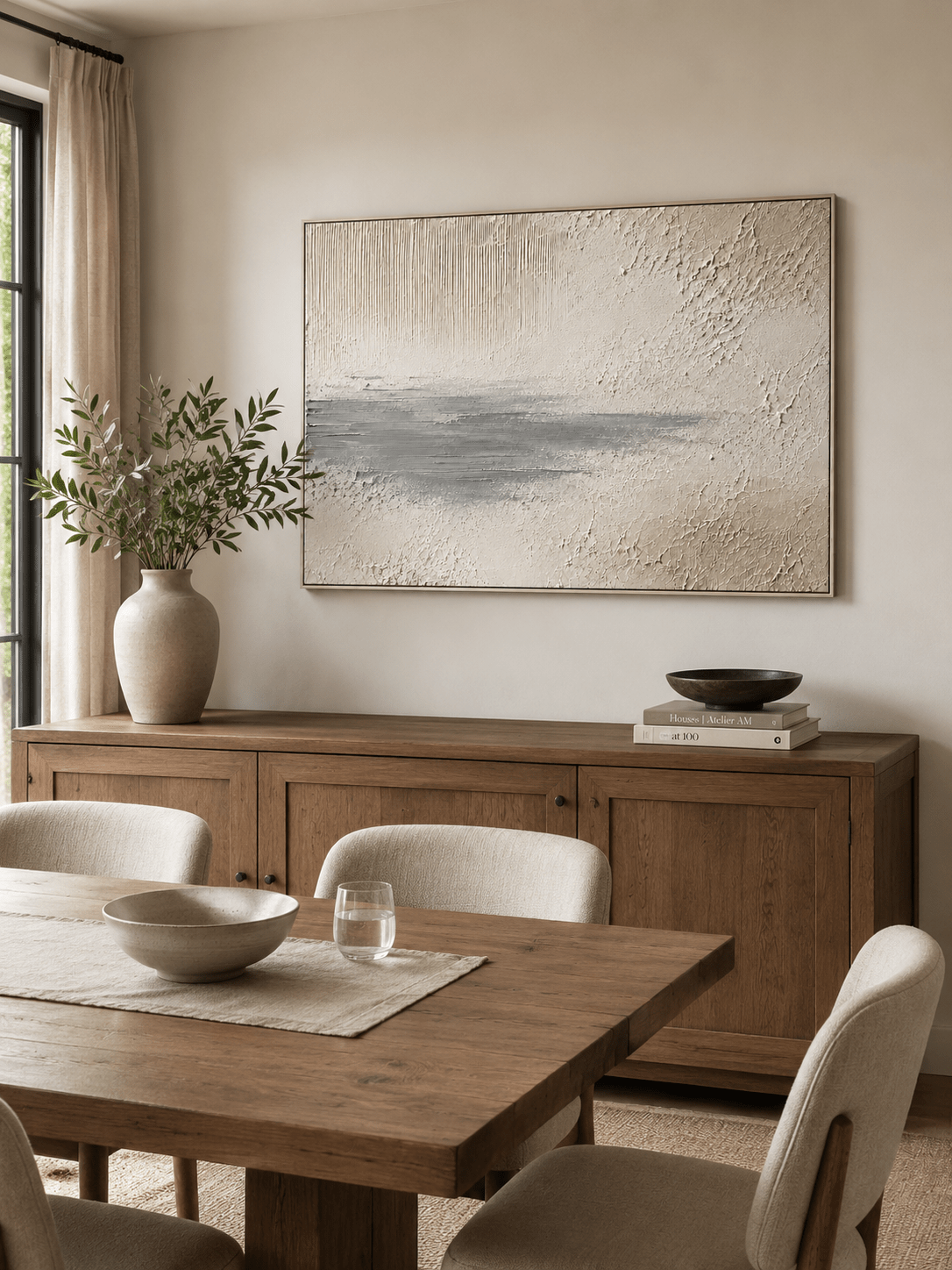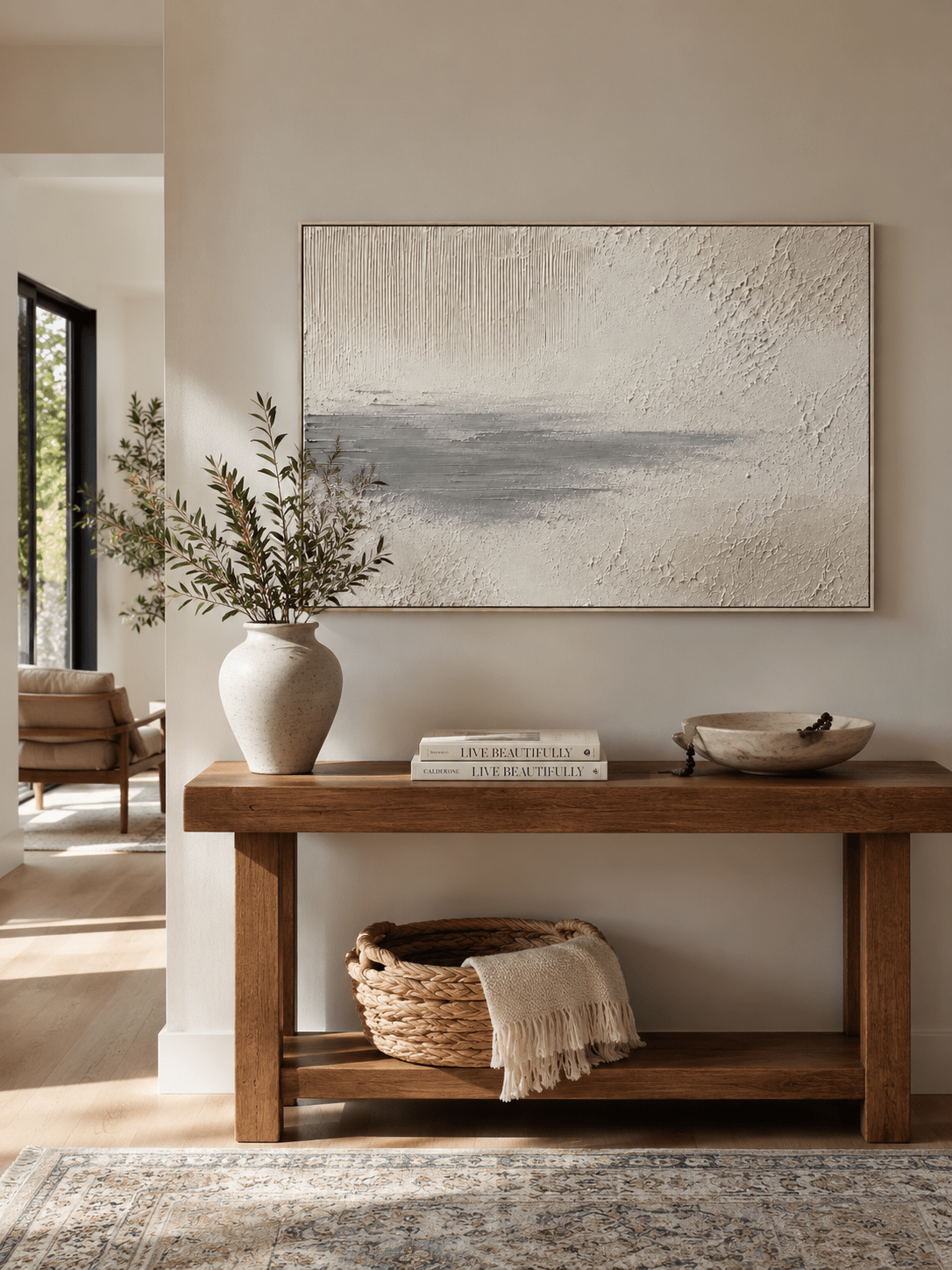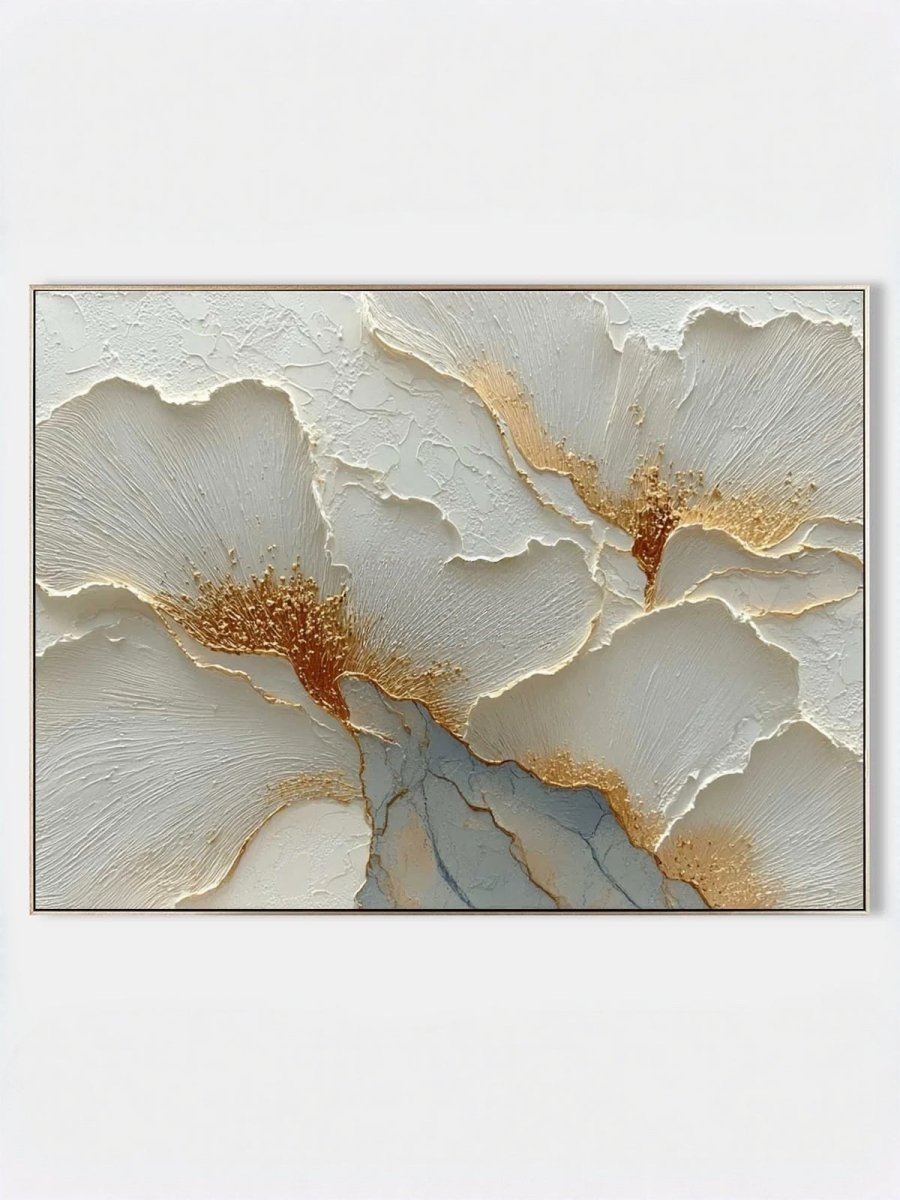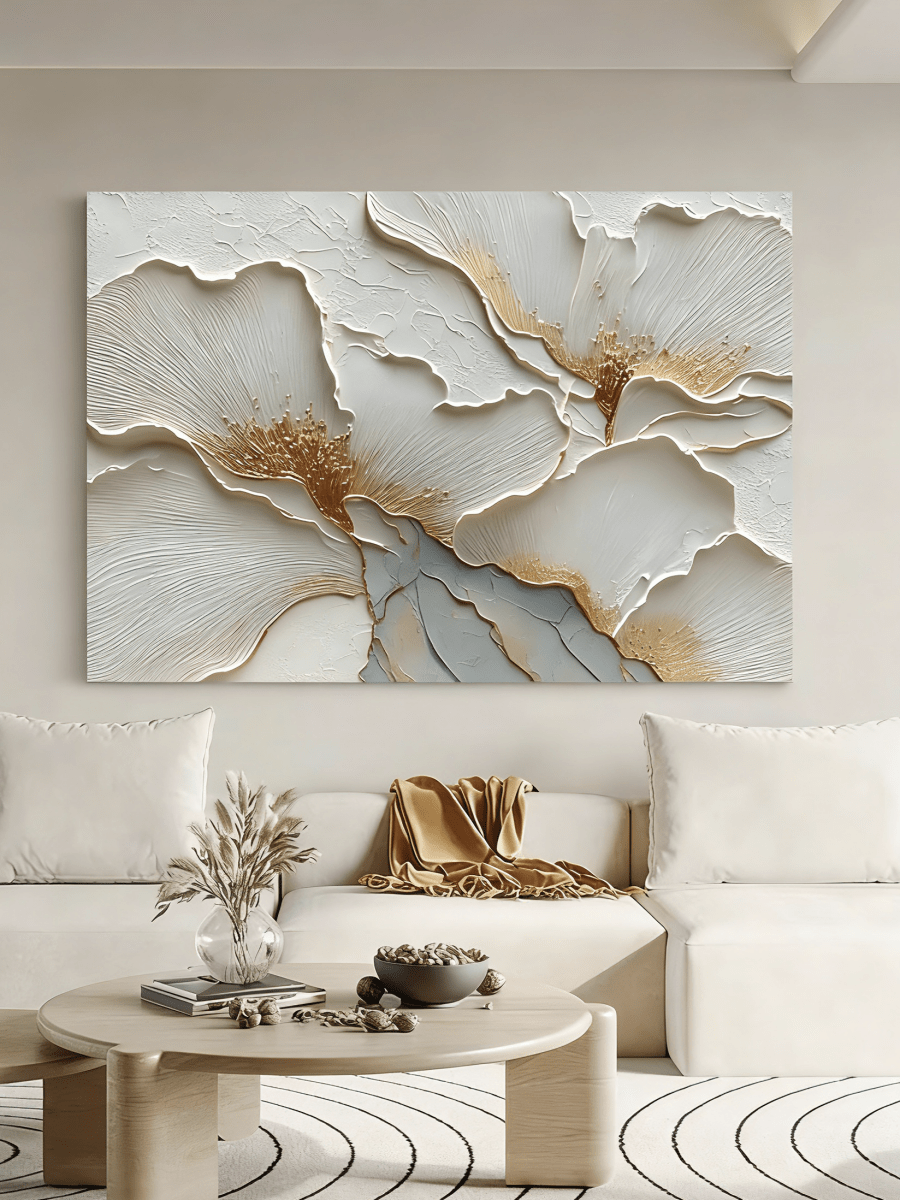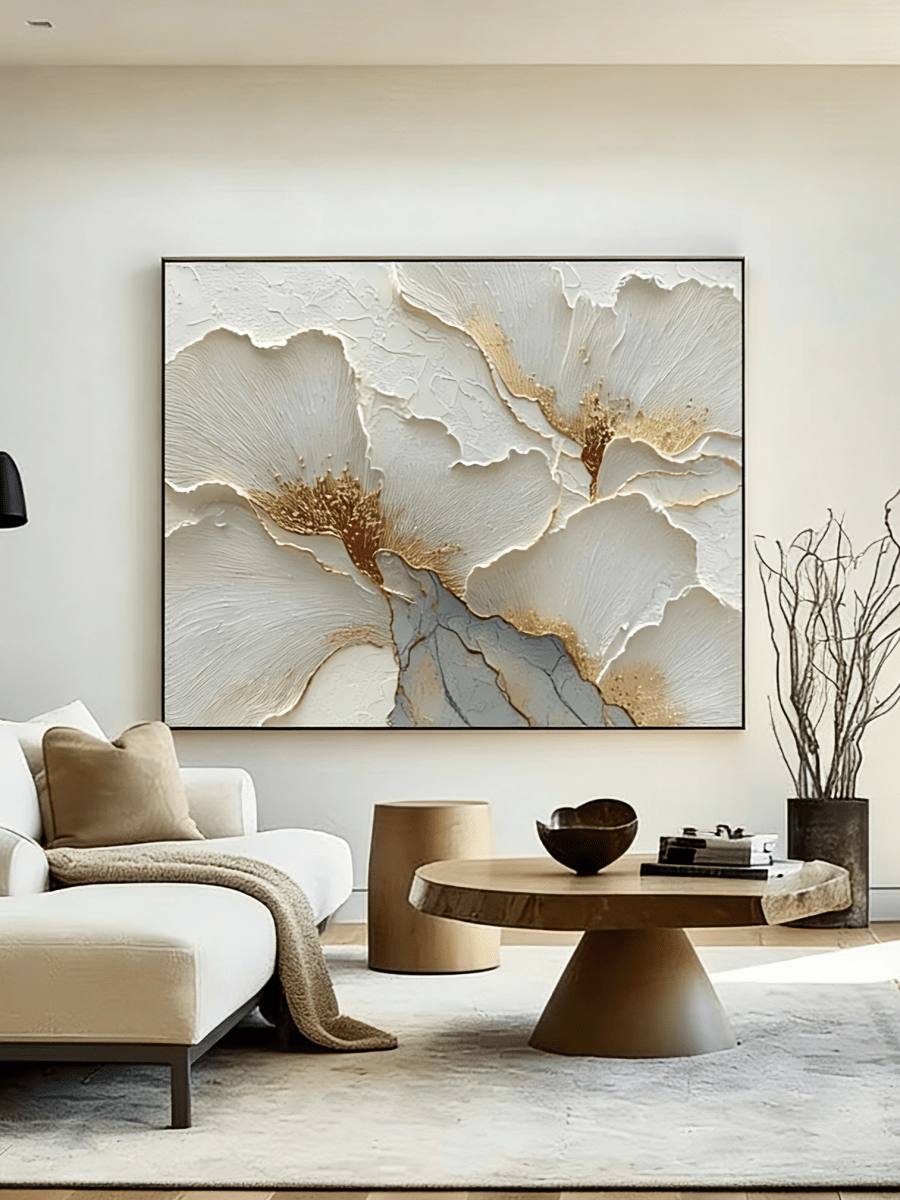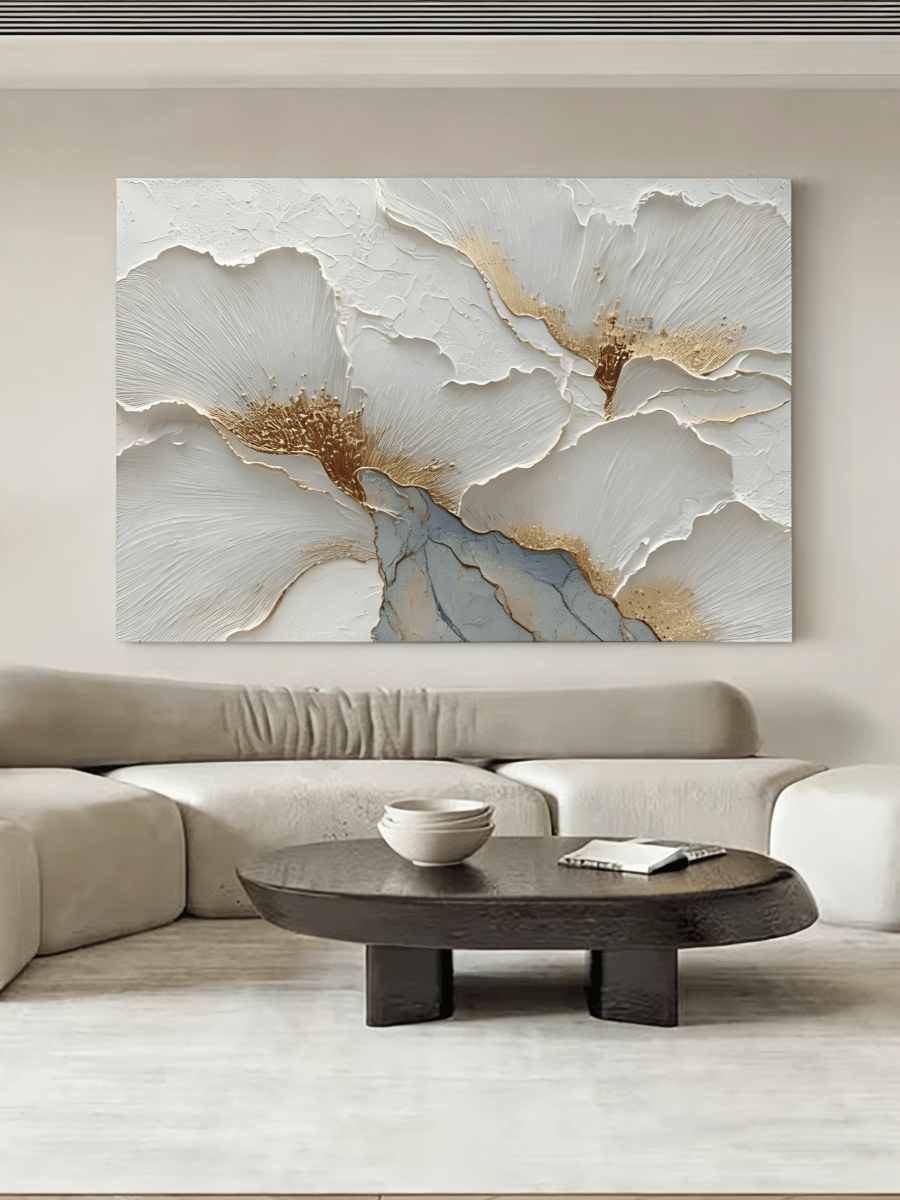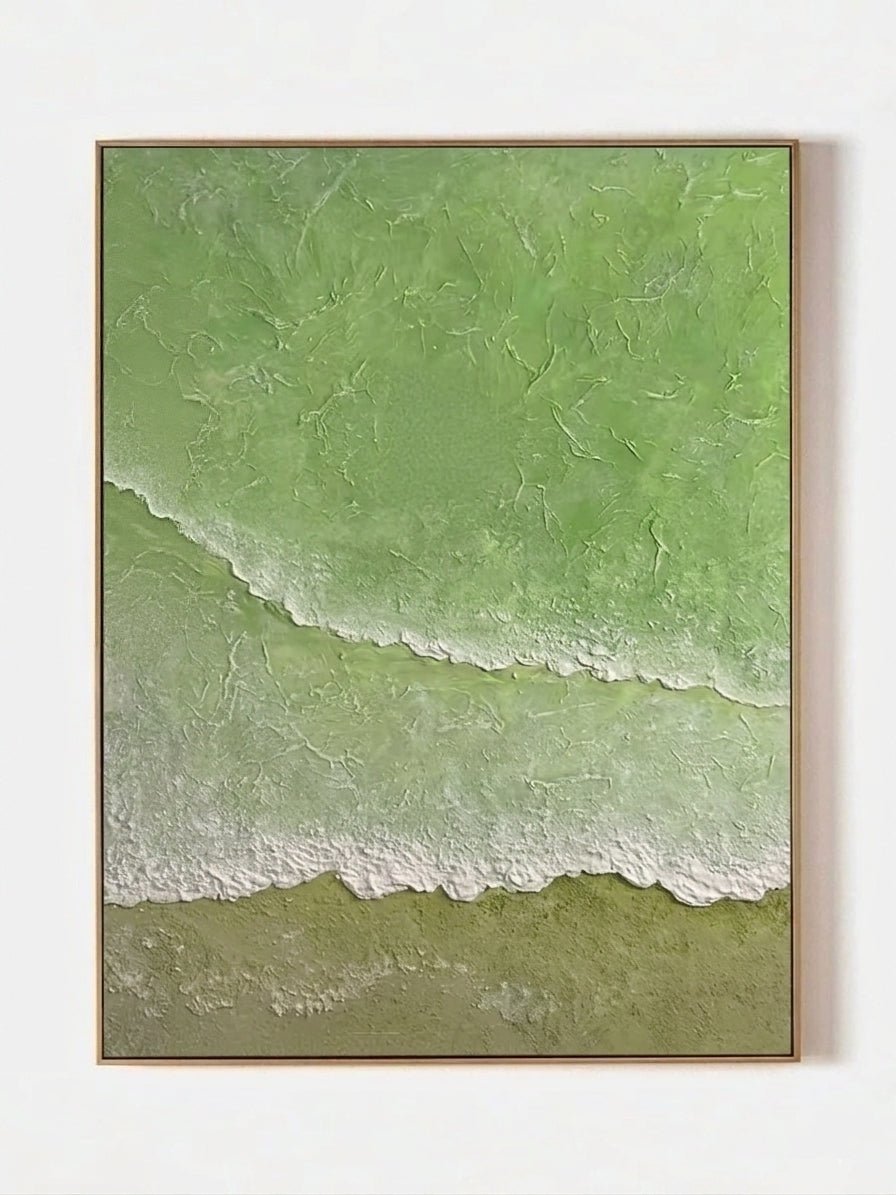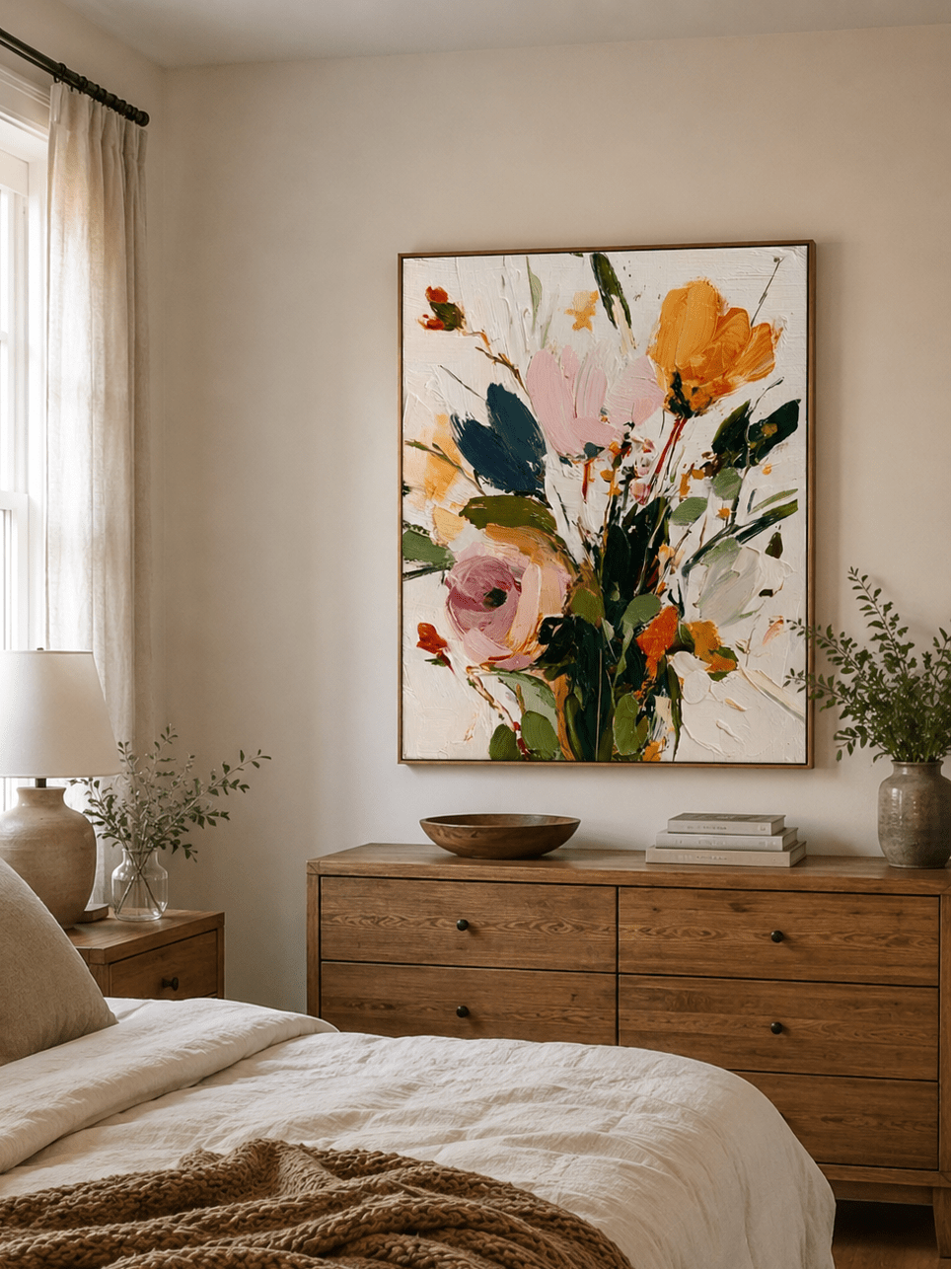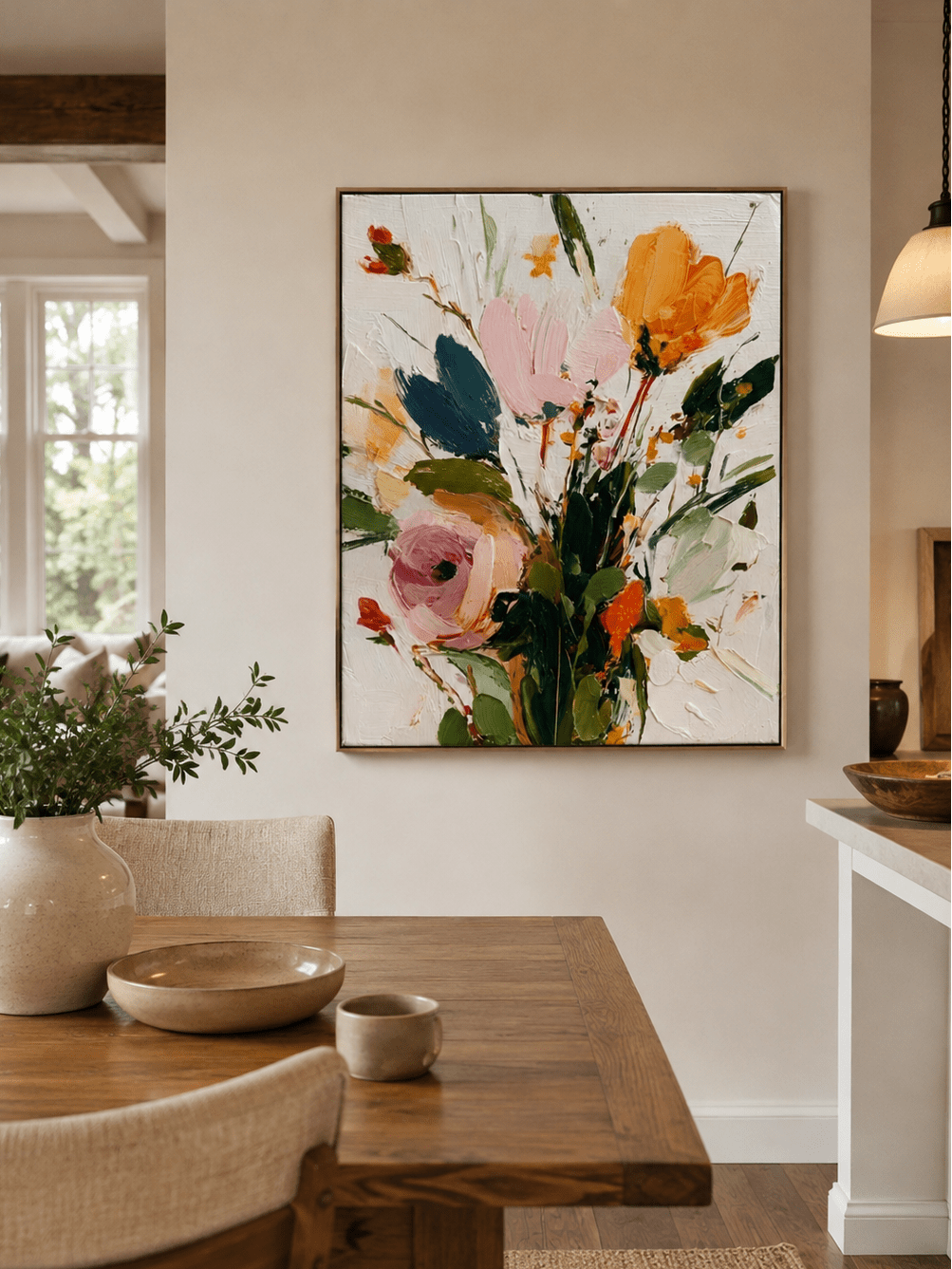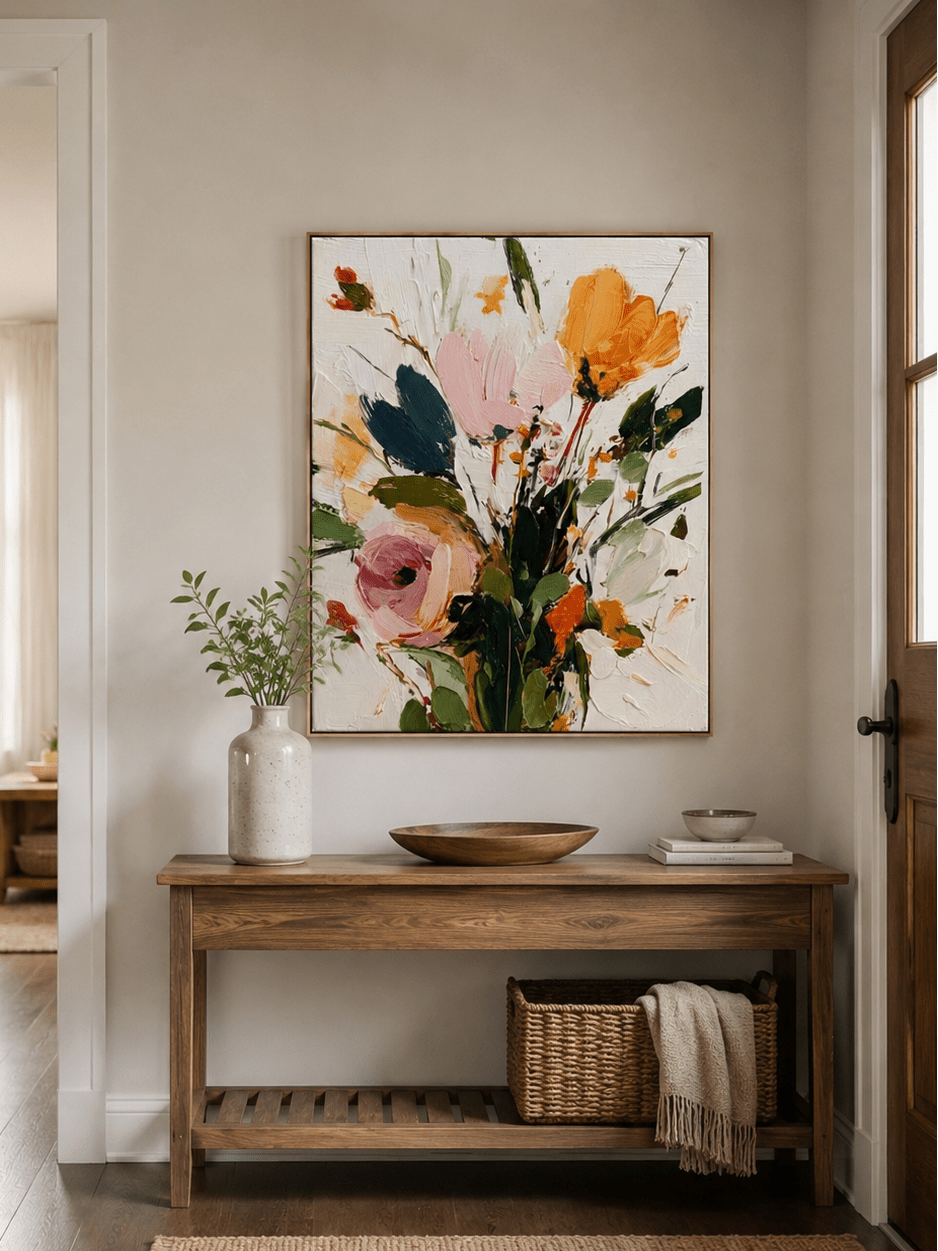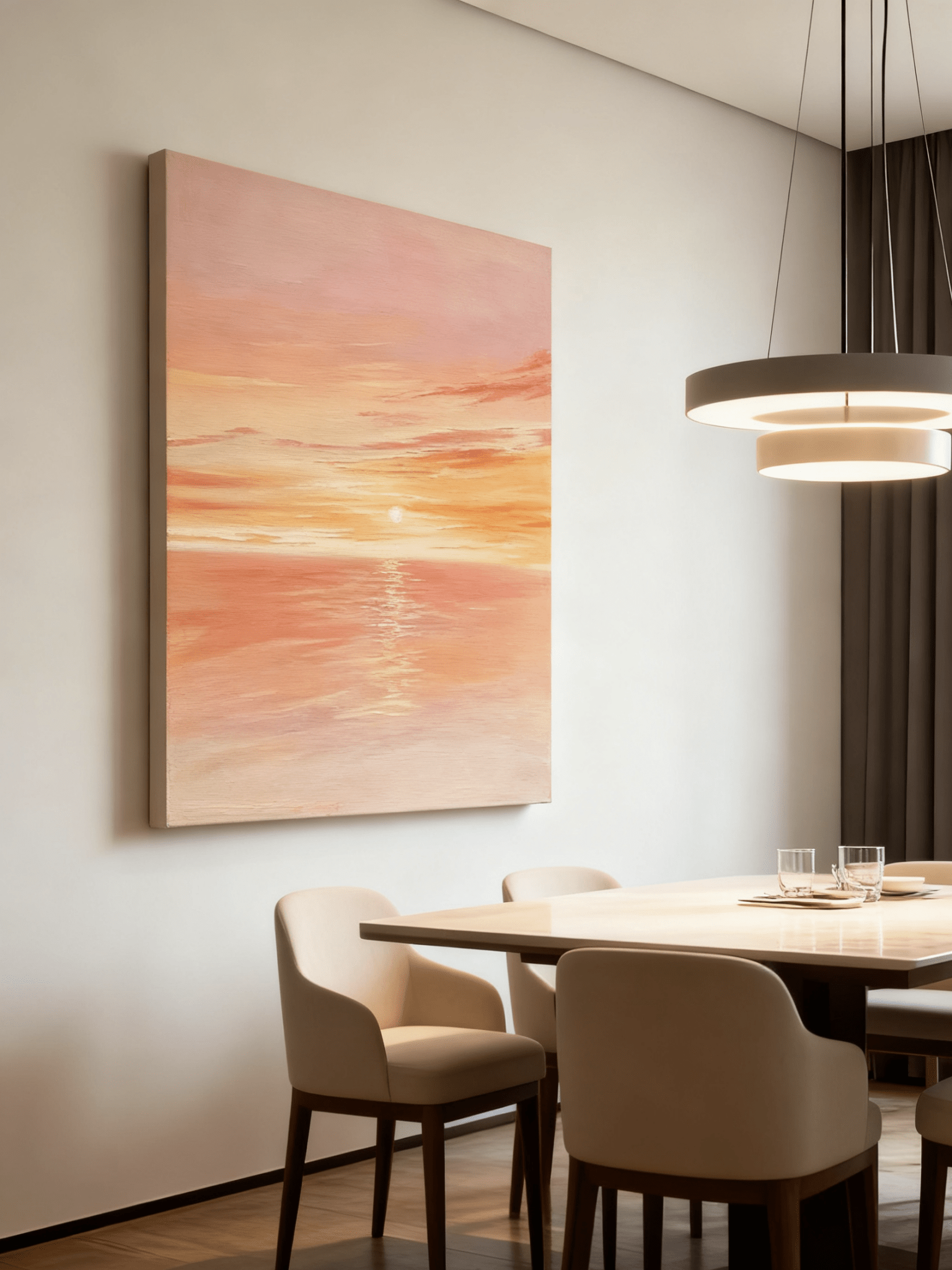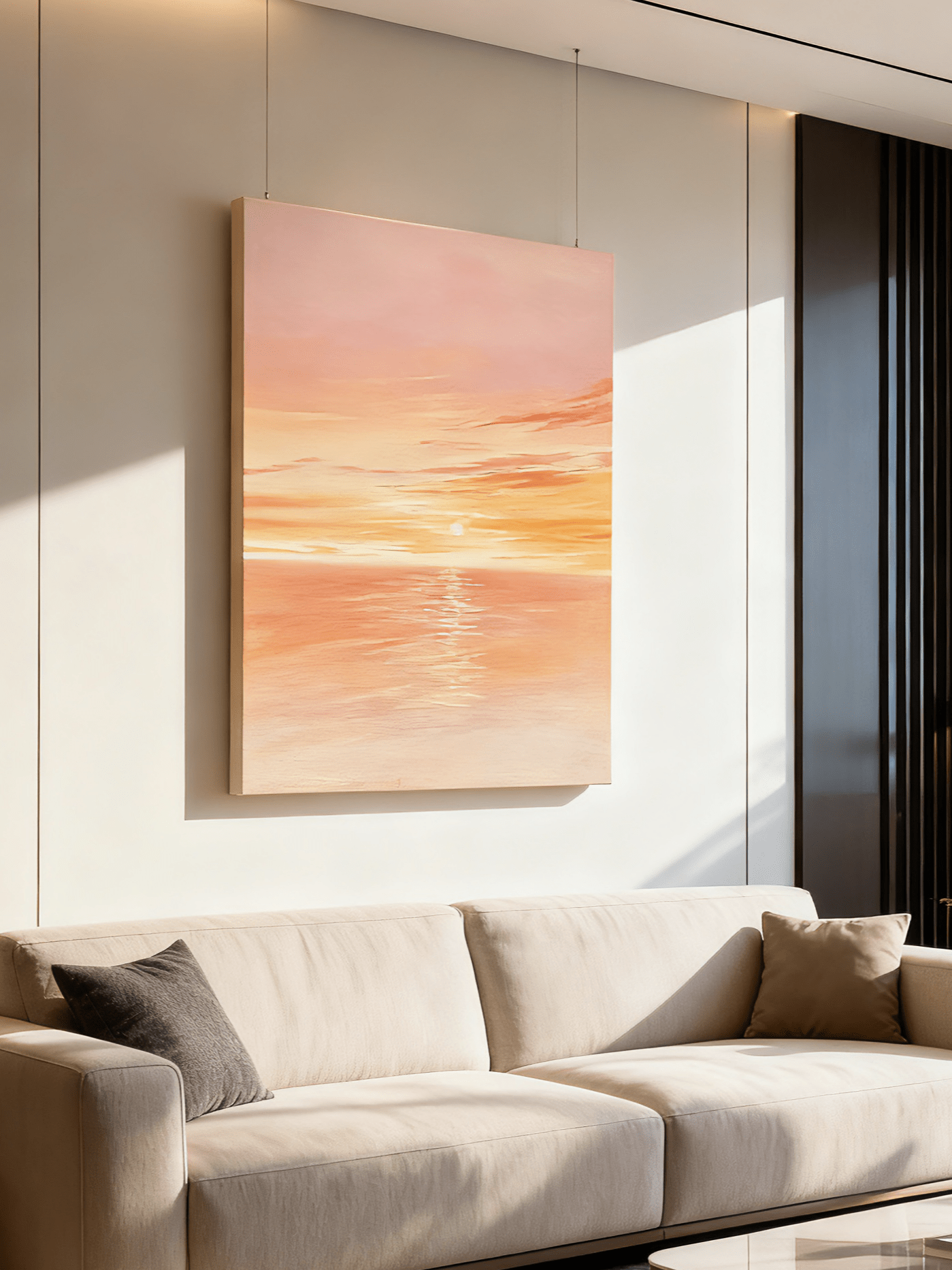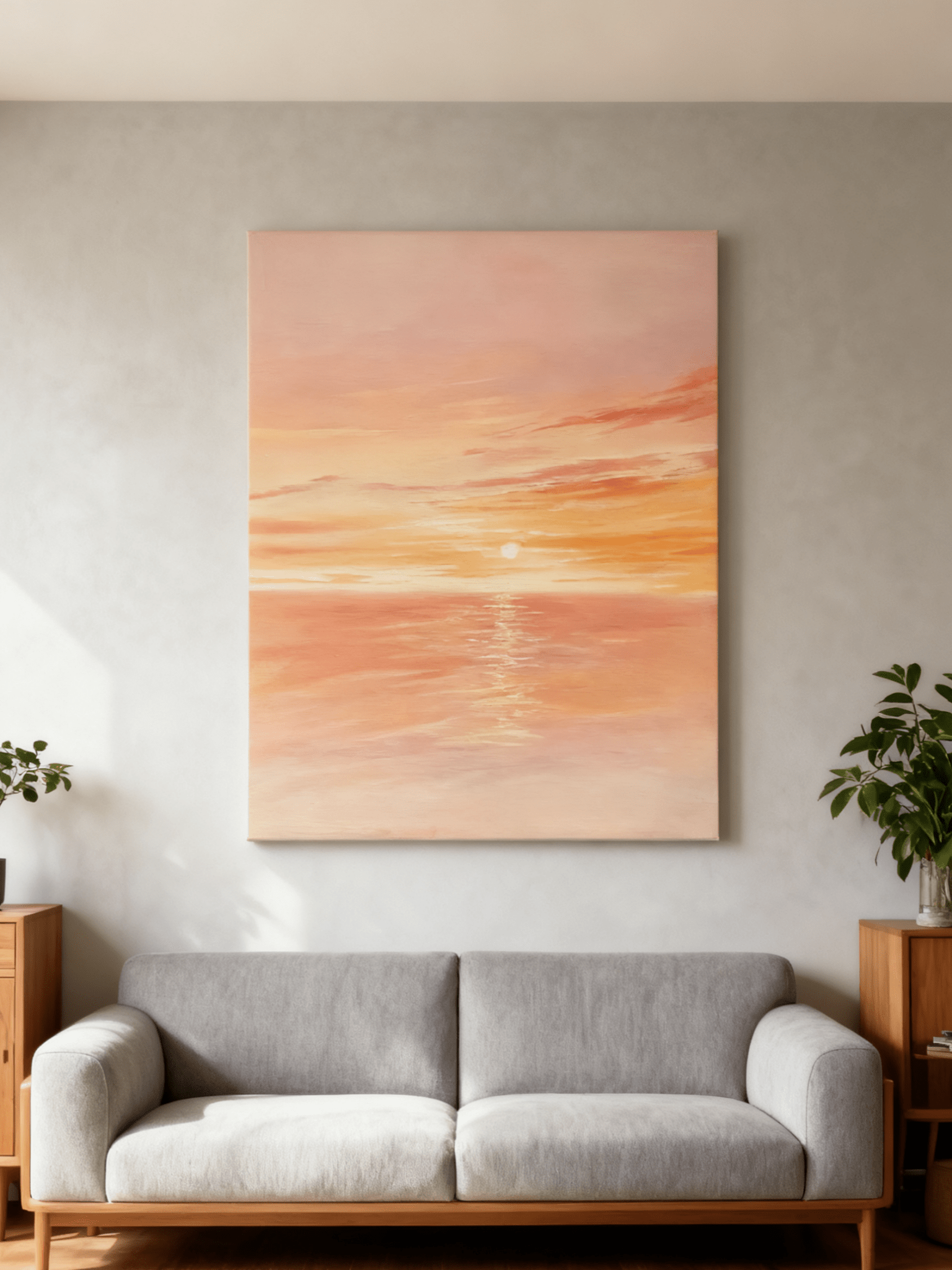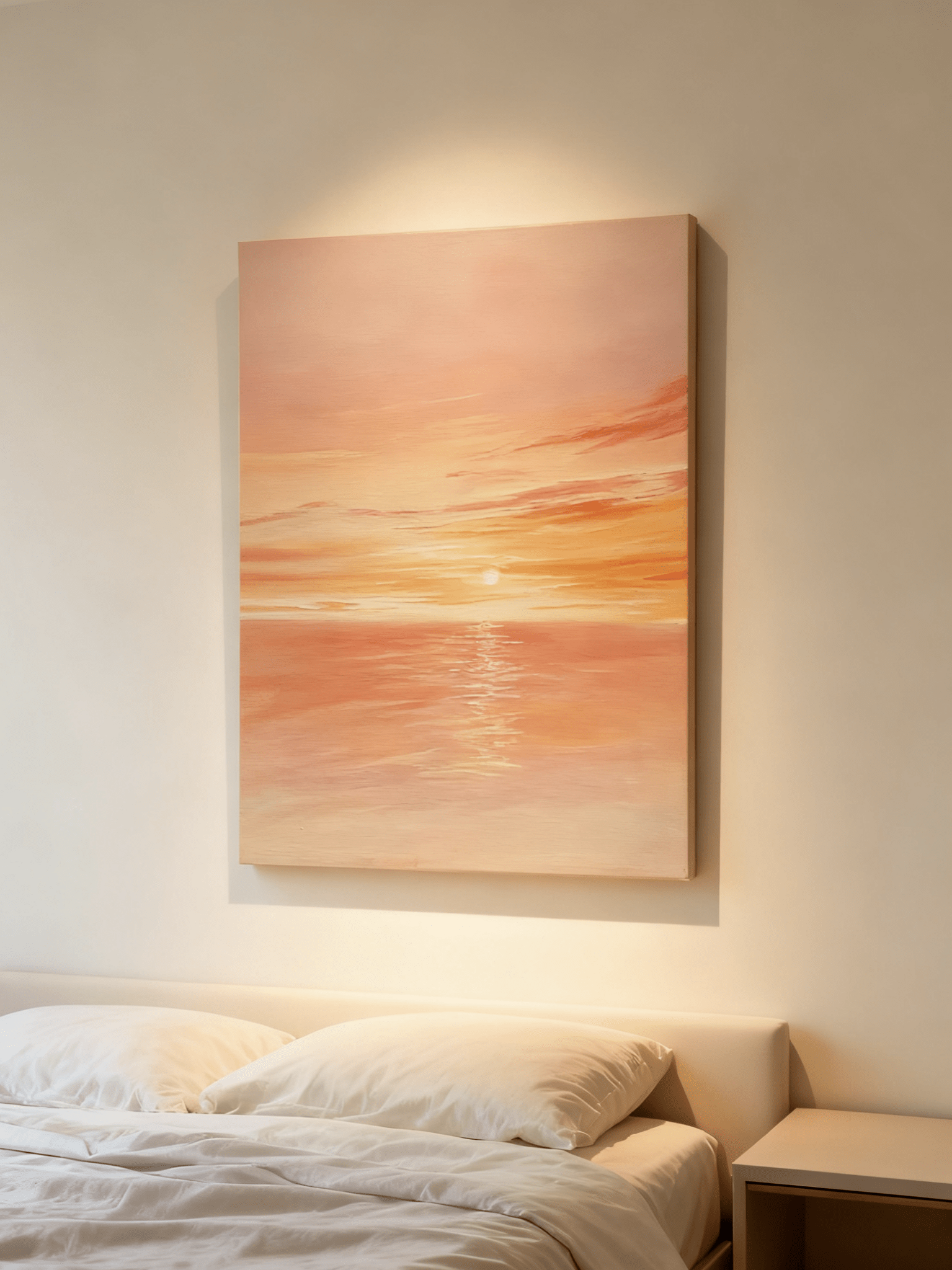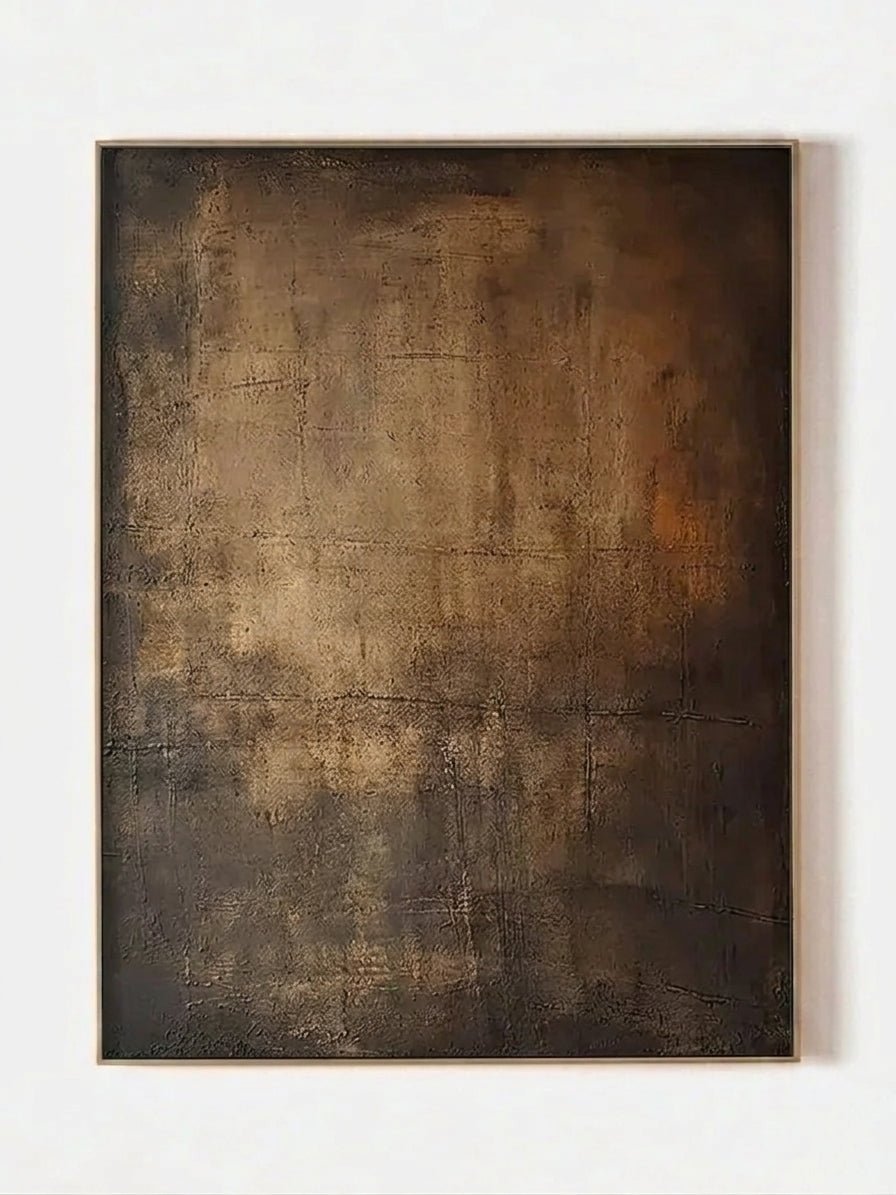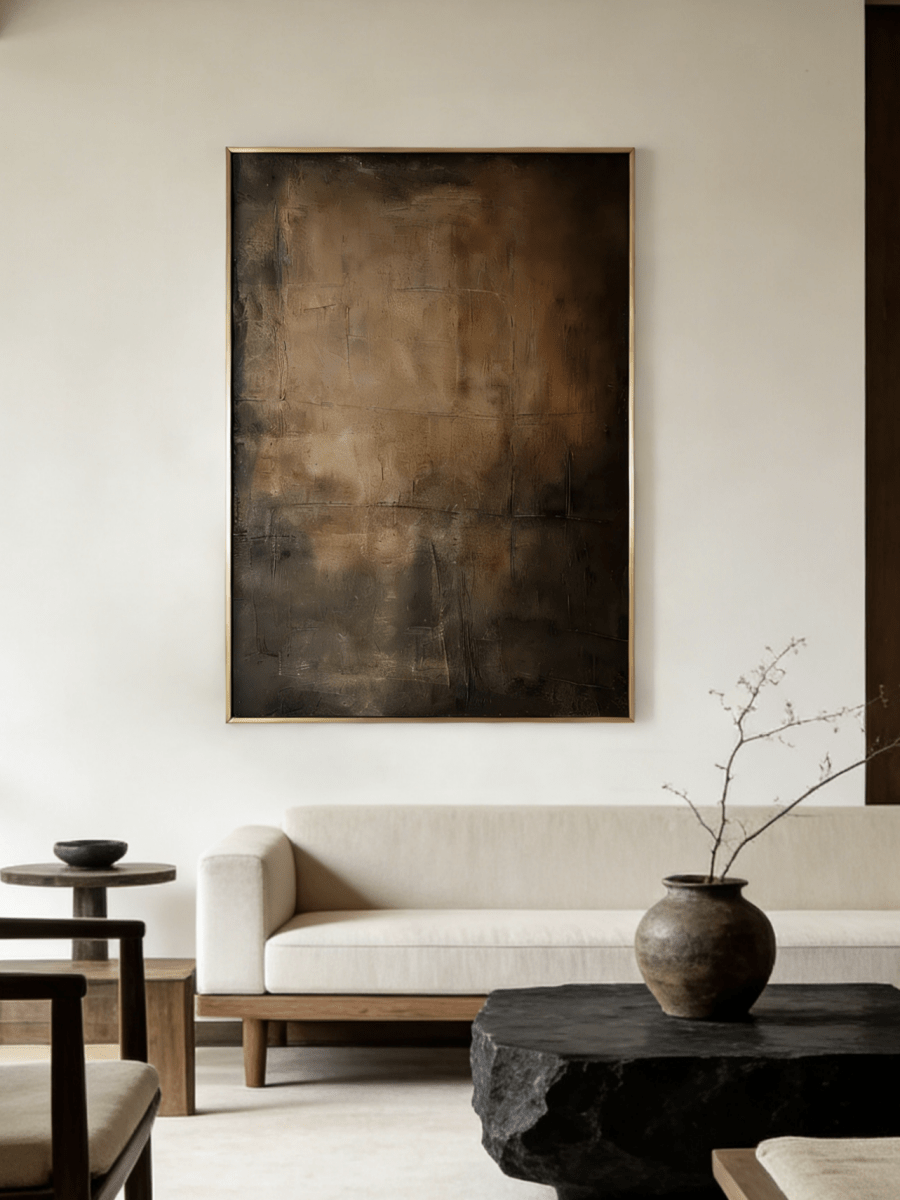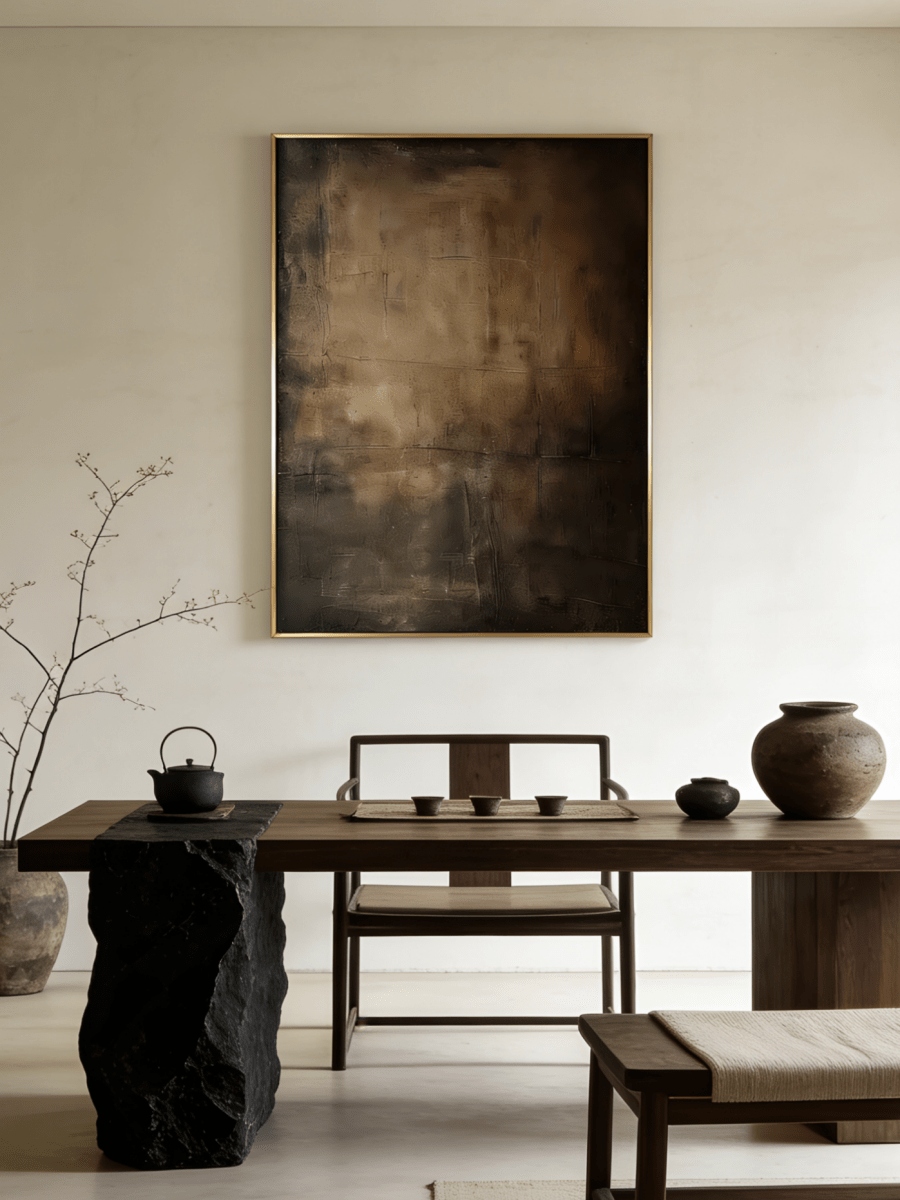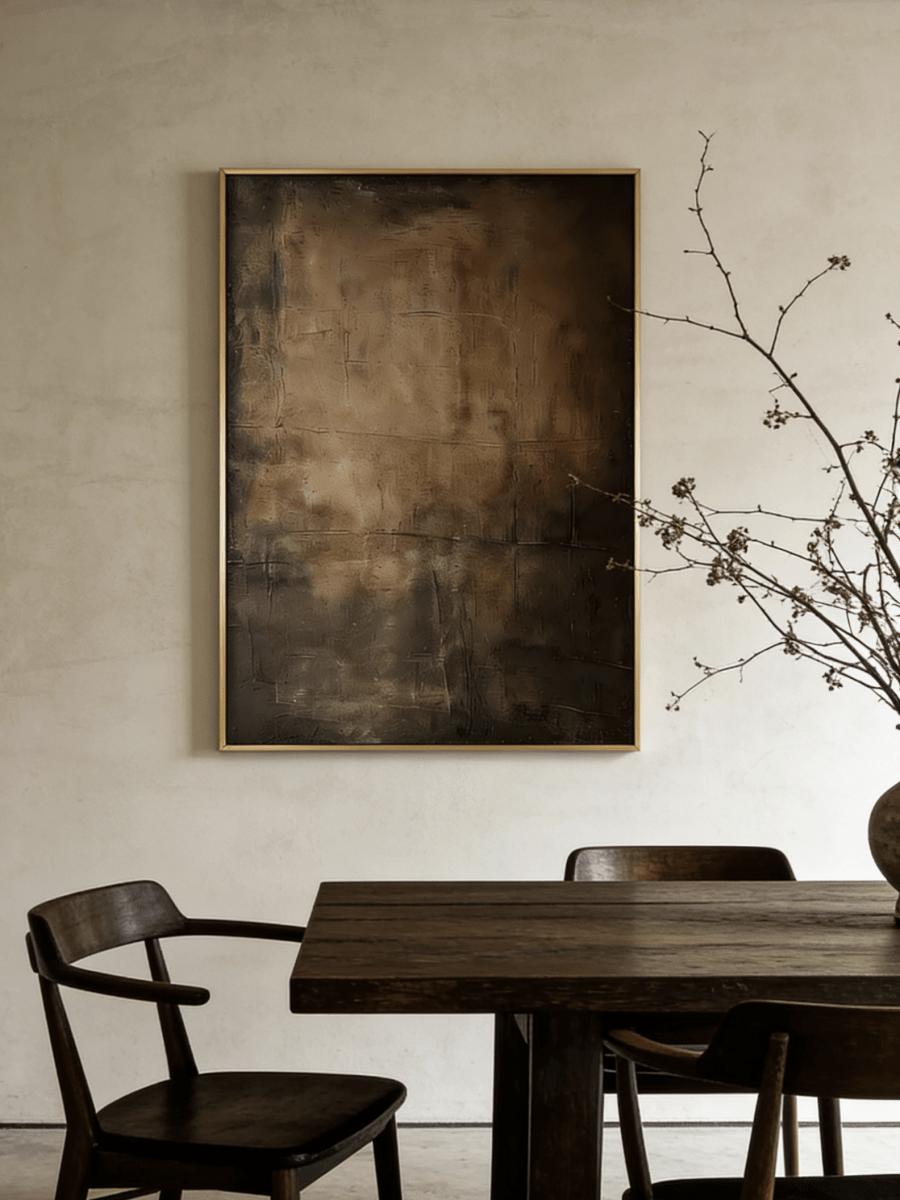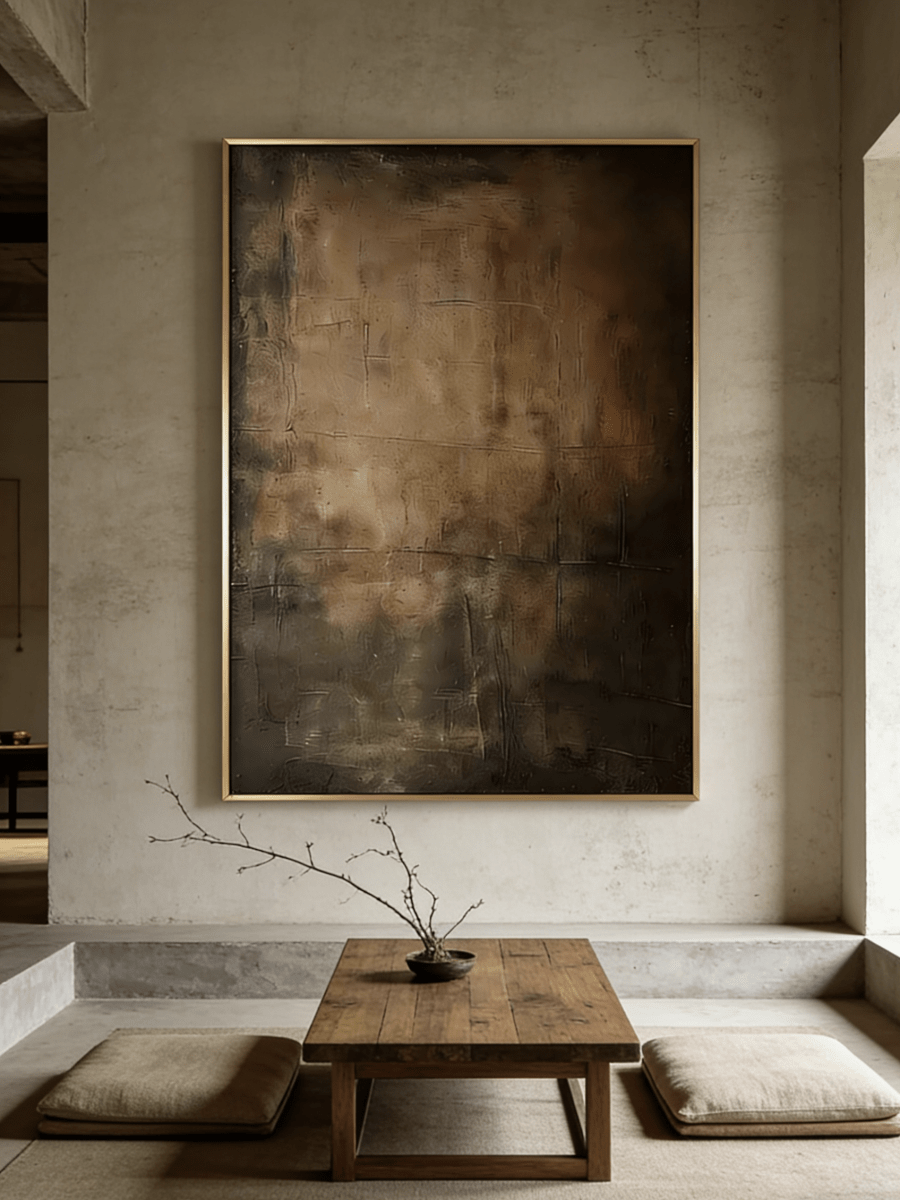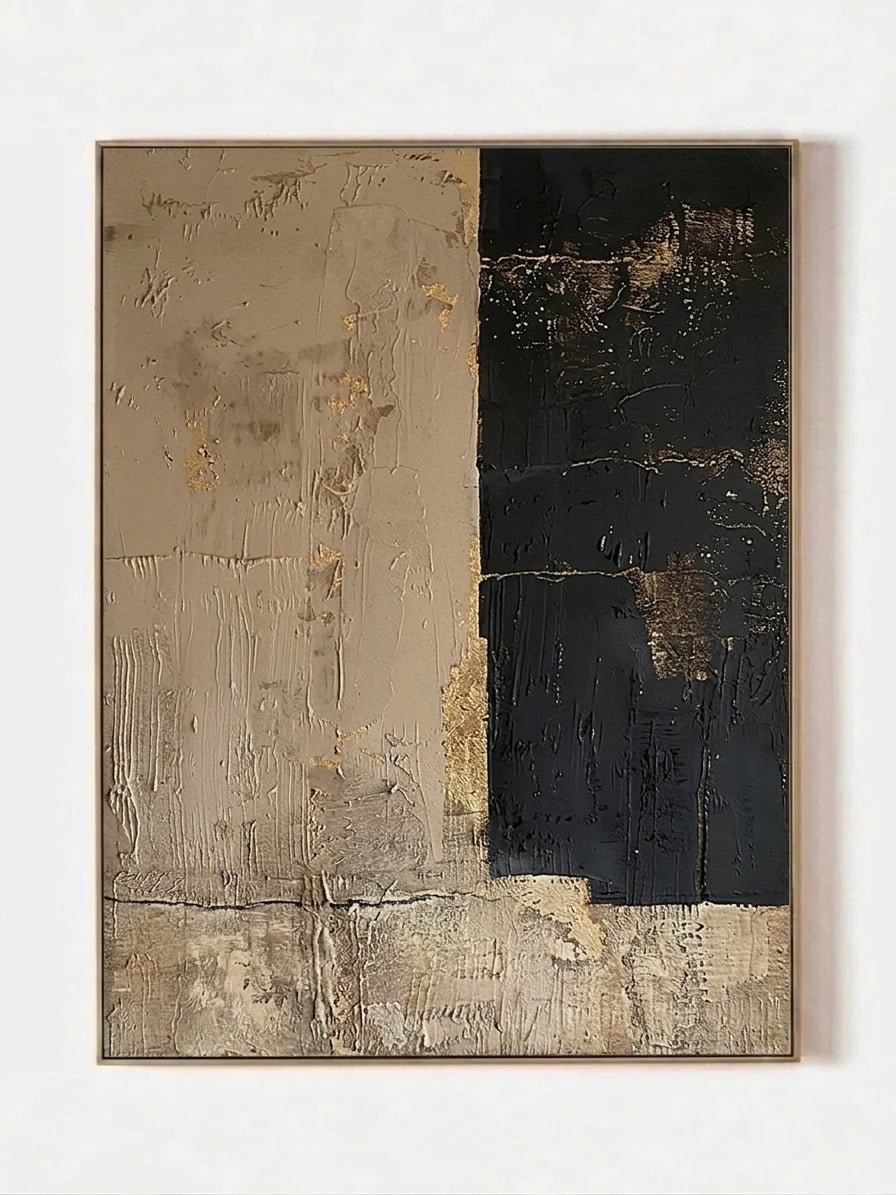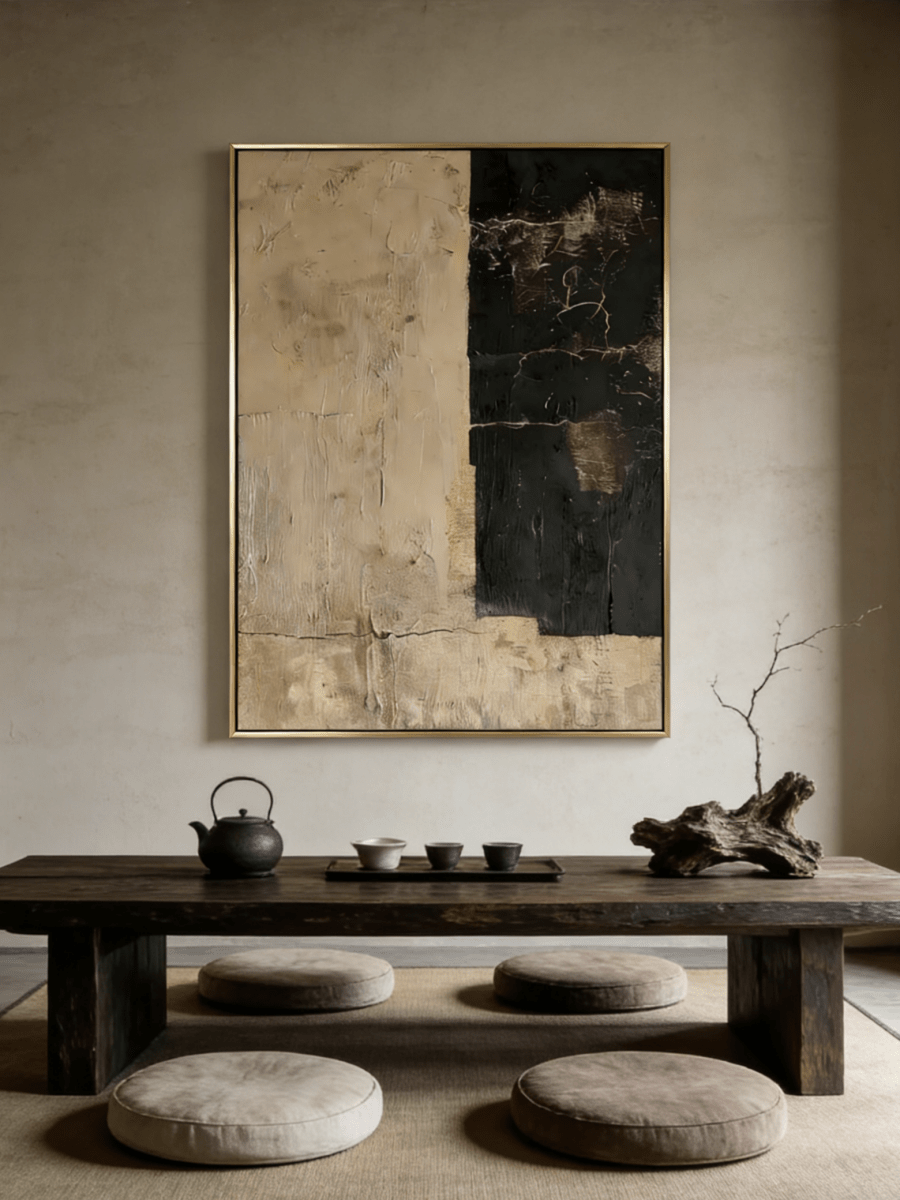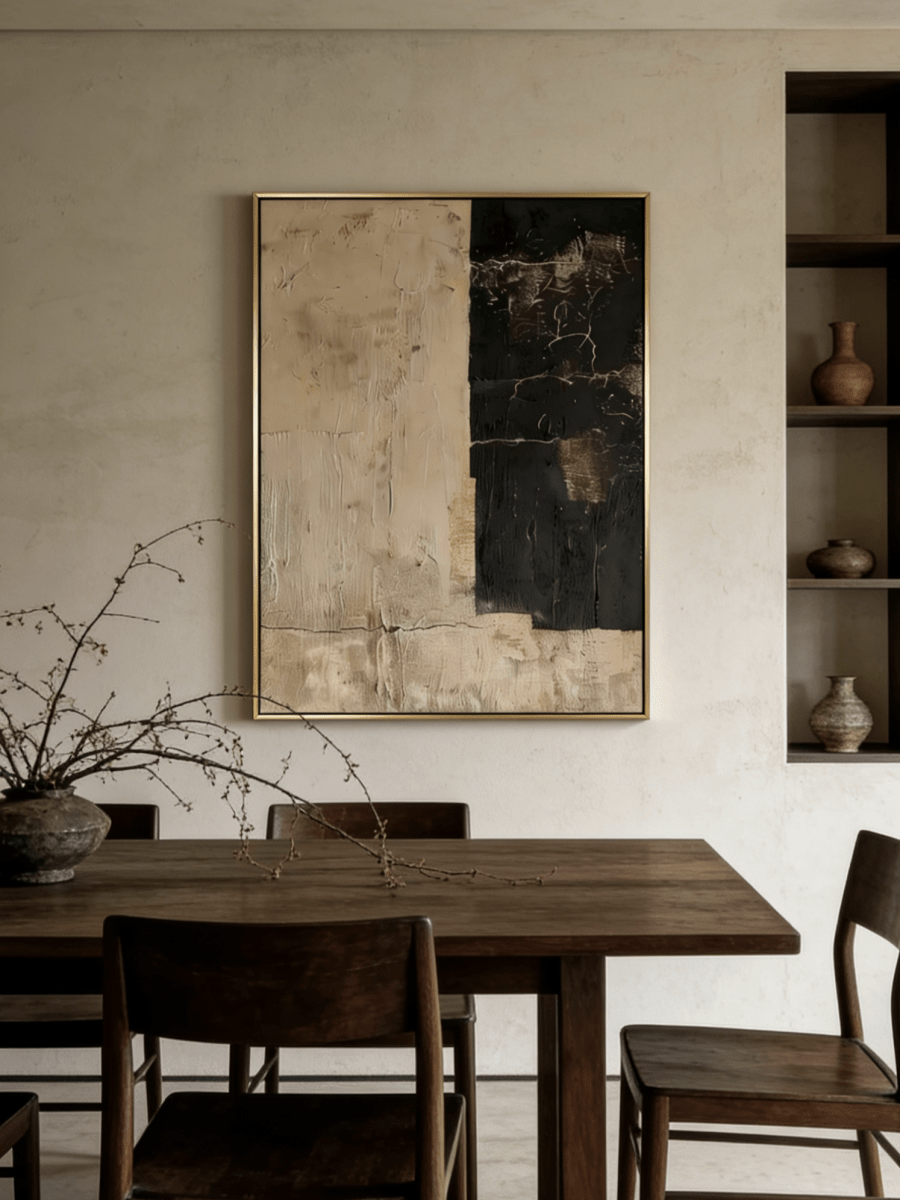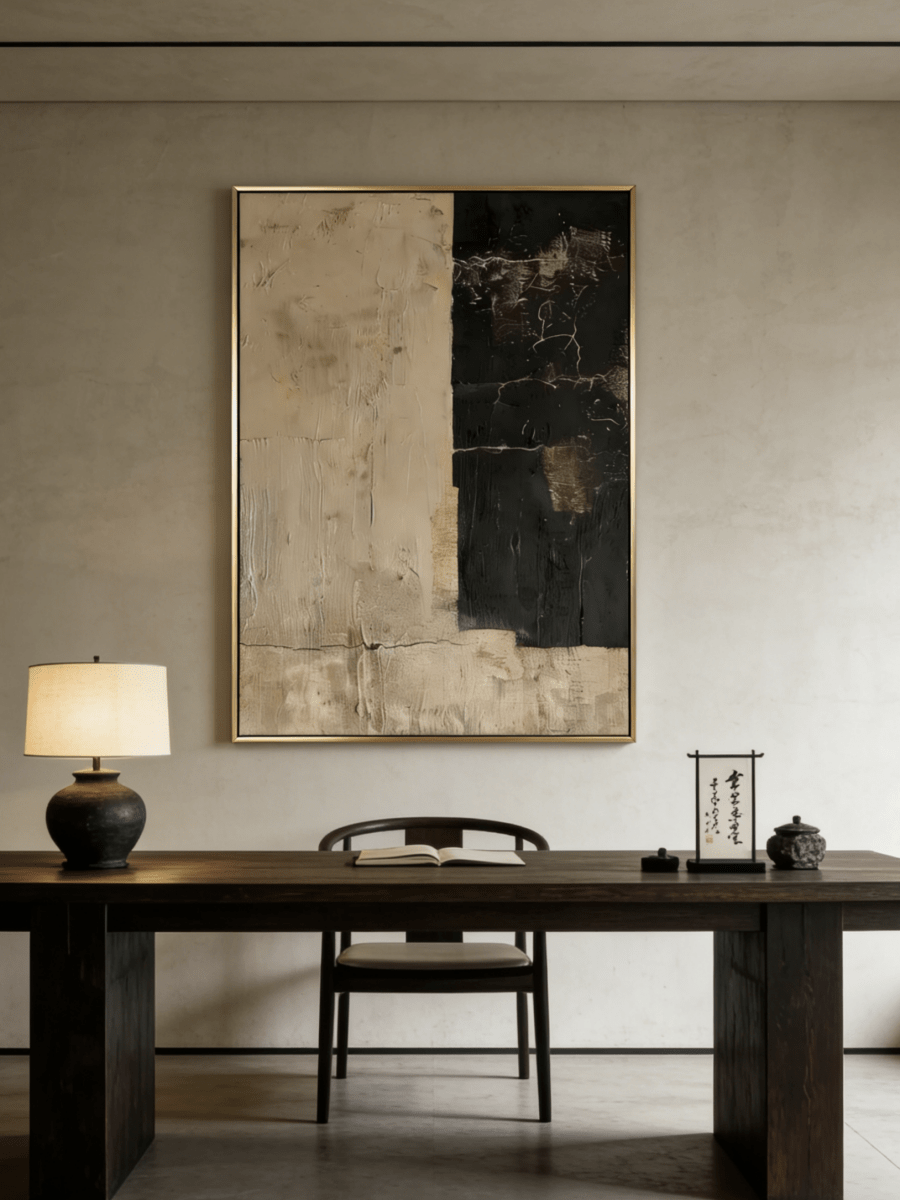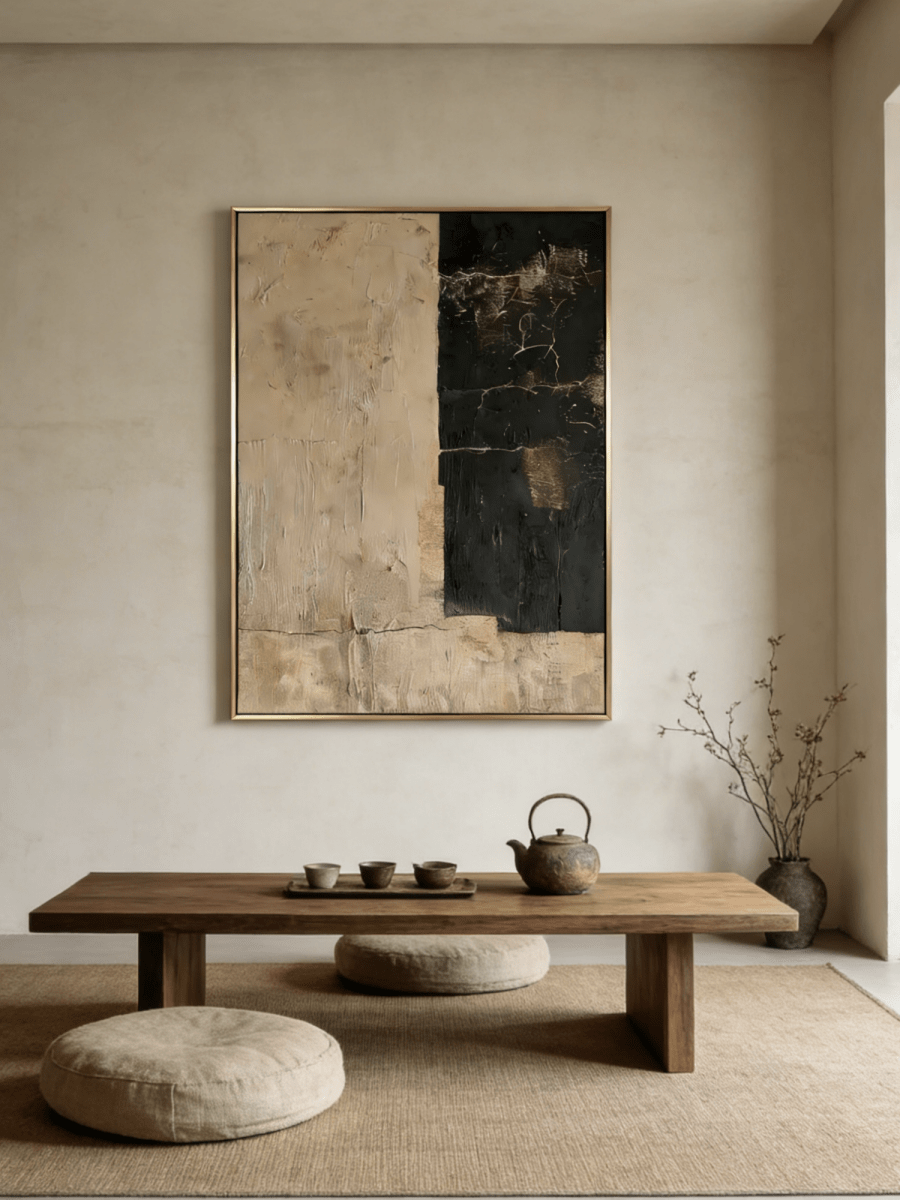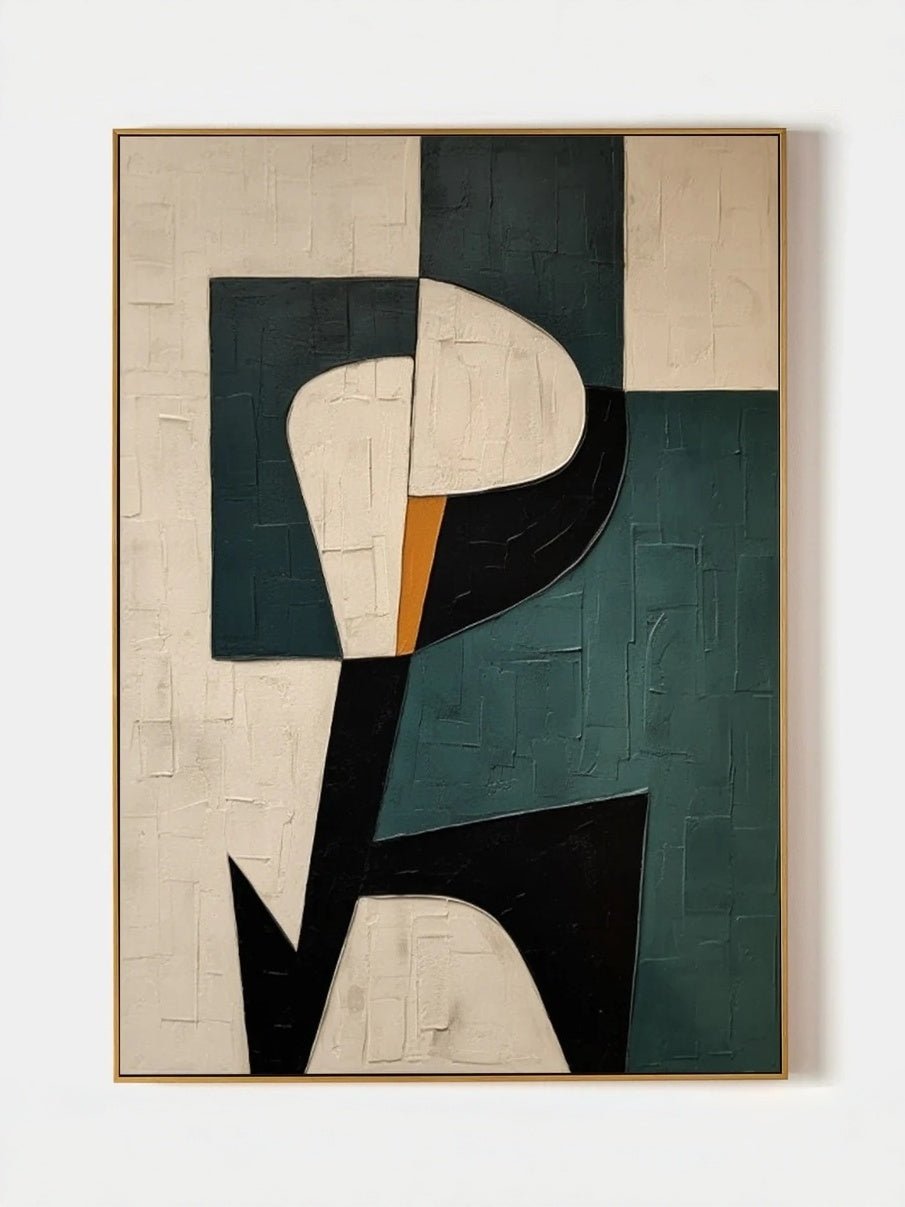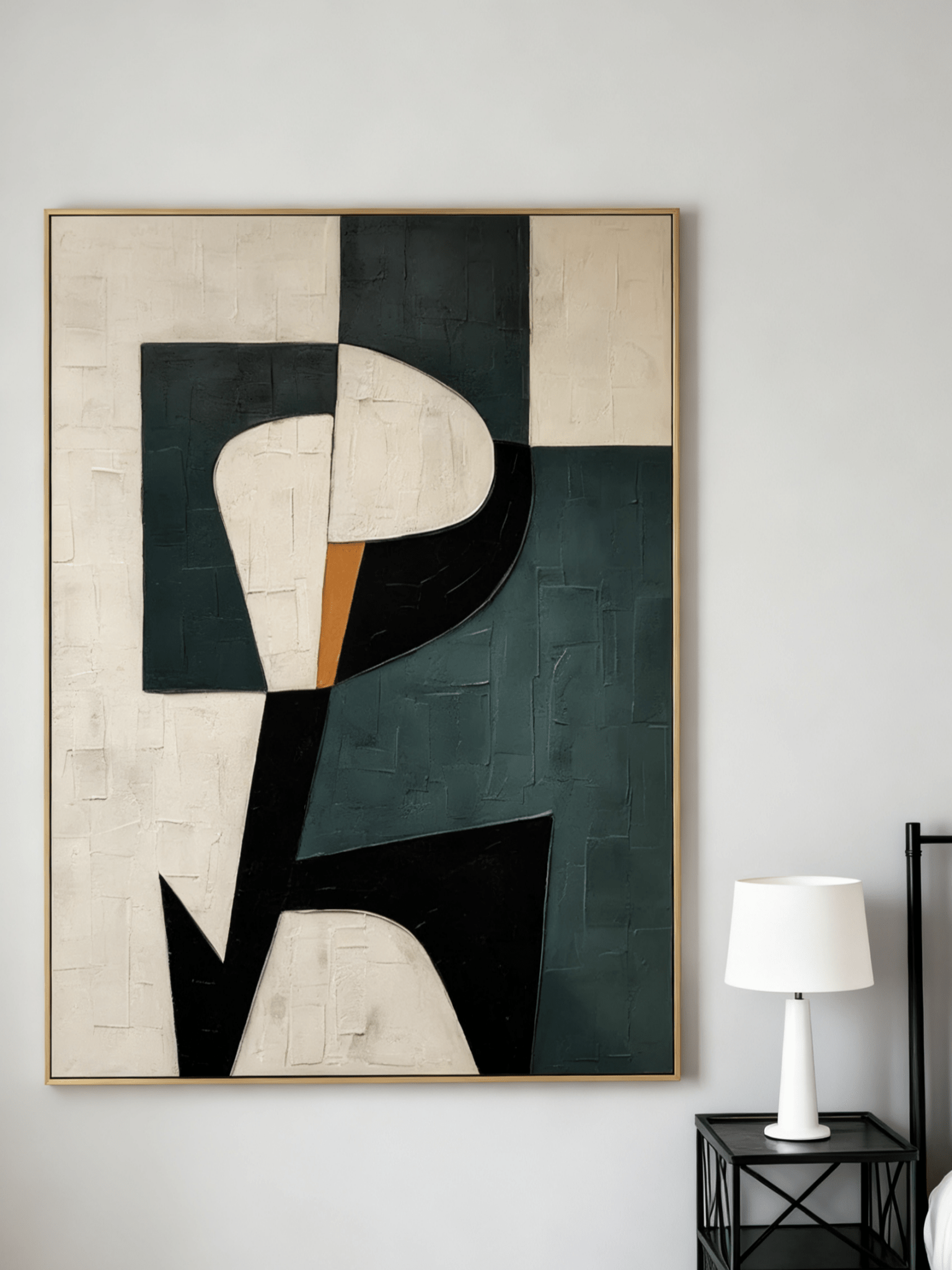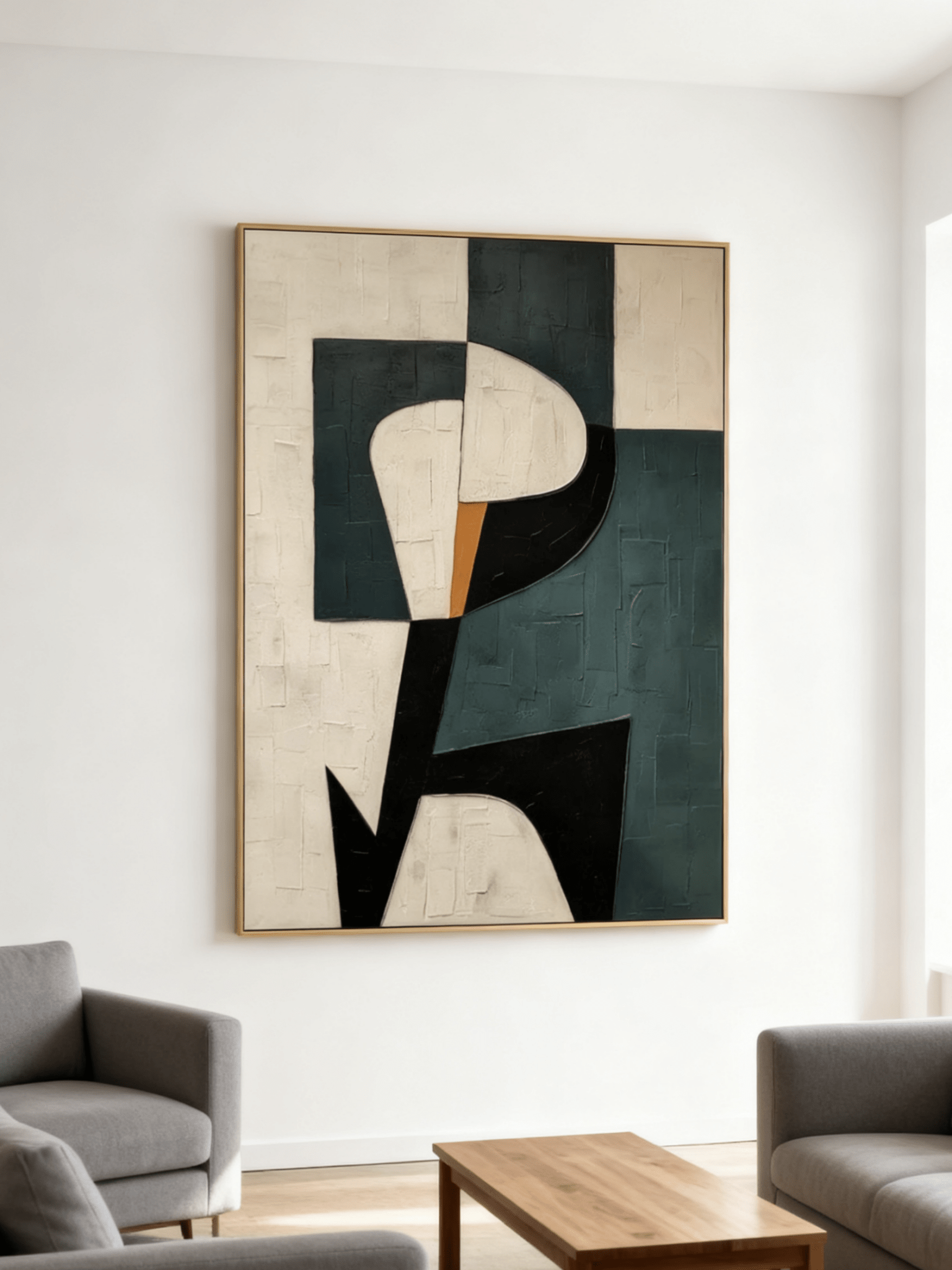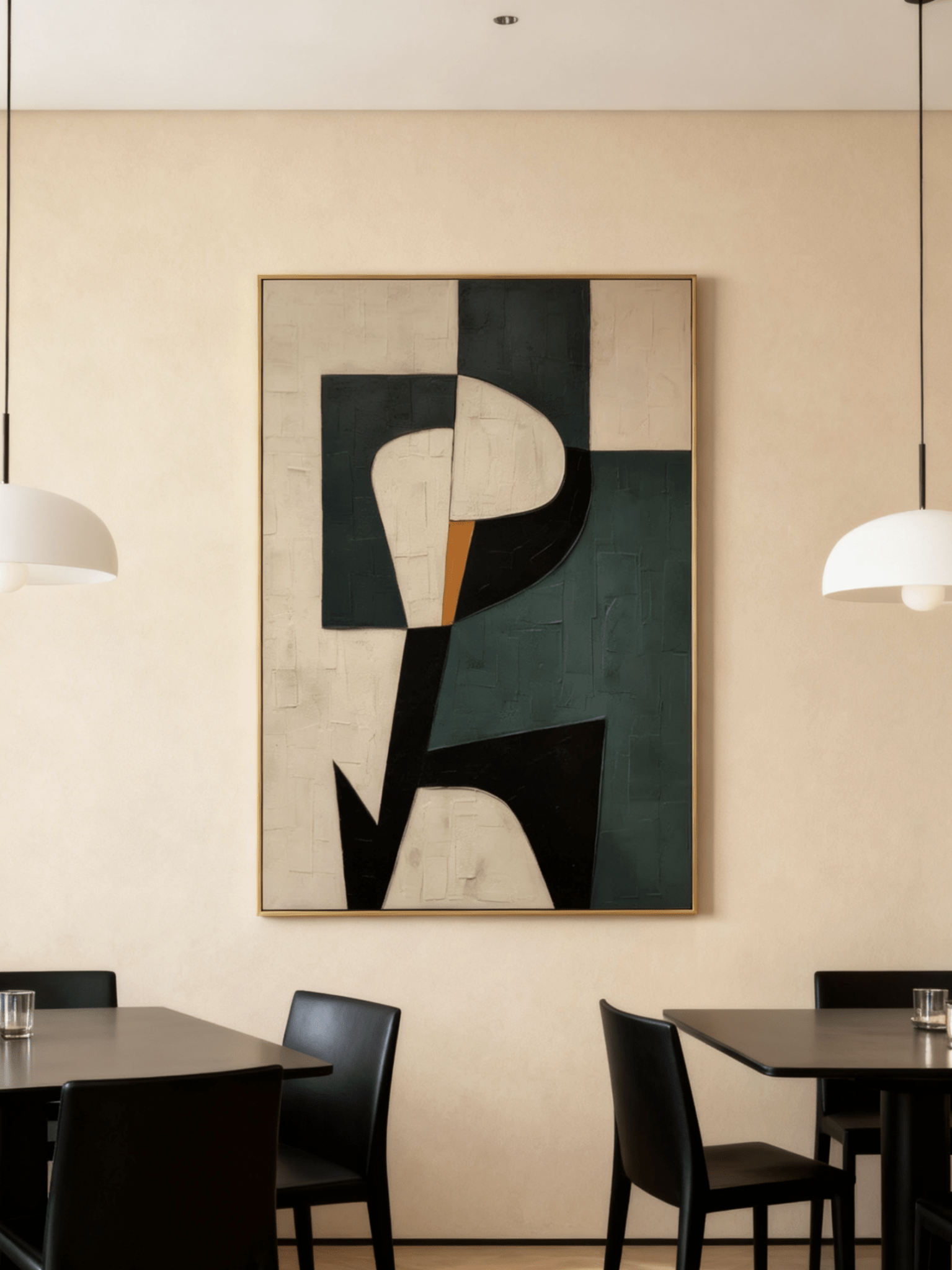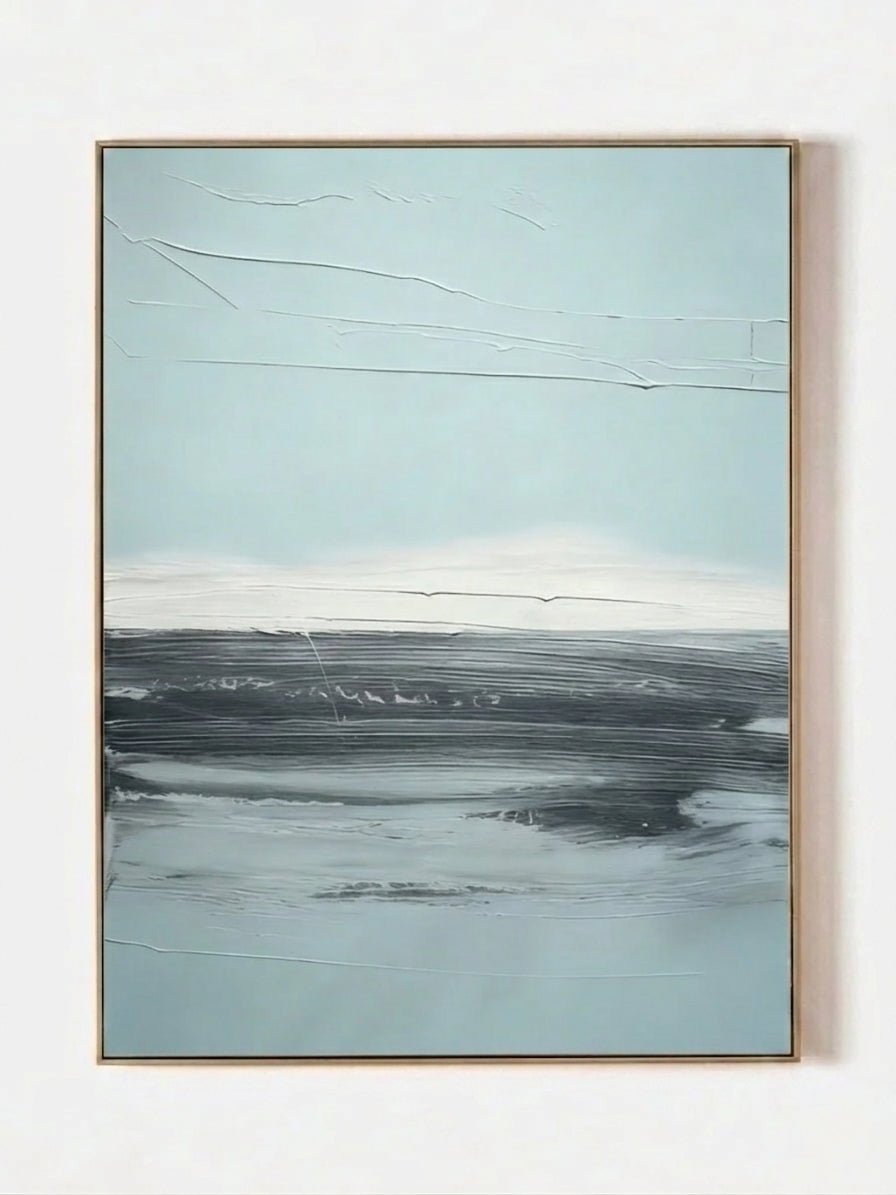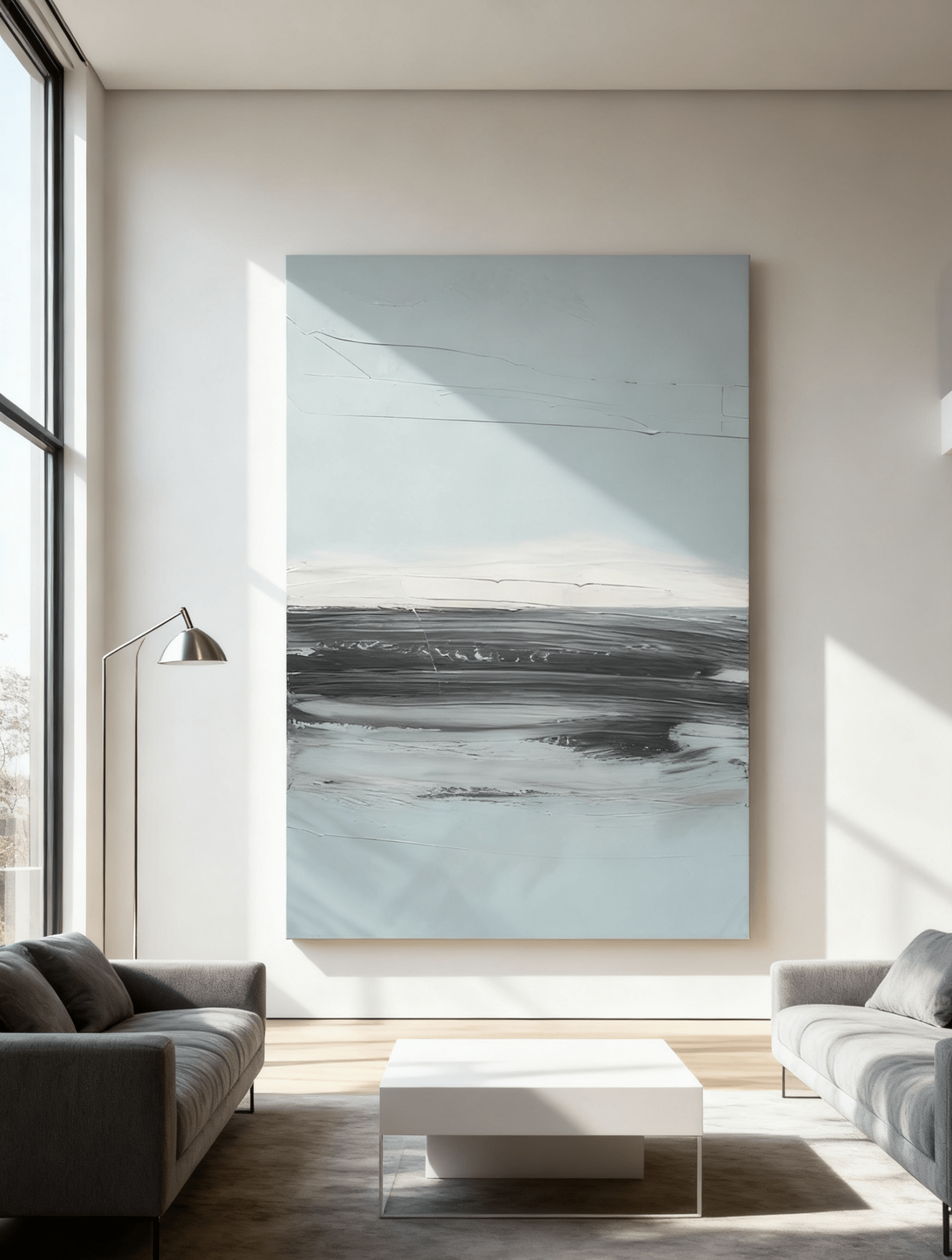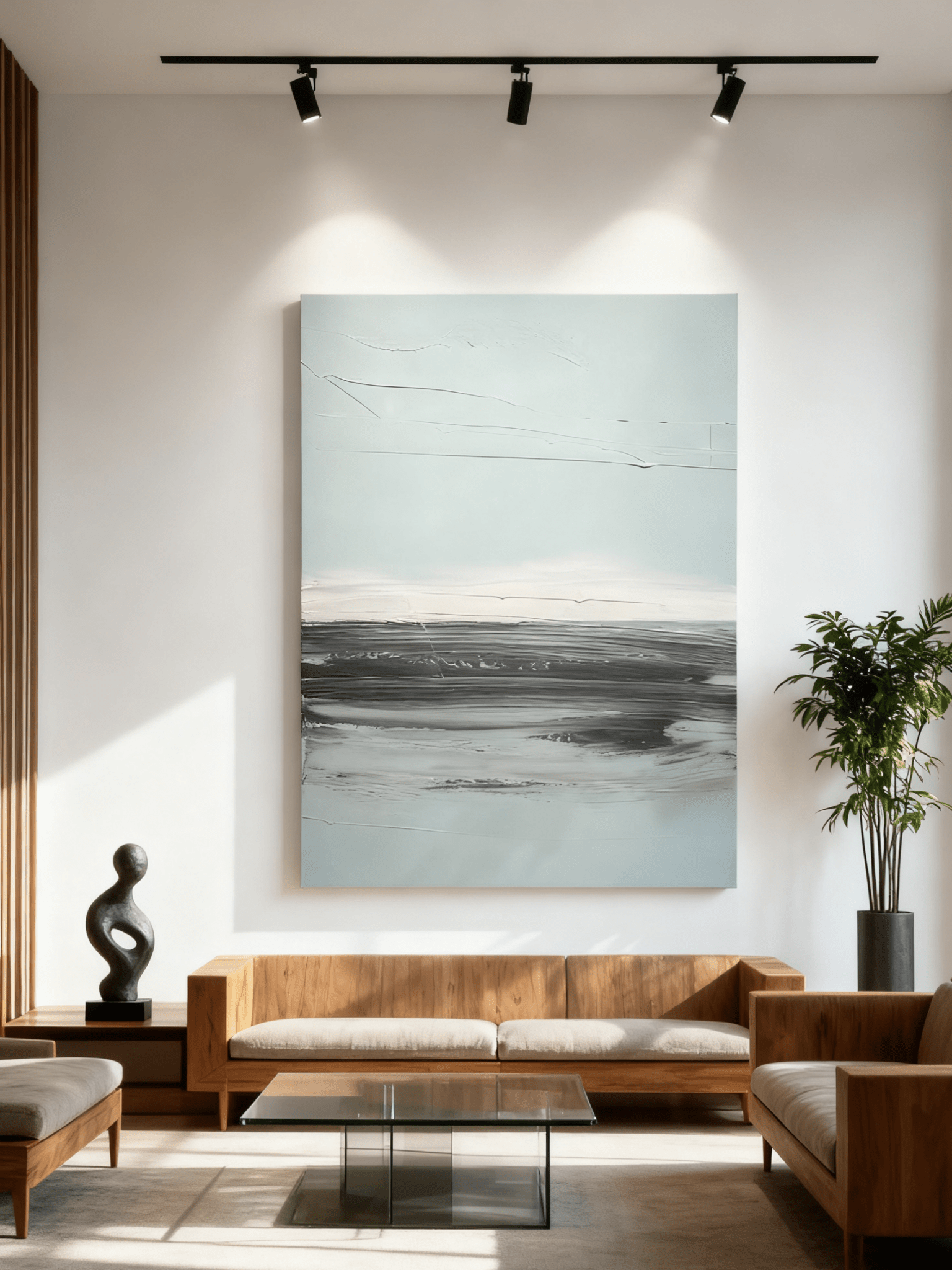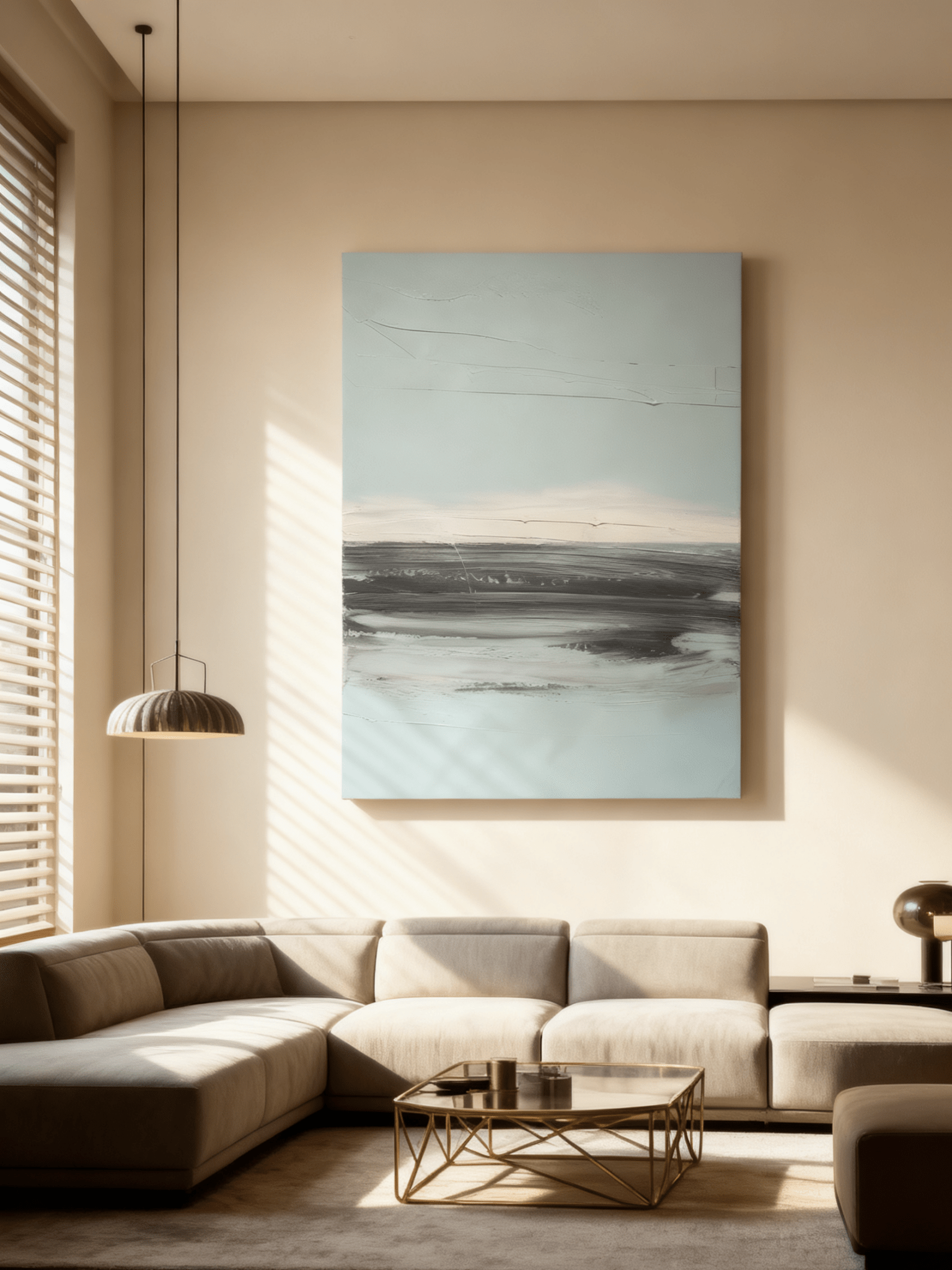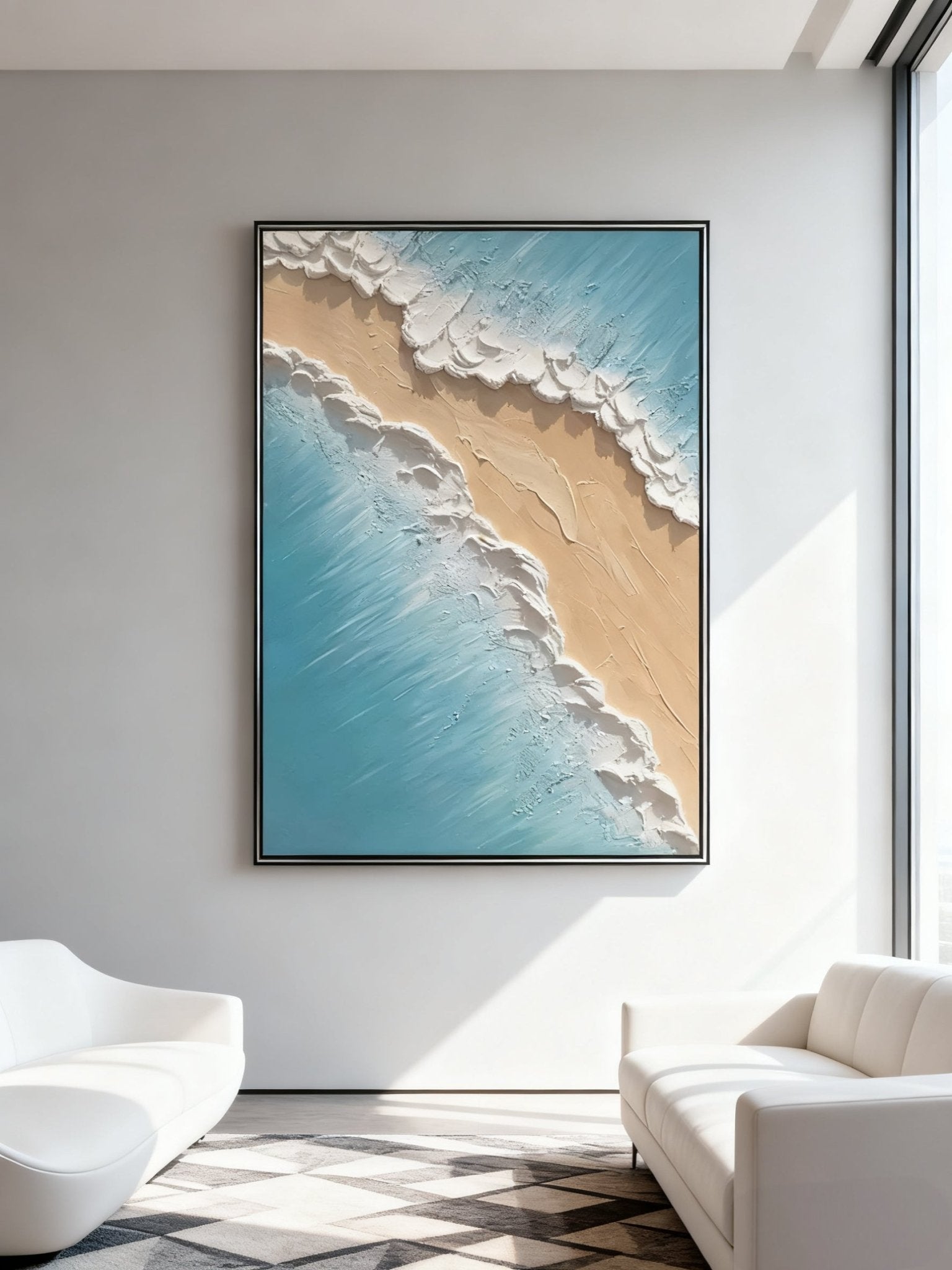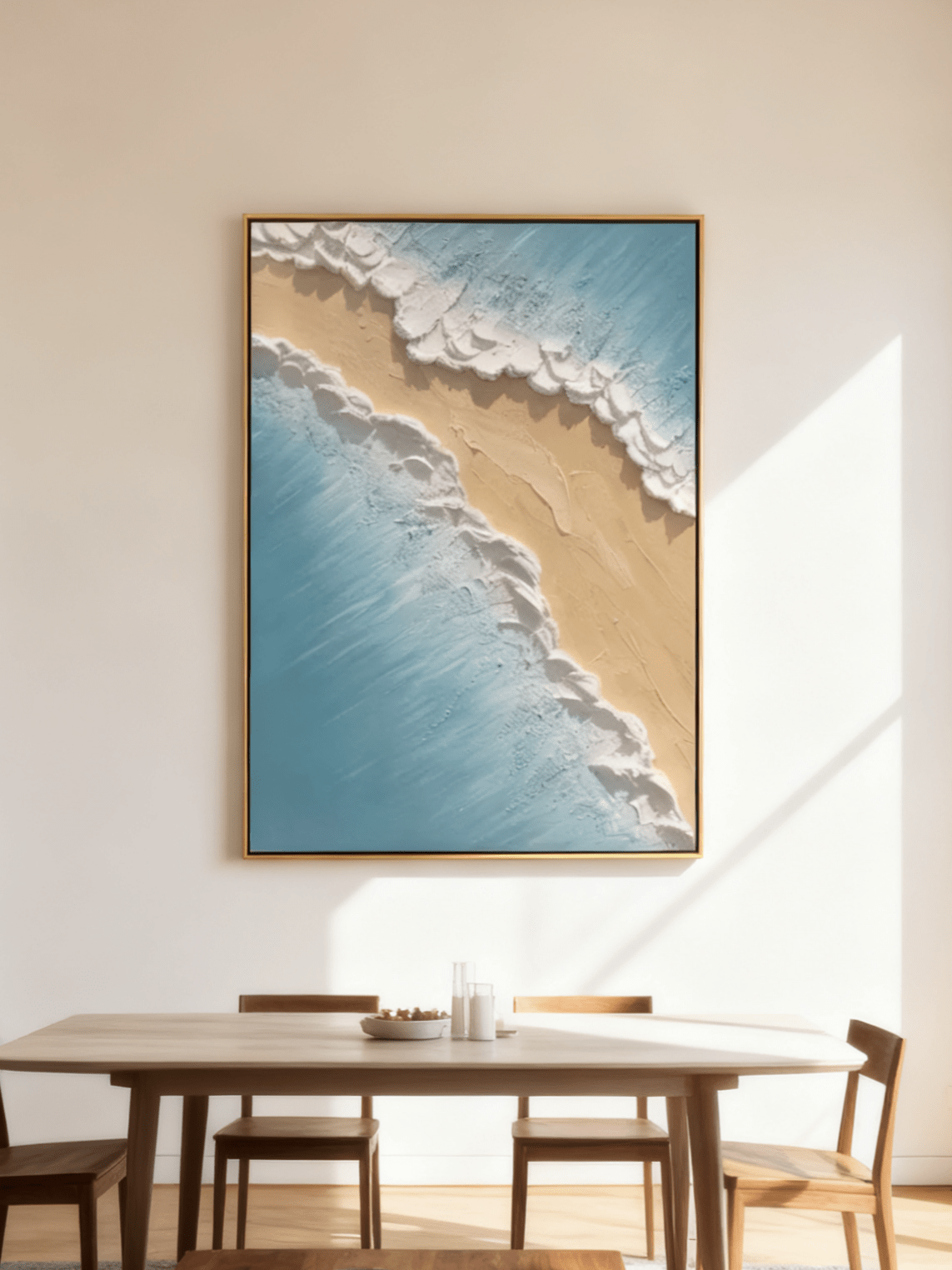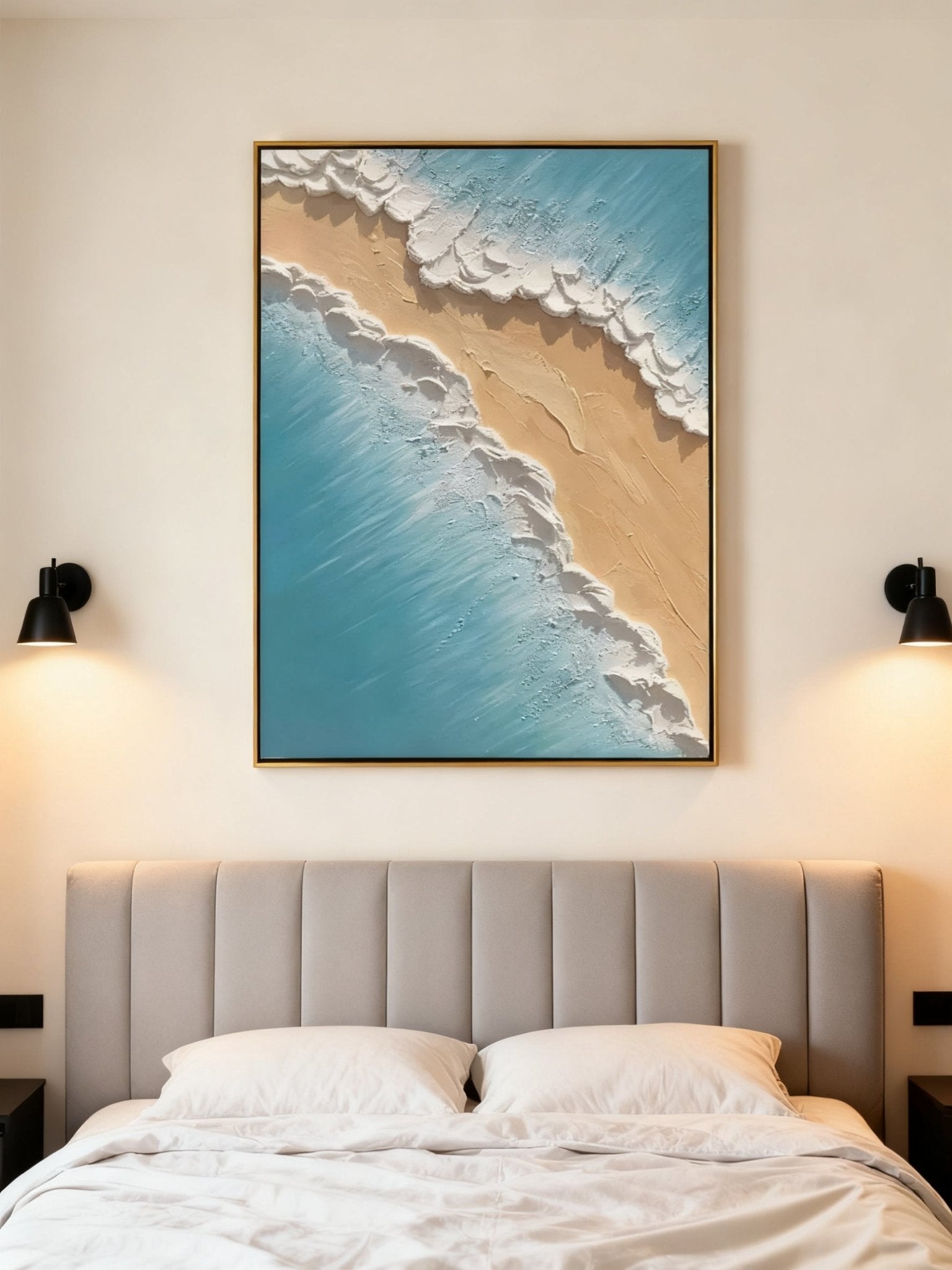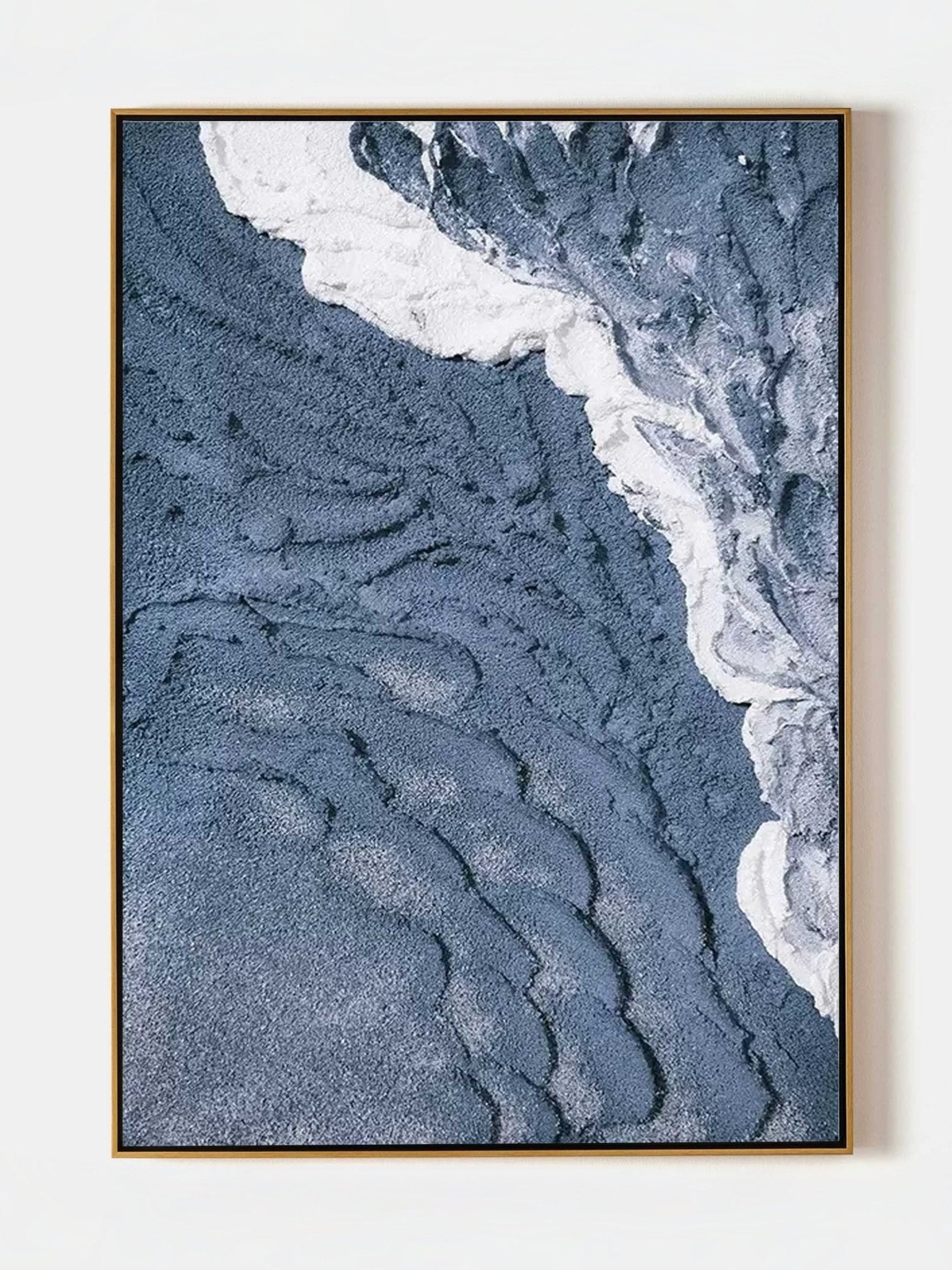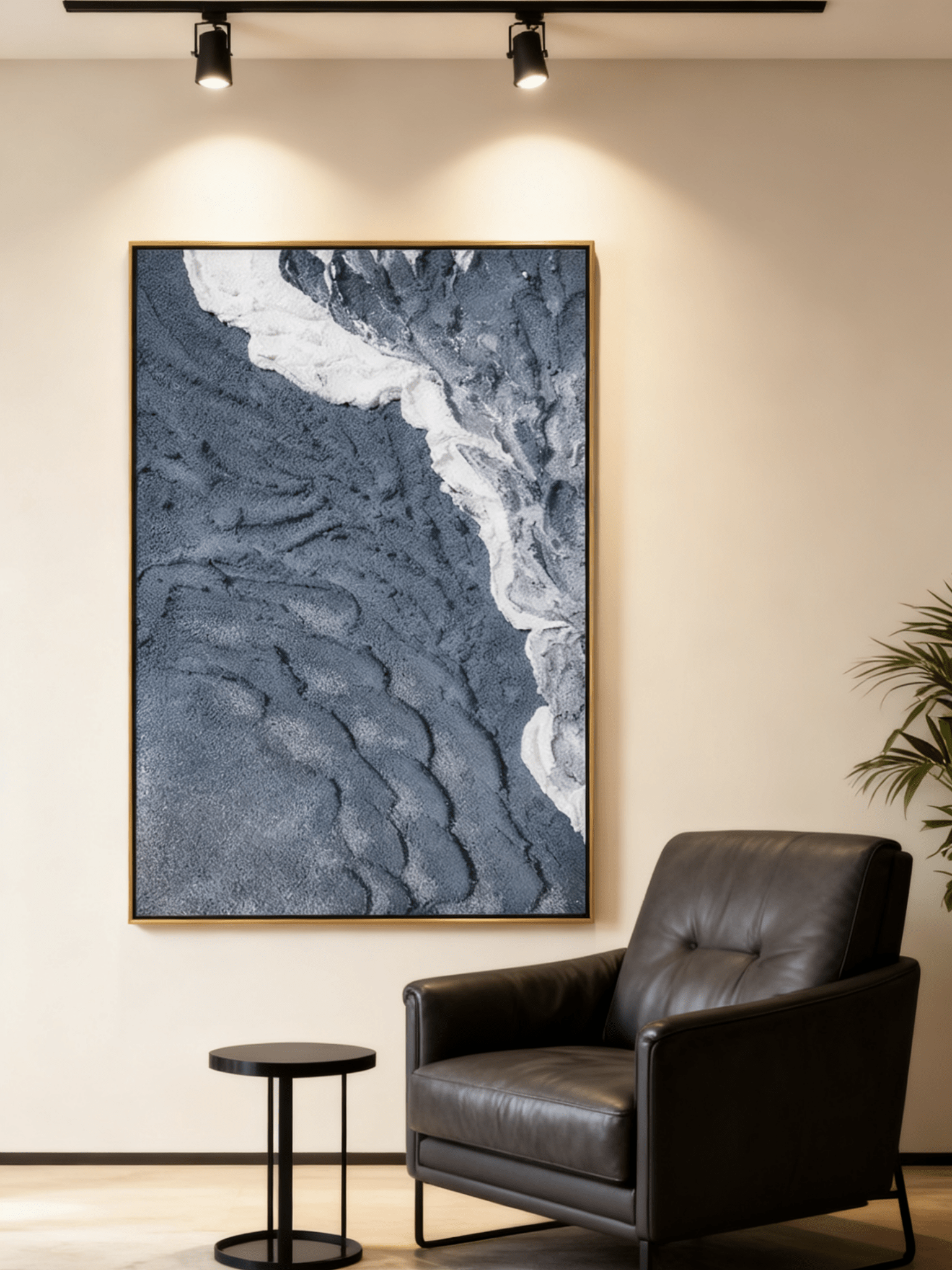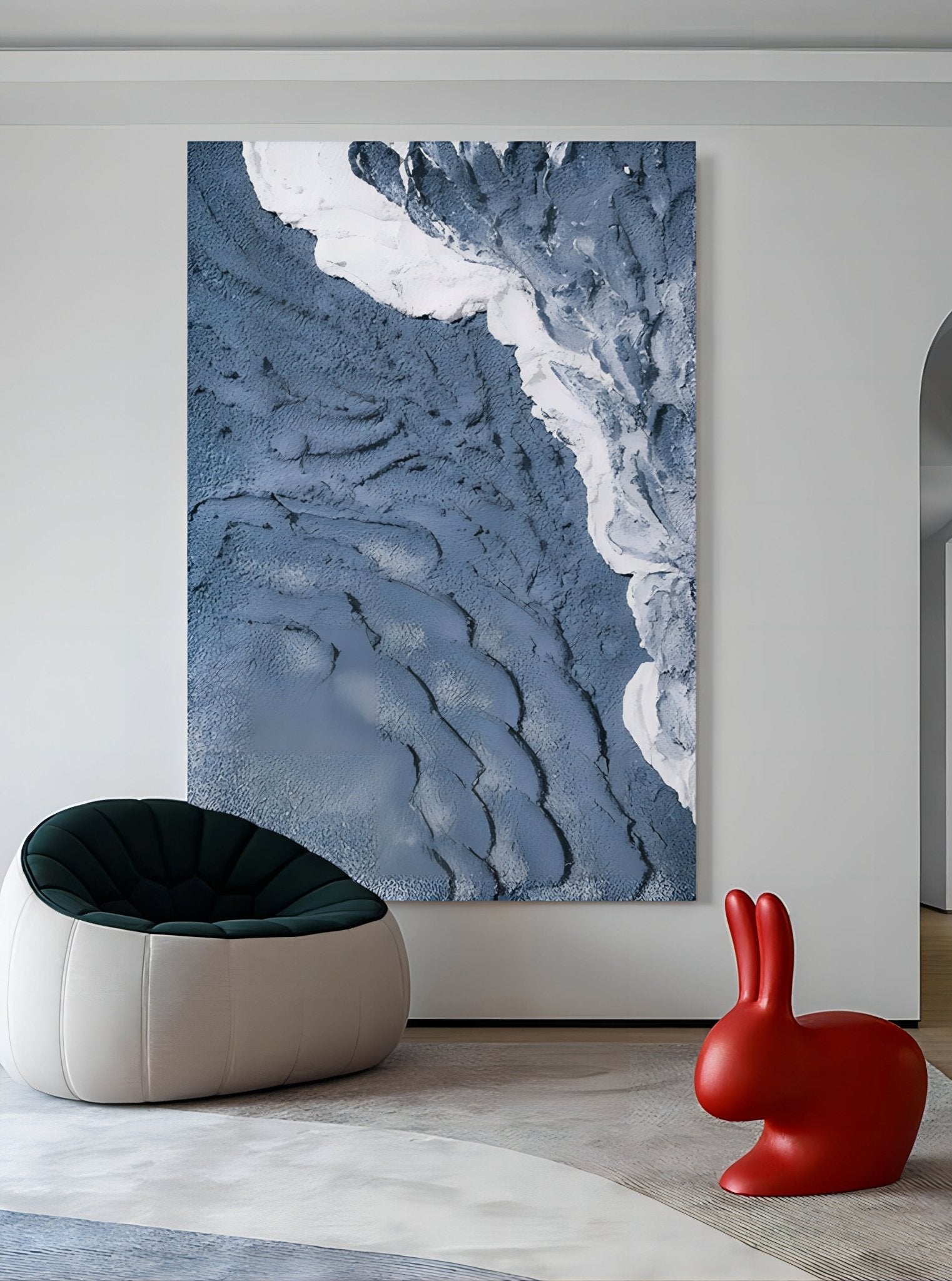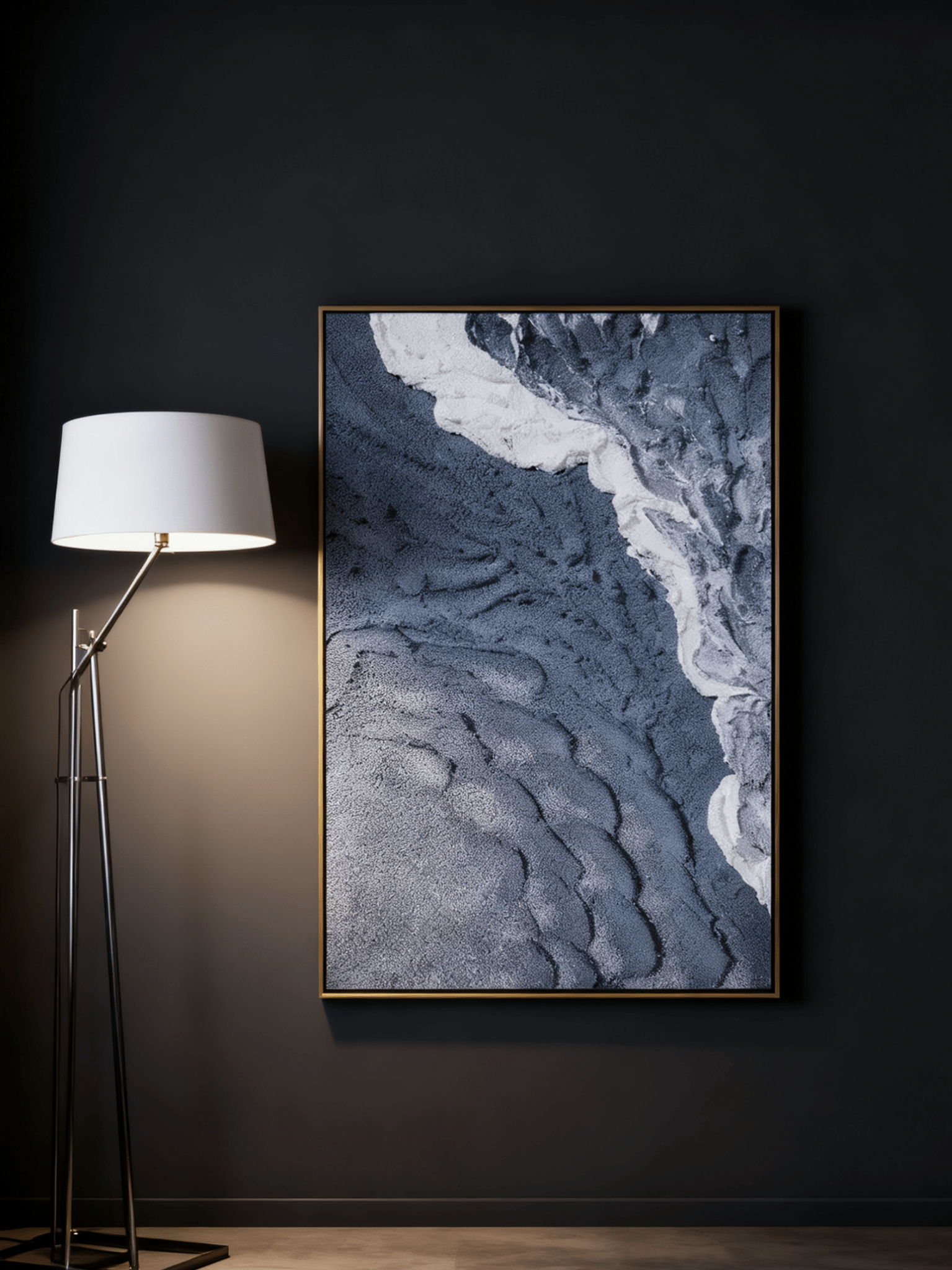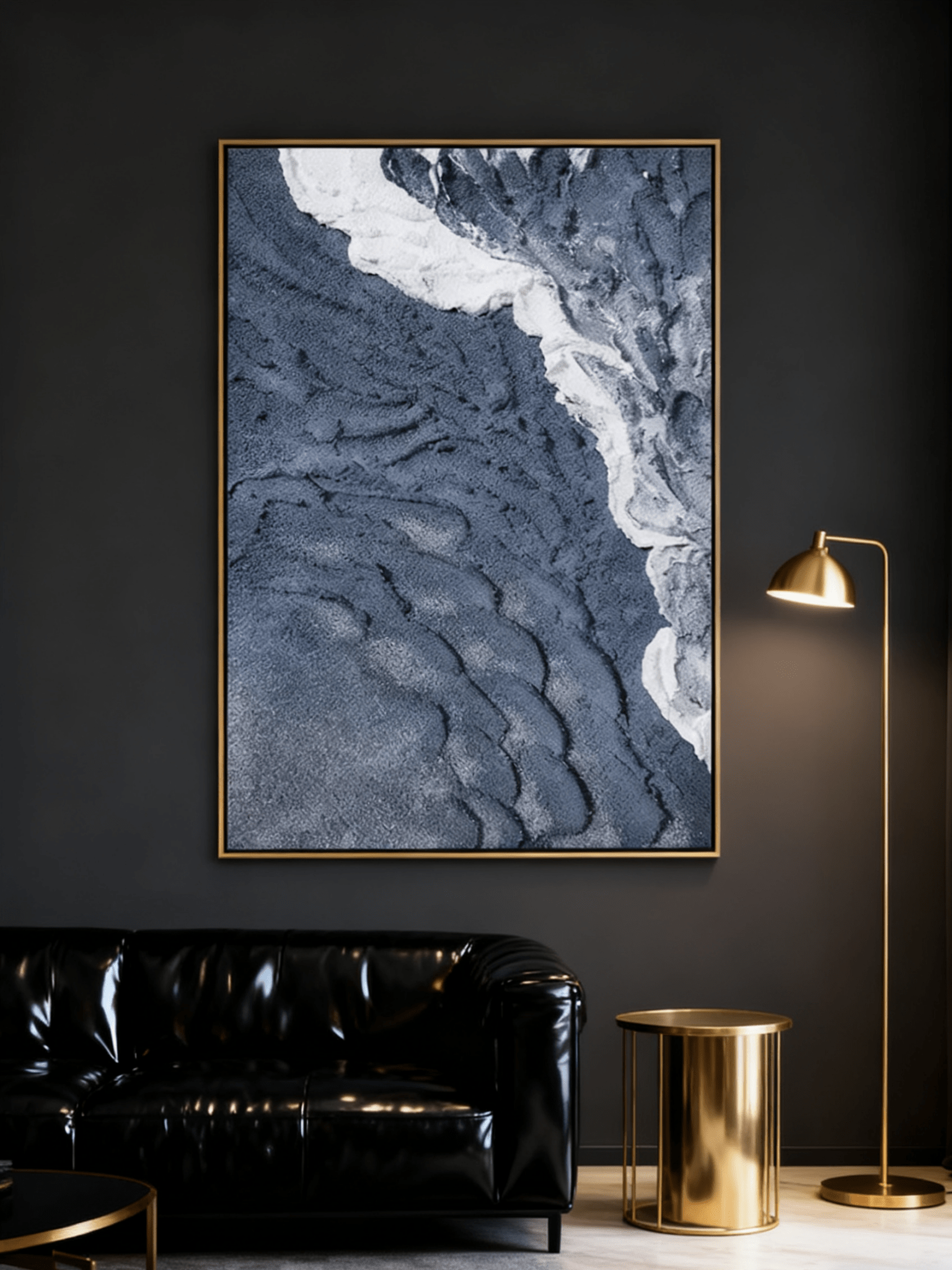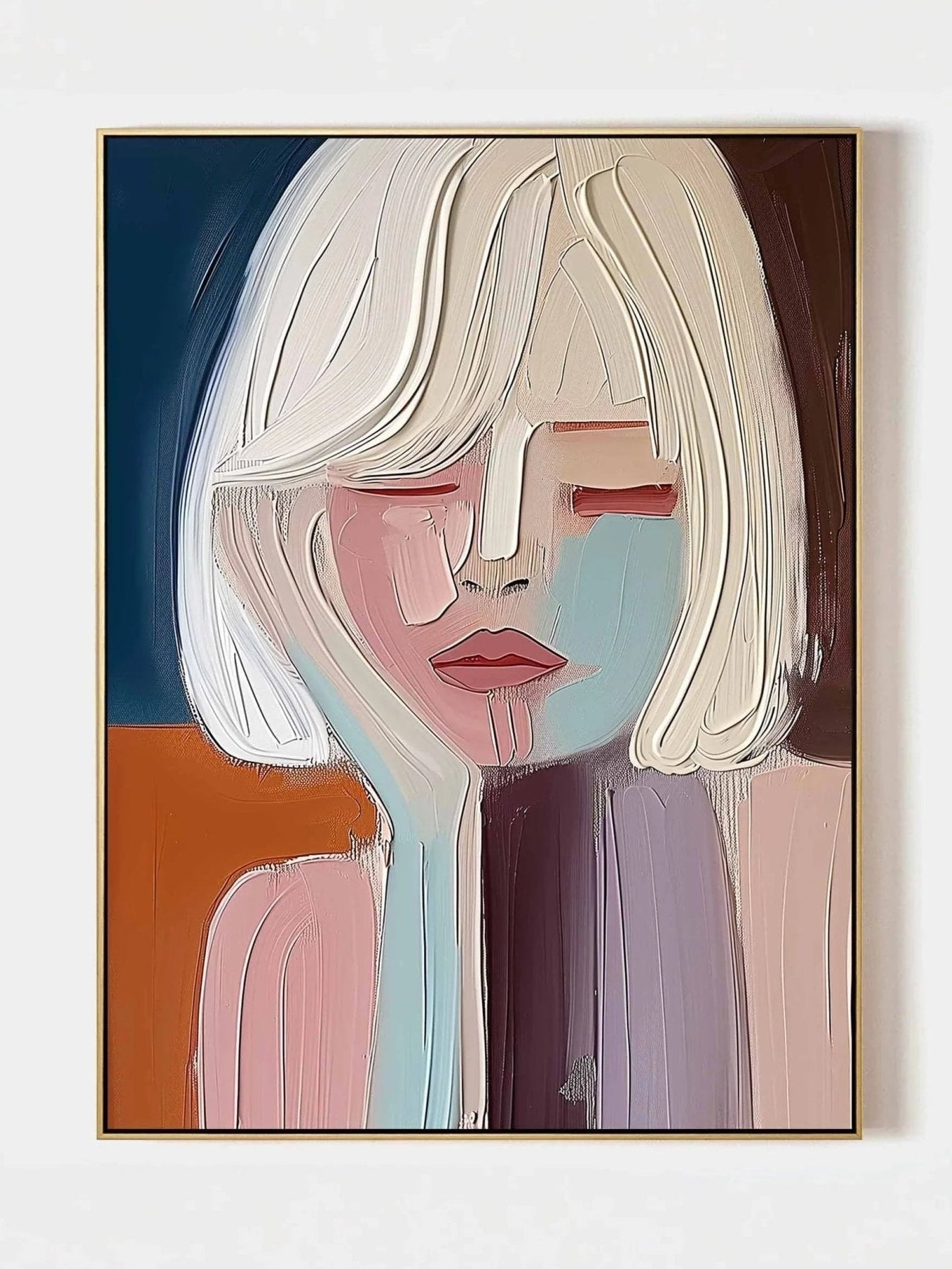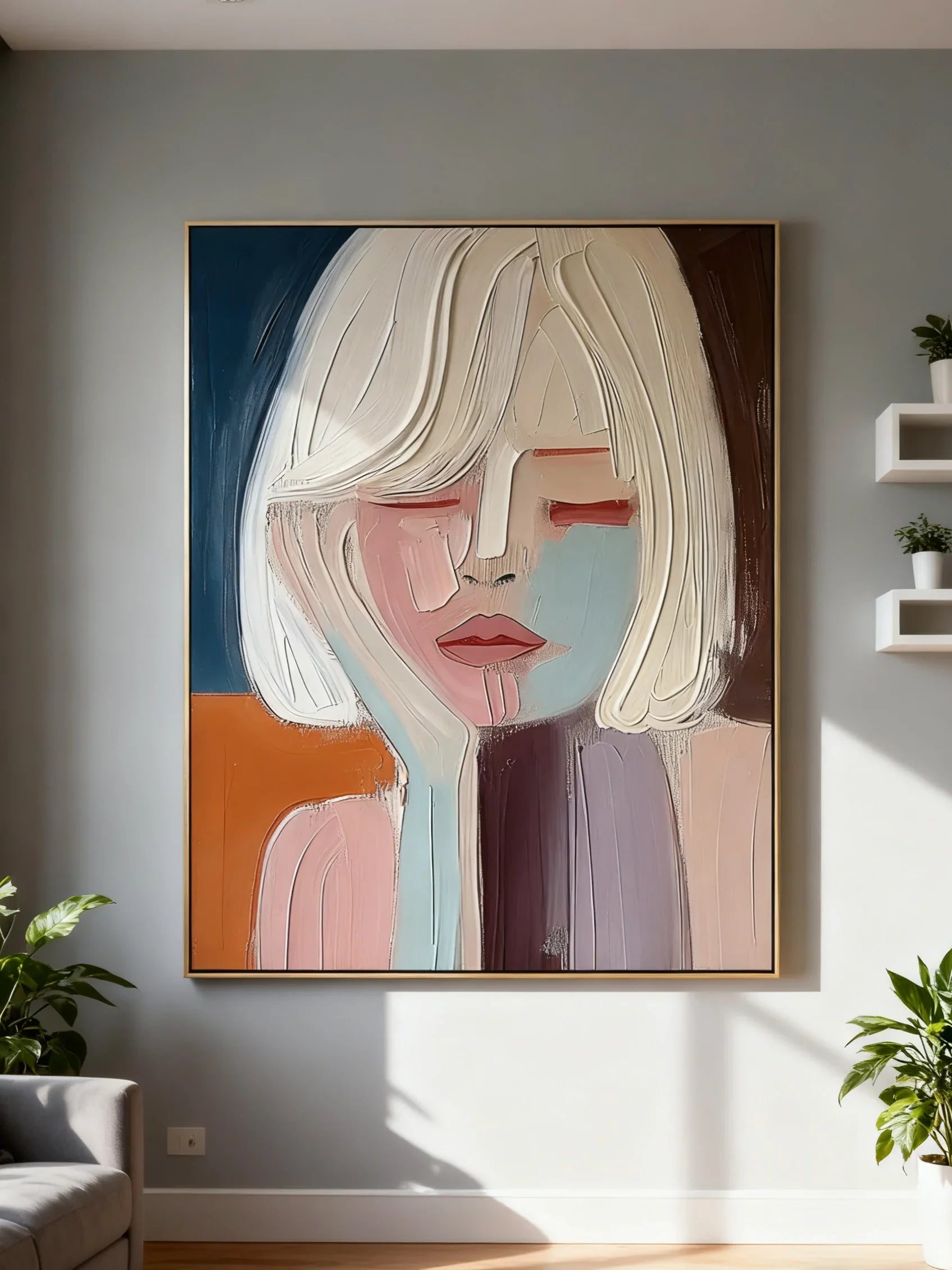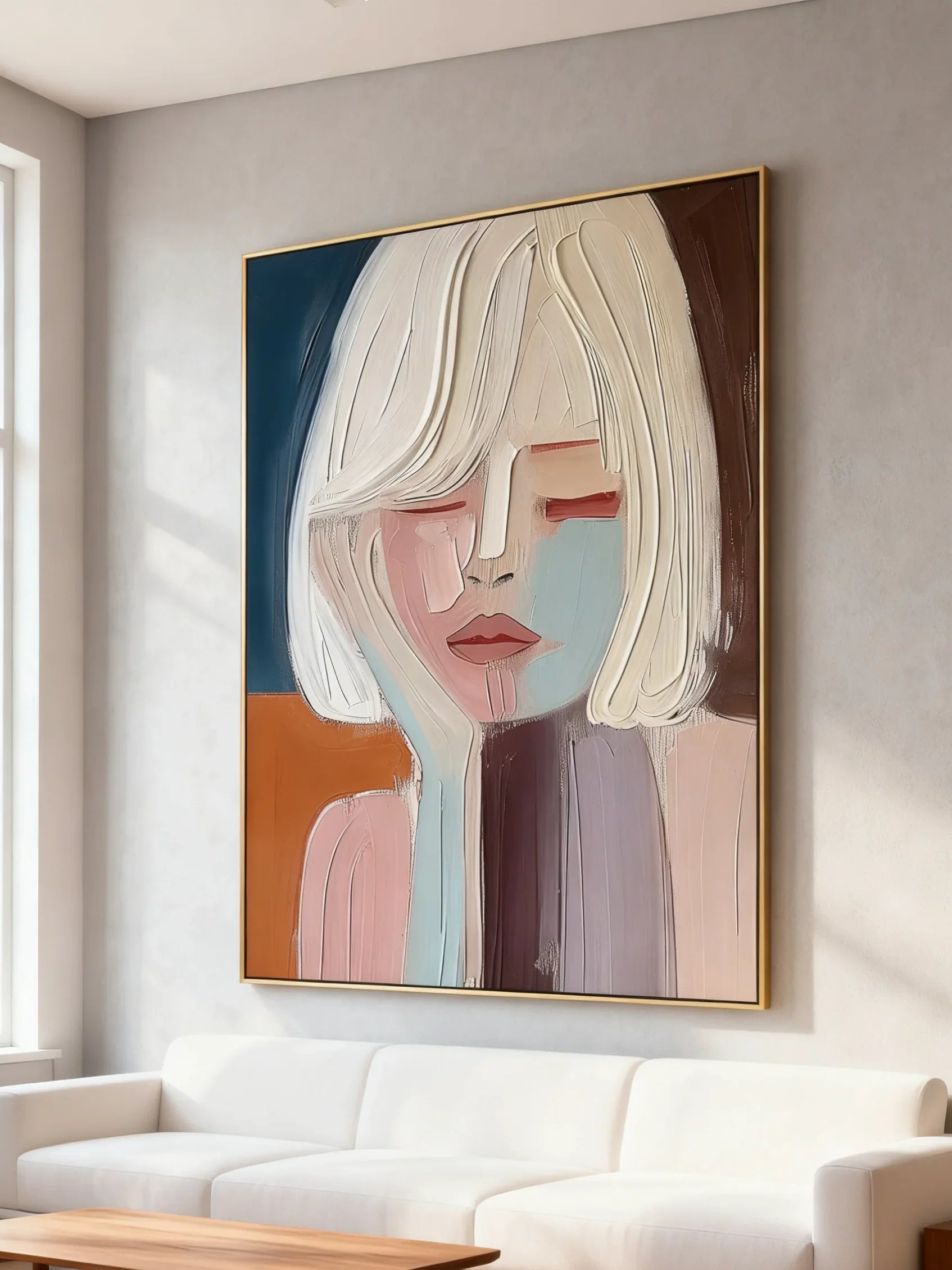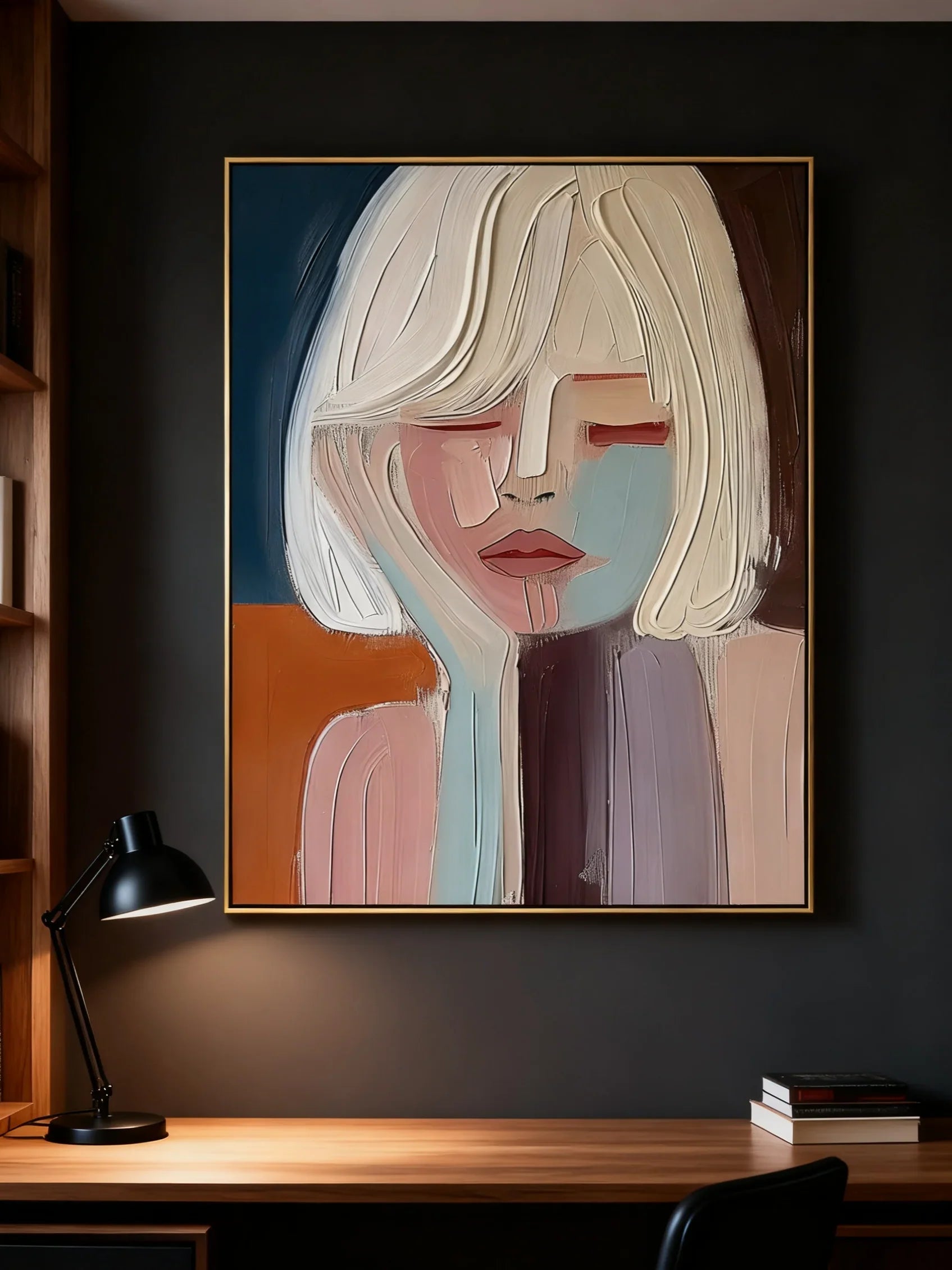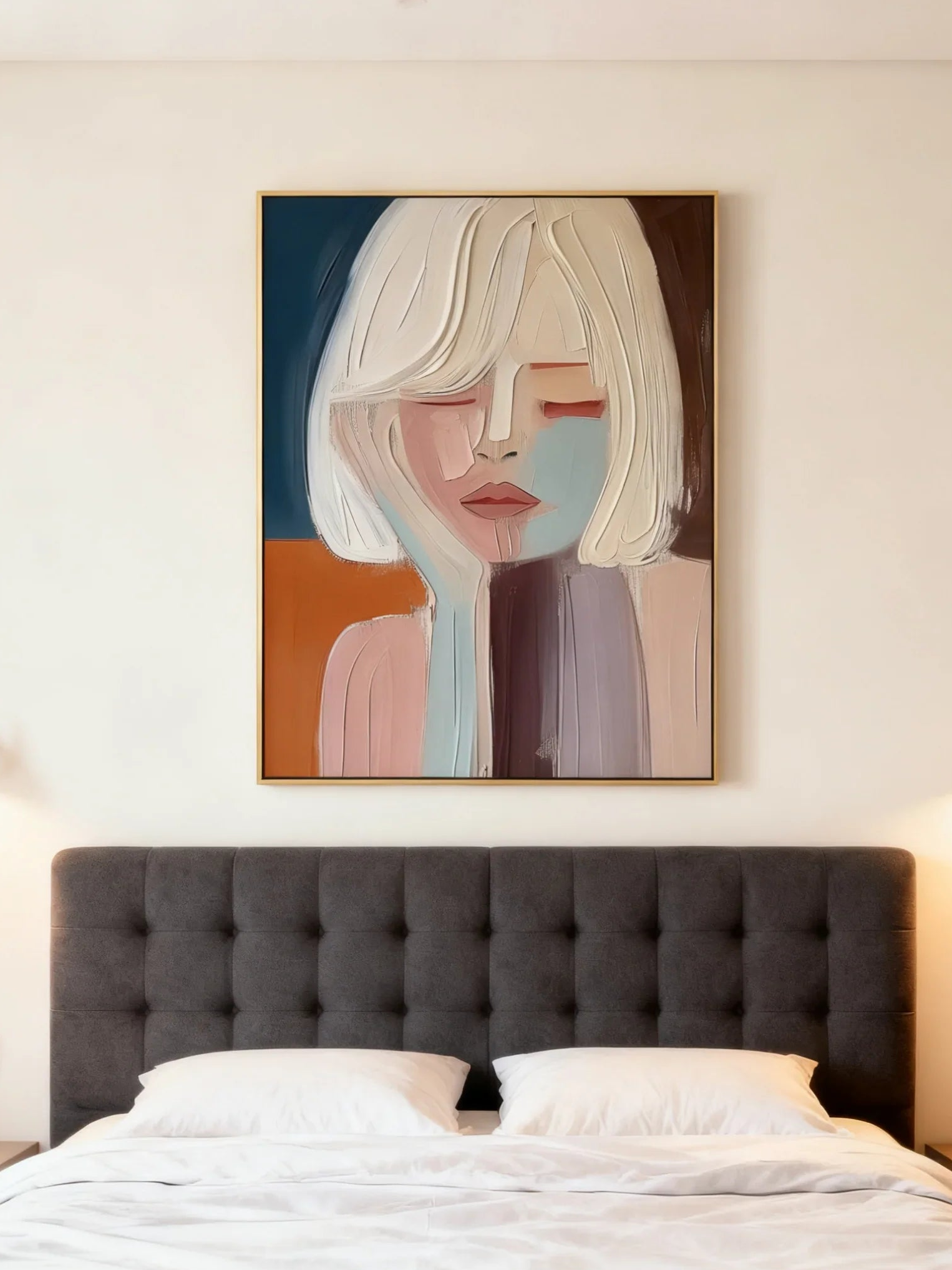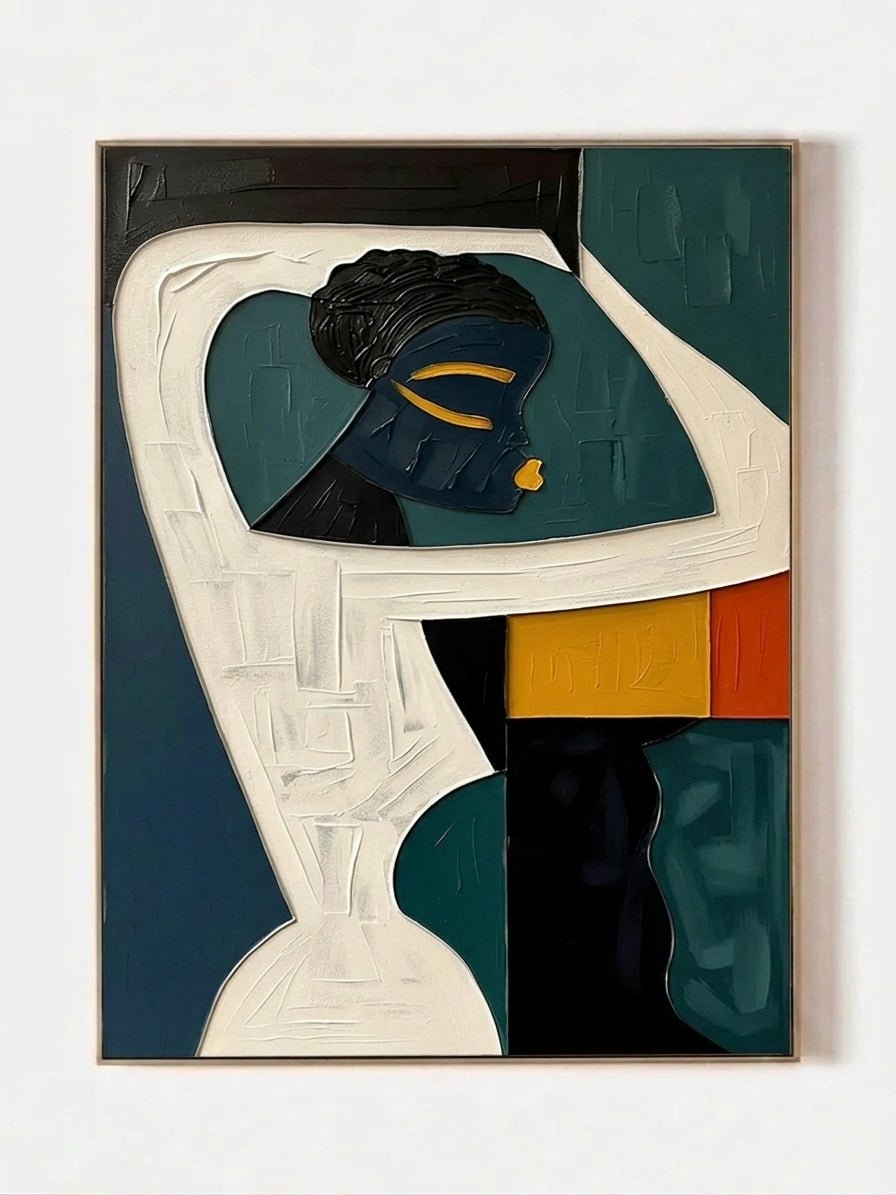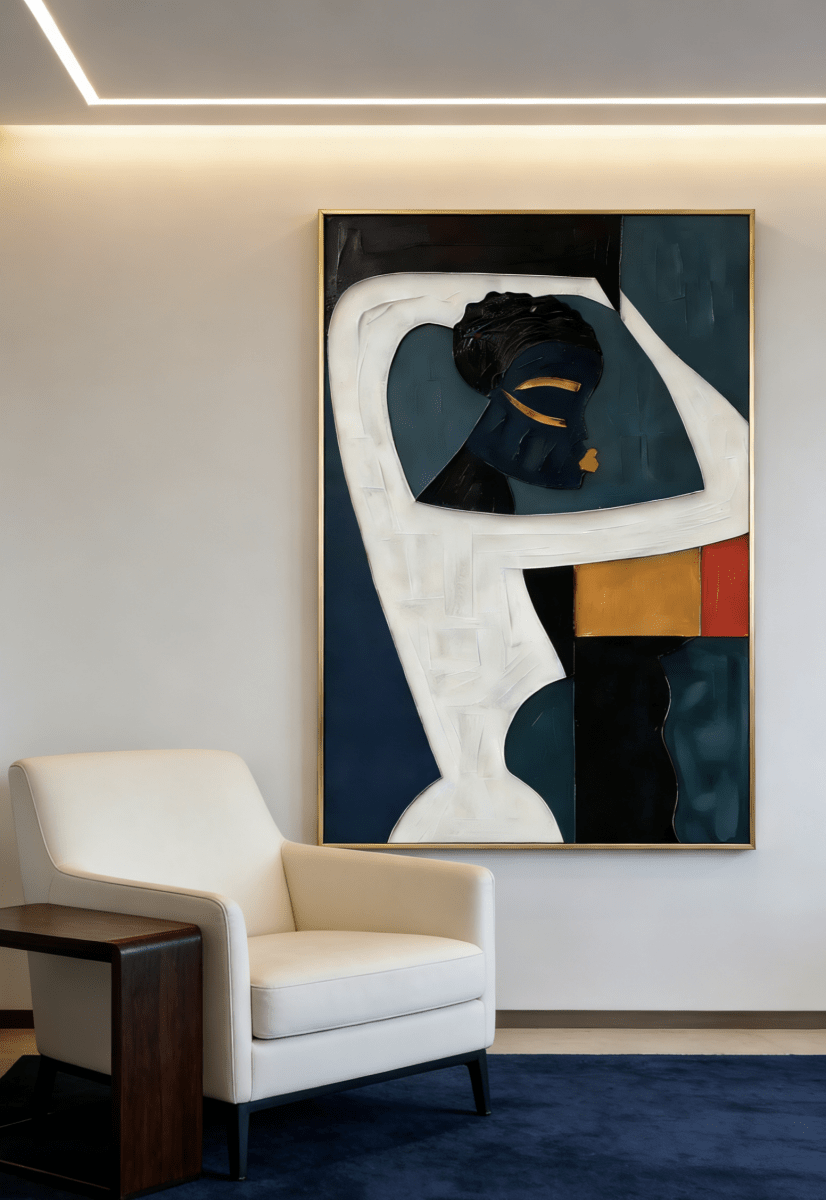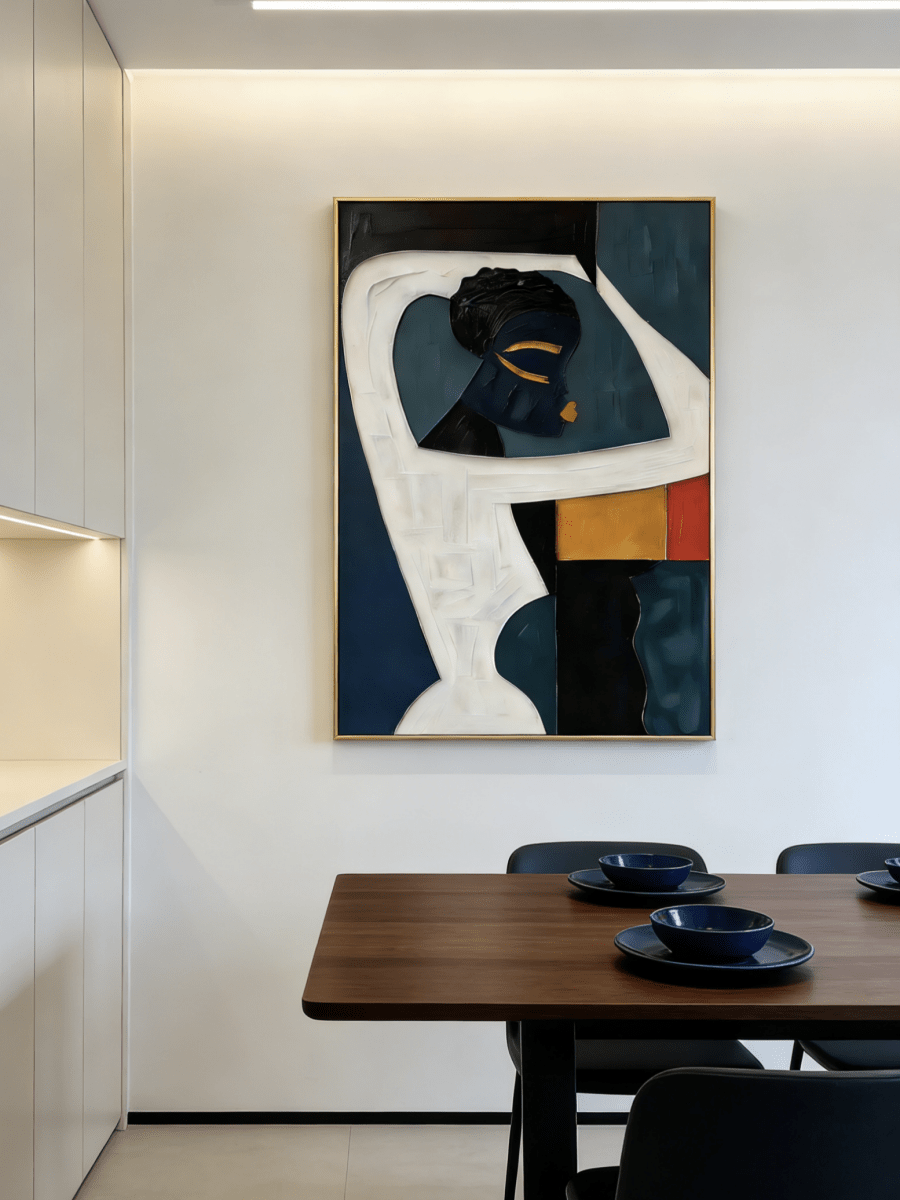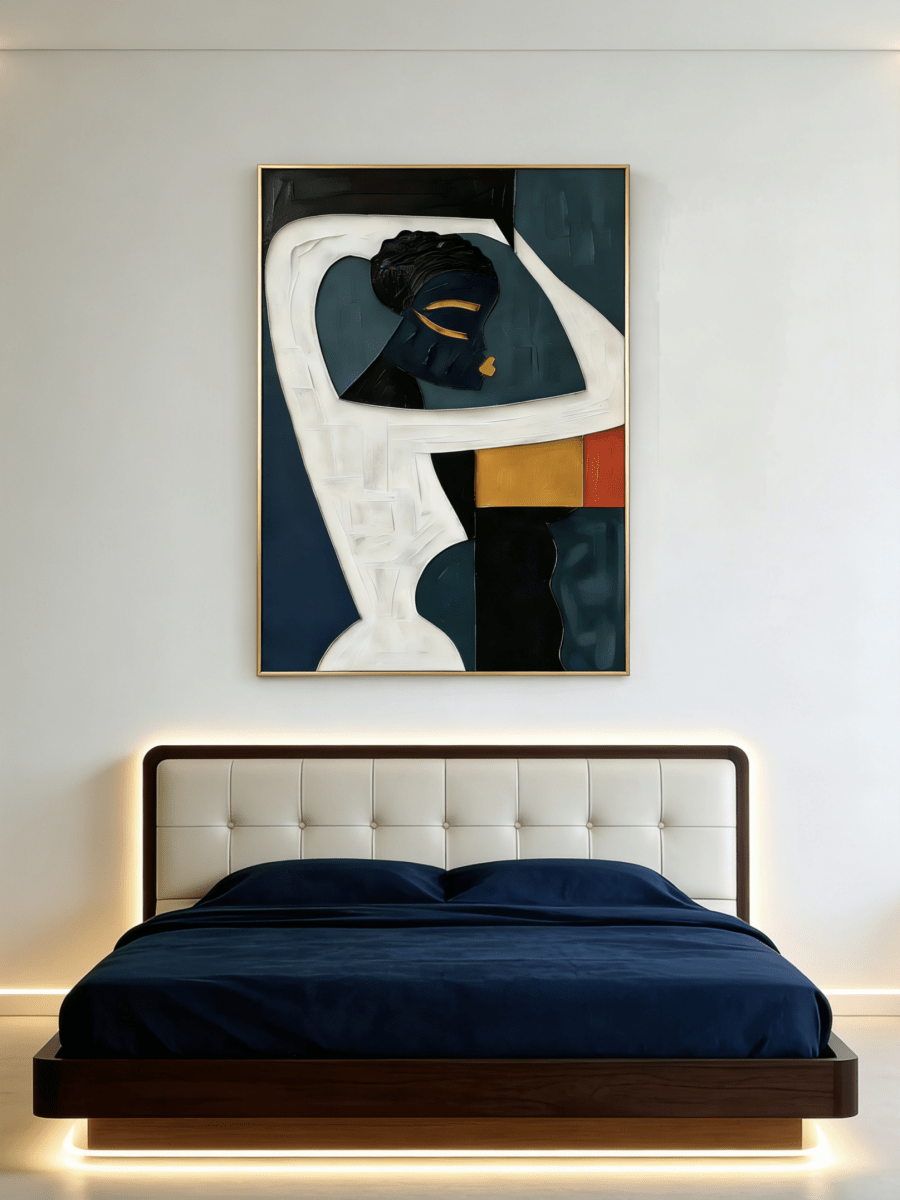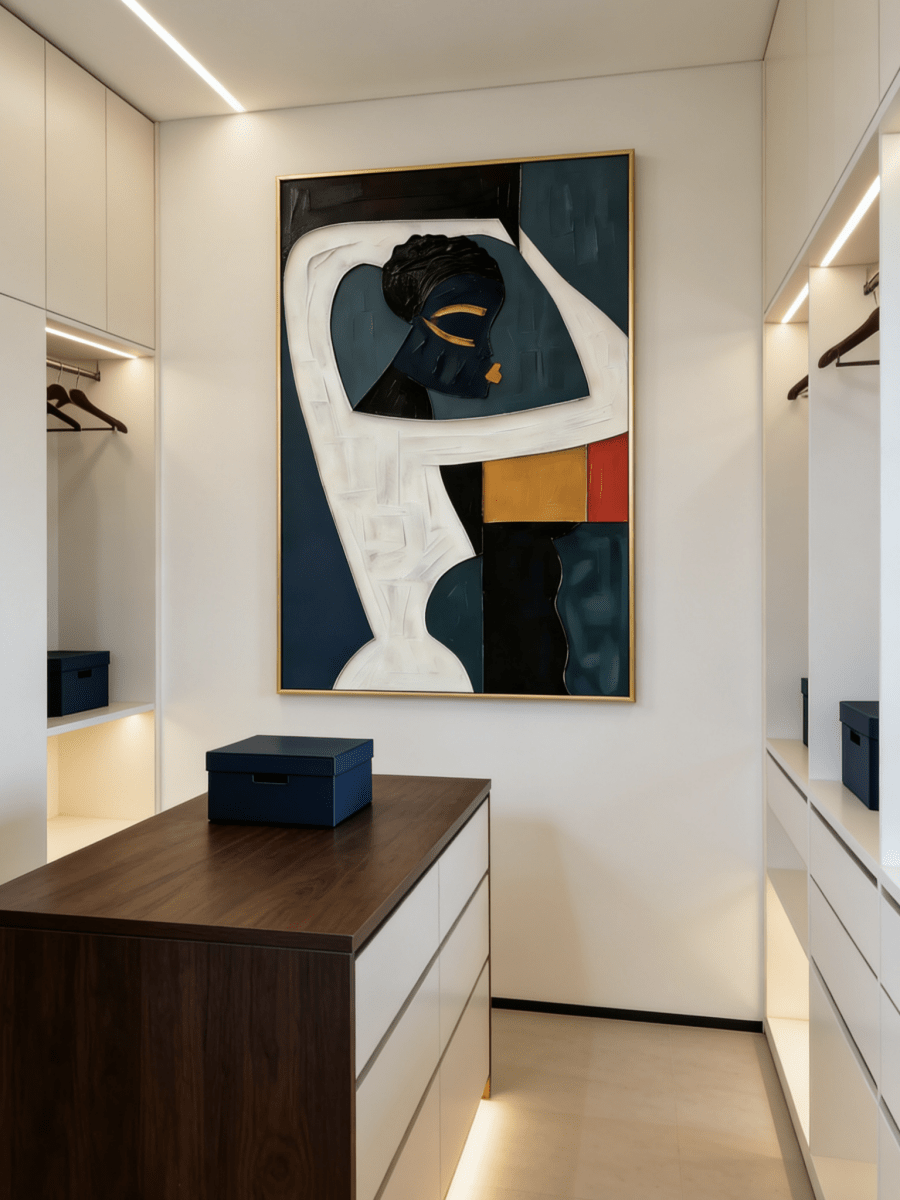

A flat image can look complete the moment you see it. A textured painting asks you to look twice. From the doorway, you notice the composition and color. As you move closer, ridges, folds, tool marks, and small shadows appear. When daylight shifts, the same surface can feel quieter, sharper, warmer, or more sculptural.
That changing experience is the main reason people choose 3D textured wall art. The term covers several kinds of physically raised artwork, including relief, plaster-inspired surfaces, and impasto painting. They do not create depth in exactly the same way, and they do not suit every wall equally well. This guide explains the differences in buyer-friendly terms, then shows how to judge texture depth, lighting, viewing distance, room fit, scale, and handmade quality before you order.

What Is 3D Textured Wall Art?
3D textured wall art is artwork with a physically raised surface. The depth may come from sculpted relief, plaster or modeling compound, thick paint, layered mixed media, or a combination of these methods. Its highlights and shadows respond to the room's actual light rather than remaining fixed in a printed image.
The word "3D" does not mean that every piece projects dramatically from the wall. Some works have low, fine texture that becomes visible only in side light. Others use deep folds or built forms that read almost like shallow sculpture. A 3D textured painting can still be calm and minimalist; physical depth and visual busyness are separate choices.
This distinction matters online. A photograph of genuine texture and a high-resolution print of that photograph can appear similar on a screen. In person, real relief changes as you walk past it. A printed illusion remains visually flat because its highlights and shadows are embedded in the image. When shopping, look for angled product photos, close views, material descriptions, and explicit statements that the work is hand-painted or physically textured.
What Creates the 3D Effect?
The dimensional effect comes from three things working together: surface height, edge shape, and directional light. A raised ridge catches a highlight. The recess beside it receives less light. Your eye reads the contrast between the two as depth. Curved forms create gradual tonal changes, while sharp edges make more defined shadows.
Material is only one part of the result. A deep layer can look heavy and dramatic, but carefully spaced shallow marks may create just as much movement. Color also changes the effect. White and beige relief depends strongly on shadow. Dark or saturated impasto can remain visually powerful even under softer light because color contrast supports the texture.
For detailed questions about material systems, canvas compatibility, cracking, durability, and care, read WABI Wall Art's separate guide to what plaster wall art is. The focus here is different: how physical depth behaves in a room and how to choose the right kind of dimensional artwork.
Relief, Plaster and Impasto: What Is the Difference?
| Type | How depth is formed | Typical visual effect | Best viewing condition | Good room fit |
|---|---|---|---|---|
| Relief wall art | Forms project from a backing plane, from shallow carving to deep sculptural folds | Architectural, sculptural, strongly shaped by shadow | Medium or angled viewing with broad side light | Entry, feature wall, living room, stair landing |
| Plaster-style texture | Plaster-based or compatible texture compounds are spread, carved, scraped, or layered | Matte, mineral, weathered, quiet and tactile | Close to medium distance in natural or soft directional light | Bedroom, living room, office, calm dining room |
| Impasto painting | Thick paint or painting medium retains brush and palette-knife marks | Painterly, energetic, color-rich or floral | Close to medium distance with soft oblique light | Dining room, living room, bedroom focal wall |
In other words, relief describes form, plaster describes a material or plaster-like surface family, and impasto describes thickly applied paint. One artwork may belong to more than one category. A sculptural canvas can use plaster-like compound for relief and then receive impasto color on top. Product language should help you understand the visible result rather than force the piece into one rigid label.

Subtle, Medium or Deep Texture?
Subtle texture
Low ridges, combed lines, scraped fields, and delicate palette-knife marks add interest without dominating the room. Subtle texture is a strong choice for bedrooms, compact rooms, quiet offices, or interiors that already contain patterned textiles and detailed furniture. It tends to reward close viewing while reading as a calm composition from across the room.
Medium texture
Medium relief remains visible from normal seating distance but does not project like sculpture. It is the most versatile level for 3D textured canvas art above a sofa, bed, sideboard, or console. Architectural arches, layered geometric forms, and raised horizon lines often fall into this category.
Deep texture
Deep folds, modeled petals, strong bars, and projecting organic forms create a statement even in a restrained palette. They need more breathing room, a secure installation, and enough viewing distance to read as a whole. Deep relief can be excellent in an entryway or on a living-room feature wall, but it may feel visually crowded in a narrow passage where viewers stand inches away.
How Lighting Changes 3D Textured Wall Art
Texture needs direction more than raw brightness. Light that crosses the surface produces small highlights and shadows; light aimed straight at the face fills those shadows and makes the work appear flatter. Before choosing a wall, observe where daylight comes from and how it moves during the hours you use the room.
- Natural side light reveals ridges gradually and often gives the most convincing daytime view.
- Frontal light makes color easy to see but reduces the apparent depth of shallow texture.
- Warm light emphasizes cream, camel, clay, gold, and walnut tones; it can make neutral relief feel more intimate.
- Cooler or neutral light keeps white, gray, sage, and charcoal clearer, but an overly cool source can make warm plaster tones feel sterile.
A deep relief generally benefits from a broad, controlled wash rather than a narrow spotlight. A pale impasto painting needs enough ambient light to keep its background readable without blowing out the high points. For fixture placement and glare control, use the dedicated guide on how to light textured wall art.

Choose Texture for the Way You Will View It
Close viewing, roughly two to four feet away, reveals tool marks, edges, and material transitions. Entry consoles, reading corners, and hallway ends can support intricate low or medium texture, provided the work does not project into a traffic path.
Medium viewing, around five to ten feet, is typical of a sofa, bed, or dining table. Here, the composition must stay clear while the texture remains legible. Medium relief and expressive impasto often perform best because they offer both an overall image and surface detail.
Long viewing, beyond ten feet, favors clear silhouettes, broad relief zones, stronger tonal contrast, or a larger canvas. Tiny textural marks may disappear, so do not pay for complexity that your room cannot reveal. A quiet horizontal painting can still work from a distance if its horizon, shadow structure, and scale are intentional.

Textured Wall Art for a Living Room
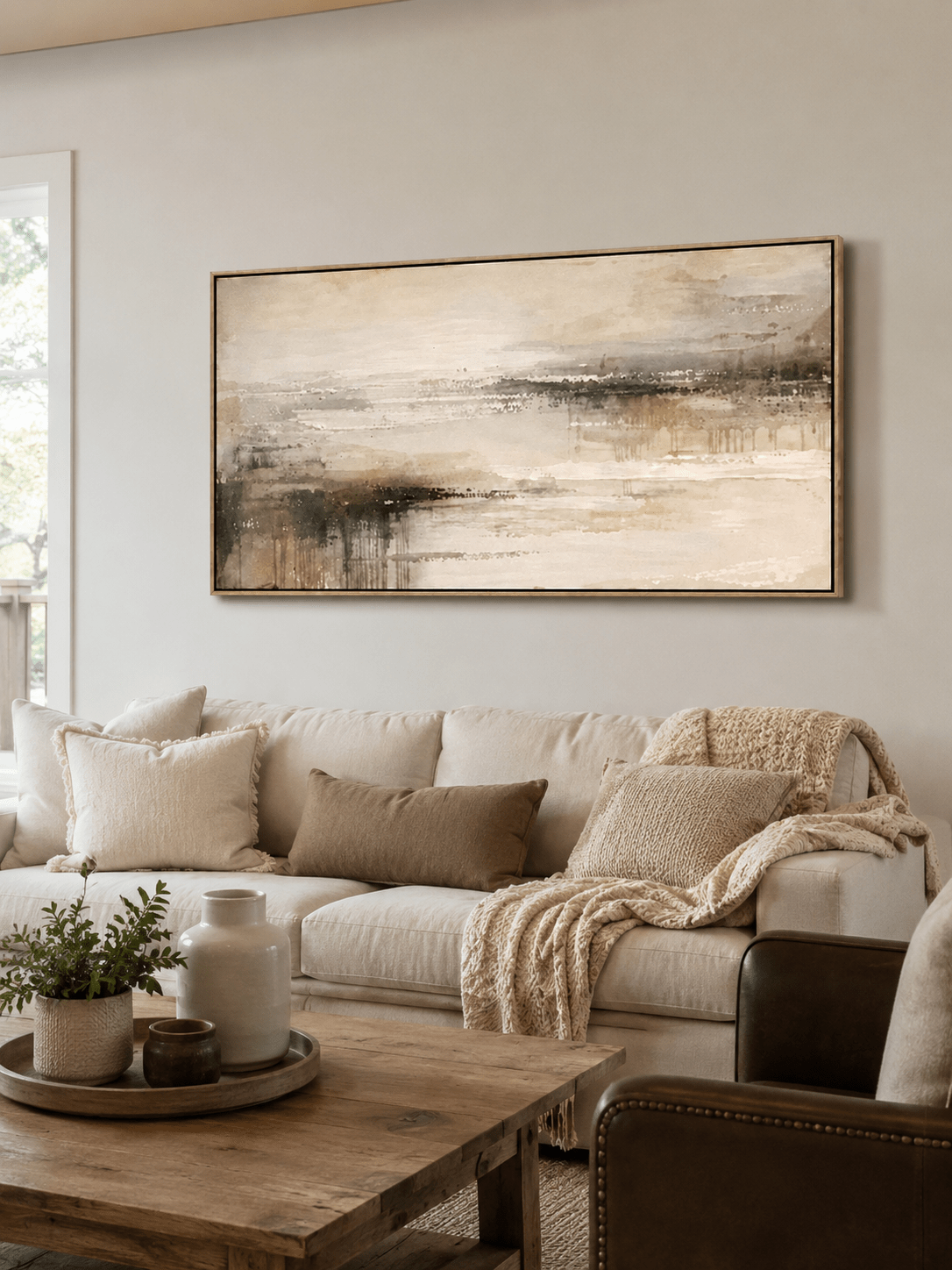
Textured wall art for a living room works best when the wall has enough width, the main sight line is not too close, and daylight or an adjustable evening source can reach the surface from an angle. Above a sofa, begin with artwork measuring about two-thirds to three-quarters of the sofa width. A 96-inch sofa usually supports about 64 to 72 inches of total artwork width.
Keep the lower edge approximately 6 to 10 inches above the sofa back, then adjust for unusually tall backs or low ceilings. Center the artwork on the sofa rather than automatically centering it on the entire wall. If a window sits beside the arrangement, it can provide useful side light; if the window is directly opposite, check for glare before committing.
For a long sofa, Quiet Passage by Eliot Vermeer offers a horizontal architectural composition with medium, granular relief. Soft Grey Horizon by Evelyn Li is calmer and shallower, making it useful when the room already contains strong furniture forms. Explore more sizes and surface styles in the Textured Wall Art collection.
3D Textured Art for a Bedroom
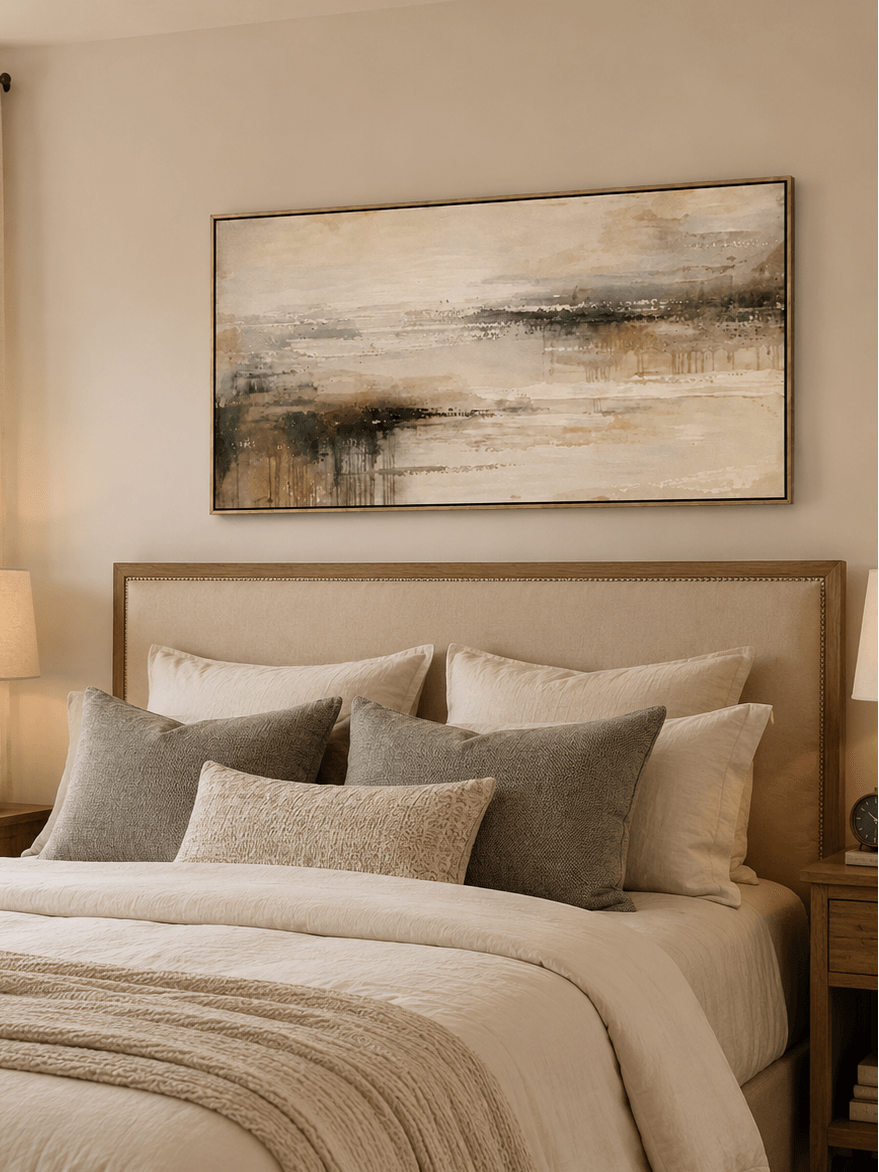
A bedroom usually benefits from controlled texture rather than maximum drama. Low-to-medium relief in ivory, warm gray, clay, sage, or muted brown can make the wall feel finished while preserving a restful atmosphere. Above a bed, use the headboard as the visual anchor and avoid hanging the piece so low that pillows or hands can touch the raised surface.
A square piece can work well above a queen bed when it is large enough to feel intentional and the headboard provides a wide base. A horizontal canvas often suits a king bed because its width follows the furniture. In either case, verify the outer framed dimensions, not only the painted canvas size.
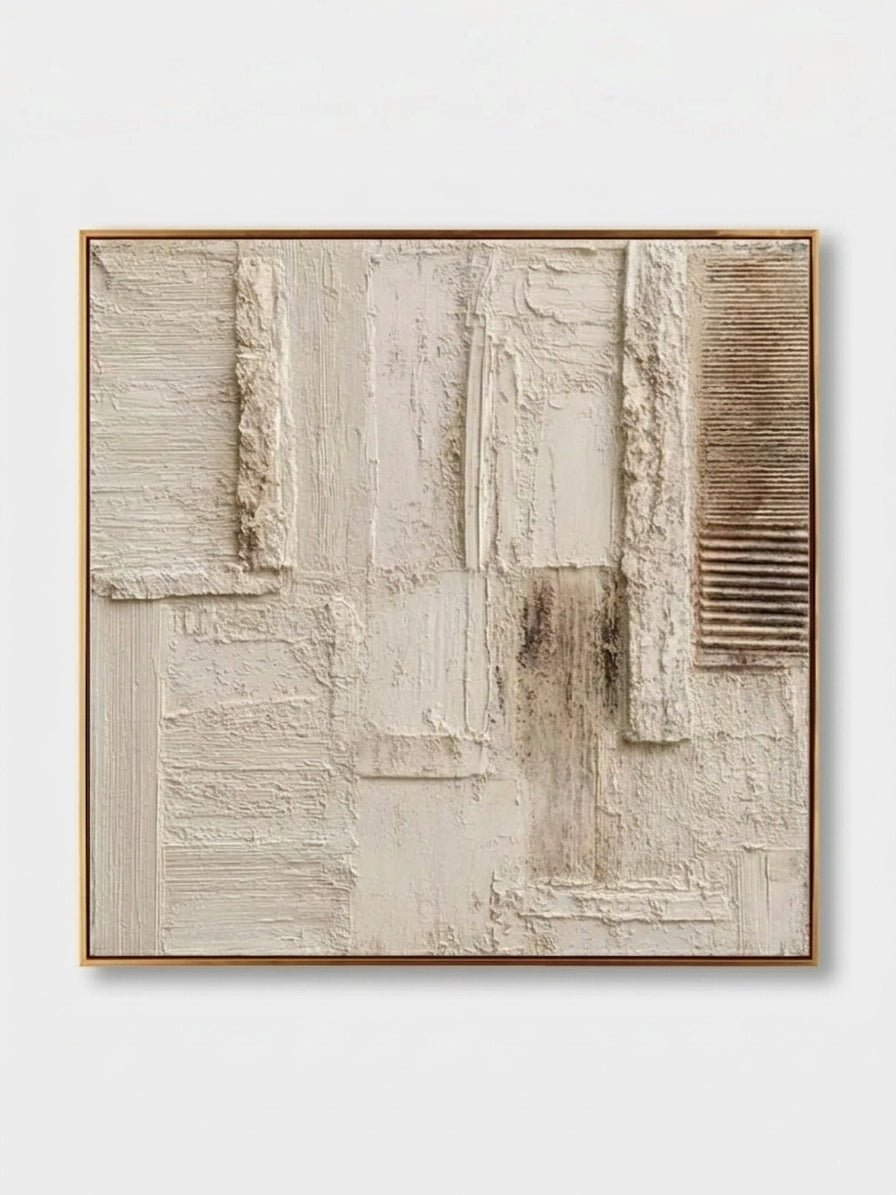
Faded Structure by Eliot Vermeer uses a quiet square format and shallow-to-medium architectural grooves, so it adds tactile detail without introducing a loud subject.

Dining Room and Entryway Placement
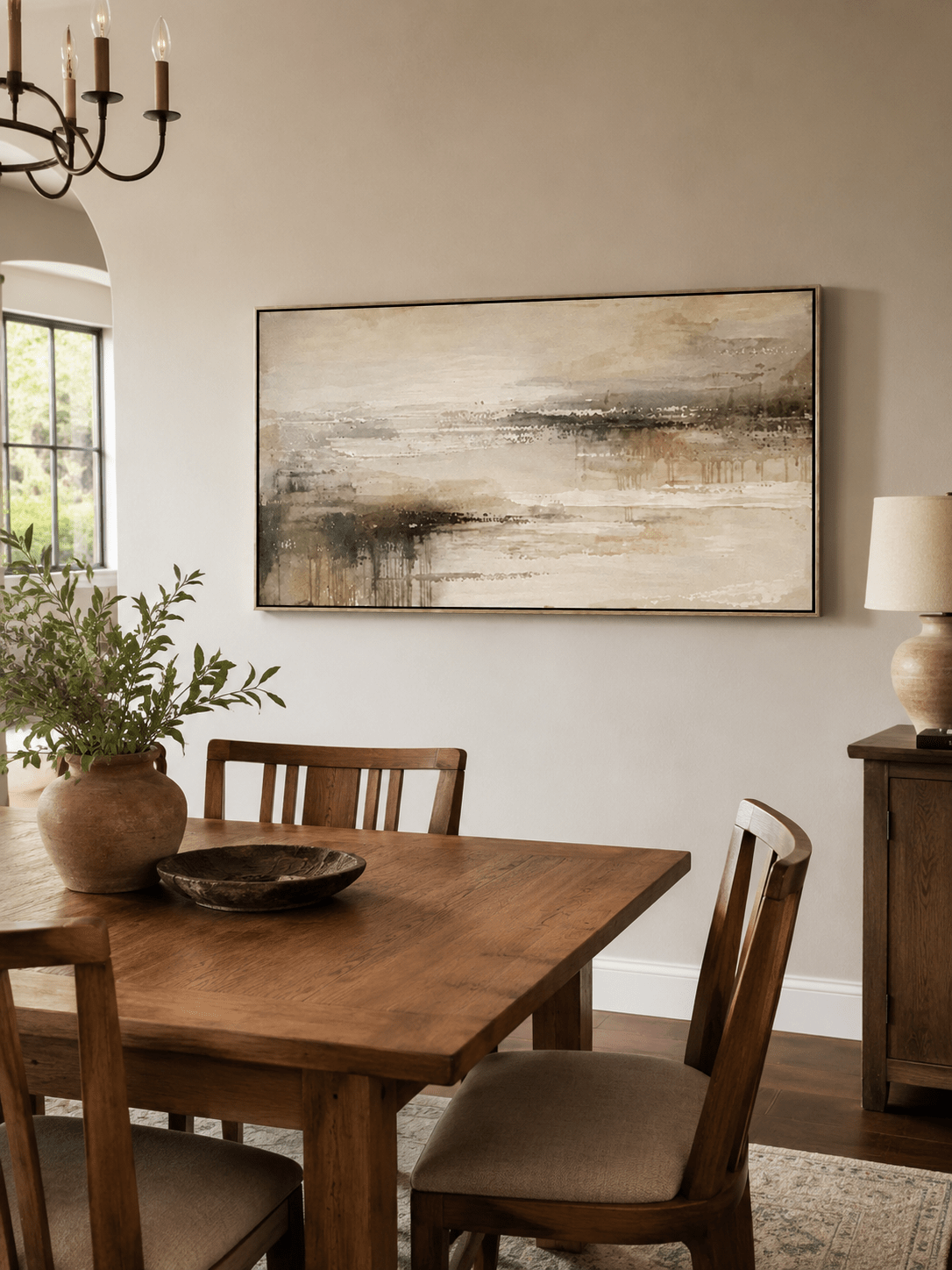
A dining room is a strong place for richer color or visible impasto because people see the art both while entering and while seated. Coordinate the artwork with the table length or sideboard width, but do not force it to match every wood tone. Warm pendant light can deepen earth colors and make raised paint glow; balanced ambient light prevents dark backgrounds from losing detail.
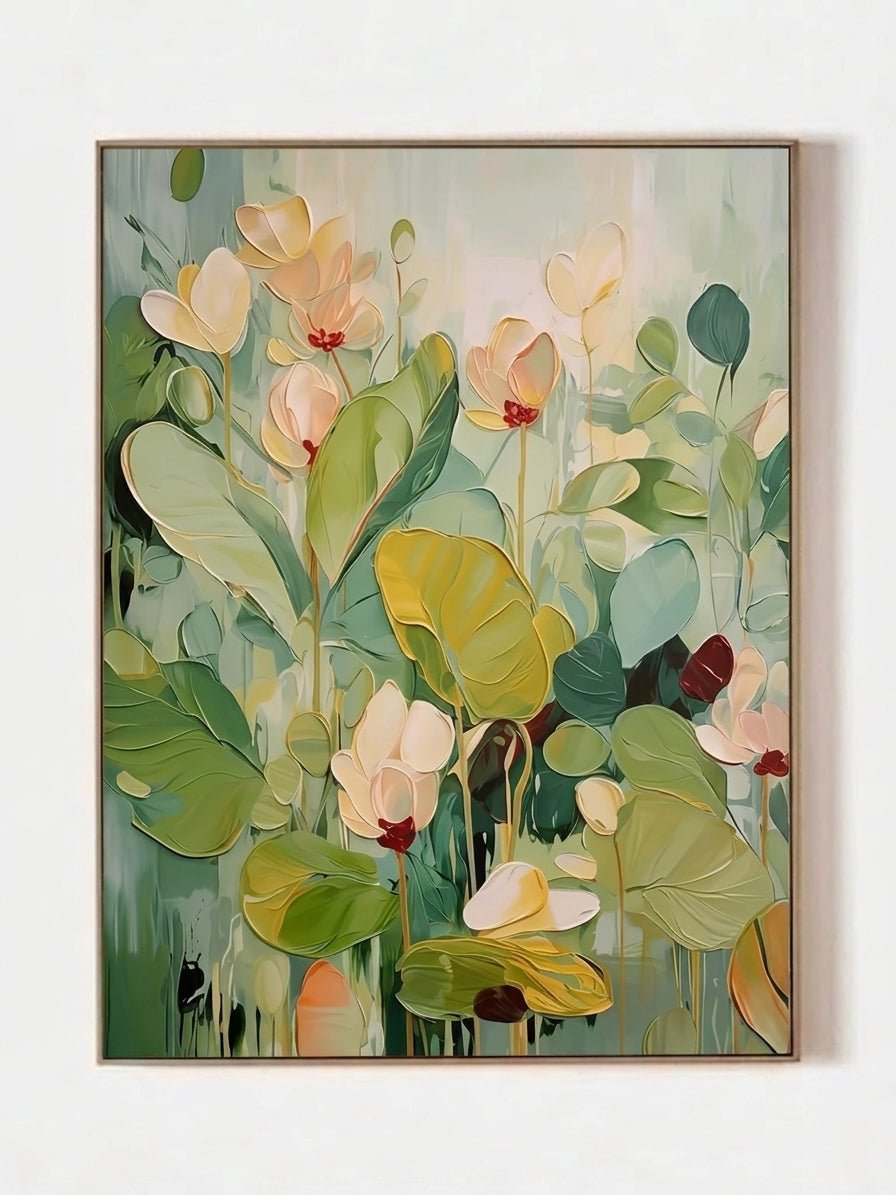
White Blossoms in Green by Luna Xiao uses thick floral impasto against a saturated green field. It creates a livelier dining-room focal point than pale plaster-style work while still showing the hand of the painter.
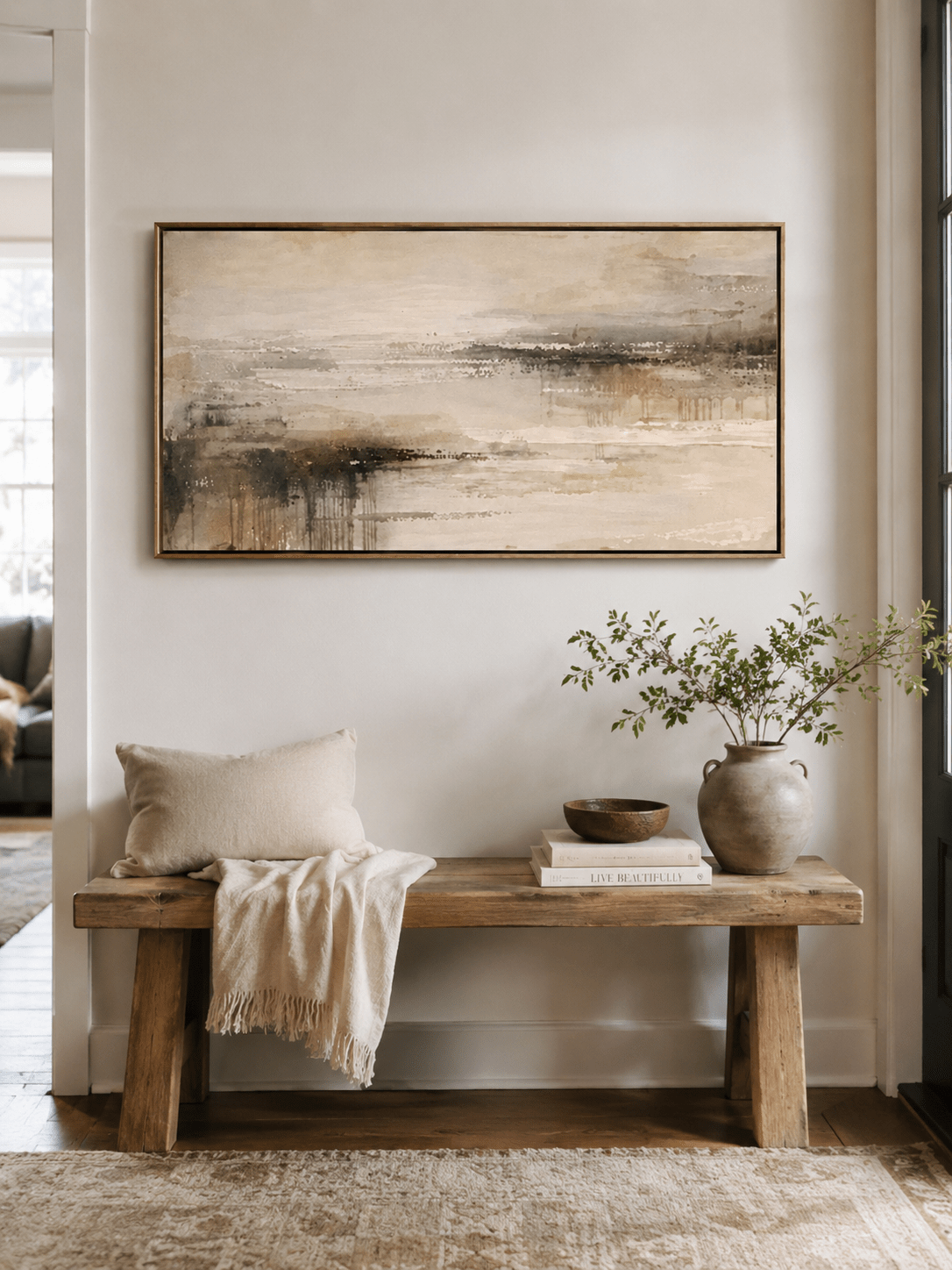
In an entryway, viewers often approach from the side, which naturally reveals relief. A deep sculptural work such as Earthen Fold by Leo Liang can take advantage of that moving viewpoint. Keep projecting texture away from door swings, coat hooks, and narrow circulation zones.

Which Interior Styles Suit 3D Textured Art?
- Wabi-sabi: irregular edges, weathered marks, earthy color, and visible handwork support an imperfect, material-led room.
- Organic modern: curved furniture, oak, linen, stone, and handmade ceramics pair naturally with quiet plaster-style surfaces.
- Minimalist: restrained color with meaningful relief adds detail without requiring more objects.
- Contemporary luxury: large scale, generous blank wall, precise lighting, and sculptural depth create presence without ornate decoration.
- Modern coastal: sand, chalk, fog gray, sea green, and wave-like impasto can suggest landscape without literal beach imagery.
Style labels are useful filters, not rules. The more reliable test is whether the artwork repeats one or two qualities already present in the room - a curve, a mineral surface, a warm neutral, or an organic line - while adding a distinct focal point.
How to Choose 3D Textured Wall Art
- Confirm the texture is physical. Look for angled images, close-ups, and clear handmade language.
- Choose a depth level. Use subtle texture for quiet rooms, medium relief for versatility, and deep relief for a sculptural statement.
- Measure the furniture anchor. Above a sofa, bed, or sideboard, calculate from the furniture width before judging the empty wall.
- Check the viewing distance. Fine detail needs close access; broad relief and clear shapes hold up from across a room.
- Study the light direction. Side light reveals depth, while frontal light tends to flatten it.
- Balance color and texture. Strong relief may need a quieter palette; saturated color can carry shallower texture.
- Match orientation to the wall. Horizontal art follows sofas and sideboards; vertical art uses narrow wall height; square art creates a centered focal point.
- Allow breathing room. Deep texture looks more intentional when it is not crowded by shelves, sconces, or small frames.
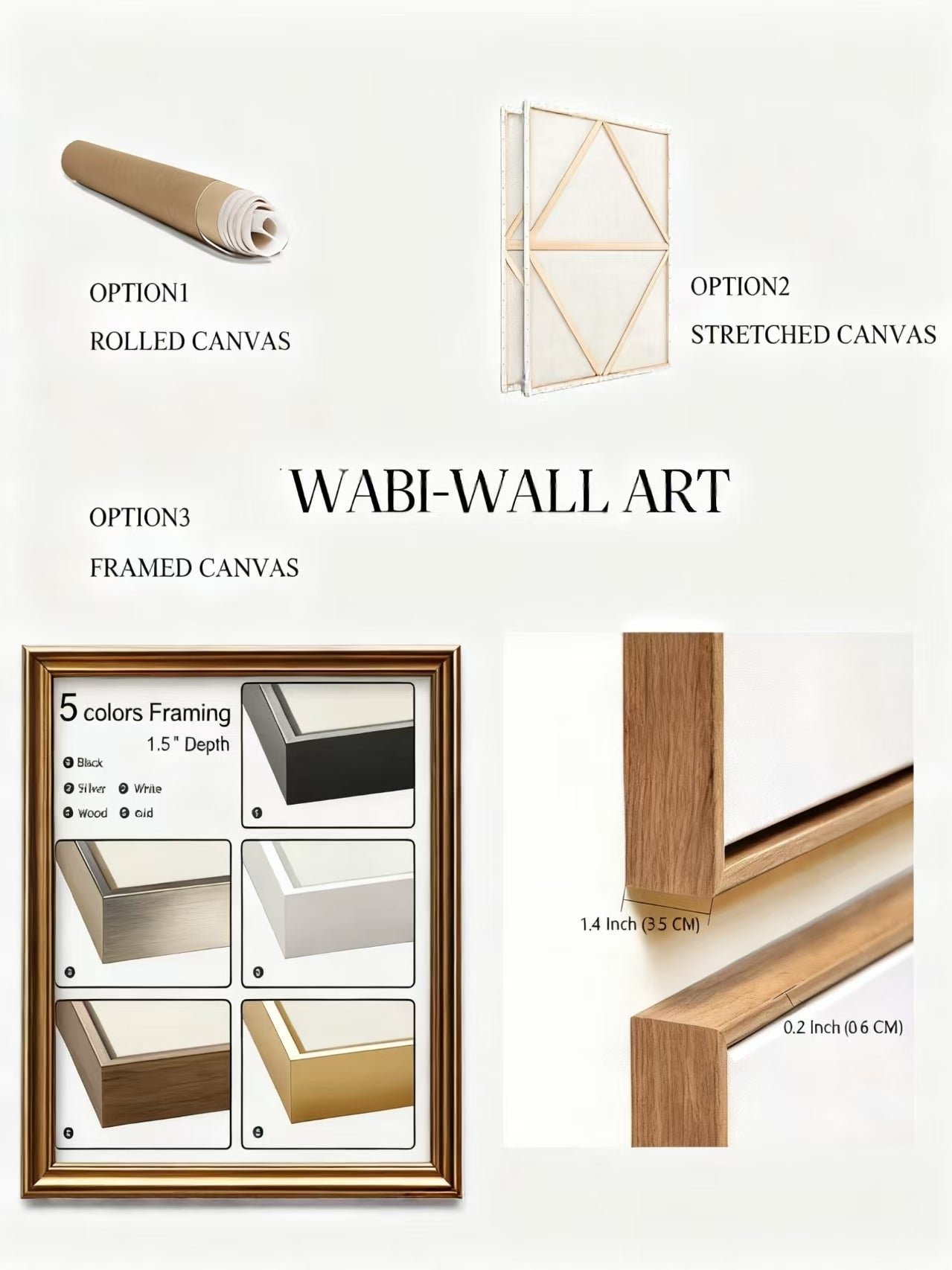
- Verify the finished format. Confirm whether the piece is rolled, stretched, or framed and use the final outer size for planning. WABI's rolled, stretched and framed canvas guide explains the practical differences.
- Review handling guidance. Large or deeply textured work may need two-person installation and hardware selected for the finished weight.
Orientation and Size: A Practical Starting Point
Horizontal formats work naturally above sofas, headboards, dining benches, and long sideboards. Vertical pieces suit entry walls, stair landings, narrow spaces between windows, and consoles with more height than width. Square pieces provide concentrated visual weight and can balance a bed, fireplace, or compact seating area.
Use painter's tape to mark the full dimensions on the wall. View the outline from the doorway, the main seat, and the closest walking path. This simple test reveals whether the piece will feel undersized, block-like, or properly grounded. For more room-by-room calculations, consult the wall art sizing guide.
Texture Depth by Room
| Room | Useful texture level | Why it works | Watch for |
|---|---|---|---|
| Living room | Medium to deep | Normal seating distance supports a clear composition and visible relief | Glare, undersizing, crowding above sofa |
| Bedroom | Subtle to medium | Adds depth while preserving calm | Hanging too low above pillows |
| Dining room | Medium relief or impasto | Works from both seated and standing viewpoints | Pendant glare and overly dark shadows |
| Entryway | Medium to deep | Approach angles reveal sculptural edges | Tight traffic paths and door swings |
| Small office | Subtle to medium | Close viewing rewards fine detail | Too much relief in a visually busy workspace |
Handmade 3D Art vs Printed Texture Illusion
| Feature | Handmade textured artwork | Printed texture effect |
|---|---|---|
| Surface | Physically raised ridges, folds, strokes, or modeled forms | Flat ink reproduces a photograph or graphic of texture |
| Light response | Highlights and shadows change with the room | Highlights and shadows stay fixed in the image |
| Viewing angle | Edges and depth become clearer from the side | The illusion weakens at an angle |
| Variation | Small hand-applied differences are expected | Copies can be visually identical |
| Handling | Raised areas require careful contact-free handling | Generally handled like a standard flat print |
Is 3D Textured Wall Art Heavy?
It can be heavier than a flat print, but the answer depends on the support, size, frame, and material depth. A canvas with controlled acrylic texture may remain manageable; a large rigid panel with deep mineral relief can be substantially heavier. Do not estimate installation hardware from appearance alone. Ask for the finished weight of your chosen size and format, then use hardware rated for both the load and the wall construction.
How to Clean a Textured Canvas
Preventive care is safest. Keep the piece away from persistent moisture, cooking residue, forceful HVAC vents, and prolonged direct sun. If the surface is stable, remove light dust with a clean, very soft artist brush and almost no pressure. Do not press a cloth into ridges, spray cleaner on the art, or test the relief by touch. If anything looks loose, cracked, or powdery, stop and contact the seller or a qualified conservator.
Common Myths About 3D Textured Painting
- "More depth always means better quality." Control, adhesion, composition, and material compatibility matter more than maximum thickness.
- "Neutral textured art is boring." In a restrained palette, light and shadow become the changing visual content.
- "Every plaster-looking piece is literal plaster." Artists may use modeling paste, acrylic texture materials, mixed media, or plaster-based compounds.
- "A product photo proves the texture is real." A printed image can imitate shadow. Angled views and clear construction details provide better evidence.
- "Deep relief works in any room." Scale, traffic clearance, light direction, and viewing distance can make a quieter surface the better choice.
What Makes WABI Wall Art's Textured Work Different?
WABI Wall Art's selected pieces are presented as hand-painted or hand-created works with physically developed surfaces, multiple size options, and framing choices. The collection spans quiet plaster-inspired fields, geometric relief, sculptural folds, landscape texture, and floral impasto, allowing buyers to choose by actual room behavior rather than by one generic "3D" look.
The most useful product pages show the art frontally and in closer or styled views, identify the artist, describe the surface character, and list available formats. Because handmade work can include small variations, evaluate the overall composition, palette, orientation, and intended texture level rather than expecting machine-identical copies. Browse handmade textured wall art with your wall measurements and lighting notes beside you.
Final Thoughts
The right 3D textured wall art should make sense from your normal viewing distance and become more rewarding as you approach. Choose the depth before chasing a trend, measure from the furniture anchor, and let the room's light direction guide placement. Relief brings sculptural form, plaster-style surfaces create quiet mineral depth, and impasto keeps the energy of the painter's hand visible.
If your room needs calm dimension, start with subtle or medium neutral texture. If it needs a decisive focal point, consider deep relief or color-rich impasto with enough wall space around it. The goal is not the thickest surface; it is a physical artwork whose scale, light response, and character belong in the room.
Frequently Asked Questions
What is 3D textured wall art?
3D textured wall art has a physically raised surface made with relief, plaster-like compounds, thick paint, or mixed media. Real highlights and shadows change as the room's light and the viewer's angle change, unlike a flat printed image of texture.
Is 3D textured wall art actually raised?
Genuine 3D textured wall art is physically raised, although the depth can range from fine ridges to deep sculptural forms. Check angled images, close-ups, and the product description to confirm that the surface is hand-applied rather than printed.
What is the difference between relief art and textured painting?
Relief art emphasizes forms that project from a backing plane, sometimes approaching shallow sculpture. Textured painting is a broader term that includes raised brushwork, palette-knife marks, granular grounds, and modeled surfaces. One artwork can be both a relief and a textured painting.
What is the difference between plaster and impasto?
Plaster-style art builds a matte, often mineral-looking surface that can be spread, scraped, carved, or sculpted. Impasto uses thick paint or painting medium so brush and palette-knife strokes remain visible. Plaster often feels architectural; impasto usually feels more painterly.
Can 3D textured art be made on canvas?
Yes. Artists can use canvas-compatible modeling paste, acrylic texture materials, controlled plaster-style systems, and thick paint. Construction quality matters because the support and raised layer must work together. Confirm whether a heavily textured piece should be shipped rolled, stretched, or framed.
Is textured wall art suitable for a living room?
Yes. A living room often provides enough viewing distance, wall width, and side light for texture to read well. Above a sofa, a useful starting width is two-thirds to three-quarters of the sofa, with the artwork centered on the furniture.
How do I choose the right texture depth?
Choose subtle texture for quiet or compact rooms, medium texture for versatile sofa and bedroom placement, and deep relief for a feature wall with more viewing distance. Also consider traffic clearance and whether the room's light can reach the surface from an angle.
Is 3D textured wall art heavy?
Weight varies by size, support, frame, and material depth. Textured canvas may be relatively manageable, while a large rigid relief panel can be heavy. Request the finished weight and select installation hardware rated for that load and your wall type.
How do you clean 3D textured canvas art?
Use the maker's care instructions first. For a stable surface, remove loose dust with a clean, very soft artist brush and minimal pressure. Avoid wet cloths, sprays, stiff brushes, vacuum contact, and rubbing, which can catch or polish raised areas.
Does textured wall art look different under different lighting?
Yes. Side light creates shadows that reveal relief, while frontal light tends to flatten it. Warm light strengthens cream, clay, and gold tones; neutral or cooler light keeps white, gray, and green clearer. Test the wall in daytime and evening conditions.
How can I tell handmade textured art from a printed texture effect?
Real handmade texture changes with light and becomes clearer from the side. Look for visible frame-edge depth, angled photos, close surface views, hand-painted descriptions, and small natural variations. A print keeps the same highlights and shadows from every angle.
Where can I buy handmade 3D textured wall art?
WABI Wall Art offers handmade relief, plaster-inspired, impasto, and textured canvas artwork in a range of orientations, sizes, and framing options. Start with the Textured Wall Art collection and compare the product images, depth, room fit, and finished format.