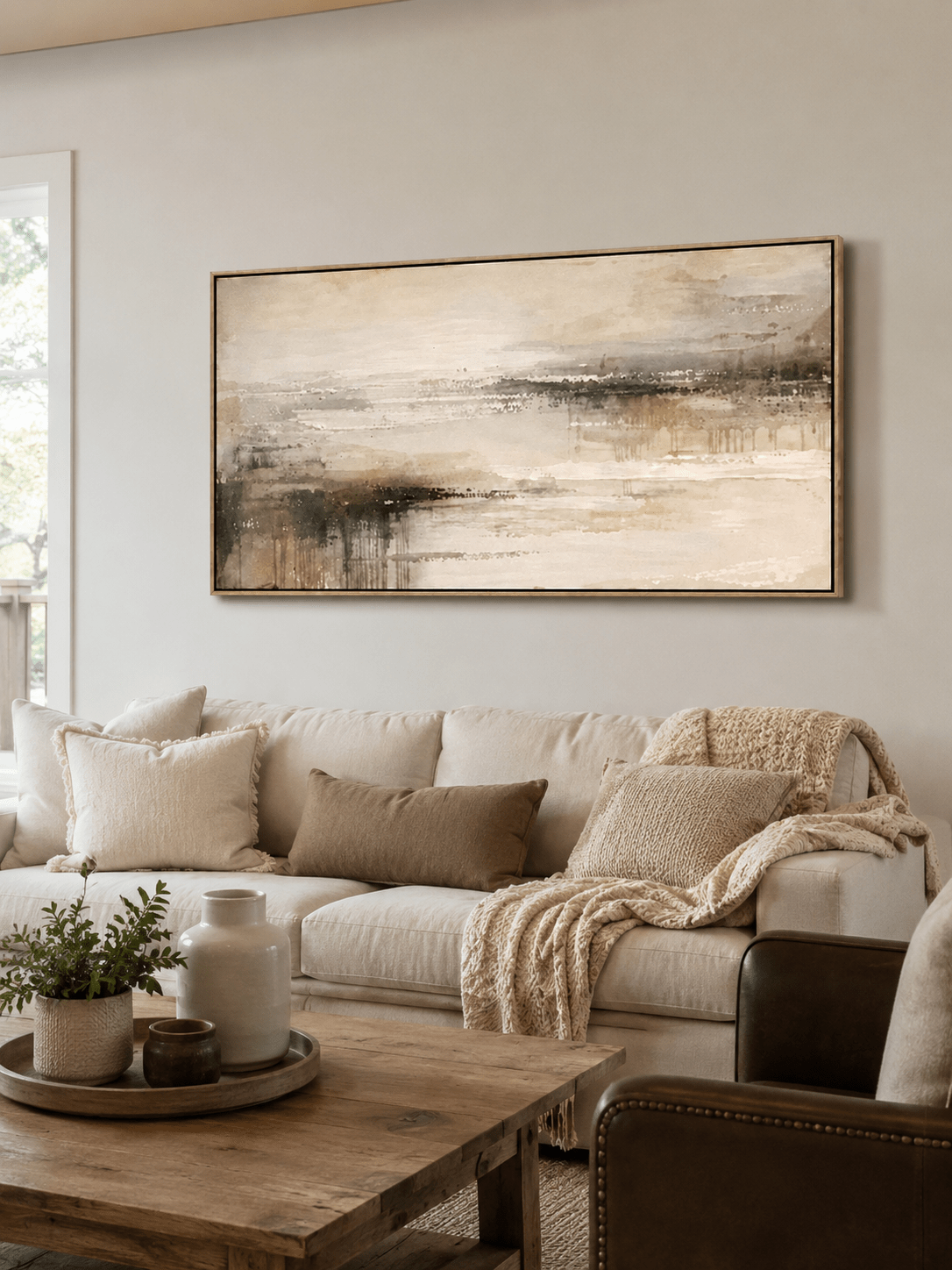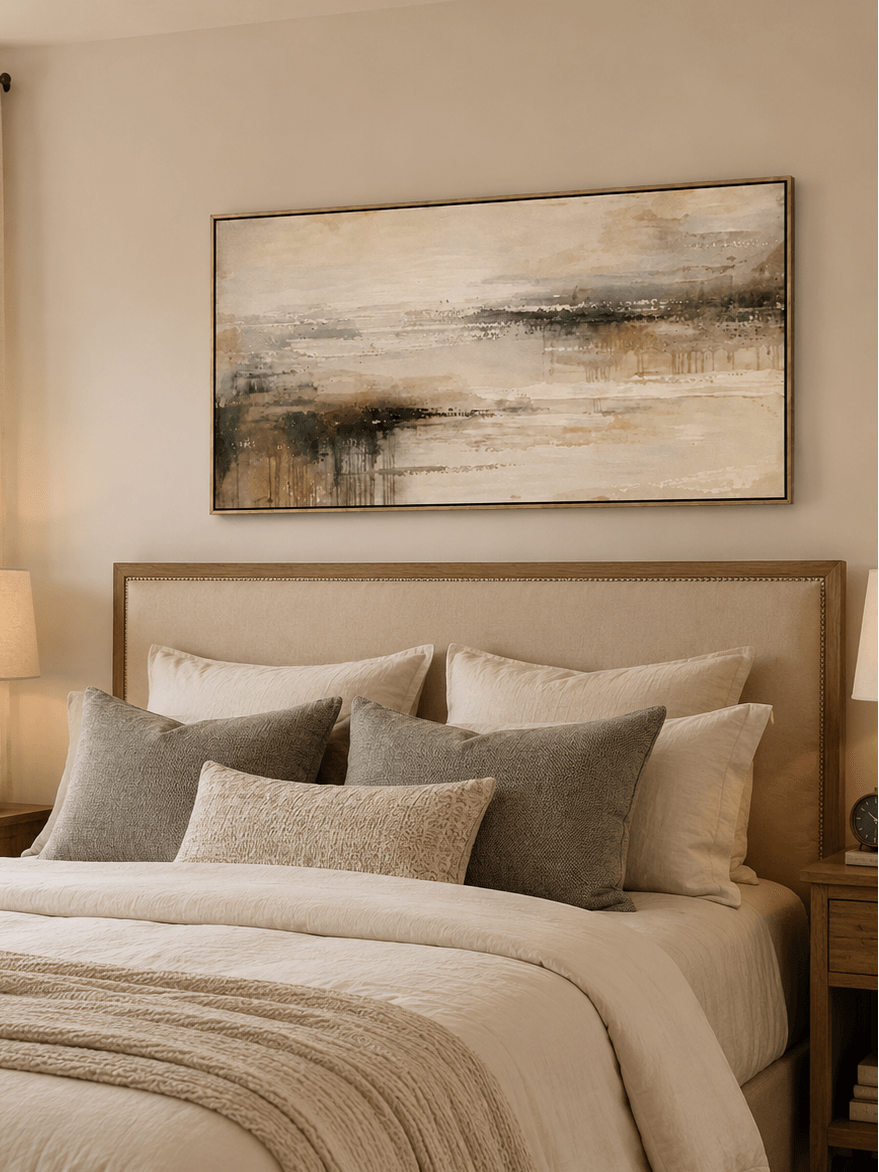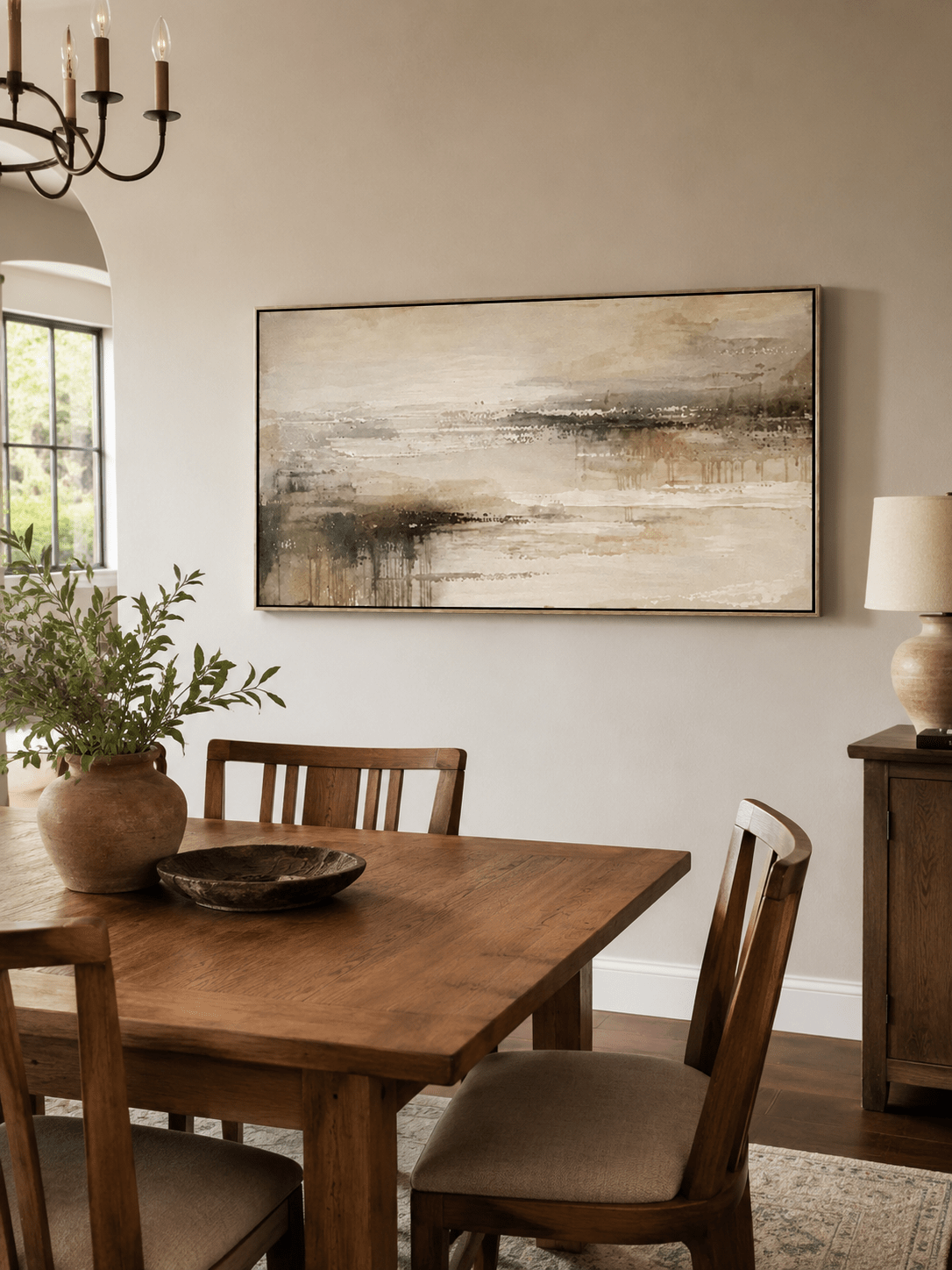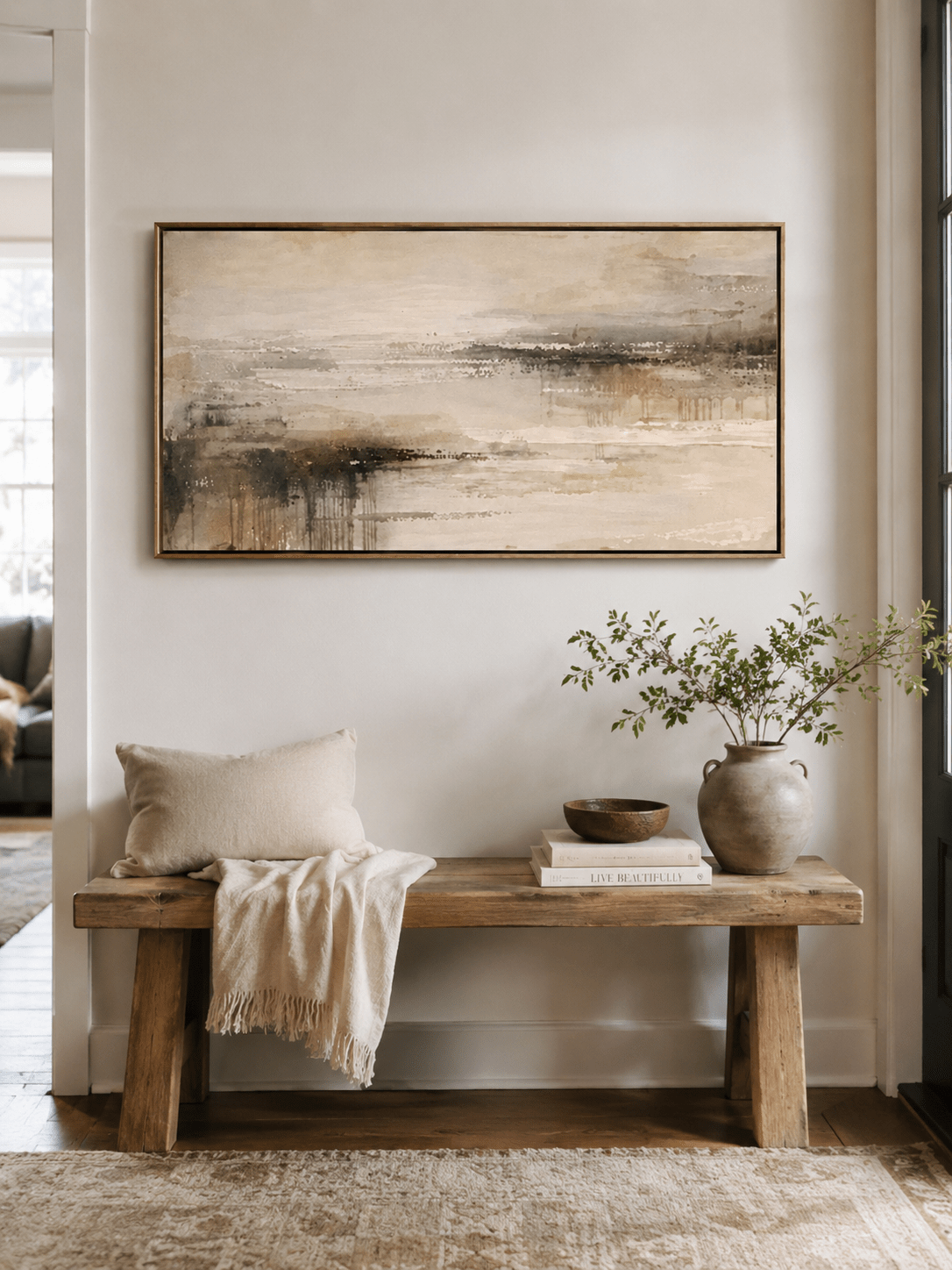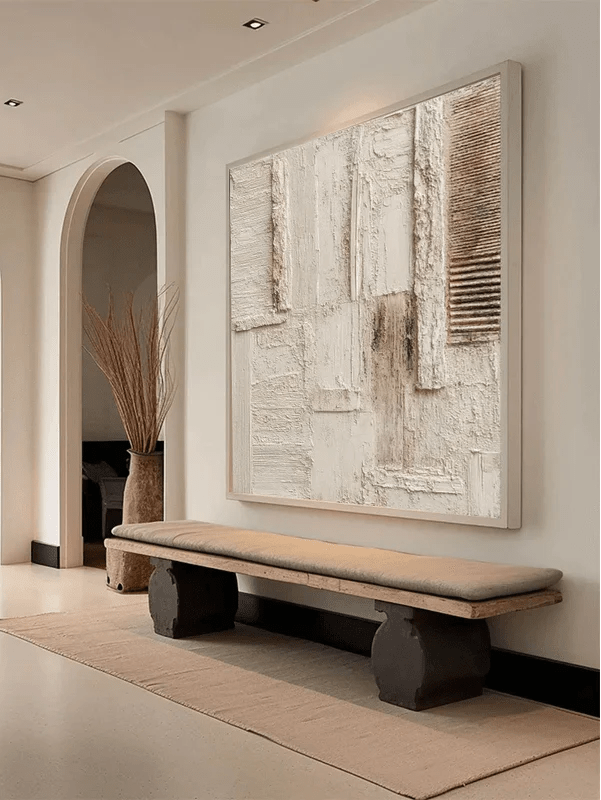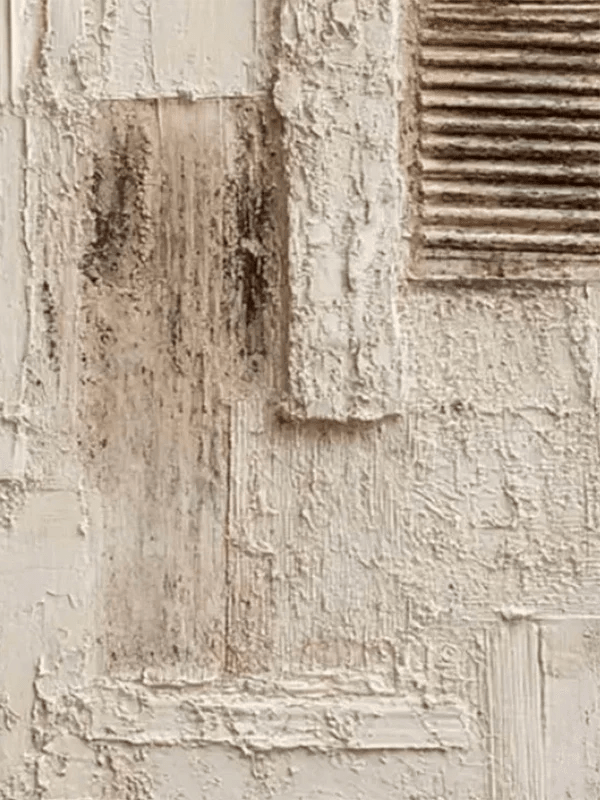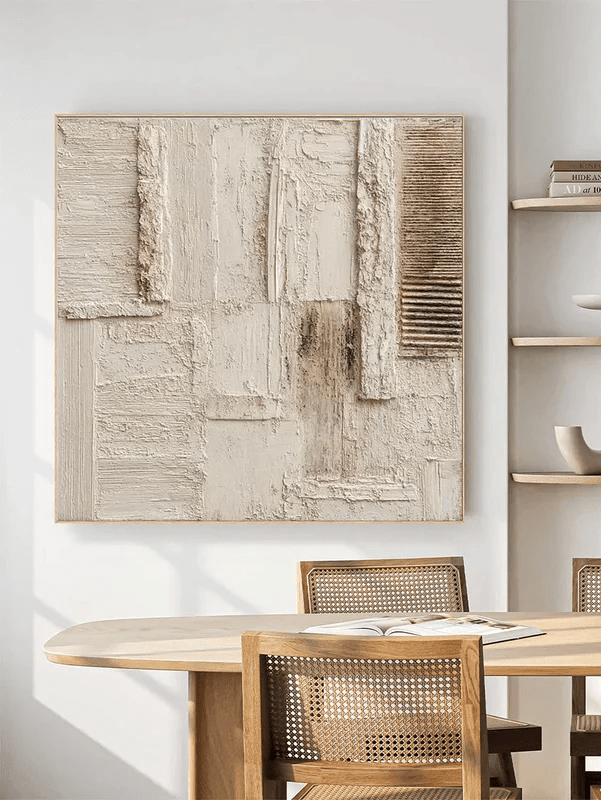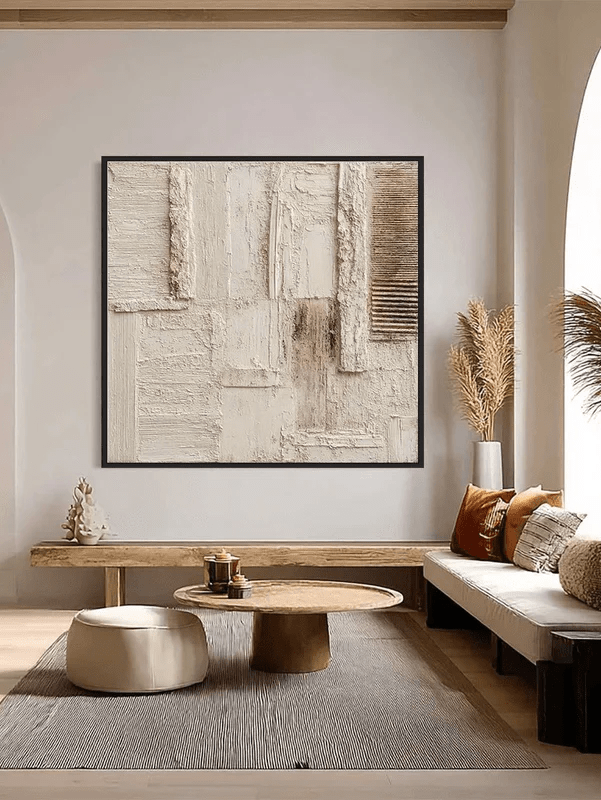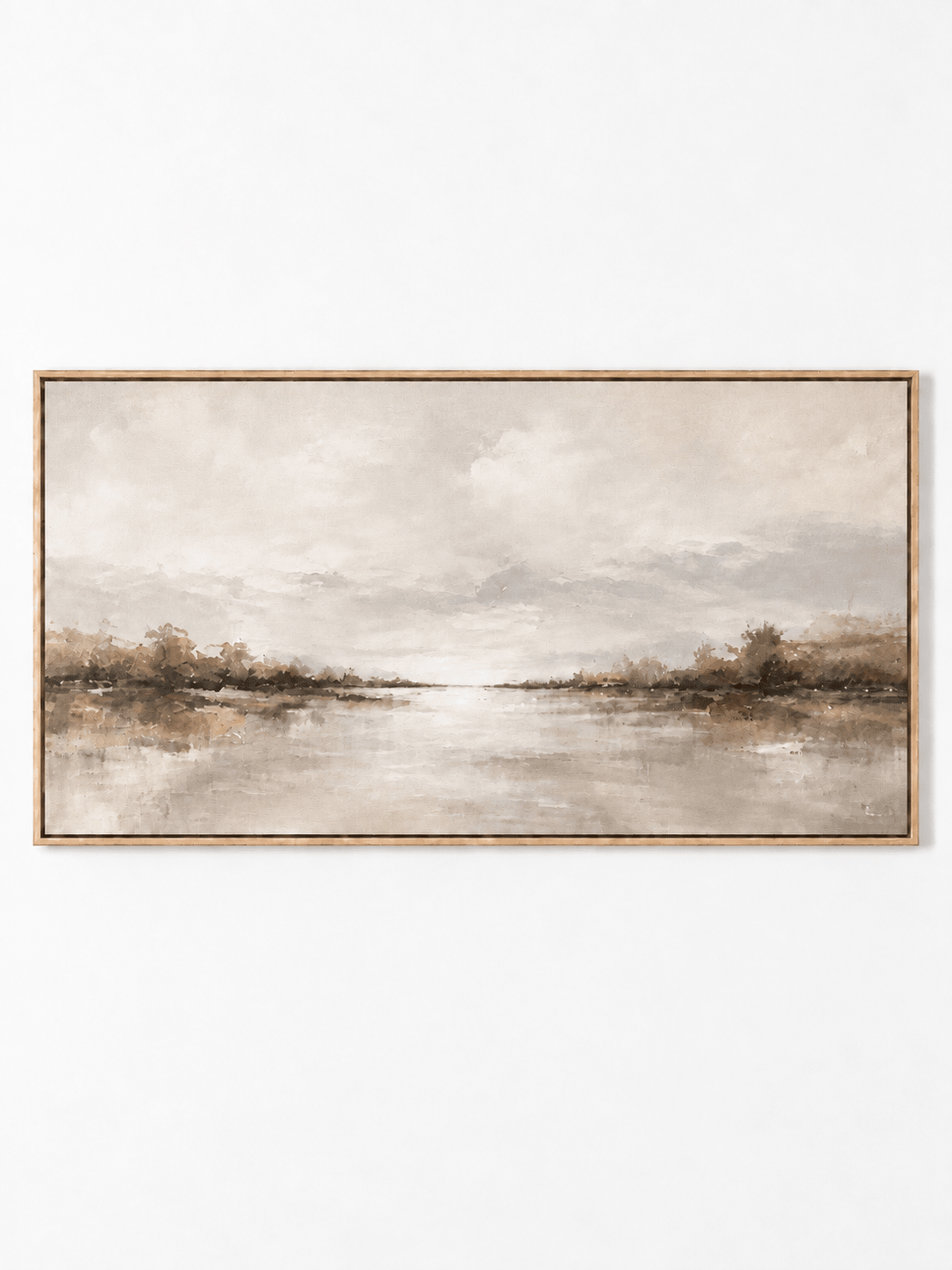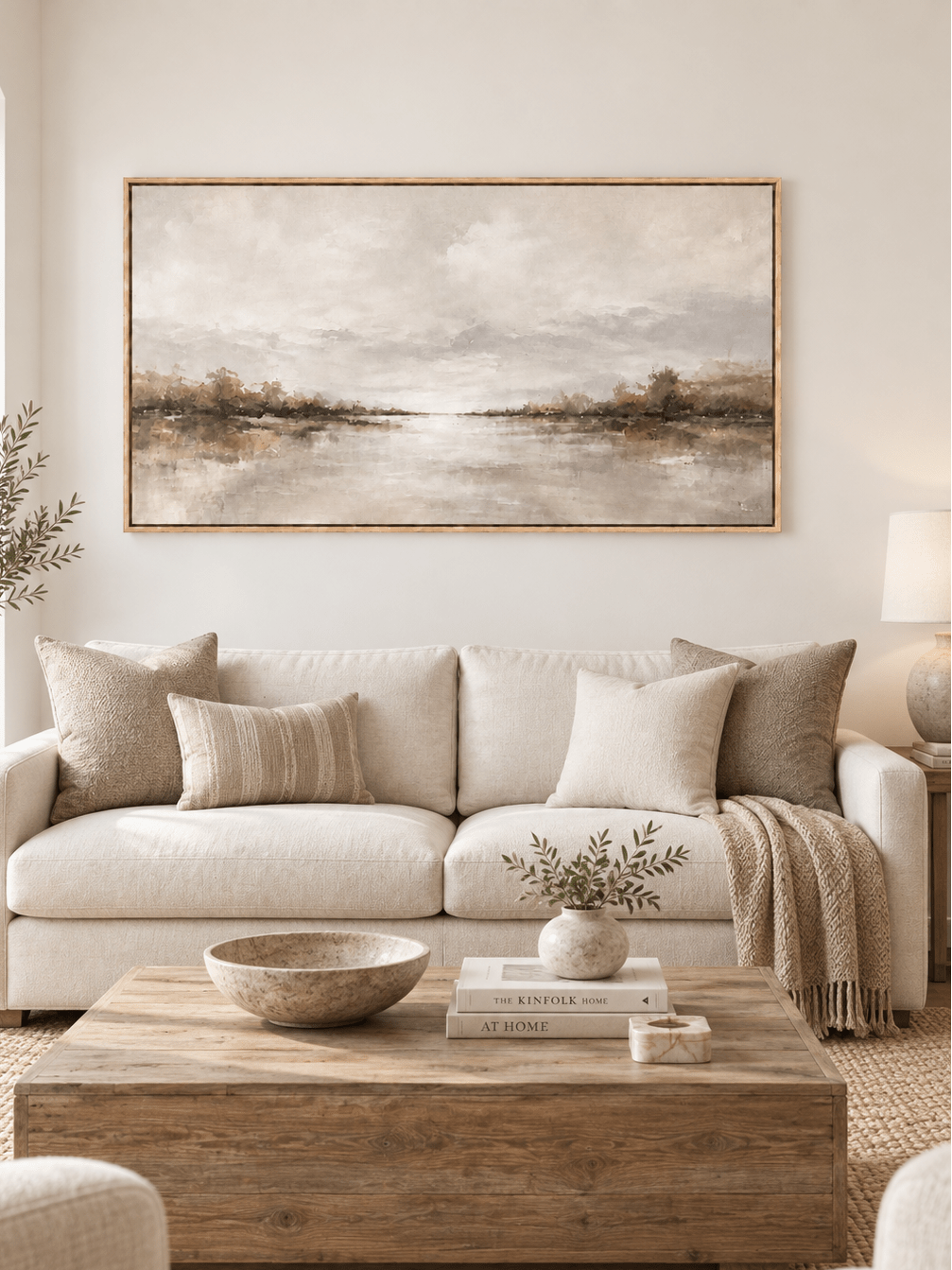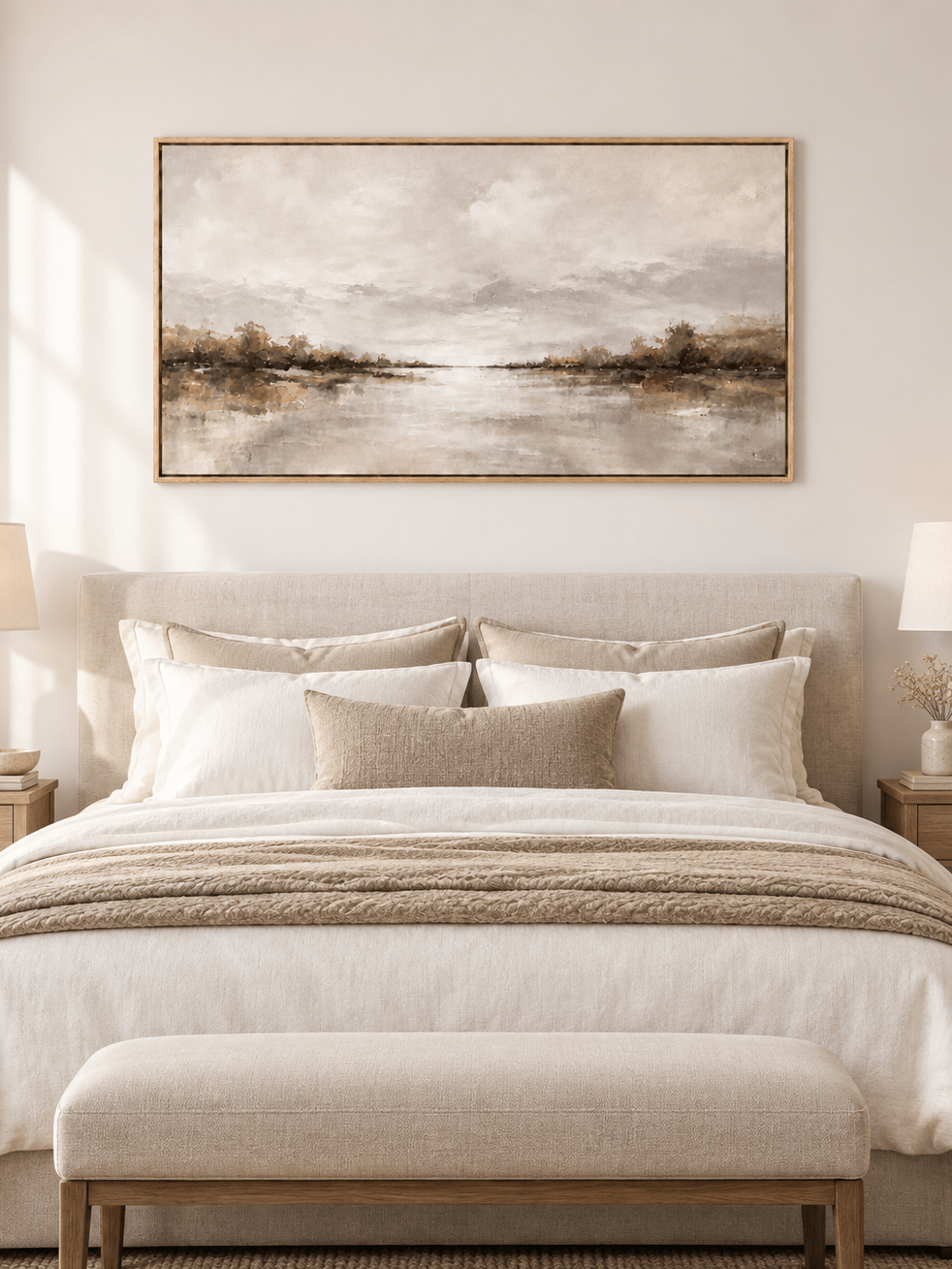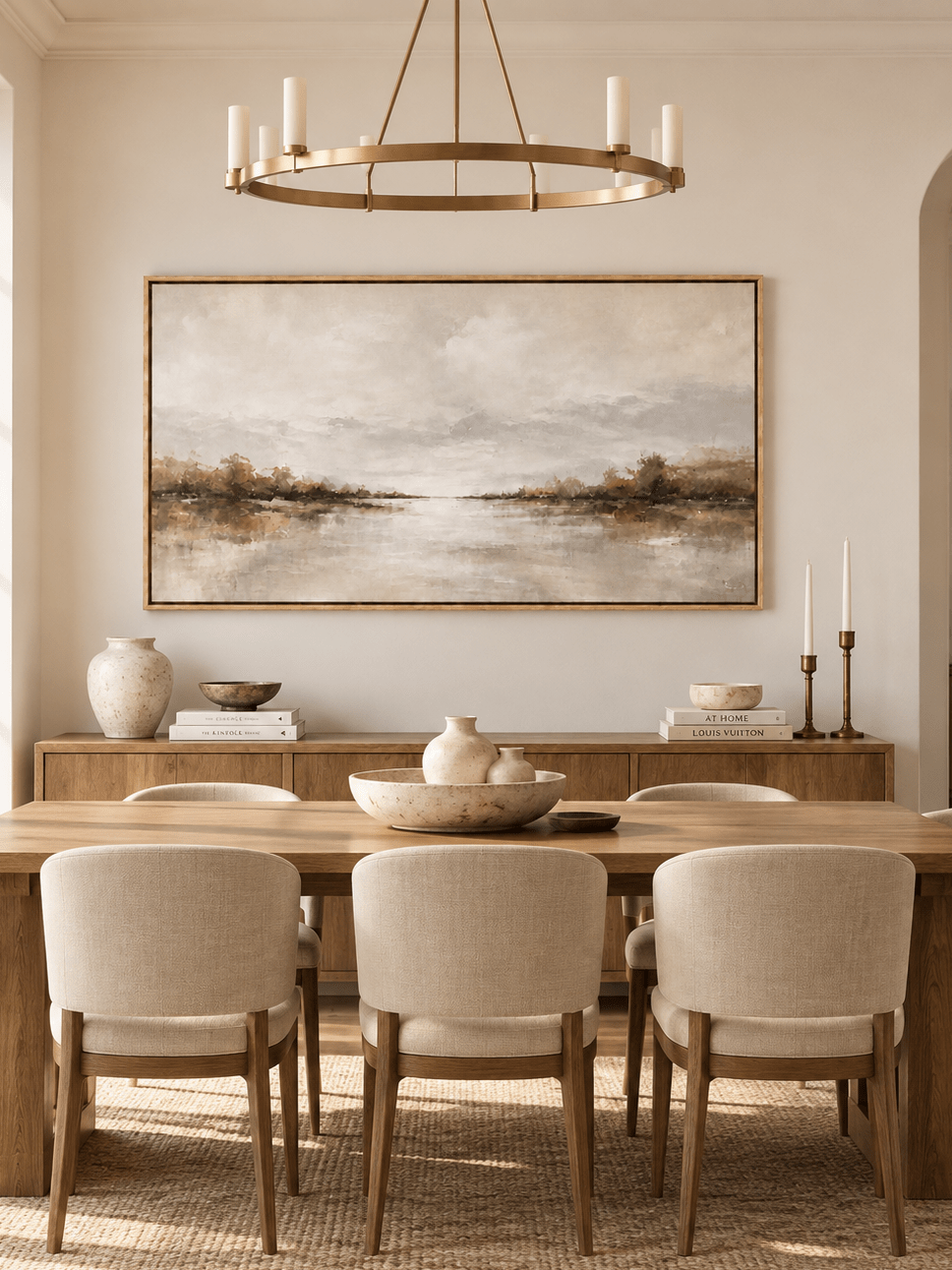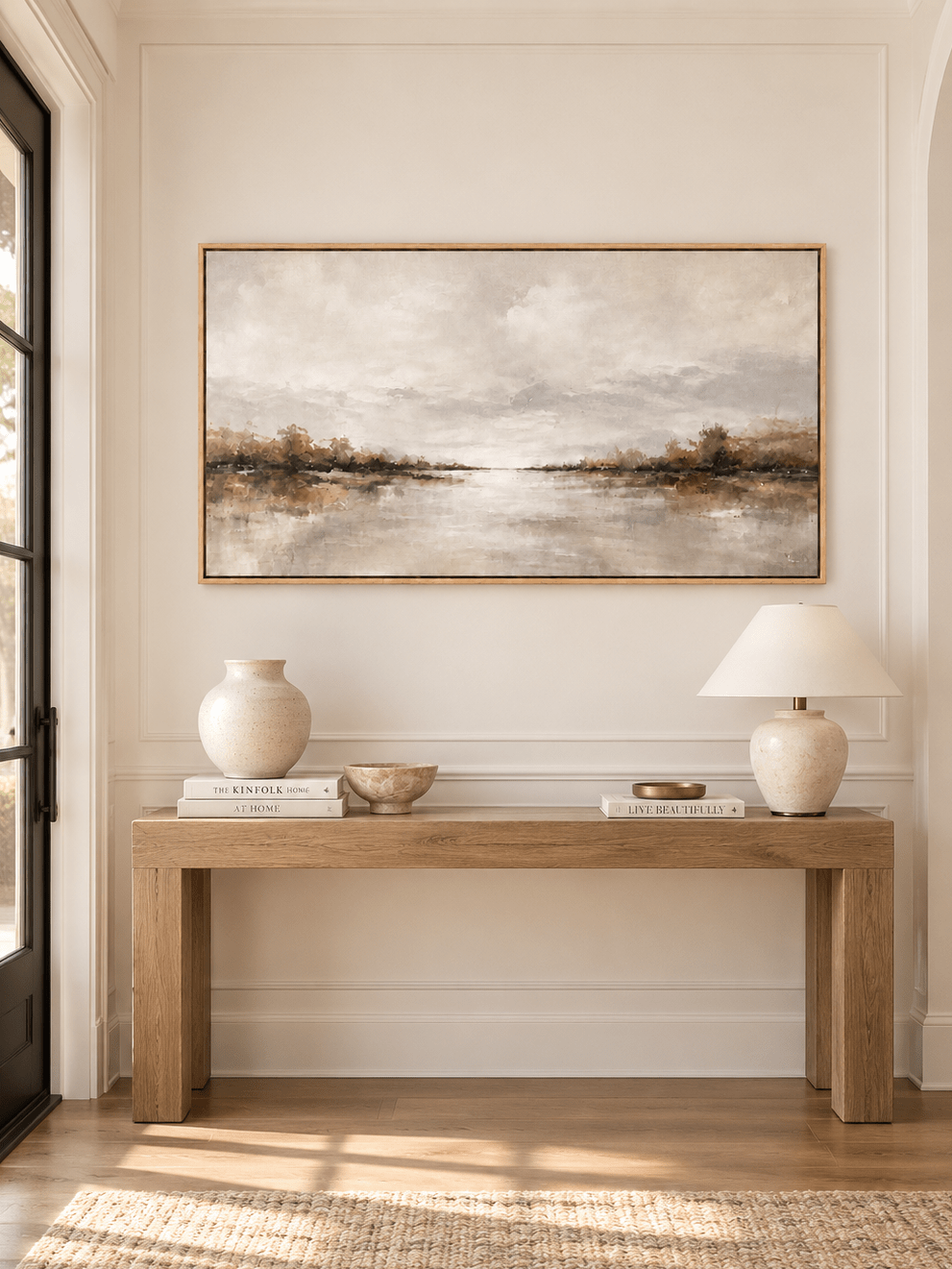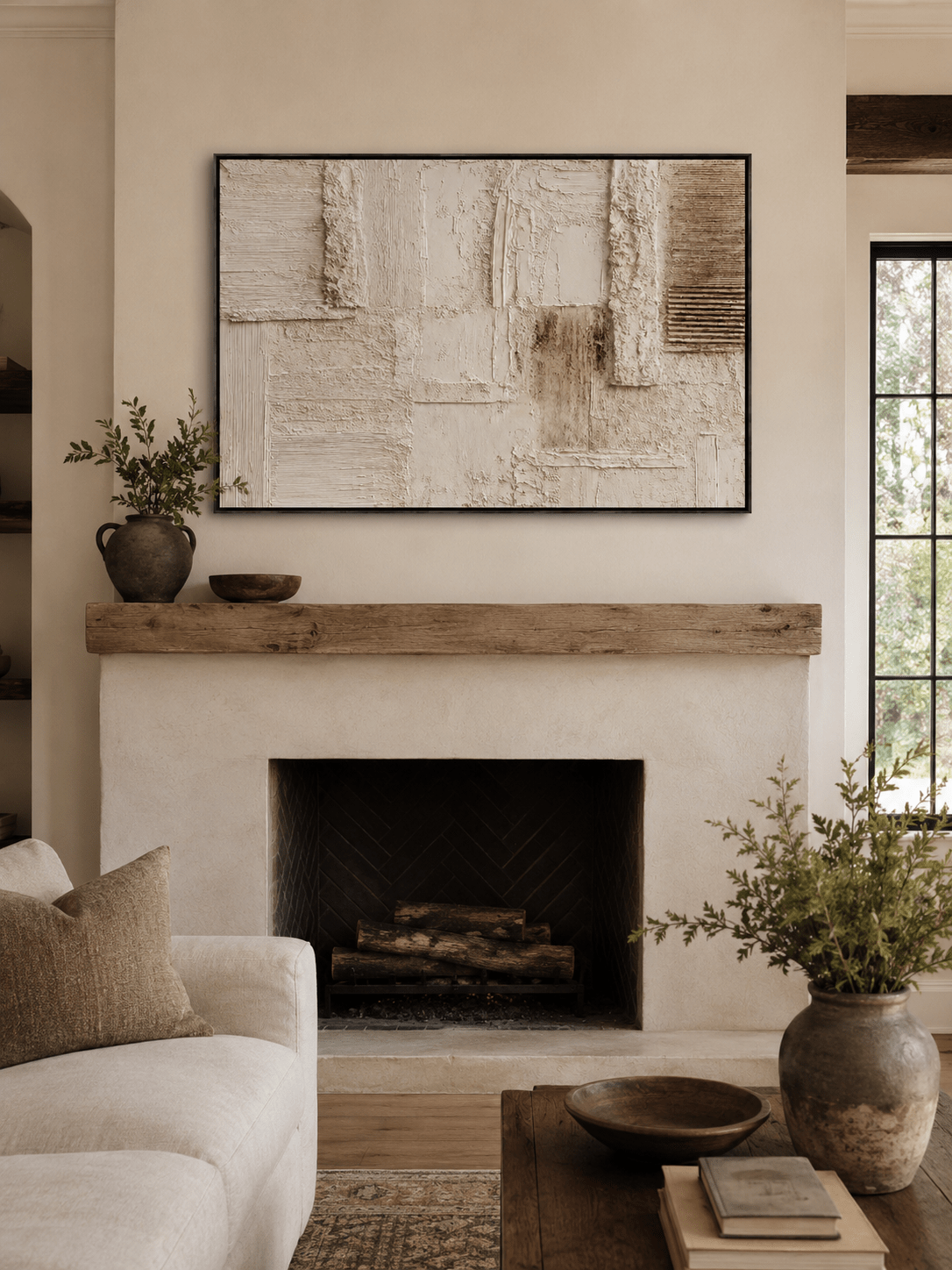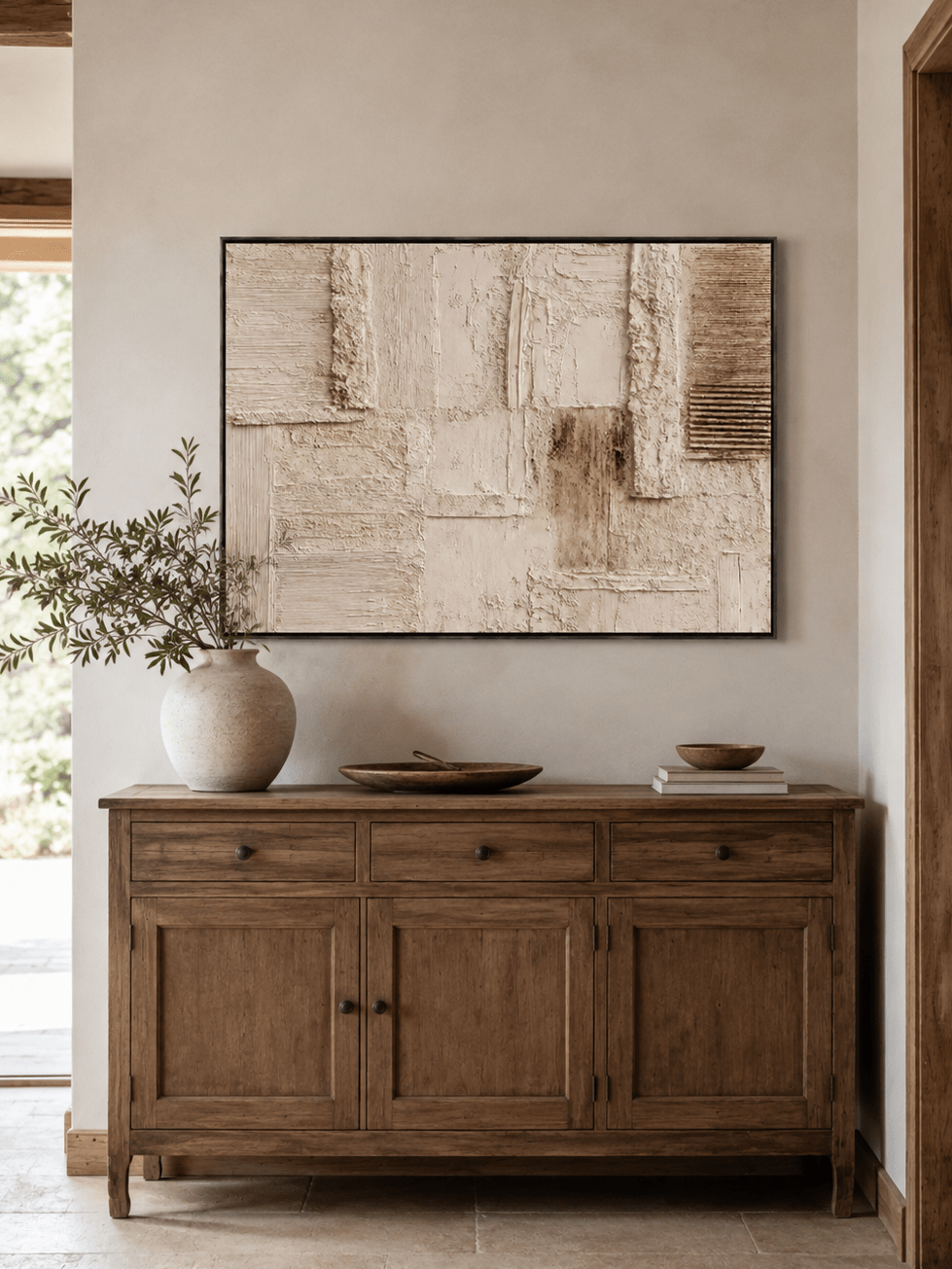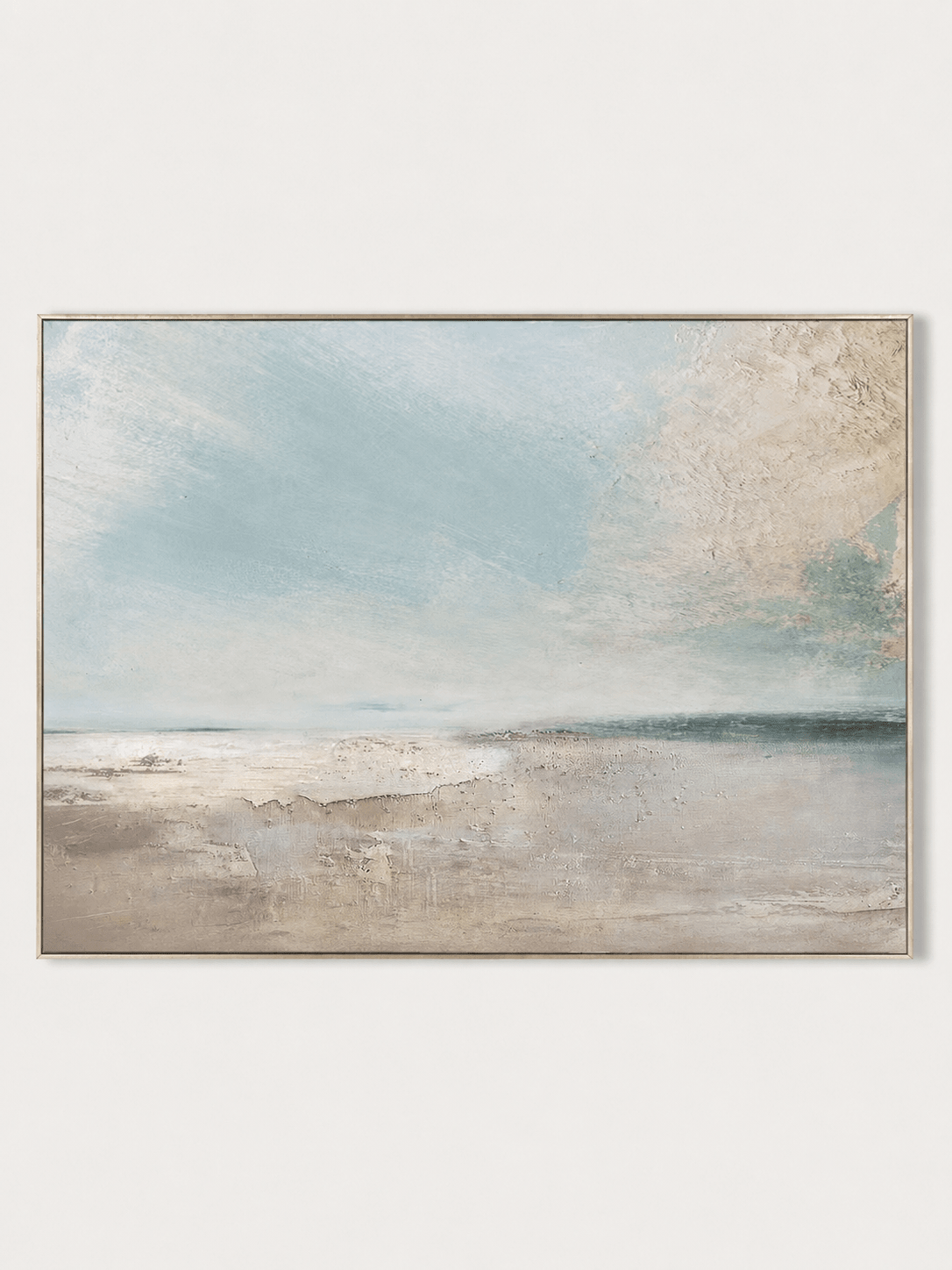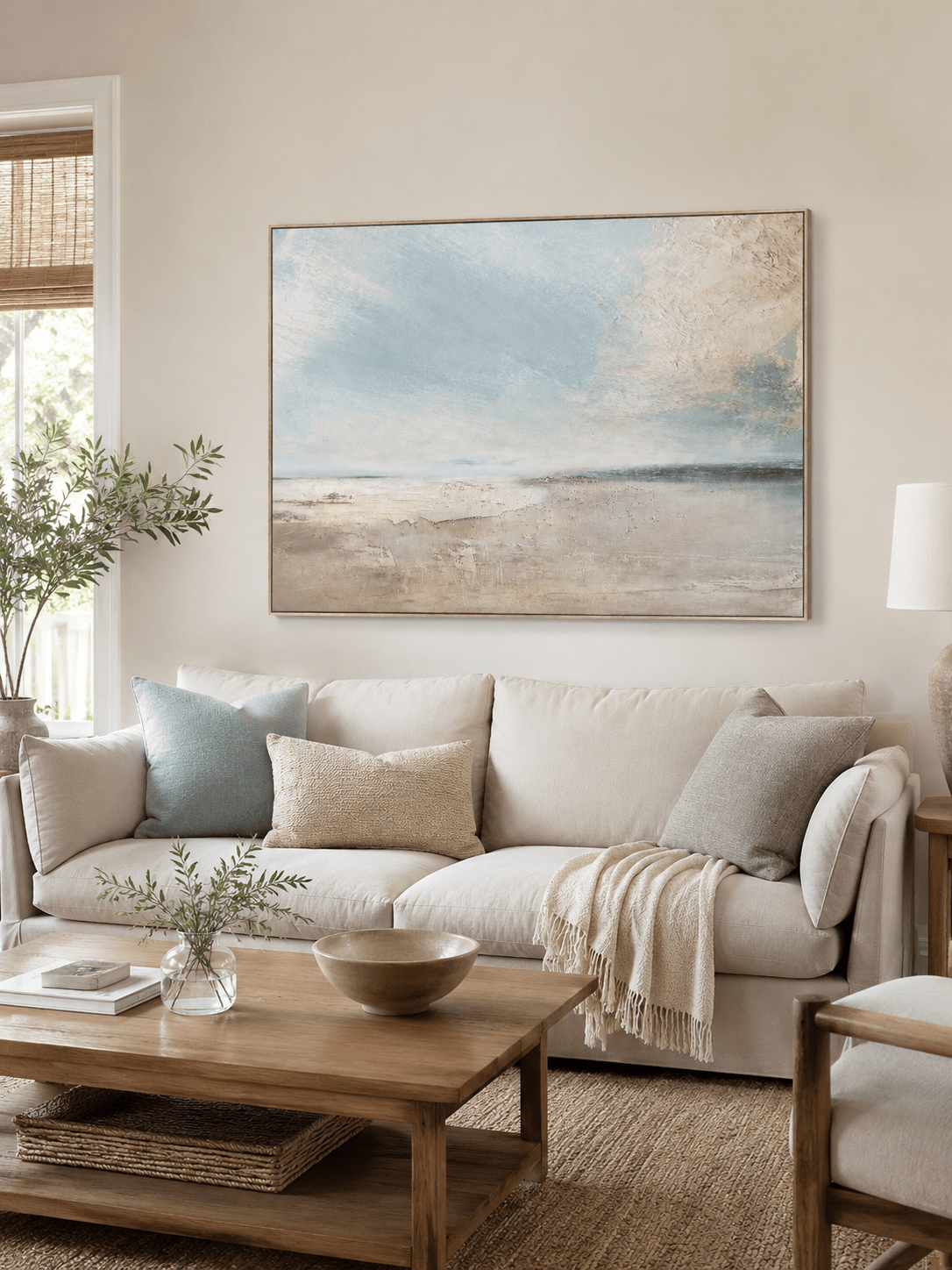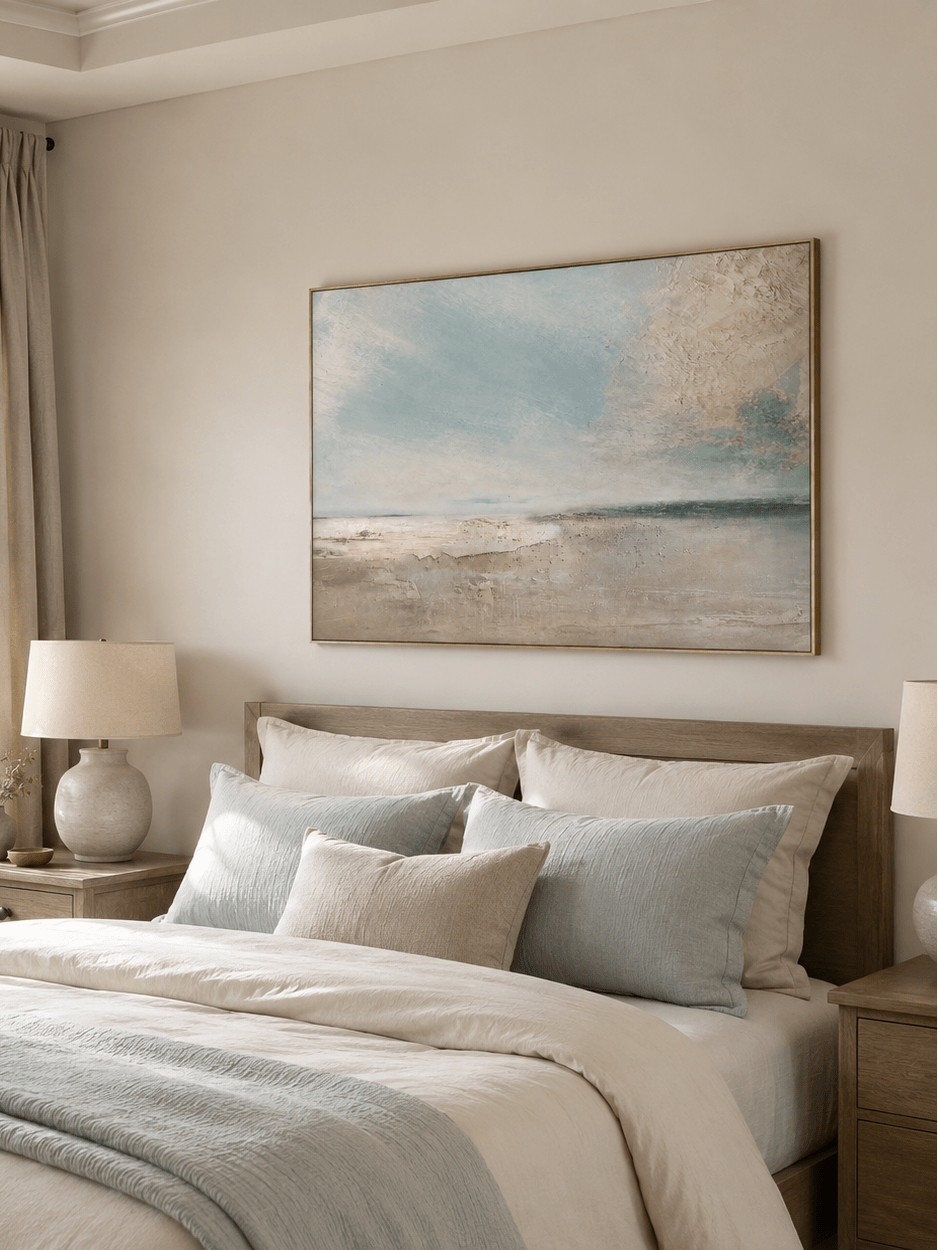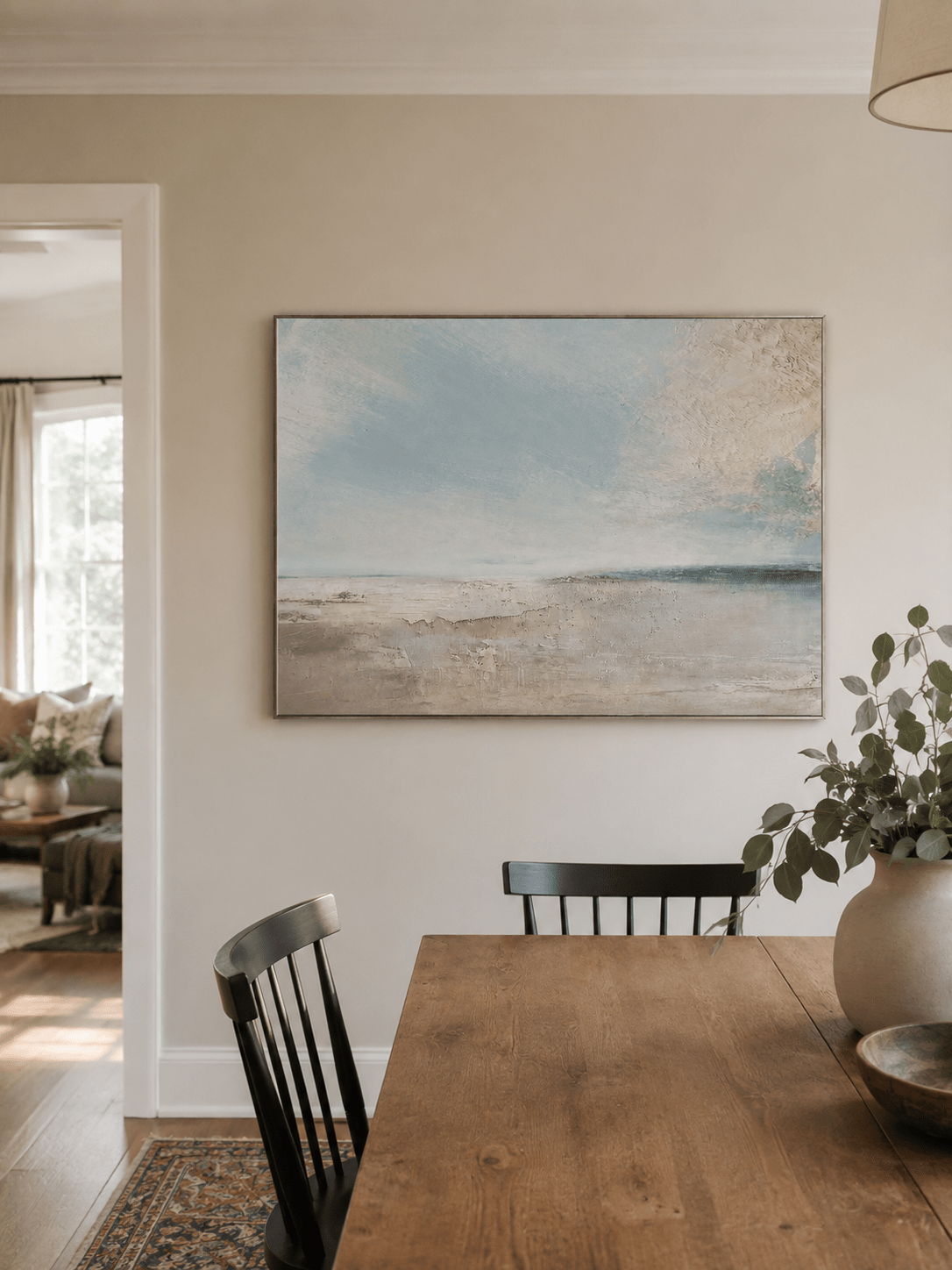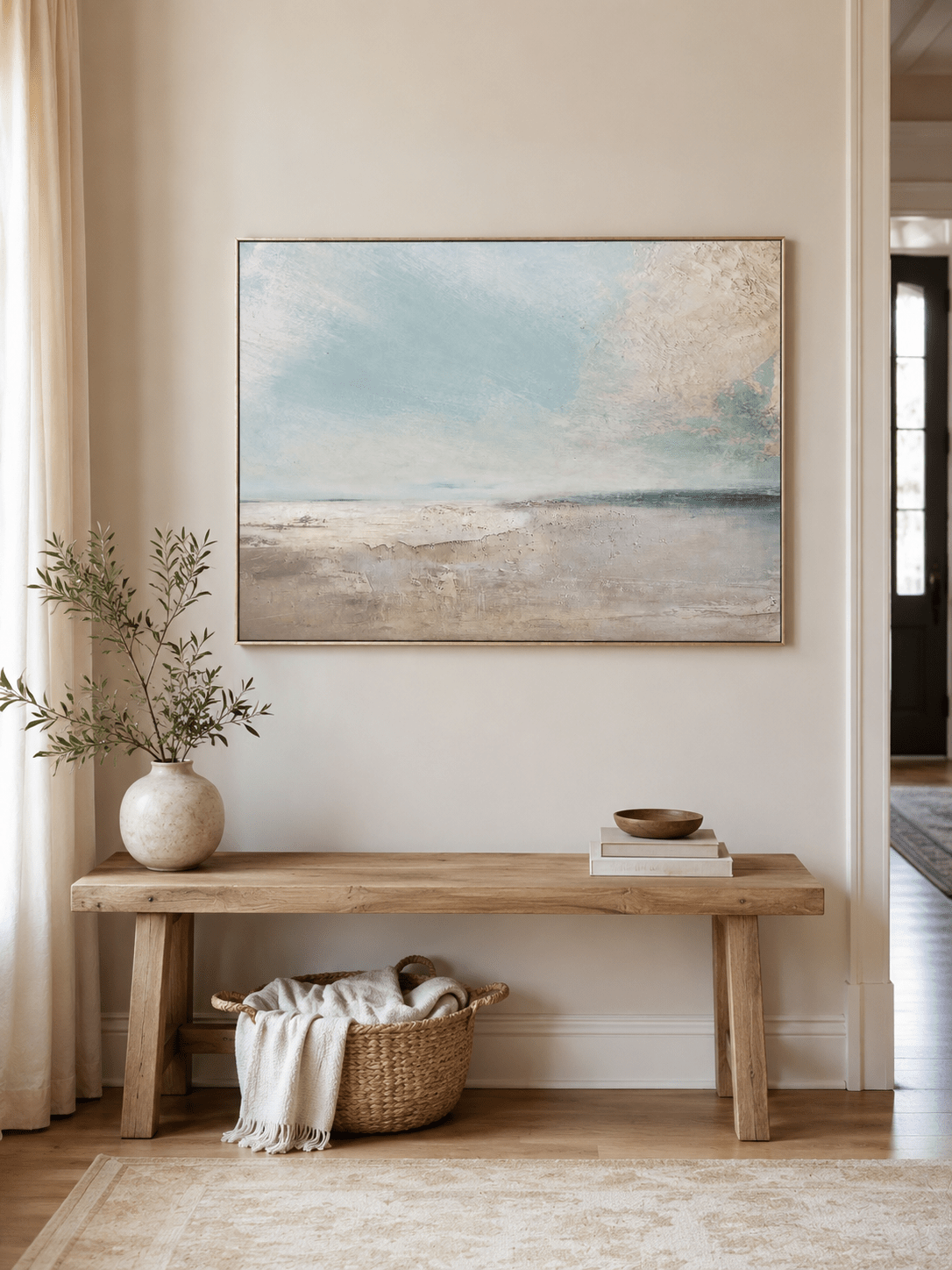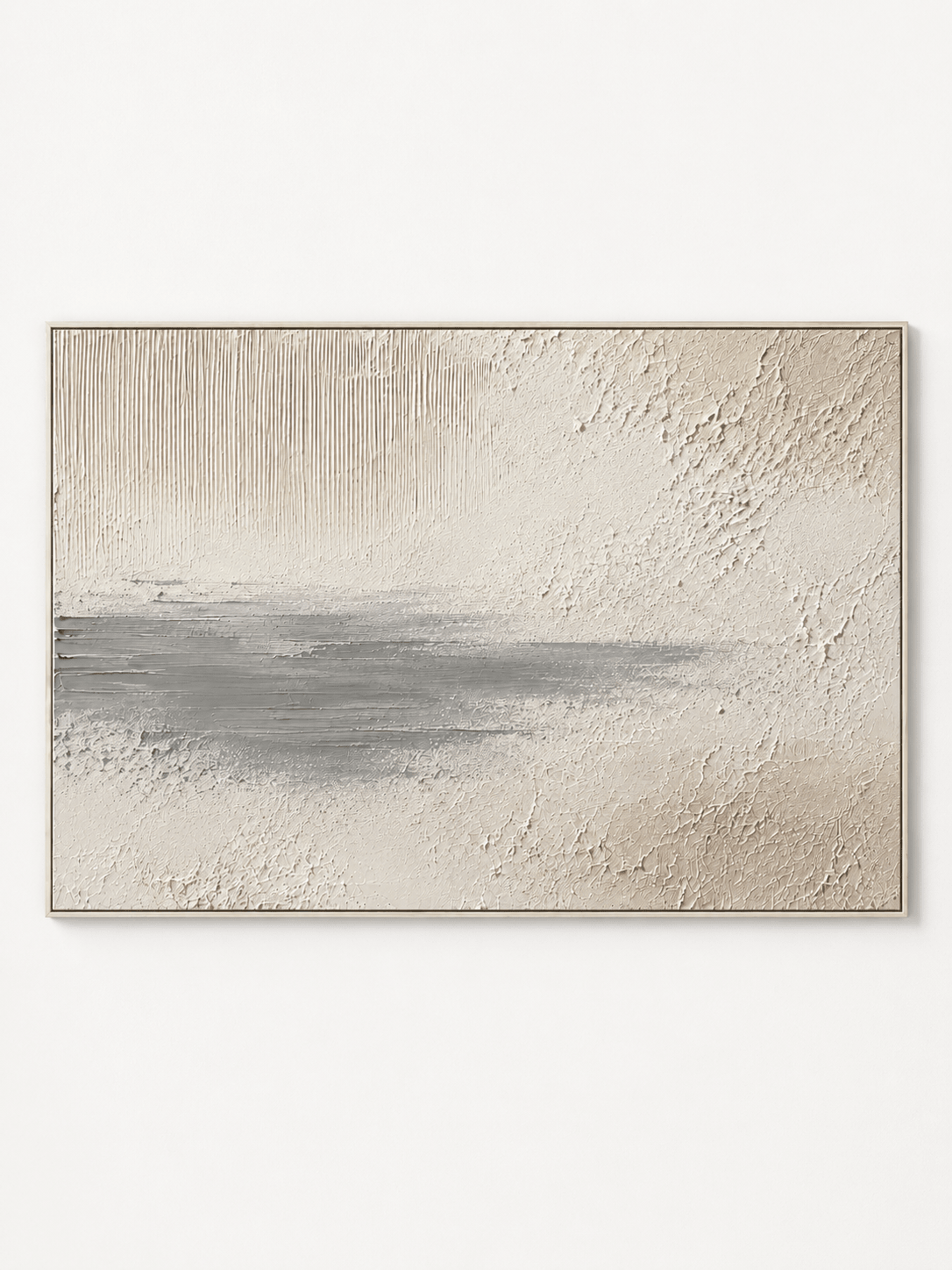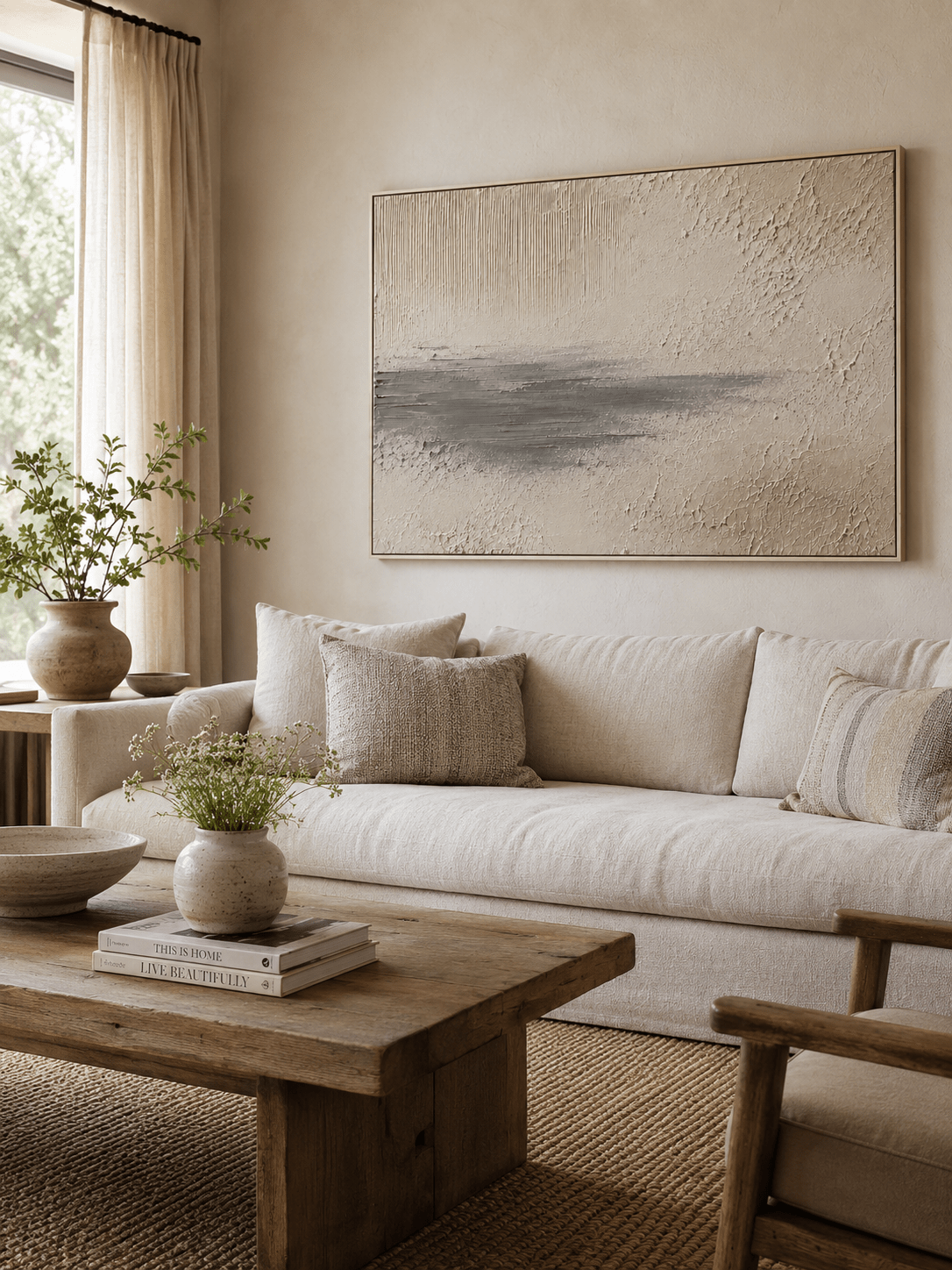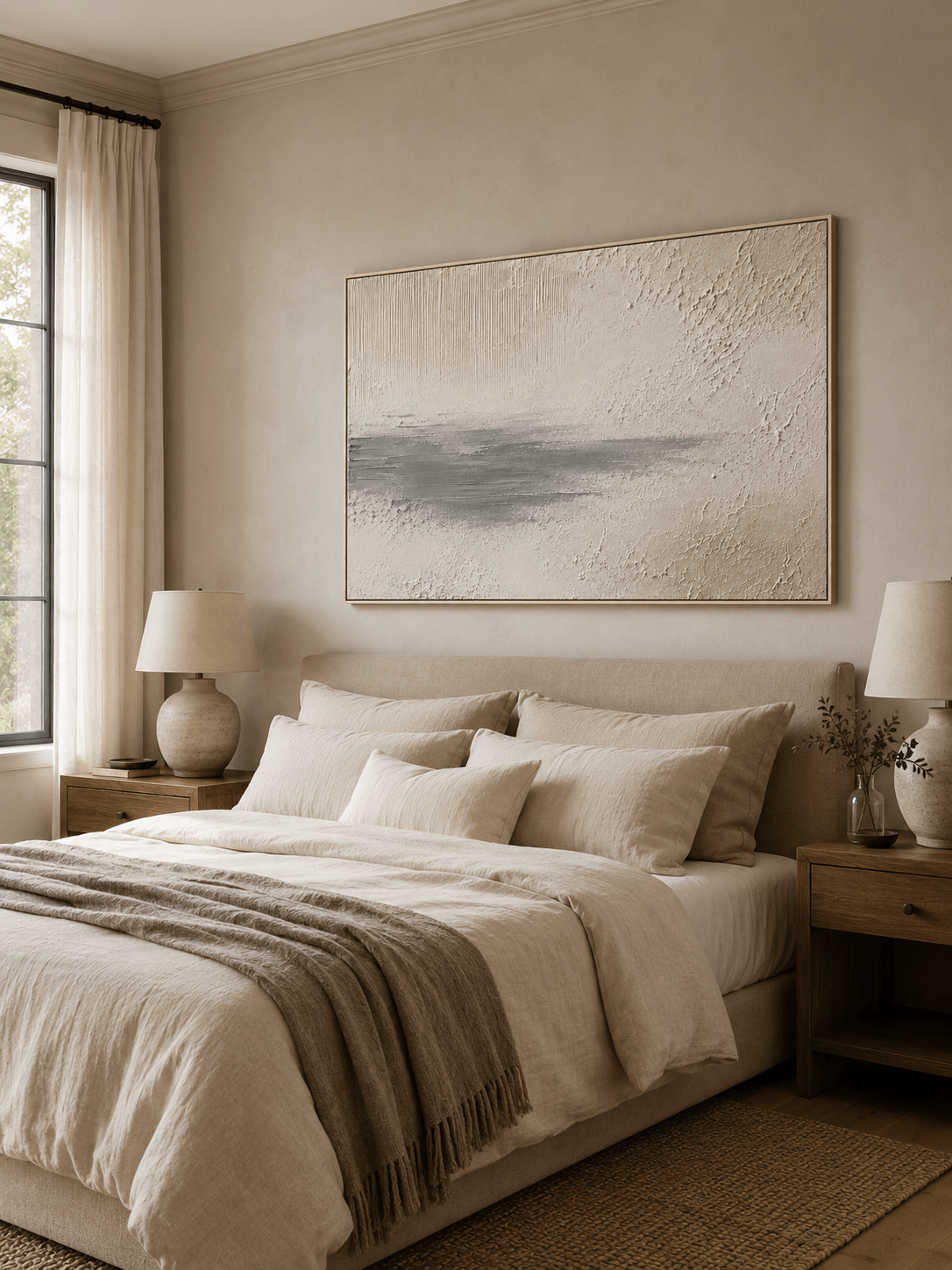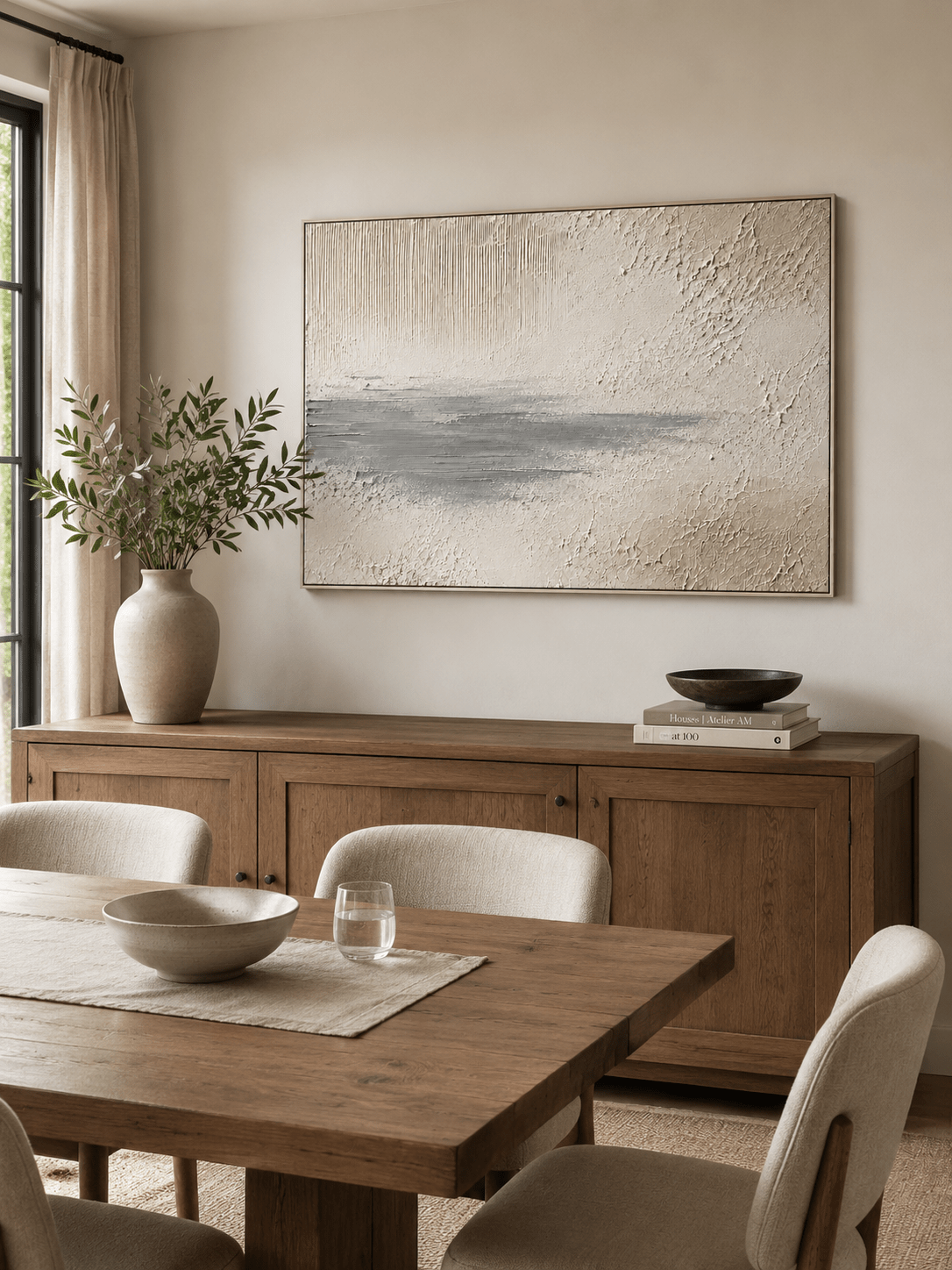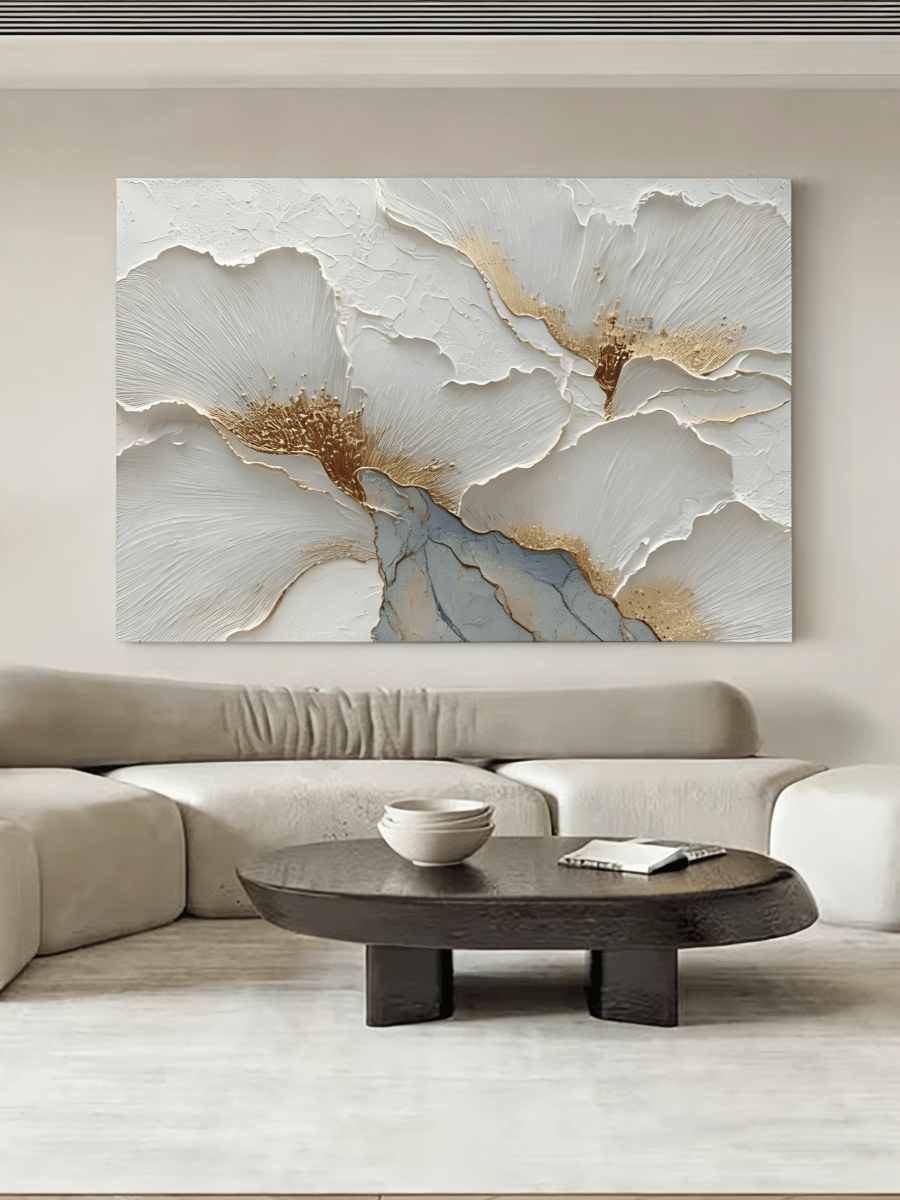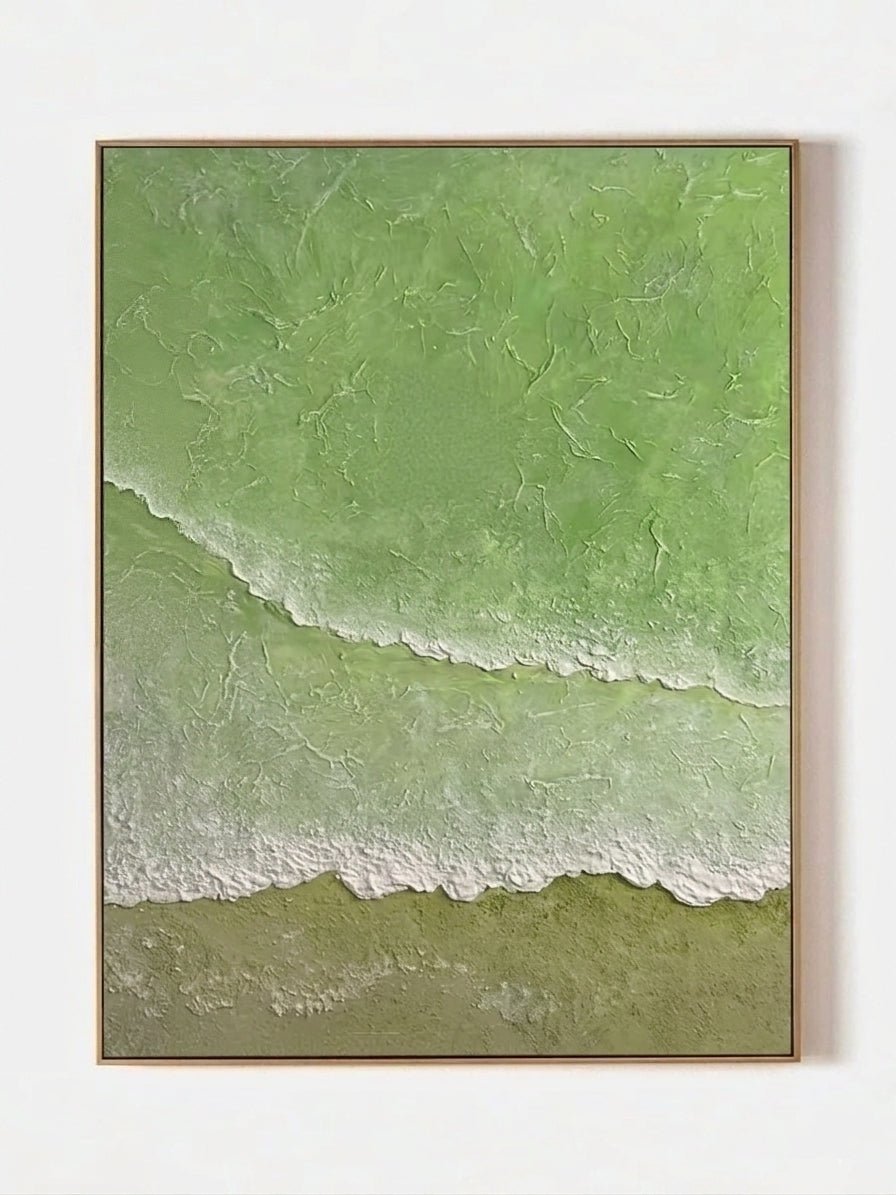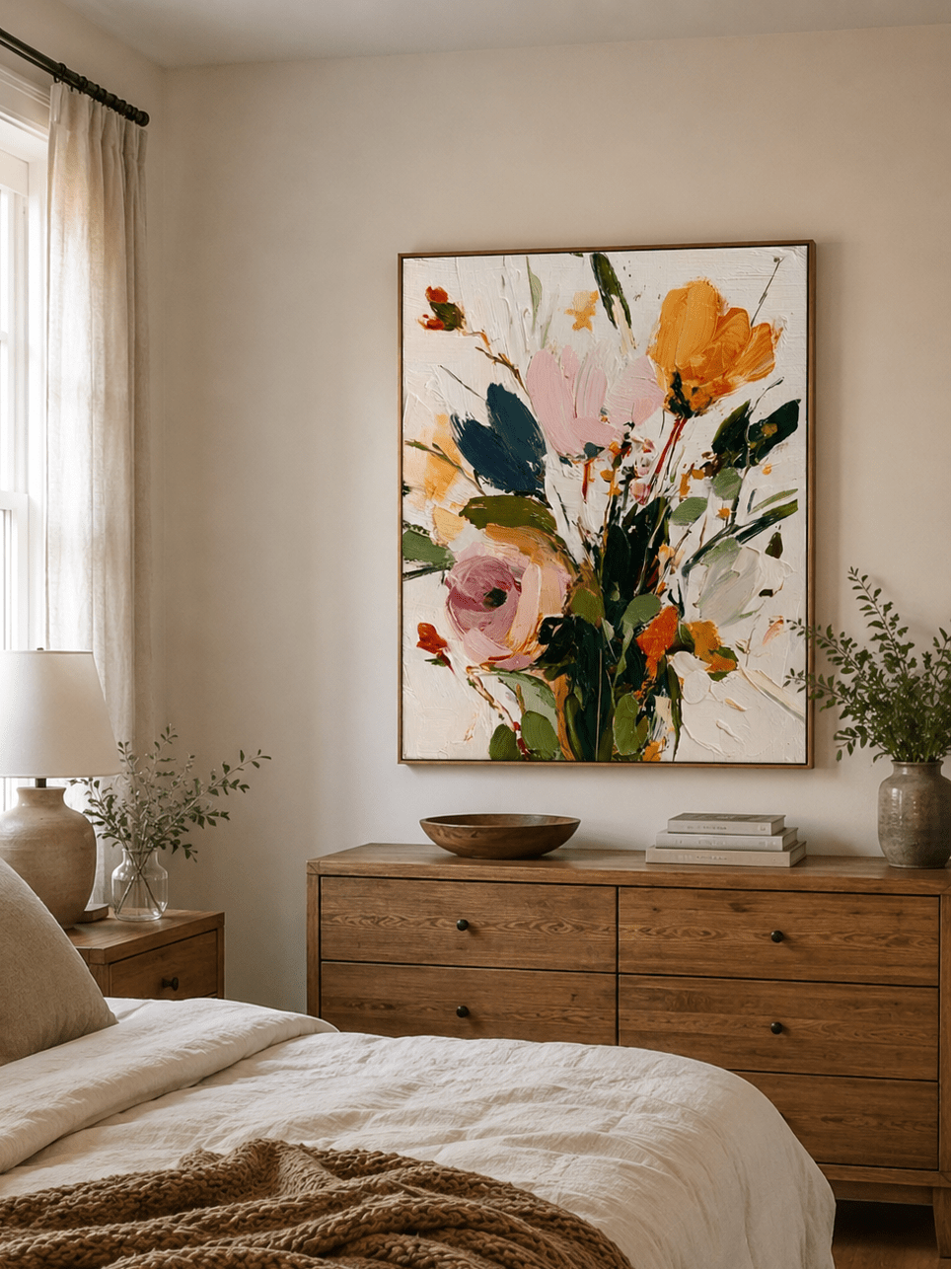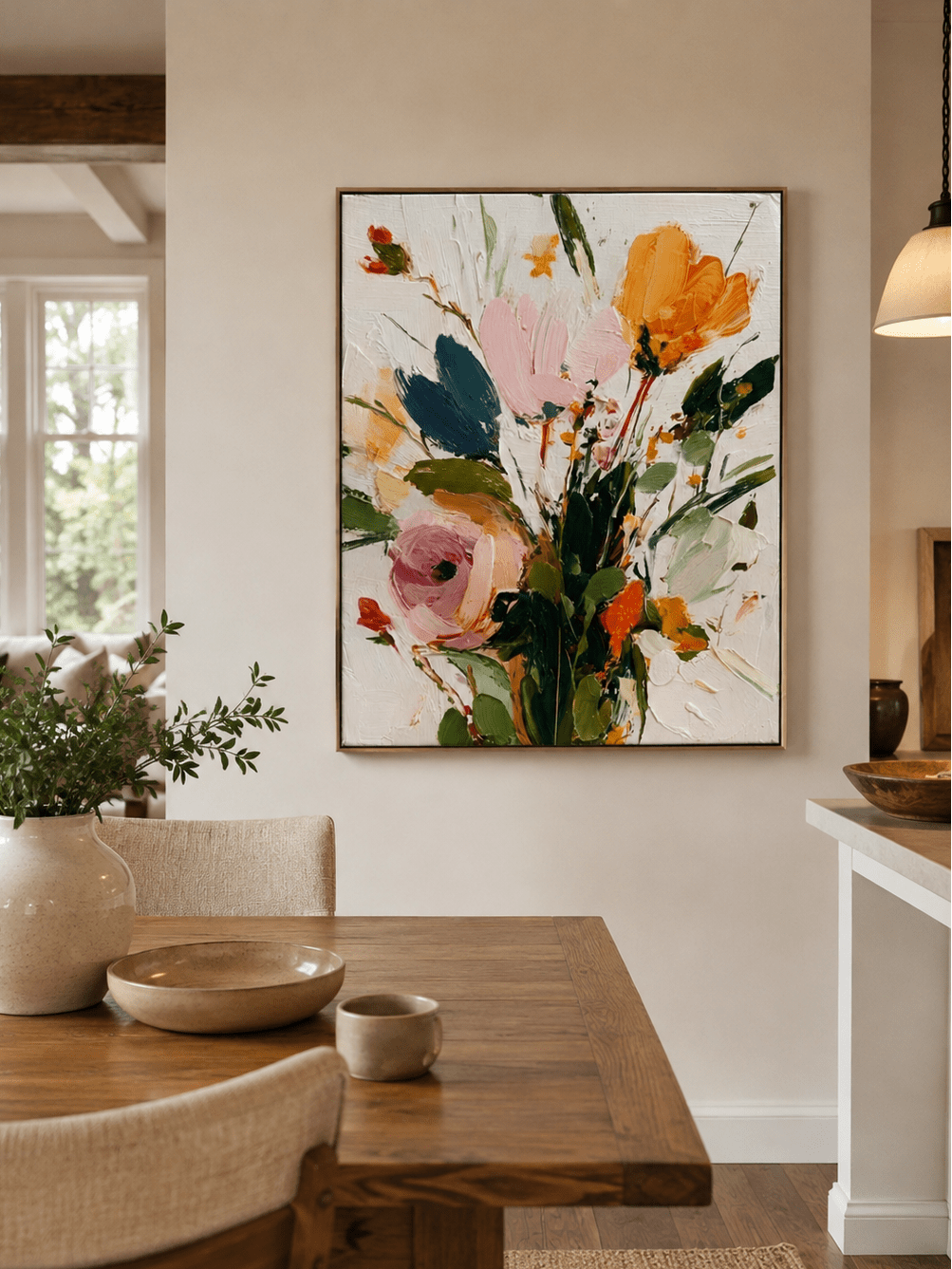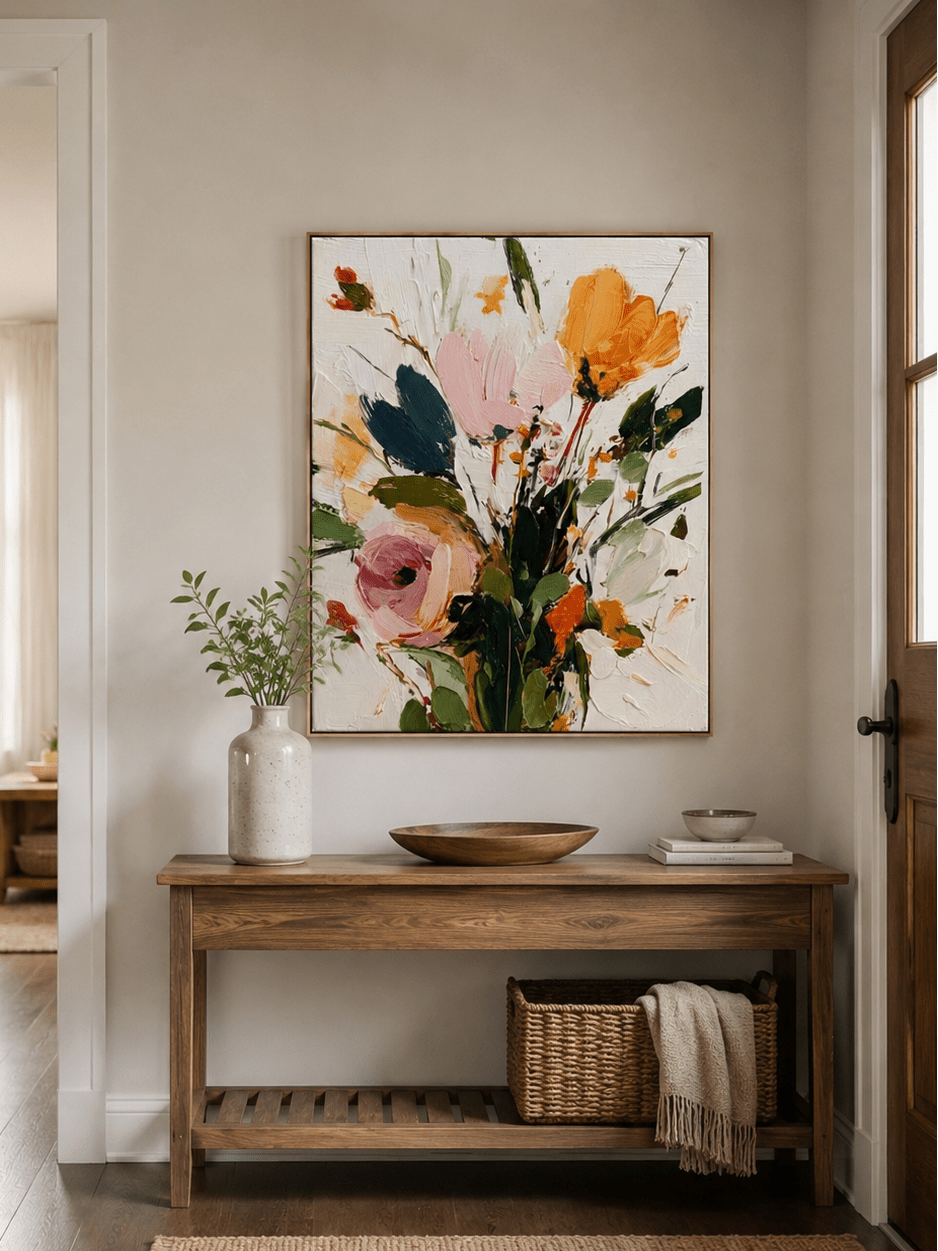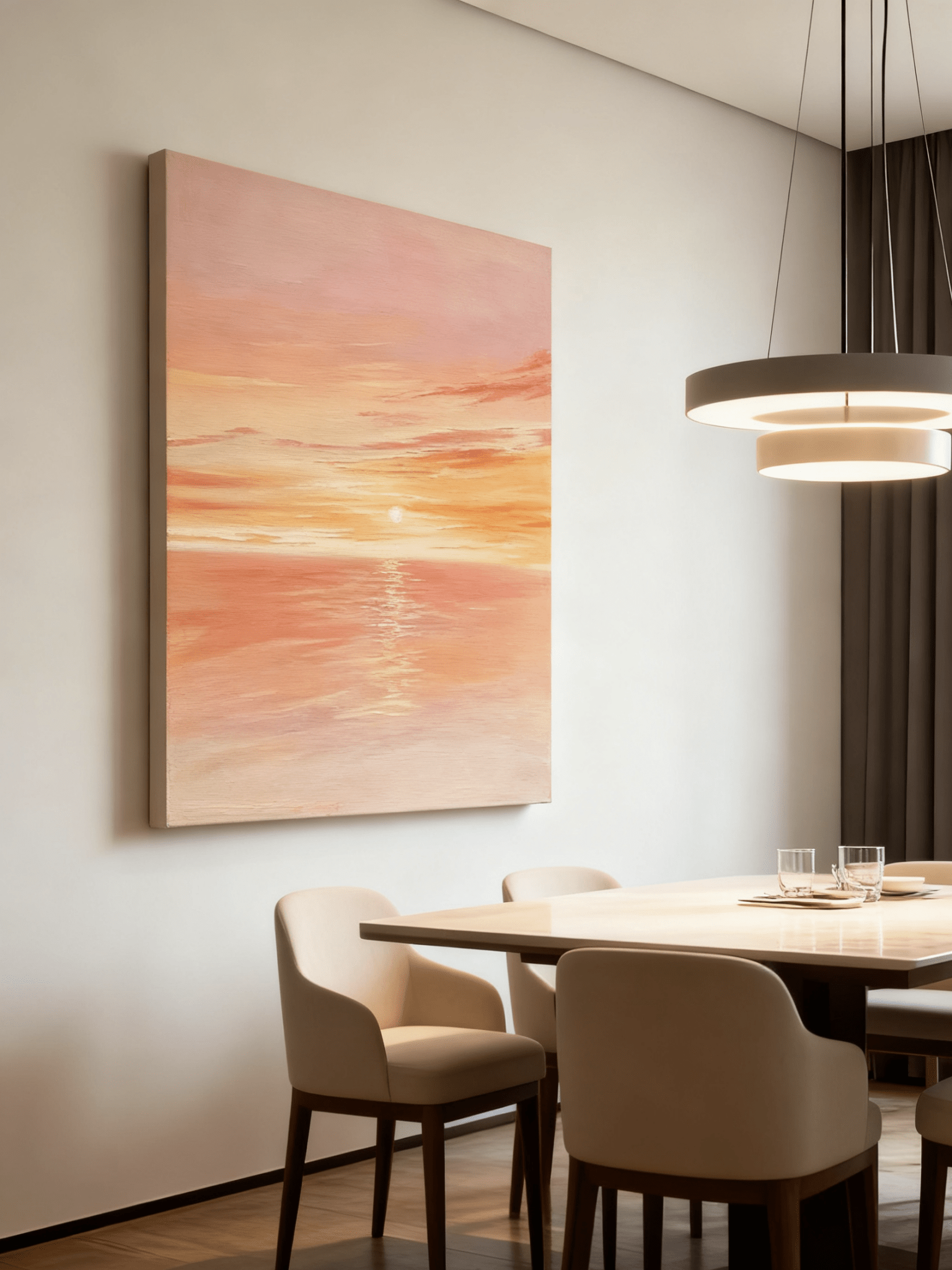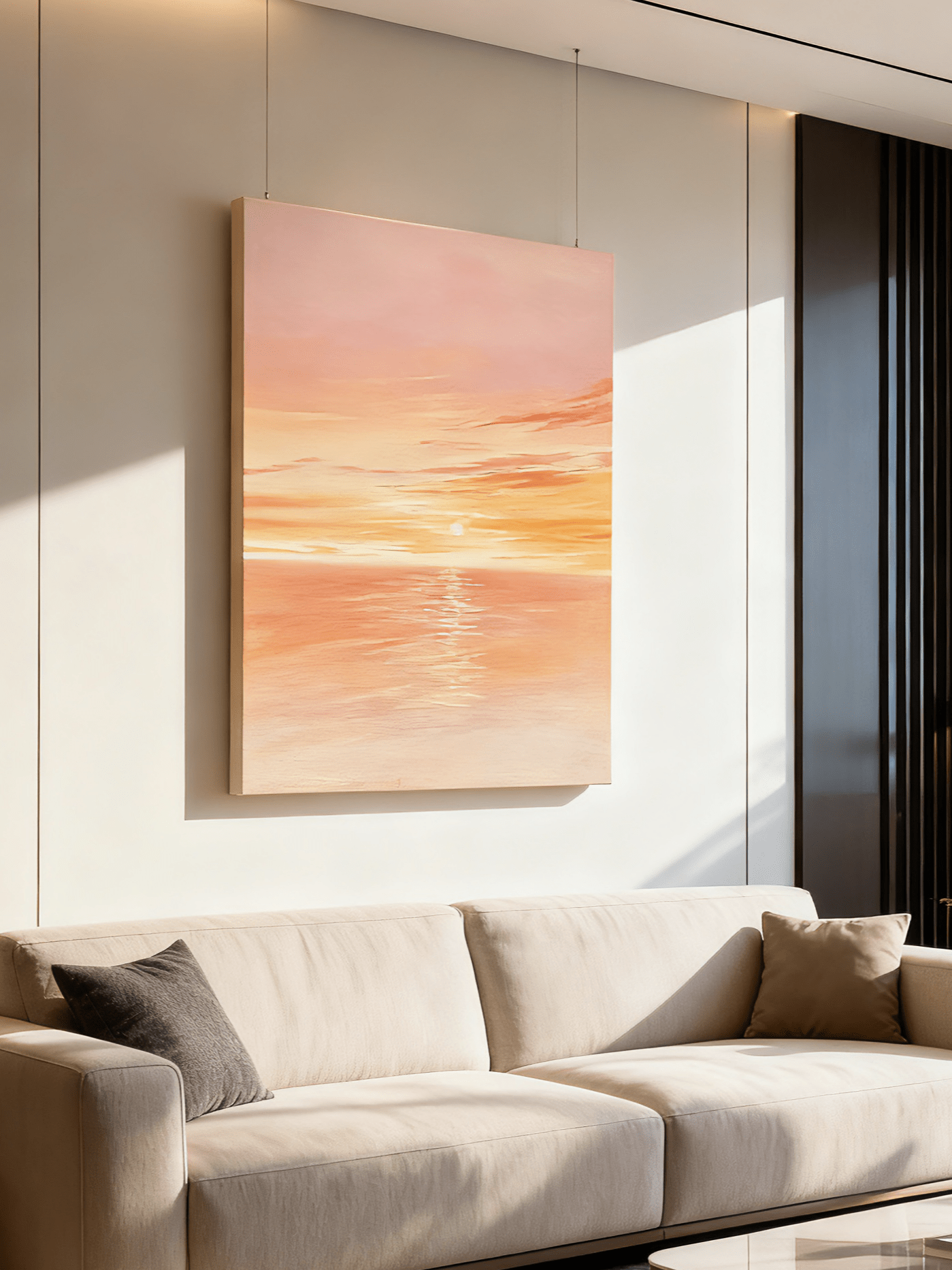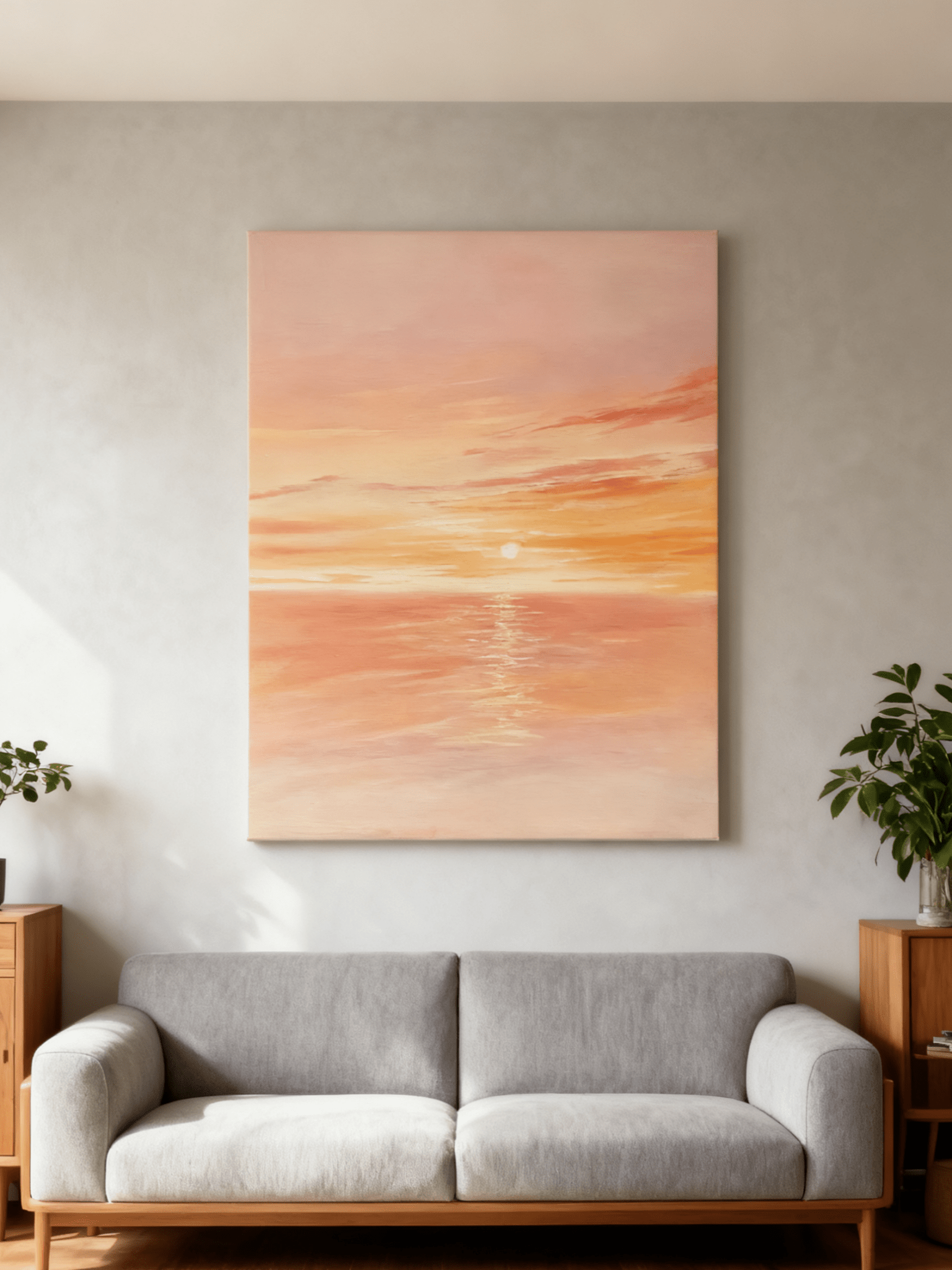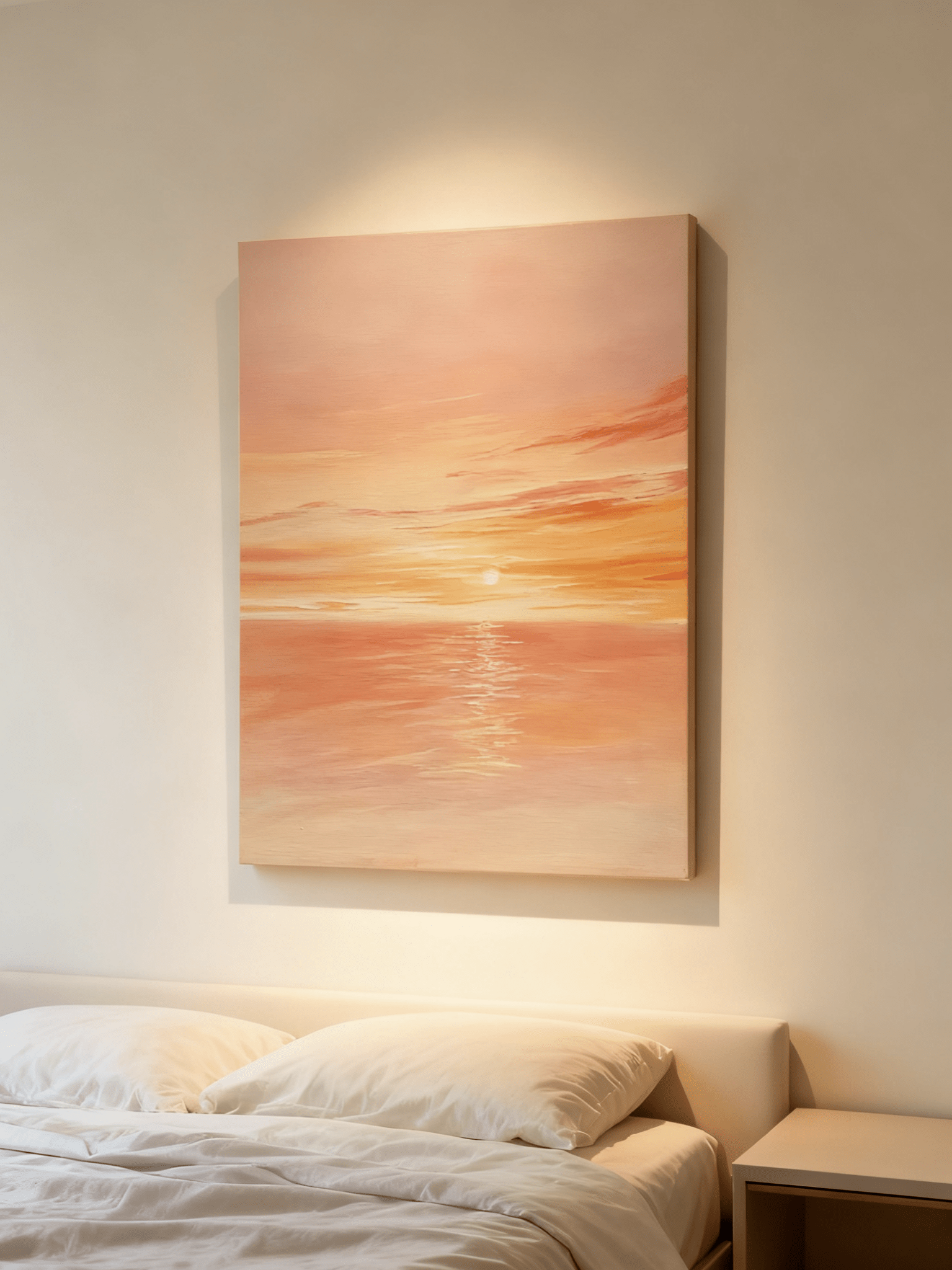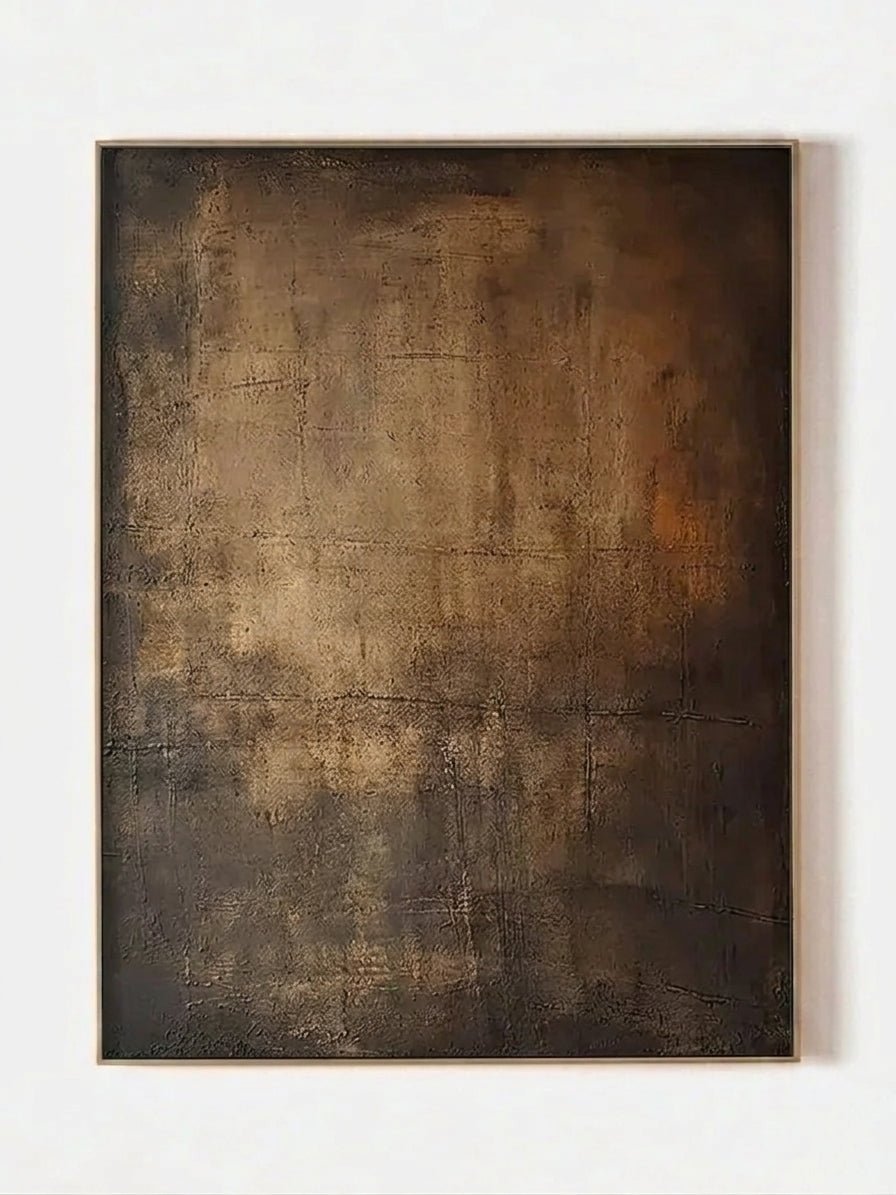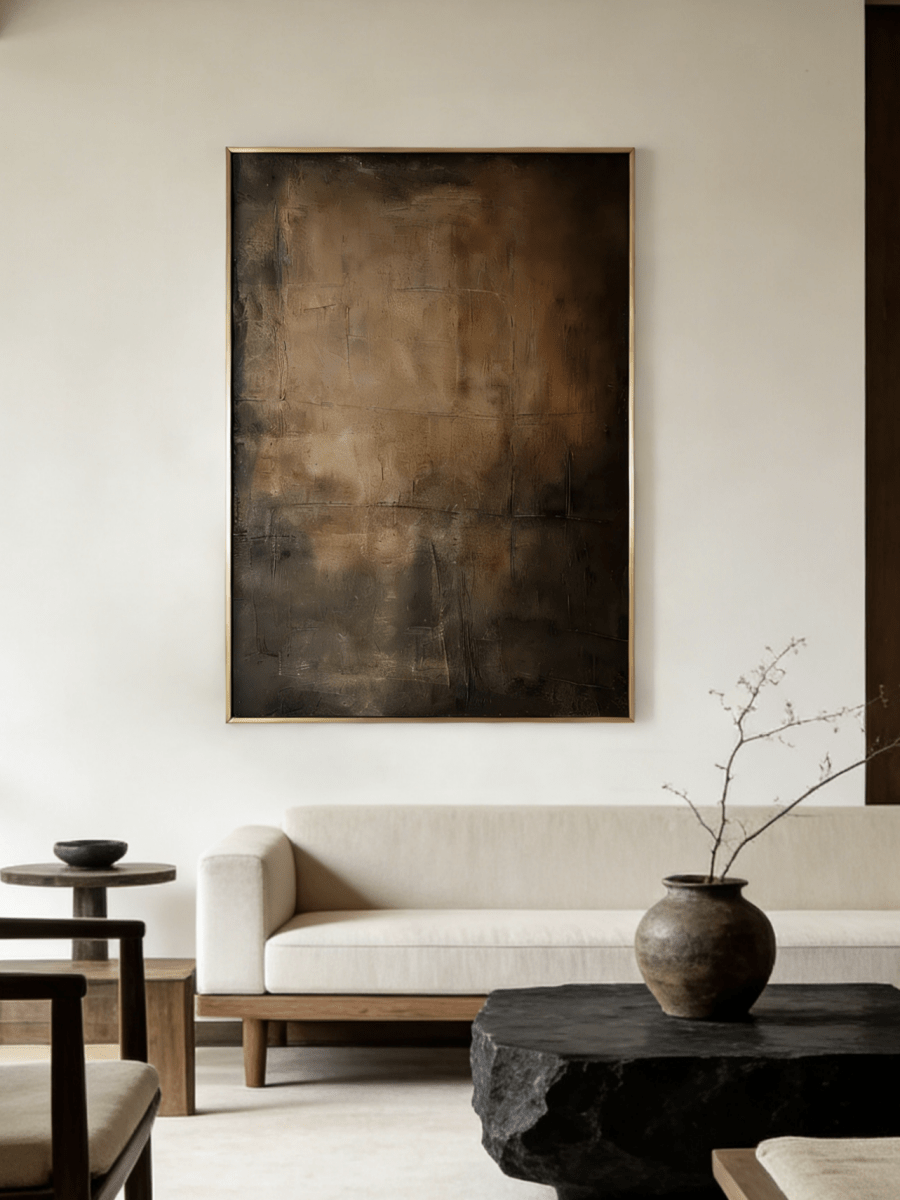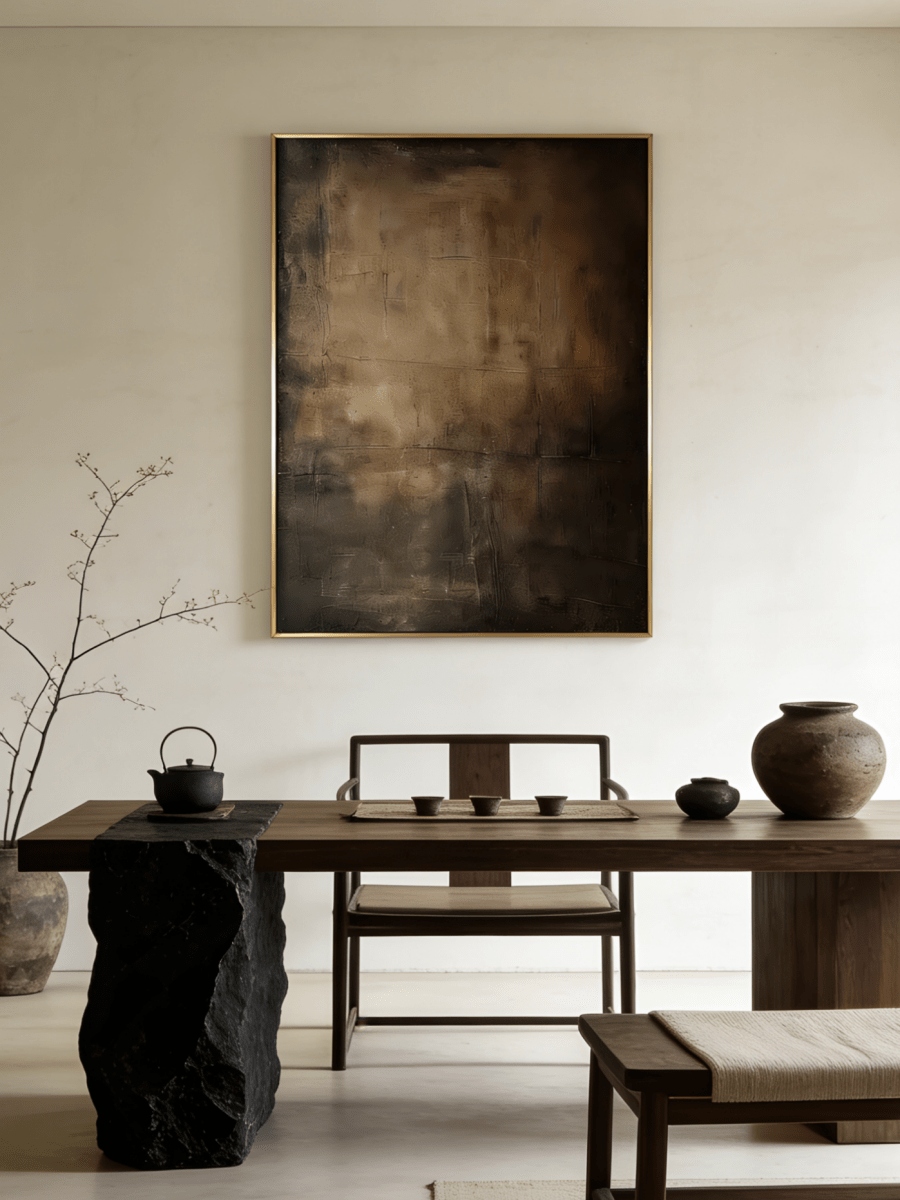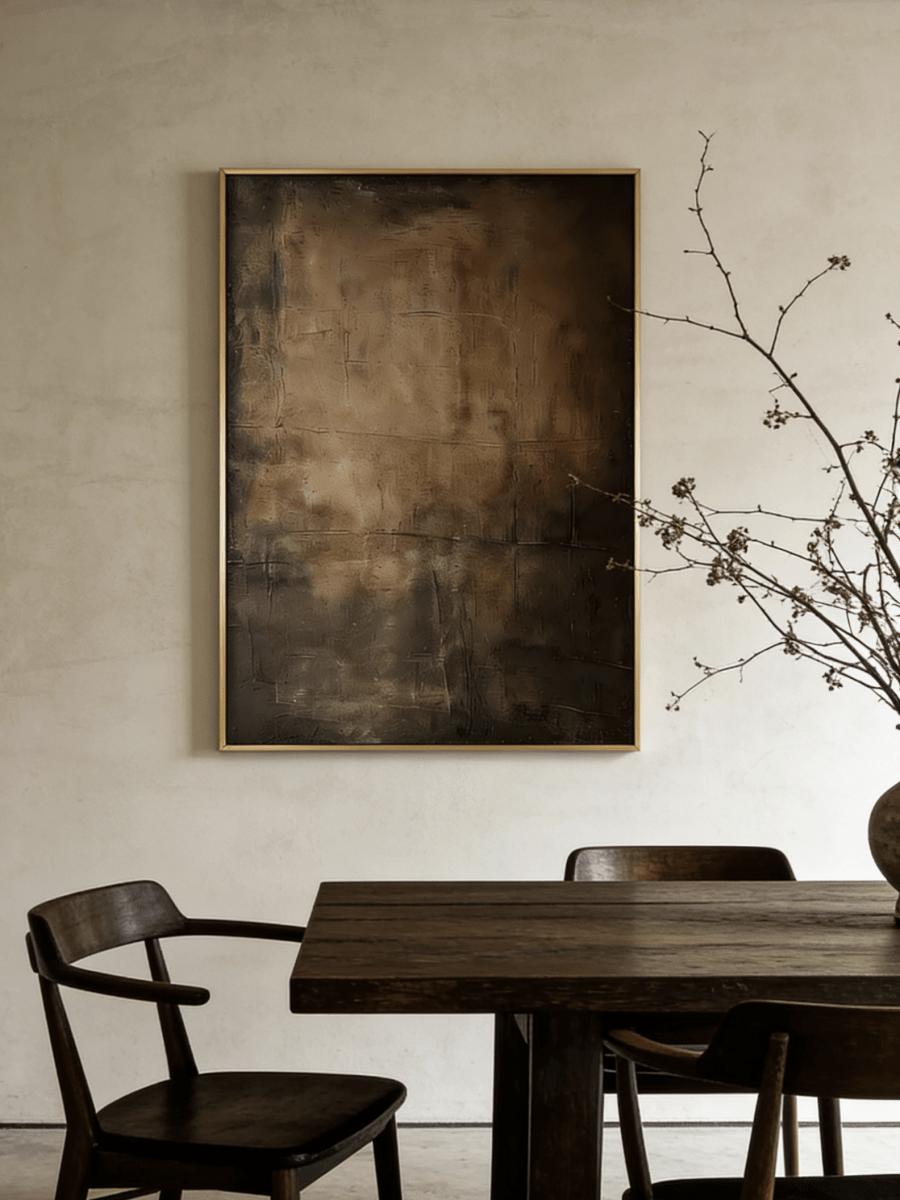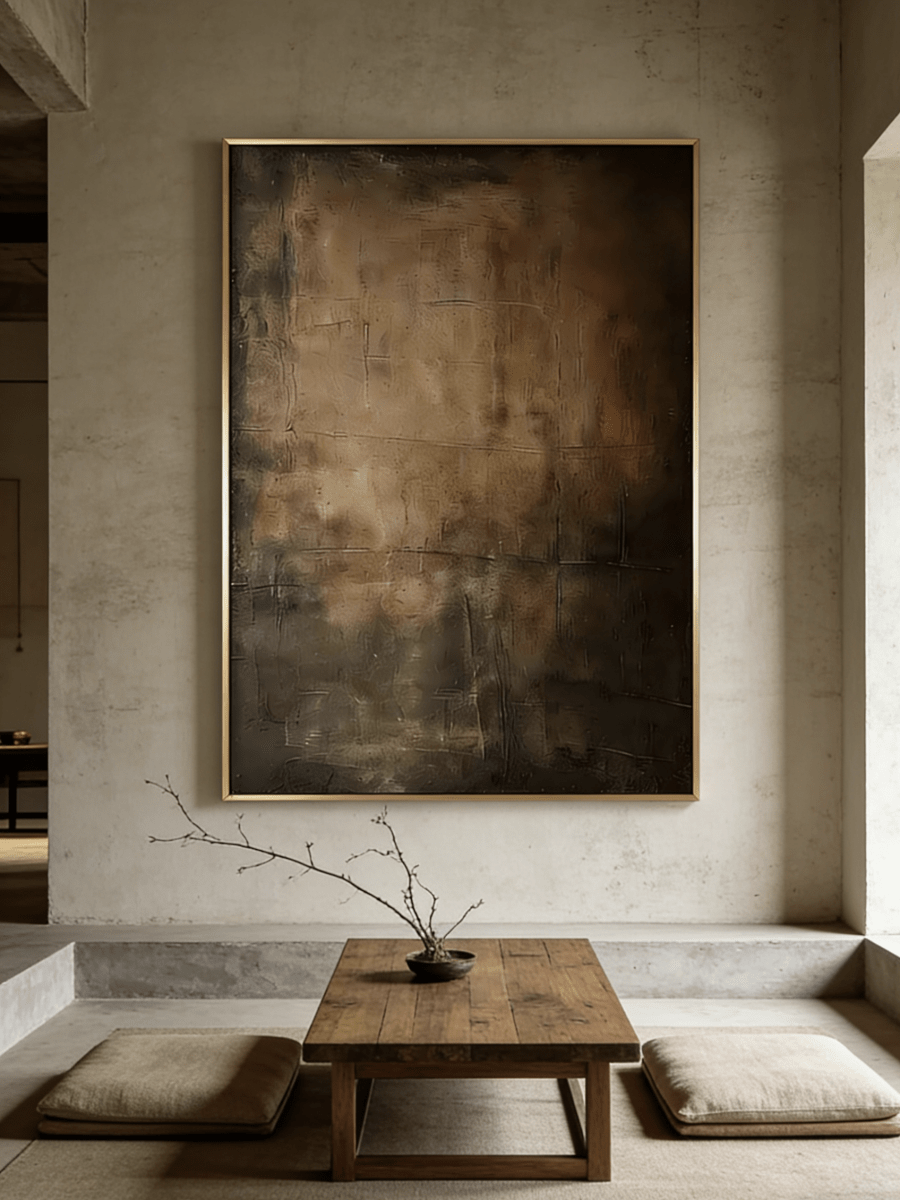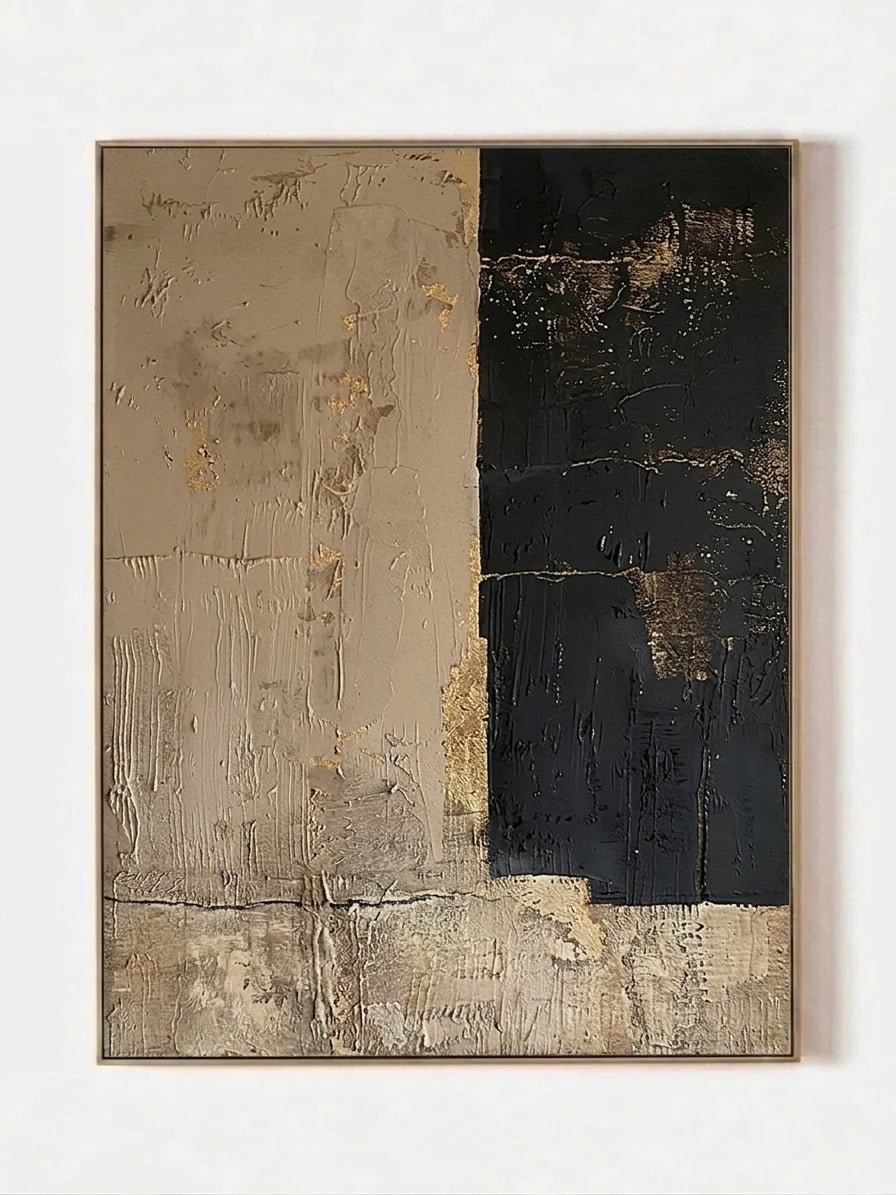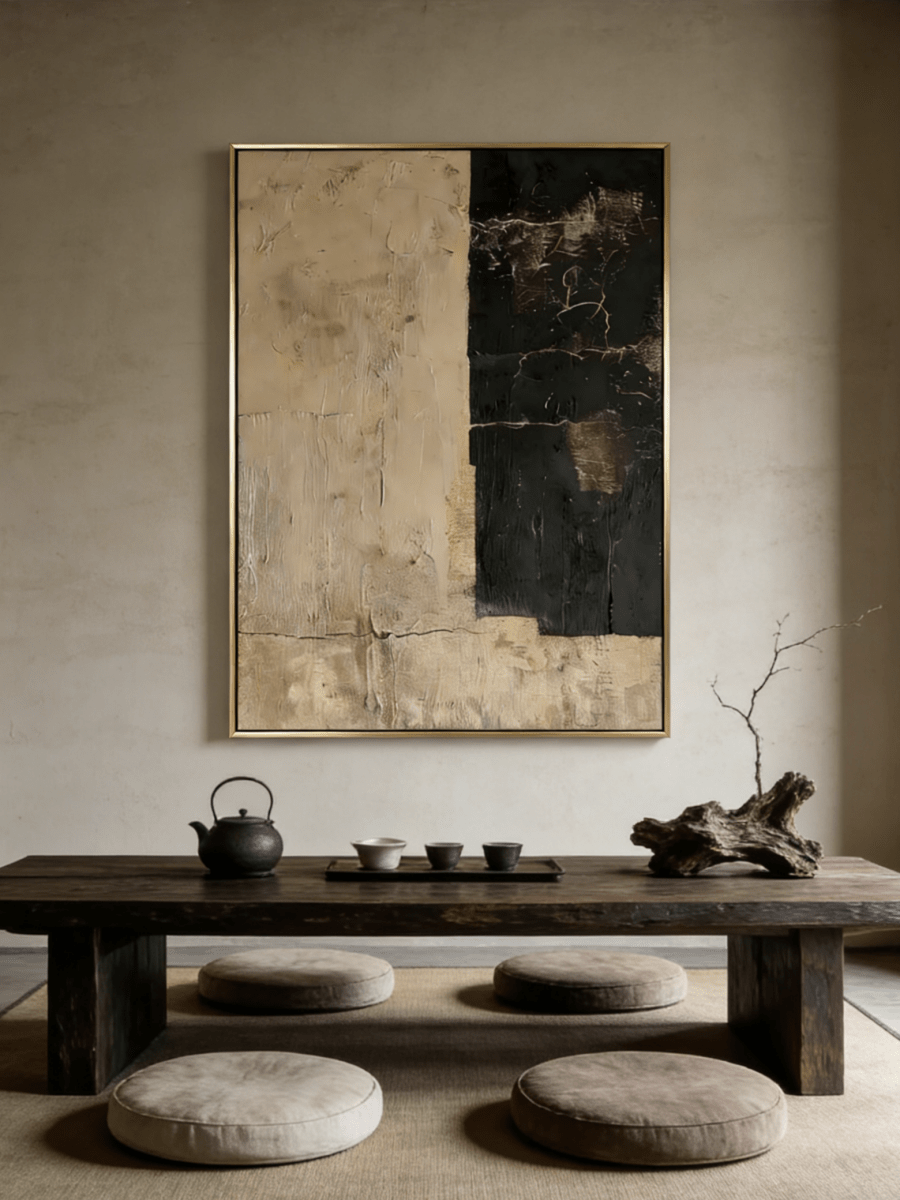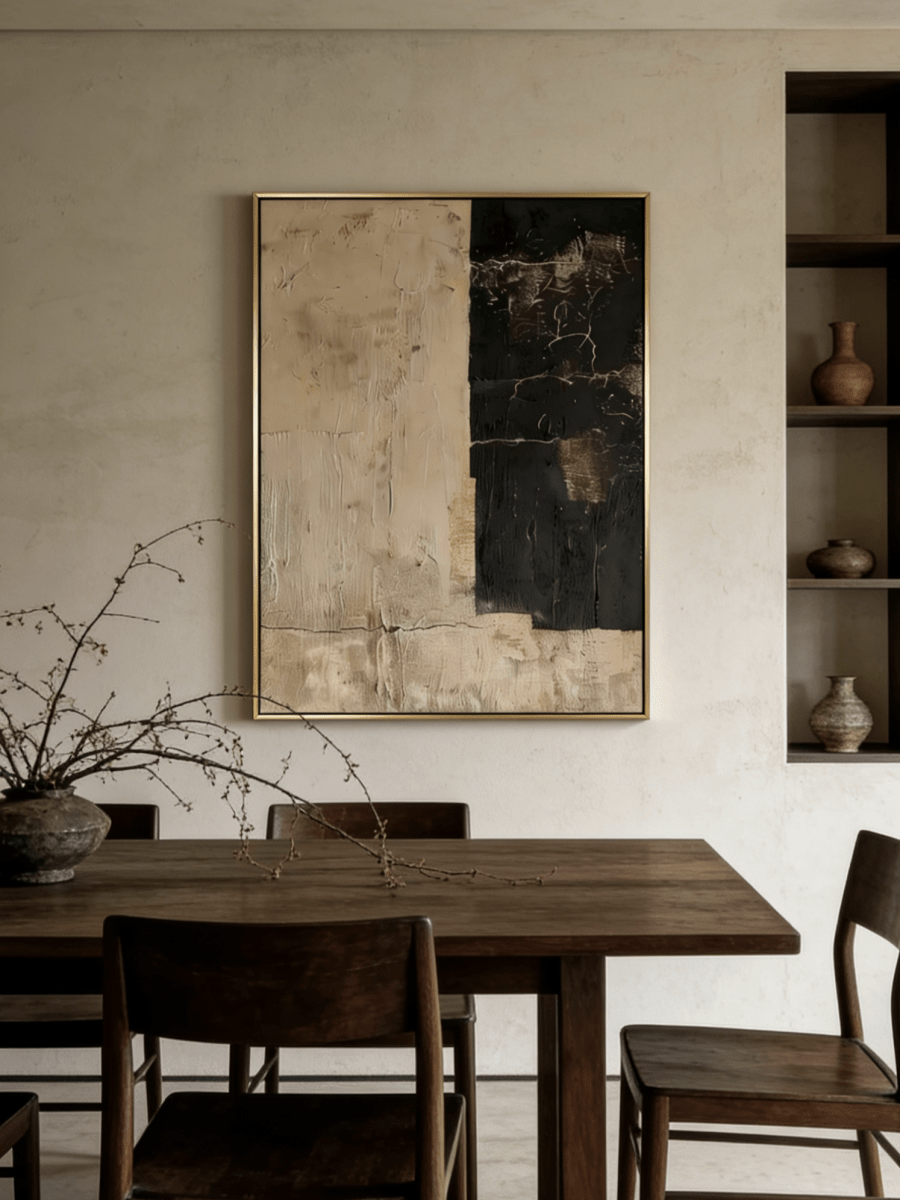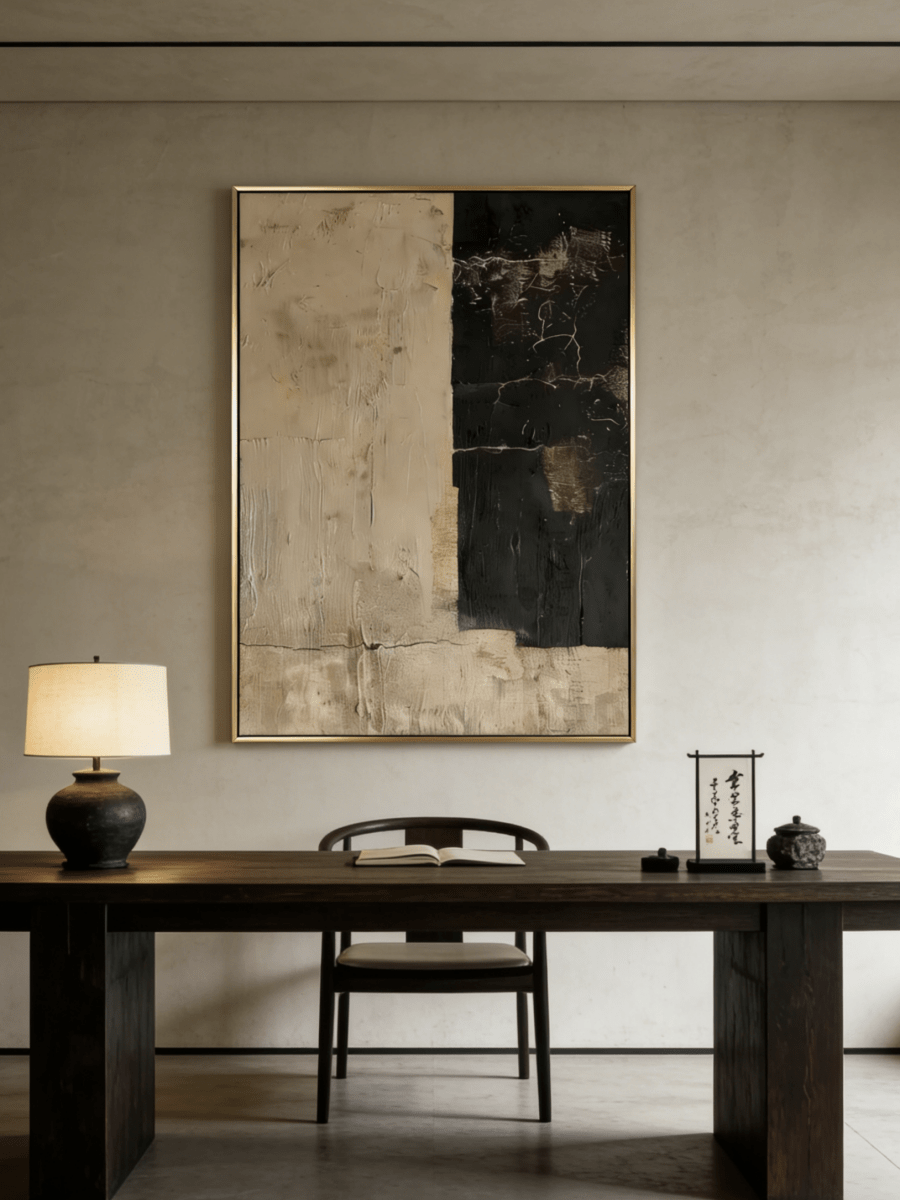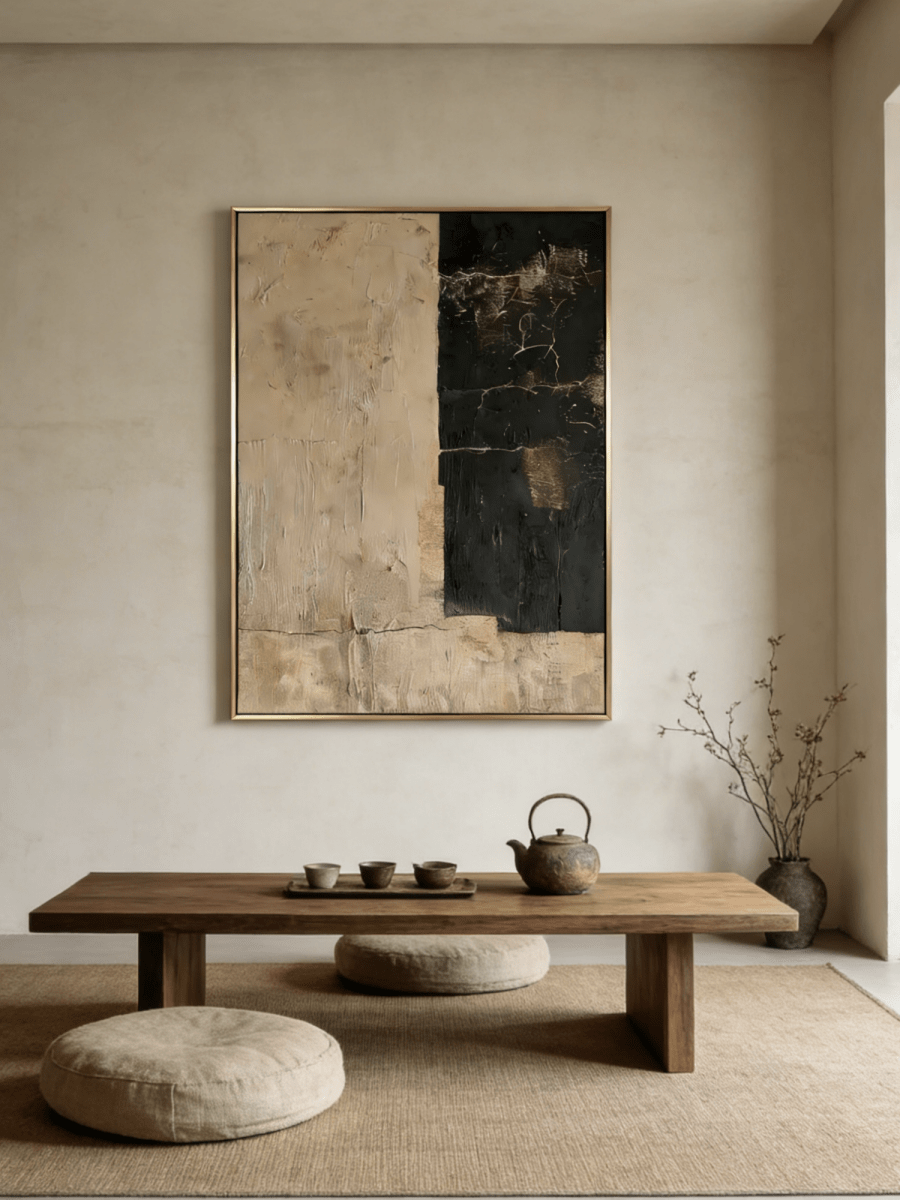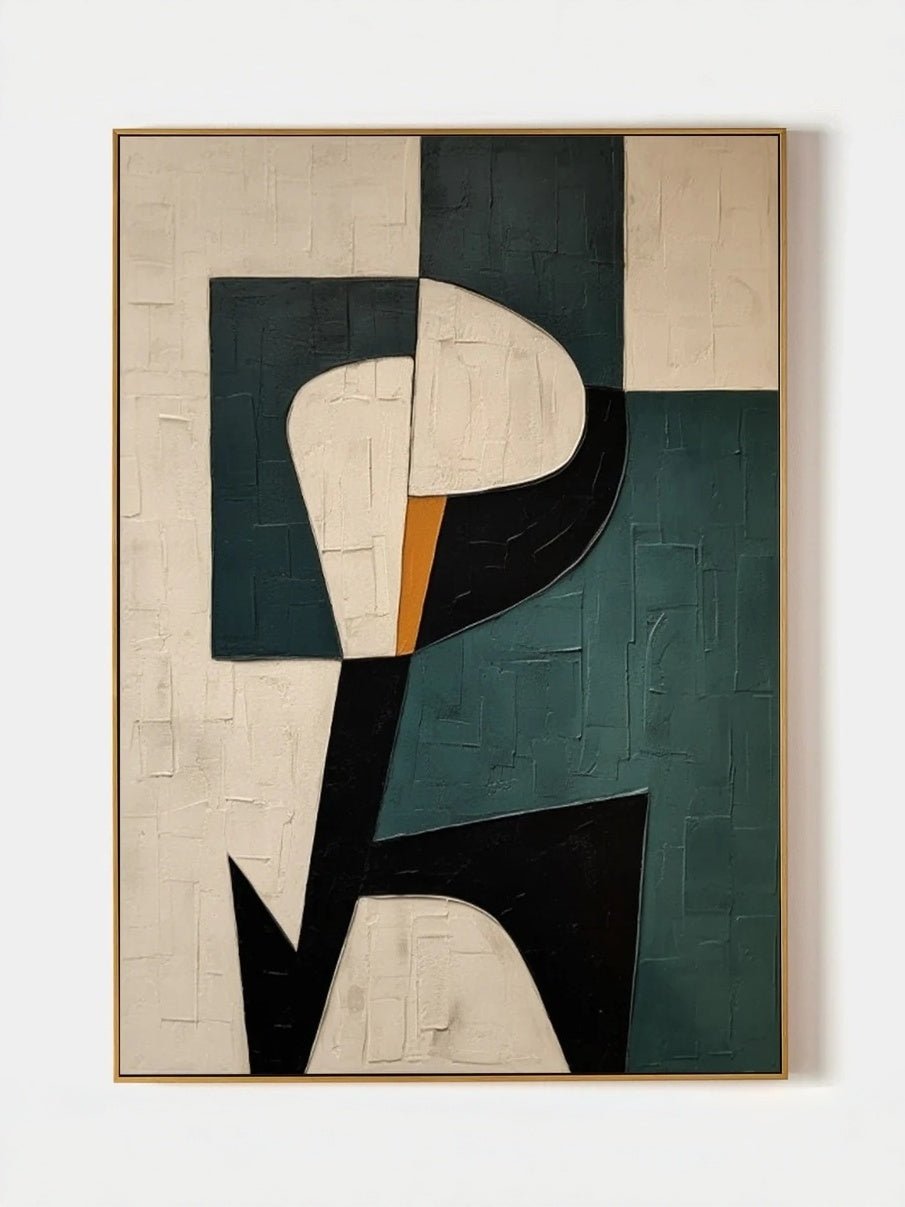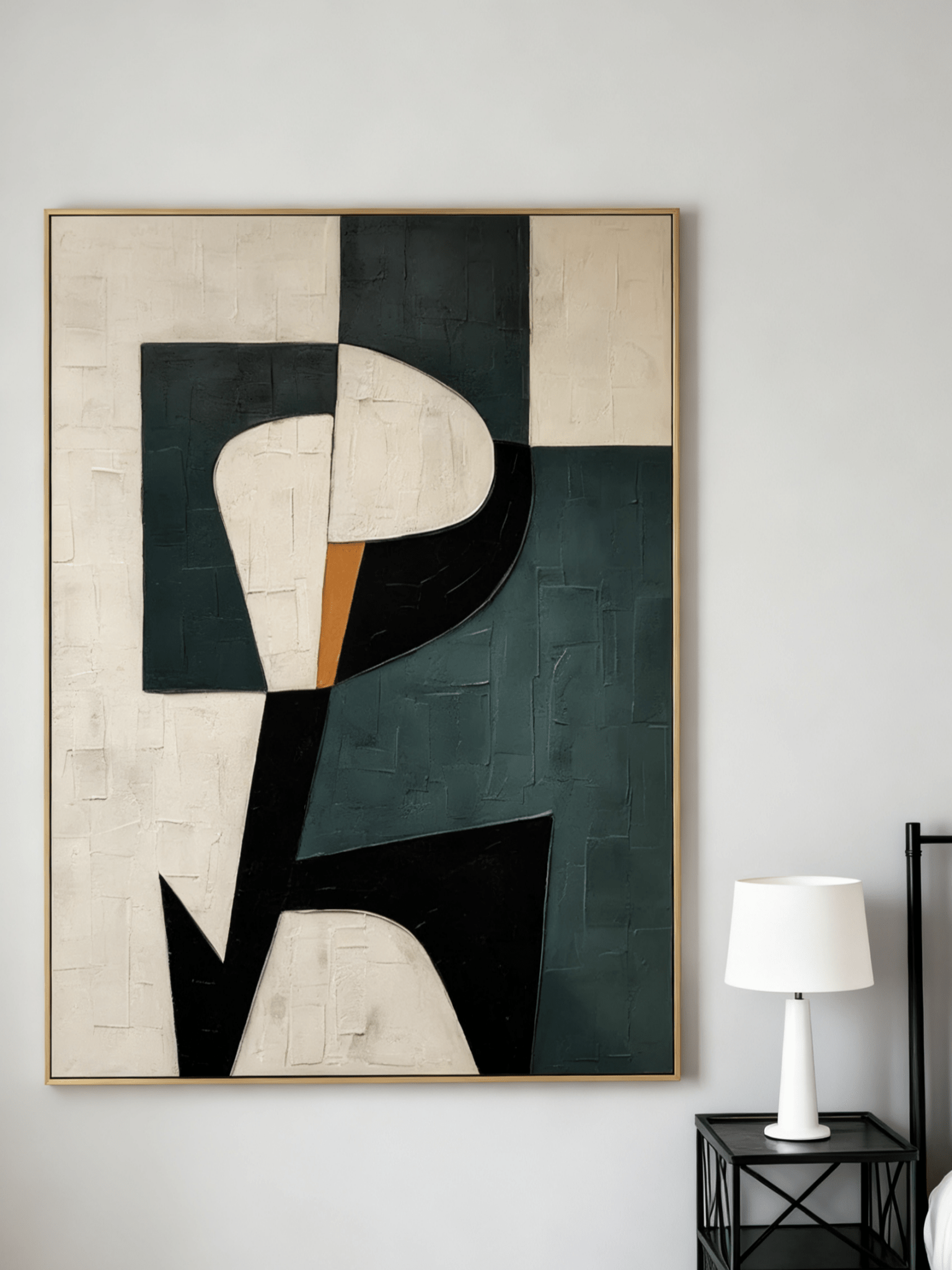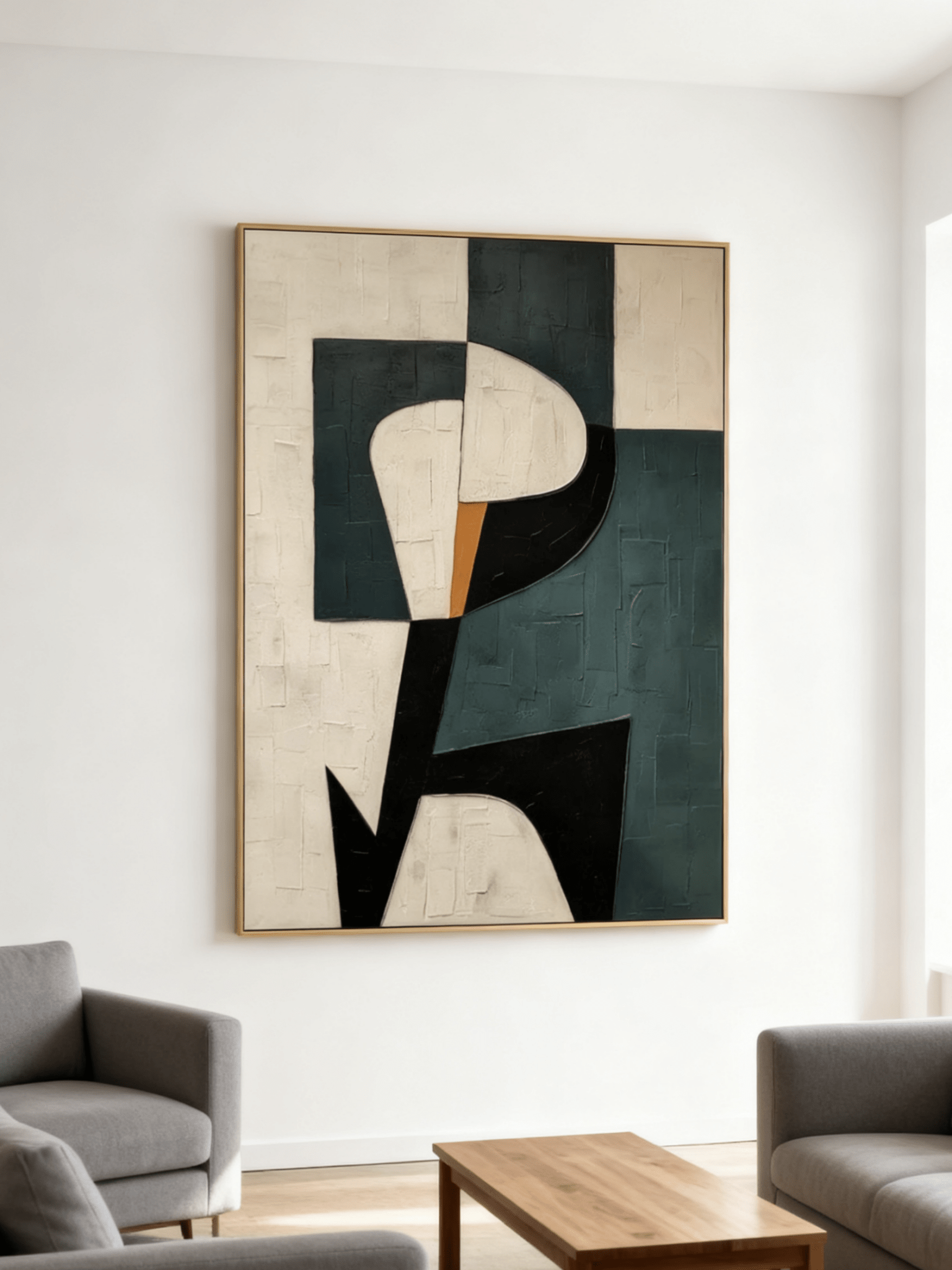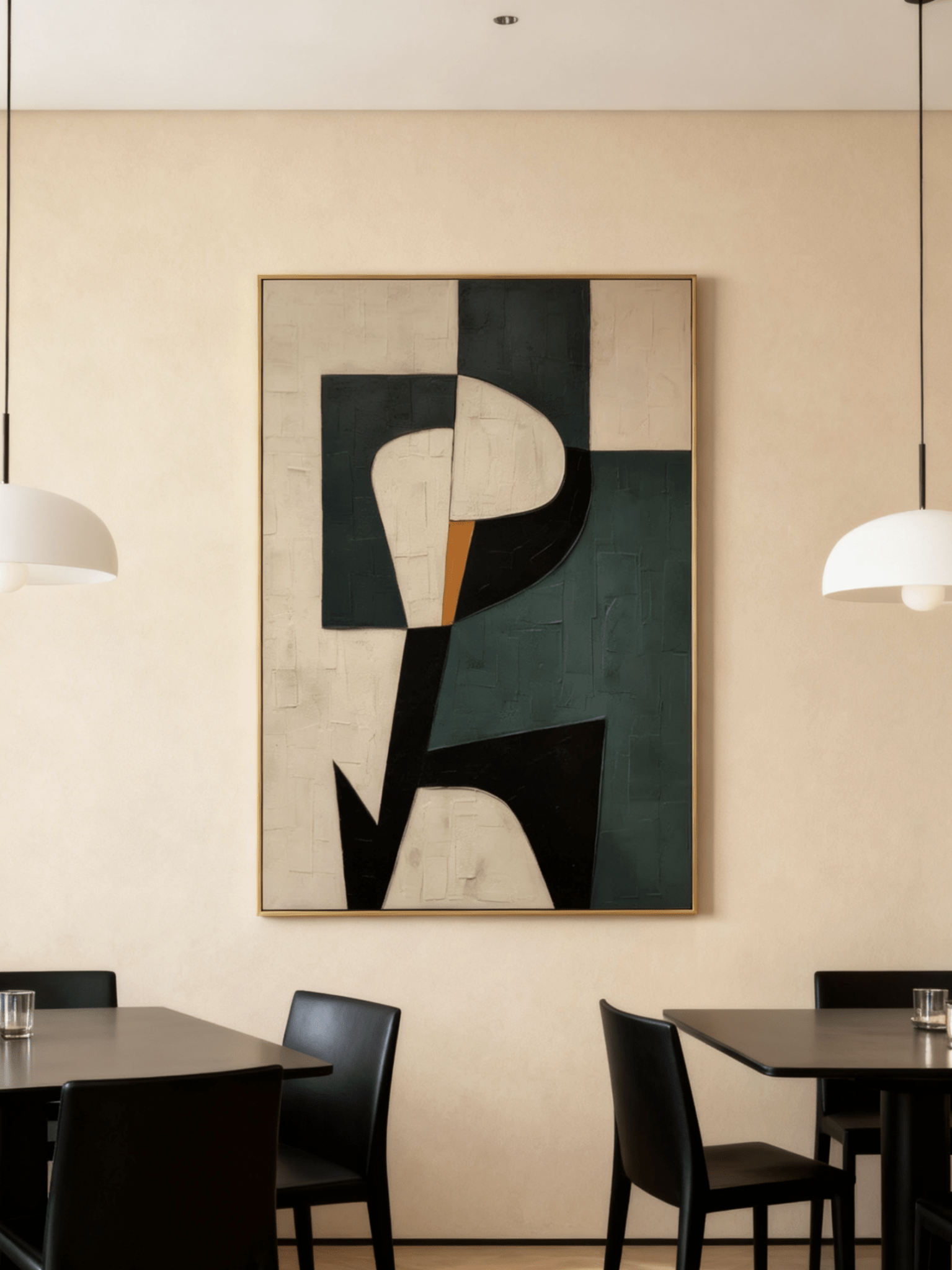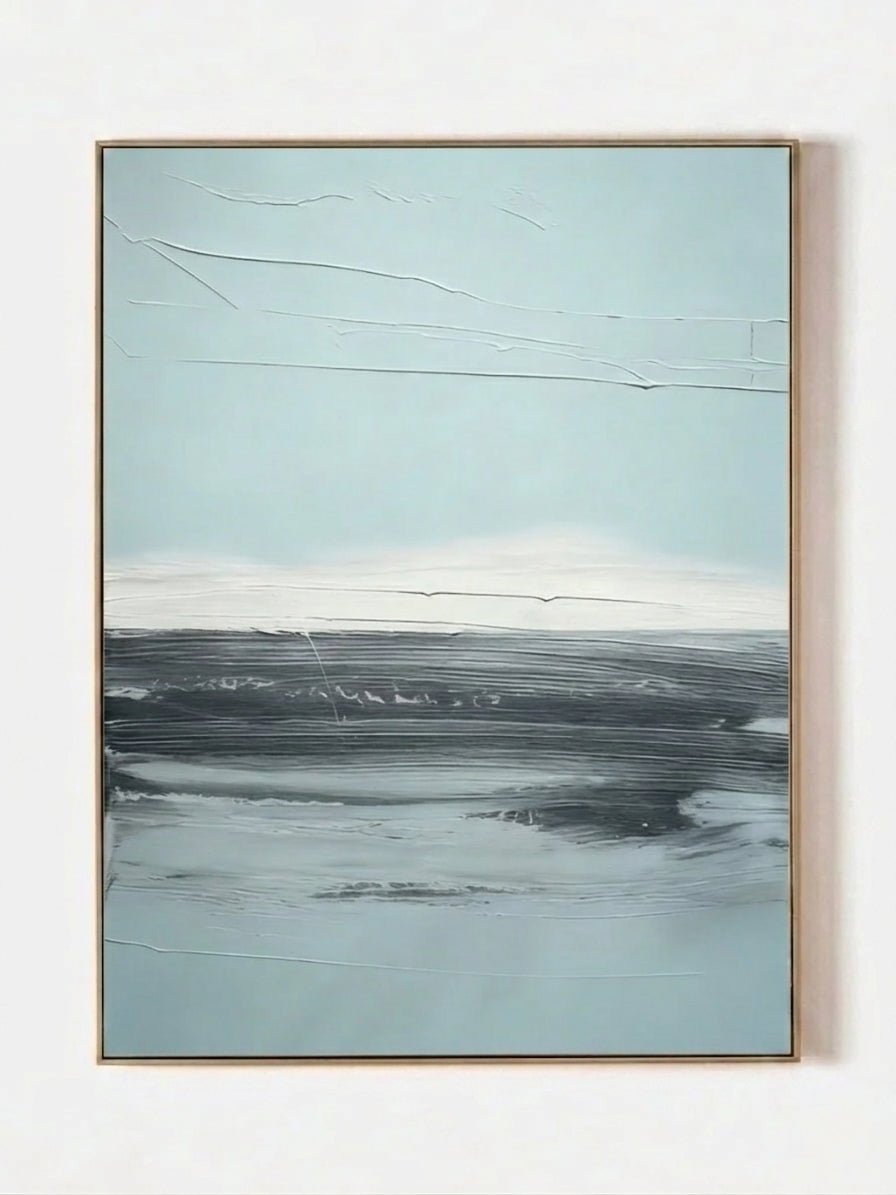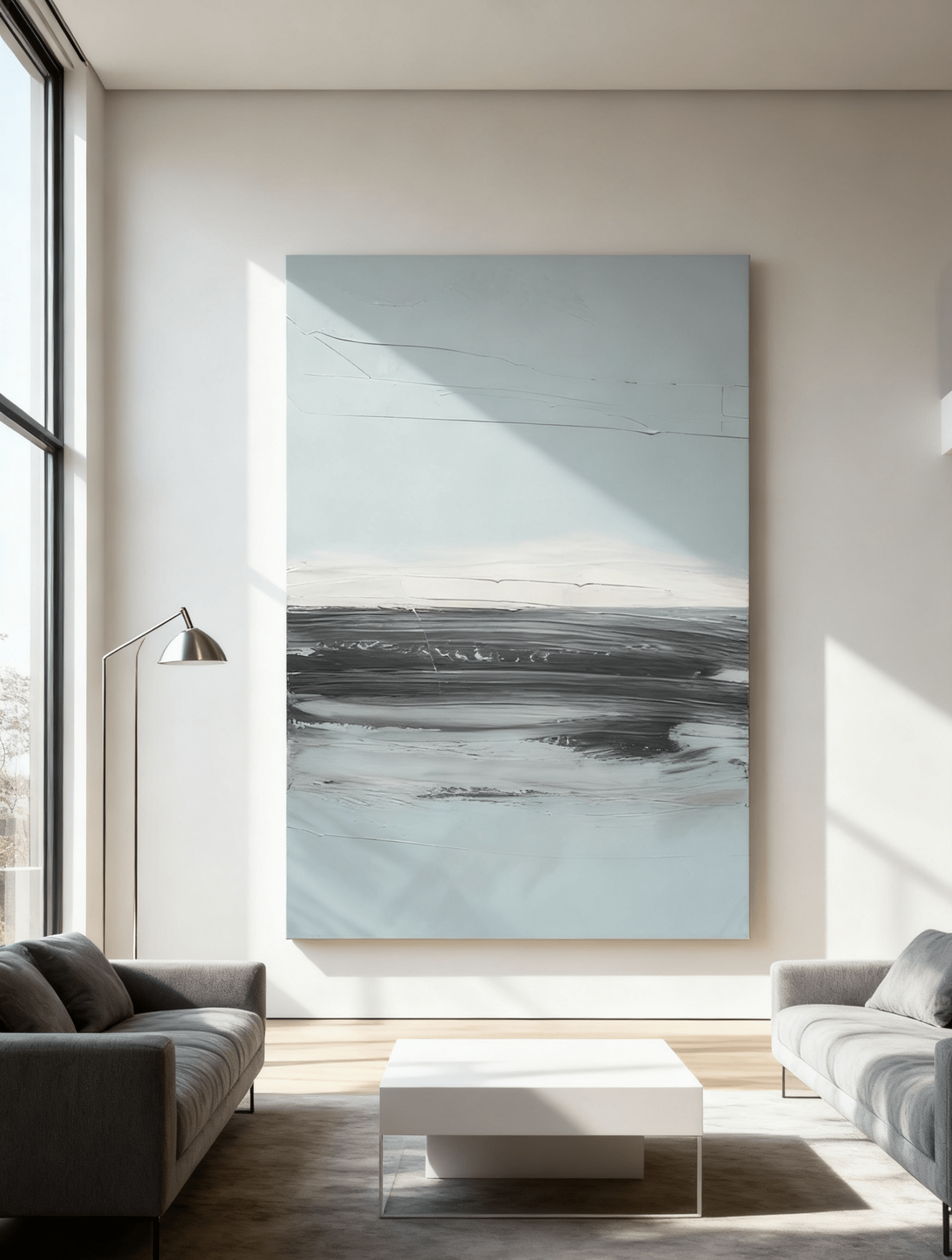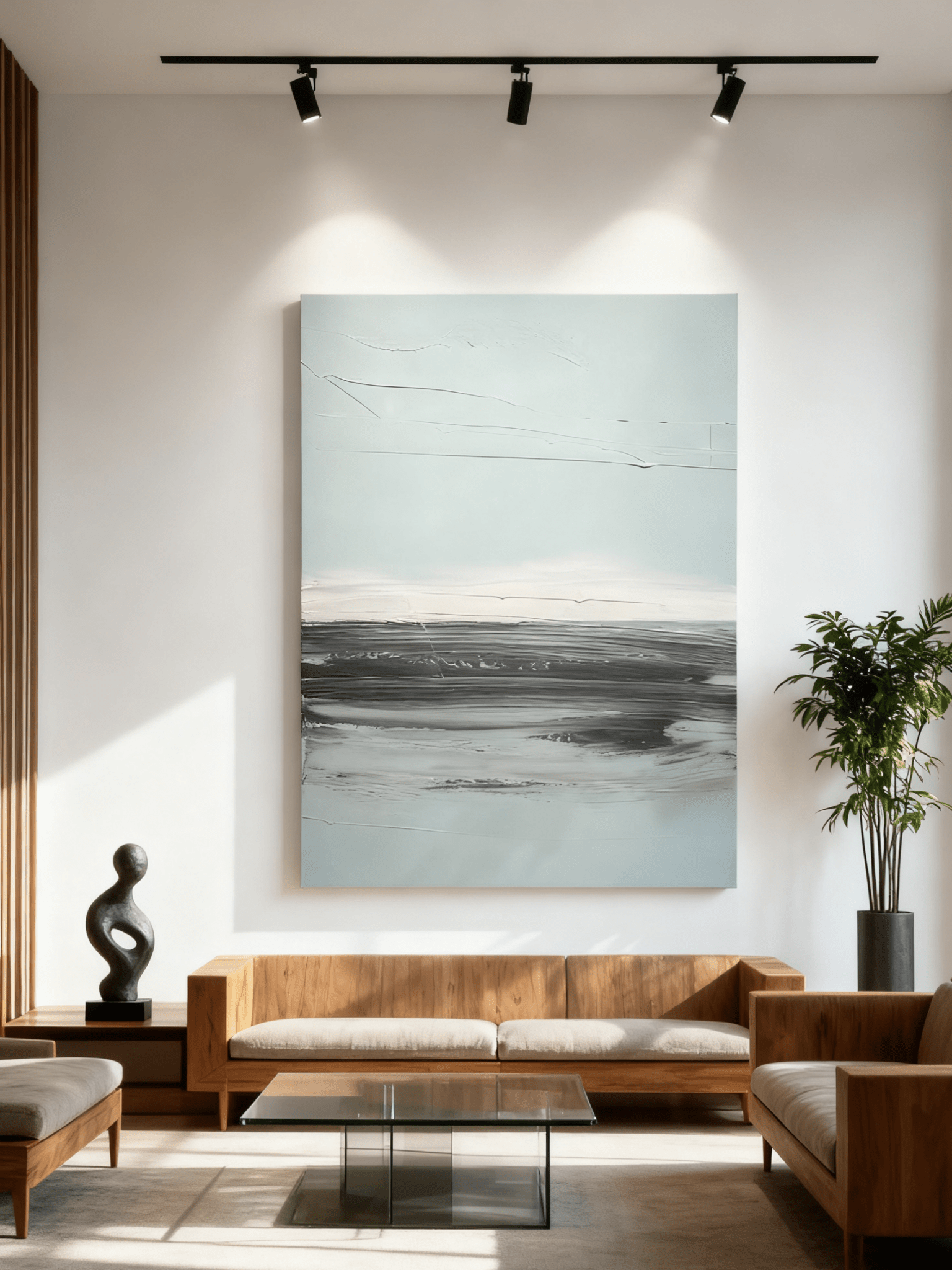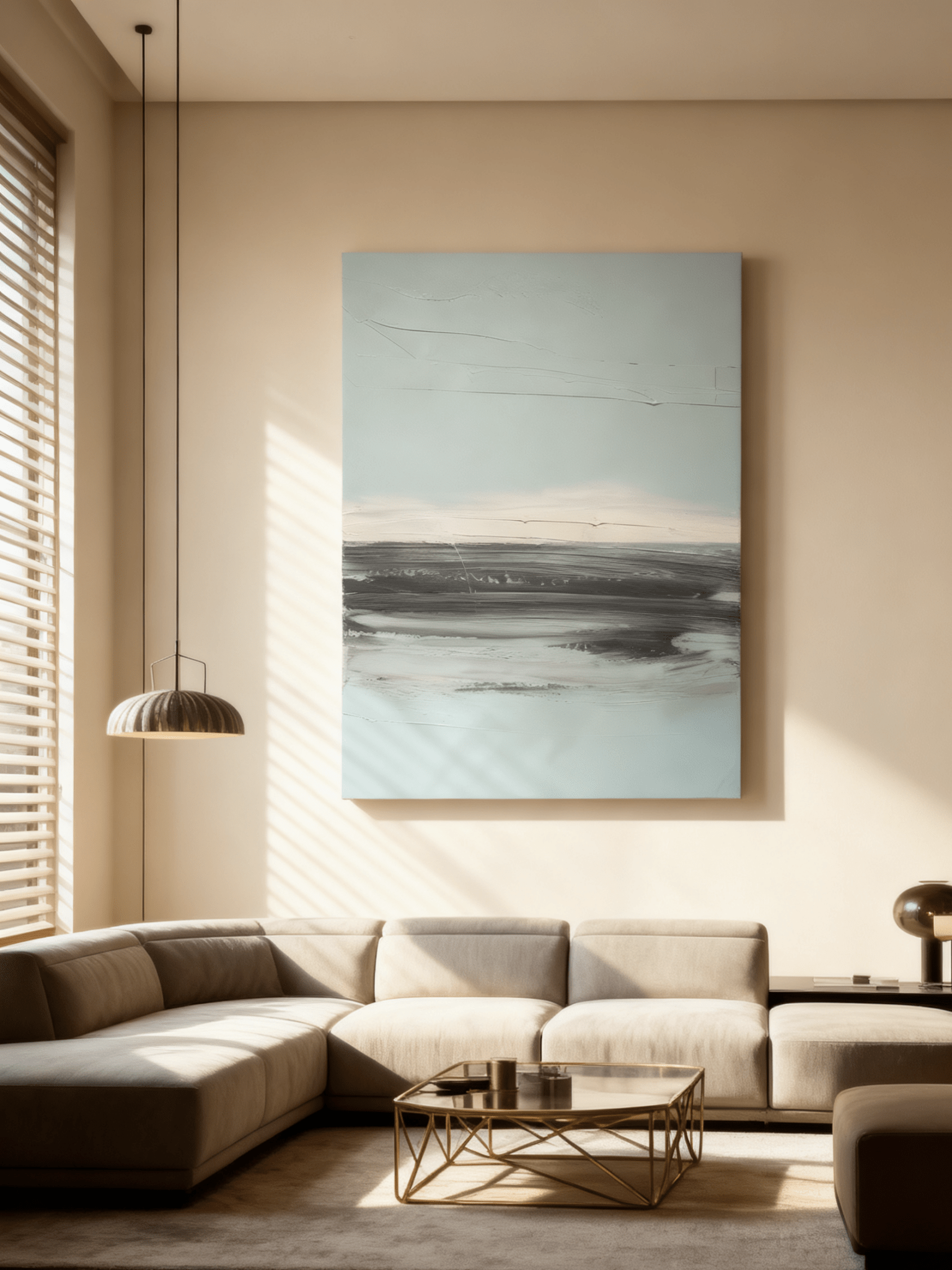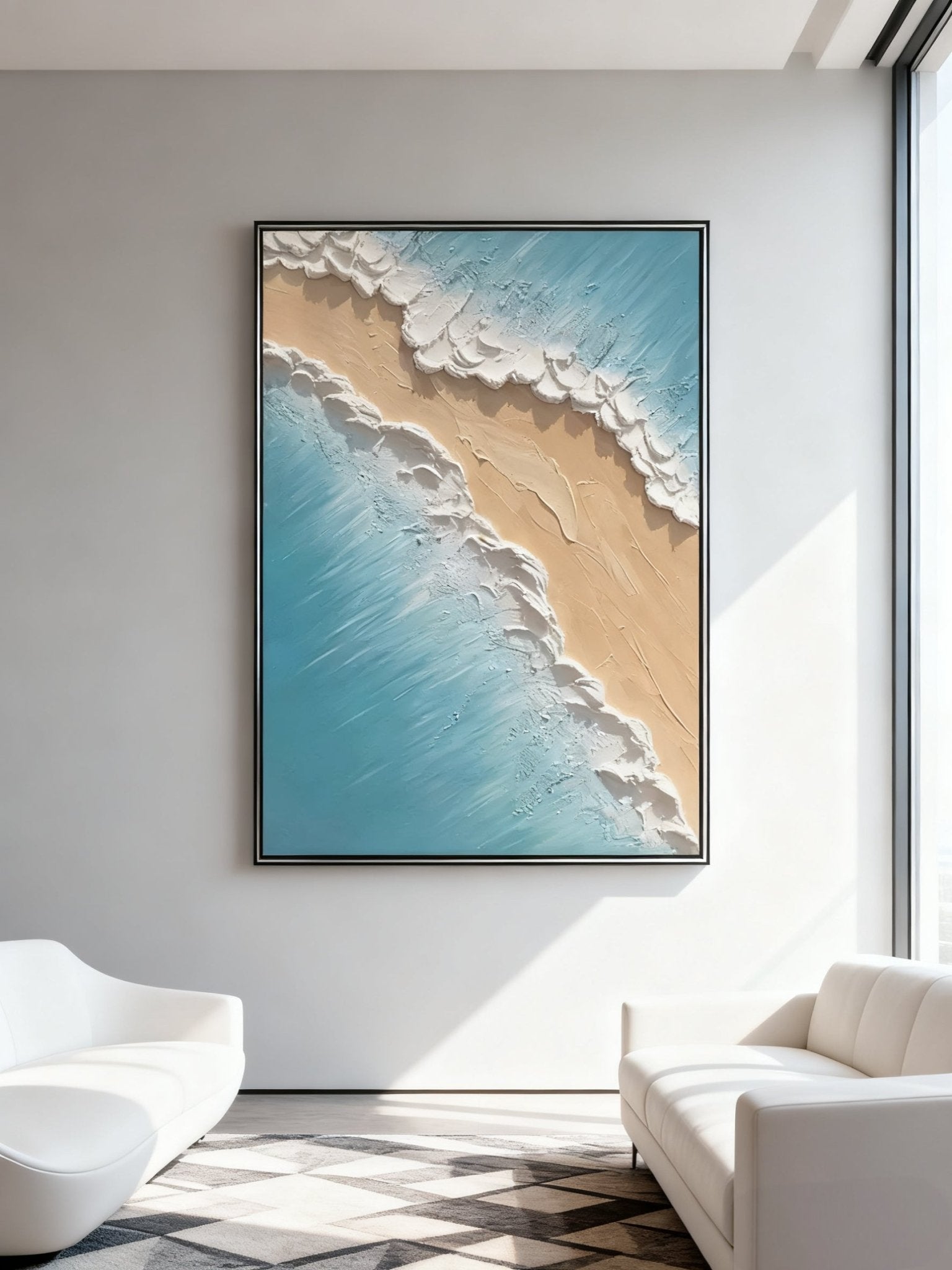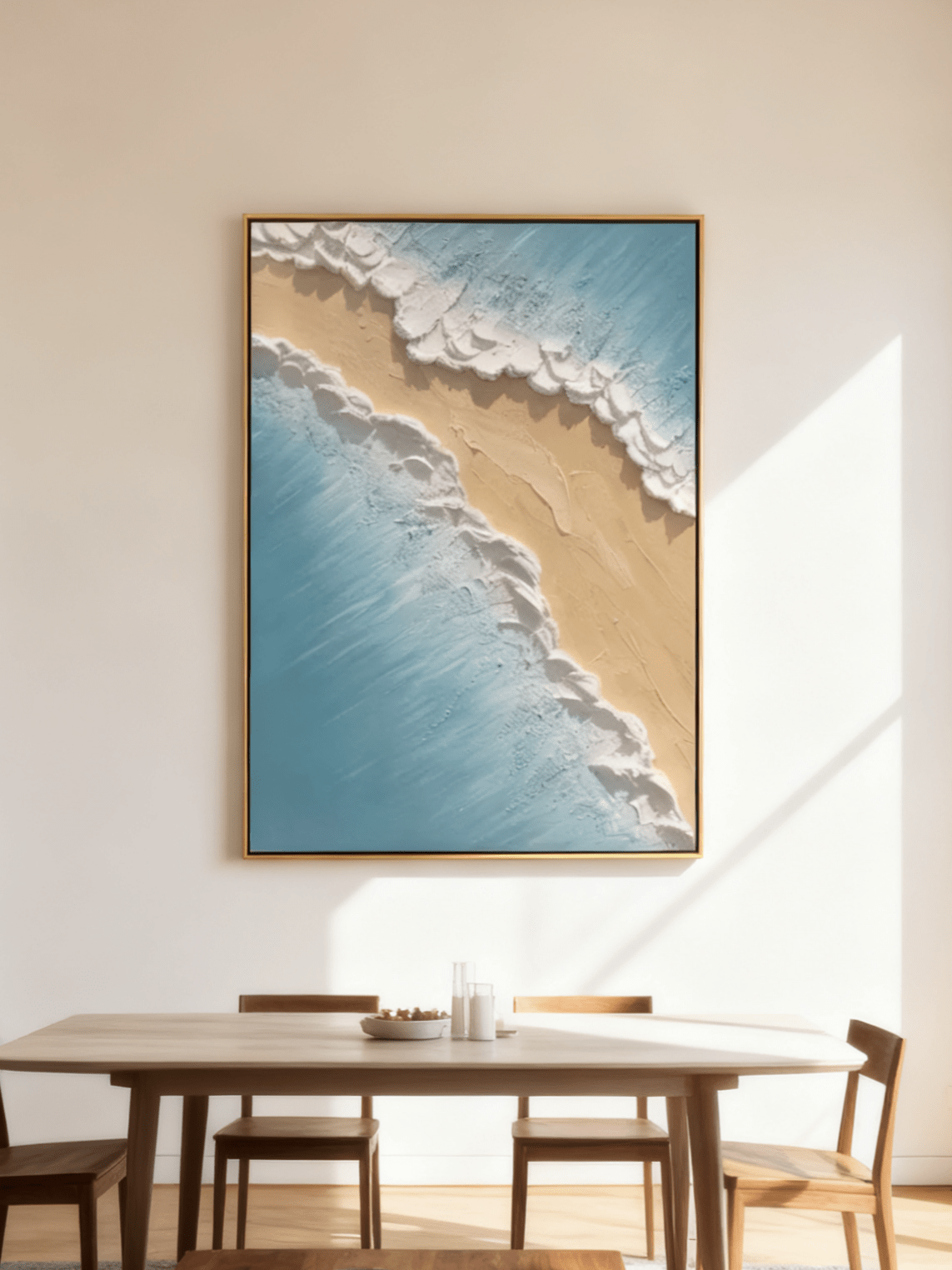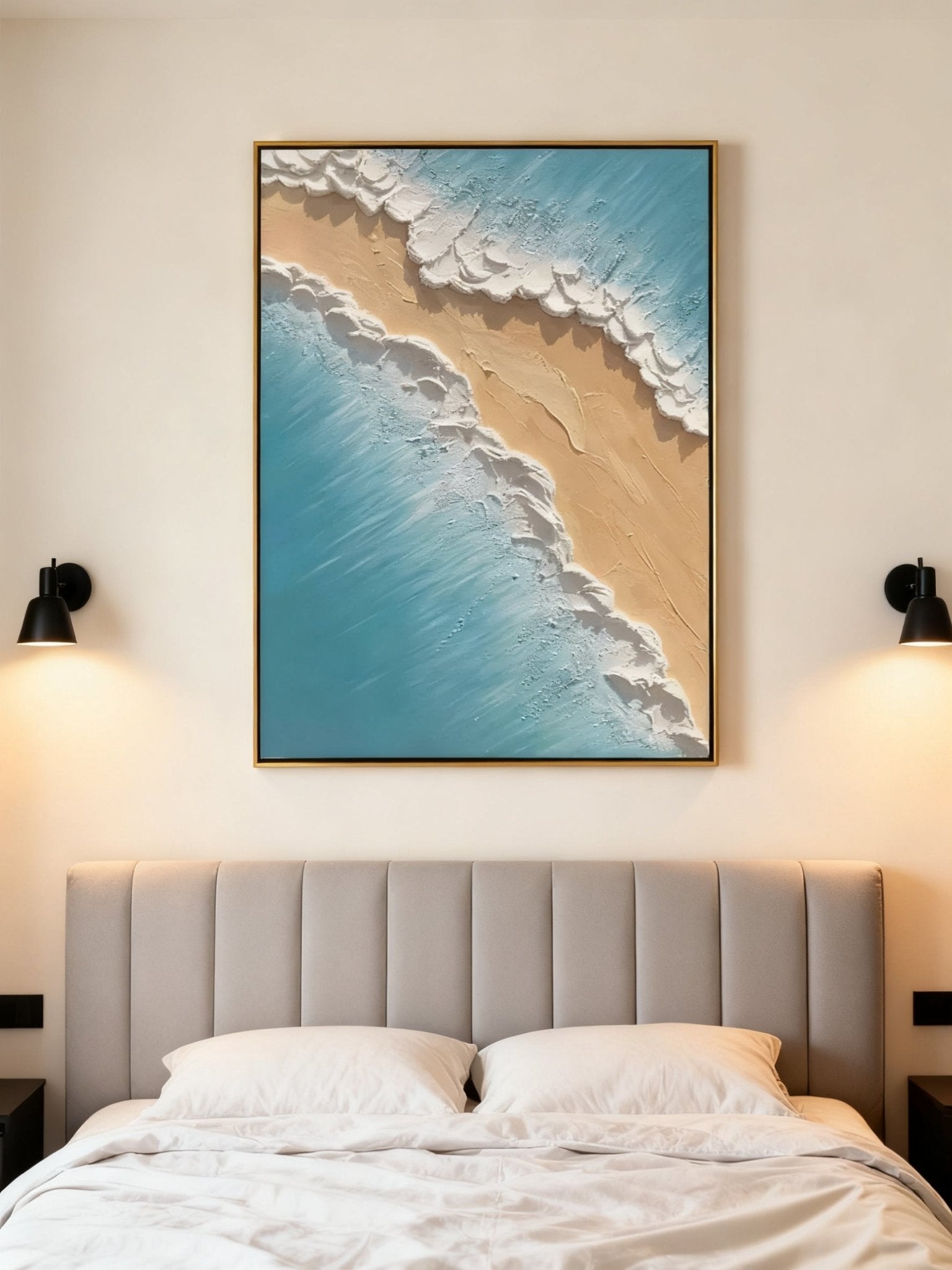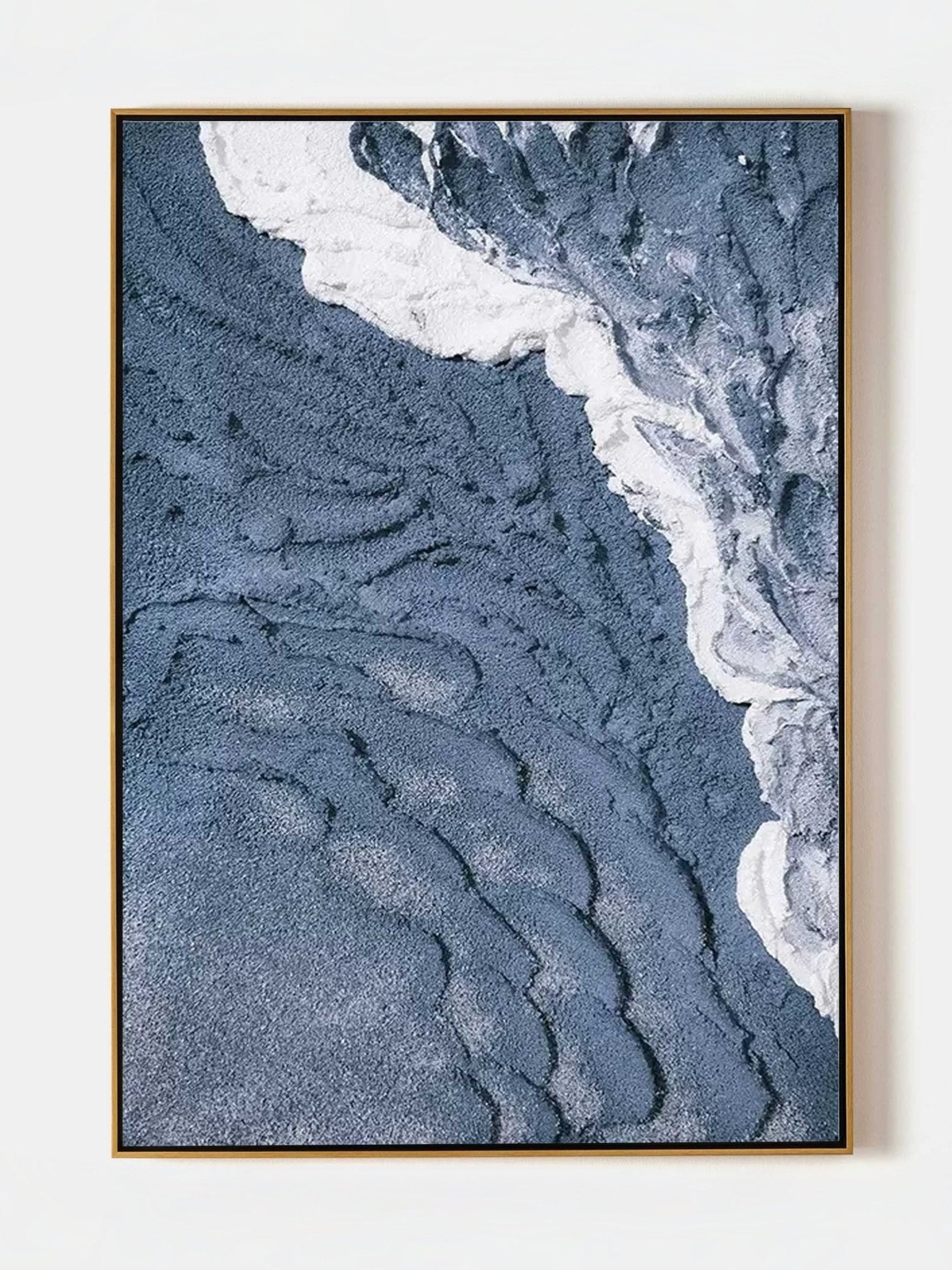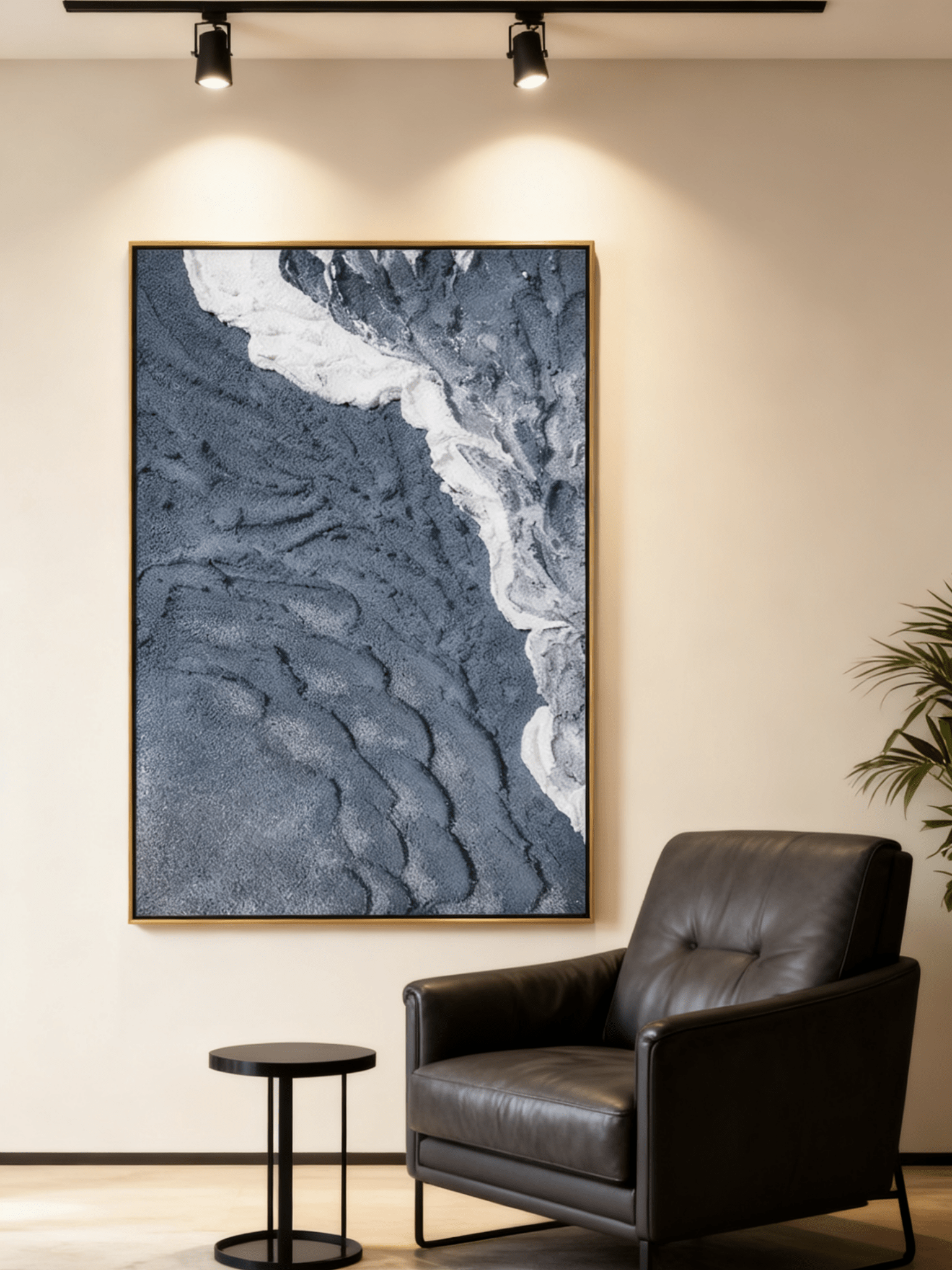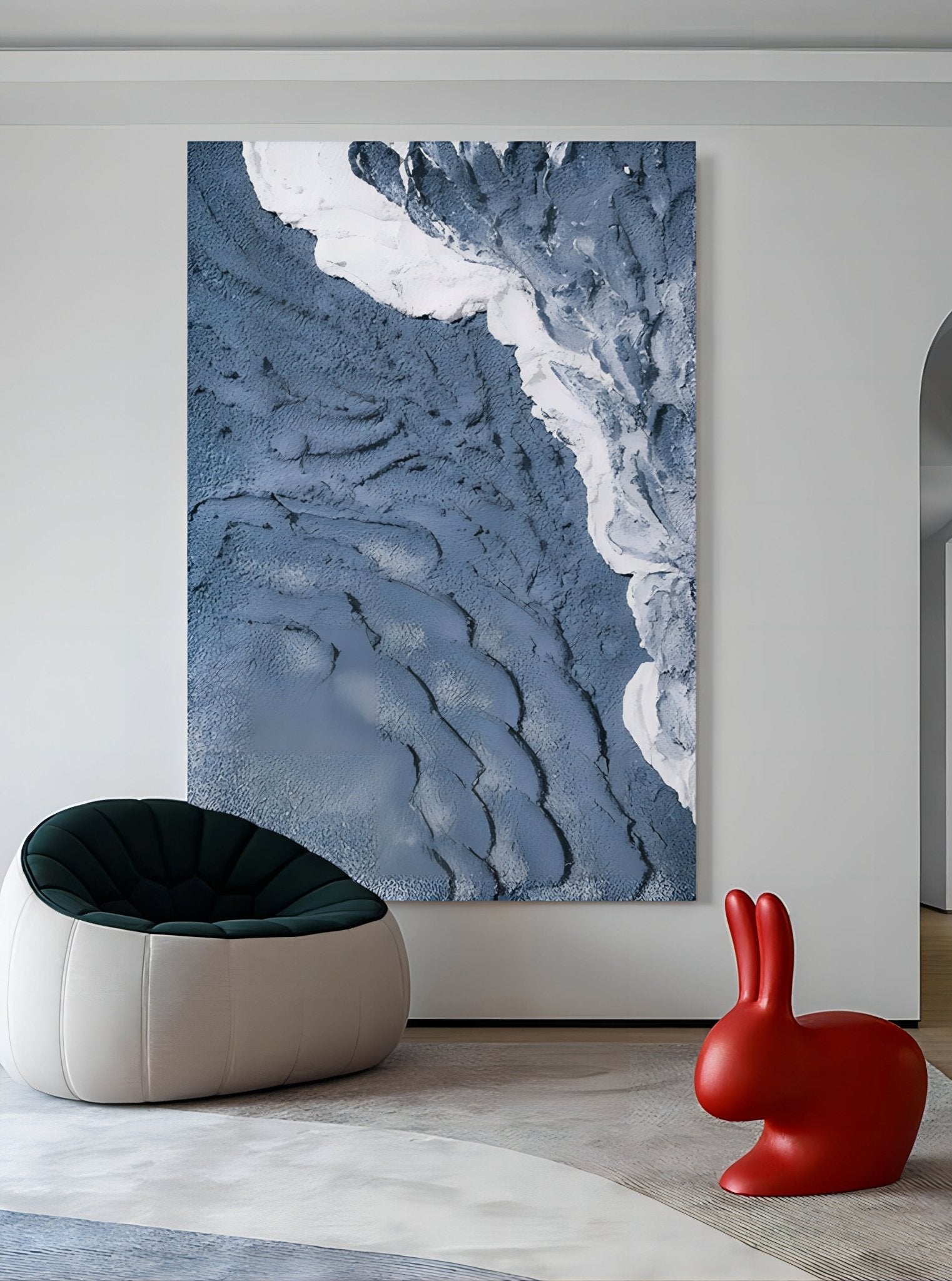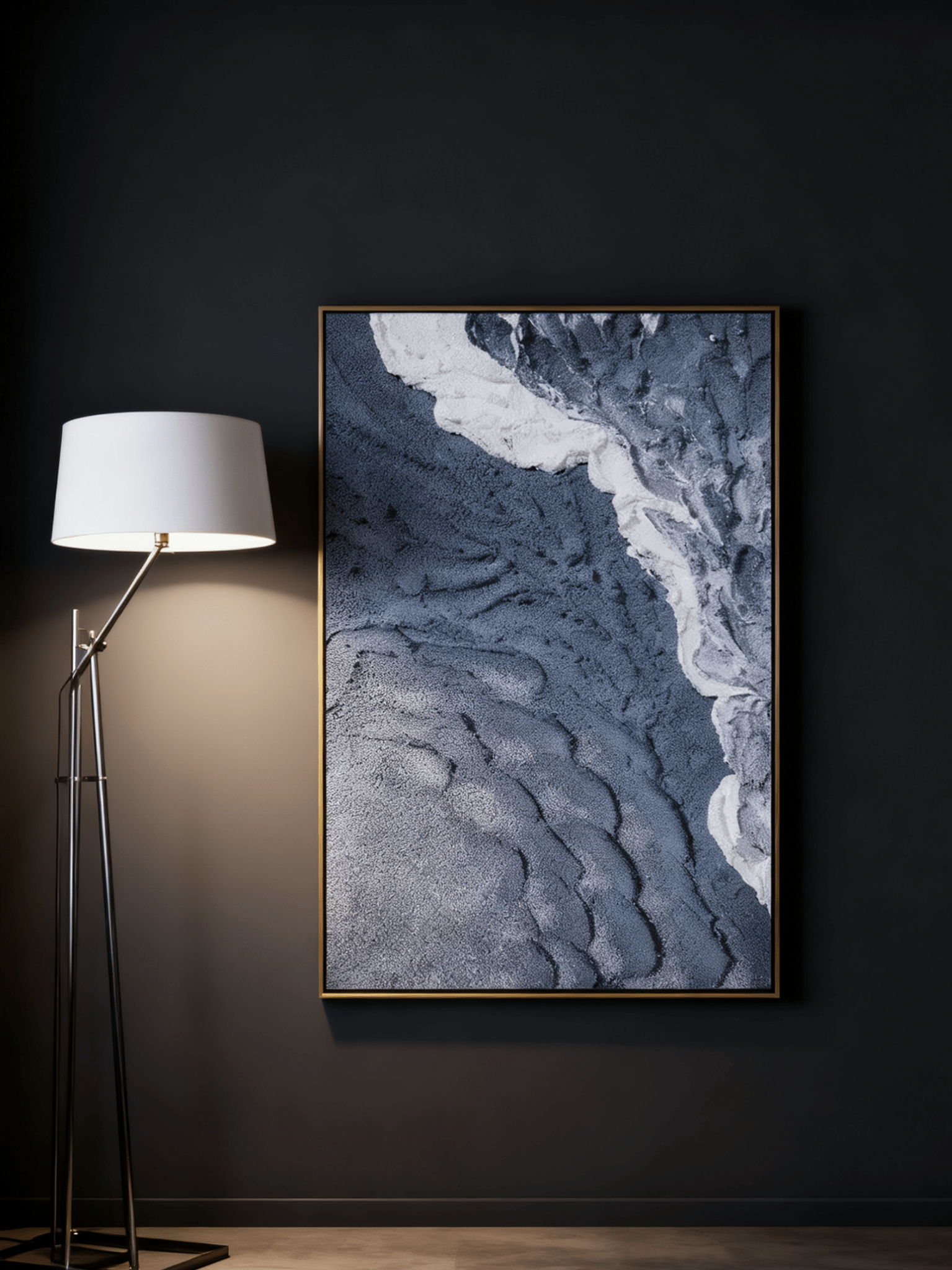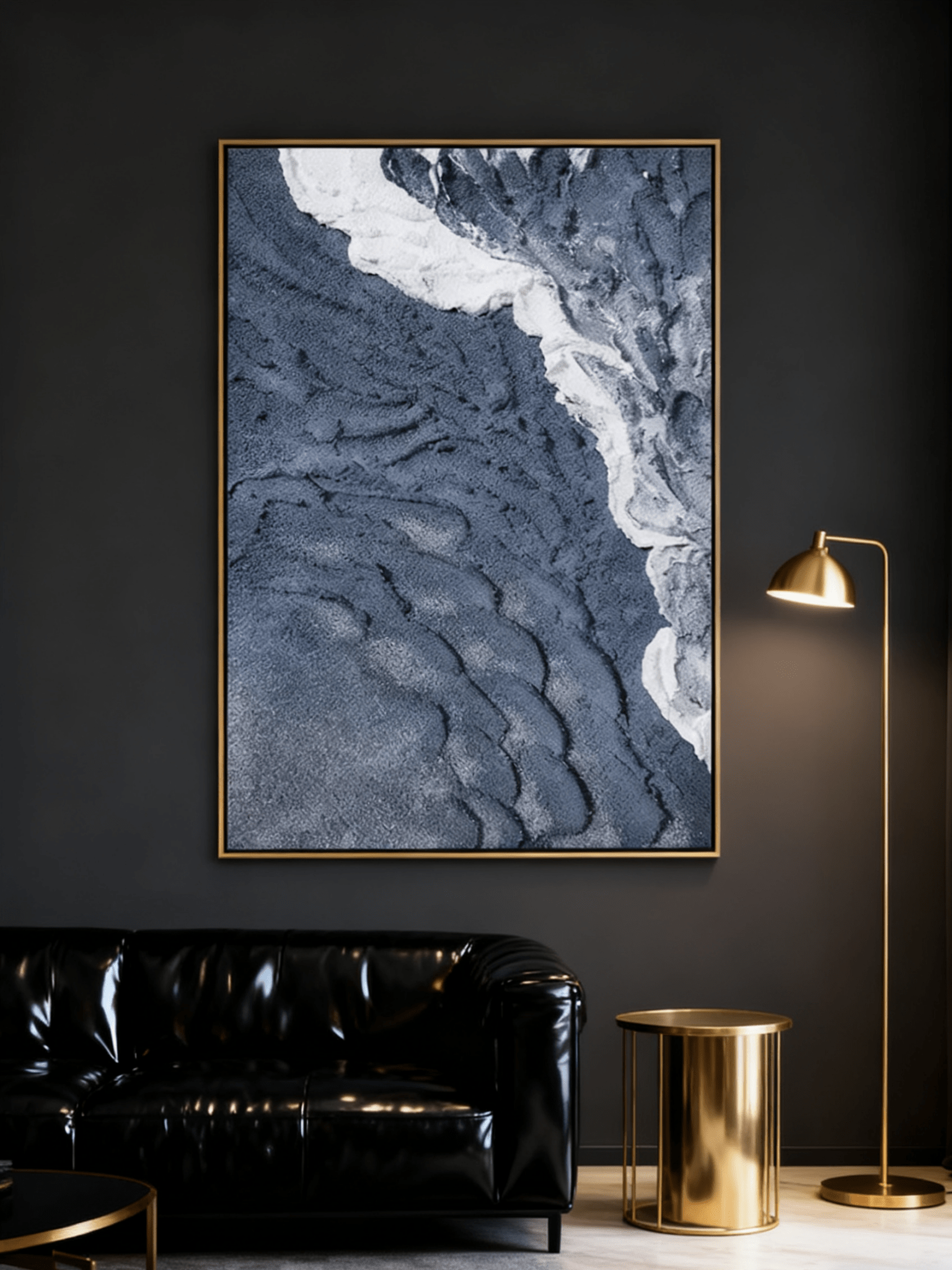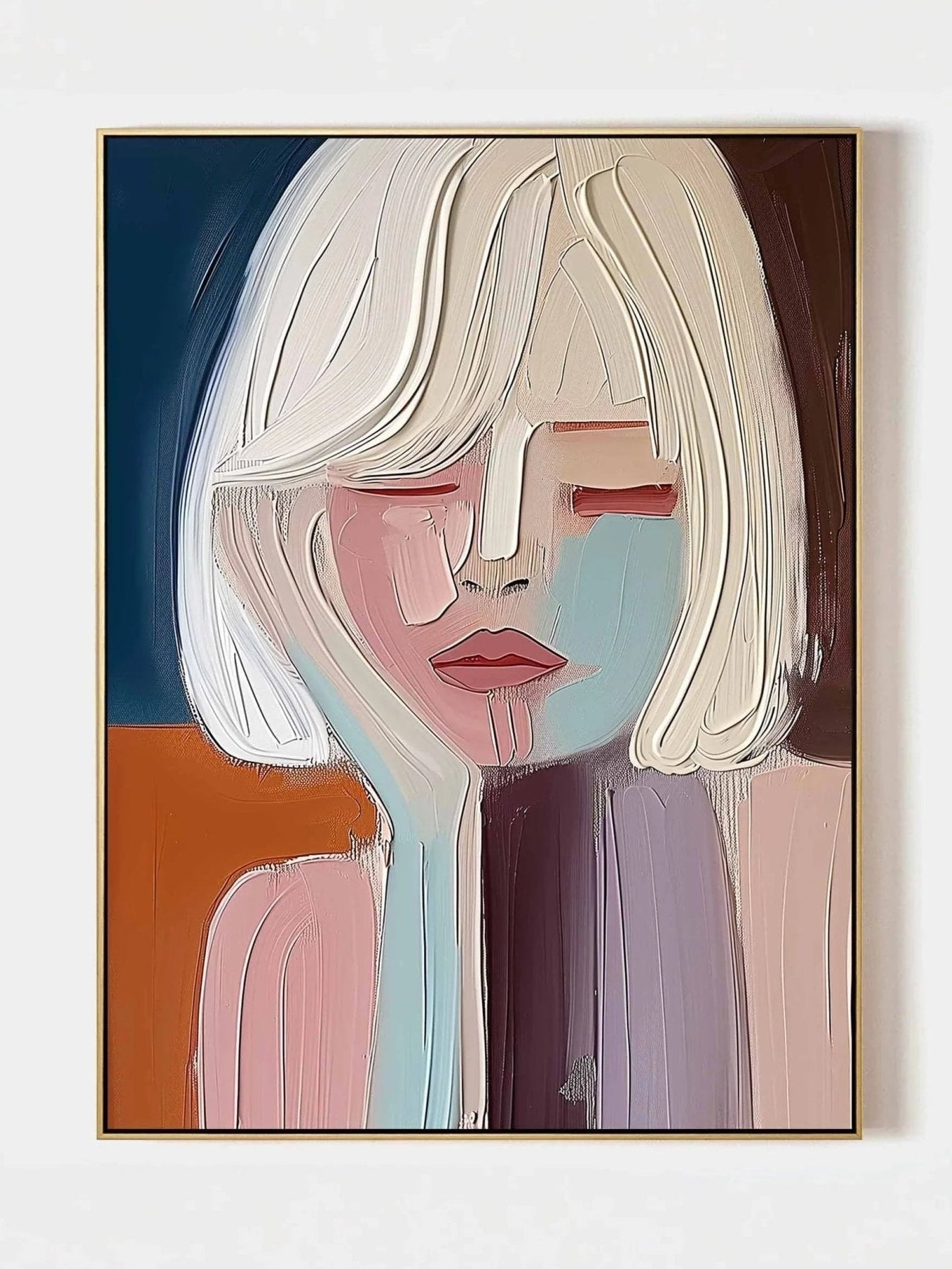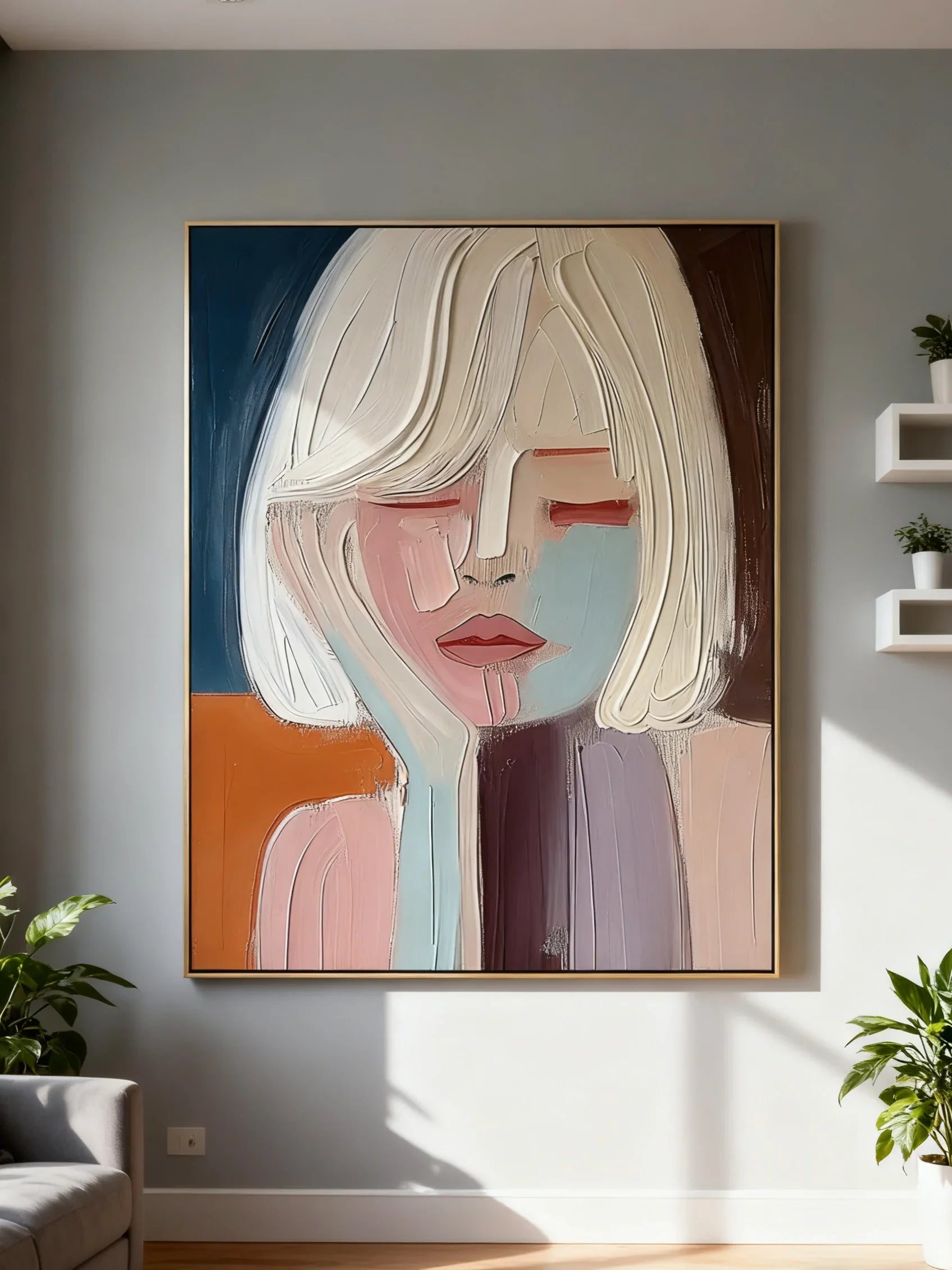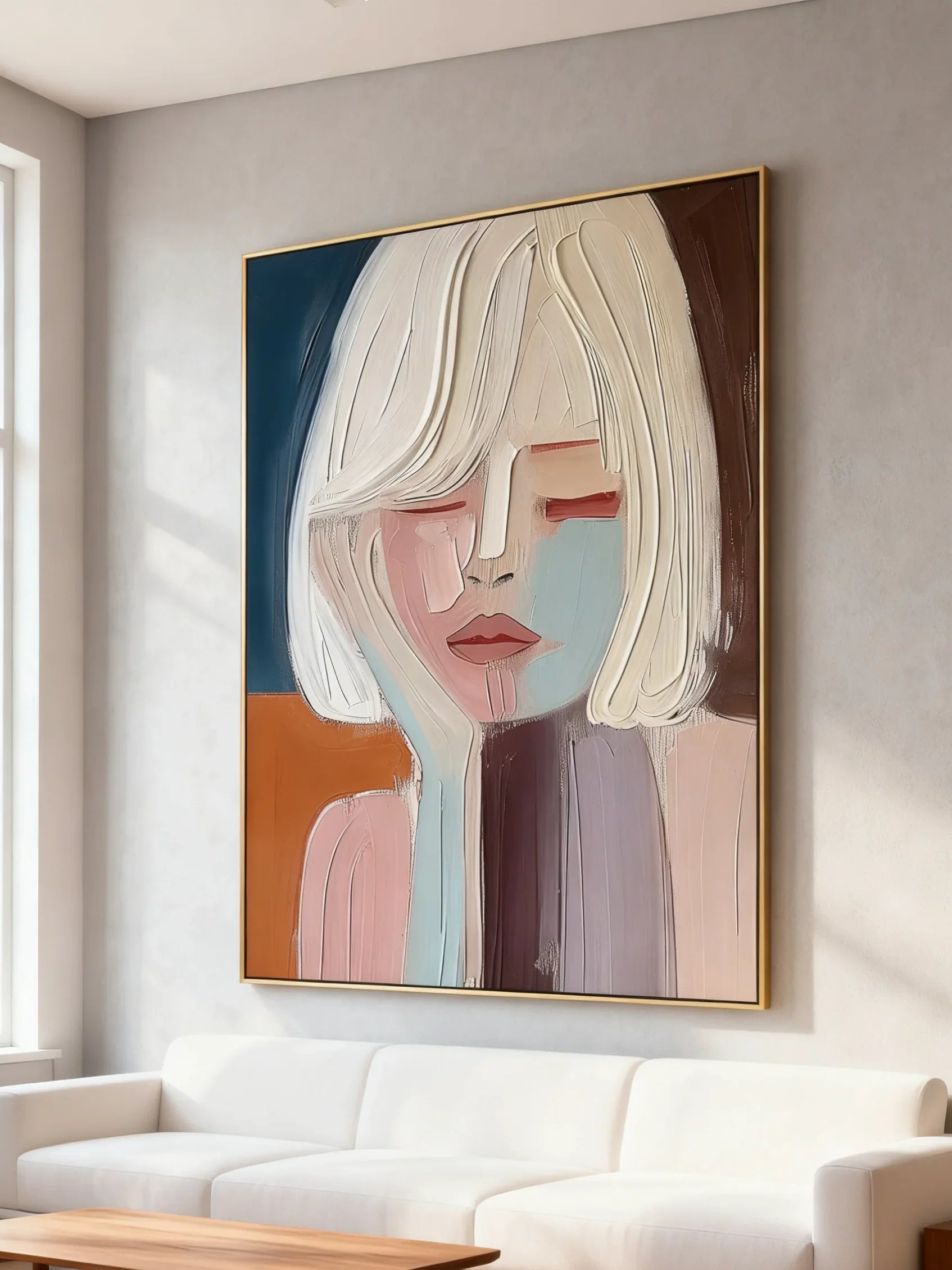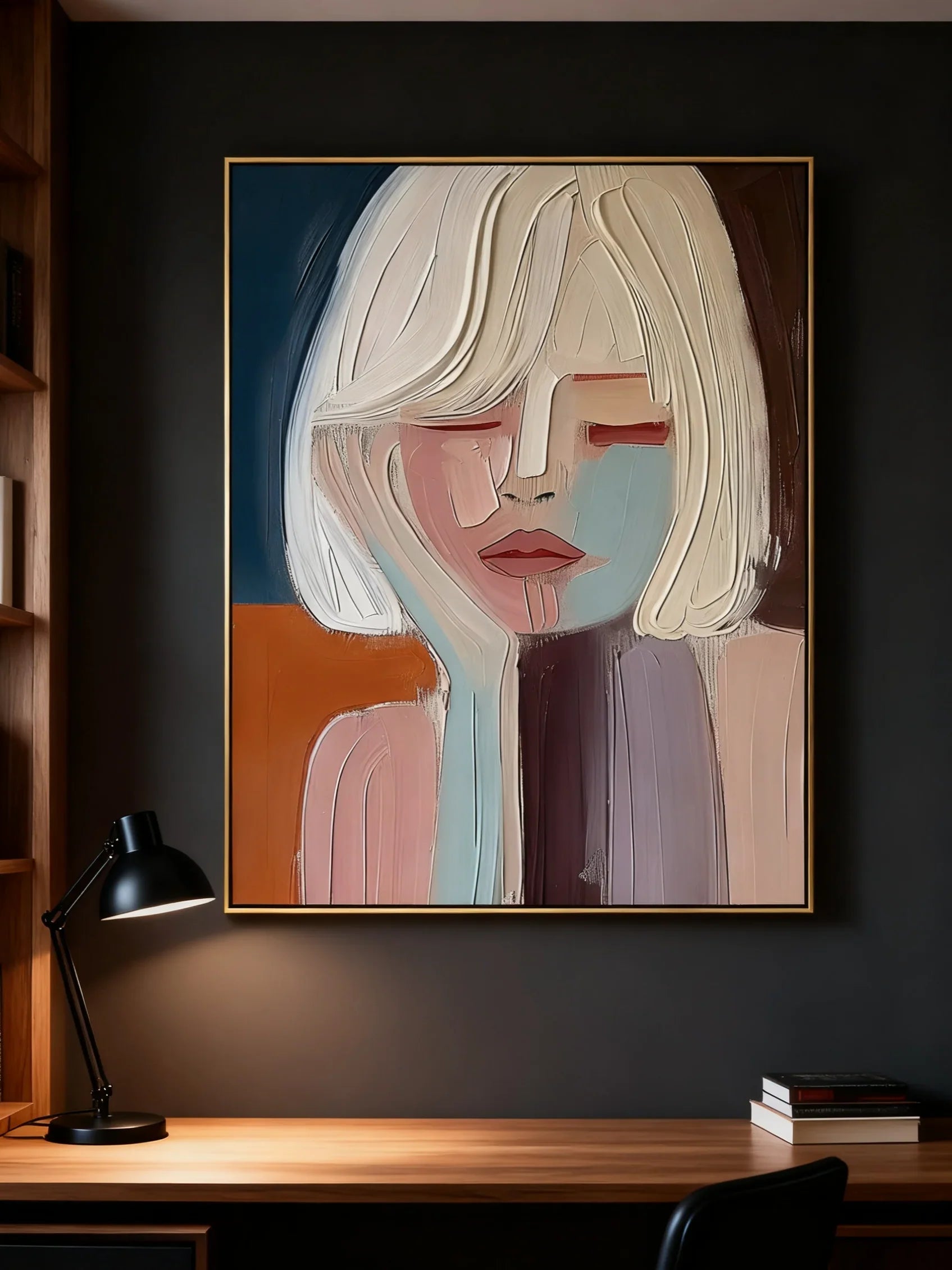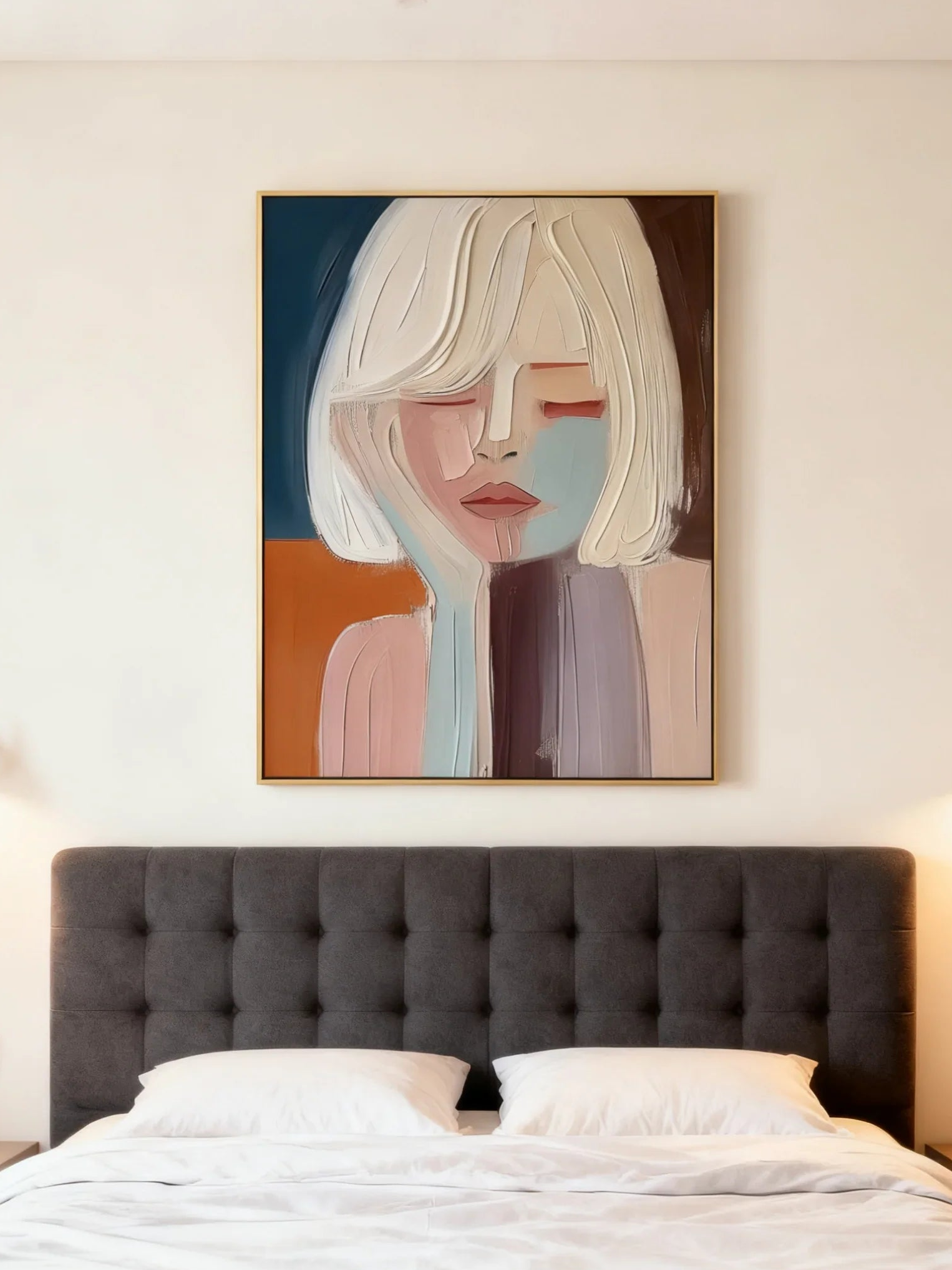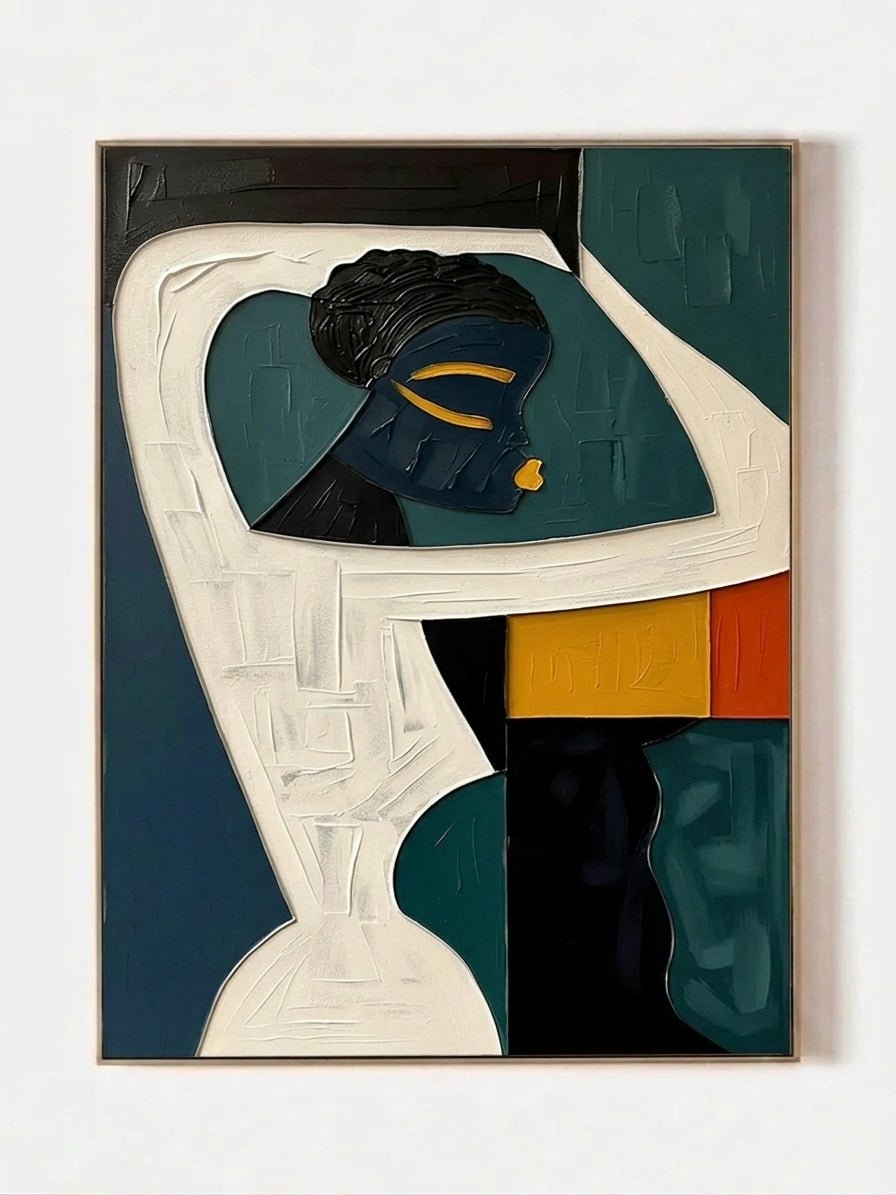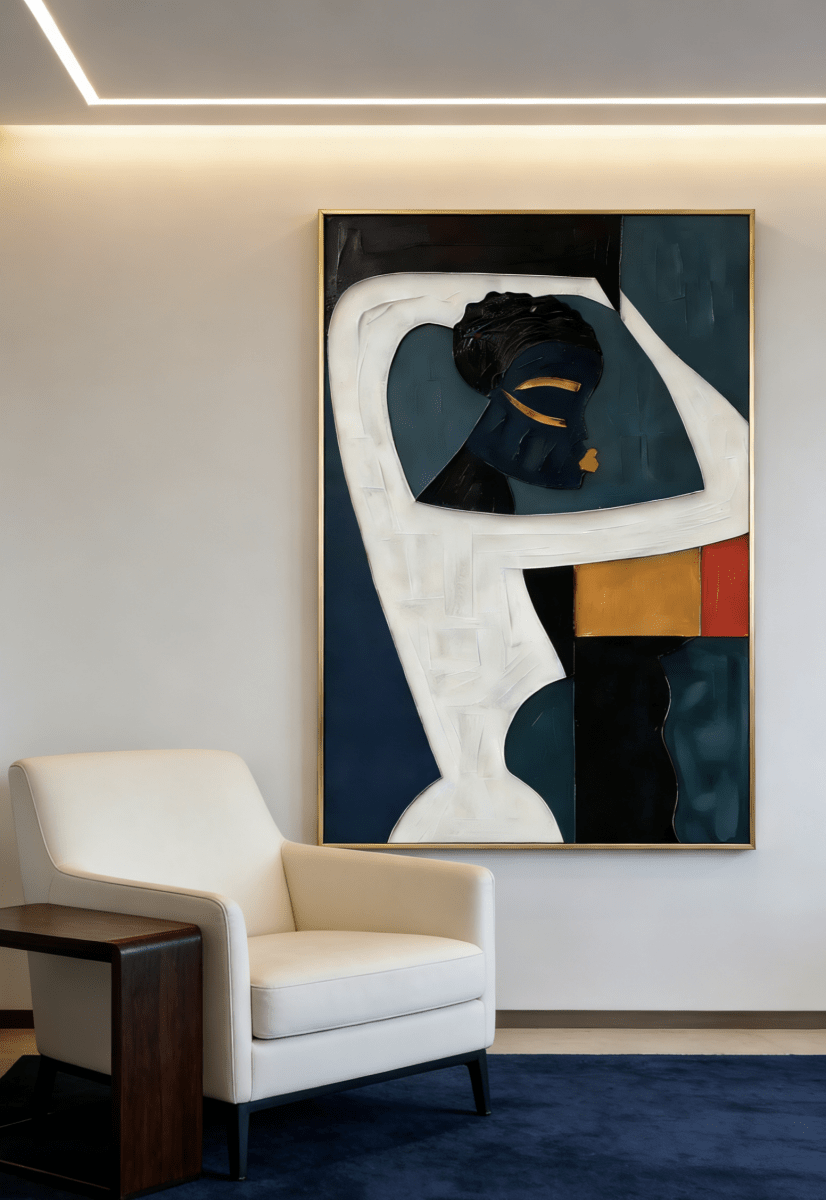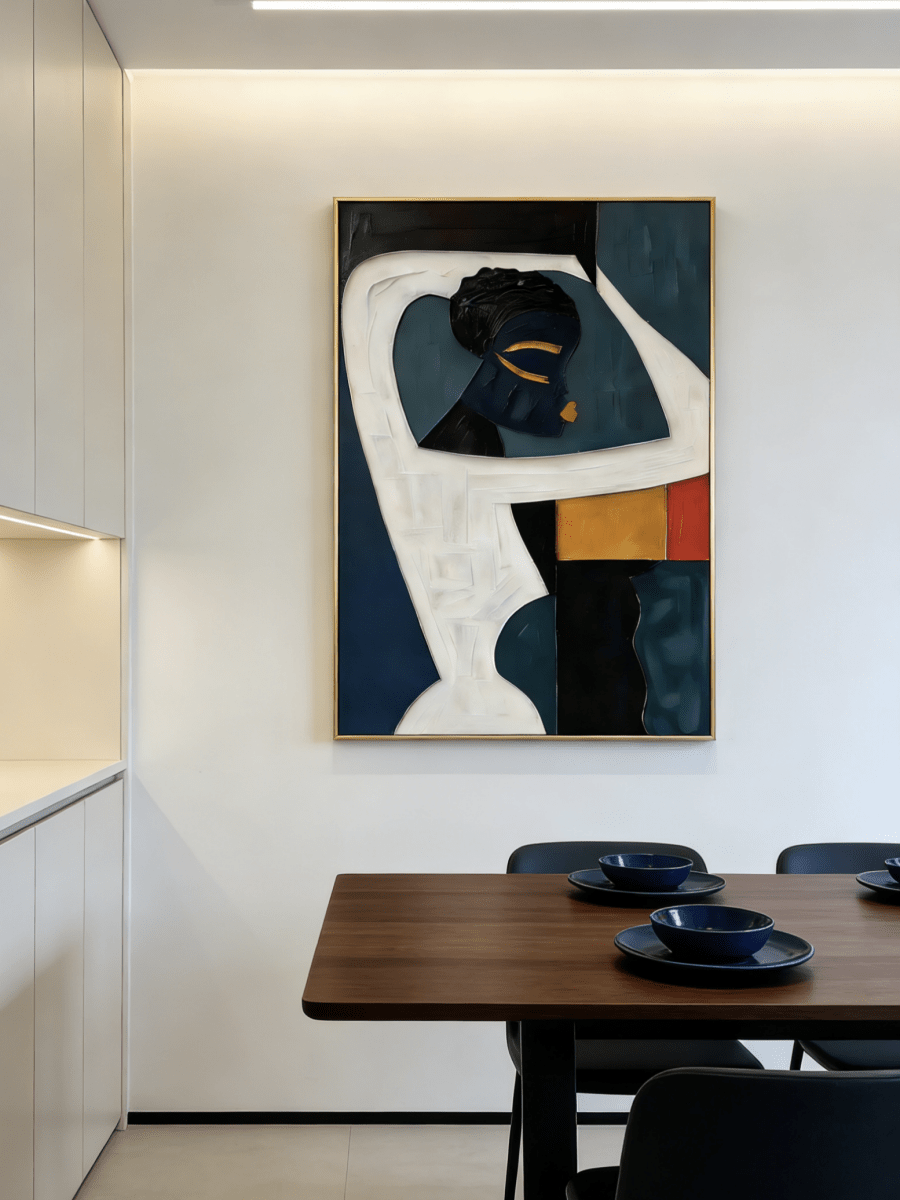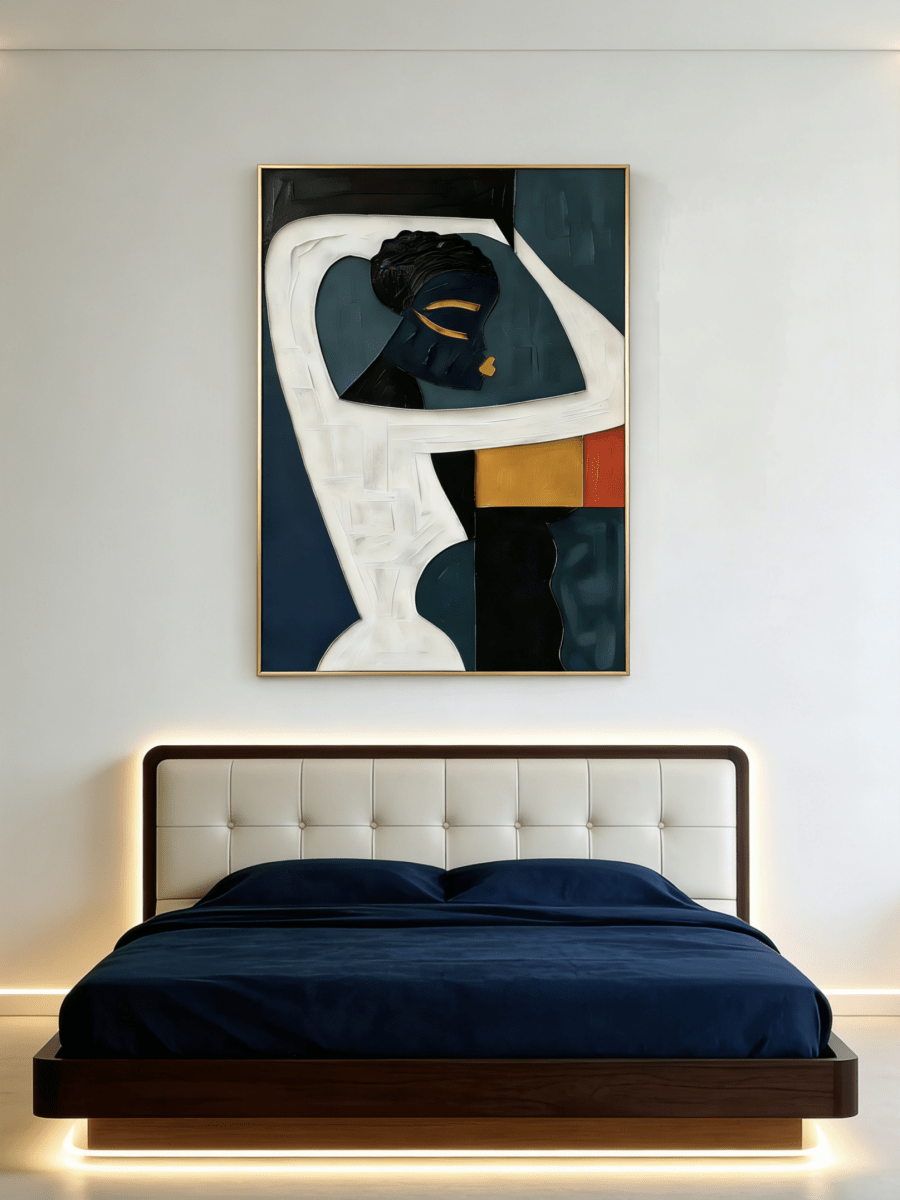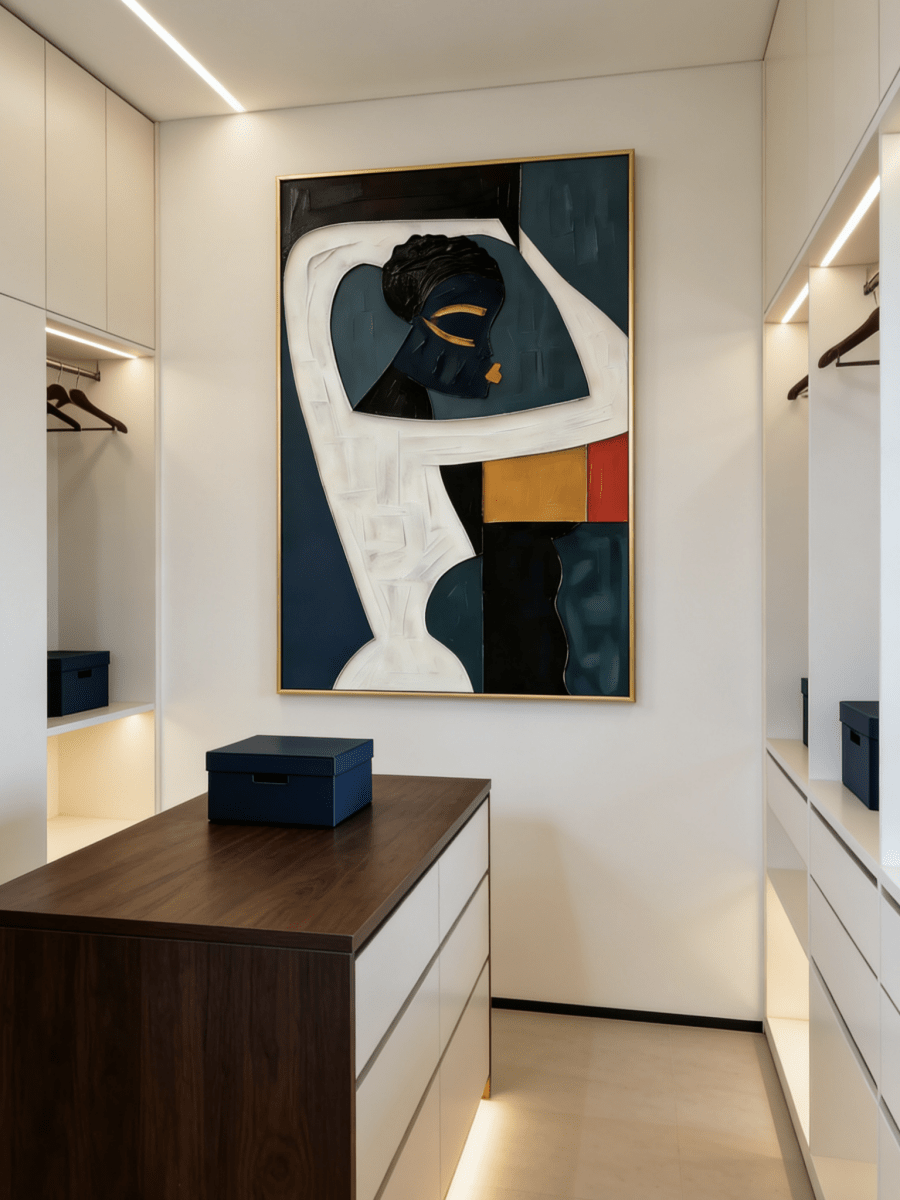

A photograph of textured art can be deceptive. On a screen, a raised ridge and a printed shadow may look almost identical. In a room, they behave very differently: real relief catches daylight, throws small shadows, and changes as you walk past it. That difference is often what draws a buyer to plaster wall art—and also what raises practical questions about weight, materials, cracking, cleaning, and placement.
This guide is written for people considering a finished artwork, not for DIY projects. It explains what the term means in the wall-art market, how plaster-based and acrylic texture materials differ, when a textured work can be made on canvas, and what sensible care looks like. It also covers sizing and interior style so you can judge whether a piece is right for your home before you order. If you already know you want genuine surface depth, you can explore handmade plaster wall art and textured paintings while using the questions below as a buying checklist.

What Is Plaster Wall Art?
Plaster wall art is artwork whose surface is built into physical relief rather than represented only by a flat image. Artists shape a plaster-based compound, modeling paste, acrylic texture medium, or a compatible mixed-media system into ridges, planes, grooves, waves, and sculptural forms. Once cured, the raised surface may be left mineral-white, tinted, painted, glazed, or combined with other hand-applied color.
The phrase is an umbrella term, not a promise that every artwork uses the same formula. One plaster art painting may contain a mineral plaster blend; another may use an acrylic-bound modeling compound selected for adhesion and flexibility; a third may combine several materials. A trustworthy product description should identify the work as physically textured and should not imply that every “plaster look” uses an identical recipe.
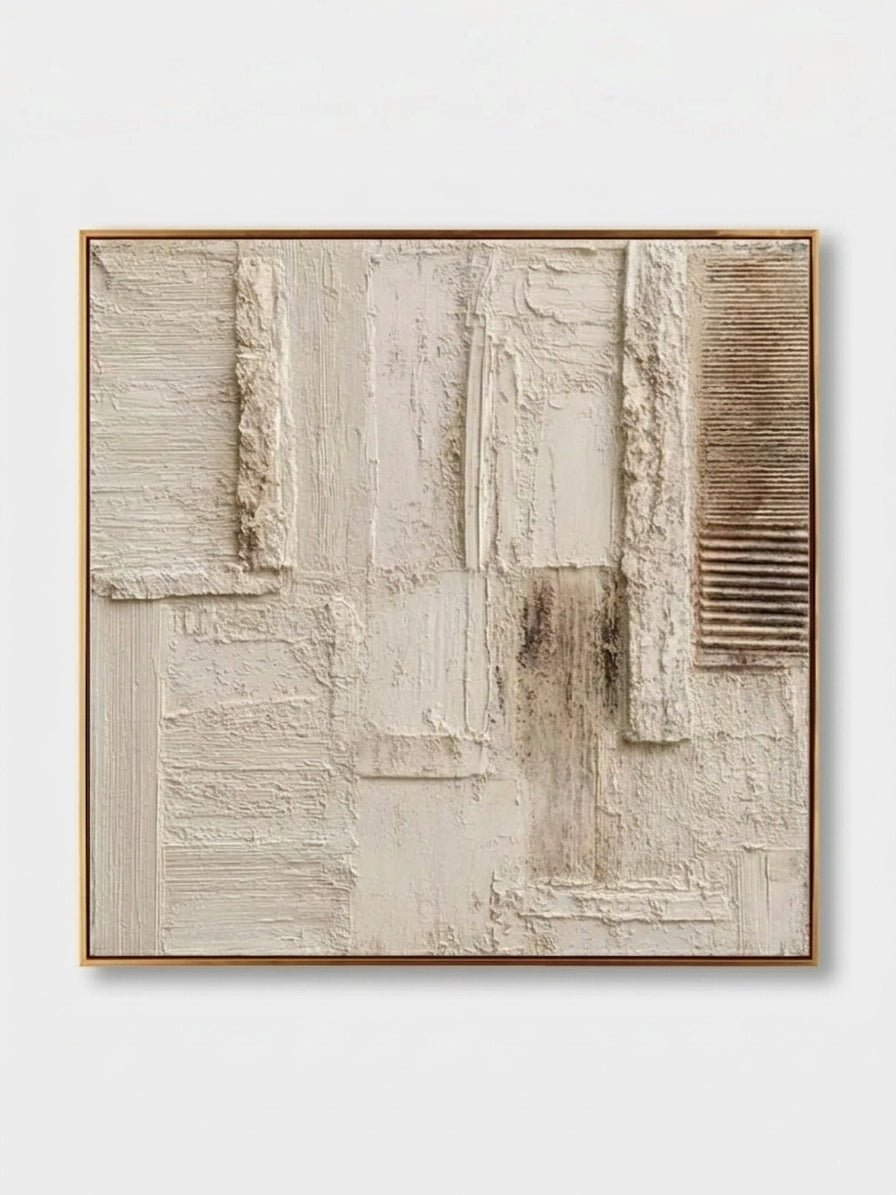
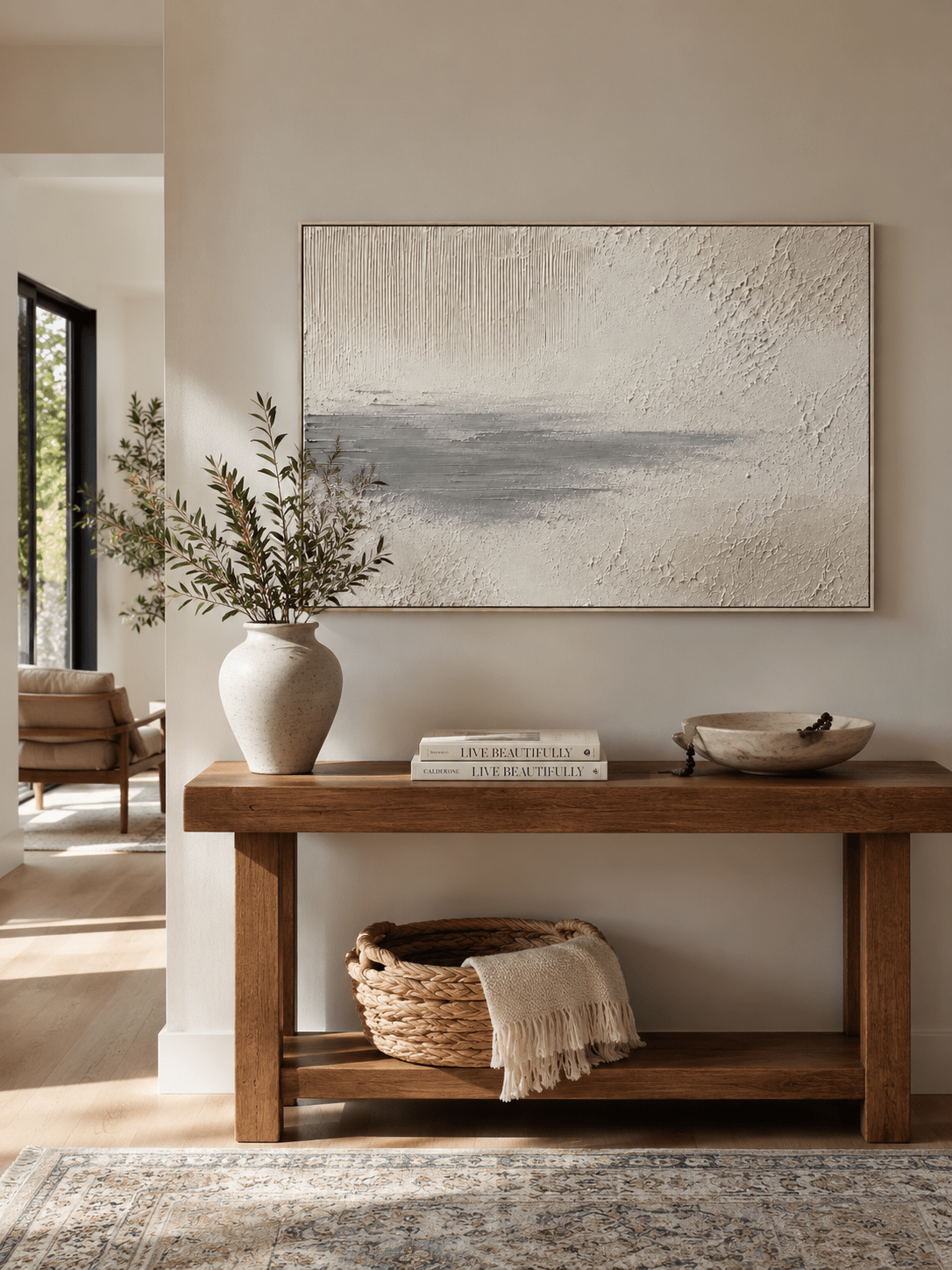
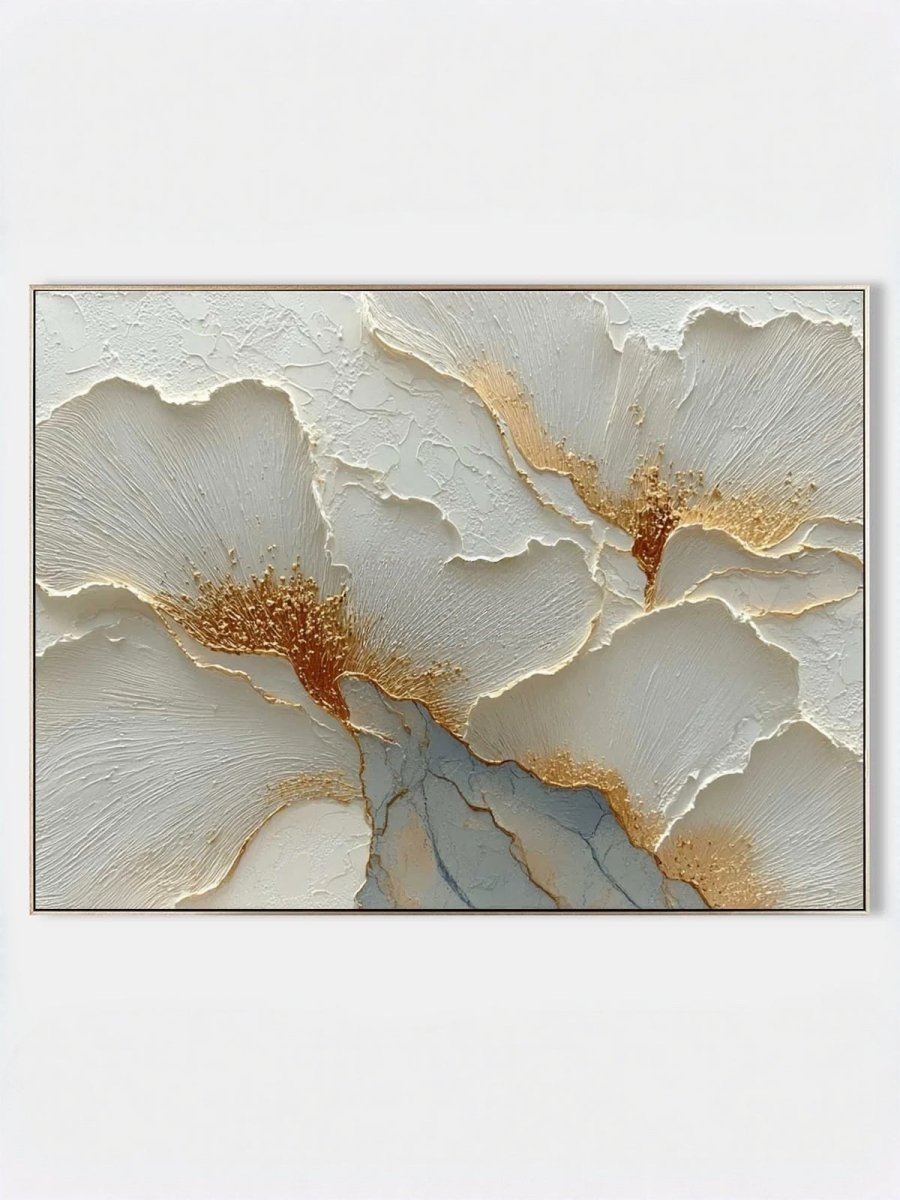
What matters to a buyer is the presence of a genuinely raised surface. In real plaster art texture painting, highlights belong to the high points and shadows fall into the low points. Those relationships change with the direction of the room’s light. A printed canvas can reproduce a photograph of those highlights and shadows, but they remain fixed in the ink and flat to the touch.
That sculptural response is central to the appeal of the medium. Viewed straight on, a restrained cream composition may look quiet. From the side, the same work reveals edges, depressions, and tool marks. The effect gives a neutral room depth without requiring a busy palette. WABI Wall Art’s Textured Wall Art collection includes physically layered, hand-painted works that can be evaluated for both composition and surface.
What Materials Are Used in Plaster Wall Art?
“Plaster” can describe the visual family as well as a specific ingredient. Because artists formulate texture differently, ask about the actual construction of the piece you are considering—especially the support, surface medium, finish, and whether the artwork should remain stretched during transport.
Plaster
Traditional plaster materials are mineral-based and cure into a firm, matte surface. Gypsum and related mineral compounds can produce the chalky, stone-like character associated with architectural plaster. Their opacity and body allow an artist to create crisp edges, scraped fields, and substantial relief. Once hardened, the surface can feel visually weighty even when the palette is pale.
Mineral character is only one part of performance. A hard material and a flexible support move differently, so the artist must select a suitable formulation, prepare the support correctly, and control the depth of relief. This is why the words “plaster on canvas” should lead to questions about the complete material system, not a judgment based on one ingredient.
Modeling Paste
Modeling paste is an artist medium designed to build raised texture and sculptural detail. Many professional products combine an acrylic binder with mineral fillers such as marble dust or calcium carbonate. Depending on the formulation, the cured surface can range from lightweight and flexible to hard and stone-like.
For collectors, the practical point is that modeling paste offers controlled relief while remaining compatible with modern painting systems. Flexible versions can suit prepared canvas; harder versions are often more appropriate on rigid supports. A finished work may be carved, sanded, tinted, or painted, but those studio decisions should be understood as evidence of craftsmanship—not as a tutorial the buyer must reproduce.
Acrylic Texture Materials
Acrylic texture materials include heavy gels, pastes, grounds, and proprietary mixed-media compounds. Their acrylic polymer binder provides adhesion and can add flexibility that pure mineral plaster may lack. Some dry opaque and matte; others retain a degree of translucency or sheen. Artists may combine them with pigments or apply paint after the relief has cured.
This category is common in modern plaster art because it offers a useful balance of structure, color compatibility, and support performance. It also explains why two visually similar artworks may differ in weight, hardness, and handling instructions. When comparing pieces, the maker’s construction and care guidance is more useful than a broad material label alone.
Plaster vs. Modeling Paste vs. Acrylic Texture: What Is the Difference?
| Material | Texture Depth | Appearance | Durability Considerations | Common Use |
|---|---|---|---|---|
| Plaster-based compound | Moderate to deep; can form firm sculptural planes | Opaque, mineral, matte, architectural | Hard surfaces need suitable support, controlled curing, and careful handling | Relief panels, mixed-media works, mineral-looking compositions |
| Modeling paste | Fine ridges to substantial relief, depending on product | Often matte and opaque; can be carved or painted | Performance varies: flexible pastes suit more supports; hard pastes favor rigid ones | Raised details, geometric relief, textured grounds |
| Acrylic texture medium | Fine to heavy, depending on gel or paste body | May be matte, glossy, opaque, translucent, smooth, or granular | Generally good adhesion; flexibility and surface sensitivity depend on formulation | Contemporary mixed media, impasto, color-integrated texture |
The table describes broad tendencies, not a quality ranking. A carefully engineered acrylic paste may be a better choice for a stretched canvas than a hard traditional plaster. A mineral compound may be ideal on a rigid panel. The value comes from the artist matching material, support, depth, and finish to the intended object.
Can Plaster Art Be Made on Canvas?
Yes, high-quality plaster art on canvas is possible, but the word “canvas” does not remove the need for sound construction. Canvas flexes when transported, pressed, or exposed to changes in tension. A thick, brittle surface layer resists that movement. If the two are poorly matched, stress can concentrate at ridges or edges.
Professional applications address that relationship through support preparation, compatible binders, appropriate relief depth, controlled curing, and adequate stretcher structure. Some artists use flexible acrylic modeling materials; some reinforce or stiffen the support; others keep hard materials thin or choose a panel instead. The formula may also include acrylic texture components rather than literal wall plaster.
For a buyer, the best questions are straightforward:
- Is the surface physically raised or only printed?
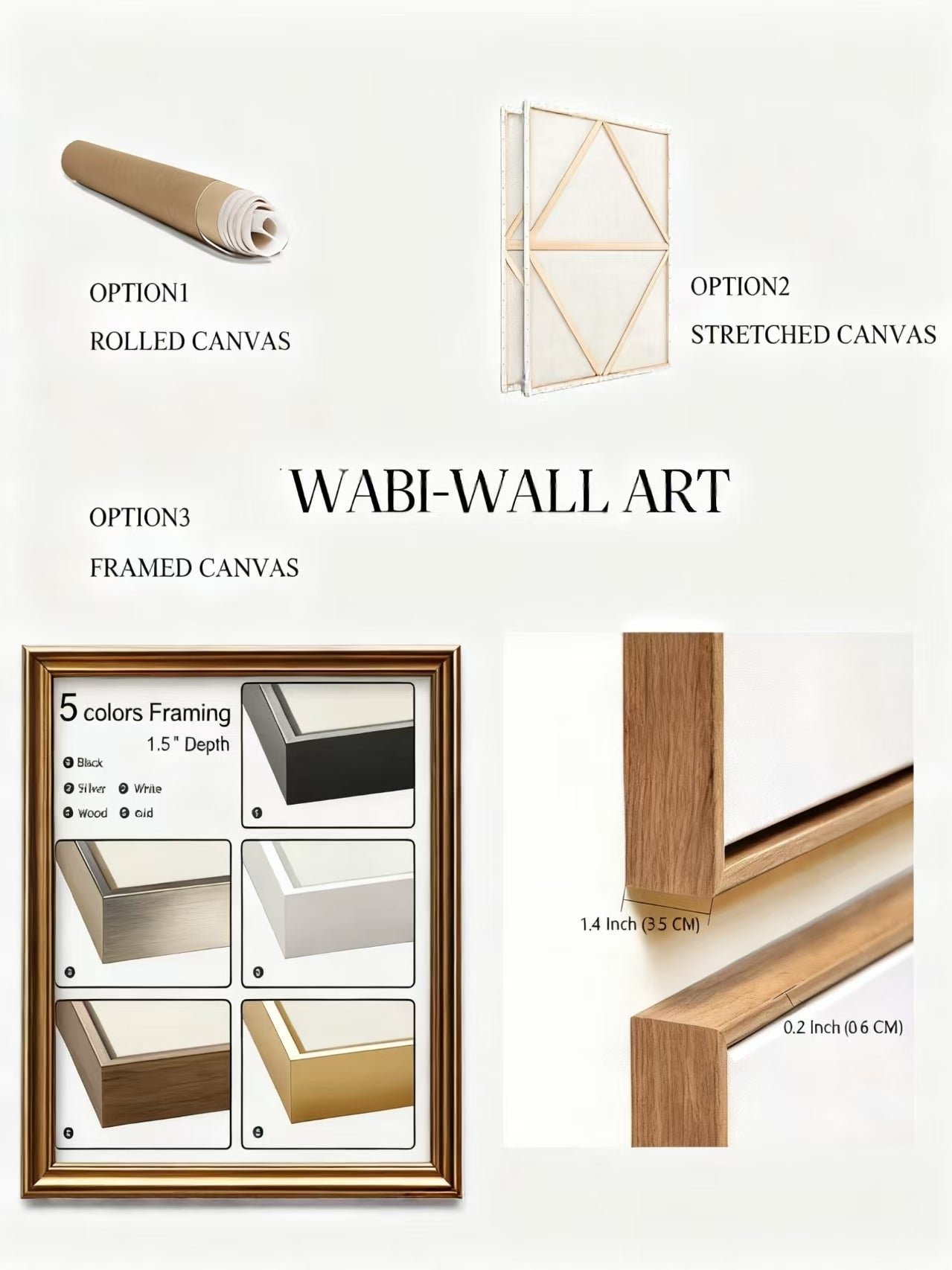
- Is the work intended to remain stretched, or is it shipped rolled?
- What handling and environmental guidance does the maker provide?
- Is the relief described as plaster-based, modeling paste, acrylic texture, or mixed media?
A substantial texture work should not be casually rolled unless the maker specifically designed it for that treatment. When in doubt, select a stretched or framed option and ask the seller how the chosen size will be packed. You can browse plaster art and textured canvas options by orientation and then confirm the construction details of the individual piece.
Texture Depth, Light and Shadow: Why Plaster Art Looks Different
The premium impression of textured plaster art is not created by thickness alone. It comes from controlled variation: a high ridge beside a shallow scrape, a matte plane interrupted by a rough edge, or a quiet color field whose surface becomes visible only when light crosses it.
Front-facing light reduces relief because it fills recesses evenly. Side light—whether from a nearby window or a carefully aimed wall washer—creates more dimensional contrast. North-facing daylight tends to produce soft, consistent modeling. Strong afternoon light can make every ridge more dramatic and may reveal surface variation that is almost invisible in the morning.

Consider White Minimalist Architectural Relief Painting – EV#0157. Its restrained white surface relies on grids, rounded planes, and one gray accent. The composition can remain calm while light supplies the changing contrast. Before buying a pale work, view the intended wall at several times of day; good natural or directional light may matter more than adding another color.
Does Plaster Wall Art Crack Easily?
Plaster wall art is not destined to crack, but no responsible seller should promise that every textured surface is immune to damage. Risk depends on material quality, layer thickness, adhesion, support movement, curing, temperature, humidity, transport, and handling.
Small intentional fissures may also be part of a wabi-sabi surface, so distinguish designed texture from active damage. Concerning signs include fresh flaking, loose edges, powdering, or a crack that opens when the canvas moves. A stable handcrafted work should arrive with its relief secure and should remain visually consistent under normal indoor conditions.
The most avoidable risks are mechanical. Pressing a raised area, stacking objects against it, carrying the work by the textured face, or allowing a flexible canvas to bend can damage high points. Environmental extremes matter too: repeated humidity changes make supports expand and contract, while very cold acrylic layers can become more brittle. Display the work in a stable occupied room rather than a damp bathroom, unconditioned attic, or wall directly beside a strong heat source.
If damage appears, photograph it without touching loose material and contact the artist, seller, or a qualified conservator. Household fillers and wet cleaning can change color, sheen, and adhesion, making a small problem harder to repair.
How to Clean and Care for Plaster Wall Art
Good care is preventive. A deeply textured surface collects dust more readily than a flat varnished painting, and threads from a cloth can catch on raised edges. Use the care instructions supplied with the artwork first; material systems differ.
Cleaning
- Inspect the surface before cleaning. If anything looks loose, cracked, or powdery, stop.
- For a stable surface, remove light dust with a clean, very soft artist brush, using minimal pressure and guiding dust away from the face.
- Avoid wet cloths, household sprays, solvents, feather dusters, stiff brushes, and vacuum contact.
- Do not rub matte areas; friction can burnish them and leave a permanent glossy mark.
Placement
Keep the artwork away from persistent moisture, direct sun, fireplaces, radiators, and forceful HVAC vents. A powder room with reliable ventilation may be different from a steamy primary bathroom, but a dry living room, bedroom, dining room, or office is usually the safer choice. Use secure hardware appropriate to the finished weight and wall construction.
Handling
Hold the frame or supported edges with clean, dry hands. Never lift by a relief element or press the surface to test whether it is “real.” When moving the work, protect the face from contact and avoid bending the canvas. These habits do more for longevity than frequent cleaning.
Which Interior Styles Work Best With Plaster Wall Art?
Wabi-Sabi Interior
Wabi-sabi interiors value irregularity, quiet material change, and surfaces that show the hand of the maker. Plaster relief fits naturally because slight variation in edges and tool marks can be part of the composition. Earth, sand, charcoal, and chalk tones work well with linen, aged wood, stone, and handmade ceramics. Wabi-Sabi Brown Texture Wall Art – EV#0016 demonstrates how overlapping taupe relief can add architectural weight without a loud palette. For more imperfect, tactile compositions, explore the Wabi-Sabi Wall Art collection.
Minimalist Interior
Minimalism does not require blank walls; it requires deliberate information. A white or beige relief introduces line and shadow while keeping color restrained. The artwork can become the room’s detail rather than another decorative layer. Minimalist 3D Textured Pebble Relief Art – EV#0166 uses repeated rounded forms to create rhythm without visual noise. The Minimalist Wall Art collection is useful when you want texture with edited color and form.

Organic Modern Interior
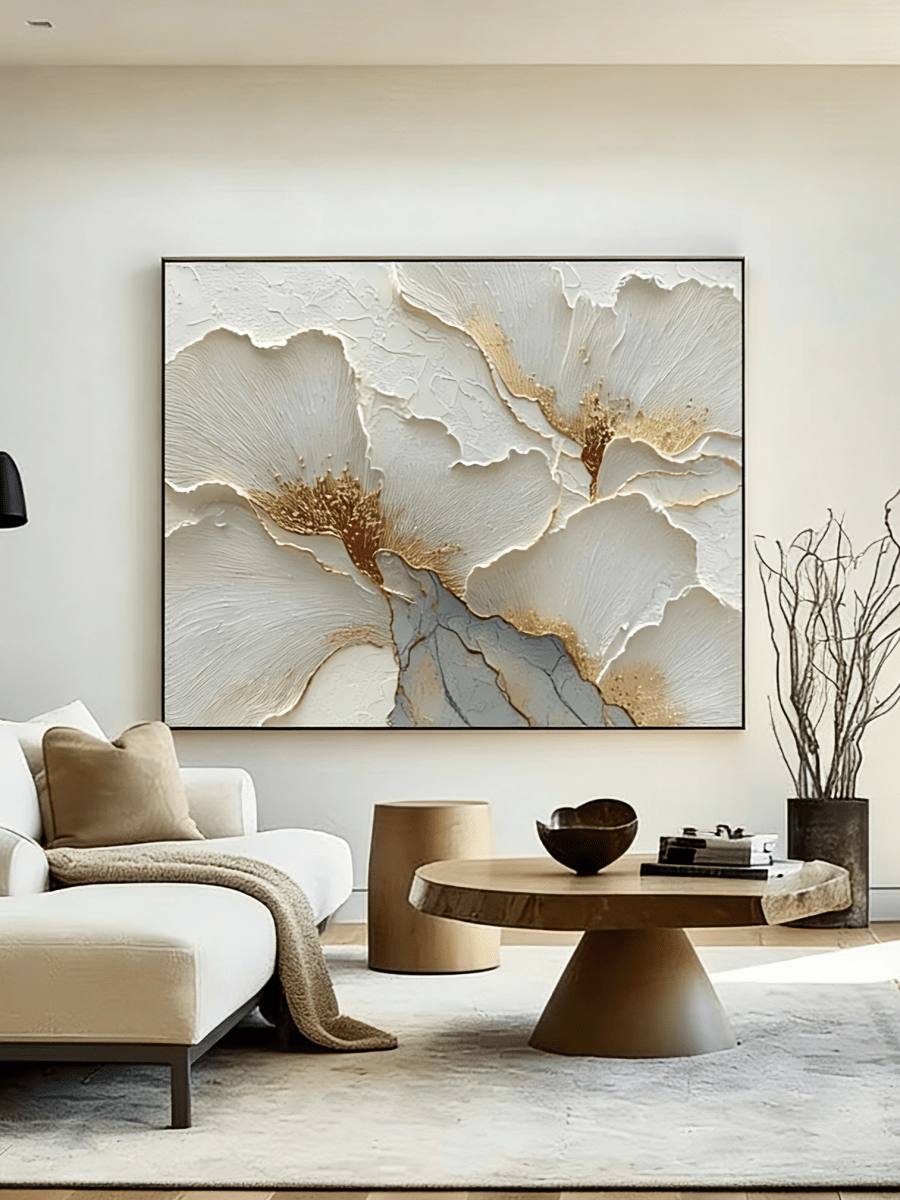
Organic modern rooms combine clear contemporary shapes with wood, stone, plants, woven fibers, and curved furniture. A plaster surface bridges the architecture and the softer materials. Choose cream, warm gray, clay, olive, or brown, and let directional texture echo wood grain or natural movement.
Contemporary Luxury Homes
In luxury interiors, tactile quality often matters more than obvious ornament. A large relief work supplies craftsmanship that remains visible at close range and changes under layered lighting. Leave enough empty wall around it; crowding a sculptural surface with many small objects reduces its presence.
How to Choose the Right Size and Direction for Plaster Wall Art
Scale should be decided before color. Because relief produces stronger shadow and physical presence than a flat print, mark the intended dimensions with painter’s tape and view the outline from the room entrance as well as the main seat.
Above a Sofa
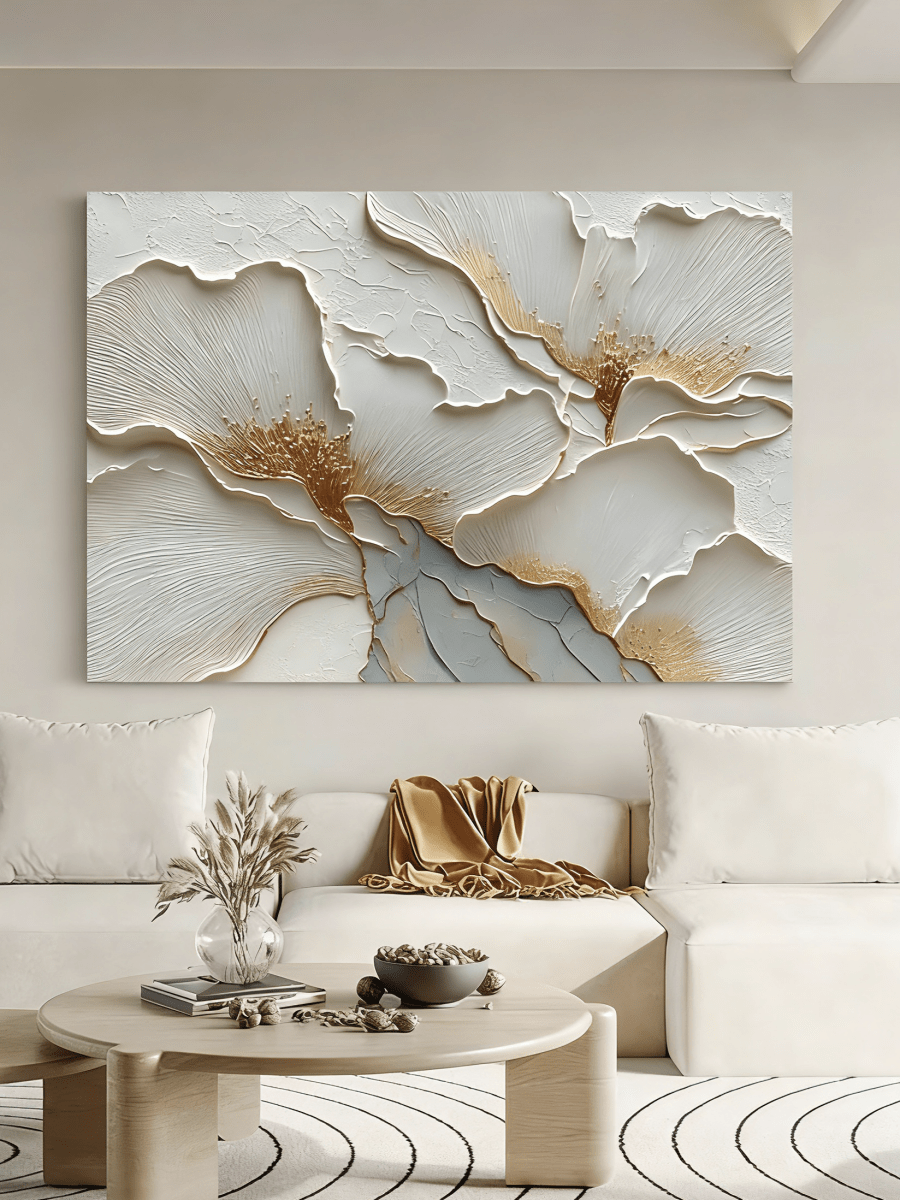
A reliable starting point is artwork measuring approximately two-thirds to three-quarters of the sofa width. For a 96-inch sofa, that means roughly 64–72 inches total. Center the work on the sofa, not necessarily on the whole wall, and leave about 6–10 inches between the sofa back and the lower frame.
Horizontal or panoramic relief works distribute visual weight across a long sofa. Earth Tone Horizon Abstract Heavy Texture Painting – LL#0155 is a useful example: its long cream, gray, and terracotta bands read across the wall while their raised edges remain visible from nearby seating.
Bedroom
Above a headboard, use the bed as the reference width and keep the composition calm enough for a restful room. One square or horizontal piece usually feels more settled than a narrow vertical unless the bed is intentionally offset. Low-contrast beige, cream, and soft gray reliefs work especially well because texture provides interest without a high-energy palette.
Dining Room
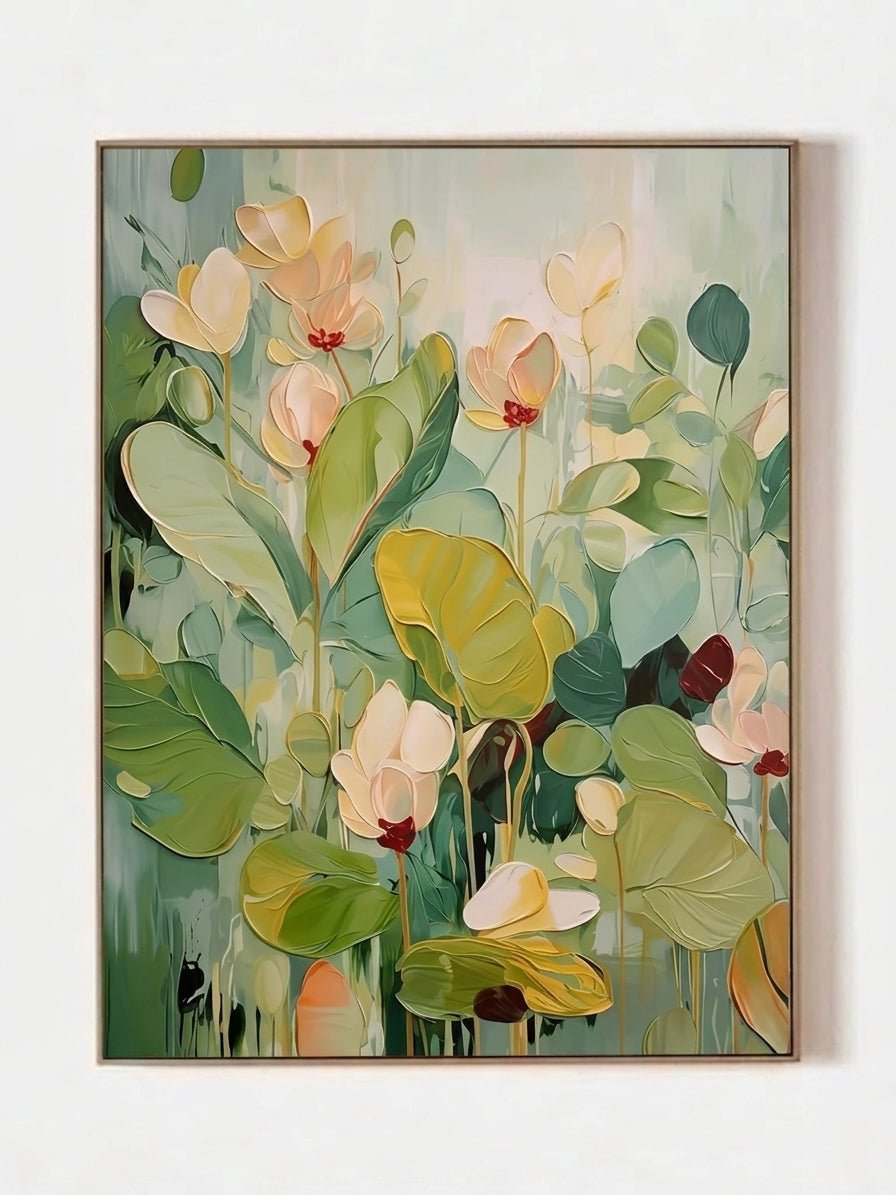
A dining room can carry more directional movement or color because it is an active social space. Horizontal art can mirror a long table or sideboard; a substantial vertical piece can anchor a narrower wall at the end of the room. Sage Green Abstract Heavy Texture Painting – LL#0124 uses vertical scale and ribbed curves to make side lighting part of the composition.

Narrow Walls
Vertical plaster art is effective between windows, beside a fireplace, at the end of a hallway, or above a slim console. Square pieces suit centered architectural moments. Panoramic works need long uninterrupted walls; forcing one into a narrow bay makes the room feel compressed. Allow for frame depth and make sure doors, drapery, and passing traffic cannot strike the relief.
Once you know the usable dimensions and direction, discover textured plaster artwork by shape and room scale rather than choosing from color alone.
Handmade Plaster Art vs. Printed Texture Wall Art
| Feature | Handmade Plaster Art | Printed Texture Canvas |
|---|---|---|
| Real texture | Physical ridges, grooves, peaks, and recesses | The image may show texture, but the printed surface remains substantially flat |
| Material depth | Built through applied media and hand shaping | Depth is represented through color and fixed printed shading |
| Light reflection | Highlights and shadows change with the room’s light and viewing angle | Highlights and shadows stay where they were printed |
| Craftsmanship | Surface is shaped, cured, painted, and finished by hand | Image is mechanically reproduced onto a substrate |
| Uniqueness | Hand application produces natural variation, even in made-to-order versions | Copies can be visually identical |
| Long-term value | Value is tied to material presence, labor, condition, and maker | Value is primarily decorative and reproduction-based |
Printed texture is not inherently dishonest; it is a different product and may suit a smaller budget or low-contact location. The problem is unclear labeling. Before purchasing, inspect close-up photographs, look for side-angle views, read whether the work is hand-painted, and ask whether the surface is physically raised.
WABI Wall Art focuses on handcrafted original and made-to-order artworks with real applied texture. The visible relief in pieces such as the examples above is part of the object, not merely a photograph printed onto canvas. To compare surfaces and orientations, browse the plaster art and texture collection and review each product’s close views.
Why Plaster Wall Art Is Becoming Popular in Modern Homes
Modern interiors increasingly rely on material experience: the grain of oak, the irregularity of stone, the weave of linen, and the softness of limewashed walls. Plaster art fits that preference because it adds touchable-looking structure without requiring architectural renovation.
It also supports quiet luxury. Instead of signaling value through bright color or ornate decoration, the work reveals its quality through shadow, labor, and proximity. From across the room, the composition can remain restrained. Up close, small tool marks and layered edges reward attention.

The medium is equally useful when a neutral room feels unfinished. Rather than introducing a new palette, a cream, taupe, or brown relief can add the missing contrast in surface and shadow. That makes it compatible with minimalist, organic modern, Japandi, wabi-sabi, and contemporary luxury spaces without reducing it to one trend.
Final Thoughts
Plaster wall art combines material, texture, light, and craftsmanship. A genuine raised surface changes through the day, gives neutral color physical presence, and offers an experience a printed texture cannot duplicate. Its durability depends on the complete construction—medium, support, application, curing, finish, environment, and handling—so evaluate the maker’s details rather than relying on one broad label.
Measure the wall and nearby furniture, consider the direction of natural light, and decide whether the room needs quiet relief or a stronger sculptural focal point. Then explore WABI Wall Art’s handmade textured wall art with those practical requirements in mind.
Frequently Asked Questions
What is plaster wall art?
Plaster wall art is artwork with a physically raised, sculptural surface made using plaster-based compounds, modeling pastes, acrylic texture media, or compatible mixed materials. The relief creates real highlights and shadows.
Is plaster wall art real texture?
Authentic plaster wall art has physical ridges, grooves, or relief that can be seen from the side. A printed plaster-look canvas reproduces an image of texture but remains substantially flat.
Can plaster art be made on canvas?
Yes. Plaster-style art can be made on properly prepared canvas when the artist matches the texture material, layer depth, adhesion, curing, and support structure. Product-specific construction varies.
What is the difference between plaster art and textured canvas prints?
Handmade plaster art contains real applied material whose shadows change with the light. A textured canvas print mechanically reproduces a photographed or digital image, so its apparent depth is fixed.
Does plaster wall art crack?
Well-constructed plaster wall art should not crack easily under normal indoor conditions, but risk depends on the material, support, curing, environmental stability, transport, and handling. Avoid bending or pressing the surface.
How durable is plaster artwork?
Quality plaster artwork can be durable when compatible materials and a suitable support are used. Its raised high points remain vulnerable to impact, abrasion, moisture, and extreme temperature or humidity changes.
How do you clean plaster wall art?
If the surface is stable, remove light dust with a clean, very soft artist brush and minimal pressure. Avoid water, cleaning sprays, stiff brushes, feather dusters, rubbing, and direct vacuum contact.
What interior styles match plaster art?
Plaster art works especially well in wabi-sabi, minimalist, organic modern, Japandi, and contemporary luxury interiors because physical texture complements natural materials and restrained color palettes.
How do I choose plaster wall art size?
Measure the usable wall and the furniture below it. Above a sofa, artwork around two-thirds to three-quarters of the sofa width is a practical starting point; then verify the outline with painter’s tape.
Where can I buy handmade plaster wall art?
WABI Wall Art offers hand-painted textured and plaster-style artworks in multiple orientations and sizes. Review close-up images and product details in its Textured Wall Art collection before ordering.