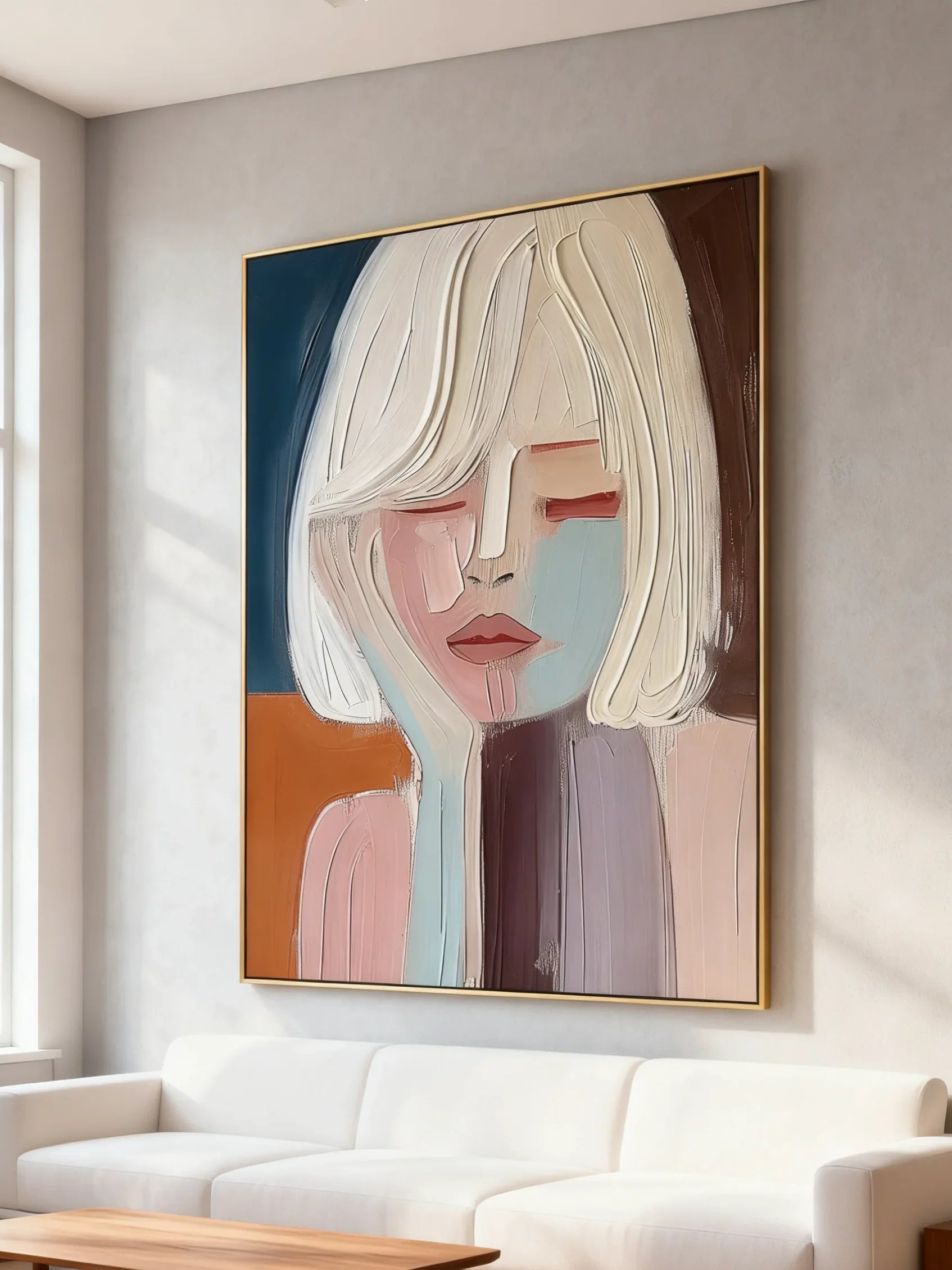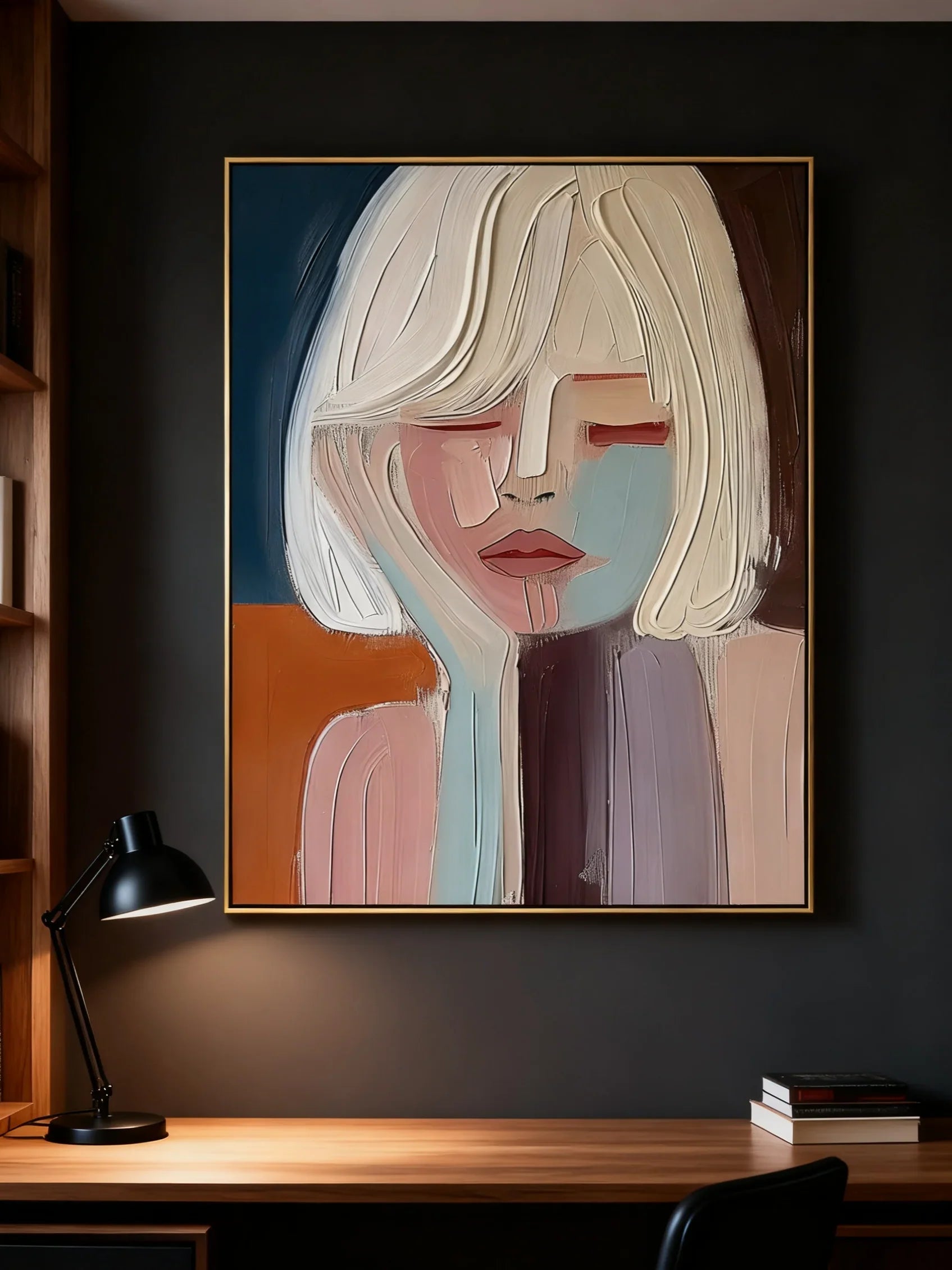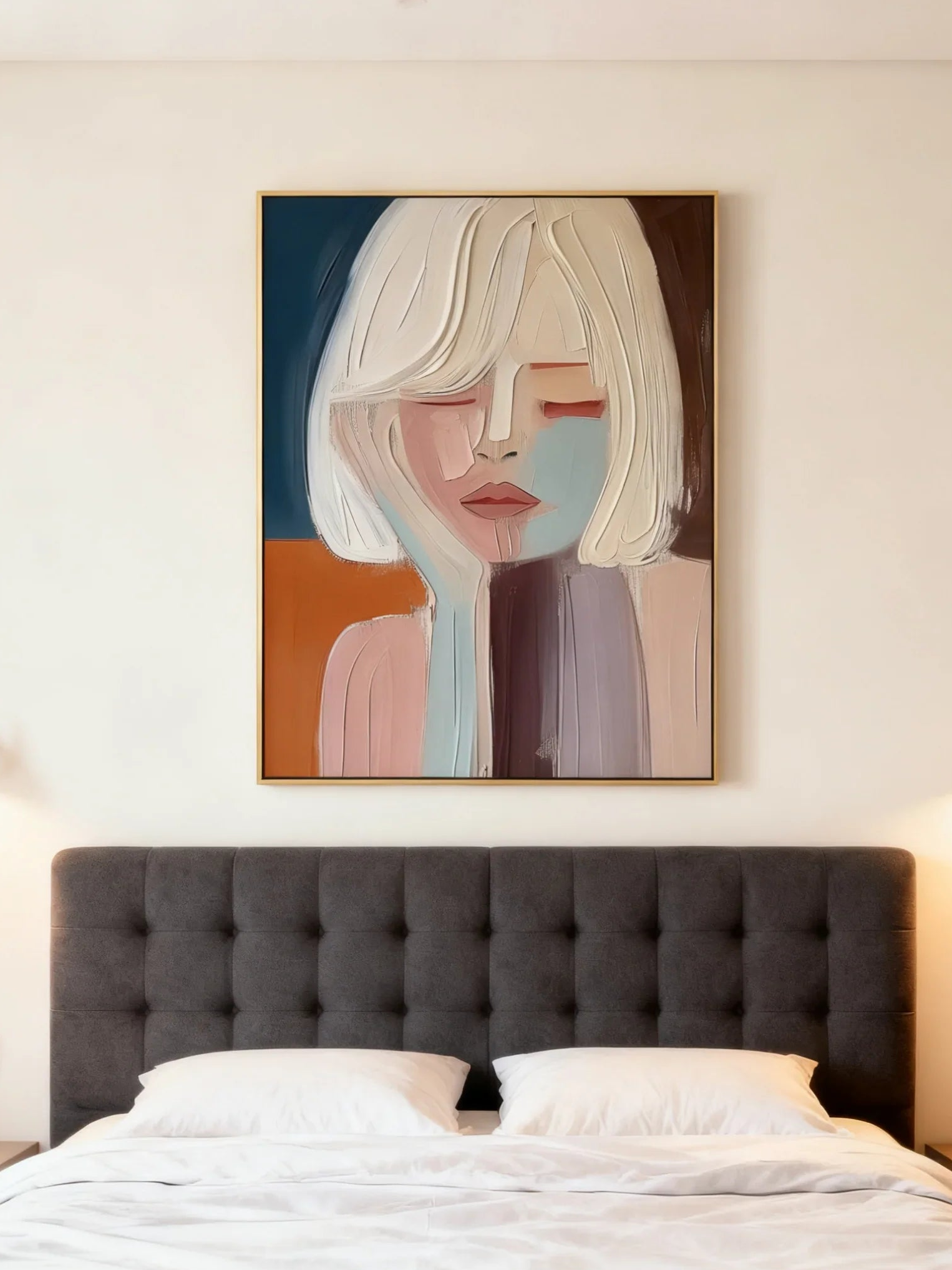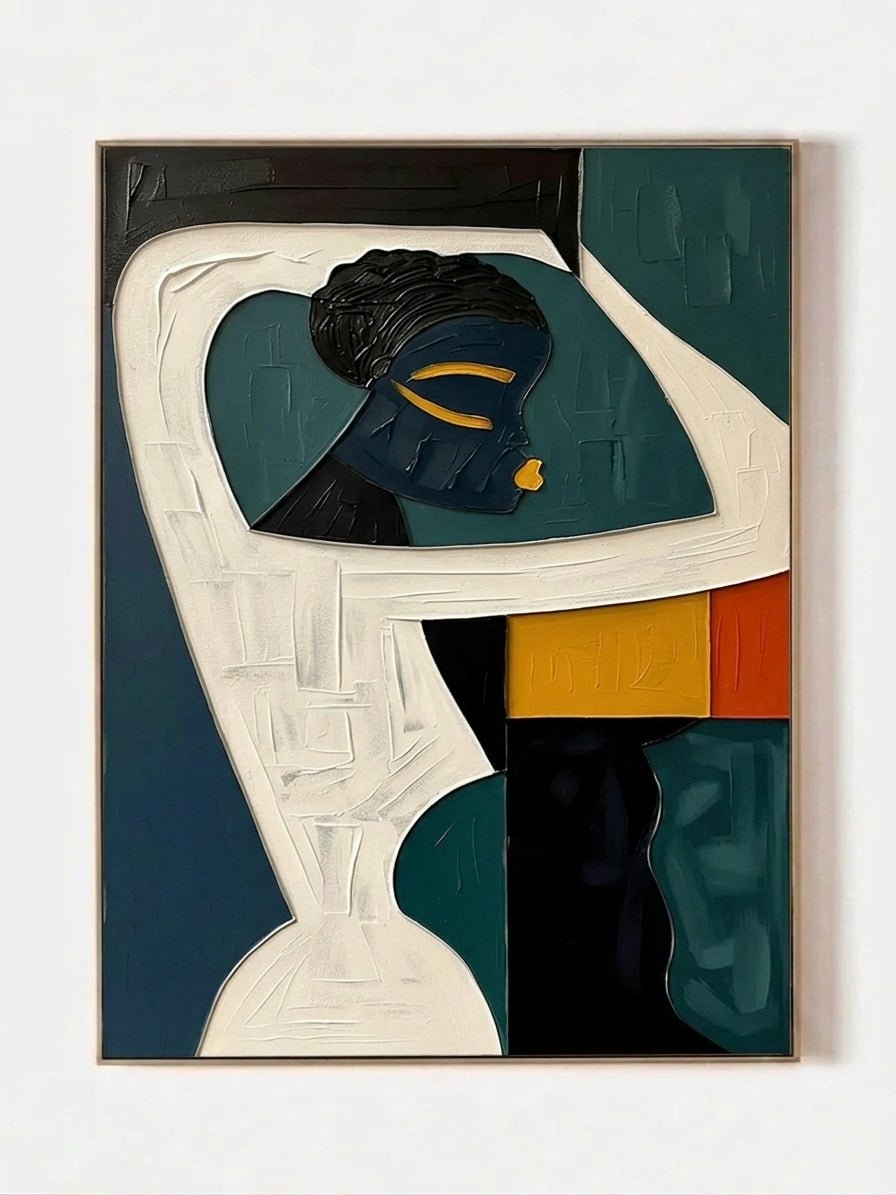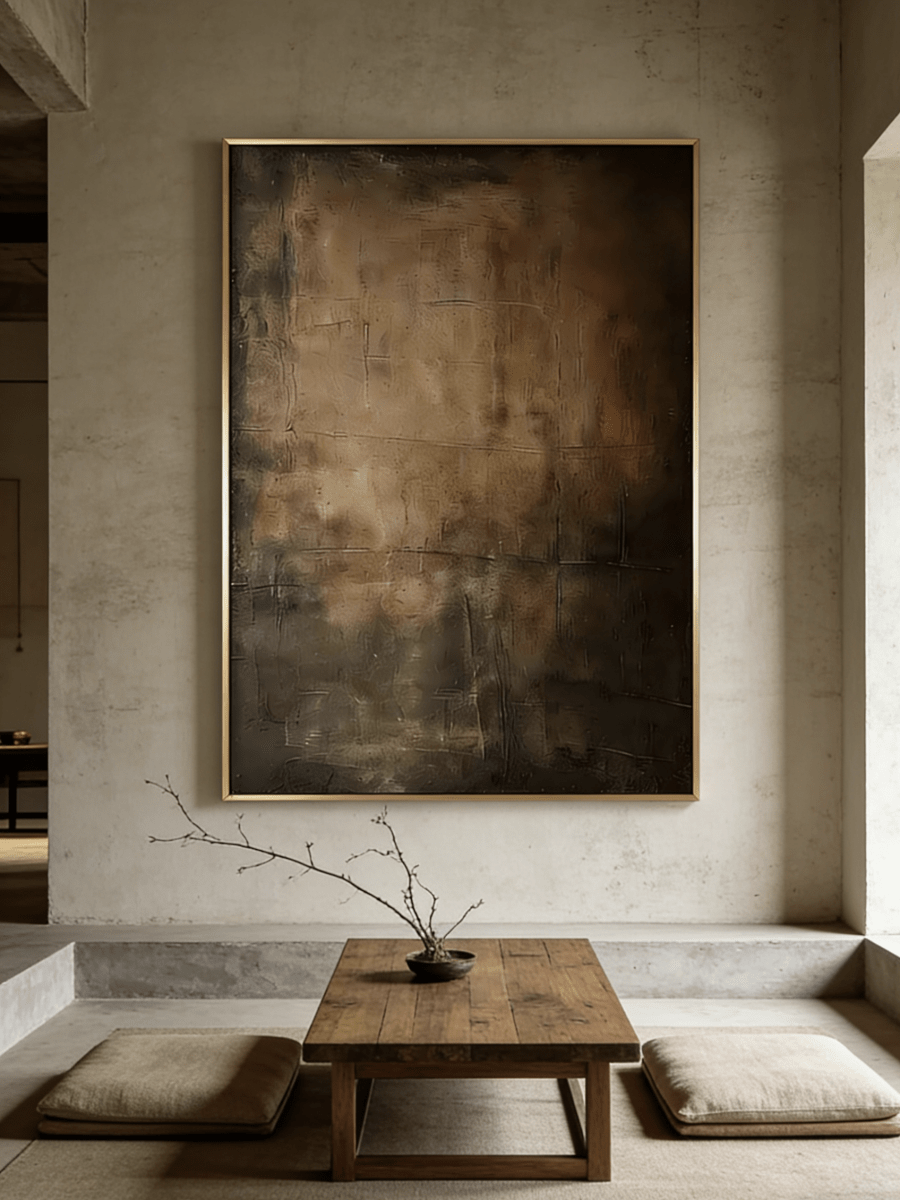


Wabi-Sabi Textured Beige & Black Abstract Wall Art – AK#0366

Description
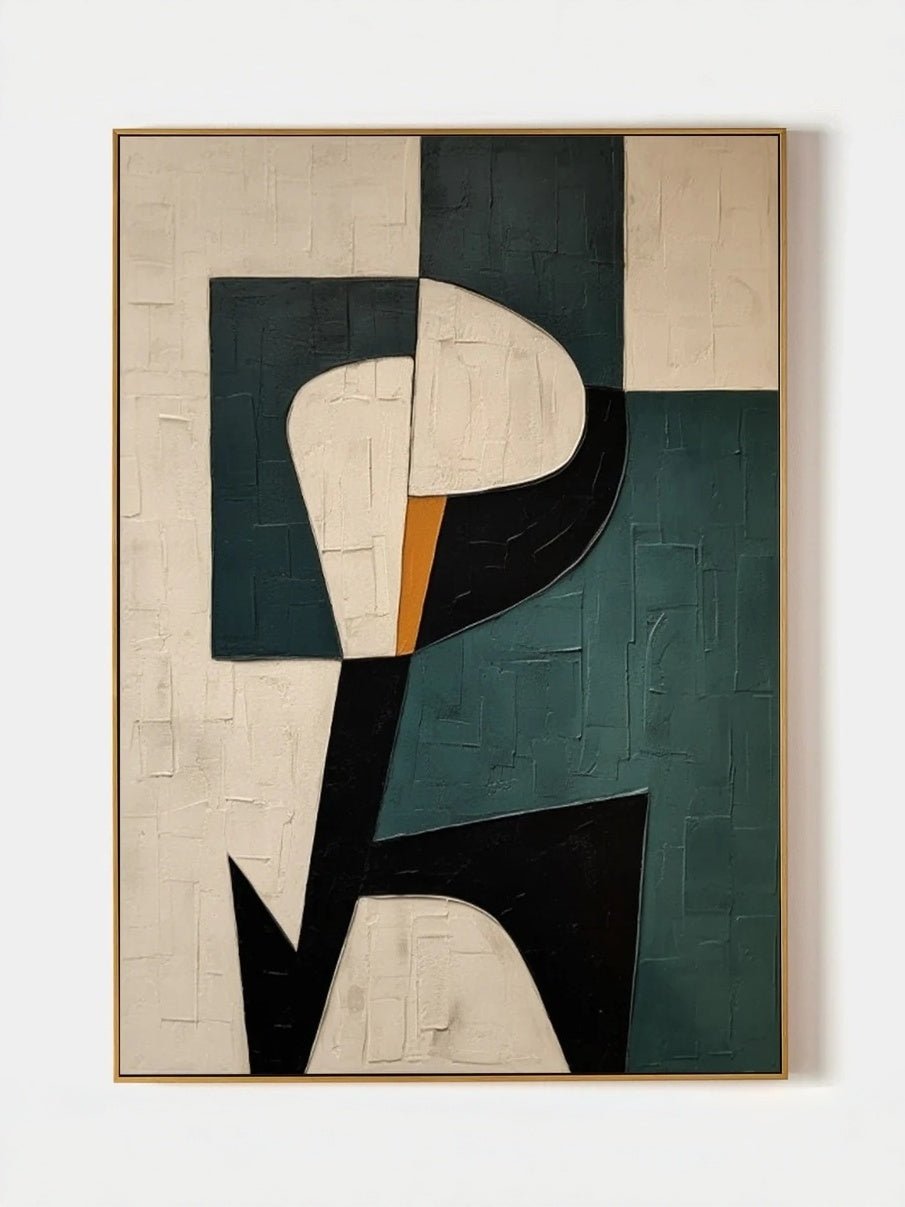
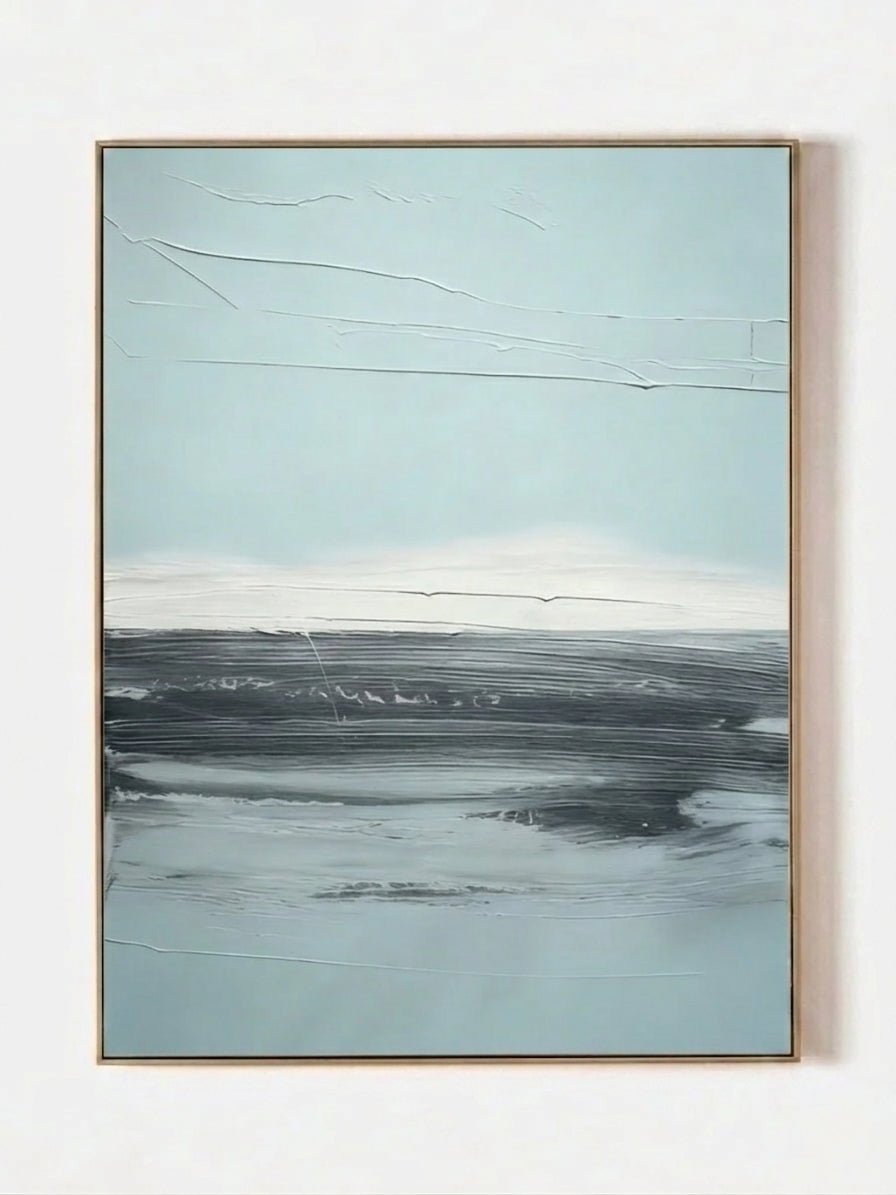
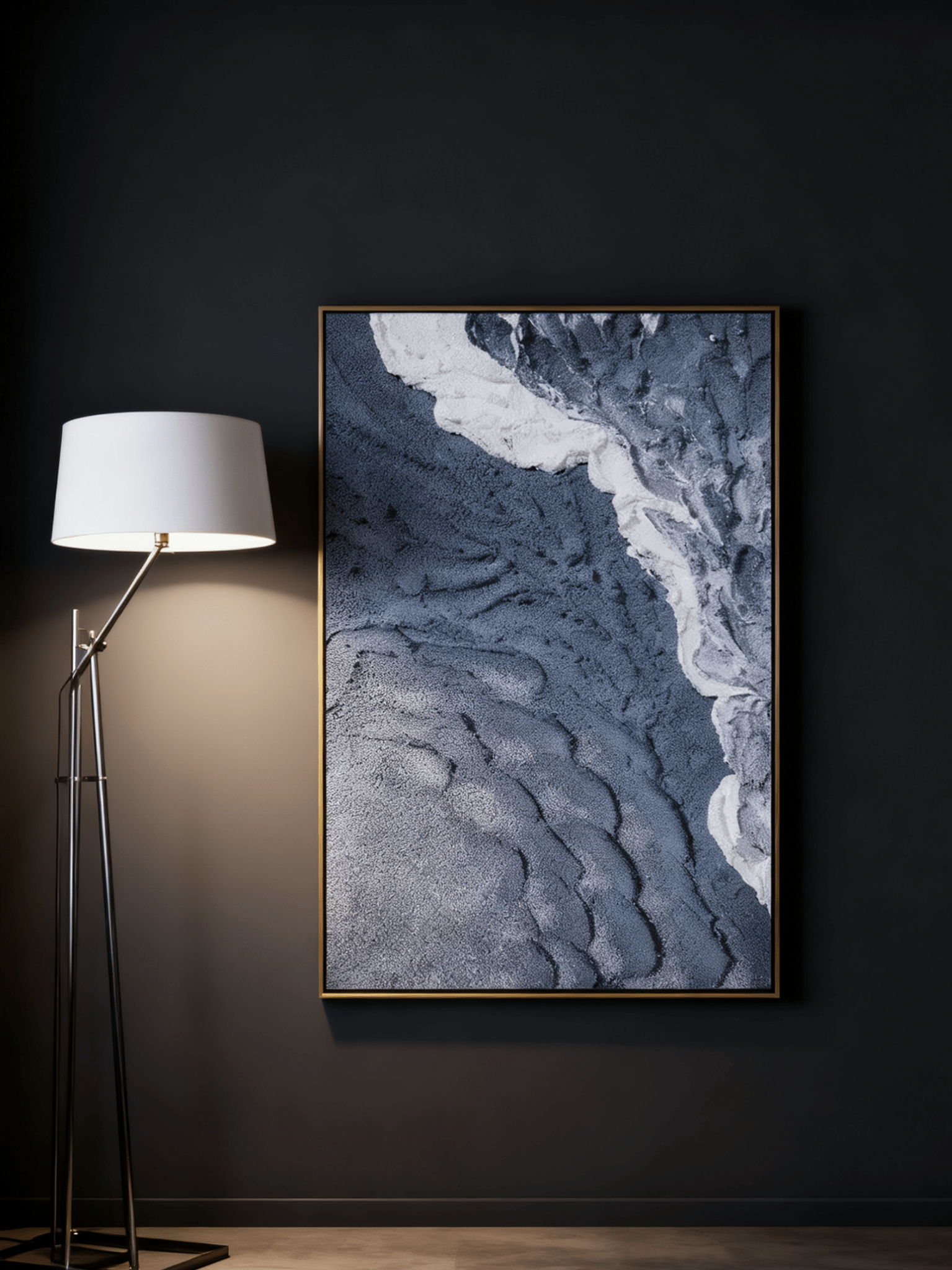
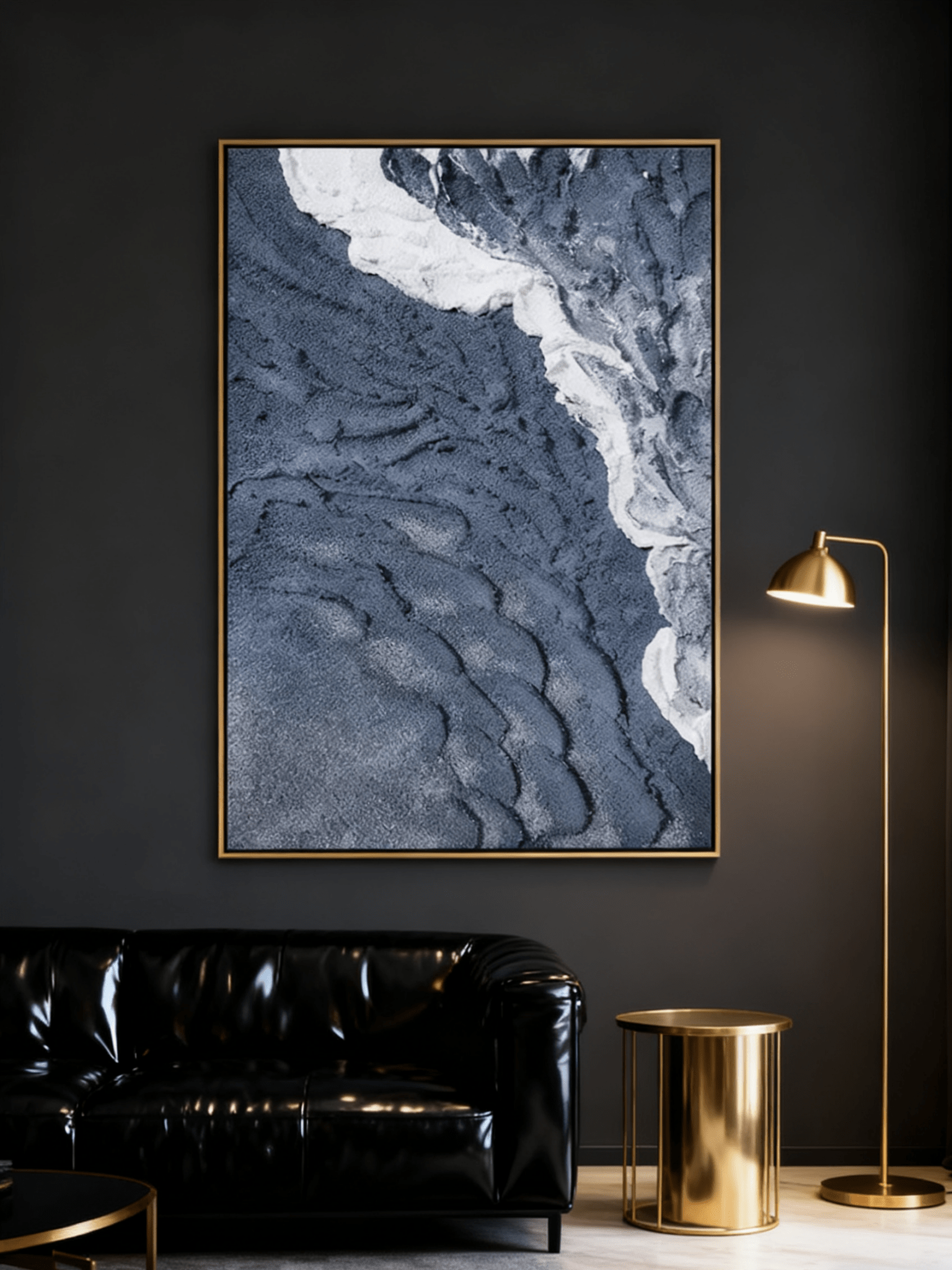
Wabi-Sabi Textured Beige & Black Abstract Wall Art
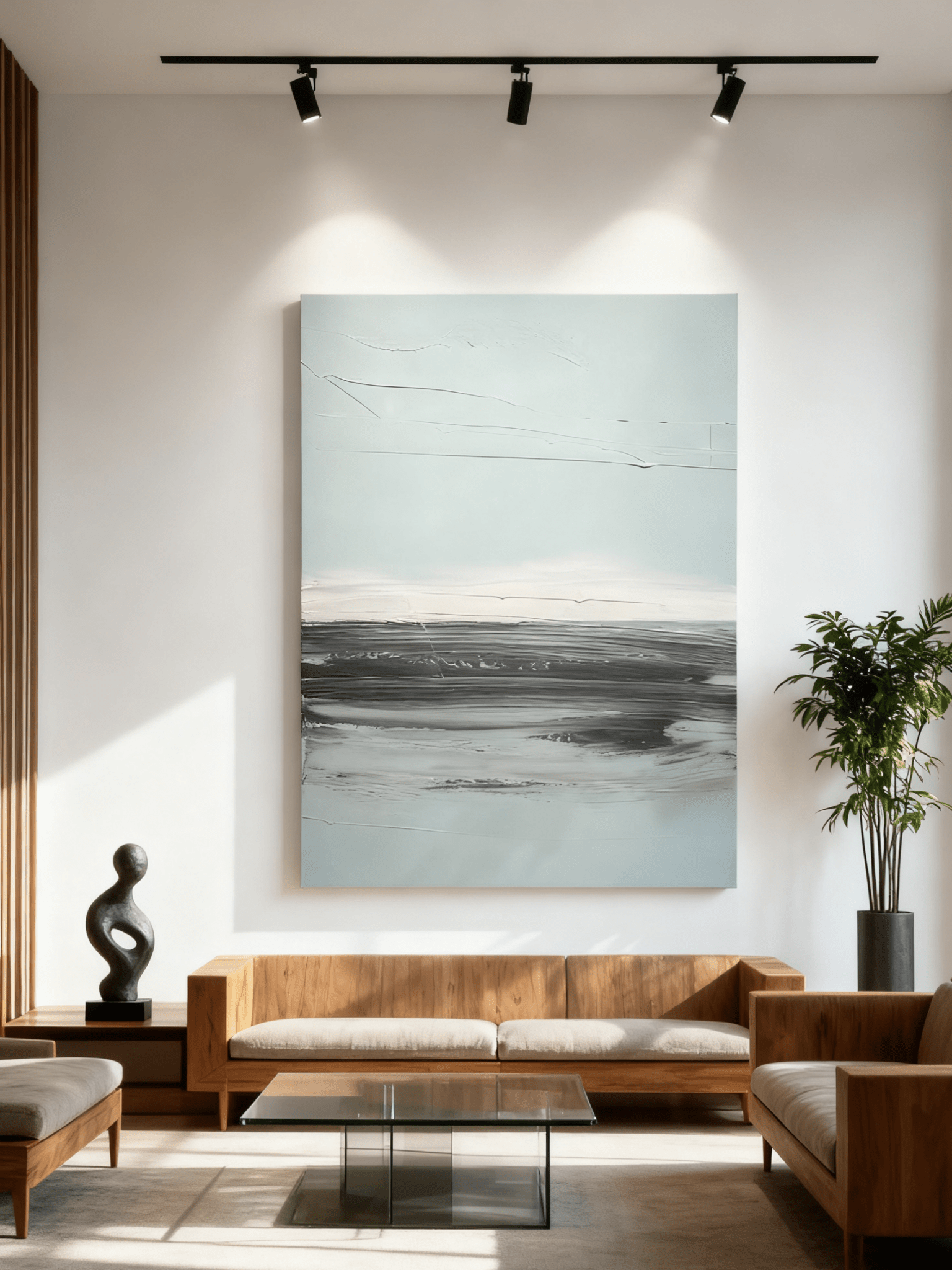
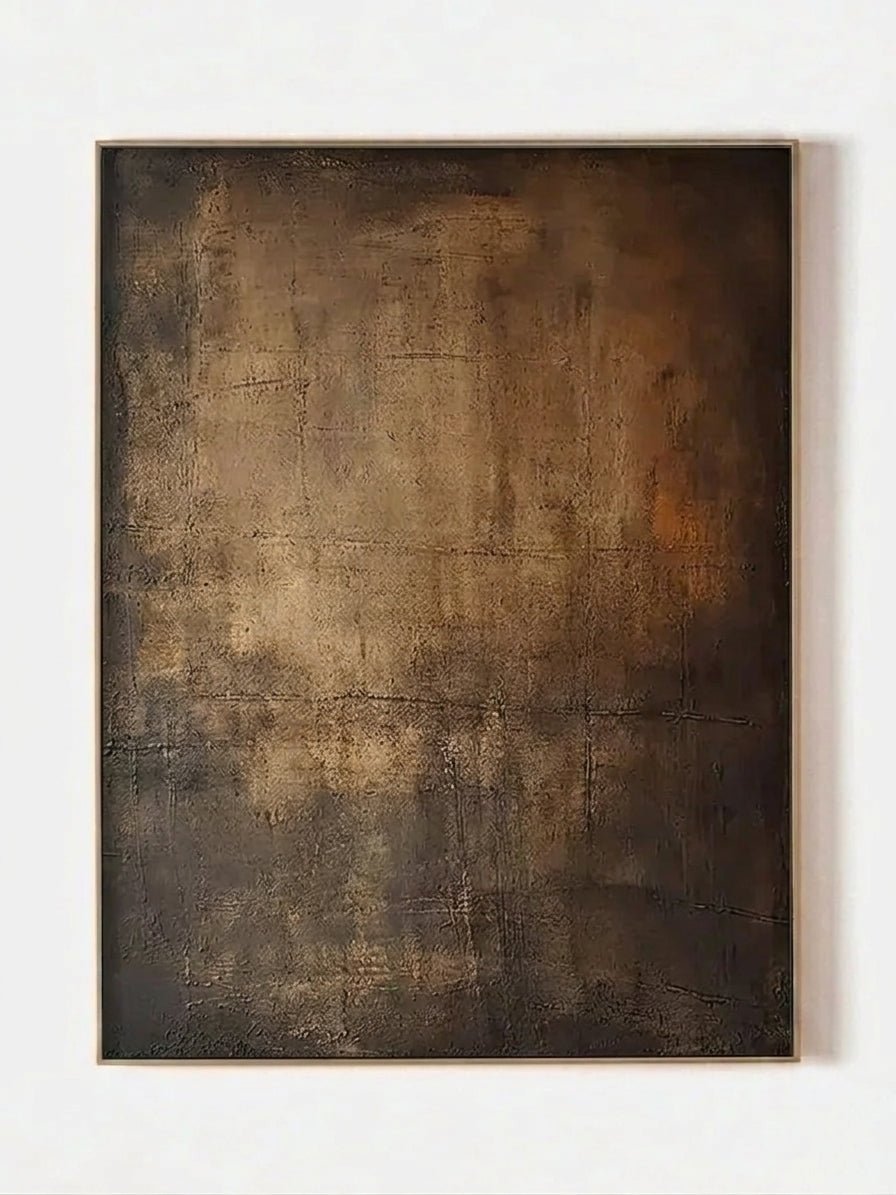
Bring quiet contrast and organic character into your home with this hand-painted beige and black abstract wall art by Akari Kobayashi.
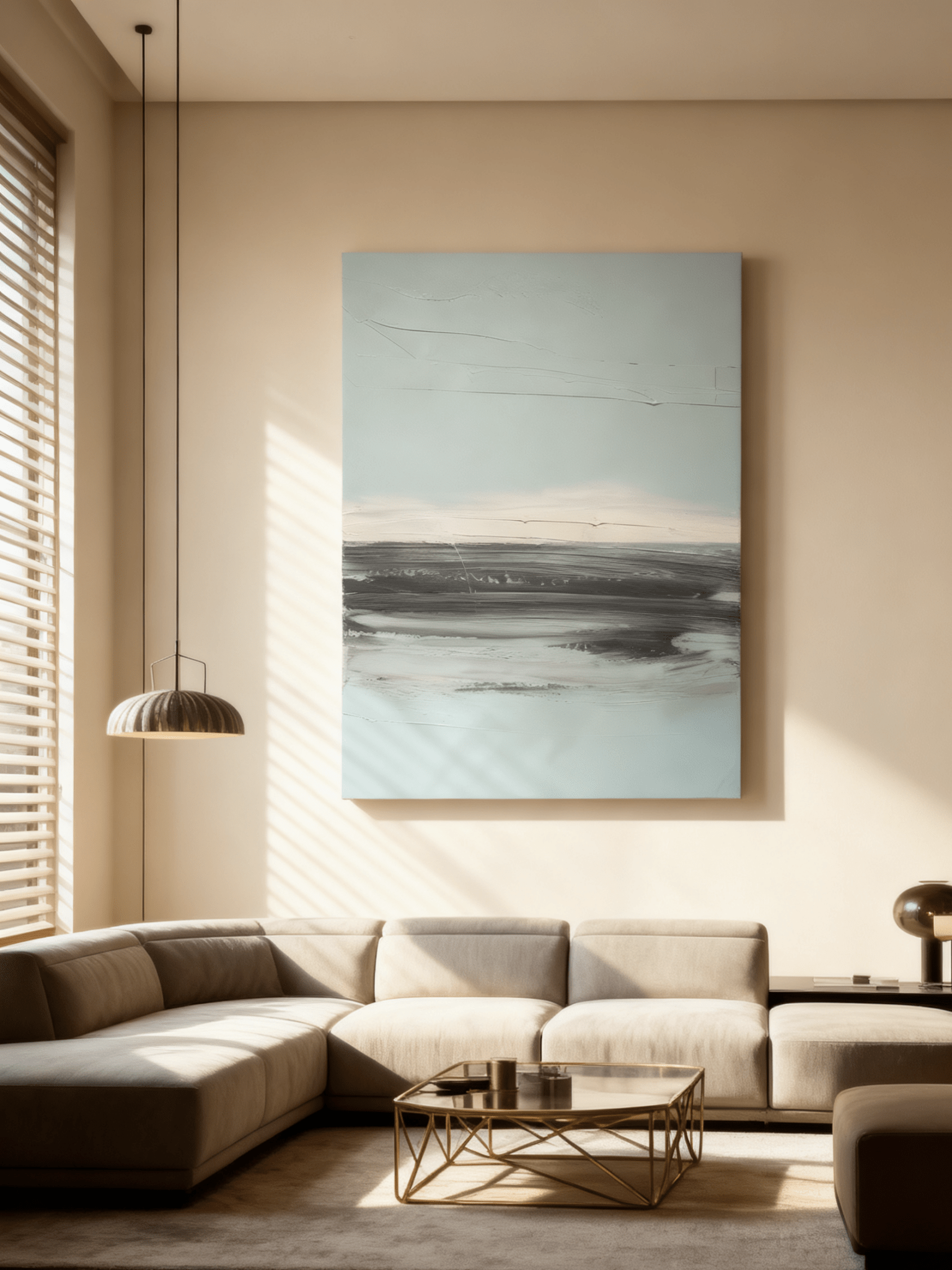
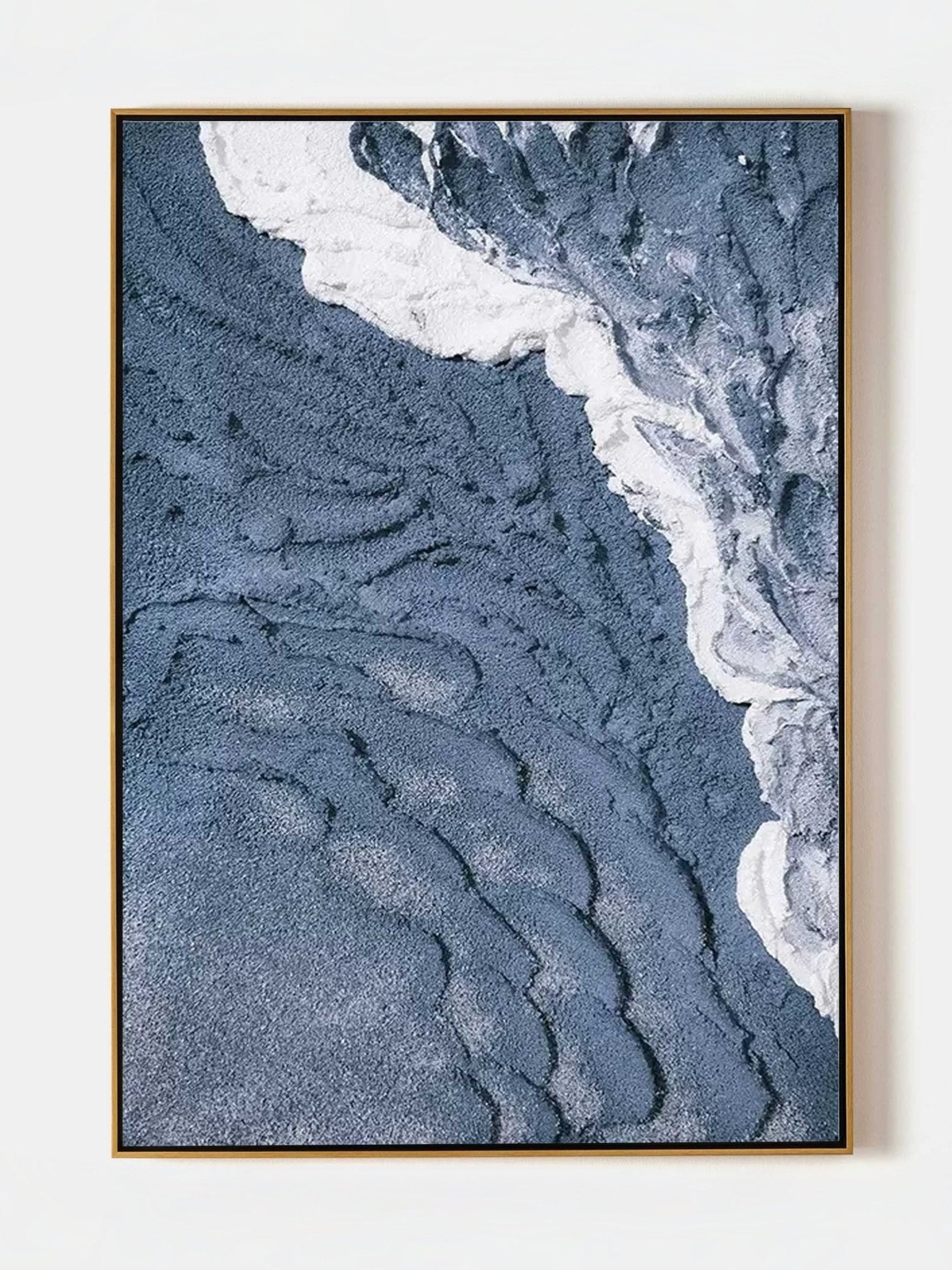
Warm sand, ivory, and weathered off-white tones meet a deep charcoal-black form, creating a composition that feels both minimalist and richly atmospheric. Subtle cracks, softened edges, layered marks, and irregular surface variations give the artwork the character of a naturally aged wall or timeworn architectural surface.
Rather than relying on bright color or recognizable imagery, this painting explores balance, imperfection, texture, and contrast.
The soft neutral upper portion keeps the artwork calm and easy to style, while the darker lower form introduces enough visual weight to anchor a room.
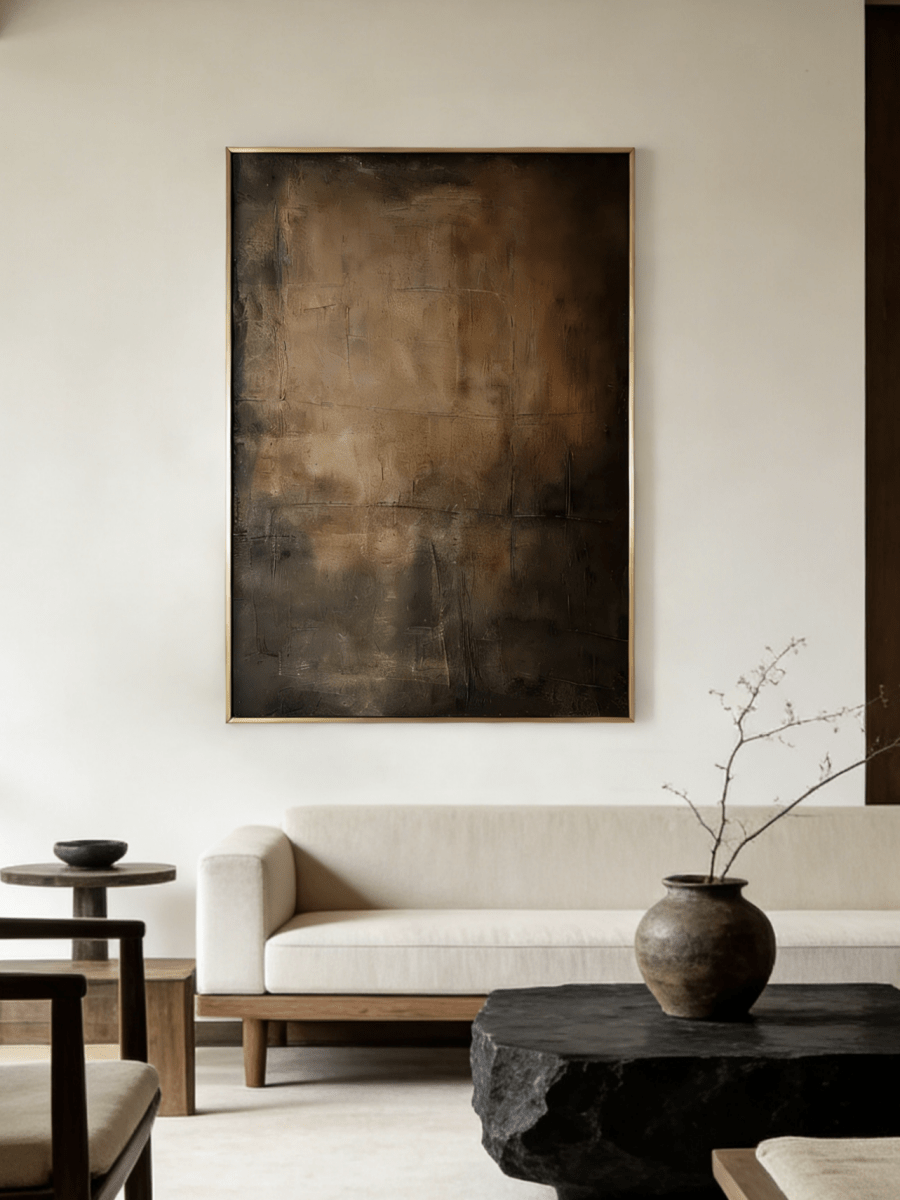
Its understated palette makes it especially suited to Wabi-Sabi, organic modern, Japandi, minimalist, contemporary, and neutral interiors.
The Story Behind the Painting
This painting began with the idea that a surface does not need to appear new or perfect to feel beautiful.
For Akari Kobayashi, the marks left behind by time can be as expressive as deliberate brushstrokes.
Across the upper portion of the composition, warm beige and muted ivory tones appear softened and weathered. Fine irregular lines move through the surface like traces of old plaster, dry earth, or a wall gradually altered by years of light and air.
The center becomes quieter.
A broad field of off-white creates breathing space before the composition shifts dramatically into a deep charcoal-black form below.
The dark area is intentionally imperfect. Its edges remain soft and irregular rather than geometrically precise, creating the impression of something revealed, covered, erased, and rediscovered.
The contrast becomes the subject:
light and dark, softness and weight, refinement and imperfection.
Rather than representing one particular object or place, the painting invites the viewer to notice the beauty contained in texture, aging, restraint, and variation.
Where to Display This Artwork
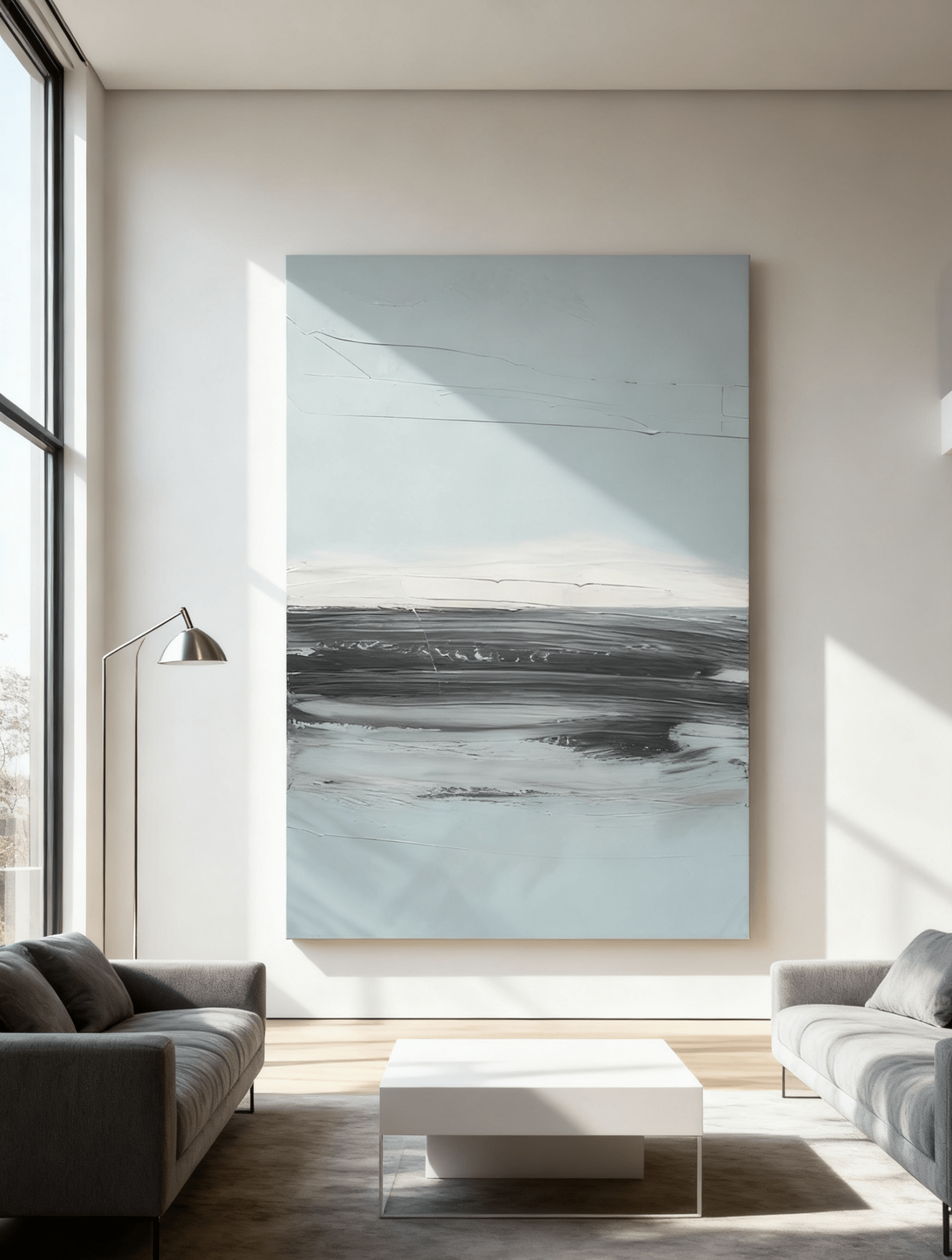
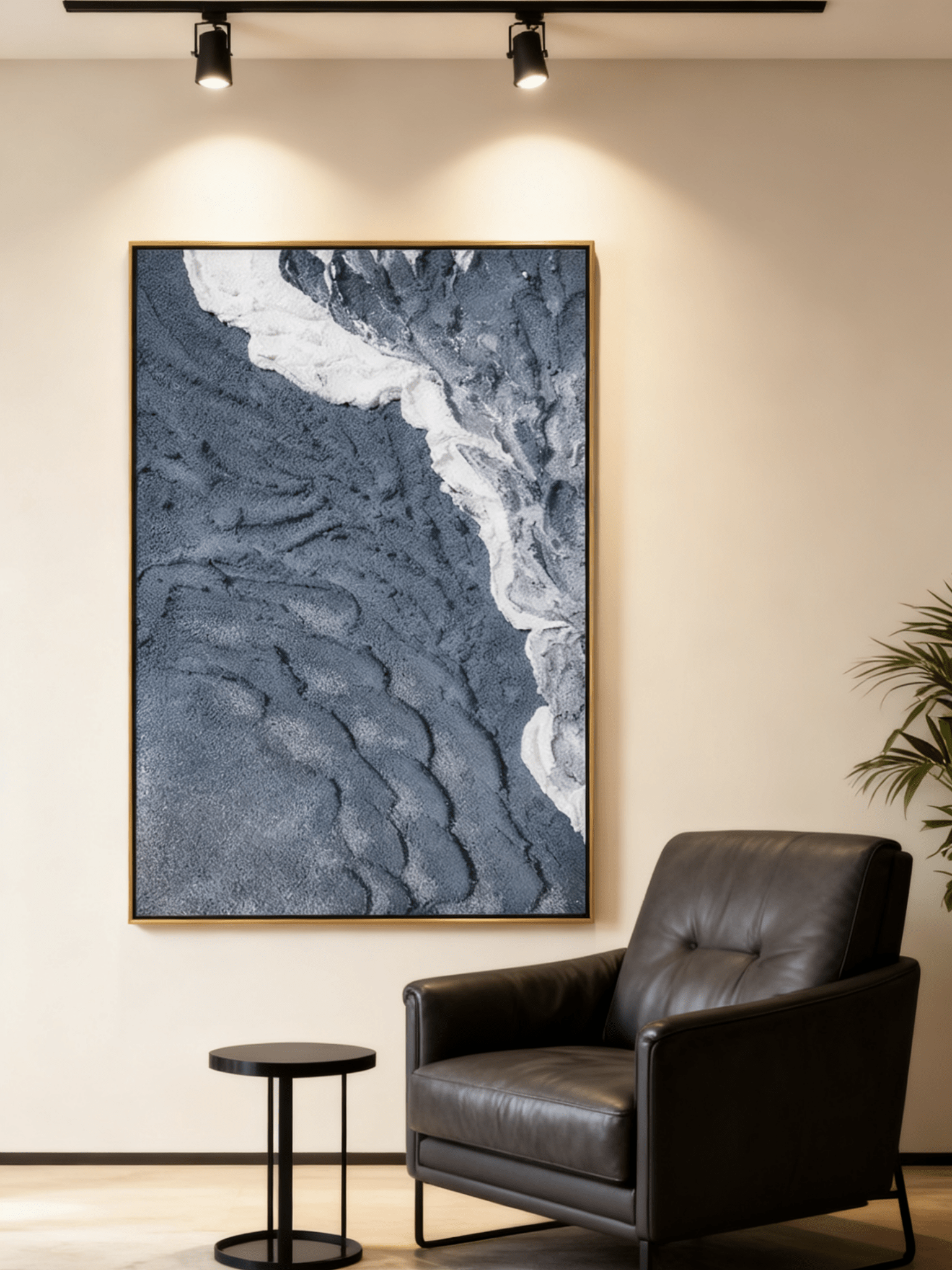
Living Room
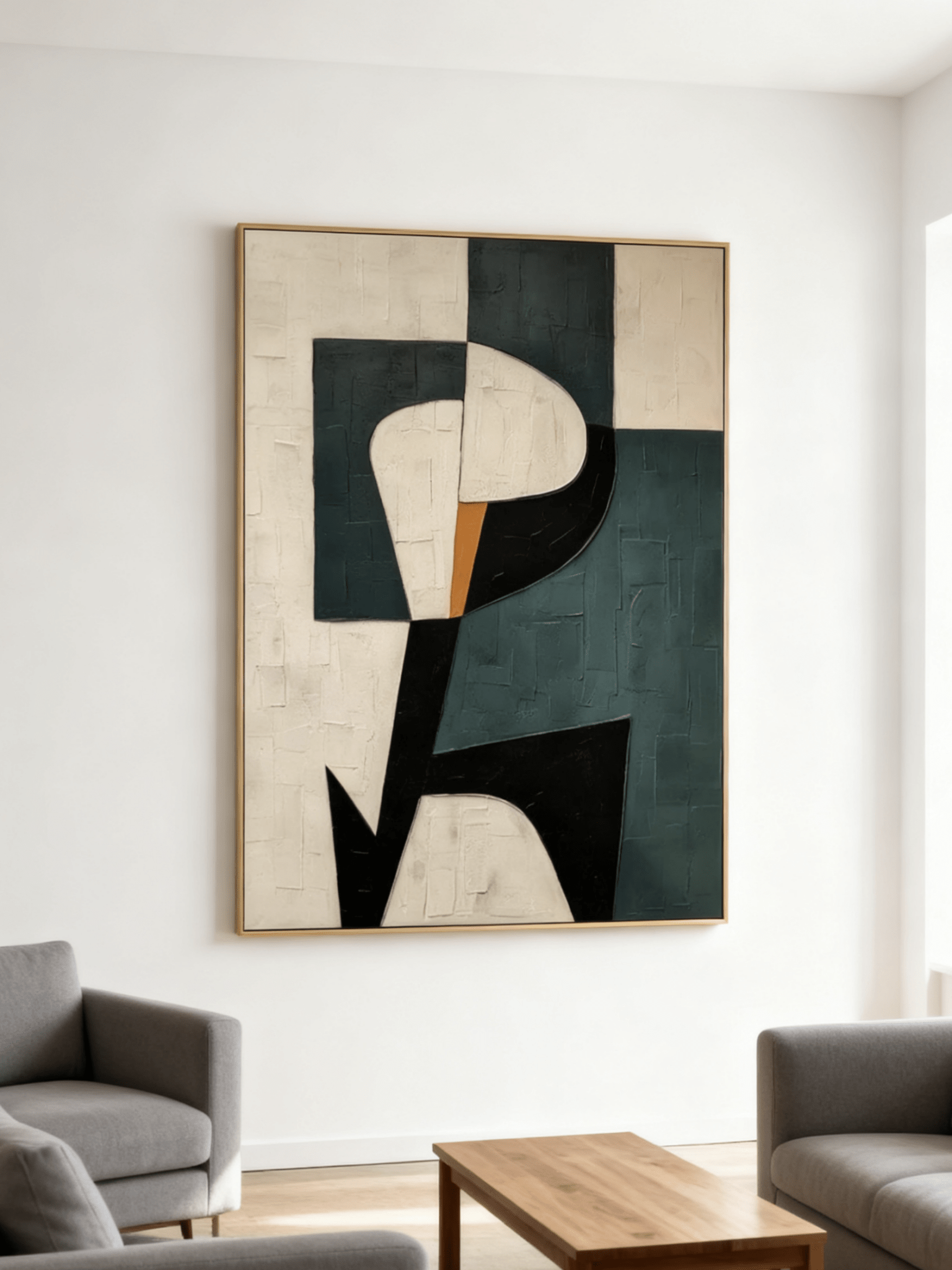
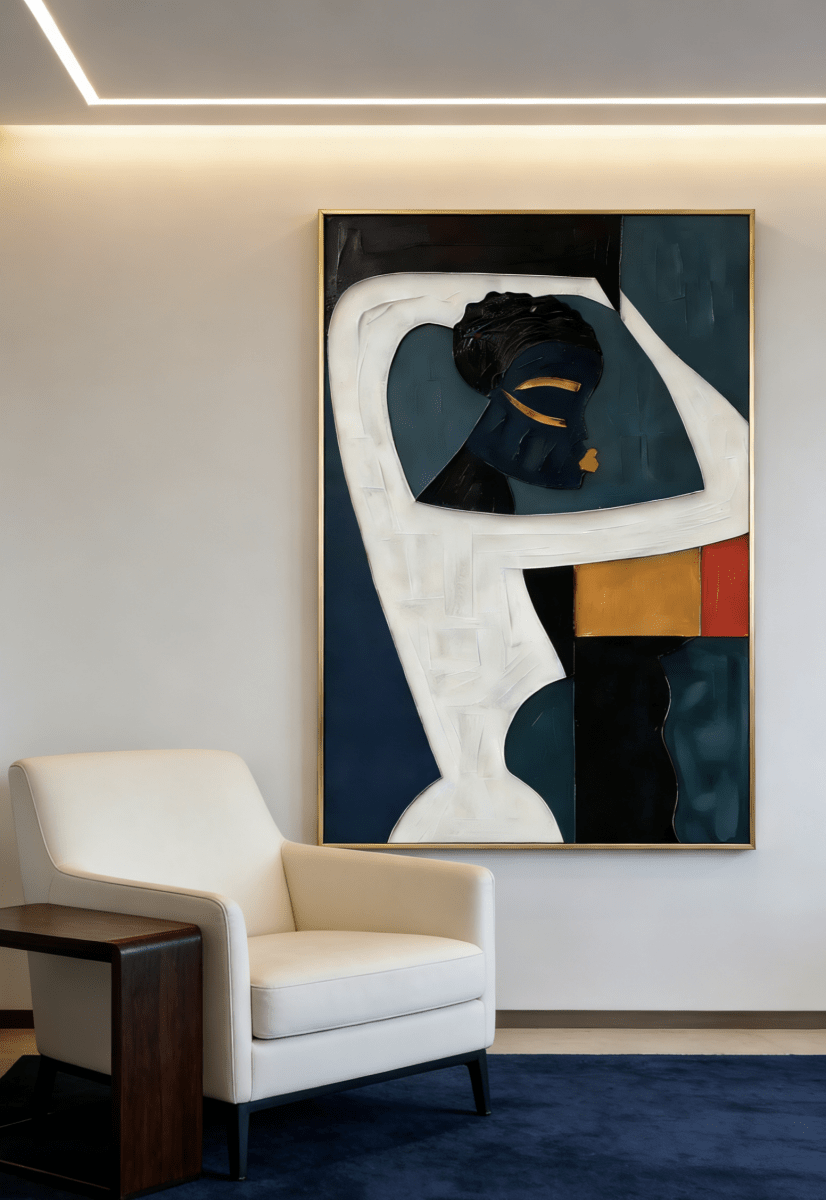
Hang the painting above a cream, beige or leather sofa to create a sophisticated focal point. Its bronze and brown tones work especially well with walnut furniture, natural stone, linen and black accents.
Bedroom
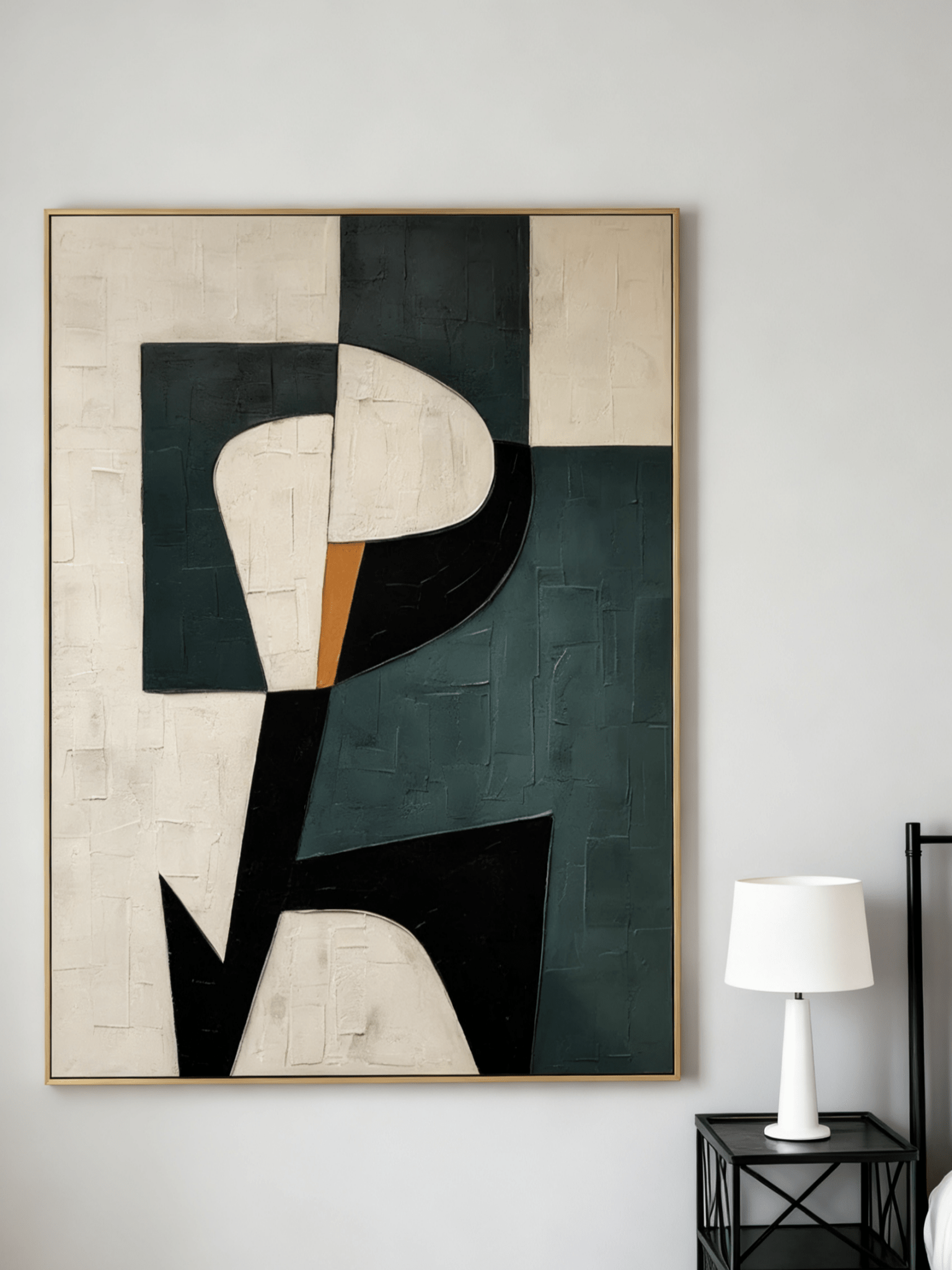
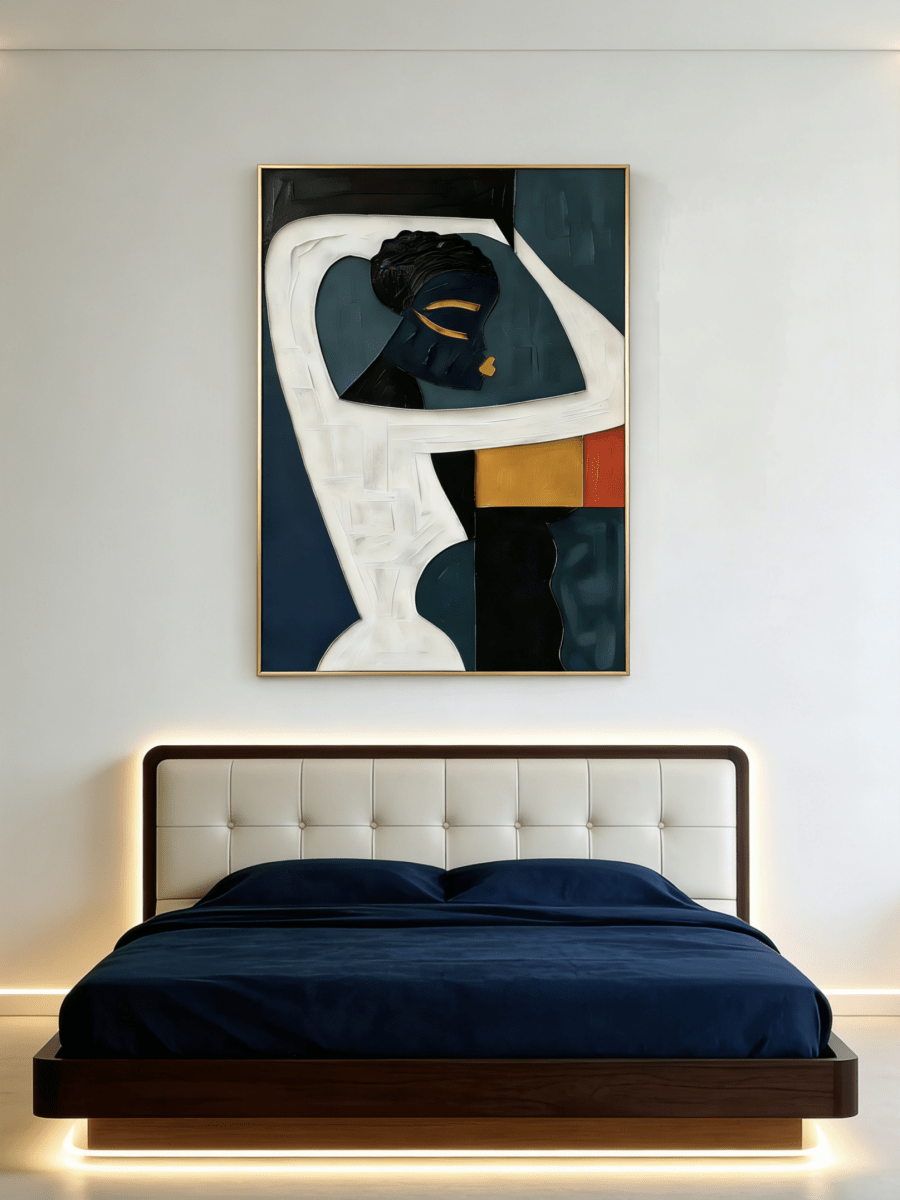
Displayed above the bed, the dark neutral palette creates an intimate and grounded atmosphere. Pair it with warm-white bedding, dark wood furniture and soft ambient lighting.
Open-Plan Dining Room
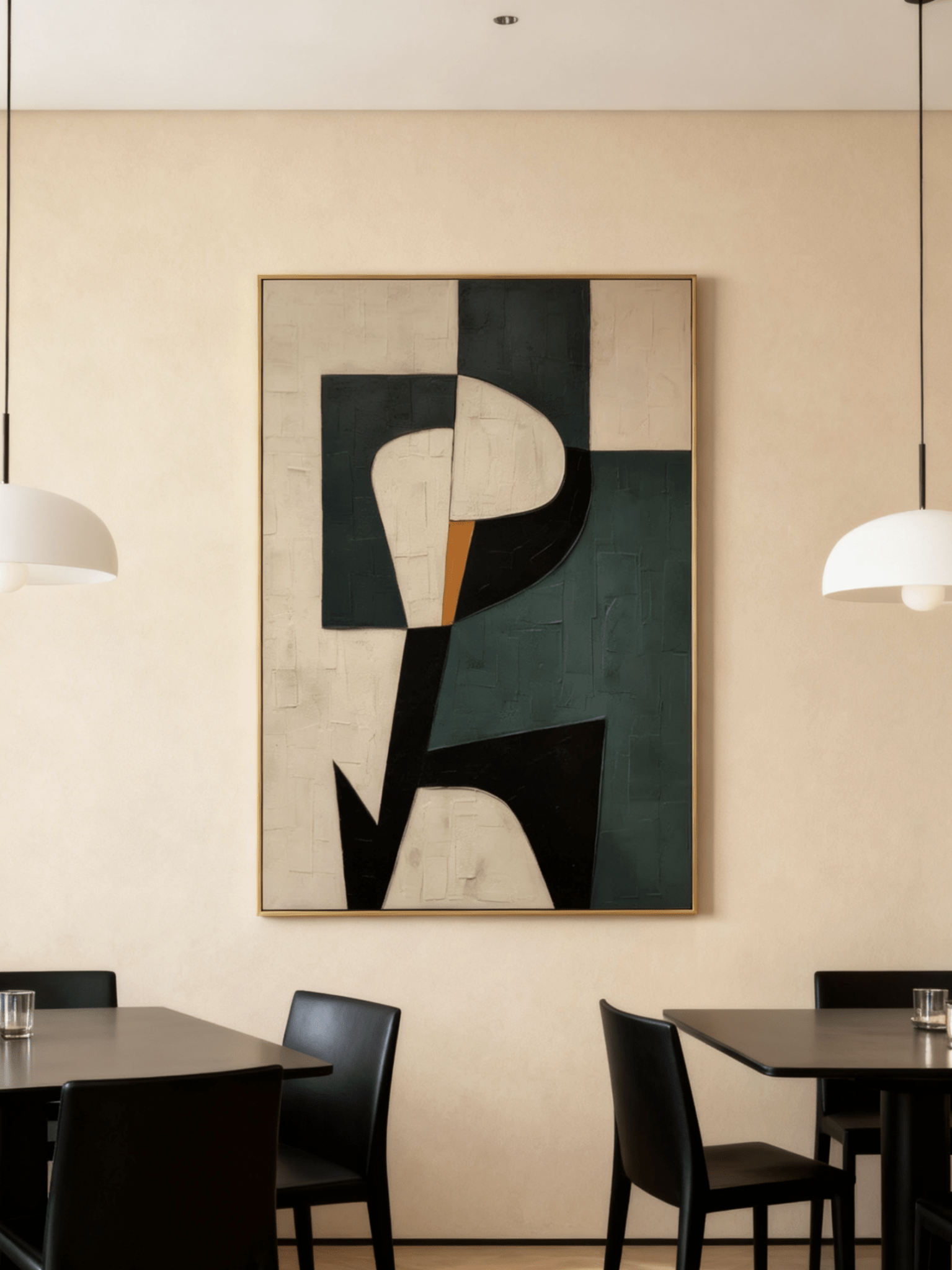
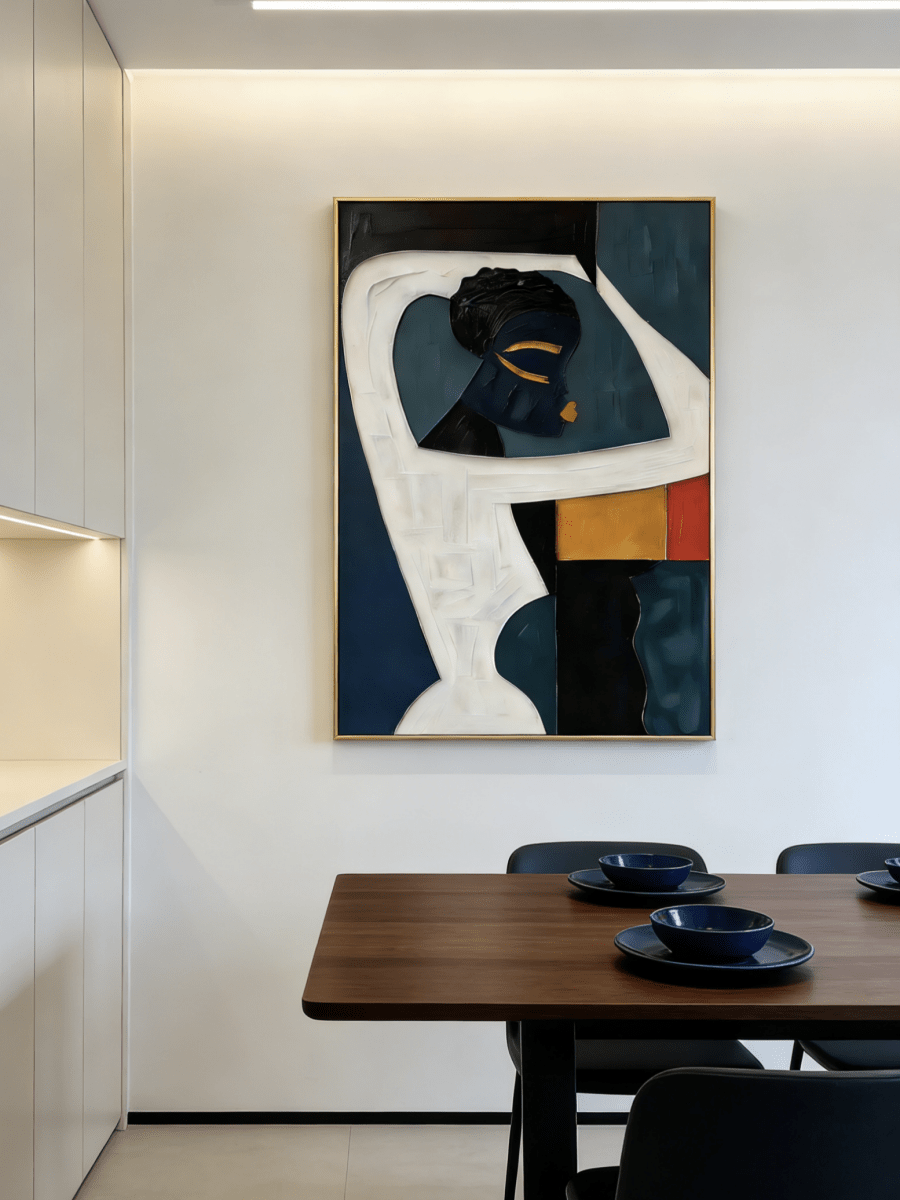
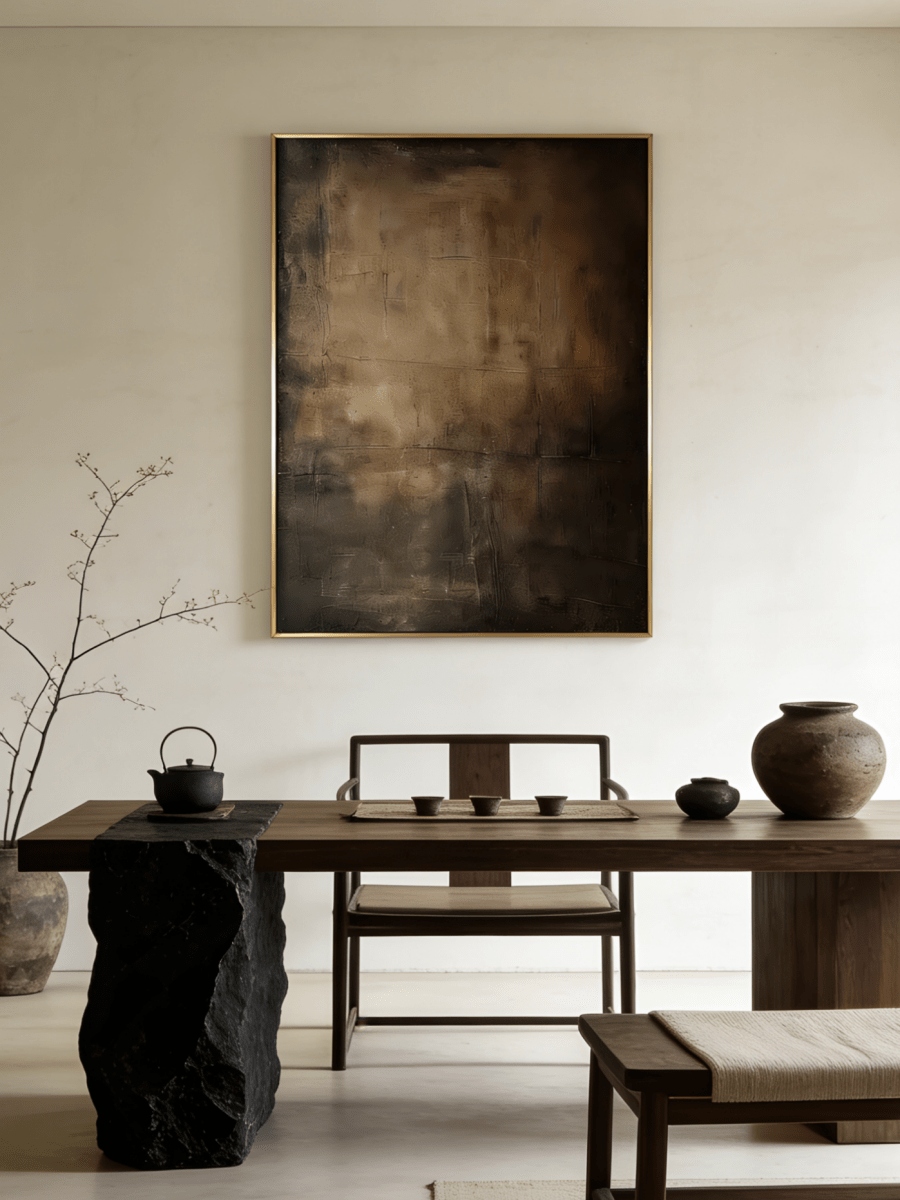
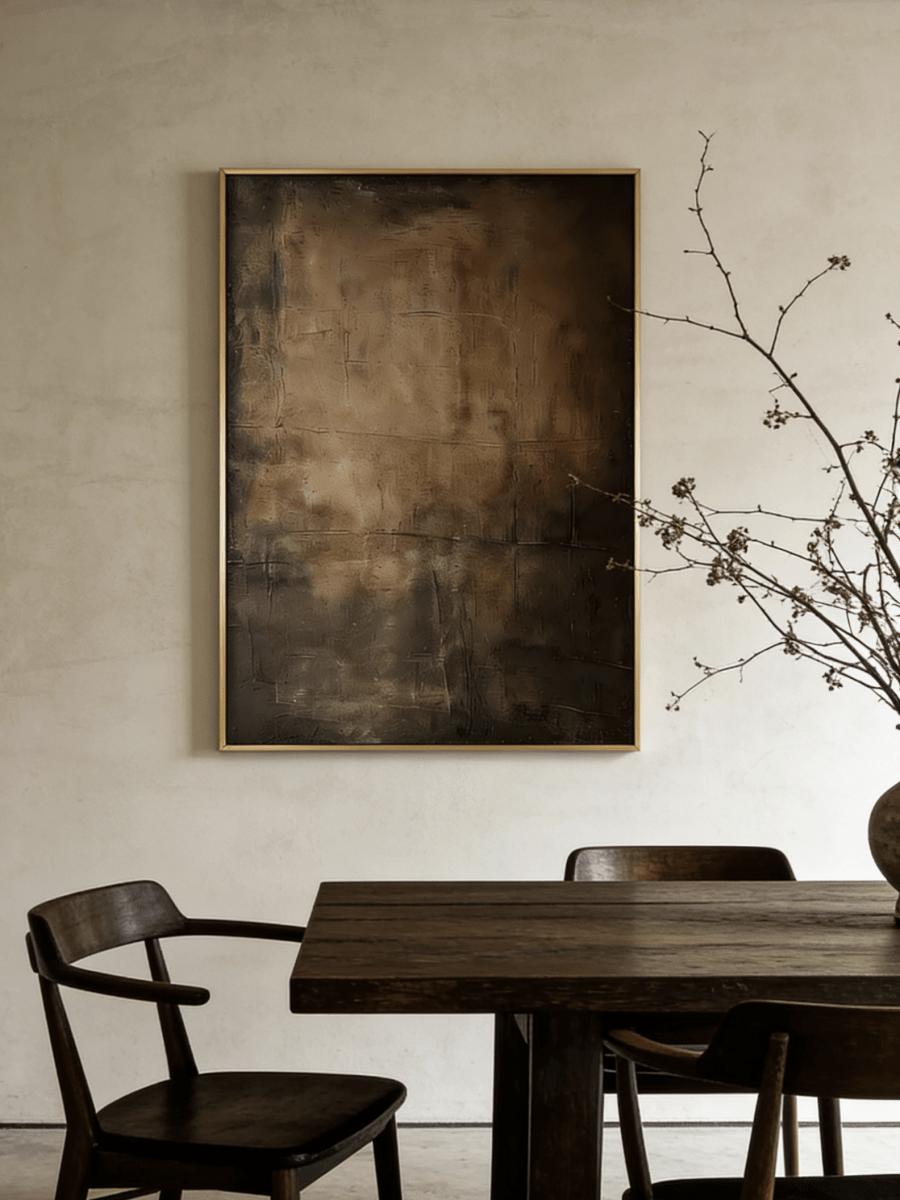
The painting adds depth and character to a dining area without introducing strong, distracting colors. It complements wood dining tables, upholstered chairs, stone surfaces and warm metallic lighting.
Entryway
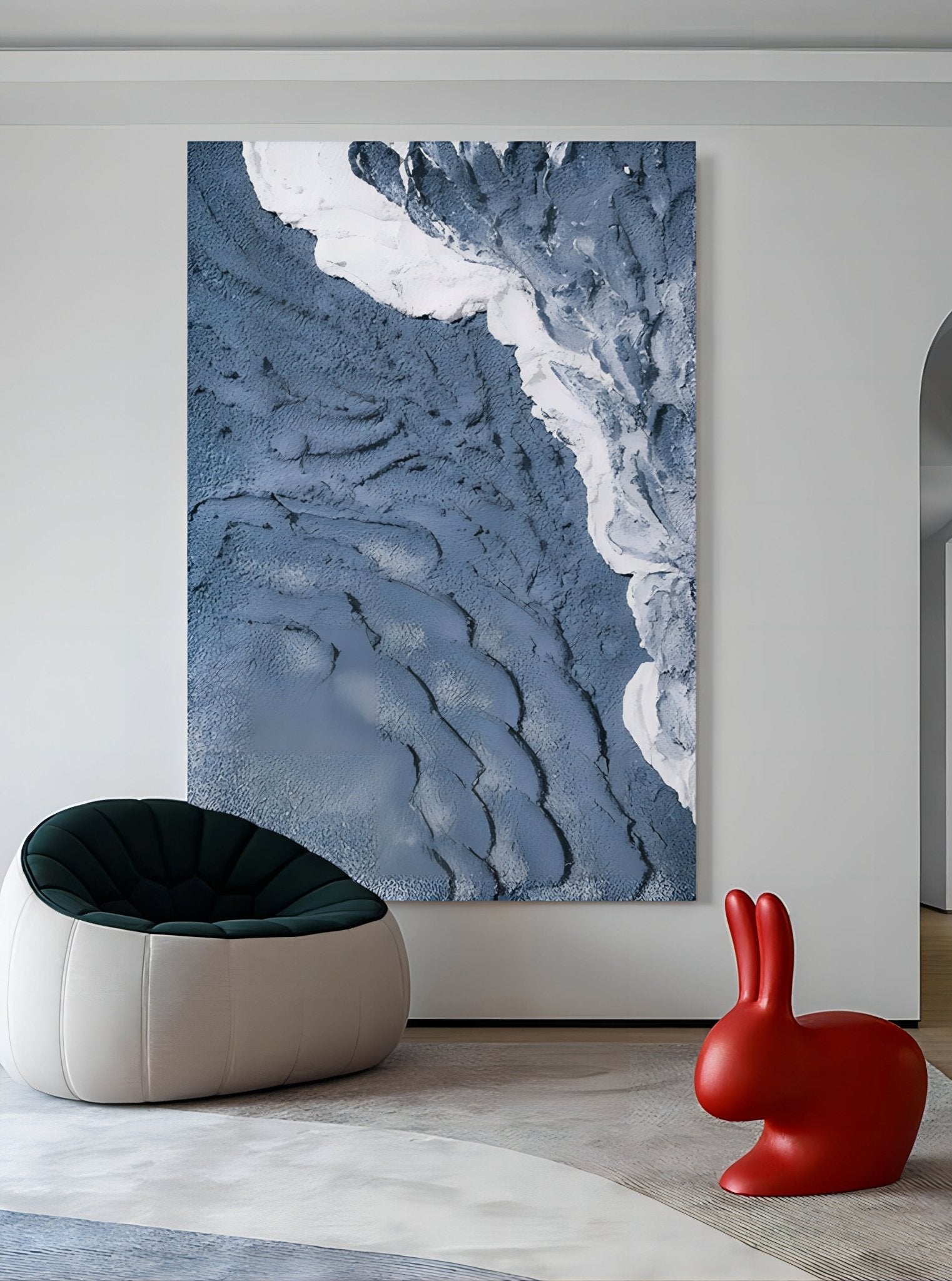
Placed above a console table, the artwork creates a strong and memorable first impression. Its vertical format is particularly suitable for foyer walls and narrow architectural spaces.
Home Office or Reading Area
The restrained palette and contemplative mood make the painting suitable for a study, home library, reading corner or executive-style workspace.
Frequently Asked Questions
1. Is this artwork hand painted or printed?
This artwork is hand painted, featuring natural variations in color, surface, and individual marks rather than the uniform appearance of a flat printed reproduction.
2. Does the artwork have real texture?
Yes. The surface contains subtle hand-worked texture, irregular marks, and distressed details.
Its texture is more weathered and organic than heavily sculptural or three-dimensional.
3. What colors are used in this artwork?
The primary colors include warm beige, sand, ivory, off-white, light taupe, charcoal, and black.
The overall palette is neutral and warm.
4. Is the black area pure black?
It appears primarily as charcoal and near-black, with slight tonal variation created by the painted surface.
This softer black helps the artwork integrate naturally with beige and neutral interiors.
5. Will my painting look exactly like the product image?
Because each artwork is created by hand, subtle variations in marks, texture, edges, and tonal transitions are natural.
The overall composition, proportions, color palette, and artistic character remain consistent with the artwork shown.
6. What interior styles work best with this painting?
It works especially well with:
Wabi-Sabi, Organic Modern, Japandi, Minimalist, Contemporary, Scandinavian, and Neutral interiors.
7. What colors pair well with beige and black wall art?
This artwork pairs especially well with cream, beige, greige, taupe, natural oak, walnut, black, warm stone, and linen tones.
8. What size wall art should I choose?
For a tall wall or entryway, a larger vertical canvas can create a strong architectural statement.
When displayed above a console, dresser, or sideboard, choose a size that feels substantial enough to visually connect with the furniture below.
9. How should I care for hand-painted wall art?
Gently remove surface dust with a clean, soft, dry cloth or soft duster.
Avoid abrasive cleaning, excess moisture, strong heat, and prolonged direct sunlight.
10. How long does production and delivery take?
Each painting requires approximately 1–2 weeks to create.
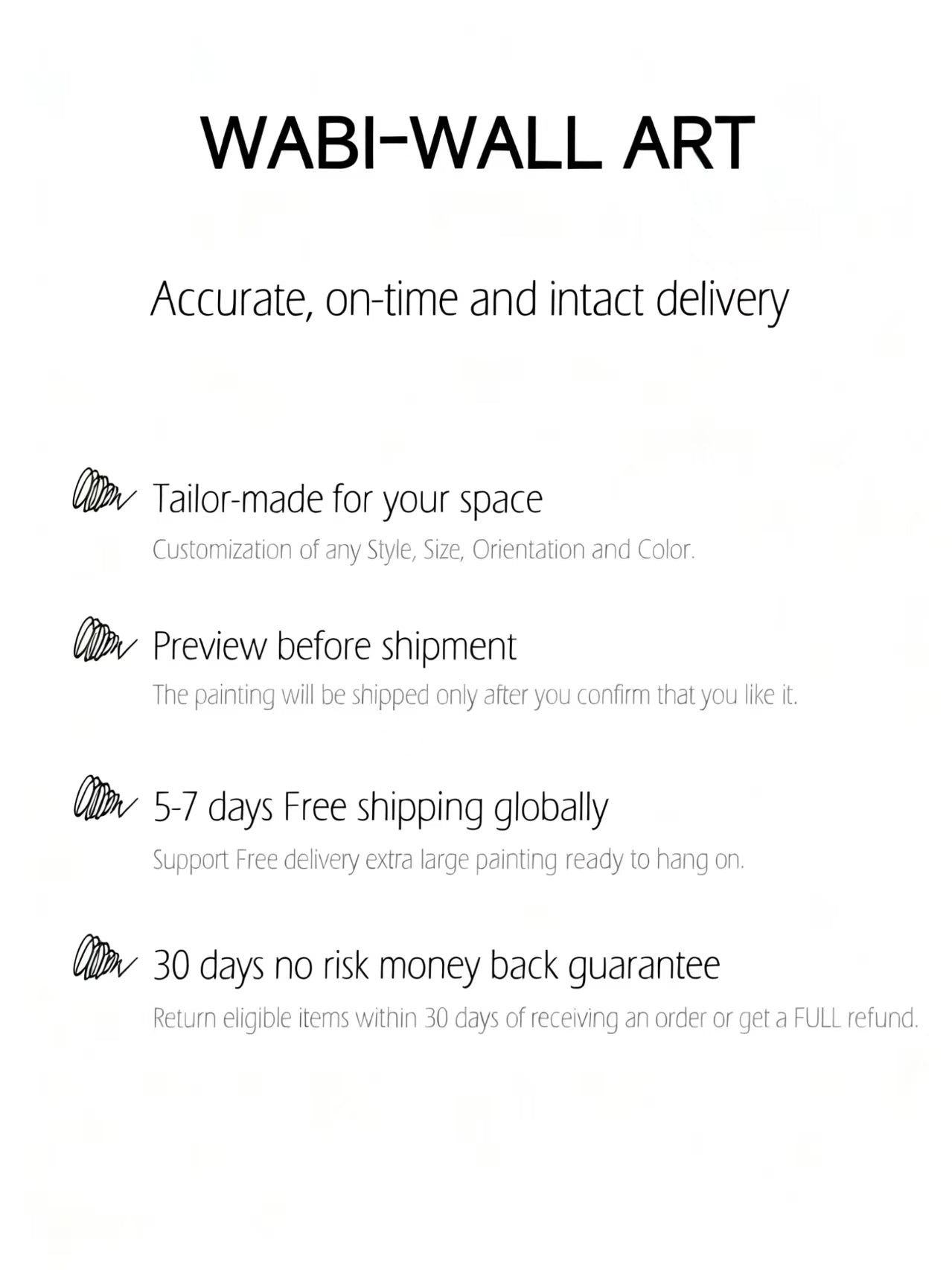
After completion, it ships via FedEx or DHL, with delivery typically taking approximately 5–7 days.
Worldwide shipping is free, and the artwork is covered by a 30-day return and exchange policy.
• Style: Wabi Sabi Art
•Artist:Akari Kobayashi
•Orientation:Vertical
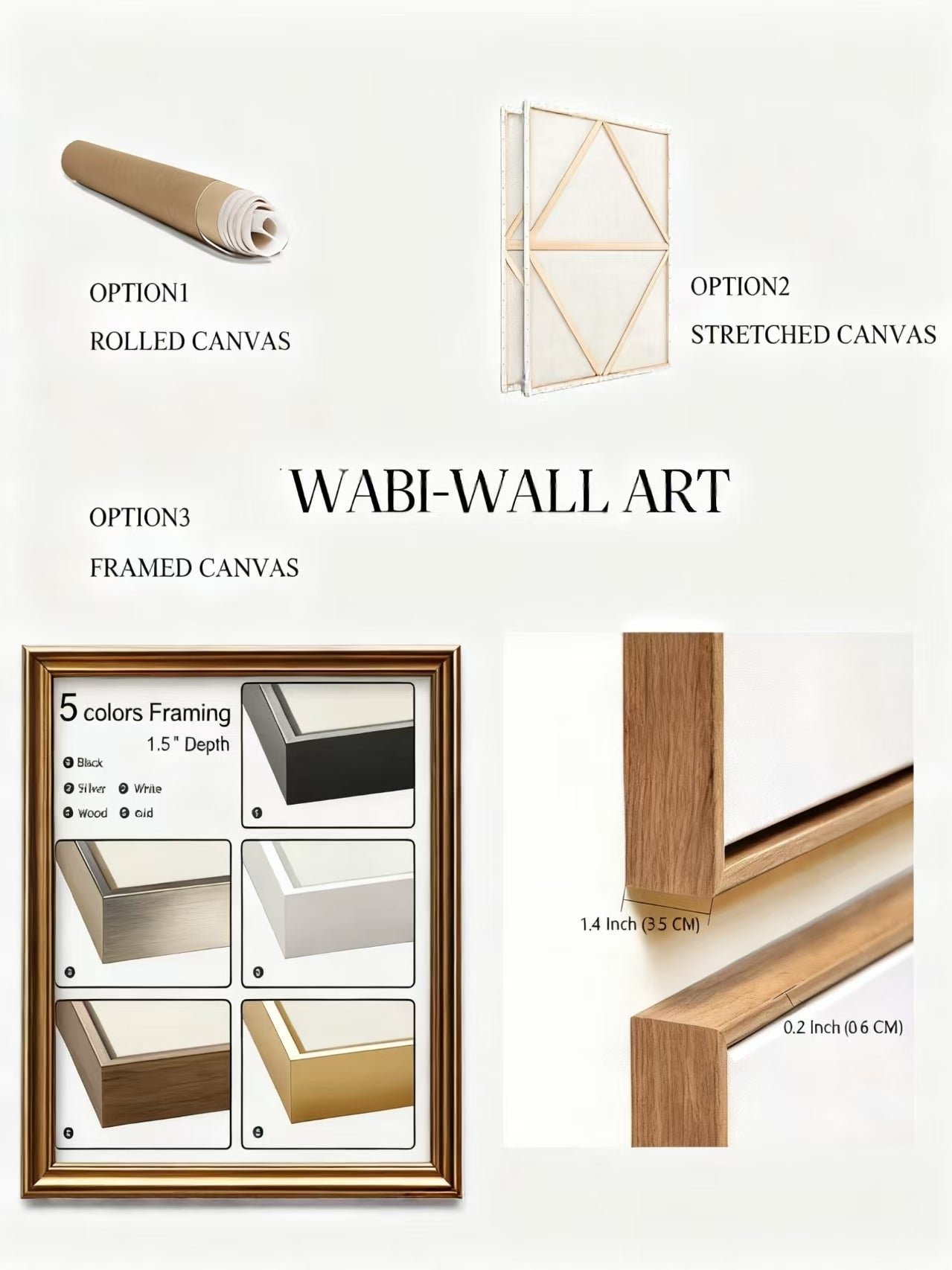
Each artwork is made to order. Creation normally takes 1–2 weeks before dispatch.
After the artwork is completed, delivery normally takes approximately 5–7 business days by DHL or FedEx.
Custom dimensions and palette adjustments may be available. Contact info@wabiwallart.com before ordering to confirm the request.
Find Your Perfect Artwork Size
See how each artwork size fits your space.
Available range: 24–240 inches


About Artist
Akari Kobayashi, born in Kyoto, Japan in 1989, is a contemporary painter who distinguishes herself in the contemporary art world with her oil paintings that profoundly embody the Japanese traditional aesthetic of "wabi-sabi."
She combines the rich expressiveness of the oil painting medium with the core of the wabi-sabi spirit, developing a silent yet powerful visual language. Through her works, she invites us to re-examine the infinite richness contained within "emptiness" and "simplicity."