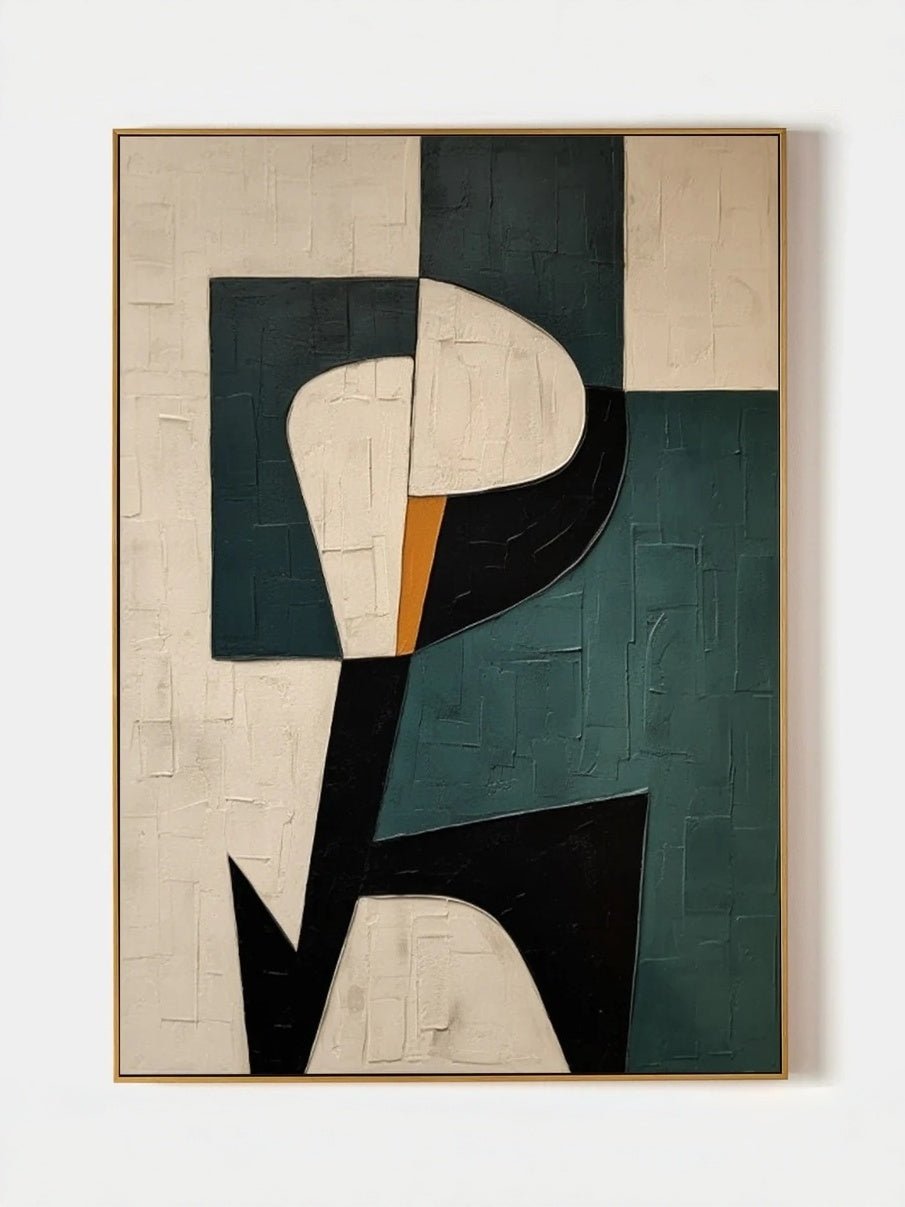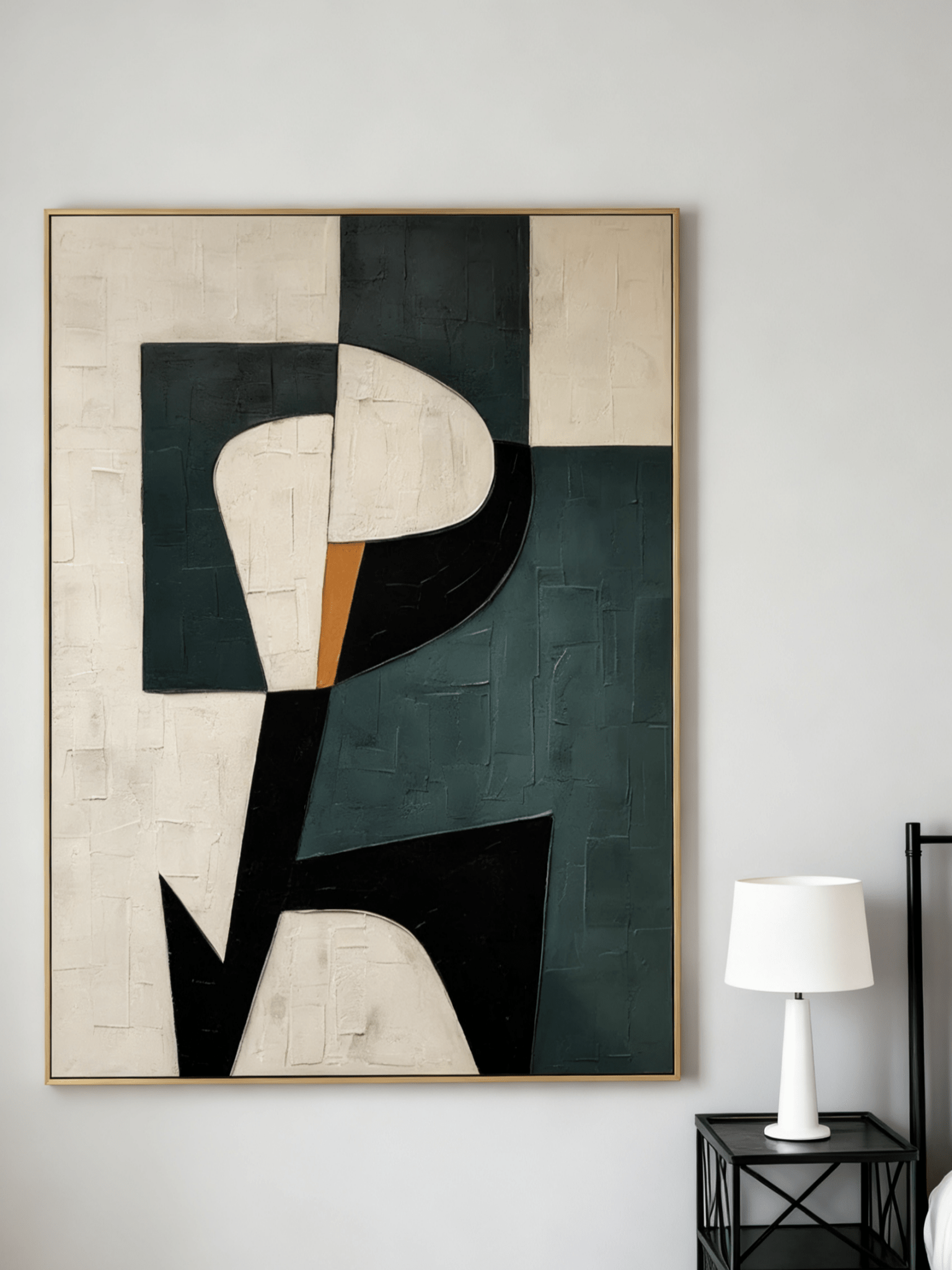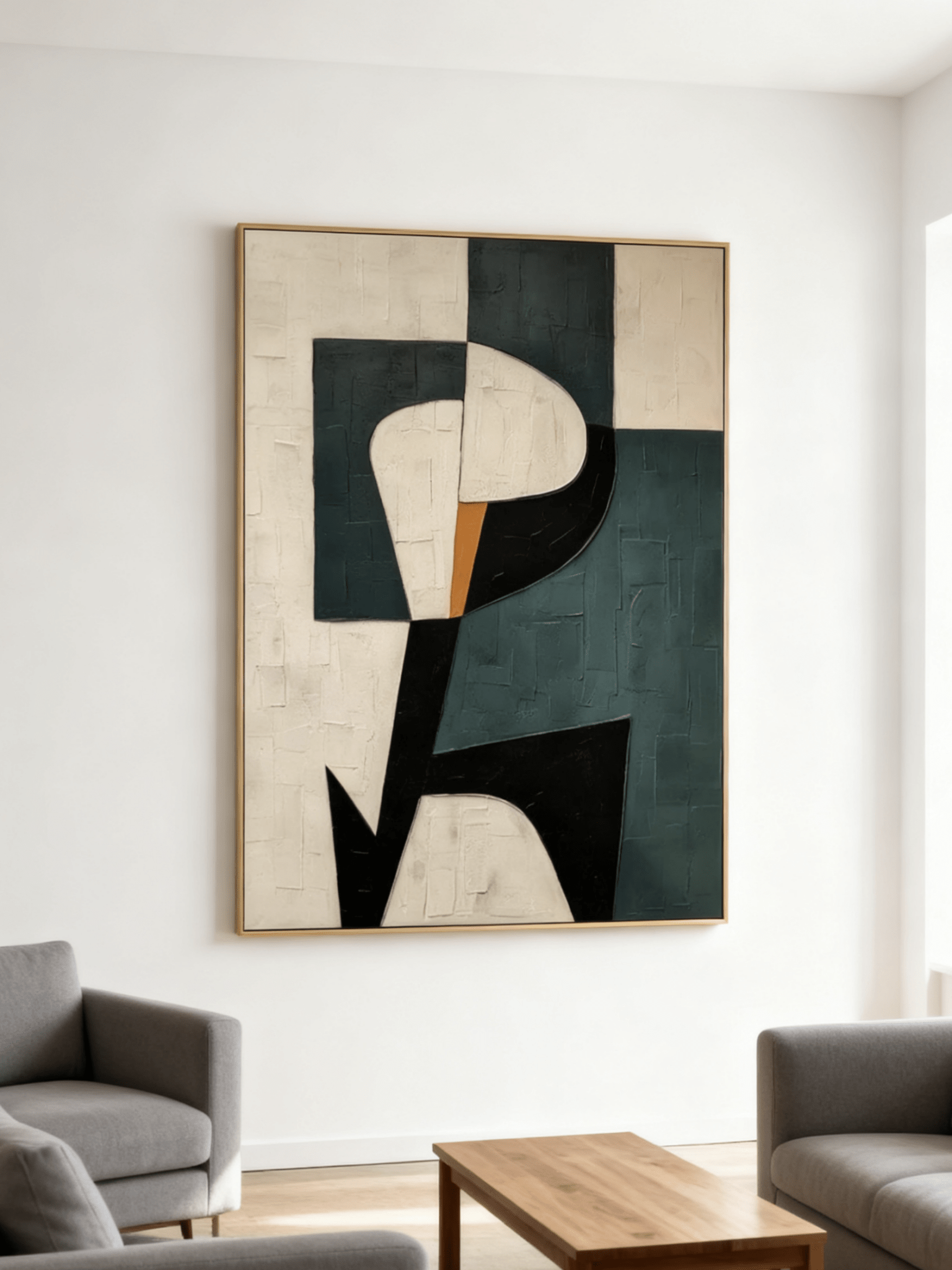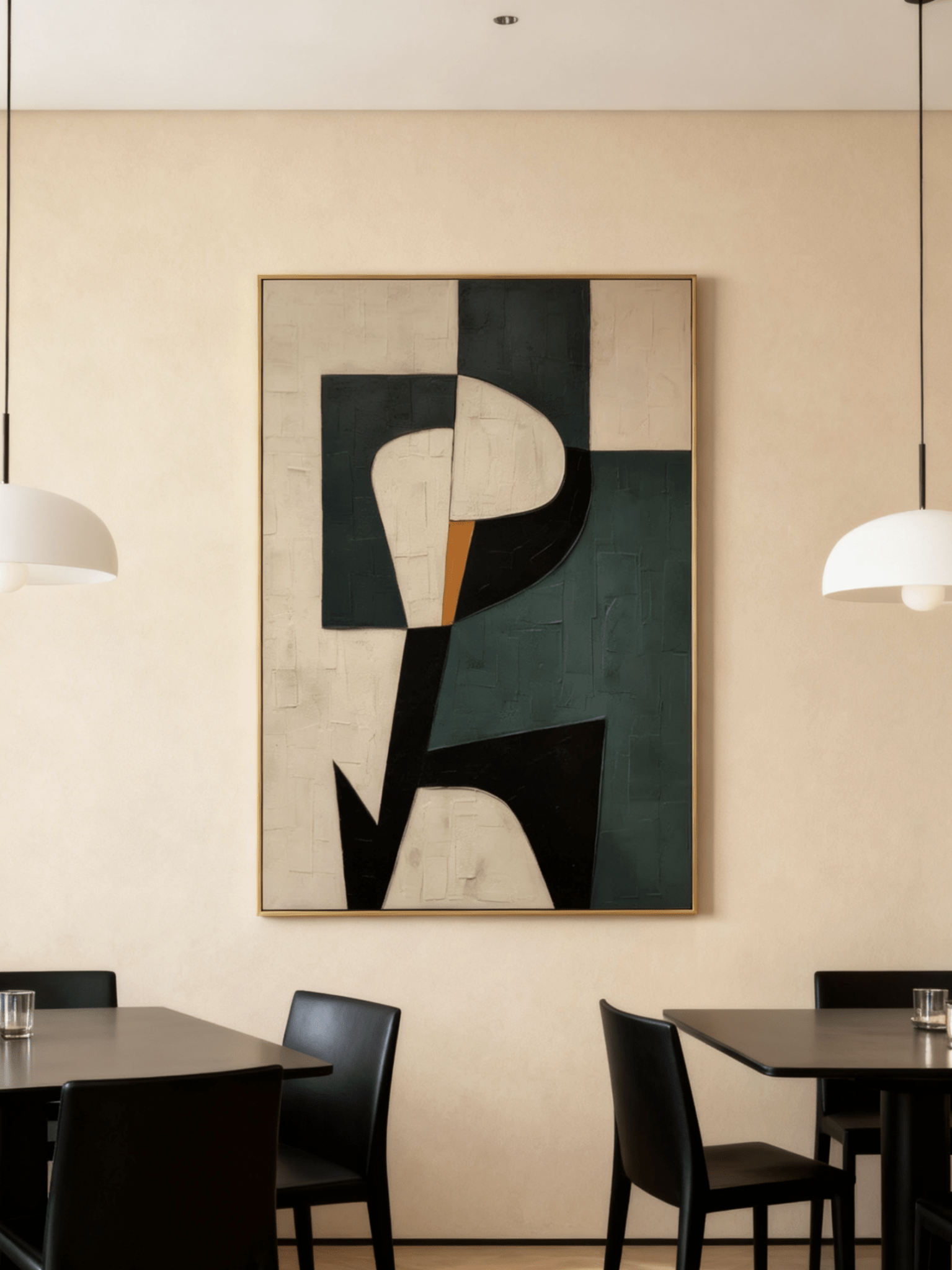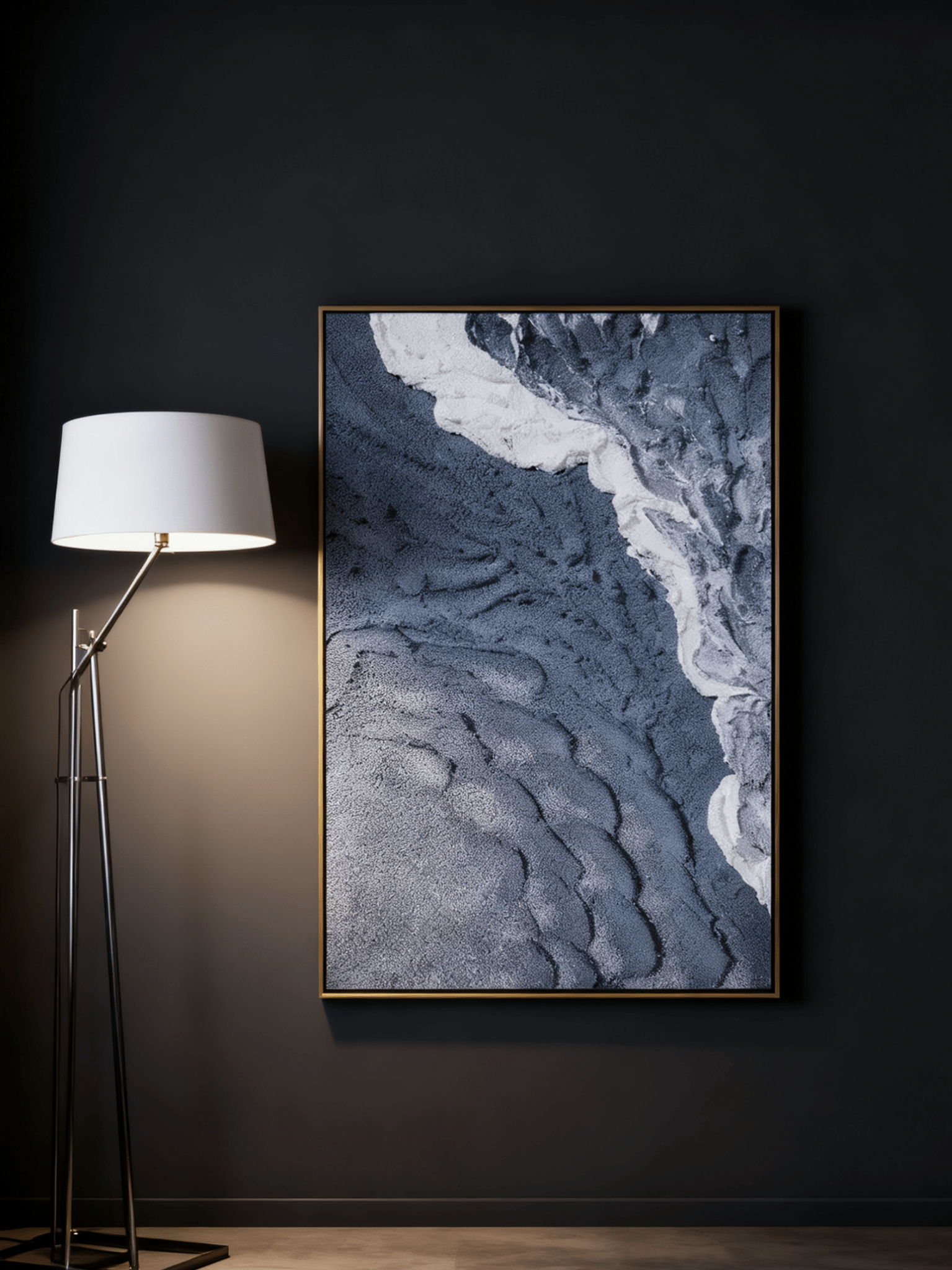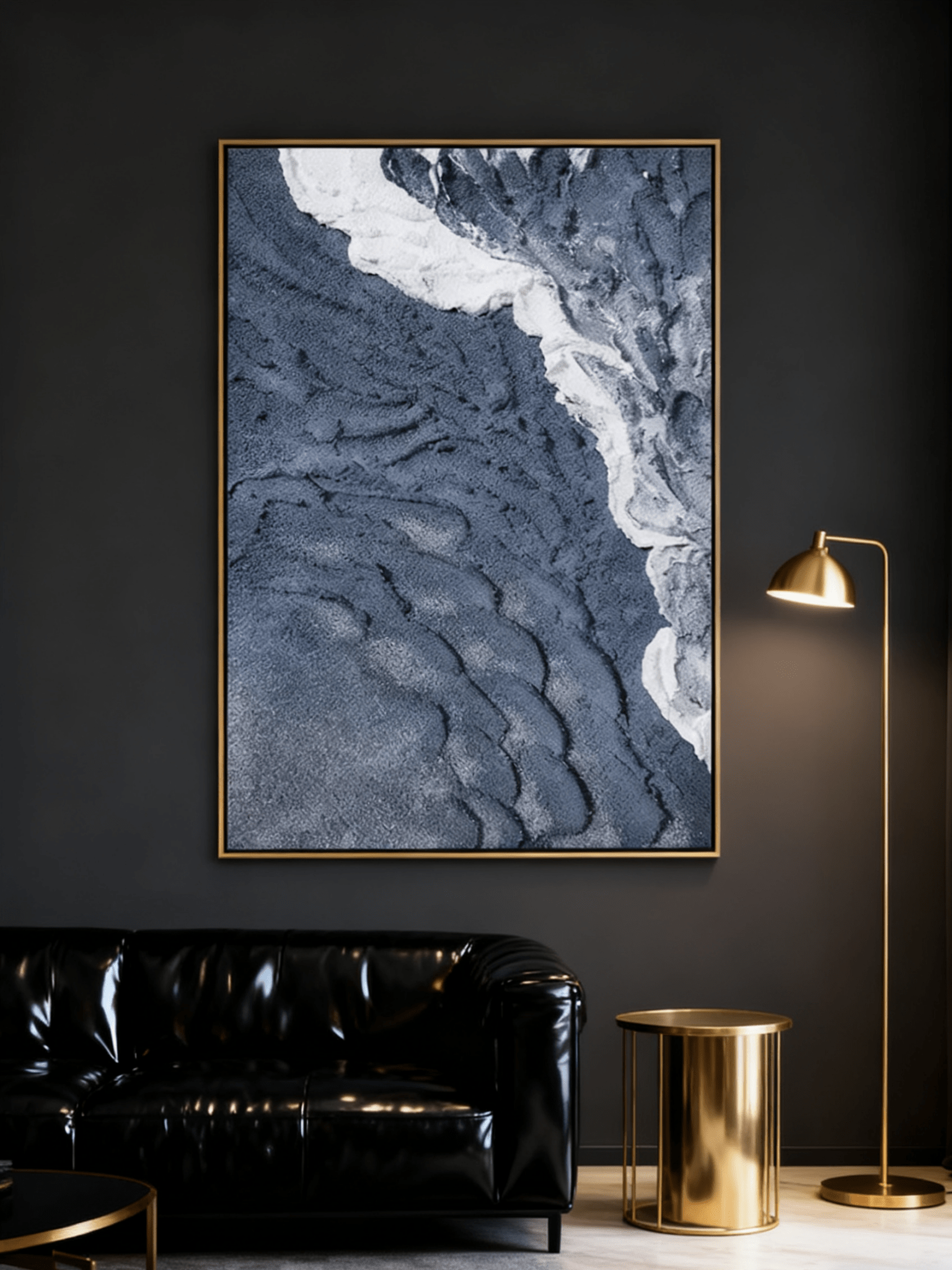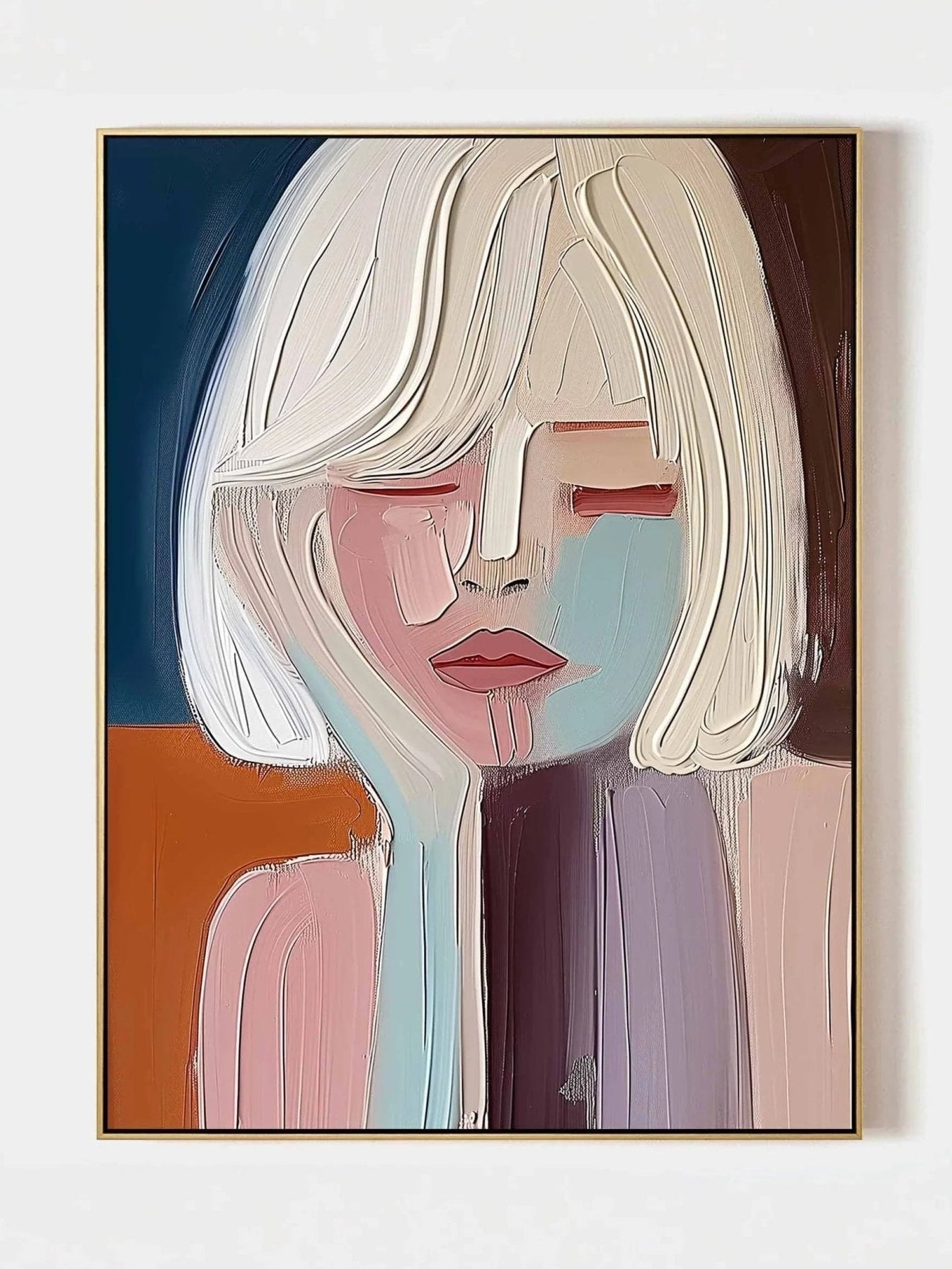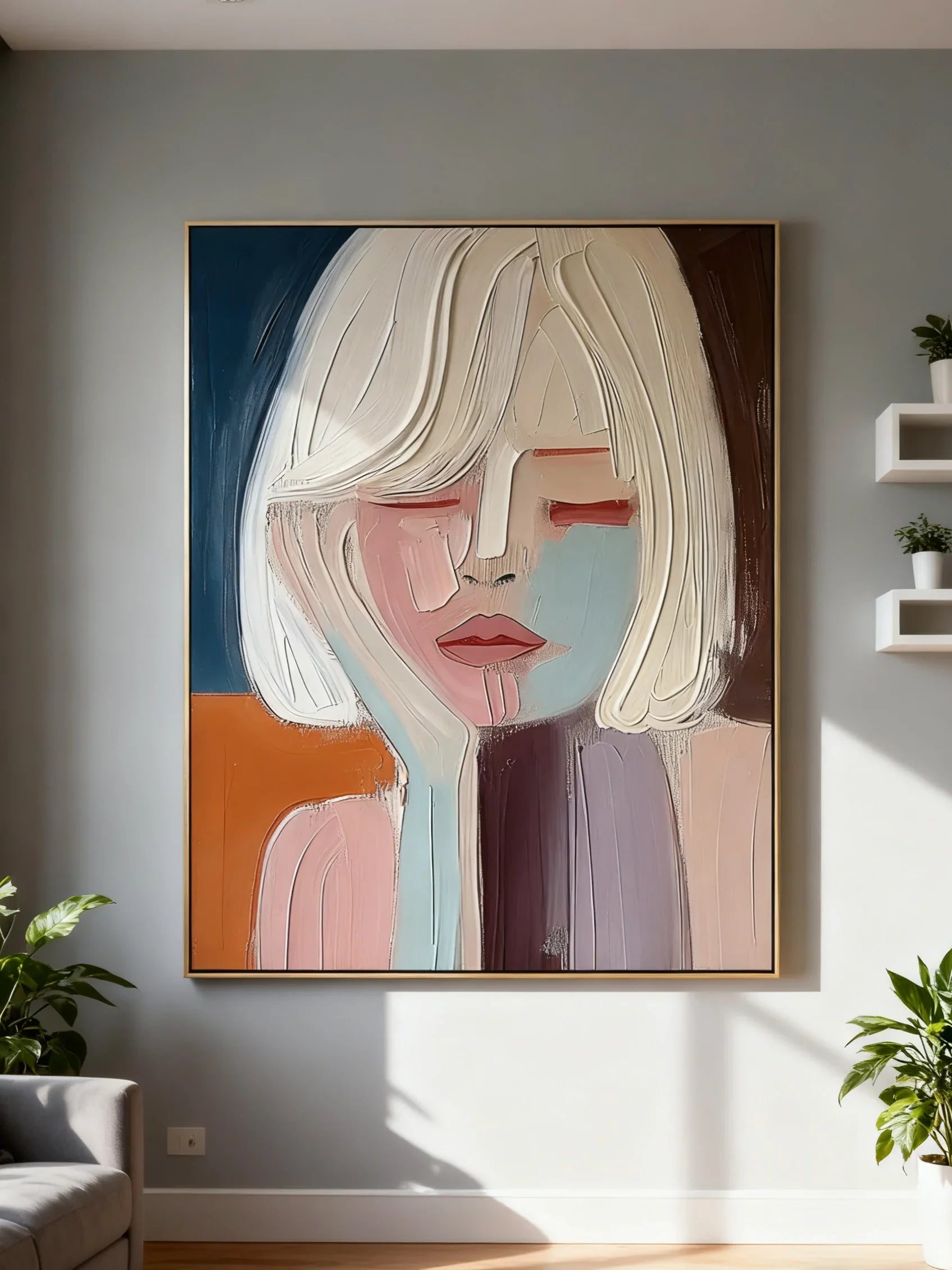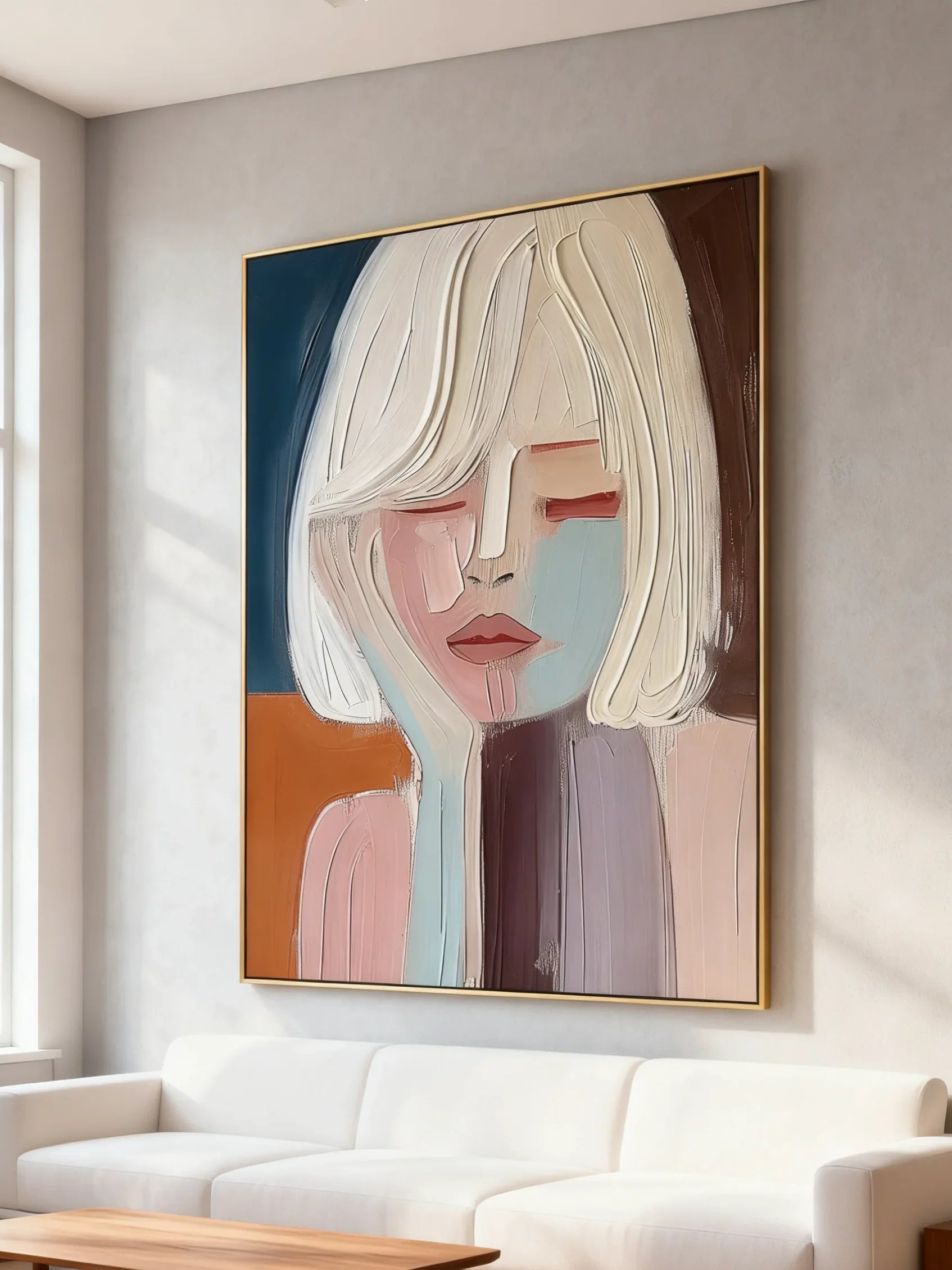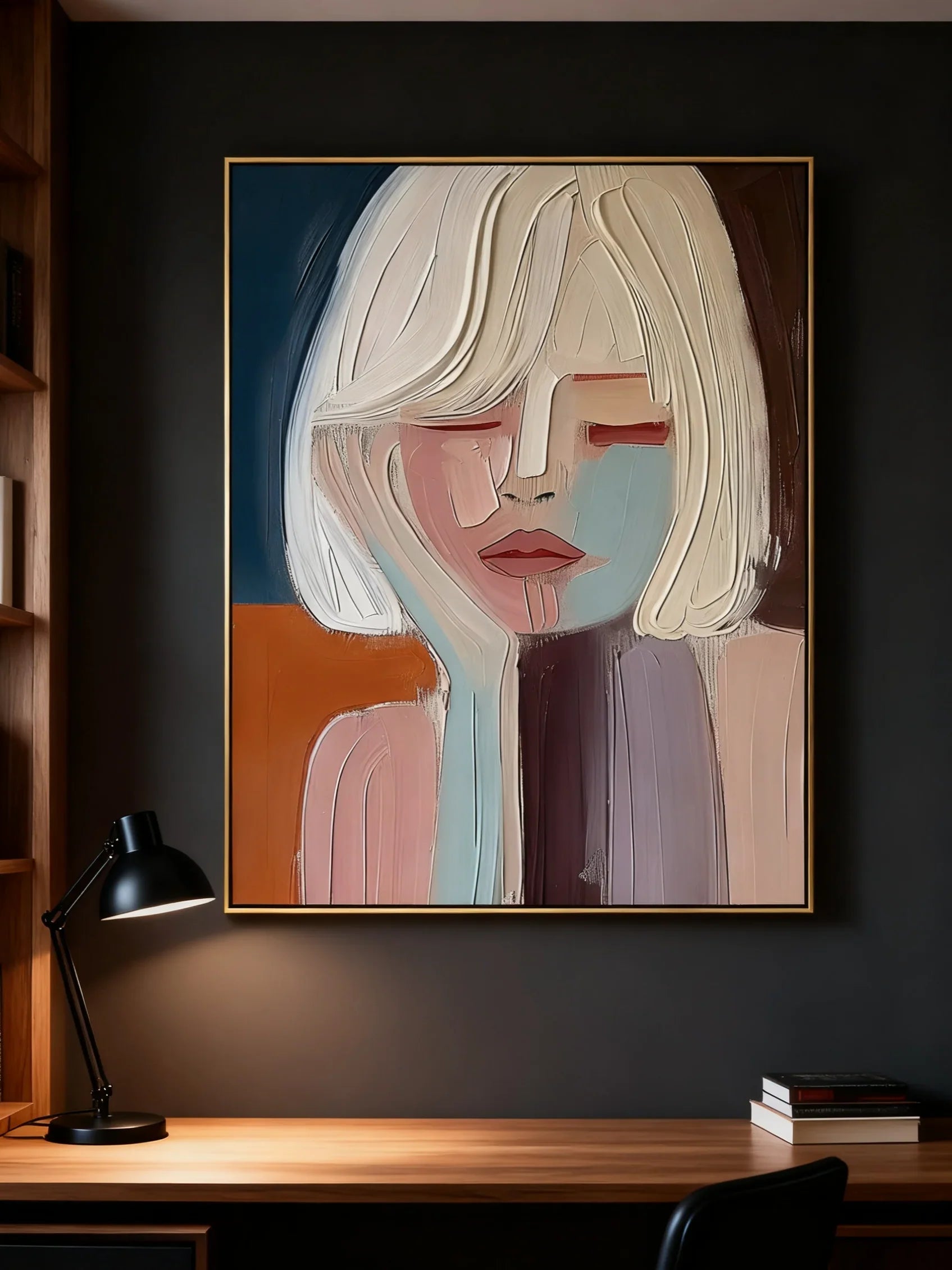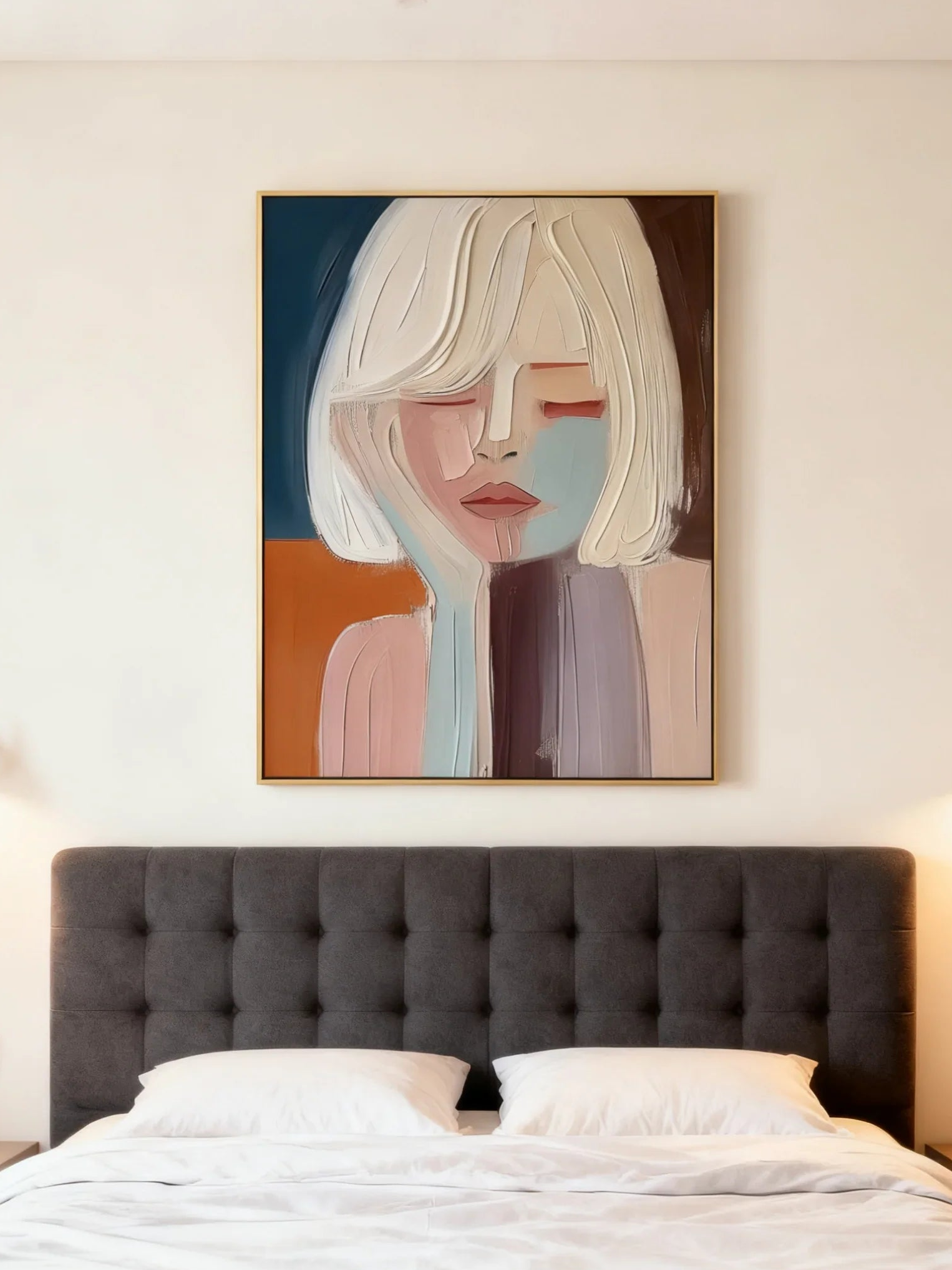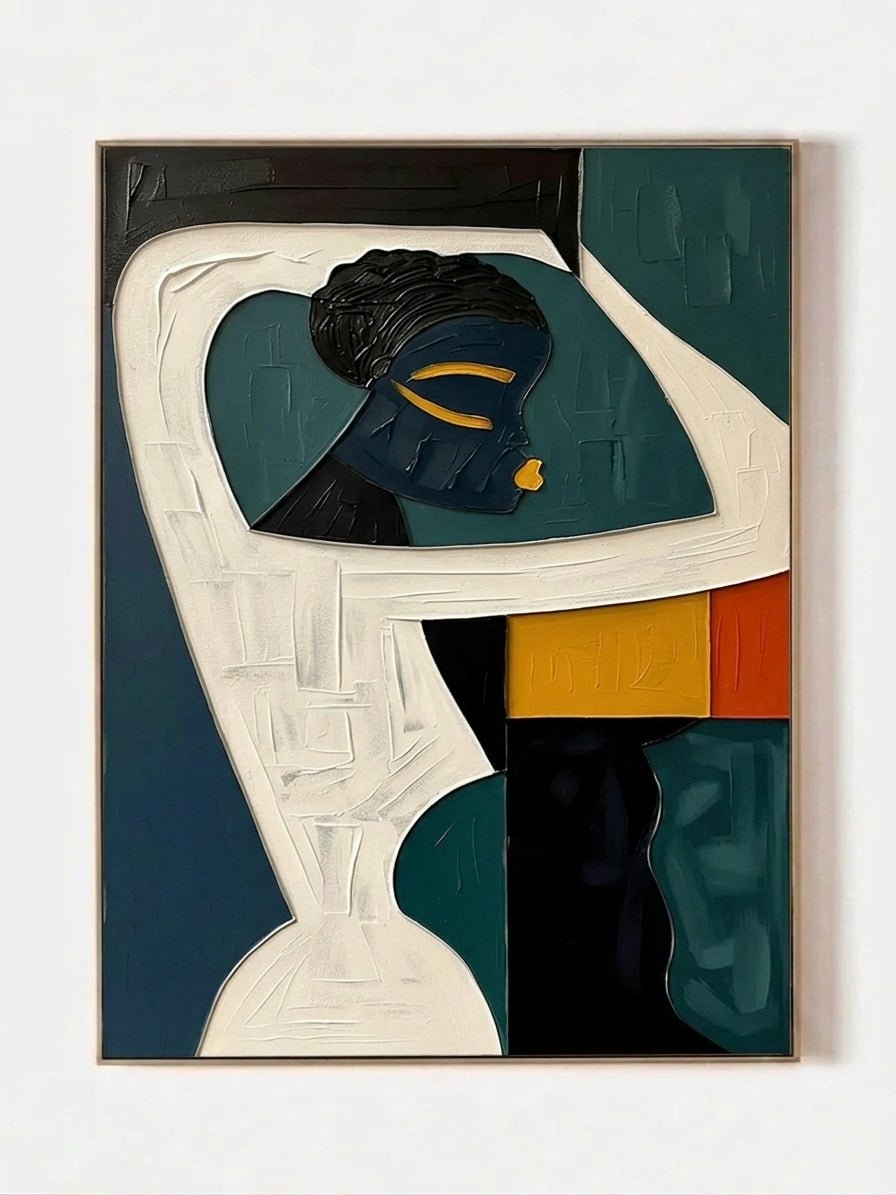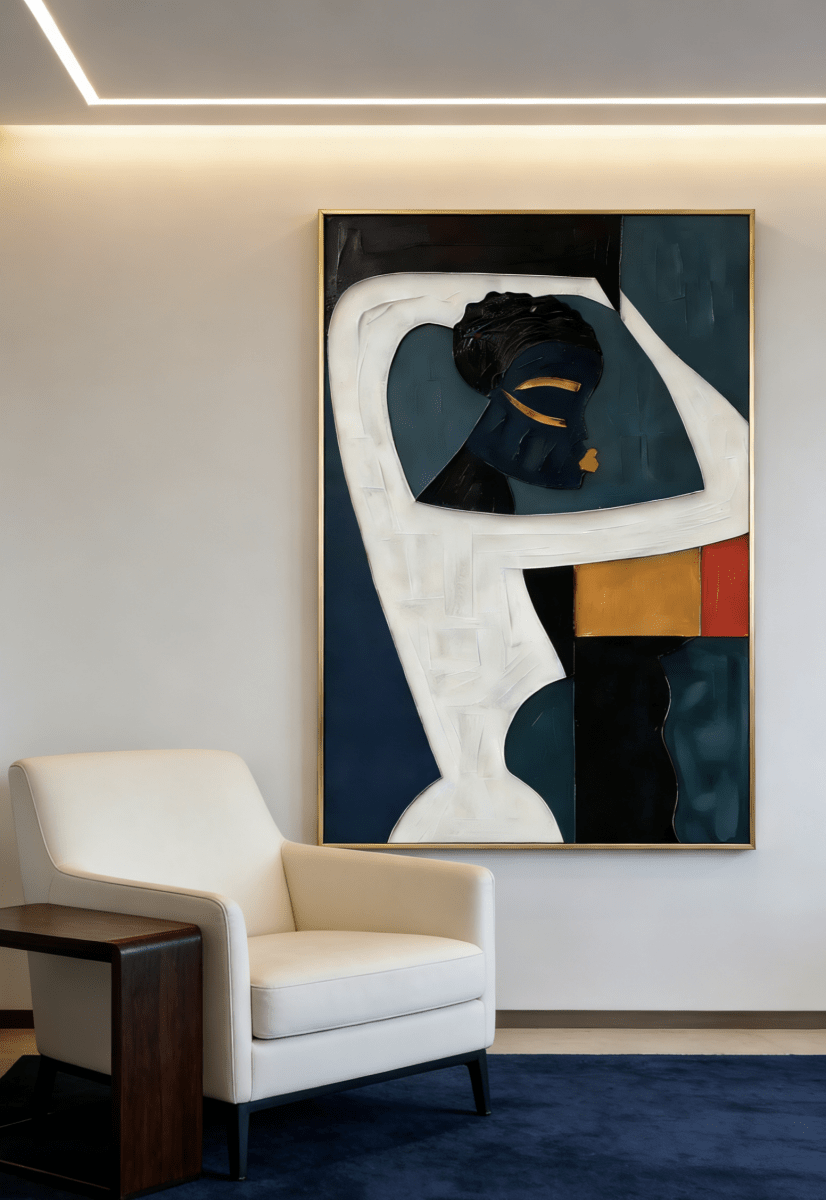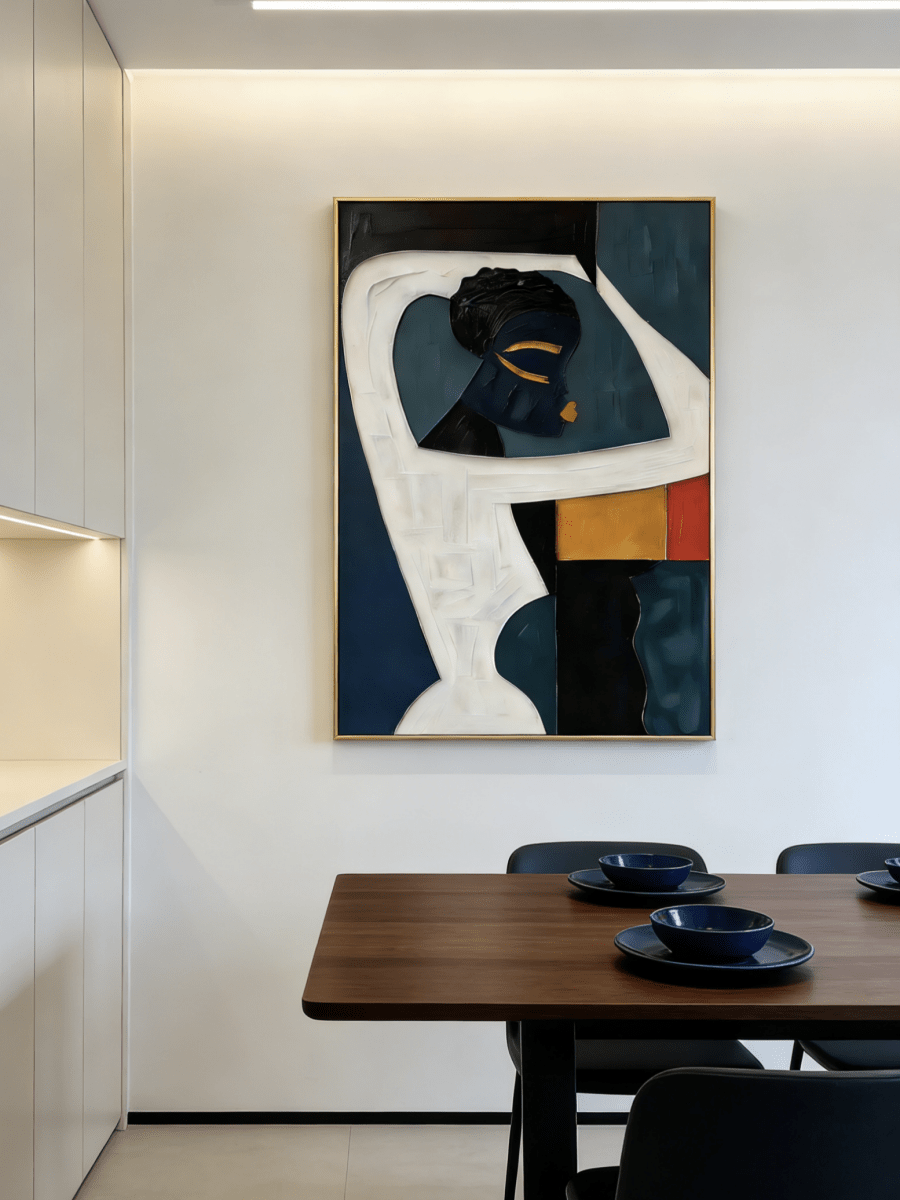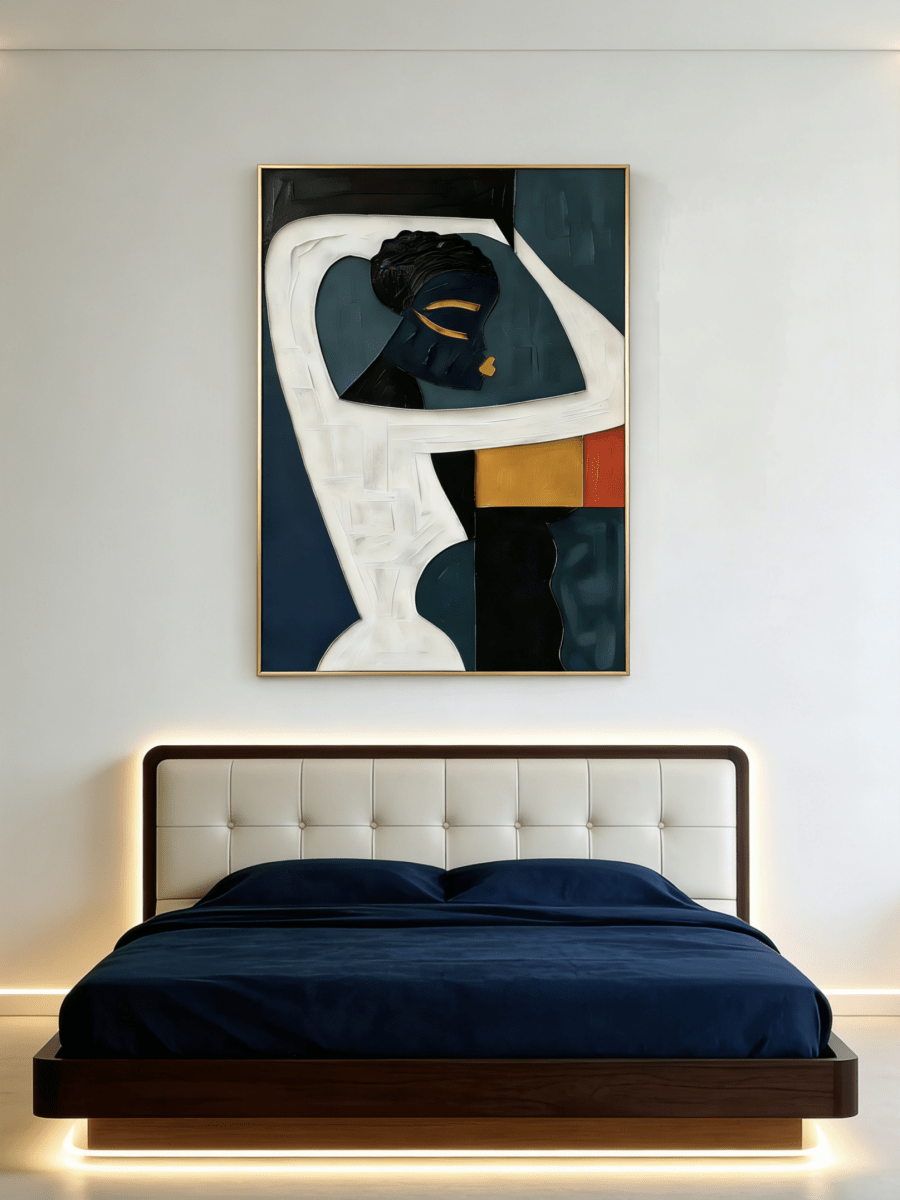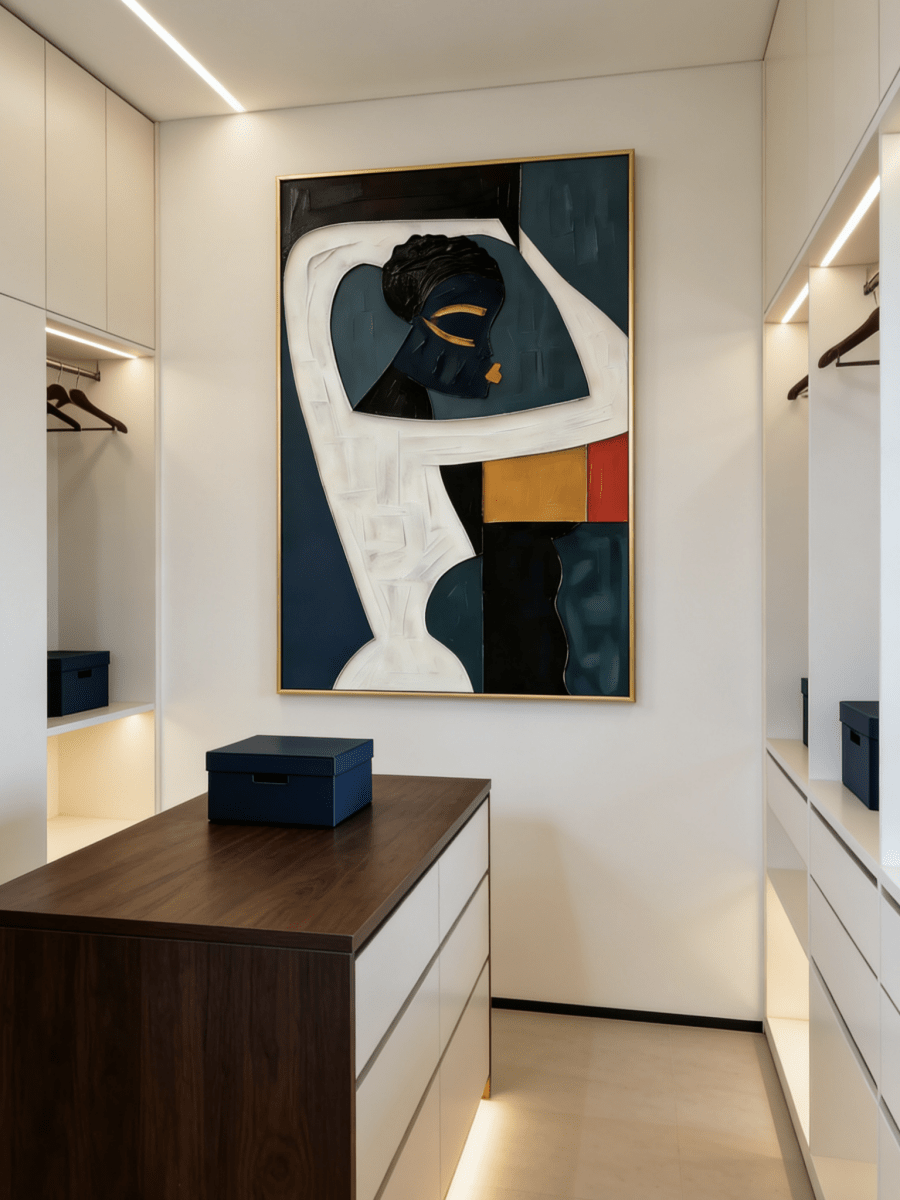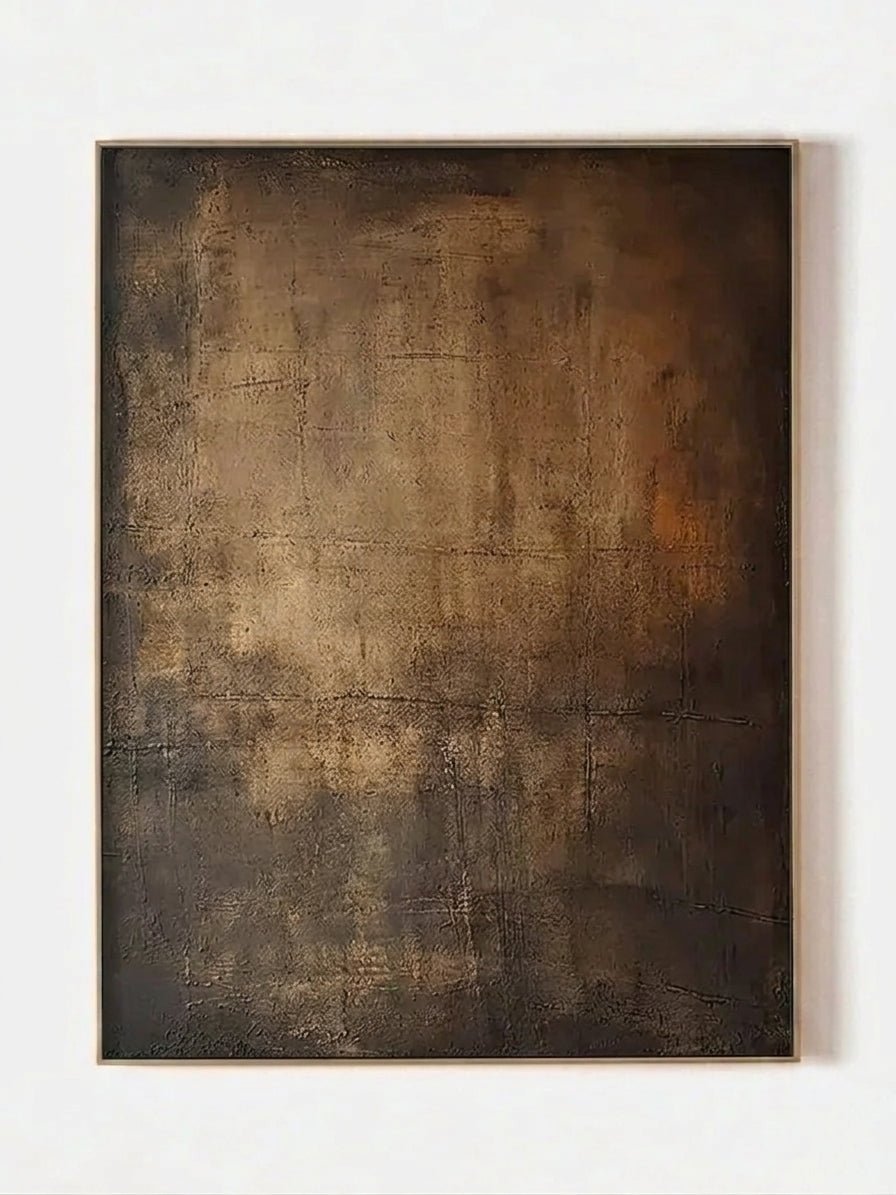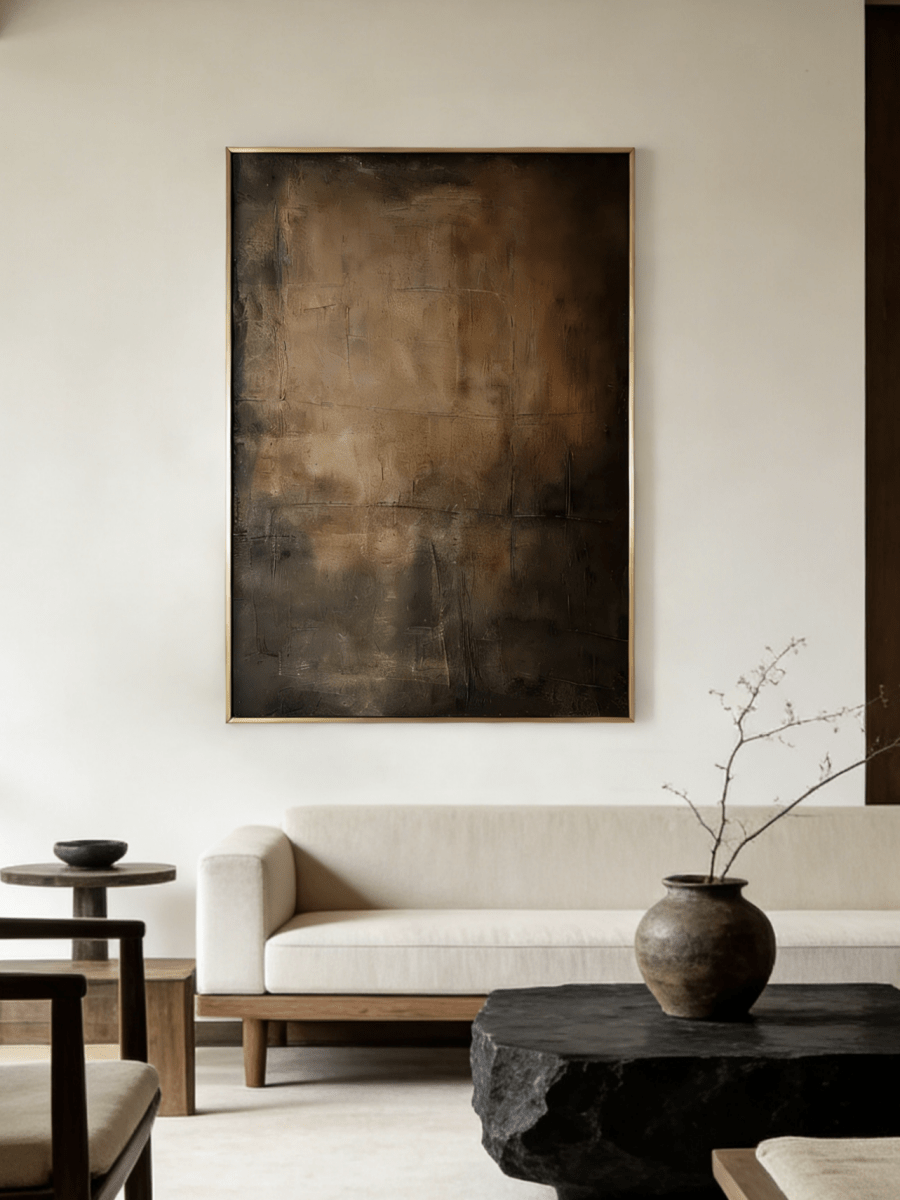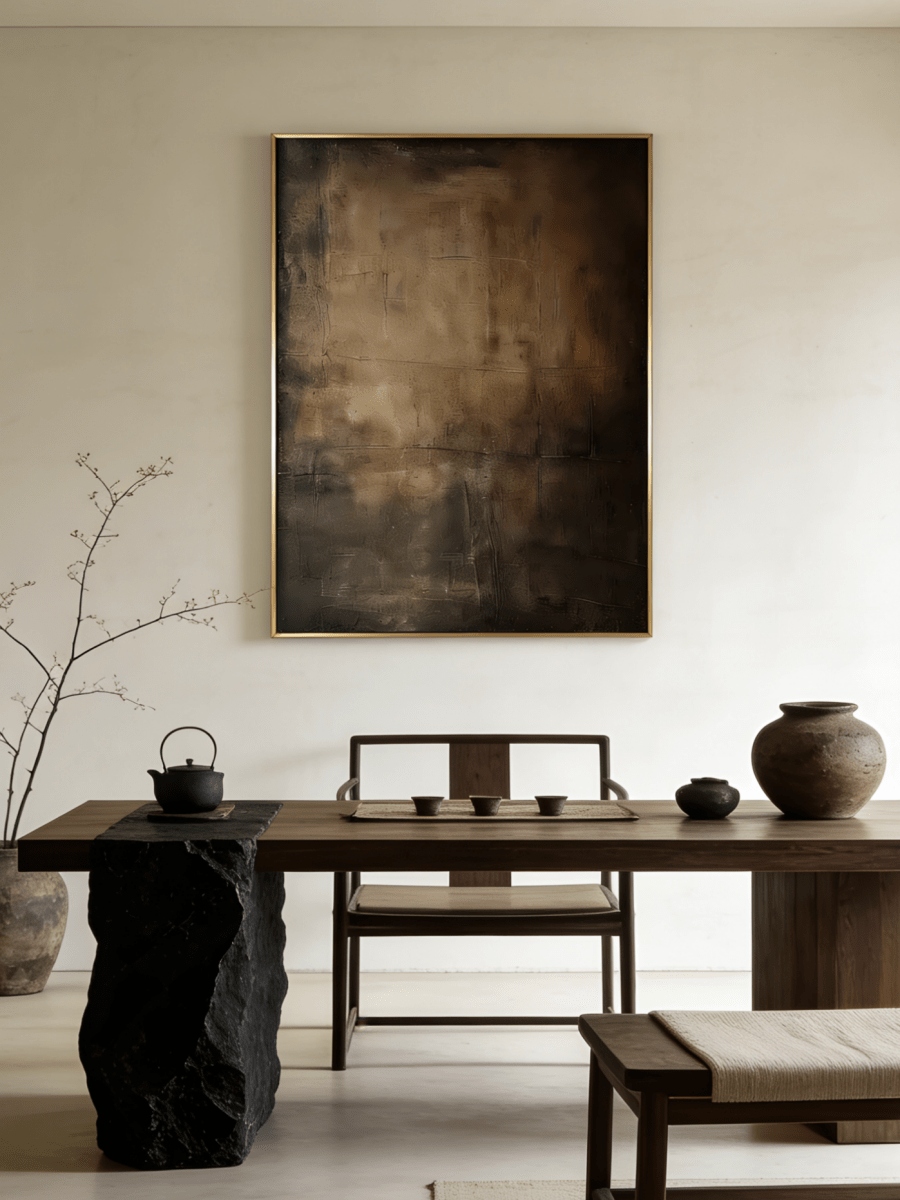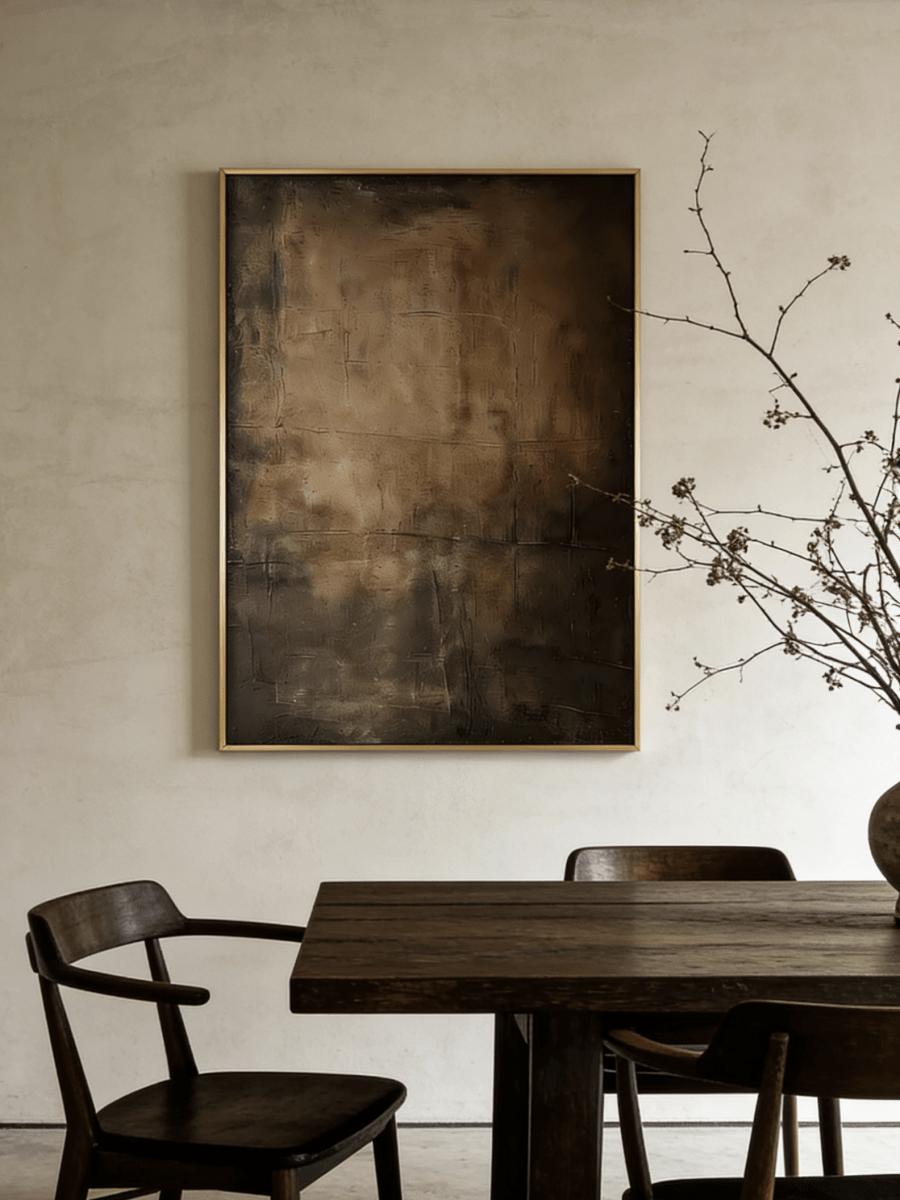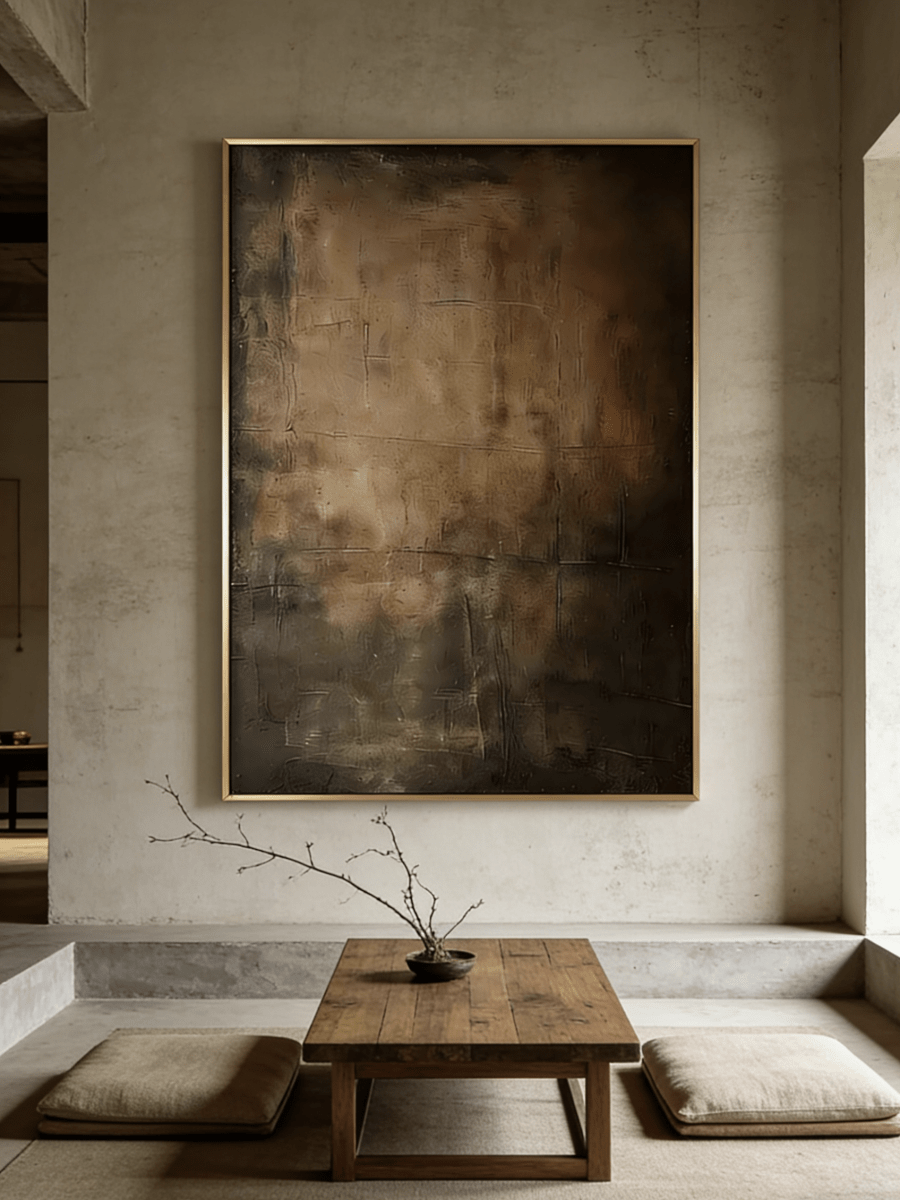


Wabi-Sabi Textured Abstract Columns Painting – EV#0470

Description
Modern Organic Textured Abstract Columns Painting
A Rhythm of Form, Texture and Earthy Color
Created by artist Eliot Vermeer, this hand-painted abstract artwork explores the relationship between organic geometry, tactile texture and architectural rhythm.
Across a richly textured ivory canvas, a collection of elongated geometric forms rises and overlaps in a carefully balanced composition.
Soft beige, warm taupe, mushroom gray and charcoal create a grounded neutral palette, while accents of caramel brown, ochre and terracotta introduce warmth and individuality.
Each rounded form has its own height, proportion and surface character. Some appear solid and understated, while others are covered with delicate raised-dot details that bring rhythm and dimension to the composition.
The arrangement suggests a quiet architectural landscape, yet remains intentionally abstract.
Rather than relying on perfect symmetry, the artwork embraces subtle irregularities in shape, spacing and texture.
The result is a modern organic textured geometric painting that feels sculptural, sophisticated and naturally expressive.
Its combination of earthy colors and tactile details makes it a distinctive statement piece for contemporary interiors that value understated design and handmade character.
A Rich Earth-Tone Color Palette
This artwork features a sophisticated combination of:
- Ivory
- Cream
- Sand beige
- Warm taupe
- Mushroom gray
- Caramel brown
- Espresso brown
- Charcoal black
- Ochre
- Terracotta
The expansive ivory background creates a light and neutral foundation, allowing the different geometric forms to stand out without overwhelming the composition.
Beige and gray shapes introduce balance, while deeper brown and charcoal provide contrast.
Small accents of terracotta and ochre bring warmth to the overall palette.
Unlike brightly colored geometric artwork, this painting relies on subtle tonal relationships and material-like textures to create visual interest.
Its earth-tone palette pairs beautifully with natural oak, walnut, travertine, limestone, linen, boucle and other organic materials.
The Inspiration Behind the Painting
Finding Beauty in Repetition
The visual story of this artwork explores how repeated forms can create harmony without becoming identical.
Architectural structures, handcrafted pottery and naturally weathered surfaces all share a relationship between rhythm and variation.
A row of columns may follow a repeated pattern, yet each surface carries its own character.
Rounded stones may share similar shapes, yet no two are exactly alike.
Handmade ceramics may belong to the same collection while retaining individual imperfections.
This relationship between repetition and individuality forms the central idea of the composition.
The elongated shapes establish structure, while their irregular heights and textured surfaces introduce a more organic quality.
The repeated dot patterns connect the individual forms visually, creating movement across the artwork.
Warm earth tones soften the architectural arrangement, allowing the composition to feel grounded rather than rigid.
The painting explores the relationship between:
Structure and individuality. Repetition and variation. Geometry and natural imperfection.
A contemporary abstract artwork that brings rhythm, texture and warmth into the home.
Best Places to Hang This Artwork
Frequently Asked Questions
1. Is this artwork hand painted or printed?
This artwork is individually hand painted on canvas. It is not a flat print or digitally reproduced image. Each piece features handmade texture, layered pigment, and unique surface details.
2. Does the artwork have real raised texture?
Yes. The arch, granular surfaces, layered edges, and plaster-inspired sections feature visible raised texture and tactile depth.
3. Will my artwork look exactly like the product image?
Each painting follows the original composition, neutral palette, and layered arch design. Because it is painted by hand, slight variations in texture, tonal transitions, and surface marks may occur.
4. What colors are used in the artwork?
The main colors include warm ivory, cream, beige, greige, taupe, stone grey, mushroom brown, and charcoal grey.
5. What interior styles complement this painting?
It works especially well with wabi-sabi, Japandi, organic modern, contemporary, minimalist, Scandinavian-inspired, quiet luxury, and neutral interiors.
6. Which rooms are best for displaying it?
The artwork is suitable for living rooms, bedrooms, dining rooms, entryways, home offices, hallways, reading rooms, spas, boutique hotels, and executive offices.
7. Is this artwork suitable for displaying above a sofa or bed?
Yes. Its horizontal format makes it particularly suitable for wide wall areas above sofas, beds, fireplaces, sideboards, and console tables.
8. Will the texture appear different under changing light?
Yes. Natural daylight and directional lighting create changing highlights and shadows across the raised arch, granular surface, and layered plaster-inspired details.
9. How should I care for the textured surface?
Keep the artwork away from prolonged direct sunlight, excessive humidity, and direct contact with water. Remove dust gently with a clean, soft, dry brush without pressing against the raised texture.
10. How long will my order take to arrive?
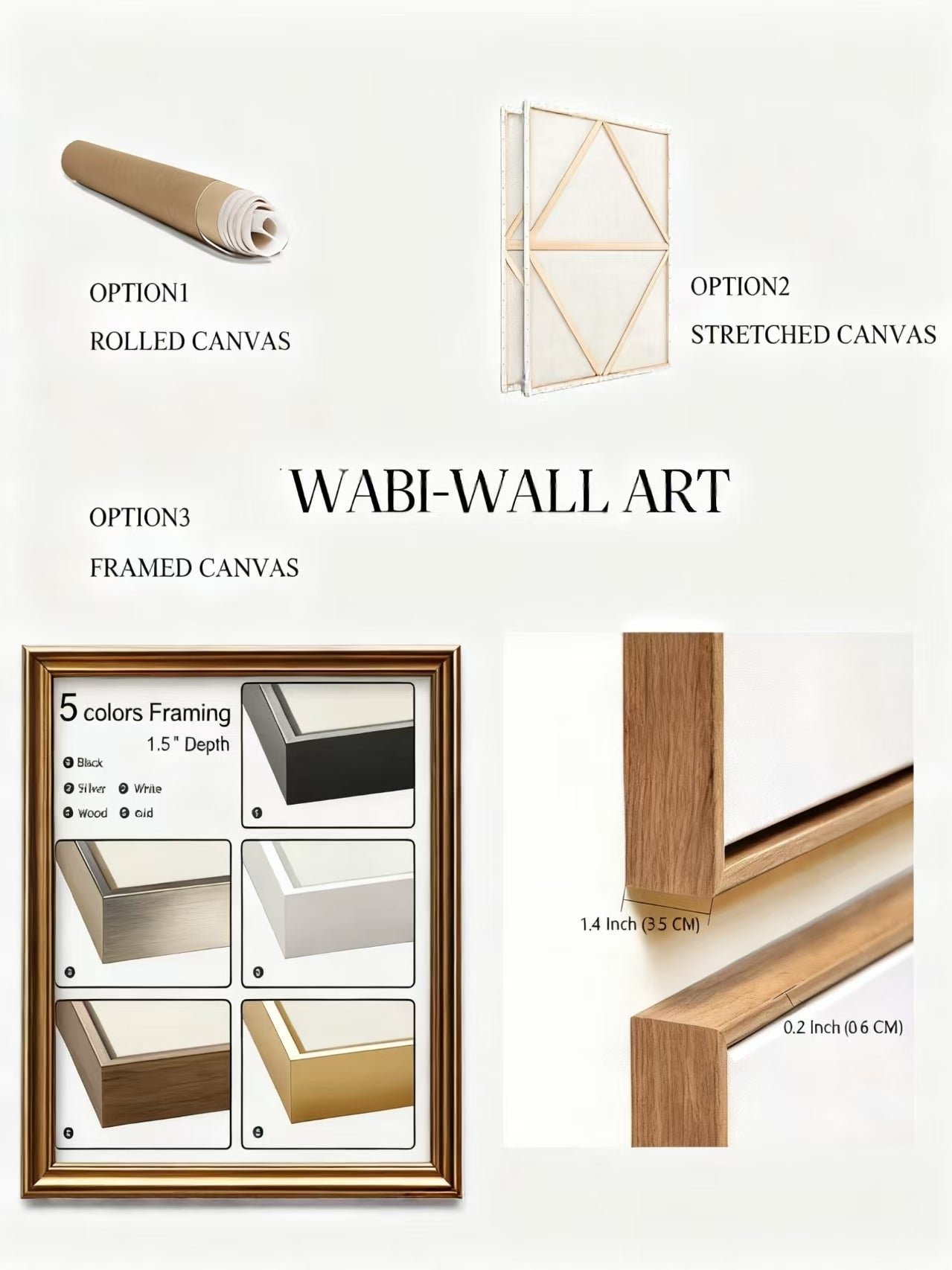
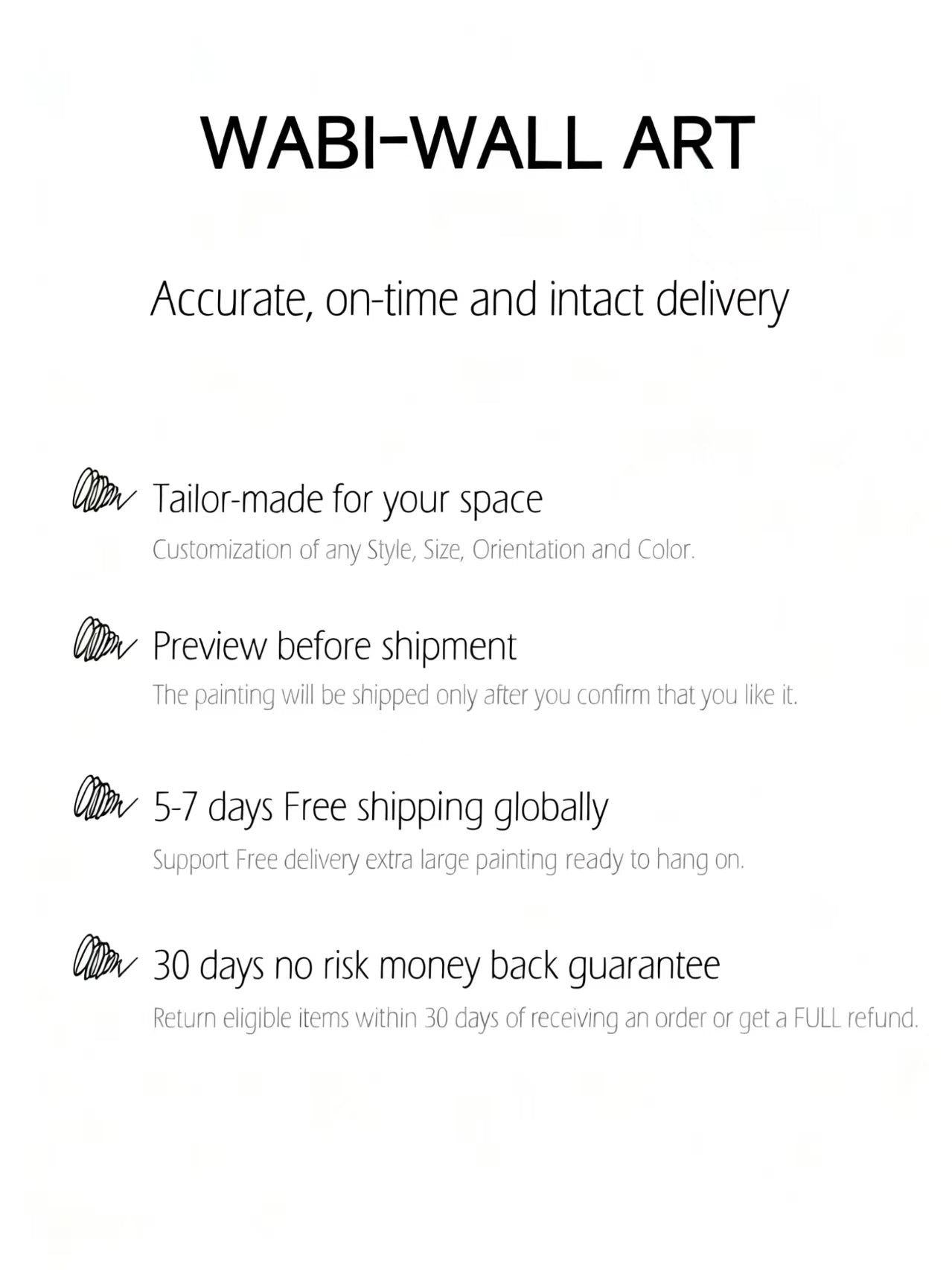
The artwork requires approximately 1–2 weeks to create. After shipping, delivery generally takes 5–7 days via FedEx or DHL. Worldwide shipping is free, and a 30-day return and exchange policy is provided.
• Style: WABI-SABI
•Subject:AbstractMinimalism
Each artwork is made to order. Creation normally takes 1–2 weeks before dispatch.
After the artwork is completed, delivery normally takes approximately 5–7 business days by DHL or FedEx.
Custom dimensions and palette adjustments may be available. Contact info@wabiwallart.com before ordering to confirm the request.
Find Your Perfect Artwork Size
See how each artwork size fits your space.
Available range: 24–240 inches


About Artist
Eliot Vermeer is a contemporary artist born in Xi'an, China in 1987, and currently living and working in Shanghai. With his unique abstract wabi-sabi style, he has established a profound personal connection between Eastern aesthetics and Western expressionism.
His work abandons complex narratives, instead exploring the spirituality of materials, traces, and space themselves. Eliot Vermeer's artistic practice is like a silent retreat, inviting viewers to feel the traces of time's passage and the silent power of all things within his minimalist yet rich canvases.