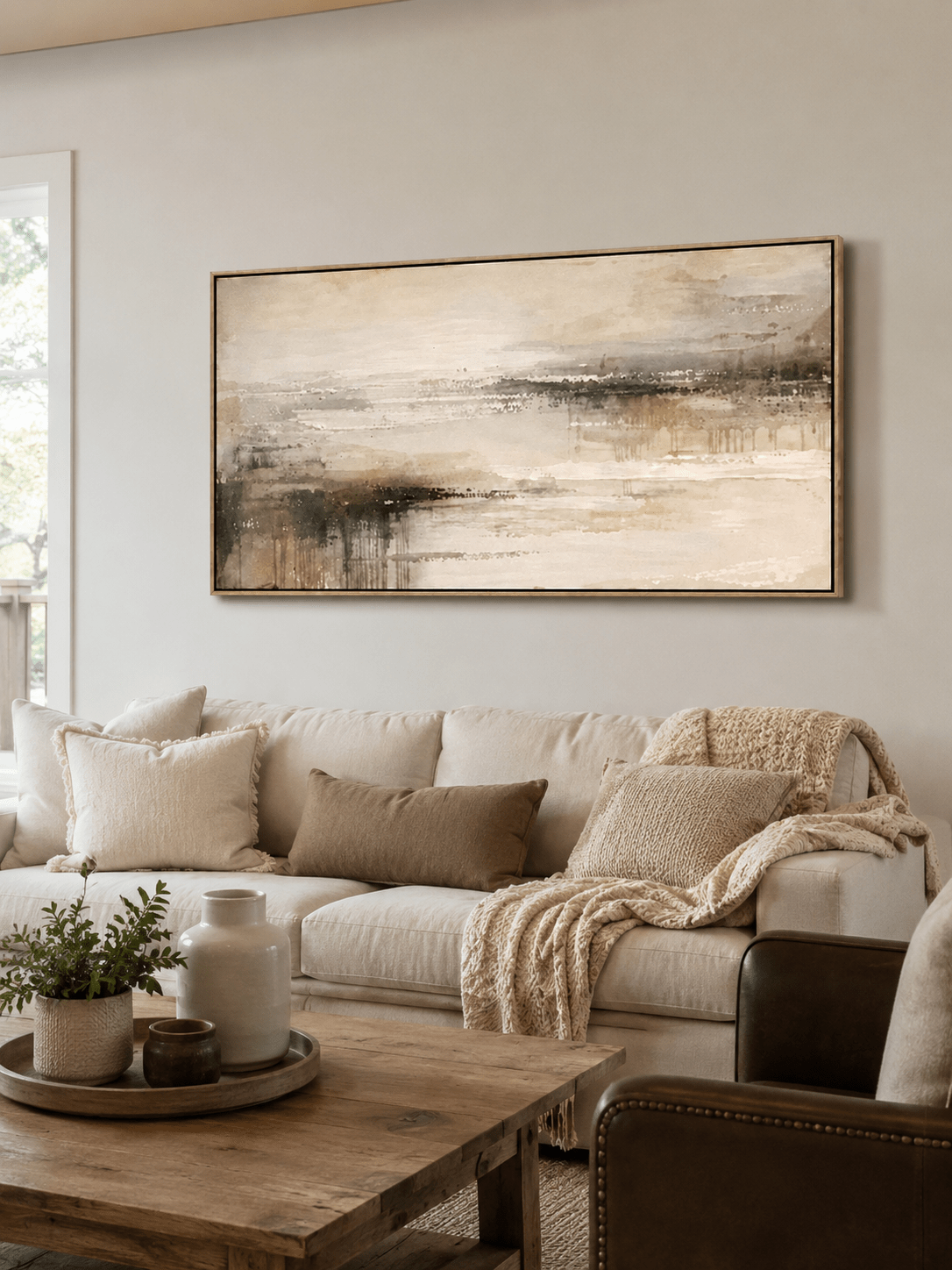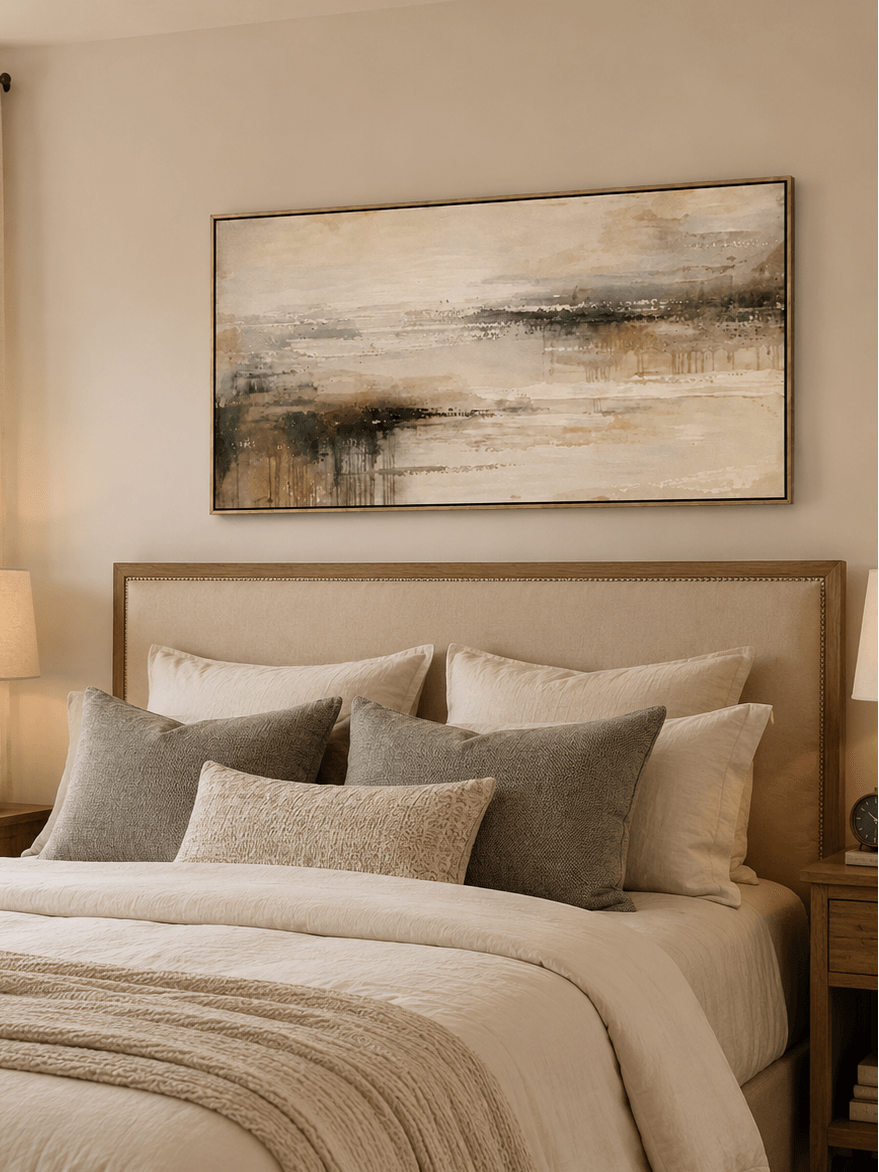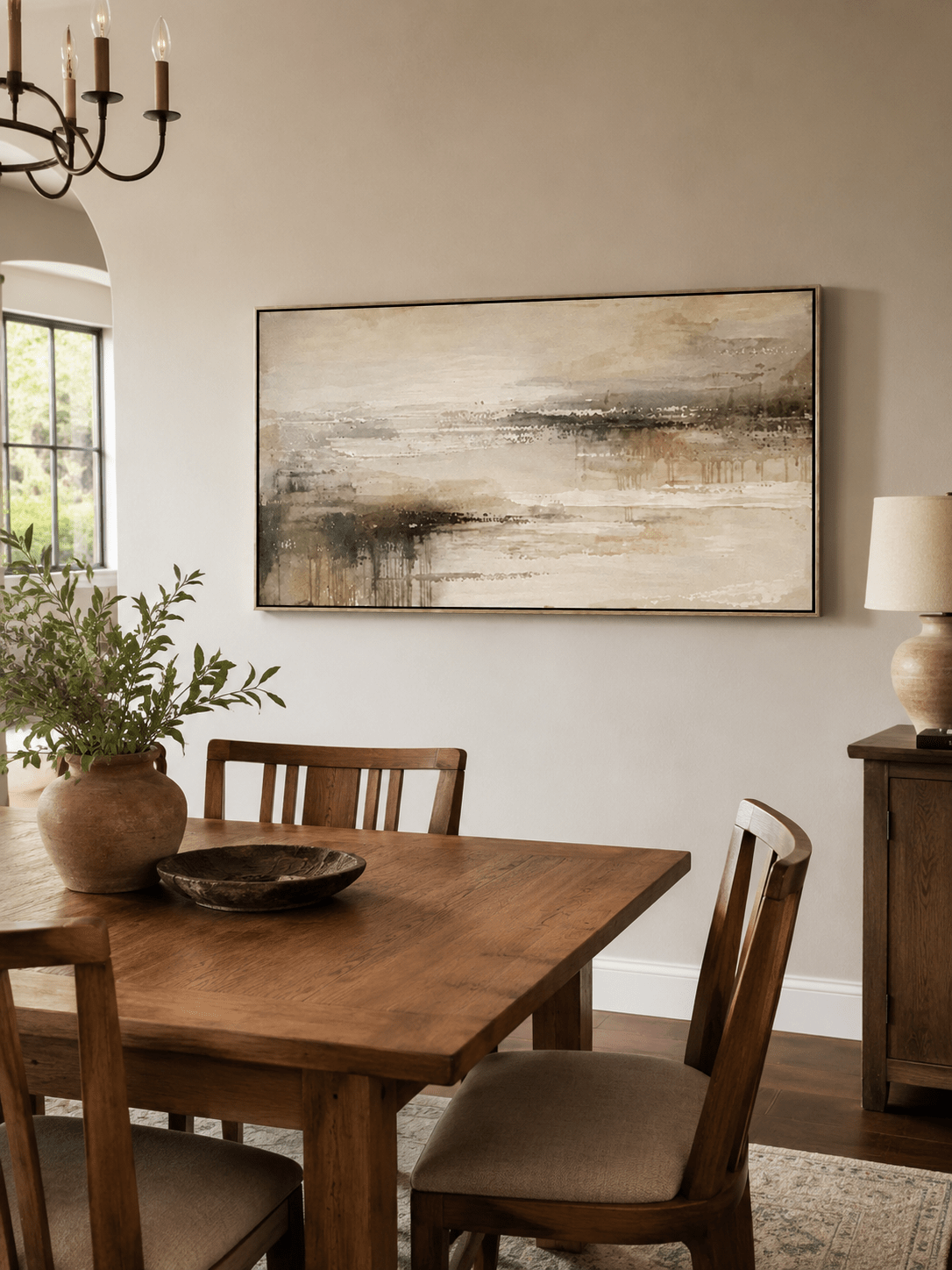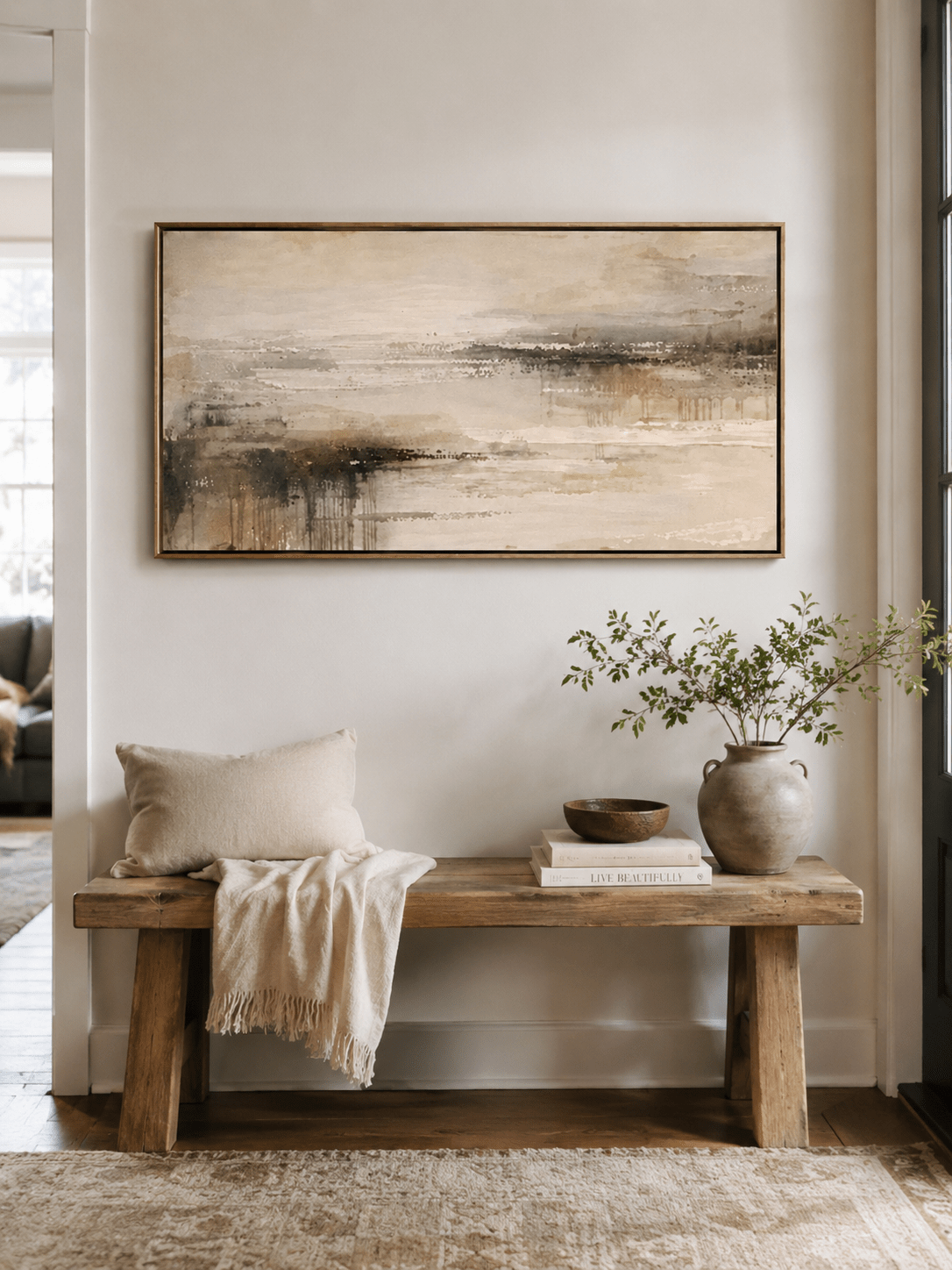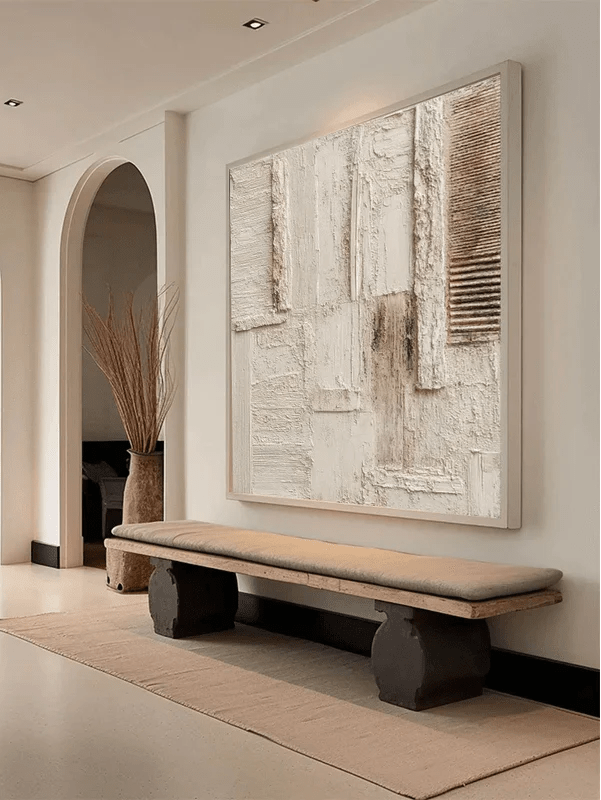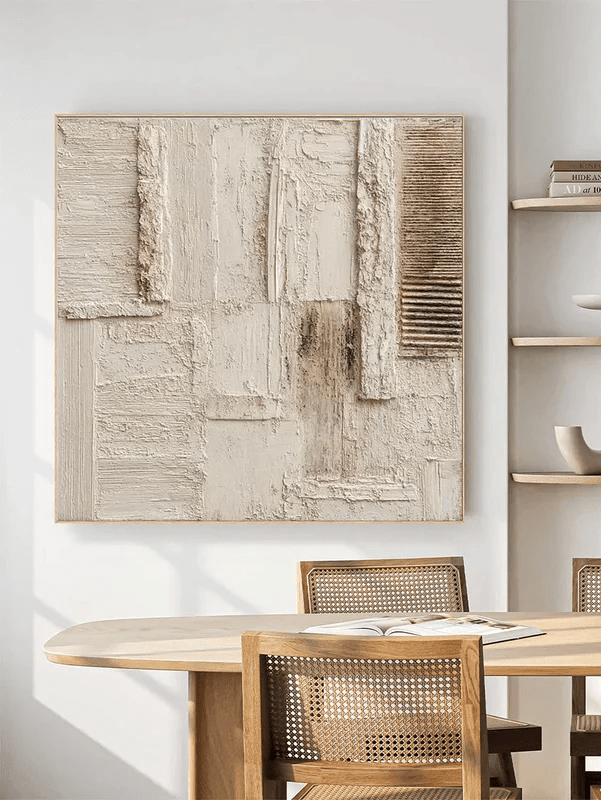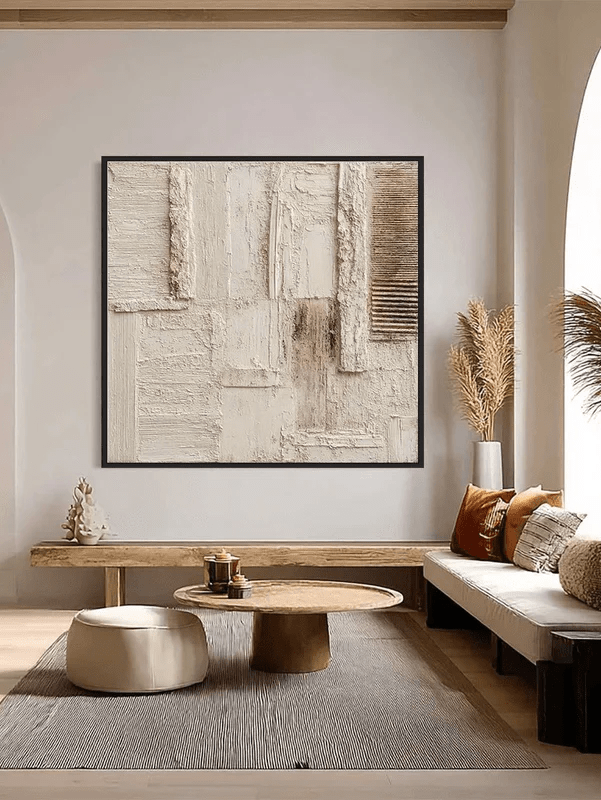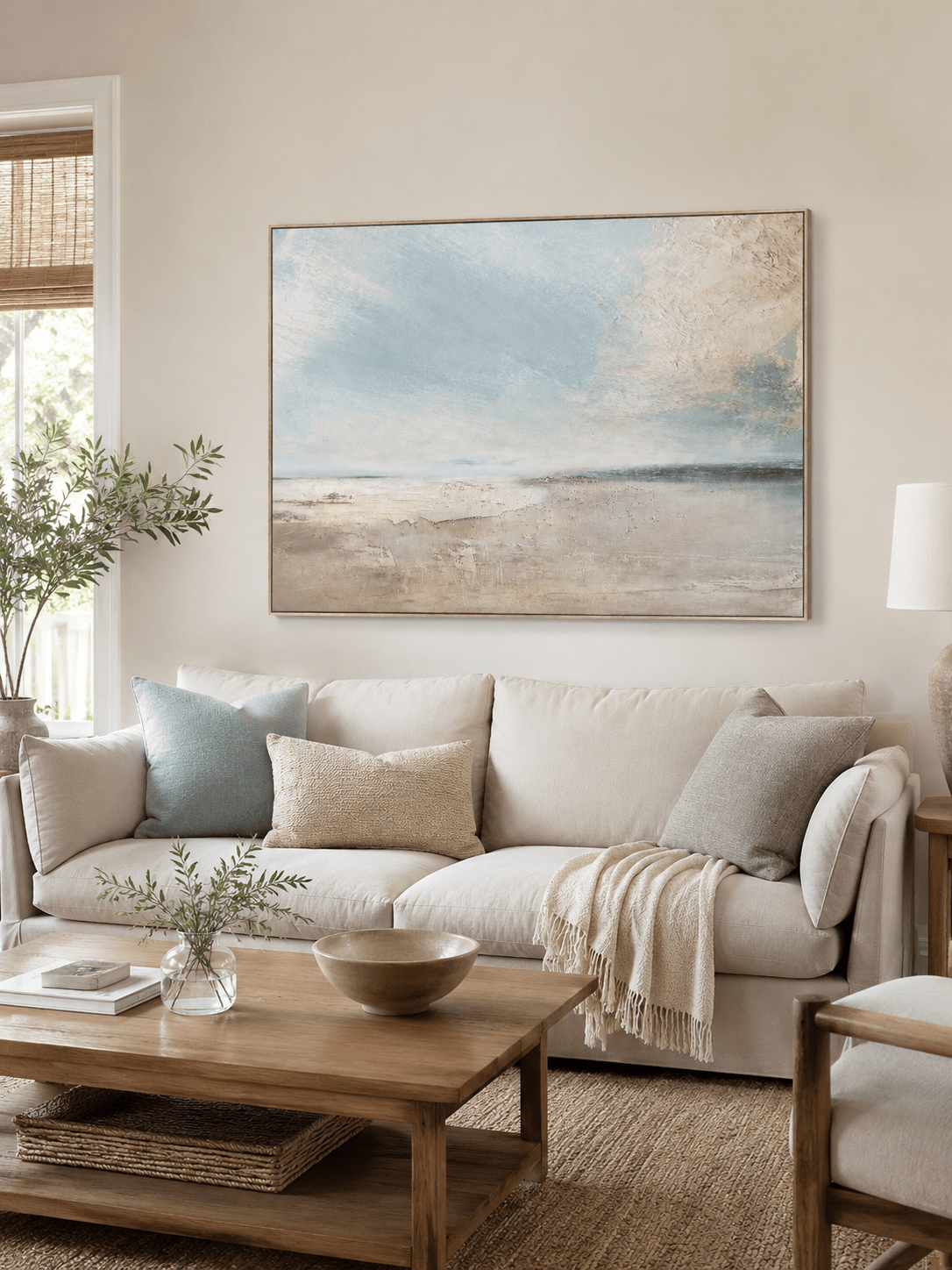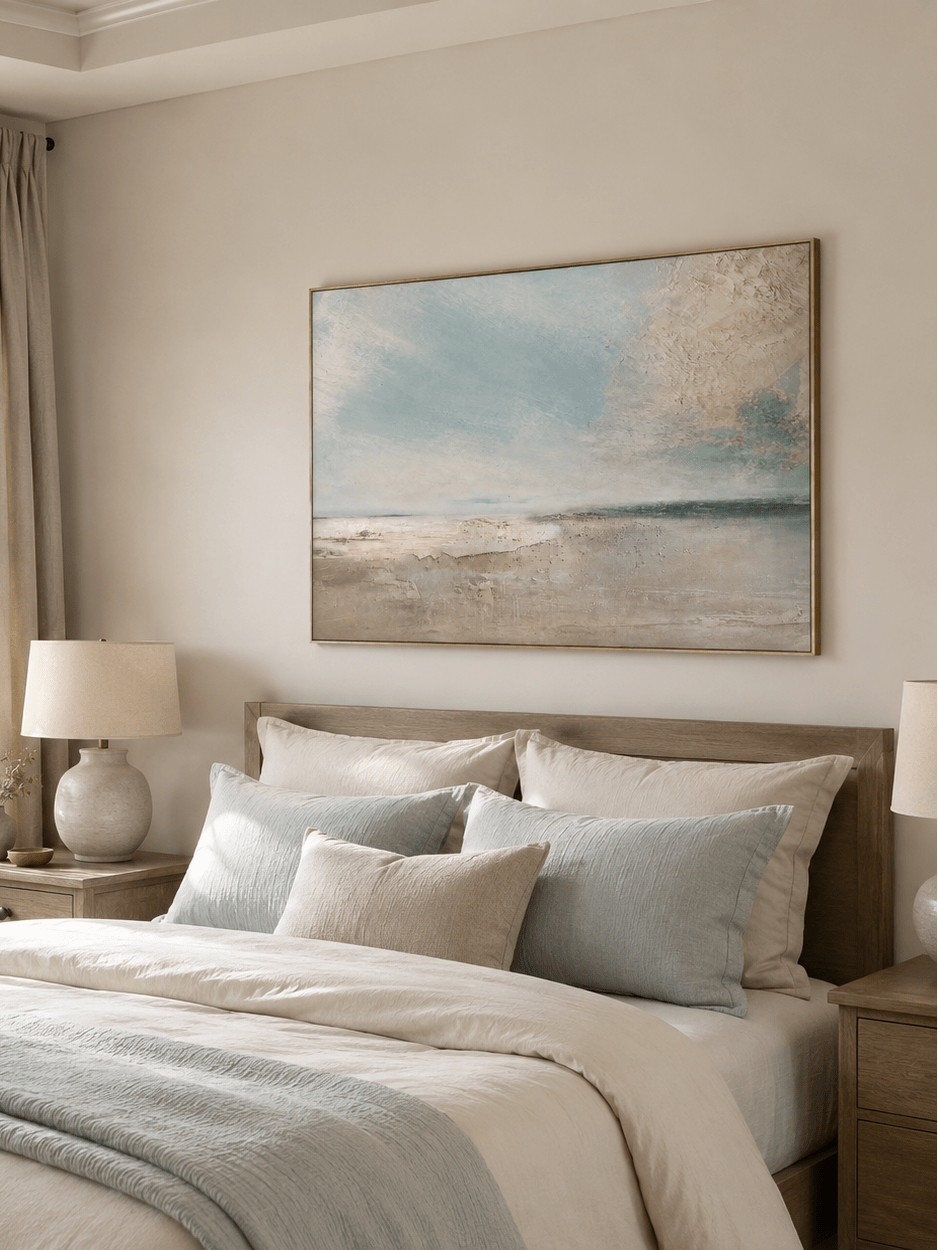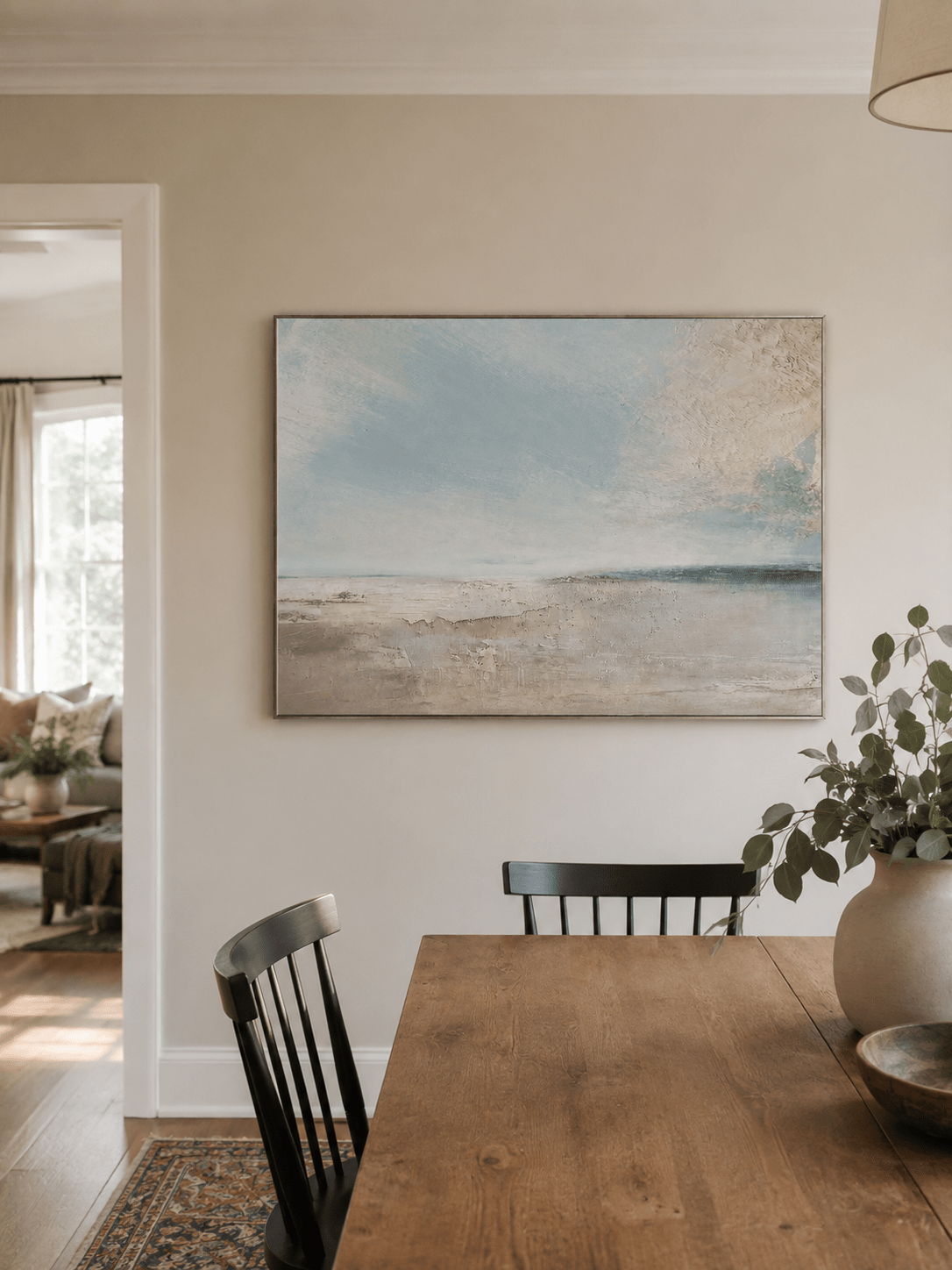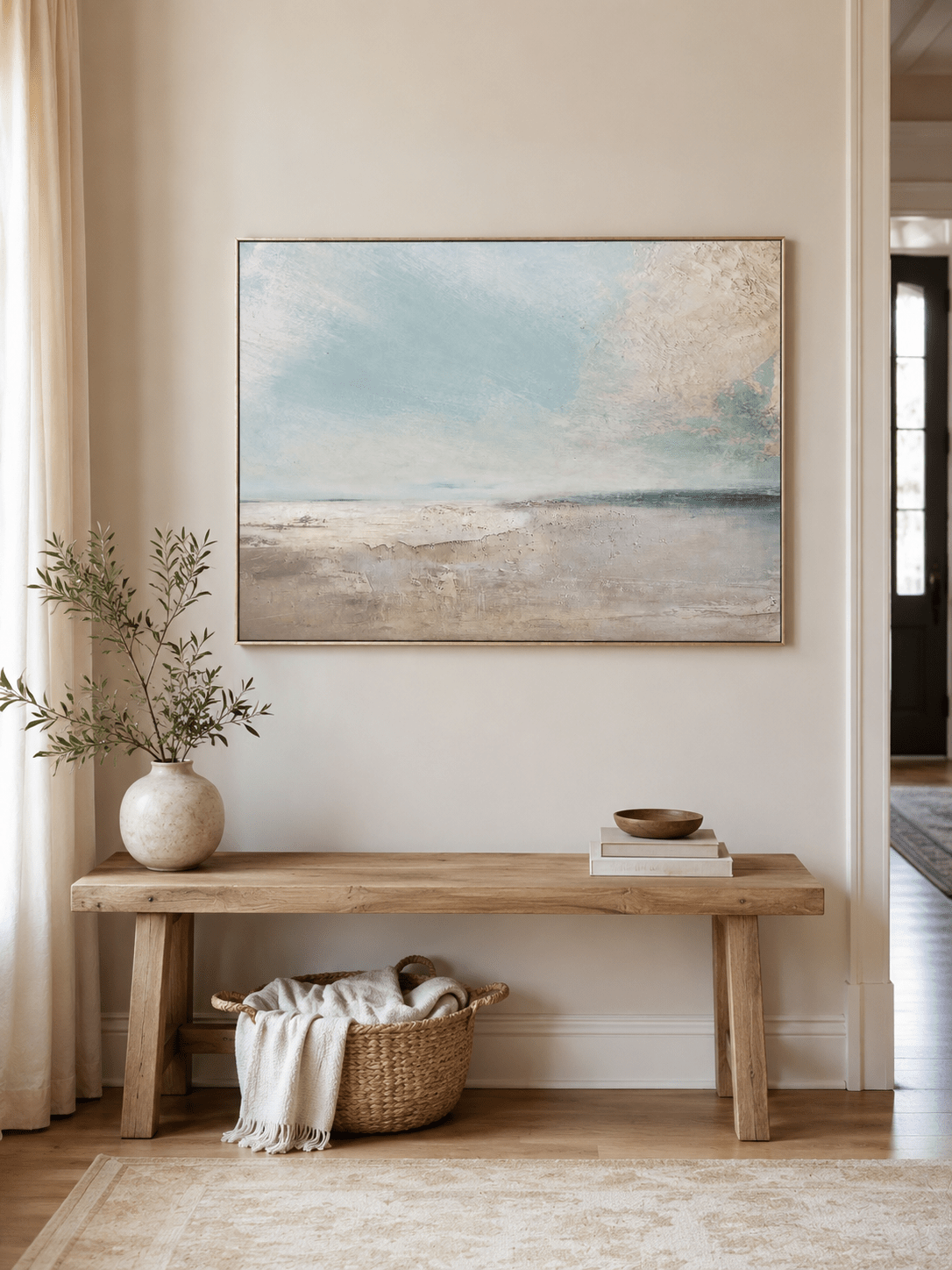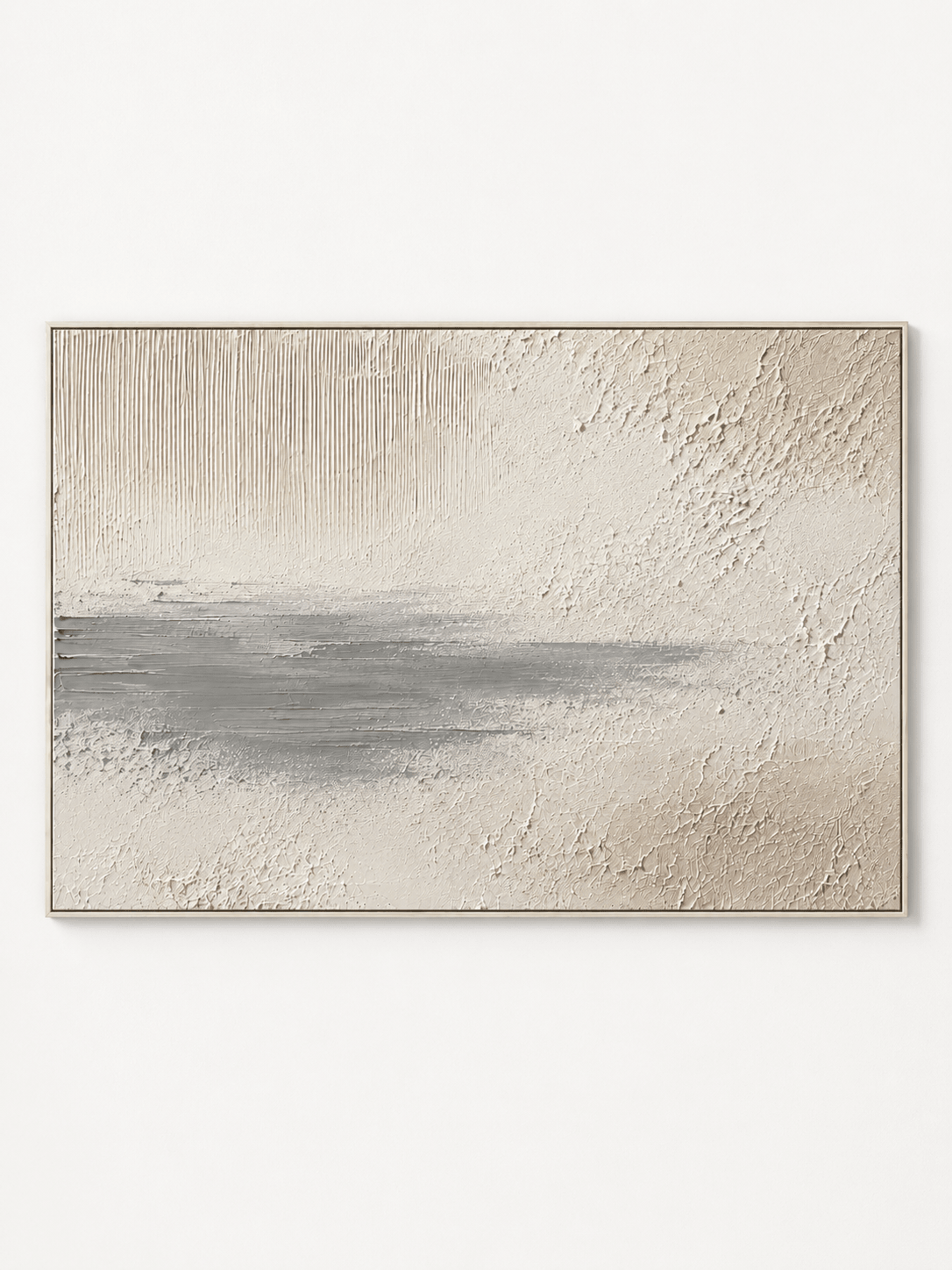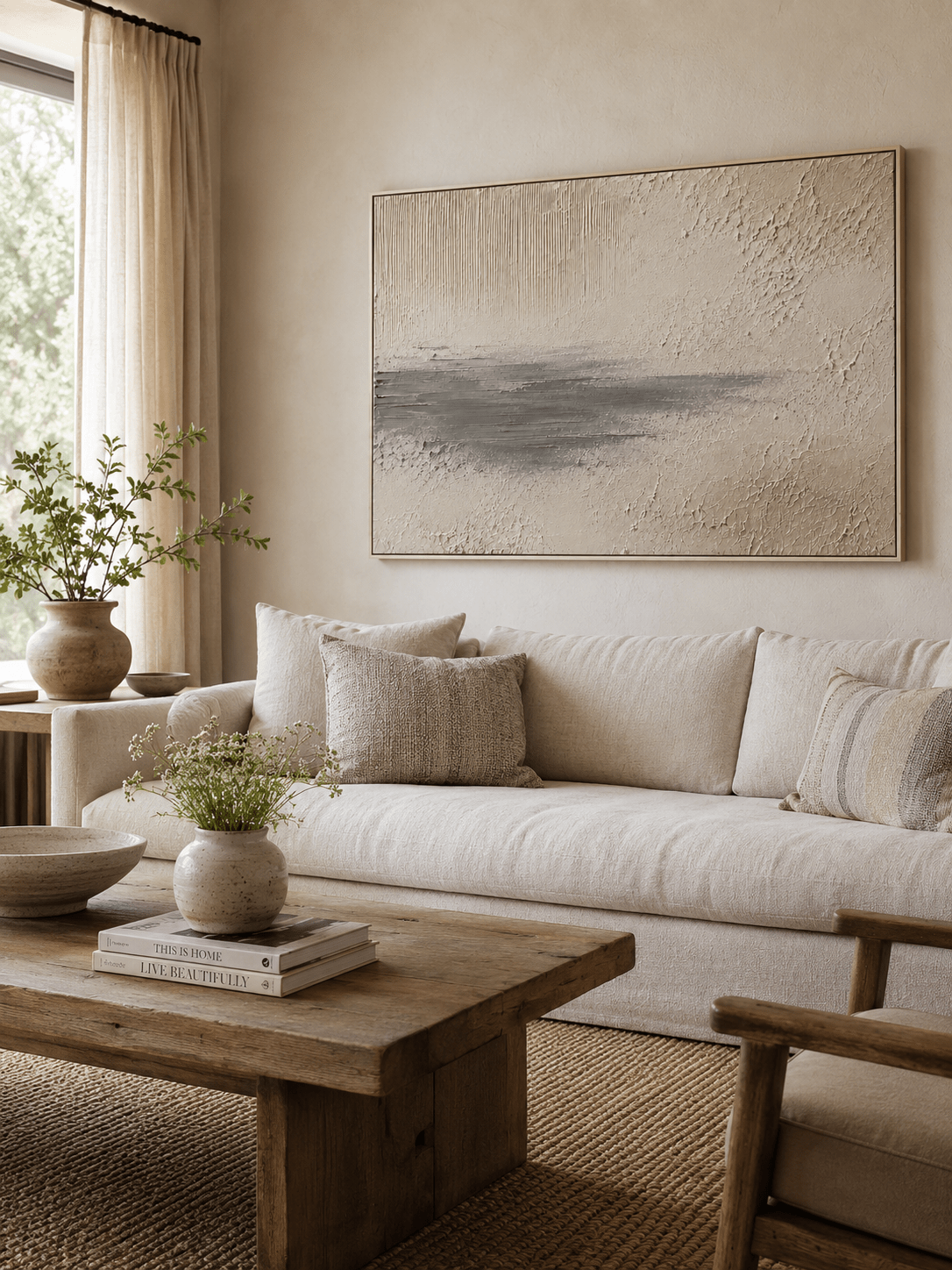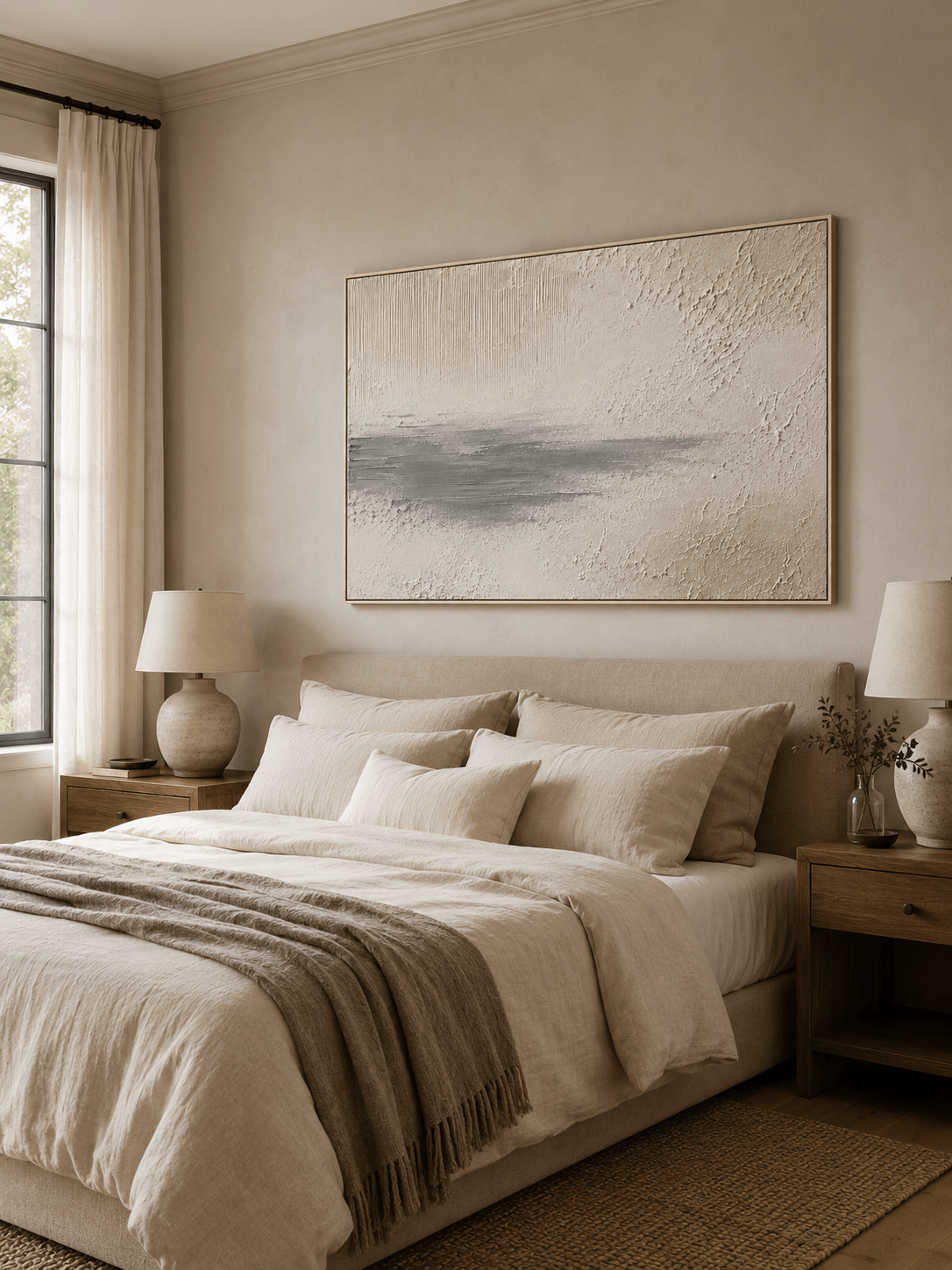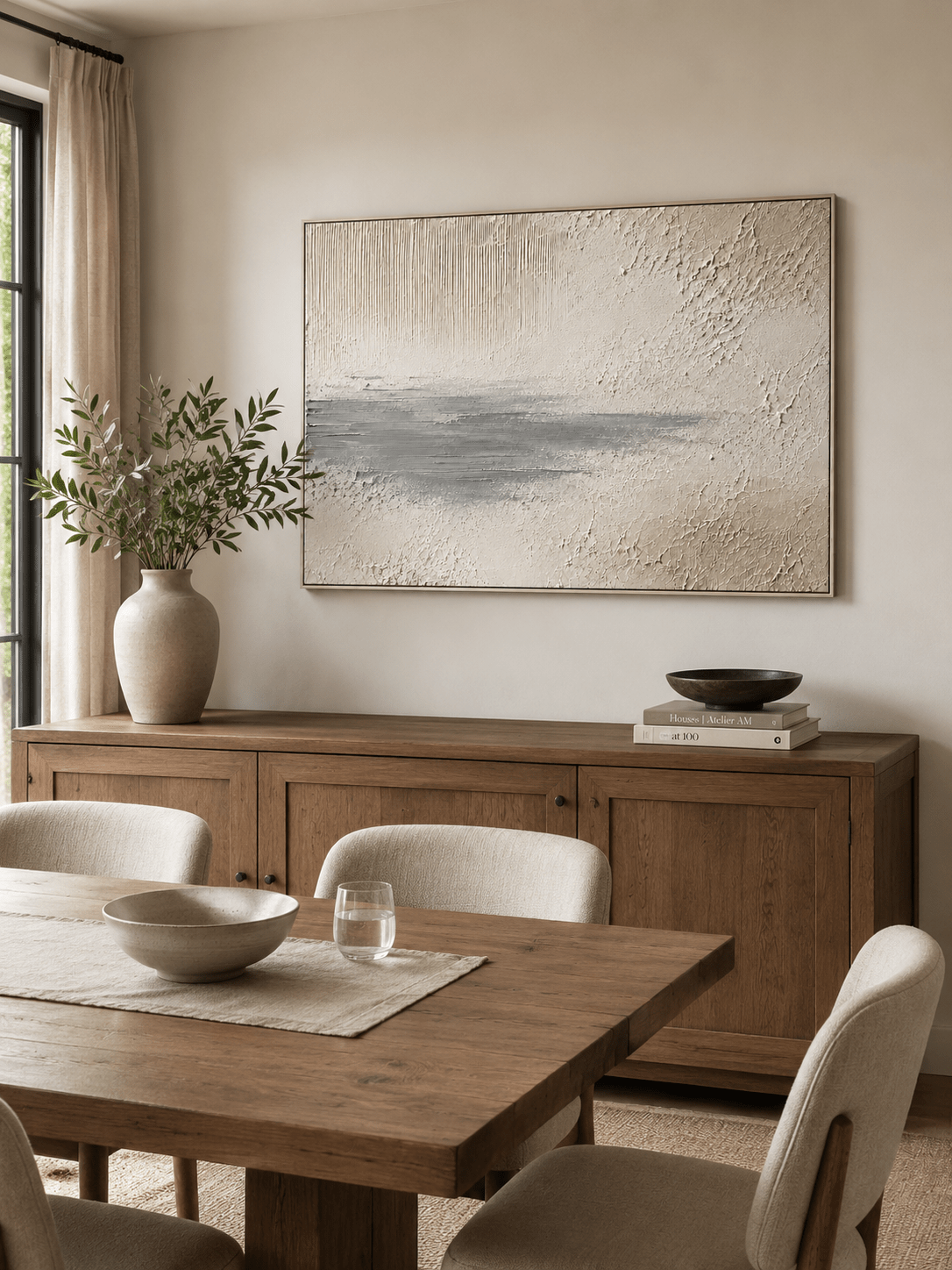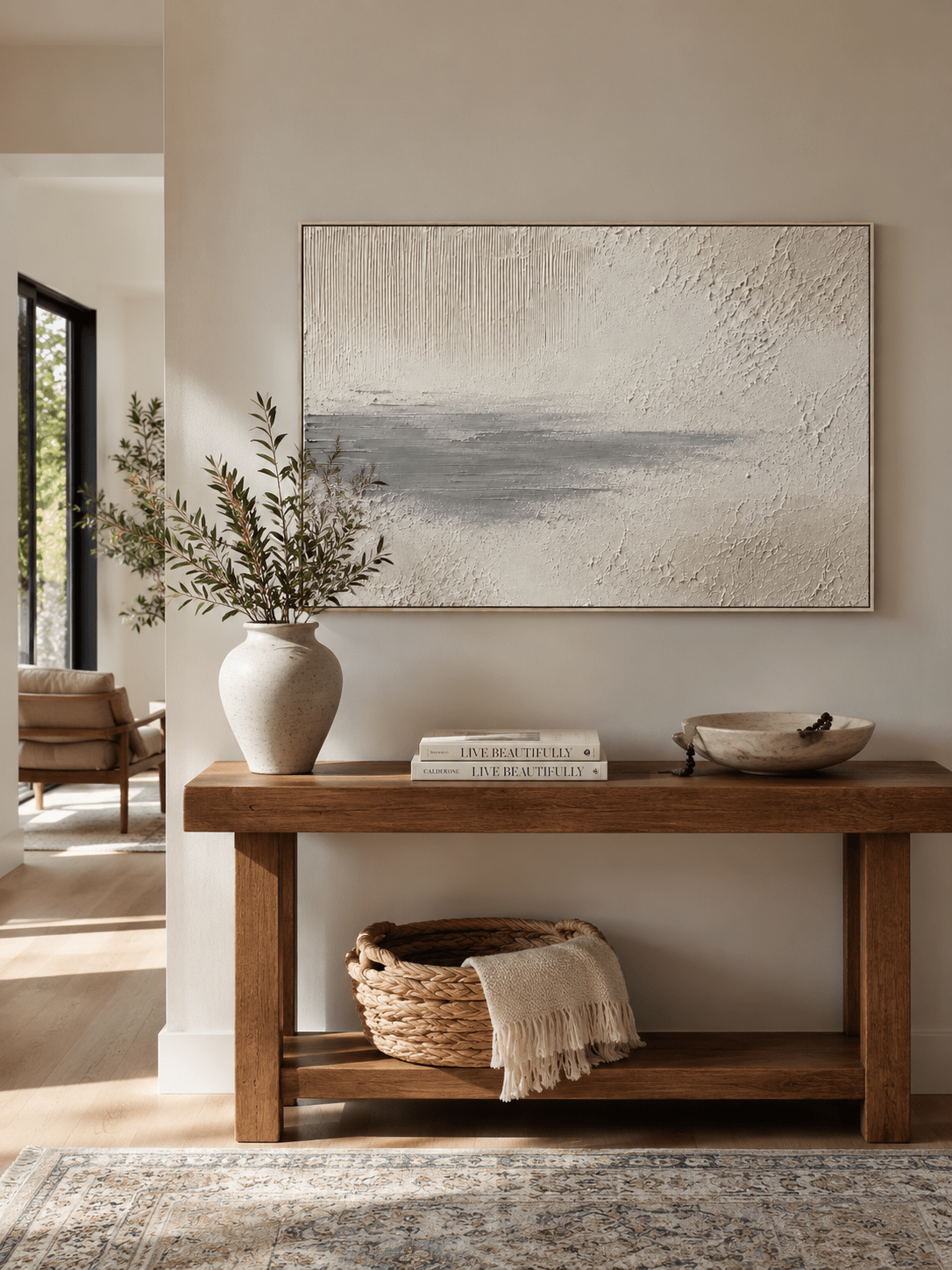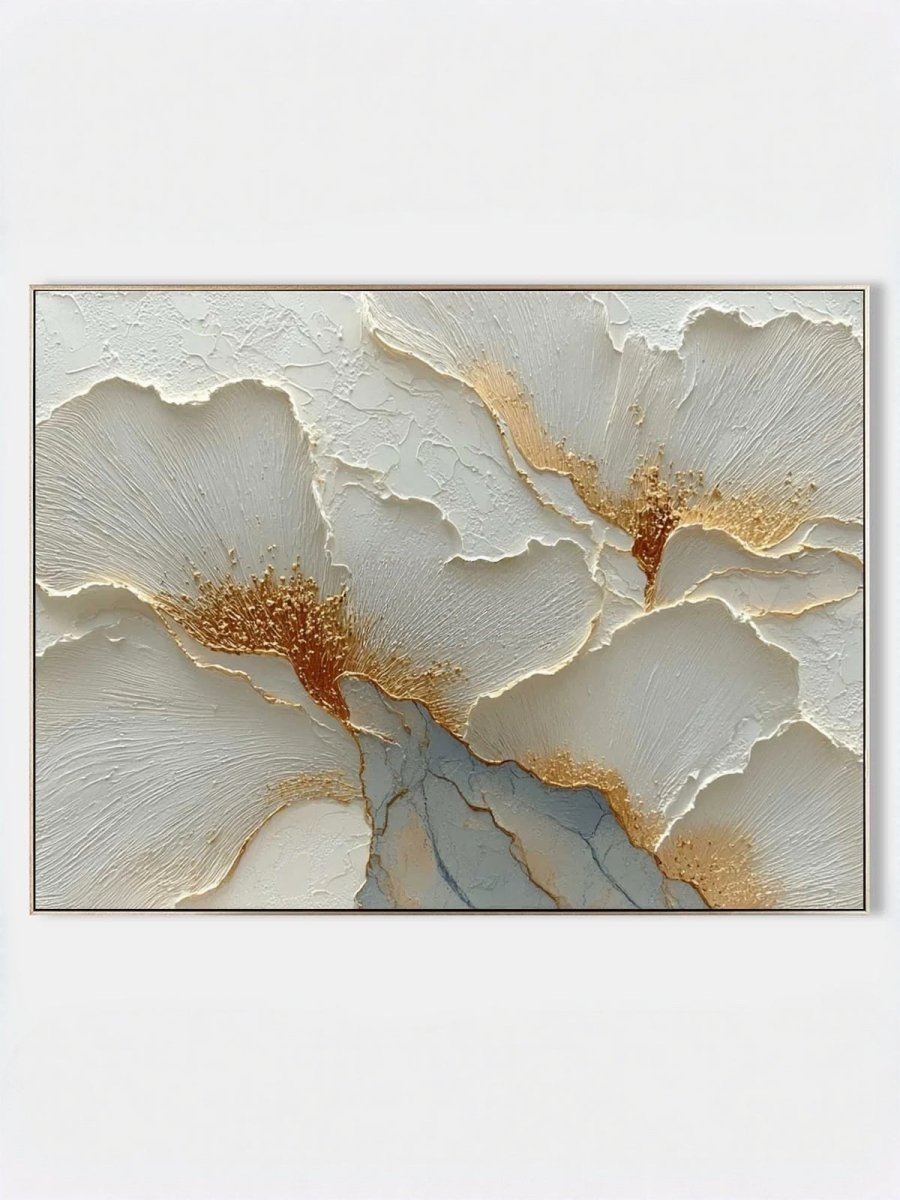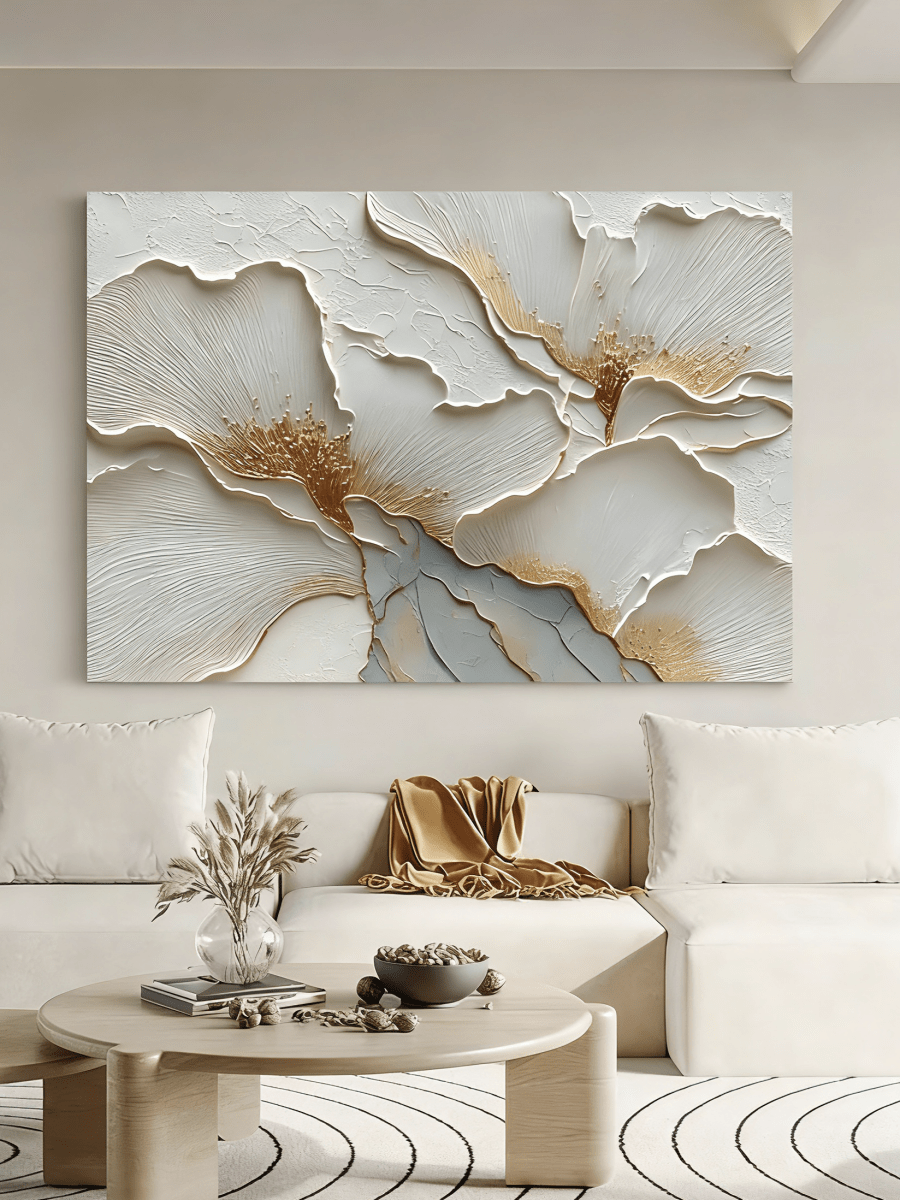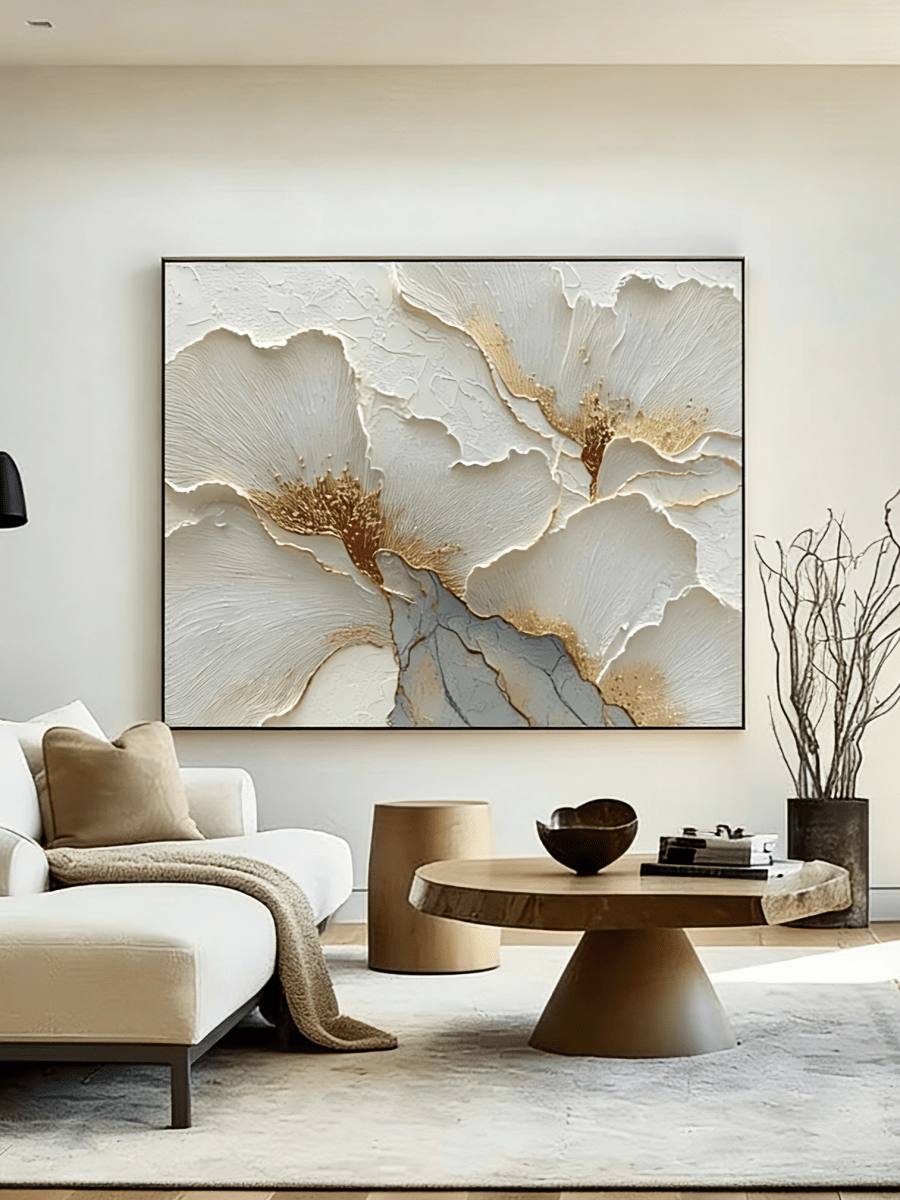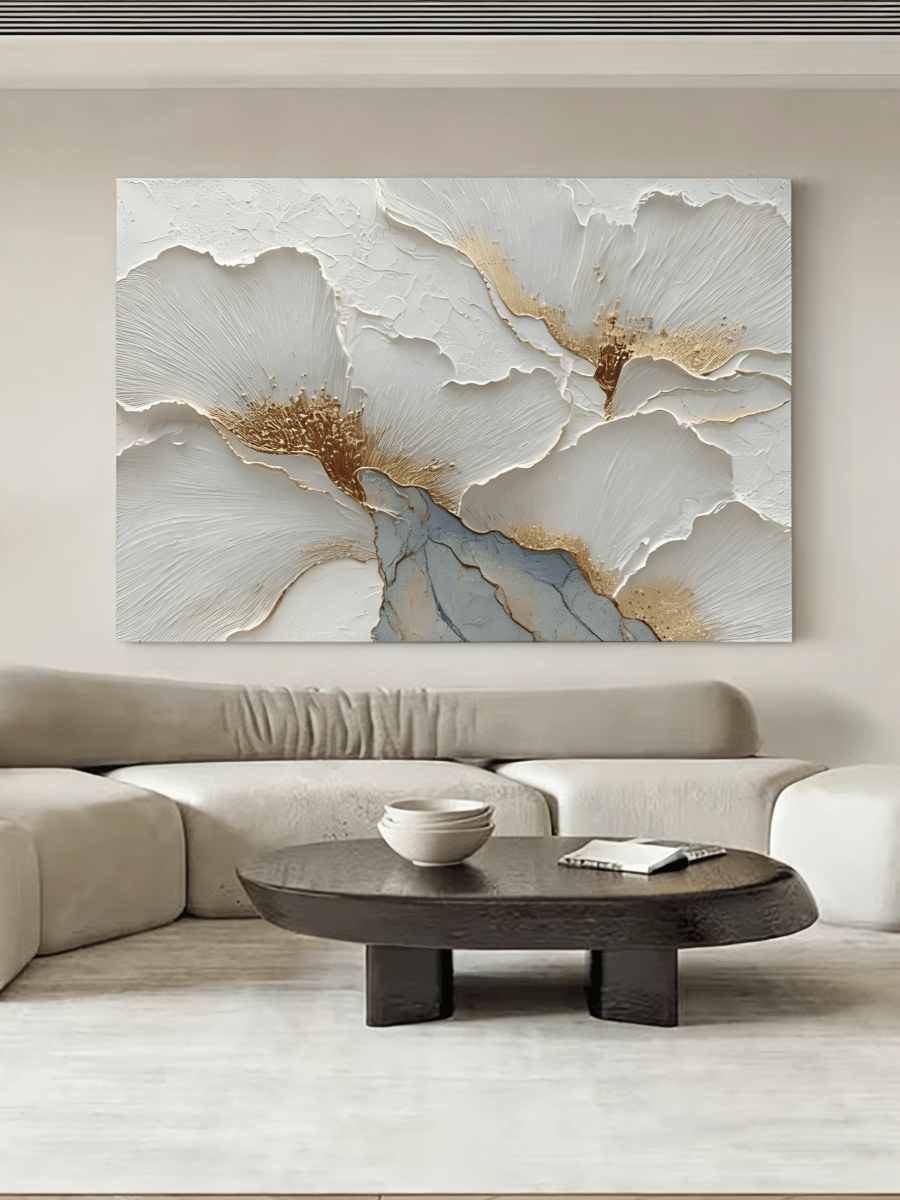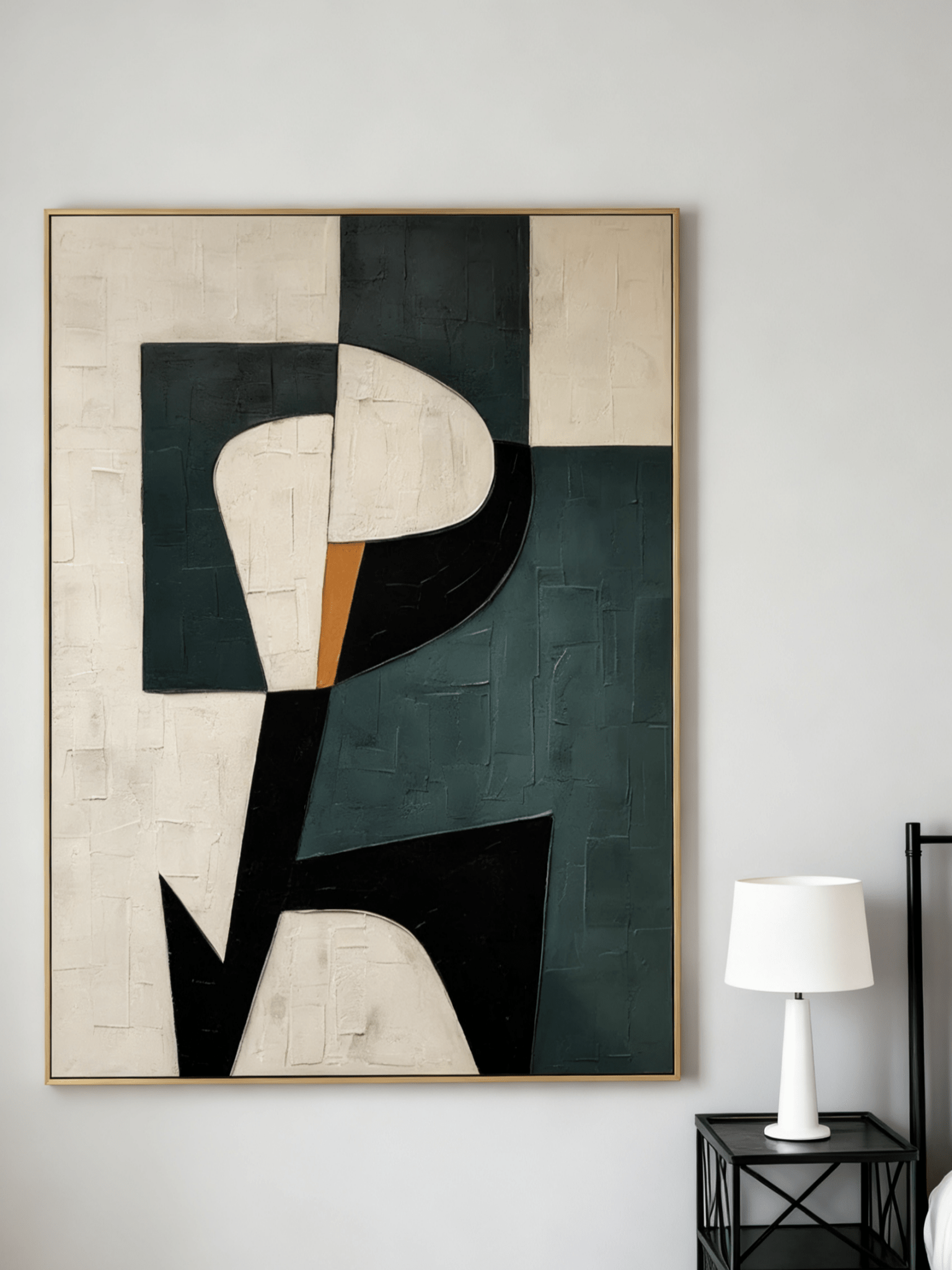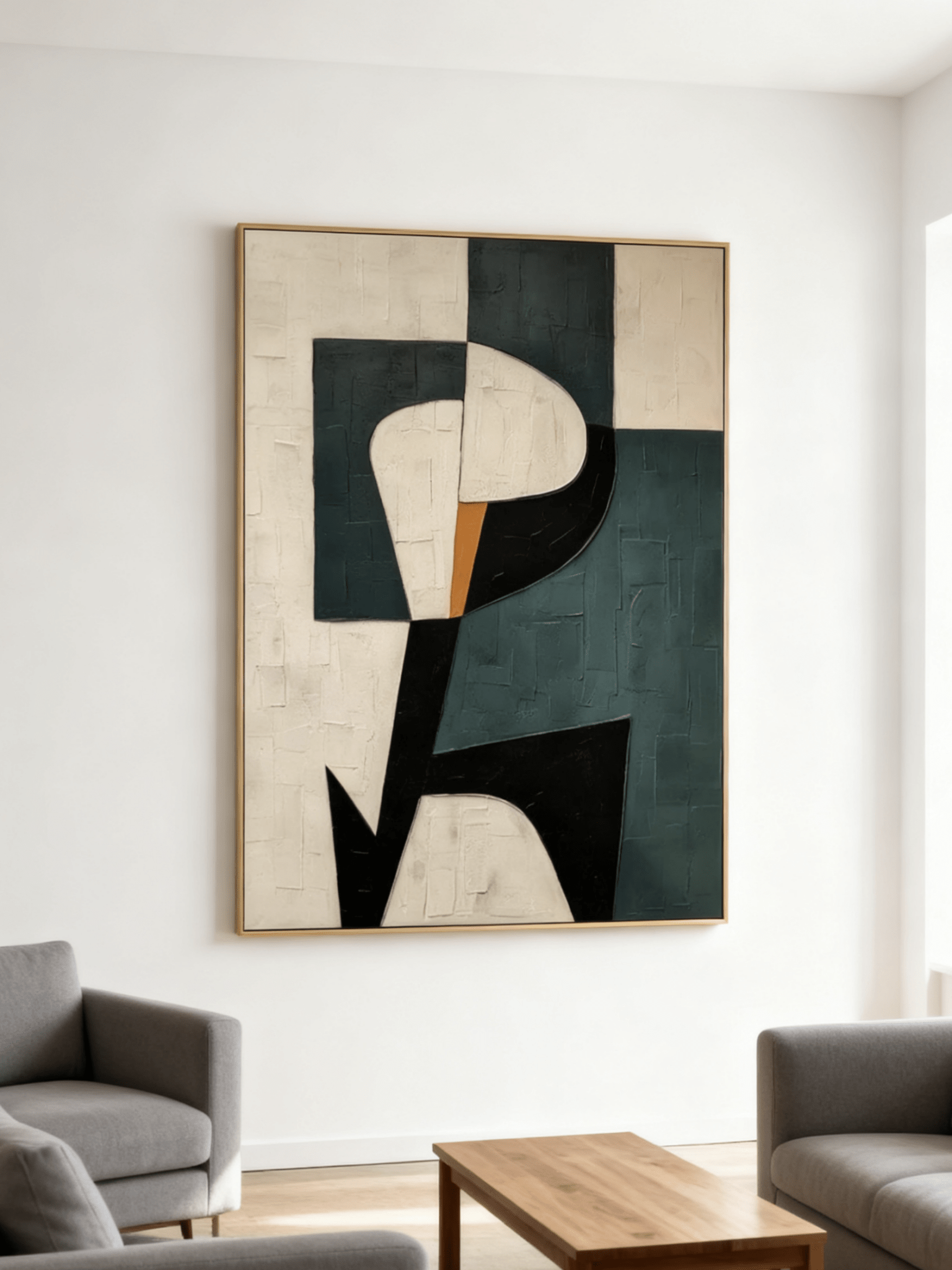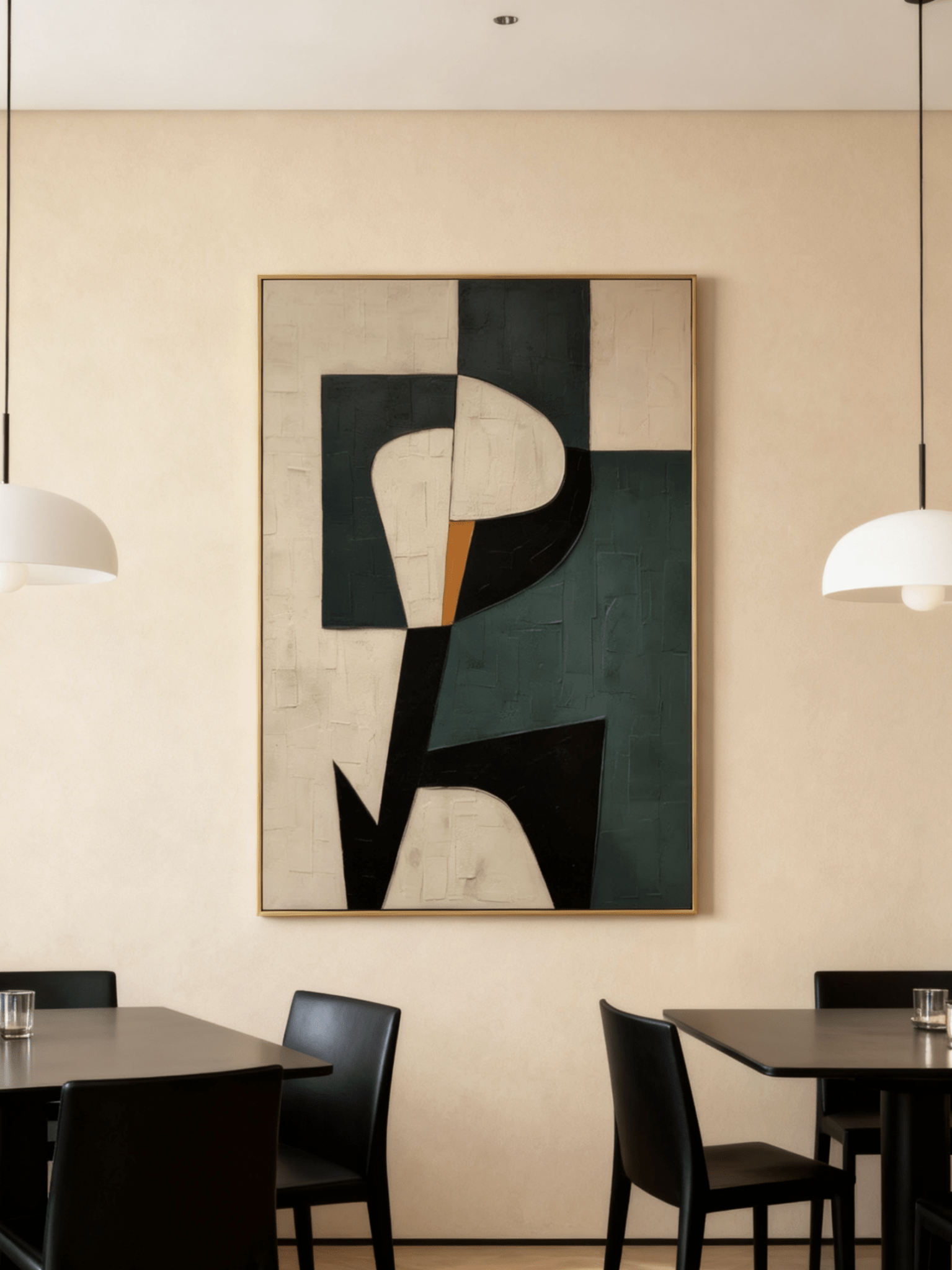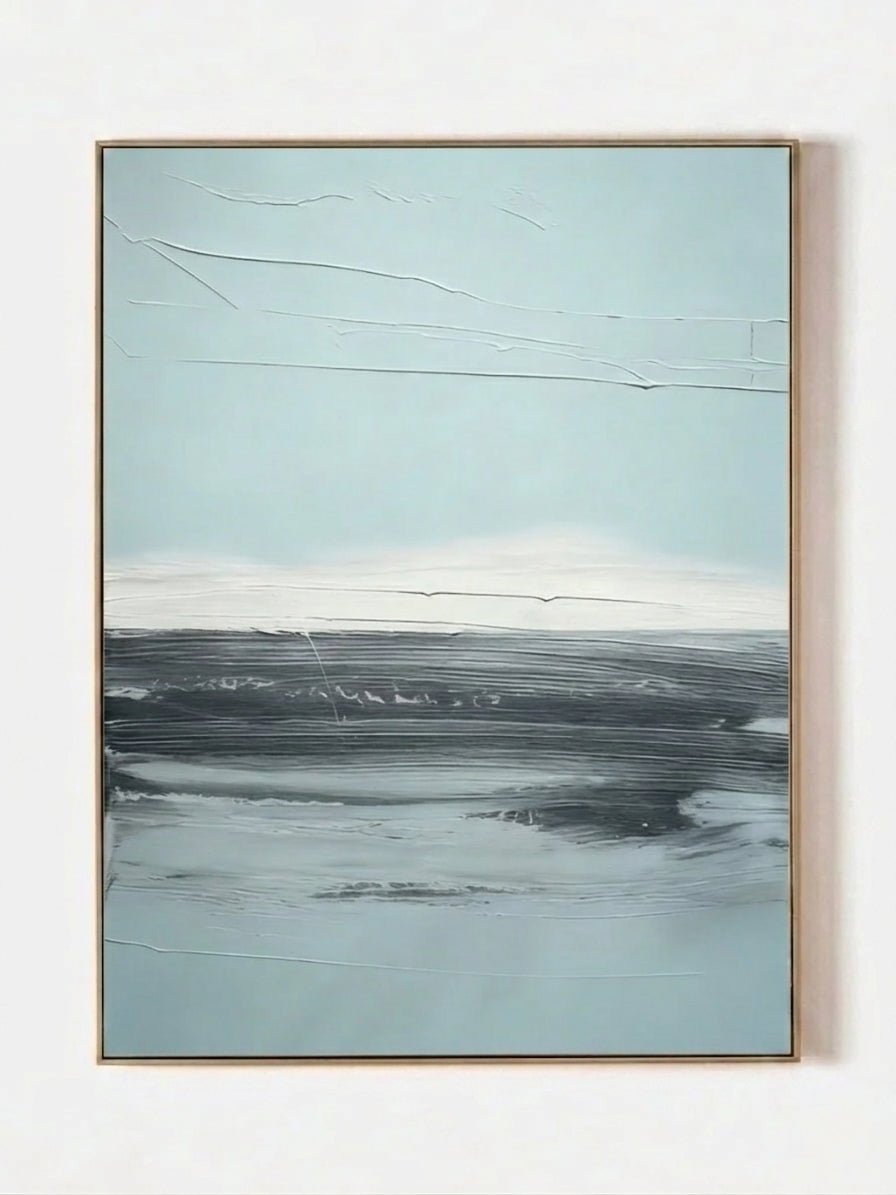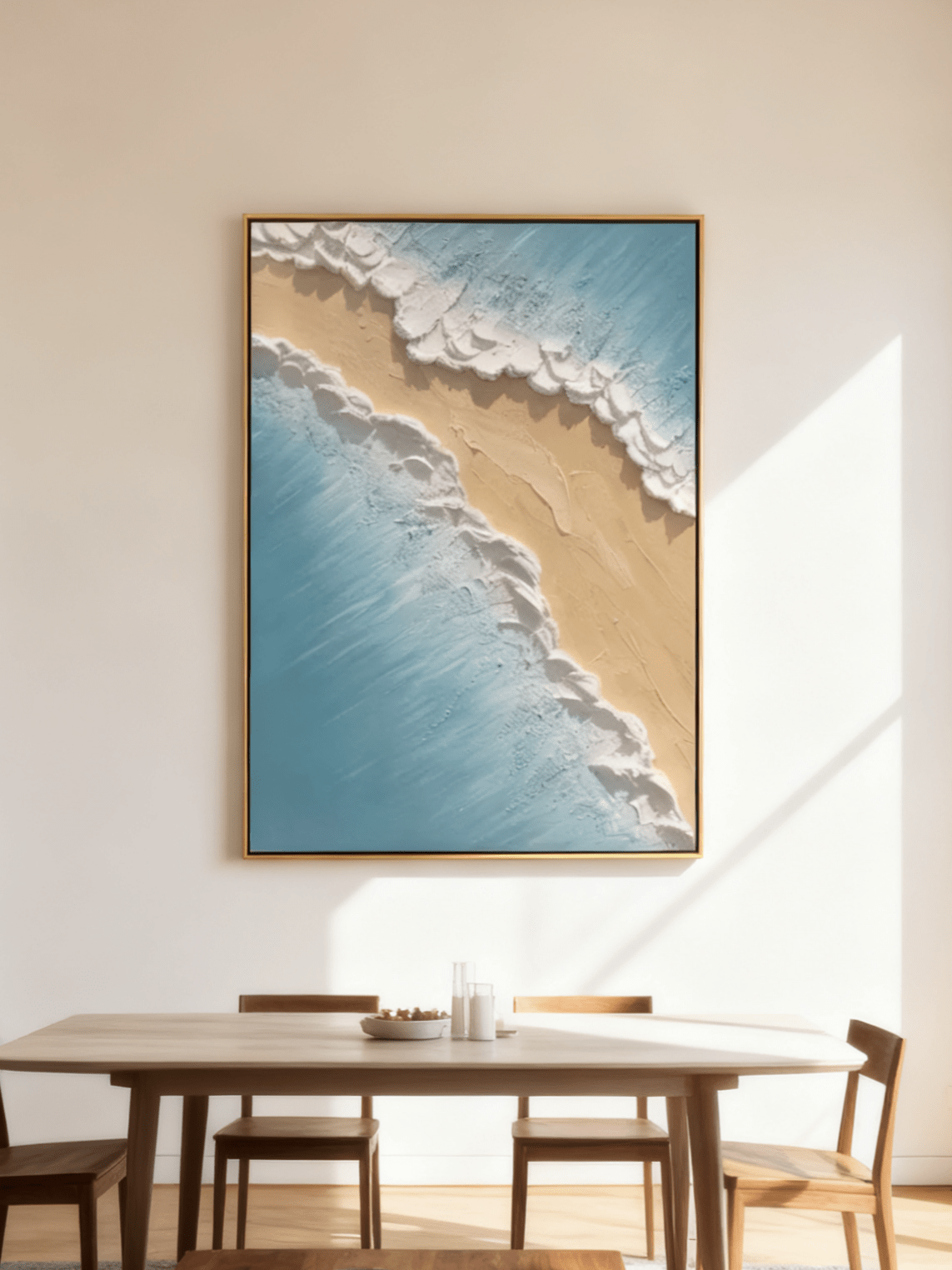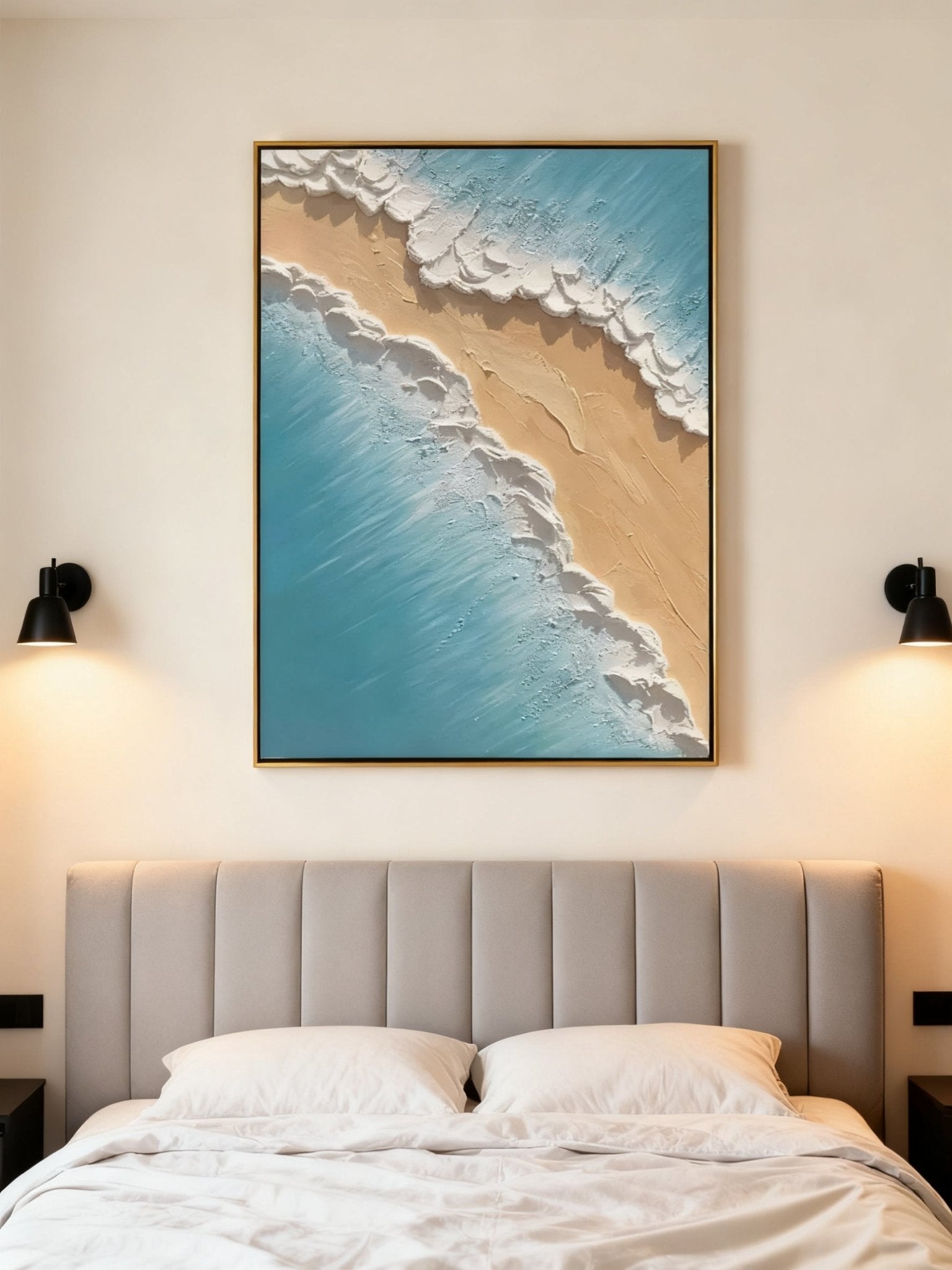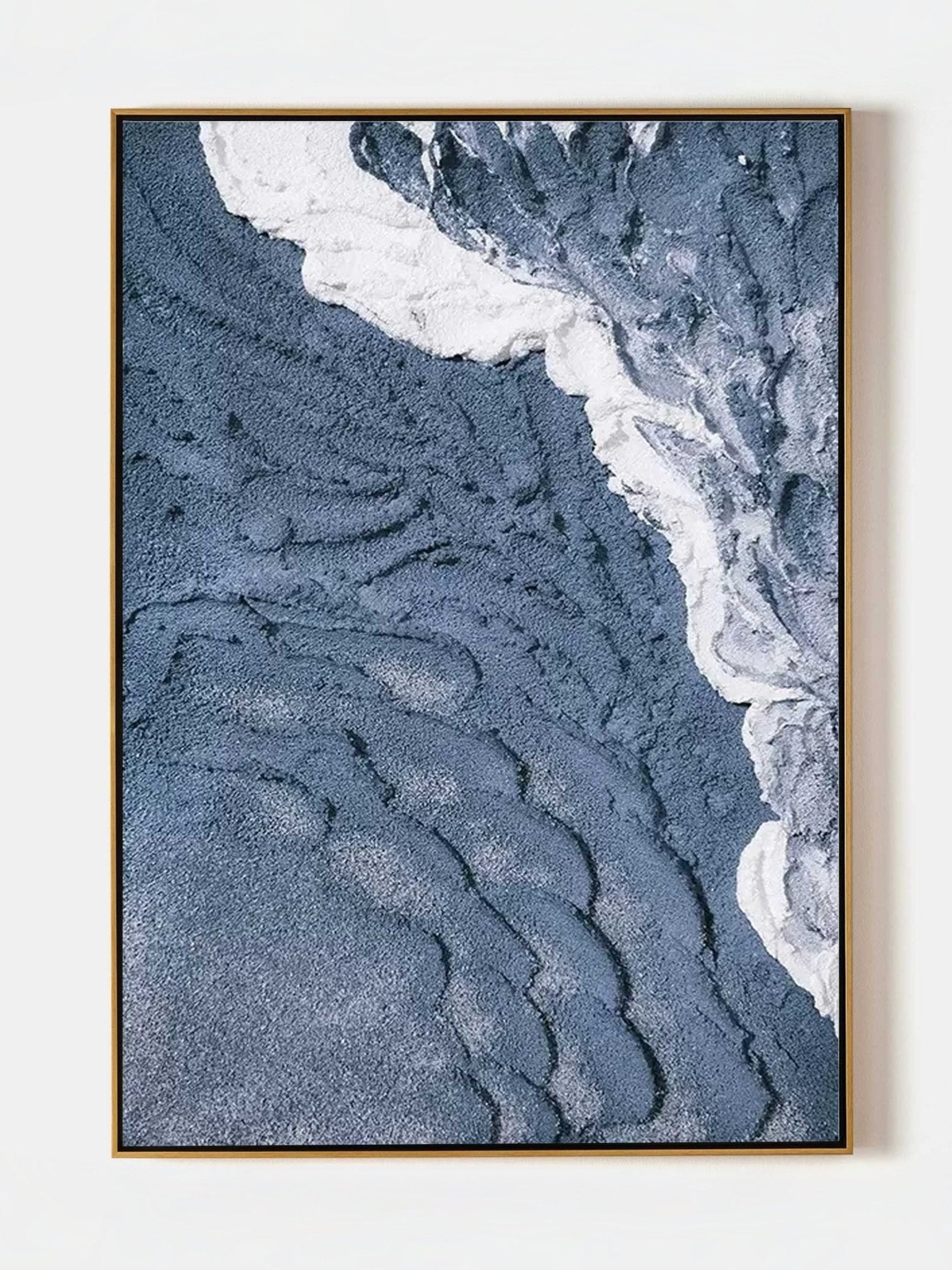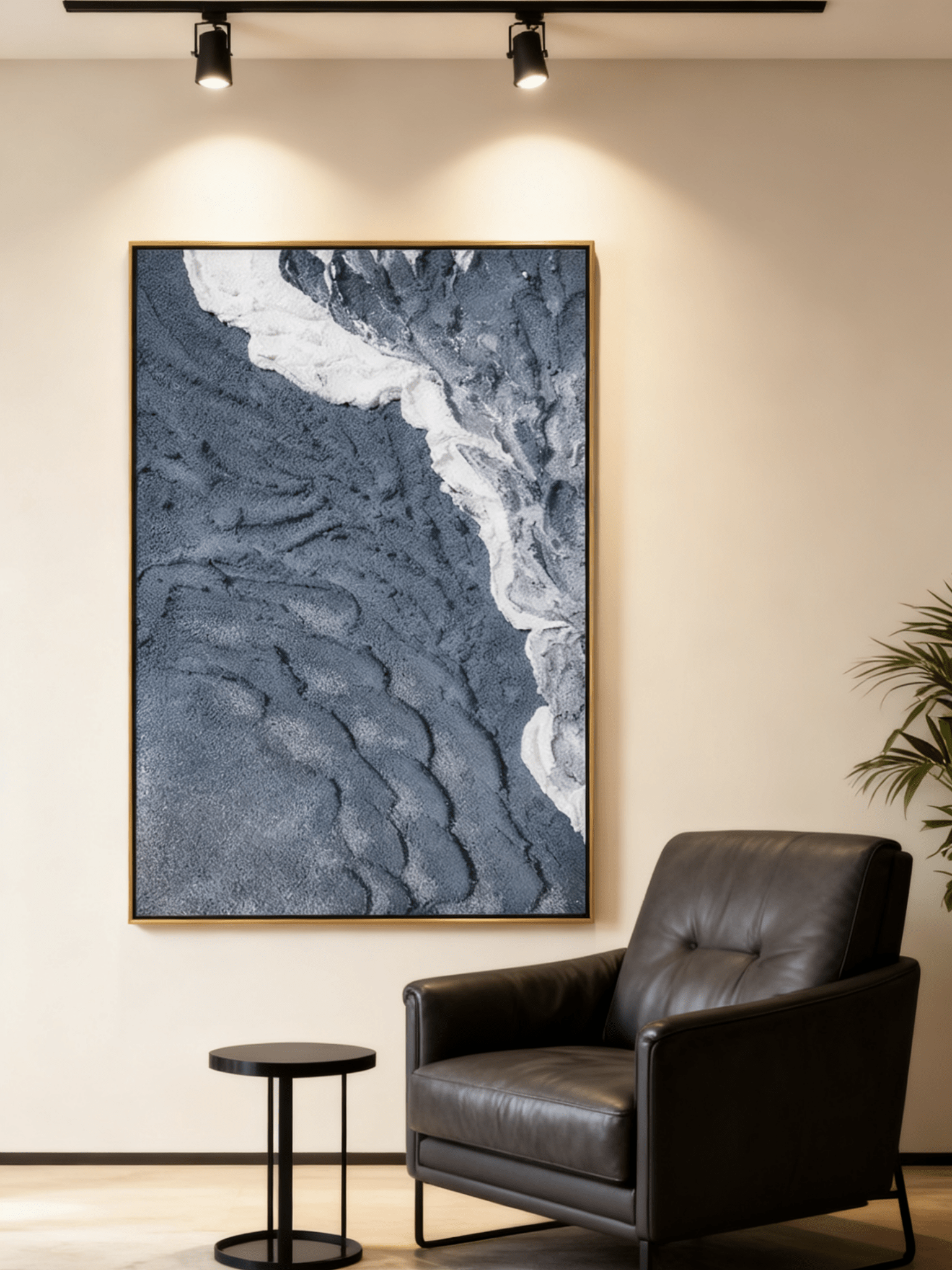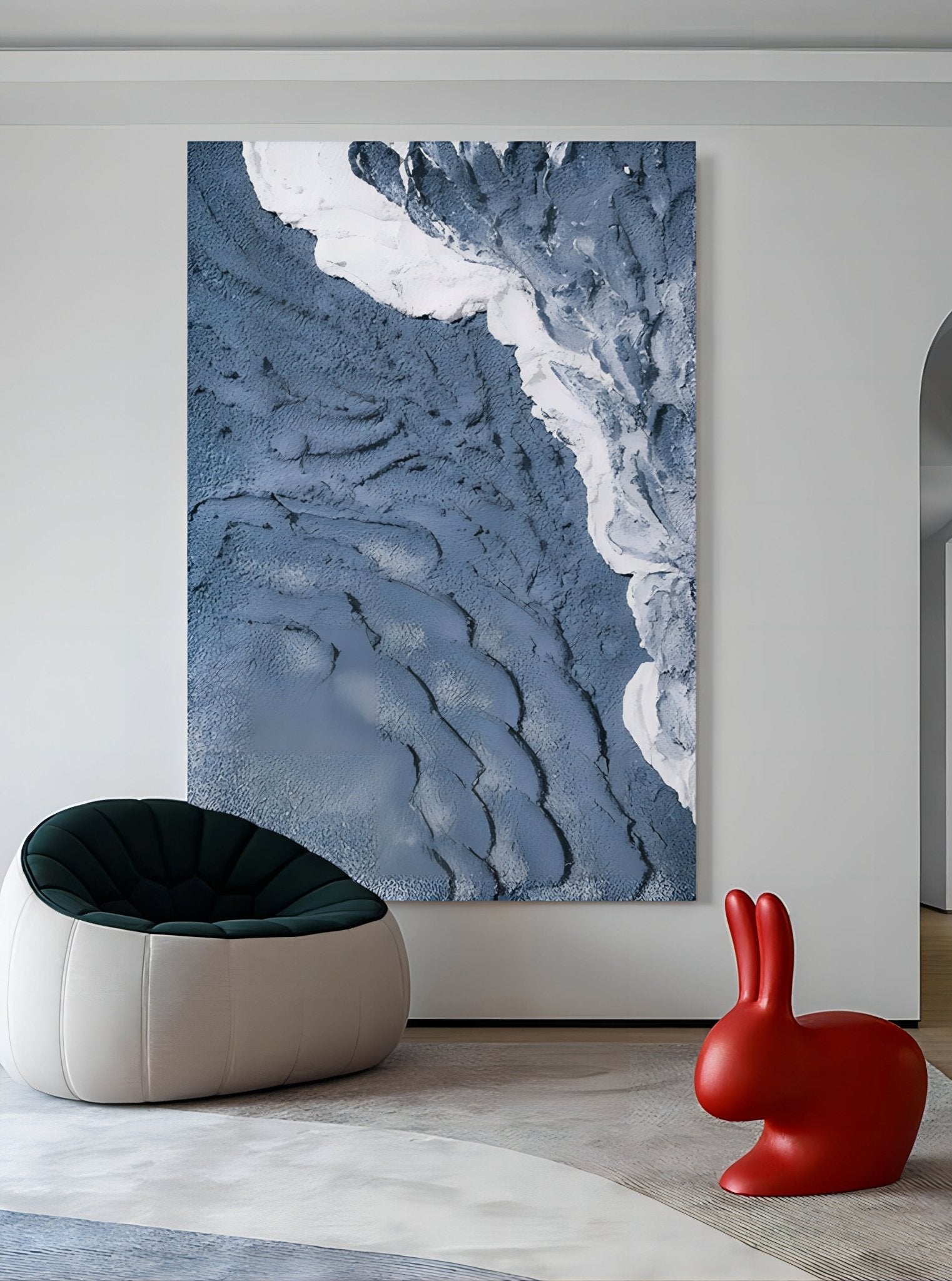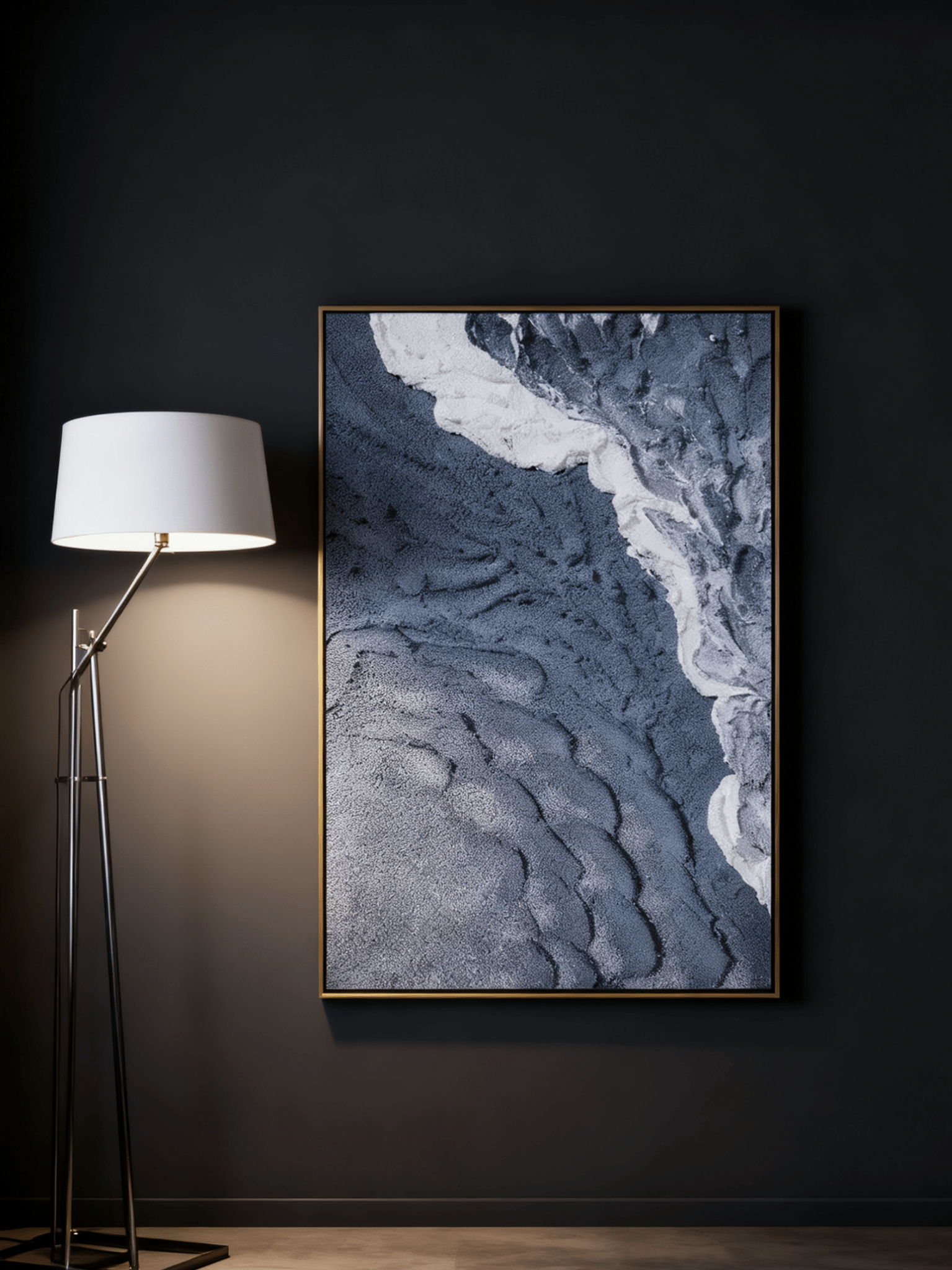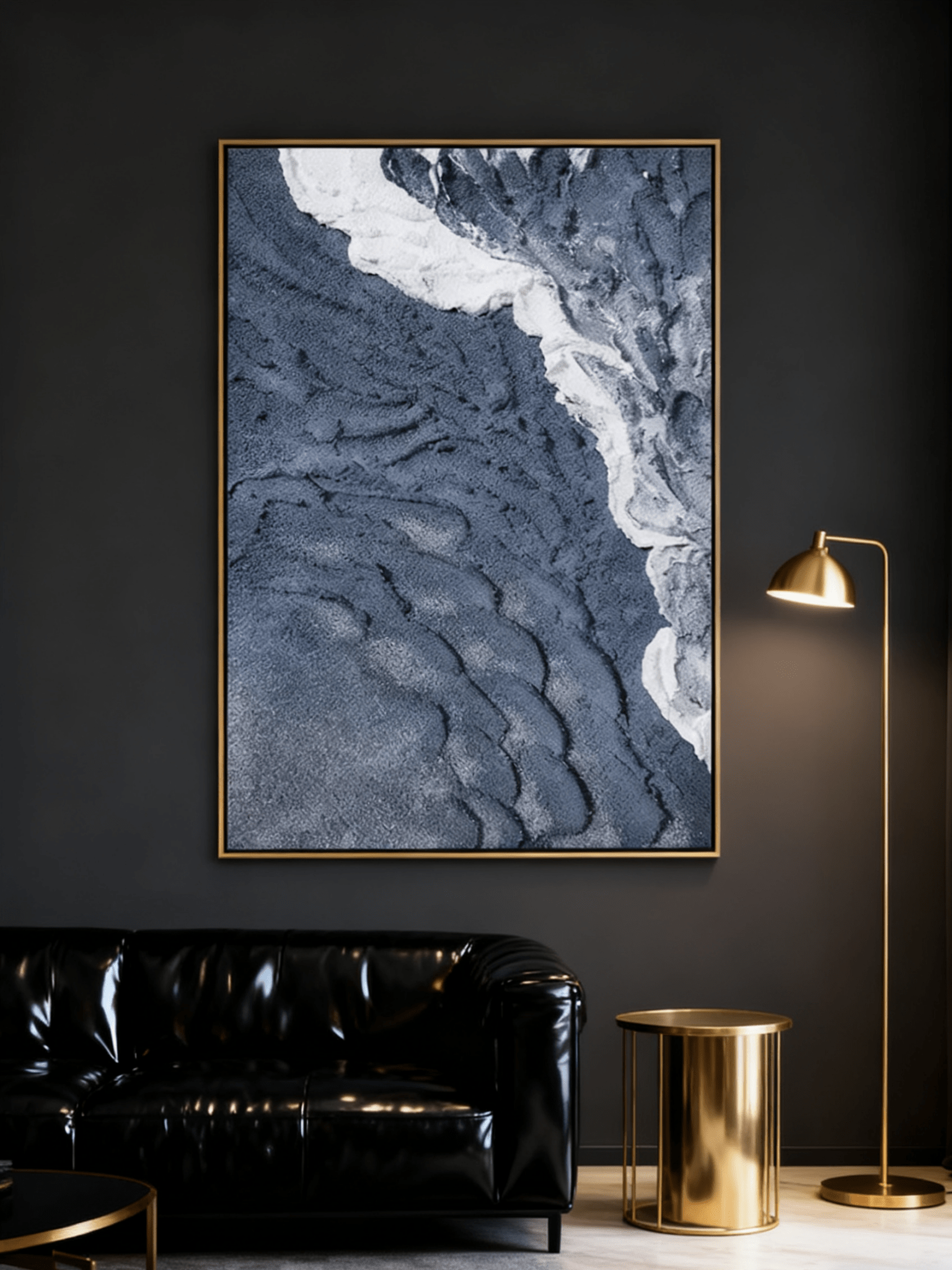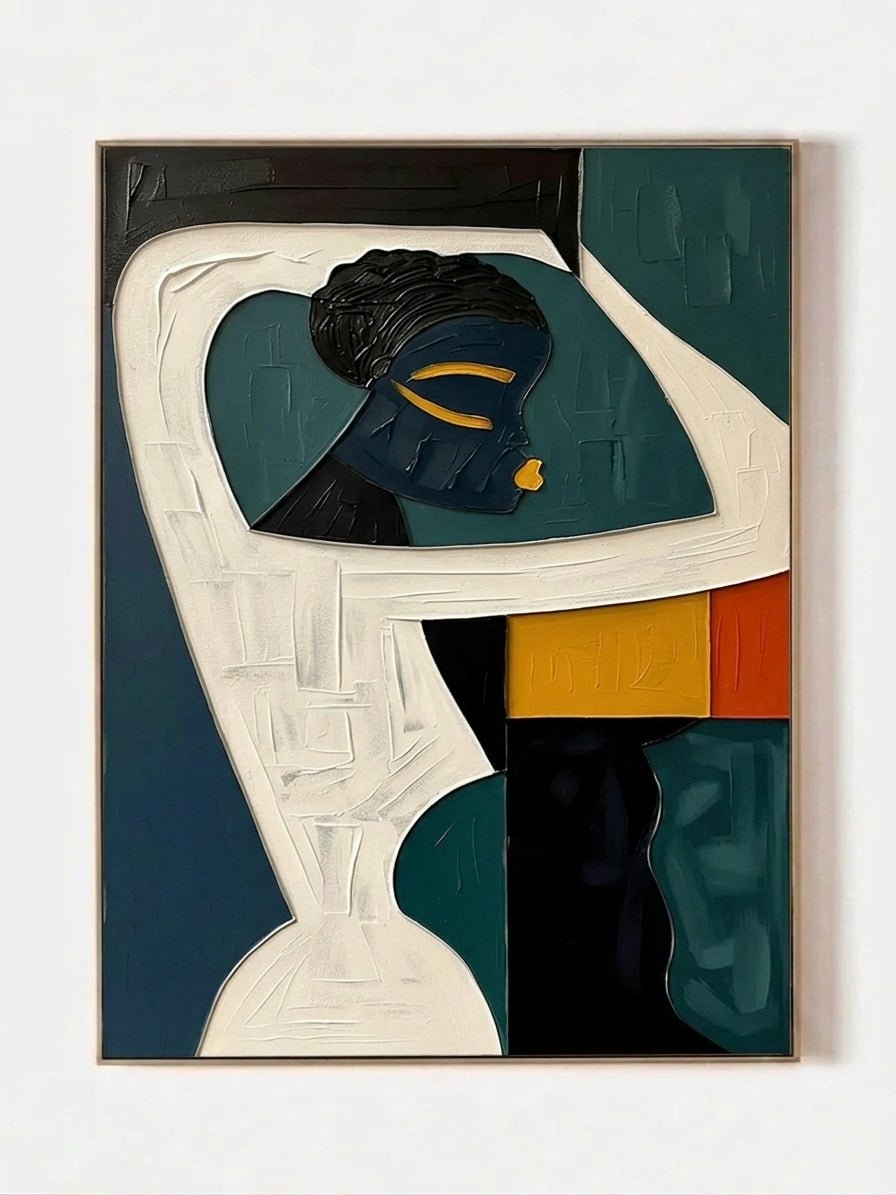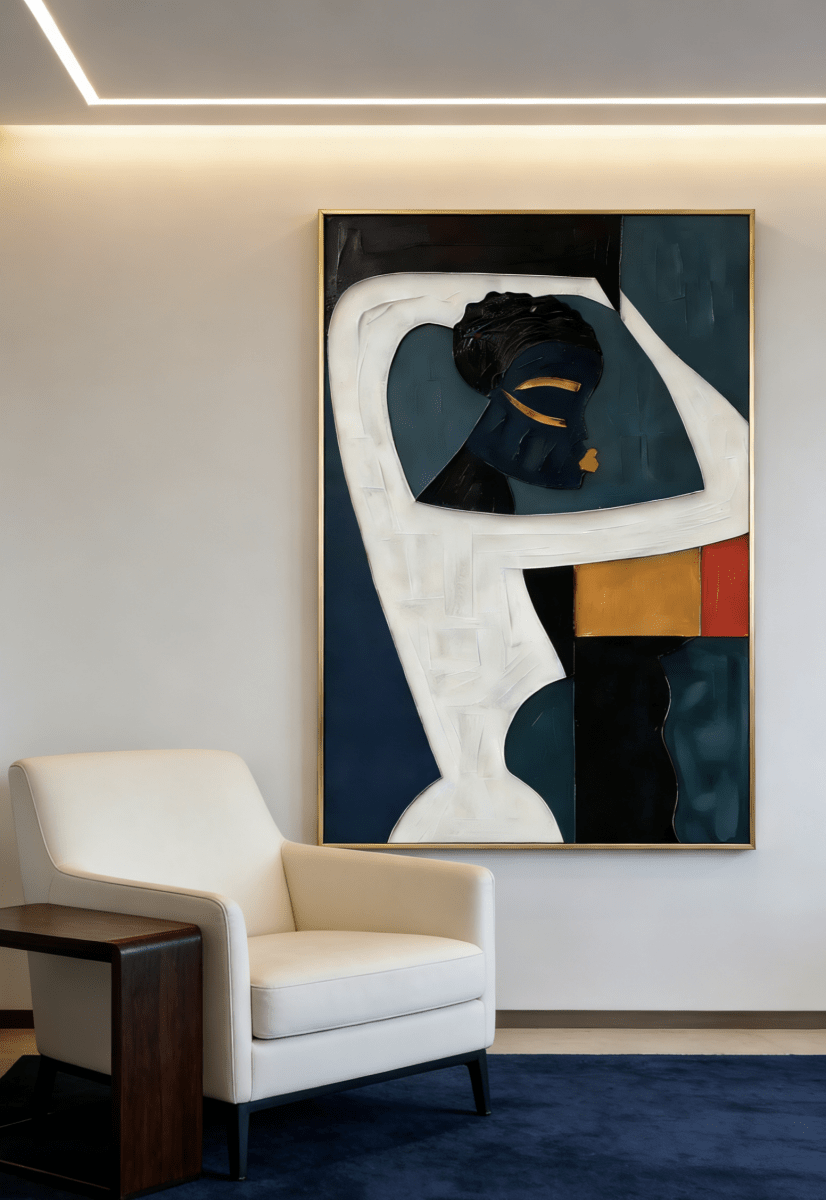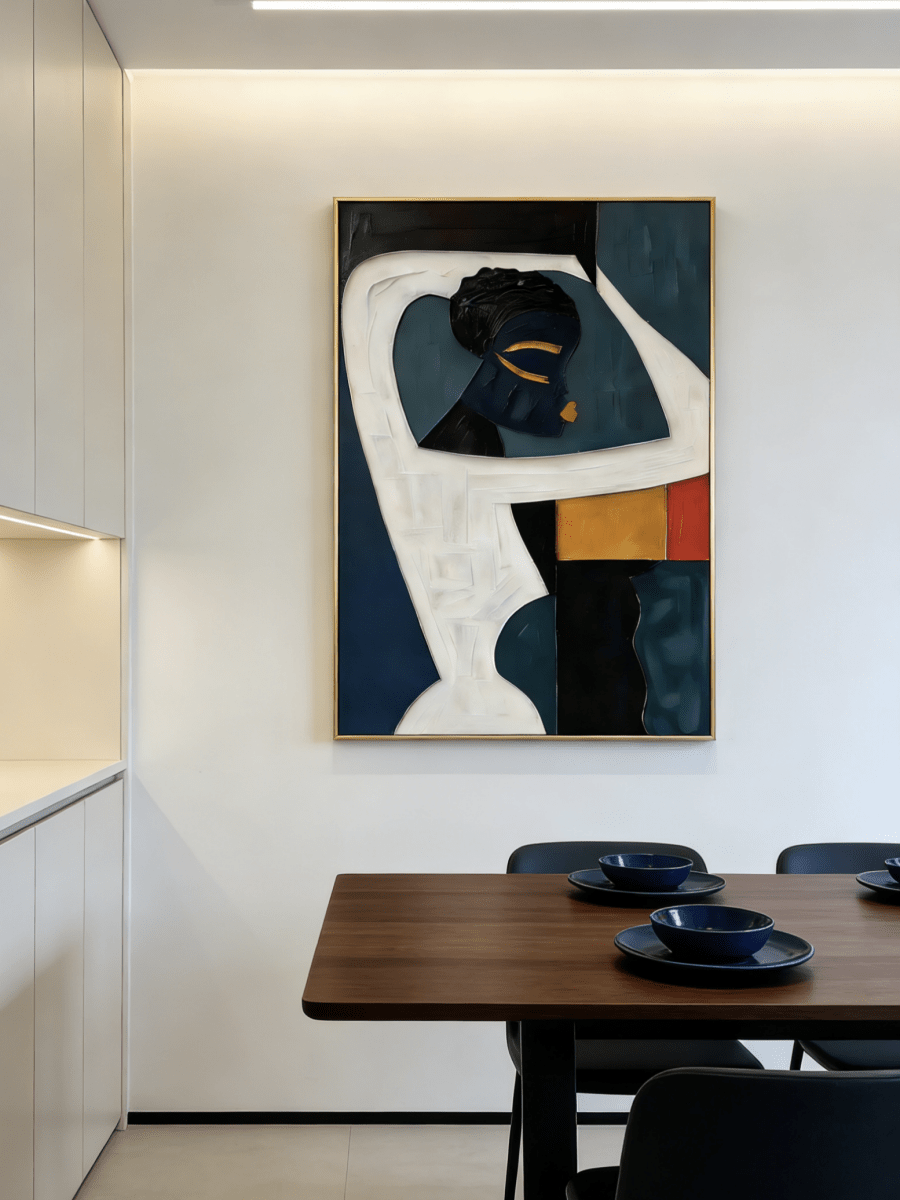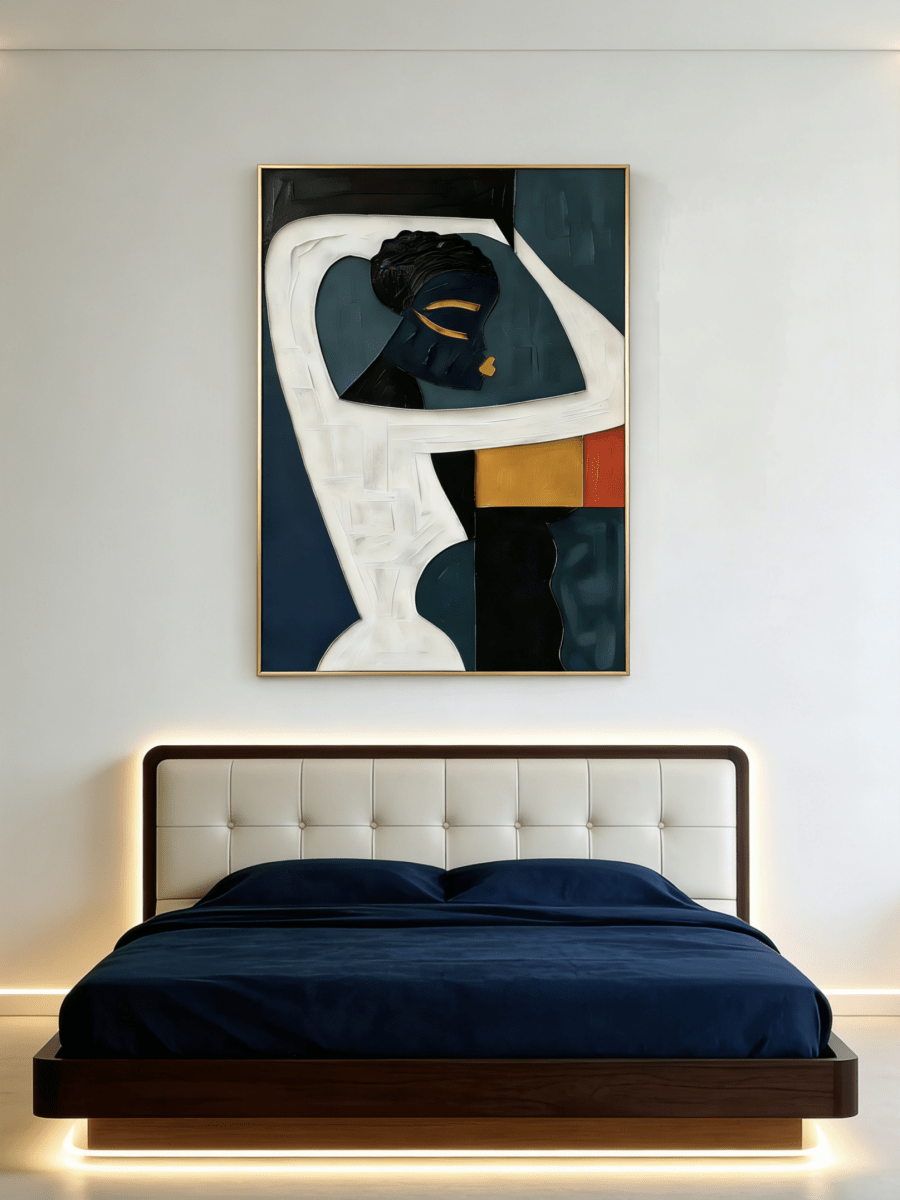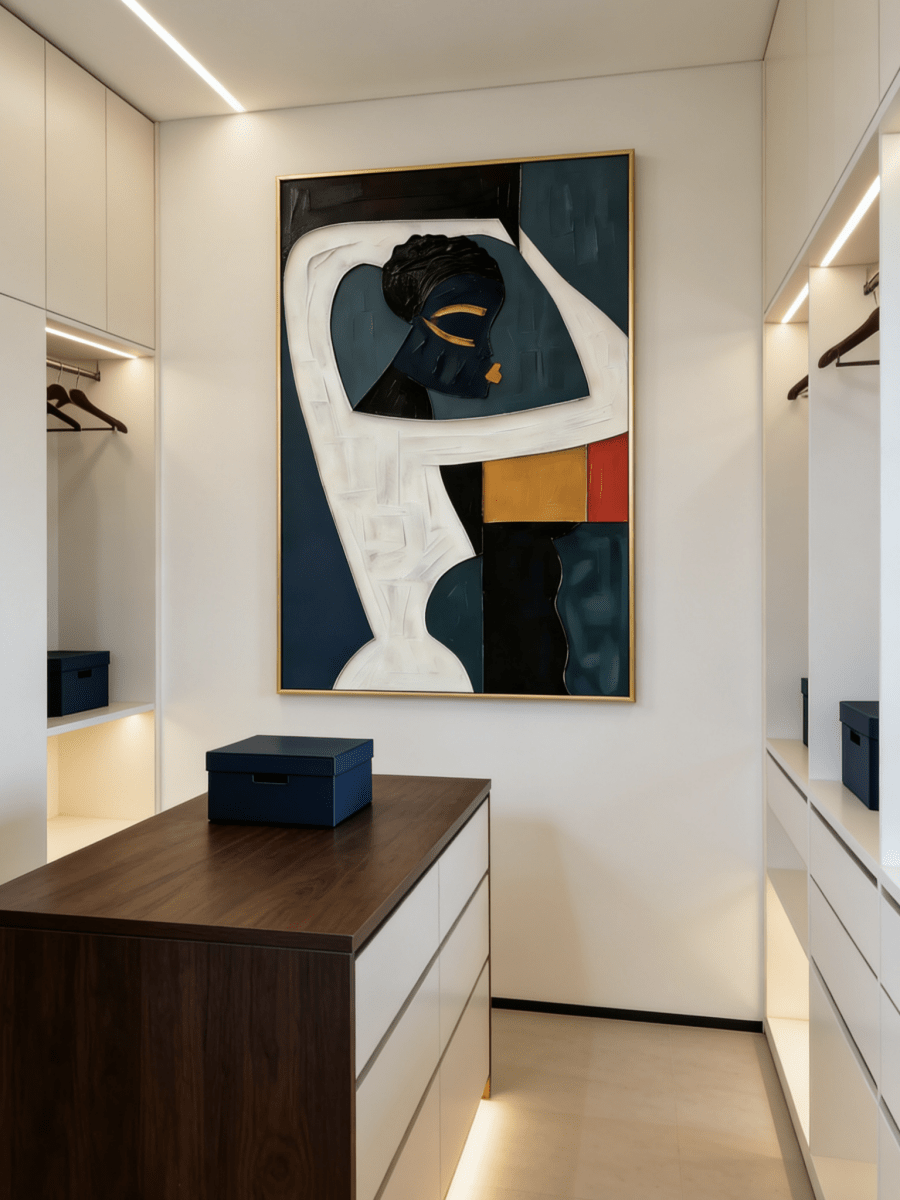

Geometric wall art and curved furniture work well together when one provides structure and the other provides movement. Let the painting establish a clear grid, line or block pattern, then repeat only one rounded gesture from the sofa, chair or table elsewhere in the arrangement. The goal is connection, not literal matching. A composition that combines straight divisions with imperfect circles can act as a bridge, while a stricter grid can sharpen a very soft, rounded room.
Keep color restrained when the silhouettes are already expressive. Measure the artwork against the furniture's visual width, leave open wall around the curves, and view the pairing from an angle. Curved pieces change shape as you move through the room, so a combination that looks balanced only from directly in front may not hold from the doorway.
Decide which element provides structure
A room with a crescent sofa, rounded lounge chairs and an oval coffee table can feel fluid but undefined. Rectilinear art gives the eye a place to stop. Conversely, a room with squared cabinetry and a curved chair may need a painting with organic geometry rather than another hard grid. Before choosing a canvas, list the dominant silhouettes already present.
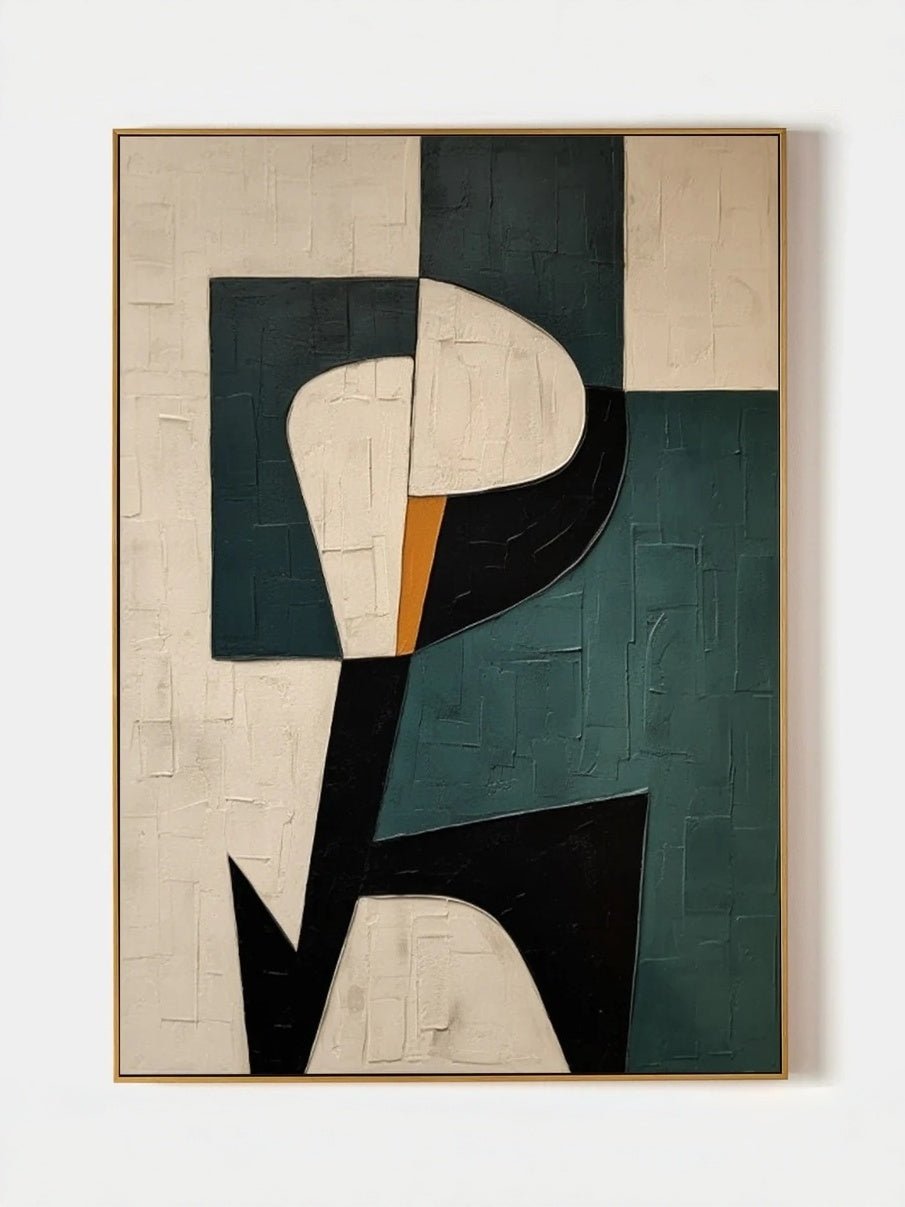
If curves dominate, select art with one legible linear system: stacked blocks, a grid or a strong vertical. If straight forms dominate, look for broken lines, irregular divisions or circles within the geometry. Earthen Circles – EV#0417 is a direct bridge because its rounded forms remain organized within a vertical field.
Avoid repeating every shape. Three round furniture pieces do not require round art, a round rug and a globe lamp. Repetition becomes more effective when it is selective: one circular detail in the painting, one curved chair and otherwise quiet supporting forms.
Use contrast in shape, not conflict
Shape contrast works when the objects share another quality. A rigid grid and a rounded bouclé sofa can connect through a common ivory palette. A warm earth-block painting and an oval walnut table can connect through color temperature. A textured geometric canvas and a smooth lacquered chair can connect through scale even though their surfaces differ.
Choose two points of agreement and one point of contrast. For example:
- Agreement in color and texture; contrast in silhouette.
- Agreement in warm materials and rounded detail; contrast in linear structure.
- Agreement in scale and neutral value; contrast in surface finish.
More than one strong conflict can make the pairing feel accidental. Bright color, sharp black lines, deep relief and an unusual silhouette may overwhelm a quiet curved sofa. Reduce at least one dial.

Pair art with a curved sofa
A curved sofa is read by its full sweep, not by the distance between two square arms. Measure the widest horizontal span and use that as the reference for artwork. The canvas does not need to trace the arc. A square or vertical work can be effective when the sofa is compact and the wall has height, while a broader composition suits a long crescent form.
Keep the lower edge connected to the seating group, but give the upper wall enough room for the curve to breathe. A painting that is too wide can visually straighten the sofa; one that is too small may appear to float. Mark the outline with tape and view from both ends of the room.
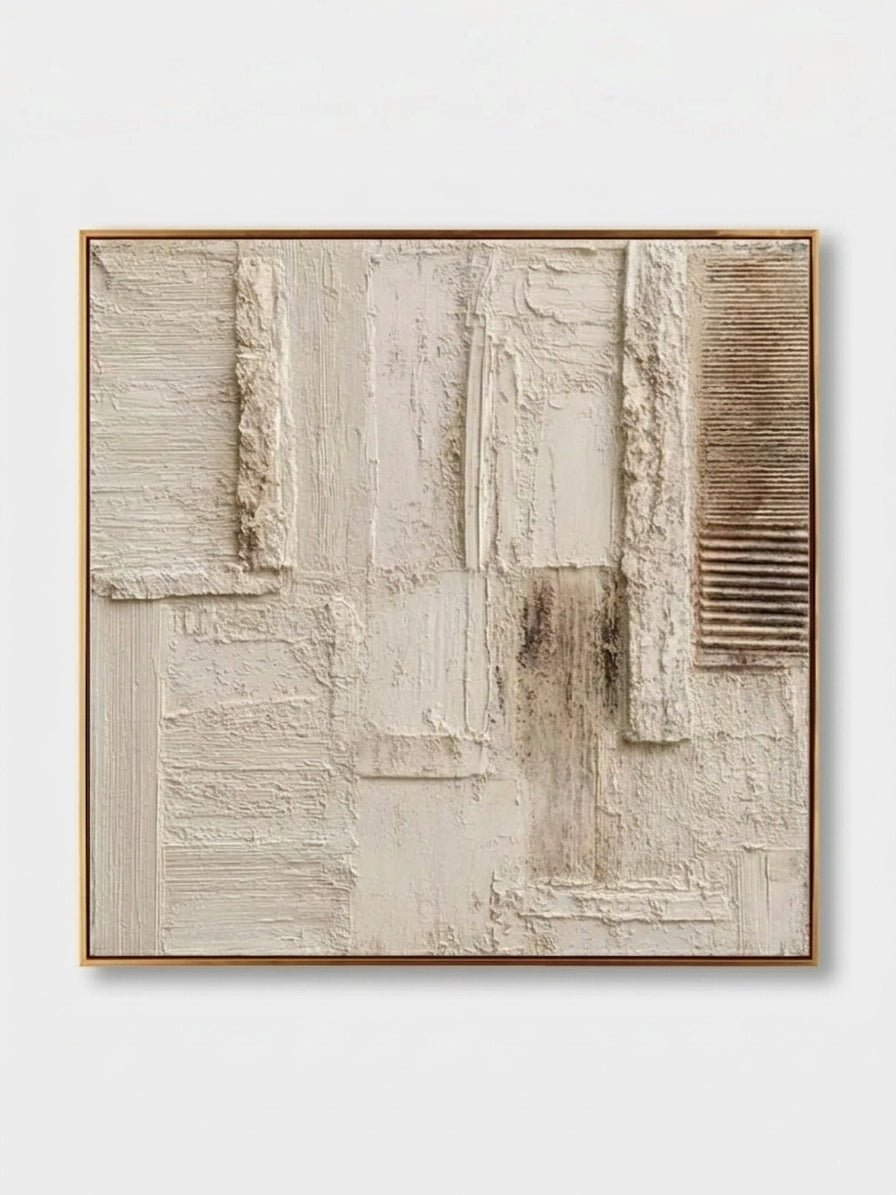
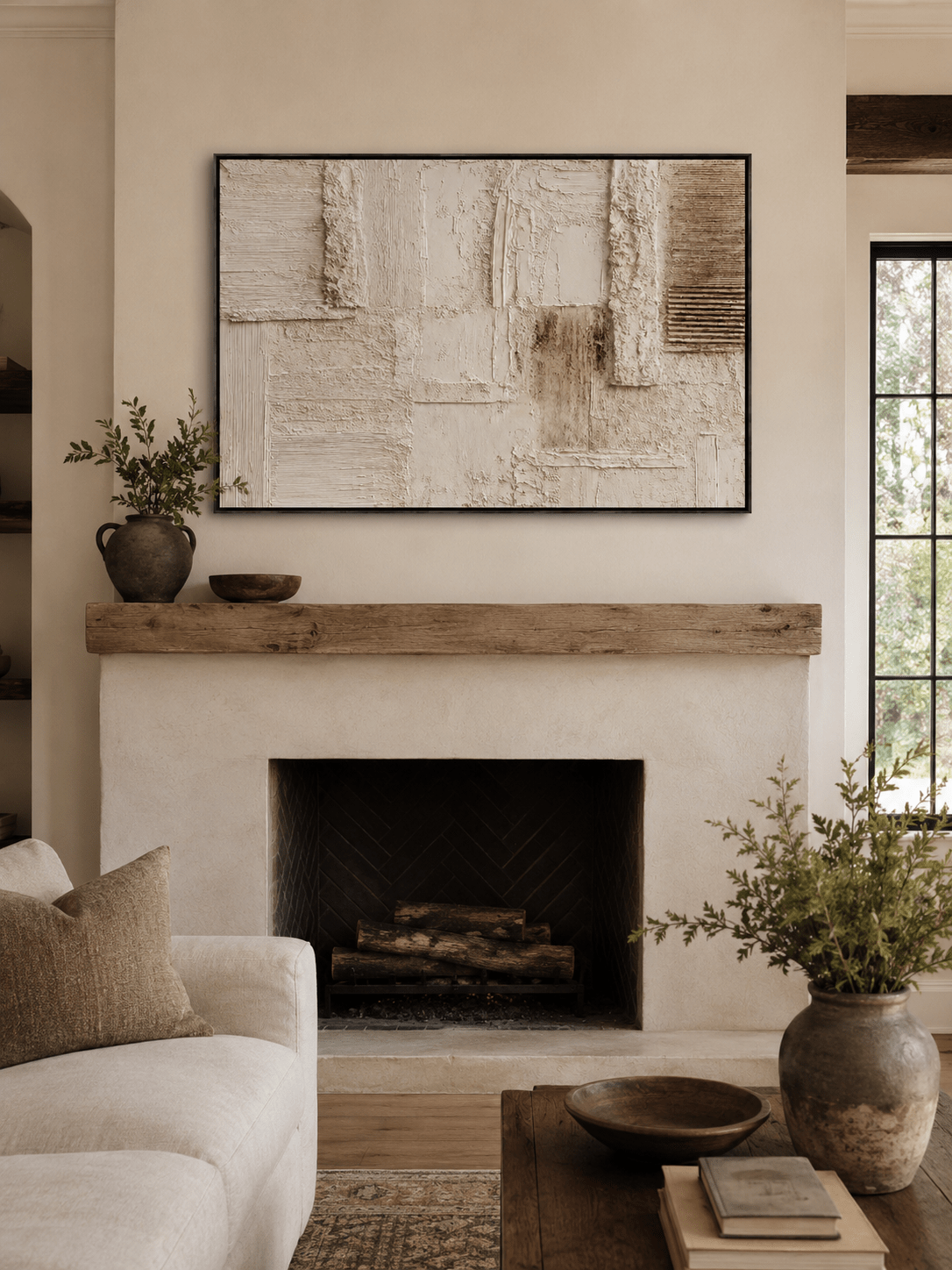
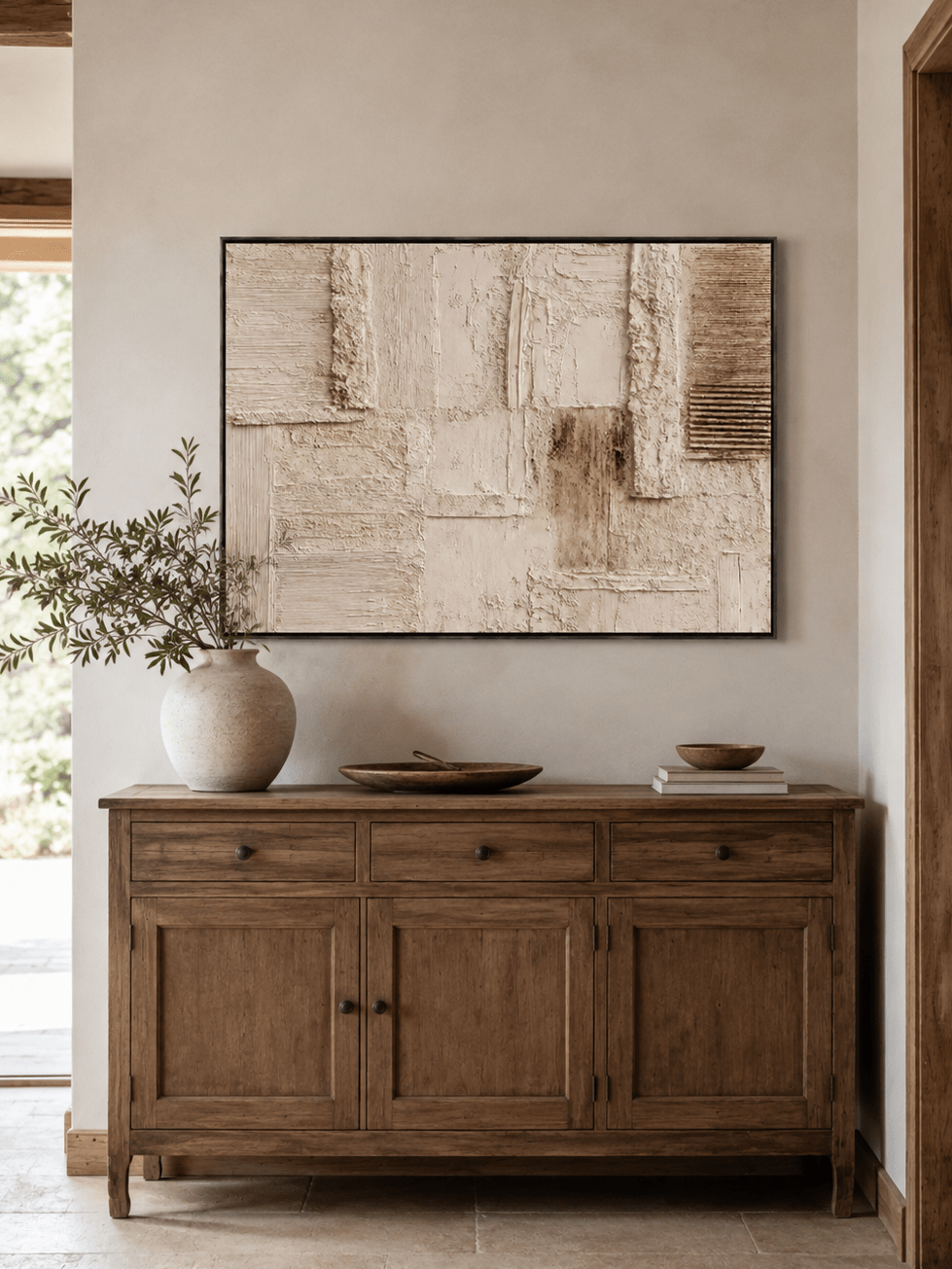
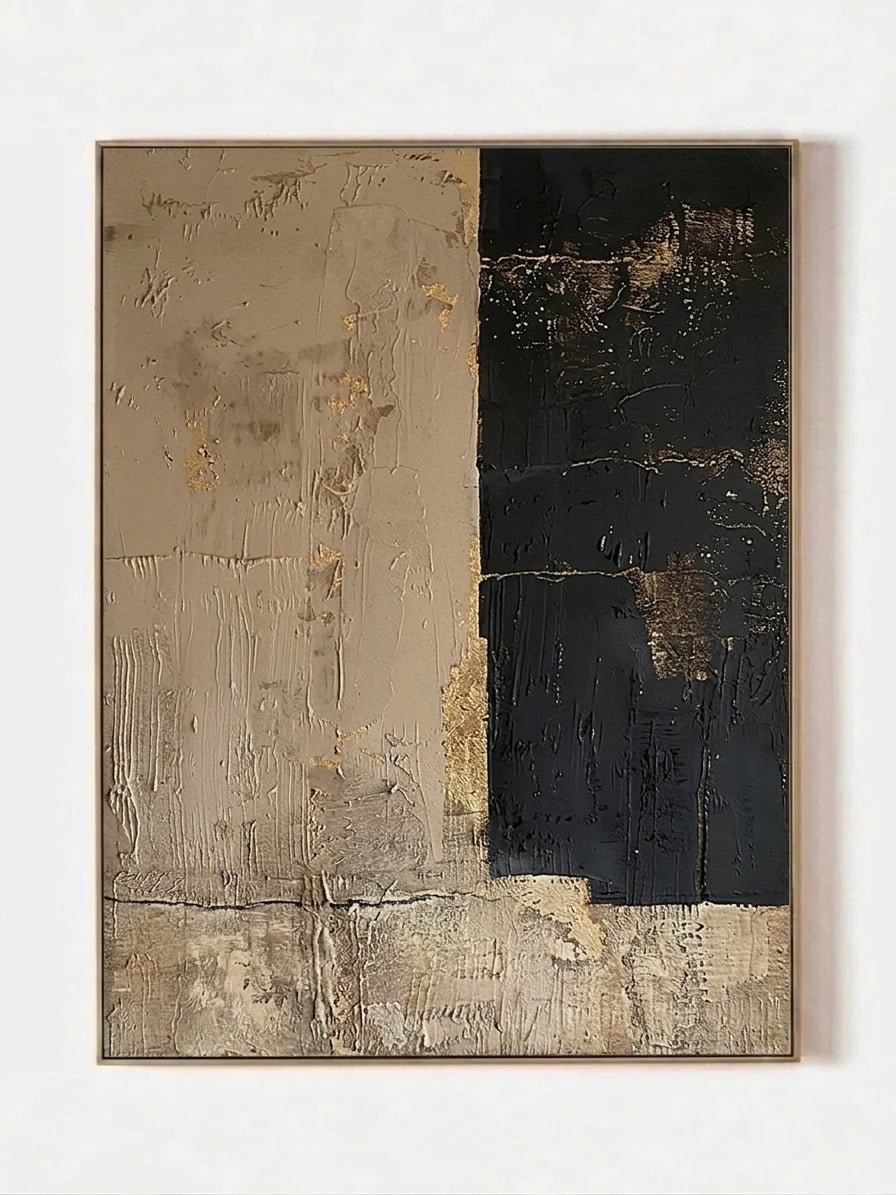
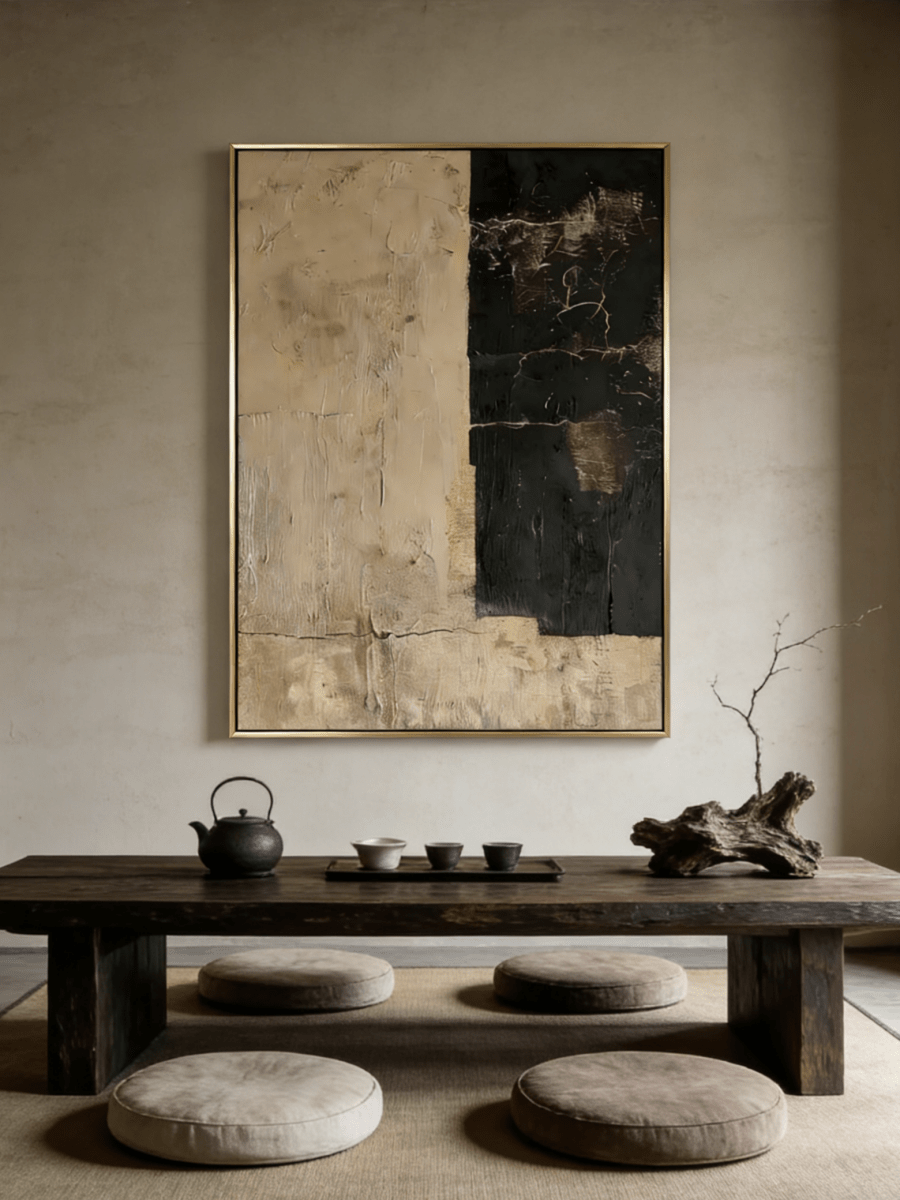
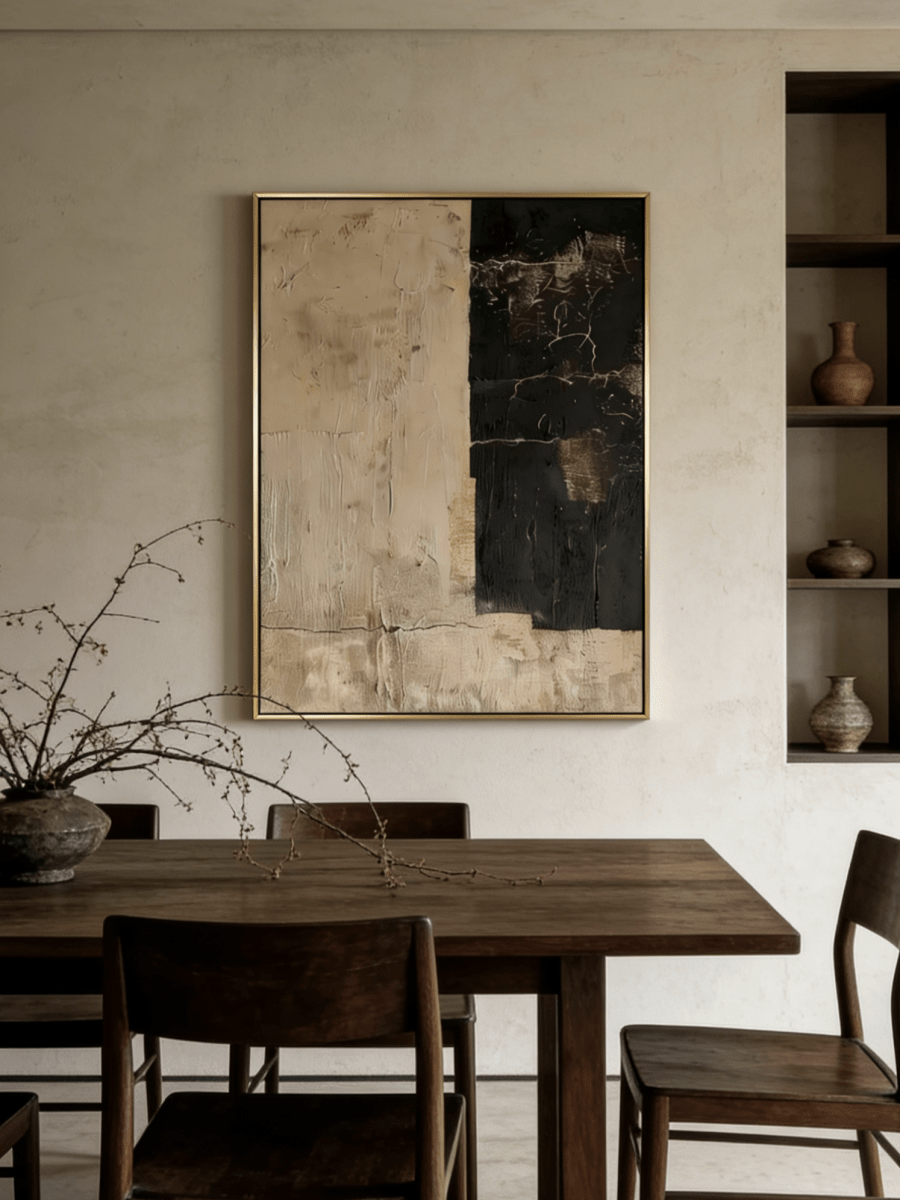
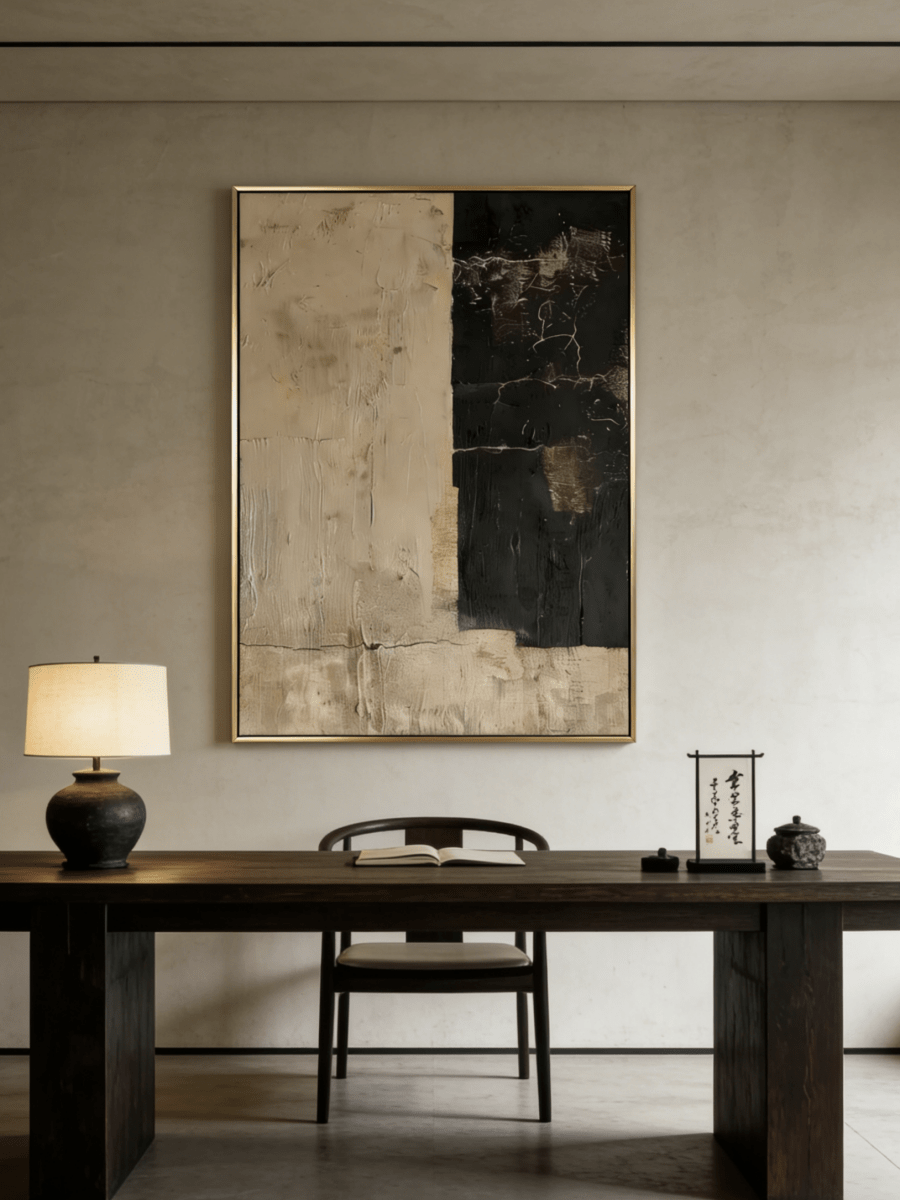
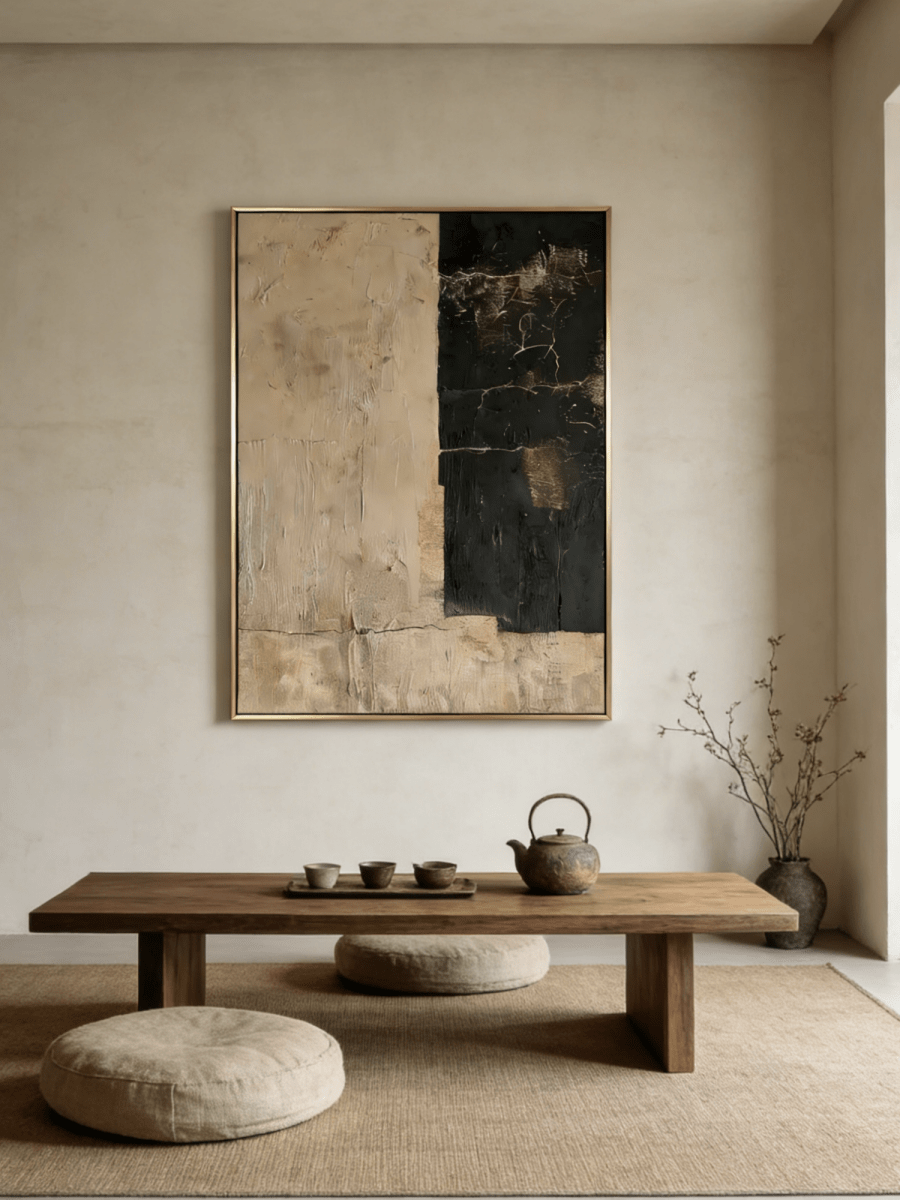
Monochrome Sand Blocks – EV#0422 uses sand-toned relief and structured divisions. Against a cream curved sofa, its shared neutral family creates continuity while the lines prevent the composition from becoming overly soft. With a darker rust or olive sofa, the pale canvas can provide value contrast.

Pair art with a round dining table
A round table creates a central island, so the art on a nearby wall does not need to be round. A square canvas can echo the table's centered quality, while a vertical painting can give height to a short sideboard or narrow dining wall. Judge the painting with the chair backs visible; their repeated arcs are part of the composition.
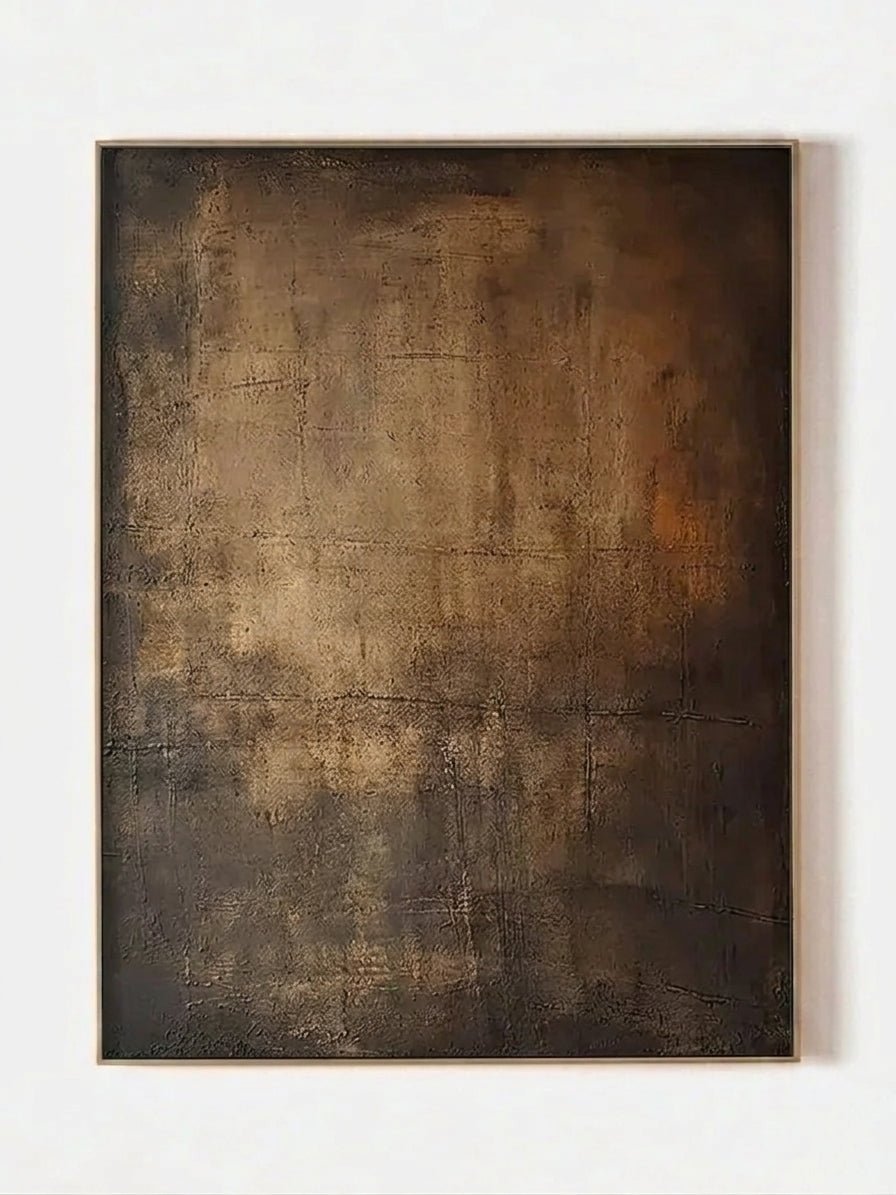
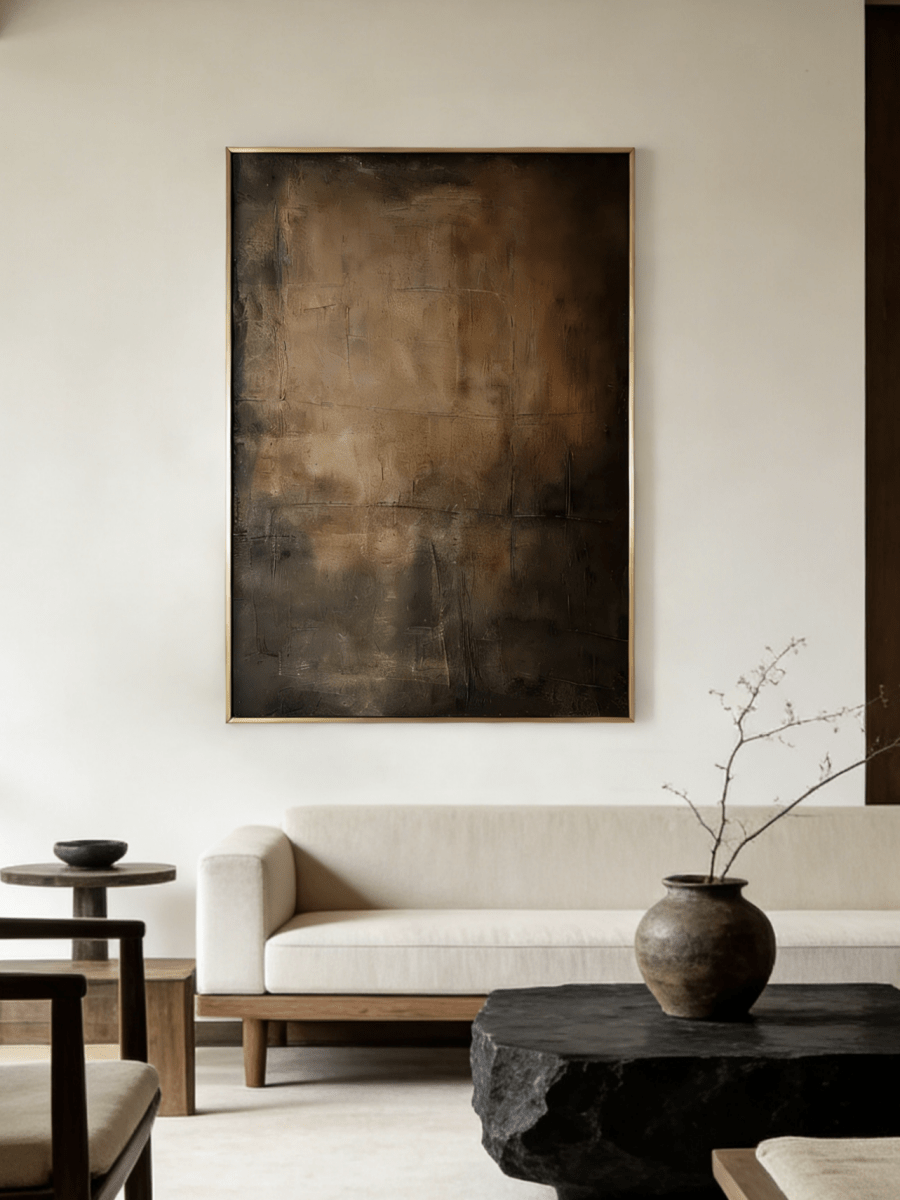
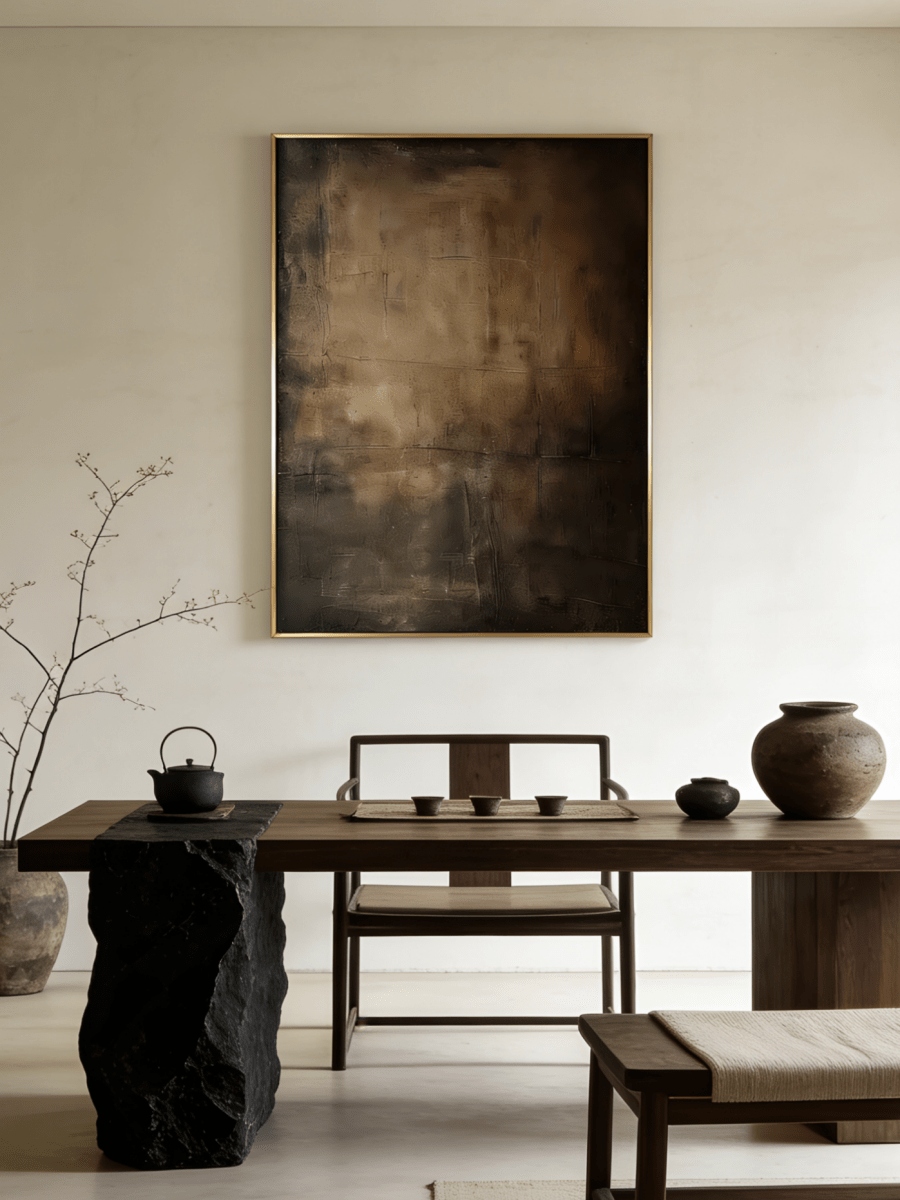
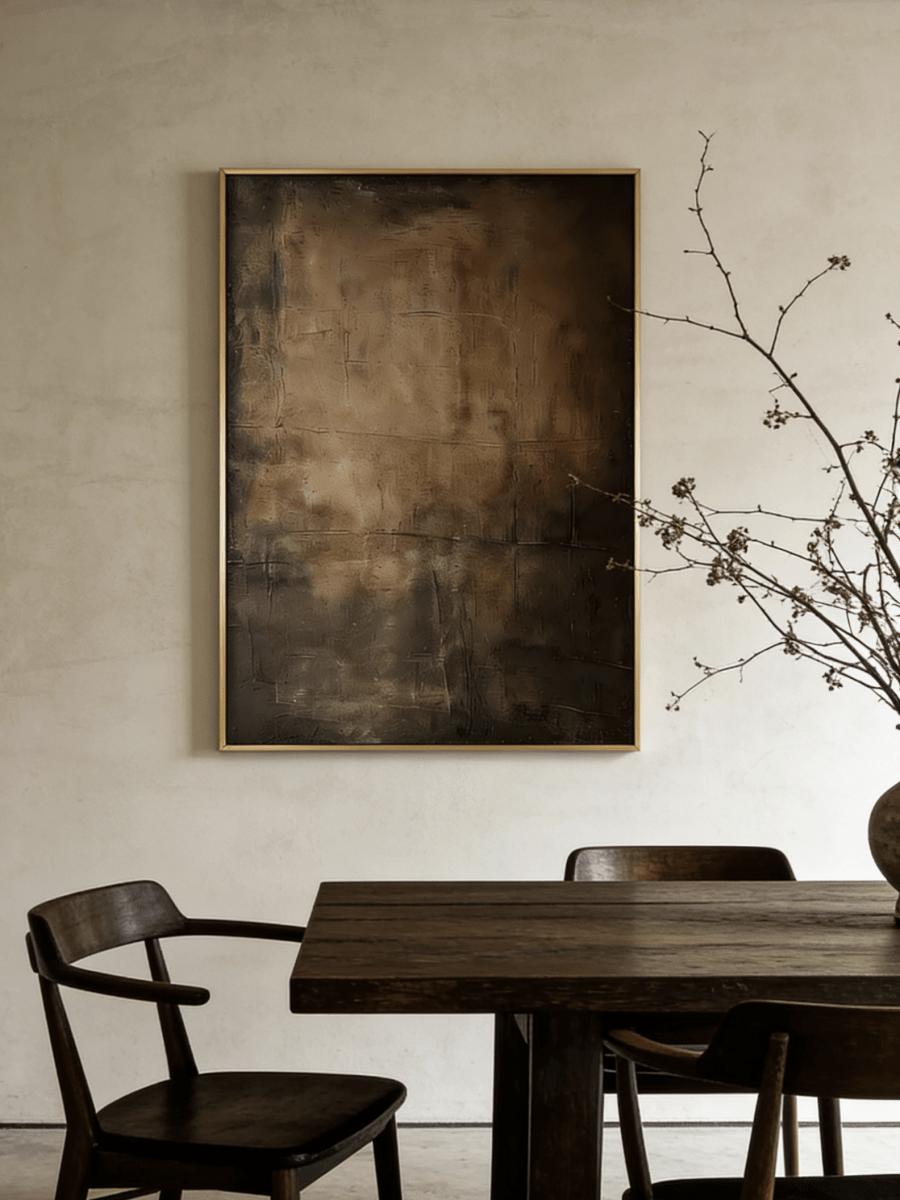
If the dining chairs have rounded backs and the pendant is globe-shaped, choose art with more linear discipline. Umber Relief Grid – EV#0421 provides that counterweight. Its deeper brown field can connect with walnut, leather or bronze, while the ivory relief keeps it readable on a warm neutral wall.
When the table is pale oak and the room has little contrast, a medium or dark geometric field can anchor the wall. When the table is dark, reverse the value relationship and choose a lighter work with enough edge definition.
Pair art with barrel chairs and rounded consoles
One or two barrel chairs often occupy less visual width than expected because their arms curve inward. Center the artwork on the seating group or console, not on an empty stretch of wall. A vertical composition can suit the narrow bay beside a fireplace or window, provided it leaves a calm margin at each side.
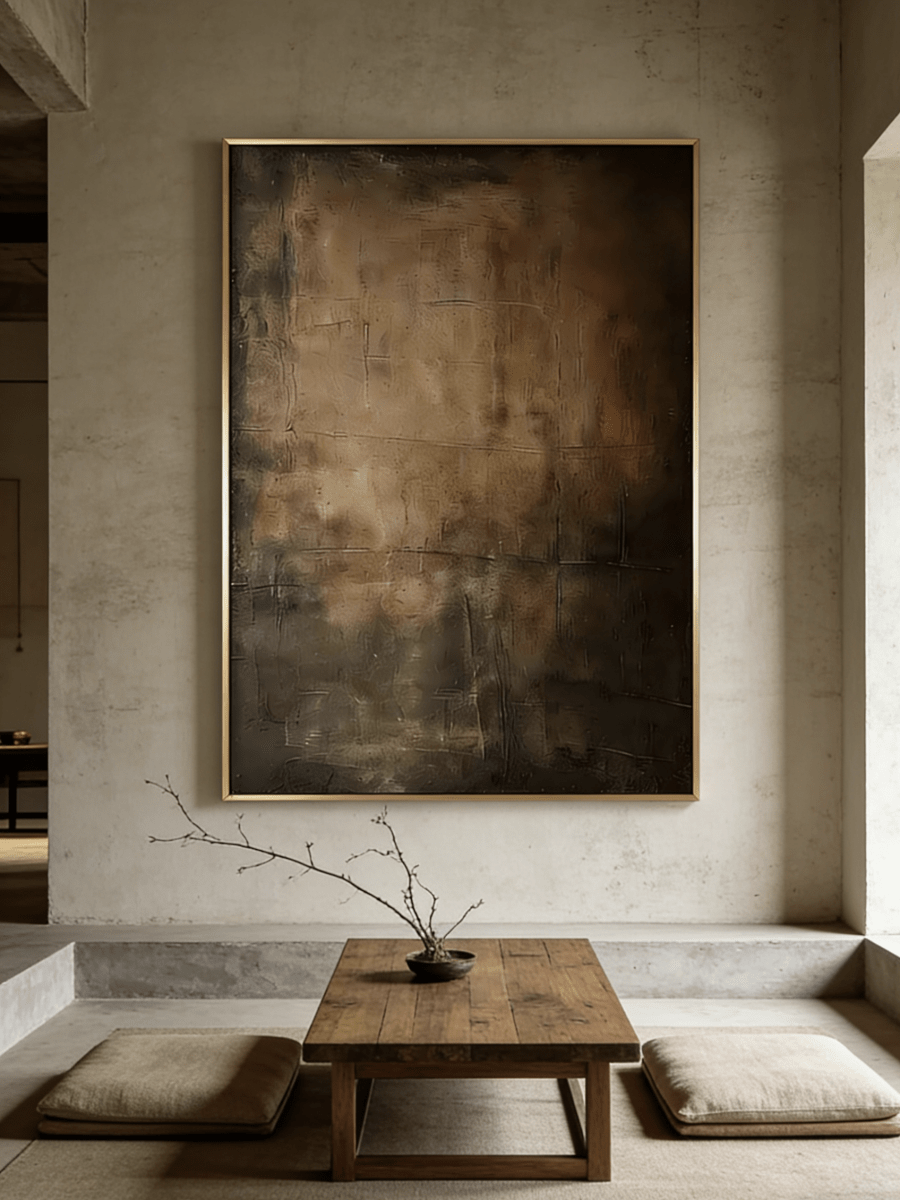
Warm Earth Blocks – EV#0416 is vertical and combines beige, brown and ivory. It can relate to rounded wood or upholstered forms through warmth while its block structure clarifies a narrow wall. Pair it with a simple lamp rather than another highly sculptural object.
Control color in an organic modern room
Organic modern interiors often combine pale upholstery, wood, stone and softly irregular forms. Geometric art prevents those materials from becoming visually vague, but it should not look digitally precise. Slight variation in line, texture or edge helps the painting live beside natural materials.
- Cream upholstery: choose sand, umber or warm earth geometry with a value change from the fabric.
- Camel or rust upholstery: use ivory and taupe fields with restrained warm accents.
- Olive upholstery: balance with stone, sand and brown rather than matching the green exactly.
- Gray upholstery: introduce warmth through beige, ochre or wood-adjacent brown.
Repeat no more than two painting colors in the rest of the room. The canvas should participate in the palette, not become a shopping list for cushions and accessories.
Balance texture with curved upholstery
Bouclé, velvet and woven fabric already catch light. Textured art can still work, but separate the surfaces through distance and lighting. A wall-mounted canvas is read at a different scale from upholstery, so its relief can provide architectural detail rather than fabric-like softness.
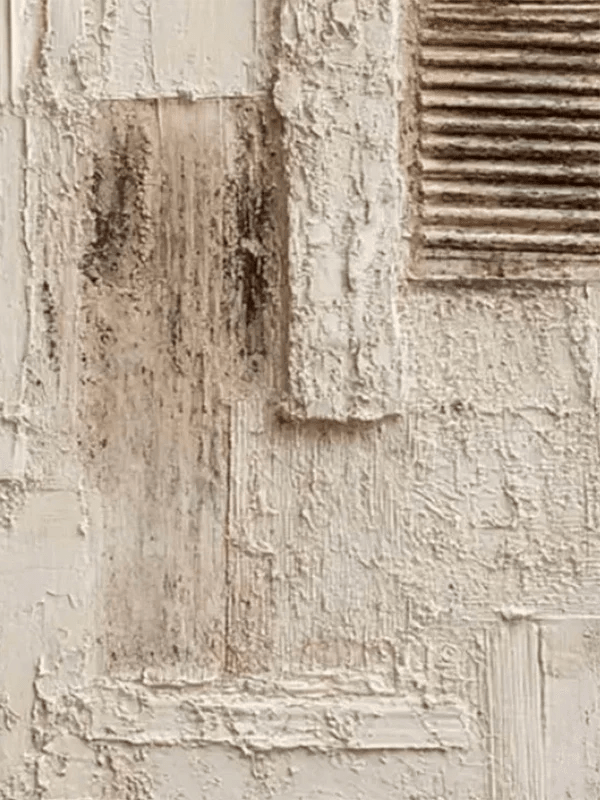
Use broad, angled light if the painting has raised areas. A harsh, narrow beam can exaggerate every shadow and make the geometry more aggressive. If texture intensity is your main purchase decision, compare the product close-ups and consult the guide to heavy versus subtle texture.
Leave tactile variety elsewhere. A deeply textured canvas, bouclé sofa, shag rug and rough plaster wall can all be attractive individually, but together they may blur the hierarchy. Smooth stone, plain linen or a quiet painted wall gives the eye a rest.

Check the room from moving viewpoints
Curved furniture reveals itself as you move. Review the taped artwork from the doorway, the principal seat and the side approach. From an angle, an oval table may appear narrow and a crescent sofa may overlap visually with the painting. Adjust the canvas position to the furniture grouping rather than to a single frontal photograph.
Also check the empty wall visible around the outer curve. Negative space helps the silhouette remain clear. If a tall plant or floor lamp fills that space, the art may need to shift slightly or become narrower. Do not force symmetry when the architecture and furniture are intentionally asymmetrical.
A practical pairing checklist
- Name the dominant furniture silhouette: arc, circle, oval or rounded rectangle.
- Choose art that offers structure, a bridge shape or a deliberate contrast.
- Create two points of agreement in color, material or scale.
- Tape the complete canvas and frame dimensions against the furniture's visual width.
- Review from multiple angles and in the room's normal light.
Frequently asked questions
Does geometric art clash with a curved sofa?
No. Straight lines can clarify the sofa's curve. Connect the two through a shared neutral, material temperature or restrained texture.
Should I choose round art for a round table?
Not necessarily. A square or vertical work often gives useful contrast. Repeat the circular idea in one detail rather than in every object.
What art works with bouclé furniture?
Geometric textured art can work well if the wall and accessories remain quiet. Use lighting that reveals the canvas without exaggerating both surfaces.
Can a square painting hang above a curved sofa?
Yes, especially over a compact sofa or on a taller wall. Measure against the sofa's widest span and make sure the square has enough visual weight.
How many geometric patterns should a room contain?
Keep one dominant pattern and let other references be subtle. Too many grids, circles and repeated motifs weaken the main relationship.
Build the room around one clear relationship
The strongest pairing usually has a simple idea: structured art above a fluid sofa, organic circles beside a linear cabinet, or warm blocks balancing an oval wood table. Compare current pieces in the Wabi-Sabi Wall Art collection and the latest New Wall Art, then test the exact product dimensions against your furniture before ordering.