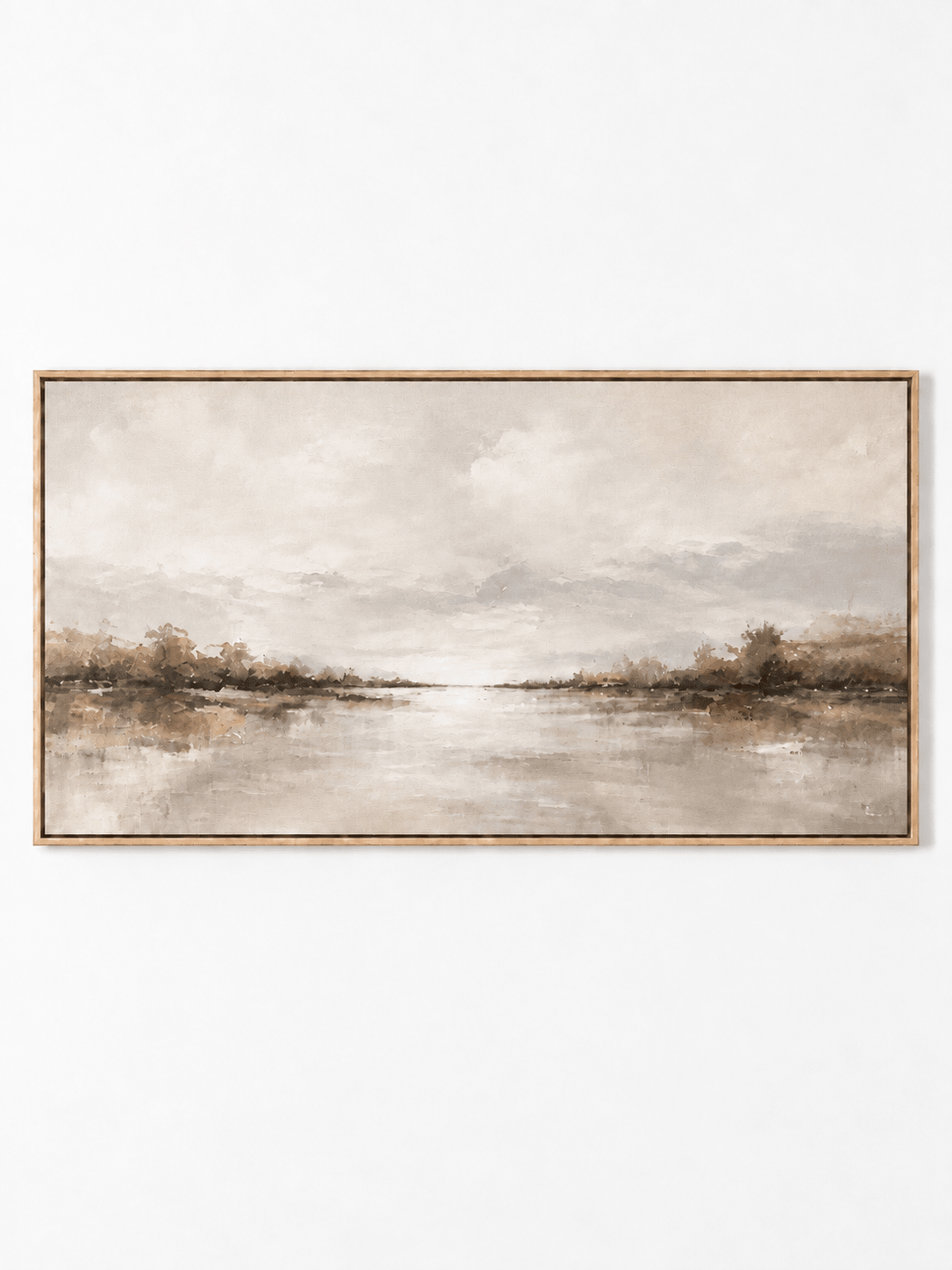

By WABI Wall Art Editorial Team
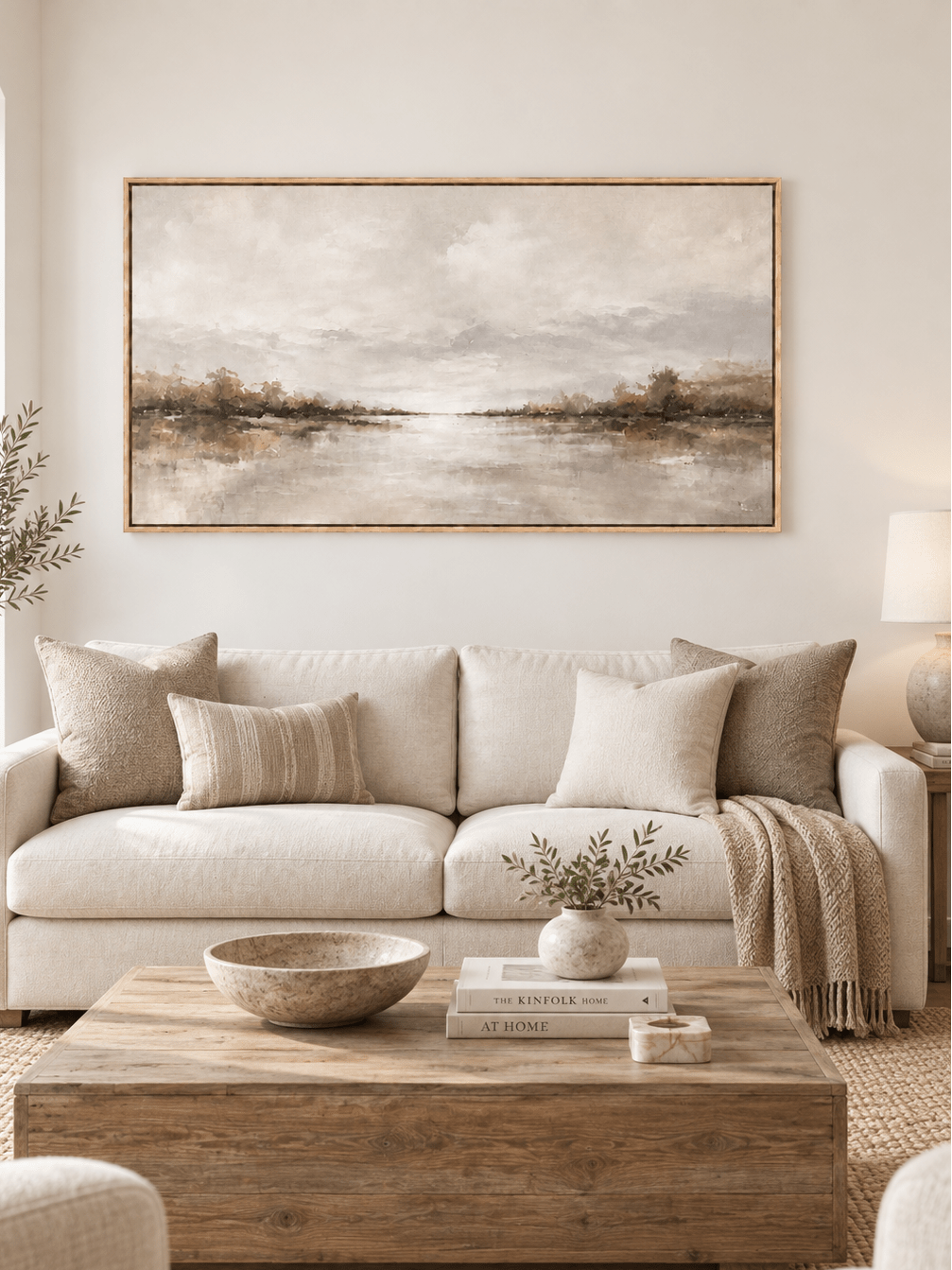
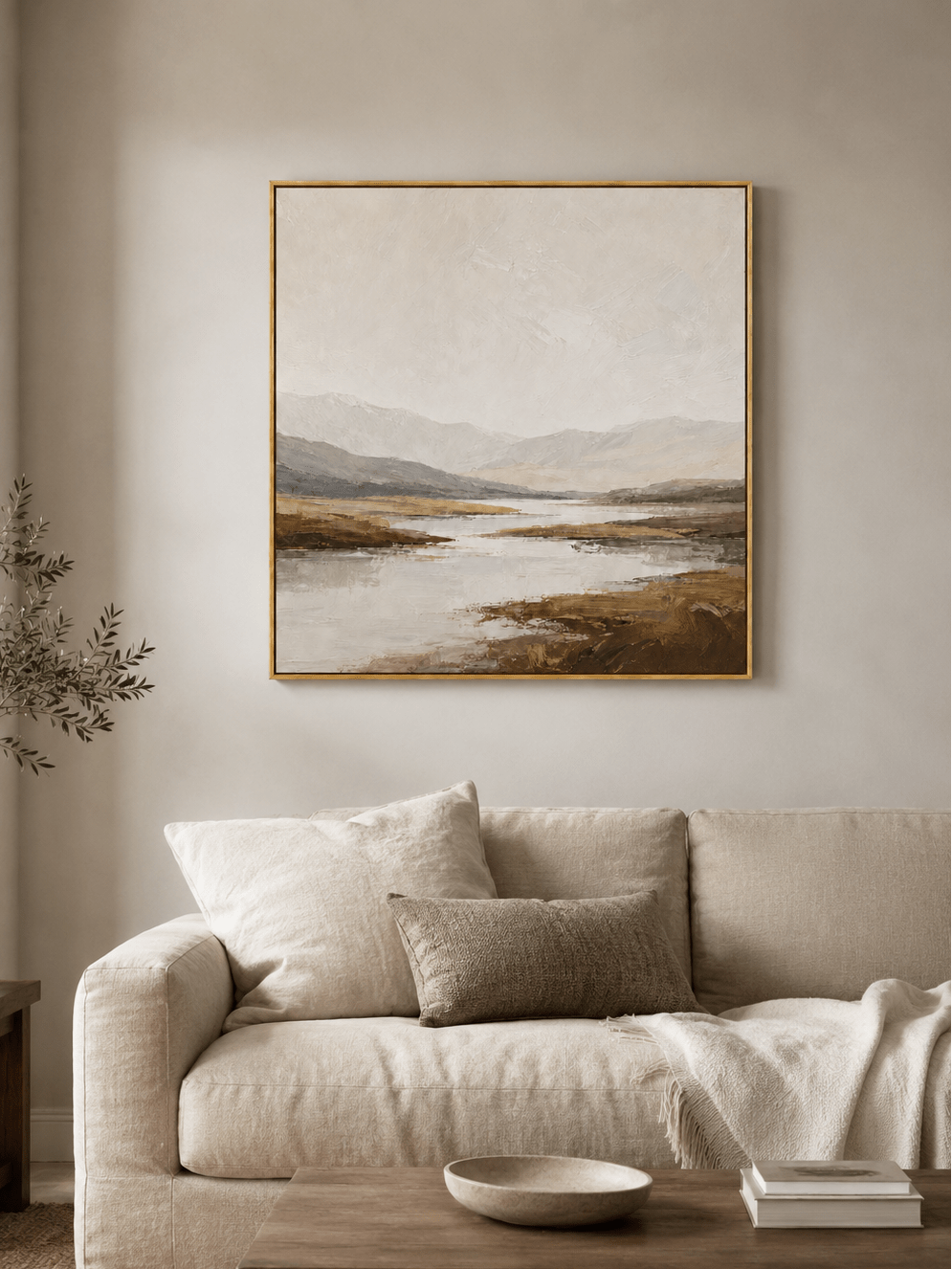
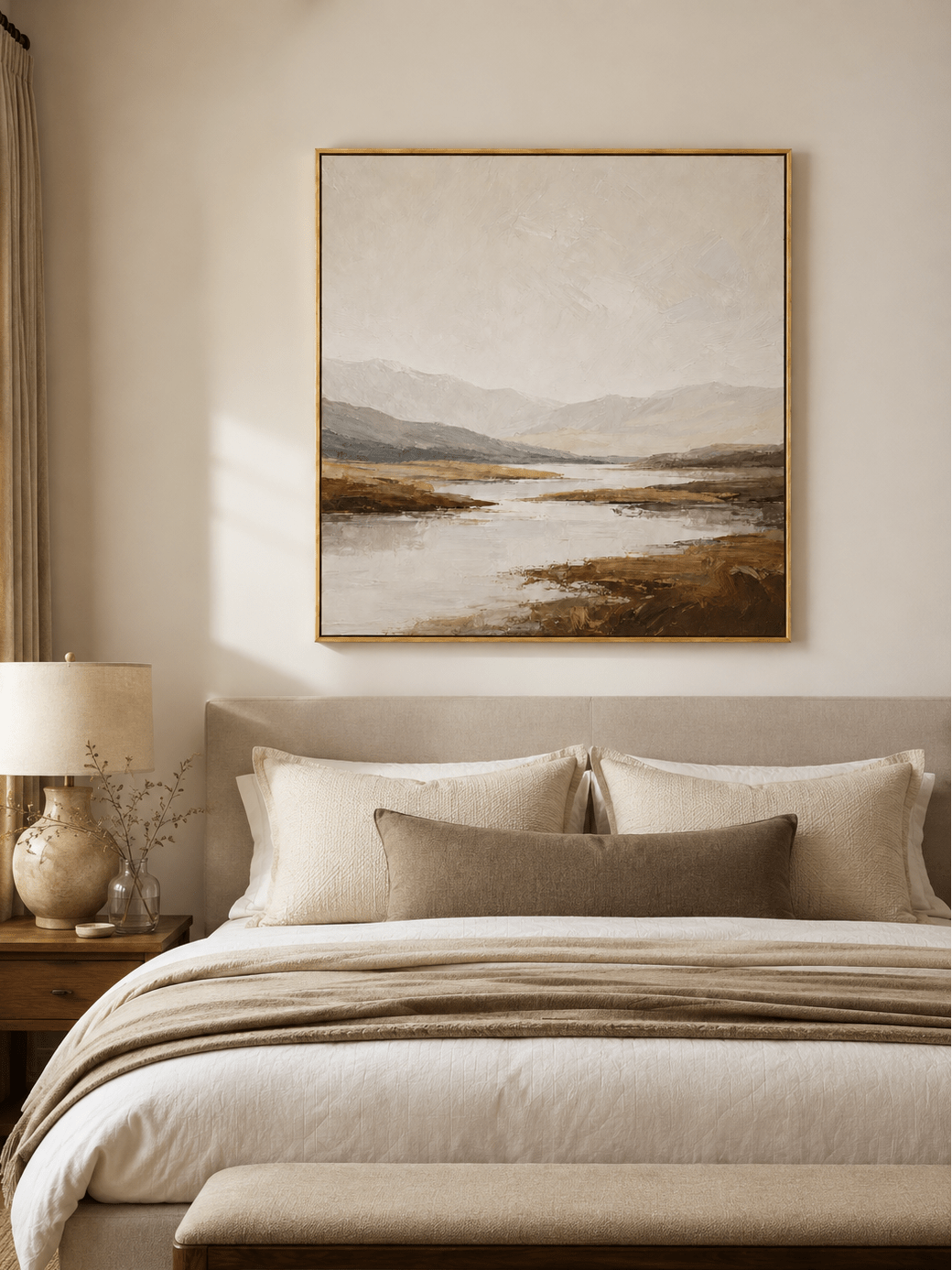
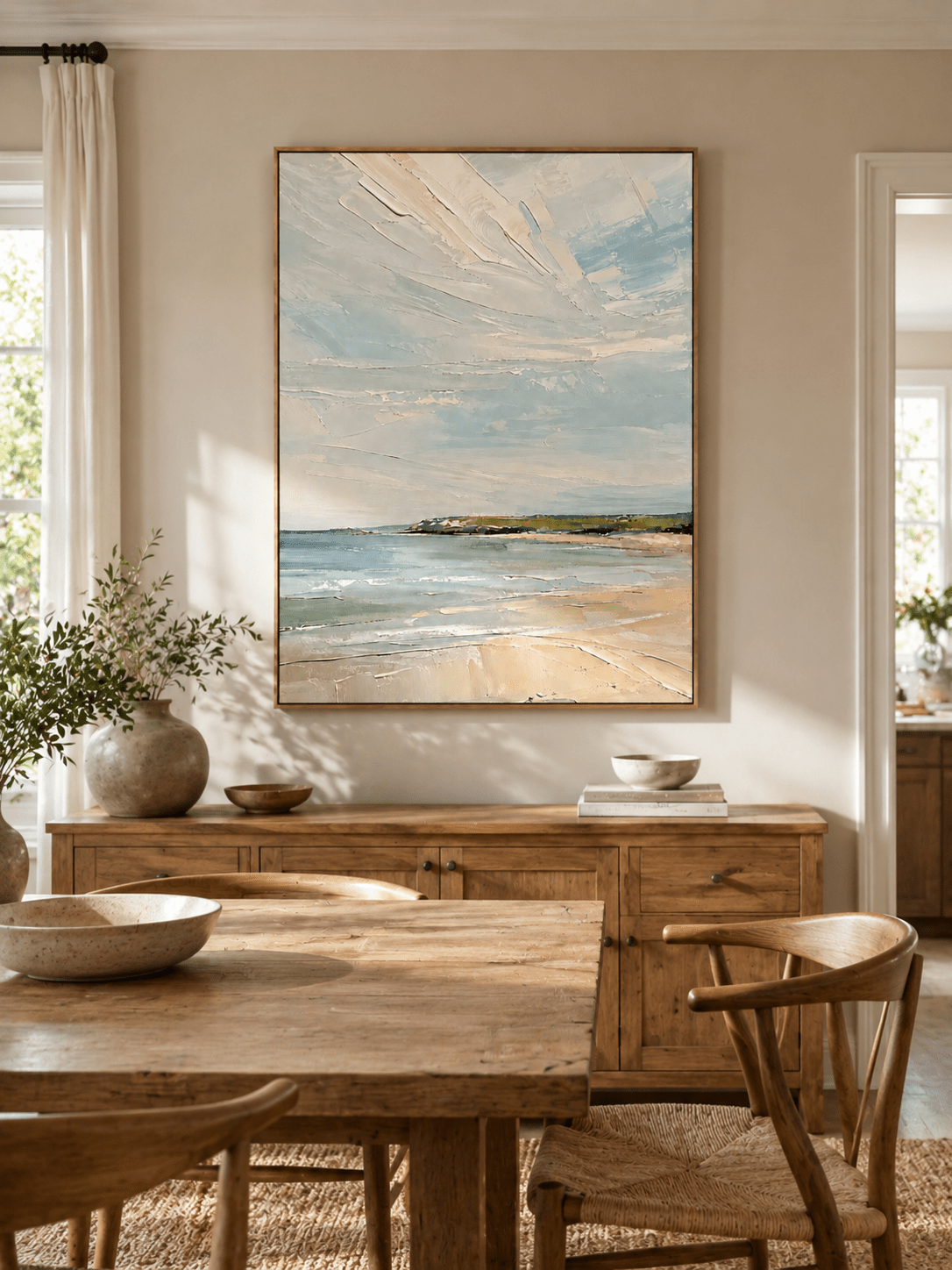
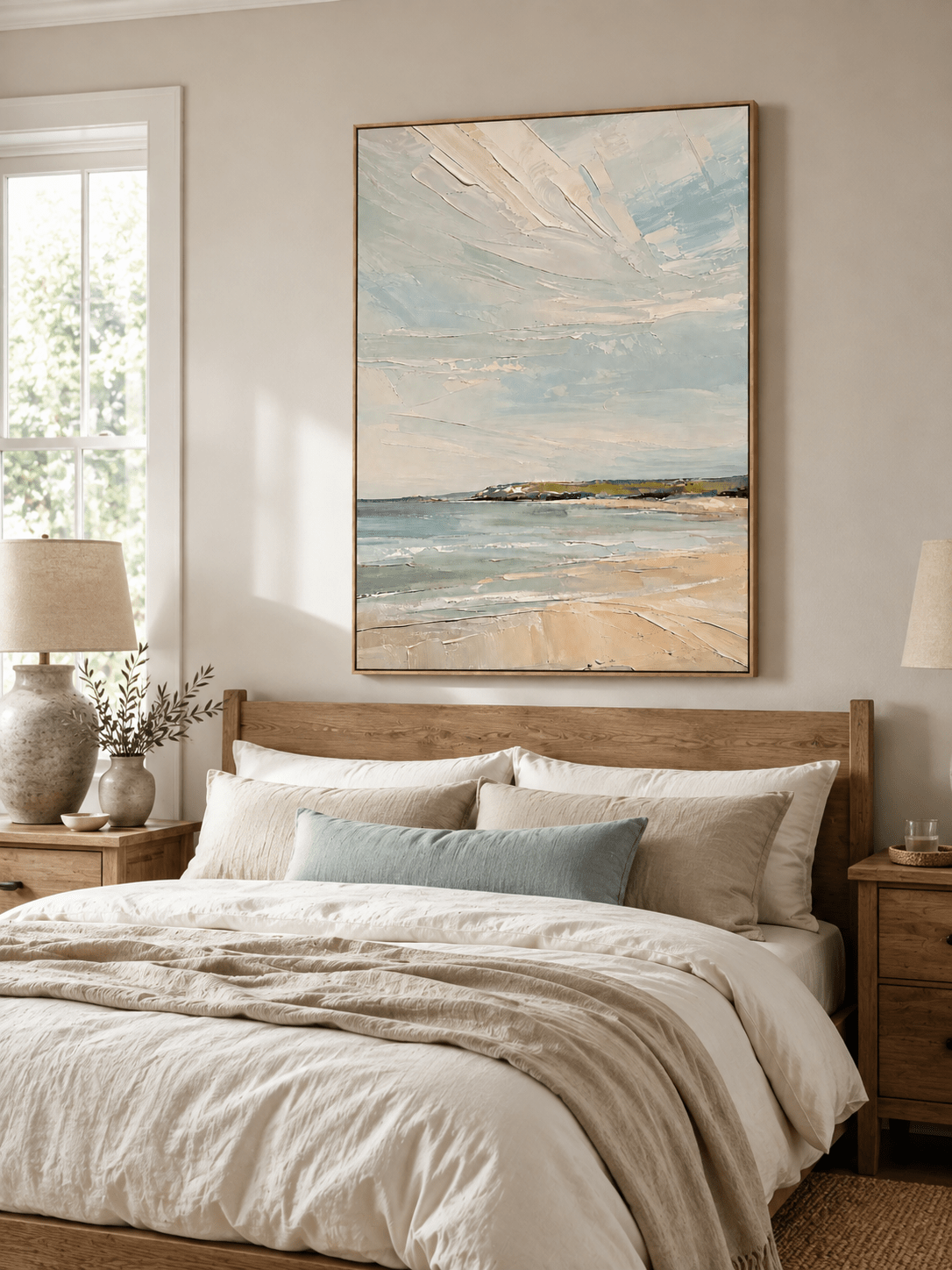
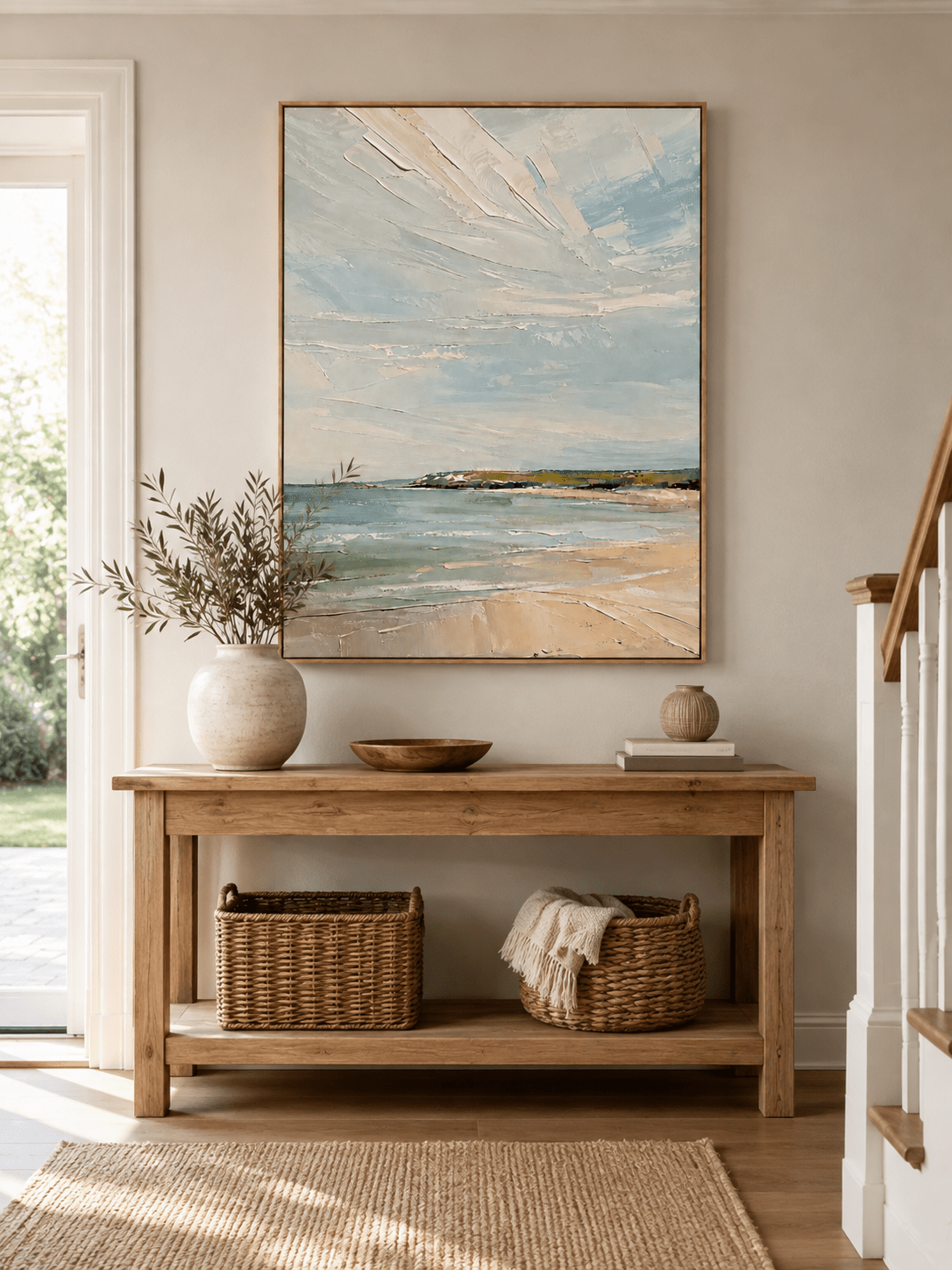
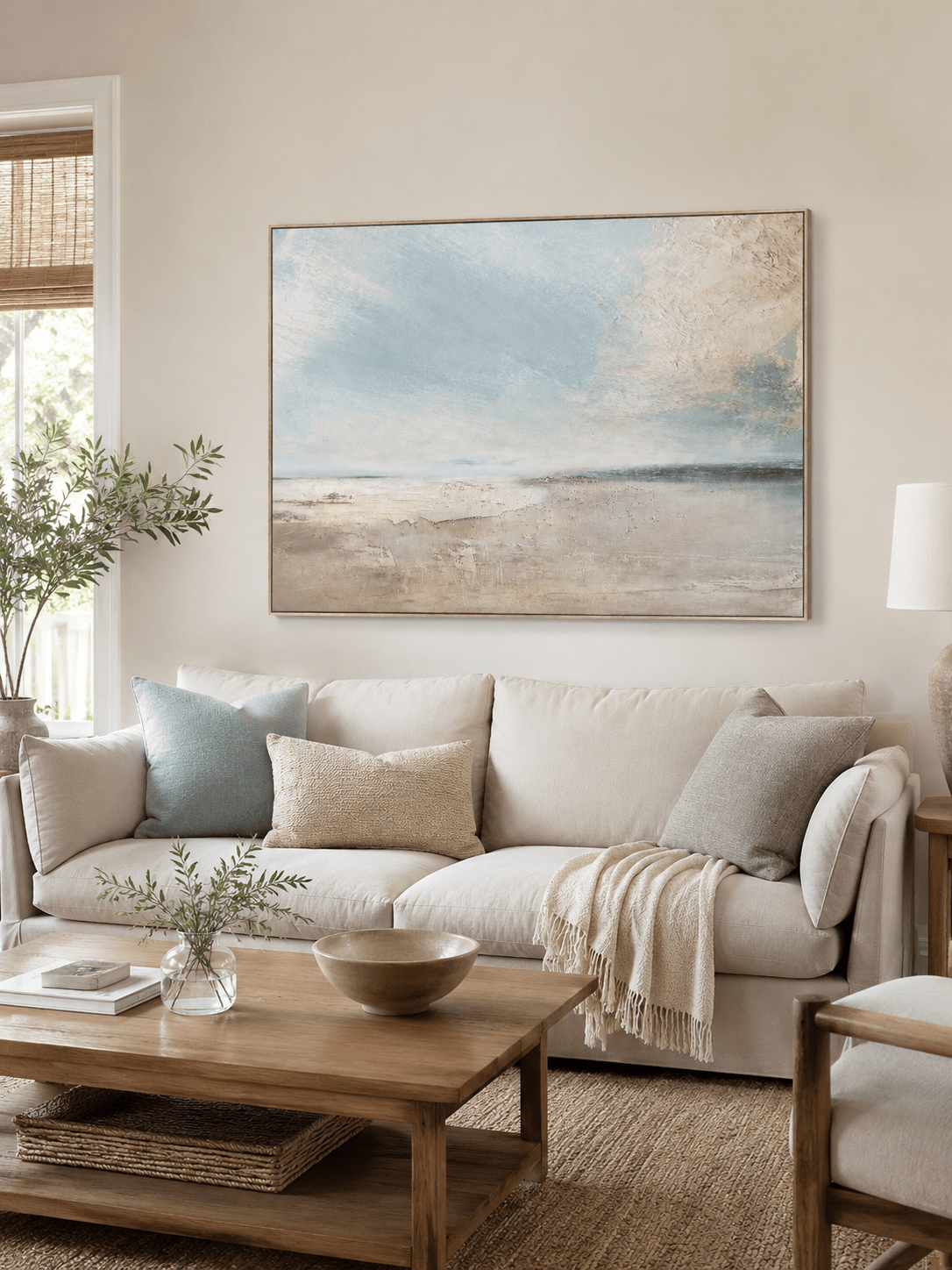
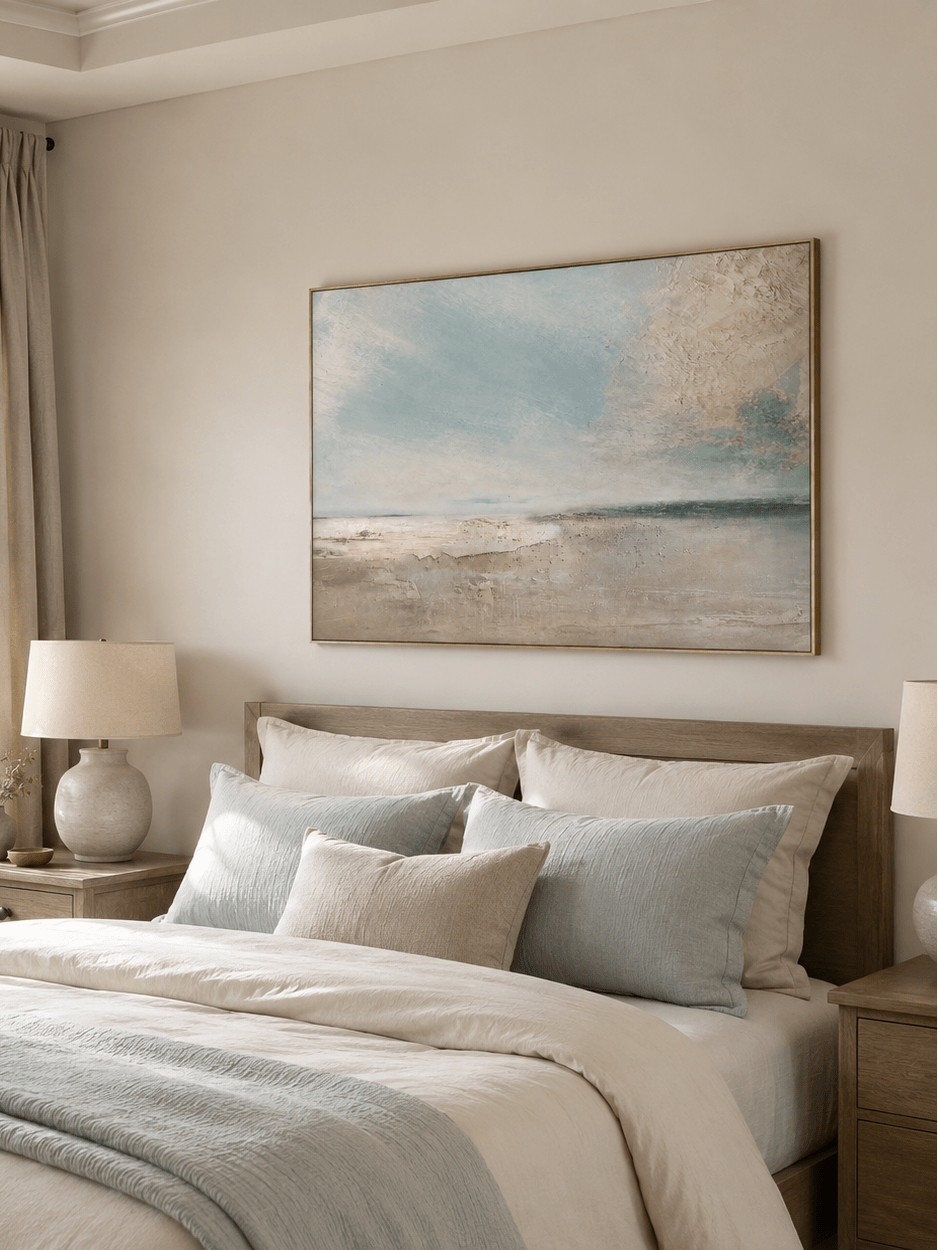
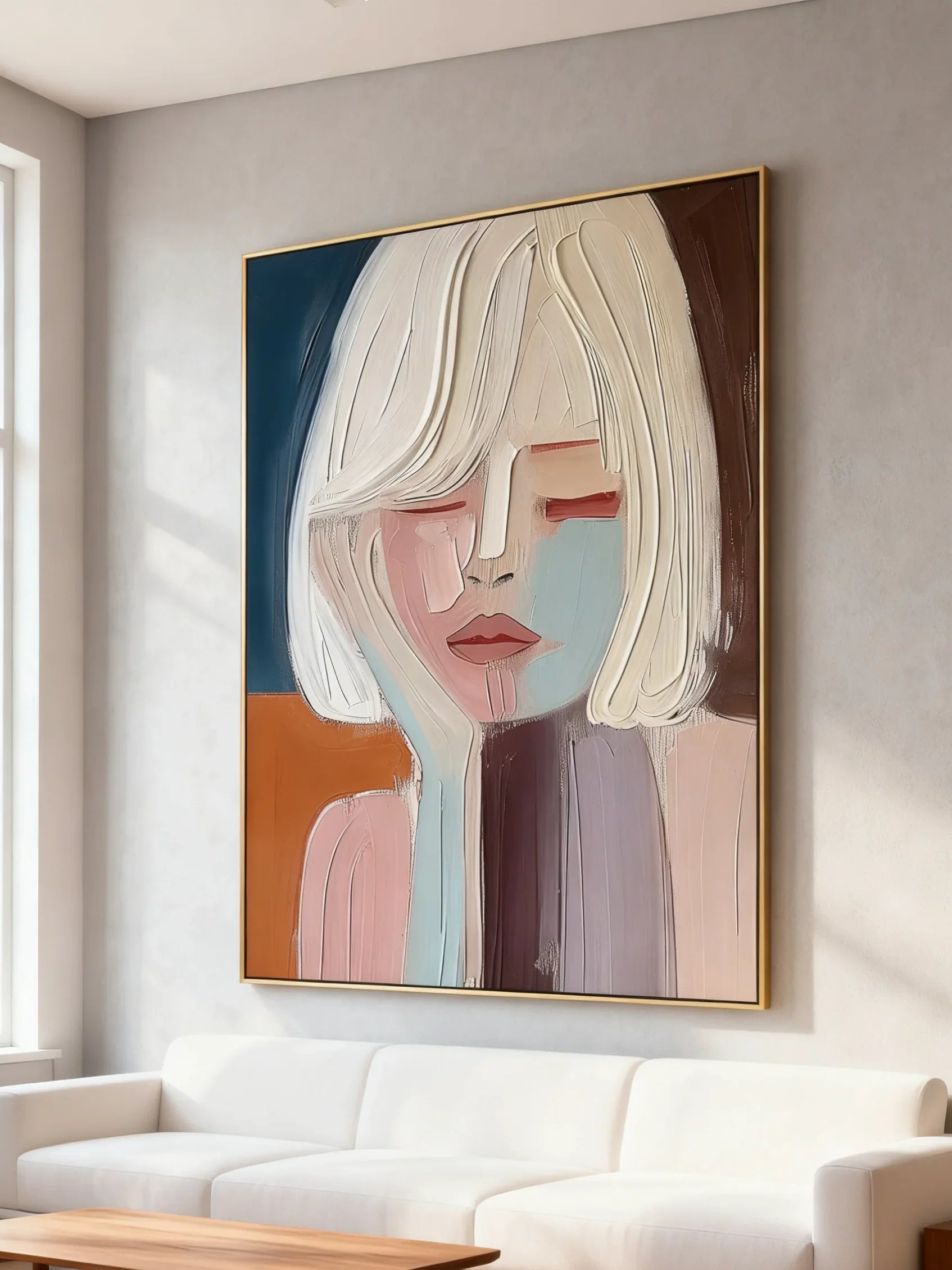
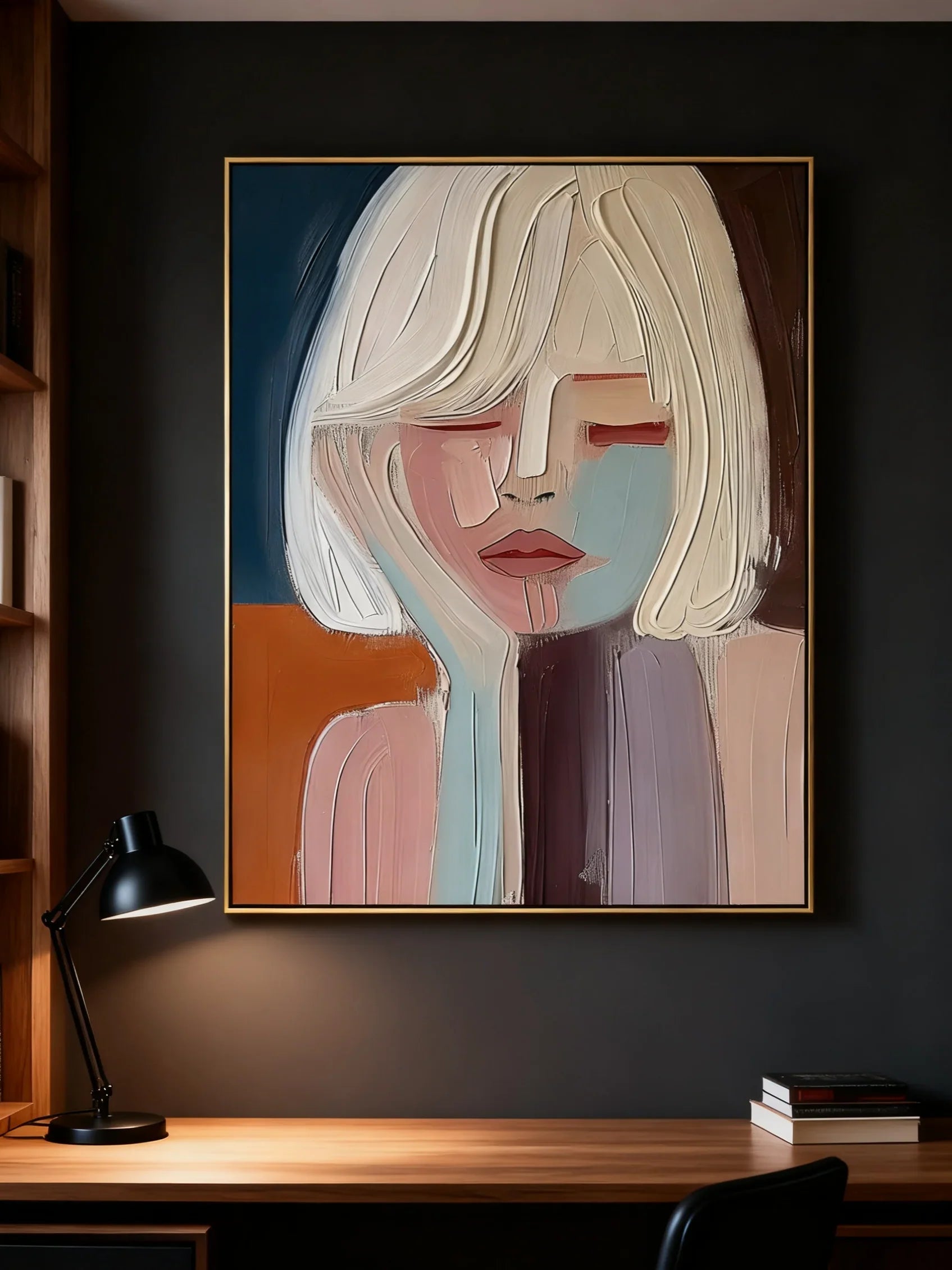
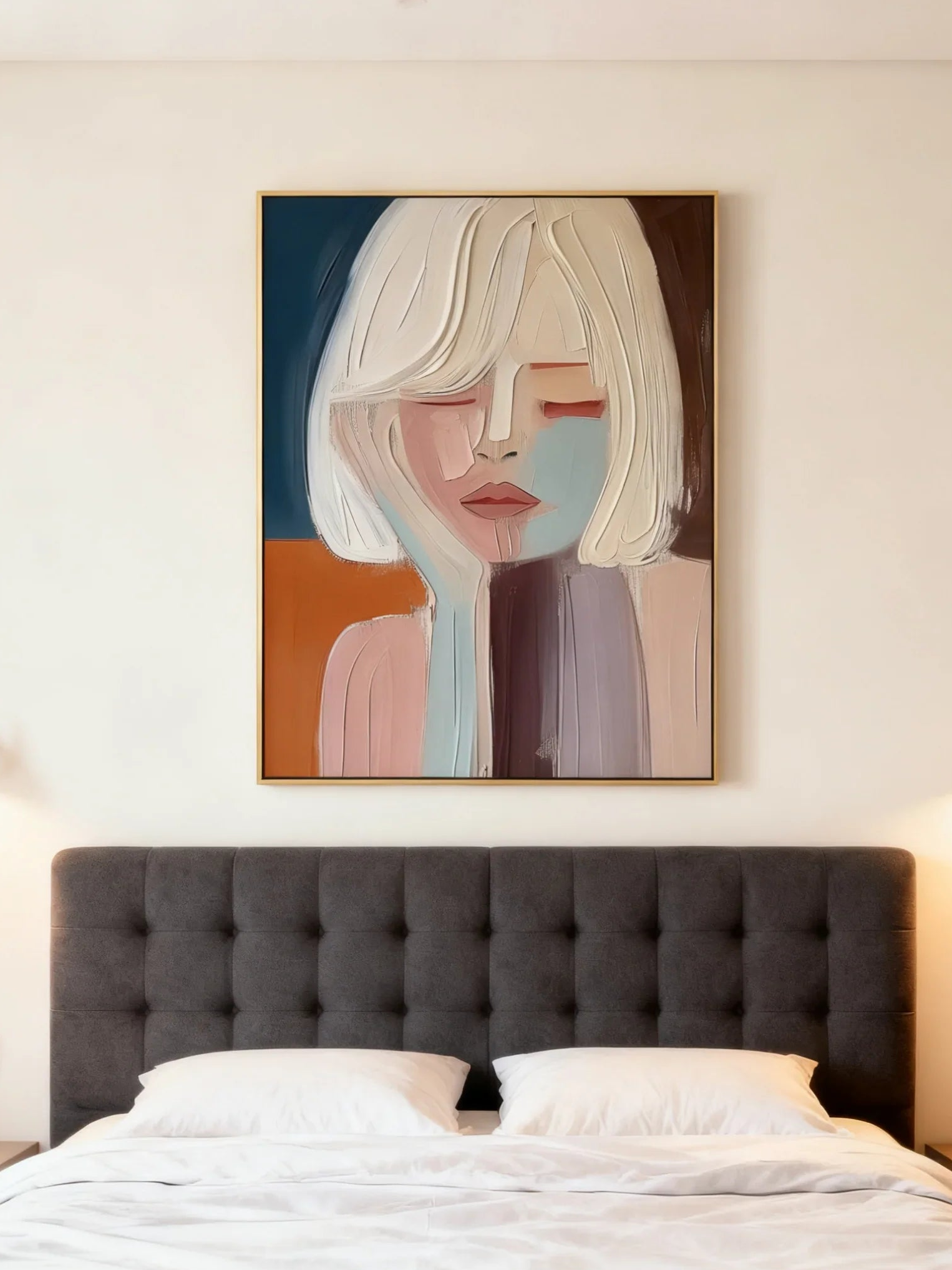
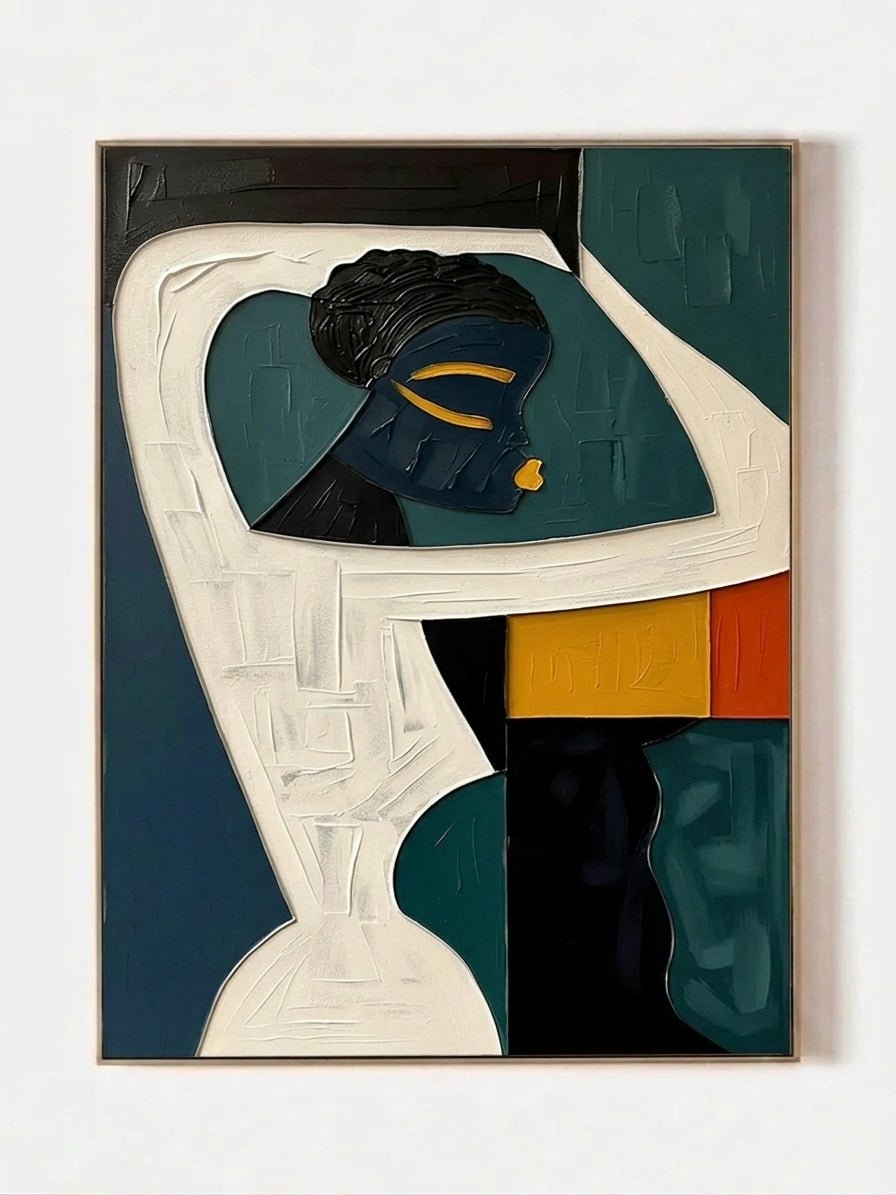
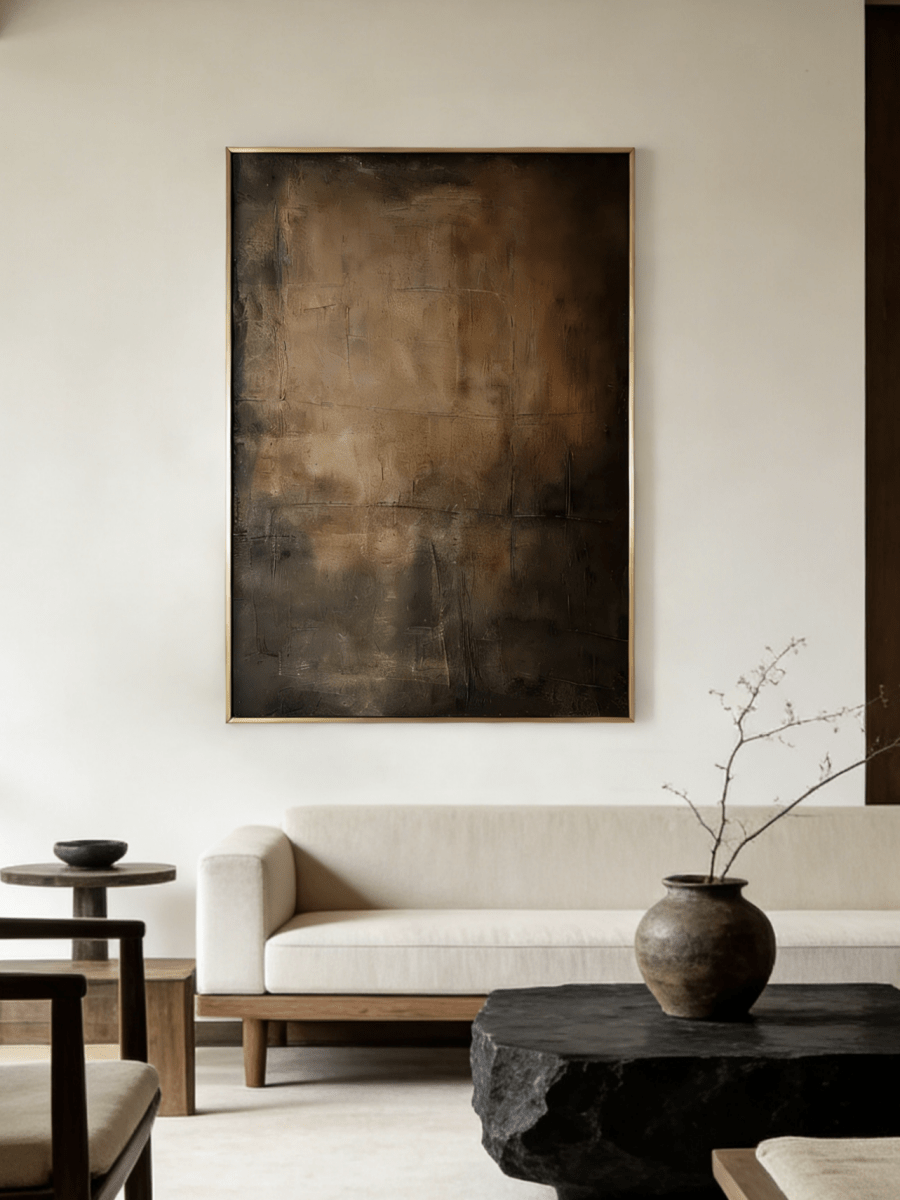
Struggling to find the perfect Wabi-Sabi wall art for a living room that doesn’t just disappear into your beige sofa? You are not alone. The best Wabi-Sabi wall art for a living room rarely matches your upholstery exactly. Instead, it speaks to the sofa's undertone, adds the contrast the room craves, and echoes material cues already present in your space—whether that’s the warmth of oak, the coolness of stone, or the softness of washed linen.
A cream sofa does not automatically demand cream art, just as a gray sofa doesn’t require another gray rectangle. In a quiet, minimalist room, the right hand-painted canvas introduces darker values, stronger relief, or a cleaner edge.
This guide is your complete walkthrough to styling the living room: matching sofa colors, wood tones, natural materials, and mastering scale and lighting. For a broader look at this aesthetic, start with our guide on What Is Wabi-Sabi Art? Meaning, Materials and Interior Style.

Start with the Room in the Right Order
When searching for wall art to match a sofa, many start with a throw pillow or a saved Pinterest image. Since accessories change seasonally, they make a poor foundation. Read your room from largest and most permanent to smallest and most flexible:
- Sofa and other large upholstery
- Flooring and dominant wood furniture
- Wall color, fireplace material, and built-ins
- Rug and window treatments
- Artwork
- Pillows, ceramics, and smaller accessories
Artwork sits near the end because its job is to connect major elements. A painting that bridges your sofa, floor, and coffee table will remain convincing for years. Remember the designer's rule: Match one, contrast one. Match the warm undertone of the sofa, then choose a darker or lighter painting to create depth.
How to Match Wabi-Sabi Wall Art to Your Sofa Color
Your sofa is likely the largest field of color in the living room. Instead of just calling it "beige" or "gray," look closer at its undertone (does it lean yellow or pink?), its value (pale or dark?), and its surface (smooth leather or nubby boucle?). The most successful Wabi-Sabi living room wall art responds to all three.
Cream, Ivory, and Beige Sofas
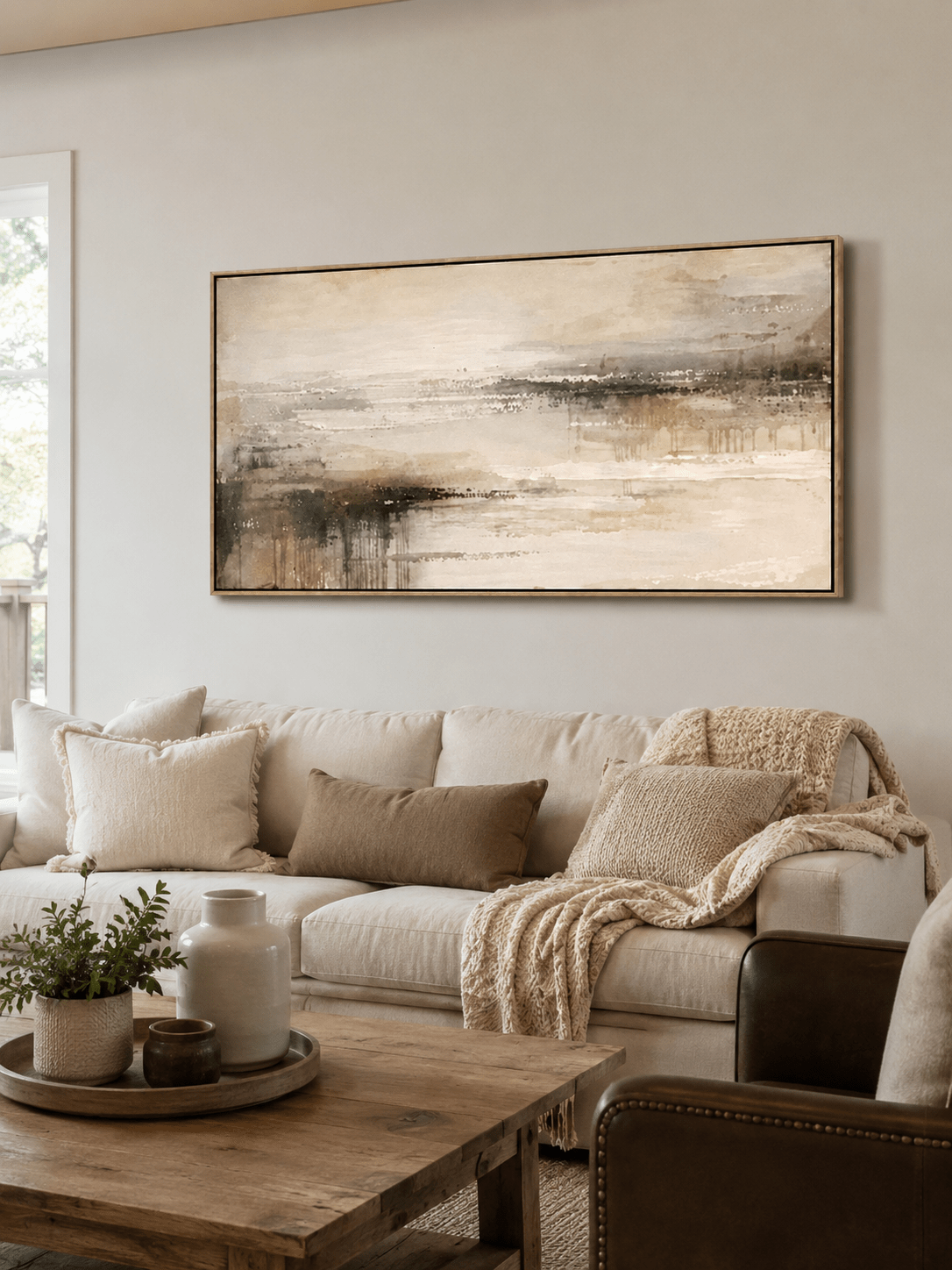
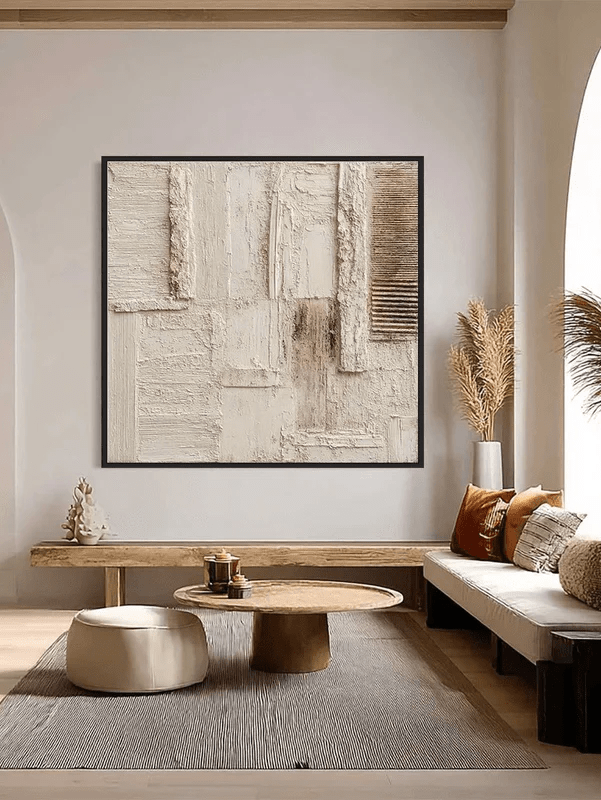
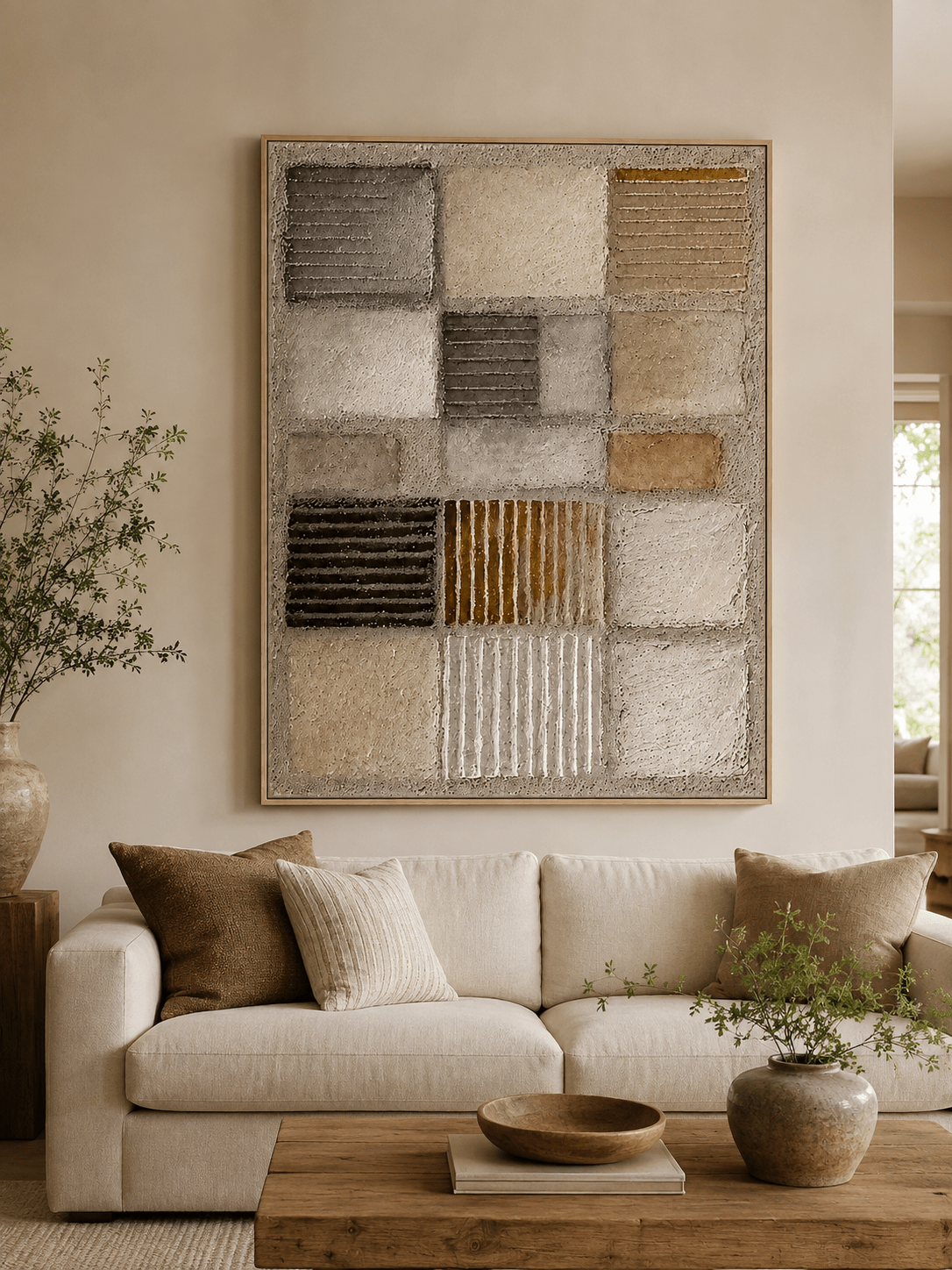
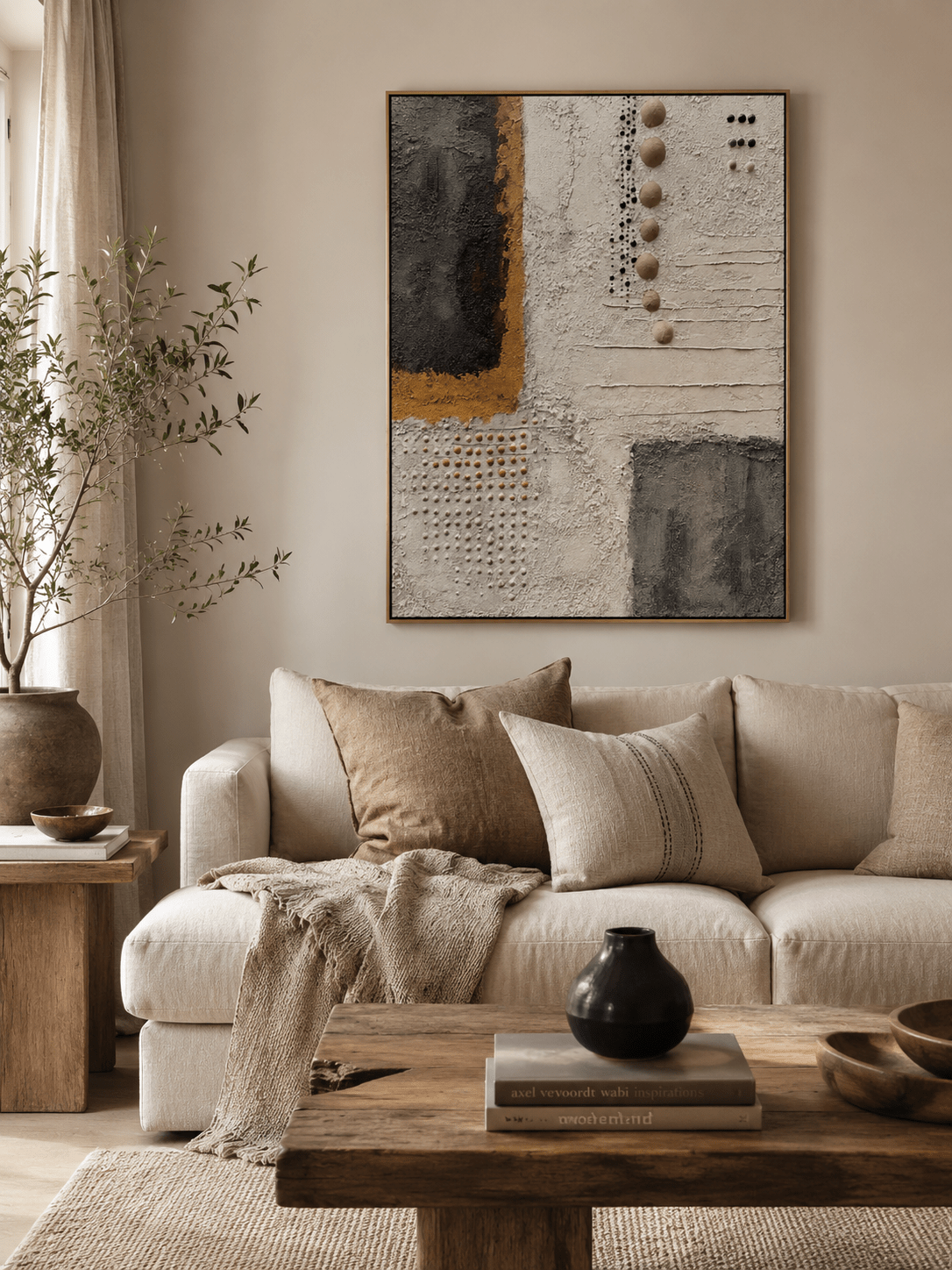
Pale neutral sofas give you freedom, but they present a common styling trap: the wall, upholstery, and artwork can blur into one flat, uninteresting band. If your painting is close to the sofa color, ensure it adds deep textural relief, irregular lines, charcoal accents, or a stronger frame.
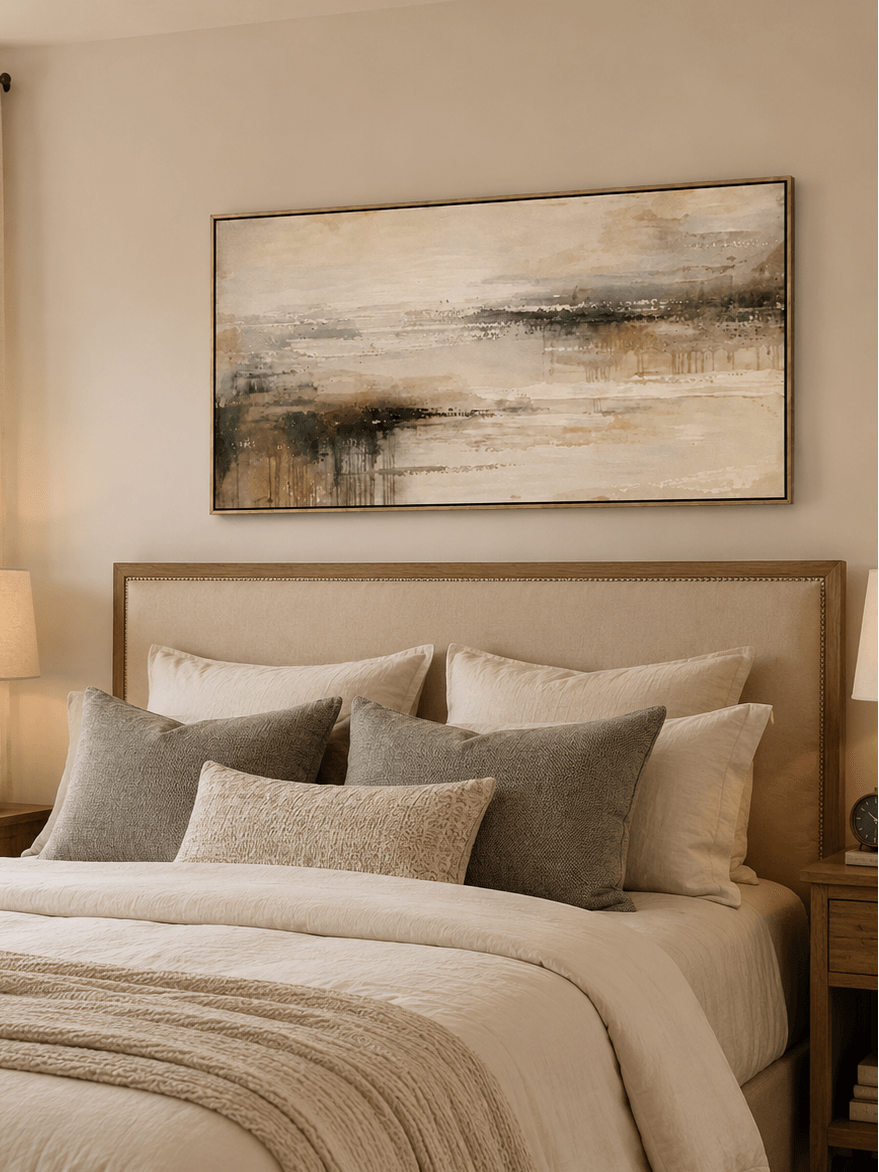
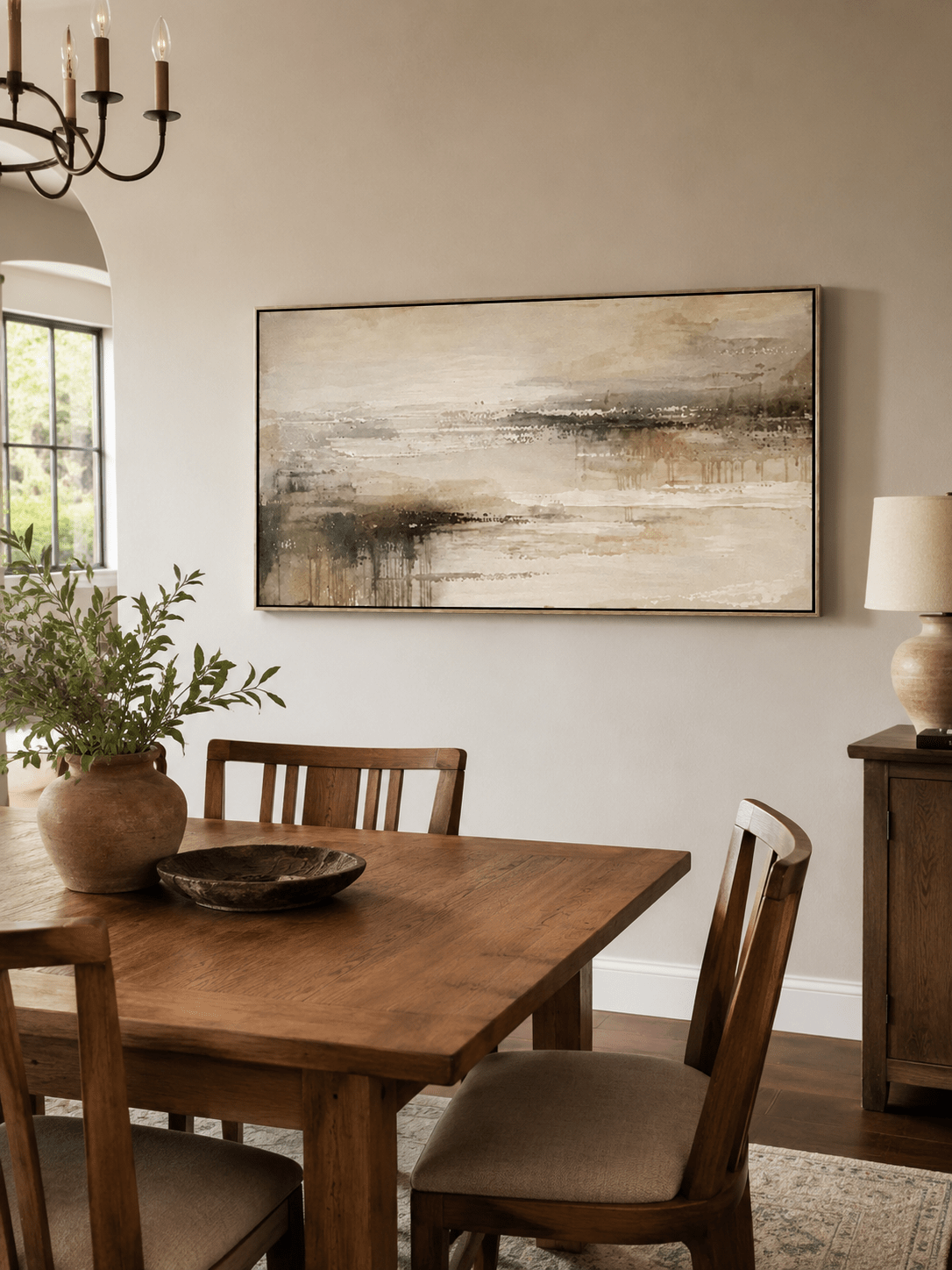
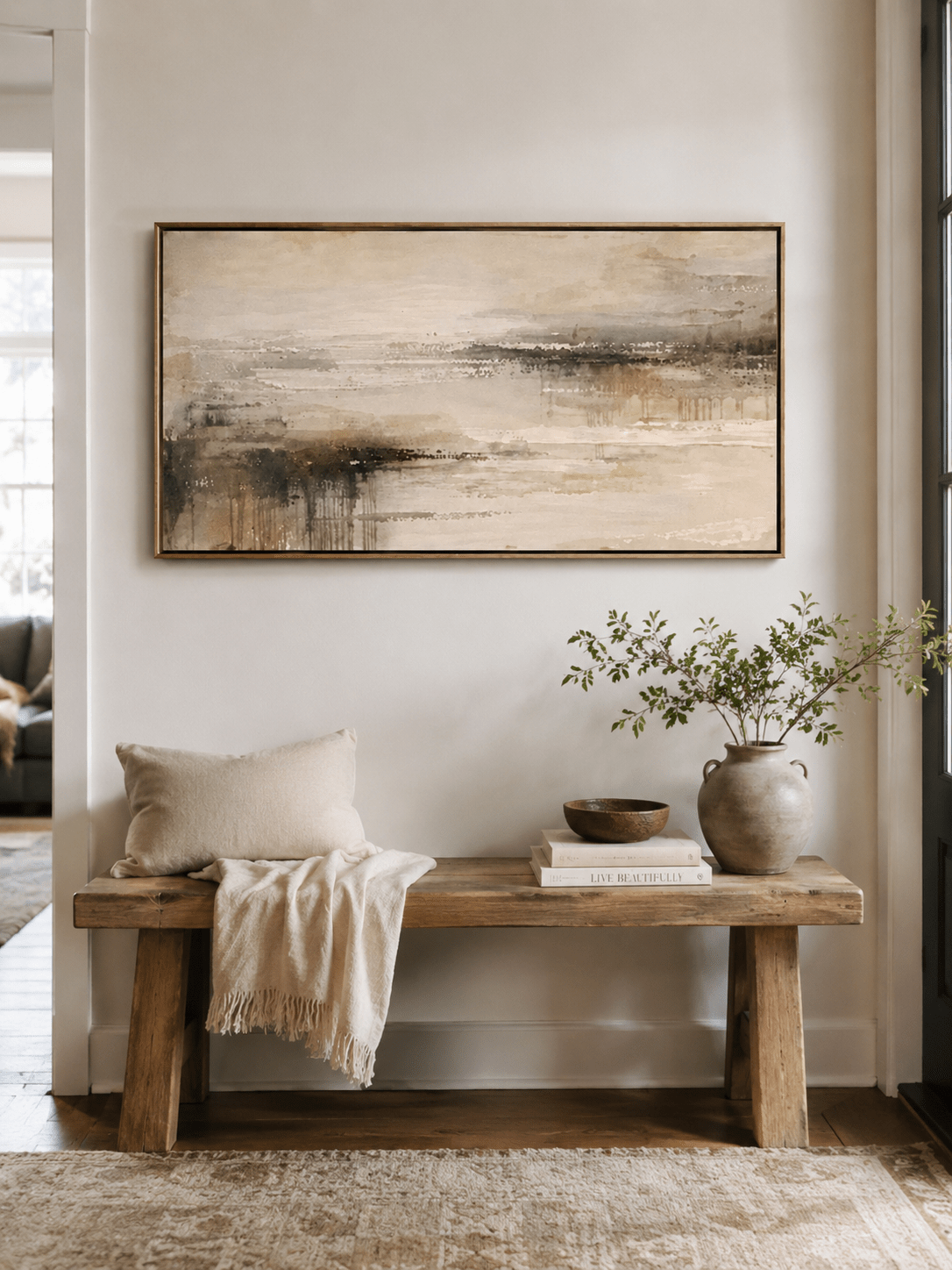
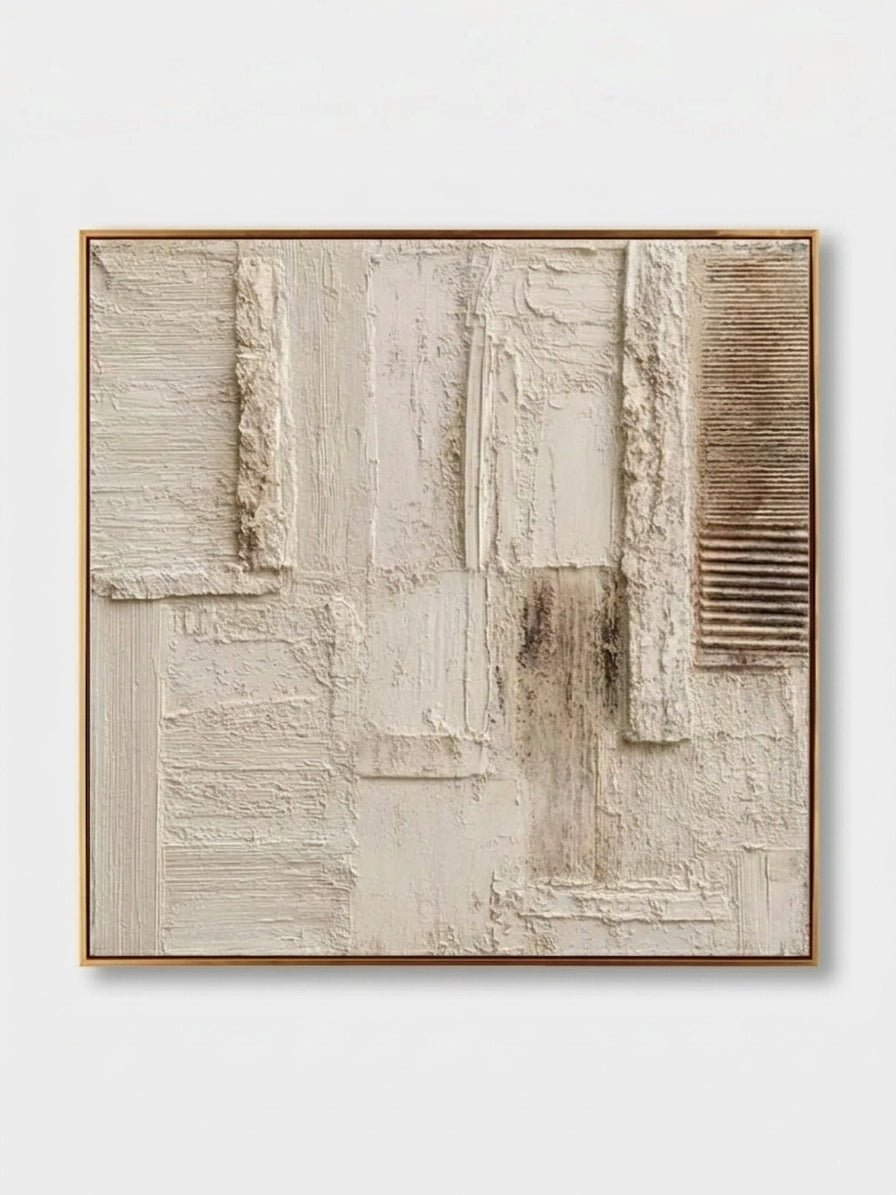
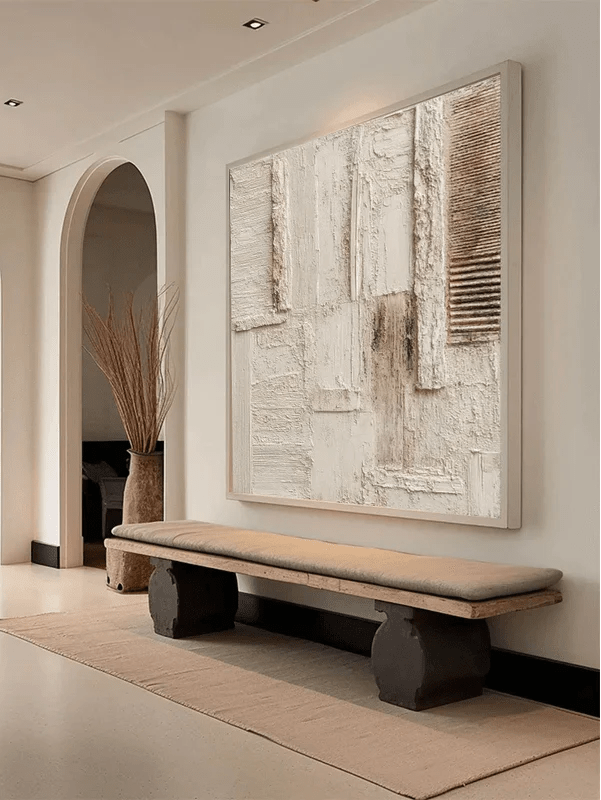
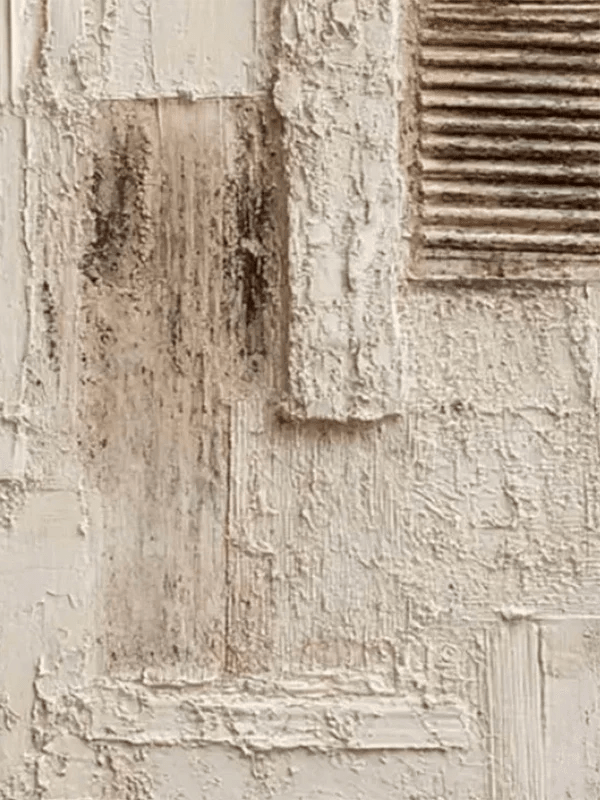
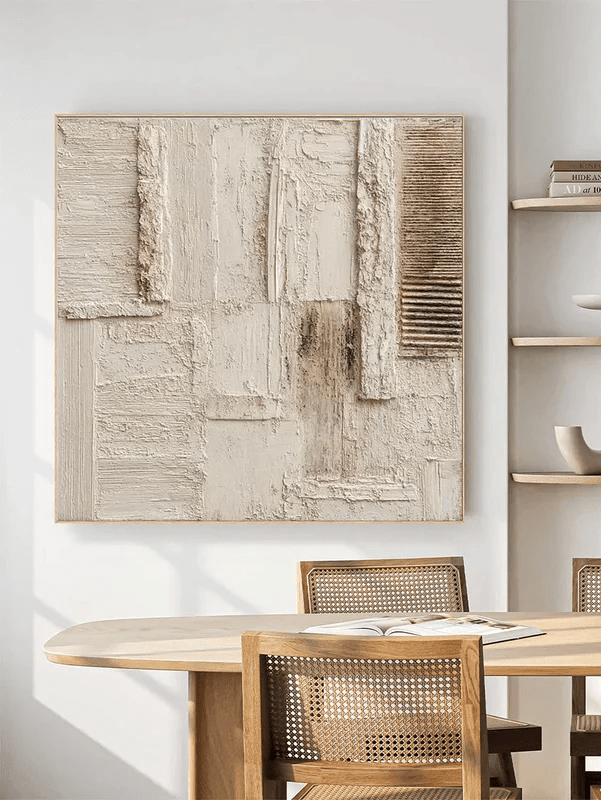
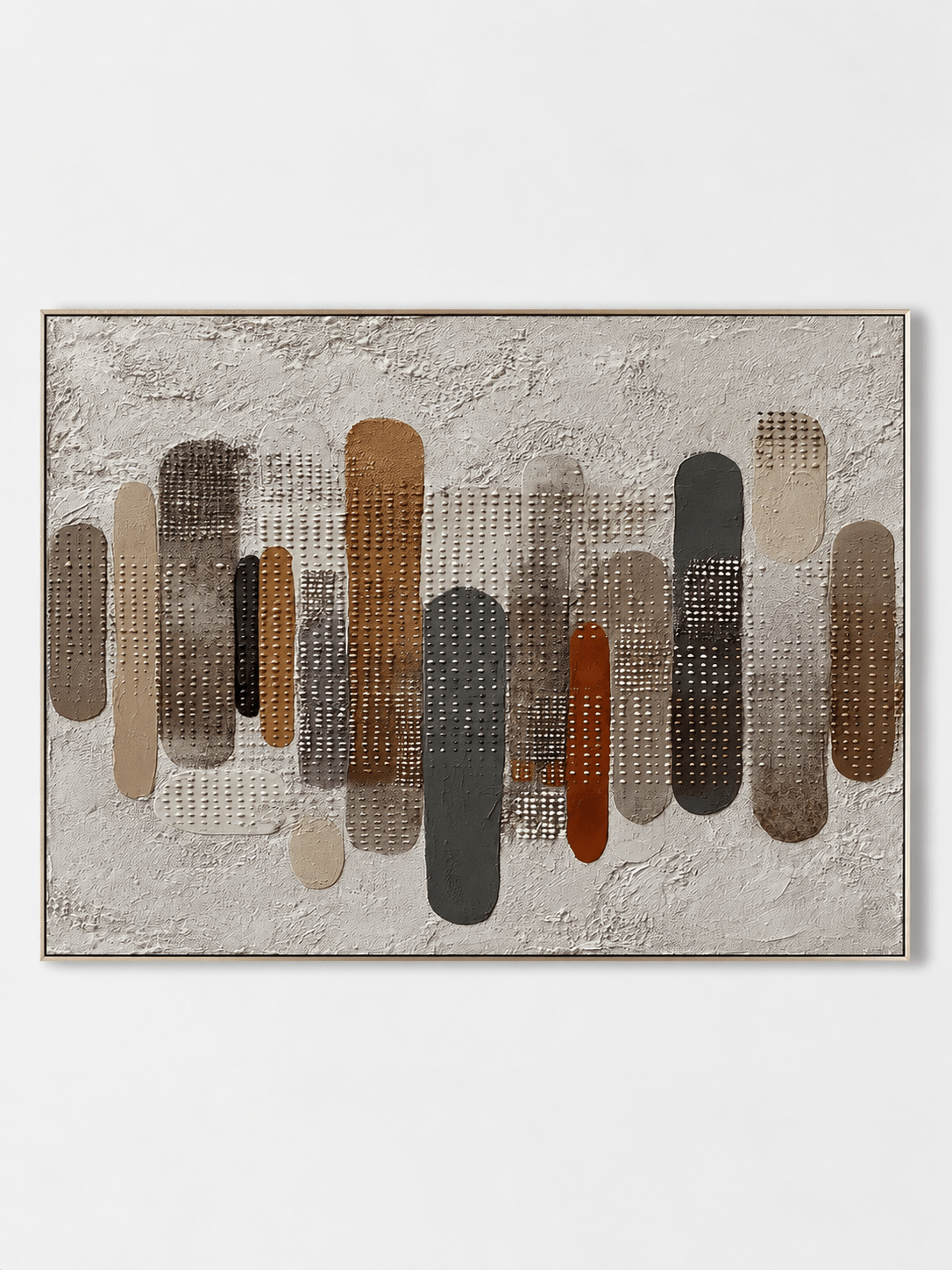
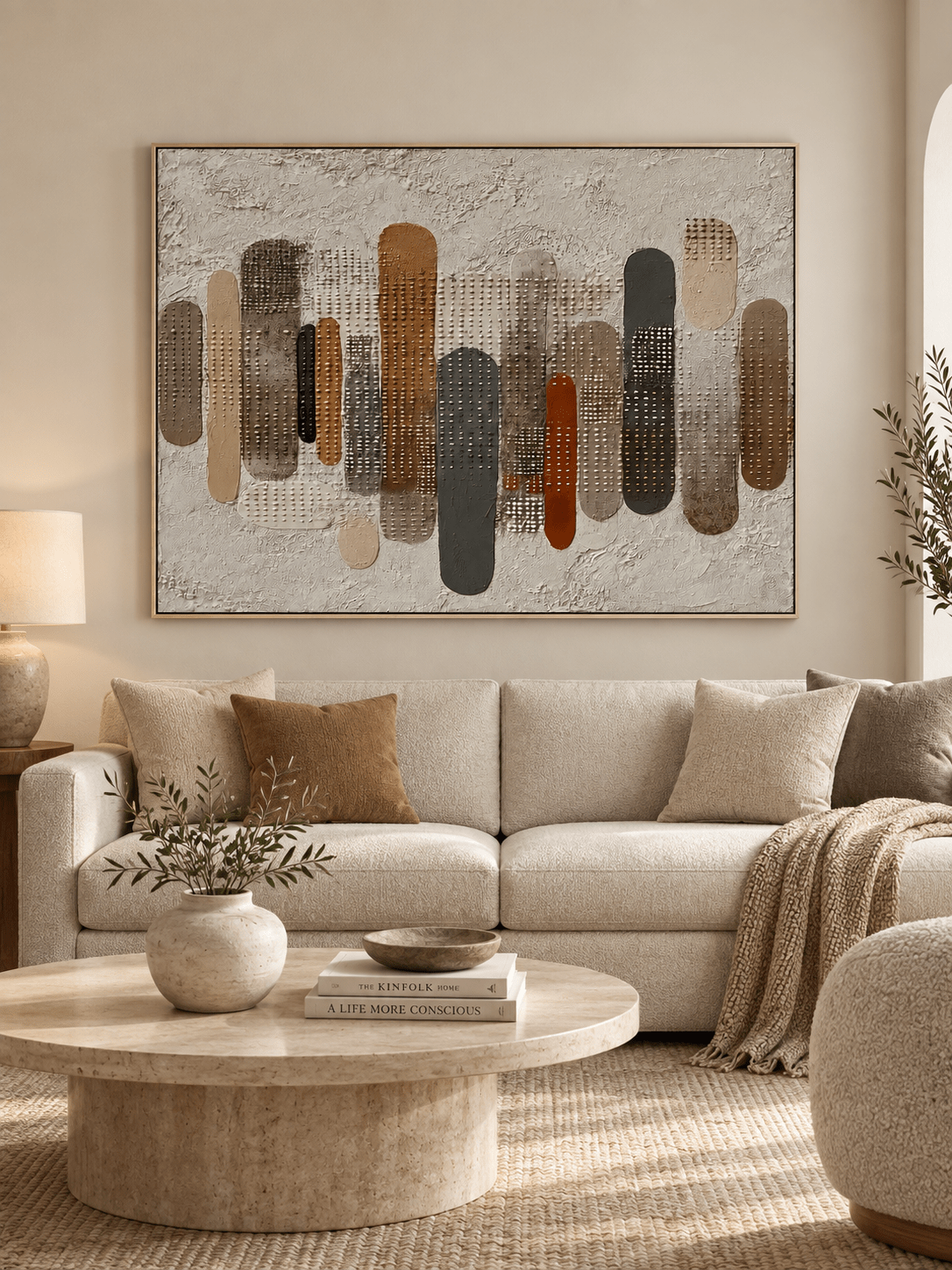
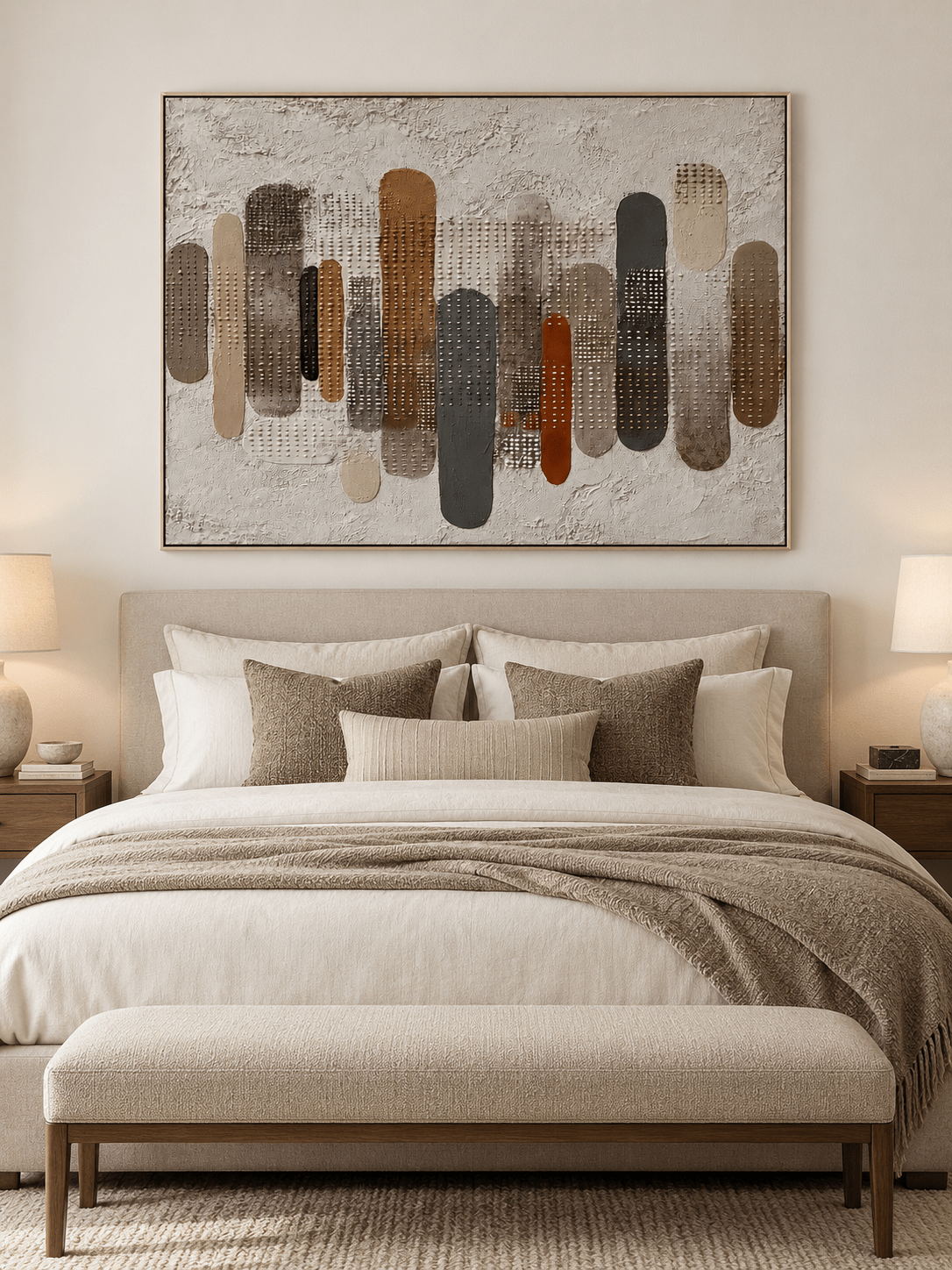
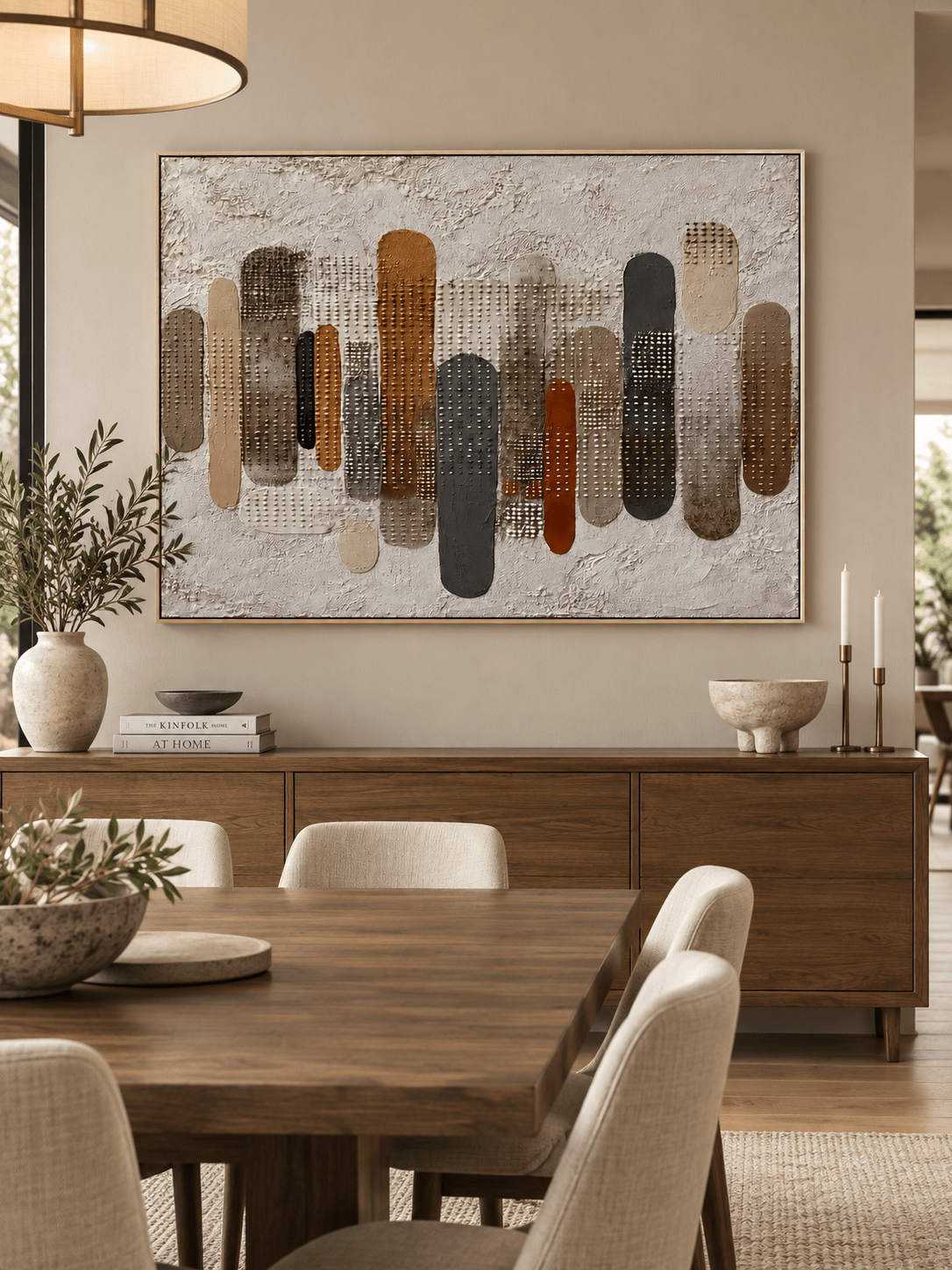
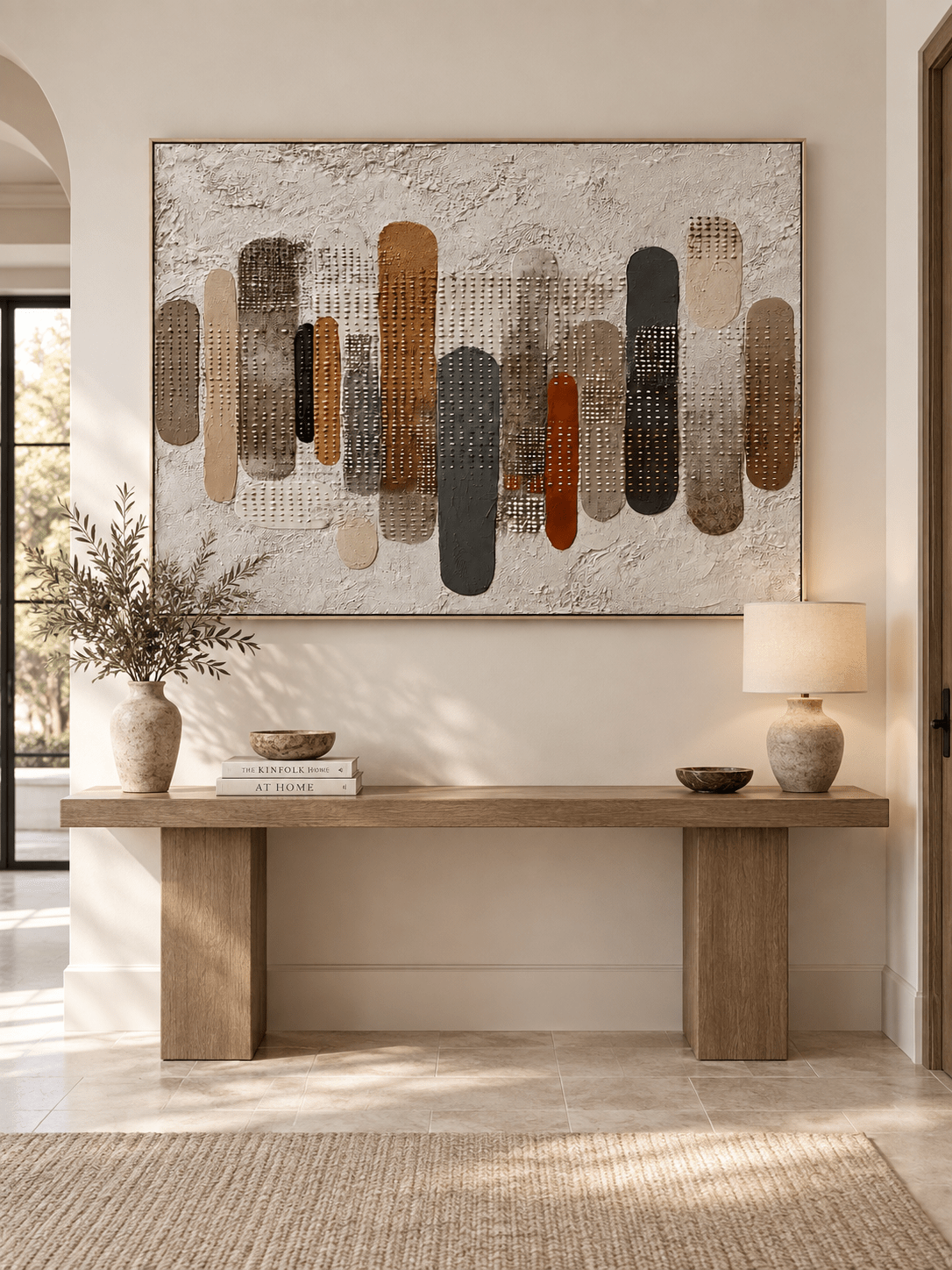
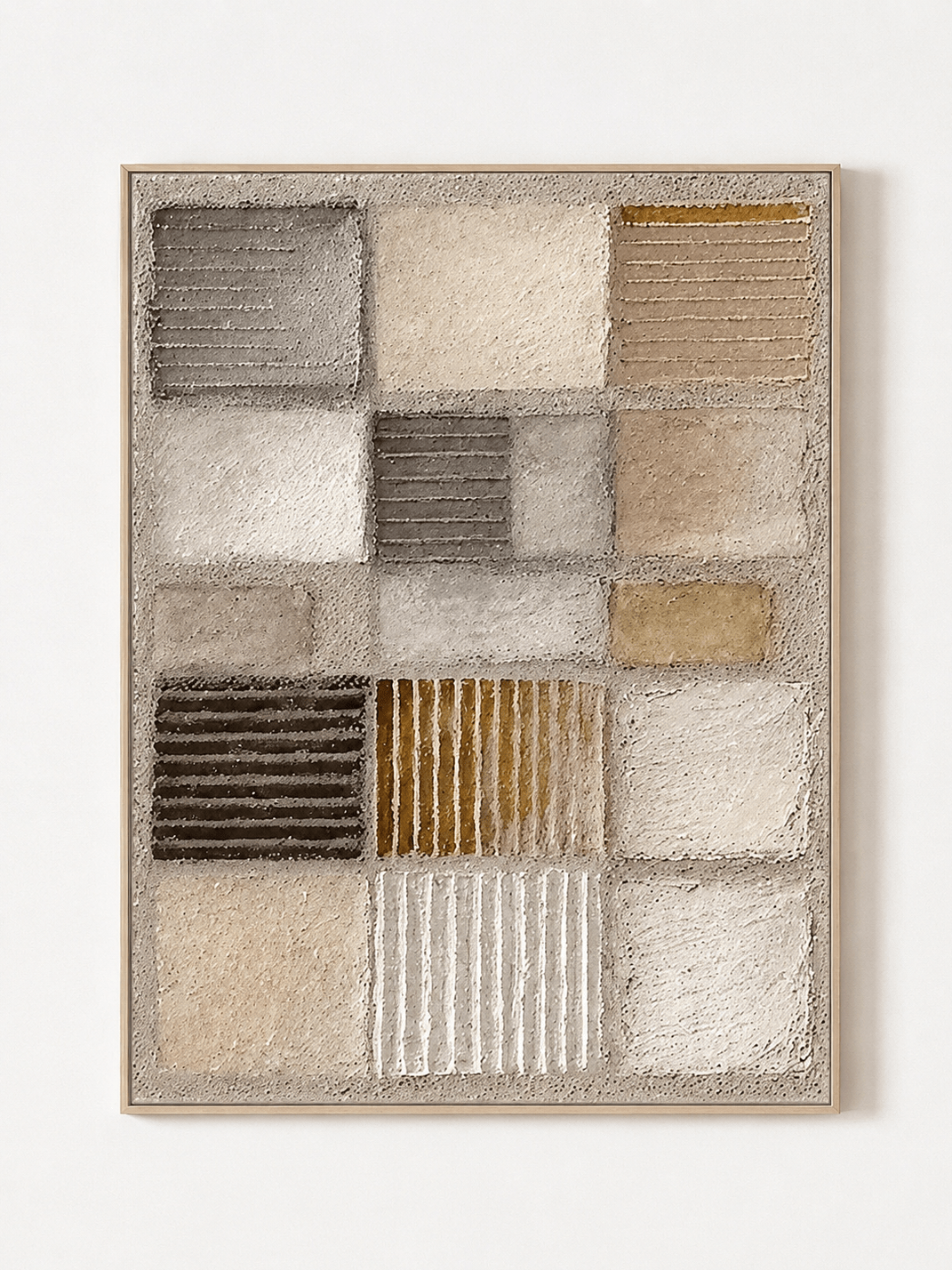
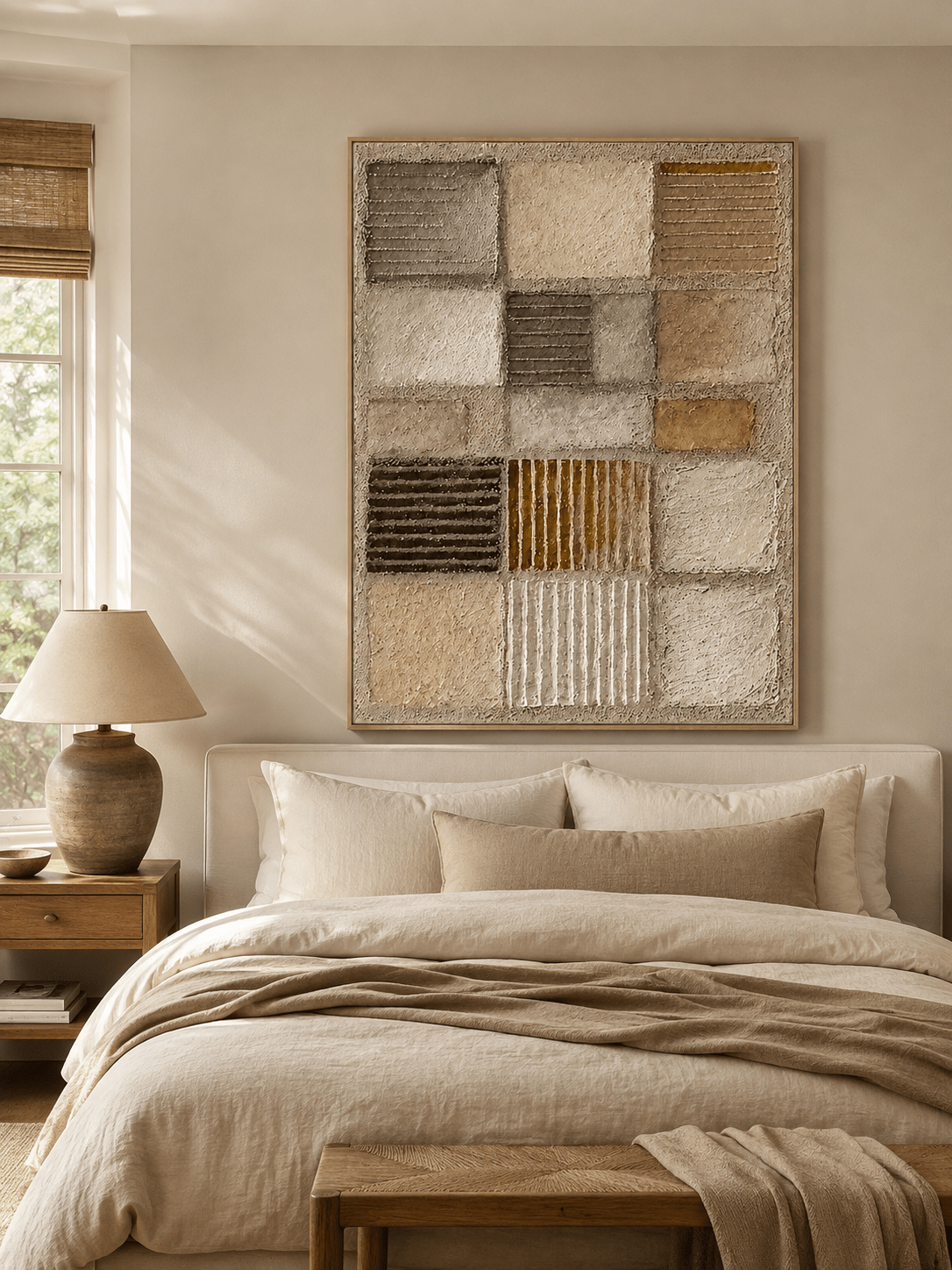
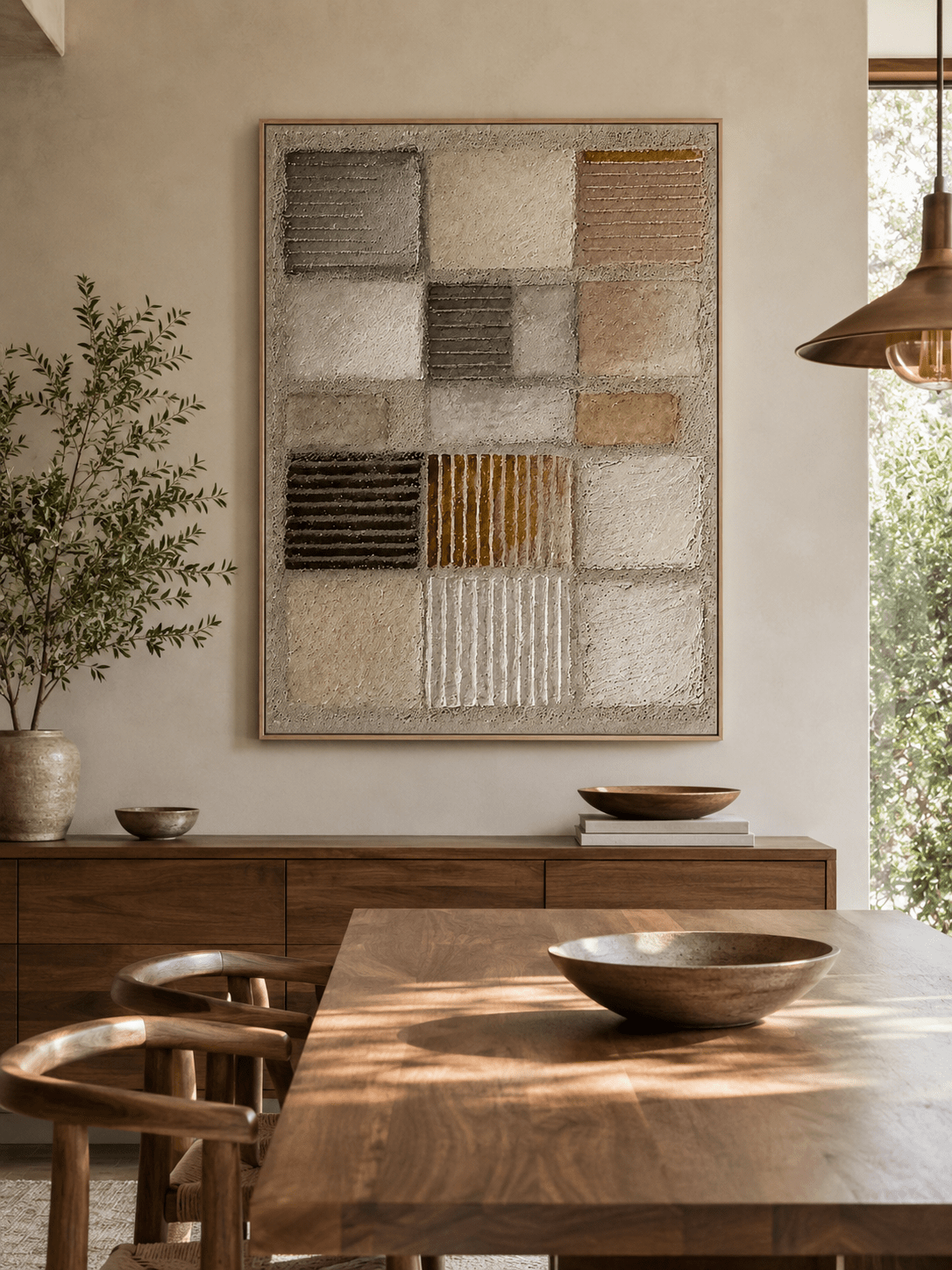
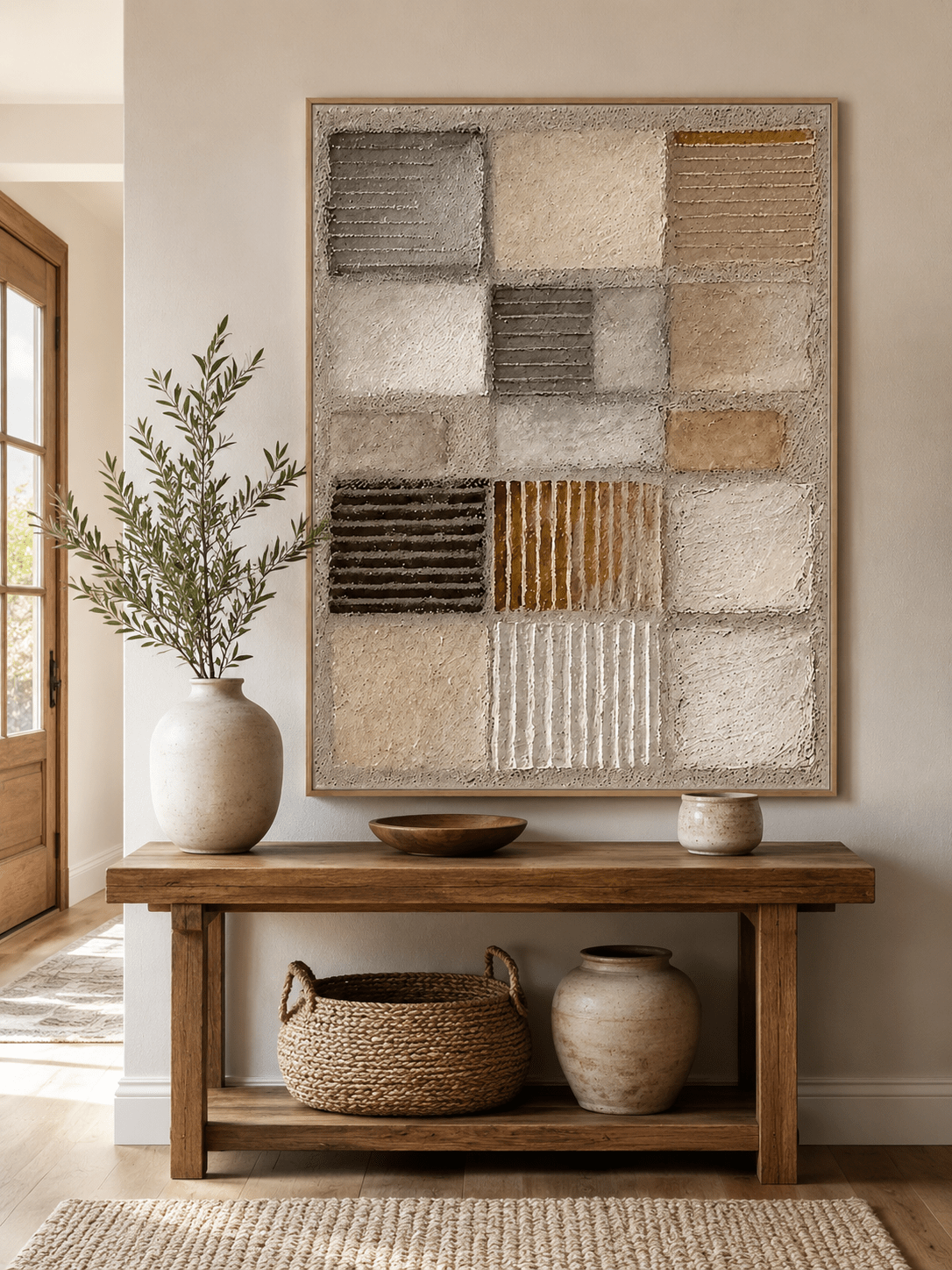
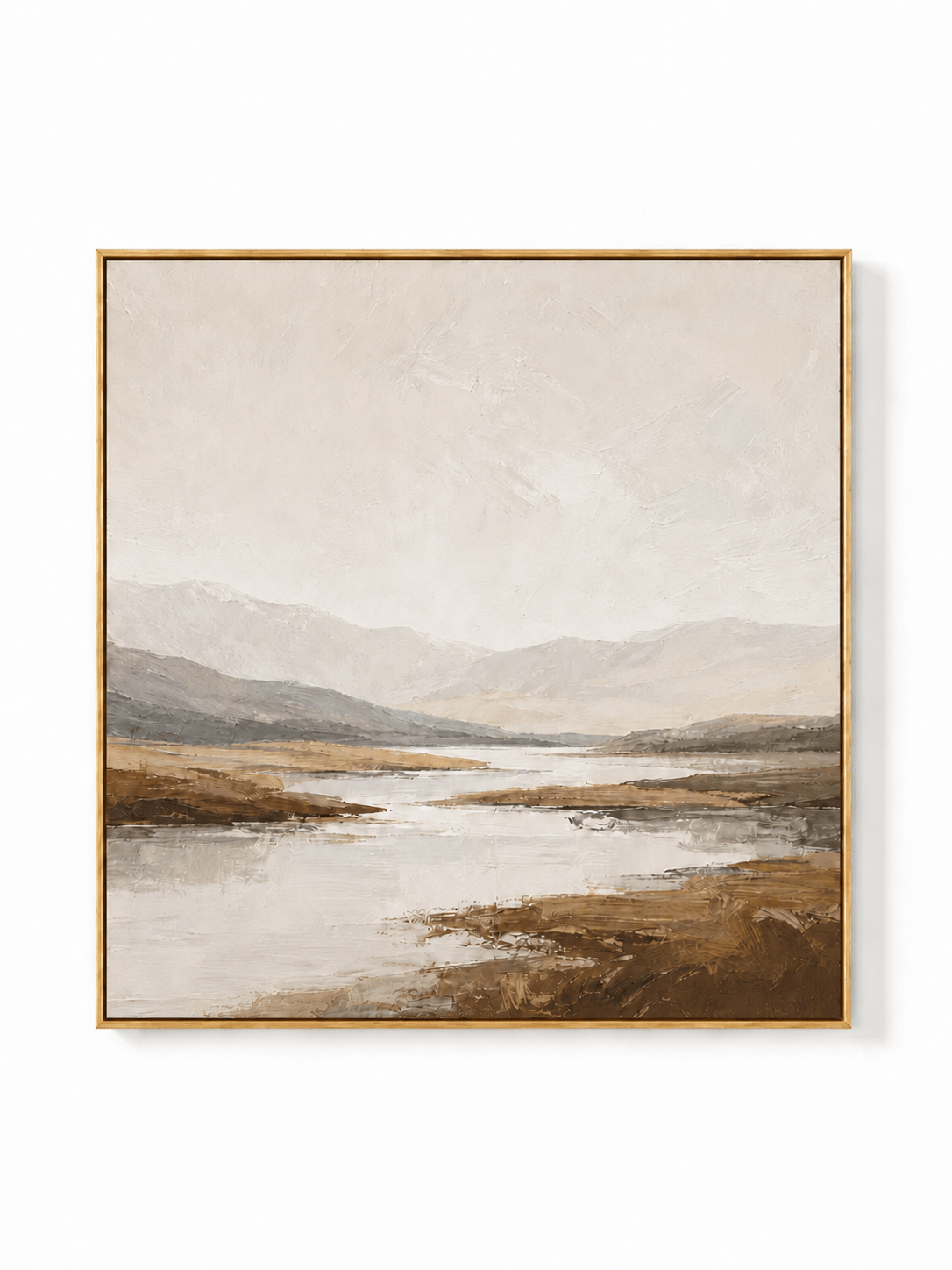
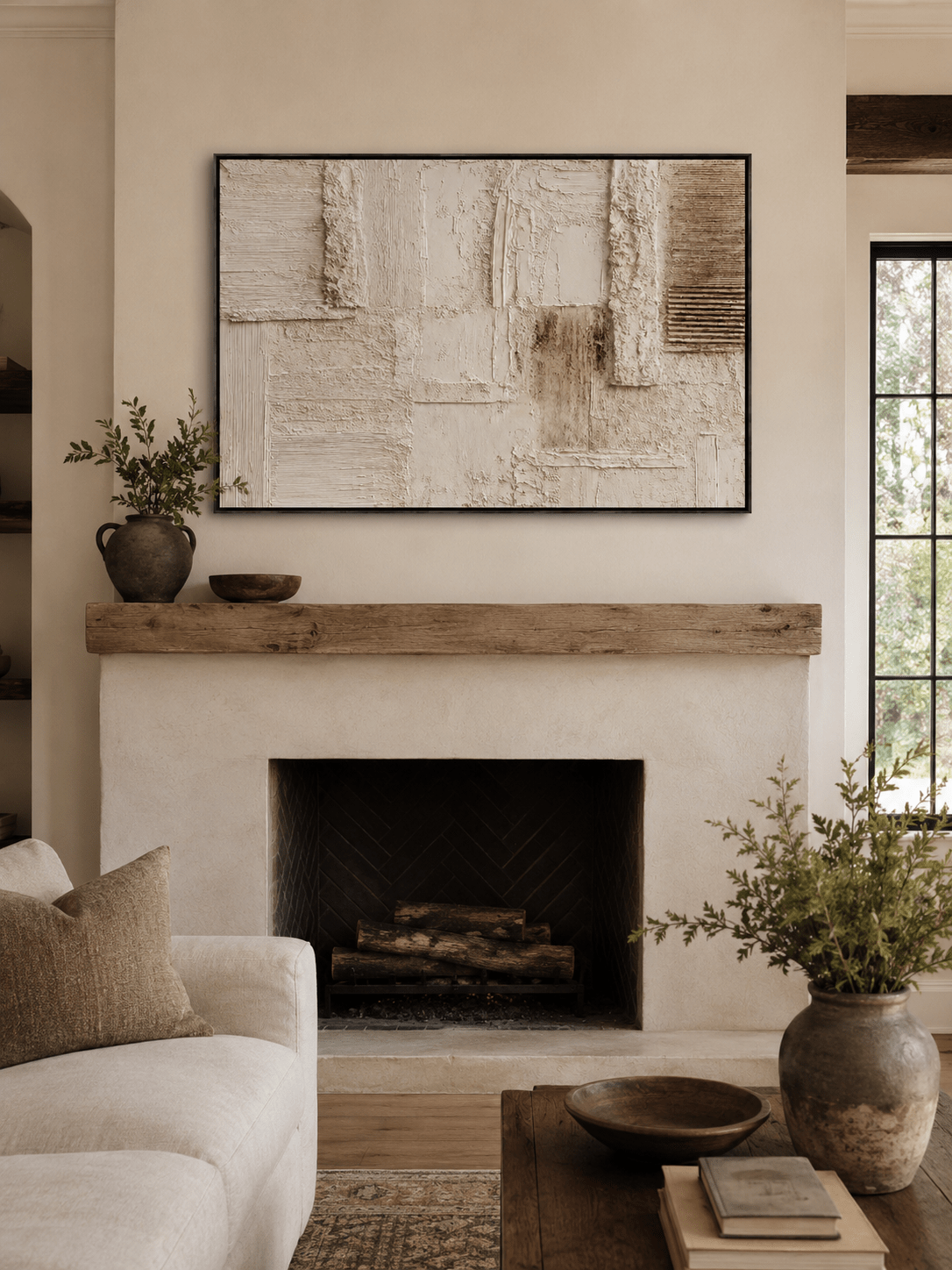
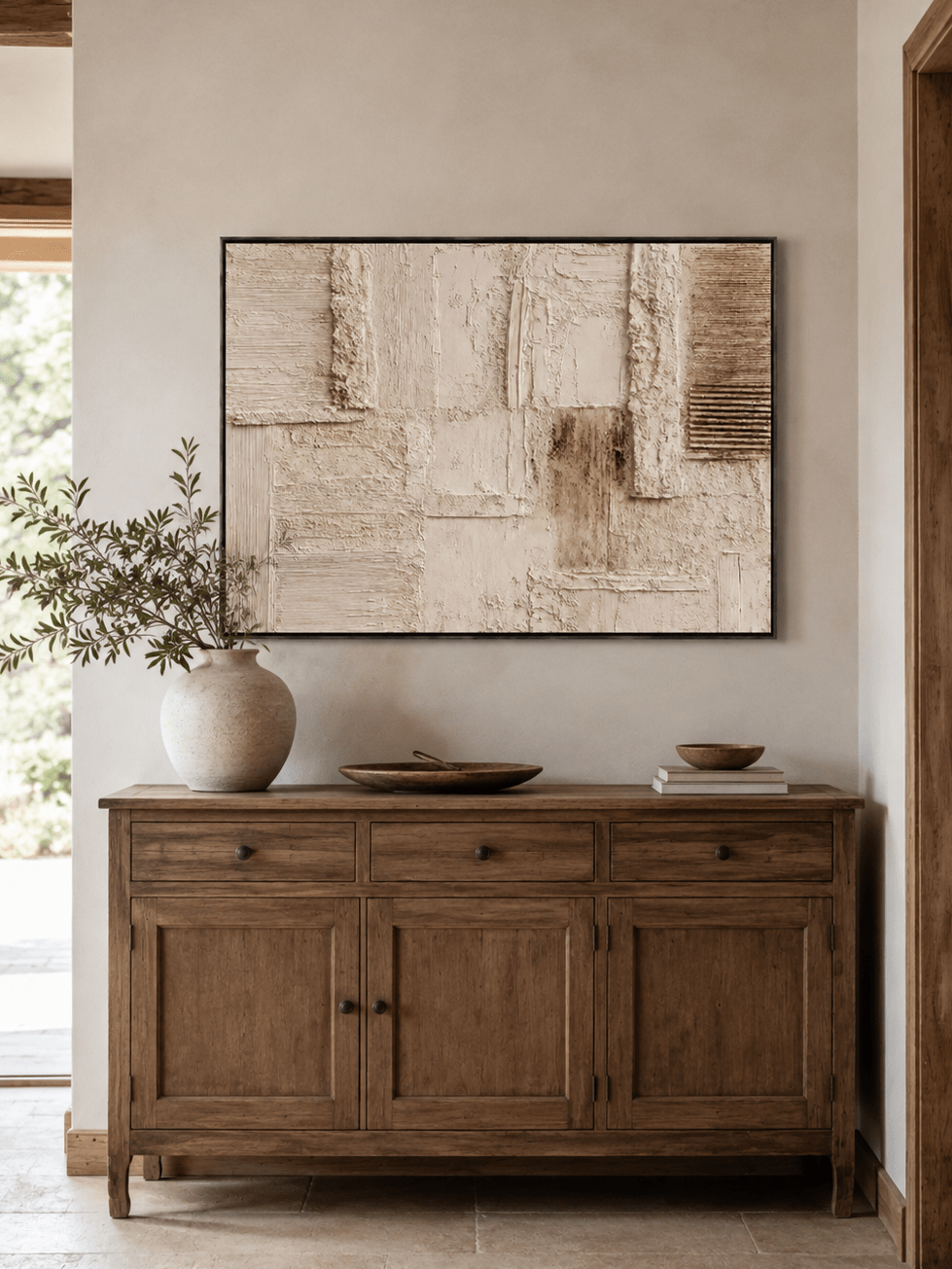
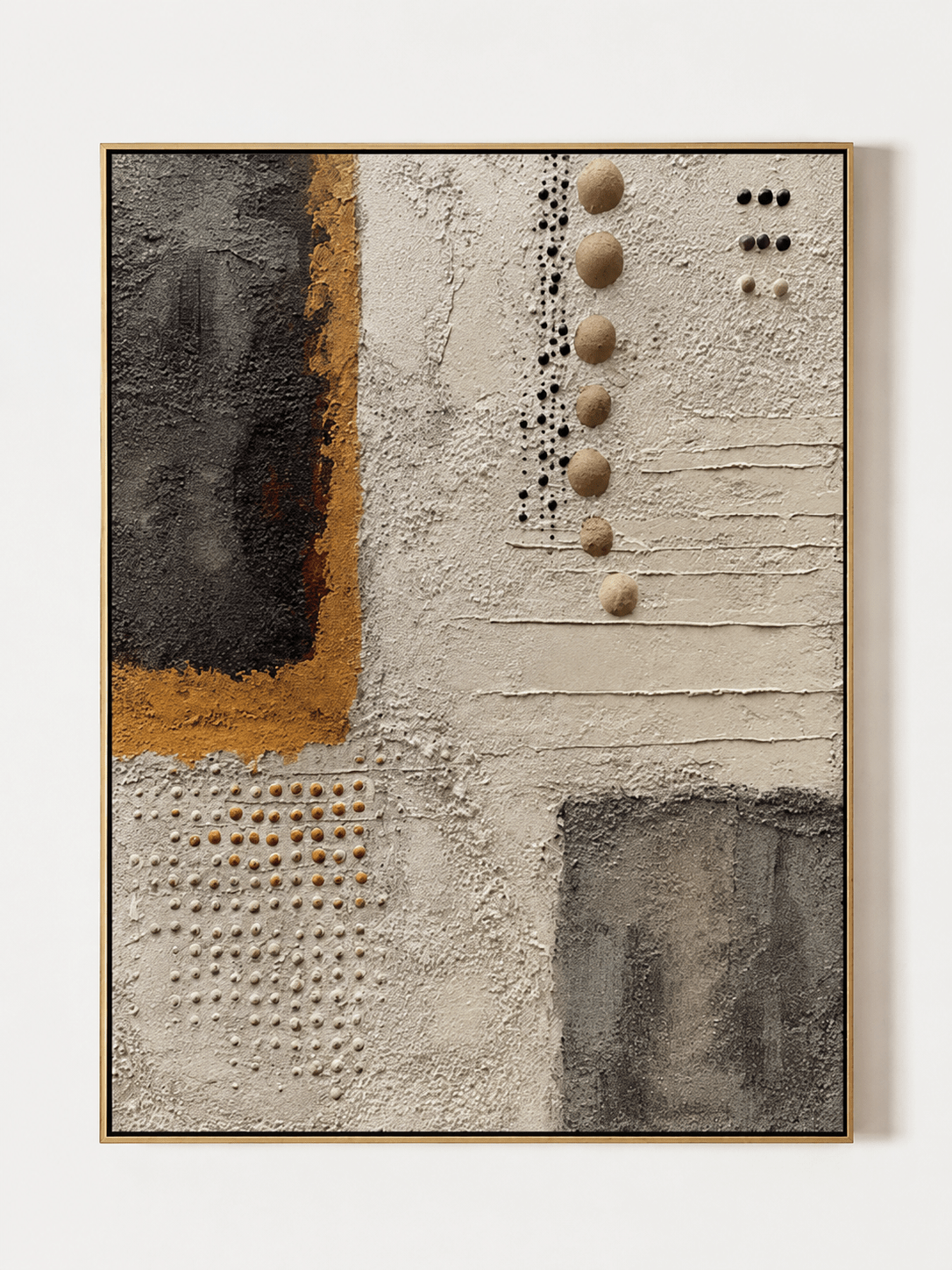
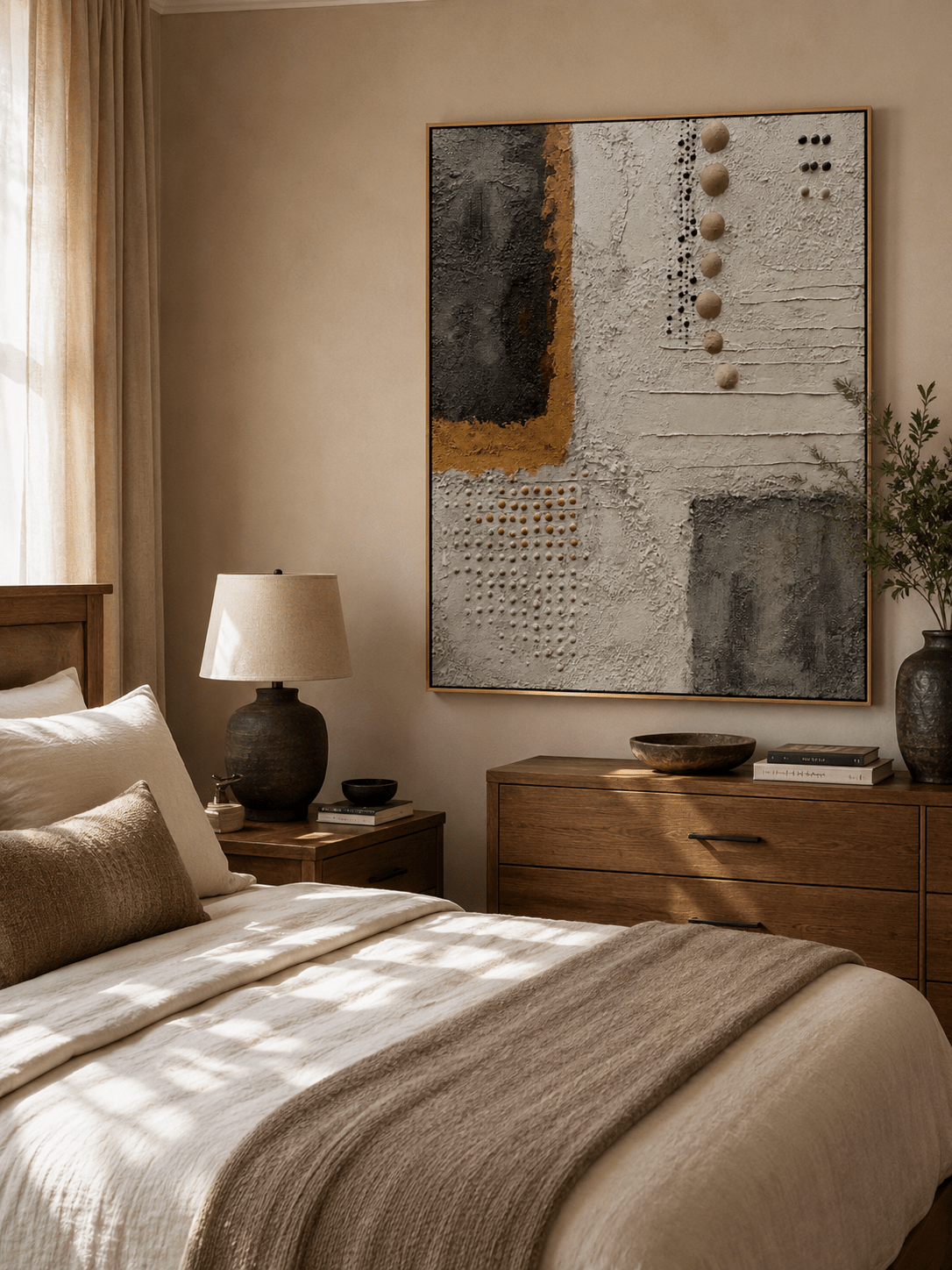
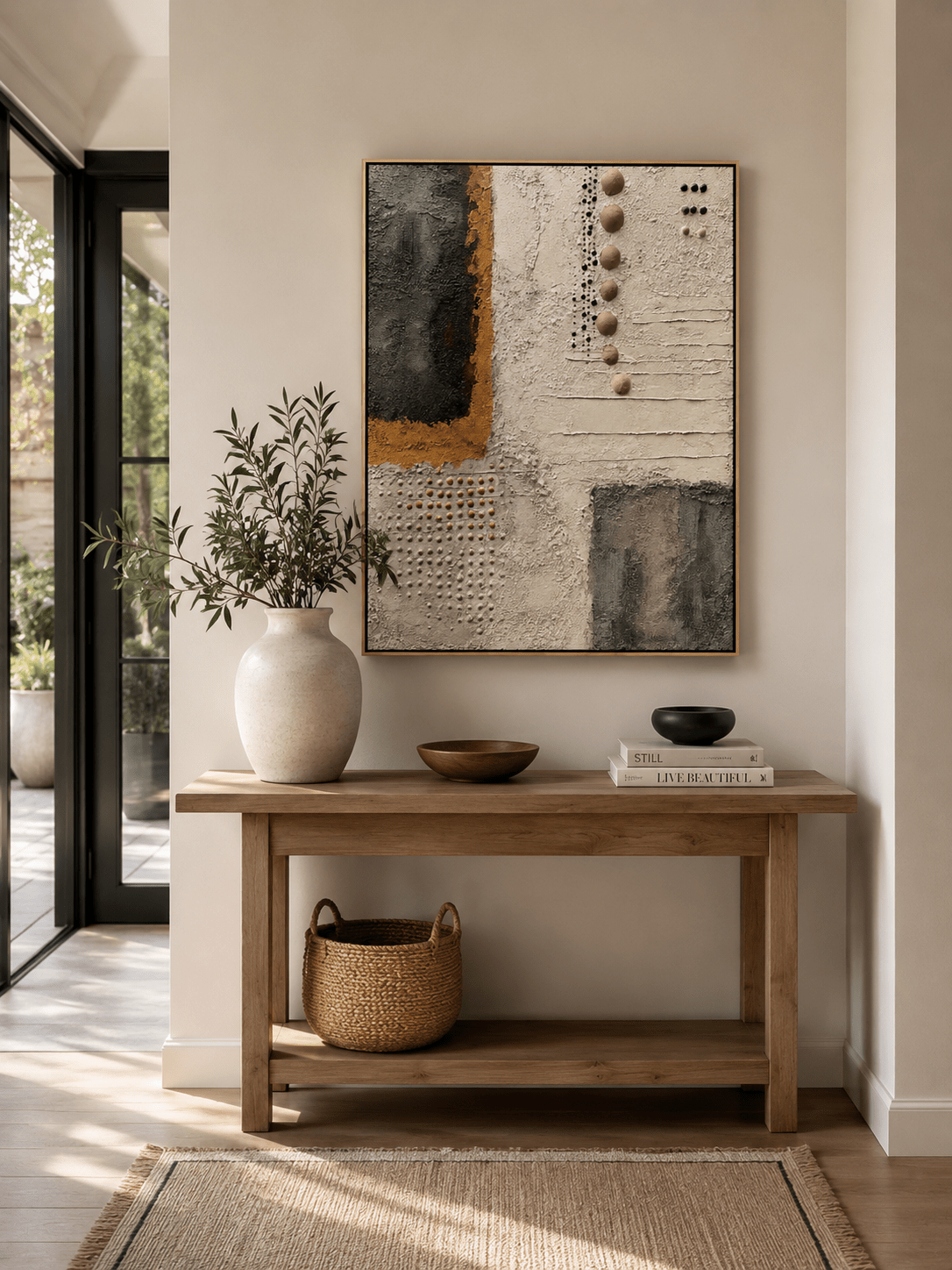
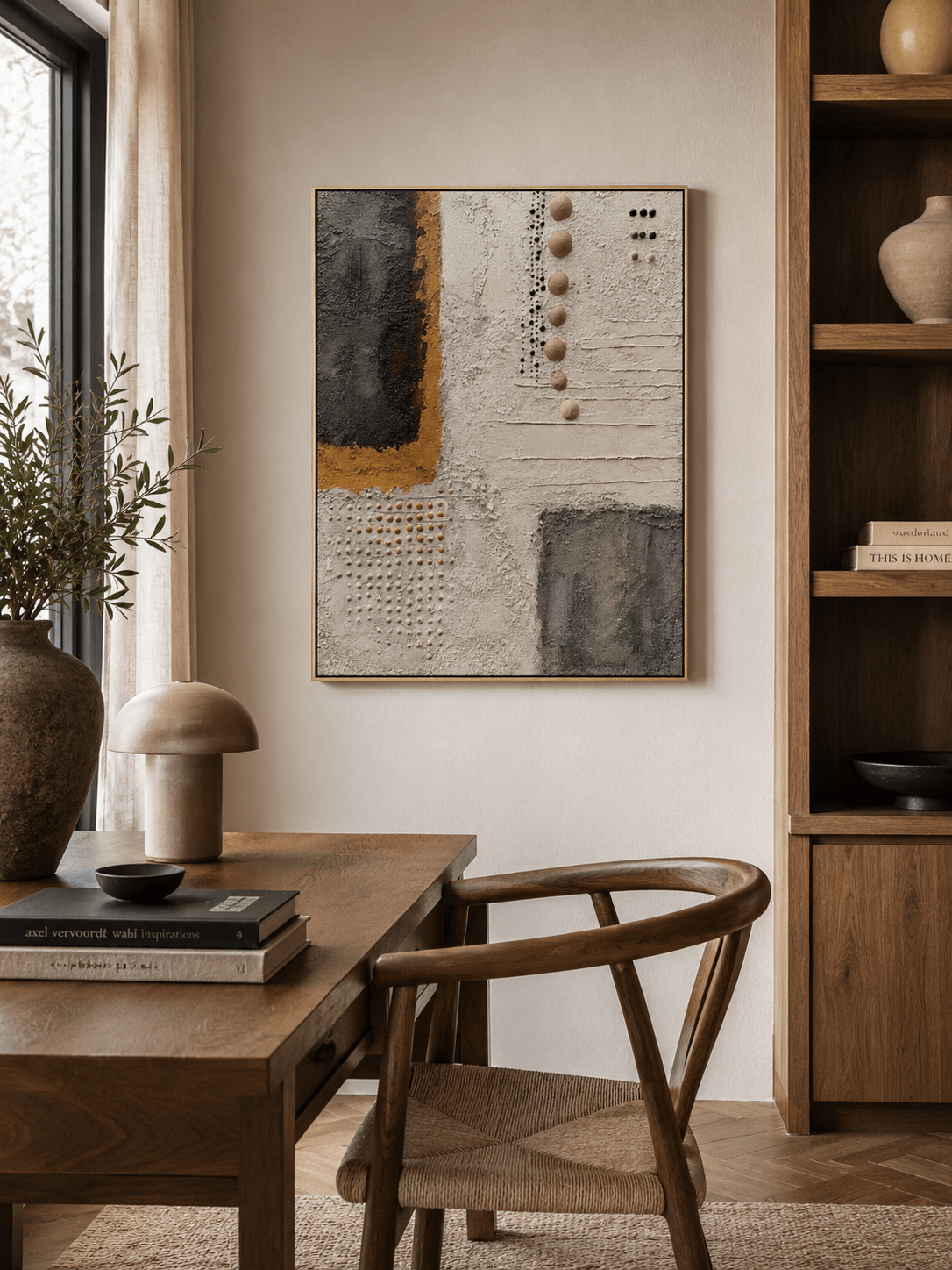
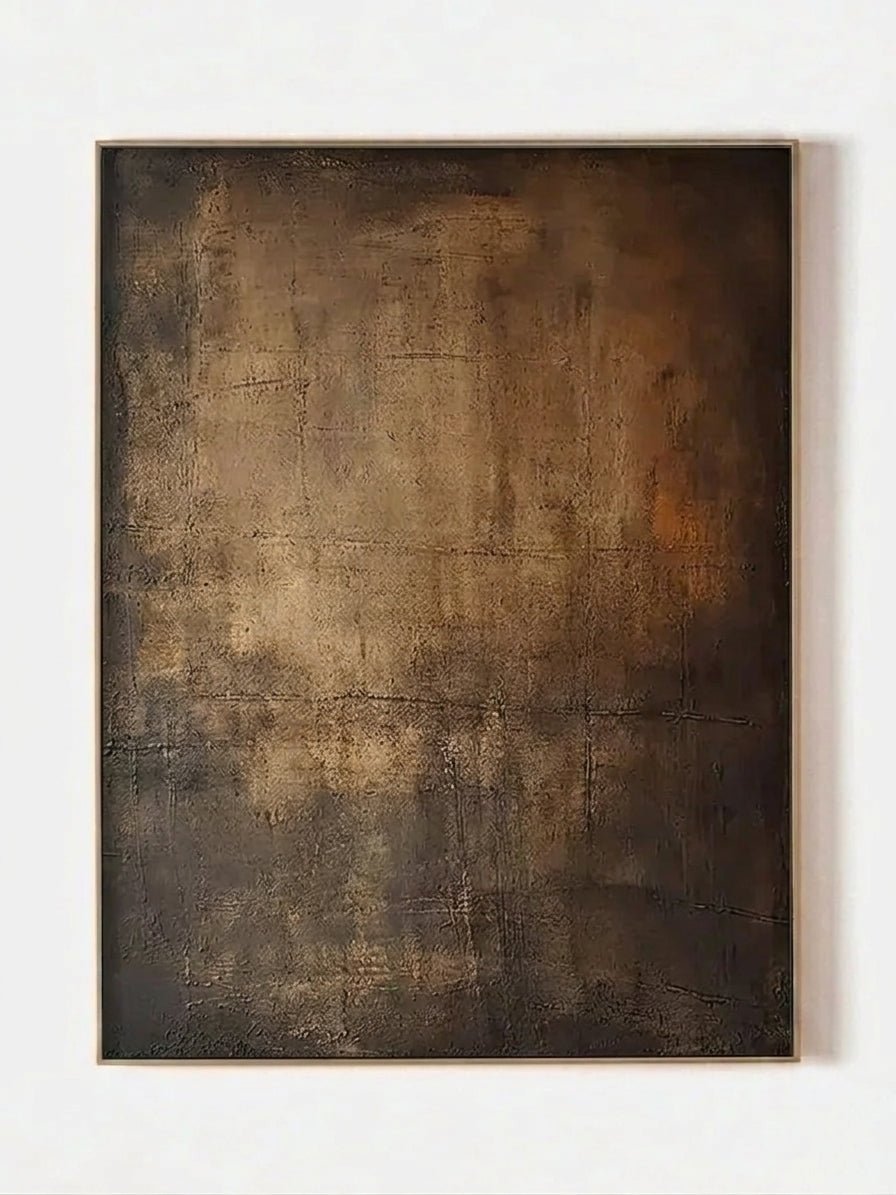
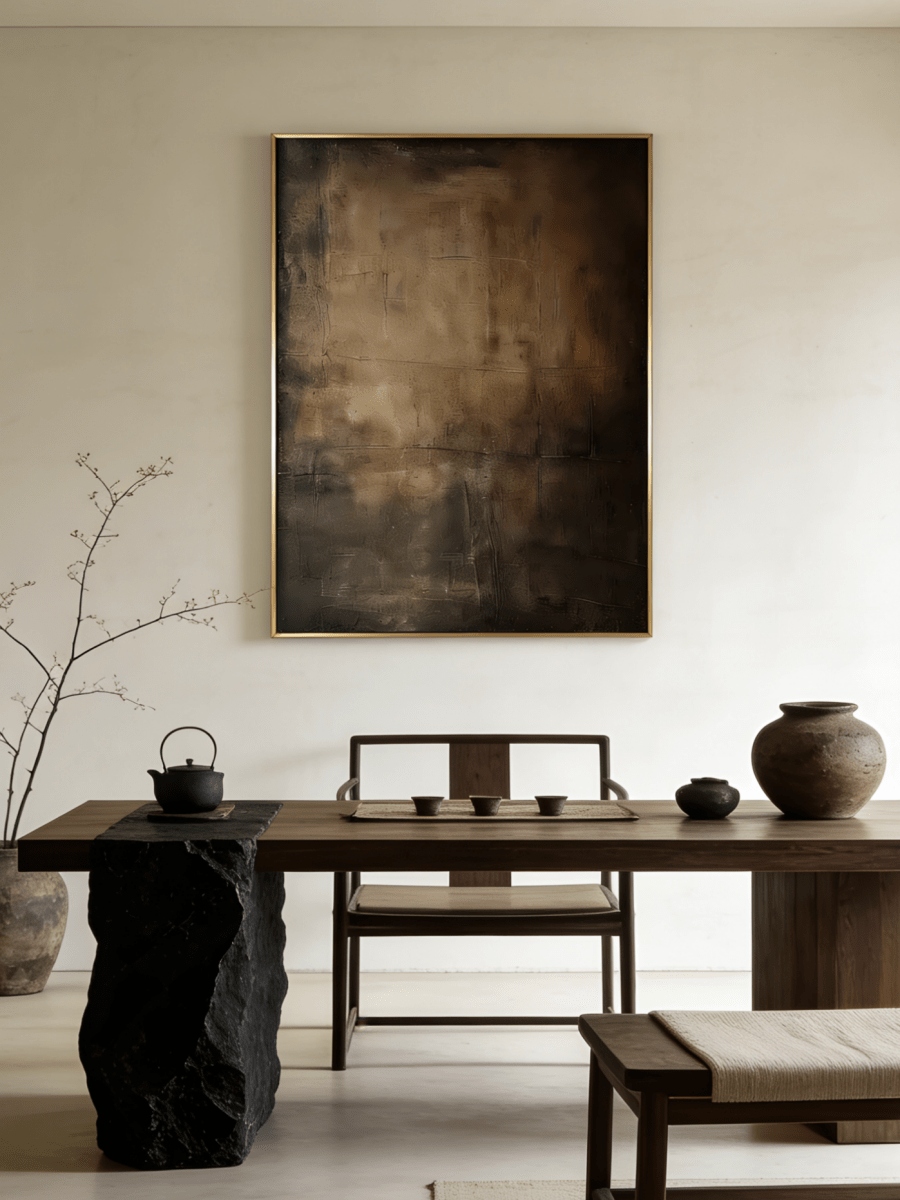
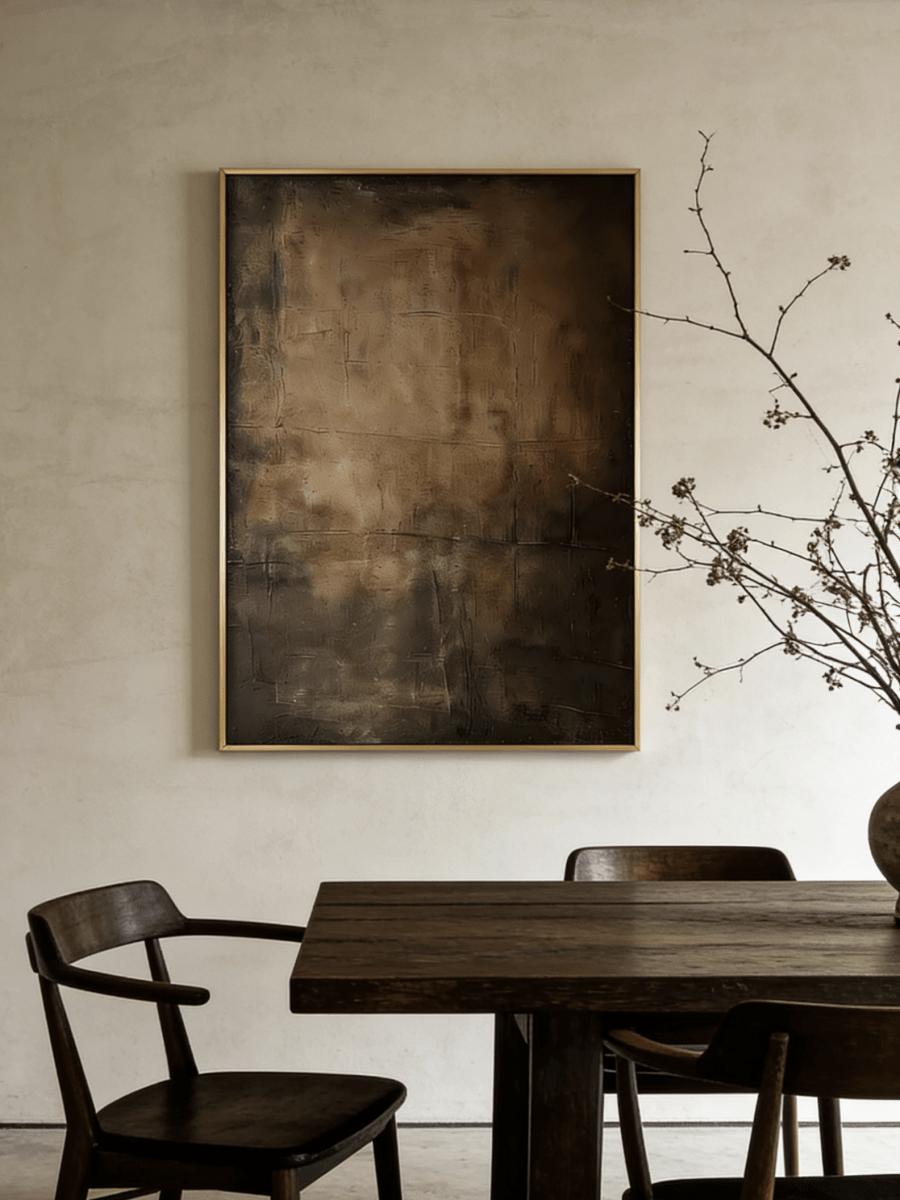
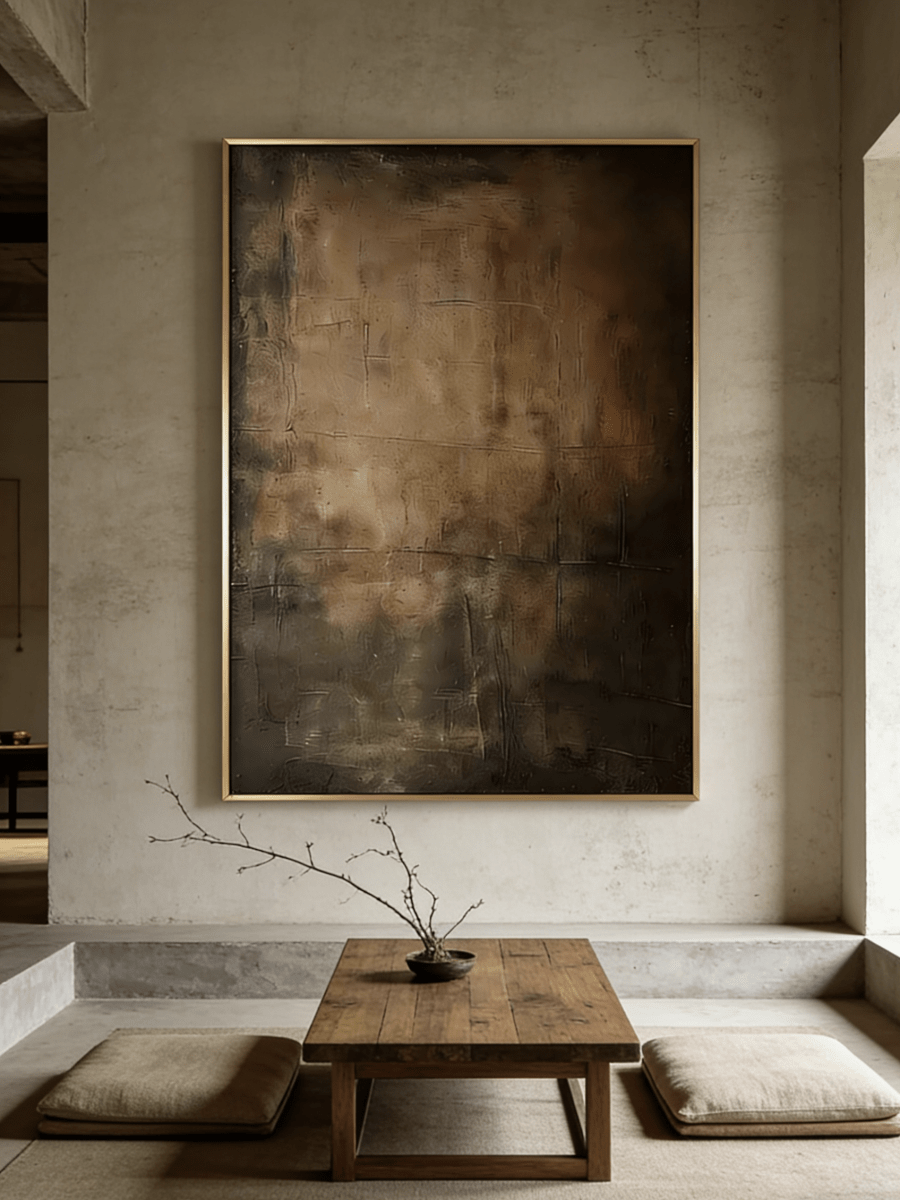
Designer Tip: A piece like the Handmade Beige & Bronze Wabi-Sabi Textured Wall Art – EV#0071 suits a cream sofa perfectly because its bronze-brown passages and raised grid prevent the neutral palette from washing out.
Greige and Taupe Sofas
Greige is highly adaptable but easy to over-coordinate. If everything occupies the same medium-value space, the room looks unfinished. Move lighter with ivory and chalk, or move darker with charcoal and umber. Clay, muted olive, and bronze bring subtle life to greige without reading as neon accent colors.
Gray Sofas
Determine if your gray is warm (contains beige/brown) or cool (contains blue/violet). A cool gray sofa desperately needs art in warm white, mushroom, ochre, or aged bronze to avoid feeling frigid. A warm gray sofa effortlessly carries stone, cream, and muted greens.
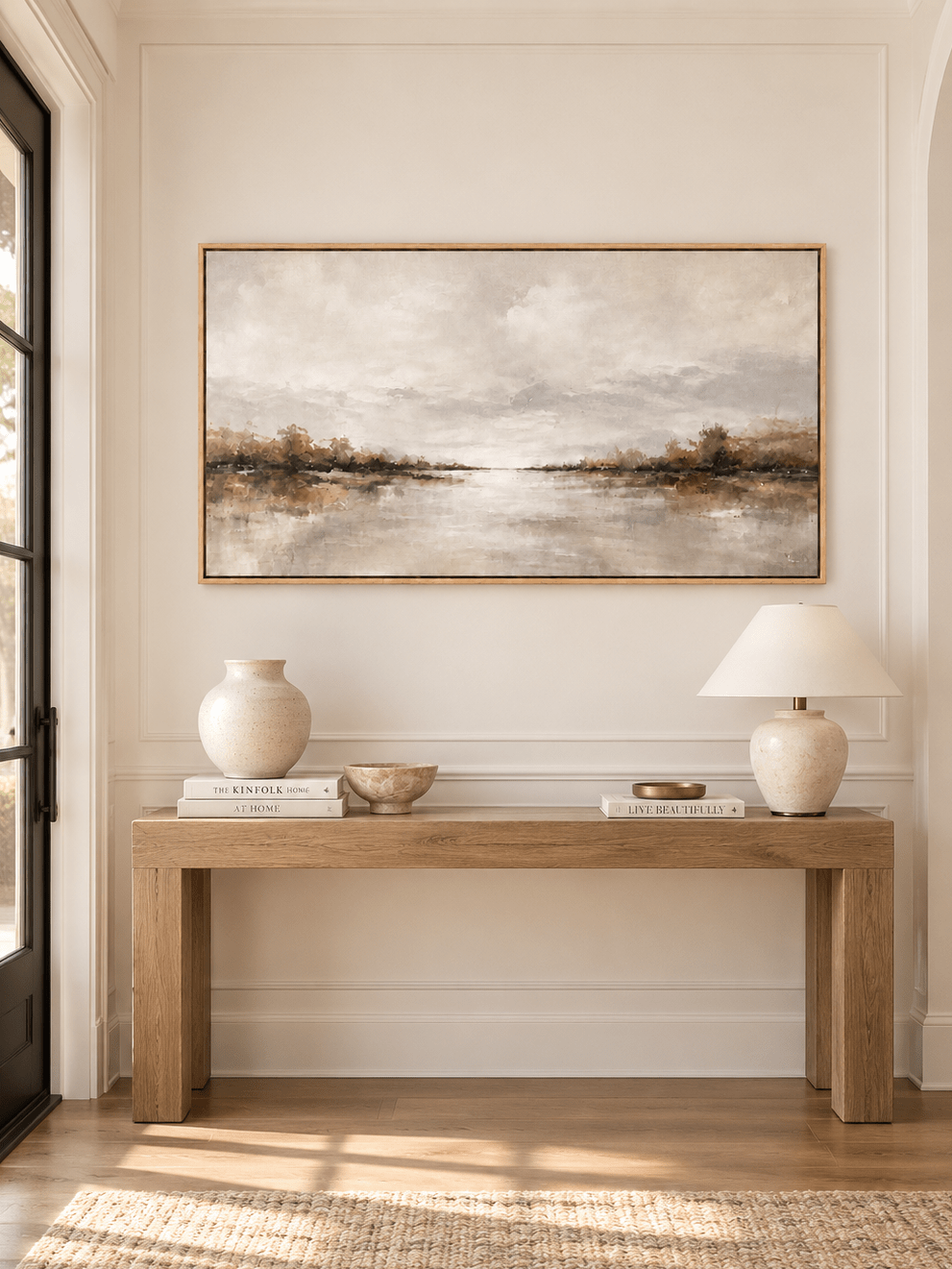
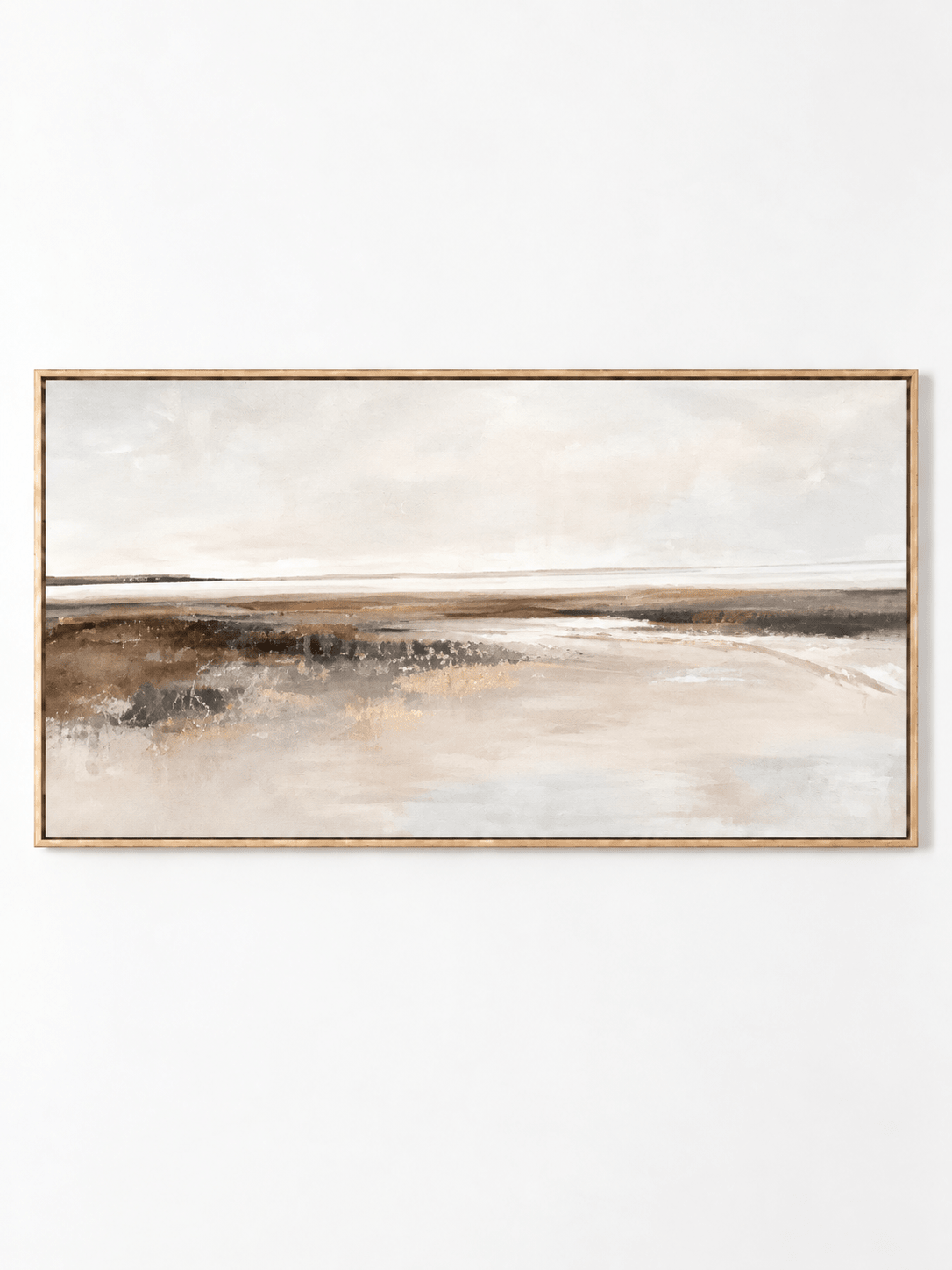
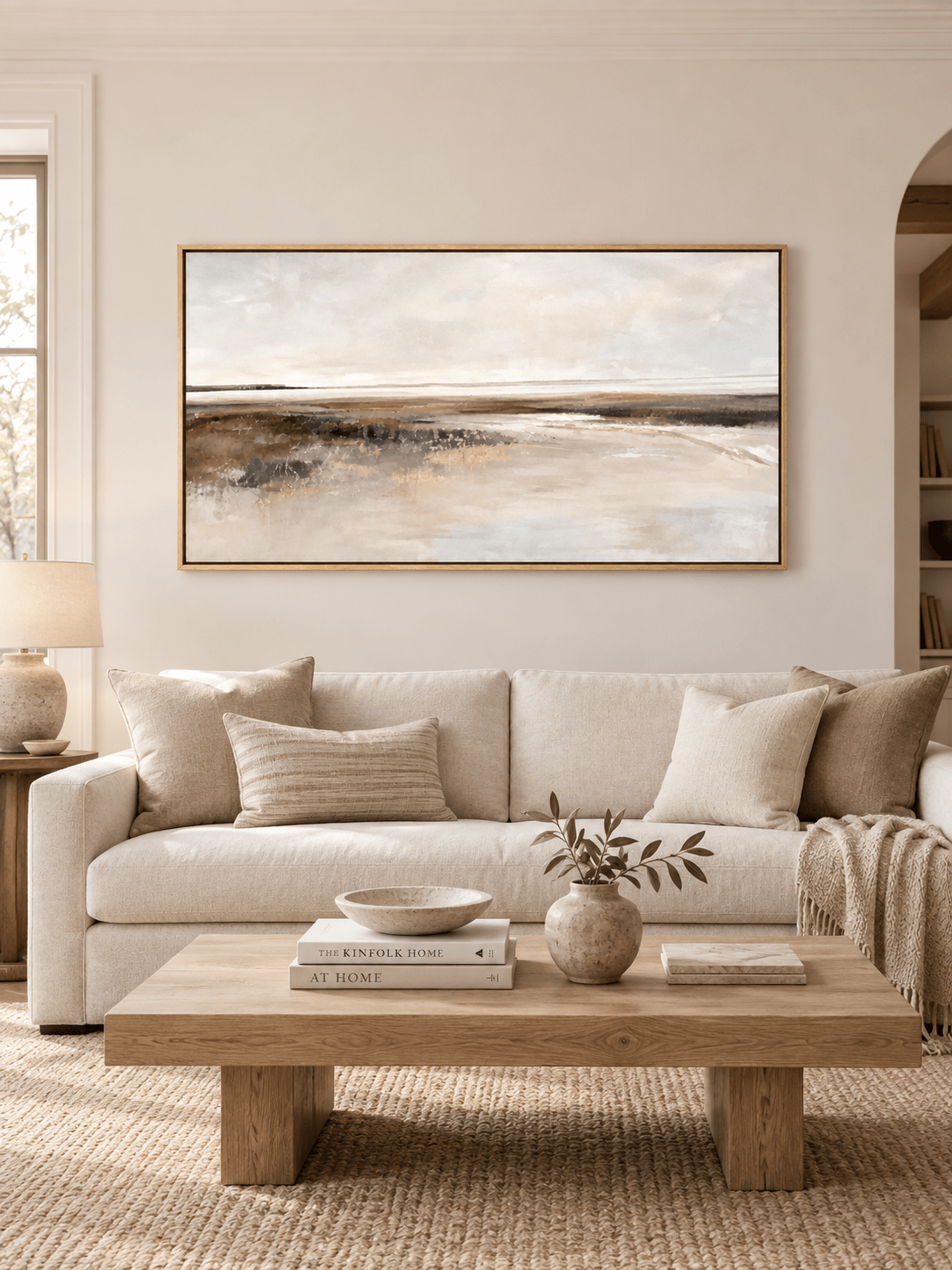
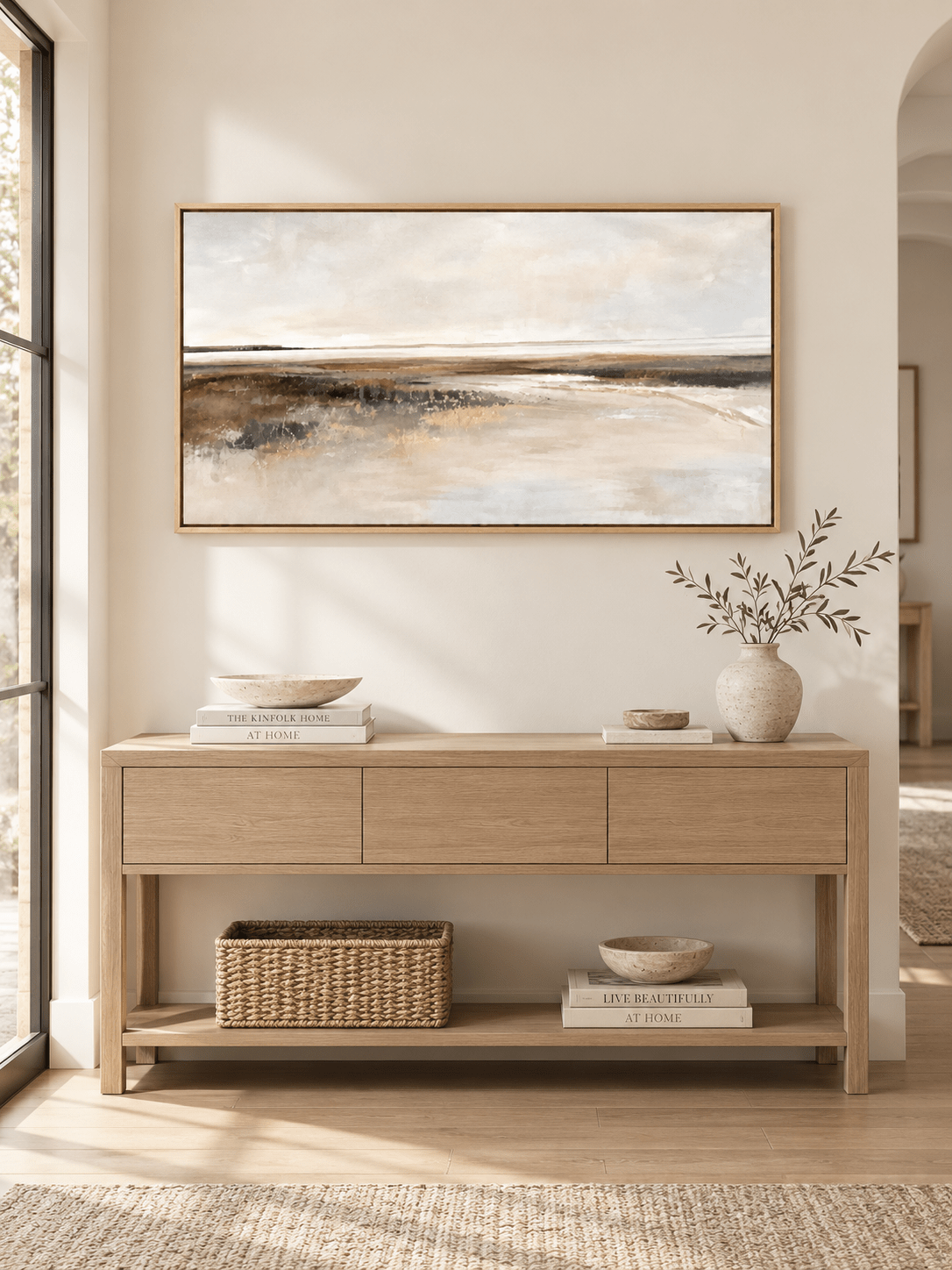
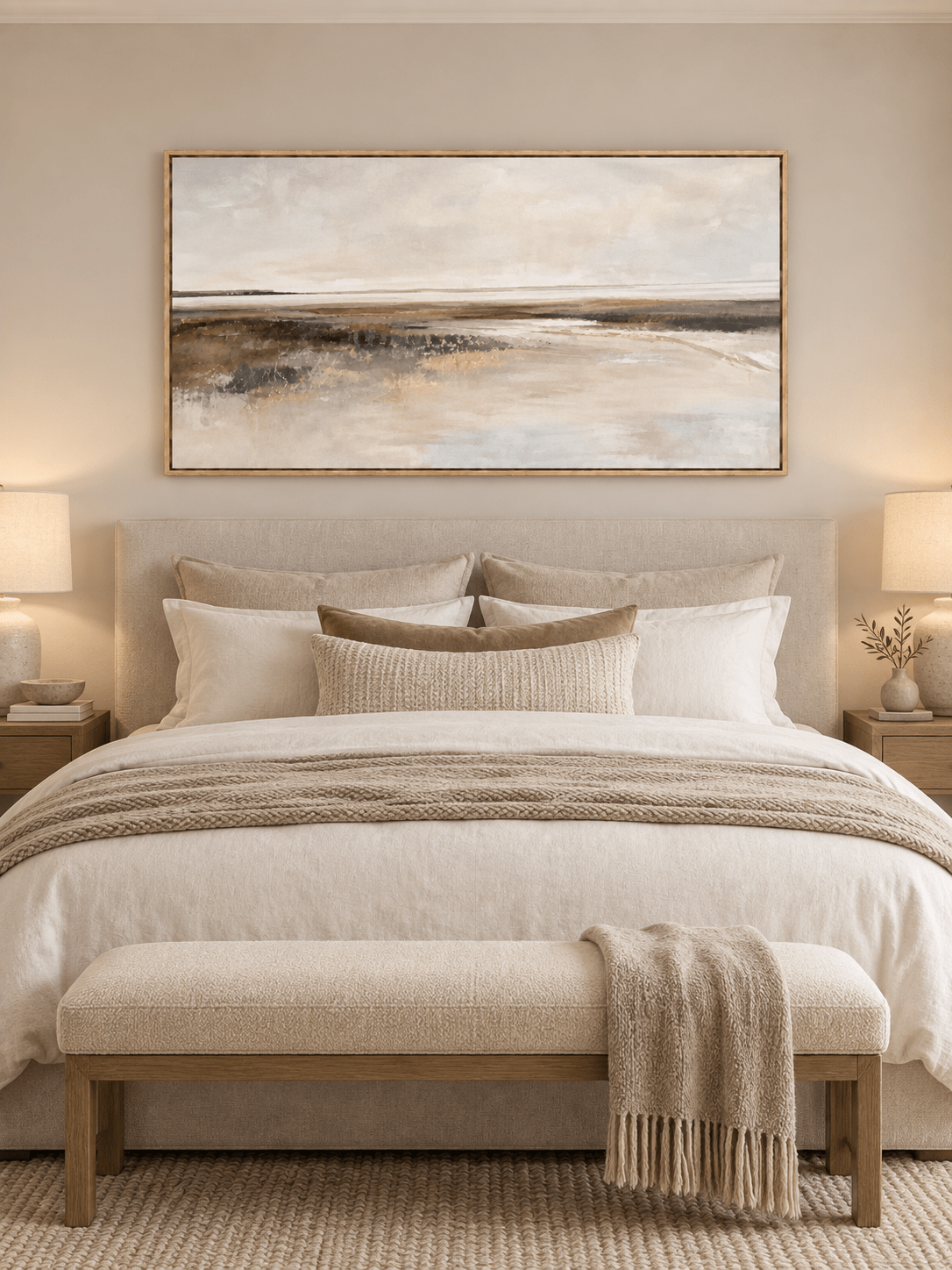
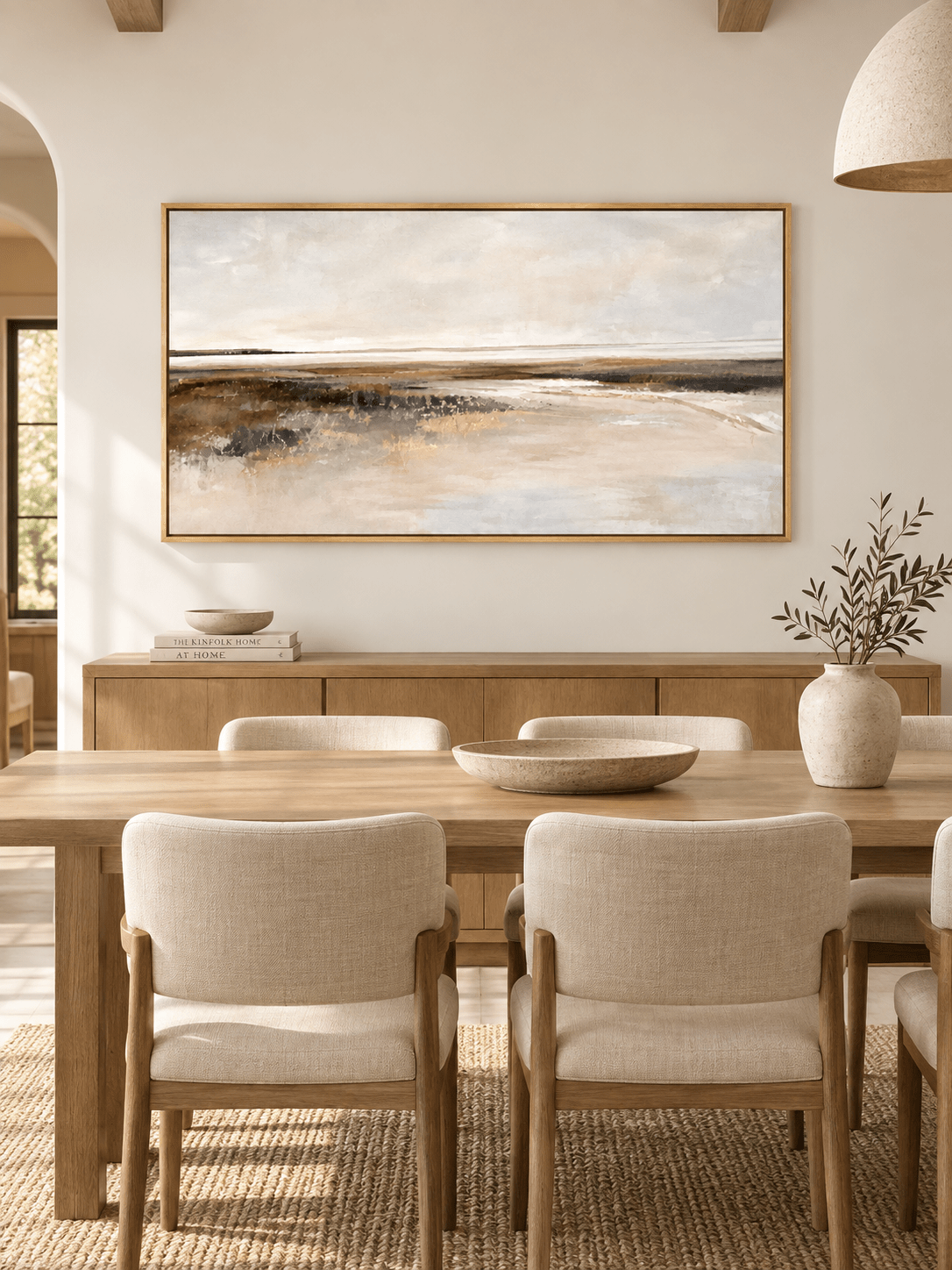
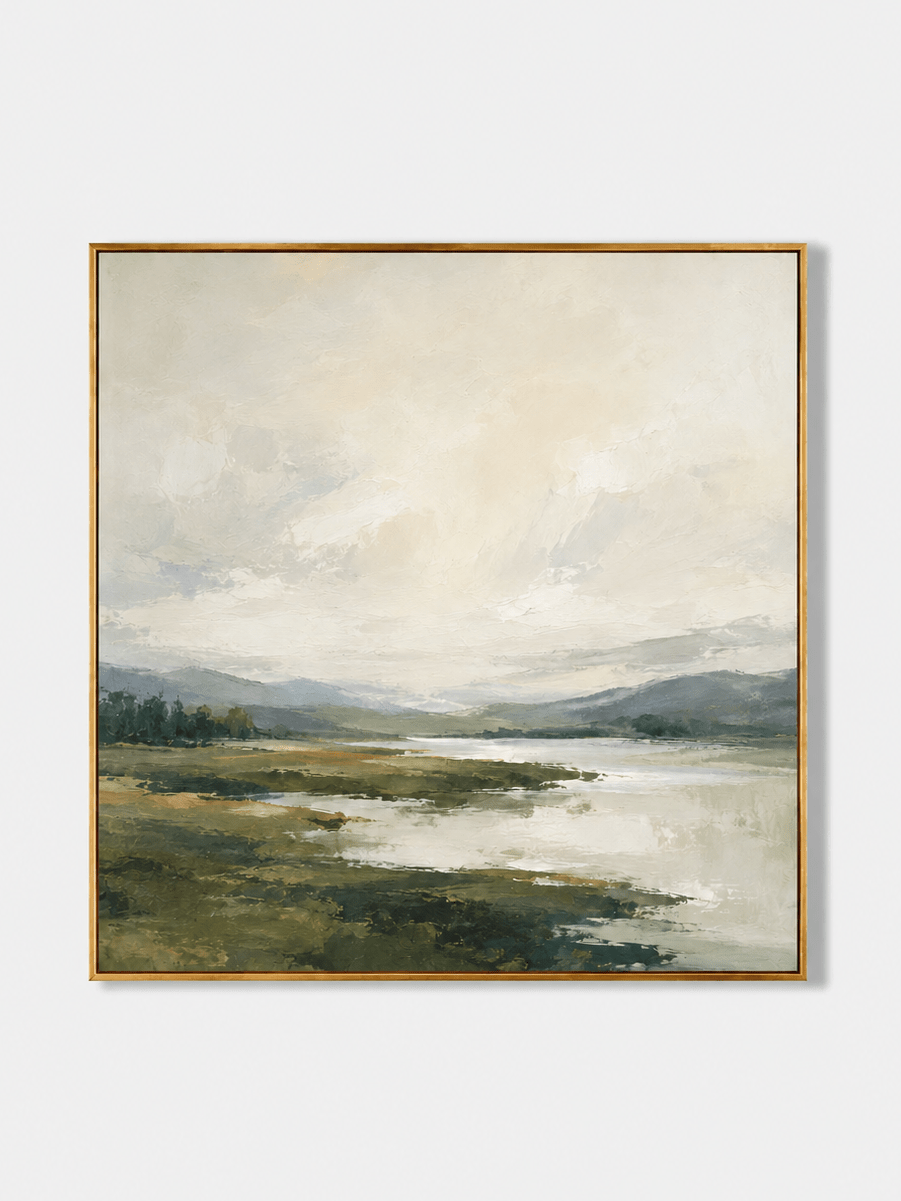
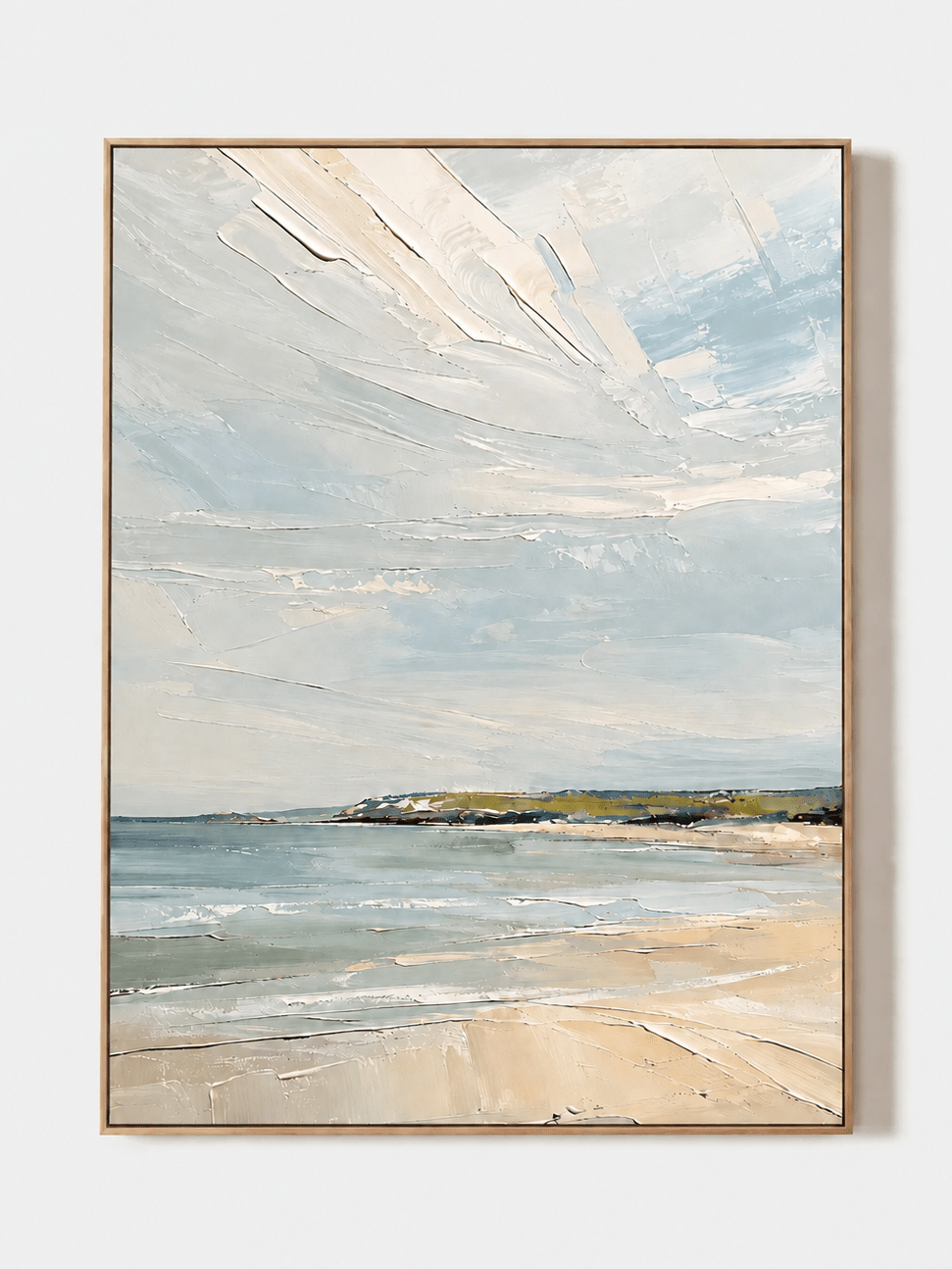
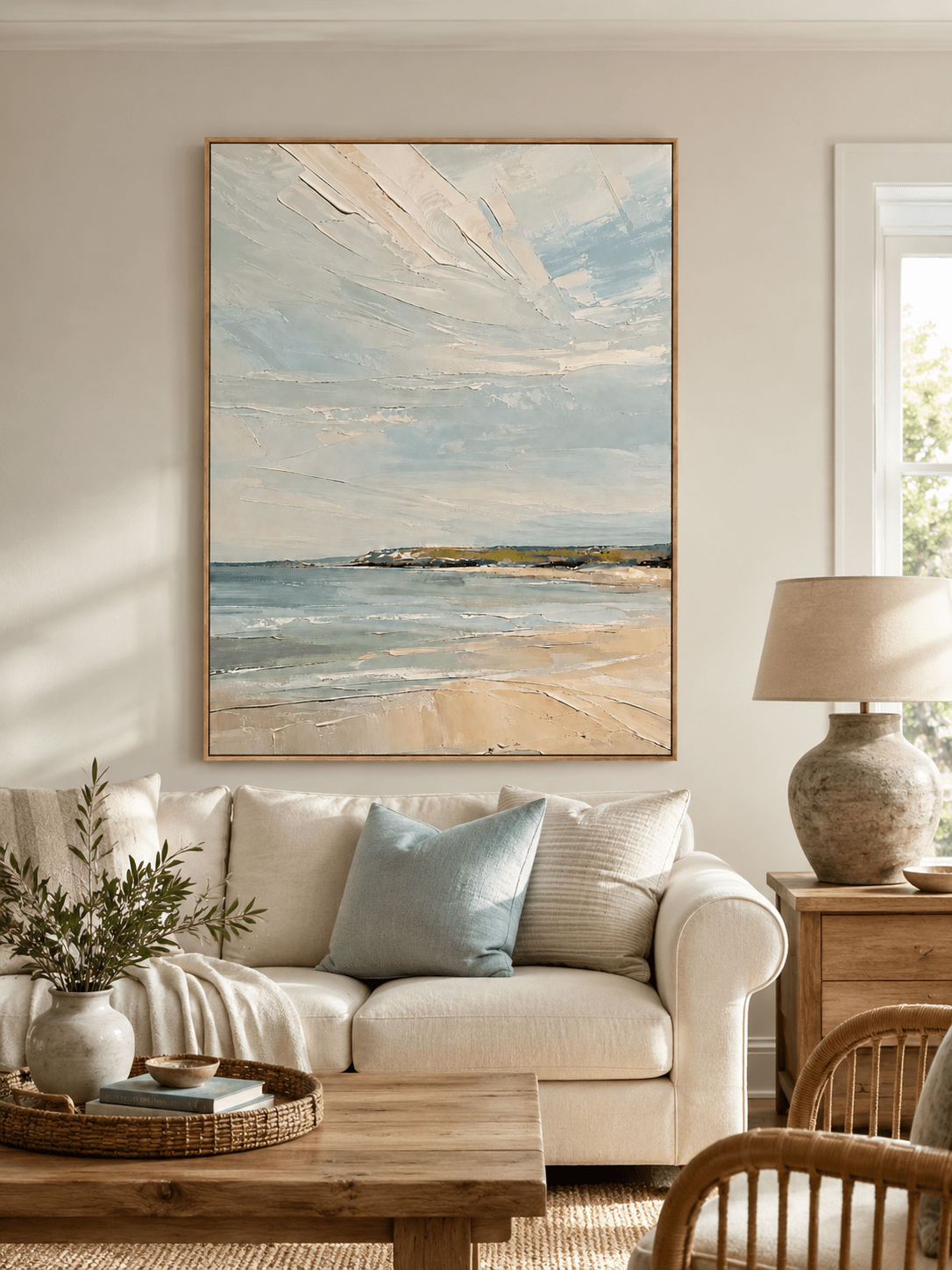
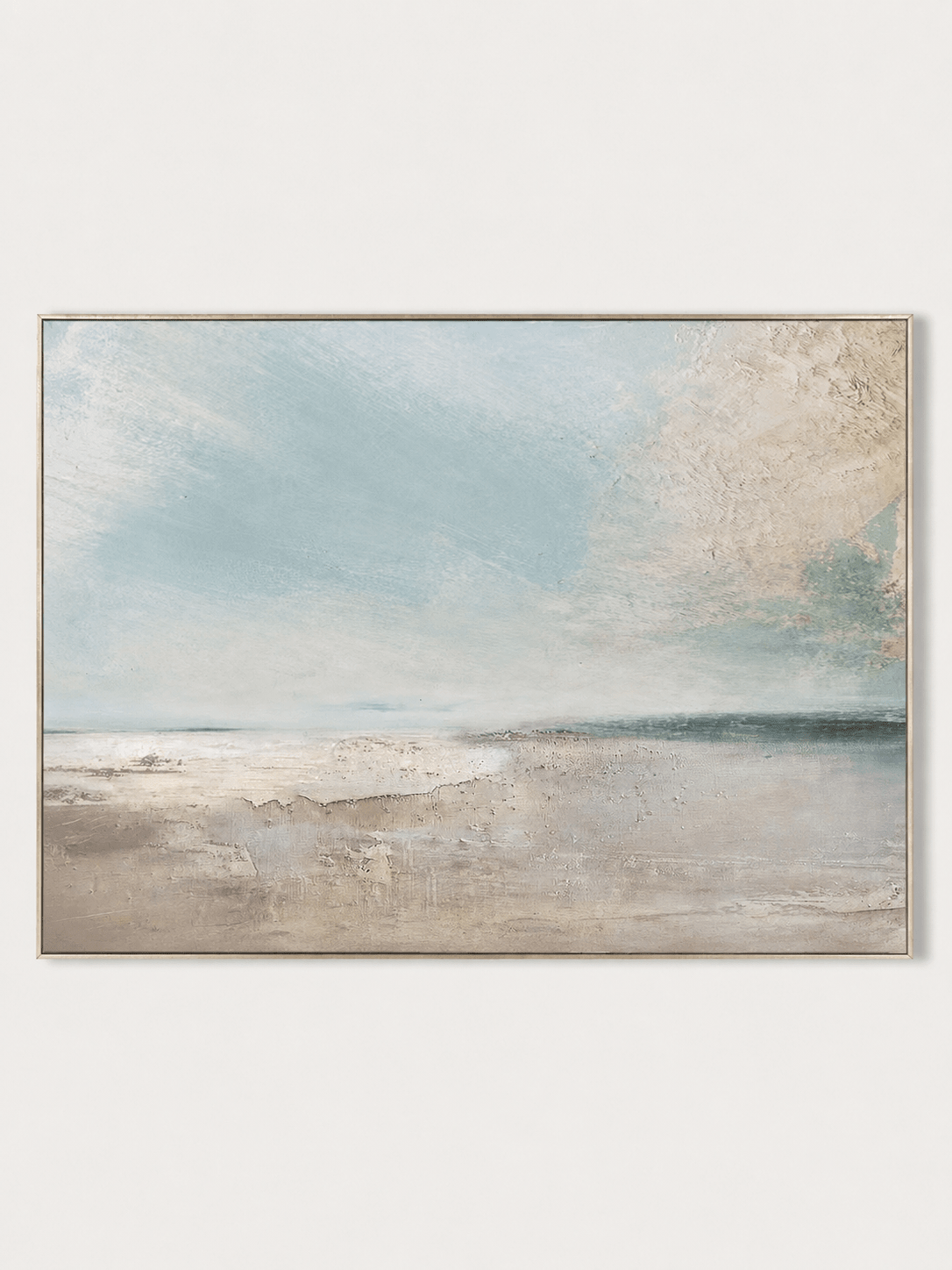
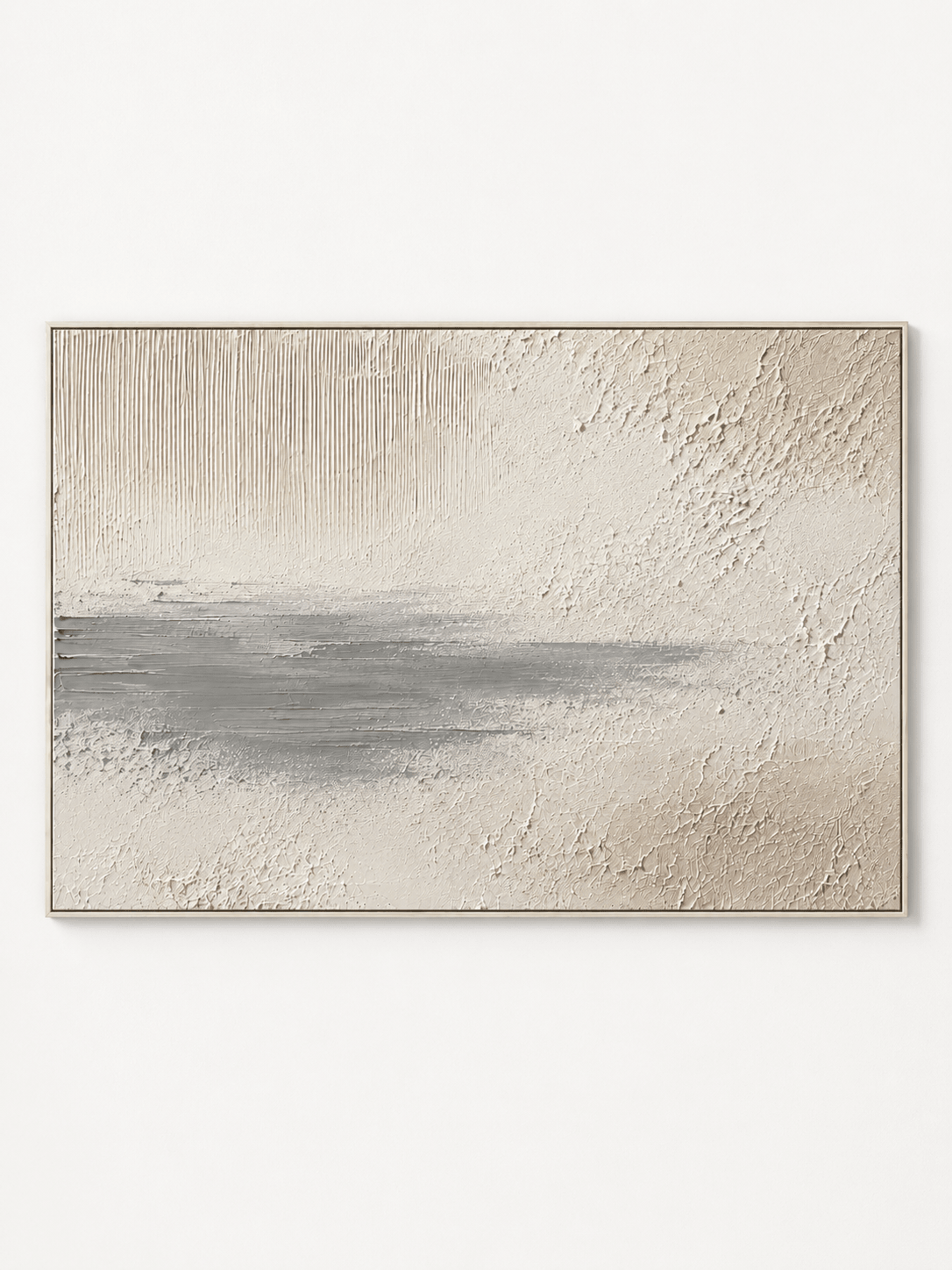
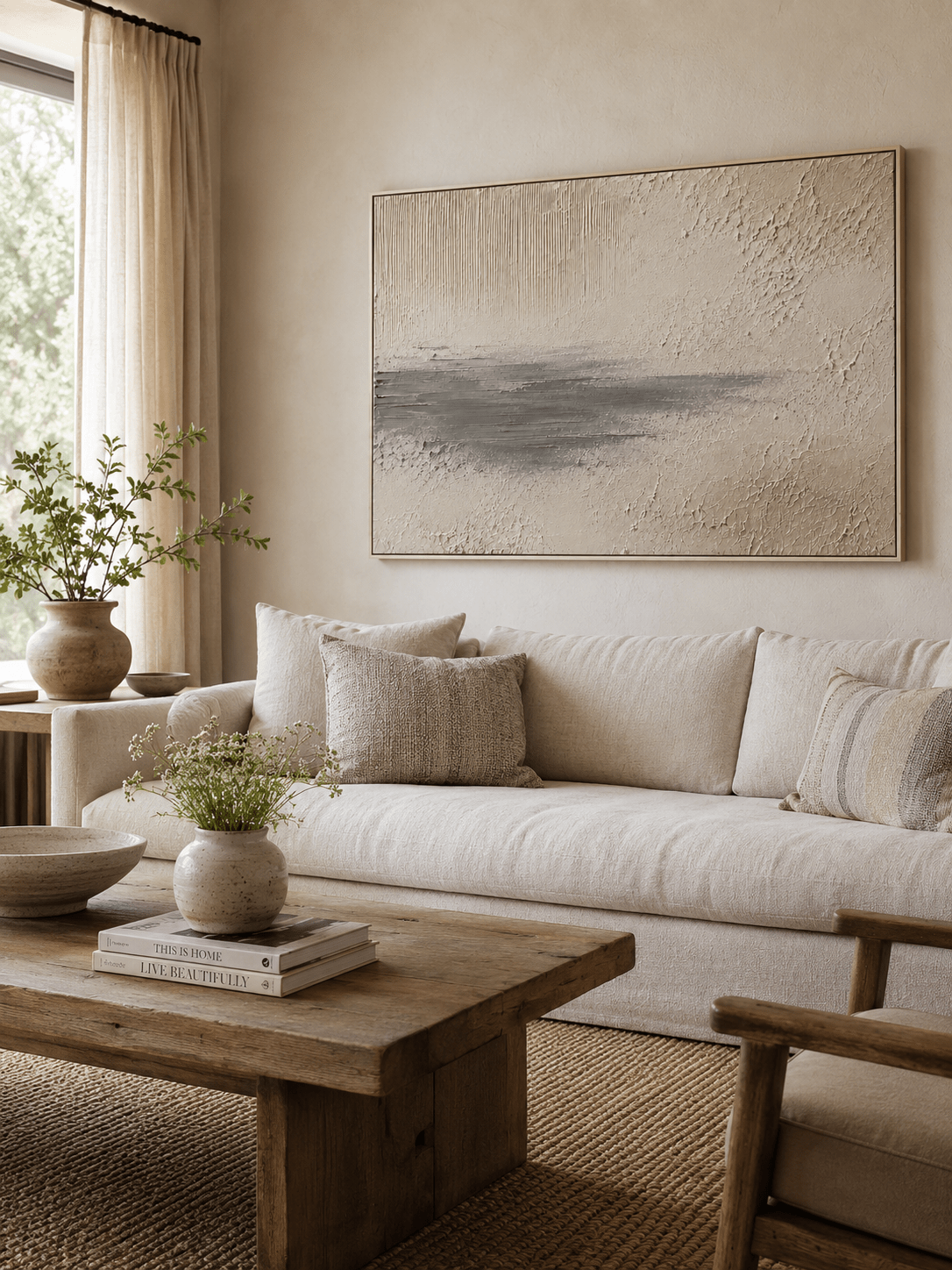
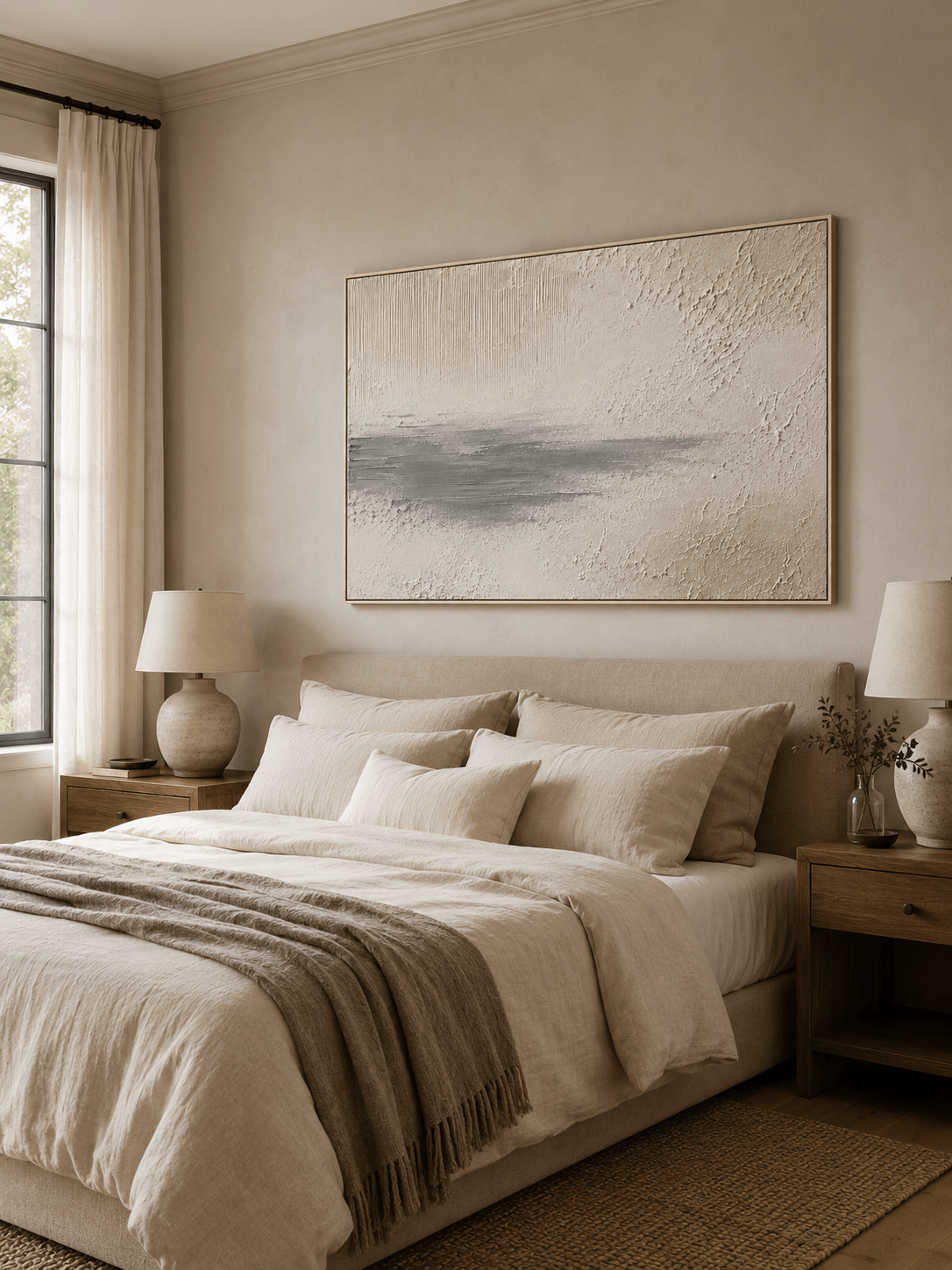
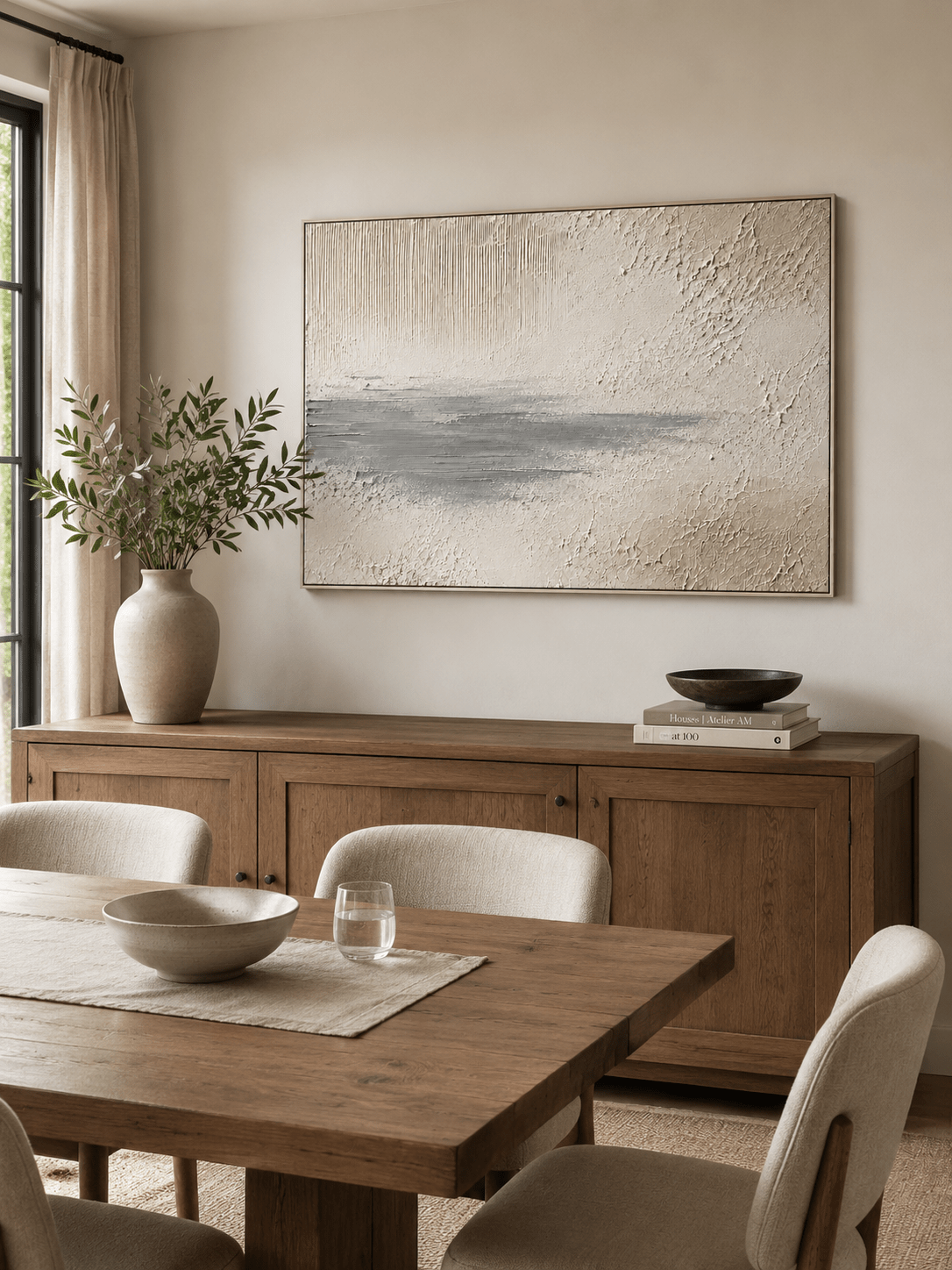
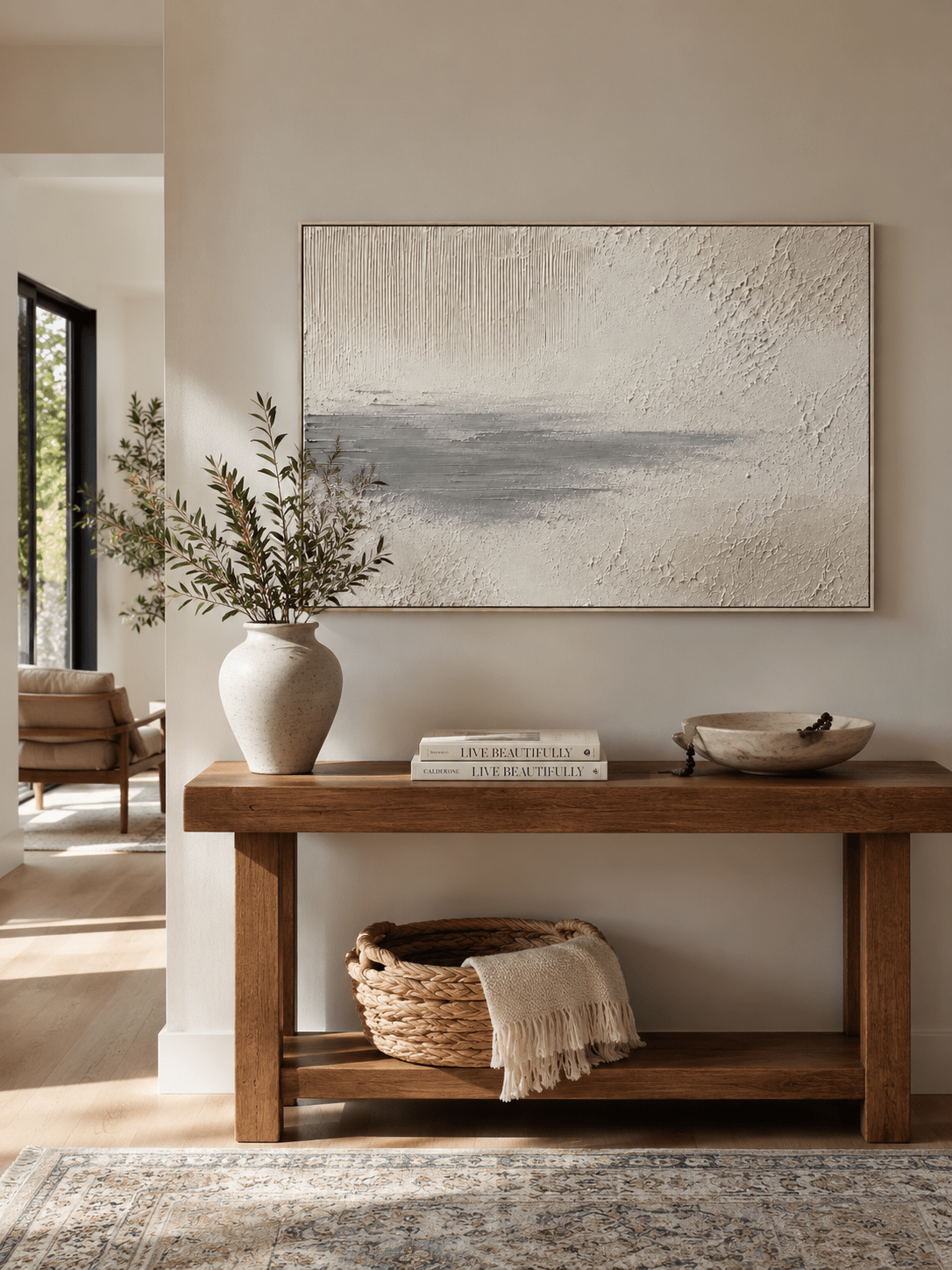
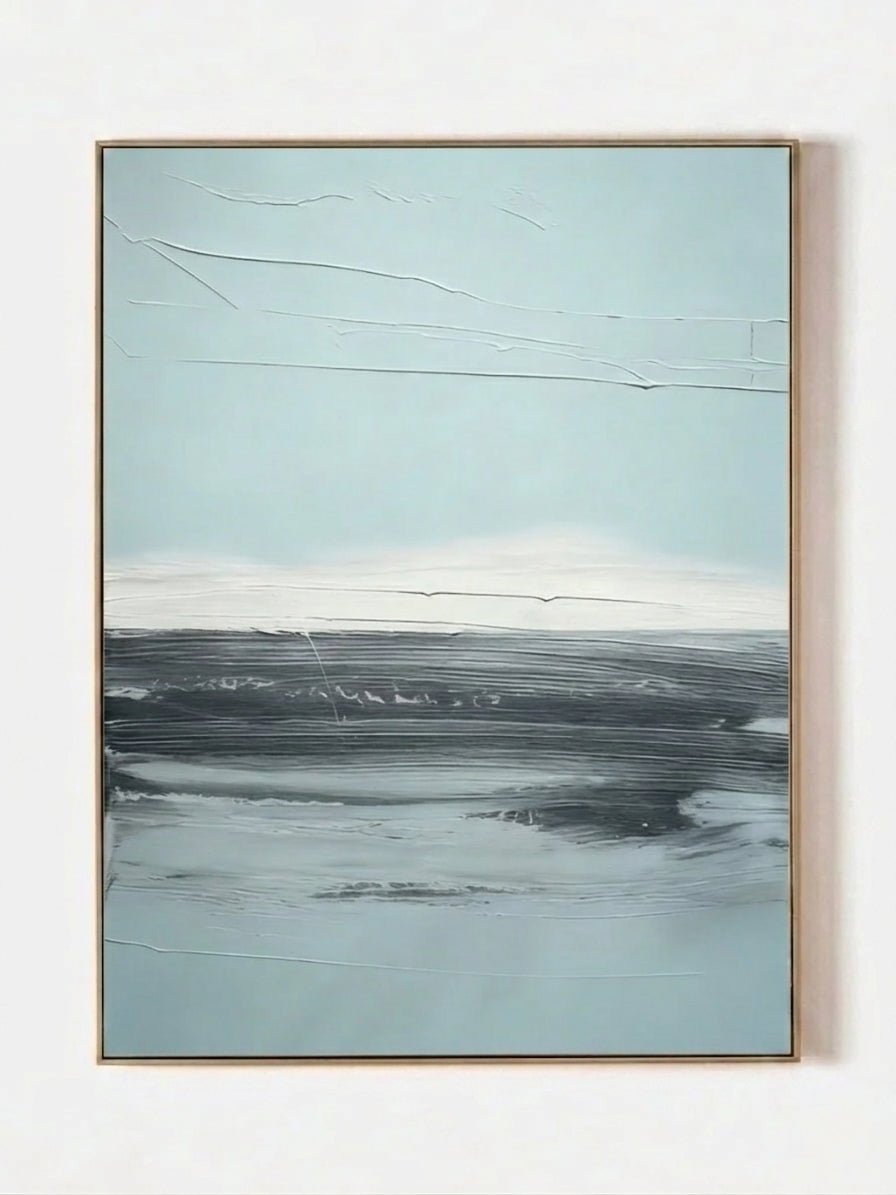
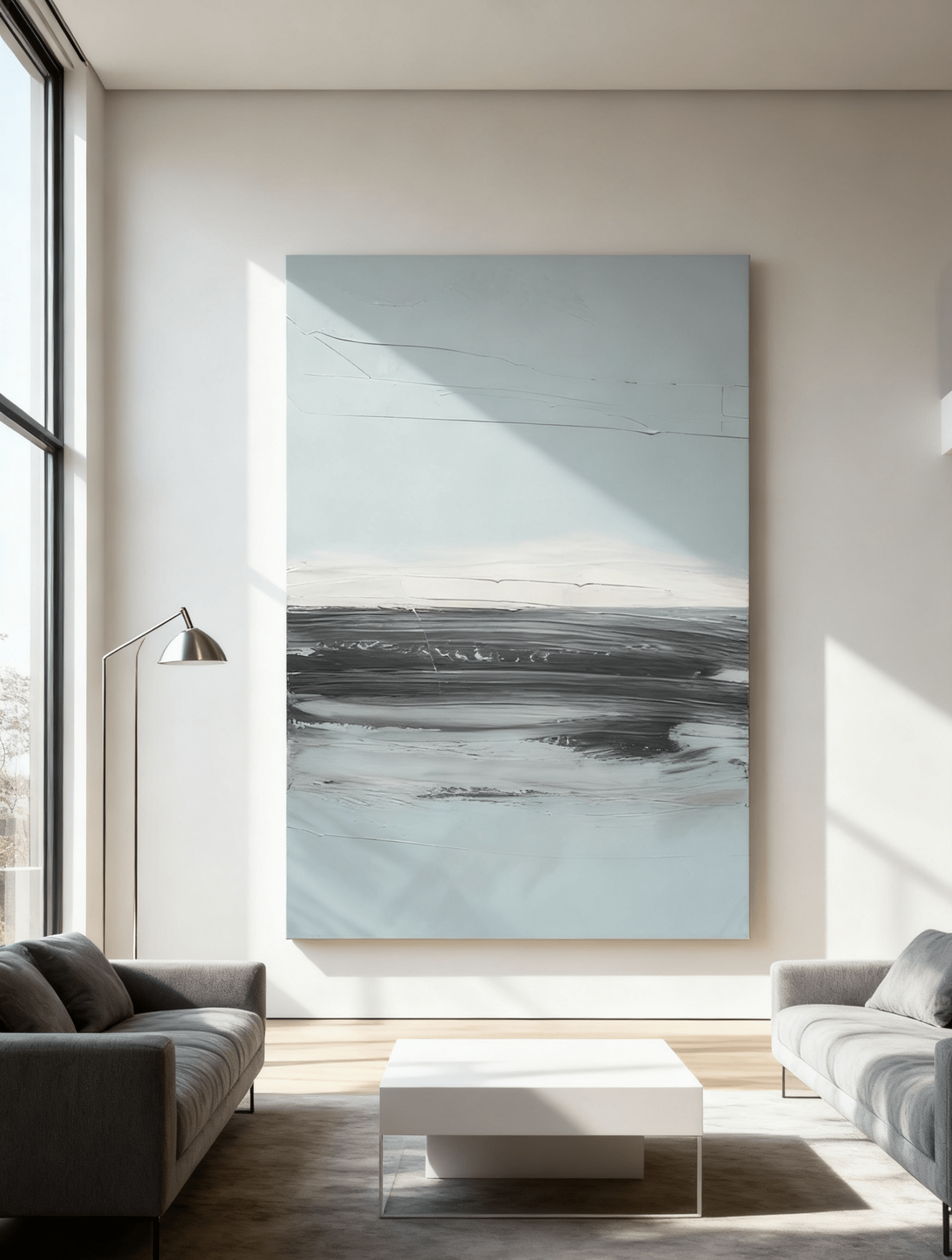
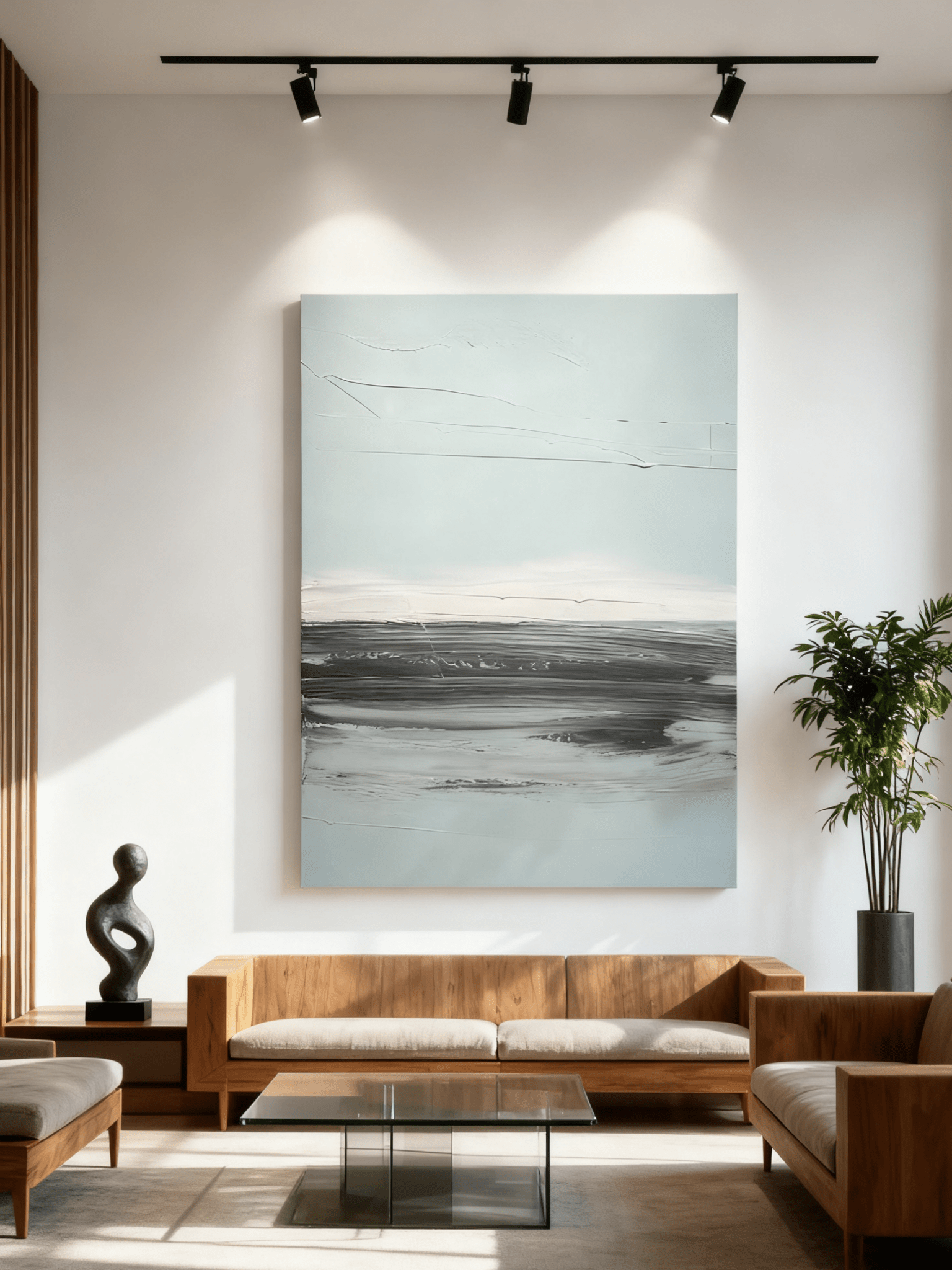
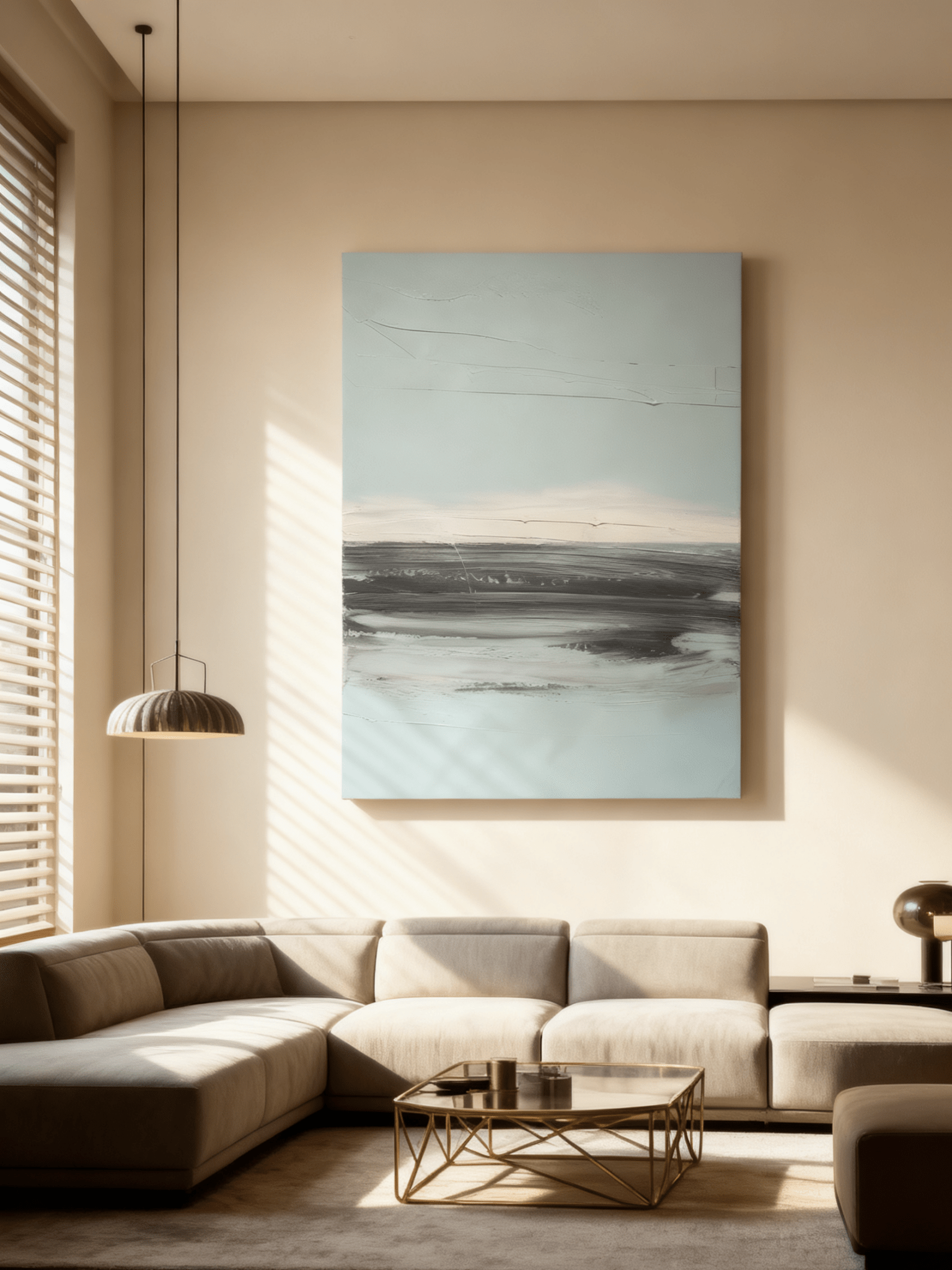
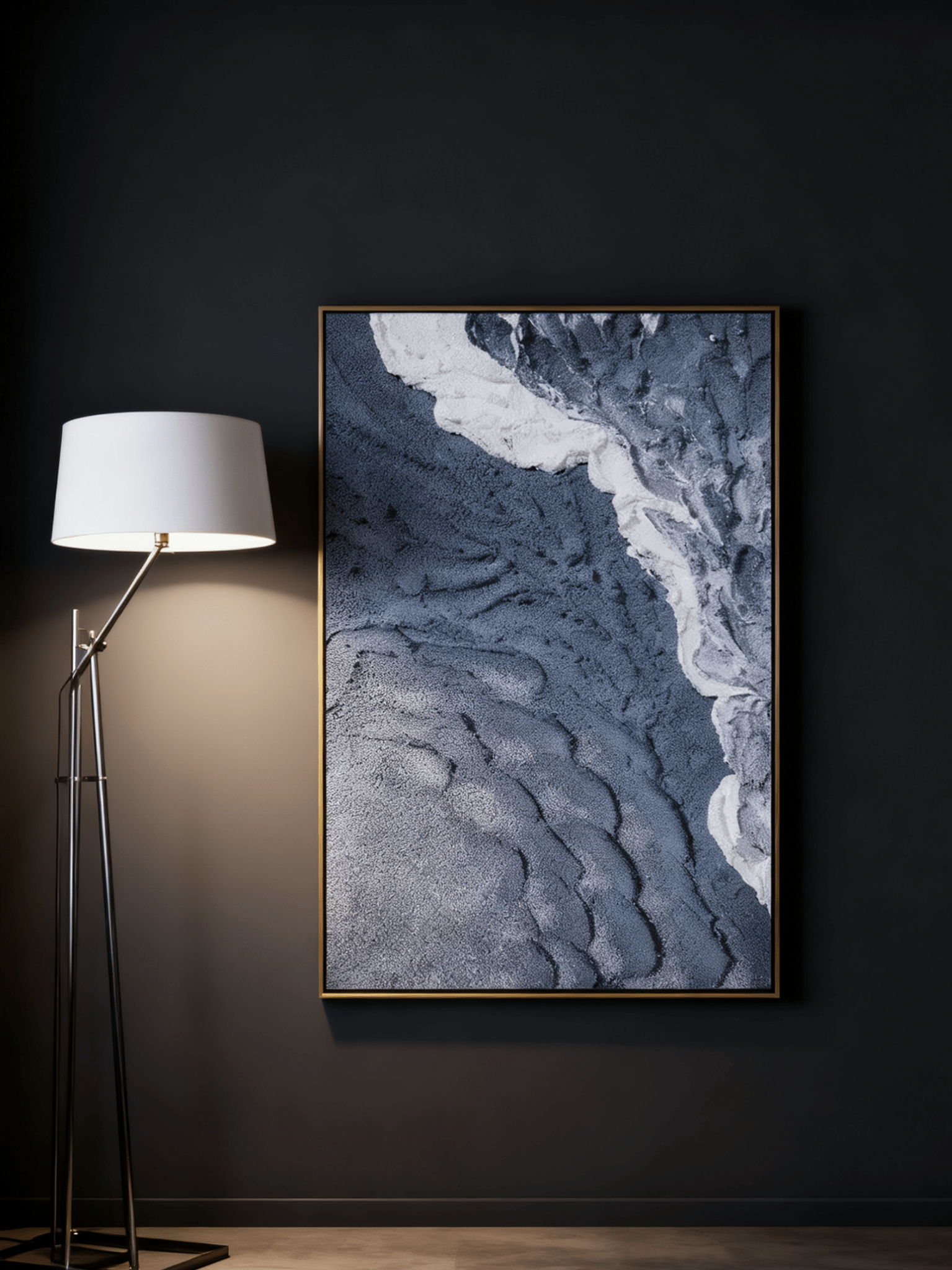
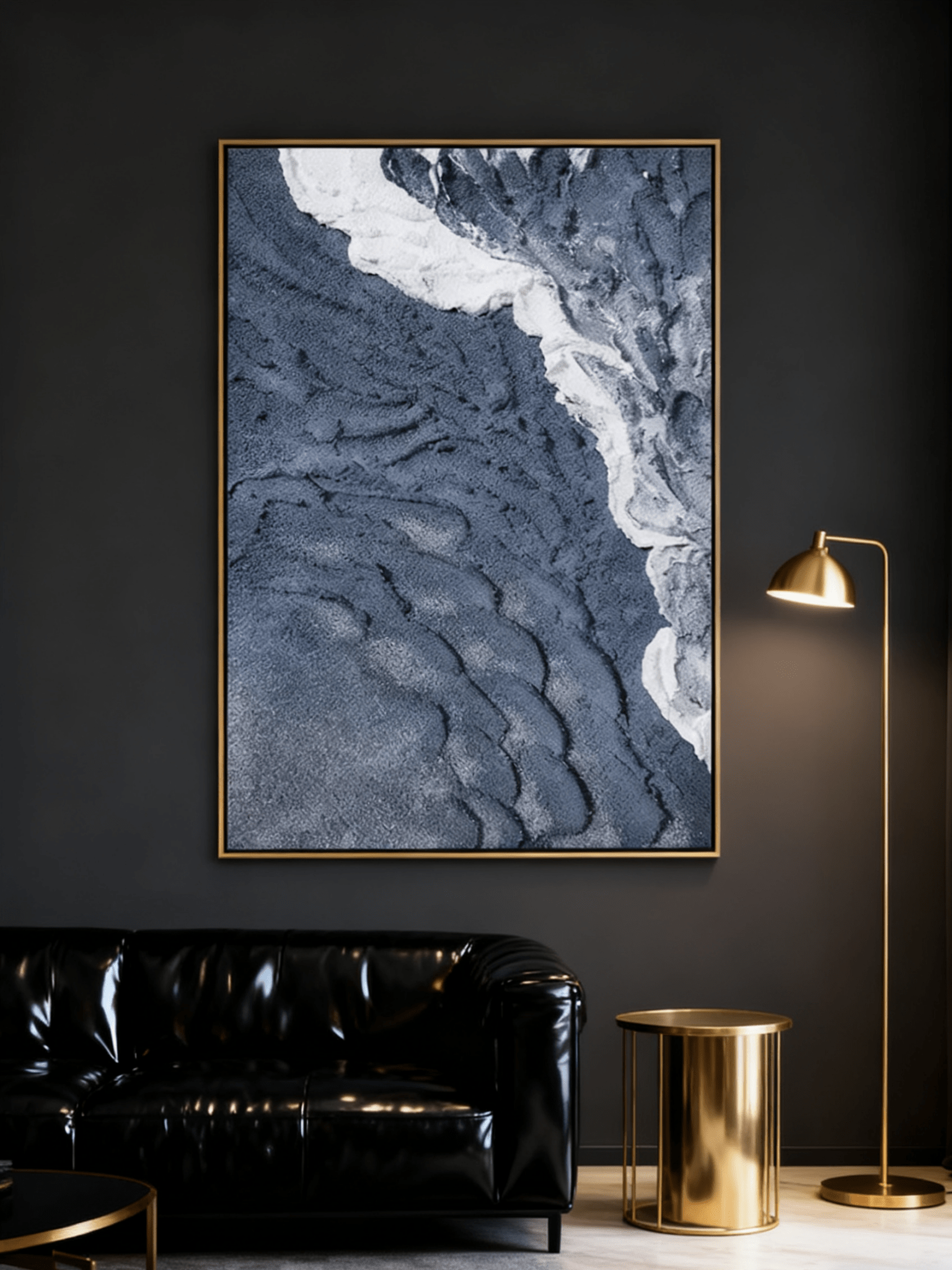
The Wabi-Sabi Textured Wall Art – Soft Grey Horizon – EL#0277 demonstrates how a neutral painting can still have a commanding presence, bridging a warm gray sofa to pale wood and travertine.

Cognac, Camel, and Brown Leather Sofas
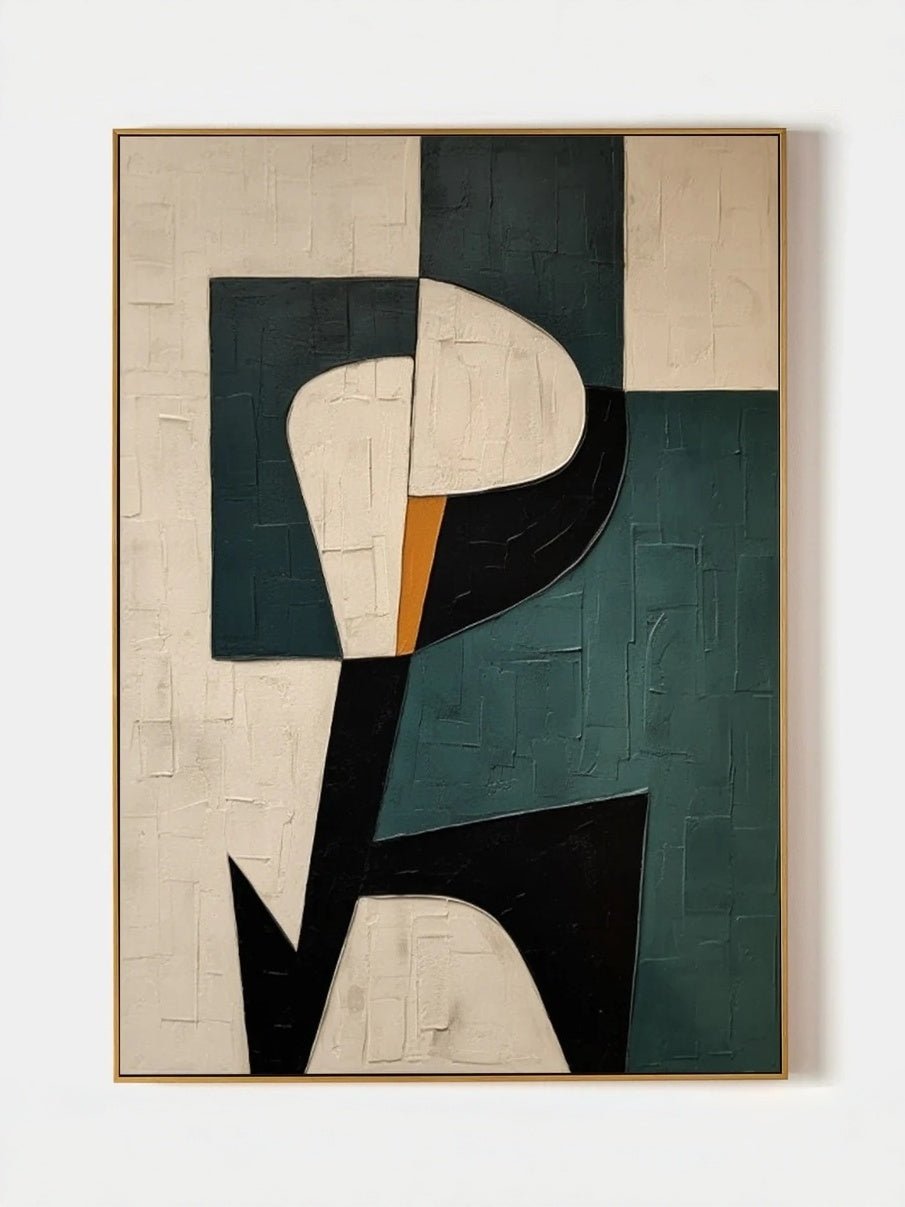
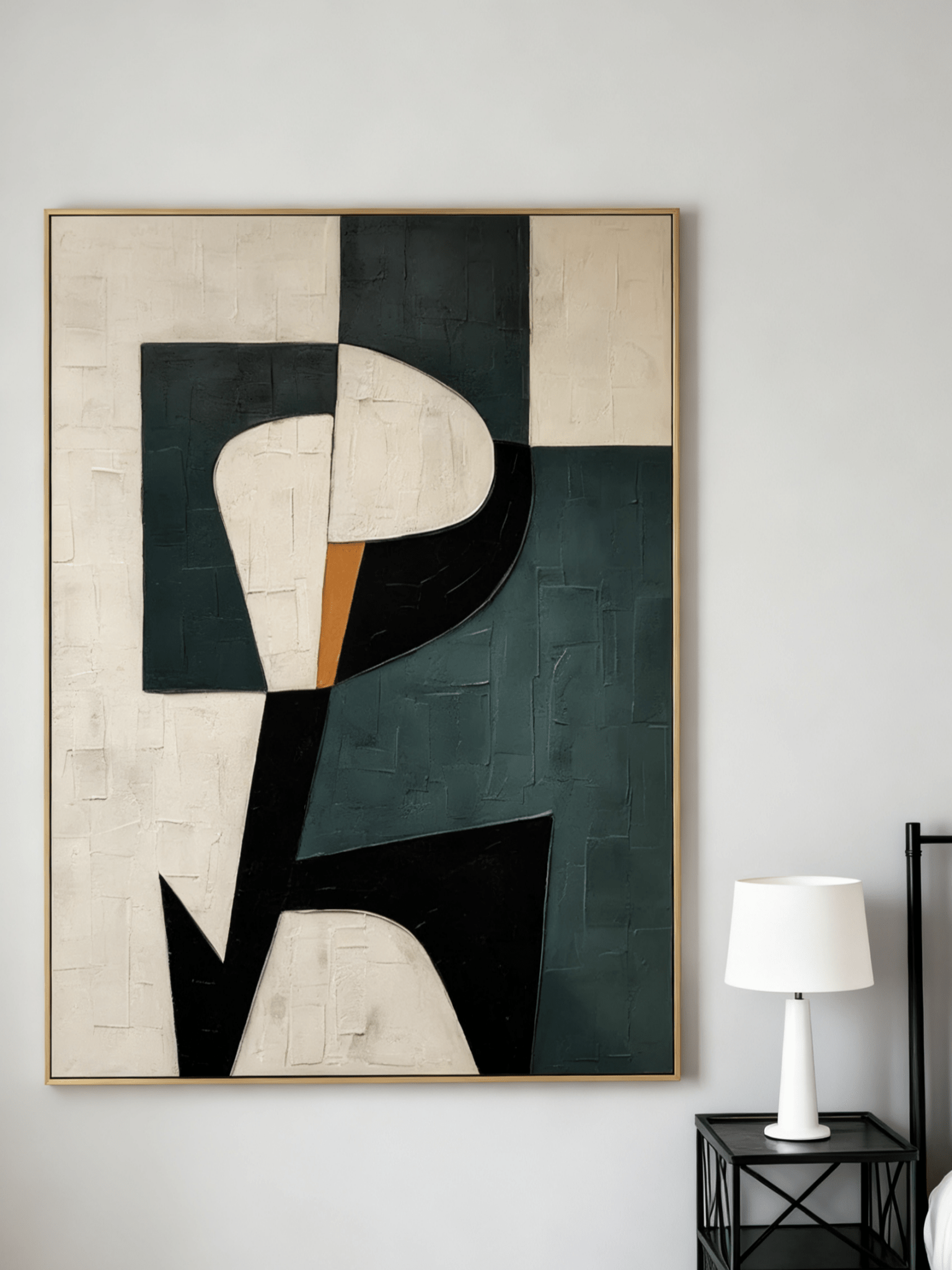
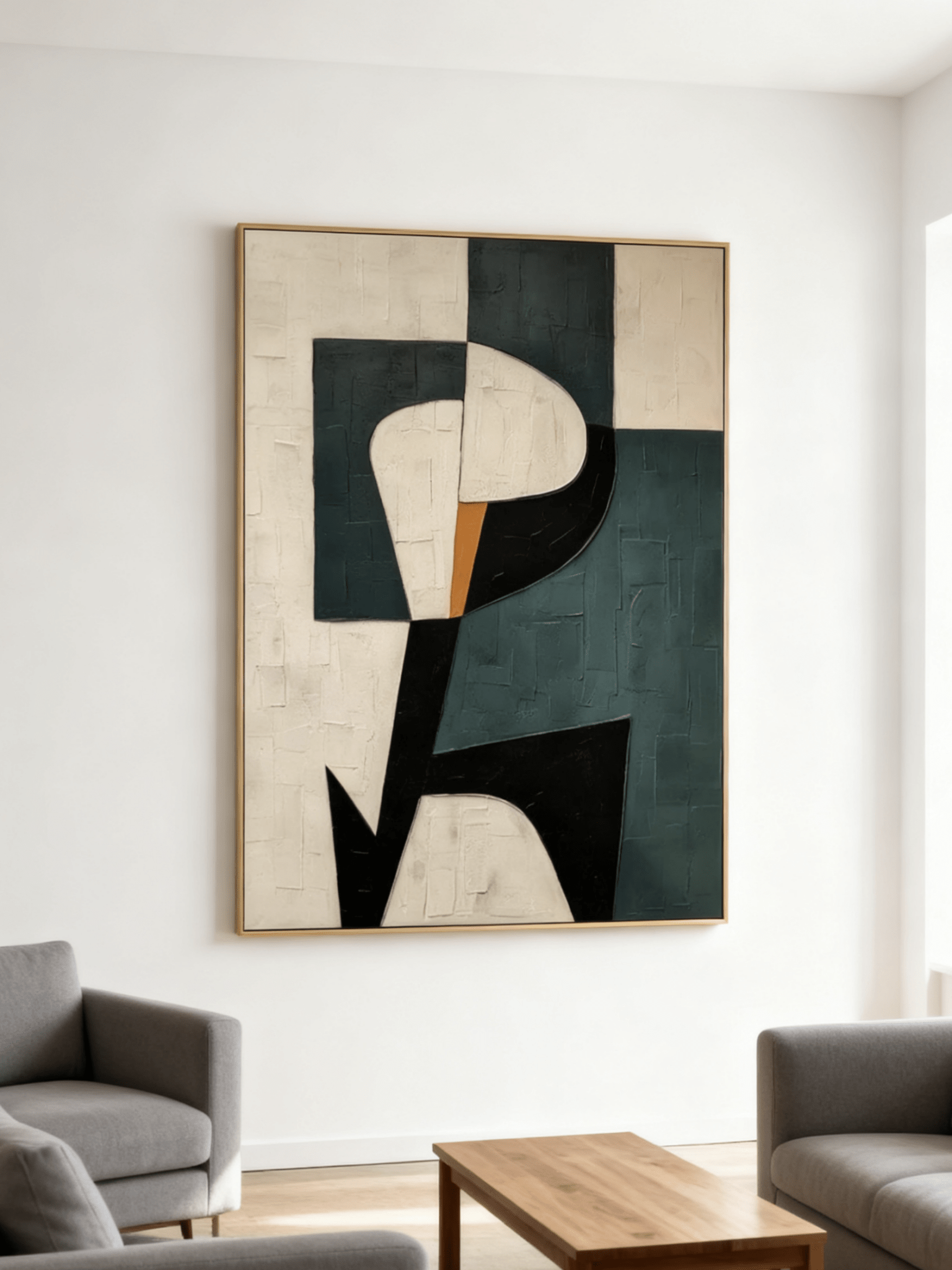
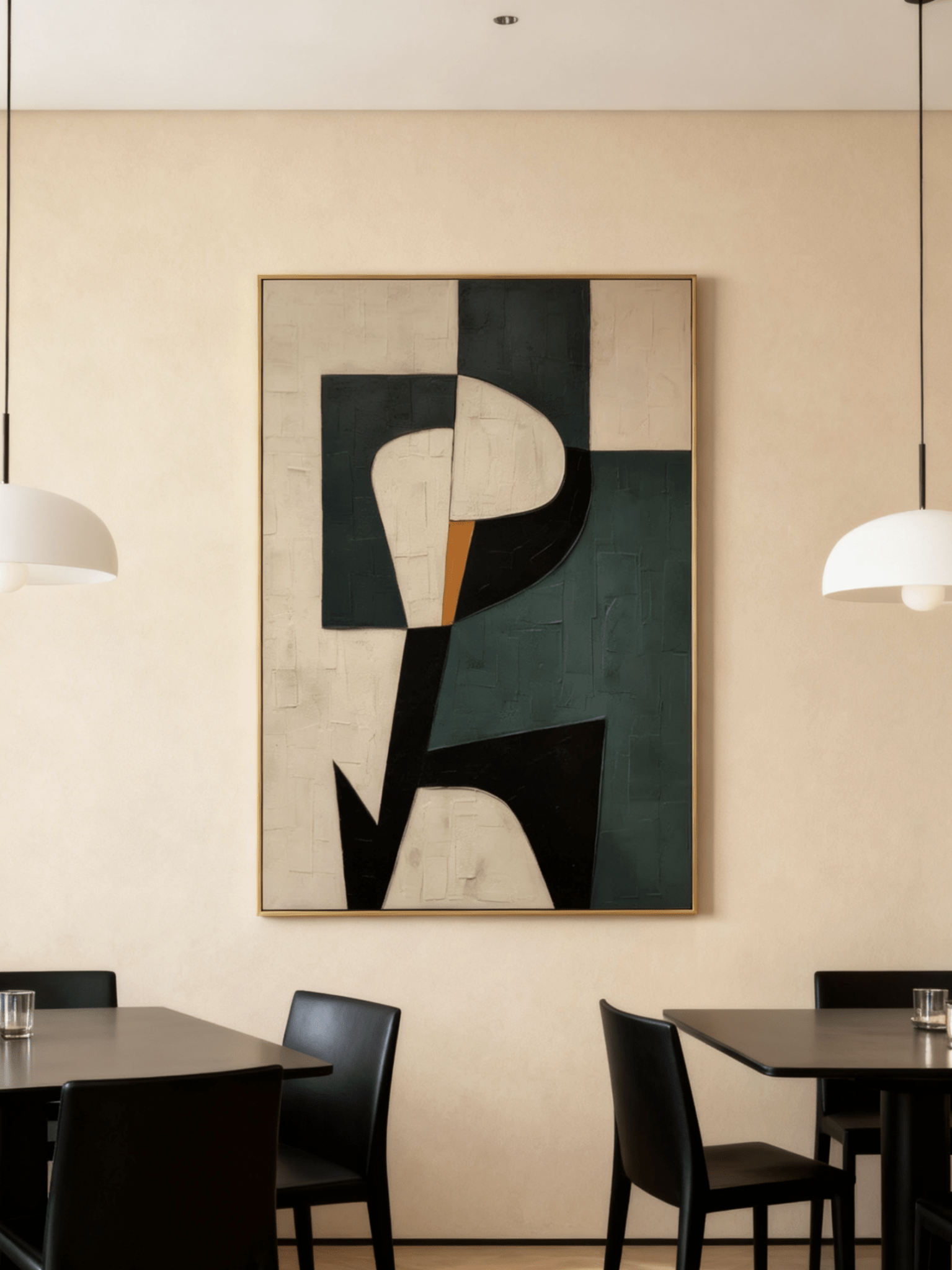
Leather brings natural sheen and rich material character. Your art shouldn't fight for attention. Lighter paintings in ivory, mineral gray, or pale taupe open up the seating area. Beware of art dominated by the exact same reddish-brown as the leather—it can make the room feel heavy and dated. A vertical piece like the Wabi-Sabi Textured Beige & Black Abstract Wall Art – AK#0366 introduces a clean, modern break.

Sage, Olive, and Muted Green Sofas
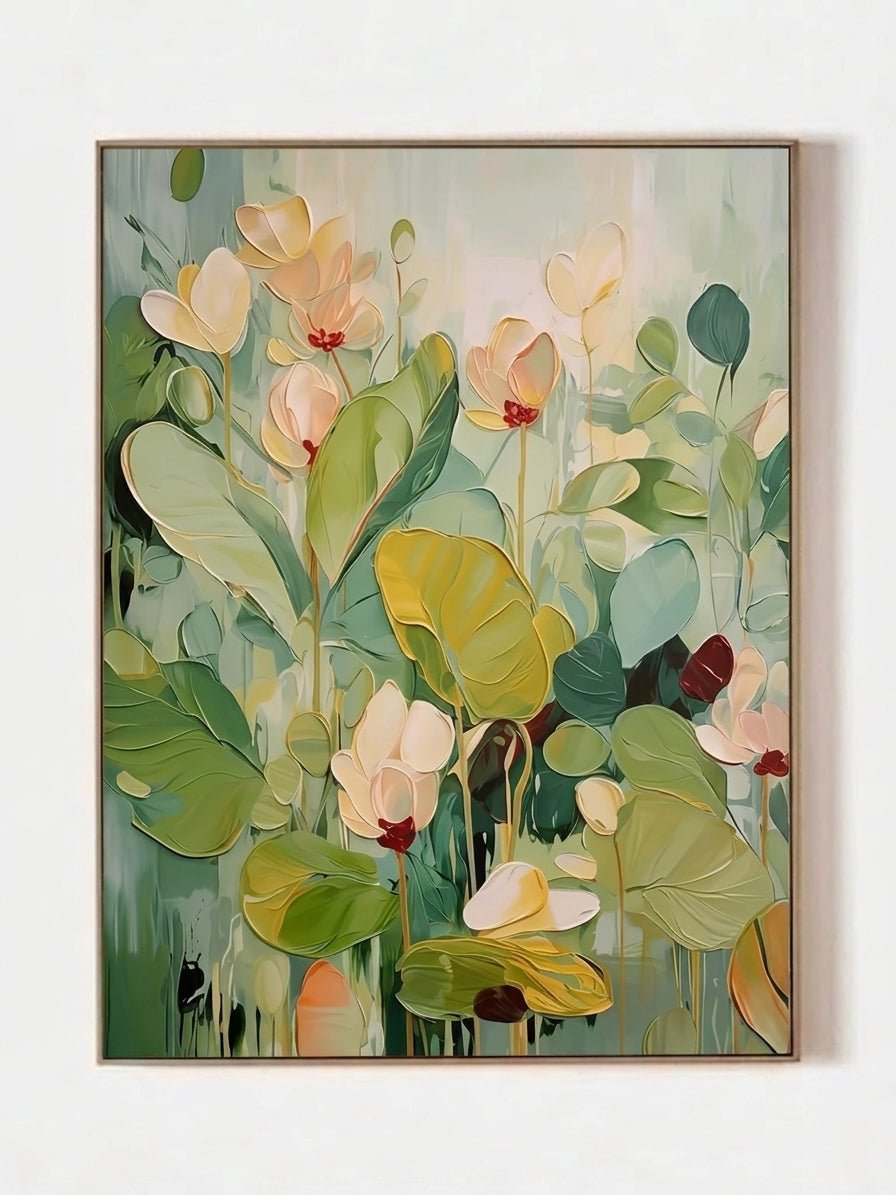
Green upholstery is a bold connection to nature. Your artwork doesn't need to be green, too. Sand, warm white, clay, and taupe allow the sofa to be the star. If you do want green in the art, look for something with generous ivory breathing room, such as the Wabi Sabi Moss Green Abstract Wall Art – AK#0329.

Sofa-Color Pairing Matrix
| Sofa Color | Wabi-Sabi Art Direction | Useful Accents | What to Avoid |
|---|---|---|---|
| Cream / Ivory / Beige | Taupe, bronze, charcoal, olive, high relief | Black, walnut, stone gray | Flat mid-beige with little texture |
| Greige / Taupe | Lighter ivory or darker umber/charcoal | Clay, muted green, bronze | Identical medium greige everywhere |
| Cool Gray | Warm white, mushroom, ochre, brown | Charcoal, oak, warm metal | More blue-gray without warmth |
| Cognac / Brown Leather | Ivory, mineral gray, pale taupe, black | Oak, stone, iron | Reddish brown dominating everywhere |
| Sage / Olive | Sand, off-white, clay, taupe, charcoal | Bronze, natural wood | Green-on-green with no neutrals |
How to Match Wall Art with Wood Furniture
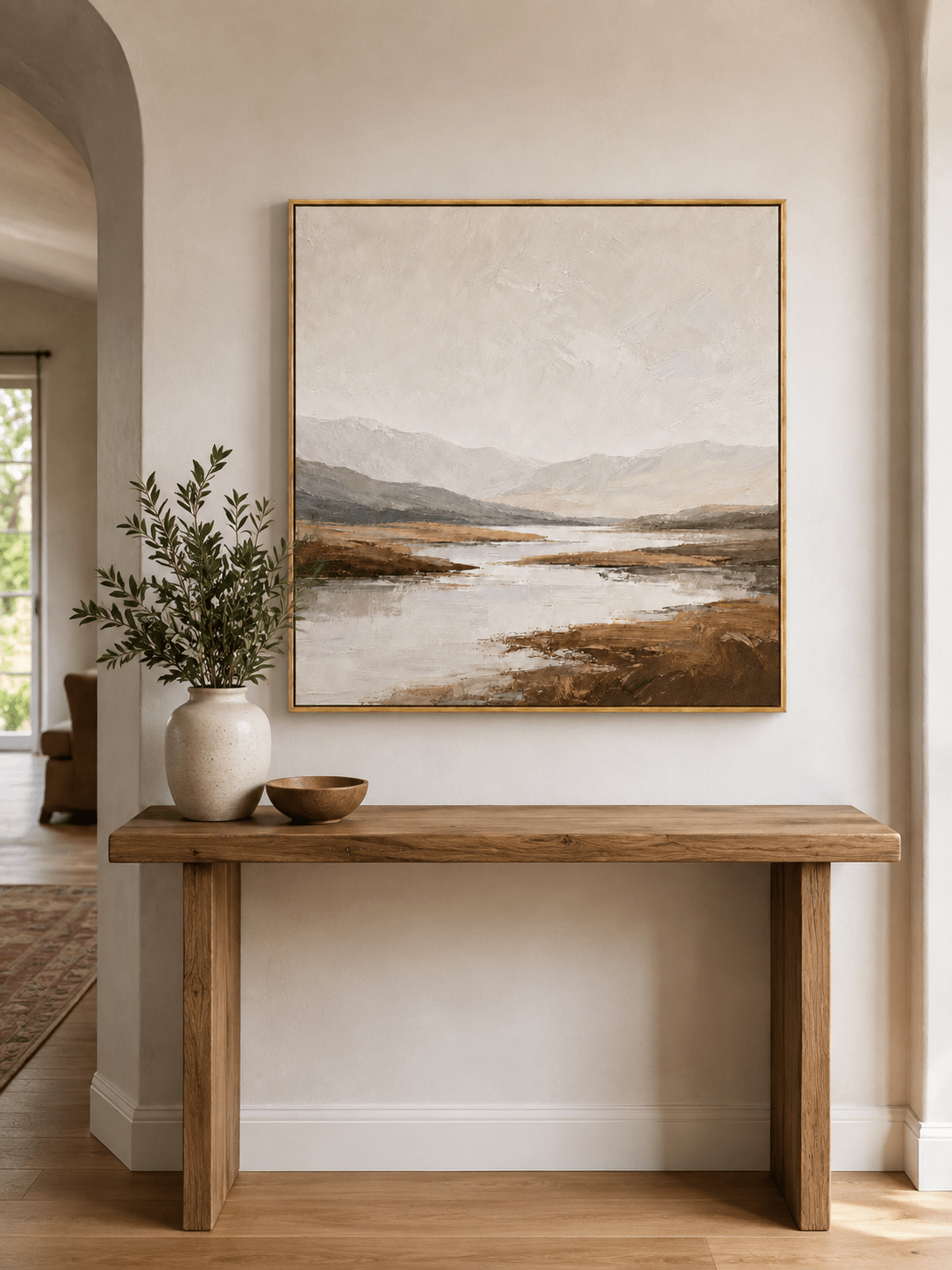
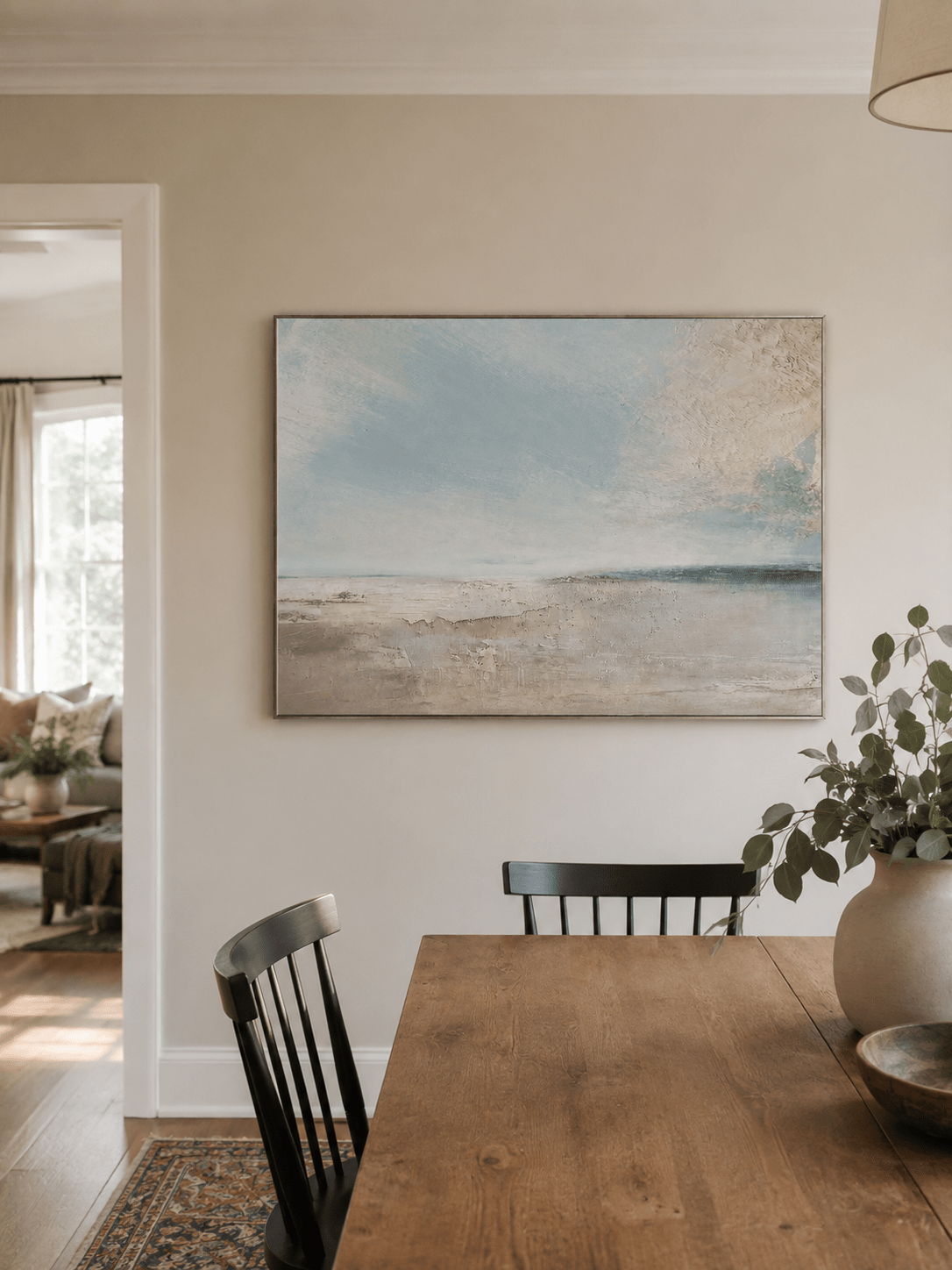
Wood is complex. Pale oak can read pink, yellow, or gray. Walnut might lean chocolate or purple-brown. Identify your room's dominant wood, then decide if the artwork should repeat its warmth, balance its darkness, or separate it from the wall.
- White Oak / Ash: Add definition through charcoal, brown, or ochre. A slim black frame gives the painting a crisp edge.
- Honey / Golden Oak: Temper the yellow warmth with greige, stone, moss, or soft black. Avoid glossy golds.
- Walnut: Pair with ivory, linen, taupe, or bronze. Ensure dark brown art has lighter fields to avoid looking heavy.
- Mixed Woods: Choose the species with the most visual weight (often the floor) and treat the rest as accents. Cream, taupe, and stone gray bridge mixed woods perfectly.
Let Natural Materials Guide Texture
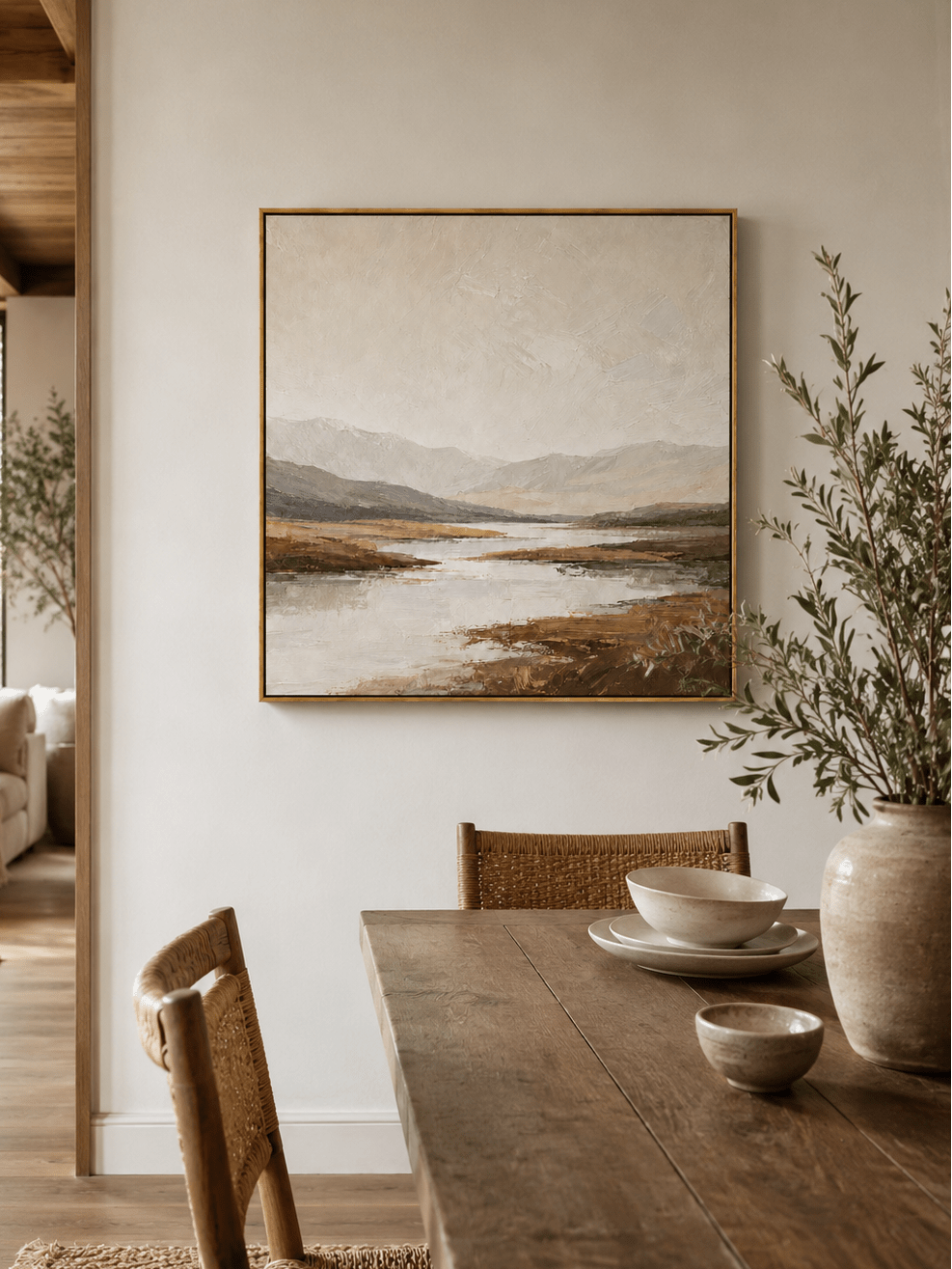
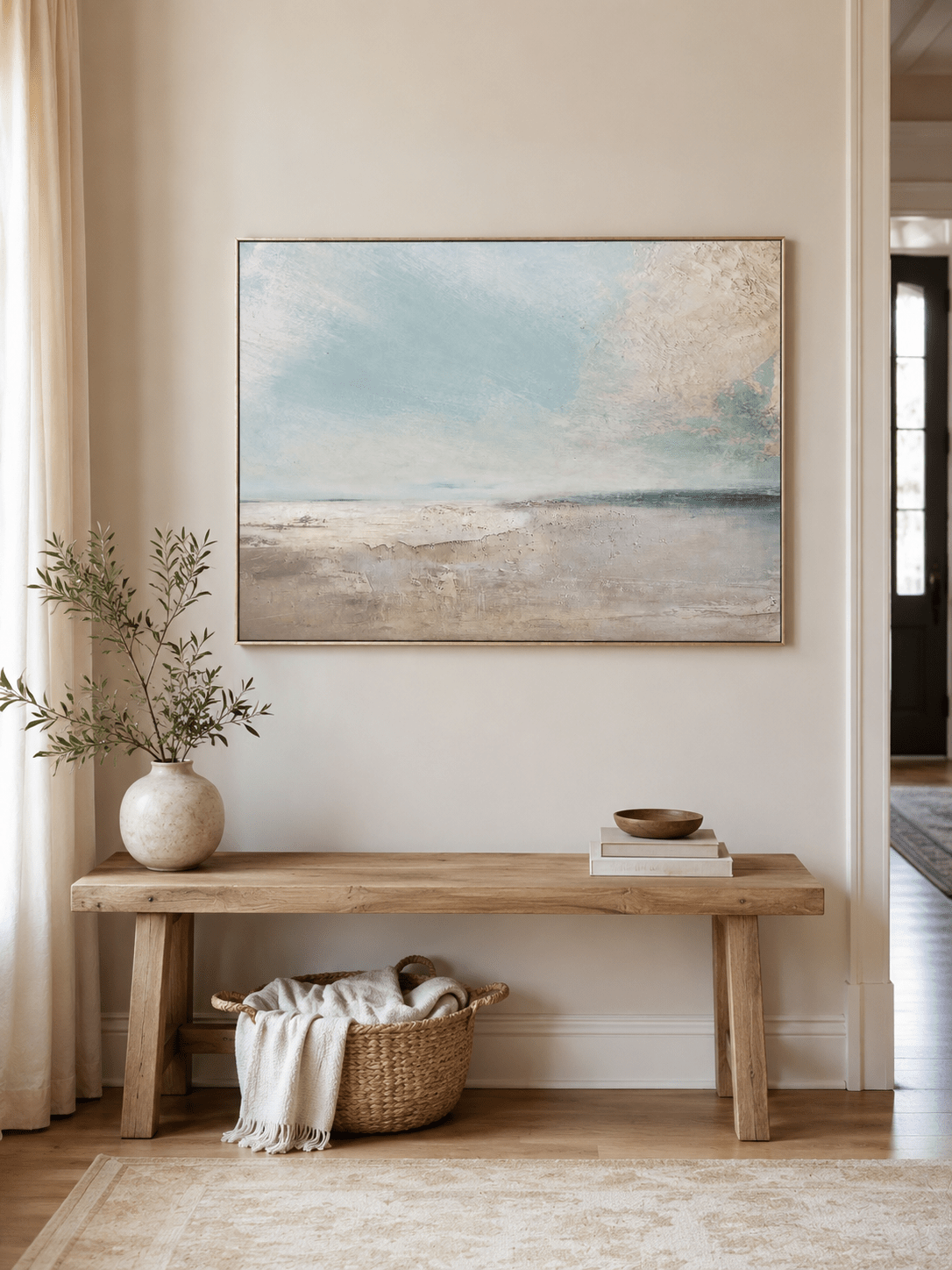
Wabi-Sabi wall art feels most authentic when its surface relates to surrounding materials. This doesn't mean everything must be rough. Embrace contrast: smooth stone beside heavy impasto paint, or tailored linen beside irregular canvas edges.
- Linen, Boucle, and Wool: Pair soft fabrics with broader impasto, scraped passages, or granular textures.
- Travertine, Limestone, and Concrete: Warm stone contains natural cream and sand variations. A darker mark or bronze passage in your art helps it stand apart from the stone's veining.
- Plaster and Limewash Walls: A textured painting on a textured wall requires separation—use a frame, a darker edge, or dramatic side lighting to cast shadows.
For a deeper dive into undertones, explore our Earth Tone Wall Art Color Guide.
Choose the Right Size Above a Sofa
Color cannot rescue artwork that is simply too small. Measure the sofa itself, not the full wall.
| Sofa Width | Ideal Framed Artwork Width |
|---|---|
| 72 in / 183 cm | 48–54 in / 122–137 cm |
| 84 in / 213 cm | 56–63 in / 142–160 cm |
| 96 in / 244 cm | 64–72 in / 163–183 cm |
| 108 in / 274 cm | 72–81 in / 183–206 cm |
Leave roughly 6 to 10 inches of breathing room between the sofa back and the bottom of the artwork. For multi-piece diptychs, include the gap in your total width calculation. Check out our Wall Art Sizing Guide for Hand-Painted Canvas for more details.

Frequently Asked Questions (People Also Ask)
What color Wabi-Sabi wall art goes with a beige sofa?
Beige sofas pair best with taupe, charcoal, bronze, muted olive, clay, and textured ivory. If the artwork is also beige, you must choose a piece with deep relief texture, dark contrasting lines, or a bold frame so it remains visible against the sofa and wall.
Should wall art match the sofa color?
No, it should relate to the sofa without copying it exactly. Match the undertone or repeat one small accent color, then create contrast through lightness, darkness, texture, or framing to give the room depth.
What Wabi-Sabi art works with a gray sofa?
Cool gray sofas need warmer art in ivory, mushroom, taupe, or bronze. Warm gray sofas can carry stone, cream, muted green, and soft black. Always include a small charcoal or gray note in the art to connect it back to the upholstery.
Does the art frame need to match wood furniture?
No, a related temperature is enough. The frame can be slightly lighter or darker than the furniture, or it can repeat black or bronze metal already in the room. Exact wood matching often looks forced.
How large should wall art be above a sofa?
Wall art should be two-thirds to three-quarters the width of your sofa. Hang it 6 to 10 inches above the sofa back. This proportion ensures the art feels anchored to the furniture without overpowering it.
The right Wabi-Sabi wall art doesn’t just repeat colors—it completes the relationship between your sofa, wood, stone, textiles, and light. Explore WABI Wall Art’s hand-painted Wabi-Sabi collection today to find the piece that perfectly anchors your living room.