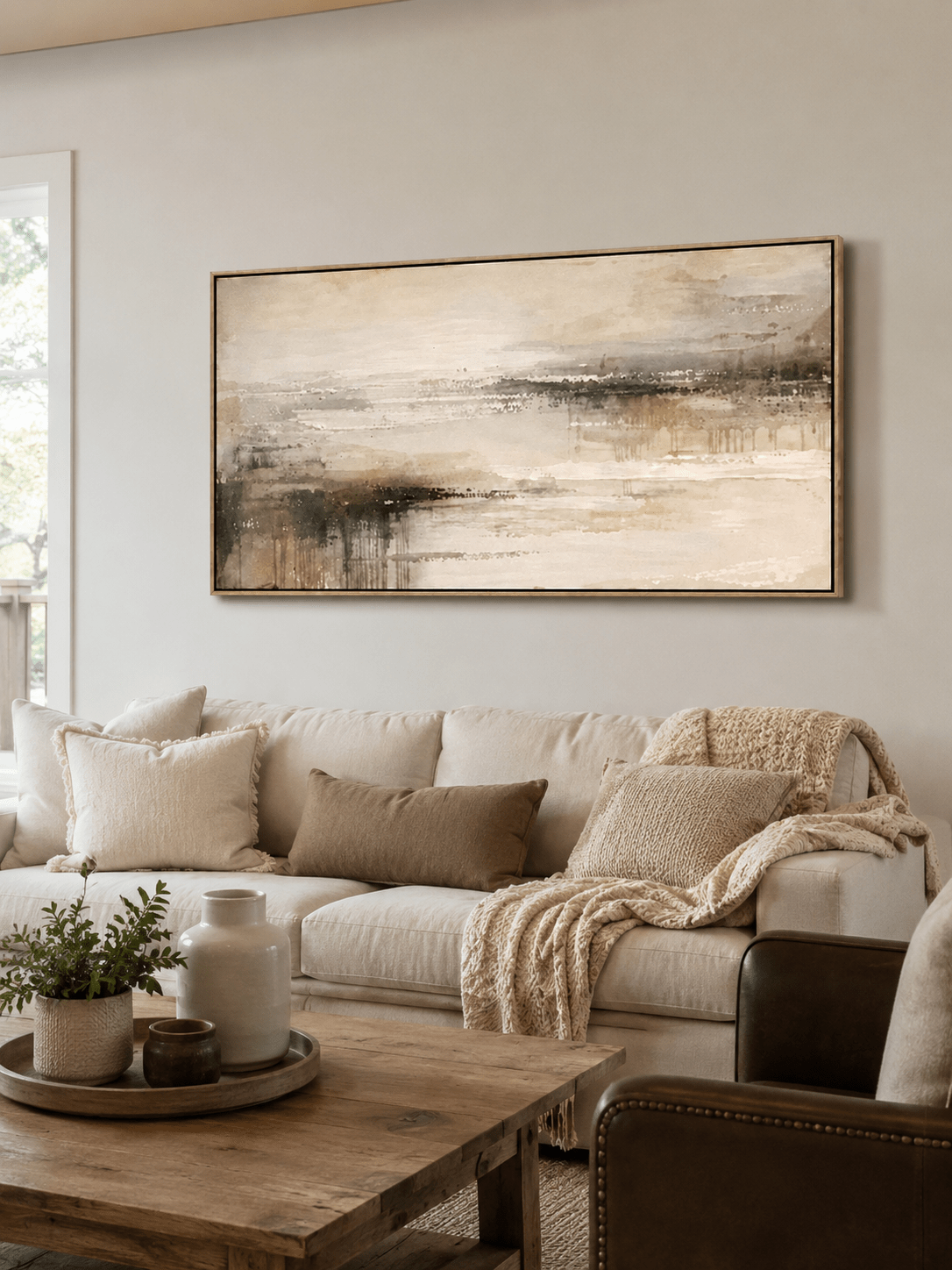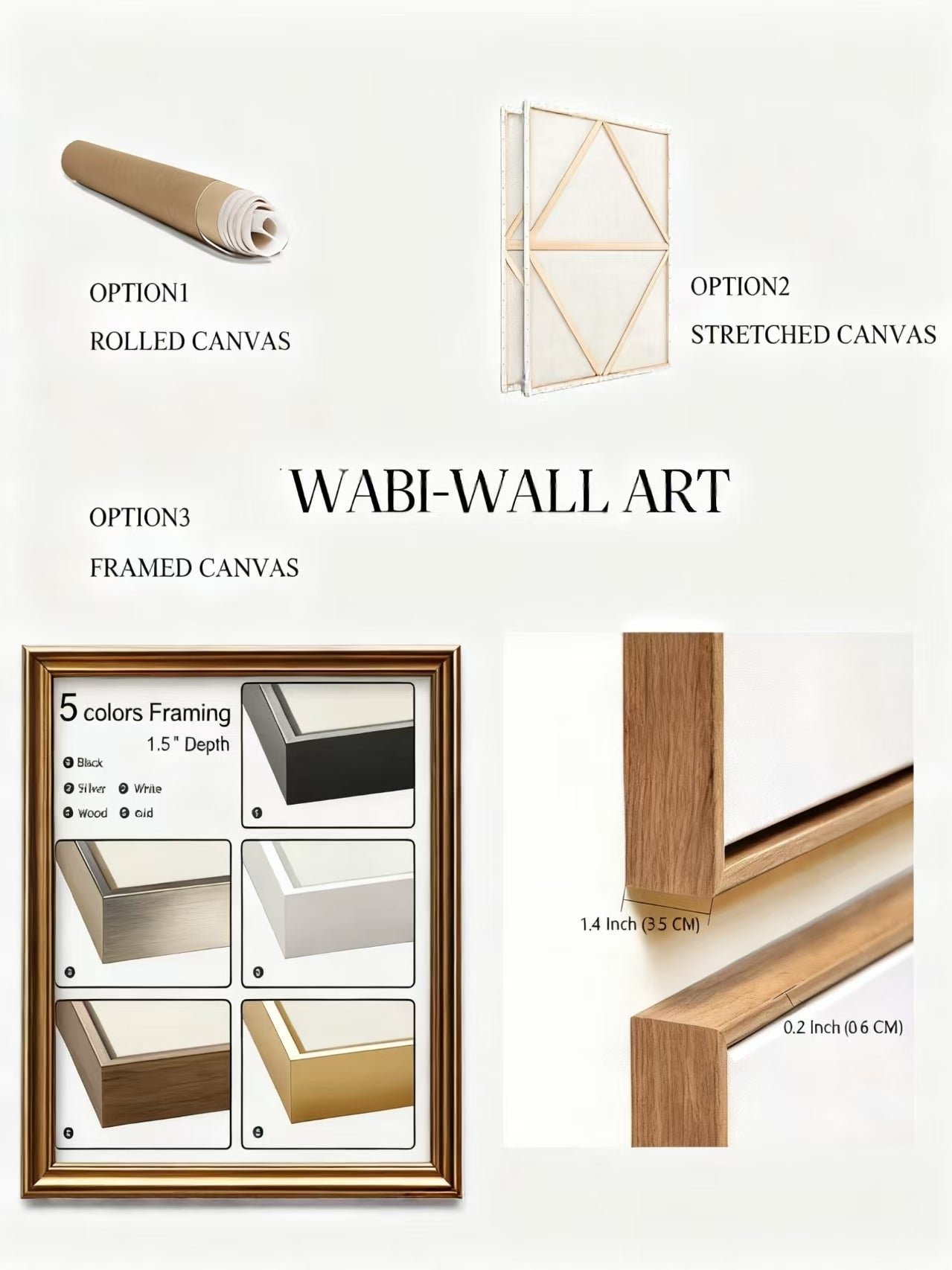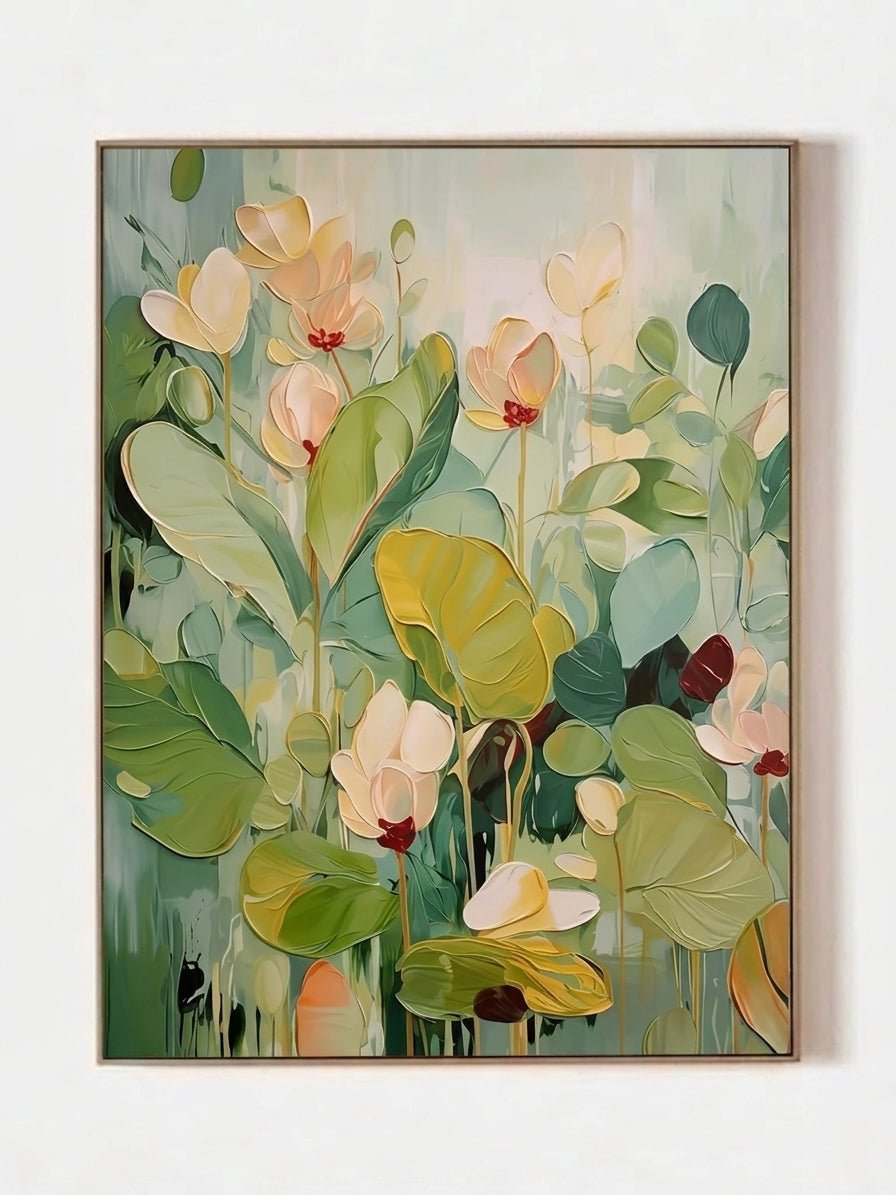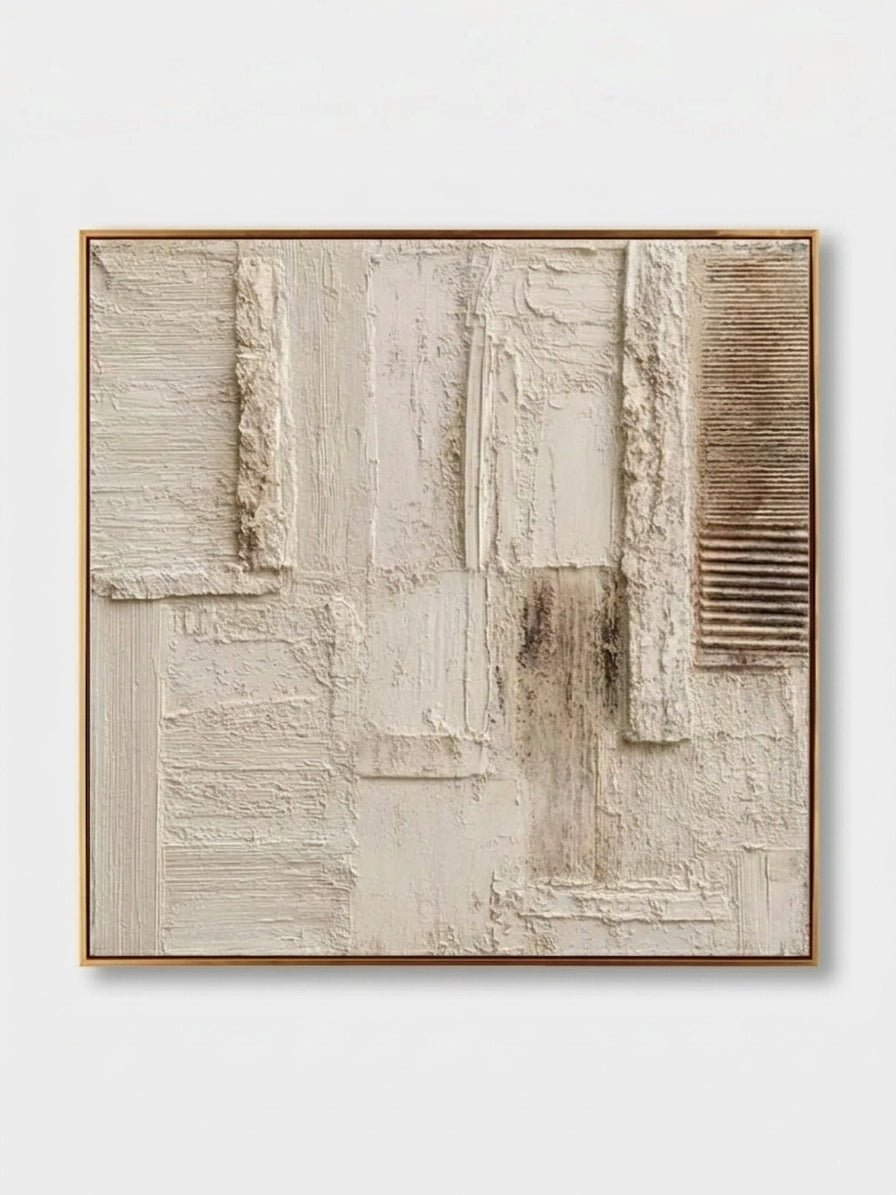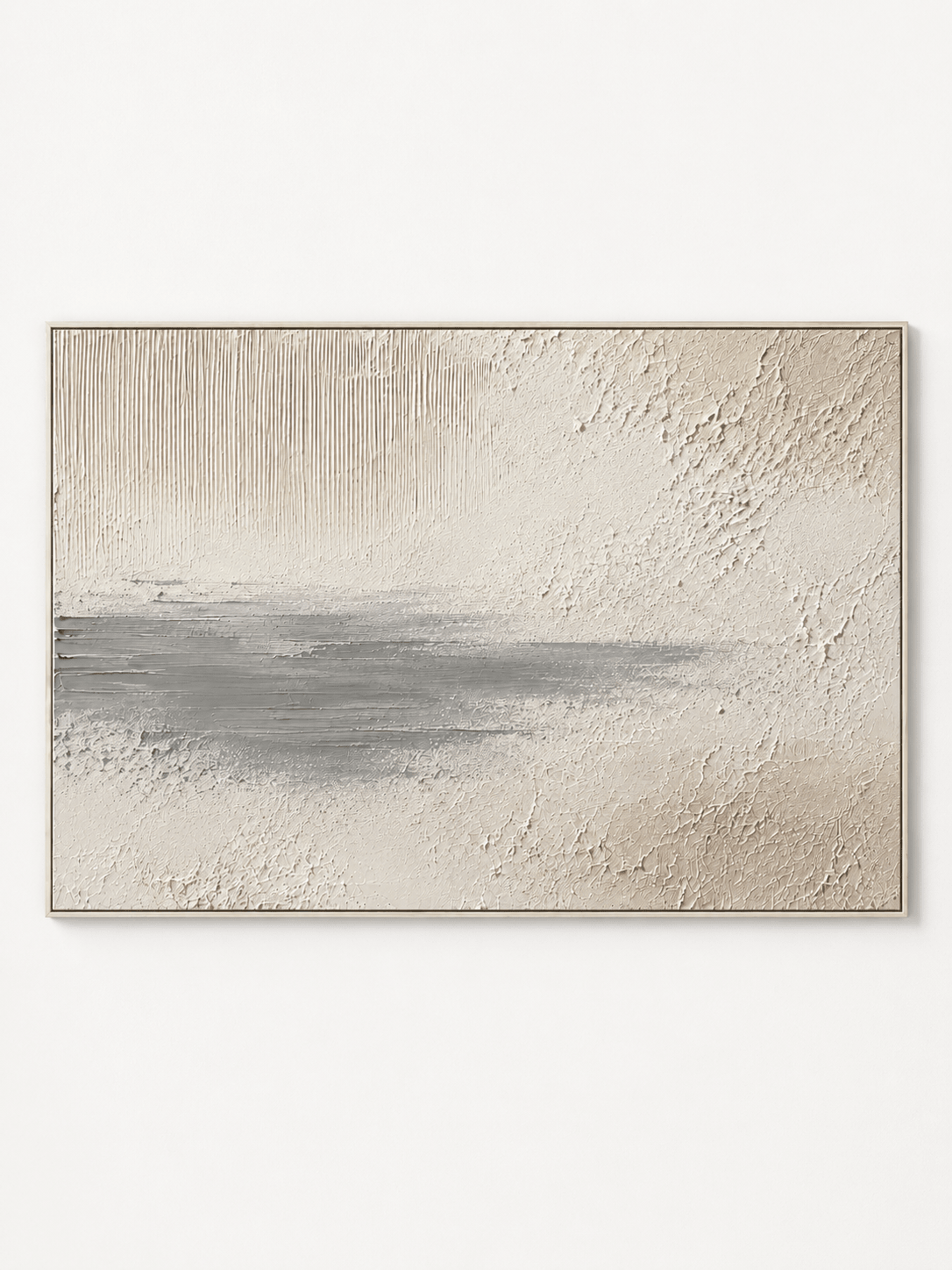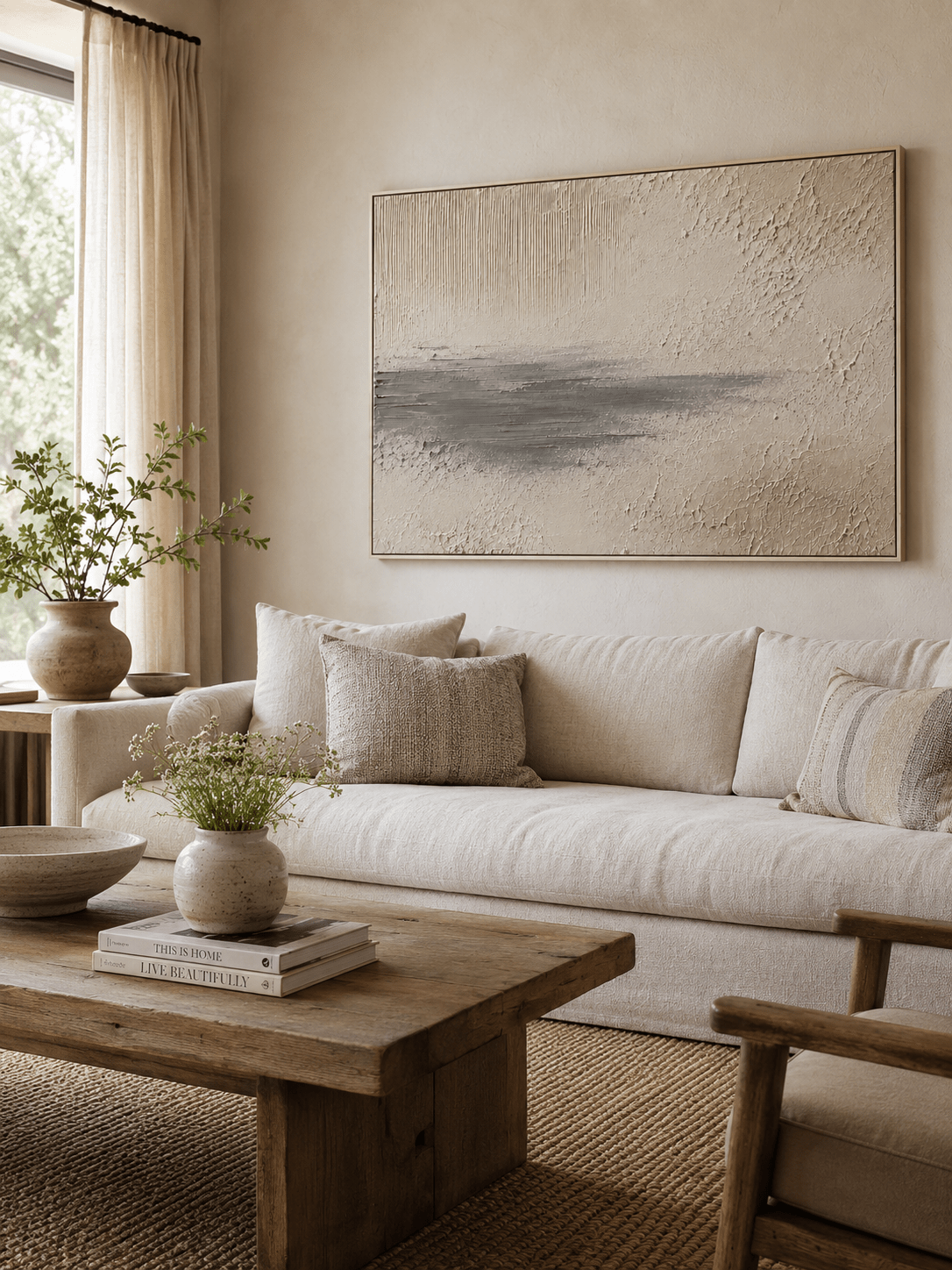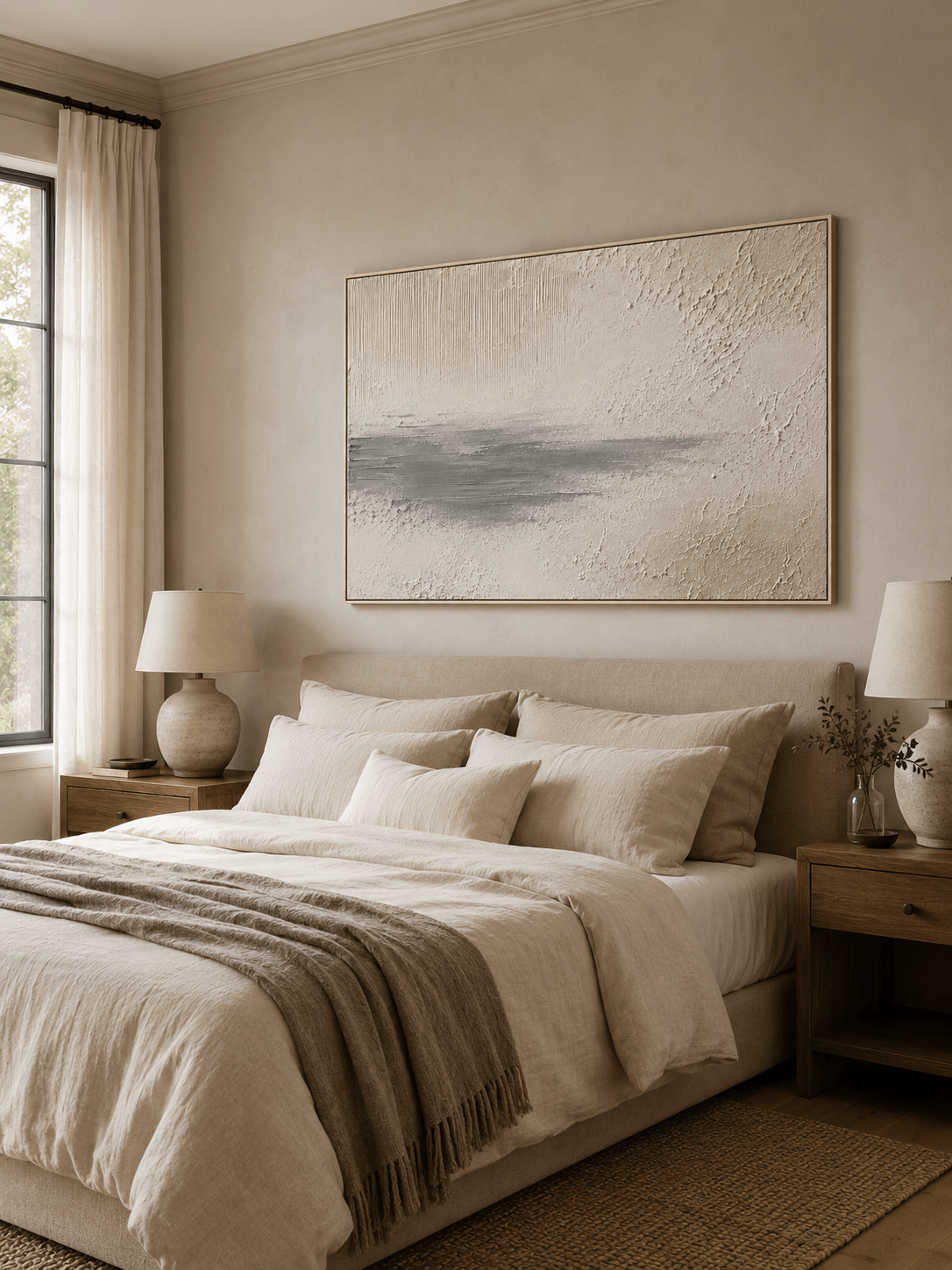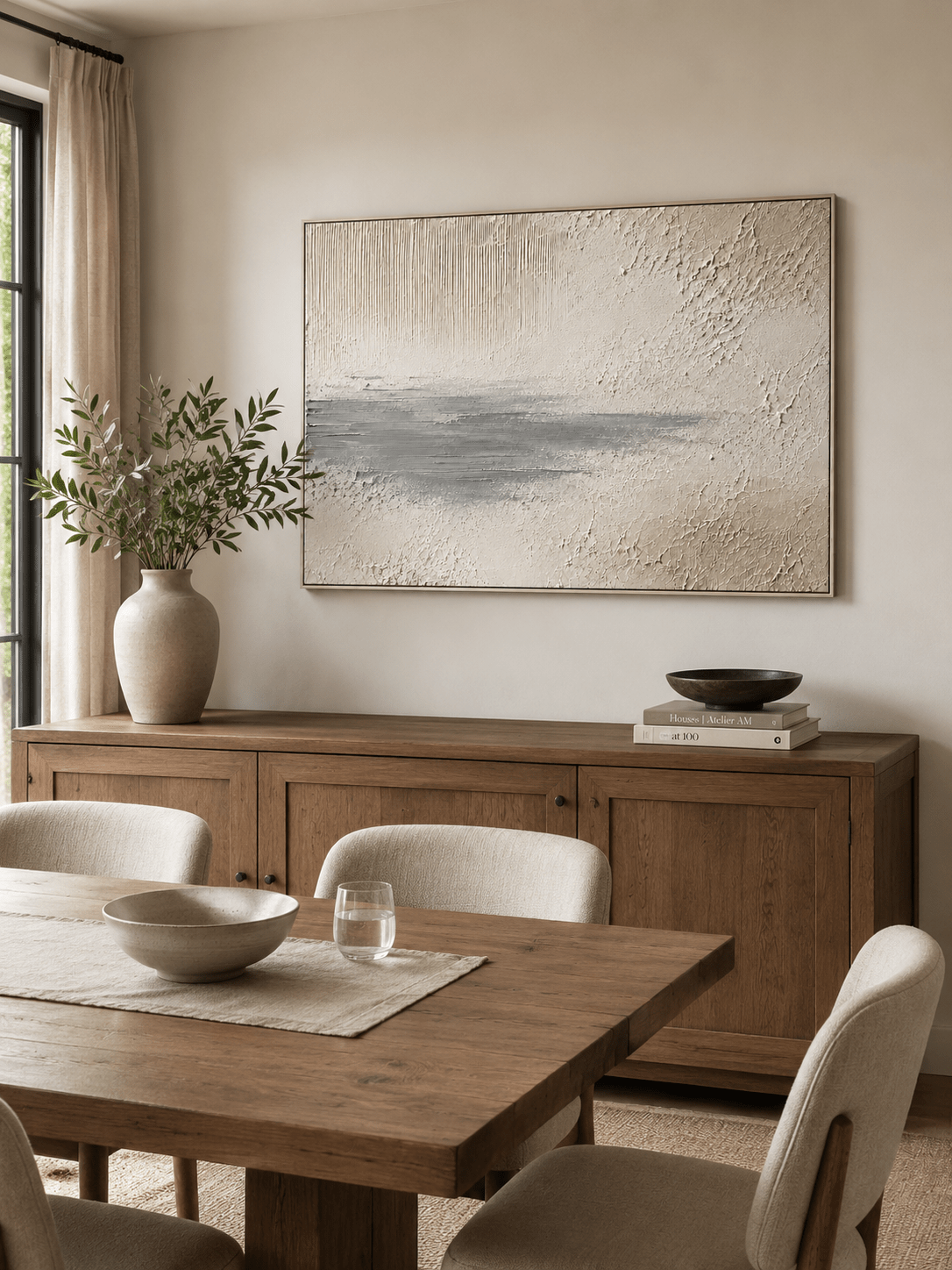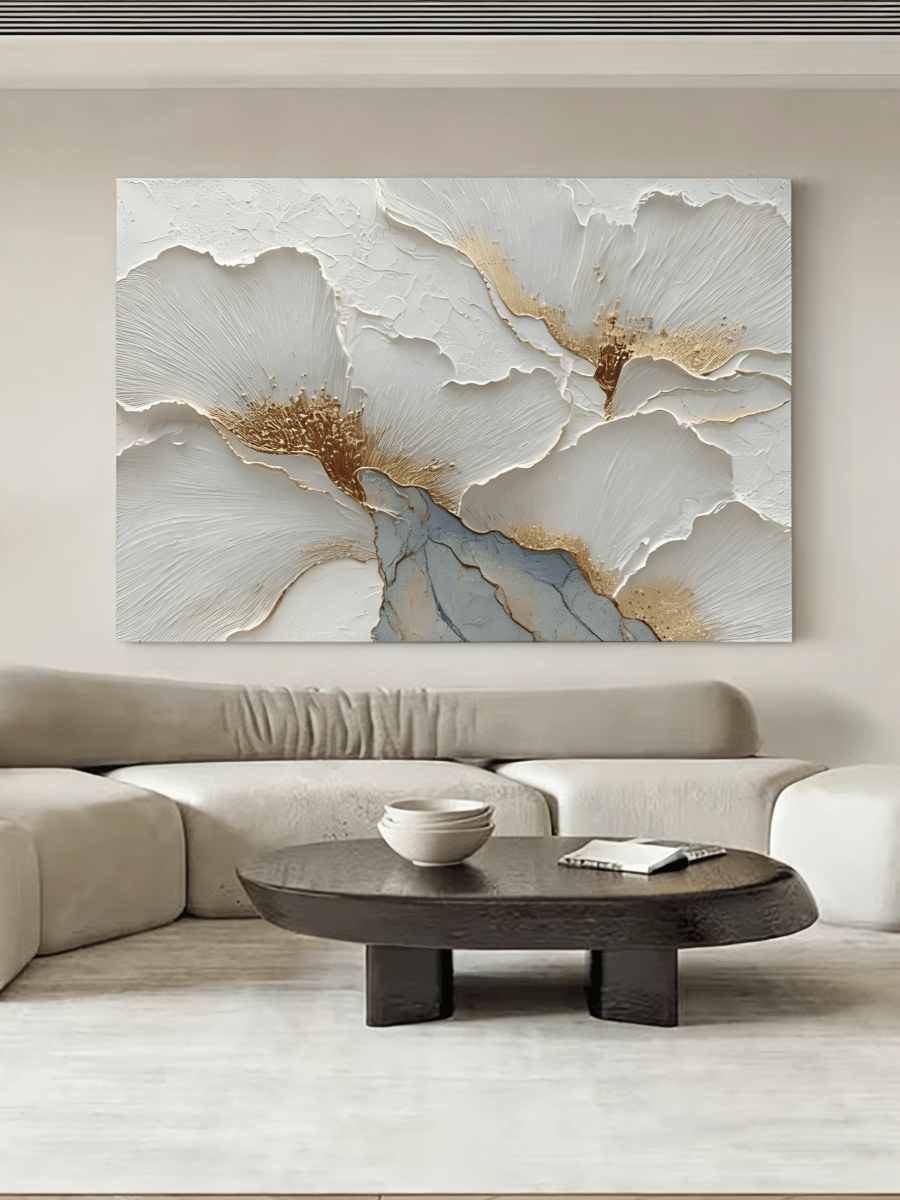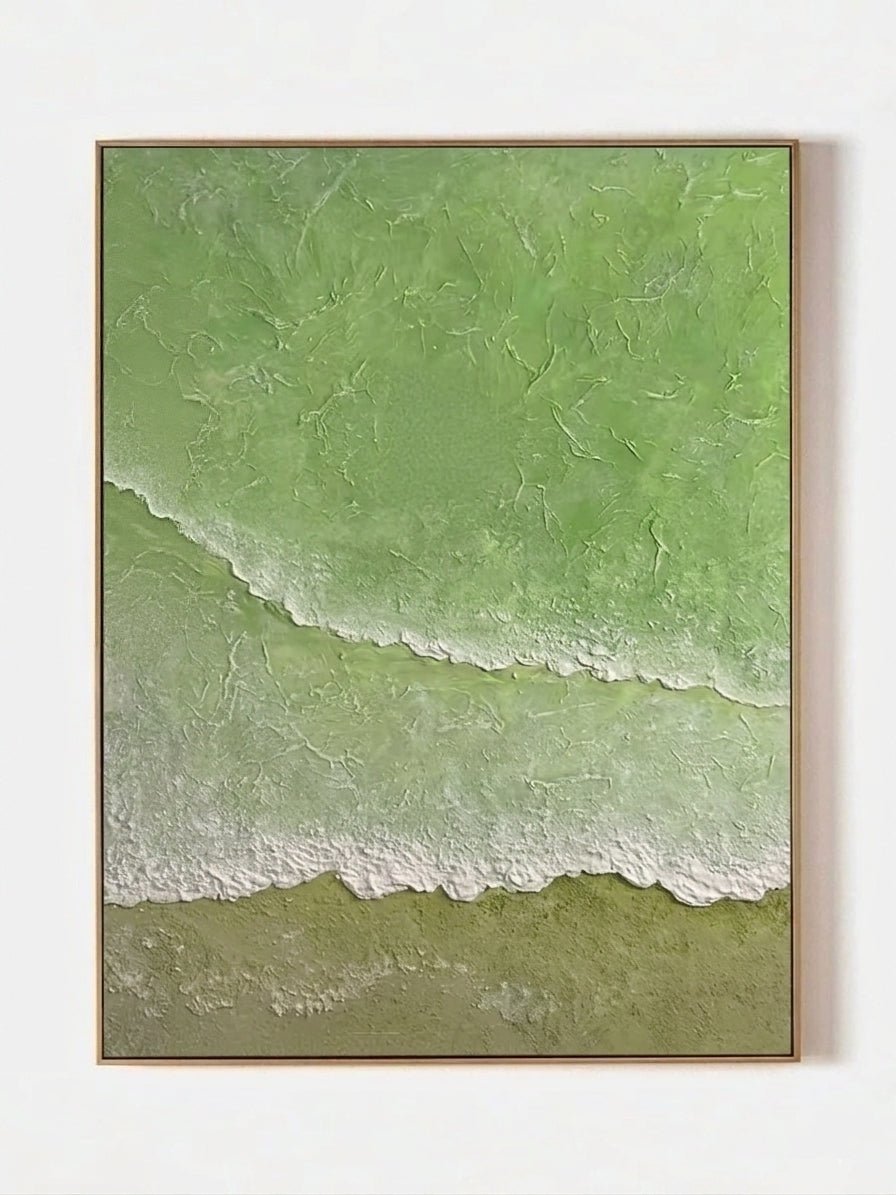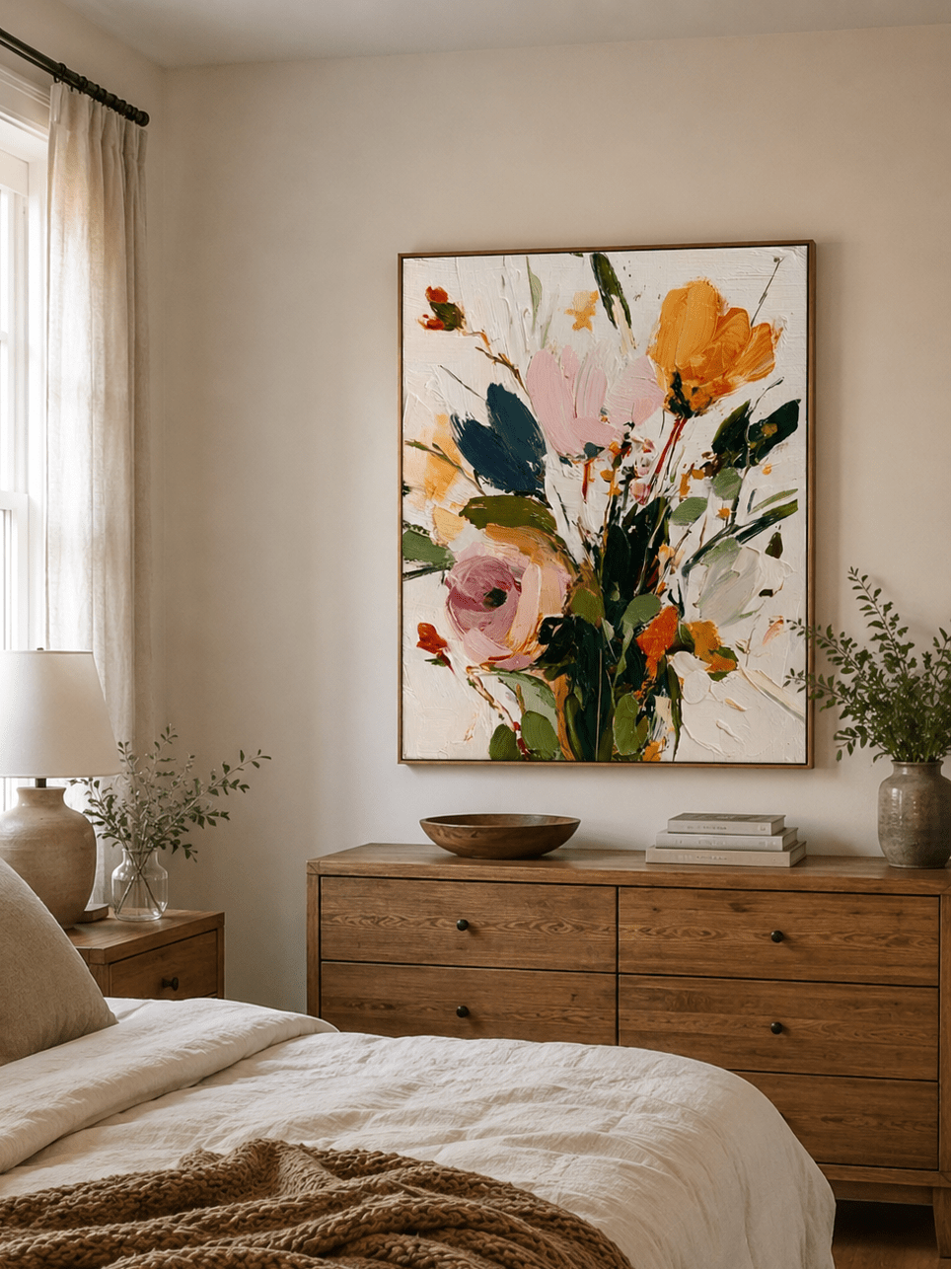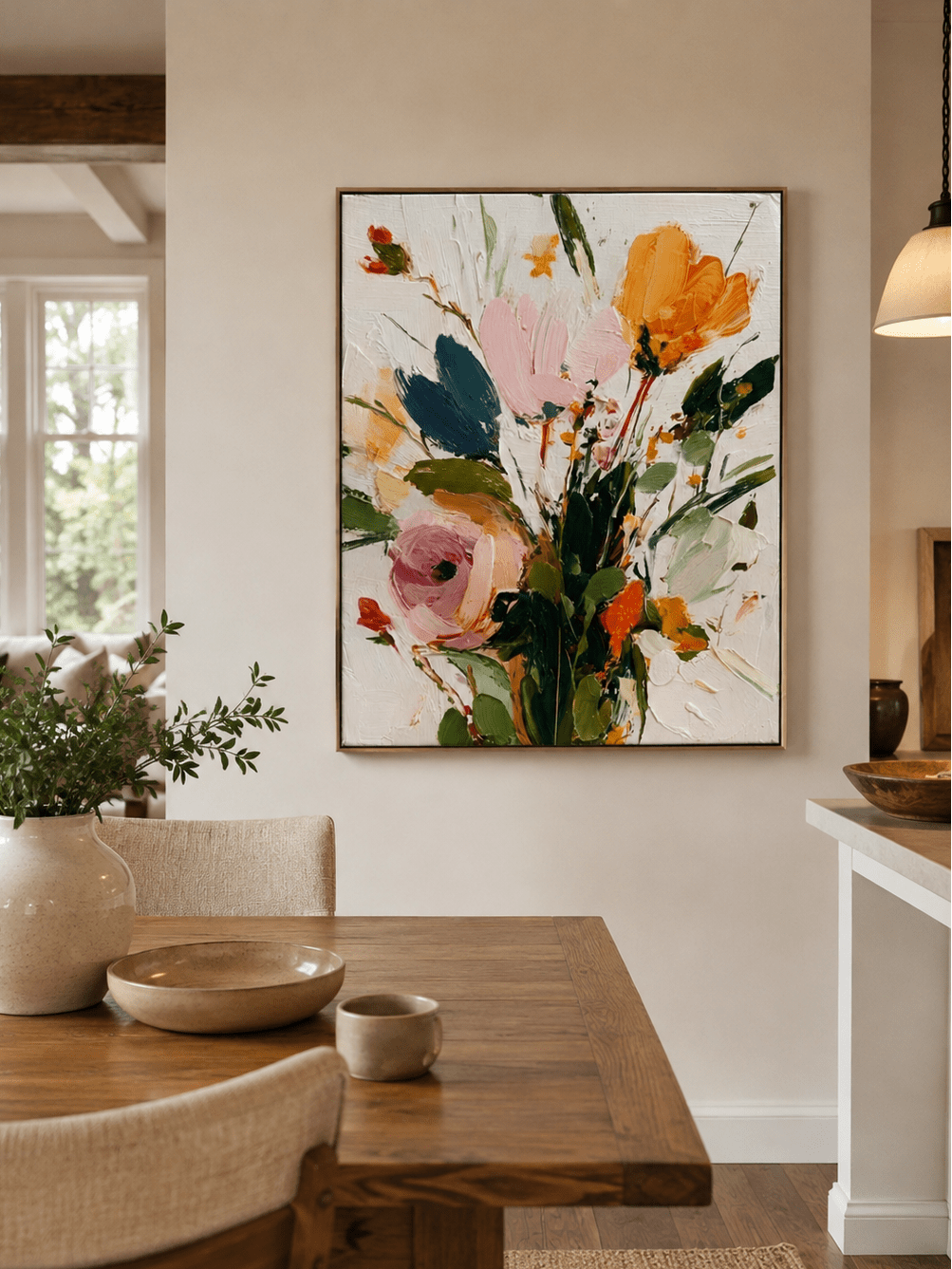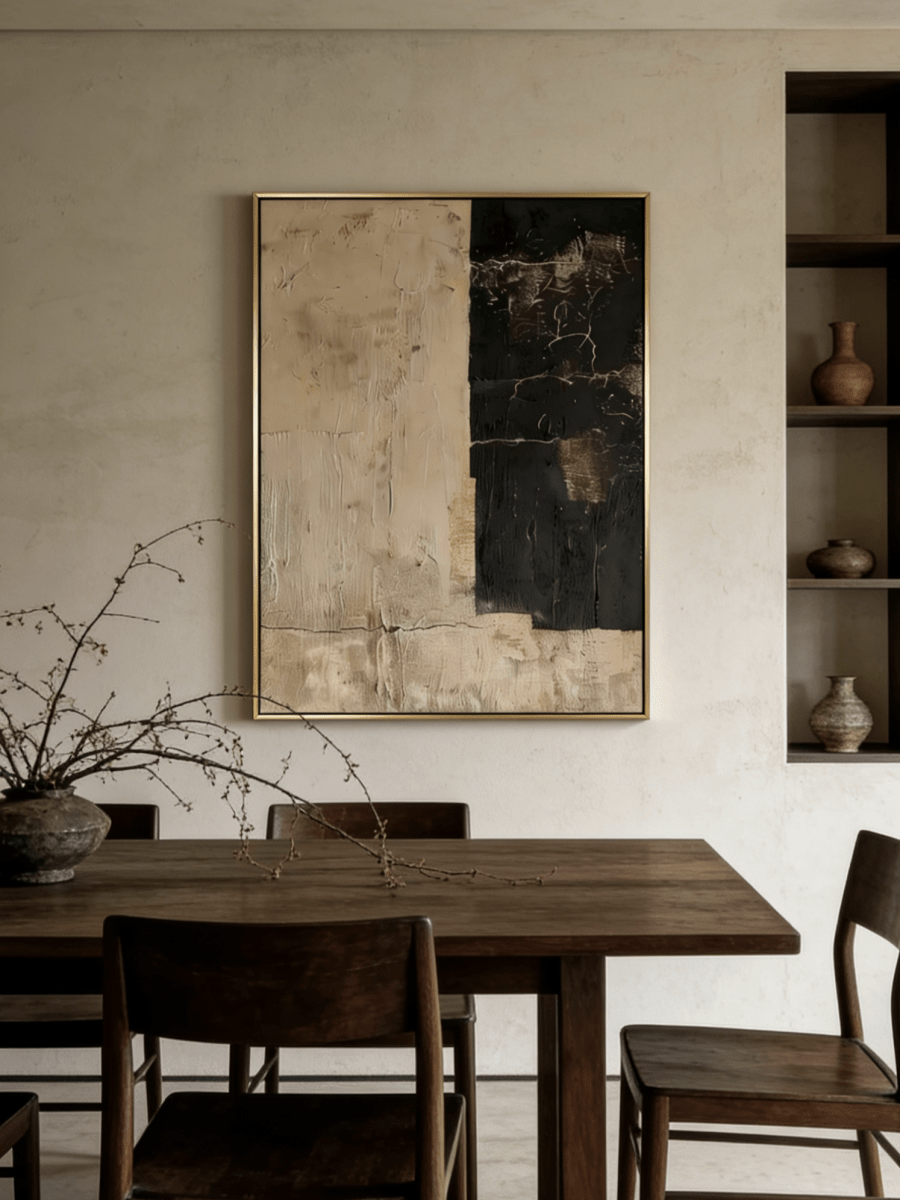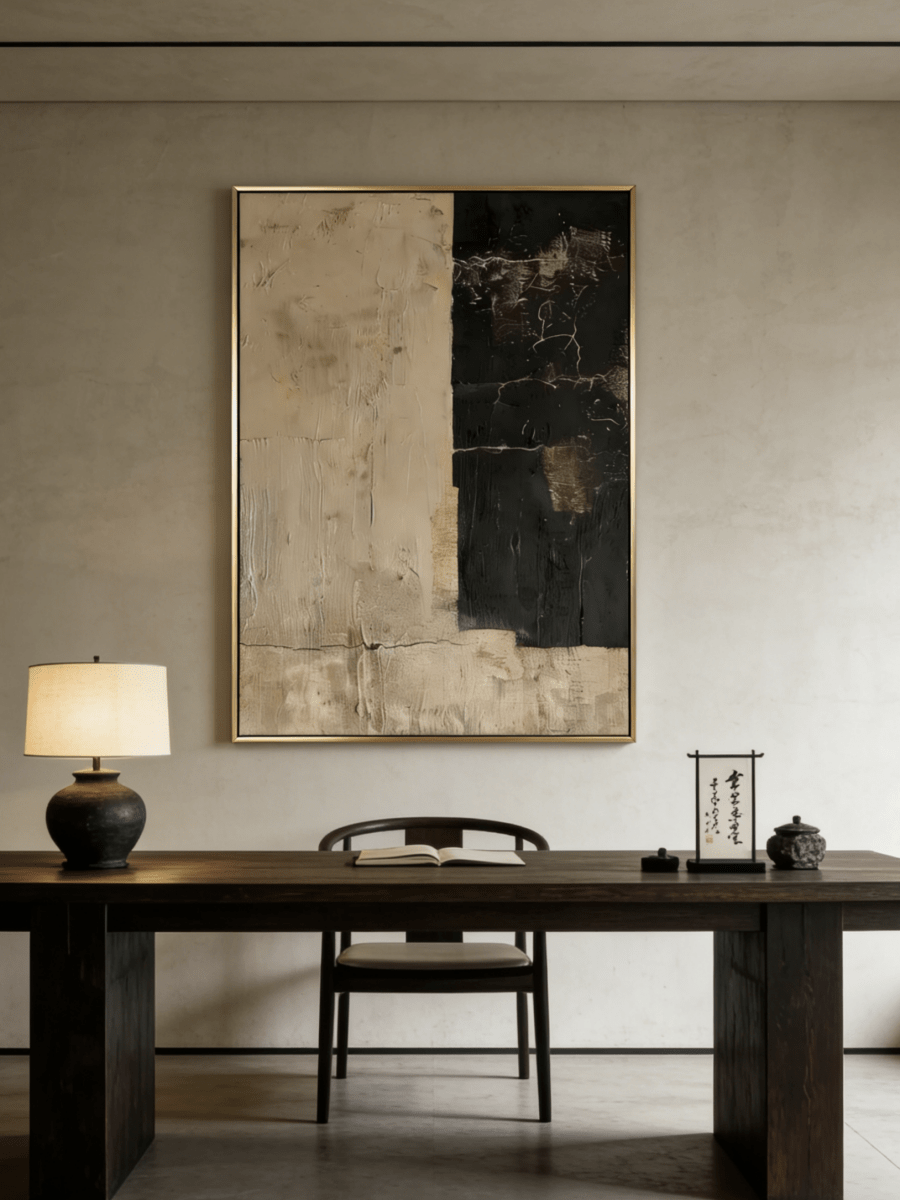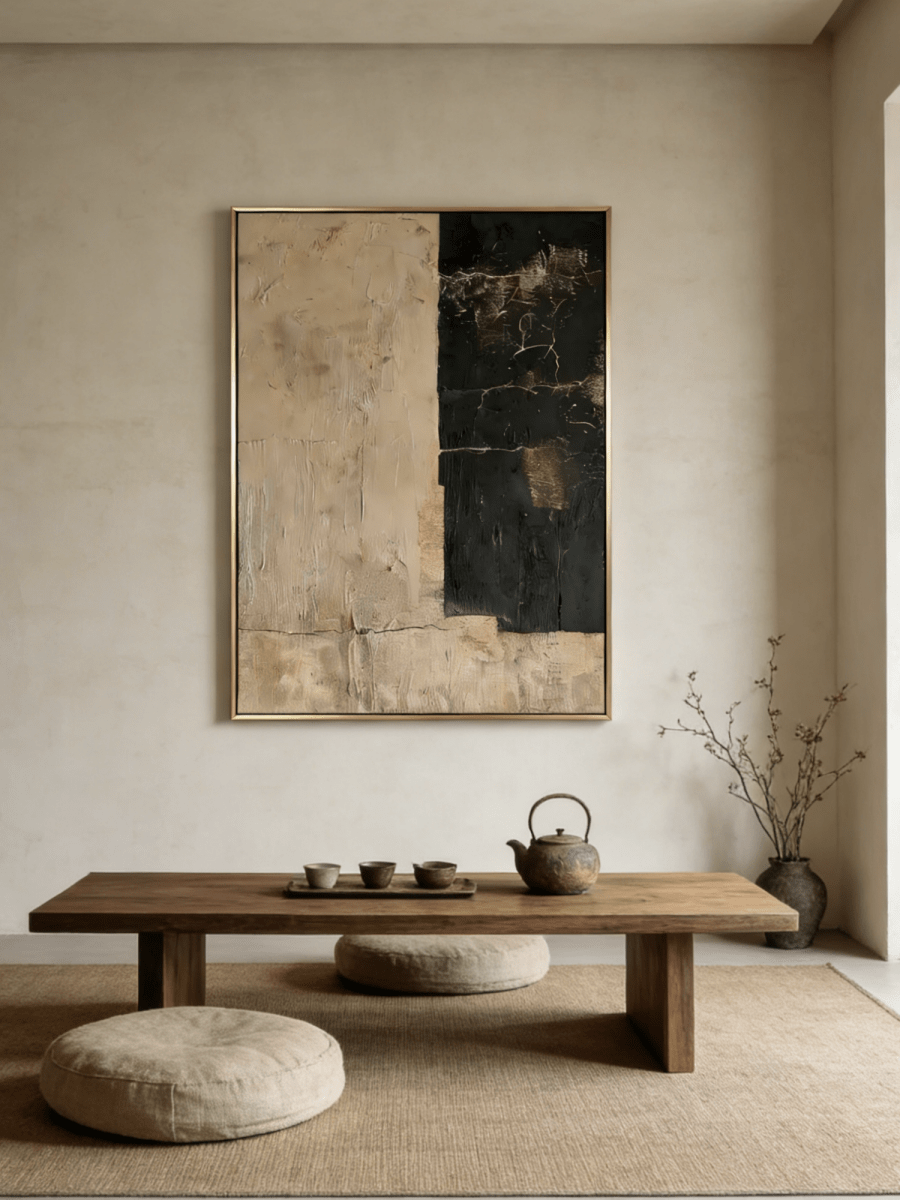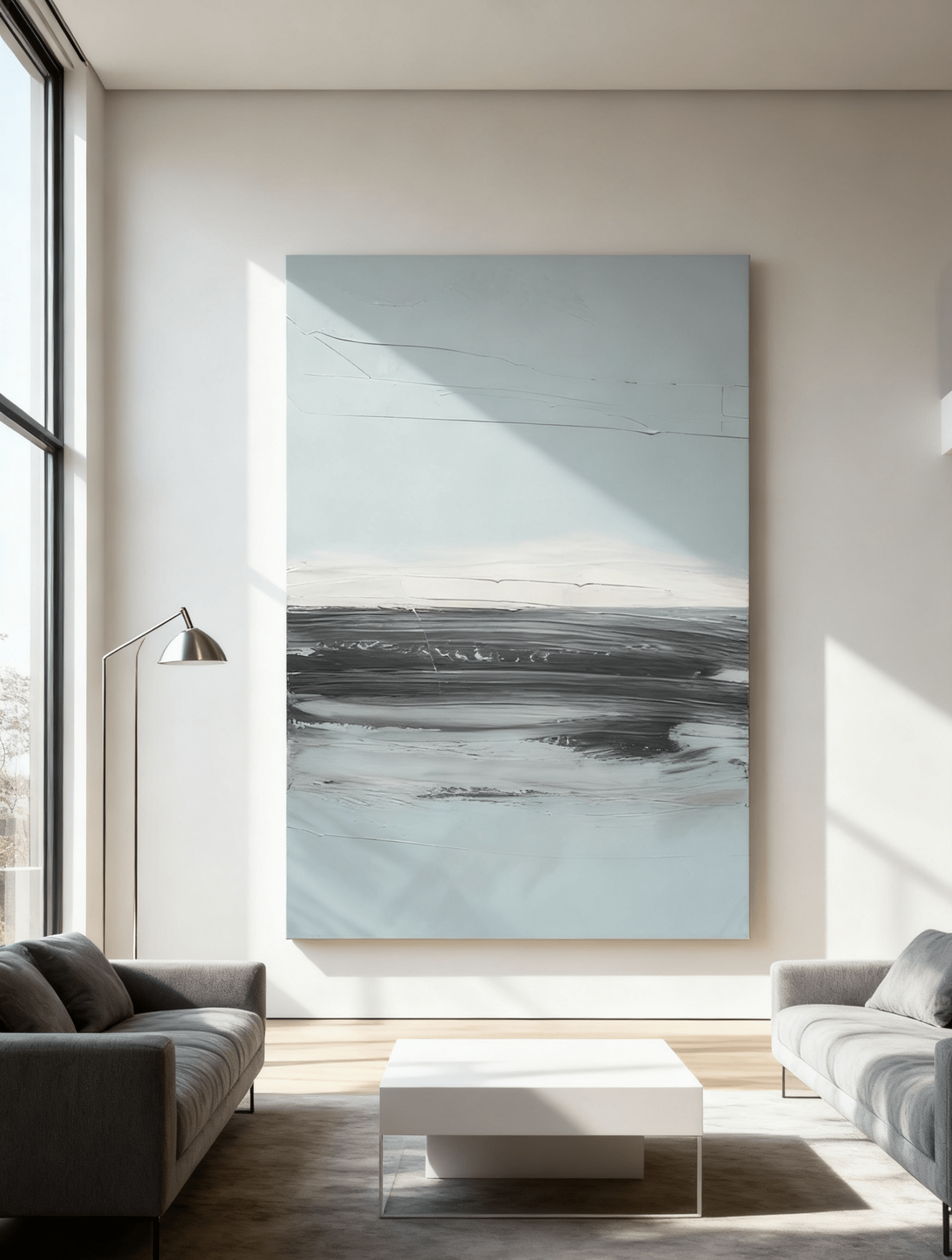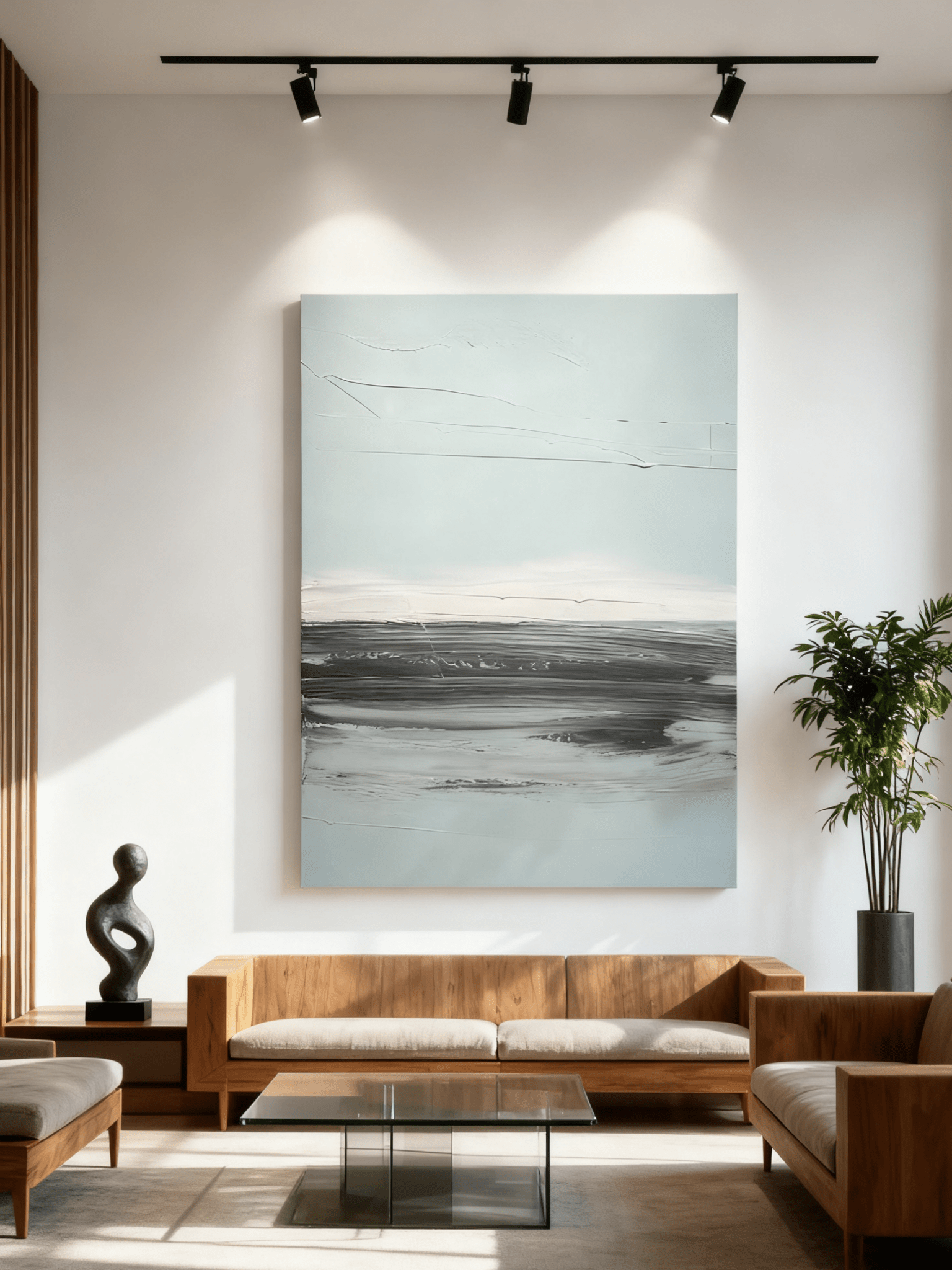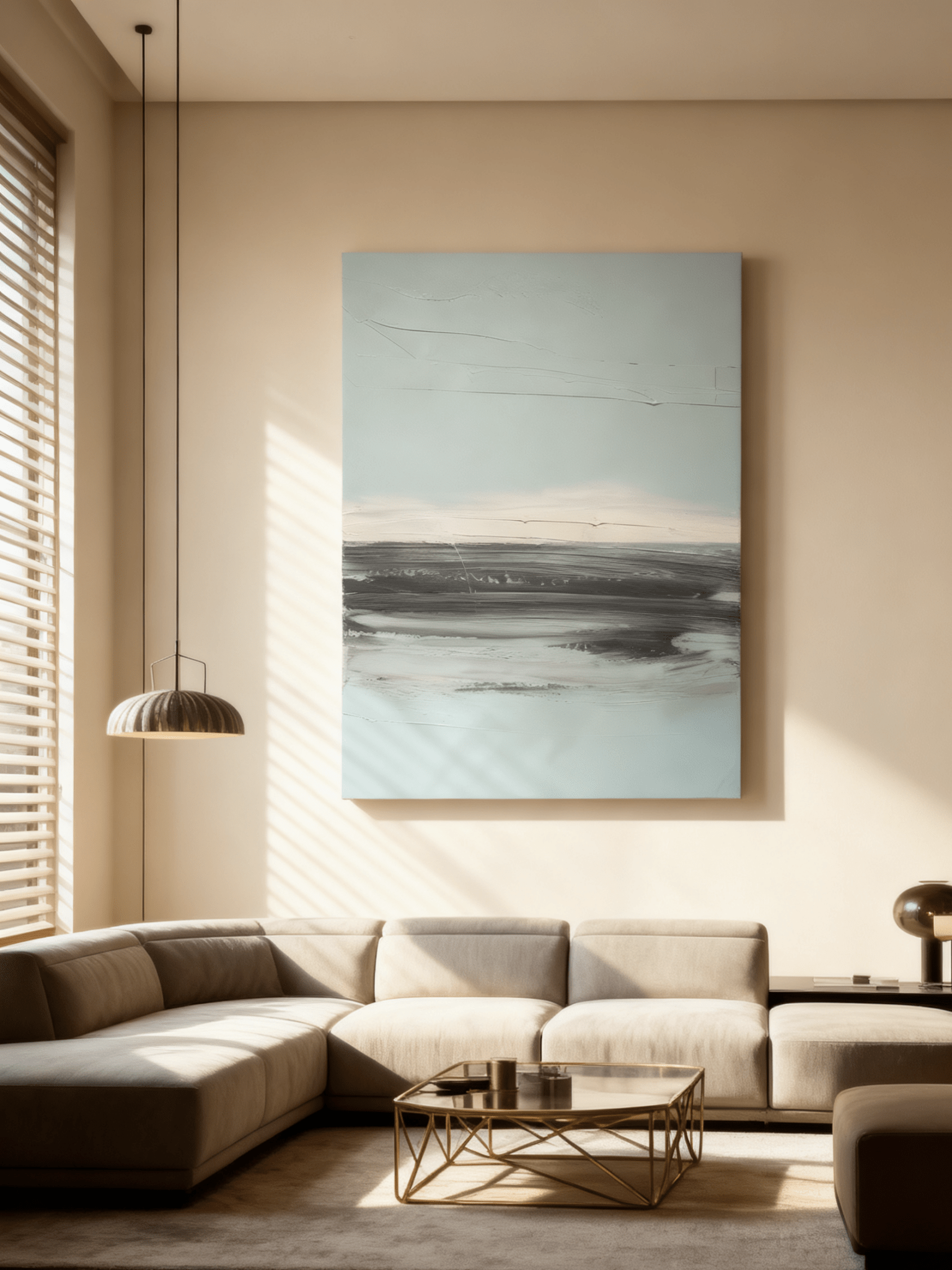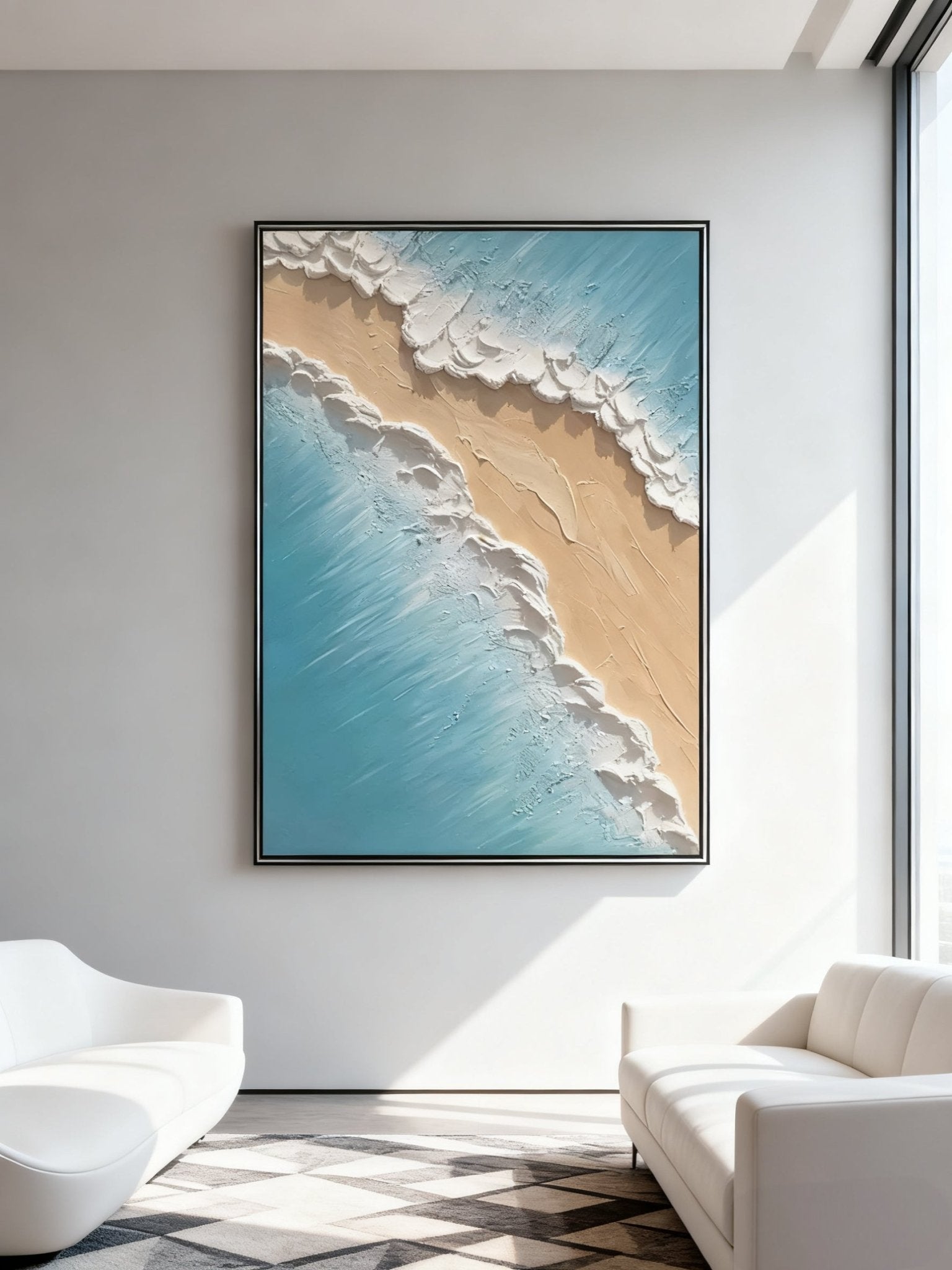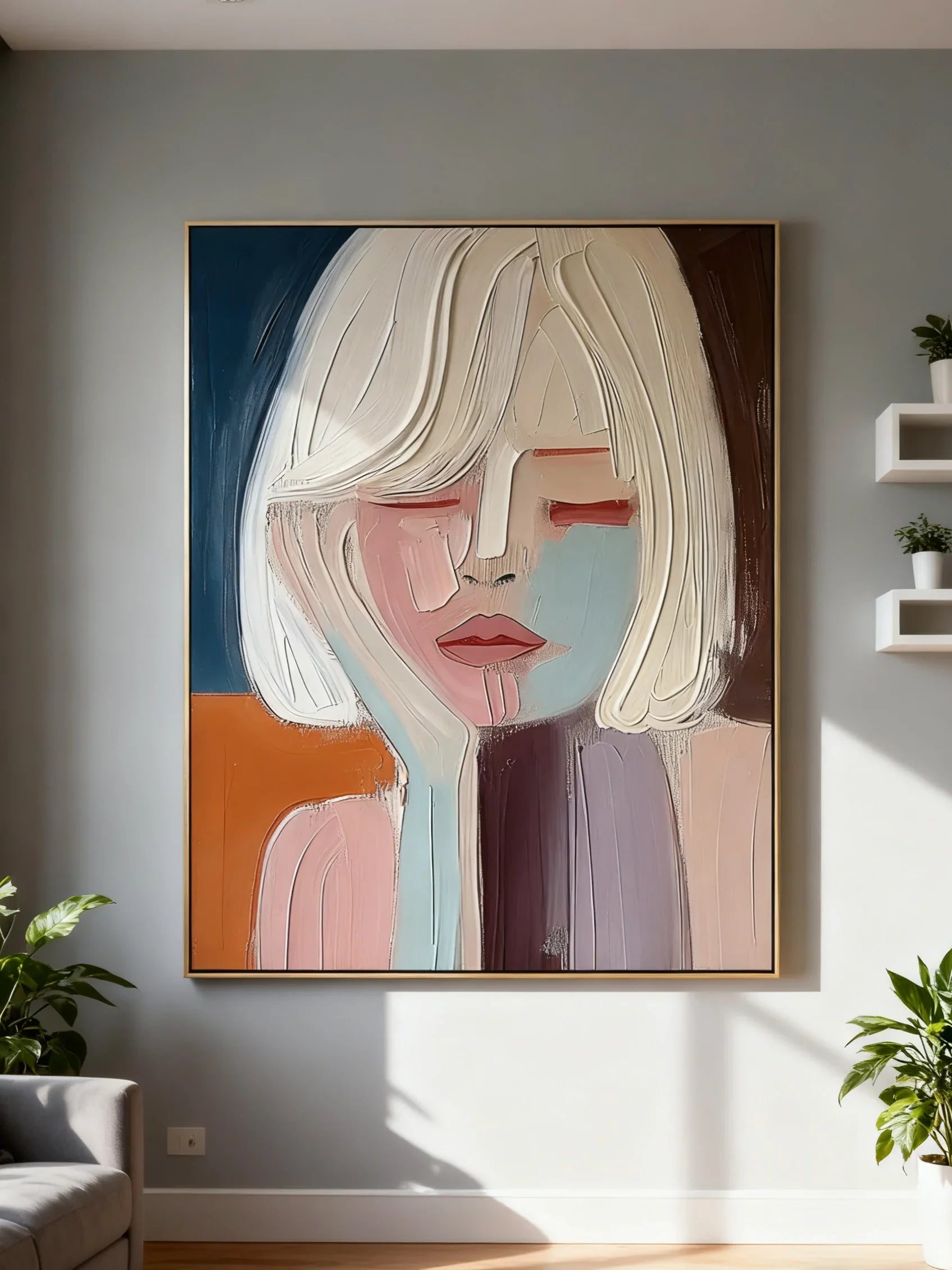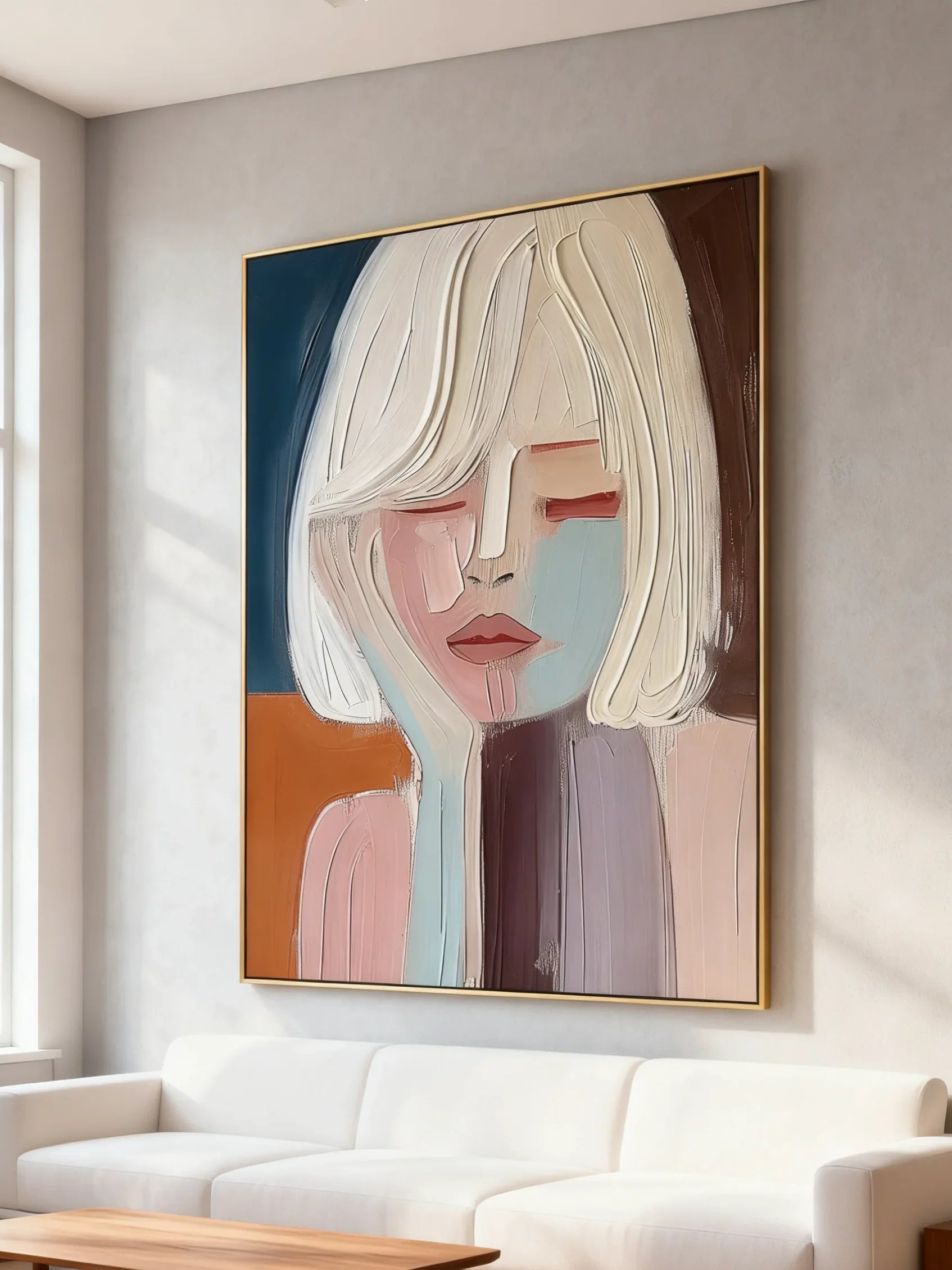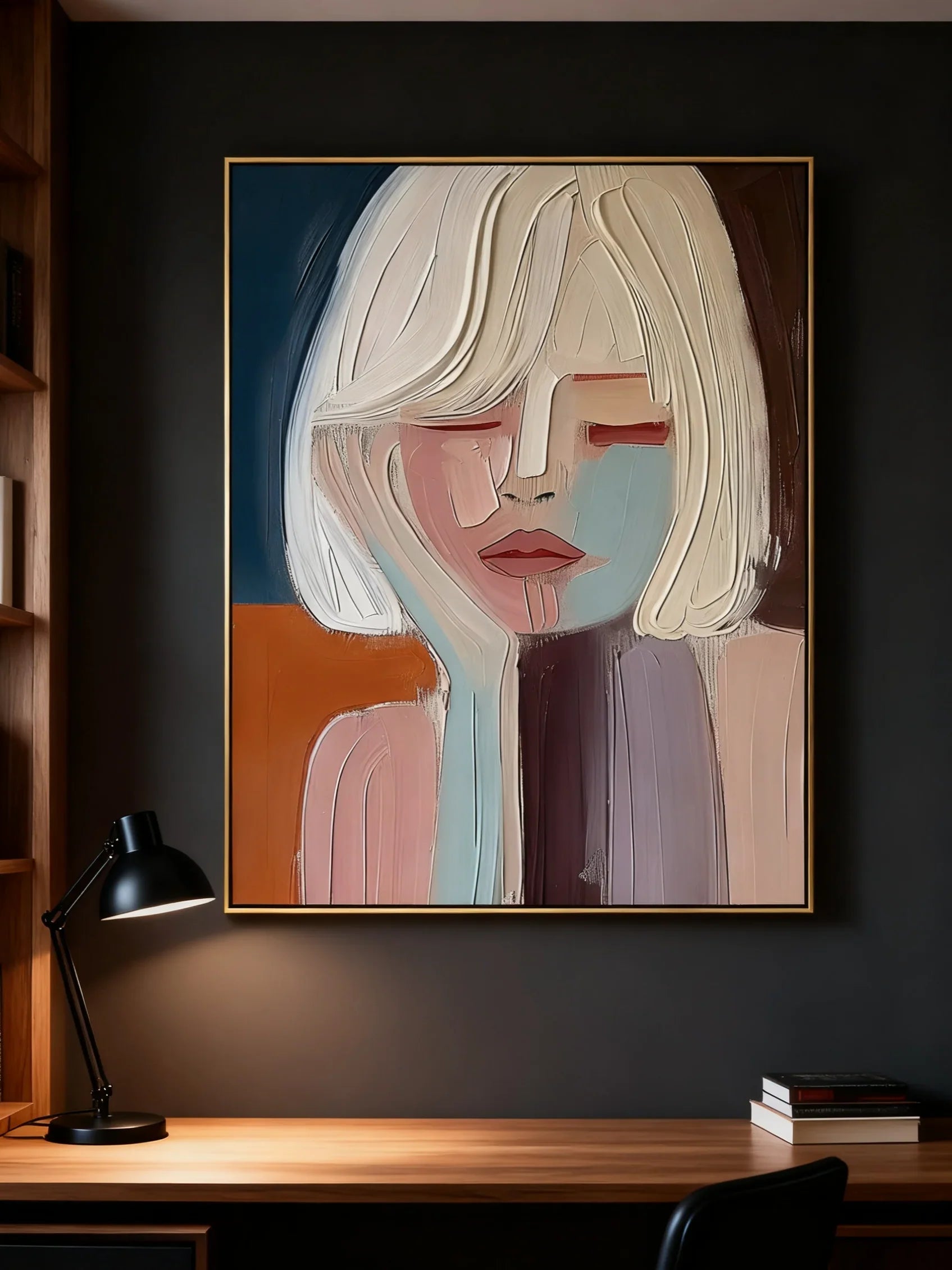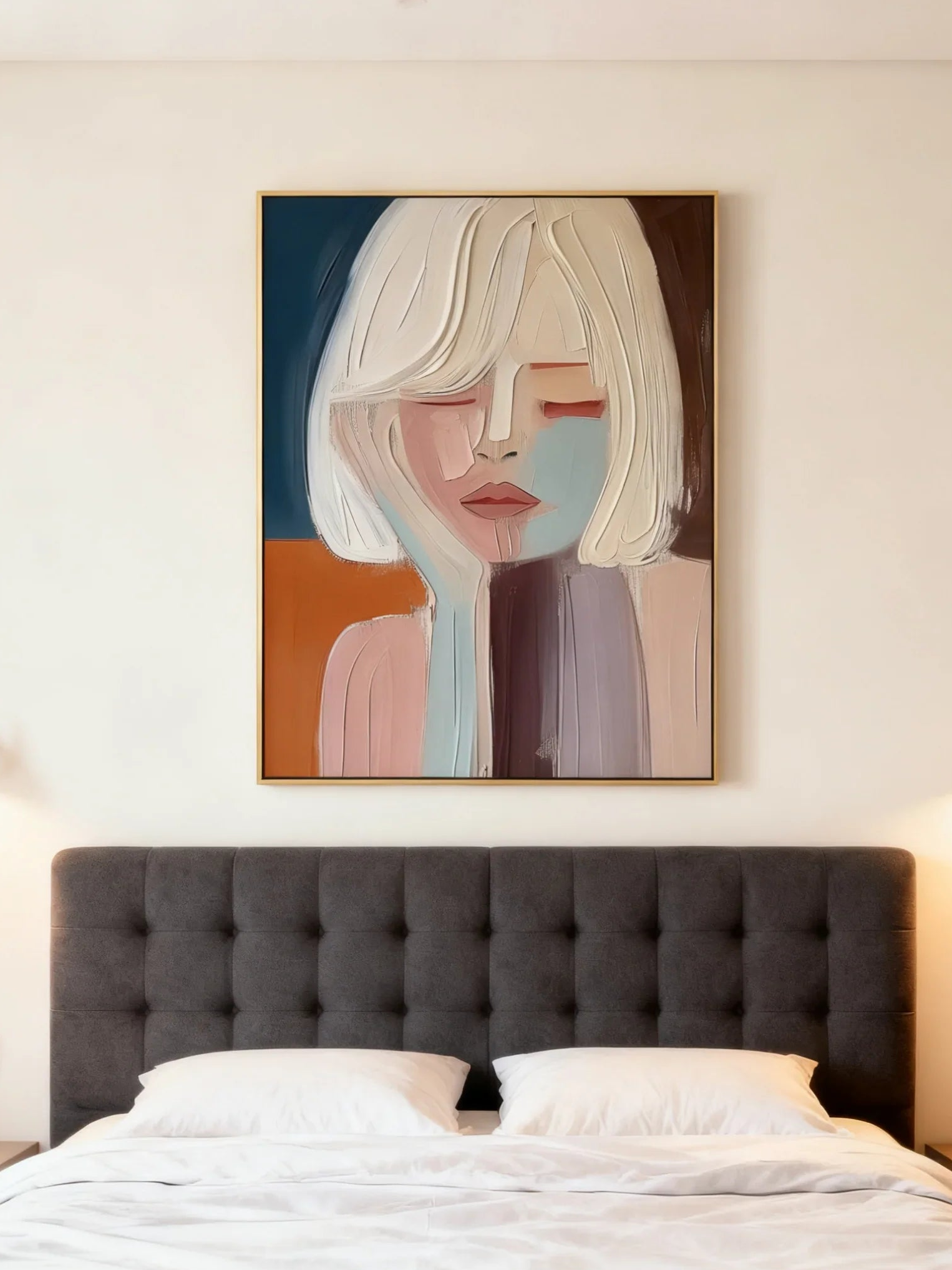

A long sofa, a king-size bed, or an eight-seat dining table can make an ordinary landscape-format painting look unexpectedly small. The wall may be large enough for art, yet a standard canvas leaves so much unused space that the furniture and artwork feel unrelated. At the other extreme, choosing a canvas simply because it is “extra large” can crowd lamps, windows, or architectural details.
The useful question is not whether panoramic art is fashionable. It is whether the room has a strong horizontal line that the artwork should answer. This guide explains how to choose panoramic wall art by measuring the wall, the furniture beneath it, the viewing distance, and the mood you want to create. It also shows when a less elongated piece from a horizontal wall art collection may be the better fit.

What Is Panoramic Wall Art?
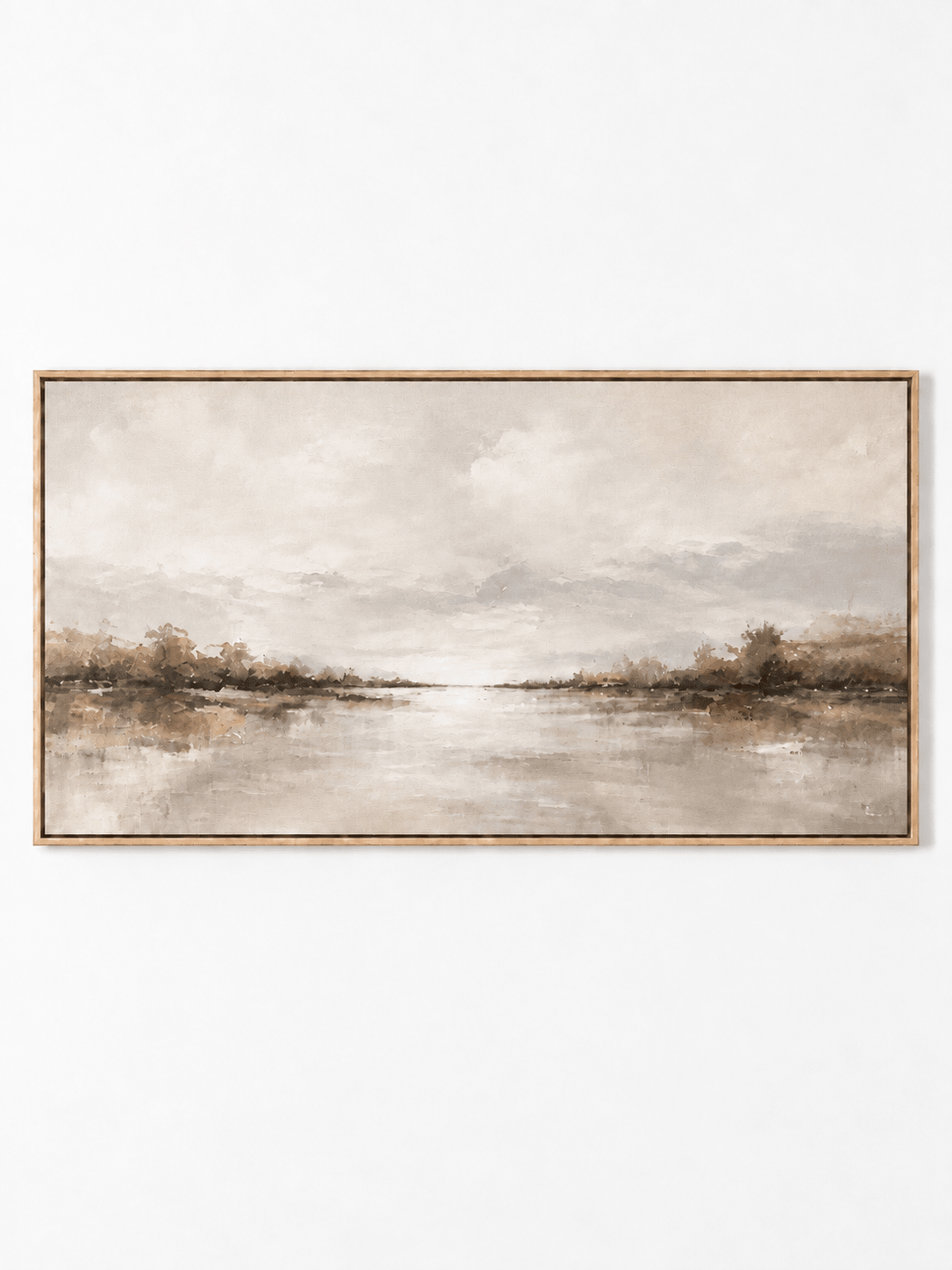
Panoramic wall art is an intentionally elongated horizontal artwork. There is no single universal ratio that every artist or retailer must use, but a panoramic composition generally feels much wider than a conventional landscape rectangle. Ratios around 2:1, 2.5:1, and 3:1 are common because they create a clear lateral sweep.
That sweep changes how a room reads. A standard horizontal painting still has a noticeable center; a panoramic piece encourages the eye to travel from side to side. It can connect the full length of a sofa, headboard, console, or dining table and make separate furnishings feel like one designed zone.
The terms wide wall art and extra wide canvas art are often used more loosely. They may describe the physical size rather than the shape. A 60-inch-wide square is large, for example, but it is not panoramic. For planning purposes, check both measurements: the actual width tells you how much wall the piece covers, while the width-to-height ratio tells you how strongly it will emphasize the room’s horizontal architecture. WABI Wall Art’s panoramic wall art collection makes that distinction easy to see across several elongated formats.
Panoramic Wall Art vs. Horizontal Wall Art
All panoramic art is horizontal, but not all horizontal art is panoramic. “Horizontal” describes any landscape orientation. “Panoramic” describes the more stretched end of that family. The distinction matters because a very elongated canvas asks for a long, relatively uninterrupted wall.
| Decision factor | Horizontal wall art | Panoramic wall art |
|---|---|---|
| Shape ratio | Moderately wider than tall; often close to 4:3 or 3:2 | Distinctly elongated; often about 2:1 to 3:1 |
| Best wall types | Medium-width walls, alcoves, and walls interrupted by doors or windows | Long uninterrupted walls and broad open-plan sightlines |
| Best furniture pairing | Loveseats, dressers, small consoles, and four-seat tables | Long sofas, sectionals, king beds, sideboards, benches, and six- to ten-seat tables |
| Visual mood | Contained, balanced, and object-like | Expansive, calm, cinematic, or dramatically sweeping |
| Common use cases | Flexible single-wall styling in rooms of many sizes | Statement art over long furniture or across a difficult blank wall |
| Installation impression | Leaves more wall visible at the sides and above | Creates one continuous visual band and stronger furniture-to-art connection |
If the available wall is broad but not extremely long, browse horizontal wall art for wide spaces before committing to the most elongated shape. A conventional horizontal format often gives a better balance where sconces, tall plants, or windows already occupy the sides.
How to Choose Panoramic Wall Art
The most reliable way to decide is to treat the artwork as part of the room’s architecture. Measure first, then choose the subject and palette. The following seven checks make how to choose panoramic wall art a practical decision rather than a guess.
1. Start with usable wall width
Measure the uninterrupted area—not the wall from corner to corner. Subtract the space occupied by windows, door trim, sconces, thermostats, and tall furniture. As a comfortable starting point, preserve at least 6 to 12 inches of visible wall at each side of a large canvas. More breathing room is useful when the frame is dark or the composition is visually forceful.
2. Let the furniture set the scale
When art hangs over furniture, the furniture is the more useful reference. Aim for an artwork width of about two-thirds to three-quarters of the furniture width. This range is a guide, not a building code: a quiet pale canvas can often run wider, while a high-contrast piece may feel substantial at the lower end. Measure the sofa frame, headboard, or sideboard itself—not the surrounding wall.
3. Account for ceiling height
A panoramic canvas adds width without demanding much vertical space, which makes it especially useful in rooms with standard eight- or nine-foot ceilings. In a double-height room, however, a very shallow piece can look stranded. Choose a deeper panoramic ratio, use a larger overall size, or pair the art with low furniture and lighting that visually completes the vertical zone.
4. Match the room’s purpose
Bedrooms usually benefit from a low-contrast, restful composition. A living room can carry a bolder horizon or stronger texture because it is experienced from multiple viewpoints. In a dining room, consider how the painting looks while people are seated as well as when they enter; a long composition can keep the sightline grounded without dominating conversation.
5. Check visual balance, not just inches
Dark areas, sharp contrast, and dense texture add visual weight. A mostly charcoal 60-inch canvas may feel larger than a pale neutral canvas of the same dimensions. Before ordering, tape the outer dimensions on the wall with painter’s tape and view the outline from the main doorway and seating position. Then imagine where the darkest part of the composition will sit.
6. Work with the existing interior
Repeat one or two room cues rather than matching everything. Warm plaster, aged oak, linen, and stone pair naturally with wabi-sabi texture. Crisp modern rooms may benefit from a simple horizon that softens straight architectural lines. A coastal interior does not require literal blue waves; a muted sage, sand, and off-white seascape can feel more lasting.
7. Decide between calm and drama
For calm, look for broad fields of related color, a low horizon, soft edges, and restrained texture. For drama, choose stronger tonal separation, a glowing horizon, or visible impasto that changes with daylight. Because panoramic work spreads across more of the visual field, even a minimal composition can become a focal point through scale alone.
Panoramic Wall Art for a Living Room
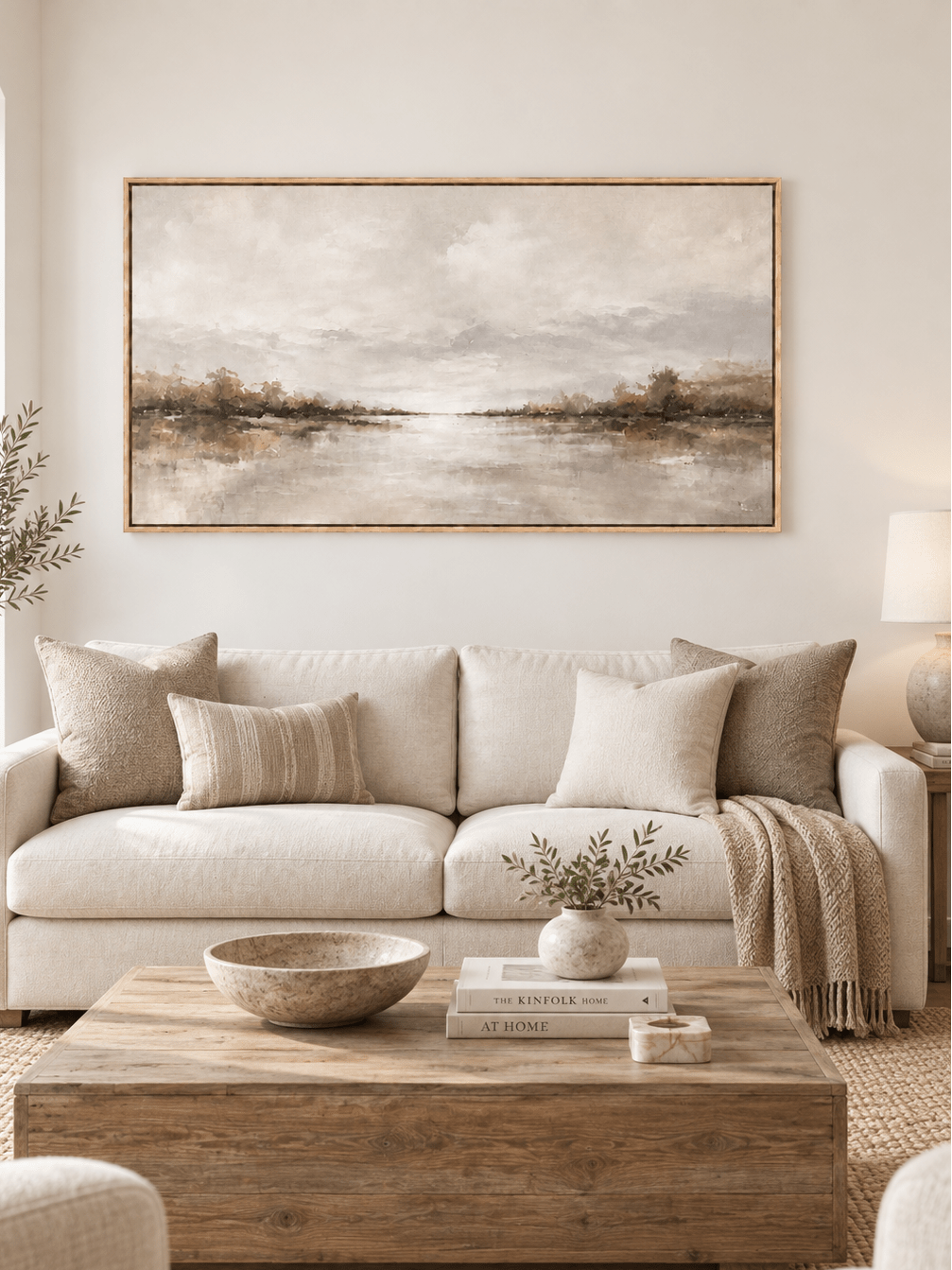
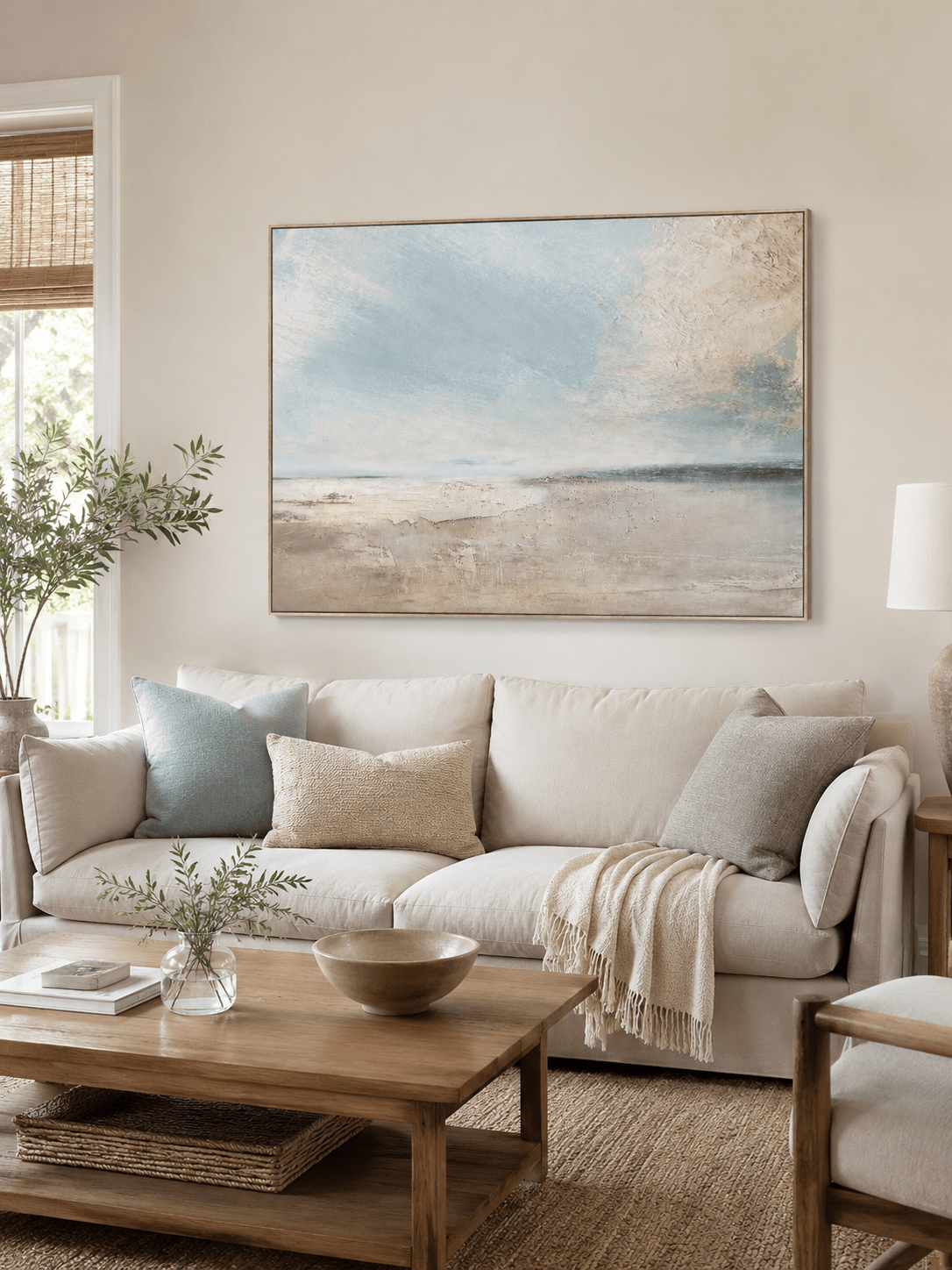
Panoramic wall art for a living room is most convincing when the seating creates a long horizontal anchor: a three- or four-seat sofa, a sectional, or two aligned seating pieces. It is also effective in an open-plan room where the art needs to be legible from the kitchen or dining area.
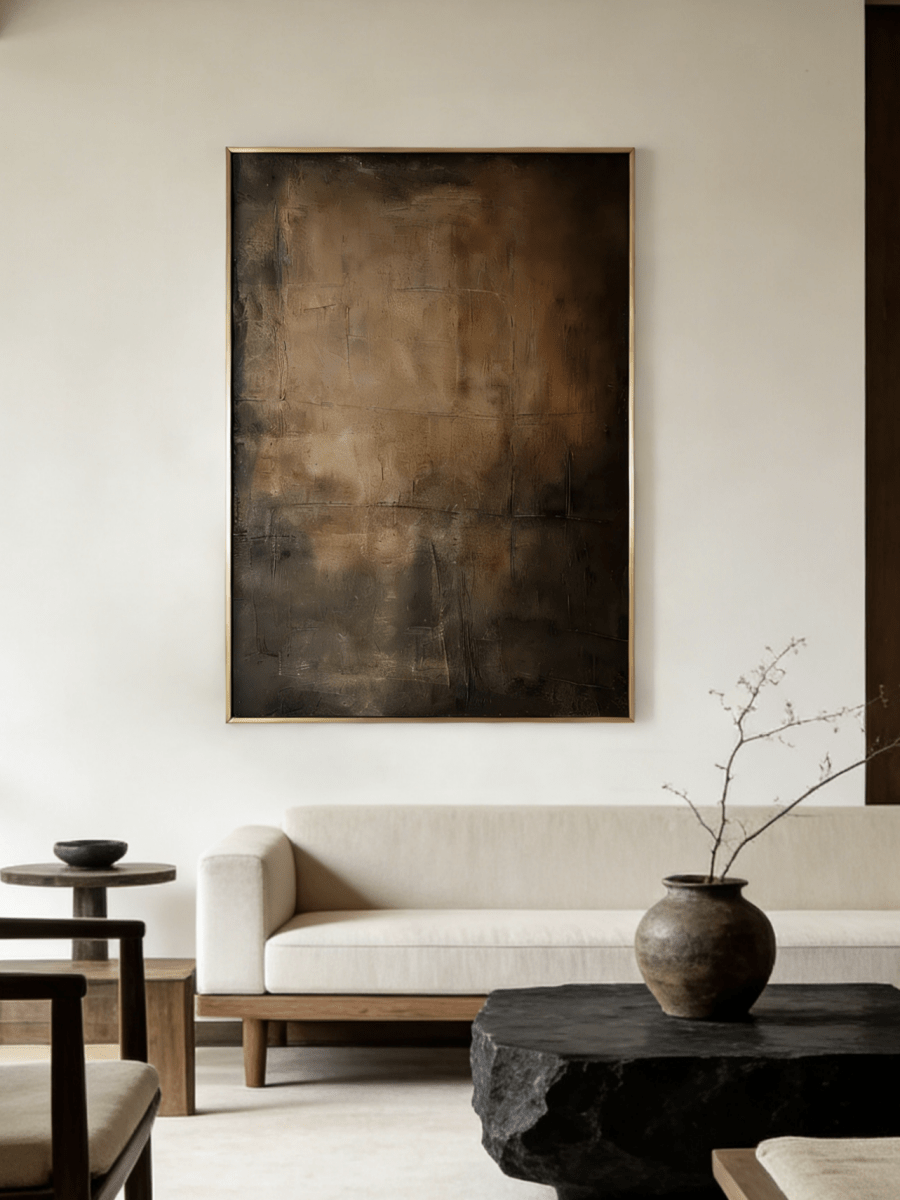
For a panoramic painting above a sofa, first center the art on the sofa rather than on the entire wall. This prevents an off-balance result when the sofa sits beside a window or floor lamp. Leave roughly 6 to 10 inches between the sofa back and the bottom of the frame. In most rooms, this feels connected without putting the art at risk of being brushed by seated guests.
On an open wall without furniture, a common gallery starting point is to place the artwork’s center about 57 to 60 inches above the floor. Above a sofa, however, the relationship to the furniture usually matters more. Have someone hold the taped outline while you view it from the primary seat and the room entrance.
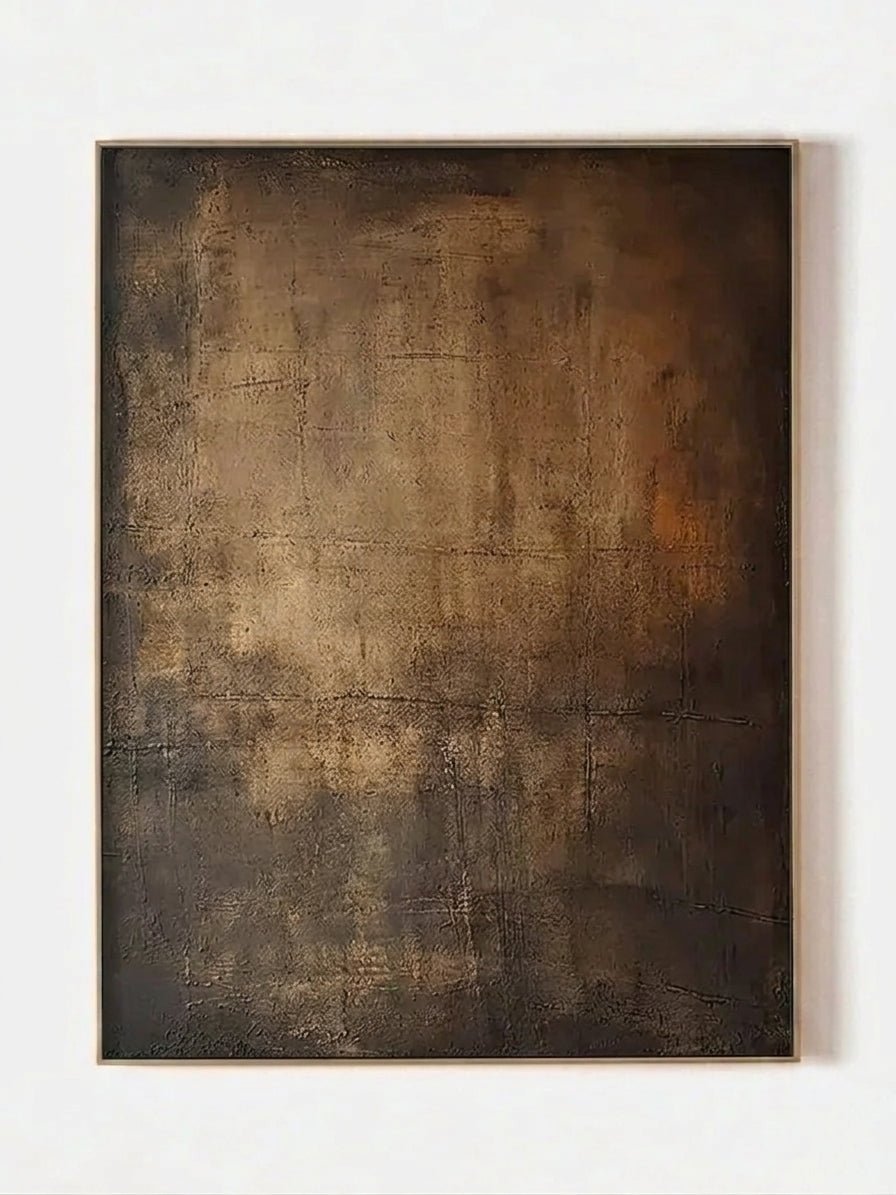
A work such as Ember Horizon – AK#0315 suits a living room that needs a stronger focal point: its burnt orange, pale horizon, and charcoal base spread the contrast laterally rather than stacking it high. For more elongated options, explore panoramic wall art for long sofa walls and filter your shortlist by the furniture measurement, not by the word “large.”
Best Size Tips for a Panoramic Painting Above a Sofa
Using the two-thirds to three-quarters guideline, these are useful target ranges:
- 84-inch sofa: about 56–63 inches of total artwork width.
- 96-inch sofa: about 64–72 inches of total artwork width.
- 108-inch sofa: about 72–81 inches of total artwork width.
If the ideal number falls between available sizes, consider the whole composition. A 60-inch canvas over an 84-inch sofa is proportionally strong; a 72-inch canvas over a 96-inch sofa reaches the upper end and makes a more assertive statement. For a 108-inch sectional, a 72-inch piece can work if lamps or plants occupy the sides, while 80 inches better fills a clean uninterrupted wall. Always verify that the frame leaves clear side margins.
Panoramic Art for a Bedroom
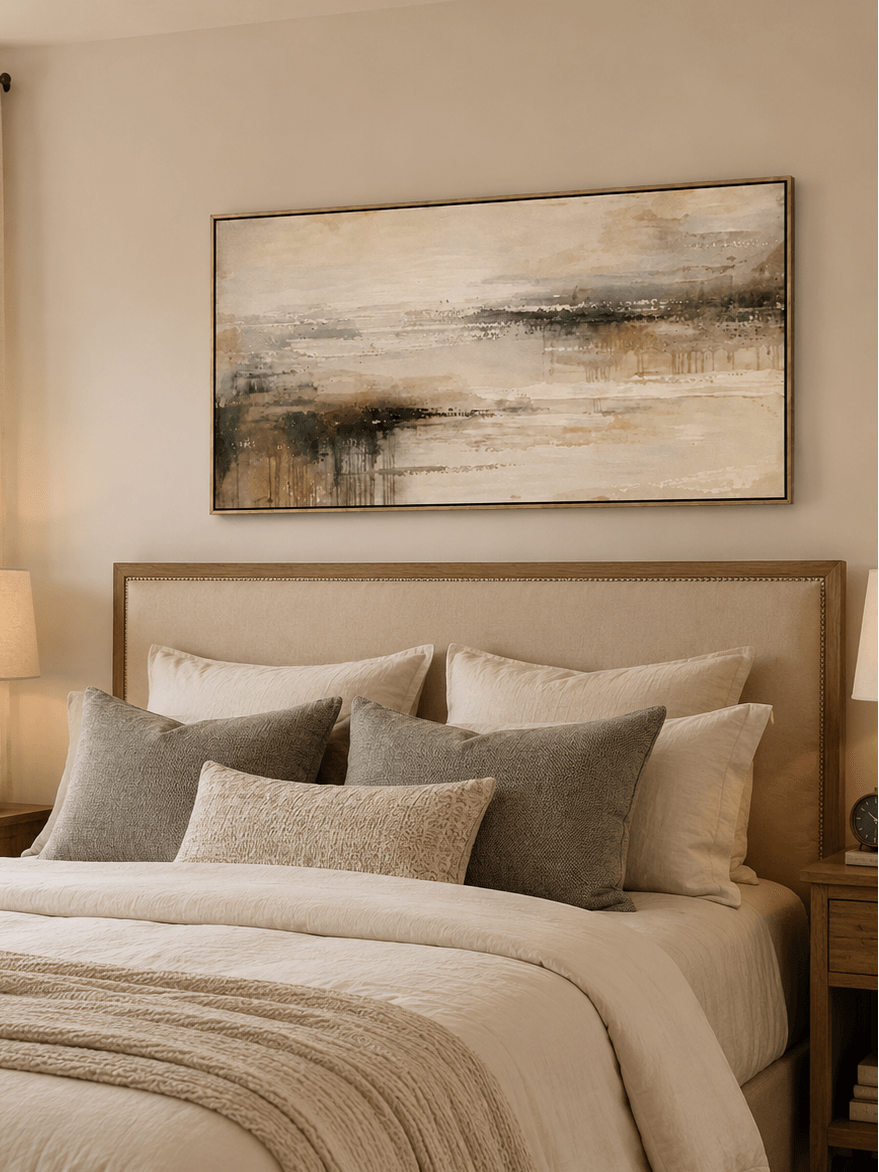
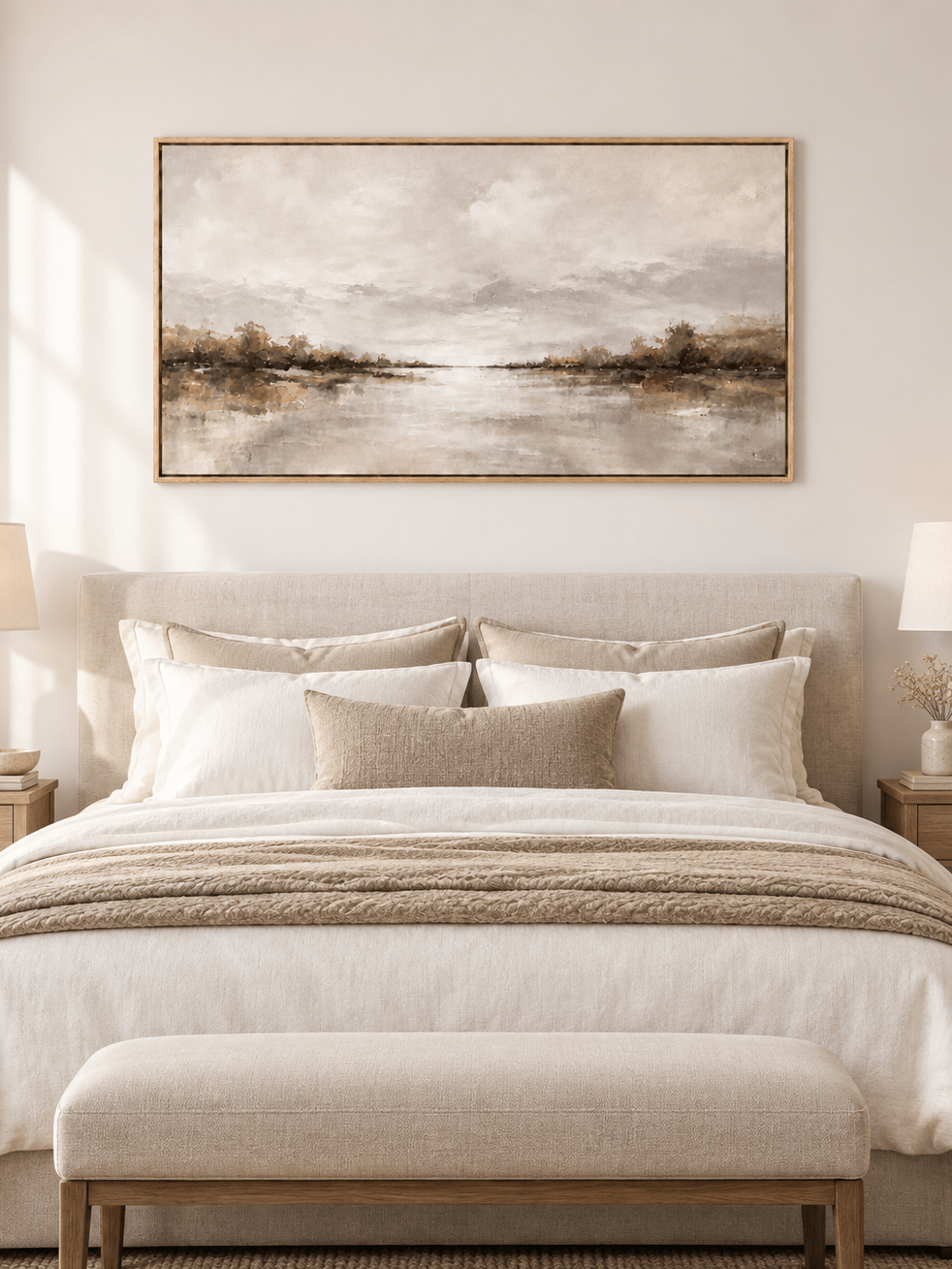
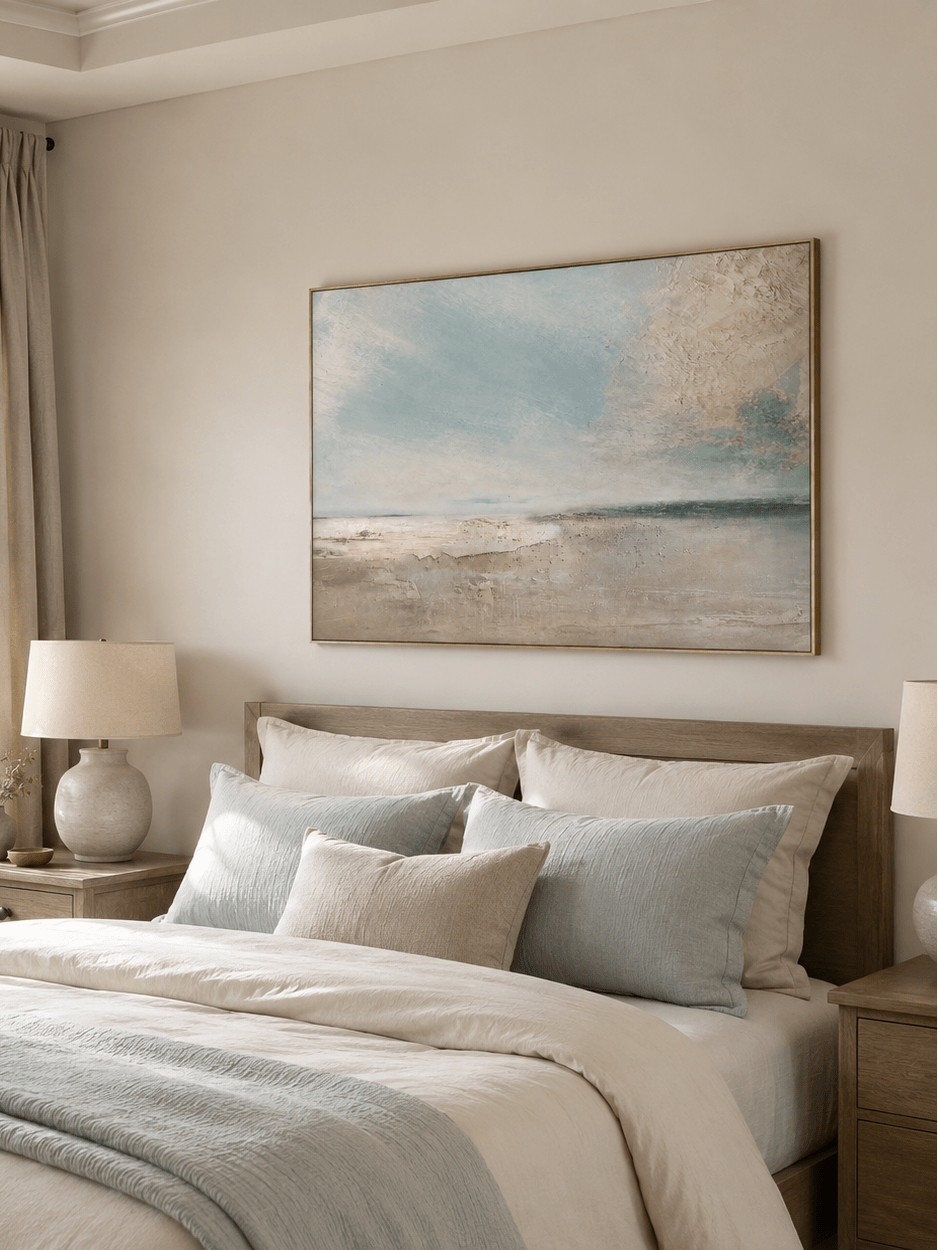
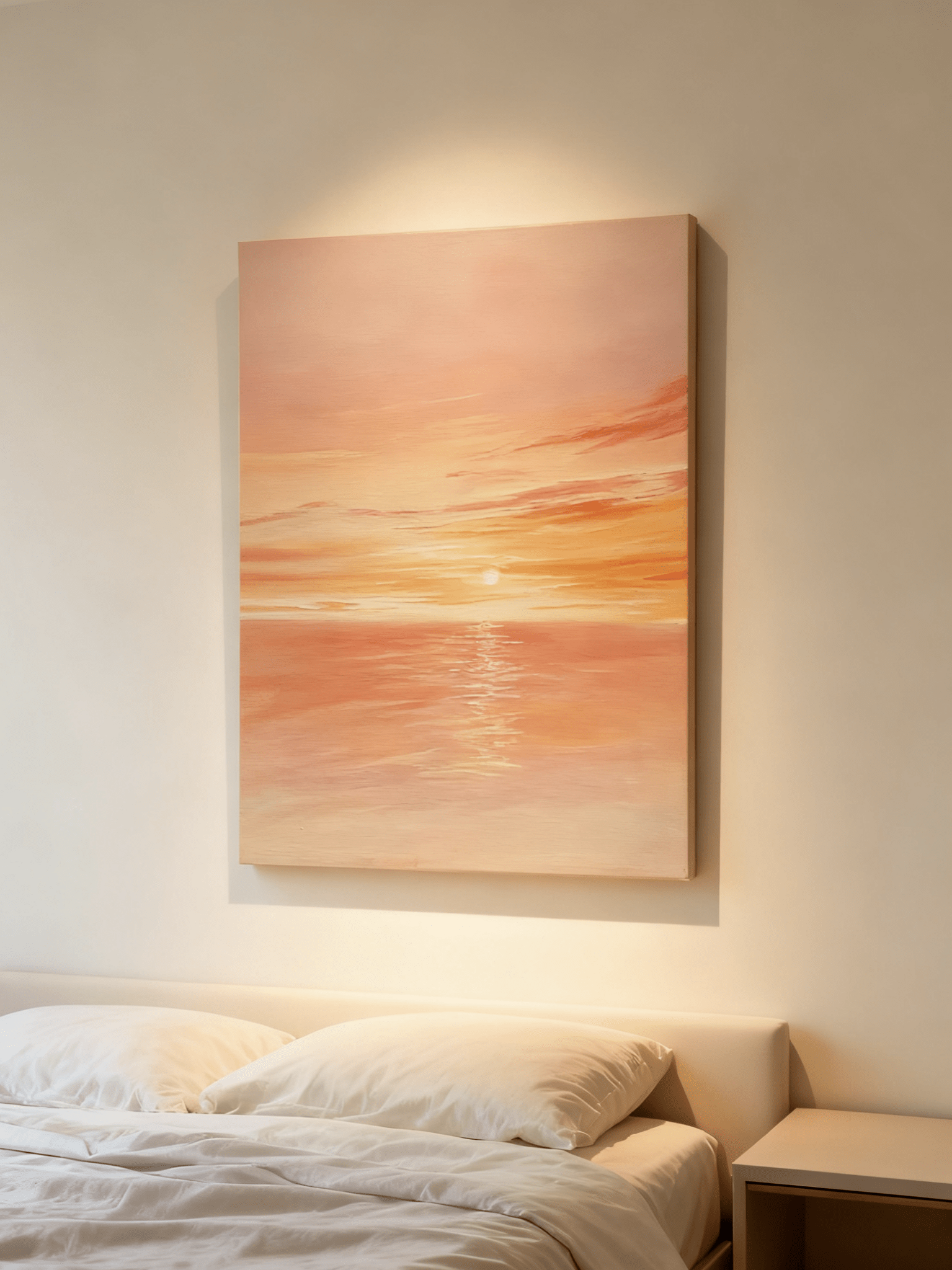
Panoramic art for a bedroom works particularly well above a headboard because both elements share a low, stable line. The elongated format spreads color and texture without taking over the wall vertically, helping the bed feel grounded and the ceiling feel uncluttered.

A queen mattress is 60 inches wide and a king is 76 inches, but headboards often extend beyond those dimensions. Measure the headboard. A practical starting range is roughly 40–48 inches wide over many queen beds and 50–60 inches over many king beds, then adjust toward two-thirds to three-quarters of the actual headboard width. A slim panoramic painting can be wider than a visually heavy standard canvas because its height remains modest.
Place the lower frame about 6 to 10 inches above the headboard. If the headboard is tall, use the lower end of that gap so the two pieces read together. Avoid squeezing the canvas between the headboard and ceiling; if the available vertical clearance is limited, select a shallower ratio or smaller height.
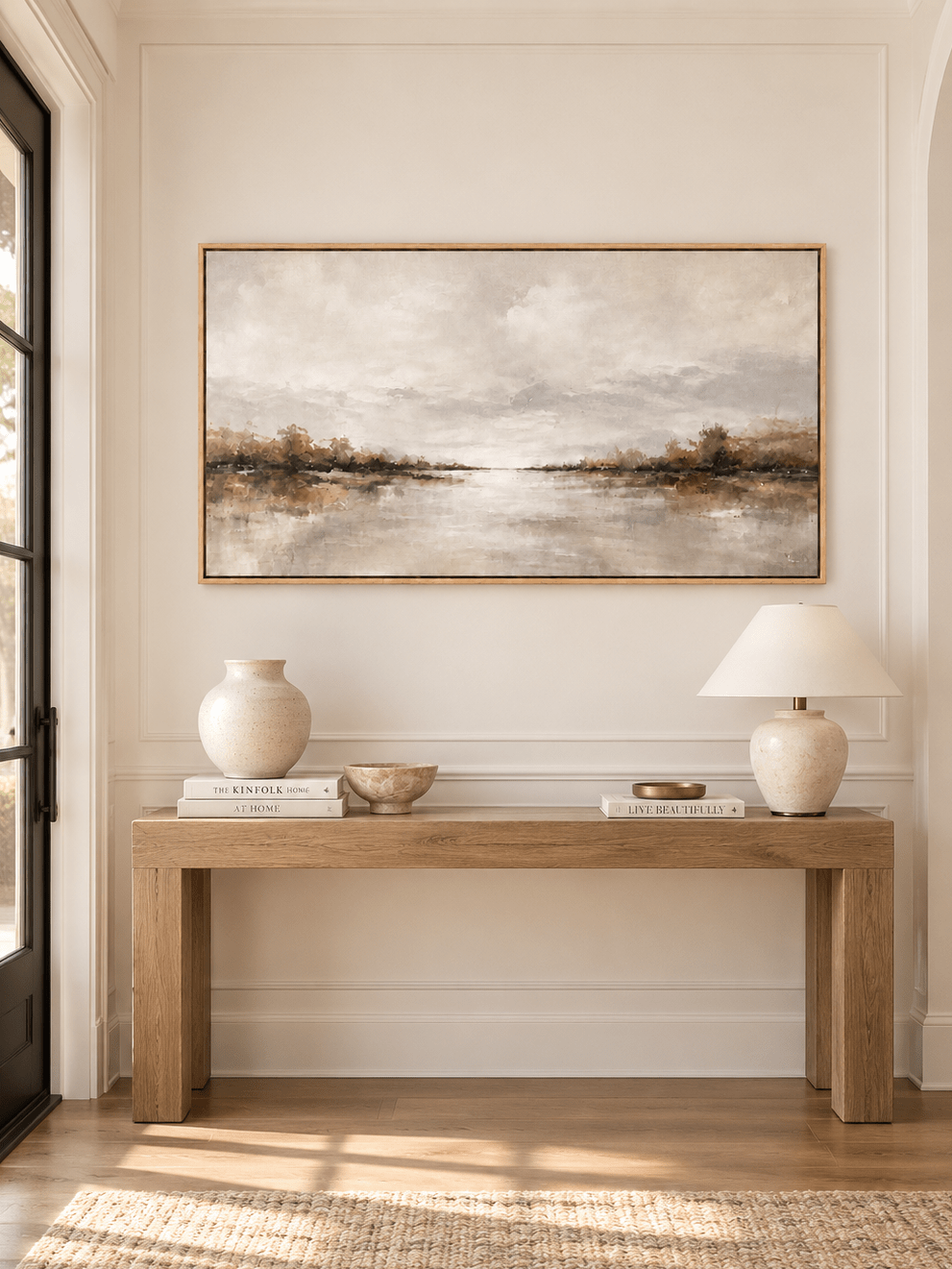
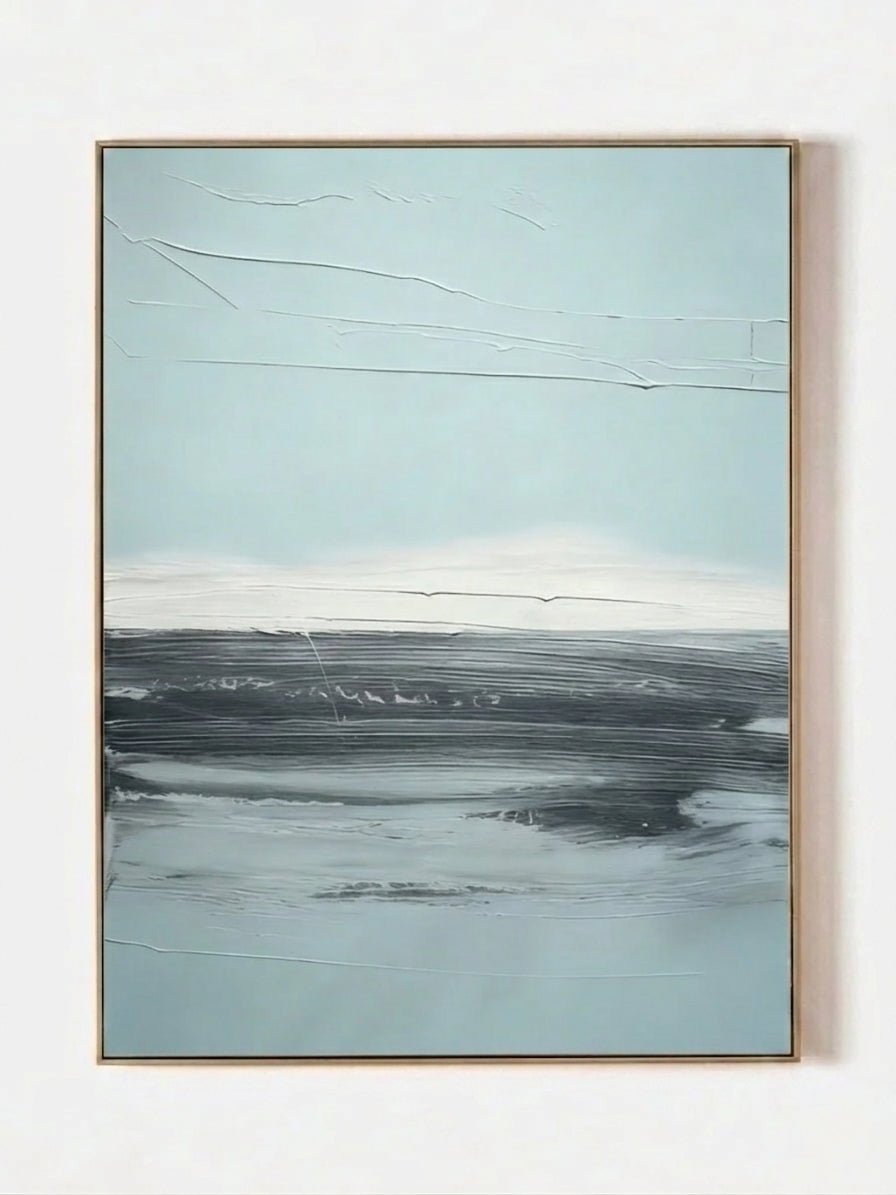
Soft landscape-inspired abstraction is especially restful. Misty Tidelands – EL#0313, with warm ivory, sand, taupe, and charcoal, creates depth without relying on busy detail. It is a strong bedroom choice when you want calm and definition rather than a blank beige wall.
Panoramic Wall Art for a Dining Room
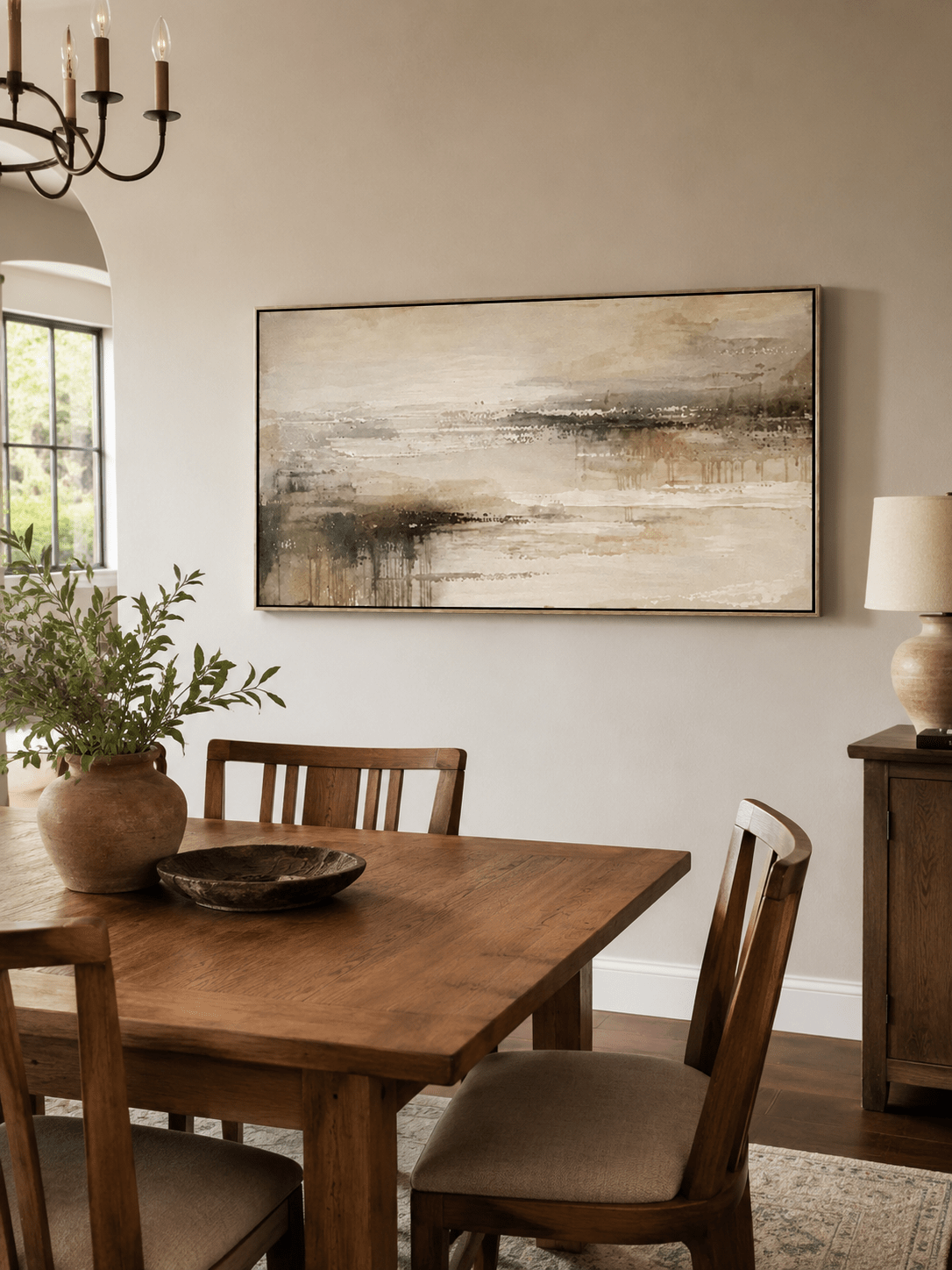
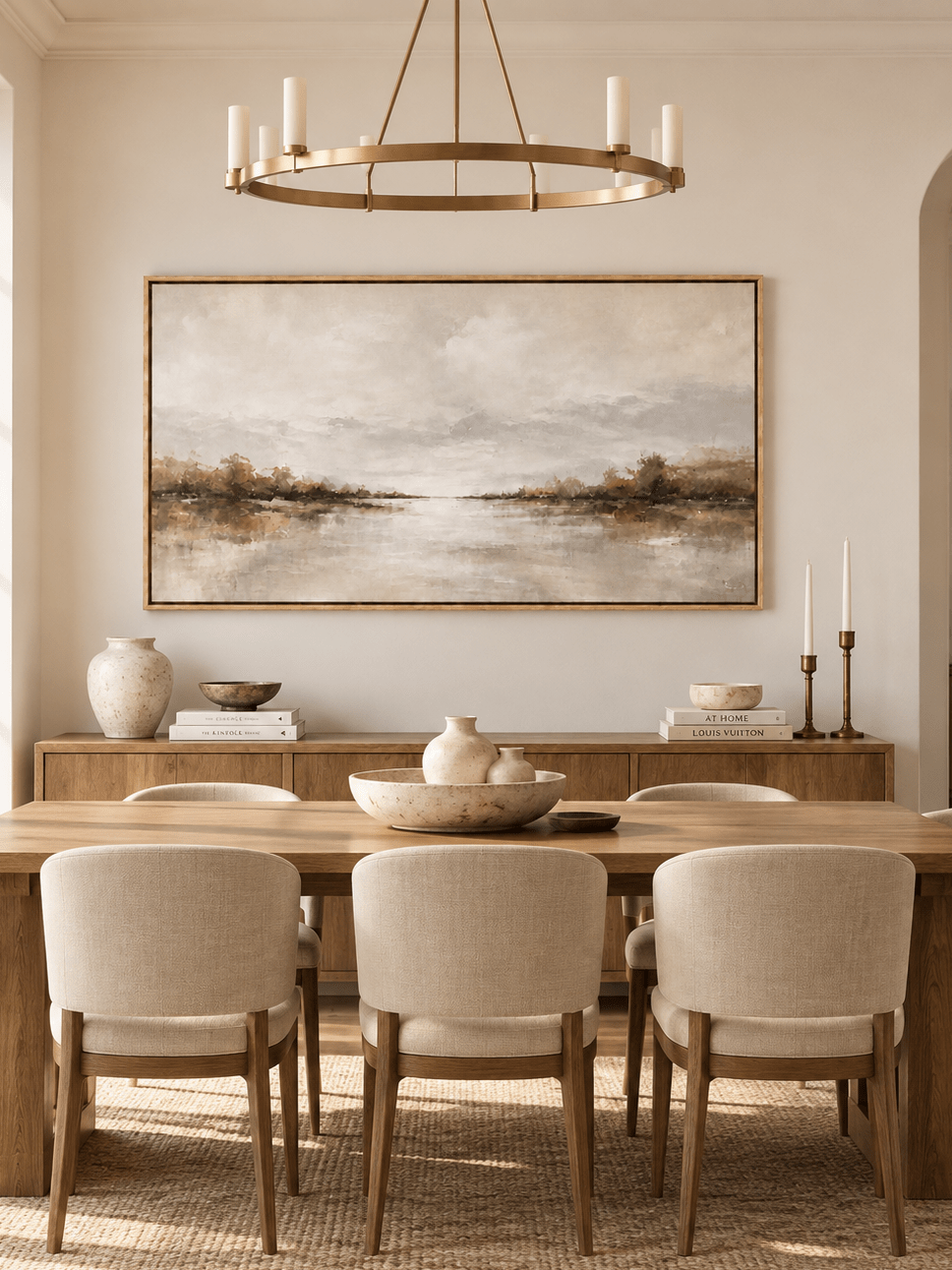
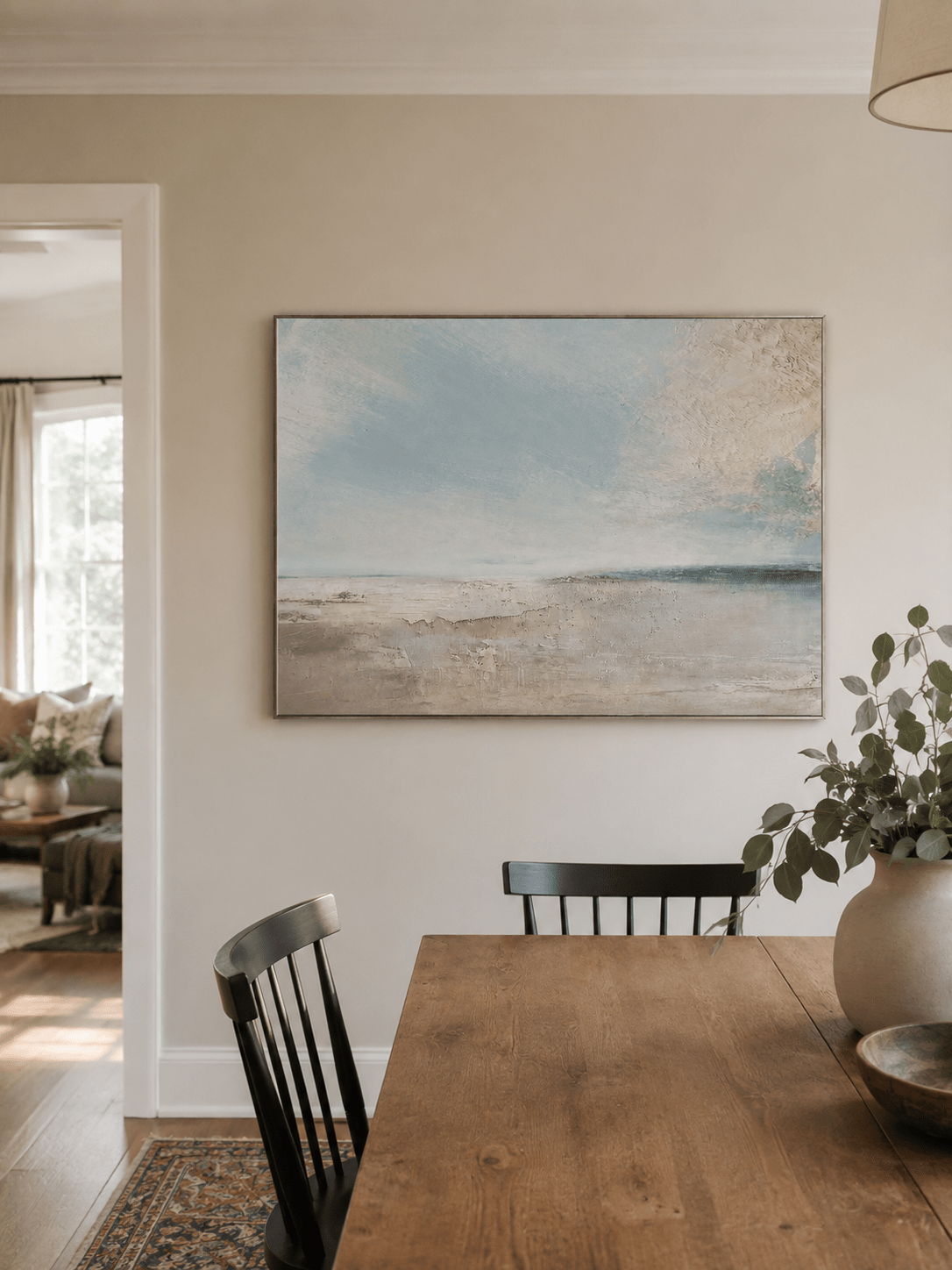
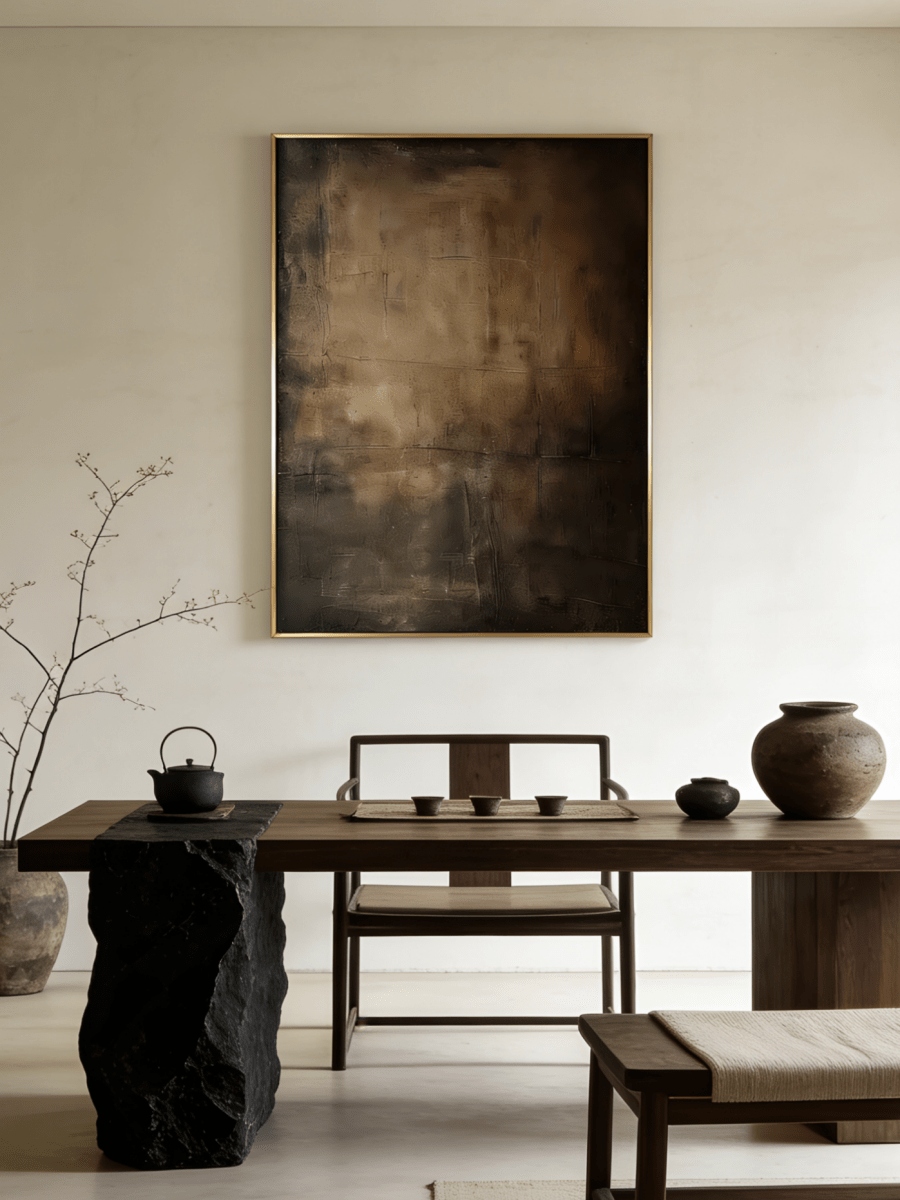
Dining rooms naturally contain long lines: table edges, benches, sideboards, and pendant arrangements. Panoramic art can repeat those lines and make the room feel settled. Center it over the sideboard if one is present; otherwise align it with the center of the table when viewed from the main entrance.

Consider the room in evening light. Highly glossy surfaces can catch pendant reflections, while textured art develops soft shadow and remains readable. Abstract horizons, mineral neutrals, beach-inspired compositions, and restrained earth tones are flexible because they contribute atmosphere without dictating a dining-room theme.
Earth Tone Horizon – LL#0155 combines cream, gray sculptural bands, and terracotta, making it useful over an oak or walnut sideboard. Its tactile surface offers interest at close range, while the simple horizontal structure still reads from the opposite side of the table.
When Wide Wall Art Works Better Than Standard Wall Art
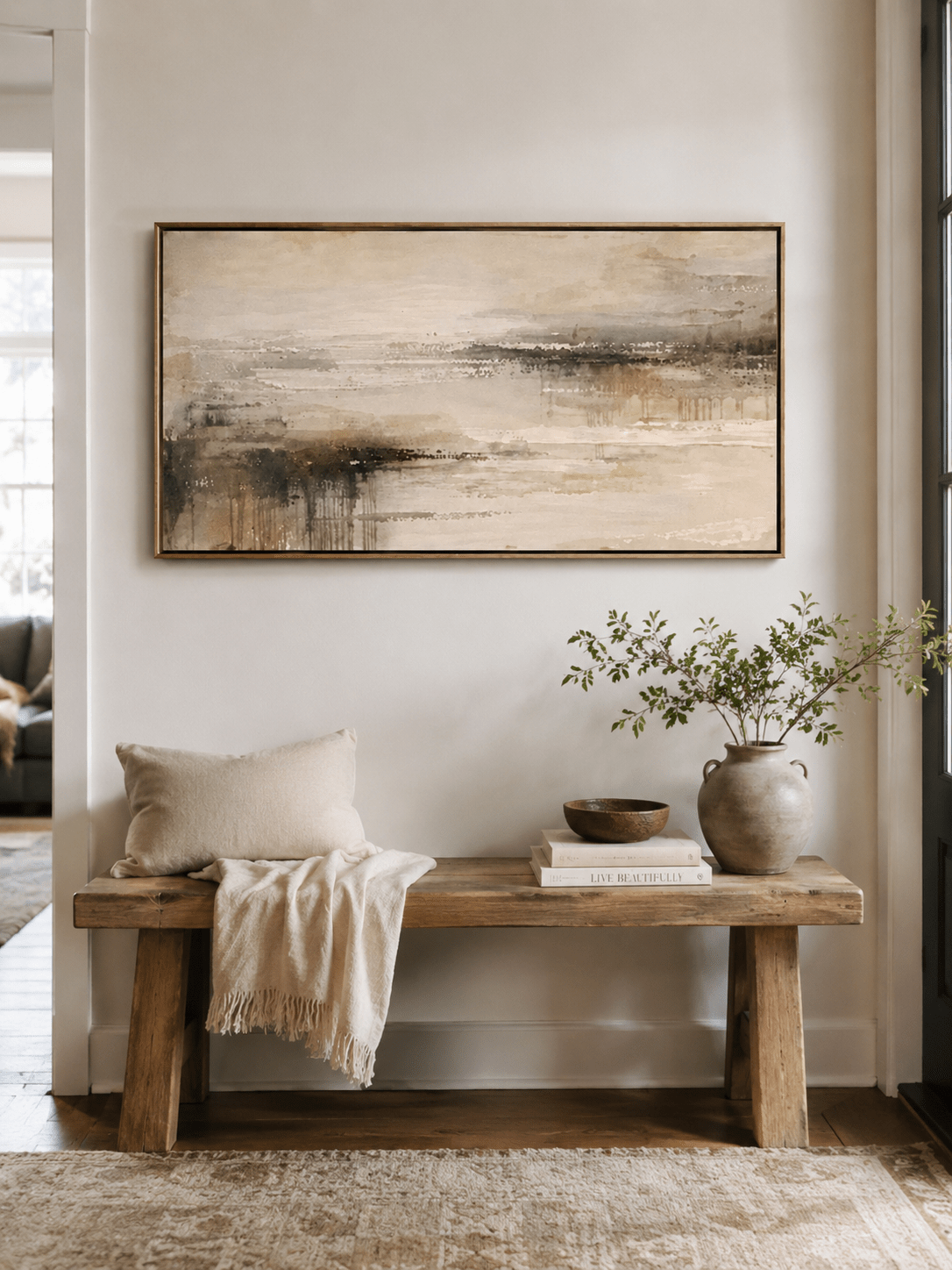
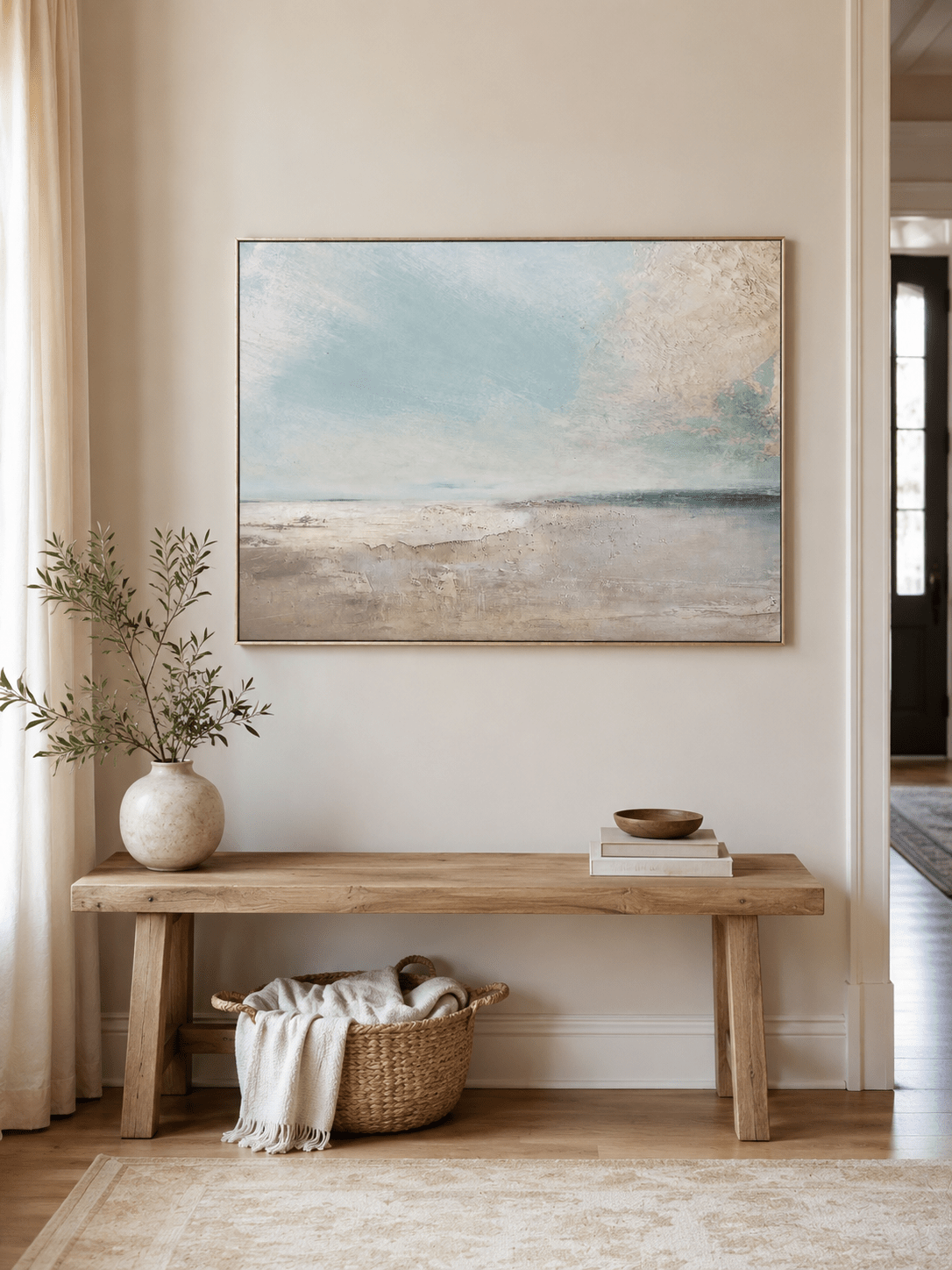
Wide wall art is usually the better solution when the empty wall itself looks longer than the artwork zone feels tall. Typical examples include a long blank wall, the space above a sectional sofa, an open-plan living room, a low console, or a dining-bench wall. In each case, the aim is continuity: one visual gesture instead of several unrelated small objects.

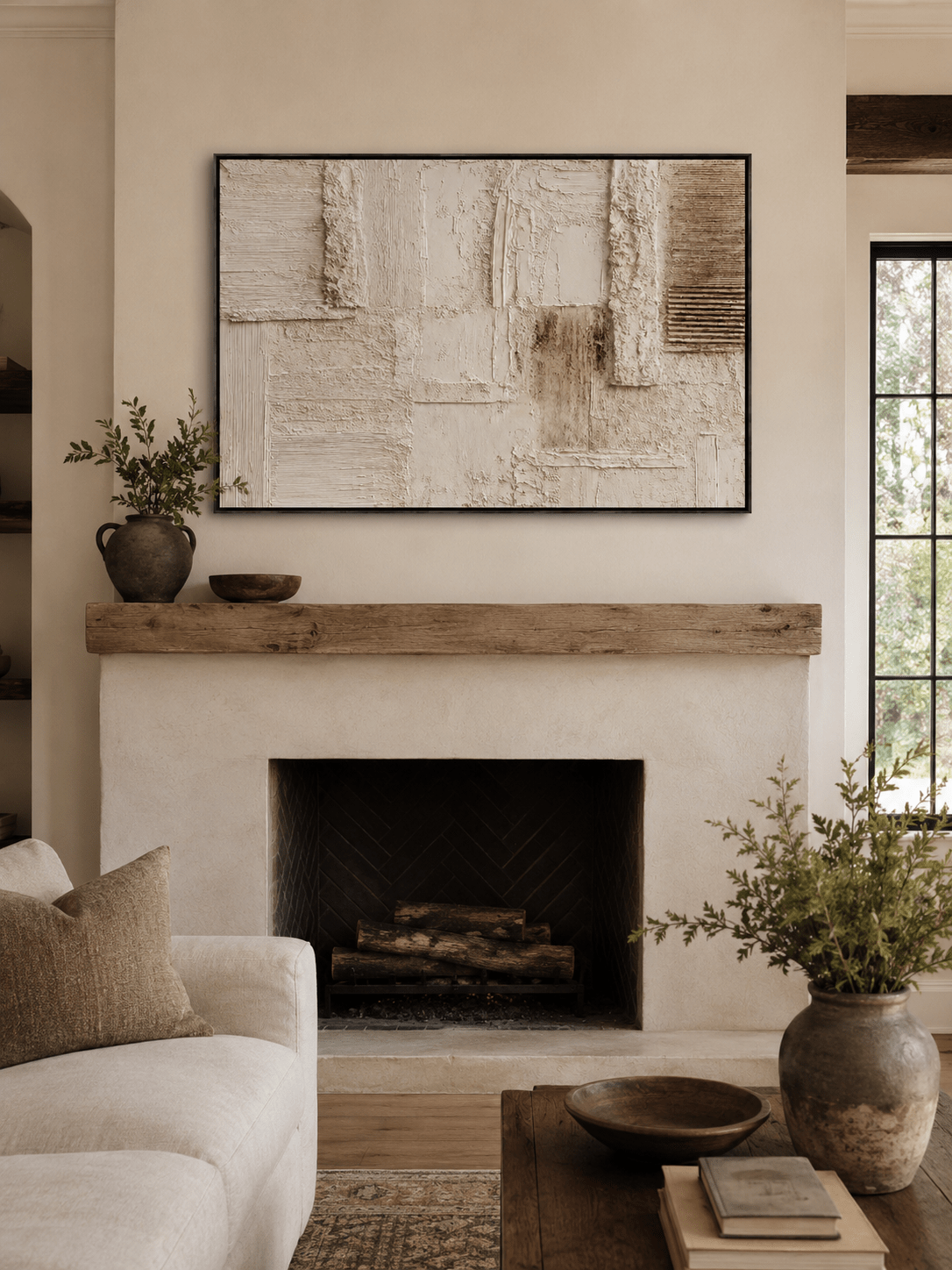
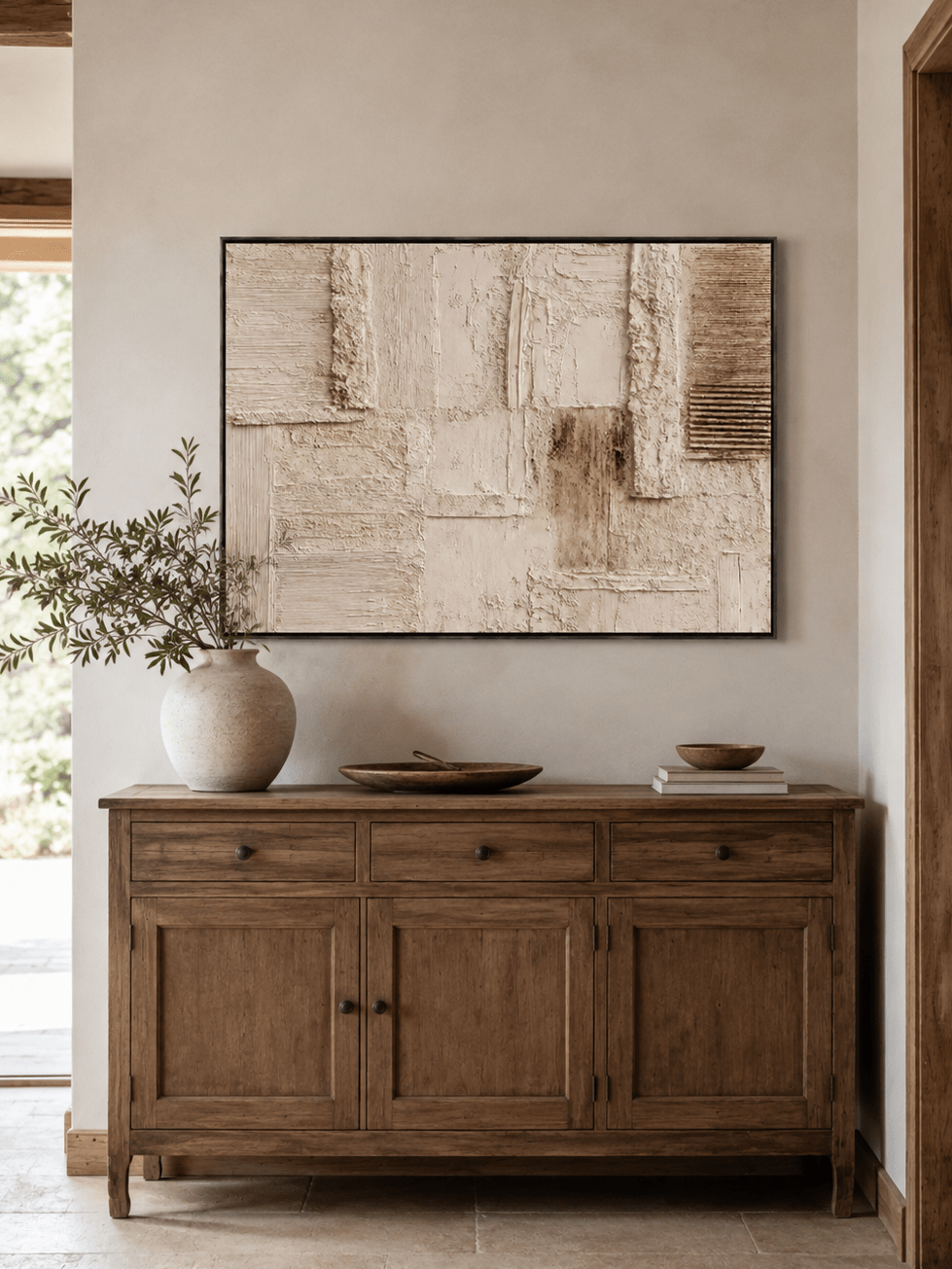
Extra wide canvas art can also replace a gallery wall when you prefer a quieter room. A single piece eliminates the repeated frame edges and varied spacing of multiple works. Minimalist Linear Texture – EV#0067 is a useful example: five fields of raised white and silvery lines create rhythm while remaining visually light across a large surface.
Choose a standard horizontal canvas instead when the wall is interrupted, the furniture is compact, or the room needs more visual height. A panoramic piece forced between tall windows can feel compressed; a less elongated landscape format will usually leave healthier margins.
Best Subjects and Styles for Panoramic Wall Art
The strongest subjects are those that naturally unfold from left to right. They do not need to be literal landscapes; the composition simply needs a directional flow that rewards the width.
- Abstract horizons: Broad bands of color are easy to read from across a living room and can be either quiet or dramatic. Ember Horizon – AK#0315 is best for a living room or dining room that benefits from warm contrast.
- Landscape-inspired abstraction: A suggestion of mist, water, or distant land adds depth without making the room feel thematic. Misty Tidelands – EL#0313 is especially suited to a bedroom.
- Wabi-sabi and minimalist texture: Imperfect lines, mineral surfaces, and restrained palettes reward close viewing. Minimalist Linear Texture – EV#0067 works above a long console or bench.
- Earth-tone textured art: Terracotta, stone, cream, and gray connect easily with wood furniture. Earth Tone Horizon – LL#0155 is a natural dining-room option.
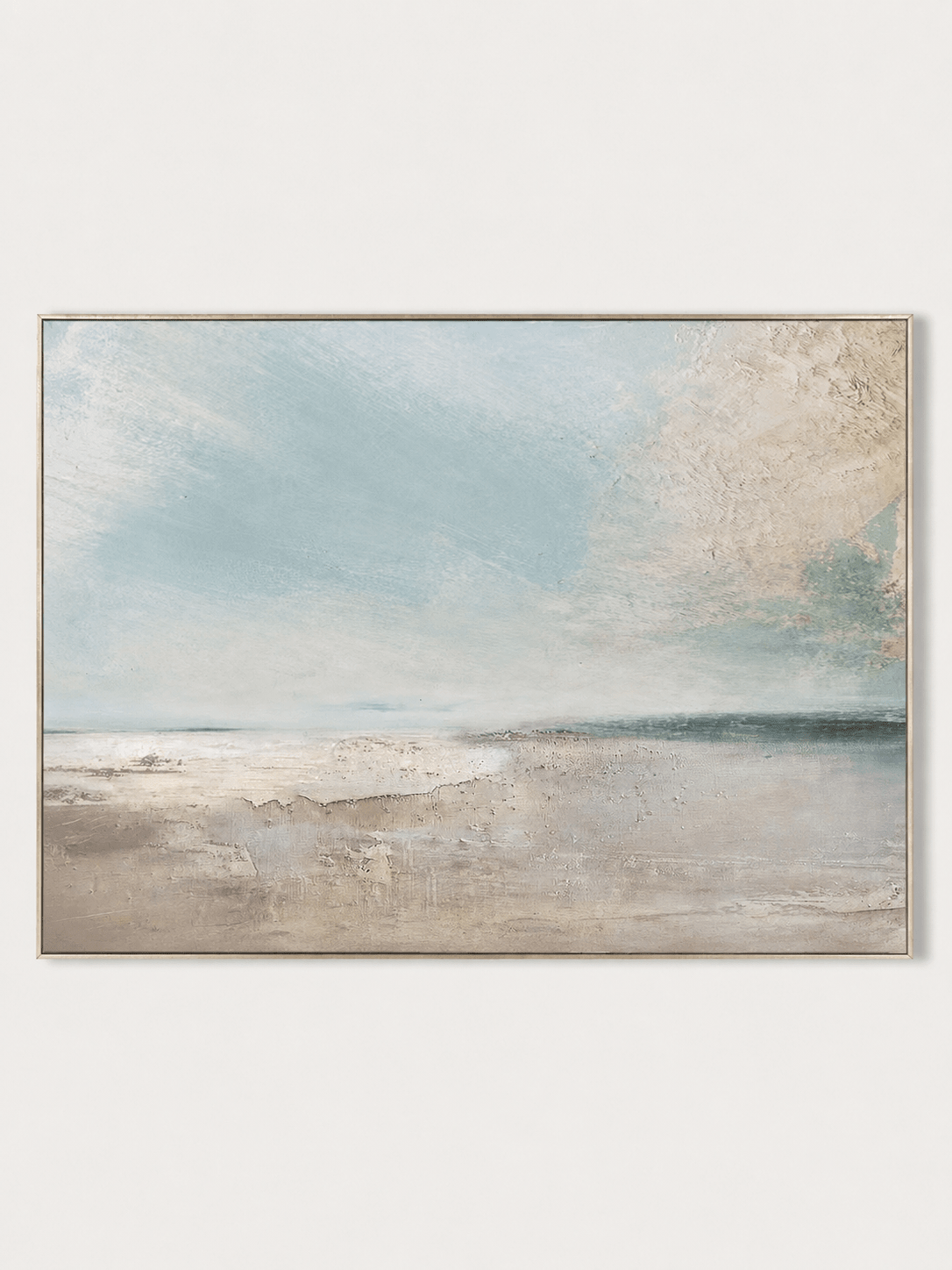
- Beach and sea abstraction: A long shoreline or wave band suits the format and can make an open plan feel more expansive. Sage Green Abstract Seascape – LL#0177 brings a muted coastal reference to a living room without resorting to bright nautical color.

For a broader coastal palette, discover beach and ocean wall art for calming interiors. If your space is not long enough for a true panorama, the horizontal collection offers less elongated alternatives with the same easy room-to-furniture relationship.
Common Mistakes to Avoid When Choosing Panoramic Wall Art
- Choosing artwork that is too small. A 40-inch canvas may be large in isolation but undersized over a 96-inch sofa. Calculate the target range before shopping.
- Hanging it too high. A large gap makes the art look disconnected from the furniture. Start around 6–10 inches above the sofa, headboard, or sideboard.
- Ignoring furniture width. Centering a canvas on the wall instead of the furniture can make the whole arrangement look shifted.
- Forcing panoramic art into a narrow wall. If doors, windows, or sconces leave inadequate side margins, choose a standard horizontal format.
- Using a busy composition in a calm room. Scale amplifies visual energy. For a restful bedroom, prefer broad color fields and gentle tonal changes.
- Forgetting the viewing distance. Fine texture is rewarding up close; strong horizons and tonal contrast read better across an open plan. Evaluate the product image from the distance at which you will usually see it.
- Measuring the wall only once. Use painter’s tape to mark the exact listed canvas dimensions, then check the outline in daylight and evening light before ordering.
Final Thoughts: Is Panoramic Wall Art Right for Your Space?
Choose panoramic art when the room already has a long visual anchor and you want the artwork to connect with it. Over a sofa, aim for roughly two-thirds to three-quarters of the sofa width. Above a bed, measure the headboard and keep the composition calm and safely clear. In a dining room, let the art echo the table or sideboard and check how its texture behaves under evening light.
If the wall is narrower, interrupted, or needs vertical presence, a standard horizontal painting may be the better design decision. If the wall is broad and uninterrupted, browse WABI Wall Art’s panoramic collection with your taped measurements beside you. The right piece should not merely fill blank space; it should make the furniture, wall, and room read as one composition.
Frequently Asked Questions
What is panoramic wall art?
Panoramic wall art is an intentionally elongated horizontal artwork, often with a visual ratio around 2:1 to 3:1. Its wide composition is designed to spread across long walls and above broad furniture.
How do I choose panoramic wall art for my home?
Measure the usable wall and the furniture beneath it, then target artwork about two-thirds to three-quarters of the furniture width. Also consider ceiling height, viewing distance, palette, and whether you want a calm or dramatic focal point.
Is panoramic wall art good for a living room?
Yes. Panoramic wall art works especially well above a long sofa or sectional and in open-plan living rooms, where one wide composition can remain legible from several viewpoints.
How wide should a panoramic painting be above a sofa?
A useful starting point is 66%–75% of the sofa width. That means about 56–63 inches over an 84-inch sofa, 64–72 inches over a 96-inch sofa, and 72–81 inches over a 108-inch sofa.
Is panoramic wall art suitable for a bedroom?
Yes. Its low, wide shape echoes a headboard and can create a calm, grounded atmosphere. Keep the lower frame roughly 6–10 inches above the headboard and choose a restful composition for a sleep-focused room.
What is the difference between horizontal and panoramic wall art?
Horizontal art is any artwork wider than it is tall. Panoramic art is a more elongated type of horizontal art, usually better suited to long uninterrupted walls, sofas, king beds, sideboards, and dining tables.
Can panoramic wall art work in a small room?
Yes, if the room has a long clear wall and the canvas keeps comfortable side margins. Choose a lighter palette and modest height so the art expands the sightline without making the room feel crowded.
What subjects work best for panoramic wall art?
Abstract horizons, minimalist line work, wabi-sabi textures, landscape-inspired abstraction, and beach or sea compositions suit the left-to-right flow of a panoramic format.
How high should panoramic wall art be hung?
On an open wall, start with the artwork’s center 57–60 inches above the floor. Above furniture, place the lower edge about 6–10 inches above it and prioritize a connected furniture-to-art relationship.
Where can I buy handmade panoramic wall art?
WABI Wall Art offers hand-painted and textured panoramic works in neutral, abstract, wabi-sabi, landscape-inspired, and coastal styles, with multiple wide sizes for living rooms, bedrooms, and dining rooms.
Measurement note: The proportions and hanging heights in this guide are practical starting points. Architecture, furniture height, frame depth, and personal preference can justify adjustments.