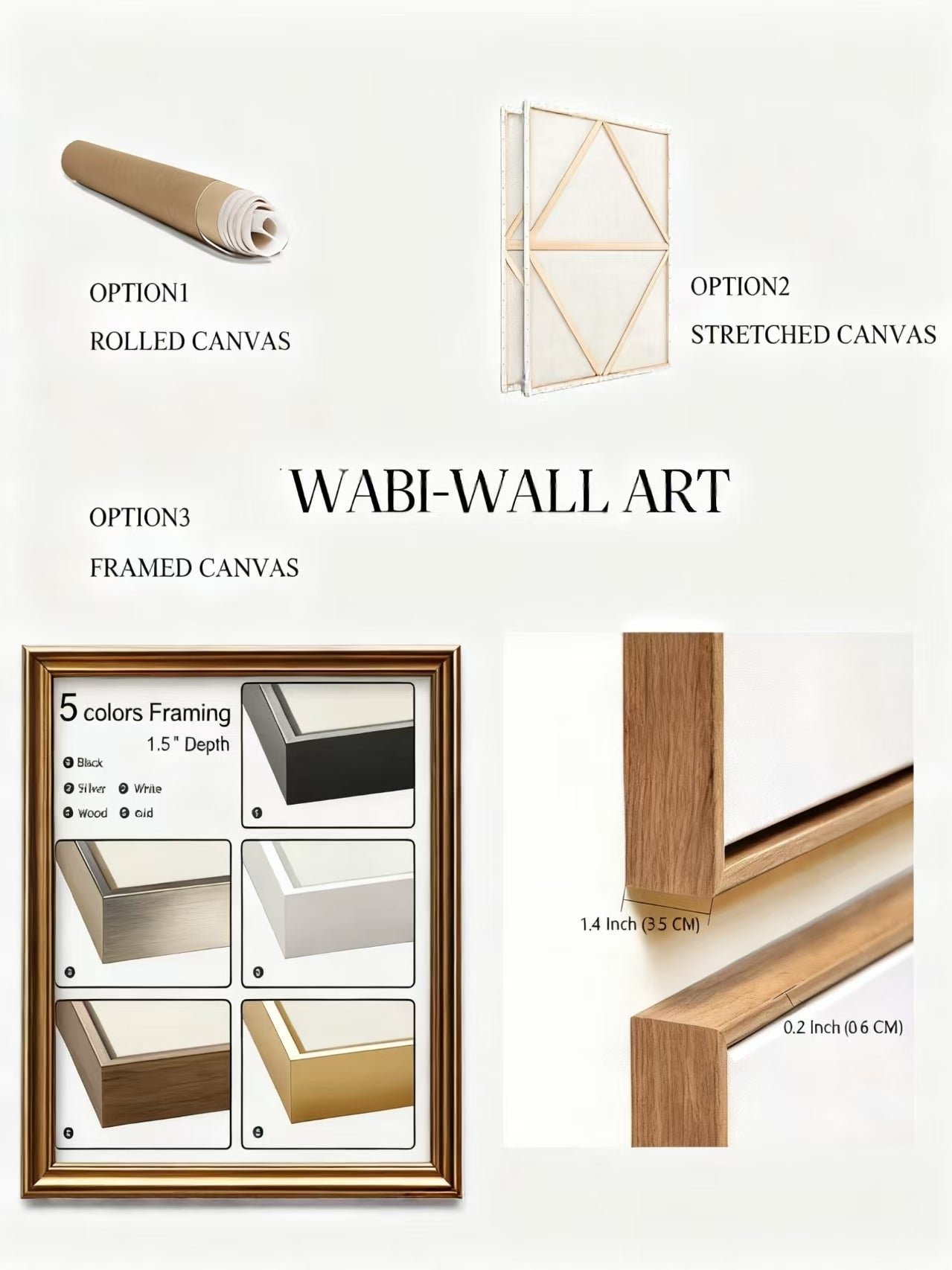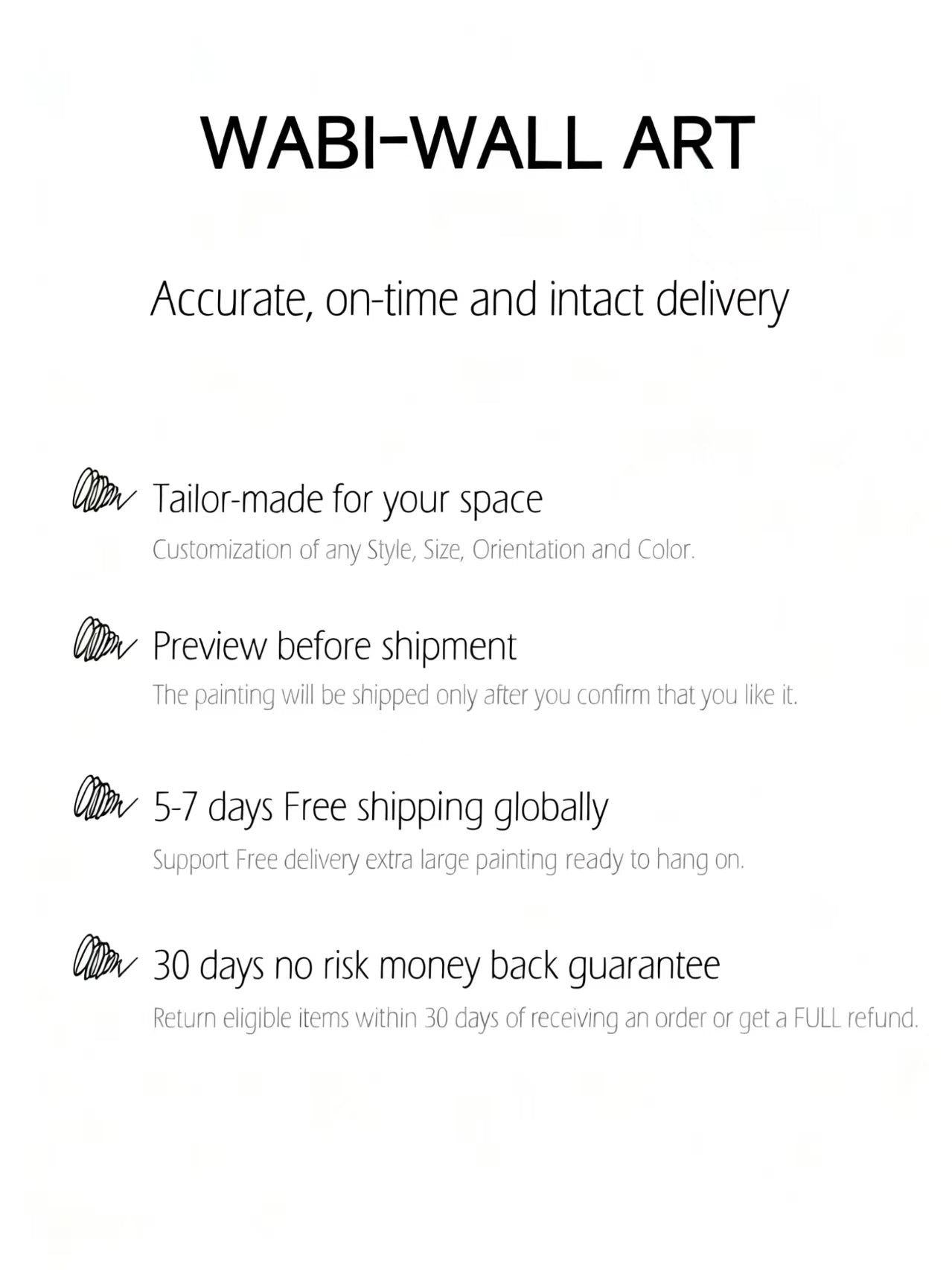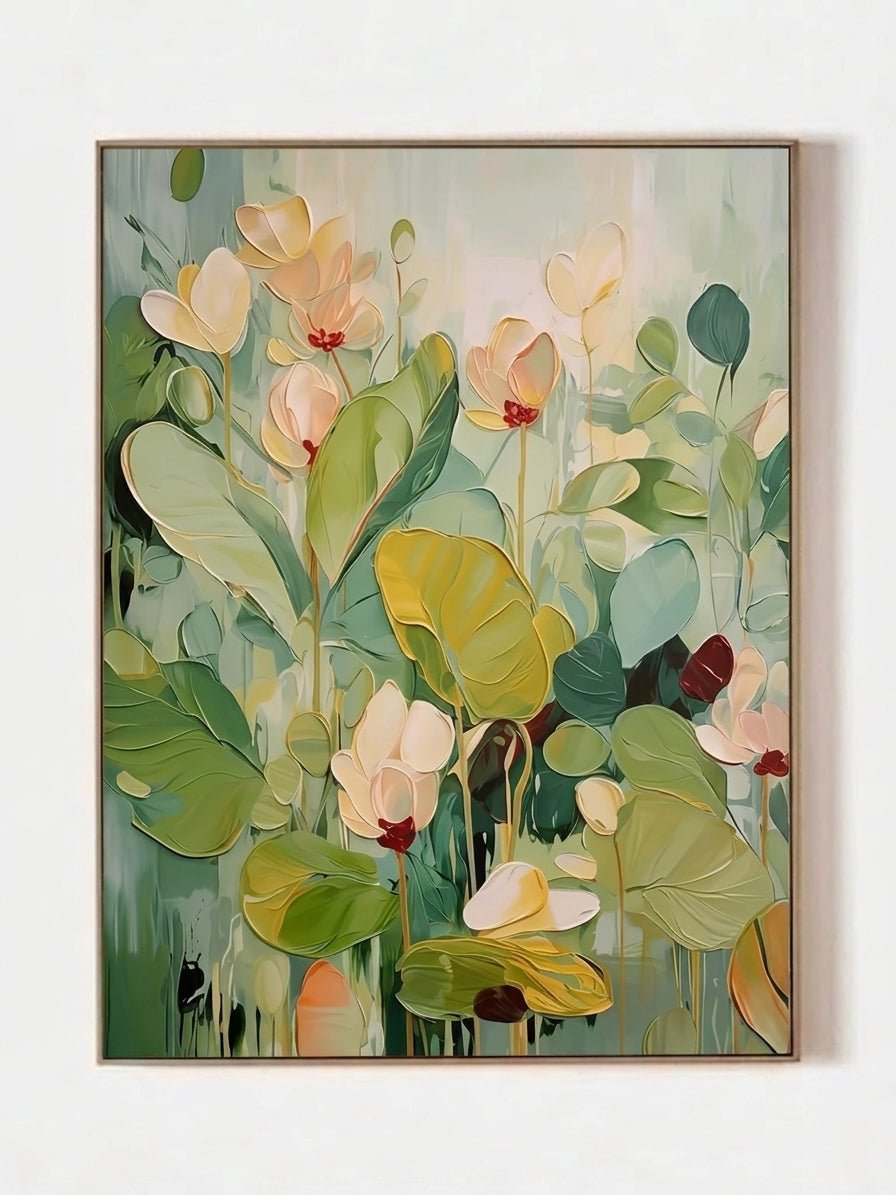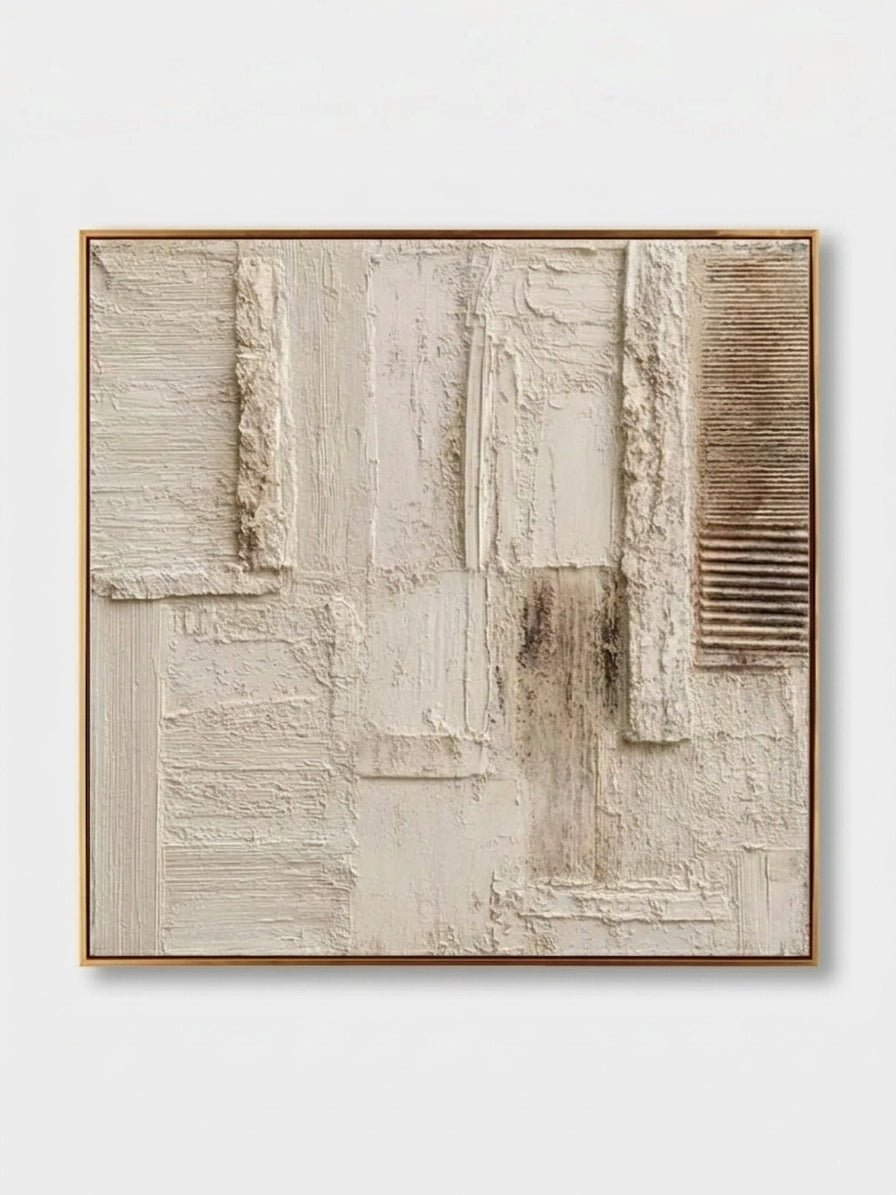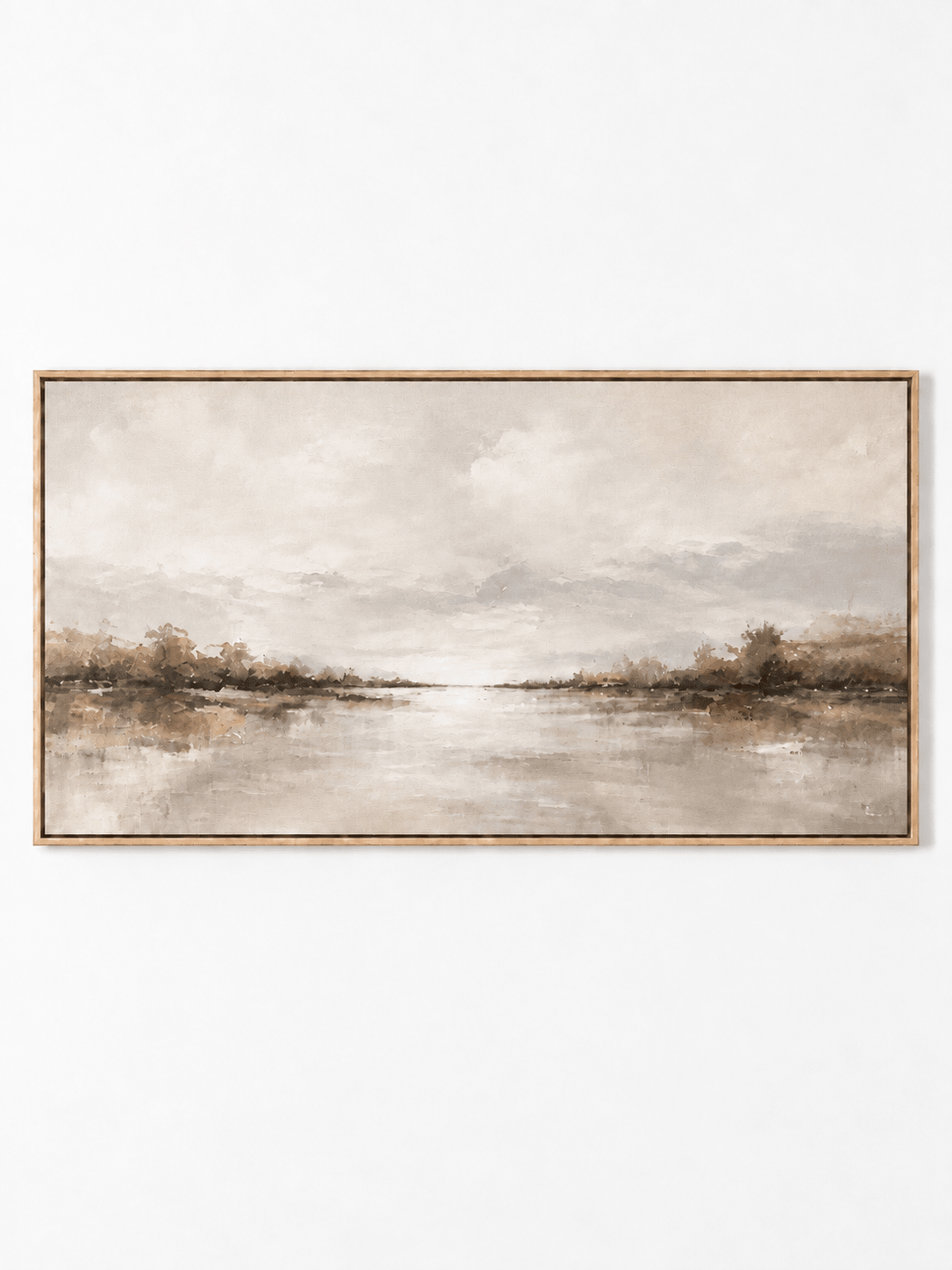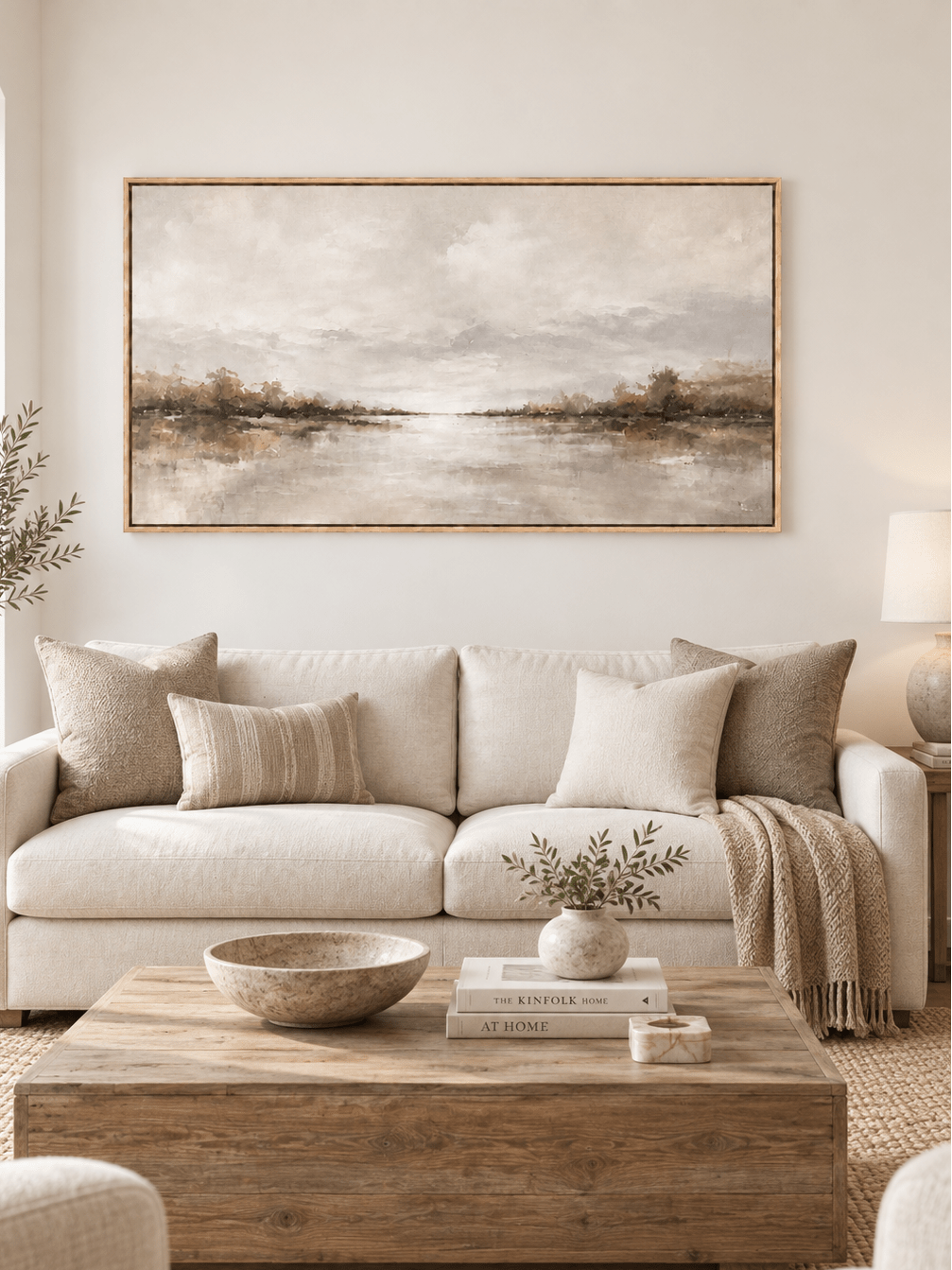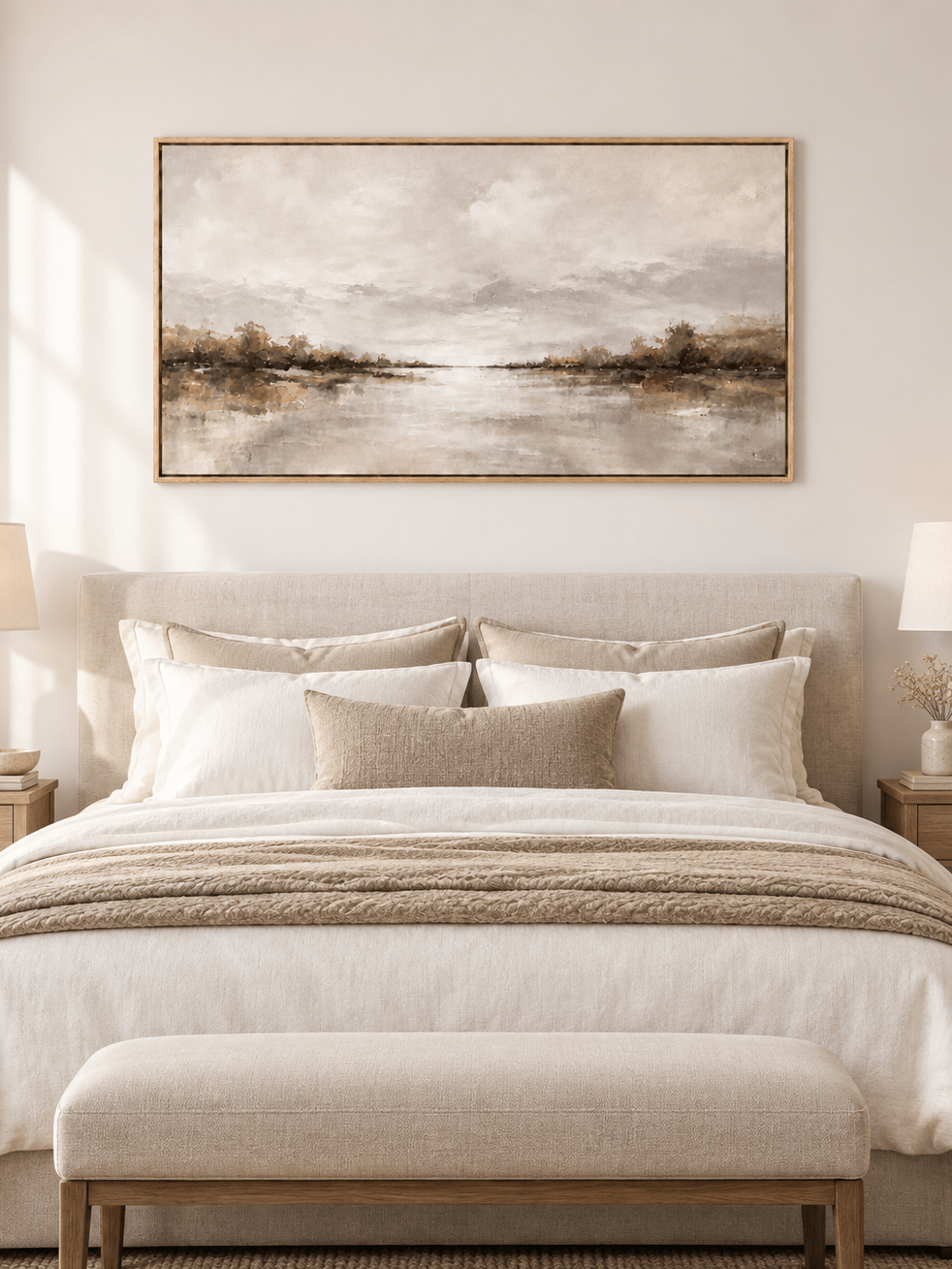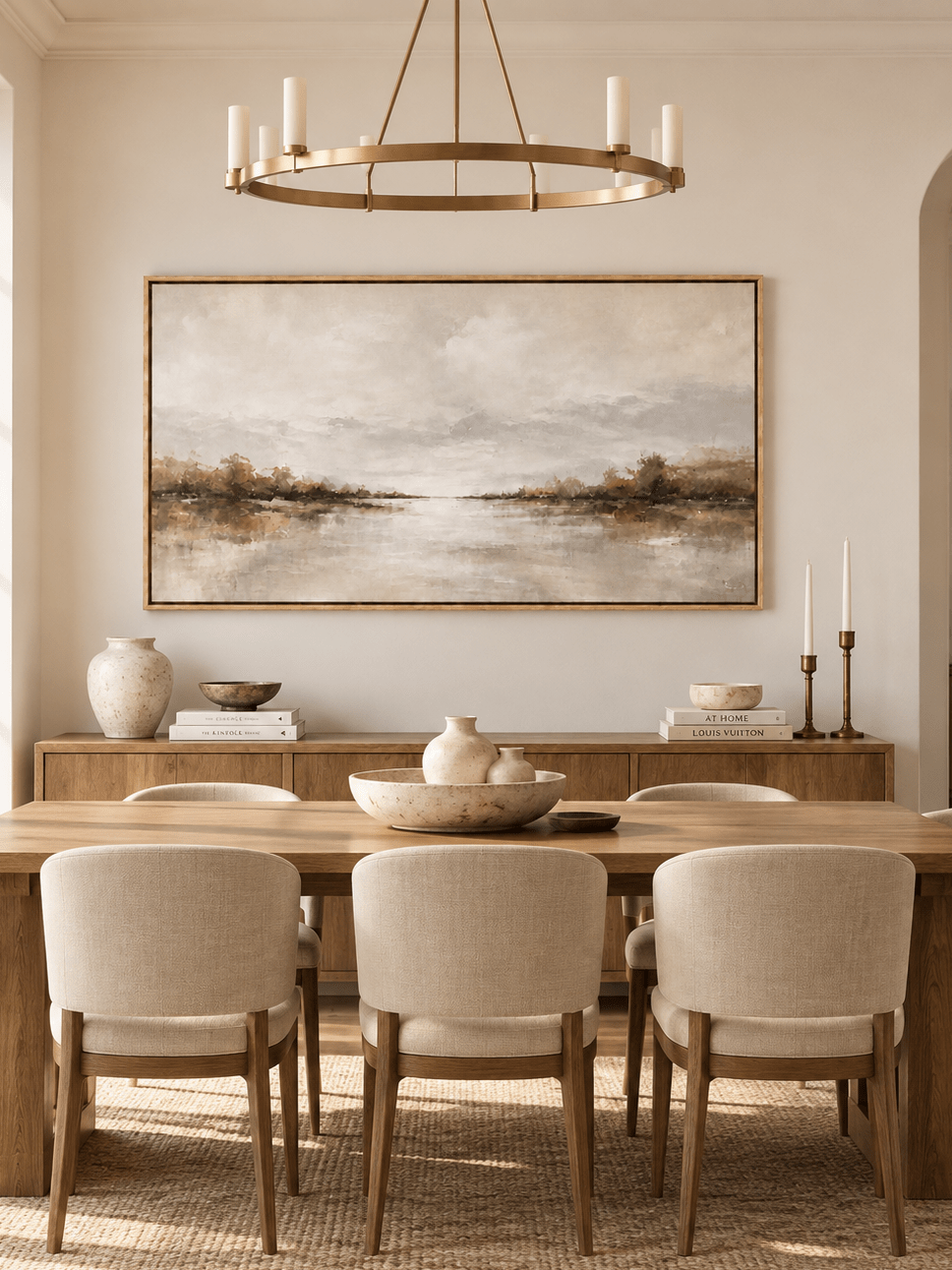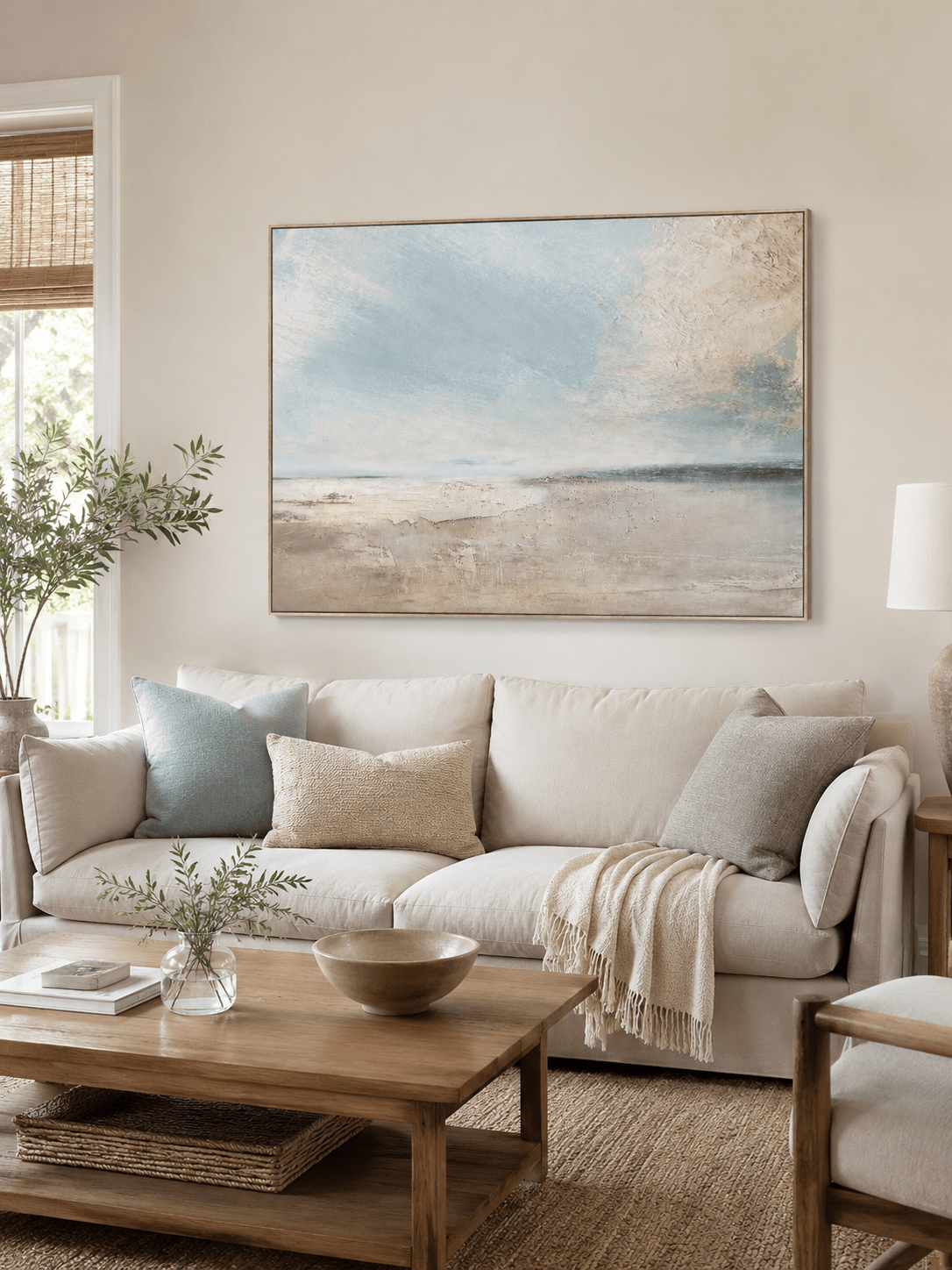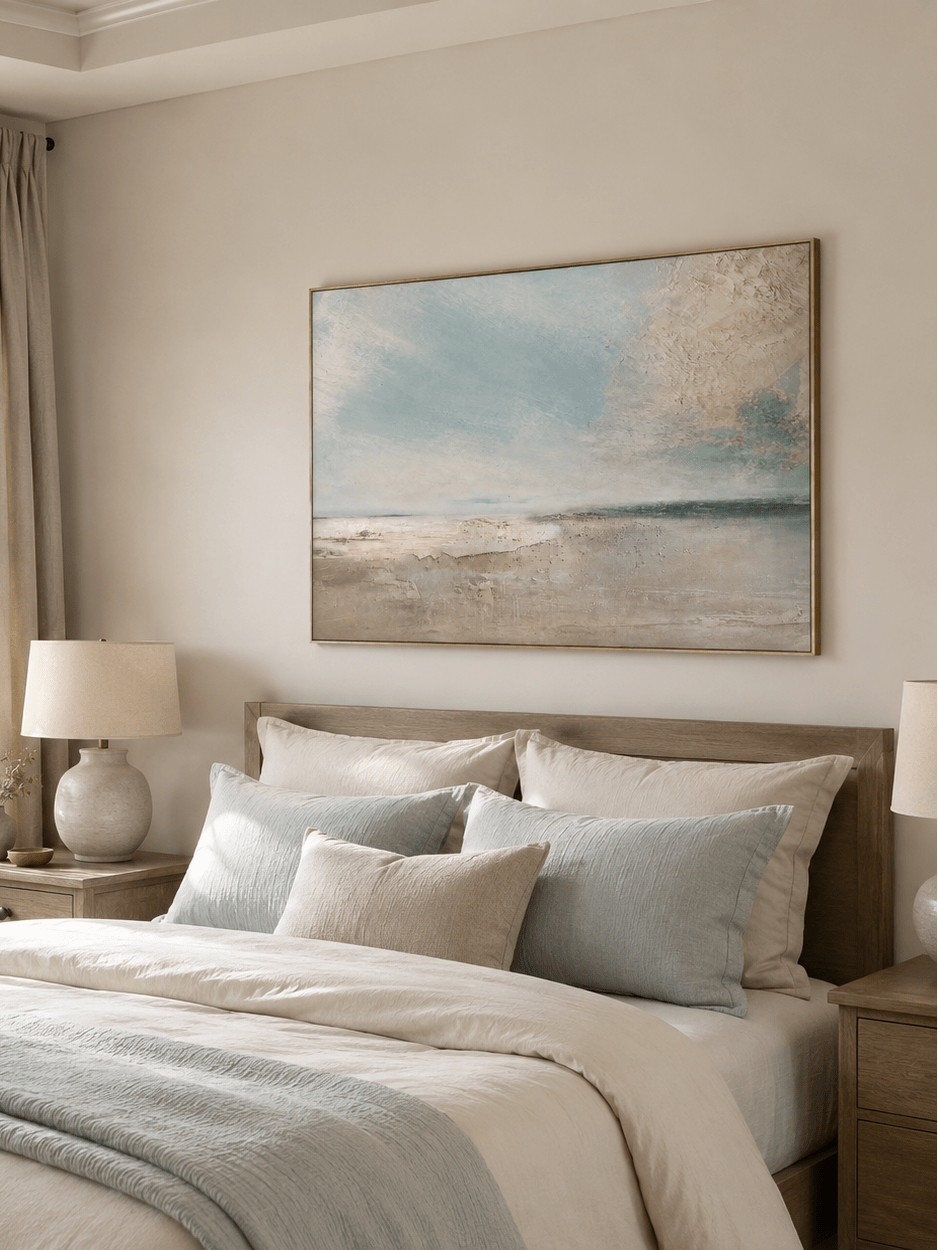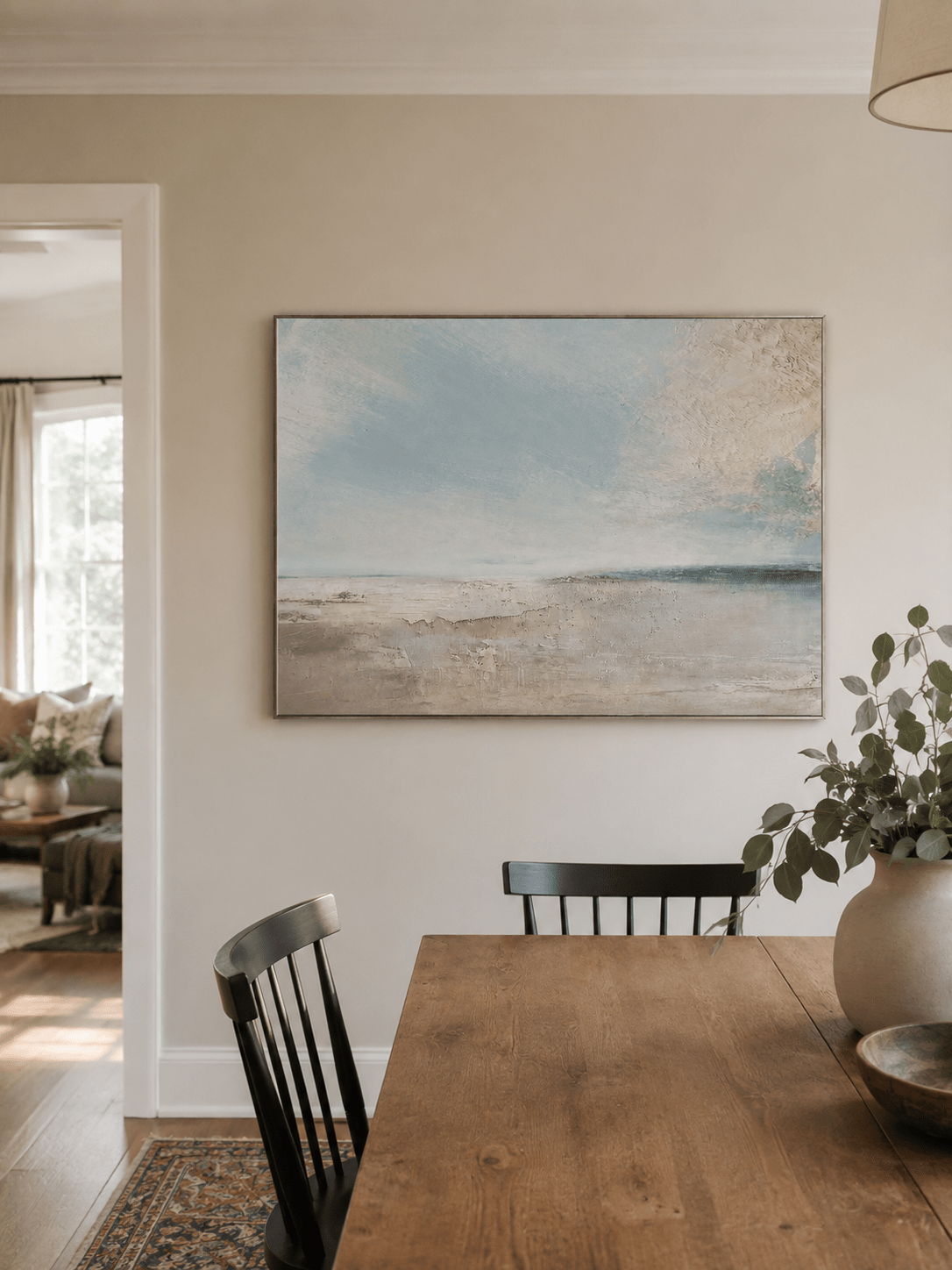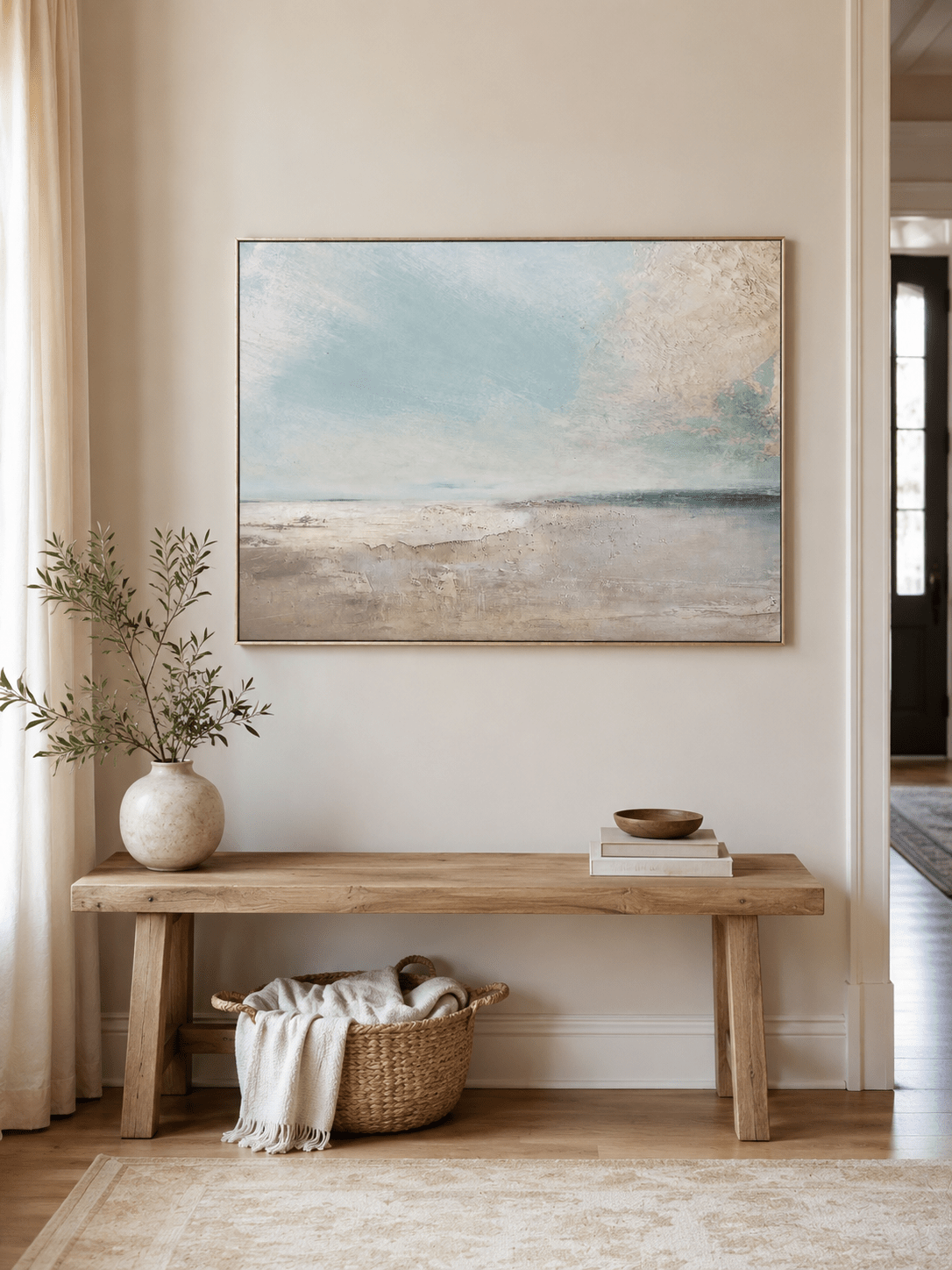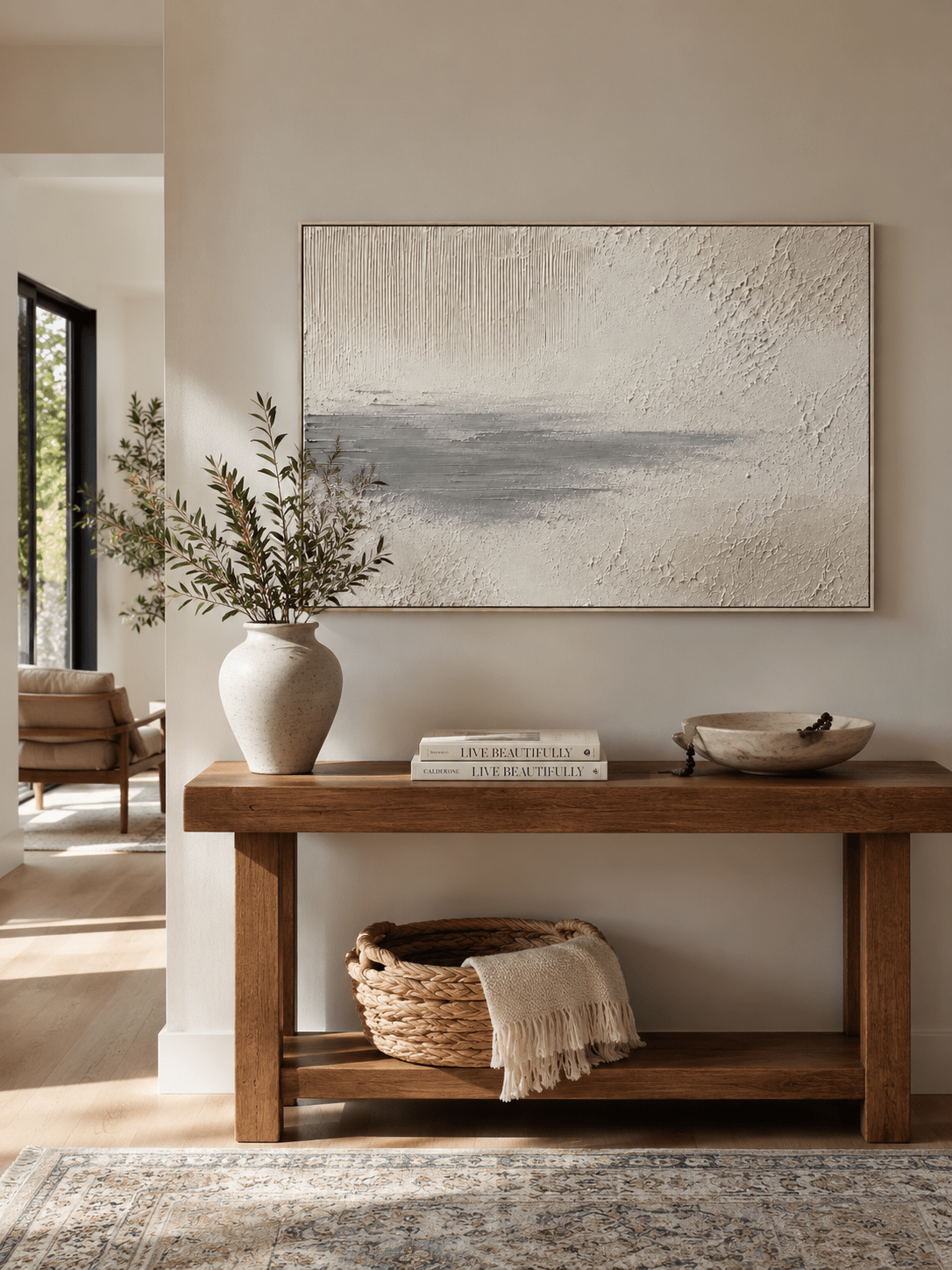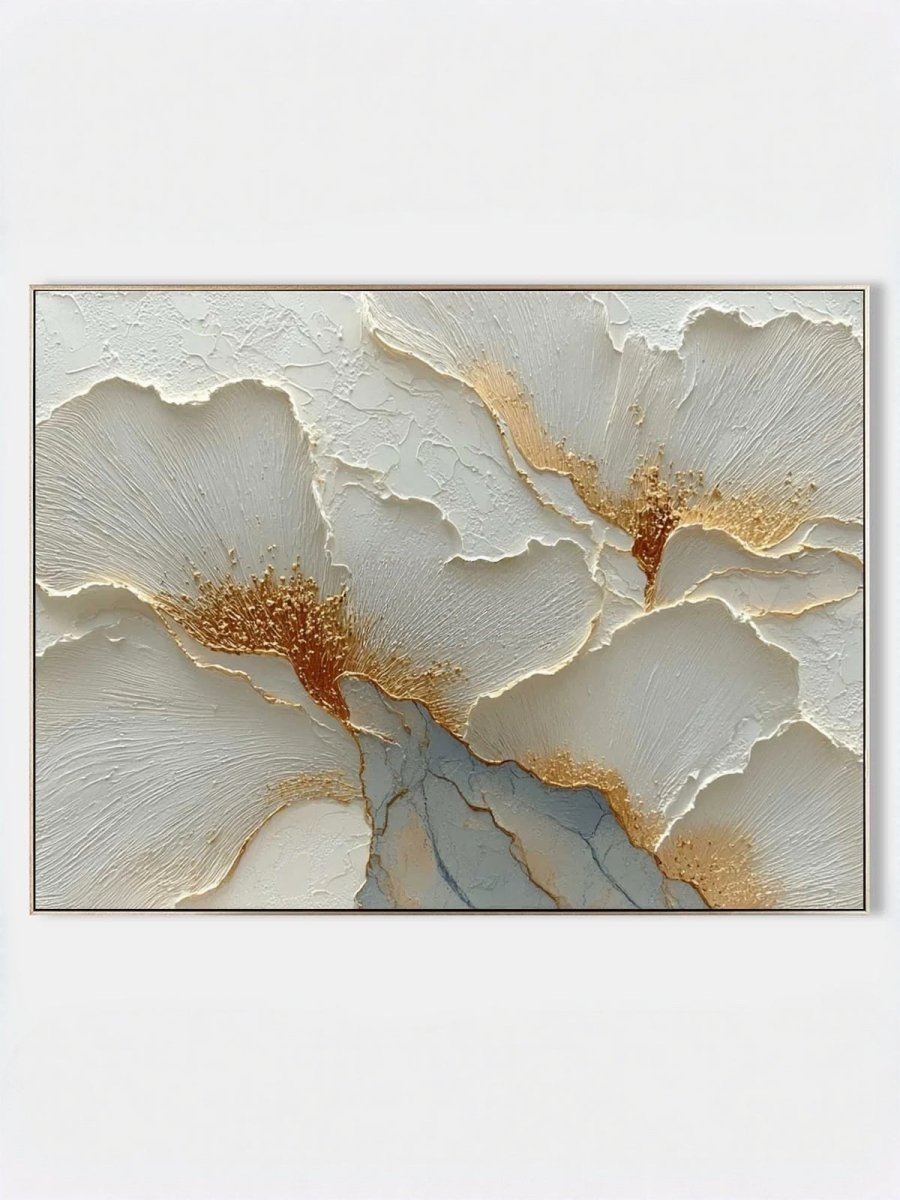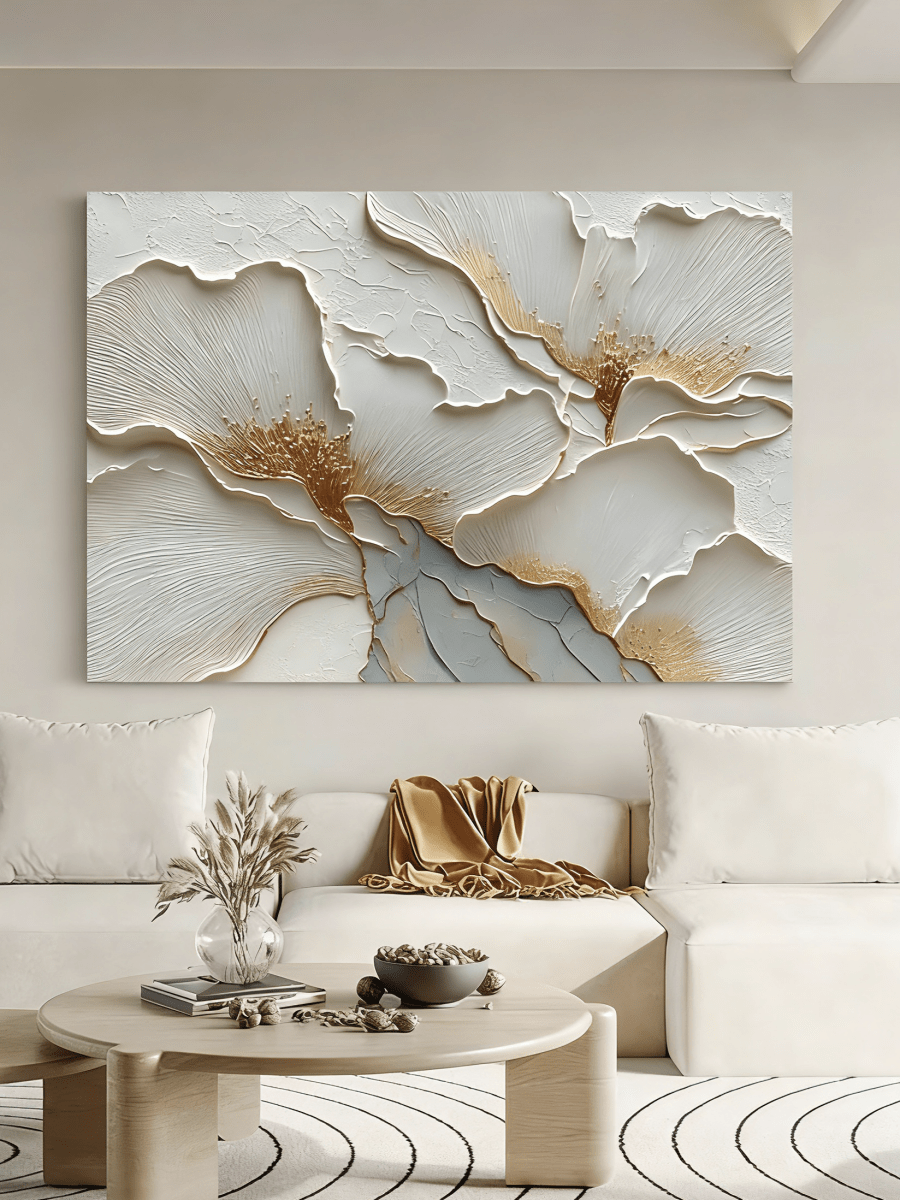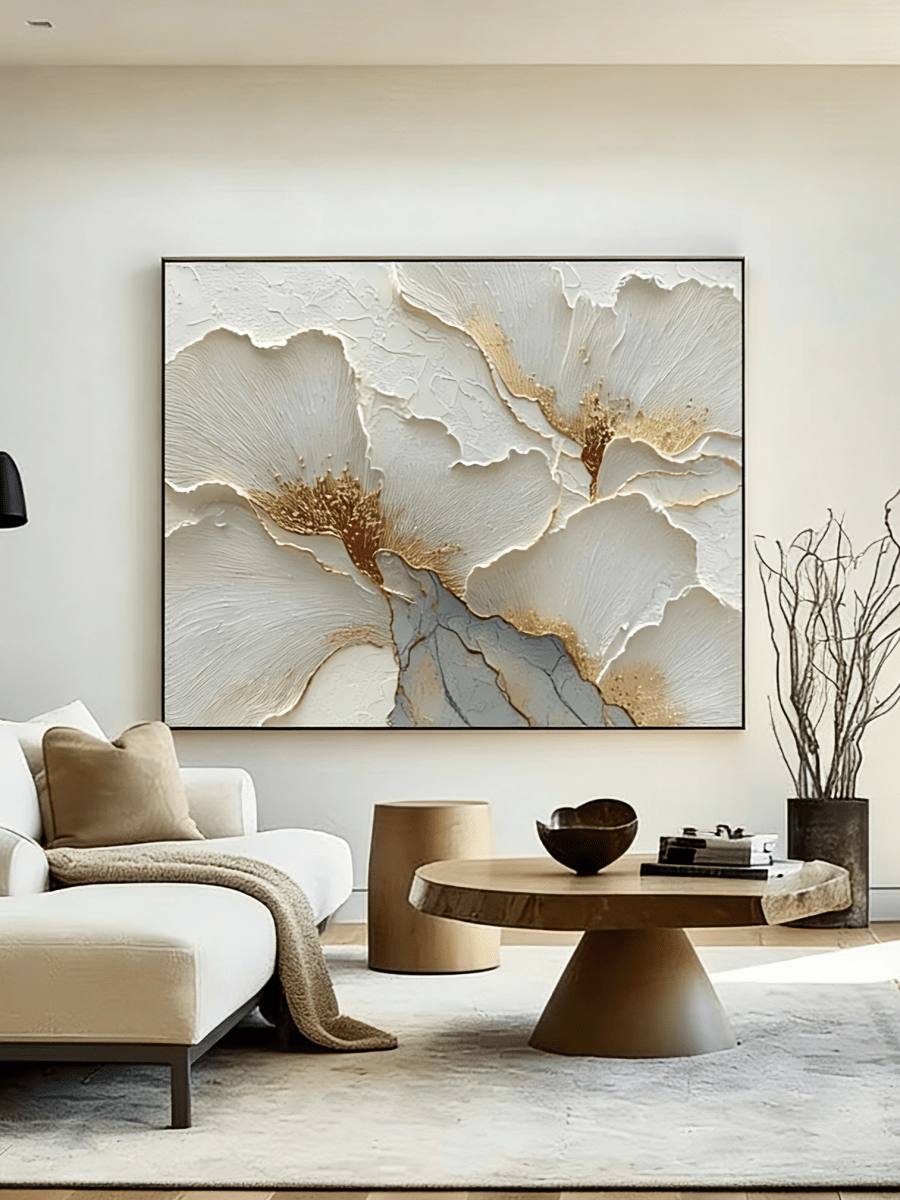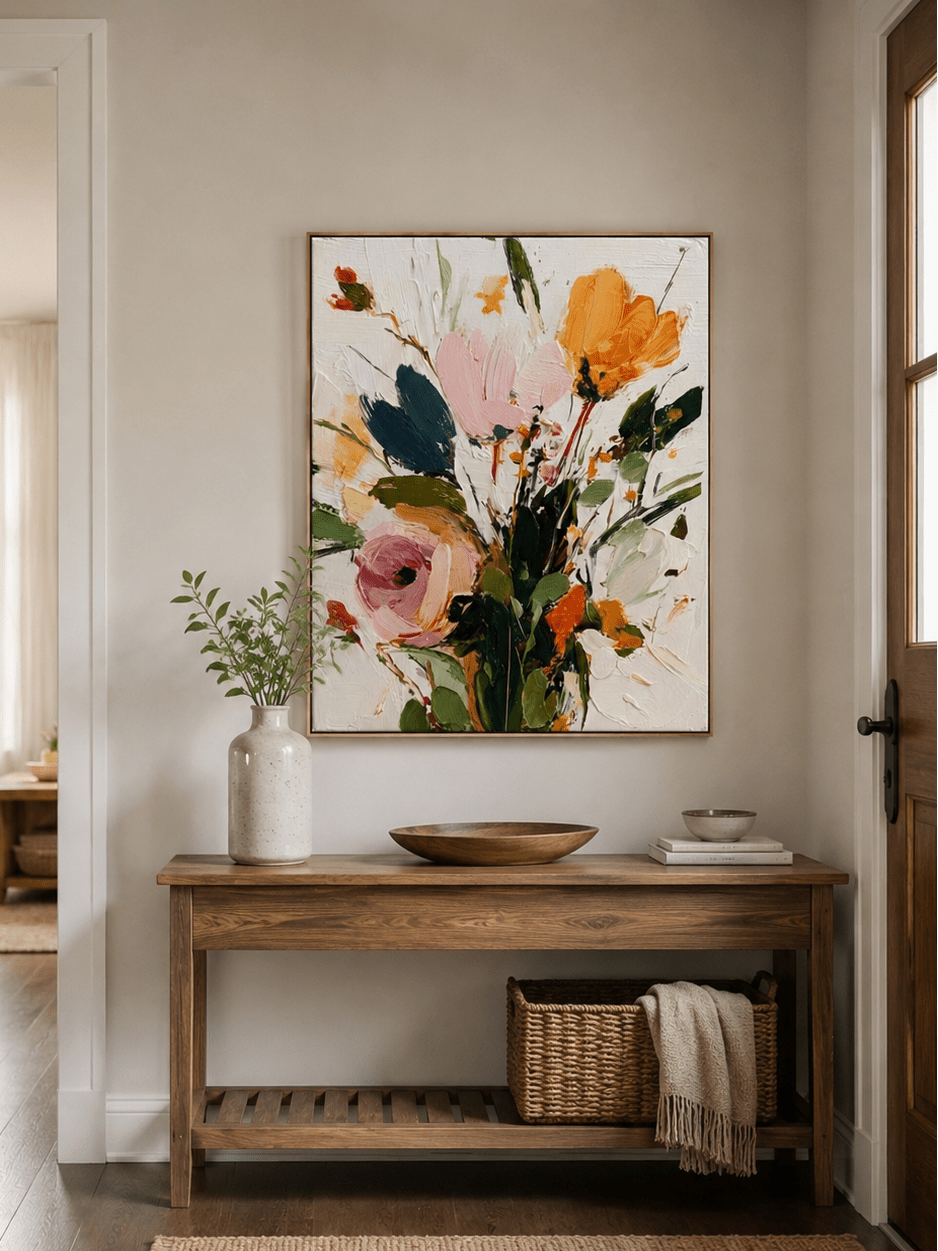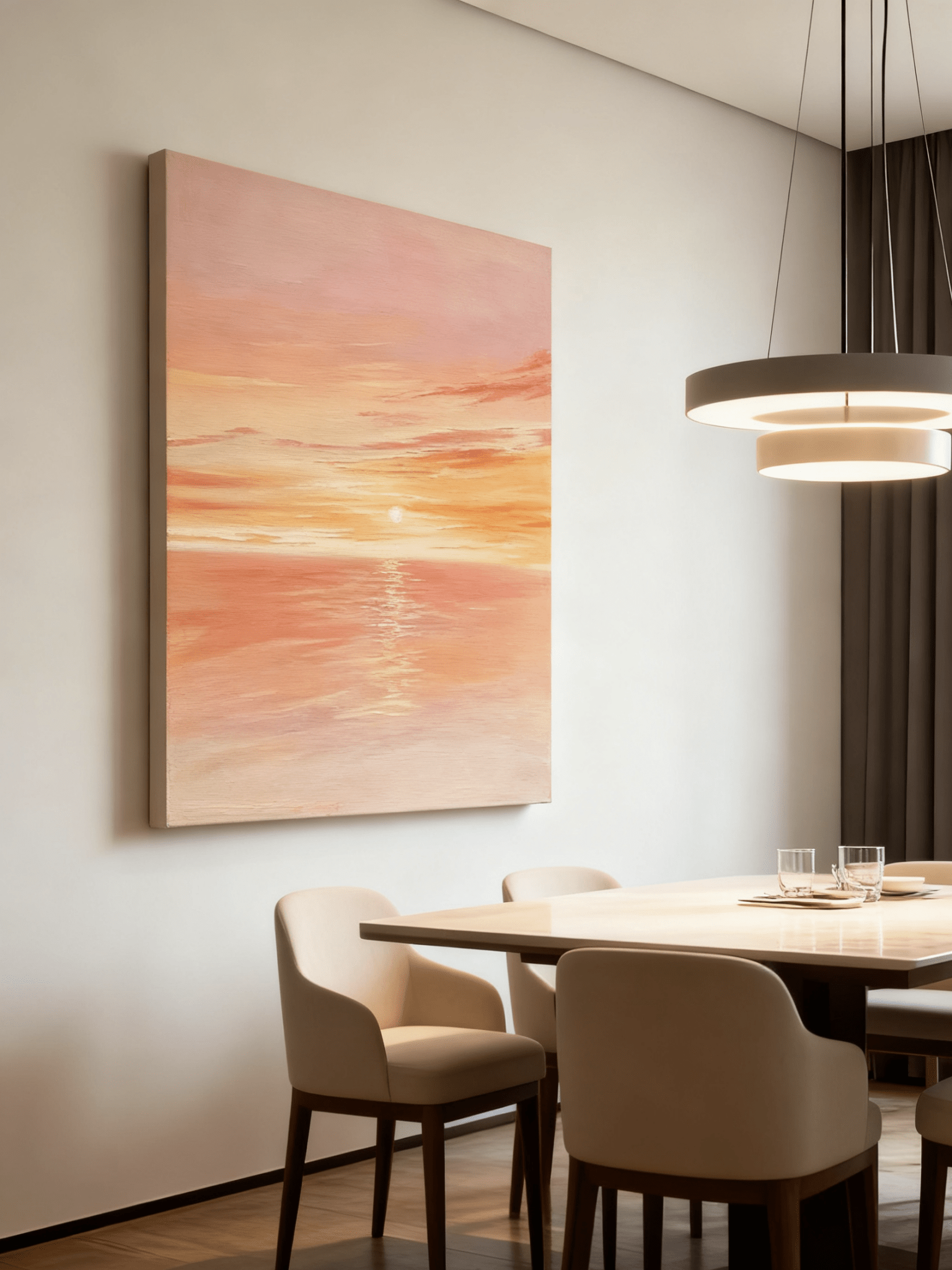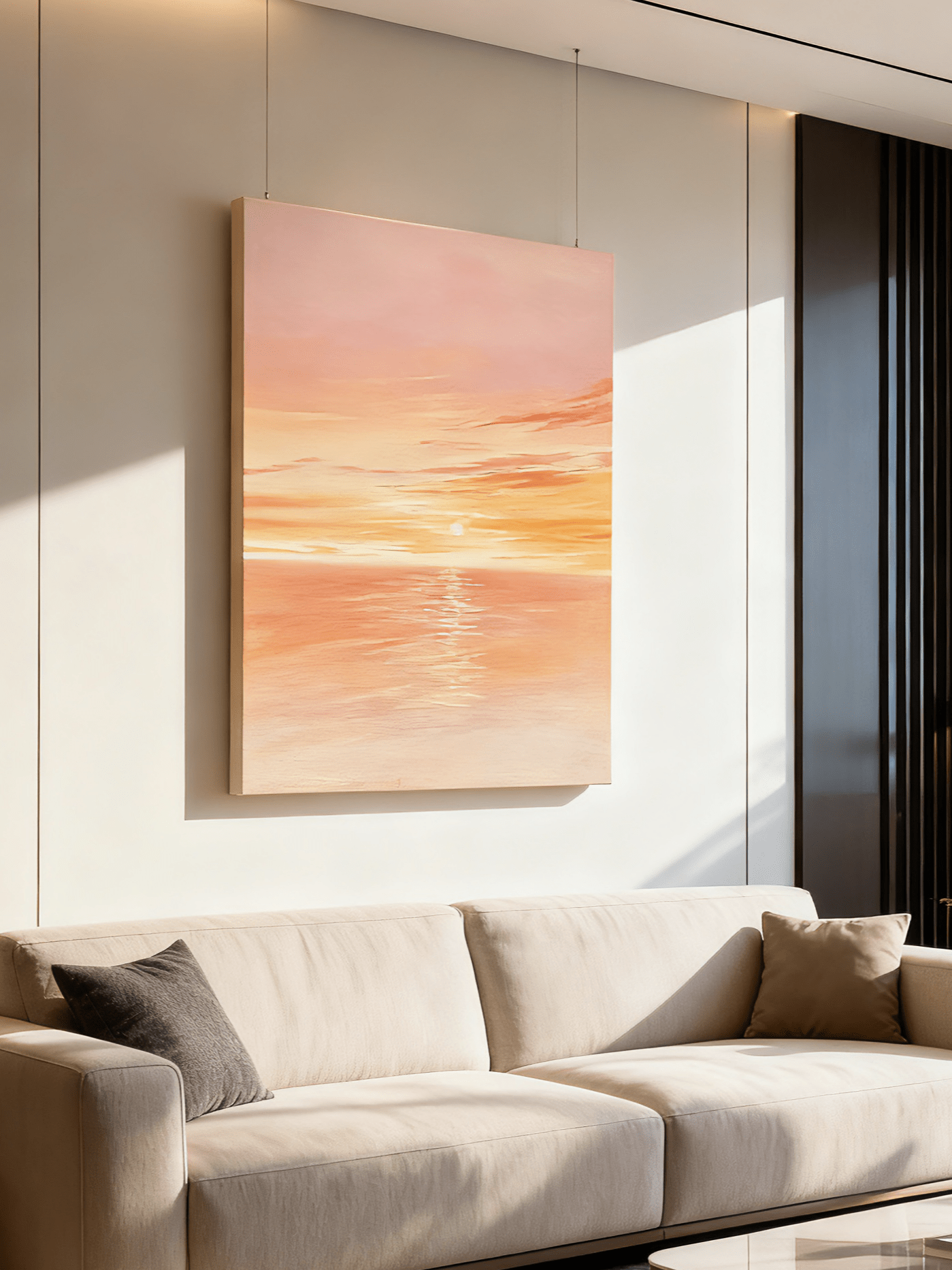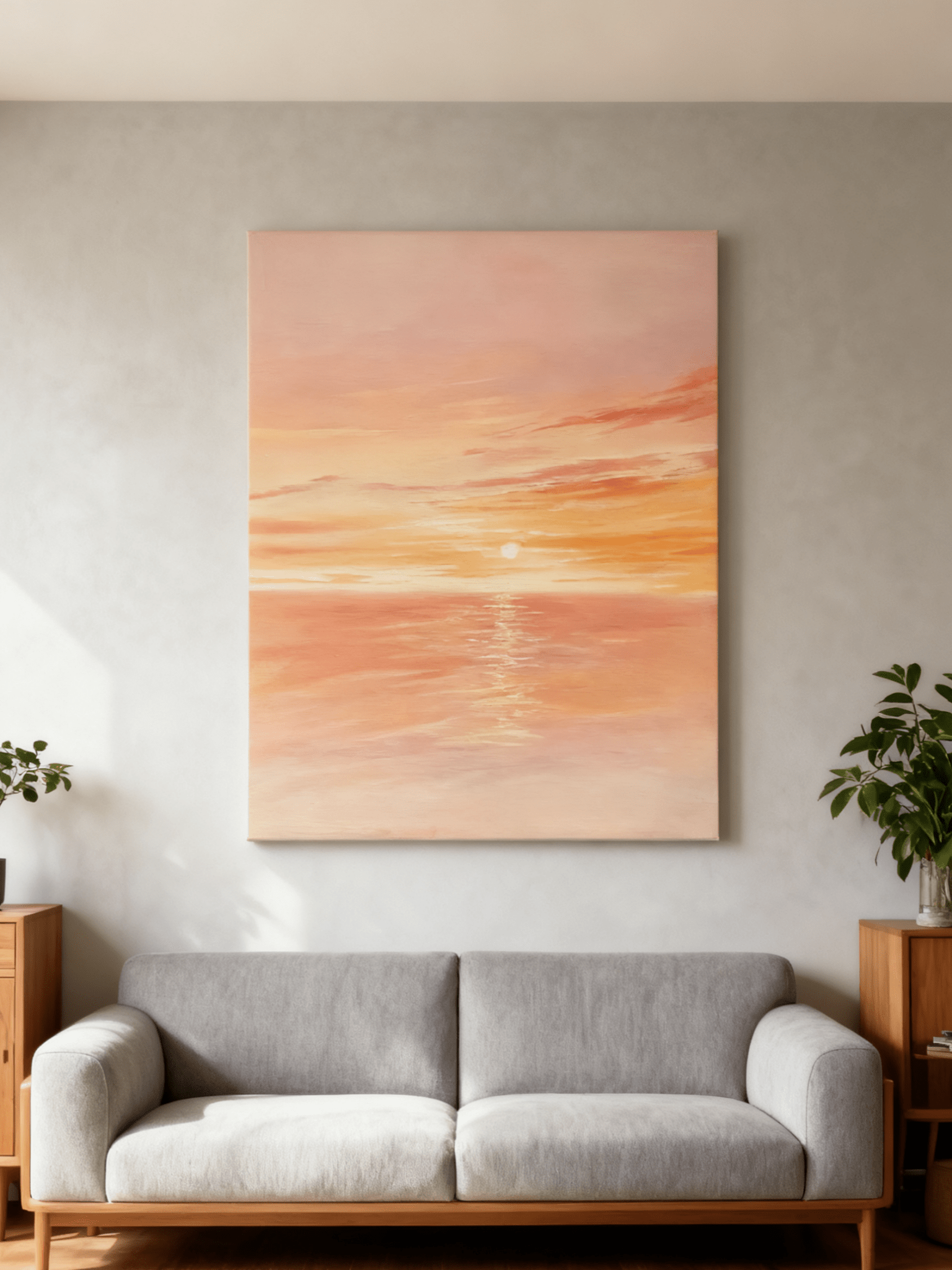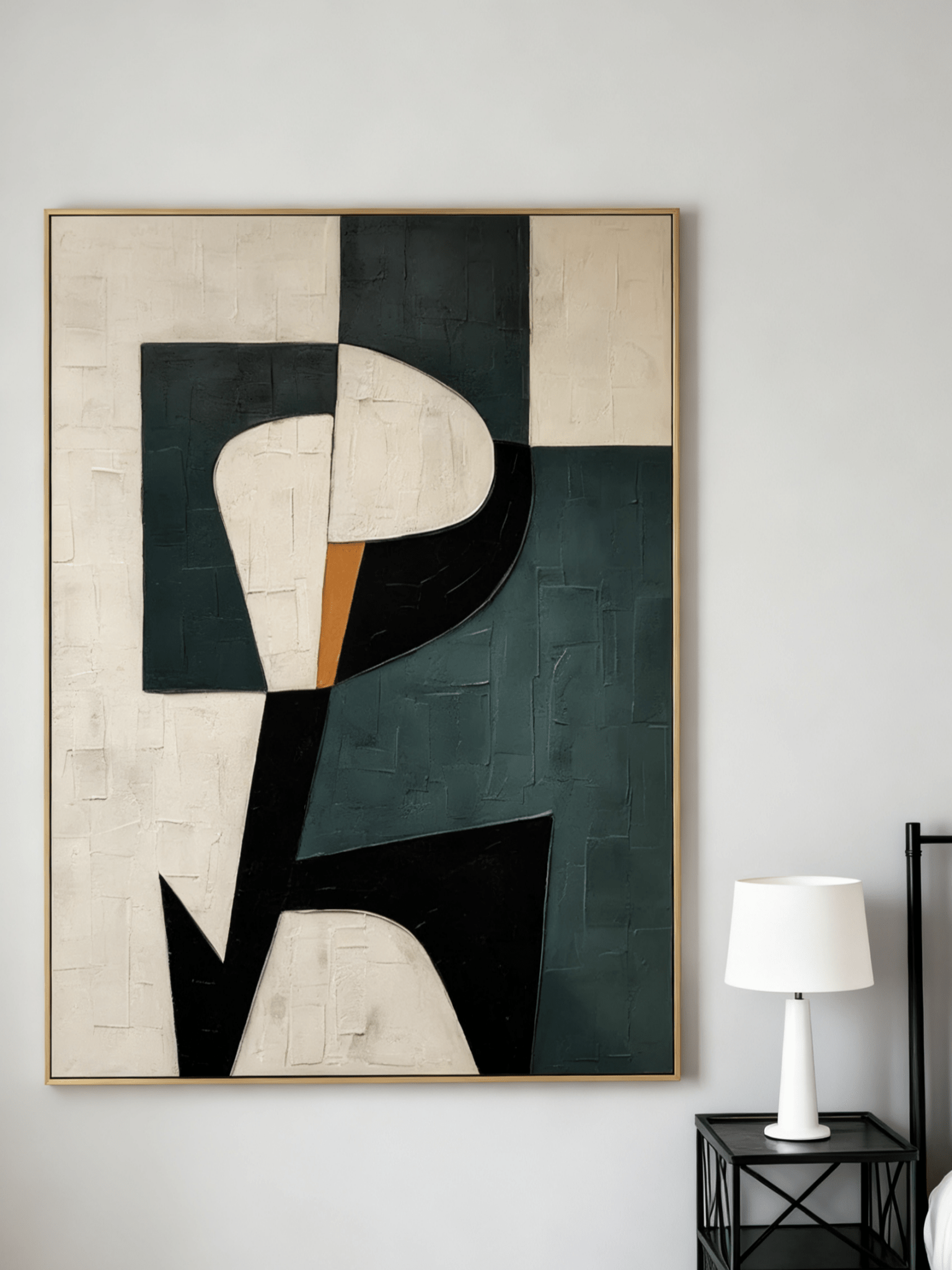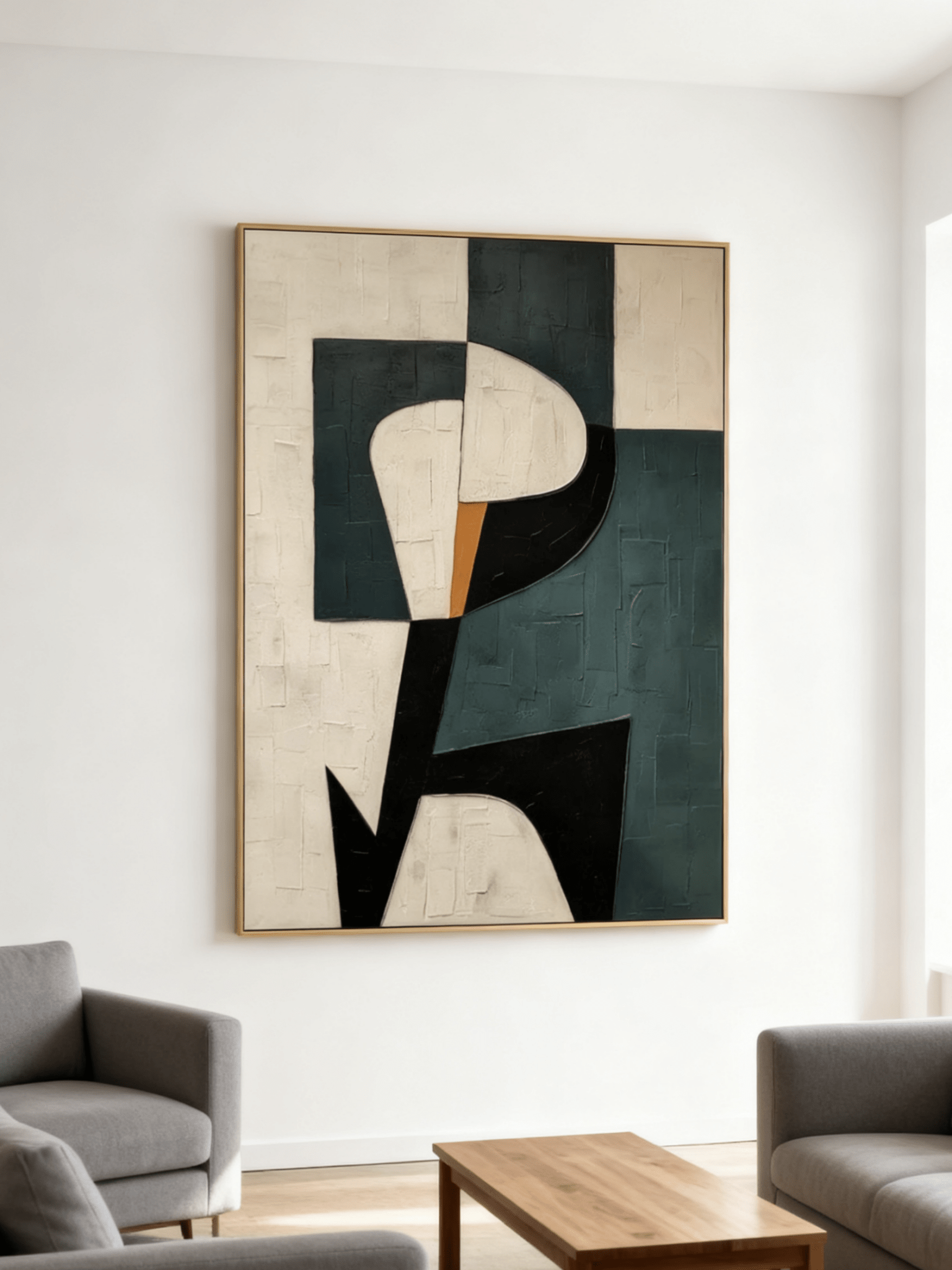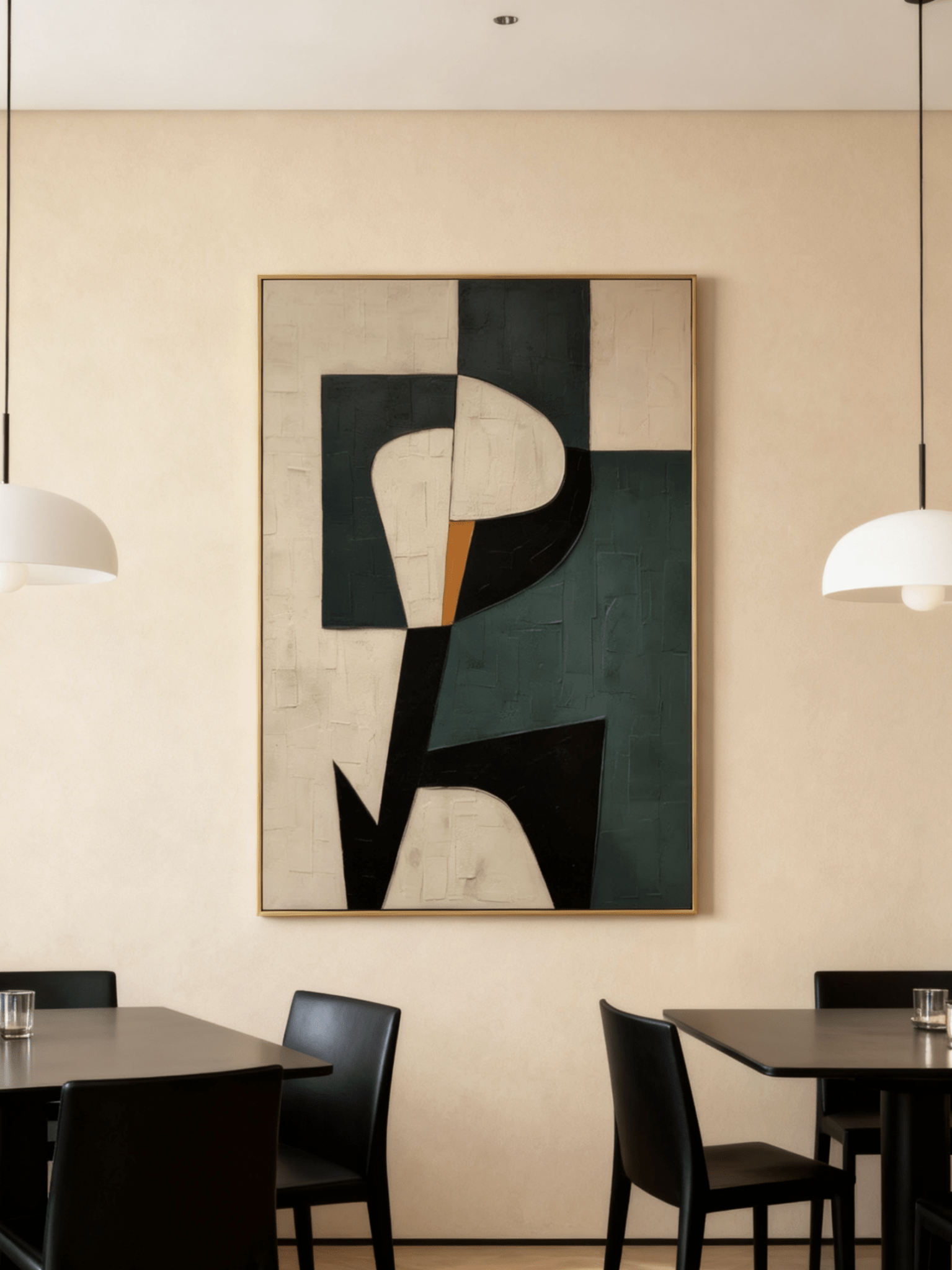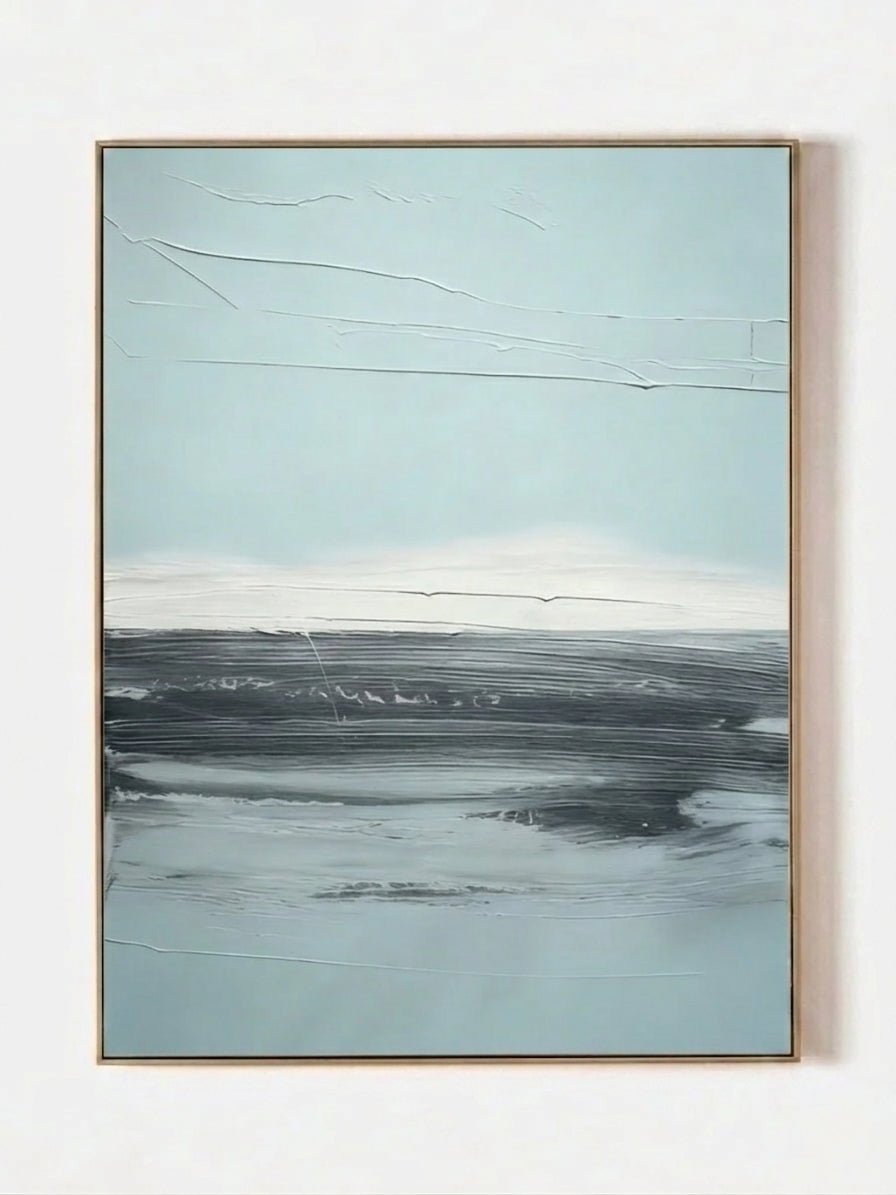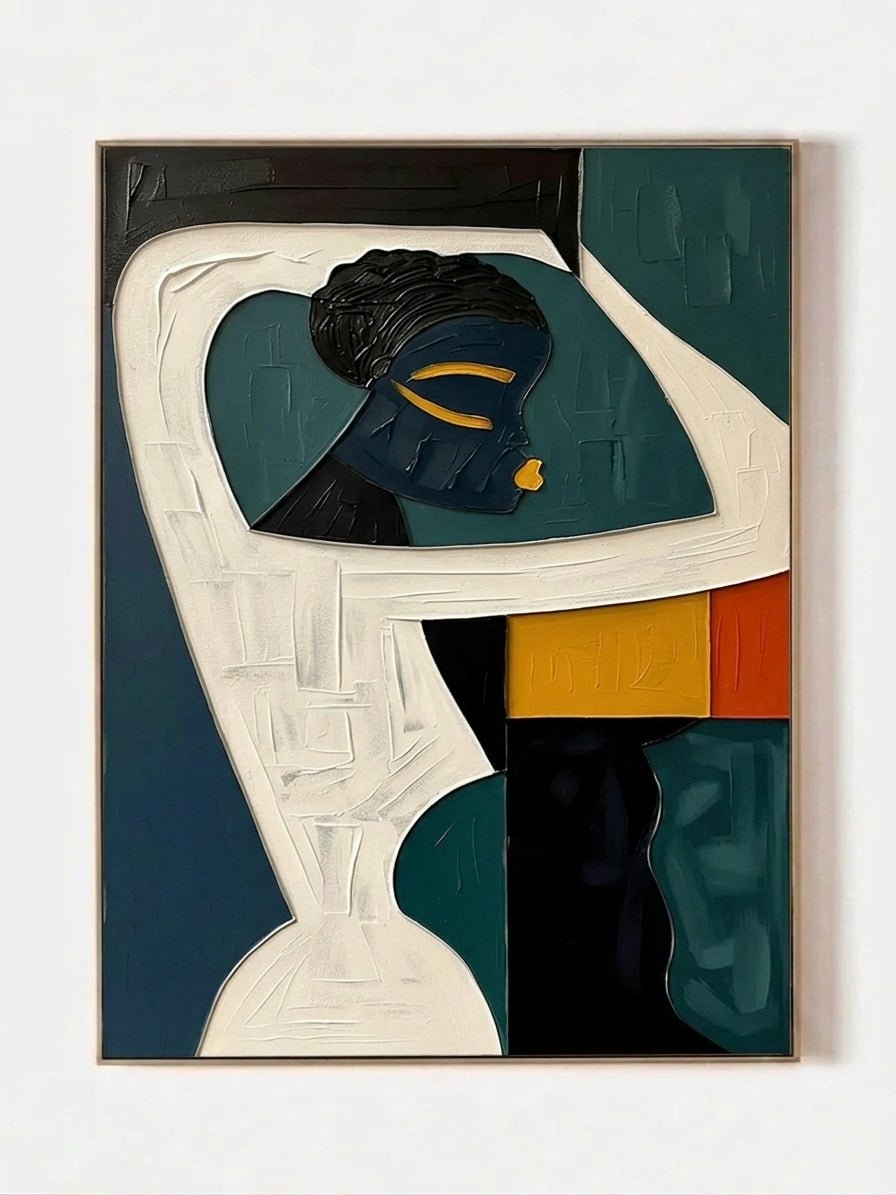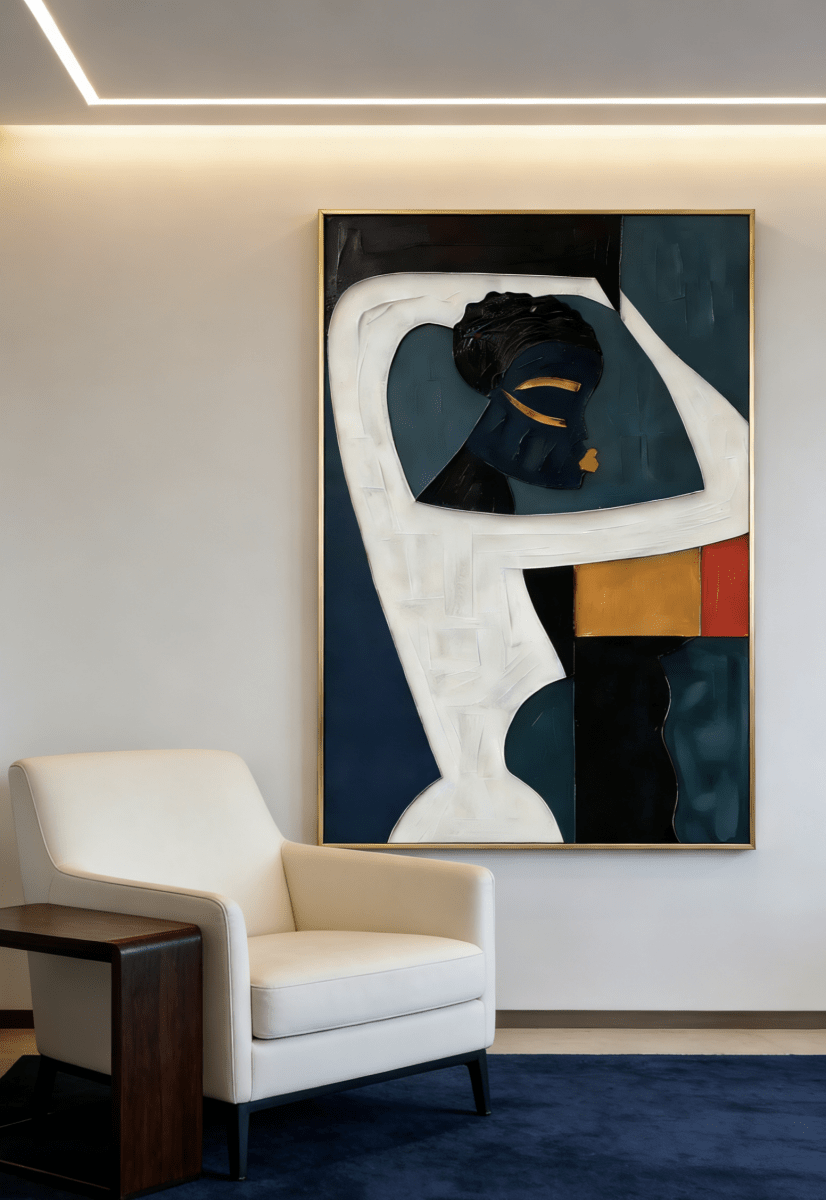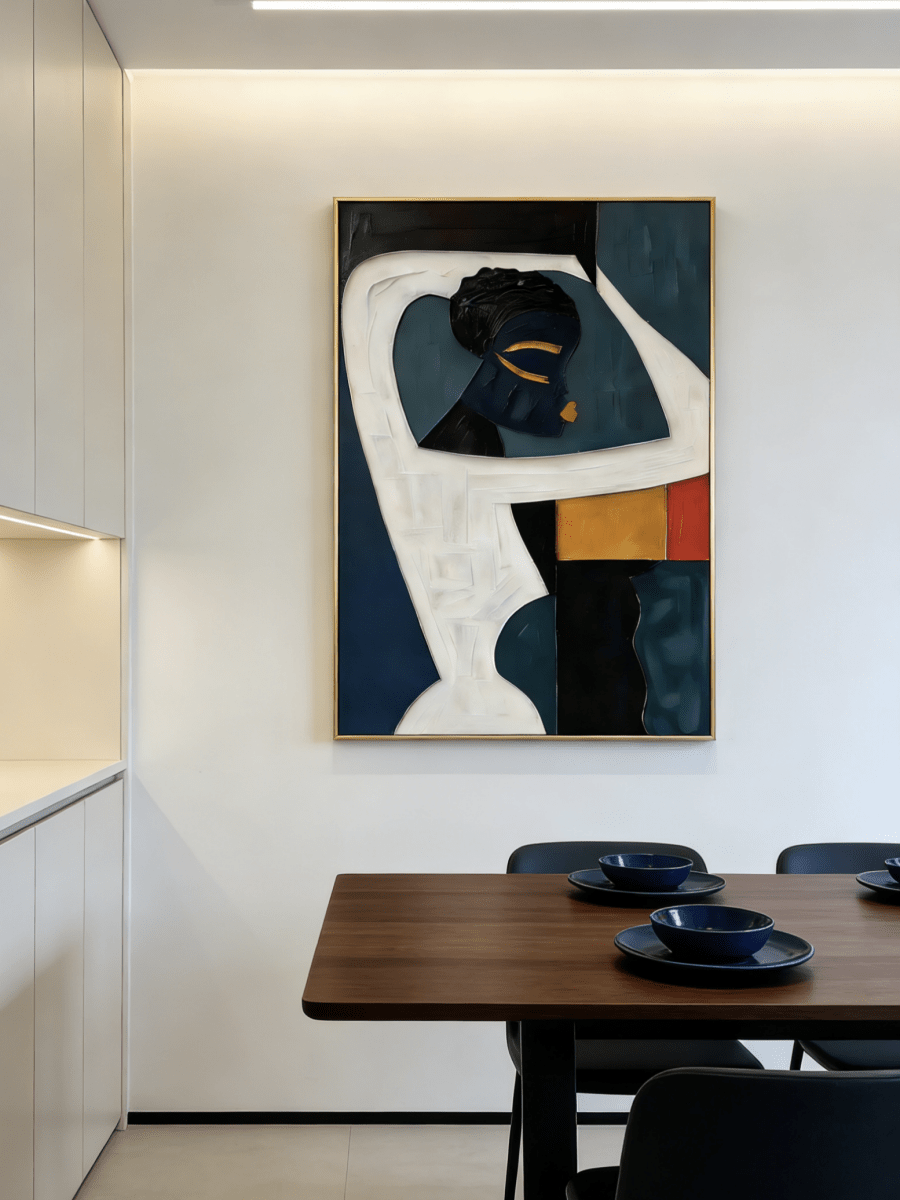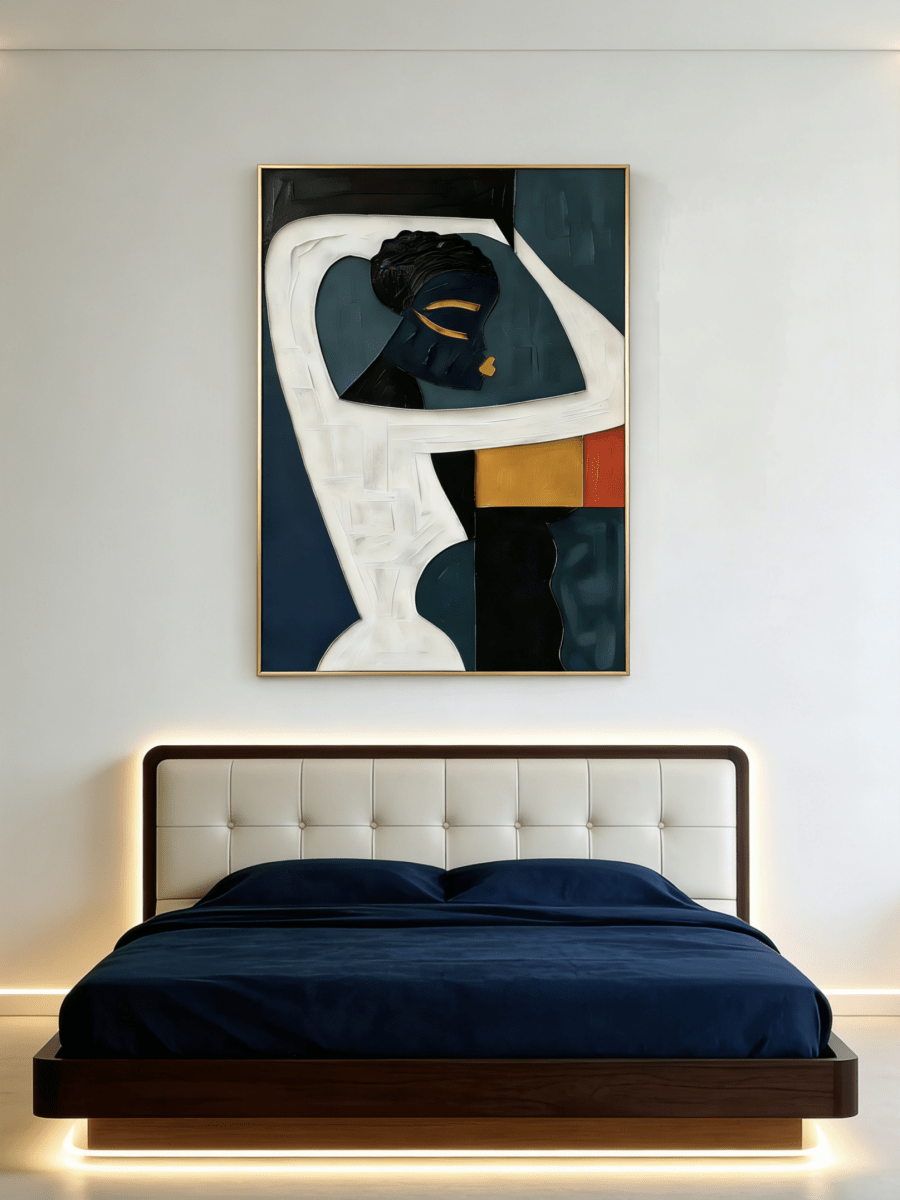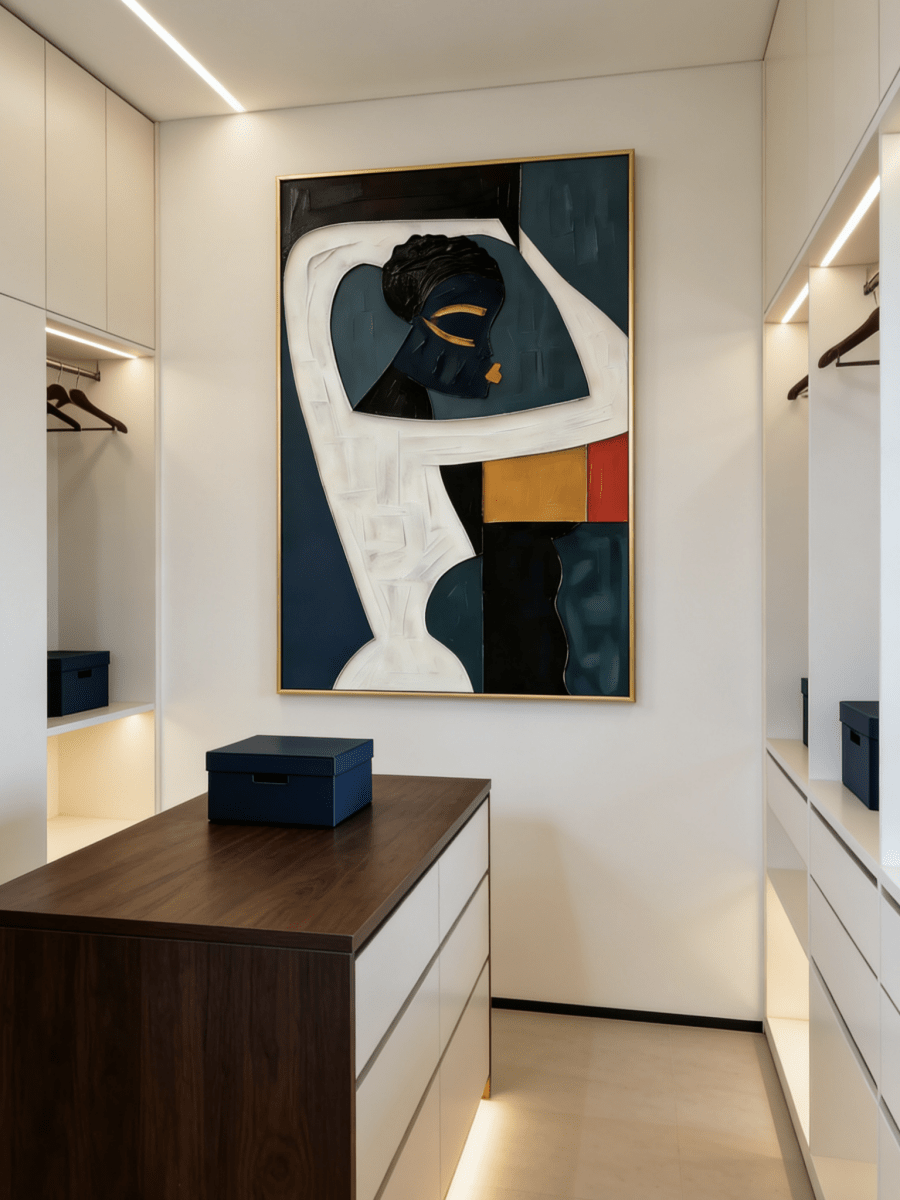

To order a custom-sized canvas painting online, start with a specific artwork, state the finished width and height you need, and ask how the composition will change at that proportion. Confirm the painting method, color and texture requests, frame dimensions, approval process, and delivery terms before paying. A useful custom order begins with a clear written brief—not simply “make it larger.”
This matters when an otherwise suitable painting is too tall for the space above a sofa, too narrow for a sideboard, or available in a palette that almost works. The goal is to preserve what attracted you to the art while resolving the practical mismatch. The steps below help you decide what to change, what to keep, and what to ask the seller to confirm.
First, decide whether you need a custom order
Compare the listed size options before requesting a commission. An available size may work once you include the outer frame and leave breathing room around the painting. For furniture-based measurements, use our wall art size guide for sofas before preparing the order details.
A custom request becomes useful when a specific wall opening, unusually wide furniture, or a preferred composition cannot be accommodated by the available options. There are three different requests to distinguish:
- A different size, with the same proportions: the painting becomes larger or smaller while retaining its overall shape.
- A different aspect ratio: the canvas becomes wider, taller, or closer to square, so the composition may need to be rebalanced.
- A design adjustment: the palette, texture, or placement of a major element changes. Confirm feasibility separately from size.
“Custom canvas” can also mean a photo print or even a blank artist’s canvas. If you want a painting, ask whether the image is painted directly onto the support. A hand-finished print has added manual work over a printed image. A made-to-order painting can be painted entirely by hand while following an existing design; that does not, by itself, mean the design is exclusive or sold only once.
Write dimensions in a way that cannot be reversed
Use “width × height,” label both dimensions, and specify inches or centimeters. Then identify whether those measurements describe the painted face, the stretched canvas, or the finished piece including its outer frame. A request for “60 × 30” is incomplete without that context.
For a tight space between sconces or inside wall molding, give the seller the maximum finished outer dimensions as well as your preferred canvas dimensions. Ask about manufacturing tolerances and clearance rather than assuming the frame will fit exactly. If you already own a frame, supply its internal opening and depth and request compatibility confirmation.

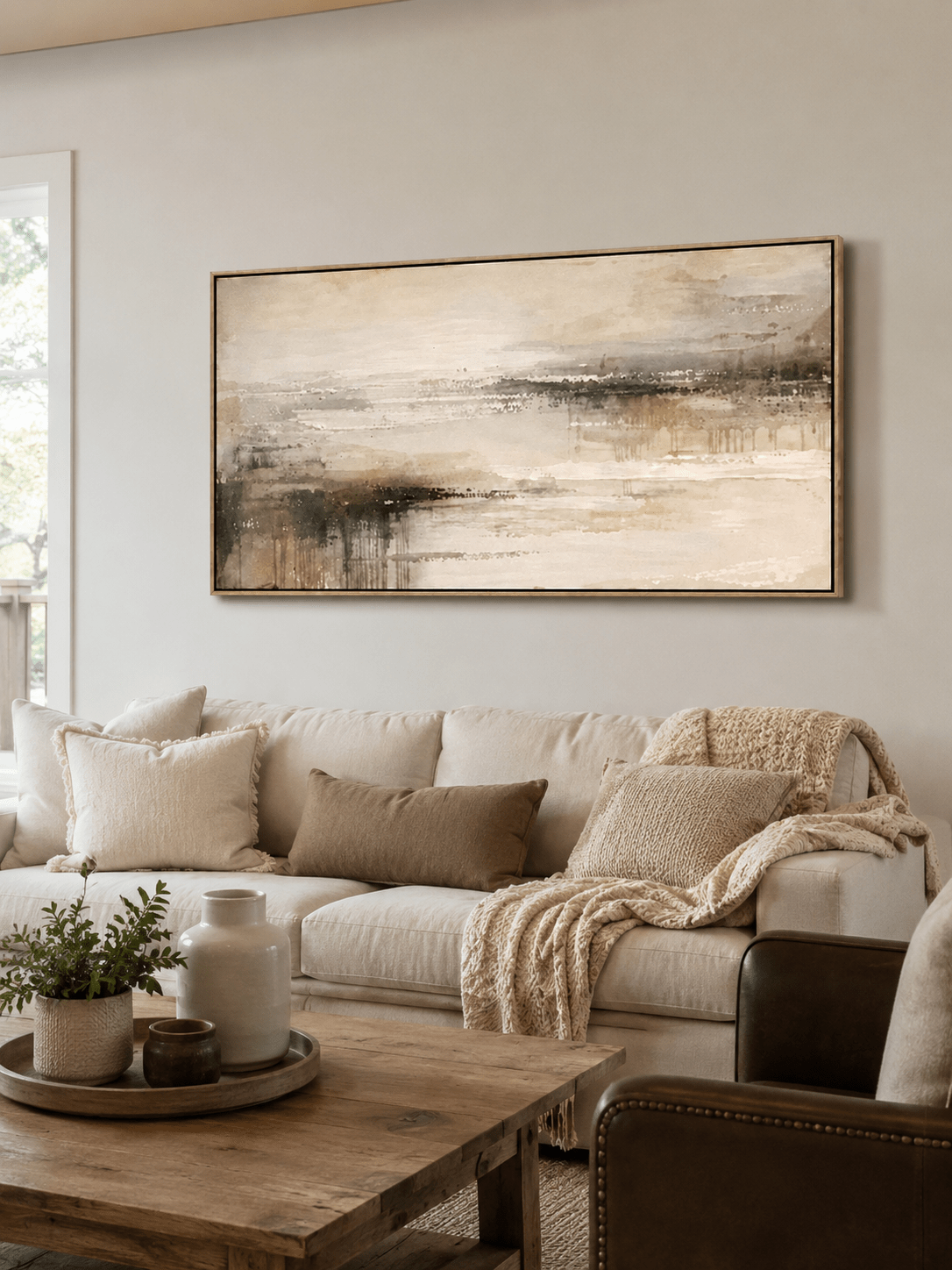
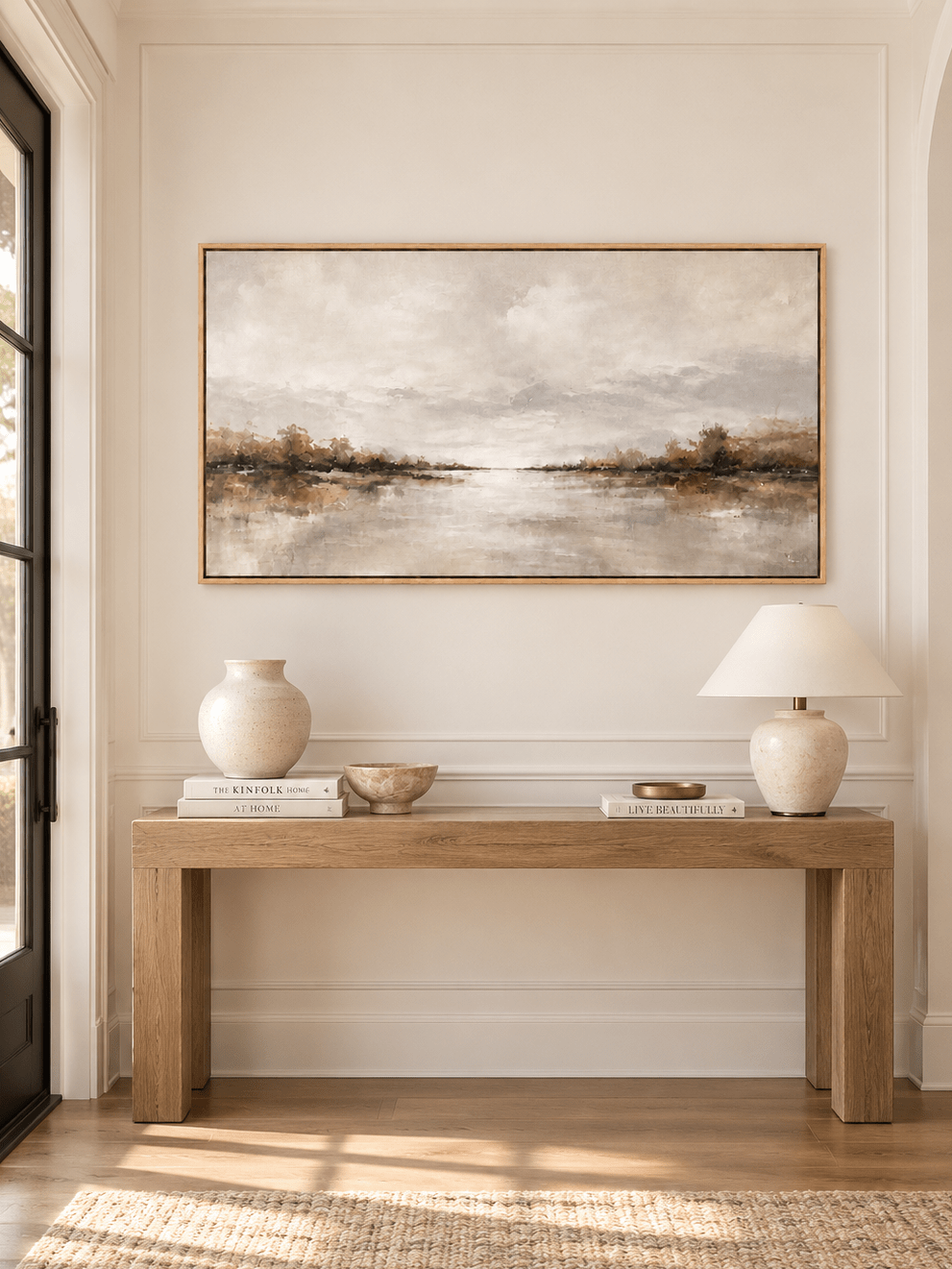
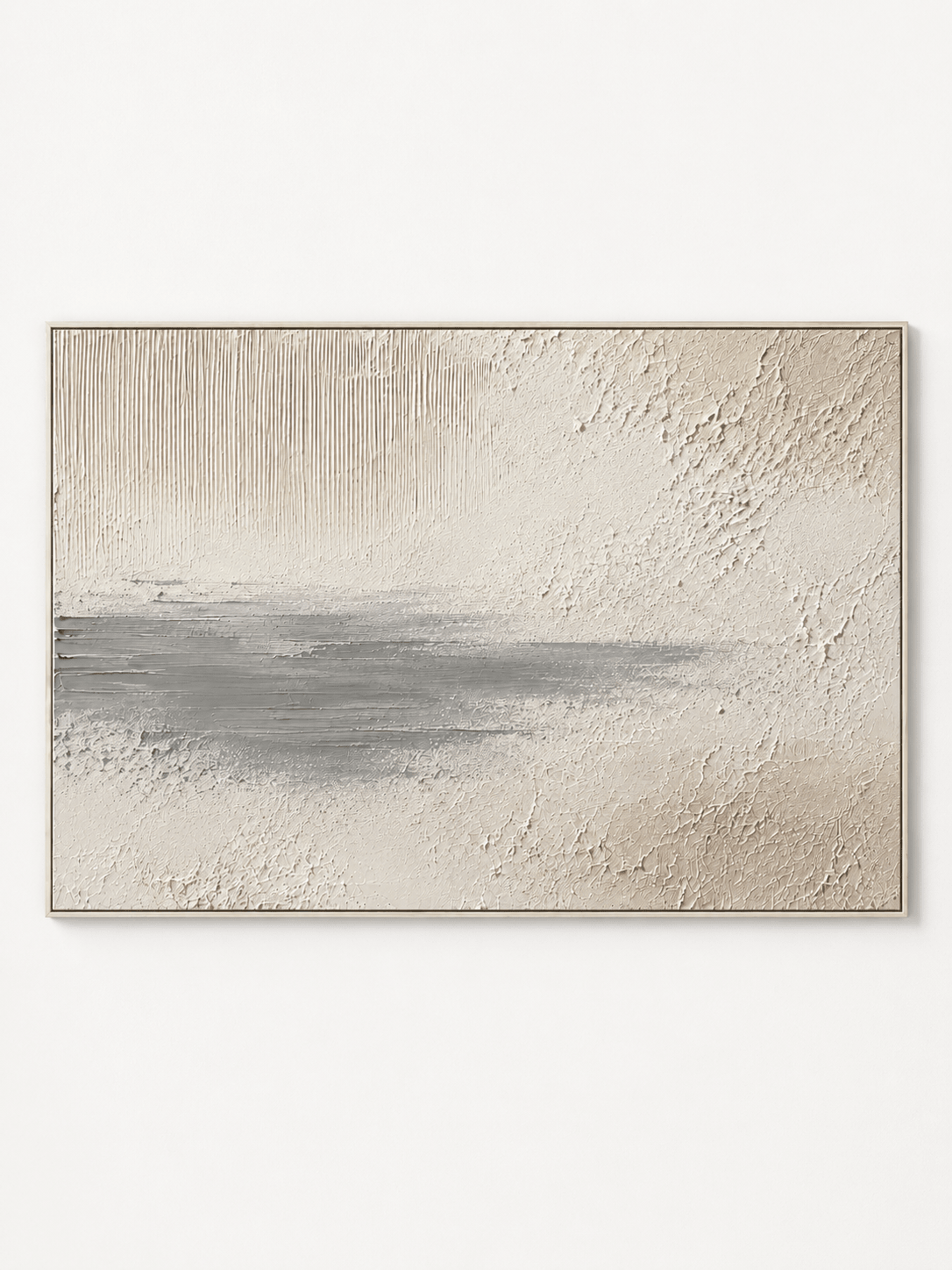
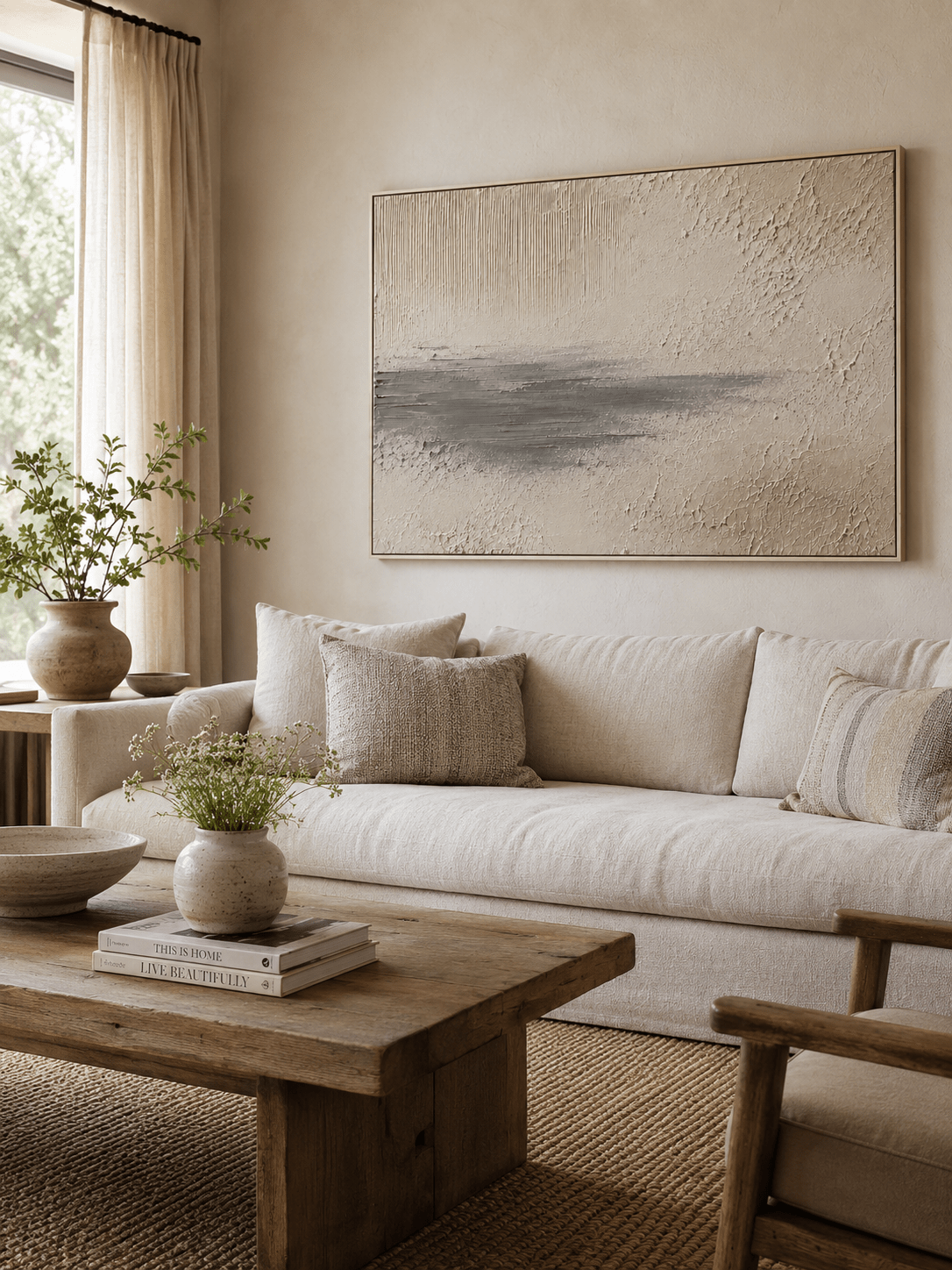
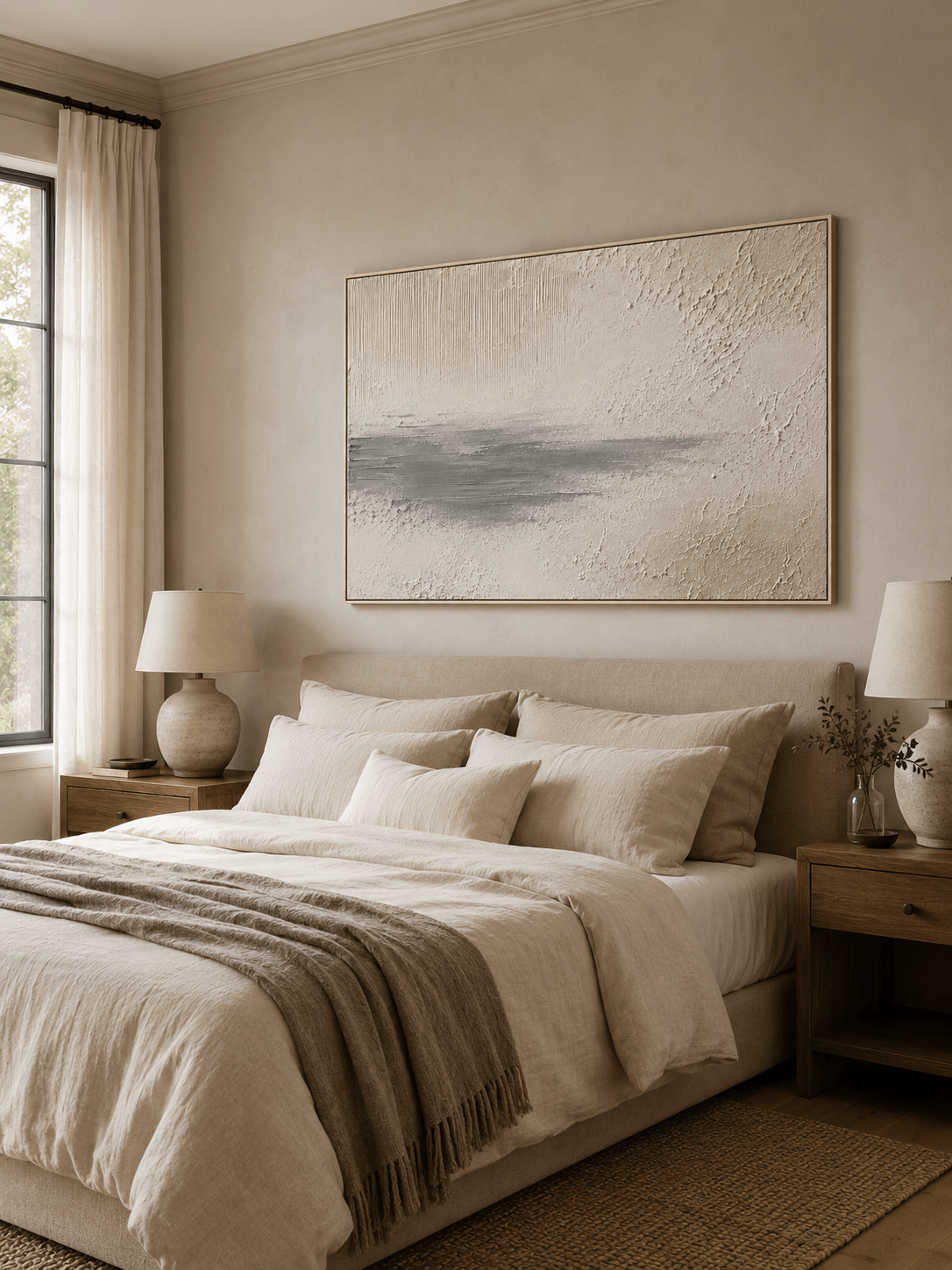
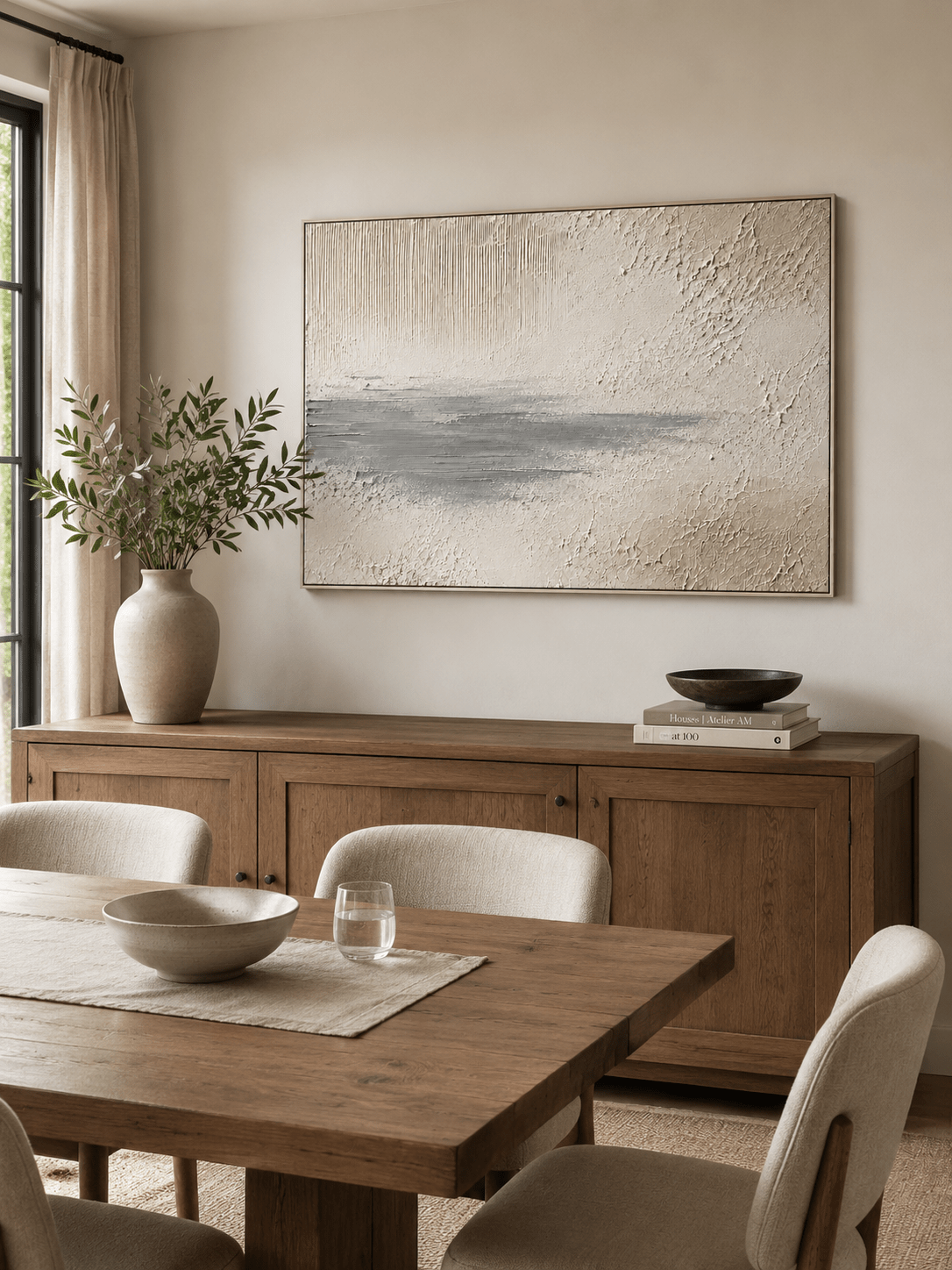
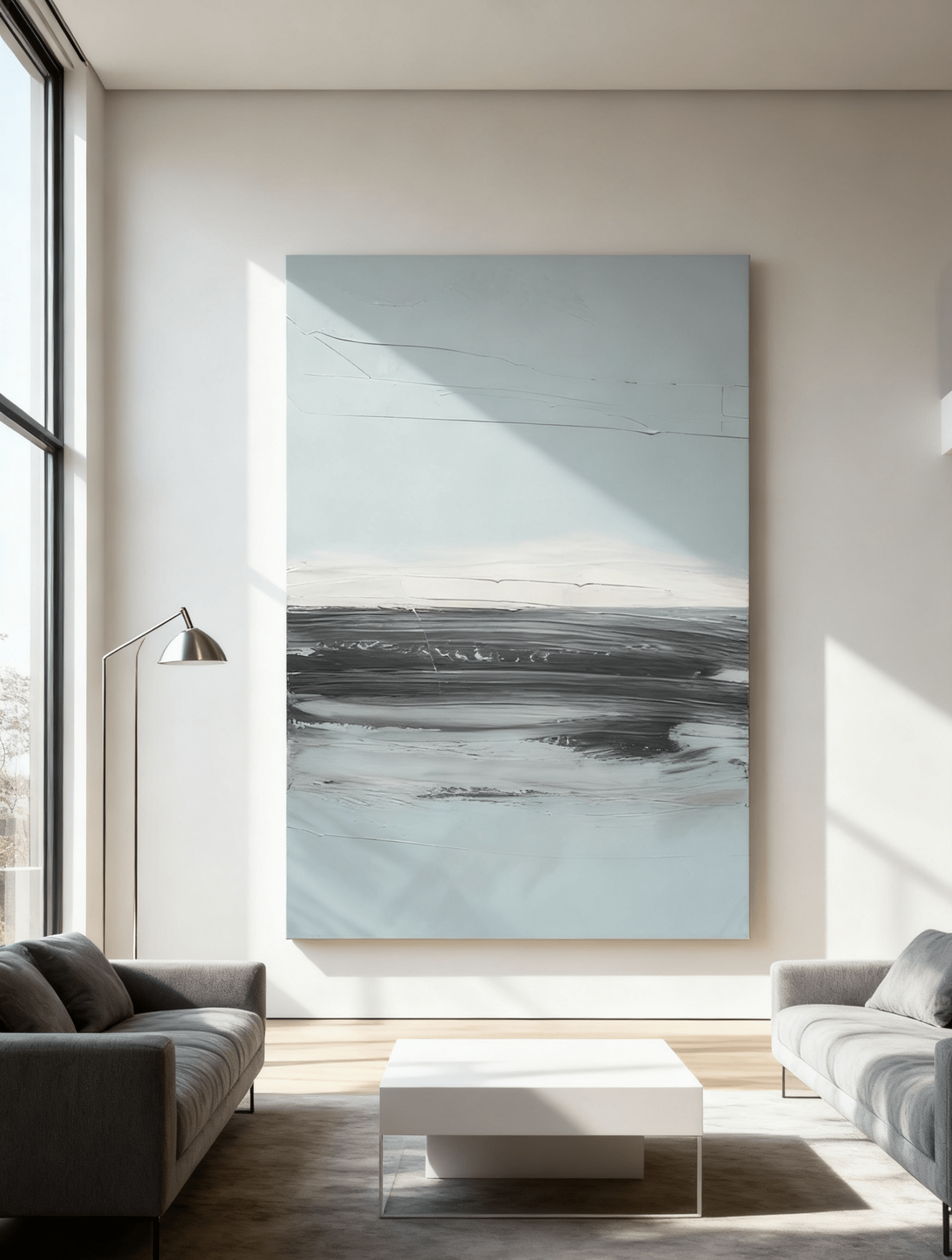
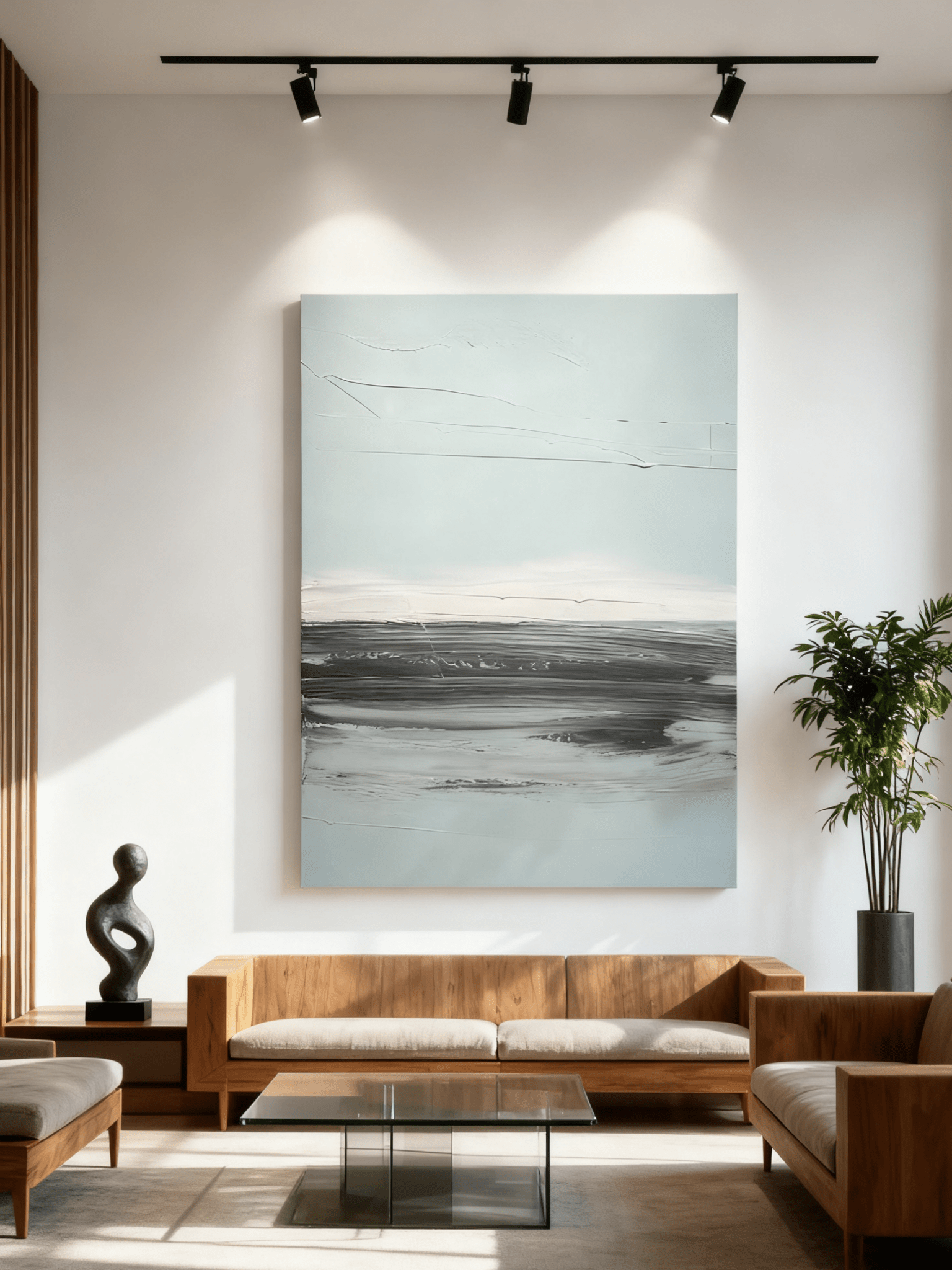
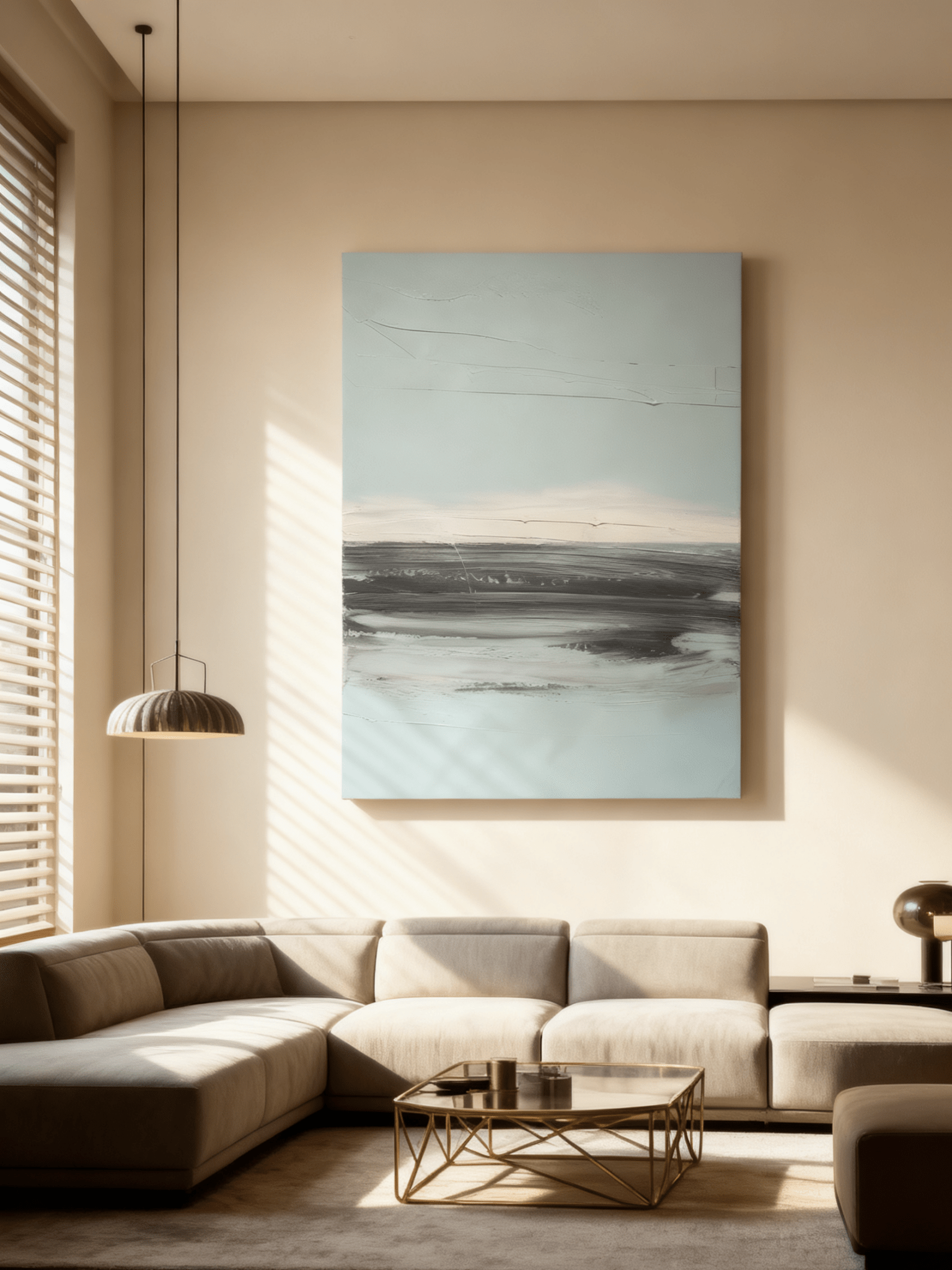
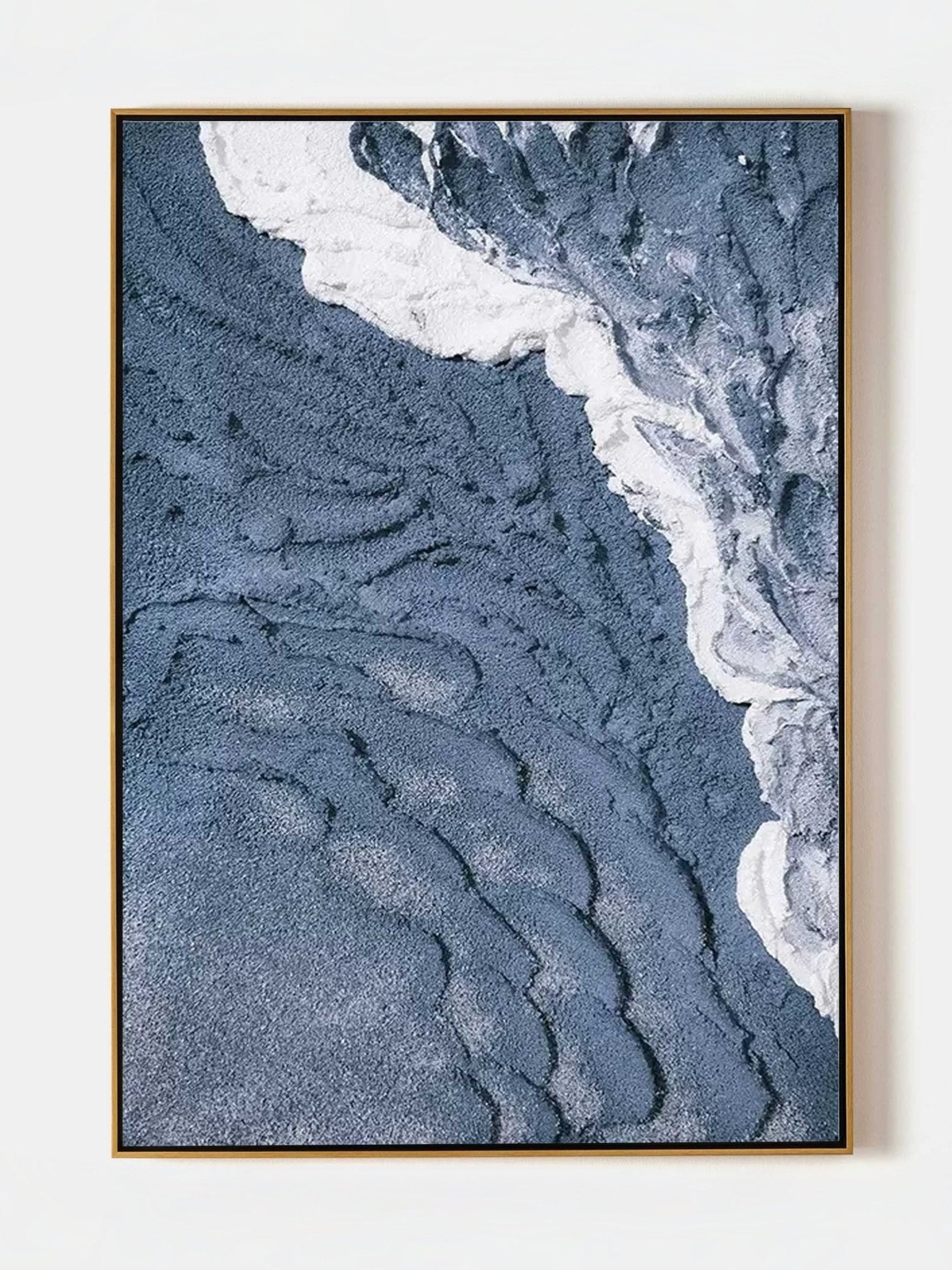
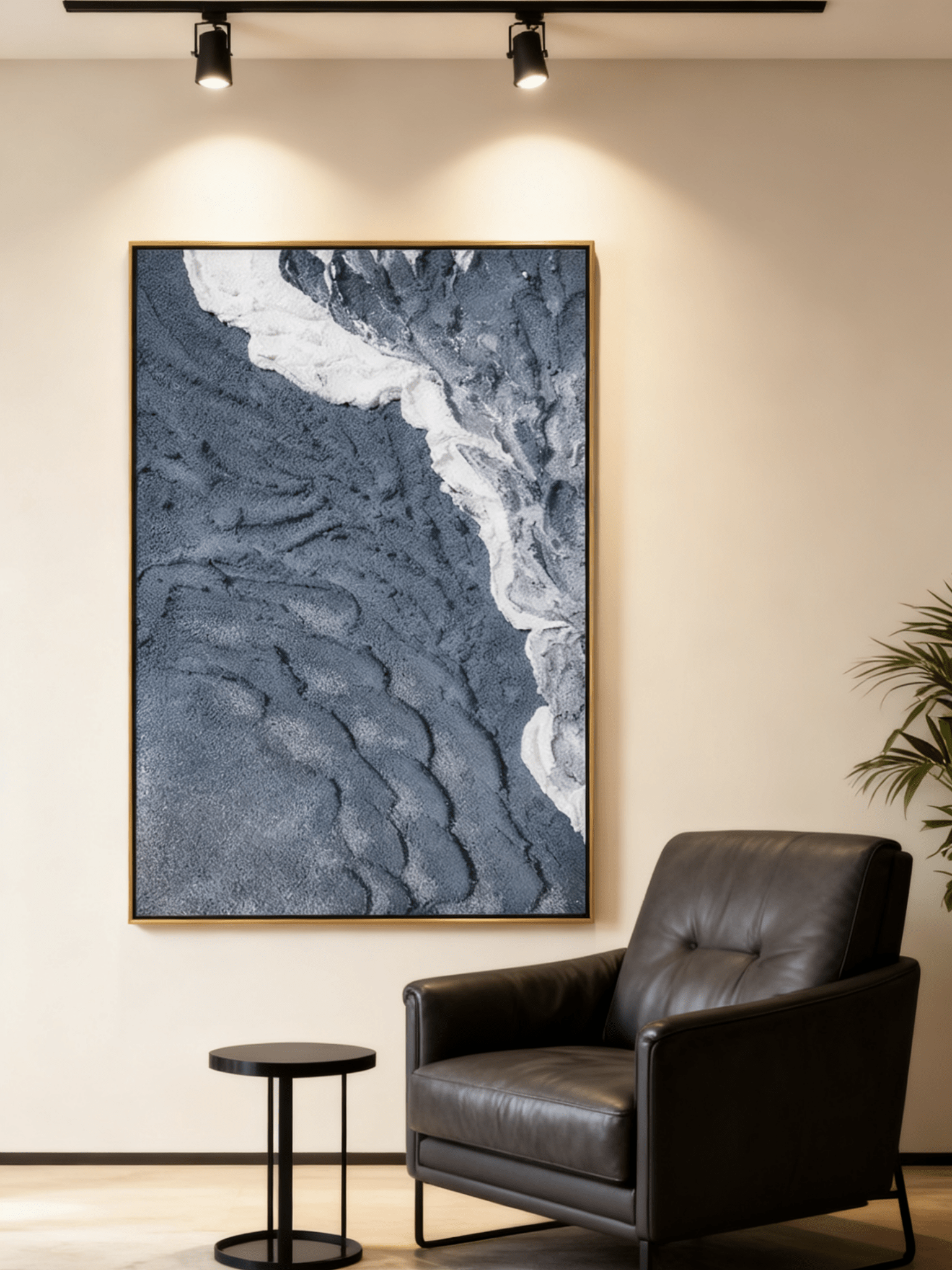
Minimalist Black and White Abstract Landscape Painting – EL#0460 uses a broad, broken horizon to connect visually with a long sofa. Its listed options include 24 × 48 inches and 30 × 60 inches, both a 2:1 shape. Compare an available proportion first; request a different format only if the wall genuinely needs it. Confirm dimension order and final framed size.
Preserve the composition when changing the proportions
Aspect ratio is width divided by height. A hypothetical 48-inch-wide, 24-inch-high painting has a 2:1 ratio. Enlarging it to 60 × 30 keeps that shape. Changing it to 60 × 40 produces a 3:2 shape, creating more vertical space relative to its width.
For a hand-painted adaptation, ask what fills that extra space. Will the horizon move? Will a pale field become larger? Will the main forms spread apart or gain new elements? Specify the part you want preserved: the open sky, the off-center dark shape, or the relationship between two color fields. These are more useful instructions than asking for an identical image at an incompatible shape.
Changing orientation is a separate design decision
A vertical painting does not automatically become a convincing horizontal work. Ask whether the artist recommends adapting it or choosing another reference. A digitally stretched mockup can help illustrate a size mismatch, but it should never be accepted as a faithful preview of the new composition.

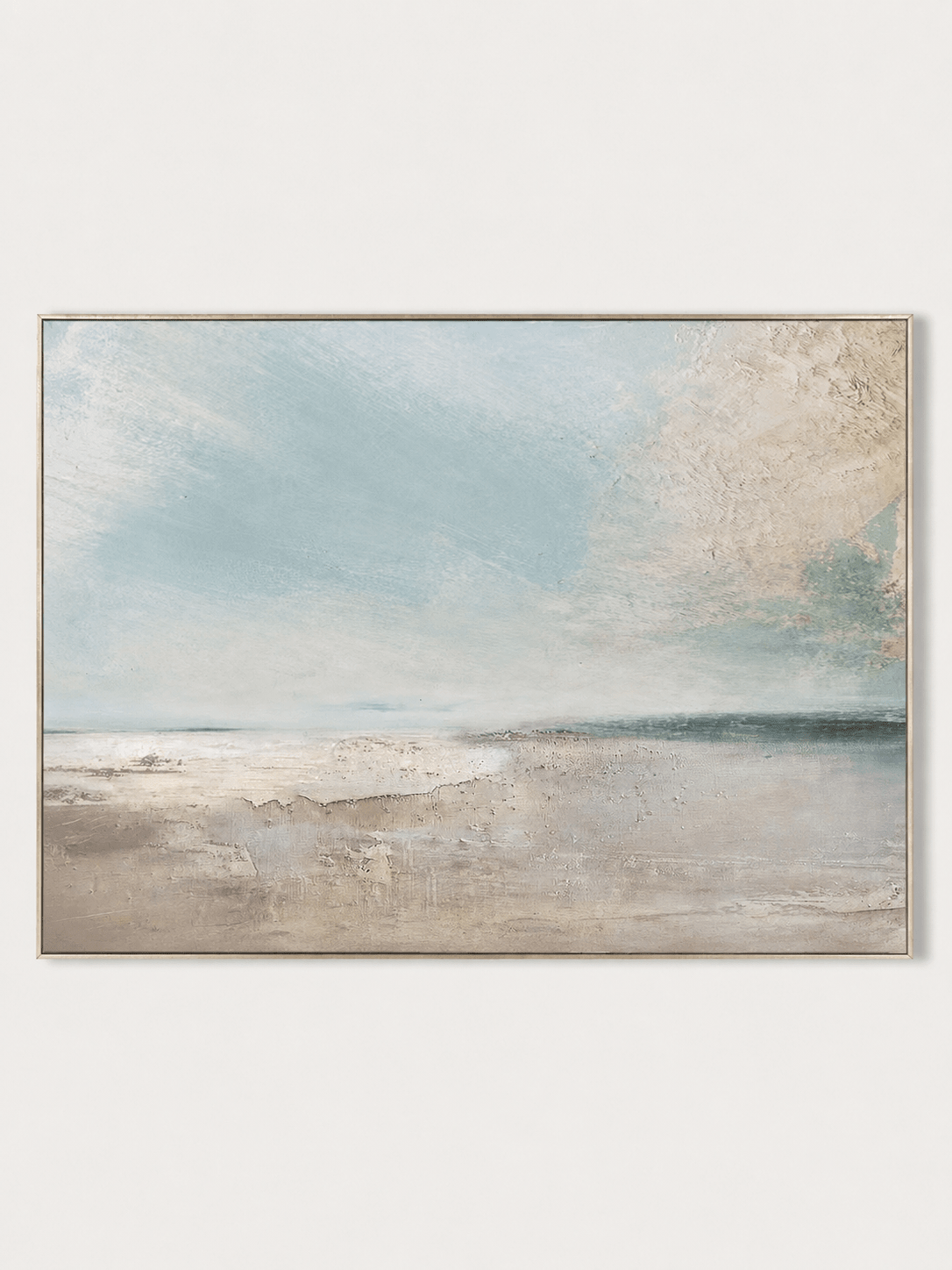
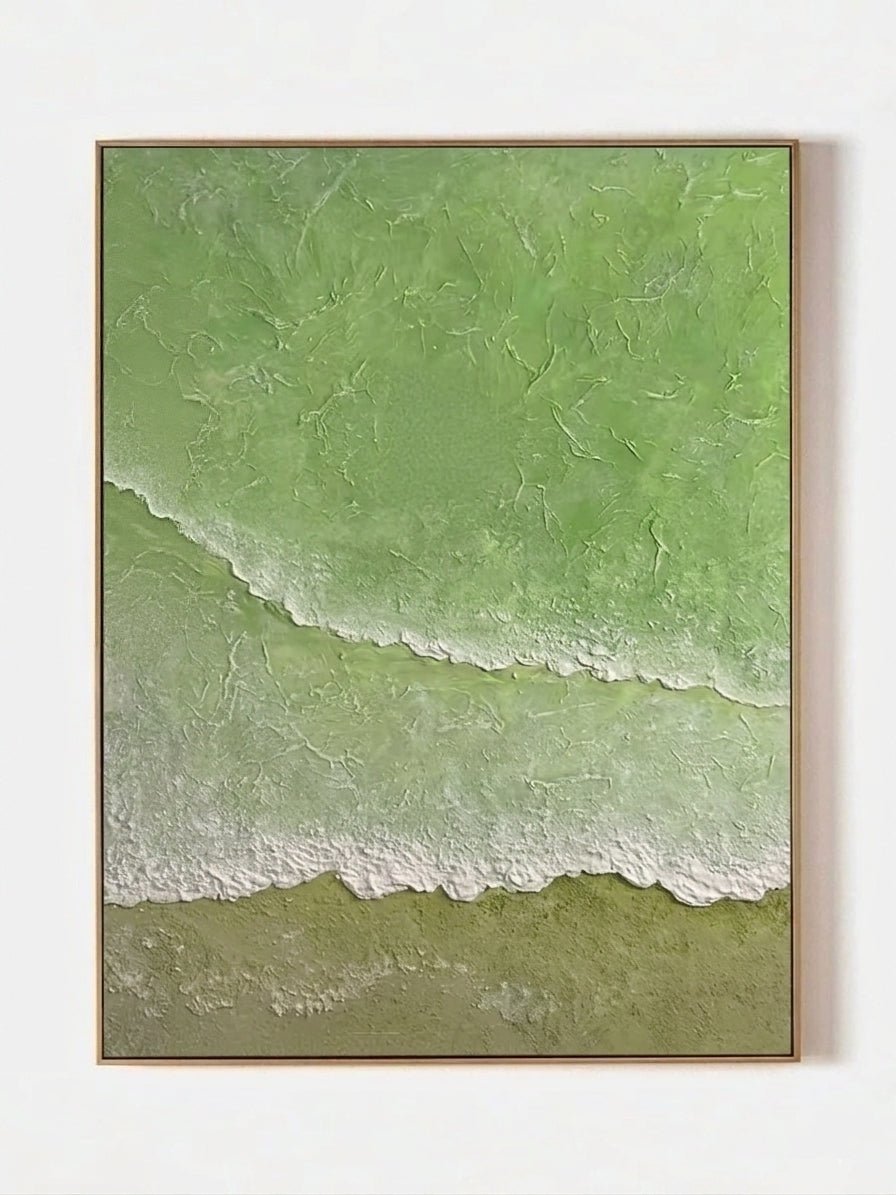
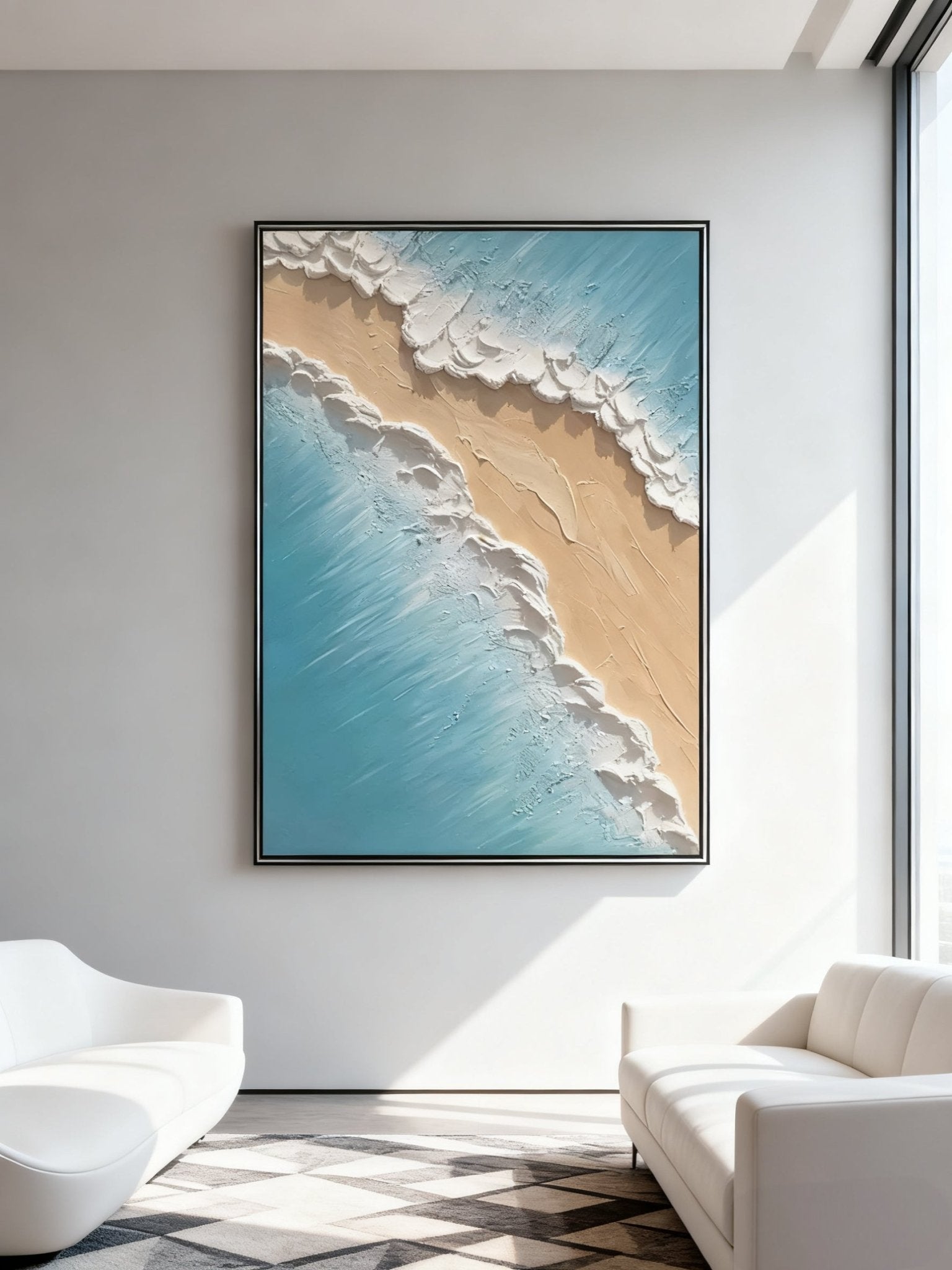
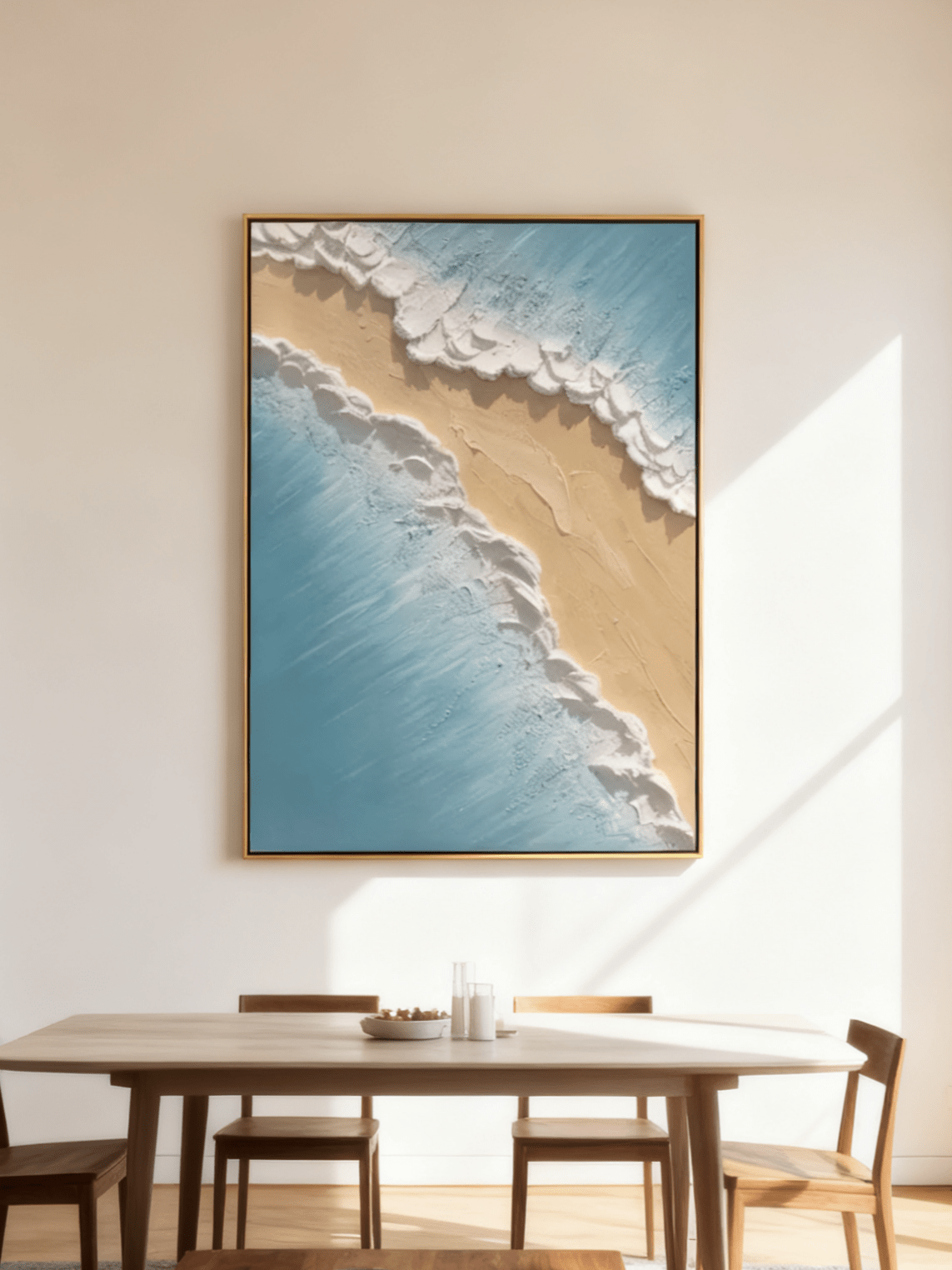
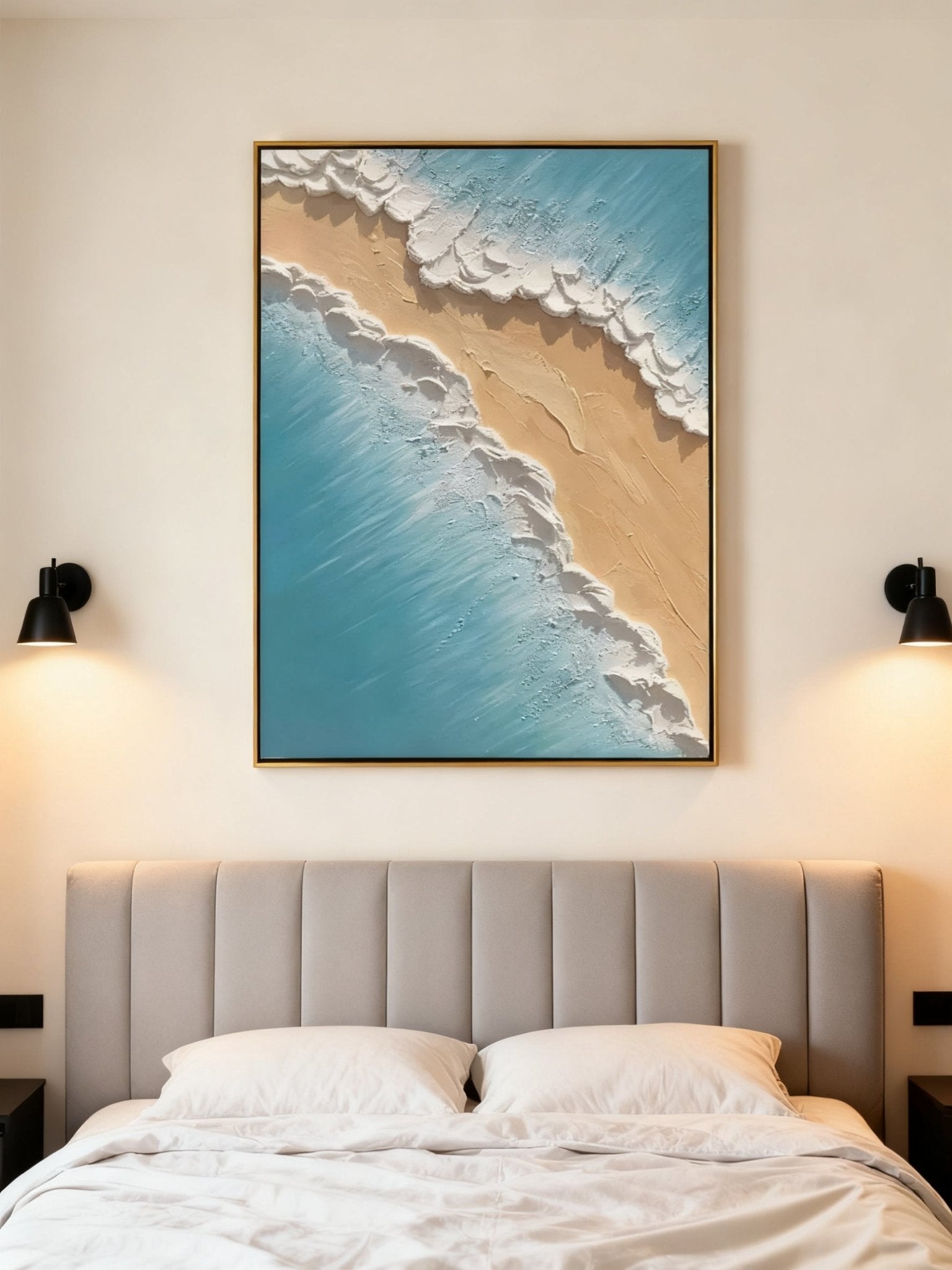
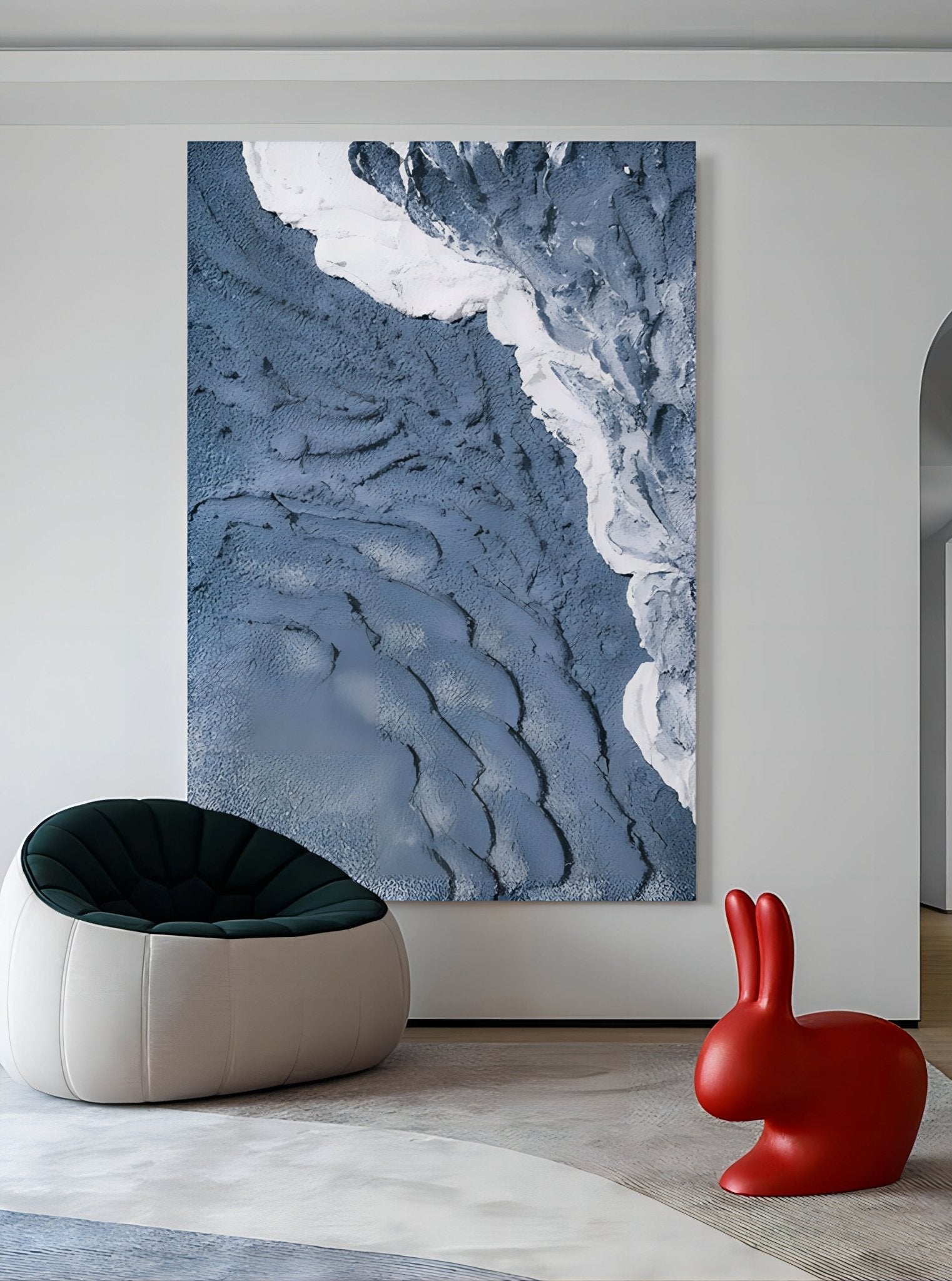
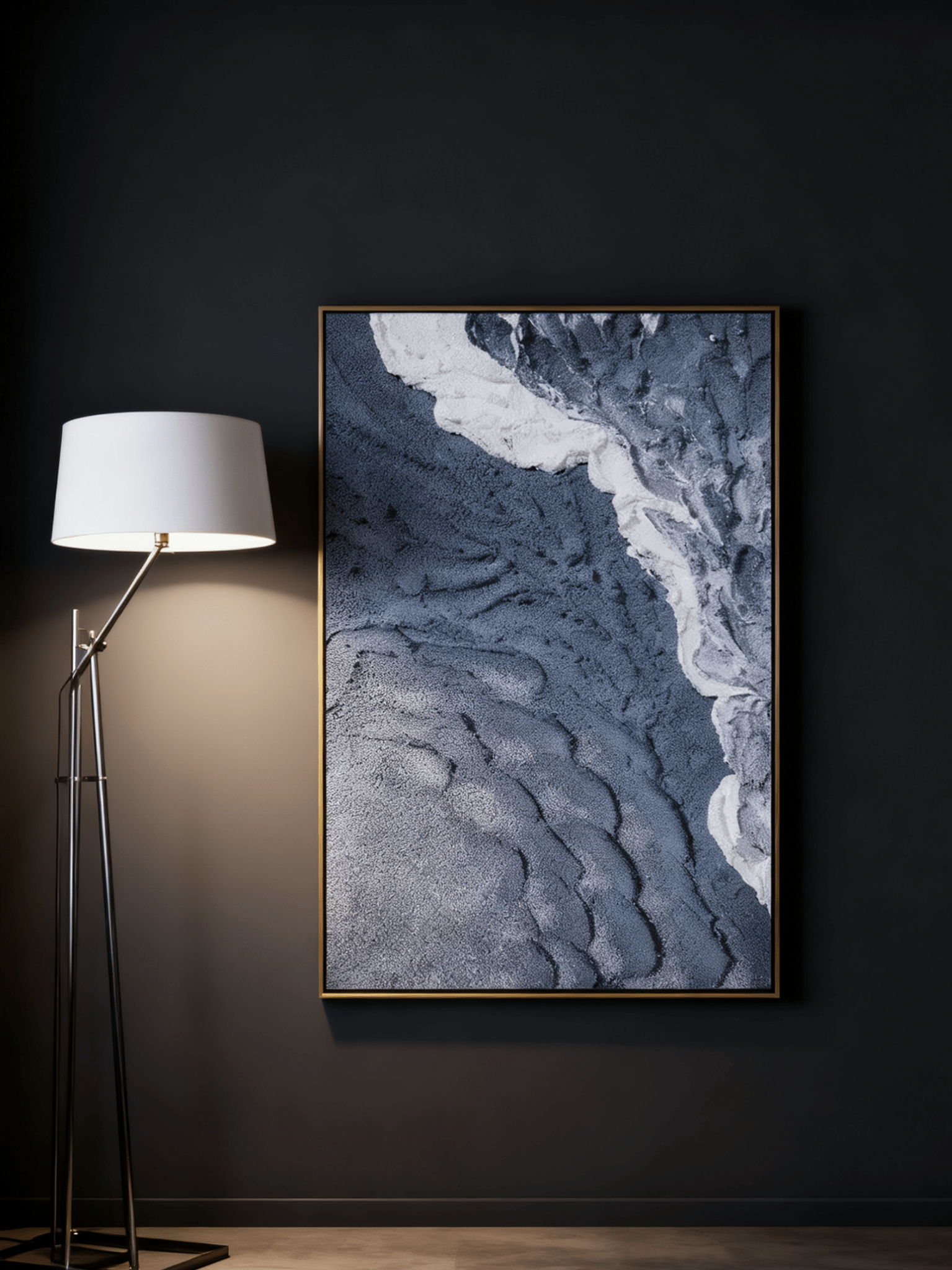
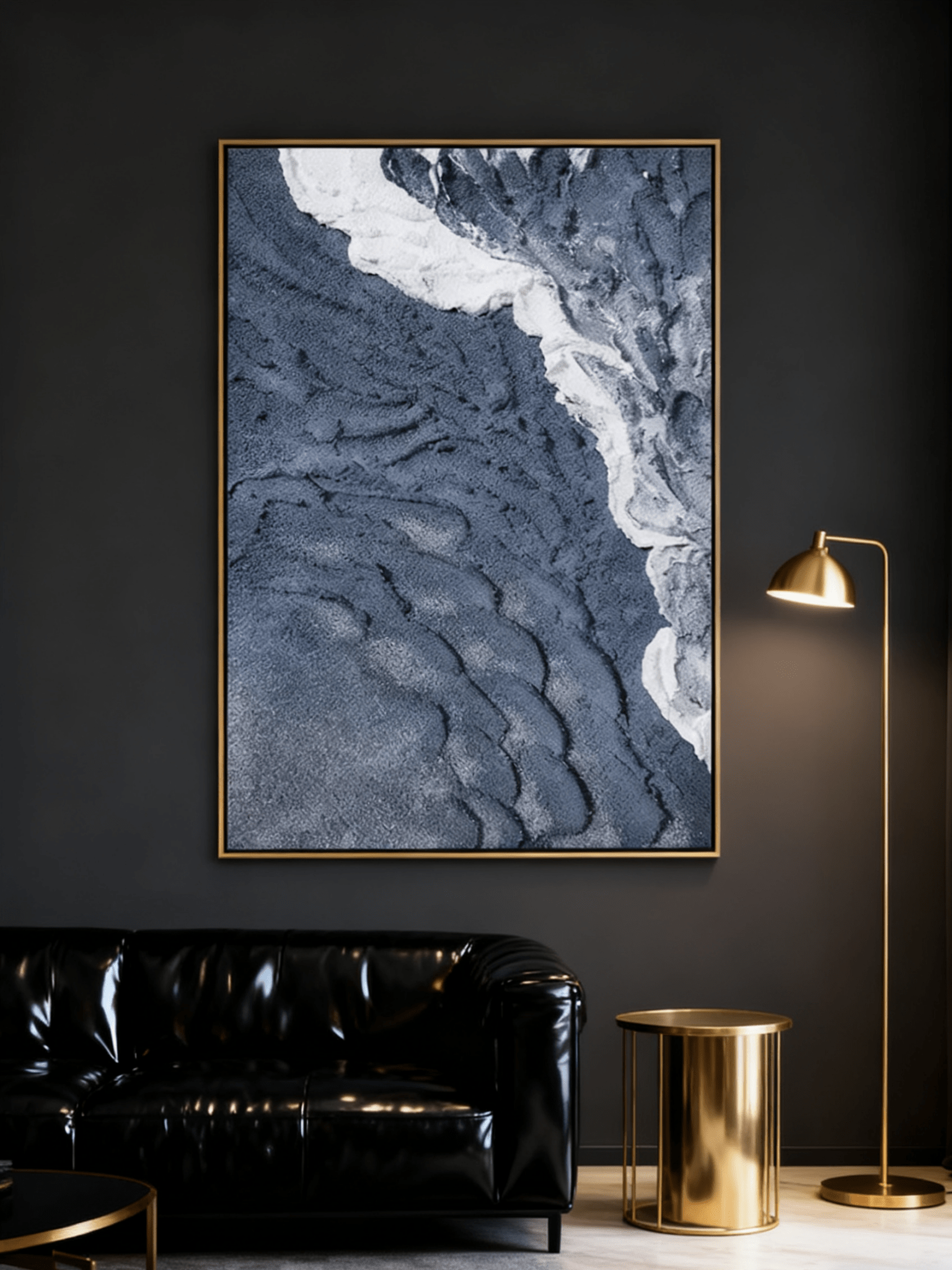
Modern Textured Abstract Coastline Painting – LL#0461 places blue and ivory across a tall canvas, with an irregular shoreline linking the two. It is a useful reference for a dining-room wall or narrow feature area. If discussing a new proportion, identify that shoreline and the balance of light and blue as priorities; an unlisted adaptation requires confirmation.
Describe texture as a visible result
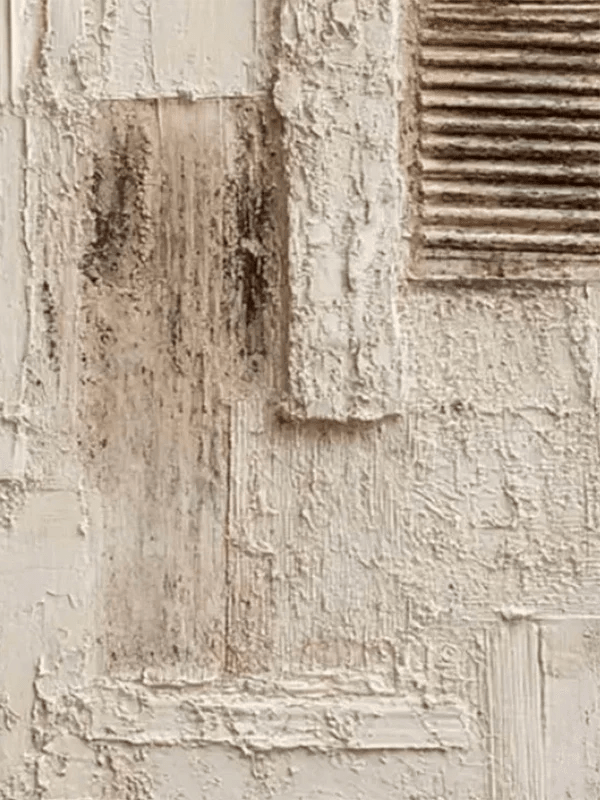
Before requesting “more texture,” decide what you want to notice from your usual viewing position. That might be fine scraped marks up close, distinct raised lines, or a stronger pattern of shadows. Send the chosen product reference and point to the specific detail you like.
Ask which materials create that surface and whether the requested depth suits the proposed canvas size and shipping format. Photographs can show the appearance of relief, but cannot reliably establish its exact depth or material. Request a close-up and an angled view when those details affect your decision. Do not assume every textured painting uses plaster.

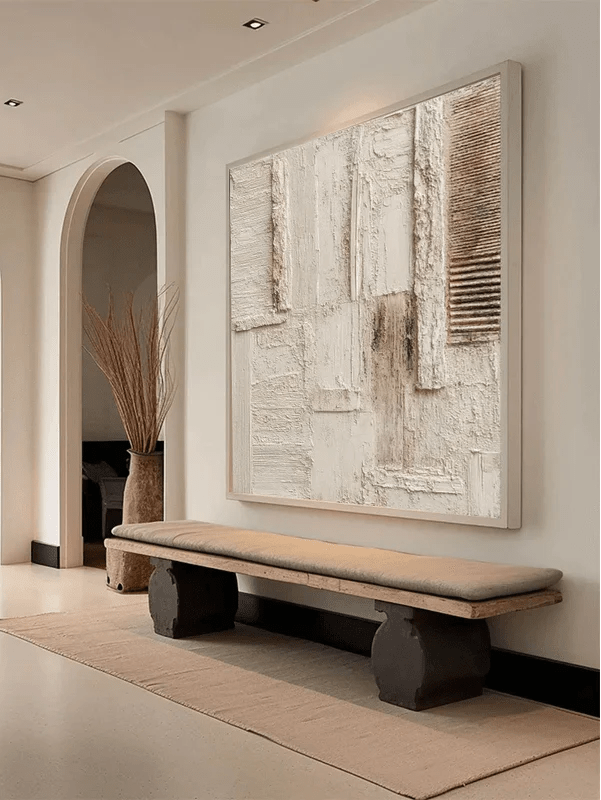
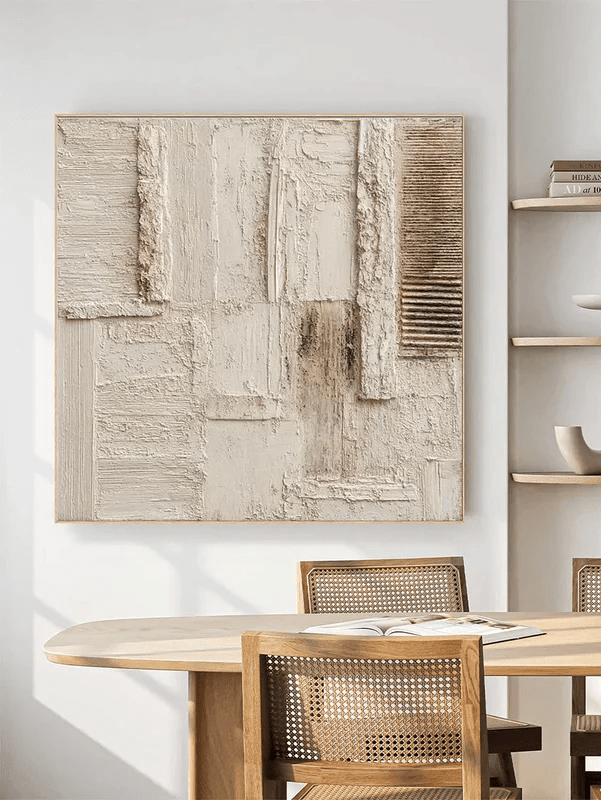
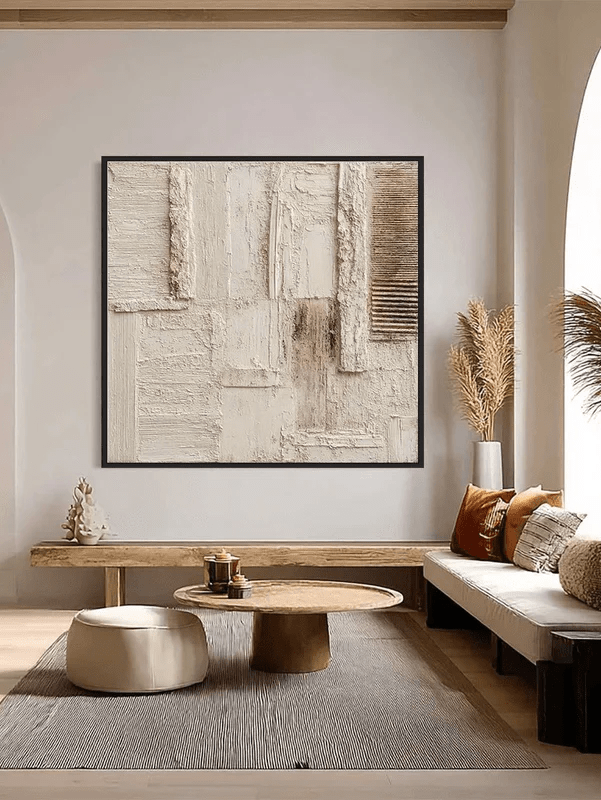
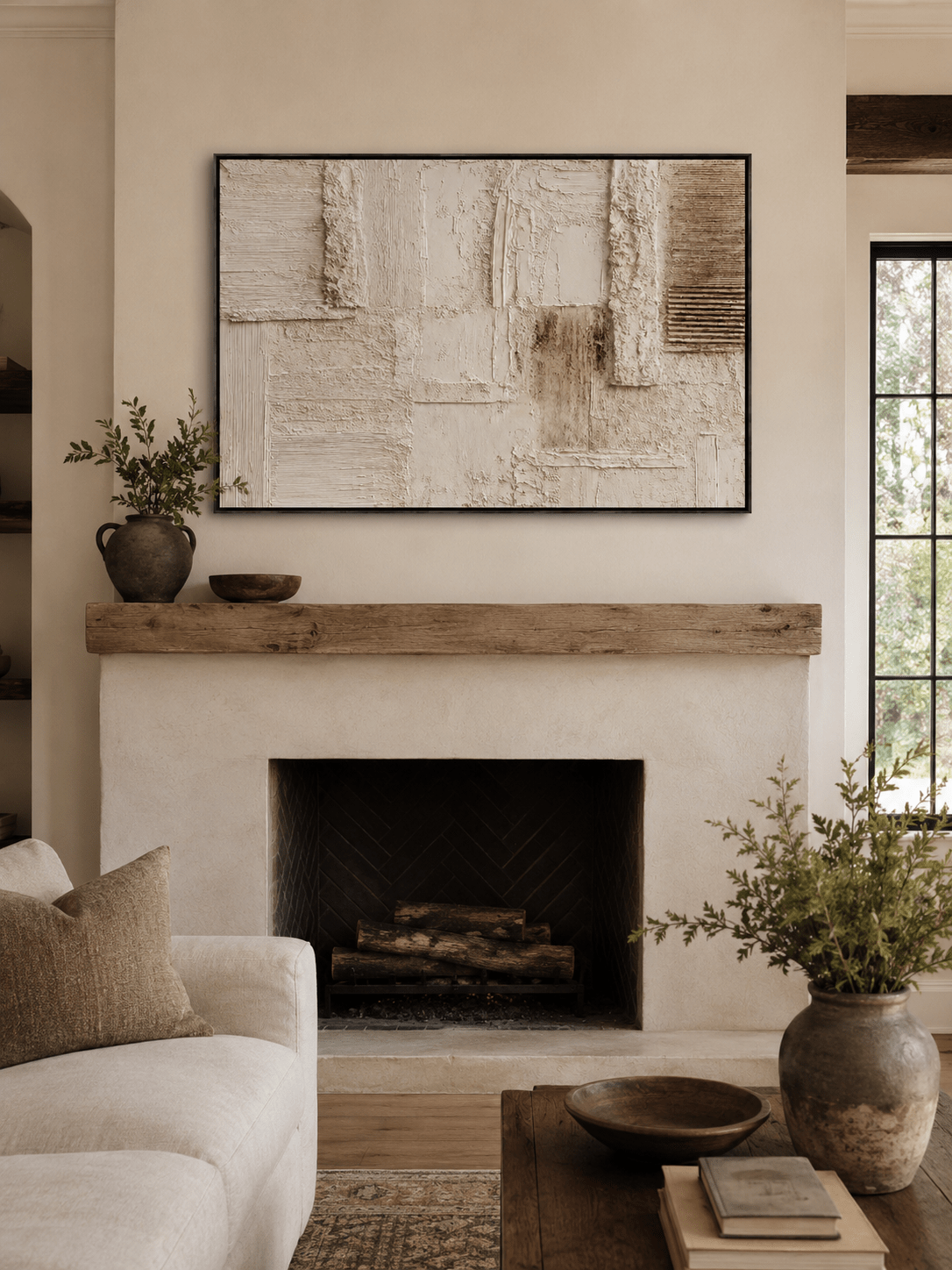
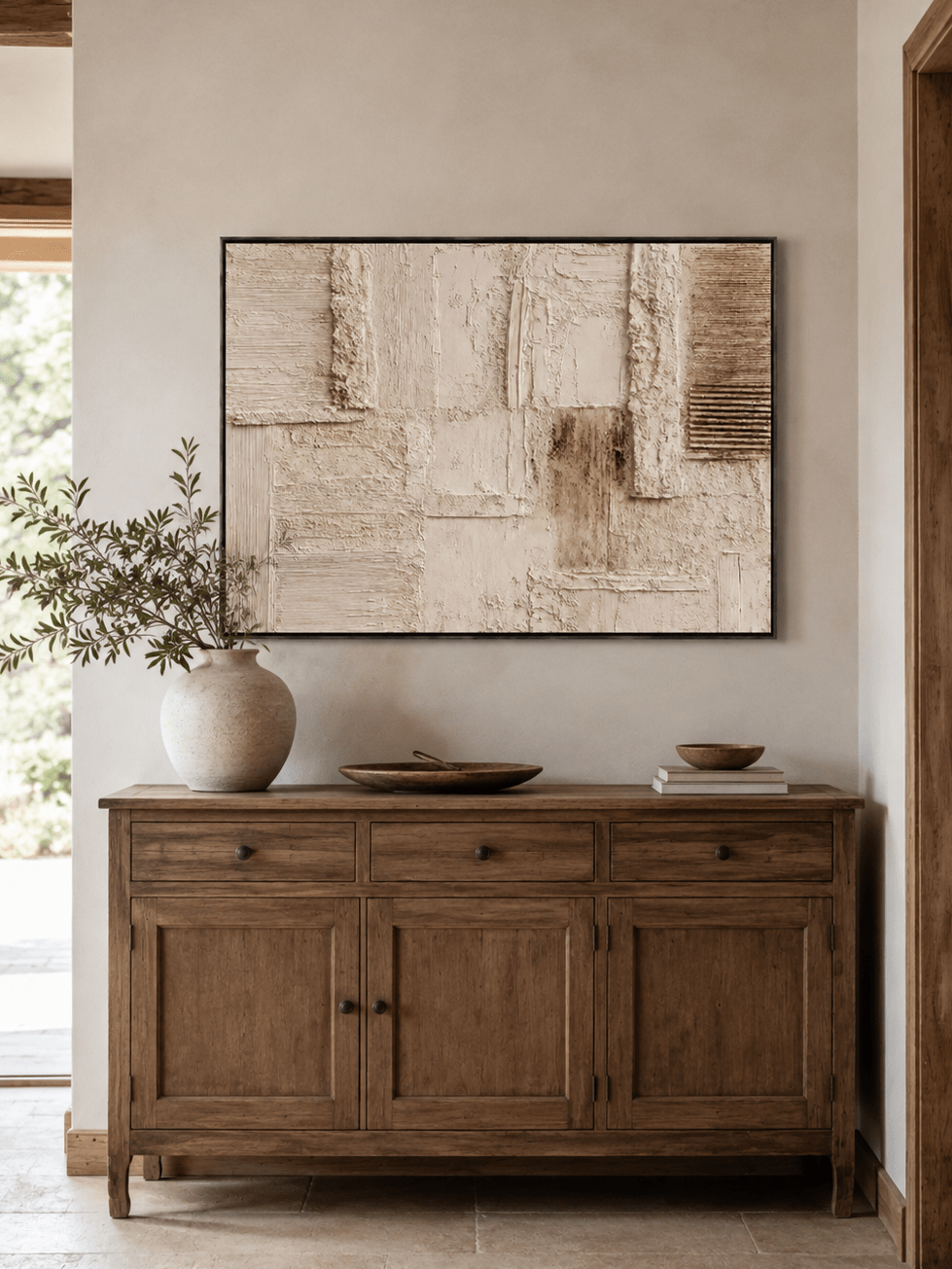
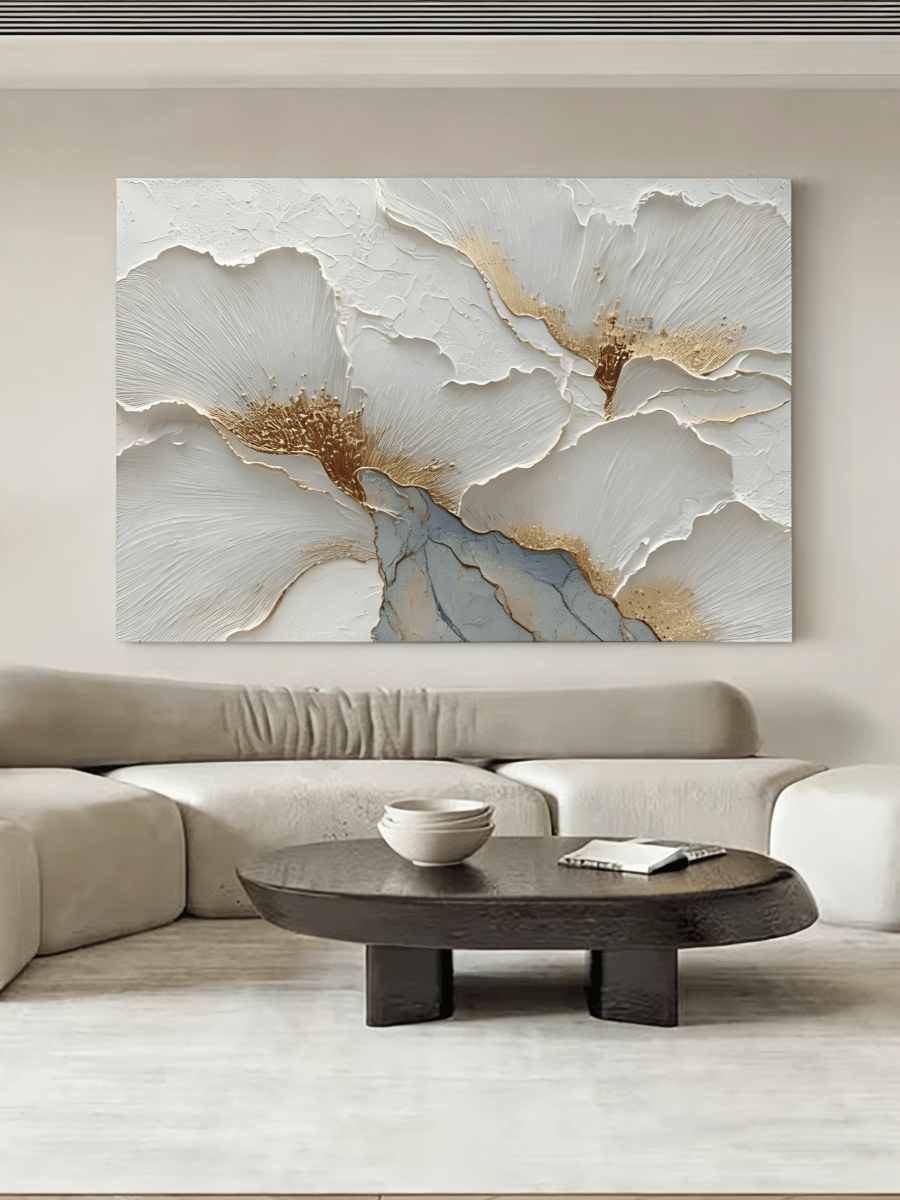
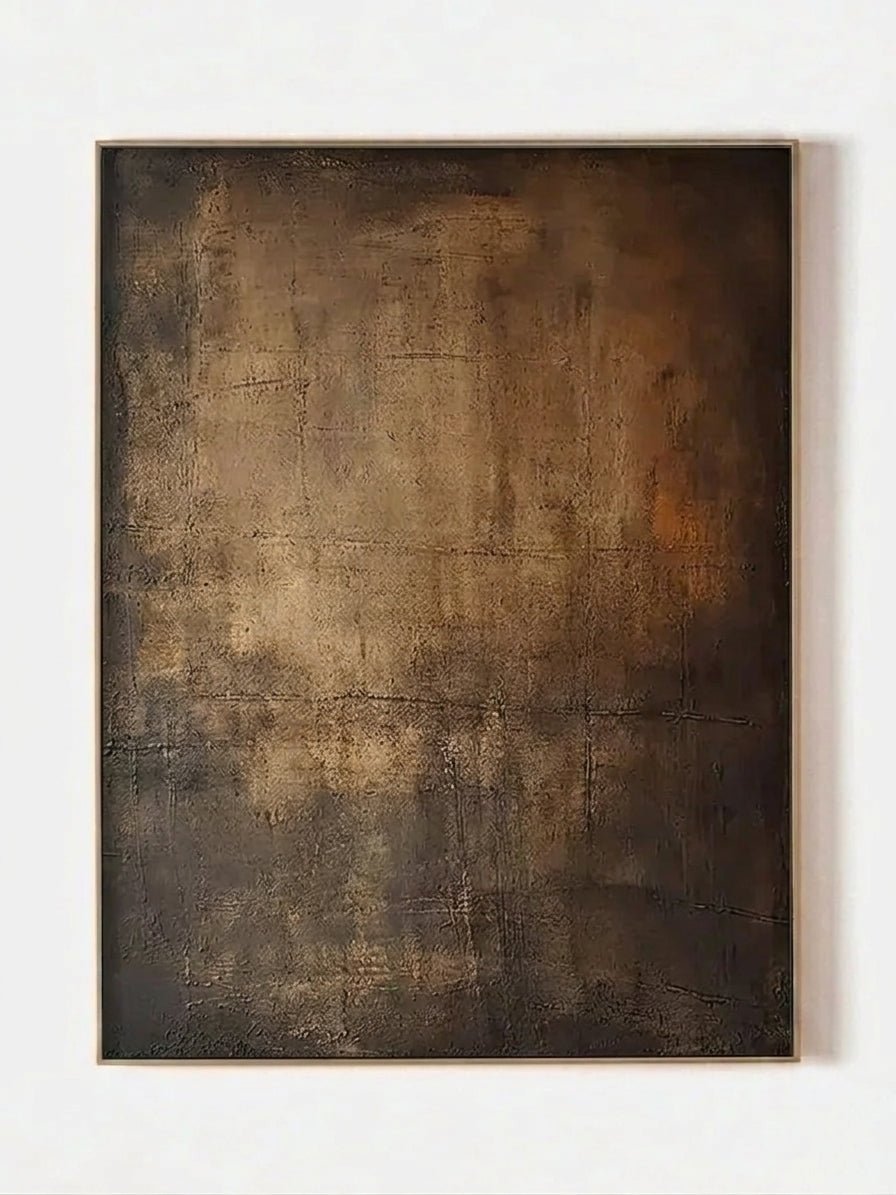
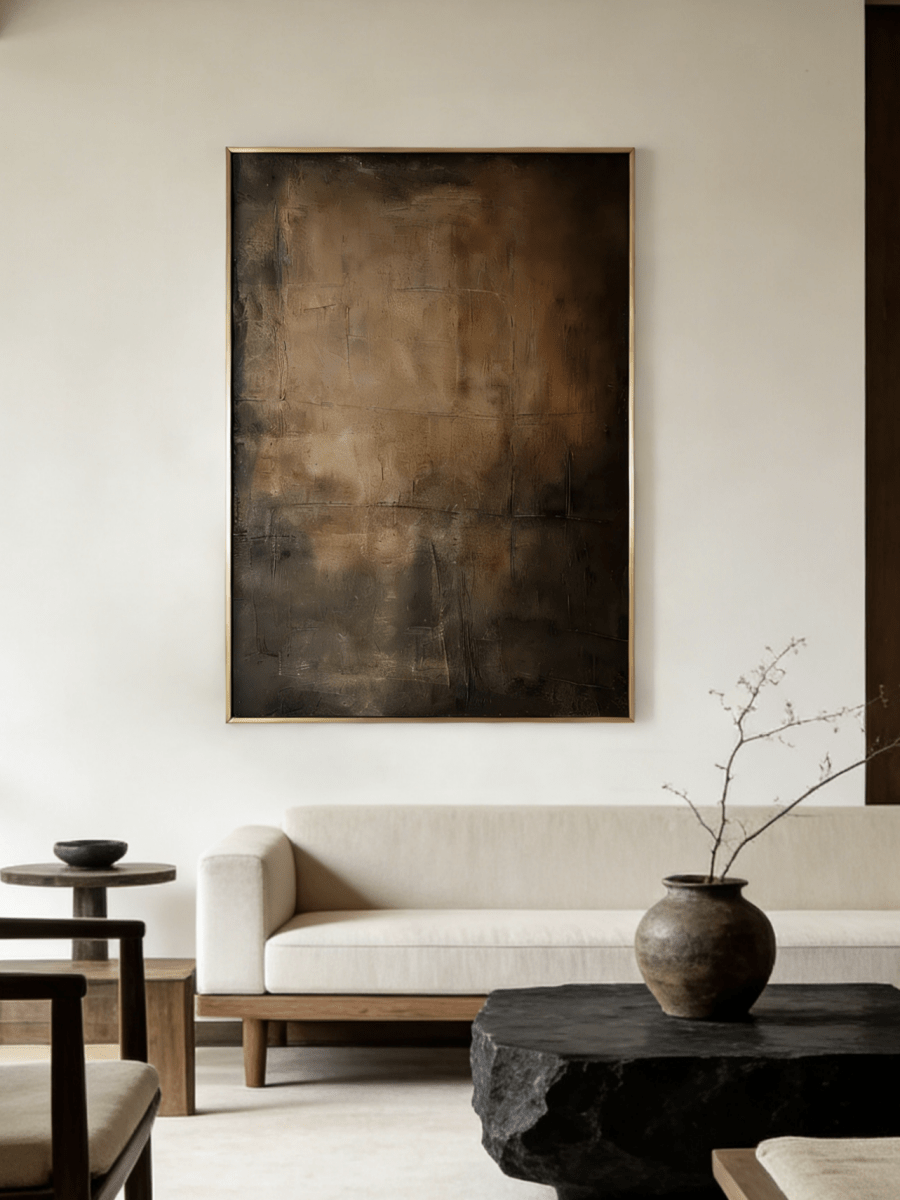
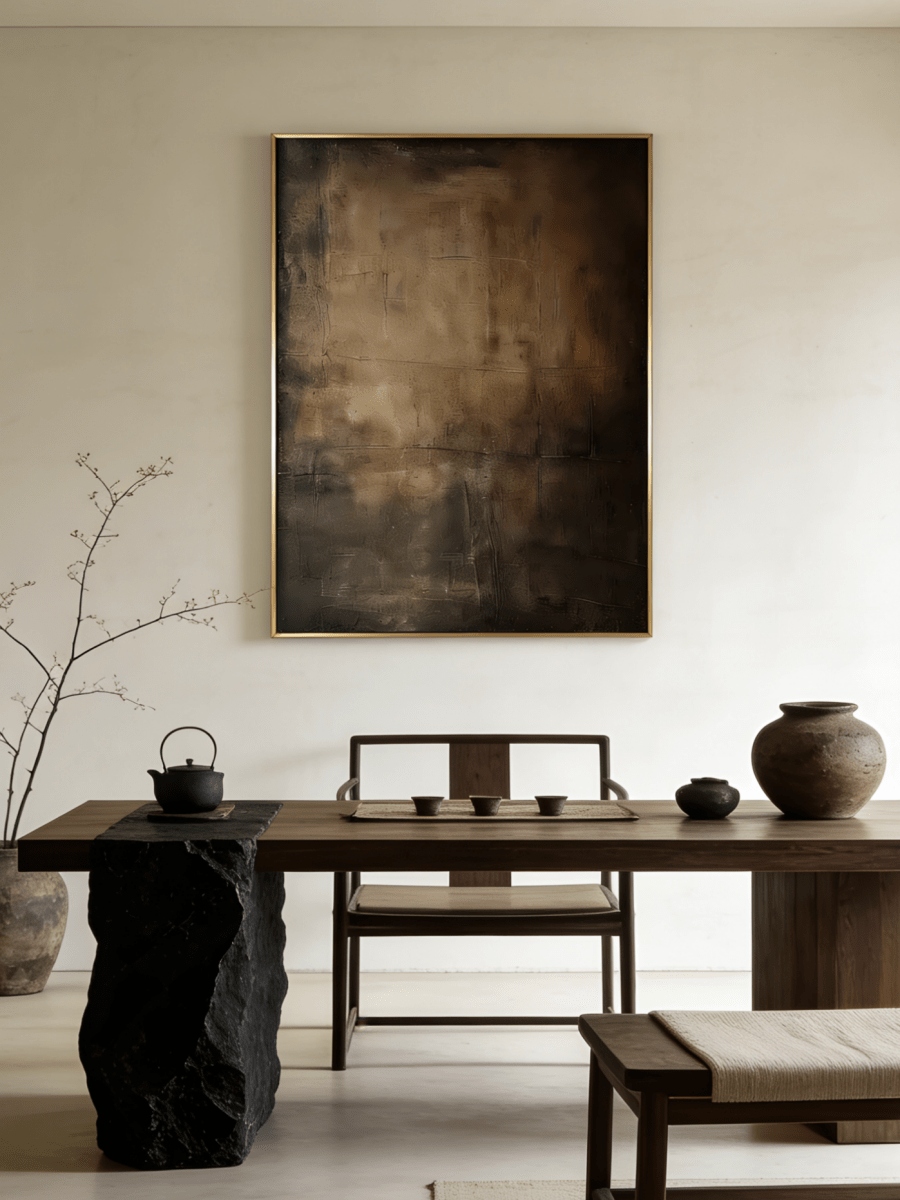
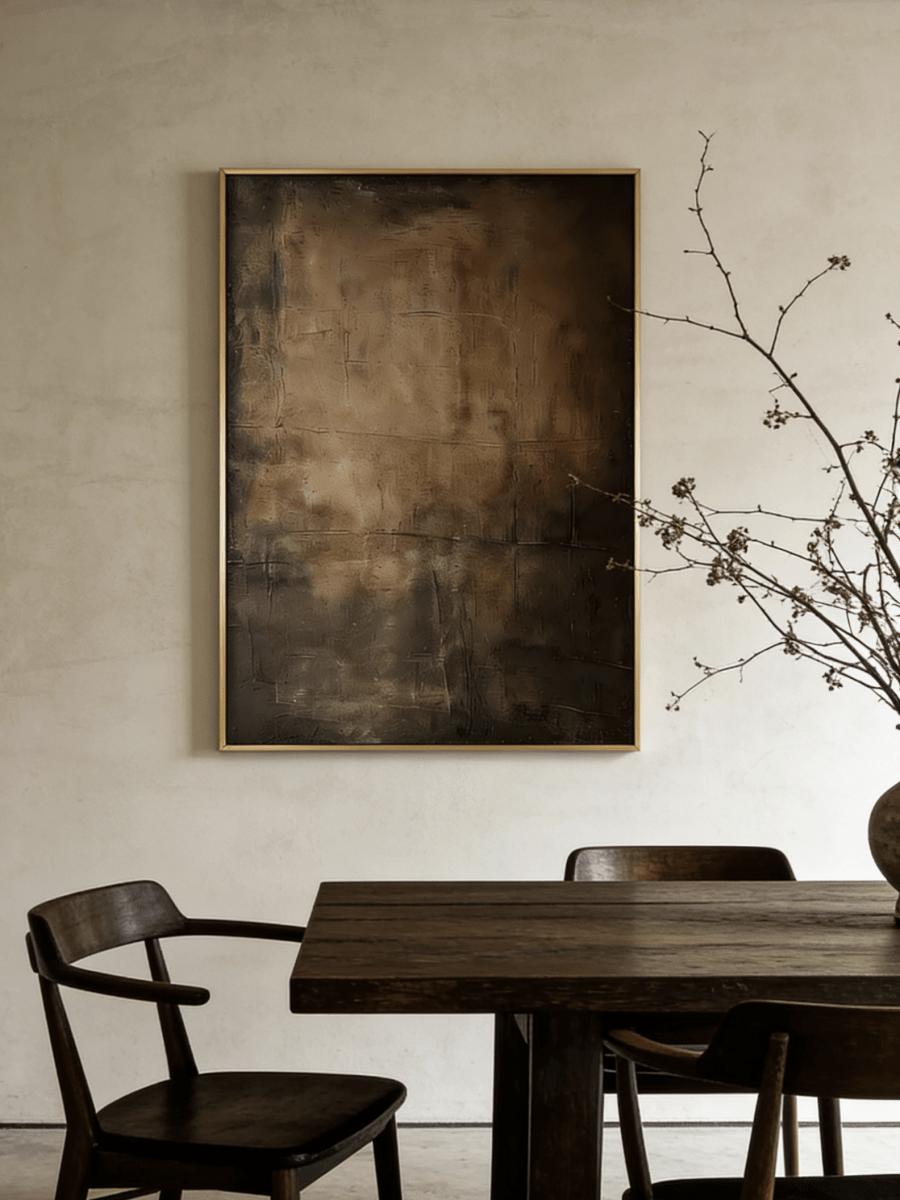
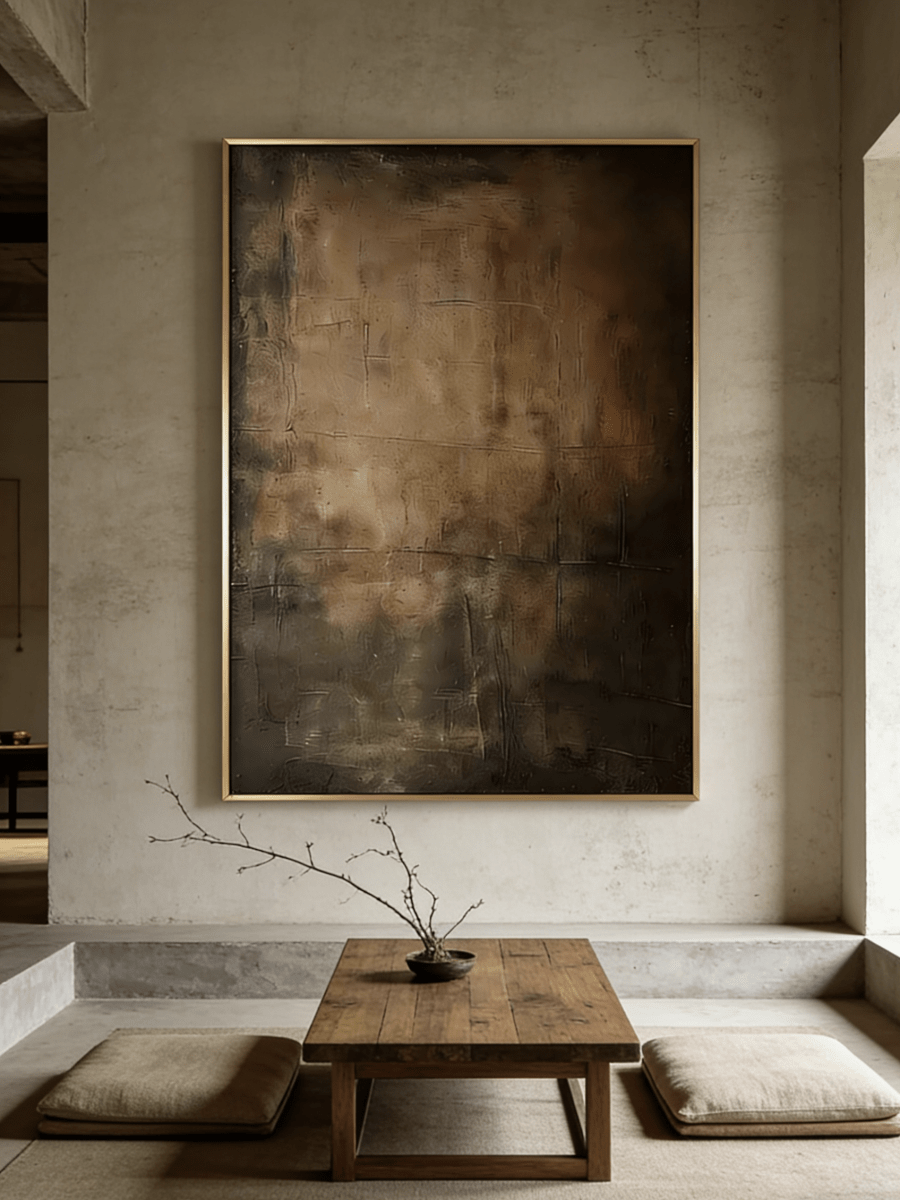
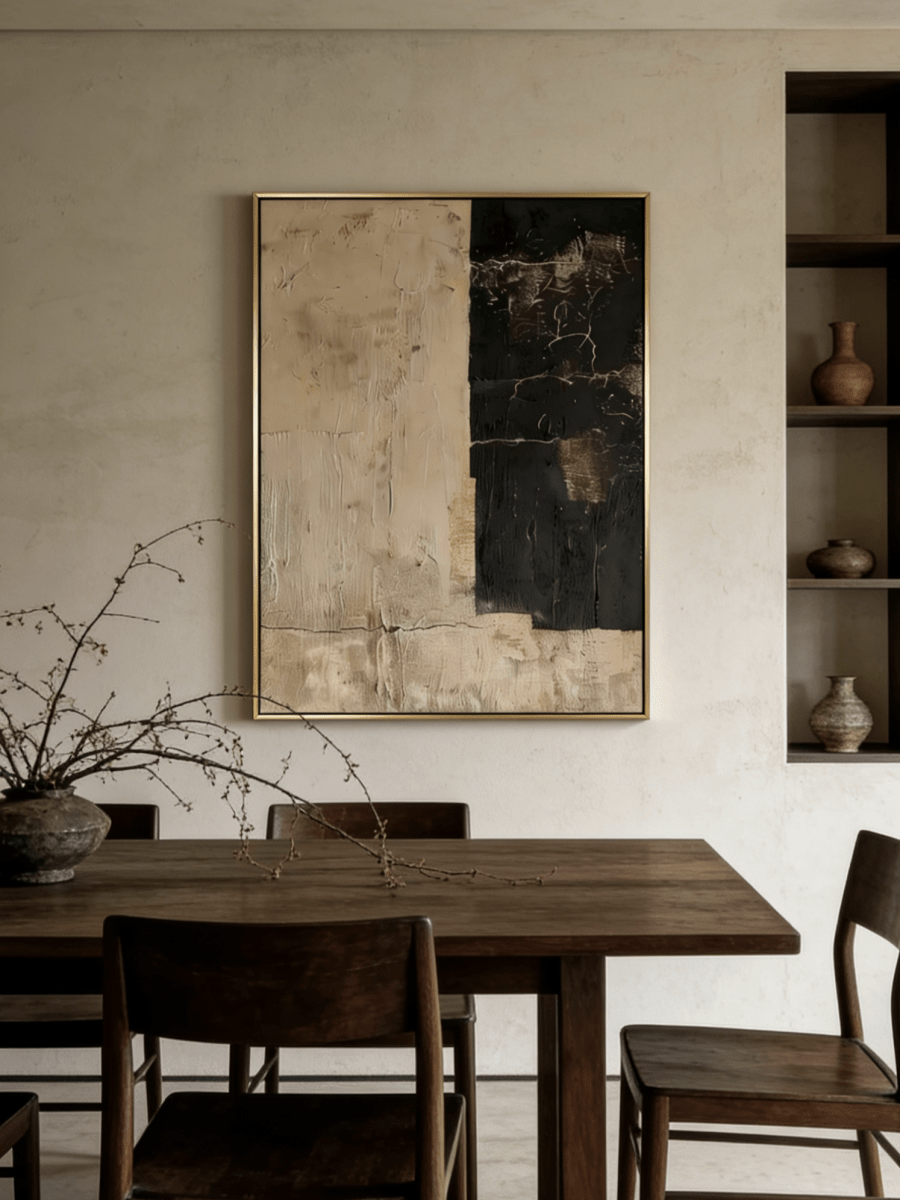
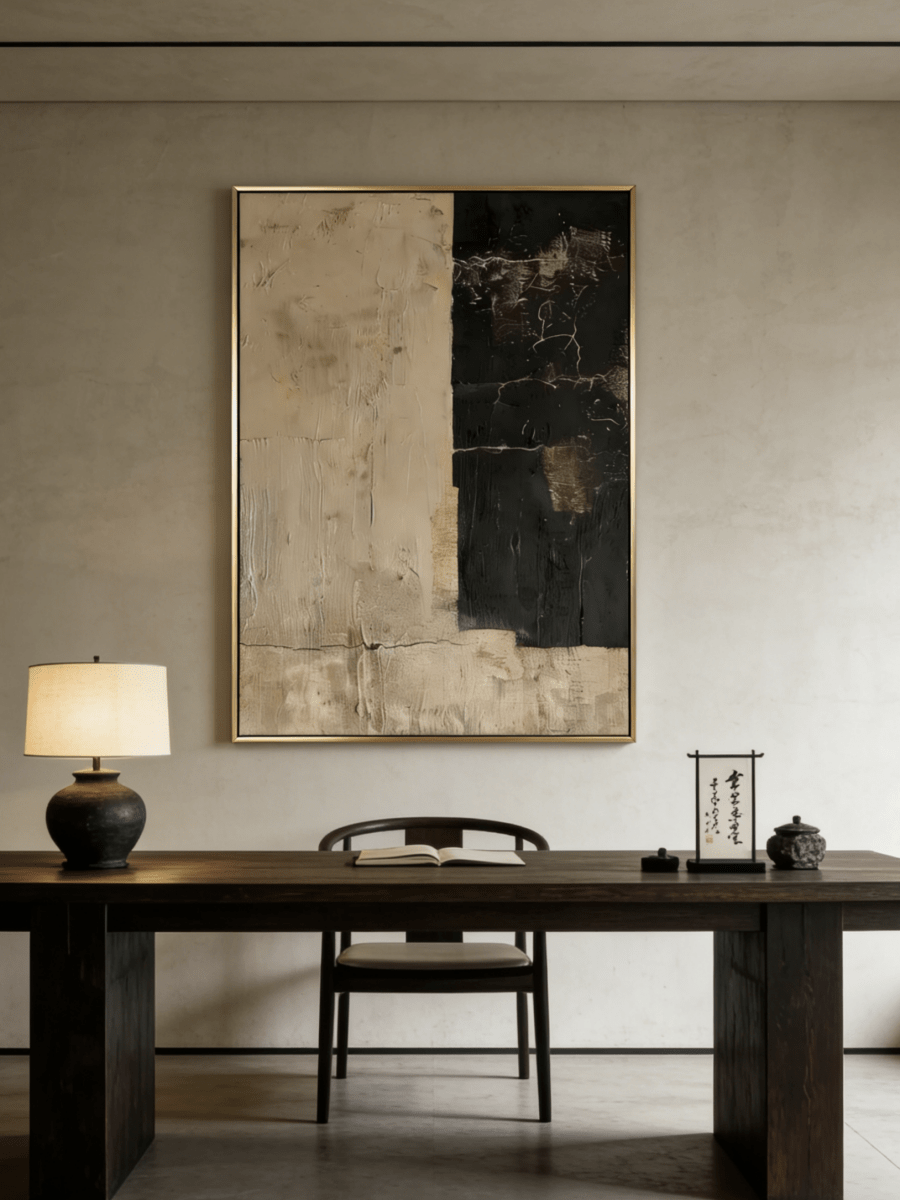
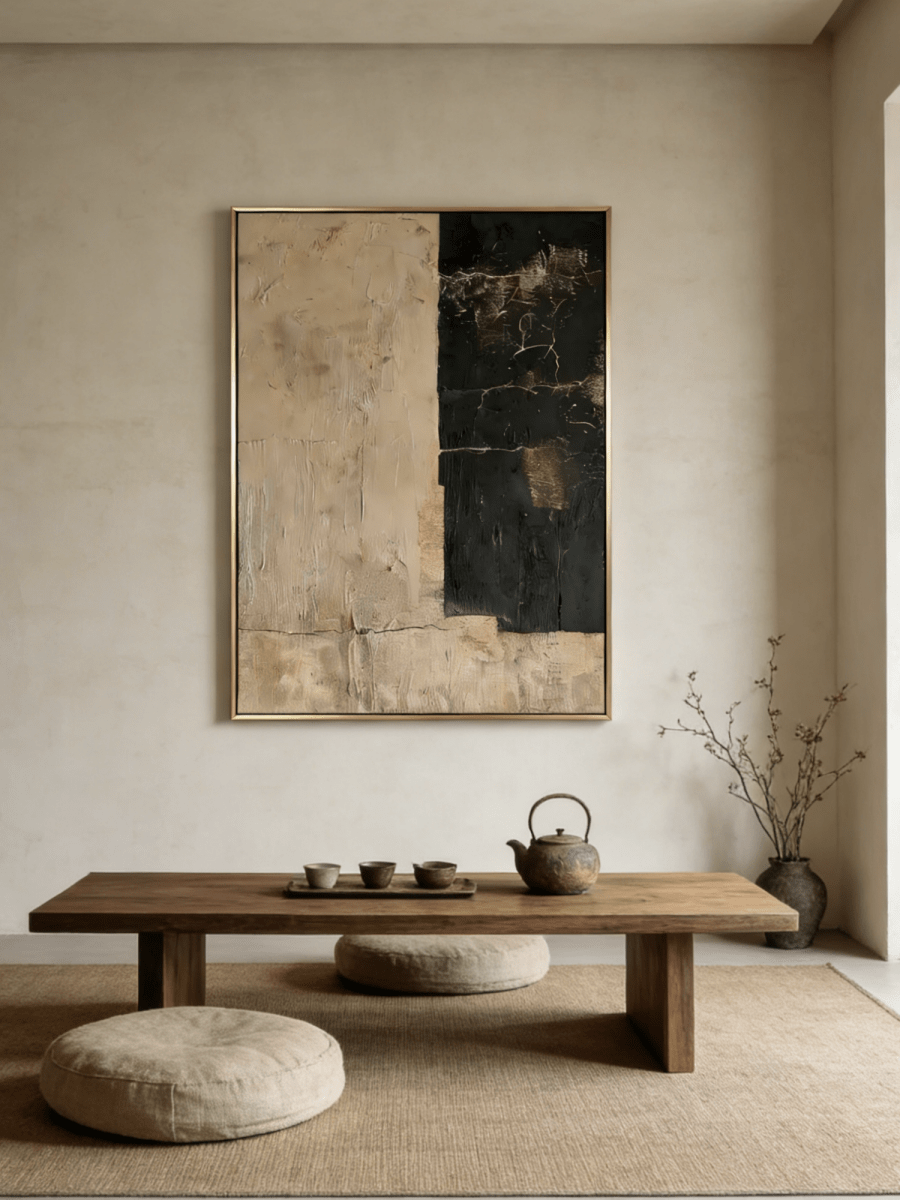
Wabi-Sabi Architectural Textured Grid Abstract Painting – EV#0458 combines a pale irregular grid with a darker base. In a neutral living room, that structure can provide interest without adding a bright accent color. Its product page invites inquiries about custom dimensions, orientation, color direction, and framing; use those categories to explain which features you want retained.
Set a color direction without demanding a screen-perfect match
Choose one dominant color goal and one or two supporting priorities. For example: “Keep the background warm ivory, retain the darker accents, and avoid a strong pink cast.” That gives the artist a usable hierarchy. “Match everything in this room” leaves too many competing references.
Provide an unfiltered room photograph and identify the fixed element that matters most, such as the sofa fabric or stone countertop. If a precise match is essential, ask whether physical swatches can be reviewed and what accuracy is feasible. Screen images and paint names alone cannot guarantee an exact result. Our guide to painting color accuracy online explains the limits of photographs and displays.

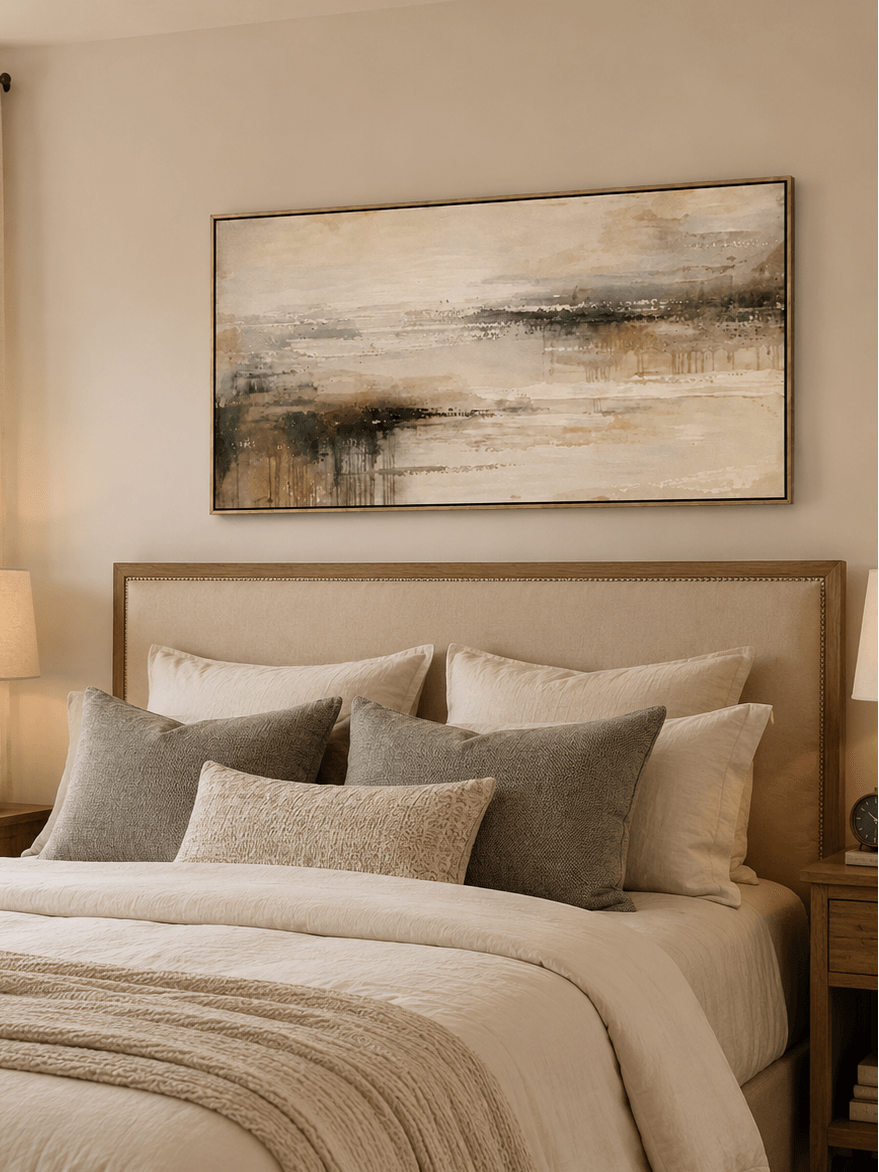
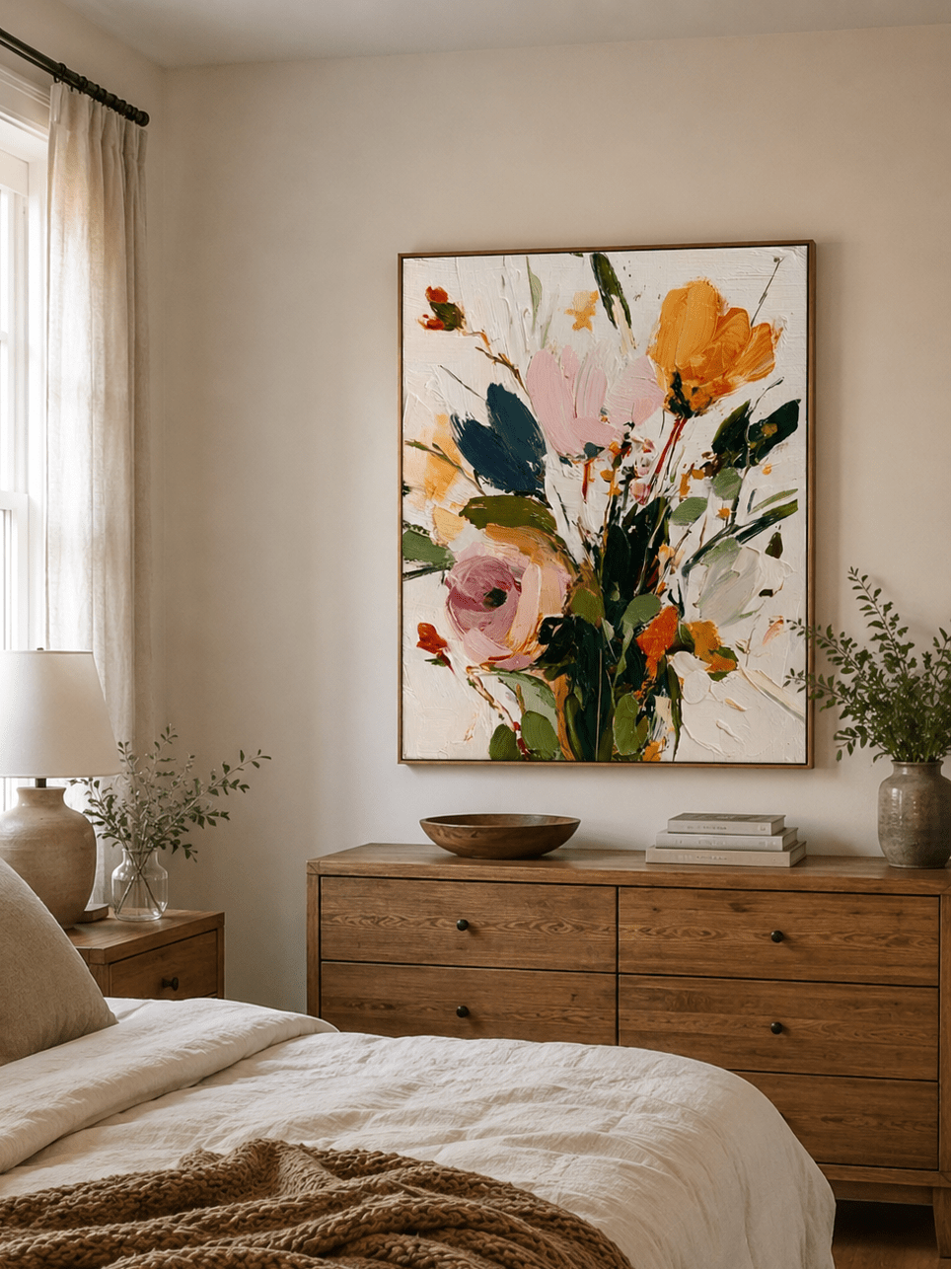
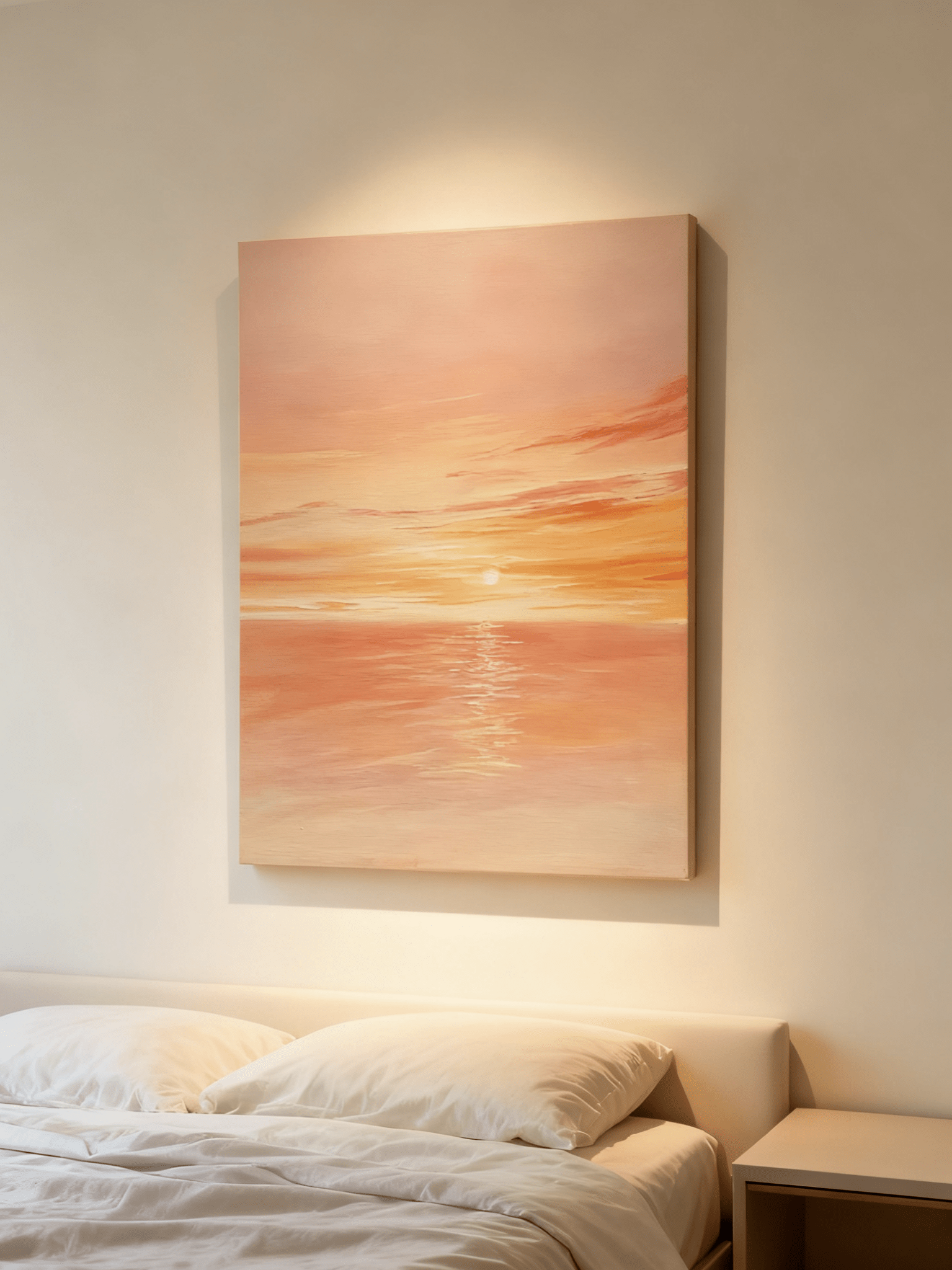
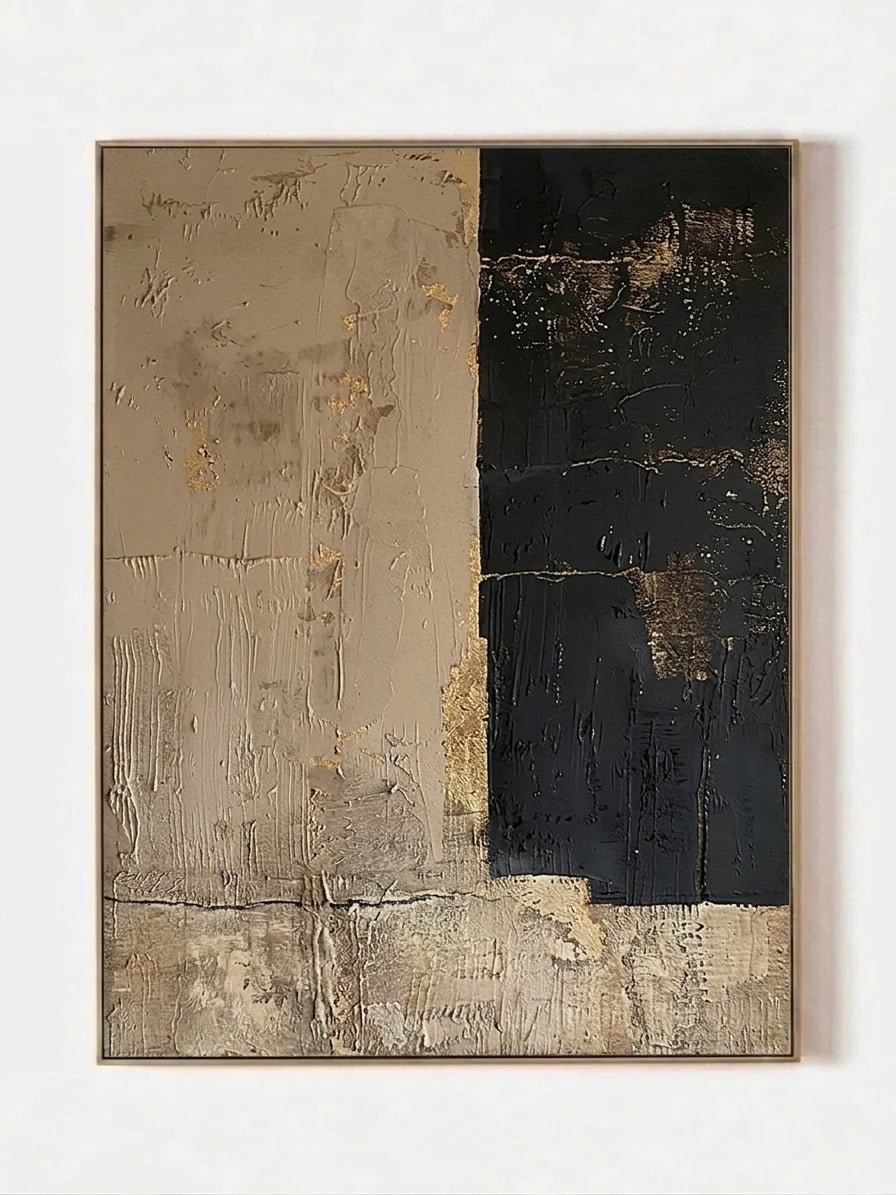
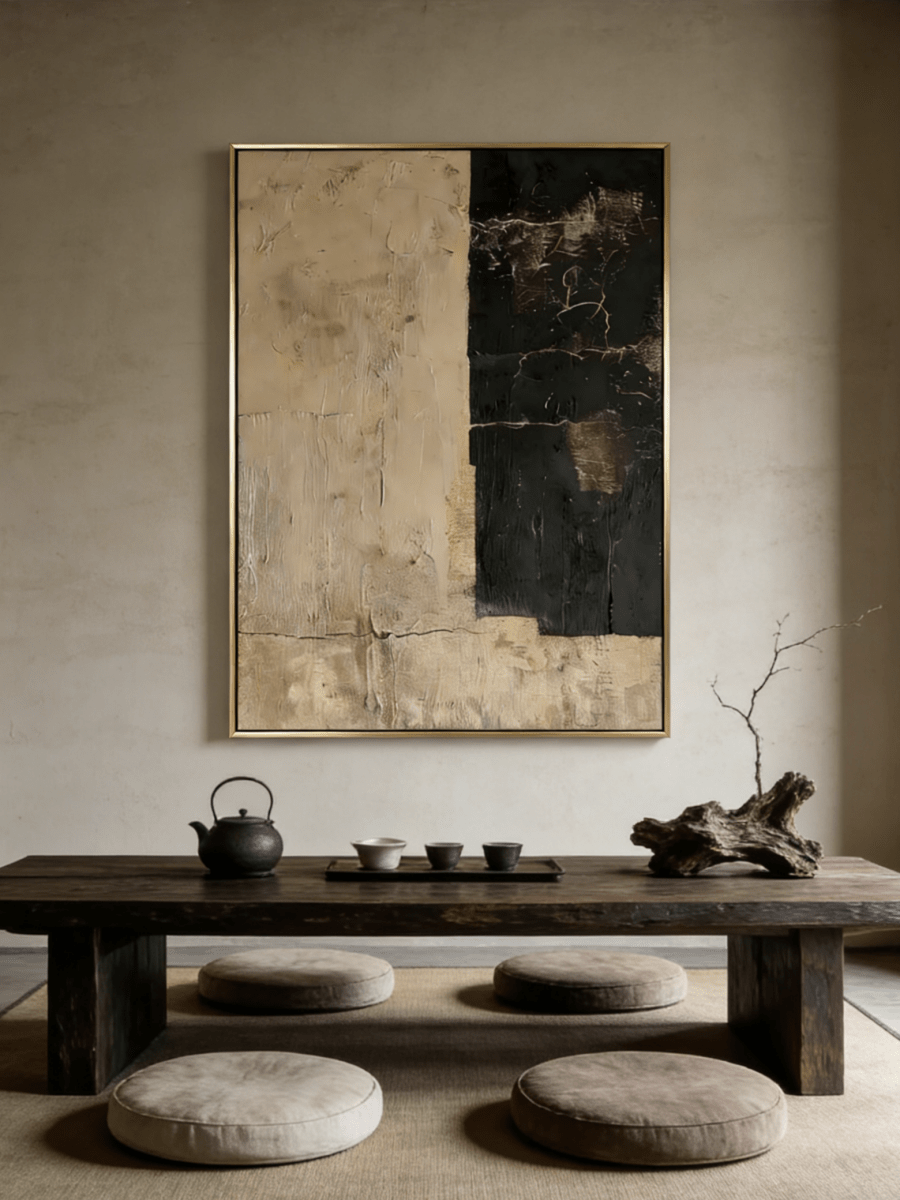
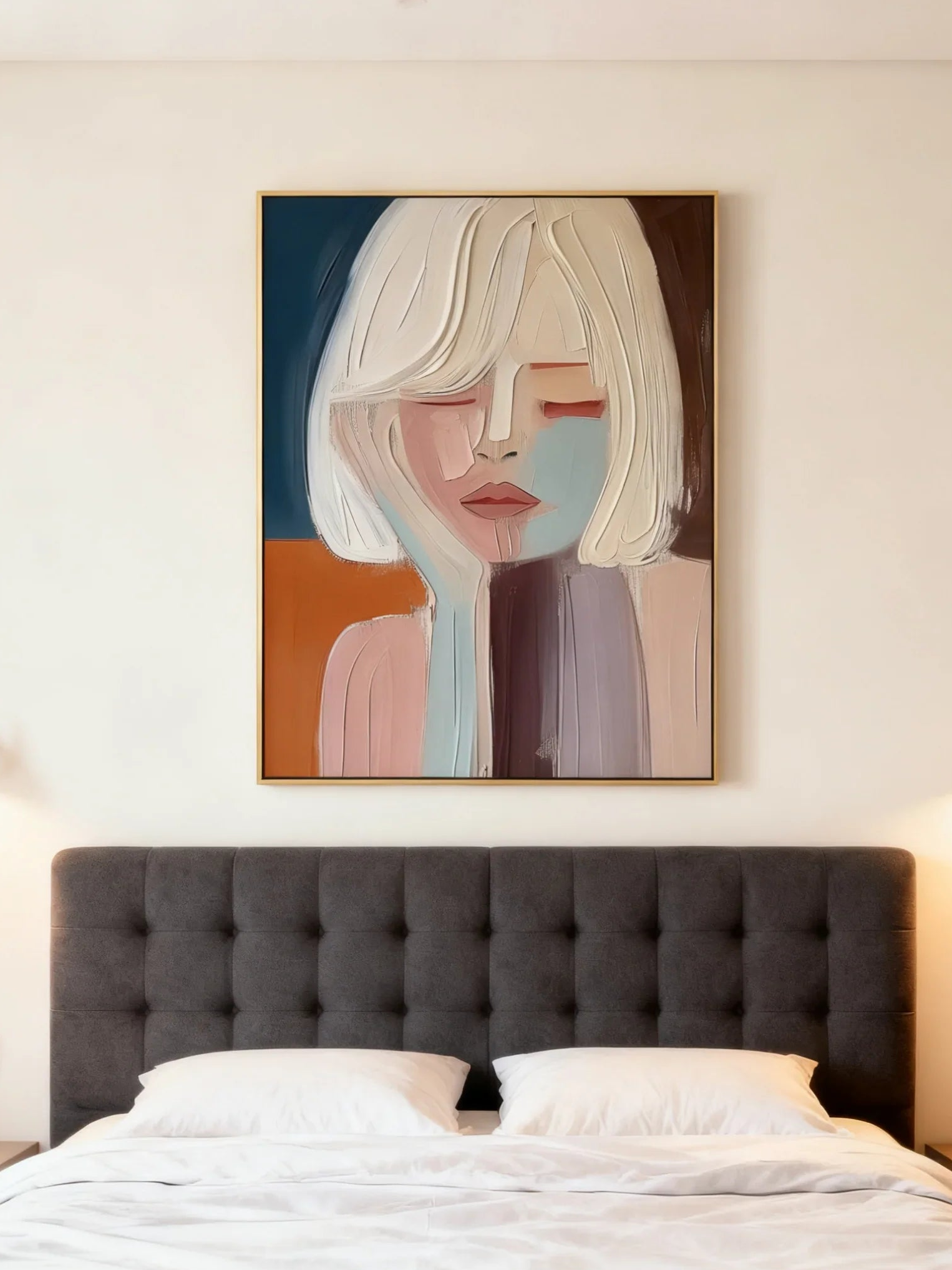
Modern Organic Blush Beige Abstract Painting – AK#0456 brings pale cream, warm earth tones, and darker accents into a quiet bedroom setting. It offers a useful starting point when warmth matters more than a perfect furniture match. The listing directs buyers to contact the team about unlisted sizes; any color change should be requested and confirmed separately.
Agree on the order details and approval process
WABI Wall Art is an online brand offering hand-painted canvas paintings, including textured abstract, Wabi-Sabi-inspired, and large-format work. Available sizes and finishes differ by painting. For customization, contact the team with the artwork link and proposed changes before placing an order; a request is not a confirmed specification until it has been accepted.
Ask for a written summary covering:
- The artwork reference, width, height, orientation, and finished outer dimensions.
- The approved palette and texture changes, with any limitations.
- The selected rolled, stretched, or framed format and what is included.
- The total quote, payment terms, and any additional framing or destination costs.
- The production estimate, photo-review stage, and process for requesting revisions.
WABI Wall Art’s current ordering FAQ states that a photo is provided for confirmation before shipment. Ask whether that photo shows your completed painting and at what stage framing takes place. Review it against the accepted brief, raising any missing feature or incorrect dimension before approving shipment. The published summary does not establish unlimited revisions or an exact color-match guarantee.
Separate production time from delivery time
The Shipping & Delivery page lists typical creation time of 1–2 weeks and approximately 5–7 business days after shipment via DHL or FedEx. It states free worldwide shipping and coverage of U.S. import duties. Custom work may need a different estimate; customers outside the United States should check applicable local import requirements.
Confirm the policy for your particular custom order before payment. The Returns & Exchanges page describes a conditional 30-day period and notes that customized items may need different handling. Ask what applies to cancellation, approved changes, return eligibility, and damage documentation. Keep the accepted brief, order confirmation, and approval photographs together.
A custom painting inquiry you can adapt
This illustrative brief is a request for a quote, not a size or service promise:
“I am interested in [artwork link and number] for the wall above my sofa. My preferred canvas size is 60 inches wide × 30 inches high. Please confirm the finished outer dimensions with [preferred frame option].
“I would like to retain the main composition and its open pale area. My color priority is warm ivory with restrained dark accents. Please advise whether that direction and the existing texture can work at this size.
“Before I order, please confirm feasibility, the total quote, the approval and revision process, estimated production and transit times, and the return or cancellation terms for this customization. My delivery country is [country], and my target arrival date is [date].”
Attach a measured wall sketch and one clearly labeled room photograph. Distinguish the artwork dimensions from the wall measurements. If your priorities conflict, tell the team which matters most: exact outer size, the original composition, or the palette.
Frequently asked questions
Can I use a product’s room image to calculate the painting size?
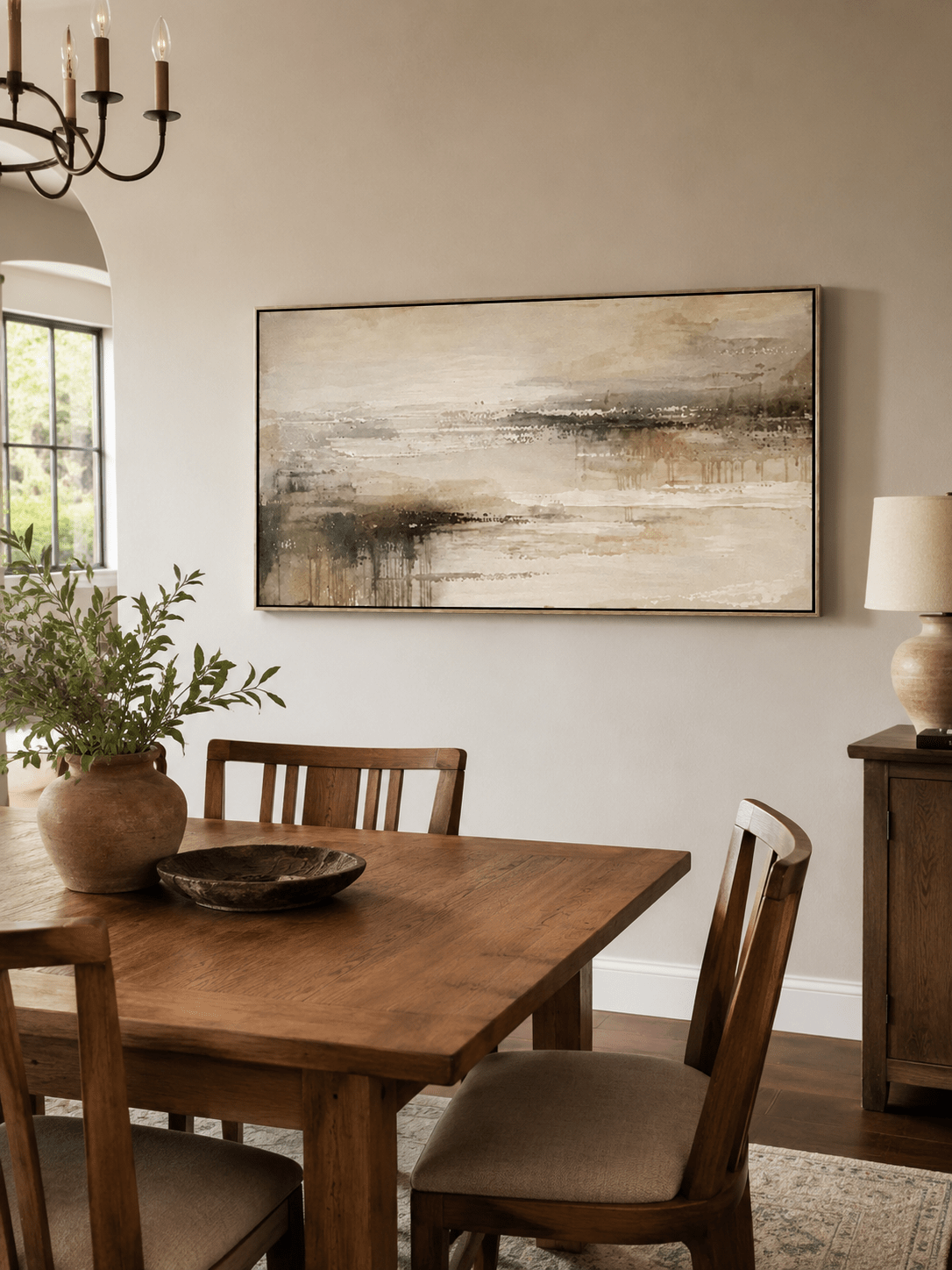
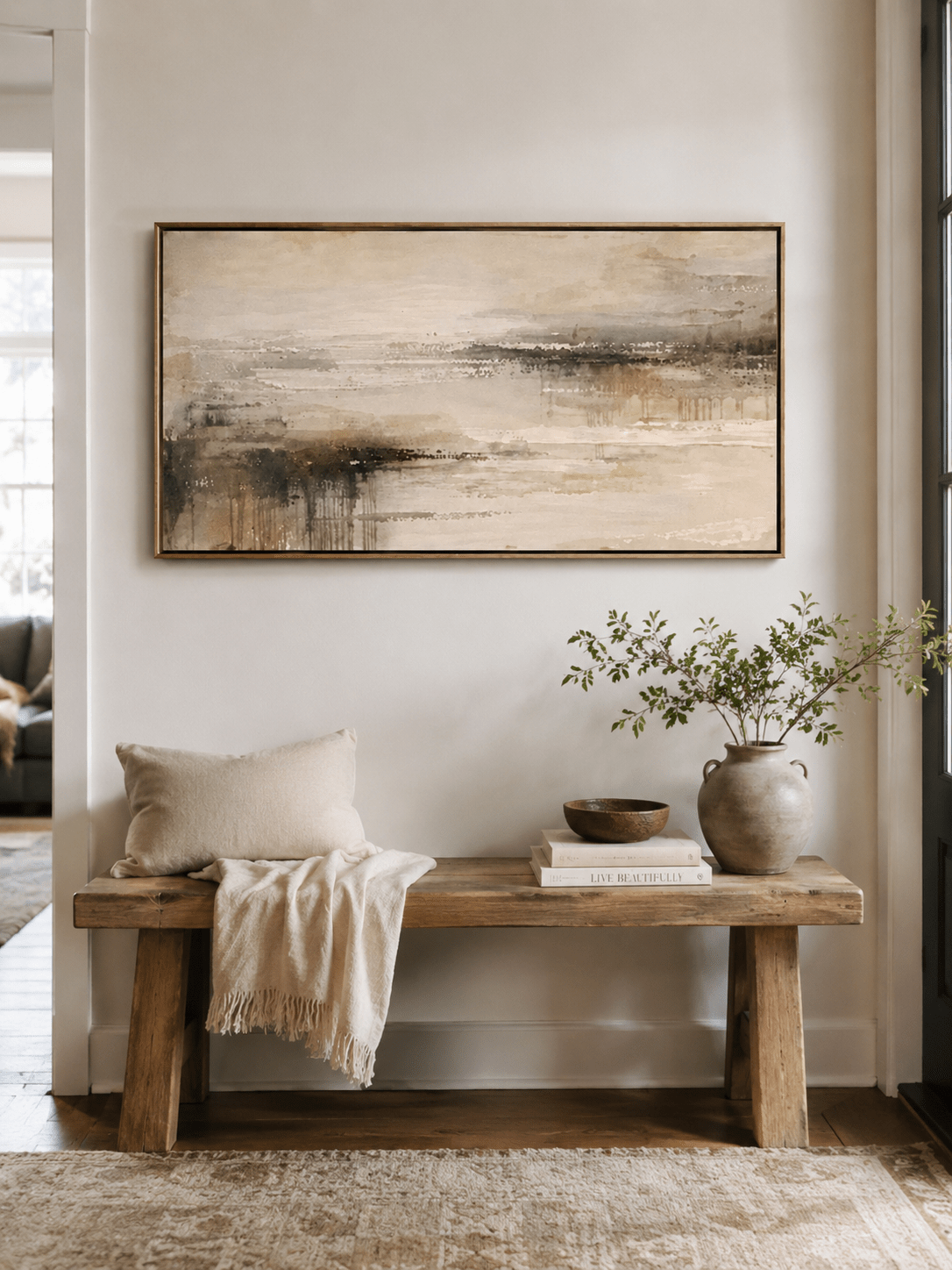
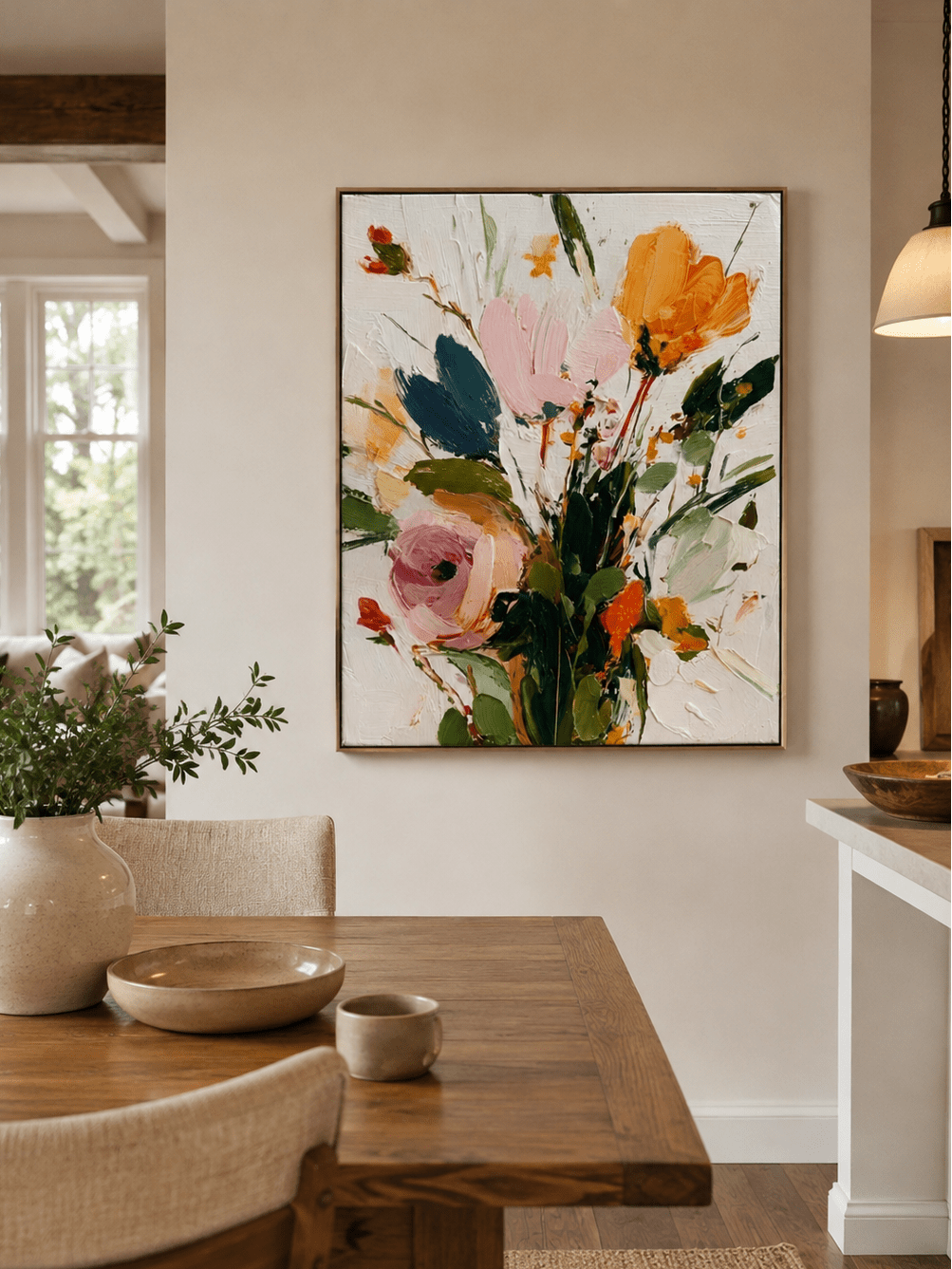
No. A styled room image is a visual reference, not a reliable scale drawing. Use the selected size option, written dimensions, and your own wall measurements. The room images in this guide illustrate the listed designs, not completed custom orders.
Should I arrange local framing before ordering rolled canvas?
Discuss the proposed artwork with a local framer first. Confirm the necessary canvas margins, stretcher dimensions, surface suitability, and cost. Rolled delivery does not mean the painting is ready to hang, and not every heavily textured work is suitable for rolling.
Does a custom size make the design exclusive?
No. A size adaptation and exclusive ownership of a design are different arrangements. Ask explicitly if uniqueness or reproduction rights matter to you; do not infer either from “hand-painted” or “custom.”
What if the seller cannot accommodate my exact dimensions?
Ask for the nearest feasible size and reassess it on the wall before ordering. Choosing a different composition may preserve the intended balance better than forcing your first choice into an unsuitable shape.
Start with a painting worth preserving
Browse new hand-painted works or the textured wall art collection, then choose one reference and write down what you want to keep. Send that brief through WABI Wall Art’s contact page. A clear starting point makes it easier to confirm a painting that fits both the wall and your expectations.