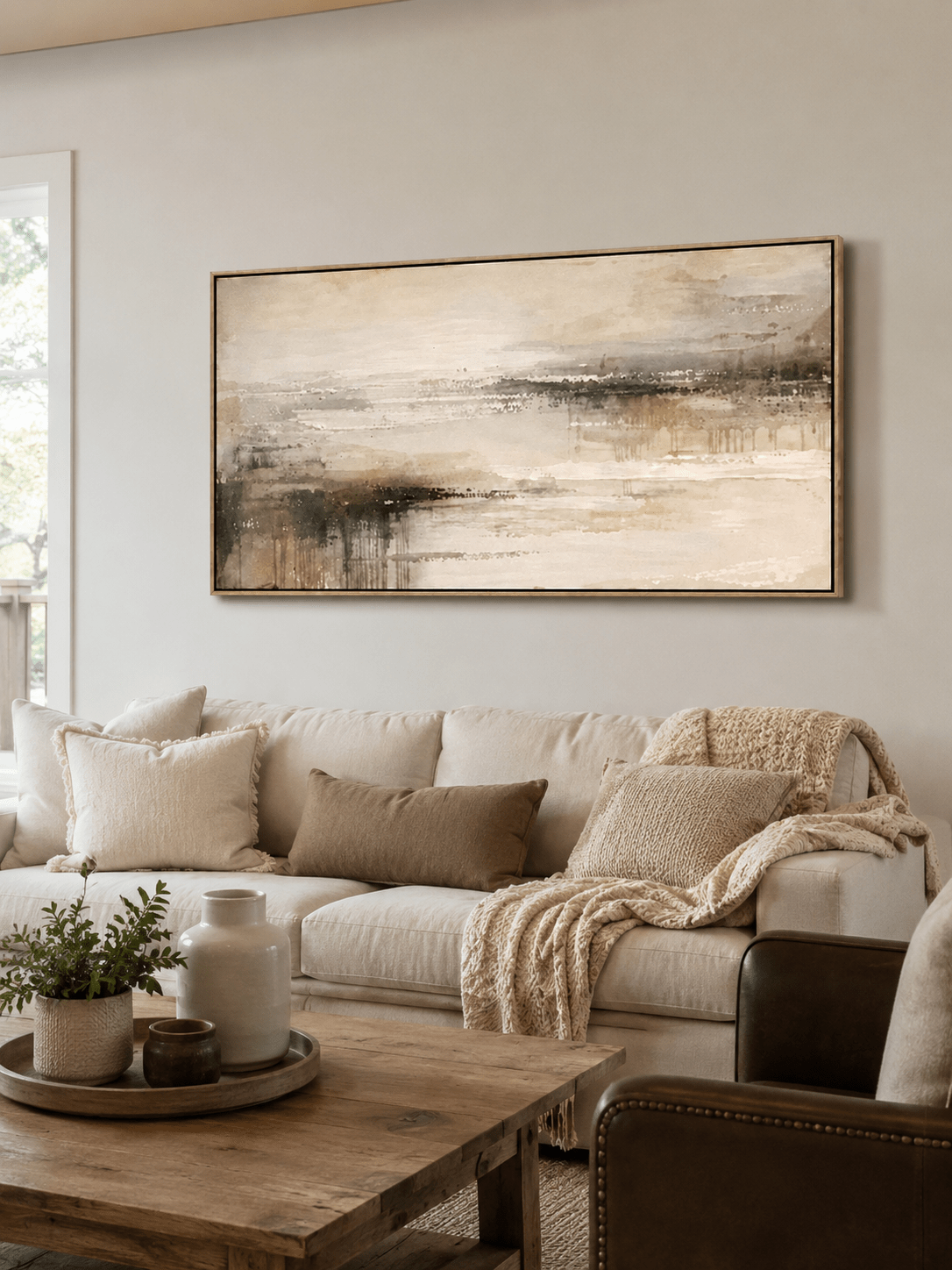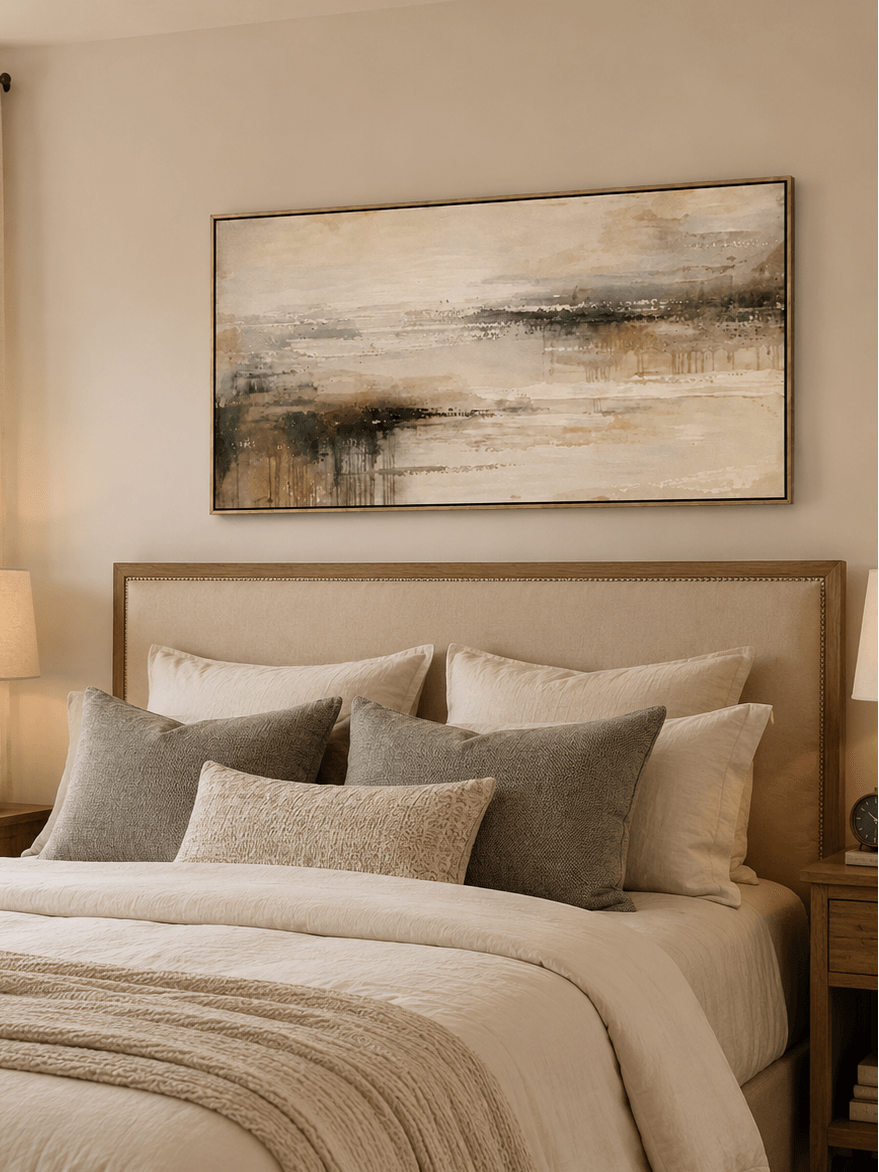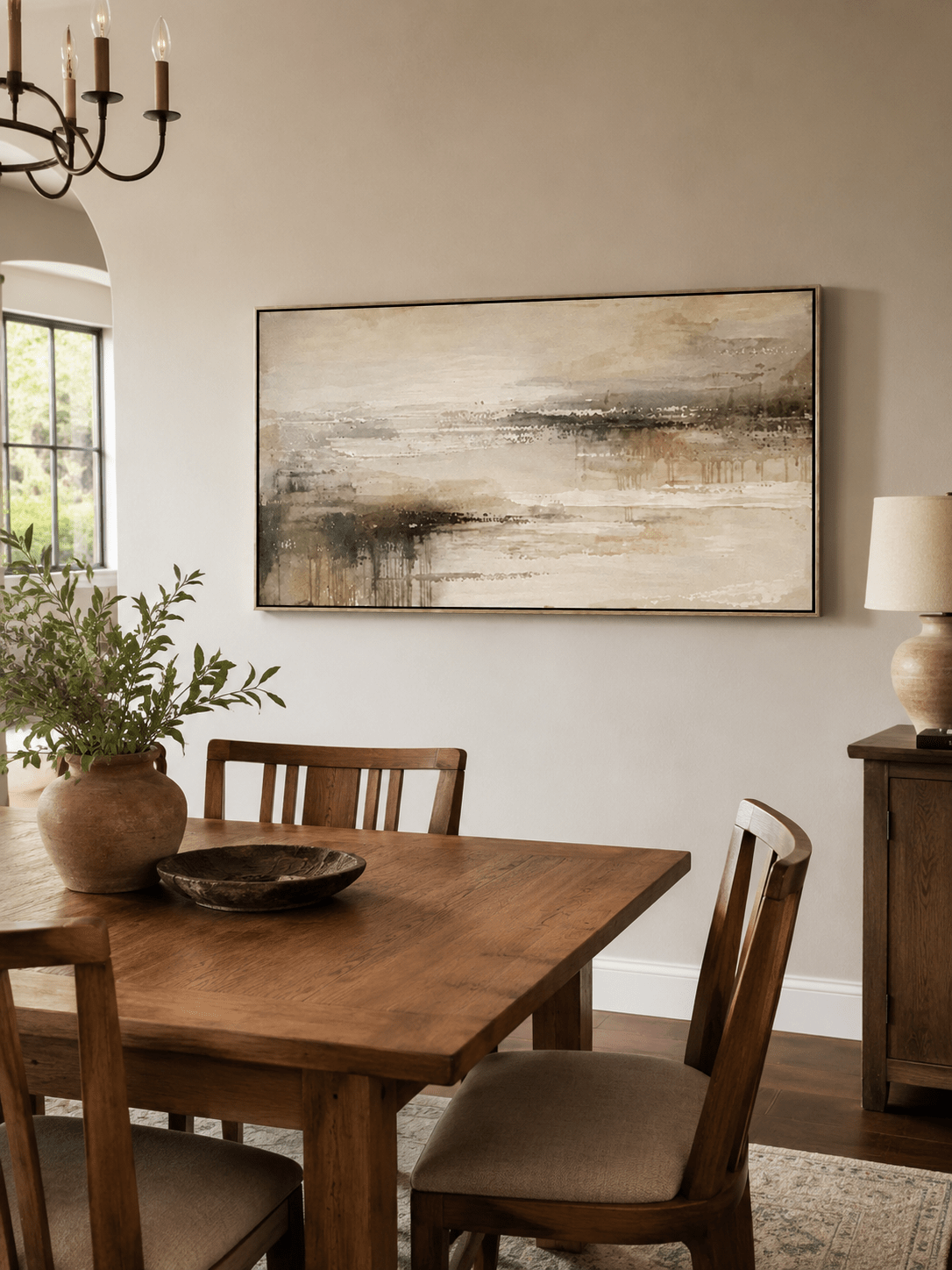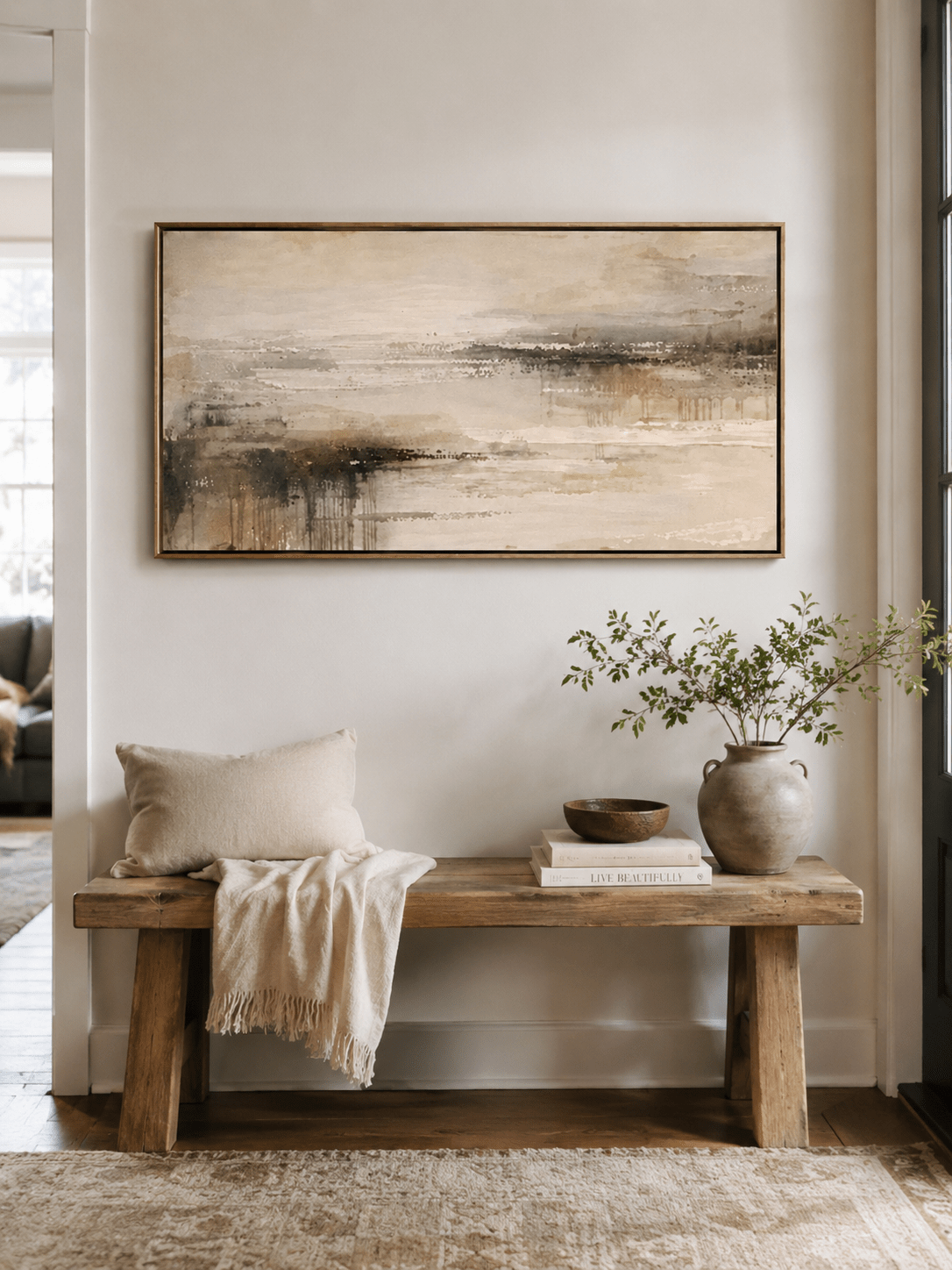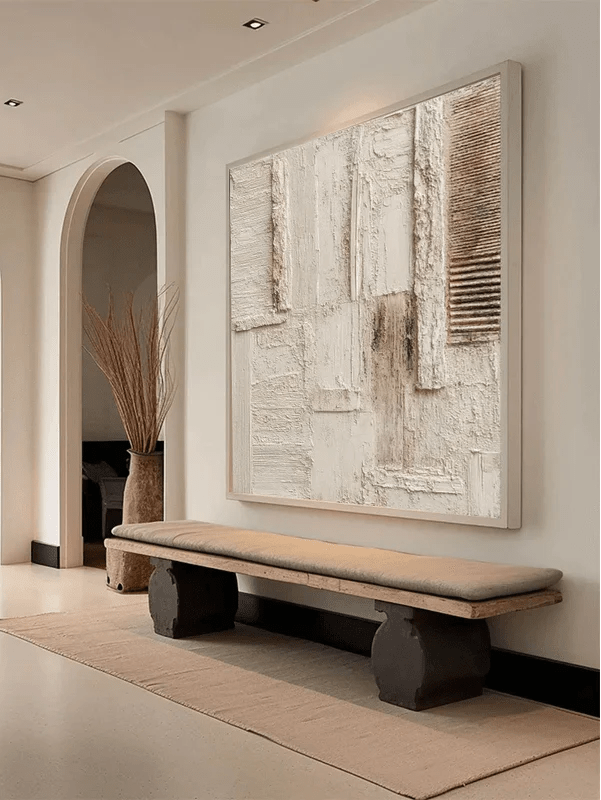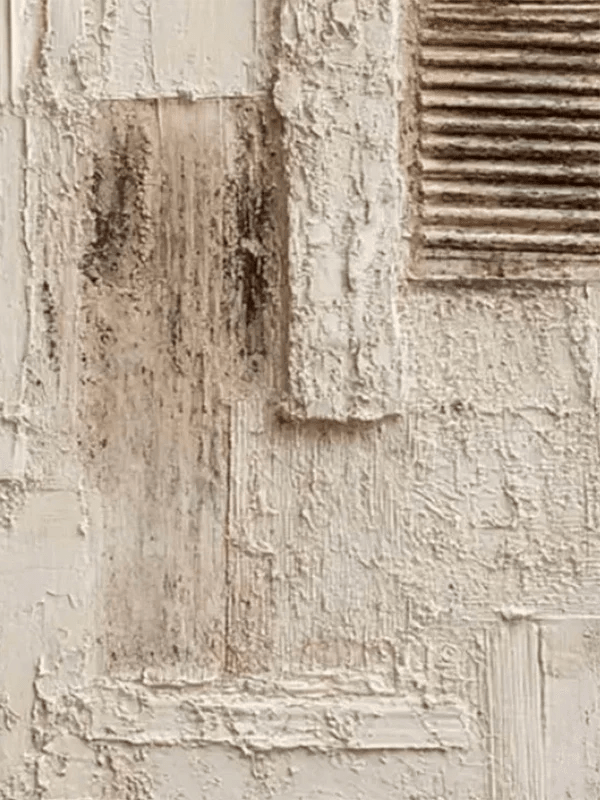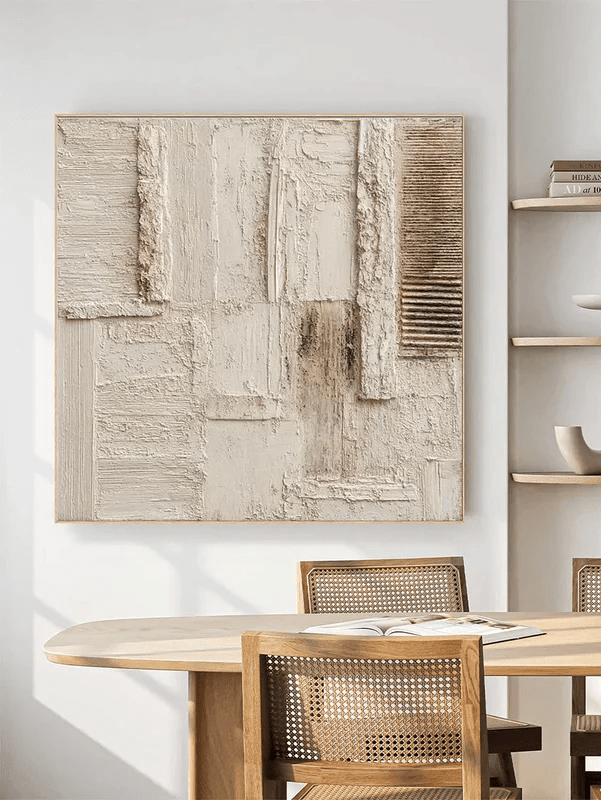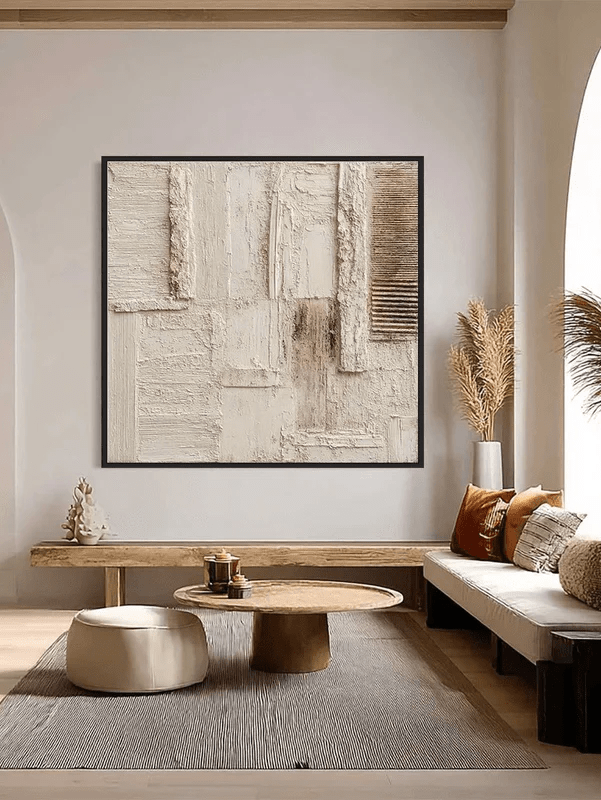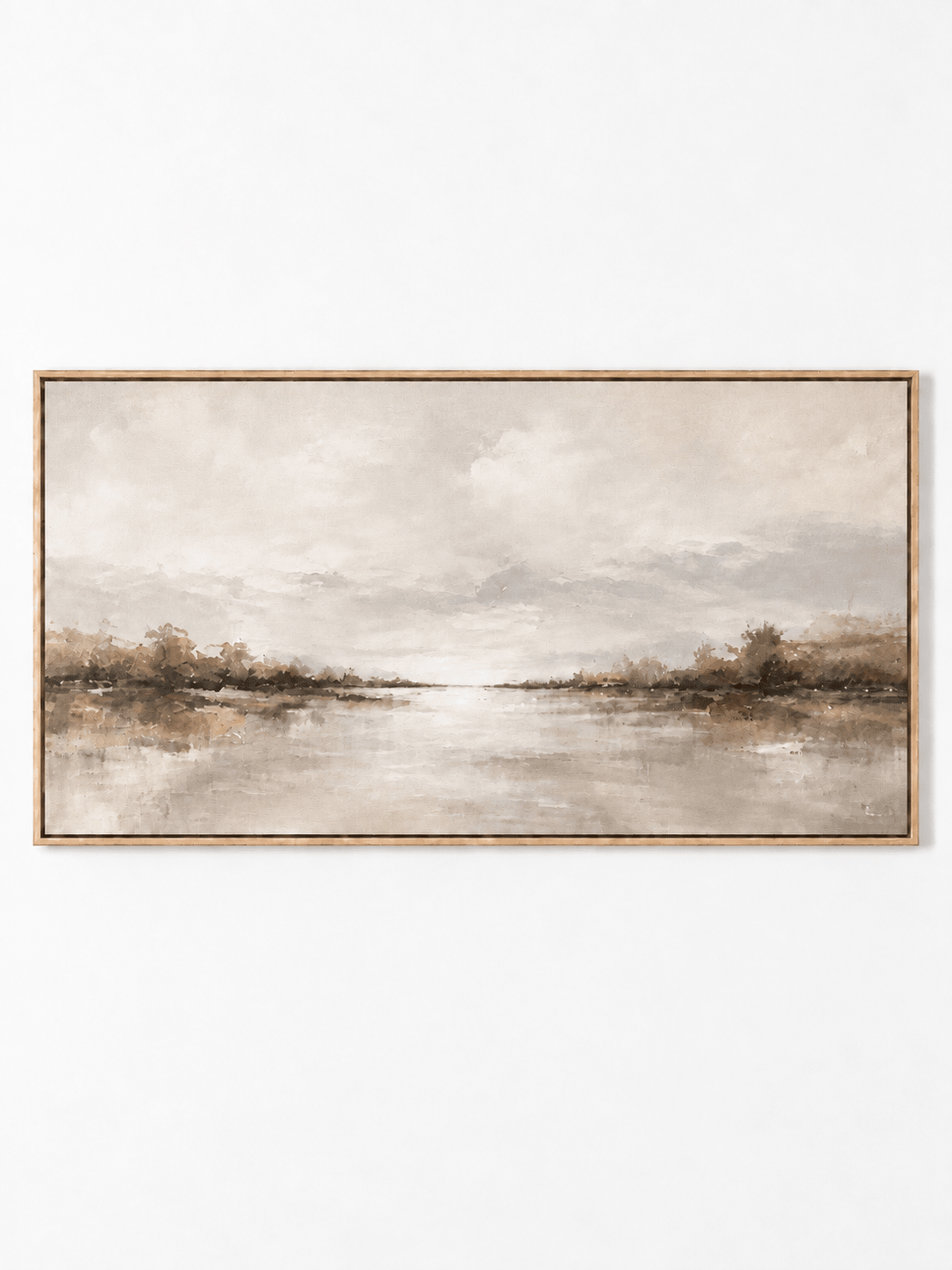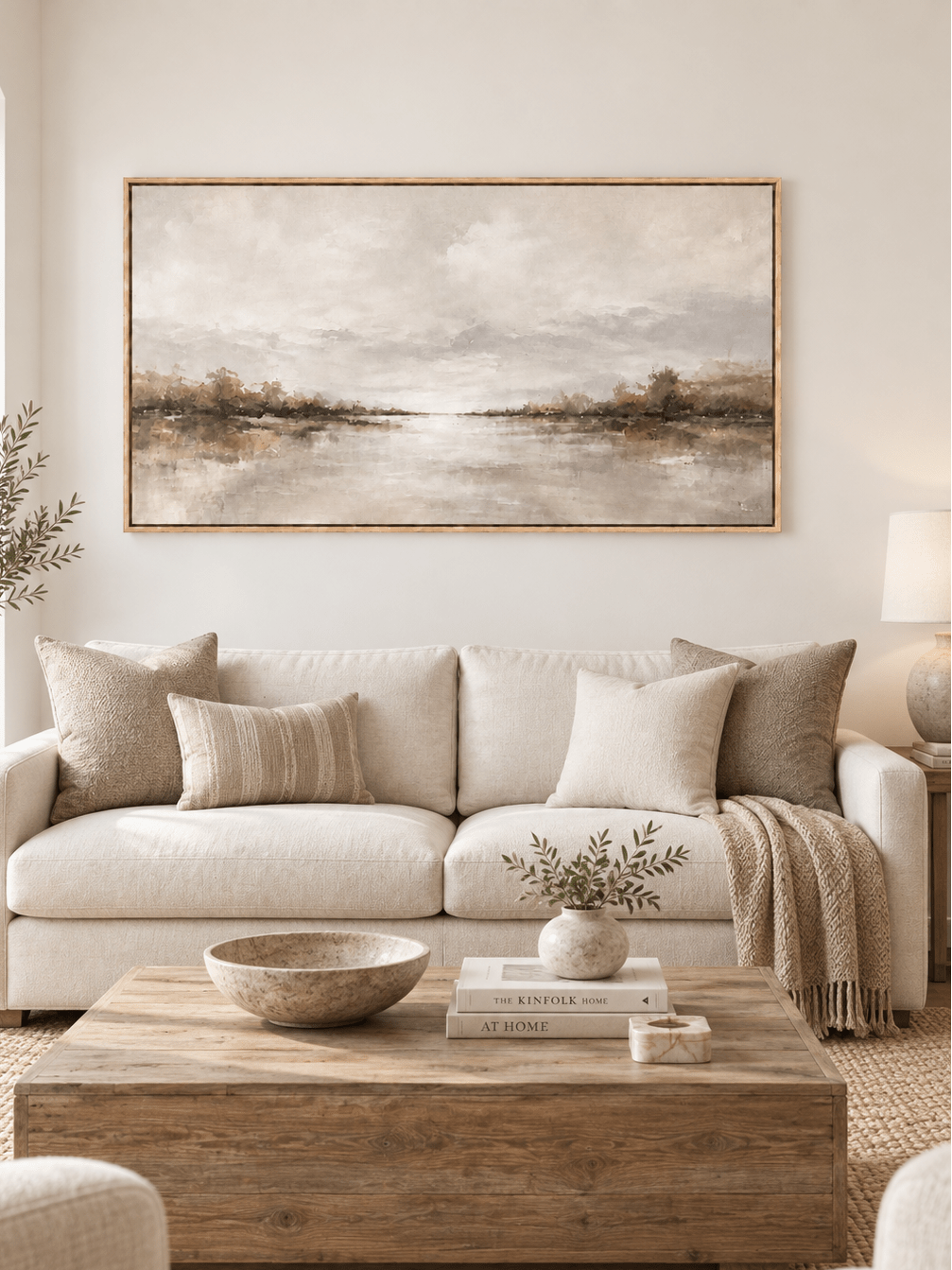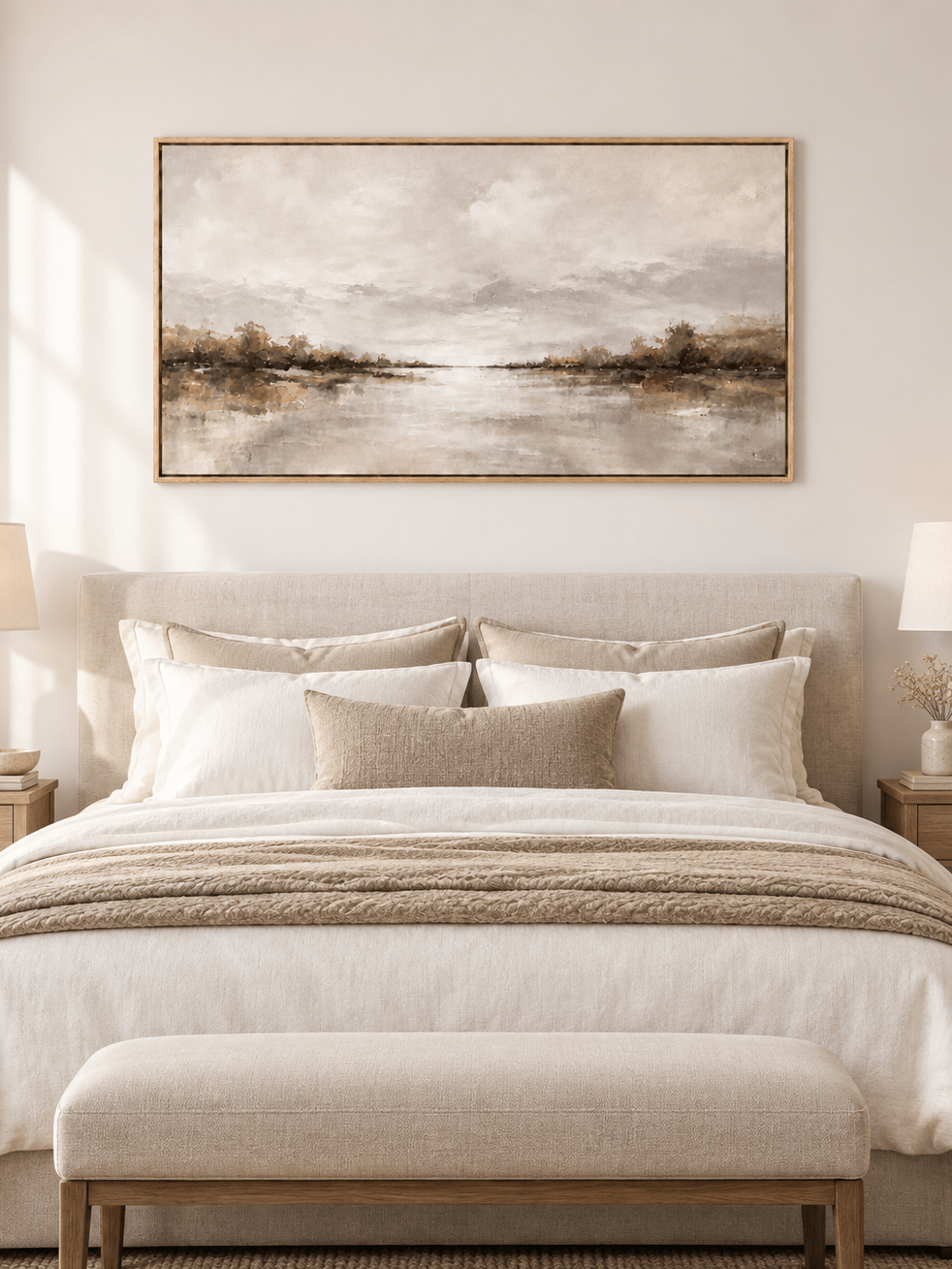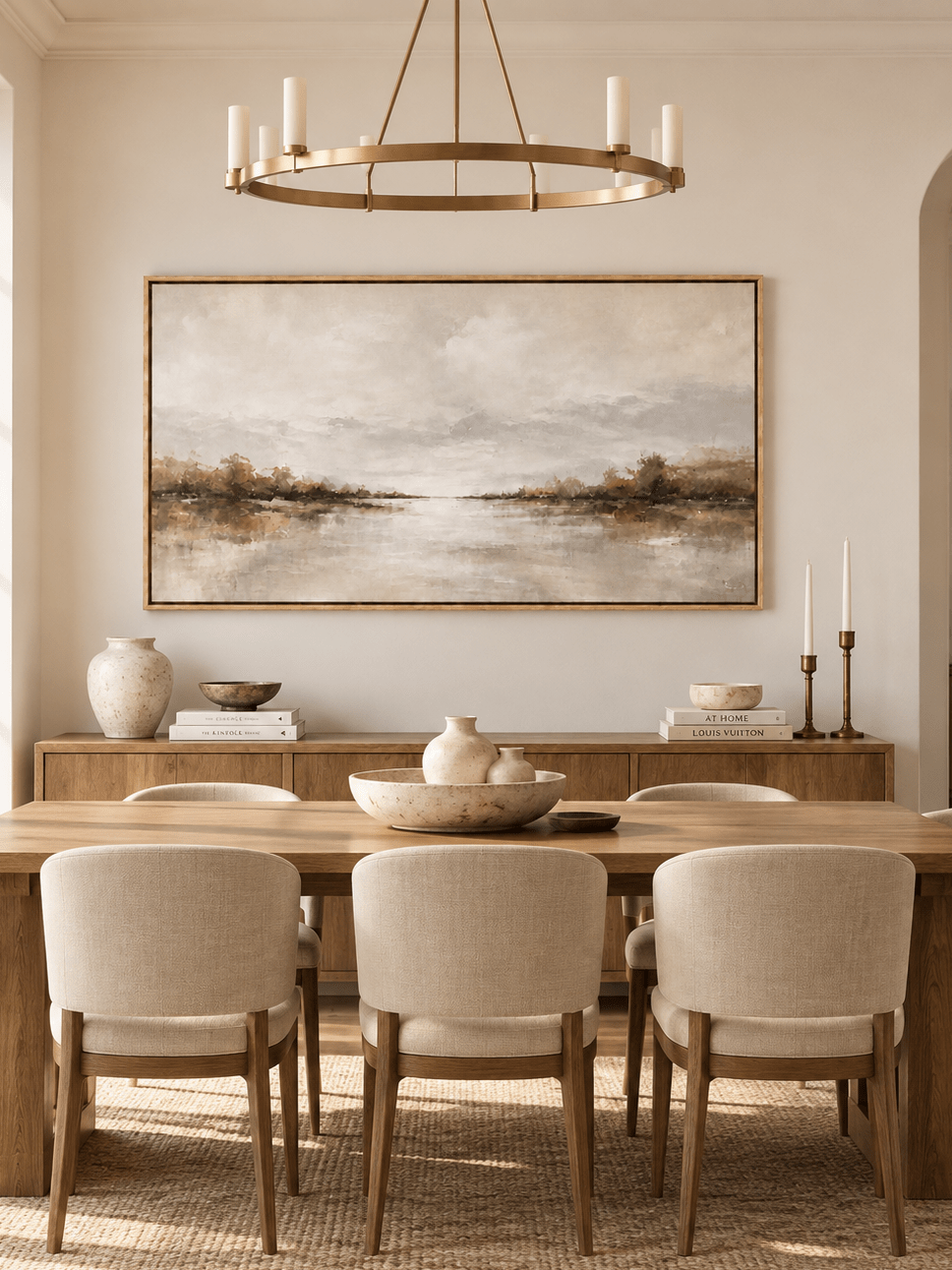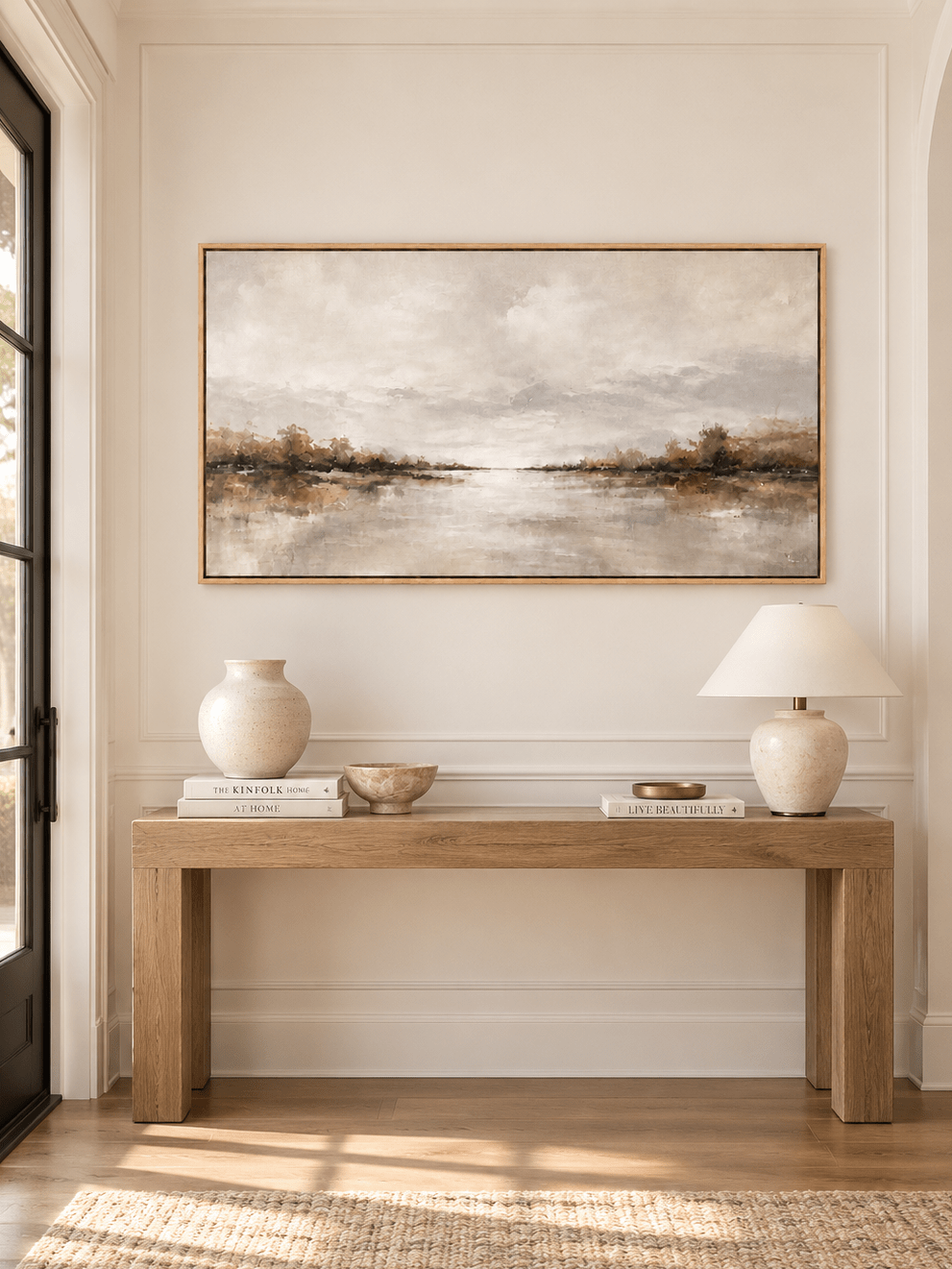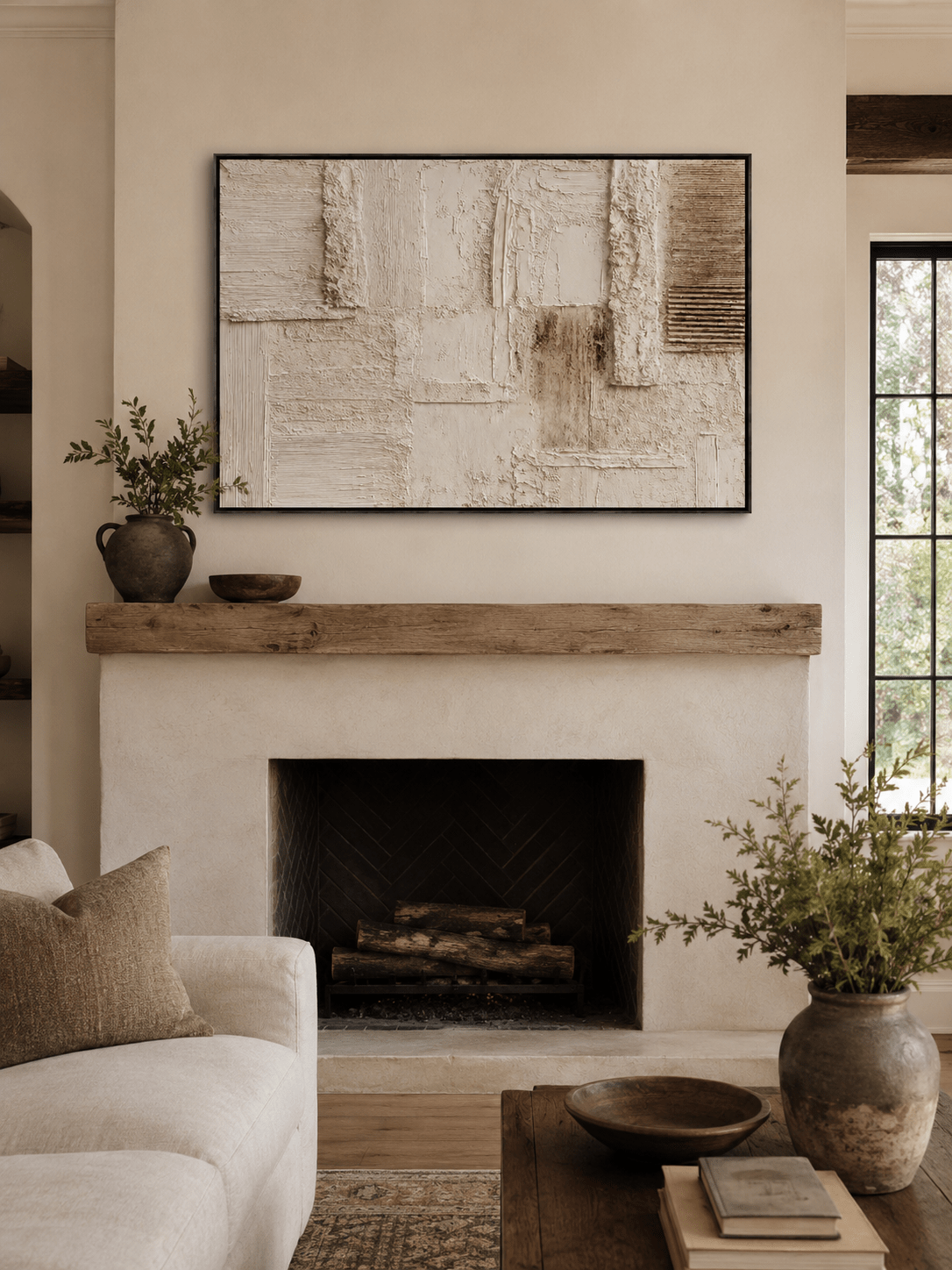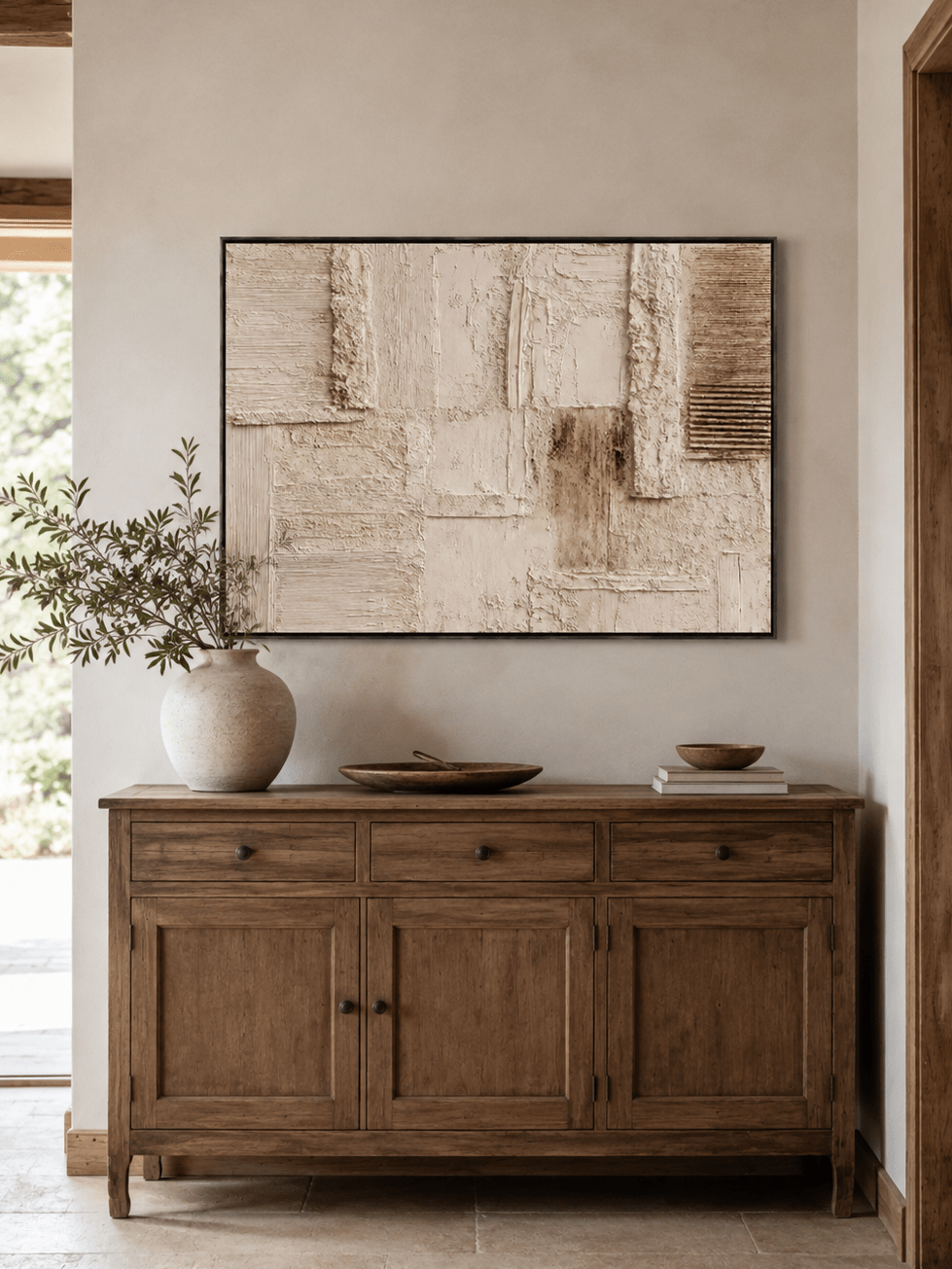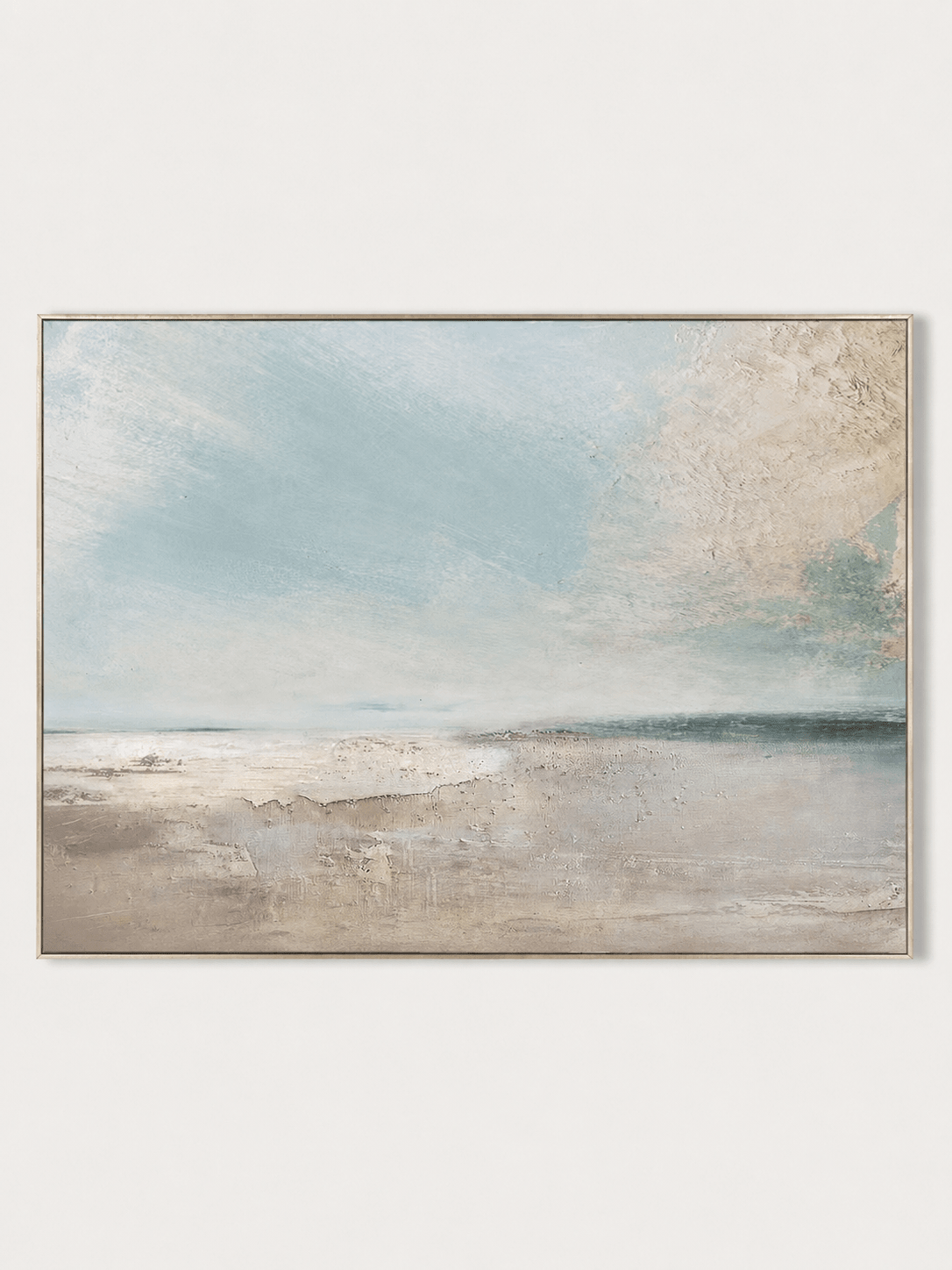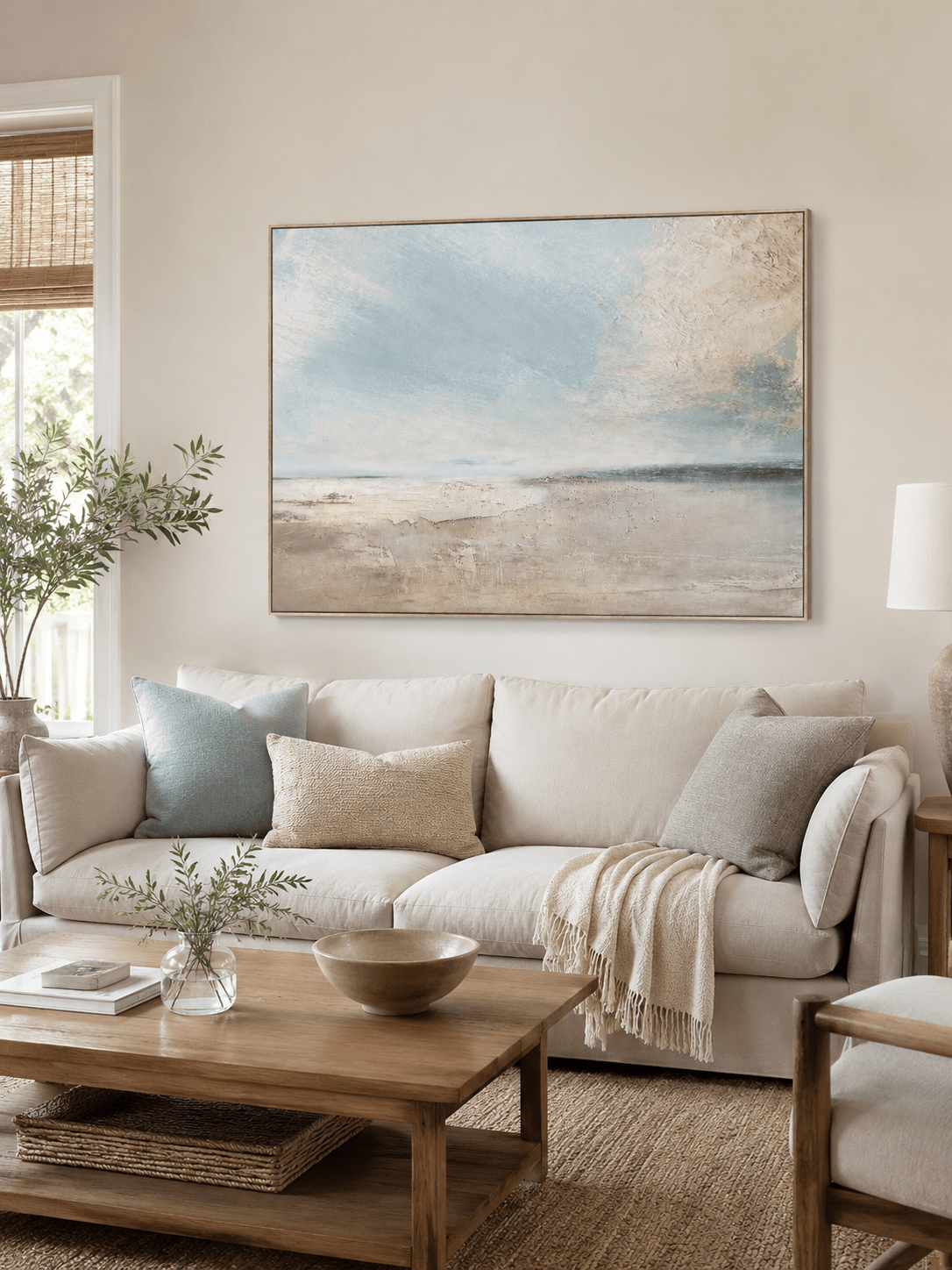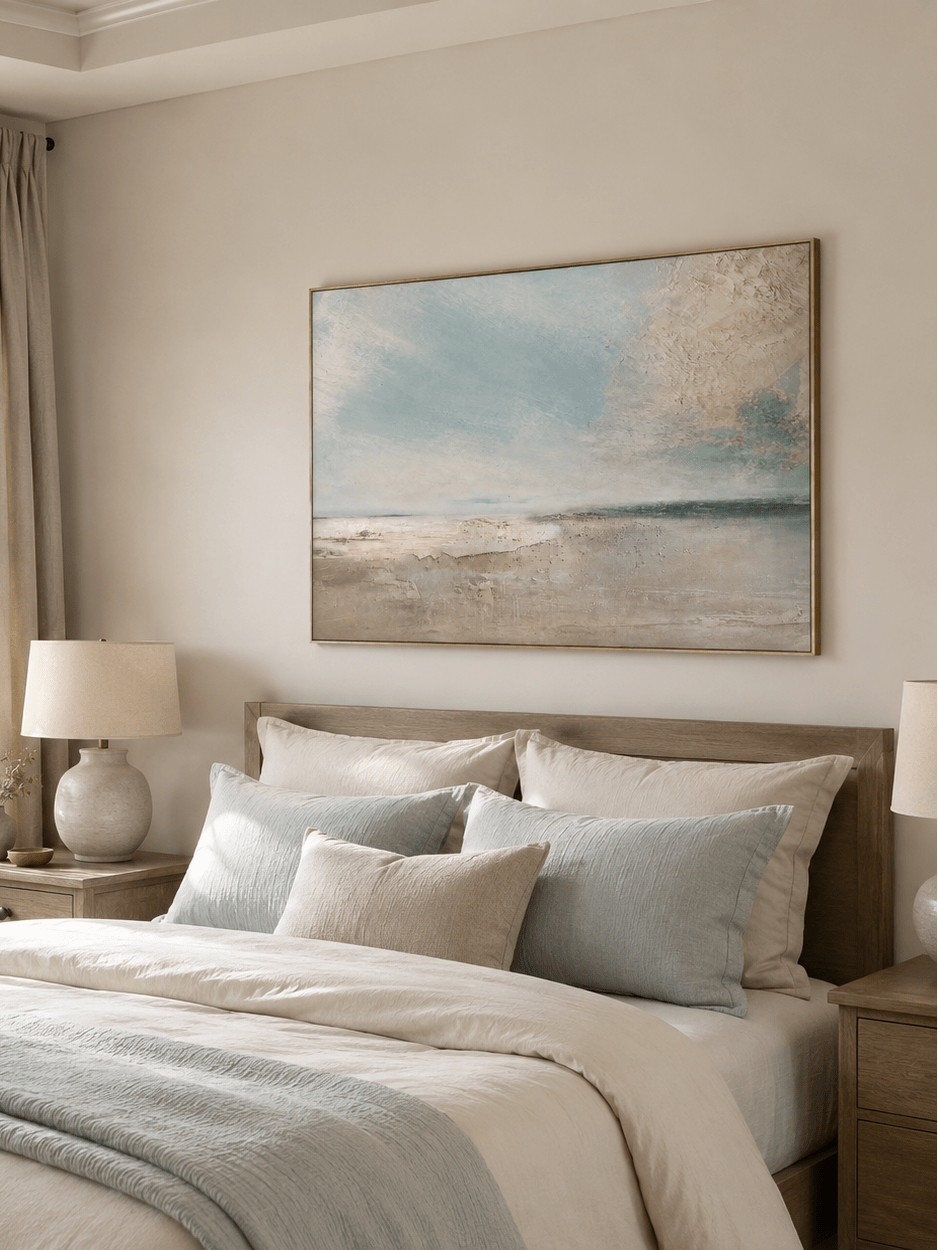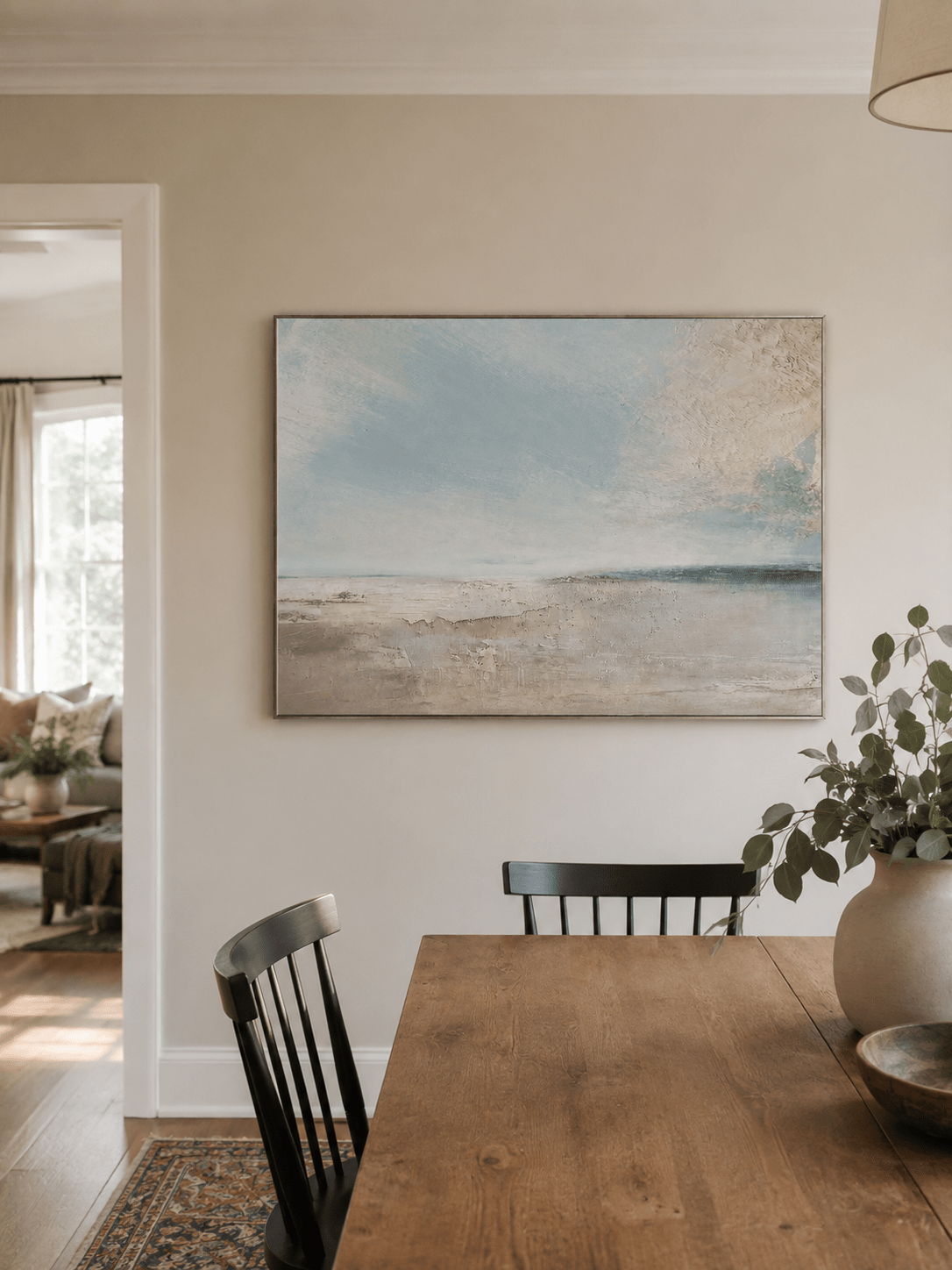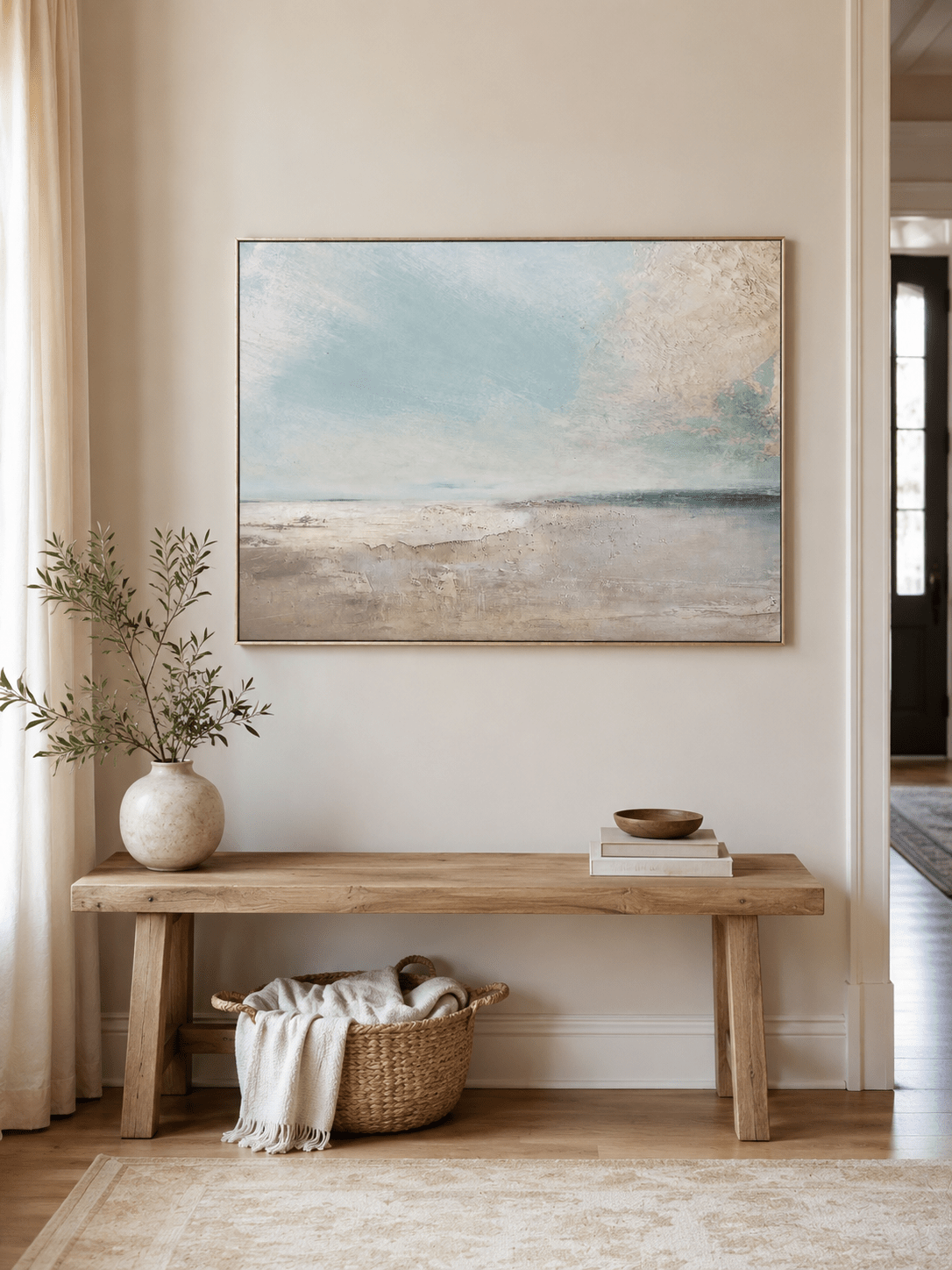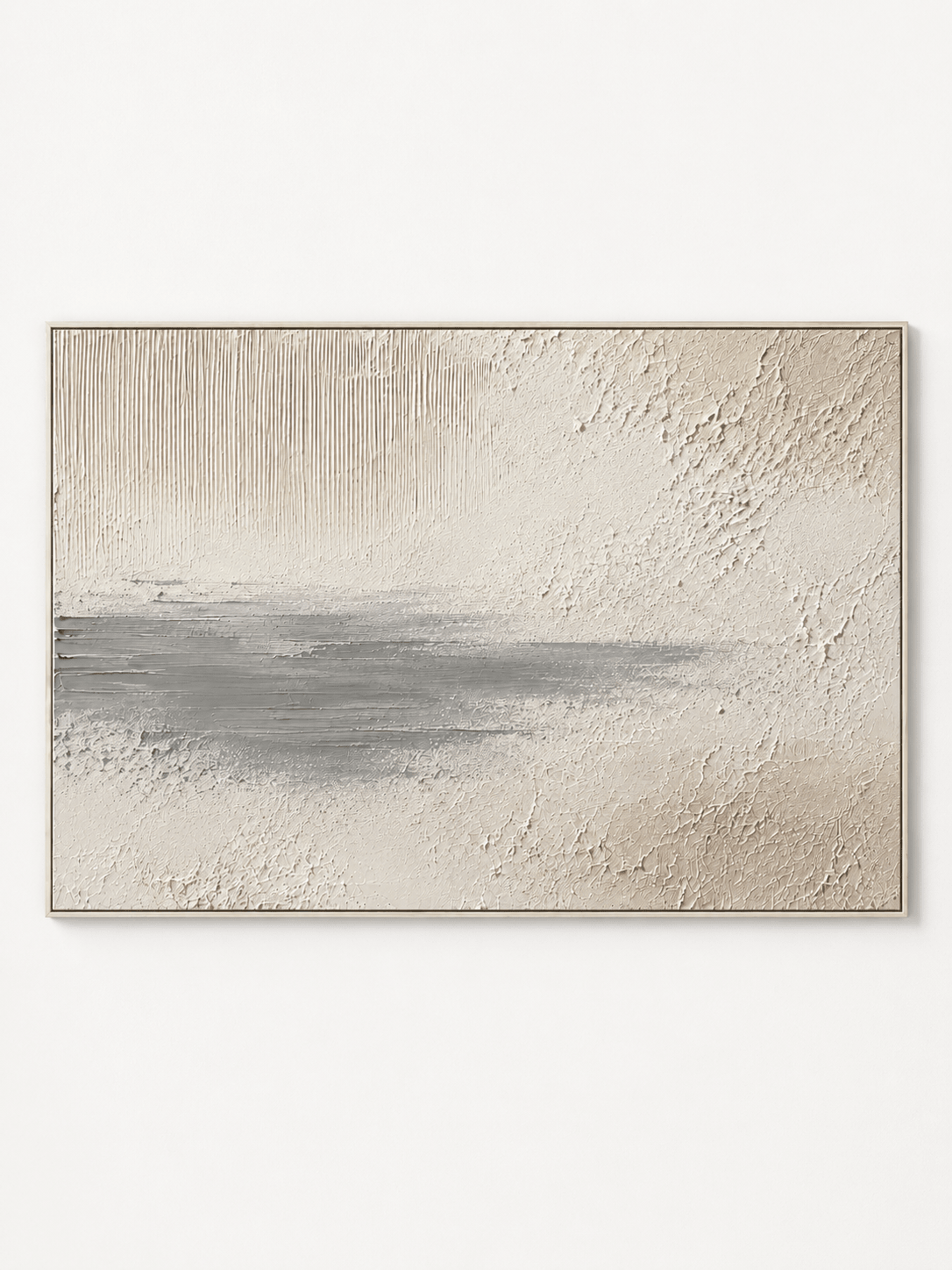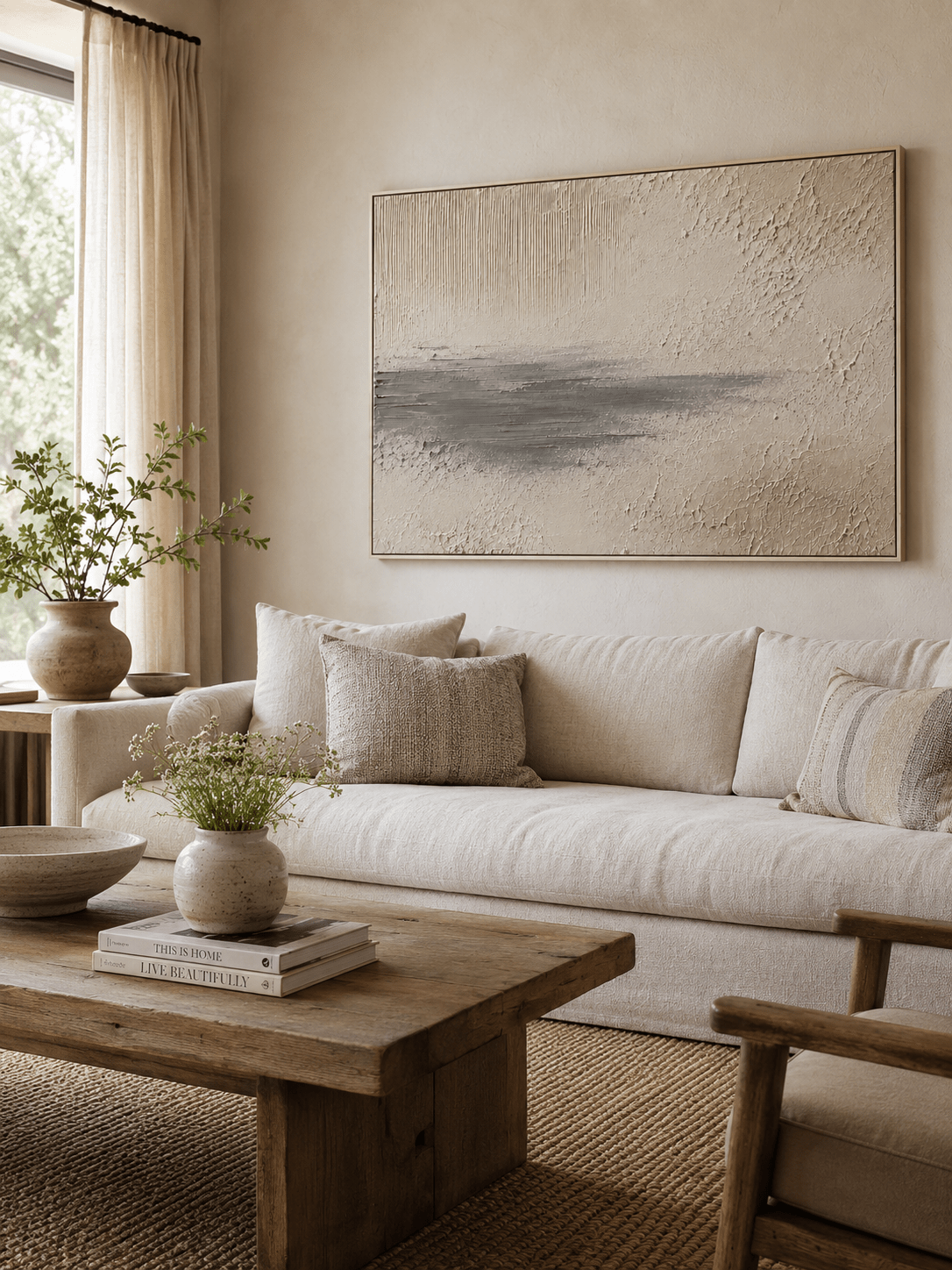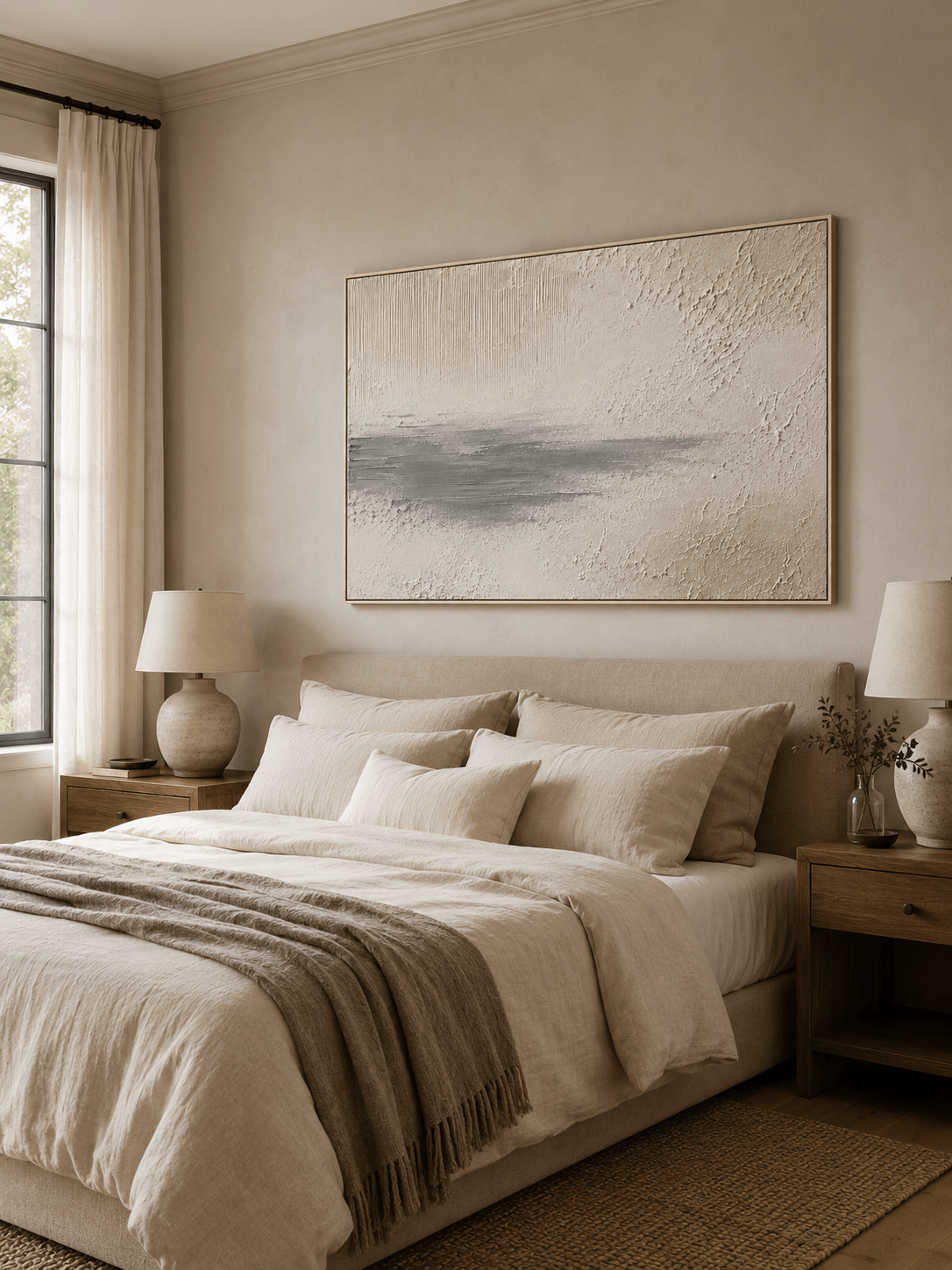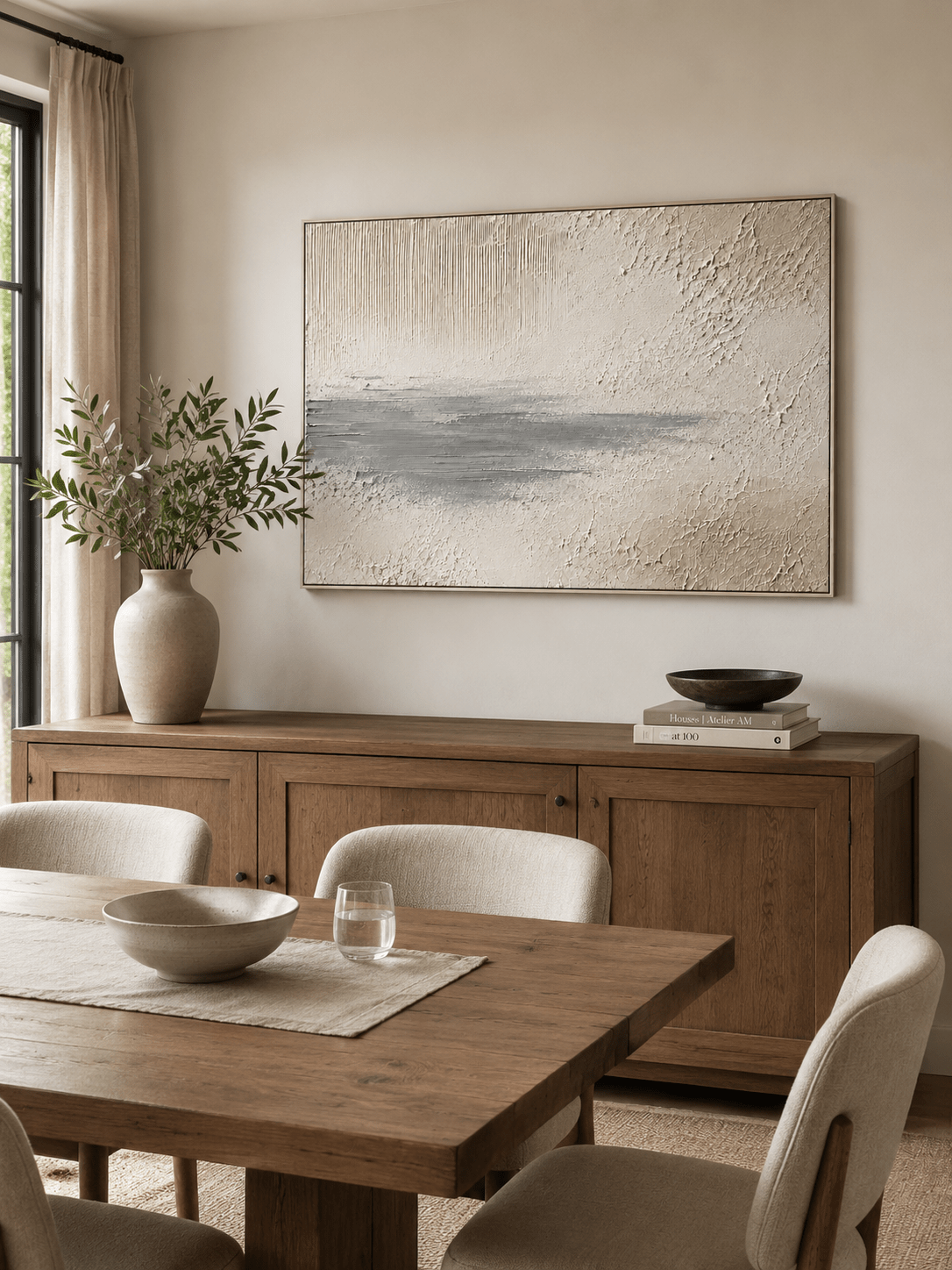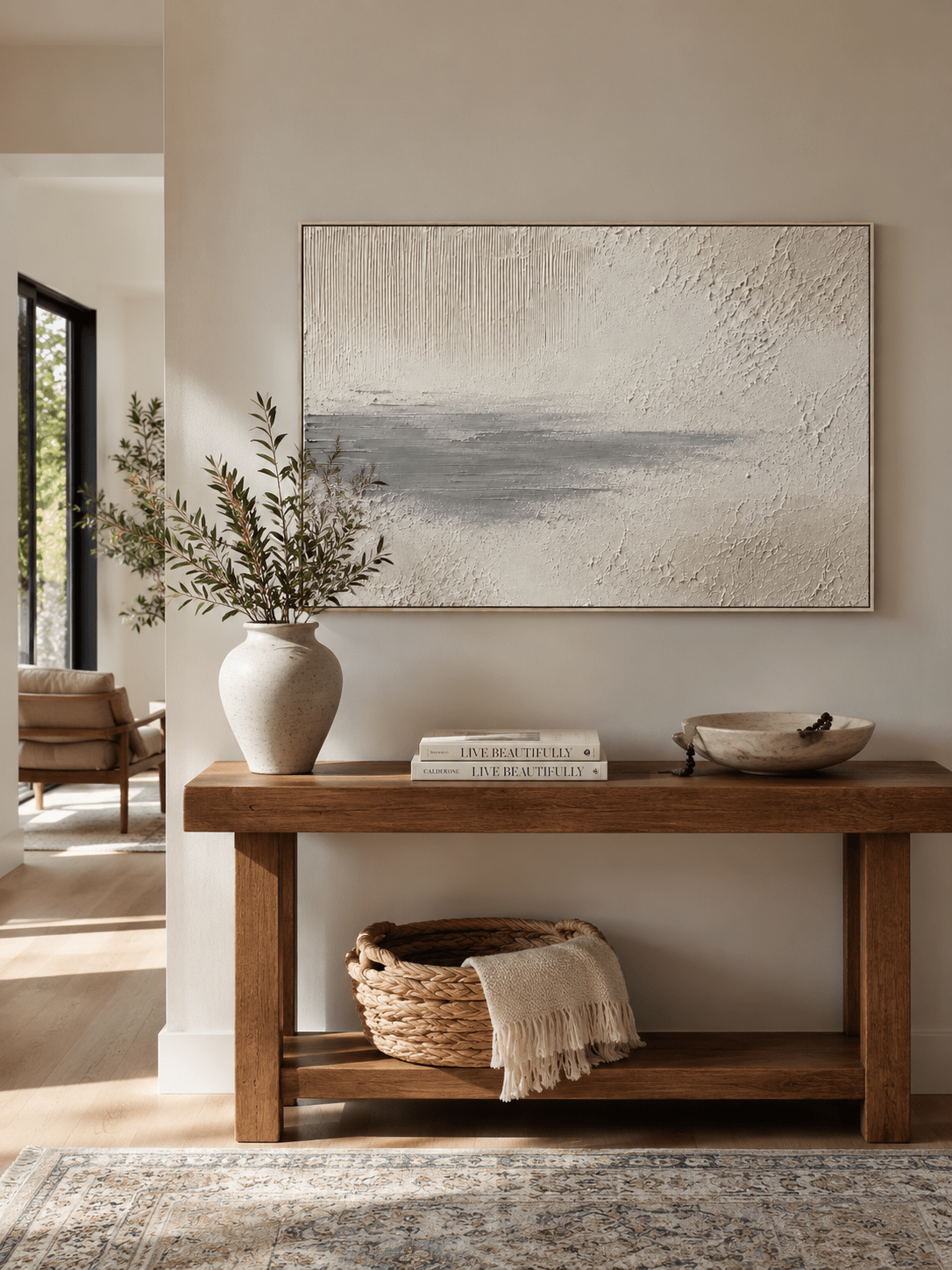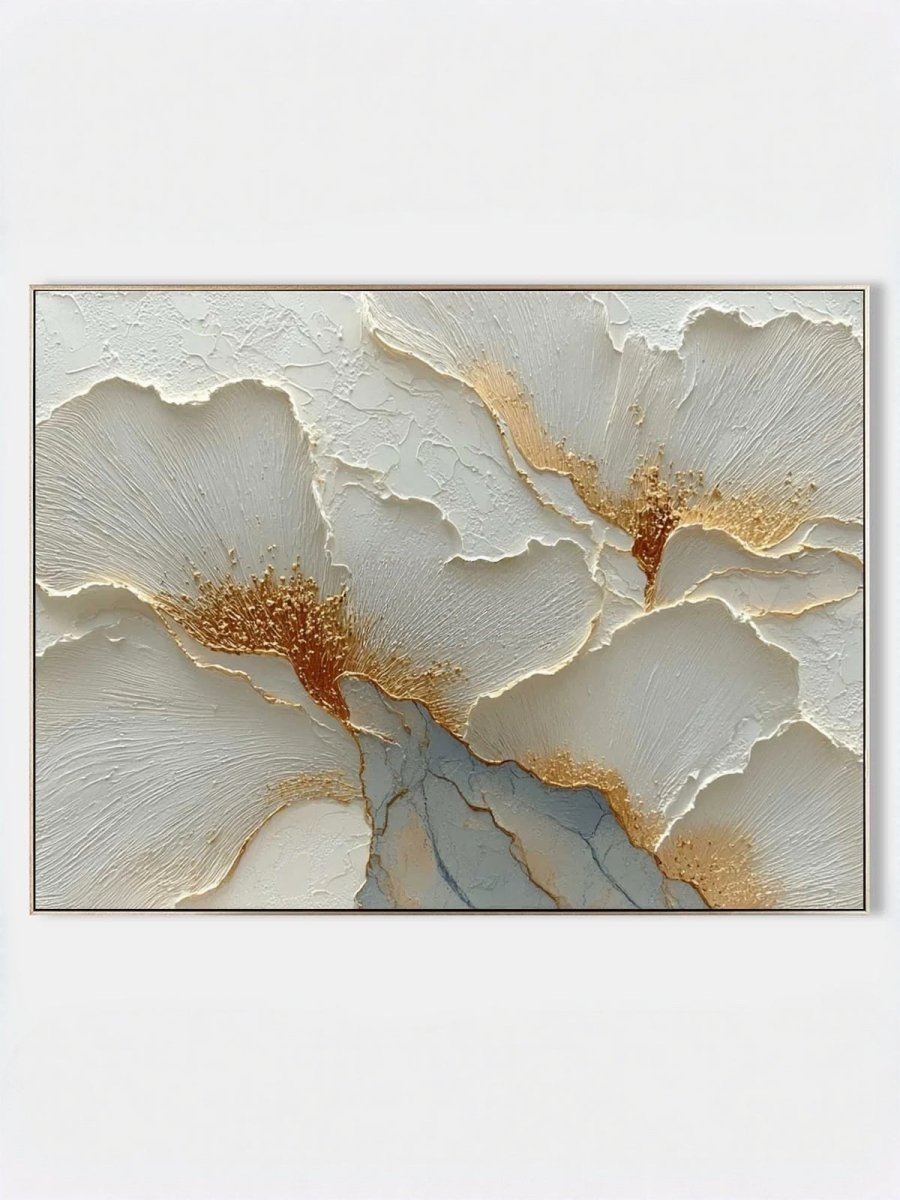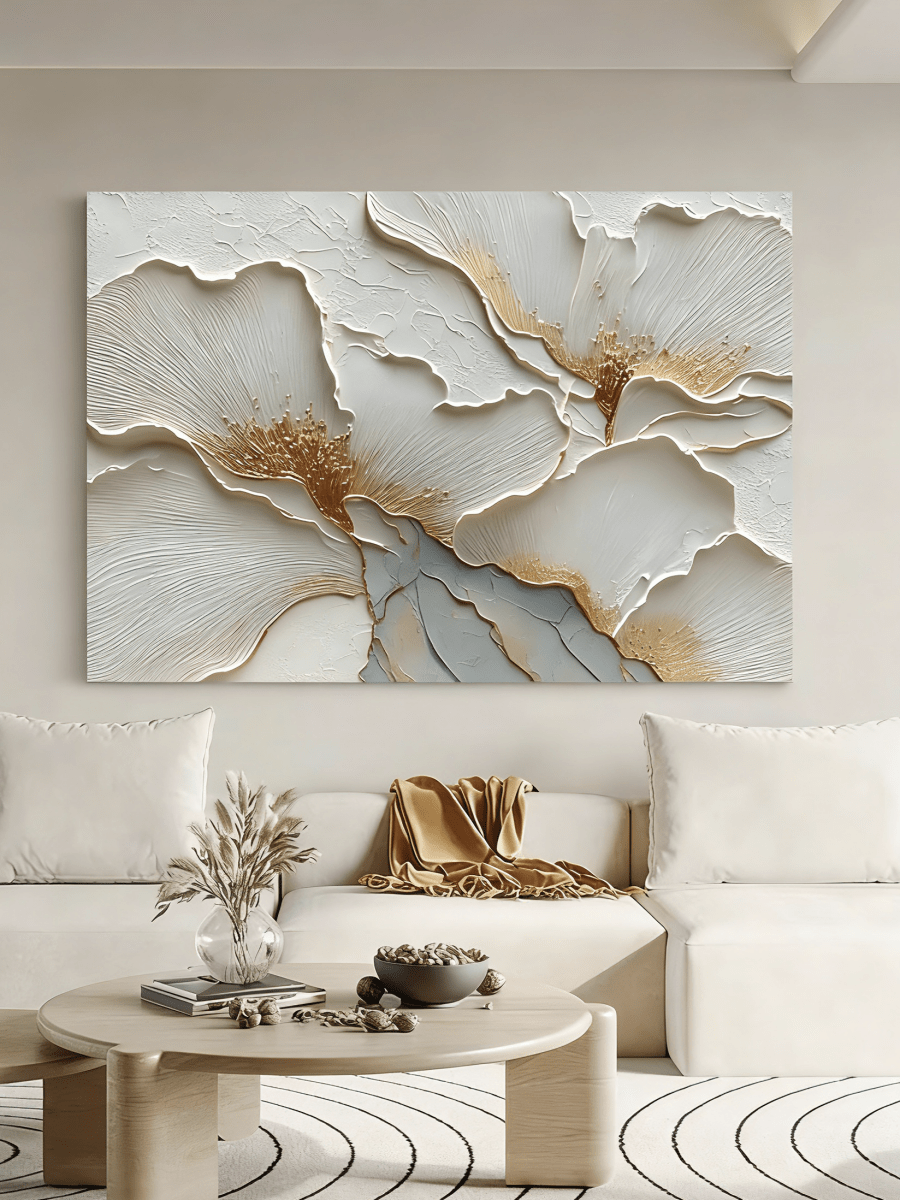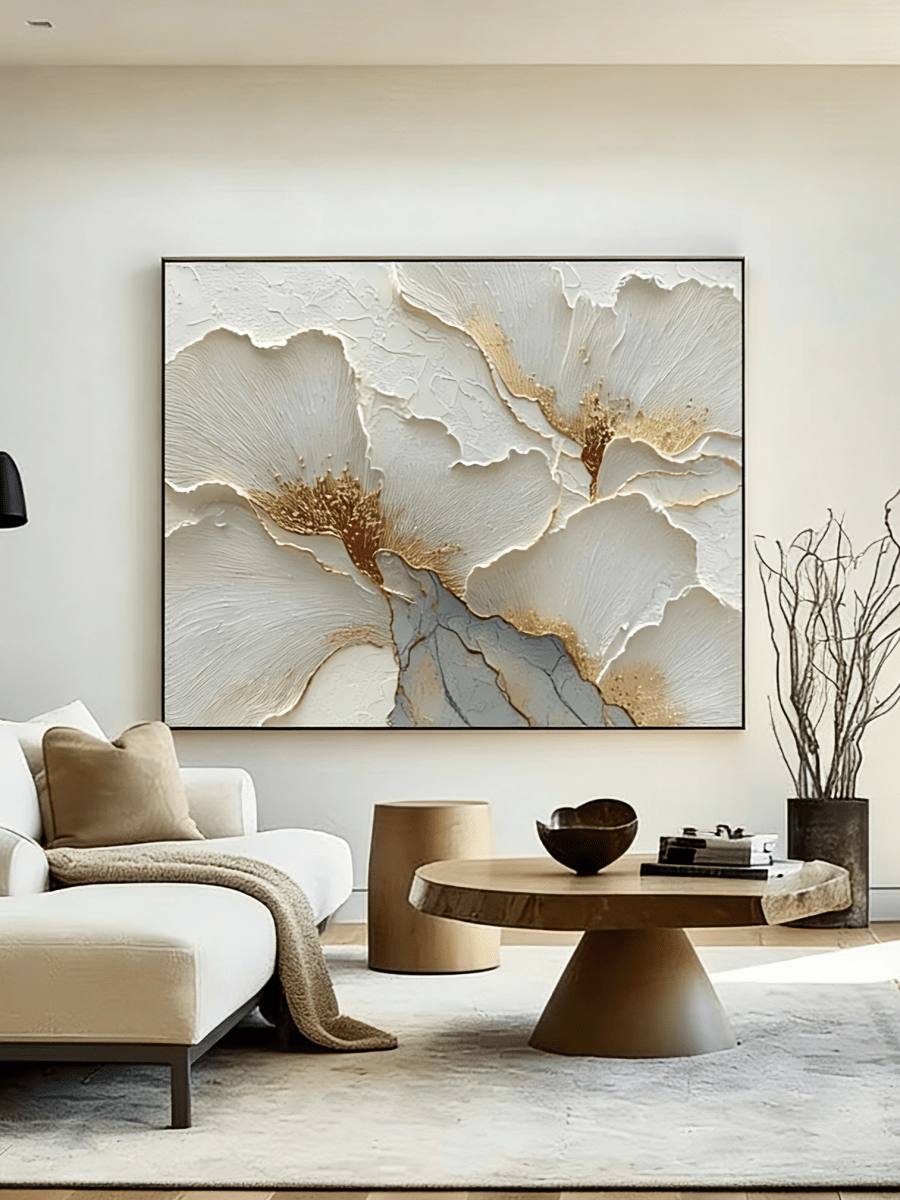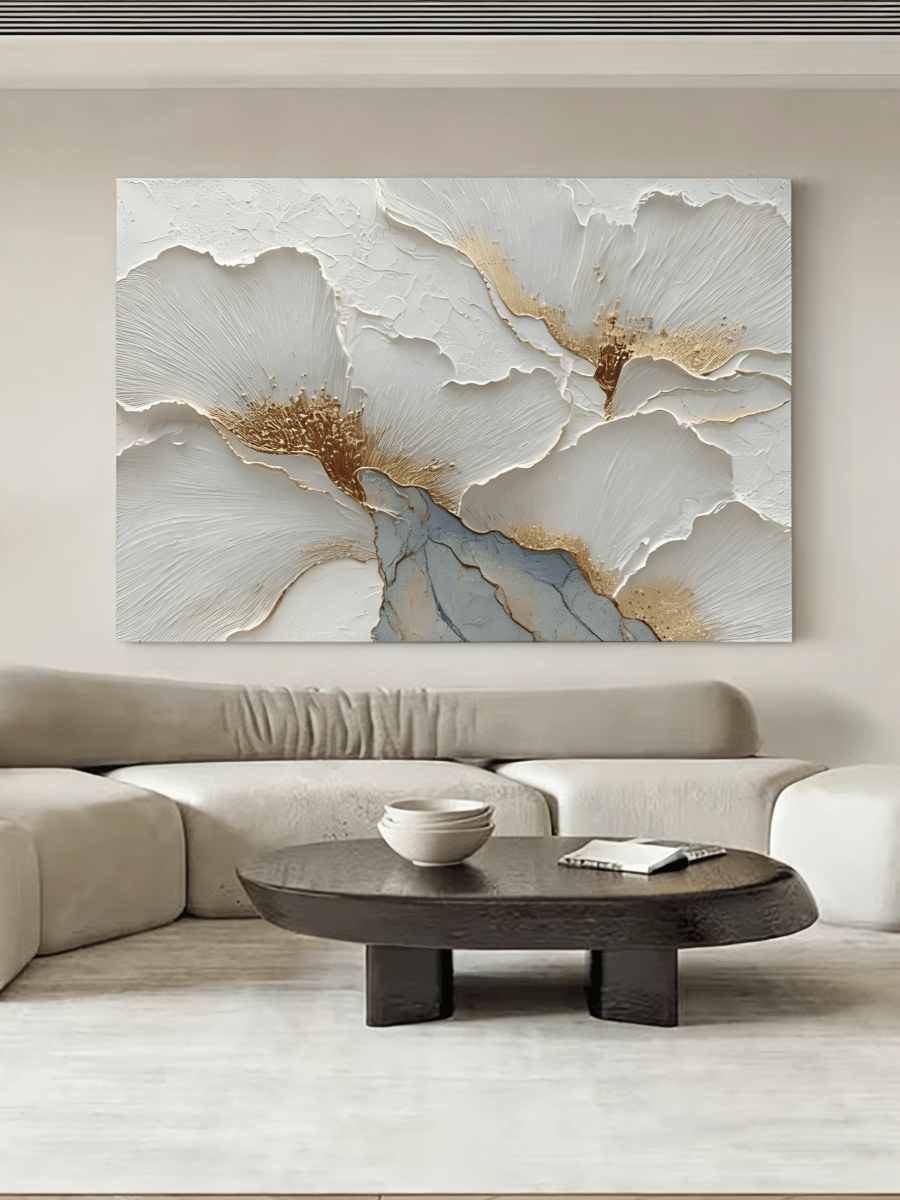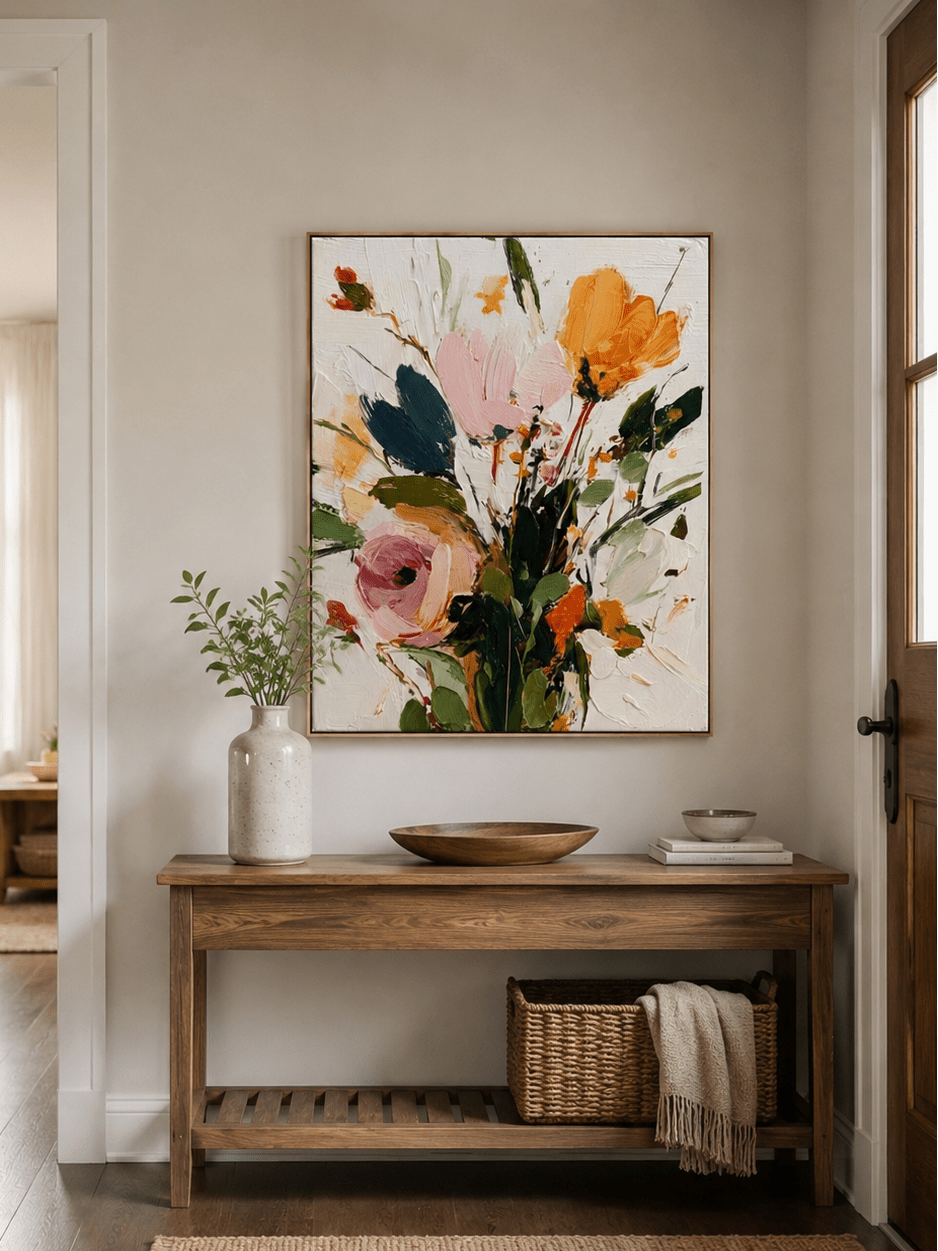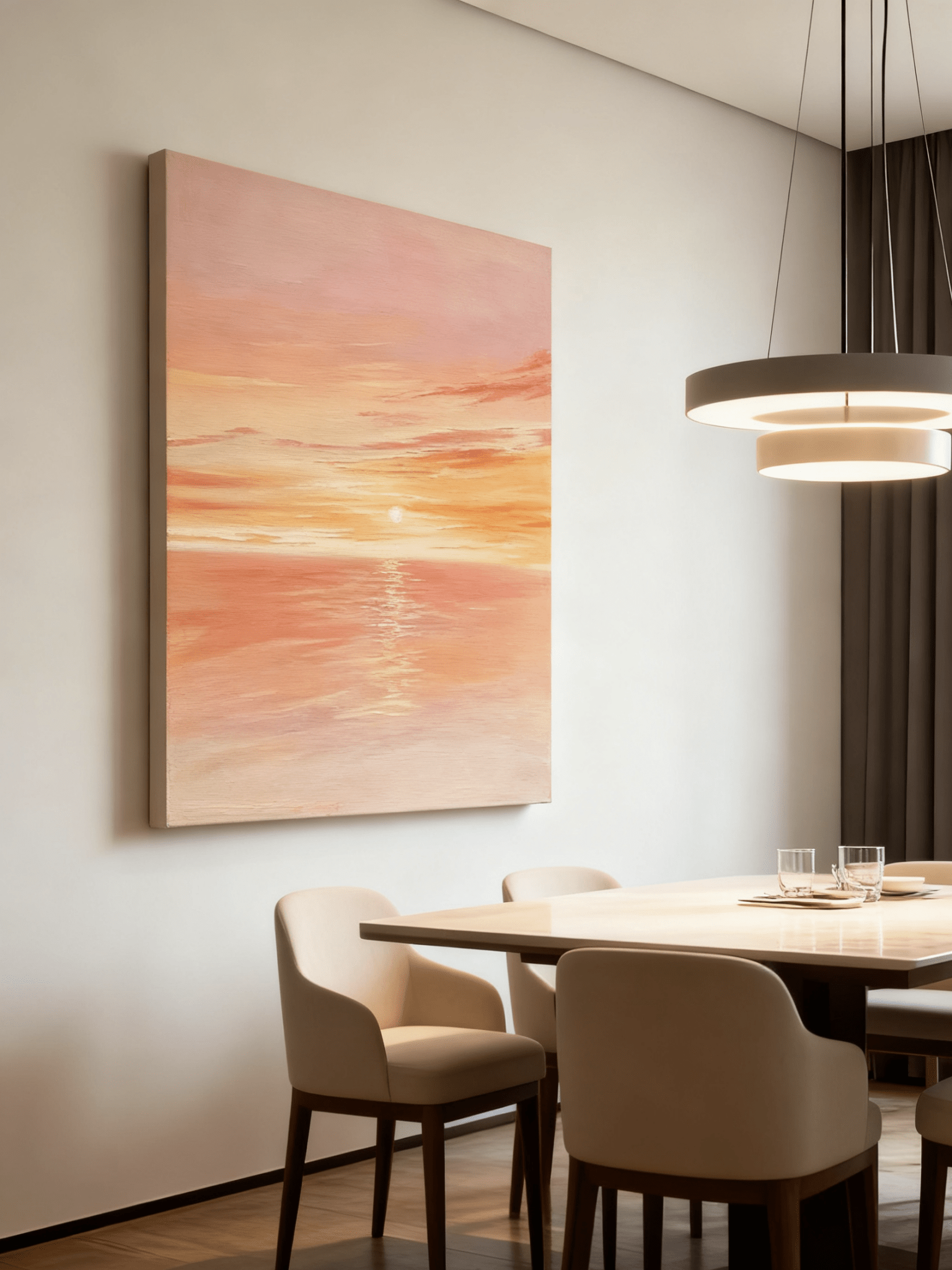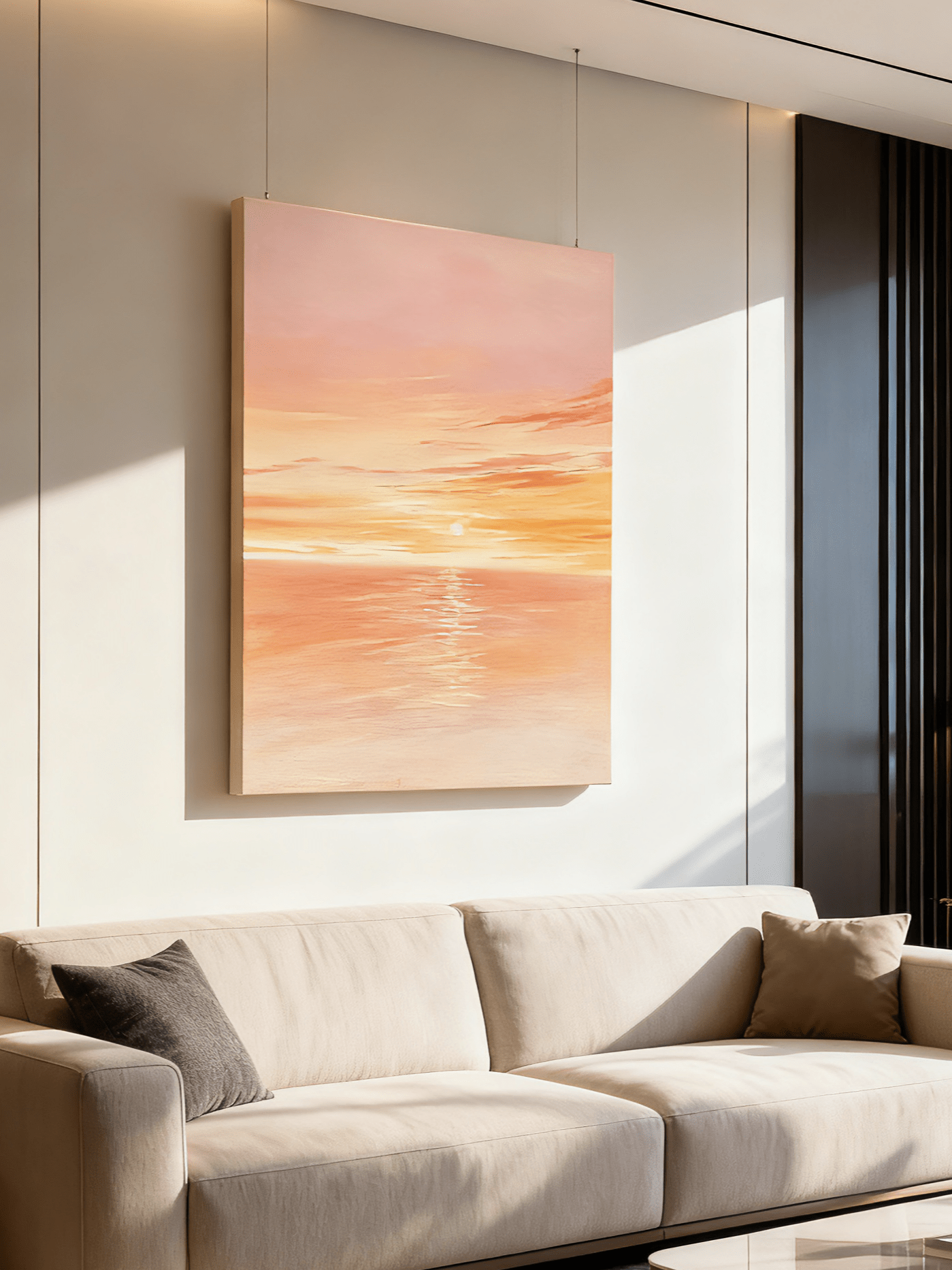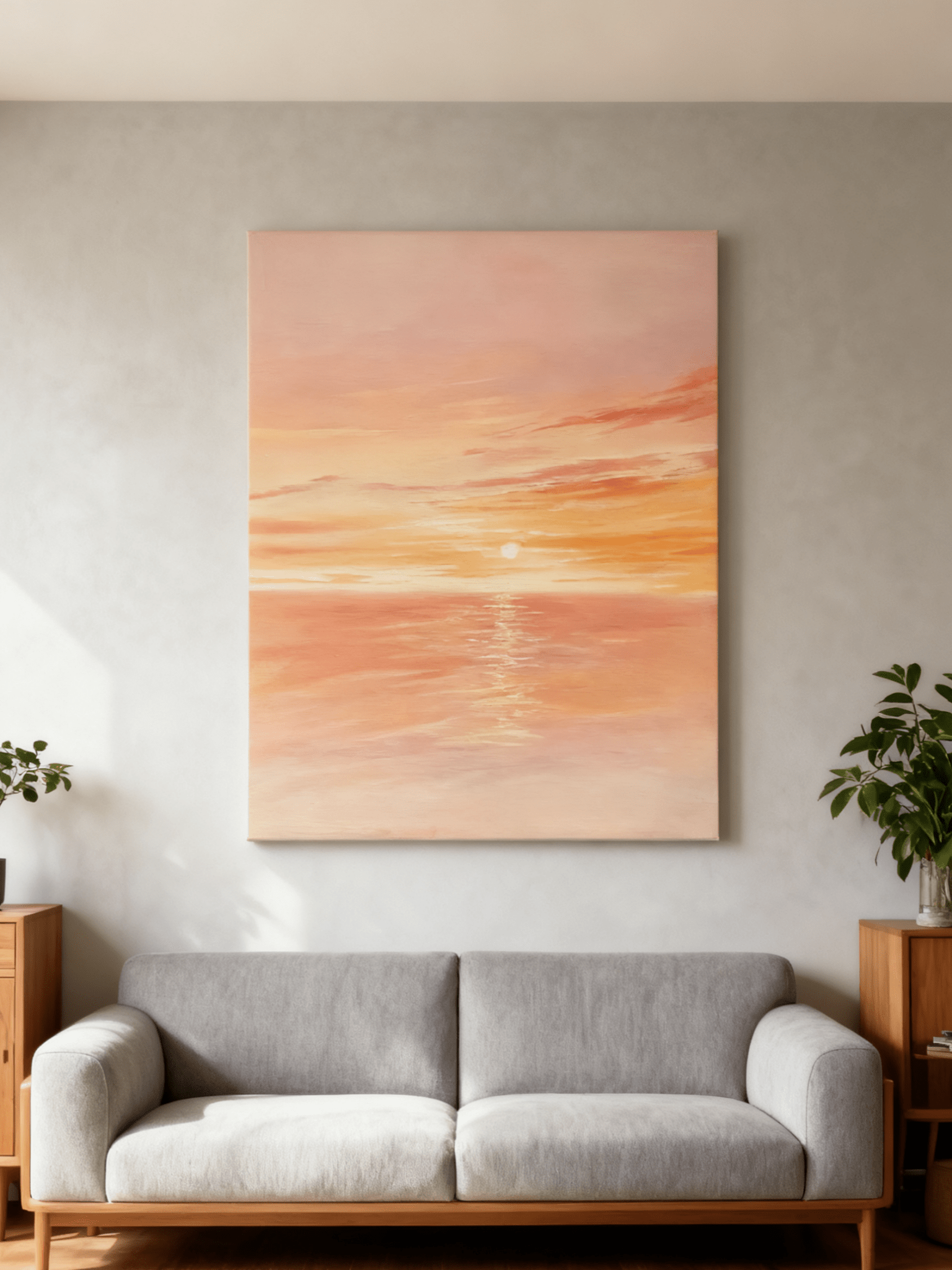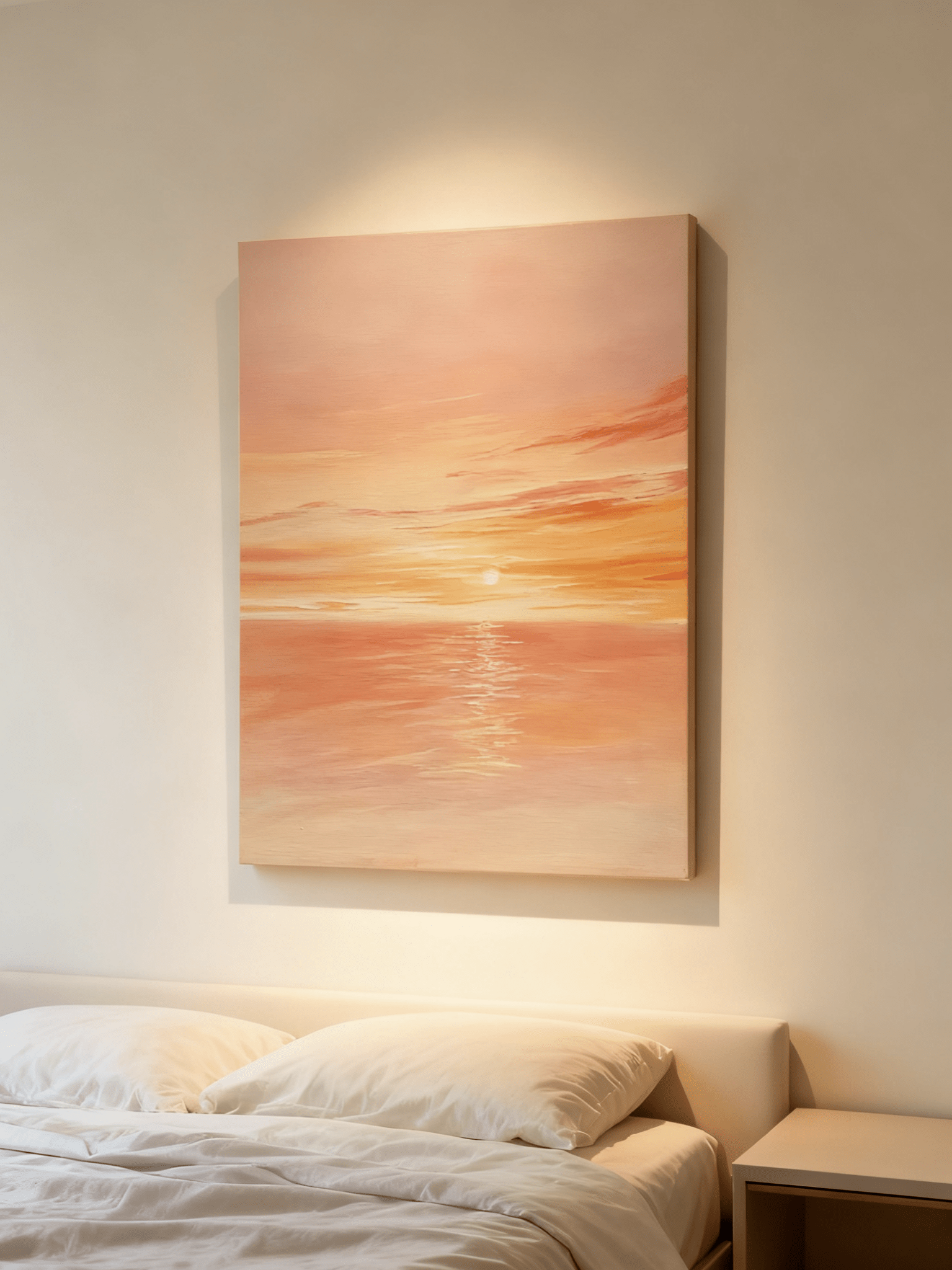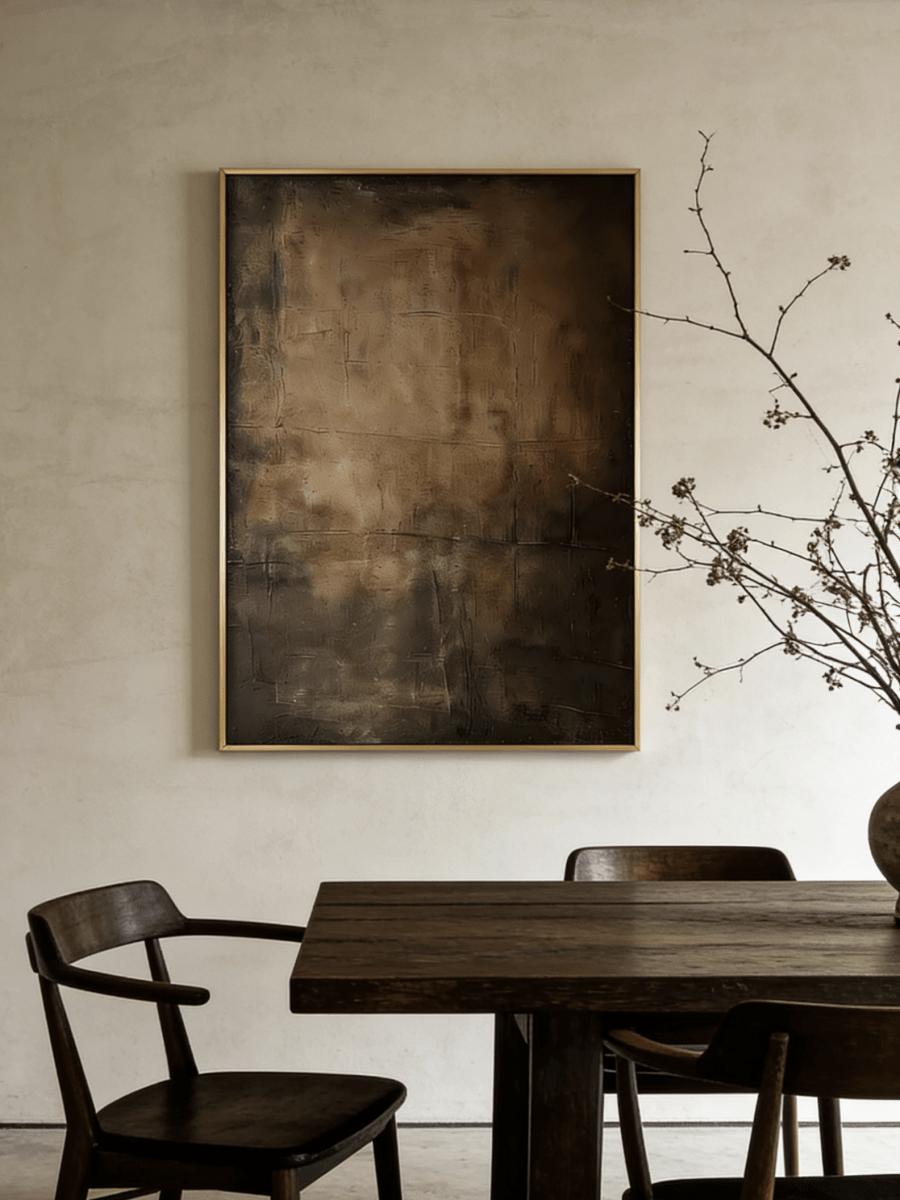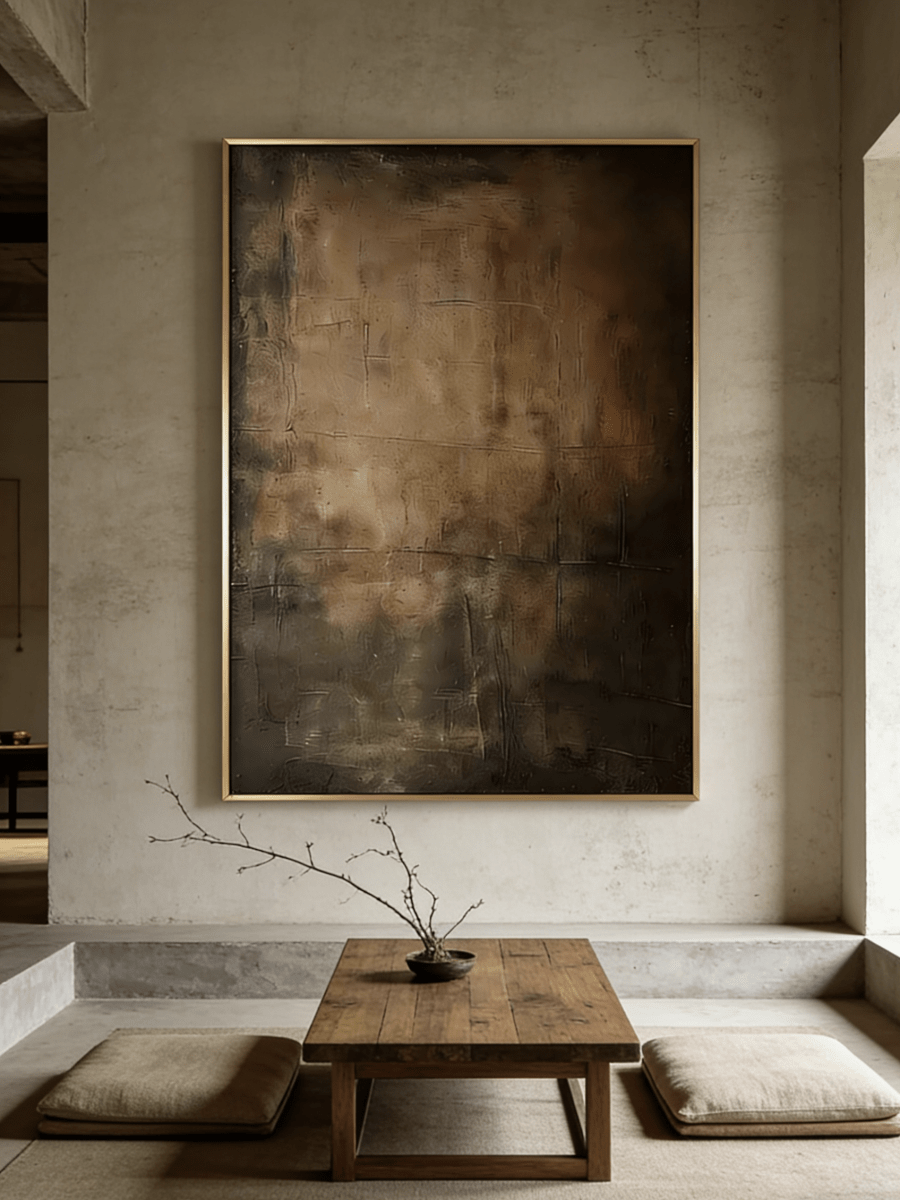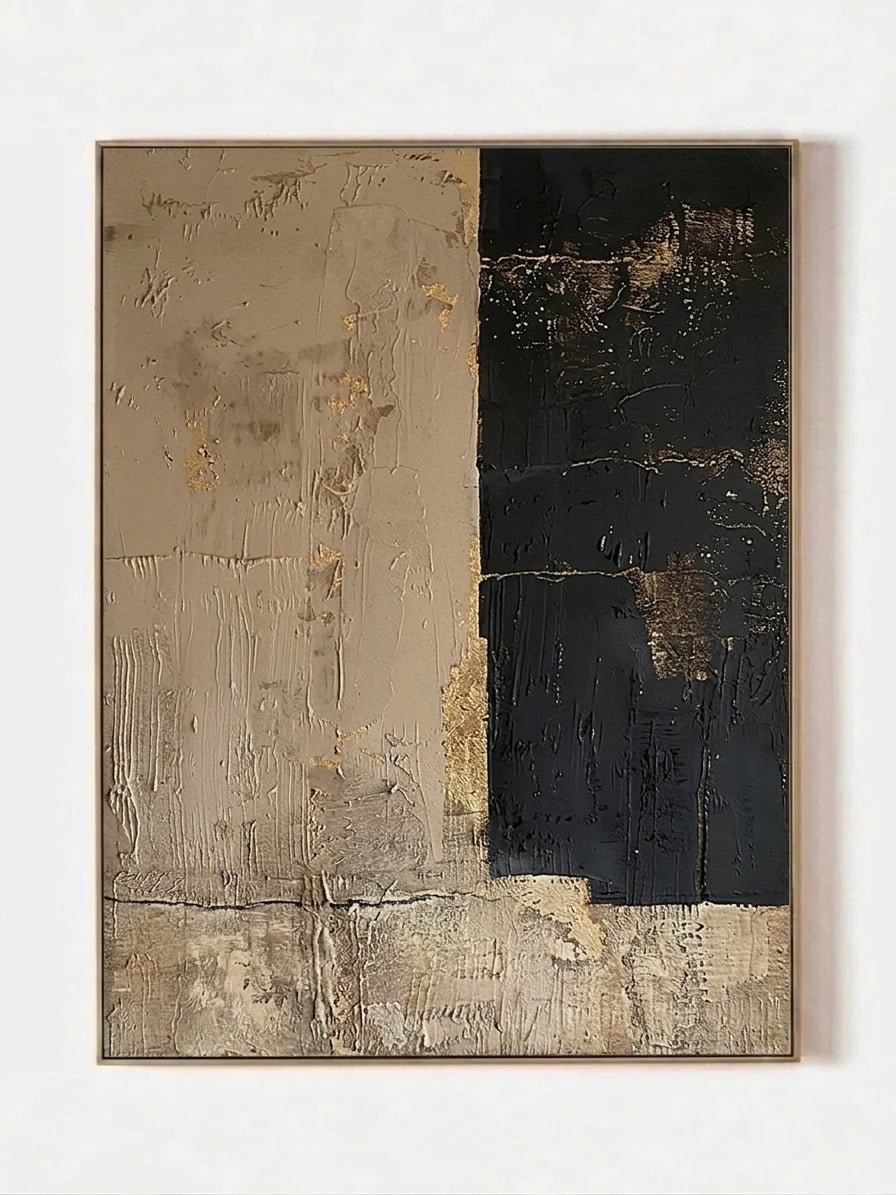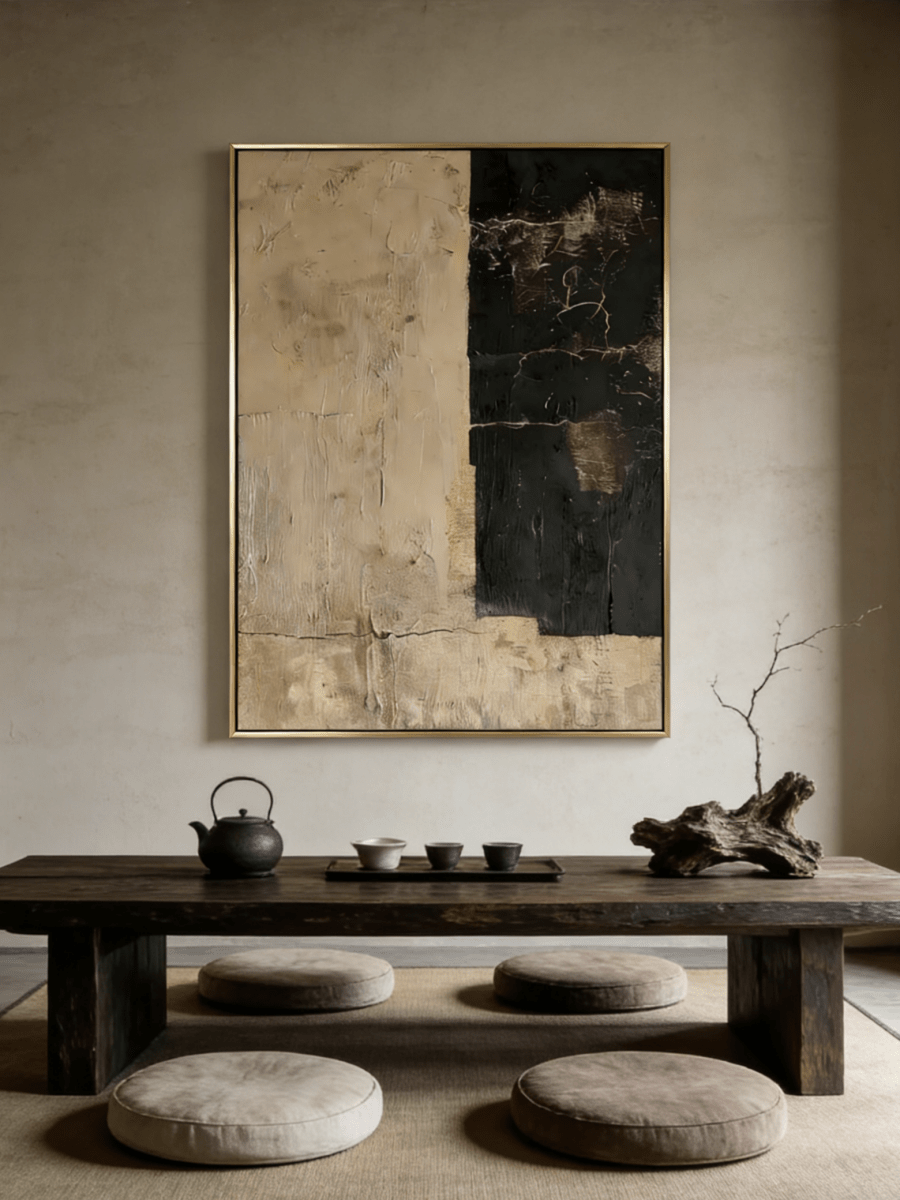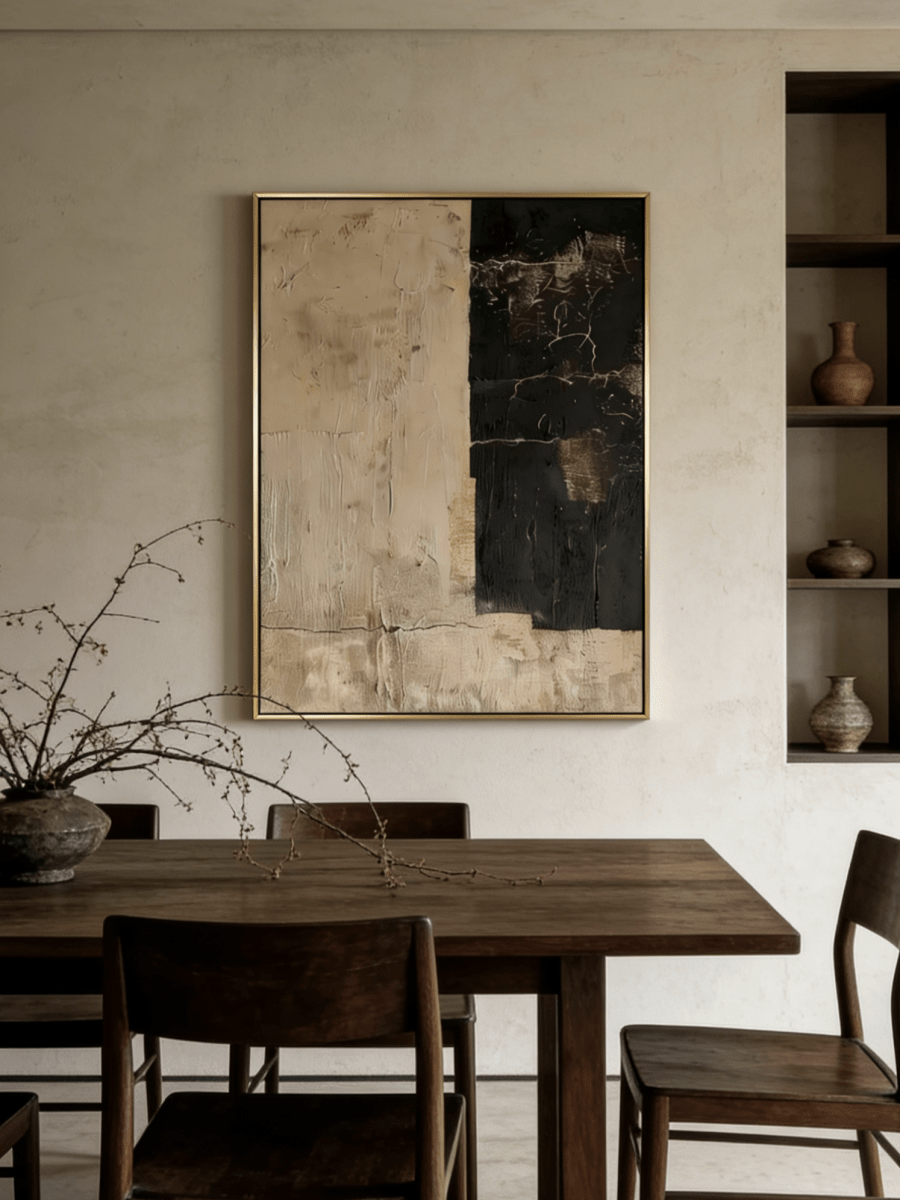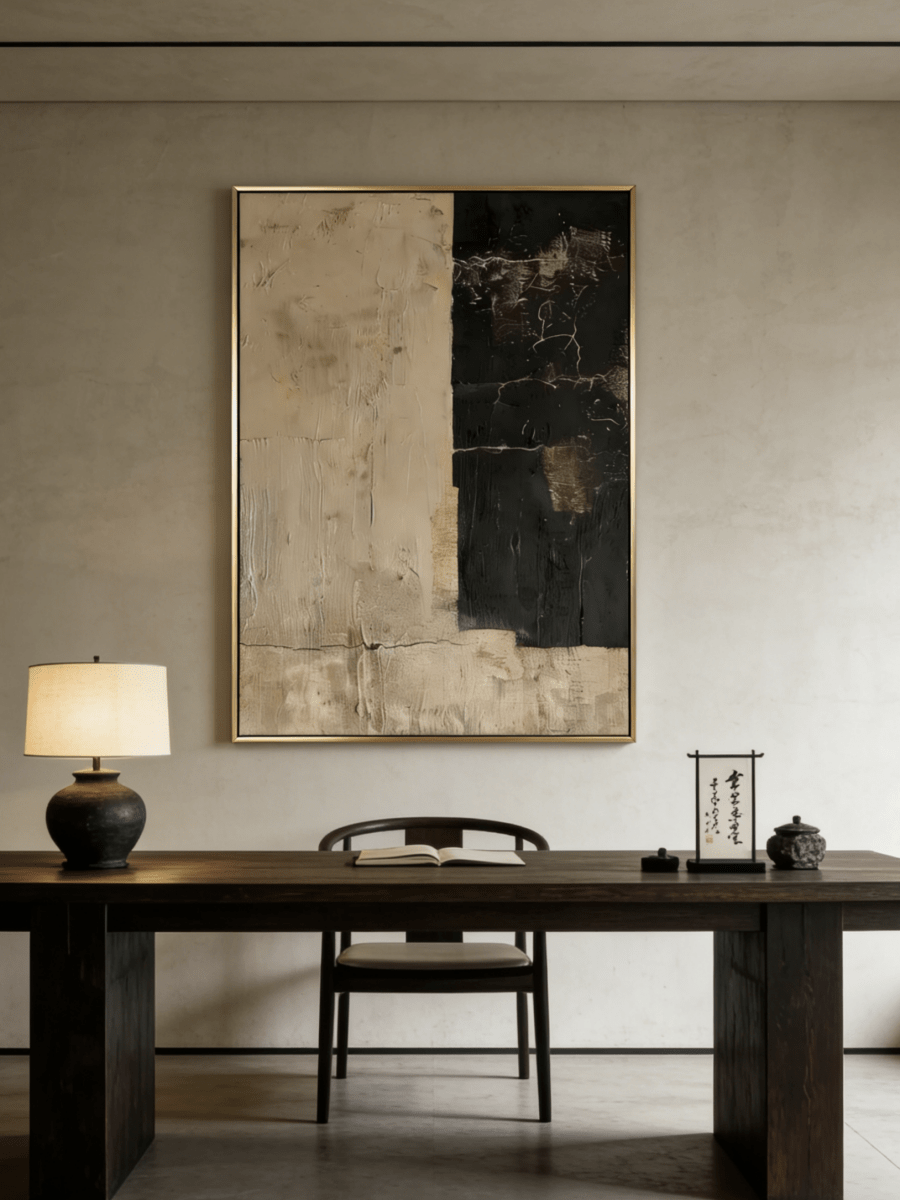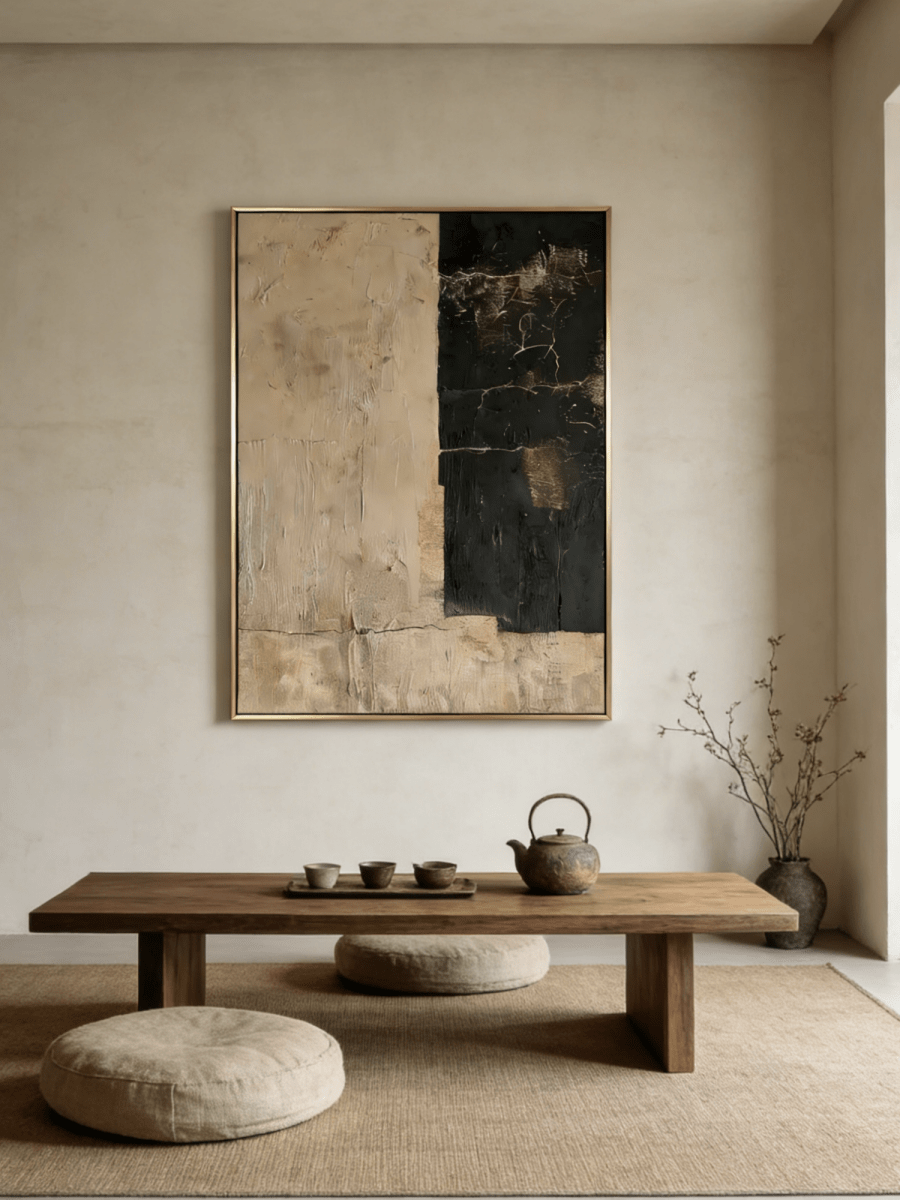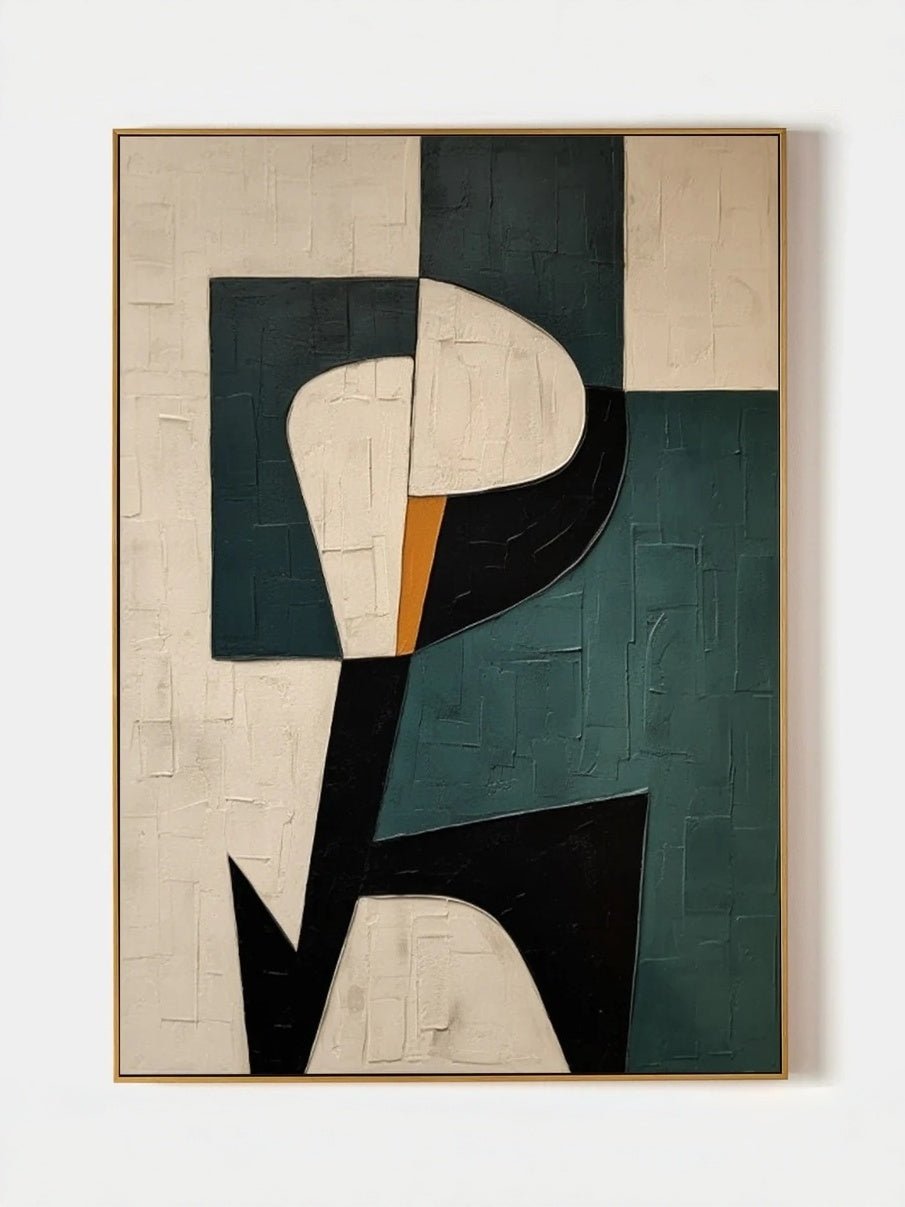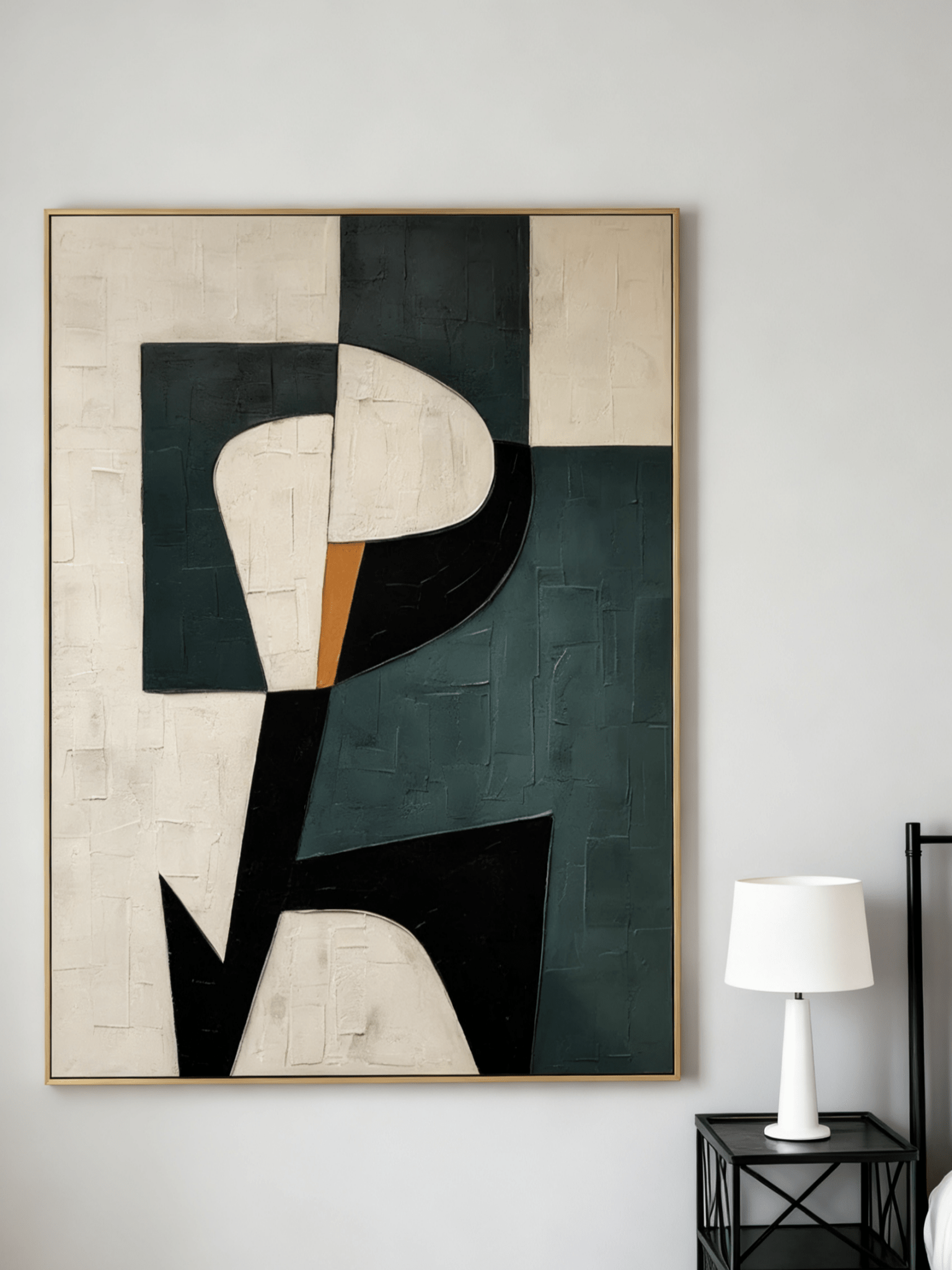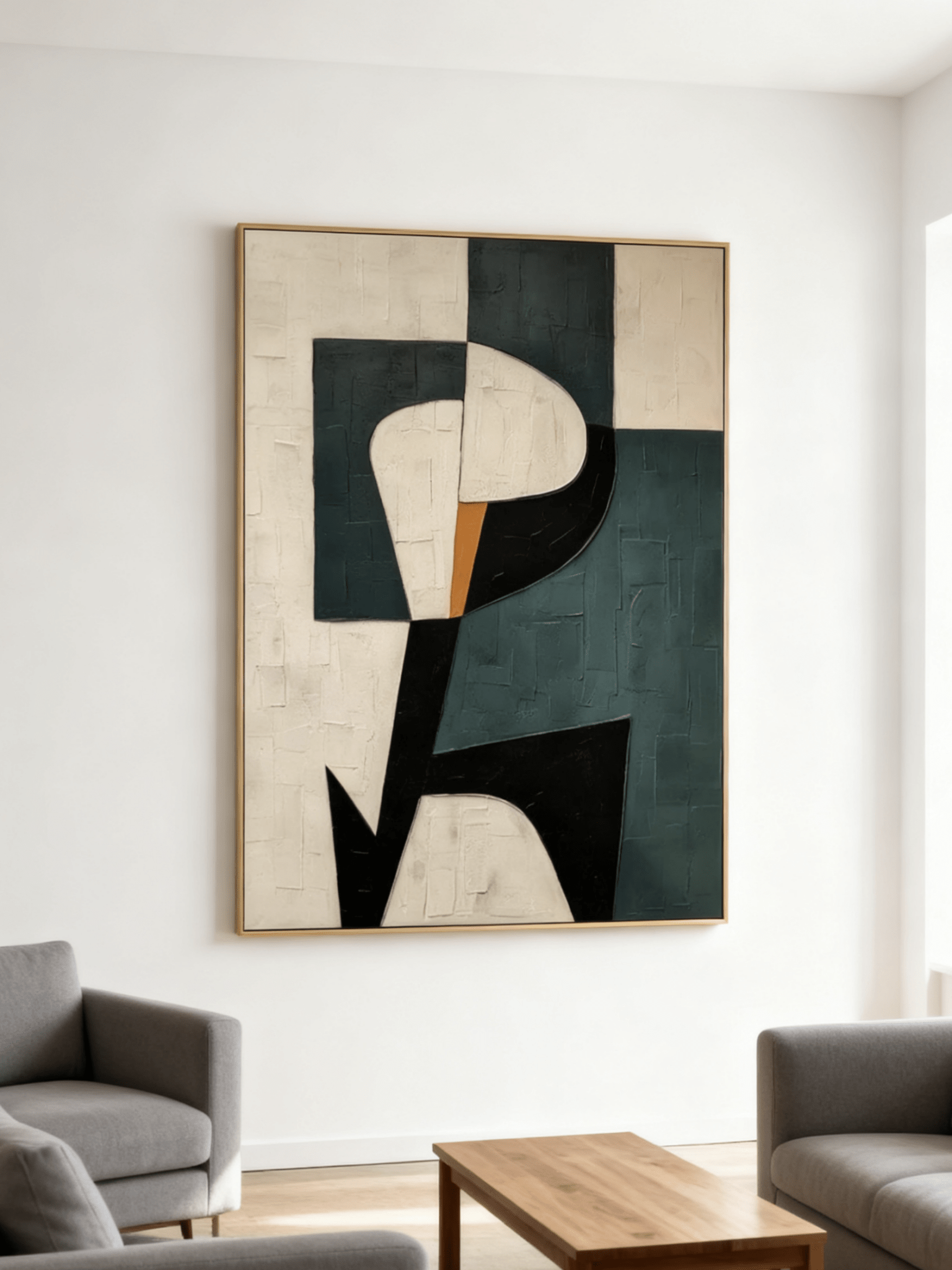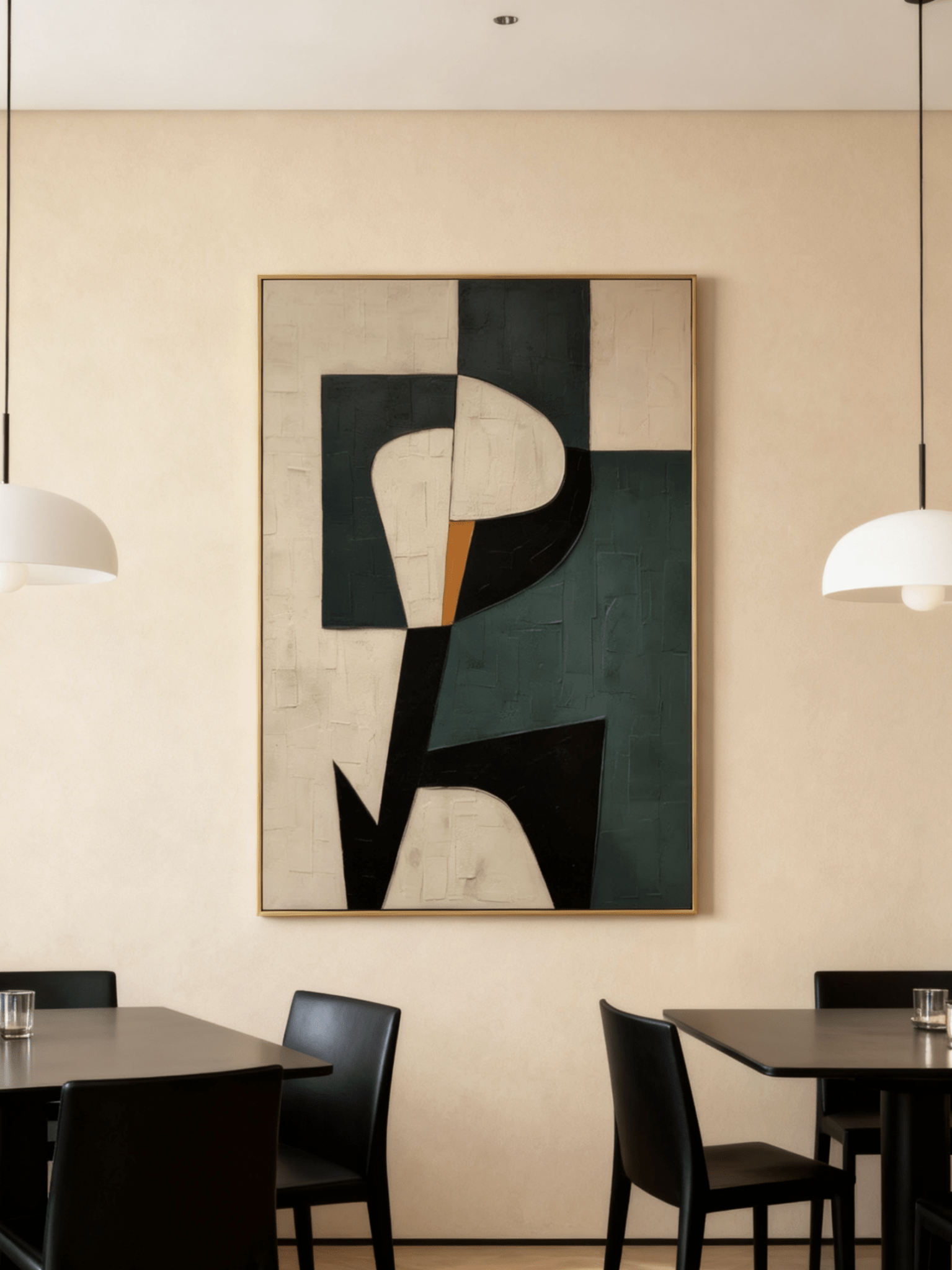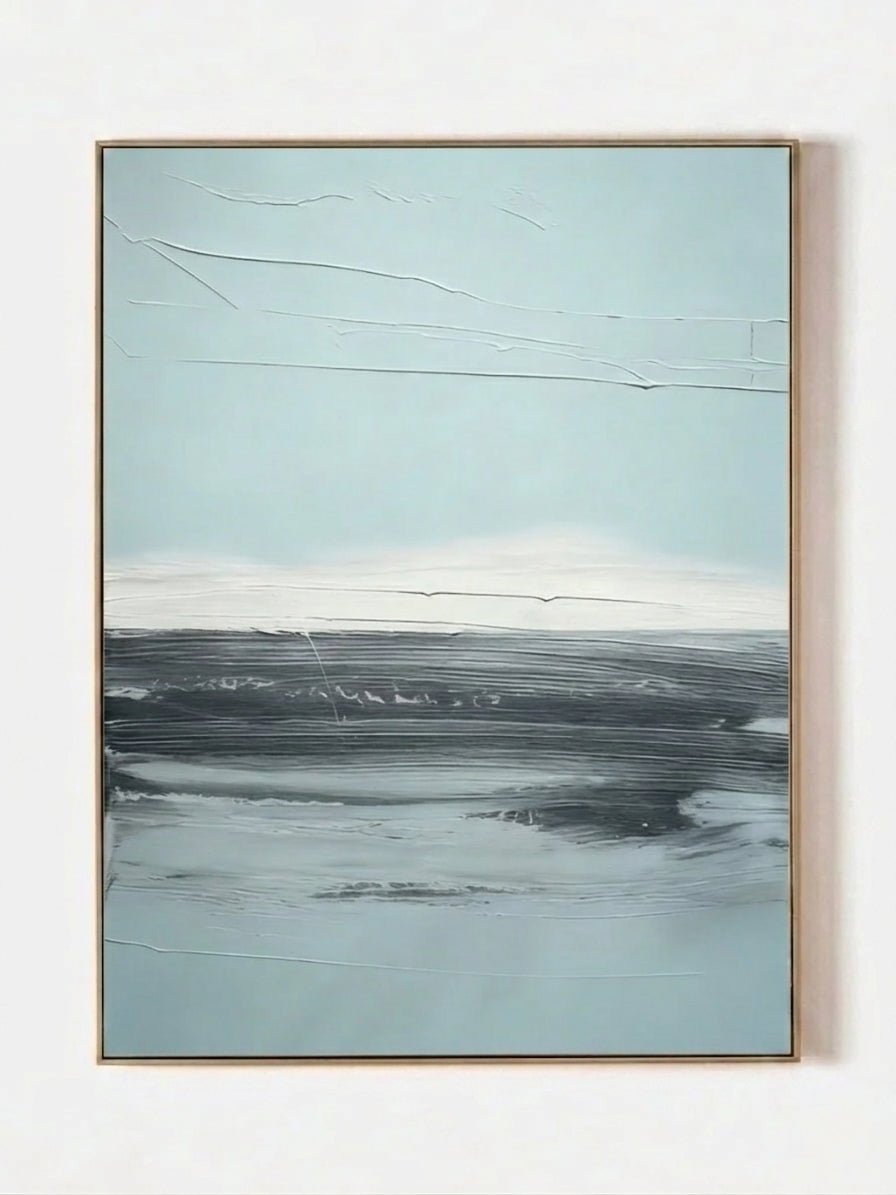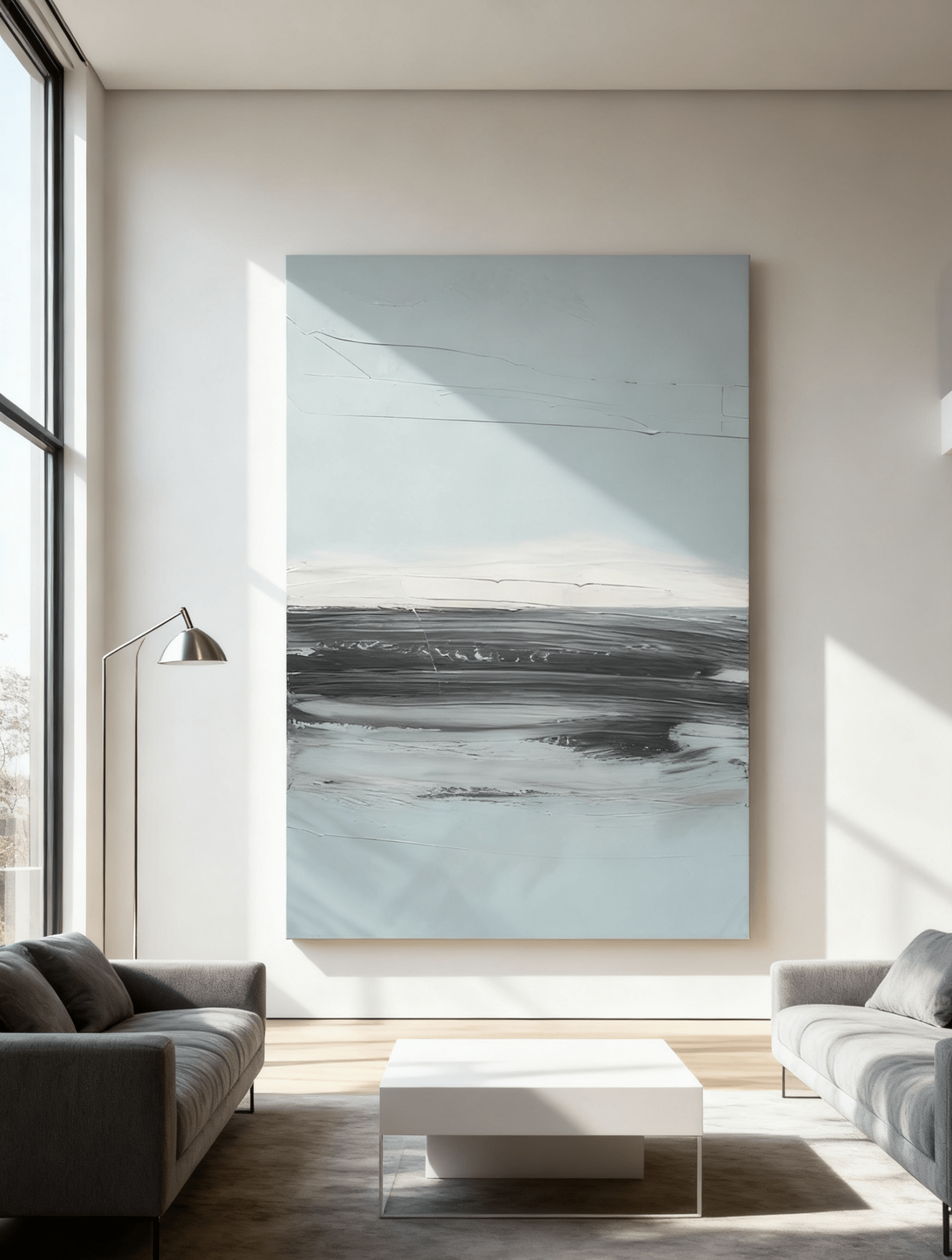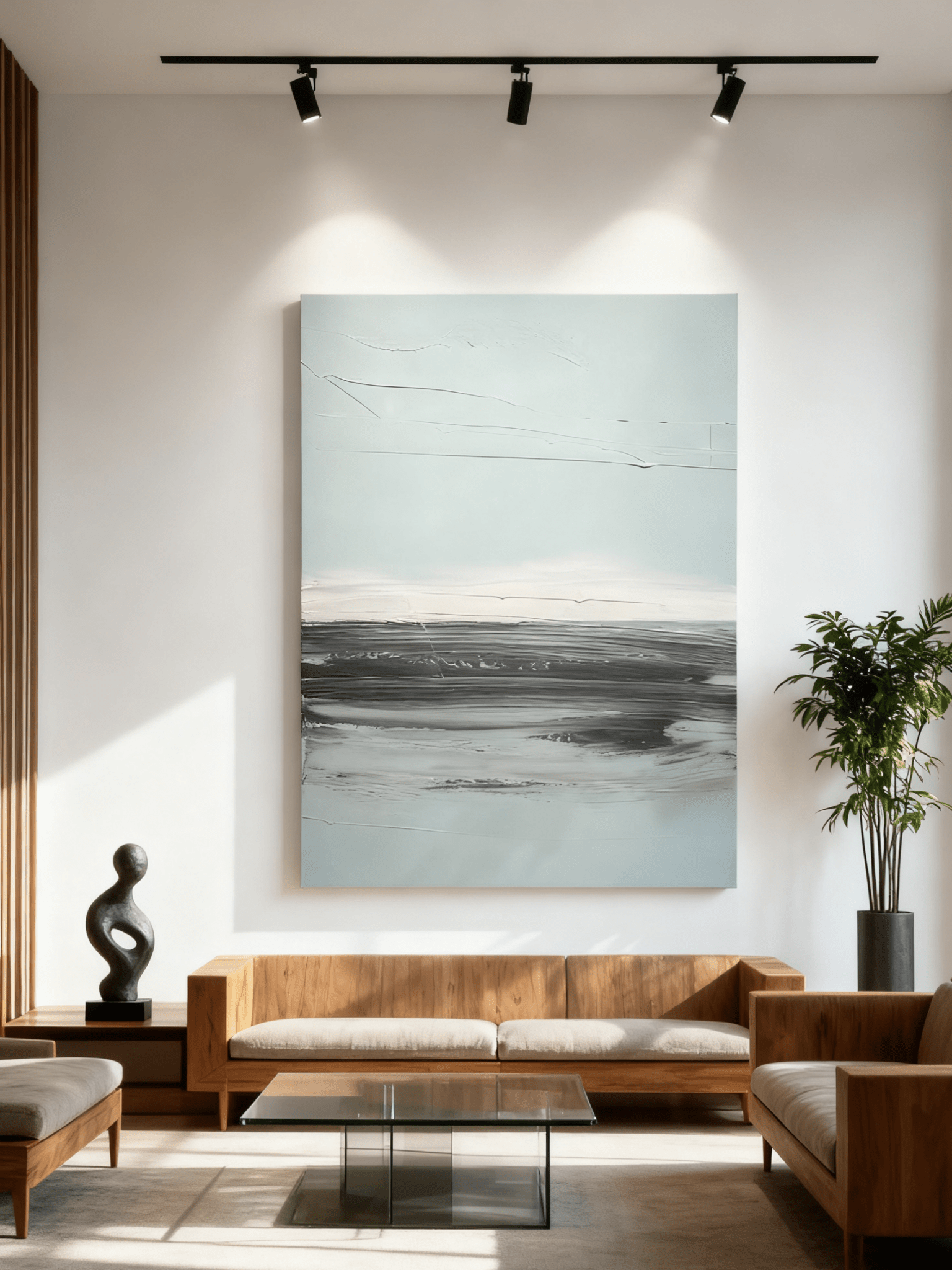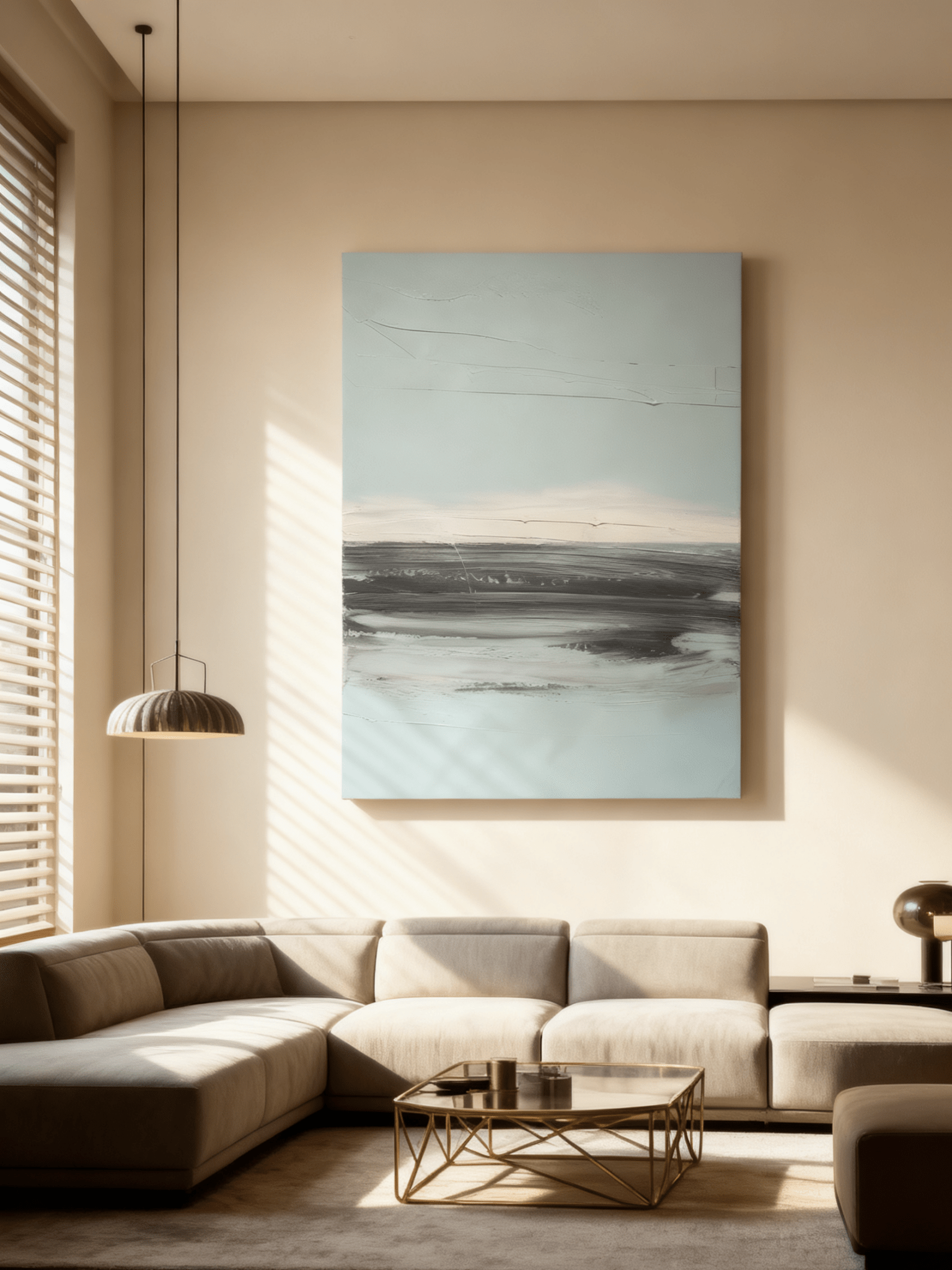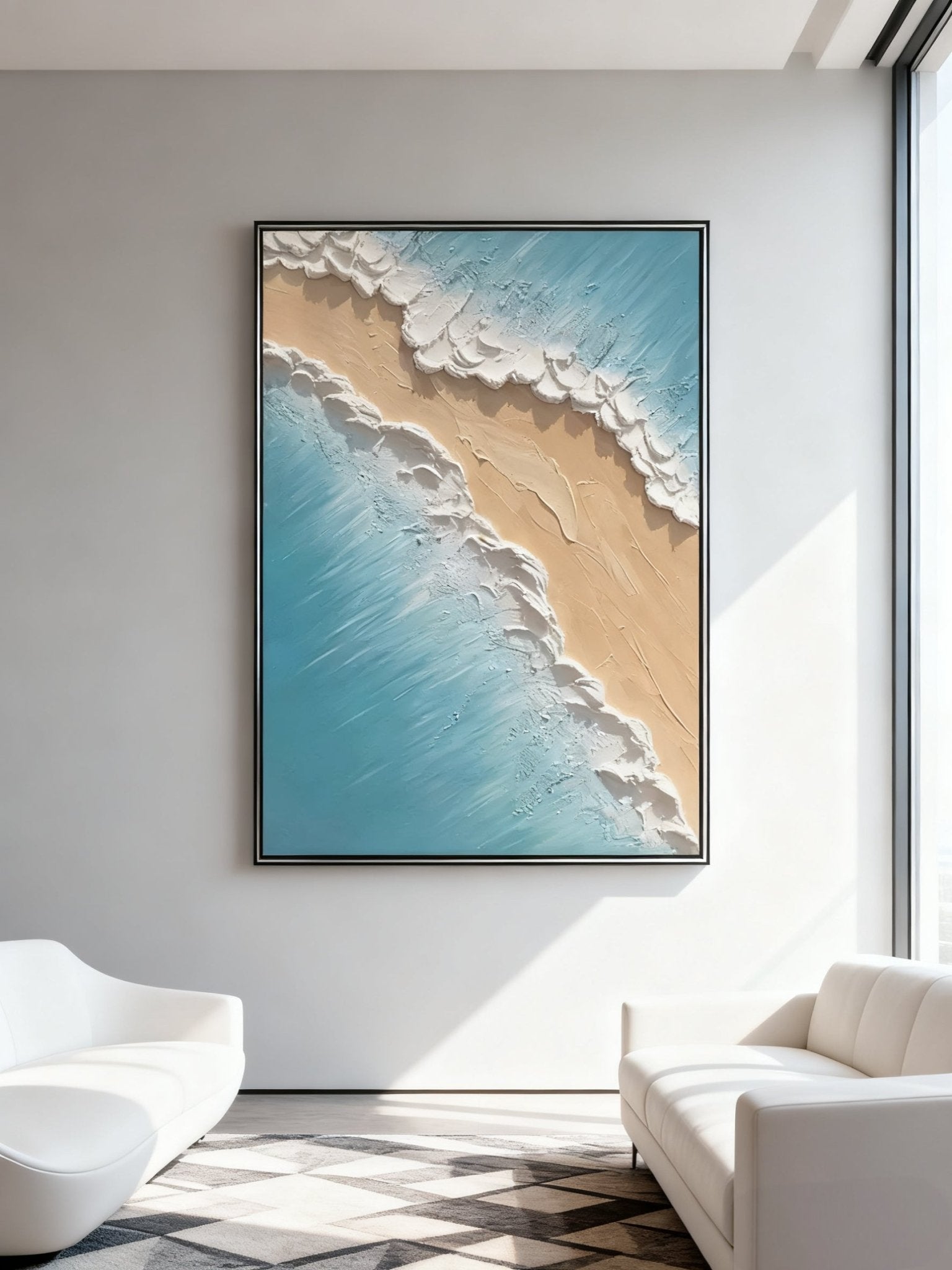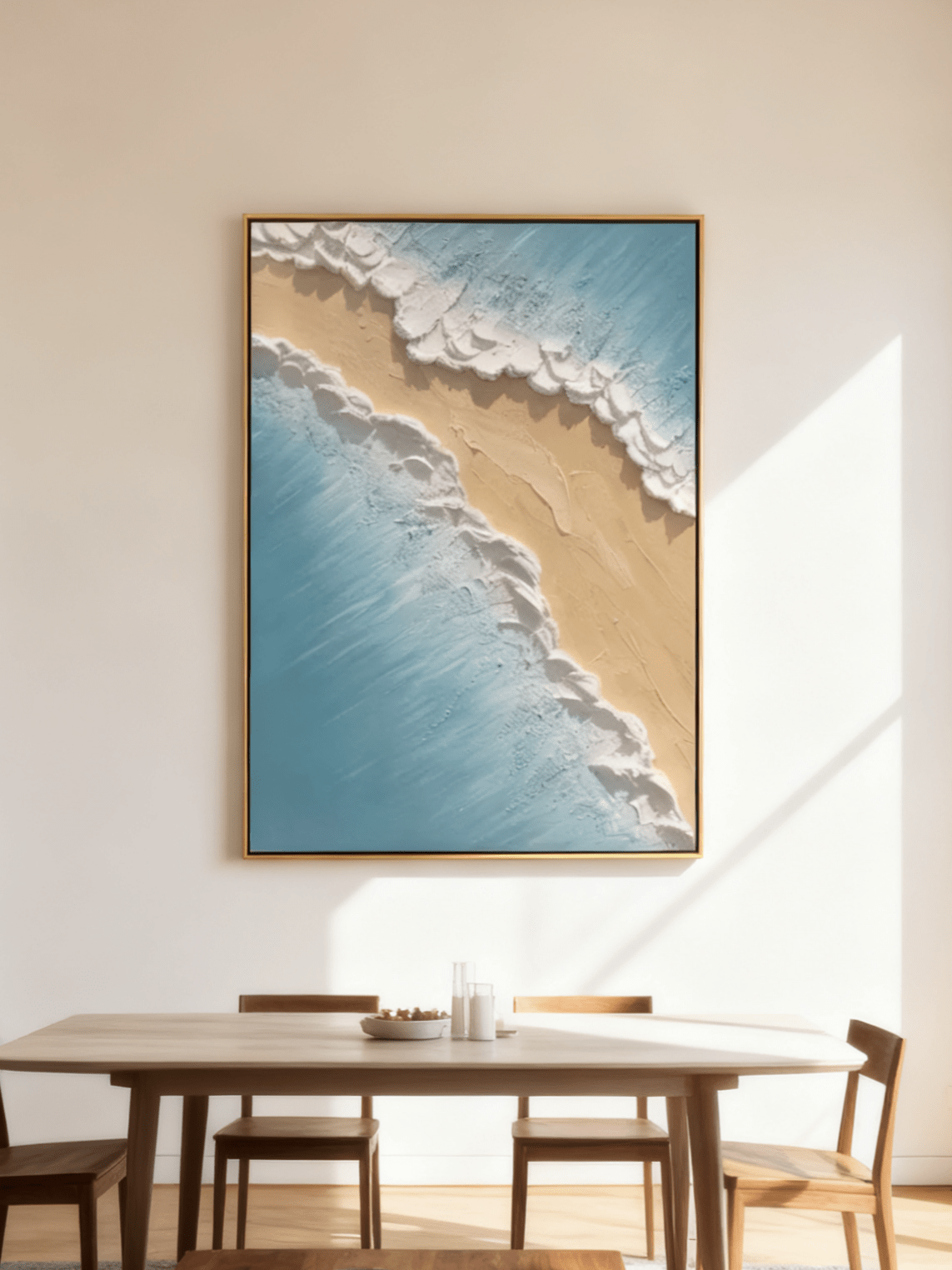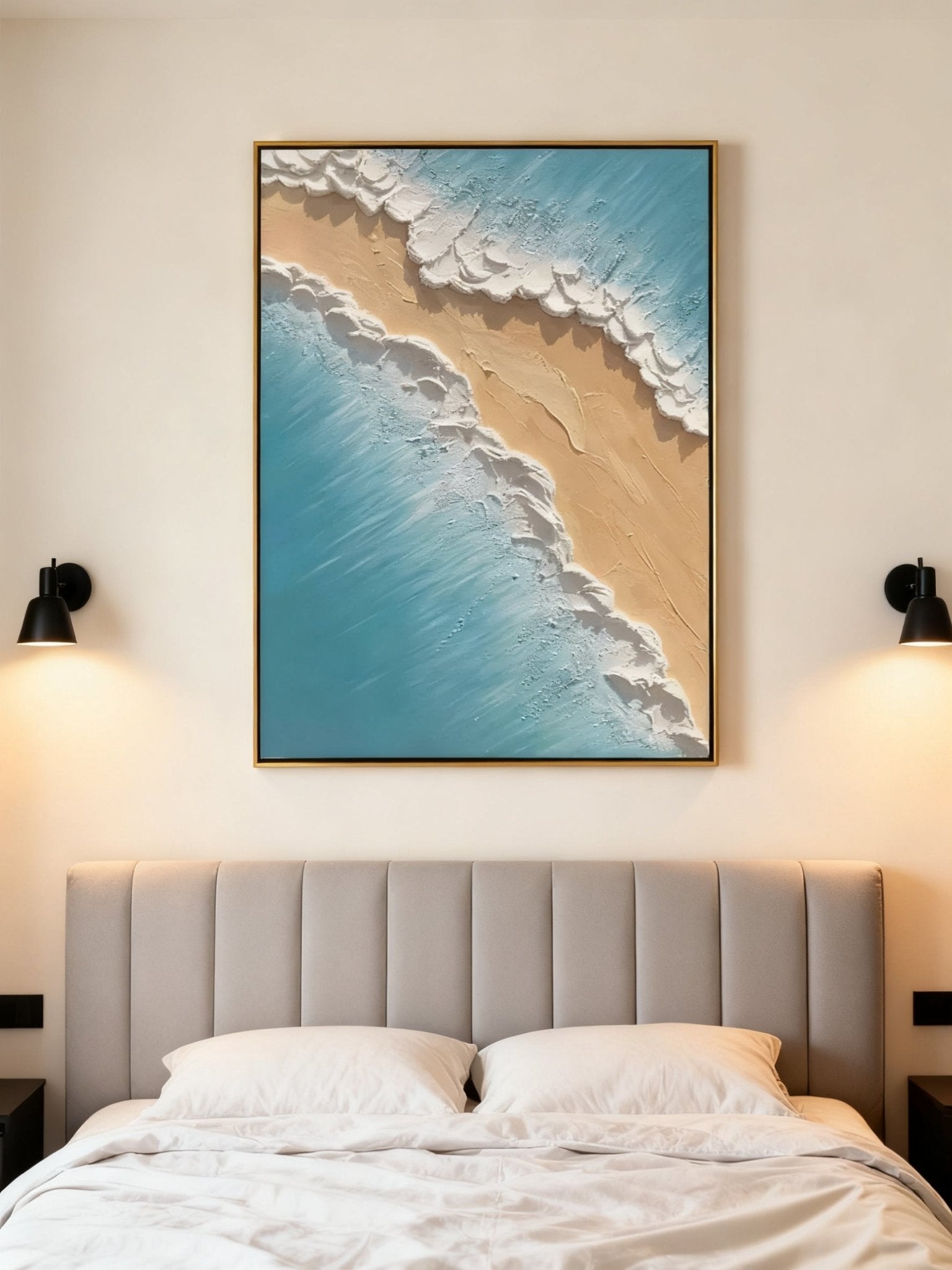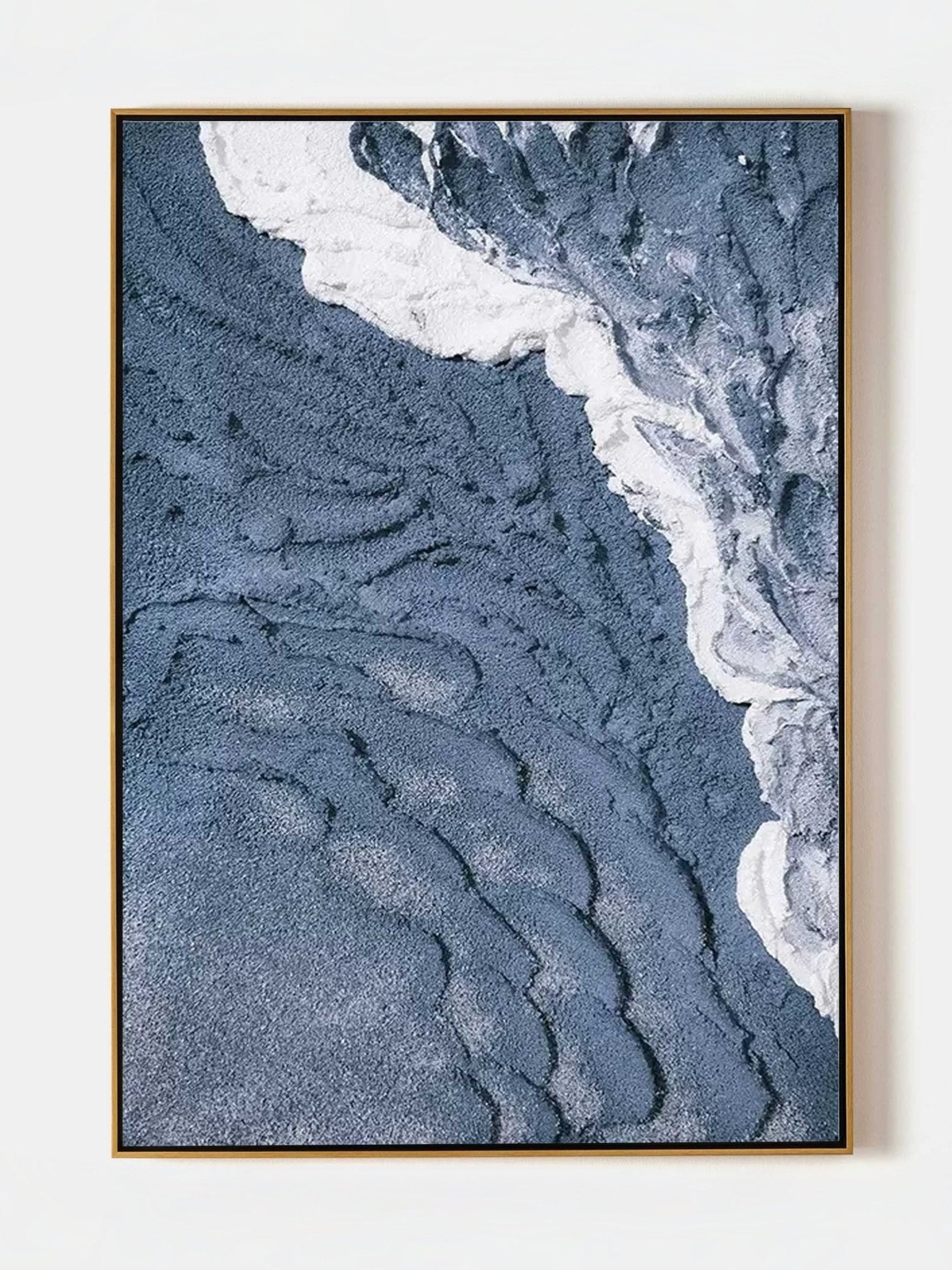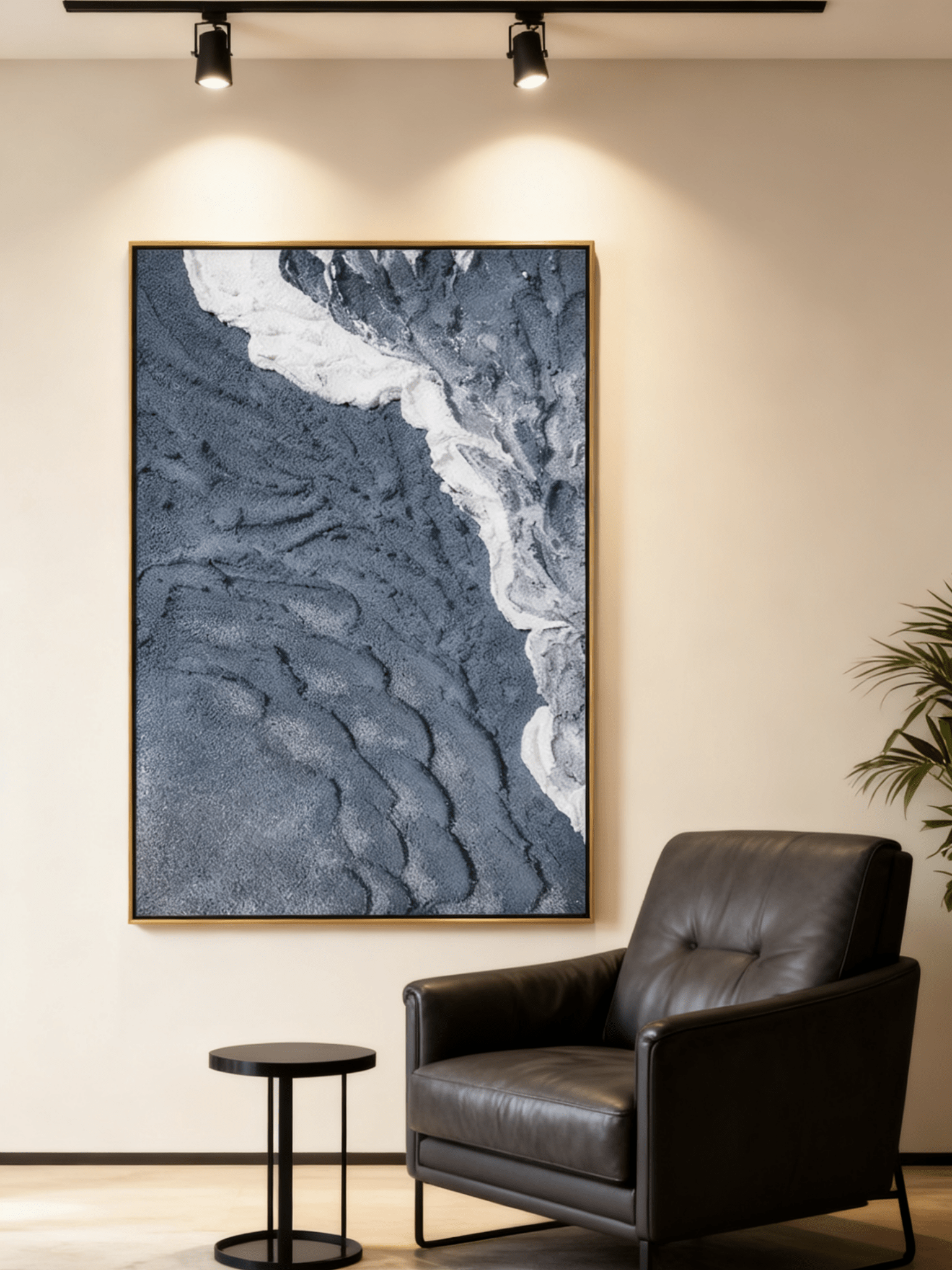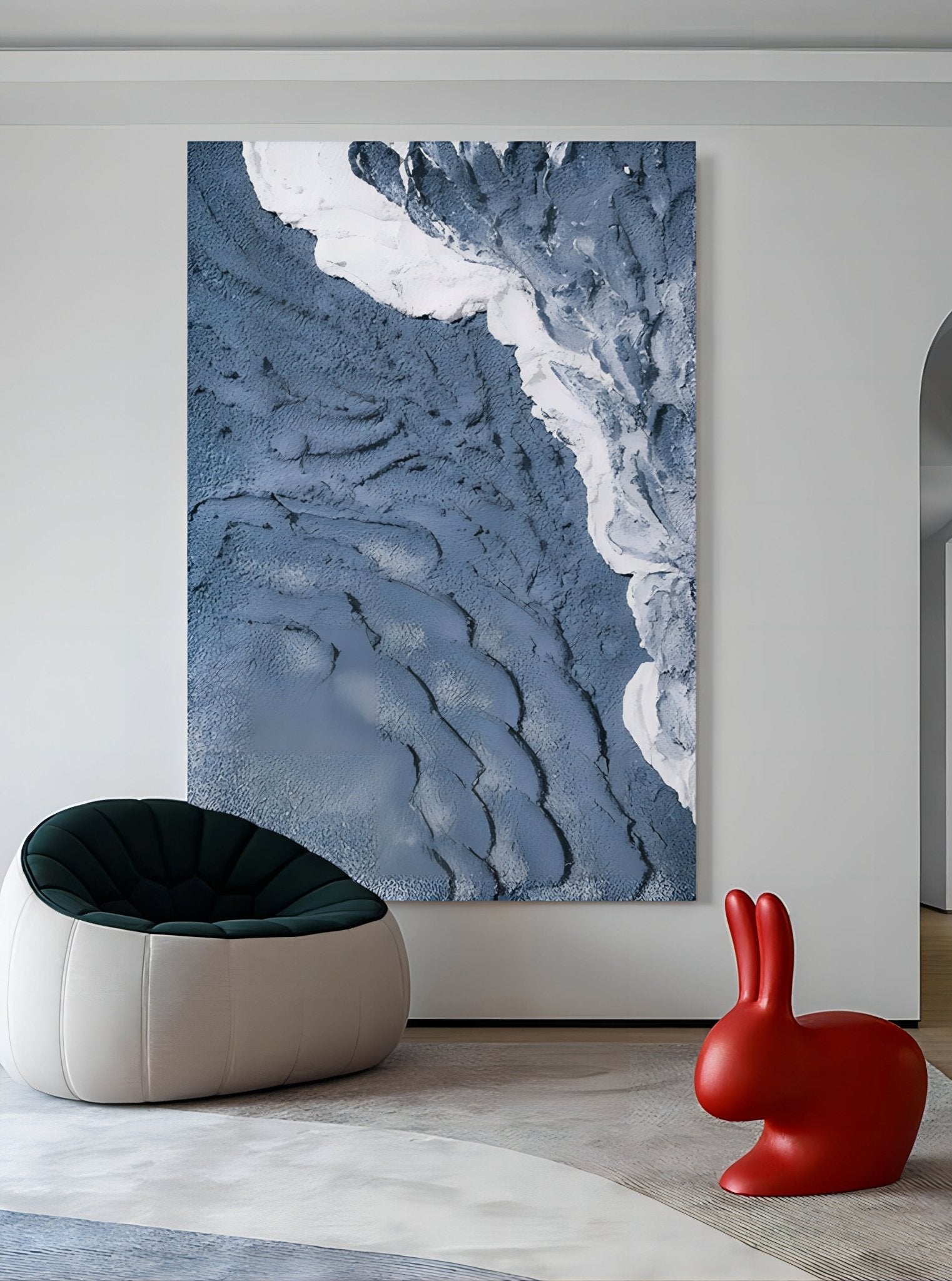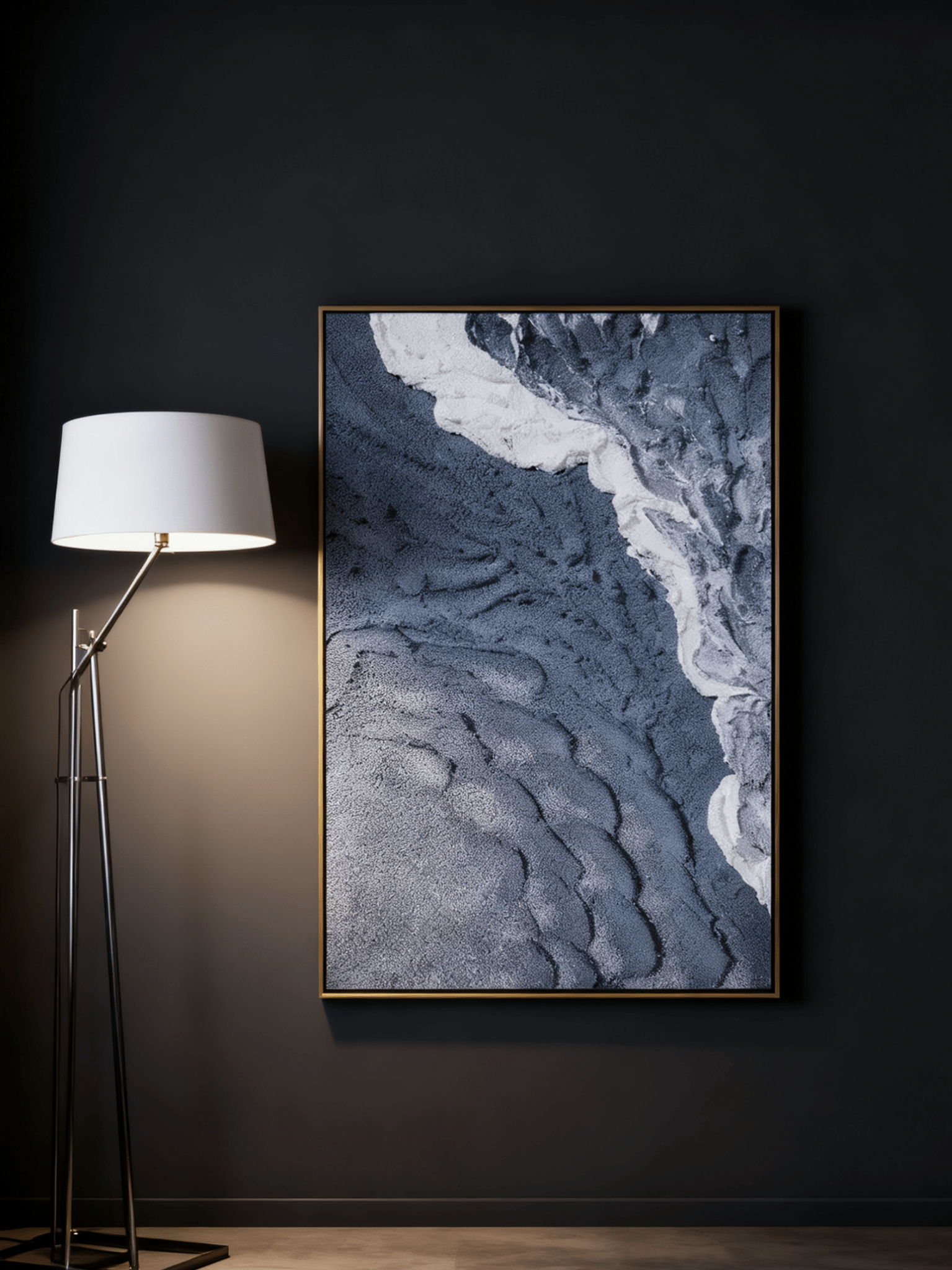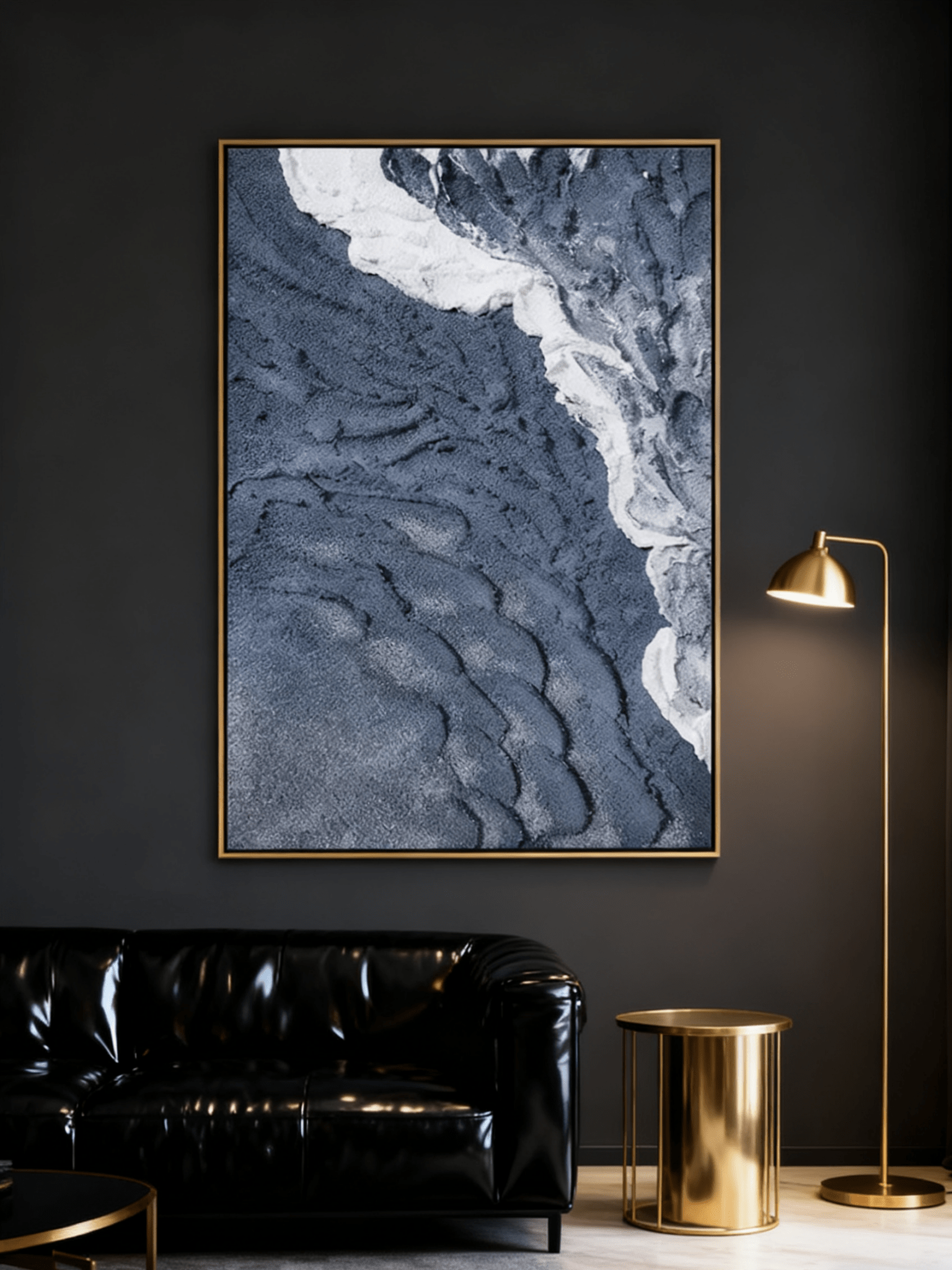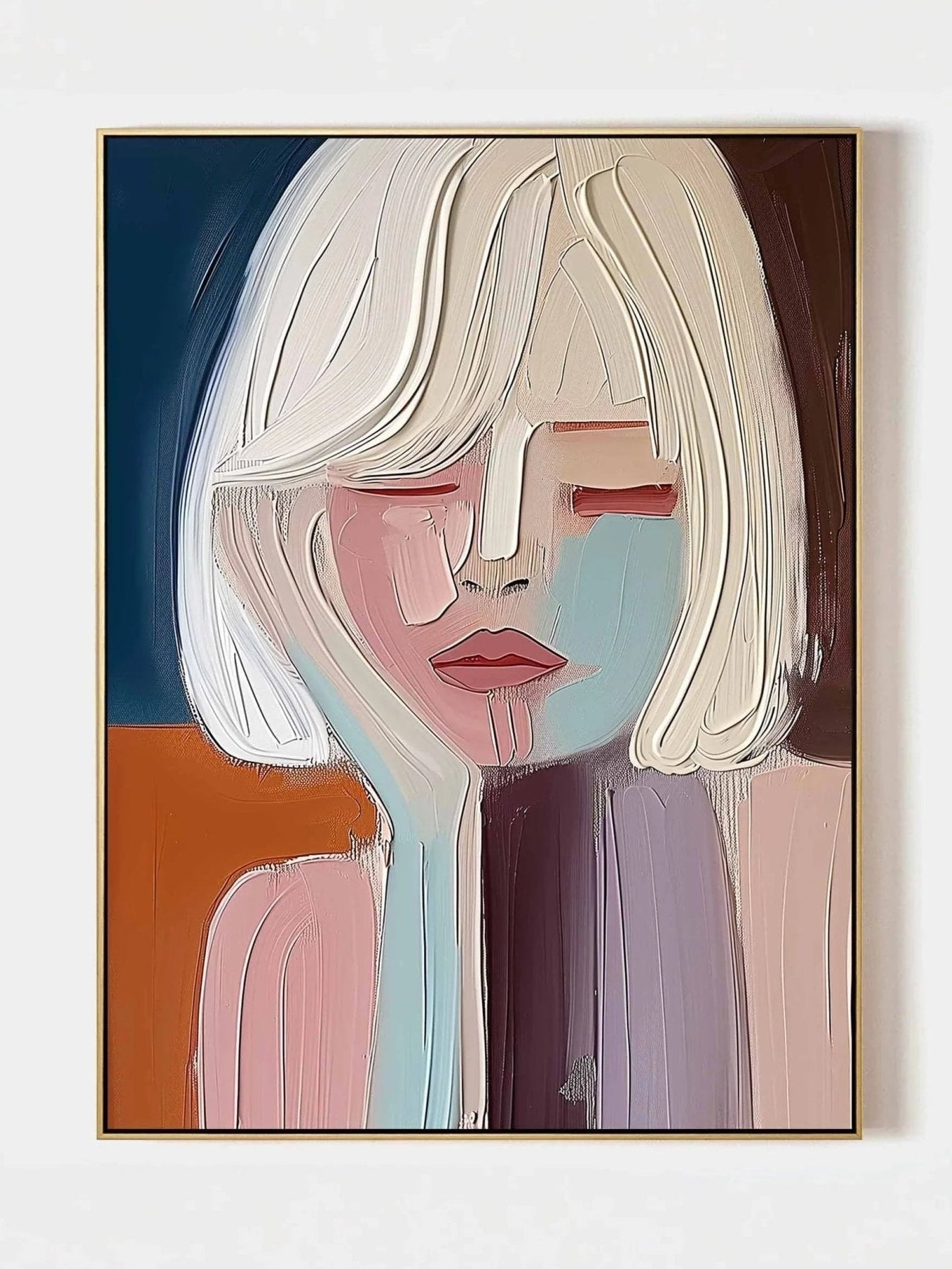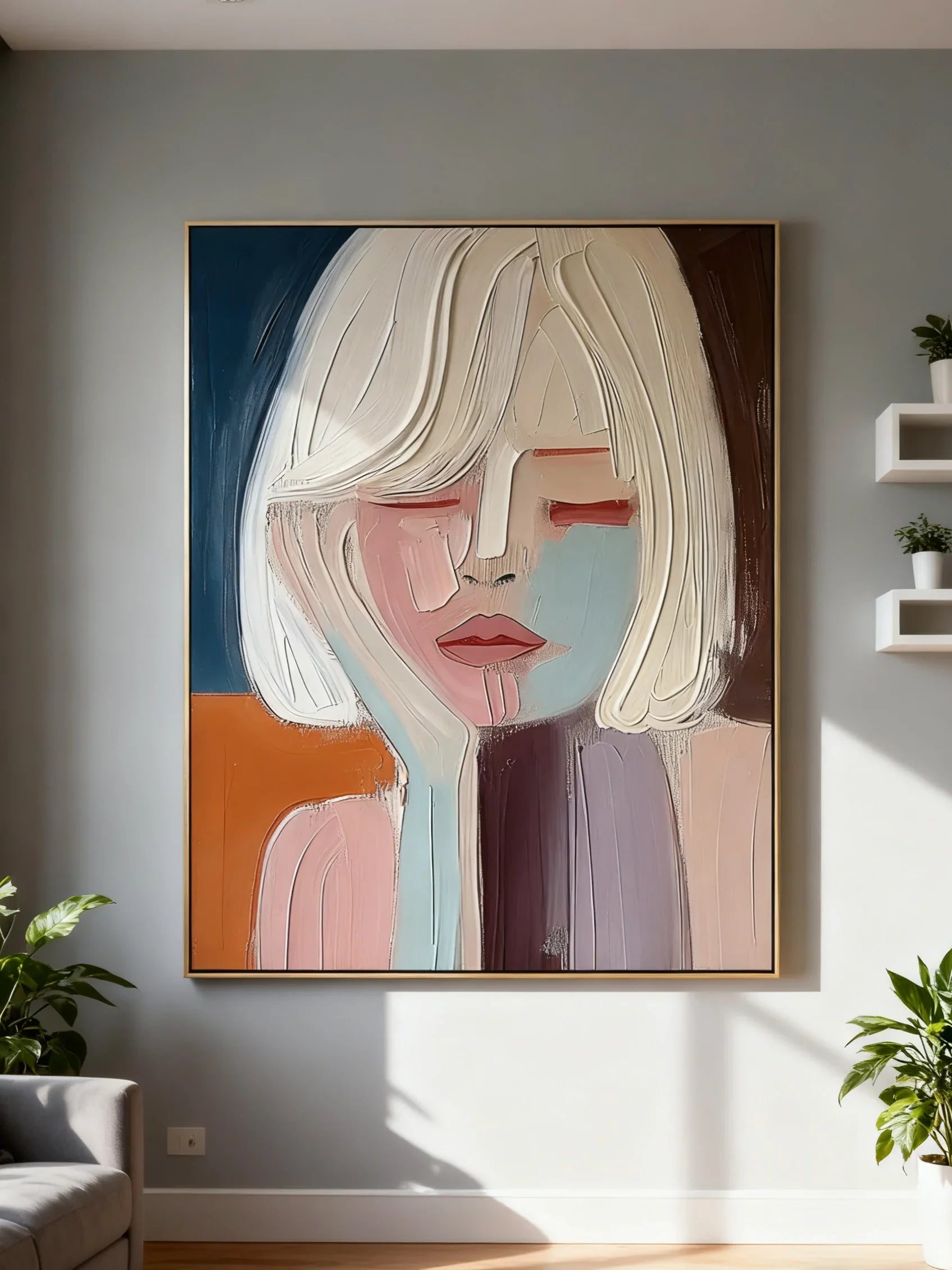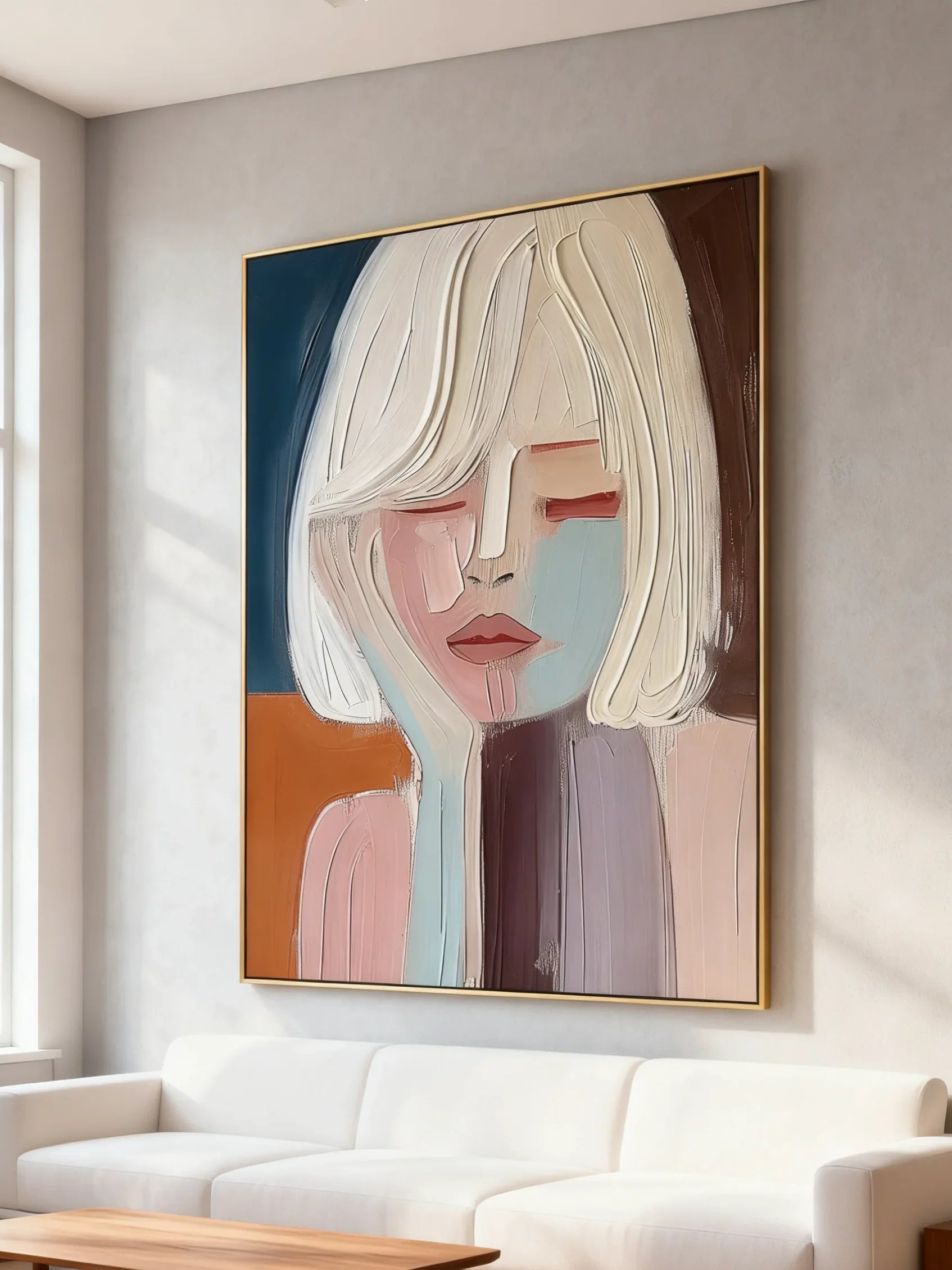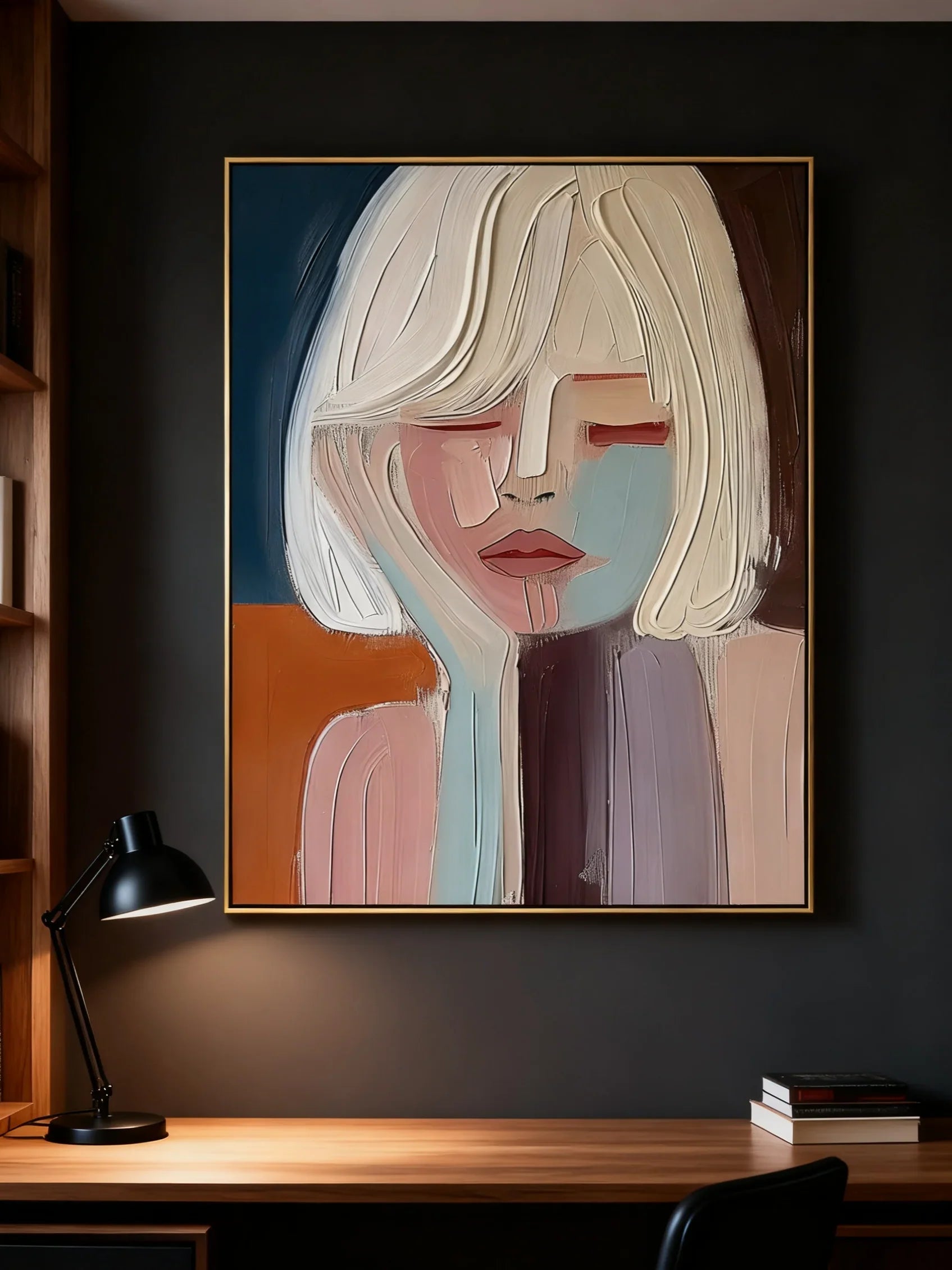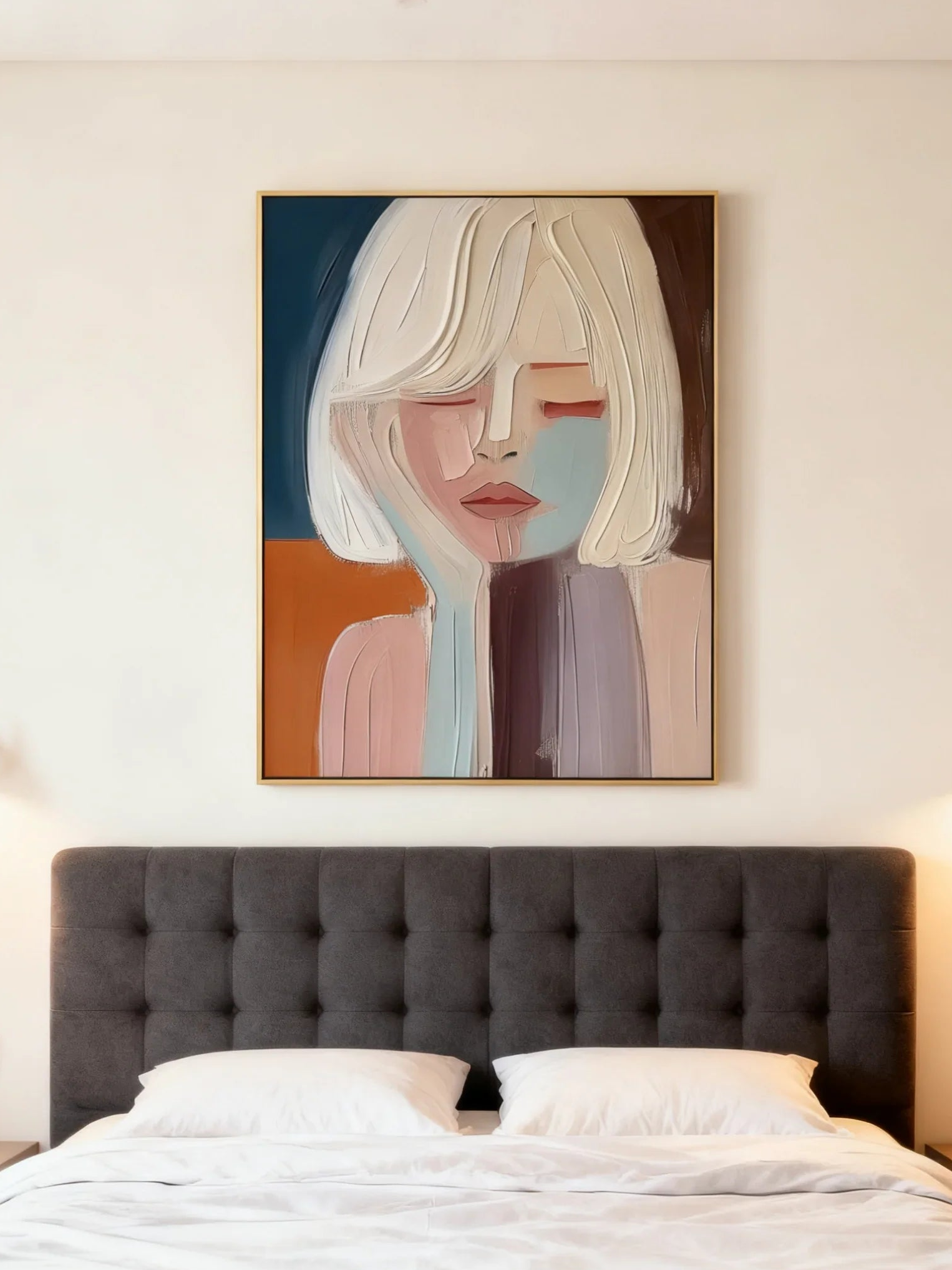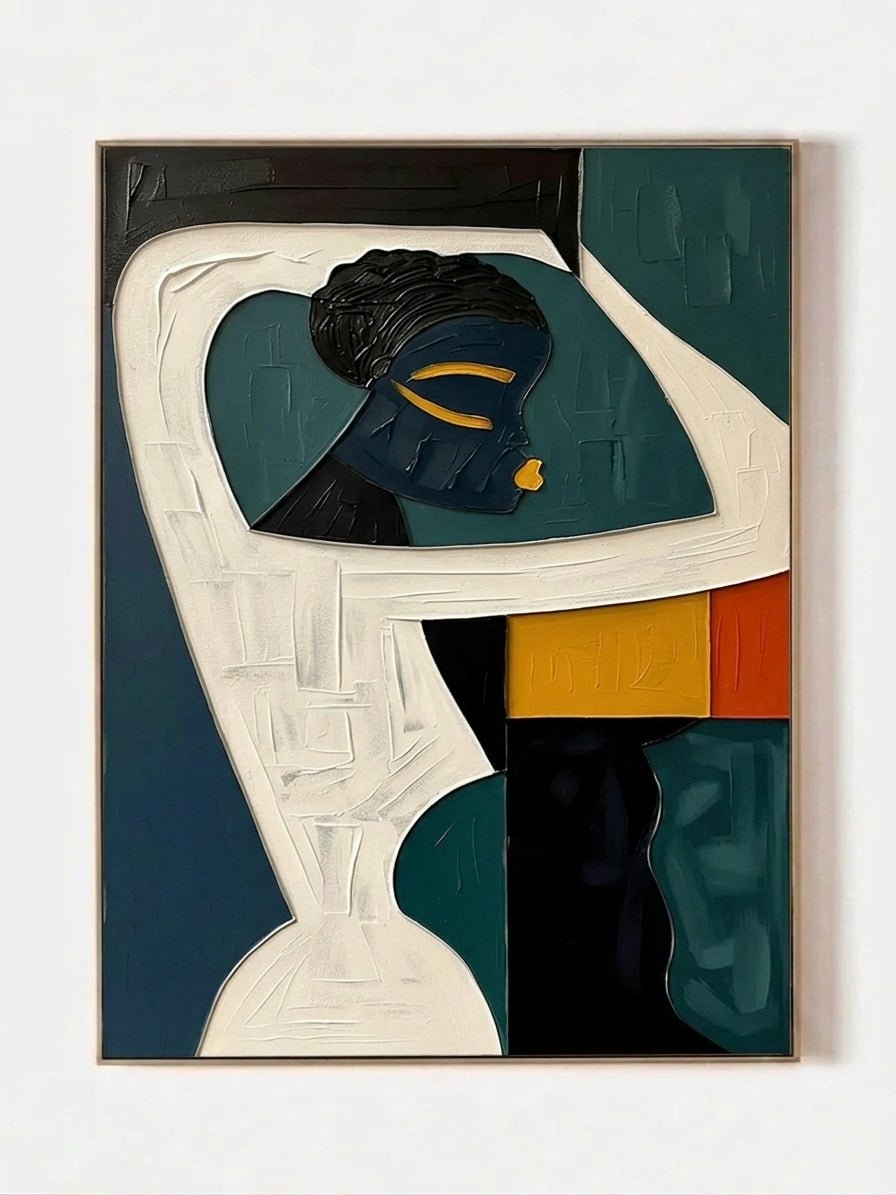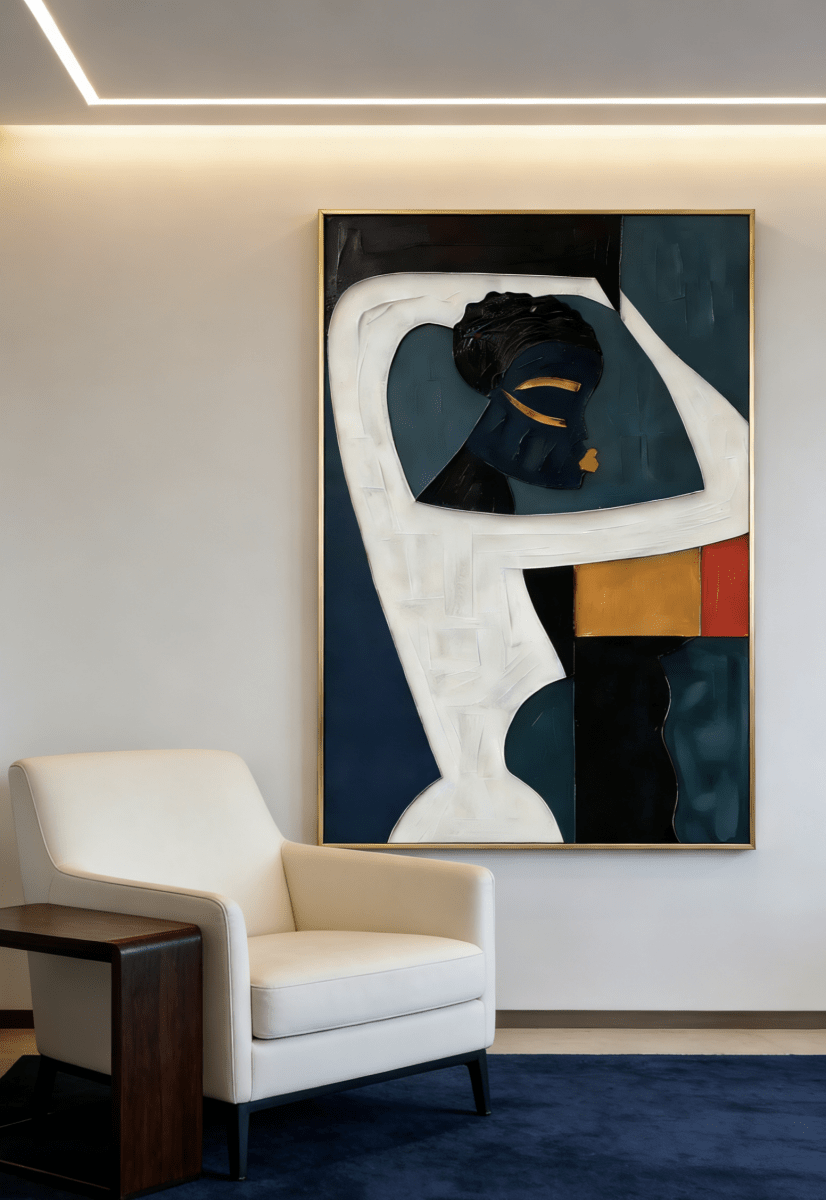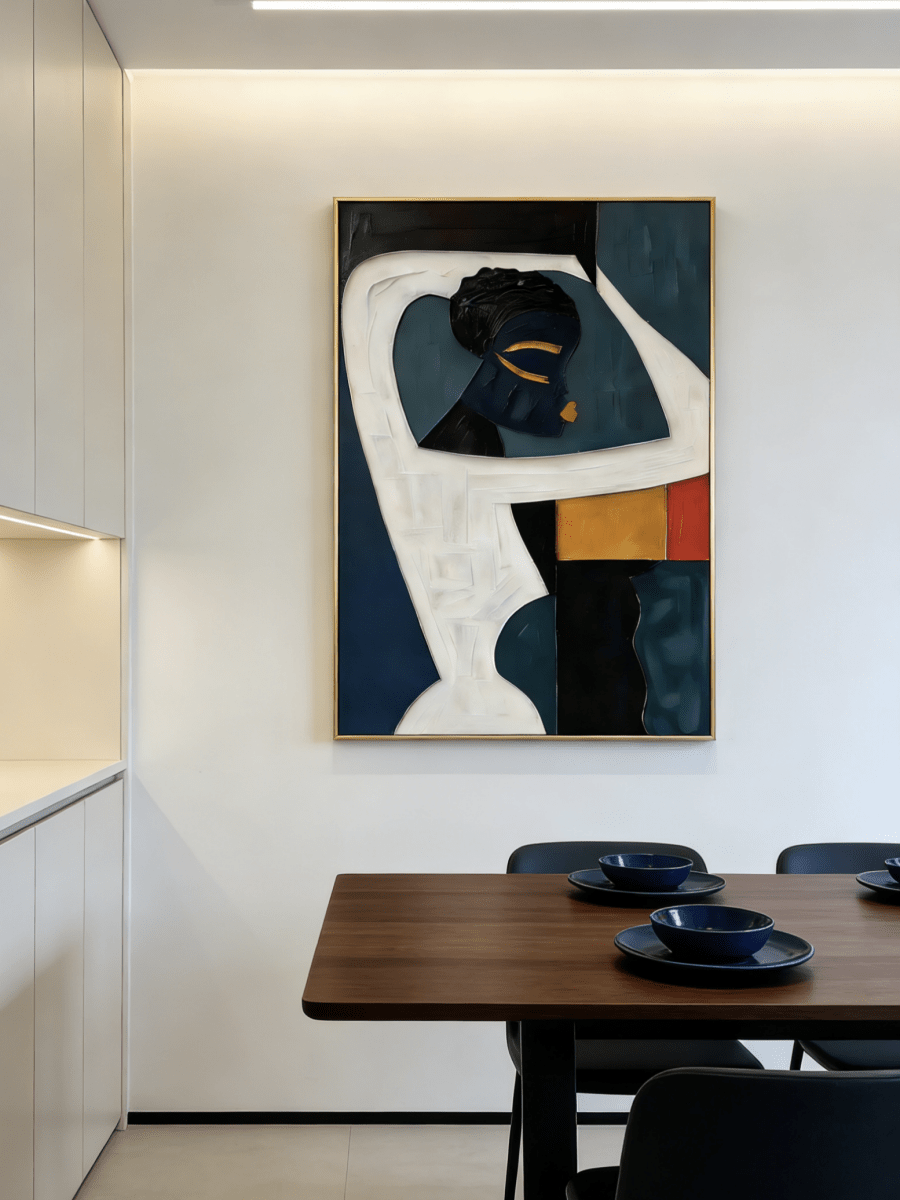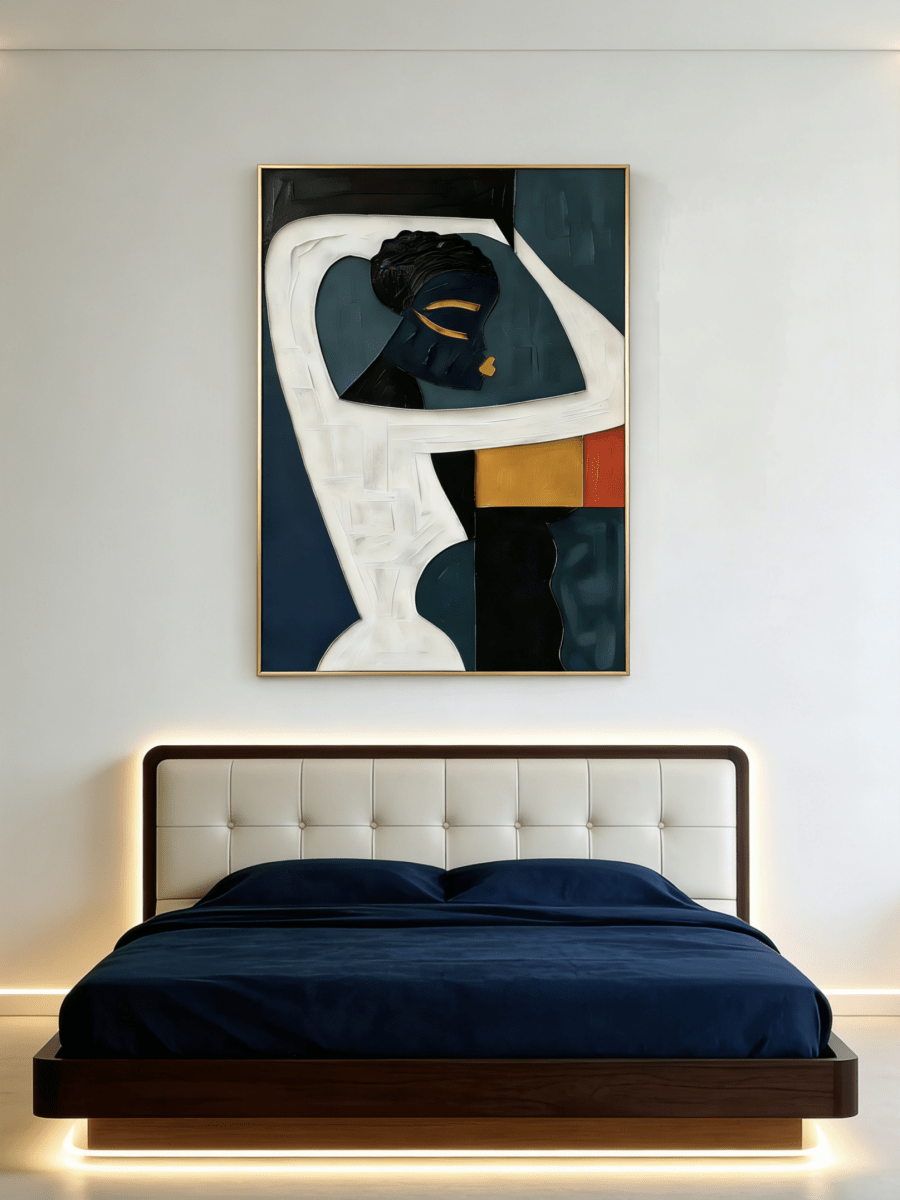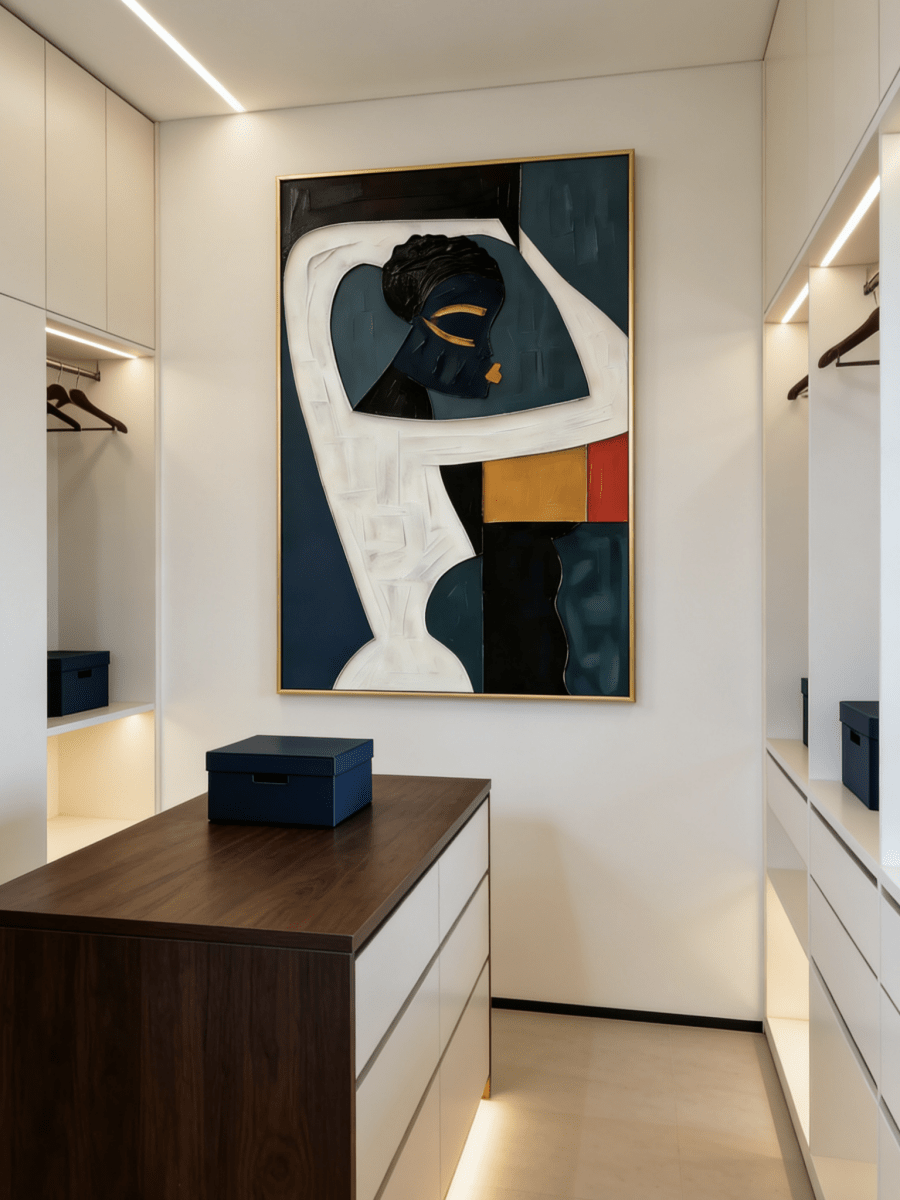

When comparing hand painted wall art vs canvas print, the key difference is how the image is formed. In hand-painted art, an artist applies paint directly to the surface. In a canvas print, a printer transfers a digital image onto canvas. Both can use canvas, and either can look beautiful; the production process and resulting surface—not the support alone—separate them.

Hand-Painted Wall Art vs Canvas Print at a Glance
| Feature | Hand-painted wall art | Canvas print |
|---|---|---|
| How the image is made | Paint is applied directly to the support | A digital image is printed onto canvas |
| Surface | May show brush, knife, sponge or other tool marks | Shows ink plus the canvas weave and any added finish |
| Texture | Can be smooth, lightly brushed or heavily built up | Can be flat, woven, gel-textured or hand-embellished |
| Light interaction | Relief and varied sheen may change with angle | Usually more even; added gel can create real highlights |
| Variation | Small differences are expected in artist-painted versions | Copies from one file are generally more consistent |
| Customization | Colors, proportions and dimensions may be adjustable | Sizing is easy; changing the image requires file editing |
| Price drivers | Artist labor, materials, drying and individual finishing | File preparation, ink, substrate, edition and finishing |
| Production time | Often longer, especially for made-to-order work | Often faster once the print file is ready |
| Care | Depends on paint, ground, coating and texture | Depends on ink, canvas, coating and display conditions |
| Best for | Physical craftsmanship, variation and custom work | Budget, consistency, photography and coordinated sets |
Neither option is automatically better; the right choice depends on whether the buyer values physical craftsmanship and variation or affordability and exact reproduction.
What Is Hand-Painted Wall Art?
Hand-painted wall art is made by applying pigmented material directly to canvas, linen, wood, paper, panel or another support. Brushes and palette knives are common, but artists may also use sponges, scrapers, cloth, pouring tools or mixed-media materials. The finished image exists in the paint layers on that particular surface rather than being transferred from a digital file.
“Hand-painted” does not always mean “thickly textured.” An artist can work with thin paint, glazes, smooth transitions or carefully leveled brushwork. Impasto—the technique of laying paint thickly enough for brush or knife marks to stand out—is only one approach. A relatively smooth painting can still be fully painted by hand.
It is also useful to separate three ideas. An original composition is a design created by an artist. A one-of-one original is the only physical work of that exact execution. A made-to-order hand-painted painting may be an artist-painted version of an established design. Because it is painted again rather than mechanically reproduced, small differences in edges, color mixtures and texture are normal, but that does not automatically make every version a one-of-one composition.
What Is a Canvas Print?
A canvas print begins with a digital file: a photograph, digital illustration, scan or high-resolution photograph of another artwork. A printer deposits ink onto prepared canvas, which can then be rolled, stretched over bars, gallery-wrapped or placed in a frame. Canvas describes the support; it does not describe whether the image was painted or printed.
Many fine-art reproductions use inkjet printing. “Giclée” is commonly used for high-quality fine-art inkjet printing, although the word alone does not specify one universal combination of printer, ink, resolution and canvas. A careful buyer should still look for details about the ink set, substrate, edition, artist involvement and finishing.
A print is not automatically low quality. A well-produced canvas print can reproduce color and fine detail accurately, make photography practical at larger sizes, and give buyers access to an image at a lower price. Limited editions may be numbered and signed, while open editions can be produced without a fixed limit. Those edition terms describe availability, not whether paint was applied directly.
Canvas Painting vs Canvas Print: Why the Words Cause Confusion
Both products can truthfully be called “canvas art.” Phrases such as “premium canvas,” “artist-quality canvas” or even “textured canvas” describe materials or appearance, not the full production method. “Hand-painted canvas print” is especially ambiguous: it can mean a print with a few hand-applied accents rather than an image painted completely from a blank canvas.
Use this short glossary when reading a listing:
- Original painting
- A physical painting created by the artist; ask whether it is a one-of-one work or an artist-painted version of a design.
- Hand-painted artwork
- An image formed by paint applied directly to the support.
- Canvas print
- A digital image printed onto canvas.
- Giclée print
- A term generally used for fine-art inkjet printing; quality still depends on the specified process and materials.
- Hand-embellished print
- A printed base with selected paint, leaf, pastel or other material added by hand.
- Gel-textured print
- A print with a clear or colored gel layer added to create physical ridges or gloss variation.
- Mixed media
- A work combining more than one material or process; it may include painting, print, collage, plaster, fibers or metal leaf.
Real Textured Art vs Printed Texture
Physical texture has measurable peaks, valleys, edges or embedded materials. It may come from paint, modeling paste, plaster, fibers or another medium. Visual texture is the pictured appearance of brushwork, cracking or relief; it can look dimensional in a photograph while the corresponding surface remains comparatively flat.
A canvas print also has the canvas weave. That regular fabric pattern may remain visible through the ink and catch light across the whole work. It proves the image is on woven canvas, not that the image was painted. Some manufacturers add clear gel after printing, either by hand or with a repeatable process, to imitate selected strokes. A hand-embellished print goes further by adding real paint or other materials over a printed foundation. These hybrid works involve genuine handwork, but the complete image was not formed from paint on a blank canvas.

Raking or side light is useful because true relief produces highlights and shadows that correspond to the surface height. But it is not a single-step authenticity test. A smooth hand-painted surface may cast almost no shadow, while applied gel on a print can cast real shadows. Combine angled photographs with a precise production description.
How Light Looks Different on a Painting and a Print
On built-up paint, a window or lamp placed to the side illuminates the high points and leaves tiny shadows behind ridges. As the viewer or light source moves, those highlights and shadows move too. Variations in gloss, paint thickness and brush direction can also create subtler changes on a smooth painting.
Printed visual texture contains the lighting information captured in the source image. A photographed impasto ridge may look light on one side and dark on the other, but that pictured contrast usually stays fixed when the room light changes. The canvas weave can still reflect light, often in a more uniform pattern. Clear gel creates real surface reflections, yet those reflections establish only that material was added after printing—not that the underlying image is fully hand-painted.

Hand-Made Variation and Reproduction Consistency
In a hand-painted version of a design, the main composition and palette should follow the listing, but small differences can appear in a leaf edge, a blended transition, a knife mark or the height of a textured passage. That is expected hand variation, not automatically a defect. Buyers who need an exact match should ask what tolerances the studio uses and whether approval images are provided.
Prints made from the same file are generally more consistent, which is useful for hotels, offices, rental properties or a coordinated multi-room project. Consistency is not absolute: printer profiles, ink lots, coatings, canvas batches and finishing can affect color. Screens, cameras and room lighting also change what viewers perceive, so neither product should be judged from one heavily edited listing image.

Price: What Are You Paying For?
The price of hand-painted artwork may include the artist’s labor, surface preparation, pigments and mediums, texture building, drying time, customization, individual inspection, framing and protective packaging. Size, complexity, reputation and whether the work is one of one also matter. A higher price does not by itself prove a work is hand-painted.
A canvas print price can reflect digital capture and color correction, licensing, ink quality, canvas construction, printer calibration, stretching, framing, protective coatings and edition size. A signed limited-edition giclée from an established artist can cost more than an unsigned decorative painting. The useful comparison is between clearly described products, not labels alone.
Is Hand-Painted Wall Art Worth It?
Hand-painted wall art can be worth the higher price when the buyer values physical brushwork, surface variation, customization and the presence of an artist-made object. A canvas print may be the better purchase when budget, exact reproduction or fast availability matters more.
Hand-painted art may be worth it if:
- You value tactile surface detail or subtle changes in sheen.
- You notice how artwork changes in natural light.
- You welcome small handmade differences.
- You need custom colors, proportions or dimensions.
- The work will be a primary focal point seen at close range.
A canvas print may be the better choice if:
- You have a limited budget or several rooms to furnish.
- You want coordinated pieces with close reproduction consistency.
- You are decorating a temporary or rental home.
- You want photographic or graphic artwork.
- You need faster production from an existing file.
How to Tell If Art Is Hand Painted
- Read the production description. Look for specific phrases such as “painted directly on canvas,” “fully hand-painted,” “digital print,” “giclée,” “hand-embellished,” “gel finish” or “mixed media.”
- Ask one direct question: “Is the complete image painted directly onto a blank canvas, or is any part digitally printed?”
- Request angled close-ups. Side light can show whether highlights and shadows follow actual surface relief.
- Compare texture with color boundaries. In a painted work, tool marks often follow decisions in the image. A uniform weave across every color is the canvas support, while a repeated clear-gel pattern may not track the underlying composition precisely.
- Check the variation policy. A made-to-order studio should explain how closely the finished piece follows the sample and whether approval images are available.
- Use documents as supporting evidence, not the only evidence. A certificate can record artist, medium, size and date, but a document alone cannot reveal whether a printed base was used.
The 60-second authenticity checklist
- 0–10 seconds: Find the exact medium and production wording.
- 10–20 seconds: Search the listing for “print,” “giclée,” “embellished,” “gel” and “mixed media.”
- 20–35 seconds: Inspect one front close-up and one angled close-up.
- 35–45 seconds: Separate uniform canvas weave from image-specific relief.
- 45–60 seconds: Ask the blank-canvas question and save the seller’s answer.

Care and Longevity: Materials and Environment Matter More Than Labels
No honest comparison can promise that every painting lasts for centuries or that every print fades quickly. Durability depends on the pigments or inks, binder, canvas or other support, ground, coating, construction, light exposure, humidity, temperature, handling and maintenance. Direct sunlight and unstable or excessive humidity can damage many types of art.
For routine display, keep artwork away from prolonged direct sun, heat sources and damp areas. Do not press on a canvas or clean a painted or printed surface with household sprays. Follow the maker’s instructions, because a heavily textured acrylic painting, an oil painting and a coated inkjet canvas can require different care. Our broader online art buying checklist covers seller checks, packaging, shipping and returns without repeating them here.
Four WABI Wall Art Examples of Different Hand-Painted Surfaces
The following active products illustrate why “hand-painted” is not one surface category:
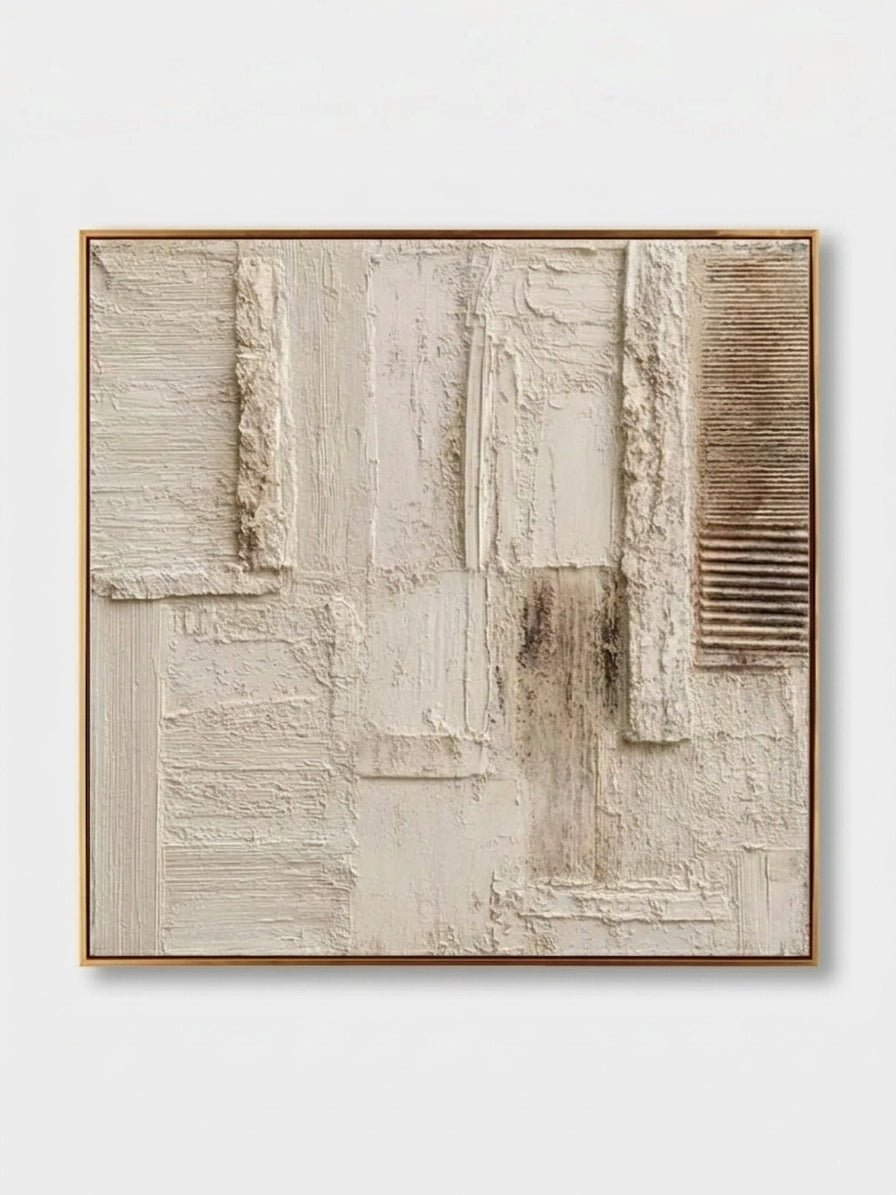
- EV#0071, Handmade Beige & Bronze Wabi Sabi Textured Wall Art is described as fully hand-painted on linen canvas. Its raised grid creates clear physical edges, while exposed weave remains visible inside some cells.
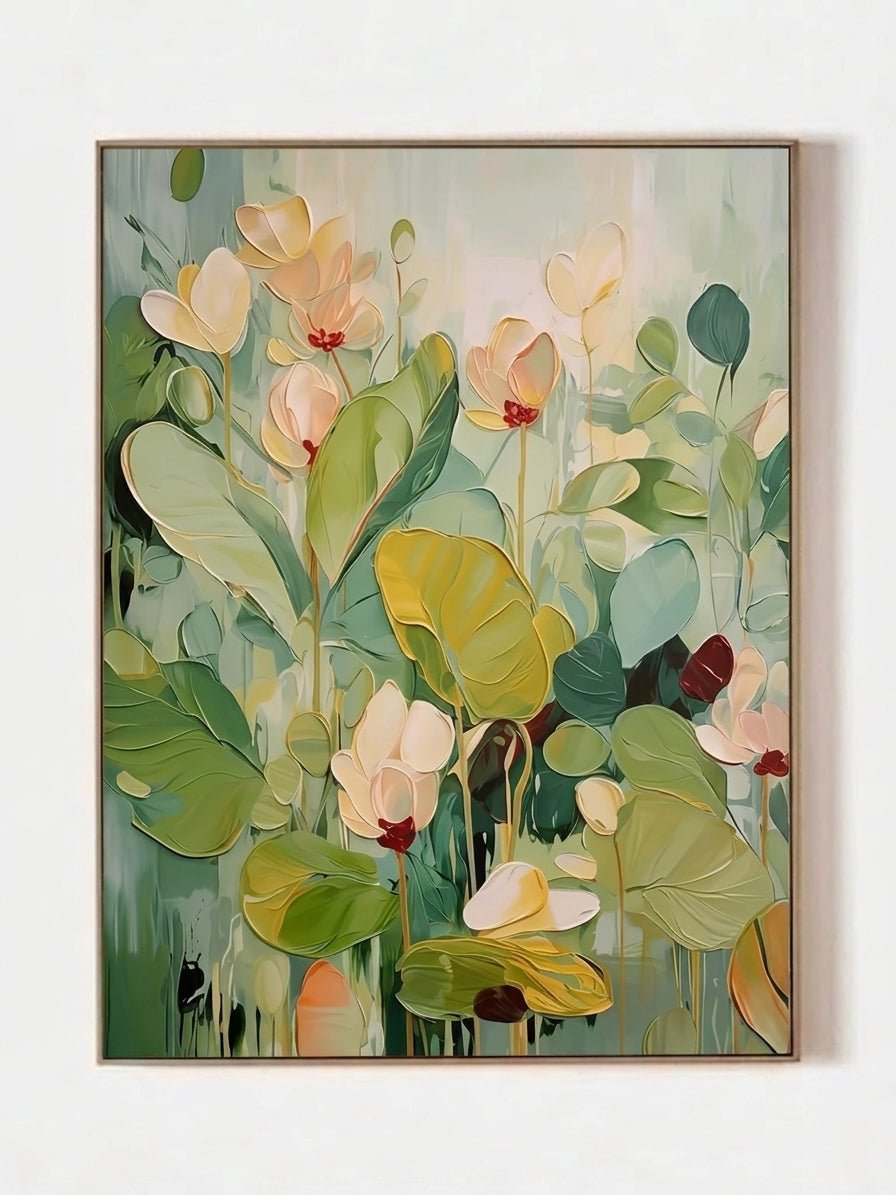
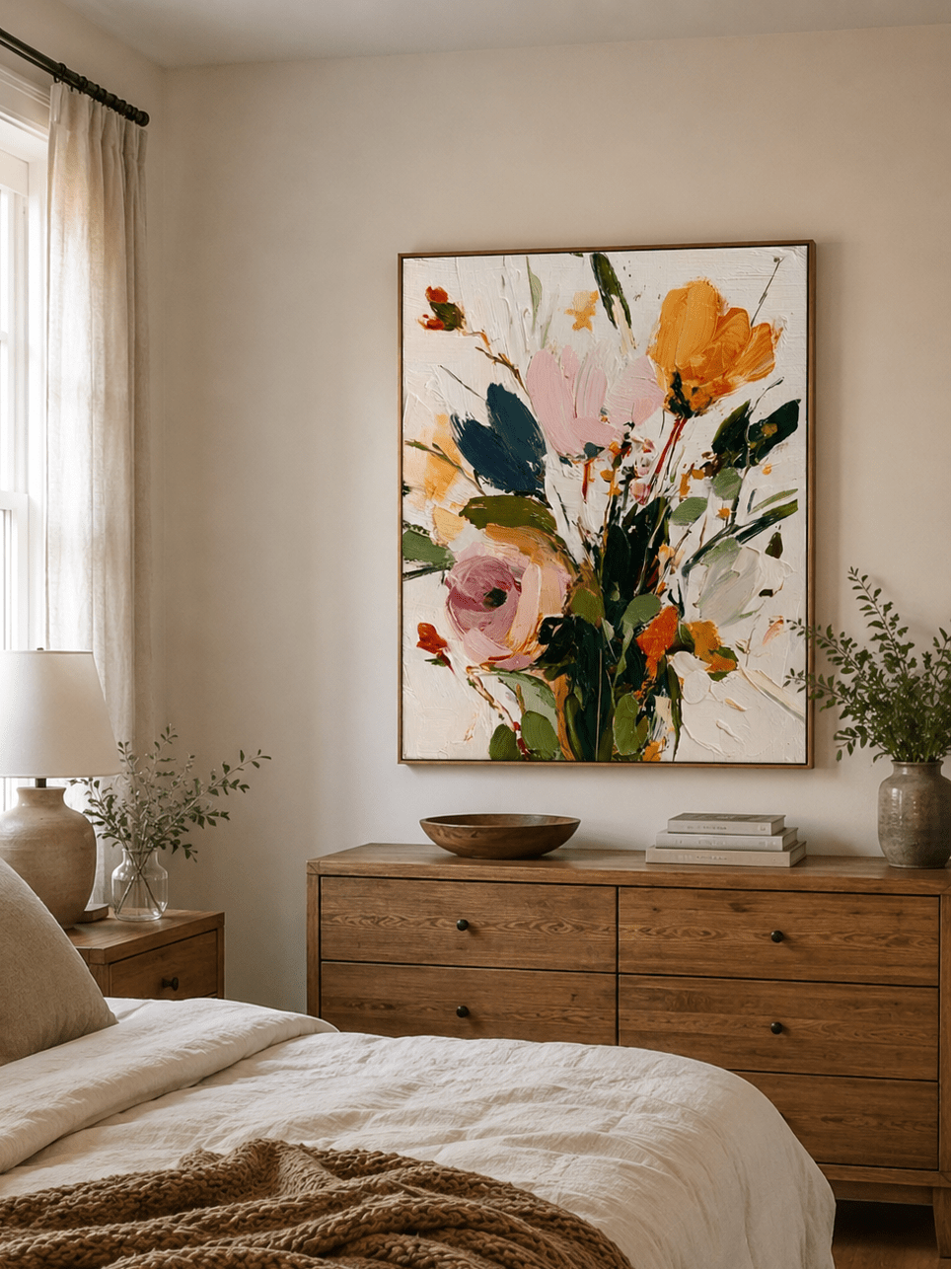
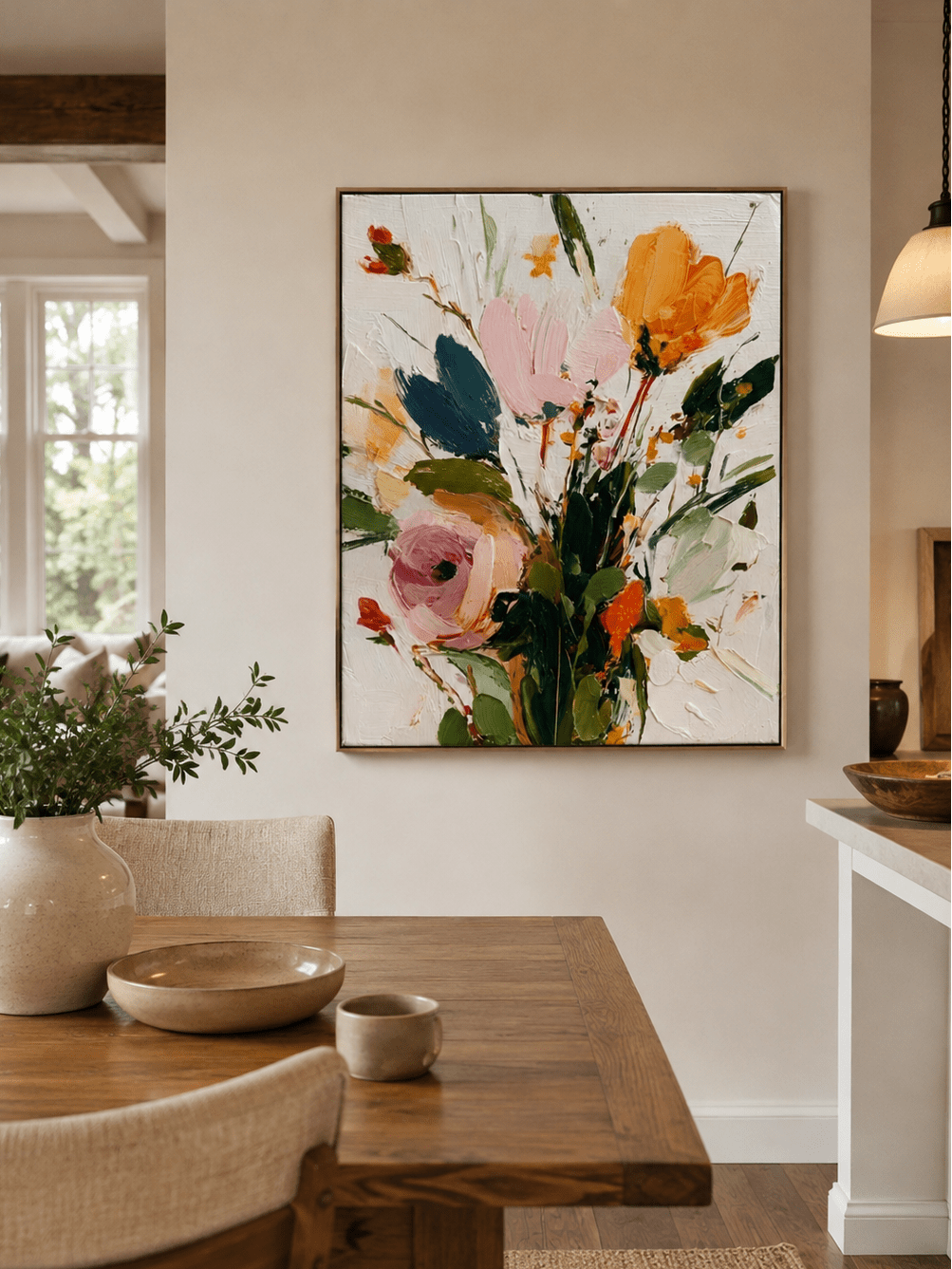
- LX#0116, Modern Abstract Floral Sage Green Wall Art uses broader palette-knife shapes and layered botanical edges. The surface reads through color boundaries rather than one uniform field of relief.
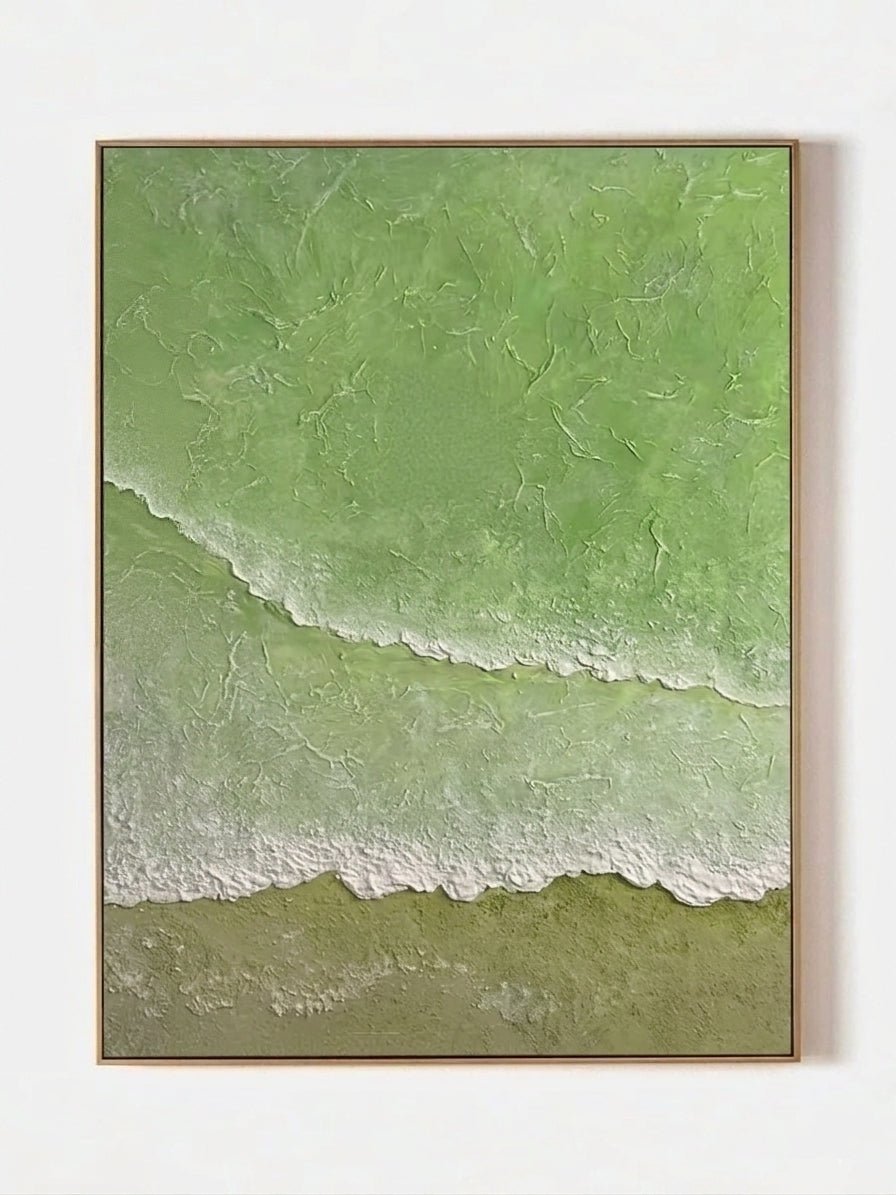
- LL#0227, Modern 3D Textured Sage Green Ocean Waves Canvas is a heavy-relief example with sculpted white wave bands and granular green passages.
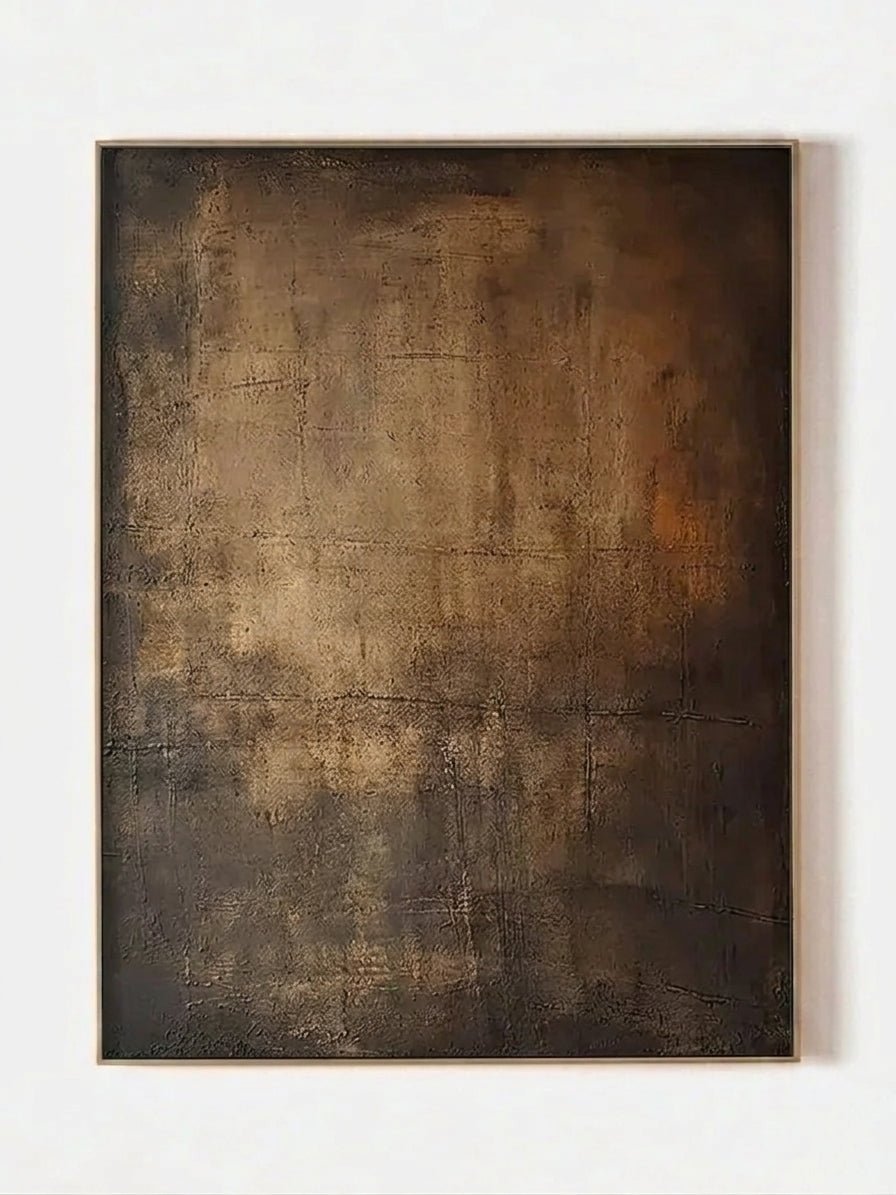
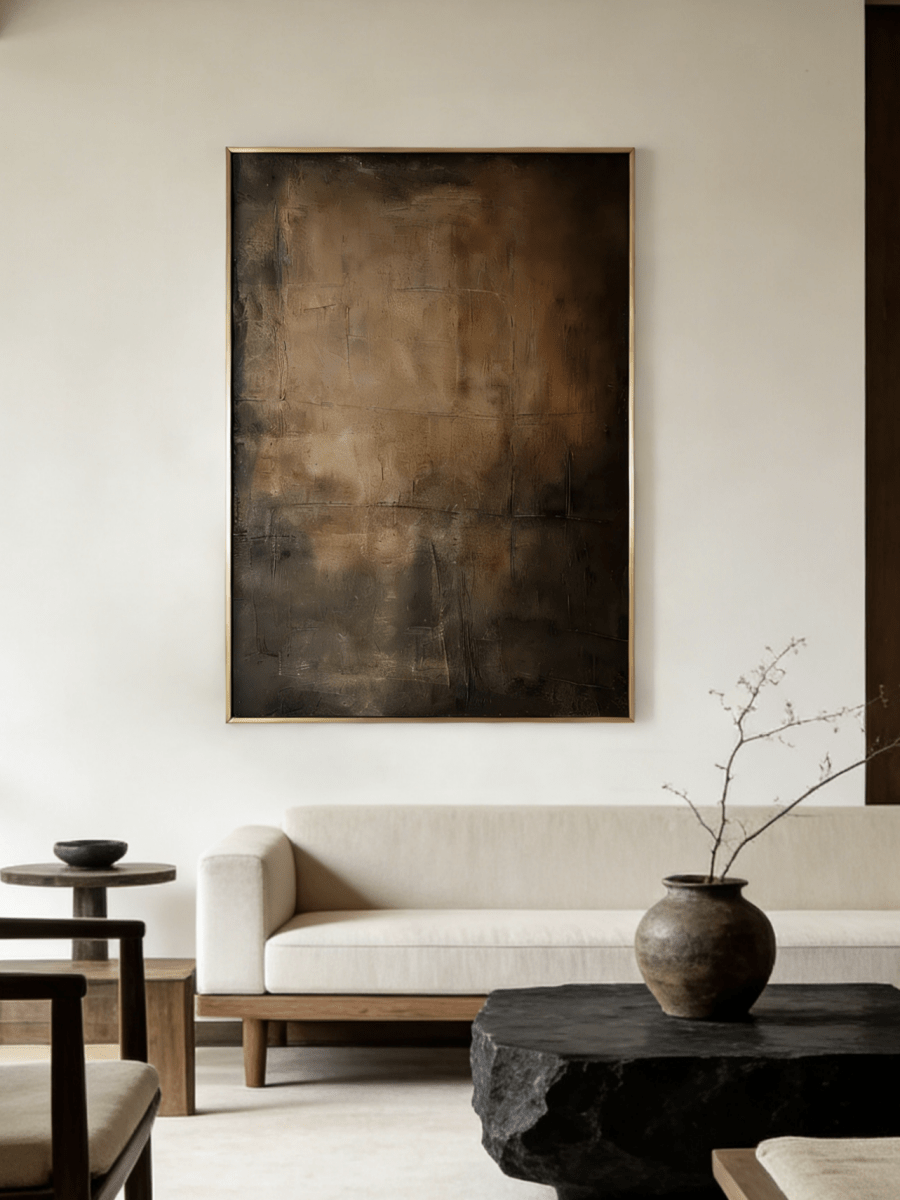
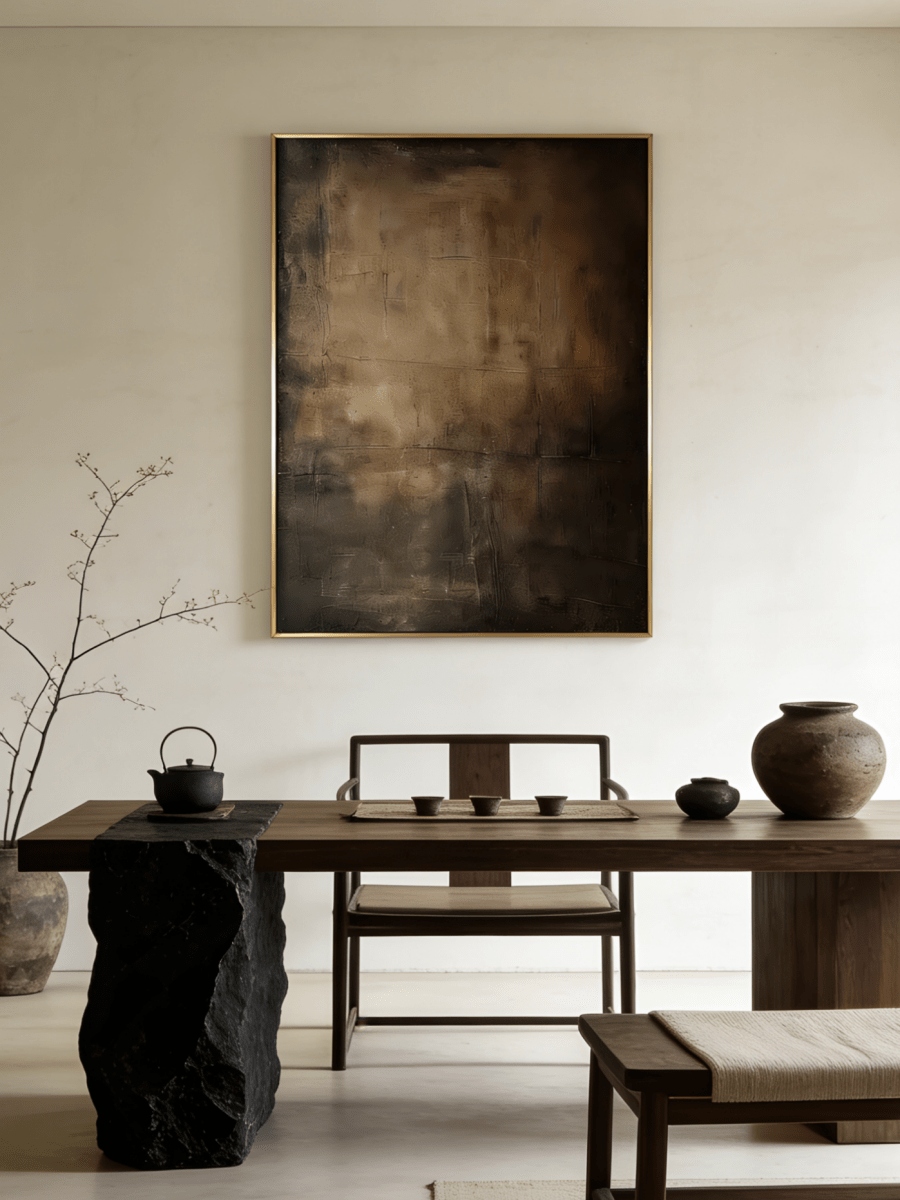
- AK#0080, Wabi-Sabi Abstract Tranquility Painting uses bronze, amber and charcoal variation with a weathered, irregular surface. Its interest comes from both tonal movement and texture.

You can compare more raised and mixed-material surfaces in the Textured Wall Art collection, explore irregular handmade surfaces in the Wabi-Sabi Wall Art collection, or browse all hand-painted artwork.
Which One Should You Choose for Your Room?
Choose from the viewing conditions outward. A large focal wall with changing daylight can reward real surface variation. A hallway viewed from a distance may depend more on color and composition than subtle brushwork. A rental, gallery wall or multi-room project can benefit from the predictable sizing and lower replacement cost of prints. If the piece sits above a sofa or bed, use our optional wall art sizing guide before comparing finishes.
Then decide which information you need from the seller. For a fully painted work, confirm the blank-canvas process, materials, expected variation and approval procedure. For a print, ask about the file source, ink, canvas, coating and edition. For a hybrid, ask which areas are printed and which are finished by hand.
Frequently Asked Questions
Can canvas art be hand painted?
Yes. Canvas is a support material. An image can be painted directly on canvas, printed on canvas, printed and hand-embellished, or built with several mixed-media processes.
Are all canvas prints completely flat?
No. Canvas has its own weave, and some prints receive clear gel, varnish or hand-applied paint. Those additions can create physical texture without making the entire underlying image hand-painted.
Can a hand-painted painting have a smooth surface?
Yes. Thin layers, glazing, blended brushwork and sanded grounds can produce a relatively smooth surface. Thick impasto is a technique, not a requirement for hand-painted art.
What is the difference between a giclée and an original painting?
A giclée is generally a fine-art inkjet print made from a digital file. An original painting is a physical work whose image was formed through paint applied by the artist. A giclée can still be signed, numbered or hand-embellished.
How can I tell if art is hand painted when shopping online?
Use the production description, angled close-ups, medium details and a direct written question. Do not rely on a front-facing photo, visible texture or a certificate alone.
Is real textured art always better than printed texture?
No. Real relief offers physical depth and changing shadows; printed visual texture can deliver an image affordably and consistently. The better choice depends on what you want to see, spend and maintain.
Is hand-painted wall art worth it for a main living-room wall?
It often is when the surface will be seen in changing light and you value individual variation or custom dimensions. A high-quality print may be more practical when budget or exact coordination across several pieces is the priority.
Which lasts longer, a painting or a canvas print?
There is no responsible universal answer. Longevity depends on the complete material system and environment, including paint or ink, support, coatings, light, humidity, temperature, handling and care.
The Most Useful Question Is About Process
“Canvas” tells you where the image sits, not how it got there. Look beyond broad labels and ask how the complete image was formed. Once you know whether a work is fully painted, printed, gel-textured, hand-embellished or mixed media, you can compare price and appearance on fair terms.
If physical depth and artist-painted variation are priorities, browse WABI Wall Art’s textured paintings, Wabi-Sabi artwork and full hand-painted collection. For the remaining purchase checks—seller transparency, shipping, packaging and returns—continue with the online art buying checklist.