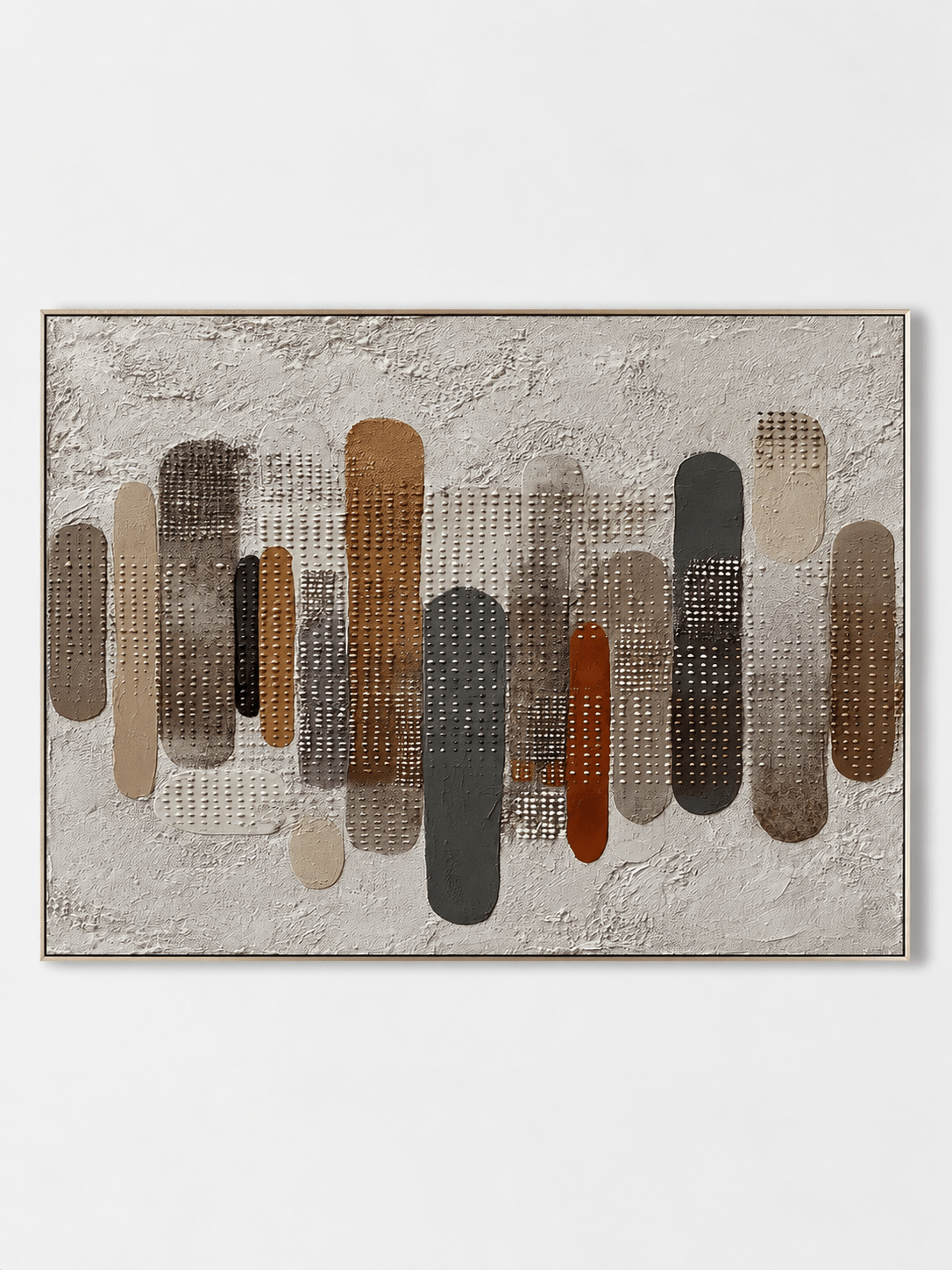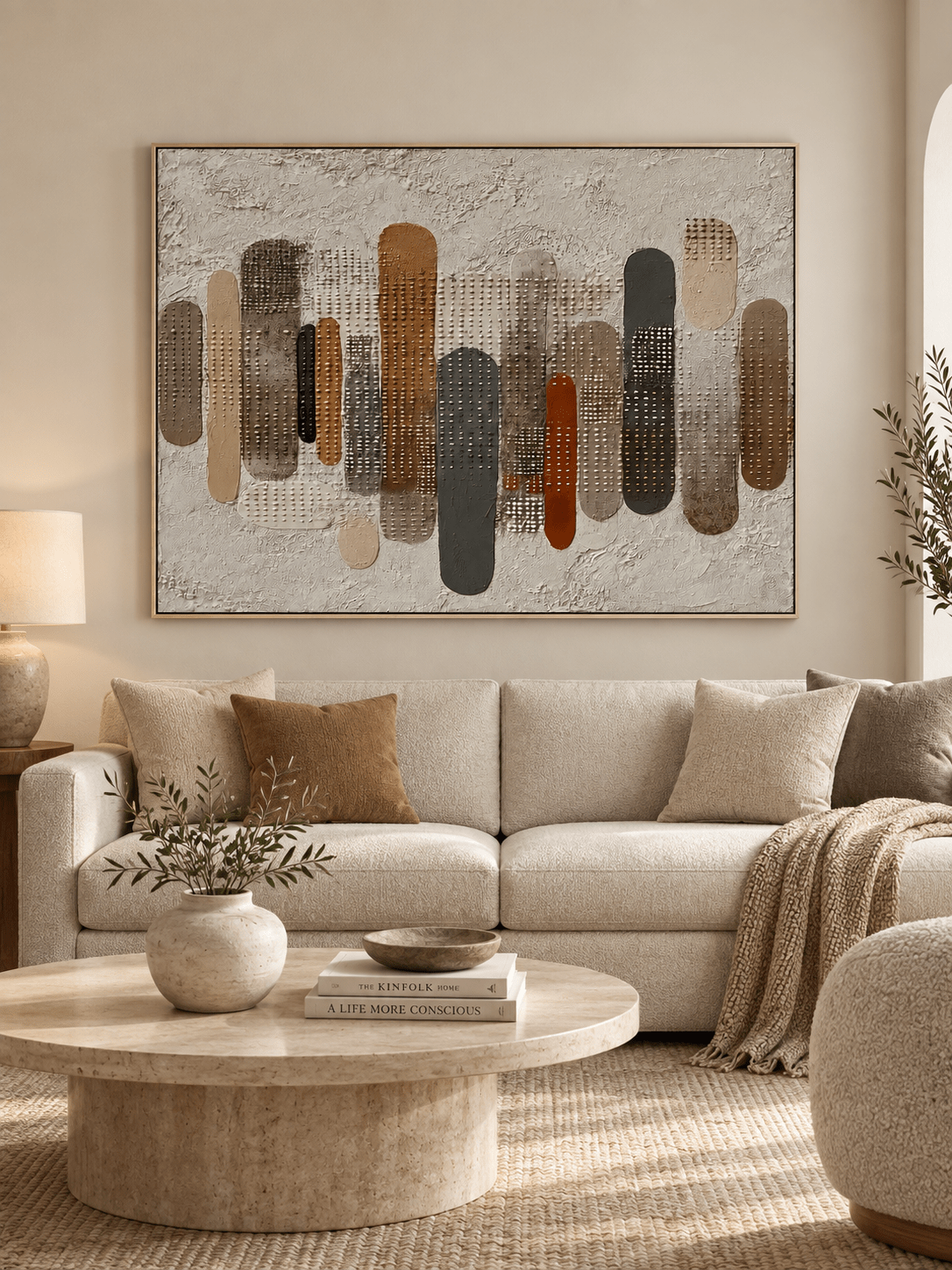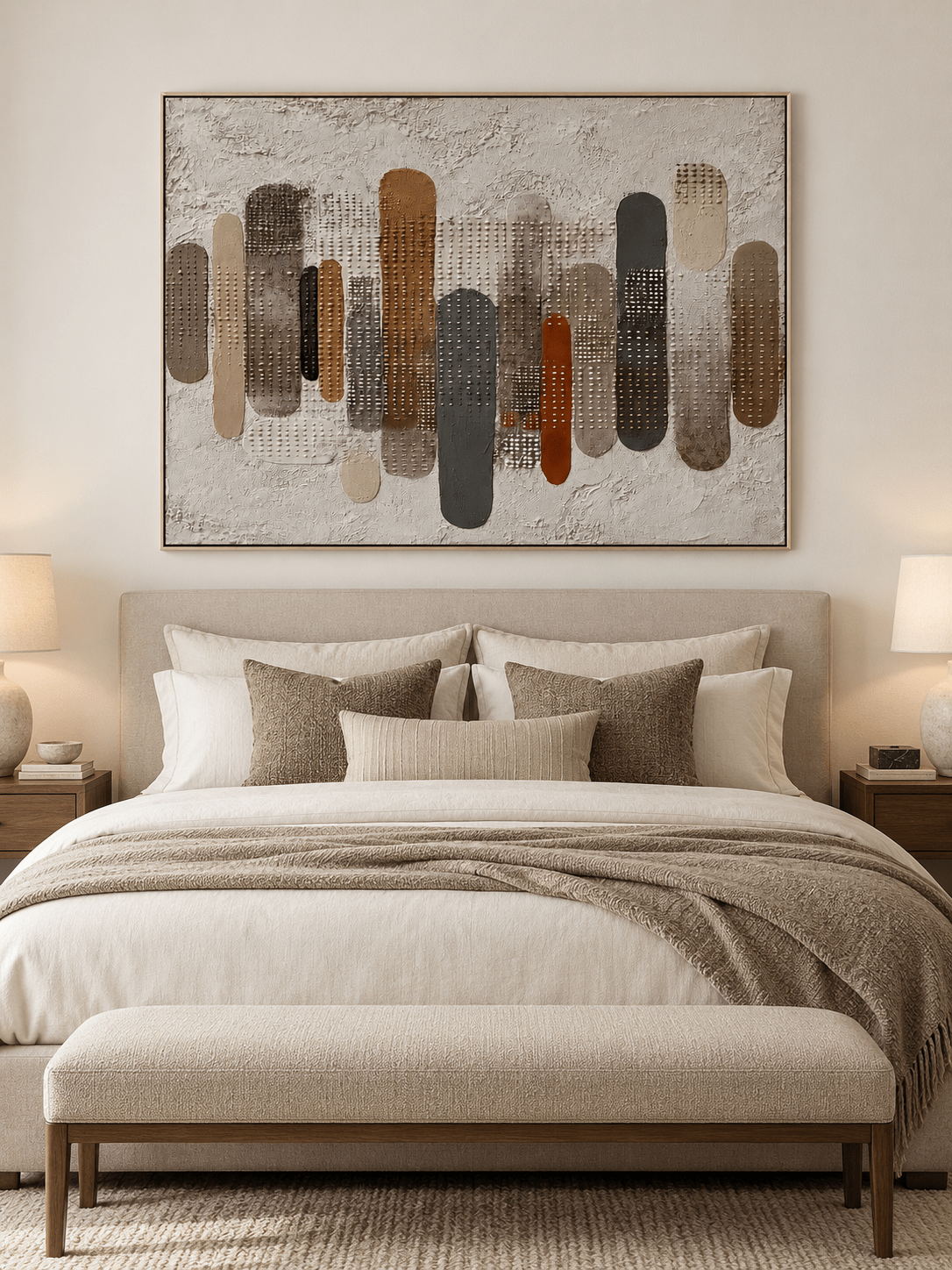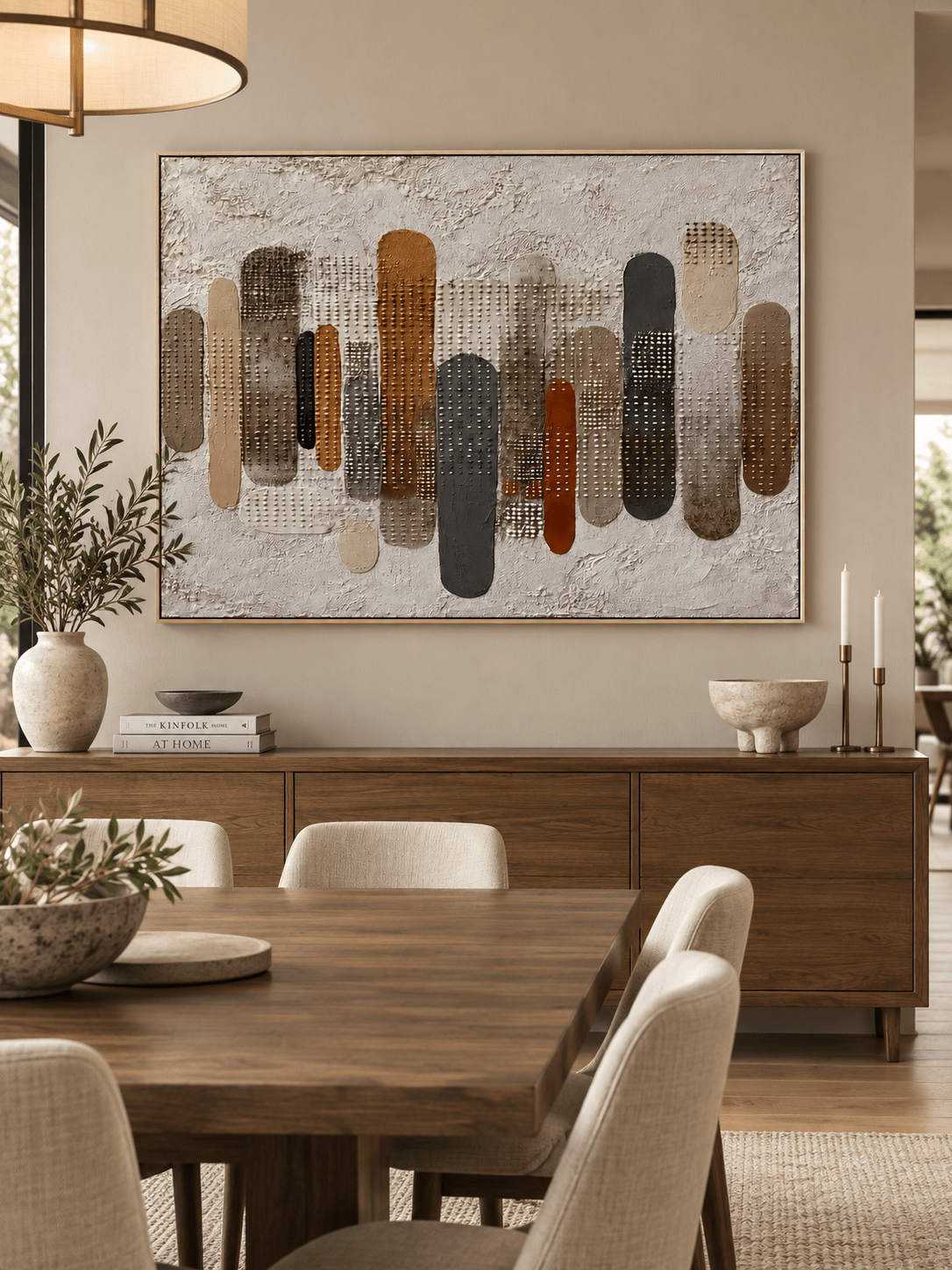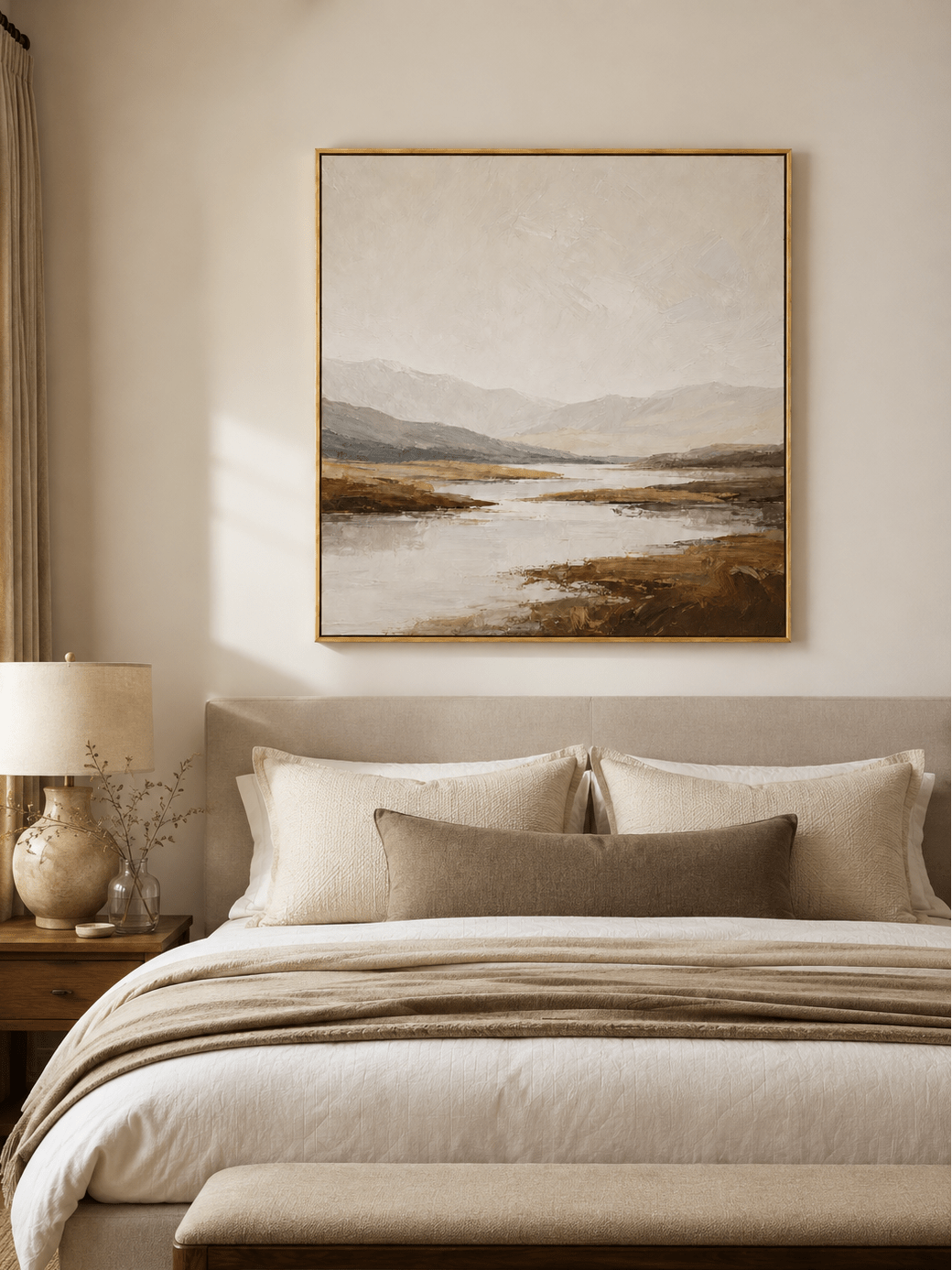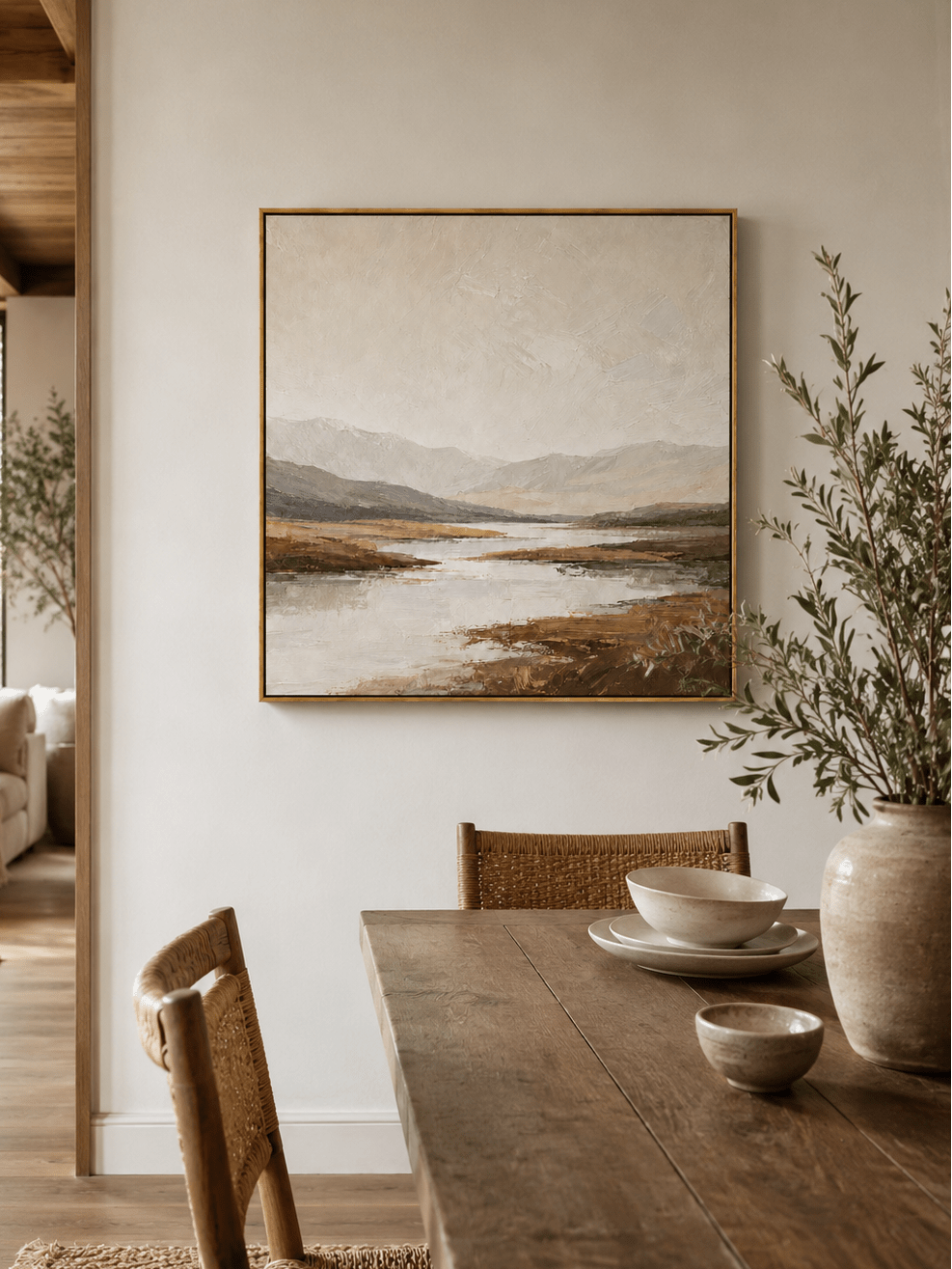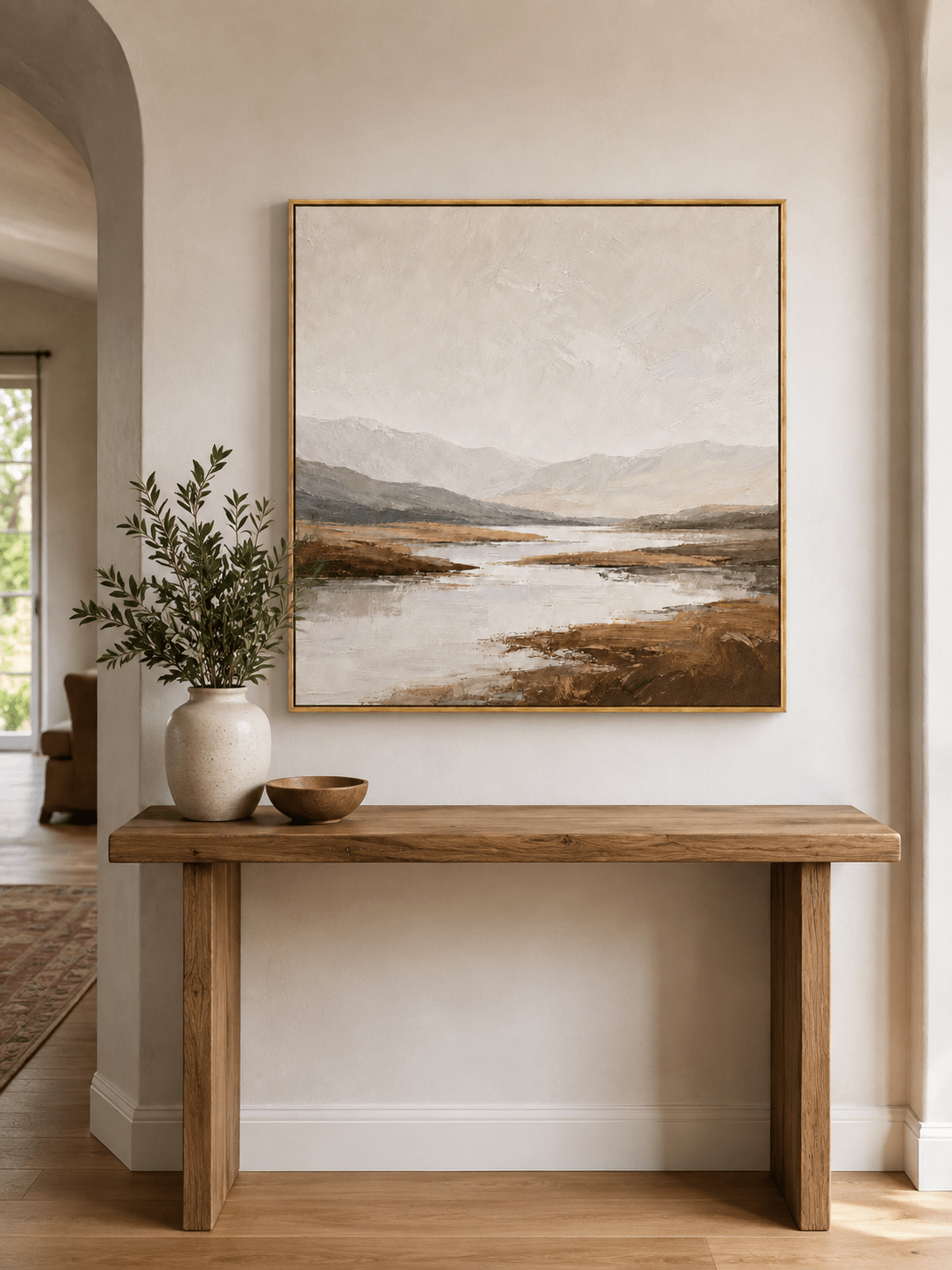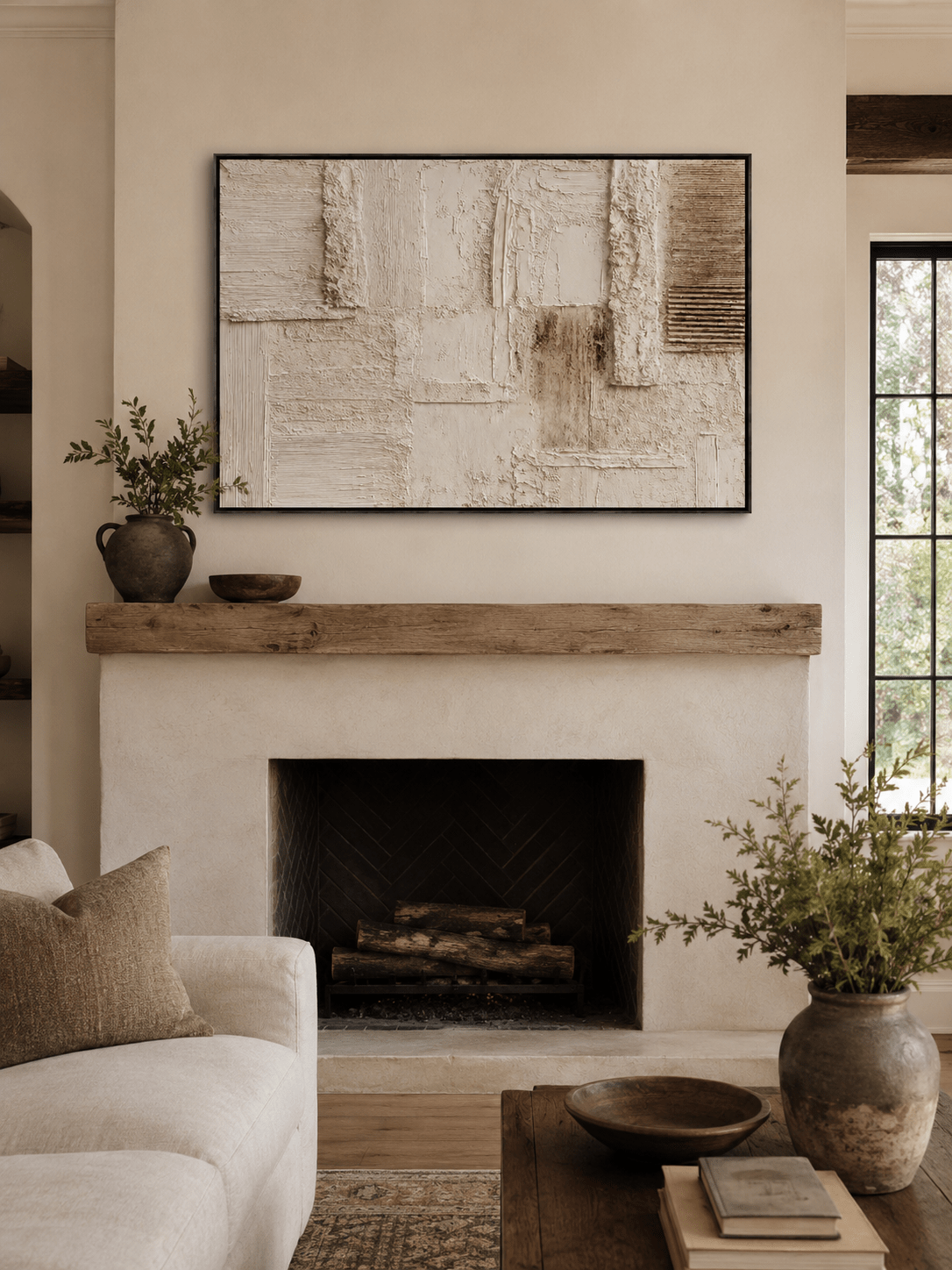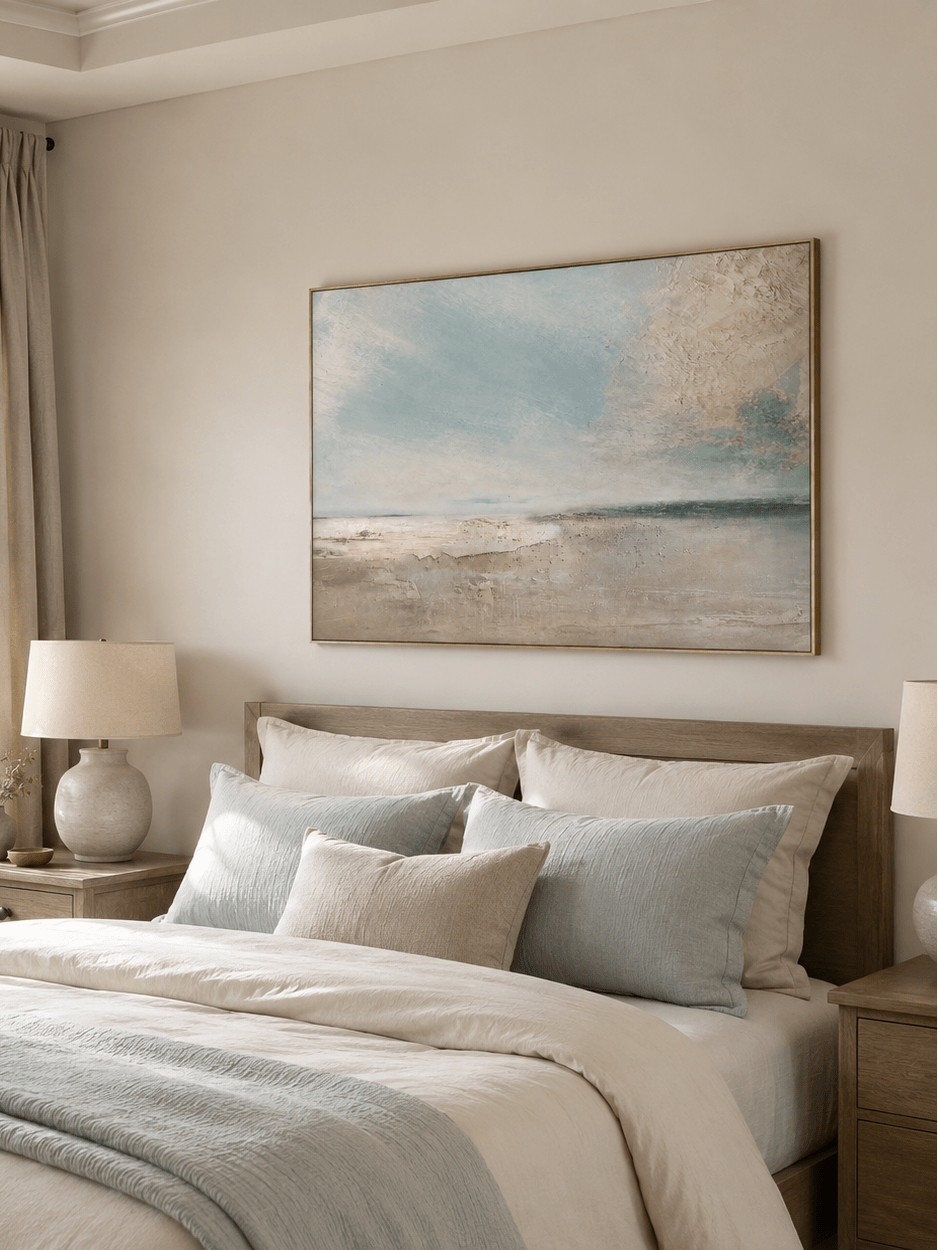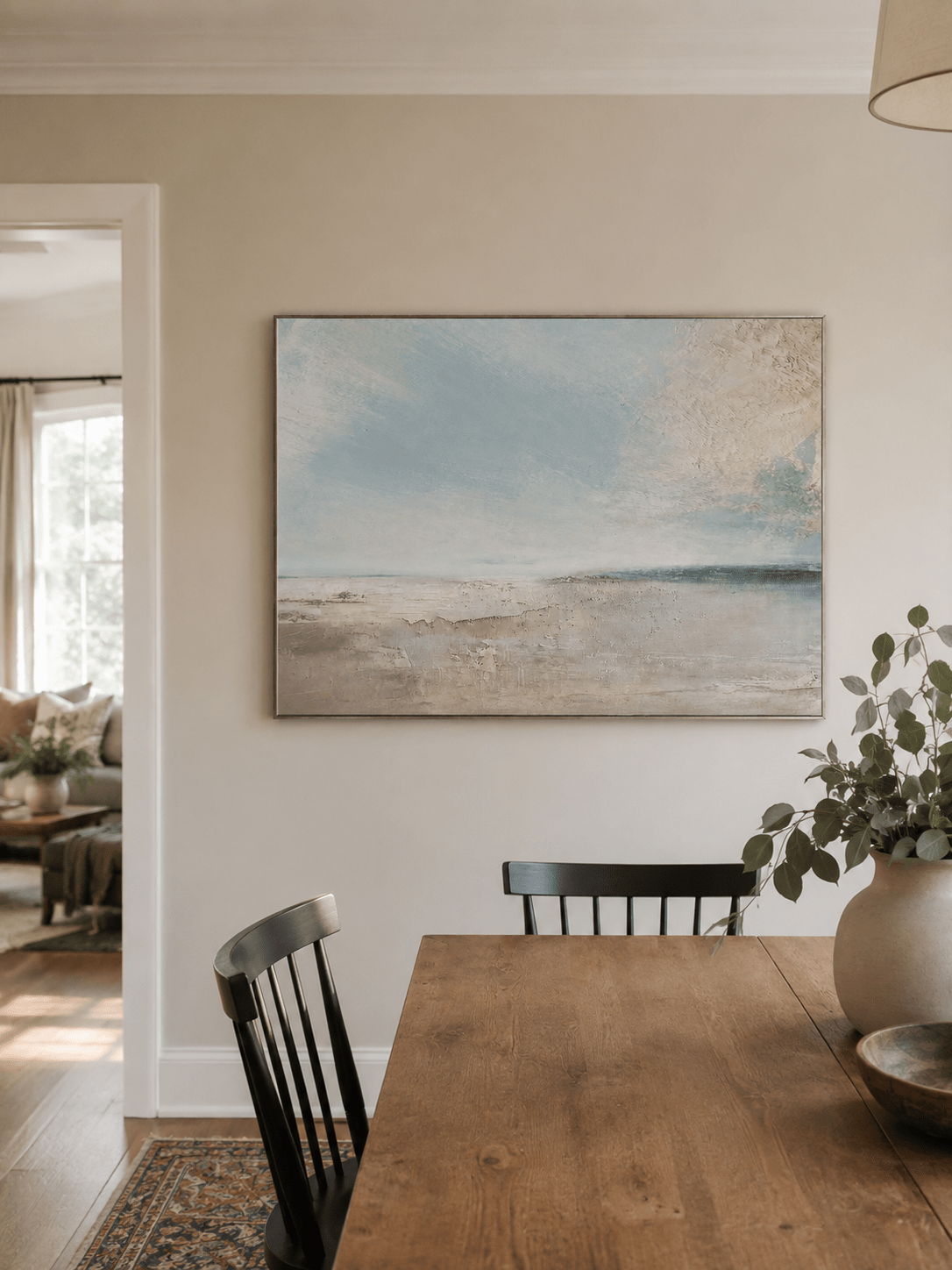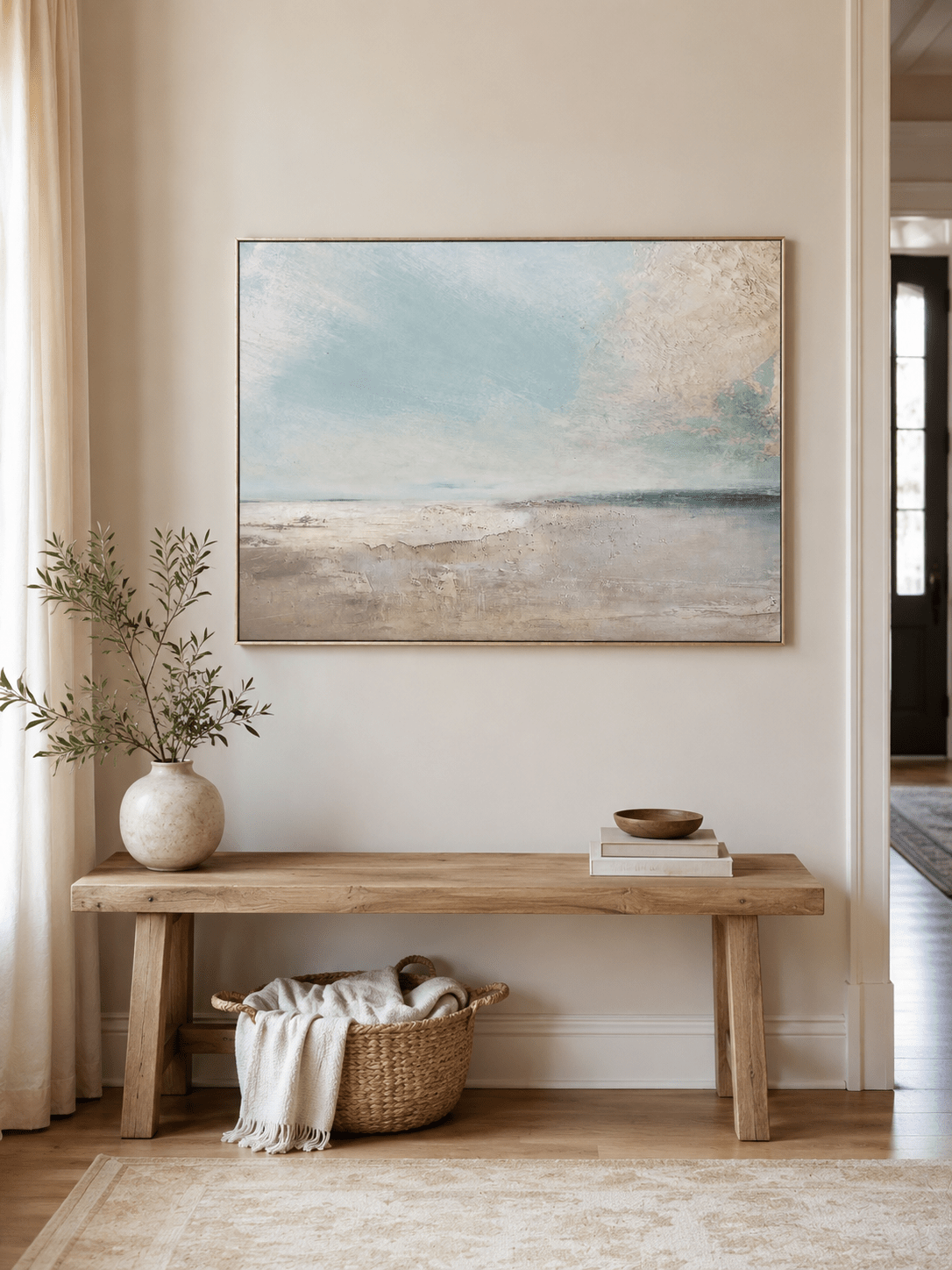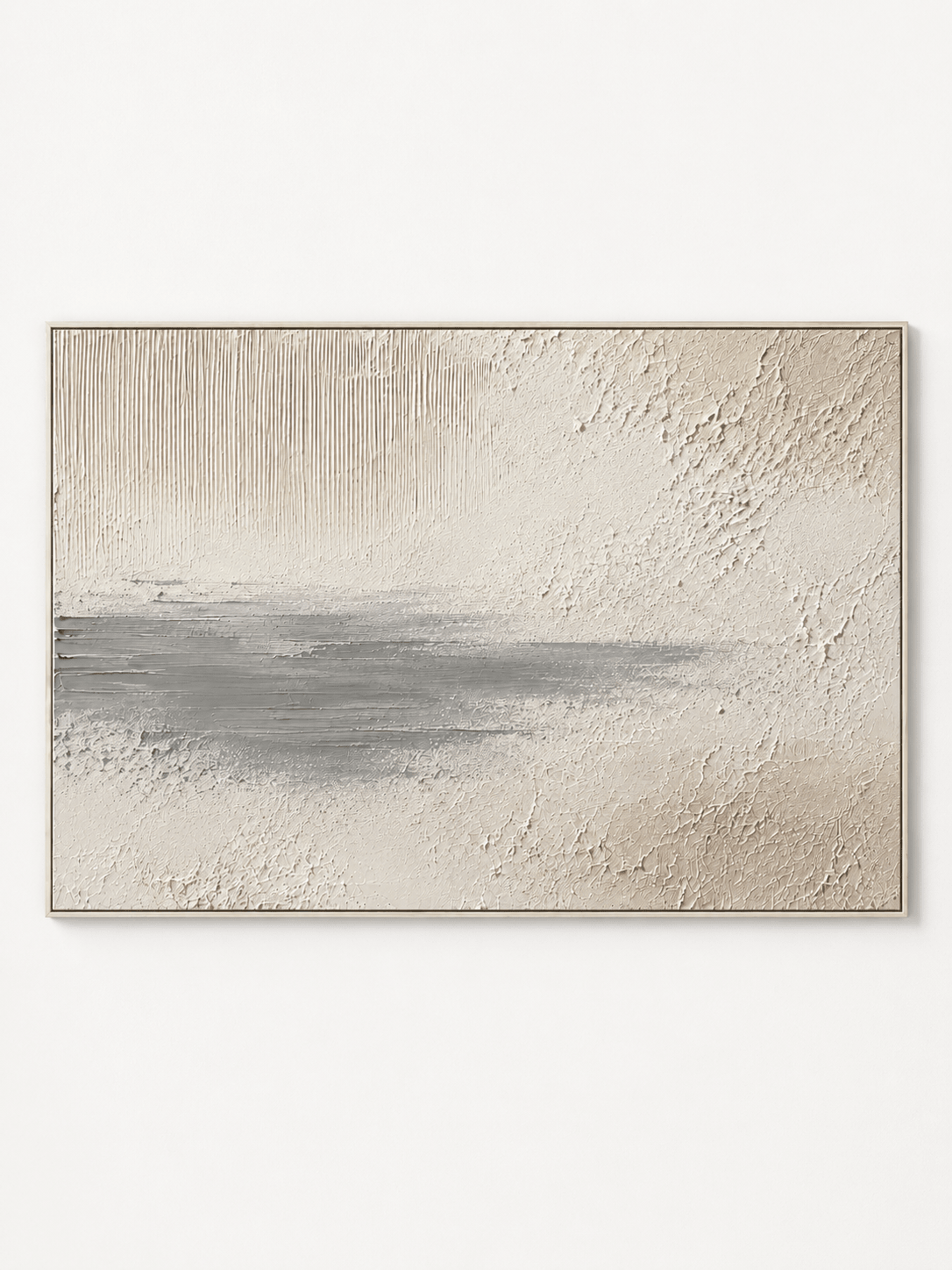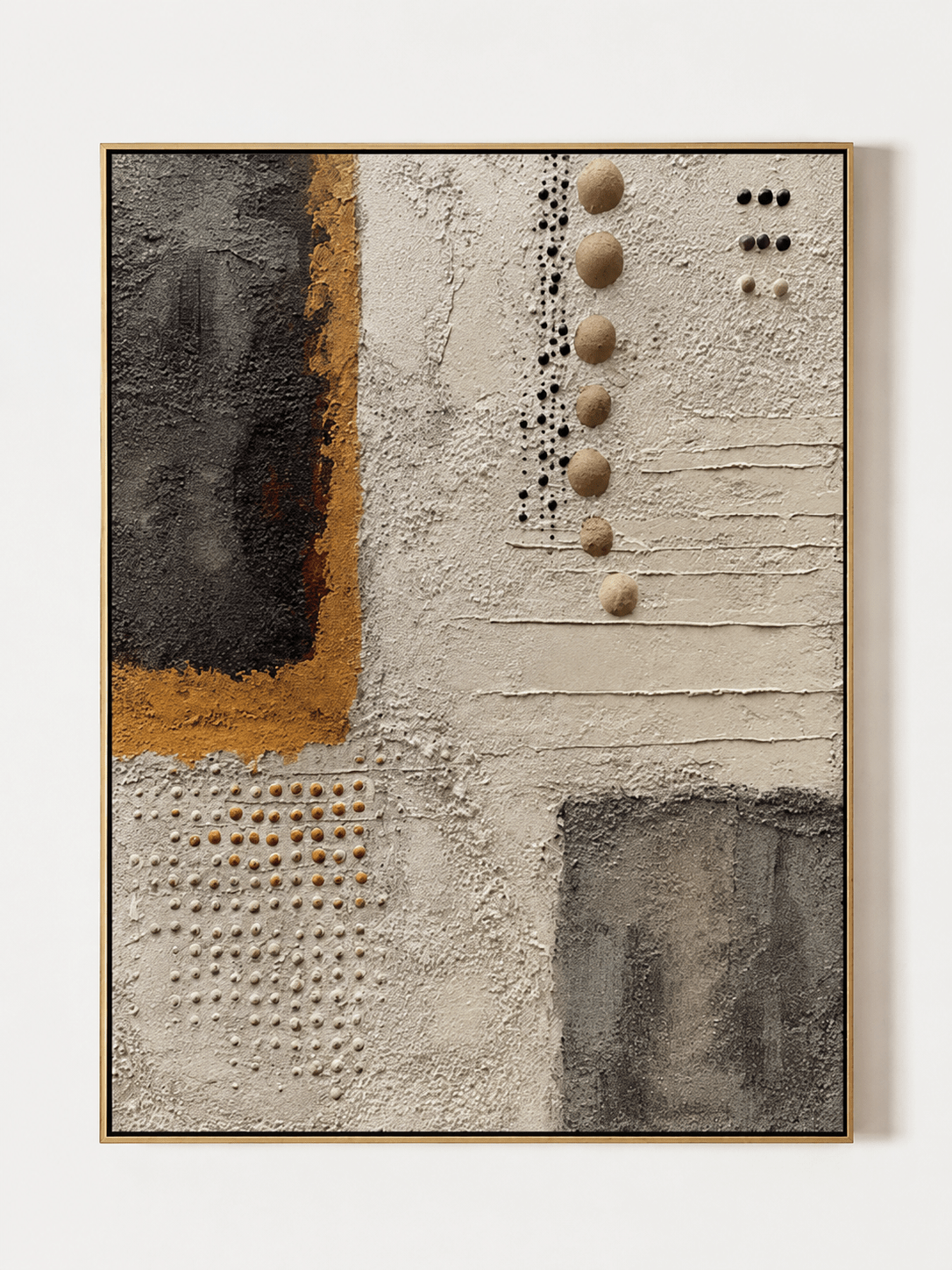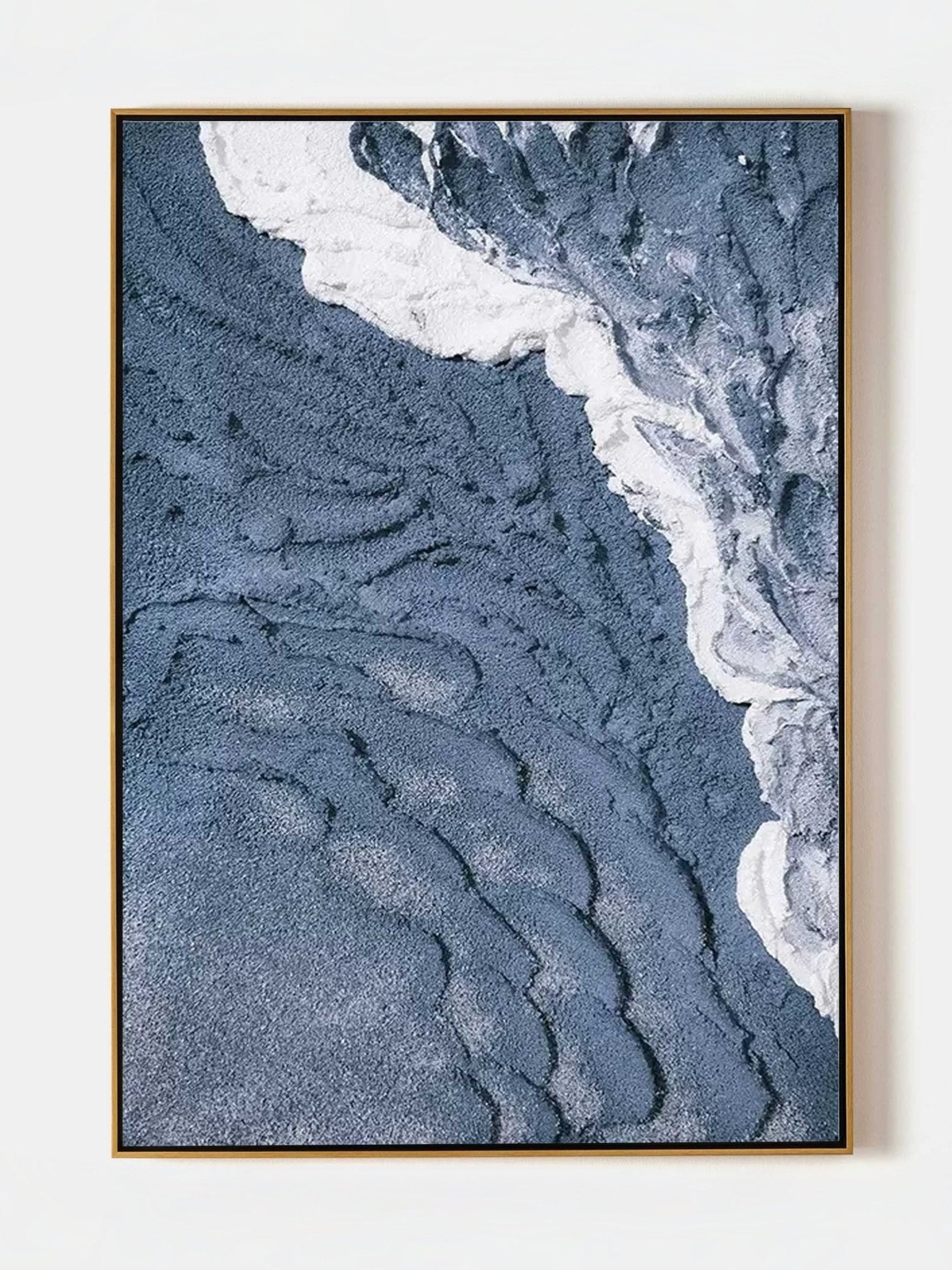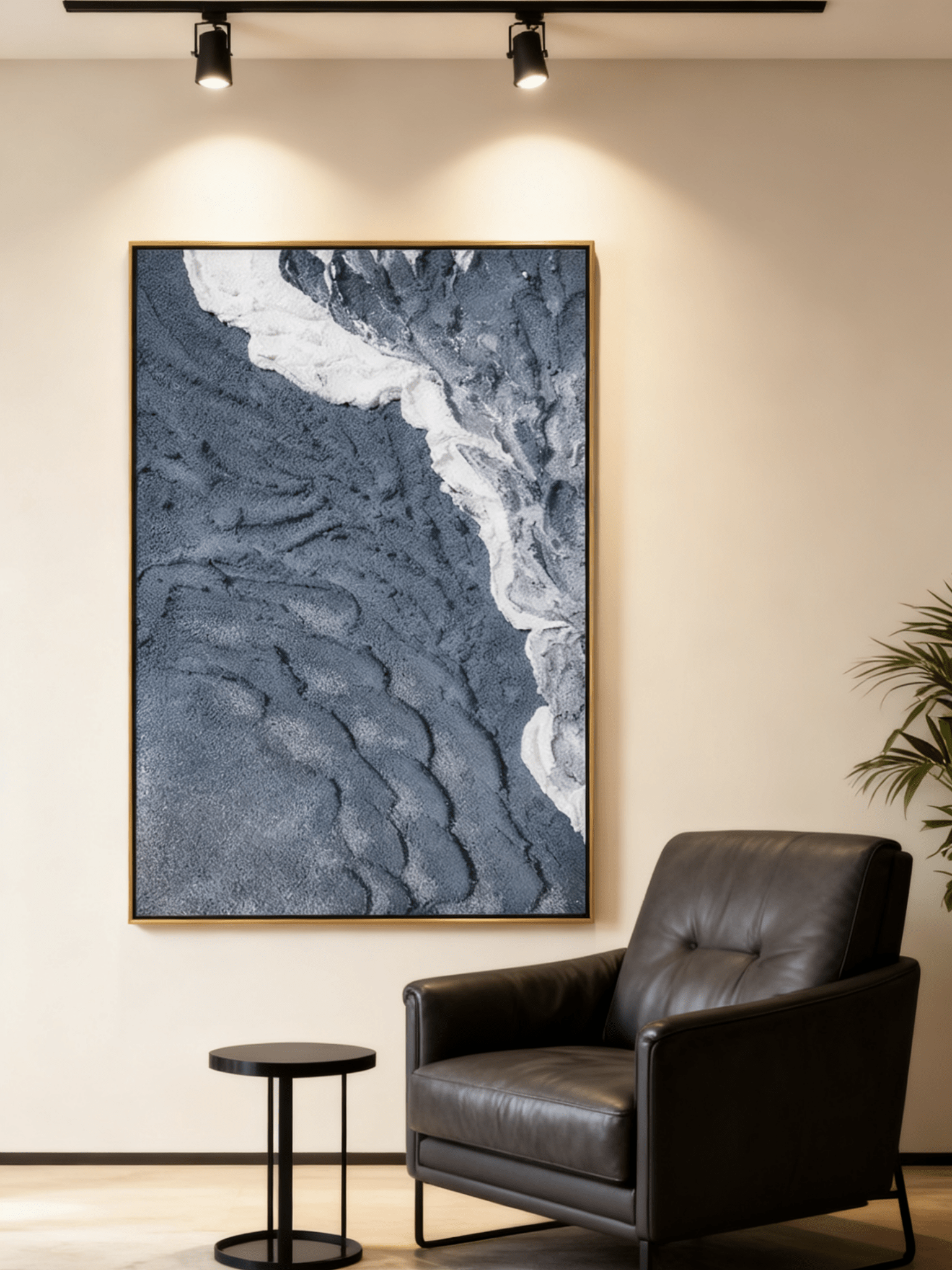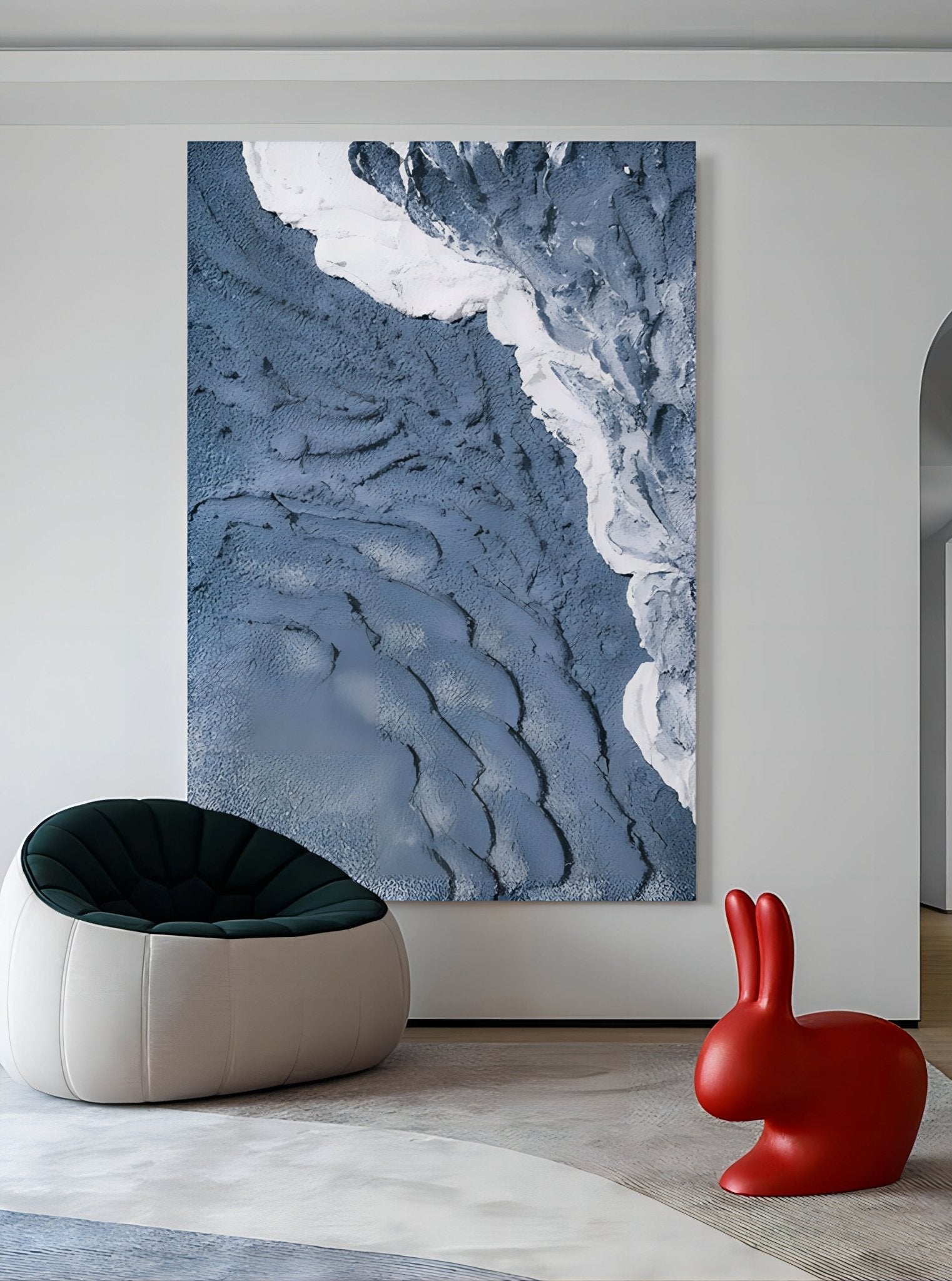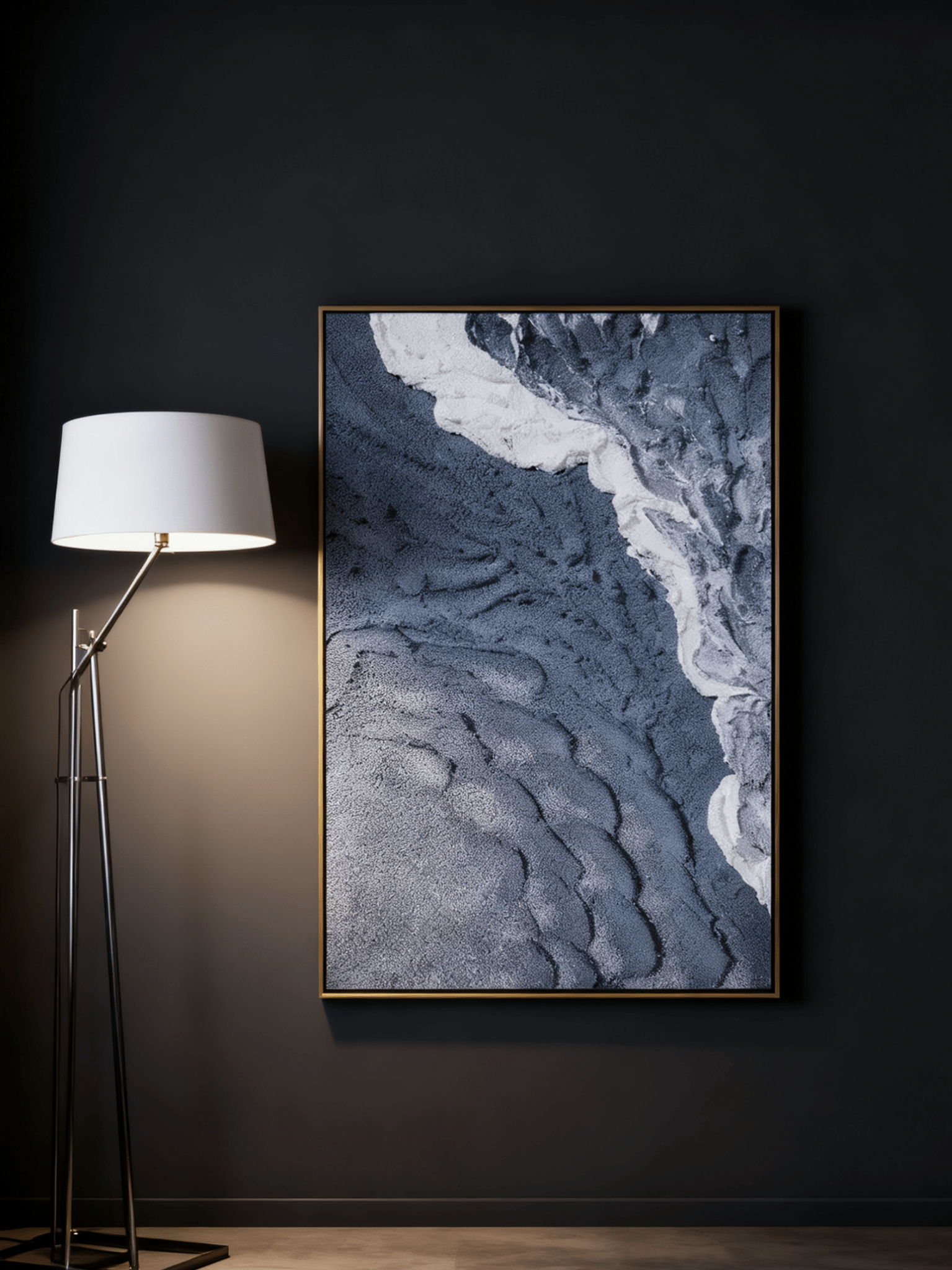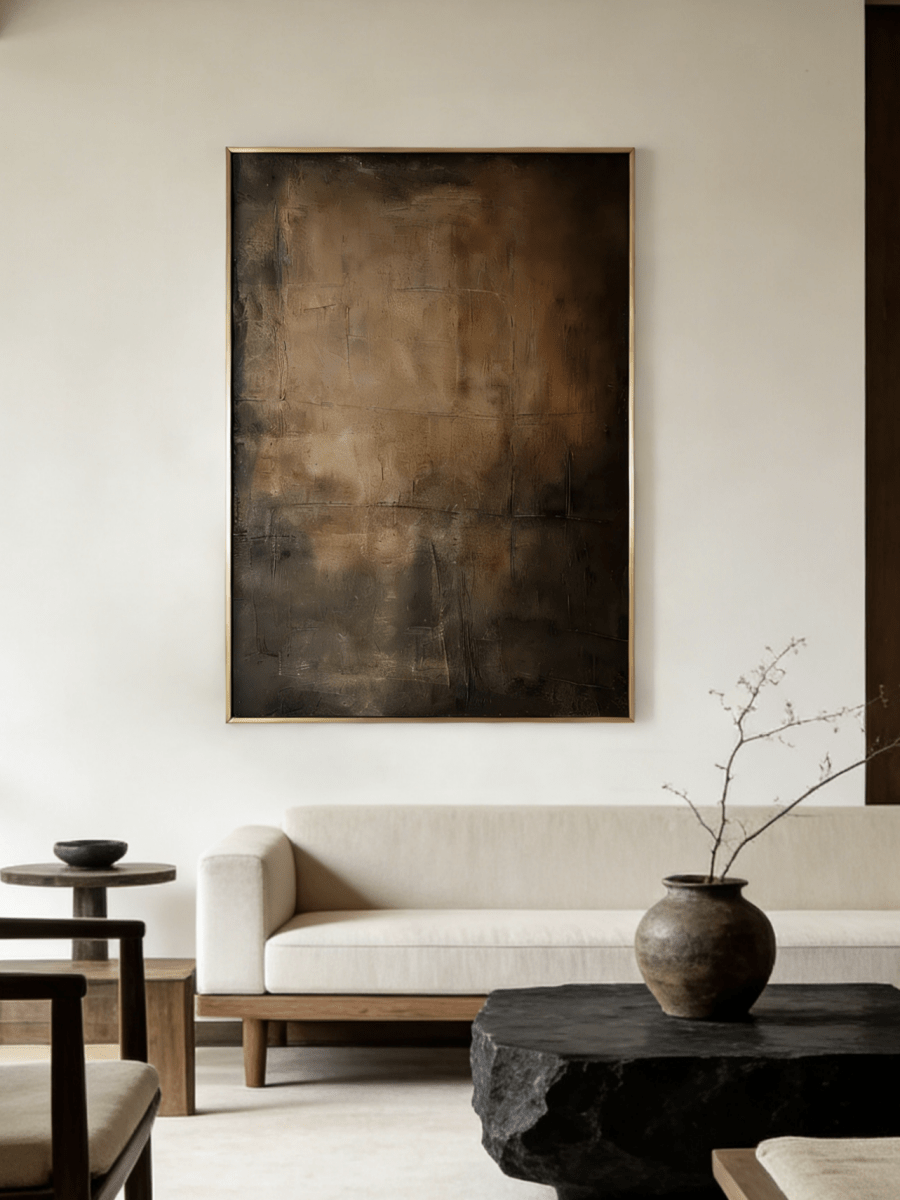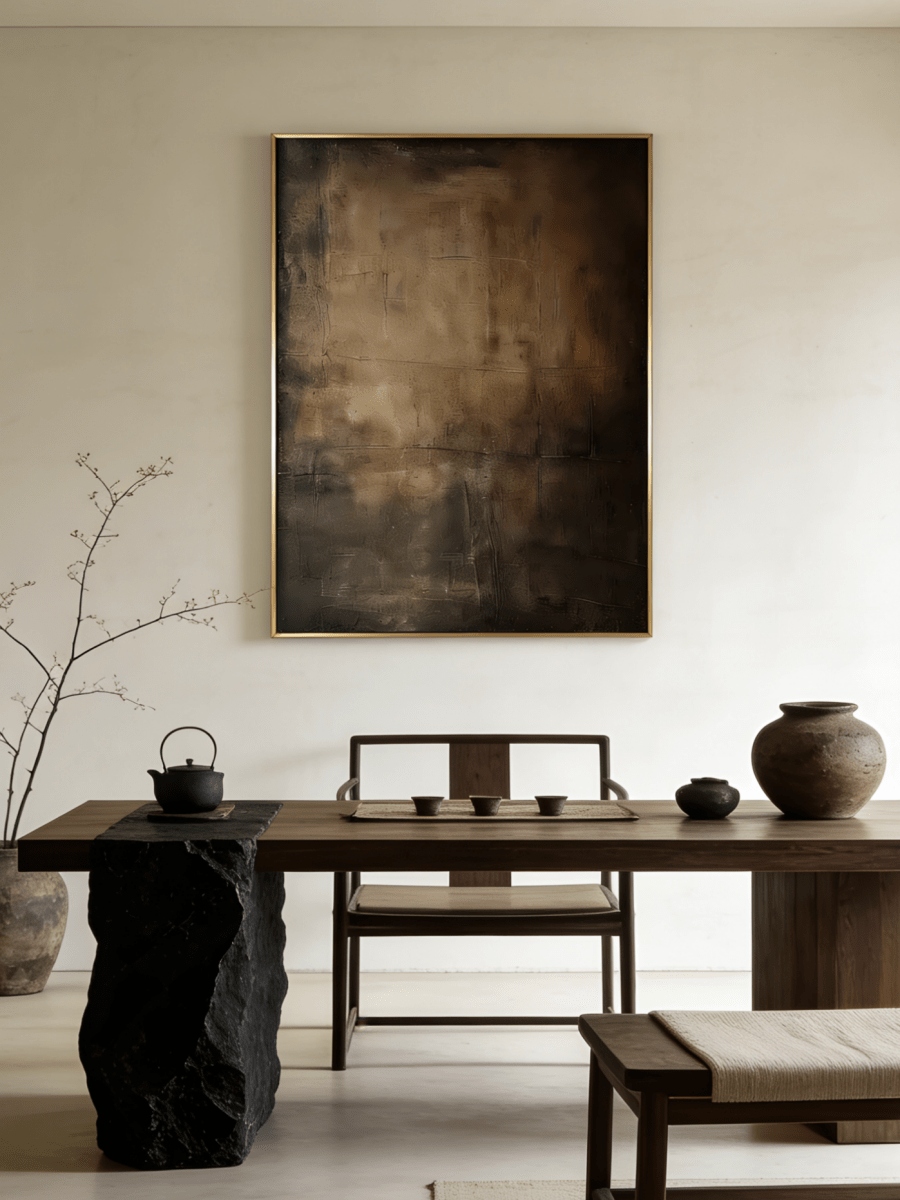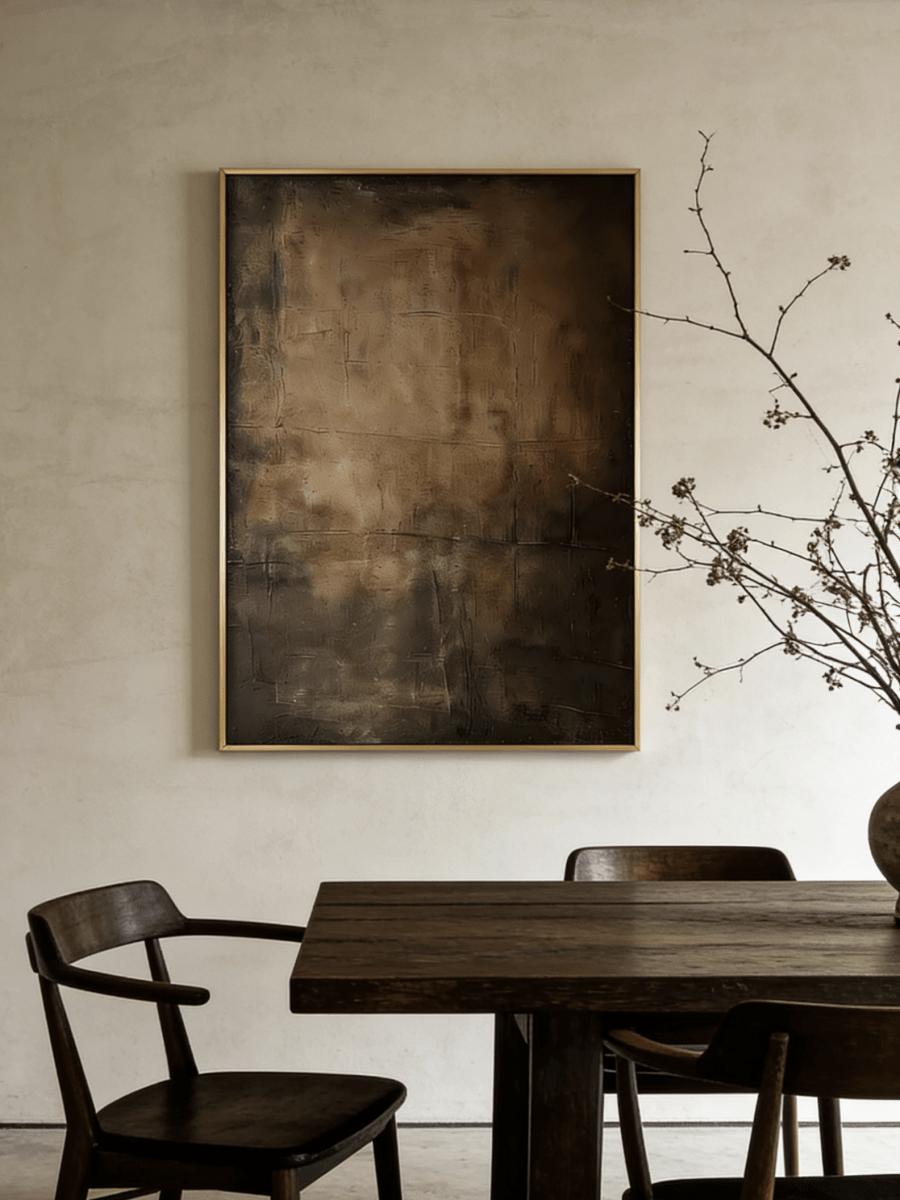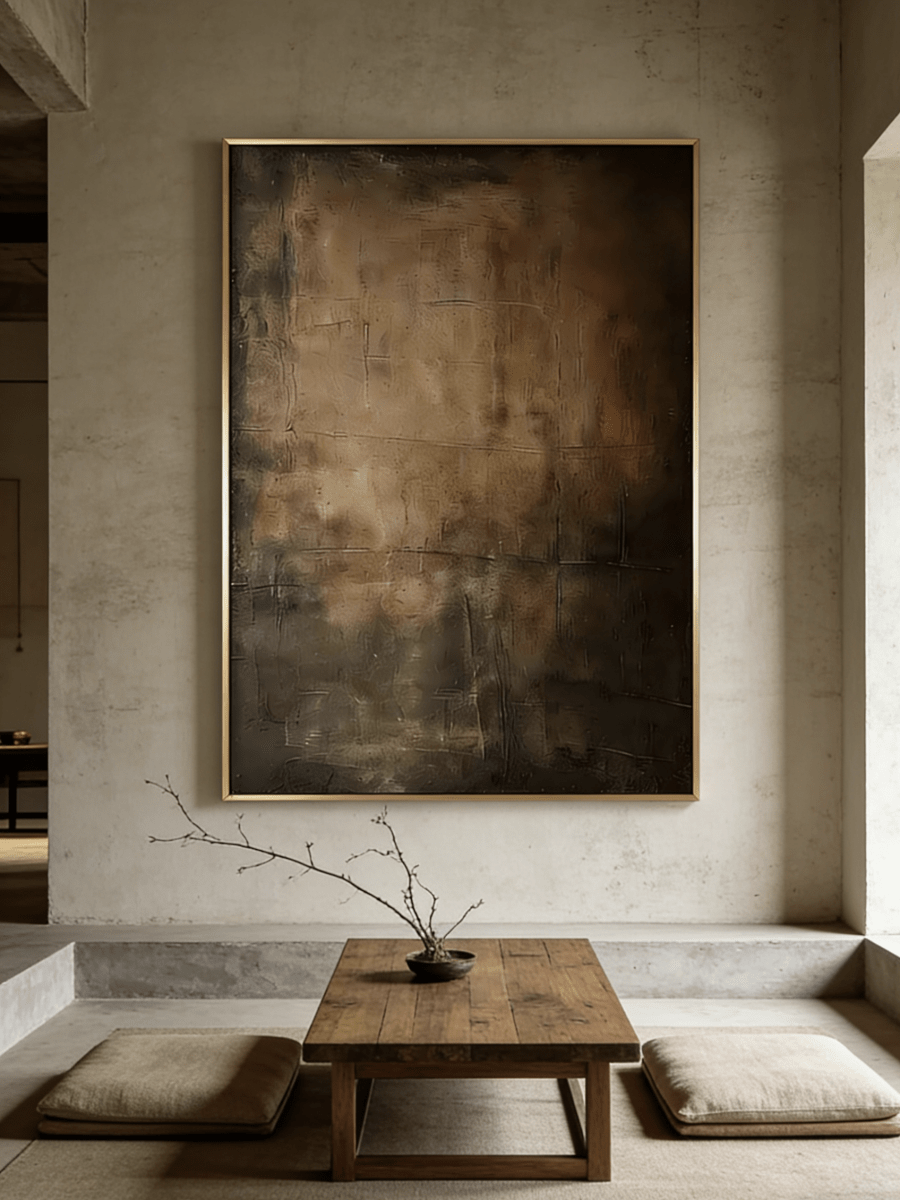

Rustic deer wall art can go wrong quickly if the room becomes too literal. Antlers everywhere, plaid everywhere, forest signs on every wall - the mood starts to feel more like a theme restaurant than a home. The better approach is quieter. Let one strong artwork bring the wilderness feeling, then build the room with wood, stone, leather, warm light, and restraint. That is where Rustic Wildlife Deer Silhouette Wall Art - AK#0018 works especially well.
This piece has the presence of wildlife art, but it is not a straightforward animal portrait. The deer appears through atmosphere, shadow, and heavy earth-toned texture. The silhouette feels half-seen, almost like a stag emerging from a forest at dusk. That makes the artwork useful for modern rustic, lodge, mountain cabin, farmhouse, library, and home office interiors that want nature, depth, and story without becoming overly decorative.
Why deer silhouette art feels more refined than literal wildlife decor
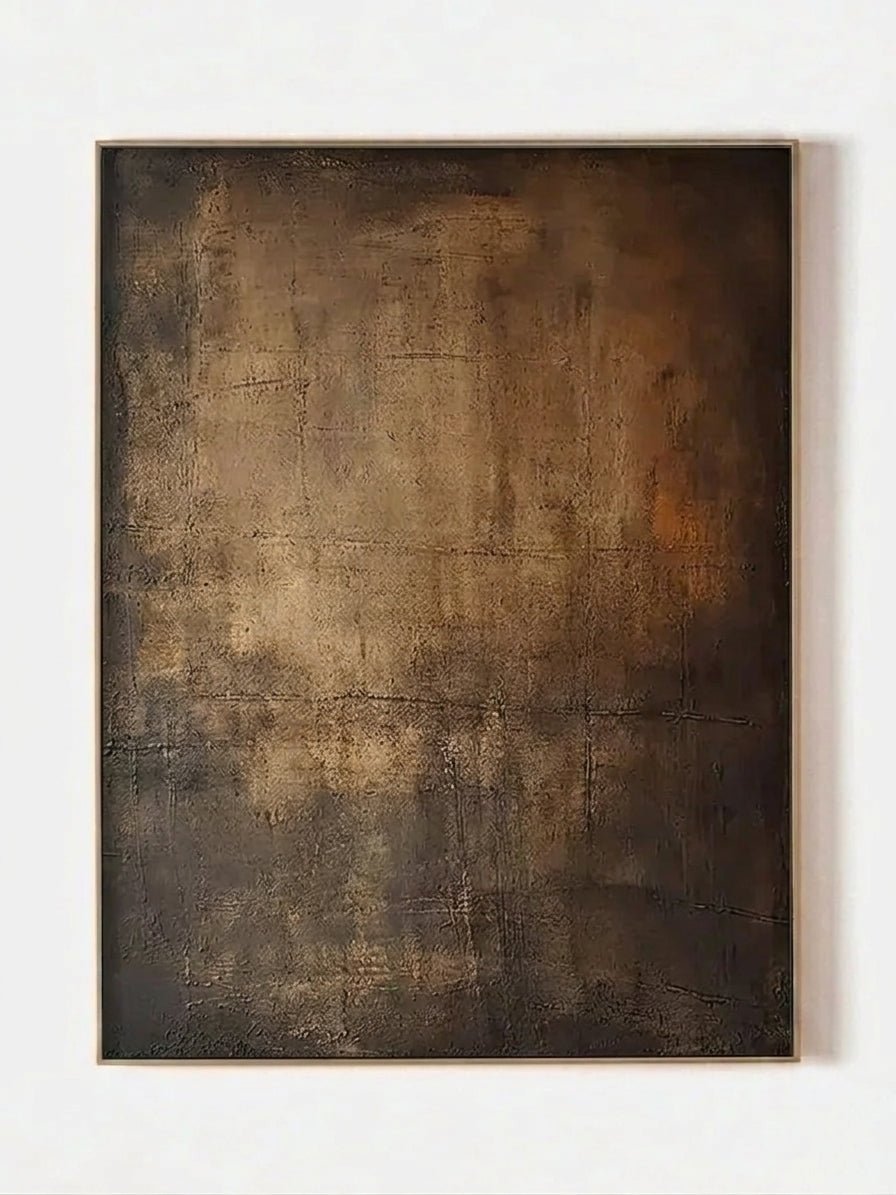
A silhouette leaves room for imagination. Instead of showing every detail of the animal, it gives the viewer a shape, a mood, and a sense of distance. In AK#0018, the stag is not placed on a clean white background or painted in sharp illustration style. It is surrounded by distressed texture, warm copper-brown washes, espresso-black shadows, and layered marks that feel weathered over time.
According to the product page, the artwork is hand-painted by Akari Kobayashi and inspired by untouched forests, wilderness, and the spirit of wildlife. The medium is listed as hand-painted acrylic on canvas, with a rustic contemporary, wildlife abstract, and textured modern style. That combination is important. It means the painting can live in a sophisticated room, not only a cabin or hunting lodge.
The deer symbolizes strength, freedom, and connection to the natural world, but the composition stays mysterious. The image is not fully revealed. You discover it slowly through mood and texture. That is what makes the piece easier to style in a modern home: it carries nature as atmosphere rather than as a literal theme.
Build the room around earth tones, not a hunting theme
The product page describes the color palette as deep brown, burnt umber, espresso black, warm copper, and earth tones. Those colors are already common in strong interiors: leather, walnut, oak, stone, aged metal, clay, bronze, wool, and dark ceramic. Use those materials to connect the room to the painting instead of repeating deer motifs around it.
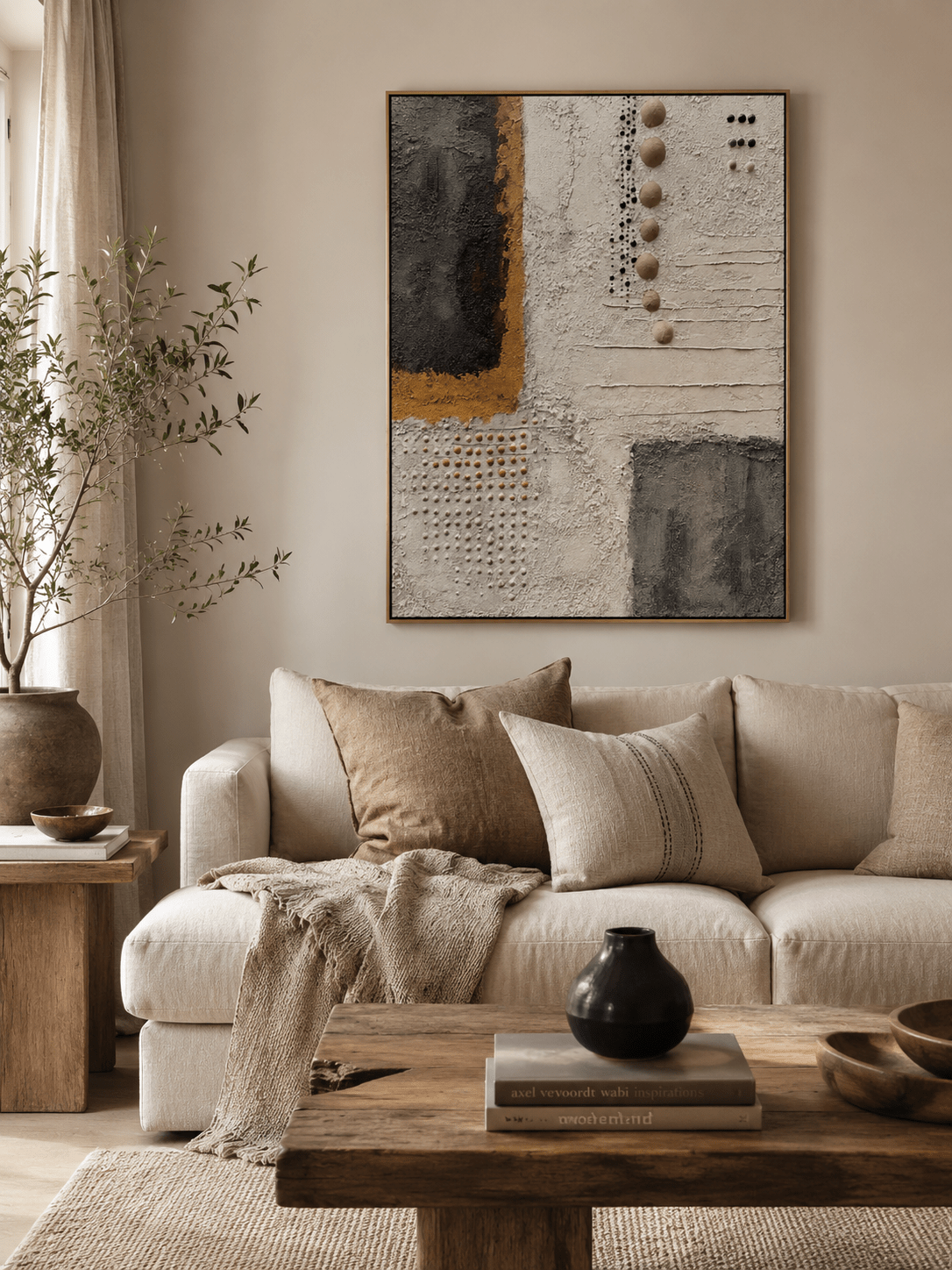
In a living room, a dark leather sofa, reclaimed wood coffee table, stone fireplace, jute or wool rug, and one black ceramic vase can make the artwork feel grounded. In a study, walnut shelving, a brass task lamp, vintage books, and a dark chair can echo the painting's library-like mood. In an entryway, a wood sideboard and warm lamp can be enough.
The key is restraint. One deer artwork is powerful. Five deer references are a costume. Let AK#0018 be the main wilderness note, then support it with texture, warmth, and shadow.

Use dark contrast without making the room feel heavy
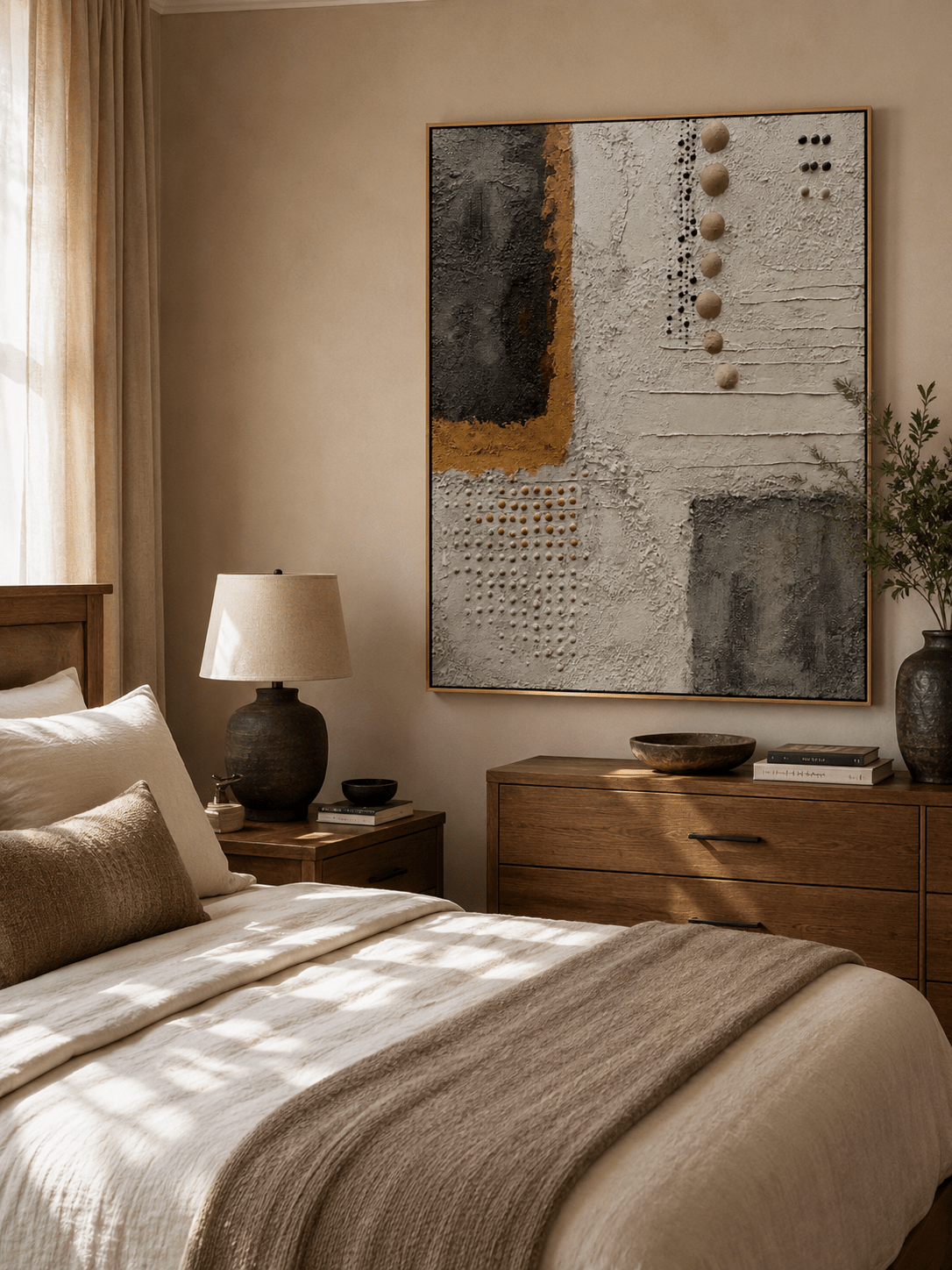
Because this artwork includes espresso black and deep brown, it can add real depth to a wall. That is one of its strengths. A pale room can feel more grounded when one vertical piece creates a darker center of gravity. But dark rustic art needs balance. If every surface around it is also dark, the room can become cave-like.
Give the painting a warm field around it. Taupe plaster, clay paint, greige, mushroom, soft beige, warm white, or natural wood walls can all work. If the wall is very dark, keep the furniture or rug lighter. If the sofa is black or deep brown, use a lighter table, stone hearth, or woven rug to keep the composition breathable.
If you want more ideas for styling darker artwork without making a space gloomy, our guide to styling black and bronze wall art is a helpful companion. AK#0018 is more wildlife-focused and rustic, but the same principle applies: darkness should feel like depth, not heaviness.
Where rustic deer wall art works best
AK#0018 is a vertical artwork, which makes it useful for walls that need height. The product page lists vertical sizes from 18 x 24 inches up to 60 x 80 inches, so it can work as a smaller accent or a large statement piece depending on the wall.
Living room or fireplace wall
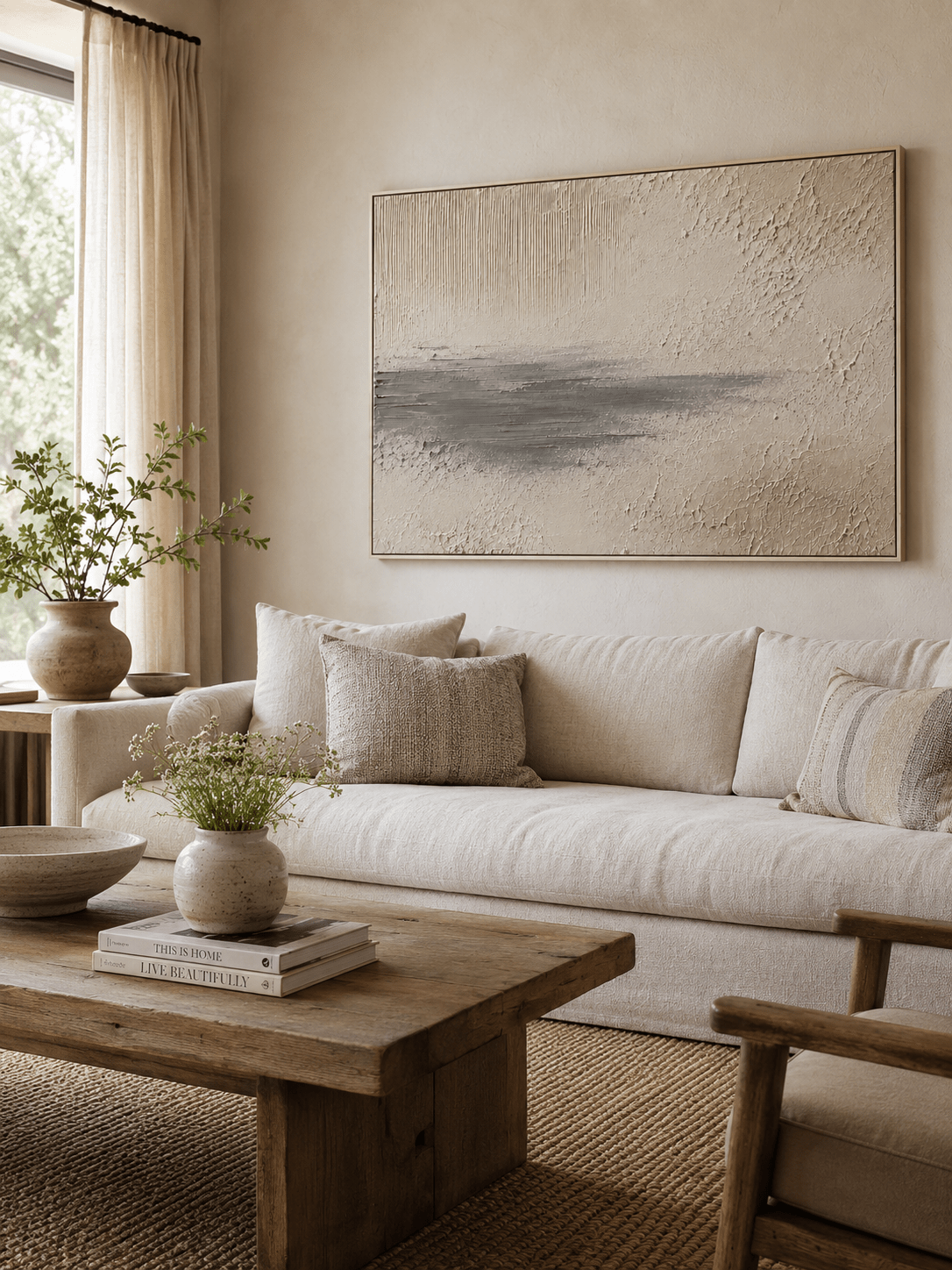
A living room is the most natural place for rustic deer wall art, especially if the room already includes leather, wood, stone, wool, or warm lighting. Hang it above a sofa, fireplace, or console. A stone fireplace is a particularly strong pairing because the painting's distressed texture and forest mood echo the weight of natural stone.
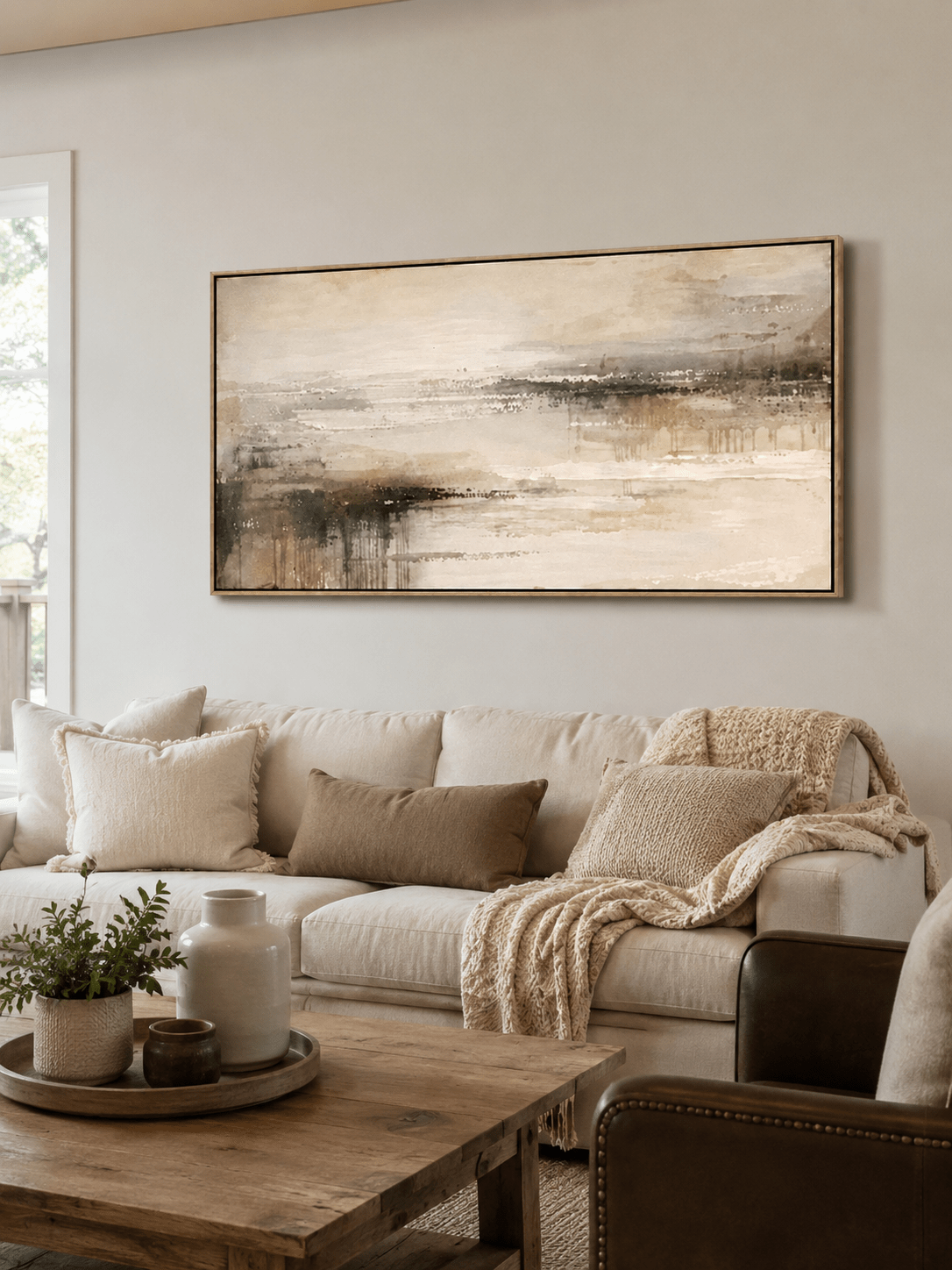
Keep the surrounding styling grounded. A low wood coffee table, woven rug, black ceramic bowl, bronze lamp, and one branch arrangement can do more than a collection of themed accessories. If the artwork hangs above a sofa, make sure it is large enough to feel intentional. A tiny deer painting over a large leather sofa will look accidental. A larger vertical canvas creates a stronger architectural moment.
Home office or study
The deer silhouette has a quiet, focused energy that works beautifully in a home office, library, or study. Place it above a walnut desk, behind a leather chair, or over a credenza. The darker tones make the room feel serious, while the warm copper and brown keep it from feeling cold.
This is also where the symbolic side of the artwork becomes useful. Strength, freedom, and wilderness are good moods for a private workspace, especially when the room is meant to feel grounded and reflective rather than bright and busy.

Mountain cabin, lodge, or modern farmhouse entryway
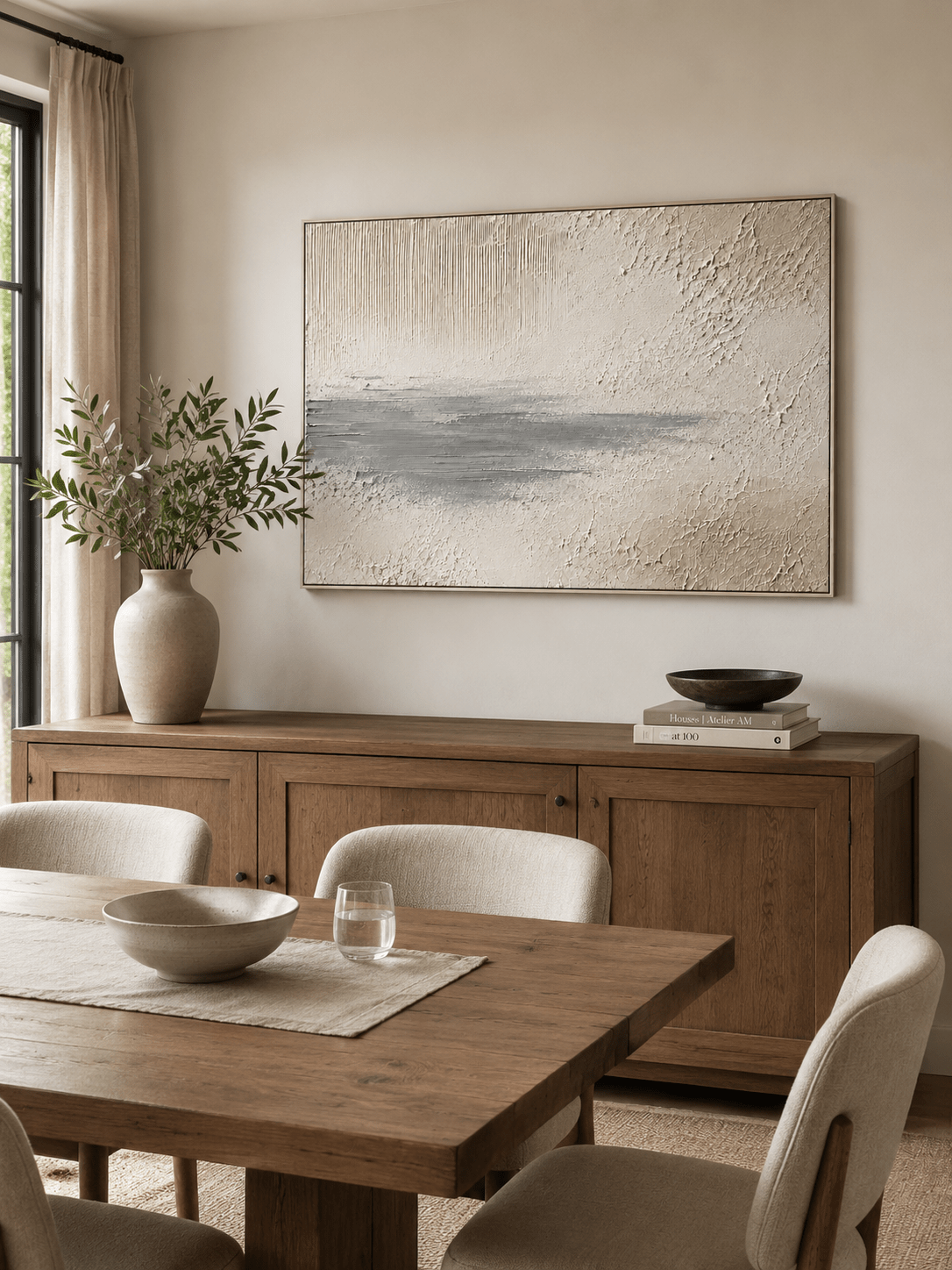
In a cabin or lodge interior, deer art can feel obvious, so the challenge is keeping it elevated. AK#0018 helps because it is abstract and textured rather than illustrative. Hang it above a reclaimed wood sideboard, near a stone floor, or on a warm plaster wall. Let the room feel natural, but not crowded.
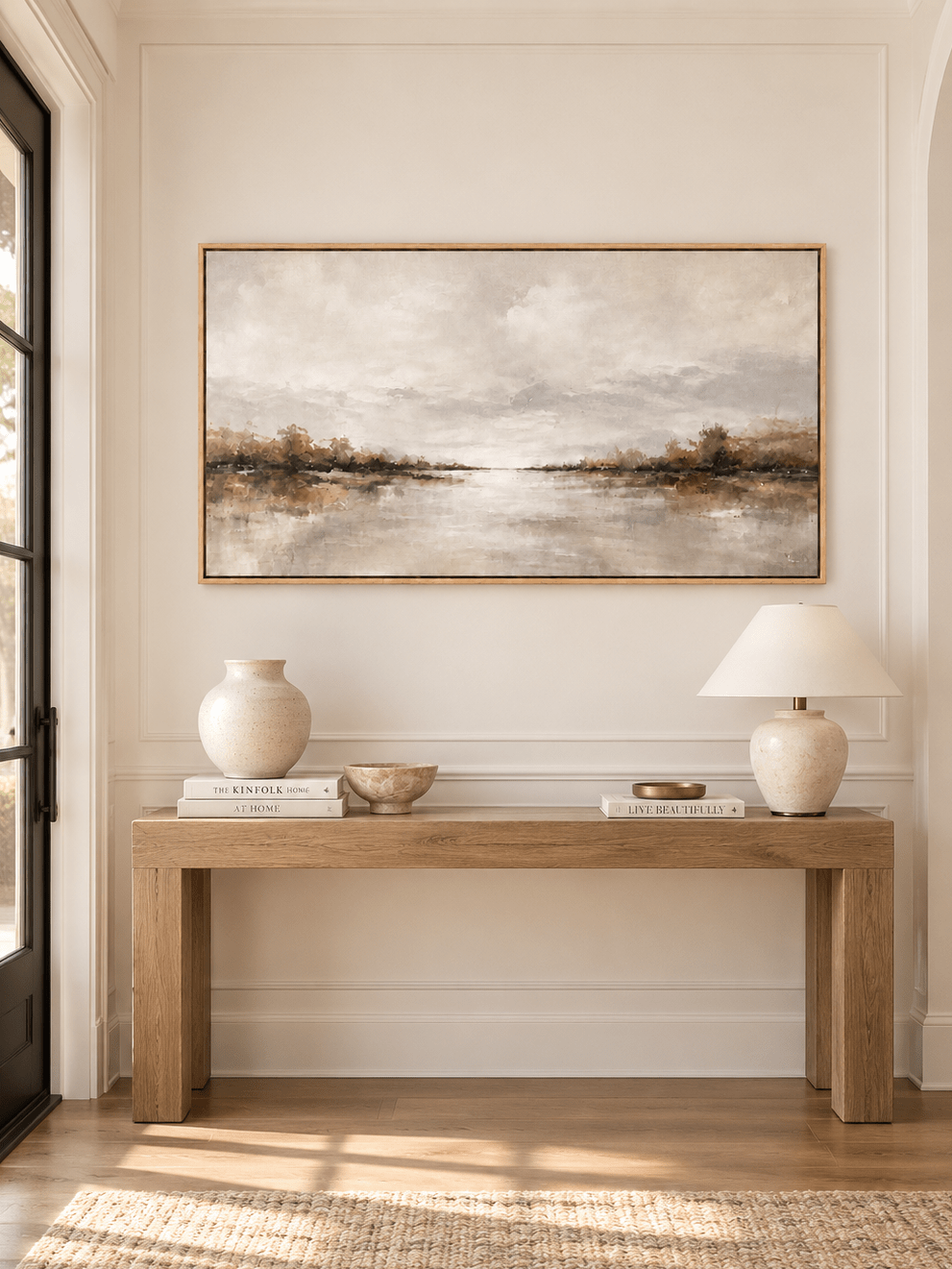
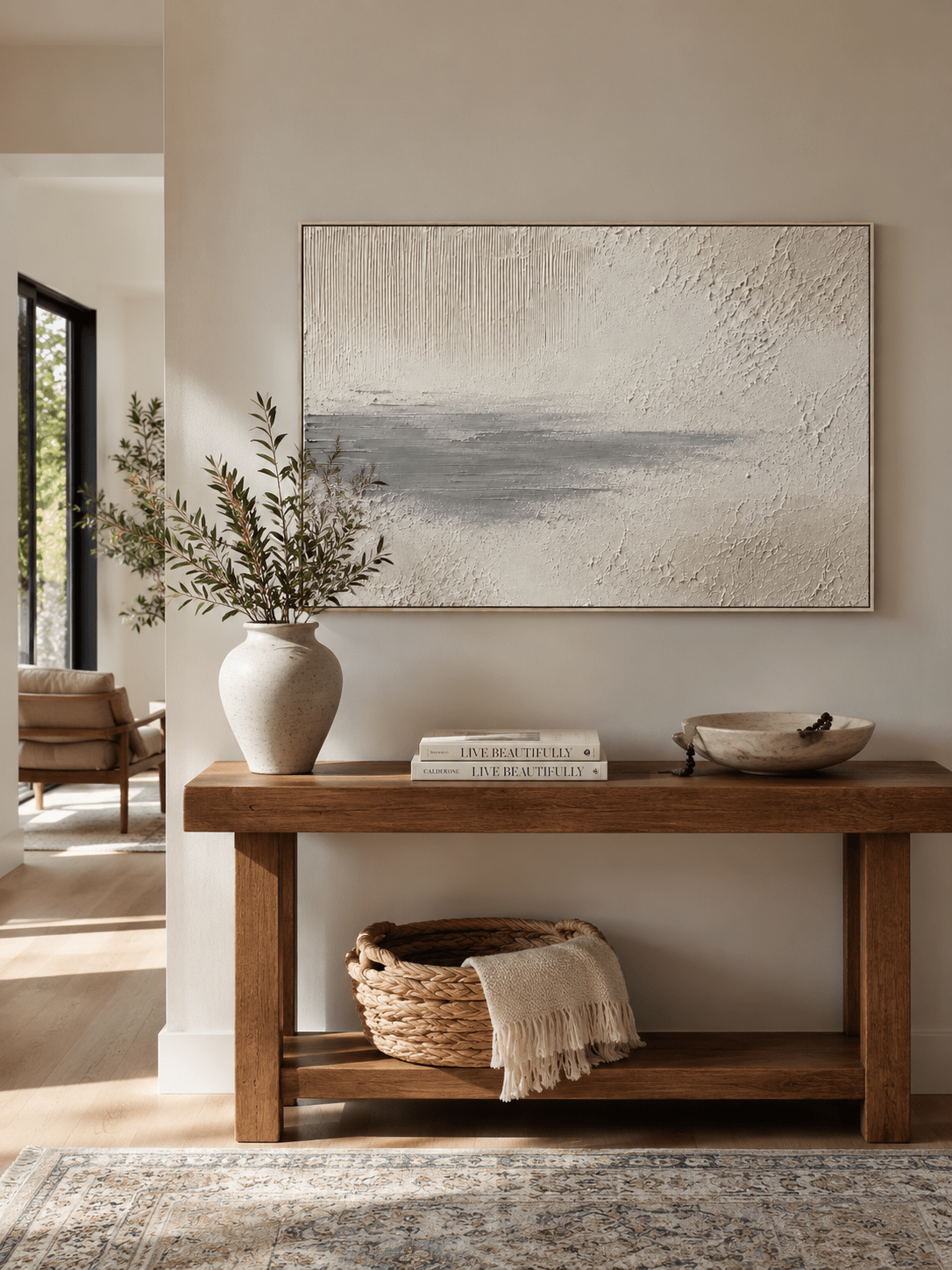
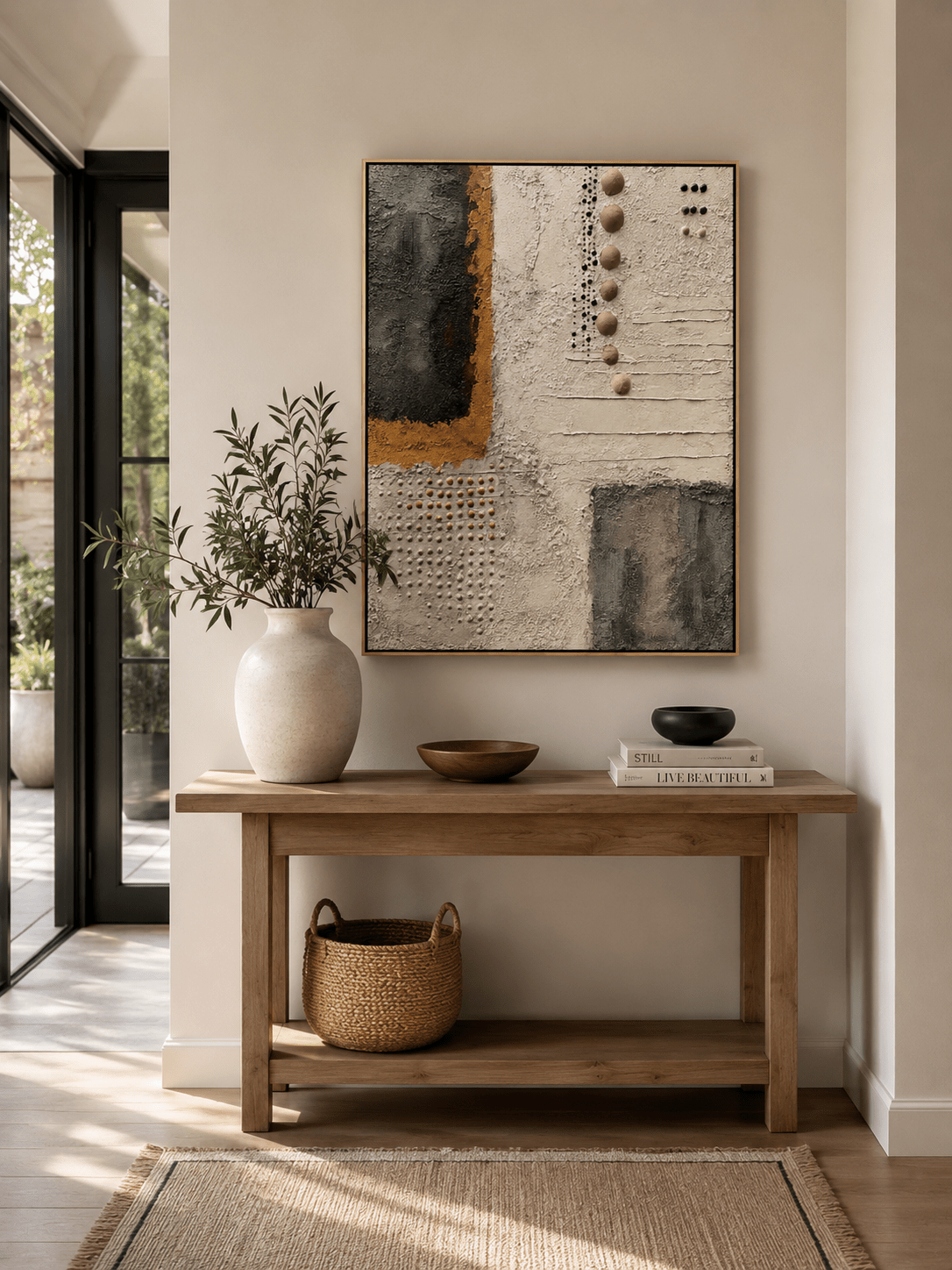
In a modern farmhouse entryway, pair it with oak, black metal, linen, clay, and a warm lamp. Avoid overloading the area with signs, faux-rustic props, or too many animal references. The painting should create arrival and mood, not a themed vignette.
Pair it with materials that feel real
Rustic wildlife art is most convincing when the materials around it are honest. Think visible grain, matte surfaces, mineral texture, worn leather, natural fibers, and handmade ceramics. Good pairings include reclaimed wood, walnut, oak, stone, slate, travertine, leather, wool, linen, jute, iron, aged brass, copper, clay, and black ceramic.
These materials support the artwork because the painting itself has heavy layered texture and distressed vintage effects. It is not a slick, glossy wildlife print. It has visible brushwork and a one-of-a-kind hand-painted character. If you surround it with overly polished chrome, mirror, or high-gloss lacquer, the room may feel disconnected. If you place it near textured materials, the painting feels like part of the architecture.
For a deeper discussion of why surface matters, read our article on how textured art adds soul and dimension to your home. AK#0018 is a good example because the deer image and the distressed surface work together. The texture is not just decorative; it makes the wildlife mood feel aged, atmospheric, and tactile.
Light the painting like an evening forest
Lighting is especially important for dark rustic artwork. Too much flat overhead light can make the surface look dull. Too little light can make the deer silhouette disappear. The best approach is warm, angled light that grazes the painting and reveals the texture.
A picture light, wall sconce, nearby table lamp, or adjustable ceiling spot can work. Choose warm bulbs rather than cool white bulbs. Warm light brings out burnt umber, copper, and brown tones. It also makes the black areas feel rich instead of harsh.
If the painting is near a fireplace, let the firelight become part of the atmosphere. If it is in a study, place a brass lamp nearby so the artwork has a soft side glow. If it is in an entryway, a warm lamp on the console below can make the deer silhouette feel mysterious and inviting.

Choose frame and canvas options based on the room
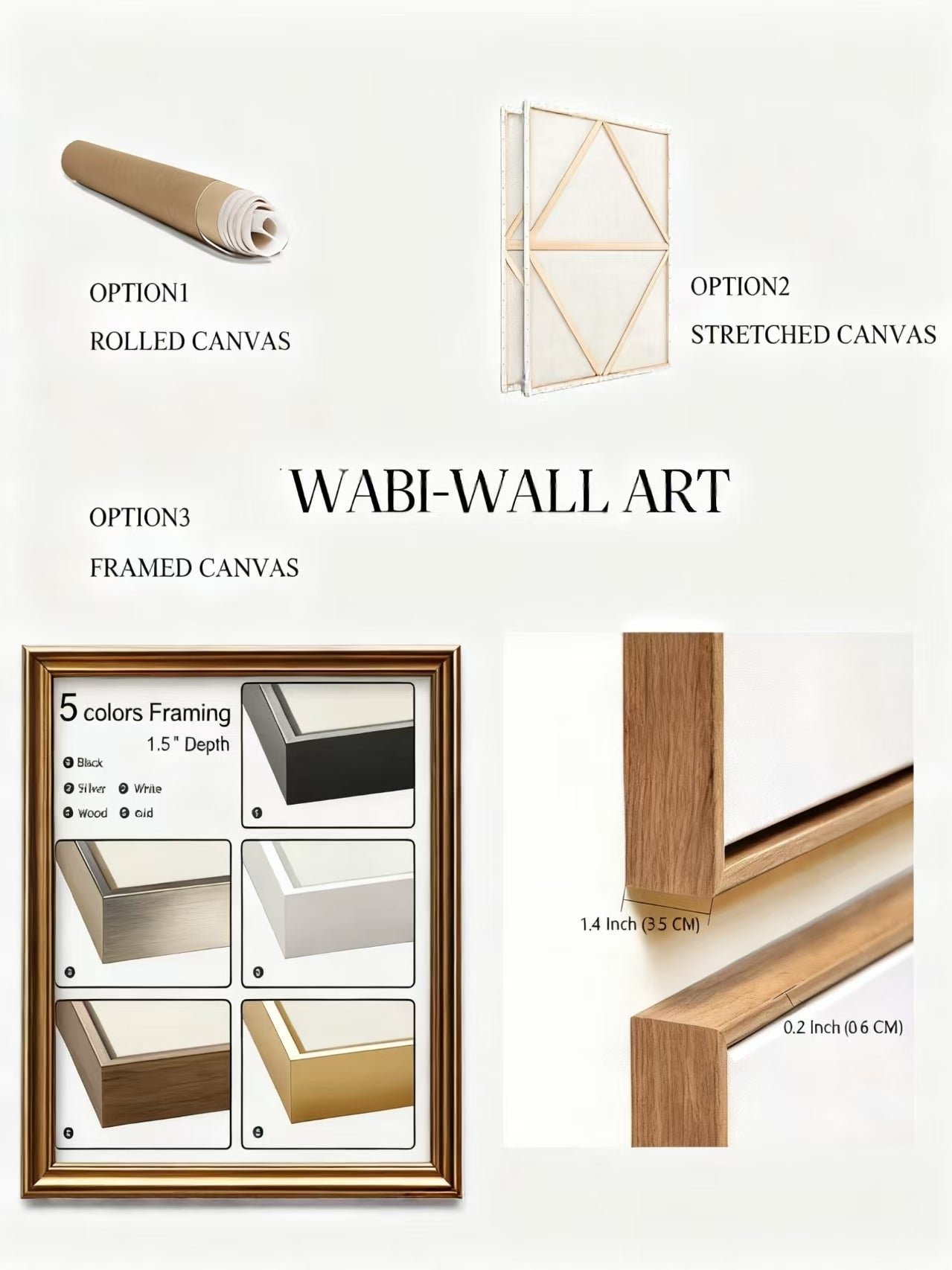
The product page lists rolled canvas, stretched canvas, and frame options including gold, silver, black, white, and wood. For this artwork, the best choice depends on how rustic or modern you want the room to feel.
A wood frame strengthens the natural, cabin, and lodge feeling. It works well with oak, walnut, reclaimed wood, and leather. A black frame sharpens the silhouette and gives the piece a more contemporary edge. A gold or warm metallic frame can bring out the copper tones and make the artwork feel more refined. A white frame will create more contrast, but it may feel less connected unless the room already has light trim or pale walls.
If the room is modern rustic, wood or black is usually the safest choice. If the room is rustic luxury, aged gold or warm metal can work beautifully. The frame should support the mood rather than distract from the deer silhouette.
Get the scale right for a vertical statement piece
Because AK#0018 has strong vertical presence, scale matters. A vertical artwork can make a wall feel taller, but only if it has enough size to relate to the furniture below it. Above a sofa, choose a size that feels connected to the seating area. Above a sideboard, the piece can be narrower because the furniture already provides horizontal balance. Above a fireplace, let the height of the wall and mantel guide the size.
For a broader sizing framework, use our guide Art That Fits: A Simple Guide to Sizing Your Hand-Painted Wall Art. With dark, textured statement art, a slightly larger size often feels more intentional than a piece that is too small. The texture, silhouette, and atmosphere need room to breathe.
How to make wildlife art feel modern
Modern wildlife art works best when the room avoids obvious storytelling. You do not need a forest mural, plaid blankets, carved bears, or antler chandeliers. Instead, use clean furniture lines and strong natural materials. Let the art carry the story while the room stays composed.
Use negative space around the artwork. Keep nearby objects low. Repeat the painting's colors through materials instead of motifs: espresso through black ceramics, copper through a lamp, brown through leather, umber through wood, and beige through linen or stone. That is how a deer painting becomes sophisticated rather than themed.
If your room is mainly neutral and you want a softer foundation before adding darker art, our guide to styling neutral textured wall art in a living room can help. If your space is compact, the principles in Statement Art for Small Spaces also apply: one confident focal point can make a small room feel more designed.
Mistakes to avoid
First, avoid over-theming. The painting already brings deer, wilderness, and forest spirit into the room. Do not repeat those ideas too literally with many animal accessories.
Second, avoid weak lighting. A dark textured piece needs warm directional light so the silhouette and surface can be seen.
Third, avoid hanging it too high. The artwork should feel connected to the sofa, fireplace, desk, or sideboard below it.
Fourth, avoid placing it in a room with only cool gray finishes. The painting is warm, earthy, and copper-brown. It usually looks best near warmer neutrals, wood, stone, and leather.
FAQ
What style of room works best with rustic deer wall art?
Rustic deer wall art works well in modern rustic, lodge, mountain cabin, modern farmhouse, library, study, and warm contemporary interiors. It looks especially strong with wood, leather, stone, wool, and warm lighting.
Is AK#0018 a print?
No. The product page describes AK#0018 as hand-painted acrylic on canvas with heavy layered texture, visible brushwork, and one-of-a-kind artistic character.
What colors should I pair with this deer silhouette artwork?
Use deep brown, burnt umber, espresso black, warm copper, taupe, clay, leather brown, walnut, oak, stone gray, and soft beige. These tones support the painting without making the room feel too themed.
Where should I hang a vertical deer painting?
Strong placements include above a leather sofa, fireplace mantel, home office credenza, study desk, entryway console, dining sideboard, or lodge-style reading corner.
How do I keep deer wall art from looking kitschy?
Keep the rest of the room restrained. Avoid too many animal motifs, signs, or faux-rustic props. Use real materials such as wood, stone, leather, wool, ceramic, and warm metal instead.
What frame works best for AK#0018?
Wood frames strengthen the rustic cabin mood, black frames make the artwork more contemporary, and warm metallic frames bring out the copper tones. Choose the frame that best connects to your furniture and lighting.
Final thought
AK#0018 is not just deer decor. It is a textured, atmospheric wildlife artwork that brings wilderness into a room through shadow, earth color, and mood. Style it with restraint, warm materials, and thoughtful lighting, and it can make a living room, study, cabin, or entryway feel grounded, mysterious, and quietly powerful.