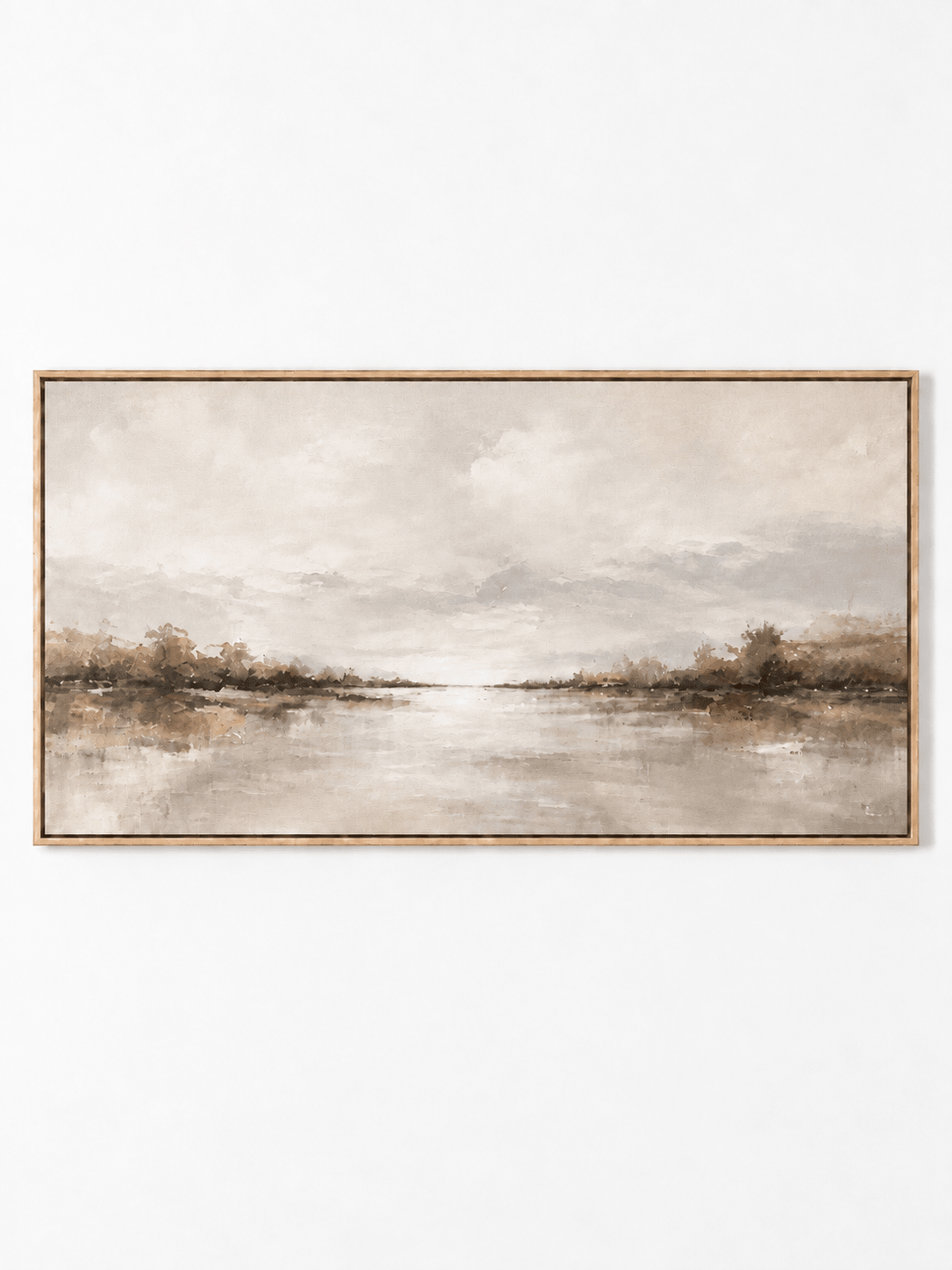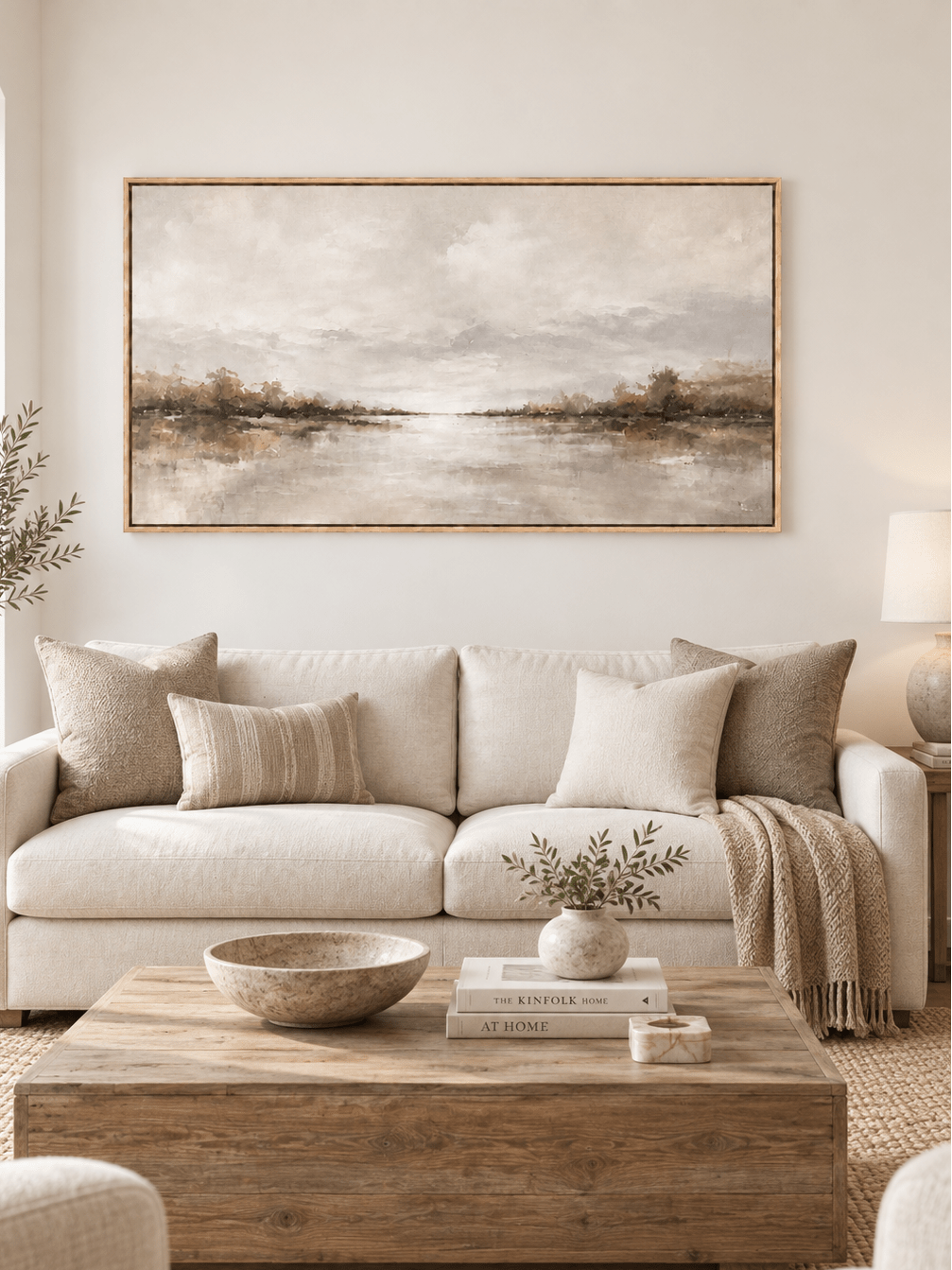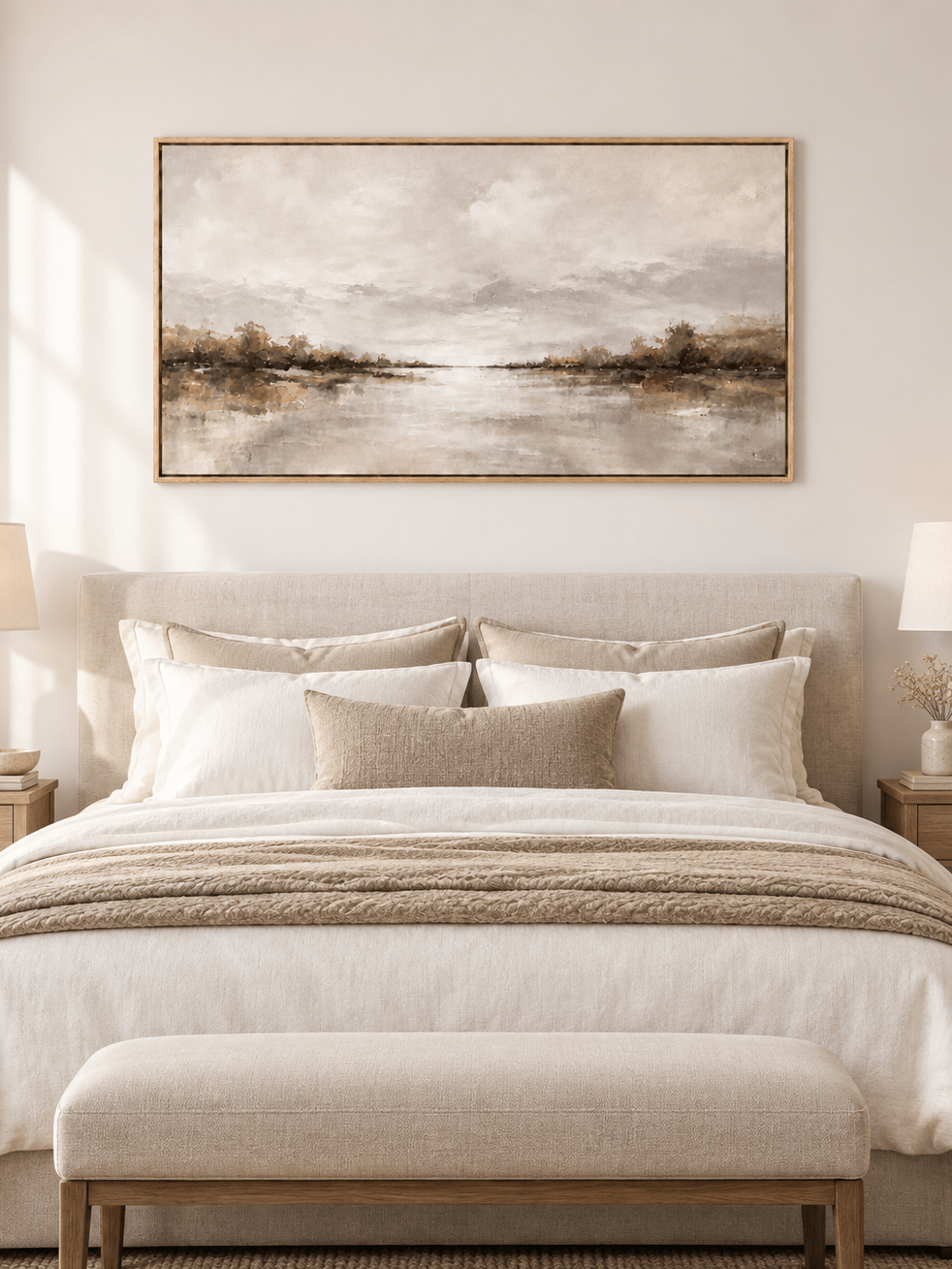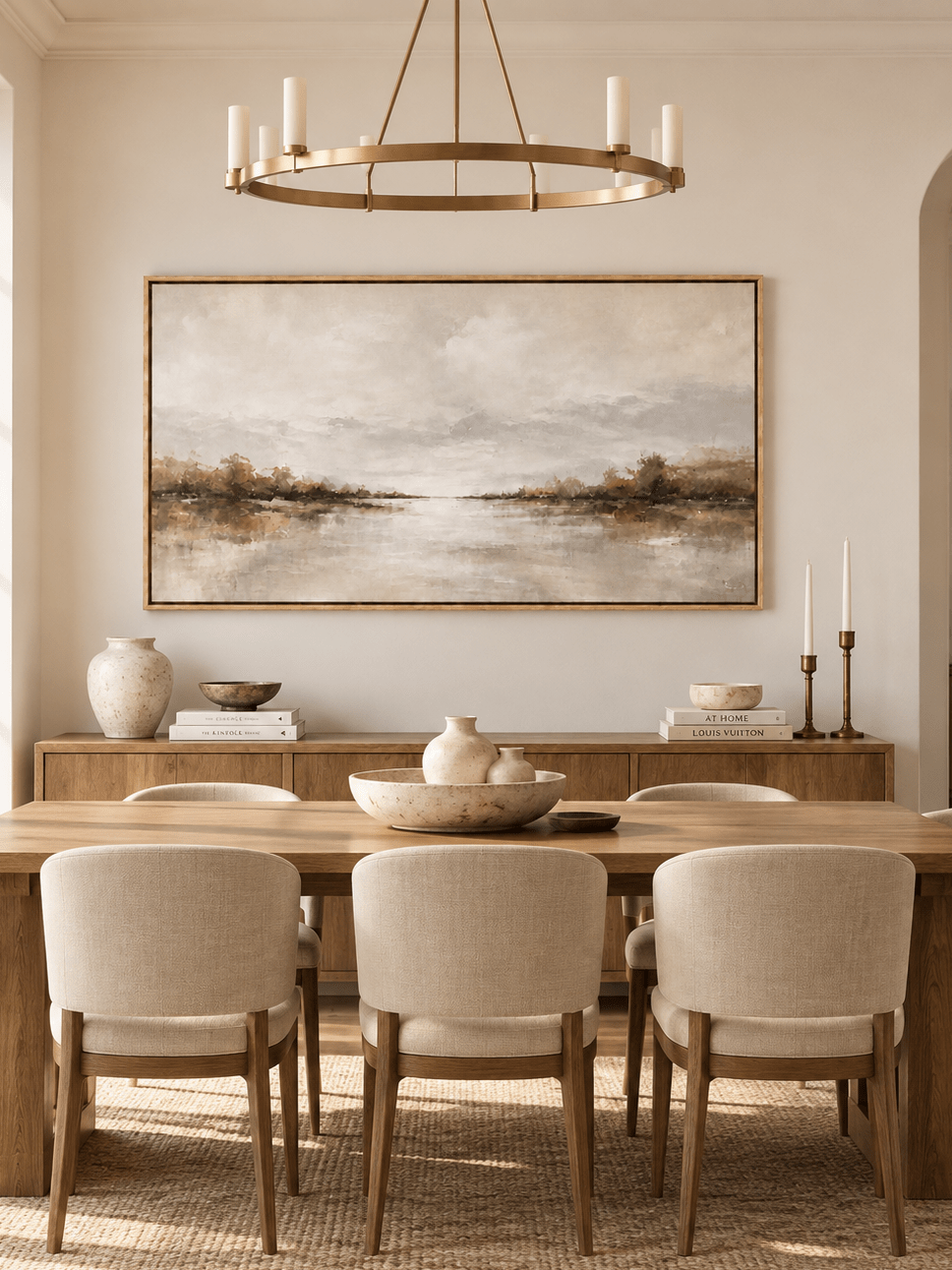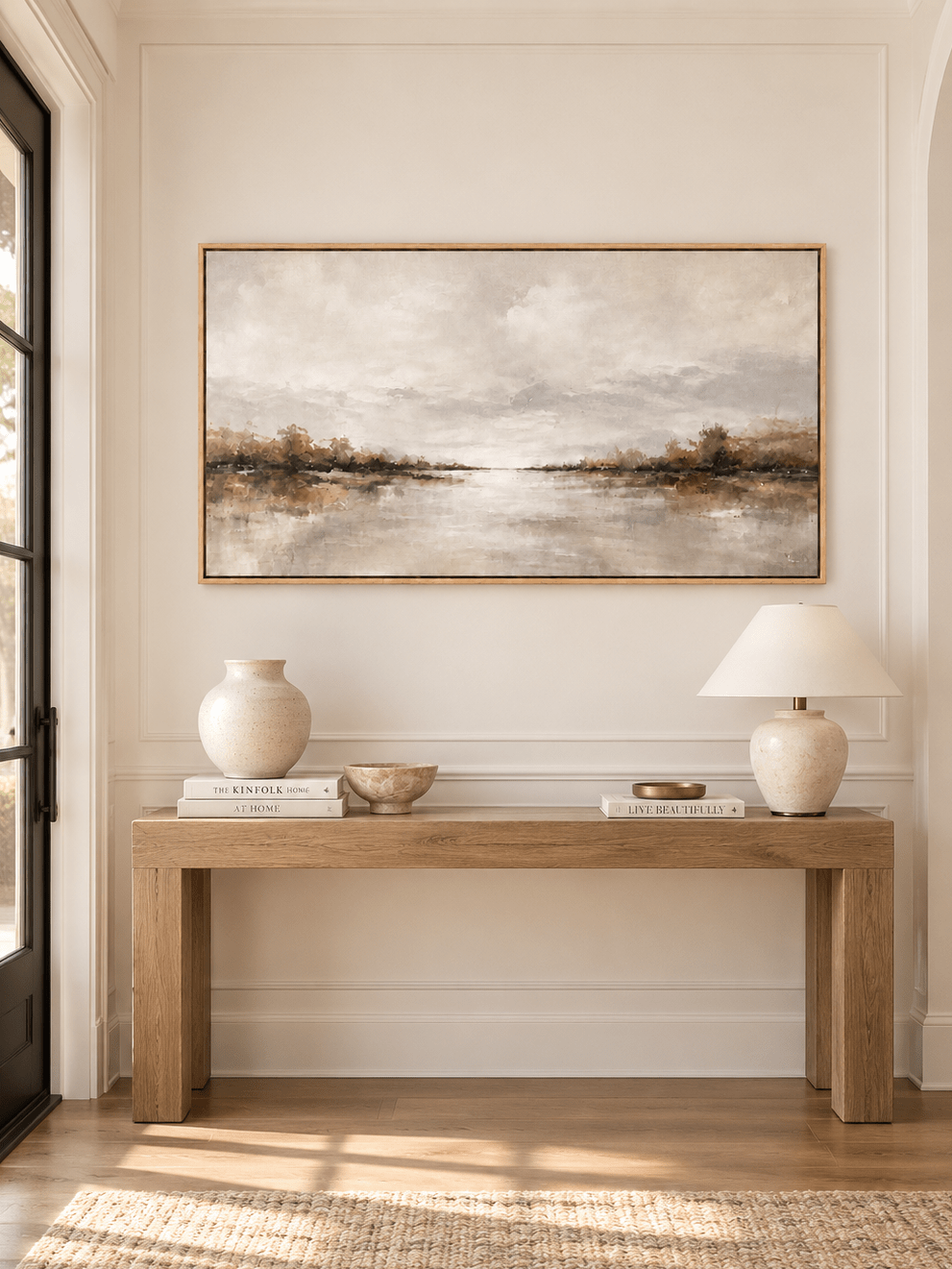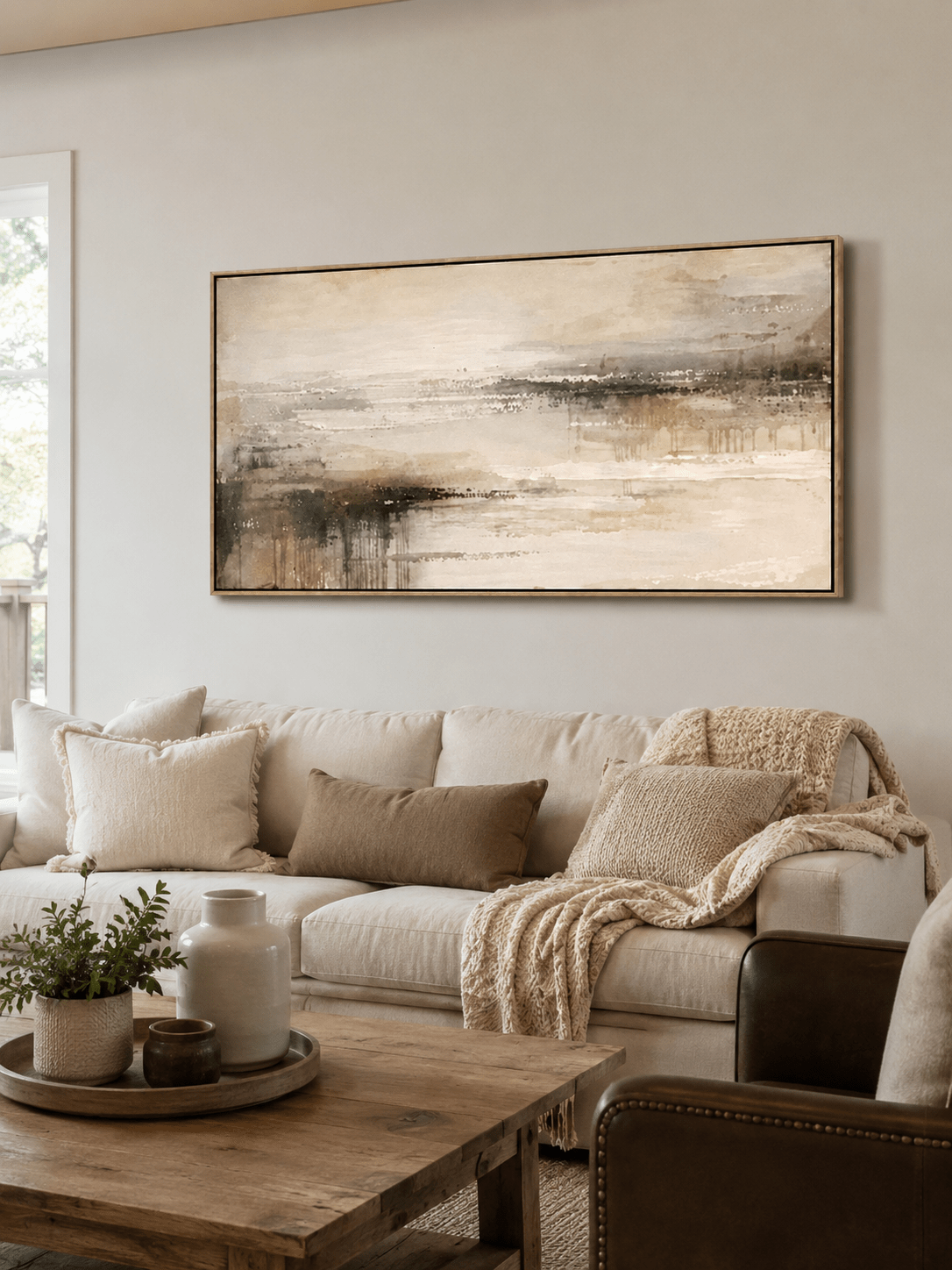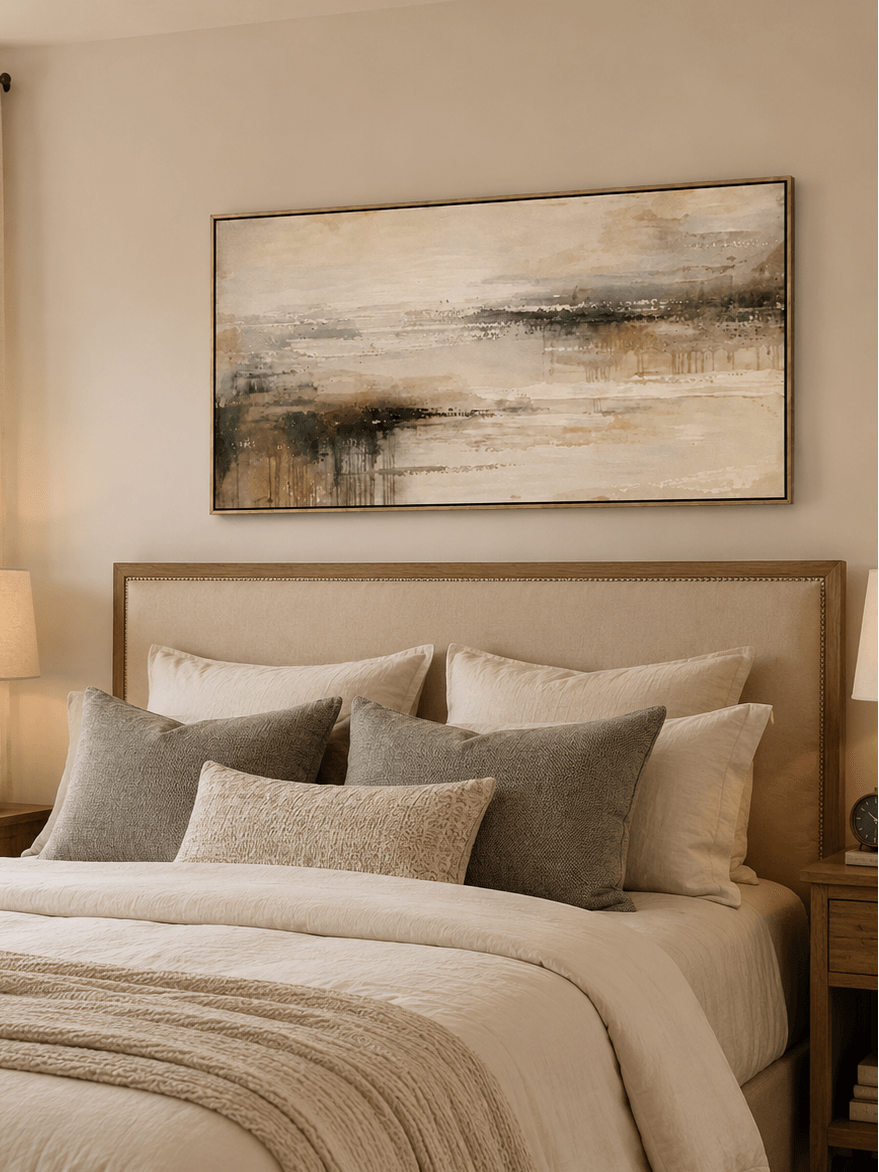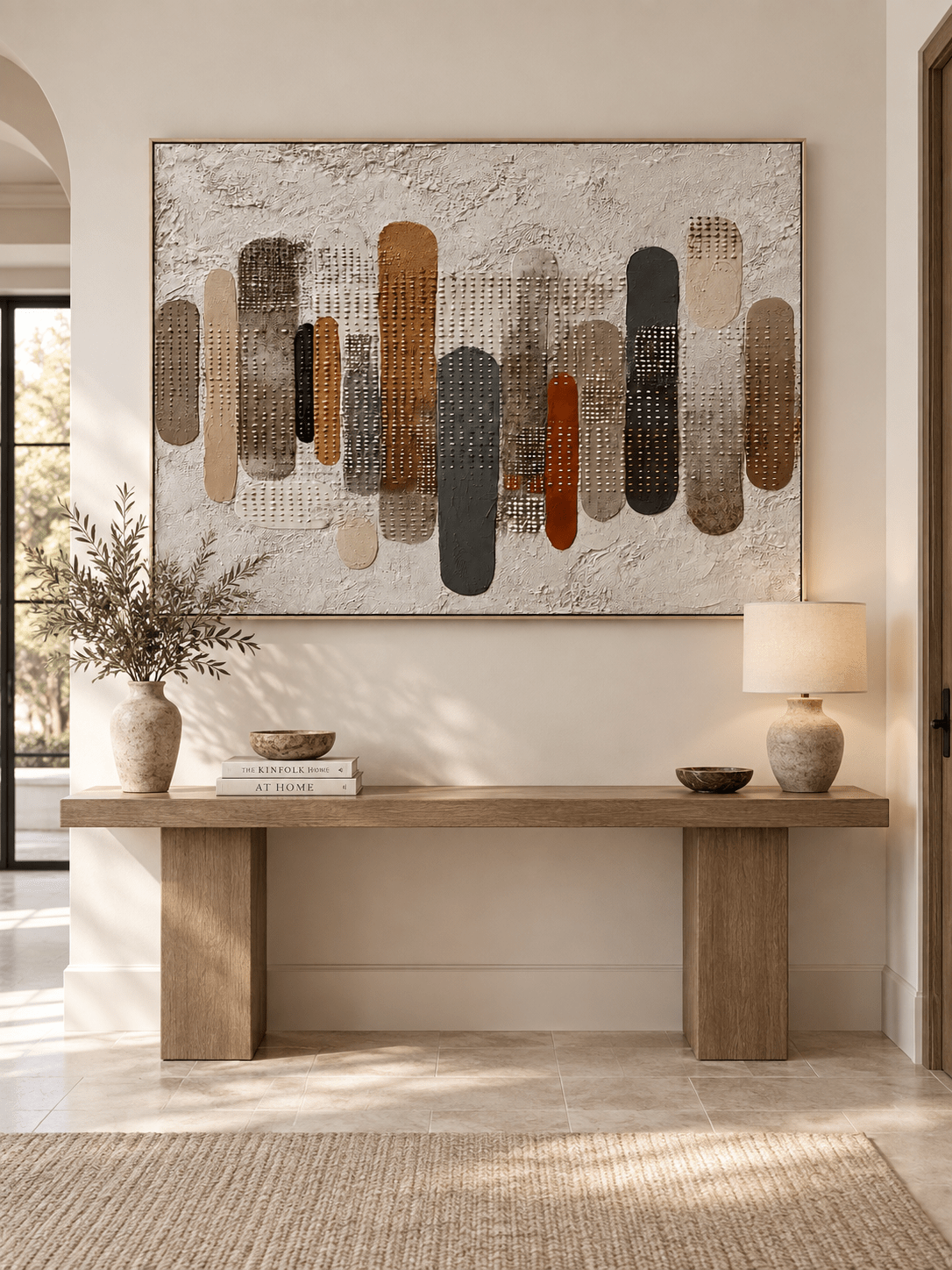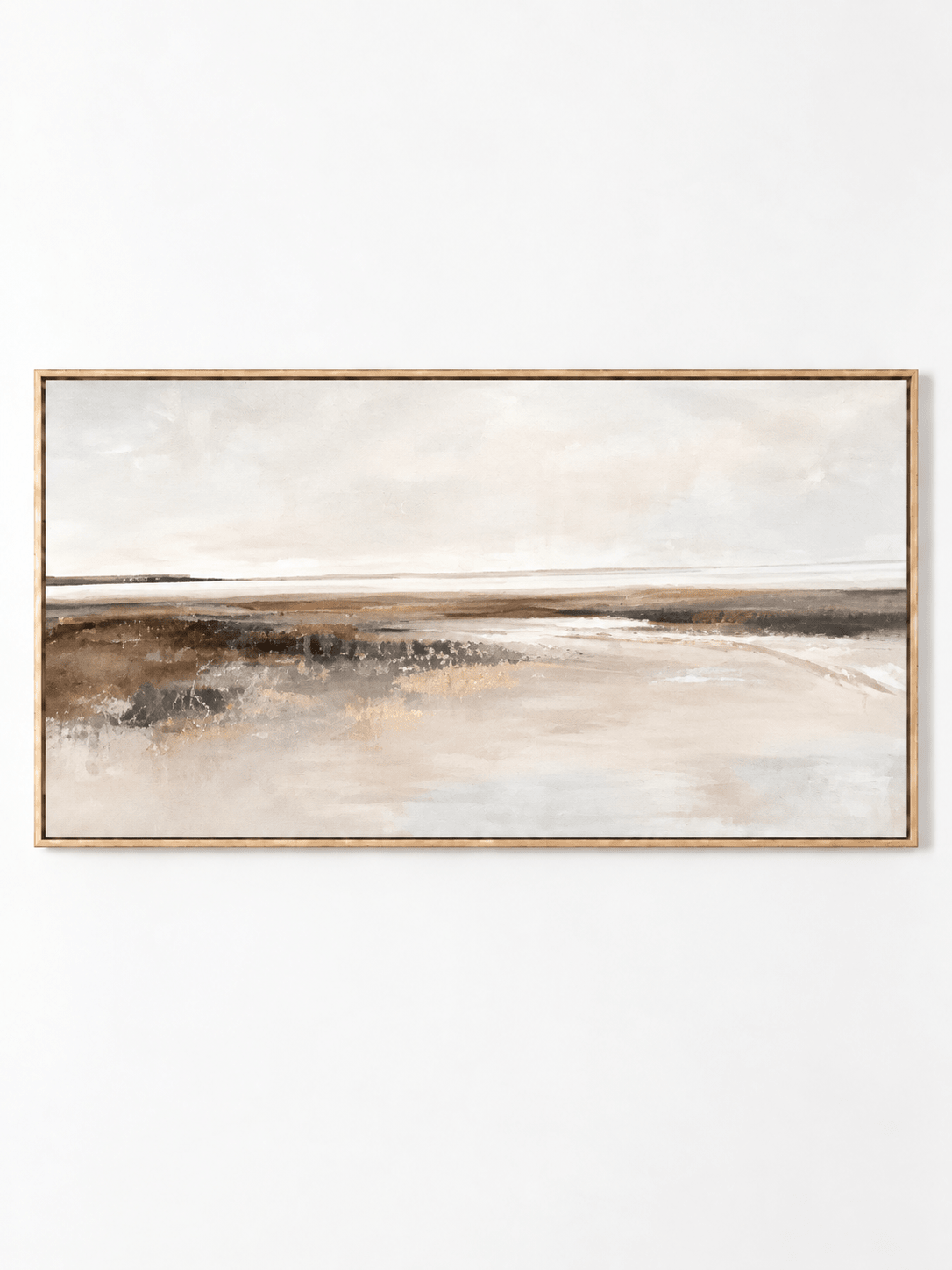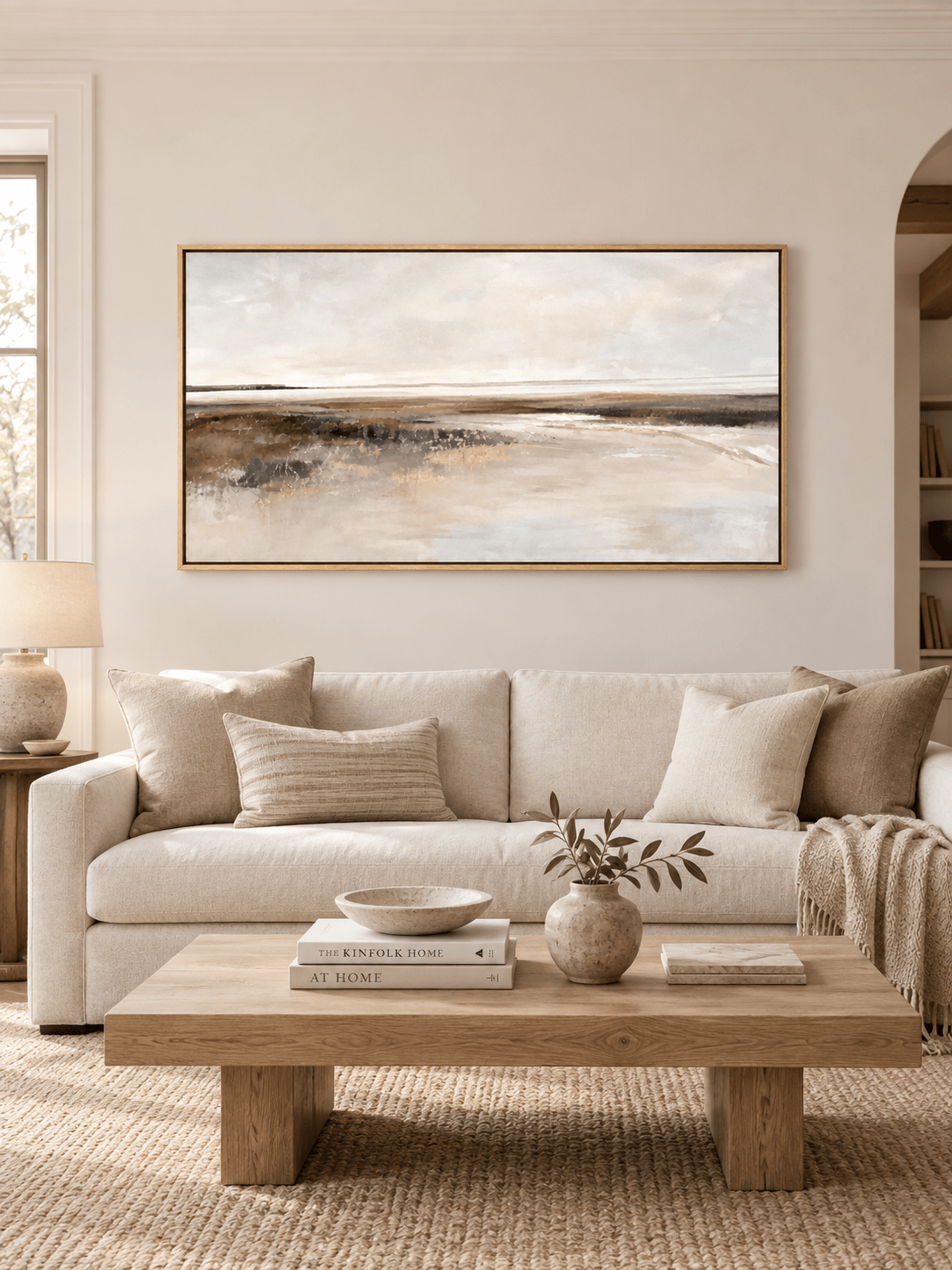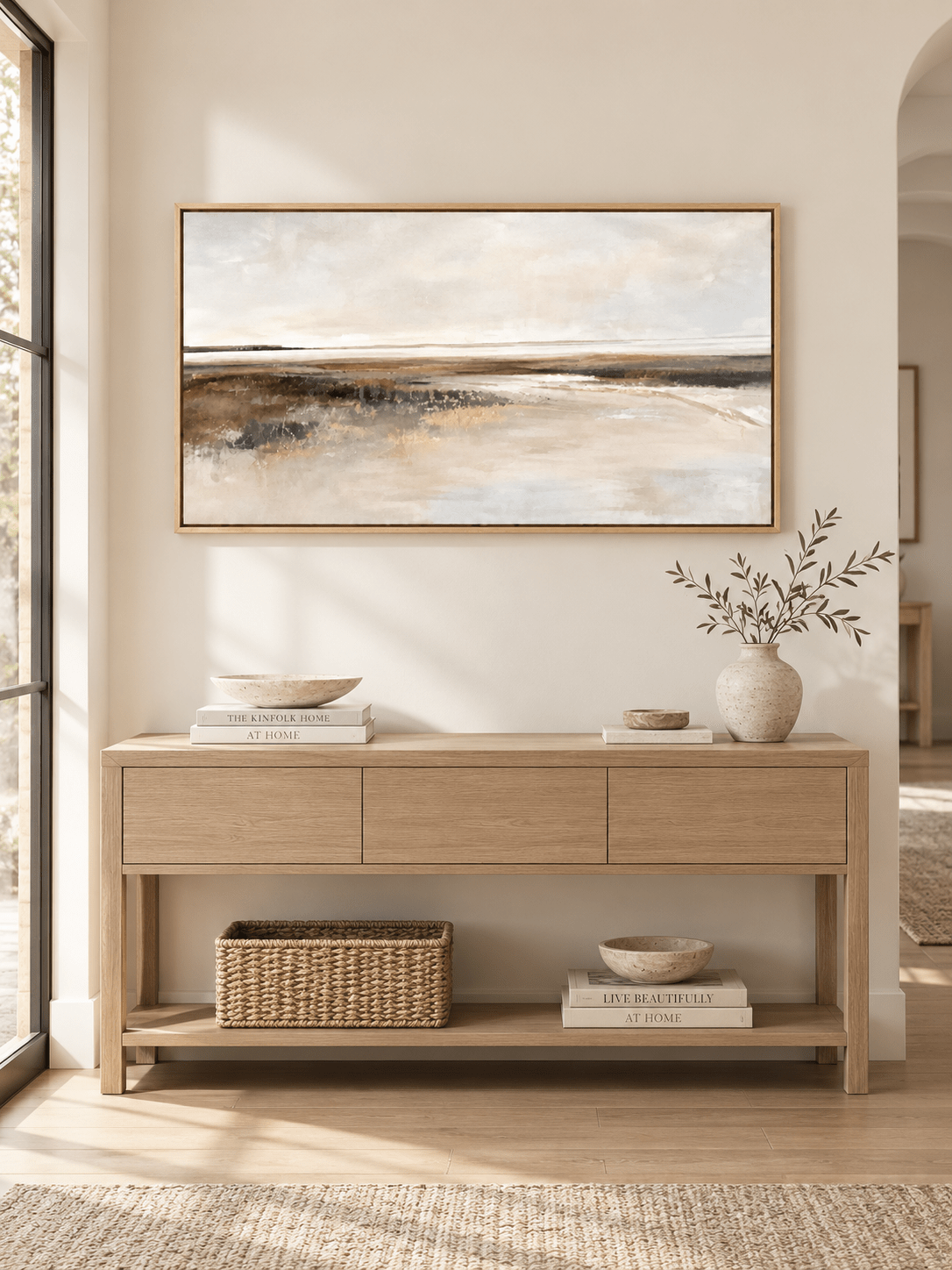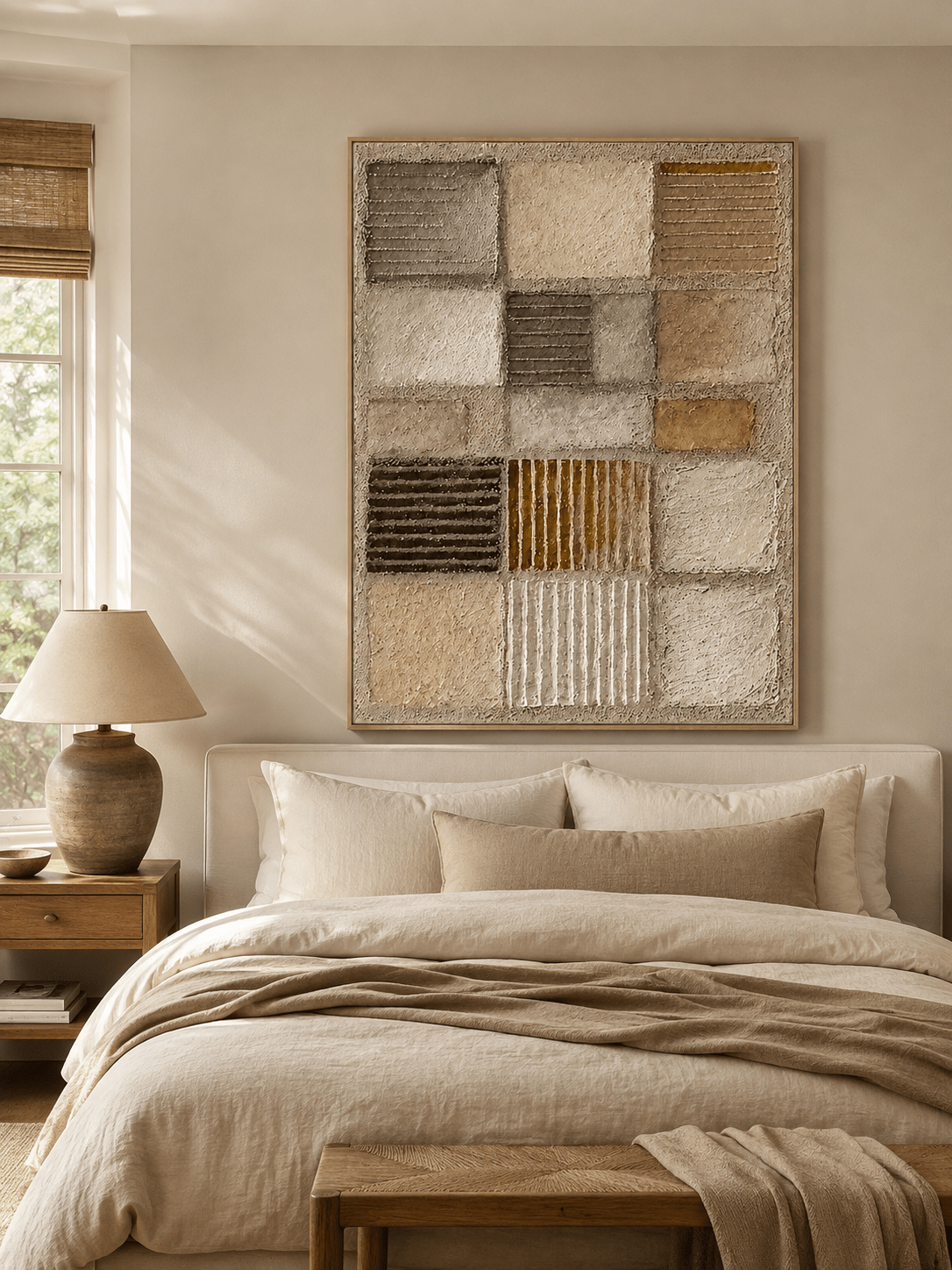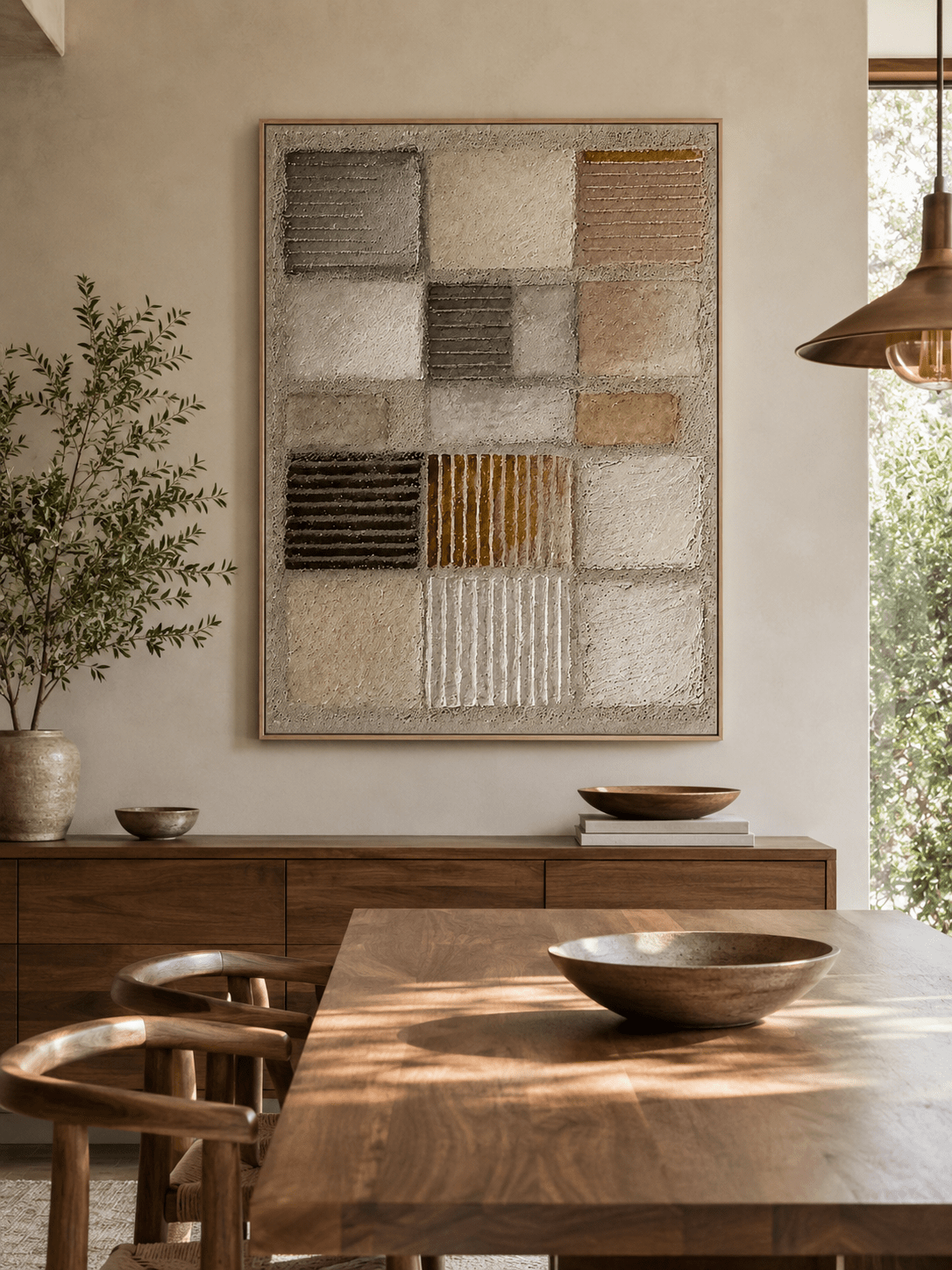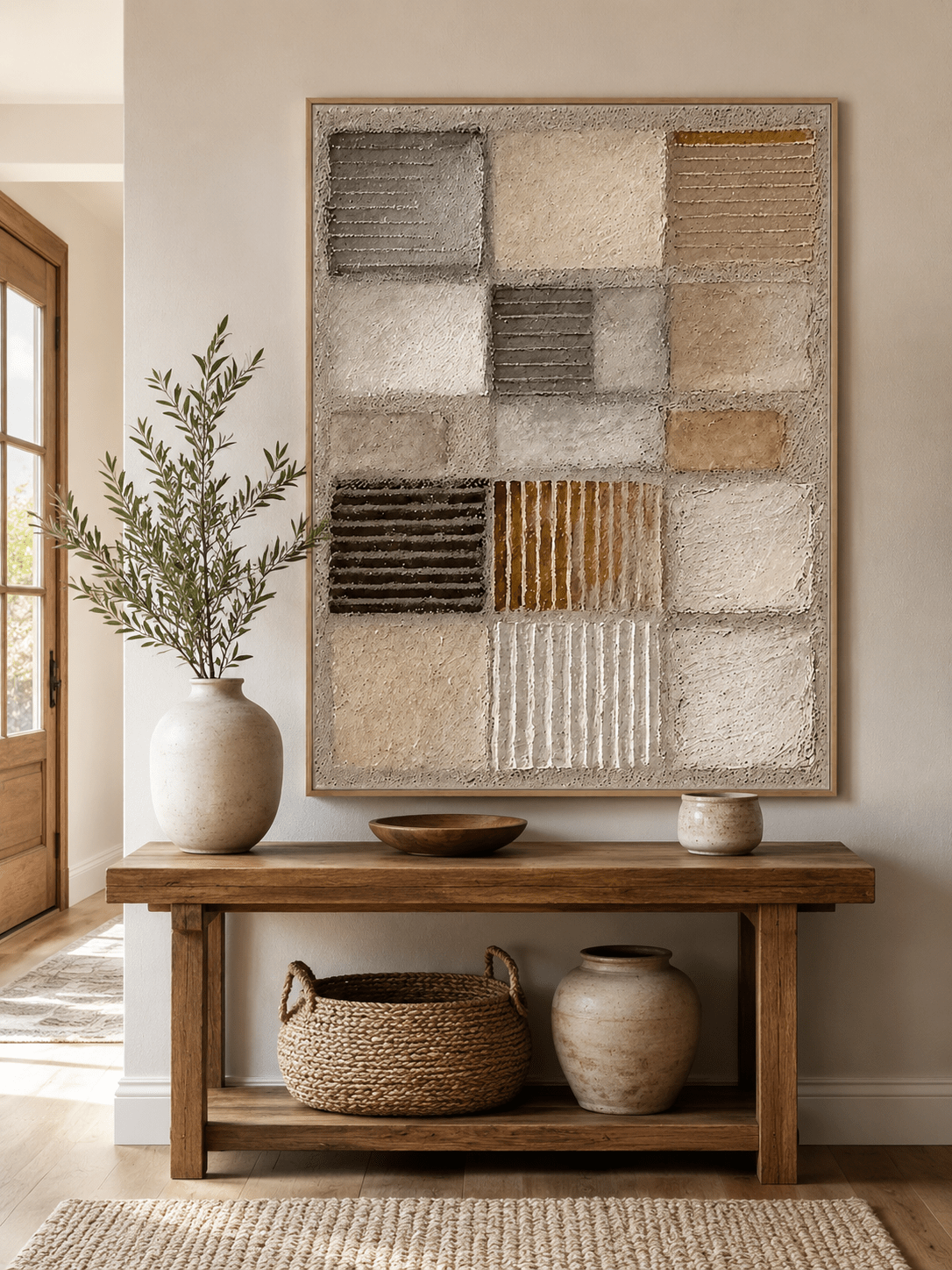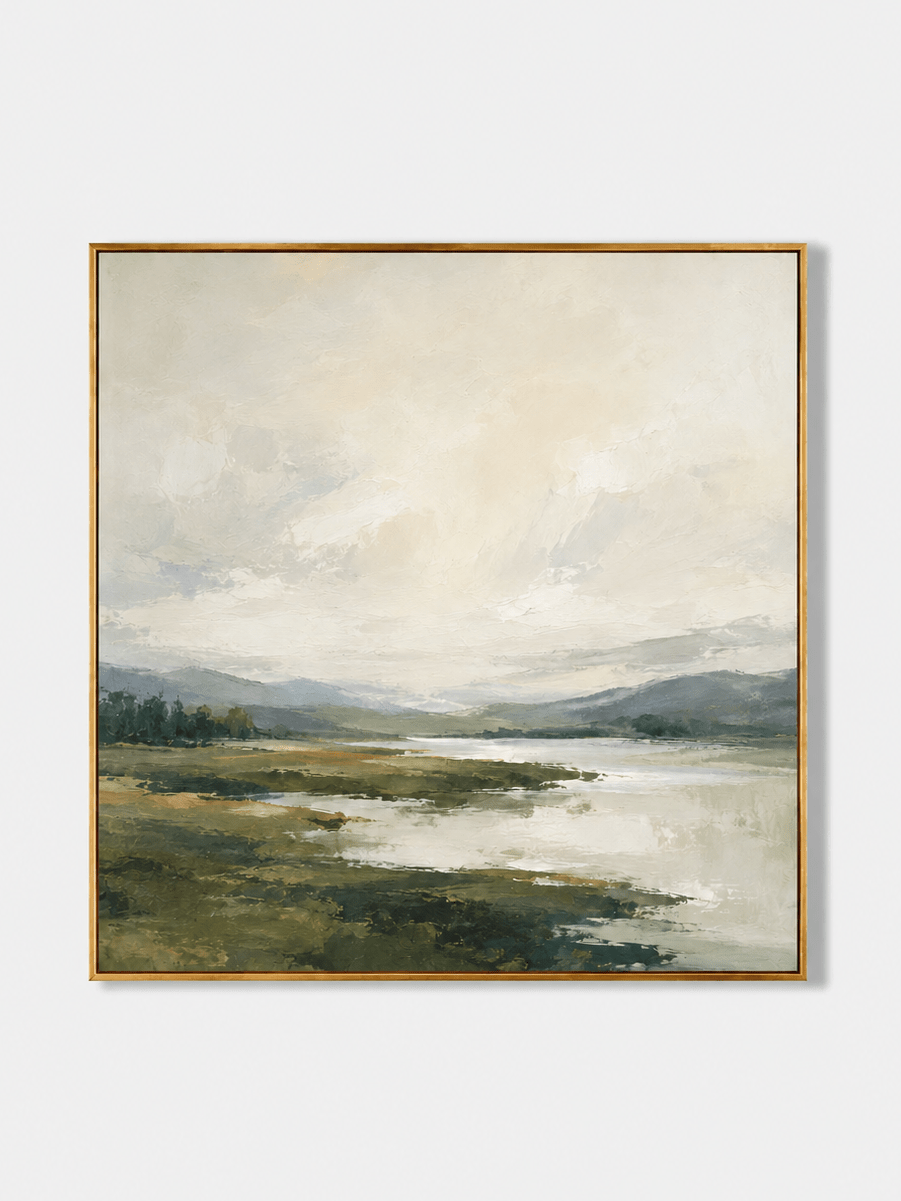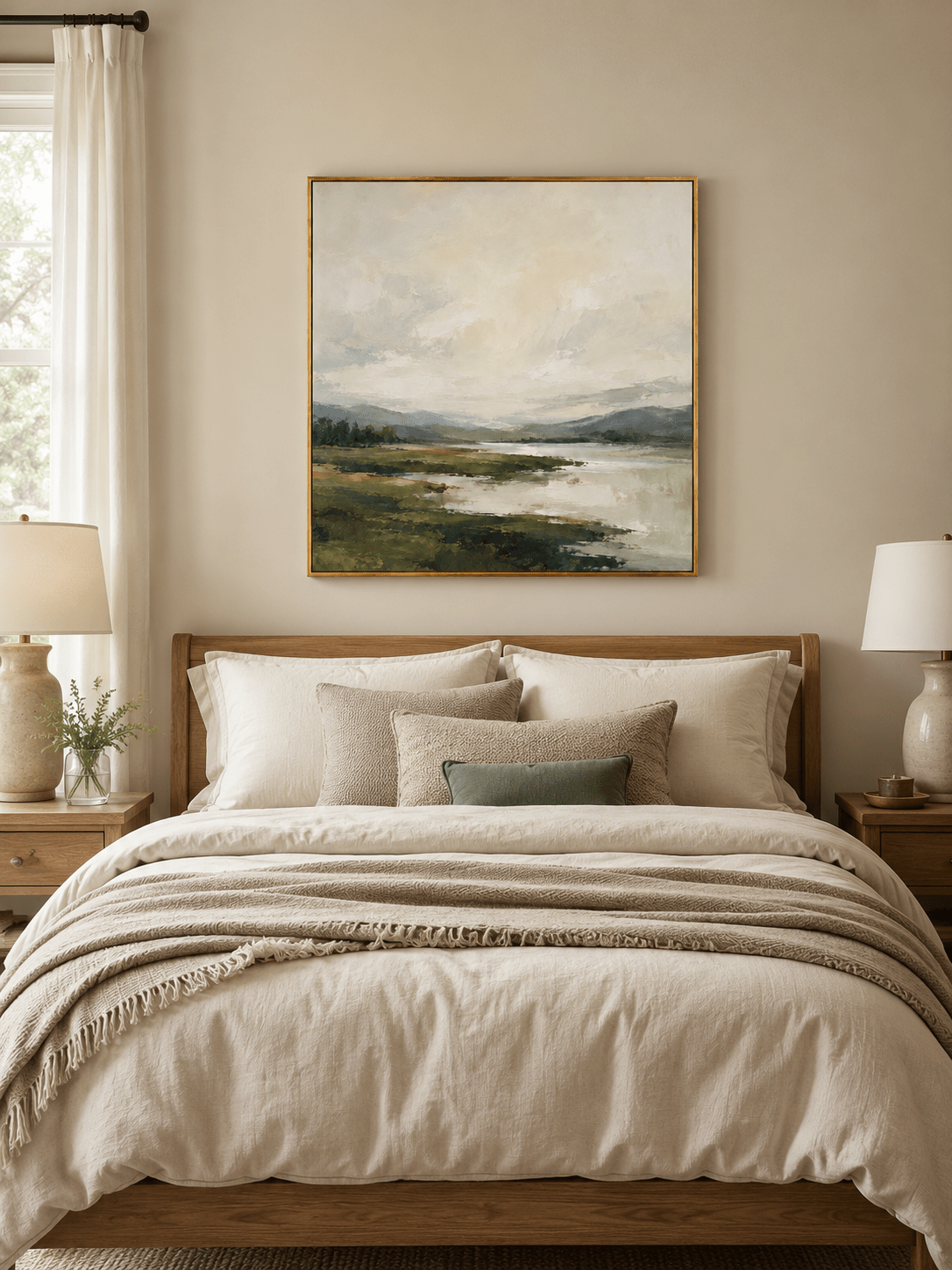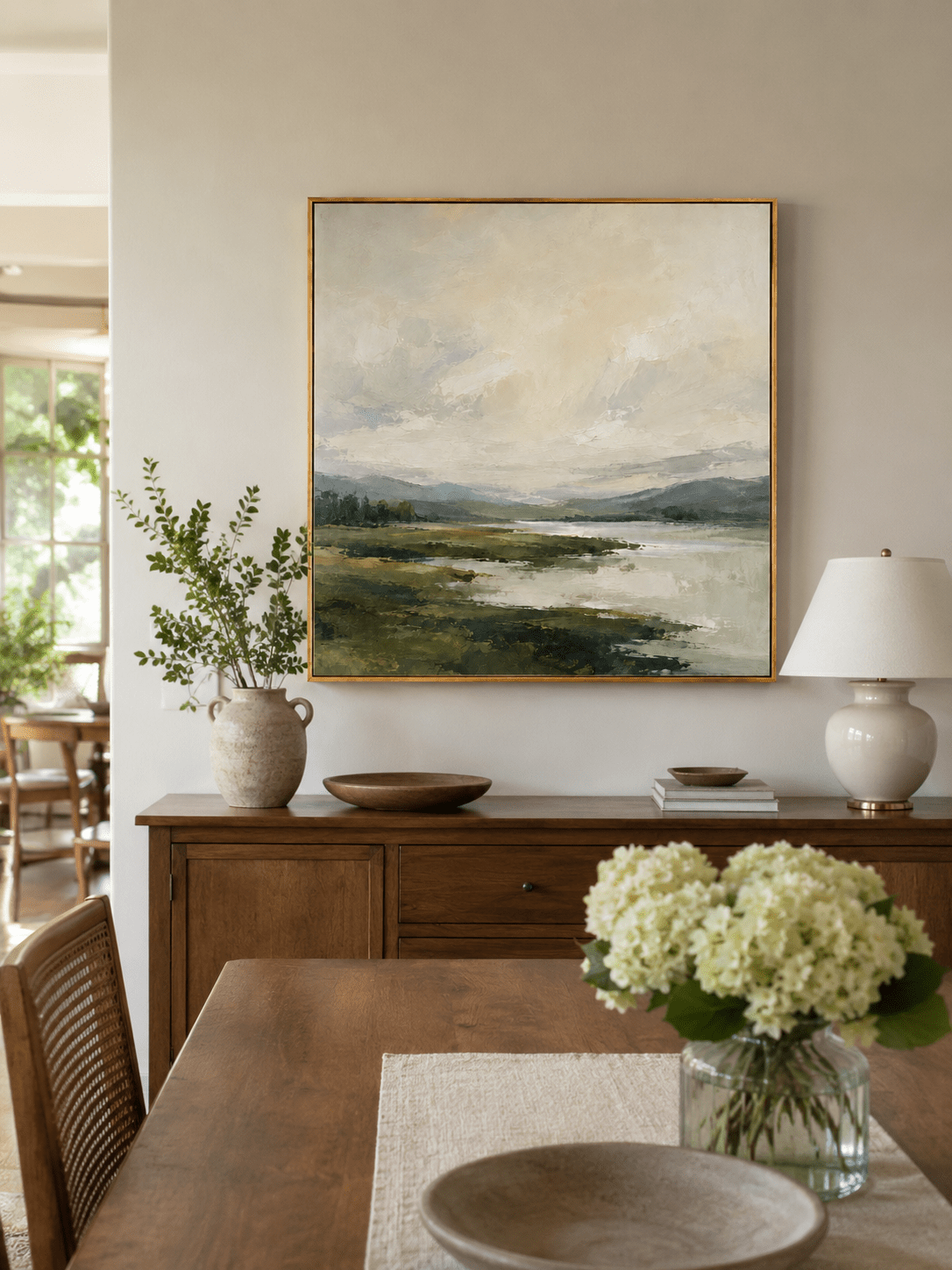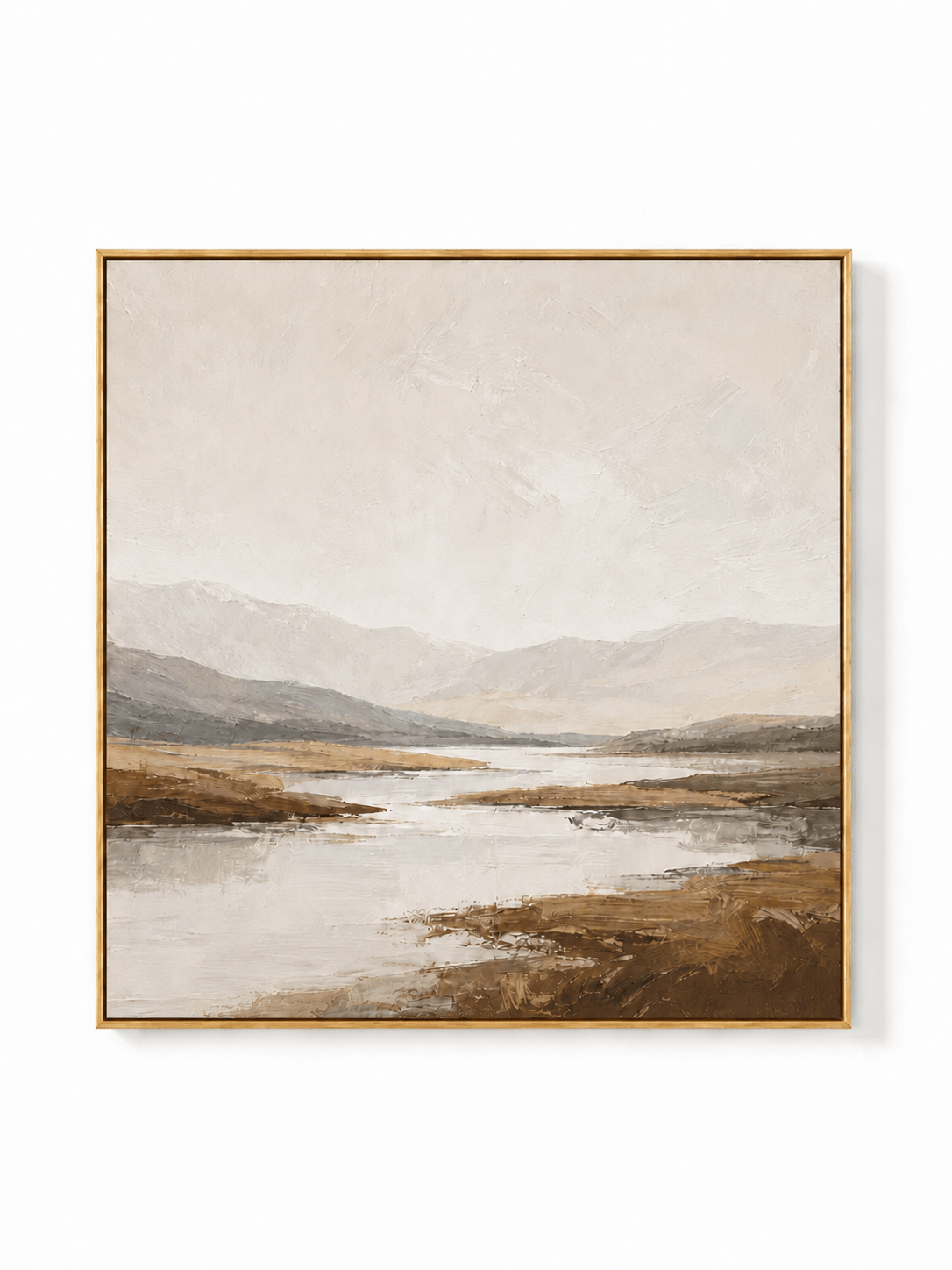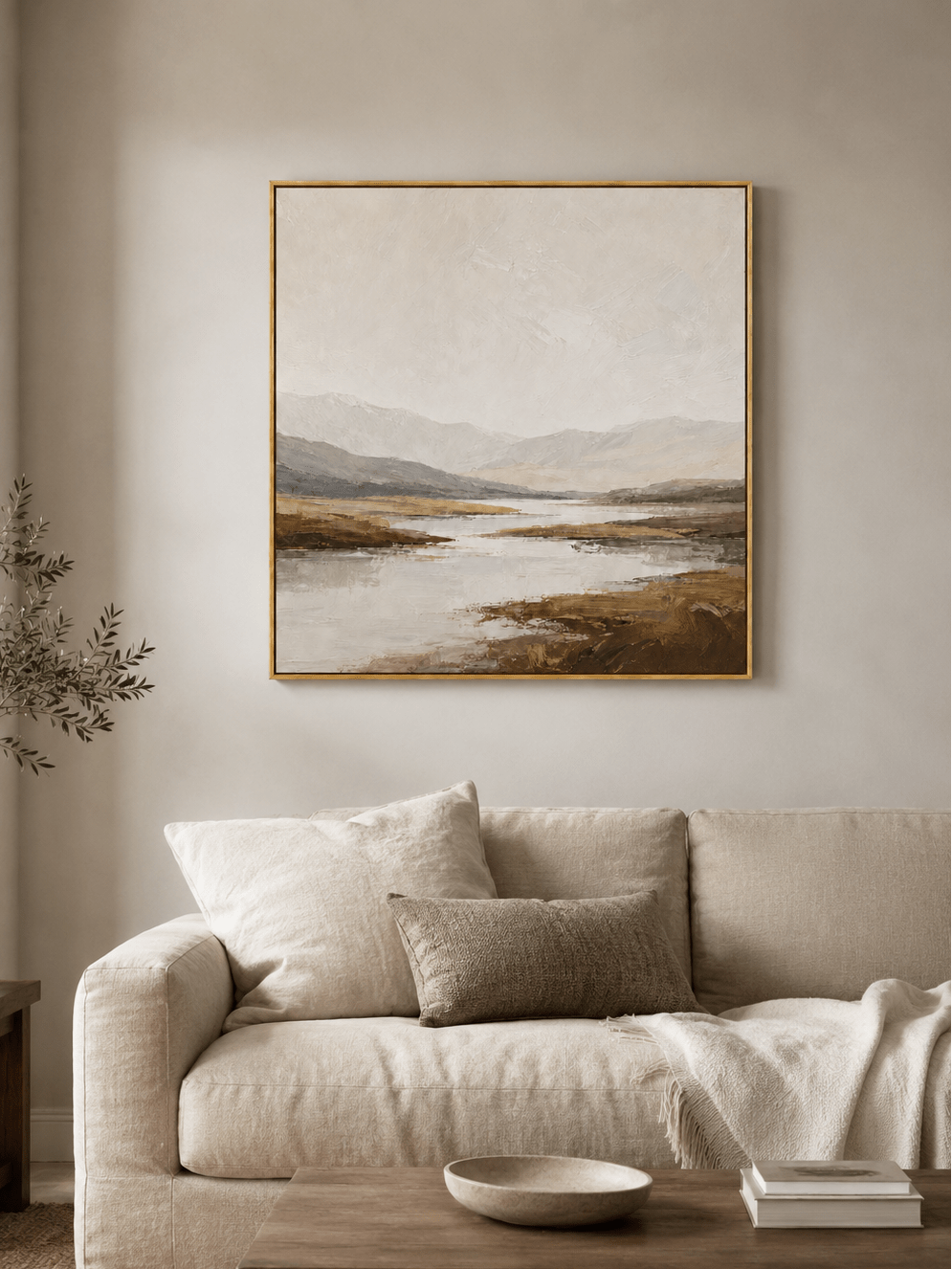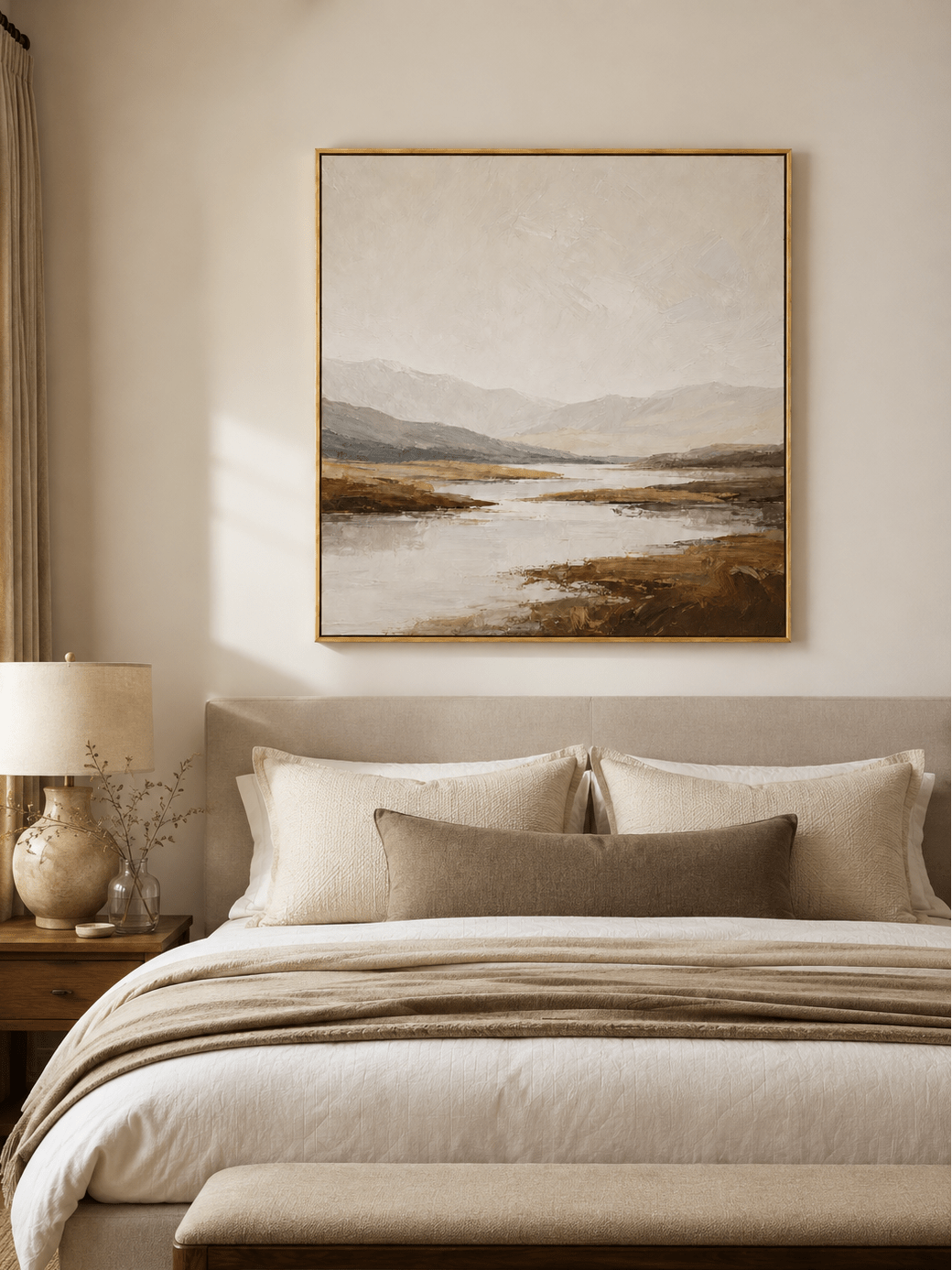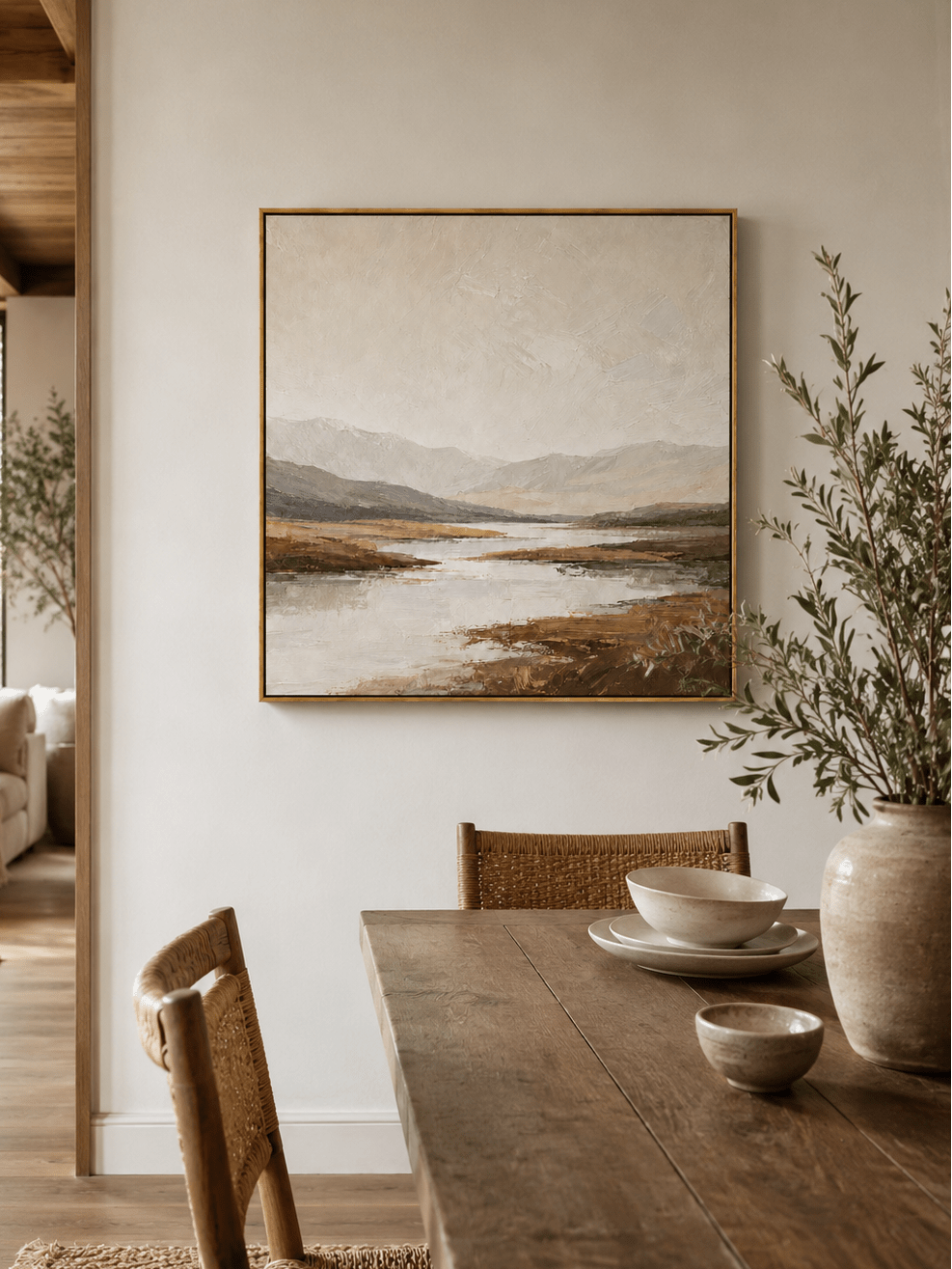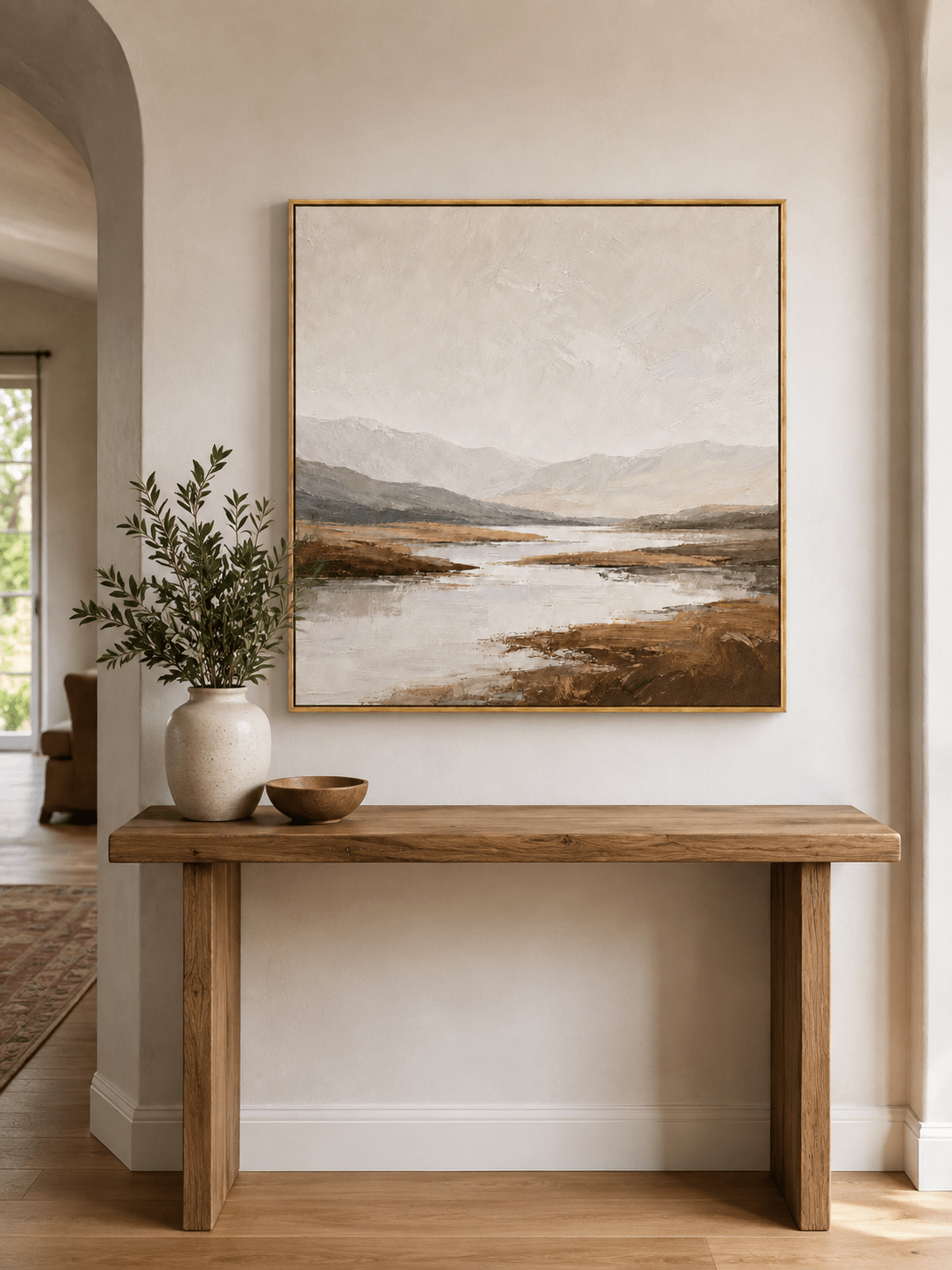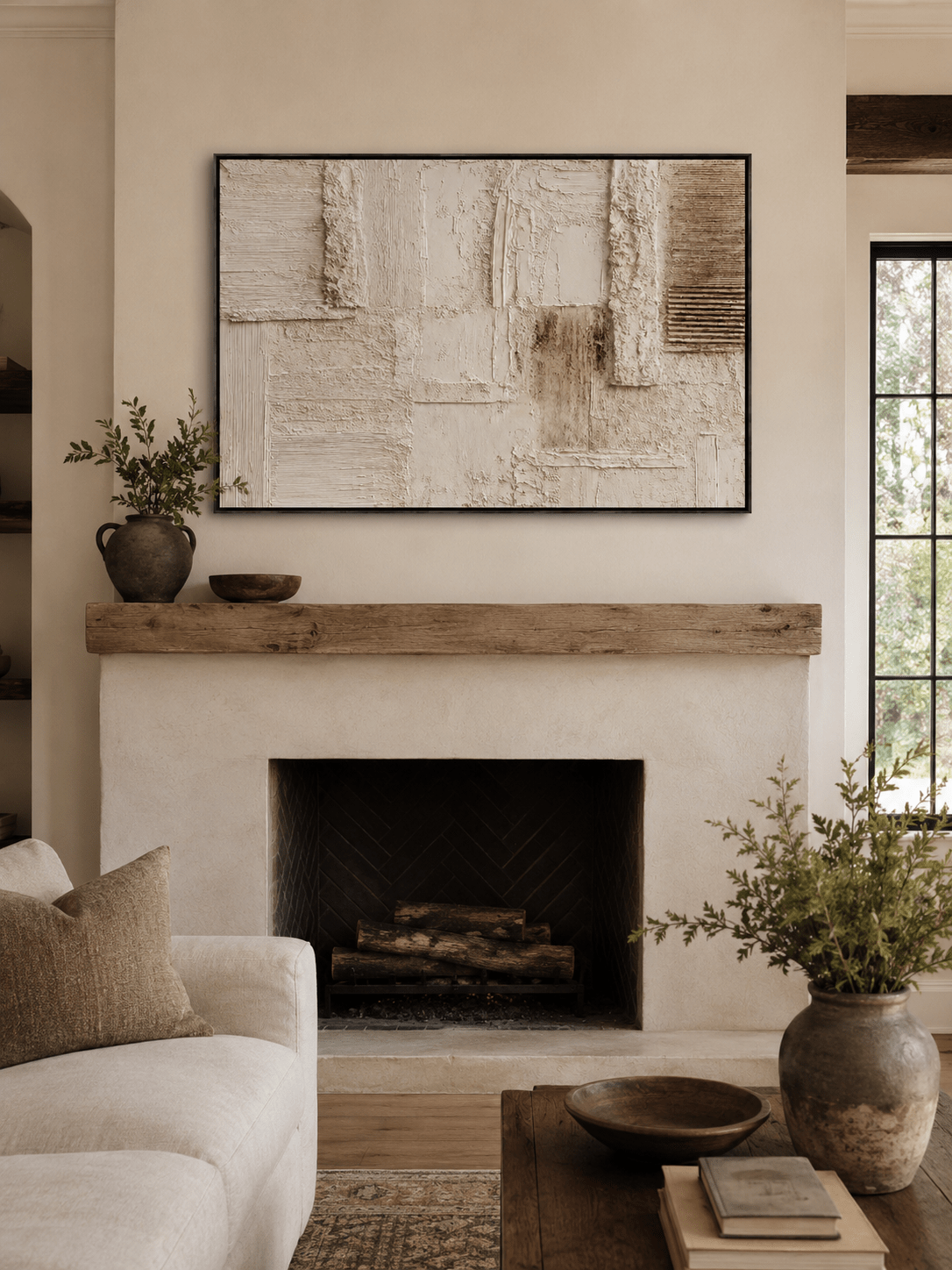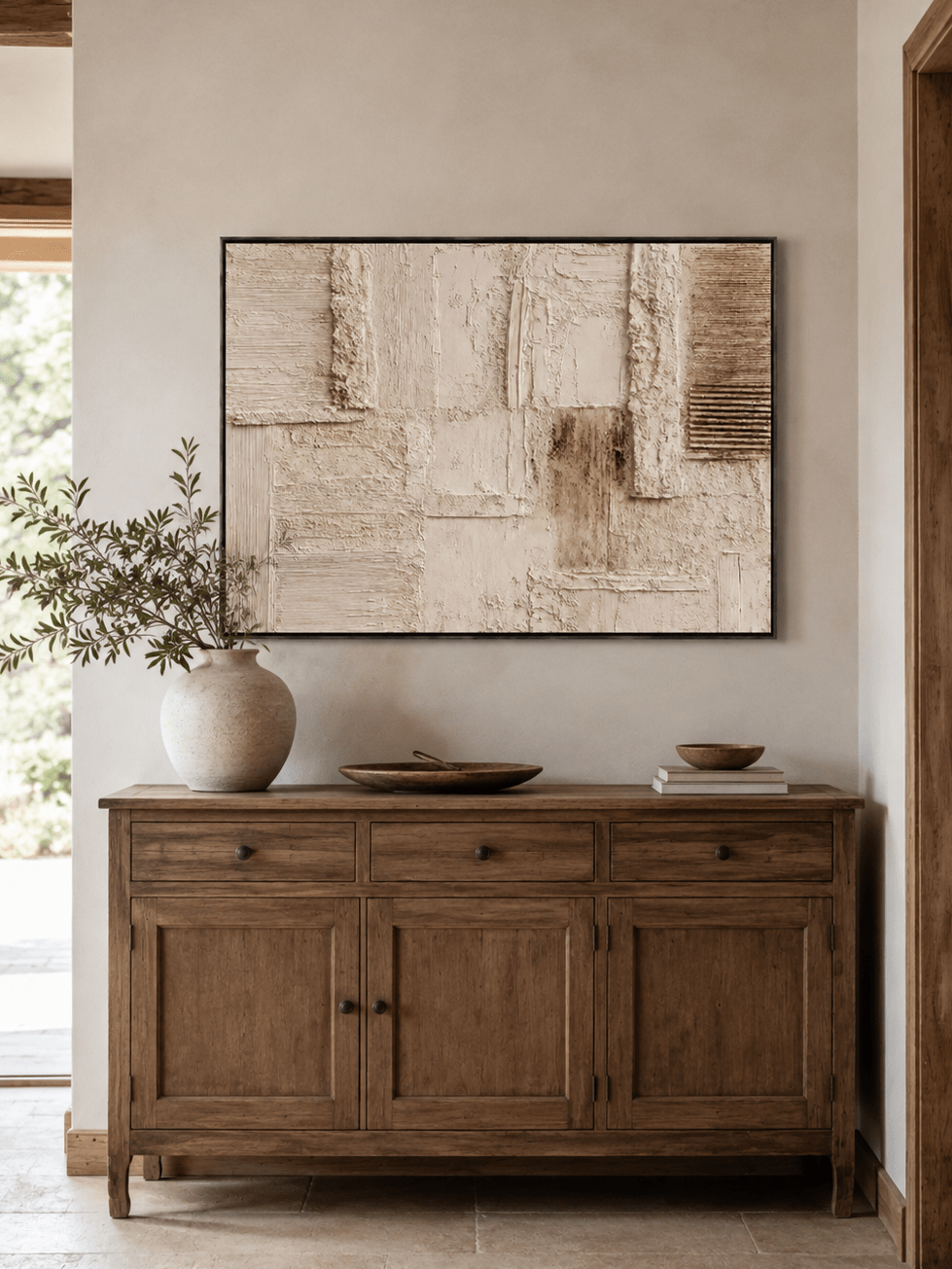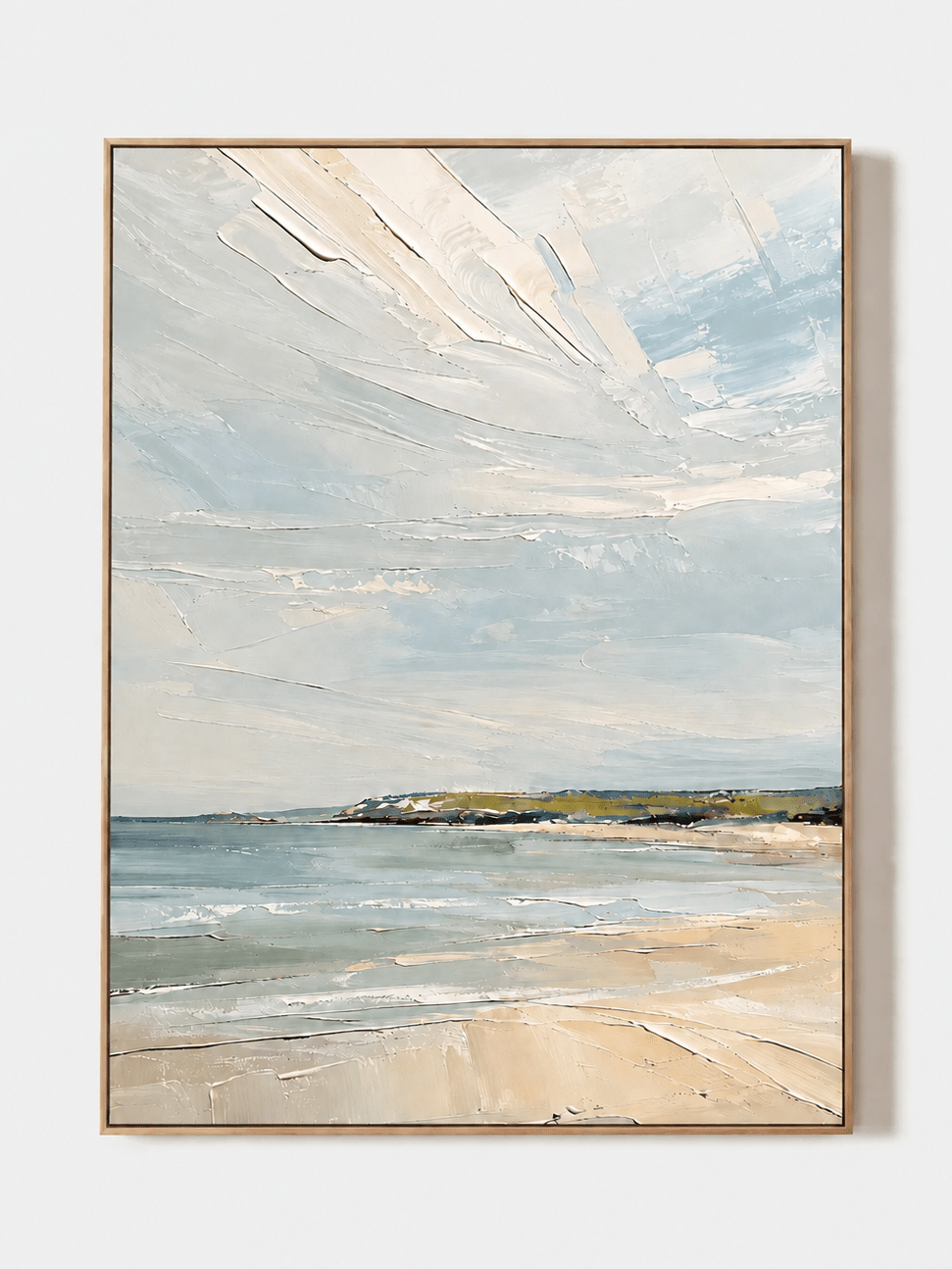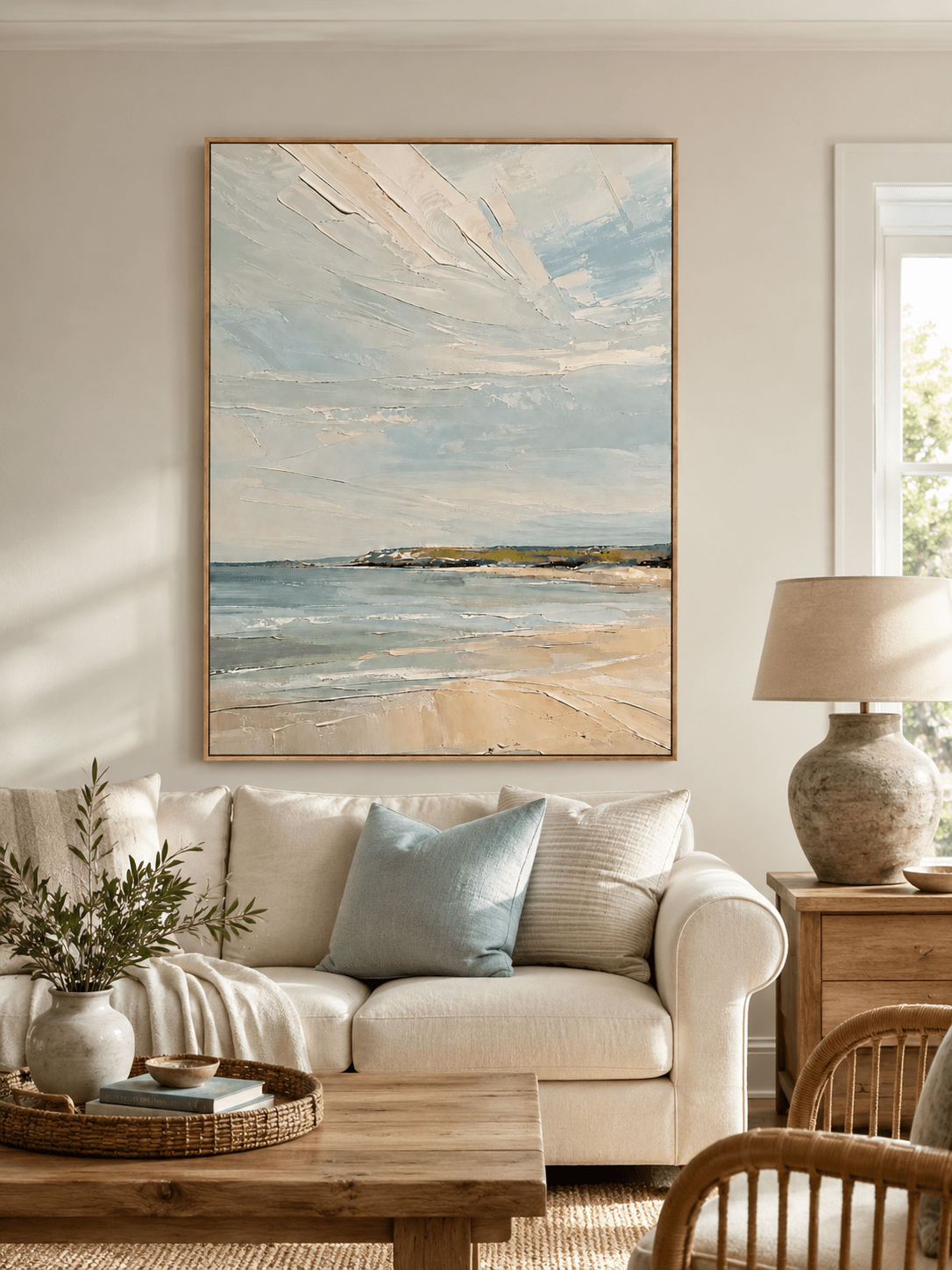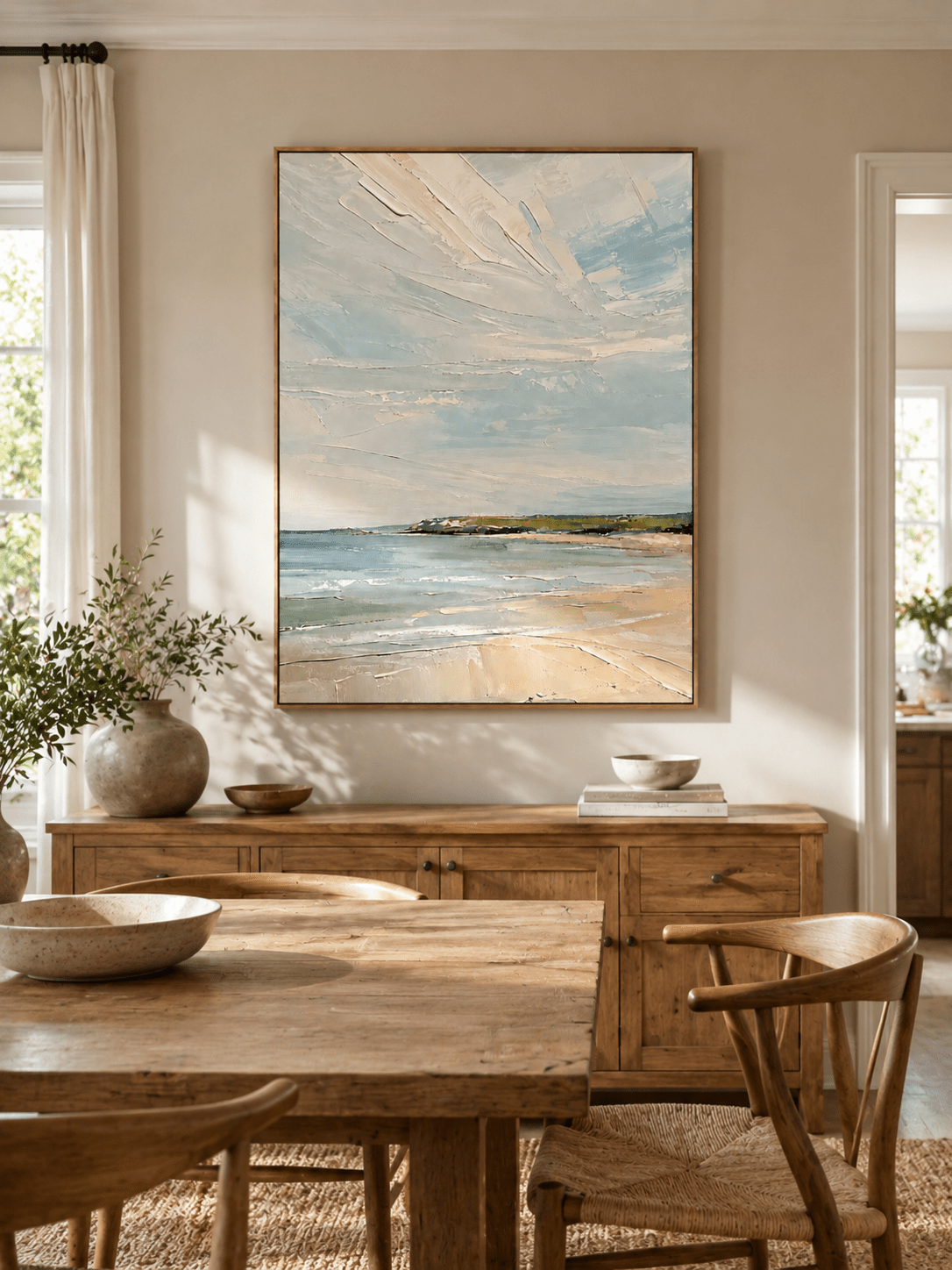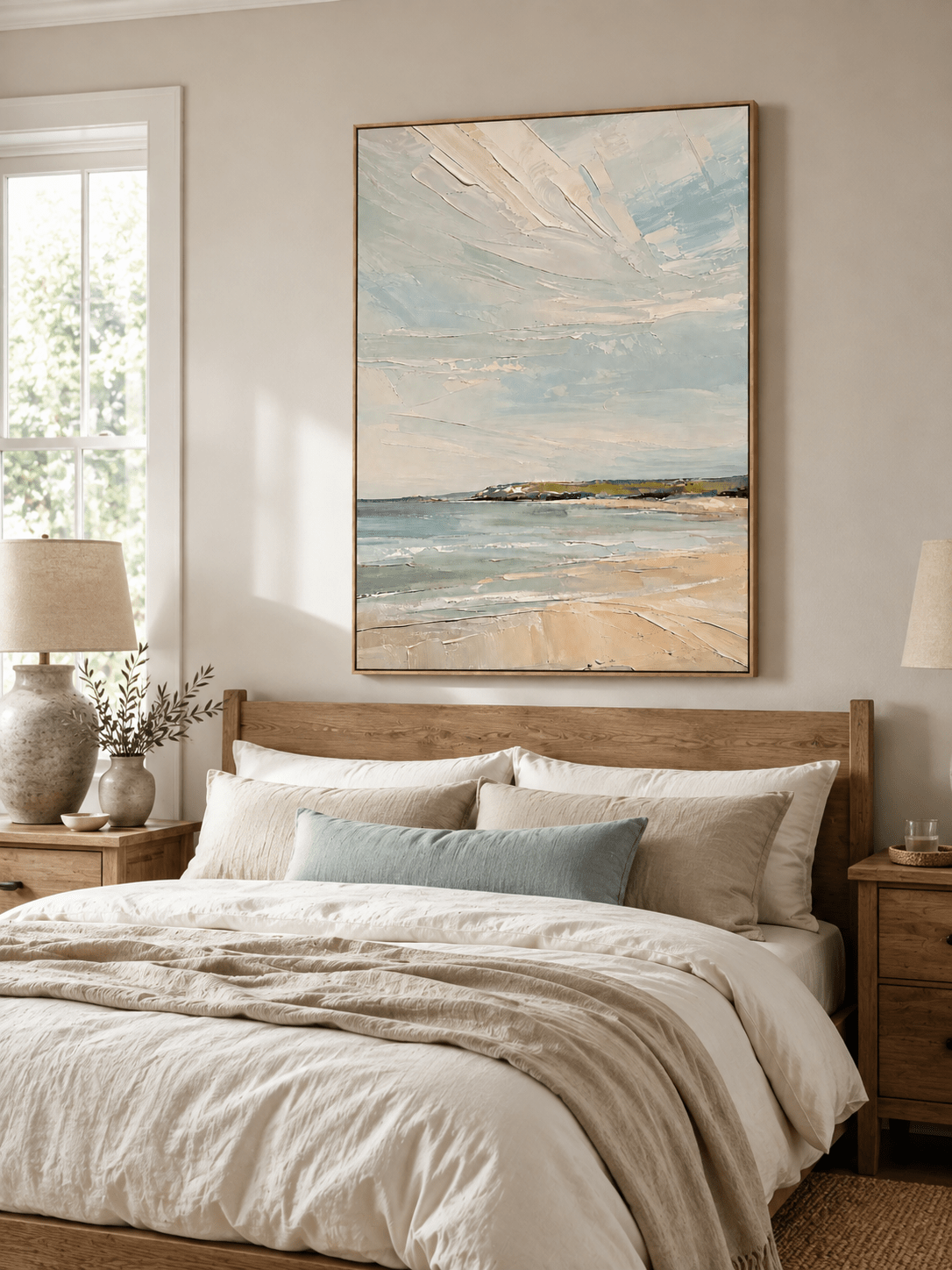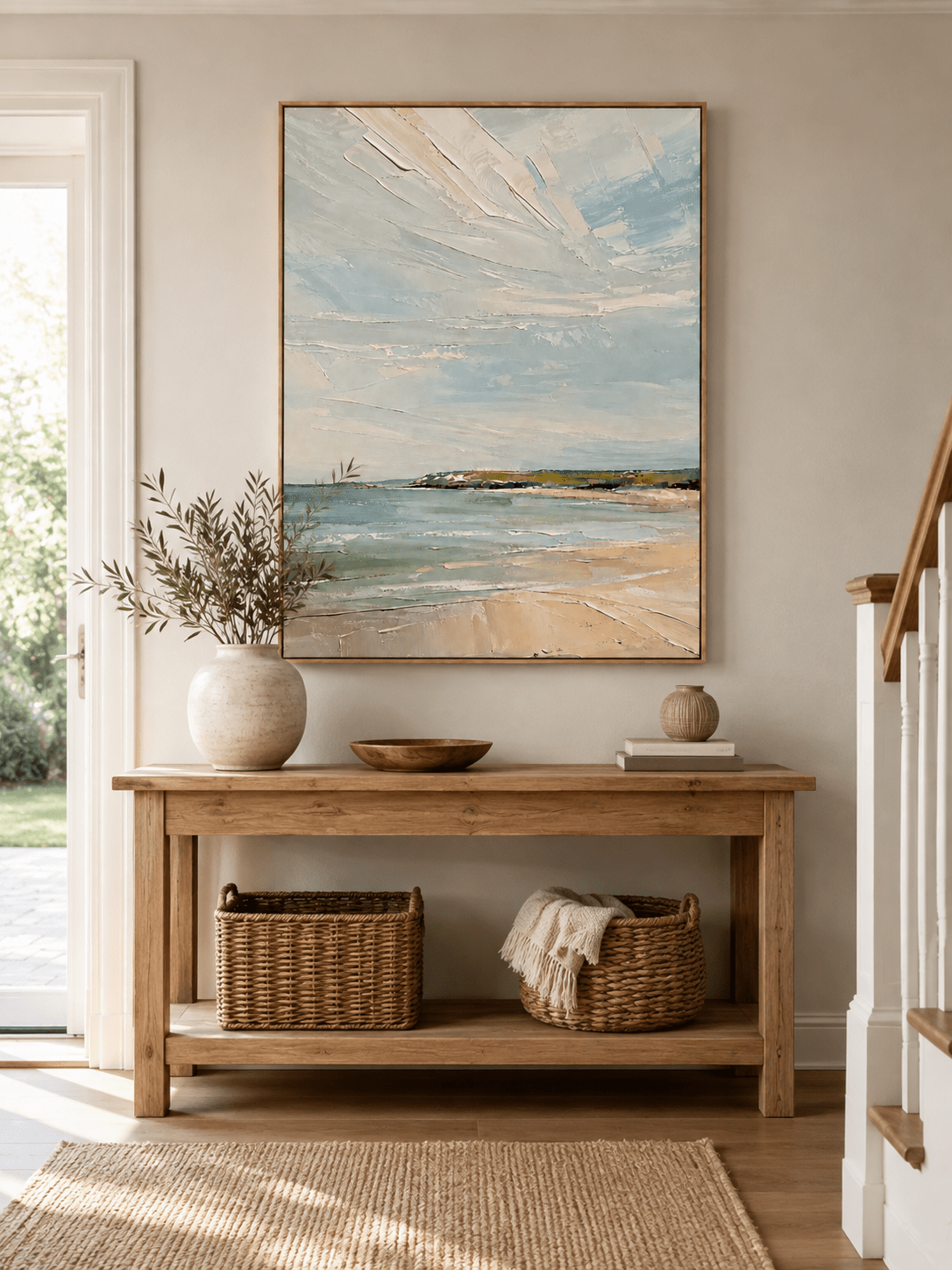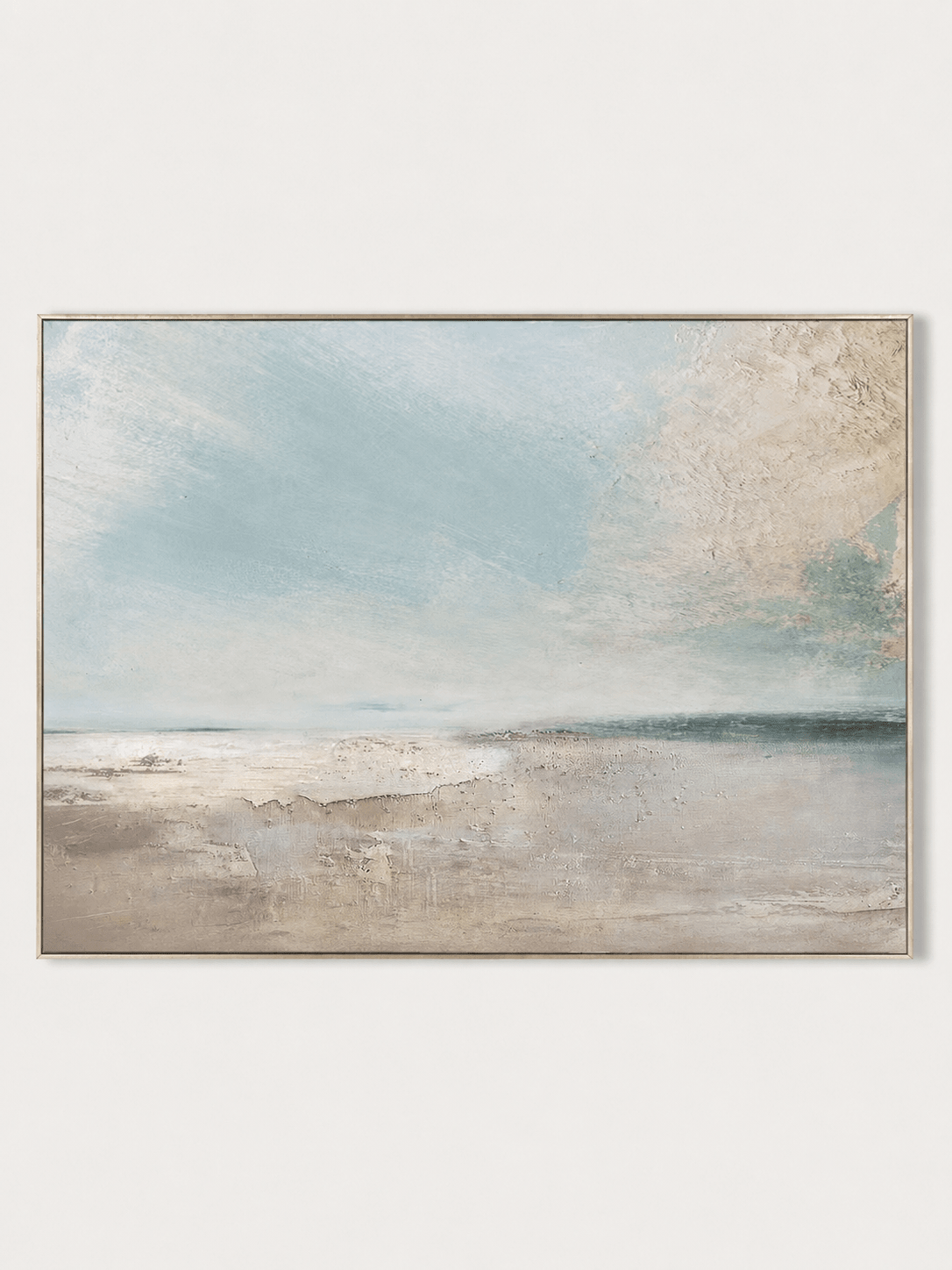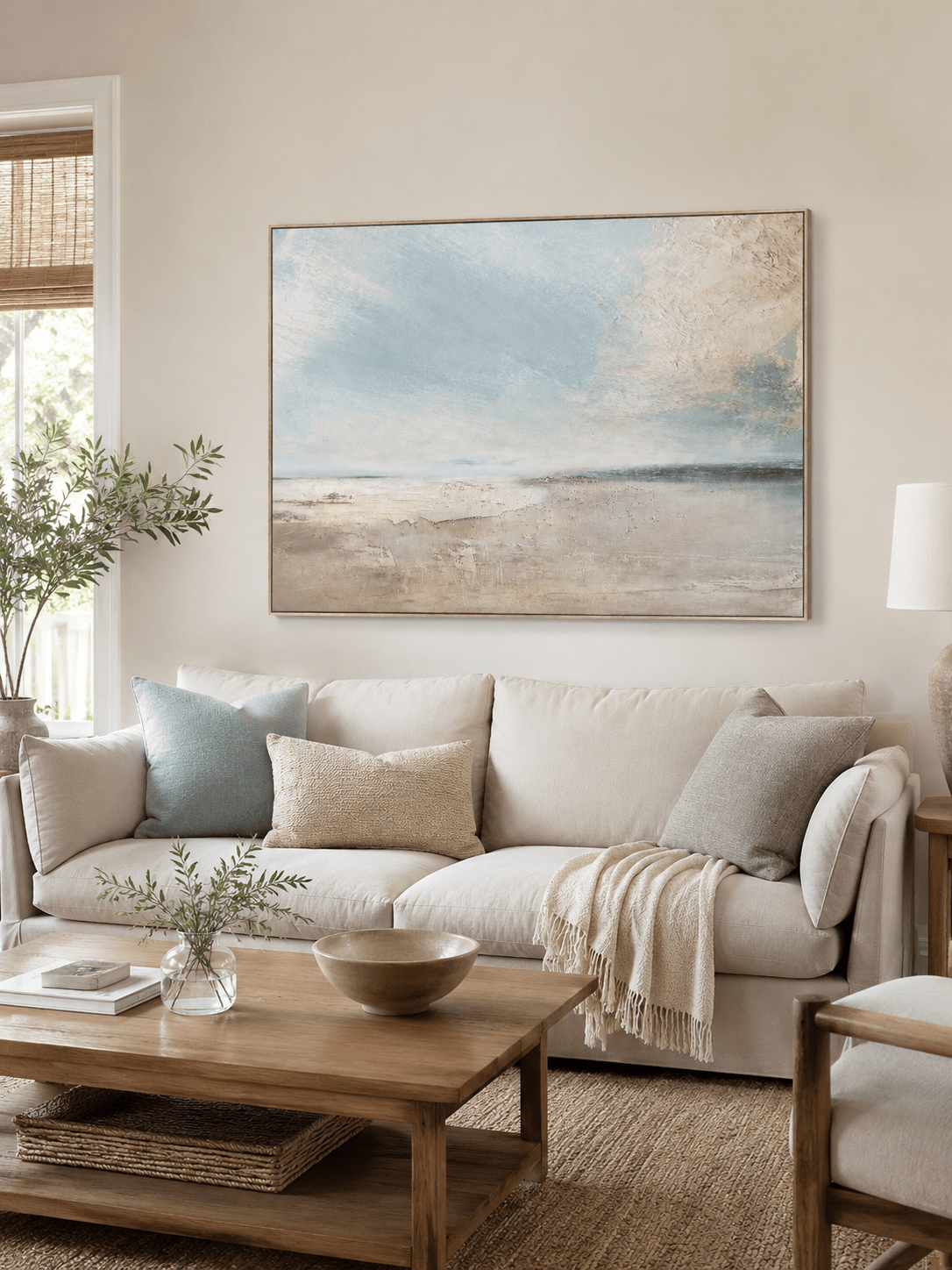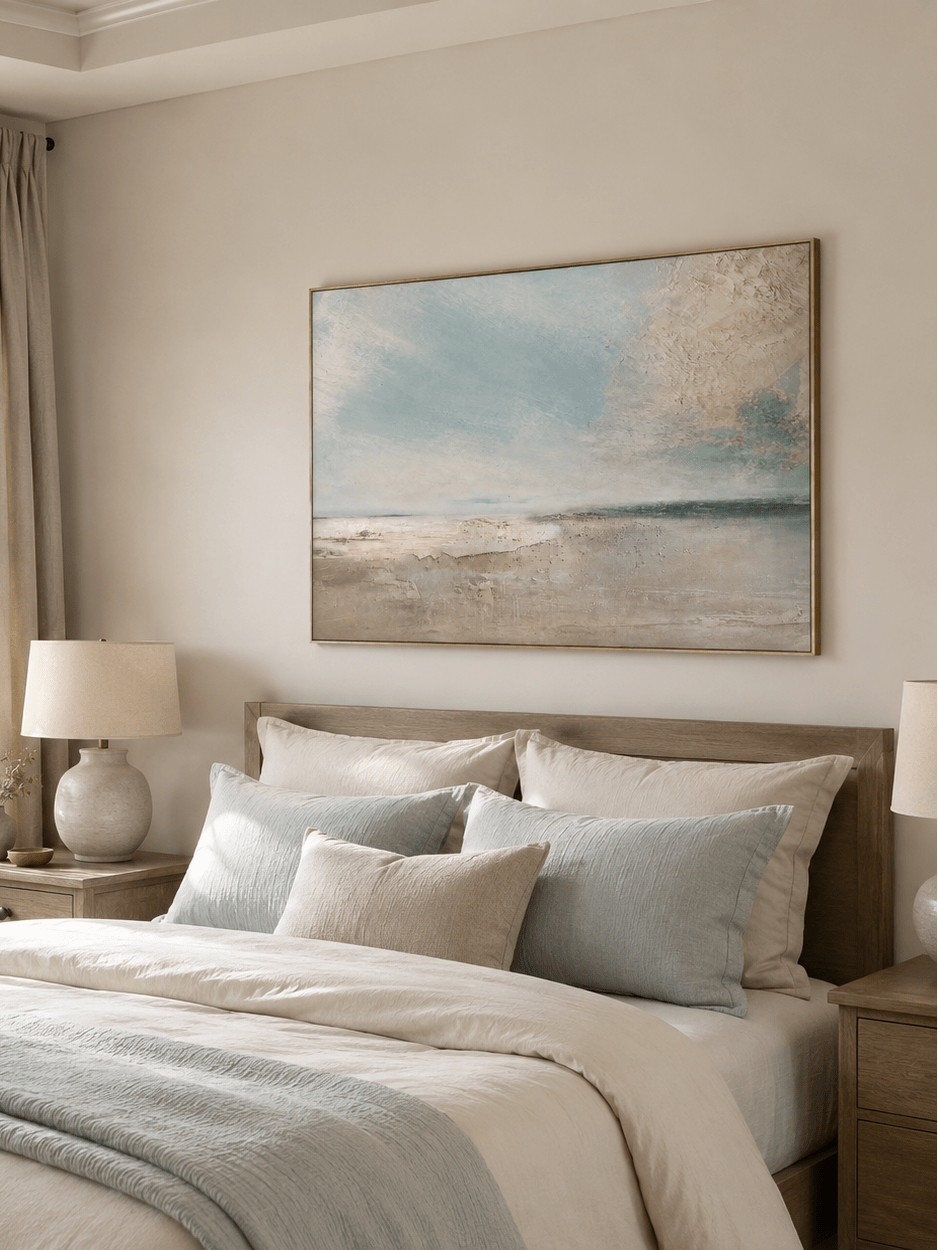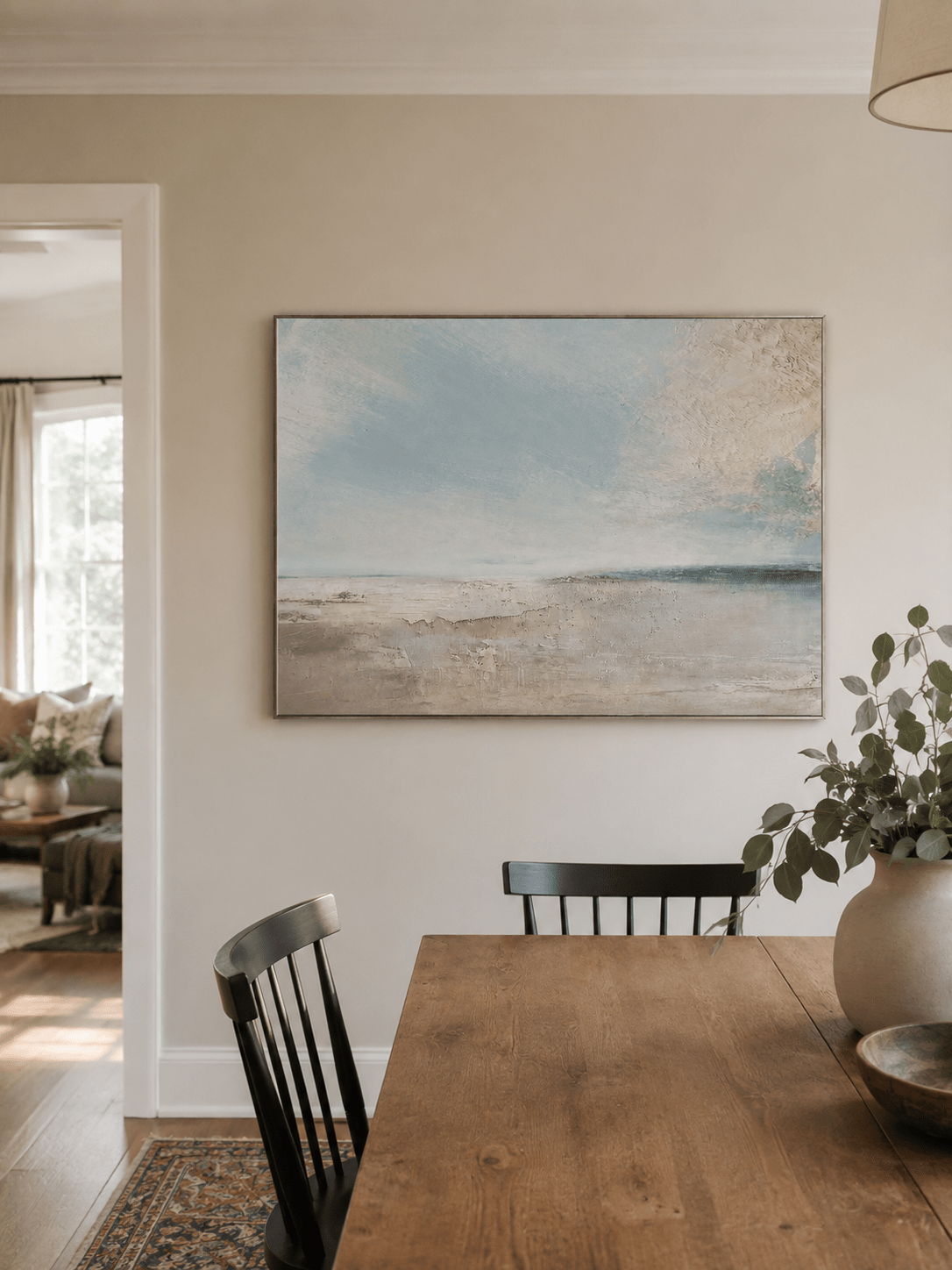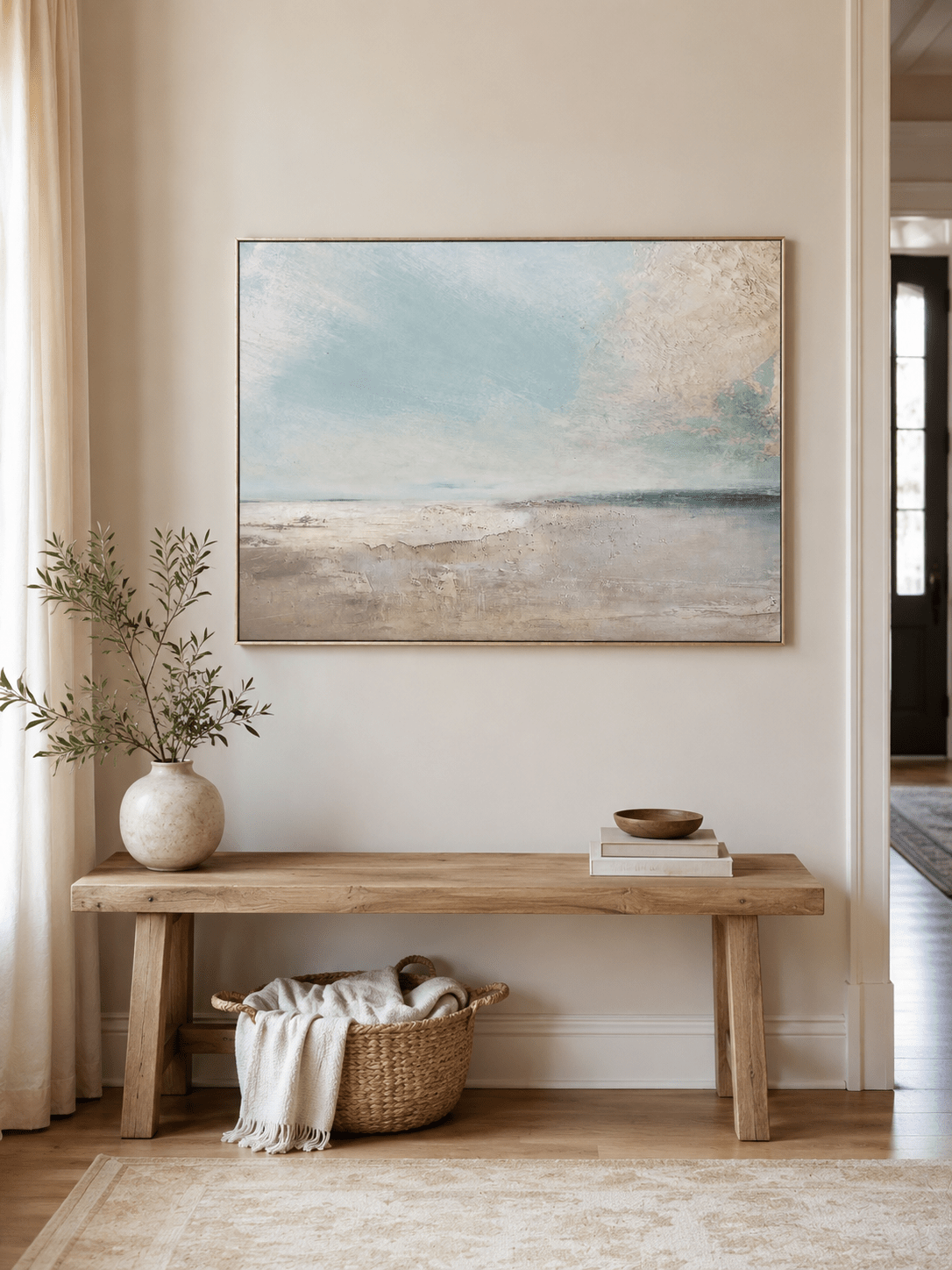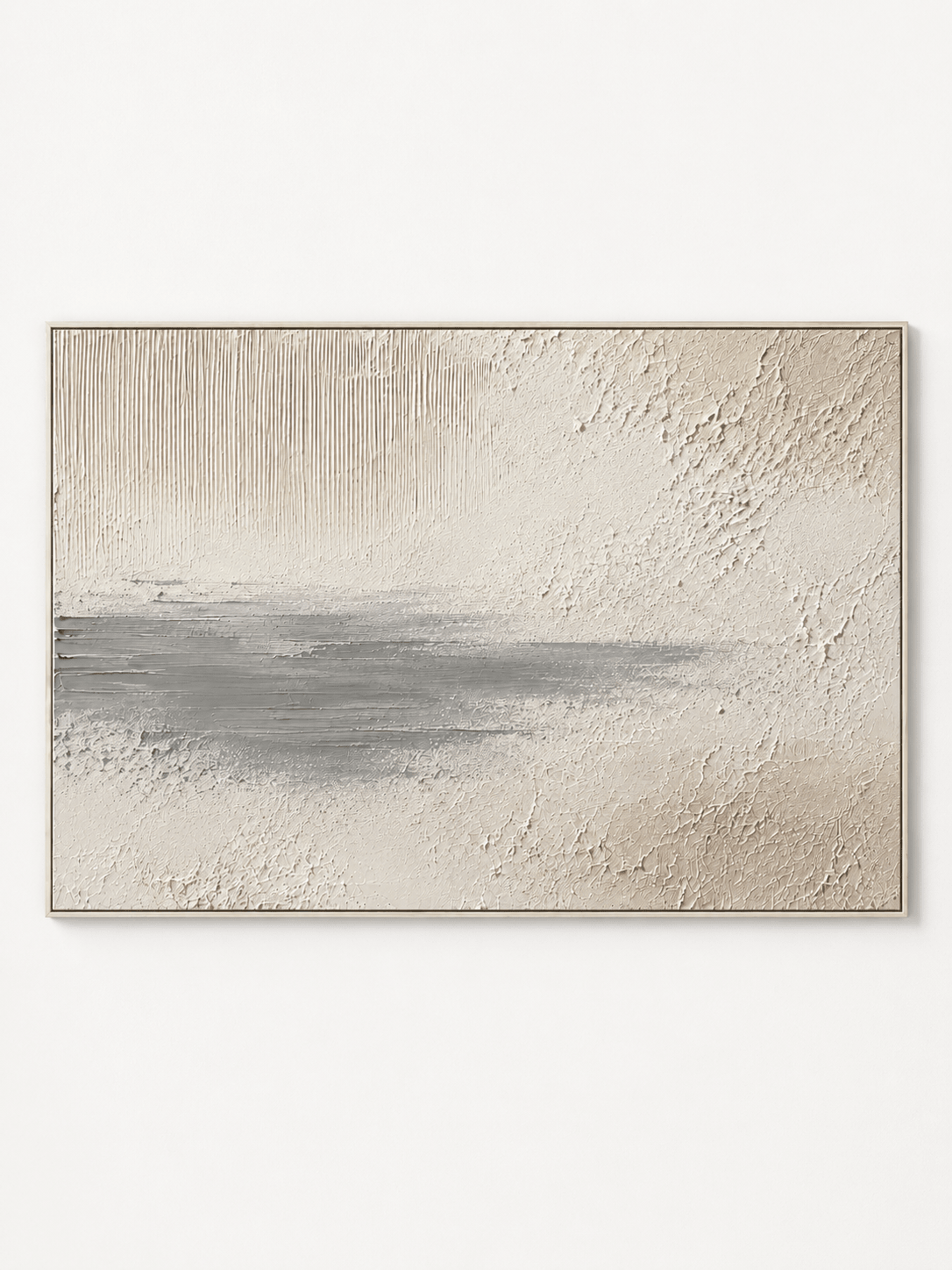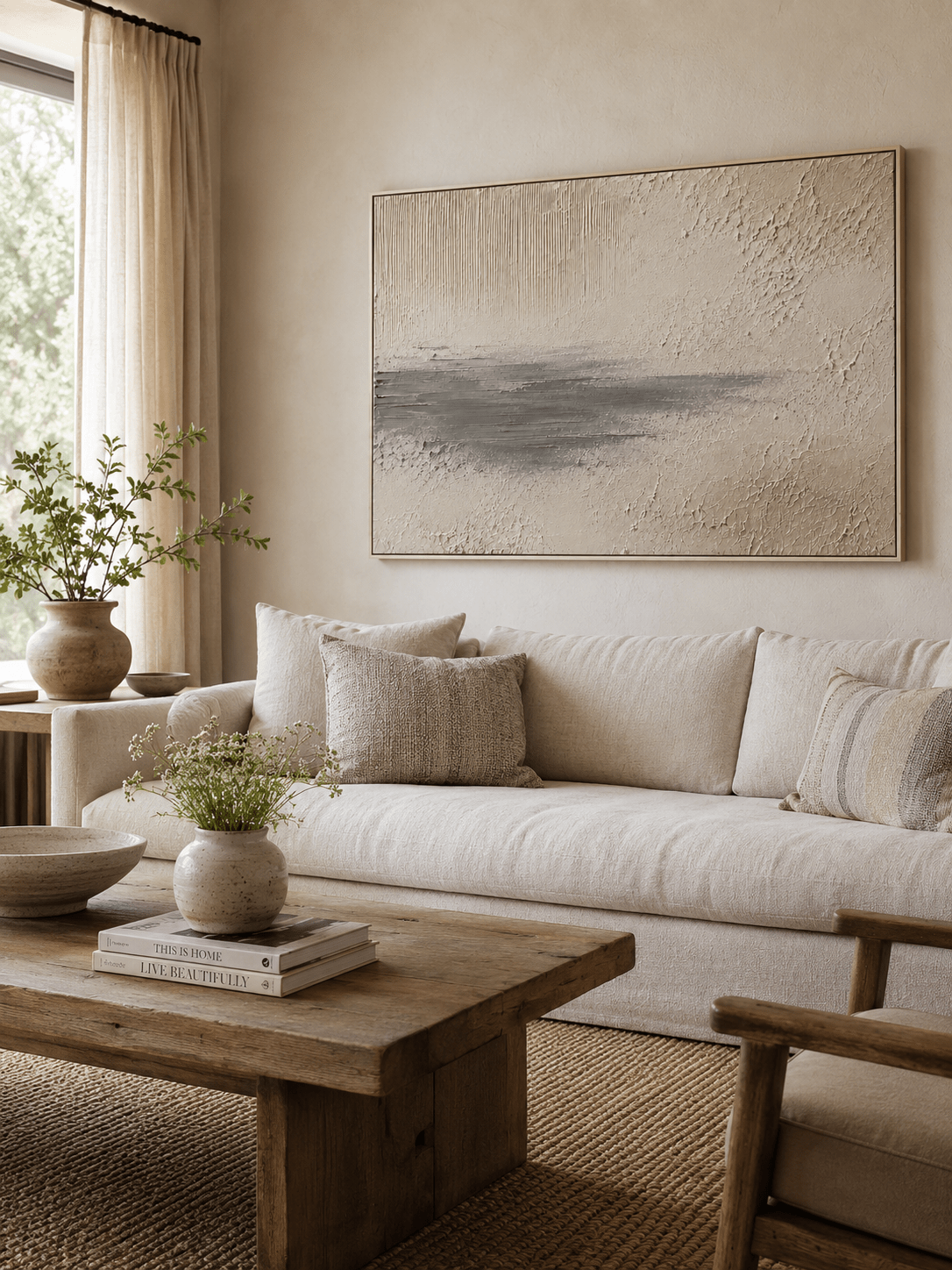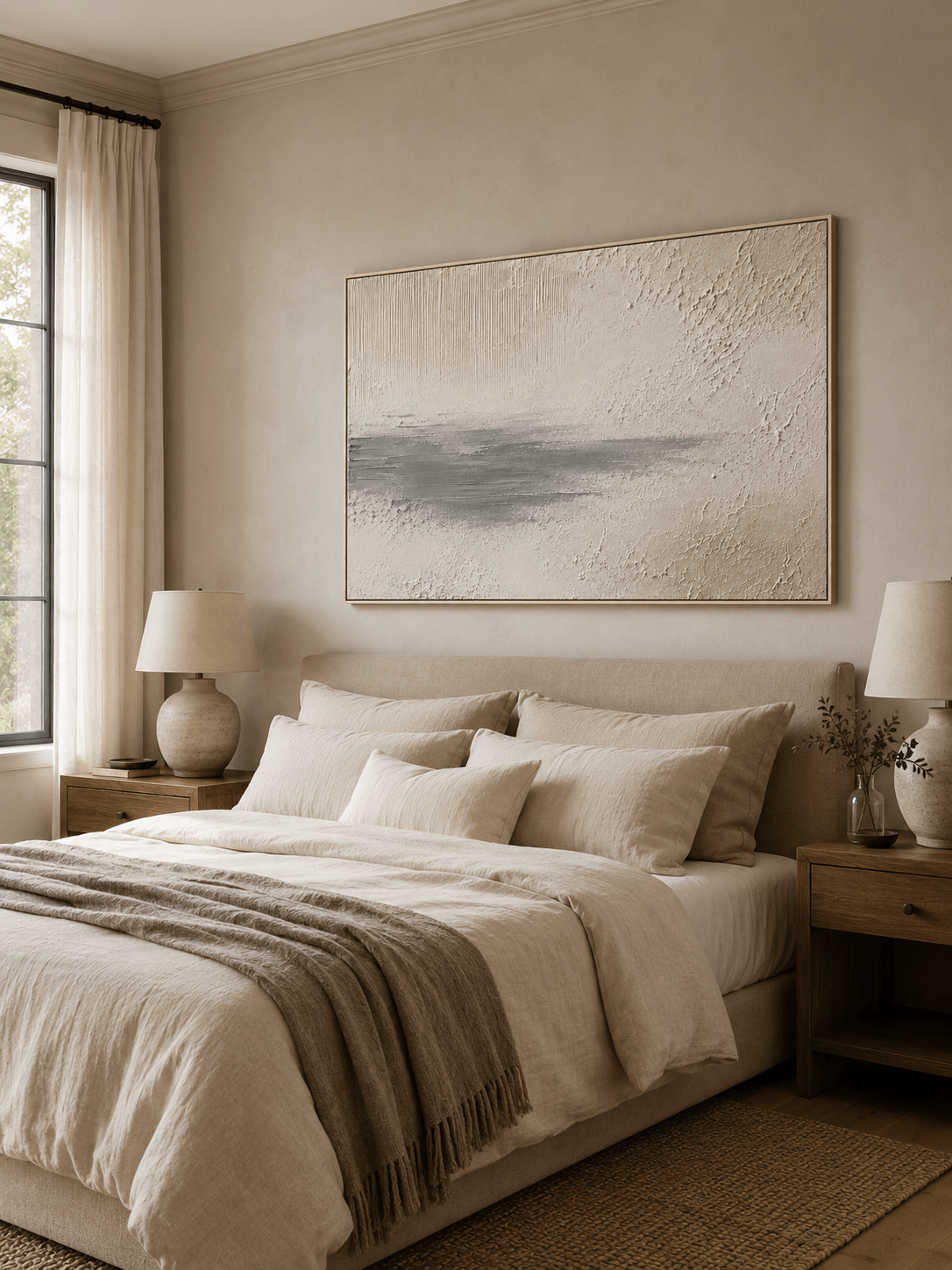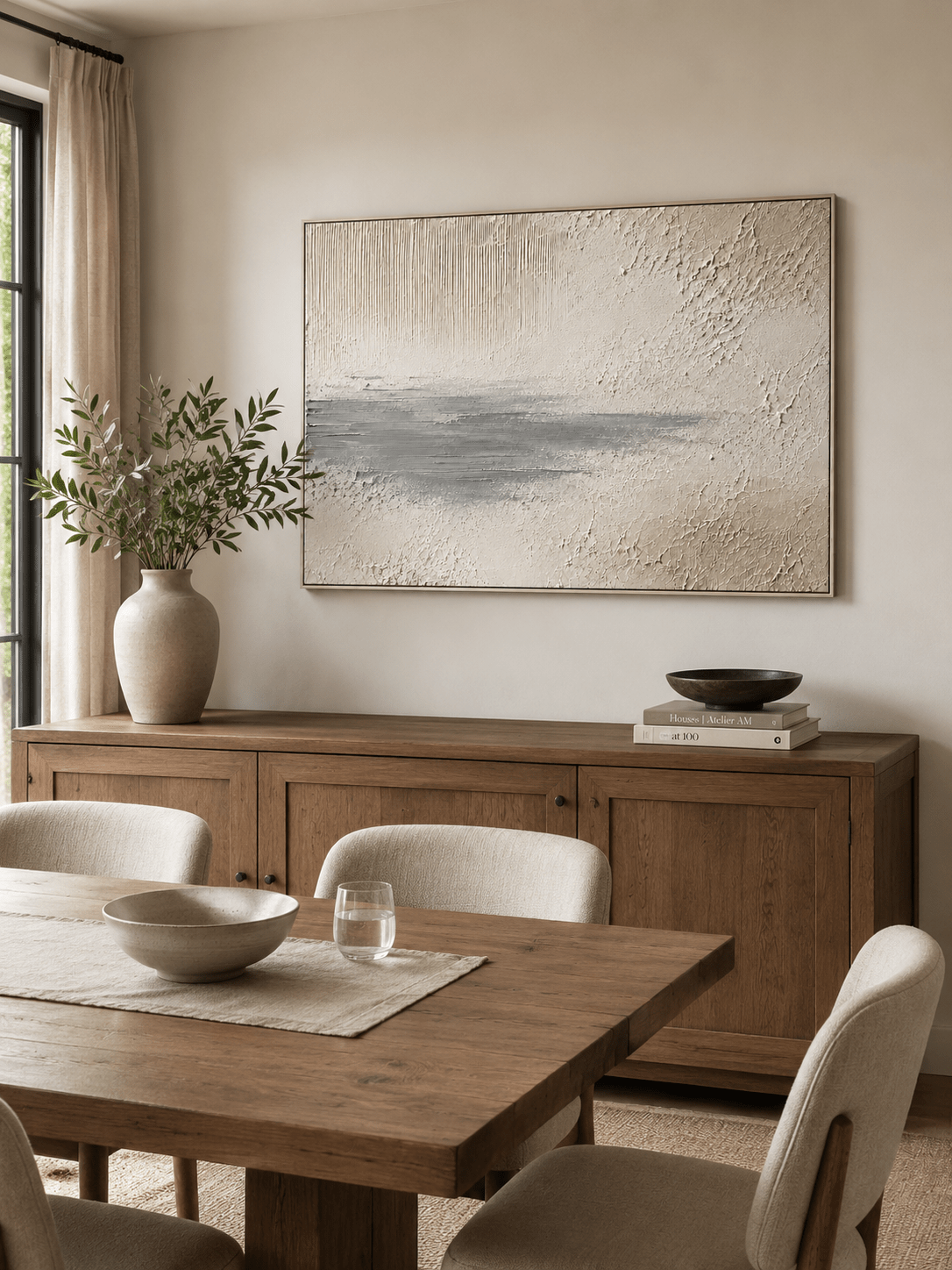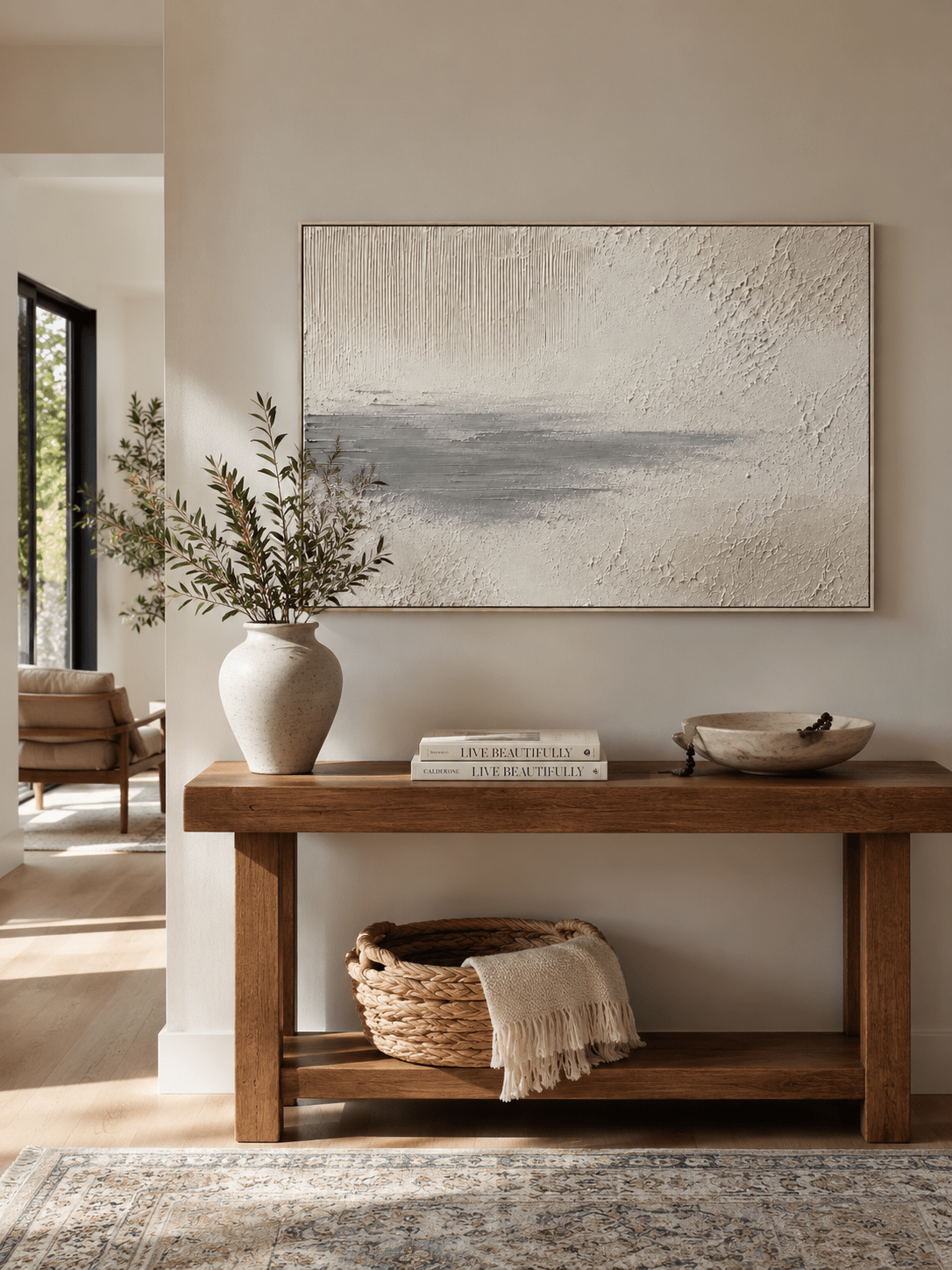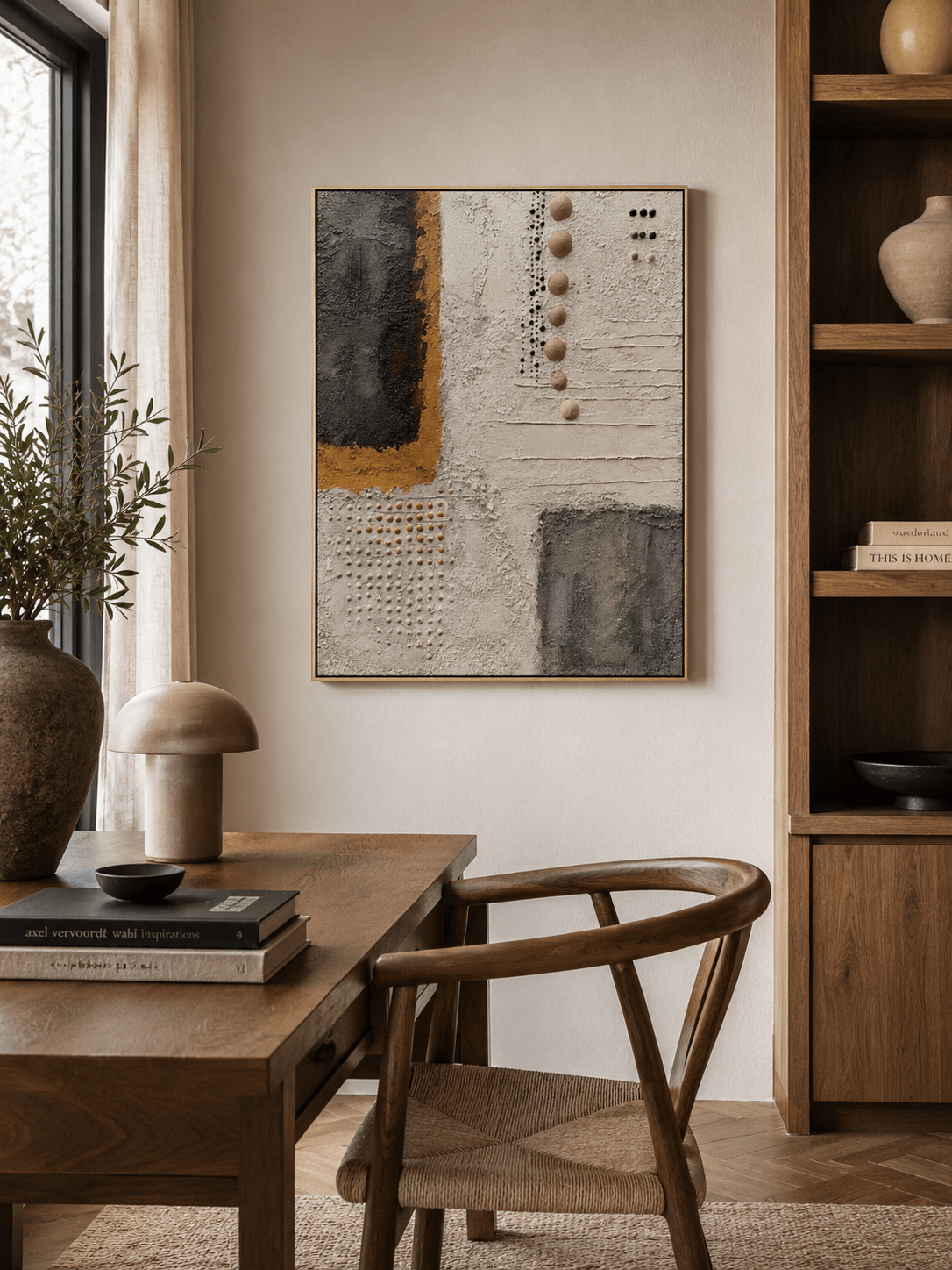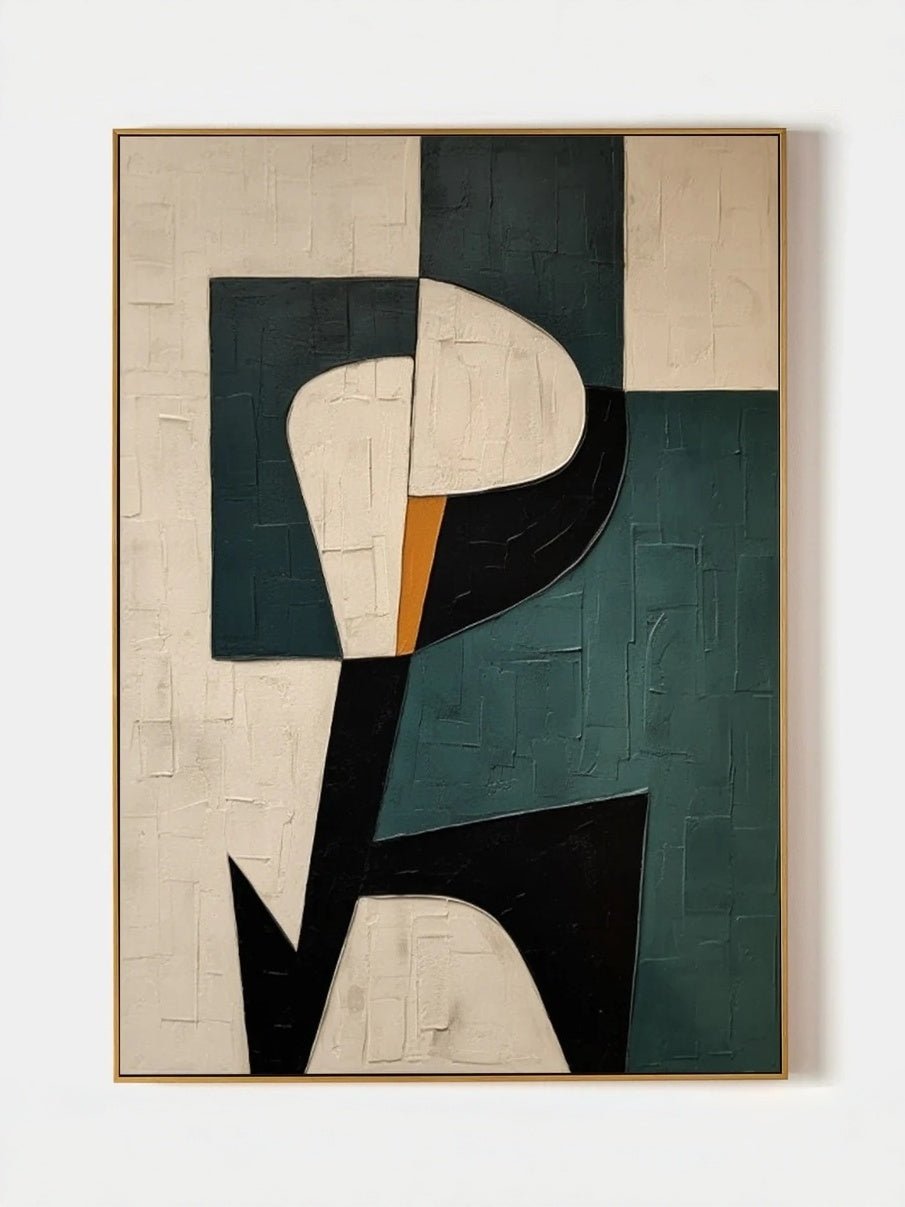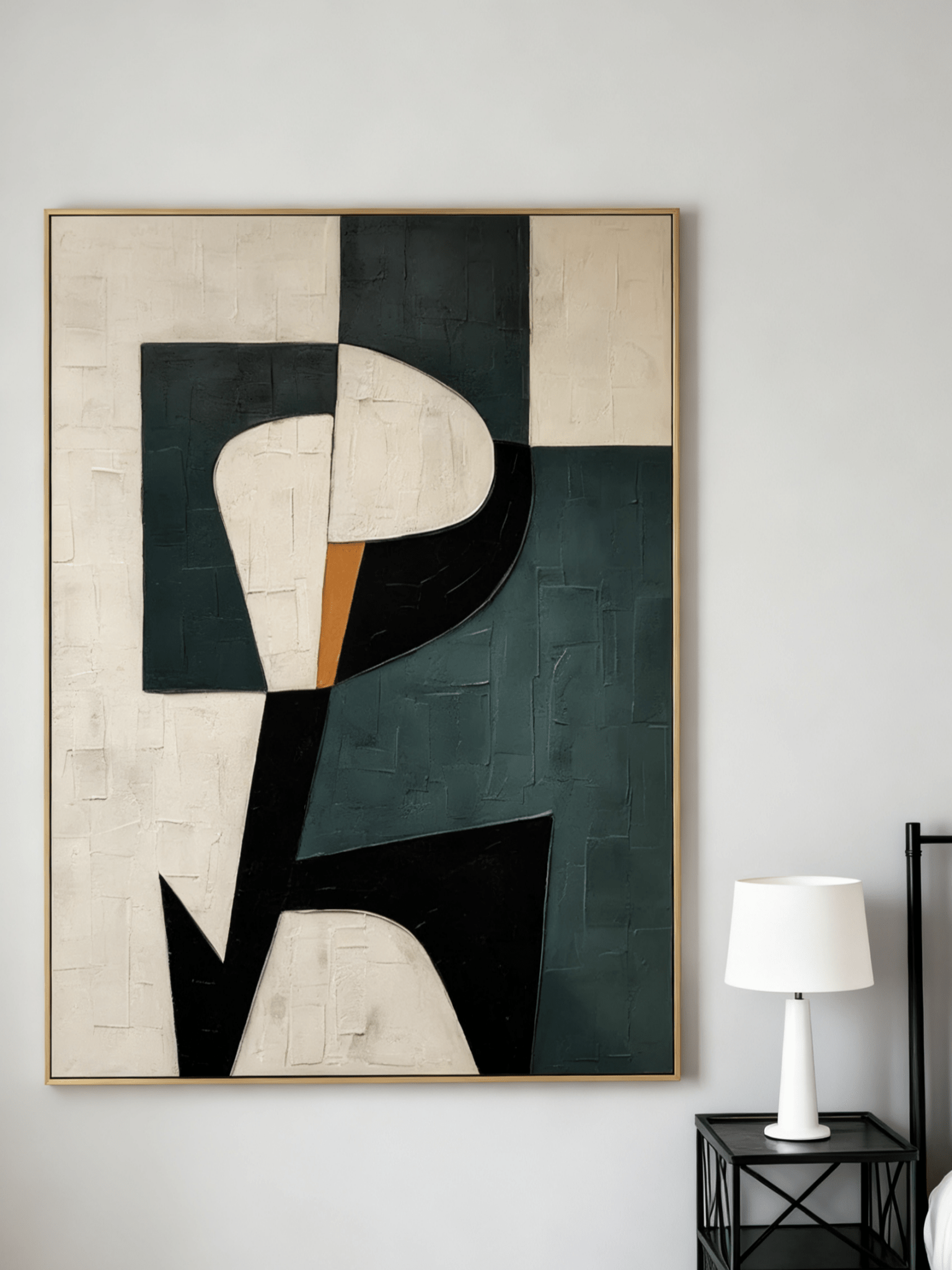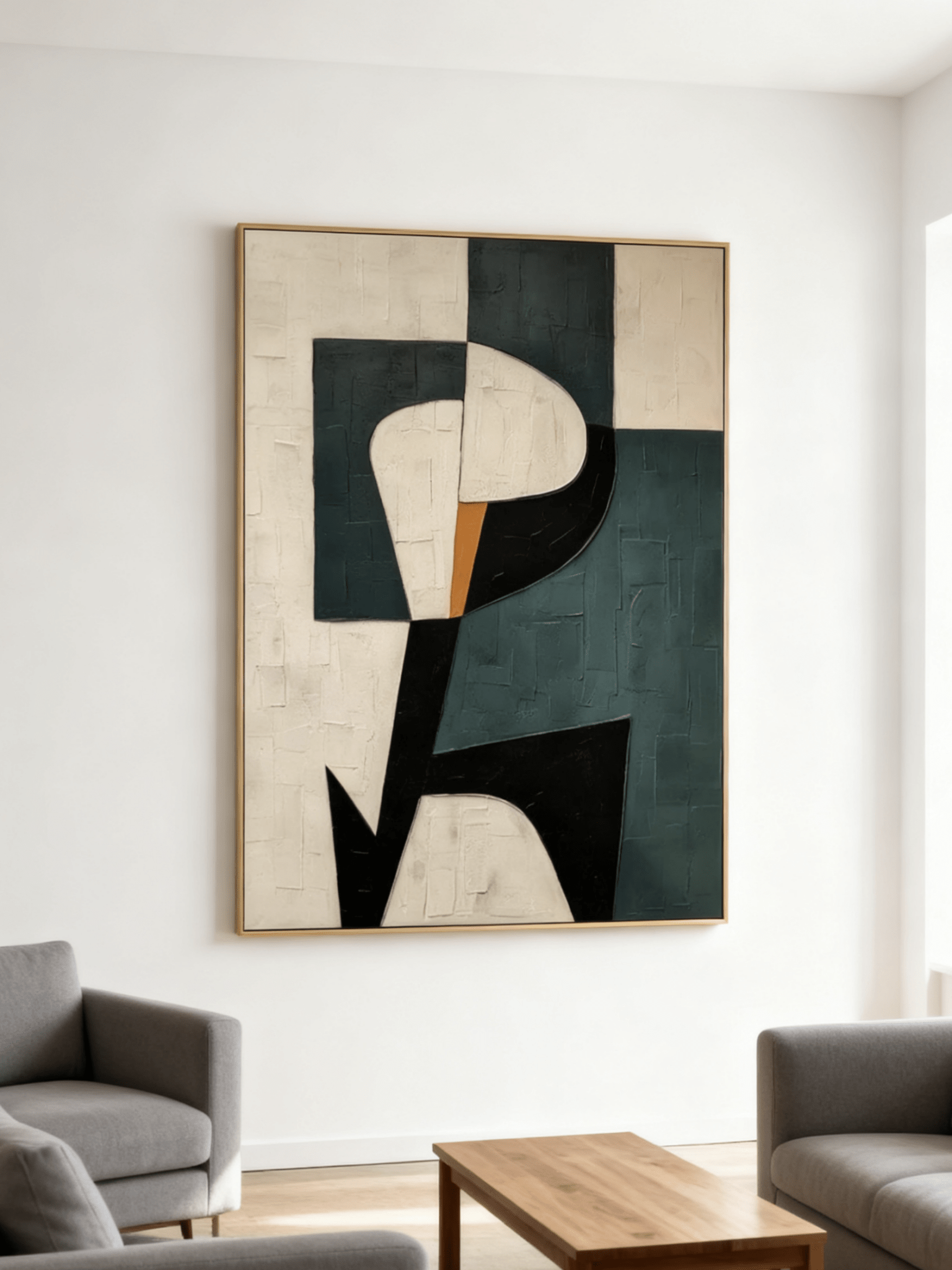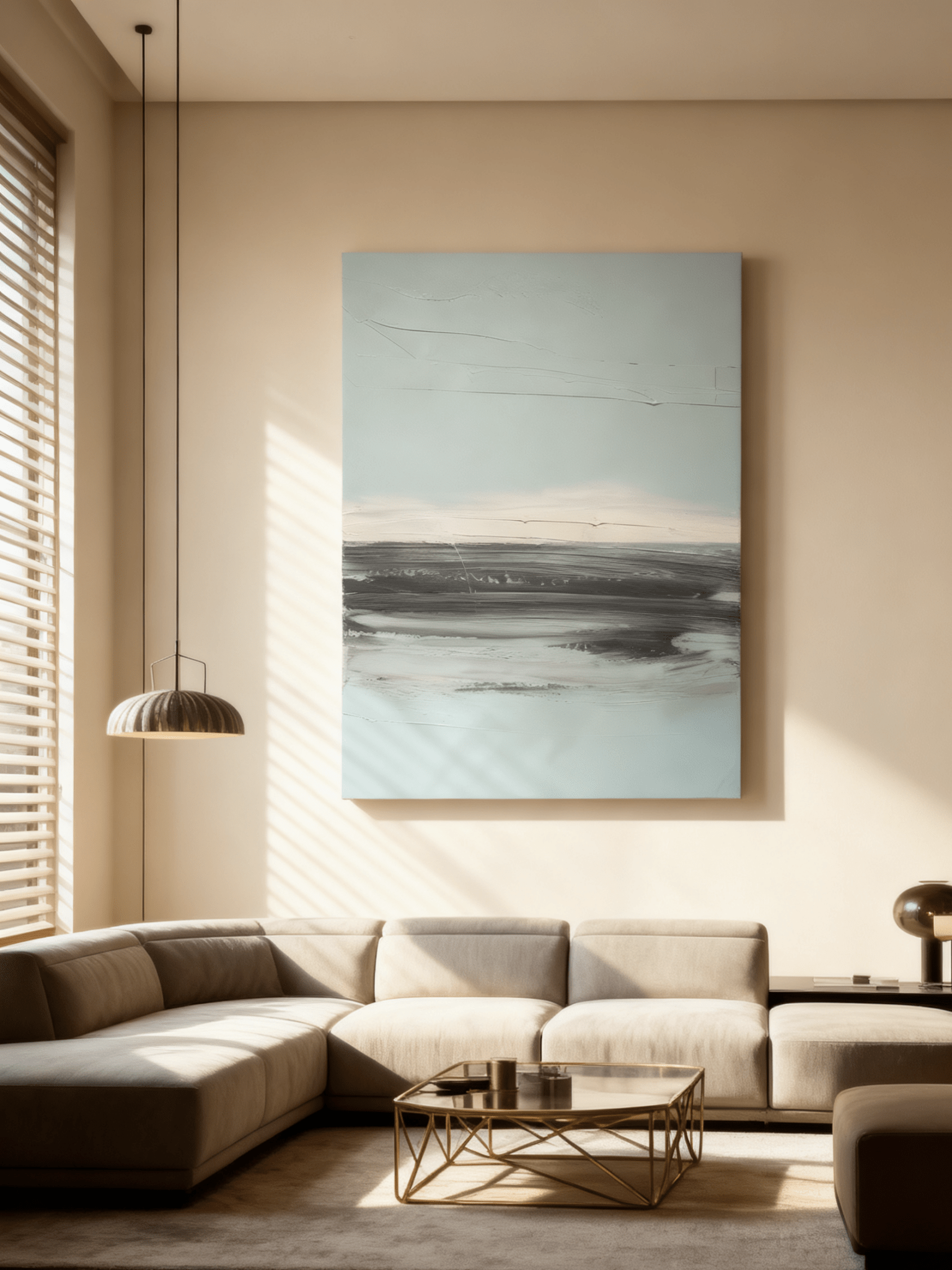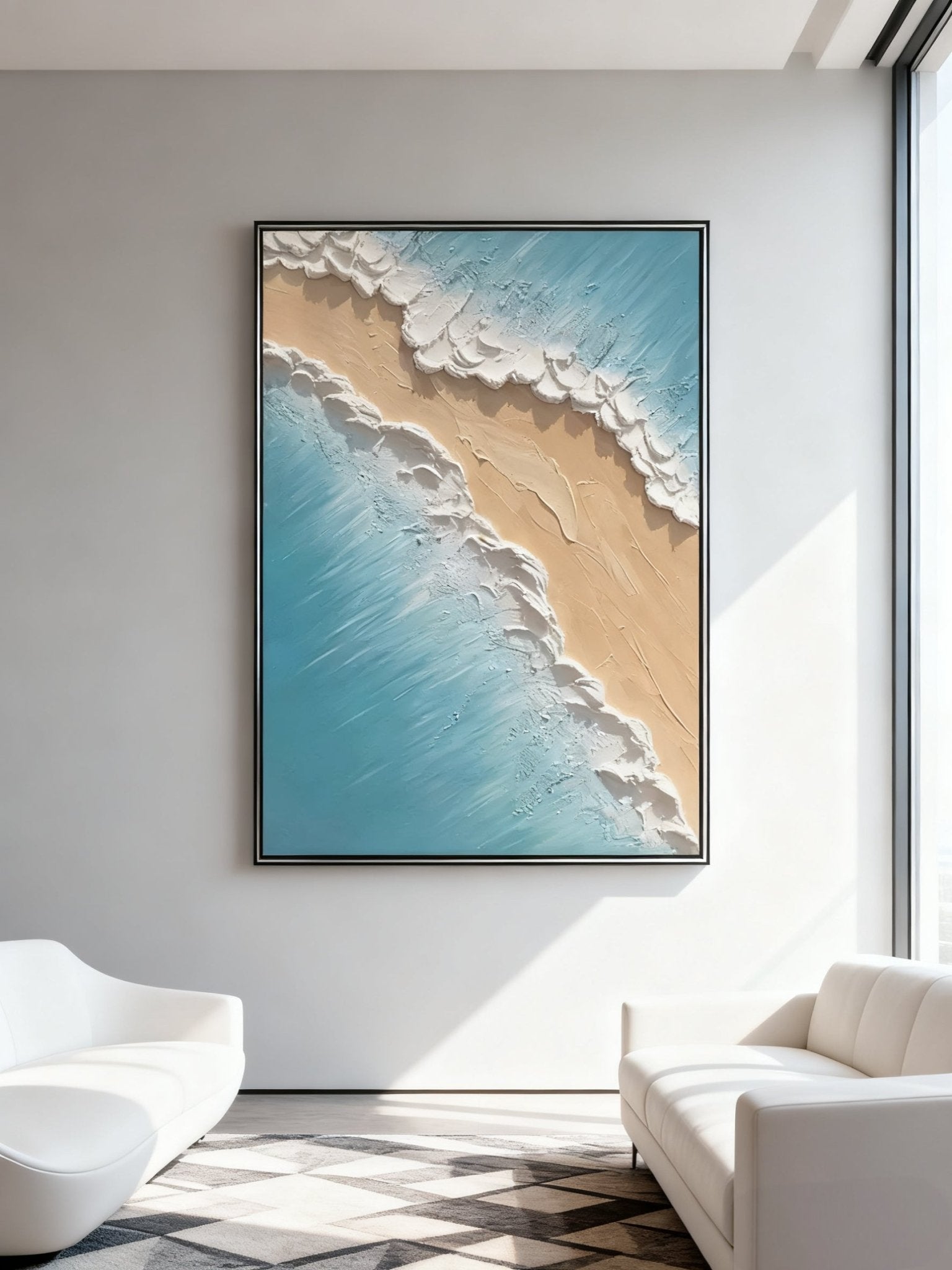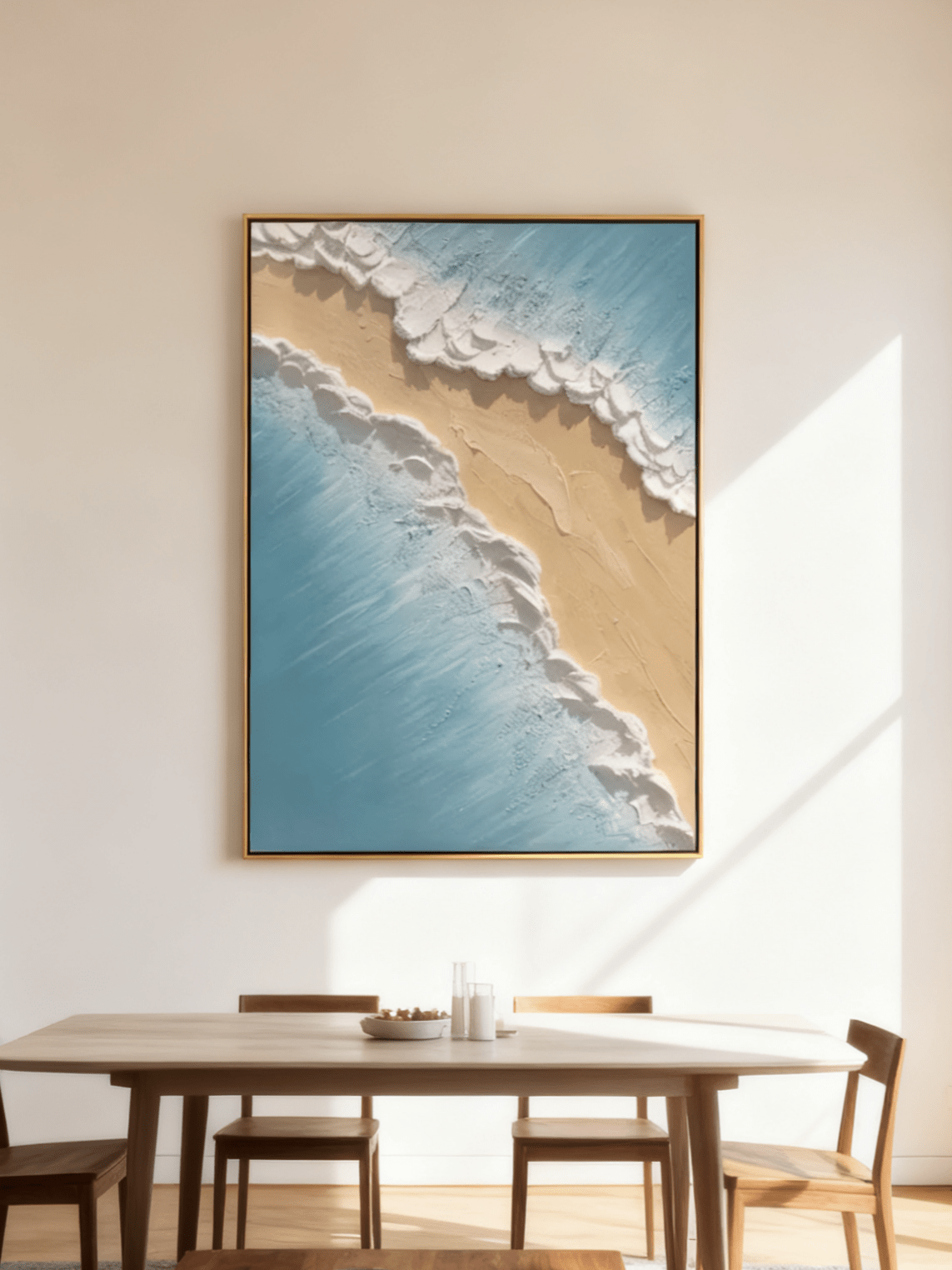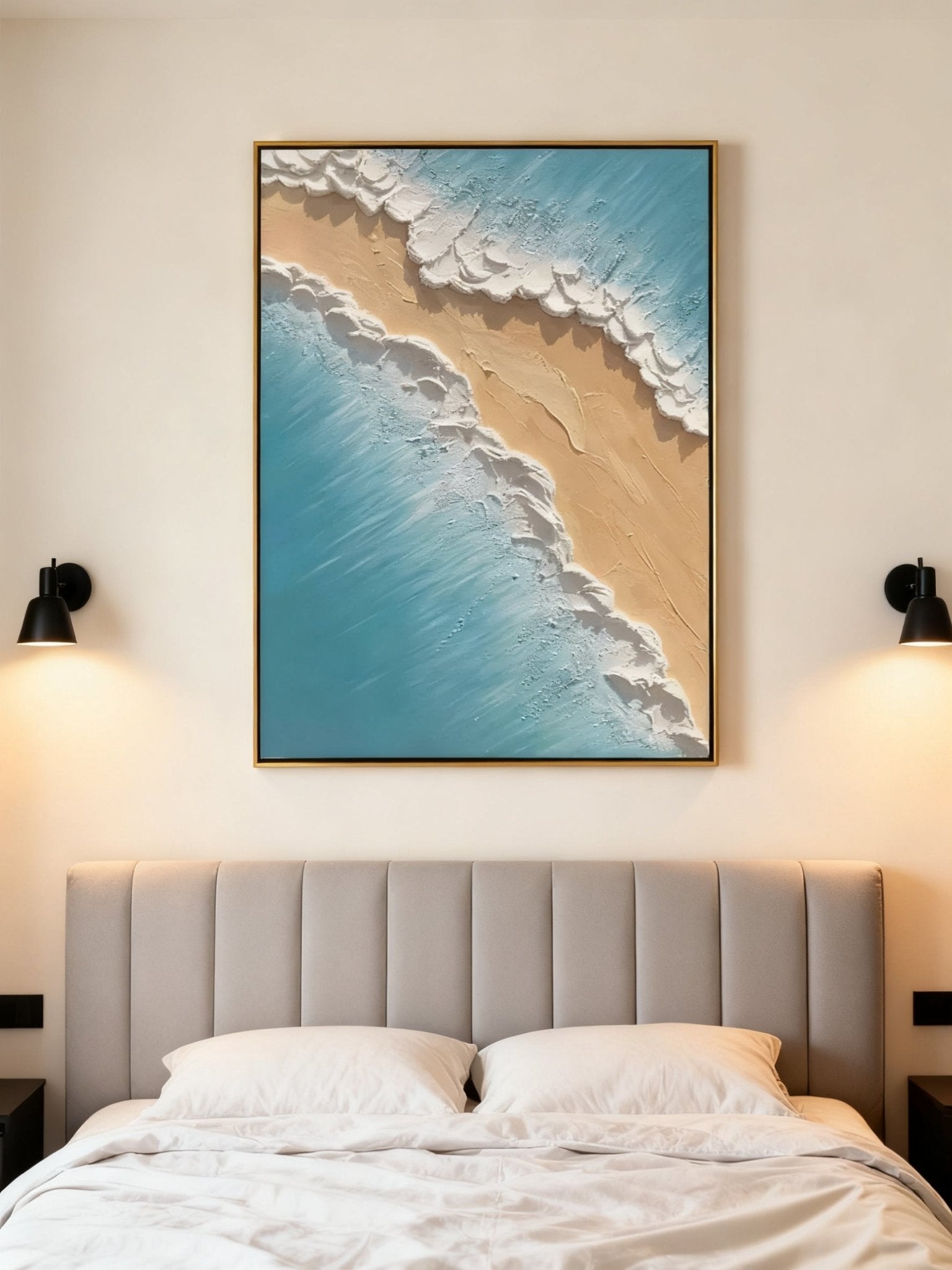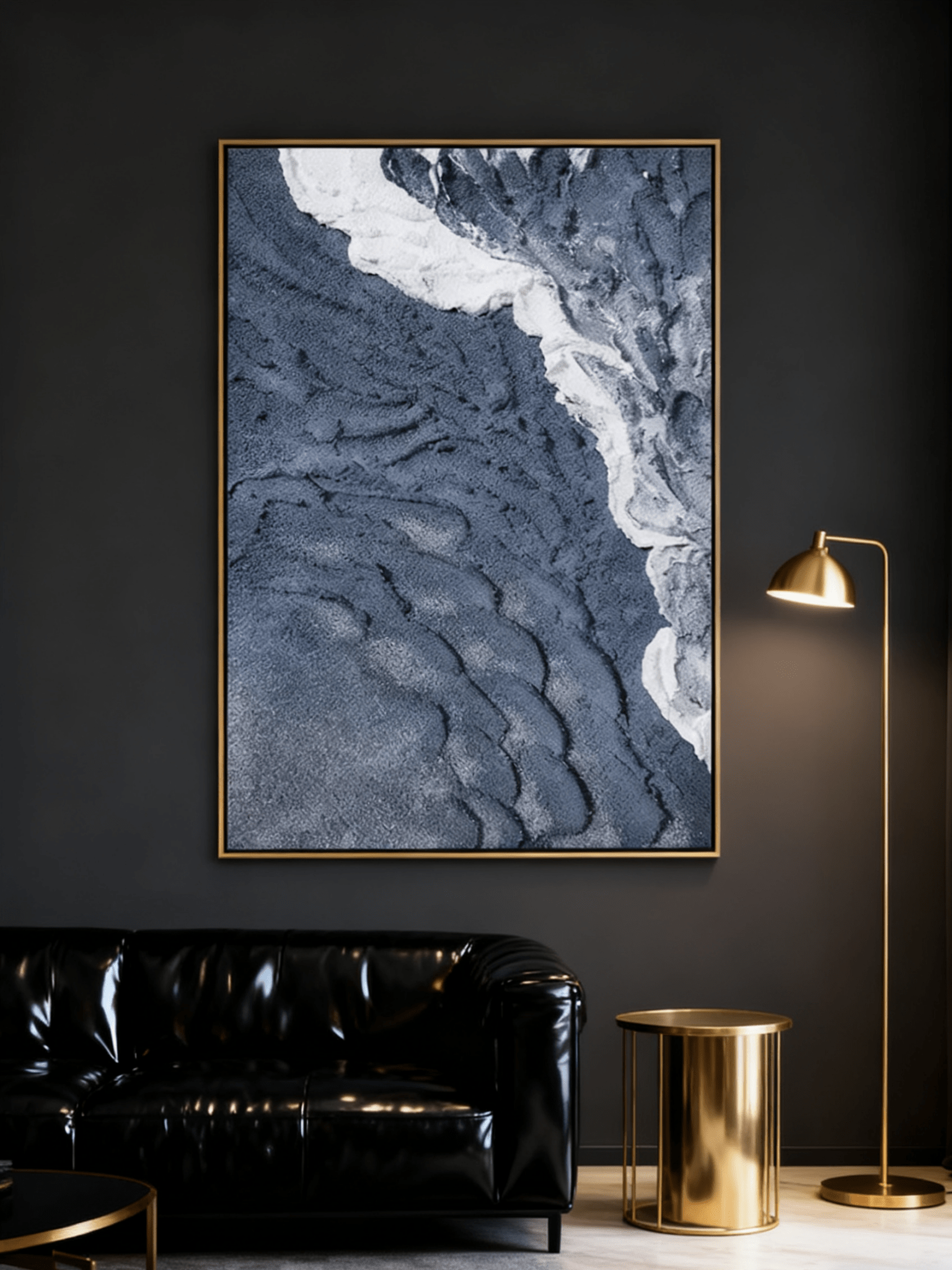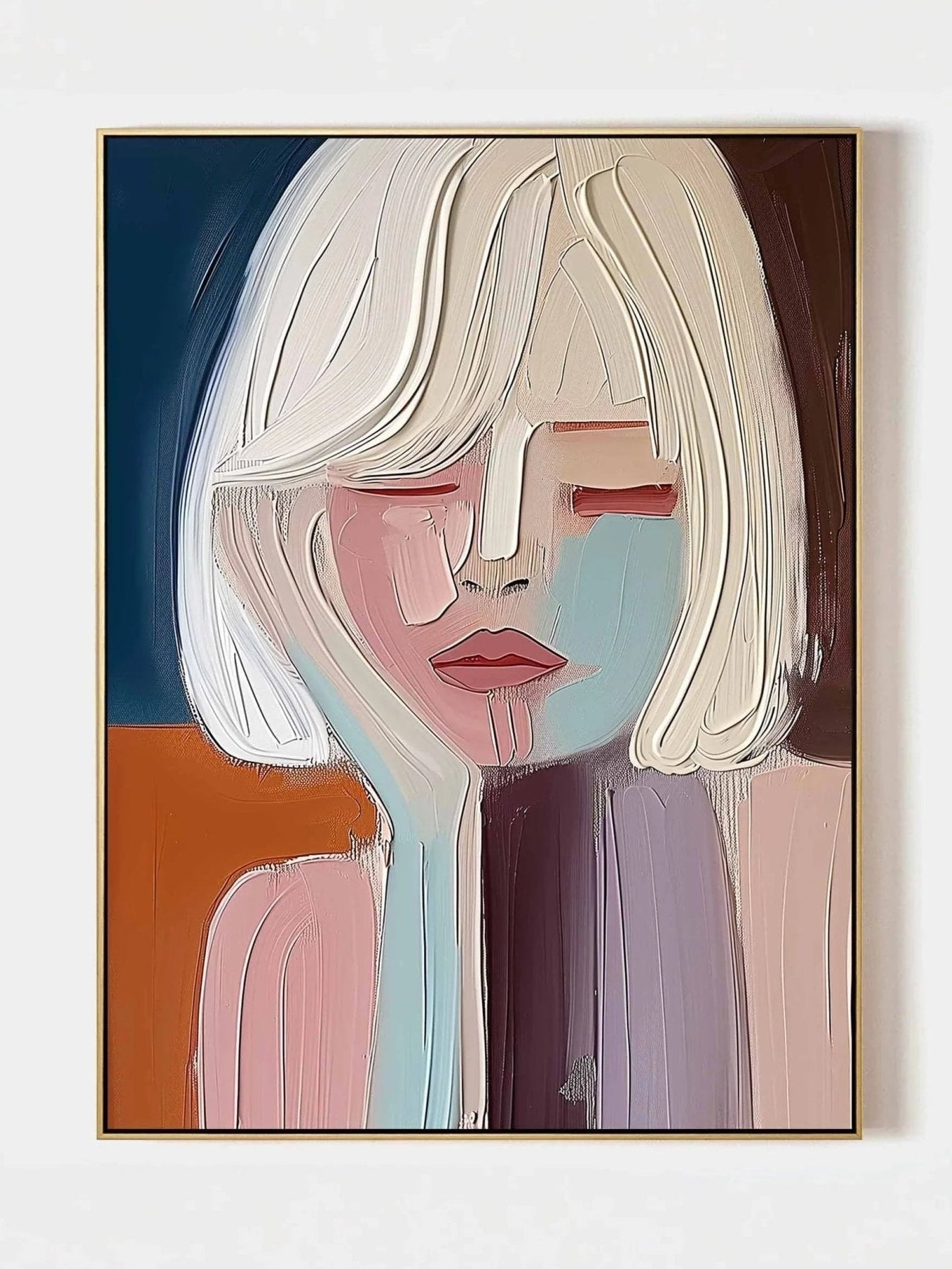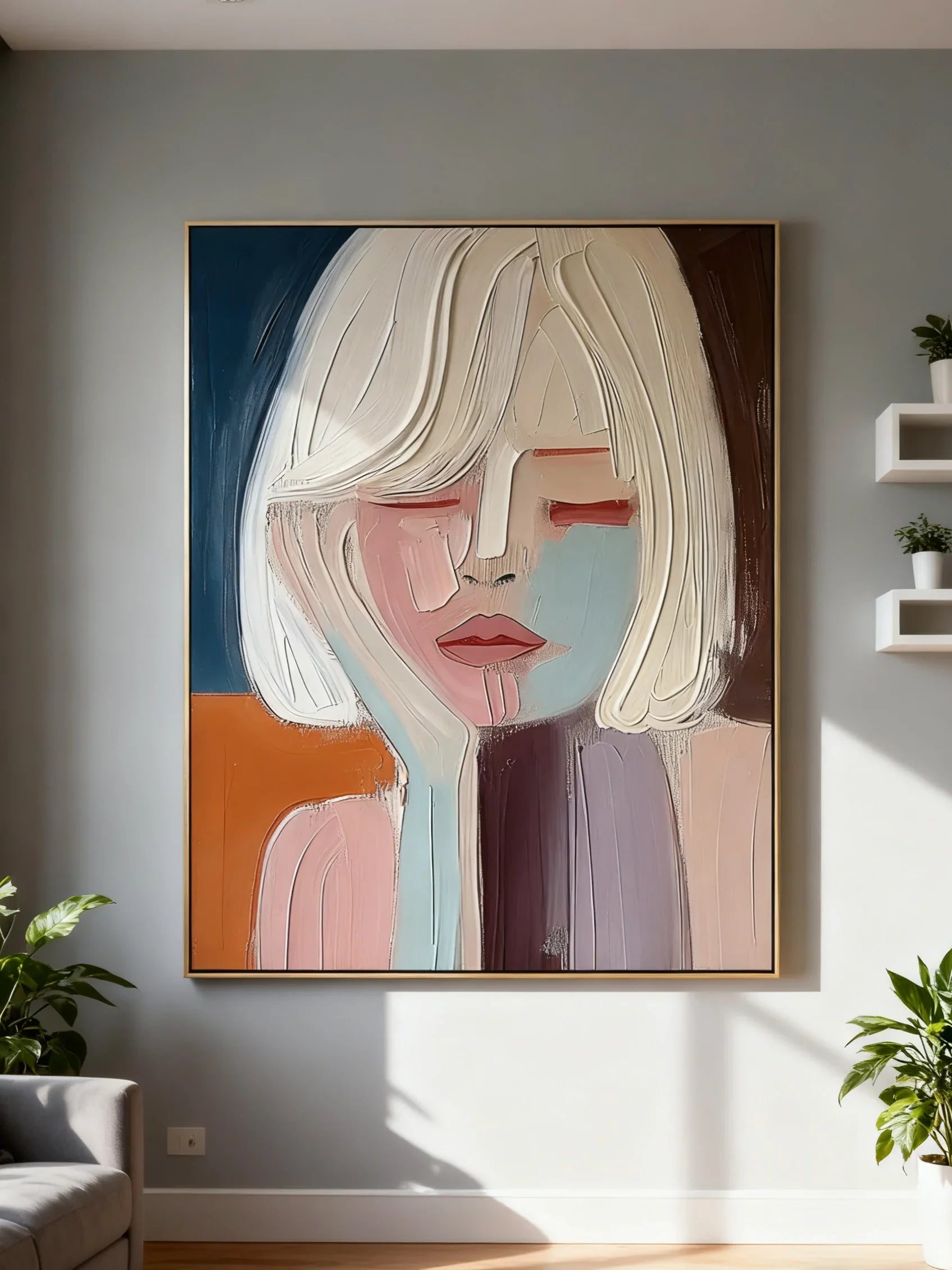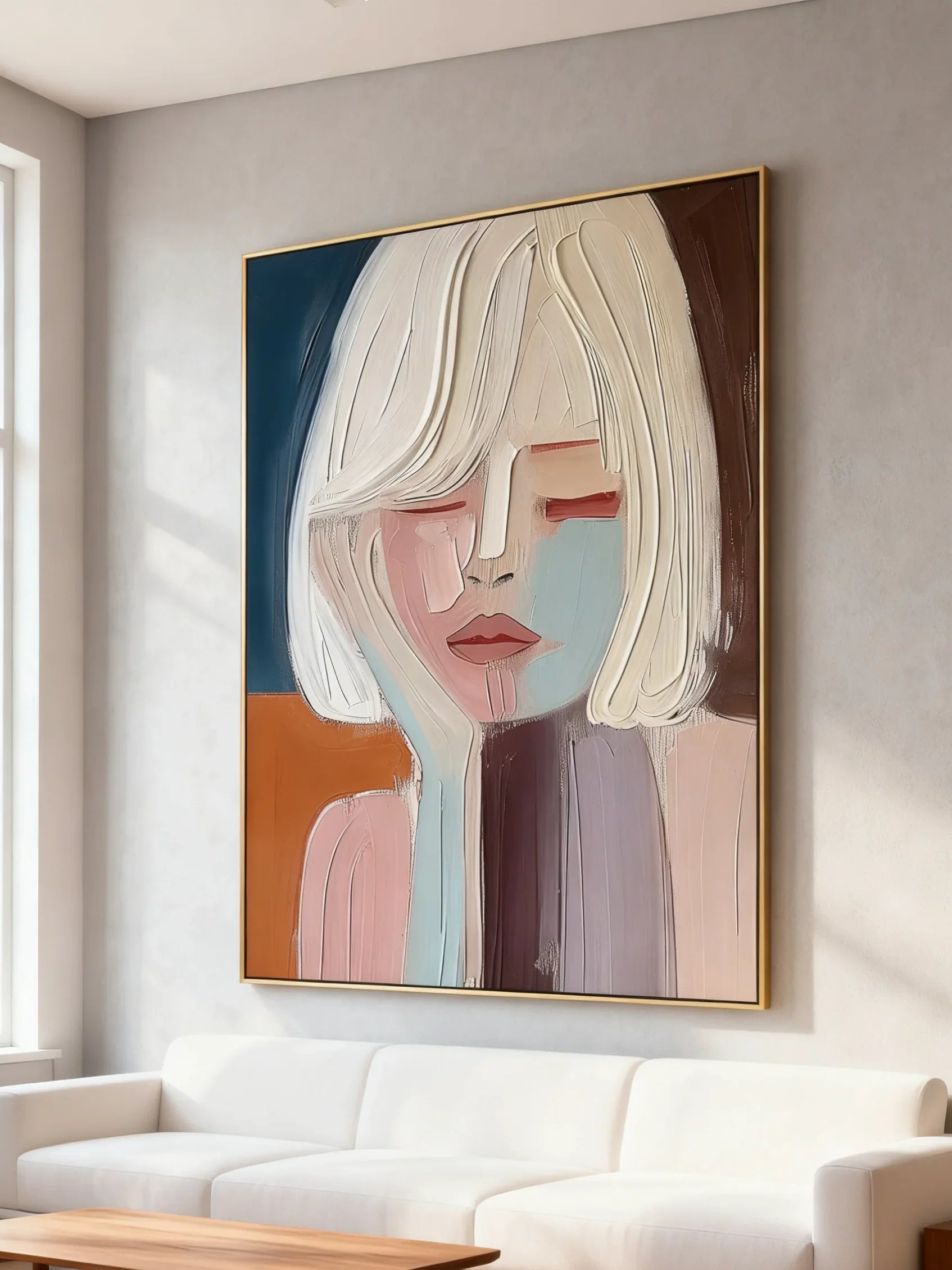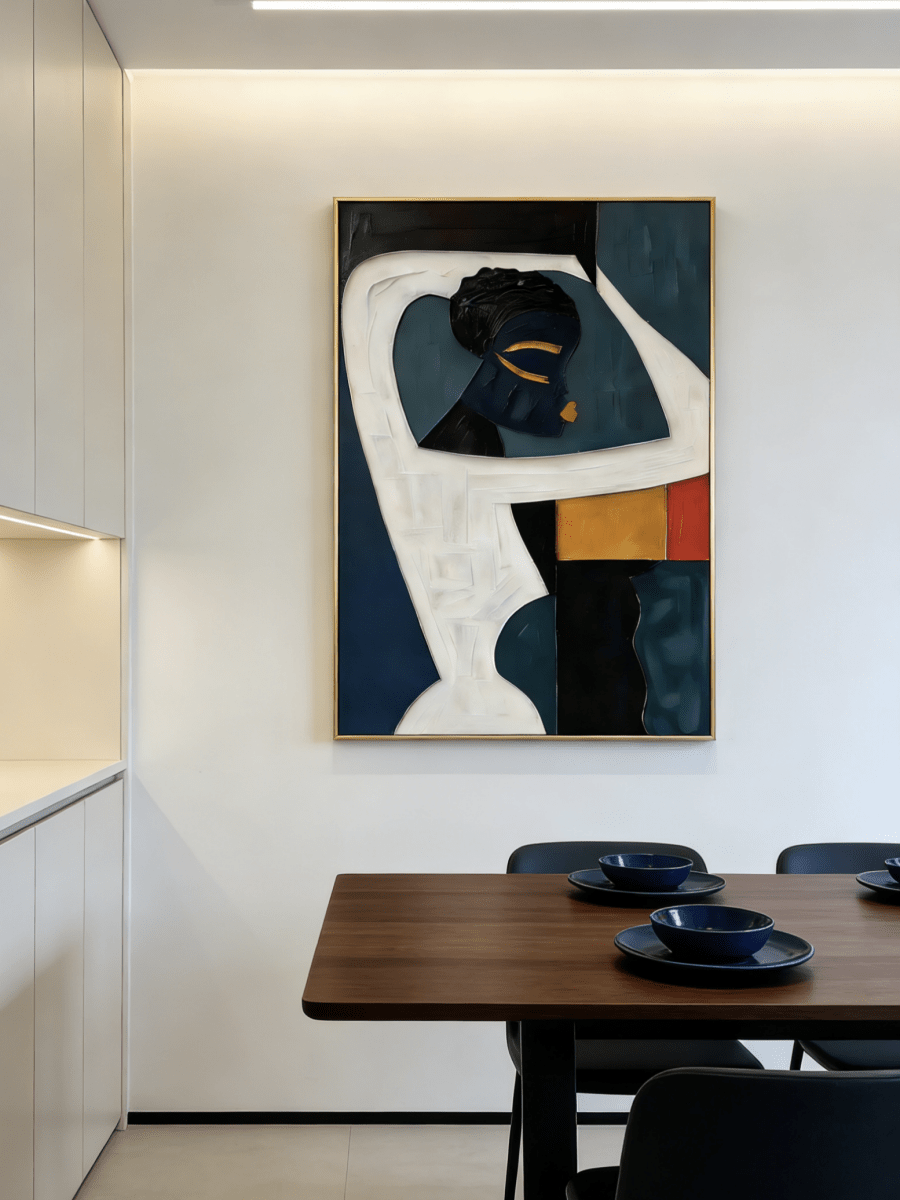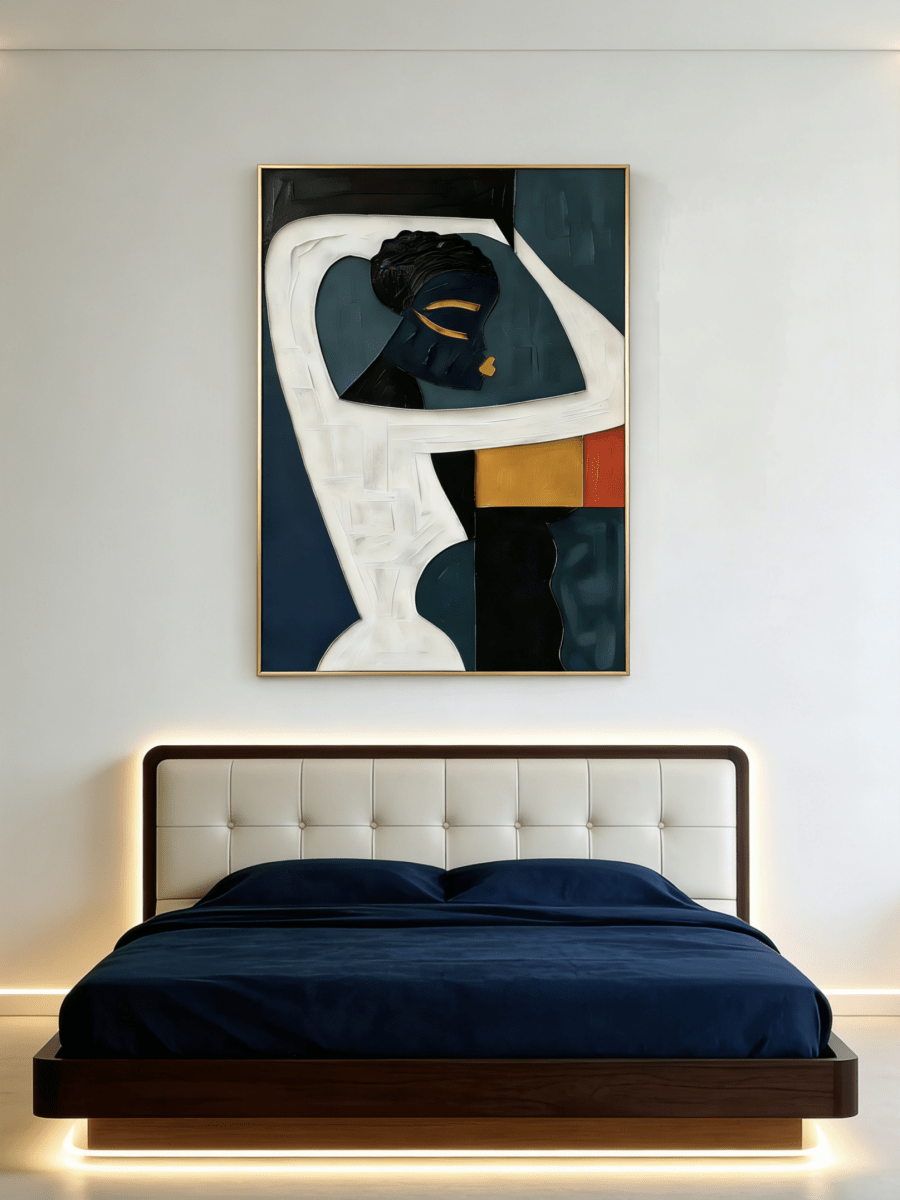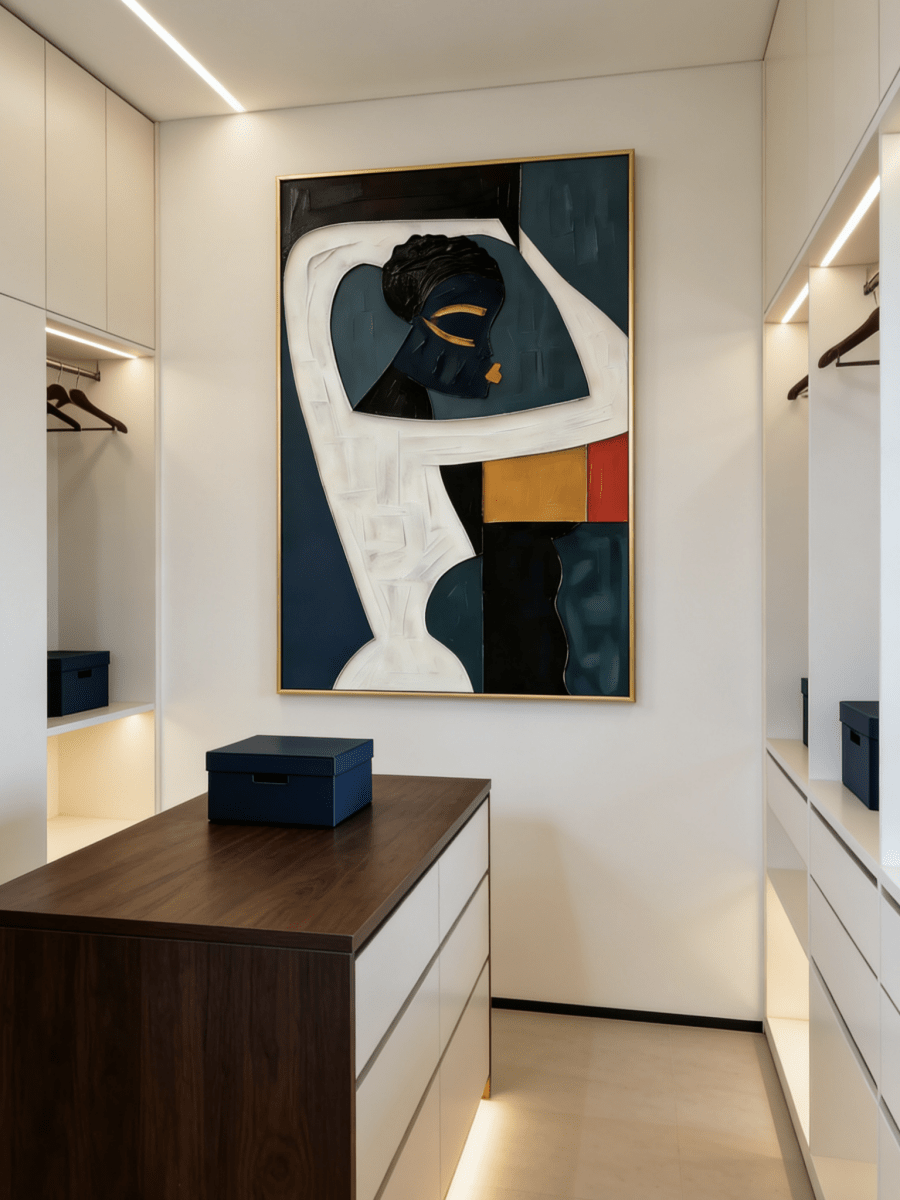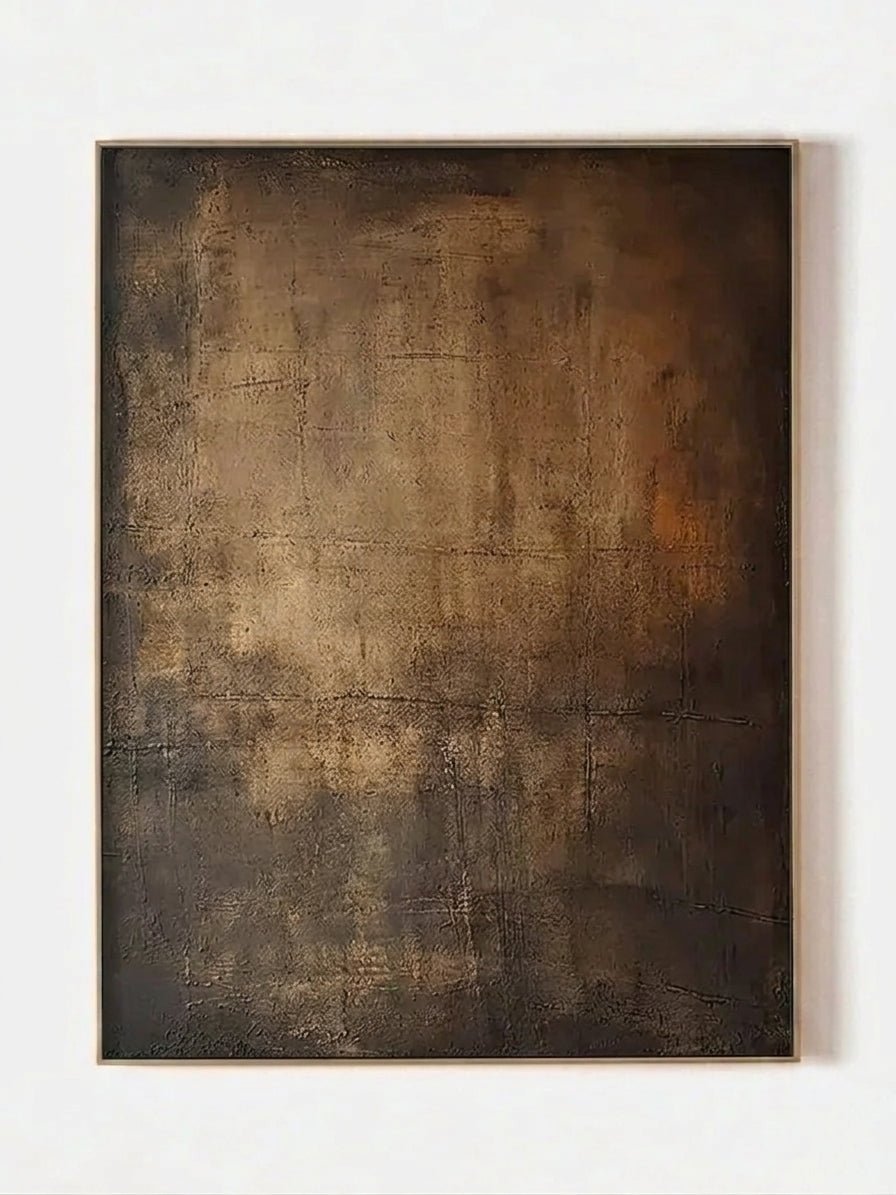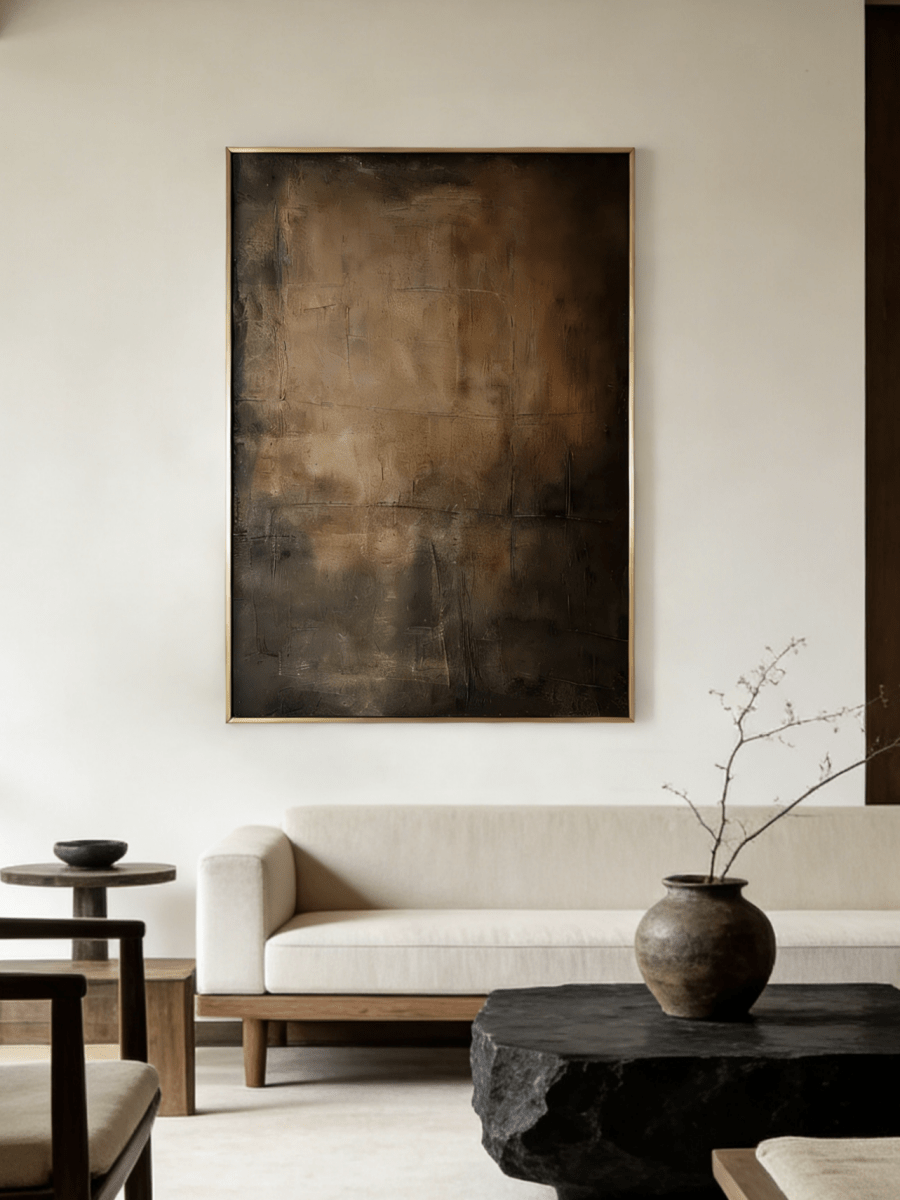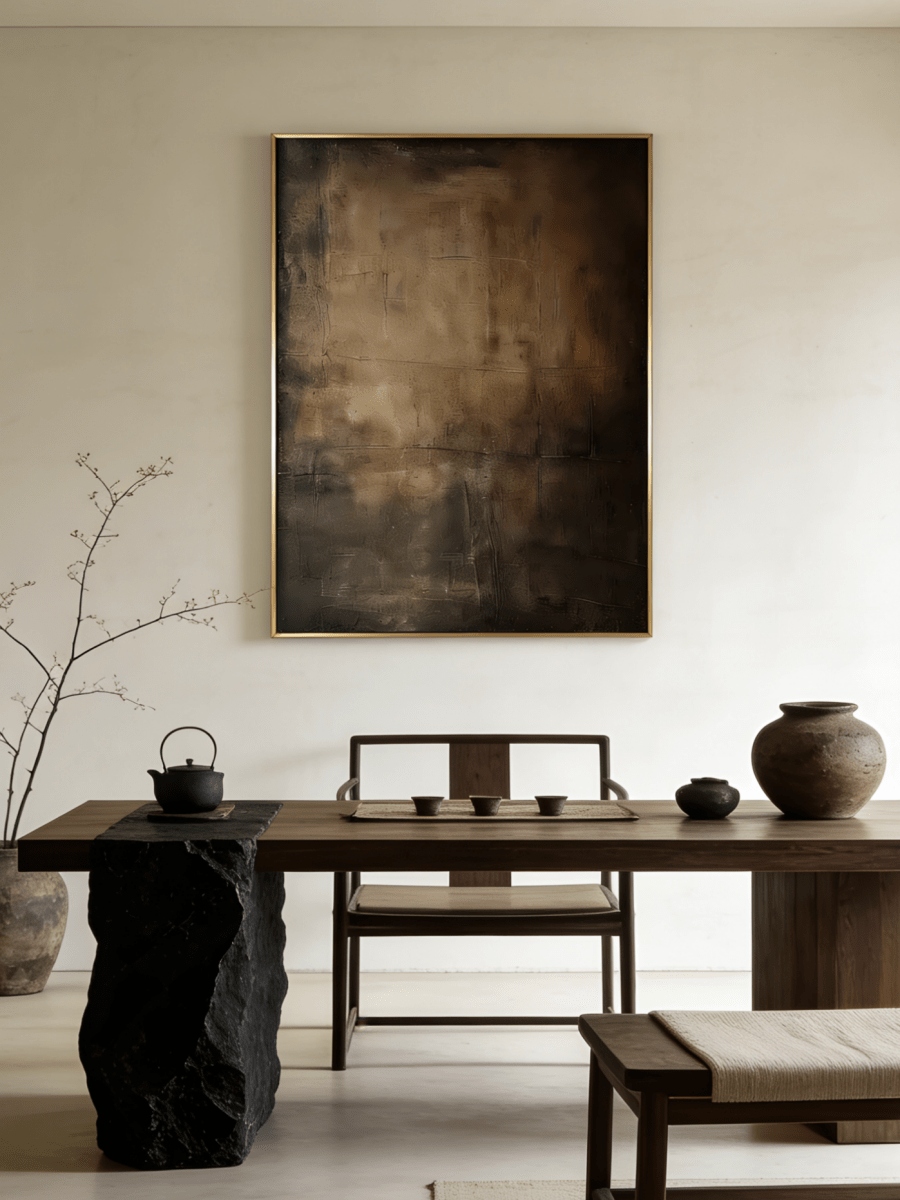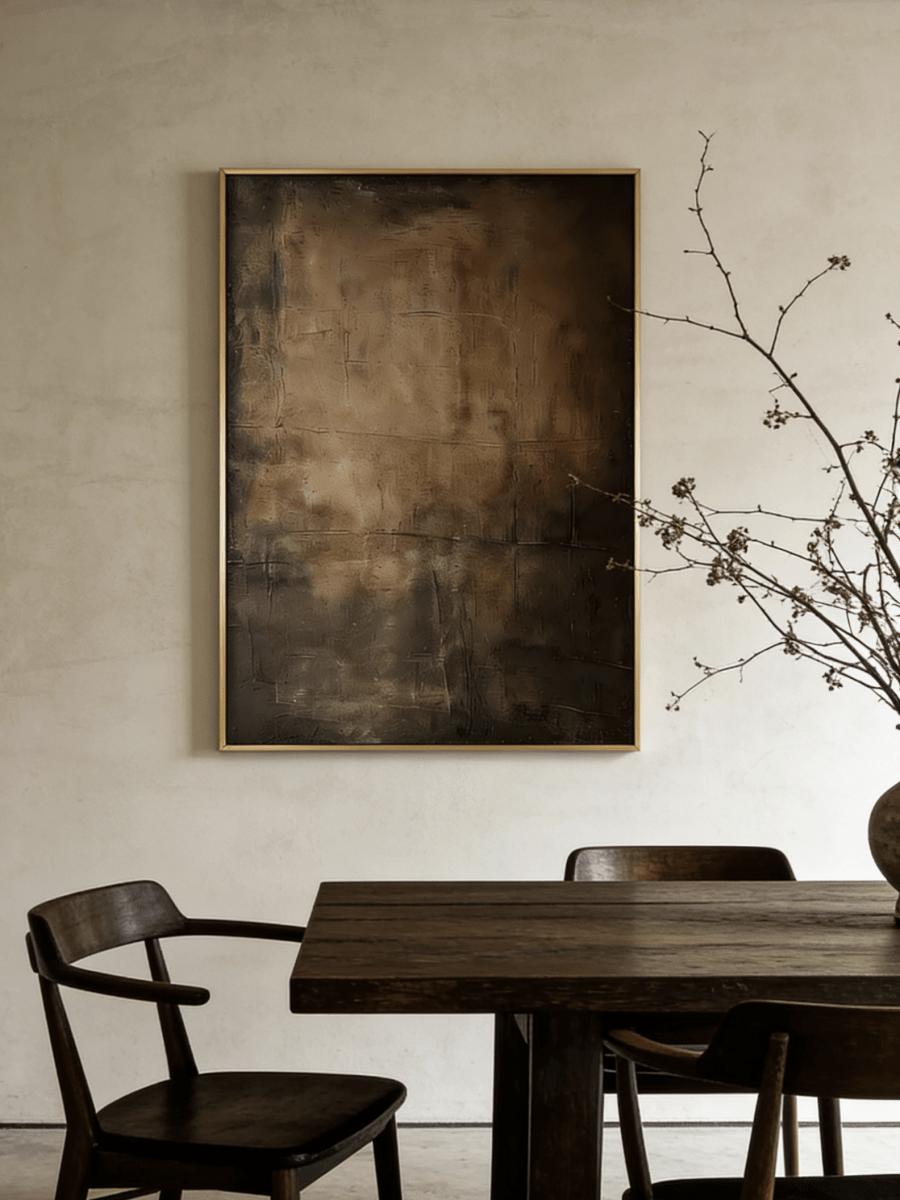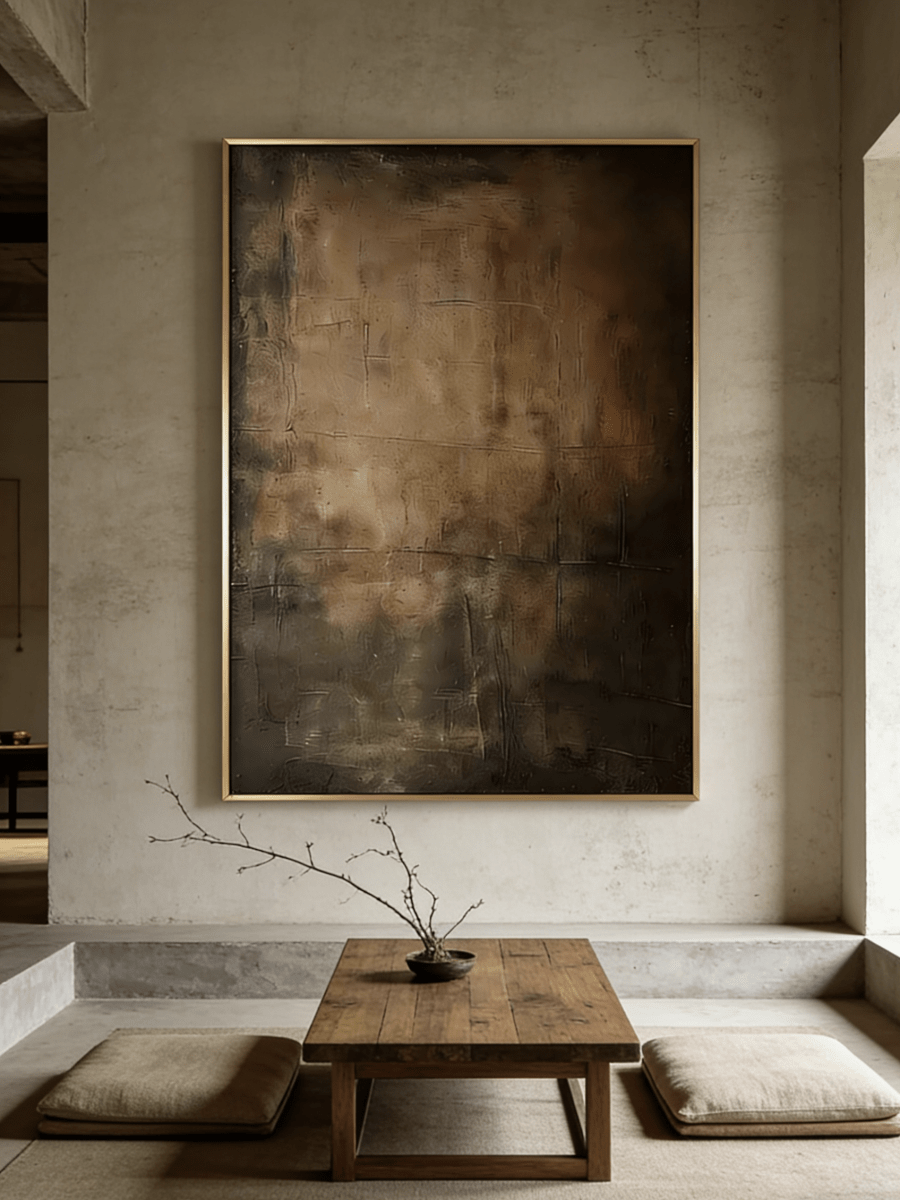

Ocean wall art can bring movement and openness into a room without turning it into a beach-themed set. A sophisticated coastal interior does not need anchors, shells, rope, or rows of blue-and-white stripes. It can suggest the shoreline through texture, light, natural materials, and one well-chosen artwork.
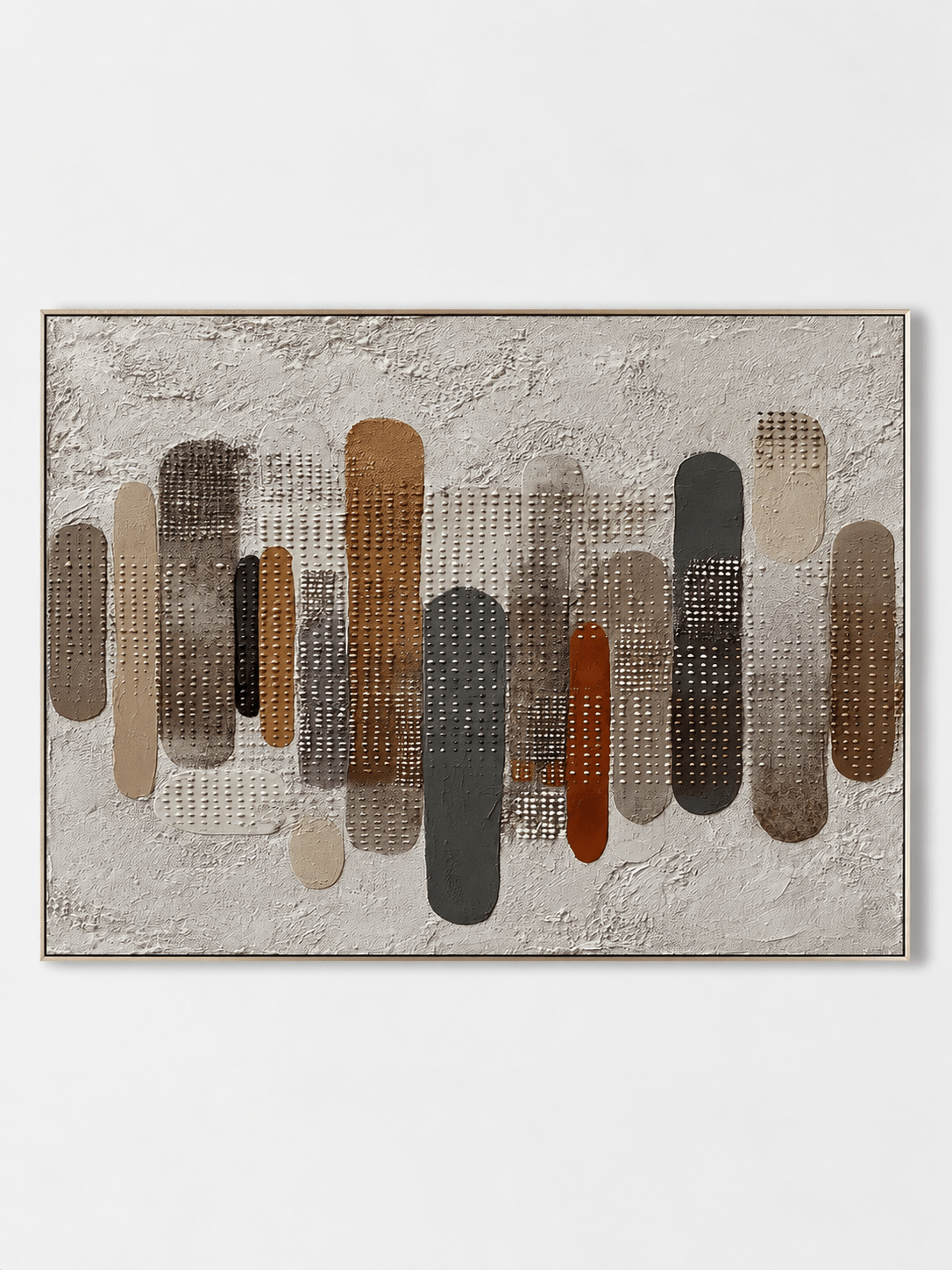
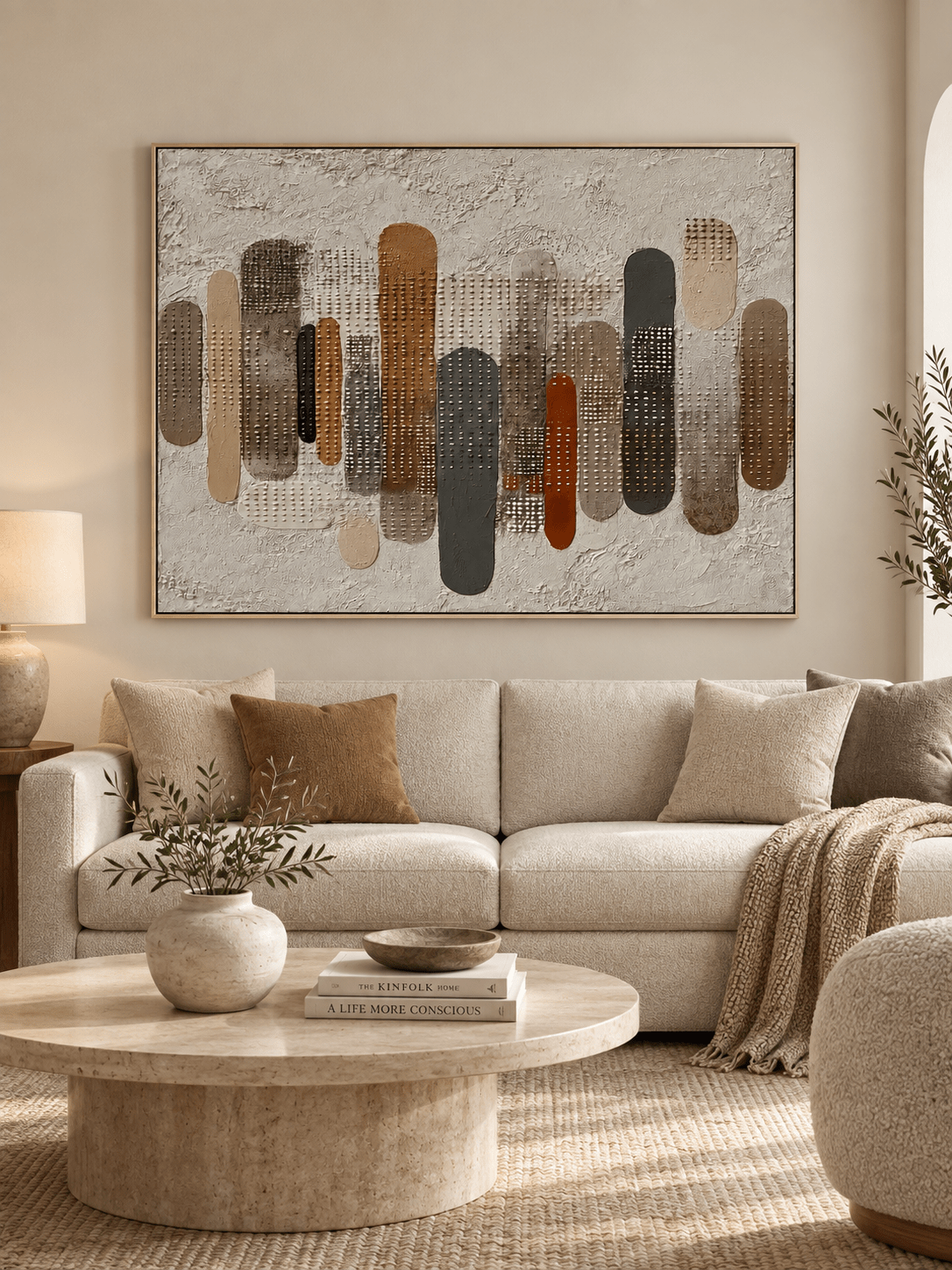
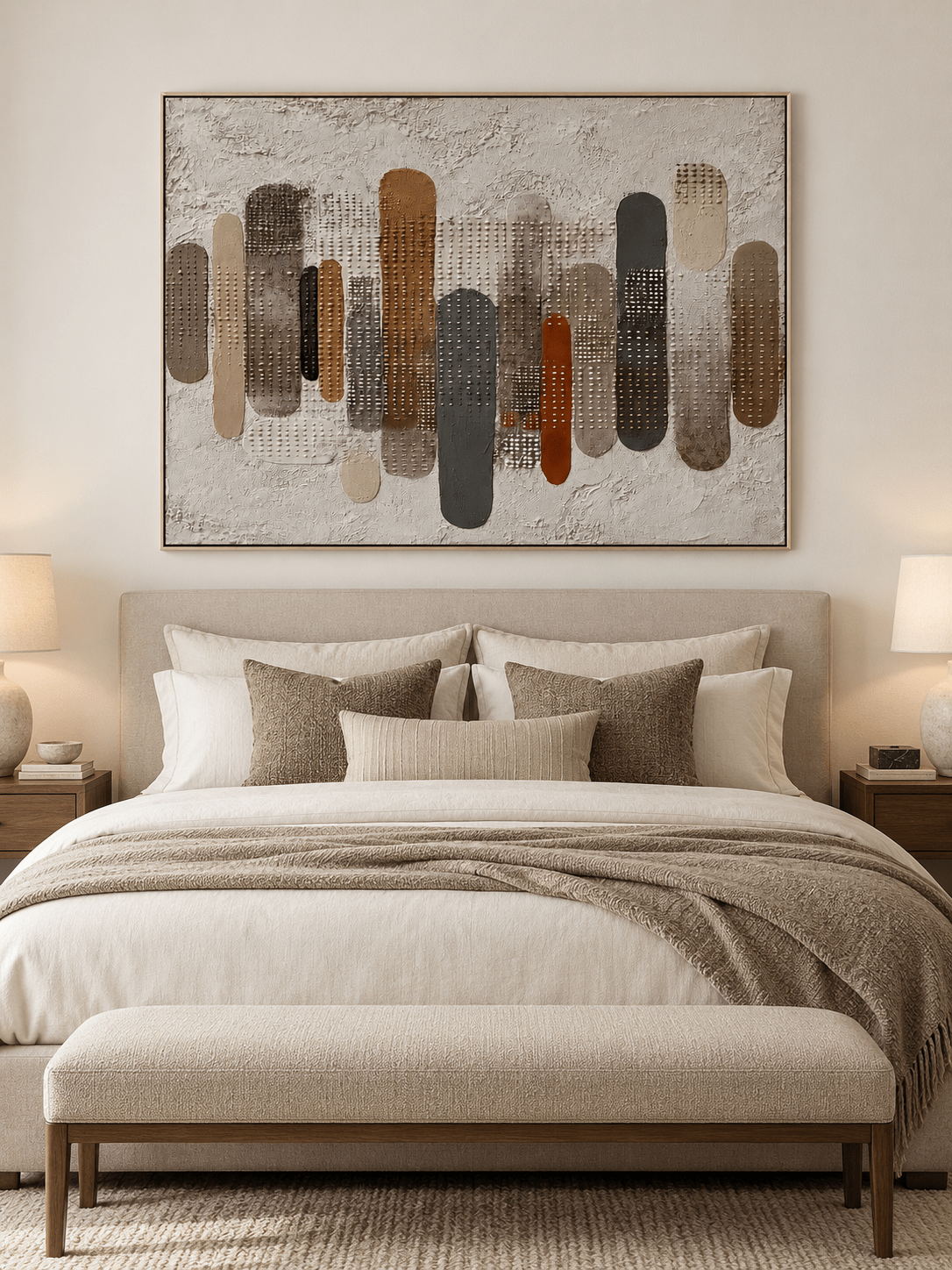
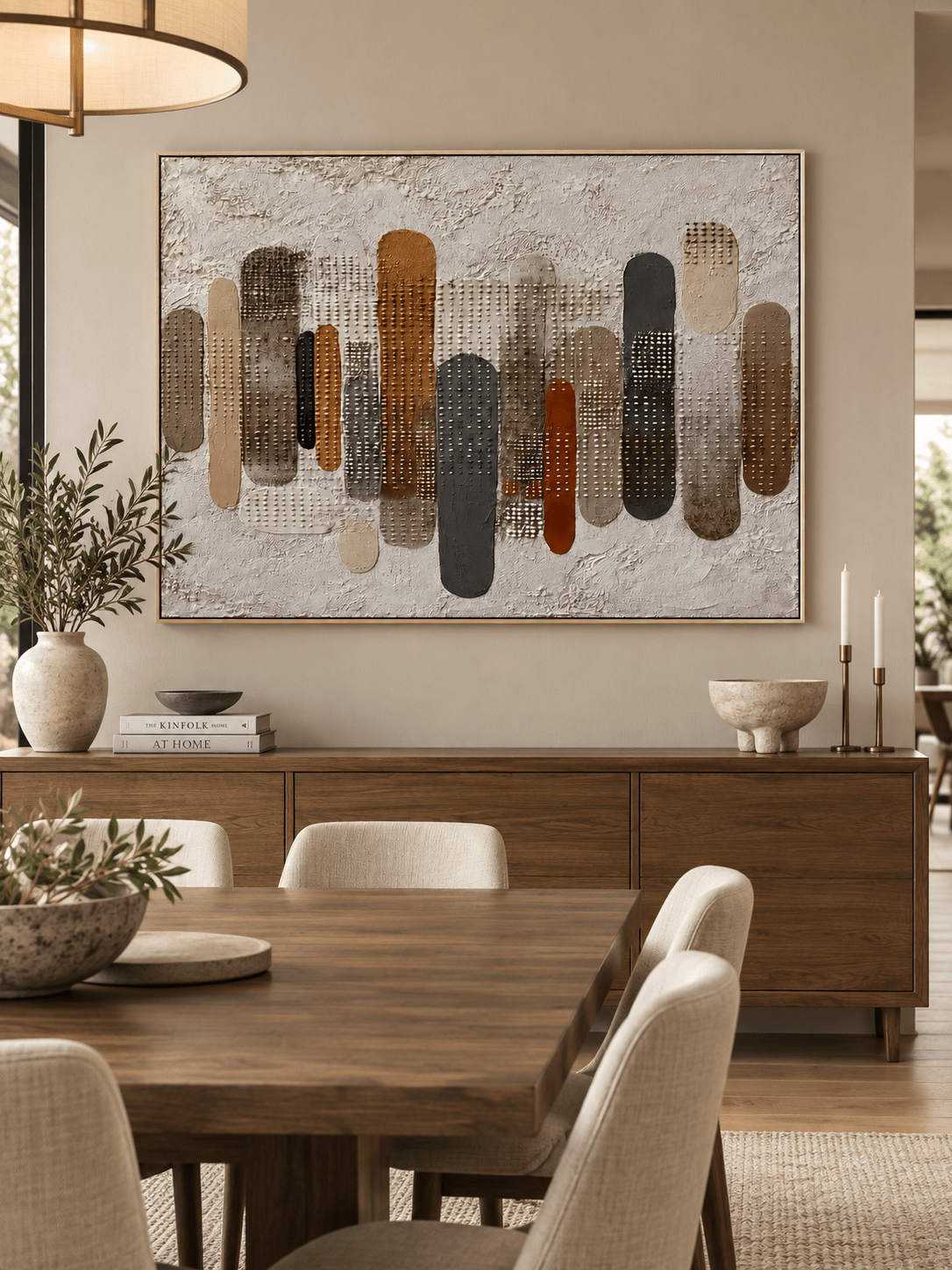
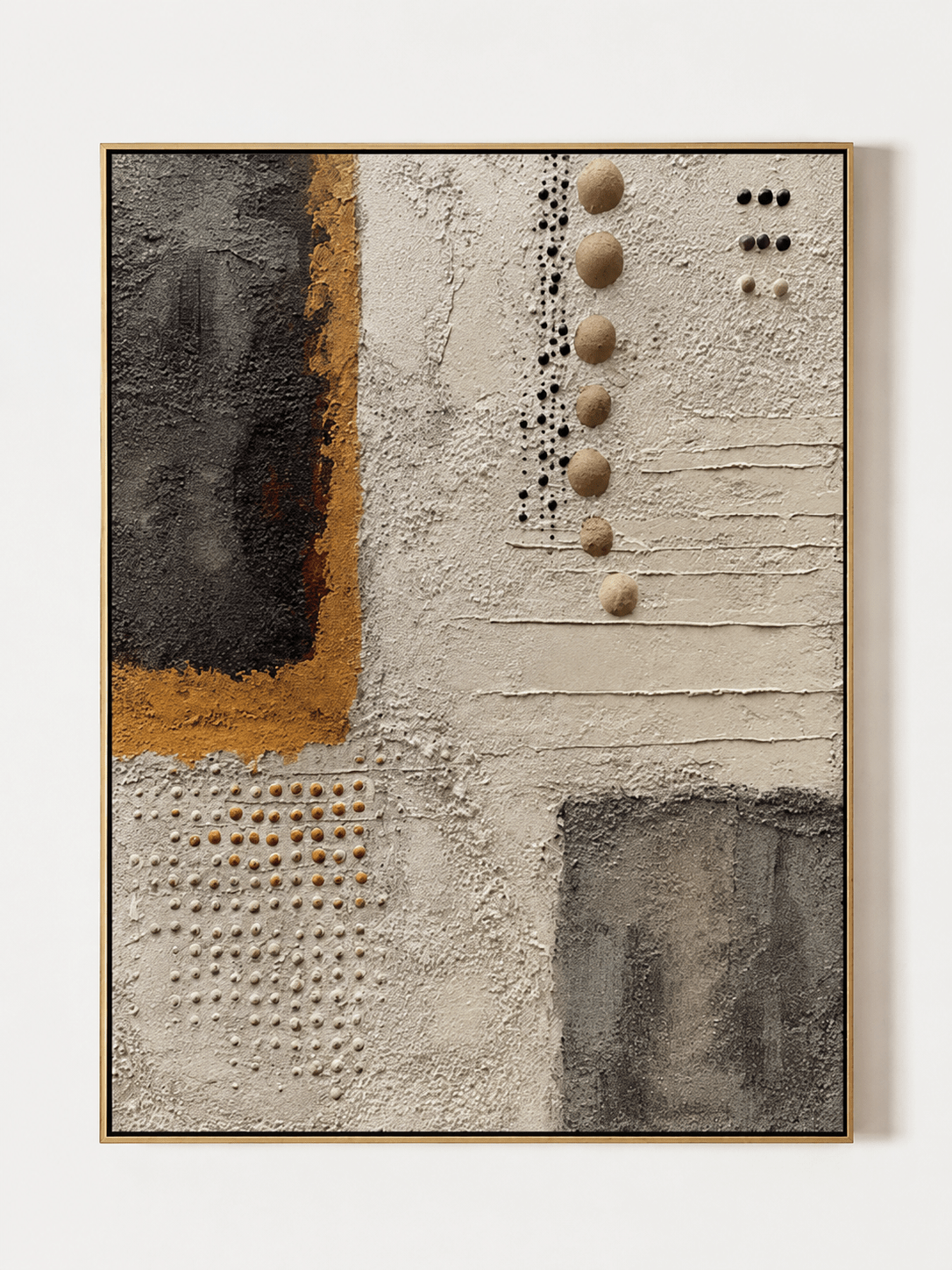
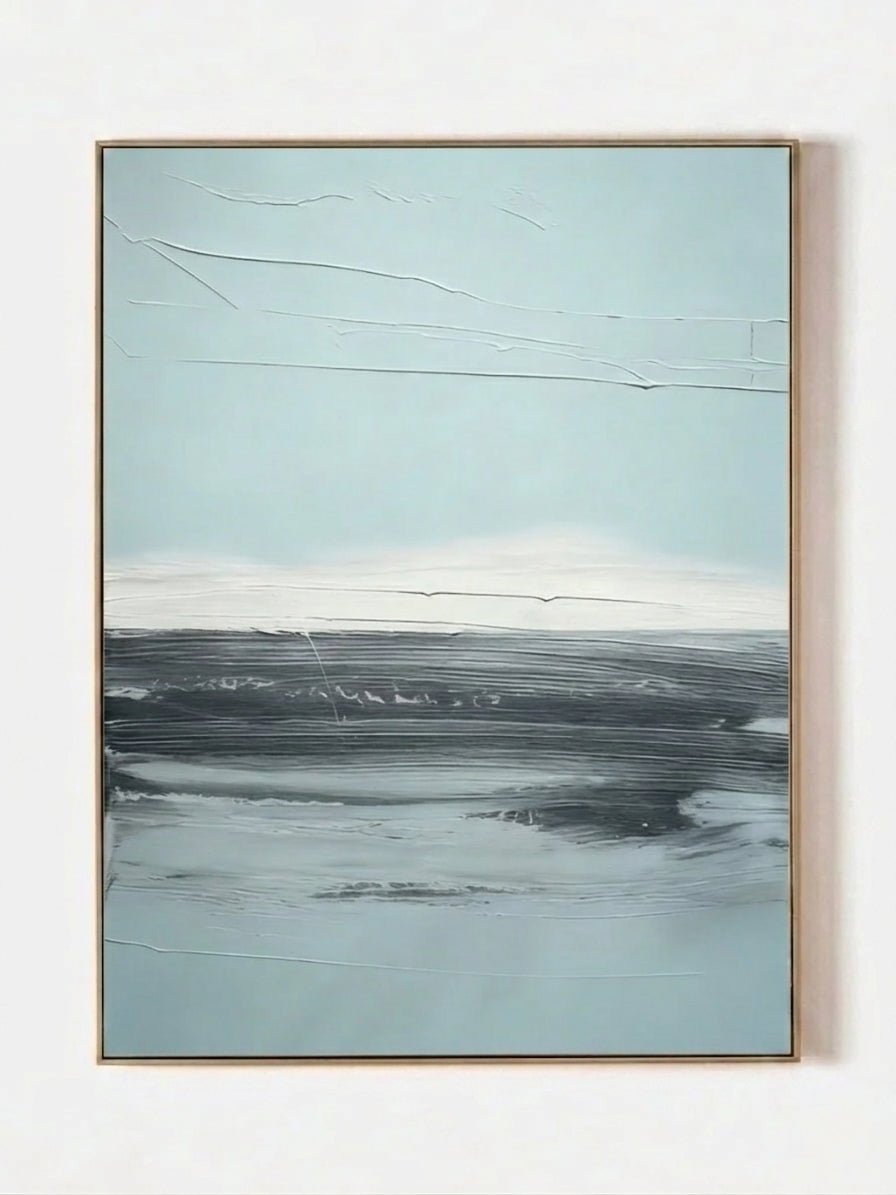
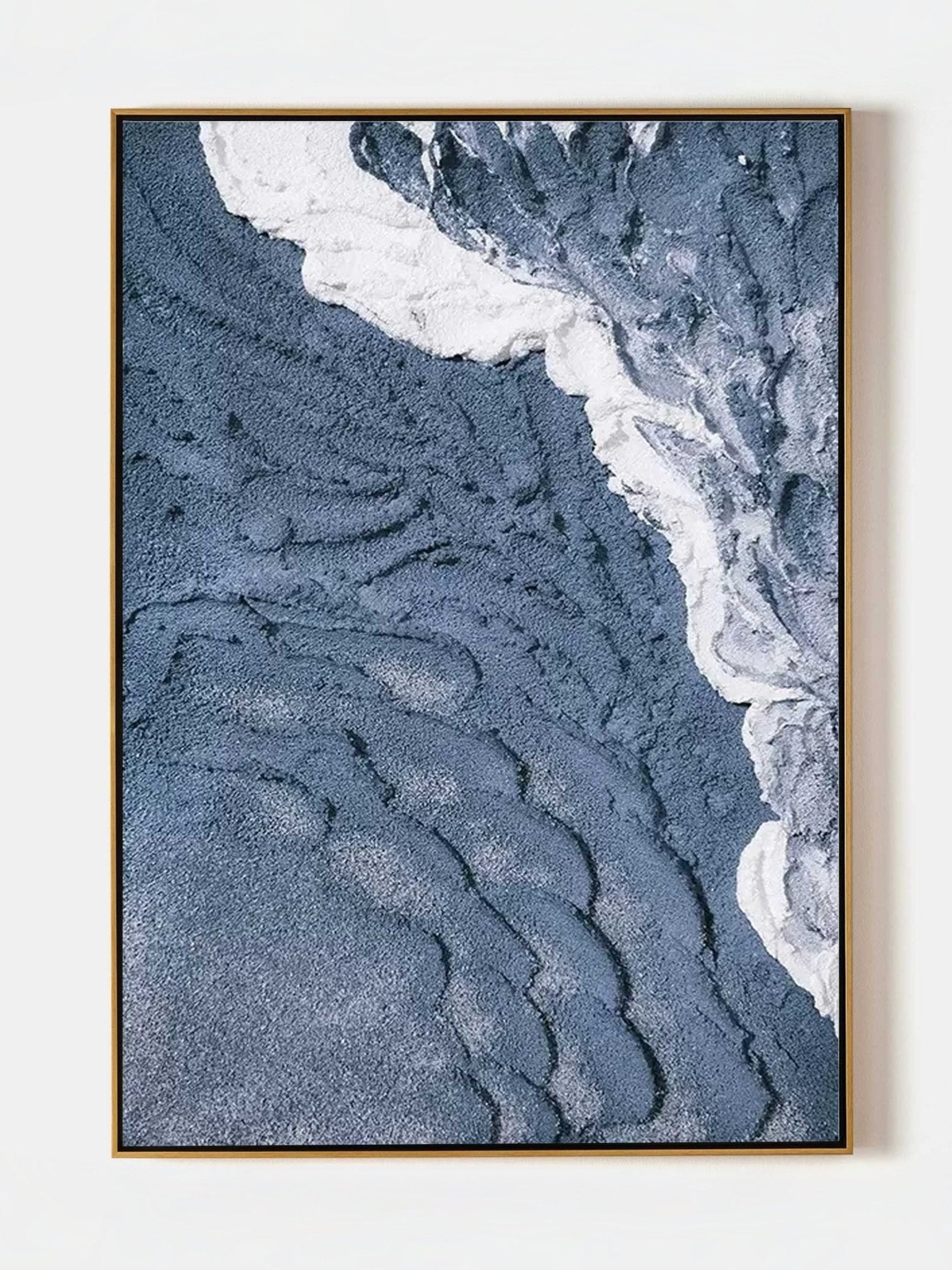
Modern 3D Textured Sage Green Ocean Waves Canvas – LL#0227 by Leo Liang is a useful example because it avoids the expected ocean-blue palette. Viewed from above, two raised white wave lines divide fields of sage, pale green, and olive. The subject is recognizable, yet the composition remains spare enough for a contemporary apartment, bedroom, or entryway.
How do you style ocean wall art without making a room look beach-themed?
Let the artwork carry the ocean reference, then furnish the room with materials rather than motifs. Use warm white, stone, oak, walnut, linen, wool, and dark metal. Repeat one color from the painting in a small object, but avoid decorating with literal seaside symbols. The result feels coastal because of its light, texture, and relaxed palette, not because every object announces the beach.
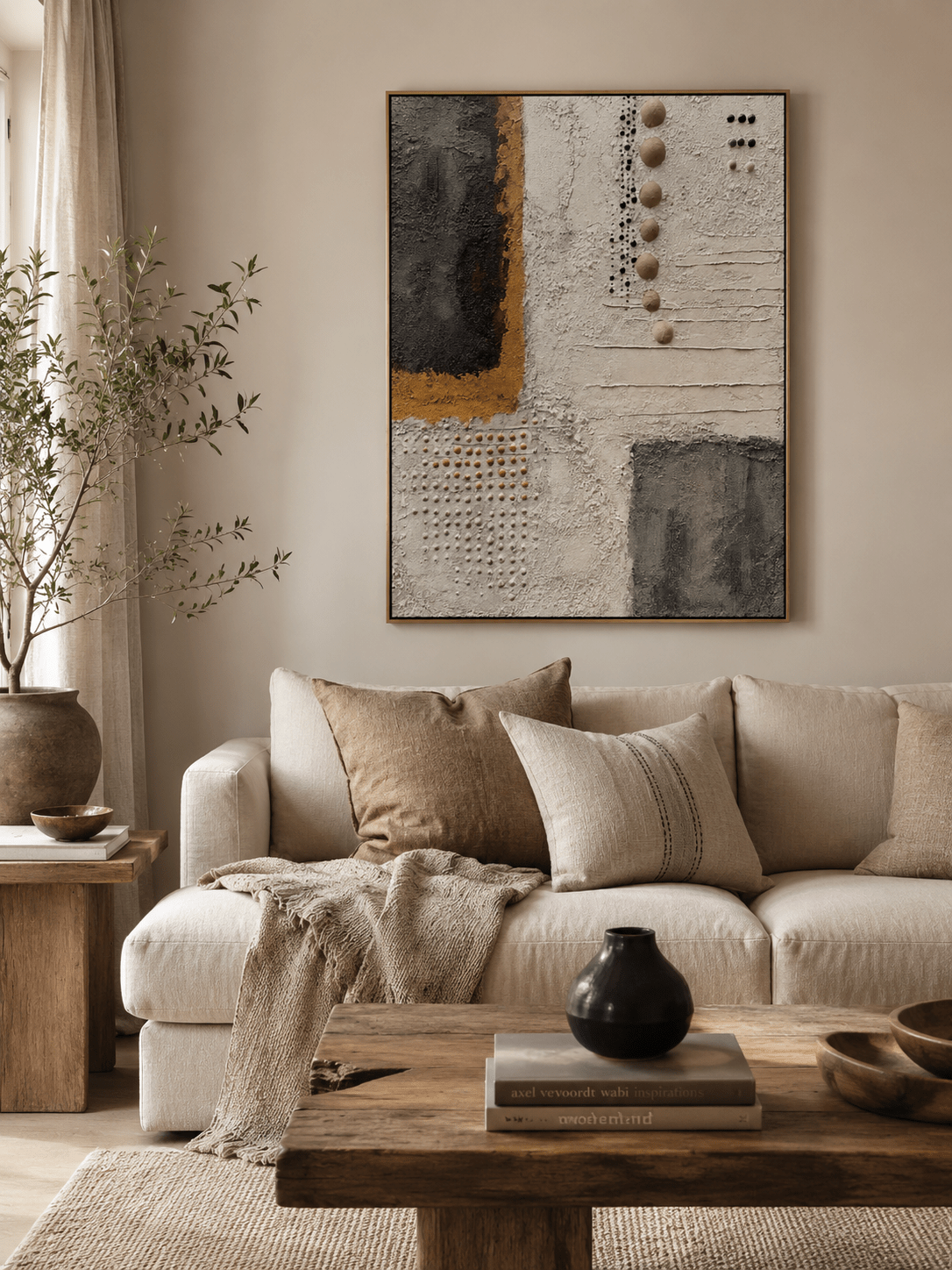
With LL#0227, the strongest formula is a warm neutral wall, tactile cream upholstery, visible wood grain, one olive accent, and enough open space for the white wave ridges to read clearly.
Start with what the painting is actually doing
This vertical composition is built from three broad color zones. The upper sage field occupies the most space. A diagonal white ridge crosses the center, while a second, more horizontal foam line separates pale green water from the olive shore below. The visual weight sits low, but the diagonal pulls the eye upward.
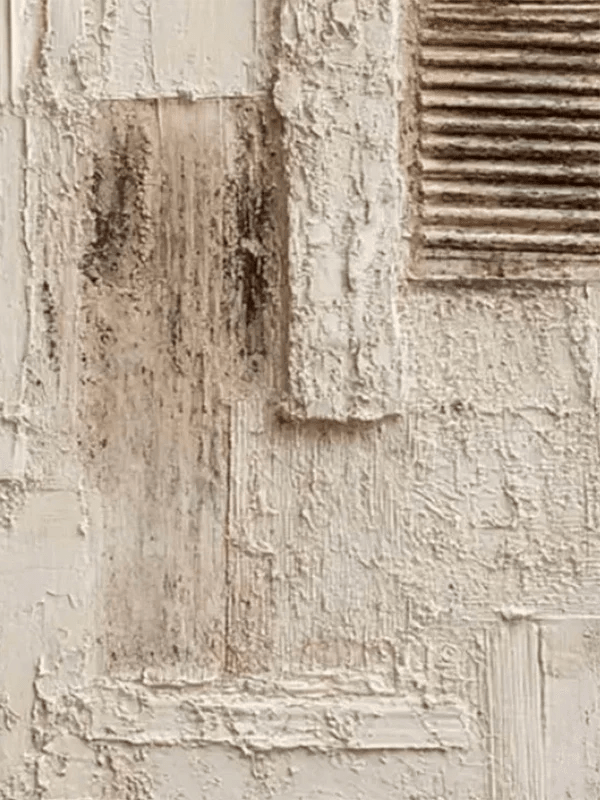
The heavy surface is not a decorative extra. Raised mineral-paste ridges make the waves catch side light, while irregular marks keep the large green areas from feeling flat. From across the room, the painting reads as quiet blocks of color. Up close, it becomes sculptural. Keep the room visually restrained, but give it enough material variation to relate to the canvas.
Build a coastal palette without defaulting to blue
Sage, warm white, and pale oak
Chalky white walls and cream linen connect to the foam, while pale oak warms the green. One deep olive ceramic object is enough to repeat the shore color. This palette works in an organic-modern living room where daylight is part of the design.
Sage, walnut, oatmeal, and stone
Walnut makes the green feel richer and less seasonal. Oatmeal bedding softens the contrast, and travertine or matte stone adds a mineral note that suits the plaster surface. Use this combination in a bedroom or reading room.
Sage, charcoal, cream, and bronze
A charcoal-green wall creates a more architectural setting. It should be much darker than the canvas so the painting retains a clear edge. Cream furniture prevents heaviness, while dark bronze or black lighting gives the soft palette definition.

Use texture instead of seaside motifs
The quickest way to make coastal decor feel generic is to repeat the subject literally: wave painting, shell bowl, coral ornament, boat model, and rope mirror. Choose one narrative element—the artwork—and let surrounding materials provide atmosphere.
- Linen introduces a relaxed weave without pattern.
- Oak or walnut suggests natural material without looking rustic.
- Travertine or limestone relates to the mineral texture.
- Wool and boucle soften modern furniture.
- Bronze or black metal supplies one precise line.
Mix rough and smooth surfaces. If everything is nubby, grained, and matte, the room becomes visually dusty. Glass, smooth stone, or finely finished metal lets the painting’s relief remain special. See how textured art adds depth.
Choose a wall color that separates the green
Warm off-white is the most forgiving backdrop. Light mushroom or warm greige works with walnut and darker stone. A deep green-gray can also be effective if it is distinctly darker and less saturated than the artwork.
Avoid matching the wall to the dominant mid-tone sage. When the values are nearly identical, the canvas edge disappears. If you want a tonal room, create separation through lightness rather than searching for an exact match. Check paint samples in daylight and evening light: cool bulbs can make olive muddy, while very warm bulbs may yellow the white ridges.
Let the vertical format solve a narrow wall
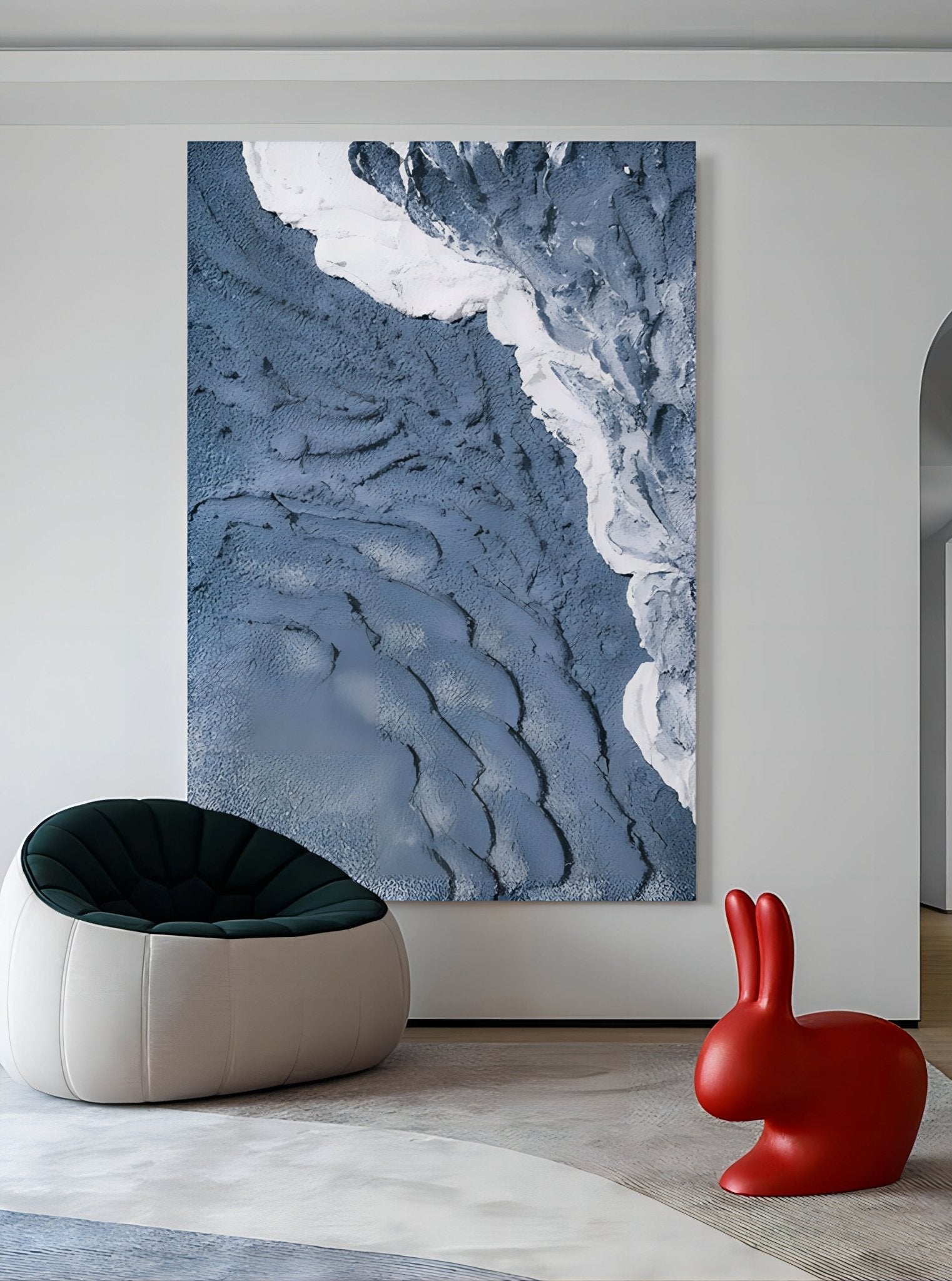
Although waves suggest a panorama, LL#0227 is vertical. It works above a dresser, slim console, or bench; between windows; beside a reading chair; or at the end of a hallway. The diagonal wave introduces movement while the tall format draws the eye upward.
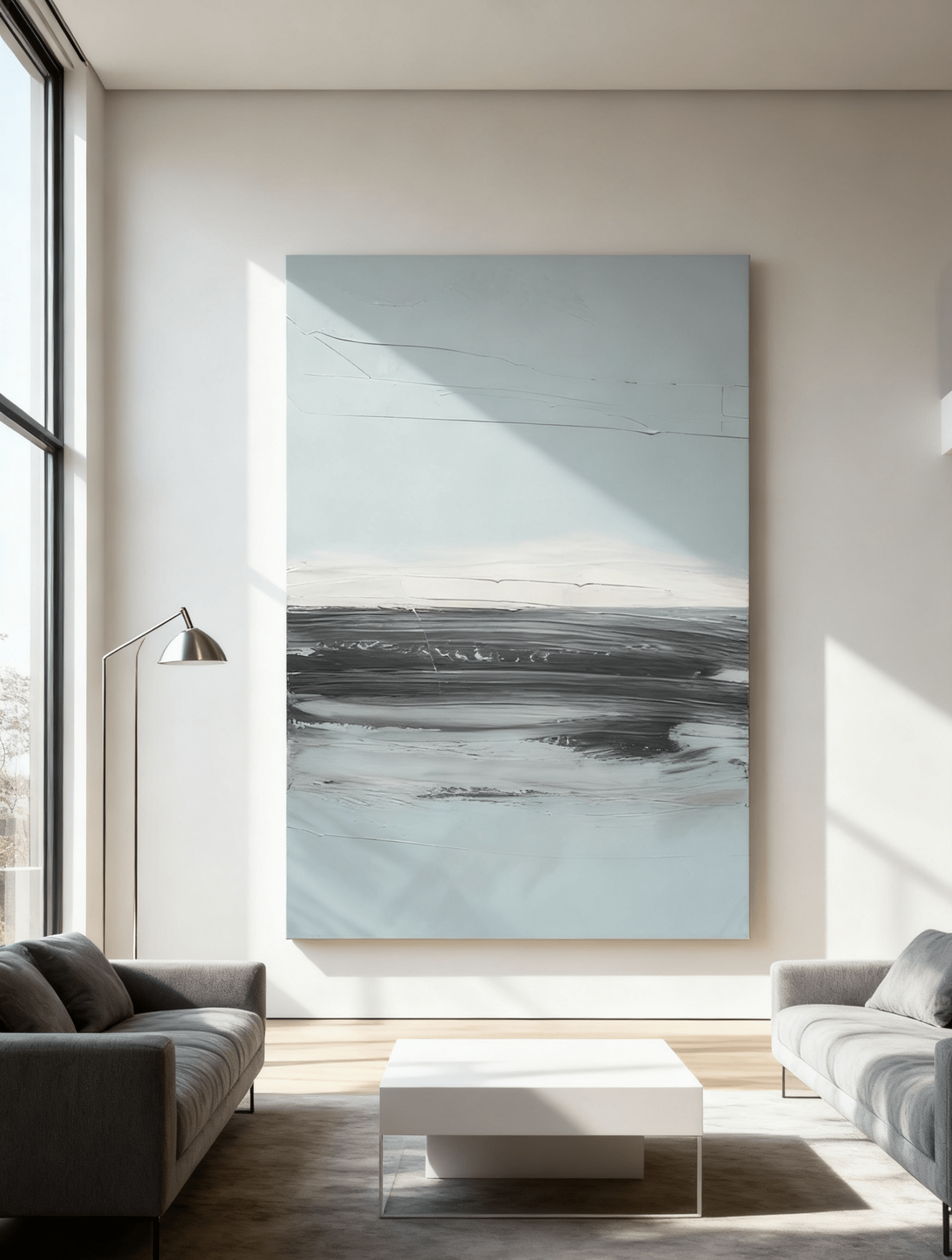
Above a wide sofa, one vertical work needs generous scale or an asymmetrical relationship with a floor lamp and side table. Use the WABI wall-art sizing guide to compare it with the furniture below.
In compact rooms, one substantial vertical work is often calmer than a coastal gallery wall. See our advice on using large art in small spaces.
Room-by-room styling ideas
Living room
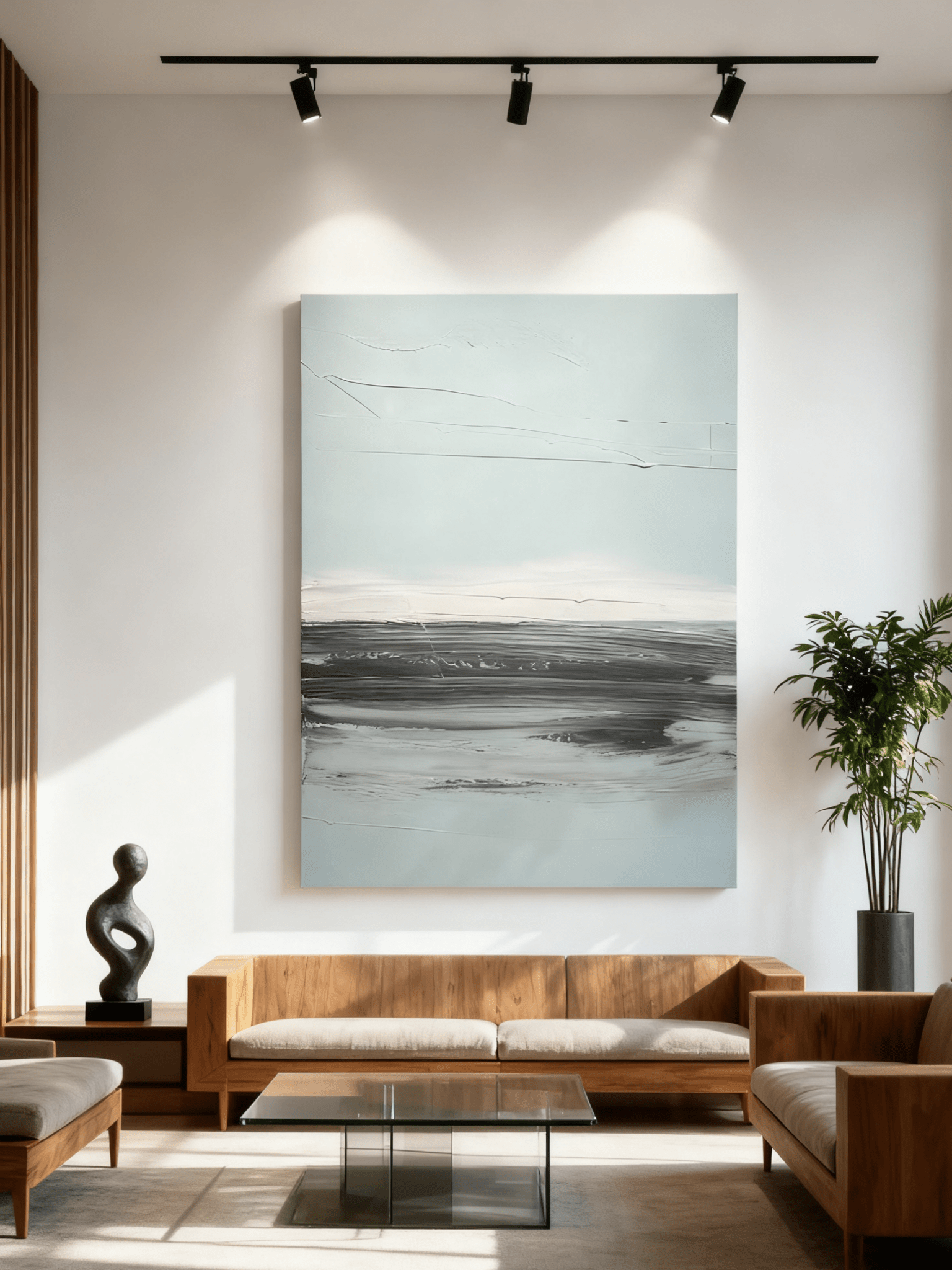
Place the canvas above a low oak console or on a wall perpendicular to the sofa. Pair it with cream linen, a stone table, and one olive object. A sculptural branch can work, but several leafy plants may shift the room from coastal to botanical.
Bedroom
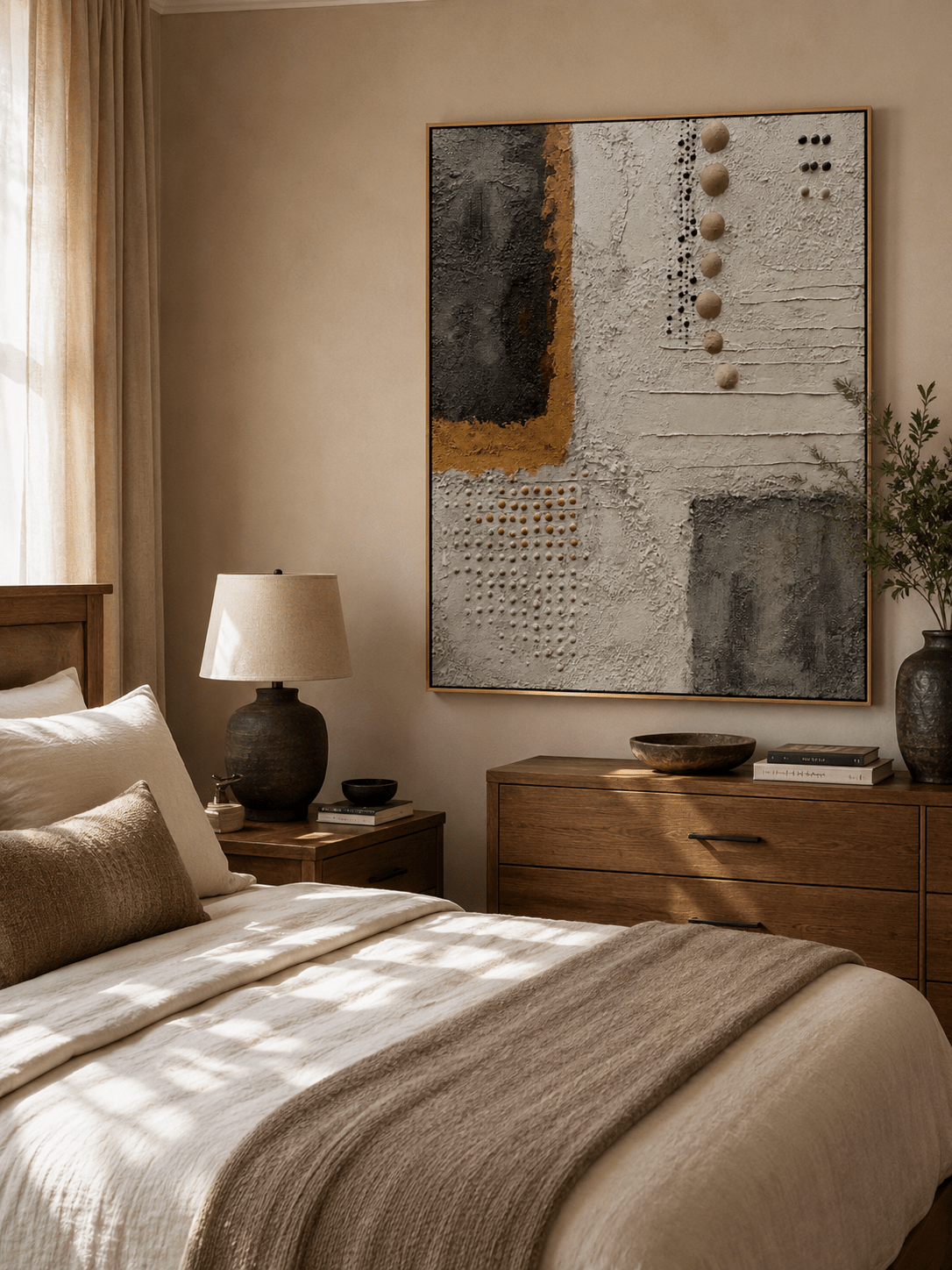
A walnut dresser provides a strong horizontal base for the vertical artwork. Keep bedding in ivory, oatmeal, or soft stone. Rather than adding blue cushions, introduce the coastal note through washed linen, a woven rug, and gentle side lighting.

Entryway or reading nook
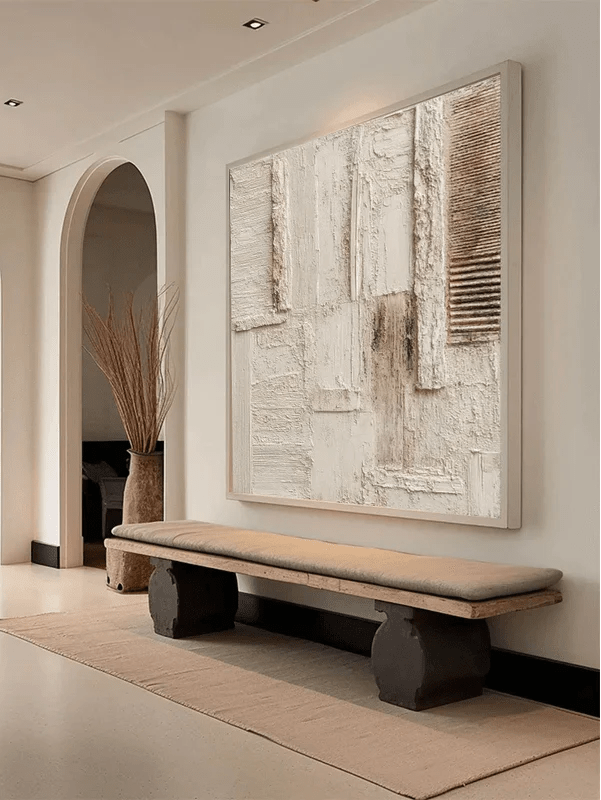
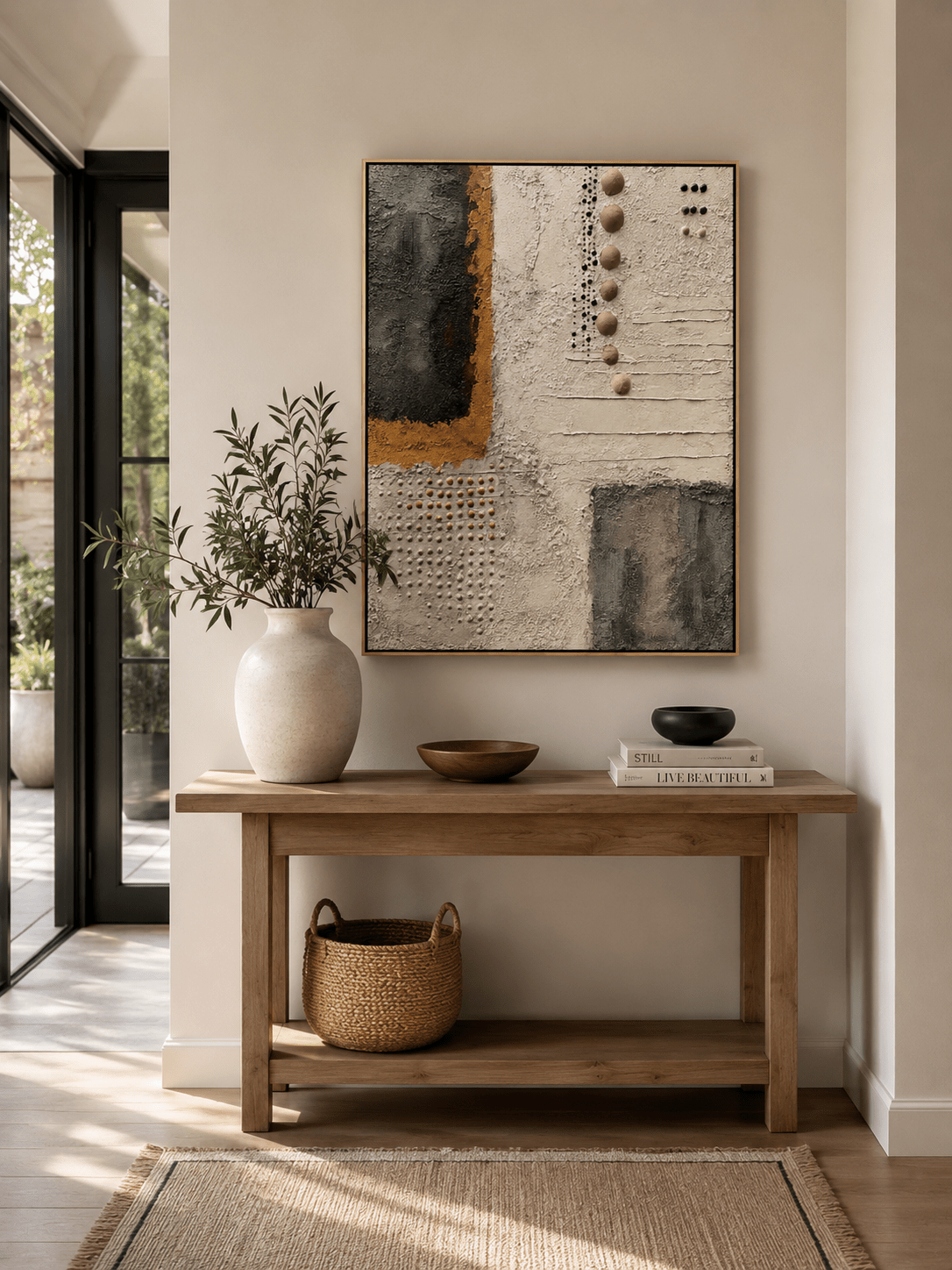
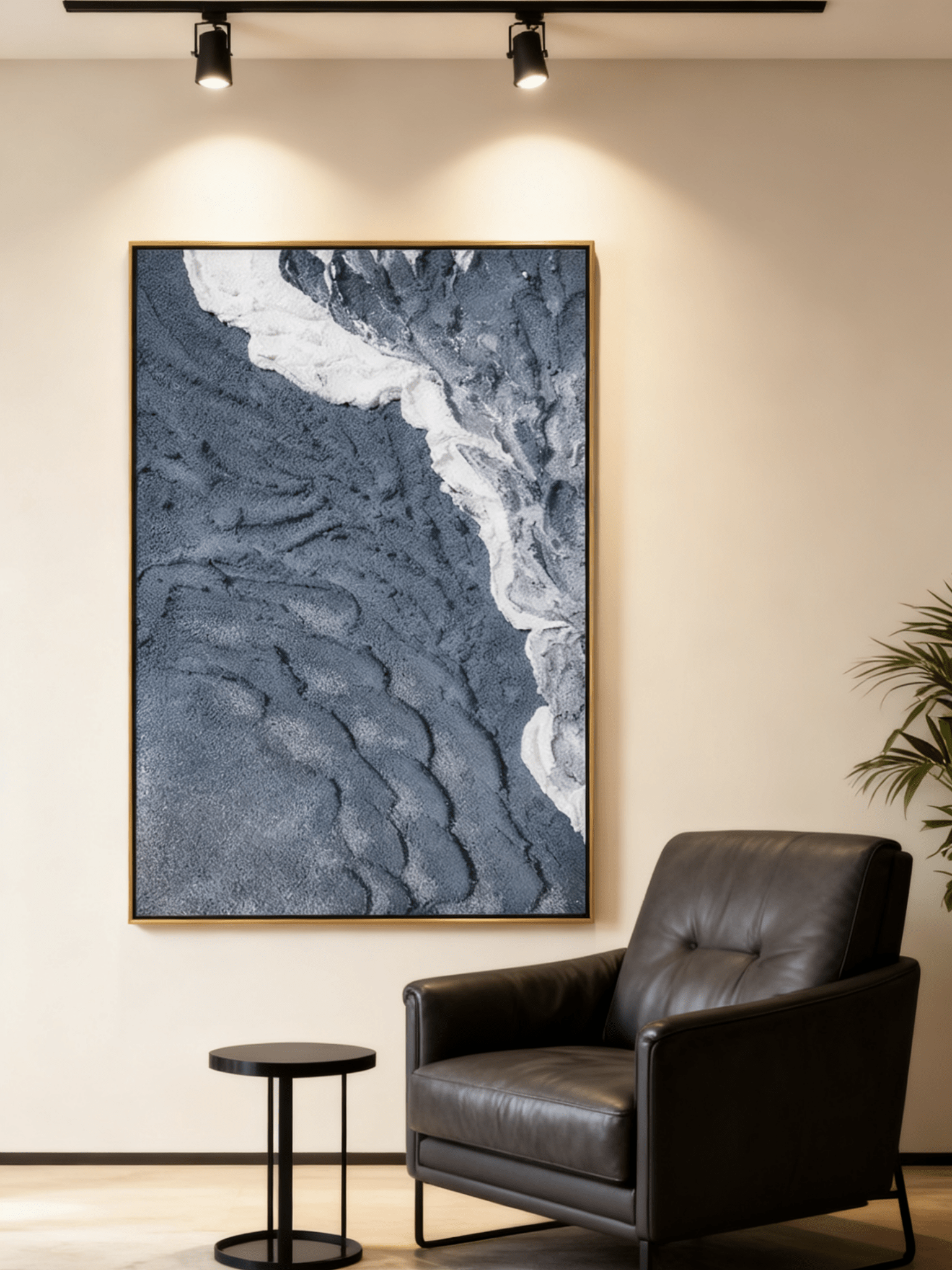
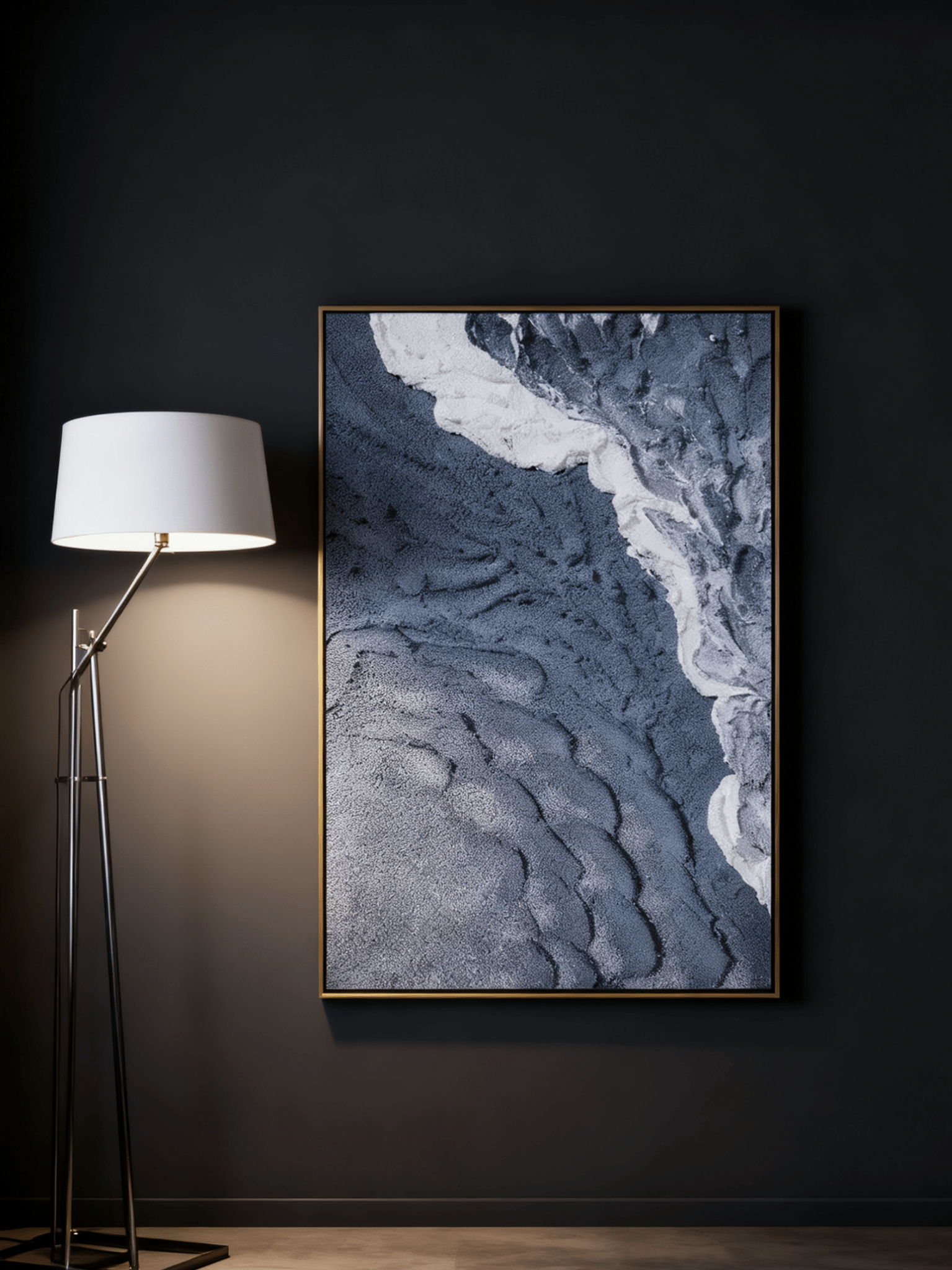
The tall canvas gives a narrow entry visual height. Above a bench, it creates a useful relationship between vertical artwork and horizontal furniture. In a reading nook, a cream chair and dark lamp balance the soft green fields.
Frame and light a heavily textured canvas
A natural wood frame supports a material-led coastal scheme. Black sharpens the composition. Gold or silver can work when the room already contains that metal, but choose a slim profile; an ornate frame competes with the wave ridges.
Side lighting is most revealing. Daylight from a nearby window or an angled picture light creates small shadows across the relief. Avoid frontal glare and continuous direct sun. The surface should change subtly as light moves, not disappear behind a reflective hot spot.
Common mistakes to avoid
- Adding every coastal symbol. Let the painting be the only literal ocean reference.
- Using nautical blue by default. Sage, olive, cream, stone, and wood already form a complete palette.
- Matching the wall to the canvas. Create a clear value difference.
- Ignoring the relief. Flat frontal light hides the texture.
- Choosing an undersized vertical piece. Scale it to the furniture below.
- Overloading the surface beneath it. Tall objects can block the white wave lines.
About Modern 3D Textured Sage Green Ocean Waves Canvas – LL#0227
LL#0227 is a hand-painted mixed-media and acrylic canvas by Leo Liang. Heavy-body mineral paste creates raised wave and water textures. It is available in vertical sizes from 18 × 24 through 60 × 80 inches, with stretched-canvas and gold, silver, black, white, or wood frame options.
The page lists a one-to-two-week creation and curing period, minor color customization, a signed work with certificate of authenticity, and a 30-day return policy. Browse the Plaster Art & Texture Art collection for related relief compositions.
Frequently asked questions
Can ocean wall art work outside a beach house?
Yes. Abstract ocean art suits apartments and contemporary homes when styled through color and material rather than seaside souvenirs.
What colors go with sage green ocean art?
Warm white, cream, oatmeal, olive, walnut, pale oak, stone, charcoal, and muted bronze coordinate naturally.
Does coastal decor have to include blue?
No. Green water tones, sand, stone, warm wood, and white foam can suggest the coast without navy or turquoise.
Where should vertical ocean art be hung?
Try it above a dresser, narrow console, or bench, between windows, beside a chair, or on a hallway end wall.
How do you light textured ocean art?
Use daylight or an adjustable light from the side at a moderate angle so small shadows reveal the raised paint.
How do you clean a heavily textured painting?
Use a soft, dry duster or clean paintbrush. Do not use water or cleaning liquids.
What frame color suits sage green ocean art?
Natural wood feels organic, black adds modern definition, and slim metal works when it repeats room hardware.